Category: Wires

  • Myra MacPherson, trailblazing Washington Post journalist, has died at 91

    Myra MacPherson, trailblazing Washington Post journalist, has died at 91

    Myra MacPherson, a wide-ranging feature writer for the Washington Post’s Style section and an author whose books included a study of the competing demands of politics and marriage among power couples in Washington and a volume on the enduring traumas of the Vietnam War, died Feb. 2 in hospice in Washington. She was 91.

    The cause was congestive heart failure, said her son, Michael Siegel.

    When Ms. MacPherson applied for her first journalism job in 1956, with ambitions to cover major news stories, an editor at the Detroit Free Press informed her that he had no openings on the women’s page.

    “I said I wasn’t considering the women’s department,” she recalled, “and he looked at me as if I had said I just shot my mother or something. He said, ‘We have no women in the city room.’”

    She spent the early 1960s relegated to women’s issues and society coverage at the Washington Star and the New York Times before the Post’s top editor, Ben Bradlee, poached her in 1968 for a new features section called Style. She was promised a freewheeling mandate to cover contemporary affairs and personalities with the irreverent verve of a glossy magazine.

    Assigned to cover the New York Mets in 1969, the year the team won the World Series for the first time, Ms. MacPherson was denied the full access granted to her male colleagues, and she wrote a scathing story about “being treated like a non-eunuch in a harem.”

    As she recounted decades later in a letter to the Times, a columnist griped to her: “The next thing, you girls are going to want to get into the locker room.”

    “We don’t want to use the urinals,” Ms. MacPherson said she replied, “just the typewriters.”

    Her first book, The Power Lovers (1975), was an unblinking look at the pressures of Washington marriages. “I am his mistress,” Marian Javits, the wife of Sen. Jacob K. Javits (R., N.Y.) told her. “His work is his wife.”

    Ms. MacPherson conceived her book about Vietnam after watching the 1979 TV movie Friendly Fire. As a mother, she said, she was deeply moved by Carol Burnett’s performance as the grief-stricken parent of a dead Vietnam War soldier.

    “When I watched the show, I realized that I didn’t know anyone in Washington who had a son in combat,” she recalled in an interview with California’s Riverside Press-Enterprise. “The sons I knew were mostly those who had escaped to college, gone into the National Guard or who had protested the war.”

    The damage done by the Vietnam War was still fresh and in many circles was not a welcome subject for discussion when Ms. MacPherson began writing what became Long Time Passing: Vietnam and the Haunted Generation (1984).

    Long Time Passing examined the war and its aftermath through the lives of hundreds of people profoundly affected by the conflict.

    Ms. MacPherson included the perspectives of nurses, mothers, and wives as well as servicemen — some of whom said they were proud of what they did and some who said they were ashamed of it or traumatized by it. Some said they were deserters.

    She also interviewed historians and psychologists, and she helped bring the concept of posttraumatic stress disorder to wider attention. In its best passages, author Donald Knox wrote in his Times review, the book “sings, soars, explodes with feeling” and “shines a powerful light on the differences that divide this generation.”

    Myra Lea MacPherson was born in Marquette, Mich., on May 31, 1934, and grew up in Belleville, a town of 800 between Detroit and Ann Arbor. Her father worked for the camera company Argus, and her mother was a homemaker.

    Ms. MacPherson was editor in chief of her high school newspaper, and she became night city editor of the student newspaper at Michigan State University in East Lansing. She graduated in 1956 with a degree in journalism.

    After compiling the TV listings at the Free Press, she left for the Detroit News, where her professional experience improved, to a point. Assigned to cover the Indianapolis 500 in 1960, she said, she was the only female reporter at the race. She was denied access to the press box and the speedway’s Gasoline Alley, where drivers and their crews worked, and had to conduct interviews through chain-link fences along the track’s periphery.

    Her first marriage, to Washington sportswriter Morris Siegel, ended in divorce. In 1987, she married Jack Gordon, a liberal Democratic state senator from Miami Beach whom she met years earlier when covering an Equal Rights Amendment convention in Tallahassee. She and Gordon moved to Palm Springs, Calif., in 2001, but maintained a home in Washington. He died four years later after being struck by a car.

    Her daughter, Leah Siegel, a sports producer at ESPN, died of breast cancer in 2010. Survivors include her son, Michael Siegel, and three grandchildren.

    Ms. MacPherson, who left the Post in 1991, spent years contributing articles to Vanity Fair and other publications. Her books included She Came to Live Out Loud (1999), a look at dying and grief from the viewpoint of a woman diagnosed with breast cancer at 37; All Governments Lie (2006), a biography of the left-wing independent journalist I.F. Stone; and The Scarlet Sisters (2014), a dual biography of two fiercely independent 19th-century siblings, Victoria Woodhull and Tennessee Claflin.

    “I would definitely like to think I would have been out blazing a trail in Victorian times, probably in the liberal wing of the suffragist movement and also in journalism,” Ms. MacPherson told the website Edwardian Promenade, reflecting on her last book.

    “When I sought my first newspaper job, there were no women covering anything but society news, fashion,” she added. “I fought my way out of that niche and was one of the few women covering regular news. I don’t know if I could take the pummeling the sisters [Woodhull and Claflin] did, but in a much lesser way, women in the ’60s and ’70s were breaking new ground and I was among them.”


  • Man who tried to shoot Trump at a Florida golf course gets life in prison

    Man who tried to shoot Trump at a Florida golf course gets life in prison

    FORT PIERCE, Fla. — A man convicted of trying to assassinate President Donald Trump on a Florida golf course in 2024 was sentenced Wednesday to life in prison after a federal prosecutor said his crime was unacceptable “in this country or anywhere.”

    U.S. District Judge Aileen Cannon pronounced Ryan Routh’s fate in the same Fort Pierce courtroom that erupted into chaos in September when he tried to stab himself shortly after jurors found him guilty on all counts.

    “American democracy does not work when individuals take it into their own hands to eliminate candidates. That’s what this individual tried to do” Assistant U.S. Attorney John Shipley told the judge.

    Routh’s new defense attorney, Martin L. Roth, argued that “at the moment of truth, he chose not to pull the trigger.”

    The judge pushed back, noting Routh’s history of arrests, to which Roth said, “He’s a complex person I’ll give the court that, but he has a very good core.”

    Routh then read from a rambling, 20-page statement. Cannon broke in and said none of what he was saying was relevant, and gave him five more minutes to talk.

    “I did everything I could and lived a good life,” Routh said, before the judge cut him off.

    “Your plot to kill was deliberate and evil,” she said. “You are not a peaceful man. You are not a good man.”

    She then issued his sentence: Life without parole, plus 7 years on a gun charge. His sentences for his other three crimes will run concurrently.

    Routh’s sentencing had initially been scheduled for December, but Cannon agreed to move the date back after Routh decided to use an attorney during the sentencing phase instead of representing himself as he did for most of the trial.

    Routh was convicted of trying to assassinate a major presidential candidate, using a firearm in furtherance of a crime, assaulting a federal officer, possessing a firearm as a felon and using a gun with a defaced serial number. “Routh remains unrepentant for his crimes, never apologized for the lives he put at risk, and his life demonstrates near-total disregard for law,” the prosecutors’ sentencing memo said.

    His defense attorney had asked for 20 years plus the mandatory seven for the gun conviction.

    “The defendant is two weeks short of being sixty years old,” Roth wrote in a filing. “A just punishment would provide a sentence long enough to impose sufficient but not excessive punishment, and to allow defendant to experience freedom again as opposed to dying in prison.”

    Prosecutors said Routh spent weeks plotting to kill Trump before aiming a rifle through shrubbery as the Republican presidential candidate played golf on Sept. 15, 2024, at his West Palm Beach country club.

    At Routh’s trial, a Secret Service agent helping protect Trump on the golf course testified that he spotted Routh before Trump came into view. Routh aimed his rifle at the agent, who opened fire, causing Routh to drop his weapon and run away without firing a shot.

    In the motion requesting an attorney, Routh offered to trade his life in a prisoner swap with people unjustly held in other countries, and said an offer still stood for Trump to “take out his frustrations on my face.”

    “Just a quarter of an inch further back and we all would not have to deal with all of this mess forwards, but I always fail at everything (par for the course),” Routh wrote.

    In her decision granting Routh an attorney, Cannon chastised the “disrespectful charade” of Routh’s motion, saying it made a mockery of the proceedings. But the judge, nominated by Trump in 2020, said she wanted to err on the side of legal representation.

    Cannon signed off last summer on Routh’s request to represent himself at trial. The U.S. Supreme Court has held that criminal defendants have the right to represent themselves in court proceedings, as long as they can show a judge they are competent to waive their right to be defended by an attorney.

    Routh’s former federal public defenders served as standby counsel and were present during the trial.

    Routh had multiple previous felony convictions including possession of stolen goods, and a large online footprint demonstrating his disdain for Trump. In a self-published book, he encouraged Iran to assassinate him, and at one point wrote that as a Trump voter, he must take part of the blame for electing him.

  • Trump’s border czar announces 700 immigration officers to immediately leave Minnesota

    Trump’s border czar announces 700 immigration officers to immediately leave Minnesota

    The Trump administration is reducing the number of immigration officers in Minnesota but will continue its enforcement operation that has sparked weeks of tensions and deadly confrontations, border czar Tom Homan said Wednesday.

    About 700 federal officers — roughly a quarter of the total deployed to Minnesota — will be withdrawn immediately after state and local officials agreed over the past week to cooperate by turning over arrested immigrants, Homan said.

    But he did not provide a timeline for when the administration might end the operation that has become a flashpoint in the debate over President Donald Trump’s mass deportation efforts since the fatal shootings of U.S. citizens Renee Good and Alex Pretti in Minneapolis.

    About 2,000 officers will remain in the state after this week’s drawdown, Homan said. That’s roughly the same number sent to Minnesota in early January when the surge ramped up, kicking off what the Department of Homeland Security called its ” largest immigration enforcement operation ever.”

    Since then, masked, heavily armed officers have been met by resistance from residents who are upset with their aggressive tactics.

    A widespread pullout, Homan said, will occur only after protesters stop interfering with federal agents carrying out arrests and setting up roadblocks to impede the operations.

    Gov. Tim Walz and Minneapolis Mayor Jacob Frey, both Democrats who have heavily criticized the surge, said pulling back 700 officers was a good first step but that the entire operation should end quickly.

    “We need a faster and larger drawdown of forces, state-led investigations into the killings of Alex Pretti and Renee Good, and an end to this campaign of retribution,” Walz posted on social media.

    Vice President JD Vance said the officers being sent home were mainly in Minneapolis to protect those carrying out arrests. “We’re not drawing down the immigration enforcement,” Vance said in an interview on The Megyn Kelly Show.

    Trump administration has pushed for cooperation in Minnesota

    Trump’s border czar took over the Minnesota operation in late January after the second fatal shooting by federal officers and amid growing political backlash and questions about how the operation was being run.

    Homan said right away that federal officials could reduce the number of agents in Minnesota, but only with the cooperation of state and local officials. He pushed for jails to alert Immigration and Customs Enforcement about inmates who could be deported, saying transferring those inmates to ICE is safer because it means fewer officers have to be out looking for people in the country illegally.

    Homan said during a news conference Wednesday that there has been an “increase in unprecedented collaboration” resulting in the need for fewer public safety officers in Minnesota and a safer environment, allowing for the withdrawal of the 700 officers.

    He didn’t say which jurisdictions have been cooperating with DHS

    The Trump administration has long complained that places known as sanctuary jurisdictions — a term applied to local governments that limit law enforcement cooperation with the department — hinder the arrest of criminal immigrants.

    Minnesota officials say its state prisons and nearly all of the county sheriffs already cooperate with immigration authorities.

    But the two county jails that serve Minneapolis and St. Paul and take in the most inmates had not previously met ICE’s standard of full cooperation, although they both hand over inmates to federal authorities if an arrest warrant has been signed by a judge.

    The Hennepin County Sheriff’s Office, which serves Minneapolis and several suburbs, said its policies have not changed. The Ramsey County Sheriff’s Office in neighboring St. Paul did not immediately respond to a request for comment.

    Border czar calls Minnesota operation a success

    Homan said he thinks the ICE operation in Minnesota has been a success, checking off a list of people wanted for violent crimes who were taken off the streets.

    “I think it’s very effective as far as public safety goes,” he said Wednesday. “Was it a perfect operation? No.”

    He also made clear that pulling a chunk of federal officers out of Minnesota isn’t a sign that the administration is backing down. “We are not surrendering the president’s mission on a mass deportation operation,” Homan said.

    “You’re not going to stop ICE. You’re not going to stop Border Patrol,” Homan said of the ongoing protests. “The only thing you’re doing is irritating your community”

    Schools ask court to block immigration operations

    Two Minnesota school districts and a teachers union filed a lawsuit Wednesday to block federal authorities from conducting immigration enforcement at or around schools.

    The lawsuit says actions by DHS and its ICE officers have disrupted classes, endangered students and driven families away from schools.

    It also argues that Operation Metro Surge has marked a shift in policy that removed long-standing limits on enforcement activity in “sensitive locations,” including schools.

    Homeland Security officials have not responded to a request for comment.

  • Trump and Xi discuss Iran in wide-ranging call as U.S. presses China and others to break from Tehran

    Trump and Xi discuss Iran in wide-ranging call as U.S. presses China and others to break from Tehran

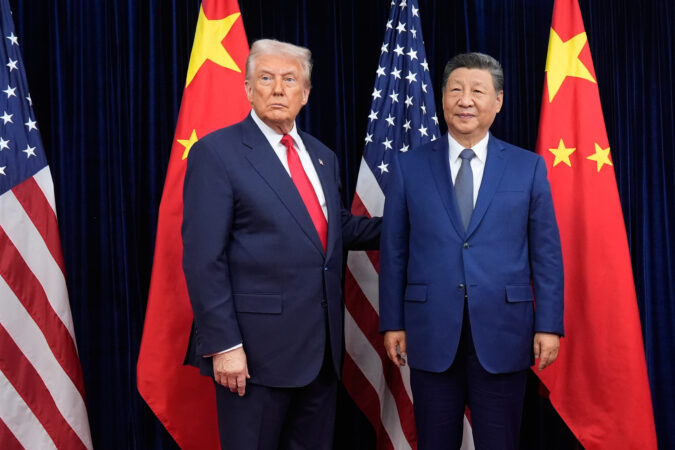
    WASHINGTON — President Donald Trump said Wednesday that he and Chinese President Xi Jinping discussed the situation in Iran in a wide-ranging call that comes as the U.S. administration pushes Beijing and others to isolate Tehran.

    Trump said the two leaders also discussed a broad range of other critical issues in the U.S.-China relationship, including trade and Taiwan and his plans to visit Beijing in April.

    “The relationship with China, and my personal relationship with President Xi, is an extremely good one, and we both realize how important it is to keep it that way,” Trump said in a social media posting about the call.

    The Chinese government, in a readout of the call, said the two leaders discussed major summits that both nations will host in the coming year and opportunities for the two leaders to meet. The Chinese statement, however, made no mention of Trump’s expected April visit to Beijing.

    China also made clear that it has no intention of stepping away from it’s long-term plans of reunification with Taiwan, a self-governing, democratic island operating independently from mainland China, though Beijing claims it as its own territory.

    “Taiwan will never be allowed to separate from China,” the Chinese government statement said.

    Trump and Xi discussed Iran as tensions remain high between Washington and Tehran after the Middle East country’s bloody crackdown on nationwide protests last month.

    Trump is now also pressing Iran to make concessions over its nuclear program, which his Republican administration says was already set back by the U.S. bombing of three Iranian nuclear sites during the 12-day war Israel launched against Iran in June.

    The White House says that special envoy Steve Witkoff is slated to take part in talks with Iranian officials later this week.

    Trump announced last month that the U.S. would impose a 25% tax on imports to the United States from countries that do business with Iran.

    Years of sanctions aimed at stopping Iran’s nuclear program have left the country isolated. But Tehran still did nearly $125 billion in international trade in 2024, including $32 billion with China, $28 billion with the United Arab Emirates and $17 billion with Turkey, the World Trade Organization says.

    Separately, Xi also spoke on Wednesday with Russian President Vladimir Putin.

    Xi’s engagement with Trump and Putin comes as the last remaining nuclear arms pact, known as the New START treaty, between Russia and the United States is set to expire Thursday, removing any caps on the two largest atomic arsenals for the first time in more than a half-century.

    Trump has indicated he would like to keep limits on nuclear weapons but wants to involve China in a potential new treaty.

    “I actually feel strongly that if we’re going to do it, I think China should be a member of the extension,” Trump told The New York Times last month. “China should be a part of the agreement.”

    The call with Xi also coincided with a ministerial meeting that the Trump administration convened in Washington with several dozen European, Asian and African nations to discuss how to rebuild global supply chains of critical minerals without Beijing.

    Critical minerals are needed for everything from jet engines to smartphones. China dominates the market for those ingredients crucial to high-tech products.

    “What is before all of us is an opportunity at self-reliance that we never have to rely on anybody else except for each other, for the critical minerals necessary to sustain our industries and to sustain growth,” Vice President JD Vance said at the gathering.

    Xi has recently held a series of meetings with Western leaders who have sought to boost ties with China amid growing concerns about Trump’s tariff policies and calls for the U.S. to take over Greenland, a Danish territory.

    The disruption to global trade under Trump has made expanding trade and investment more imperative for many U.S. economic partners. Vietnam and the European Union upgraded ties to a comprehensive strategic partnership last month, two days after the EU and India announced a free-trade agreement.

  • Why nobody really knows the scale of the U.S. housing crisis

    Why nobody really knows the scale of the U.S. housing crisis

    America faces a serious housing shortage, one that Moody’s estimates would take more than 2 million new homes to resolve.

    But over at Goldman Sachs, analysts put the number at 3 million. Zillow’s estimate tops 4 million, while Brookings projects 5 million, and McKinsey says 8 million. Meanwhile, congressional Republicans insist the shortfall is closer to 20 million.

    Then there are the economists who contend there’s no shortage at all.

    The disparate projections reflect the challenge of quantifying the nation’s housing needs, a puzzle that rests on assumptions about how much a home should cost, how many people it should hold, and how big a footprint it should have.

    With housing affordability a crucial political issue and increasingly out of reach for many Americans, determining the nation’s needs is not merely an academic exercise but is key to devising policies that will solve the problem.

    Vacancy rates and missing households

    The U.S. has 146 million homes, Census Bureau data show. Of those, 8.1 million are “doubled up” households, meaning people are sharing space with nonrelatives. Zillow’s housing estimate assumes most of those people would prefer having their own place. There also are 3.4 million vacant homes available to rent or buy, the real estate website says. So Zillow economists subtracted the number of available homes from the number of doubled-up households and concluded that the nation needs 4.7 million more homes.

    Several analyses zeroed in on two questions: How many homes should be vacant, and how many consumers have delayed striking out on their own because of the cost.

    Though it might seem counterintuitive, a healthy housing market needs vacancies. An empty property could signal it’s between tenants or buyers, for example, or under renovation. Or it could mean the owner is splitting time between properties; according to the National Association of Home Builders, more than 6 million homes — about 1 in 20 — are secondary residences.

    What constitutes a healthy level of vacancies is harder to define, as experts put it anywhere from 3% to 13%. After home construction cratered following the 2008 housing crash, vacancy rates slumped to the lowest level in nearly two decades, falling to less than 1% of owner-occupied dwellings and 5% of rental units. They have yet to fully recover.

    The optimal home number could be as simple as one for every household, plus a certain number of vacancies. But what if we don’t have an accurate count of households?

    When housing costs are prohibitive, adult children tend to reside with their parents longer; in 2023, 18% of adults 25 to 34 were living in a parent’s home, compared with 8% in the 1970s, according to a Pew Research Center report.

    For many economists, that suggests the equation should be: the number of existing households, plus the number of homes that should be vacant, plus the number of households that would naturally come into being if there was enough inventory to lower prices.

    Yet different researchers using this framework still came up with different answers for the housing shortage.

    Moody’s Analytics and PolicyMap say it would take 800,000 homes to reach the equilibrium of the U.S. housing market between 1985 and 2000. Add 1.2 million “pent up households,” those that haven’t formed yet, and the conclusion is the U.S. needs an additional 2 million homes.

    Brookings’s calculation aims to get back to the 2006 vacancy rate of more than 12%, when it was near its historic peak. It used a complex statistical model to tease out how much of the decline in household formation since then is due to home prices instead of other factors, such as young people having trouble finding jobs or marrying later. As a result, it concluded the U.S. needed 4.9 million more houses.

    Other analyses along these lines include Freddie Mac’s, which calls for 3.7 million more homes. Goldman Sachs analysts tried the “vacancies plus pent-up demand” approach, as well as a mathematical model to determine how many homes it would take to make ownership as affordable relative to income as it was in the 1990s. Both equations worked out to between 3 million and 4 million homes. McKinsey added up new households and vacancies, plus enough housing to address homelessness and replace overcrowded homes with more than one person to a bedroom, to get to 8.2 million.

    Envisioning an unconstrained market

    A 2022 congressional report took a different tack. Most analyses attempt to re-create some semblance of the housing market two, three or four decades ago. But Republicans on the Joint Economic Committee argued that the correct number is equal to the number of homes that developers would build had they had no regulatory constraints — no permitting or zoning rules that prohibit them from building what customers want.

    The Republicans’ estimate relied on the reasoning that the value of the land should be about 20% of the home cost. Anything higher would mean the market is artificially constrained; land becomes pricier when it is harder to build something on it. To bring prices in line with that in every U.S. county, they concluded the home shortage stood at 20 million.

    By their math, North Dakota and West Virginia have almost no housing shortage, while California is short 4.5 million homes. Eliminating zoning and building restrictions across the country’s hundreds of jurisdictions might be unfeasible, but they project that any substantial effort would lower prices. For example, they contend that building an additional 2.7 million homes could reduce prices enough to make ownership economically viable for nearly 5 million more consumers.

    “If we relaxed all regulations that concerned supply in every single market in the United States, this is how many homes you would have … . I do think this is the right way to think about how many homes we should have,” said Kevin Corinth, an economist who co-authored the report while he was a Senate staffer and now works at the American Enterprise Institute, a libertarian think tank. “If you really want to bring down home prices to the point where people can actually afford them, you’re going to have to build a lot more houses than people are suggesting.”

    Per capita spending

    Housing analyst Kevin Erdmann did some eye-popping math recently. Adjusted for inflation, per capita spending on housing construction has been falling as a fraction of personal consumption, dropping 23% since 1990. If such spending held to 1990 levels, he said, the U.S. would have an additional 40 million houses. “Almost all professional estimates of the housing shortage are ridiculously low,” Erdmann, who has written two books about the housing market, wrote on his Substack.

    He said the slowdown in construction spending indicates that people are living in smaller homes than they’d prefer because they had no choice, but he shies away from actually saying the country is 40 million homes short. Instead, based on aggressive assumptions about missing households and necessary vacancies, he says the country needs 15 million to 20 million.

    Maybe there’s no shortage at all

    Urban planning professors Kirk McClure and Alex Schwartz examined 900 U.S. metropolitan areas and found that only 19 had added more population than housing since 2000. Before the 2008 recession, they argued, developers built far too many houses, leaving room for underbuilding in some years since.

    “Yes, we have a shortage of units in the low-income price points, but not overall,” McClure said. He contends it would be far less costly for the government to help poor households rent or buy existing units than to build new ones. “The best housing program right now would be an increase in the minimum wage. You get people up to $20 an hour and suddenly life gets better — we can’t build our way out of this problem.”

    This view of the current housing supply transcends partisan lines, with some of the highest and the lowest estimates of the shortage coming from the right. Economists at the libertarian Cato Institute contend that housing production has kept up with population growth. Just because people want to live in big houses in expensive, densely populated areas, they assert, doesn’t mean there’s a shortage.

    “A shortage is literally people don’t have anywhere to live. That’s not what we have,” Norbert Michel, one of the Cato writers, said in an interview.

    In the end, the dispute doesn’t just come down to the choice of mathematical models, but varying interpretations of what a housing shortage even means.

    “If I have a hard time finding an apartment in the area of Washington, D.C., that I like, I can still move to Maryland and find something,” Michel said. “The idea that I’m just completely shut out of all my options and I can’t find any place to live, that’s what a shortage evokes. And the data doesn’t support that.”

    Erdmann views it differently: “There are 28-year-olds living with their parents that wouldn’t be if there were a house. If that’s not a shortage, I don’t know when you could use the word.”

  • Brothers of Renee Good, woman killed by immigration officer, call for action in Congress

    Brothers of Renee Good, woman killed by immigration officer, call for action in Congress

    WASHINGTON — The brothers of Renee Good, one of two U.S. citizens killed by federal immigration officers in Minneapolis, called on Congress to do something about the violence on American streets as a result of immigration operations, warning Tuesday that the scenes playing out are “changing many lives, including ours, forever.”

    Good, a 37-year-old mother of three, was shot and killed Jan. 7. Her death and that of another protester, Alex Pretti, just weeks later have sparked outrage across the country and calls to rein in immigration enforcement.

    Brothers Luke and Brett Ganger spoke during a hearing held Tuesday by congressional Democrats to highlight use-of-force incidents by officers from the Department of Homeland Security as they arrest and deport immigrants. The mood was somber as the brothers spoke, often comforting each other as they talked and listened to others speaking.

    Luke Ganger, speaking of the “deep distress” the family felt at losing their sister in “such a violent and unnecessary way,” didn’t specify what they wanted from Congress but painted his sister’s death as a turning point that should inspire change in operations such as those going on in Minneapolis.

    “The completely surreal scenes taking place on the streets of Minneapolis are beyond explanation. This is not just a bad day, or a rough week, or isolated incidents,” he said. “These encounters with federal agents are changing the community and changing many lives, including ours, forever.”

    The forum was put on by Sen. Richard Blumenthal (D., Conn.) and Rep. Robert Garcia (D., Calif.) to spotlight use-of-force complaints against Homeland Security officers tasked with carrying out President Donald Trump’s mass deportation agenda.

    Trump administration officials said Good tried to run over an officer with her vehicle. State and local officials in Minneapolis, as well as protesters, have rejected that characterization.

    The two brothers didn’t delve into the details of their sister’s death or what the administration has said about her. Instead, they spoke about her life.

    Luke Ganger said the most important thing the brothers could do was to explain to those listening “what a beautiful American we have lost. A sister. A daughter. A mother. A partner and a friend.”

    Brett Ganger shared some of the eulogy he had written for his sister’s funeral service. He compared her to dandelions that grow and bring beauty in unexpected places.

    “She believed tomorrow could be better than today. She believed that kindness mattered. And she lived that belief,” he said.

    The panel also heard from three other U.S. citizens who detailed their treatment by Homeland Security officers.

  • Jets hire former Eagles offensive coordinator Frank Reich as OC

    Jets hire former Eagles offensive coordinator Frank Reich as OC

    Frank Reich and Aaron Glenn are teammates again with the New York Jets, looking to turn around the fortunes of a frustrated franchise.

    Reich was hired Wednesday by Glenn as the Jets’ offensive coordinator — 30 years after they played together on New York’s 1-15 team. The former NFL and Stanford head coach replaces Tanner Engstrand, who agreed to part ways with the team last week after one season running the Jets’ offense.

    Amid a major coaching staff shakeup this offseason, the 64-year-old Reich gives Glenn an experienced play caller and veteran presence on the offensive side of the ball. The team hired first-time defensive coordinator Brian Duker last week to replace Steve Wilks, who was fired with three weeks left in the season.

    “Frank has a rare combination of experience, creativity, and calm under pressure,” Glenn said in a statement issued by the Jets.

    Reich met in person with Glenn and the Jets on Tuesday after the team also sat down with Darrell Bevell and Greg Roman, other finalists for the job. The team had video meetings last week with all three candidates, as well as with Ronald Curry and Lunda Wells.

    Reich went 4-8 as Stanford’s interim coach last season and was working in a senior adviser role for the Cardinal, who hired Tavita Pritchard as their coach in November. Reich was previously a head coach in the NFL for Indianapolis and Carolina.

    He played 14 years in the NFL as quarterback, including during the 1996 season with Glenn when the Jets under Rich Kotite had the fewest wins in franchise history.

    “He’s lived this game from every angle — as a quarterback in this league and as a coach who’s led offenses at the highest level,” Glenn said. “He is unique in his ability to see the game for what it is right now and adapt when appropriate. Frank understands offense and how to utilize the strengths of players.

    “I am looking forward to how he will help this team have success.”

    Reich went 40-33-1 with two playoff appearances in 4½ seasons as the head coach of the Colts before being fired in 2022. Reich, who was let go in midseason in back-to-back years, went 1-10 in a brief stint as Carolina’s coach in 2023. He previously had stops as the offensive coordinator for the San Diego Chargers (2014-15) and Eagles (2016-17), helping Philadelphia win the Super Bowl during the 2017 season.

    Reich spent last year as Stanford’s interim head coach, replacing Troy Taylor, and led the Cardinal to their most victories since 2020.

    With the Jets, Reich inherits an offense that finished last in the NFL in passing yards and 29th in both total yards per game and points per game this season. With Justin Fields benched after starting just nine games, the Jets are likely to add a veteran quarterback in free agency and perhaps target a potential future starter in the NFL draft.

    Fields and undrafted rookie Brady Cook, who started the last four games, are the only Jets quarterbacks under contract for next season. The team will have to make a major decision on running back Breece Hall, who is coming off his first 1,000-yard rushing season but is scheduled to be a free agent. Wide receiver Garrett Wilson, who was limited to seven games because of a knee injury after having 1,000 yards receiving in his first three years, is expected to be healthy and ready to play at the start of next season.

    Reich was a backup to former Jets and Cincinnati Bengals quarterback Boomer Esiason for three years at Maryland before becoming a starter during a season in which he led the Terrapins to a 42-40 victory over Miami after trailing 31-0 at halftime. He was a third-round draft pick of Buffalo in 1985 and spent most of his 10 years with the Bills as Jim Kelly’s backup.

    During the 1992 season, Reich stepped in for an injured Kelly during the playoffs and rallied the Bills from a 32-point deficit to beat the Houston Oilers in the wild-card round in what was then the biggest comeback in NFL history.

    Reich was the first quarterback in Carolina Panthers history in 1995 before joining the Jets the next season. He spent his final two years with Detroit. Reich began his coaching career as an intern with the Colts in 2006.

  • Trump plans to install a Christopher Columbus statue outside of the White House

    Trump plans to install a Christopher Columbus statue outside of the White House

    President Donald Trump is planning to install a statue of Christopher Columbus on White House grounds, according to three people with knowledge of the pending move, in his latest effort to remake the presidential campus and celebrate the famed and controversial explorer.

    The statue is set to be located on the south side of the grounds, by E Street and north of the Ellipse, two of the people said, although they cautioned that plans could change. The three people spoke on the condition of anonymity to speak on private discussions. The piece is a reconstruction of a statue unveiled in Baltimore by then-President Ronald Reagan and dumped in the city’s harbor by protesters in 2020 as a racial reckoning swept the country.

    A group of Italian American businessmen and politicians, working with local sculptors, obtained the destroyed pieces and rebuilt the statue with financial support from local charities and federal grant funding.

    Bill Martin, an Italian American businessman who helped recover the remnants of the original sculpture and organize a campaign to rebuild it, said the statue is expected to be transferred from a warehouse on Maryland’s Eastern Shore to the Trump administration in coming weeks.

    The White House declined to comment on its plans but praised the 15th-century explorer.

    “In this White House, Christopher Columbus is a hero,” spokesman Davis Ingle said in a statement. “And he will continue to be honored as such by President Trump.”

    As Columbus statues became something of a battleground in the broader tug-of-war over the nation’s history, Trump has repeatedly positioned himself as a staunch defender of a legacy he says has been dishonored by “left-wing arsonists.”

    Trump included Columbus in a 2021 executive order of historical figures for his proposed National Garden of American Heroes, showcasing those who embody “the American spirit of daring and defiance, excellence and adventure, courage and confidence, loyalty and love.”

    The Italian explorer is long celebrated for his voyage in 1492 to the Americas, opening up trade routes with Europe and setting the stage for colonization and enslavement. Some U.S. states now recognize Indigenous Peoples’ Day instead of Columbus Day; Joe Biden in 2021 became the first president to mark the holiday.

    Trump campaigned in 2024 on promises to celebrate Columbus Day, and in October he signed a presidential proclamation to recognize Columbus as “the original American hero” and mark the annual holiday.

    “We’re back, Italians. Okay? We love the Italians,” Trump said after signing the proclamation. He later said the move should help the Republican Party in the upcoming midterm elections.

    “The Italian people are very happy about it. Remember when you go to the voting booths, I reinstated Columbus Day,” Trump told reporters at the White House last month.

    Meanwhile, his administration pushes to scrub federal institutions of “corrosive ideology” recognizing historical sexism and racism and to leave its mark on the nation’s capital in a sweeping effort that has drawn complaints and lawsuits. The president rapidly demolished the East Wing annex last year to build his planned $400 million ballroom; paved over the Rose Garden to make room for a patio; and has imposed his vision on numerous internal fixtures and rooms, including the Lincoln Bathroom.

    Historic preservationists have called on Trump to go through federal review panels before making further changes to the White House grounds.

    In his first term, Trump decried the destruction of Columbus statues across the country. After administration officials learned about efforts in 2020 to rescue and preserve Baltimore’s statue, they asked to obtain it for possible installation on federal grounds, but the statue was not yet ready, said Martin, the businessman.

    Martin estimated that he and his allies raised and spent more than $100,000 for their recovery and restoration efforts, which he said represented inspiration to the Italian American community.

    “It’s not about Columbus ‘discovering America’ … it’s about the Italian immigrants who came here and looked to Columbus as a hero,” Martin said.

    Nino Mangione, a Republican member of the Maryland House of Delegates, also was involved in efforts to recover the statue, and he praised Trump’s plan to install it at the White House.

    “It is such an honor for the Italian American community,” Mangione wrote in an email. “This proves that gangs, thugs, and people of that ilk don’t control things by mob rule. … in America the people rule and our voices are heard.”

    Columbus’s planned D.C. arrival comes on the heels of the administration’s reinstallation last October of a Confederate general that protesters had toppled and torched five years prior.

    Albert Pike is now back on his plinth in a small federal park about a mile east of the White House, the only Confederate leader memorialized with an outdoor statue in Washington.

  • Jalen Hurts leads NFC past AFC in high-scoring Pro Bowl Games flag football exhibition

    Jalen Hurts leads NFC past AFC in high-scoring Pro Bowl Games flag football exhibition

    SAN FRANCISCO — Jalen Hurts said the flag football played in the Pro Bowl Games doesn’t have the negative connotation that it may have once had.

    If anything, Hurts believes the NFL’s all-star exhibition is as competitive as ever.

    “It is like being a kid again but it also turns competitive with everything’s that at stake,” the Eagles quarterback said after throwing three touchdown passes in the NFC’s 66-52 win over the AFC on Tuesday night. “Even with the (2028) Olympics, there’s a lot of guys that have a great passion to go out there and represent.”

    There was plenty of representation from both sides in the high-scoring event, which was played indoors this year at the Moscone Center — a convention center near downtown San Francisco — before a crowd of 3,100.

    It was the first time the Pro Bowl was held during Super Bowl week, and the host city was well represented, with 49ers greats Jerry Rice and Steve Young — who have a combined 20 Pro Bowl selections — serving as head coaches. The Super Bowl is Sunday at the 49ers’ home, Levi’s Stadium in Santa Clara.

    Dak Prescott of the Cowboys wore a bucket hat and passed for four touchdowns, while the Lions’ Jared Goff threw two TD passes.

    For the AFC, the Bengals’ Joe Burrow threw for a touchdown and was credited with a passing and receiving score on the same play when he and Dolphins running back De’Von Achane pulled off a trick play in the first half.

    It was a good day all around for Burrow and his Bengals teammates.

    Cincinnati wide receiver Tee Higgins caught touchdown pass from Burrow’s backup, Joe Flacco, while receiver Ja’Marr Chase had a highlight on defense — a one-handed interception of Goff that he returned 50 yards for a TD.

    Browns rookie quarterback Shedeur Sanders started for the AFC and threw for 152 yards and two touchdowns. Sanders was a late addition to the event as the replacement for Drake Maye, who’s preparing to lead the Patriots in the Super Bowl.

    Broncos tackle Garrett Bolles got in on the fun, catching one of Sanders’ TD throws.

  • PepsiCo to cut Doritos, Lay’s prices as much as 15% to boost demand

    PepsiCo to cut Doritos, Lay’s prices as much as 15% to boost demand

    PepsiCo Inc. is cutting prices by as much as 15% for key brands, including Lay’s and Doritos, in a bid to lift sales by offering more affordable products.

    The New York-based snacks and beverage company said reductions on suggested retail prices for marquee items are rolling out this week ahead of Sunday’s Super Bowl, while keeping sizes the same.

    “We’ve spent the past year listening closely to consumers, and they’ve told us they’re feeling the strain,” Rachel Ferdinando, chief executive of PepsiCo Foods U.S., said in a statement. The company had said in December it planned to reduce prices on key brands.

    Shares of PepsiCo closed up 4.9% on Tuesday. The stock had gained 8.1% this year through Monday’s close, outpacing the 1.9% increase in the S&P 500.

    PepsiCo has struggled to grow its sales in North America in recent years. The company, like many of its peers in the food space, raised prices during the pandemic and its aftermath to offset high inflation. Now those increases are colliding with a stretched consumer, weighing on demand. Other food companies, including General Mills Inc., have taken steps to lower prices recently.

    The company has also been pressured by Elliott Management Investment, which took a $4 billion stake in the company last year, to revamp its product lineup and make key brands more affordable. The soda maker reached an agreement to do just that with the investor in December, pledging to reduce its U.S. product lineup and cut some prices.

    PepsiCo chief executive Ramon Laguarta said on a call with analysts that the cuts would be “surgical” and designed to target places where high prices have caused middle and low-income consumers to pare back their purchases. Laguarta said the company would also be gaining shelf space at grocery stores as its products became more affordable and sales volume increased.

    The company said in prepared remarks that the lower prices would be offset by accelerated cost-reduction efforts, reducing head count, closing three plants, and consolidating several manufacturing lines, with “additional actions planned for the near future.” PepsiCo said it would pare down its product portfolio by 20% in the first half of this year.

    It’s also hoping to attract more consumers by beefing up its offerings of healthier, “clean label” products made with lower sugar and more protein and fiber. The company already overhauled its Lay’s potato chips packaging, to be followed later by its Tostitos and Quaker brands. It plans to revamp its Gatorade sports drink brand, too, including introducing a low-sugar version with no artificial colors or flavors.

    Laguarta said the company would make permanent its “NKD” artificial color-free versions of some Doritos and Cheetos.

    On Tuesday, the company also reported better-than-expected fourth-quarter profit, buoyed by strong international demand, and announced a $10 billion share buyback program through February 2030. It reaffirmed its fiscal year 2026 guidance from December, saying it expected organic revenue to increase between 2% and 4%.