Category: Wires

  • Victoria Cruz, veteran of the trans rights movement, dies at 79

    Victoria Cruz, veteran of the trans rights movement, dies at 79

    Victoria Cruz, a matriarchal figure in the New York transgender community who was at the Stonewall Inn in 1969 when a police raid set in motion the gay liberation movement, and who later worked as an advocate for survivors of antitrans violence, died on June 25 in New York City. She was 79.

    Her partner, Charles Wright, confirmed the death, in a hospital, and said the cause was liver cancer.

    Ms. Cruz spent 17 years working for the New York City Anti-Violence Project, which provides counseling and other services for LGTBQ+ and HIV-affected survivors of violence. There, she focused on domestic abuse, but her role in the organization — and in the community — extended far beyond her official duties.

    She understood the intersectional threats that trans people faced in areas like housing discrimination and workplace harassment — expertise that made her a unique resource to thousands of trans New Yorkers.

    “People would come into the office and just ask for Miss Vicky,” Catherine Shugrue-Dos Santos, a former deputy executive director at the organization, said in an interview. “They wouldn’t give their names; they wouldn’t talk to anybody else. She really had the trust of the community.”

    She was especially effective because she came to the group as a survivor herself: In 1996, while working at a nursing home in Brooklyn, she was repeatedly harassed and assaulted by four co-workers.

    “I was very angry. Very angry,” she told Vanity Fair in 2017. “The worst part of it is that I couldn’t feel the ground beneath me.”

    One day she brought a knife to work, intent on fighting back, but then thought better of it. A friend suggested she contact the Anti-Violence Project, which at the time was run by Christine Quinn, who later became the first female and first openly gay speaker of the New York City Council.

    The group helped her file police reports and led protests outside the nursing home. Eventually, two of the four co-workers were convicted of harassment — one of the first times that someone was held legally accountable for antitrans violence in New York State.

    Quinn brought Ms. Cruz on as a volunteer, then hired her to manage the front desk. The job also had her answering the organization’s hotline, a task that connected Cruz with countless at-risk New Yorkers.

    “She was perhaps the strongest person I have ever met,” Quinn said in an interview. “She was part of the birth of the modern LGBT rights movement in New York, and therefore across the country. She was someone who had survived a terrible sexual assault and transformed that horrible moment into beaconlike strength that you felt whenever you were around her.”

    Ms. Cruz was a central figure in David France’s 2017 documentary, The Death and Life of Marsha P. Johnson, about the 1992 death of a trans activist that police ruled a suicide, but many, including Ms. Cruz, suspected was murder.

    The documentary tracks her search for answers and ends with her conclusion that Johnson was murdered by the mafia.

    Ms. Cruz did not know Johnson, but their lives overlapped. Both were at the Stonewall Inn on the night of June 28, 1969, when police conducted one of their routine raids at the bar. This time, though, the largely transgender clientele inside fought back, and a riot ensued.

    Ms. Cruz had been outside with her boyfriend, one of the bar’s bouncers. As the violence escalated, he told her to go home. When she returned in the morning, she found the bar in ruins. She grabbed a beer sign and other memorabilia, and also took home the bar’s dog, Rusty.

    The Stonewall riot sparked the beginning of the gay liberation movement, which had a strong trans presence. Johnson and another well-known community figure, Sylvia Rivera — a friend of Ms. Cruz’s — became particularly active, ensuring that trans people had a place within the movement.

    Ms. Cruz played a quieter role, but over time she became a central figure as well — and a recognizable one, with her homemade outfits topped with a headband adorned with feathers and cowrie shells, in honor of her heritage as a descendant of the Taíno people of Puerto Rico.

    “She was an elder in that community,” France said in an interview. “She was a transgender woman of color who had lived into old age, which is so rare.”

    Victoria Cruz was born on Sept. 19, 1946, in Guánica, on Puerto Rico’s southwestern coast. When she was 4, her family moved to the Red Hook section of Brooklyn, where her father worked as a longshoreman; her mother was a seamstress.

    She identified as female from an early age, and her family was strongly supportive. Her mother made her dresses, and her father, who affectionately called her “El Negro,” on account of her dark skin, switched to using the word’s feminine form, “La Negra.”

    She studied cosmetology in high school and worked as a model, but soon found both routes closed to her because she was trans.

    After high school, she found a doctor in Coney Island who provided her with the medical treatment to help her transition.

    Through the 1970s she was a sex worker and a dancer in West Village clubs. She also developed an addiction to crack cocaine, though she eventually became sober.

    She enrolled at Brooklyn College in 1978 and graduated four years later with a degree in theater.

    But she continued to struggle financially, and ended up on public assistance. The program required her to work, which is how she ended up on the staff at the Brooklyn nursing home.

    Her survivors include Wright and her sister Hedye Cruz. A complete list of survivors was not immediately available.

    In 2012, Ms. Cruz received the National Crime Victims’ Service Award from the U.S. Department of Justice.

    In an interview for the Anti-Violence Project in 2022, Ms. Cruz explained why she committed her life to counseling.

    “If you have been in that situation — everybody’s situation is different but similar,” she said. “If you have the empathy to help out people, that’s half the ordeal. Just having the empathy and letting them know that you’re there to help them, not to judge them.”

    This article originally appeared in the New York Times.

  • Supreme Court’s dramatic moves will reshape elections — and give the GOP a midterm boost

    Supreme Court’s dramatic moves will reshape elections — and give the GOP a midterm boost

    The Supreme Court dramatically reshaped elections in recent months, sharply limiting a law that has been a cornerstone of minority voter empowerment, allowing states to gerrymander maps, and loosening campaign finance regulations.

    The conservative majority says the series of decisions helps correct an election system that has run afoul of the Constitution. In rulings, they cite ideas they have long championed — undoing programs that advantage minorities, allowing partisan redistricting, and eliminating restrictions that impinge on free speech rights.

    Most of the rulings, which have rolled out as the country heads toward pivotal midterm elections, benefit Republicans. That’s led critics — starting with some of the court’s liberal justices — to complain the court’s conservative majority has gone beyond enunciating broad legal principles and put a thumb on the scale in upcoming races.

    What is clear is that the Supreme Court has tilted this fall’s electoral landscape toward Republicans as they struggle with voter discontent.

    In one of the most consequential rulings of the term, the conservative majority in April significantly weakened the Voting Rights Act’s last pillar, which required states to draw congressional districts to ensure the voting power of minorities under certain circumstances. In its opinion, the court said the protection was no longer needed by a country that has made “great strides in ending entrenched racial discrimination.” That decision touched off a push by Republican-controlled states to eliminate districts mostly held by Black Democrats across the South.

    Other rulings cleared the way for specific voting maps preferred by Republicans. And one loosened campaign finance limits — a change that brings the most immediate boost to Republican candidates.

    Democrats notched few outright victories, but they avoided some outcomes that they would have viewed as particularly disruptive. In one case, the court allowed states to continue to tally mail-in ballots even if they arrive after Election Day. Mail voting in recent years has become more popular among Democrats than Republicans.

    Legal experts said the justices’ intervention amid an election cycle and the pace at which the court is moving to implement changes that largely benefit one party is all but unprecedented in recent years.

    Richard L. Hasen, an expert in election law and political science at UCLA, said Chief Justice John G. Roberts Jr., who is known for his slow, methodical approach, lately appears to be a justice “in a rush.”

    “The court has been moving toward weakening voting rights, freeing up campaign money, and letting partisan actors run loose — that’s not a new trend,” Hasen said. “But the speed with which things are happening is much faster.”

    The decisions represent a dramatic coda to more than a decade of work by the justices, who have rewritten election law under Roberts in ways that one analysis found have pushed it to the right of any other court over the past 70 years.

    Republicans face an uphill battle in November’s contests because the president’s party historically loses seats in the midterms, and Trump’s low approval rating, the high price of gas, and the unpopular conflict in Iran have been a drag on GOP candidates.

    Democrats have a shot at taking the House and Senate, but the Supreme Court’s moves have erected a higher hurdle. Today, Republicans control 219 seats to Democrats’ 212 in the House, while Republicans enjoy a more solid advantage in the Senate, with 53 seats to 47.

    Earlier this year, the nonpartisan Cook Political Report had rated 217 House seats out of 435 as leaning Democratic, and projected Democrats needed to win only one of the tossups in November to capture the House.

    Cook recalibrated after the Supreme Court’s landmark Voting Rights Act ruling sparked the push to redistrict. It now lists 206 House seats as leaning toward Democrats, meaning Democrats need to win at least 12 of 18 tossups to gain control.

    “The fundamental question for 2026 is whether or not the structural firewall that Republicans have built up around their majority is strong enough to withstand what is shaping up to be a punishing political environment,” said Amy Walter, the publisher and editor of Cook.

    Democrats have issued bitter recriminations over the rulings as polling shows many in their base believe the court’s rulings are motivated by politics.

    “This is the most partisan Supreme Court in the history of the nation,” Sen. Ruben Gallego (D., Ariz.) recently posted on X.

    Roberts publicly addressed such criticisms at an appearance in early May, denying politics was a factor in the court’s rulings.

    “I think at a very basic level, people think we’re making policy decisions. … We’re saying we think this is what things should be as opposed to this is what the law provides,” Roberts said. “I think they view us as truly political actors, which I don’t think is an accurate understanding of what we do.”

    In its latest ruling, the court struck down limits on political parties spending money in coordination with candidates, finding they violated parties’ constitutional free-speech rights. Justice Brett M. Kavanaugh, writing for the majority, said the ruling ”treats all political parties equally” and will allow them to “participate more freely and compete more fully in the political process.”

    It’s unclear which party will benefit long term, but there’s one clear winner for the midterms: the GOP.

    Republican party committees have amassed a more than $100 million advantage over their Democratic counterparts, some of whom have struggled to raise money.

    Several of the high court’s other rulings have centered around how officials split their states into voting districts, creating maps that can give either political party an edge.

    In one of its earlier cases of the term, the high court greenlit Texas Republicans’ unusual move to redraw the state’s congressional maps between censuses, an effort that touched off a nationwide redistricting war. The decision could net the GOP up to five additional congressional seats in Texas alone.

    The justices later blocked New York from redrawing the district of Republican Rep. Nicole Malliotakis. That reversed the mandate of a state court, which had ordered officials to include more Black and Latino voters, a change that could have likely flipped the seat to Democrats.

    And in May, the court rejected a longshot emergency bid by Virginia Democrats to revive a gerrymandered voting map that would have allowed the party to pick up as many as four seats in the House in November.

    In its most sweeping decision of the term related to voting, the high court pared back a key part of the Voting Rights Act known as Section 2 that required states to draw maps that help minority communities elect candidates of their choice under certain circumstances. In the process, the court struck down a second Black-majority district in Louisiana, saying it was an unconstitutional racial gerrymander.

    With the help of the ruling, Republicans have drawn 16 districts with more favorable lines since last year, compared to six for Democrats.

    In the wake of the VRA ruling, a complicated fight over Alabama’s congressional map has raised questions about what room remains for minority communities to pursue claims that discriminatory redistricting violates the Constitution, possibly signaling even greater gains for Republicans.

    In June, the high court allowed Alabama to revert to a map with one Black-majority congressional district instead of two, a move that will likely flip a Democrat-controlled seat to the GOP.

    The decision came over a lower court finding that Alabama intentionally discriminated against the state’s Black voters in creating the map and then defied a court order to remedy the racial bias. In its ruling, the high court’s majority rejected that finding, citing “our colorblind Constitution.”

    The ruling was notable because the conservative majority held its Voting Rights Act ruling did not disturb the Constitution’s protections for minorities from “present-day intentional racial discrimination regarding voting.”

    But voting rights and minority advocates said the Alabama ruling indicates that protection might be a dead letter. Deuel Ross, director of litigation at the Legal Defense Fund, which advocates for racial justice, said in a statement he worries minority groups will lose political power.

    “The Supreme Court’s decision gives cover to Alabama and others to deliberately and openly discriminate against Black voters without fear of any consequence,” Ross said.

    Not every case went Republicans’ way. The Supreme Court dealt the GOP a setback when it upheld a Mississippi law that allows mail-in ballots to arrive up to five days after polls close. The ruling could have affected 13 other states with similar laws. Voting by mail is particularly popular with Democrats.

    Nevada Secretary of State Cisco Aguilar (D), who oversees elections in his battleground state, praised the Watson v. Republican National Committee case on mail ballots, but said the decision meant less in light of other rulings this term.

    “The fact that they destroyed the Voting Rights Act is detrimental to the fundamental foundation of our democracy,” he said. “Yes, they may have done something with Watson, but in the totality of it, the Supreme Court has become politically active in the overall administration of our election.”

    The clearest win for Democrats came when the court allowed California to gerrymander its voting maps to give Democrats up to five additional House seats. The California push came in response to Texas’ move to redraw its maps.

    The court’s liberals and some legal scholars have not just taken issue with the substance of the court’s decisions, but how the justices have arrived at them.

    The Supreme Court has regularly invoked the Purcell principle, a doctrine that holds federal courts should not change election law too close to elections because it can create confusion among voters.

    In the Texas redistricting case in December, with primary elections a few months away, the conservative majority referenced Purcell in allowing the use of redrawn maps favoring Republicans. A lower court had blocked the maps.

    “The District Court improperly inserted itself into an active primary campaign, causing much confusion and upsetting the delicate federal-state balance in elections,” the majority wrote of the primary scheduled for March.

    But in April during an active primary, the conservative majority struck down Louisiana’s second majority-Black congressional district in the Voting Rights Act decision. The seat is held by a Democrat.

    The decision came after thousands of voters had already returned mail-in ballots in the contest. The Supreme Court then expedited the ruling, paving the way for Louisiana Republicans to quickly redraw the district to favor Republicans.

    Liberal Justice Ketanji Brown Jackson issued a sharp rebuke, saying the conservative majority was willing to employ the Purcell principle in the Texas case when it favored Republicans, but ignore it in Louisiana when it did not.

    “The Court unshackles itself from both constraints today and dives into the fray,” Jackson wrote in a dissent. “And just like that, those principles give way to power.”

    Conservative Justice Samuel A. Alito Jr. shot back in a concurrence that the claim the court was acting in a partisan manner was “a groundless and utterly irresponsible charge” and it needed to act to prevent an election in Louisiana from going forward with an unconstitutional map.

    The court’s liberals have also accused conservatives of misusing Purcell in the Alabama and New York redistricting cases.

    Legal scholars differ over whether the court was employing Purcell in an evenhanded fashion. Edward B. Foley, who specializes in election law at Ohio State University, said the rulings were hard to square.

    “They may think they are being principled and consistent, but it sure doesn’t look that way,” he said of the court’s use of Purcell. “This principle seems to favor Republican partisan results.”

    Derek Muller, a Notre Dame law professor who specializes in election law, said he saw a legal logic to the court’s moves.

    “The Supreme Court is stepping back from cases in Alabama and Louisiana. It’s not issuing a rule to alter the rules of the election,” Muller said. “It’s allowing the legislatures to issue the rules they want.”

    The way the court handled the New York redistricting case also became an issue of contention. Liberal Justice Sonia Sotomayor accused the conservative majority of carrying out an “unprecedented” power grab by ruling before a state Supreme Court had a chance to weigh in.

    Sotomayor said the move trampled precedent against federal courts intervening in state court cases while litigation is still ongoing.

    “The Court’s 101-word unexplained order can be summarized in just 7: ‘Rules for thee, but not for me,’” Sotomayor wrote.

    Alito wrote in a concurring opinion that the intervention was necessary because New York courts approved a map that “blatantly discriminates on the basis of race.”

    Justin Riemer, former chief counsel at the Republican National Committee, rejected the notion the court is making partisan rulings, saying it had issued rulings favoring Democrats in recent years.

    He highlighted decisions dismissing a challenge to Trump’s 2020 election loss and rejecting arguments put forward by Republicans in 2023 that state legislatures could set election rules without interference from state courts.

    “I really don’t think that they’re in the tank one way or the other,” said Riemer, president of the group Restoring Integrity and Trust in Elections. “I think they have a judicial philosophy that they apply … that works for the types of claims we bring.”

    The redistricting and campaign finance decisions may provide immediate benefits to Republicans, but they may not last for long, said New York University law professor Richard Pildes.

    Democrats will have opportunities to redraw congressional districts in states they control after the midterms and political parties typically adapt to campaign finance rulings to keep up with their opponents, he said.

    Democratic anger over the decisions is intense, and it could fuel efforts to ban mid-decade redistricting, limit partisan gerrymandering, and pack the Supreme Court with more justices, he said. One Democratic congressman went so far as to introduce articles of impeachment against Roberts.

    “This is a real sort of avalanche that’s kind of been unleashed,” Pildes said.

    Legal experts said the court’s decisions this term are of a piece with its rulings on voting rights and campaign finance over the last 15 years.

    Those include the 2010 Citizens United decision that loosened campaign finance restrictions on corporations and unions, the 2013 Shelby County ruling that knocked down a section of the Voting Rights Act that required states with a history of racial discrimination to get federal pre-clearance to change voting laws, and the 2019 Rucho decision that found federal courts could not hear partisan gerrymandering claims.

    Guy-Uriel Emmanuel Charles, a Harvard law professor who focuses on political power and race, said regardless of which party benefits, this term’s cases could supercharge the era’s bare-knuckle politics.

    “This Court is sending a clear message: It will not impose many limits,” Charles wrote in an email. “The Court is incentivizing political parties to push the boundaries as far as possible to gain an advantage.”

  • Justice Department defends dropping charges against Indian billionaire

    Justice Department defends dropping charges against Indian billionaire

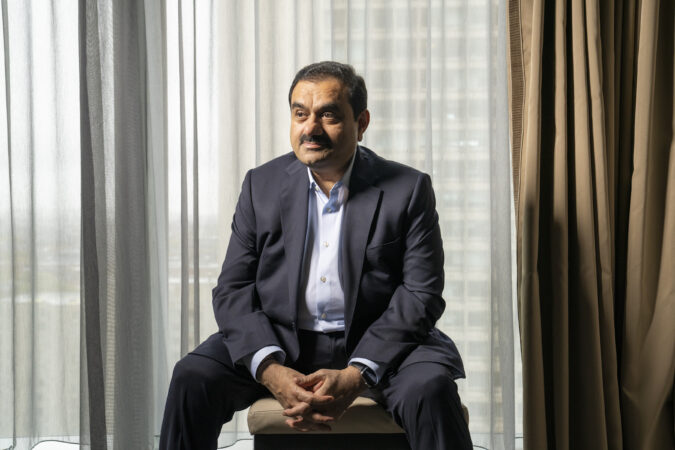
    The Justice Department on Saturday forcefully argued that an offer from India’s richest man, Gautam Adani, to invest billions of dollars in the United States played no role in the department’s decision to abandon criminal charges against him.

    In a letter filed Saturday, Trent McCotter, the principal associate deputy attorney general, defended the Justice Department’s decision after a federal judge demanded that the government explain its move. McCotter accused people within the department of leaking to media outlets about the case and acting “unethically.”

    The New York Times reported in May that Robert J. Giuffra Jr., a lawyer for Adani, had met privately with Justice Department officials to argue why the case should be abandoned. He asserted that prosecutors lacked basic evidence, and said that Adani could invest $10 billion in the United States and create tens of thousands of jobs, if the charges were dropped.

    McCotter appeared to acknowledge the existence of such an offer, but said that the decision to end the criminal case had been reached before the offer was made.

    “Before that topic first arose, I had already firmly concluded I would seek dismissal of the securities charges no matter what,” McCotter wrote in a letter to Judge Nicholas G. Garaufis of the Eastern District of New York.

    McCotter assailed Justice Department lawyers, current or former, whom he accused of leaking information in hopes of preventing a flawed case from being dismissed.

    Giuffra declined to comment. The Justice Department did not respond immediately to a request for comment.

    Adani, an industrial titan in India and a close ally of Prime Minister Narendra Modi, was indicted along with seven co-defendants in November 2024, in the last weeks of the Biden administration. Federal prosecutors in Brooklyn said that he had paid hundreds of millions of dollars in bribes to Indian officials to secure lucrative solar energy contracts for his company, Adani Green Energy.

    Although the bribes took place in India, Adani and his co-conspirators were subject to American law because his company had sought investments from people in the United States, prosecutors said at the time.

    Adani’s lawyers and McCotter have vigorously disputed that reasoning. On Saturday, McCotter wrote that no harm was done to U.S. investors and that the case was fundamentally about Indians bribing other Indians, which the Justice Department had no interest in litigating.

    McCotter wrote that if someone searched for the word “India” in the indictment, it would appear more than 200 times.

    Yet the trajectory of the case against Adani — particularly the investment proposal — has highlighted the highly transactional approach to justice during President Donald Trump’s second term.

    In May, days after federal prosecutors wrote that they had chosen “not to devote further resources” to the criminal case, multiple Justice Department lawyers withdrew from the case, signaling internal disagreement over the move.

    The next month, Sens. Elizabeth Warren (D., Mass.) and Richard Blumenthal (D., Conn.) wrote in a letter to Todd Blanche, the acting attorney general, that the department’s decision “gives the appearance that the DOJ is an equal partner in corrupt behavior.”

    Federal prosecutors cannot unilaterally decide to end a case. Garaufis, who will ultimately decide whether to drop charges, ordered prosecutors to provide a more detailed explanation for their decision.

    Judges have little ability under federal law to stop the government from abandoning criminal cases. But experts say that increasingly, under Trump, judges have scrutinized the rationale behind such decisions.

    After the Justice Department in 2025 moved to dismiss federal bribery charges against Eric Adams, then the mayor of New York City, the judge overseeing the case, Dale E. Ho, called the government’s rationale — that the case was harming Adams’ ability to help with Trump’s immigration crackdown — “unprecedented and breathtaking in its sweep.”

    On Saturday, McCotter chided Garaufis for what he called a “judicial inquisition.” Such queries, he argued, risked exposing “privileged internal debates” within the Justice Department.

    This article originally appeared in the New York Times.

  • Trump administration rolls back dozens of gun regulations

    Trump administration rolls back dozens of gun regulations

    The Trump administration is scrapping more than three dozen firearms regulations, abandoning a crackdown on illegal sales, restoring gun rights to some people with mental illness, and loosening oversight of private weapons transactions.

    The drastic retrenchment at the Bureau of Alcohol, Tobacco, Firearms, and Explosives, the federal agency responsible for enforcing the nation’s gun laws, was not entirely unexpected: President Donald Trump campaigned as a champion of gun rights.

    In the view of critics and even some ATF veterans, the agency, in closely mirroring the demands made by gun owners and manufacturers to lighten their regulatory burden, is enacting changes at the expense of public safety. The moves, they worry, come as the bureau has already been weakened, with hundreds of its officials diverted to immigration enforcement.

    Proponents of the changes point out that some of the reversals would return regulations to what they were only a few years ago, before President Joe Biden took office. After a series of deadly mass shootings, Biden signed into law gun control measures, ending nearly three decades of gridlock over whether and how to regulate firearms.

    The divisiveness illustrates the complicated landscape for gun policy.

    “With the Biden regulations that we got and put in place, we advanced the ball,” said Kris Brown, the president of the Brady Campaign to Prevent Gun Violence, one of the country’s biggest gun control organizations.

    But the Trump administration’s approach “takes us back 100 years,” she said. “It’s really decimating ATF’s ability to regulate this industry.”

    A White House official said the administration’s policies reflected Trump’s commitment to ensuring that Americans could exercise their Second Amendment rights, accusing the Biden administration of bypassing Congress and using the regulatory process to restrict gun rights.

    Mark Oliva, a spokesperson for the National Shooting Sports Foundation, the firearms industry’s trade association, said the changes were meant to clarify gun regulations.

    “We want clarity to know how we’re going to be able to conduct business,” he said, “to be able to produce and to be able to sell firearms in accordance with the laws and regulations that govern our industry.”

    Already, the administration has done away with major policies, including a zero-tolerance approach toward gun dealers who repeatedly broke the law. The more than three dozen rules that it has moved to eliminate would raise the legal threshold for revoking a dealer’s license; extend gun rights to buyers who had faced restrictions because of mental illness or inability to manage their own finances; and end extra scrutiny of stabilizing braces, gun accessories that have been used in mass shootings to lethal effect.

    The administration is now targeting gun regulations that Democrats have passed at the state and local levels. It has challenged bans on semiautomatic rifles in Colorado, the District of Columbia, and Virginia. On Wednesday, it sued California for its restrictions on the sale of Glock and Glock-style handguns, and Virginia for limits on the sale of semiautomatic rifles, hours after both laws went into effect.

    Since his first run for office, Trump has positioned himself as an ardent supporter of gun rights. In the run-up to the 2024 election, he vowed to be “the best friend gun owners have ever had in the White House.” Days after being inaugurated, he signed an executive order instructing the attorney general to scrutinize what he described as “ongoing infringements of the Second Amendment rights of our citizens.”

    By May 2025, the ATF had overturned its “zero-tolerance” policy, which had empowered its inspectors to revoke the licenses of federal gun dealers who were known to have broken the law. Pam Bondi, then the attorney general, said it had “unfairly targeted law-abiding gun owners and created an undue burden.” The policy increased the chances that dealers who had falsified business records, skipped background checks, or otherwise sold guns to people prohibited from owning them would face consequences. The agency ultimately revoked more than 600 licenses. But critics say that the new standards seriously curb the agency’s ability to do so.

    It is a part of a broader bid across government to enact changes in line with the president’s directive. The Veterans Affairs Department in February removed the requirement that veterans who require a fiduciary to manage their benefits be prohibited from buying firearms, and veterans who were previously reported to the FBI were being removed from its list. The Health and Human Services Department slashed funding for research into gun violence prevention. The U.S. Postal Service has proposed allowing people to ship handguns in the mail, upending a nearly century-old law.

    In realigning the Justice Department’s priorities to bolster Trump’s agenda, the agency said in December that it would balance defending the right to own a gun with ensuring the public’s safety.

    But when the ATF announced in April nearly three dozen changes, the administration’s own analyses acknowledged the pitfalls to public safety.

    The ATF’s director, Rob Cekada, defended the agency’s approach. In a statement, he said that it reflected an effort to be as explicit as possible about “the full range of costs and benefits, including even remote scenarios.”

    “This was an honest attempt to fully and transparently inform the public and is exactly the kind of analysis the comment period exists to test,” he said.

    In unveiling more changes on Friday, including eliminating fingerprinting requirements for certain firearms applications, Cekada again asserted that the agency was committed to public safety, pointing to a news release that heralded how its shift in priorities had led to the seizure of nearly 50,000 firearms and the handling of nearly 950,000 gun trace requests. Still, the data is far from a complete picture because it does not reflect all the policies the Trump administration has rolled back and because many of its proposals have yet to go into effect.

    Todd Blanche, the acting attorney general, in announcing the proposals in April, said that the moves struck a careful balance between the interests of the gun industry and gun owners, as well as public safety. “For too long, regulations were written without any real understanding of how firearms businesses operate, how lawful gun owners actually handle their firearms, or what truly improves public safety,” he said.

    One proposed change allowing more people with a history of mental illness to have a gun would mean that the public safety risk could range from minimal to considerably greater, “up to and including potential mass casualty events,” according to a cost analysis by the agency. For instance, people involuntarily committed to a mental health institution would still be barred from owning a gun, whereas those who voluntarily enter those facilities would not. The rule also seeks to extend the Veterans Affairs Department’s policy to ensure that all Americans unable to manage their financial affairs, not just veterans, are not automatically prohibited from buying a gun.

    In the analysis of another proposal, seeking to undo a Biden-era rule intensifying scrutiny of the use of stabilizing braces, the agency acknowledged that the gun accessory to create “dangerous, easily concealed weapons would pose an increased public safety problem.”

    The agency is also proposing a higher bar to revoke a federal gun dealer’s license, instead requiring evidence that the dealer knew that it was violating the law. The agency said in its analysis that it expected the number of federal firearms licenses it revoked to drop “considerably” both under the new rule and “shifting enforcement priorities.”

    Another rule would end the so-called gun show loophole, which required background checks for gun shows and certain private sales as a way to crack down on straw purchasers, or people who illegally buy guns on behalf of another.

    Critics warned of the potential consequences. The rapid changes under the Trump administration flew in the face of its vow to be tough on crime, they said, crediting the Biden-era measures for helping to bring down the murder rate after coronavirus pandemic highs, though experts have suggested that a number of factors could have contributed to the drop.

    “These guns are going to start to percolate back out into the community over the next couple of years,” said Marianna Mitchem, a former ATF official who now advises Everytown for Gun Safety, a nonprofit advocacy group founded by Michael Bloomberg, the former mayor of New York.

    She added, “I sadly expect that we will see an increase in violent crime.”

    Even as the proposals have yet to take effect, some supporters of gun rights are pushing for the regulations to be loosened even further.

    Erich Pratt, the senior vice president of Gun Owners of America, one of the country’s largest gun advocacy groups, said it was not enough to simply revert to regulatory standards on the books before the Biden administration.

    His group, for instance, opposes the Justice Department’s approach to a 2022 rule directing federal licensed gun dealers to hold on to records indefinitely, reducing the amount of time that gun dealers have to keep records of sales. It has argued that the administration should eliminate the requirement altogether.

    “The ATF proposals are a mixed bag,” he said, adding, “Gun owners would expect better from our Republican Justice Department.”

    This article originally appeared in the New York Times.

  • As Christians are attacked in Israel, government shows little concern

    As Christians are attacked in Israel, government shows little concern

    JERUSALEM — The stone footpath begins at the tomb of King David, revered by Jews, and curves past the room where Christians believe Jesus held the Last Supper. Nearby, the Dormition Abbey towers over a site where many believe Mary slept before being taken to heaven.

    Steeped in history and faith, this quiet alleyway in Jerusalem’s Mount Zion was the site of a brazen attack in April, when a Jewish Israeli man from the occupied West Bank shoved a French Catholic nun to the ground and kicked her out of “religious hostility,” according to Israeli police.

    The assault, recorded by surveillance cameras in broad daylight, shocked many. But not Nikodemus Schnabel, abbot of the Dormition Abbey, which the nun had visited before she was attacked.

    Christians today are “hit, spit at, beaten,” said Schnabel, who has experienced it all — and worse. “There was a video in this case, but you can be sure there are so, so many undocumented things.”

    “Believe me,” he sighed, “this is not the case of one lost soul.”

    Across the Holy Land, Christians are being targeted by a tide of hostility and violence — attacks that risk drawing the ire of Christians in the United States, including evangelicals who are traditionally among Israel’s most ardent American supporters.

    In Jerusalem, Christians say they are routinely harassed by ultra-Orthodox Jews and huddle in fear when Religious Zionists rampage through the Old City, destroying property during their processions.

    Twenty miles away, in the West Bank’s only predominantly Christian town, Taybeh, the population is dwindling after years of unrelenting attacks and economic pressure from armed Jewish settlers.

    U.S. Ambassador Mike Huckabee, an evangelical pastor who has often spoken in Israel’s defense, visited Taybeh last year after settlers allegedly set fire to its most famous landmark, the 1,500-year-old Church of St. George, and denounced what he called “an act of terror,” though he later retracted that statement.

    Meanwhile, a string of social media posts from neighboring Lebanon, where Israeli soldiers have recorded themselves smashing Christian icons and defacing churches despite calls for discipline from military commanders, have reinforced a sense that animosity toward Christians is being normalized under Prime Minister Benjamin Netanyahu’s government, the most right-wing in Israel’s history.

    For decades, Christian monastics and pilgrims, easily identifiable with their robes and crosses, faced harassment in Jerusalem. But the number of incidents nearly doubled from 2023 to 2025 and is on track to reach a new high this year, according to the Rossing Center, an interreligious organization in the city.

    At different times in the past 18 months, the two joint-chief rabbis of Israel, David Yosef and Kalman Ber, have issued statements condemning attacks on Christians as antithetical to Jewish values and as a “severe phenomenon” that “must be eradicated.”

    But local and national political leaders have often kept their silence.

    After the attack on the nun on April 28, which drew condemnation from the French Consulate, the Israeli Foreign Ministry was one of the few official voices that issued a statement, calling the assault a “shameless act” that contradicted Israel’s founding values of “respect, coexistence, and freedom of religion.”

    Netanyahu’s office did not comment at the time of the assault but in a statement to the Washington Post said: “We have made it clear that any acts of violence and vandalism of this type will not be tolerated. Those who commit such acts will be prosecuted to the fullest extent of the law.”

    When an earlier wave of harassment targeting Christians made headlines in 2017, Itamar Ben Gvir, then a settler activist and lawyer, gave a radio interview to defend spitting at Christian monks and churches as “an ancient Jewish tradition.”

    “I don’t think this represents any violation,” said Ben Gvir, who today leads Israeli law enforcement as minister of national security, a post he was given despite having been convicted of supporting a Jewish terrorist organization and inciting racism. “Why do we turn this into a criminal matter?”

    A spokesperson for Ben Gvir did not respond to requests seeking comment.

    Francesco Ielpo, the custodian of the Holy Land and a senior Vatican official in Jerusalem, said he feared the growing influence of Israel’s far right will push Christians in Israel and the Palestinian territories to leave, accelerating a pattern of emigration among a prosperous and well-educated minority group.

    Although Israel’s Central Bureau of Statistics says the population of Christians in Israel and Jerusalem has ticked up about 1% annually to 184,200 at the end of 2025, or 1.9% of Israel’s population, Christian leaders say the official data does not reflect that many Christians included in the census mostly live abroad.

    In the West Bank, the Christian population has hovered between 40,000 and 50,000 for years, as emigration balances out births.

    “The general atmosphere is this: Many people are afraid,” Ielpo said. “I can give good works and health assistance. I can give good schools. But all this is not enough. You need hope to remain.”

    Christian village under siege

    From a vantage point an hour north of Jerusalem’s Old City, Suleiman Khouriyeh pointed in every direction to explain how the residents of Taybeh — a village that, according to the Gospels, once gave refuge to Jesus and his disciples — now cannot find relief themselves.

    Khouriyeh, the mayor, was blocked from harvesting his 4-acre olive grove after settlers closed in from the west, seized his land and built a fence. Across the valley, a local business owner, Hanna Massis, was building a multistory hotel but halted construction because of settler attacks.

    Bashir Marouf, the owner of a house on a street where settlers often arrive at night to set up roadblocks to disrupt the local traffic, had long fled.

    To the south was Roland Bassir’s cement factory, its office windows shattered and its machinery destroyed from a recent attack. Initially, in late 2023, settlers set up a single tent on a nearby hilltop. One tent became a few trailers, then a small farm.

    Over the next two years, settlers from the outpost began taking their cattle to graze inside the factory premises and forcing Bassir’s workers to leave in the middle of the day, according to Bassir and videos his employees recorded.

    They lofted an Israeli flag, vandalized cars, and smashed equipment. During two attacks, on Sept. 14 and March 14, they shot in the air with rifles, Bassir said. Struggling to keep the factory running, Bassir has laid off nearly all of his 45 employees.

    After sinking more than $100,000 into the business, Bassir was ready to abandon it, he said. He has already applied for a U.S. visa. “If I get it, I will leave tomorrow,” Bassir said. “There is no future. Every day I think it might be my last day here, because I might be killed.”

    In the past 10 years, 10 extended families have left Taybeh for the United States, Latin America, and Spain – a significant exodus for a town of 1,500 residents, Khouriyeh said.

    “They can’t handle living here,” Khouriyeh said. “It’s really hard, especially for young men who don’t have jobs and are forced to leave. What we see is Israelis taking the whole area.”

    On a recent afternoon, Khouriyeh sat in his office with municipal employees, venting about the Western governments that they believed should do more to protect them — if not as Palestinians, then at least as Christians.

    In 2024, many Taybeh residents celebrated when Donald Trump was reelected as president, believing he was the “peace president,” recalled Khouriyeh and the acting mayor during the recent election period, Khaldoun Hanna.

    The following year, the village felt relieved when Huckabee, Trump’s new ambassador to Israel, visited.

    But their appreciation turned to fury when Huckabee retracted his statement after Israeli police denied finding clear evidence of an arson attack.

    Months later, villagers found clips of Huckabee telling Tucker Carlson in an interview that Israel had the divine right to claim as its own the Palestinian territories and parts of Egypt, Lebanon, Syria, and Iraq.

    “Someone ask Huckabee, is he America First or Israel First,” a young municipal employee, Jeries Taye’e, angrily demanded.

    “He’s Israel First,” Hanna snorted.

    Mayor Khouriyeh raised his hands, then posed a question: Without a change in policy in Israel — and in Washington — what will happen to the Christian population here?

    “We have the oldest holy sites: the Church of the Holy Sepulchre, the Church of the Nativity,” Khouriyeh said. “But what is the value of an empty church without Christians?

    International dimensions

    At a time when Israel already faces international isolation and criticism over its actions in Gaza, particularly from the Islamic world, tensions with Christians could further undermine a crucial pillar of support, some Israeli analysts warn.

    In America, Christian conservatives — who traditionally leaned pro-Israel — have questioned Vice President JD Vance at public events about Israel’s treatment of Christians, noted Avishay Ben Sasson-Gordis, an expert on U.S.-Israel relations at the Institute for National Security Studies, a Tel Aviv think tank that advises the government. Christian nationalist commentators who are influential on the American right, like Carlson and Candace Owens, also frequently cite reports of attacks and harassment against Christians when they lambaste Israel, Ben Sasson-Gordis said.

    “The violence against Christians and the [Israeli] political figures who encourage it are bad enough that something needs to be done about them,” he said. “But it’s also important to pay attention to the way it alienates Israel’s friends and provides tools for Israel’s detractors.”

    These days, the slew of headlines suggests that anti-Christian sentiment has grown particularly quickly among Israeli youths, said Yisca Harani, the founder of the Religious Freedom Data Center, a Jewish Israeli group that operates a hotline for reporting attacks against Christians in Jerusalem.

    Harani now organizes a group of about 100 Jewish volunteers to walk alongside Christian nuns whenever they leave their homes, and since the May attack, nuns have called Harani every day requesting a protective presence. The problem begins with education, said Harani, an observant Jewish Israeli who has pushed Jewish religious schools to teach more about the history of Christians in the Holy Land.

    “Half of Israel is greatly affected by the rhetoric of Jewish supremacy and Jewish exclusivity,” Harani said. “What can only be the outcome if in school they say: ‘All gentiles want your annihilation, remember what the Christians did, remember what Hamas did.’ People therefore look at the world through glasses of fear, estrangement, and, finally, animosity.”

    For Nikodemus, the Dormition Abbey abbot, the change in atmosphere is more easily explained.

    When he first traveled to Israel in 2003, he saw advertisements at the Tel Aviv airport showcasing the country as the home of Christian holy sites. The minister of tourism at the time held receptions where the young Benedictine monk was welcomed. But over the years, the occasional curses that Schnabel encountered in dark alleys became spitting and open confrontations in broad daylight.

    “That’s the difference between then and now,” Schnabel said. “The government.”

    One major shock for Schnabel came in 2015, when Jewish extremists set fire to the Church of the Multiplication, where it is said Jesus performed the miracle of feeding 5,000 people with two fish and five loaves.

    A decade later, one memory from the arson trial has stuck with Schnabel: the attorney delivering a fiery courtroom argument in defense of the young Jews accused of terrorism.

    That lawyer was Itamar Ben Gvir, now the minister of national security.

  • Trump’s administration won’t seek new bids to repair the Lincoln Memorial Reflecting Pool

    Trump’s administration won’t seek new bids to repair the Lincoln Memorial Reflecting Pool

    NEW YORK — The Trump administration will not seek new bids to repair the Lincoln Memorial Reflecting Pool, Interior Secretary Doug Burgum said Sunday as he faced new questions about the troubled project and the taxpayer money involved.

    Like President Donald Trump, Burgum said he was 100% sure that vandals caused the damage to the century-old Reflecting Pool on the National Mall. Trump has charged that a 350-foot gash was cut into the pool’s liner in the midst of recent renovations, while Burgum described it as multiple cuts adding up to that figure. He also said the pool would have to be at least partially drained in the coming week to finish the repairs.

    The repairs will not be opened up to new contractors, he said.

    “We’ll use the same company, because they did a fantastic job,” Burgum told CNN’s State of the Union. “Thankfully, the vandalism was small. It was bad. I mean, it could cost tens of thousands of dollars to repair, so then it could fall into a felony … just like damaging any other government property could. But the job that was done to fix the Reflecting Pool was done extremely well.”

    Trump this spring pledged to beautify the Reflecting Pool before the nation’s 250th birthday celebrations on July Fourth. Water was drained and the Republican president directed that the bottom be painted a color he called “American flag blue.” But after the site was restored, the water was plagued by an algae bloom for more than a week, and pieces of the new coating have appeared to be peeling off the bottom.

    The pool was closed for the Independence Day celebration, but Burgum said that was due to a safety issue related to the fireworks.

    The evolving debate over the Reflecting Pool has inflamed the broader fight over Trump’s aggressive push to overhaul Washington landmarks, including the White House, nearly two years into his final term in office.

    Authorities have arrested more than a half dozen people in relation to Reflecting Pool damage, including former Olympian David Hearn, who was indicted last week on a felony charge of property destruction.

    The top federal prosecutor in the District of Columbia, U.S. Attorney Jeanine Pirro, said Hearn ripped up recently installed sealant on the pool in “a deliberate act” that caused more than $1,000 in damage. She accused him of “forcefully and violently” pulling up the bottom liner “with both hands” and acting belligerently toward an employee who told him to stop.

    Hearn’s lawyers, Democracy Defenders Fund co-founder Norm Eisen and Mary Dohrmann, said the charges were “outrageous and should be alarming to every American.” Eisen and Dohrmann construed the case as representative of “the misuse of government power against an ordinary citizen based on a concocted narrative.”

    Burgum was asked and did not answer directly whether there was photographic evidence of vandals cutting the pool’s liner. He was also asked whether Hearn should face a 10-year prison sentence, which is the maximum legal penalty for his charge.

    “Just because you were a former something doesn’t exclude you from the law today,” Burgum told CNN. “The courts will decide.”

    Meanwhile, questions loom over the no-bid contracts for the project that were awarded to vendors with prior ties to Trump.

    Ohio-based Green Water Solutions, also known as Greenwater Services, was given a $1.7 million contract to install a water-purification system in the Reflecting Pool, while Virginia-based Atlantic Industrial Coatings was awarded $14.7 million to repaint and waterproof the pool’s concrete floor.

    About 10 Democratic senators and House members are investigating the pool project.

    “Taxpayers deserve a full explanation of how these failures occurred and who will be held accountable for correcting them,″ said a letter signed last month by six senators.

    Burgum also appeared on ABC’s This Week.

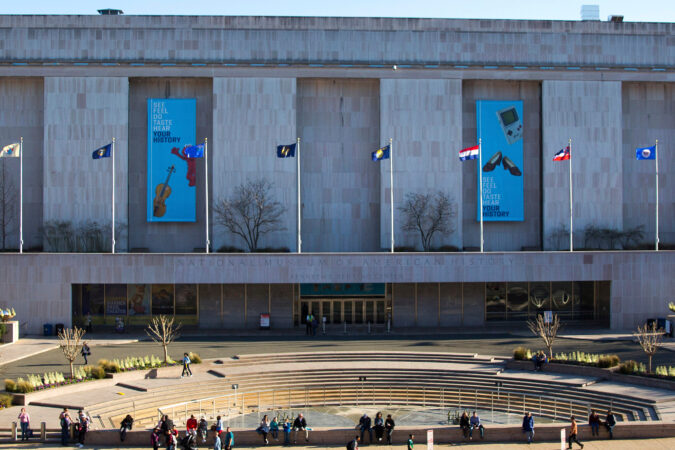
  • White House report brands Smithsonian leadership as radical activists who can’t be trusted

    White House report brands Smithsonian leadership as radical activists who can’t be trusted

    NEW YORK — A White House report brands the leadership of the Smithsonian Institution, especially at the National Museum of American History, as radical activists who cannot be trusted, indicating that President Donald Trump may be preparing to install his own team.

    The report released late on Independence Day by the White House Domestic Policy Council comes in the midst of Trump’s aggressive campaign to overhaul some of Washington’s most sacred cultural and historic institutions. Trump in March revealed his intention to force changes at the Smithsonian Institution with an executive order that targeted funding for programs that advanced “divisive narratives” and “improper ideology,” as he continued a broadside against culture he deems too liberal.

    “The Smithsonian Institution, and the National Museum of American History in particular, under its current leadership and current interpretive ideology, cannot be trusted to tell America’s story honestly and in a way that is inspiring, unifying, and worthy of our great republic,” according to the report by the council, which is led by a former top Trump speechwriter.

    The authors added: “As this report shows, confirmed in the words of Museum leadership, this ideological capture has moved the Museum’s mission away from straightforward historical education and scholarship toward an extreme political activism that seeks to transform our country.”

    The Smithsonian did not immediately respond to requests for comment Sunday.

    Historian Lonnie Bunch, the Smithsonian’s current secretary, is the first African American to lead the institution. In an unrelated interview that aired Sunday on NBC’s Meet the Press, Bunch said, “The notion of being a more perfect union, not the perfect union, is really what motivates me.”

    “I think what I want people to understand is that there is a responsibility to continue to make those aspirations available, accessible, meaningful to a whole range of people,” Bunch said. “And that, in essence, America’s greatest strength, it’s not running away from its history, but it’s understanding how that history shaped us and continues to shape us.”

    Historian Anthea M. Hartig is the first woman to serve as director of National Museum of American History.

    Trump’s escalating effort to force changes at the Smithsonian marks the Republican president’s latest move to transform cultural pillars of society, such as universities and art, that he considers out of step with conservative sensibilities. Trump had himself installed as chairperson of the John F. Kennedy Center for the Performing Arts with the aim of overhauling programming, and his handpicked board voted to add his name to the building, only to have a federal judge later order the signage to be removed.

    The administration also forced Columbia University to make a series of policy changes by threatening the Ivy League school with the loss of several hundred million dollars in federal funding.

    Trump has also imposed changes on historical sites beyond Washington, including in Philadelphia, where the administration won a court ruling last week allowing it to reinstall interpretive panels that critics say whitewash the history of slavery at the site of President George Washington’s home. Advocates, academics and officials have been concerned for months that the version that complies with Trump’s order could give a history that plays down the pain in the nation’s past in favor of a more triumphant view.

    Gov. Josh Shapiro (D., Pa.) accused Trump and his allies of trying to “rewrite history.”

    “There’s not one individual narrative that a president gets about our history,” Shapiro, a potential presidential prospect, said in an interview that aired Sunday on CNN’s State of the Union. “And any president should want to make sure that that full history is shared, that the American people are able to draw their own conclusions.”

    Shapiro added, “If we understand where we came from, we’re going to have a better path forward.”

    Trump’s Domestic Policy Council does not necessarily agree.

    The National Museum of American History “confronts visitors with materials intended to undermine faith in American institutions and the longstanding shared ideals of the American people,” the council’s report said. “We must be committed to restoring truth and sanity in how American history is presented and taught.”

    In seeking to fulfill Trump’s order, which he called “Restoring Truth and Sanity to American History,” the review concluded by finding that the museum “by the intention and at the direction of current Museum and Smithsonian leadership, has become subject to institutional capture by a radical, activist ideology that is fundamentally opposed to telling the noble, honest story of the great country we know and love.”

  • NATO chief faces challenge at summit as Trump demands not just burden-sharing but ‘loyalty’

    NATO chief faces challenge at summit as Trump demands not just burden-sharing but ‘loyalty’

    ANKARA, Turkey — Since he started work as NATO secretary-general almost two years ago, Mark Rutte has spent much of his time trying to keep the United States anchored to the world’s biggest military alliance, employing outright flattery to dissuade U.S. President Donald Trump from acting on threats to abandon it.

    But the goalposts keep shifting, raising the stakes ahead of this week’s summit in Turkey.

    Initially, it was about money. Trump has long railed against NATO allies for spending too small a fraction of their national budgets on defense. But those problems were addressed at their summit last year, when U.S. allies committed to invest as much as America, in gross domestic product terms.

    NATO’s real problem now is turning that money into military capabilities, particularly as European countries worry about a possible attack from Russia.

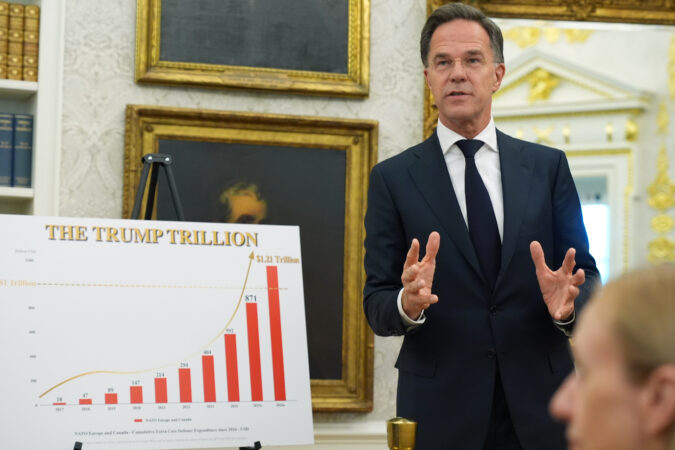
    Still, Rutte tried to put to bed any lingering concerns at a White House meeting last month, with a new pitch using a chart labeled the “The Trump Trillion” in gold letters — showing $1.2 trillion in spending by European allies and Canada since 2017.

    But Trump appeared unmoved, saying he was still disappointed at some NATO allies’ refusal to join the Iran war, which he had launched alongside Israel without consulting them.

    “We don’t need their money — we don’t need anything,” Trump said. “I just want loyalty.”

    Trump suggested he might have skipped the upcoming summit entirely were it not being hosted by Turkish President Recep Tayyip Erdogan. It’s a sign that even Erdogan and Rutte — foreign leaders Trump seems to hold in rare esteem — will have their work cut out for them in keeping the summit on track.

    Rutte set a new marker for flattery at White House

    Historically, the prime tasks of NATO’s top civilian official — always a European, never an American — have been to encourage consensus in an organization that makes its decisions unanimously, and to speak on behalf of all 32 member countries.

    But during both of Trump’s terms, Rutte and his predecessor at the helm of NATO, Jens Stoltenberg, have dedicated a huge amount of energy just to keep the United States inside their alliance.

    Trump has threatened to leave NATO, dallied with pulling U.S. troops out of Europe, and vowed to take over the island of Greenland — a semiautonomous part of ally Denmark. He has cast doubt over whether he would defend another member not spending enough on their military, eroding trust.

    Rutte’s approach has been heavy on flattery. Last month’s carefully choreographed pitch in the Oval Office — with props redolent of an American flag — laid down a new marker, even for a man heavily criticized for likening Trump to a “daddy.”

    The charts showed tens of thousands of U.S. jobs were being created and a backlog of $300 billion in European orders for military equipment — all thanks to the “leader of the free world,” Rutte said.

    He pushed back, gently, on Trump’s complaints that NATO did not support the U.S. against Iran, noting that up to 5,000 U.S. planes took off from bases in Europe before an April ceasefire.

    Trump has threatened to pull forces from Europe

    NATO cannot function without its biggest and most powerful ally. Europe is being pushed to fend for itself even as Russia, the historical reason for the alliance, poses a greater threat.

    Last month, the Pentagon surprised its NATO allies by announcing that it was scaling back the number of troops, warships, aircraft, and drones it would provide if one of them came under attack. Trump has also sent conflicting messages about whether U.S. troop numbers would be lowered or increased.

    The cutbacks and mixed messaging have undermined unity at the alliance, just as Russia has been probing Europe’s defenses with drone flights near military bases across multiple countries, according to a study released on Thursday.

    Flattery worked last year, but there are new challenges

    Each summit is meant to showcase the commitment to collective security — the all-for-one, one-for-all pledge enshrined in Article 5 of NATO’s treaty. It’s only been invoked once, when allies came to America’s aid after the Sept. 11 attacks.

    The last NATO summit was held in the Hague, the hometown of Rutte, a former Dutch prime minister. The Dutch royal family hosted dinner, and Trump stayed overnight at the king’s palace.

    Rutte got the allies behind a major defense spending pledge, and Trump left a happy man, calling his NATO partners a “nice group of people.”

    This year, the summit will be hosted by Erdogan, another key NATO member with an independent streak. His close ties to Trump may keep the American president at the table, but it’s unlikely to mend the rifts.

    Rutte has tried to convince Trump that his European partners are spending so much more that America can safely turn its attention to security challenges posed by China while they handle the war in Ukraine.

    But Trump wants more now, and his demand for “loyalty” is hard to capture on any chart.

    Rutte’s predecessor, Stoltenberg, has written in his memoir about chairing a 2018 summit that Trump nearly upended.

    “If an American president says he no longer wishes to defend the other allies and leaves a NATO summit in protest, then the NATO treaty and its security guarantee aren’t worth very much,” Stoltenberg wrote.

  • Families of children killed in bombing of Iranian school join leader’s funeral

    Families of children killed in bombing of Iranian school join leader’s funeral

    TEHRAN — Among the tens of thousands of mourners gathered in central Tehran for the funeral of Ayatollah Ali Khamenei are families of the schoolchildren from the southern city of Minab who, like the supreme leader, were bombed to death on the first day of the U.S.-Israeli war against Iran.

    At least 175 civilians were killed at the girls’ elementary school, most of them students, in what appeared to be a strike by a U.S. Tomahawk missile. So far, the United States has not taken responsibility or released the results of any investigation. In Iran, the children’s deaths have become a potent symbol for U.S.-Israeli brutality and an unjust war.

    Parents and other family members made the 800-mile trip to the Iranian capital by train, car, and bus, and on Sunday, they were brought to the Grand Mosalla religious center for the funeral prayers. The crowd swelled in size ahead of the prayers, with tens of thousands packing into the open-air complex.

    Many mourners had hoped that Khamenei’s son and successor, Mojtaba Khamenei, would appear in public for the first time since his father’s assassination to lead the prayers, but he did not show, probably because of concerns for his safety.

    Ayatollah Jafar Sobhani, a prominent theologian and member of the Council of Experts that chose Ali Khamenei’s successor, led the ceremony instead.

    Also present Sunday was Ahmad Vahidi, the recently appointed commander of Iran’s powerful Islamic Revolutionary Guard Corps — a key member of the surviving regime, which has emerged emboldened and even more hard-line after months of attacks by two of the world’s most powerful militaries.

    Vahidi, too, had been in hiding since the war. A shudder rippled through the crowd as people recognized him. After the prayer concluded, isolated chants broke out, invoking his name: “Vahidi! Vahidi! Revenge! Revenge!”

    The Minab school attack occurred on Feb. 28, the same day that Ali Khamenei was killed at his leadership compound, along with other members of his family and other senior officials.

    Hanzaleh Salehi, 43, whose son was killed in the school strike, said he remembers hearing confirmation of the supreme leader’s death while he was in the morgue identifying his child’s body. Experiencing the two losses back to back left him feeling frozen, he said.

    “We want to send our voice to the world,” Salehi said, wearing a T-shirt that showed his son’s framed portrait. “I want the world to realize how the Iranian people are treated. This was not the first crime, and it may not be the last.”

    An invitation from the Iranian government to attend the proceedings, albeit under restricted conditions, including accompaniment by a government-provided guide and interpreter, has allowed the Washington Post its first opportunity to report from Iran since the war began. The views of people interviewed at the funeral events are unlikely to represent all of Iranian society, given the risks posed to those who have opposed or been critical of the government.

    While the U.S. has not accepted responsibility for the attack, video evidence and Post reporting found that the school was on a U.S. target list, suggesting it was carried out by U.S. forces. The Pentagon said it launched an investigation, but more than four months later, no findings have been published.

    In Iran, the strike is a national tragedy. Memorials to the children have been installed in government offices and businesses and at Iranian embassies abroad. In Tehran, an installation of backpacks, flowers, and children’s shoes commemorates those killed in Minab at the capital’s international airport.

    One of the Minab booths set up for Khamenei’s funeral displayed dozens of portraits of the children above a chalkboard, exercise books, and school desks.

    Fatimeh Yavari, 39, from Semnan, east of Tehran, stopped to take pictures of the display with her two children. The Minab children “are like my own children. I cried for all of them like I was burying my own child,” Yavari said, growing emotional behind her sunglasses. “It was a great tragedy.”

    Minab is a small town that’s home to large military installations in a province, Hormozgan, that is a critical export hub near the port city of Bandar Abbas.

    Yasir Pour Jomeh, 39, a dock laborer, traveled 24 hours by bus and private car to Tehran so he could help oversee a Minab booth during the funeral. He said that after the Minab attack, there was a surge of support for the government in the area.

    “People realized how supportive the supreme leader was of the people,” Jomeh said. “Even some who were against the establishment turned back.”

    After the public viewing of Khamenei’s body ends on Saturday evening, his casket will be carried on an hourslong funeral procession through the Iranian capital.

    That procession is expected to draw even larger crowds that those at Mosalla, and the daylong event could prove to be one of the most logistically difficult portions of the ceremony.

    After the funeral procession, Khamenei’s body will be flown to the Iranian city of Qom, a center of Islamic learning, before it is brought to the Iraqi cities of Najaf and Karbala, both homes to holy Shiite shrines that are pilgrimage sites. Finally, Khamenei will be buried in his hometown, Mashhad, in eastern Iran.

  • Trump fashions America’s 250th anniversary in his own image

    Trump fashions America’s 250th anniversary in his own image

    For all the power he has flexed over the past year and a half, President Donald Trump could not control the scorching, dangerous, record-shattering weather in the nation’s capital for the 250th anniversary of America’s independence, or the lightning strikes in the distance that prompted officials to evacuate the National Mall ahead of his planned speech.

    But nearly every other aspect of the celebration in Washington bore Trump’s imprint, as decisions he made transformed an official commemoration of American history into another polarizing moment in American politics.

    After a chaotic scene unfolded early Saturday evening, with Secret Service officials forcing defiant Trump supporters to flee the president’s Salute to America event as severe weather loomed, Trump told them all to come back. The show would go on.

    His supporters, wearing gear bearing his name and slogans, trekked back to stand in security lines again in the rain.

    “I said, ‘There’s no way — if we have to speak in front of one person at 4 o’clock in the morning, I’m going to be here,’” Trump declared when the rain had stopped and he began speaking after 11 p.m. to a crowd half the size of what it had been earlier. “There’s no way we can be deterred.”

    “This is an evening for the ages. I believe this is something very special,” Trump said into the night, describing the attendees’ perseverance and late-hour return as “bigger than if we didn’t have the lightning blaring.”

    “But this is bigger. A little more inconvenient, but it’s bigger. I think, in its own way, it’s more beautiful.”

    It was but the latest twist in a national celebration that Trump defined in his terms — and for which the president has called the shots.

    Ever the showman, Trump throughout his speech brought notable Americans out onto the stage with him — war veterans as old as 107 who saluted from wheelchairs, astronauts from the Artemis II and Apollo 17 missions, and families of soldiers killed in battle.

    He praised the “unstoppable spirit that created the world’s most powerful industries and built the strongest military anyone had ever seen‘” but also reprised his political grievances.

    Trump joked that he was serving his third term as president, a reference to his false claims that the 2020 election was stolen from him. He prompted cheers from his supporters as he touted his bill to assert federal control over election rules — legislation that Senate Republican leaders have repeatedly told him won’t pass as it is currently written. And he lobbed several verbal attacks at “communists,” his label for the democratic socialists who have won several recent Democratic primary elections.

    Before Saturday night’s rally, Trump didn’t pretend that the celebrations would be anything other than his usual unapologetic rhetoric.

    “Has anyone ever seen a Happy Dumocrat?” the president wrote of his opposing political party on social media on Saturday morning, his first Fourth of July greeting of the day. Weeks earlier, Trump had abruptly announced that he would also serve as the headlining act of a rally kicking off the two-week Great American State Fair on the National Mall, calling himself “the Number One Attraction anywhere in the World, the man who gets much larger audiences than Elvis in his prime.”

    “Only Great Patriots invited” Trump wrote of the launch of a fair that was, in theory, open to all, later billing the kickoff to the 250th anniversary festivities as a “Trump rally.”

    Milestone anniversaries like the semiquincentennial present rare moments of shared civic ritual, occasions when presidents are widely expected to place themselves within the sweep of the American story, rather than at the center of it. This year’s celebration, instead, reflected both Trump’s vision of America, and America’s divisions over Trump.

    The decision to have Trump speak late Saturday also reshaped a long-standing July Fourth tradition. Security restrictions prevented attendees from bringing coolers or arriving throughout the evening, and the speech was already set to delay the fireworks until after 10:30 p.m.

    The pyrotechnics finally began moments before midnight, with Trump remaining in a climate-controlled box at the National Mall to watch. The massive show set a record, organizers said.

    As Americans sweltered through a dangerous heat wave, with Washington’s heat indexes reaching 115 degrees, Trump had warned that he planned to “make a really long speech … just to show that I can do anything.” Organizers instructed those attending not to arrive too early to limit their time outside.

    In the end, the late-night speech was about 35 minutes long.

    The National Mall fair itself, long touted as a showcase for American greatness and national unity, instead became a Rorschach test. Trump supporters praised the patriotic atmosphere and military flyovers.

    His critics, meanwhile, pointed to images of sparse crowds, a mock-up of Trump’s proposed triumphal arch on the grounds, and administration officials touting their accomplishments as evidence that the president’s personal involvement had undercut what might otherwise have been a broader civic celebration.

    With just months to spare before the occasion, Trump had pushed aside America 250, the long-standing bipartisan commission tasked a decade ago with planning anniversary festivities, replacing it with his own group of political allies, Freedom 250. His advisers argued the move was necessary because the commission had become bogged down by bureaucracy.

    But as Trump’s chosen planning organization became increasingly seen as a partisan entity, vendors and performers alike ultimately pulled out of the fair, which has struggled to draw large crowds for much of its first week.

    Besides supplanting the bipartisan commission, Trump has increasingly put his imprint on other aspects of this year’s commemoration. His face appears on a commemorative gold coin marking the anniversary and on limited-edition “patriot passports.” Administration officials have pushed for a $250 bill bearing his portrait, and Trump this week posted an image of a $100 bill featuring his autograph — marking the first time a sitting president’s signature has been featured on U.S. currency.

    As he has throughout the anniversary celebration, Trump cast himself as central to the story he wants the country to tell about itself: that America was diminished before him, revived by him, and is now celebrating its founding through his restoration — a promised “Golden Age.” At Mount Rushmore on Friday night, he told the crowd that he “saved, almost single-handedly,” the Second Amendment and that he was going to “give our country its identity back.”

    “We never had the American Dream, however, like we have it right now,” Trump said Saturday on the National Mall. “The American Dream is back. Very strong. Beautiful.”

    Republican President Gerald Ford took a different approach during the nation’s bicentennial celebration in 1976, even as he was running for reelection in the aftermath of Watergate and the Vietnam War. In his remarks, Ford made no mention of the campaign, the Democratic front-runner Jimmy Carter, or his GOP primary challenger, Ronald Reagan.

    Ford’s only reference to electoral politics came as a broader reflection on self-determination: “This November the American people will, under the Constitution, again give their consent to be governed,” he said, outside Independence Hall in Philadelphia. “This free and secret act should be a reaffirmation by every eligible American of the mutual pledges made 200 years ago by John Hancock and the others whose untrembling signatures we can still make out.”

    But comparisons with past presidents are complicated by the fact that patriotism itself has become more polarized, said Tevi Troy, a presidential historian and senior fellow at the Reagan Institute.

    “There’s a feeling out there that Republicans are more patriotic than Democrats, or that the patriotism gap can differ depending on which party is in the White House,” Troy said. “While Trump does things in terms of partisanship that you can safely say are unprecedented, he is also president in a more divided time.”

    A recent Gallup poll found that national pride has fallen to its lowest point since the organization began asking in 2001 how proud respondents were to be an American. Just 33% reported being “extremely proud,” down eight percentage points from a year ago and 37 points since a high in 2003. The partisan gap there is wide, with Republicans reporting much higher American pride while Democrats and independents have hit record lows for their respective groups, Gallup found.

    John Pitney, a former national Republican official who now teaches political science at Claremont McKenna College, said Trump is diverging from the tradition of presidents who have used moments of national triumph and tragedy to speak as Americans first, not as partisans.

    “I remember Reagan at Normandy in 1984 — the 40th anniversary of D-Day, surrounded by people who were veterans of that war,” Pitney said. “There is a reason why that speech is still remembered. It wasn’t about him.”