Category: Wires

  • Dollar hits 13-month high as foreign investors overlook worries about Trump

    Dollar hits 13-month high as foreign investors overlook worries about Trump

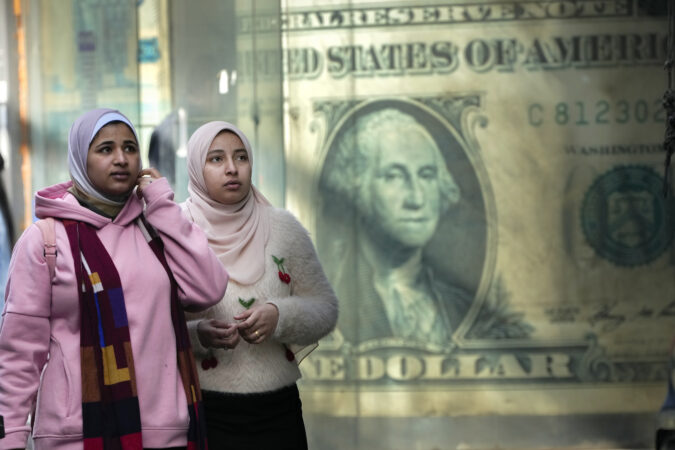
    Global investors last week drove the dollar to its highest value in more than a year, as the appeal of the U.S. artificial intelligence boom and the prospect of higher interest rates eclipsed doubts about President Donald Trump’s erratic policymaking.

    The greenback’s more than 5% gain since the end of January has quieted — for now — talk of the “Sell America” trade that emerged following the president’s April 2025 global tariffs announcement. At that time, financial markets, spooked by Trump’s plan for the highest import taxes since the 1930s, sent U.S. stocks, bonds, and currency sliding in an unusual trifecta of losses.

    Foreign investors remain wary of the unpredictable U.S. president. But eager to capitalize on the historic AI boom, they have piled into fast-growing technology stocks such as ASML Holding, a maker of semiconductor equipment that is up nearly 125% over the past year, and they’ve bought dollars to do so.

    New Federal Reserve Chairman Kevin Warsh fueled the dollar’s rise this month by vowing to “unambiguously” curb inflation, reassuring markets at his public debut that he would ignore the president’s demand for lower interest rates. With inflation still above the Fed’s price stability target, rates may head higher, drawing in more foreign capital.

    “You might hate the U.S. government, but if you love the opportunity presented by U.S. companies, you’re going to come here,” said Rebecca Patterson, former chief investment strategist for Bridgewater Associates, now with the Council on Foreign Relations.

    The revived dollar has reversed a portion of the 12% decline from its January 2025 peak under President Joe Biden to its low ebb in January of this year. The currency traded last week at its highest mark since May 2025.

    American tourists in Europe or Japan will find travel more affordable. But companies that depend on foreign markets, including technology giants such as Intel, Microsoft, and Qualcomm, could see earnings hit when they convert their overseas profits into dollars. U.S. exports, which have risen for four consecutive months, also could sag.

    The turnaround at the Fed is the biggest force driving the dollar rally.

    After the central bank cut its benchmark borrowing rate three times in the final months of 2025, investors began this year anticipating additional monetary easing.

    But the energy price shock from the Iran war, coupled with the effects of tariffs and the surge in AI-related spending, aggravated inflation. Prices, excluding volatile food and energy costs, were up 3.4% in May from one year ago, according to the Fed’s preferred inflation gauge.

    The Fed’s policymaking committee made clear this month that after five years of above-target inflation, higher interest rates may be needed to cool off prices. Nine of the 18 members of the rate-setting Federal Open Market Committee projected at least one rate increase this year. Only one official forecast a cut.

    “Foreign investors continue to invest in America in a pretty big way,” said Adam Turnquist, chief technical strategist for LPL Financial. “But certainly momentum now, I think, has more to do with the kind of definitive shift in monetary policy that we’re seeing.”

    Higher U.S. interest rates would mean more expensive mortgages and business loans for Americans. But they would deliver higher returns for investors, especially compared with what is available in other developed markets. The European Central Bank raised its main policy rate this month to 2.4% while the Fed’s benchmark holds in a range of 3.5% to 3.75%.

    Given the weak state of the euro-area economy, which contracted by 0.2% in the first quarter, the ECB has little room to raise rates further while a majority of investors expect a U.S. rate hike at the Fed’s September meeting, according to CME Group’s Fedwatch, which tracks prices in the Fed futures market.

    The increasingly healthy U.S. economy is catnip for foreign investors. The Commerce Department last week said growth in the first three months of the year hit an annual 2.1% rate, up from its initial 1.6% estimate. The pace may be quickening, according to the Federal Reserve Bank of Atlanta, which forecasts a 2.5% rate for the April-June period.

    After a weak 2025, hiring has strengthened. Employers through the first five months of this year created an average of 114,000 jobs per month, more than 10 times last year’s anemic pace, according to the Bureau of Labor Statistics.

    “We’ve had very resilient economic data. So not only are we getting the hawkish Fed, but we’ve got what appears to be a restrengthening of the U.S. economy,” said Marc Chandler, chief market strategist for Bannockburn Capital Markets in New York.

    Some foreign markets this year, notably including Japan’s Nikkei index, have outperformed their U.S. counterparts. But U.S. stocks have a long history of outperformance. Over the past 20 years, an investor would have earned an annual return of 9% vs. just 2.4% in the rest of the world, according to a J.P. Morgan Asset & Wealth Management analysis.

    In a recent speech, Treasury Secretary Scott Bessent touted the U.S. attributes that attract global capital: “the deepest, most dynamic markets; the preeminent role of our dollar; and an ecosystem of innovation that has pushed the boundaries of the possible for two and a half centuries.”

    The broad “Sell America” trade, which Bessent derided earlier this year as a “false narrative,” faded as Trump dialed back his most extreme tariff plans and backed off his threats to the central bank’s independence and U.S. short-term rates began rising.

    In a sign of the dollar’s endurance, its use as a global payments currency has actually increased since Trump unveiled his tariffs to 51% of all transactions from 49%, according to the Society for Worldwide Interbank Financial Telecommunication, which operates a secure financial messaging network.

    Yet even as foreign financial institutions and individual investors load up on dollars, global central banks are edging away. For the past four years, as geopolitical risk flared, including from an unpredictable United States, central banks seeking an alternative to the dollar purchased unusually large amounts of gold.

    As the price of gold roughly doubled over the past two years, the metal’s share of central bank reserves topped that of U.S. Treasurys. Gold now accounts for 27% of the assets central banks use to backstop their currencies compared with 22% held in U.S. government securities, the European Central Bank said this month.

    Since Russia’s 2022 invasion of Ukraine, the heaviest buyers of gold have been located in areas facing the greatest conflict risk, including China, Poland, Turkey, and India, the ECB said.

    The embrace of gold is part of a slow shift from the dollar. Over the past 20 years, the greenback’s share of reserves has dropped to around 57% of the total from more than 66%, according to the International Monetary Fund.

    “All the central banks are just saying, ‘Do I have too many dollar assets, generally, given the risk around the U.S.?’” Patterson said.

    Overseas anxieties about the disruptive U.S. administration were highlighted by the president’s January demand for the U.S. to control Greenland, a NATO ally. But the dispute was shelved and, in hindsight, the episode marked the end of the dollar’s relative decline.

    Foreign investors, however, are troubled by the deteriorating U.S. government fiscal situation. Since the 2020 pandemic, Washington has incurred unusually large amounts of red ink.

    The federal budget deficit for the current fiscal year is expected to exceed $1.8 trillion or nearly 6% of the economy, a level historically seen only during war or financial crisis, according to the Congressional Budget Office.

    With the $31.6 trillion U.S. public debt now larger than the economy, Washington’s annual interest bill hovers around $1 trillion. Some foreign investors worry that borrowers will demand higher returns, hurting the value of the U.S. securities they own. Earlier this year, AkademikerPension, a small Danish pension fund, sold its $100 million Treasury holdings, citing worries over the U.S. public debt.

    The use by multiple presidents of punitive export controls and financial sanctions — plus emerging restrictions on the most advanced AI models — also has foreign governments reluctant to deepen their reliance on the United States. The dollar’s recent rise, as a result, should be viewed with caution.

    “Even though financial markets are reacting in the normal way that we would expect them to based on the fundamentals of the economy and interest rates, this is still not an accurate barometer that trust in the U.S. has been restored writ large,” said Matt Swinehart, a managing director at Rock Creek Global Advisors in Washington.
  • Eala upsets Wimbledon champion Swiatek in historic win for Philippines, No. 2 seed Rybakina also out

    Eala upsets Wimbledon champion Swiatek in historic win for Philippines, No. 2 seed Rybakina also out

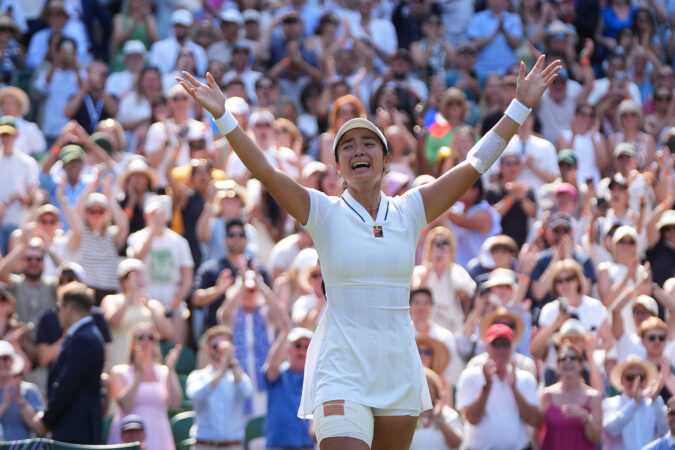
    LONDON — Iga Swiatek’s title defense at Wimbledon ended Saturday in a 7-6 (9), 6-2 third-round loss to 21-year-old Alexandra Eala, who continues to make history for the Philippines.

    Eala is the first Filipino player, male or female, to reach the fourth round of a Grand Slam singles tournament on a day of upsets in the women’s draw.

    The left-handed Eala dropped to her knees and rolled onto her back on Centre Court after hitting a forehand winner on her third match point.

    “It’s incredible to have my countrymen cheering me on and knowing that we’re all in this together,” she said in an on-court interview as she looked around at the Philippines flags.

    “This goes out to them, this goes out to my family, this goes out to all the little girls with ruffled socks and chubby cheeks. It means the world,” said the 29th-seeded Eala, who saved two set points in the first-set tiebreaker.

    The third-seeded Swiatek earned her first Wimbledon women’s title a year ago when she beat Amanda Anisimova, 6-0, 6-0, in the final.

    Eala, who has trained in Mallorca at the Rafael Nadal Tennis Academy, gained worldwide support last year on her breakthrough run to the Miami Open semifinals, which included an upset of Swiatek.

    She next faces 13th-seeded Jasmine Paolini for a spot in the Wimbledon quarterfinals.

    2022 champion Rybakina also out

    Shortly before Swiatek’s exit, 2022 Wimbledon champion Elena Rybakina was upset in the third round by Elise Mertens, 7-6 (4), 6-1.

    At No. 2, Rybakina is the highest seed on the women’s side to be eliminated. Her loss ensures that Aryna Sabalenka — who faces Naomi Osaka in the fourth round on Sunday — will keep her No. 1 ranking after the tournament.

    Belgium’s Mertens is the No. 25 seed at Wimbledon, where she’s won two doubles titles. She will next face 21st-seeded Marie Bouzkova of the Czech Republic.

    Keys shines on 4th of July

    In another upset, Madison Keys rallied to oust the sixth-seeded Anisimova, 3-6, 6-2, 6-3, in an all-American contest on the 250th anniversary of U.S. independence.

    The 26th-seeded Keys, the 2025 Australian Open champion, was asked how she’ll celebrate the U.S. holiday.

    “I have no plans,” she told the Centre Court crowd after her victory. “When you’re not in the States, it’s just kind of another day.”

    Keys will next play ninth-seeded Linda Noskova.

    Ashlyn Krueger, another American, has come through qualifying to reach the fourth round. She beat Ukraine’s Daria Snigur 6-3, 6-2 and will face another Ukrainian — 12th-seeded Marta Kostyuk — for a spot in the quarterfinals.

    On the men’s side, sixth-seeded American Taylor Fritz advanced to the fourth round with a 4-6, 6-3, 6-4, 7-6 (5) victory over Italian Lorenzo Sonego.

    Zverev wins in straight sets

    French Open champion Alexander Zverev, the No. 2 seed, got past American Marcos Giron, 6-2, 7-6 (4), 6-4, to set up a fourth-round match against 13th-seeded Jiri Lehecka.

    Ninth-seeded Flavio Cobolli — the runner-up at Roland Garros — overcame a slow start against Karen Khachanov to win, 0-6, 7-6 (4), 6-7 (5), 6-2, 6-2, and will face No. 5 seed Alex de Minaur in the fourth round.

    Serena and Venus withdraw from doubles

    Serena Williams withdrew from her doubles match with sister Venus due to a right knee injury. The 44-year-old Serena was injured during her singles return earlier this week.

    The 23-time Grand Slam singles champion said in an Instagram post that she was “heartbroken to have to withdraw from doubles.”

  • Morocco beats World Cup co-host Canada, 3-0, advances to the quarterfinals

    Morocco beats World Cup co-host Canada, 3-0, advances to the quarterfinals

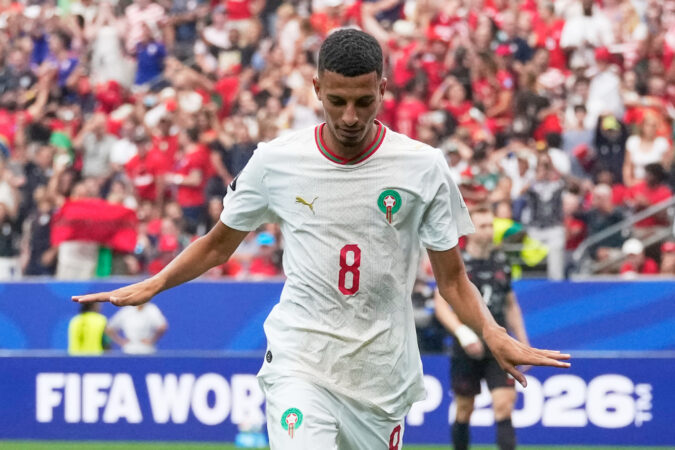
    HOUSTON — Azzedine Ounahi scored twice to lead Morocco to a 3-0 win over Canada in the World Cup round of 16 Saturday to make the country the first African nation to reach the quarterfinals more than once.

    It’s Morocco’s second straight appearance in the quarterfinals after becoming the first African team to reach the semifinals in 2022.

    Neither team was able to break through until Ounahi took a free kick from Achraf Hakimi and made a right-footed shot through traffic from outside the box to the bottom right corner to put Morocco on top 1-0 in the 50th minute.

    Ounahi made it 2-0 on a right-footed shot from the middle of the box off a pass from Brahim Díaz in the 82nd minute.

    Soufiane Rahimi added a goal in the final minute of stoppage time.

    Morocco advances to face the winner of Saturday’s Paraguay-France match on Thursday at Boston Stadium.

    The loss ends a historic run for World Cup co-host Canada, which won its first-ever knockout round with a 1-0 victory over South Africa to reach Saturday’s match. The country was playing in the World Cup for just the third time and the run enchanted a nation that is normally far more interested in hockey than the pitch.

    Morocco, which is ranked sixth in the FIFA rankings, dispatched the Netherlands in a penalty shootout to reach the round of 16 and send the country to its earliest World Cup exit.

    Canada had a couple of chances to score late. Jonathan David had a free kick from outside the box in the 78th minute, but his shot sailed over the crossbar.

    Just after that Tajon Buchanan’s shot from about 30 yards was stopped with a diving save from goalkeeper Yassine Bounou. Bounou, who was born in Canada to Moroccan parents, had three saves to help Morocco to the win.

    This game was a rematch from the last World Cup when Morocco beat Canada 2-1 in the group stage in a tournament in which Morocco finished fourth.

    It was an extremely physical match with eight yellow cards being issued. Both teams received four.

    Hakimi and Canada’s Richie Laryea received yellow cards in the 40th minute. Hakimi shoved Laryea to the ground and then Laryea pushed him and a minor scuffle ensued.

    Morocco midfielder Ismael Saibari left with an injury in the 22nd minute.

  • As blazes rage out West, federal firefighters describe a mounting strain

    As blazes rage out West, federal firefighters describe a mounting strain

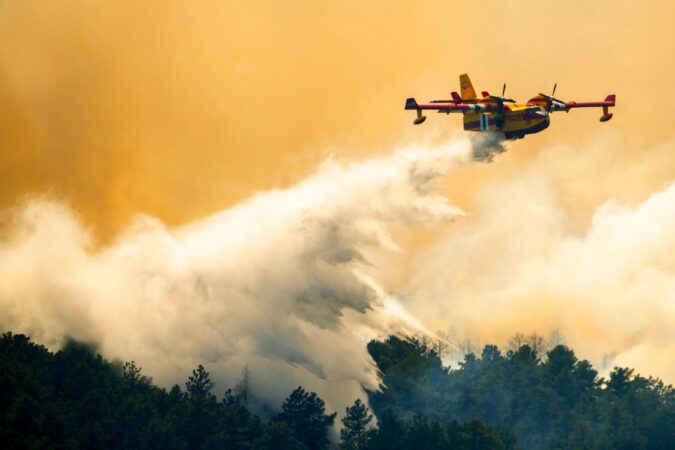
    As wildfires rip across the parched American West, federal firefighters say they are facing immense pressure and grappling with a shortage of resources that has worsened following the Trump administration’s staffing cuts.

    A collision of risky conditions have made things harder as the summer gets underway: a warm, dry winter; prolonged drought; snowless mountains; thick fuels that have had time to cure — elements that have set the stage for what could be a hellish fire year. The scenario started rearing its head in March and intensified over the last few weeks, with about 50 large fires now burning across the United States, and Utah and Colorado experiencing particularly large or destructive blazes.

    Before these factors aligned, strain on federal firefighting capacity had been building for years, leaving many feeling short-strapped and exhausted as they respond to prolonged and erratic fires, according to interviews with 26 current wildland firefighters, state officials, experts, and former federal officials.

    In interviews, emails, and message exchanges with the Washington Post this week, 15 federal firefighters said that what goes on behind the scenes can be more challenging than the blazes themselves. They spoke of organizational gaps across agencies, smaller crews with fewer seasoned leaders, prolonged exposure to dangerous conditions, and major changes to the way the nation fights fires. They all spoke on the condition of anonymity for fear of retaliation.

    The crisis, firefighters say, hit a crescendo when the Trump administration slashed federal agencies last year. Multiple states and forest stations lost workers who could support fire response. Many senior leaders and veterans also took deferred resignations or retired early.

    The U.S. Forest Service, housed within the Agriculture Department, is the nation’s largest wildfire firefighting force, managing more than 193 million acres across the country, as well as partnering with state and local fire departments to help respond to large blazes.

    In 2024, there were 18,700 federal employees who could fight fires. Now there are a little over 17,000, according to the U.S. Forest Service and Interior Department. In a recent June report, the Government Accountability Office noted that the U.S. Forest Service’s workforce “decreased by about 20% in response to a February 2025 executive order for large-scale workforce reductions.”

    The administration is also in the middle of reshaping how the country responds to wildfires. Earlier this year, officials announced the formation of a new unified U.S. Wildland Fire Service and a shift back to a strategy that prioritizes “suppression,” which seeks to put out all fires quickly. Firefighters in the field say that transition — which they say commands more of their time and resources — is taking place in real time as they respond to ongoing fires.

    While firefighters have been raising the alarm on staffing concerns for years, they say the current climate — the exceptionally fire-prone conditions and the administration’s assault on federal workers — has fueled intensified levels of burnout and concerns over the preparedness of less-experienced crews.

    In response to questions about wildland firefighter staffing and resources, the U.S. Forest Service said it is “stronger than ever, fully staffed, and equipped to respond aggressively to every unplanned ignition.”

    The agency added that it has “reached and exceeded our hiring goal of 11,300 firefighters. This is the earliest we have reached our 11,300-target since 2022.”

    Experts and firefighters say the Forest Service has had that same hiring goal of 11,300 since April 2022, according to public memos. Some argue the number has not kept up with demand, in part because the agency includes what are known as secondary fire employees, such as dispatchers and administrative positions, in that number, according to congressional budget requests, internal data viewed by the Post, and two people familiar with the situation.

    While the Forest Service said it surpassed its hiring goal and brought on “11,719 wildland firefighters onboard nationwide,” the number of primary firefighters, workers whose main duty is to fight fire, is about 9,000, according to staffing data from late June reviewed by the Post.

    The Forest Service confirmed the yearly hiring figure does include secondary positions, including dispatchers, describing them as “critical to successful daily operations.”

    “Between our operational firefighters, our non-fire carded employees and administratively determined hires — the Forest Service can mobilize more than 28,000 responders,” the agency said.

    “I’m so frustrated I could cry,” said one federal firefighter currently fighting Utah’s Cottonwood Fire, the largest active blaze in the country. In a message to the Post, he said firefighters knew what dangers could emerge “while watching the snowpack all winter.” But he said the Forest Service has had less staff to reduce fuels in drought-stricken forests and do other fire prevention work.

    He described a cratering morale and said firefighters are “treated like we’re dispensable.” Last week, three of his federal colleagues died after helicoptering into fires burning on remote parts of the Utah-Colorado border. That kind of tragedy so early in the summer has added to the emotional heaviness.

    “We are reeling, devastated, and still trying to come to terms with it,” he said.

    And even though about 3.2 million acres have burned across the U.S. so far this year — nearly twice as many as this time last July — firefighters and experts caution that the fire current fire landscape isn’t that busy yet. California and the Pacific Northwest haven’t seen major blazes; there haven’t been the kind of megafires burning for weeks that require resources from other countries.

    The Cottonwood Fire, which has burned nearly 100,000 acres, is the largest blaze burning in the U.S., fueling devastating loss across Southern Utah. Colorado is also grappling with a siege of wildfires that has forced about 6,000 residents in rural communities to evacuate.

    These kinds of overlapping fires have stretched federal assets, experts and fire officials said.

    On Monday night, Tim Ross, an incident commander with the U.S. Forest Service, said during a briefing on the Willow Fire that with all the activity across the state, “there is a battle for resources.”

    In an interview Thursday, Gov. Jared Polis (D) and several fire and public safety officials said that while Colorado may have its hands full right now, they are managing. It’s what could come next that worries them. Decades of falling behind on fuel treatments and climate challenges have made their forests tinder boxes, they said.

    “Our biggest worry right now are more major incidents,” Polis said from his car after getting an update on the Aspen Acres fire, which has burned more than 50,000 acres and has become the state’s top priority. “While we don’t have a shortage [of resources], our concern is that we would have a shortage in our state and other states if there were additional incidents.”

    Colorado has been bolstering its firefighting apparatus over the past few years, Polis said, buying more aircraft and engines, and changing policies so they can put out fires before they get too big. Other states that are becoming more fire-prone might not have made those changes. But the reality is, when fires explode, even the most well-resourced states still need the federal government’s help.

    For about the past 15 years, the Rocky Mountain region has had the same number of incident management teams — three. Right now, they’re all dispatched in Colorado. In need of further assistance, officials brought in what’s known as a complex incident management team to help out, a crew that came all the way from Alaska.

    Experts said that suggests most of these teams are already committed to other fires.

    “They are hitting the limits of available resources across the Lower 48 because of this recent outbreak of fires across the entire Southwest,” said Michael Wara, the director of Stanford University’s Climate and Energy Policy Program who specializes in wildfires. “There are only so many firefighters to go around. Our militia is smaller than it used to be because so many people got laid off or left. At some point you start to get into difficult competition for resources when things get really busy and there are so many battles happening at same time.”

    Colorado fire officials also acknowledged they’ve seen some loss of experienced incident command officials who really know how to fight fires.

    The Forest Service said it has sufficient resources to battle wildfires. As of July 1, the federal government has mobilized more than 9,000 personnel, the agency said, adding that “over the past week the Rocky Mountain and Great Basin areas processed 9,623 resource requests with about 1.5% of those requests being unfilled. This demonstrates that incident management teams are receiving the support they need.”

    Staffing the nation’s federal wildfire response infrastructure has long been difficult and opaque, according to experts and previous federal investigations. And federal wildland fire staffing levels are complex — agencies often have a mix of permanent full-time employees, seasonal, and emergency hires that ebb and flow throughout the year.

    A 2022 report from the Government Accountability Office highlighted that “recruiting and retaining federal wildland firefighters has been difficult” due to “low pay, poor work-life balance” as well as a lack of mental health support and other issues. Other GAO assessments from 2024 and 2025 found that low staffing was hampering goals such as prescribed fire targets.

    Those are some of the same struggles firefighters are now describing as the summer ramps up.

    A Forest Service official in Colorado who leads a team focused on suppression said a lack of funding meant he could no longer hire the standard number of seasonal workers. There are important leadership spots still open, he added, and his forest may have to stop using one of their engines because they don’t have enough crew members to staff it. That means their fire response will be less robust, he said.

    And at a time when “the fires are larger and more complex,” they have lost officials who’ve been around for decades, and who know best how to respond to dicey situations or rugged terrain.

    “We simply don’t have the experience and qualifications to backfill them,” he said. “They say ‘don’t do more with less’ but the reality is that we must.”

    These experiences echo hundreds of others who took a recent survey for the Grassroots Wildland Firefighters, a nonprofit advocacy group, according to Riva Duncan, president of Grassroots and a retired firefighter currently helping out on assignments as an officer making strategic decisions when new fires flare up.

    “Over the past several years as the climate crisis worsens, it feels like we keep asking fewer firefighters to do even more and morale is suffering,” she said. “And a very challenging fire season, like this one is shaping up to be, will probably only affect that even more.”

    Zeke Lunder, a 30-year wildfire expert who specializes in mapping and wildfire science, said the loss of senior, qualified leadership can have a tangible effect on crews when they are in the field, because fire — when, where, and how it burns — is often cyclical.

    As an example, Lunder pulled up maps showing how a wind-driven fire in the 1990s hit the same area where the three firefighters died last week. That fire, he said, spread 10 miles in one day, “and these fatalities happened under similarly explosive conditions.”

    Federal officials are investigating the conditions during which the firefighters responded.

    “History tells you the potential, the possibility of a fire. When you forget those stories we repeat those mistakes,” Lunder said. “The right question isn’t are your positions fully staffed. It’s how many people do you have who have been working over 20 years?”

    For the past several months, firefighters and officials have also been undergoing a significant reorganization. While many firefighters think a unified federal firefighting force is a good idea, they described a transition that’s been disruptive and has added even more pressure to all-consuming jobs. As one high-level supervisor with the new service explained, they are trying to rebuild long-established protocols “in real time, during fire season.”

    “Winter is normally when we recover from the previous season, take leave, complete hiring, conduct training, and prepare for the year ahead,” the supervisor said. “That opportunity largely disappeared this year. Permanent fire staff have spent the offseason consumed by organizational unification efforts instead of preparing for fire season. Many people are already exhausted, and it’s only July 1.”

    A new directive to put fires out as fast as possible also means there’s more risk, firefighters said.

    In one Mountain West state, a member of a specialized helicopter-based crew detailed how his team was already missing critical positions, known as spotters, and that he has had to shift people around to fill the gaps.

    These kind of firefighters land near or rappel from helicopters in remote terrain engines often can’t drive into. The firefighters who died last week in Colorado were part of a helitack crew.

    Focusing on full suppression will require these teams to be in the air more — flying further and shuttling food and protective gear back and forth — as well as responding to more dangerous situations.

    On one recent assignment, the helitack firefighter said the pilot he was with didn’t feel safe because the area was so congested with other air traffic. He said the helicopter decided to pull out of the assignment despite officials asking them to keep dumping water on flames.

    “We said no,” the firefighter said. “All this pressure to put everything out is adding to the workload; that is unequivocally what is happening.”

  • Evacuation ordered at National Mall as storms gather ahead of Trump’s America 250 speech

    Evacuation ordered at National Mall as storms gather ahead of Trump’s America 250 speech

    WASHINGTON — President Donald Trump’s plans to commemorate America’s 250th anniversary of independence with a rally on the National Mall were complicated on Saturday by severe storms that gathered near Washington, forcing event organizers to order an evacuation.

    “Freedom 250 will share updates on programming and doors reopening,” Freedom 250 spokesperson Danielle Alvarez said in a statement that encouraged participants to seek shelter at museums and federal buildings near the National Mall.

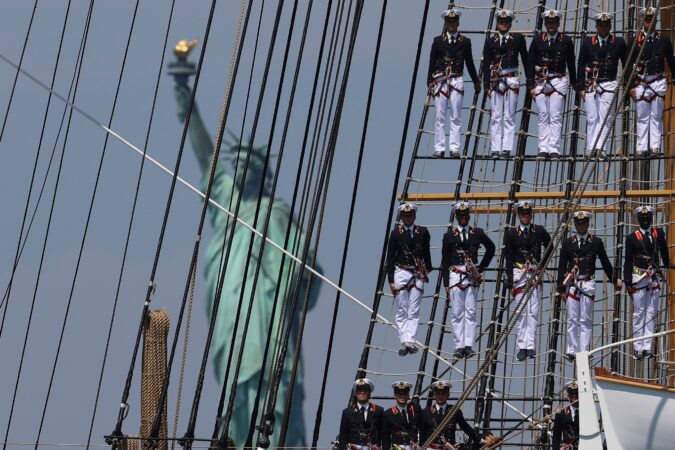
    Plans for fireworks were still moving forward in other cities including Chicago and New York, where tall ships passed the Statue of Liberty earlier in the day, recalling the fanfare around America’s 200th anniversary in 1976.

    Anticipation for the milestone holiday has been building for much of the year, serving as an opportunity for Americans to reflect on their complicated history as onetime colonists of an empire who became a superpower of their own. Organizers of celebrations months in the making had to adjust or cancel activities entirely as much of the East Coast sweltered under heat that approached and in many cases surpassed triple digits.

    Undeterred, a U.S. Marine from Guinea became a newly minted citizen at George Washington’s Mount Vernon in Virginia, wearing a crisp dress uniform and a small smile, while a 7-year-old raced onto a parade route in Brattleboro, Vt., to snatch a Tootsie Roll. In Louisville, Ky., people used a Sharpie equipped with a feather to scribble their signatures on a copy of the Declaration of Independence.

    Heat is defining the big weekend in many places

    The heat gripping the East Coast overshadowed much of the celebrations, particularly in Washington. Signs at the Great American State Fair posted an alert shortly after 7 p.m. encouraging participants to leave the area.

    As the order to evacuate was played over loudspeakers on the National Mall, some people appeared to be standing in place, talking with those around them and not exiting the area, while others were walking toward exits. National Guard troops told people to leave.

    The National Mall is an exposed park, though museums and other buildings are near the open, grassy area.

    Crowds were building in the area several hours before Trump’s speech. Tina Hale, 58, of Cohoes, New York, watched three of her grandchildren children dip their hands into a pool of water near a museum. Hale pointed toward the sky and urged them to look up as three military jets roared above the crowd.

    “If that doesn’t make you proud to be an American,” she said.

    David Koshko, 42, and his wife, Jennifer Koskho, of Harrisburg, Pennsylvania, came to Washington for a baseball game but planned to stay for the city’s fireworks show. After baking in the heat for hours during the Pittsburgh Pirates’ win over the Washington Nationals, they took a break in the shade of an overpass near the National Mall to plot their next stop.

    “Just to be a part of the 250 years (anniversary) is an amazing thing,” said David Koshko, a commercial driver and veteran of the Marine Corps reserves.

    In Washington, the city’s main Independence Day parade scheduled for Saturday was canceled, but a smaller one rolled along in the Capitol Hill neighborhood in the morning as onlookers sought shade under trees along the route.

    Also in the area, dozens of members of the white nationalist group Patriot Front wearing face masks and carrying Confederate battle flags held a march. No arrests were reported, according to the Metropolitan Police Department.

    In Philadelphia, fireworks began to crack as early as midday in the birthplace of the nation near the site where the Declaration of Independence was adopted by delegates to the Second Continental Congress. Hundreds of visitors were gathering at Independence Hall in the sweltering heat to await the celebrations coinciding with the France-Paraguay World Cup knockout game at Philadelphia Stadium.

    “It’s one big party in here,” Carlos Alban, who traveled to Philadelphia from Chicago to watch the match, said as he arrived at the stadium, adding that he spotted a fan in the parking lot dressed as one of the Founding Fathers.

    About 45 minutes before another World Cup match in Houston, a message from astronauts aboard the International Space Station noting the holiday was beamed into the stadium.

    On New York’s Coney Island, competitors chowed down on hot dogs at the annual Nathan’s Famous Fourth of July contest.

    Joey “Jaws” Chestnut won for the 18th time in 21 appearances, eating 66 hot dogs and buns in 10 minutes. On the women’s side, defending champion Miki Sudo of Tampa, Fla., held the title by downing 38.75 dogs. Both champions said the heat wave made the competition more difficult.

    Tall ships, with their masts, rigging, and white sails outlined against a blue sky, made a procession around the Statue of Liberty and up the Hudson River.

    The 43 ships were followed by a display of aerial might with a stealth bomber and the Navy’s Blue Angels. Patrouille de France, the French Air Force’s acrobatic teams, flew over New York Harbor with their red, white, and blue trails, evoking images of the American flag.

    An uneasy nation gets ready to celebrate

    The celebrations are unfolding against the backdrop of a deep divide this election year that has been expanding for years, visible in everything from political expression to cultural norms to age-old questions over race, class, and immigration.

    At Mount Rushmore on Friday, Trump spoke of communism as a “mortal threat to American liberty” with the Republican president saying it was more dangerous than either World War or 9/11.

    Without naming Trump, New York City Mayor Zohran Mamdani, a Democrat who is also a democratic socialist and recently backed several successful congressional candidates in their primaries, appeared to reference Trump during a speech Friday.

    “Those ideals upon which our nation was built — they are strong enough to endure any authoritarian regime, but only if we reach for them,” he said.

    To former Democratic President Bill Clinton, this anniversary milestone comes at a time of “renewed questions about America’s future and role in the world, and serious threats to our own institutions and to our democracy itself.” While critical of “the people in charge,” he said in a statement that “there is still nothing wrong with America that cannot be cured by what’s right with America.”

    Vice President JD Vance said small but loud voices would speak on America’s birthday about its imperfections instead of its greatness.

    “They will tell you that America is just another country, where the weak struggle against the strong,” Vance said speaking aboard the USS Kearsarge in New York Harbor.

  • A long-planned LGBT cruise has been blocked from stopping in Turkey

    A long-planned LGBT cruise has been blocked from stopping in Turkey

    Officials in Turkey are prohibiting an all-gay cruise from spending multiple days in the country next week during a voyage from Athens to Venice, according to the company organizing the trip.

    Turkish government and tourism representatives did not respond to inquiries from the Washington Post on Friday. Virgin Voyages, which owns the ship, also could not immediately be reached.

    But Sunday, the official X account for the provincial government that includes the port city of Kusadasi posted a news release stating that the July 7 call of a chartered cruise ship had been canceled. The post said groups on the ship were “known for their behavior incompatible with our society’s structure and moral values,” according to an English translation.

    The 10-night Mediterranean sailing aboard Scarlet Lady will depart from Athens on Sunday and include other ports.

    Broadway star Patti LuPone, who is performing on the cruise, shared her outrage on social media.

    “A ship — a magnificent ship — full of well-heeled gay men. And me. Denied entry to Turkey simply because of who is on board,” she wrote on Facebook. “I am ready to perform for all the wonderful men on this Atlantis cruise, who deserve so much better than this.”

    The cruise has been planned for more than a year, said Rich Campbell, CEO of trip organizer Atlantis Events. He said he first got word a week ago that there might be an issue.

    On Saturday, he said, the port agency — which serves as the connection between cruise lines and authorities where they dock — sent a letter to the cruise line telling them the port calls would be denied by the government.

    Campbell said he was sure there was a mistake. The Los Angeles-based company, which charters large ships for LGBT experiences, has brought travelers to Turkey more than a dozen times over 20-plus years, including last year, and had “a fantastic tourist experience.”

    “We’re there to shop, be great tourists, spend money,” he said. “It’s always a culturally respectful group.”

    Campbell said that despite multiple efforts to stick to the original itinerary, including assistance from the U.S. Embassy, he learned Thursday that the decision would not change.

    The U.S. State Department declined to comment on the case, directing questions to the company, but said in a statement that the U.S. Embassy in Ankara “regularly promotes U.S. business and commercial interests” in the country.

    Atlantis sent a notice about the change to passengers Thursday, informing them that the new itinerary would include a full day in Alexandria in Egypt and a stop in Crete.

    “Despite exhaustive efforts on our part to reverse this decision, our calls to Istanbul and Kusadasi have been canceled by the Turkish Authorities,” the message to passengers said. “We know that this change is disappointing and truly wish that we could have kept our visits to Turkey as planned. … They have always been a highlight of our voyages, and we look forward to returning soon.”

    Campbell said he believes Turkey will lose at least $1 million in revenue by blocking the passengers from spending three days in the country.

    “The bigger damage to Turkey is when you start picking and choosing who’s allowed to enter, and your economy depends on tourism, you’re creating a standoff between tourists and yourself,” he said. “And you run the risk of alienating a lot of potential tourists.”

    While same-sex relationships are not illegal in Turkey, top leaders have expressed antigay sentiment. A Pride march in Istanbul has been banned for more than 10 years. Police detained dozens of people in recent days during a gay pride event that was held despite a ban, Agence France-Presse reported.

    Campbell said there has not been a threat to travelers on his company’s cruises. And he doesn’t believe Turkey is hostile to gay tourists, even considering the recent action.

    “I think it’s a bad call, but unfortunately it has the potential for long-term repercussions,” he said.

  • Iran’s new leadership is younger, savvier, ruthless, and even more hard-line

    Iran’s new leadership is younger, savvier, ruthless, and even more hard-line

    The death of Iran’s supreme leader on the opening day of the war raised U.S. and Israeli hopes that the regime he led — and that has held the country in an Islamic vice grip since 1979 — had been pushed to the brink of collapse.

    Four months later, however, as Iran stages a belated state funeral for Ayatollah Ali Khamenei, the burial rites testify instead to the Islamic republic’s survival and mark the ascendance of a new generation of leaders that is more entrenched and hard-line, according to security officials and experts.

    Led by Khamenei’s son and successor, Mojtaba — who has remained in hiding since being injured in the same strike that killed his father — the new hierarchy is younger, has better command of the state’s levers of power, has gained insights from the U.S. wars in Iraq and Afghanistan, and is savvier about soft-power tools including diplomacy and online propaganda.

    After surviving months of strikes by two of the world’s most potent militaries, the regime has emerged emboldened, officials and experts said, and remains ruthless. It reportedly has carried out a campaign of executions against domestic critics and political opponents even as it continues intermittent strikes in the Persian Gulf and flexes its control over the Strait of Hormuz.

    Iran “might be weaker when it comes to its economic situation, its industries, some of its strategic capabilities,” said Raz Zimmt, head of Iran research at the Institute for National Security Studies in Israel. “But the bottom line is that we are facing a new, bolder, self-confident Iran.”

    Nearly all of those now in high-ranking positions spent formative years as lieutenants in security agencies or military units responsible for crackdowns on domestic protests, arming proxy militias including Hezbollah and Hamas, and rising through the ranks of elite organizations including the Islamic Revolutionary Guard Corps.

    The roster includes Mohammad Bagher Zolghadr, who has taken on the influential role of secretary of the Supreme National Security Council of Iran. He is a former Revolutionary Guard commander with deep ties to the Quds force, the IRGC branch that trains allied militias.

    Ahmad Vahidi, the Revolutionary Guard’s new commander in chief, backed the violent crackdown against women’s rights protests in 2022, according to officials and experts.

    Mohsen Rezaei, the new military adviser to the supreme leader, is an ardent advocate of escalation in response to any U.S. and Israeli attacks, experts said.

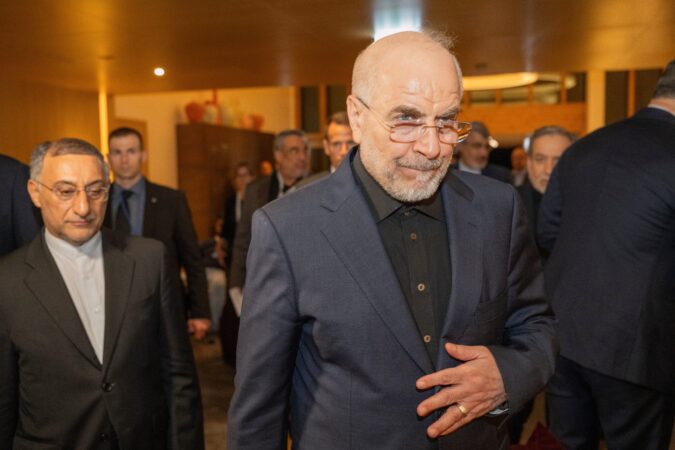
    Even those perceived as moderates by the Trump administration were shaped by years spent in security agencies or war zones. Mohammad Bagher Ghalibaf, speaker of the Iranian parliament and a main representative in peace talks with the United States, served as an IRGC commander during the Iran-Iraq war.

    By contrast, Iranian leaders with civilian backgrounds largely have been sidelined as part of the war-driven shake-up, officials and experts said. They include President Masoud Pezeshkian and Foreign Minister Abbas Araghchi, who previously led talks with the United States but has seen his position and influence diminished.

    The swift consolidation of power by loyalists contradicts claims by President Donald Trump that the war accomplished “regime change” and empowered pragmatists willing to acquiesce to U.S. demands.

    “They have a new group of leaders,” Trump said during the Group of Seven summit in France last month. “Actually, I think they’re smart. … They’re far less radicalized, and I think they’re very, very good.”

    Instead, officials and experts said that Trump’s approach — including threats to annihilate Iran’s civilization, a country of more than 90 million — has bolstered hard-liners’ claims that the country is in an existential struggle with the United States and its allies.

    This has weakened the hand of moderates who were key to negotiations over Iran’s nuclear program a decade ago.

    Experts and officials warn that the younger Khamenei and his inner circle probably will face a more difficult test when the war truly ends, and they confront the challenge of rebuilding Iran’s battered economy and improving conditions for its people.

    The Trump administration’s agreement, in a preliminary memorandum of understanding, to release billions of dollars in frozen Iranian assets and provide other financial benefits could deliver a lifeline to Iran’s new leadership team.

    The regime also faces more immediate challenges, such as demonstrating that the younger Khamenei has recovered from injuries sustained in the strike that killed his father and is capable of handling the full range of duties — including the public appearances that come with being supreme leader.

    The funeral looms as a critical test of the regime’s confidence that he can be protected, and will be scrutinized by analysts at the CIA and other intelligence agencies — much as they scoured footage of Soviet parades and politburo meetings during the Cold War — for clues to the leader’s condition and the identities of others who have gained clout.

    Even in peace time, Mojtaba Khamenei kept a low profile. He has been photographed in public only a handful of times, and few Iranians have heard him speak.

    The war sent him deeper underground. Officials and experts said that he probably is being moved among bunkers and other secure locations to protect him from airstrikes or assassination.

    The funeral, however, is the first mass public gathering since the war, creating pressure on the regime for Khamenei to appear.

    “He’s the head of state. A religious leader. And it’s the funeral for his father,” said Norman Roule, a former CIA officer and an expert on Iran. “His failure to appear at his father’s funeral, mourn publicly, and project command would be interpreted by many inside Iran and abroad as evidence of his personal weakness, physical incapacity, or even death.”

    An Iranian diplomat who spoke on the condition of anonymity to discuss sensitive diplomacy said it was unlikely that Khamenei would appear, in part out of fear that the United States or Israel would try to kill him.

    “The Iranian people first and foremost need him to be safe, so he can lead the country,” the diplomat said. “The United States and Israel have shown that they are bound by no commitments.”

    Even in hiding, Khamenei is believed to be handling high-level decisions, U.S. and Middle Eastern officials said, though security precautions have meant that his decisions and statements mainly are relayed through intermediaries, creating a cumbersome dynamic.

    ‘It’s very clear by now that Mojtaba Khamenei is making the strategic decisions,” Zimmt said, while those below him have formed a leadership “collective” that has influence on key issues but answers to the ayatollah.

    Khamenei is believed to have set boundaries for negotiations with the United States, experts said, ruling out substantive discussion of Iran’s nuclear program before a durable ceasefire took effect.

    Like his father, he also has distanced himself from decisions that could backfire. He publicly expressed reservations about the MOU his government signed with the United States, for example, but allowed it to proceed citing assurances from subordinates.

    He also took a shot at his U.S. counterpart. Iran had agreed to sign the memo “out of compassion and goodwill,” he said, while Trump had done so “out of desperation.”

    The new leadership team supplants a generation forged by years of operating in the shadows of the resistance to the autocratic rule of the shah, followed by the chaotic 1979 revolution and its aftermath.

    Those in charge now, experts said, are part of a postrevolutionary cohort who are less extreme in their religious views but equally ruthless in their willingness to use brutal force to maintain control.

    Their understanding of the United States has less to do with the hostage crisis of 1979 than their front-row view of the wars in Iraq and Afghanistan, conflicts that went on for years but ended with the United States having achieved few of its core aims.

    The new group’s more sophisticated grasp of American pressure points may account for Iran’s strategy of launching retaliatory strikes against Persian Gulf allies of the United States, as well as its halting of tanker traffic through the Strait of Hormuz, which yielded major economic leverage.

    Even after an initial ceasefire was announced in April, Iran has demonstrated that it remains willing to resume its use of military force, an aggressive stance that has helped it extract key economic concessions from the United States and allowed the regime to craft a narrative at home that it prevailed in the war.

    “They are brimming with confidence,” said a European official in regular contact with Iranian officials, who spoke on the condition of anonymity given the sensitivity of the matter. “They not only survived, they rediscovered the Strait of Hormuz as a big lever, and they really think that they can dictate terms.”

  • ‘Who should I vote for?’ Voters turn to AI before casting their ballots

    ‘Who should I vote for?’ Voters turn to AI before casting their ballots

    Mia Taylor looked down at her Los Angeles County election ballot a few weeks ago and felt a familiar mix of duty and dread. How could she possibly know the best choices in the dozens of local contests she was asked to vote in? Partly on a lark, she turned to a newly ubiquitous tool: Claude.

    Taylor snapped a picture of her ballot and asked: “So, who do I vote for here?”

    Claude, an artificial intelligence chatbot developed by Anthropic to analyze data and hold natural conversations, initially declined to answer. Like OpenAI’s ChatGPT and Google’s Gemini, other widely used tools, Claude is trained to avoid answering political questions that could expose biases.

    So Taylor, a self-described liberal Democrat, sharpened her question, asking it to find links to well-regarded progressive groups and help her come up with strategic voting options.

    “Here are some sources you can look at,” it replied, linking to voter guides and describing each race in detail. Taylor was especially torn about her vote for mayor, wondering how she could help stop Spencer Pratt, the Republican who momentarily looked likely to win one of the top two spots in the open primary. Claude’s advice: Vote for the incumbent, Karen Bass, not Nithya Raman, a member of the City Council. (Pratt later lost the race, while Bass and Raman advanced to the general election.)

    It was probably only a matter of time before voters began to use artificial intelligence to help guide their choices. The 2026 midterms may be the first U.S. elections in which voters are using AI in meaningful numbers.

    Voters are turning to new AI tools to serve as nonpartisan researchers, viewing them as a viable alternative to traditional news coverage, voter guides, or social media. They provide an appealing and seemingly efficient way to learn about campaigns and ballot measures, allowing users to bypass the sometimes dizzying array of political literature, advertising, and commentary coming their way. But some experts warn that the tools are far from foolproof: The results they produce can be marred by factual errors or shaped by flawed assumptions.

    Chris Johnson, a 58-year-old resident of Atlanta, appreciates the allure of relying on AI to choose candidates and the worry about its accuracy.

    Johnson, a registered Republican who considers himself a libertarian, has voted in every Georgia election for the past 40 years. When he prepared to vote in the state primary in May, he asked ChatGPT to tell him which of the candidates was the most libertarian. Initially, the system resisted answering directly, so Johnson asked it to rely on the candidates’ voting history. The chatbot suggested Brad Raffensperger, the Georgia secretary of state who was running for governor in the Republican primary but ultimately lost the race.

    Johnson felt chagrined by how easy it was. He recalled that for years he read the print edition of the local newspaper to come up with his own sense of which candidates most closely matched his values.

    “I felt a bit lazy for not doing more,” he said. “It felt easier, but I am not sure that everything was correct.”

    The appeal of artificial intelligence tools, also referred to as large language models, lies in their simplicity: Users often find the information they produce more straightforward and understandable than data from a more traditional internet search. And many welcome the interaction. Researchers and AI companies are already envisioning a time when political campaigns create their own chatbots, enabling voters to question them directly.

    “There is a reason these models are persuasive: They come up with facts or factual claims and are just good clear explainers,” said David G. Rand, a professor of information science, marketing, and psychology at Cornell University who has done extensive research on the effectiveness of artificial intelligence in political persuasion.

    Earlier this year, before voting in a local school board election, Rand turned to artificial intelligence for help. He uploaded an hourlong video of a campaign forum and then asked which of the candidates most closely matched his values. He used this research to make his choices. And when he ran his picks by friends who were more involved in local politics, they endorsed his reasoning.

    Still, Rand noted, the output is only as good as the input: AI tends to reaffirm and mirror users’ biases, framing candidates’ views through the voters’ lens, rather than objective facts.

    Anthropic, the parent company of Claude, has said users asking about political topics “should get comprehensive, accurate and balanced responses — responses that help them reach their own conclusions rather than steer them toward a particular viewpoint.” In a lengthy statement this year, the company said Claude is trained to “treat different political viewpoints with equal depth, engagement, and analytical rigor.”

    Jeremiah Hain, a 42-year-old psychotherapist in Los Angeles who has used ChatGPT routinely for other small tasks, recently employed it to help him choose candidates in races for mayor and various other offices.

    “I don’t have the time, nor did I want to do the same kind of research I have done in the past,” he said. “This was very intuitive, and I actually respect its intelligence, I guess.”

    He was so enamored of the process that he posted a video on TikTok encouraging other voters to do the same. (And because he knows his videos get more engagement when he is shirtless, Hain filmed himself bare-chested. “I wanted to do this as a thirst trap on purpose,” he said.)

    But that sense of efficiency may mask the risks of turning over the democratic process to technology, some experts warn. Because most chatbots produce answers that sound confident and authoritative, users may not make the time to check the underlying claims.

    Ideally, AI tools for election help would rely on a curated and verified database of political information and policy platforms to help voters, rather than pulling data from across the internet, as the existing tools do, said Yamil Velez, a political science professor at Columbia University who has researched the effectiveness of AI in convincing voters. But he was reluctant to completely dismiss the usefulness of AI in election decisions. “It is important to think about what is the alternative,” he said. After all, he added, most voters are unlikely to spend hours in the county clerk’s office researching their election options.

    A year ago, Velez added, he would have said that voters would be better off relying on an internet search, but the AI tools are becoming increasingly accurate.

    Nonetheless, he cautioned, the current tools likely benefit candidates who are more vocal in the local press and on social media, making their views easier to find. Campaign strategists are keenly aware that voters are using these tools and have begun looking for ways to get more favorable results by publishing more material online in formats that chatbots prefer, such as using bullet points.

    Still, in interviews, people who had used AI to research election choices said it allowed them to vote with more confidence.

    Robert Siebelink, a 54-year-old Democrat who lives in Corona, Calif., turned to Claude after feeling overwhelmed by the prospect of researching the 61 candidates running for governor in his state, not to mention the candidates in less high-profile races. He uploaded his ballot and asked Claude to suggest candidates who most aligned with his values.

    Eventually, he had narrowed down his choice for governor to two Democrats, Xavier Becerra and Tom Steyer, and asked Claude how to strategize.

    In less than half an hour, he had filled out his ballot and chosen Becerra.

    “I just felt so refreshed,” Siebelink said. “That’s the most informed voting that I have ever done.”

    “It felt like some political expert that knew all of the research and we just sat down over coffee and chatted, and they took notes,” he said.

    Similarly, Rikki Powers, a 31-year-old Democrat who lives in Baltimore, took a photograph of his ballot before the recent Maryland primary and asked Claude to provide bullet points for each candidate. He said he was looking for a broader perspective than what he could get from candidate campaign websites. After checking some of the links for accuracy and to “make sure that I truly like the candidates I am voting for,” he used the summary to fill out his ballot on the spot.

    “The last time I voted, I spent probably 20 hours researching,” he said. “This time was an hour.”

    Still, Powers said, there are limits: While he had no hesitation uploading a blank ballot, he would never tell AI how he voted.

    This article originally appeared in the New York Times.

  • Taylor Swift and Travis Kelce marry in front of famous friends at Madison Square Garden

    Taylor Swift and Travis Kelce marry in front of famous friends at Madison Square Garden

    NEW YORK — Taylor Swift and Travis Kelce married Friday night at Madison Square Garden, where actor Adam Sandler was the surprising officiant at the ceremony and Stevie Nicks performed among a crowd packed with stars of sports and entertainment. The deep secrecy that surrounded the buildup to the nuptials lifted when a marquee outside the Midtown Manhattan arena proclaimed “JUST&T MARRIED” once the deed was done.

    The couple did not have bridesmaids or groomsmen, instead having Swift’s younger brother Austin Swift serve as her man of honor with Kelce’s big brother and podcast co-host Jason Kelce his best man, Swift’s publicist Tree Paine said in an email.

    The bride and groom’s outfits came from Christian Dior Haute Couture and its designer Jonathan Anderson, with shoes custom-made by Christian Louboutin. She wore Cartier jewelry.

    An almost-royal wedding

    The long anticipated union of sports and song brought hype to new heights at a venue made more for historic NBA games and bucket-list concerts. The Kansas City Chiefs’ superstar tight end and the music megastar married as fans and spectators gathered outside in blistering heat, eager to be part of the occasion, even though the event was almost entirely hidden.

    Actors Bradley Cooper, Zoë Kravitz, Hugh Grant and Ethan Hawke; models Gigi Hadid and Karlie Kloss; comic Chris Rock; director Steven Spielberg; singer Camila Cabello; and author Jenny Han were among the guests from the world of arts and entertainment. Kelce’s coach Andy Reid and Chiefs teammates including running back Kareem Hunt were among the sports figures in the arena, along with retired NFL superstar Tom Brady, Seattle Seahawks receiver and recent Super Bowl champ Cooper Kupp, New York Giants receiver JuJu Smith-Schuster, and ESPN personalities Joe Buck and Stephen A. Smith.

    In a culture obsessed with famous couplings it may have been the apex celebrity wedding, with perhaps only royal unions getting more attention. Holding such a ceremony in a huge, iconic space that sits at the center of the U.S. media universe while keeping all the details secret made for a surreal scene, but it was a mix of hype and hush that is not out of character for Swift.

    A shrouded ceremony headed by Happy Gilmore

    An Associated Press camera outside the arena showed a long line of black SUVs dropping off wedding-goers in tuxedos and evening gowns, surrounded by New Yorkers in shorts and Swifties amassing for the occasion. Rain briefly cut the heat shortly after the marriage was announced.

    There was a seemingly total lack of social media posts from guests once they had entered the arena, with phones apparently banned.

    However, on Saturday, hosts of Good Morning America who had been invited to the wedding confirmed that Nicks performed and described the space as “intimate.”

    “As intimate as it could possibly be given it was Madison Square Garden. Really this garden inside the garden, just so beautiful,” said George Stephanopoulos. “It’s hard to imagine a place that big and a wedding with such stars could feel so personal and so intimate.”

    Robin Roberts added that both Swift and Kelce wrote their own vows.

    Weddings have been a constant subject in Swift’s songs since she was a teenager, and her actually walking the aisle for the first time at age 36 added to the drama. It was also the first marriage for the 36-year-old three-time Super Bowl champ Kelce, who could have been one of the jock characters in Swift’s early hits.

    Sandler, star of The Wedding Singer and many other hit comedies, can’t have been high on anyone’s betting list for who would marry the couple, though he’s become an increasingly warm and paternal cultural figure with age. The email announcing the marriage described him as “a friend” of the couple. Kelce was one of the many athletes who appeared in Happy Gilmore 2, Sandler’s 2025 sequel to one of his first hits, and Sandler appeared last year on the Kelce brothers’ New Heights podcast.

    Welcome to New York — Taylor’s version

    The Swift-Kelce relationship has thrilled and fascinated millions around the world — particularly the Swifties, the pop star’s enormous and ardent fan base — ever since the pair first started dating in 2023 after he showed up at her Eras Tour concert at the Chiefs stadium.

    Happy fans mixed with frazzled tourists outside the arena.

    Lori Powers, who lives an hour north of Manhattan and rode the train in to be near the nuptials, said Swift’s “music is the soundtrack behind so many amazing moments in my life. Relationships, friends, like my husband and my kids.”

    She stood outside the arena before the marriage was announced with her friend Cecily Hall.

    “Just being here and witnessing all the energy and the excitement, it’s so much fun,” Hall said. “The combination of sports and music makes perfect sense as to why they’re at Madison Square Garden today.”

  • Taylor Swift and Travis Kelce say ‘I do’ in elaborate Madison Square Garden ceremony

    Taylor Swift and Travis Kelce say ‘I do’ in elaborate Madison Square Garden ceremony

    NEW YORK — Taylor Swift and Travis Kelce married Friday night at Madison Square Garden, where actor Adam Sandler was the surprising officiant at a star-packed ceremony.

    The super-secretive buildup to the nuptials culminated when a marquee outside the Midtown Manhattan arena proclaimed “JUST&T MARRIED” once the deed was done.

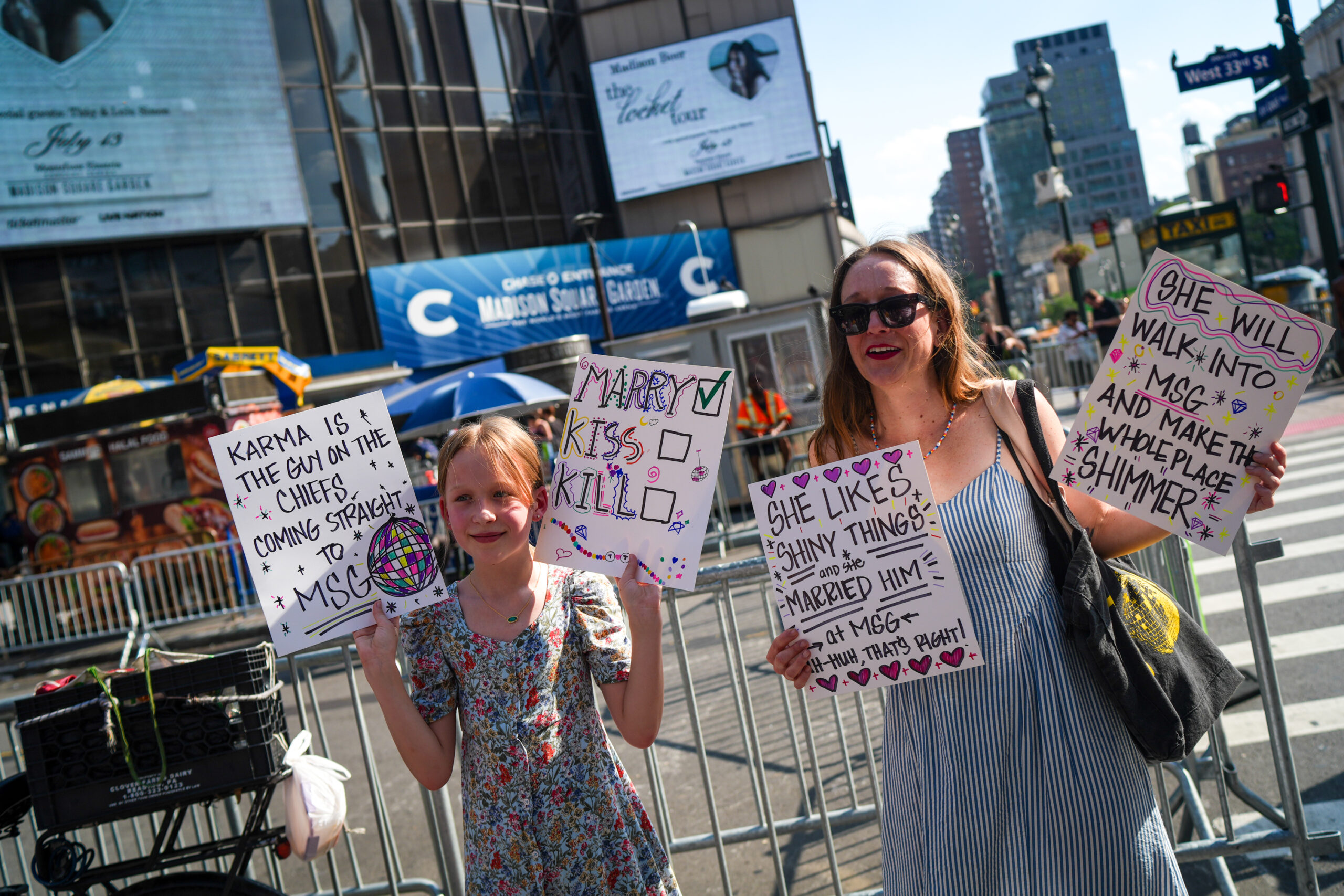
    Taylor Swift fans hold signs outside Madison Square Garden ahead of the Taylor Swift-Travis Kelce wedding on Friday.

    The couple did not have bridesmaids or groomsmen, instead opting for Swift’s brother to serve as her man of honor and Kelce’s brother, longtime Eagles great Jason Kelce, serving as his best man, Swift’s publicist Tree Paine said in an email.

    The bride and groom’s outfits were designed by Christian Dior Haute Couture and its designer Jonathan Anderson with shoes custom-made by Christian Louboutin. She wore Cartier jewelry.

    The wedding between the superstar singer and NFL star took place as fans and spectators gathered outside MSG in the blistering heat, eager to be part of the occasion, even though the event was almost entirely hidden.

    The long anticipated union of sports and song brought hype to new heights at a venue made more for historic NBA games and bucket-list concerts.

    Singer Camila Cabello, actors Hugh Grant, Ethan Hawke, and Jason Sudeikis, and model Karlie Kloss were among those who arrived. Running back Kareem Hunt was among Kelce’s Chiefs teammates in attendance. Seattle Seahawks receiver and recent Super Bowl champ Cooper Kupp, New York Giants receiver JuJu Smith-Schuster, NFL announcer Joe Buck, and Jenny Han, author of the The Summer I Turned Pretty series, also entered the arena.

    In a culture obsessed with famous couplings, it may be the apex celebrity wedding, with perhaps only royal unions getting more attention. Holding such a ceremony in a huge, iconic space that sits at the center of the U.S. media universe while keeping all the details secret made for a surreal scene, but it was a mix of hype and hush that is not out of character for Swift.

    An Associated Press camera outside the arena showed a long line of black SUVs dropping off wedding-goers in tuxedos and evening gowns, surrounded by New Yorkers in shorts and Swifties amassing for the occasion.

    Celebrities, athletes, and friends were posting on social media about getting ready or about to leave for a black-tie event, including Brandon Borders, producer of the New Heights podcast starring Kelce and his brother Jason; Beau Allen, a retired defensive lineman for the Eagles; and actress Jessica Chastain.

    There was a notable lack of social media posts from guests once they had entered the arena, after reports that phones would not be allowed. Rain began falling soon after the marriage was announced.

    Weddings have been a constant subject in Swift’s songs since she was a teenager, and her actually walking the aisle for the first time at age 36 adds to the drama. It would also be a first marriage for the 36-year-old three-time Super Bowl champ Kelce, who could have been one of the jock characters in Swift’s early hits.

    Sandler, star of The Wedding Singer and many other hit comedies, can’t have been high on anyone’s betting list for who would marry the couple, though he’s become an increasingly warm and paternal cultural figure with age. The email announcing the marriage described him as “a friend” of the couple. Kelce was one of the many athletes who appeared in Sandler’s recent sequel Happy Gilmore 2.

    Outside the arena, some frazzled tourists joked that it was a bad weekend to visit as they navigated strict road and sidewalk closures, but others appeared happy to sneak a peak at the spectacle. Police cut off most access where guests were being dropped off, but a few patrons gathered in nearby businesses and peered out windows.

    Diana Warshavsky, who lives in New York, decided to head over to MSG on Friday to celebrate Swift and Kelce’s wedding with fellow Swifties and “send her good vibes.”

    “We’re relatively the same age, I’m a year older than her and I just got married this year as well,” Warshavsky said. “I’m just so happy for her.”

    The relationship of the pop star and the football player has continued to thrill and fascinate millions around the world — particularly the Swifties, the pop star’s enormous and ardent fan base — ever since the pair first started dating in 2023.