Category: Wires

  • Trump warns of third impeachment if House Republicans lose midterms

    Trump warns of third impeachment if House Republicans lose midterms

    WASHINGTON — President Donald Trump on Tuesday warned that Democrats would “find a reason to impeach me” if the GOP lost control of Congress — using the prediction to pressure lawmakers to unify behind a narrow set of electoral priorities to win the 2026 midterm elections.

    “You got to win the midterms, because if we don’t win the midterms, they’ll find a reason to impeach me,” Trump said. “I’ll get impeached.”

    The remark was a rare acknowledgment of Trump’s political vulnerability as Republicans prepare to face a Democratic Party buoyed by a string of off-year election victories, favorable polling, and voter anxiety over an economy now fully under Trump’s stewardship. The warning framed the midterms not only as a referendum on his agenda, but as a test of his legacy.

    Trump addressed the representatives at the start of an all-day policy forum for House Republicans inside the Kennedy Center, a performing arts building recently renamed in his honor. The setting in the heart of Washington underscored how far Trump has come since Jan. 6, 2021, exactly five years ago, when rioters stormed the Capitol and set off years of criminal prosecution and political isolation.

    In an address meant to energize his party, Trump conceded that his agenda has struggled to break through with voters. He complained that Americans had quickly moved past his record on illegal immigration and that the press had paid little attention to his push to pressure drug companies to cut prices, which has yielded wins, albeit limited, for some consumers.

    He urged House Republicans to focus their messaging on drug prices, transgender athletes in women’s sports and cracking down on violent crime — issues he argued could sharpen contrasts with Democrats and mobilize voters ahead of 2026. And he instructed Republicans to set internal disputes aside and focus on a disciplined message he believes can carry them in November.

    He also used the moment to defend Speaker Mike Johnson (R., La.), who has struggled to manage an ideologically divided conference with a razor-thin majority without Trump’s interference.

    “He’s as tough as anybody in the room actually,” the president said. “But you can’t be tough when you have a majority of three.”

    “You can’t be Trump,” he said, appearing to mock his own confrontational style. “You make 10 enemies, 20 enemies and that’s the end of that.”

    The endorsement came at a critical moment for Johnson, who is trying to unify his unruly conference behind a second legislative package after passing a sweeping tax and immigration effort — dubbed by Trump the One Big Beautiful Bill.

    Trump also urged House Republicans to reclaim healthcare from the Democrats as a political issue and to pass a voting ID law, while urging conservatives to remain “flexible on Hyde” a signal to lawmakers who have stalled negotiations over abortion language.

    “You got to be a little flexible. You got to work something,” Trump said. “We’re all big fans of everything but you got to have flexibility.”

    Since returning to the presidency, Trump has continued to minimize the violence of the riot, calling the insurrection “a day of love” and ultimately fulfilling his promise to pardon participants charged with misdemeanors and felonies. On Tuesday, he again downplayed his role.

    Across town, House Democrats marked the anniversary with a hearing featuring lawmakers, Capitol Police officers and Pamela Hemphill, a rioter who entered the Capitol and later rejected a pardon from Trump.

    “Once I got away from the MAGA cult and started educating myself about January the 6th, I knew what I did was wrong,” she said. “When Donald Trump pardoned us I rejected the pardon. Accepting that pardon would be lying about what happened on January 6. I am guilty.”

    Republicans meanwhile refocused on their agenda Tuesday, which the party is seeking to anchor on Trump’s economic agenda. That effort has been complicated by his decision to deploy U.S. forces to Venezuela and seize control of the country’s oil assets, a move that has resonated with some hawkish Republicans and members of both parties critical of Nicolás Maduro, but concerned others who fear the president’s “America First” base will lose patience with his interventionism.

    Trump argued the action would lower energy costs.

    “Got a lot of oil to drill,” he said.

    Trump’s address lasted for more than an hour and included everything from jokes about FDR’s disability to an aside about first lady Melania Trump’s distaste for his dance moves.

    “I think I gave you something,” he concluded. “It’s just a road map. It’s a road map to victory.”

  • Musk’s AI chatbot faces global backlash over sexualized images of women and children

    Musk’s AI chatbot faces global backlash over sexualized images of women and children

    LONDON — Elon Musk’s AI chatbot Grok is facing a backlash from governments around the world after a recent surge in sexualized images of women and children generated without consent by the artificial intelligence-powered tool.

    On Tuesday, Britain’s top technology official demanded that Musk’s social media platform X take urgent action while a Polish lawmaker cited it as a reason to enact digital safety laws.

    The European Union’s executive arm has denounced Grok while officials and regulators in France, India, Malaysia, and Brazil have condemned the platform and called for investigations.

    Rising alarm from disparate nations points to the nightmarish potential of nudification apps that use artificial intelligence to generate sexually explicit deepfake images.

    Here’s a closer look:

    Image generation

    The problem emerged after the launch last year of Grok Imagine, an AI image generator that allows users to create videos and pictures by typing in text prompts. It includes a so-called “spicy mode” that can generate adult content.

    It snowballed late last month when Grok, which is hosted on X, apparently began granting a large number of user requests to modify images posted by others. As of Tuesday, Grok users could still generate images of women using requests such as, “put her in a transparent bikini.”

    The problem is amplified both because Musk pitches his chatbot as an edgier alternative to rivals with more safeguards, and because Grok’s images are publicly visible, and can therefore be easily spread.

    Nonprofit group AI Forensics said in a report that it analyzed 20,000 images generated by Grok between Dec. 25 and Jan. 1 and found that 2% depicted a person who appeared to be 18 or younger, including 30 of young or very young women or girls, in bikinis or transparent clothes.

    Musk response

    Musk’s artificial intelligence company, xAI, responded to a request for comment with the automated response, “Legacy Media Lies.”

    However, X did not deny that the troublesome content generated through Grok exists. Yet it still claimed in a post on its Safety account, that it takes action against illegal content, including child sexual abuse material, “by removing it, permanently suspending accounts, and working with local governments and law enforcement as necessary.”

    The platform also repeated a comment from Musk, who said, “Anyone using Grok to make illegal content will suffer the same consequences as if they upload illegal content.”

    A growing list of countries are demanding that Musk does more to rein in explicit or abusive content.

    Britain

    X must “urgently” deal with the problem, Technology Secretary Liz Kendall said Tuesday, adding that she supported additional scrutiny from the U.K.’s communications regulator, Ofcom.

    Kendall said the content is “absolutely appalling, and unacceptable in decent society.”

    “We cannot and will not allow the proliferation of these demeaning and degrading images, which are disproportionately aimed at women and girls.”

    Ofcom said Monday it has made “urgent contact” with X.

    “We are aware of serious concerns raised about a feature on Grok on X that produces undressed images of people and sexualised images of children,” the watchdog said.

    The watchdog said it contacted both X and xAI to understand what steps it has taken to comply with British regulations.

    Under the U.K.’s Online Safety Act, social media platforms must prevent and remove child sexual abuse material when they become aware of it.

    Poland

    A Polish lawmaker used Grok on Tuesday as a reason for national digital safety legislation that would beef up protections for minors and make it easier for authorities to remove content.

    In an online video, Wlodzimierz Czarzasty, speaker of the parliament, said he wanted to make himself a target of Grok to highlight the problem, as well as appeal to Poland’s president for support of the legislation.

    “Grok lately is stripping people. It is undressing women, men, and children. We feel bad about it. I would, honestly, almost want this Grok to also undress me,” he said.

    European Union

    The bloc’s executive arm is “well aware” that Grok is being used to for “explicit sexual content with some output generated with childlike images,” European Commission spokesman Thomas Regnier said

    “This is not spicy. This is illegal. This is appalling. This is disgusting. This is how we see it, and this has no place in Europe. This is not the first time that Grok is generating such output,” he told reporters Monday.

    After Grok spread Holocaust-denial content last year, according to Regnier, the Commission sought more information from Musk’s social media platform X. The response from X is currently being analyzed, he said.

    France

    The Paris prosecutor’s office said it’s widening an ongoing investigation of X to include sexually explicit deepfakes after officials receiving complaints from lawmakers.

    Three government ministers alerted prosecutors to “manifestly illegal content” generated by Grok and posted on X, according to a government statement last week.

    The government also flagged problems with the country’s communications regulator over possible breaches of the EU’s Digital Services Act.

    “The internet is neither a lawless zone nor a zone of impunity: sexual offenses committed online constitute criminal offenses in their own right and fall fully under the law, just as those committed offline,” the government said.

    India

    The Indian government on Friday issued an ultimatum to X, demanding that it take down all “unlawful content” and take action against offending users. The country’s Ministry of Electronics and Information Technology also ordered the company to review Grok’s “technical and governance framework” and file a report on actions taken.

    The ministry accused Grok of “gross misuse” of AI and serious failures of its safeguards and enforcement by allowing the generation and sharing of ”obscene images or videos of women in derogatory or vulgar manner in order to indecently denigrate them.”

    The ministry warned failure to comply by the 72-hour deadline would expose the company to bigger legal problems, but the deadline passed with no public update from India.

    Malaysia

    The Malaysian communications watchdog said Saturday it was investigating X users who violated laws prohibiting spreading “grossly offensive, obscene, or indecent content.”

    The Malaysian Communications and Multimedia Commission said it’s also investigating online harms on X, and would summon a company representative.

    The watchdog said it took note of public complaints about X’s AI tools being used to digitally manipulate “images of women and minors to produce indecent, grossly offensive, or otherwise harmful content.”

    Brazil

    Lawmaker Erika Hilton said she reported Grok and X to the Brazilian federal public prosecutor’s office and the country’s data protection watchdog.

    In a social media post, she accused both of generating, then publishing sexualized images of women and children without consent.

    She said X’s AI functions should be disabled until an investigation has been carried out.

    Hilton, one of Brazil’s first transgender lawmakers, decried how users could get Grok to digitally alter any published photo, including “swapping the clothes of women and girls for bikinis or making them suggestive and erotic.”

    “The right to one’s image is individual; it cannot be transferred through the ‘terms of use’ of a social network, and the mass distribution of child pornography by an artificial intelligence integrated into a social network crosses all boundaries,” she said.

  • Abortion stays legal in Wyoming as its top court strikes down laws, including first US pill ban

    FORT COLLINS, Colo. — Abortion will remain legal in Wyoming after the state Supreme Court ruled Tuesday that two laws barring the procedure, including the country’s first explicit ban on abortion pills, violate the state constitution.

    The justices sided with the state’s only abortion clinic and others who had sued over the abortion bans passed since 2022, when the U.S. Supreme Court overturned the landmark Roe v. Wade decision.

    Wyoming is one of the most conservative states, but the 4-1 ruling from justices all appointed by Republican governors was unsurprising in that it upheld every previous lower court ruling that the abortion bans violated the state constitution.

    Wellspring Health Access in Casper, the abortion access advocacy group Chelsea’s Fund and four women, including two obstetricians, argued that the laws violated a state constitutional amendment ensuring competent adults have the right to make their own healthcare decisions.

    Voters approved the constitutional amendment in 2012 in response to the federal Affordable Care Act. The justices recognized that the amendment wasn’t written to apply to abortion but said it’s not their job to “add words” to the state constitution.

    “But lawmakers could ask Wyoming voters to consider a constitutional amendment that would more clearly address this issue,” the justices wrote.

    The ruling upholds abortion as “essential healthcare” that shouldn’t be subject to government interference, Wellspring Health Access President Julie Burkhart said in a statement.

    “Our clinic will remain open and ready to provide compassionate reproductive healthcare, including abortions, and our patients in Wyoming will be able to obtain this care without having to travel out of state,” Burkhart said.

    The clinic opened in 2023 as the only facility of its kind in the state, almost a year later than planned after an arson attack. A woman who admitted breaking in and causing heavy damage by lighting gasoline that she poured over the clinic floors pleaded guilty and has been serving a five-year prison sentence.

    Attorneys for the state had argued before the state Supreme Court that abortion can’t violate the Wyoming constitution because it is not healthcare.

    Gov. Mark Gordon, a Republican, said in a statement that the court ruling disappointed him. He called on state lawmakers meeting later this winter to pass a constitutional amendment banning abortion that would go before voters this fall.

    “This ruling may settle, for now, a legal question, but it does not settle the moral one, nor does it reflect where many Wyoming citizens stand, including myself. It is time for this issue to go before the people for a vote,” Gordon said.

    Such an amendment would require a two-thirds vote to be introduced as a nonbudget matter in the monthlong legislative session that will be devoted primarily to the state budget. But it would have wide support in the Republican-dominated statehouse.

    One of the laws overturned Tuesday sought to ban abortion except to protect a pregnant woman’s life or in cases involving rape or incest. The other law would have made Wyoming the only state to explicitly ban abortion pills, though other states have instituted de facto bans on abortion medication by broadly prohibiting abortion.

    Abortion has remained legal in the state since Teton County District Judge Melissa Owens in Jackson blocked the bans while the lawsuit challenging them went ahead. Owens struck down the laws as unconstitutional in 2024.

    Last year, Wyoming passed additional laws requiring abortion clinics to be licensed surgical centers and women to get ultrasounds before having medication abortions. A judge in a separate lawsuit has blocked those laws from taking effect while that case proceeds.

    Thirteen states currently ban abortion completely after the North Dakota Supreme Court overturned an earlier ruling and upheld that state’s abortion ban in November.

  • Rep. Doug LaMalfa of California dies, reducing GOP’s narrow control of the House to 218-213

    Rep. Doug LaMalfa of California dies, reducing GOP’s narrow control of the House to 218-213

    WASHINGTON — Republican Doug LaMalfa, a seven-term U.S. representative from California and a reliable vote on President Donald Trump’s agenda, has died, reducing the GOP’s narrow control of the House. He was 65.

    A former state lawmaker and rice farmer, LaMalfa had more than a dozen years in Congress, where he regularly helped GOP leaders open the House floor and frequently gave speeches. His death, confirmed by Majority Whip Tom Emmer and National Republican Congressional Committee Chairman Richard Hudson, trims the Republicans’ margin of control of the House to 218 seats to Democrats’ 213.

    “I was really saddened by his passing,” Trump said.

    The president said he considered not giving the speech to honor LaMalfa but decided to go ahead with it “because he would have wanted it that way.”

    Trump said the late congressman “wasn’t a 3 o’clock in the morning person” like other lawmakers he would call in the wee hours to lobby for their votes.

    “He voted with me 100% of the time,” Trump said. “With Doug, I never had to call.”

    Details surrounding LaMalfa’s death were unclear.

    David Reade, a former chief of staff of LaMalfa’s from the state legislature, became emotional remembering LaMalfa, who he said was committed to his district and proud of his family and Christian faith.

    “One of my great memories of Doug is that, you know, he would show up at the smallest events that were important in people’s lives in this district,” Reade said in a phone interview. “Whether it was a birthday, it was, you, know, a family gathering, it was the smallest organization in his district, and he would drive literally hundreds and hundreds of miles to be there.”

    California Gov. Gavin Newsom, a Democrat, must call a special election to replace LaMalfa, his office said. The election could happen as late as June, when California will hold its primary for the 2026 midterm.

    Hudson, the NRCC chairman, called LaMalfa “a principled conservative and a tireless advocate for the people of Northern California.”

    “He was never afraid to fight for rural communities, farmers, and working families,” Hudson said. “Doug brought grit, authenticity, and conviction to everything he did in public service.”

    First elected to Congress in 2012, he was a regular presence on the House floor, helping GOP leadership open the chamber and offer his view local and national affairs.

    C-SPAN in a recent compilation said he gave at least one set of remarks for the record on 81 days in 2025. Only two other lawmakers spoke on the House floor more frequently.

  • The fifth anniversary of the Jan. 6 insurrection brings fresh division to the Capitol

    The fifth anniversary of the Jan. 6 insurrection brings fresh division to the Capitol

    WASHINGTON — Five years ago outside the White House, outgoing President Donald Trump told a crowd of supporters to head to the Capitol — “and I’ll be there with you” — in protest as Congress was affirming the 2020 election victory for Democrat Joe Biden.

    A short time later, the world watched as the seat of U.S. power descended into chaos, and democracy hung in the balance.

    On the fifth anniversary of Jan. 6, 2021, there is no official event to memorialize what happened that day, when the mob made its way down Pennsylvania Avenue, battled police at the Capitol barricades and stormed inside, as lawmakers fled. The political parties refuse to agree to a shared history of the events, which were broadcast around the globe. And the official plaque honoring the police who defended the Capitol has never been hung.

    Instead, the day displayed the divisions that still define Washington, and the country, and the White House itself issued a glossy new report with its own revised history of what happened.

    Trump, during a lengthy morning speech to House Republicans convening away from the Capitol at the rebranded Kennedy Center now carrying his own name, shifted blame for Jan. 6 onto the rioters themselves.

    The president said he had intended only for his supporters to go “peacefully and patriotically” to confront Congress as it certified Biden’s win. He blamed the media for focusing on other parts of his speech that day.

    At the same time, Democrats held their own morning meeting at the Capitol, reconvening members of the House committee that investigated the Jan. 6, 2021, attack for a panel discussion. Recalling the history of the day is important, they said, in order to prevent what Rep. Jamie Raskin (D., Md.) warned was the GOP’s “Orwellian project of forgetting.”

    And the former leader of the militant Proud Boys, Enrique Tarrio, summoned people for a midday march retracing the rioters’ steps from the White House to the Capitol, this time to honor Trump supporter Ashli Babbitt and others who died in the Jan. 6 siege and its aftermath. More than 100 people gathered, including Babbitt’s mother.

    Tarrio and others are putting pressure on the Trump administration to punish officials who investigated and prosecuted the Jan. 6 rioters. He was sentenced to 22 years in prison for seditious conspiracy for orchestrating the Jan. 6 attack, and he is among more than 1,500 defendants who saw their charges dropped when Trump issued a sweeping pardon on his return to the White House last year.

    “They should be fired and prosecuted,” Tarrio told the crowd before they arrived at the Capitol, confronted along the way by counterprotesters, and sang the national anthem.

    The White House in its new report highlighted the work the president has already done to free those charged and turned the blame on Democrats for certifying Biden’s election victory.

    Echoes of 5 years ago

    This milestone anniversary carried echoes of the differences that erupted that day.

    But it unfolds while attention is focused elsewhere, particularly after the U.S. military’s stunning capture of Venezuela’s president, Nicolás Maduro, and Trump’s plans to take over the country and prop up its vast oil industry, a striking new era of American expansionism.

    “These people in the administration, they want to lecture the world about democracy when they’re undermining the rule of law at home, as we all will be powerfully reminded,” House Democratic leader Hakeem Jeffries of New York said on the eve of the anniversary.

    House Speaker Mike Johnson of Louisiana, responding to requests for comment about the delay in hanging the plaque honoring the police at the Capitol, as required by law, said in a statement on the eve of the anniversary that the statute “is not implementable,” and proposed alternatives “also do not comply with the statute.”

    Democrats revive an old committee, Republicans lead a new one

    At the morning hearing at the Capitol, lawmakers heard from a range of witnesses and others — including former U.S. Capitol Police officer Winston Pingeon, who said as a kid he always dreamed of being a cop. But on that day, he thought he was going to die in the mayhem on the steps of the Capitol.

    “I implore America to not forget what happened,” he said, “I believe the vast majority of Americans have so much more in common than what separates us.”

    Also testifying was Pamela Hemphill, a rioter who refused Trump’s pardon, blamed the president for the violence and silenced the room as she apologized to the officer sitting alongside her at the witness table, stifling tears.

    “I can’t allow them not be recognized, to be lied about,” Hemphill said about the police who she said also saved her life as she fell and was trampled on by the mob. “Until I can see that plaque get up there, I’m not done.”

    Among those testifying were former Rep. Adam Kinzinger of Illinois, who along with former Rep. Liz Cheney of Wyoming were the two Republicans on the panel that investigated Trump’s efforts to overturn Biden’s win. Cheney, who lost her own reelection bid to a Trump-backed challenger, did not appear. Speaker Emerita Nancy Pelosi urged the country to turn away from a culture of lies and violence that she said sends the wrong message about democracy.

    Republican Rep. Barry Loudermilk of Georgia, who has been tapped by Johnson to lead a new committee to probe other theories about what happened on Jan. 6, rejected Tuesday’s session as a “partisan exercise” designed to hurt Trump and his allies.

    Many Republicans reject the narrative that Trump sparked the Jan. 6 attack, and Johnson, before he became the House speaker, had led challenges to the 2020 election. He was among some 130 GOP lawmakers voting that day to reject the presidential results from some states.

    Instead, they have focused on security lapses at the Capitol — from the time it took for the National Guard to arrive on the scene to the failure of the police canine units to discover the pipe bombs found that day outside Republican and Democratic party headquarters. The FBI arrested a Virginia man suspected of placing the pipe bombs, and he told investigators last month he believed someone needed to speak up for those who believed the 2020 election was stolen, authorities say.

    “The Capitol Complex is no more secure today than it was on Jan. 6,” Loudermilk said in a social media post. “My Select Subcommittee remains committed to transparency and accountability and ensuring the security failures that occurred on Jan. 6 and the partisan investigation that followed never happens again.”

    The aftermath of Jan. 6

    At least five people died in the Capitol siege and its aftermath, including Babbitt, who was shot and killed by police while trying to climb through the window of a door near the House chamber, and Capitol Police Officer Brian Sicknick died later after battling the mob. Several law enforcement personnel died later, some by suicide.

    The Justice Department indicted Trump on four counts in a conspiracy to defraud voters with his claims of a rigged election in the run-up to the Jan. 6 attack.

    Former Justice Department special counsel Jack Smith told lawmakers last month that the riot at the Capitol “does not happen” without Trump. He ended up abandoning the case once Trump was reelected president, adhering to department guidelines against prosecuting a sitting president.

    Trump, who never made it to the Capitol that day as he hunkered down at the White House, was impeached by the House on the sole charge of having incited the insurrection. The Senate acquitted him after top GOP senators said they believed the matter was best left to the courts.

    Ahead of the 2024 election, the Supreme Court ruled ex-presidents have broad immunity from prosecution.

  • FAA picks 2 firms to replace 612 outdated radar systems that air traffic controllers rely on

    FAA picks 2 firms to replace 612 outdated radar systems that air traffic controllers rely on

    The federal government has picked two companies to replace 612 radar systems nationwide that date back to the 1980s as part of a multibillion-dollar overhaul of the nation’s air traffic control system.

    Transportation Secretary Sean Duffy and the Federal Aviation Administration said Monday that contractors RTX and Spanish firm Indra will replace the radar systems by the summer of 2028. The administration set an ambitious goal of completing the overhaul by the end of 2028 near the conclusion of President Donald Trump’s current term in office.

    “Our radar network is outdated and long overdue for replacement. Many of the units have exceeded their intended service life, making them increasingly expensive to maintain and difficult to support,” FAA Administrator Bryan Bedford said.

    The FAA has been spending most of its $3 billion equipment budget just maintaining the fragile old system that still relies on floppy discs in places. Some of the equipment is old and isn’t manufactured anymore, so the FAA sometimes has to search for spare parts on eBay.

    Technical failures twice knocked out the radar for air traffic controllers managing planes around Newark Liberty International Airport last spring, and those problems led to thousands of cancellations and delays at the major hub airport.

    Redundancy in the system helps keep flights safe, but there have been a number of occasions when both the primary and backup systems failed, as happened in the Philadelphia facility directing planes into and out of the Newark airport.

    The FAA didn’t immediately provide an estimate of the cost of the new radar systems that will replace 14 different existing radar systems in use across the country and will simplify maintenance and repairs.

    The FAA has already committed more than $6 billion of the $12.5 billion that Congress approved to pay for the overhaul, but Duffy has said that another $20 billion will be needed to complete the project. The agency has already replaced more than one-third of the outdated copper wires the system was relying on with modern connections like fiber optic lines, and it hired a national security contractor named Peraton to oversee the work.

  • Bruce Brown’s goaltended layup in OT lifts short-handed Nuggets over Sixers

    Bruce Brown’s goaltended layup in OT lifts short-handed Nuggets over Sixers

    Bruce Brown scored 19 points and got the winning bucket in overtime off a goaltending call on Joel Embiid, and Jalen Pickett had 29 points to lead the short-handed Denver Nuggets to a 125-124 win over the 76ers on Monday night.

    Embiid was whistled for the decisive goaltend when he tried to block Brown’s running layup with 5.3 seconds left. Tyrese Maxey missed a winning floater for the Sixers at the horn.

    Embiid scored 32 points — the fourth time in his last eight games he has scored 30 — and Maxey had 28.

    The Nuggets played without three-time MVP Nikola Jokic — out at least until the end of the month with a with a hyperextended left knee — Jamal Murray, Aaron Gordon, Christian Braun and others a night after a loss at Brooklyn.

    The entire regular starting lineup sat out, and the Nuggets had only nine available players.

    Sixers guard VJ Edgecombe drives to the basket against Denver Nuggets forward Zeke Nnaji (right) during the second quarter on Monday.

    Peyton Watson added 24 points for Denver.

    The Nuggets refused to use their lighter roster as an excuse to pack it in against the Sixers.

    Hunter Tyson converted a four-point play that gave Denver a 102-100 lead in the fourth and Pickett followed with a two-footer that forced the Sixers into a timeout and served as the highlights of a 14-0 run.

    Brown snapped a tie game with a three-pointer and made 2 of 3 free throws for a 120-115 lead when he was fouled on a three-pointer on the next possession. That miss in the middle doomed Denver in regulation.

    VJ Edgecombe hit a three that made it 120-118 and Maxey tied the game on a driving layup with 49 seconds left that sent the game into overtime tied at 120. Edgecombe, the No. 3 pick of the draft who’s having a sensational rookie season, also gave the Sixers their last lead in overtime on a dunk just before Brown’s goaltended winner.

    The Sixers returned from a 3-2 road trip — that included all three wins on the back end.

    The Sixers host the Washington Wizards next on Wednesday (7 p.m., NBCSP).

  • Their homes survived the historic LA area wildfires, but a year later they fear living in them

    Their homes survived the historic LA area wildfires, but a year later they fear living in them

    ALTADENA, Calif. — “DANGER: Lead Work Area” reads a sign on a front door of an Altadena home. “May damage fertility or the unborn child. Causes damage to the central nervous system.”

    Block after block, there are reminders that contaminants still linger.

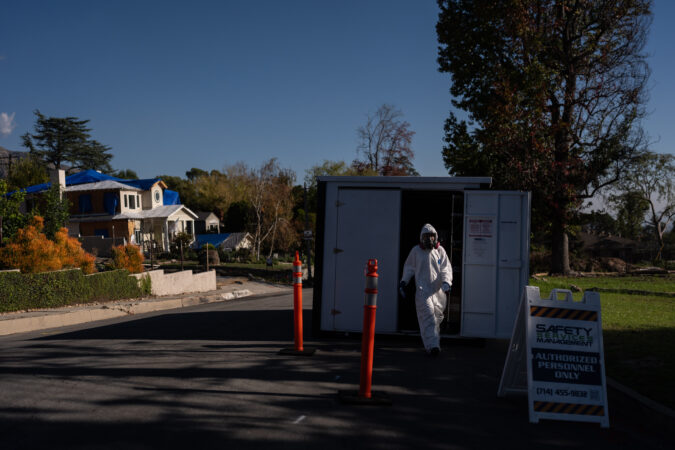
    House cleaners, hazardous waste workers, and homeowners alike come and go wearing masks, respirators, gloves, and hazmat suits as they wipe, vacuum, and power-wash homes that weren’t burnt to ash.

    It’s been a year of heartbreak and worry since the most destructive wildfires in the Los Angeles area’s history scorched neighborhoods and displaced tens of thousands of people. Two wind-whipped blazes that ignited on Jan. 7, 2025, killed at least 31 people and destroyed nearly 17,000 structures, including homes, schools, businesses, and places of worship. Rebuilding will take years.

    The disaster has brought another wave of trauma for people afraid of what still lurks inside their homes.

    Indoor air quality after wildfires remains understudied, and scientists still don’t know the long-term health impacts of exposure to massive urban fires like last year’s in Los Angeles. But some chemicals released are known to be linked to heart disease and lung issues, and exposure to minerals like magnetite has been associated with Alzheimer’s disease.

    Ash in the area is a toxic soup of incinerated cars, electronics, paints, furniture, and every other kind of personal belonging. It can contain pesticides, asbestos, plastics, lead, or other heavy metals.

    Many people with homes still standing are now living with the hazards left by the fires.

    People forced back into their Altadena homes

    Nina and Billy Malone considered their home of 20 years a safe haven before smoke, ash, and soot seeped inside, leaving behind harmful levels of lead even after professional cleaning. Recent testing found the toxin is still on the wooden floors of their living room and bedroom.

    They were forced to move back home in August anyway, after insurance cut off their rental assistance.

    Since then, Nina wakes up almost daily with a sore throat and headaches. Billy had to get an inhaler for his worsening wheezing and congestion. And their bedroom, Nina said, smells “like an ashtray has been sitting around for a long time.” She worries most about exposure to unregulated contaminants that insurance companies aren’t required to test.

    “I don’t feel comfortable in the space,” said Nina, whose neighbors’ homes burned down across the street.

    They’re not alone.

    Data shows dangerous lead levels still in homes

    According to a report released in November by the Eaton Fire Residents United, a volunteer group formed by residents, six out of 10 homes damaged from smoke from the Eaton Fire still have dangerous levels of cancer-causing asbestos, brain-damaging lead, or both. That’s based on self-submitted data from 50 homeowners who have cleaned their homes, with 78% hiring professional cleaners.

    Of the 50 homes, 63% have lead levels above the Environmental Protection Agency’s standard, according to the report. The average lead levels were almost 60 times higher than the EPA’s rule.

    Even after fires were extinguished, volatile organic compounds from smoke, some known to cause cancer, lingered inside of people’s homes, according to a recent study. To mitigate these risks, residents returning home should ventilate and filter indoor air by opening windows or running high-efficiency particulate air (HEPA) purifiers with charcoal filters.

    Zoe Gonzalez Izquierdo said she can’t get her insurance company to pay for an adequate cleanup of her family’s Altadena home, which tested positive for dangerous levels of lead and other toxic compounds.

    “They can’t just send a company that’s not certified to just wipe things down so that then we can go back to a still contaminated home,” Gonzalez said, who has children ages 2 and 4.

    Experts believe the lead, which can linger in dust on floors and windowsills, comes from burned lead paint. The University of Southern California reported that more than 70% of homes within the Eaton Fire were built before 1979, when lead paint was common.

    “For individuals that are pregnant, for young children, it’s particularly important that we do everything we can to eliminate exposure to lead,” said pediatrician Lisa Patel, executive director for the Medical Society Consortium on Climate and Health and a member of the climate group Science Moms.

    The same goes for asbestos, she added, because there is no safe level of exposure.

    “We have to live in the scar”

    People who lived in the Pacific Palisades, which was also scorched, face similar challenges.

    Residents are at the mercy of their insurance companies, who decide on what they cover and how much. It’s a grueling, constant battle for many. The state’s insurer of last resort, known as the California Fair Access to Insurance Requirements Plan, has been scrutinized for years over its handling of fire damage claims.

    Homeowners want state agencies to enforce a requirement that insurance companies return a property to prefire condition.

    Julie Lawson won’t take any risks. Her family paid about $7,000 out of pocket to test the soil in their Altadena home, even though their insurance company had already agreed to pay to replace the grass in their front yard. They planned to test for contaminants again once they finished remediating the inside, the process of making a home contaminant-free after a fire. If insurance won’t cover it, they’ll pay for it themselves.

    Even if their home is livable again, they still face other losses — including equity and the community they once had.

    “We have to live in the scar,” she said. “We’re all still really struggling.”

    They will be living in a construction zone for years. “This isn’t over for us.”

    Challenges and mental health toll

    Annie Barbour with the nonprofit United Policyholders has been helping people navigate the challenges, which include insurance companies that resist paying for contamination testing and industrial hygienists disagreeing on what to test for.

    She sees the mental health toll it’s having on people — and as a survivor herself of the 2017 Tubbs Fire in Northern California, she understands it.

    Many were at first joyful to see their houses still standing.

    “But they’ve been in their own special kind of hell ever since,” Barbour said.

    Now residents like the Malones are inspecting their belongings, one by one, fearing they may have absorbed toxins.

    Boxes, bags, and bins stuffed with clothes, chinaware, and everything in between fill the couple’s car, basement, garage, and home.

    They have been painstakingly going through their things, assessing what they think can be adequately cleaned. In the process, Nina is cleaning cabinets, drawers, and floors and still finding soot and ash. She wears gloves and a respirator, or sometimes just an N95 mask.

    Their insurance won’t pay to retest their home, Billy said, so they’re considering paying the $10,000 themselves. And if results show there’s still contamination, their insurance company told them they will only pay to clean up toxins that are federally regulated, like lead and asbestos.

    “I don’t know how you fight that,” said Nina, who is considering therapy to cope with her anxiety. “How do you find that argument to compel an insurance company to pay for something to make yourself safe?”

  • Democrats look primed to win the House, but a wave might be harder

    Democrats look primed to win the House, but a wave might be harder

    Democrats are celebrating signs that the tide is turning their way for the 2026 midterms. But translating dissatisfaction with President Donald Trump into an electoral tsunami, or even a wave election, will be much harder to achieve than in years past.

    History, polling, a narrow Republican majority, a string of off-year victories, and voter anxiety over the economy favor the Democrats, who lead in support for control of Congress by five percentage points in a Post average of November and December national polls.

    It’s unclear what effect the Trump administration’s recent intervention in Venezuela will have, if any, and will probably depend on how deeply the U.S. involves itself in running that country’s affairs. Democrats hope it further splits Trump’s MAGA coalition.

    But the battlefield in the House is smaller than ever, according to political analysts, experts, and operatives, meaning Democrats will need to compete in districts that Trump won by large margins to pick up a significant number of seats.

    Of the 39 seats Democrats are competing for, 28 are in districts that Trump won by five or more percentage points.

    A gerrymandering spree instigated by Trump has narrowed the number of truly competitive seats, furthering a trend that was already underway in recent elections as the nation has become more polarized. That has not affected the race for the Senate, which Republicans are favored to hold.

    Just 36 races in this year’s election are rated competitive by the Cook Political Report, compared with 49 races at the same point in the 2018 cycle. Half of the seats rated competitive by Cook this year are already held by Democrats, leaving the party even less room to gain ground.

    “Democrats will have a very narrow but viable path to the majority. That’s a different scenario than 2006 or 2018, when Democrats put a ton of Republican-held seats in play,” said David Wasserman, senior editor and elections analyst at the Cook Political Report. “There’s so little elasticity in U.S. House elections these days compared to prior eras.”

    Democrats won 40 House seats in the “blue wave” of 2018 during Trump’s first term, easily erasing the Republicans’ then 23-seat governing margin.

    The good news for Democrats this year: They need only three seats to regain control of the House.

    That is achievable, but 2018-sized “waves” are harder now given increasingly partisan maps and a more divided electorate that has become more rigidly partisan, according to Wasserman and other analysts.

    Party leaders, however, argue they are well positioned to compete in heavily Trump districts. Trump’s 2024 victory was powered by a historic realignment of the electorate that upended decades of traditional coalitions. He made inroads with Latinos, young voters, first-time voters, and middle- and lower-income households. Democrats say they can unwind many of those gains with a slate of less traditional, and in some cases less partisan, candidates.

    One of them is Paige Cognetti, the mayor of Scranton, Pa., who won her current seat by running as an independent in a campaign called “Paige Against the Machine.” Even though Trump won her district by about eight percentage points, voters are open to her because they still cannot afford basic necessities like housing and groceries and are not “bleeding Democrats or hardcore Republicans,” she said in an interview. She noted that Gov. Josh Shapiro (D) won the same district by eight percentage points in 2022.

    Cognetti is challenging Rep. Rob Bresnahan (R., Pa.), who has faced scrutiny for stock trades while he was in Congress after campaigning on a ban on stock trading for members of Congress.

    “This is the exact type of public corruption and cynical behavior that people here really, really loathe,” Cognetti said. “Government should work and people want to see it at their local level and federal level, too.”

    Bresnahan supported an effort last year that would restrict members of Congress from trading stocks and has said lawmakers should not profit off the information that they have. Bresnahan’s stocks are in an institutionally managed fund that is run by financial advisers, spokesperson Hannah Pope said.

    In a statement, Bresnahan’s campaign attacked Cognetti’s record as mayor and as “a former Goldman Sachs banker who made the richest Americans even richer.”

    Democrats have coalesced around a midterm message focused on the cost of living and healthcare, hammering Republicans for passing a $4 trillion budget bill that includes steep cuts to Medicaid and food stamps. They have also highlighted Republicans’ failure to extend pandemic-era Obamacare subsidies that expired Dec. 31 that will drive up premiums for millions of Americans this year.

    Democratic Party leaders have been energized by off-year and special elections in which Democrats performed above expectations. In a Tennessee special election last month in a district Trump won by 22 points, Republican Matt Van Epps won by about nine percentage points.

    Some Republicans have urged the party to focus more on affordability, rather than solely focusing on issues such as crime or immigration that played a significant role in their 2024 sweep. Trump kicked off a tour last month in Pennsylvania to focus on Americans’ struggles with rising prices, but veered off-script, mocking the word “affordability,” touting the stock market, and disparaging Somalia.

    Republicans say they also have a slate of strong candidates in the country’s most competitive districts, including Kevin Lincoln, a former mayor and pastor running against incumbent Adam Gray (D., Calif.) in a central California district, and Eric Flores, a Republican army veteran and lawyer challenging Rep. Vicente Gonzalez (D., Texas) in Texas’s 34th Congressional District, near the state’s southern Gulf Coast and the border with Mexico.

    Mike Marinella, spokesperson for the National Republican Campaign Committee, agreed the battlefield is smaller than in past midterm elections. But he said Republicans hold the advantage, pointing to about a dozen Democratic incumbents who are fending off challenges in districts that Trump won narrowly.

    “Fundamentally, we have the upper hand just by looking at the pure numbers, and Democrats are certainly on defense in a lot more districts than we are,” Marinella said.

    Rep. Suzan DelBene (D., Wash.), chairperson of the Democratic Congressional Campaign Committee, said in an interview that many candidates competing in Trump districts are closely connected to their communities and “independent-minded.”

    “Authenticity matters a ton because you’re talking to folks across the political spectrum,” DelBene said.

    Democrats believe they have effectively neutralized Republican efforts to pick up additional seats through gerrymandering in Texas, Ohio, and North Carolina by gaining seats of their own in California and Utah. The Indiana Senate rejected a partisan gerrymander last month, and Democrats are still exploring whether they could pick up seats in Virginia, Illinois, and Maryland. Wasserman said the post-gerrymandering landscape remains “pretty equitable to both parties.”

    As Trump’s approval ratings fall — 39% of voters approve of the job he is doing, according to a Washington Post average of polls in early December — Democrats are working to wipe out some of the gains he made with voter groups that are traditionally aligned with them.

    In South Texas, Tejano music star Bobby Pulido is competing in one of the new districts Republicans drew to try to maintain the House majority.

    Key to Trump’s victory in Texas’ 15th District, which includes the Rio Grande Valley, was an unprecedented rightward swing among Latino voters. Pulido has broad name recognition in the Southwest and in Mexico in large part because of his 1995 debut single “Desvelado.” Trump’s immigration crackdown is devastating tourism and the rest of the economy in South Texas, Pulido said, creating an opening among those who supported him.

    “These immigration raids are hurting a lot of these small business owners or builders where their workforce they’ve had for years is no longer either there or afraid to go to work,” Pulido said in an interview. “I understand that a lot of Democrats don’t want to get labeled open borders. I’m sure as heck not open borders. … But due in large part to the immigration policies this administration has taken, we need to fix it.”

    There are still myriad questions about where the final map for 2026 will end up. In addition to ongoing gerrymandering efforts by both parties, the Supreme Court is expected to decide whether to strike down the last major pillar of the Voting Rights Act, a provision that has bolstered the power of minority voters and candidates for more than 50 years.

    If the court issues a ruling early enough and sides with Louisiana and the Trump administration — which has argued that race played too large a role in the decision to create a second Black-majority congressional district in the state — some states might scramble to redraw their maps and add Republican seats.

    Chris Warshaw, professor of political science at the McCourt School of Public Policy at Georgetown University, said it’s not clear how aggressively Republican states will respond, if at all, if the Supreme Court strikes down Section 2 of the Voting Rights Act. Even if Republican states try to redraw their maps, he said, Democrats have shown they are willing to respond.

    But the cost of last year’s redistricting fights is the health of American democracy, particularly as the country had previously made progress toward less partisan maps, he said.

    “The unwinding of that progress is really sad, and there’s no reason to think this genie is going to go back into the bottle,” Warshaw said.

  • Trump revives an old vision of American power, with global implications

    Trump revives an old vision of American power, with global implications

    The nighttime raid that ousted Venezuelan President Nicolás Maduro this weekend was the most dramatic demonstration of President Donald Trump’s vow to focus U.S. might on the Americas, as the White House re-creates a stance toward the Western Hemisphere that more resembles its 19th century empire-building era than the laissez-faire attitude of recent generations.

    Trump and his top allies suggested that the Venezuelan operation could be the start of efforts to remake the region, warning the governments of Cuba and Colombia that they might be next. Trump and some backers have also brought up Mexico as a potential target, and they are reviving talk of attempting to acquire Greenland, a Danish territory.

    After announcing Maduro’s capture, Trump boasted of the “Donroe Doctrine,” a twist on the strategy articulated by President James Monroe in 1823 that European powers should stop interfering in the Western Hemisphere. The national security strategy released by the White House in December noted a “Trump Corollary” to the Monroe Doctrine that promised “to protect our homeland and our access to key geographies throughout the region.”

    The effort carries significant risks. Washington could get pulled into the nation-building invasions that Trump has long sworn to avoid if the Venezuelan military or people are unwilling to go along with his plans. It also makes it harder for the United States to argue to Russia and China that they should steer clear of their neighbors. And it may reshape global affairs more broadly, as smaller nations that were long dependent on Washington’s guarantees for global trade and stability hedge their bets by building ties elsewhere.

    Backers of Trump’s strategy downplay the drawbacks and say a narrower focus on U.S. regional interests is long overdue.

    “The goal of the policy is to see changes in Venezuela that are beneficial to the United States first and foremost, because that’s who we work for, but also, we believe, beneficial for the people of Venezuela, who have suffered tremendously,” Secretary of State Marco Rubio told NBC’s Meet the Press on Sunday, a day after Trump said U.S. forces were ready to reinvade Venezuela if Maduro’s de facto successor, Delcy Rodríguez, did not comply with his wishes.

    Rubio — the son of Cuban immigrants to the United States — has long backed efforts to oust Venezuela’s leaders, who have presided over a decline in their country’s economy, ignored election results, and built ties to U.S. adversaries including Russia and China. Deposing Venezuela’s government would probably weaken the Communist leaders of Cuba as well, since they have long depended on Caracas for energy and other economic support.

    “This emphasis on the Western Hemisphere should not come as a surprise to anybody. It matters more to American security than any other part of the world,” said Nick Solheim, chief executive of American Moment, a group that backs Trump’s policies and trains junior staffers.

    But he said advocates of a more robust focus on the Western Hemisphere were not saying Washington should abandon global affairs entirely.

    “It’s making sure that our neighbors are not doing anything that is, that would adversely affect the United States, and then focused on our greatest geopolitical challenge right now, which is China,” he said. “That is not a retreat from the world of foreign policy. It is an accurate prioritization of what actually matters the most, what poses the biggest threats to the United States.”

    The move against Venezuela drew criticism from both the center and the right, as some influential “America First” advocates said that military conflicts and expanded foreign opportunities for U.S. oil companies weren’t why voters backed Trump.

    “This is the same Washington playbook that we are so sick and tired of that doesn’t serve the American people, but actually serves the big corporations, the banks, and the oil executives,” Marjorie Taylor Greene, a longtime Trump ally who is retiring from Congress after breaking with the president, said on NBC’s Meet the Press on Sunday. “We don’t consider Venezuela our neighborhood. Our neighborhood is right here in the 50 United States, not in the Southern Hemisphere.”

    Washington has a long history of efforts to back friendly leaders in Latin America, including at times intervening with force to do so. But it has not done so directly since the 1991 end of the Cold War, and Venezuela — with 30 million residents and a territory double the size of Iraq’s — is an especially large nation to take on.

    “I understand how we got here, but there’s been no forethought to the difficulties of the plan or the ideas that they seem to have adopted as the way ahead, and there definitely is no plan to the level of detail that’s required,” said Jennifer Kavanagh, a senior fellow at Defense Priorities, a think tank that advocates a more limited role for the U.S. military in the world.

    She said she wasn’t sure that China and Russia would be emboldened by Trump’s actions, since they already appear to feel unconstrained toward their neighbors. But she noted that Trump appears to be cautious about tangling with militaries that can inflict serious damage on the United States.

    “This sort of spectacular operation is very consistent. He likes to hit adversaries that can’t hit back, whether it’s small drug-smuggling boats, or Iran with no air defenses, or Venezuela, which is also weak,” she said. “And to me, that explains the more accommodating approach to Russia and China, in the sense that his view of military power is kind of go big or go home. But that model doesn’t work against Russia and China.”

    Some of Trump’s former advisers warn that the world the president is building may turn out to be more dangerous than the era of the 1990s and 2000s, when the United States was the preeminent global power and backed a broad effort to strip barriers to trade.

    “It just seems to be back to the 18th and 19th centuries,” said Fiona Hill, an expert at the Brookings Institution who was Trump’s top Russia adviser in his first term. “If you’ve bought into the idea of competition among the great powers and that Russia is another great power that’s inevitably going to dominate in its region, just as China is in its region, then this is the logical conclusion from this.”

    Hill said countries that have deep, allied ties to the United States but are threatened by Trump may seek to protect themselves by building trade and security relationships elsewhere, a move that will ultimately weaken Washington, not strengthen it.

    The raid has sparked fears elsewhere that Trump could act on other threats toward U.S. neighbors, which have included demands to take over the Panama Canal, to turn Canada into the 51st state, to annex Greenland, and to overthrow Cuba’s government.

    Trump on Sunday said he didn’t plan action against Havana, but offered tough language nevertheless.

    “I think it’s just going to fall. I don’t think we need any action,” he told reporters on Air Force One. “You ever watch a fight, they go down for the count, and Cuba looks like it’s going down.”

    He was sharper toward Greenland.

    “We need Greenland from a national security situation,” Trump said. “It’s so strategic. Right now, Greenland is covered with Russian and Chinese ships all over the place. … Denmark is not going to be able to do it.” On Saturday, an influential former White House aide, Katie Miller, posted on social media an image of Greenland with the U.S. flag superimposed on top of it.

    The president’s repeated statements about Greenland drew a sharp response earlier Sunday from Danish Prime Minister Mette Frederiksen. “I have to say this very directly to the United States: It makes absolutely no sense to talk about the need for the United States to take over Greenland,” she said.

    In a statement, she said Denmark is a U.S. military ally and that the United States has extensive access to Greenland.

    “I would therefore strongly urge the United States to stop the threats against a historically close ally and against another country and another people who have said very clearly that they are not for sale,” she said.