CRANS-MONTANA, Switzerland — About 40 people were killed and another 115 injured, most of them seriously, after a fire ripped through a bar’s New Year celebration in a Swiss Alpine resort less than two hours after midnight Thursday, police said.
Authorities did not immediately have an exact count of the deceased.
The Crans-Montana resort is best known as an international ski and golf venue, and overnight, its crowded Le Constellation bar morphed from a scene of revelry into the site of one of Switzerland’s worst tragedies.
Valais Canton police commander Frédéric Gisler said during a news conference that work is underway to identify the victims and inform their families, adding that the community is “devastated.”
Beatrice Pilloud, Valais Canton attorney general, said it was too early to determine the cause of the fire. Experts have not yet been able to go inside the wreckage.
“At no moment is there a question of any kind of attack,” Pilloud said.
She later said the number of people who were in the bar is “currently totally unknown,” adding that its maximum capacity will be part of the investigation.
“For the time being, we don’t have any suspect,” she added, when asked if anyone had been arrested over the fire. “An investigation has been opened, not against anyone, but to illuminate the circumstances of this dramatic fire.”
Gisler said the priority until further notice would be identifying the victims, and added that “this work will have to take several days.”
An evening of celebration turns tragic
Axel Clavier, a 16-year-old from Paris who survived the blaze, described “total chaos” inside the bar. One of his friends died and “two or three” were missing, he told The Associated Press.
He said he hadn’t seen the fire start, but did see waitresses arrive with Champagne bottles with sparklers, he said.
Clavier said he felt like he was suffocating and initially hid behind a table, then ran upstairs and tried to use a table to break a Plexiglas window. It fell out of its casing, allowing him to escape.
He lost his jacket, shoes, phone and bank card while fleeing, but “I am still alive and it’s just stuff.”
“I’m still in shock,” he added.
Two women told French broadcaster BFMTV they were inside when they saw a male bartender lifting a female bartender on his shoulders as she held a lit candle in a bottle. The flames spread, collapsing the wooden ceiling, they told the broadcaster.
One of the women described a crowd surge as people frantically tried to escape from a basement nightclub up a narrow flight of stairs and through a narrow door.
Another witness speaking to BFMTV described people smashing windows to escape the blaze, some gravely injured, and panicked parents rushing to the scene in cars to see whether their children were trapped inside. The young man said he saw about 20 people scrambling to get out of the smoke and flames and likened what he saw to a horror movie as he watched from across the street.
Officials described how the blaze likely triggered the release of combustible gases that ignited violently and caused what English-speaking firefighters call a flashover or backdraft.
“This evening should have been a moment of celebration and coming together, but it turned into a nightmare,” said Mathias Reynard, head of the regional government of the Valais Canton.
The injured were so numerous that the intensive care unit and operating theater at the regional hospital quickly hit full capacity, Reynard said.
Crans-Montana is less than 5 kilometers (3 miles) from Sierre, where 28 people, including many children, were killed when a bus from Belgium crashed inside a Swiss tunnel in 2012.
Resort town sits in the heart of the Alps
In a region busy with tourists skiing on the slopes, the authorities have called on the local population to show caution in the coming days to avoid any accidents that could require medical resources that are already overwhelmed.
With high-altitude ski runs rising around 3,000 meters (nearly 9,850 feet) in the heart of the Valais region’s snowy peaks and pine forests, Crans-Montana is one of the top venues on the World Cup circuit. The resort will host the best men’s and women’s downhill racers, including Lindsey Vonn, for their final events before the Milan-Cortina Olympics in February. The town’s Crans-sur-Sierre golf club stages the European Masters each August on a picturesque course.
The Swiss blaze on Thursday came 25 years after an inferno in the Dutch fishing town of Volendam on New Year’s Eve, which killed 14 people and injured more than 200 as they celebrated in a cafe.
Swiss President Guy Parmelin, speaking on his first day in office, said many emergency staff had been “confronted by scenes of indescribable violence and distress.”
“This Thursday must be the time of prayer, unity and dignity,” he said. “Switzerland is a strong country not because it is sheltered from drama, but because it knows how to face them with courage and a spirit of mutual help.”
One woman moved back across the country to care for her grandmother, giving up her dreams of sunshine and palm trees. A young mother, overwhelmed caring for two children and her ailing grandmother, finally asked family to help her juggle. Andanother woman assumed financial responsibility for her grandmotherafter her home fell into foreclosure.
All three women belong to whatagingexperts call America’s unseen workforce — the 48 million family caregivers who provide unpaid support that allows millions of adults who are older, ill, or disabled to remain at home. It is a group that is expected to shoulder even more responsibility as the population ages and conditions such as dementia, cancer, and heart disease continue to rise. Within the already stretched community of caregiving, they belong to a group that is even more overlooked and undercounted: grandchildren.
Research shows unpaid caregiving is valued at more than $1 trillion, said Nicole Jorwic, chief program officer at the nonprofit Caring Across Generations.
“Right now, families filling in the gaps is the only option for a lot of people whether they’re grandchildren or not,” said Jorwic, who is in her 40s andhelpingcare for three grandparents in their 90s.
Research suggests race and ethnicity may be the “strongest predictors” of who becomes young adult caregivers, with about a third of caregivers in Asian, Black, or Latino families being 18 to 34 years old. And family caregivers generally are more likely to be women.
Caring for an aging family member is already an emotional, financial, and physical gantlet. Add to that the inexperience of youth, and some aging researchers say the challenges for grandchildren who are caregivers become even harder to navigate.
What this looks like in real life — the exhaustion, the sacrifice, the sense of purpose — comes through in the stories of three women shouldering the weight, not simply out of necessity but also devotion.
A caregiver who built an online community
The average caregiver is 51 years old. But five years ago, Elaine Goncalves stepped into the role at 28. She hadn’t imagined becoming hergrandmother’s caregiver. Elaine’shigh-paying tech job had just allowed her to relocate to San Diego.
Her grandmother, AdelaideGoncalves, was 90 and living in Massachusetts with one of her daughters and a different grandchild, barely able to manage the stairs of her third-floor home. Before Elaineleftfor California, she tried in vain to relocate her grandmother, askingall six of Adelaide’s surviving children for help. Elaine’s parents, unsure if their work schedules would accommodate the need, agreed with her plan, and her grandmother did, too — until it was time to go.
“Other family members were telling her not to,” Elaine said.
When the pandemic hit, Elaine was forced to return home. The way she made peace with the move was by finding a way to care for her grandmother. She kept the plan quiet, afraid relatives would talk her grandmother out of it again, and mindful of how it might look for a granddaughter to take on a role traditionally expected of a daughter in her Cape Verdean family. When someone in the house got COVID, no one objected to Adelaide relocating.
The first two years were “pretty humbling,” Elaine said. “I experienced crazy things like walking in my bathroom andit was covered in poop,” she said. “I basically went from ‘She’s so sweet!’ to praying — literally — every day for patience.”
The experience also made Elainerealize she owed her aunt an apology for judging the care she had provided and the frustration her aunt expressed in taking on a formidable task.
What the family didn’t know then was that Adelaide had dementia. Elainesaid guilt set in. A caseworker who called unexpectedly to schedule her grandmother’s annual physical helped secure the diagnosis, she said, and connected Elaine with “resources I needed but didn’t know were available.” Home health aides now feed, bathe, and change her grandmother, who goes to an adult day program daily.
In 2020 and 2025, about 18% of family caregivers ages 18 to 49 were caring for their grandparents, according to reports by AARP and the National Alliance for Caregiving. But researchers say it’s hard to know exactly how many young people provide care because the term “caregiver” can be defined in so many ways and national surveys count differently.
Researchers say that many young people aren’t identified because unlike Elaine, they’re not the primary caregiver, but rather pitching in as part of a family network.
“Most of them are disrupting parts of their life to engage in something they may not be counted as doing,” said Karen Fingerman, a professor at the University of Texas at Austin and director of the Texas Aging and Longevity Consortium.
Last year, Adelaide’s heart briefly stopped, a scare that led to hospice care.
“Emotionally, this has been a roller-coaster ride,” Elaine said. “Balancing the family dynamics and their help — or lack thereof — and their opinions and the emotions of her being hospitalized and me thinking she’s dying” forced tough family conversations.
Elainedecided to reflect on her experiences a few months ago, and wound up sharing the lessons online, inadvertently buildinga community through the social media series. It has drawn 1.6 million views, thousands of comments and shares, and more messages than she can keep up with — and she had posted only 11 of the 15 lessons.
“I didn’t know there were other people my age dealing with this,” she said.
A caregiver who had to give up care
Ramona Reynolds didn’t go away to college, opting instead to stay home and care for the grandmother who raised her. They hadnever spent more than a weekend apart, including after the 38-year-old got married and started having children. But eventually her 86-year-old grandmother’s health deteriorated beyond Reynolds’s capacity to provide care.
“That was a hard pill to swallow,” she said of sending her grandmother, Thelma McDonald, to live with her aunt.
For years, Reynolds watched dementia transform the woman who once commanded so much respect in their Brooklyn neighborhood that boys on the block carried her groceries upstairs unasked.
Reynolds was in her 20s when her grandmother was first diagnosed with dementia. A friend noticed that her grandmother was repeating herself. A few years later, one of her great-uncles did, too.Even though McDonald has four living children and a host of brothers and sisters, Reynolds never thought to ask them for help.
For years, things were manageable. Then, Reynolds got pregnant with her second child, and the family decided to relocate to Georgia for more space. As they prepared to move, Reynold’s family stayed with her in-laws and was to become a paid family caregiver. What she didn’t know was that moving someone with dementia out of a familiar environment can worsen their symptoms.
“So, when we moved here, I’m like, ‘Oh my god. Why is it so much harder?’” she recalled of her grandmother, who worked as a paid caregiver after emigrating from Jamaica. Reynolds was chasing after a toddler, trying to make sure her son — who is autistic, has ADHD, andin virtual school – stayed on task, all while also caring for her grandmother. “We did everything for her. Cooking, bills, dealing with doctors, social workers, program directors, all that stuff.”
Being a caregiver can be draining mentally, physically, and emotionally, experts say. What ultimately drives caregiver burnout and makes the role heavy is the lack of support, recognition, and resources, and the isolation, more so than the work itself, said Melinda S. Kavanaugh, a professor at the University of Wisconsin-Milwaukee whose research focuses on children and young adult caregivers.
“You can only do something on your own without any support for so long before you break,” she said, noting that older caregivers “might be able to last a little bit longer” because they have life experience to draw on.
Reynolds knew something had to give as her grandmother’s condition progressed and McDonald began unlocking doors trying to leave. She called a family meeting and asked for help. Her aunt stepped in, taking over her grandmother’s care.
“It’s a hard balance,” Reynolds said. “On the one hand, I would be nothing without this woman. But on the other, now I have my own family, and these babies deserve a mother that’s whole, that is not filled with anxiety and grief and a little bit of resentment, too.”
A caregiver shouldering financial responsibilities
Sharita Payton, 45, stepped in to help her sister care for their grandmother about two years ago, when several crises hit at once. Their grandfather died, their grandmother became more forgetful, maintaining the house became unaffordable, and her sister was facing personal struggles.
Payton’s mother was unable to take on the responsibility full time because she’s caring for a husband who has had multiple strokes. Neither could her grandmother’s other children, for different reasons: One is in jail, another struggles with addiction issues, and the third lives far from the family in South Carolina.
“There’s a lot of different nuances involved,” she said. “To look around and see that after everything they have given, there’s really no one that’s available to pour back into her when she needs it. That’s been really hard to navigate. I just had to step up.”
So, on and off for the past two years, Payton’s husband would drive her 89-year-old grandmother, Geneva Madison, between their house in Massachusetts and her mother’s house in Connecticut.Payton became hergrandmother’s power of attorney, took over her finances, and began setting aside money for when a move was needed. That move came several months ago when she set her grandmother and sister up in a new apartment.
Caregiving can be financially stressful for families because close to three-quarters of costs are out of pocket, said Sue Peschin, president and CEOof the Alliance for Aging Research. Often families don’t realize this “until they’re up against it,” she said, noting that people tend to think Medicare covers long-term care and it doesn’t.
Part of the misconception is how “we think about retirement in the United States,” Peschin said. “Oftentimes the thinking is, ‘How do we want to live as fully functional human beings?’” But not what happens after a health crisis.
Payton, who owns a hair salon, isn’t certain her grandmother will stay in Connecticut for good. She keeps a close watch in case she needs to bring Madison back to Massachusetts. She talks about the need for more resources often with clients who find themselves in similar situations. “A lot of us are navigating these new things for the first time, and we don’t even know what to do or how to do it,” Payton said. “We just put more on our plate than I think we need to.”
Still, she said, “it’s kind of like a no-brainer. That’s my grandmother.” As a mother of five, Payton said she tries to involve her children in her grandmother’s care in small ways, teaching them to “treasure her because this is something that is not the norm, having your great-grandmother in your presence.”
The Social Security Administration — the sprawling federal agency that delivers retirement, disability, and survivor benefits to 74 million Americans — began the second Trump administration with a hostile takeover.
It ended the year in turmoil. A diminished workforce has struggled to respond to up to six million pending cases in its processing centers and 12 million transactions in its field offices — record backlogs that have delayed basic services to millions of customers, according to internal agency documents and dozens of interviews.
Long-strained customer services at Social Security have become worse by many key measures since President Donald Trump began his second term, agency data and interviews show, as thousands of employees were fired or quit and hasty policy changes and reassignments leftinexperienced staff to handle the aftermath.
Exaggerated claims of fraud, for example, have led to new roadblocks for elderly beneficiaries, disabled people, and legal immigrants, who are now required to complete sometransactions in person or online rather than by phone. Even so, the number of calls to the agency for the year hit93 million as of late September — a six-year high, data show.
The troubled disability benefits system is also deteriorating after some improvement, with 66% of disability appointments scheduled within 28 days as of December — down from nearly 90% earlier in the year, data show.
One notable exception is phone service, which improved in the second half of the yearbut is still subpar. Average hold times peaked at about 2½ hours in March, but dropped starting in July as employees were diverted from field office duties to fix what had become a public relations crisis. Average wait times for callbacks remain an hour or longer, however, while new delays have emerged elsewhere in the system, internal data show.
“It was not good before, don’t get me wrong, but the cracks are more than beginning to show,” said John Pfannenstein, a claims specialist outside Seattle and president of Local 3937 of the American Federationof Government Employees, which represents most Social Security employees. “It is a great amount of stress on our employees that remain on the job, who haven’t jumped ship.”
Commissioner Frank Bisignano has authorized millions of dollars in overtime pay to employees in a race to clear the bottlenecks, which worsened dramatically after nearly 7,000 employees — 12% of the workforce — were squeezed out early in the year. The agency said it has made improvements: It reduced the processing center backlog by one million cases this fall, cut pending disability claims by a third and kept the website live 24-7 after a series of outages earlier this year.
The current crisis follows years of disinvestment by Congress and acting leadership, despite a surge in baby boomer retirements. Bisignano promised faster service and a leaner workforce with a digital identity that he says willautomate simple retirement claims and other operations.
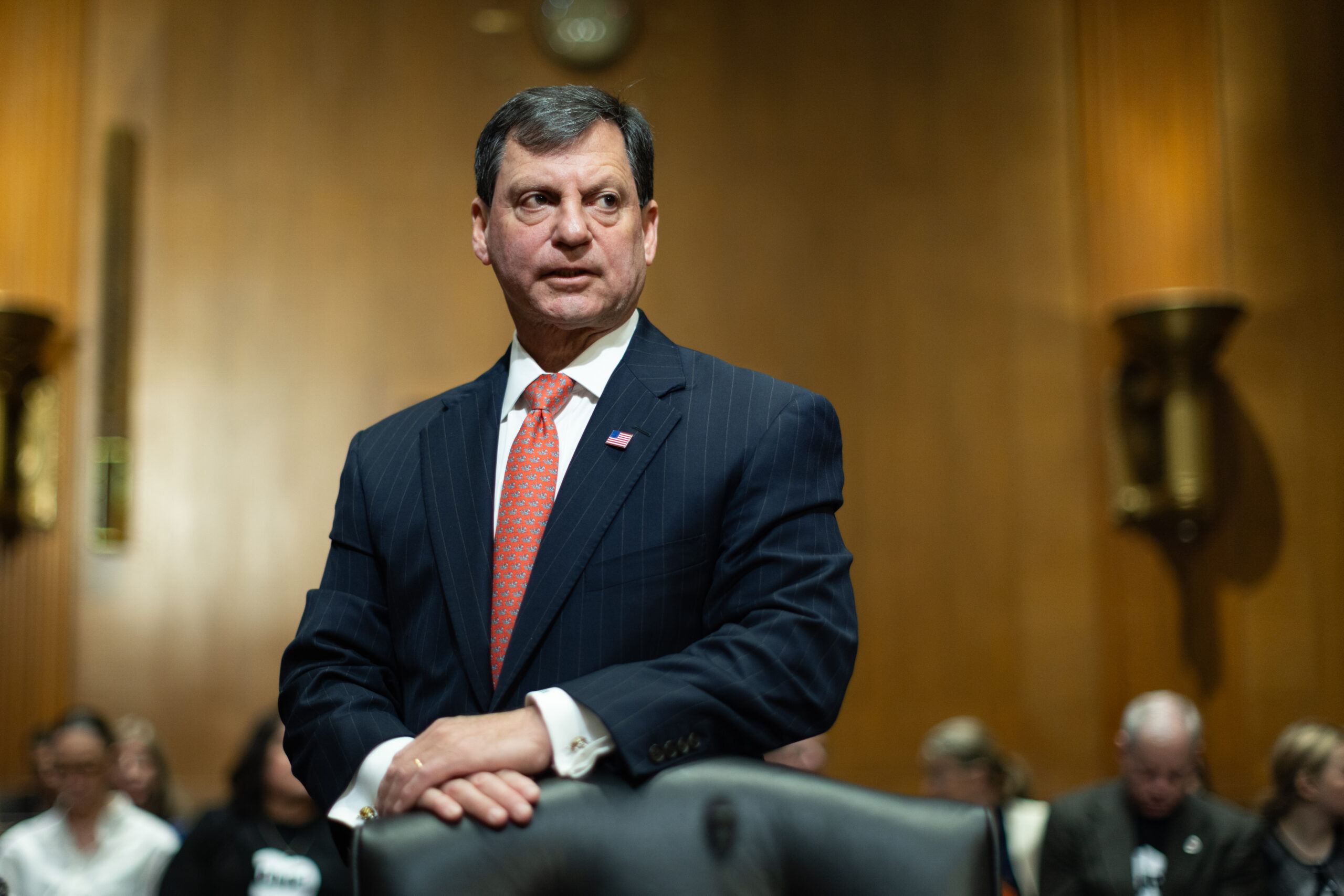
Frank Bisignano, President Donald Trump’s nominee for commissioner of the Social Security Administration, arrives for his confirmation hearing in March.
“In the coming year, we will continue our digital-first approach to further enhance customer service by introducing new service features and functionality across each of our service channels to better meet the needs of the more than 330 million Americans with Social Security numbers,” the commissioner said in a statement to the Washington Post.
But responsiveness and trust in the agency have suffered, according to current and former officials and public polling.
This account of the crisis at Social Security is based on internal documents and interviews with41 current and former employees, advocates and customers, many of whom spoke on the condition of anonymity to speak candidly about their concerns.
Social Security officials declined to make Bisignano available for an interview, though he did respond to written questions.
Three days before Christmas, Brian Morrissey, 65, arrived at the field office in Silver Spring, Md., for an appointment to apply for Medicare. He had tried the “MySSA” website, “but navigating it was just really hard,” he said. Morrissey owns a home improvement business, he said.
“If they can make the process easier online, great, but right now it is not well designed,” he said. So his wife waited 30 minutes on hold to schedule a face-to-face appointment for him.
Aime Ledoux Tchameni, an immigrant from Cameroon, waited in line at the Silver Spring office to get an appointment time to fix his last name from being listed as his first name — a mistake that occurred when he came to the U.S. two years ago. He has a provisional driver’s license from Maryland and needs to clear up his name with Social Security by mid-January, he said. But his appointment is not until Feb. 9.
“This is really going to cause me problems, because I need my driver’s license to get to work,” Tchameni said in French. “I don’t understand why I have to wait so long.”
‘I flipped the switch’
The table was set in February by Elon Musk and his Department of Government Efficiency, or DOGE, which installed a loyal, mid-level data analyst with no management experience to lead the $15.4 billion agency.
That former analyst, Leland Dudek, insists that he saved Social Security from a worse fate under Musk’s cost-cutting team. “I flipped the switch,” he said in a recent interview, referring to his disruptive four-month tenure as acting commissioner. “The casualty of that is a smaller SSA, an SSA that is being, for the first time, subject to the whims of being a political organization, which it was never intended to be.”
Regional offices abruptly disappeared in a rushed reorganization. New policies to fight fraud were rolled out only to be canceled or changed, prompting confused customers to jam the phones and the website, which crashed repeatedly. Daily operations in some respects became an endless game of whack-a-mole as employees were pulled from one department to another.
Along the way, Social Security also became ground zero in the administration’s quest to gather Americans’ personal data — largely in service of its mass deportation campaign.
The chaos quickly became a political cudgel, as Democrats saw an opening to defend one of the country’s most popular entitlement programs. Senate Democrats, led by Sen. Elizabeth Warren of Massachusetts, set up a “war room,” holding rallies with former commissioners in both parties and issuing demands for more resources to keep the Trump administration on the defensive.
“We’ve kept up the pressure and held Donald Trump, Elon Musk and Frank Bisignano accountable for the chaos they’ve caused,” Warren said in an interview.
Many critics note that Bisignano, a Wall Street veteran who became commissioner in May, now wears a second hat as CEO of the Internal Revenue Service —another massive portfolio with a multibillion-dollar budget.
In a statement, Bisignano said his shared leadership of Social Security and the IRS “will drive a better outcome for the American public.” He saidhe envisions “a Social Security Administration that is easier to access, faster to respond, and better prepared to meet the challenges facing Americans.”
Bisignano also said he is working to improve morale and “have the right level of staffing to operate at peak efficiency and deliver best-in-class customer service to the American people.”
‘Work piles up’
By the time Bisignano was confirmed by the Senate, Social Security had been led by three acting commissioners in six months. He pledged to stabilize the upheaval.
But he confronted immediate challenges. Dudek had reassigned 2,000 employees in administrative, analytical and technical roles to jobs dealing with the public. Many accepted the switch under threat of firing if they refused. Some began working the phones. But the national toll-free number was still in crisis, so another 1,000 staffers were assigned to the phones in July. The employees were thrown in with minimal training, multiple employees said — and found themselves unable to answer much beyond basic questions. The phone staff was told to keep calls under seven minutes in what became a push for volume over quality, employees said.
Although officials have publicly claimed that wait times have improved to single digits in some cases, those numbers do not account for the time it takes for customers to be called back, according to internal metrics obtained by the Post.
An audit published by the Social Security Inspector General’s Office on Dec. 22 confirmed that millions of callers requesting callbacks were counted as zero-minute waits by the agency. The review concluded that the metrics themselves were accurate, however, and showed that customer service overall has improved.
Jenn Jones, AARP’s vice president of financial security, said the improved phone service numbers were “encouraging” but that “more work needs to be done.”
“Wait times for callbacks remain over an hour, and more than a quarter of callers are not being served — by getting disconnected or never receiving a callback, for instance,” Jones said in a statement.
Public outcry and pushback from congressional Democrats derailed the planned closure of dozens of field offices that DOGEhad said were no longer needed.
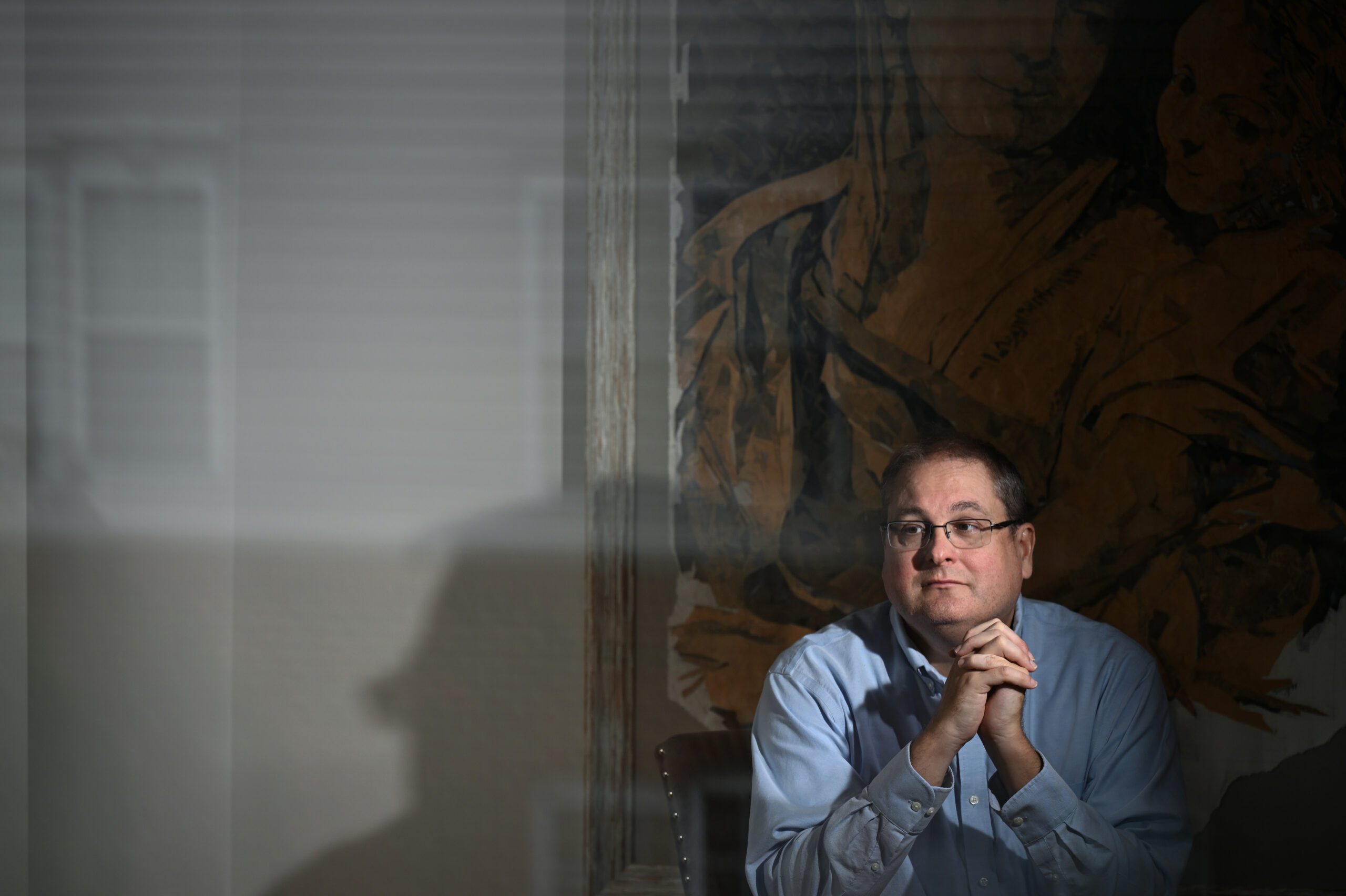
Leland Dudek, former acting commissioner of the Social Security Administration, in November.
Meanwhile, Dudek’s workforce cuts led field offices to shed 9% of their employees by spring due to early retirement and deferred resignation offers. Overtime was restricted and hiring was frozen,even as customer visits continued to climb.
Shortly after taking office, Bisignano’s field operations chief, Andy Sriubas, wrote in an email to the staff that field offices “are, and will always remain, our front line — our face in the community and the primary point of in-person contact.”
In the near term, though, the front line staff were overwhelmed. Attrition was geographically uneven, with some offices losing a quarter of their employees to early retirement offers just as foot traffic grew, according to a staffing analysis by the AFGE’s research partner, the Strategic Organizing Center. The groupcalculated that there were about 4,000 beneficiaries for every field office employee in August of this year.
In several states that ratio is worse, the group found. Wyoming’s field offices, for example, have just 18 employees — or one for every 7,429 beneficiaries.
The shortages have created temporary office closures in many rural areas, some for days or months at a time. The office in Havre, Mont., has been closed for months, with the nearest one almost two hours away in Butte.
Today a majority of Social Security staffers who accepted reassignmentshave not been fully or properly trained, according to several employees with direct knowledge of the initiative. Instruction is often truncated so the staff can respond to customers. Officials said they provide training based on the employee’s level of experience and review the reassigned employees’ work.
“They offered minimal training and basically threw them in to sink or swim,” one veteran employee said of their transferred colleagues.
Training on the phone system and complicated claims and benefit programs lasted four hours for some reassigned workers when it should have taken six months, another employee said. As a result, some customers still can’t get basic questions answered or are given inaccurate information,according to a half-dozen staffers who answer the phones or work closely with employees who do.
The increased workload, hiring freeze and departures have made it harder for the staff to complete their daily tasks, said Jordan Harwell, a Butte, Mont., field office employee who is president of AFGE Local 4012. The staff used to find time between calls to process pay stubs, take in new disability applications and schedule appointments, but now “that work piles up,” he said.
DOGE officials, citing fraud concerns, also required direct deposit changes to be done in person or online — but getting online now calls for new identity verification measures that do not come easily to many elderly or disabled customers. Immigrants approved for green cards to work in the U.S. are now required to get Social Security cards in person under a Trump anti-fraud policy, producing a flood of new field office visits.
In one Indiana field office, one employee said she drags herself to work every day, dreading what will come next. Although she was hired as a claims specialist, she and her colleagues are being told to prioritize answering the phones, which never stop ringing now that her office is taking calls for both Indiana and parts of Illinois due to reorganizations and reductions.
That means she is forced to let other work pile up: calls from people asking about decisions in their cases, claims filed online and anyone who tries to submit forms to Social Security — like proof of marriage — through snail mail.
As the backlogs keep building, she is taking calls from 25 or so people every day, already knowing that she won’t be able to help five or six of them. These are elderly people, often poor or bedridden, who have no way to comply with the change requiring that direct deposit actions take place in person or online. Usually they’re calling because something has happened to their bank accounts and they need to alter their financial information. But they can’t access a computer, the employee said, and driving is out of the question.
She received a call this month from a 75-year-old man who suffered a massive stroke that left him unable to drive. He’d also had to switch banks and, as a result, hadn’t received Social Security checks for the last two or three months.
“I had to sit there on the phone and tell this guy, ‘You have to find someone to come in … or, do you have a relative with a computer who can help you or something like that?’” she recalled. “He was just like, ‘No, no, no.’”
She ended that call by telling the man to call his bank, hoping they might be able to help when her agency, hampered by administration policies, no longer could.
‘Everybody started laughing’
As the staff races to answer the phones, other tasks are backing up, including Medicare applications, disability claims that require initial vetting by field offices and other transactions that cannot be solved in one conversation. Any case falling in that category is redirected to a processing center, where the backlogs have been building all year.
These back-office operations, located across the country, often handle labor-intensive, highly complex cases that do not call for automated resolution. Among the tasks are issuing checks, including for back pay, to disabled people whose denial of benefits was reversed by an administrative law judge.
As Congress kept funding flat for Social Security over many years, the processing operations fell way behind, requiring headquarters employees to help handle the volume. But it was never as bad as it got this fall.
Many disability payments now takethree to six months to process when they used to take weeks, advocates and employees said.
At the start of September, one benefits authorizer in a processing center was called into an all-staff meeting with her colleagues, she said. There, management explained that the backlog at the time — six million cases — was unacceptable and that everyone would have to work overtime in an attempt to drive it down to two million by Christmas.
“When they told us that, everybody started laughing,” she said. “Because there is just absolutely no way to get it down in that short period of time.”
Still, she and her colleagues have been hustling, she said, processing cases as fast as they can, even as they can see their haste sometimes causes errors. No time to fix them, she has decided: Best to just keep moving.
The Social Security Administration has said it expects to pay $367 million less on payroll this fiscal year than the year before.
Meanwhile, another staffer, who answers phones at a national call center, said she has changed what she says to customers when she realizes their claim can’t be finished in one conversation and must be referred to a payment center.
“I’m supposed to reassure people it’s being worked on,” she said. “But now I avoid giving people a firm date they can expect it to be done by.”
Just before Thanksgiving, Bisignano said that starting next year, he hopes to slash field office visits by half. More than 31 millionpeople visited field offices in the last fiscal year — or tried to. Critics say the change will dismantle the fail-safe for those who cannot use computers, no matter how imperfect.
At the same time, in recent weeks, hundreds of employees who transferred to customer service operations have been recalled to the roles they were originally hired to fill. Others have been reassigned to a new “digital engagement” office.
Social Security has told Congress it plans to put more resources toward IT, with an expected increase of $591 million this fiscal year compared to fiscal 2025, according to the agency’s budget justification. The agency also expects to pay $367 million less on payroll than it did the year before.
Social Security also plans to roll out a new program that will allow customers to book phone appointments with field offices throughout the country, no matter where they live, according to two people familiar with the plans.
The goal is to reduce the number of field office visits, though one field office employee said the change will probably lead to a greater workload for staff keeping up with queries from customers outside their area.
“They’ve created problems and now they are trying to fix problems they created,” the worker said.
During Christmas week, the grind continued for most front line staff. After Trump signed an executive order last week closing most federal offices on Christmas Eve and Friday, Bisignano told his staff that field offices, teleservice centers, processing centers and more operations would remain open.
“In order to balance the needs of the public and our workforce, we will solicit interest from employees who would like to work on Wednesday and Friday,” he wrote.
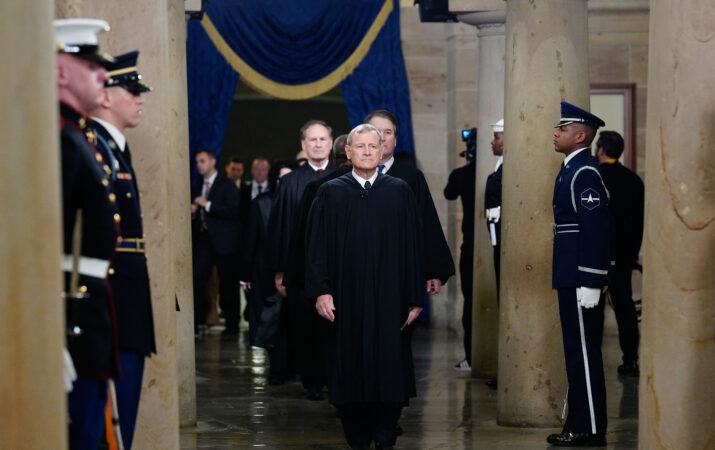
Amid rising concerns about the health of the nation’s democracy, Chief Justice John G. Roberts Jr. expressed faith Wednesday that the nation’s founding charters and key principles are proving resilient.
Quoting President Calvin Coolidge, the Supreme Court’s leader wrote in a year-end report that as the nation approaches its 250th anniversary, the rule of law remains alive and well.
“Amid all the clash of conflicting interests, amid all the welter of partisan politics, every American can turn for solace and consolation to the Declaration of Independence and the Constitution of the United States with the assurance and confidence that those two great charters of freedom and justice remain firm and unshaken,” Roberts quoted Coolidge as saying.
He added in his own words: “True then; true now.”
The comments came in Roberts’s annual report on the state of the judiciary, which largely sidestepped contemporary controversies and events at a moment of political upheaval. Many of those concerns have revolved around President Donald Trump’s push to expand executive authority and wield power that critics say belongs to other branches of the government.
Instead of those issues, Roberts wrote mostly about history — the drafting of the Declaration of Independence and Constitution, the ideas that inspired the documents and the nation’s struggles to fulfill the charters’ ideals.
Roberts urged judges to remain true to that legal bedrock.
“Those of us in the Third Branch must continue to decide the cases before us according to our oath, doing equal right to the poor and to the rich, and performing all of our duties faithfully and impartially under the Constitution and laws of the United States,” Roberts wrote.
Roberts made no mention of topics that have animated others in the judiciary and legal observers over the last year: threats against judges, the Trump administration’s alleged defiance of court orders or critiques by lower-court judges of how the Supreme Court has ruled on its emergency docket.
Roberts did decry threats against judges in last year’s annual report and pushed back on President Donald Trump’s calls to impeach a federal judge who ruled against him. In March,Roberts issued a rare statement saying that “impeachment is not an appropriate response to disagreement concerning a judicial decision.”
In November, Congress boosted funding for security at the Supreme Court, but it did not extend additional money for the protection of lower-court judges.
Threats against federal judges spiked in the months after Trump began his second term in January. Through the current fiscal year, which started Oct. 1, the U.S. Marshals Service has investigated 133 threats against federal judges, according to agency statistics.
Trump and his allies have sharply criticized rulings against the president’s policies and called for the removal of some judges. Dozens of judges who have ruled against Trump have received unsolicited pizza deliveries at their homes. Threats against judges have also come from the left.
Roberts’s report comes as the Supreme Court takes up a series of high-profile cases involving key tests of Trump’s agenda. In November, the justices appeared skeptical that Trump’s sweeping tariffs were legal. Earlier this month, the justices seemed ready to allow Trump greater authority to fire the heads of independent agencies without cause.
Next month, the justices will hear arguments over whether the president can dismiss Federal Reserve governor Lisa Cook, which would allow the president to reshape the Fed and its vast powers over the economy.
Decisions in all three cases are expected by the summer.
Michael Zanoni scored 23 points Wednesday to lift Penn to an 80-61 victory against New Jersey Institute of Technology at the Palestra.
AJ Levine posted seven steals for Penn, which put the game away with a 17-0 run early in the second half. Levin’s seven steals were the most by a Quakers player since Ibby Jaaber had seven against Navy on Dec. 7, 2006.
Zanoni made 8 of 15 shots including 5 of 11 from beyond the arc for the Quakers (7-6). Levine scored 19 points and added five rebounds. Augustus Gerhart made 6 of 8 shots and finished with 16 points, adding nine rebounds.
David Bolden tallied 18 points to lead the Highlanders (5-10).
The Quakers will begin Ivy League play on Monday at 7 p.m. in a road game against Princeton.
MELBOURNE, Australia — From Paris to Dubai to Sydney, crowds began ringing in the new year with exuberant celebrations filled with thunderous fireworks or drumming, while others took a more subdued approach.
A countdown to midnight was projected onto the Arc de Triomphe in Paris and Russians celebrated in snowy Moscow. In Japan, temple bells rang and some climbed mountains to see the year’s first sunrise and a light show with somersaulting jet skis twinkled in Dubai.
Other events were more subdued. Hong Kong held limited celebrations following a recent fire at an apartment complex that killed 161 people. Australia saluted the new year with defiance less than a month after its worst mass shooting in almost 30 years.
More security in Sydney
A heavy police presence monitored crowds watching fireworks in Sydney. Many officers openly carried rapid-fire rifles, a first for the event, after two gunmen targeted a Hannukah celebration at Bondi Beach on Dec. 14, killing 15.
An hour before midnight, victims were commemorated with a minute of silence, and the crowd was invited to show solidarity with Australia’s Jewish community.
New South Wales Premier Chris Minns had urged residents not to stay away from festivities, saying extremists would interpret smaller crowds as a victory: “We have to show defiance in the face of this terrible crime.”
People gather at Lan Kwai Fong to celebrate the start of 2026 in the Central district of Hong Kong.
Shadows of war and disaster
Indonesia scaled back festivities in solidarity with communities devastated by floods and landslides in parts of Sumatra a month ago that killed over 1,100. Fireworks on the tourist island of Bali were replaced with traditional dances.
Hong Kong rang in 2026 without fireworks over Victoria Harbor after the massive fire in November. Facades of landmarks were turned into countdown clocks and a light show at midnight.
And in Gaza, Palestinians said they hope the new year brings an end to the conflict between Israel and Hamas. “The war humiliated us,” said Mirvat Abed Al-Aal, displaced from the southern city of Rafah.
People gather to celebrate the new year at the Zojoji Buddhist Temple in Tokyo.
Around Europe
Pope Leo XIV closed out the year with a plea for the city of Rome to welcome foreigners and the fragile. Fireworks were planned over European landmarks, from the Colosseum in Rome to the London Eye.
In Paris, revelers converged toward the glittering Champs-Élysées avenue. Taissiya Girda, a 27-year-old tourist from Kazakhstan, expressed hope for a calmer 2026.
“I would like to see happy people around me, no war anywhere,” she said. “Russia, Ukraine, Palestine, Israel, I want everybody to be happy and in peace.”
In Scotland, where New Year’s is known as Hogmanay, First Minister John Swinney urged Scots to follow the message of “Auld Lang Syne” by national poet Robert Burns and show small acts of kindness.
Greece and Cyprus turned down the volume, replacing traditional fireworks with low-noise pyrotechnics in capitals. Officials said the change is intended to make celebrations more welcoming for children and pets.
Additional security in New York City
Police in New York City planned additional anti-terrorism measures at the Times Square ball drop, with “mobile screening teams.” It was not in response to a specific threat, according to NYPD Commissioner Jessica Tisch.
After the ball drops it will rise again, sparkling in red, white and blue, to mark the country’s upcoming 250th birthday. And Zohran Mamdani was taking office as mayor following a private ceremonial event around midnight in an old subway station.
People pose for pictures near illuminated decorations on New Year’s Eve in Mumbai, India.
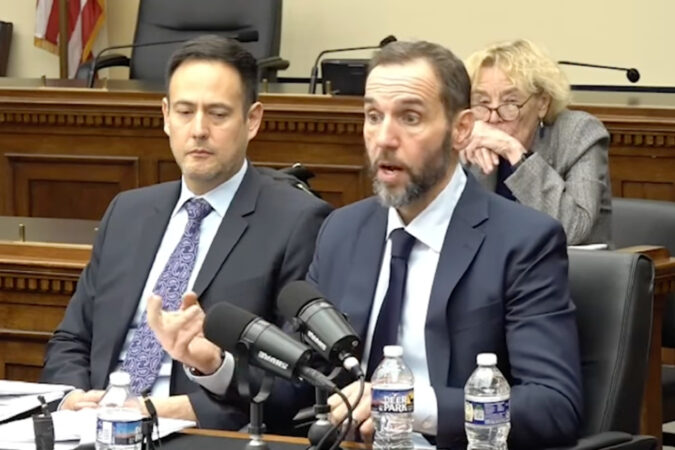
WASHINGTON — The Jan. 6. riot at the U.S. Capitol “does not happen” without Donald Trump, former special counsel Jack Smith told lawmakers earlier this month in characterizing the Republican president as the “most culpable and most responsible person” in the criminal conspiracy to overturn the results of the 2020 election.
The Republican-led House Judiciary Committee released on Wednesday a transcript and video of a closed-door interview Smith gave about two investigations of Trump. The document shows how Smith during the course of a daylong deposition repeatedly defended the basis for pursuing indictments against Trump and vigorously rejected Republican suggestions that his investigations were politically motivated.
“The evidence here made clear that President Trump was by a large measure the most culpable and most responsible person in this conspiracy. These crimes were committed for his benefit. The attack that happened at the Capitol, part of this case, does not happen without him. The other co-conspirators were doing this for his benefit,” Smith said, bristling at a question about whether his investigations were meant to prevent Trump from reclaiming the presidency in 2024.
“So in terms of why we would pursue a case against him, I entirely disagree with any characterization that our work was in any way meant to hamper him in the presidential election,” he added.
The Dec. 17 deposition was conducted privately despite Smith’s request to testify publicly. The release of the transcript and video of the interview, so far Smith’s only appearance on Capitol Hill since leaving his special counsel position last January, adds to the public understanding of the decision-making behind two of the most consequential Justice Department investigations in recent history.
Smith repeatedly made clear his belief that the evidence gathered against Trump was strong enough to sustain a conviction. Part of the strength of the Jan. 6 case, Smith said, was the extent to which it relied on the testimony of Trump allies and supporters who cooperated with the investigation.
“We had an elector in Pennsylvania who is a former congressman, who was going to be an elector for President Trump, who said that what they were trying to do was an attempt to overthrow the government and illegal,” Smith said. “Our case was built on, frankly, Republicans who put their allegiance to the country before the party.”
Accounts from Republicans willing to stand up against the falsehood that the election had been stolen “even though it could mean trouble for them” created what Smith described as the “most powerful” evidence against Trump.
When it came to the Capitol riot itself, Smith said, the evidence showed that Trump “caused it and that he exploited it and that it was foreseeable to him.”
Asked whether there was evidence that Trump had instructed supporters to riot at the Capitol, Smith said that Trump in the weeks leading to the insurrection got “people to believe fraud claims that weren’t true.”
“He made false statements to state legislatures, to his supporters in all sorts of contexts and was aware in the days leading up to January 6th that his supporters were angry when he invited them and then he directed them to the Capitol,” Smith said.
“Now, once they were at the Capitol and once the attack on the Capitol happened, he refused to stop it. He instead issued a tweet that without question in my mind endangered the life of his own Vice President. And when the violence was going on, he had to be pushed repeatedly by his staff members to do anything to quell it.”
Some of the deposition focused on Republican anger at revelations that the Smith team had obtained, and analyzed, phone records of GOP lawmakers who were in contact with Trump on Jan. 6. Smith defended the maneuver as lawful and by-the-book, and suggested that outrage over the tactic should be directed at Trump and not his team of prosecutors.
“Well, I think who should be accountable for this is Donald Trump. These records are people, in the case of the senators, Donald Trump directed his co-conspirators to call these people to further delay the proceedings. He chose to do that,” Smith said. “If Donald Trump had chosen to call a number of Democratic senators, we would have gotten toll records for Democratic senators.”
The communications between Trump and Republican supporters in Congress were an important component of the case, Smith said. He cited an interview his office did with Mark Meadows in which Trump’s then-chief of staff referenced that Rep. Jim Jordan, an Ohio Republican and current chairman of the House Judiciary Committee, had been in touch with the White House on the afternoon of the riot.
“And what I recall was Meadows stating that ‘I’ve never seen Jim Jordan scared of anything,’ and the fact that we were in this different situation now where people were scared really made it clear that what was going on at the Capitol could not be mistaken for anything other than what it was,” Smith said.
Smith was also asked whether his team evaluated former White House aide Cassidy Hutchinson’s explosive claim that Trump that grabbed at the steering wheel of the presidential SUV when the Secret Service refused to let him go to the U.S. Capitol building after a rally at the Ellipse on Jan. 6, 2021.
Smith told lawmakers that investigators interviewed the officer who was in the car, “who said that President Trump was very angry and wanted to go to the Capitol,” but the officer’s version of events “was not the same as what Cassidy Hutchinson said she heard from somebody secondhand,” Smith said.
WASHINGTON — President Donald Trump said he’s dropping — for now — his push to deploy National Guard troops in Chicago, Los Angeles and Portland, Ore., a move that comes after legal roadblocks held up the effort.
“We will come back, perhaps in a much different and stronger form, when crime begins to soar again — Only a question of time!” he said in a social media post Wednesday.
Governors typically control states’ National Guardsmen, and Trump had deployed troops to all three cities against the wishes of state and local Democratic leaders. He said it was necessary as part of a broader crackdown on immigration, crime and protests.
The president has made a crackdown on crime in cities a centerpiece of his second term — and has toyed with the idea of invoking the Insurrection Act to stop his opponents from using the courts to block his plans. He has said he sees his tough-on-crime approach as a winning political issue ahead of next year’s midterm elections.
Troops had already left Los Angeles after the president deployed them earlier this year as part of a broader crackdown on crime and immigration.
In his post, Trump said the troops’ presence was responsible for a drop in crime in the three cities, though they were never on the streets in Chicago and Portland as legal challenges played out. When the Chicago deployment was challenged in court, a Justice Department lawyer said the Guard’s mission would be to protect federal properties and government agents in the field, not “solving all of crime in Chicago.”
Portland Mayor Keith Wilson’s office in a statement said the city’s reduction in crime was due to the efforts of local police and public safety programs. Chicago officials echoed the sentiment, saying in a release Tuesday that the city had 416 homicides in 2025 — the fewest since 2014.
Trump’s push to deploy the troops in Democrat-led cities has been met with legal challenges at nearly every turn.
Governors react
The Supreme Court in December refused to allow the Trump administration to deploy National Guard troops in the Chicago area. The order was not a final ruling but was a significant and rare setback by the high court for the president’s efforts.
Illinois Gov. JB Pritzker wrote on X Wednesday that Trump “lost in court when Illinois stood up against his attempt to militarize American cities with the National Guard. Now Trump is forced to stand down.”
Hundreds of troops from California and Oregon were deployed to Portland, but a federal judge barred them from going on the streets. A judge permanently blocked the deployment of National Guard troops there in November after a three-day trial.
Oregon Gov. Tina Kotek said in a statement Wednesday that her office had not yet received “official notification that the remaining federalized Oregon National Guard troops can return home. They were never lawfully deployed to Portland and there was no need for their presence. If President Trump has finally chosen to follow court orders and demobilize our troops, that’s a big win for Oregonians and for the rule of law.”
Trump’s decision to federalize National Guard troops began in Los Angeles in June, when protesters took to the streets in response to a blitz of immigration arrests in the area. He deployed about 4,000 troops and 700 Marines to guard federal buildings and, later, to protest federal agents as they carried out immigration arrests.
The number of troops slowly dwindled until just several hundred were left. They were removed from the streets by Dec. 15 after a lower court ruling that also ordered control to be returned to Gov. Gavin Newsom. But an appeals court had paused the second part of the order, meaning control remained with Trump. In a Tuesday court filing, the Trump administration said it was no longer seeking a pause in that part of the order.
“About time (Trump) admitted defeat,” Newsom said in a social media post. “We’ve said it from Day One: the federal takeover of California’s National Guard is illegal.”
Troops will remain on the ground in several other cities. The U.S. Court of Appeals for the District of Columbia Circuit in December paused a lower court ruling that had called for an end to the deployment of National Guard troops in Washington, D.C., where they’ve been deployed since August after Trump declared a “crime emergency.”
Trump also ordered the deployment of the Tennessee National Guard to Memphis in September as part of a larger federal task force to combat crime, a move supported by the state’s Republican Gov. Bill Lee and senators. A Tennessee judge blocked the use of the Guard, siding with Democratic state and local officials who sued. However, the judge stayed the decision to block the Guard as the state appeals, allowing the deployment to continue.
In New Orleans, about 350 National Guard troops deployed by Trump arrived in the city’s historic French Quarter on Tuesday and are set to stay through Mardi Gras to help with safety. The state’s Republican governor and the city’s Democratic mayor support the deployment.
WASHINGTON — The Department of Justice has expanded its review of documents related to the convicted sex offender Jeffrey Epstein to 5.2 million as it also increases the number of attorneys trying to comply with a law mandating release of the files, according to a person briefed on a letter sent to U.S. Attorneys.
The figure is the latest estimate in the expanding review of case files on Epstein and his longtime girlfriend Ghislaine Maxwell that has run more than a week past a deadline set in law by Congress.
The Justice Department has more than 400 attorneys assigned to the review, but does not expect to release more documents until Jan. 20 or 21, according to the person briefed on the letter who spoke on the condition of anonymity because they were not authorized to discuss it.
The expanding scope of the disclosure and the additional legal firepower committed to it showed how the Epstein file investigation will continue to occupy significant attention in Congress and the White House, almost ensuring that it remains a potent political force as the new year rolls toward midterm elections.
The White House did not dispute the figures laid out in the email, and pointed to a statement from Todd Blanche, the deputy attorney general, who said the administration’s review was an “all-hands-on-deck approach.”
Blanche said Wednesday that lawyers from the Justice Department in Washington, the FBI, the Southern District of Florida, and the Southern District of New York are working “around the clock” to review the files. The additional documents and lawyers related to the case were first reported by the New York Times.
“We’re asking as many lawyers as possible to commit their time to review the documents that remain,” Blanche said. “Required redactions to protect victims take time, but they will not stop these materials from being released.”
Still, Attorney General Pam Bondi is facing pressure from Congress after the Justice Department’s rollout of information has lagged behind the Dec. 19 deadline to release the information.
“Should Attorney General Pam Bondi be impeached?” Rep. Thomas Massie, a Kentucky Republican who helped lead the effort to pass the law mandating the document release, asked on social media this week.
Democrats also are reviewing their legal options as they continue to seize on an issue that has caused cracks in the Republican Party and, at times, flummoxed President Donald Trump’s administration.
Senate Democratic Leader Chuck Schumer said on social media that the latest figures from the Department of Justice “shows Bondi, Blanche, and others at the DOJ have been lying to the American people about the Epstein files since day one” and pointed out that the documents released so far represented a fraction of the total.
What’s expected next
A late January release of documents would put the Department of Justice more than a month behind the deadline set in law, but some key lawmakers appeared willing to let the process play out before trying to take direct action against the Trump administration.
Rep. Ro Khanna, a California Democrat who also led the effort to pass the law requiring the release, told the Associated Press that the Justice Department’s expanding review showed that the law is working.
“We are willing to give DOJ a few extra weeks to comply, provided they release the survivors’ statements to the FBI naming the other rich and powerful men who abused them or covered up and the prosecution memos about charges that were dropped against Epstein and co-conspirators,” he said. “When all the information comes out, this will shock the conscience of the nation.”
Massie has also said that he wants to see the release of statements that victims gave to the FBI. He has claimed that those could disclose the names of influential business figures and political donors who were involved or complicit in Epstein’s abuse.
The pair has also argued that the expanding disclosure is evidence that more people were involved besides Epstein and Maxwell.
What could the files mean for the midterms?
The Trump administration has already struggled to move past the Epstein files for the better part of last year. While it’s not clear what else will be shown in the files, it will almost certainly give Democrats continued fodder to continue to seize on the issue.
So far, Democrats, even though they are in the minority, have forced Congress to act on an issue that has caused splits in Trump’s political base.
A tranche of documents released just before Christmas showed that Trump flew on Epstein’s private jet in the 1990s, when they had a friendship before a falling out. But the documents revealed little new information about their relationship. The initial release of documents also showed several photos of former President Bill Clinton with women whose faces were blacked out.
Republicans on the House Oversight Committee have honed in on the connections to Clinton and are seeking to force him and former Secretary of State Hillary Clinton to appear for a deposition in January.
Still, Democrats are trying to show that the Trump administration’s handling of the Epstein files shows that it cannot be trusted and is more concerned about the welfare of the rich and famous than working-class voters.
“Unlike the President, we don’t care who’s in the files,” said Rep. Robert Garcia, the top Democrat on the oversight panel, on social media. “Anyone that’s involved in the abuse of women and girls should be held accountable.”
WASHINGTON — President Donald Trump issued the first vetoes of his second term on Tuesday, rejecting two low-profile bipartisan bills, a move that had the effect of punishing backers who had opposed the president’s positions on other issues.
Trump vetoed drinking water pipeline legislation from Republican Rep. Lauren Boebert of Colorado, a longtime ally who broke with the president in November to release files on convicted sex offender Jeffrey Epstein. He also vetoed legislation that would have given the Miccosukee Tribe of Indians of Florida more control of some of its tribal lands. The tribe was among groups suing the administration over an immigration detention center in the Everglades known as ” Alligator Alcatraz.”
Both bills had bipartisan support and had been noncontroversial until the White House announced Trump’s vetoes Tuesday night.
Trump appeared to acknowledge the tribe’s opposition to the detention facility in a letter to Congress explaining his veto. “The Miccosukee Tribe has actively sought to obstruct reasonable immigration policies that the American people decisively voted for when I was elected,” Trump wrote.
Trump did not allude to Boebert in his veto of her legislation, but raised concerns about the cost of the water pipeline at the heart of that bill.
In an interview later Wednesday with Politico, Trump also criticized the state’s Democratic Gov. Jared Polis while saying that he issued the veto because “They’re wasting a lot of money and people are leaving the state. They’re leaving the state in droves. Bad governor.”
Boebert, one of four House Republicans who sided with House Democrats early on to force the release of the Epstein files, shared a statement on social media suggesting that the veto may have been “political retaliation.”
“I sincerely hope this veto has nothing to do with political retaliation for calling out corruption and demanding accountability. Americans deserve leadership that puts people over politics,” her statement said. Boebert added in another post: “This isn’t over.”
The Florida legislation had been sponsored by Republican Rep. Carlos Gimenez, whom Trump has endorsed. Gimenez and the Miccosukee Tribe were not immediately available for comment on Wednesday.
When asked whether the vetoes were punishment, the White House did not answer and instead referred to Trump’s statements explaining the vetoes.
Congress can override the vetoes by a vote of two-thirds of the members of the House and the Senate, but it’s unclear if there’s enough support in the Republican-controlled chambers to do so, especially heading into a midterm election year where many of them will be on the ballot and many GOP members will count on Trump’s backing.
Boebert’s legislation, the “Finish the Arkansas Valley Conduit Act,” aimed to improve access to clean drinking water in eastern Colorado.
While the congresswoman has long been a staunch supporter of Trump, she found herself at odds with the president with her support this year for legislation that required the Justice Department to release files related to Epstein.
Trump fought the proposal before reversing in the face of growing Republican support for releasing the files. Members of his administration even met with Boebert in the White House Situation Room to discuss the matter, though she didn’t change her mind.
Republican Rep. Jeff Hurd of Colorado, who co-sponsored the legislation, said he was “deeply disappointed” by Trump’s veto.
“This was a bipartisan, unanimous bill passed by Congress to uphold a long-standing federal commitment to southeastern Colorado,” Hurd said in a statement.
He said the legislation did not authorize any new construction spending or expand the federal government’s original commitment to the pipeline project, but adjusted the terms of repaying its costs.