Category: Regional News Wires

  • Analilia Mejia and Tom Malinowski’s race in New Jersey’s special Democratic primary is too early to call

    Analilia Mejia and Tom Malinowski’s race in New Jersey’s special Democratic primary is too early to call

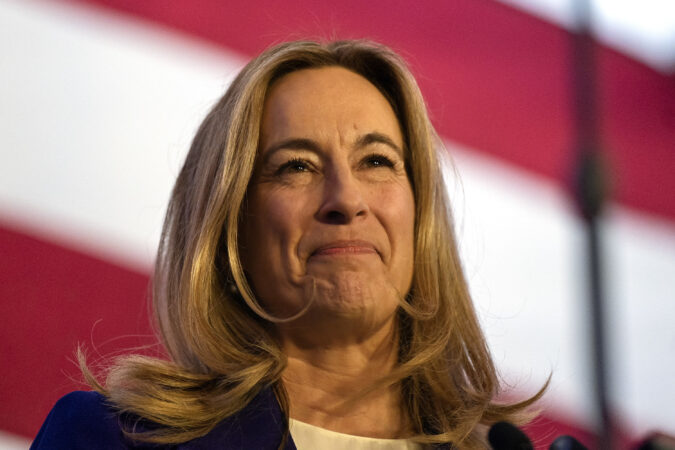
    TRENTON, N.J. — The race in New Jersey between a onetime political director for Sen. Bernie Sanders and a former congressman was too early to call Thursday, in a special House Democratic primary for a seat that was vacated after Mikie Sherrill was elected governor.

    Former U.S. Rep. Tom Malinowski started election night with a significant lead over Analilia Mejia, based largely on early results from mail-in ballots. The margin narrowed as results from votes cast that day were tallied.

    With more than 61,000 votes counted, Mejia led Malinowski by 486, or less than 1 percentage point.

    All three counties in the district report some mail-in ballots yet to be processed. Also, mail-in ballots postmarked by election day can arrive as late as Wednesday and still be counted.

    Malinowski did better than Mejia among the mail-in ballots already counted in all three counties, leaving the outcome of the race uncertain.

    The Democratic winner will face Randolph Mayor Joe Hathaway, who was unopposed in the Republican primary, on April 16.

    Malinowski served two terms in the House before losing a bid for reelection in a different district in 2022. He had the endorsement of New Jersey Democratic Sen. Andy Kim, who has built support among progressive groups.

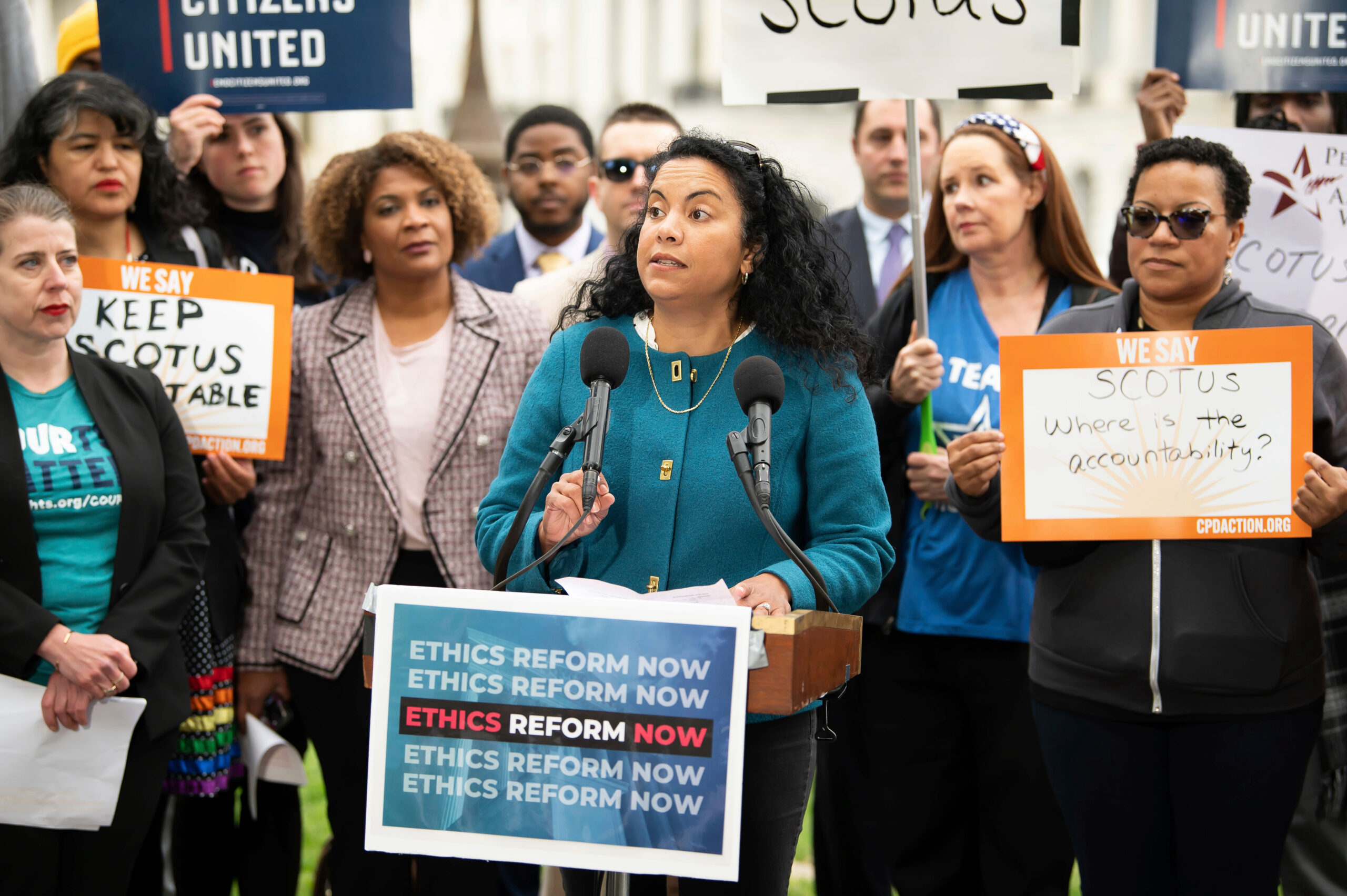
    Analilia Mejia, center, speaks during a rally in Washington calling for SCOTUS ethics reform on May 2, 2023.

    Mejia, a former head of the Working Families Alliance in the state and political director for Sanders during his 2020 presidential run, had the Vermont independent senator’s endorsement as well as that of U.S. Rep. Alexandria Ocasio Cortez of New York. She also worked in President Joe Biden’s Labor Department as deputy director of the women’s bureau.

    Both Malinowski and Mejia were well ahead of the next-closest candidates: Brendan Gill, an elected commissioner in Essex County who has close ties to former Gov. Phil Murphy; and Tahesha Way, who served as lieutenant governor and secretary of state for two terms under Murphy until last month.

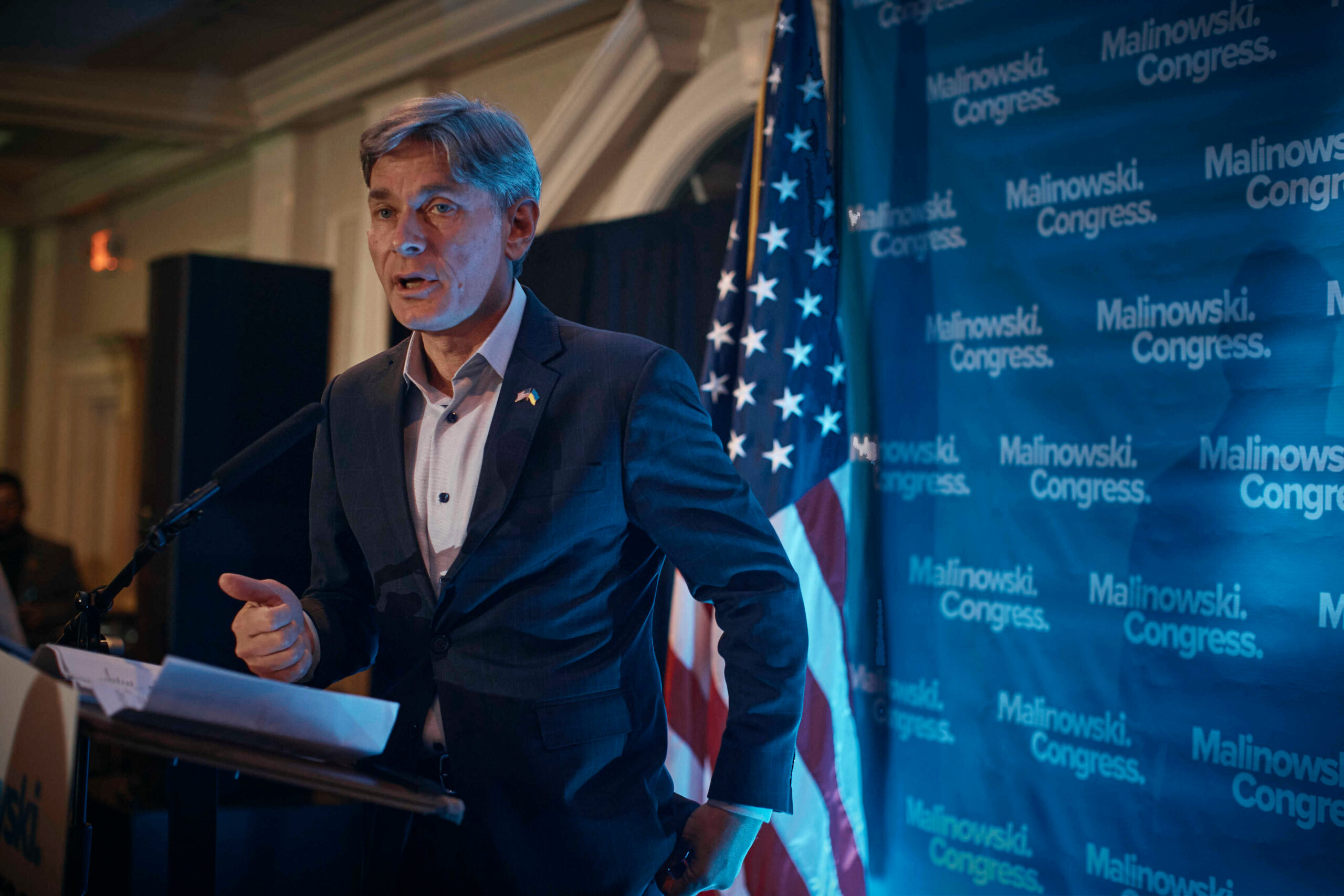
    Democratic Congressman Tom Malinowski speaks during his election night party in Garwood, N.J., on Nov. 8, 2022.

    The other candidates were John Bartlett, Zach Beecher, J-L Cauvin, Marc Chaaban, Cammie Croft, Dean Dafis, Jeff Grayzel, Justin Strickland and Anna Lee Williams.

    The district covers parts of Essex, Morris and Passaic counties in northern New Jersey, including some of New York City’s wealthier suburbs.

    The special primary and April general election will determine who serves the remainder of Sherrill’s term, which ends next January. There will be a regular primary in June and general election in November for the next two-year term.

    Sherrill, also a Democrat, represented the district for four terms after her election in 2018. She won despite the region’s historical loyalty to the GOP, a dynamic that began to shift during President Donald Trump’s first term.

  • Jill Biden’s first husband charged with killing wife in domestic dispute at their Delaware home

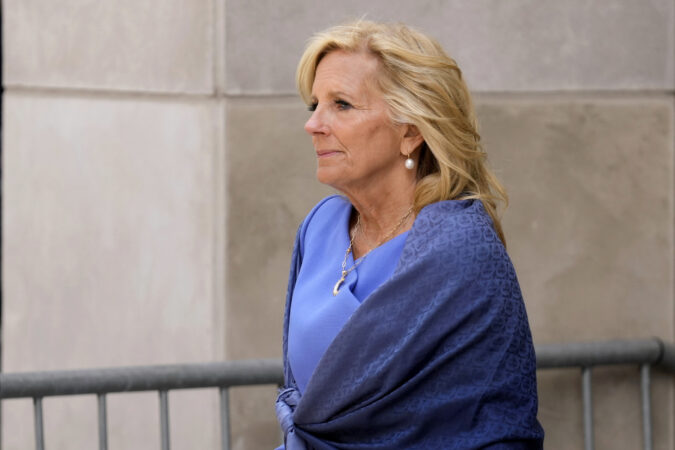
    Jill Biden’s first husband charged with killing wife in domestic dispute at their Delaware home

    WILMINGTON — The first husband of former first lady Jill Biden has been charged with killing his wife at their Delaware home in late December, authorities announced in a news release Tuesday.

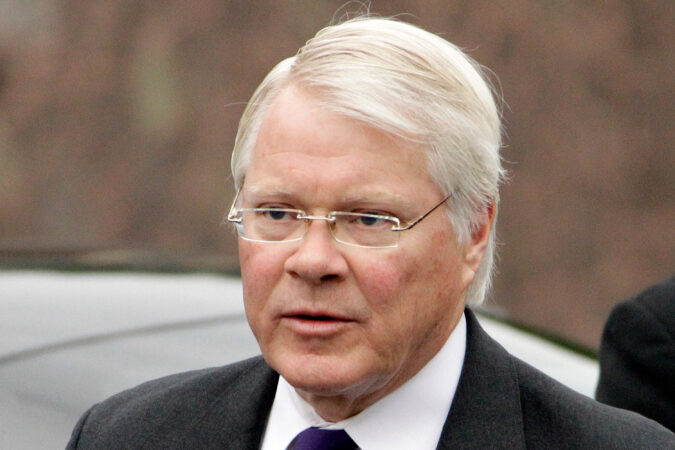
    William Stevenson, 77, of Wilmington was married to Jill Biden from 1970 to 1975.

    Caroline Harrison, the Delaware Attorney General’s spokesperson, confirmed in a phone call that Stevenson is the former husband of Jill Biden.

    Jill Biden declined to comment, according to an e-mailed response from a spokesperson at the former president and first lady’s office.

    Stevenson remains in jail after failing to post $500,000 bail after his arrest Monday on first-degree murder charges. He is charged with killing Linda Stevenson, 64, on Dec. 28.

    Police were called to the home for a reported domestic dispute after 11 p.m. and found a woman unresponsive in the living room, according to a prior news release. Life-saving measures were unsuccessful.

    She ran a bookkeeping business and was described as a family-oriented mother and grandmother and a Philadelphia Eagles fan, according to her obituary, which does not mention her husband.

    Stevenson was charged in a grand jury indictment after a weekslong investigation by detectives in the Delaware Department of Justice.

    It was not immediately clear if Stevenson has a lawyer. He founded a popular music venue in Newark called the Stone Balloon in the early 1970s.

    Jill Biden married U.S. Sen. Joe Biden in 1977. He served as U.S. president from January 2021 to January 2025.

  • Harvard men slip past Penn, 64-63

    Harvard men slip past Penn, 64-63

    BOSTON — Thomas Batties II and Tey Barbour each scored 17 points Monday as Harvard held off Penn, 64-63, in an Ivy League game at Lavietes Pavilion.

    Barbour made a driving layup with 13 seconds left to extend Harvard’s lead to 64-59 and the Crimson held off a comeback by the Quakers.

    Ethan Roberts led the way for the Quakers (9-8, 2-2 Ivy) with 27 points and two steals. AJ Levine added 15 points, eight rebounds, four assists and four steals. TJ Power also had 12 points. Penn saw a two-game winning streak come to an end.

    Batties also contributed six rebounds and three blocks for the Crimson (10-8, 3-1). Barbour shot 6 for 11, including 3 for 8 from beyond the arc. Robert Hinton shot 5 for 13 to finish with 11 points.

    Next up for Penn is a home game against Yale on Saturday at 2 p.m. (ESPNU).

  • The White House and a bipartisan group of governors, including Josh Shapiro, want to fix AI-driven power shortages and price spikes

    The White House and a bipartisan group of governors, including Josh Shapiro, want to fix AI-driven power shortages and price spikes

    Washington — The Trump administration and a bipartisan group of governors on Friday tried to step up pressure on the operator of the nation’s largest electric grid to take urgent steps to boost power supplies and keep electricity bills from rising even higher.

    Administration officials said doing so is essential to win the artificial-intelligence race against China, even as voters raise concerns about the enormous amount of power data centers use and analysts warn of the growing possibility of blackouts in the Mid-Atlantic grid in the coming years.

    “We know that with the demands of AI and the power and the productivity that comes with that, it’s going to transform every job and every company and every industry,” Interior Secretary Doug Burgum told reporters at the Eisenhower Executive Office Building, next to the White House. “But we need to be able to power that in the race that we are in against China.”

    Trump administration says it has ‘the answer’

    The White House and governors want the Mid-Atlantic grid operator to hold a power auction for tech companies to bid on contracts to build new power plants, so that data center operators, not regular consumers, pay for their power needs.

    They also want the operator, PJM Interconnection, to contain consumer costs by extending a cap that it imposed last year, under pressure from governors, that limited the increase of wholesale electricity payments to power plant owners. The cap applied to payments through mid-2028.

    “Our message today is just to try and push PJM … to say, ‘we know the answer.’ The answer is we need to be able to build new generation to accommodate new jobs and new growth,” Energy Secretary Chris Wright said.

    Govs. Josh Shapiro of Pennsylvania, Glenn Youngkin of Virginia, and Wes Moore of Maryland appeared with Burgum and Wright and expressed frustration with PJM.

    “We need more energy on the grid and we need it fast,” Shapiro said. He accused PJM of being “too damn slow” to bring new power generation online as demand is surging.

    Shapiro said the agreement could save the 65 million Americans reliant on that grid $27 billion over the next several years. He warned Pennsylvania would leave the PJM market if the grid operator does not align with the agreement, a departure that would threaten to create even steeper price challenges for the region.

    PJM wasn’t invited to the event.

    Grid operator is preparing its own plan to meet demand

    However, PJM’s board is nearing the release of its own plan after months of work and will review recommendations from the White House and governors to assess how they align with its decision, a spokesperson said Friday.

    PJM has searched for ways to meet rising electricity demand, including trying to fast-track new power plants and suggesting that utilities should bump data centers off the grid during power emergencies. The tech industry opposed the idea.

    The White House and governors don’t have direct authority over PJM, but grid operators are regulated by the Federal Energy Regulatory Commission, which is chaired by an appointee of President Donald Trump.

    Trump and governors are under pressure to insulate consumers and businesses alike from the costs of feeding Big Tech’s data centers. Meanwhile, more Americans are falling behind on their electricity bills as rates rise faster than inflation in many parts of the U.S.

    In some areas, bills have risen because of strained natural gas supplies or expensive upgrades to transmission systems, to harden them against more extreme weather or wildfires. But energy-hungry data centers are also a factor in some areas, consumer advocates say.

    Ratepayers in the Mid-Atlantic grid — which encompasses all or parts of 13 states stretching from New Jersey to Illinois, as well as Washington, D.C. — are already paying billions more to underwrite power supplies to data centers, some of which haven’t been built yet, analysts say.

    Critics also say these extra billions aren’t resulting in the construction of new power plants needed to meet the rising demand.

    Tech giants say they’re working to lower consumer costs

    Technology industry groups have said their members are willing to pay their fair share of electricity costs.

    On Friday, the Information Technology Industry Council, which represents tech giants Google, Meta, Microsoft, and Amazon, said it welcomed the White House’s announcement and the opportunity “to craft solutions to lower electricity bills.” It said the tech industry is committed to “making investments to modernize the grid and working to offset costs for ratepayers.”

    The Edison Electric Institute, which represents investor-owned electric companies, said it supports having tech companies bid — and pay for — contracts to build new power plants.

    The idea is a new and creative one, said Rob Gramlich, president of Grid Strategies LLC, a Washington, D.C.-based energy markets and transmission consultancy.

    But it’s not clear how or if it’ll work, or how it fits into the existing industry structure or state and federal regulations, Gramlich said.

    Part of PJM’s problem in keeping up with power demand is that getting industrial construction permits typically takes longer in the Mid-Atlantic region than, say, Texas, which is also seeing strong energy demand from data centers, Gramlich said.

    In addition, utilities in many PJM states that deregulated the energy industry were not signing up power plants to long-term contracts, Gramlich said.

    That meant that the electricity was available to tech companies and data center developers that had large power needs and bought the electricity, putting additional stress on the Mid-Atlantic grid, Gramlich said.

    “States and consumers in the region thought that power was there for them, but the problem is they hadn’t bought it,” Gramlich said.

    Associated Press writer Matthew Daly and The Washington Post contributed to this article.

  • Trump visits a Ford pickup truck factory, aiming to promote his efforts to boost manufacturing

    Trump visits a Ford pickup truck factory, aiming to promote his efforts to boost manufacturing

    DETROIT — President Donald Trump offered a full-throated defense of his sweeping tariffs on Tuesday, traveling to swing-state Michigan to push the case that he’s boosted domestic manufacturing in hopes of countering fears about a weakening job market and still-rising prices that have squeezed American pocketbooks.

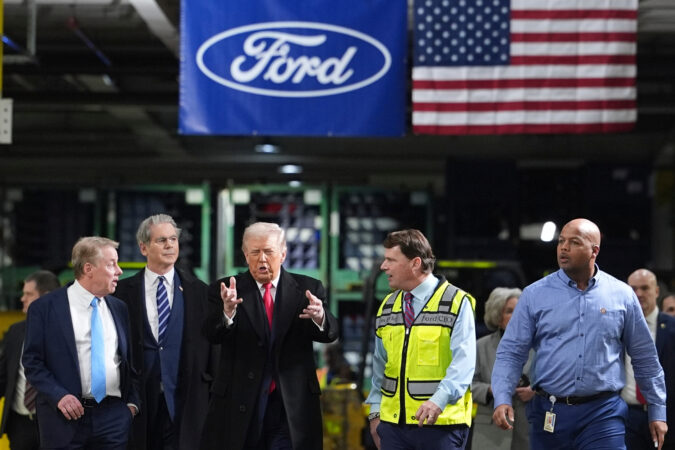
    Trump visited the factory floor of a Ford plant in Dearborn, where he viewed F-150s — the bestselling domestic vehicle in the U.S. — at various stages of production. That included seeing how gas and hybrid models were built, as well as the all-gas Raptor model, designed for off-road use.

    The president chatted with assembly line workers as well as the automaker’s executive chairman, Bill Ford, a descendent of Henry Ford. “All U.S. automakers are doing great,” Trump said.

    He later gave a speech to the Detroit Economic Club that was meant to be focused on his economic policies but veered heavily to other topics as well. Those included falsely claiming to have won Michigan three times (he lost the state in 2020 to Joe Biden) and recalling the snakes that felled workers during U.S. efforts to build the Panama Canal more than a century ago.

    “The results are in, and the Trump economic boom has officially begun,” the president said at the MotorCity Casino. He argued that “one of the biggest reasons for this unbelievable success has been our historic use of tariffs.”

    Trump insists tariffs haven’t increased costs

    The president said that tariffs were “overwhelmingly” paid by “foreign nations and middlemen” — even as economists say steep import taxes are simply passed from overseas manufactures to U.S. consumers, helping exacerbate fears about the rising cost of living.

    “It’s tariffs that are making money for Michigan and the entire country,” the president said, insisting that “every prediction the critics made about our tariff policy has failed to materialize.”

    But voters remain worried about the state of the economy. Tuesday’s visit — his third trip to a swing state since last month to talk about his economic policies — followed a poor showing for Republicans in November’s off-year elections in Virginia, New Jersey, and elsewhere amid persistent concerns about kitchen table issues.

    The White House pledged after Election Day that Trump would hit the road more frequently to talk directly to the public about what he is doing to ease their financial fears. The president tried to drive that home on Tuesday, but only amid lengthy asides.

    “I go off teleprompter about 80% of the time, but isn’t it nice to have a president who can go off teleprompter?” he said, before mocking Biden, suggesting his predecessor gave short speeches and doing an impression that included a dramatic clearing of his throat.

    Trump promised to unveil a new “health care affordability framework” later this week that he promised would lower the cost of care. He also pledged to soon offer more plans to help with affordability nationwide — even as he blamed Democrats for hyping up the issue.

    “One of our top priorities of this mission is promoting greater affordability. Now, that’s a word used by the Democrats,” Trump said. “They’re the ones who caused the problem.”

    Trump eased some auto tariffs

    Despite cheering tariffs, Trump has actually backed off the import taxes when it comes to the automobile sector. The president originally announced 25% tariffs on automobiles and auto parts, only to later relax those, seeking to provide domestic automakers some relief from seeing their production costs rise.

    Ford nonetheless announced in December that it was scrapping plans to make an electric F-150, despite pouring billions of dollars into broader electrification. That followed the Trump administration slashing targets to have half of all new vehicle sales be electric by 2030, eliminated EV tax credits and proposed weakening the emissions and gas mileage rules.

    While touring the assembly line, Trump suggested that a major North American trade agreement he negotiated during his first term, the United States-Mexico-Canada trade pact, was irrelevant and no longer necessary for the United States — though he provided few details.

    The pact, known as the USMCA, is up for review this year.

    Trump largely sidesteps Powell probe

    The president’s attempt to shift national attention to his efforts to spur the economy comes as his Department of Justice has launched a criminal investigation into Federal Reserve Chair Jerome Powell, a move that Powell says is a blatant endeavor to undermine the central bank’s independence in setting interest rates.

    Critics of the move include former Fed chairs, economic officials and even some Republican lawmakers. During the Michigan visit, Trump lobbed his often-repeated criticisms of Powell but offered little mention of the investigation.

    Some good economic news for Trump arrived, though, before he left Washington, with new data from December showing inflation declined a bit last month as prices for gas and used cars fell — a sign that cost pressures are slowly easing. Consumer prices rose 0.3% in December from the prior month, the Labor Department said, the same as in November.

    “We have quickly achieved the exact opposite of stagflation, almost no inflation and super-high growth,” he said in his speech.

    Other economic policy speeches

    The Michigan stop follows speeches Trump gave last month in Pennsylvania — where his gripes about immigrants arriving to the U.S. from “filthy” countries got more attention than his pledges to fight inflation — and North Carolina, where he also insisted his tariffs have spurred the economy, despite residents noting the sting of higher prices.

    Like in Michigan, Trump also used a casino as a backdrop to talk about the economy in Pennsylvania, giving his speech there at Mount Airy Casino Resort in Mount Pocono.

    Trump carried Michigan in 2016 and 2024, after it swung Democratic and backed Biden in 2020. He marked his first 100 days in office with a rally-style April speech outside Detroit, where he focused more on past campaign grudges than his administration’s economic or policy plans.

    Democrats seized on Trump’s latest visit to the state to recall his visit in October 2024, when Trump, then also addressing the Detroit Economic Club, said that Democrats’ retaining the White House would mean “our whole country will end up being like Detroit.”

    “You’re going to have a mess on your hands,” Trump said during a campaign stop back then.

    Michigan Democratic Party Curtis Hertel said in a statement that “Trump’s speech showed just how out-of-touch he is with reality, claiming that affordability is ‘fake’ as Michiganders have less money in their pocketbooks because of the Republicans’ price-hiking agenda.”
  • Long story short: ‘Joe Dirt’ tribute takes top prize in mullet contest

    Long story short: ‘Joe Dirt’ tribute takes top prize in mullet contest

    HARRISBURG — A packed crowd celebrated the much-maligned but enduring mullet hairstyle Monday in a contest at the Pennsylvania Farm Show in Harrisburg.

    The short-in-the-front, long-in-the-back coiffure, once the province of Canadian hockey players and hair metal bands, attracted about 150 competitors and more than a thousand spectators for the day’s “mane” attraction.

    The top award, in the form of the rear bumper of a Corvette, went to 10-year-old Drew Fleschut of Dallas, Luzerne County — who wore a red-and-black shirt in an homage to movie character Joe Dirt and carried Joe’s trademark mop.

    Contestants were evaluated for the style of their cut, any props or accessories, their presentation and their overall sense of commitment, said judge Brittany Goldberg.

    “This is for fun,” said Goldberg, owner of Heavy Metal Hair Salon in Philadelphia. “It’s about the camaraderie and everyone having a laugh and a good time.”

    Ben Barley, a 7-year-old first grader from Red Lion, Pa., waits with his father, Robert Barley, for the start of a mullet judging contest at the Pennsylvania Farm Show in Harrisburg on Monday.

    There were magic tricks, customized T-shirts, and even a “skullet” — a mullet sported by a balding man. One kid didn’t want to leave the stage. Another took the occasion to pick his nose. Some danced the worm, some dabbed, and a few ripped off their shirts, pro-wrestling style.

    Brittni Williamson of Harvey’s Lake brought along her 3-year-old son Mason, who ended up with a mullet when the hair on the back of his head grew more quickly than the rest of his hair when he was a baby.

    “We just clean it up in the front and keep the party going,” Williamson said. Mason didn’t win, but he did get to accomplish his New Year’s resolution by feeding a cow.

    Ben Barley, 7, of Red Lion arrived at the event wearing a T-shirt featuring his name and the words “MULLET LIFE 6-7,” a nod to both his hairstyle and the bafflingly popular youth catchphrase. He said he’d been working on his mullet for two years.

    Kyle Wertman said he was inspired to go with a mullet while watching old professional wrestling footage of Hacksaw Jim Duggan. He gets a lot of comments about it in his hometown of Murrysville.

    “They like to fluff the curls in the back, ‘Look at this thing, it’s got a mind of its own,’” said Wertman, 43, who works in sales and service of industrial air compressors.

    It’s taken Lancaster resident Brayden Shaner, 14, about four years to grow his mullet, which was good enough for third-place in the teenager category.

    “I like it because it’s different,” he said. “You don’t see, walking through the grocery store, people with a mullet. I think the girls like it.”

    Though mullets likely have been around longer than there have been barbers, the Oxford English Dictionary cites hip-hop legends the Beastie Boys for helping popularize the term mullet with the song “Mullet Head” on their 1994 recording, Ill Communication. As the venerable dictionary notes, it’s a term that is slang, humorous “and frequently derogatory.”

    The contest, in its third year, is one of the few at the Pennsylvania Farm Show open to people who live outside the state.

    Meredith Nelson smiles at her son, “Mikey Mullet,” an 8-year old-contestant from South Jersey in Monday’s hairstyle contest at the Pennsylvania Farm Show.
  • Joseph McGettigan, prosecutor in Jerry Sandusky and John du Pont cases, dies at 76

    Joseph McGettigan, prosecutor in Jerry Sandusky and John du Pont cases, dies at 76

    HARRISBURG, Pa. — Joseph E. McGettigan III, a Pennsylvania prosecutor who obtained criminal convictions against Penn State assistant football coach Jerry Sandusky and chemical heir John du Pont, has died at age 76.

    Mr. McGettigan, who lived in the Philadelphia suburb of Media, died on Dec. 31, according to the funeral home Boyd Horrox Givnish Life Celebration Home of East Norriton.

    He was a senior deputy attorney general when he served as a lead prosecutor in the trial of Sandusky on child molestation charges in 2012. During the closing argument, Mr. McGettigan showed jurors photos of eight of Sandusky’s victims as children, all of whom had taken the stand.

    “He molested and abused and hurt these children horribly,” Mr. McGettigan said. “He knows he did it, and you know he did it. Find him guilty of everything.” Sandusky was convicted of 45 of 48 counts.

    Mr. McGettigan was an assistant district attorney in Delaware County when he prosecuted du Pont, who was found guilty of third-degree murder but mentally ill in the death of Olympic gold medal-winning freestyle wrestler David Schultz at du Pont’s palatial estate outside Philadelphia in 1996. Schultz come to live and train at a state-of-the-art training center that du Pont had built on his property.

    Du Pont died in a Pennsylvania prison in 2010 at the age of 72. Sandusky, 81, is currently serving a 30- to 60-year sentence in state prison.

    Mr. McGettigan’s work as prosecutor, which also included a stint in Philadelphia, often involved murder and child molestation cases. More recently he had been a lawyer in private practice, including work on behalf of crime victims.

    Survivors include his wife, Gay Warren; his mother, Ruth L. McGettigan; and six siblings.

  • Penn beats NJIT, 80-61, as AJ Levine comes up with seven steals

    Penn beats NJIT, 80-61, as AJ Levine comes up with seven steals

    Michael Zanoni scored 23 points Wednesday to lift Penn to an 80-61 victory against New Jersey Institute of Technology at the Palestra.

    AJ Levine posted seven steals for Penn, which put the game away with a 17-0 run early in the second half. Levin’s seven steals were the most by a Quakers player since Ibby Jaaber had seven against Navy on Dec. 7, 2006.

    Zanoni made 8 of 15 shots including 5 of 11 from beyond the arc for the Quakers (7-6). Levine scored 19 points and added five rebounds. Augustus Gerhart made 6 of 8 shots and finished with 16 points, adding nine rebounds.

    David Bolden tallied 18 points to lead the Highlanders (5-10).

    The Quakers will begin Ivy League play on Monday at 7 p.m. in a road game against Princeton.

  • Idaho company recalls nearly 3,000 pounds of ground beef for E. coli risk

    Idaho company recalls nearly 3,000 pounds of ground beef for E. coli risk

    An Idaho-based company is recalling nearly 3,000 pounds of raw ground beef that may have been contaminated with E. coli bacteria.

    The recall involves 16-ounce vacuum-sealed packages labeled “Forward Farms Grass-Fed Ground Beef.” Affected packages were produced Dec. 16 and have a label telling customers to use or freeze the meat by Jan. 13. The affected beef also bears the establishment number “EST 2083” on the side of its packaging.

    The meat was produced by Heyburn, Idaho-based Mountain West Food Group and was shipped to distributors in Pennsylvania, California, Colorado, Idaho, Montana, and Washington.

    The U.S. Department of Agriculture’s Food Safety and Inspection Service, which announced the recall Saturday, didn’t say which retailers may have sold the meat. The USDA and Mountain West Food Group didn’t respond to messages left Tuesday by the Associated Press.

    The USDA said there have been no confirmed reports of illness due to consumption of the meat. The issue was discovered in a sample of beef during routine testing.

    The USDA said the type of E. coli found can cause illness within 28 days of exposure. Most infected people develop diarrhea, which is often bloody, and vomiting. Infection is usually diagnosed with a stool sample.

    The USDA said customers who have purchased the affected products should either throw them away or return them to the place they were bought. The agency also advises all customers to consume ground beef only if it has been cooked to a temperature of 160 degrees Fahrenheit.

  • Winter storm snarls U.S. holiday travel across Northeast, Great Lakes

    Winter storm snarls U.S. holiday travel across Northeast, Great Lakes

    BOSTON — More than a thousand flights were canceled or delayed across the Northeast and Great Lakes regions due to snow as thousands took to U.S. roads and airports during the busy travel period between Christmas and New Year’s.

    New York City received around 4 inches of snow Friday night into early Saturday — slightly under what some forecasts had predicted. At least 1,500 flights were canceled from Friday night, according to flight-tracking service FlightAware. But by Saturday morning, both the roads and skies were clearing.

    “The storm is definitely winding down, a little bit of flurries across the Northeast this morning,” said Bob Oravec, a Maryland-based forecaster at the National Weather Service.

    Oravec said the storm was quick-moving from the northwest toward the Southeast U.S., with the largest snowfall in the New York City area reaching over 6 inches in central eastern Long Island. Further to the north in the Catskills, communities saw as much as 10 inches of snowfall.

    Newark Liberty International Airport, John F. Kennedy International Airport, and LaGuardia Airport posted snow warnings on the social media platform X on Friday, cautioning that weather conditions could cause flight disruptions.

    The National Weather Service warned of hazardous travel conditions from the Great Lakes through the northern mid-Atlantic and southern New England, with the potential for tree damage and power outages. Forecasters said the storm was expected to weaken by Saturday morning.

    In Times Square on Saturday, workers in red jumpsuits worked to clear the sludge and powder-coated streets and sidewalks using shovels and snowblowers.

    Jennifer Yokley, who was in Times Square on a holiday trip from North Carolina, said she was excited to see snow accumulating as it dusted buildings, trees, and signs throughout the city.

    “I think it was absolutely beautiful,” she said.

    Payton Baker and Kolby Gray, who were visiting New York City from West Virginia on Saturday, said the snow was a Christmas surprise for their third anniversary trip.

    “Well, it’s very cold and it was very unexpected,” Baker said, her breath visible in the winter air. “The city is working pretty well to get all the roads salted and everything, so it’s all right.”

    Ahead of the storm, New York Gov. Kathy Hochul declared a state of emergency for more than half of the state.

    4 dead in California

    On the other side of the country, California was experiencing a fairly dry weekend after powerful storms battered the state with heavy rains, flash flooding, and mudslides. At least four people were killed including a man who was found dead Friday in a partially submerged car near Lancaster, the Los Angeles County Sheriff’s Department reported.

    Some mountainous areas received 10 to 18 inches of rain over three days, peaking on Christmas Eve, National Weather Service meteorologist Rose Schoenfeld said. There were varied amounts of rain in other populated areas, including up to 4 inches across the Los Angeles Basin and many coastal areas.

    There was significant damage to homes and cars in Wrightwood, a 5,000-resident mountain town about 80 miles northeast of Los Angeles, as floods and mudslides turned roads into rivers and buried vehicles in rock and debris.

    Before rain reappears in the forecast later next week, California was expected to experience Santa Ana winds with gusts of over 60 mph in mountainous areas from Sunday night through Tuesday. The winds could uproot saturated trees and cause power outages.