Category: Regional News Wires

  • Delaware State Police say DMV gunman let customers leave, fired at approaching officers

    Delaware State Police say DMV gunman let customers leave, fired at approaching officers

    A man accused of fatally shooting a Delaware State Police trooper at a DMV office allowed customers to leave and then fired at approaching officers before being killed, investigators said Friday.

    State Police Cpl. Matthew Snook was working an overtime assignment at the New Castle DMV reception desk on Tuesday afternoon when Rahman Rose entered as a customer, approached him from behind, and shot him with a handgun, state police said in a news release.

    Rose, 44, of Wilmington, continued firing at the trooper, who pushed a DMV employee out of the way and told them to run, investigators said. Rose then allowed customers to leave but fired multiple rounds at law enforcement as they approached the building.

    A New Castle county police officer shot Rose through a window from outside the building. Rose later died at a hospital.

    Snook, who went by “Ty,” was a 10-year veteran of the state police force. On Wednesday, members of the community lined roadways and displayed messages of gratitude as a procession of troopers, police officers and firefighters escorted his body from the state medical examiner’s office to a funeral home.

    William Crotty, superintendent of the Delaware State Police, said the outpouring of support served as a reminder that Snook’s service and sacrifice will not be forgotten.

    The shooting remains under investigation, and authorities have asked witnesses or others with relevant information to contact detectives.

  • Delaware trooper killed at DMV in ‘act of pure evil’ is remembered as dependable, devoted to family

    Delaware trooper killed at DMV in ‘act of pure evil’ is remembered as dependable, devoted to family

    A Delaware state trooper who was shot to death at a DMV office was described Wednesday as dependable and professional on the job and steady and kind at home.

    Cpl. Matthew “Ty” Snook, 34, of Hockessin, was working an overtime assignment at a Delaware Division of Motor Vehicles office near Wilmington on Tuesday when he was shot by a 44-year-old gunman, state police said. Authorities said Snook pushed a nearby employee to safety before he was shot again. He died later at a hospital, as did the gunman, who was shot by another officer.

    Cpl. Matthew “Ty” Snook, 34, of Hockessin, is survived by his wife and their 1-year-old daughter.

    Snook, who is survived by his wife and their 1-year-old daughter, was a Delaware native. He graduated from the University of Maryland, where he was a member of the wrestling team, and had been a trooper for 10 years.

    “He was known as a dependable, professional, and committed trooper,” state police said in a news release that also described him as a trusted partner and beloved community member and extended condolences to Snook’s family.

    “We are forever grateful to them for sharing ‘Ty’ with us and for the sacrifices they made in support of his service to the citizens of Delaware,” the agency said.

    An official fund established to support the family describes the officer as a “loving husband, a devoted father, and a deeply cherished friend.”

    “Those who knew him remember his steady presence, his kindness, and his unwavering commitment to the people he loved,” the fundraiser’s organizer wrote. “Family meant everything to Ty, and he worked every day to provide, protect, and be present for those closest to him.”

    Authorities have not yet publicly identified the gunman or disclosed a possible motive for the shooting.

    “What happened today was an act of pure evil, and if not for the heroism of several troopers and other officers, the consequences could have been so much worse,” Delaware Gov. Matt Meyer said at a news conference.

    The state DMV closed its offices statewide, with all but the site of the shooting scheduled to reopen Monday.

  • Federal judge says Trump administration must restore disaster money to Democratic states

    Federal judge says Trump administration must restore disaster money to Democratic states

    PROVIDENCE, R.I. — A federal judge has blocked the Trump administration’s attempt to reallocate federal Homeland Security funding away from states that refuse to cooperate with certain federal immigration enforcement.

    U.S. District Judge Mary McElroy’s ruling on Monday solidified a win for the coalition of 12 attorneys general that sued the administration earlier this year after being alerted that their states would receive drastically reduced federal grants due to their “sanctuary” jurisdictions.

    In total, the U.S. Department of Homeland Security and the Federal Emergency Management Agency reduced more than $233 million from Connecticut, Delaware, the District of Columbia, Massachusetts, Minnesota, New York, Rhode Island, Vermont, and Washington. The money is part of a $1 billion program where allocations are supposed to be based on assessed risks, with states then largely passing most of the money on to police and fire departments.

    The cuts were unveiled shortly after a separate federal judge in a different legal challenge ruled it was unconstitutional for the federal government to require states to cooperate on immigration enforcement actions to get FEMA disaster funding.

    In her 48-page ruling, McElroy found that the federal government was weighing states’ police on federal immigration enforcement on whether to reduce federal funding for the Homeland Security Grant Program and others.

    “What else could defendants’ decisions to cut funding to specific counterterrorism programming by conspicuous round numbered amounts — including by slashing off the millions-place digits of awarded sums — be if not arbitrary and capricious? Neither a law degree nor a degree in mathematics is required to deduce that no plausible, rational formula could produce this result,” McElroy wrote.

    The Trump-appointed judge then ordered the Department of Homeland Security to restore the previously announced funding allocations to the plaintiff states.

    “Defendants’ wanton abuse of their role in federal grant administration is particularly troublesome given the fact that they have been entrusted with a most solemn duty: safeguarding our nation and its citizens,” McElroy wrote. ”While the intricacies of administrative law and the terms and conditions on federal grants may seem abstract to some, the funding at issue here supports vital counterterrorism and law enforcement programs.”

    McElroy notably cited the recent Brown University attack, where a gunman killed two students and injured nine others, as an event where the $1 billion federal program would be vital in responding to such a tragedy.

    “To hold hostage funding for programs like these based solely on what appear to be defendants’ political whims is unconscionable and, at least here, unlawful,” the Rhode Island-based judge wrote in her ruling, issued little more than a week after the Brown shooting.

    Emails seeking comment were sent to the DHS and FEMA.

    “This victory ensures that the Trump Administration cannot punish states that refuse to help carry out its cruel immigration agenda, particularly by denying them lifesaving funding that helps prepare for and respond to disasters and emergencies,” said Massachusetts Attorney General Andrea Joy Campbell in a statement.

  • Trump administration suspends 5 wind projects off East Coast

    Trump administration suspends 5 wind projects off East Coast

    WASHINGTON — The Trump administration on Monday suspended leases for five large-scale offshore wind projects under construction along the East Coast due to what it said were national security risks identified by the Pentagon.

    The suspension, effective immediately, is the latest step by the administration to hobble offshore wind in its push against renewable energy sources. It comes two weeks after a federal judge struck down President Donald Trump’s executive order blocking wind energy projects, calling it unlawful.

    The administration said the pause will give the Interior Department, which oversees offshore wind, time to work with the Defense Department and other agencies to assess the possible ways to mitigate any security risks posed by the projects. The statement did not detail the national security risks. It called the move a pause, but did not specify an end date.

    “The prime duty of the United States government is to protect the American people,” Interior Secretary Doug Burgum said in a statement. “Today’s action addresses emerging national security risks, including the rapid evolution of the relevant adversary technologies, and the vulnerabilities created by large-scale offshore wind projects with proximity near our east coast population centers.”

    Wind proponents slammed the move, saying it was another blow in an ongoing attack by the administration against clean energy. The administration’s decision to cite potential national security risks could complicate legal challenges to the move, although wind supporters say those arguments are overstated.

    Paused over national security concerns

    The administration said leases are paused for the Vineyard Wind project under construction in Massachusetts, Revolution Wind in Rhode Island and Connecticut, Coastal Virginia Offshore Wind, and two projects in New York: Sunrise Wind and Empire Wind.

    The Interior Department said unclassified reports from the U.S. government have long found that the movement of massive turbine blades and the highly reflective towers create radar interference called “clutter.” The clutter caused by offshore wind projects can obscure legitimate moving targets and generate false targets in the vicinity of wind projects, the Interior Department said.

    National security expert and former commander of the USS Cole Kirk Lippold disputed the administration’s national security argument. The offshore projects were awarded permits “following years of review by state and federal agencies,” including the Coast Guard, the Naval Undersea Warfare Center, the Air Force, and more, he said.

    “The record of decisions all show that the Department of Defense was consulted at every stage of the permitting process,” Lippold said, arguing that the projects would benefit national security because they would diversify the country’s energy supply.

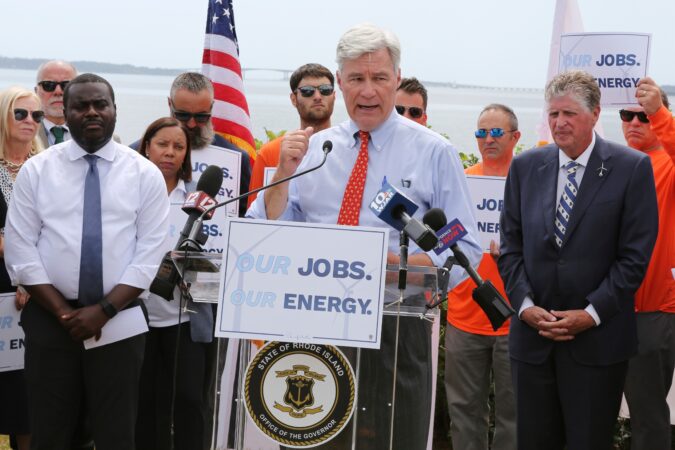
    Sen. Sheldon Whitehouse (D., R.I) said Revolution Wind was thoroughly vetted and fully permitted by the federal government, “and that review included any potential national security questions.” Burgum’s action “looks more like the kind of vindictive harassment we have come to expect from the Trump administration than anything legitimate,’’ he said.

    A judge ruled blocking wind projects was unlawful

    The administration’s action comes two weeks after a federal judge struck down Trump’s executive order blocking wind energy projects, saying the effort to halt virtually all leasing of wind farms on federal lands and waters was “arbitrary and capricious” and violates U.S. law.

    Judge Patti Saris of the U.S. District Court for the District of Massachusetts vacated Trump’s Jan. 20 executive order blocking wind energy projects and declared it unlawful.

    Saris ruled in favor of a coalition of state attorneys general from 17 states and Washington, D.C., led by New York Attorney General Letitia James, that challenged Trump’s Day One order that paused leasing and permitting for wind energy projects.

    Trump has been hostile to renewable energy, particularly offshore wind, and prioritizes fossil fuels to produce electricity. Trump has said wind turbines are ugly, expensive, and pose a threat to birds and other wildlife.

    Wind proponents slam the move

    Wind supporters called the administration’s actions illegal and said offshore wind provides some of the most affordable, reliable electric power to the grid.

    “For nearly a year, the Trump administration has recklessly obstructed the build-out of clean, affordable power for millions of Americans, just as the country’s need for electricity is surging,” said Ted Kelly of the Environmental Defense Fund.

    “Now the administration is again illegally blocking clean, affordable energy,” Kelly said. “We should not be kneecapping America’s largest source of renewable power, especially when we need more cheap, homegrown electricity.’’

    The administration’s actions are especially egregious because, at the same time, it is propping up aging, expensive coal plants “that barely work and pollute our air,” Kelly said.

    Connecticut Attorney General William Tong called the lease suspension a “lawless and erratic stop-work order” that revives an earlier, failed attempt to halt construction of Revolution Wind.

    “Every day this project is stalled is another day of lost work, another day of unaffordable energy costs, and other day burning fossil fuels when American-made clean energy is within reach,” Tong said. “We are evaluating all legal options, and this will be stopped just like last time.”

    Suspension praised by anti-wind group

    A New Jersey group that opposes offshore wind hailed the administration’s actions.

    “Today, the president and his administration put America first,’’ said Robin Shaffer, president of Protect Our Coast New Jersey, a nonprofit advocacy group.

    “Placing largely foreign-owned wind turbines along our coastlines was never acceptable,” he said, arguing that Empire Wind, in particular, poses a threat because of its close proximity to major airports, including Newark Liberty, LaGuardia, and JFK.

    Offshore wind projects also pose a threat to commercial and recreational fishing industries, Shaffer and other critics say.

    Dominion Energy, which is developing Coastal Virginia Offshore Wind, said the project is essential for national security and meeting Virginia’s dramatically growing energy needs, driven by dozens of new data centers.

    “Stopping CVOW for any length of time will threaten grid reliability … lead to energy inflation and threaten thousands of jobs,” the company said in a statement.

    The Conservation Law Foundation, a Boston-based environmental group, called the pause “a desperate rerun of the Trump administration’s failed attempt to kill offshore wind,’’ noting that courts have already rejected the administration’s arguments.

    “Trying again to halt these projects tramples on the rule of law, threatens jobs and deliberately sabotages a critical industry that strengthens — not weakens — America’s energy security,” said Kate Sinding Daly, senior vice president for law and policy at the law foundation.


  • Feds pave the way for Big Tech to plug data centers right into power plants in scramble for energy

    Feds pave the way for Big Tech to plug data centers right into power plants in scramble for energy

    HARRISBURG, Pa. — Federal regulators will allow tech companies to effectively plug massive data centers directly into power plants, issuing a long-awaited order Thursday, as the Trump administration urged the Federal Energy Regulatory Commission to help the U.S. lead the world in artificial intelligence and revive domestic manufacturing.

    The commission’s unanimous order is designed to clear up pressing issues around so-called “colocation” agreements in the nation’s largest grid territory, which stretches across Mid-Atlantic states to parts of Illinois and Indiana.

    But it could become a blueprint for how FERC handles an October request from Trump’s energy secretary, Chris Wright, to ensure that data centers and large manufacturers get the power they need as quickly as possible.

    It also comes amid concerns that the Mid-Atlantic territory covering some 65 million people will face electricity shortages in the coming years, as the build-out of data centers outpaces the speed of new power sources coming online.

    Laura Swett, FERC’s chair, told Thursday’s meeting that clearing the way for massive energy users — like data centers — to get electricity straight from power plants was a “critical step to give investors and consumers more certainty on how FERC believes we can solve the problem of meeting historic surging demand and realize our greatest potential as a country.”

    It would, she said, also protect regular ratepayers, even as evidence mounts in various states that regular ratepayers are bearing the cost of new power plants and transmission lines to feed energy-hungry data centers.

    Power plant owners applauded the step, as their share prices rose steeply in Thursday’s trading. Advanced Energy United, whose members provide solar and wind power, said the FERC order should help clarify how big power users can set up their own power sources.

    The Edison Electric Institute, which represents for-profit utilities, said only that it would “continue to work” to support rapid data center connection, protect ratepayers from cost-shifts and strengthen the grid for everyone.

    Jeff Dennis, executive director of the Electricity Customer Alliance, said the order showed that FERC is trying to address looming issues around fast-growing power demand and underscored the urgency to reform grid policy.

    Thursday’s order grew out of a dispute between power plant owners and electric utilities over a proposed colocation deal between Amazon’s cloud-computing subsidiary and the owner of the Susquehanna nuclear power plant in Luzerne County, Pa.

    For tech giants, such arrangements represent a quick fix to get power while avoiding a potentially longer and more expensive process of hooking into a fraying electric grid that serves everyone else.

    But utilities protested that it allows big power users to avoid paying them to maintain the grid. Some consumer advocates maintained that diverting energy from existing power plants to data centers could drive up energy prices without an answer for how rising power demand will be met for regular ratepayers.

    FERC’s Thursday order sets up a couple new regulatory tracks.

    It requires the operator of the Mid-Atlantic grid, PJM Interconnection, to develop rates and conditions for different colocation scenarios involving new power plants or sources.

    That could mean allowing a big power user to pay for only the transmission services they use, considerably less than they might otherwise pay to connect to the grid through a utility.

    The order also could require a big power user that colocates with an existing power plant to pay the cost to replace the energy that it diverts away from the broader electric grid.

  • Trump pays respects to 2 Iowa National Guardsmen and interpreter killed in Syria as they return home

    Trump pays respects to 2 Iowa National Guardsmen and interpreter killed in Syria as they return home

    DOVER AIR FORCE BASE, Del. — President Donald Trump paid his respects Wednesday to two Iowa National Guard members and a U.S. civilian interpreter who were killed in an attack in the Syrian desert, joining their grieving families as their remains were brought back to the country they served.

    Trump met privately with the families at Dover Air Force Base in Delaware before he joined top military officials and other dignitaries on the tarmac for the dignified transfer, a solemn and largely silent ritual honoring U.S. service members killed in action.

    The guardsmen killed in Syria on Saturday were Sgt. Edgar Brian Torres-Tovar, 25, of Des Moines, and Sgt. William Nathaniel Howard, 29, of Marshalltown, according to the U.S. Army. Both were members of the 1st Squadron, 113th Cavalry Regiment, and have been hailed as heroes by the Iowa National Guard. Their remains will be taken to Iowa.

    Torres-Tovar’s and Howard’s families were at Dover for the return of their remains, alongside Iowa Gov. Kim Reynolds, members of Iowa’s congressional delegation and leaders of the Iowa National Guard.

    Ayad Mansoor Sakat, of Macomb, Mich., a U.S. civilian working as an interpreter, was also killed. Three other Iowa National Guard members were injured in the attack. The Pentagon has not identified them.

    They were among hundreds of U.S. troops deployed in eastern Syria as part of a coalition fighting the Islamic State group.

    Returning to Joint Base Andrews after the transfer, Trump said it was a “beautiful event for three great people. And they’re now looking down and their parents and wives and all of the people that were there were, I mean, were devastated but great people, great people.”

    The return of service member remains

    Trump observed several dignified transfers at Dover in his first term and has said it was “the toughest thing I have to do” as president.

    There is no formal role for a president at a dignified transfer other than to watch in silence, keeping all thoughts to himself for the moment. There is no speaking by any of the politicians and other dignitaries who attend, with the only words coming from the military officials who direct the highly choreographed transfers.

    Trump, wearing an overcoat against the chill and brisk wind, joined the other attendees in a salute that was held as each of the American flag-draped transfer cases was carried from the belly of a hulking C-17 military cargo plane and loaded into a dark, unmarked van nearby.

    He gazed straight ahead as each case passed in front of him, though he turned to look after the first one was placed inside the vehicle. The remains were taken to the on-base mortuary for processing before they are released to the families.

    At the start of the transfer, Trump and Gen. Dan Caine, the chairman of the Joint Chiefs of Staff, joined several others from the military at the open rear of the cargo plane, where all but Trump bowed their heads. The president looked inside the plane. Trump then stood alongside Defense Secretary Pete Hegseth when the group joined the official party.

    Before Trump joined the others, White House chief of staff Susie Wiles, who flew up with Trump, dabbed her eyes with a tissue.

    Iowa National Guard members hailed as heroes

    Howard’s stepfather, Jeffrey Bunn, has said Howard “loved what he was doing and would be the first in and last out.” He said Howard had wanted to be a soldier since he was a boy. Howard’s brother, a staff sergeant in the Iowa National Guard, was escorting him back to Iowa.

    Torres-Tovar was remembered as a “very positive” family-oriented person who always put others first, according to fellow Guard members who were deployed with him and issued a statement to the local TV broadcast station WOI.

    Dina Qiryaqoz, the daughter of the civilian interpreter, said Wednesday in a statement that her father worked for the U.S. Army during the invasion of Iraq from 2003 to 2007. Sakat is survived by his wife and four adult children.

    The interpreter was from Bakhdida, Iraq, a small Catholic village southeast of Mosul, and the family immigrated to the U.S. in 2007 on a special visa, Qiryaqoz said. At the time of his death, Sakat was employed as an independent contractor for Virginia-based Valiant Integrated Services.

    Sakat’s family was still struggling to believe that he is gone. “He was a devoted father and husband, a courageous interpreter and a man who believed deeply in the mission he served,” Qiryaqoz said.

    Trump’s reaction to the attack in Syria

    Trump has vowed retaliation, and the Pentagon’s chief spokesperson, Sean Parnell, has said the attack is under active investigation. The U.S. military said the gunman was killed in the attack.

    Before this attack, the most recent instance of U.S. service members being killed in action was in January 2024, when three American troops died in a drone attack in Jordan.

    Saturday’s deadly attack followed a rapprochement between the U.S. and Syria, bringing the former pariah state into a U.S.-led coalition fighting the Islamic State group.

    Trump has forged a relationship with interim Syrian President Ahmed al-Sharaa, the onetime leader of an Islamic insurgent group who led the ouster of former President Bashar Assad. The leaders met at the White House last month.

    Trump said Monday that the attack had nothing to do with the Syrian leader, who Trump said was “devastated by what happened.”

    During his first term, Trump visited Dover in 2017 to honor a U.S. Navy SEAL killed during a raid in Yemen, in 2019 for two Army officers whose helicopter crashed in Afghanistan, and in 2020 for two Army soldiers killed in Afghanistan when a person dressed in an Afghan army uniform opened fire.

  • Hyundai and Kia will repair millions of vehicles under a deal to fix anti-theft technology

    Hyundai and Kia will repair millions of vehicles under a deal to fix anti-theft technology

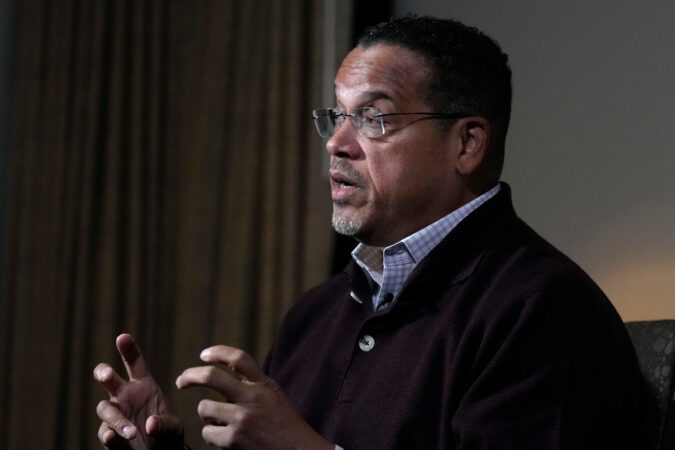
    Automakers Hyundai and Kia must offer free repairs to millions of models under a settlement announced Tuesday by Minnesota’s attorney general, who led an effort by dozens of states that argued the vehicles weren’t equipped with proper anti-theft technology, leaving them vulnerable to thefts.

    Under the nationwide settlement, the companies will offer a free repair to all eligible vehicles at a cost that could top $500 million, Minnesota Attorney General Keith Ellison said. Hyundai and Kia must also outfit all future vehicles sold in the U.S. with a key piece of technology called an engine immobilizer and pay up to $4.5 million of restitution to people whose vehicles were damaged by thieves.

    The settlement was reached by 35 states, including Pennsylvania, New Jersey, California, and New York. The vehicles eligible for fixes date as far back as 2011 and as recently as 2022. About 9 million eligible vehicles were sold nationwide.

    Thefts of Hyundai and Kia vehicles soared in part because beginning in 2021, videos posted to TikTok and other social media demonstrated how someone could steal a car with just a screwdriver and a USB cable. Minneapolis reported an 836% increase in Hyundai and Kia thefts from 2021 to 2022. Ellison announced an investigation into the automakers in early 2023.

    Ellison said the two companies installed engine immobilizers on cars sold in Mexico and Canada, but not widely in the U.S., leading to car thefts, crimes, and crashes that injured and even killed people, including teenagers.

    “This crisis that we’re talking about today started in a boardroom, traveled through the Internet, and ended up in tragic results when somebody stole those cars,” Ellison said at a news conference.

    He was joined by Twin Cities officials, a woman whose mother was killed when a stolen Kia crashed into her parents’ vehicle, and a man whose car was stolen nine times — as recently as Monday night, and including seven times after a previous software fix.

    Under the settlement, Hyundai and Kia will install a zinc sleeve to stop would-be thieves from cracking open a vehicle’s ignition cylinder and starting the car.

    Eligible customers will have one year from the date of the companies’ notice to get the repair at an authorized dealership. The repairs are expected to be available from early 2026 through early 2027.

    In a statement, Kia said the agreement is the latest step it has taken to help its customers and prevent thefts.

    “Kia is eager to continue working with law enforcement officers and officials at federal, state, and local levels to combat criminal car theft, and the role social media has played in encouraging it, and we remain fully committed to upholding vehicle security,” the company said.

    Hyundai said, “We will continue to take meaningful action to support our customers and ensure peace of mind.”

  • The U.S. gained 64,000 jobs in November but lost 105,000 in October as the unemployment rate rose to 4.6%

    The U.S. gained 64,000 jobs in November but lost 105,000 in October as the unemployment rate rose to 4.6%

    WASHINGTON — The United States gained a decent 64,000 jobs in November but lost 105,000 in October as federal workers departed after cutbacks by the Trump administration, the government said in delayed reports.

    The unemployment rate rose to 4.6%, highest since 2021.

    Both the October and November job creation numbers, released Tuesday by the Labor Department, came in late because of the 43-day federal government shutdown.

    The November job gains came in higher than the 40,000 economists had forecast. The October job losses were caused by a 162,000 drop in federal workers, many of whom resigned at the end of fiscal year 2025 on Sept. 30 under pressure from billionaire Elon Musk’s purge of U.S. government payrolls.

    Labor Department revisions also knocked 33,000 jobs off August and September payrolls.

    Workers’ average hourly earnings rose just 0.1% from October, the smallest gain since August 2023. Compared to a year earlier, pay was up 3.5%, the lowest since May 2021.

    Healthcare employers added more than 46,000 jobs in November, accounting for more than two-thirds of the 69,000 private sector jobs created last month. Construction companies added 28,000 jobs. Manufacturing shed jobs for the seventh straight month, losing 5,000 jobs in November.

    Hiring has clearly lost momentum, hobbled by uncertainty over President Donald Trump’s tariffs and the lingering effects of the high interest rates the Federal Reserve engineered in 2022 and 2023 to rein in an outburst of inflation.

    American companies are mostly holding onto the employees they have. But they’re reluctant to hire new ones as they struggle to assess how to use artificial intelligence and how to adjust to Trump’s unpredictable policies, especially his double-digit taxes on imports from around the world.

    The uncertainty leaves jobseekers struggling to find work or even land interviews. Federal Reserve policymakers are divided over whether the labor market needs more help from lower interest rates. Their deliberations are rendered more difficult because official reports on the economy’s health are coming in late and incomplete after a 43-day government shutdown.

    Labor Department revisions in September showed that the economy created 911,000 fewer jobs than originally reported in the year that ended in March. That meant that employers added an average of just 71,000 new jobs a month over that period, not the 147,000 first reported. Since March, job creation has fallen farther — to an average 35,000 a month.

    The unemployment rate, though still modest by historical standards, has risen since bottoming out at a 54-year low of 3.4% in April 2023.

    “The takeaway is that the labor market remains on a relatively soft footing, with employers showing little appetite to hire, but are also reluctant to fire,” Thomas Feltmate, senior economist at TD Economics, wrote in a commentary. “That said, labor demand has cooled more than supply in recent months, which is what’s behind the steady upward drift in the unemployment rate.’’

    Adding to the uncertainty is the growing use of artificial intelligence and other technologies that can reduce demand for workers.

    “We’ve seen a lot of the businesses that we support are stuck in that stagnant mode: ‘Are we going to hire or are we not? What can we automate? What do we need the human touch with?’’’ said Matt Hobbie, vice president of the staffing firm HealthSkil in Allentown, Pennsylvania.

    “We’re in Lehigh Valley, which is a big transportation hub in eastern Pennsylvania. We’ve seen some cooling in the logistics and transportation markets, specifically because we’ve seen automation in those sectors, robotics.’’

    Worries about the job market were enough to nudge the Fed into cutting its benchmark interest rate by a quarter of a percentage point last week for the third time this year.

    But three Fed officials refused to go along with the move, the most dissents in six years. Some Fed officials are balking at further cuts while inflation remains above the central bank’s 2% target. Two voted to keep the rate unchanged. Stephen Miran, appointed by Trump to the Fed’s governing board in September, voted for a bigger cut – in line with what the president demands.

    Tuesday’s report shows that “the labor market remains weak, but the pace of deterioration probably is too slow to spur the (Fed) to ease again in January,’’ Samuel Tombs, chief U.S. economist at Pantheon Macroeconimics, wrote in a commentary. The Fed holds its next policy meeting Jan. 27-28.

    Because of the government shutdown, the Labor Department did not release its jobs reports for September, October and November on time.

    It finally put out the September jobs report on Nov. 20, seven weeks late. It published some of the October data – including a count of the jobs created that month by businesses, nonprofits and government agencies – along with the November report Tuesday. But it did not release an unemployment rate for October because it could not calculate the number during the shutdown.

  • Hunter Biden disbarred in Connecticut following complaints about his gun and tax convictions

    Hunter Biden disbarred in Connecticut following complaints about his gun and tax convictions

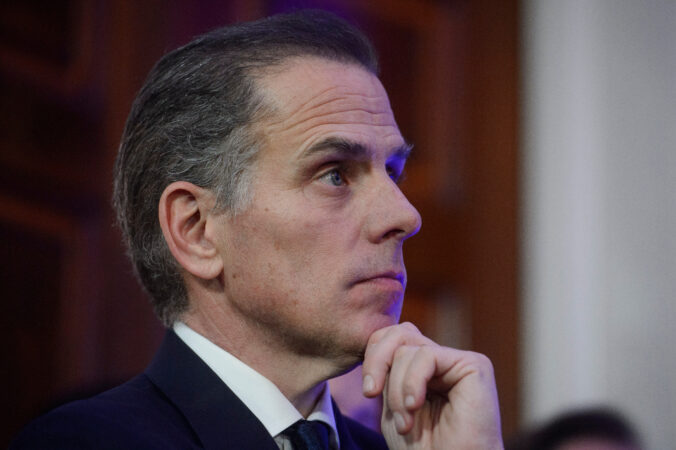
    WATERBURY, Conn. — A judge on Monday disbarred Hunter Biden in Connecticut for violating the state’s attorney conduct rules, a decision that comes after complaints were made about the federal gun and tax charges Biden was convicted of before being pardoned last year by his father, former President Joe Biden.

    In an agreement with the state office that disciplines lawyers, Hunter Biden consented to being disbarred and admitted to attorney misconduct, but he did not admit to any criminal wrongdoing. He was disbarred in Washington, D.C., in May.

    Hunter Biden did not speak as he and his lawyer, Ross Garber, appeared via video at a virtual court hearing before Judge Trial Referee Patrick L. Carroll III in Waterbury.

    Hunter Biden was convicted last year in Delaware federal court of three felonies for purchasing a gun in 2018 when, prosecutors said, he lied on a federal form by claiming he was not illegally using or addicted to drugs.

    He had been set to stand trial in September 2024 in a California case in which prosecutors accused him of failing to pay at least $1.4 million in federal taxes. He agreed to plead guilty to misdemeanor and felony charges hours after jury selection was set to begin.

    The Connecticut judge found that Hunter Biden violated several ethical rules for lawyers, including engaging in conduct “involving dishonesty, fraud, deceit or misrepresentation.” In a court document, Hunter Biden admitted to some but not all of the misconduct allegations. The judge also cited the Washington disbarment.

    Paul Dorsey, one of the two people who filed the complaints about the former president’s son, told the judge during Monday’s hearing that he objected to the agreement because Hunter Biden did not admit to committing crimes. But Leanne Larson, an attorney with the Office of Chief Disciplinary Counsel, cited the pardon.

    Hunter Biden was admitted to the Connecticut bar in 1997, a year after graduating from Yale Law School.

  • This holiday season isn’t very merry for consumers, an AP-NORC poll finds

    This holiday season isn’t very merry for consumers, an AP-NORC poll finds

    WASHINGTON — This holiday season isn’t quite so merry for American shoppers as large shares are dipping into savings, scouring for bargains, and feeling like the overall economy is stuck in a rut under President Donald Trump, a new AP-NORC poll finds.

    The vast majority of U.S. adults say they’ve noticed higher than usual prices for groceries, electricity, and holiday gifts in recent months, according to the survey from the Associated Press-NORC Center for Public Affairs Research.

    Roughly half of Americans say it’s harder than usual to afford the things they want to give as holiday gifts, and similar numbers are delaying big purchases or cutting back on nonessential purchases more than they would normally.

    It’s a sobering assessment for the Republican president, who returned to the White House in large part by promising to lower prices, only to find that inflation remains a threat to his popularity just as it did for Democrat Joe Biden’s presidency. The poll’s findings look very similar to an AP-NORC poll from December 2022, when Biden was president and the country was grappling with higher rates of inflation. Trump’s series of tariffs have added to inflationary pressures and generated anxiety about the stability of the U.S. economy, keeping prices at levels that many Americans find frustrating.

    The president has insisted there is “no” inflation and the U.S. economy is booming, as he expressed frustration that the public feels differently.

    “When will people understand what is happening?” Trump said Thursday on Truth Social. “When will Polls reflect the Greatness of America at this point in time, and how bad it was just one year ago?”

    Most U.S. adults, 68%, continue to say the country’s economy is “poor,” which is unchanged from December 2024, before Trump returned to the presidency.

    Americans are feeling strained as they continue to see high prices

    White House officials plan to send Trump barnstorming across the country in hopes of bucking up people’s faith in the economy before next year’s midterm elections. But the president this week in Pennsylvania defended the price increases tied to his tariffs by suggesting that Americans should buy fewer dolls and pencils for children. His message is a jarring contrast with what respondents expressed in the poll, even among people who backed him in the 2024 election.

    Sergio Ruiz, 44, of Tucson, Ariz., said he is using more buy now, pay later programs to spread out over time the expense of gifts for his children. He doesn’t put a huge emphasis on politics, but he voted for Trump last year and would like to see lower interest rates to help boost his real estate business. He believes that more Americans having higher incomes would help to manage any affordability issues.

    “Prices are up. What can you do? You need to make more money,” Ruiz said.

    The poll found that when they do shop, about half of Americans are finding the lowest price more than they would normally. About 4 in 10 are dipping into their savings more than at other times.

    Democrats are more likely than Republicans to say they’re cutting back on expenses or looking for low prices, but many Republicans are budgeting more than usual as well. About 4 in 10 Republicans are looking for low prices more than they usually would, while a similar share are shopping for nonessential items less than usual.

    Views are largely similar to when Biden was president

    People felt similarly dismal about holiday shopping and the economy when Biden was president in 2022. Inflation had spiked to a four-decade high that summer. Three years later, inflation has eased substantially, but it’s still running at 3%, a full percentage point above the Federal Reserve’s target as the job market appears to have entered a deep freeze.

    The survey indicates that it’s the level of prices — and not just the rate of inflation — that is the point of pain for many families. Roughly 9 in 10 U.S. adults, 87%, say they’ve noticed higher than usual prices for groceries in the past few months, while about two-thirds say they’ve experienced higher prices than usual for electricity and holiday gifts. About half say they’ve seen higher than normal prices for gas recently.

    The findings on groceries and holiday gifts are only slightly lower than in the 2022 poll, despite the slowdown from an inflation rate that hit a four-decade peak in the middle of that year.

    Consumer spending has stayed resilient despite the negative sentiments about the economy, yet Trump’s tariffs have caused changes for shoppers such as Andrew Russell.

    The 33-year-old adjunct professor in Arlington Heights, Ill., said he used to shop for unique gifts from around the globe and buy online. But with the tariffs, he got his gifts locally and “this year, I only bought things that I can pick up in person,” he said.

    Russell, who voted Democratic in last year’s election, said he worries about the economy for next year. He thinks the investment in artificial intelligence has become a bubble that could burst, taking down the stock market.

    Little optimism about an economic rebound in 2026

    Few people expect the situation to meaningfully improve next year — a sign that Trump has done little to instill much confidence from his mix of tariffs, income tax cuts, and foreign trips to attract investments. Trump has maintained that the benefits from his policies will begin to snowball in 2026.

    About 4 in 10 U.S. adults expect next year will be economically worse for the country. Roughly 3 in 10 say conditions won’t change much. Only about 2 in 10 think things will get better, with Republicans being more optimistic.

    The belief that things will get better has slipped from last year, when about 4 in 10 said that 2025 would be better than 2024.

    Millicent Simpson, 56, of Cleveland, said she expects the economy to be worse for people like her who rely on Medicaid for healthcare and the Supplemental Nutrition Assistance Program. Simpson voted Democratic last year and blames Trump for the greater economic pressures that she faces going into the winter.

    “He’s making it rough for us,” she said. “He’s messing with the government assistance for everybody, young and old.”

    The AP-NORC poll of 1,146 adults was conducted Dec. 4-8 using a sample drawn from NORC’s probability-based AmeriSpeak Panel, which is designed to be representative of the U.S. population. The margin of sampling error for adults overall is plus or minus 4 percentage points.