Category: Regional News Wires

  • Feds pave the way for Big Tech to plug data centers right into power plants in scramble for energy

    Feds pave the way for Big Tech to plug data centers right into power plants in scramble for energy

    HARRISBURG, Pa. — Federal regulators will allow tech companies to effectively plug massive data centers directly into power plants, issuing a long-awaited order Thursday, as the Trump administration urged the Federal Energy Regulatory Commission to help the U.S. lead the world in artificial intelligence and revive domestic manufacturing.

    The commission’s unanimous order is designed to clear up pressing issues around so-called “colocation” agreements in the nation’s largest grid territory, which stretches across Mid-Atlantic states to parts of Illinois and Indiana.

    But it could become a blueprint for how FERC handles an October request from Trump’s energy secretary, Chris Wright, to ensure that data centers and large manufacturers get the power they need as quickly as possible.

    It also comes amid concerns that the Mid-Atlantic territory covering some 65 million people will face electricity shortages in the coming years, as the build-out of data centers outpaces the speed of new power sources coming online.

    Laura Swett, FERC’s chair, told Thursday’s meeting that clearing the way for massive energy users — like data centers — to get electricity straight from power plants was a “critical step to give investors and consumers more certainty on how FERC believes we can solve the problem of meeting historic surging demand and realize our greatest potential as a country.”

    It would, she said, also protect regular ratepayers, even as evidence mounts in various states that regular ratepayers are bearing the cost of new power plants and transmission lines to feed energy-hungry data centers.

    Power plant owners applauded the step, as their share prices rose steeply in Thursday’s trading. Advanced Energy United, whose members provide solar and wind power, said the FERC order should help clarify how big power users can set up their own power sources.

    The Edison Electric Institute, which represents for-profit utilities, said only that it would “continue to work” to support rapid data center connection, protect ratepayers from cost-shifts and strengthen the grid for everyone.

    Jeff Dennis, executive director of the Electricity Customer Alliance, said the order showed that FERC is trying to address looming issues around fast-growing power demand and underscored the urgency to reform grid policy.

    Thursday’s order grew out of a dispute between power plant owners and electric utilities over a proposed colocation deal between Amazon’s cloud-computing subsidiary and the owner of the Susquehanna nuclear power plant in Luzerne County, Pa.

    For tech giants, such arrangements represent a quick fix to get power while avoiding a potentially longer and more expensive process of hooking into a fraying electric grid that serves everyone else.

    But utilities protested that it allows big power users to avoid paying them to maintain the grid. Some consumer advocates maintained that diverting energy from existing power plants to data centers could drive up energy prices without an answer for how rising power demand will be met for regular ratepayers.

    FERC’s Thursday order sets up a couple new regulatory tracks.

    It requires the operator of the Mid-Atlantic grid, PJM Interconnection, to develop rates and conditions for different colocation scenarios involving new power plants or sources.

    That could mean allowing a big power user to pay for only the transmission services they use, considerably less than they might otherwise pay to connect to the grid through a utility.

    The order also could require a big power user that colocates with an existing power plant to pay the cost to replace the energy that it diverts away from the broader electric grid.

  • Trump pays respects to 2 Iowa National Guardsmen and interpreter killed in Syria as they return home

    Trump pays respects to 2 Iowa National Guardsmen and interpreter killed in Syria as they return home

    DOVER AIR FORCE BASE, Del. — President Donald Trump paid his respects Wednesday to two Iowa National Guard members and a U.S. civilian interpreter who were killed in an attack in the Syrian desert, joining their grieving families as their remains were brought back to the country they served.

    Trump met privately with the families at Dover Air Force Base in Delaware before he joined top military officials and other dignitaries on the tarmac for the dignified transfer, a solemn and largely silent ritual honoring U.S. service members killed in action.

    The guardsmen killed in Syria on Saturday were Sgt. Edgar Brian Torres-Tovar, 25, of Des Moines, and Sgt. William Nathaniel Howard, 29, of Marshalltown, according to the U.S. Army. Both were members of the 1st Squadron, 113th Cavalry Regiment, and have been hailed as heroes by the Iowa National Guard. Their remains will be taken to Iowa.

    Torres-Tovar’s and Howard’s families were at Dover for the return of their remains, alongside Iowa Gov. Kim Reynolds, members of Iowa’s congressional delegation and leaders of the Iowa National Guard.

    Ayad Mansoor Sakat, of Macomb, Mich., a U.S. civilian working as an interpreter, was also killed. Three other Iowa National Guard members were injured in the attack. The Pentagon has not identified them.

    They were among hundreds of U.S. troops deployed in eastern Syria as part of a coalition fighting the Islamic State group.

    Returning to Joint Base Andrews after the transfer, Trump said it was a “beautiful event for three great people. And they’re now looking down and their parents and wives and all of the people that were there were, I mean, were devastated but great people, great people.”

    The return of service member remains

    Trump observed several dignified transfers at Dover in his first term and has said it was “the toughest thing I have to do” as president.

    There is no formal role for a president at a dignified transfer other than to watch in silence, keeping all thoughts to himself for the moment. There is no speaking by any of the politicians and other dignitaries who attend, with the only words coming from the military officials who direct the highly choreographed transfers.

    Trump, wearing an overcoat against the chill and brisk wind, joined the other attendees in a salute that was held as each of the American flag-draped transfer cases was carried from the belly of a hulking C-17 military cargo plane and loaded into a dark, unmarked van nearby.

    He gazed straight ahead as each case passed in front of him, though he turned to look after the first one was placed inside the vehicle. The remains were taken to the on-base mortuary for processing before they are released to the families.

    At the start of the transfer, Trump and Gen. Dan Caine, the chairman of the Joint Chiefs of Staff, joined several others from the military at the open rear of the cargo plane, where all but Trump bowed their heads. The president looked inside the plane. Trump then stood alongside Defense Secretary Pete Hegseth when the group joined the official party.

    Before Trump joined the others, White House chief of staff Susie Wiles, who flew up with Trump, dabbed her eyes with a tissue.

    Iowa National Guard members hailed as heroes

    Howard’s stepfather, Jeffrey Bunn, has said Howard “loved what he was doing and would be the first in and last out.” He said Howard had wanted to be a soldier since he was a boy. Howard’s brother, a staff sergeant in the Iowa National Guard, was escorting him back to Iowa.

    Torres-Tovar was remembered as a “very positive” family-oriented person who always put others first, according to fellow Guard members who were deployed with him and issued a statement to the local TV broadcast station WOI.

    Dina Qiryaqoz, the daughter of the civilian interpreter, said Wednesday in a statement that her father worked for the U.S. Army during the invasion of Iraq from 2003 to 2007. Sakat is survived by his wife and four adult children.

    The interpreter was from Bakhdida, Iraq, a small Catholic village southeast of Mosul, and the family immigrated to the U.S. in 2007 on a special visa, Qiryaqoz said. At the time of his death, Sakat was employed as an independent contractor for Virginia-based Valiant Integrated Services.

    Sakat’s family was still struggling to believe that he is gone. “He was a devoted father and husband, a courageous interpreter and a man who believed deeply in the mission he served,” Qiryaqoz said.

    Trump’s reaction to the attack in Syria

    Trump has vowed retaliation, and the Pentagon’s chief spokesperson, Sean Parnell, has said the attack is under active investigation. The U.S. military said the gunman was killed in the attack.

    Before this attack, the most recent instance of U.S. service members being killed in action was in January 2024, when three American troops died in a drone attack in Jordan.

    Saturday’s deadly attack followed a rapprochement between the U.S. and Syria, bringing the former pariah state into a U.S.-led coalition fighting the Islamic State group.

    Trump has forged a relationship with interim Syrian President Ahmed al-Sharaa, the onetime leader of an Islamic insurgent group who led the ouster of former President Bashar Assad. The leaders met at the White House last month.

    Trump said Monday that the attack had nothing to do with the Syrian leader, who Trump said was “devastated by what happened.”

    During his first term, Trump visited Dover in 2017 to honor a U.S. Navy SEAL killed during a raid in Yemen, in 2019 for two Army officers whose helicopter crashed in Afghanistan, and in 2020 for two Army soldiers killed in Afghanistan when a person dressed in an Afghan army uniform opened fire.

  • Hyundai and Kia will repair millions of vehicles under a deal to fix anti-theft technology

    Hyundai and Kia will repair millions of vehicles under a deal to fix anti-theft technology

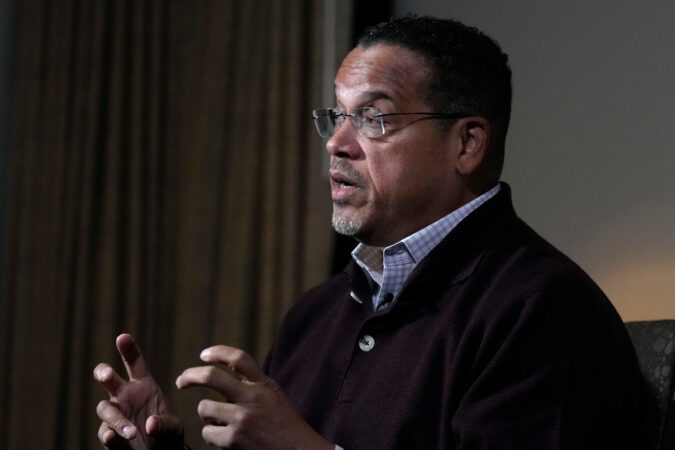
    Automakers Hyundai and Kia must offer free repairs to millions of models under a settlement announced Tuesday by Minnesota’s attorney general, who led an effort by dozens of states that argued the vehicles weren’t equipped with proper anti-theft technology, leaving them vulnerable to thefts.

    Under the nationwide settlement, the companies will offer a free repair to all eligible vehicles at a cost that could top $500 million, Minnesota Attorney General Keith Ellison said. Hyundai and Kia must also outfit all future vehicles sold in the U.S. with a key piece of technology called an engine immobilizer and pay up to $4.5 million of restitution to people whose vehicles were damaged by thieves.

    The settlement was reached by 35 states, including Pennsylvania, New Jersey, California, and New York. The vehicles eligible for fixes date as far back as 2011 and as recently as 2022. About 9 million eligible vehicles were sold nationwide.

    Thefts of Hyundai and Kia vehicles soared in part because beginning in 2021, videos posted to TikTok and other social media demonstrated how someone could steal a car with just a screwdriver and a USB cable. Minneapolis reported an 836% increase in Hyundai and Kia thefts from 2021 to 2022. Ellison announced an investigation into the automakers in early 2023.

    Ellison said the two companies installed engine immobilizers on cars sold in Mexico and Canada, but not widely in the U.S., leading to car thefts, crimes, and crashes that injured and even killed people, including teenagers.

    “This crisis that we’re talking about today started in a boardroom, traveled through the Internet, and ended up in tragic results when somebody stole those cars,” Ellison said at a news conference.

    He was joined by Twin Cities officials, a woman whose mother was killed when a stolen Kia crashed into her parents’ vehicle, and a man whose car was stolen nine times — as recently as Monday night, and including seven times after a previous software fix.

    Under the settlement, Hyundai and Kia will install a zinc sleeve to stop would-be thieves from cracking open a vehicle’s ignition cylinder and starting the car.

    Eligible customers will have one year from the date of the companies’ notice to get the repair at an authorized dealership. The repairs are expected to be available from early 2026 through early 2027.

    In a statement, Kia said the agreement is the latest step it has taken to help its customers and prevent thefts.

    “Kia is eager to continue working with law enforcement officers and officials at federal, state, and local levels to combat criminal car theft, and the role social media has played in encouraging it, and we remain fully committed to upholding vehicle security,” the company said.

    Hyundai said, “We will continue to take meaningful action to support our customers and ensure peace of mind.”

  • The U.S. gained 64,000 jobs in November but lost 105,000 in October as the unemployment rate rose to 4.6%

    The U.S. gained 64,000 jobs in November but lost 105,000 in October as the unemployment rate rose to 4.6%

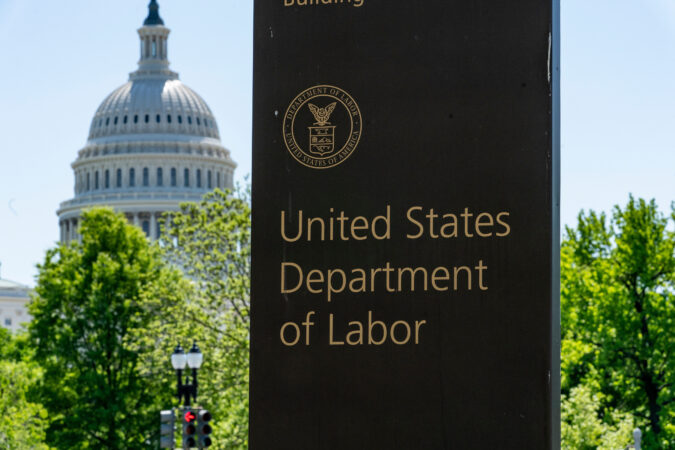
    WASHINGTON — The United States gained a decent 64,000 jobs in November but lost 105,000 in October as federal workers departed after cutbacks by the Trump administration, the government said in delayed reports.

    The unemployment rate rose to 4.6%, highest since 2021.

    Both the October and November job creation numbers, released Tuesday by the Labor Department, came in late because of the 43-day federal government shutdown.

    The November job gains came in higher than the 40,000 economists had forecast. The October job losses were caused by a 162,000 drop in federal workers, many of whom resigned at the end of fiscal year 2025 on Sept. 30 under pressure from billionaire Elon Musk’s purge of U.S. government payrolls.

    Labor Department revisions also knocked 33,000 jobs off August and September payrolls.

    Workers’ average hourly earnings rose just 0.1% from October, the smallest gain since August 2023. Compared to a year earlier, pay was up 3.5%, the lowest since May 2021.

    Healthcare employers added more than 46,000 jobs in November, accounting for more than two-thirds of the 69,000 private sector jobs created last month. Construction companies added 28,000 jobs. Manufacturing shed jobs for the seventh straight month, losing 5,000 jobs in November.

    Hiring has clearly lost momentum, hobbled by uncertainty over President Donald Trump’s tariffs and the lingering effects of the high interest rates the Federal Reserve engineered in 2022 and 2023 to rein in an outburst of inflation.

    American companies are mostly holding onto the employees they have. But they’re reluctant to hire new ones as they struggle to assess how to use artificial intelligence and how to adjust to Trump’s unpredictable policies, especially his double-digit taxes on imports from around the world.

    The uncertainty leaves jobseekers struggling to find work or even land interviews. Federal Reserve policymakers are divided over whether the labor market needs more help from lower interest rates. Their deliberations are rendered more difficult because official reports on the economy’s health are coming in late and incomplete after a 43-day government shutdown.

    Labor Department revisions in September showed that the economy created 911,000 fewer jobs than originally reported in the year that ended in March. That meant that employers added an average of just 71,000 new jobs a month over that period, not the 147,000 first reported. Since March, job creation has fallen farther — to an average 35,000 a month.

    The unemployment rate, though still modest by historical standards, has risen since bottoming out at a 54-year low of 3.4% in April 2023.

    “The takeaway is that the labor market remains on a relatively soft footing, with employers showing little appetite to hire, but are also reluctant to fire,” Thomas Feltmate, senior economist at TD Economics, wrote in a commentary. “That said, labor demand has cooled more than supply in recent months, which is what’s behind the steady upward drift in the unemployment rate.’’

    Adding to the uncertainty is the growing use of artificial intelligence and other technologies that can reduce demand for workers.

    “We’ve seen a lot of the businesses that we support are stuck in that stagnant mode: ‘Are we going to hire or are we not? What can we automate? What do we need the human touch with?’’’ said Matt Hobbie, vice president of the staffing firm HealthSkil in Allentown, Pennsylvania.

    “We’re in Lehigh Valley, which is a big transportation hub in eastern Pennsylvania. We’ve seen some cooling in the logistics and transportation markets, specifically because we’ve seen automation in those sectors, robotics.’’

    Worries about the job market were enough to nudge the Fed into cutting its benchmark interest rate by a quarter of a percentage point last week for the third time this year.

    But three Fed officials refused to go along with the move, the most dissents in six years. Some Fed officials are balking at further cuts while inflation remains above the central bank’s 2% target. Two voted to keep the rate unchanged. Stephen Miran, appointed by Trump to the Fed’s governing board in September, voted for a bigger cut – in line with what the president demands.

    Tuesday’s report shows that “the labor market remains weak, but the pace of deterioration probably is too slow to spur the (Fed) to ease again in January,’’ Samuel Tombs, chief U.S. economist at Pantheon Macroeconimics, wrote in a commentary. The Fed holds its next policy meeting Jan. 27-28.

    Because of the government shutdown, the Labor Department did not release its jobs reports for September, October and November on time.

    It finally put out the September jobs report on Nov. 20, seven weeks late. It published some of the October data – including a count of the jobs created that month by businesses, nonprofits and government agencies – along with the November report Tuesday. But it did not release an unemployment rate for October because it could not calculate the number during the shutdown.

  • Hunter Biden disbarred in Connecticut following complaints about his gun and tax convictions

    Hunter Biden disbarred in Connecticut following complaints about his gun and tax convictions

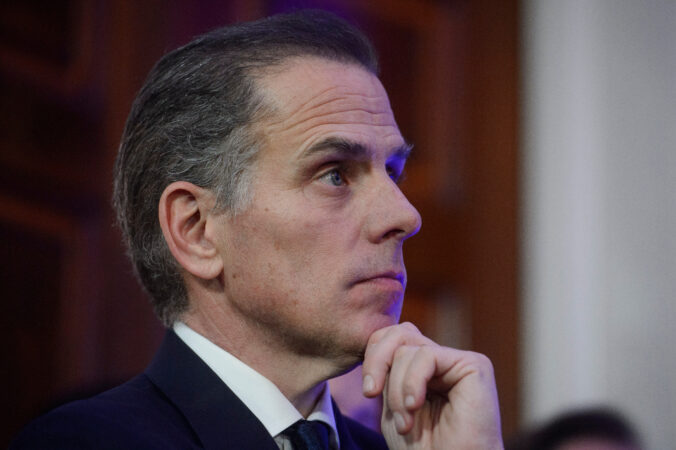
    WATERBURY, Conn. — A judge on Monday disbarred Hunter Biden in Connecticut for violating the state’s attorney conduct rules, a decision that comes after complaints were made about the federal gun and tax charges Biden was convicted of before being pardoned last year by his father, former President Joe Biden.

    In an agreement with the state office that disciplines lawyers, Hunter Biden consented to being disbarred and admitted to attorney misconduct, but he did not admit to any criminal wrongdoing. He was disbarred in Washington, D.C., in May.

    Hunter Biden did not speak as he and his lawyer, Ross Garber, appeared via video at a virtual court hearing before Judge Trial Referee Patrick L. Carroll III in Waterbury.

    Hunter Biden was convicted last year in Delaware federal court of three felonies for purchasing a gun in 2018 when, prosecutors said, he lied on a federal form by claiming he was not illegally using or addicted to drugs.

    He had been set to stand trial in September 2024 in a California case in which prosecutors accused him of failing to pay at least $1.4 million in federal taxes. He agreed to plead guilty to misdemeanor and felony charges hours after jury selection was set to begin.

    The Connecticut judge found that Hunter Biden violated several ethical rules for lawyers, including engaging in conduct “involving dishonesty, fraud, deceit or misrepresentation.” In a court document, Hunter Biden admitted to some but not all of the misconduct allegations. The judge also cited the Washington disbarment.

    Paul Dorsey, one of the two people who filed the complaints about the former president’s son, told the judge during Monday’s hearing that he objected to the agreement because Hunter Biden did not admit to committing crimes. But Leanne Larson, an attorney with the Office of Chief Disciplinary Counsel, cited the pardon.

    Hunter Biden was admitted to the Connecticut bar in 1997, a year after graduating from Yale Law School.

  • This holiday season isn’t very merry for consumers, an AP-NORC poll finds

    This holiday season isn’t very merry for consumers, an AP-NORC poll finds

    WASHINGTON — This holiday season isn’t quite so merry for American shoppers as large shares are dipping into savings, scouring for bargains, and feeling like the overall economy is stuck in a rut under President Donald Trump, a new AP-NORC poll finds.

    The vast majority of U.S. adults say they’ve noticed higher than usual prices for groceries, electricity, and holiday gifts in recent months, according to the survey from the Associated Press-NORC Center for Public Affairs Research.

    Roughly half of Americans say it’s harder than usual to afford the things they want to give as holiday gifts, and similar numbers are delaying big purchases or cutting back on nonessential purchases more than they would normally.

    It’s a sobering assessment for the Republican president, who returned to the White House in large part by promising to lower prices, only to find that inflation remains a threat to his popularity just as it did for Democrat Joe Biden’s presidency. The poll’s findings look very similar to an AP-NORC poll from December 2022, when Biden was president and the country was grappling with higher rates of inflation. Trump’s series of tariffs have added to inflationary pressures and generated anxiety about the stability of the U.S. economy, keeping prices at levels that many Americans find frustrating.

    The president has insisted there is “no” inflation and the U.S. economy is booming, as he expressed frustration that the public feels differently.

    “When will people understand what is happening?” Trump said Thursday on Truth Social. “When will Polls reflect the Greatness of America at this point in time, and how bad it was just one year ago?”

    Most U.S. adults, 68%, continue to say the country’s economy is “poor,” which is unchanged from December 2024, before Trump returned to the presidency.

    Americans are feeling strained as they continue to see high prices

    White House officials plan to send Trump barnstorming across the country in hopes of bucking up people’s faith in the economy before next year’s midterm elections. But the president this week in Pennsylvania defended the price increases tied to his tariffs by suggesting that Americans should buy fewer dolls and pencils for children. His message is a jarring contrast with what respondents expressed in the poll, even among people who backed him in the 2024 election.

    Sergio Ruiz, 44, of Tucson, Ariz., said he is using more buy now, pay later programs to spread out over time the expense of gifts for his children. He doesn’t put a huge emphasis on politics, but he voted for Trump last year and would like to see lower interest rates to help boost his real estate business. He believes that more Americans having higher incomes would help to manage any affordability issues.

    “Prices are up. What can you do? You need to make more money,” Ruiz said.

    The poll found that when they do shop, about half of Americans are finding the lowest price more than they would normally. About 4 in 10 are dipping into their savings more than at other times.

    Democrats are more likely than Republicans to say they’re cutting back on expenses or looking for low prices, but many Republicans are budgeting more than usual as well. About 4 in 10 Republicans are looking for low prices more than they usually would, while a similar share are shopping for nonessential items less than usual.

    Views are largely similar to when Biden was president

    People felt similarly dismal about holiday shopping and the economy when Biden was president in 2022. Inflation had spiked to a four-decade high that summer. Three years later, inflation has eased substantially, but it’s still running at 3%, a full percentage point above the Federal Reserve’s target as the job market appears to have entered a deep freeze.

    The survey indicates that it’s the level of prices — and not just the rate of inflation — that is the point of pain for many families. Roughly 9 in 10 U.S. adults, 87%, say they’ve noticed higher than usual prices for groceries in the past few months, while about two-thirds say they’ve experienced higher prices than usual for electricity and holiday gifts. About half say they’ve seen higher than normal prices for gas recently.

    The findings on groceries and holiday gifts are only slightly lower than in the 2022 poll, despite the slowdown from an inflation rate that hit a four-decade peak in the middle of that year.

    Consumer spending has stayed resilient despite the negative sentiments about the economy, yet Trump’s tariffs have caused changes for shoppers such as Andrew Russell.

    The 33-year-old adjunct professor in Arlington Heights, Ill., said he used to shop for unique gifts from around the globe and buy online. But with the tariffs, he got his gifts locally and “this year, I only bought things that I can pick up in person,” he said.

    Russell, who voted Democratic in last year’s election, said he worries about the economy for next year. He thinks the investment in artificial intelligence has become a bubble that could burst, taking down the stock market.

    Little optimism about an economic rebound in 2026

    Few people expect the situation to meaningfully improve next year — a sign that Trump has done little to instill much confidence from his mix of tariffs, income tax cuts, and foreign trips to attract investments. Trump has maintained that the benefits from his policies will begin to snowball in 2026.

    About 4 in 10 U.S. adults expect next year will be economically worse for the country. Roughly 3 in 10 say conditions won’t change much. Only about 2 in 10 think things will get better, with Republicans being more optimistic.

    The belief that things will get better has slipped from last year, when about 4 in 10 said that 2025 would be better than 2024.

    Millicent Simpson, 56, of Cleveland, said she expects the economy to be worse for people like her who rely on Medicaid for healthcare and the Supplemental Nutrition Assistance Program. Simpson voted Democratic last year and blames Trump for the greater economic pressures that she faces going into the winter.

    “He’s making it rough for us,” she said. “He’s messing with the government assistance for everybody, young and old.”

    The AP-NORC poll of 1,146 adults was conducted Dec. 4-8 using a sample drawn from NORC’s probability-based AmeriSpeak Panel, which is designed to be representative of the U.S. population. The margin of sampling error for adults overall is plus or minus 4 percentage points.

  • The White House says the midterms are all about Trump. Democrats aren’t so sure

    The White House says the midterms are all about Trump. Democrats aren’t so sure

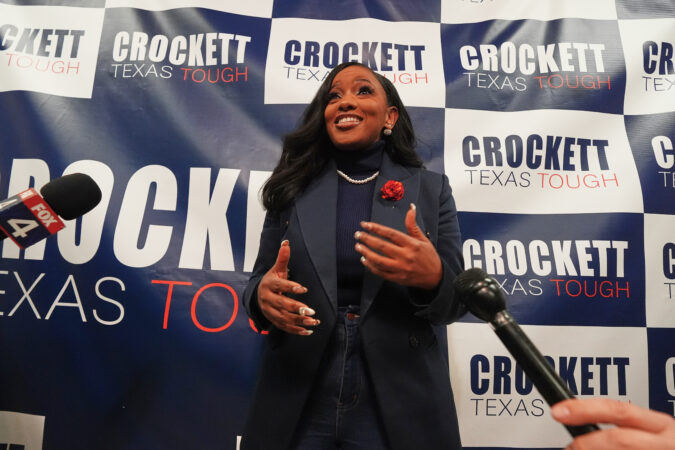
    WASHINGTON — A Dallas congresswoman opened her Senate campaign by telling voters that she “has gone toe to toe with Donald Trump.” Her Democratic primary opponent insisted that Americans are tired of “politics as a blood sport.”

    The divergent approach highlights how U.S. Rep. Jasmine Crockett and State Rep. James Talarico are navigating a race where Democrats hope to break a three-decade losing streak in Texas. It also reflects a broader divide within the party, with some candidates continuing to focus on Trump while others barely mention his name.

    Figuring out the best approach will be critical for Democrats who are grasping for a path back to power in the 2026 midterm elections that will determine control of Congress and are already maneuvering for the 2028 presidential race.

    Republicans, by contrast, have been crystal clear.

    Susie Wiles, the White House chief of staff, said in a recent podcast interview that the Republican president will campaign aggressively next year and the party will “put him on the ballot.”

    “He is the greatest vote energizer in the history of politics,” said Neil Newhouse, a veteran Republican pollster. “But the challenge is that he does it as much for Democrats as he does for Republicans.”

    Crockett takes on Trump

    In her campaign launch video, Crockett was silent as audio of Trump’s insults played, including multiple times that he has called her a “very low-IQ person.” At the end of the video, she breaks out into a smile.

    On Monday, she addressed the president more directly.

    “Trump, I know you’re watching, so let me tell you directly,” Crockett said. “You’re not entitled to a damn thing in Texas. You better get to work because I’m coming for you.”

    Trump responded the next day, telling reporters aboard Air Force One that her candidacy is “a gift to Republicans” and “I can’t even believe she’s a politician, actually.”

    For nearly a decade, Democrats have used their criticism of Trump to draw attention and fuel fundraising. Governors who are considered potential 2028 presidential contenders, including California’s Gavin Newsom and Illinois’ JB Pritzker, saw their profiles rise as they positioned themselves as staunch Trump opponents.

    U.S. Sen. Mark Kelly (D., Ariz.) recently participated in a video telling service members that they should not follow “illegal orders.” Trump responded by accusing him of “seditious behavior” that’s “punishable by death.”

    Kelly started a national media tour and sent out a flurry of fundraising emails, both for himself and other Democrats. He said Trump has bullied everyone in his career, “but not now, because I won’t let it happen.”

    When it comes to running for office, “Trump is the red meat that drives donors,” said John Anzalone, a longtime Democratic pollster.

    “There are clearly some candidates that are playing towards the donor world that don’t actually make a great argument for winning races. But it’s great for clicks and making money. And money is the first primary that you need to win.”

    Talarico charts a different course

    Talarico has built a following with a less combative style. The former schoolteacher who is working toward a master’s degree in divinity at Austin Presbyterian Theological Seminary gained attention by posting viral social media content challenging Republicans’ claims to Christian values. He has focused less on Trump or other politicians.

    “The biggest divide in our country is not left versus right. It’s top versus bottom,” Talarico said in the video launching his campaign.

    There are echoes of other Democratic successes this year, such as when candidates for governor won in New Jersey and Virginia by focusing on affordability concerns.

    Voters in those states were much likelier to say they were voting to oppose Trump than to support him, according to the AP Voter Poll. For example, 71% of voters for Democrat Mikie Sherrill in New Jersey said their decision in the governor’s race was motivated at least partially by opposition to Trump.

    But Sherrill recently said that it is not enough for Democrats to rely solely on anti-Trump fervor.

    “Trump makes a difference. He’s a forcing mechanism to coalesce the party,” Sherrill said. “But to really turn out the vote in a really strong manner, you have got to run a really sharp campaign.”

    When Democrats talk about Trump, they have to connect his actions to voters’ everyday lives, she said.

    “You can’t just say, oh, I’m so upset that Trump demolished the East Wing of the White House,” she said. “You have to say, look, there’s a tariff regime that is being run that is enriching the president to the tune of $3 billion, and you’re paying more for everything from your cup of coffee in the morning to the groceries that you’re buying to cook your family dinner at night.”

    It is an approach that could have more staying power in the coming years.

    “In the not-too-distant future, Trump will not be on the ballot and that will be a challenge for both parties,” said Austin Cook, a senior aide for Democrat Elissa Slotkin’s successful U.S. Senate campaign in Michigan last year. “He is a starting gun for Democratic enthusiasm. But soon we won’t have him as a foil.”

    Republicans need Trump to turn out voters

    Republicans have little choice but to enlist Trump’s help, considering his enduring support among voters who are less likely to turn out during the midterms.

    “They need to energize Republican voters and the only real way to energize Republican voters and get them out to vote is by enlisting Trump in the campaign,” said Newhouse, who is advising some of the party’s U.S. Senate candidates.

    He warned that Trump’s popularity does not necessarily transfer to candidates he supports, “but there isn’t an alternative.”

    “What they are trying to do here is basically wrap themselves up in him, hope that his approval and the economic numbers improve and get their voters out to the polls to match the Democrats’ intensity,” Newhouse said.

    The White House has said that Trump will be on the road more in the coming months. He hosted his first rally in a while in Pennsylvania on Tuesday evening, where he blamed Democrats for inflation.

    “They gave you high prices,” he said, adding that “we’re bringing those prices down rapidly.”

  • N.Y. attorney general challenges authority of acting U.S. attorney investigating her Trump lawsuits

    N.Y. attorney general challenges authority of acting U.S. attorney investigating her Trump lawsuits

    ALBANY, N.Y. — President Donald Trump’s effort to install political loyalists as top federal prosecutors has run into a legal buzz saw lately, with judges ruling that his handpicked U.S. attorneys for New Jersey, eastern Virginia, Nevada, and Los Angeles were all serving unlawfully.

    On Thursday, another federal judge heard an argument by New York Attorney General Letitia James that the administration also twisted the law to make John Sarcone the acting U.S. attorney for northern New York.

    James, a Democrat, is challenging Sarcone’s authority to oversee a Justice Department investigation into regulatory lawsuits she filed against Trump and the National Rifle Association. It’s one of several arguments she is making to block subpoenas issued as part of the probe, which her lawyers say is part of a campaign of baseless investigations and prosecutions of Trump’s perceived enemies.

    Her attorney Hailyn Chen argued in court that since Sarcone lacks legitimate authority to act as U.S. attorney, legal steps taken by him in that capacity — like the subpoenas — are unlawful. In response to a question from U.S. District Judge Lorna G. Schofield, Chen said Sarcone should be disqualified from the investigation and the office.

    “Sarcone exercised power that he did not lawfully possess,” Chen told the judge.

    Justice Department lawyers say Sarcone was appointed properly and the motion to block the subpoenas should be denied. Assistant U.S. Attorney Richard Belliss argued that disqualifying Sarcone would be “drastic and extreme.”

    “We don’t think that’s a proper remedy,” Belliss said.

    Schofield, after peppering both attorneys with questions, did not say when she would rule.

    The fight in New York and other states is largely over the legality of unorthodox strategies the Trump administration has adopted to appoint prosecutors seen as unlikely to get confirmed by the U.S. Senate.

    The hearing came a week after a federal judge in Virginia dismissed indictments brought there against James and former FBI Director James Comey. That judge concluded that the interim U.S. attorney who brought the charges, Lindsey Halligan, was unlawfully appointed. The Justice Department is expected to appeal.

    On Monday, a federal appeals court ruled that Alina Habba, Trump’s former personal lawyer, is disqualified from serving as New Jersey’s top federal prosecutor.

    Under federal law, the president’s nominees for U.S. attorney must be confirmed by the Senate. If a position is vacant, the U.S. attorney general can appoint someone temporarily, but that appointment expires after 120 days. If that time period elapses, judges in the district can either keep the interim U.S. attorney or appoint someone of their own choosing.

    Sarcone’s appointment didn’t follow that path.

    Trump hasn’t nominated anyone to serve as U.S. attorney for the Northern District of New York. U.S. Attorney General Pam Bondi appointed Sarcone to serve as the interim U.S. attorney in March. When his 120-day term elapsed, judges in the district declined to keep him in the post.

    Bondi then took the unusual step of appointing Sarcone as a special attorney, then designated him first assistant U.S. attorney for the district, a maneuver federal officials say allows him to serve as an acting U.S. attorney.

    Chen called it an abuse of executive power.

    The New York subpoenas seek records related to a civil case James filed against Trump over alleged fraud in his personal business dealings and records from a lawsuit involving the National Rifle Association and two senior executives.

    Belliss argued in court that the U.S. attorney general has broad authority to appoint attorneys within her department and to delegate her functions to those attorneys. Belliss said that even if Sarcone is not properly holding the office of acting U.S. attorney, he can still conduct grand jury investigations as a special attorney.

    Sarcone was part of Trump’s legal team during the 2016 presidential campaign and worked for the U.S. General Services Administration as the regional administrator for the Northeast and Caribbean during Trump’s first term.

    Habba also served as an interim U.S. attorney. When her appointment expired, New Jersey judges replaced her with a career prosecutor who had served as her second-in-command. Bondi then fired that prosecutor and renamed Habba as acting U.S. attorney.

    A similar dynamic is playing out in Nevada, where a federal judge disqualified the Trump administration’s pick to be U.S. attorney there. And a federal judge in Los Angeles disqualified the acting U.S. attorney in Southern California from several cases after concluding he had stayed in the job longer than allowed by law.

  • Hearing in Luigi Mangione’s state murder case sheds new light on his arrest

    Hearing in Luigi Mangione’s state murder case sheds new light on his arrest

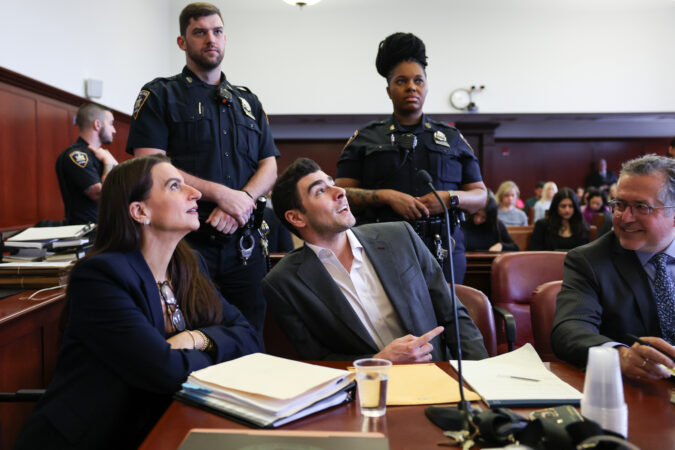
    NEW YORK — Minutes after police approached Luigi Mangione in a Pennsylvania McDonald’s, he told an officer he didn’t want to talk, according to video and testimony at a court hearing Thursday for the man charged with killing UnitedHealthcare CEO Brian Thompson.

    Although some video and accounts of police interactions with Mangione emerged earlier in this week’s hearing, Thursday’s proceedings shed new light on the lead-up to and aftermath of his Dec. 9, 2024, arrest in Altoona, Pa.

    Mangione, 27, appeared to follow the proceedings intently, at times leaning over the defense table to scrutinize papers or take notes. He briefly looked down as Altoona Police Officer Tyler Frye was asked about a strip-search of Mangione after his arrest. Under the department’s policy, that search wasn’t recorded.

    It happened after police were told that someone at the McDonald’s resembled the much-publicized suspect in Thompson’s killing. But Frye and Officer Joseph Detwiler initially approached Mangione with a low-key tone, saying only that someone had said he looked “suspicious.” Asked for his ID, he gave a phony New Jersey driver’s license with a fake name, according to prosecutors.

    Moments later, after frisking Mangione, Detwiler stepped away to communicate with dispatchers about the license, leaving the rookie Frye by Mangione’s table.

    “So what’s going on? What brings you up here from New Jersey?” Frye asked, according to his body-camera video.

    Mangione answered in a low voice. Asked what the suspect had said, Frye testified Thursday: “It was something along the lines of: He didn’t want to talk to me at that time.”

    Mangione later added that “he was just trying to use the Wi-Fi,” according to Frye.

    During the roughly 20 minutes before Mangione was told he had the right to remain silent, he answered other questions asked by the officers, and also posed a few of his own.

    “Can I ask why there’s so many cops here?” he asked shortly before being informed he was being arrested on a forgery charge related to his false ID. By that point, roughly a dozen officers had converged on the restaurant, and Mangione had been told he was being investigated and had been handcuffed.

    Mangione has pleaded not guilty to state and federal murder charges. Before any trials get scheduled, his lawyers are trying to preclude the eventual jurors from hearing about his alleged statements to law officers and items — including a gun and a notebook — they allegedly seized from his backpack.

    The evidence is key to prosecutors’ case. They have said the 9 mm handgun matches the firearm used in the killing, that writings in the notebook laid out Mangione’s disdain for health insurers and ideas about killing a CEO at an investor conference, and that he gave police the same fake name that the alleged gunman used at a New York hostel days before the shooting.

    Thursday’s proceedings came on the anniversary of the killing, which UnitedHealthcare marked by lowering the flags at its headquarters in Minnetonka, Minnesota, and encouraging employees to engage in volunteering.

    Thompson, 50, was shot from behind as he walked to an investor conference. He became UnitedHealthcare’s CEO in 2021 and had worked within parent UnitedHealth Group Inc. for 20 years.

    The hearing, which started Monday and could extend to next week, applies only to the state case. But it is giving the public an extensive preview of some testimony, video, 911 audio and other records relevant to both cases.

    After encountering Mangione, Detwiler and Frye tried to play it cool and buy time by intimating that they were simply responding to a loitering complaint and chatting about his sandwich. Still, they patted Mangione down and pushed his backpack away from him. About 15 minutes in, officers warned him that he was being investigated and would be arrested if he repeated what they had determined was a fake name.

    After he gave his real one, he was read his rights, handcuffed, frisked again and ultimately arrested on a forgery charge related to his fake ID.

    Mangione’s lawyers argue that his statements shouldn’t be allowed as trial evidence because officers started questioning him before reading his rights. They say the contents of his backpack should be excluded because police didn’t get a warrant before searching it.

    Manhattan prosecutors haven’t yet detailed their arguments for allowing the disputed evidence. Federal prosecutors have maintained that the backpack search was justified to ensure there was nothing dangerous inside, and that Mangione’s statements to officers were voluntary and made before he was under arrest.

    Many criminal cases see disputes over evidence and the complicated legal standards governing police searches and interactions with potential suspects.

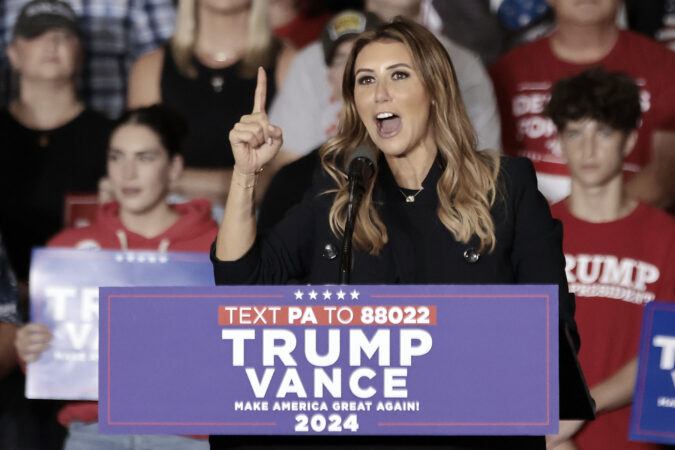
  • Former Trump lawyer Alina Habba has been disqualified as New Jersey’s top prosecutor, a U.S. appeals court ruled

    Former Trump lawyer Alina Habba has been disqualified as New Jersey’s top prosecutor, a U.S. appeals court ruled

    PHILADELPHIA — The Trump administration’s maneuvers to keep the president’s former lawyer Alina Habba in place as New Jersey’s top federal prosecutor were illegal and she is disqualified, a federal appeals court said Monday.

    A panel of judges from the 3rd U.S. Circuit Court of Appeals sitting in Philadelphia sided with a lower court judge’s ruling after hearing oral arguments at which Habba herself was present on Oct. 20.

    The ruling comes amid the push by President Donald Trump’s Republican administration to keep Habba as the acting U.S. attorney for New Jersey, a powerful post charged with enforcing federal criminal and civil law. It also comes after the judges questioned the government’s moves to keep Habba in place after her interim appointment expired and without her getting Senate confirmation.

    Habba said after that hearing in a statement posted to X that she was fighting on behalf of other candidates to be federal prosecutors who have been denied a chance for a Senate hearing.

    Messages were left Monday seeking comment from the U.S. attorney’s office in New Jersey, Habba’s personal staffer and the Justice Department.

    Habba is hardly the only Trump administration prosecutor whose appointment has been challenged by defense lawyers.

    Last week, a federal judge dismissed criminal cases against former FBI Director James Comey and New York Attorney General Letitia James after concluding that the hastily installed prosecutor who filed the charges, Lindsey Halligan, was unlawfully appointed to the position of interim U.S. attorney for the Eastern District of Virginia. The Justice Department has said it intends to appeal the rulings.

    The judges on the panel were two appointed by Republican President George W. Bush, D. Brooks Smith and D. Michael Fisher as well as one named by Demcoratic President Barack Obama: Luis Felipe Restrepo.

    A lower court judge said in August Habba’s appointment was done with a “novel series of legal and personnel moves” and that she was not lawfully serving as U.S attorney for New Jersey.

    That order said her actions since July could be invalidated, but he stayed the order pending appeal.

    The government argued Habba is validly serving in the role under a federal statute allowing the first assistant attorney, a post she was appointed to by the Trump administration.

    A similar dynamic is playing out in Nevada, where a federal judge disqualified the Trump administration’s pick to be U.S. attorney there.

    The Habba case comes after several people charged with federal crimes in New Jersey challenged the legality of Habba’s tenure. They sought to block the charges, arguing she didn’t have the authority to prosecute their cases after her 120-day term as interim U.S. attorney expired.

    Habba was Trump’s attorney in criminal and civil proceedings before he was elected to a second term. She served as a White House adviser briefly before Trump named her as a federal prosecutor in March.

    Shortly after her appointment, she said in an interview with a right-wing influence that she hoped to help “turn New Jersey red,” a rare overt political expression from a prosecutor.

    She then brought a trespassing charge, eventually dropped, against Democratic Newark Mayor Ras Baraka stemming from his visit to a federal immigration detention center.

    Habba later charged Democratic U.S. Rep. LaMonica McIver with assault stemming from the same incident, a rare federal criminal case against a sitting member of Congress other than for corruption. McIver denied the charges and pleaded not guilty. The case is pending.

    Questions about whether Habba would continue in the job arose in July when her temporary appointment was ending and it became clear New Jersey’s two Democratic U.S. senators, Cory Booker and Andy Kim, would not back her appointment.

    Earlier this year as her appointment was expiring, federal judges in New Jersey exercised their power under the law to replace Habba with a career prosecutor who had served as her second-in-command.

    Bondi then fired the prosecutor installed by the judges and renamed Habba as acting U.S. attorney. The Justice Department said the judges acted prematurely and said Trump had the authority to appoint his preferred candidate to enforce federal laws in the state.

    Brann’s ruling said the president’s appointments are still subject to the time limits and power-sharing rules laid out in federal law.