Category: Washington Post

  • Netanyahu’s ties with Trump to be tested amid differences ahead of visit

    Netanyahu’s ties with Trump to be tested amid differences ahead of visit

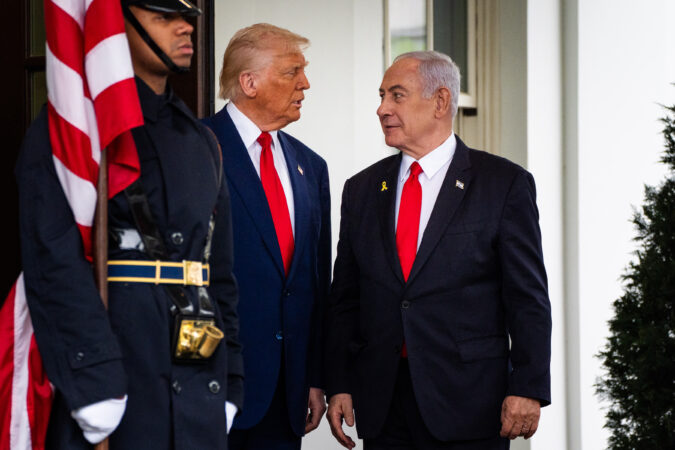
    JERUSALEM — Three months ago, Israeli Prime Minister Benjamin Netanyahu hailed Donald Trump as the “greatest friend Israel has ever had in the White House.” But that friendship — and Netanyahu’s powers of persuasion — will be tested on Monday at Trump’s Mar-a-Lago estate, where the Israeli leader will meet a U.S. president with increasingly diverging views on practically every Middle East hot spot.

    For Netanyahu, the trip to Florida offers a crucial opportunity to convince Trump to take a tougher stance on Gaza and require that Hamas disarm before Israeli troops further withdraw as part of the second phase of Trump’s 20-point peace plan, Israeli officials say. On Iran, Netanyahu is seeking a green light for another strike against the Islamic Republic’s ballistic missile program, possibly as part of a joint operation with the United States — even though Trump forcefully demanded an end to the 12-day Israel-Iran war in June and declared that Iran’s nuclear program had been “totally obliterated” by U.S. stealth bombers.

    On Syria, the Trump administration has bristled at actions by the Israeli military inside the country that undermine efforts by the new president, Ahmed al-Sharaa, to consolidate control, with Trump publicly warning Israel this month against doing anything “that will interfere with Syria’s evolution into a prosperous State.” And in Lebanon, Israel has repeatedly bombed Hezbollah targets while demanding that the militant group disarm in accordance with a U.S.-brokered ceasefire, but the strikes have threatened to tip the region into another conflagration on Trump’s watch.

    As they meet Monday for the fifth time this year, Netanyahu’s hawkishness will butt up against a U.S. president who has staked his own image and legacy on promoting peace, and Netanyahu may struggle to win Trump’s backing given how the relationship has deteriorated, according to people familiar with the thinking of the two leaders and political observers.

    “This is an emergency summit,” said Dan Diker, president of the Jerusalem Center for Security and Foreign Affairs think tank. “The context is a need to clear or purify the air, because there’s been tensions between the two sides. They have different timelines to get to the same destination, which is a Middle East that is liberated from the Iranian regime and its terror proxies, particularly Hamas.”

    In recent months, Netanyahu has often appeared to undercut Trump’s self-congratulations for making peace in the region. Israel carried out additional airstrikes on Iran after the president had declared the 12-day war with Israel over last summer, prompting an expletive-laden warning from Trump on television.

    Then, following Israel’s airstrike against Hamas negotiators in Qatar as the Gaza peace deal was being hammered out in September, Trump strong-armed Netanyahu into apologizing. “I think he felt like the Israelis were getting a bit out of control in what they were doing and that it was time to be very strong and stop them from doing things that he felt were not in their long-term interests,” Jared Kushner, Trump’s son-in-law and U.S. negotiator, said on CBS’s 60 Minutes in October.

    Now, Israeli officials have indicated that Netanyahu wants to discuss what Israel sees as a dangerous expansion of Iran’s ballistic missile capabilities and the possibility of new joint strikes by Israel and the U.S. This week, the prime minister’s office released an AI-generated video showing Netanyahu and Trump sitting side by side, co-piloting a B-2 bomber — the iconic stealth aircraft that the United States used in June to strike Iran’s nuclear facility at Fordow at Netanyahu’s urging.

    But while Trump continues to see Iran near or at the top of his regional concerns, his administration has launched another attempt to negotiate with Tehran and first wants to see the effort play out, according to several people familiar with the president’s thinking, who spoke on the condition of anonymity about the sensitive issue. Morgan Ortagus, Trump’s deputy special envoy to the Middle East, told a meeting of the U.N. Security Council on Tuesday that Washington “remains available for formal talks with Iran,” while repeating U.S. insistence that “there can be no [uranium] enrichment.”

    Other Trump concerns include Lebanon, where a truce with Israel, brokered by the U.S. and France late last year, is teetering as Netanyahu’s government continues to carry out almost daily bombardments and maintains an army deployment in the southern part of the country, amid charges that Hezbollah has failed to disarm.

    “There are mixed policy currents,” said another person familiar with U.S. administration deliberations. “There are those who believe only Israel [is capable of doing] something that can even begin to change Hezbollah’s calculations. … There are others that think you cannot trust what Israel might do as exploding the situation and creating broader chaos.”

    Gaza takes center stage

    For both Trump and Netanyahu, the most contentious issue will likely be Gaza, not only because of security implications but also its political significance for both leaders. Three months after Trump hailed the peace deal between Israel and Hamas as a “new dawn” for the region, implementation of his 20-point plan has bogged down after the first phase of a ceasefire plan, which has so far seen the release of hostages and prisoners and an increase in humanitarian aid.

    Amid contentious conversations between the two governments over who will have final word on what happens in Gaza, none of the main elements of a second phase — a supervising Board of Peace, a committee of Palestinian technocrats to govern Gaza’s internal affairs, and an International Stabilization Force to oversee in part the demilitarization of Hamas — is yet in place, even as Israel frequently strikes at Hamas targets inside Gaza despite the ceasefire agreement.

    Israel has been reluctant to advance to the deal’s second phase, which could also see Israel eventually withdraw further from the enclave’s interior, without Hamas first disarming. Israeli officials have also balked at the prospect that Turkey — a bitter rival of Israel but an ally of the U.S. — may gain a foothold in Gaza by deploying its troops there as part of the International Stabilization Force.

    On Tuesday, tensions with Washington spiked after Netanyahu’s defense minister, Israel Katz, appeared to flout Trump’s peace plan by declaring that Israel will establish Jewish settlements inside the Gaza Strip, drawing a rebuke from U.S. officials. Two days later, Katz doubled down and reiterated that Israel would never fully withdraw from the Strip.

    Earlier, after Israeli forces killed the Hamas commander Raed Sa’ad in Gaza on Dec. 13, Trump told reporters he was “looking into” whether Israel had violated the ceasefire agreement. U.S. officials, meanwhile, warned Netanyahu that “we won’t allow you to ruin President Trump’s reputation after he brokered the deal in Gaza,” Axios quoted a U.S. official as saying.

    “I’m not sure the Americans will like [the Israeli perspective on] Gaza because it’s not working according to their plan,” said an Israeli government adviser who spoke on the condition of anonymity to discuss internal deliberations. “But for Israel, it has to be total demilitarization, no weapons, no [Hamas] tunnels. And it could take years. We cannot withdraw now.”

    For Netanyahu, the trip to Palm Beach, Fla., is further complicated by his political need ahead of the 2026 Israeli elections to project strength and victory on every front, particularly Gaza. Since Oct. 7, 2023, when a Hamas attack left more than 1,200 Israelis dead and 250 taken hostage, Netanyahu has been lambasted by his political opponents for failing to protect Israel. He has also been criticized by Israel’s far right for not doing enough to destroy Hamas, even though the Israeli military carried out a withering, two-year campaign that left more than 70,000 Palestinians dead in Gaza and much of the Strip in ruins.

    “There’s the potential for a significant clash on Gaza, because for both of them, it’s the most central issue,” said Daniel Shapiro, a former U.S. ambassador to Israel. “For Trump, he wants to show that this grand deal he struck actually gets implemented, even if he has cut some corners. For Bibi, it’s a serious political risk to go into the election with an arrangement in Gaza that looks like Hamas will survive in some form.”


  • ICE shift in tactics leads to soaring number of at-large arrests, data shows

    ICE shift in tactics leads to soaring number of at-large arrests, data shows

    The Trump administration’s mass deportation campaign has led to a significant change in strategy, as federal officers shift away from focusing on arresting immigrants already held in local jails to tracking them down on the streets and in communities, according to a Washington Post analysis of government data.

    The result has been a huge surge of such at-large arrests, with Immigration and Customs Enforcement tallying about 17,500 in September and on pace to exceed that in October. (The data the Post examined had been updated through the middle of that month.) That was far more than any other month included in the data, which dated back to October 2011.

    Before this year, the highest number of at-large arrests came in January 2023, when the Biden administration made more than 11,500. ICE is making more than four times as many at-large arrests per week as it did in President Donald Trump’s first term, the analysis found.

    The Post’s analysis highlights a broader pattern in how the Department of Homeland Security is approaching enforcement, even as authorities insist that immigration officers are focusing on violent criminals who they describe as “the worst of the worst.” Government data shows that more than 60% of the people detained in at-large arrests since June did not have criminal convictions or pending charges.

    Former DHS officials said the effort demonstrates a less targeted approach and reflects mounting pressure from senior White House and DHS officials to boost deportation totals.

    “That is consistent with their mandate to remove anybody in the country who doesn’t have authorization,” said Sarah Saldaña, who served as ICE director under President Barack Obama. “To me, that is a waste of resources.”

    The administration’s new approach began to take shape in June, when federal immigration agents launched a large-scale enforcement operation in Los Angeles. In the ensuing five months, ICE’s at-large arrests in communities nationwide totaled 67,800, more than twice the total number during the previous five months.

    In June, September, and October, such arrests — which include people detained in their homes, at work sites, during immigration check-ins, or in other public spaces — accounted for more than half of ICE’s total number of monthly arrests for the first time since April 2023.

    Administration officials have set a goal of 1 million deportations in Trump’s first year of his second term, and deputy chief of staff Stephen Miller has pressed for 3,000 immigration arrests per day.

    Daily arrests are lagging well behind that number. The highest number of single-day arrests by ICE took place when its officers detained more than 1,900 on June 4.

    The total number of overall arrests, however, rose by 60% in the period from June through mid-October, compared with the first five months of the Trump administration, the data showed. In September, ICE had 21 days in which it made 1,000 or more arrests, the highest number of such days in any month this year.

    “The shift in tactics is related to the ongoing process from the White House to up numbers, and the easiest way to do that is to do broader-brush approaches,” said Claire Trickler-McNulty, a former senior ICE official in the Biden administration.

    ICE is the lead federal agency in charge of immigration enforcement inside the United States, while U.S. Customs and Border Protection (CBP) typically focuses on the border. Historically, ICE officers have detained most immigrants inside prisons or jails after they have been charged with a crime or completed their sentences.

    Many local jails flag undocumented immigrants for removal and contact ICE directly. ICE also has the authority to monitor local arrests through a fingerprint-sharing program. The agency often files a detainer requesting that jails hold potential deportees for up to 48 hours for federal officers to take custody.

    By comparison, at-large arrests typically require more human and financial resources to carry out, immigration experts said. ICE’s website says that such arrests “are unpredictable and can be dangerous to the public.”

    In a statement, DHS spokesperson Tricia McLaughlin said 70% of the immigrants arrested by ICE have criminal convictions or pending criminal charges in the United States and that some have convictions or charges in their home countries.

    The Post’s examination found that from Jan. 20, when Trump took office, through Oct. 15 about 36% of ICE detainees had criminal convictions and 30% had pending charges.

    “This story only reveals how the media manipulates data to peddle a false narrative that DHS is not targeting the worst of the worst,” McLaughlin said. “Nationwide our law enforcement is targeting the worst of the worst criminal illegal aliens — including murderers, rapists, gang members, pedophiles, and terrorists.”

    The DHS data for this story was obtained through a public records request filed by the Deportation Data Project, a group of academics and lawyers that collects and releases immigration enforcement data. The Post used to the data to conduct its own analysis.

    The data does not include information on immigration arrests made by other federal departments, including CBP, whose Border Patrol division has taken on an increasingly prominent role in the Trump administration’s enforcement strategy in recent months. In Chicago, Border Patrol agents came under federal court scrutiny for the deployment of tear gas in response to protesters.

    As the overall number of arrests increased nationally, the number of people without a criminal record arrested by ICE since June nearly tripled, according to the Post’s analysis. (That includes both at-large arrests and arrests at jails.) Since September, more than 40% of those arrested by ICE had no criminal records.

    That trend is continuing. Nearly half of the 79,000 people ICE arrested and placed in detention between Oct. 1 and the end of November did not have criminal convictions or pending criminal charges, according to separate government data obtained by the Post. (Those arrests included CBP arrests, which make up a small percentage of the total.) Of the migrants who do have criminal convictions, nearly a quarter were traffic offenses, that data showed.

    Julia Gelatt, associate director of the U.S. Immigration Policy Program at the Migration Policy Institute, said that the data showing relatively few detainees have committed serious crimes is not surprising.

    “ICE is getting the worst of the worst,” she said. “But they’re also picking up a lot of people who either have no criminal charge … or convictions — or they have relatively minor convictions.”

    Federal data suggests that the administration’s goal of boosting detentions was aided by high-profile targeted enforcement operations that lasted for weeks in large cities, including Los Angeles; Boston; Washington, D.C.; and Chicago; many of which drew significant public protests.

    The District of Columbia experienced the largest spike in arrests, with the number increasing fivefold from June through October as compared with the previous five months, the federal data showed.

    In Illinois, 428 people were arrested between Jan. 20 and May 31 who had no criminal records. That number more than tripled to 1,408 from June 1 through Oct. 15, a period that included a targeted enforcement campaign in Chicago titled Operation Midway Blitz.

    Jason Houser, former ICE chief of staff in the Biden administration, said that the Trump administration is “trying to find the lowest bar of calling somebody a criminal.”

  • Bankruptcies soar as companies grapple with inflation, tariffs

    Bankruptcies soar as companies grapple with inflation, tariffs

    Corporate bankruptcies surged in 2025, rivaling levels not seen since the immediate aftermath of the Great Recession, as import-dependent businesses absorbed the highest tariffs in decades.

    At least 717 companies filed for bankruptcy through November, according to data from S&P Global Market Intelligence. That’s roughly 14% more than the same 11 months of 2024, and the highest tally since 2010.

    Companies cited inflation and interest rates among the factors contributing to their financial challenges, as well as Trump administration trade policies that have disrupted supply chains and pushed up costs.

    But in a shift from previous years, the rise in filings is most apparent among industrials — companies tied to manufacturing, construction, and transportation. The sector has been hit hard by President Donald Trump’s ever-fluid tariff policies — which he’s long insisted would revive American manufacturing. The manufacturing sector lost more than 70,000 jobs in the one-year period ending in November, federal data shows.

    Consumer-oriented businesses with “discretionary” products or services, such as fashion or home furnishings, represented the second-largest group. This contingent usually tops the list and includes many retailers, and its retrenchment is a signal that inflation-weary consumers are prioritizing essentials.

    The S&P data reflects both Chapter 11 and Chapter 7 filings. In the former, also known as a reorganization, the business goes through a court-administered process to restructure its debts while it continues to operate. Under Chapter 7, the company closes down and its assets are sold off.

    Economists and business experts say the trade wars have pressured import-heavy businesses, which are reluctant to raise prices by too much for fear of alienating consumers. The White House did not respond to requests for comment.

    Though inflation is currently lower than many economists expected — prices climbed at an annual pace of 2.7% in November — many businesses still are eating new costs themselves to hold the line on prices for buyers, experts say. That’s leading to a certain culling of the herd as already-fragile companies struggle to keep up.

    “These companies are acutely aware of the affordability crisis confronting the average American,” said Jeffrey Sonnenfeld, a professor at Yale University’s School of Management. “They are doing their best to offset the cost of tariffs and higher interest rates but can only do so much. Those with pricing power will pass on the costs over time. … Others will fold.”

    Among the total was a surge of “mega bankruptcies,” or filings by companies with more than $1 billion in assets, during the first half of 2025. According to the economic consultancy Cornerstone Research, there were 17 such bankruptcies from January through June, the highest half-year number since the COVID-19 outbreak in 2020. Consumer discretionary businesses, including retailers At Home and Forever 21, accounted for several of those filings.

    Matt Osborn, a principal at Cornerstone who wrote the September report, said these large companies cited high inflation and interest rates among the factors that have impinged on consumer demand and made it harder to raise capital. Changing federal policies around renewable energy and international trade also were contributors, he wrote.

    Among industrials, bankruptcies spanned a mix of manufacturers and suppliers, as well as transportation-oriented firms and renewable energy companies. Many of those companies had specific preexisting problems unrelated to tariffs and the economy.

    Louisiana-based PosiGen is among several residential solar companies that filed for Chapter 11, which it attributed to changes in renewable energy policy. The Trump administration has de-prioritized the tax incentives that make solar panels more affordable to homeowners, and imposed “steep tariffs on imported materials that are necessary to construct solar projects, including solar modules, inverters, racking, and structural steel,” the company said in a Nov. 25 filing in U.S. Bankruptcy Court in the Southern District of Texas.

    The effective tariff rate for imported solar cells and panels climbed to roughly 20% after May 2025, compared with less than 5% in prior years, according to federal data analyzed by Jason Miller, a business professor at Michigan State University. U.S. solar importers paid close to $70 million a month in import duties in the second half of the year for the most common type of panel, Miller said.

    “That places a lot of strain on cash flow, especially for smaller importers,” Miller said. “You then combine this with reduced federal incentives that have to be negatively impacting demand, and you have a perfect storm for elevated rates of bankruptcy.”

    In late February, Nikola Corp., an Arizona-based maker of electric trucks, filed for Chapter 11 protection. It started producing battery-powered trucks in 2022 and scaled up to ship more than 200 vehicles last year. But a battery recall resulting from what it called a “battery pack thermal event” cost it an estimated $56 million, according to its February bankruptcy filing. It also agreed to pay an unrelated $125 million civil fine to the Securities and Exchange Commission.

    Spirit Airlines, the budget carrier known for its rock-bottom prices and bare-bones amenities, filed for Chapter 11 bankruptcy in August — its second such filing in less than a year. Verijet, a private jet company based in Florida, filed to liquidate.

    Bankruptcies within this sector reflect the effect tariffs have had on imported raw materials, as well as broader consolidation within the transportation and freight sectors, said Meagan Martin-Schoenberger, senior economist at KPMG.

    Though the government has made some tariff exemptions, they’ve primarily benefited the tech sector, specifically those connected to artificial intelligence, she said, leaving behind some lower-tech industries.

    Surveys have shown consumer sentiment worsening throughout the year. A widely followed survey of consumer sentiment from the University of Michigan tumbled around 28% year over year in November. Many are reticent to spend on nonessentials.

    Retailers have felt this acutely, especially those selling discretionary items such as costume jewelry, crafts, and furniture, which consumers often forgo to afford groceries, utilities, and rent. By one estimate, Americans will spend an additional $1,800 a year because of tariffs.

    The Trump administration’s frequent tariff changes during the peak holiday-ordering period also left some companies off-kilter. Because many rely on imports from China and other Southeast Asian countries, some businesses ended up spending more than they’d budgeted to swiftly move manufacturing and materials to countries with lower tariff rates.

    Others had to cut orders for fear of not having enough cash to pay the levies when their inventory arrived in the United States.

    Claire’s, the mall chain known for its teen and tween accessories, filed for Chapter 11 bankruptcy in August and has moved to shutter hundreds of stores. It, too, faced tariff headwinds, with the majority of its products — including earrings, headbands, and key chains — coming from China, Cambodia, and Indonesia. In September, a private holding company acquired the chain’s North American operations for $140 million and said it would keep as many as 950 stores, or nearly 80% of the chain’s U.S. and Canadian locations.

    Meanwhile, specialty retailers have been struggling for years to keep up with big box chains and online marketplaces as consumers look for convenience and a one-stop-shop for certain items. Fabric and craft chain Joann, for example, went out of business early this year, unable to keep up with online retailers offering lower prices.

    Martin-Schoenberger, the KPMG economist, said the bankruptcies reflect contradictions in the economy. Government data released Tuesday showed the U.S. economy grew at the fastest pace in two years from July through September, with an annualized rate of 4.3%.

    Still, economists caution that this growth is driven by more affluent consumers and corporate spending around artificial intelligence.

    “We have an economy that looks strong on paper, but that might not necessarily be reflected in every single industry,” Martin-Schoenberger said.

  • How to design a new car in 2026

    How to design a new car in 2026

    Automotive design studios are magical places.

    Often found hidden behind two or three levels of locked doors, accessible only to a chosen few with the right credentials, they’re expansive, well-lit, and full of wonder. Mood boards filled with fashion photos, pictures of landscapes and architectural iconography inspire the team. Models of cars sculpted from clay — in various shapes and sizes — fixate the designers.

    Then you smell the sulfur.

    Traditional modeling clays contain sulfur, a reliable binding agent for the waxes and oils used during the sculpting process, and exudes a pungent smell of rotting eggs. For decades, designers just dealt with the smell until their computers started failing.

    “Over 15 years ago, all computer circuit boards switched to a silver compound from lead solder,” said Mark Malewitz, president at Clay Warehouse. “They found out pretty quickly, as any modeler that wore silver jewelry already knew, that sulfur corrodes silver.”

    Over the years, some companies such as Chavant and Staedtler have created different formulations without sulfur to try to eliminate the concomitant odor, but new technology such as augmented and virtual reality is significantly reshaping the auto development process. Virtual reality headsets, when combined with digital modeling software, allow designers and engineers to collaborate more quickly and easily. Besides saving money, the technology also reduces the need to sculpt full-size models of cars with clay.

    “Before we had virtual reality we were building, for a major project, let’s say a new architecture, around about 80 to 100 vehicles,” said Karsten Garbe, plant director at GM’s Artisan Innovation Center in Warren, Mich. Today, that number is closer to 30 or 40 vehicles, and virtual reality is used in the development of every new car.

    From gaming headsets to 3D printing

    Like many other auto manufacturers, General Motors first started experimenting with the computer-gaming-focused HTC Vive headsets in the late 2010s. Today, manufacturers use everything from consumer-grade headsets, like Meta’s $499 Quest 3, to more professional units like the Varjo XR-4, which can cost more than $10,000.

    Garbe’s team is responsible for piecing GM’s prototype cars together for brands such as Chevrolet and GMC, making sure not only that everything fits but that it can be assembled and serviced in a safe, repeatable way. It’s a little like assembling the world’s most complicated model kit, long before the instructions get written.

    Before GM invested in virtual reality, engineers had to wait for prototype components to be manufactured and delivered. Now, they can work from early digital 3D models, checking fit and feasibility months before the first part is cast. Garbe said that this identifies problems early, flagging components that can’t physically be maneuvered into place or that don’t fit properly, dramatically reducing the number of prototype vehicles needed. This process was used to develop GM’s latest electric vehicles, including the Chevrolet Blazer EV and Cadillac Escalade IQ.

    When it comes to visual design — the outright style and appearance of the car — there are considerable advantages, too.

    Jim Conner, director of 3D process delivery at Ford Design, cited the important task of finding the right wheels. He said designers might go through as many as 35 potential wheel designs for a major model like the Mustang. In the old days, all 35 would have to be crafted by hand from plastic, foam, and paint for evaluation.

    Using augmented and virtual reality, designers can narrow it down much more quickly, changing colors, finishes, and shapes instantly. “We’re really getting down to five or six critical ones that really resonated. And then we’ll actually make very nice prototypes of those,” Conner said

    Other technologies, like 3D printing, are changing the game, too, speeding up prototyping and the creation of parts out of plastic, resin, or even metal that previously would be meticulously hand-sculpted. “We used to hand model, in clay, seats, including stitches,” Conner said. “You can imagine the technique and the expertise it takes to model a stitch on a seat in clay.”

    Larger digital designs can also be brought into reality via milling machines that hone giant slabs of clay into a rough shape. The artisan modelers then come in to finesse the final shapes and details.

    “The ability to rapidly mill full-size physical models provides significant advantages in the product development process, primarily by enabling a more dynamic approach to design iteration and validation,” said John Krsteski, senior chief designer for Genesis North America.

    “We still do hand modeling, but we’ve taken our clay modelers and put a lot of technology in their hands now, and basically given them different tools,” Ford’s Conner said. “We’re trying to not say that people are clay modelers. They’re actually a model maker where clay is one thing they’re using.”

    “A lot of the studios were saying, ‘Let’s just go digital,’” Malewitz said. But the results, he continued, weren’t good, with plenty of “angular lines that don’t have the human touch.”

    While the engineers can create near-photo-realistic renderings of objects in augmented and virtual reality, a key part of the process was missing: “The one thing you cannot replace with virtual reality is sunlight,” Malewitz said, echoing a common sentiment among designers that, while they may be investing in fewer models than before, nothing beats a real, full-size clay sculpture for final approvals.

    “Virtual and augmented reality are really fantastic developmental tools, but I do believe there will always be a point where you’re going to see a physical thing,” Conner said. “I don’t think virtual reality will replace that.”

  • Russian attack pummels Kyiv as Zelensky prepares to meet Trump

    Russian attack pummels Kyiv as Zelensky prepares to meet Trump

    KYIV — Russia launched a massive attack on civilian infrastructure in Ukraine early Saturday, targeting the Kyiv region’s energy grid and leaving one-third of the capital without heating, Foreign Minister Andrii Sybiha said, as residents face freezing temperatures and frost.

    The assault, which also triggered power cuts throughout Kyiv, comes just one day before Ukrainian President Volodymyr Zelensky is set to meet with President Donald Trump at his Mar-a-Lago estate in Florida to discuss the latest draft of a peace plan to end the war — a document that Russia has not signaled it is prepared to sign.

    Zelensky told journalists Saturday that he was en route to Canada, where he would meet with Prime Minister Mark Carney and speak via videoconference with European leaders ahead of the Trump meeting.

    The key issues Trump and Zelensky are expected to discuss include territorial control, future U.S. security guarantees for Ukraine, and investment in Ukraine’s reconstruction.

    “Putin deliberately ordered a massive bombing of residential areas and critical infrastructure of Kyiv just as leaders of Ukraine and the US are preparing to meet and advance peace,” Sybiha wrote on X. “ … Putin must realize that further rejection of peace will come at a very heavy price for him and his regime.”

    Zelensky pleaded for European partners to provide new air defense systems to Ukraine and described the Russian attacks as a reaction to “peaceful negotiations between Ukraine and the United States regarding ending Russia’s war against Ukraine.”

    By midmorning Saturday, Russia had launched nearly 500 Shahed drones and 40 missiles at Ukraine, including ballistic Kinzhals, Zelensky said in a post on Telegram. Several residential buildings were hit. Footage showed vehicles on fire on a major road in Kyiv.

    At least one person was killed and 28 people wounded in Kyiv, including two children, Mayor Vitali Klitschko said. One woman was killed in the nearby city of Bila Tserkva. The assault lasted 10 hours — and air raid sirens blared again throughout the afternoon as more drones closed in on Kyiv’s airspace. The attacks followed others elsewhere in Ukraine in recent days, including a glide-bomb strike on Kharkiv, the country’s second-largest city, on Friday night that killed two civilians and wounded a 9-month old girl and her mother.

    Russia has spent months targeting Ukraine’s energy infrastructure in a bid to damage the country’s economy and its people’s resolve in the coldest and darkest months of the year. In many parts of the country, including the capital, scheduled blackouts have been in place that leave civilians without power for much of the day. New emergency outages were implemented Saturday in response to the latest attack.

    The Kremlin refused Ukraine’s request for a Christmas ceasefire. Fierce battles continue across the front line in the country’s east and south. The Russian Volunteer Corps, a group of Russian soldiers fighting for Ukraine, announced Saturday that its commander, Denis Kapustin, was killed in a Russian drone attack in the southeastern Zaporizhzhia region.

    “If Russia even turns the Christmas and New Year’s time into a time of destroyed buildings and burned apartments, ruined power stations, then this sick activity can only be responded to with really strong steps,” Zelensky wrote Saturday on Telegram. “America has this opportunity, Europe has this opportunity, many of our partners have this opportunity. The main thing is to take advantage of it.”

    A frenzied effort to draft a workable peace plan has been in the works since last month, when the White House threatened to cut all aid to Ukraine unless Kyiv signed on to a controversial 28-point proposal by Thanksgiving. That draft made major concessions to Russia, stirring outrage in Ukraine and Europe. Washington eventually backed down on the threat, and delegations from Kyiv and Washington have since met several times to draft a new version, which Zelensky said Friday numbers 20 points and is 90% complete.

    The U.S. has pressured Ukraine to organize elections, including a presidential vote, which has been postponed since last year because of martial law, which has been in place throughout the war. Putin, meanwhile, changed Russia’s constitution to extend his stay in office indefinitely. Zelensky said recently that he would urge lawmakers to discuss how best to organize a presidential election but has insisted that Ukraine will require security guarantees to host any vote.

    Kyiv and European partners have repeatedly warned that Russia will attempt to disrupt any vote in Ukraine. Some elements of the latest draft peace plan, especially those regarding territory, would require a referendum in Ukraine, which also would face challenges with millions of people displaced or serving on the front line.

    “I am not clinging to the chair; we are ready for this,” Zelensky said Saturday of elections. But he insisted that the legal and security framework be established before any vote. “After today’s strikes — again, I repeat, because this happens daily, because Russia attacks us every day — the sky must be safe, and security ensured throughout our territory, at least for the duration of the elections or a referendum.”

    Any U.S. security guarantees, Zelensky said, will depend on Trump — “what he is ready to give, when he is ready to give it, for what term. Without a doubt, I will be grateful to him if his decision aligns with our wishes.”

    Ukraine continues to refuse to cede territory to Russia but has signaled openness to establishing a demilitarized zone in the Donbas region if Russia withdraws its troops — a proposal that Moscow, which remains adamant it wants to control all of Donbas, may refuse.

    Ukraine also rejected an earlier suggestion that its military be restricted to 600,000 troops, which would make it incapable of fighting off any future Russian attack, instead writing into the latest draft that its peacetime military could be capped at 800,000 troops.

    “Where is the Russian response to the proposals to end the war, which were put forward by the United States and the world?” Zelensky wrote on Telegram. “Russian representatives are having long conversations, but in reality, it’s the Kinzhals and Shaheds that speak for them. This is the real attitude of Putin and his entourage. They don’t want to end the war and are trying to use every opportunity to inflict more pain on Ukraine and increase their pressure on others in the world. And this means that the responsive pressure is not enough.”

  • Kennedy Center leader rebukes musician who canceled Christmas concert

    Kennedy Center leader rebukes musician who canceled Christmas concert

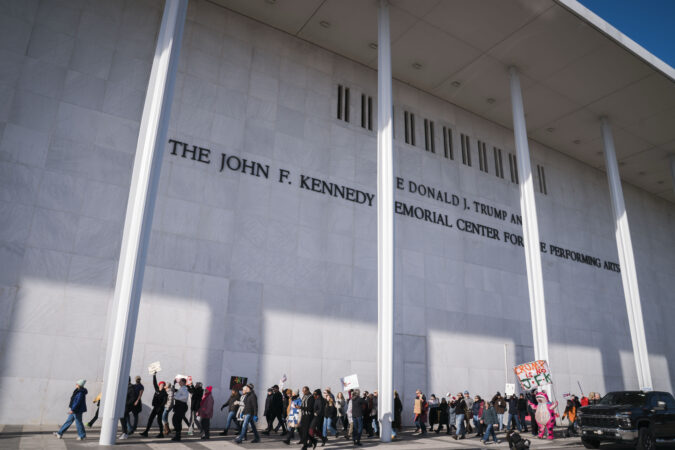
    Kennedy Center President Richard Grenell has sent a scathing letter criticizing a musician’s decision to abruptly pull out of a scheduled annual holiday performance at the institution and threatening him with legal action.

    Drummer and vibraphonist Chuck Redd is the longtime host of the center’s Christmas Eve Jazz Jam, which was canceled this year shortly after the board of the John F. Kennedy Center for the Performing Arts announced that it was renaming the storied arts institution after President Donald Trump.

    “Your decision to withdraw at the last moment — explicitly in response to the Center’s recent renaming, which honors President Trump’s extraordinary efforts to save this national treasure — is classic intolerance and very costly to a non-profit Arts institution,” Grenell said in his letter to Redd, a copy of which the center shared Friday with the Washington Post.

    He added, “This is your official notice that we will seek $1 million in damages from you for this political stunt.”

    Redd did not immediately respond to requests for comment late Friday. He told the Associated Press on Wednesday that upon seeing the name change, he had decided to call off the concert, which he described as a “very popular holiday tradition” that it was “very sad to have had to cancel.”

    Grenell, a Trump ally, was appointed to lead the Kennedy Center in February, the same month the president fired the majority of its board and became its chairperson. Grenell formerly served as the U.S. ambassador to Germany and as acting director of national intelligence during the first Trump administration. Under President George W. Bush, he was also a State Department spokesperson to the United Nations.

    His letter to Redd, which is undated, was first reported by the Associated Press.

    In it, he said Redd’s decision “surrenders to the sad bullying tactics employed by certain elements on the left, who have sought to intimidate artists into boycotting performances at our national cultural center.”

    Roma Daravi, the center’s vice president of public relations, added in an emailed statement to the Post: “Any artist cancelling their show at the Trump Kennedy Center over political differences isn’t courageous or principled — they are selfish, intolerant, and have failed to meet the basic duty of a public artist: to perform for all people.”

    The Kennedy Center, which is visited by approximately 2 million people a year, is a public-private institution that was founded to be the nation’s cultural center and was designated in 1964 as a living memorial to President John F. Kennedy following his assassination.

    Its board of trustees voted last week to rename the institution “The Donald J. Trump and the John F. Kennedy Memorial Center for the Performing Arts,” but the move was swiftly challenged by Rep. Joyce Beatty (D., Ohio), who filed a lawsuit Monday arguing that an act of Congress was required to officially change its name.

    Some members of the Kennedy family including Maria Shriver, a niece of John F. Kennedy, and Joe Kennedy, a former Democratic congressman from Massachusetts, expressed disbelief and dismay over the vote.

    The Kennedy Center has experienced a steep decline in ticket sales since Trump’s takeover of the institution compared with the same period last year, the Post reported. Sales for orchestra, theater, and dance performances are the worst they have been since the coronavirus pandemic, according to a Post analysis.

    In the weeks after the February board changes, at least 20 productions were canceled or postponed, with names such as comedian and actor Issa Rae pulling out of planned performances at the center, and musical artist Ben Folds and opera singer Renée Fleming announcing they were stepping down as artistic advisers.

  • Trump officials move to screen visa applicants’ posts for ‘anti-American’ speech

    Trump officials move to screen visa applicants’ posts for ‘anti-American’ speech

    The Trump administration is widening efforts to screen visa applicants for online speech considered dangerous and “anti-American” as the government moves to restrict legal migration and remove people from places the president has called “garbage.”

    The State Department earlier this month expanded new regulations requiring foreign students and people on academic and cultural exchange programs to disclose five years of their social media histories and make all of their posts public. All applicants for H-1B employment visas and their dependents will now also be subject to the more rigorous online review.

    “A U.S. visa is a privilege, not a right,” officials said in announcing the expansion.

    The administration is also considering a similar rule for visitors from countries whose citizens are allowed to enter the United States for up to 90 days without a visa, including France, Germany, the United Kingdom and Japan.

    The increased online screening began with the administration’s crackdown on antisemitism on college campuses and has accelerated in a way that immigrant rights advocates say is chilling public discourse. In September, authorities announced plans to review more than 55 million U.S. visa holders for potential violations that could lead to deportations, raising concerns that the government is leveraging speech for visa approval or denial.

    “You never think you would have this here” in the United States, said Suresh Naidu, an economics professor at Columbia University. He said he reduced his own public profile while applying to become a naturalized citizen this year. “The idea that this country would start to think of its visa systems as a privilege that could be revoked arbitrarily — this is supposed to be a democracy.”

    Despite a federal judge’s ruling in September that immigrants in the country lawfully are protected by the First Amendment, federal authorities have continued to revoke visas from foreign visitors over statements the administration has called dangerous and un-American. They included six foreigners who the administration said “celebrated” the fatal shooting in September of conservative activist Charlie Kirk and a British news commentator critical of Israel’s war in Gaza whose visa was revoked in late October.

    In October, several major labor unions — the United Auto Workers (UAW), the American Federation of Teachers (AFT), and the Communications Workers of America — filed a lawsuit alleging the government is deploying a “vast surveillance apparatus” powered by artificial intelligence and other emerging technology that has stifled participation in public life among noncitizens.

    Union members who fear adverse immigration actions have chosen to refrain from expressing “views remotely related to the topics the government disfavors,” according to the lawsuit, which said unions are experiencing a reduction in online organizing activity. The unions cited internal surveys that found many noncitizens have taken steps to reduce their online speech, including erasing posts, hiding their identities and eliminating social media accounts.

    “We’re trying to make sure that people still have the right to speak and to engage and to do what America’s known for, which is freedom,” AFT President Randi Weingarten said in an interview.

    Trump administration officials said they are acting to protect public safety against terrorist sympathizers and those who wish harm upon Americans. In a statement, Department of Homeland Security assistant secretary Tricia McLaughlin disputed the suggestion that the administration is stifling free speech.

    “DHS takes its role in addressing threats to the public and our communities seriously, and the idea that enforcing federal law in that regard constitutes some kind of prior restraint on speech is laughable,” she said.

    A federal judge disagreed. In September, U.S. District Judge William G. Young of Massachusetts ruled that the Trump administration had misused its sweeping powers in a manner “that continues unconstitutionally to chill freedom of speech to this day.”

    That case centers on claims by the American Association of University Professors that the targeting of pro-Palestinian campus organizers in the spring left noncitizen students and faculty fearful of attending protests, posting on social media and voicing opinions in class. Young has set a hearing for January to determine remedial measures.

    The plaintiffs are asking Young to enjoin the administration from revoking more visas or making “coercive threats” based on pro-Palestinian advocacy; set aside the administration’s policy of arresting and detaining noncitizens “based on pro-Palestinian or anti-Israel speech or association”; and require the State Department to notify individuals if visa revocations are based in part on speech- or protest-related activity.

    “Since the start of this litigation, the government has vigorously maintained a willful ability to deport noncitizens over their political expression, and they have doubled down on their legal claims since the court ruling,” said Ramya Krishnan, a lawyer for the plaintiffs who serves as a senior staff attorney at the Knight First Amendment Institute at Columbia University.

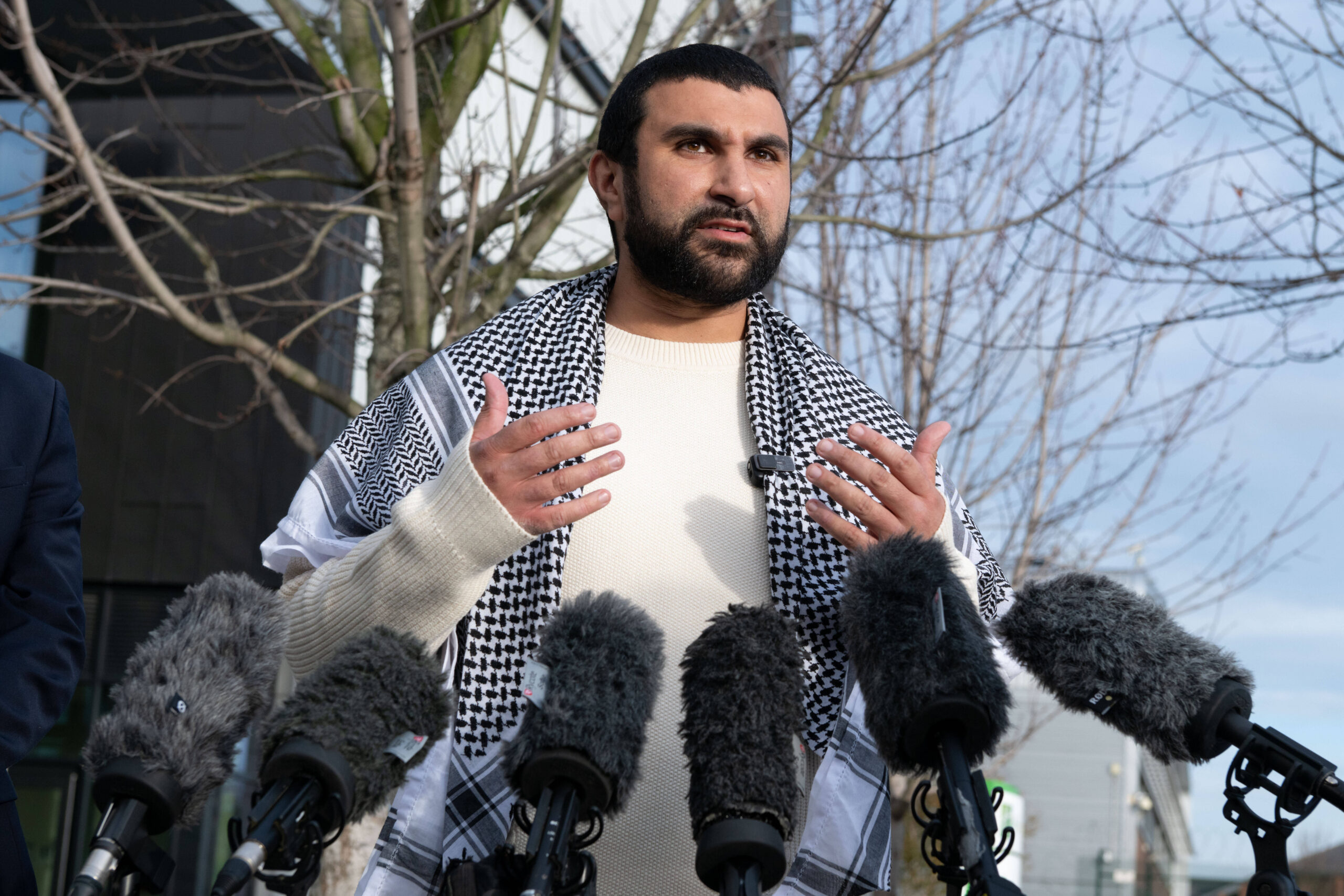
    British political commentator Sami Hamdi on Nov. 13, upon his return to the United Kingdom after he was arrested by U.S. Immigration and Customs Enforcement on Oct. 26 while on a speaking tour.

    She pointed to the 18-day detention of British commentator Sami Hamdi, a target of far-right Trump supporters for his criticism of Israel. His nonimmigrant visa was revoked by the State Department on Oct. 26 while he was on a U.S. speaking tour.

    In a phone interview from his home in London, Hamdi said he entered the country on a 10-year business and tourism visa that he had obtained in 2018. After speaking at a Council on American-Islamic Relations gala in Sacramento, he said, he was detained by federal immigration officers at San Francisco International Airport. They told him he had overstayed his visa, which had been canceled two days earlier, unbeknownst to him.

    On their social media accounts, the State Department and DHS accused Hamdi — who maintains that Israel committed genocide in Gaza — of supporting terrorism and “undermining the safety of Americans.” But he was not charged with any crime, such as abetting terrorism, before striking an agreement with the State Department to return home, Hamdi’s lawyers said.

    Hamdi believes he was arrested because of pressure from far-right activists, including prominent Trump supporters Dinesh D’Souza, who called him a “Muslim Brotherhood jihadi,” and Laura Loomer and Amy Mek, who posted on social media demanding his removal and celebrating his arrest.

    “I did nothing illegal in the U.S.,” said Hamdi, who was released by Immigration and Customs Enforcement on Nov. 13 after he voluntarily agreed to return to London. “My visa was revoked because of my advocacy for Palestine. It was revoked because an extremist group went to the State Department and leveraged whatever influence it had to specifically target me.”

    The State Department declined to comment.

    McLaughlin called Hamdi an “illegal alien and terrorist sympathizer” who requested voluntary departure. She said that Homeland Security Secretary Kristi L. Noem “has made it clear that anyone who thinks they can come to America and hide behind the First Amendment to advocate for anti-American and anti-Semitic violence and terrorism — think again.”

    Trump signed an executive action in January aimed at combating antisemitism on college campuses, but free speech advocates say the campaign is rapidly expanding into broader surveillance.

    In August, U.S. Citizenship and Immigration Services said immigrants seeking to become naturalized U.S. citizens would be subject to a “good moral character” review that includes an assessment of their “behavior, adherence to societal norms, and positive contributions.” Also that month, that agency said it would begin considering “anti-American” views in determining whether to provide immigrants benefits.

    “People are free to make whatever statements they want on social media or anywhere else, and anyone who does not support the same candidate that I support, that’s not what we’re talking about here,” the agency’s director, Joseph Edlow, told CBS News in October. “We’re talking about beyond the pale. We’re talking about people actively supporting the violent overthrow of this country or otherwise providing material support to terrorist organizations across the world.”

    Edlow spoke a day after the State Department revoked the visas of a half-dozen foreign nationals — from Argentina, Brazil, Germany, Mexico, Paraguay, and South Africa — who purportedly “celebrated” Kirk’s death. The department said that “the United States has no obligation to host foreigners who wish death on Americans.”

    Nhlamulo Baloyi, a South African music executive, was among them. He wrote on X that “Charlie Kirk won’t be remembered as a hero” and said Kirk led a “movement of white nationalist trailer trash.”

    Baloyi, 35, who once worked for a Sony Music subsidiary based in New York, has been outspoken online about anti-Black racism and his country’s history of racial apartheid. In a phone interview, he said right-wing Afrikaners have flagged and reported his posts in an effort to get him banned from X and other social media platforms.

    Baloyi suggested that noncitizens in the United States must seriously “consider holding their tongues” or risk being expelled and losing their right to live and work in this country. But he also pointed to virulent online criticism from U.S. citizens aimed at former vice president Dick Cheney after his death this month and suggested foreigners are being held to a double standard.

    “I don’t think anything I might have said about Charlie Kirk is remotely equated to the attacks Dick Cheney has faced,” Baloyi said.

    Naidu, the Columbia professor, is from Canada and is married to an American. He had been active on X, sharing his thoughts on a range of economic and political topics with more than 16,000 followers. He deleted his account after Trump was elected last year over concerns that discussing political issues could adversely affect his citizenship application. It was approved in July, but he has not rejoined X.

    “I’m less nervous about it. But just overall being at Columbia and Columbia being in the crosshairs — my content would not be the most offensive to the administration, but why risk it?” Naidu said.

    Nicole M. Bennett, a researcher at Indiana University who studies the federal government’s approach to data governance and digital technologies, called social media the “new front line” in immigration enforcement — one that is expanding into around-the-clock monitoring. Powered by artificial intelligence, new search tools have the potential to vastly expand investigations beyond an immediate target and surveil people around them who had not been suspected of wrongdoing, including family members, friends or co-workers, she said.

    “If you’re in a video, you could be pulled into that dragnet, and maybe they find something because they are looking,” Bennett said. “The biggest change is that instead of an investigation being based on evidence, the investigation is based on correlated data.”

    Hamdi said his agreement with the State Department to leave the country voluntarily does not prohibit him from applying for reentry to the United States, and he is determined to give it a try. But he acknowledged that other foreigners might think twice. Pointing to soccer’s World Cup in U.S. cities next summer, Hamdi expressed concern for fans who come to root for their teams.

    “What happens if a fan waves a Palestinian flag at a stadium — does that mean they will have their visa revoked?” he said. “And if their visa is revoked without notifying the individual, does that mean they could wind up in detention, too?”

  • Trump aides’ official religious messages for Christmas draw objections

    Trump aides’ official religious messages for Christmas draw objections

    Top officials in President Donald Trump’s administration posted messages from their government accounts hailing Christmas in explicitly sectarian terms, such as a day to celebrate the birth of “our Savior Jesus Christ.”

    The Department of Homeland Security posted three messages on social media Thursday and Friday, twice declaring, “Christ is Born!” and once stating, “We are blessed to share a nation and a Savior.” One DHS video posted on X displayed religious images, including Jesus, a manger and crosses.

    The messages sharply diverged from the more secular, Santa Claus-and-reindeer style of Christmas messages that have been the norm for government agencies for years. The posts provided the latest example of the administration’s efforts to promote the cultural views and language of Trump’s evangelical Christian base.

    That drew criticism from advocates of a strict separation of church and state.

    Those social media posts are “one more example of the Christian Nationalist rhetoric the Trump administration has disseminated since Day One in office,” Rachel Laser, president and CEO of Americans United for Separation of Church and State, said in a statement. “Our Constitution’s promise of church-state separation has allowed religious diversity — including different denominations of Christianity — to flourish in America.

    “People of all religions and none should not have to sift through proselytizing messages to access government information,” she added. “It’s divisive and un-American.”

    Administration officials aggressively defended their approach. Asked about the Christmas morning post on Defense Secretary Pete Hegseth’s official X account declaring, “Today we celebrate the birth of our Lord and Savior, Jesus Christ,” Pentagon press secretary Kingsley Wilson provided a one-sentence reply: “Merry Christmas to all, even the fake news Washington Post!”

    Conservative Christians make up an important part of Trump’s political support, even as the country has become less Christian in recent decades.

    The Pew Research Center’s most recent Religious Landscape Study, released earlier this year, found that 62% of Americans identify as Christian, a 16-point drop since 2007. The share of Americans who said they have no religion — including atheists, agnostics and those who say “nothing in particular” — was 29%, up from 16% in 2007. The share of the population following other religious traditions — Jews, Muslims, Hindus, Buddhists and others — has remained fairly constant, at around 6%.

    Just under 1 in 4 Americans identify as evangelical Christians. But those evangelical voters play a central role in Trump’s electoral coalition. He won 81% of white evangelical voters in the 2024 election, according to a separate Pew study of voters. Those voters made up about 3 in 10 of his supporters in the election.

    In 2015, as Trump campaigned for president, he told voters, “We’re going to be saying Merry Christmas again.” A decade later, officials in his second term have gone further in overtly seeking to align the administration with Christian advocacy in both language and action.

    Most recently, on Thursday, Trump justified airstrikes against alleged Islamic State camps in northwestern Nigeria by saying he was aiming to “stop the slaughtering of Christians.” Nigerian officials said they approved of the strikes but said Trump was wrongly injecting religion into a situation that was primarily about terrorism.

    How to celebrate Christmas while respecting the Constitution’s ban on “establishment of religion” has been an issue for federal officials at least since 1870 when President Ulysses S. Grant, seeking to unite the country after a brutal Civil War, designated Christmas — along with Thanksgiving and New Year’s Day — as federal holidays.

    Government officials sought to balance the celebration of a federal holiday rooted in a religious tradition with the country’s tradition of pluralism and secular public spaces. The result was often a Christmas message that avoided specific references to Christianity. For decades, it was common for government officials on both sides of the aisle to share celebratory yet secular messages about Christmas with images that did not carry overt religious meanings, like snowflakes and Christmas trees.

    Many still do. The State Department, for example, posted a secular Christmas message this year, directed at “all Americans.”

    Many of the Trump administration’s officials who are most active on social media, however, took a different approach.

    Just before 9 a.m. on Christmas Day, for example, Harmeet K. Dhillon, head of the Justice Department’s civil rights division, posted a message on X wishing “Christians nationwide” a happy holiday “celebrating the birth of Jesus!”

    In the post was a video more than a minute long in which Dhillon said the department uses the principle of “religious liberty” and the First Amendment on “a daily basis to protect Christians.” She did not mention protecting other religions.

    About two hours later, DHS’s official account posted on X that “we are blessed to share a nation and a Savior.” A video in the post began with text that said, “Remember the miracle of Christ’s birth,” followed by 90 seconds of religious images, including Jesus, Mary, and a manger, as well as several of Trump.

    Just before 3 p.m. the department posted another message on X, stating, “Christ is Born!”

    Hegseth posted his message around 8:30 a.m. Less than an hour later, Agriculture Secretary Brooke Rollins posted a video on X in which she stood in front of a Christmas tree and said “the very best of the American spirit … flows from the very first Christmas, when God gave us the greatest gift possible: the gift of his son and our savior, Jesus Christ.”

    Just after 10 a.m., Education Secretary Linda McMahon posted on X about how “we celebrate the birth of our Savior.” And just after 1 p.m., the Department of Labor wrote on X, “Let Earth Receive Her King.”

    Representatives for the departments of Justice, Agriculture, Education, Labor and Homeland Security did not respond to questions about their posts.

  • Files offer details on Epstein’s death in federal custody

    Files offer details on Epstein’s death in federal custody

    Among the tens of thousands of Jeffrey Epstein files released so far by the Justice Department are documents that provide new details on one of the most discussed aspects of the case — his death in federal custody in 2019.

    Epstein, who was indicted in July 2019 on federal sex-trafficking charges, had been locked up in the now-closed Metropolitan Correctional Center in New York for five weeks when, on Aug. 10, at roughly 6:30 a.m., he was found dead in his cell.

    He had been denied bail and, at age 66, was facing a potential 45-year sentence if convicted on all charges. The day before his death, federal judges in a separate civil lawsuit had unsealed 2,000 pages of records containing allegations of his sexual abuse of girls and young women.

    Six days after his death, New York City’s chief medical examiner, Barbara Sampson, whose office had conducted an autopsy of Epstein’s body, issued a finding that he had hanged himself.

    Ever since, a wide range of people, including members of Congress and some prominent supporters of President Donald Trump, have challenged that conclusion, asserting with no evidence that Epstein was killed and proffering theories about who might have done it.

    The documents released so far provide no support for those theories. They do offer additional evidence for the conclusion reached by previous investigations — both by the Justice Department and media organizations — that jail officials failed to properly monitor Epstein even though they had previously put him on suicide watch.

    Two jail staff members were charged after Epstein’s death with failing to watch him. Prosecutors said they slept through part of their shift, whiled away time shopping online and falsified log books to conceal their failure to conduct rounds every 30 minutes. They ultimately reached a deal to avoid trial. Jail officials also left Epstein alone in his cell, despite strict instructions not to do so.

    In the early hours of July 23, 2019, a couple of weeks after Epstein arrived at the jail, workers found him semiconscious on the floor of his cell with a makeshift orange noose around his neck, according to an investigative report from the Federal Bureau of Prisons included in Monday’s batch of documents. That previous apparent suicide attempt had been widely reported, but the newly released documents provide new details.

    The Bureau of Prisons did not respond to questions about Epstein’s confinement and death.

    After struggling to stand him up, staff members put Epstein in hand and leg restraints and carried him out on a gurney, the report said. A medical assessment found redness and abrasions around his neck. Photos in the report, timestamped 1:45 a.m. and labeled “possible suicide attempt,” show a disheveled Epstein in a blue antisuicide smock, his skin faintly red above the collarbone.

    Officials placed Epstein on suicide watch. An observation log from the morning of that apparent suicide attempt was also among the documents the Justice Department released this week. It shows handwritten notes from two staffers, entered at 15-minute intervals.

    A note from 2:15 a.m. says Epstein “states his cellmate tried to kill him.” The investigative report also states that Epstein told an officer that his cellmate had “attempted to kill him and had been harassing him.”

    At the time, Epstein was housed with Nicholas Tartaglione, a former police officer who was later convicted of a quadruple murder and sentenced to life in prison. Tartaglione and Epstein each said later that they did not have problems with each other, according to prison documents. Investigators did not find significant evidence that Tartaglione assaulted Epstein.

    A 2:30 a.m. note in the suicide watch log reads: “inmate sitting on bed trying to remember what happened.” Later notes simply read, “inmate sitting on bed” and “inmate standing at door.”

    Epstein told investigators in a July 31 interview that he hadn’t slept in “approximately 20 days,” according to the investigative report. He said he had woken up on the floor to the sound of snoring that turned out to be his own.

    Tartaglione said he had been asleep on the cell floor when he felt something hit his foot, the report says. He awoke to see Epstein snoring with his eyes open and thought he was having a heart attack, according to the report.

    Epstein appeared to recover quickly from the apparent suicide attempt, according to a Bureau of Prisons medical form filled out that morning. A healthcare provider noted that he was breathing normally, didn’t appear distressed and smiled during the visit. He declined to talk about what led to the incident, the document states, saying only that he “went to drink a little water and [woke] up snorting.”

    A separate document appears to contain notes from an interview with a prison psychologist who observed Epstein over the following two weeks.

    Epstein avoided questions about the incident, according to the notes, and said it was against his religion to kill himself. “E said he doesn’t like pain and didn’t want to hurt himself,” one bullet point read.

    “No signs in logbooks showing suicidality, participating in legal meetings,” read another. Other notes indicate Epstein tried to avoid being transferred back to special housing.

    Another logbook, dated July 24 through July 30, 2019, shows Epstein was allowed basic comforts while under psychological observation, including regular clothes, newspapers and magazines, books, legal mail, and a “safety toothbrush.” He made small talk with staffers about investment strategies and jail life, visited with lawyers, showered and slept, according to the logs.

    The documents also contain correspondence from the same period between a prison associate warden and a Bureau of Prisons regional director who asked for daily updates on Epstein after his apparent suicide attempt.

    A Bureau of Prisons spokesperson did not respond to a message seeking comment about those arrangements or other details in the correspondence.

    Less than 48 hours after the apparent suicide attempt, the associate warden emailed the regional director to say that Epstein could face a disciplinary hearing for violating the prison’s prohibition on “self-mutilation.”

    A doctor had “indicated that most likely he will be found competent because he is not mentally ill,” the email said. “We have supporting memorandums from the responding officers who indicated they observed inmate Epstein with a makeshift noose around his neck.”

    Further emails from senders whose names are redacted appear to show prison officials tracking Epstein’s progress in the days leading up to his death in custody.

    In a July 26 email, the prison’s chief psychologist indicated that a psychologist in the Bureau of Prisons headquarters in Washington “was concerned I stepped him down to psych obs rather than keeping him on SW,” probably referring to suicide watch.

    “I gave my justification and feel it is appropriate, but I just want to make sure I still feel that way when he is interviewed today,” the email read.

    Another exchange suggested that Epstein had spent “about 12 hours” with his attorney and had complained about being dehydrated because of limited bathroom breaks.

    “He also complained about having to go back up to SHU,” the July 27 email read, referring to the special housing unit, which is used for inmates with psychiatric problems and those requiring extra monitoring. The sender added that Epstein was “anxious about it and not being able to sleep there because of the noise of inmates banging and screaming at night.”

    An email dated the following morning read, “Inmate Epstein seems psychologically stable.”

    Prison workers sent Epstein back to special housing on July 30.

    Over the following days, Epstein’s lawyers wrote to prison officials with complaints about his conditions. They said he had no toilet paper, that his CPAP machine, used for sleep apnea, had been disconnected and that he had been allowed only two 15-minute calls on speaker phone with officers present, according to redacted emails.

    On Aug. 10, prison staffers delivering Epstein’s breakfast found him unresponsive in his cell, documents show.

  • Trump suffers several defeats in effort to punish opposing lawyers

    Trump suffers several defeats in effort to punish opposing lawyers

    Since taking office for the second time, President Donald Trump has suffered multiple losses in his efforts to strip security clearances from political opponents and prestigious Washington law firms. With several of those cases working through the courts, the issue could become one of the next Supreme Court fights over presidential power.

    The president’s latest loss came this week, when a federal judge in Washington temporarily blocked Trump’s efforts to strip a security clearance from national security attorney Mark Zaid. In 2019, Zaid represented the government whistleblower who accused Trump of trying to pressure Ukraine for damaging information about his political opponents. The accusations led to Trump’s first impeachment.

    In his Tuesday order, U.S. District Judge Amir Ali found that Zaid was likely to succeed on his claim that revoking Zaid’s security clearance violated the attorney’s constitutional free speech and due process rights. The order notes that Trump has called Zaid a “sleazeball” and said the lawyer should be sued for treason.

    “This case involves the government’s retribution against a lawyer because he represented whistleblowers and other clients who complained about the government,” wrote Ali, who was appointed by President Joe Biden.

    The case should not have been difficult, Zaid said in an interview. “But it’s surrounded by all sorts of constitutional analysis because of the assertion by the Trump administration that it has the power to do anything it wants without any oversight whatsoever.”

    He compared his situation — as well as Trump’s targeting of law firms more generally — to the line from William Shakespeare’s play Henry the VI, Part 2: “The first thing we do, let’s kill all the lawyers.” The line, spoken by one of the play’s villains, is about subverting lawyers “fighting for rule of law,” he said.

    The White House did not immediately respond to a request for comment.

    The case began with a March 22 presidential memorandum in which Trump revoked the security clearances of Zaid and 14 other individuals, saying that he had determined it was “no longer in the national interest” for the people to hold the clearances.

    The individuals included Democrats such as Biden, former vice president Kamala Harris and former secretary of state Antony Blinken. It also included New York Attorney General Letitia James (D), whom Trump’s Justice Department has tried, and so far failed, to indict in a mortgage fraud case. The administration has also revoked clearances of 37 current and former national security officials.

    This spring, Trump moved to summarily suspend the security clearances of several large Washington law firms that regularly do work for the government and have ties to his perceived political opponents. Trump argued that the law firms posed national security dangers to U.S. interests and said the firms’ diversity, equity. and inclusion policies resulted in “unlawful discrimination.”

    Though some law firms cut deals with the administration to keep their clearances, others successfully sued to block the actions.

    This year, federal judges in Washington blocked the administration’s attempts to suspend security clearances from the law firms Jenner & Block, Susman Godfrey, WilmerHale, and Perkins Coie. In each case, the judges found that the orders were retaliatory and violated the firms’ constitutional free speech rights.

    In the case of Jenner & Block, U.S. District Judge John D. Bates wrote that the president was trying “to chill legal representation the administration doesn’t like, thereby insulating the Executive Branch from the judicial check fundamental to the separation of powers.”

    The administration has appealed those cases and, depending on the outcomes in the court of appeals, the issue could be decided by the Supreme Court. The high court has heard a number of cases concerning presidential power this term, and it’s unclear how it would rule.

    Should his case reach the Supreme Court, Zaid said the issue could transcend judicial ideology. No matter which way they lean, the justices “recognize the importance and role that lawyers play in society,” he said. “And what the Trump administration is doing with clearance revocations … is a direct attack on our ability to enforce exactly what judges enforce: the rule of law.”