Category: Washington Post

  • U.S. tariffs take a bite out of Germany’s iconic nutcracker industry

    U.S. tariffs take a bite out of Germany’s iconic nutcracker industry

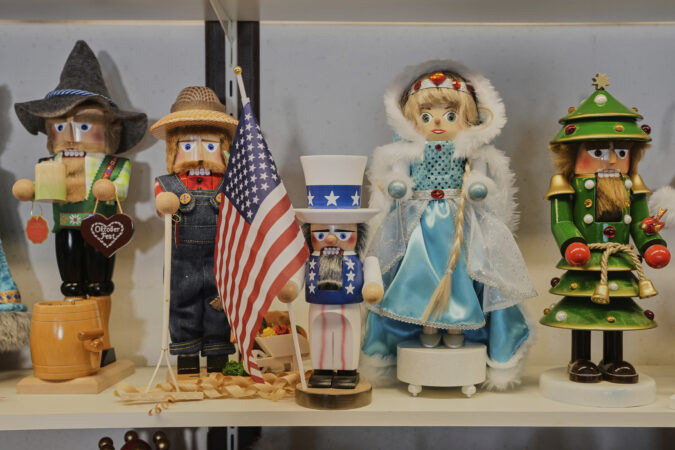
    MARIENBERG, Germany — In a workshop tucked into the rolling hills of eastern Germany’s Ore Mountains, rows of wooden soldiers stood at attention. Their red coats gleamed and their square-jawed mouths — designed to crack nuts but mostly decorative — formed the trademark stiff grin of Steinbach Nutcrackers.

    For decades, these handmade figures have sailed across the Atlantic and into American homes, filling mantels and collectors’ shelves and appearing in countless Christmas card photos. Alongside gingerbread houses and fir trees with all the trimmings, they are one of the most recognizable German exports of the holiday season.

    This year, however, tariffs imposed by President Donald Trump have given the stern-faced ornaments a new reason to grimace: About 95% of sales by the family-founded manufacturer, Steinbach Volkskunst, come from the United States, and the company’s most reliable market has become its biggest bureaucratic headache.

    Under a deal between Trump and the European Union reached earlier this year, most exports to the U.S. are subject to a 15% tariff. Separately, the Trump administration also ended the “de minimis” exemption — a rule that had allowed small parcels under $800 to enter duty-free.

    The move was aimed at curbing low-cost imports from Chinese e-commerce giants such as Temu and Shein. But for niche businesses that rely on direct-to-consumer shipments, like Steinbach, that change hit even harder than 15% tariff.

    “The biggest concern wasn’t price — it was instability,” CEO Rico Paul said, standing in front of a glass cabinet filled with colorful nutcrackers. “Policies changed depending on political mood. For us, planning ahead is essential. One day, the rules were one way, the next day they changed.”

    For six months after Trump’s inauguration, confusion reigned. Initially, the president threatened tariffs of 30% or more on most goods, prompting the E.U. to ready plans for retaliation. The deal on 15% tariffs, reached in late July, ended that uncertainty.

    But in late August, Trump issued an executive order ending the de minimis exemption, meaning a slew of new paperwork and bureaucracy.

    Costs rose and delays mounted as Customs and Border Protection grappled to keep up with the surge in new parcels requiring clearance. With the holiday season approaching, Steinbach faced the possibility of its nutcrackers getting stuck in customs warehouses.

    More than half of Steinbach’s business comes from online orders shipped directly to American doorsteps, and customers soon felt the increase. Prices are up roughly 25% compared to last year, because of the tariffs and customs costs, as well as rising wages.

    “In the United States, our name is extremely well known,” Paul said. “We’re practically synonymous with the word nutcracker.” The outsize U.S. demand for Steinbach products, he added, “was always an advantage — until the tariff dispute.”

    American affection for Steinbach’s products seems undiminished by the price increases. “We were worried Americans wouldn’t pay more,” Paul said, pulling up a fresh order from Monticello, Fla., on his phone. “But the loyalty is incredible. They’re still buying, even if it’s more expensive.”

    That loyalty stretches back to the 1950s, when U.S. service members stationed in postwar Germany discovered the nutcrackers and brought them home as souvenirs. They quickly became a cultural shorthand for an authentic European Christmas.

    The nutcracker legacy itself is older. In Saxony’s Ore Mountain region, miners began carving these wooden figures in the 1600s, meant to bring protection and keep evil spirits at bay during the darkest months of winter.

    French author Alexandre Dumas’ adaptation of E.T.A. Hoffmann’s 1816 story “The Nutcracker and the Mouse King” later inspired Tchaikovsky’s 1892 ballet The Nutcracker. The ballet, initially a flop in Russia, became an American holiday institution in the mid-20th century — catapulting the nutcracker to global fame as a Christmas icon.

    On a late November morning at the Steinbach factory, about 40 artisans carved, sanded, and painted wooden limbs, while sewing machines upstairs stitched miniature outfits. Outside, snow settled on fir branches as workers packaged the finished products for their long journey.

    One detail is new: a bright yellow sticker on every box, addressed to the person who will decide if the toy enters the United States smoothly: “Dear U.S. Customs Officer,” it says, “Thank you for keeping the trade flowing.”

    It may be wishful thinking. In October, U.S. news outlets reported that thousands of packages had stalled in customs hubs under the new rules. Some carriers reportedly disposed of abandoned shipments.

    “Because of changes to U.S. import regulations, we are seeing many packages that are unable to clear customs due to missing or incomplete information,” UPS, the shipping company, said in a statement. “Our goal is to speed every package to its destination, while complying with federal customs regulations.”

    In late November, UPS said that its brokerage team was clearing more than 90% of packages on the first day — but not without complications.

    Still, Steinbach nutcrackers continue to sell well, particularly those with pop culture and political themes.

    Last year, Steinbach introduced a pair of nutcrackers dubbed “Republican” and “Democrat,” bearing more than a passing resemblance to Trump and Kamala Harris. The Republican model sold out before Election Day.

    Prices for the smallest nutcrackers start at about $150, while the largest and most intricate figures cost more than $700. Alongside traditional soldiers and Santas, Steinbach has embraced the American appetite for nutcrackers in all forms, including Star Wars stormtroopers, Wizard of Oz characters, and even Pope Leo XIV.

    But the tariffs and customs delays have prompted Steinbach to seek a work-around. “We are building a warehouse in Pennsylvania and hiring staff,” Paul said.

    The nutcrackers will still be made in Germany — local craftsmanship remains a central selling point — but preshipping and storing finished goods in the United States stands to insulate the business from further regulatory whiplash. The tariffs and additional costs of maintaining and staffing the warehouse will be passed on to customers, but the move should eliminate paperwork and delays for shipments to individual buyers.

    Steinbach is not alone. Across Germany, exporters large and small are recalculating.

    “The escalation of U.S. import duties — now effectively averaging 15% on key industrial goods — has hit Germany particularly hard,” said Andreas Baur, foreign trade expert at the Munich-based Institute for Economic Research. “If you take January to September and compare it to the previous year, we have a decline [in exports] of about 8%, and for cars around 14%.”

    But beyond automakers, chemical giants, and heavy industrial goods, the regulatory shift has quietly reshaped the fate of artisans whose exports trade more in memories than volume.

    On the outskirts of Dresden, a 90-minute drive northeast of the nutcracker workshop, the sweet smell of raisins and butter filled Bäckerei Gnauck in the district of Ottendorf-Okrilla.

    Bäckerei Gnauck is one of about 100 bakeries permitted to bake true Dresdner Christstollen — a dense fruitcake that is tightly regulated by the Dresden Stollen Protection Association.

    Here too, the lifting of the de minimis rule has left fifth-generation baker Marlon Gnauck kneading frustration into this year’s cake loaves.

    Stollen, another German Christmas tradition that has gone global, has deep roots in and around Dresden, where it first appeared in the 14th century as a simple, butter-free loaf made under strict Advent fasting rules.

    That changed in 1491, when Pope Innocent VIII issued the “Butter Letter,” allowing bakers to enrich the dough. Spices, candied fruit, and almonds followed and, by the 18th century, Dresden bakers were presenting enormous loaves to royalty, securing the bread’s vaunted holiday status.

    Today, mass-produced versions fill German supermarkets, but only a small group of certified bakeries may call their loaves Dresdner Stollen. Dotted with raisins, and carefully folded together before being baked and doused in confectioners sugar, Stollen is supposed to represent the image of a swaddled baby Jesus.

    Every holiday season since 1999, Gnauck, a fifth-generation baker in his family, has shipped some of his stollen to Americans — half as corporate gifts, he estimates, and a quarter to families with German ancestry.

    He has enjoyed hearing from happy customers, even those who make him wince with their “American innovations” such as toasting stollen or spreading it with peanut butter.

    “Just a good slice of stollen, with a cup of coffee — that’s it, ” he said. “That’s how it should be enjoyed.”

    But now a single two-kilogram shipment, with postage and duties, costs more than $170, he said as he attached the required documents to parcels bound for Dorchester, Mass.; Raleigh, N.C.; and Houston.

    “You’re looking at paying between $60 and $70 in import charges for a two-kilo stollen,” Gnauck said. “The product costs 50 euros [about $59]. Shipping is almost another 50. And then roughly $70 of customs and administrative fees.”

    Only about 2% of Gnauck’s sales are to the United States, but the time required for paperwork and the additional costs for longtime customers have tainted the festive cheer. Gnauck’s verdict: “The Grinch lives in the White House,” he said. “Because what he’s actually doing is completely ruining the gifts.”

    In October, after the first seasonal orders were shipped across the Atlantic, Gnauck temporarily stopped shipping to the U.S. after customers complained about unpredictable costs.

    “We called the next 50 customers who had placed an order,” he said. “A quarter of them canceled. Another quarter of them reduced their order to a 1 kg, and the rest said they’d pay no matter what.”

    Sending stollen to America was never economically logical, he said. “It was emotional. A gesture. And now that gesture is expensive.”

    Some Dresden bakeries have stopped exporting to the United States altogether. But like Paul, the Steinbach CEO, Gnauck isn’t ready to quit. Both men said they simply want one thing from Trump: predictability.

    Paul said a limited-edition nutcracker resembling Trump at the Resolute Desk — with a price tag of $399 — has nearly sold out. “The president is sitting at his desk and is signing a declaration, granting the Steinbach company duty-free status for all eternity,” he quipped.

    For now, that remains fantasy: a wooden wish for stability in a season built on nostalgia — and customs logistics.
  • White House threatens Smithsonian funds in sweeping content review

    White House threatens Smithsonian funds in sweeping content review

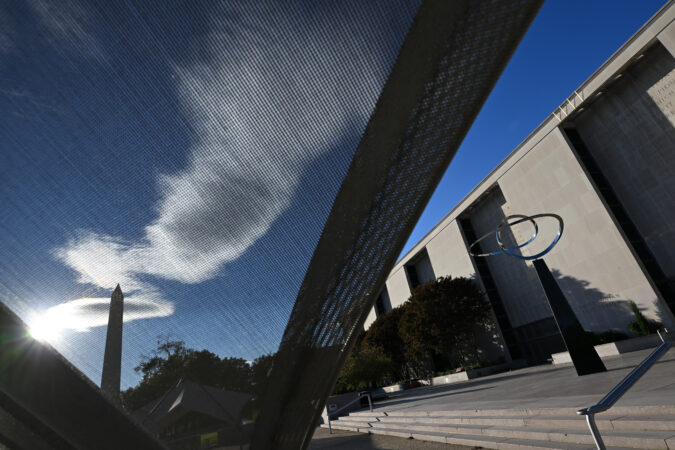
    The Trump administration escalated pressure on the Smithsonian last week, threatening to withhold federal funds if it does not submit extensive documentation for a sweeping content review. President Donald Trump earlier this year set out to purge what he called “improper ideology” from the nation’s most prestigious museum system, efforts that are expected to intensify as his administration tries to shape the country’s 250th anniversary celebrations next year.

    In a staff email obtained by the Washington Post, sent Friday evening after the funding threat, Smithsonian Secretary Lonnie G. Bunch III said the Smithsonian had sent information to the White House in September and intended to submit more that day. He asserted that “all content, programming, and curatorial decisions are made by the Smithsonian.”

    The previous day, Domestic Policy Council director Vince Haley and White House budget director Russell Vought wrote to Bunch that the Smithsonian’s initial submissions “fell far short of what was requested.” Among the solicited documents are current exhibition descriptions, comprehensive America 250 programming files, draft plans for upcoming shows, and internal guidelines used in exhibition development. The White House gave the Smithsonian until Jan. 13 to meet the request.

    “Funds apportioned for the Smithsonian Institution are only available for use in a manner consistent with Executive Order 14253 ‘Restoring Truth and Sanity to American History,’ and the fulfillment of the requests set forth in our Aug. 12, 2025 letter,” Haley and Vought wrote. The letter specifically referenced the Museum of American History, the Museum of Natural History, the Air and Space Museum, the Museum of African American History and Culture, the Museum of the American Indian, the Smithsonian American Art Museum, the Museum of African Art, and the National Portrait Gallery.

    It was not immediately clear how much money the White House might try to withhold, from which parts of the Smithsonian, or on what authority. The institution is about 62% federally funded by a combination of congressional appropriation, federal grants, and contracts.

    An earlier letter, in August, called for an aggressive review of eight museums to ensure they align with the president’s directive to “celebrate American exceptionalism” and asked the Smithsonian to submit all requested materials within 75 days and “begin implementing content corrections” within 120.

    Amid scrutiny from Trump, the institution had already planned its own content review, with the Smithsonian’s Board of Regents instructing Bunch in June “to ensure unbiased content” across the institution and report back on “any needed personnel changes.”

    The Smithsonian declined to comment on the latest development. In Friday’s email, Bunch told staff that the institution had provided the White House with information in September about their public exhibitions and displays, policies, and procedures, and had planned to send more documents related to their mission, organization, and public exhibitions and displays.

    But, Bunch added, “some aspects of the White House request are not readily available and will require a significant amount of time, labor, and coordination from various departments across the Smithsonian” and as they collect documents, they would “continue to evaluate the scope of our response.”

    He stressed that the Smithsonian is “committed to transparency” and has for nearly 180 years “served our country as an independent and nonpartisan institution.”

    In September, Bunch wrote in a letter to staff that the institution had assembled a small, internal team to advise on what it can provide to the White House and said it was undergoing “our own review of content to ensure our programming is factual and nonpartisan.”

    The heightened demands arrive at the end of a tumultuous year for the Smithsonian — the self-described “world’s largest museum, education, and research complex” — which normally operates independently. Historians have broadly criticized Trump for attempting to sanitize the country’s past by demanding that cultural institutions espouse “American exceptionalism” and focus less on slavery, among other historical sins.

    In June, the director of the Smithsonian’s National Portrait Gallery, Kim Sajet, resigned after Trump attempted to fire her, and months later, artist Amy Sherald pulled her solo show from the same museum, after a disagreement with the institution over how a portrait of a transgender woman as the Statue of Liberty would be displayed.

    The Trump administration amplified its rhetoric over the summer, with the president posting on social media that the nation’s museums are “essentially, the last remaining segment of ‘WOKE’” and that the Smithsonian is too focused on “how bad Slavery was.” The White House later released a list of exhibits and materials at the Smithsonian of which it disapproves, specifically targeting works and content mentioning race, slavery, transgender identity, and immigration.

    A unique public-private partnership that is a “trust instrumentality” created by Congress, the Smithsonian puts its public funds toward conserving national collections, basic research, public education, and administrative and support services to maintain large museum and research complexes. Its private funds are used to endow positions, build new facilities, and open new exhibitions, among other uses, according to the Smithsonian website.

    “We wish to be assured that none of the leadership of the Smithsonian museums is confused about the fact that the United States has been among the greatest forces for good in the history of the world” leading up to the nation’s 250th anniversary, Haley and Vought wrote in Thursday’s letter. “The American people will have no patience” for any museum that is “uncomfortable conveying a positive view of American history.”

    The Organization of American Historians wrote in an August statement that Trump’s content review “will undoubtedly be in service of authoritarian control over the national narrative, collective memory, and national collections.”

    James Millward, a history professor at Georgetown who studies Chinese history and is one of the founders and leaders of Citizen Historians for the Smithsonian — a volunteer effort to document everything on display at the institution — said that he suspects the request for digital files means “they’re looking for trigger words.” The Post reported in February that National Science Foundation staff members were combing through research projects looking for words such as “diversity” and “gender.”

    “We’ve seen, of course, this across websites, across agencies, across the United States, and they want to apply that kind of sledgehammer, chauvinistic, brute force, and frankly, bigoted approach to the Smithsonian as well,” Millward told the Post.

    The rhetoric from the Trump administration on how to discuss the past is “very similar to Chinese Communist Party propaganda,” he said. “Only positive stories, only positive energy, no negative energy allowed when you’re talking about history.”

  • U.S. anniversary coins won’t feature any Black Americans or notable women

    U.S. anniversary coins won’t feature any Black Americans or notable women

    Over three years, the U.S. Citizens Coinage Advisory Committee sifted through hundreds of ideas for commemorative coins to celebrate the 250th anniversary of America’s founding.

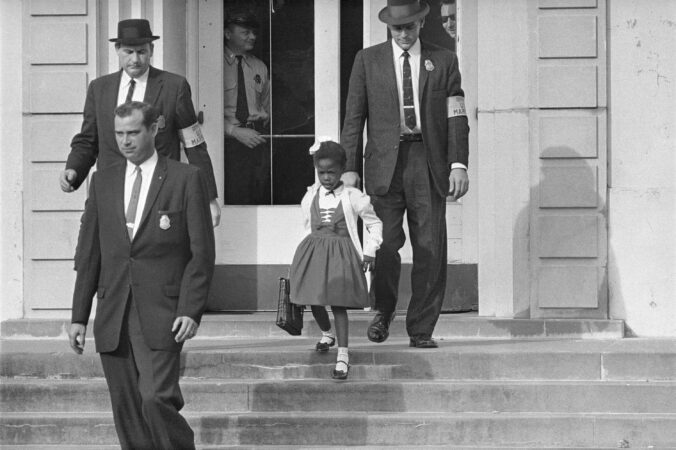
    The group settled on five options, including quarters honoring abolitionist Frederick Douglass; Ruby Bridges, a 6-year-old girl who helped integrate public schools in New Orleans; and the women’s suffrage movement.

    “The question was do we focus only on what happened in 1776 and the years around that or do we also talk about everything that has happened since then,” said Lawrence Brown, a retired New York City doctor who served on the committee from 2019 to 2024.

    “To me, the latter is just as important if not more important because it gives us answers to the questions of how did we maintain that Constitution? How did we maintain our independence?”

    In a preview of the Trump administration’s approach to celebrating the country’s 250th birthday, Treasury Department officials announced this month that the agency would ignore the committee’s recommendation and produce quarters that are far less diverse and more traditional. Instead of addressing the country’s racial history, the five coins will feature images of former presidents George Washington, Thomas Jefferson, James Madison, and Abraham Lincoln, as well as a Pilgrim couple.

    The Biden administration was focused on diversity, equity and inclusion, and critical race theory, U.S. Treasurer Brandon Beach told Fox News, but the “Trump administration is dedicated to fostering prosperity and patriotism.”

    “The designs on these historic coins depict the story of America’s journey toward a ‘more perfect union,’ and celebrate America’s defining ideals of liberty,” Kristie McNally, acting director of the U.S. Mint, said in a statement.

    The administration is also considering a commemorative dollar with President Donald Trump’s face on one side and his raised fist with the words “FIGHT FIGHT FIGHT” on the other, a reference to the widely circulated image of the president following an assassination attempt in 2024. Democratic senators have decried the idea as “un-American” and introduced legislation to prohibit “the likeness of a living or sitting president” from appearing on American currency.

    The nation’s semiquincentennial offers Trump a rare, high-profile opportunity to shape how Americans understand the country’s history. In addition to the coins, the Post Office is expected to announce commemorative stamps, and the National Endowment for the Humanities is offering up to $200,000 to fund new statues of historical figures.

    The new coin designs reflect the Trump Administration’s focus on exalting the country’s pre-civil rights history and depicting idealized images of American life. It is part of an effort to rewrite the past with an exclusionary view of American history, some historians said.

    The White House is working with PragerU, a nonprofit that produces educational videos and is known for taking a conservative view of American history, to organize educational initiatives and “freedom trucks,” mobile museums that will be driven across the country during semiquincentennial celebrations.

    In September, the administration announced the opening of the Founders Museum in Washington, which has been criticized by historians for its use of AI-generated material and its exclusion of nonwhite voices from the nation’s past. The administration is encouraging educators to re-create the exhibit at their schools with printable versions of the portraits and labels.

    “The goal is to instill a sense of patriotism in young Americans,” said Allen Estrin, co-founder of PragerU. “If we don’t have an appreciation of our past, it’s going to be very difficult to imagine a bright future.”

    Andrew Rudalevige, a professor of government at Bowdoin College, said that it is not unusual for presidents to put their stamp on historical events and tie them to their agendas. But by working so closely with ideological groups and focusing on issues like DEI, Trump is risking infusing partisan politics into the semiquincentennial and turning off half the country, he said.

    “I’d be very happy for more people to read the founding documents and seriously engage with the arguments that founders were making,” Rudalevige said. “But I think unfortunately it’s likely that the celebration is going to be pushed into the same culture wars and the same polarization that seems to affect so much of the country right now when it ought to be a time when we could rise above that.”

    Dean Kotlowski, a historian who served on the Citizens Coinage Advisory Committee from 2018 to 2023, said the new coins are part of the administration’s efforts to derail a campaign to diversify the faces on America’s money. “The whole idea was to get away from this kind of presidential history but these coins are very, very traditional,” Kotlowski said.

    The committee, which was established by Congress in 2003, began working on coins to celebrate the country’s 250th birthday after Trump signed the Circulating Collectible Coin Redesign Act during the waning days of his first term. The law called for the creation of five quarters, including at least one featuring a woman.

    The 11-member committee worked with the National Archives, National Park Service, and historians to develop themes and designs for the coins. They conducted online polls and solicited public comment. The process culminated in a two-day public hearing in October 2024 before the panel submitted its final recommendations to then-Treasury Secretary Janet L. Yellen.

    Among the designs recommended for the quarter featuring Bridge is an image immortalized in Norman Rockwell’s 1964 painting of her being escorted to school by U.S. marshals with the words “We Shall Overcome.” The committee chose a portrait of Frederick Douglass that, it said, “conveys his strength as a symbol of the abolition movement.” A third coin celebrating the women’s suffrage movement included a protester carrying a “Votes for Women” flag.

    The remaining two quarters would feature images of the Declaration of Independence and the U.S. Constitution.

    “The process, as it was supposed to happen, is very well-informed, very public, and taken very seriously,” said Dennis Tucker, who took part in the deliberations during his tenure on the committee from 2016 to 2024. “It’s not clear what went into this decision.”

    Trump has been on a campaign to restore what he calls “patriotic education” to the country’s national parks, monuments, and museums. Signs and exhibits related to slavery have been removed from multiple national parks with Trump arguing that they overemphasize the negative aspects of American history. The administration cut funding to small archives and museums across the country but later restored grants to those aligned with Trump’s vision for the celebration of the 250th anniversary.

    During his first term, his administration halted efforts to put Harriet Tubman on the $20 bill, with Trump criticizing the Obama-era decision as “pure political correctness.”

    David Ekbladh, a professor of history at Tufts University, said Trump’s focus on advancing a traditional version of history has intensified since his first term. “During his first administration, Trump pardoned Susan B. Anthony,” Ekbladh said. In 1872, nearly 50 years before women gained the right to vote, Anthony was arrested for wrongfully and willfully voting.

    “But now, even the suffragists are seen as outside the pale of what they want as part of our remembered past.”

  • What’s in Epstein files so far? Celebrities, Clinton, few Trump mentions.

    What’s in Epstein files so far? Celebrities, Clinton, few Trump mentions.

    The Justice Department released a slice of its massive files on the convicted sexual offender Jeffrey Epstein on Friday, a much-anticipated disclosure that revealed new details about the government’s investigation into Epstein’s sex crimes and opulent life.

    The more than 100,000 pages released included few documents related to President Donald Trump, although mentions of the president were expected among files that Congress had required the government to release by Friday. DOJ said it will continue to release documents in coming weeks, angering critics who have demanded a speedier process and fewer deletions of photos, videos, court records, and more.

    The government has continued to release new files since the initial dump Friday afternoon. Overnight, the Justice Department posted records, including grand jury testimony and an interview with Alex Acosta, who as U.S. Attorney in Miami oversaw the lenient plea deal Epstein received in 2008.

    U.S. Deputy Attorney General Todd Blanche said the department is working “tirelessly” to provide documents while protecting victims’ identities.

    “We are looking at every single piece of paper that we are going to produce, making sure that every victim, their name, their identity, their story, to the extent it needs to be protected, is completely protected,” Blanche told Fox News.

    Here are four takeaways from what has been released so far:

    Trump is not mentioned in many records

    A major question looming over the Epstein case has been whether Trump had any awareness of Epstein’s crimes. The president has said he did not know about criminal behavior, and his spokesperson has said he kicked Epstein out of his Mar-a-Lago Club for being “a creep.”

    Friday’s disclosures don’t mention the president often.

    Trump’s name appears in victim interviews where investigators and attorneys bring up his friendship with Epstein, but no victim in the files accuses Trump of wrongdoing. Much of the material released has been previously disclosed, including a 2010 deposition in which Epstein declined to answer a question, citing his Fifth Amendment rights, when asked about socializing with Trump in the presence of underage girls.

    Friday’s materials include several photos and other documents that mention Trump. There is a photo of a check signed with his name, which appears similar to a check in a previously released book for Epstein’s birthday. Trump’s The Art of the Comeback is on Epstein’s bookshelf in another picture. A flight log shows Trump traveling with Epstein and his son Eric.

    Former President Bill Clinton is depicted in several photos, including one where he is swimming with Epstein’s accomplice Ghislaine Maxwell and another woman.

    Clinton’s spokesperson Angel Ureña suggested that the White House had engineered the release of the photos to shield Trump.

    “They can release as many grainy 20-plus-year-old photos as they want, but this isn’t about Bill Clinton,” he said. “Never has, never will be.”

    Epstein had many celebrities in his orbit

    Over the years, Epstein’s associations with major figures in business, politics, and Hollywood have been a big part of the narrative about him.

    Friday’s release includes photos showing Epstein and Maxwell posing with celebrities, including a sunglass-wearing Michael Jackson, who died in 2009.

    These records didn’t implicate the celebrities in any wrongdoing. They vividly illustrate Epstein’s social access to high-profile figures. Many of Epstein’s star-studded associations were previously known.

    Last week, the Democrats on the House Oversight Committee released a batch of photos from a separate group of documents provided by Epstein’s estate. Those included photos of Microsoft co-founder Bill Gates, filmmaker Woody Allen, and conservative media figure Stephen K. Bannon.

    Epstein pleaded guilty in 2008 in Florida to state charges of soliciting prostitution from a minor. In 2019, he was arrested by federal authorities and charged with sex trafficking. He died in federal custody that year, before his case could go to trial. His death was ruled a suicide. Blanche said Friday in a letter to Congress that the Justice Department had compiled the names of 1,200 people who were either victims of Epstein or relatives of victims.

    Many documents are redacted or not new

    Many documents are entirely covered with black or have rows of information blocked out.

    There are also pages and pages of scans of CDs, blank file covers, and other records without much information about what they contain. Many of the redactions clearly cover personal information from victims’ statements, investigative records, and Epstein’s personal documents.

    Under the law, the administration is authorized to redact information to protect victims, withhold any images of child abuse, and block the release of documents that are classified or would jeopardize current federal law enforcement efforts.

    The redactions have been widely criticized by Democrats and those seeking more disclosures.

    Sen. Charles E. Schumer (D., N.Y.) said in a statement that “this set of heavily redacted documents released by the Department of Justice today is just a fraction of the whole body of evidence.”

    Reps. Ro Khanna (D., Calif.) and Thomas Massie (R., Ky.), who led the effort in Congress to demand the document release, demanded full disclosure of the records.

    “Attorney General Pam Bondi is withholding specific documents that the law required her to release by today,” Massie said.

    There is more to come

    Blanche told Fox that he expects “several hundred thousand more” records to be released by the government “in the next couple of weeks.”

    The Justice Department has not shared what records are still remaining and when they will be released.

    Khanna told NPR that he found the release unsatisfactory and expects the agency to release the draft indictment in Epstein’s first case, more witness interviews, and other records.

    “Overall, I’ve been pretty disappointed with the release,” he said.

  • U.S. plans to stop recommending most childhood vaccines, defer to doctors

    U.S. plans to stop recommending most childhood vaccines, defer to doctors

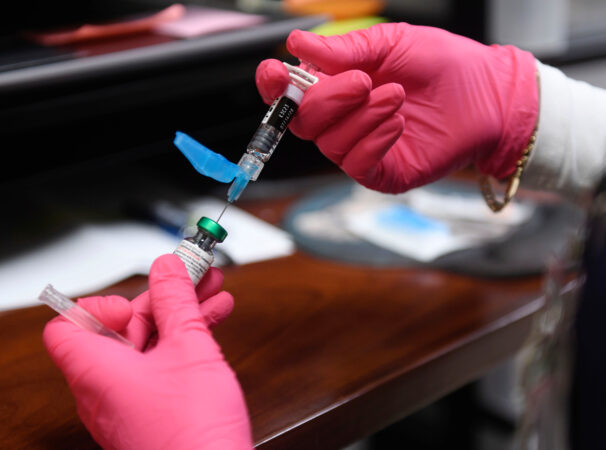
    The Trump administration plans to shift the federal government away from directly recommending most vaccines for children and suggest they receive fewer shots to more closely align with Denmark’s immunization model, according to two people familiar with the matter.

    Federal health officials are weighing vaccine guidance that would encourage parents to talk to a doctor to make decisions for most shots, according to the people, who spoke on the condition of anonymity to describe internal deliberations. This approach would mark a fundamental shift in the U.S. healthcare system, which generally relies on federal health agencies to guide how patients are protected against disease.

    It was not immediately clear which shots would no longer be recommended. The plans are still in flux, the people said, but broadly align with President Donald Trump’s directive earlier this month to consider recommending fewer shots, referring to the United States as an “outlier” among developed countries. He said any changes to the country’s vaccine schedule should continue to preserve access to currently available shots.

    Health Secretary Robert F. Kennedy Jr. has been critical of the childhood vaccine schedule for years and has called for additional scrutiny, even though he told senators during his confirmation hearings that he supports the schedule.

    Andrew Nixon, a spokesperson for the Department of Health and Human Services, said of the planned revisions to vaccine recommendations: “Unless you hear it from HHS directly, this is pure speculation.” The potential shift to more closely align with Denmark’s schedule was first reported by CNN.

    The current U.S. schedule calls for vaccinations to protect against 18 infectious diseases, including COVID-19, according to a Food and Drug Administration presentation in December, compared with calls for vaccinations to protect against 10 infectious diseases in Denmark. Denmark does not recommend vaccinating children for influenza, respiratory syncytial virus (RSV), and chickenpox, among other common pathogens.

    Public health experts say comparisons to Denmark are misleading, noting the countries differ sharply in population, health systems, and disease burden. They argue that what works in Denmark’s small universal healthcare system does not easily translate to the far larger and more diverse U.S. population with uneven access to quality care.

    “You don’t just superimpose policies from other countries without context onto the United States,” said Demetre Daskalakis, who oversaw the Centers for Disease Control and Prevention’s center for respiratory diseases and immunization before he resigned from the agency in August. “This is not gold standard science.”

    A Danish health official questioned why the U.S. would follow his country’s lead.

    “Personally, I do not think this makes sense scientifically,” Anders Hviid, an official in Denmark’s Statens Serum Institute, which prevents and controls infectious diseases as part of the country’s ministry of health, wrote in an email early Saturday. “Public health is not one size fits all. It’s population specific and dynamic. Denmark and the U.S. are two very different countries.”

    Unlike Denmark, the U.S. is planning a more limited approach for recommending vaccines to children known as shared clinical decision-making, which has not been reported. This means people should consult a doctor, pharmacist, or other medical professional before getting a shot, and insurers would still be required to pay for them. It’s not clear how broad the shift would be and when it would happen.

    This type of recommendation is usually made when there is real uncertainty about the benefits and risks, said David Higgins, an assistant professor of pediatrics at the University of Colorado Anschutz Medical Campus. By applying it broadly to many vaccines that are now routinely recommended, it creates the false impression that experts are divided on the best way to protect health, he said.

    “I have never been more concerned about the future of vaccines and children’s health than I am now,” Higgins said.

    In practice, vaccination is often already done in consultation with doctors, who explain the risks and benefits to patients. But critics of the shared clinical decision-making approach say it takes the government out of the business of providing powerful endorsements and can confuse doctors.

    A 2016 survey found that most pediatricians and family doctors did not know private insurers are required to cover vaccines recommended under this model.

    Under Kennedy, the CDC has already shifted recommendations for some vaccines to this talk-to-a-doctor approach, including for COVID and the hepatitis B vaccine for children. In the case of adults seeking COVID vaccines, the shift has had little practical impact at major pharmacy chains such as CVS where the shots are still routinely administered without prescriptions.

    Kennedy, the founder of a prominent anti-vaccine group, has previously decried the “exploding vaccine schedule” and blamed it for the rise of chronic disease, autism, and food allergies in the United States. Medical experts have said more vaccines are available now to combat more diseases, arguing the link has no basis in evidence.

    In a Truth Social post this month, Trump wrote that “many parents and scientists have been questioning the efficacy of this ‘schedule,’ as have I!”

    The plan to redo the U.S. schedule “kicked into high gear” immediately after Trump’s directive, one person familiar with the plan said. Two experts who were consulted — Martin Kulldorff, recently named a chief science officer at HHS, and Tracy Beth Hoeg, a top official at the Food and Drug Administration — have expressed concern about the number of vaccinations in the U.S. schedule.

    Hoeg gave a presentation two weeks ago comparing the U.S. with Denmark during a meeting of the CDC’s federal vaccine advisory committee. One of her slides, titled “Danish Vaccination Schedule Benefits,” said the country makes more time for overall health at doctors’ appointments and decreases the “medicalization of childhood.”

    The Denmark schedule does not include seasonal respiratory vaccines, such as RSV, the leading cause of infant hospitalizations in the U.S., or influenza for children. During last year’s flu season, the CDC reported 288 deaths associated with pediatric influenza, the highest number since the 2009-2010 H1N1 swine flu pandemic.

    Denmark also does not recommend vaccinating against hepatitis B for all infants, as well as hepatitis A and rotavirus for any infants and children.

    Higgins, the Colorado pediatrician, said many clinics and pediatricians will simply say they don’t recommend the Denmark schedule, which will worsen parental confusion. School vaccination requirements are set by state laws, and most require some of the vaccines that aren’t on the Denmark schedule, Higgins said.

    Denmark has universal prenatal care and strong social services. Tom Frieden, a former CDC director, recently wrote that virtually every pregnant woman in Denmark receives consistent medical attention and testing for serious diseases that can be passed to their babies throughout their pregnancy, including hepatitis B.

    About 1 in 4 pregnant patients in the U.S. deliver babies without adequate prenatal care, according to a report by the March of Dimes.

    “We do not believe in the one-size-fits-all approach nor the approach of choose one random alternate national schedule and adopt it,” said James Campbell, vice chair of the American Academy of Pediatrics’ infectious-diseases committee.

    Del Bigtree, Kennedy’s former communications director during his presidential run and the leader of an anti-vaccine group, said he’d support shifting to a Denmark model for vaccination, adding that the “medical freedom” movement has always touted that country.

    “Our belief is there are just too many vaccines,” Bigtree said. “It’s very exciting, but it still won’t solve my major issue that vaccines aren’t mandated.”

  • Court restores Elon Musk’s disputed $56 billion Tesla payday

    Court restores Elon Musk’s disputed $56 billion Tesla payday

    The Delaware Supreme Court ruled to restore Elon Musk’s disputed $56 billion pay package on Friday, reversing another court’s decision that it had been awarded through an unfair process.

    The decision comes after a nearly two-year battle over the fate of the then-unprecedented pay deal, following the Delaware Court of Chancery’s ruling that it had been improperly awarded. The earlier ruling said that the process had been unduly influenced by Musk and that members of the board were not independent. In response, Musk reincorporated some of his companies out of Delaware, including moving Tesla to Texas.

    Musk said he had been “vindicated” by Friday’s ruling, adding in a later X post: “I try not to start fights, but I do finish them.”

    The restoration of the pay package bolsters Musk’s position in Tesla, a publicly traded company in which he holds a massive, double-digit percentage stake that drives much of his more than $600 billion fortune.

    Earlier this year Tesla shareholders voted to grant Musk an even larger, $1 trillion pay package — contingent on Musk hitting business milestones — that aims to tie him to the company for the next decade.

    At the time of the ruling, the 2018 pay deal was unprecedented in scale. The Delaware judge who struck it down had written that it was “the largest potential compensation opportunity ever observed in public markets … 250 times larger than” the median earnings of someone in Musk’s position. It was also “33 times larger than the plan’s closest comparison … Musk’s prior compensation plan.”

    The Delaware Supreme Court’s ruling Friday was succinct.

    “We reverse the Court of Chancery’s rescission remedy and award $1 in nominal damages.”

    The ruling said the Chancery court had erred in its remedy because reversing the package would leave “Musk uncompensated for his time and efforts over a period of six years.” Musk does not draw a traditional salary for his work at Tesla but instead is compensated through periodic pay packages consisting of stock awards.

  • A new round of confusing economic data is muddying the picture

    A new round of confusing economic data is muddying the picture

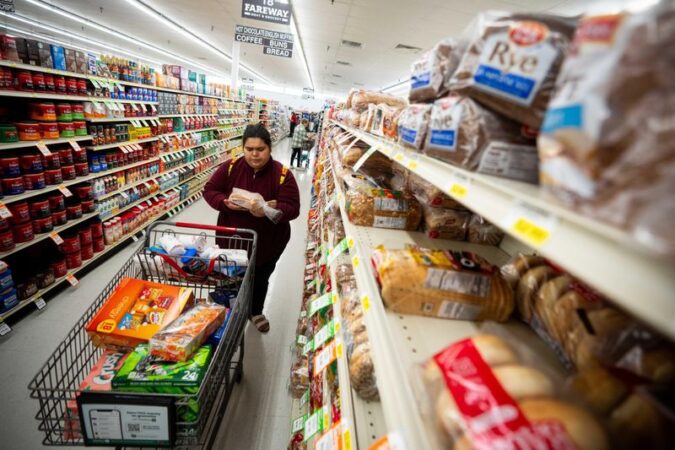
    A barrage of post-shutdown data this week has left economists with more questions than answers about the state of the U.S. economy.

    Unemployment rose to a four-year high in November, inflation improved more than expected, and retail sales appeared surprisingly resilient in October — though economists say all of that is likely to be bogged down by low response rates, disruptions in data collection and other shutdown-related complications.

    The result: More confusion about an economy that’s already confounded policymakers, politicians, and business owners for much of the year.

    “We knew we’d have to take this data with a grain of salt; I just didn’t know we’d have to make it this salty,” said Diane Swonk, chief economist at KPMG. “This week’s data really adds more confusion than clarity.”

    Employment data on Tuesday showed a decline of 41,000 jobs in October and November, while the unemployment rate inched up to 4.6%, offering a sobering picture of an already slowing labor market. Two days later, the Consumer Price Index came with more optimistic economic news: Inflation, it said, had cooled from 3% in September to 2.7% in November. But economists largely shrugged off both reports, saying they were unlikely to be reliable snapshots because the 43-day government shutdown had upended the way federal agencies gather data.

    The Labor Department’s monthly household survey, used to calculate the unemployment rate, was scrapped altogether for October. The data for November was far less reliable than usual, with a survey response rate of 64%, the lowest on record. (Two years ago, by comparison, 70% of households responded.) As a result, some said they weren’t putting much stock into the 4.6% unemployment rate. It’ll take a few more months of data, they said, to get a better read on the job market.

    “Yes, the unemployment rate rose, but I didn’t pay too much attention to it, to be honest,” said Kathy Bostjancic, chief economist at Nationwide. “The survey process was completely disrupted by the shutdown.”

    That was also the case for Thursday’s Consumer Price Index. Economists widely dismissed the figures, saying it was probably skewed lower by delays in data collection. Government officials didn’t begin tabulating prices until Nov. 14, when many items had already been marked down for Black Friday sales and other holiday promotions. More significantly, a third of the inflation index looks lower than it otherwise would because the government’s data appears to show no increase at all in rent and homeowners’ housing costs for October.

    “This inflation data was flawed, at best — and I think it would be inappropriate to be making policy or investment decisions based off the November report,” said Joe Brusuelas, chief economist at RSM US. “We have definitely entered a season of noise in economic data that isn’t likely to clear until early spring.”

    A third government report this week, a delayed retail sales reading, showed that spending picked up at grocery stores, furniture shops, and online retailers in October but declined at restaurants, gas stations, and hardware stores. Economists, though, cautioned against reading too much into the findings, calling them “unusually noisy” because of the shutdown.

    Even data unaffected by the government closure did little to shed light on exactly what’s happening. A consumer sentiment reading from the University of Michigan on Friday showed Americans’ views on the economy inched up slightly in December but are down significantly from last year, with 63% saying they expect worsening unemployment in the coming year.

    Although the U.S. economy generally seems to be on stable footing, economists are concerned that weakness in the job market, worsening inflation, or a pullback in consumer spending could easily tip the scale toward recession.

    President Donald Trump has also recently shifted his focus back to the economy, kicking off an “affordability tour” and addressing the nation in a prime time address this week, saying he is “bringing those high prices down and bringing them down very fast.” He was expected to speak about the economy again Friday evening in North Carolina.

    The next snapshot of the economy comes Tuesday, with a Gross Domestic Product report that is expected to show another three months of brisk growth between August and October.

    The lack of clarity is a particular challenge for the Federal Reserve, which is looking to the job market and inflation for clues on whether it should continue lowering interest rates early next year. Fed Chair Jerome H. Powell last week cautioned that upcoming economic reports should be viewed with a “skeptical eye” because they “may be distorted by very technical factors.”

    “We’re going to get data, but we’re going to have to look at it carefully and with a somewhat skeptical eye,” he said at a news conference this month.

  • In tribute to late wife, husband rebuilds her snowman village at Kansas mall

    In tribute to late wife, husband rebuilds her snowman village at Kansas mall

    The hundreds of snowman figurines on display at a Kansas mall might look alike, but each was important to Kathy Allen Duncan.

    Some are skiing, others are caroling in front of houses or lounging in the snow made from cotton. A handful are using the bathroom.

    For five decades, Kathy created detailed snowman displays in her home with the roughly 1,000 figurines she collected. But the tradition was in peril when Kathy, 73, died in September of complications from diabetes.

    Kathy created a snowman display each year in her home over five decades.

    Her husband, R.E. “Tuck” Duncan, looked back at photos of Kathy’s displays before her funeral. He recalled thinking, “We need to build one more, one last one.” He wanted to share it not just with his family, but also with all of Topeka, Kan.

    Tuck, 74, rented a vacant store at a local shopping mall where he and other family members created an exhibit showing hundreds of Kathy’s snowmen — which she called “snowpeople” — enjoying the winter. There’s a banner that reads: “KATHY ALLEN DUNCAN’S SNOWPEOPLE VILLAGE.” Another poster shows Kathy’s obituary.

    Kathy’s family said their goal was to spread joy — something they said Kathy did daily — to as many people as possible. They exceeded their expectations.

    Thousands of people have visited the free exhibit, Tuck told the Washington Post. More than 1 million people have seen photos of it on social media, where one user wrote:

    “Guys I’m sobbing a local woman passed away in September and her husband/family rented a whole store at the mall to show off her Christmas decorations nothing is for sale it’s literally just so everyone can see it and it’s so beautiful I love.”

    Kathy took decorating seriously as a way to express love for the people she cared for, said Joro Martin, who was raised by Kathy and Tuck after he said he left a troubled household.

    “Mom was a safe space for so many people, and what is created there is a safe space to share,” Martin said about the mall exhibit.

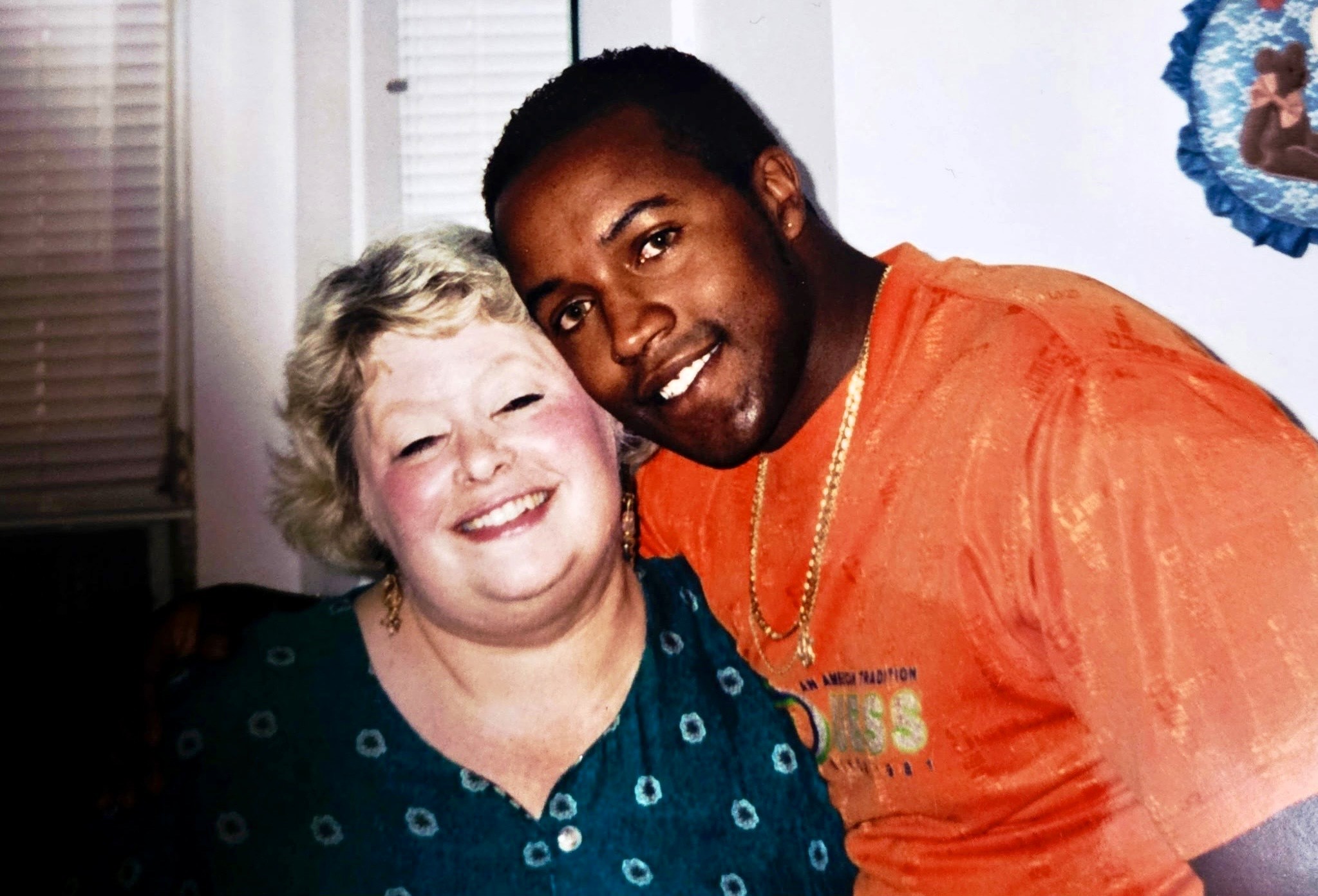
    Kathy and Joro Martin, whom she helped raise, in the early 1990s.

    Kathy built her first snowman display on a card table in a one-bedroom apartment in December 1974, shortly after she and Tuck got married. There were only a handful of figurines — she had picked up the hobby of collecting them from her grandmother — and she hoped they would bring smiles to visitors.

    Kathy collected more snowman figurines over the years from antique booths, craft shows, flea markets, and Hallmark stores.

    Kathy’s snowman figurines displayed at the mall.

    There’s a wax candle shaped like a snowman — one of Kathy’s oldest figurines — which has faded paint. There’s one with glasses that Kathy joked was the snowman version of Tuck, an attorney, so the figurine always stood outside a law office in her displays.

    Some are dressed as firefighters, nurses, police officers, chefs, and musicians. Others wear crimson-and-blue clothes to match the colors of her alma mater, the University of Kansas.

    They are built from a wide range of materials, including yarn, plastic, ceramic, cotton, and wood.

    Tessa Olorunfemi, Kathy’s granddaughter, with her 2008 snowman display.

    Kathy started building the display each year after Thanksgiving and finished around Christmas Eve, when the family ate dinner off snowman-themed tableware. She started the display by covering the table with cotton and sprinkling artificial snow on top, then she placed shelves in the back to resemble mountains.

    The displays moved from the roughly 34-by-34-inch card table to a 3-by-6-foot table to two adjoining 3-by-6-foot tables.

    Kathy changed the setting each year. She created rural towns with recreational vehicles, cities with clustered buildings, and ice skating rinks with bridges. One year — even though Kathy pointed out that snowmen can’t survive warm weather — she let their youngest son, Ryan Duncan, build a beach.

    Kathy’s snowman display in 2021.

    Outside the holidays, Kathy and Tuck initially rented a storage unit for the figurines. For the past two decades, snowmen filled half of their garage. But that didn’t mean the snowman decorations were absent in the condo: Kathy had a four-foot-tall metal snowman in the atrium that waved year-round.

    “I can’t remember a Christmas, a holiday — shoot, I can’t remember a July — without something with snowmans in it,” Ryan said.

    About a month after Kathy died, Tuck rented the second-floor space in Topeka’s West Ridge Mall near a Petland and a Spencer’s store. Tuck hired movers to transport 60 plastic boxes of snowman figurines there.

    From left, R.E. “Tuck” Duncan, Martin, and Kathy.

    Tuck and his family placed plywood, a foam board, buffalo cotton, and white and blue sparkles atop a 8-by-16-foot table.

    At the front of the display, they set up a water tower with a snowman head serving as the tank. There’s a lake made of foil. Houses and trees are scattered throughout. Some small pieces of cotton even represent snowman poop.

    The family finished the display and opened the room Nov. 25. Local news WIBW-TV covered the story.

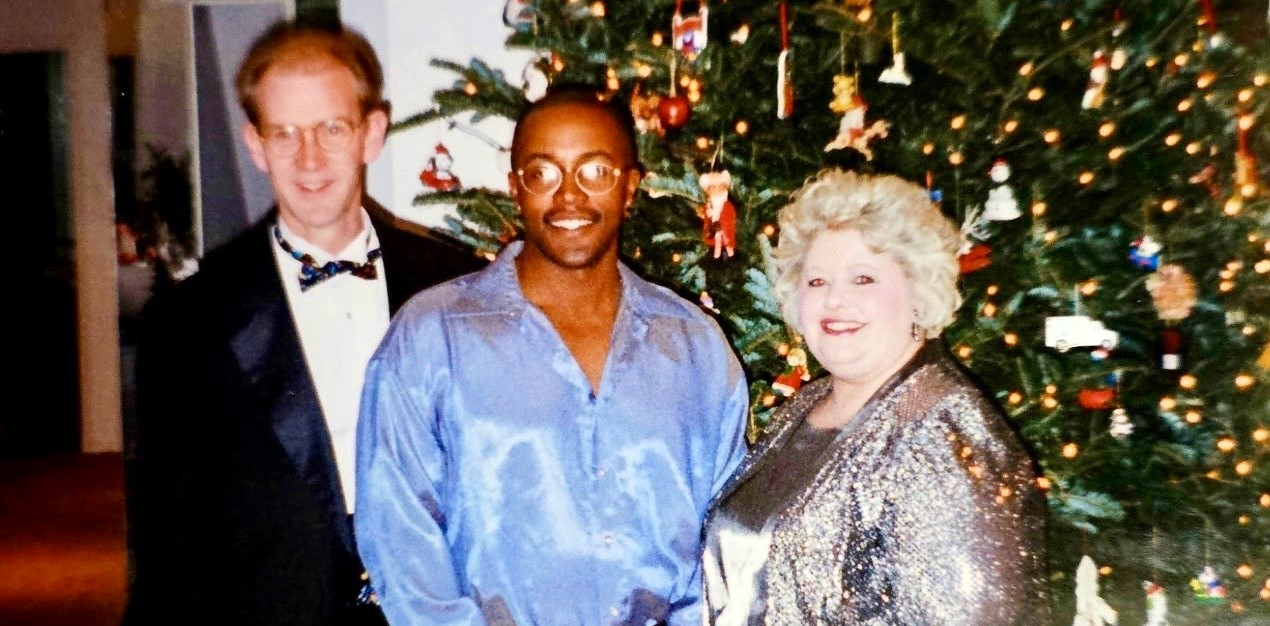
    A Christmas tree with snowman-themed ornaments in the room at the mall in Kathy’s honor.

    There’s a Christmas tree by the front window that holds about 50 snowman ornaments and eight tables on the edges of the room displaying more figurines and snowman-themed items like calendars and quilts.

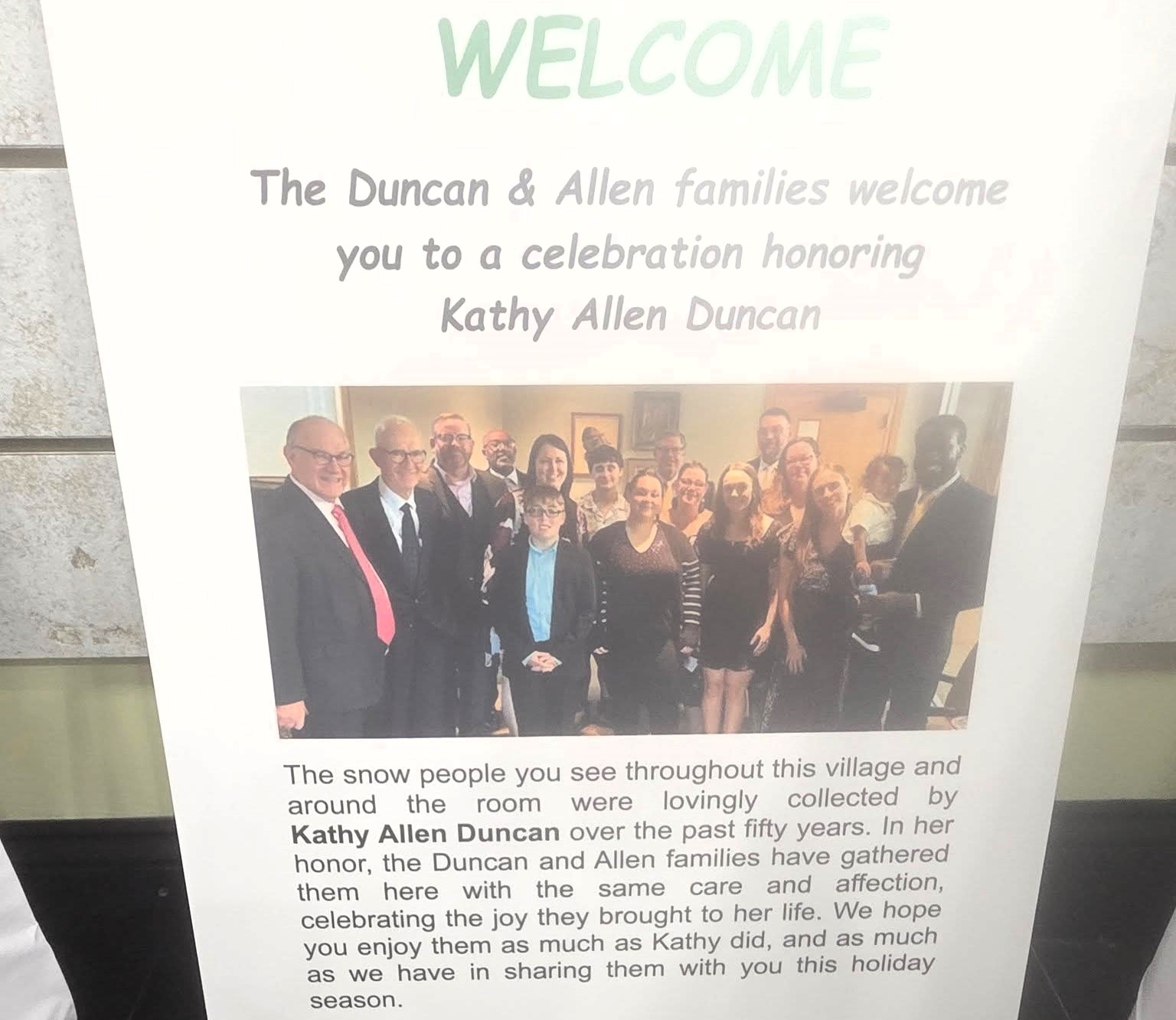
    “The snow people you see throughout this village and around the room were lovingly collected by Kathy Allen Duncan over the past fifty years,” a poster in the room reads. “In her honor, the Duncan and Allen families have gathered them here with the same care and affection, celebrating the joy they brought to her life.”

    The project cost about $15,000, Tuck said, “and it’s worth every penny.” Many people are learning about his wife, who he said fed peanuts and corn to wild squirrels and who, even in her final days, was still asking about the well-being of others.

    Kathy’s family members wrote a note to welcome visitors to the exhibit.

    A family member opens the mall room every morning and closes it at night. While the exhibit evokes memories that make Tuck emotional — like remembering his 5-foot tall wife trying to grab boxes of snowman figurines from the top of the garage — Tuck said talking about Kathy with visitors has been cathartic.

    More of Kathy’s snowman figurines at the mall.

    He has an ornament on his Christmas tree that says, “Those we love don’t go away, they walk beside us everyday.”

    The display will close on Christmas Eve. Afterward, family members — including the couple’s oldest son Spencer, the mayor-elect of Topeka — will take the snowmen back to their homes. Then, the whole family plans to build their own small snowman displays in Kathy’s memory.

  • A ‘recession’ is arriving for people who want jobs in technology

    A ‘recession’ is arriving for people who want jobs in technology

    Newly released jobs market data paints a murky picture ahead for the tech industry, which continues to slash workers.

    The unemployment rate for tech jobs has been steadily rising since May, ticking up to 4% in November, according to an analysis by CompTIA, a company that offers IT training and certifications. Between October and November, the number of technology workers across different industries fell 134,000, while the number of people working in the tech industry declined by more than 6,800. Tech job postings were also down by more than 31,800, the report found, citing data from the Bureau of Labor Statistics and California-based market intelligence firm Lightcast.

    “The data is pretty definitive that the tech industry is struggling,” said Mark Zandi, Moody’s chief economist. “There’s a jobs recession in the industry, and it feels like that’s going to continue given the slide in postings.”

    Over the last year, the tech industry has been reshaping itself amid economic uncertainty, reorganization around artificial intelligence, and a push to become more cost-efficient. Big Tech companies including Amazon, Meta, and Microsoft cut thousands of workers while raking in soaring revenue and making big investments in AI. Economists said the new data signals headwinds ahead even as some tech companies continue to hire, especially for AI roles.

    “For the longest time, tech was the tailwind to jobs and the broader job market,” Zandi said, adding that it’s been a source of high-paying jobs. “That tailwind has now turned into a headwind, and that headwind feels like it may just blow harder going forward.”

    The U.S. economic outlook has continued to be uncertain, with the Federal Reserve cutting interest rates earlier this month for the third time this year, citing a softening labor market. The unemployment rate in the tech industry still sits below the national rate, which in November hit 4.6%, the highest since 2021. However, that gap has been narrowing, with tech unemployment rising faster in recent months than is the case nationally.

    In the tech industry, jobs for software, cybersecurity, and web development consultants have been among the roles to get axed, according to CompTIA. This is likely because companies are spending less on tech projects, and there’s been a pullback in government contracts and the ability to sell services overseas, said Tim Herbert, chief research officer at CompTIA.

    Herbert said companies struggling from a slowing economy might put tech consulting on hold, which could serve as an insight into companies in other industries. “In some cases, it can be a bellwether on how other types of companies are performing when they stop hiring tech consulting services.”

    Employers are largely in “wait and see” mode when it comes to hiring given the current uncertainties surrounding the economy and impact of AI, so they’re likely to delay backfilling, Herbert said citing CompTIA’s surveys of chief information officers. But Justin Wolfers, professor of public policy and economics at the University of Michigan, said uncertainty is likely to continue in the foreseeable future.

    “I’m feeling substantially more pessimistic,” Wolfers said, recalling that Federal Reserve Chair Jerome H. Powell recently suggested that federal job numbers may be overstated. “That’s pretty grim.”

    Technology companies have announced more than 141,000 job cuts so far this year, representing a 17% increase from the same period last year, according to outplacement firm Challenger, Gray & Christmas. At the same time Big Tech companies like Google, Microsoft, Meta, and Amazon have announced plans to invest up to $375 billion in AI infrastructure this year.

    Though job postings declined in November, companies continued to hire, with high demand for workers in engineering and tech support. And AI is quickly becoming a requirement, with 41% of all active job postings representing AI roles or requiring AI skills, according to CompTIA’s analysis.

    “If you have AI skills, there seems to be jobs,” Zandi said about the employment market. “But if you don’t, I think it’s going to feel like you’ve been hit by a dump truck.”

    Herbert cautioned that it will be important to watch how the job numbers change over the next several months, as one month’s data may not provide a full picture.

    AI will likely have a different impact depending on the sectors and jobs, Wolfers said. Coders and translators, for example, may feel the squeeze much sooner than other professions, he noted.

  • Kennedy Center adds Trump’s name to building

    Kennedy Center adds Trump’s name to building

    The Kennedy Center began updating signage on the exterior of the building Friday morning, a day after its board voted to rename the institution “The Donald J. Trump and The John F. Kennedy Memorial Center for the Performing Arts.”

    A blue tarp was stretched across a portion of the building as a small team on scaffolding started the work. Loud drilling could be heard nearby. Inside the building, large letters spelling “Trump” could be seen on the floor of the entry hall, according to a photograph obtained by the Washington Post. Signage elsewhere around the exterior of the institution remained unchanged.

    Thursday’s vote by the board of trustees marked a dramatic change to a building established as a “living memorial” to a slain president. The announcement drew swift condemnation from Kennedy family members and Democratic leaders, who called it illegal and said only Congress could change the center’s name.

    For months, Trump had repeatedly joked about the name change, including at the Kennedy Center Honors earlier this month. The center has seen a year of upheaval since Trump overhauled the institution in February, sparking a wave of firings and resignations. Ticket sales have fallen sharply, according to an October analysis by The Post, and many artists have said they will no longer perform there. The new leadership has boasted of hefty fundraising tallies and has begun to ramp up bookings for Christian and right-wing events.

    “The Trump Kennedy Center shows a bipartisan commitment to the Arts,” Kennedy Center President Richard Grenell wrote Thursday on X. Officials did not cite an authority for the board’s ability to change the institution’s name.

    The current board consists of loyalists to Trump following a purge of trustees appointed by former President Joe Biden. They met Thursday in Palm Beach, Florida.

    This is not the only building to which Trump’s name has been added in recent weeks in Washington. Earlier this month, his administration renamed the building that houses the U.S. Institute of Peace downtown, emblazoning “Donald J. Trump” in several areas of the structure.

    “Boy, that is beautiful,” Trump said at the time, thanking Secretary of State Marco Rubio for putting his name on the building.