Blog

  • Voters are worried about the cost of housing. But Trump wants home prices to keep climbing

    Voters are worried about the cost of housing. But Trump wants home prices to keep climbing

    WASHINGTON — President Donald Trump wants to keep home prices high, bypassing calls to ramp up construction so people can afford what has been a ticket to the middle class.

    Trump has instead argued for protecting existing owners who have watched the values of their homes climb. It’s a position that flies in the face of what many economists, the real estate industry, local officials, and apartment dwellers say is needed to fix a big chunk of America’s affordability problem.

    “I don’t want to drive housing prices down. I want to drive housing prices up for people that own their homes, and they can be assured that’s what’s going to happen,” Trump told his cabinet on Jan. 29.

    That approach could bolster the Republican president’s standing with older voters, a group that over time has been more likely to vote in midterm elections. Those races in November will determine whether Trump’s party can retain control of the House and Senate.

    “You have a lot of people that have become wealthy in the last year because their house value has gone up,” Trump said. “And you know, when you get the housing — when you make it too easy and too cheap to buy houses — those values come down.”

    But by catering to older baby boomers on housing, Trump risks alienating the younger voters who expanded his coalition in 2024 and helped him win a second term, and he could wade into a “generational war” in the midterms, said Brent Buchanan, whose polling firm Cygnal advises Republicans.

    “The under-40 group is the most important right now — they are the ones who put Trump in the White House,” Buchanan said. “Their desire to show up in an election or not is going to make the difference in this election. If they feel that Donald Trump is taking care of the boomers at their expense, that is going to hurt Republicans.”

    The logic in appealing to older voters

    In the 2024 presidential election, 81% of Trump’s voters were homeowners, according to AP VoteCast data. This means many of his supporters already have mortgages with low rates or own their homes outright, possibly blunting the importance of housing as an issue.

    Older voters tend to show up to vote more than do younger people, said Oscar Pocasangre, a senior data analyst at liberal think tank New America who has studied the age divide in U.S. politics. “However, appealing to older voters may prove to be a misguided policy if what’s needed to win is to expand the voting base,” Pocasangre said.

    Before the 2026 elections, voters have consistently rated affordability as a top concern, and that is especially true for younger voters with regard to housing.

    Booker Lightman, 30, a software engineer in Highlands Ranch, Colo., who identifies politically as a libertarian Republican, said the shortage of housing has been a leading problem in his state.

    Lightman just closed on a home last month, and while he and his wife, Alice, were able to manage the cost, he said that the lack of construction is pushing people out of Colorado. “There’s just not enough housing supply,” he said.

    Shay Hata, a real estate agent in the Chicago and Denver areas, said she handles about 100 to 150 transactions a year. But she sees the potential for a lot more. “We have a lack of inventory to the point where most properties, particularly in the suburbs, are getting between five and 20 offers,” she said, describing what she sees in the Chicago area.

    New construction could help more people afford homes because in some cases, buyers qualify for discounted mortgage rates from the builders’ preferred lenders, Hata said. She called the current situation “very discouraging for buyers because they’re getting priced out of the market.”

    But pending construction has fallen under Trump. Permits to build single-family homes have plunged 9.4% over the past 12 months in October, the most recent month available, to an annual rate of 876,000, according to the U.S. Census Bureau.

    Trump’s other ideas to help people buy houses

    Trump has not always been against increasing housing supply.

    During the 2024 campaign, Trump’s team said he would create tax breaks for homebuyers, trim regulations on construction, open up federal land for housing developments, and make monthly payments more manageable by cutting mortgage rates. Advisers also claimed that housing stock would open up because of Trump’s push for mass deportations of people who were in the United States illegally.

    As recently as October, Trump urged builders to ramp up construction. “They’re sitting on 2 Million empty lots, A RECORD. I’m asking Fannie Mae and Freddie Mac to get Big Homebuilders going and, by so doing, help restore the American Dream!” Trump posted on social media, referring to the government-backed lenders.

    But more recently, he has been unequivocal on not wanting to pursue policies that would boost supply and lower prices.

    In office, Trump has so far focused his housing policy on lobbying the Federal Reserve to cut its benchmark interest rates. He believes that would make mortgages more affordable, although critics say it could spur higher inflation. Trump announced that the two mortgage companies, which are under government conservatorship, would buy at least $200 billion in home loan securities in a bid to reduce rates.

    Trump also wants Congress to ban large financial institutions from buying homes. But he has rejected suggestions for expanding rules to let buyers use 401(k) retirement accounts for down payments, telling reporters that he did not want people to take their money out of the stock market because it was doing so well.

    There are signs that lawmakers in both parties see the benefits of taking steps to add houses before this year’s elections. There are efforts in the Senate and House to jump-start construction through the use of incentives to change zoning restrictions, among other policies.

    One of the underlying challenges on affordability is that home prices have been generally rising faster than incomes for several years.

    This makes it harder to save for down payments or upgrade to a nicer home. It also means that the places where people live increasingly double as their key financial asset, one that leaves many families looking moneyed on paper even if they are struggling with monthly bills.

    There is another risk for Trump. If the economy grows this year, as he has promised, that could push up demand for houses — as well as their prices — making the affordability problem more pronounced, said Edward Pinto, a senior fellow at the American Enterprise Institute, a center-right think tank.

    Pinto said construction of single-family homes would have to rise by 50% to 100% during the next three years for average home price gains to be flat — a sign, he said, that Trump’s fears about falling home prices were probably unwarranted.

    “It’s very hard to crater home prices,” Pinto said.
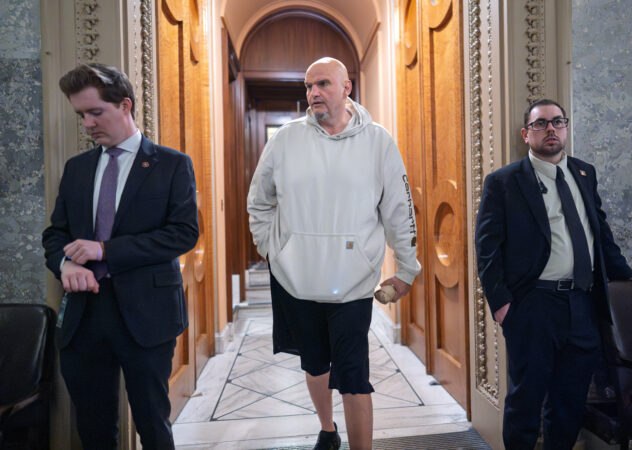
  • Sen. John Fetterman said he ‘absolutely’ expects a DHS shutdown as ICE negotiations stall

    Sen. John Fetterman said he ‘absolutely’ expects a DHS shutdown as ICE negotiations stall

    U.S. Sen. John Fetterman said Sunday that he expects the Department of Homeland Security to shut down Friday as negotiations over immigration enforcement have stalled, an outcome that could impact air travel and emergency response across the nation.

    “I absolutely would expect that it’s going to shut down,” the Pennsylvania Democrat said during an interview on Fox News’ Sunday Morning Futures with Maria Bartiromo.

    Funding for DHS is scheduled to lapse Friday, a deadline that lawmakers set after separating the agency’s funding from other parts of the federal budget and approving a two-week extension to continue talks.

    At the center of the impasse is Democrats’ insistence on overhauling federal immigration enforcement. The party’s leaders drafted a list of 10 policies they want Republicans to agree to in exchange for their support in funding DHS, which includes U.S. Immigration and Customs Enforcement.

    Among Democrats’ demands are banning immigration enforcement agents from wearing masks and requiring DHS officers to obtain a warrant signed by a judge before entering a home.

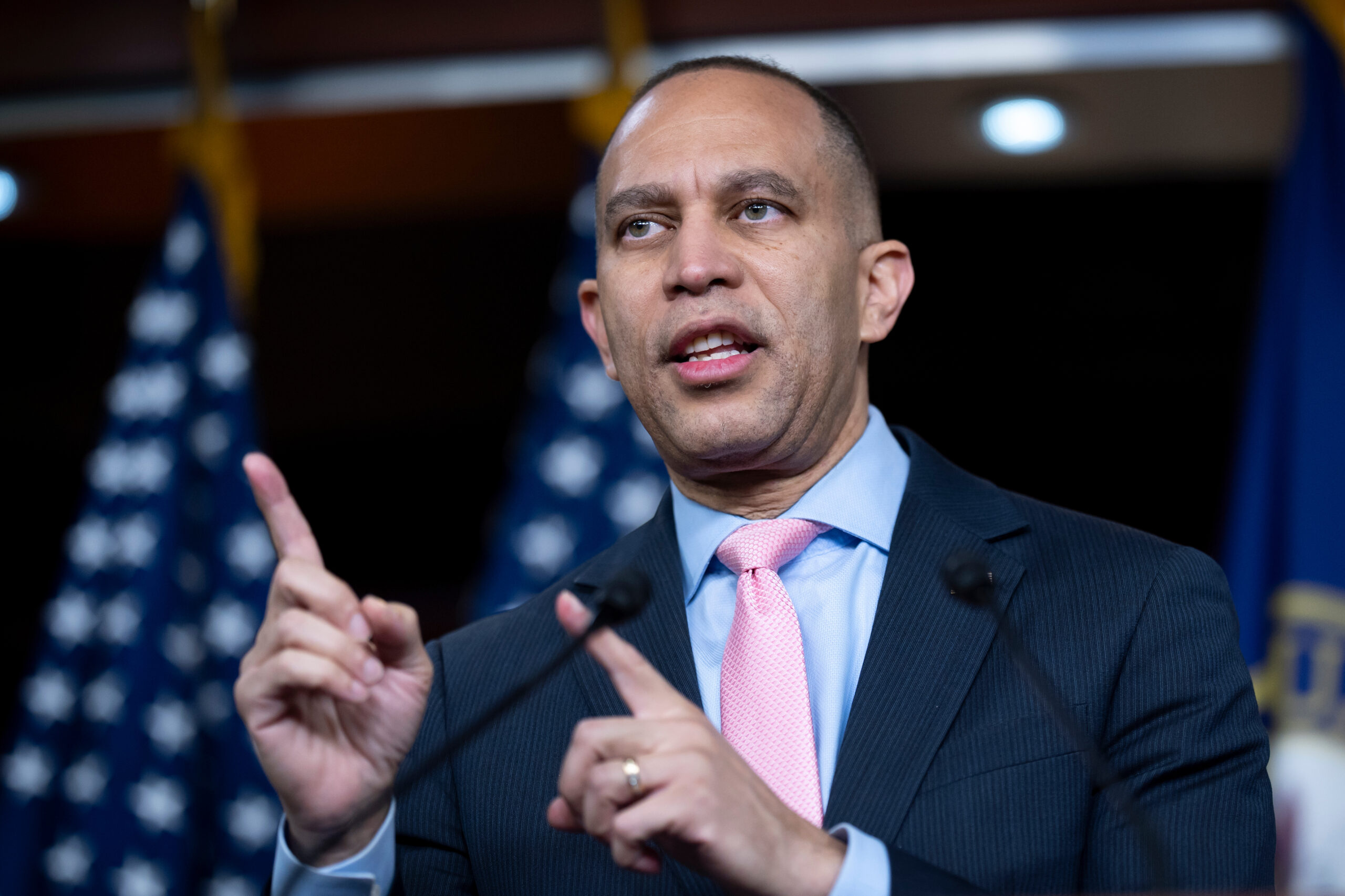
    House Minority Leader Hakeem Jeffries (D., N.Y.) said Sunday during an interview on CNN’s State of the Union that “at this point” he was not willing to accept a deal that didn’t include President Donald Trump’s administration implementing Democrats’ full list of ICE changes.

    “We know that ICE is completely and totally out of control,” Jeffries said. “They’ve gone way too far, and the American people want them reined in.”

    House Minority Leader Hakeem Jeffries (D., N.Y.) speaks to reporters about Venezuela, the ICE shooting in Minneapolis, and affordability ahead of a vote in the House to extend the Obamacare subsidies for three years at the Capitol on Jan. 8. (AP Photo/J. Scott Applewhite)

    Fetterman has called for significant changes at DHS, including the firing of Secretary Kristi Noem. But he said Sunday that Democrats shouldn’t expect to “get all 10″ demands.

    “We, the Democrats, we provided 10 kinds of basic things, and then the Republicans pushed back quickly saying, ‘That’s a Christmas wish list,’ and that they’re nonstarters,” Fetterman, a member of the Senate Homeland Security Committee, said. “I truly don’t know what specifically are the Democrats’ red lines that it has to be — certainly not going to get all 10.”

    Fetterman generally opposes any measure that would shut down the government and has been the only Senate Democrat to vote for some Republican budget proposals. He added that he is concerned about federal workers, including TSA agents, not being paid amid a funding lapse.

    “Every American deserves to be paid for the work that they’ve done,” he said. “That’s real lives, and they’re not wealthy if they’re TSA folks. They’re allowing us to fly safe here in America, and that’s part of that conversation now, too.”

  • Japanese prime minister’s party secures supermajority in lower house in landslide victory

    Japanese prime minister’s party secures supermajority in lower house in landslide victory

    TOKYO — The governing party of Prime Minister Sanae Takaichi secured a two-thirds supermajority in a key parliamentary election Sunday, Japanese media reported citing preliminary results, earning a landslide victory thanks to her popularity.

    Takaichi, in a televised interview with public television network NHK following her sweeping victory, said she is now ready to pursue policies to make Japan strong and prosperous.

    NHK, citing results of vote counts, said Takaichi’s Liberal Democratic Party, or LDP, alone secured 316 seats by early Monday, comfortably surpassing a 261-seat absolute majority in the 465-member lower house, the more powerful of Japan’s two-chamber parliament. That marks a record since the party’s foundation in 1955 and surpasses the previous record of 300 seats won in 1986 by late Prime Minister Yasuhiro Nakasone.

    A smiling Takaichi placed a big red ribbon above each winner’s name on a signboard at the LDP’s headquarters, as accompanying party executives applauded.

    Despite the lack of a majority in the other chamber, the upper house, the huge jump from the preelection share in the superior lower house would allow Takaichi to make progress on a right-wing agenda that aims to boost Japan’s economy and military capabilities as tensions grow with China and she tries to nurture ties with the United States.

    Takaichi said she would try to gain support from the opposition while firmly pushing forward her policy goals.

    “I will be flexible,” she said.

    Takaichi is hugely popular, but the governing LDP, which has ruled Japan for most of the last seven decades, has struggled with funding and religious scandals in recent years. She called Sunday’s early election after only three months in office, hoping to turn that around while her popularity is high.

    Popular leader

    The ultraconservative Takaichi, who took office as Japan’s first female leader in October, pledged to “work, work, work,” and her style, which is seen as both playful and tough, has resonated with younger fans who say they weren’t previously interested in politics.

    The opposition, despite the formation of a new centrist alliance and a rising far right, was too splintered to be a real challenger. The new opposition alliance of LDP’s former coalition partner, Buddhist-backed dovish Komeito, and the liberal-leaning Constitutional Democratic Party of Japan, is projected to sink to half of their combined preelection share of 167 seats.

    Takaichi was betting with this election that her LDP party, together with its new partner, the Japan Innovation Party, would secure a majority.

    Akihito Iwatake, a 53-year-old office worker, said he welcomed the big win by the LDP because he felt the party went too liberal in the past few years. “With Takaichi shifting things more toward the conservative side, I think that brought this positive result,” he said.

    Takaichi’s policies

    The prime minister wants to push forward a significant shift to the right in Japan’s security, immigration, and other policies. The LDP’s right-wing partner, JIP leader Hirofumi Yoshimura, has said his party will serve as an “accelerator” for this push.

    Japan has recently seen far-right populists gain ground, such as the anti-globalist and surging nationalist party Sanseito. Exit polls projected a big gain for Sanseito.

    The first major task for Takaichi when the lower house reconvenes in mid-February is to work on a budget bill, delayed by the election, to fund economic measures that address rising costs and sluggish wages.

    Takaichi has pledged to revise security and defense policies by December to bolster Japan’s offensive military capabilities, lifting a ban on weapons exports and moving further away from the country’s postwar pacifist principles.

    She has been pushing for tougher policies on foreigners, anti-espionage laws, and other measures that resonate with a far-right audience, but ones that experts say could undermine civil rights.

    Takaichi also wants to increase defense spending in response to U.S. President Donald Trump’s pressure for Japan to loosen its purse strings.

    She now has time to work on these policies, without an election until 2028.

    Divisive policies

    Though Takaichi said that she’s seeking to win support for policies seen as divisive in Japan, she largely avoided discussing ways to fund soaring military spending, how to fix diplomatic tension with China, and other issues.

    Her rightward shift is unlikely to redirect Japan’s foreign policy and Takaichi is expected to maintain good relations with South Korea given shared concerns about threats from North Korea and China. But Seoul would worry about a Japanese attempt to revise the country’s pacifist constitution or to further build up military because of Japan’s wartime past, said Leif-Eric Easley, professor of international studies at Ewha Womans University in Seoul.

    In her campaign speeches, Takaichi enthusiastically talked about the need for proactive government spending to fund “crisis management investment and growth,” such as measures to strengthen economic security, technology, and other industries. Takaichi also seeks to push tougher measures on immigration, including stricter requirements for foreign property owners and a cap on foreign residents.

    Sunday’s election “underscores a problematic trend in Japanese politics in which political survival takes priority over substantive policy outcomes,” said Masato Kamikubo, a Ritsumeikan University politics professor. “Whenever the government attempts necessary but unpopular reforms … the next election looms.”

    Impact of snow

    Sunday’s vote coincided with fresh snowfall across the country, including in Tokyo. Record snowfall in northern Japan over the past few weeks blocked roads and was blamed for dozens of deaths nationwide.

  • Iran sentences Nobel laureate Narges Mohammadi to 7 more years in prison

    Iran sentences Nobel laureate Narges Mohammadi to 7 more years in prison

    DUBAI, United Arab Emirates — Iran sentenced Nobel Peace Prize laureate Narges Mohammadi to over seven more years in prison after she began a hunger strike, supporters said Sunday, as Tehran cracks down on all dissent following nationwide protests and the deaths of thousands at the hands of security forces.

    The new convictions against Mohammadi come as Iran tries to negotiate with the United States over its nuclear program to avert a threatened military strike by U.S. President Donald Trump. Iran’s top diplomat insisted Sunday that Tehran’s strength came from its ability to “say no to the great powers,” striking a maximalist position just after negotiations in Oman with the U.S.

    Mohammadi’s supporters cited her lawyer, who spoke to Mohammadi. The lawyer, Mostafa Nili, confirmed the sentence on X, saying it had been handed down Saturday by a Revolutionary Court in the city of Mashhad. Such courts typically issue verdicts with little or no opportunity for defendants to contest their charges.

    “She has been sentenced to six years in prison for ‘gathering and collusion’ and one and a half years for propaganda and two-year travel ban,” he wrote. She received another two years of internal exile to the city of Khosf, some 460 miles southeast of Tehran, the capital, the lawyer added.

    Iran did not immediately acknowledge the sentence. Supporters say Mohammadi has been on a hunger strike since Feb. 2. She had been arrested in December at a ceremony honoring Khosrow Alikordi, a 46-year-old Iranian lawyer and human rights advocate who had been based in Mashhad. Footage from the demonstration showed her shouting, demanding justice for Alikordi and others.

    Mohammadi a symbol for Iranian activists

    Supporters had warned for months before her December arrest that Mohammadi, 53, was at risk of being put back into prison after she received a furlough in December 2024 over medical concerns.

    While that was to be only three weeks, Mohammadi’s time out of prison lengthened, possibly as activists and Western powers pushed Iran to keep her free. She remained out even during the 12-day war in June between Iran and Israel.

    Mohammadi still kept up her activism with public protests and international media appearances, including even demonstrating at one point in front of Tehran’s notorious Evin prison, where she had been held.

    Mohammadi had been serving 13 years and nine months on charges of collusion against state security and propaganda against Iran’s government. She also had backed the nationwide protests sparked by the 2022 death of Mahsa Amini, which have seen women openly defy the government by not wearing the hijab.

    Mohammadi suffered multiple heart attacks while imprisoned before undergoing emergency surgery in 2022, her supporters say. Her lawyer in late 2024 revealed doctors had found a bone lesion that they feared could be cancerous that later was removed.

    “Considering her illnesses, it is expected that she will be temporarily released on bail so that she can receive treatment,” Nili wrote.

    However, Iranian officials have been signaling a harder line against all dissent since the demonstrations. Speaking on Sunday, Iranian judiciary chief Gholamhossein Mohseni-Ejei made comments suggesting harsh prison sentences awaited many.

    “Look at some individuals who once were with the revolution and accompanied the revolution,” he said. ”Today, what they are saying, what they are writing, what statements they issue, they are unfortunate, they are forlorn (and) they will face damage.”

    Foreign minister strikes hard-line tone

    The news about Mohammadi came as Foreign Minister Abbas Araghchi, speaking to diplomats at a summit in Tehran, signaled that Iran would stick to its position that it must be able to enrich uranium — a major point of contention with Trump, who bombed Iranian atomic sites in June during the 12-day Iran-Israel war.

    Israeli Prime Minister Benjamin Netanyahu is expected to travel to Washington this week, with Iran expected to be the major subject of discussion, his office said.

    While Iranian President Masoud Pezeshkian praised the talks Friday in Oman with the Americans as “a step forward,” Araghchi’s remarks show the challenge ahead. Already, the U.S. moved the aircraft carrier USS Abraham Lincoln, other ships, and warplanes to the Middle East to pressure Iran into an agreement and have the firepower necessary to strike the Islamic Republic should Trump choose to do so.

    “I believe the secret of the Islamic Republic of Iran’s power lies in its ability to stand against bullying, domination, and pressures from others,” Araghchi said. ”They fear our atomic bomb, while we are not pursuing an atomic bomb. Our atomic bomb is the power to say no to the great powers. The secret of the Islamic Republic’s power is in the power to say no to the powers.”

    ‘Atomic bomb’ as rhetorical device

    Araghchi’s choice to explicitly use an “atomic bomb” as a rhetorical device likely wasn’t accidental. While Iran has long maintained its nuclear program is peaceful, the West and the International Atomic Energy Agency say Tehran had an organized military program to seek the bomb up until 2003.

    Iran had been enriching uranium up to 60% purity, a short, technical step to weapons-grade levels of 90%, the only nonweapons state to do so. Iranian officials in recent years had also been increasingly threatening that the Islamic Republic could seek the bomb, even while its diplomats have pointed to Iranian Supreme Leader Ayatollah Ali Khamenei’s preachings as a binding fatwa, or religious edict, that Iran wouldn’t build one.

    Pezeshkian, who ordered Araghchi to pursue talks with the Americans after likely getting Khamenei’s blessing, also wrote on X on Sunday about the talks.

    “The Iran-U.S. talks, held through the follow-up efforts of friendly governments in the region, were a step forward,” the president wrote. “Dialogue has always been our strategy for peaceful resolution. … The Iranian nation has always responded to respect with respect, but it does not tolerate the language of force.”

    It remains unclear when and where, or if, there will be a second round of talks. Trump, after the talks Friday, offered few details but said: “Iran looks like they want to make a deal very badly — as they should.”

  • Hard hats and dummy plates: Reports of ICE ruses add to fears in Minnesota

    Hard hats and dummy plates: Reports of ICE ruses add to fears in Minnesota

    MINNEAPOLIS — For days, Luis Ramirez had an uneasy feeling about the men dressed as utility workers he’d seen outside his family’s Mexican restaurant in suburban Minneapolis.

    They wore high-visibility vests and spotless white hard hats, he noticed, even while parked in their vehicle. His search for the Wisconsin-based electrician advertised on the car’s doors returned no results.

    On Tuesday, when their Nissan returned to the lot outside his restaurant, Ramirez, 31, filmed his confrontation with the two men, who hide their faces as he approaches and appear to be wearing heavy tactical gear beneath their yellow vests.

    “This is what our taxpayer money goes to: renting these vehicles with fake tags to come sit here and watch my business,” Ramirez shouts in the video.

    A spokesperson for the Department of Homeland Security and Immigration and Customs Enforcement did not respond to inquiries about whether the men were federal immigration officers. But encounters like Ramirez’s have become increasingly common.

    As the sweeping immigration crackdown in Minnesota continues, legal observers and officials say they have received a growing number of reports of federal agents impersonating construction workers, delivery drivers, and in some cases anti-ICE activists.

    Not all of those incidents have been verified, but they have heightened fears in a state already on edge, adding to legal groups’ concerns about the Trump administration’s dramatic reshaping of immigration enforcement tactics nationwide.

    “If you have people afraid that the electrical worker outside their house might be ICE, you’re inviting public distrust and confusion on a much more dangerous level,” said Naureen Shah, the director of immigration advocacy at the American Civil Liberties Union. “This is what you do if you’re trying to control a populace, not trying to do routine, professional law enforcement.”

    A ‘more extreme degree’ of deception

    In the past, immigration authorities have sometimes used disguises and other deceptions, which they call ruses, to gain entry into homes without a warrant.

    The tactics became more common during President Donald Trump’s first term, attorneys said, prompting an ACLU lawsuit accusing immigration agents of violating the U.S. Constitution by posing as local law enforcement during home raids. A recent settlement restricted the practice in Los Angeles. But ICE deceptions remain legal elsewhere in the country.

    Still, the undercover operations reported in Minnesota would appear to be a “more extreme degree than we’ve seen in the past,” said Shah, in part because they seem to be happening in plain sight.

    Where past ruses were aimed at deceiving immigration targets, the current tactics may also be a response to the Minnesota’s sprawling networks of citizen observers that have sought to call attention to federal agents before they make arrests.

    At the Bishop Henry Whipple Federal Building in Minneapolis, the city’s central hub of ICE activity, activists told the Associated Press they had seen agents leaving in vehicles with stuffed animals on their dashboards or Mexican flag decals on their bumpers. Pickups with lumber or tools in their beds were also frequently spotted.

    In recent weeks, federal agents have repeatedly shown up to construction sites dressed as workers, according to Jose Alvillar, a lead organizer for the local immigrant rights group, Unidos MN.

    “We’ve seen an increase in the cowboy tactics,” he said, though he noted the raids had not resulted in arrests. “Construction workers are good at identifying who is a real construction worker and who is dressing up as one.”

    Using vintage plates

    Since the start of the operation in Minnesota, local officials, including Democratic Gov. Tim Walz, have said ICE agents had been seen swapping license plates or using bogus ones, a violation of state law.

    Candice Metrailer, an antiques dealer in south Minneapolis, believes she witnessed such an attempt firsthand.

    On Jan. 13, she received a call from a man who identified himself as a collector, asking if her store sold license plates. She said it did. A few minutes later, two men in street clothes entered the shop and began looking through her collection of vintage plates.

    “One of them says, ‘Hey, do you have any recent ones?’” Metrailer recalled. “Immediately, an alarm bell went off in my head.”

    Metrailer stepped outside while the men continued browsing. A few doors down from the shop, she saw an idling Ford Explorer with blacked out windows. She memorized its license plate, then quickly plugged it into a crowdsourced database used by local activists to track vehicles linked to immigration enforcement.

    The database shows an identical Ford with the same plates had been photographed leaving the Whipple building seven times and reported at the scene of an immigration arrest weeks earlier.

    When one of the men approached the register holding a white Minnesota plate, Metrailer said she told him that the store had a new policy against selling the items.

    Metrailer said she had reported the incident to Minnesota’s attorney general. A spokesperson for DHS did not respond to a request for comment.

    A response to obstruction

    Supporters of the immigration crackdown say the volunteer army of ICE-tracking activists in Minneapolis has forced federal agents to adopt new methods of avoiding detection.

    “Of course agents are adapting their tactics so that they’re a step ahead,” said Scott Mechkowski, former deputy director of ICE enforcement and operations in New York City. “We’ve never seen this level of obstruction and interference.”

    In nearly three decades in immigration enforcement, Mechkowski said he also hadn’t seen ICE agents disguising themselves as uniformed workers in the course of making arrests.

    Earlier this summer, a spokesperson for DHS confirmed a man wearing a high-visibility construction vest was an ICE agent conducting surveillance. In Oregon, a natural gas company published guidance last month on how customers could identify their employees after reports of federal impersonators.

    In the days since his encounter, Ramirez, the restaurant worker, said he has been on high alert for undercover agents. He recently stopped a locksmith who he feared might be a federal agent, before quickly realizing he was a local resident.

    “Everybody is on edge about these guys, man,” Ramirez said. “It feels like they’re everywhere.”

  • The Philadelphia Orchestra’s ‘Peter and the Wolf’ is a gift to children and adults alike

    The Philadelphia Orchestra’s ‘Peter and the Wolf’ is a gift to children and adults alike

    Stagecraft and technology being what they are these days, one can imagine any number of ways Peter and the Wolf could be souped up. If the key to audience-building is children, Prokofiev’s children’s classic would seem to be the perfect chance to engage them with eye-popping visuals.

    But the Philadelphia Orchestra is smart enough to let the piece speak for itself.

    It also knows you don’t mess with success. Saturday morning in Marian Anderson Hall marked the 10th time the orchestra has presented the piece with actor-narrator Michael Boudewyns over nearly two decades, and no one should ever touch a hair on this modest production’s furry little head. In its simplicity and humor, here is one of those rare, perfect things in this world.

    The audience applauds for the Philadelphia Orchestra’s performance of “Peter and the Wolf” Saturday in Marian Anderson Hall.

    Saturday’s concert was also, judging from an audience whose ages looked to span from 2 years old to 80, a powerful generational bridge. Surely there were a few grandparents in the hall who remember going to these Philadelphia Orchestra family concerts with Leopold Stokowski on the podium.

    The series continues in March with another on-ramp to classical music: Britten’s dazzling The Young Person’s Guide to the Orchestra.

    Michael Boudewyns narrating “Peter and the Wolf” with conductor Naomi Woo leading the Philadelphia Orchestra, Feb. 7, 2026, in Marian Anderson Hall.

    Prokofiev’s piece — which is about to turn 90 years old — can be frightening in some productions: The French horns are as menacing as the fang-bearing wolf they depict. But Boudewyns has a grab bag of tricks so disarming that the scare factor practically disappears.

    His props are drawn from household items: The duck is a feather duster, the bird a diaphanous, darting, bright yellow swatch of fabric. Who can’t help but laugh at a gun represented by a toilet plunger? Boudewyns narrates while choreographing the action in response to the changing character of the music and arc of the story. For an audience growing up in the digital thicket, here was a bright clearing. Nothing beats a good story, enticingly told and heightened by a great score.

    With a suitcase as the wolf, Michael Boudewyns narrating “Peter and the Wolf” with the Philadelphia Orchestra, Feb. 7, 2026, in Marian Anderson Hall. It was his 10th time performing with work with the orchestra since his first appearance in 2007.

    Naomi Woo, the orchestra’s assistant conductor, was visually engaging, leading the work and three others, including a truncated version of the first movement of Beethoven’s Symphony No. 5. These concerts are another reminder of the deep bench of talent within the orchestra beyond the principal chairs. In the Prokofiev, that meant Patrick Williams’ glossy flute sound as the bird, clarinetist Samuel Caviezel as the bouncy cat, oboist Peter Smith’s poignant duck, and the appropriately lumbering (but polished) grandfather emanating from the bassoon of Mark Gigliotti.

    All deserved special recognition, and Woo gave the players bows, but no orchestra roster was published in the concert’s Playbill (even though the usual lists of board, staff, and oodles of donors were included).

    Narrator and actor Michael Boudewyns and conductor Naomi Woo embrace after their performance of “Peter and the Wolf” in Marian Anderson Hall on Saturday.

    One of the unspoken truths of all art is that its effect on people is ultimately unknowable. The two children in front of me — one looked to be 3, the other even younger — were ostensibly too small to be there, and yet there’s no way of knowing what they were absorbing. The power of these concerts is in being in the presence of this orchestra, with that incredible sound. No other kind of ensemble has the same impact. And despite all the squirming and low chattering coming from the next row, there was really only one thought to which I kept returning: what lucky children.

    The Philadelphia Orchestra, conductor Naomi Woo, and actor Michael Boudewyns perform Britten’s “The Young Person’s Guide to the Orchestra,” March 14, 11:30 a.m., Marian Anderson Hall, Broad and Spruce Streets. Tickets $29-$66. ensembleartsphilly.org, 215-893-1999.

  • U.K. leader’s chief of staff quits over appointment of Mandelson as ambassador despite Epstein ties

    U.K. leader’s chief of staff quits over appointment of Mandelson as ambassador despite Epstein ties

    LONDON — British Prime Minister Keir Starmer ‘s chief of staff resigned Sunday over the furor surrounding the appointment of Peter Mandelson as the U.K. ambassador to the U.S. despite his ties to Jeffrey Epstein.

    Morgan McSweeney said he took responsibility for advising Starmer to appoint Mandelson, 72, to Britain’s most important diplomatic post in 2024.

    “The decision to appoint Peter Mandelson was wrong. He has damaged our party, our country and trust in politics itself,” McSweeney said in a statement. “When asked, I advised the Prime Minister to make that appointment and I take full responsibility for that advice.”

    Starmer is facing a political storm and questions about his judgment after newly published documents, part of a huge trove of Epstein files made public in the United States, suggested that Mandelson sent market-sensitive information to the convicted sex offender when he was the U.K. government’s business secretary during the 2008 financial crisis.

    Starmer’s government has promised to release its own emails and other documentation related to Mandelson’s appointment, which it says will show that Mandelson misled officials.

    The prime minister apologized this week for “having believed Mandelson’s lies.”

    He acknowledged that when Mandelson was chosen for the top diplomat job in 2024, the vetting process had revealed that Mandelson’s friendship with Epstein continued after the latter’s 2008 conviction. But Starmer maintained that “none of us knew the depth of the darkness” of that relationship at the time.

    A number of lawmakers said Starmer is ultimately responsible for the scandal.

    “Keir Starmer has to take responsibility for his own terrible decisions,” said Kemi Badenoch, leader of the opposition Conservative Party.

    Mandelson, a former Cabinet minister, ambassador, and elder statesman of the governing Labour Party, has not been arrested or charged.

    Metropolitan Police officers searched Mandelson’s London home and another property linked to him on Friday. Police said the investigation is complex and will require “a significant amount of further evidence gathering and analysis.”

    The U.K. police investigation centers on potential misconduct in public office, and Mandelson is not accused of any sexual offenses.

    Starmer had fired Mandelson in September from his ambassadorial job over earlier revelations about his Epstein ties. But critics say the emails recently published by the U.S. Justice Department have brought serious concerns about Starmer’s judgment to the fore. They argue that he should have known better than to appoint Mandelson in the first place.

    The new revelations include documents suggesting Mandelson shared sensitive government information with Epstein after the 2008 global financial crisis. They also include records of payments totaling $75,000 in 2003 and 2004 from Epstein to accounts linked to Mandelson or his husband, Reinaldo Avila da Silva.

    Aside from his association with Epstein, Mandelson previously had to resign twice from senior government posts because of scandals over money or ethics.

    Starmer had faced growing pressure over the past week to fire McSweeney, who is regarded as a key adviser in Downing Street and seen as a close ally of Mandelson.

    Starmer on Sunday credited McSweeney as a central figure in running Labour’s recent election campaign and the party’s 2004 landslide victory. His statement did not mention the Mandelson scandal.

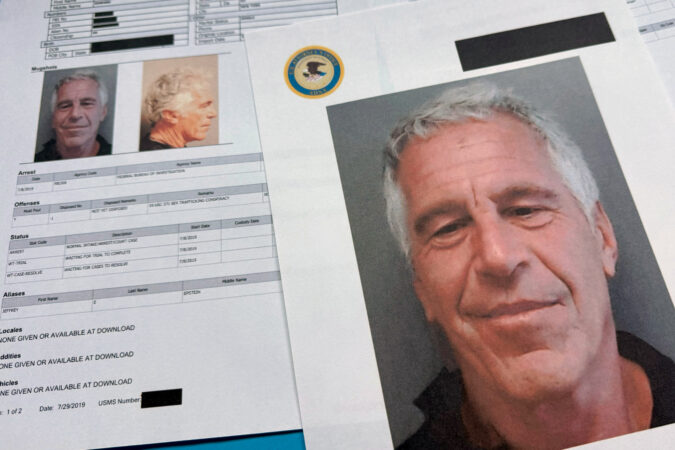
  • FBI concluded Jeffrey Epstein wasn’t running a sex trafficking ring for powerful men, files show

    FBI concluded Jeffrey Epstein wasn’t running a sex trafficking ring for powerful men, files show

    NEW YORK — The FBI pored over Jeffrey Epstein’s bank records and emails. It searched his homes. It spent years interviewing his victims and examining his connections to some of the world’s most influential people.

    But while investigators collected ample proof that Epstein sexually abused underage girls, they found scant evidence the well-connected financier led a sex trafficking ring serving powerful men, an Associated Press review of internal Justice Department records shows.

    Videos and photos seized from Epstein’s homes in New York, Florida, and the Virgin Islands didn’t depict victims being abused or implicate anyone else in his crimes, a prosecutor wrote in one 2025 memo.

    An examination of Epstein’s financial records, including payments he made to entities linked to influential figures in academia, finance, and global diplomacy, found no connection to criminal activity, said another internal memo in 2019.

    While one Epstein victim made highly public claims that he “lent her” to his rich friends, agents couldn’t confirm that and found no other victims telling a similar story, the records said.

    Summarizing the investigation in an email last July, agents said “four or five” Epstein accusers claimed other men or women had sexually abused them. But, the agents said, there “was not enough evidence to federally charge these individuals, so the cases were referred to local law enforcement.”

    The AP and other media organizations are still reviewing millions of pages of documents, many of them previously confidential, that the Justice Department released under the Epstein Files Transparency Act and it is possible those records contain evidence overlooked by investigators.

    But the documents, which include police reports, FBI interview notes, and prosecutor emails, provide the clearest picture to date of the investigation — and why U.S. authorities ultimately decided to close it without additional charges.

    Dozens of victims come forward

    The Epstein investigation began in 2005, when the parents of a 14-year-old girl reported she had been molested at the millionaire’s home in Palm Beach, Fla.

    Police would identify at least 35 girls with similar stories: Epstein was paying high school-age students $200 or $300 to give him sexualized massages.

    After the FBI joined the probe, federal prosecutors drafted indictments to charge Epstein and some personal assistants who had arranged the girls’ visits and payments. But instead, then-Miami U.S. attorney Alexander Acosta struck a deal letting Epstein plead guilty to state charges of soliciting prostitution from an underage girl. Sentenced to 18 months in jail, Epstein was free by mid-2009.

    In 2018, a series of Miami Herald stories about the plea deal prompted New York federal prosecutors to take a fresh look at the accusations.

    Epstein was arrested in July 2019. One month later, he killed himself in his jail cell.

    A year later, prosecutors charged Epstein’s longtime confidant, Ghislaine Maxwell, saying she’d recruited several of his victims and sometimes joined the sexual abuse. Convicted in 2021, Maxwell is serving a 20-year prison term.

    Prosecutors fail to find evidence backing most sensational claims

    Prosecution memos, case summaries, and other documents made public in the department’s latest release of Epstein-related records show that FBI agents and federal prosecutors diligently pursued potential coconspirators. Even seemingly outlandish and incomprehensible claims, called in to tip lines, were examined.

    Some allegations couldn’t be verified, investigators wrote.

    In 2011 and again in 2019, investigators interviewed Virginia Roberts Giuffre, who in lawsuits and news interviews had accused Epstein of arranging for her to have sexual encounters with numerous men, including Britain’s former Prince Andrew.

    Investigators said they confirmed that Giuffre had been sexually abused by Epstein. But other parts of her story were problematic.

    Two other Epstein victims who Giuffre had claimed were also “lent out” to powerful men told investigators they had no such experience, prosecutors wrote in a 2019 internal memo.

    “No other victim has described being expressly directed by either Maxwell or Epstein to engage in sexual activity with other men,” the memo said.

    Giuffre acknowledged writing a partly fictionalized memoir of her time with Epstein containing descriptions of things that didn’t take place. She had also offered shifting accounts in interviews with investigators, they wrote, and had “engaged in a continuous stream of public interviews about her allegations, many of which have included sensationalized if not demonstrably inaccurate characterizations of her experiences.” Those inaccuracies included false accounts of her interactions with the FBI, they said.

    Still, U.S. prosecutors attempted to arrange an interview with Andrew, now known as Andrew Mountbatten-Windsor. He refused to make himself available. Giuffre settled a lawsuit with Mountbatten-Windsor in which she had accused him of sexual misconduct.

    In a memoir published after she killed herself last year, Giuffre wrote that prosecutors told her they didn’t include her in the case against Maxwell because they didn’t want her allegations to distract the jury. She insisted her accounts of being trafficked to elite men were true.

    Prosecutors say photos, videos don’t implicate others

    Investigators seized a multitude of videos and photos from Epstein’s electronic devices and homes in New York, Florida, and the U.S. Virgin Islands. They found CDs, hard copy photographs, and at least one videotape containing nude images of females, some of whom seemed as if they might be minors. One device contained 15 to 20 images depicting commercial child sex abuse material — pictures investigators said Epstein obtained on the internet.

    No videos or photos showed Epstein victims being sexually abused, none showed any males with any of the nude females, and none contained evidence implicating anyone other than Epstein and Maxwell, then-Assistant U.S. Attorney Maurene Comey wrote in an email for FBI officials last year.

    Had they existed, the government “would have pursued any leads they generated,” Comey wrote. “We did not, however, locate any such videos.”

    Investigators who scoured Epstein’s bank records found payments to more than 25 women who appeared to be models — but no evidence that he was engaged in prostituting women to other men, prosecutors wrote.

    Epstein’s close associates go uncharged

    In 2019, prosecutors weighed the possibility of charging one of Epstein’s longtime assistants but decided against it.

    Prosecutors concluded that while the assistant was involved in helping Epstein pay girls for sex and may have been aware that some were underage, she herself was a victim of his sexual abuse and manipulation.

    Investigators examined Epstein’s relationship with the French modeling agent Jean-Luc Brunel, who once was involved in an agency with Epstein in the U.S., and who was accused in a separate case of sexually assaulting women in Europe. Brunel killed himself in jail while awaiting trial on a rape charge in France.

    Prosecutors also weighed whether to charge one of Epstein’s girlfriends who had participated in sexual acts with some of his victims. Investigators interviewed the girlfriend, who was 18 to 20 years old at the time, “but it was determined there was not enough evidence,” according to a summary given to FBI Director Kash Patel last July.

    Days before Epstein’s July 2019 arrest, the FBI strategized about sending agents to serve grand jury subpoenas on people close to Epstein, including his pilots and longtime business client, retail mogul Les Wexner.

    Wexner’s lawyers told investigators that neither he nor his wife had knowledge of Epstein’s sexual misconduct. Epstein had managed Wexner’s finances, but the couple’s lawyers said they cut him off in 2007 after learning he’d stolen from them.

    “There is limited evidence regarding his involvement,” an FBI agent wrote of Wexner in an Aug. 16, 2019, email.

    In a statement to the AP, a legal representative for Wexner said prosecutors had informed him that he was “neither a coconspirator nor target in any respect,” and that Wexner had cooperated with investigators.

    Prosecutors also examined accounts from women who said they’d given massages at Epstein’s home to guests who’d tried to make the encounters sexual. One woman accused private equity investor Leon Black of initiating sexual contact during a massage in 2011 or 2012, causing her to flee the room.

    The Manhattan district attorney’s office subsequently investigated, but no charges were filed.

    Black’s lawyer, Susan Estrich, said he had paid Epstein for estate planning and tax advice. She said in a statement that Black didn’t engage in misconduct and had no awareness of Epstein’s criminal activities. Lawsuits by two women who accused Black of sexual misconduct were dismissed or withdrawn. One is pending.

    No client list

    Attorney General Pam Bondi told Fox News in February 2025 that Epstein’s never-before-seen “client list” was “sitting on my desk right now.” A few months later, she claimed the FBI was reviewing “tens of thousands of videos” of Epstein “with children or child porn.”

    But FBI agents wrote superiors saying the client list didn’t exist.

    On Dec. 30, 2024, about three weeks before President Joe Biden left office, then-FBI Deputy Director Paul Abbate reached out through subordinates to ask “whether our investigation to date indicates the ‘client list,’ often referred to in the media, does or does not exist,” according to an email summarizing his query.

    A day later, an FBI official replied that the case agent had confirmed no client list existed.

    On Feb. 19, 2025, two days before Bondi’s Fox News appearance, an FBI supervisory special agent wrote: “While media coverage of the Jeffrey Epstein case references a ’client list,’ investigators did not locate such a list during the course of the investigation.”

  • Europe is holding its Epstein creeps accountable. Why can’t we?

    Europe is holding its Epstein creeps accountable. Why can’t we?

    The slow drip of the U.S. government’s still grossly incomplete release of its files on late financier and sex trafficker Jeffrey Epstein has nonetheless become a who’s who of Planet Earth’s rich and famous — from billionaires like Bill Gates and Elon Musk to cultural icons like filmmaker Woody Allen and, of course, two presidents.

    The average American paying any attention to this global bonfire of the vanities probably barely noticed this name: longtime British politico Peter Mandelson, who most recently served as the U.K.’s ambassador to the United States.

    Across the pond, it was another story. The Fleet Street tabloid press went wild over revelations that Mandelson — a key insider in the ruling Labour Party, long known to have been one of Epstein’s globe-trotting pals — maintained his close ties even after the American’s 2008 child prostitution conviction, writing Epstein in 2009 to hail his release from jail as “liberation day.”

    But unlike the fallout in the United States, Mandelson’s Epstein problem didn’t end with some embarrassing headlines. Back in September, when an initial batch of Epstein’s emails went public, Prime Minister Keir Starmer — Mandelson’s longtime ally — immediately fired his friend from his ambassador’s post in Washington, D.C., and the scandal has only intensified.

    Last week, Scotland Yard investigators raided Mandelson’s two U.K. homes in a reported criminal investigation into whether the government official leaked secret and sensitive financial information to Epstein around the time of the Great Recession in 2008. (Headline in the tabloid Sun: “Police rummage through Mandy’s drawers.”)

    Meanwhile, Americans watching Britain’s rush to hold a powerful man to account for his unconscionable relationship with modern history’s most notorious sex creep are probably all asking the same thing.

    Wait, you can do that?

    Here in the land where Epstein sex trafficked scores of underage girls — including the U.S. Virgin Islands hideaway now known as “Rape Island” — the sound of any type of justice or accountability for the financier’s powerful confederates has been an ear-splitting silence.

    Since Epstein’s mysterious August 2019 death in a Manhattan federal jail cell, only his longtime companion and procurer of young women, Ghislaine Maxwell, has been criminally charged and convicted, and she has been moved by her longtime friend Donald Trump’s Justice Department to a low-security prison where she reportedly gets special perks.

    Most of the corporate CEOs, company or university board members, NFL team owners, scientists, etc., etc., etc., who maintained close Epstein ties even after his 2008 state conviction on lurid crimes with minors have faced no sanctions, or just minor ones. Last week’s news that Brad Karp — chair of the powerful law firm Paul Weiss, already under fire for a controversial deal with Trump to head off a lawsuit with pro bono legal aid — is stepping down over revelations of his Epstein contacts stood out because it was such a rare nod toward accountability among U.S. elites.

    This is why the reaction in Europe to Epstein’s close ties with some of its top leaders ought to be a wake-up call for the United States and our own rotten system of justice.

    The Epstein accountability party isn’t just breaking out in Great Britain, although our cross-Atlantic ally has led the way ever since the artist formerly known as Prince Andrew was booted from the royal family as allegations mounted that he took part in some of the illegal sexual activities on Epstein’s island.

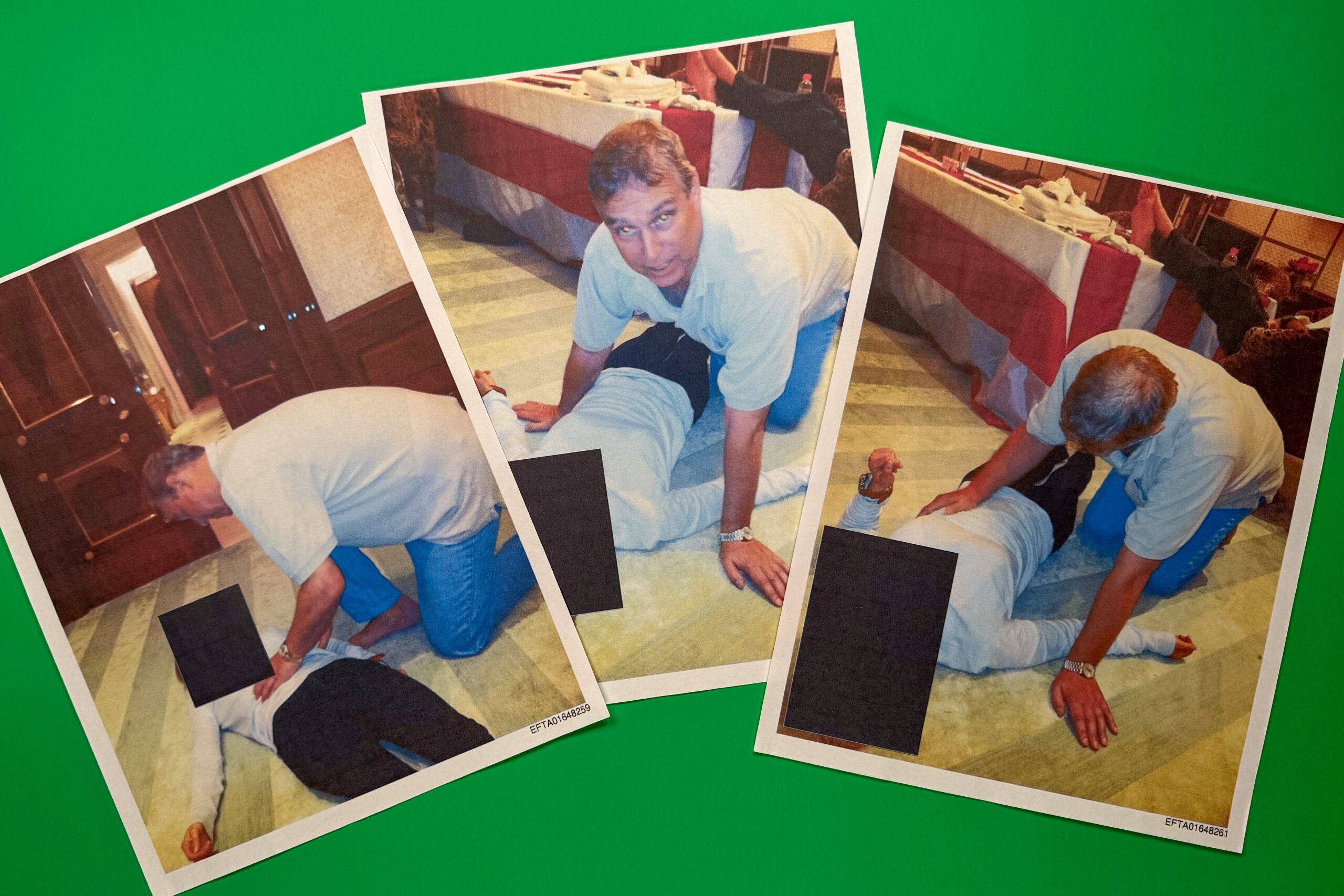
    Images from an undated and redacted document released by the U.S. Department of Justice, show Andrew Mountbatten-Windsor, formerly known as Prince Andrew, leaning over an unidentified person.

    Despite the aggressive moves against Mandelson and the ex-royal now called Andrew Mountbatten-Windsor, some observers think Starmer’s already tottering Labour government could collapse amid questions over what it did know about Mandelson’s Epstein connection, and when it did know it. A pointed headline in the Guardian newspaper bluntly summed up an increasingly prevalent U.K. viewpoint: “Deceit, betrayal and a scandal that demands historic change.”

    But the fallout has spread well beyond the British Isles. When it came out that Joanna Rubinstein, a Swedish U.N. official, visited Epstein’s island in 2012, and that Miroslav Lajčák, national security adviser to Slovakia’s prime minister, discussed “gorgeous” girls in emails with the financier, both of them quit their jobs.

    Imagine that.

    Norway, much like the U.K., has been rocked to its core by revelations that so many of the nation’s elite leaders had Epstein ties. That even includes the nation’s crown princess, Mette-Marit, who had a running, jovial email conversation with Epstein that included such mundane matters as teeth whitening. More seriously, Norway’s economic crimes unit — yes, some countries actually have such a thing — has opened a corruption investigation into former Prime Minister Thorbjørn Jagland’s relationship with the disgraced U.S. moneyman.

    There’s more. Latvia, Lithuania, and Poland have also announced their own investigations. In particular, Poland is digging into mounting evidence over associations between Epstein and Russian intelligence — an existential matter for a nation that’s been overrun and dominated by its eastern neighbor in the past.

    In the United States, officials seem more likely to investigate chemtrails or what happened to Amelia Earhart than conduct a serious probe of whether Trump’s former friend was with the Russians, too.

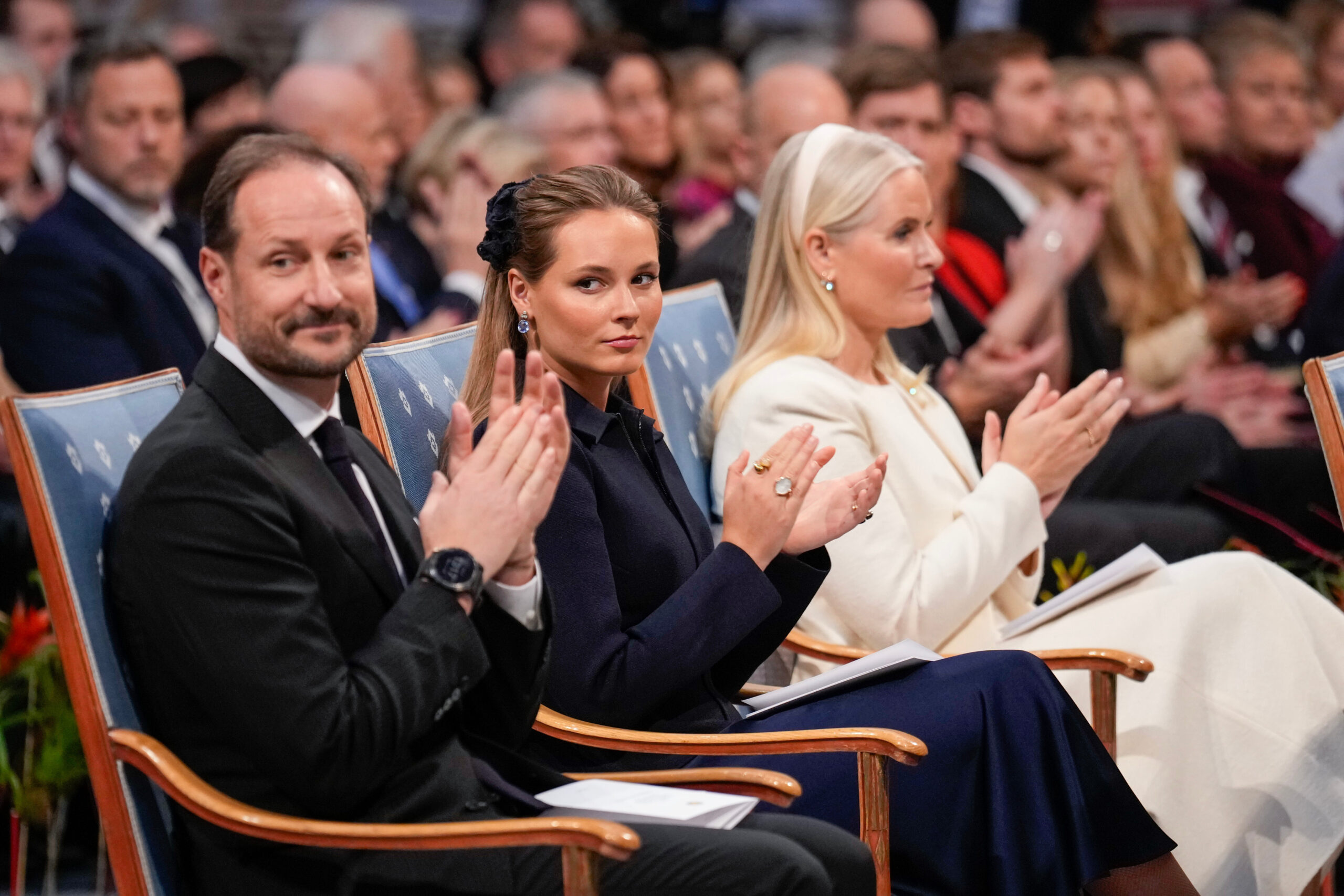
    Norwegian Crown Prince Haakon, Princess Ingrid Alexandra, and Crown Princess Mette-Marit applaud during the Nobel Peace Prize award ceremony in Oslo, Norway, in December.

    Rob Ford, a professor at the U.K.’s University of Manchester, told the Associated Press that Europe has “a more functional media, we have a more functional accountability structure, that there is still a degree of shame in politics, in terms of people will say: ‘This is just not acceptable, this is just not done.’”

    And that goes beyond Epstein. Also last week, French authorities raided the Paris office of U.S. citizen and world’s richest person Elon Musk’s social media giant X (formerly Twitter) as part of a sweeping probe into the site’s allegedly unlawful data extraction, as well as the recent scandal involving its artificial intelligence platform Grok spreading child sexual abuse material. The U.K. is also investigating Grok.

    Musk’s X is, of course, headquartered in San Francisco, but no one expects the FBI to burst into his office — not after the electric vehicle magnate donated a staggering $288 million in 2024 to push Trump back into the White House. (Although California’s Democratic attorney general has begun an investigation.)

    The time-lapsed release of the Epstein files hasn’t yet produced a smoking gun concerning his close friendship with Trump, but the fact that lurid tips to federal authorities about the two-time president don’t seem to have been really investigated speaks volumes about the utter lack of elite accountability on this side of the Atlantic.

    The true meaning of the Epstein files may be less what it says about any specific sex crime — horrific as those may be — and more what they show about how the most powerful men in this country understood that they can get away with anything.

    Indeed, it now feels like the 1970s Watergate scandal that looked at the time like the height of accountability — Richard Nixon was forced to resign the presidency, while 48 of his allies were convicted of crimes — was actually the end. Nixon’s subsequent pardon by Gerald Ford — which emboldened the disgraced ex-POTUS to declare that “when the president does it, that means it is not illegal” — was like a bat signal for elites that their brief moment of responsibility for their actions was over.

    There were virtually no criminal charges for the economic crime of the 21st century: the Wall Street-driven collapse of the global economic system in 2008. And the lack of justice is bipartisan. Prosecution of white-collar criminals in the United States hit an all-time low under Joe Biden, even before Trump began his obscene spree of pardoning the wealthiest crooks.

    Gary Rush, of College Park, Md., holds a sign before a news conference on the Epstein files in front of the Capitol in November.

    It was grotesque when the U.S. Supreme Court ruled in 2024 that presidents can’t be prosecuted for crimes that are “official acts,” yet that seemed pretty obvious after George W. Bush and Dick Cheney got away with their illegal torture regime. Who do you think we are, Europe?

    If the Epstein scandal “demands historic change,” as the Brits put it, then that change has to be a newfound drive to somehow renew the spirit of ‘74 — as in 1974. The assault on the foundation of American democracy that is the Trump regime — with its billion-dollar White House corruption, brutal and murderous immigration raids, perversions of criminal justice, and much more — won’t be cured just by Republicans losing a couple of elections, assuming free and fair balloting can even take place.

    The small-d democratic government that finally ends this nightmare must do the hard work Biden and his miserably failed attorney general, Merrick Garland, did not do the last time. Immigration agents who maim and kill, government officials enriching themselves, and all other crooks — especially those now being exposed in the Epstein files — must be prosecuted, convicted, and sent to prison.

    Maybe that’s not the American way. But there’s a whole wide world out there that is doing things a lot better.

  • The Pennsylvania pups, rejected by breeders and owners, who went on to become Puppy Bowl stars and find loving homes

    The Pennsylvania pups, rejected by breeders and owners, who went on to become Puppy Bowl stars and find loving homes

    Oscar was the ultimate underdog.

    Born in a puppy mill in Peach Bottom, Lancaster County, Oscar suffered from “failure to thrive,” his breeder said.

    By the time the breeder turned the 6-week-old toy poodle over to Phoenix Animal Rescue in Chester County, Oscar weighed just 7 ounces, according to Marta Gambone, a coordinator at the all-volunteer organization.

    “But one of our volunteers was able to turn him around, from this scraggly little hamster to this wonderful Puppy Bowl player,” Gambone said.

    When Oscar, a toy poodle, was rescued from a puppy mill in Lancaster County, he weighed just 7 ounces. After being nursed back to health, he’s playing in the 2026 Puppy Bowl.

    After being nursed back to health, Oscar traveled to Glens Falls, N.Y., to participate in the October 2025 taping of the 22nd annual Puppy Bowl, which airs today before the Super Bowl.

    Gambone said the annual event has become a wonderful way to raise awareness for animal rescues across the United States. Every one of the 150 dogs in the competition — between Team Ruff and Team Fluff — comes from a rescue.

    Oscar, a toy poodle nursed back to health in Chester County, is one of this year’s Puppy Bowl stars.

    Oscar, now 8 months old, has developed into a playful, social, and upbeat young dog who has found a loving home, Gambone said.

    Oscar is one of six puppies from Phoenix Animal Rescue in the annual TV special this year, Gambone said. Jill, an 8-month-old Cavalier, was suffering from a hernia when she was turned over by a breeder in New Holland, Lancaster County.

    The rescue also has four dogs participating in this year’s first-ever “Oldies vs. Goldies” senior dogs’ competition: Tiki, a Shiba Inu; Starlight, a Jack Russell terrier; Daisy, a Pomeranian; and Emmie, a Maltese mix.

    Tiki, a Shiba Inu, is in this year’s “Oldies vs. Goldies” senior dog competition.

    They all came from breeders in Lancaster County and were in need of care, Gambone said, “and now they’re all playing on a national stage, and getting lots of attention, and finding their forever homes.”

    Though all of this year’s stars have since been adopted, Gambone noted that the rescue gets about a dozen dogs per week, across a wide variety of breeds and mixes.

    “Anybody looking can find what they’re looking for if they have a little patience,” she said.

    Carrie Pawshaw sits for a portrait. Pawshaw, a rescue dog from the Pittsburgh region, competed in the 2026 Puppy Bowl.

    Across the state in Springdale, Allegheny County, Jacqueline Armour said it’s the third year that some of her rescue dogs are playing in the Puppy Bowl.

    She founded Paws Across Pittsburgh, a rescue that places dogs with foster parents until they find permanent homes. The dogs come from owners and shelters from as far away as West Virginia, Kentucky, and Ohio.

    This year, a playful Jack Russell mix named Meeko is their star, along with a Norwegian elkhound and American Eskimo dog mix named for Sarah Jessica Parker’s character in the TV show Sex and the City.

    “They pick some of them and rename them,” Armour explained, “so initially I thought they were going to call her Sarah Jessica Barker. And then they said Carrie Pawshaw.”

    Armour noted that, because her organization uses foster homes, their puppies are already learning how to live in a home — getting house-trained and crate-trained, and learning how to get along with children and other pets. This also gives volunteers a chance to see the dogs’ personalities, which can be helpful in matching a dog with an owner.

    Both Armour and Gambone emphasized that rescue operations offer a variety of ways for volunteers to help out.

    For those who’ve never owned a dog, Armour said the experience can be profound. The medical community consensus is that having a dog can help people get more exercise, improve mental health, and lower blood pressure, and can help children learn how to properly treat an animal.

    In Chester County, Gambone said she’s seen firsthand how dogs can add vitality to someone’s life.

    “They help with loneliness, and on the physical side, they help people stay more active,” she said. “We have so many senior citizens coming to us saying, ‘I just need something — something to love.’ And it changes their lives.”