Blog

  • Was Labaron Philon Jr. both the best pick of the night and ‘a terrible fit’ for the Sixers? Here’s what they’re saying.

    Was Labaron Philon Jr. both the best pick of the night and ‘a terrible fit’ for the Sixers? Here’s what they’re saying.

    Tuesday night marked the true start of the Mike Gansey era for the Sixers.

    After a season that saw the team’s playoff hopes end in a series sweep to the New York Knicks, the Sixers hired former Cleveland Cavaliers general manager Gansey as their new president of basketball operations. The NBA draft was Gansey’s first attempt to improve last year’s roster, and he used his team’s only scheduled pick — No. 22 overall — on Alabama guard Labaron Philon Jr.

    From being called the steal of the first round to concerns on how Philon will fit with the team, here’s everything they’re saying about the 76ers latest addition …

    Best pick of the night?

    Philon played two years at Alabama, making appearances in the Elite Eight as a freshman and the Sweet 16 as a sophomore before losing to Duke and Michigan, respectively. During his sophomore year, he averaged 22 points, 5 assists, 3.5 rebounds, and 1.2 steals.

    At ESPN, Bobby Marks listed Alabama’s former Mr. Basketball as the best pick of the night.

    “I ranked the Alabama guard as the 13th-best prospect in the draft,” Marks wrote. “What stood out for me is how Philon took the constructive criticism from the 2025 draft combine and applied it this past season. He improved his 3-point shooting from 32% to 40%.

    “The biggest takeaway is that NBA teams wanted to see Philon as a primary playmaker — he averaged 5.1 assists as a sophomore at Alabama. With the 76ers, Philon will join an explosive backcourt with Tyrese Maxey and VJ Edgecombe.”

    Labaron Philon Jr. arrives for the first round of the NBA basketball draft Tuesday, June 23, 2026, in New York. (AP Photo/Adam Hunger)

    ‘The upside is tremendous’

    As a freshman, Philon averaged 10.6 points, 3.8 assists, and 1.4 steals — earning SEC All-Freshman honors and becoming a three-time SEC Freshman of the Week. After his first year, he tested the NBA draft waters before ultimately deciding to return to school where he had a breakout sophomore season.

    “His stock did take a knock here over the past month or so,” said CBS Sports reporter Matt Norlander. “So there was a time where I thought his camp probably believed they would be somewhere in the top 16 or so. Instead, they fall into a really good situation, honestly. I do like the fit here with Mike Gansey now running the show in Philadelphia and did extensive work on him.

    “I’m of the opinion that if Philon puts it all together, I do think he’s going to be one of the 10-12 best players in this draft class when we check in five years from now. I’ve seen him in person plenty of times. He can be a blur with the ball. And knowing what his role is going to be, like, there’s some really established people there in Philadelphia. And being a wingman to Maxey amongst other players, I think it’s a really good value pick and I think the upside is tremendous.”

    ‘He could be a star’

    Philon dropping to the No. 22 pick surprised plenty of people, including former NBA star DeMarcus Cousins.

    “I think he dropped more than he should have, but I’m super excited for the kid,” Cousins said on Bleacher Report’s draft show. “He gets to learn behind Tyrese Maxey. They obviously pick up some more depth as far as guard play. I’m not mad at the pick. This is an exciting player. I think he’s going to be great in Philly. I think Philly will love him right away. He can fit next to a star or he could be a star, that’s the greatness that comes with Philon.”

    When asked if it could be the steal of the draft, Cousins responded: “It could be, possibly.”

    “Obviously, I don’t think you get to maximize him in his rookie year as much as you can because he plays behind a Tyrese Maxey and a VJ Edgecombe. So there’s not as much opportunity when you have those franchise guys in place. But, I think he could be a really, really good depth piece for this Philly team.”

    Alabama guard Labaron Philon Jr. (0) celebrates after a 3-point basket against Auburn last March.

    ‘A terrible fit for the Sixers’

    However, other analysts don’t believe Philon is the best fit for a Sixers team that already has Edgecombe and Maxey in its starting lineup.

    “I got two thoughts,” said Kevin O’Connor on Yahoo Sports! Draft Live show. “One, it is a good value pick for Philadelphia. Philon is a steal here from a pure player standpoint with his creation ability. He is a very good basketball player. But two, this is a terrible fit for the Sixers.

    “I mean, they’re just too small in the backcourt. You drafted VJ Edgecombe last year, he should be like your two, not your three. And now you have Maxey and Philon. That’s too small to play competitive playoff basketball.

    “So I think it raises the question for the Philadelphia 76ers, is this actually a team that cares about right now, competing today? Or is this purely a future-based move? Do they actually want to contend this year or not? … Are the Sixers actually serious about winning today with Philon? I think the answer very clearly is no.”

    The move comes four months after the Sixers traded Jared McCain for a bevy of picks, including the pick the team used on Philon. But some are wondering why make that trade only to replace McCain with a player that has similar deficiencies.

    “It’s not that [Philon]’s a bad pick, it’s just you can’t pass on a guy like Cameron Carr, who’s the perfect fit alongside Maxey and Edgecombe,” said 97.5 The Fanatic’s Sam Oshtry. “[Philon is] 6-foot-2. Nick Nurse couldn’t find minutes for Jared McCain because he was too small and couldn’t defend. You just added a 6-foot-2 guard to the rotation. Yeah, you needed guard depth. But this guy has no starting potential alongside Maxey and Edgecombe.”

    Overall grade: B+

    In terms of overall grades for the first-round pick, most outlets are giving the Sixers a very positive review, including a trio of B+ rankings …

    Bleacher Report (B+): “This is a tremendous value for the talent. That matters. It would just score a little higher if Philadelphia had more of an obvious opening for Philon.” — Zach Buckley

    The Athletic (B+): “A scoring guard with a splendid array of finishes, Philon should add some juice to the non-Tyrese Maxey minutes in Philly once he gets his NBA sea legs. The Sixers have no viable backup point guard at the moment, so Philon could play right away. Philon also ends up being the last in the wave of eight point guards who projected to go between picks No. 5 and No. 25.” — John Hollinger

    CBS Sports (B+): “Philon gives Philadelphia a dynamic scorer who attacks with pace, has worked his way into a shotmaker, and showed more defensive chops as a freshman. A gifted shot creator, Philon stuffed the stat sheet as the focal point of one of college basketball’s fastest offenses, and did it with 50/40/80 shooting splits. If he can tap back into some of the defensive tools he showed as a freshman, there could be real value here.” — Adam Finkelstein


  • Iran war has cost your household $1,000 — and counting | Expert Opinion

    Iran war has cost your household $1,000 — and counting | Expert Opinion

    One thousand dollars. By my calculation, that’s the effective cost of the Iran war to the typical American household so far. While the U.S. and Iran have agreed to a ceasefire and are talking to end the war, the costs are still mounting.

    The cost of a gallon of regular unleaded is the most obvious example. Before the war, the national average price per gallon was comfortably below $3. Gasoline was about the only thing we buy regularly that hadn’t become much more expensive since the pandemic.

    Not anymore. While gas prices are down from their peak when Iran shut down oil tanker traffic through the Strait of Hormuz, they’ve only recently dropped back below $4 per gallon. And the road back to prewar prices will be long. The insurance that oil tankers require to operate will be much more expensive given that the Iranian regime can seemingly shut down the strait at will.

    There is also the prospect that Iran will charge a fee to tankers passing through the strait, which will ultimately be reflected in the price we pay at the pump. And then there is the damage to the Middle East’s extensive oil production infrastructure caused by Iranian reprisals, which will slow the full resumption of production.

    Since the war started four months ago, American households have shelled out an additional $300 due to higher gas prices. This is particularly irksome because there’s no easy way to drive less. We still have to get to work, take the kids to school, and shop for groceries.

    Speaking of groceries, they cost a lot more now, too. That’s because of higher diesel prices, which are up even more than gas prices. This has pushed up the cost of trucking products from farms, factories, and seaports (we import a lot of food) to store shelves. Higher diesel prices also mean that anything delivered to our homes on an Amazon or UPS truck is more expensive. And if your household is anything like mine, that’s a lot of stuff. In total, the higher diesel prices have cost households approximately $200.

    Then there is the cost of jet fuel, which has surged due to the war, prompting airlines to jack up their fares. With airlines operating near capacity, they’ve been able to quickly pass their higher costs on to travelers. That represents $100 in added costs for the typical household.

    Higher energy, food, and travel costs are fueling inflation and complicating the Federal Reserve’s task of keeping inflation low. At 4%, the inflation rate is twice the Fed’s 2% target.

    This means higher interest rates. Before the Iran war began, investors widely expected the Fed to cut rates by half a percentage point this year. Now, they expect the Fed to raise rates by about the same amount to slow the economy further and bring inflation back down.

    This is a big deal if you have any credit card debt, as you are already paying a near record 20% interest rate. You will also pay more in interest if you have a home equity line of credit, or if you are a small-business owner with prime-rate bank loans. Getting an auto loan is also more expensive.

    But rates have increased most for mortgage loans. Refinancing a mortgage or purchasing a home was a significant stretch for most households before the war; it is now completely out of reach. The higher interest rates resulting from the war have cost households $150.

    There is also the cost we bear as taxpayers, namely, what our military is spending in the Middle East. Prosecuting such a complex war so far from home is expensive, particularly given the considerable volume of sophisticated munitions used. While the military costs have moderated with the ceasefire, they still amount to nearly $50 million more per day. All told, the war’s military cost has reached $250 per household.

    The war has other economic costs, but they are difficult to measure and are not included in these numbers. Consider the higher cost of fertilizer, which is critical to global crop production and will ultimately be reflected in higher food prices. The Middle East has historically been a powerhouse fertilizer producer.

    There is also the higher cost of helium, which is produced in quantity in the Middle East and is a critical input in semiconductor production. Chips go into just about all consumer products and are the lifeblood of the artificial intelligence boom.

    My estimate that the Iran war has cost the typical American household $1,000 and counting is, if anything, conservative. The true cost is likely higher — meaningfully higher. It’s fair to ask whether it was worth it.

  • S. Broad Street gets a new landscaped median — and it’s just the start of what’s planned

    S. Broad Street gets a new landscaped median — and it’s just the start of what’s planned

    A new landscaped median under construction for months in front of the Kimmel Center has reached completion — the down payment on a promised major redo of the Avenue of the Arts streetscape.

    The leafy ribbon down the middle of Broad Street from Spruce to Pine Streets was officially unveiled Wednesday morning with speeches and a ceremonial sprinkling from blue watering cans onto the new plantings.

    “We aimed high and we met our lofty expectations, and we’re off and running,” said Carl Dranoff, chair of Avenue of the Arts Inc., which is spearheading the project.

    There is a practical, traffic-calming intention behind the raised median: It leaves less space for drivers to make U-turns on the block occupied by the arts center and residences, and creates a barrier to thwart pedestrians jaywalking across Broad Street.

    Attendees watering the new redesign of the South Broad Street median outside the Kimmel Center in Philadelphia, Pa., on Wednesday, June 24, 2026.

    But the slender, shapely strip of trees, shrubs, and ground cover atop a granite base with metal skirt signals a larger transformation to come.

    In spring of 2027, work is expected to begin on an ambitious beautification of the heavily trafficked block. Sidewalks will be landscaped, sculptures installed, and pop-up performance space carved out, creating what planners say will be a markedly different vibe.

    That will give the project’s leaders something tangible to point to when raising money for the entire streetscape project, which is envisioned as eventually stretching from City Hall south to Washington Avenue.

    “The idea of a beta block was to get everybody on board and excited about what can be accomplished — the doability and to create buzz,” said Dranoff, who said the median was the first step in turning South Broad Street into “one of the great streets of the world.”

    Oliver Schaper, Ubran Designer for the Project with the New York office of Architecture/Design Firm Gensler, waters the plants in the redesign of the South Broad Street median outside the Kimmel Center in Philadelphia, Pa., on Wednesday, June 24, 2026.

    That larger, 10-block effort is expected to cost about $150 million and take years to design and complete, with funds anticipated from both government sources and philanthropy.

    The design of each segment will vary, said Oliver Schaper, an urban designer for the project with the New York office of architecture/design firm Gensler.

    “The requirements of adjacent buildings are different on every block, the left-turn lanes are different, even the length of the median is different from block to block,” Schaper said. “We wanted to make sure that all the design elements can act as a kit of parts and adjust, so each design of a block will be an application of that kit of parts so they feel like cousins, but specific.”

    Some design professionals have criticized the median as intrusive to sight lines, but the design and landscaping were chosen to preserve sight lines, Dranoff said.

    Carl Dranoff, Chair of Avenue of the Arts Inc., speaks about the redesign of the South Broad Street median outside the Kimmel Center in Philadelphia, Pa., on Wednesday, June 24, 2026.

    “All of the trees were specifically selected to have long trunks and very narrow canopies, all the vegetation.” The designs adhere to standards for safety, he said, “so we are very confident that we will not block views.”

    The flora — about three dozen kinds of native and adaptive plants — were chosen by OJB Landscape Architecture to withstand “the abuse that they will be subject to in terms of the winters and the salt and all that,” Schaper said.

    Looking ahead, the blocks farther north from Spruce Street are anticipated as having fewer trees, to preserve the view of City Hall.

    “We even designed, as you get closer to City Hall, standing areas for brides and photo ops, so that we’re not taking anything away from people,” Dranoff said. “We have parade areas so that Mummers and other parades have performance areas between the medians.”

    City Hall seen in the back near the new redesign of the South Broad Street median outside the Kimmel Center in Philadelphia, Pa., on Wednesday, June 24, 2026.

    But more immediate is the work from Pine to Spruce, where Dranoff’s 47-story Arthaus residential condo tower sits. The $5 million needed to pay for the median and work on the infrastructure beneath the street “is accounted for and that was utilized,” Dranoff said, “and of the $10 million for the sidewalks, we have several million lined up and more to go, and we’ll have it all by the end of the year.”

    Construction on the sidewalk portions is expected to begin in 2027 and be completed by the end of the year “or thereabouts,” he said.

    Schaper said part of the goal is to rebalance the dynamic between pedestrians and other factors.

    “I think as designers at some point we take a position, and our position was, ‘Let’s design for pedestrians.’ There are, of course, very specific requirements that we need to adhere to — for example, it’s reflected in conversations that we had with the Kimmel Center about their bus queuing, and we made adjustments to continue to allow that to happen.”

    The new redesign of the South Broad Street median outside the Kimmel Center in Philadelphia, Pa., on Wednesday, June 24, 2026.

    But, he said, the plan sets out to be “an advocate of the pedestrian experience, and not think that private car access is the model of the future for cities.”

    Dranoff said construction of this first median phase, running much of the block from Spruce to Pine, was delayed by the unusually harsh conditions of this past winter, but workers made up for lost time.

    “Philadelphia’s going to be a hotbed this summer, and the whole point of this was to show what we can do and be more beautiful and more attractive and more compelling to Philadelphians and to suburbanites and to the world.”

  • There are plans for an 86-unit apartment complex next to SEPTA’s Jenkintown station

    There are plans for an 86-unit apartment complex next to SEPTA’s Jenkintown station

    Eighty-six new apartments are planned for Wyncote in Cheltenham Township as part of a development project that would also include an office and a commercial space.

    The building at the center of the 165 Township Line Rd. property would remain an office, while the project would convert a second existing structure into a 36-unit apartment building, and add a third, 50-unit apartment complex to the site with a parking garage and a retail space on the ground floor, according to a May review letter from the Montgomery County Planning Commission.

    The higher-density development would sit about 1,000 feet from SEPTA’s Jenkintown-Wyncote Regional Rail station, which SEPTA plans to rebuild with a pedestrian overpass and other features by 2027.

    The lot is zoned for multi-use development, but only the new 50-unit building meets that criteria. Cheltenham Township grandfathered the existing office building into the current zoning ordinances, and the planned 36-unit complex was granted an exemption in 2024.

    In addition to the 79-car garage, the plans include a repainted parking lot to boost spaces from 135 to more than 160.

    The project is expected to net about half a million dollars annually for the township and Cheltenham School District, according to a February fiscal analysis, and house an estimated six school-aged children.

    SEPTA, which aims to boost ridership by encouraging higher density, pedestrian-friendly housing along Regional Rail lines, said Tuesday that they’re glad projects like these are moving forward.

    “Transit-oriented communities reinforce the public’s investment in SEPTA,” spokesperson Kelly Greene said.

    JOSS Realty Partners, which had owned the entire property, held a joint open house with SEPTA in 2019 about a project that would’ve allowed SEPTA to use a parking lot on the site.

    JOSS still owns the office building that’s excluded from the proposal. The new development is planned to be built on about an acre of the site that was sold off to 165 Town Line Holdings LLC in 2025.

    The mailing address for the LLC is a property co-owned by real estate investor Edward Topolewski.

    In their review of the proposal, the Montgomery County Planning Commission called for more pedestrian and cyclist access.

    “We are glad to see new development proposed in the area of the Jenkintown-Wyncote Station,” principal county planner Chloe Mohr wrote.

    “For this to be a successful development, pedestrians need to easily and safely travel throughout the site, to the train station, and to other destinations.”

    That includes access to future walking trails, the planners wrote, and neighboring Wyncote House.

    County officials also suggested that Cheltenham consider improvements to the stormwater management plan.

    “It appears that there may currently be erosion and drainage issues here,” Mohr wrote. “With the steep slopes on this site, more may need to be done to remediate stormwater runoff.”

    The project was slated for review by the town’s Shade Tree Advisory Commission this month, Cheltenham Commissioner Jeff Chirico said, but the developer requested an extension.

    The proposal would then head to the township commissioner board.

    This suburban content is produced with support from the Leslie Miller and Richard Worley Foundation and The Lenfest Institute for Journalism. Editorial content is created independently of the project donors. Gifts to support The Inquirer’s high-impact journalism can be made at inquirer.com/donate. A list of Lenfest Institute donors can be found at lenfestinstitute.org/supporters.

  • U.S. says chemical maker Chemours to pay $450M to settle ‘forever chemicals’ case

    U.S. says chemical maker Chemours to pay $450M to settle ‘forever chemicals’ case

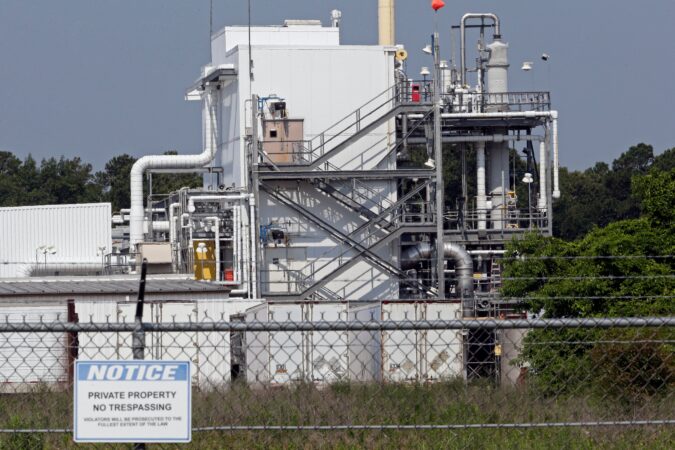
    WASHINGTON — The Trump administration on Wednesday reached a multistate settlement with chemical giant Chemours Co. over yearslong, illegal discharges of synthetic “forever chemicals” used to make products resistant to water, grease, and stains. The settlement is the first by the federal government to resolve enforcement claims against a manufacturer of harmful chemicals known as PFAS.

    Under the agreement, filed in federal court in West Virginia, Chemours will pay a civil penalty of $22.5 million for alleged violations and spend $90 million over 15 years to mitigate PFAS discharges in three states: West Virginia, North Carolina, and New Jersey.

    Wilmington-based Chemours, a spin-off of chemical maker DuPont, also agreed to install PFAS pollution controls for surface water discharges and air emissions at a West Virginia facility at an estimated cost of $60 million, supply clean drinking water to communities near its West Virginia and New Jersey sites at an estimated cost of $280 million, and implement controls to reduce releases of PFAS and other toxic chemicals from its facility in North Carolina.

    Combined, the penalties and relief programs are estimated to cost about $450 million, the Justice Department said.

    The settlement allows Chemours to continue manufacturing PFAS for commercial and military applications while preventing future contamination and protecting communities from existing pollution, said Adam Gustafson, principal deputy assistant attorney general for the Environment and Natural Resources Division.

    Justice Dept. says settlement protects public health

    “The Trump administration recognizes the important role of Chemours for its commercial and military obligations,” Gustafson said in an interview. “The settlement protects public health while preserving that important balance.”

    The settlement against a major PFAS manufacturer “delivers on the Trump administration’s promise to make polluters pay and stop PFAS contamination at the source,” said Jeffrey Hall, assistant EPA administrator for enforcement and compliance assurance.

    The agreement will greatly reduce PFAS contamination of water, land, and air and even begin to mitigate past harm, Hall said. “This settlement brings Chemours into compliance with the law and holds it fully accountable,” he said.

    In a statement Wednesday, Chemours said it has already begun planning and implementing operational improvements at its facilities and will take steps to mitigate future emissions and enhance existing programs.

    “This settlement provides Chemours with greater clarity on future compliance requirements and actions to support long-term responsible manufacturing,” spokesperson Jess Loizeaux said.

    The settlement comes as the Trump administration is expected to propose softening Biden-era limits on “forever chemicals” in drinking water, while delaying but keeping tough standards for two common types of the substance.

    The proposal will start the formal process of rolling back parts of the first-ever limits on PFAS in drinking water finalized during former President Joe Biden’s administration. Officials at the time found they increased the risk of cardiovascular disease, certain cancers, and babies being born with low birth weight.

    The agency is committed to addressing per- and polyfluoroalkyl substances (PFAS) in drinking water while following the law and ensuring that regulatory compliance is achievable for drinking water systems, EPA Administrator Lee Zeldin said.

    Chemours discharged PFAS into rivers in three states

    The settlement determined that facilities Chemours operates in the three states have discharged PFAS into the Ohio River, Cape Fear River, and Delaware River in violation of permits required by the Clean Water Act and state laws. Chemours also violated legal requirements under the federal Toxic Substances Control Act at all three facilities.

    As a result of the alleged violations, people living near the facilities were exposed to illegal PFAS, officials said. PFAS are widely used and found around the world, with scientific studies showing that exposure to some PFAS in the environment may be linked to harmful health effects in humans and animals.

    The violations continued for over a decade, the Justice Department said. The facilities were previously owned for many decades by DuPont. The settlement announced Wednesday does not resolve DuPont’s liability for past PFAS violations, officials said.

    A federal judge last year ordered Chemours to stop discharging unlawful levels of cancer-causing chemicals into the Ohio River from the company’s Washington Works plant in West Virginia. The pollutants endanger the environment, aquatic life, and human health, U.S. District Judge Joseph Goodwin wrote in the August 2025 order.

    The West Virginia Rivers Coalition had asked Goodwin to require the company to immediately comply with its permit limits after violating them for more than five years.

    DuPont, Chemours, and another company, Corteva, agreed to pay New Jersey up to $2 billion last year to settle environmental claims stemming from PFAS. The federal settlement does not affect the state case.

    N.C. AG blasts settlement

    North Carolina Attorney General Jeff Jackson called the settlement “an insult to the people of eastern North Carolina.”

    His state is “ground zero for GenX contamination, but this deal does practically nothing to clean up our water,” said Jackson, a Democrat. GenX is a trade name for a synthetic chemical developed by Chemours as an alternative to PFAS but which has raised significant health and environmental concerns in its own right.

    “Chemours made this mess, and Chemours should clean it up,” Jackson said in a statement.

    The federal consent decree calls for 14 specific treatment systems to reduce PFAS in wastewater, stormwater, and groundwater from the West Virginia plant. Chemours will test drinking water near the West Virginia and New Jersey sites and provide treated or alternative clean water.

    Editor’s note: This article has been updated to include statements from Chemours and the North Carolina attorney general.

  • Abington schools are reviewing security after a man charged with trying to rape a girl repeatedly entered the high school

    Abington schools are reviewing security after a man charged with trying to rape a girl repeatedly entered the high school

    The Abington School District is reviewing security procedures after police charged a 25-year-old man with trying to rape a student who repeatedly let him into Abington Senior High School.

    Police charged Raeem Grange-Allen of Philadelphia on Friday with attempted rape by force and attempted statutory sexual assault, among other charges. The student, a 14-year-old girl, told police she had met Grange-Allen at the high school.

    Grange-Allen initially identified himself as a student and began communicating with the girl through text messages and social media, according to a police affidavit.

    Grange-Allen later asked the girl to let him into the school “and requested she perform oral sex on him behind a stairwell,” according to the affidavit. The girl told police she “saw him or let him into the school approximately three to four times.”

    In a message to families Tuesday, Abington Superintendent Jeffrey Fecher said the girl let Grange-Allen into the high school on two occasions in March, opening a back door during the school day.

    “Video footage shows he was wearing a hoodie and was able to briefly blend in as a student while moving in the hallways,” Fecher said.

    On March 27, Grange-Allen came to the girl’s home in Abington Township, where he held her down and attempted to rape her, according to the police affidavit. The girl screamed, and her mother caught Grange-Allen, according to the affidavit. The girl went to the police the next day.

    Fecher said there were “numerous unresolved questions about this man’s presence in the high school, as well as, where and when he initially encountered the victim.”

    The district is “launching a third-party internal investigation” and reviewing security protocols, Fecher said. While exterior doors are locked throughout the school day, “building occupants always have the ability to open them from the inside for evacuation purposes, as required by law,” he said.

    Fecher said the district would be working with the Montgomery County Department of School Safety “to determine whether additional security measures can be put in place.”

    “We share in the concern and shock that this information causes, and we are committed to addressing it effectively,” Fecher said.

    As of Wednesday, Grange-Allen was being held at the Montgomery County Correctional Facility on $250,000 cash bail.

  • Lebanese on the edge of Israel’s occupation live with fear and rising tensions

    Lebanese on the edge of Israel’s occupation live with fear and rising tensions

    JDEIDAT MARJAYOUN, Lebanon — Looking out from a friend’s balcony, Milia el-Cheikh struggled to find her own home in the ruins of her now-deserted village, its entrances strung with barbed wire.

    Her village of Dibbine is one of several Shiite-majority communities across southern Lebanon destroyed by Israeli forces battling the Iran-backed Shiite Hezbollah. Israel has occupied vast areas and fighting has raged through declared ceasefires. The latest truce — part of the interim peace deal between the United States and Iran — has largely held.

    El-Cheikh, one of the few Christians from Dibbine, found shelter in another village but regularly visits Jdeidat Marjayoun, a mostly Christian village next to her hometown, to have coffee with a friend from church. Before the war, it was a comforting ritual. Now it takes place against a backdrop of loss and fear.

    “I don’t know anything about my house,” she said. “Nothing is more agonizing than not being able to get to your home.”

    Jdeidat Marjayoun is one of a string of towns and villages visited by the Associated Press on the blurry edge of the Israeli-occupied zone of southern Lebanon. The military has pushed out the mostly Shiite population, believing they harbor Hezbollah, and many towns have been demolished.

    Residents of neighboring Christian, Sunni and Druze communities have been allowed to stay, but the conflict has transformed their lives. Their homes have been struck, road closures have isolated them from the rest of Lebanon, and nighttime raids by Israeli troops have terrified residents.

    Israeli warnings against hosting Hezbollah fighters have effectively barred them from taking in displaced Shiites, driving a wedge between longtime neighbors and stoking political and sectarian tensions.

    Lebanon is a linchpin for the Iran deal

    The latest conflict began when Hezbollah fired rockets into Israel days after Israel and the U.S. launched their war on Iran on Feb. 28. Israel invaded Lebanon and has expanded its zone of control up to seven miles deep in places.

    As troops advanced, Israel warned people to leave large areas of southern Lebanon, and in April published a list of 53 towns and villages — mostly Shiite — where residents are barred from returning. On Thursday, it added eight more predominantly Shiite villages.

    Israel says its troops will remain in southern Lebanon for self-defense. It says Hezbollah was deeply entrenched and has released videos purporting to show tunnels and other military infrastructure in residential areas.

    Iran says any wider truce must include Lebanon and that Israel must withdraw, while Hezbollah says it will resist occupation. Lebanon’s government has also called on Israel to withdraw.

    They live in the Israeli military’s shadow

    Mixed villages and towns on the edge of the security zone, spread over hills and valleys among orchards and olive groves, stand within sight of their devastated neighbors. Residents have vowed to stay.

    The Shiite town of Khiam — now an empty white swath of flattened buildings controlled by Israel — can be seen from the Christian village of Qlayaa.

    Qlayaa’s residents are effectively barred from reaching their olive groves in the valley between. “Now another season is lost,” said Hanna Daher, Qlayaa’s mayor.

    A priest in Qlayaa was killed by shelling as he inspected an earlier strike, and a father and his two children were killed in a drone strike while driving to Qlayaa. Israel says it only targets militants.

    In Jdeidat Marjayoun, a house was bombed on suspicion that militants were using it. Rockets — believed to be from Hezbollah — damaged a church’s dome. In other places, solar panels, power transmitters and water stations have been hit.

    El-Cheikh fled Dibbine with her neighbors in early March after Israel warned people to leave. In late May, following weeks of fighting, Israeli forces raided Dibbine before withdrawing in early June.

    As the fighting raged, el-Cheikh’s friend, Lolitta Costantine, huddled with her husband in their home in Jdeidat Marjayoun, and at one point stayed with neighbors. Cracks caused by explosions run down the walls of her home. Windows were shattered and doors knocked loose. She keeps shrapnel as a reminder of the ordeal.

    “We didn’t know where the danger was coming from,” Costantine said.

    Tensions rise as the displaced are turned away

    Shiites seeking shelter from the fighting have been turned away by those who fear Israeli strikes or eviction, aggravating tensions that have been mostly dormant since Lebanon’s 1975-1990 civil war.

    When a Qlayaa resident hosted a friend from a Shiite village in his orchard, his house was bombed, said Daher, the mayor. Other residents have asked Shiites seeking refuge to leave.

    “We told them, we don’t want problems for you or for us,” Daher said.

    Israel has warned Jdeidat Marjayoun’s municipality not to allow in people displaced from neighboring villages, saying it could put the town at risk or force it to be evacuated, the municipality said on social media.

    “We were forced to ask some to leave the town,” said the parish priest, Father Philip Habib Okla. “It caused many disagreements and tension,” he added. “We are counting on faith to remain united.”

    The Israeli military said it has warned people in parts of southern Lebanon not to allow Hezbollah to use their villages. It said Hezbollah operates in civilian areas, endangering residents.

    During Israel’s 1982-2000 occupation of southern Lebanon, the area was a bastion of the South Lebanon Army, a mostly Christian militia working with the Israeli military. When Israel withdrew, some of them fled to Israel while others faced trial in Lebanon, where they were widely seen as collaborators.

    Some residents worry they will be unfairly painted with that brush for staying in their homes. Few are willing to speak of the tensions openly, fearing retaliation by Israel or Hezbollah.

    At a church visited by AP, a man shouted in exasperation that everyone had become suspicious of each other, even among Christians. He blamed Hezbollah for dragging Lebanon into the war, saying it had made a serious mistake.

    ‘It is like the West Bank here’

    Late one night in March, Israeli forces surrounded a building in the mostly Sunni village of Halta. They burst in and arrested Chadi Abdel-Al, who screamed “my heart” as he was being beaten and dragged into a van, according to his mother, Ayesha al-Qaderi, who lives in the same building.

    In the commotion, a 15-year-old relative, Mohammad Abdel-Al, ran through the dark in his pajamas toward the house, his grandfather, Hatem, said. The Israeli soldiers shot him dead. A neighbor, who was out on his balcony, was wounded.

    The Israeli military said it had detained the commander of a local militant group and that its forces had opened fire at two individuals who it said had approached in a suspicious manner.

    In a separate incident, Israeli troops detained three farmers from Halta during a raid on a nearby village.

    They are among at least eight people detained by Israeli troops since March, according to Lebanese media. The Israeli military says they were suspected of involvement in militant activities and plots against its troops.

    “We still don’t know why they kidnapped them. Maybe to instill fear in the village and to send a message that they see everyone,” said Issa Abdel-Al, the community’s leader.

    “It has become like the West Bank here,” he added, referring to the occupied Palestinian territory.

    Al-Qaderi, who has heard nothing about her son since he was spirited away, said: “I just want to know his fate.”

  • Victories by pro-Palestinian Democrats show the party’s shift on Israel

    Victories by pro-Palestinian Democrats show the party’s shift on Israel

    NEW YORK — Three Democrats who made criticism of Israel central to their political identities swept to victory in House primary races in New York City on Tuesday, signaling a new era of skepticism in their party toward the Jewish state and its actions.

    The striking results reflected a fast-moving shift in liberal politics. Democratic voters are now more likely to be critical of Israel and its government than they are to be supportive, according to several recent polls, a monumental change in American sentiment.

    And while many Democratic officials remain supportive of Israel, next year’s class of congressional Democrats is on track to be more wary about the United States’ relationship with Israel than at any other moment since the Jewish state was established after World War II.

    The primary triumphs in deep-blue districts of Brad Lander, Claire Valdez, and Darializa Avila Chevalier came after each was endorsed by Mayor Zohran Mamdani of New York, whose advocacy for the Palestinian cause has been integral to his rapid political rise. At a rally for the candidates last week, he called the nation’s leading pro-Israel organization part of a group of “monsters” that he said were too powerful in American politics.

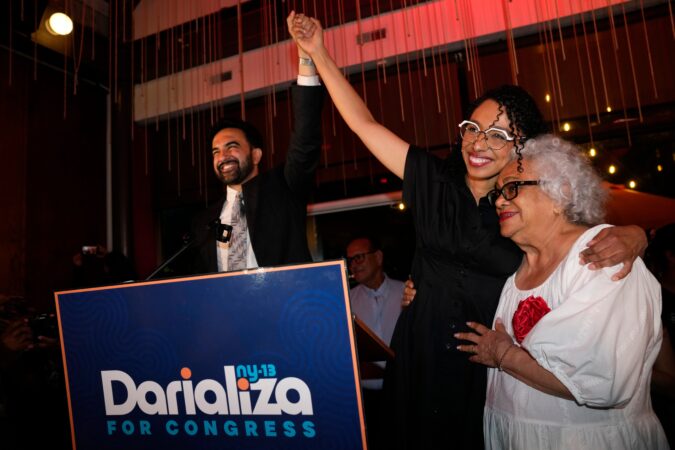
    At Avila Chevalier’s victory party Tuesday night in Harlem, supporters chanted “free Palestine” while she pushed her campaign’s “babies, not bombs” slogan. She suggested in her victory speech that her win represented a shift in how Democrats in New York would operate.

    “Today, we make it clear: The politics of the past ends today,” she said.

    Super political action committees allied with the American Israel Public Affairs Committee, the pro-Israel group, have spent huge amounts of money on this year’s midterm elections to try to turn the tide in voter opinion. The organization has had some victories, saying in a statement Tuesday night that 180 Democrats and Republicans it had endorsed had advanced to the November election. The group congratulated a Maryland House candidate its allied super PAC spent millions backing and said this would “ensure this seat remains represented by pro-Israel leadership.”

    But despite those successes, AIPAC has largely been on the defensive.

    Polls show that support for Israel among Democrats has sharply and steadily eroded since the Hamas-led terrorist attacks on Oct. 7, 2023, and Israel’s subsequent destruction of most of the Gaza Strip. A New York Times/Siena survey this spring found that 60% of Democratic supporters said they were more sympathetic to Palestinians than Israelis, compared with 15% who were more supportive of Israel.

    “You’re seeing more and more Democrats making it clear that we should provide no U.S. taxpayer support to the government of Israel,” Sen. Chris Van Hollen (D., Md.) said in an interview Tuesday. Next year, he added, “I hope we will see a Congress that doesn’t provide reflexive unconditional support to the government of Israel.”

    Perhaps the most significant of the New York races pitted Rep. Dan Goldman, a two-term Democrat from Brooklyn, against Lander, the former New York City comptroller, who staked his campaign on opposing Goldman for being insufficiently critical of Israel.

    The race between the two men, Jews who both describe themselves as liberal Zionists, symbolized how Democratic voters, especially younger ones, have shifted away from support for Israel.

    But perhaps the most outspoken anti-Israel Democratic candidate who won in New York City, Avila Chevalier, defeated Rep. Adriano Espaillat, who has been a steadfast supporter of Israel in his decade in Congress. Avila Chevalier spoke often of having lived in the West Bank and attended a rally on Oct. 8, 2023, that was widely criticized for featuring speakers who appeared to justify the attacks a day earlier.

    Like Lander and Valdez, Avila Chevalier is now the Democratic nominee in a solidly blue House district and is a heavy favorite to wind up in Congress come January.

    New York Mayor Zohran Mamdani (left) congratulates Brad Lander after his victory in the Democratic primary election for the seat held by Rep. Daniel Goldman (D., N.Y.) in Brooklyn on Tuesday night.

    The fights in New York became increasingly nasty in the final days of the campaign. A local coffee shop chain wrote on social media that Goldman, who is critical of Israel’s government but has opposed banning aid to the country, was not welcome because it did not serve “genocide enablers.”

    Pitched midterm battles over Israel

    The main super PAC tied to AIPAC, the United Democracy Project, has spent more than $25 million so far this year, in addition to at least $5 million it has funneled to create new super PACs.

    That sum may be just a fraction of what is to come. The group started the year with more than $96 million, making it one of the best-funded PACs in the country.

    Its most prominent spending battles so far have been in New Jersey and Illinois. But Israel also became a driving issue in several House primaries in California.

    The results have been mixed. In the Chicago suburbs, Daniel Biss, the mayor of Evanston, Ill., won a House primary after explicitly attacking AIPAC. The group spent $7 million in the race, mostly aimed at defeating Biss, who is Jewish. But in the final days of the primary, when it became clearer that a candidate even more critical of Israel than Biss could win, the super PAC dialed back its attacks on him.

    In New Jersey, the AIPAC-tied super PAC targeted Tom Malinowski, a popular former member of Congress who supported more restrictions on aid to Israel. But in an embarrassing turn for AIPAC, Analilia Mejia, a progressive organizer who was loudly critical of Israel, beat him in the special election and then won a later primary.

    AIPAC has won victories, too. Two of its preferred candidates in Illinois won crowded primaries, even as another anti-AIPAC Democrat won in a Chicago district.

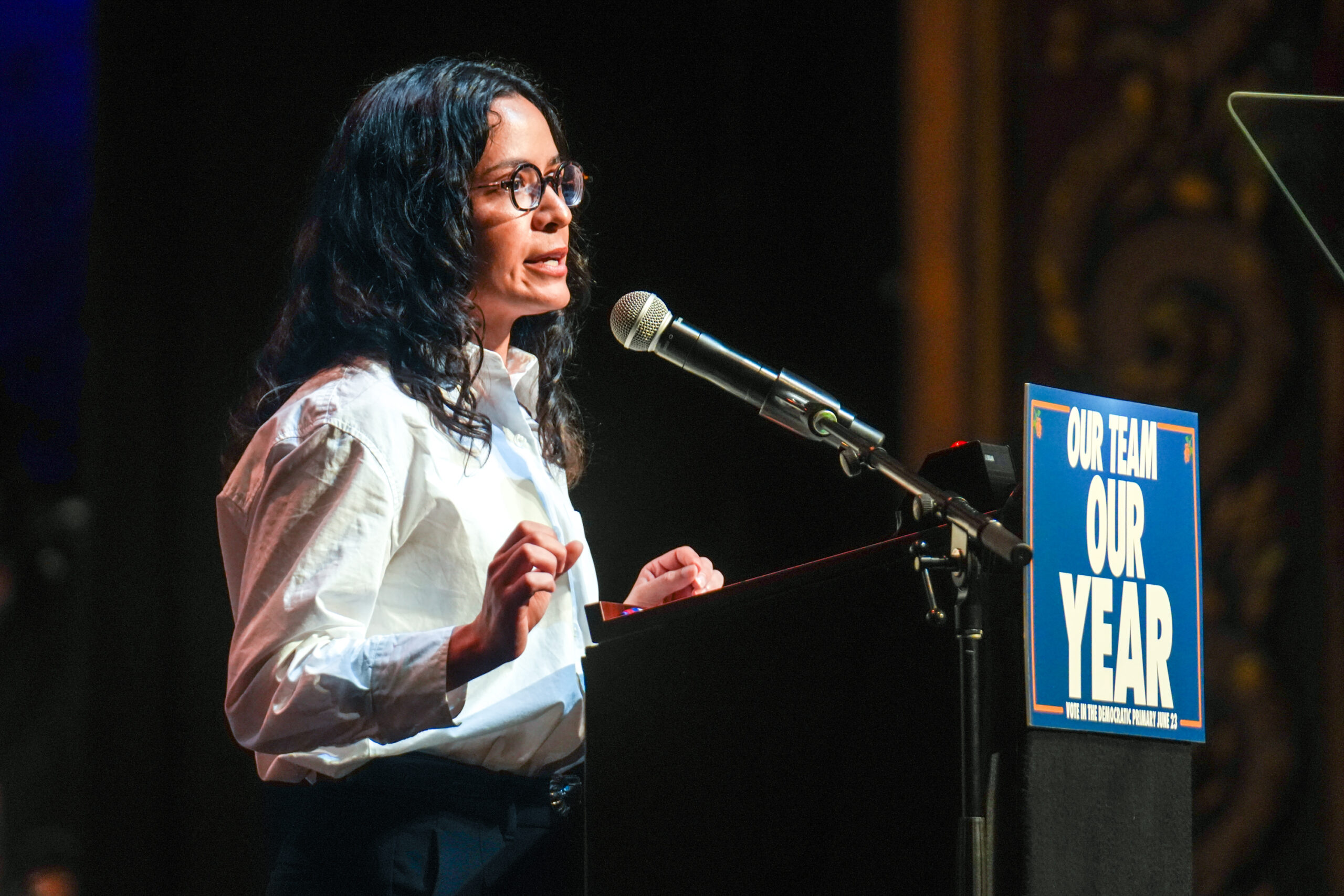
    Democratic congressional candidate Claire Valdez speaks during a June 18 rally in Brooklyn ahead of New York’s primary election.

    In Washington, defending Israel has fallen out of favor among many congressional Democrats, with a large majority of senators who caucus with the party voting this year to block some U.S. arms sales to Israel.

    “Do I think the Overton window on Israel has shifted more in the last six months than my entire career?” said Amy Rutkin, the longtime chief of staff to Rep. Jerry Nadler of New York, the longest-serving Jewish Democrat in the House, who is retiring. “It surely, absolutely has.”

    The shift is part of a generational change after the retirements of longtime Democratic leaders such as former House Speaker Nancy Pelosi of California and Rep. Steny Hoyer of Maryland, the longest-serving Democrat in the House, both of whom are stalwart supporters of Israel. Rep. Hakeem Jeffries of New York, the minority leader, is also a backer of Israel.

    But among Democratic voters, support for Israel has crumbled. And even House Democrats who are broadly supportive of Israel are highly critical of Benjamin Netanyahu, the country’s prime minister. Few enthusiastically support the right-wing Israeli government, and many are openly counting down until elections there, which are scheduled for October.

    Shifting winds in New York

    The Democratic shift on Israel has been particularly notable in New York, home to the country’s largest Jewish population and a mayor who has frequently focused on the plight of Palestinians.

    “The monsters that we are up against, they take many different forms,” Mamdani said at a recent rally for his endorsed candidates, before adding that AIPAC believed “the only thing more frightening than democracy being allowed to run its course is an end to genocide and Netanyahu’s wars.”

    Many Jewish leaders and groups criticized the remarks, arguing that they echoed antisemitic tropes at a time of increased hate crimes targeting Jews.

    One of the candidates the mayor backed, Avila Chevalier, defeated Espaillat, the chair of the Congressional Hispanic Caucus. He was the only candidate in New York who was explicitly backed by AIPAC’s super PAC, which transferred money to a separate group that supported him.

    In the 10th Congressional District, which includes lower Manhattan and a large area of Brooklyn and is one of the most Jewish districts in the country, Goldman frequently argued that a focus on foreign policy was misplaced given voters’ domestic priorities. Those arguments fell flat: He lost badly, trailing late Tuesday by more than 30 percentage points.

    Several Jewish Democrats who are most likely heading to the House, including Lander and Biss, have taken a more antagonistic tone toward the current Israeli government. But whether they will take radically different approaches to policy remains to be seen.

    AIPAC as a litmus test

    For decades, AIPAC was the leading voice of a bipartisan congressional consensus on the importance of the U.S.-Israel alliance. Now, many Democrats in contested primaries want nothing to do with it.

    The organization has become a symbol of dark money, alongside organizations backing the cryptocurrency and artificial intelligence industries. And all three interest groups are spending money on many of the same races.

    None of the advertisements paid for by the AIPAC super PAC even mention Israel, focusing instead on top-polling issues in each area.

    In Maryland, the super PAC spent more than $5 million to back Adrian Boafo, a state legislator, in the primary to replace Hoyer. The ads focused on Boafo’s biography and his accomplishments in Annapolis. Cryptocurrency interests spent an additional $3.4 million to back Boafo, according to AdImpact, a media tracking firm. He ended up finishing well ahead of a crowded Democratic field.

    The next Democratic primaries to revolve around Israel will come in August, when Minnesota, Michigan and other states are holding competitive intraparty contests.

    At a Democratic primary debate for Senate last week in Minnesota, Lt. Gov. Peggy Flanagan declared that “I don’t take AIPAC money because my values don’t align with AIPAC.” Her opponent, Rep. Angie Craig, who has been endorsed by AIPAC in the past, replied that she had taken “not one penny” from the group and called for Netanyahu to lose his reelection bid in October.

    The most divisive race, however, will be in Michigan, which has large Jewish and Muslim populations.

    The Democratic Senate primary there includes Rep. Haley Stevens, a staunch backer of Israel, and Abdul El-Sayed, a progressive public health official who has called Israel’s actions a genocide and opposes any military aid to the country. A third candidate, State Sen. Mallory McMorrow, has tried to take a middle path on Israel, but is struggling in the polls.

    This article originally appeared in The New York Times.

  • France reports first Ebola patient as cases in Africa surge above 1,000

    France reports first Ebola patient as cases in Africa surge above 1,000

    NAIROBI, Kenya — Reported Ebola cases have surged above 1,000 in the Democratic Republic of Congo, and health experts are warning this could be one of the worst outbreaks, rivaling the largest on record, which killed 11,365 people in West Africa from 2014 to 2016.

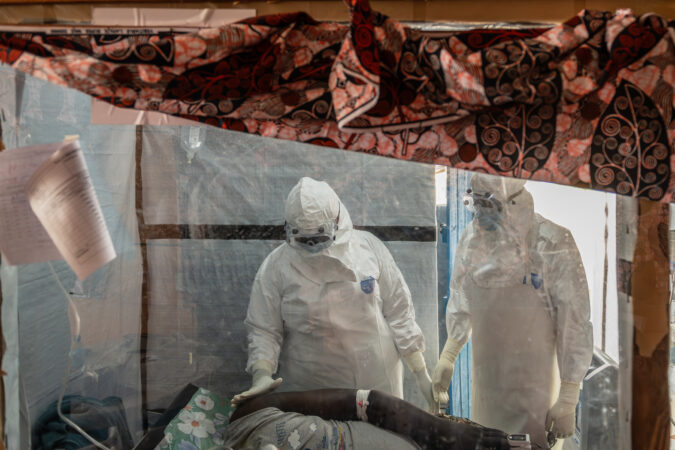
    On Wednesday, French officials announced the country’s first case of Ebola from this outbreak — a doctor who had traveled to Congo on a humanitarian mission. The doctor was being treated at a special medical facility and was reported to be in stable condition, according to a statement from the French Health Ministry.

    With more than 250 confirmed deaths in Africa, the World Health Organization said Tuesday that the current outbreak, first reported in May, has the largest number of confirmed cases during the first month of any Ebola outbreak in Africa.

    There have been 17 outbreaks since the discovery of the virus in 1976, involving three strains. The current strain, Bundibugyo, has been seen only twice before, in 2007 in Uganda and in 2017 in Congo. There is no specific treatment or vaccine for it.

    “None of those previous outbreaks had the magnitude of the volume of cases and geographical spread that we are seeing today,” said Manuel Albela, an epidemiologist with Doctors Without Borders who is working with the Ebola response team.

    “And even that comparison — again, one month into the declaration of the outbreak — it falls short, because we have never seen almost 900 confirmed cases just after one month of the declaration of the outbreak,” Albela said. “Going back to the comparison with the outbreak in West Africa, it’s a very similar situation because we don’t have a specific treatment for this specific virus.”

    Diagnosing Bundibugyo is complicated, because there is no specific test kit for the rare strain and this is one reason the strain initially spread fast without detection.

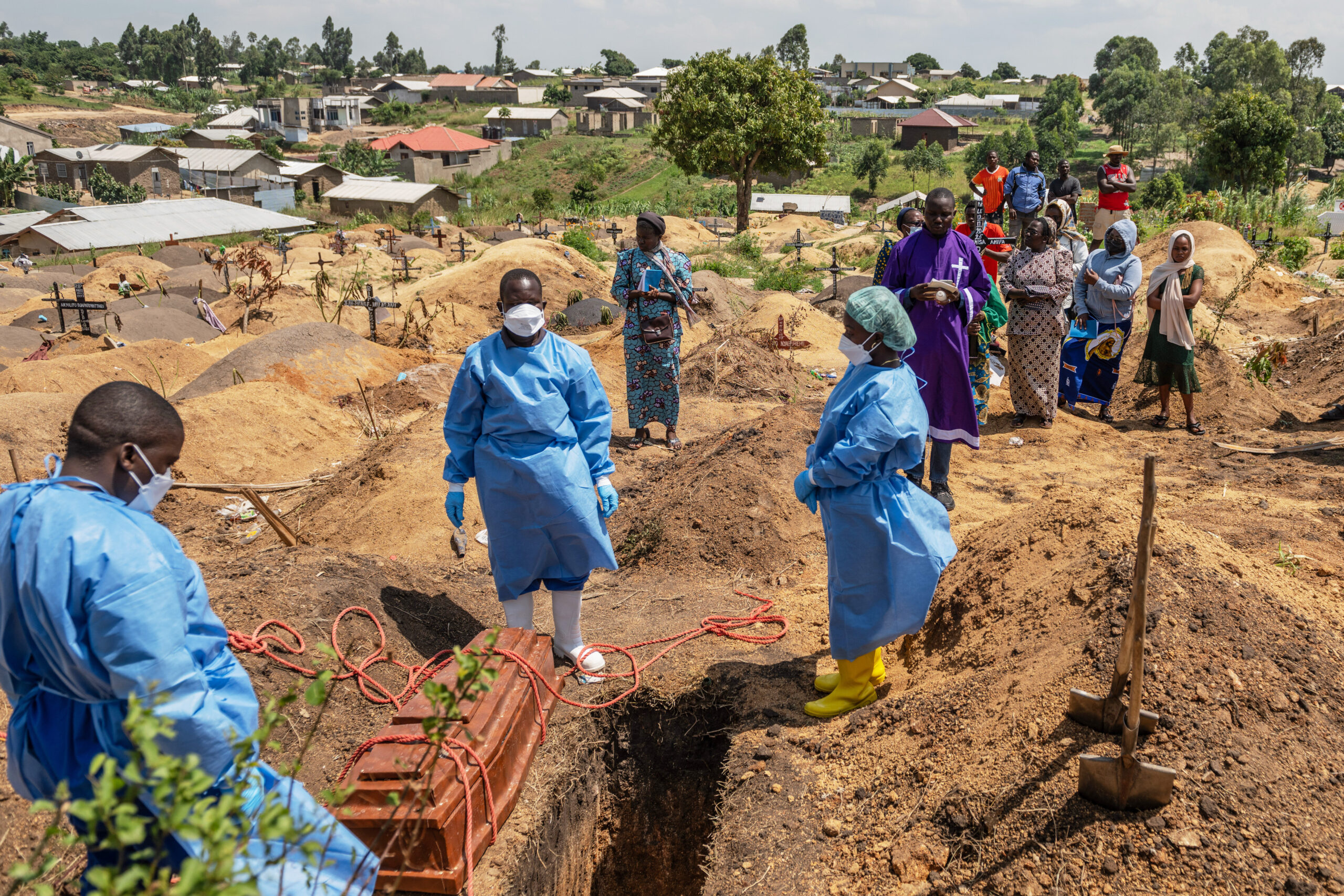
    Red Cross workers prepare to bury Vanisa Anifa, a 6-month-old orphaned girl who died of Ebola, at the Bigo Cemetery, in Bunia, Congo, on Friday.

    The virus is now present in at least three eastern provinces in Congo. Ituri province, the epicenter, has recorded 954 confirmed cases, with 91 more in North Kivu province and three in South Kivu province, according to government data released Sunday, with 267 people reported dead.

    In neighboring Uganda, 20 infections and two deaths have been reported.

    Misinformation and distrust about the virus have complicated the response, leading many infected people to refuse treatment.

    Health workers have been attacked during contact tracing and when relatives are denied access to the infected bodies of their loved ones.

    On Friday, in the Mambangu neighborhood of Beni, angry residents attacked workers who went to disinfect the home of someone who died of Ebola, according to said Serge Kambale, 39, a doctor who spoke to the Washington Post by phone from the city.

    During the incident, two workers were injured when the locals started throwing stones at them. Fabrice Kavono, a witness, said that the crowd attacked the health workers and accused them of fabricating the disease for material gain.

    “It is the second time Ebola is in Beni, but they say it’s in Bunia and Mongbwalu only and that they are making it up here to make money,” Kavono said.

    Another witness told the Post that people with relatives in Mongbwalu, the mining town in Ituri province at the center of the outbreak, were fleeing in droves to relatives in parts of North and South Kivu — spreading the virus as they traveled.

    Onesphore Bangenza, the leader of the Ebola Response Team in Bunia for Mercy Corps, a nonprofit group, said that burials in which relatives insisted on washing bodies of loved ones and touching them were still happening, and that residents were not adhering to distancing guidelines.

    “We have motor taxis transporting more than three people,” Bangenza said. “There are people who do not want to be tested. The scale of the outbreak could be larger.”

    In May, 30 people who had exhibited Ebola-like symptoms died at a displacement camp in Kigonze that hosts families fleeing conflict in the region, Reuters reported.

    Two aid workers confirmed that 13 deaths had been reported at the camp within 48 hours and that more 30 total deaths were expected.

    “The constant movement and overcrowding of refugees in camps is causing fear that this virus could spread even more and the scale of the outbreak may grow” Bangenza said, adding that conditions in the camps were abysmal. “No water, no latrines,” he said. “The hygiene condition is very, very bad.”

    New Ebola cases have been reported in cities such as Beni where an ISIS-affiliated rebel group, the Allied Democratic Forces, has waged attacks, prompting families to flee their homes.

    At a local hospital in Beni, a patient admitted with malaria asked to be discharged early because he feared that others at the hospital would have Ebola and infect him, he told the Post. While he was in the hospital, the ADF attacked an area near the hospital, killing seven people.

    “First, I was afraid that because I exhibited malaria symptoms, which are similar to Ebola, I would be assimilated with people with Ebola,” the patient said, speaking on the condition of anonymity to discuss private health matters. “In the small hospital, there is no clear follow-up, so anything can happen. Then, the attack scared me more.”

    Congo has been besieged by years of conflict especially in the mineral-rich eastern regions of the country, which boast the world’s largest deposits of coltan and cobalt, used to manufacture electronics.

    Cycles of violence have also weakened health systems in the region.

    Just last week, protests broke out in Kinshasa, Congo’s capital, after people learned of a proposal to change the constitution to allow an extension of term limits, which would allow President Félix Tshisekedi to stay beyond his current term, which was supposed to be his last.

    The Rwanda-affiliated M23 rebel group was working with health teams after two cases of Ebola were discovered in Goma, a city that M23 controls, the group’s deputy spokesperson, Oscar Balinda, told The Post. M23 controls large swaths of territory in eastern DRC.

    The United States has sent $375 million in aid, so far, to contain this latest Ebola outbreak, Trump said during a recent Group of Seven meeting in France.

    Experts say more must be done contain the outbreak.

    “One of the key factors to try to control an outbreak of Ebola is to decentralize as much as possible the testing capacity, so that the tests can be done in the places where the cases are,” said Abela, the epidemiologist. “And I think that this, little by little, is happening. But, as usual, we want things to happen yesterday.”

    Abela also said that contact-tracing is crucial but not enough is being done. “At the moment, I think there are 70 percent of the contacts being followed up when the target is normally 95 percent, according to the DRC authorities.”

    He added: “This is clearly one of the gaps.”

  • A new rooftop nightclub proposed for the Camden waterfront aims to be part of the city’s ‘evolution’

    A new rooftop nightclub proposed for the Camden waterfront aims to be part of the city’s ‘evolution’

    Clubgoers might soon have the chance to take in nighttime views of the Philadelphia skyline at a new rooftop nightclub along the Camden waterfront.

    The Cloud 9 SkyLounge is proposed for the rooftop deck of the fourth-floor Hinson Parking Garage next to the Delaware River Port Authority office tower on Delaware Avenue.

    The club would include a stage and dance floor, private cabanas, a pool deck, bar areas, a food truck zone, VIP parking, and more, according to the developer’s application to the city, which is still awaiting final consideration from Camden’s planning board.

    So far, city officials have approved the new use for the property, said Joe Console, attorney for the Cloud 9 developers.

    Now, the applicant will work on developing more detailed engineering reports, showing that the project complies with local regulations as it relates to traffic, noise, building capacity, and more, Console said. Once complete, the project will eventually be brought back before the planning board for review and final approval.

    “Our vision is to create a world-class entertainment and hospitality destination that showcases the beauty of the Camden waterfront, the Philadelphia skyline, and the energy of the entire region,” Cloud 9 founder and CEO Kenneth Walden said. “We want visitors to experience something they would normally expect to find in cities like Miami, Las Vegas, New York, or Los Angeles — right here in Camden.”

    As an adaptive reuse project instead of new development, the club would require no changes to the parking garage’s existing footprint, and the rooftop venue would be limited to temporary installations, according to the application.

    Parking for the rooftop venue would also be self-contained within the existing parking structure. The developers said they do not anticipate any parking issues extending into the surrounding area.

    A rendering shows the entry view of the proposed Cloud 9 SkyLounge rooftop deck of the Hinson Parking Garage on Delaware Avenue in Camden.

    The parking garage is currently owned by the city’s parking authority and the rooftop would be rented to Cloud 9 starting at $5,000 per month, per the application documents. The venue would be open Thursday 6 p.m. to 1 a.m., Friday and Saturday 6 p.m. to 2 a.m., and Sunday 5 p.m. to 12 a.m.

    “Cloud 9 was born from a simple belief: that Camden deserves extraordinary destinations just as much as any major city in the country,” Walden said. “For years, people have viewed Camden primarily through the lens of its challenges. I believe it is equally important to recognize its potential, its resilience, and the remarkable transformation taking place along the waterfront. Cloud 9 is intended to be part of that continued evolution.”

    The property is located within the city’s mixed waterfront zoning district which is designed to help revitalize former industrial or vacant properties into pedestrian-friendly, mixed-use areas along the waterfront.

    The venue’s developers included in their application that the project is “consistent with the overall vision of the [mixed waterfront zone] as it promotes: activation of underutilized urban space, enhancement of the waterfront entertainment environment, increased tourism and economic activity and adaptive reuse of existing infrastructure.”

    The new nightlife destination would be within walking distance to some of the city’s other waterfront destinations such as Freedom Mortgage Pavilion, Wiggins Waterfront Riverstage, and Adventure Aquarium.

    A rendering shows the beach view of the proposed Cloud 9 SkyLounge rooftop deck of the Hinson Parking Garage on Delaware Avenue in Camden.

    The office for Camden Mayor Victor Carstarphen said that while they are aware of the proposed rooftop bar and lounge, they declined to comment specifically on the project or its details as it continues to make its way through the land development process.

    “Camden is undergoing an unprecedented transformation as investment is taking place citywide. As a result, there is great interest from developers, and a wide variety of projects are being proposed in every part of the city,” said Vincent Basara, director of communications for the mayor’s office. “Camden is always open to new ideas and proposals. The success of this project will ultimately be based on the merit of the application. We are confident in the public process and the various reviews which are required.”

    About a mile north on the other side of the Benjamin Franklin Bridge, the New Jersey Economic Development Authority is accepting mixed-use redevelopment proposals for a 16-acre waterfront parcel that was previously home to the former Riverfront Prison and Weeks Marine site in North Camden.

    “Beyond the venue itself, I believe Cloud 9 can contribute to the city in several meaningful ways,” Walden said. “The project has the potential to create jobs, attract visitors from throughout New Jersey, Pennsylvania, Delaware, and beyond, generate additional economic activity for nearby businesses, and further strengthen Camden’s reputation as a destination worth visiting and investing in.”

    The Cloud 9 SkyLounge was presented to the city’s zoning hearing board for final site plan approval on June 1 and will need to continue through the development process before finally being voted on by the city’s planning board. The exact timeline for this process varies by project, but a final vote on Cloud 9 is likely still weeks or even months away, as the application must go before the city’s planning board, though they will not officially discuss the project until at least the board’s July meeting.