Blog

  • France reports first Ebola patient as cases in Africa surge above 1,000

    France reports first Ebola patient as cases in Africa surge above 1,000

    NAIROBI, Kenya — Reported Ebola cases have surged above 1,000 in the Democratic Republic of Congo, and health experts are warning this could be one of the worst outbreaks, rivaling the largest on record, which killed 11,365 people in West Africa from 2014 to 2016.

    On Wednesday, French officials announced the country’s first case of Ebola from this outbreak — a doctor who had traveled to Congo on a humanitarian mission. The doctor was being treated at a special medical facility and was reported to be in stable condition, according to a statement from the French Health Ministry.

    With more than 250 confirmed deaths in Africa, the World Health Organization said Tuesday that the current outbreak, first reported in May, has the largest number of confirmed cases during the first month of any Ebola outbreak in Africa.

    There have been 17 outbreaks since the discovery of the virus in 1976, involving three strains. The current strain, Bundibugyo, has been seen only twice before, in 2007 in Uganda and in 2017 in Congo. There is no specific treatment or vaccine for it.

    “None of those previous outbreaks had the magnitude of the volume of cases and geographical spread that we are seeing today,” said Manuel Albela, an epidemiologist with Doctors Without Borders who is working with the Ebola response team.

    “And even that comparison — again, one month into the declaration of the outbreak — it falls short, because we have never seen almost 900 confirmed cases just after one month of the declaration of the outbreak,” Albela said. “Going back to the comparison with the outbreak in West Africa, it’s a very similar situation because we don’t have a specific treatment for this specific virus.”

    Diagnosing Bundibugyo is complicated, because there is no specific test kit for the rare strain and this is one reason the strain initially spread fast without detection.

    Red Cross workers prepare to bury Vanisa Anifa, a 6-month-old orphaned girl who died of Ebola, at the Bigo Cemetery, in Bunia, Congo, on Friday.

    The virus is now present in at least three eastern provinces in Congo. Ituri province, the epicenter, has recorded 954 confirmed cases, with 91 more in North Kivu province and three in South Kivu province, according to government data released Sunday, with 267 people reported dead.

    In neighboring Uganda, 20 infections and two deaths have been reported.

    Misinformation and distrust about the virus have complicated the response, leading many infected people to refuse treatment.

    Health workers have been attacked during contact tracing and when relatives are denied access to the infected bodies of their loved ones.

    On Friday, in the Mambangu neighborhood of Beni, angry residents attacked workers who went to disinfect the home of someone who died of Ebola, according to said Serge Kambale, 39, a doctor who spoke to the Washington Post by phone from the city.

    During the incident, two workers were injured when the locals started throwing stones at them. Fabrice Kavono, a witness, said that the crowd attacked the health workers and accused them of fabricating the disease for material gain.

    “It is the second time Ebola is in Beni, but they say it’s in Bunia and Mongbwalu only and that they are making it up here to make money,” Kavono said.

    Another witness told the Post that people with relatives in Mongbwalu, the mining town in Ituri province at the center of the outbreak, were fleeing in droves to relatives in parts of North and South Kivu — spreading the virus as they traveled.

    Onesphore Bangenza, the leader of the Ebola Response Team in Bunia for Mercy Corps, a nonprofit group, said that burials in which relatives insisted on washing bodies of loved ones and touching them were still happening, and that residents were not adhering to distancing guidelines.

    “We have motor taxis transporting more than three people,” Bangenza said. “There are people who do not want to be tested. The scale of the outbreak could be larger.”

    In May, 30 people who had exhibited Ebola-like symptoms died at a displacement camp in Kigonze that hosts families fleeing conflict in the region, Reuters reported.

    Two aid workers confirmed that 13 deaths had been reported at the camp within 48 hours and that more 30 total deaths were expected.

    “The constant movement and overcrowding of refugees in camps is causing fear that this virus could spread even more and the scale of the outbreak may grow” Bangenza said, adding that conditions in the camps were abysmal. “No water, no latrines,” he said. “The hygiene condition is very, very bad.”

    New Ebola cases have been reported in cities such as Beni where an ISIS-affiliated rebel group, the Allied Democratic Forces, has waged attacks, prompting families to flee their homes.

    At a local hospital in Beni, a patient admitted with malaria asked to be discharged early because he feared that others at the hospital would have Ebola and infect him, he told the Post. While he was in the hospital, the ADF attacked an area near the hospital, killing seven people.

    “First, I was afraid that because I exhibited malaria symptoms, which are similar to Ebola, I would be assimilated with people with Ebola,” the patient said, speaking on the condition of anonymity to discuss private health matters. “In the small hospital, there is no clear follow-up, so anything can happen. Then, the attack scared me more.”

    Congo has been besieged by years of conflict especially in the mineral-rich eastern regions of the country, which boast the world’s largest deposits of coltan and cobalt, used to manufacture electronics.

    Cycles of violence have also weakened health systems in the region.

    Just last week, protests broke out in Kinshasa, Congo’s capital, after people learned of a proposal to change the constitution to allow an extension of term limits, which would allow President Félix Tshisekedi to stay beyond his current term, which was supposed to be his last.

    The Rwanda-affiliated M23 rebel group was working with health teams after two cases of Ebola were discovered in Goma, a city that M23 controls, the group’s deputy spokesperson, Oscar Balinda, told The Post. M23 controls large swaths of territory in eastern DRC.

    The United States has sent $375 million in aid, so far, to contain this latest Ebola outbreak, Trump said during a recent Group of Seven meeting in France.

    Experts say more must be done contain the outbreak.

    “One of the key factors to try to control an outbreak of Ebola is to decentralize as much as possible the testing capacity, so that the tests can be done in the places where the cases are,” said Abela, the epidemiologist. “And I think that this, little by little, is happening. But, as usual, we want things to happen yesterday.”

    Abela also said that contact-tracing is crucial but not enough is being done. “At the moment, I think there are 70 percent of the contacts being followed up when the target is normally 95 percent, according to the DRC authorities.”

    He added: “This is clearly one of the gaps.”

  • A new rooftop nightclub proposed for the Camden waterfront aims to be part of the city’s ‘evolution’

    A new rooftop nightclub proposed for the Camden waterfront aims to be part of the city’s ‘evolution’

    Clubgoers might soon have the chance to take in nighttime views of the Philadelphia skyline at a new rooftop nightclub along the Camden waterfront.

    The Cloud 9 SkyLounge is proposed for the rooftop deck of the fourth-floor Hinson Parking Garage next to the Delaware River Port Authority office tower on Delaware Avenue.

    The club would include a stage and dance floor, private cabanas, a pool deck, bar areas, a food truck zone, VIP parking, and more, according to the developer’s application to the city, which is still awaiting final consideration from Camden’s planning board.

    So far, city officials have approved the new use for the property, said Joe Console, attorney for the Cloud 9 developers.

    Now, the applicant will work on developing more detailed engineering reports, showing that the project complies with local regulations as it relates to traffic, noise, building capacity, and more, Console said. Once complete, the project will eventually be brought back before the planning board for review and final approval.

    “Our vision is to create a world-class entertainment and hospitality destination that showcases the beauty of the Camden waterfront, the Philadelphia skyline, and the energy of the entire region,” Cloud 9 founder and CEO Kenneth Walden said. “We want visitors to experience something they would normally expect to find in cities like Miami, Las Vegas, New York, or Los Angeles — right here in Camden.”

    As an adaptive reuse project instead of new development, the club would require no changes to the parking garage’s existing footprint, and the rooftop venue would be limited to temporary installations, according to the application.

    Parking for the rooftop venue would also be self-contained within the existing parking structure. The developers said they do not anticipate any parking issues extending into the surrounding area.

    A rendering shows the entry view of the proposed Cloud 9 SkyLounge rooftop deck of the Hinson Parking Garage on Delaware Avenue in Camden.

    The parking garage is currently owned by the city’s parking authority and the rooftop would be rented to Cloud 9 starting at $5,000 per month, per the application documents. The venue would be open Thursday 6 p.m. to 1 a.m., Friday and Saturday 6 p.m. to 2 a.m., and Sunday 5 p.m. to 12 a.m.

    “Cloud 9 was born from a simple belief: that Camden deserves extraordinary destinations just as much as any major city in the country,” Walden said. “For years, people have viewed Camden primarily through the lens of its challenges. I believe it is equally important to recognize its potential, its resilience, and the remarkable transformation taking place along the waterfront. Cloud 9 is intended to be part of that continued evolution.”

    The property is located within the city’s mixed waterfront zoning district which is designed to help revitalize former industrial or vacant properties into pedestrian-friendly, mixed-use areas along the waterfront.

    The venue’s developers included in their application that the project is “consistent with the overall vision of the [mixed waterfront zone] as it promotes: activation of underutilized urban space, enhancement of the waterfront entertainment environment, increased tourism and economic activity and adaptive reuse of existing infrastructure.”

    The new nightlife destination would be within walking distance to some of the city’s other waterfront destinations such as Freedom Mortgage Pavilion, Wiggins Waterfront Riverstage, and Adventure Aquarium.

    A rendering shows the beach view of the proposed Cloud 9 SkyLounge rooftop deck of the Hinson Parking Garage on Delaware Avenue in Camden.

    The office for Camden Mayor Victor Carstarphen said that while they are aware of the proposed rooftop bar and lounge, they declined to comment specifically on the project or its details as it continues to make its way through the land development process.

    “Camden is undergoing an unprecedented transformation as investment is taking place citywide. As a result, there is great interest from developers, and a wide variety of projects are being proposed in every part of the city,” said Vincent Basara, director of communications for the mayor’s office. “Camden is always open to new ideas and proposals. The success of this project will ultimately be based on the merit of the application. We are confident in the public process and the various reviews which are required.”

    About a mile north on the other side of the Benjamin Franklin Bridge, the New Jersey Economic Development Authority is accepting mixed-use redevelopment proposals for a 16-acre waterfront parcel that was previously home to the former Riverfront Prison and Weeks Marine site in North Camden.

    “Beyond the venue itself, I believe Cloud 9 can contribute to the city in several meaningful ways,” Walden said. “The project has the potential to create jobs, attract visitors from throughout New Jersey, Pennsylvania, Delaware, and beyond, generate additional economic activity for nearby businesses, and further strengthen Camden’s reputation as a destination worth visiting and investing in.”

    The Cloud 9 SkyLounge was presented to the city’s zoning hearing board for final site plan approval on June 1 and will need to continue through the development process before finally being voted on by the city’s planning board. The exact timeline for this process varies by project, but a final vote on Cloud 9 is likely still weeks or even months away, as the application must go before the city’s planning board, though they will not officially discuss the project until at least the board’s July meeting.

  • Why Trump’s algae problem is much bigger than the Reflecting Pool

    Why Trump’s algae problem is much bigger than the Reflecting Pool

    In his battle to clean the murky waters of the Lincoln Memorial Reflecting Pool, President Donald Trump has tried draining, painting, hydrogen peroxide, and what the Interior Department describes as “high-tech nanobubble ozone technology.” But he has seemingly overlooked two of the most important factors that experts say are driving unsightly — and sometimes dangerous — profusions of algae: pollution and climate change.

    Algae thrive in warm, still waters, causing populations to explode as global temperatures rise, said environmental engineer Steve Chapra, an emeritus professor at Tufts University.

    Meanwhile, rampant human development has increased the amount of fertilizer and sewage produced by farms and cities, and severe storms intensified by the warmer atmosphere are causing more of these pollutants to run off into local waterways — providing algae with the nutrients they need to grow.

    In a 2017 study, Chapra and his colleagues projected that climate change would cause a more than fivefold increase in the number of days when U.S. water bodies are affected by harmful algal blooms.

    Short-term measures like those Trump has pursued may temporarily reduce algae populations in some water bodies, Chapra said. But unless they grapple with warming and nutrient pollution, any efforts to address these blooms in the Reflecting Pool and elsewhere are doomed to fail in the long run.

    The consequences could be profound, because the problems presented by blooms go far beyond aesthetics, he added. They can disrupt aquatic food chains, deplete oxygen in water bodies and even produce deadly toxins.

    “It’s probably the biggest water quality problem in the world,” Chapra said. “The Reflecting Pool is the canary in the coal mine.”

    A spokesperson for the Interior Department did not respond to questions about whether the department had considered nutrient pollution or water temperature in planning the pool’s refurbishment. In an email, the agency reiterated that the National Park Service is using hydrogen peroxide and ozone nanobubbles, which break up algae by damaging their cells.

    The Reflecting Pool has been beset by algae blooms, as seen Monday.

    The root causes of blooms

    Algal blooms have long thrived in the Reflecting Pool, thanks to stagnant, shallow water enriched by pollution and warmed by sweltering D.C. summers.

    Since 2012, the pool has been filled from the Tidal Basin, which in turn is fed by the Potomac River. Both water bodies contain excessive amounts of nitrogen and phosphorous — the nutrients most loved by algae — and are designated as “impaired” by the Environmental Protection Agency, meaning they don’t meet basic water quality standards for swimming, fishing, and supporting aquatic life.

    Trump said his $14 million renovation this spring would clean the pool’s algae-clouded waters by sealing leaks and painting the bottom “American flag blue.”

    But the refurbishment didn’t address the pollution that is the root cause of algal growth, said Hans Paerl, an aquatic ecologist at University of North Carolina at Chapel Hill. The pool was refilled on June 4 using the same nutrient-rich Tidal Basin water as before.

    The spate of warm, sunny days that followed — June so far has been about 2 degrees Fahrenheit hotter than normal, according to the National Weather Service — provided ideal conditions for the photosynthetic creatures to multiply. Those high temperatures may have been exacerbated by the pool’s new dark blue coating, which absorbs more heat than its previous gray finish, Chapra said.

    Within days, satellite data showed that the Reflecting Pool contained more algae than at any recorded point in June for at least five years.

    The bloom that turned the pool green shortly after it was refilled was likely caused by a single-celled organism called cyanobacteria, Paerl said. Pictures of the pool showed a characteristic bright green scum coating the surface of the water.

    Cyanobacteria blooms are the most dangerous, Paerl said, because they produce toxic compounds that can cause rashes, vomiting, and neurological problems in people who touch or ingest them.

    After the Interior Department treated the pool with hydrogen peroxide, which breaks down cyanobacteria’s cell membrane and disrupts photosynthesis, the cyanobacteria bloom seemed to wane.

    But the water’s sickly green sheen remains. Aquatic ecologist Rosalina Christova, a George Mason University researcher who acquired a sample from the Reflecting Pool on June 15, found that the water had been colonized by a genus of multicellular green algae called Desmodesmus. In an email, she called the population “very dense.”

    The green algae are more resistant to the effects of hydrogen peroxide, and they were likely able to capitalize on the nutrients released from the disintegrating bodies of the slain cyanobacteria, Paerl said.

    “This created a niche for another player, so to speak,” he said. “Nutrients keep cycling through there and feed whatever blooms.”

    A growing global threat

    Though the administration’s concerns about algae in the Reflecting Pool are in part cosmetic, the proliferation of blooms in waterways across the planet pose a significant — and growing — threat, said Joaquim Goes, a biogeochemist at Columbia University.

    By studying satellite images of the ocean, he found that microalgae scums — caused by the same tiny organisms as those afflicting the Reflecting Pool — have expanded at a rate of 1% per year since 2003. The phenomenon has disrupted food chains and created oxygenless “dead zones” where fish can’t survive.

    “It is spreading like wildfire all over the world,” Goes said. “And there is no question that temperature is playing a role.”

    Blooms are also increasing in freshwater bodies that supply people’s drinking water, research shows.

    A 2022 EPA assessment found that 49% of U.S. lakes showed excess amounts of chlorophyll a, the photosynthetic compound that indicates presence of cyanobacteria and green algae. Detections of microcystins, a class of toxin produced by cyanobacteria, increased by almost 30 percentage points since the previous assessment was conducted five years earlier.

    Massive cyanobacteria blooms have poisoned important fisheries, such as in Lake Erie. They can imperil important ecosystems, like the Everglades below Florida’s Lake Okeechobee. They have been linked to the deaths of dogs, cattle and, in rare cases, humans.

    Even green algae, which do not produce toxins, can clog filtration systems and disrupt drinking water supplies. When they die, the decomposition of their bodies depletes oxygen in the surrounding water, killing other aquatic life.

    The National Office for Harmful Algal Blooms, funded by the National Oceanic and Atmospheric Administration, estimates that phenomenon causes an average $50 million in damage to the U.S. economy each year. Individual severe events can cause even greater harm: An unprecedented “red tide” cost roughly $2.7 billion in decreased tourism revenue when it forced the closure of beaches across southern Florida in 2018.

    Lasting solutions

    Theories about the persistence of the Reflecting Pool algae abound.

    The Interior Department has blamed residual organisms that remained in supply lines after the renovation. Some have speculated that the recent blooms are a product of liberal “sabotage.”

    The Trump administration has said it plans to drain the pool again to address algae growth and paint that is peeling from its bottom.

    But those measures are unlikely to prevent algae from reemerging, said environmental engineer Victor Bierman, a retired water quality consultant and former EPA scientist.

    As summer heat continues to ramp up, he worries the green algae could be replaced by cyanobacteria, which have no predators and readily outcompete other microbes at high temperatures.

    “You can get rid of an existing bloom, but if you don’t change the underlying conditions … you’re going to grow more algae,” Bierman said.

    Officials could stymie growth by increasing the flow of water through the pool, but that would disrupt the still surface needed for it to be reflective, he added. A better option would be installing an enhanced filtration system that removes nutrients from the Tidal Basin water before it is pumped into the pool.

    Ultimately, said Chapra, algae blooms will continue to plague the Reflecting Pool and countless other water bodies until people address the human-made problems of nutrient runoff and climate change.

    “If you don’t follow the science, then you think it’s magic or espionage, and it’s not,” Chapra said. “This is basic biology.”

  • Philly-area rain totals varied dramatically, and drought conditions survived the storms

    Philly-area rain totals varied dramatically, and drought conditions survived the storms

    The storms took down trees and wires, flooded roads, spoiled a World Cup party, and set off a deluge of smartphone panic alerts. But they evidently didn’t come close to erasing the rain deficits throughout the Philly region.

    Even with the additional light rains on Tuesday, bringing the two-day total to about 1.45 inches, officially Philadelphia’s rainfall for June still is slightly below normal, and this is after an extraordinary streak of 10 consecutive months of below-normal precipitation.

    And Monday’s storms exhibited a classic summer caprice. Areas of New Jersey and Chester County, both under state-declared drought emergencies, were all but stiffed, according to an analysis by the National Weather Service’s Middle Atlantic River Forecast Center. Northwestern Philadelphia and southeastern Montgomery County got as much as 2 inches.

    The weather service’s Mount Holly office reported that totals within counties varied radically. In Bucks County, for example, 1.8 inches was measured in Bristol and just over a half inch in Doylestown. Across the river, 2.4 inches fell upon Sewell, and about 0.75 in Monroe Township.

    “Some areas got it, some didn’t,” said Ben Casella, executive director of the New Jersey Farm Bureau. It can “rain here, but it may not rain on the other side of town,” he said.

    Not all of that Monday rain was beneficial, said Andrew Frankenfield, educator with the Penn State Agriculture extension in Montgomery County. Some of the water in those downpours on Monday rushed to the gutters and didn’t stop to soak into the soil.

    And those cloudbursts certainly weren’t beneficial to people routed from the World Cup fan fest in Fairmount Park, or to some motorists. Numerous water rescues were reported in the Wyncote section of Cheltenham Township, Montgomery County, And the weather service noted several reports of flooded streets and rushing water up to a foot deep floating cars in Germantown.

    Tuesday’s gentle rains, Frankenfield said, were more beneficial to the plant life, which is only going to get thirstier as the summer progresses.

    Is more rain coming to the Philly region?

    Showers are possible Thursday, said Alex Staarmann, meteorologist with the National Weather Service in Mount Holly, with a better shot Friday night and Saturday.

    However, these may again be lottery-ball situations, something with which farmers are well acquainted.

    Generally throughout the region through Monday, precipitation was running about 75% of normal, on average about 5 inches below normal, according to the river center, which bases its surveys on several measuring stations in each county.

    The latest interagency U.S. Drought Monitor map had most of the region in “moderate drought,” but Cape May County and areas of New Jersey near Delaware Bay are in “extreme drought.” Those regions were all but shut out from the Monday downpours.

    They evidently fared a bit better on Tuesday, with the Millville airport reporting about a third of an inch, and a half inch measured in Sea Isle City.

    While the rains were welcome, the drought anxieties persist, Casella said.

    “As we turn the calendar into July, the crops are going to need more moisture,” Frankenfield said.

    “We certainly need more” rain, he said. “We can’t make it up in a week, we can’t make it up in a month. We’re concerned, but not alarmed.”

  • Flyers draft: Tommy Bleyl, Ryan Lin, and Xavier Villeneuve are smaller defensemen. Will they get passed over by Philly?

    Flyers draft: Tommy Bleyl, Ryan Lin, and Xavier Villeneuve are smaller defensemen. Will they get passed over by Philly?

    BUFFALO, N.Y. — Sitting down with The Inquirer at the NHL scouting combine in Western New York earlier this month, assistant general manager Brent Flahr was asked what he thought was missing down the depth chart for the Flyers.

    “We have some younger D on the team. But besides Spencer Gill and Ty Murchison and Hunter McDonald, Oliver Bonk, the next layer of younger defenseman we would probably use,” he responded.

    Oh, so the Flyers need defensive depth. How about a blueliner who is under 6 feet but has eye-popping offensive skills?

    “Being a small player, a small defenseman, it’s getting harder and harder to play,” he added. Oh. Um. OK. So, that’s a no?

    But speaking last week alongside general manager Danny Brière at their annual predraft presser, he then added: “If you’re drafting a small defenseman, they need to be dynamic, and there are a couple who could go into mid-to-later first round this year, but they are in the mix.”

    Although not a single defenseman under 6 feet was drafted last year, it is guaranteed not to happen this year. Here are the three under 6-foot defensemen “in the mix” plus one big man who keeps getting mentioned as an option for the Flyers at No. 21.

    The projection for Tommy Bleyl is an offensive-defensive who will run a power play in the NHL.

    Tommy Bleyl, RHD

    Height and weight: 5-11¼, 170 pounds

    Team: Moncton of the Quebec Maritimes Junior Hockey League for one more season and then off to Michigan State.

    Stats: Broke a rookie points record that stood for 48 years in the QMJHL with 81 points — including 68 assists — across 63 regular-season games. Added another 28 points in 21 playoff games.

    Labeled the player people aren’t talking about enough by FloHockey’s NHL draft and prospects analyst Chris Peters on Flyers Gameday Central’s draft preview show, the Upstate New York native was our pick for the Flyers at No. 21 in the first mock draft, and he is a strong option for Friday.

    Aside from his scoring prowess — notably on the power play — what makes Bleyl an intriguing prospect is his skating. Peters called him the best skater in the draft class; he is not alone in his thinking.

    “The skating is the defining quality; he’s just really, really, really smooth,” The Athletic’s NHL draft and prospects reporter Scott Wheeler told The Inquirer. “One of those guys who just glides across the ice [and is] an effortless skater.”

    A rink rat since he was 9, the now 18-year-old has always had an elite level of skating. Bleyl said he is “not too overly physical but pretty feisty and competitive” in the offensive zone. He called himself a two-way defenseman with good feet and hockey IQ. Ryan Haggerty, who worked with him for years with the youth hockey program, Mid Fairfield — Trevor Zegras played there too — thinks it’s his edge work that makes him special.

    “Tommy’s dynamic,” said Haggerty. “His skating ability is high-end; he’s a high-end skater, and it all translates to his offense. … His skating ability separates him.

    “When he was 8, 9, 10 years old, his edges were always better than everybody else,” he added. “It helps him defend, to be honest with you, because he doesn’t get beat. His feet are so strong [so] he never gets beat.”

    He may be under 6 feet tall, but Ryan Lin is considered by draft analysts to be one of the best defenders in the class.

    Ryan Lin, RHD

    Height and weight: 5-11¼, 180 pounds

    Team: Suiting up for the University of Denver in September.

    Stats: Led Vancouver of the Western Hockey League in points (57), assists (43), and power-play assists (21) despite missing time with a wrist injury, and added six points in five games at the U18 Men’s World Championship for Canada.

    In all likelihood, Lin will be gone at pick No. 21, but if not, you’d have to think he’s the guy. Wheeler said that Lin is “the kid in the draft class that I’ve stuck my neck out on a little bit.” His assistant coach with the Giants, Wacey Rabbit, called him “a chameleon” who can adapt to his surroundings and is always improving. And Drew Bannister, who coached Lin and Canada at U18s this spring, told The Inquirer “he was our best defenseman, there’s no question about that.”

    Lin, 18, models his game after Winnipeg Jets blueliner Josh Morrissey and is a creative, puck-moving, high-compete, physical, two-way right-shot defenseman who could help bolster the Flyers’ power play. Bannister doesn’t have any concerns about his size because he doesn’t think he plays an undersized game. You would have to think part of that is because Lin, a British Columbia native and son of educators, considers his vision and his mind two of his biggest strengths.

    And there’s a good chance Jaroslav “Yogi” Svejkovský has put a bug in the ear of Flyers brass. The two worked together from learn-to-skate out west until Lin was 12 or 13 years old. He credits the Flyers assistant coach for helping shape his game as a skills coach.

    “I couldn’t thank him enough for the foundation and base he gave me through hockey,” Lin told The Inquirer at the combine, adding that his father keeps in touch with his former coach.

    So, is there one skill Svejkovský taught him that he still uses?

    “I think probably my inside edge, he calls it a tiptoe finish,” Lin said.

    “It’s kind of like fake one way, go the other type of thing,” he added. “It’s not like a huge fake, it’s just kind of something that I use every shift, like it’s kind of there.”

    Called “the draft’s most purely dynamic defenseman” by Elite Prospects, Xavier Villeneuve draws comparisons to former Flyers blueliner Shayne Gostisbehere.

    Xavier Villeneuve, LHD

    Height and weight: 5-10¾, 164 pounds

    Team: He will be joining Flyers prospects Jack Murtagh and Carter Amico at Boston University in 2026-27.

    Stats: Dropped 38 points in an injury-plagued season for Blainville-Boisbriand of the QMJHL before finishing with 14 points in 17 playoff games.

    Flahr did say last week that the Flyers could use some depth on the left side of the blue line, and according to Wheeler, there isn’t a more dynamic defenseman in the draft class than the lefty Villeneuve.

    “From a pure puck-on-your-stick perspective, with the puck on his stick, he’s fun to watch. He’s got that Lane Hutson, kind of like head-fake shimmies, make guys miss, that’s his game, and he does it at a very, very, very high level,” he said.

    Villeneuve compares his game to that of Hutson, who was also a Terrier before he leapt to the NHL with the Montreal Canadiens. BU coach Jay Pandolfo sees the comparison, not just in both being smaller defensemen but also in Villeneuve’s playmaking ability and competitiveness. He also sees him as a power-play quarterback, which the Flyers desperately need.

    “He moves the puck really quickly,” Pandolfo told The Inquirer. “A lot of times, he knows where it’s going to go before he gets it, and that’s a lot of times the QB on the power play. They usually have that ability, where they know where the puck needs to go next. And he certainly has that; he’s shown that, and I think he’s going to continue to develop that area of his game.”

    A teammate of Spencer Gill with the Armada, Villeneuve is small and thin. Critics are worried about his defensive game and his compete level against bigger guys who will bring way more speed than he’s seen if he makes it to the NHL. Sometimes in games, he was seen bailing out of battles when opponents came at him hard.

    There is no denying he is a confident kid who is deceptive with his skating, and maybe carries a slight chip on his shoulder from the doubters. His coach in the QMJHL, Alexandre Jacques, saw this firsthand at the start of the season when some players from the American Hockey League skated with the team. He hopes this is the version everyone sees.

    “Xavier sometimes was getting beat physically by one of them, or by speed, outside speed, and he was getting back in line and taking out his teammate to make sure he was going back against that same guy against whom he just struggled, or he got beat,” Jacques said. “So I really like that side of him, the competitiveness he had in him.

    Maksim Sokolovskii (No. 17) tied forward Brooks Rogowski for the tallest players measured at this year’s combine.

    Maksim Sokolovskii, LHD

    Height and weight: 6-7¼, 240 pounds

    Team: Committed to the University of Maine in 2027, Sokolovskii will head back to London of the Ontario Hockey League in a few months.

    Stats: He had eight points (two goals, six assists) in 44 regular-season games and did not get a point in five playoff games.

    On the complete opposite end of the spectrum is the biggest guy in the draft class among defensemen, Sokolovskii. The Flyers like big players, with seven of nine draft picks last season, and 31 of the 50 players Flahr has drafted since 2019 coming in over 6 feet. They also know London, with Denver Barkey and Bonk coming from there, and, like many draft picks, Sokolovskii won’t be 18 until after the draft, with his birthday coming July 12.

    It all makes sense, then, why someone told this reporter that the Flyers were very high on him at the combine and why Wheeler had them taking him in his final mock draft.

    “When you’re huge, and you can skate, that’s often all that you need for NHL scouts to sort of perk up and start to pay attention,” Wheeler said in Buffalo. “He was much better in the second half; you could see him figuring it out. … You want that [big] guy to be mean and punishing, and he’s got a little bit of that.

    “But it’s the skating. If he couldn’t skate, it would be a major red flag at that size, but because he can skate, teams get excited about that.”

    The skating has always been there for Sokolovskii, who first came to North America from Russia at 16, skating for Atlantic Coast Academy. Mike Taylor, the owner and one of Sokolovskii’s coaches, had a power skating coach come in. He recalled during a recent phone interview that they couldn’t believe how good his edge work was for his size. But Taylor also thinks the Kazakhstan-born Sokolovskii hasn’t fully shown off his offensive game.

    “Obviously playing 16U Triple-A hockey is a lot different than playing in the OHL, but I would have him go on shootouts. He had offense to his game — I’m sure you can see that by his points that he put up,” he said, pointing to his 84 points in 65 games at the program. Taylor said part of that was because he put him at the net-front on the power play.

    For now, many consider Sokolovskii to be a shutdown defender. He told The Inquirer that he likes to hit and has a high hockey IQ but wants to keep working on his foot speed and make his feet quicker.

    There are question marks surrounding his game in regard to his decision-making and puck play. Wheeler acknowledged he’s quite raw, “but when you’re that big and can skate, the hope is that if his puck play can get to like an average level, you’ve got a very interesting NHL defenseman.”

  • Where to watch Fourth of July fireworks in Philly, the suburbs, South Jersey, and the Shore

    Where to watch Fourth of July fireworks in Philly, the suburbs, South Jersey, and the Shore

    This Fourth of July will be unlike any in recent memory. As the nation marks its 250th anniversary, Philadelphia and the surrounding region are packed with celebrations — and fireworks displays. From the city and suburbs to South Jersey and the Shore, there are dozens of opportunities to catch a show.

    Whether you’re staying in Philadelphia, heading to the suburbs, or spending the holiday down the Shore, here’s where to find Fourth of July fireworks across the region.

    Fireworks in Philadelphia

    Fireworks after the San Diego Padres and Philadelphia Phillies game at Citizens Bank Park on July 2, 2025.

    Fireworks in Bucks County

    Fireworks in Chester County

    Fireworks in Delaware County

    Fireworks in Montgomery County

    Fireworks in Allentown

    Fireworks in South Jersey

    A view of Atlantic City’s fireworks from the Marina. (Courtesy of the Casino Reinvestment Development Authority)

    Fireworks at the Jersey Shore

  • A historic Philly mansion up for sale comes with an unusual easement: Revolutionary War battle reenactments on the front lawn

    A historic Philly mansion up for sale comes with an unusual easement: Revolutionary War battle reenactments on the front lawn

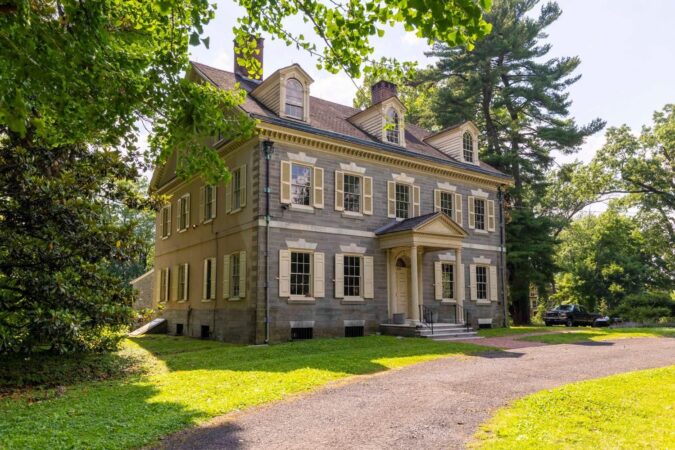
    Built at the end of the 18th century on the site of a major Revolutionary War battle in Philadelphia, Upsala mansion was listed on the National Register of Historic Places in 1972.

    This week, it was listed somewhere else: Zillow.

    The early Federal-style estate nestled on the border of Germantown and Mount Airy is listed at $995,000 and comes with nine bedrooms, 10 fireplaces, 15 parking spaces, and a 70-page easement agreement with a peculiar caveat — once a year, the owner must permit “a re-enactment of portions of the Battle of Germantown” on their front lawn.

    “The battle reenactment is actually written into the deed. That is something any future owner of the property would be obligated to allow to happen,” said current owner Alex Aberle, who’s also a real estate agent and the property’s listing agent.

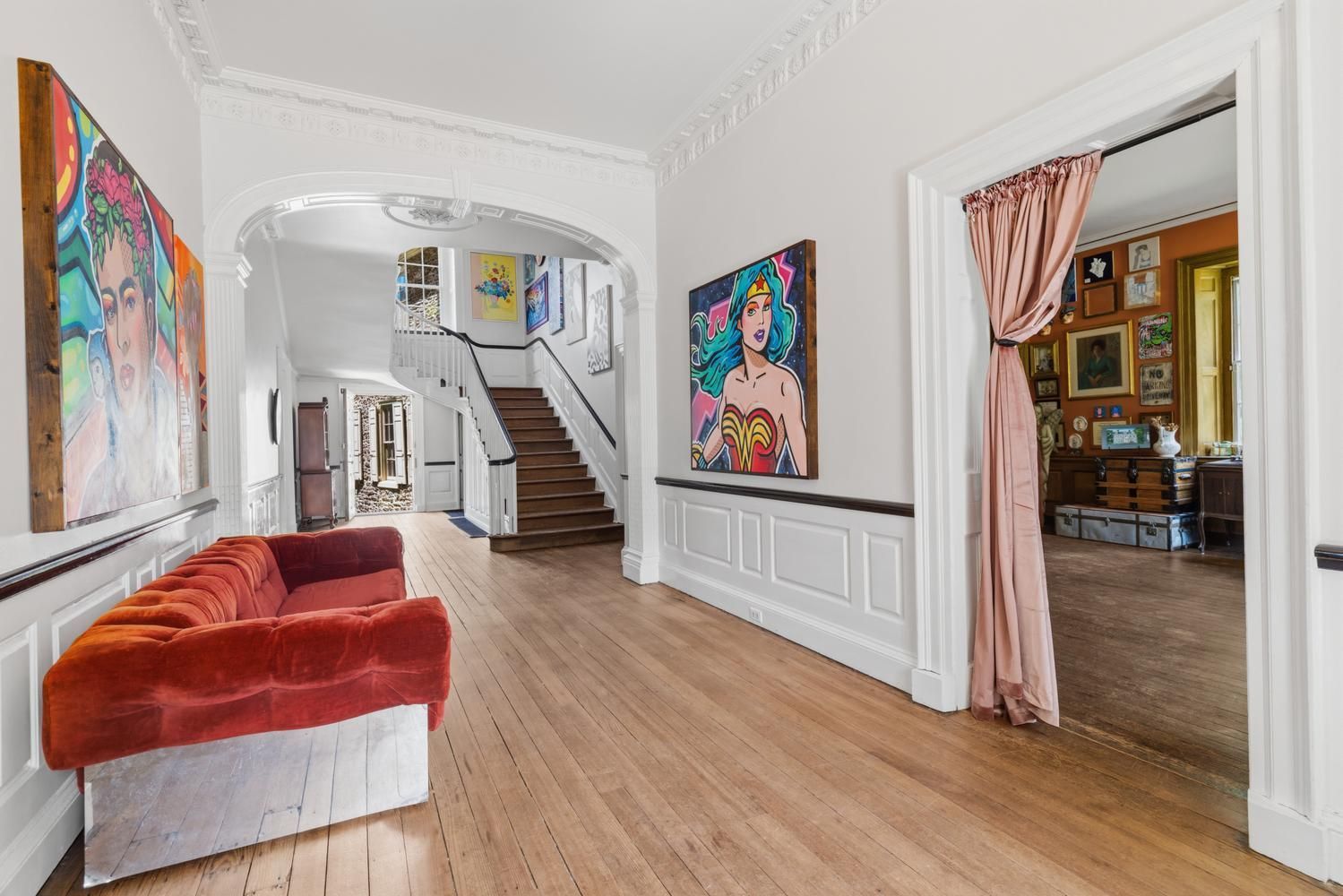
    A living room in Upsala mansion, an early Federal-style building on the 6400 block of Germantown Avenue.

    The easement was put in place by the National Trust for Historic Preservation when Aberle and his ex purchased the mansion on the 6400 block of Germantown Avenue in 2017 and became Upsala’s first private owners since it was converted into a historic house museum in the 1940s.

    As part of the Revolutionary Germantown Festival — which commemorates the 1777 Battle of Germantown — battle reenactments were held for decades on the lawns of Upsala and Cliveden, a National Historic Trust site and mansion across the street from Upsala.

    Though the mansion was built in 1798, two decades after the battle that sought to liberate Philadelphia from British control, the property served as the staging ground for the Continental Army during the Revolutionary War fight.

    Aberle said he loved having the reenactments in his front yard, but Cliveden and the sites of Historic Germantown, which host the festival, haven’t held a reenactment there since 2019.

    Carolyn Wallace, education director at Cliveden, said prior to the pandemic, organizers were reevaluating tactical demonstrations as part of the October festival in light of ongoing gun violence in the U.S. In 2020, organizers underwent a community engagement project called “Considering Re-enactments,” which sought to answer the question: “Is this still the best way to tell stories of the American Revolution?”

    “We found it was a mixed bag so we shifted more towards living history,” she said. “We still have military personnel (reenactors), but we have not done tactical demonstrations in a number of years, though I can’t say we won’t do them again.”

    And if they do, the easement still stands.

    “That runs with the land — for me and for everyone else for years to come, and hopefully, forever,” Aberle said.

    Built for John Johnson III, a fourth-generation descendent of the Janesen family, who were early Germantown settlers, Upsala stayed in the family until the 1940s, when it was seized due to financial issues.

    Preservationists worked to save the property from demolition and from the mid-1940s until the early 2000s, it was a historic house museum before it was closed due to dwindling attendance and revenue.

    The National Trust for Historic Preservation became Upsala’s owner in 2005 and Cliveden Inc., a co-stewardship organization of the National Trust, became its steward. After years of public engagement to find a new steward or use for Upsala, they put the 2.45-acre property up for sale in 2016.

    Aberle and his ex, Violette Levy, beat out eight other offers by purchasing it for $550,000 cash — $51,000 more than the asking price.

    They spent years doing extensive renovations like putting in central air, replacing the boiler, fixing the plumbing, and decorating.

    “When we bought it, the walls were mostly varying shades of yellow and cream and now there’s no yellow left, I’m happy to report,” Aberle said.

    They documented their journey on Instagram, where followers left comments about the memories they’d made at Upsala — from attending weddings there to attending a concert by the Hooters in the 1980s organized by one of the estate’s caretakers.

    “I loved hearing all those stories because that’s the kind of thing you don’t see in books,” Aberle said. “It’s super special because it only comes organically.”

    View of a hallway inside of Upsala mansion.

    Aberle said he never had any intention of selling Upsala, but when his relationship with Levy ended and he became the sole owner of the home, it didn’t “really make sense to stay there as just one.”

    “It’s definitely a family house and that was always sort of my dream for the house,” he said.

    Aberle estimated that a little more than half of the mansion has been renovated. The back part of the house, where he’d planned to fix up the kitchen and put in a mother-in-law suite, is still in need of work, he said.

    “My relationship didn’t last quite as long as my project did so the space is ready for someone else to come in and finish it for their family,” he said.

    But another aspect of Aberle’s life did blossom because of Upsala. When he and his ex bought the mansion, it was listed by Louise D’Alessandro, a founding partner of Elfant Wissahickon Realtors. They invited her and others from the company to the first reenactment on Upsala’s front lawn after they took ownership of the property and within a year, Aberle left the real estate company where he worked and went to work for Elfant Wissahickon, where he remains.

    Aberle said he’s fallen in love with the Germantown and Mount Airy neighborhoods and is only moving just around the corner from Upsala, so he plans to make himself available for any questions from future potential owners.

    “The easement is really not as scary as the 70-page document might lead you to believe. I do mean it from the bottom of my heart. I spent nine years dealing with this document and working with this trust … and my plan is to make myself completely available to facilitate transition,” he said.

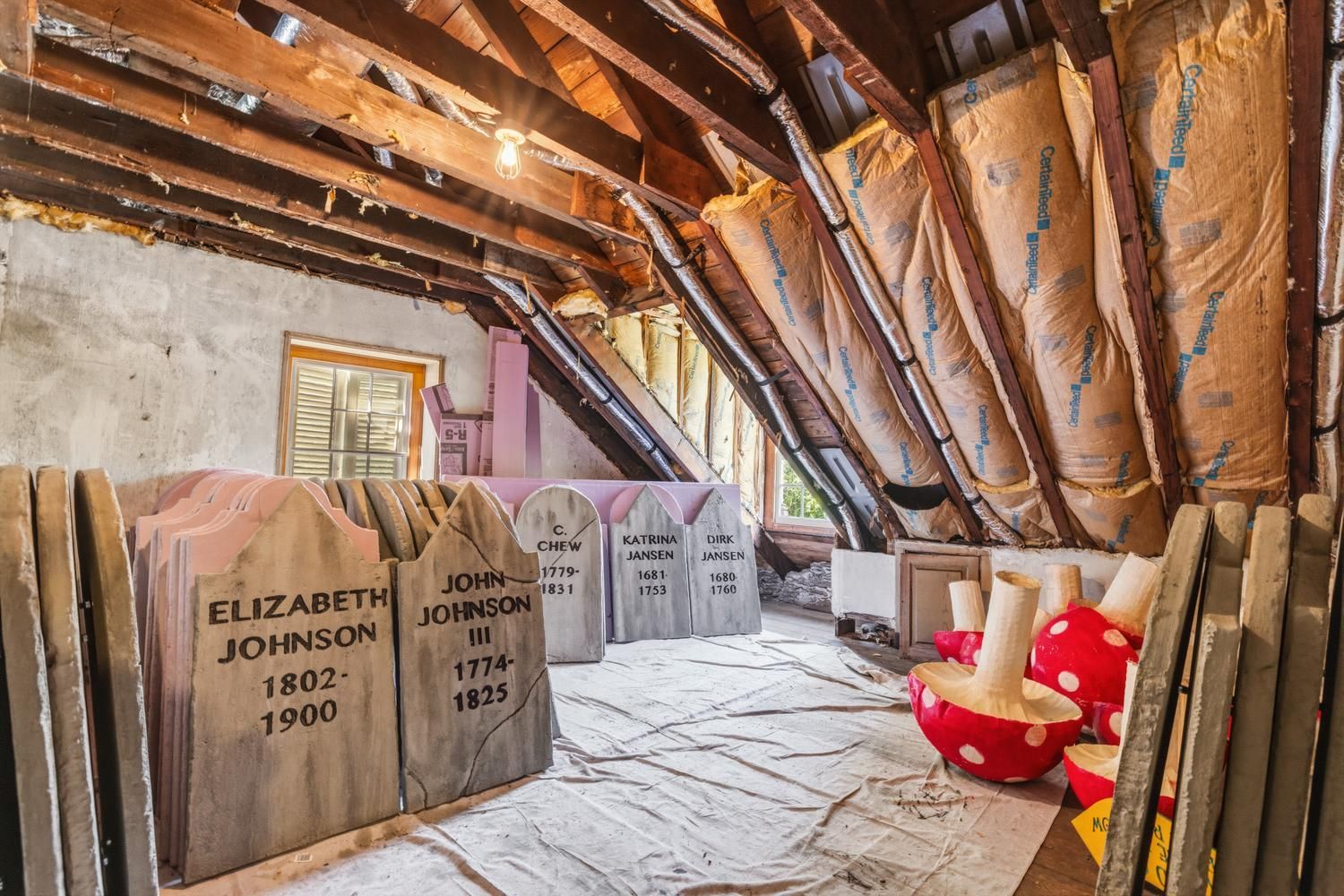
    Halloween decorations, including tombstones that have the names and dates of people who once lived in or near Upsala, are stored in the attic of the property and will be sold with it.

    And if you’re wondering about the listing photo that shows an attic room filled with tombstones and giant mushrooms, not to worry, those are Halloween decorations. The mushrooms are from an Alice and Wonderland-themed Halloween they did one year and the gravestones have historically-accurate names and dates on them of people who lived and died in and around Upsala.

    “We set those up for a few years and added more folks each year,” Aberle said of the tombstones. “I’m leaving them in hopes someone else will carry on the tradition.”

    He’s excited to see who will become Upsala’s next owner and what they will do with the historic property.

    “I think the most important thing, for me, is it’s someone who will love this place as much as I do and have the desire to take care of it and love it,” Aberle said. “That’s what it deserves.”


    For more information on Upsala, including the entire easement agreement, visit upsalamansion.com.

  • Body recovered of swimmer who disappeared in water along Ocean City

    Body recovered of swimmer who disappeared in water along Ocean City

    The body of a swimmer who went missing last month in the water along Ocean City has been recovered near Sea Isle City, police said Tuesday.

    The man, described as a 20-year-old from Exton who was a student at Hofstra University, according to 6ABC, disappeared late in the afternoon on May 18 near the 10th Street Beach.

    On Friday, a body was recovered about 10 miles away and later identified as the missing swimmer, police said.

    The man was not publicly identified and the Ocean City Police Department said the family has asked for privacy.

    <iframe src="https://www.facebook.com/plugins/post.php?href=https%3A%2F%2Fwww.facebook.com%2Focnjpolice%2Fposts%2Fpfbid02mAmNNdQ5cYKXueAAfXig2ecsFecPKQHX7HTKgWyH9tDzUprxuygHn2FoBJtsStXul&show_text=true&width=500" width="500" height="199" style="border:none;overflow:hidden" scrolling="no" frameborder="0" allowfullscreen="true" allow="autoplay; clipboard-write; encrypted-media; picture-in-picture; web-share"></iframe>
  • Senate for first time approves a war powers resolution in a rebuke to Trump over Iran conflict

    Senate for first time approves a war powers resolution in a rebuke to Trump over Iran conflict

    WASHINGTON — The Senate for the first time approved a war powers resolution Tuesday seeking to block U.S. military action against Iran, as lawmakers warily watch President Donald Trump’s efforts to resolve a conflict that the administration launched on its own and now needs Congress to fund.

    It was the 10th time the Senate has tried to stop the war, and the outcome, on a vote of 50-48, was a stunning turnaround from past efforts. While the resolution is largely symbolic, and does not carry the full force of law, it reflects the growing concerns from a number of Republican lawmakers in both the House and Senate over both the war and the deal Trump struck with Iran to end it. The House approved the resolution earlier this month.

    Trump responded angrily Tuesday night on his Truth Social platform, calling the vote “poorly timed and meaningless” and saying it “provided aid and comfort” to Iran.

    Senate Democratic Leader Chuck Schumer of New York said, “Time after time, the vast majority of Senate Republicans sided with Trump and his war instead of the American people.”

    Schumer said Americans have paid the price for “Trump’s historic blunder in Iran. It’ll go down in the history books as one of the worst foreign policy forays America has ever made.”

    In the past, as many as four GOP senators have voted for the war powers resolutions, and they did so Tuesday — Republicans Lisa Murkowski of Alaska, Susan Collins of Maine, Rand Paul of Kentucky and Bill Cassidy of Louisiana. One Democrat, Sen. John Fetterman of Pennsylvania, voted against.

    Trump bashed the four Republicans as losers, saying, “These senators have made my job more difficult.”

    On this vote, the absence of two Republicans, including Sen. Mitch McConnell of Kentucky, who was admitted to the hospital recently for an undisclosed matter, left the GOP without a full majority to halt the effort. Sen. Dave McCormick, R-Pa., also missed the vote.

    The vote comes as the Pentagon is seeking $80 billion from Congress mostly for the Iran war as it backfills munitions and stockpiles.

    Trump to meet senators as Republicans balk at Iran deal

    Trump himself is headed to the Capitol on Wednesday to meet with GOP senators after Vice President JD Vance was overseas working to negotiate with Iran to end its nuclear ambitions — which had been among the stated rationales for the war.

    The president is not pleased with the Republicans who have been critical of the deal he struck with Iran, according to one GOP senator granted anonymity to discuss the private dynamics.

    The terms of the Iran deal are spelled out in a memorandum of understanding that Trump signed last week, starting a 60-day clock for the sides to reach a broader agreement over ending Iran’s nuclear program.

    But Republicans have particularly objected to the $300 billion fund to help Iran rebuild, which is far greater than the $1.7 billion then-President Barack Obama refunded the country under his administration’s 2015 Iran deal.

    “I believe President Trump is getting very poor advice on Iran,” Sen. Ted Cruz, R-Texas, said last week on his podcast after the deal was made public.

    Democrats have repeatedly forced Iran votes

    Over and again, Democrats have been forcing votes on the Iran war, almost since the U.S. and Israel launched missile strikes on Iran on Feb. 28.

    Nearly each week they’re in session, the Senate Democrats have put forward war powers resolutions, but they have failed to amass the majority needed for passage in the narrowly split chamber, where Trump’s Republican Party holds the majority. Trump would almost certainly veto any measure that passed.

    The House pushed its own version to passage earlier this month, with four Republicans joining all Democrats in approving the war powers resolution, over the objections of House Speaker Mike Johnson and the GOP leadership.

    While the House- and Senate-passed resolution does not go to the president for his signature, passage stands as a powerful, if symbolic, statement from Congress and a rebuke of the administration’s military actions.

    Sen. Tim Kaine, the Democrat from Virginia who has led his party’s efforts, said the pause in warfighting, as Trump’s team works to shore up a fragile ceasefire, provides the perfect time for Congress to step back and assess “what should the next chapter be.”

    Hegseth seeks $80 billion from Congress for the Iran war

    Defense Secretary Pete Hegseth is on Capitol Hill this week, seeking roughly $80 billion in supplemental funding to shore up defense supplies in the aftermath of the Iran war, which is drawing scrutiny when many Americans are reeling from high gas prices and costs of living.

    The Pentagon early on had estimated the war cost $11.3 billion during its first week, and senators said experts put the overall price tag of Operation Epic Fury higher, at some $100 billion.

    The Defense Department’s funding request is part of a broader beef-up of military money the White House wants as part of its budget request this year.

    House Democratic Leader Hakeem Jeffries said Tuesday, “We should not spend another dime of taxpayer dollars on Operation Epic Failure.”

    The Trump administration is seeking $1.5 trillion in defense funding this year — a nearly 50% increase — including $350 billion that it wants in a so-called budget reconciliation package. Johnson and GOP leaders are working to pass that package on their own, over the objections of Democrats, much the way they approved Trump’s big tax cuts bill last year.

    The 2025 tax cuts package also included a sizable increase for the military.

  • A new warehouse is proposed for a quiet street in Northeast Philadelphia

    Northeast Philadelphia’s Bustleton neighborhood is getting a new warehouse at 1685 and 1719 Fulmer St., a wooded area that was previously the site of a townhouse proposal.

    The over 123,000-square-foot warehouse proposal comes from Georgia-based developer Stonemont Financial Group and the global asset manager Nuveen.

    The 50-foot-tall warehouse would be built on land zoned for industrial uses, so it does not require zoning approvals. It is subject to community feedback only because it is large enough to trigger consideration by the city’s advisory-only Civic Design Review committee.

    In January, the Fulmer Street property was purchased for $2.75 million by a limited liability company associated with Nuveen’s industrial investment team in Dallas.

    The lot was sold by an LLC associated with Warminster-based County Builders, a suburban developer that hoped to build 60 townhouses or 48 duplexes on the wooded site.

    “I’m disappointed the residential developer decided not to go forward with this project,” said Jack O’Hara, president of the Greater Bustleton Civic League, who planned to support County Builders’ plans at the city’s Zoning Board of Adjustment. “The community greatly prefers residential over additional industrial.”

    An aerial view of the Fulmer Street site, which is heavily wooded.

    But while County Builders’ project had been embraced by the Greater Bustleton Civic League, a group of neighbors who live close to the site fiercely opposed the residential project during tense community meetings.

    “A small group of immediate neighbors were vocally opposed to basically any development, but they were especially opposed to the residential development,” O’Hara said. “And their comeback [to the residential builders] was we’ll take industrial. So, that’s what we’re left with.”

    When presenting the proposal to the Greater Bustleton Civic League, the warehouse developers told residents that they do not yet have a tenant for the proposed building but are marketing the location.

    The architect for the 1685 and 1719 Fulmer St. warehouse development is Ware Malcomb, a national design firm. A request for comment from the project’s zoning attorney was not returned.

    Recent years have seen a burst of new warehouse projects in Northeast Philadelphia, which contains large tracts of developable land. Much of that property has been zoned industrial and saw little interest from builders for decades.

    But as the recent surge in e-commerce and other kinds of new, nonmanufacturing industrial uses have grown, more of these properties have been seeing increased interest from developers.

    This story has been updated to correct the last name of the president of the Greater Bustleton Civic League. He is Jack O’Hara.