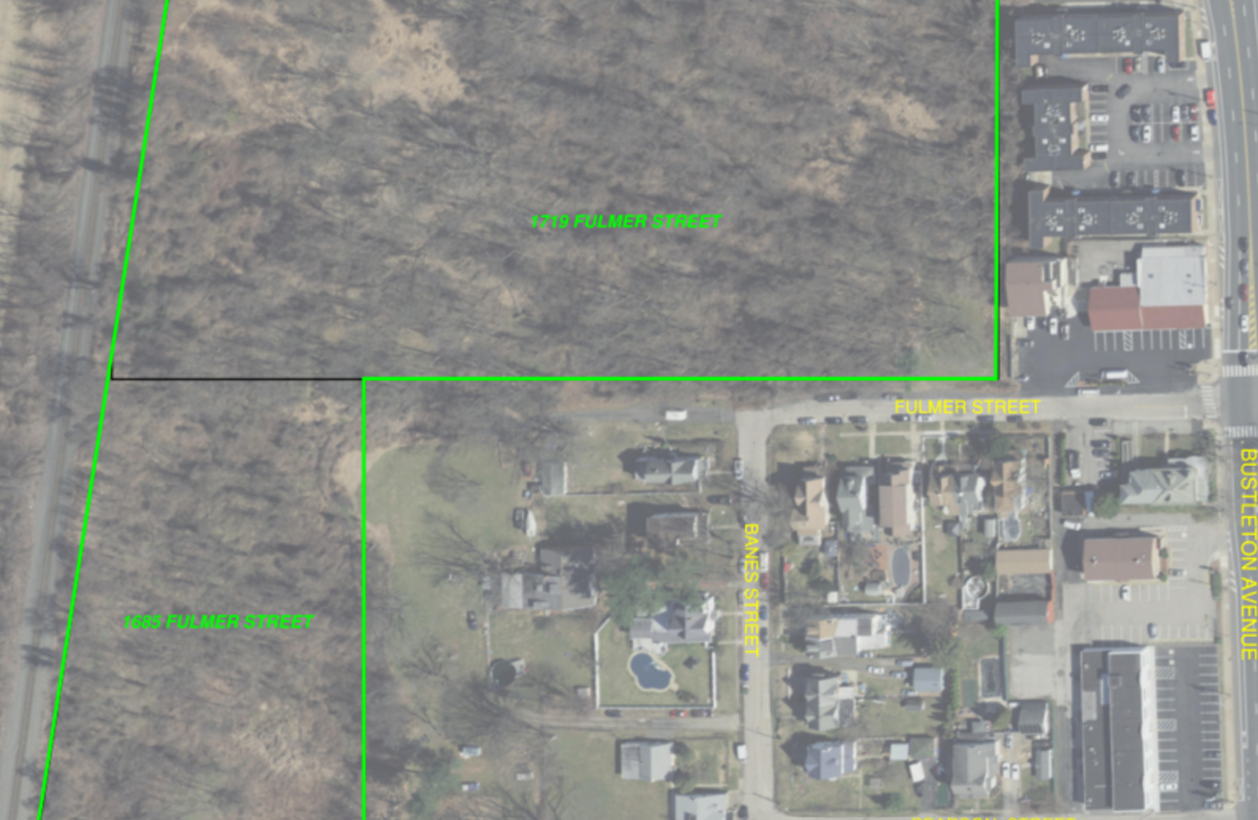
Northeast Philadelphia’s Bustleton neighborhood is getting a new warehouse at 1685 and 1719 Fulmer St., a wooded area that was previously the site of a townhouse proposal.
The over 123,000-square-foot warehouse proposal comes from Georgia-based developer Stonemont Financial Group and the global asset manager Nuveen.
The 50-foot-tall warehouse would be built on land zoned for industrial uses, so it does not require zoning approvals. It is subject to community feedback only because it is large enough to trigger consideration by the city’s advisory-only Civic Design Review committee.
In January, the Fulmer Street property was purchased for $2.75 million by a limited liability company associated with Nuveen’s industrial investment team in Dallas.
The lot was sold by an LLC associated with Warminster-based County Builders, a suburban developer that hoped to build 60 townhouses or 48 duplexes on the wooded site.
“I’m disappointed the residential developer decided not to go forward with this project,” said Jack O’Hara, president of the Greater Bustleton Civic League, who planned to support County Builders’ plans at the city’s Zoning Board of Adjustment. “The community greatly prefers residential over additional industrial.”
An aerial view of the Fulmer Street site, which is heavily wooded.
But while County Builders’ project had been embraced by the Greater Bustleton Civic League, a group of neighbors who live close to the site fiercely opposed the residential project during tense community meetings.
“A small group of immediate neighbors were vocally opposed to basically any development, but they were especially opposed to the residential development,” O’Harasaid. “And their comeback [to the residential builders] was we’ll take industrial. So, that’s what we’re left with.”
When presenting the proposal to the Greater Bustleton Civic League, the warehouse developers told residents that they do not yet have a tenant for the proposed building but are marketing the location.
The architect for the 1685 and 1719 Fulmer St. warehouse development is Ware Malcomb, a national design firm. A request for comment from the project’s zoning attorney was not returned.
Recent years have seen a burst of new warehouse projects in Northeast Philadelphia, which contains large tracts of developable land. Much of that property has been zoned industrial and saw little interest from builders for decades.
But as the recent surge in e-commerce and other kinds of new, nonmanufacturing industrial uses have grown, more of these properties have been seeing increased interest from developers.
This story has been updated to correct the last name of the president of the Greater Bustleton Civic League. He is Jack O’Hara.
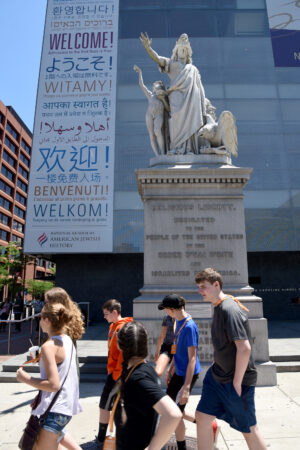
The history of American Jews’ citizenship makes the president’s case to eliminate birthright citizenship, now awaiting a Supreme Court decision, no surprise—but this should offer little comfort.
The central plotline of the story of Jews in the United States tends to revolve around citizenship: Jews arrived, gained citizenship, the end. Yet this story accounts for neither how citizenship has worked for Jews nor how it works in general. A far more accurate history of Jewish citizenship in the United States exposes the persistent political questions asked, answered, and unresolved when policymakers try to decide who is and isn’t “American.”
For the past 250 years, American leaders have used citizenship law to draw and re-draw the lines of individual belonging through collective categories. From the beginning, Congress granted “any alien being a free white person” access to citizenship, writing into naturalization law in 1790 broad thresholds for membership. In 1868 the Fourteenth Amendment revolutionized citizenship by opening it to “all persons born or naturalized in the United States.” Yet Congress also legislated that for the purposes of naturalization, “all persons” only included “free white persons” and “aliens of African nativity…and African descent,” not Chinese people or “Asiatics.”
Jews who immigrated from Europe tended to gain access to naturalization as “white” under citizenship law, but government officials found Jews a useful—and sometimes confounding—guide to help them apply the law, even when Jews were not directly involved.
Take a 1909 naturalization appeal from four men, described in their rejected application as “Armenians by race.” The men were not Jewish, but Judge Henry Cabot Lowell, who presided over their appeal, nonetheless found himself contemplating Jewish citizenship. Harvard-educated and hailing from an elite Boston family, Lowell consulted scientific treatises to conclude that “Hebrews” and Armenians were both “Asiatic” in origin. Prevailing scientific racism of the day convinced him that neither met the threshold of whiteness. As he wrote in his decision, it was “hard to find loophole for admitting the Hebrews” to citizenship. But at least until Congress acted, he saw no reason to exclude Armenians if Jews could benefit from the loophole.
Jewish leaders panicked when they witnessed high-level government officials slotting them into racialized categories other than “white.” They understood that the historical fact of citizenship would not necessarily protect Jews in years to come, especially as eugenicist ideas gained traction among policymakers designing new restrictive immigration laws. In the early 20th century, elite Jews lobbied politicians, filed reports, intervened in naturalization cases, and testified at congressional hearings to bolster Jews’ claims to citizenship. Their efforts met partial success. As passed in the 1920s, immigration quota laws dropped the classification of Jews as “Hebrews,” instead counting Jews among others of their same “national origin.” Still, the countries from which most Jews immigrated, such as Russia and Poland, now faced some of the harshest restrictions.
In practice, the new quota laws reduced the number of Jews who could naturalize and raised suspicion about those who did. Foreign-born Americans from many different backgrounds experienced discrimination that legal status did not avert.
But accusations of foreignness and dual loyalty clung to Jews in unique ways, as illustrated by a remarkable case from 1947. That year, a naturalized Jewish man sought to return to the United States after living in British-mandate Palestine for over a decade. Detained by U.S. border control agents, the Ukrainian-born man learned that his American passport had been revoked under a 1940 law that prohibited naturalized citizens from living abroad for over five years. Native-born citizens were not subject to the same law. The ACLU, American Jewish Committee, and American Jewish Congress seized on this fact to call the law unconstitutional and defend the Jewish man on his appeal. But for the Jewish organizations, the constitutional violation was a piece of a much larger threat to Jewish citizenship in the United States. When Congress authorized the 1940 statute, it did so under pressure from a State Department official who insisted that “these Zionists” regularly manipulated the protections of American citizenship for their own nationalist ends.
The court rejected the Jewish man’s appeal, and in doing so diminished the distinctly Jewish dimension of the case by tying him to other naturalized Americans, such as Japanese-Americans, whose constitutional rights to equal protection could be overridden by national interests according to recent Supreme Court precedent.
Citizenship debates routinely entangled Jews’ status with that of other groups because the categories of citizenship were neither self-evident nor self-executing. Only in motion, by scrutinizing groups, comparing them to one another, and gauging the changing winds of national interests, did government officials bend citizenship to their will.
In a remarkable exchange on the Senate floor in the spring of 1964, two senators debated the exclusion of religion from proposed anti-discrimination legislation targeting federally-funded programs. Albert Gore, Sr., a Democrat from Tennessee, contended that Jews lacked shelter under the law’s categories of “race, color, or national origin” because Jews were a religion. Joseph Clark, a fellow Democrat from Pennsylvania, countered that those categories protected Jews just fine because many Jews lacked any faith, so whatever discrimination they faced must be race-based. Signed into law that summer as Title VI of the Civil Rights Act, the statute (unlike many others in the same law) did not include religion among its protected categories.
For many decades, the question of Jews’ standing under Title VI seemed to be resolved in practice, as government officials and Jewish leaders agreed that its jurisdiction did not include Jews. But it was only a matter of time before the answer faded back into a question.
Over the last two decades—and especially since Oct. 7, 2023—government officials and many Jewish leaders have argued that Jews should have standing in anti-discrimination laws on the basis of race, color, or national origin. Detractors argue that Jews—or certain expressions of Jewishness such as Zionism—do not fit squarely into those categories. The arguments matter because the categories of citizenship law are consequential, but their answers aren’t intrinsic to citizenship. Rather, citizenship remains a tool to ask questions about belonging; as political aims change so too will its meaning.
Made By History sponsors. FOR USE ON MADE BY HISTORY STORIES ONLY.
For American Jews, citizenship has not offered a singular point of arrival or a final answer to the puzzle of national belonging. This lesson from the history of American Jews may offer some reassurance that Trump’s bid to overturn birthright citizenship is just another stop on a zig-zagging journey. Whether the Supreme Court endorses the administration’s tendentious reading of the 14th Amendment or not, the twisted and entangled process of arguing over citizenship will continue.
A less sanguine lesson from the same history should warn all American citizens that an attack against birthright citizenship is an attack against them. No one is naturally or natively a citizen, wherever they were born. Political leaders are constantly remaking citizenship—just look at how the categories used to define, question, or defend Jews have changed over time. The protections of citizenship are as mutable as they are unreliable.
Faith in any fundamental meaning of citizenship not only misses the point but also carries profound risk. Even the most capacious understanding of citizenship will not resolve the question of human belonging, but the starkly narrow one on offer from the Trump administration today threatens our ability to keep asking the question.
Made by History takes readers beyond the headlines with articles written and edited by professional historians. Opinions expressed do not necessarily reflect the views of The Inquirer.
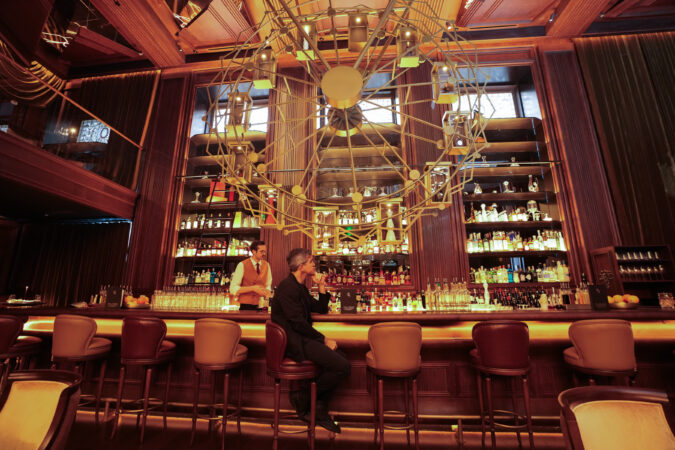
Bolts of lightning from the ceiling, a Ferris wheel behind the bar for top-shelf pours, and the idea of a glamorous night out: Here’s a first look at the new Mr. Edison at the Bellevue.
But first:
😋 Have a fun food day. Take advantage of early-bird pricing right now on tickets to The Inquirer’s Food Fest.
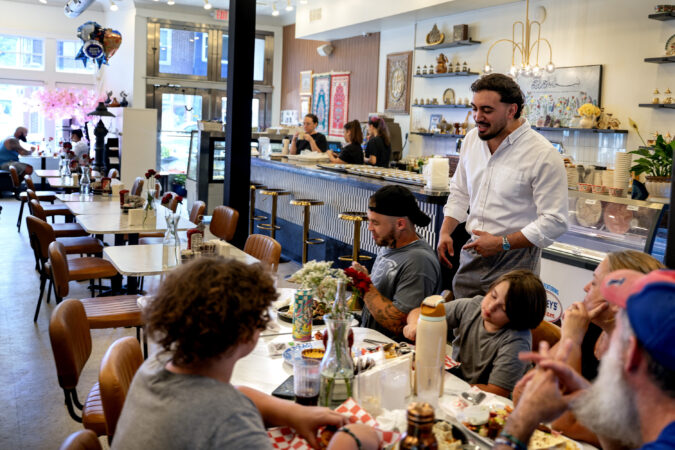
Halal restaurants: Eight can’t-miss spots throughout the region.
Love and hot dogs:A restaurateur decamps to the Jersey Shore.
News: I have an exclusive preview of Known Associates (the cocktail bar from Forsythia chef Christopher Kearse, opening Friday). Read on for the first word of a luxe Korean restaurant on its way to Center City.
Jeffrey Chodorow has opened splashy restaurants all over the world. Here’s his latest, Mr. Edison, opening Thursday in his hometown. And it’s a dazzler.
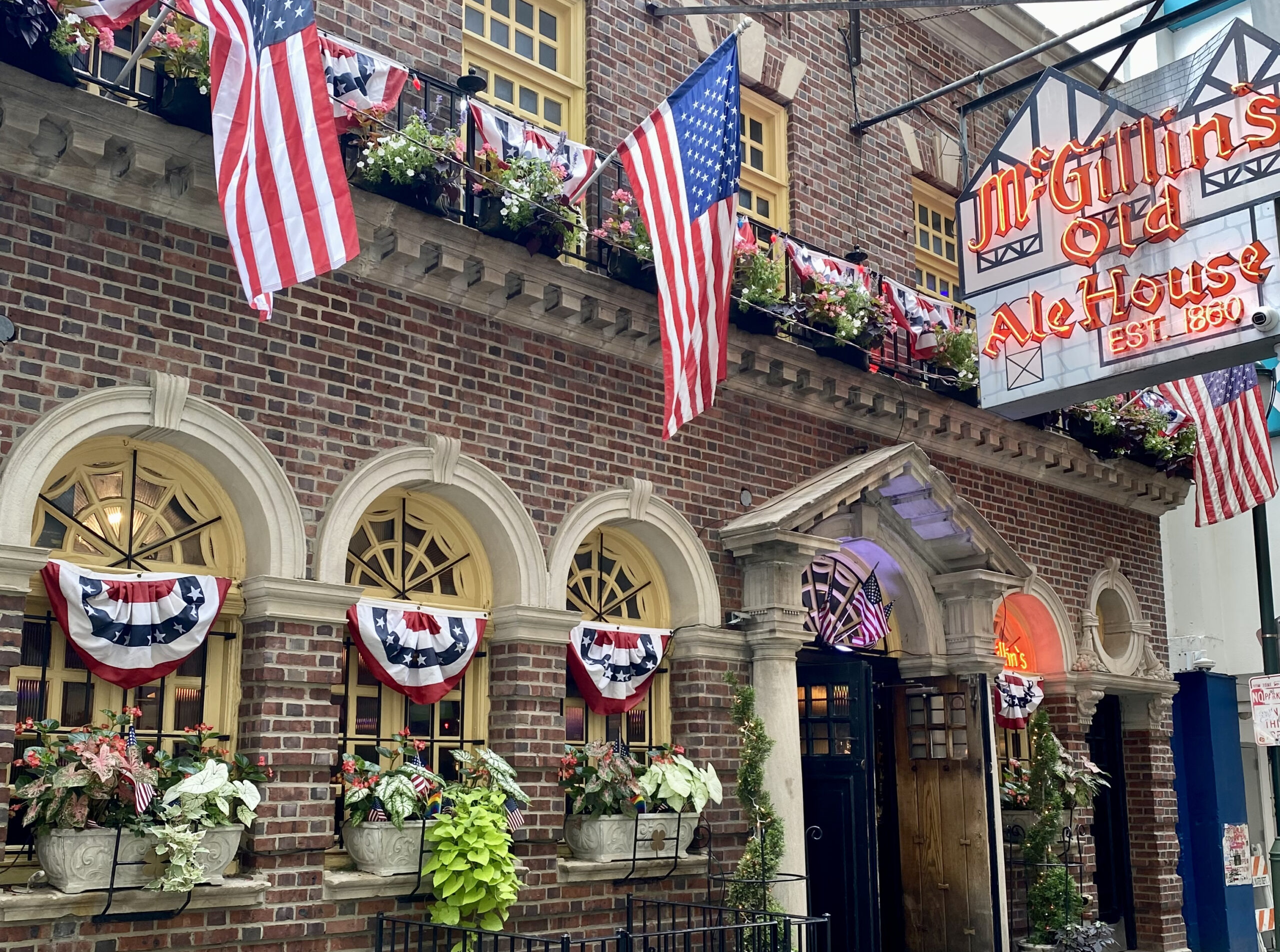
Here’s some McGillin’s lore: If it’s McGillin’s Olde Ale House, why does the sign spell it “Old”? Pub historian Irene Levy Baker explains: It opened in 1860 as Bell in Hand, and the original wooden hand holding a bell still hangs inside. Founder “Pa” McGillin ran it until his death in 1901, when Catherine “Ma” McGillin took over. For the 50th anniversary in 1910, she renamed it McGillin’s Old Ale House — which regulars were calling it anyway (presumably because it was old even back then). The “e”was added in the 1990s for effect, but since the neon sign is a reproduction of the earlier version, it still reads “Old.”
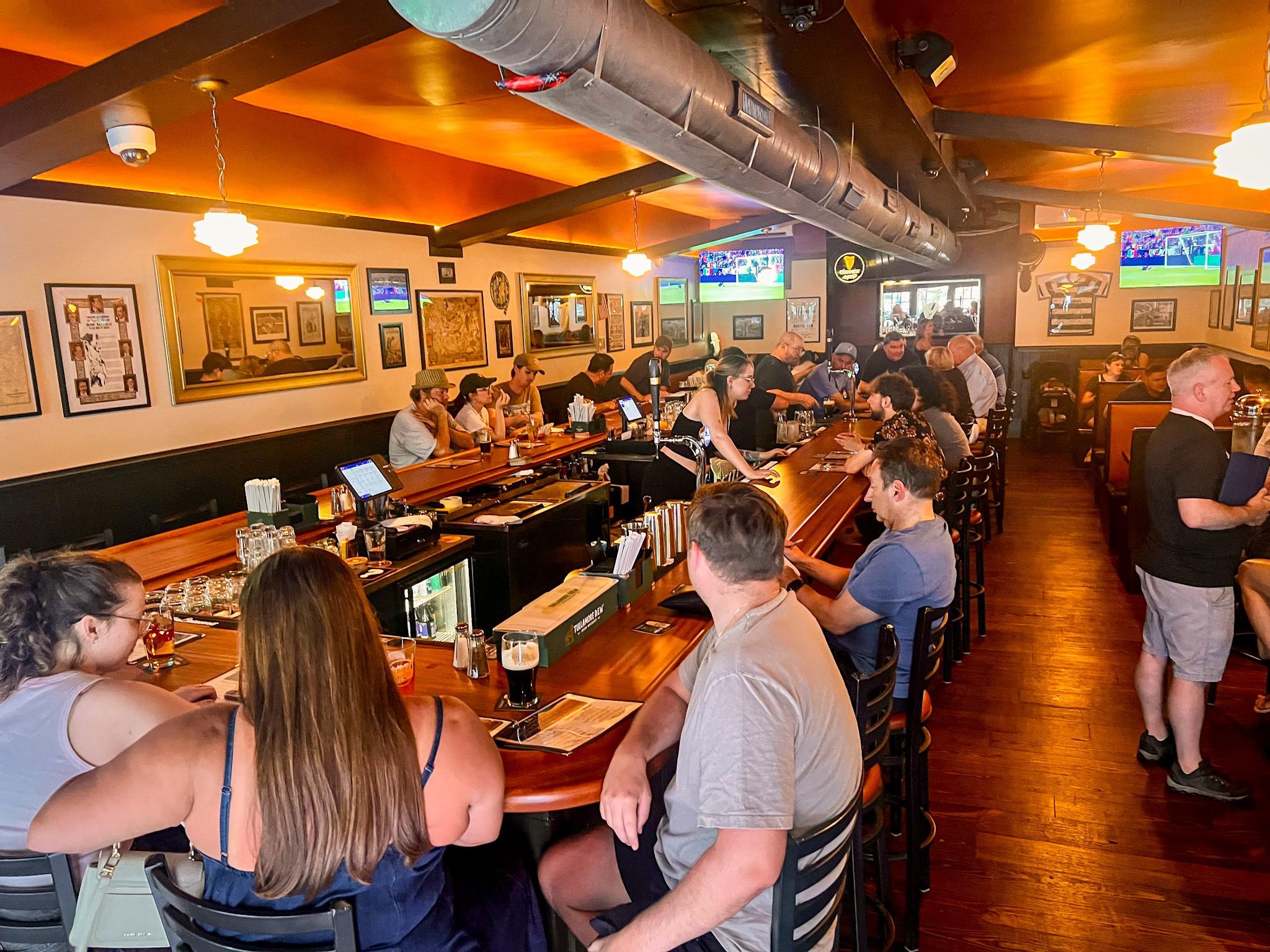
Center City’s newest bar is The Monto (above), which opened Saturday at 226 Market St. in Old City under the stewardship of Fergus “Fergie” Carey and Jim McNamara. Alas, there’s a bit of drama unfolding. N.A. Poe of Poe’s Sandwich Joint, who was attached to the project to meld Philadelphia sandwich culture with Irish pub fare, has apparently bowed out. You’ll see they’ve opened up the old Mac’s Tavern by shifting the bar to the middle of the room. It’s open at noon daily.
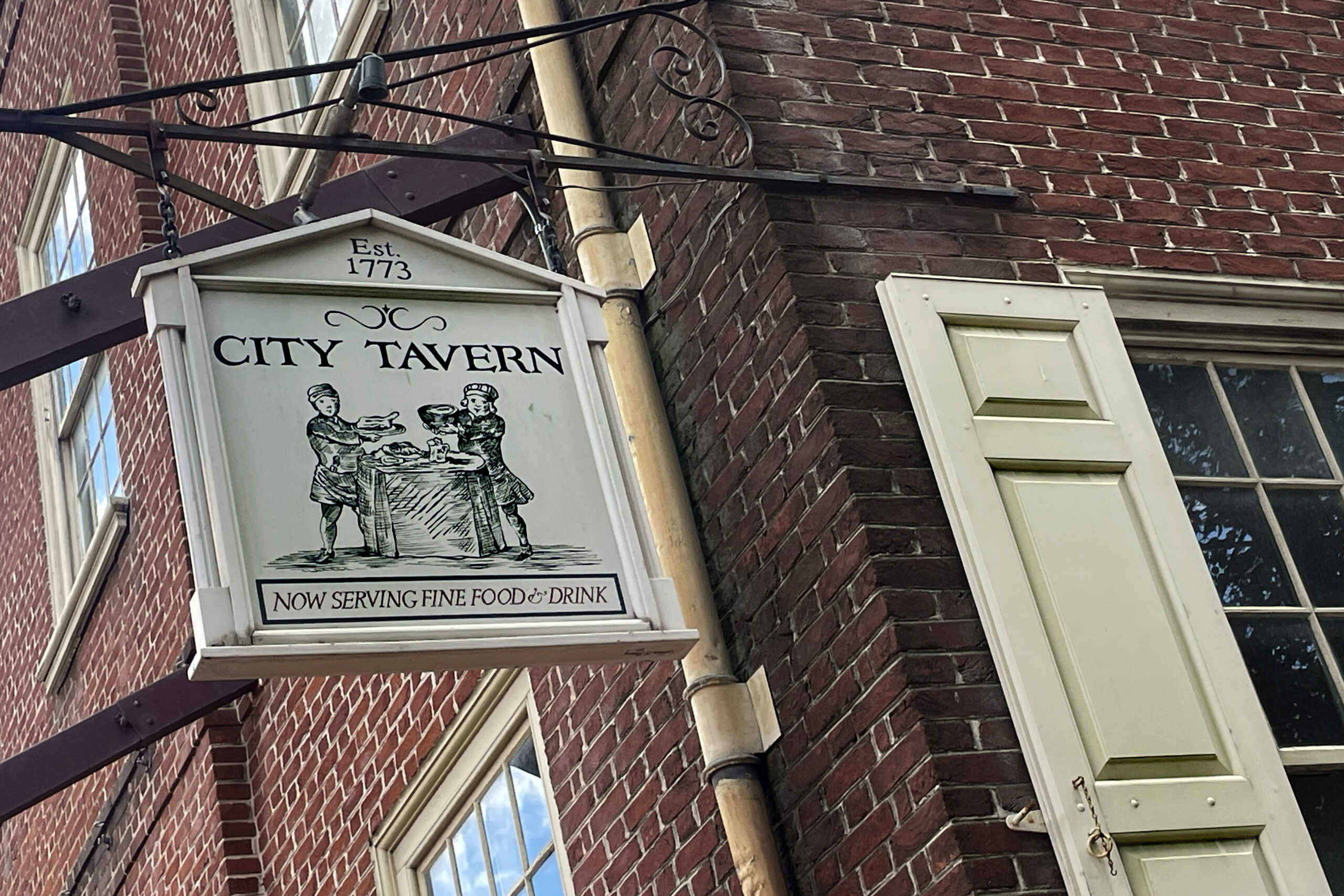
The historic City Tavern, which closed six years ago, is back. Outside, anyway. It’s hosting a summertime pop-up in its garden, including food, drinks, historical interpreters, lawn games, and special events.
Hillary Bor, who co-owned Pumpkin BYOB in Graduate Hospital for two decades, has a new love and a new food business in Margate. Amy Rosenberg says Dock Dogs also has a stellar view.
Tacos al pastor at a little corner spot in Old City, a crispy bibingka waffle in the Fairmount area, and a soft-shell crab offered as a ritzy BLT in Rittenhouse were among The Inquirer Food team’s favorite bites last week.
Scoops
Arirang, an upscale Korean restaurant, is in the earliest stages of development at 1219 Locust St., in the former Papery of Philadelphia space next to Vedge in Washington Square West. Linda and Myung Kee Hwang, who own the Old Nelson delis around town as well as the building, are planning a traditional menu, as well as a liquor license to serve Korean spirits. “When we started looking at the Korean restaurant landscape in Center City, we realized there really wasn’t anywhere that, as Koreans ourselves, we would go for a truly authentic Korean meal,” Linda Hwang told me. “Everyone does Korean barbecue, and beyond the fact that it’s overdone, we simply didn’t want the grilling and smoke inside the building. The food will be very traditional. No fusion, no shortcuts.” The name is the folk song that is Korea’s unofficial anthem. There’s no timeline yet.
Take a first look inside Known Associates, the cocktail bar from chef Chris Kearse of Forsythia, opening Friday at the former Varga Bar in Washington Square West. Read on for the details.
Restaurant report
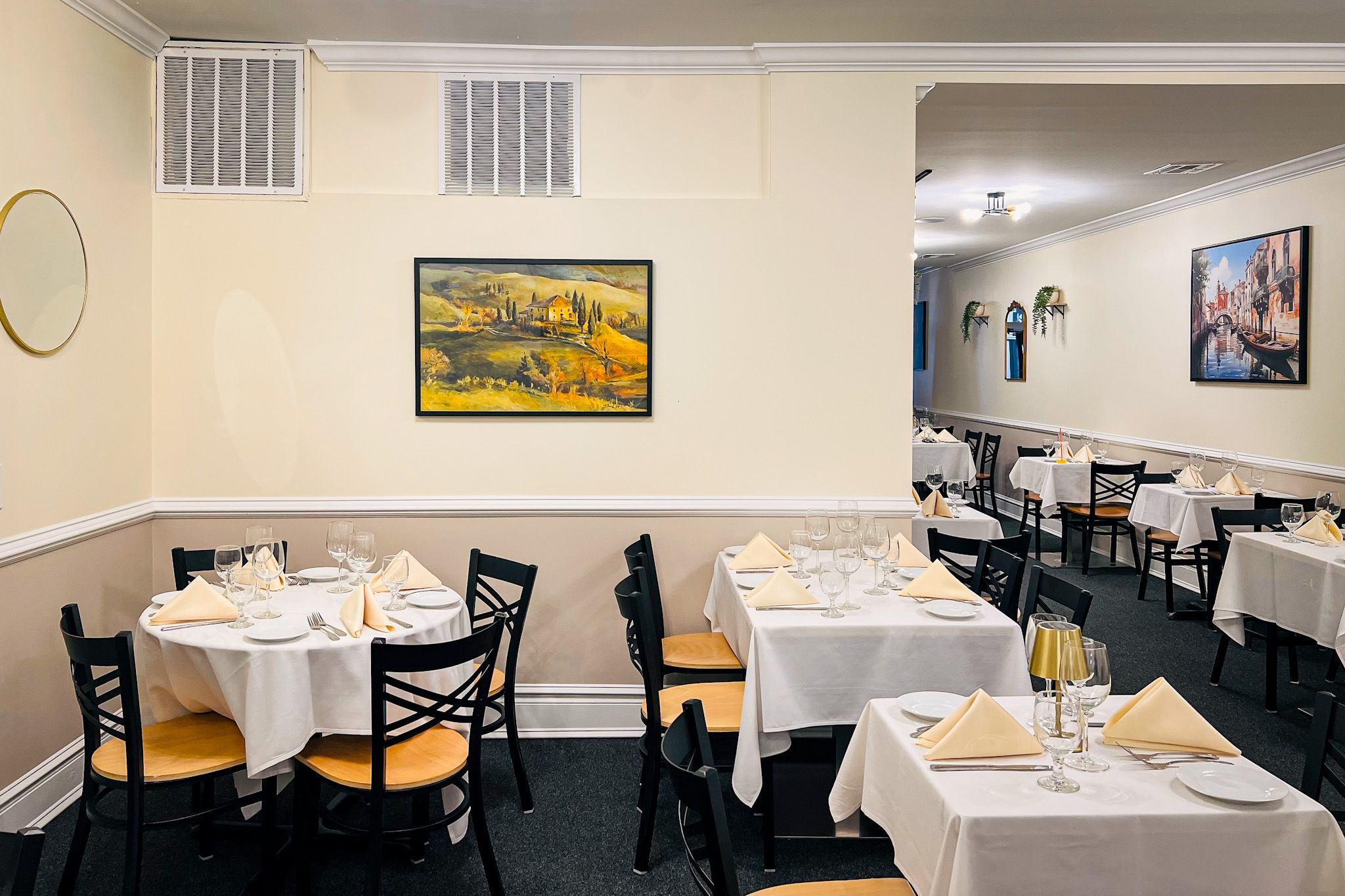
Il Gusto. Now open at 114 Chestnut St., Il Gusto brings a Southern Italian-leaning BYOB menu and white-tablecloth atmosphere to the Old City storefront that previously housed Karma.
Chef-owner Tony Krupa delivers big-portioned Italian American and Southern Italian standards and, he says, “nothing trendy”: grilled octopus with cannellini beans and artichokes, fried calamari, mussels, clams, and fried mozzarella, along with a full slate of pastas, and chicken, veal, and fish entrees such as salmon Livornese as well as barramundi with shrimp, capers, and cherry tomatoes over capellini (shown above). Entrees are in the $20s.
Il Gusto, 114 Chestnut St., 215-518-9092. Hours: noon-9 p.m. Sunday-Thursday, noon-10 p.m. Friday and Saturday.
Briefly noted
Trattoria Totaro in Conshohocken reopens today, nearly three months after a fire.
The Buttery, the popular Main Line bakery/cafe, opened its third location last weekend in Bryn Mawr. There’s at least one more on the way, the owners told Denali Sagner.
Villa Nuova in Deptford will close soon after 26 years in business, as owner Peppe Scotto announced on Facebook.
Surfside has taken over the U.S. alcohol industry. But its founders told Erin McCarthy that the brand’s base is staying put in Philly.
Aneu Kitchen’s new location at Ardmore Farmers Market in Suburban Square will open at 8:30 a.m. Monday with comp samples of her YEU On-the-Go bites.
South Philly Barbacoa, James Beard-winning chef Cristina Martinez’s business, is now set up inside Triple Bottom on Spring Garden Street, writes Hira Qureshi. That means tacos, chips and guacamole, and sweet tamales on a permanent basis.
The H Mart in Cherry Hill has been expanded, and Hira offers a tour of the emporium, aisle by aisle.
Cult of Trees’ nonalcoholic spirits are packaged by hand in Kensington. Sande Friedman explains that at local bars, they’re already a hit.
❓Pop quiz
Wine writer Marnie Old believes that one country might be on its way to overtaking France as the pinot noir capital of the world. What is it?
Is Angelo’s Pizzeria ever going to open that new place in New Jersey? — Scott P.
Many of my articles are inspired by readers’ questions. Here’s a follow-up to a story I wrote last July, when Angelo’s owner Danny DiGiampietro said he was taking over the shuttered Di’Nics in West Collingswood Heights. Construction has just begun, and DiGiampietro believes that it will open in about two months. Meanwhile, Angelo’s is getting into the wholesale bread business out of its huge bakery in Conshohocken. Here is the update.
📮 Have a question about food in Philly? Email your questions to me at mklein@inquirer.com.
By submitting your written, visual, and/or audio contributions, you agree to The Inquirer’s Terms of Use, including the grant of rights in Section 10.
More than a year after the small restaurant Jersey Kebab made national headlines and inspired widespread criticism of ICE when agents arrested the owners, their son is now fighting a similar battle.
The federal government informed Muhammed Emanet, who left Turkey when he was 12, of its intention to deny his request for a green card, with a 30-day window to present new or additional information to try to persuade the U.S. Citizenship and Immigrations Services to allow him to stay.
No one knows for sure what happens when the deadline comes up next week.
If he is deported, he’ll be separated from his wife and two young sons. Hundreds of letters have been signed and gathered on his behalf, attesting to his good character.
The recently launched Women’s Brain Health Initiative at the Rutgers Brain Health Institute seeks to better understand what researchers say has been historically under-studied — how hormonal changes affect the brain.
The focus is on hormonal shifts that occur throughout life such as puberty, menstruation, pregnancy, postpartum, and menopause.
The research and the public education will center information on women’s mental health, disease vulnerability, and brain function and development.
Officials from the Haddonfield Police Department charged a man from Maple Shade on Tuesday for allegedly damaging and stealing LGBTQ flags along Kings Highway in the business district, according to authorities.
New Jersey’s Office of Corrections Ombudsperson released a report on Tuesday detailing conditions at Bayside State Prison in South Jersey including overcrowding and unclean conditions, according to New Jersey Monitor.
New Jersey’s rent for office space is slightly more than the national average. Between January and May, $387 million in office sales were recorded in the state and 630,000 square feet of offices were under construction.
Camden County will conduct mosquito spraying this morning in Bellmawr, Camden,Clementon, Haddon Heights, Gloucester Township, Lawnside, Lindenwold, and Stratford, according to the county.
It’s not too early to think about October, apparently. According to 42 Freeway, Spirit Halloween seems to be coming to Deptford, Cherry Hill, and Mount Laurel.
Meet Yaxel Lendeborg, a Pennsauken High graduate who has had one of the most unconventional yet fastest basketball career trajectories from community college to becoming a national champion.
🧠Trivia time
Which former Eagle does a celebrity bartending fundraiser every year in South Jersey?
An Inquirer poll in collaboration with Suffolk University asked 500 Philadelphians across the city about issues Mayor Parker promised to address in her tenure.
The questions included concerns about crime, quality of life, city services, and education.
Among the responses, they found:
👍 An overwhelming majority of Philadelphians feel safe, and more than 40% believe the city is cleaner.
👎 The quality of public schools remain a major concern, as well as the persistent opioid crisis in Kensington. More than half of the respondents indicated that the mayor’s strategy in the neighborhood is not working.
🗳️ There are mixed results on Parker’s political fortunes as she heads into an expected reelection campaign next year.
Earlier this month, an Inquirer investigation uncovered how the Fraternal Order of Police has for years billed the city following an officer’s death for expenses that are unrelated to funeral home and cemetery costs.
To the tune of tens of thousands of dollars, taxpayers were footing the bills for everything from bar and restaurant tabs to socks and underwear.
Now, the FOP is pushing back on its role in the matter.
Notable quote: “The problem has always been and continues to be the city of Philadelphia’s ineptitude to pay bills in a timely fashion,” the FOP wrote. It continued on to say that survivors’ families are left to make big financial decisions as they are grieving.
The discovery prompted questions about the union’s charitable organization, which has spent money on funerals even in years when no officers died in the line of duty. The FOP criticized The Inquirer’s request to clarify these expenses through public records.
President Donald Trump talked tariffs — and transgender athletes, weight-loss drugs, and the UFC fight on the White House lawn — during a Lehigh Valley stop. He appeared to snub GOP gubernatorial nominee Stacy Garrity.
The ICE arrest of the owners of South Jersey Kebab sparked wide condemnation last year. Their son Muhammed Emanet said he is trying to be upbeat as he faces the prospect of being separated from his wife and two sons, all U.S. citizens.
🧠Trivia time
A Delco man built this in his dad’s basement and could win $10,000 for it:
A) a shrine to the Phillie Phanatic
B) a replica of the Liberty Bell made out of pretzels
Cheers to Kim Hyde, who solved Tuesday’s anagram: Oh Mary! Tickets go on sale this week for the first national tour of the Tony-award winning campy comedy.
Photo of the day
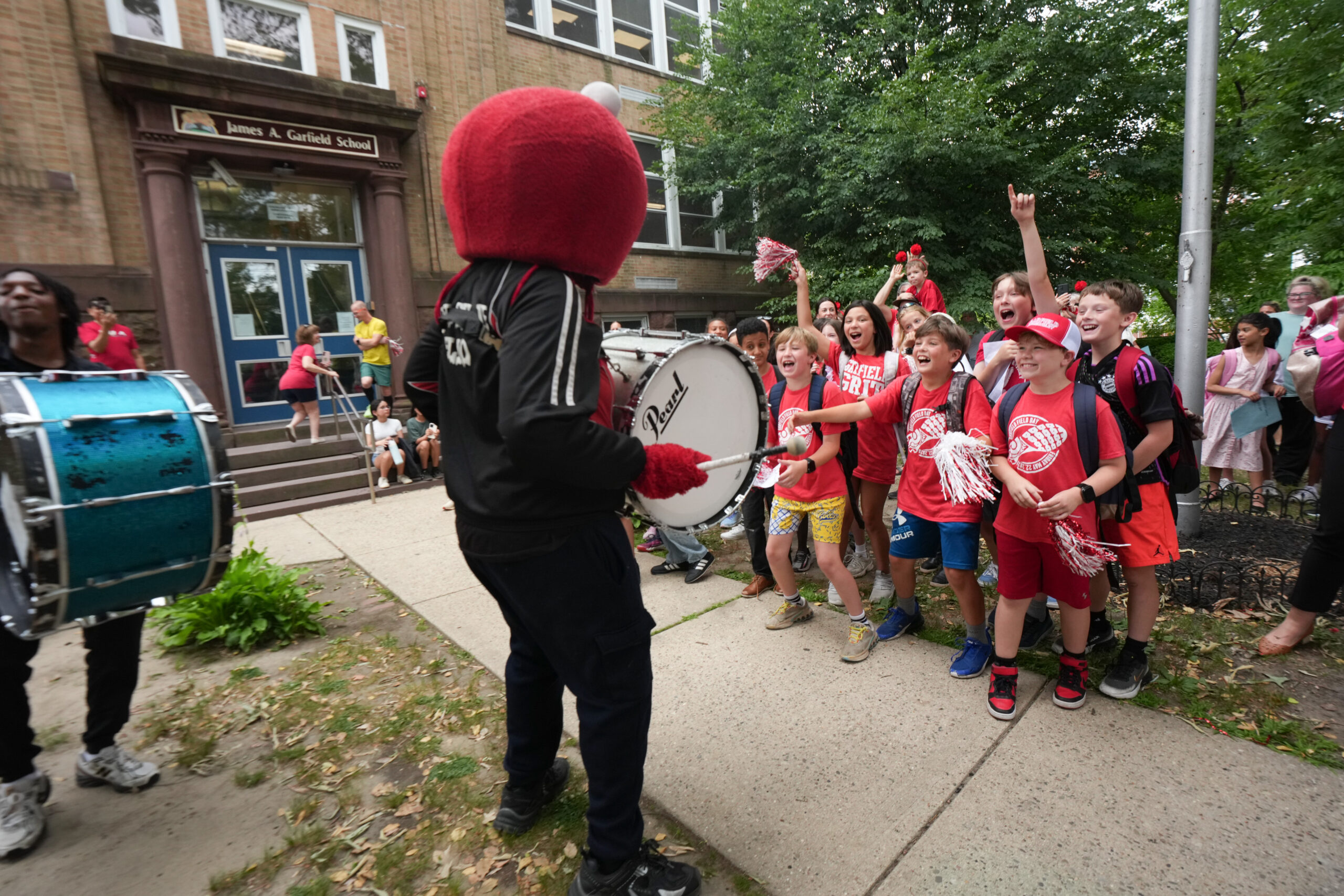
Philly Elmo interacts with students on the last day of school at Garfield Elementary in Collingswood. It’s set to close due to budget cuts.
👋🏽 That’s it for now. Thanks for reading, and have a great day.
By submitting your written, visual, and/or audio contributions, you agree to The Inquirer’s Terms of Use, including the grant of rights in Section 10.
Five buildings in downtown Bryn Mawr, including the storefronts of Carina Sorella, Jeni’s Splendid Ice Creams, and the Buttery Bryn Mawr, are up for sale.
The Bryn Mawr Collection, a nearly26,000-square-foot portfolio that includes residential, retail, medical, and office space, was recently listed by real estate firm CBRE. The properties are owned by Main Line-based real estate developer Tim Rubin and are located in the heart of Bryn Mawr at 834-40 W. Lancaster Ave. and 860-66 W. Lancaster Ave.
CBRE’s Chris Munley said the properties could sell for around $12 million.
Rubin is a Narberth native who has owned the properties for almost 20 years. With the sale, he is hoping to recycle capital and make a similar investment somewhere else, Munley said.
The Bryn Mawr Collection is “extremely rare, irreplaceable ‘Main Street’ real estate, providing a once-in-a-lifetime opportunity to break into a high barrier to entry market,” according to the listing. The portfolio is a stone’s throw from the Bryn Mawr SEPTA station and down the road from Villanova University, making it well positioned in one of the region’s most “affluent, educated, and densely populated suburban communities,” the listing reads.
The properties are currently home to TCO Fly Shop, the Buttery, Jeni’s Splendid Ice Creams, and Carina Sorella, as well as apartments and offices.
Beloved tenants such as Carina Sorella and The Buttery, which opened last week, aren’t going anywhere, Munley said. The successful businesses are “one of the reasons this is attractive” for potential buyers, and they have long-term leases that would extend beyond the sale of the properties.
The properties are in their second week on the market, and Munley said the level of interest has been “eye-opening.” In addition to local players looking to expand their portfolio on the Main Line, Munley said he has seen interest from investors that usually focus on larger markets like New York, San Francisco, and Los Angeles.
This suburban content is produced with support from the Leslie Miller and Richard Worley Foundation and The Lenfest Institute for Journalism. Editorial content is created independently of the project donors. Gifts to support The Inquirer’s high-impact journalism can be made at inquirer.com/donate. A list of Lenfest Institute donors can be found at lenfestinstitute.org/supporters.
The American Swedish Historical Museum in South Philadelphia’s FDR Park could be getting some exterior upgrades, including a new auxiliary building for storage, for its 100th anniversary.
Museum staff appeared Tuesdaybefore one of the Philadelphia Historical Commission’s advisory committees seeking input and support for a new ADA ramp, parking area, plaza, pedestrian paths, and lighting for the grounds of the property, as well as the additional building.
The nonprofit’s board has chosen to focus on projects that provide equitable and safe access to the building for its centennial, said Tracey Beck, the executive director of the museum, the oldest Swedish museum in the nation.
“We do serve a lot of families with small children and senior citizens, and therefore things like the 25 steps leading up to our front door create a real barrier for a lot of people,” Beck told members of the architectural committee that met Tuesday.
The museum sits on the northern edge of the park, facing Pattison Avenue, which is an advantage but comes with some logistical hurdles, including park parking that can be easily gobbled up during 5Ks and other events hosted at FDR.
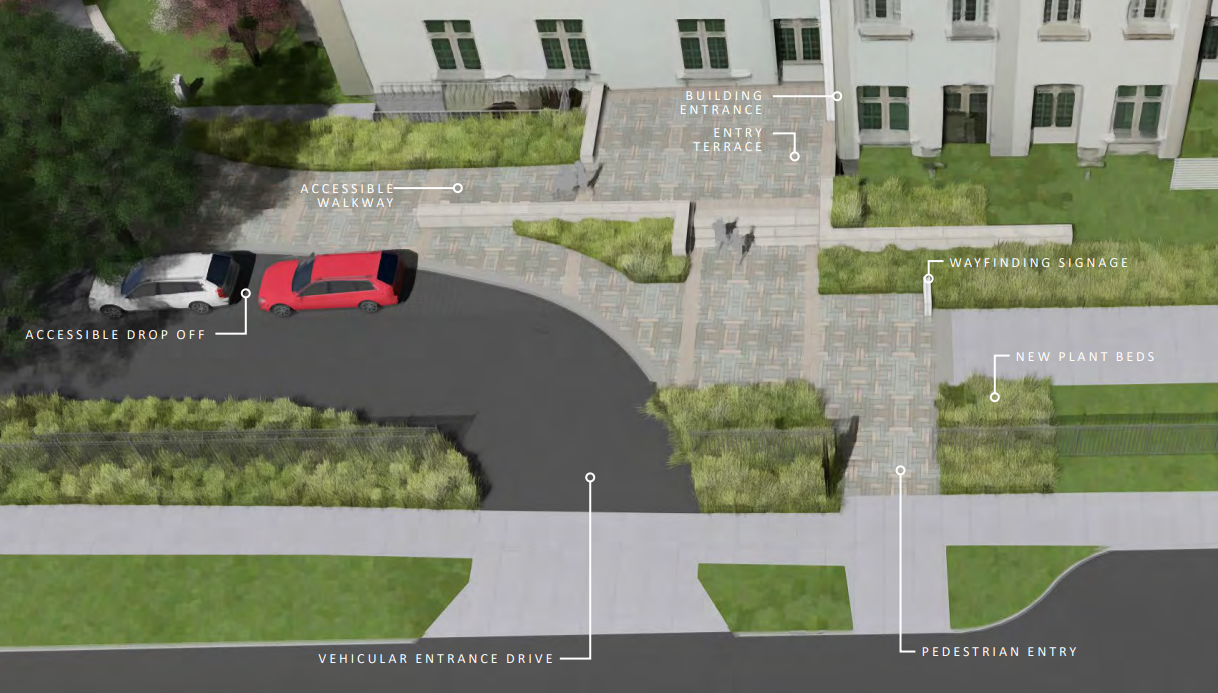
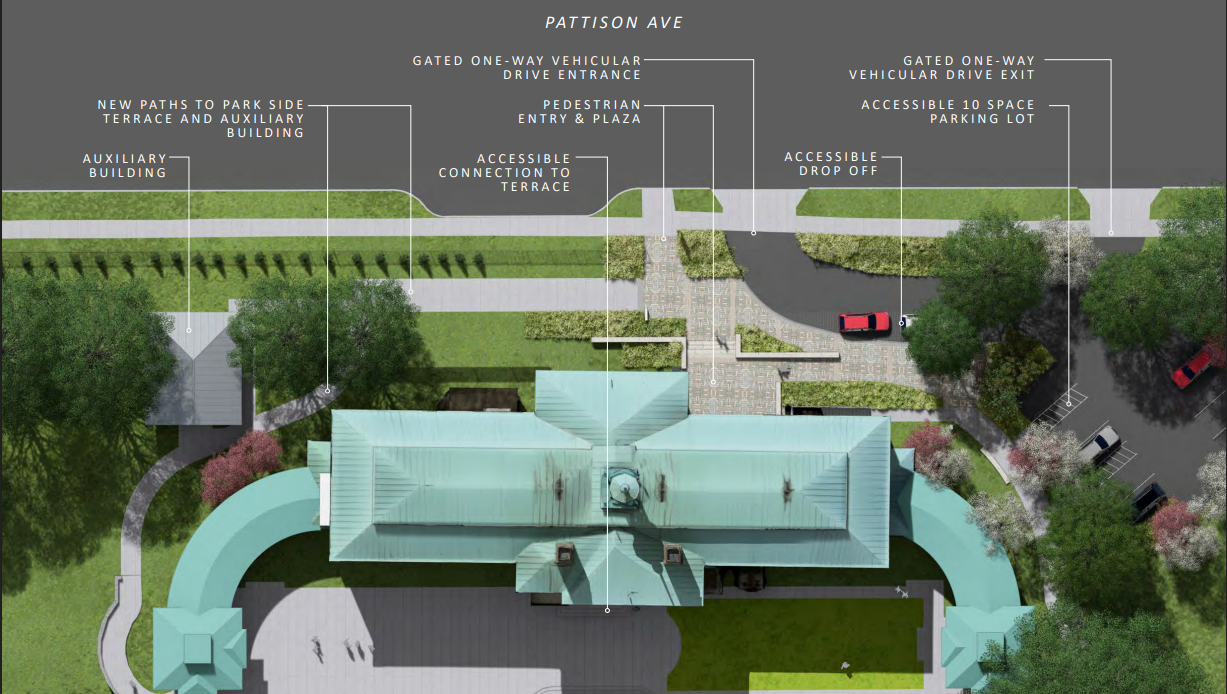
The small 10-spot parking area that would be located on the Pattison Avenue side of the building would ensure the museum would always have parking available, no matter what is going on in the rest of the park, said Brittany Scherer with Studio Sustena, the design lead on the project. A one-way vehicular entrance drive illustrated in plans submitted to the committee also aims to create an accessible drop-off. New plantings would make the street-facing side of the building more inviting to those driving by.
The building is already accessible, with two handicap parking spaces and an elevator installed in the early aughts, Beck told The Inquirer. Still, she said, the pandemic highlighted the need for better connectivity between the museum’s indoor and outdoor spaces during events.
The new ADA ramp would be located on the side of the building that faces the park, which serves as the main entrance, creating a connection between the museum’s interior and its terrace, where events are held. The addition would save visitors with limited mobility from having to navigate half the building’s footprint in order to reach the existing ramp.
Proposed Pattison Ave. improvements, including a new driveway for accessible drop-off.
Other improvements are more practical. The lighting aims to make the museum more visible to passersby and drivers at night, while the added building would store large and heavy items, such as tables and chairs for outdoor programming.
Members of the advisory committee were largely receptive to the improvements, unanimously approving all but two that required tweaks — the auxiliary building and the ramps — for design reasons.
Committee members raised concerns over placement of the added storage building and how close it would be to the museum. They also thought the design was too eye-catching, possibly leading people to believe it was a welcome center or bathrooms.
Aerial view of proposed changes to the American Swedish Historical Museum.
“I want it to disappear a little more,” said committee member Justin Detwiler.
Another member disagreed with the use of acrylic panels meant to provide more protection for children along the proposed ADA ramp. Committee members worried that panels would scratch and become unsightly in the future, suggesting a simple ramp or other changes to eliminate the need for panels.
Those tweaks should be simple enough to incorporate in time for a July 10 meeting of the full commission, Beck said.
Because the museum is still in the early stages of fundraising and awaiting conceptual approval, there is no firm timeline for the projects, budgeted to run about $2.8 million.
The museum’s proposed improvements come as the rest of the park continues a $250 million, once-in-a-generation overhaul.
PARIS, FRANCE — On a recent sunny May morning, Parisian middle schoolers had found a curious selfie point. Not a tourist landmark, not a kitschy backdrop, and not a mirror booth.
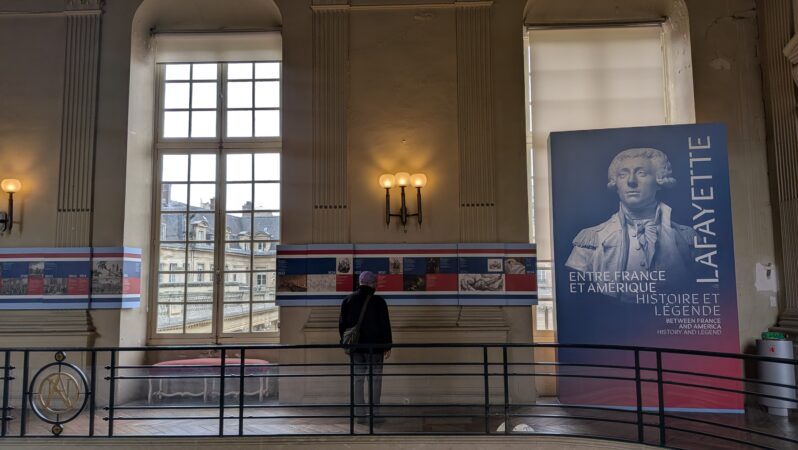
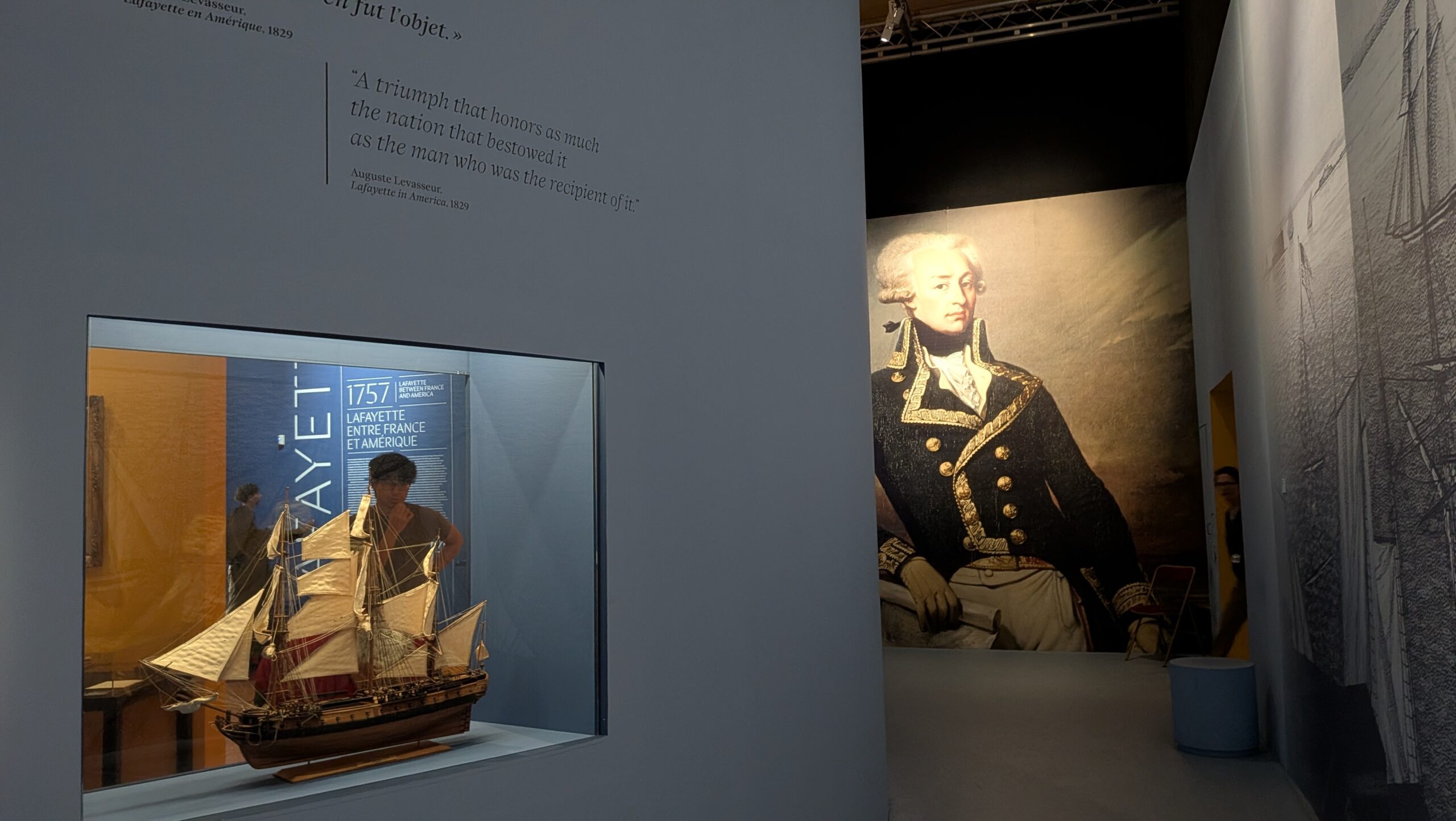
It was the long rococo staircase of the 14th-century Hôtel de Soubise, which houses the Museum of the National Archives of France, plastered with the face of Marquis de Lafayette, the French military officer who died in 1834.
“This has become a selfie hot spot somehow,” said Alexandra Hauchecorne, the museum’s technical director of the “Lafayette, between France and America: History and Legend” show.
The Hôtel de Soubise’s rococo staircase, with likeness of the Marquis de Lafayette, has become a selfie hot spot at the Musée des Archives Nationales in Paris.
Lafayette — both before and after Lin-Manuel Miranda’s Hamilton — is a celebrated hero in America. Textbooks record that he was only 19 when he came to America in 1777 to join the Continental Army under George Washington. He fought for American independence, participated in the Battle of Brandywine and the Siege of Yorktown, faced the harsh winter of Valley Forge, convinced the French King Louis XVI to send more troops, and developed a deep relationship with Washington — so much so that Lafayette named his only son, George Washington.
And of course, Lafayette has also become the de-facto author of the catchphrase “Immigrants… We get the job done” by way of Daveed Diggs playing him in Miranda’s immensely popular musical, a phrase splashed on countless tote bags and in hashtags.
In France, however, “Lafayette was not regarded the same way as he is here,” said Olga Anna Duhl, professor of French and comparative literature at Easton, Pa.’s Lafayette College and one of the exhibition’s curators.
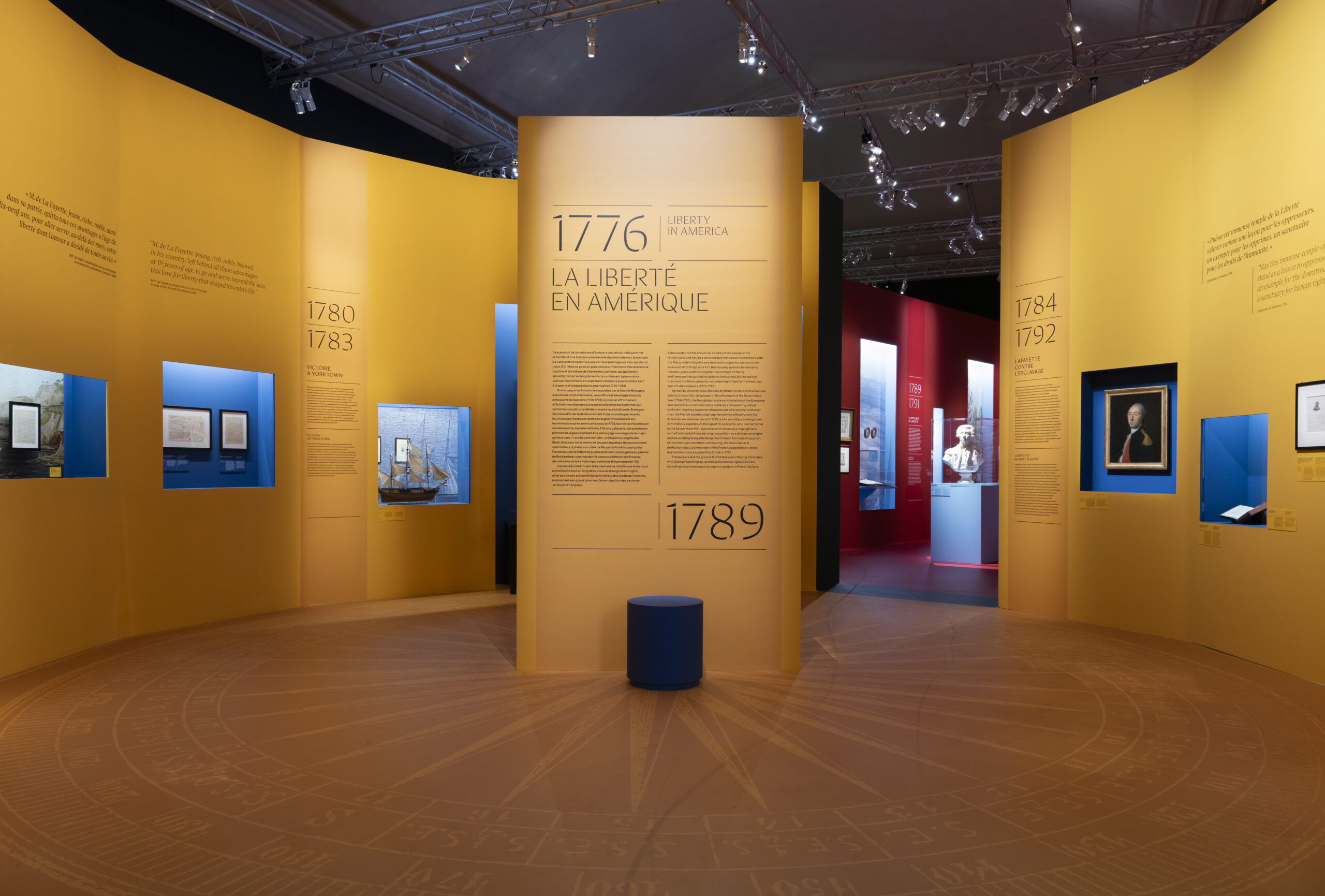
The yellow room of the ongoing “Lafayette, between France and America: History and Legend” at the Musée des Archives Nationales in Paris. The exhibit focuses on Lafayette’s participation in the American Continental Army.
His involvement in the French Revolution and desire to have France be a constitutional monarchy, as opposed to a republic like America, made him a target of criticism from both the left and right of the French political system. He was perceived as a traitor and eventually forced to flee the country. Lafayette was imprisoned first by the Austrians and then by the Prussians, who (ironically) considered him a rebel.
With it being the American Semiquincentennial, Duhl “thought that it would be wonderful” to have an exhibition in Paris and “educate the French people, and any person who comes to visit” about Lafayette.
In France, she said, “you study history, then you go into his life, and especially his American side. But you know very little about his French contribution, which is very paradoxical.”
The red room of the ongoing “Lafayette, between France and America: History and Legend” at Paris’ Musée des Archives Nationales focuses on Lafayette’s participation in the American and French revolutions.
The exhibition encompasses five rooms color coded to fit the years of Lafayette’s life — yellow, the color of the Continental Army uniform, to tell the story of Lafayette’s years in America; red denoting the American Revolution; green to denote Lafayette’s years in semiretirement in France, gardening and practicing agriculture and often experimenting with seeds from America; a light blue to mark Lafayette’s triumphant return to America in 1824; and a darker blue to denote monarchy and Lafayette’s last years, which he spent backing King Louis Philippe I and supporting other revolutions.
The red room — the most interesting one — builds up Lafayette as the American hero he became. Among other artifacts, it includes a letter Ben Franklin wrote to him on behalf of the Philadelphia Philanthropic Society in 1788.
The green room of the ongoing “Lafayette, between France and America: History and Legend” at Paris’ Musée des Archives Nationales focuses on Lafayette’s years of semi-retirement spent gardening in Château de Chavaniac.
“Most of our Legislators have already abolished the Slave Trade,” it reads, “…But from the influence of narrow prejudices and jealousies there is too much reason to apprehend that nothing effectual willbe done in this business untilFrance concurs in it, of which we cannot but entertain the most pleasing expectation.”
Franklin enclosed copies of the U.S. Constitution for Lafayette’s perusal, only six months after Franklin, whose health was failing, had James Wilson read aloudhis closing speech at the Constitutional Convention.
A letter Lafayette wrote to George Washington on March 17, 1790, is on display, too. Along with the letter, Lafayette sent his mentor the key to “that fortress of despotism” that was the Bastille. Thomas Paine, who carried this extraordinary gift, said, “That the principles of America opened the Bastille is not to be doubted, and therefore the Key comes to the right place.”
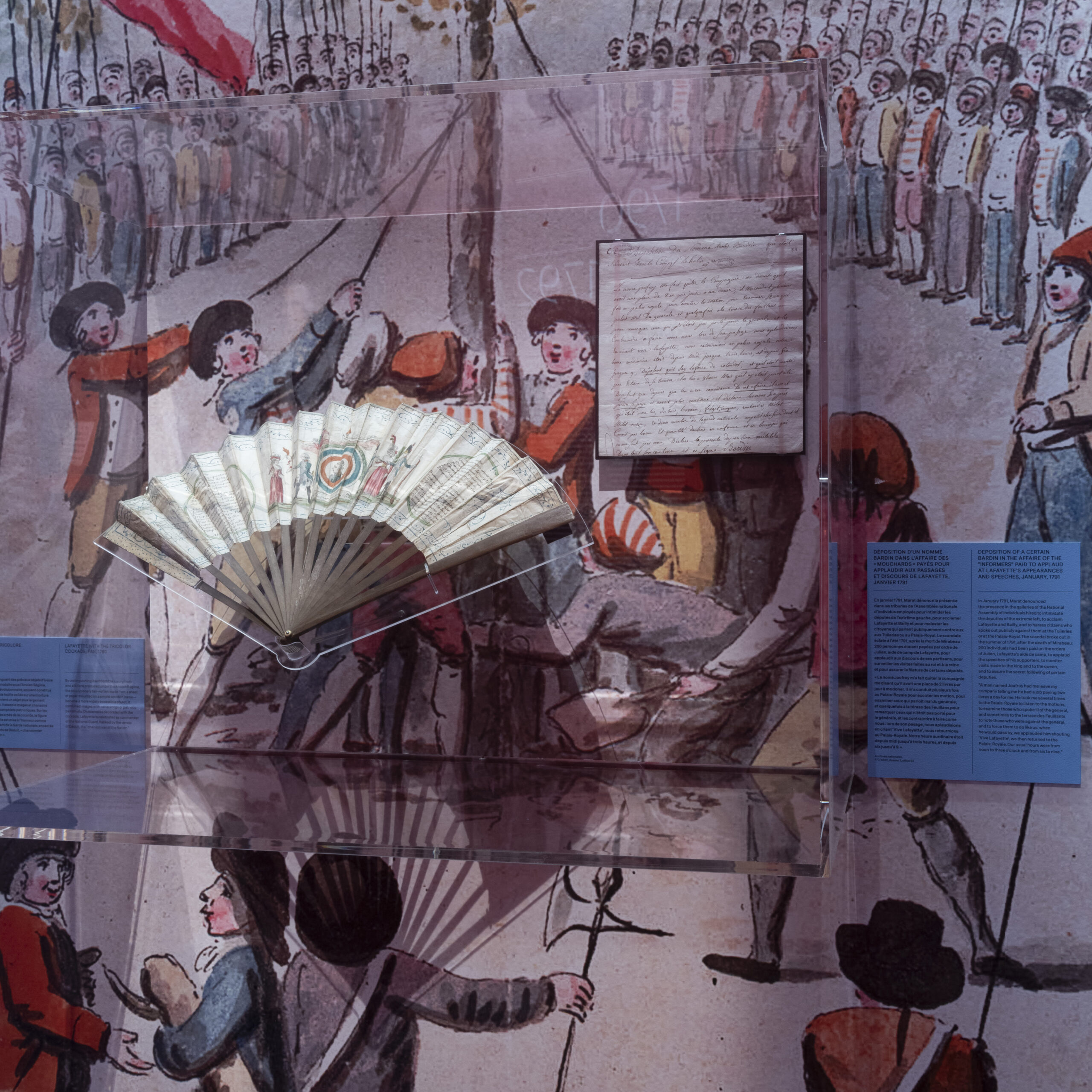
Paper fans carrying Lafayette’s name were popular among his followers. Lafayette was a canny self-promoter who hired publicists to defend his image.
Also on display are lampoons and letters that speak to the immense distrust both the aristocrats and democrats had of Lafayette.
“If this is the eldest child of Liberty, he is murdering his mother,” a letter reads. “Lafayette treated as he deserves by democrats and aristocrats,” reads a lampoon showing the French lieutenant général being hung by a noose by two men on his either side.
Lafayette, on his part, was a canny self-promoter. He hired several publicists to defend his public image and recruited people to clap at his speeches. In what would be classified as merch today, his face adorned fans, buttons, and commemorative plates.
On display in the light blue room, marking his triumphant return to America in 1824, are several objects — pitchers, tea sets, baby shoes, shoeshine brushes — all emblazoned with his face and name.
Produced in a factory in Burslem, Staffordshire, a tea service set in blue and white earthenware shows the Marquis de Lafayette sitting by Benjamin Franklin’s grave. This imaginary scene appeared on plates and other items manufactured to commemorate Lafayette’s return to the U.S. in 1824. From the “Lafayette, between France and America: History and Legend” at the Musée des Archives Nationales, Paris.
As Lafayette’s reputation in France remained checkered at best, many of these branded memorabilia were found in homes in Philadelphia, a prominent stop in Lafayette’s “Farewell Tour” of the Union’s 24 states. An invitation to the Lafayette Ball held in Philadelphia in 1824 hangs on the wall.
Much of the artifacts come from the collection of Lafayette College, the only college in the U.S. named after him. More streets and public places in the U.S. are named after Lafayette than any other foreigner. In Paris, about six hours away from Chateau Lafayette where he lived, only Rue La Fayette, one of the city’s longest streets, bears his name.
That and a glitzy shopping mall with 10 floors, best known for its rooftop views of the city.
“Lafayette is very well known [in France] but not as a historical figure,” said Duhl. “And one of the educational aims of this exhibition is to educate people about this compelling figure … so that the new generation can really develop an idea about who Lafayette really was, because he has disappeared basically from manuals.”
The “Lafayette, between France and America: History and Legend” exhibit at Paris’ Musée des Archives Nationales seeks to educate French visitors about the historical importance of Marquis de Lafayette.
On a weekday morning, there was a mix of visitors to the exhibition that, Hauchecorne said, was a rare bilingual event at the Archives. Parisians and school children have been visiting, as have Americans on vacation, to know more about the man who has been shown rapping lines that are becoming of his high self-esteem: “No one has more resilience or matches my practical, tactical brilliance!”
Even though previous exhibitions have not had much materials translated into English, the Archives, which houses records dating back to the 1st millennium, has had Americans dropping in before.
Most notably: Tom Cruise performing a motorcycle stunt as Ethan Hunt in Mission: Impossible — Fallout (2018).
“Lafayette, between France and America: History and Legend” runs through July 14 at Musée des Archives Nationales, 60, rue des Francs-Bourgeois, 75003 Paris. archives-nationales.culture.gouv.fr
Bill Curry, 65, raises cattle on the same land in rural Oklahoma once owned by his father and generations before him. Each quarter, for several years, he has made the 2½-hour drive to Oklahoma City for an epidural in his spine to treat his back pain.
But this year, because of a new Medicare program, Curry has traveled a little more often.
In February, during one trip, he was told unexpectedly that he needed preapproval for the procedure. Then he went again a month or so later to get the injection, for a total of 10 hours on the road. His clinic wanted him to come in a third time, which they had never asked of him before. That appointment was “just to fill out a piece of paper to tell them how you feel again,” Curry said, so he hasn’t gone.
In January, Oklahoma became one of six states to begin a pilot program testing the use of pre-approvals in traditional Medicare, the federal health insurance program for people 65 and older or with disabilities. Medicare had previously eschewed the practice — also known as prior authorization — which requires patients or someone on their medical team to seek insurance approval before proceeding with certain procedures, tests, and prescriptions.
Epidurals like Curry’s are among 13 medical services subject to the new program because the Trump administration says they’re prone to fraud or misuse. Powered by artificial intelligence, the program — called the Wasteful and Inappropriate Service Reduction Model, or WISeR — is intended to save the federal government money and protect patients from potentially unsafe or unneeded care.
Yet early reviews from Oklahoma and the other pilot states — Arizona, New Jersey, Ohio, Texas, and Washington — suggest WISeR’s rollout has not been smooth. Patients, doctors, and other healthcare professionals who spoke with KFF Health News say the effort has created confusion, errors, long wait times, and stress. Some described the rollout as “horrendous” and say people enrolled in Medicare in the pilot states are now getting ensnared in the same red tape as those with private insurance.
One key concern is that it all happened too hastily. WISeR was announced in June 2025 and launched in mid-January.
That was “quicker than normal” for the federal government, said Todd Baker, who recently stepped down as CEO of the Ohio State Medical Association. Doctors “just sort of had to figure it out,” added Jeb Shepard, director of policy at the Washington State Medical Association.
Government contractors have also acknowledged the rapid pace. “We’ve had an aggressive rollout from the time of being notified to going live,” said Jeremy Friese, CEO of Humata Health, the vendor for Oklahoma. Tech executives servicing other states have said they were still adding features to their products in the spring.
Abe Sutton, director of the Center for Medicare and Medicaid Innovation, which is administering the program, didn’t comment on the rollout schedule. But he said in a statement that the goal of these reforms is to ensure that prior authorization is efficient, fast, and streamlined.
“The model aims to reduce inappropriate care without delaying appropriate care,” he said.
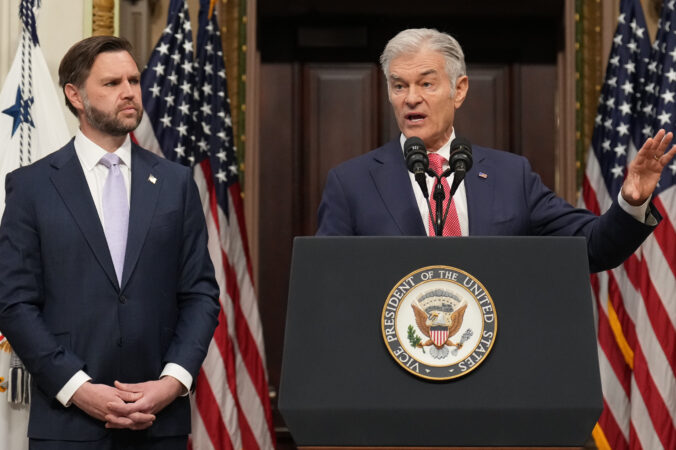
Mehmet Oz, the leader of the Centers for Medicare & Medicaid Services, told NewsNation in December that they were “rolling out some prior authorization on abused practices.”
“The purpose of these is not to deny care,” Oz continued. “It’s to make sure you get the care you need and deserve, not the care some unscrupulous doctor wants to use on you.”
Medicare has struggled in recent years with suspected fraud associated with particular services. The Department of Health and Human Services’ inspector general warned in September that the program’s spending on skin substitutes, for example, had surged nearly 700% over two years, raising “major concerns about fraud, waste, and abuse.” Skin substitutes are among the 13 therapies currently subject to review under WISeR.
The program also imposes prior authorization requirements for kyphoplasty, a surgery for spinal fractures, which a report by the Medicare Payment Advisory Commission flagged as overused.
Sutton acknowledged, however, that “the percentage of providers committing waste, fraud, and abuse is small.”
Consumers and clinicians largely detest prior authorization. Even as federal health officials test the process for Medicare, the Trump administration is trying to scale it back for those with private insurance. According to a KFF poll conducted in January, 69% of insured adults consider prior authorization a burden for care.
Through WISeR, doctors and their staff log in to online portals to submit medical records that justify the procedures. Using artificial intelligence, the systems quickly approve applications that meet the program’s criteria, Friese, Humata’s chief executive, told KFF Health News. He said there is an “immediate yes” in 88% of cases for which clinical data supports an approval.
CMS has touted the process as one in which decisions are returned within 72 hours. After that, clinicians receive a “universal tracking number,” which allows them to schedule the procedure and get paid. In practice, however, participants say the process is anything but easy.
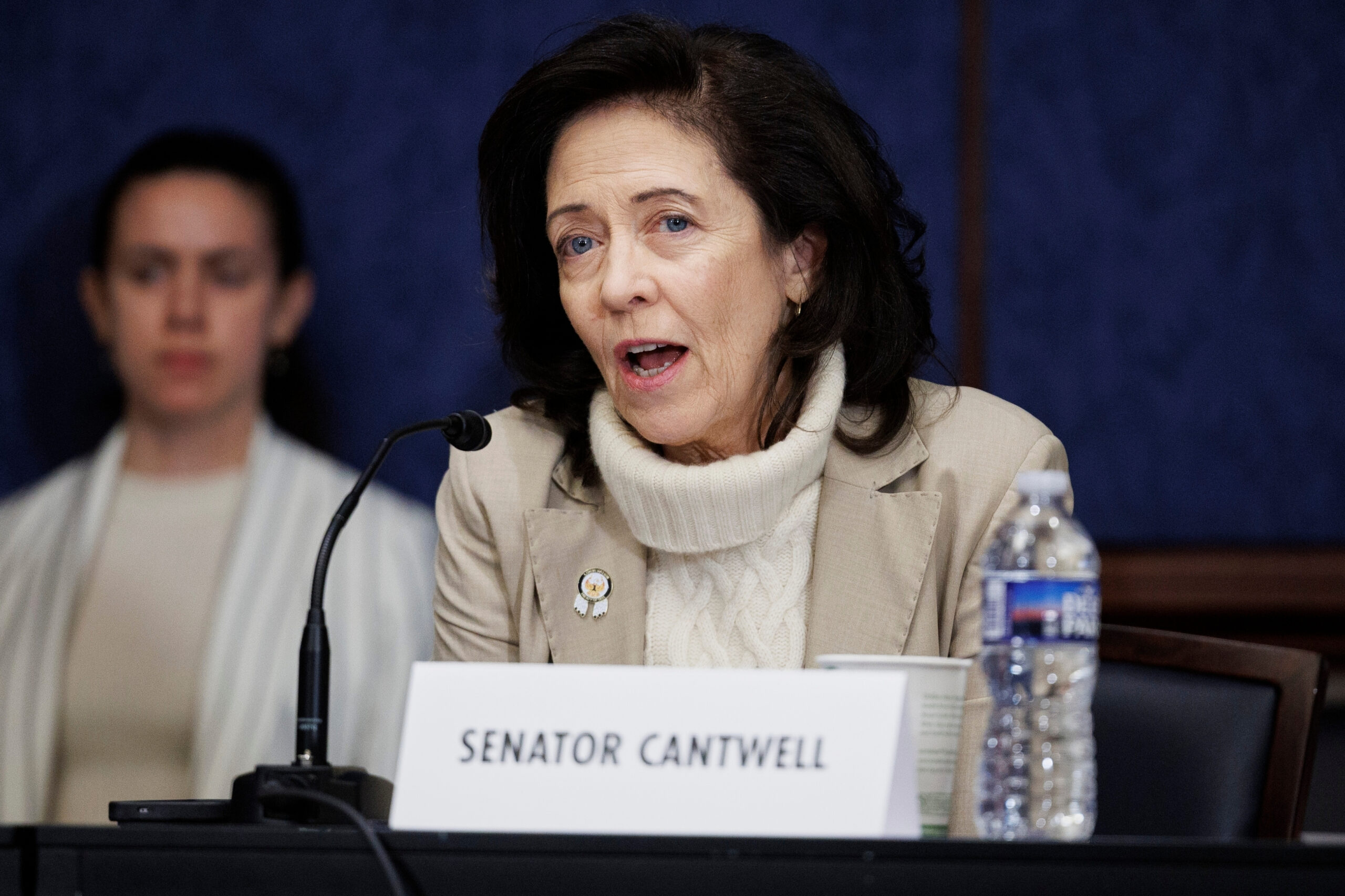
The University of Washington’s medical system alone had nearly 100 patients waiting earlier this year for epidural injections due to WISeR-related delays, according to an April report from the office of U.S. Sen. Maria Cantwell (D-Wash.) that drew on hospital association data. “Now, patients are subject to delays or denials which did not exist prior to the WISeR Model,” the report said.
FILE – Sen. Maria Cantwell, D-Wash., speaks on Capitol Hill in February. (AP Photo/Tom Brenner, File)
Curry, the Oklahoma cattle farmer, said he might go to Kansas for future treatments to avoid the approval process. Dorota Gribbin, a New Jersey-based physical medicine and rehabilitation physician, said that by the time authorization came for one of her patients who needed a back pain procedure, the patient had gone to the hospital for more expensive care.
Jennifer Valle, a precertification and insurance supervisor at Clinical Radiology of Oklahoma, said when it comes to kyphoplasties, there has been a lot of “nitpicking” from reviewers. Other times, information her practice provides to CMS gets overlooked, she said, and reviewers ask for imaging that’s already in the file.
Claims with no problems are supposed to be paid within 15 days, said James Webb, a musculoskeletal radiologist in Tulsa, Okla., who has also been frustrated by the prior approval and reimbursement process for kyphoplasties. “Six- to eight-week delays is what we’ve been seeing,” he said.
“It’s been horrendous,” said Jerry Sobel, a Phoenix-area pain management doctor. “Right from the beginning, there seemed to be no organization.” Sobel said that as of May, he hadn’t gotten paid by Medicare for nine epidurals.
“We continuously monitor operations and work closely with stakeholders to address questions and improve the provider experience,” said Sundar Subramanian, the CEO of Zyter, which has the contract for Arizona.
During an April webinar, another Zyter executive acknowledged a large backlog in payments stretching to January. Those backlogs “are currently being resolved,” Medicare’s Sutton said, without providing further detail.
When asked about other issues — including what doctors suspect are AI-driven errors — Medicare’s Sutton said the agency appreciates “feedback on provider experience.” It will be used “to help providers better understand WISeR processes,” he said.
Although CMS vendors say humans make the final decisions on approvals, doctors and their staffs believe artificial intelligence is playing a large role in the process and that denials are sometimes the result of AI hallucinations that garble or make up information.
One Arizona doctor, who wasn’t authorized by his practice to speak, recalled a denial saying his patient wasn’t eligible for procedures in the thoracic region, or midback. The patient needed an injection to the neck. Webb, the Oklahoma radiologist, documented four times that a patient lacked numbness, and yet his WISeR application was still denied, citing numbness, which, in the reviewer’s interpretation, would rule out the spinal surgery procedure.
Friese, Humata’s CEO, said he hasn’t heard about any AI hallucinations.
The process is also raising government costs. With more rejections, more appeals are being filed with Medicare’s administrative contractors. The government pays the contractors to handle the appeals, and Medicare’s Sutton acknowledged that the agency has “accounted for potential changes in the volume of Medicare appeals because of the WISeR program and its associated costs.”
Eighty-four percent of commercial insurers already use AI tools, according to a survey released in 2025 by the National Association of Insurance Commissioners, though they have consistently said AI isn’t used to deny prior authorization requests.
Its use in Medicare risks introducing friction and frustration into the program — and piling costs onto its beneficiaries. Prior authorization saves money for insurers partly by making patients pay a price in wait times and inconvenience, said Miranda Yaver, a University of Pittsburgh health policy researcher studying the technique.
“People will end up getting ensnared in a lot of red tape, having to be on hold, and getting rerouted,” she said. She often wonders whether prior authorization simply shifts costs to patients and doctors, rather than saving them.
Some doctors involved in Medicare’s prior authorization experiment believe it will inevitably expand beyond a few services officials in Washington consider fraud-prone.
“Everybody knows that if this pilot project works, it will be prior auth for basically all procedures,” said Mary Clarke, a family practice physician in Stillwater, Okla. “If they can show that they can save money, then that’s going to be extrapolated and rolled out to other procedures and multiple other things in other states.”
When asked whether CMS is considering expansion of its prior authorization pilot, Sutton said in his statement that there are “currently no changes” considered for the list of services subject to the WISeR program, “but CMS continues to assess whether any changes are warranted.”
KFF Health News Southern correspondent Lauren Sausser contributed to this report.
KFF Health News is a national newsroom that produces in-depth journalism about health issues and is one of the core operating programs at KFF — the independent source for health policy research, polling, and journalism.
About 40 to 50 table tennis players will compete for rankings, cash prizes, and trophies in Phoenixville on June 27 as part of the USA Table Tennis Pennsylvania Open.
Dozens of Philly-area ping-pong enthusiasts will take to the Phoenixville Recreation Center on Saturday for the USA Table Tennis Pennsylvania Open.
Local players will square off for cash prizes, trophies, and rankings, gathering official points that could even help to one day elevate their USA Table Tennis standing high enough to qualify for the Olympics. Categories include women’s singles, juniors, and over 40.
But aside from the fame and glory, many Chester County ping-pongers are building community and living out their childhood dreams via the sport. Deepak Gupta, the owner of Exton Table Tennis, said he has built friendships as he plays against other local fathers.
“Once I started playing table tennis with some of the other dads, we started getting to know each other more as individuals and more as friends,” the 52-year-old said, “and then taking that spirit and … expanding it to a community.”
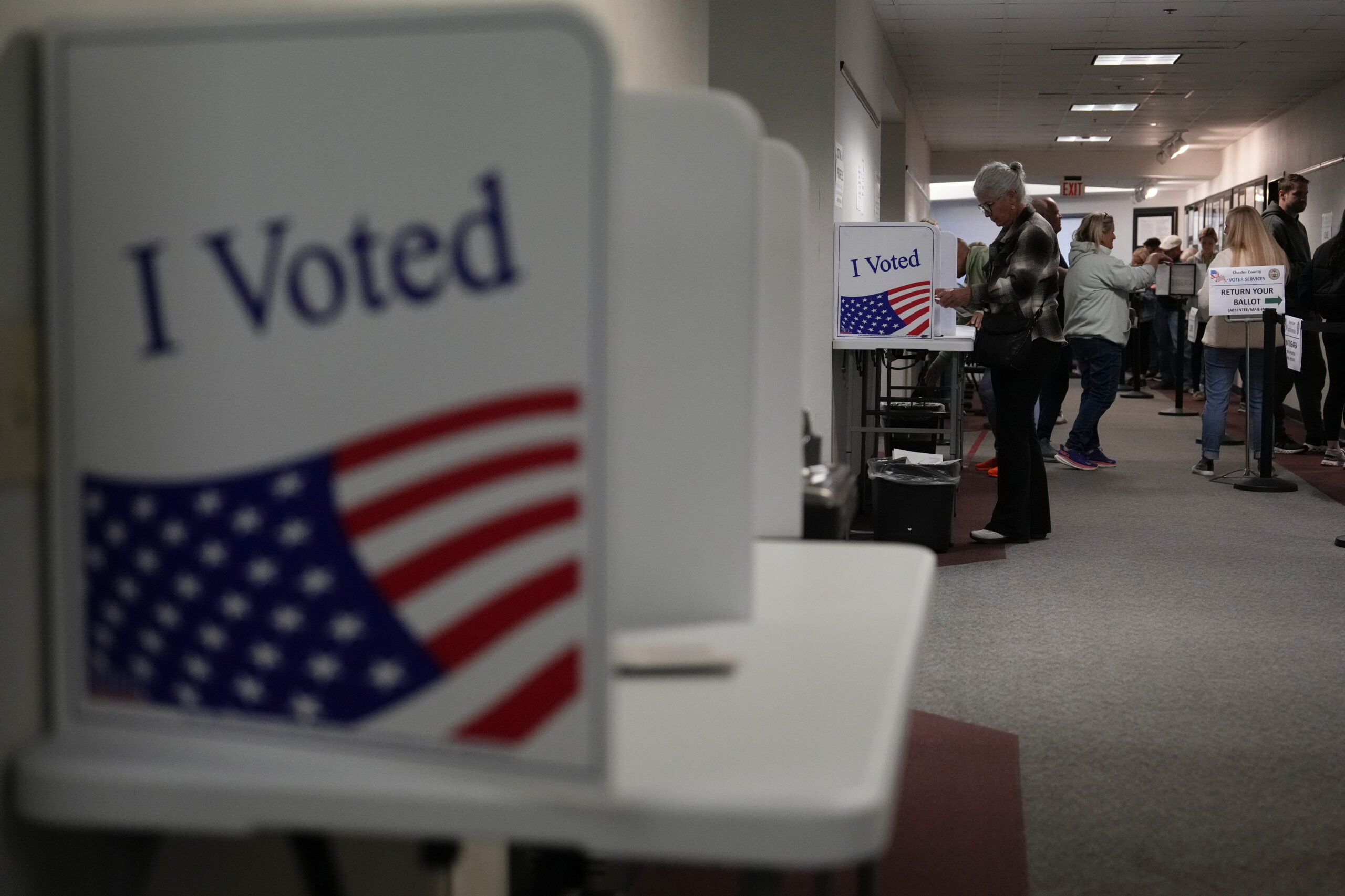
People fill out mail-in ballots for the 2024 general election at a Voters Services satellite office at the Chester County Government Services Center, Friday, Oct. 25, 2024, in West Chester, Pa.
West Chester resident Michele DiCaprio will soon take over as Chester County’s new director of voter services, inheriting an office recently marred by controversy, including staff turnover, hostile work environment allegations, and election administration-related issues.
DiCaprio’s experience as a former foreign service officer sets her up for success in the role, the county said in a news release.
She replaces Karen Barsoum, who announced her resignation in March and ended her tenure on June 12. DiCaprio will begin the role on July 20.
Heads up for drivers: Work on a number of area roads could cause delays or detours this week, including on East Reeceville Road, where a monthslong project is slated to get underway. Here’s the roadwork to watch out for this week.
Chester County Solid Waste Authority is hosting a household hazardous waste event Friday in Coatesville. Registration is required.
💡 Community News
Steve Jahn, the Berwyn man accused of fatally shooting Children’s Hospital of Philadelphia nurse Megan Nieberle, 53, in Tredyffrin Township in March, appeared for the first time in court Monday. The apparently random act shocked the Chester County community and incited conversation about mental illness and firearms. Jahn, 44, has been charged with first- and third-degree murder, among other crimes.
The Chester County District Attorney’s Office is investigating after an officer with the North Coventry Township Police Department was involved in a shooting Monday. Few details were available about the incident as of Tuesday, including whether anyone was injured.
Coatesville couple Mousa Hawa and Holly Back were sentenced to decades in prison last week for the murder of their 8-year-old son. Prosecutors said Hunter died of an overdose in 2023 after ingesting drugs in their home, The Inquirer’s Vinny Vella reports.
The Borough of West Chester is seeking feedback about a potential shared shuttle bus program with West Chester University. Take the survey here.
🏫 Schools Briefing
Spring-Ford Area School District is moving to fire an eighth-grade Spanish teacher, Jasmine Ewing, for reasons it has not made public. The school board vote to approve a statement of charges came amid an outpouring of community support shared during a public meeting Monday, The Inquirer’s Maddie Hanna reports.
Phoenixville Area School District’s board approved Kathryn “Kate” Pacitto as its next assistant superintendent at its most recent meeting. Pacitto currently serves as executive director of curriculum and pupil services for the district. She’s been signed to a five-year contract and will assume the new role July 1.
Registration is open for West Chester Area School District’s school safety summit, which will take place Aug. 6 at Rustin High School.
A new cafe has opened in Coatesville. Located at 2705 E. Lincoln Highway, Lily & Grace’s Cafe serves menu items such as breakfast sandwiches, açai bowls, mini Dutch pancakes, and assorted desserts.
🎳 Things to Do
🎙️ Sound of Summer Free Concert Series: Delaware rock band Too Tall Slim and the Guilty Pleasures headlines this week’s show. There will also be food trucks. ⏰ Wednesday, June 24, 6:30-8:30 p.m. 💵 Free 📍 Anson B. Nixon Park, Kennett Square
🎹 Tredyffrin Township Summer Concert Series: Philadelphia-area band The Sin Brothers headline this week’s show. ⏰ Thursday, June 25, 7 p.m. 💵 Free 📍 Wilson Farm Park, Wayne
🍿 Movie Night: West Bradford will screen Wicked: For Good outdoors. There will also be $1 ice creams. ⏰ Thursday, June 25, 8:30 p.m. 💵 Free 📍 Broad Run Park, Downingtown
🍺 Rhythm & Brews: There will be live music, food trucks, and yard games at this recurring New Garden event. ⏰ Tuesday, June 30, 6-8 p.m. 💵 Pay as you go 📍 New Garden Park, Landenberg
🎶 Eagleview Summer Concert Series: Hear local cover band LeCompt, along with special guest and fellow local Lia Menaker. ⏰ Tuesday, June 30, 7-9 p.m. 💵 Free 📍 Eagleview Town Center, Exton
🗞️ What other Chester County residents are reading this week:
By submitting your written, visual, and/or audio contributions, you agree to The Inquirer’s Terms of Use, including the grant of rights in Section 10.
This suburban content is produced with support from the Leslie Miller and Richard Worley Foundation and The Lenfest Institute for Journalism. Editorial content is created independently of the project donors. Gifts to support The Inquirer’s high-impact journalism can be made at inquirer.com/donate. A list of Lenfest Institute donors can be found at lenfestinstitute.org/supporters.