IRVINE, Calif. — Trying to guess what’s on U.S. men’s soccer team manager Mauricio Pochettino’s mind when it comes to starting lineups is usually a fruitless endeavor. He likes to keep his cards close to the chest, and doesn’t reveal them until he has to on game day.
But all of his players, not just outsiders, know the four players sitting on a yellow card suspension threat heading into Thursday’s group stage finale against Turkey (10 p.m., Fox29, Telemundo 62): Tyler Adams, Folarin Balogun, Chris Richards, and Antonee Robinson. And they know the risk of playing Christian Pulisic as he finishes recovering from a calf injury.
That opens the door for backups who haven’t featured much yet to get a shot. Two of them have talked with the media so far this week, left wingback Max Arfsten and attacking midfielder Alejandro Zendejas. They both said they’re ready to jump in if called.
“Training hard, been waiting for the opportunity, but I’m sure it’ll come,” Zendejas said. “That’s obviously a coach’s decision, and something I’ve got to respect, but I’ve always said it all depends how I’m on the field. I’m working hard, having fun, really enjoying this dream that I’m living right now, so I couldn’t ask for more.”
Alejandro Zendejas (right) shares a laugh with Haji Wright after hitting the deck during a drill.
Arfsten said before Tuesday’s practice that as of then, the players “haven’t heard anything about” who will start Thursday.
“That’s obviously the coach’s decision and whatever he decides, obviously we’re going to be on the same page with that,” he added.
As Arfsten continued at the mic, he left no doubt that all 26 players are well-trained at handling pesky inquiries from the media.
“It’s a tough question — good thing I’m not a coach,” he said at one point. “But honestly, I think the most important thing is, no matter who’s playing, to go out and try and get three points. Just because I think the momentum of the two wins is what’s keeping the energy high right now, and three would be even more.”
Max Arfsten jogging during Tuesday’s practice.
He at least signaled that the tone of training sessions hasn’t changed with first place in the group sealed.
“Obviously everyone’s happy that we’ve already advanced, but at the same time, regardless of if we’ve advanced or not, training is still very competitive, it’s very intense,” Arfsten said. “And I think that’s the culture that the coach has created: no matter what, that everyone’s still trying to prove something.”
One starter likely to keep his place is goalkeeper Matt Freese. The Wayne native showed in the first two games why he earned Pochettino’s trust as the No. 1 in net.
He is also perhaps the team’s most steadfast player when it comes to a one-day-at-a-time mentality. So when he was asked about potential lineup rotations in front of him, he barely flinched.
“It’s a coach’s decision, obviously, and we’ve got 26 guys here who all want to play, and who all are ready to play, and are working hard every day in training,” Freese said. “And we as a group have full confidence in all 26 of us. So really, we’re focused on continuing to prepare and work hard in training, and be ready for whatever.”
WASHINGTON — Bryce Harper had a suggestion for Gabriel Rincones Jr.
The Phillies rookie spent his formative years living in Scotland due to his father’s work there as an offshore safety adviser in the oil industry, and his parents and sisters still live there.
Harper was sitting down one day with Zack Wheeler when Rincones walked by and said hello.
Harper started playing the bagpipes on his phone, and told Rincones that he should incorporate the Scottish instrument into one of his walk-up songs.
He settled on “Scotland the Brave,” a patriotic Scottish song played on the bagpipes, and walked up to it in his second at-bat at home last Tuesday. (Rincones’ main walk-up song is “Zombie” by the Irish band The Cranberries.)
It was a special moment, hearing a traditional Scottish song before a major league at-bat, but Rincones doesn’t think he will stick with it.
“It just gets me too riled up,” he said. “It’s like I can’t focus.”
But even if it isn’t soundtracked by the bagpipes, Rincones still takes pride in representing Scotland on the major league stage. His family moved from Venezuela to Glenrothes, Scotland, when he was 6 years old. He lived there until age 12, when he moved back to Venezuela to pursue a baseball career, and ended up in Florida after that.
Gabriel Rincones Jr. (left) celebrates his second inning solo home run with teammate Justin Crawford last week.
“That I have some part of representing Scotland is awesome,” Rincones said. “I grew up there, have friends there, ties there.”
Scotland was where Rincones first learned English, so he actually speaks with a Scottish accent.
When he’s in the United States, though, he is able to switch into an American accent. But when speaking to his family or friends back in Scotland, he slips back into it. After Phillies outfield coach Paco Figueroa told newly acquired Derek Hill that Rincones grew up in Scotland, Hill thought he was joking until Rincones broke out the accent to prove it.
“I get stuck speaking like this sometimes. I just can’t get my words up, but when it’s talking with my friends back home, or my little sister, it’s just fluid,” he said.
Rincones also loves haggis, a traditional Scottish dish made of sheep organs that he would often eat at restaurants growing up.
He visits his family in Glenrothes, Scotland in the offseason, usually spending Christmas there. It can be hard to train for baseball while he’s there, so he sometimes has to get creative for batting practice.
“I bought this little BP machine, where it throws like little tiny balls and you can make it throw curveballs and stuff,” Rincones said. “But it’s so windy over there that I can’t just do it outside. I have to go to a fitness center and then rent out half a basketball court.”
It’s been fun for Rincones to watch the Tartan Army — the supporters of Scotland’s national soccer team — take over baseball stadiums while they are in the U.S. for the World Cup. Many Scotland supporters went to a Red Sox game at Fenway Park last week for Scottish Heritage night, a day after their team beat Haiti in its first match.
And ahead of its next match against Brazil in Miami on Wednesday, hundreds of Scottish fans — including a group of bagpipers — caught a Marlins game at LoanDepot Park on Monday night.
“They’ve never cared about baseball, but they just want to have a good time,” Rincones said.
Scotland was where Gabriel Rincones Jr. first learned English, so he actually speaks with a Scottish accent.
In Rincones’ experience, the baseball community in Scotland is very niche. He played in a men’s league in Scotland with his father growing up to stay involved in the game he loved before eventually moving away to pursue it more seriously.
His friends used to tease him about his major league dreams, and now many of them stay up late into the night to catch MLB games from across the Atlantic.
But no matter how small the community may be, Rincones is proud to have a chance to represent it.
“A part of me is always going to be in Scotland,” he said.
Extra bases
Kyle Schwarber was scratched from Tuesday’s game shortly before first pitch with low back tightness. Edmundo Sosa replaced him in the lineup as designated hitter. … Aaron Nola (3-4, 5.71 ERA) is scheduled to start Wednesday against Nationals right-hander Miles Mikolas (2-6, 5.47).
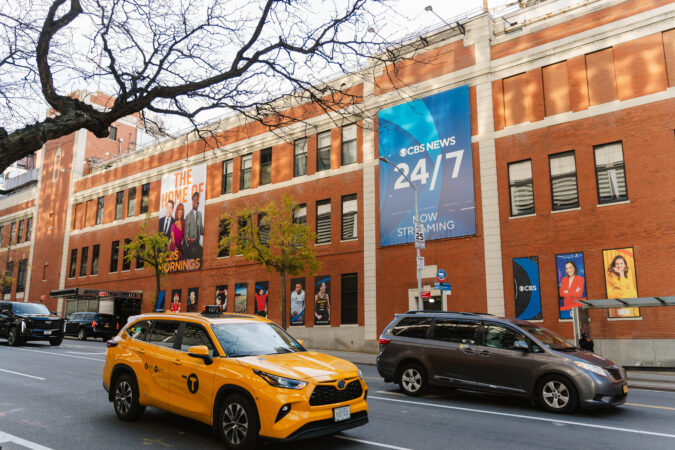
When news organizations around the world have faced criticism, they have historically turned to specialists: ombudsmen, in-house critics empowered to investigate their employers’ coverage and report their findings to the public.
But when CBS News appointed one last year, under an agreement with the Federal Communications Commission, it took a different tack. It tapped Kenneth Weinstein to flag complaints privately to its executives, pitching him in the hiring announcement as “an independent, internal advocate for journalistic integrity and transparency.”
As CBS News has been shaken by infighting between management and its star correspondents this year, Weinstein’s silence is being criticized by media experts. They say Paramount, the parent company of CBS News, has essentially hired a watchdog who doesn’t bark.
In the nine months since he was hired, Weinstein has issued no public statements about CBS News’ coverage or its controversies. He has not issued any guidance or feedback in staffwide emails or memos, three employees said. He has told some employees that he is scheduled to work only one day per month, two people said, though one said he responded to queries outside his monthly workday.
Most ombudsmen are much more public facing, said Jeffrey Dvorkin, a former NPR ombudsman who wrote the handbook for the Organization of News Ombuds and Standards Editors. That handbook says ombudsmen should report to the public, usually in a weekly column or mutually agreeable time slot.
Part of “stewarding public trust,” as Weinstein promised to do in his hiring announcement, is addressing the public, Dvorkin said.
“What’s the point then?” he said of CBS News’ decision not to require Weinstein to publish anything. “How is an ombudsman going to convey the public’s concerns, both internally and externally?”
Paramount said in a statement that Weinstein had been doing his job.
“He’s there to review concerns about CBS News’ reporting and coverage through a process that has been clear from the beginning,” the statement said. “Since September, he’s independently assessed the issues brought to him and, when appropriate, discussed them with CBS News and Paramount Skydance leadership.”
After Weinstein flags potential problems to Paramount’s executives, they decide whether to raise them with CBS News.
Since Weinstein was hired, Bari Weiss, the new editor-in-chief of the network, has been accused of injecting political bias into stories by three high-profile journalists for CBS’s 60 Minutes. She fired them all as part of a broader shake-up of the show. The remaining three correspondents said they would stay only because they didn’t want the show to die. (CBS News has denied the allegations of editorial meddling.)
Many newsrooms have done away with their ombudsmen. Some, like the New York Times, which dropped the position in 2017, argued that they were anachronisms in an era of instant online criticism. Others have cited dwindling resources. In addition to the Times, the Washington Post, ESPN, and the Boston Globe did away with their in-house critics in the last quarter-century; NPR and PBS are among the last remaining U.S. news organizations that employ a full-time public editor.
The FCC announced the creation of the CBS News ombudsman when it approved Skydance’s acquisition of Paramount in July. The agency’s chair, Brendan Carr, had been investigating a complaint about a 60 Minutes interview with Vice President Kamala Harris from the previous fall, but allowed the deal after the company agreed to employ, for two years, an ombudsman who would evaluate claims of bias. (President Donald Trump sued Paramount over the interview. Press freedom advocates said the controversy was baseless.)
Carr said the move would “promote transparency and increased accountability.”
In September, Paramount announced that it had found its pick: Weinstein, a veteran of the Hudson Institute, a right-leaning Washington think tank. Though he had no experience overseeing news coverage, Weinstein had served on the board of the U.S. Agency for Global Media, an independent federal agency that oversees U.S. government-supported civilian media such as Voice of America. There, he worked alongside Jeff Shell, who would become Paramount’s president.
Though Weinstein does not respond to complaints publicly, he is easy to reach. CBS News set up a website where viewers can submit their concerns, anonymously or by name. One of the people said that many of the notes Weinstein received focused on the network’s coverage of the war in the Gaza Strip.
At least one inquiry to Weinstein has been made public. Rep. Jamie Raskin (D., Md.) sent him a letter in December to ask for a full accounting of the network’s decision-making around a November interview with Trump.
But Weinstein did not reply. Instead, Paramount’s general counsel sent a letter to Raskin explaining that the interview had been edited for length.
In December, after a 60 Minutes correspondent, Sharyn Alfonsi, accused Weiss of meddling in one of her stories, media critics mused publicly about whether Weinstein would weigh in.
“I wonder if the CBS News ombudsman will have anything to say about this,” Brian Stelter, CNN’s chief media analyst, wrote on social media. Eric Deggans, the Knight professor of journalism and media ethics at Washington & Lee University, posted: “Wonder if Weiss will ever say exactly why she pulled the story? Or if CBS News new ombudsman will somehow surface?”
Carr, at least, does not seem concerned by the public silence from Weinstein.
This month, after Weiss fired the three 60 Minutes correspondents, Carr was asked directly whether Weinstein would look into their complaints of editorial interference.
Jake Tapper, an anchor on CNN, sat down with Carr and pointed out that the FCC had pushed for an ombudsman to evaluate claims of bias, and asked whether Weinstein should investigate.
Eager to lessen the chaos of the transfer portal era and court fights with players trying to extend their careers, the NCAA approved a new eligibility model for Division I athletes on Tuesday that will allow five seasons of competition over a five-year period that begins with their full-time enrollment or the academic year following their 19th birthday, whichever occurs first.
The Division I Cabinet unanimously approved the change from the longstanding tenet of college sports that gave athletes five years to complete four seasons of competition with their eligibility clock starting at the time of enrollment, regardless of age.
The move will all but eliminate waivers or redshirt years for extended eligibility except for religious missions, maternity leave or active-duty military service. No longer will extensions be considered for athletes who are injured.
“While previous NCAA rules have served college sports well for a long time, we heard also loud and clear from NCAA members and student-athletes that eligibility rules should be easier to understand,” NCAA President Charlie Baker said.
The NCAA believes the age-based model will make rules easier to administer and help make roster management more predictable for coaches.
“I think this new rule is one of the most sensible things the NCAA has ever done, and it will absolutely eliminate the type of eligibility litigation that’s predominated lately,” said attorney Tom Mars, who represented Ole Miss quarterback Trinidad Chambliss in his successful quest for an additional year of eligibility in a case that went to the Mississippi Supreme Court.
Mars added, “Let me put it in bottom-line language: There’s no way somebody could file an eligibility case based on a medical waiver now with the new rule. Can’t be done. You can file it, I guess, but it will be immediately dismissed.”
The rules, which will become official when the Cabinet adjourns its meetings on Wednesday, are set to take effect this fall. Division I includes more than 350 schools, some 200,000 athletes and, with football and basketball leading the way, is by far the most lucrative of the three in the NCAA.
The five-in-five language also is included in Senate legislation intended to address numerous concerns across college sports and comes after a wave of lawsuits from athletes seeking to extend their college careers and ability to earn money through revenue sharing and name, image and likeness deals. Still to be seen is whether the new rules will withstand legal scrutiny alongside the existing challenges.
Heisman Trophy runner-up and Vanderbilt quarterback Diego Pavia remains the lead plaintiff in a lawsuit challenging an NCAA rule counting seasons spent at junior colleges against players’ Division I eligibility time. That case is slated for trial in February.
“I wouldn’t say that the rule change itself will slow lawsuits down,” said Sam Ehrlich, a Boise State assistant professor of legal studies in business and management who tracks litigation against the NCAA.
Ehrlich said athletes very well could continue to petition courts for extended eligibility based on antitrust arguments, but appellate courts recently have delivered wins for the NCAA by overturning preliminary injunctions in several cases.
The new eligibility model will affect all athletes who enroll in 2027-28. Currently enrolled athletes with eligibility after the 2025-26 academic year, and those who are incoming freshmen this fall, can apply the age-based model or continue under previous eligibility rules. It would be advantageous this year for some incoming freshman hockey players to use the traditional model if they are coming from the junior ranks and are 20, as is common in the sport.
For schools with current athletes who may be eligible for hardship waivers or extensions of eligibility under current rules, the D-I Cabinet indicated the deadline to submit requests to the NCAA is July 31. After that date, waivers would no longer be available.
Ryan Downton, the attorney for Pavia in his case against the NCAA that won him a sixth year of eligibility last season, said he was happy to see athletes allowed five seasons of competition. But he said it was likely that high school class of 2022 athletes who are now cut off from further competition will go to court.
“These athletes are still within their five-year eligibility window and spent their entire college careers competing against fifth- and sixth-year players due to the COVID waiver,” Downton wrote in an email to The Associated Press. “We hope the courts will correct the unfairness of the NCAA’s ruling and allow class of 2022 players to play their fifth season in 2026-27.”
Ramogi Huma, executive director of the National College Players Association, wrote in a text to the AP that he had not seen the final language that was adopted but that the rule’s “general structure that has been discussed is within reason.”
“But it’s important for athletes to have an opportunity to seek hardship waivers,” he wrote.
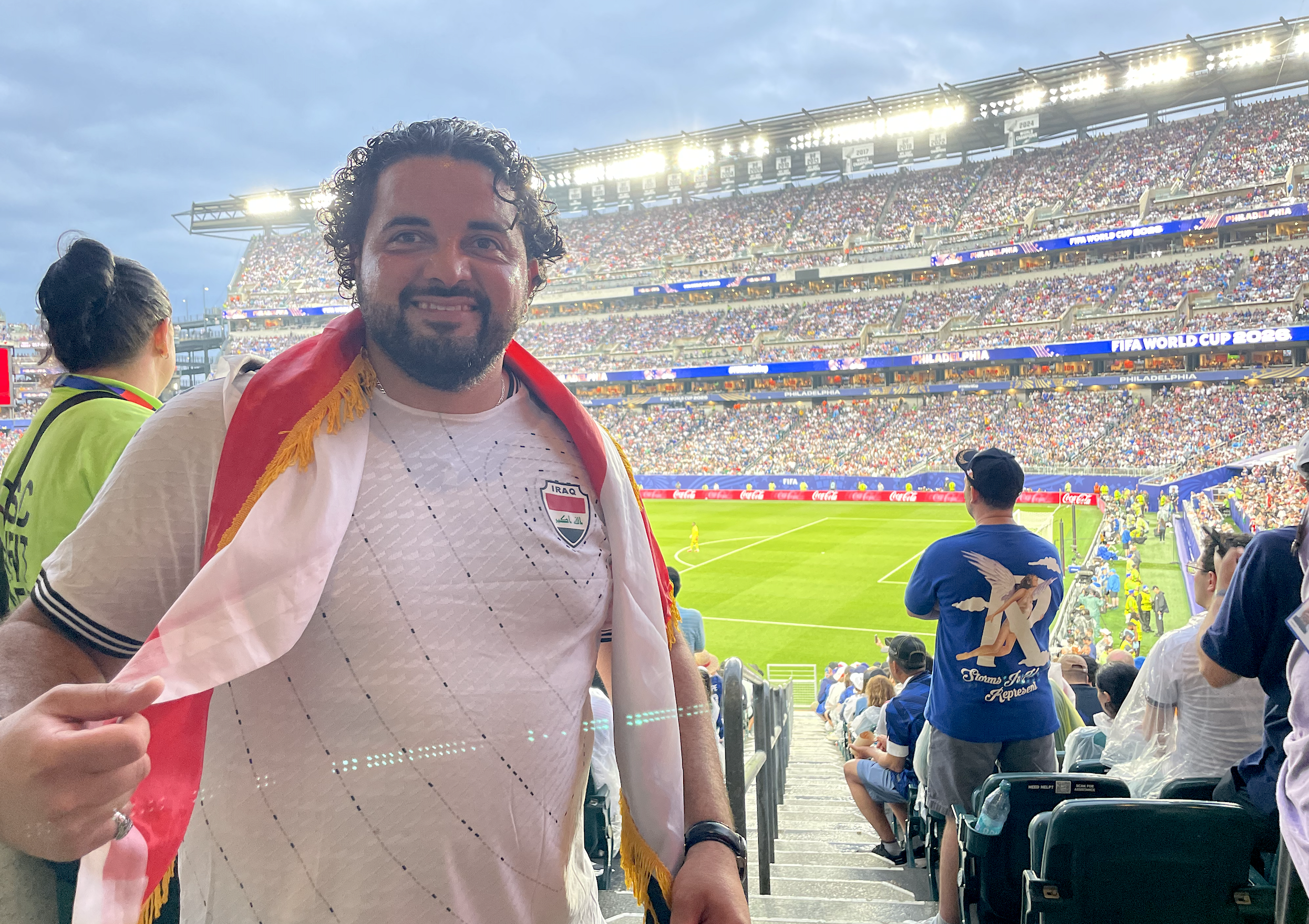
Despite the distance and the costs of his airfare, his weekend stay at a Center City hotel, and his lower-level ticket to the match, there was no way he was going to miss the opportunity to see Iraq, win or lose, take on France in the World Cup on Monday.
So when he got to his seat inside Philadelphia Stadium (Lincoln Financial Field, as it’s known to Philadelphians), after months of planning and waiting, after repeated screen refreshes to remain in a queue to buy a ticket during one of FIFA’s early presales, it still almost felt like serendipity.
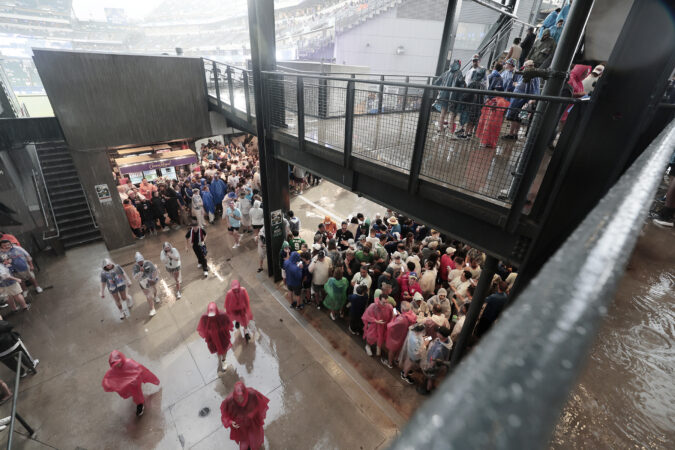
The torrential downpour that cascaded on and off over the region halted the game for 2 hours, 10 minutes. It also sent poncho-clad fans scattering into the concourses in search of shelter.
And in the aftermath, as it would appear, anything else they could get their hands on.
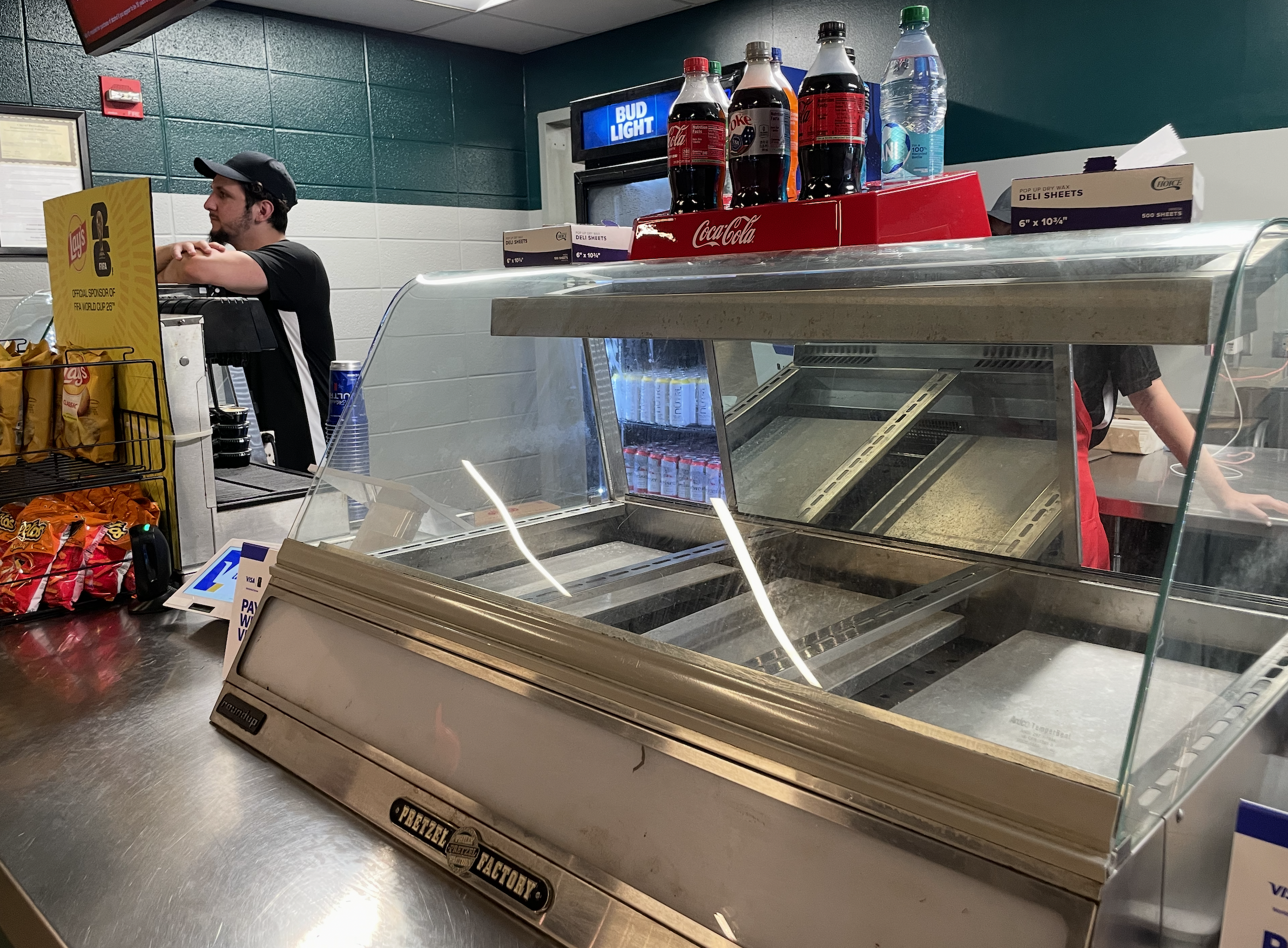
By the time play resumed a little after 8 p.m., concession stands on the main concourse of the stadium had little to nothing left by way of food and drink.
The popcorn and hot dog concession between Sections 104 and 105? Barren. The Philly Pretzel concession selling twists and nuggets a few sections down? A stadium worker said they sold out in about 30 minutes.
The Philly Pretzel Factory concession had only snack food following the rain delay during Monday’s World Cup match between France and Iraq.
“People just kept coming,” said one worker, who chose to stay anonymous because they weren’t supposed to speak publicly on what their tired eyes just witnessed. “We had this pretty stocked, and that rain delay just cleared everyone out. It’s much the same at every concession stand, if you want to look.”
It’s what Al-Hasani realized as he waited for only a water. Fortunately, the Philly Favorites concession between 104 and 106 was able to oblige.
“I get it,” Al-Hasani said. “There was nothing else to do. You know you’re down here, it’s hot, it’s tight [with people], you can’t go back to your seat because of the rain, so after the singing and the waiting and the singing, people got to do something, so you eat.”
Mustafa Al-Hasani, an Iraq fan who traveled to Monday’s match from Iowa, said that the whole experience in both the match and the 2-hour-plus rain delay is something he’ll never forget.
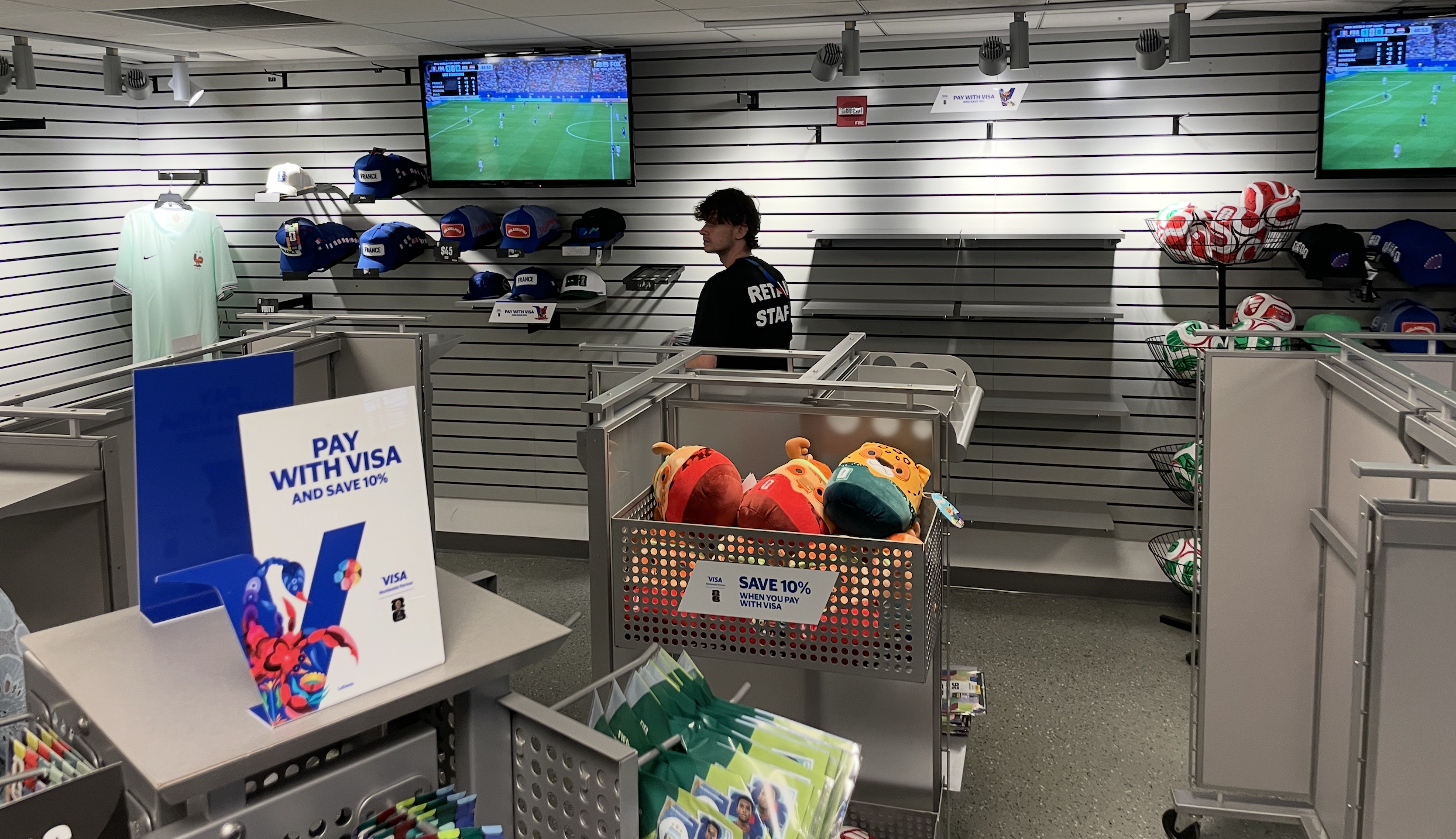
Judging by the small FIFA team store just outside the southwest corner of the stadium, in addition to eating, fans at loose ends shop. By the look of the lines during the rain and the sight of the store after, fans made it a ravenous way to pass the time.
The store, which has capacity of about 15 customers, was giving people just five minutes in-store so they could offer other people an opportunity, according to a worker. By the time the game finished, shelves were empty, odd-sized jerseys remained on display, and the high-priced World Cup collectibles in the glass behind the counter seemed the only thing in abundance for purchase.
The FIFA Store’s satellite offshoot located near the southwest terrace inside Philadelphia Stadium was mostly bare after a rain delay that lasted more than two hours during Monday’s match between France and Iraq.
“One guy came in, dropped $800 on one sale,” a worker recalled. “It was crazy. We see this kind [of frenzy] for like concert T-shirts here, like I remember people went wild for Taylor Swift stuff when she was here, but this was intense. It felt like people were buying whatever they could get their hands on.”
A request for comment from FIFA regarding the rain and fans went unreturned. Despite many of the concession workers being the same folks you’d see on an Eagles game day — or apparently, a Taylor Swift concert — through its arrangement, FIFA has both naming rights and management of all 16 match venues across the United States, Mexico, and Canada.
As of Tuesday afternoon, Philadelphia was the only city that experienced a rain delay of this magnitude in the World Cup. In the end, it was France that scored twice more after halftime en route to the 3-0 win, advancing to the knockout stage.
“This was incredible, the whole experience is a memory,” Al-Hasani said. “The rain, the people, the game, all of it. You have to take it all in. Everyone was so nice, [at concessions] you got what you needed if they had it, and I think we were just all trying to get through it together. Philly’s great, I’ve been here before, but this is an experience I don’t think I’ll ever forget.”
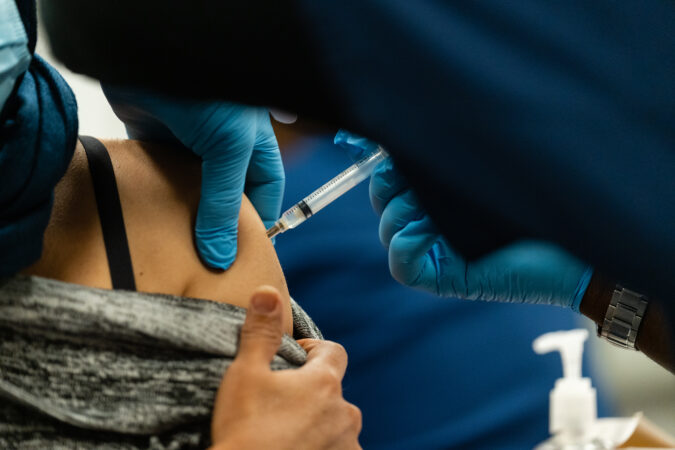
A COVID vaccine study that the CDC’s chief halted this spring over methodological concerns was published Tuesday in JAMA Network Open, a leading peer-reviewed medical journal.
The analysis used the same methodology that CDC’s interim director had criticized when the paper was not allowed to be published in the weekly scientific report of the Centers for Disease Control and Prevention.
The study, which had been slated for publication in March in the CDC’s Morbidity and Mortality Weekly Report, found that the COVID-19 vaccine reduced the risk of emergency department visits and hospitalizations among healthy adults by about half last winter. The findings were consistent with what researchers have found in past years, that the vaccine can help reduce the risk of severe illness in adults even after accounting for immunity from prior vaccination or infection.
“Science was never the issue,” said Michelle Barron, one of the study’s authors and senior medical director of infection prevention and control for UCHealth, a nonprofit health system in Colorado. “Certainly it was within [the CDC’s] purview to keep it out, for whatever reason, but it was clearly not for scientific reasons that the study was withheld from publication in the MMWR.”
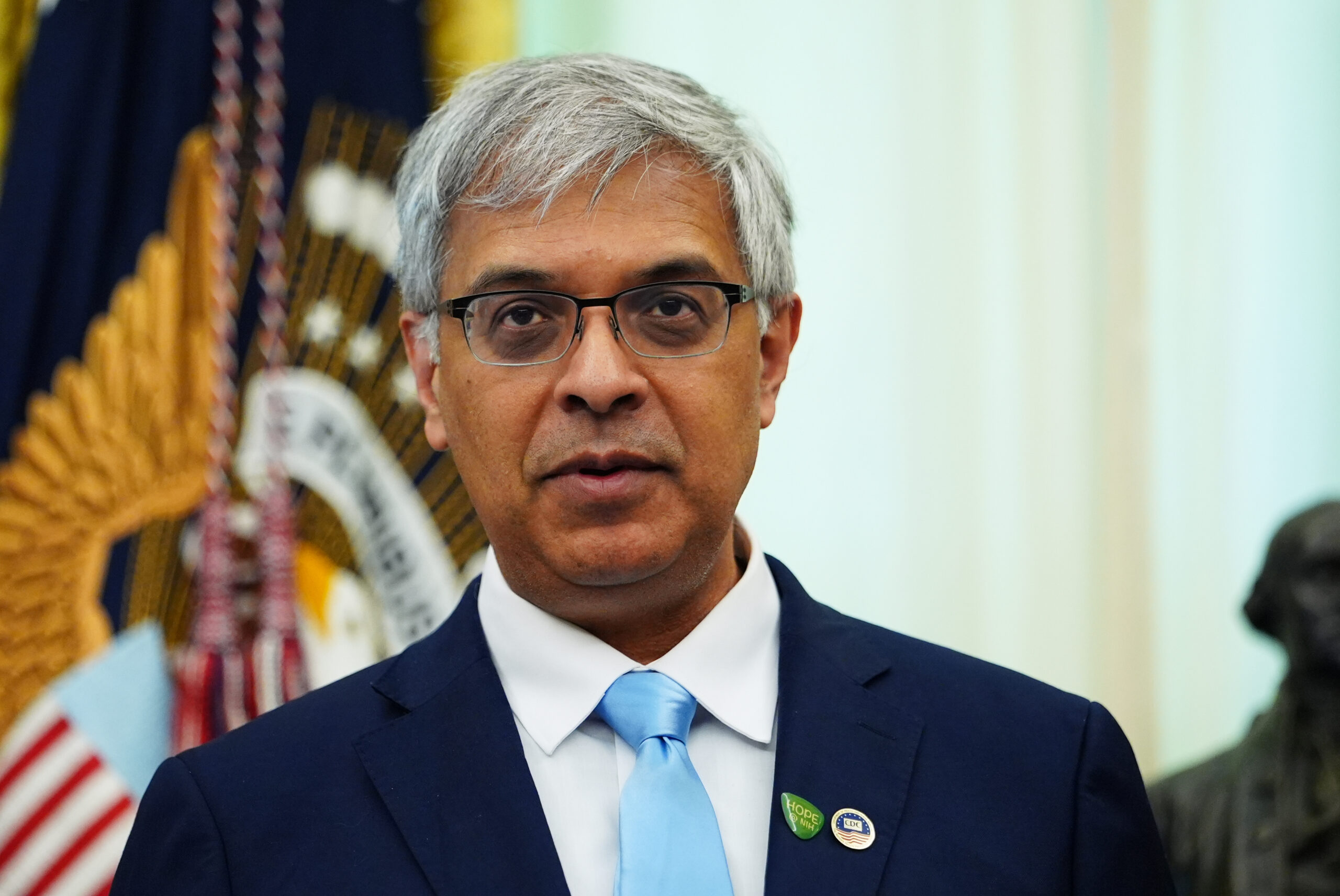
Jay Bhattacharya questioned the study’s methodology. (AP Photo/Julia Demaree Nikhinson)
Jay Bhattacharya, CDC’s interim director, delayed publication of the study before it was subsequently not published in the MMWR at all, The Washington Post previously reported. Bhattacharya had concerns about the methods used to calculate vaccine effectiveness, a Health and Human Services spokesman said at the time.
Barron said she believed the study was not published because the findings did not support Health Secretary Robert F. Kennedy Jr.’s agenda that wants to limit the use of COVID vaccine specifically.
Kennedy, the founder of a prominent anti-vaccine group, has been an outspoken critic of COVID shots, once referring to them as the “deadliest vaccine ever made.”
A spokeswoman for the Health and Human Services Department did not directly address the author’s allegation Tuesday that the paper was withheld because it conflicted with the administration’s vaccine agenda. Spokeswoman Emily Hilliard said the CDC evaluates studies using rigorous scientific methods and reviews methodological concerns before publication.
“The CDC does not make scientific determinations based on predetermined conclusions,” Hilliard wrote in an email. “We evaluate the weight of evidence using rigorous methods, communicate uncertainty and limitations, and subject our work to scientific scrutiny before publication.”
A commentary accompanying Tuesday’s JAMA Network Open report said the methodology in question, known as test negative design, has limitations, like any study. But those shortcomings are well understood, actively studied, and outweighed by the method’s practicality for routine vaccine-effectiveness monitoring, wrote Natalie Dean, associate professor of biostatistics and epidemiology at Emory University’s Rollins School of Public Health.
“This is not a controversial study design — this is [the] same design that has been churning out vaccine results for a long time,” Dean wrote in an email. “And from a highly experienced group — CDC plus a network of top vaccine researchers across the country. They are a well-oiled machine.”
She added: “There was no scientific reason to reject this paper. It had undergone internal review, and it clearly meets the standards of peer-reviewed science. It makes my colleagues on edge to see political interference in the scientific process.”
Dean said the methodology is being “unfairly maligned” and worried that efforts to discard it could weaken the nation’s vaccine surveillance system. “Then we’ll be flying blind with respect to influenza, COVID, and RSV vaccine monitoring,” she said.
Between September and December last year, healthy adults who received the COVID-19 vaccine reduced their likelihood of emergency department and urgent care visits by 50% and cut the likelihood of COVID-associated hospitalizations by 55%, compared with those not receiving a 2025-26 vaccine dose, the report found.
Researchers analyzed data from a CDC-funded surveillance network to compare data on adults who sought medical care for COVID-like symptoms and compared outcomes between those who received the updated 2025-26 vaccine and those who had not.
President Donald Trump’s administration is closer to getting its way after a Boston-based appeals court said it doesn’t have to restore exhibits it removed — at least for now.
The Boston-based U.S. Court of Appeals for the First Circuit ruled the National Park Service does not have to restore all exhibits it removed as part of its “restoring sanity to American history” push before the nation’s 250th anniversary celebration, issuing an administrative stay on a lower court’s order.
In a statement, the Department of the Interior responded: “We are confident that as this inferior ruling from an activist lower court judge receives further scrutiny, they will be further restrained.”
Administrative stays are common steps federal courts take to buy time while judges assess the arguments.
The First Circuit judges intend to rule “promptly” on a request for a more permanent stay during the appeal, the order says.
Either way, the ruling marks a second blow in a week to the City of Philadelphia and stakeholders who developed the President’s House Site.
Michael Coard, attorney and founder of Avenging the Ancestors Coalition, which is leading efforts to protect the President’s House, emphasized that the First Circuit action was not a final decision.
“The stories of enslaved African descendants and other historically marginalized communities are American history and deserve to be preserved and told truthfully,” he said.
Here is what you need to know about the status of the President’s House exhibits.
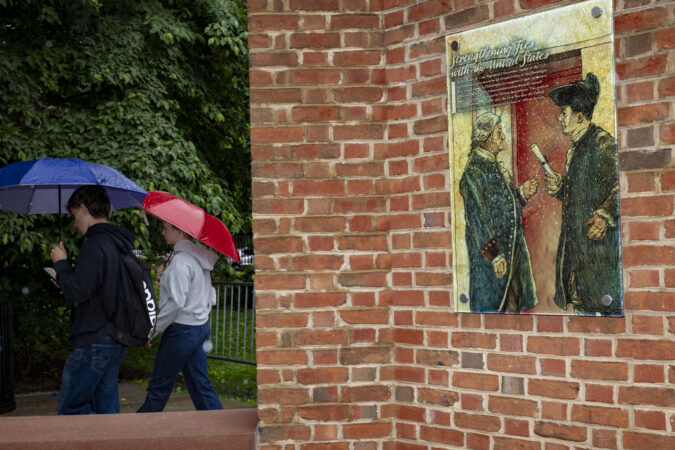
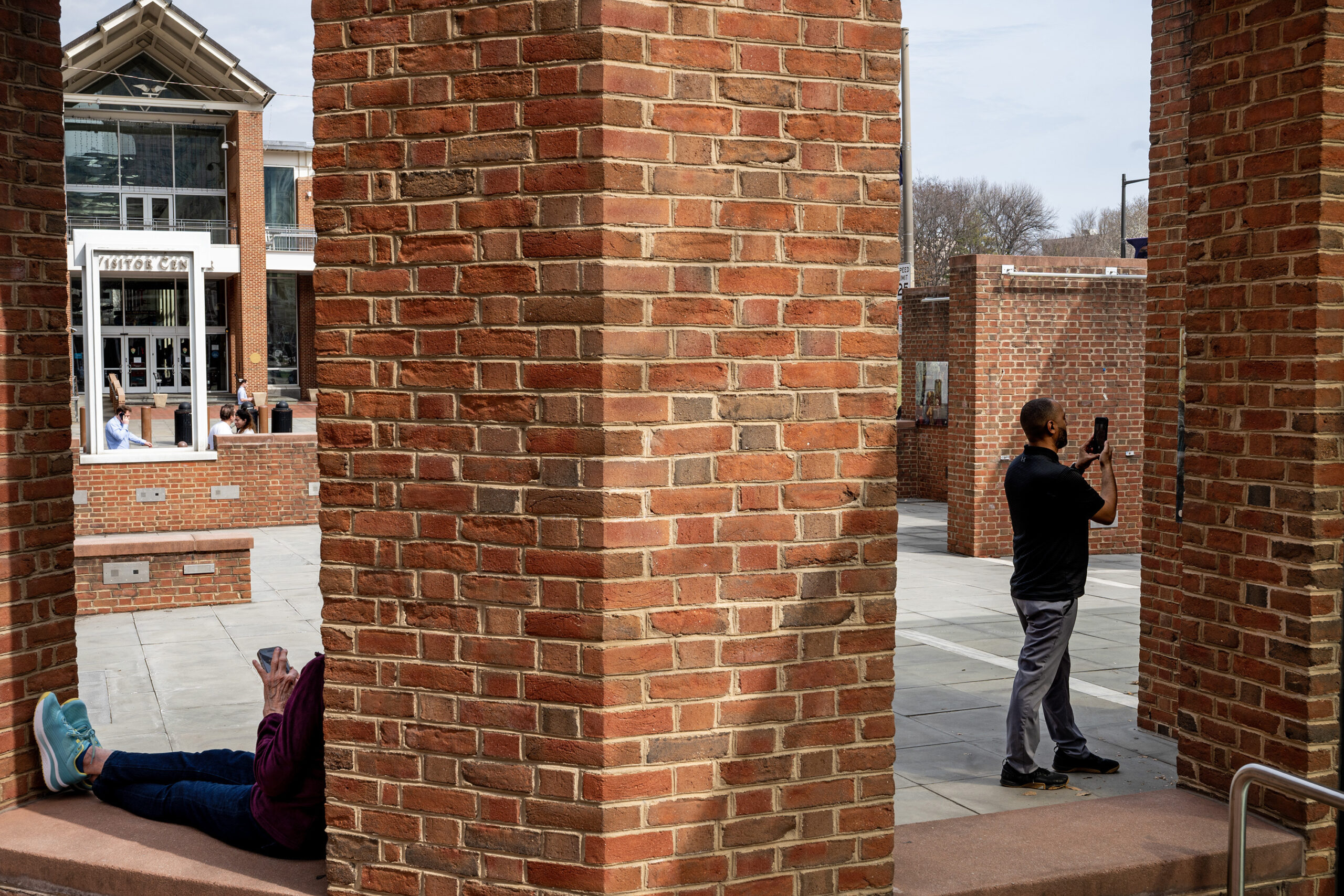
The President’s House in Independence National Historical Park March 11, 2026.
What do Boston-based courts have to do with the President’s House?
Earlier this year, conservation groups sued the Trump administration in federal court in Massachusetts challenging Interior Secretary Doug Burgum’s 2025 order implementing the president’s directive to ensure that no displays at national parks “inappropriately disparage Americans past or living.”
The Trump administration’s changes to exhibits “seek to rewrite the Nation’s history with a white-out pen,” wrote Kelley, a nominee of former President Joe Biden.
Justice Department attorneys appealed the ruling to the First Circuit and asked the higher court to issue an administrative stay or a stay for the duration of the appeal.
The three judges assigned to the case — Chief Judge David J. Barron, appointed by Barack Obama, and Biden appointeesGustavo A. Gelpí Jr. andJulie Rikelman — issued the administrative stay Tuesday pausing the majority of Kelley’s order, including the directive to restore sites such as the President’s House.
The order is not explicit on whether the National Park Service can make changes to sites, but administrative stays are viewed as a way to preserve the status quo while the appeals court can review the facts and arguments in a case.
“The administration’s decision not to reinstall and reinstate censored materials, particularly in advance of our nation’s upcoming 250th anniversary, is a disservice to every park visitor this summer and to the broader American public,” the conservation groups, represented by Democracy Forward, said in a statement.
What did the Third Circuit rule?
The First Circuit rulingcomes on the heels of the Third Circuit’s reversal of a February order entered by a Philadelphia federal judge.
A three-judgepanel disagreed with Rufe, finding that Philadelphia gave up its rights over the President’s House when it donated the site to the National Park Service. The judges further said the federal government’s proposed replacement panels were “full of historical context.”
Mayor Cherelle L. Parker thanks workers as the President’s House site in Independence National Historical Park Thursday, Feb, 19, 2026 during a brief visit to the site as they began to return the slavery displays.
What are the city’s options?
After the Third Circuit ruling, Mayor Cherelle L. Parker said she would “pursue every legal action possible in efforts to reverse this decision.”
The city has a few options, but time is running out for a favorable ruling before July 4.
The city could ask for a rehearing in front of the same three judges who unanimously ruled to overturn the injunction. It can also ask for a hearing in front of the full Third Circuitcourt, known as en banc, or ask the U.S. Supreme Court to intervene.
Philadelphia Law Department attorney Anne Taylor argued at the Third Circuit hearing that the federal government’s attack on these exhibits has caused irreparable harm as the city tries to tell its story ahead of next month’s 250th celebrations.
Philadelphia is expecting a flood of visitors for the Semiquincentennial celebration, Taylor said, adding: “The President’s House is at the doorway to the Liberty Bell. That history is not being told to all the people who are expected to come here.”
It could be challenging, or even impossible, to get a new panel ofcircuit judges or the Supreme Court justices briefed on the case to get a ruling in less than two weeks, legal experts said.
The Pennsylvania State Police are investigating the death last week of a person in Chester County whose connection to a dialysis machine apparently had been “cut.”
On June 16, troopers from the Embreevile Station were called to the 400 block of Glen Run Drive in Atglen Borough, where paramedics responded to a hemorraging incident but was unable to save the person’s life, the state police said Tuesday.
The preliminary investigation “determined the hemorrhaging was the result of a dialysis port being cut,” the state police said.
The state police are investigating in coordination with the Chester County District Attorney’s Office.
No other information about the deceased person were released.
MACUNGIE, Pa. — President Donald Trump’s speech on manufacturing in a key Pennsylvania swing district repeatedly veered into other topics and musings about elections in other states, like Maine and California.
It took the president nearly an hour to even reference by nameGOP U.S. Rep. Ryan Mackenzie, the vulnerable incumbent whose district Trump was visiting toboost his chances in this year’s midterm elections.
And GOP gubernatorial nominee Stacy Garrity did not even get a mention during Trump’s speech to roughly 1,500 attendees, including workers at the Mack Trucks facility in Macungie in Lehigh County.
Trump’s visit came just days after the company received $47 million through a Defense Department contract.
And while he touted the trucks, he spent just as much time meandering about weight-loss drugs, immigration, firearms, the role of transgender athletes in women’s sports, and the UFC fight recently held on the White House lawn. He also repeated conspiracy theories about the races for Los Angeles mayor and California governor, saying he had asked the U.S. attorney in that state to investigate after conservative mayoral candidate Spencer Pratt did not advance to the general election.
And he threw jabs at Pennsylvania Gov. Josh Shapiro amid 2028 speculation andappearedto undermine Shapiro’s Republican opponent, Garrity.
Speaking about recent victories by democratic socialist candidatesaround the country, Trumpquipped that “Shapiro is not that much better, to be honest with you.”
He referenced the Democratic governor’s potential presidential aspirations,warning that “a guy like Shapiro is going to be forced on the left, otherwise he’s not going to get the nomination.”
But though he weighed in on Shapiro, the governor’s Republican challenger’s name was noticeably absent from Trump’s list of shout-outs to GOP officials, despite the fact that Garrity spoke earlier in the event.
Trump instead heaped praised on U.S. Rep. Dan Meuser, a Pennsylvania Republican who considered a run before ultimately opting against it and enabling the state party to coalesce around Garrity.
“Meuser’s another great guy who was thinking about running for governor. I think he would have won. He was thinking of running for governor, and I said ‘I want you to stay in Congress,’” Trump said.
Trump endorsed Garrity earlier this year, but the lack of acknowledgment Tuesday was striking given the election year focus of the event and Garrity’s own promises to support Trump’s agenda.
“We need a governor in Harrisburg who will be a partner with President Trump in Washington, not an opponent in the courtrooms,” she said before Trump took the stage. “We need a governor who will fight for Pennsylvania jobs, like right here at Mack Trucks.”
State Treasurer and Republican candidate for governor Stacy Garrity is seen on a big screen as she speaks to supporters before the arrival of President Donald Trump at Mack Trucks in Macungie Tuesday, June 23, 2026. Trump did not mention Garrity when he later spoke to the crowd in the Lehigh Valley.
Trump restated his belief that tariffs have revitalized and would further boost the U.S. economy, though gas prices have reached new heights since he began a war with Iran, stymieing the flow of oil. (The Strait of Hormuz has reopened, following a tentative peace deal struck this month.)
“I placed a 25% tariff on foreign automobiles and very importantly posed a 25% tariff on medium and heavy-duty trucks, so Mack Trucks could do very well with this factory in Pennsylvania,” he said.
“They weren’t gonna come in from foreign lands and steal your jobs,” Trump added.
However, the company cited Trump’s tariffs last year as contributing to its decision to lay off hundreds of workers at its Lehigh Valley operations center, the Pennsylvania Capital-Star reported at the time.
Tuesday marked Trump’s fourth Pennsylvania appearance in his second term and his first this year ahead of November’s high-stakes midterm elections. The visit was billed as an official event as part of Trump’s American Workers First tour, but the event had the feel of a campaign rally.
Four U.S. House districts in Pennsylvania are considered competitive, the most of any state, and the eventtook place in the 7th Congressional District, which is viewed as one of the most likely to flip to Democratic control.
“We have to reelect a certain congressman,” Trump told the crowd.
In 2024, Mackenzie wonthe seat by 1 percentage point, while Trump defeated Democrat Kamala Harris and won Pennsylvania in the presidential race.
“Workers, like the ones here at Mack, are spearheading the great American comeback,” Mackenzie said.
Bob Brooks, a union leader and firefighter who won the Democratic nomination to challenge Mackenzie, praised the union workers at Mack ahead of the event for building “the literal engine for the American economy,” but he blasted Trump and Mackenzie for failing to bring down prices.
“No speech from Mackenzie can change the fact that his time in Congress has been an absolute disaster for the hardworking people of the Lehigh Valley,” Brooks said in a statement ahead of Tuesday’s event.
Lt. Gov. Austin Davis, in a media call earlier Tuesday, said Trump’s choice to rally at Mack Trucks specifically signals he and his party recognize a “real political danger” because of Trump’s policies.
“Donald Trump’s agenda is putting Congressman Mackenzie at serious risk,” Davis said. “They’re circling the wagons and trying to save that seat.”
Steve Leiby, 52, who works for Mack and attended Tuesday’s event, said he understands the tariffs Trump enacted are controversial, but he still supports them.
“It’s a big risk, if we had a war, that we didn’t make a lot of war supplies in the U.S.,” he said.
President Donald Trump leaves after a visit to Mack Trucks in Macungie, in the Lehigh Valley Tuesday, June 23, 2026.
Brent and Francine Stanley, both 60, from New Tripoli, said they support Mackenzie because he shares their conservative values. His office organized an elder-care symposium that Francine Stanley attended because the couple have a 23-year-old child with disabilities, and they were able to get connected to resources.
But they both know how competitive this election is, noting the stack of pro-Brooks mailers they have already received and predicting that Democrats will be knocking on their doors as November approaches.
“They’re really persistent, and if you don’t answer, they follow up,” Francine Stanley said. Mackenzie, she said, should consider doing the same.
Staff reporters Andrea Padilla and Sam Janesch contributed to this article.
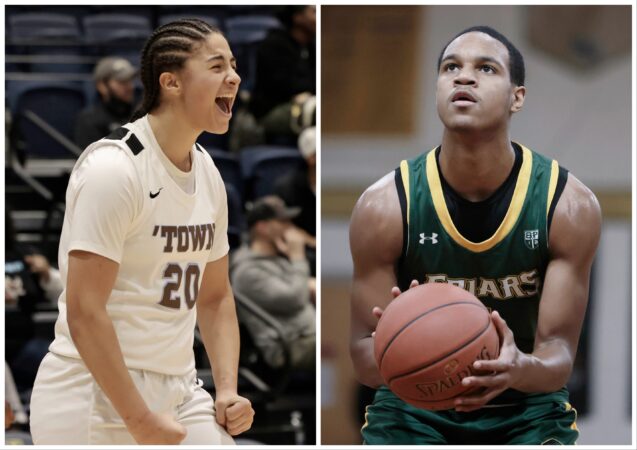
Bonner-Prendergast’s Korey Francis and Westtown’s Jordyn Palmer were named Mr. and Miss Basketball for the 2025-2026 season.
The award honors the best male and female high school players in Pennsylvania. Fans, coaches, and the media vote on the awards.
Francis, a junior guard, averaged 21.5 points, 7.4 rebounds, 3.4 assists, and 1.7 steals, while shooting 52.1% from the field, including 35.3% from the three-point line. Bonner-Prendie went 24-6 and won its first-ever state championship in basketball.
Palmer, a junior forward who’s considered one of best players in the nation, averaged 23.2 points, 13.2 rebounds, and 6.4 assists. She led Westtown to a 28-2 record last season.
Other local finalist included junior guard Silas Graham (Haverford School), sophomore forward Colton Hiller (Coatesville), and senior Sammy Jackson (Roman Catholic).
Palmer’s teammate Atlee Vanesko, a senior forward, and junior guard Ryan Carter (Friends’ Central) were also finalists.