Blog

  • Trump was welcomed to Pa. by Stacy Garrity. He didn’t mention her at all.

    Trump was welcomed to Pa. by Stacy Garrity. He didn’t mention her at all.

    MACUNGIE, Pa. — President Donald Trump’s speech on manufacturing in a key Pennsylvania swing district repeatedly veered into other topics and musings about elections in other states, like Maine and California.

    It took the president nearly an hour to even reference by name GOP U.S. Rep. Ryan Mackenzie, the vulnerable incumbent whose district Trump was visiting to boost his chances in this year’s midterm elections.

    And GOP gubernatorial nominee Stacy Garrity did not even get a mention during Trump’s speech to roughly 1,500 attendees, including workers at the Mack Trucks facility in Macungie in Lehigh County.

    Trump’s visit came just days after the company received $47 million through a Defense Department contract.

    And while he touted the trucks, he spent just as much time meandering about weight-loss drugs, immigration, firearms, the role of transgender athletes in women’s sports, and the UFC fight recently held on the White House lawn. He also repeated conspiracy theories about the races for Los Angeles mayor and California governor, saying he had asked the U.S. attorney in that state to investigate after conservative mayoral candidate Spencer Pratt did not advance to the general election.

    And he threw jabs at Pennsylvania Gov. Josh Shapiro amid 2028 speculation and appeared to undermine Shapiro’s Republican opponent, Garrity.

    Speaking about recent victories by democratic socialist candidates around the country, Trump quipped that “Shapiro is not that much better, to be honest with you.”

    He referenced the Democratic governor’s potential presidential aspirations, warning that “a guy like Shapiro is going to be forced on the left, otherwise he’s not going to get the nomination.”

    But though he weighed in on Shapiro, the governor’s Republican challenger’s name was noticeably absent from Trump’s list of shout-outs to GOP officials, despite the fact that Garrity spoke earlier in the event.

    Trump instead heaped praised on U.S. Rep. Dan Meuser, a Pennsylvania Republican who considered a run before ultimately opting against it and enabling the state party to coalesce around Garrity.

    “Meuser’s another great guy who was thinking about running for governor. I think he would have won. He was thinking of running for governor, and I said ‘I want you to stay in Congress,’” Trump said.

    Trump endorsed Garrity earlier this year, but the lack of acknowledgment Tuesday was striking given the election year focus of the event and Garrity’s own promises to support Trump’s agenda.

    “We need a governor in Harrisburg who will be a partner with President Trump in Washington, not an opponent in the courtrooms,” she said before Trump took the stage. “We need a governor who will fight for Pennsylvania jobs, like right here at Mack Trucks.”

    State Treasurer and Republican candidate for governor Stacy Garrity is seen on a big screen as she speaks to supporters before the arrival of President Donald Trump at Mack Trucks in Macungie Tuesday, June 23, 2026. Trump did not mention Garrity when he later spoke to the crowd in the Lehigh Valley.

    Trump restated his belief that tariffs have revitalized and would further boost the U.S. economy, though gas prices have reached new heights since he began a war with Iran, stymieing the flow of oil. (The Strait of Hormuz has reopened, following a tentative peace deal struck this month.)

    “I placed a 25% tariff on foreign automobiles and very importantly posed a 25% tariff on medium and heavy-duty trucks, so Mack Trucks could do very well with this factory in Pennsylvania,” he said.

    “They weren’t gonna come in from foreign lands and steal your jobs,” Trump added.

    However, the company cited Trump’s tariffs last year as contributing to its decision to lay off hundreds of workers at its Lehigh Valley operations center, the Pennsylvania Capital-Star reported at the time.

    Tuesday marked Trump’s fourth Pennsylvania appearance in his second term and his first this year ahead of November’s high-stakes midterm elections. The visit was billed as an official event as part of Trump’s American Workers First tour, but the event had the feel of a campaign rally.

    Four U.S. House districts in Pennsylvania are considered competitive, the most of any state, and the event took place in the 7th Congressional District, which is viewed as one of the most likely to flip to Democratic control.

    “We have to reelect a certain congressman,” Trump told the crowd.

    In 2024, Mackenzie won the seat by 1 percentage point, while Trump defeated Democrat Kamala Harris and won Pennsylvania in the presidential race.

    “Workers, like the ones here at Mack, are spearheading the great American comeback,” Mackenzie said.

    Bob Brooks, a union leader and firefighter who won the Democratic nomination to challenge Mackenzie, praised the union workers at Mack ahead of the event for building “the literal engine for the American economy,” but he blasted Trump and Mackenzie for failing to bring down prices.

    “No speech from Mackenzie can change the fact that his time in Congress has been an absolute disaster for the hardworking people of the Lehigh Valley,” Brooks said in a statement ahead of Tuesday’s event.

    Lt. Gov. Austin Davis, in a media call earlier Tuesday, said Trump’s choice to rally at Mack Trucks specifically signals he and his party recognize a “real political danger” because of Trump’s policies.

    “Donald Trump’s agenda is putting Congressman Mackenzie at serious risk,” Davis said. “They’re circling the wagons and trying to save that seat.”

    Affordability is likely to be a key issue on voters’ minds as they choose between Mackenzie and Brooks.

    Steve Leiby, 52, who works for Mack and attended Tuesday’s event, said he understands the tariffs Trump enacted are controversial, but he still supports them.

    “It’s a big risk, if we had a war, that we didn’t make a lot of war supplies in the U.S.,” he said.

    President Donald Trump leaves after a visit to Mack Trucks in Macungie, in the Lehigh Valley Tuesday, June 23, 2026.

    Brent and Francine Stanley, both 60, from New Tripoli, said they support Mackenzie because he shares their conservative values. His office organized an elder-care symposium that Francine Stanley attended because the couple have a 23-year-old child with disabilities, and they were able to get connected to resources.

    But they both know how competitive this election is, noting the stack of pro-Brooks mailers they have already received and predicting that Democrats will be knocking on their doors as November approaches.

    “They’re really persistent, and if you don’t answer, they follow up,” Francine Stanley said. Mackenzie, she said, should consider doing the same.

    Staff reporters Andrea Padilla and Sam Janesch contributed to this article.

  • Westtown’s Jordyn Palmer, Bonner-Prendie’s Korey Francis named state’s Miss and Mr. basketball

    Westtown’s Jordyn Palmer, Bonner-Prendie’s Korey Francis named state’s Miss and Mr. basketball

    Bonner-Prendergast’s Korey Francis and Westtown’s Jordyn Palmer were named Mr. and Miss Basketball for the 2025-2026 season.

    The award honors the best male and female high school players in Pennsylvania. Fans, coaches, and the media vote on the awards.

    Francis, a junior guard, averaged 21.5 points, 7.4 rebounds, 3.4 assists, and 1.7 steals, while shooting 52.1% from the field, including 35.3% from the three-point line. Bonner-Prendie went 24-6 and won its first-ever state championship in basketball.

    Palmer, a junior forward who’s considered one of best players in the nation, averaged 23.2 points, 13.2 rebounds, and 6.4 assists. She led Westtown to a 28-2 record last season.

    Other local finalist included junior guard Silas Graham (Haverford School), sophomore forward Colton Hiller (Coatesville), and senior Sammy Jackson (Roman Catholic).

    Palmer’s teammate Atlee Vanesko, a senior forward, and junior guard Ryan Carter (Friends’ Central) were also finalists.

  • Iranian singer sentenced to 74 lashes for performing without hijab

    Iranian singer sentenced to 74 lashes for performing without hijab

    An Iranian court has sentenced an outspoken female singer to 74 lashes for performing at a concert without wearing a hijab, according to a family member and state media news reports. The punishment indicated a possible tightening of religious rules for women under an Iranian political order reshaped by war.

    The singer, Parastoo Ahmadi, was sentenced last week at a closed trial in Qom province along with eight band and crew colleagues.

    A video of the 2024 performance, in which the singer’s hair, arms, and shoulders are uncovered, in defiance of Iranian law, went viral on YouTube.

    Ahmadi and her colleagues were also banned from performing or leaving the country for two years, said the family member who asked to remain anonymous, fearing reprisal for speaking to the media. Two of the nine individuals sentenced were not in Iran when the verdict was announced, the family member said.

    The sentencing came just days after Iran and the United States tentatively agreed to end a monthslong conflict that has killed thousands across the Middle East and sent shock waves throughout the global economy.

    The government’s crackdown on artistic expression and women’s dress has dampened hopes among some Iranians for a more moderate postwar order.

    “Besides being an inhumane and humiliating punishment, the 74-lash sentence against Parastoo Ahmadi simply for singing without compulsory hijab is a dangerous signal that the regime, emboldened by the peace deal with the U.S., may intensify its crackdown on women,” said Mahmood Amiry-Moghaddam, director of the Norway-based Iran Human Rights.

    The strikes against Iran by the United States and Israel that began in February killed several key figures, including Ayatollah Ali Khamenei, who oversaw the violent and repressive theocracy over nearly four decades.

    President Donald Trump justified the war, in part, by saying the United States intended to help Iranians overturn their leaders. “Iranian Patriots, KEEP PROTESTING — TAKE OVER YOUR INSTITUTIONS!!!” he wrote on social media in January.

    That month, Iranian authorities responded to widespread protests by killing thousands of people. Raha Bahreini, a lawyer and an Iran researcher at Amnesty International, called it a “state-orchestrated massacre.”

    Now, it is not clear that the war has left Iran in less restrictive hands than before. Khamenei’s son, Mojtaba Khamenei, has succeeded his father as supreme leader, and a group of hard-line senior members of the Revolutionary Guard has assumed an expansive role in running the country.

    In 2022, there were also hopes that change might come for Iranian women. Large protests erupted after the death of a young woman who was in the custody of the country’s morality police for violating the hijab law. The state responded by killing hundreds of people.

    During the “Women, Life, Freedom” movement that followed, more Iranians decided to flout the hijab rules, and violent crackdowns appeared to abate slightly, according to a U.N. report documenting the aftermath of the protests.

    It was in that context that the video of Ahmadi’s 2024 performance, in which she crooned a set of patriotic folk songs while wearing a simple black dress, went viral. The caption read: “I am Parastoo, a girl who wants to sing for the people I love. This is a right I could not ignore; singing for the land I love passionately.”

    Ahmadi and two of her collaborators were briefly detained after the video was posted.

    Now, with a postwar political order appearing to solidify in Iran, some in the country are looking at the sentencing of Ahmadi and her bandmates and wondering what it may mean for the future.

    “Will this country ever be fixed one day?” said Mariam, 30, a teacher in Mashhad who asked that her last name be withheld for fear of reprisals. “Where in the world is a woman’s singing punishable by lashes?”

    Iranian authorities have attempted to “project an image of normalcy” after the war, said Bahar Ghandehari, director of advocacy at the Center for Human Rights in Iran. But, she said, “cases like Parastoo’s expose the reality of the human rights situation in Iran: Women continue to face profound discrimination under the law, and defiance results in punishment and state violence.”

    It was unclear when the authorities planned to lash Ahmadi and the other defendants. Since the 2022 protests, there have been multiple documented cases of the authorities whipping women accused of violating hijab rules or speaking out against them.

    Court documents related to the trial have not been made public.

    This article originally appeared in the New York Times.

  • Micah Nori, father of Phillies prospect Dante Nori, hired as Trail Blazers coach

    Micah Nori, father of Phillies prospect Dante Nori, hired as Trail Blazers coach

    Happy belated Father’s Day, Micah Nori.

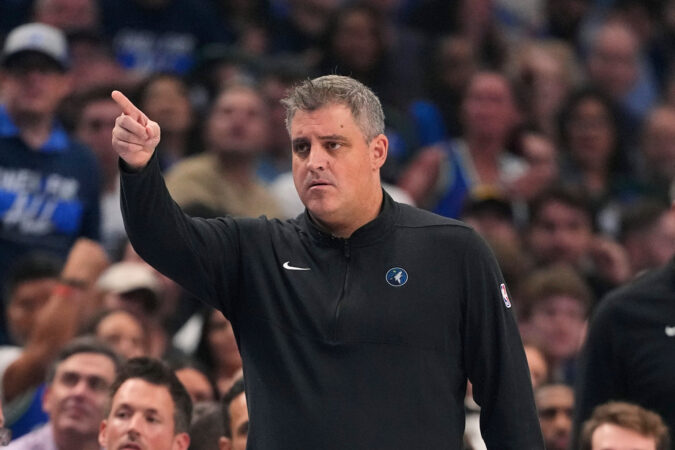
    On Tuesday, the Portland Trail Blazers announced Micah Nori would be the franchise’s next head coach. A 17-year veteran NBA assistant coach, Micah is the father of Phillies outfield prospect Dante Nori, a 2024 first-round pick.

    Micah Nori was the lead assistant coach for the Minnesota Timberwolves for the past five seasons, supporting the development of star guard Anthony Edwards. With head coach Chris Finch sidelined with a ruptured patellar tendon during the 2024 playoffs, Nori took over a majority of the game day operations that postseason. The Timberwolves went on to make the Western Conference finals.

    Just over a month after the Timberwolves fell to the Dallas Mavericks in that series, Micah was with 19-year-old Dante when he was drafted by the Phillies with the 27th pick out of Northville (Mich.) High School.

    Earlier this week, prior to the Blazers announcement, Dante appeared on The Show before The Show, Minor League Baseball’s official podcast. On the podcast, he talked about the various NBA players he grew up around due to his father’s profession. When Micah coached for the Toronto Raptors, Dante got to hang with Vince Carter. Then, when his father was hired by the Kings, he learned from DeMarcus “Boogie” Cousins.

    More recently, he has taken inspiration from Edwards’ work ethic.

    “I mean, [Edwards is] a freak,” Dante said. “The most explosive athlete I’ve ever seen in my entire life. You see the way he takes care of his business. Like, he’s one of the top five players in the NBA. And personally, I’d say he’s No. 1. You know how that goes.

    “When I go [to the Timberwolves practice facility], I’m always in there like 5 a.m. lifting before they get in because I’m on their time. As soon as I’m done, [Edwards] is one of the first ones in. No matter what level you’re at, the work, he never stops. He always wants more.”

    In March, Dante starred in the World Baseball Classic. In six games with Italy, the outfielder had a 1.185 OPS with two home runs and six RBIs in six games.

    Prior to the WBC semifinal, Dante got a shoutout from Alex Rodríguez — who is also a co-owner of the Timberwolves.

    “This is a future star,” Rodríguez said on the Fox pregame show. “Dante Nori. Do not forget the name.”

    Rodríguez’s proximity to Dante’s father may have made him a bit biased.

    “People were like, ‘Let’s take that with a grain of salt,’” Nori told the Inquirer. “You laugh. As soon as I saw that, I was like, ‘Oh, here we go. Someone’s typing [a message]. Someone’s typing.’ I laughed about it, though.”

    Off the field, Dante is an avid baseball card collector. Micah, who played baseball at Indiana before finding a career in basketball, shares this interest with him. He even helped Dante track down some of his rookie cards on eBay.

    “When I paid, I used my real name and address,” Micah told the Inquirer. “The guy was like, ‘Wait, are you related?’ I said, ‘Yeah, I’m his dad.’ It’s a cool little community. Because the people would be like, ‘Oh my gosh. I have a couple more right here. I’ll send them to you.’”

    Micah inherits a Blazers team that finished 42-40 and is headlined by 25-year-old All-Star forward Deni Avdija and veteran Damian Lillard. Interim coach Tiago Splitter was hired by the Bulls after stepping in to lead the team after then-coach Chauncey Billups was arrested by the FBI following an investigation into illegal sports betting and rigged poker games.

    Dante, 21, is batting .245 with 12 stolen bases in 52 games at double-A Reading this season.

  • Trump dismisses Iran’s rejection of nuclear inspections

    Trump dismisses Iran’s rejection of nuclear inspections

    President Donald Trump accused Tehran of making “false statements” on Tuesday, after an Iranian official said his government had not agreed to allow international inspectors access to their country’s damaged nuclear facilities, despite U.S. claims.

    Trump claimed that Iran had already agreed to the inspections for an indefinite period of time and suggested it was one of many points of progress in recent days. “If they did not agree to this, there would be no further negotiations!” Trump posted on Truth Social.

    The clashing accounts suggested that there may still be considerable distance between the parties on the current terms of the negotiations. And it may be one of many still in dispute: Iranian officials also pushed back on other reported details regarding deliberations over Tehran’s ballistic missile program and how its government could use billions of dollars in unfrozen funds it expects to receive as a result of the peace talks.

    The dispute over inspections was sparked Monday, when Vice President JD Vance said Iran had agreed to grant the International Atomic Energy Agency access to its nuclear sites, telling reporters in Switzerland that it was a “major milestone for the American people, and the first step in permanently denuclearizing or permanently ending a nuclear weapons program in Iran.”

    Iran, however, rejected the claim the following day, with Foreign Ministry spokesperson Esmaeil Baqaei saying there was no plan for IAEA inspections of its nuclear facilities damaged by the war and that officials had not met with the director general of the nuclear watchdog.

    “There is simply no established procedure for this matter,” Baqaei said in comments reported by state media, adding that Iran would “adhere to the standard procedures, which are already well-defined and transparent.”

    U.S. officials, including Vance, have repeatedly said that Iran is being misleading in its account of the ongoing talks. Secretary of State Marco Rubio told reporters Tuesday that Iranian statements were driven by “domestic politics.”

    “We know what they agreed to do, and now they’ll either do it or they won’t,” Rubio said as he arrived in Abu Dhabi, United Arab Emirates, to see Arab Gulf allies. “If they do, the process moves forward, and if they don’t, the president will have some decisions to make.”

    Iran had been subject to regular inspections under the Nuclear Nonproliferation Treaty and agreed to more intensive monitoring under the Obama nuclear deal that Trump has frequently condemned. After Trump terminated that agreement in 2018, Iran blocked IAEA access to some sites, while some inspections continued.

    Since June 2025, Iran has prohibited the inspectors from visiting sites bombed by the U.S. and Israel.

    Ali Bahreini, Iran’s ambassador to the United Nations, told reporters in Geneva on Tuesday that discussion of Iranian nuclear activities is set for the next stage of talks. The ceasefire memorandum that Trump signed at the Palace of Versailles on June 17 gave the U.S. and Iran 60 days to resolve their hardest disputes, including over the fate of Iran’s uranium stockpile and the Strait of Hormuz.

    In a news conference Monday at the Bürgenstock resort in Switzerland, Vance said conversations with inspectors from the IAEA could happen as soon as that day.

    Baqaei’s contradictory comments Tuesday highlighted the difficulty of turning the fragile ceasefire into a more comprehensive peace agreement.

    Baqaei also said Iran would be free to use unfrozen assets or revenue from oil sales as it sees fit, after Vance said that such funds, if unfrozen, would be subject to oversight and could benefit American farmers. “The important point is that Iran’s previously blocked assets are now available and can be used freely by Iran in accordance with its own priorities,” Baqaei said, according to Iranian state media.

    The spokesperson also pushed back on reports that Pakistan’s prime minister, Shehbaz Sharif, had said that talks would involve discussion of Iran’s ballistic missile program. Baqaei said that the program was “not part of the negotiations” with the U.S., state media reported.

    Iranian President Masoud Pezeshkian traveled to Pakistan on Tuesday to meet with officials there who have been mediating the negotiations with the U.S. “The effectiveness of the talks depends on full commitment to the agreed obligations and their precise implementation,” he said in a post on X, in an apparent acknowledgment of the broad-brush nature of the 14-point memorandum of understanding.

    “Statements outside the agreed text do not help advance the negotiations,” he added.

    The ceasefire called for an end to Israeli attacks in Lebanon, which resumed over the weekend, again testing the fragile deal. Israeli Prime Minister Benjamin Netanyahu’s government has criticized the deal and is not formally a party to the agreement. The Washington Post previously reported that U.S. intelligence warned the Trump administration that Netanyahu would probably work to undermine it by continuing the attacks. On Sunday, Trump accused Iran-backed Hezbollah militants of “causing trouble” in Lebanon.

    Overnight, Netanyahu, Defense Minister Israel Katz, and Israel Defense Forces Chief of the General Staff Eyal Zamir issued a joint statement saying the IDF would “continue to act with determination in order to neutralize threats” and maintain what it calls a “security zone” in southern Lebanon.

    The Israeli and Lebanese governments are currently holding direct negotiations brokered by the U.S. in Washington. A State Department official, speaking on the condition of anonymity to brief the media, said Monday that the shared goal for all parties was the ending the “cycle of violence for good.”

    Though the Trump administration had initially rejected calls to formally include Lebanon in talks with Iran, Lebanese President Joseph Aoun said that he had held a call with Vance and Rubio on Tuesday in which they had agreed to set up a joint U.S.-Lebanese-Iranian cell to help “solidify” the ceasefire in Lebanon.

    Rubio told reporters in Abu Dhabi that while the Lebanon talks were separate from the Iranian talks, Tehran played a critical role in that conflict due to “their support and sponsorship of Hezbollah.”

  • Two Philadelphia pastors charged with sexual exploitation, corruption of minors

    Two Philadelphia pastors charged with sexual exploitation, corruption of minors

    Two Philadelphia pastors groomed and sexually exploited two teenage boys, authorities say, paying them for explicit videos and sharing the images with each other in a scheme that stretched across years and may involve additional victims.

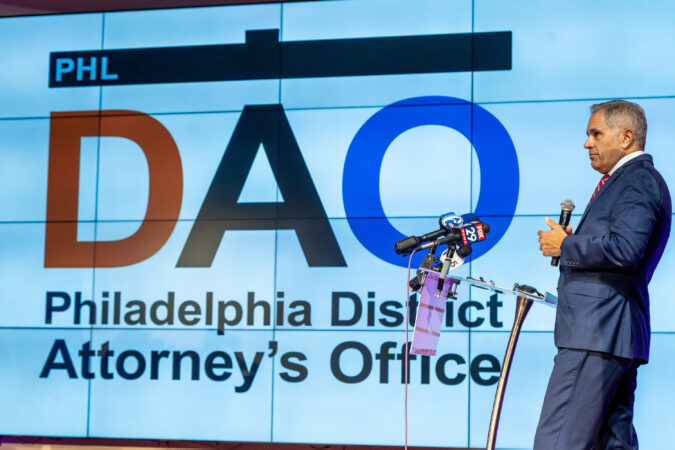
    Isaiah Banks, 30, and Bryan Jackson, 42, are charged with sexual abuse of children, sexual exploitation of children, conspiracy, corruption of minors, and related crimes, District Attorney Larry Krasner said Tuesday.

    Banks served as pastor of Second Pilgrim Baptist Church in Francisville, while Jackson served as a pastor at Garden of Prayer World’s Prayer Center in Strawberry Mansion, Krasner said.

    Both men were arrested, arraigned, and released from jail after posting bail — $600,000 for Banks, and $100,000 for Jackson. Prosecutors said they had sought higher bail, but their request was denied.

    Efforts to reach Banks’ attorney, Richard Kravets, were unsuccessful. No attorney for Jackson was listed in court records.

    The investigation into the men began in April after police received a report that a teen had been solicited by Banks through text messages and social media to send sexually explicit videos in exchange for money or food, authorities said. The messages, they said, came to light after a witness checked the boy’s phone.

    Prosecutors said Banks shared images he received with Jackson, who they said had also posed online as a female to solicit additional images and videos from the victim.

    As investigators dug deeper, authorities said, they found evidence suggesting that Banks and Jackson had received sexually explicit images and videos from other victims, dating back to February 2024.

    “A position of trust, when it is abused, has its criminal consequences,” Krasner said during a news conference to announce the charges.

    He declined to provide additional details about the case, including the victims’ ages and genders. He said that the investigation is continuing and that releasing additional information could discourage other victims or witnesses from coming forward.

    Court records, however, offer a more detailed portrait of the alleged crimes.

    The victims, both boys, were 15 and 16 years old when investigators began their inquiry, according to the affidavit of probable cause for Jackson’s arrest. None of the crimes is alleged to have occurred on church grounds.

    In the document, police described what they said was a yearslong pattern of communications, photographs, and videos showing Banks and Jackson cultivated transactional relationships with the boys.

    Messages recovered from the men’s phones were also “littered with images and videos of nude men,” and photographs “from a barbershop and church events,” according to the affidavit.

    By May, as the police investigation was underway, the tone of the messages between the two men had shifted, police said: In one message, Banks warned that one of the boys was rattled by the involvement of authorities.

    During an interview with detectives, Banks acknowledged knowing the boys for more than a decade, and said Jackson was a friend, according to the affidavit. He told detectives he typically paid $50 for videos that the boys sent, the document said.

    Efforts to reach officials at the church and prayer center where the two men worked were unsuccessful Tuesday.

    According to Second Pilgrim Baptist Church’s website, Banks was elected senior pastor in 2017. The website describes him as a leader who is “loved genuinely by our congregation because of his passion to see our church thrive and because of his genuine care and love for all those who are a part of our church.”

    Garden of Prayer World’s Prayer Center does not appear to have a website. An Instagram account appearing to belong to the church features photographs of Jackson promoting its events.

    Krasner asked that anyone with additional information contact the district attorney’s office victim and witness services unit at 215-686-5709; the police department’s special victims unit at 215-685-3251; or the Philadelphia Center Against Sexual Violence hotline at 215-985-3333.

  • Appeals court allows Trump to resume expedited deportations nationwide

    Appeals court allows Trump to resume expedited deportations nationwide

    WASHINGTON — A federal appeals court on Tuesday allowed the Trump administration to resume using a fast-track deportation process throughout the country that is typically reserved for people apprehended shortly after crossing the southern border.

    The decision revived a pillar of President Donald Trump’s mass deportation plans, after a lower court ruled last August that attempts to use the procedure to potentially remove millions of people without immigration hearings most likely violated their due process rights and risked wrongful detentions.

    In a 2-1 vote, a three-judge panel of the U.S. Court of Appeals for the District of Columbia found that it did not violate immigrants’ rights to use the policy to the maximum extent allowed by law. Judge Justin R. Walker, a Trump appointee, wrote the majority opinion, joined by Judge Neomi Rao, also a Trump appointee. Judge Robert L. Wilkins, an Obama appointee, wrote in a dissent that he would have let the lower court’s ruling stand.

    Writing for the majority, Walker wrote that Congress had delegated to the executive branch decisions about which migrants to designate for expedited deportations.

    “For many years, while some were designated, others were not,” he wrote. “But that changed in January 2025 when the executive expanded expedited removal to the maximum extent allowed by Congress,” he wrote.

    He added that the Homeland Security Department was not legally required to tell those arrested that they could avoid expedited removal if they could prove they had been in the country continuously for at least two years.

    “It is not a requirement that the government explain how the individual might prevail,” the opinion said.

    Immediately upon taking office in January, Trump empowered Immigration and Customs Enforcement to use the process, known as expedited removal, against an expanded population of immigrants lacking legal status.

    Expedited removal had been used narrowly for migrants lacking legal status who are detained near the southern border. It allows officials to deport people who have been in the country for less than two years without hearings in immigration courts.

    Trump’s expanded policy encouraged agents to detain and designate for rapid removal migrants questioned even deep in the country’s interior if they could not produce proof on the spot that they had been in the country beyond that two-year threshold.

    But judges have been deeply skeptical of the policy, noting that throwing out immigrants’ rights to challenge their removal in court could lead to abuse when carried out at scale.

    During a hearing last December, the three-judge appeals court panel focused on how immigration agents had used the policy in 2025 before it was blocked by a lower court. Judges pressed Drew Ensign, a lawyer for the government, for specifics.

    The three judges questioned why the government had waited until October 2025 to share with the court a policy memo circulated at ICE last February, which explained how and when expedited removal should be used.

    The guidance instructed agents that if someone apprehended by immigration agents professed to have been in the country longer than two years, they should be given “a brief but reasonable opportunity” to provide documentation to avoid being placed in expedited removal. Walker wrote in the opinion Tuesday that as long as migrants are provided that “reasonable opportunity,” the requirements of the law had been fulfilled.

    In his dissent, Wilkins wrote that the Department of Homeland Security had not disputed that in using the policy, it had deported a number of individuals who had been in the country longer than two years.

    “A procedure that can result in persons being deported pursuant to the expedited removal statute without even being asked how long they have been in the country might satisfy due process for persons encountered at the border, but it is woefully inadequate for persons encountered in the interior of the country,” he wrote.

    In a statement, James Percival, the general counsel of the Department of Homeland Security, celebrated the ruling. He wrote that the department had long “arbitrarily limited expedited removal,” though the law allows it to be used more broadly.

    He said the appeals court had “vindicated” the Trump administration’s practices.

    Anand Balakrishnan, a lawyer representing Make the Road New York, a nonprofit immigrant advocacy group that brought the lawsuit, argued during the hearing last year that such groups had been in the dark about how the procedure had been used. He said that the decision to give migrants lacking legal status an opportunity to state their case and avoid being placed into fast-track deportation was being made by individual agents with little oversight.

    “I don’t have any clue how this process is supposed to work in practice, particularly when the only check on it is that individual officer who is supposedly, in their discretion, providing them with time,” he said.

    Balakrishnan said the aggressive expansion of the policy effectively left everyone without full legal status vulnerable to being placed on a fast track for deportation, including those who had lived in the country for decades and had deep ties to their communities or to U.S. citizens.

    But Balakrishnan had faced skeptical questioning from Rao and Walker. At one point, Walker appeared to dismiss the case as an attempt to stall the deportation process nationally, rather than maintain what had for decades been a more circumscribed use of the expedited removal process.

    Walker observed that all of the people challenging the policy were in the country illegally.

    “So whether they get expedited removal or nonexpedited removal, the proper result is removal, right?” he said.

    “I don’t know whether the proper result is removal,” Balakrishnan said. “I mean, the proper result would be procedures to access the relief that Congress has afforded them.”

    This article originally appeared in the New York Times.

  • The Spring-Ford school district is moving to fire a Spanish teacher supported by community members

    The Spring-Ford school district is moving to fire a Spanish teacher supported by community members

    The Spring-Ford Area School District is moving to fire an eighth-grade Spanish teacher over protests from parents and students who say she is being unfairly terminated.

    The school board voted Monday to approve a statement of charges surrounding the dismissal of an employee, who was not identified in board documents. The statement of charges was not made public, which is typical procedure for school district personnel matters.

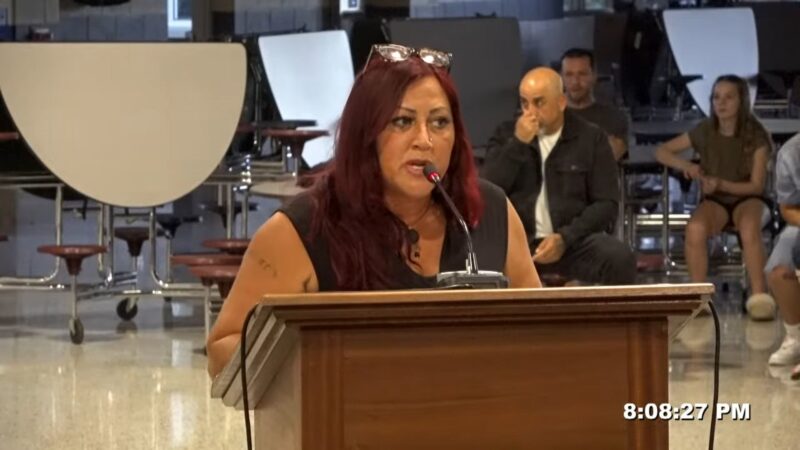
    But numerous supporters of Jasmine Ewing, including her husband, spoke out at Monday’s meeting against the dismissal, describing “Señora Ewing” as a passionate and dedicated educator who had positively impacted their lives.

    They also urged the board not to fire her over what some characterized as false accusations.

    “What foundation are we setting for the kids to know that they can retaliate against a teacher who is trying to hold them accountable for extremely inappropriate actions?” said Miranda Dombrosky, a 2010 Spring-Ford graduate and district parent.

    Dombrosky, who described herself as a friend of Ewing’s, referred to a student who had “bragged about getting a teacher fired” and accused the district of punishing “an innocent teacher.”

    Tamika Jeter, a district parent who credited Ewing with fostering her son’s enthusiasm for learning Spanish, told the board “it would be a big mistake to let a small thing that was considered playful among students cause her to lose her job.”

    Erin Crew, a district spokesperson, said Tuesday that “out of respect for the students and families involved, and because this is an ongoing personnel matter, the district will not comment on matters related to an individual’s employment.”

    The resolution approved by the board Monday “authorizes moving forward with a statement of charges while providing all due process rights required by law,” Crew said.

    As a result of the board’s vote, Ewing plans to request a public evidentiary hearing, her husband, Brian Ewing, said at Monday’s meeting.

    Brian Ewing told the board that he and his wife had “statements and factual information that directly dispute these claims against Jasmine, and raise serious concerns about this process.”

    “If the district insists on dragging this forward, the public will see what was done, who did it, and why it never should have happened,” said Ewing, who said his wife was not present Monday because she was leading students on a trip to Costa Rica.

    At a school board meeting the week before, at which supporters also spoke on her behalf, Jasmine Ewing said it was “devastating to stand here facing termination” after devoting herself to her teaching career.

    As a Latina, she said, “Spanish has always meant something deeper to me,” and she viewed her job as not just an educator, but a “cultural ambassador.” She said the support shown by community members was a “legacy I will carry with pride for the rest of my life.”

    Some supporters told the board that Ewing was an asset to the district as a teacher of color, providing valuable representation.

    Former students like Sofia McClintock said Ewing had broadened their horizons through international trips she had led.

    “Teachers who truly care are not easy to replace,” McClintock said. “They are the teachers that students remember years after leaving their classrooms because of the difference that they made, and that is Señora Ewing for me.”

    While supporters of Ewing dominated the school board meetings Monday and last week, one former student spoke out against the teacher, accusing Ewing of participating in antisemitic bullying.

    The student, Kayla Woodman, who graduated from Spring-Ford earlier this month, said that when she had Ewing for Spanish in eighth grade, boys repeatedly harassed her for being Jewish, including through a “Heil” chant.

    Ewing, Woodman said, not only did not tell the boys to stop, but “joined in and laughed.”

    It was not clear whether Woodman’s accusations were connected to the reasons the district is now seeking to dismiss Ewing.

    Woodman, who described the experience as “some of the darkest times in my life,” said that she had been afraid to go to administrators and that her parents had had a private conversation with Ewing.

  • Vendors told to start dismantling Alligator Alcatraz detention center

    Vendors told to start dismantling Alligator Alcatraz detention center

    Crews began dismantling a state-run immigration detention center in the Florida Everglades on Monday, signaling its closure even as state and federal officials continued to say little about the shutdown of a year-old facility that they once praised on a near-daily basis.

    State officials informed vendors in a call Monday morning that they could begin “demobilizing,” or taking down, the tents, fences, trailers, and other structures at the detention center, known as Alligator Alcatraz, according to three people familiar with the call. Vendors are supposed to make significant progress on the work by Wednesday, two of the people said.

    The directive came days after the Department of Homeland Security said that all detainees had been transferred out of the remote center, which opened a little less than a year ago to much fanfare from President Donald Trump and Gov. Ron DeSantis, his fellow Republican.

    “As we enter into hurricane season, ICE and the state of Florida have moved illegal aliens from the soft sided facility,” the department said in a statement last Tuesday, referring to the detention center. “For the safety of the illegal alien detainees, we transferred them to other facilities.”

    Last year, however, thousands of detainees spent the bulk of hurricane season at the center, which became the nation’s first state-run facility to hold federal immigration detainees. The tropical storm season runs from June 1 through Nov. 30.

    Immigration lawyers and activists took last week’s statement from DHS as the latest evidence that the facility would soon close.

    On Friday, Kevin Guthrie, Florida’s emergency management chief, whose agency operates the center, insisted that it remained open. “At this point in time, we have not been told to stand down, so we are still in a posture to receive detainees,” he told reporters, according to the Miami Herald.

    The Florida Division of Emergency Management did not respond to requests for comment Monday. Monday morning’s call between state officials and the detention center’s vendors was first reported by CBS Miami.

    The New York Times first reported last month that federal and state officials were considering closing the facility, which has cost Florida hundreds of millions of dollars to operate, by June.

    When asked about a closure since then, DeSantis has said that the Homeland Security Department is reassessing its detention needs now that Markwayne Mullin is in place as the agency’s new secretary. The agency plans to sell or give away most of the 11 warehouses it bought to detain immigrants, the Times reported last week.

    On Monday, DeSantis’ office referred questions about the center to the emergency management division. James Uthmeier, the Florida attorney general who was instrumental in opening the center, said Monday that he could not confirm if it was closing, though he knew that the number of detainees had been dropping.

    “Alligator Alcatraz actually stayed open longer than it was intentionally planned,” he said at a news conference in Tampa. “It was never expected to be a long-term thing.”

    To many who have closely followed the center over the past year, the inconsistent messaging about whether it is closing — and, if so, for what reason — has left the impression that Alligator Alcatraz, with its hefty price tag and ongoing reports of troubling conditions, has become too much of a political liability.

    “It’s been an expensive failure,” said Jeff Brandes, a Republican and former state senator who now runs the Florida Policy Project, a nonprofit, nonpartisan research organization. “Nobody would say this was a success.”

    The facility has cost state officials more than $1 million per day to operate, including for trucking in water and trucking out wastewater. The federal government had committed to pay the state more than $600 million to defray costs, but it has provided only a fraction of that amount so far.

    This year, Florida lawmakers imposed new rules on the emergency fund that the state has been using to cover the center’s operating costs. Those rules take effect July 1, the start of Florida’s new budget year.

    State officials hastily erected the detention center on a training airport about halfway between Miami and Naples, hailing it as the showcase of Florida’s cooperation with Trump’s immigration crackdown. They also erected an “Alligator Alcatraz” sign on a road leading to the facility, ignoring criticism that the moniker — and jokes they made about any escapees being intercepted by alligators — was cruel.

    Detainees, their relatives, and their lawyers have regularly denounced what they have described as unsanitary and inhumane conditions at the center, allegations that state officials deny. Environmental advocacy groups filed a lawsuit against the state and the federal government, arguing that the facility was illegally constructed in sensitive wetlands.

    Last week, after Homeland Security officials said that detainees had been moved out, a lawyer for the environmental groups vowed to continue the lawsuit over what he called the “secret Gulag in the Everglades.”

    “They hope that they can slink away in the middle of the night without explaining to anyone what they did, why they did it, or how they proposed to clean up the mess that they’ve made,” the lawyer, Paul J. Schwiep, said at a virtual news conference Wednesday. “And we don’t intend to let them get away with it.”

    This article originally appeared in the New York Times.

  • 35% of Airbnb and VRBO rentals in Philly don’t have the right licensing, new report finds

    35% of Airbnb and VRBO rentals in Philly don’t have the right licensing, new report finds

    More than a third of short-term rental properties like Airbnb and VRBO in Philadelphia have licensing issues, according to a new report from the City Controller’s office released Tuesday.

    The controller found that of 3,734 analyzed licenses associated with short-term rentals, 1,327 were expired or noncompliant.

    “Short-term rentals are an increasingly important part of Philadelphia’s lodging market, especially during major events that we’re experiencing right now,” City Controller Christy Brady said in a news release.

    “The industry’s growth requires a clear, efficient regulatory framework with strong licensing and enforcement tools to identify noncompliance,” her statement read.

    The city adopted licensing requirements in 2023, after coming under scrutiny for lack of regulation.

    In one case highlighted by the report, the controller found a host operating 50 listings in the city without any of the correct licensing.

    In other cases — including one property offering renters the chance to “Chill in Style Anime Themed Escape”— licenses were either absent or associated with unrelated uses like dumpsters or towing companies.

    Philadelphia’s short-term rental market has been in the spotlight this summer, as the city hosts major tourism events including the 250th anniversary of the Declaration of Independence, the World Cup, and Major League Baseball’s All-Star Game.

    The city has 121 registered hotels with 19,615 rooms and over 4,000 short-term rentals.

    That’s a large reduction from before the licensing regulations took effect in 2023, according to the Department of Licenses and Inspections (L&I).

    L&I says it has removed 10,452 unlicensed properties from rental sites since the beginning of 2024.

    Under the regulations adopted in 2023, short-term rental hosts who live in the properties they are renting have to get a zoning permit and a “Limited Lodging Operators License.”

    For those who do not live in the property, a zoning permit and a rental license with a hotel designation is needed. The licenses must be renewed annually.

    No short-term rentals are allowed in the Far Northeast section of Philadelphia, where City Councilmember Brian J. O’Neill, a Republican, banned them.

    The controller’s report recommends simplifying the “complicated compliance process for hosts” and switching to a more tech-oriented enforcement approach, which could monitor “noncompliant listing across multiple platforms.”

    The result, the report suggests, would help the system move away from “complaint-driven enforcement managed by a small staff” of L&I workers.

    Nashville and Mount Pleasant, S.C., have outsourced short-term rental regulation monitoring to third-party companies using automated tools to track listings across platforms.

    As a result, they both saw over 90% of rentals complying with local laws, a huge increase from the previous status quo.

    “The city can benefit from using technology-assisted monitoring tools that can support the identification of potentially noncompliant listings across multiple booking platforms,” Brady said in a statement. “Other cities are already utilizing this technology and significantly improving their enforcement measures.”

    In the run up to the World Cup, short-term rental hosts in Philadelphia — as well as hotel leaders — have expressed concern that the anticipated level of consumer interest before this summer’s festivities has not fully materialized.

    Just before the games began, the region’s short-term rental market had an occupancy of about 60%, according to AirDNA, which analyzes data from companies like Airbnb and VRBO.