Blog

  • Ex-Packers assistant Ryan Mahaffey to succeed Jeff Stoutland as Eagles run game coordinator

    Ex-Packers assistant Ryan Mahaffey to succeed Jeff Stoutland as Eagles run game coordinator

    Changes to the Eagles’ staff under new offensive coordinator Sean Mannion are well underway.

    The team is hiring Ryan Mahaffey as the run game coordinator and tight ends coach, a league source confirmed to The Inquirer on Thursday.

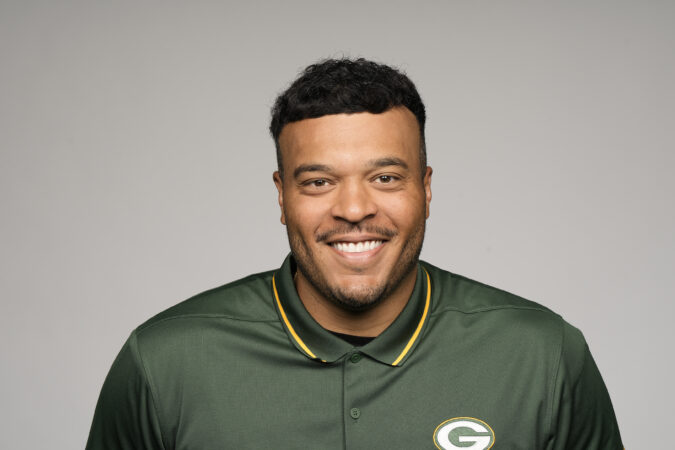
    Mahaffey, 38, worked with Mannion while they were with the Green Bay Packers, most recently serving as the wide receivers coach for the last two seasons.

    The news of Mahaffey’s hiring comes in the wake of Jeff Stoutland’s departure from the Eagles after 13 seasons on Wednesday night. Stoutland, who turns 64 next week, was hired by Chip Kelly in 2013 to serve as the Eagles’ offensive line coach. In 2018, he added the title of run game coordinator to his role with the team.

    However, The Inquirer reported last week that Stoutland’s input in the running game decreased last season as the Eagles attempted to address their early struggles on the ground by shifting their game planning and play calling.

    While a source said that the Eagles wanted Stoutland back in 2026, he chose to step away from coaching, giving way to the hiring of Mahaffey to assume running game responsibilities.

    Mahaffey, a former NFL fullback and tight end, earned his NFL coaching start with the Packers in 2021 as an offensive quality control coach. He held the title of assistant offensive line coach (2022-23) before becoming the team’s wide receivers coach in 2024.

    Mahaffey coached tight ends at the college level, first at Northern Iowa, his alma mater, in 2013 and then at Western Kentucky in 2017-18. This is the first time in Mahaffey’s coaching career that he has held the title of run game coordinator.

    The addition of Mahaffey likely signals the end of Jason Michael’s tenure with the Eagles. Michael, 47, was brought to the Eagles by Nick Sirianni in 2021 as tight ends coach after serving in the same role with the Indianapolis Colts in 2019-20.

    Mahaffey is the third new face on the Eagles’ offensive coaching staff, joining Mannion and Josh Grizzard, the new pass game coordinator.

  • Olympics: Finland-Canada women’s hockey game postponed due to norovirus outbreak

    Olympics: Finland-Canada women’s hockey game postponed due to norovirus outbreak

    MILAN (AP) — Finland’s women’s hockey team’s preliminary round opener against Canada on Thursday has been postponed due to a stomach virus depleting Finland’s roster.

    The game was rescheduled to Feb. 12.

    The decision to postpone the game was announced shortly after Finland completed its early afternoon practice with just eight skaters and two goalies. The remaining 13 players were either in quarantine or isolation due to a norovirus that began affecting the team on Tuesday night.

    The postponement provides Finland two extra days to rest before playing the U.S. on Saturday. Had their game against Canada not been postponed, Finnish officials were considering the possibility of a forfeiture.

    “While all stakeholders recognize the disappointment of not playing the game as originally scheduled, this was a responsible and necessary decision that reflects the spirit of the Olympic Games and the integrity of the competition,” Olympic officials announced.

    “All stakeholders thank teams, partners, and fans for their cooperation and understanding, and look forward to the rescheduled game being played under safe and appropriate conditions.”

    Team Finland officials were already weighing the likelihood of not playing before the game was postponed.

    Coach Tero Lehterä said it could be unfair to ask his 10 healthy players to compete in a full game. Lehterä also said the team has to take into account the possibility of Canadian opponents being infected as well.

    “Most of them are getting better but not healthy enough to play. And there’s the chance that if we would play, it could influence Team Canada and their health as well,” Lehterä said following practice.

    “But I couldn’t risk my players if they were ill yesterday to play tonight because that would be wrong against the individual,” he added.

    Lehterä said the first sign of the illness became apparent on Tuesday night — and after the team held a full practice earlier in the day.

    The rescheduled game falls on the second of two consecutive off days during the women’s tournament, and a day before the quarterfinals open.

    The 53-year-old Lehterä is in his first year coaching the women’s team. He played for the Finland national team in the 1990s and previously coached men’s teams.

    Lehterä did his best to stay upbeat despite the situation. At one point, he joked the last time he competed in a game with 10 players was in a beer league outing.

    “It might become a strength. I got to think positive,” he said. “We might be stronger when we come out of this. You never know.”

    Lehterä then noted the potential of facing adversity was among his first messages to the team last summer.

    “Some things might happen, you never know what happens. And you only worry about the things that we can affect,” Lehterä said. “And this is not something we can do anything about it. We have no say whether we play or not. It’s not up to us. When we’re told to show up, we show up. Whether it’s five, six, seven, 15 or 20 [players].”

    Finland captain Jenni Hiirikoski, making her fifth Olympic appearance, said players were leaning on each other for support.

    “It’s not nice, definitely. But we try to focus one day at a time,” the 38-year-old defender said. “The big thing has been how we tolerate different things. I think we try to help each other, whatever it is, and how it goes. So it’s just stay calm and focused.”

    Finland, along with Czechia, entered the tournament as medal contenders behind the two global powers — the favored Americans and defending Olympic champion Canada.

    Finland is a four-time Olympic bronze medalist, with the last coming at the 2022 Beijing Games. And the team has won bronze at the past two world championships, beating Czechia both times.

    Though the 2022 Beijing Games were played amid the Coronavirus pandemic, no games were postponed during a competition that took place in front of few fans and with participants limited to a closed bubble.

    The closest a hockey game came to being postponed or forfeited happened during a preliminary round meeting between Canada and Russia. Team Canada refused to take the ice for pregame warmups and the game time was delayed because COVID test results of Russian players were not available.

    As a compromise, Canada agreed to begin the game after officials ruled all participants had to wear facemasks.

    AP Hockey writer Stephen Whyno contributed.

  • Jordan Mailata sings a cappella ‘Eye of the Tiger’ at Super Bowl with Adam Devine, George Kittle, Bijan Robinson

    Jordan Mailata sings a cappella ‘Eye of the Tiger’ at Super Bowl with Adam Devine, George Kittle, Bijan Robinson

    If you’ve seen Pitch Perfect 2, you likely remember the iconic “riff-off” scene featuring Green Bay Packers players Clay Matthews, David Bakhtiari, T.J Lang, Josh Sitton, and Don Barclay as a competitive a cappella group performing Destiny’s Child “Bootylicious.”

    The moment sounds like something that could only come straight out of a movie — until now. On Wednesday, Jordan Mailata, George Kittle, and Bijan Robinson went Pitch Perfect at San Francisco’s Ferry Building ahead of Super Bowl LX weekend.

    Mailata, Kittle, and Robinson joined Pitch Perfect star — and Treblemaker — Adam Devine and the University of Wisconsin’s competitive a cappella group, Fundamentally Sound, who went viral on social media after surprising people in the street with birthday songs.

    The group wore matching jackets and performed a riff off-inspired rendition that included Survivor’s “Eye of the Tiger,” before announcing the winner of the Marriott Bonvoy Super Bowl Sleepover Suite, in which one fan gets to wake up Sunday in a suite in Levi’s Stadium.

    “I’m closing out the football season as Marriott Bonvoy’s Fanbassador and announcing the Super Bowl Sleepover Suite winner the only way I know how … by singing,” Devine said in a release. “I couldn’t have done it without my NFL buddies. They were great, but thankfully, these men are athletic specimens and don’t make their living singing.”

    From left, Adam Devine, , Bijan Robinson, George Kittle, and Jordan Mailata perform as the Treblemakers in San Francisco.

    While Kittle and Robinson, the Falcons’ star running back, may have some work to do on their voices, Mailata appeared to be in his element.

    The 6-foot-8 Eagles tackle is no stranger to music as a member of the Philly Specials. And he’s definitely not one to get shy on the big stage, breaking out Amy Winehouse karaoke at local bars and performing “Tennessee Whiskey” for 11-time Grammy Award winner Chris Stapleton.

    Kittle, meanwhile, didn’t just have to learn a new song and dance. The 49ers tight end suffered a torn Achilles tendon during the Niners’ wild-card win over the Eagles and performed the choreography in a boot while driving around on a scooter.

    Luckily, he didn’t have move around too much.

  • $29M in federal and private funds to go toward Delaware River watershed projects

    $29M in federal and private funds to go toward Delaware River watershed projects

    Federal and private grants totaling nearly $29 million were announced Wednesday for conservation projects within the Delaware River Watershed, including a South Philadelphia wetlands park, a water trail in Camden County, and support of the Lights Out Philly program to keep birds from crashing into buildings.

    The money comes from nearly $12.5 million in grants to the Delaware Watershed Conservation Fund from the National Fish and Wildlife Foundation (NFWF) and the U.S. Fish and Wildlife Service. An additional $17 million comes in matching funds from nonprofits such as the Philadelphia-based William Penn Foundation.

    The total is about $9 million less than last year’s grant awards of $38 million. A representative for the two federal agencies did not state a reason for the decline.

    However, the reduction comes as many federal grants have been cut or reduced by President Donald Trump’s administration.

    What’s being funded?

    In all, the new funds will flow to 30 conservation projects, including local trail creations, stream restorations, shoreline enhancements, and wildlife habitat improvements. The money will go toward planning, hiring for, and construction of projects in Pennsylvania, New Jersey, Delaware, and New York.

    Jeff Trandahl, executive director and CEO of NFWF, said the projects “demonstrate the impact that public-private partnerships can have at a landscape scale and will help ensure a healthier and cleaner future for the Delaware River watershed and the communities and species that depend on it.”

    The watershed is within a densely populated corridor but remains 50% forested. Four hundred miles of it is classified as a National Wild and Scenic River, largely undeveloped but accessible for recreation.

    The grants cover a wide range of projects.

    For example, $498,800 will go toward reducing migratory bird collisions into buildings throughout the Delaware Watershed, which includes Philadelphia and New Jersey. The project of the Wildlife Management Institute, along with Bird Safe Philly, will identify and retrofit buildings to be bird-friendly, inform the public about built-environment hazards, and how to mitigate them.

    Leigh Altadonna, coordinator for Bird Safe Philly, a collaborative of five organizations, welcomed the grant.

    “These funds will reinforce Bird Safe Philly’s continuing work with nature centers, libraries, arboretums and other buildings as part of our mission to mitigate bird collisions with glass,” Altadonna said.

    She said money would go toward educating the public about how to make their homes and communities bird-friendly.

    Bird Safe Philly coordinates with owners of the city’s skyscrapers to turn off or dim lights, which can attract birds during the spring and fall migration seasons.

    A sample of grants with total federal and private funding

    Pennsylvania

    • $650,000 for South Philadelphia Wetlands Park II, a project of the Delaware River Waterfront Corp. The money will go toward completing needed documentation for the park located just south of the base of Tasker Street through Pier 70. The goal is to restore wetland habitat and increase public access to piers and berths, add a kayak launch and a natural pier park, and restore two acres of forested upland, meadow and wetlands.
    • $2 million for stream channel restoration in the south branch of French Creek, a project of the French and Pickering Creeks Conservation Trust. The stream channel and surrounding wetland will be improved as a habitat for brook trout and bog turtle, restore 6.7 acres of riparian buffer, and more than 13 acres of surrounding wetland and flood plain.
    • $900,400 to reintroduce wild brook trout in restored agricultural watersheds in Chester County, a project of the Stroud Water Research Center, which will monitor the re-establishment effort and implement agricultural best management practices to give trout the best chance of recovery.

    New Jersey

    • $3.5 million for horseshoe crab and shorebird habitat at the Kimbles Beach and Bay Cove area in Cape May Court House, a project of the American Littoral Society. The money will go toward restoring one mile of critical habitat along the Delaware Bay, by placing 49,000 tons of sand to stabilize the beach, reverse coastal erosion, and protect the shoreline.
    • $1.2 million for restoration and recreational projects on the Cooper River Water Trail, which is spearheaded by the Upstream Alliance. The money will go toward engaging 3,000 community members through hands-on recreational programming, hiring local youth, and promoting public access on the new trail in Camden County. It will include paddling and fishing programs for the community and create a Friends of the Cooper River Water Trail group.
    • $487,400 for ecological restoration and wildlife habitat improvements at Swede Run Fields in Moorestown, Burlington County, for a project by the township to eradicate invasive species and establish native plant communities within the wetlands, riparian forest, and upland meadow buffers.
  • A family is suing Philadelphia over the death of a man in jail custody

    A family is suing Philadelphia over the death of a man in jail custody

    The family of a man who died in a Philadelphia jail last year contends in a lawsuit filed this week that jail staff did not offer him treatment for opioid withdrawal before his death.

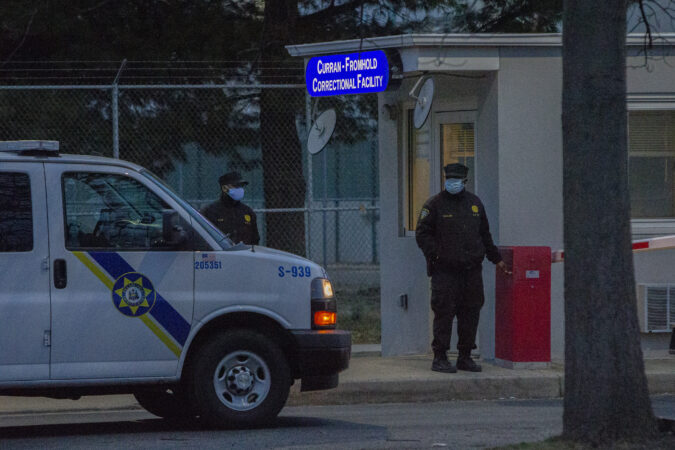
    Andrew Drury died in an intake cell at the Curran-Fromhold Correctional Facility in Holmesburg on March 9, 2025. The lawsuit says he was in the cell for 36 hours, despite suffering from opioid withdrawal symptoms.

    During that time, the suit says, Drury received no medical care, and jail staff did not alert medical personnel that he was going through withdrawal. Drury had a known opioid addiction and had suffered withdrawal symptoms at the jail in the past, according to the lawsuit. His cause of death was listed as “pending,” the lawsuit said.

    Prison officials declined to comment Wednesday. A lawyer for Drury’s family did not return a request for comment. The lawsuit seeks general monetary damages from the city, the jail system, and the state attorney.

    Several other families in recent years have sued Philadelphia jails, saying their relatives did not receive adequate medical care for drug-related issues.

    In 2024, the family of Carmelo Gabriel Ocasio, 22, accused jail staff of ignoring his cellmate’s pleas for help when Ocasio fell unconscious, overdosed, and died after obtaining fentanyl and benzodiazepines at the jail in 2022.

    The family settled with the city for $65,000; further details of the settlement were not made public.

    In 2025, the family of Amanda Cahill sued the city, saying she overdosed on fentanyl illicitly obtained while in the jail after she was arrested in a Kensington sweep in 2024. The suit said she cried and begged for help, and fellow inmates tried to get the attention of correctional officers before she was found unresponsive in her cell.

    A judge dismissed portions of the lawsuit in late December, but attorneys for Cahill’s family later refiled a complaint. Responding to the suit, lawyers for the city acknowledged staffing issues at the jails, but said the city could not have foreseen and did not cause Cahill’s death.

    Between 2018 and July 2024, at least 25 people died in Philadelphia jails of accidents related to drug intoxication, a 2024 Inquirer analysis found. The city noted that summer that the overdose death rate in Philadelphia jails was the same as the citywide rate, despite higher rates of addiction among incarcerated people.

    Philadelphia’s jail system has been hailed as a national leader in offering medications for opioid addiction and provides buprenorphine, an opioid medication that curbs cravings, to inmates soon after arriving.

    But staffing issues created backlogs that kept inmates from receiving longer-term care on time, and advocates said illicit drugs were readily available in the facilities, The Inquirer reported in 2024.

    Staff writer Abraham Gutman contributed to this article.

  • Is Drexel a sneaky NCAA Tournament contender? A big final month will tell the tale.

    Is Drexel a sneaky NCAA Tournament contender? A big final month will tell the tale.

    Drexel started off more than slow.

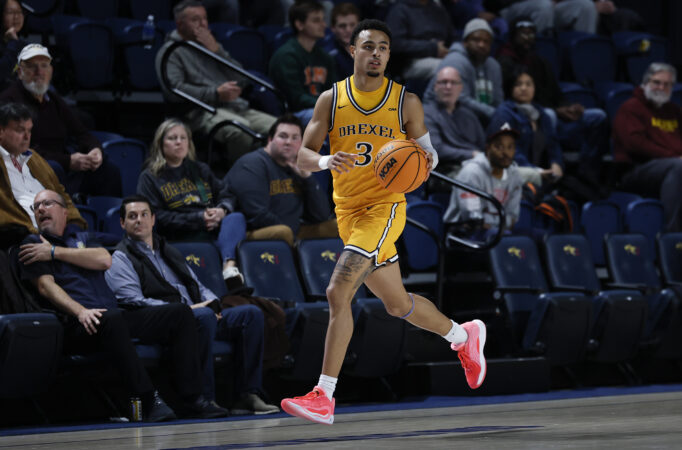
    After an offseason that saw Zach Spiker’s squad lose four of its five starters to the transfer portal, the Dragons went 6-7 in nonconference play, dropping all three of their Big 5 matchups in the process. The team started its Coastal Athletic Conference campaign looking for relief but was confronted with more of the same: It lost three in a row to tip off conference play. The season looked like a loss.

    Then, on Jan. 8, a switch seemed to flip. The Dragons shut down Stony Brook, limiting the Seawolves to just 37 points in a win. From there, Drexel started rattling off victories powered by its defense, winning six of seven games to move into conference contention. The Dragons have held opponents to an average of 56.3 points over that stretch

    Drexel (12-11, 6-4 CAA) is in a tie for third place ahead of Thursday’s matchup (7 p.m., FloSports) at Campbell (10-13, 4-6). The Dragons will receive a first-round bye in the CAA Tournament if they stay in the top four.

    The potential for the program’s first NCAA Tournament berth since 2021 has offered some guarded optimism for the Dragons.

    “I don’t feel a recent surge in excitement and fun after winning,” junior guard Shane Blakeney said. “We’re all taking a deep breath like this is what it should have been like. We’re frustrated because we should have been playing like this, and we also still feel like we haven’t played our best yet.”

    Added junior guard Kevon Vanderhorst: “We’re constantly learning through our losses … It’s not necessarily that we’ve just had a reawakening. It’s [that] we’ve been learning the whole time.”

    In their last outing on Saturday, Drexel outlasted North Carolina A&T, 61-60, in a slugfest that came down to the final whistle.

    With no timeouts and down by one point, the Dragons had to advance the length of the court in 3.2 seconds. After a bit of backcourt misdirection, the ball was inbounded to Vanderhorst. The guard beat his defender down the court, converting a contested scoop at the buzzer to win the game.

    “We practice shots like that … three seconds on the clock, somebody has to go get a bucket,” Vanderhorst said. “In terms of just our process, nothing really has changed here.”

    Although the team has practiced that situation countless times, hitting the buzzer-beater in a game garnered national attention. Vanderhorst’s sprint to the bucket landed third on SportsCenter’s daily top 10 plays feature.

    “It’s definitely been a surreal moment,” Vanderhorst said. “I think that’s the perfect word for it. Growing up, SportsCenter top 10 is that show you turn on in the morning [when] you want to see all the highlights from the day before.”

    Vanderhorst, who is averaging 9.6 points, is part of an offense that boasts five players scoring eight or more points per game. Blakeney averages a team-high 13.3 points. The balanced offensive approach has made it difficult for opposing defenses to focus on a single player.

    “Our coaches recruited talent. It’s shown in a lot of plays especially through this stretch of the season,” Blakeney said. “Teams can’t really be surprised when we play together — we look good. … We play fast, play connected.”

    Drexel has been dominant defensively. The program logged the best defensive effective field goal percentage in the NCAA during January. Since the start of conference play, Drexel is allowing an average of 6.8 fewer points than Hampton, the CAA’s second best statistical defense.

    Despite the team’s prowess on defense, not one Drexel player can be found in the top 10 in total steals or blocks among CAA players since the beginning of conference play. Like the offense, Drexel’s suffocating defense has been a team effort.

    The Dragons have had the luxury of not leaving campus in two weeks, playing their last three at home. Starting with Campbell on Thursday, though, five of their final eight games are away. Despite boasting a 10-3 record at home, the team is a combined 2-8 in away and neutral games.

    “I think this home stretch was nice because it’s given us confidence a little bit,” Vanderhorst said. “In those past games that we had away in Monmouth and Towson, I think dudes were really just getting the hang of sticking together through adversity.

    “[Doing that] on the road and [in] those environments is super important, so I don’t think it’s anything that needs to change. I think we’ve kind of gotten the hang of it now.”

  • As cold-stunned invasive iguanas fall from trees, Floridians scoop them up for killing

    As cold-stunned invasive iguanas fall from trees, Floridians scoop them up for killing

    Ryan Izquierdo woke up on a recent morning groggy, cold and most of all ready — to go iguana hunting.

    Temperatures in Jupiter, Fla., where the 27-year-old social media star lives, had dipped well below 50 degrees, as a cold front swallowed much of the East Coast in snowfall and record-breaking low temperatures. As flurries fell on parts of the state, residents braced for the inevitable: Cold-stunned green iguanas — one of Floridians’ most reviled invasive pests — began to lose consciousness and fall out of trees.

    The dry, scaly deluge is a familiar forecast in those parts. These cold-blooded reptiles’ nervous systems shut down when temperatures dip into the 40s and below. They become paralyzed and fall from their leafy perches. This time, for some unlikely conservationists, as well as state officials, that meant killing season.

    In a first, officials capitalized on the paralyzed pests and told residents they could bring them in for disposal.

    “This is the first time we have organized a removal effort of invasive iguanas,” said Shannon Knowles, communications director for the Florida Fish and Wildlife Conservation Commission (FWC).

    “South Florida has not experienced this level of cold weather in many years,” she added. “So we used this opportunity to remove this invasive non-native species from the landscape.”

    The commission issued an executive order that allowed people without permits to gather and transport the iguanas to one of several offices to be humanely killed, “or, in some cases, transferred to permittees for live animal sales.”

    Typically people can themselves humanely or painlessly do away with green iguanas when they see them, but they’re not allowed to transport them. Knowles added that people lined up, cloth bags and bins brimming with the lizards, to drop them off Sunday and Monday. While she said the commission did not yet have an official estimate, Izquierdo was floored by what he saw.

    “It was a madhouse,” Izquierdo said of the FWC site near Fort Lauderdale where he deposited about 100 iguanas Monday. “There were iguanas that were pushing six to six-and-a-half feet long. They look like dragons, absolutely crazy.”

    Green iguanas are a scourge of South Florida. First documented in the 1960s, their population has since exploded to, by some estimates, more than 1 million. They’ve wreaked havoc on the region’s infrastructure, burrowing holes around homes, sidewalks and seawalls. They’ve chewed through some of the state’s most crucial native plants such as nickerbean, which helps sustain the endangered Miami Blue butterfly.

    Izquierdo has been catching iguanas since he was 10 years old. In his grandmother’s backyard, he found them to use as fishing bait for peacock bass.

    “I’ve always loved nature and the outdoors,” he said.

    Now, he makes a living out of it as a content creator, documenting his fishing excursions around the world. But as the dipping temperatures created a new opportunity last weekend, he decided to temporarily pivot to the quest he dubbed “a Florida man Easter egg hunt for dinosaurs.”

    He jumped into his pickup truck and began hunting.

    In warm temperatures, iguanas are almost impossible to nab. You need either a gun or a 15-foot-long pole with an invisible lasso attached to it, Izquierdo said.

    “If you want to do iguana management, this is a good time to do it because they’re very vulnerable to removal,” said Frank Mazzotti, a professor of wildlife ecology at the University of Florida.

    But in the cold, chase proved easy and bountiful. “This is the most I’ve ever found,” he said. “We were practically almost stepping on them.”

    Despite the fun and viral Instagram reels, he’s not immune to the difficult decisions that come with maintaining a balanced ecosystem.

    “They’re animals, so people do have a soft spot in their heart for them and so do I because they’re really cool, especially the little baby ones,” Izquierdo said. “But you have to look at the bigger picture of things.”

    He’s passionate about making the most of a dead green iguana. On Monday night, he and his friends baked an iguana pizza, (delicious, he said, they’re nicknamed “chicken of the trees”) and he plans to use the skin and some meat for fishing lures and bait.

    On Tuesday morning, as the temperatures in Florida finally began to creep up to milder levels, Izquierdo sat in his truck, filled with about a dozen stunned iguanas, knowing his hours of hunting were numbered.

    “As the temperature starts climbing back up, it’s going to get back to normal,” he said. Two motionless lizards, a male and a female, lay in his lap. “Yeah, these iguanas will be back about their business.”

  • Gavin Newsom sat by his mother during her assisted suicide, and came to terms with anger and grief

    Gavin Newsom sat by his mother during her assisted suicide, and came to terms with anger and grief

    It was the spring of 2002 when Gavin Newsom’s mother Tessa, dying of cancer, stunned him with a voicemail. If he wanted to see her again, she told him, it would need to be before the following Thursday, when she planned to end her life.

    Newsom, then a 34-year-old San Francisco supervisor, did not try to dissuade her, he recounted in an interview with the Washington Post. The fast-rising politician was wracked with guilt from being distant and busy as she dealt with the unbearable pain of the breast cancer spreading through her body.

    Newsom’s account of his mother’s death at the age of 55 by assisted suicide, and his feelings of grief and remorse toward a woman with whom he had a loving but complex relationship, is one of the most revealing and emotional passages in the California governor’s book, Young Man in a Hurry: A Memoir of Discovery, which will be published Feb. 24.

    Newsom, a potential Democratic candidate for president, has seldom spoken of the chapter in his family’s life, which is likely to generate controversy if he enters the race. Assisted suicide, at the time, was illegal in California and remains illegal in all but 12 states and the District of Columbia, according to the advocacy group Death with Dignity.

    When that Thursday in 2002 arrived, Newsom and his sister Hilary did as his mother asked and sat by her bedside in Pacific Heights, Newsom said in an interview this week. He wanted her suffering to end, he said, but it would be years before he could forgive her for asking him to be there.

    “I hated her for it — to be there for the last breath — for years,” he said in an interview in San Diego this week. “I want to say it was a beautiful experience. It was horrible.”

    Forty-five minutes before the “courageous doctor” arrived to administer the medicine that would end her life, Newsom and his sister gave their mother her regular dose of painkillers to keep her comfortable, he said.

    When the doctor arrived, Tessa Newsom lucidly answered his questions and told him she was sure of her decision, Gavin Newsom said. Her labored breathing and the gravity of the moment became too much for Newsom’s sister. She left the room. Newsom stayed.

    “Then I sat there with her for another 20 minutes after she was dead,” he said, his voice breaking briefly and his eyes welling as he told the story. “My head on her stomach, just crying, waiting for another breath.”

    Despite his painful memories, Newsom said that he believes assisted suicide should be legal nationally, that people should have “the freedom to make that decision themselves.” California legalized the practice in 2015 with the “End of Life Option Act.”

    Six years after voters approved the practice, and two years after he became governor in 2019, Newsom signed a second bill that reduced the waiting period for a drug-induced suicide from 15 days to 48 hours and eliminated a requirement for a formal written declaration of intent at the end of the process. Last year, Newsom signed a third bill that eliminated a sunset clause in the 2015 bill, making assisted suicide legal in California indefinitely.

    When the bill came up in the California legislature, Newsom heard objections not only from churches and religious groups, but also from “the old Irish Catholic side of my family.”

    They were “up in arms about that bill, and obviously, by extension, by what my mom did,” he recalled. But Newsom said his own experience with his mother strengthened his support for the bill.

    “I watched the physical deterioration, the mental deterioration, just the cries of pain,” he said this week. “She would have just suffered.”

    Last year in an interview on the Diary of a CEO podcast, Newsom said he had no regrets about his role — “If you want to come after me, come after me, she needed to do it,” he said.

    Tessa Newsom worked three jobs to support her two children after her husband left, Newsom wrote in the book. His father, William Newsom, an attorney who became a judge, was the best friend of the billionaire Gordon Getty — and had for a time helped manage the Getty Trust. Their father’s friendship with the Gettys, which began in high school, created what Newsom described as a “surreal” double life for the two Newsom children, who joined their father and the Gettys during summer vacations that involved private jets, resorts and limousines.

    Tessa Newsom, a quiet but dominant force who shaped his work ethic, he said, did not approve of Newsom’s political ambitions.

    She urged him to stay immersed in his business, the PlumpJack Group, a wine and hospitality company that he founded in 1992.

    “Get out before it’s too late,” Tessa Newsom told her son after he had become a San Francisco supervisor in 1997 and was considering a 2003 run for mayor of San Francisco, which had been his father’s dream.

    She never fully explained the admonition. But William Newsom had also harbored political ambitions for a time — running for San Francisco county supervisor and state senator. And the younger Newsom learned years later, through an oral history his father recorded, that his electoral failures and subsequent debt had led to the unraveling of his parents’ marriage, Newsom said in an interview with the Post and in his book.

    Newsom — a father of four who is married to Jen Siebel, a documentary filmmaker — said his mother’s warning still haunts him.

    “I think about it any time when things are really going down — that she was right,” he said with a laugh. And while many people don’t believe that Newsom is still wrestling with whether he will run for president, his mother’s warnings are part of the quandary, he said.

    “I don’t think people are taking me as literally as they should. We’ll see what happens,” he said of a potential presidential run. “Every day, I just try to get better, and be a better husband, be a better father. I’ve got to take care of them, and I can’t do what my father did.”

  • Dirty Franks bans 24-year-olds and under after a deluge of high-tech fake IDs

    Dirty Franks bans 24-year-olds and under after a deluge of high-tech fake IDs

    A fake ID featuring a photo of Ben Franklin was the last straw.

    “It legitimately scanned,” said Jody Sweitzer, owner of the iconic Philly dive Dirty Franks.

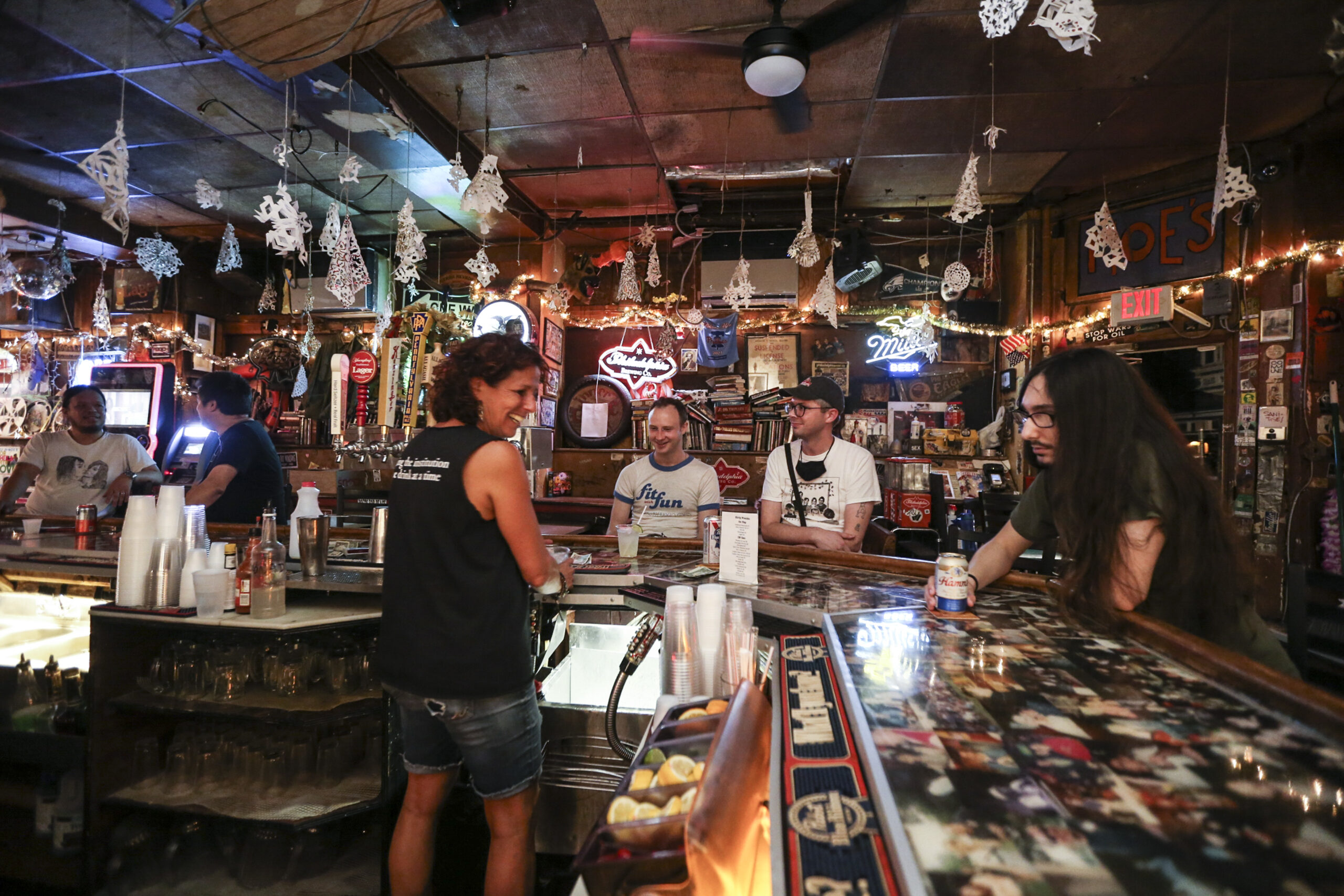
    Elaborate fake IDs and the influx of underage people using them to crowd into the Center City bar has led Sweitzer to impose a new rule: To enter, customers must be at least 25.

    The new policy went into effect about two weeks ago.

    The fake ID that successfully scanned when checked for legitimacy and caused Dirty Franks to institute an 25-year-old age minimum.

    Sweitzer said the age minimum is temporary. “Until we can actually acquire a system that’s capable of determining what’s a fake ID,” she said. “[After that,] we’ll go back to 21 and over.”

    For years, Dirty Franks has routinely scanned patrons’ drivers licenses and ID cards at the front door, but Sweitzer cited a rise of falsified documentation — as well as customers vaping and even a few who brought in their own booze — as giving her cause for concern that her business could be thrown into jeopardy.

    “I want to stay open,” she said in an interview Wednesday.

    In online forums and in conversation, older Dirty Franks patrons had recently reported that, on weekends especially, the bar at 13th and Pine Streets was so packed with young patrons that the college-age crowd pushed out a lot of regulars.

    Bartender Patty waits on customers at Dirty Franks, at 347 S. 13th St., in 2021.

    Sweitzer said she and the bar’s staff noticed the uptick in younger patrons with scannable IDs with official holograms after the pandemic. Often, she said, those customers would post photos and TikToks of themselves at the bar at 347 S. 13th St. — leading to Franks’ rising popularity among the younger set. (Historically, the bar has attracted plenty of postgrads, creative types, and a deep bench of mixed-age regulars.)

    “We’ve always been a dive bar,” Sweitzer said. “Anyone who calls us a college bar is vastly misguided.”

    She said that the surge in volume resulted in an overall sales bump at first, but that it leveled off shortly thereafter. “It was quantity over quality,” she said. “So [revenue] stayed the same. You just had to work harder.”

    Jody Sweitzer, co-owner of Dirty Franks, offers remarks during their annual customers celebration on March 1, 2020.

    Late last year, Sweitzer contacted the Tavern Association in Harrisburg and asked if she could change the age limit, something she had heard another Philly bar had done in the past. She learned that she was OK to make house rules.

    Then the ID featuring a 24-year-old Ben Franklin came along. “That was the straw that broke the camel’s back,” Sweitzer said, adding that she’s spoken with scanner manufacturers but hasn’t yet found a higher-tech alternative.

    “If you can find a scanner that can’t be fooled,” Sweitzer said, “I will buy it.”

    Those affected by the age policy are less than thrilled. Nate Weinberg, 22, and a recent Temple graduate who has enjoyed visiting Franks, found the policy change “kind of peculiar.”

    “I know a lot of people are not happy,” he said. “I never witnessed any issues the times that I had been there.”

    Dirty Franks

    The new age limit, however, seems to have gone over well with Franks regulars, who say they now enjoy a roomier bar and are excited to have a place to sit again.

    Lance Saunders, a longtime patron, said he is in favor of the change.

    “Hell yeah,” said Saunders, 41, “I am a Dirty Franks faithful and I appreciate whatever Jody and her team has to do to make the staff and valued regulars feel welcome in their own damn bar.”

  • Spring training preview: Outlook for Aidan Miller, level of concern for Bryce Harper, and more from Reddit AMA

    Spring training preview: Outlook for Aidan Miller, level of concern for Bryce Harper, and more from Reddit AMA

    Baseball is almost back. Spring training will officially start on Wednesday when pitchers and catchers are due to report to the Phillies’ facilities in Clearwater, Fla. Phillies writer Lochlahn March took to Reddit to answer all your questions before camp starts.

    Here are a few highlights …

    (Questions have been lightly edited for clarity and brevity.)

    The Phillies are expected to move on from Nick Castellanos going into the last year of his contract.
    Q: Any surprises for the opening day roster? What moves are left before spring training?

    A: The Phillies still need to find a resolution for Nick Castellanos. They’ve been open about finding a change of scenery for him, which should happen soon through a trade or release. Other than that, I think other additions before spring training, if any, would be depth minor-league signings.

    As far as surprises, I think the battle for the last two bullpen spots could get interesting. The Phillies have some newcomers from trades, minor league signings, and a Rule 5 selection, who will all be in contention.

    Q: Is Aidan Miller expected to be up this year?

    A: It’s possible. After Trea Turner’s improvements defensively last year, I don’t see him moving off shortstop any time soon, but the Phillies are planning to get Miller some reps at other infield positions — third base and possibly some second — this spring.

    If he starts this season the way he ended last season, I’d expect him to be at the top of the list in triple A in the event of an injury or other opening on the major league infield.

    It’s important to remember that if Miller is on the major league team, he will be playing every day. He won’t be called up to sit on the bench, so even if the Phillies deem him ready, they will wait for the right opportunity.

    Q: What does Crawford’s skill set and rookie season look like? Could he be the throwback leadoff hitter this team needs?

    A: Lots has been made about Justin Crawford’s high ground-ball rate, and it remains to be seen how that will translate to the major league level, and whether his speed — which is one of his best attributes — can offset that. He’s an aggressive hitter and makes a lot of contact.

    I would be very surprised to see him at leadoff to start the season. It’s already a lot of pressure to hand him the keys to the outfield, not to mention sticking him at the top of the order right away. It’s also a good thing to have a guy with that hitting profile who can steal a lot of bases in the lower half of the order to lengthen the lineup.

    Q: What are the internal expectations for Jean Cabrera and Michael Mercado?

    A: The Phillies have pretty thin starting depth in the minors at the moment, and Jean Cabrera would likely be one option in case of an injury to the rotation this year. Mercado is relief depth. He was non-tendered this winter but re-signed to a minor league deal. They both will be at major league camp next week, and I expect both to likely wind up in triple A.

    Q: Who might be this year’s Weston Wilson/Kody Clemens/Brad Miller/Otto Kemp emerging role player type?

    A: I think the Phillies hope Dylan Moore could occupy a similar role that Weston Wilson did last season, and he provides a ton of versatility defensively.

    As far as emerging players, one name to keep an eye on is Gabriel Rincones Jr. The Phillies like the pop in his bat, but he has a real drawback at the plate against left-handed pitching. I could see him getting his feet wet in the majors at some point this year, but it would most likely have to be in a platoon role.

    Q: Who do you expect to get an increased role on the team this season?

    A: I’m going to go with Otto Kemp. His name is one that Dave Dombrowski has brought up a lot this offseason. I expect him to get a chance to play some more left field, probably as a platoon partner for Brandon Marsh. Kemp had some offseason surgeries to clean up his shoulder and address a bone fragment in his knee that he’d been playing through since June, but he should be ready to go for spring training. I’m interested in seeing what he can do when he’s fully healthy.

    Q: On a scale of minor inconvenience to major life-altering issue, how concerned should we feel about Bryce Harper and his possible decline?

    A: I think Bryce Harper is extremely motivated this season. He started hitting this winter earlier than he normally does — part of that is because he’s preparing to play for Team USA in the World Baseball Classic, but I think there’s another part, too. His 2025 didn’t live up to his (very high) standards, and he’s an extremely competitive person. Also remember: He was dealing with a wrist injury for part of last season. I wouldn’t be concerned about a decline just yet.

    Q: … Knowing Zack Wheeler won’t be ready for the start of the season, what are the odds he just retires before returning and we’ve already seen the last of him?

    A: Wheeler has been open about expecting to retire at the end of his contract, which runs through 2027. It would be a major surprise if Wheeler didn’t return before then. His rehab this offseason by all accounts has been going well. The latest update from a couple of weeks ago was that he was throwing up to 90 feet.

    Q: Will Garrett Stubbs be back as the third catcher in triple A?

    A: This year, the backup catching battle isn’t as cut-and-dried, as Stubbs and Rafael Marchán are out of options. Whoever does not make the team will have to be designated for assignment and pass through waivers to report to triple A.