Blog

  • Three Phillies starters are breaking their routine to pitch in the WBC during spring training

    Three Phillies starters are breaking their routine to pitch in the WBC during spring training

    CLEARWATER, Fla. — Most pitchers are creatures of habit and rely heavily on their routines. But every four years, some of those routines change for major league pitchers participating in the World Baseball Classic.

    The Phillies will send three members of their expected 2026 starting rotation to the tournament that starts on March 5: Cristopher Sánchez (Dominican Republic), Taijuan Walker (Mexico), and Aaron Nola (Italy).

    Next month, instead of the relaxed atmosphere of Grapefruit League games, they could be pitching in situations with higher stakes.

    “It’s just a different feeling,” said Walker, who also pitched for Mexico in 2023. “The pride for you playing for your country, and the crowd is just different. The atmosphere is different because you get both crowds, both countries’ fans, and they got the instruments going. It’s loud. They never sit down. It’s just constantly going.”

    Mexico finished third in 2023 after being eliminated in the semifinals by Japan, which later defeated the U.S. in the championship game.

    Walker said he didn’t adjust his offseason training too much in preparation for the WBC. He completed the same weighted ball program that helped him add a tick to his fastball last offseason.

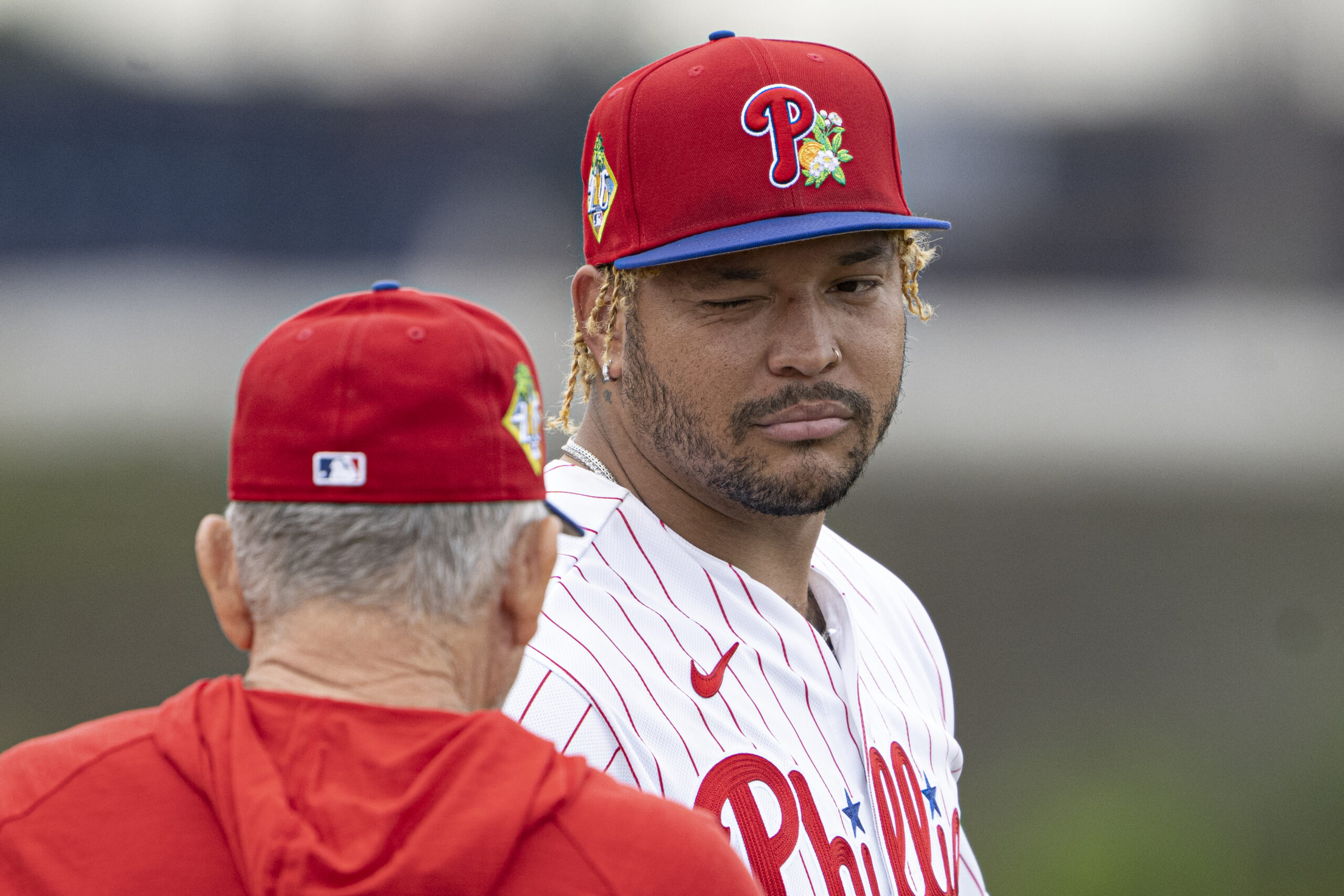
    Phillies pitcher Taijuan Walker (center) will pitch for Mexico in the WBC. He also helped Mexico to a third place finish in 2023.

    The WBC’s limits on pitch counts for each round allow him to continue to ramp up at a fairly normal pace. Pitchers are limited to 65 pitches in the first round, 80 in the quarterfinal, and 95 in the championship rounds, though they can exceed that to finish a plate appearance.

    “You’re already maybe two or three spring training games into it when WBC games start,” Walker said. “The only [different] thing is intensity-wise.”

    The high-stakes atmosphere of WBC games can make it difficult for pitchers to experiment in ways they might in a typical spring training, such as through introducing a new pitch. In bullpen sessions so far in camp, Walker has been working on his slider. But when he pitches for Mexico, he’ll be relying more on his best weapons, his splitter and cutter.

    “If I’m working on a slider, I get to go throw 20 sliders and work on it. WBC games, we got to get outs,” he said.

    Mexico and Italy are in Pool B, alongside the U.S., Great Britain, and Brazil. Their round-robin games will take place in Houston. The Dominican Republic is in Pool D with Venezuela, Netherlands, Israel, and Nicaragua, and will play in Miami.

    Nola will be pitching in his first WBC next month, representing the country his great-grandparents are from. He started his offseason work in mid-November, about a month earlier than normal for him, to ease into his training.

    “Just to kind of get the arm moving,” Nola said. “I know how fast spring training games come when you get here, we don’t have as much time as we used to, so it’s actually been kind of nice to kind of be a little bit more ready, bodywise over here.”

    Nola also did long toss, which is not typically part of his offseason regimen.

    He said he likely would have done that anyway, even if he wasn’t already committed to Italy. Nola was limited to 94⅓ innings in 2025 due to an ankle sprain and rib fracture, the fewest innings he’s thrown since the COVID-19 shortened 2020 season.

    He decided toward the end of last season that he would commit to Italy, hoping to play with his brother. Nola pitched against Austin, a former professional catcher, who was with the Padres during the 2022 National League Championship Series against the Phillies.

    Phillies pitcher Aaron Nola will represent Italy for the first time in the WBC.

    Although Austin had to withdraw after accepting a role as bullpen coach for the Mariners, Aaron still wanted to play. He has never been to Italy, but is looking forward to teaming up with former Phillie Michael Lorenzen and current prospect Dante Nori, as well as the other new faces who play in the Italian Baseball League.

    “I wanted to experience it before I was done with baseball,” he said. “And every guy in here that has played in the past has loved it, said it’s a great experience. It’s gonna be fun to represent for Italy.”

    Of course, injuries are always a concern for any player. But the Phillies are optimistic that participating in the Classic could give Nola a head start on what they hope is a bounceback season.

    “Nola, I think, is going to benefit from playing the WBC, just to get the blood flowing a little bit earlier,” said manager Rob Thomson. “Nola’s always going to be ready; always going to work. But I think getting some competition is going to help him.”

    Extra bases

    The Phillies unveiled a new video board at Baycare Ballpark on Thursday. Its display of 3,200 square feet makes it the largest at any spring training ballpark. … Zack Wheeler (thoracic outlet decompression surgery) is scheduled to throw out to a distance of 120 feet again on Friday and will start spinning the ball. “We don’t have a date for bullpen yet, but he’s doing very well,” Thomson said.

  • Jury convicts man in killings of 4 people sleeping on NYC streets, rejecting insanity defense

    Jury convicts man in killings of 4 people sleeping on NYC streets, rejecting insanity defense

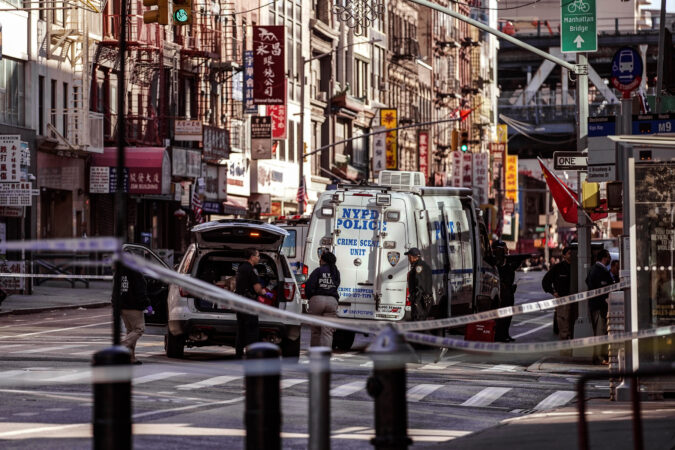
    NEW YORK — A man who fatally beat four sleeping men on the streets of New York City’s Chinatown was convicted Thursday of first-degree murder, with a jury rejecting his insanity defense in the 2019 rampage.

    Randy Santos’ attorneys conceded that he pummeled the defenseless victims — Chuen Kok, Anthony Manson, Florencio Moran and Nazario Vásquez Villegas — with a metal bar and meant to kill them.

    But the lawyers contended that he was too mentally ill to be held criminally responsible. They said he was driven by schizophrenic delusions that made him believe he had to kill 40 people or would die himself.

    Prosecutors countered that Santos took steps, such as sometimes looking out for potential witnesses, and made remarks that showed that he knew that the October 2019 attacks were both illegal and immoral.

    “A jury determined that Randy Santos knowingly and purposefully murdered four men with a metal bar in the span of less than 30 minutes. They were strangers to him and simply happened to be sleeping on Chinatown sidewalks that horrific night,” Manhattan District Attorney Alvin Bragg said in a statement. Jurors, who had deliberated for less than a day, declined to comment.

    Santos, 31, showed no reaction as he heard the verdict, through headphones that allowed him to listen to a Spanish-language interpreter. The Legal Aid Society, which represented Santos, said it would appeal.

    “There is no dispute that Randy has suffered for years from schizophrenia, including on the nights of these tragic events,” the group said in a statement.

    Also convicted of attempted murder and assault charges that include a September 2019 attack, Santos faces a potential life sentence. Sentencing is set for April 16.

    The killings spurred scrutiny of the city’s struggles to aid and protect a homeless population that had reached record size. Then-Mayor Bill de Blasio said the violence shook “the conscience of who we are as New Yorkers.”

    Kok, 83, was a former restaurant worker who had lost his bearings after his wife died and his church closed. Manson, 49, helped establish a Pentecostal church in Mississippi years ago and later made videos and blogged about his thoughts on Scripture, psychology and societal issues.

    Vásquez Villegas, 55, was a factory worker whose family said he had a home on Staten Island and just apparently fell asleep in Chinatown, where he liked to pass the time with friends. Moran, 39, was a onetime aspiring boxer who had formed friendships with other men who lived on the streets, according to Spectrum News/NY.

    Karlin Chan, a Chinatown community activist who knew Manson and raised money for a headstone for Kok, called the verdict “the best outcome.” Having followed the case in court, he was unpersuaded by Santos’ insanity defense: “A lot of people hear voices” and never hurt anyone, Chan noted.

    The Dominican-born Santos came to New York as a young man to live with relatives. They ultimately kicked him out because of his erratic and violent behavior, including an assault on his grandfather. New York police arrested him at least six times over the years on charges that included physically attacking people on a subway train, at an employment agency and in a homeless shelter.

    Santos was diagnosed with schizophrenia before the killings but didn’t take his prescribed medication or go for treatment, his lawyers said.

    Manhattan Assistant District Attorney Alfred Peterson maintained that Santos “knew exactly what he was doing that night, despite his mental illness.”

    In a closing argument, Peterson said Santos carried out the September 2019 beating as a “trial run” and showed awareness of wrongdoing when he shed some clothing afterward. At one point brandishing the rusted metal bar that was used in the killings on Oct. 5, 2019, the prosecutor stressed that Santos briefly held off attacking some of the victims until a passerby was out of eyeshot. And, Peterson noted, the defendant told a prosecution psychiatrist in 2024: “I know it’s not a good action.”

    Santos’ attorneys said that while he might have realized he could get arrested, schizophrenia made him unable to appreciate that what he was doing was morally wrong — a factor that can be enough to support an insanity defense.

    A defense psychologist testified that Santos believed that if other people experienced the commanding voices in his head, they would do the same thing he did.

    “He believed, sincerely, he had to kill 40 people or be killed,” one of his Legal Aid lawyers, Arnold Levine, said in his summation. “Psychosis replaced Randy’s moral judgment.”

  • Flyers defenseman Emil Andrae is ‘doing everything he can’ to get himself back into the lineup

    Flyers defenseman Emil Andrae is ‘doing everything he can’ to get himself back into the lineup

    During the last stretch of February heading into the Olympic break, Rick Tocchet had a familiar refrain regarding defenseman Emil Andrae — “we’re trying to get him in.”

    But Andrae, 23, ultimately ended up sitting the final five games before the break, the odd man out thanks to his left-handed shot and lack of utility on the penalty kill. Is there a place for him in the Flyers’ lineup down the stretch?

    “We need his input from the blue line offensively and the things that he can do in terms of breaking pucks out,” assistant coach Todd Reirden, who runs the defense, said Thursday.

    In the 40 games Andrae has played so far this year, he’s set career-highs in points and assists, with 11 points and 10 assists. The 2020 second-round pick is averaging 16 minutes, 54 seconds of ice time and is second on the Flyers with a plus-11 rating.

    In Andrae’s place, Tocchet reinstated Noah Juulsen into the lineup. The veteran Juulsen is a right-hand shot and kills penalties. Juulsen and Andrae played on a pair together early in the year with right-handed defenseman Rasmus Ristolainen injured. But since Ristolainen’s return on Dec. 16, Andrae has jumped in and out of the lineup.

    Reirden echoed a similar sentiment to Tocchet — the coaching staff likes Andrae, but situationally, they don’t think it makes sense to play him.

    “He’s been really sharp in these three practices that he’s been back for,” Reirden said. “I know he came back a little bit earlier and did some other skating. He’s doing everything he can to get himself in a situation where he’s fighting to be in that lineup every night.”

    With the trade deadline coming up, and the Flyers still on the outside looking in, the team might be looking to ship out some of their extra defensemen — especially with a glut of prospects coming up, like 2023 first-round pick Oliver Bonk, who got an extended look during the last two days of practice with Travis Sanheim and Rasmus Ristolainen away in Milan.

    Flyers defenseman Emil Andrae is second on the team with a plus-11 rating, yet he’s found himself on the outside looking in of late.

    Andrae is no stranger to fighting for his place with the Flyers. He started the year in the AHL out of training camp, despite playing over 40 games for the Flyers in 2024-25. He put up five points in seven games before earning a recall to the NHL.

    “We sometimes forget what he’s gone through this year, by starting in the minors and going through that — it’s not easy, mentally and physically,“ Reirden said. ”To his credit, he came back and he’s been able to post those type of numbers.”

    Whether Andrae finds himself back in the lineup come Feb. 25 in Washington or not, nearly a month after his last start, or on the Flyers beyond the March 6 trade deadline, he’s continued to take steps forward as the year progresses.

    “This is a player that definitely has improved, and continues to improve,” Reirden said. “Being able to just keep that level of consistency for us is important. Sometimes you need to take a step away and then take the break that he had.”

    Breakaways

    Sanheim, Tocchet, and Team Canada will take on Ristolainen and Finland in the Olympic semifinals on Friday at 10:40 a.m. … Team USA will face Slovakia at 3:10 p.m. The two winning teams will play for gold on Sunday and the losing teams will play for bronze on Saturday. … The Flyers loaned Bonk, Hunter McDonald, and Carson Bjarnson back to Lehigh Valley in order to play in American Hockey League games this weekend.

  • Trump gets pledges for Gaza reconstruction and troop commitments at inaugural Board of Peace talks

    Trump gets pledges for Gaza reconstruction and troop commitments at inaugural Board of Peace talks

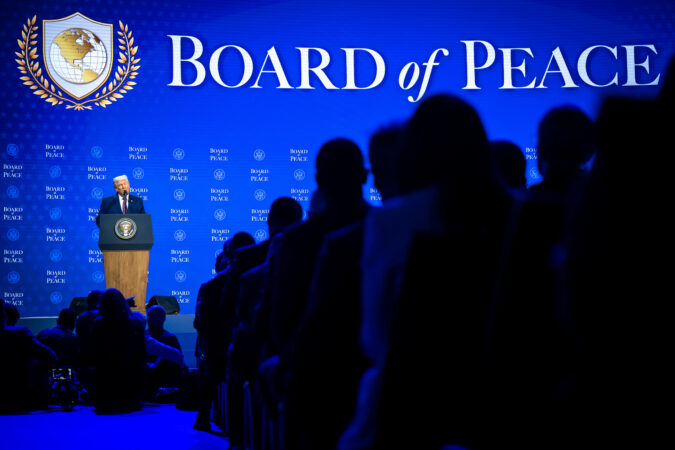
    WASHINGTON — President Donald Trump announced Thursday at the inaugural Board of Peace meeting that nine members have agreed to pledge $7 billion toward a Gaza relief package and five countries have agreed to deploy troops as part of an international stabilization force for the war-battered Palestinian territory.

    While lauding the pledges, Trump faces the unresolved challenge of disarming Hamas, a sticking point that threatens to delay or even derail the Gaza ceasefire plan that his administration notched as a major foreign policy win.

    The dollars promised, while significant, represent a small fraction of the estimated $70 billion needed to rebuild the territory decimated after two years of war between Israel and Hamas. While Trump praised allies for making the commitments of funding and troops, he offered no detail on when the pledges would be implemented.

    “Every dollar spent is an investment in stability and the hope of new and harmonious [region],” Trump said. He added, “The Board of Peace is showing how a better future can be built right here in this room.”

    Trump also announced the U.S. was pledging $10 billion for the board but didn’t specify what the money will be used for. It also was not clear where the U.S. money would come from — a sizable pledge that would need to be authorized by Congress.

    Trump touches on Iran and the United Nations

    The board was initiated as part of Trump’s 20-point plan to end the conflict in Gaza. But since the October ceasefire, Trump’s vision for the board has morphed and he wants it to have an even more ambitious remit — one that will not only complete the Herculean task of bringing lasting peace between Israel and Hamas but also help resolve conflicts around the globe.

    But the Gaza ceasefire deal remains fragile, and Trump’s expanded vision for the board has triggered fears the U.S. president is looking to create a rival to the United Nations.

    Trump, pushing back against the criticism, said the creation of his board would help make the U.N. viable in the future.

    “Someday I won’t be here. The United Nations will be,” Trump said. “I think it is going to be much stronger, and the Board of Peace is going to almost be looking over the United Nations and making sure it runs properly.”

    Even as Trump spoke of the gathering as a triumph that would help bring a more persistent peace to the Middle East, he sent new warnings to Iran.

    Tensions are high between the United States and Iran as Trump has ordered one of the largest U.S. military buildups in the region in decades.

    One aircraft carrier group is already in the region and another is on the way. Trump has warned Tehran it will face American military action if it does not denuclearize, give up ballistic missiles and halt funding to extremist proxy groups, such as Hezbollah and Hamas.

    “We have to make a meaningful deal. Otherwise bad things happen,” Trump said.

    Which countries pledged troops and funding

    Indonesia, Morocco, Kazakhstan, Kosovo, and Albania made pledges to send troops for a Gaza stabilization force, while Egypt and Jordan committed to train police.

    Troops will initially be deployed to Rafah, a largely destroyed and mostly depopulated city under full Israeli control, where the U.S. administration hopes to first focus reconstruction efforts.

    The countries making pledges to fund reconstruction are Kazakhstan, Azerbaijan, the United Arab Emirates, Morocco, Bahrain, Qatar, Saudi Arabia, Uzbekistan, and Kuwait, Trump said.

    Maj. Gen. Jasper Jeffers, leader of the newly created international stabilization force, said plans call for 12,000 police and 20,000 soldiers for Gaza.

    “With these first steps, we help bring the security that Gaza needs for a future of prosperity and enduring peace,” Jeffers said.

    Some U.S. allies remain skeptical

    Nearly 50 countries and the European Union sent officials to Thursday’s meeting. Germany, Italy, Norway, Switzerland, and the United Kingdom are among more than a dozen countries that have not joined the board but took part as observers.

    Most countries sent high-level officials, but a few leaders — including Indonesian President Prabowo Subianto, Argentine President Javier Milei, and Hungarian President Viktor Orbán — traveled to Washington.

    “Almost everybody’s accepted, and the ones that haven’t, will be,” Trump offered. ”And some are playing a little cute — it doesn’t work. You can’t play cute with me.”

    Vatican Secretary of State Cardinal Pietro Parolin told reporters this week that “at the international level, it should above all be the U.N. that manages these crisis situations.” French Foreign Minister Jean-Noël Barrot said in a post on X that the European Commission should never have attended the meeting as it had no mandate to do so.

    More countries are “going through the process of getting on,” in some cases, by getting approval from their legislatures, Trump told reporters later Thursday.

    “I would love to have China and Russia. They’ve been invited,” Trump said. “You need both.”

    Official after official used their speaking turns at the gathering to heap praise on Trump for his ability to end conflicts. Pakistani Prime Minister Shehbaz Sharif called him the “savior of South Asia,” while others said that years of foreign policy efforts by his predecessor failed to do what Trump has done in the past year.

    Turkish Foreign Minister Hakan Fidan said Trump and others there deserved thanks for their collective efforts on Gaza. But Fidan, who said Turkey also was prepared to contribute troops to the stabilization force, cautioned that the situation remains precarious.

    “The humanitarian situation remains fragile and ceasefire violations continue to occur,” Fidan said. “A prompt, coordinated and effective response is therefore essential.”

    Questions about disarming Hamas

    Central to Thursday’s discussions was assembling an international stabilization force to keep security and ensure the disarming of the militant Hamas group, a key demand of Israel and a cornerstone of the ceasefire deal.

    Hamas has provided little confidence that it is willing to move forward on disarmament. The administration is “under no illusions on the challenges regarding demilitarization” but has been encouraged by what mediators have reported back, according to a U.S. official who was not authorized to comment publicly and spoke on condition of anonymity.

    Israeli Prime Minister Benjamin Netanyahu, speaking at a dusty army base in southern Israel, repeated his pledge that “there will be no reconstruction” of Gaza before demilitarization. His foreign minister, Gideon Saar, said during Thursday’s gathering that “there must be a fundamental deradicalization process.”

    Trump said Hamas has promised to disarm and would be met “very harshly” if it fails to do so. But he gave few details on how the difficult task would be carried out.

    Secretary of State Marco Rubio acknowledged that there is a “long ways to go” in Gaza.

    “There’s a lot of work that remains that will require the contribution of every nation state represented here today,” Rubio said.

  • Man accused of hiding cameras in restrooms at a barbershop in South Jersey

    Man accused of hiding cameras in restrooms at a barbershop in South Jersey

    A 56-year-old man was arrested after he allegedly placed hidden cameras inside restrooms at a barbershop where he worked in Gloucester County, police said Thursday.

    Richard Doerrmann, of Mickleton, N.J., was charged with one count of third-degree invasion of privacy to record intimate body parts without consent, and two counts of fourth-degree invasion of privacy for placing recording devices in public restrooms, Mantua Township police said in a post on Facebook.

    Last Friday, the owner of Gino’s Barbershop at 670 Bridgeton Pike contacted the Mantua police to report that a spy camera had been discovered inside a restroom at his business.

    Detectives determined that Doerrmann, who worked as a barber at the business, had allegedly placed hidden cameras inside the restrooms, which are used by customers, on multiple occasions, police said.

    Police said they executed search warrants at Doerrmann’s residence and for his electronic devices.

    As of Thursday, Doerrmann was being held at the Gloucester County Correctional Facility, records show.

    The owner of the business fully cooperated with investigators, police said, adding that the investigation is ongoing and anyone with information helpful to the case can contact Detective Corporal Jeffrey Krieger at jkrieger@mantuatownship.com.

  • Villanova’s battle against No. 1 UConn brought fleeting flashbacks of the ‘old-school Big East’

    Villanova’s battle against No. 1 UConn brought fleeting flashbacks of the ‘old-school Big East’

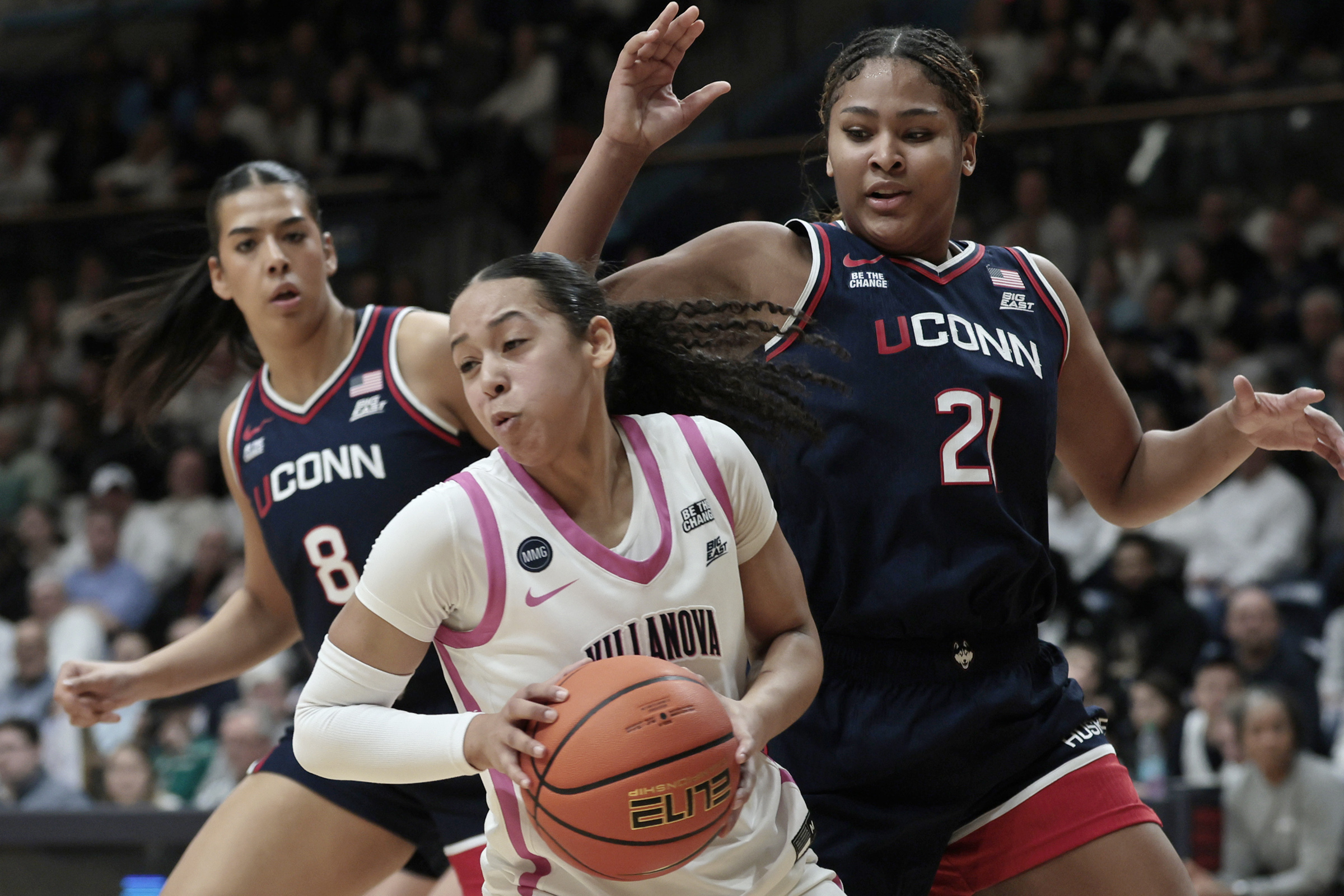
    The Finneran Pavilion was the loudest it had been all season for Villanova women’s basketball as the Wildcats hosted No. 1 UConn on Wednesday night.

    The energy in the packed arena intensified at halftime when the unexpected happened: Villanova led the undefeated Huskies by three points. It was the first time all season that UConn trailed at the half.

    “The atmosphere that was created was tremendous,” said Villanova coach Denise Dillon. “I loved hearing [the fans]. They were here for us. That was the difference, and you felt it from the beginning of the game and carrying through.”

    The magic of Villanova’s first half eventually wore off, as UConn pulled away in the third quarter. The Huskies then held a double-digit lead to secure an 83-69 win. Villanova will be back in the Finneran Pavilion on Sunday to host Marquette, which stands fourth in the Big East (3:30 p.m., Peacock).

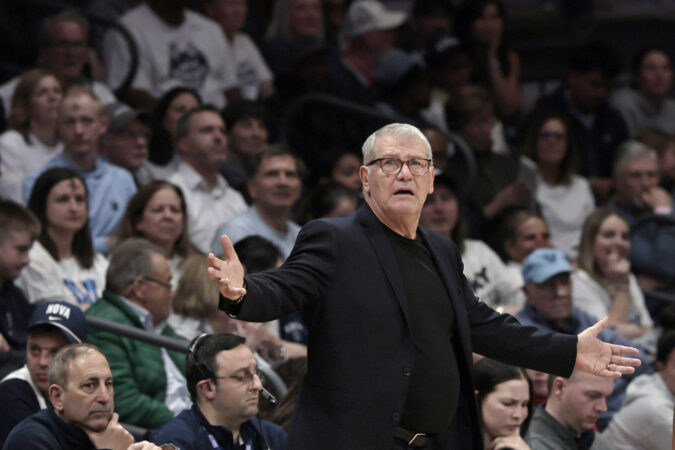
    However, Villanova’s tough stance against the nation’s top team was enough to remind the 41-year UConn coach Geno Auriemma of what he called the “old-school Big East.”

    The conference rivalry, which has dissipated since the advent of the NIL and transfer portal era, seemed to have been revived — at least for the moment.

    Looking back

    Auriemma reflected on the rivalry between Villanova and UConn over the years. Although UConn owns the all-time record 49-7, the longtime coach, who grew up in Norristown, suggested the competition intensified since UConn rejoined the Big East in 2000 after a seven-year stint in the American Confernce.

    Now, UConn (28-0, 17-0 Big East) and Villanova (21-6, 14-4) hold the top two places in the conference standings. But the gap between the two programs remains wide.

    Villanova’s Jasmine Bascoe finished wih 26 points in a loss to UConn on Wednesday.

    “Every mistake we made in the first half [tonight], we paid for it,” Auriemma said. “The crowd was great. The two best teams in the league are playing, it’s a great atmosphere. I love the way Denise does things with her team. As much as I enjoy coming [to Villanova] because a lot of friends and family are down here, I didn’t really miss it those seven years.”

    Wednesday’s game was a much different contest than the last time the two teams faced off just over a month ago. The Huskies bulldozed their way to a 99-50 victory on Jan. 15 on their home court.

    “It honestly was a train wreck at their place,” Dillon said. “So the growth from a month ago is fantastic. That’s what you want, especially when you have younger players and [Jasmine Bascoe] leading the way, directing out there on the floor.”

    After being limited to just eight points in January’s matchup against UConn, sophomore guard Jasmine Bascoe was all over the court on Wednesday night. Bascoe scored 18 of her 26 points in the first half. She also added nine rebounds and seven assists, while playing the full 40 minutes.

    Carter’s veteran view

    In each of Denae Carter’s three seasons at Villanova, a win over UConn was out of sight. UConn recorded 100 points against Villanova for the first time last season and went on to win the national championship. The Huskies were one point away from repeating that in January.

    Carter, a graduate forward who joined the Wildcats in 2023-24 as a Mississippi State transfer, is one of Villanova’s few veteran players.

    Against UConn, she recorded a career-high 21 points, shooting 8-for-9 from the field and 3-for-3 on three-pointers. She also notched three steals and three blocks while being matched up with Sarah Strong, the Big East’s top scorer.

    Villanova’s Denae Carter (left) scored a career-high 21 points agains UConn on Wednesday.

    “[Strong] is a great player, and our focus really was just stopping everybody and helping each other,” Carter said. “I think we did a really good job in the first half, and we just have to sustain that.”

    With two regular-season games remaining of her college career, Carter is a player the program will continue to lean on.

    “I think that maturity came through tonight and she’s tough to take off the floor at any point,” Dillon said. “We’re going to keep [Carter] out there longer as she finishes her career.”

    What was once an intense rivalry between UConn and Villanova may not be achievable in the current college sports landscape. But Villanova’s unprecedented first half on Wednesday showed that the program is hungry to change that.

    “We have such a great connection,” Carter said. “On the court, we’re able to display that a lot. We have fun together. We’re playing all five out there, and I think Sunday is just going to be a really great opportunity for us to get that one back.”

  • Bradley Carnell never doubted his untested lineup in the Union’s first game of the year

    Bradley Carnell never doubted his untested lineup in the Union’s first game of the year

    Whatever doubts Union fans had about the team’s starting lineup in Trinidad on Wednesday, it wasn’t surprising that manager Bradley Carnell had none.

    “We knew that at some point, with the type of intensity we could play at, it could be too much for them,” he said a day after his team’s 5-0 rout of Defence Force FC. “And that did prove to be the truth.”

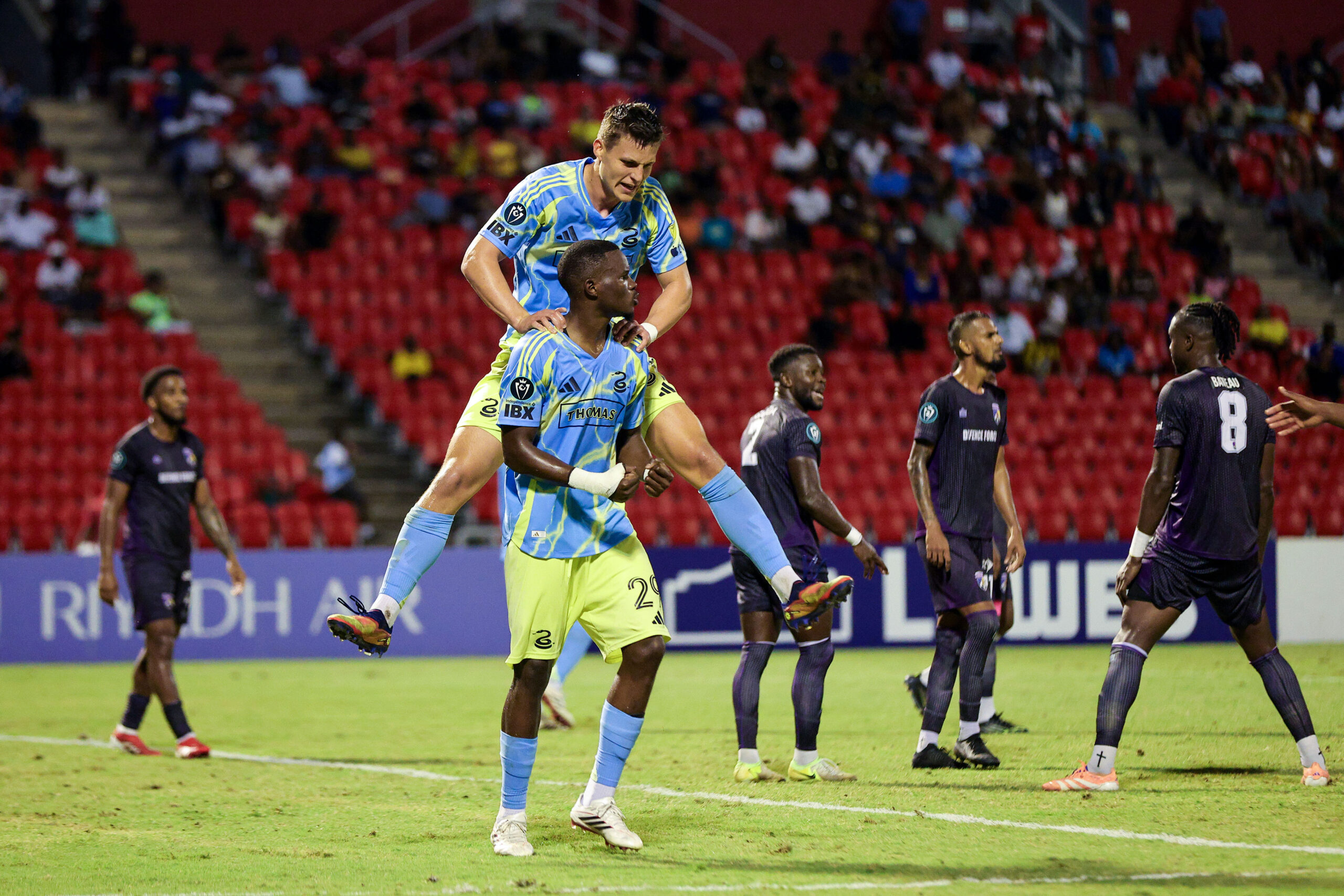
    The biggest decisions were putting Stas Korzeniowski at striker in his first game with the Union’s first team, and attacking midfielder Jeremy Rafanello at right back. Both worked out fine, helped by their teammates’ cavalcade of goals.

    “We’ve been training a couple weeks with Stas alongside Bruno [Damiani], alongside Ezekiel [Alladoh],” Carnell said. “So, I mean, for us, that was a no-brainer. It didn’t even come into thought that there’s anything doubtful or risky going on there.”

    Stas Korzeniowski jumps to celebrate with Olwethu Makhanya after Makhanya scored the Union’s third goal of the game.

    He praised Rafanello for being “always ready for a game, and he can always run for days, and he always puts his best effort forward.”

    But while Carnell praised “a lot of good things” in Rafanello’s game, he also admitted that playing Rafanello in that position was in part “by necessity.”

    “We’ve been challenged over the last couple of days with a couple of … day-to-day type of scenarios,” he continued.

    Those “scenarios” included minor injuries to midfielders Ben Bender and Jovan Lukić along with forward Agustín Anello. Carnell also confirmed that new centerback Geiner Martínez is temporarily on a visa status that makes it difficult for him to leave the United States and promptly return.

    But right back Olivier Mbaizo’s absence was Carnell’s choice, one he said he made “just basically through preseason performance. Nothing much to question there.”

    That choice left the manager with no outside backs on his bench. Both players with experience there started, Frankie Westfield on the left and Nathan Harriel at centerback. Westfield grabbed at a hamstring midway through the second half, but Carnell said he “should be good.”

    Praise for Alladoh and Sullivan

    As debut goals go, Alladoh’s was pretty impressive. He watched teammates circulate the ball to Westfield, then charged up the middle, split two centerbacks, and slammed in a leaping header from close range.

    “New environment, new teammates, he has to figure things out, wasn’t able to get on the score sheet in preseason, but he worked really hard,” Carnell said. “And then in the big games and in the games that matter most, he showed up. So I’m really happy for that, and hopefully he takes that energy and confidence into the next couple of games.”

    That was the second of three goals the Union put on the board before Carnell started a raft of substitutions. Cavan Sullivan was one of the entrants, and immediately started shredding Defence Force’s back line.

    The 16-year-old made multiple surging runs forward, including three that drew payoffs: a great assist to fellow substitute Bruno Damiani in the 69th minute, a penalty kick in the 78th, and a red card to former Seattle Sounders defender Joevin Jones in the 92nd.

    “I’ve seen a lot more maturity from Cavan over the last couple of weeks, and he’s worked his way into being a contributor,” Carnell said. “I speak about the environment, just think about the young kid coming in there and running rings around Defence Force. So I was really happy with his performance.”

    Sullivan had some longer runs as a starter last year in the U.S. Open Cup, but quality-wise this might have been his best outing in a Union jersey so far.

    “It was a very mature performance, I would say,” Carnell said. “He kept it simple when he needed to, he accelerated and got on the dribble when he had to, and then he draws crucial moments and puts the opponents under pressure. … I thought that was his best performance over the last 12 months.”

    The Union’s next game is their MLS season opener on Saturday at D.C. United (7:30 p.m., Apple TV), headlined by an early reunion with former leading striker Tai Baribo.

    Then it’s back to Chester for the finale of the Defence Force series next Thursday (7 p.m., FS1), followed by a rematch of last year’s playoff loss to New York City FC on March 1.

    Cavan Sullivan on Instagram this afternoon:

    [image or embed]

    — Jonathan Tannenwald (@jtannenwald.bsky.social) February 19, 2026 at 6:19 PM

  • What Mayor Cherelle Parker’s administration told the DOJ about Philly’s ‘sanctuary’ policies in a letter the city tried to keep secret

    What Mayor Cherelle Parker’s administration told the DOJ about Philly’s ‘sanctuary’ policies in a letter the city tried to keep secret

    Mayor Cherelle L. Parker’s administration last August told the U.S. Department of Justice that Philadelphia remains a “welcoming city” for immigrants and that it had no plans to change the policies the Trump administration has said make it a “sanctuary city,” according to a letter obtained by The Inquirer through an open-records request.

    “To be clear, the City of Philadelphia is firmly committed to supporting our immigrant communities and remaining a welcoming city,” City Solicitor Renee Garcia wrote in the Aug. 25, 2025, letter. “At the same time, the City does not maintain any policies or practices that violate federal immigration laws or obstruct federal immigration enforcement.”

    Garcia sent the letter last summer in response to a demand from U.S. Attorney General Pam Bondi that Philadelphia end its so-called sanctuary city policies, which prohibit the city from assisting some federal immigration tactics. Bondi sent similar requests to other jurisdictions that President Donald Trump’s administration contends illegally obstruct immigration enforcement, threatening to withhold federal funds and potentially charge local officials with crimes.

    Although some other cities quickly publicized their responses to Bondi, Parker’s administration fought to keep Garcia’s letter secret for months and initially denied a records request submitted by The Inquirer under Pennsylvania’s Right-To-Know Law.

    The city released the letter this week after The Inquirer appealed to the Pennsylvania Office of Open Records, which ruled that the Parker administration’s grounds for withholding it were invalid.

    The letter largely mirrors Parker’s public talking points about immigration policy, raising questions about why her administration sought to keep it confidential.

    But the administration’s opaque handling of the letter keeps with the approach Parker has taken to immigration issues since Trump returned to office 13 months ago. Parker has vowed not to change immigrant-friendly policies enacted by past mayors, while avoiding confrontation with the federal government in a strategy aimed at keeping Philadelphia out of the president’s crosshairs as he pursues a nationwide deportation campaign.

    Although U.S. Immigration and Customs Enforcement officers operate in the city, Philadelphia has not seen a surge in federal agents like the ones Trump sent to Minneapolis and other jurisdictions.

    A spokesperson for the Justice Department did not respond to a request for comment.

    Immigrant advocates have called on Parker to take a more aggressive stand against Trump, and City Council may soon force the conversation. Councilmembers Rue Landau and Kendra Brooks have proposed a package of bills aimed at further constricting ICE operations in the city, including a proposal to ban law enforcement officers from wearing masks. The bills will likely advance this spring.

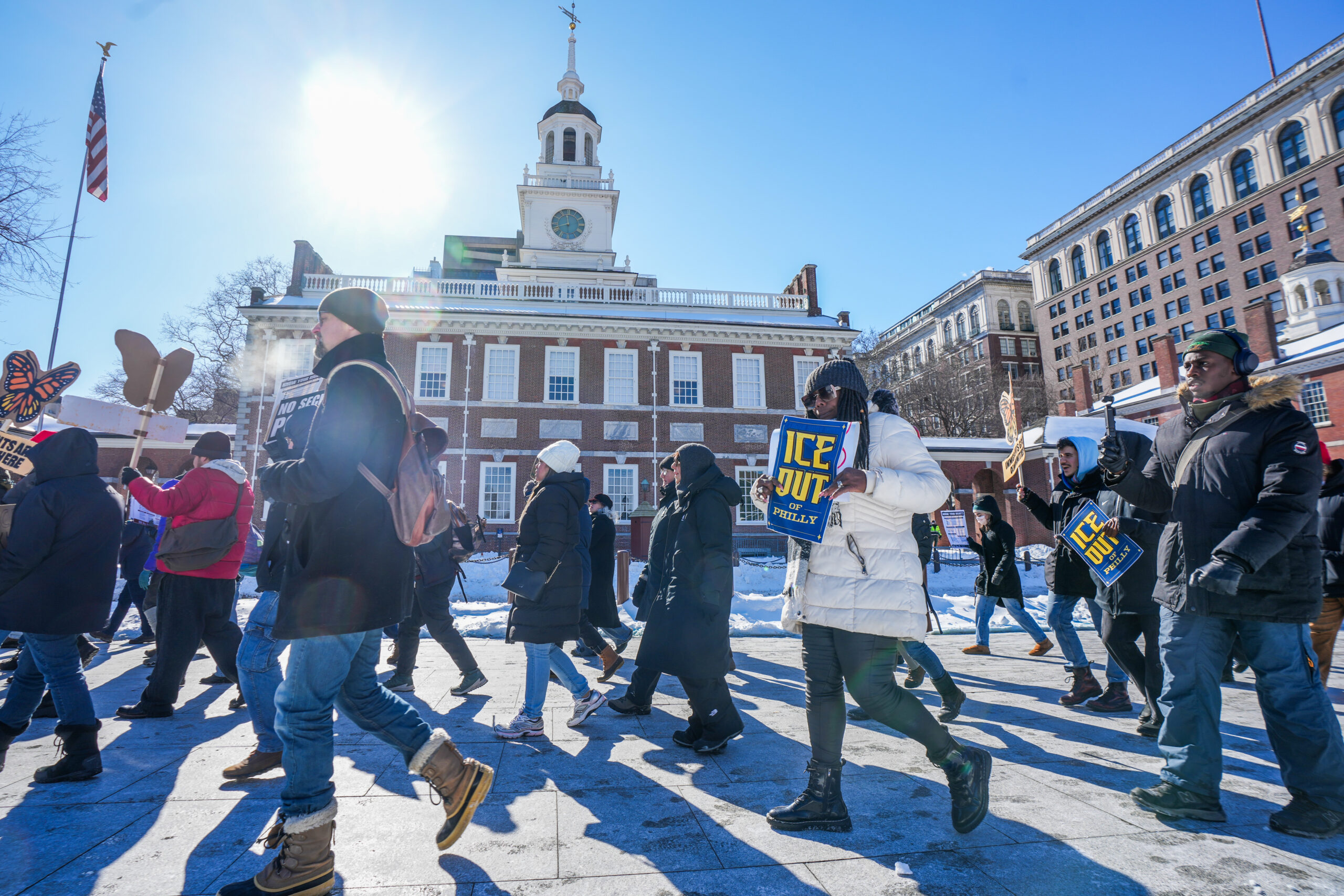
    Advocates and protesters call for ICE to get out of Philadelphia in Center City on January 27, 2026.

    Parker’s delicate handling of immigration issues stands in contrast to her aggressive response to the Trump administration’s removal last month of exhibits related to slavery at the President’s House Site on Independence Mall.

    The city sued to have the panels restored almost immediately after they were taken down. After a federal judge sided with the Parker administration, National Park Service employees on Thursday restored the panels to the exhibit in a notable win for the mayor.

    ‘Sanctuary’ vs. ‘welcoming’

    Bondi’s letter, which was addressed to Parker, demanded the city produce a plan to eliminate its “sanctuary” policies or face consequences, including the potential loss of federal funds.

    “Individuals operating under the color of law, using their official position to obstruct federal immigration enforcement efforts and facilitating or inducing illegal immigration may be subject to criminal charges,” Bondi wrote in the letter, which is dated Aug. 13. “You are hereby notified that your jurisdiction has been identified as one that engages in sanctuary policies and practices that thwart federal immigration enforcement to the detriment of the interests of the United States. This ends now.”

    “Sanctuary city” is not a legal term, but Philadelphia’s policies are in line with how the phrase is typically used to describe jurisdictions that decline to assist ICE.

    Immigrant advocates have in recent years shifted to using the label “welcoming city,” in part because calling any place a “sanctuary” is misleading when ICE can still operate throughout the country. The newer term is also useful for local officials hoping to evade Trump’s wrath, as it allows them to avoid the politically hazardous “sanctuary city” label.

    Philly’s most notable immigration policy is a 2016 executive order signed by then-Mayor Jim Kenney that prohibits city jails from honoring ICE detainer requests, in which ICE agents ask local prisons to extend inmates’ time behind bars to facilitate their transfer into federal custody. The city also prohibits its police officers from inquiring about immigration status when it is not necessary to enforce local law.

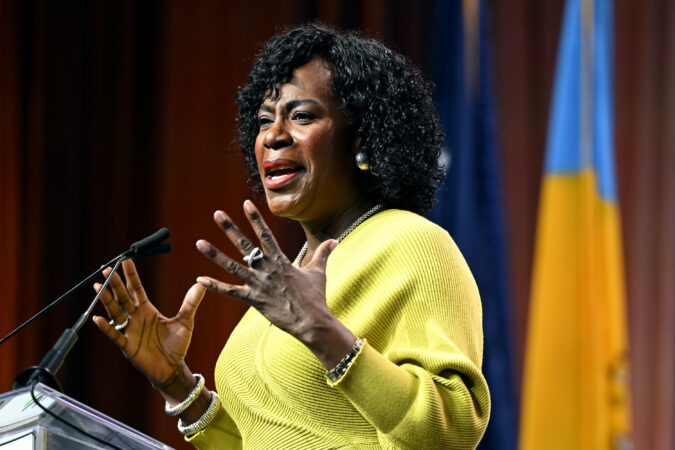
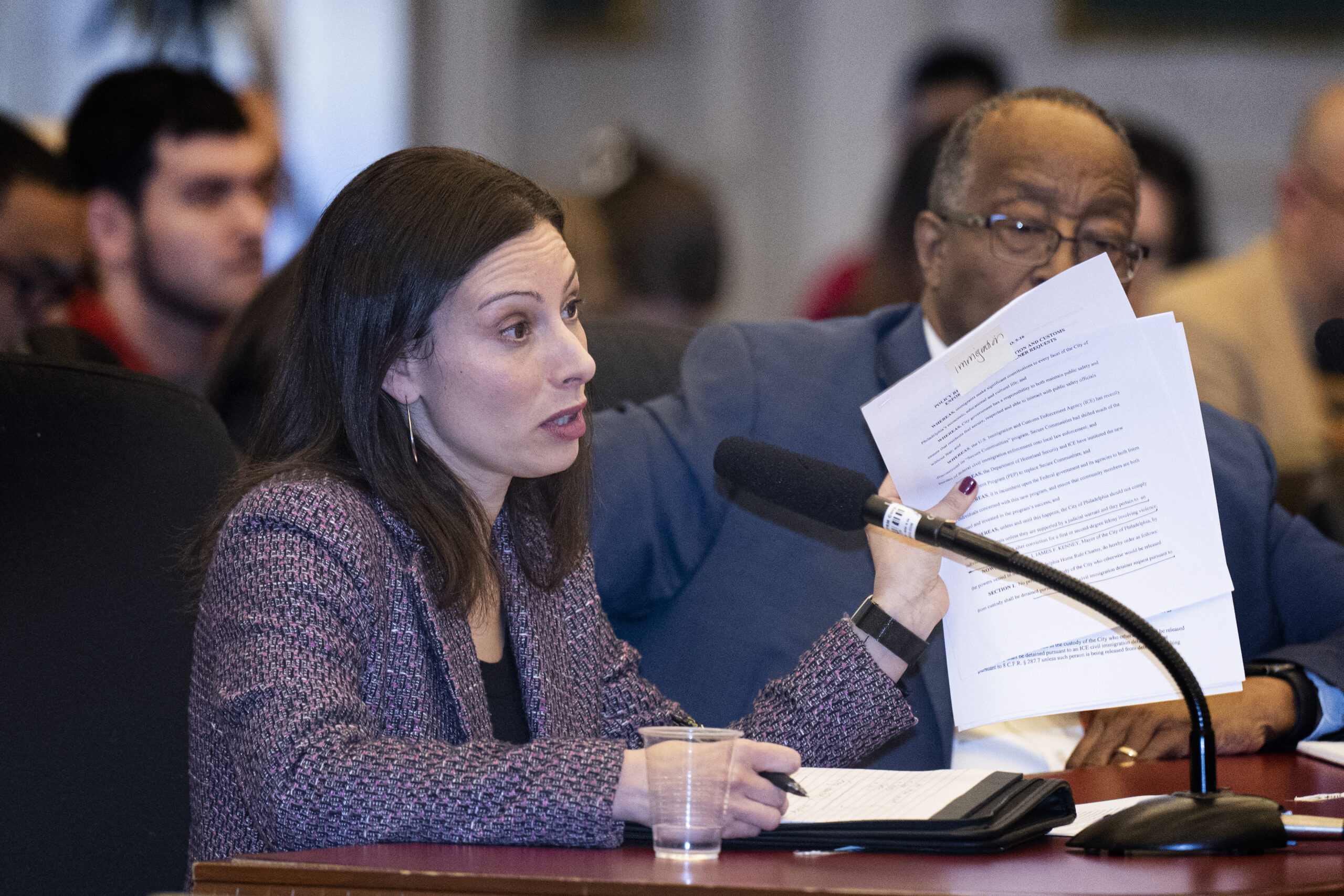
    Renee Garcia, Philadelphia City Solicitor speaks before City Council on Jan 22, 2025.

    Garcia wrote in the August letter that Kenney’s order “was not designed to obstruct federal immigration laws, but rather to clarify the respective roles of the Police Department and the Department of Prisons in their interactions with the Department of Homeland Security when immigrants are in City custody.” The city, she wrote, honors ICE requests when they are accompanied by judicial warrants.

    Immigration enforcement is a federal responsibility, and — in a case centered on Kenney’s order — the Philadelphia-based U.S. Court of Appeals for the Third Circuit ruled in 2019 that cities do not have to assist ICE.

    The court, Garcia wrote, “held that the federal government could not coerce Philadelphia into performing immigration tasks under threat of federal repercussions, including the loss of federal funds.”

    City loses fight over records

    In Pennsylvania, all government records are considered public unless they are specifically exempted from disclosure under the Right-To-Know Law. In justifying its attempt to prevent the city’s response to the Trump administration from becoming public, the Parker administration cited two exemptions that had little to do with the circumstances surrounding Garcia’s letter.

    First, the administration argued that the letter was protected by the work product doctrine, which prevents attorneys’ legal work and conclusions from being shared with opposing parties. Given that the letter had already been sent to the federal government — the city’s opponent in any potential litigation — the doctrine “has been effectively waived,” Magdalene C. Zeppos-Brown, deputy chief counsel in the Pennsylvania Office of Open Records, wrote in her decision in favor of The Inquirer.

    “Despite the [city’s] argument, the Bondi Letter clearly establishes that the Department of Justice is a potential adversary in anticipated litigation,” Zeppos-Brown wrote.

    Second, the city argued that the records were exempted from disclosure under the Right-To-Know Law because they were related to a noncriminal investigation. The law, however, prevents disclosure of records related to Pennsylvania government agencies’ own investigations — not of records related to a federal investigation that happen to be in the possession of a local agency.

    “Notably, the [city] acknowledges that the investigation at issue was conducted by the DOJ, a federal agency, rather than the [city] itself,” Zeppos-Brown wrote. “Since the DOJ is a federal agency, the noncriminal investigation exemption would not apply.”

    Garcia’s office declined to appeal the decision, which would have required the city to file a petition in Common Pleas Court.

    “As we stated, the City of Philadelphia is firmly committed to supporting our immigrant communities as a Welcoming City,” Garcia said in a statement Wednesday after the court instructed the city to release the letter. “At the same time, we have a long-standing collaborative relationship with federal, state, and local partners to protect the health and safety of Philadelphia, and we remain [in] compliance with federal immigration laws.”

    Staff writers Anna Orso and Jeff Gammage contributed to this article.

  • Israeli settlers kill 19-year-old Palestinian American, officials and witnesses say

    Israeli settlers kill 19-year-old Palestinian American, officials and witnesses say

    MUKHMAS, West Bank — Israeli settlers in the occupied West Bank shot and killed a Palestinian American during an attack on a village, the Palestinian Health Ministry and a witness said Thursday.

    Raed Abu Ali, a resident of Mukhmas, said a group of settlers came to the village Wednesday afternoon where they attacked a farmer, prompting clashes after residents intervened. Israeli forces later arrived, and during the violence armed settlers killed 19-year-old Nasrallah Abu Siyam and injured several others.

    Abu Ali said that the army shot tear gas, sound grenades, and live ammunition. Israel’s military acknowledged using what it called “riot dispersal methods” after receiving reports of Palestinians throwing rocks but denied that its forces fired during the clashes.

    “When the settlers saw the army, they were encouraged and started shooting live bullets,” Abu Ali said. He added that they clubbed those injured with sticks after they had fallen to the ground.

    The Palestinian Ministry of Health confirmed Abu Siyam’s death from critical wounds sustained Wednesday afternoon near the village east of Ramallah.

    Abu Siyam’s killing is the latest in a surge in violence in the occupied West Bank. Israeli forces and settlers killed 240 Palestinians last year, according to the United Nations Office for the Coordination of Humanitarian Affairs. Palestinians killed 17 Israelis over the same period, six of whom were soldiers. The Palestinian Authority’s Wall and Settlement Resistance Commission said Abu Siyam was the first Palestinian killed by settlers in 2026.

    Mukhmas and its surrounding area — most of which lies under Israeli civil and military administration — have become a hot spot for settler attacks, including arson and assaults, as well as the construction of outposts that Israeli law considers illegal.

    The Israeli military said late Wednesday that unnamed suspects shot at Palestinians, who were later evacuated for medical treatment. It did not say whether any were arrested.

    Abu Siyam’s mother told the Associated Press that he was an American citizen, making him the second Palestinian American to be killed by Israeli settlers in less than a year.

    A U.S. embassy spokesperson said they “condemn this violence.”

    Palestinians and rights groups say authorities routinely fail to prosecute settlers or hold them accountable for violence.

    U.N. says Israel’s acts in West Bank may be ethnic cleansing

    The U.N. human rights office on Thursday accused Israel of war crimes and said practices that displace Palestinians and alter the demographic composition of the occupied West Bank “raise concerns over ethnic cleansing.”

    The Office of the High Commissioner for Human Rights, citing findings collected November 2024 to October 2025, said Israel was engaged in “concerted and accelerating effort to consolidate annexation” while maintaining a system “to maintain oppression and domination of Palestinians.”

    Residents of Palestinian villages and herding communities have been increasingly displaced as Israeli settlements and outposts expand. Since the start of the Israel–Hamas war, the Israeli rights group B’Tselem says about 45 Palestinian communities have been emptied out completely amid Israeli demolition orders and settler attacks.

    Additionally, the office said Israeli military operations in the northern West Bank “employed means and methods designed for warfare” including lethal airstrikes and forcibly transferring civilians from their homes. It also said Israel “forbade” residents from returning to their homes in northern West Bank refugee camps. The operation, which Israel said was aimed against militants, displaced tens of thousands of Palestinians.

    The report also accused Palestinian security forces of using unnecessary lethal force in the same areas, killing at least eight people, and noted that the Palestinian Authority had engaged in “intimidation, detention and ill-treatment of journalists, human rights defenders and other individuals deemed critical of its rule.”

    Neither Israel’s Foreign Ministry nor the Palestinian Authority responded to requests for comment. Israel has repeatedly accused the U.N. rights office of anti-Israel bias.

    Last year, the U.N. human rights monitor warned of what it called “an unfolding genocide in Gaza” with “conditions of life increasingly incompatible with [Palestinians’] continued existence.” Their report on Thursday also warned of demographic shifts in Gaza raising concerns of ethnic cleansing.

    Report finds imprisoned Palestinian journalists were tortured

    The Committee to Protect Journalists said that dozens of Palestinian journalists who were detained in Israel during the war in Gaza experienced conditions including physical assaults, forced stress positions, sensory deprivation, sexual violence, and medical neglect.

    CPJ documented the detention of at least 94 Palestinian journalists and one media worker during the war, from the West Bank, Gaza and Israel Thirty are still in custody, CPJ said.

    Half of the journalists, the report found, were never charged with a crime and were held under Israel’s administrative detention system, which allows for suspects deemed security risks to be held for six months and can be renewed indefinitely.

    Israel’s prison services did not immediately respond to a request for comment about the report, but rejected a similar report in January about conditions for Palestinian prisoners as “false allegations,” contending it operates lawfully, is subject to oversight and reviews complaints.

    U.N. development chief says removing Gaza rubble will take 7 years

    The vast destruction across Gaza will take at least seven years just to remove the rubble, according to the United Nations Development Program.

    Alexander De Croo, the former Belgian prime minister who just returned from Gaza, said that the UNDP had removed just 0.5% of the rubble and people in Gaza are experiencing “the worst living conditions that I have ever seen.”

    De Croo said 90% of Gaza’s 2.2 million people live in “very, very rudimentary tents” in the middle of the rubble, which poses health dangers and a danger from exploding weapons.

    He said UNDP has been able to build 500 improved housing units, and has 4,000 more that are ready, but estimates the true need is 200,000 to 300,000 units. The units are meant to be used temporarily while reconstruction takes place. He called on Israel to expand access for goods and items needed for reconstruction and the private sector to begin development.

  • New DHS memo outlines plan to detain refugees for further vetting

    New DHS memo outlines plan to detain refugees for further vetting

    The Department of Homeland Security issued a memo Wednesday stating that federal immigration agents should arrest refugees who have not yet obtained a green card and detain them indefinitely for rescreening — a policy shift that upends decades of protections and puts tens of thousands of people who entered during the Biden administration at risk.

    The new policy rescinds a 2010 memo that said failing to apply for status as a lawful permanent resident within a year of living in the United States is not a basis for detaining refugees who entered the country legally. Two Trump administration officials wrote in the new directive that the previous guidance was incomplete and that the law requires DHS to detain and subject those refugees to a new set of interviews while in detention.

    The memo appeared in a court filing one day before a scheduled hearing in Minnesota federal court, where a judge temporarily blocked U.S. Immigration and Customs Enforcement in late January from detaining 5,600 refugees in the state after several organizations sued. Immigration officers arrested dozens of resettled people from countries including Somalia, Ecuador, and Venezuela for further questioning as part of an enforcement surge dubbed Operation PARRIS that the Trump administration has said was aimed at combating fraud. Immigration lawyers say many were quickly transported to Texas detention centers and later released without their identity documents.

    The International Refugee Assistance Project, one of the lead counsels for the plaintiffs in the lawsuit, is asking a judge to declare the new refugee detention policy unlawful to prevent more refugees in Minnesota from being arrested.

    “I am concerned that the Feb. 18 memo and the indiscriminate detention of refugees in Minnesota are the opening salvos in an attack on refugees resettled all over the United States,” said Laurie Ball Cooper, the organization’s vice president for U.S. legal programs.

    Refugee resettlement groups across the country see the Minnesota operation as a precursor to an expected shift in refugee policy that could undermine the nation’s half-century-old promise to offer safe harbor to the world’s most persecuted.

    “This memo, drafted in secret and without coordination with agencies working directly with refugees, represents an unprecedented and unnecessary breach of trust,” said Beth Oppenheim, chief executive of HIAS, one of the oldest refugee agencies in the country and the world. “We have both a moral and a legal obligation to demand that DHS immediately rescind this action.”

    A spokesperson for U.S. Citizenship and Immigration Services said the memo directs agencies to implement the plain language of “long established immigration law.”

    “This is not novel or discretionary; it is a clear requirement in law,” the spokesperson said in a statement. “The alternative would be to allow fugitive aliens to run rampant through our country with zero oversight. We refuse to let that happen.”

    Refugees, unless charged with crimes, are not fugitives, and are invited to resettle legally in the U.S. after being vetted abroad.

    President Donald Trump suspended all refugee admissions on his first day in office, including those involving people who had already been approved to come to the U.S. His administration later reopened the program to white South Africans, who he said face race-based persecution in their home country, though they had rarely qualified before for refugee status in the U.S. or any other country.

    More than 200,000 refugees entered the U.S. during the Biden administration and most had waited years to be admitted, according to federal data. Some of those new arrivals have already received green cards, but advocates estimate about 100,000 refugees have not and could be subject to detention under the new policy. Most entered assuming they were protected the moment they stepped on U.S. soil, according to refugee experts and attorneys. Refugees are permitted to apply to become permanent residents after one year of physical presence in the country after their arrival date.

    But the Trump administration is recasting refugee status as conditional instead of permanent — a major change in how refugees have historically been regarded. The memo said refugees who haven’t adjusted their status must endure a second round of “congressionally mandated” vetting to screen for public safety, fraud, and national security risks.

    “This requires DHS to take the affirmative actions of locating, arresting, and taking the alien into custody,” states the memo, signed by acting ICE director Todd M. Lyons and U.S. Citizenship and Immigration Services Director Joseph Edlow.

    DHS based its policy on a section of the Immigration and Nationality Act that says refugees who don’t apply for a green card after a year must return to DHS “custody.” It voids previous guidance indicating that a failure to adjust was not a “proper basis” for removal or detention and if any unadjusted refugee was arrested, they must be released within 48 hours.

    There are many reasons, advocates said, for why a refugee might not apply at the one-year mark, including confusion about the process, language barriers, lost mail from changing addresses, and difficulty navigating the system.

    But returning to DHS “custody” has never meant arrest and unlimited detention, attorneys said in court filings. The historical practice for USCIS was to issue notices for appointments or letters urging compliance, according to court documents in the pending lawsuit.

    Ball Cooper said Congress does not demand revetting as part of the adjustment of status. The law requires the federal government to “inspect” or ask specific questions after the one-year mark, such as whether the person has been physically present in the U.S. throughout that time or whether they have already obtained lawful status through a different channel.

    “None of that requires interrogating a refugee about their original claim, which they’ve already proven to the U.S. government,” Ball Cooper said.

    The Trump administration also halted green-card processing months ago for scores of countries from which refugees originate, making it impossible to satisfy the requirement.

    What has traditionally been treated as a paperwork issue is now a detention issue under the new guidance. Advocates call that a major escalation in the Trump administration’s targeting of legal immigrants. Changing how the law is enforced for refugees who had begun rebuilding their lives under a different set of assumptions is unfair and disproportionately punitive, said Shawn VanDiver, a U.S. Navy veteran who founded the nonprofit organization AfghanEvac.

    “It seems like they are just trying to find new and different ways to put grandma in jail,” said VanDiver. “You don’t invite people into the United States under one set of rules and start moving the goalposts after they arrive.”

    ICE arrested about 100 refugees, some of whom were children, before Minnesota District Judge John Tunheim issued a temporary restraining order in response to the International Refugee Assistance Project’s lawsuit. Dozens were flown to Texas to be asked the same questions they faced during screening overseas, according to attorneys who were present during the interviews. Several of those cases involved refugees with pending green-card applications. There are no confirmed reports of DHS terminating an individual’s refugee status as a result of the operation.

    Former ICE director Sarah Saldaña, who led the agency during President Barack Obama’s administration, said she could not recall a time when immigration officers had arrested refugees for failing to apply on time for a green card. She said this and other actions by the Trump administration signal that “they want to close the door on what has been the country’s welcoming nature when it comes to refugees.”

    The DHS memo cited statistics from an unpublished review from USCIS’s Fraud Detection and National Security Directorate that found insufficient vetting and some public safety concerns in regard to 31,000 recently admitted refugees from the Western Hemisphere. However, it’s unclear where the data came from or what conclusions the internal report reached about “known failures” in screening people from other parts of the world.

    Vetting refugees from specific parts of the world, such as conflict zones, can be challenging, experts said. But the layers of screening, hours of interviews and the fact that would-be refugees can be denied at every step in the process — including the moment they arrive at a U.S. airport — have created a high bar of scrutiny for anyone seeking refugee status. Refugees convicted of aggravated felonies can lose their status and be deported, but studies have repeatedly found — as they have with all immigrants — that refugees commit crimes at far lower rates than native-born citizens.

    Meredith L.B. Owen, senior director of policy and advocacy at Refugee Council USA, said the memo directly threatens the very purpose of why the U.S. brings in refugees. Advocates expect a coming ruling from the Board of Immigration Appeals to set up the legal mechanism for the Trump administration’s broader push to deport thousands of recently admitted refugees. That could ultimately lead to refugees being sent back to the places from which they were fleeing war or political persecution, thus putting their lives in danger.

    That scenario, known as refoulement, violates international law, said Owen, whose group represents all of the national resettlement agencies that provide assistance to refugees upon their arrival to the U.S.

    “This administration stops at nothing to terrorize day after day after day refugee communities in Minnesota and to make sure refugee communities across the country are fearful and bracing themselves for what’s to come,” she said.