Blog

  • The Supreme Court freed college athletes to earn. Collective bargaining is the next step.

    The Supreme Court freed college athletes to earn. Collective bargaining is the next step.

    It is past time for Division I colleges and universities to recognize that their student-athletes deserve both the right to bargain collectively and recognition that they are employees because of the compensation their institutions provide to them and the control those institutions have over them.

    A deluge of media coverage has been aimed at other issues in big-time college sports, particularly football and basketball, but too little attention has been given to what should be center-stage — how student-athletes should be fairly treated by the institutions that benefit from their athletic prowess.

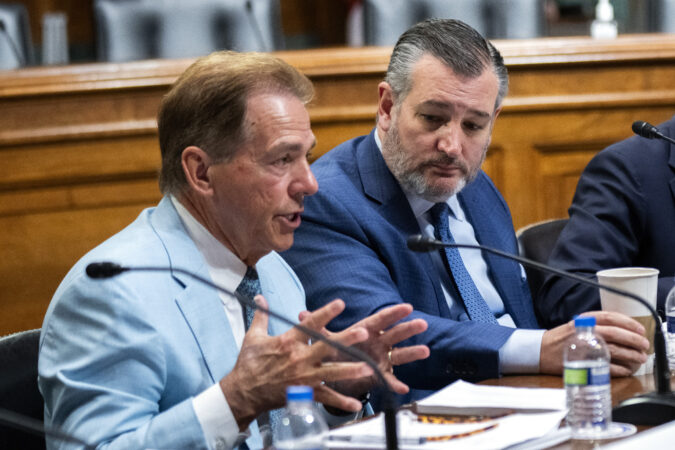
    The Senate Commerce Committee recently held a hearing on the Protect College Sports Act of 2026, sponsored by Sens. Ted Cruz (R., Texas) and Maria Cantwell (D., Wash.), to “restore order” to college sports. This 111-page legislative effort is the latest in a series of approximately 40 bills aimed at reversing judicial rulings that oblige universities to share financial gains with their players.

    Like their legislative predecessors, the 2026 bill limits or ignores existing player rights and immunizes universities from antitrust liability resulting from player-initiated litigation and substitutes Congress’ judgment for the courts, players, and universities.

    Thus, the 2026 bill restricts the ability of players to transfer through a “portal” from one college to another and limits player eligibility to five years beyond the day of high school graduation. The bill would preclude awarding antitrust damages to players who seek to increase their mobility and earnings. It would also preempt state laws guaranteeing players compensation for their names, images, and likenesses used, for instance, on video games and athletic clothing (this has come to be called NIL money).

    Until the last decade, the unchallenged position of the National Collegiate Athletic Association was that all college players are amateurs entitled to no more than athletic scholarships and frequently inadequate reimbursement for college expenses. Post-World War II football and basketball were dominated by the Southeastern Conference and the Big Ten, and both were big businesses.

    Notwithstanding this reality, the NCAA maintained that the players were amateurs who could not be paid until the U.S. Supreme Court in 2021 ruled that the NCAA and its member campuses were liable for treble damages when they conspired to deny the players “educational” compensation beyond athletic scholarships and reimbursements.

    Universities became involved in class-actions brought by their players about player transfers, eligibility, and related issues following that Supreme Court ruling. The ruling recognized that the universities have always treated athletes differently from other students, sometimes providing them with preferred admissions as well as under-the-table monies and other benefits, frequently in conjunction with wealthy alumni and “boosters.”

    With California leading the way, many states enacted so-called NIL laws that allow players to be compensated for use of their names, images, and likenesses.

    But the NCAA continued to insist the players were amateurs. As a result, outside “booster” groups or “collectives” were created to provide business deals to attract or retain college athletes from a source other than the universities.

    Meanwhile, institutions of higher learning went to war to attract coaches with multimillion-dollar salaries, often exceeding those of any other employee, and — among state universities — any other state employee, including governors.

    In the wake of these developments, an immediate response was the negotiation of financially lucrative media deals by the universities and a realignment of college conferences.

    Stanford University, for example, left the Pac-12 Conference to join the Atlantic Coast Conference, requiring all its varsity athletes to travel regularly across the country, increasing the separation from their classrooms.

    Further, NIL procedures have become a kind of Wild West, sometimes composed of shadowy characters and “agents” who operate without any regulation as is provided in the professional leagues.

    Earlier this year, President Donald Trump convened a meeting of business and university officials in connection with a new executive order to preempt state regulation. The 2026 Cruz-Cantwell bill is the most recent response. It consigns players to minority representation on an athletic “governing board” or “rulemaking committee.”

    Deeply troubling, it avoids even a mention of collective bargaining or employee status for the players. The current National Labor Relations Board is unlikely to address these issues effectively. And this Congress is unlikely to act on the Cruz-Cantwell bill.

    Some, we realize, claim we should go back to an earlier era when money was not center stage in every aspect of Division I college sports. But it is too late to return that genie to its bottle.

    Rather than wait for voluntary recognition of the organizing power of college players, or for state legislatures to take action, Congress should amend the National Labor Relations Act to allow student-athletes to exercise their collective bargaining rights.

    This step by a new Congress in 2027 could provide much-needed protections for college athletes in terms of adequate compensation, health and safety protections, as well as a reasonable measure of player mobility fashioned by both students and universities seeking a balance between freedom and a disruptive revolving door.

    After all, the most appropriate forum for resolving the complex matters around modern-day college athletics isn’t through one-off legislation or the occasional court ruling, but rather at the collective bargaining table.

    Thomas Ehrlich is the president emeritus of Indiana University, former provost of the University of Pennsylvania, and former dean of Stanford Law School. Currently, he is an adjunct professor at the Stanford University Graduate School of Education. William B. Gould IV is the Charles A. Beardsley Professor of Law, emeritus, at Stanford Law School. He is a member of the National Academy of Arbitrators and former chairman of both the National Labor Relations Board and the California Agricultural Labor Relations Board.


  • Fast-food outlet Jollibee introduces chicken nuggets for the first time in nearly 50 years

    Fast-food outlet Jollibee introduces chicken nuggets for the first time in nearly 50 years

    After nearly a half-century in business, Jollibee has added a fast-food staple it had long gone without: chicken nuggets.

    The Filipino-rooted chain, whose lone Philadelphia-area restaurant is at Cottman and Bustleton Avenues in Great Northeast Plaza, introduced the all-white-meat nuggets nationwide last week. They are sold in five-, eight-, 15-, and 30-piece orders, starting at $4.49 for five.

    For a company best known for its Chickenjoy fried chicken, Jollibee sees nuggets filling a different niche.

    Luis Velasco, senior vice president at Jollibee Group North America, said the company had seen growing demand for nuggets. Rather than competing with the bone-in chicken or its chicken sandwich, which Jollibee introduced in 2021 during the height of the “chicken sandwich wars,” they’re intended as a shareable complement to the fried chicken sandwiches.

    Chickenjoy, the signature fried chicken from Jollibee, gets a dunk into gravy at the location at 7340 Bustleton Ave.

    Jollibee also sells burgers, fried mango-peach pies, and Filipino spaghetti, a saucy dish whose sweet-and-savory sauce is loaded with ground beef, sliced hot dogs, and melted cheese.

    Like the sandwich, the nuggets borrow from the same fried-chicken playbook. They are served with its tender sauce (similar to Cane’s sauce), as well as creamy sriracha, honey mustard, ranch, pineapple BBQ, and chicken gravy, the usual accompaniment to Chickenjoy.

    The nuggets drew a steady stream of orders at the Northeast Philadelphia restaurant on Friday.

    First impressions: They have plenty of crunchy nubs on the thin coating and a juicy interior. They don’t have the soft, processed texture common among fast-food chains’ nuggets.

    “They’re crispy and crunchy and all, but they don’t have the same hard crunch as my Chickenjoy,” said Bing Garcia of Lawndale after taking a first bite.

    Paul Santos of Castor Gardens sampled his order with a fork before dunking each piece into a cup of Jollibee’s gravy, the savory sauce with a touch of sweetness.

    “I ate my first one plain, and it was fine — maybe a little dry,” Santos said. “You can’t beat their gravy.”

  • A Philly philosopher took time off to rebuild his Kensington rowhouse

    A Philly philosopher took time off to rebuild his Kensington rowhouse

    Caleb Zimmerman needed a new place to crash, fast.

    It was August 2019, and the 27-year-old was finishing a remodel with his brother, Micah, on a Strawberry Mansion house. He had purchased the property with plans to rent it out post-renovations and was living there in the meantime.

    With the remodel nearing completion, Zimmerman wasn’t seeing any interesting properties to take on as his next project — and next place to live.

    In desperation, he turned to Craigslist. And there, listed for $85,000, was the three-bedroom Kensington rowhouse he’s called home ever since.

    “I bought it the next day” for $82,500, he said, confirming, no, that’s not hyperbole. “I knew the location was incredible and was just going to keep getting more incredible.”

    Even before walking through the two-story house, Zimmerman had an idea of what he wanted this next project to look like. Though the house needed a full gut remodel, he saw that the structure could accommodate his vision of an open floor plan with a floating staircase and basement steps concealed by a trap door on a pulley system. It was, to be sure, a huge project, but Zimmerman knew he could get it done.

    The kitchen, which was built by a family friend, Aden Stoltzfus.
    The entrance to the home and the living area.

    “I feel like the Mennonites have it in their genes,” said Zimmerman, who’s of Mennonite heritage and who just wrapped a stint as an instructor of philosophy at the University of Pennsylvania. “I’m primarily a philosopher, but I wanted to kind of prove my chops, I guess, prove that I can also do things with my hands.”

    Zimmerman and his brother moved in that summer and began work the first day of Christmas break. He took a leave of absence for a semester from Temple University, where he was working on his Ph.D. in philosophy, to see the project through.

    Everything in the house needed to be replaced, so that meant everything needed to come out.

    “The kitchen was an atrocity,” Zimmerman recalled. “There were mice running around.”

    Custom wooden shelving is fastened to an exposed brick wall in the kitchen.

    For demolition, which included removing the floors and pulling down the lathe and plaster throughout the house to reveal its underlying brick, guys in the neighborhood would often stop by to see if they could lend a hand for an hourly wage, Zimmerman said. One guy, in particular, “has so much sweat equity in the house that anytime he knocks and needs some help” Zimmerman opens his door to him to this day.

    Throughout the project, the Zimmerman brothers lived in two of the three bedrooms upstairs with Micah as Zimmerman’s right-hand helper and renter. The first night he moved in, Zimmerman said, he slept on the floor. It was just the beginning of the long discomfort he’d endure living among the renovation, but it encouraged him to push to get the project done.

    For rebuilding, Zimmerman drew on his Mennonite heritage and connections. He and Micah brought in wood from an Amish mill for kitchen beams and the custom staircase. A family friend, Aden Stoltzfus, made the kitchen — his daughter Hadassah Stolzfus recently spoke to The Inquirer about her own home renovation, also featuring a kitchen created by her dad.

    The home’s centerpiece of engineering is a trap door that conceals the basement and opens with a pulley system and remote-controlled actuator. It was built by Gabe Stoltzfus, Hadassah’s cousin. Gabe also handled the bathroom renovation, where Zimmerman planned to remove the tub and install a standing shower with a glass enclosure to make the small room feel larger.

    Zimmerman opens the trap door to his basement. He removed a wall with a door to the basement and created more open space by incorporating the trap door.
    Zimmerman installed a glass-walled shower to make the bathroom feel more spacious.

    Zimmerman had some experience laying hardwood floors, so he installed the new wood floors that run throughout the house. A friend, Kevin Bucher, helped install some trim, including, in a feat of patience, a piece that he cut to mirror the topography of the brick wall in what is now Zimmerman’s office.

    Zimmerman did bring in some outside help to install drywall, seal the fireplace, and rewire the house. The renovation cost about $80,000 in total.

    By the fall of 2020, “it was livable,” Zimmerman said, though he had lived there all along. His brother Micah stayed for a while, too, but moved out in 2022.

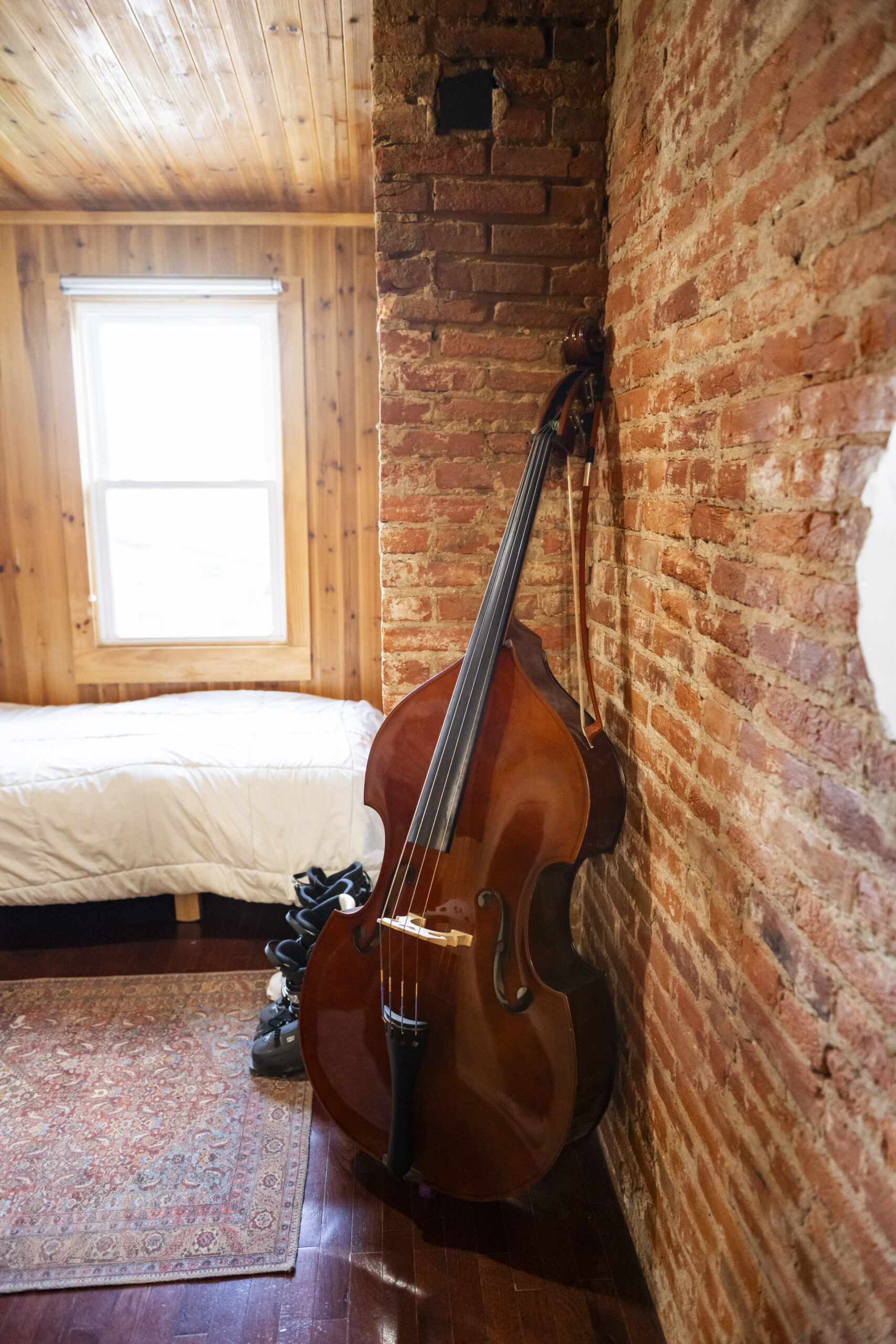
    An upright bass is on display in the guest room.
    Exposed brick and wood paneling on the wall in the guest room.

    Now Zimmerman entertains often and said people always say his red refrigerator is their favorite aspect of the house. Knowing how much custom behind-the-scenes work went into every aspect of the property, he receives that comment about a store-bought appliance with some chagrin. It’s only because he knows how much was accomplished before that final, finishing flourish.

    Reflecting on the renovation, “I doubt that I will do anything like this again,” he said, “but I wanted to know I could do it.”

    Is your house a Haven? Nominate your home by email (and send some digital photographs) at properties@inquirer.com.

  • Justice Department threatens top election officials over noncitizen voting

    Justice Department threatens top election officials over noncitizen voting

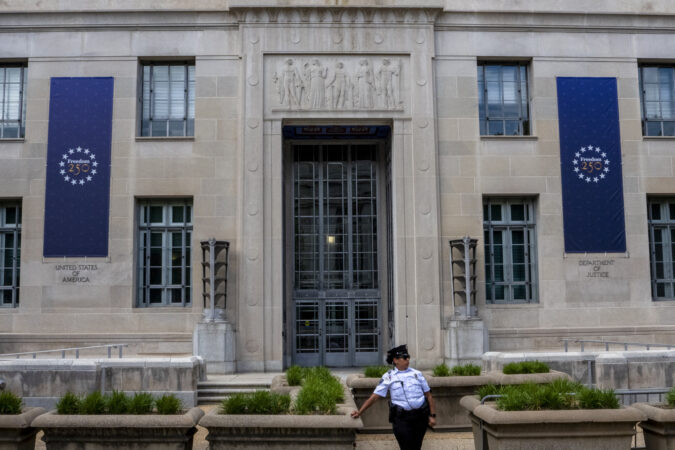
    The Justice Department sent letters to all 50 states and the District of Columbia on Tuesday threatening criminal prosecution of top election officials if ballots cast by noncitizens were counted in upcoming elections.

    The letters arrived in the midst of an ongoing campaign by President Donald Trump and his allies to tighten election rules to prevent a problem that doesn’t exist: widespread noncitizen voting in American elections.

    The effort has, however, continued to sow doubt and distrust in the electoral process, most notably among the president’s base of supporters. And his proposals could have the effect of making it more difficult for eligible voters to cast their ballots — an outcome that many voting-right activists say is the president’s real goal.

    The letters sent Tuesday came from Harmeet Dhillon, who runs the Justice Department’s civil rights division. They are largely identical, according to multiple copies obtained by The New York Times. The seven-page letters detail a host of federal election laws that prohibit noncitizens from voting in elections — laws that have been clear for decades.

    “Any election officer, including the chief election officer of the state, who knowingly retains noncitizens on the state’s” voter list “or facilitates noncitizens in receiving and casting ballots could be subject to criminal liability,” Dhillon wrote.

    The letters asked the election officials to respond to the Justice Department “within five days” with details on how their states intended to comply “with these federal laws both at the state and local level and how the Department can assist in those efforts.” It is unclear what would happen if a state does not respond in five days, as the letters are not subpoenas requiring a response.

    Lt. Gov. Deidre Henderson, the top election official in Utah and a Republican, expressed frustration with the Justice Department’s tenor and tactics.

    “Got another love letter this morning from the DOJ sprinkled throughout with threats of criminal prosecution,” Henderson wrote on social media. “I’m sure I’m not the only chief election officer of a state who is being targeted for following state and federal laws by resisting DOJ’s demands for private voter data that have thus far been ruled illegal by at least a dozen courts. This is truly bizarre behavior by the federal agency that is supposed to be protecting civil rights.”

    Adrian Fontes, the Democratic secretary of state in Arizona, criticized the efforts by the Justice Department as politically motivated.

    “It is insulting to insinuate that the good people at our county recorders’ offices across the state are not doing their jobs correctly,” Fontes said. “Arizona election officials have always worked to ensure that only eligible citizens are registered to vote, and we will continue following Arizona law — not directions that come from political rhetoric or intimidation.”

    Justice Department officials have said their purpose in seeking voter roll data is to ensure compliance with federal law requiring states to maintain accurate voting rolls. Some voting-rights advocates have speculated that the department’s specific aim is to look for evidence of noncitizen voting or use voter roll data to challenge future election results.

    Kiersten Pels, a spokesperson for the Justice Department, confirmed that letters were sent to officials in all 50 states and the District of Columbia, seeking “voluntary compliance in a timely manner with their obligations under federal law to ensure only citizens vote in federal elections.”

    David Becker, a former voting rights lawyer for the Justice Department who now runs the Center for Election Innovation and Research, a nonpartisan group that works to build confidence in elections, said that the letters from Dhillon look like a performative display by the Justice Department to show it is working aggressively on one of the president’s priorities despite little success.

    “This is what panic and desperation looks like,” Becker said. “They’ve had 18 months to find evidence of a crime that was never committed, and found nothing. And now they fall back on crude and transparent bullying tactics. They sent these letter to several, perhaps all states, with no specific evidence of a crime.”

    He added that “the election officials I’ve spoken with aren’t intimidated, and are seeing these empty threats for what they are.”

    The Justice Department also sent letters to three cities in Michigan — Detroit, Lansing and East Lansing — stating that federal election monitors from the department would be going to the areas for the upcoming primary election. The department’s stated reasons were observations from the 2024 election, citing a lack of provisional ballots in at least one polling location and voting machines that were not operational in multiple polling locations.

    Michigan election officials roundly rejected both the claims from the Justice Department and the reasons for sending monitors. Janice M. Winfrey, the city clerk in Detroit, wrote in response Tuesday that the Justice Department had made “false assertions that form a baseless conclusion that then becomes the pretext for additional monitoring of Detroit elections.”

    Winfrey added that “according to our records, there were no representatives from the Department of Justice, and if so, they did not comply with regulations requiring them to identify themselves and sign in with supervisory staff at the polling place.”

    For years, Trump has claimed without evidence that noncitizens voting in American elections have benefited Democrats. After the 2016 election, which he won, he claimed that as many as 3 million ballots in California had been cast by noncitizens.

    Since returning to office, Trump has led a relentless effort to prove his claims using the levers of the federal government.

    None of those investigations has provided any evidence of widespread noncitizen voting. An initial review in January of nearly 50 million voter registration records by the Department of Homeland Security referred roughly 0.02% of the names processed for further investigation.

    This article originally appeared in The New York Times.

  • Holiday lessons about ‘patriotic values’ from Folarin Balogun, Pope Leo XIV, and JD Vance

    Holiday lessons about ‘patriotic values’ from Folarin Balogun, Pope Leo XIV, and JD Vance

    I never thought I’d be writing a column that led off with an analysis of soccer.

    I’d planned to write about the lessons our nation’s 250th birthday party provided for Americans about the real meaning of “patriotic values.” But as it turns out, an examination of the scandal that ensued after President Donald Trump’s shameful World Cup intervention provides the perfect example of what those values are and what they are not.

    Before getting to the game, it’s important to revisit what Thomas Jefferson meant in 1776 when he wrote in the Declaration of Independence that the Creator had endowed all men equally with “the right to life, liberty and the pursuit of happiness.” Although honored in the breach when it came to slavery and women’s rights, these ideals have been the goal toward which America has gradually, but consistently, aspired — until now.

    Many probably assume that “pursuit of happiness” means material success or personal pleasure. But for the Founding Fathers, educated in the philosophy of ancient Greece and Rome, the phrase reflected the classical emphasis on civic duty and character development. In other words, the concept of patriotism was tied to the pursuit of an honorable and civic-minded life.

    Now back to soccer.

    Until the July Fourth weekend, the World Cup matches had provided a brilliant exhibition of the best of America, with cities across the land and fans in every stadium effusively welcoming teams of every race and color. In an incredible burst of U.S. soft power, the global image of Trump’s America as overtly racist, corrupt, and violent gave way before the warmth of ordinary Americans.

    But Trump could not refrain from popping that wonderful bubble. After America’s star striker, Folarin Balogun, received a red penalty card during the team’s 2-0 win over Bosnia and Herzegovina — which would force him to sit out a critical match against Belgium — POTUS phoned FIFA’s president, Gianni Infantino.

    A Trump sycophant who had previously awarded him FIFA’s first medal of peace, Infantino gave the president what he wanted: a reversal of a red card ban during a World Cup game (for the first time since 1962).

    In one move — based on his philosophy that only winners count — Trump cast a pall over the World Cup. He reversed all the goodwill the matches had generated for America at a time when his erratic behavior had sunk global attitudes toward the U.S. to astonishing new lows.

    Yes, Balogun’s violation was accidental, and the red card undeserved, but how many times have we all witnessed wrong calls by referees or umpires that drove us insane? However, under FIFA rules, there is no appeal after a game is over. Imagine if every world leader copied Trump’s utter disdain for rules in sports as well as domestic and international laws, a disdain which is already causing global chaos.

    On Monday, the U.S. team lost 4-1 to Belgium. But Trump’s interference made that defeat more painful by precipitating a wave of global scorn that poured down on an undeserving team. Nor has Trump had one word of praise for this terrific team after their loss.

    However, the lesson from Trump’s soccer debacle is not all negative. Americans should take pride in the achievements of the U.S. team and be inspired by the overall atmosphere of the games before Trump’s ugly intervention.

    And the country should unite in praise for the patriotic virtue displayed by Balogun.

    A day after receiving his red card, the star striker told an interviewer: “It’s been surreal, to be honest. But for me, I think it was just important to stay calm. I never want to react out of anger and out of emotion.

    “There’s still lots of people we’re inspiring, little kids, boys and girls who are watching, and we have to show them the correct way to handle things, even when you think it’s unjust.”

    What a hero! And what an example of patriotic virtue by someone who, under Trump’s attack on birthright citizenship, wouldn’t even qualify to play for Team USA, being born in Brooklyn to Nigerian parents visiting from London.

    Furthermore, the president’s negative example over the holiday — turning the Semiquincentennial into a celebration of himself, even as news broke of the incredible billions POTUS and his family have raked in off his presidency, and even as he upped his efforts to rig the midterm elections — should goad us all to revisit the meaning of “pursuit of happiness” in civic terms.

    Two critiques of Trump over the weekend — one indirect, one powerfully direct — can serve as further inspiration.

    The first comes from Pope Leo XIV, in his powerful livestreamed speech on July 3 at Philadelphia’s National Constitution Center while accepting the prestigious Liberty Medal. “The principles that inspired America’s founders,” he said, “brought them together in … a common dream. Unity lent strength to that dream … E pluribus unum — out of many, one. In order for a nation to flourish, it must be truly united, not by goals bound to momentary endeavors, but by ideals that do not fade with the passing of time.”

    These words need to be taken to heart, to my thinking, especially by progressive Democrats. Their anger is understandable, but in the final instance, they must work together with all those who appreciate the need to curb Trump’s desecration of the founders’ values. That includes all Democrats as well as independents and moderate Republicans who appreciate the need for checks and balances on presidential power.

    As Benjamin Franklin famously said at the signing of the declaration, “We must all hang together, or assuredly we will all hang separately.”

    And finally, some inspiring words from Vice President JD Vance, written in 2016 for the Atlantic before he turned against the values of the founders, and republished by the site on July 4.

    The title of the essay: “Opioid of the Masses.”

    “What Trump offers is an easy escape from the pain,” he wrote. “To every complex problem, he promises a simple solution. He never offers details for how these plans will work, because he can’t. Trump’s promises are the needle in America’s collective vein.

    “The great tragedy is that many of the problems Trump identifies are real … Yet so long as people rely on that quick high … the nation delays a necessary reckoning. There is no self-reflection in the midst of a false euphoria.

    “Trump is cultural heroin. He makes some feel better for a bit. But he cannot fix what ails them, and one day they’ll realize it. And then, perhaps the nation will trade the quick high of ‘Make America Great Again’ for real medicine.”

    In memory of the Founding Fathers, who pursued their principles when the struggle seemed impossible, let us hope such a realization starts this fall.

  • The real reason the colonists declared independence

    The real reason the colonists declared independence

    This month marks the 250th anniversary of the Declaration of Independence, an anniversary well worth celebrating. It is not, however, the anniversary of the start of the American Revolution. That began on April 19, 1775, with the battles of Lexington and Concord Bridge. It took over a year of fighting to convince colonists to accept that the time for compromise, for reconciliation, for any kind of reversion to the previous state of existence — for half-measures — was gone and the only path forward was independence.

    That’s where Thomas Paine and Common Sense played a role. Since his arrival in Philadelphia in 1774, Paine had watched American politicians try to reason with England, hoping to reshape the relationship with George III and with Parliament, rather than to sever it. It did not work. “Why is it that we hesitate?,” Paine asked his readers. “From Britain we can expect nothing but ruin.”

    Paine wrote Common Sense at the end of 1775 — between when the Revolution began and when the colonists declared independence — and he wrote specifically to convince the colonists to break their ties with England. “Nothing can settle our affairs so expeditiously,” he told his readers, “as an open and determined declaration for independence.”

    In the winter of 1775-1776, a growing number of colonists were ready to meet the British Army on the battlefield. The colonists and the British government had been at odds with each other for a decade, fighting over taxes and over jurisdiction. The government in London, though, seemed only to be pushing things further to the brink, especially when they began stationing soldiers in Boston.

    Still, and much to Paine’s chagrin, through the rest of 1775 most colonists thought that declaring independence was a step too far. Three months after the fighting began, when the Continental Congress set out to explain the “causes and necessity of taking up arms,” they tried to assure “our friends and fellow-subjects” in the British Empire that “we mean not to dissolve that union which has so long and so happily subsisted between us, and which we sincerely wish to see restored … We have not raised armies with ambitious designs of separating from Great-Britain, and establishing independent states.”

    Five months later, when Paine wrote Common Sense, he still worried that “the sentiments contained in the following pages, are not yet sufficiently fashionable to procure them general favor.” And so, Paine made a case not just outlining England’s crimes, but also explaining why they had rendered any sort of half-measure or compromise impossible.

    We tend to associate the lead-up to the American Revolution with the colonists’ complaints about British taxes and duties, which certainly led to disputes about jurisdiction and the relative authority of the crown and the colonial governments. We also remember the catch-phrase of the era, “no taxation without representation.

    Those debates and those issues, though, were not part of Common Sense. Paine focused on what, for him, was Britain’s unforgivable crime: setting the British Army against the colony’s own citizens. “The independancy of America,” Paine wrote, “should have been considered, as dating its æra from, and published by, the first musket that was fired against her.”

    This was a point that Paine returned to again and again.

    “No man was a warmer wisher for reconciliation than myself before the fatal nineteenth of April 1775.” But once he learned that British troops had attacked the people of Lexington and Concord, he knew that “a new era for politics is struck; a new method of thinking hath arisen. All plans, proposals, & c. prior to the nineteenth of April … are like the almanacks of the last year; which, though proper then, are … useless now.” As for King George II, “I rejected the hardened, sullen tempered Pharaoh of England for ever; and disdain the wretch, that with the pretended title of father of his people can unfeelingly hear of their slaughter, and composedly sleep with their blood upon his soul.”

    Made By History sponsors. FOR USE ON MADE BY HISTORY STORIES ONLY.

    Paine’s message was clear: setting troops against the people demanded resistance. And this message was the key to getting the colonies to unite and declare independence. The disputes about taxes and jurisdiction went back to 1765. The colonists’ leaders had fought British policies on every issue, without ever wanting to stop being a part of the British Empire. But now that the British had sent their own army against the colony’s British citizens, Paine’s calls for independence found an eager audience among American readers.

    When Paine wrote of moderates calling for reconciliation with England, he urged them to think closely about the violence which the British Army had inflicted on the colonists, and if that level of violence had made reconciling impossible. “Tell me,” he wrote, “whether you can hereafter love, honour, and faithfully serve the power that hath carried fire and sword into your land?”

    In January 1776, his answer was no. In July 1776, that became the Continental Congress’s answer, as well — colonists from New Hampshire to Georgia were united enough in their horror at the British army’s violence that they declared their independence not as 13 colonies, but as 13 united states.

    This concern about state-sanctioned violence resonates again today. Paine’s reference to British soldiers as “Highwaymen and Housebreakers” brings up images of agents from U.S. Immigration and Customs Enforcement barging into homes without warrants and dragging out their terrified inhabitants.

    In 2026, there is no foreign power from which we can declare independence, but as state violence persists, so too does the legacy of resistance by colonists who heeded Paine’s call to reject Britain’s “long and violent abuse of power.”

    The “Road to 250” series is an initiative of Historians for 2026, a group of early American academics, public historians, archivists, and educators devoted to shaping an accurate, inclusive, and just public memory of the American Founding for the 250th anniversary.

    Noah Shusterman is associate professor of history at the Chinese University of Hong Kong. He is the author most recently of Armed Citizens: The Road from Ancient Rome to the Second Amendment.

    Made by History takes readers beyond the headlines with articles written and edited by professional historians. Opinions expressed do not necessarily reflect the views of The Inquirer.

  • Look what’s happened to brunch! | Let’s Eat

    Look what’s happened to brunch! | Let’s Eat

    Philly chefs are leading a brunch renaissance, and we’re here for it.

    Also in this edition:

    • Shore winners: Craig LaBan shares his favorite new restaurants from LBI to Margate.
    • Two trends: Aperitivo, that European-style late-afternoon cocktail break, is replacing happy hour here. Also, local bakeries are aiming to boost their cool factor by offering TikTok-famous dot cakes.
    • Frosé tips: On the drink’s 10th anniversary, wine writer Marnie Old explains which wines work.

    Mike Klein

    If someone forwarded you this email, sign up for free here.

    Look what’s happened to brunch!

    A new age of brunch has arrived in Philadelphia, borne on the menus of chefs who are taking this long-forgotten meal seriously — but not too seriously. Kiki Aranita shows you where they’re not only breaking eggs but new ground.

    Craig LaBan’s favorite Shore restaurants, Part 2

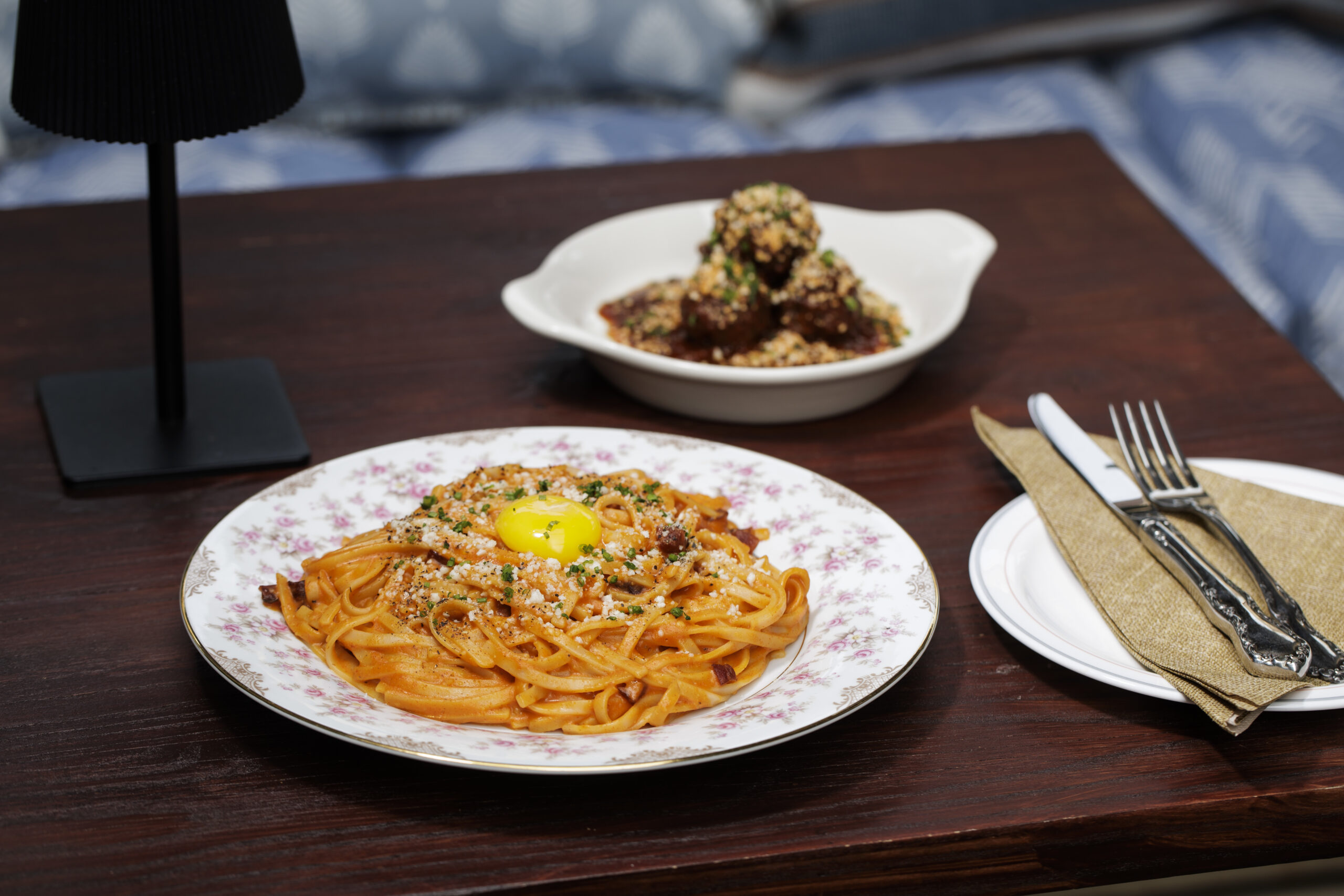
    🍴 Craig LaBan’s Jersey Shore restaurant reviews continue, as he shares his 2026 findings from Long Beach Island south to Margate. The gochujang carbonara and Oaxacan meatballs at the out-of-the-way Iron Room in Atlantic City, shown above, are examples of “pure fusion fun.” Catch up with Craig here.

    🍴 Where else to try: Last week in Part 1, Craig showcased seven new restaurants and an ice cream shop, all on the mainland.

    🍴 What’s next: Visit Inquirer.com on Saturday morning for Part 3, in which Craig reviews 11 spots from Ocean City south to Cape May, where he found 24-karat gold atop cacio e pepe risotto.

    Trend alerts: Aperitivo and dot cakes

    Aperitivo, a Euro drinking tradition, is overtaking happy hour as a Philly thing. Alisha Miranda writes that more bars are embracing late-afternoon menus with lower ABV cocktails and salty snacks meant for grazing.

    When dot cakes hit TikTok, local bakeries weren’t sure the sprinkle-covered dessert would amount to much. Olivia Prusky writes that some shops are even outselling cupcakes as owners race to decide which viral food trends are worth chasing.

    How do you choose the right wine for frosé, the summertime cocktail staple? Marnie Old explains.

    Meet the menu maker

    When Philadelphia’s buzziest restaurants need a beautiful menu design, they call Kylie Silvestri. The creative process is like “building the puzzle pieces,” as she told Hira Qureshi.

    A week of top chefs at River Twice

    River Twice (1601 E. Passyunk Ave.) will revive its annual Christmas in July dinner series for a fifth year, bringing a different guest chef into the South Philadelphia restaurant each night from July 21-25. Chef Randy Rucker will begin the run with 2026 James Beard Award finalist Omar Tate and Cybille St. Aude-Tate of Honeysuckle (shown above) on July 21, followed by 2026 James Beard Emerging Chef semifinalist Frankie Ramirez of Amá (July 22), Vetri Cucina’s Jacob Rozenberg and Michal Shelkowitz (July 23), Shola Olunloyo of Studiokitchen (July 24) and 2025 Beard nominee Emmanuel Chavez of Houston’s Michelin-starred Tatemó (July 25). Randy and Amanda Rucker created the series to showcase chefs during an otherwise quiet stretch of the city restaurant calendar. Details here.

    The best things we ate last week

    The food team’s travels took us to South Philly for hand-rolled Italian noodles, to Chinatown for saucy Northern Chinese noodles, to Ambler for watermelon gazpacho, and to Atlantic City for a perfect dirty gin martini served with a blue-cheese stuffed olive and a sidecar of gummy worms.

    Scoops

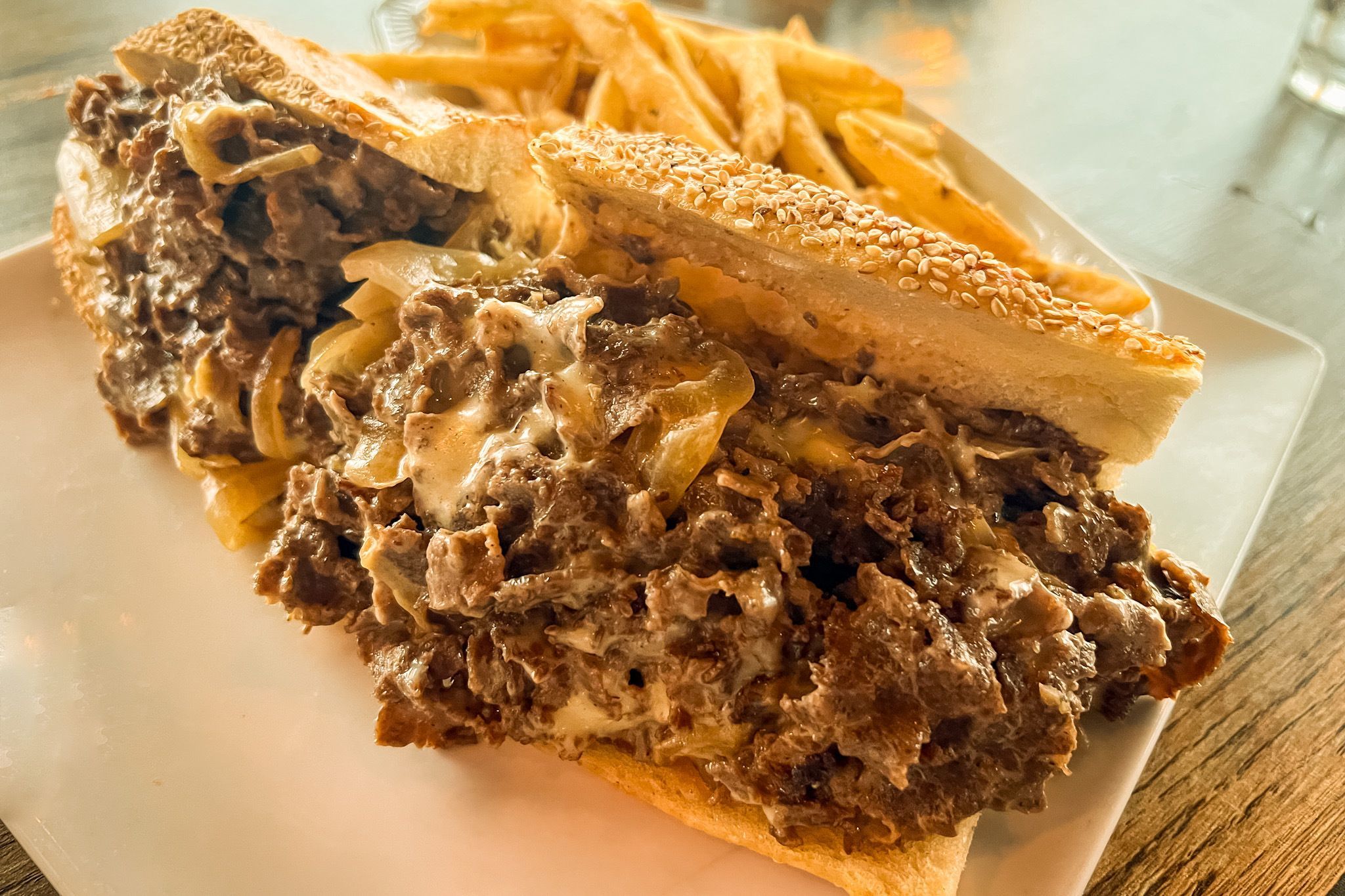
    The Iron Oven in Southampton is planning its second location, taking the former home of Ross & Co. and Bernie’s Pub at 58 S. York Rd. in Hatboro. Sports-bar owner Alex Nalbandian thinks big: At 16,000 square feet, it’s 50% larger than his Bucks County original, which opened in 2018 on the former site of Kenny’s Bar. This Iron Oven will add a full bakery in the cellar while maintaining its phone book-size menu of 120 items. Star is a knife-and-fork-able cheesesteak (shown above) that overstuffs a pound of beef into a house-baked roll. Nalbandian said he is targeting an October opening.

    At Emmett, the James Beard-nominated Mediterranean restaurant in Kensington, things are looking up. Owners Julian van der Tak and chef Evan Snyder are opening a second restaurant on the second floor. Read on for the first word about Jean, a 15-seater centered on a hearth.

    Restaurant report

    The roster of women bartenders who opened their own bars in South Philadelphia expands yet again. Last week, I told you about Liv Arterbridge and Gina Piccari opening the festive Mylar Bar later this summer at Ninth and Morris Streets. This week, Sam Ahern opened Lillian’s, a cozy bar/bistro across town at 19th and Mifflin. (She’s shown above, with bar manager Avdo Babic.) “I wanted something that felt like you were hanging out in somebody’s house,” said Ahern, who has set up a basic menu (try the toasts) but will rely on a series of guest chefs in the kitchen. Read on for the details.

    Burrito Feliz’s shift from food truck to brick-and-mortar restaurant takes effect Sunday at 4403 Chestnut St. in University City. Miguel Nolasco is partnered with South Philly’s Brewery ARS to offer cans to go, as well as canned beer and margaritas for on-site consumption.

    Briefly noted

    Sarcone’s Bakery will add baseball-inspired branding next week in an All-Star Game tie-in. Apparel company ’47 Brand will take over the South Philly landmark at 758 S. Ninth St. on Monday and Tuesday with a pop-up featuring limited-edition Sarcone’s x ’47 hats and T-shirts, available with the purchase of select bakery items including tomato pie and bread, plus an on-site heat press where customers can customize gear with exclusive patches. Hours: 11 a.m.-5 p.m. both days.

    Culinary Collective, which runs commercial kitchens for culinary entrepreneurs, is teaming with Irv’s Ice Cream on an ice cream series. Each week from July 11-Aug. 7, a collective member or two will be featured in a flavor, including Mac Mart, Arsenal Coffee Roasters & the Cake Vault, Midnight Pasta, and Guilty Good Pastries. Flavors will be available for one week at Irv’s shop at 932 E. Passyunk Ave. Schedule is here.

    Starr Restaurants has settled with the National Labor Relations Board over union-busting allegations at St. Alselm, its steakhouse in Washington, D.C.

    Baby’s Kusina & Market in Brewerytown, which had taken a walk-in sales hit during the FIFA festivities, now says it’s temporarily closed by a flood caused by a burst pipe. Takeout is expected to resume at the end of the month as its first step back; follow its socials.

    Crazy Sushi at 1837 Chestnut St. has closed after 14 years with the sale of its building, as noted on Rittenhouse Ramblings.

    ❓Pop quiz

    Little Susie’s, the fast-growing mini-chain, offers 12 varieties of pie, plus coffee, at its five walk-up windows. One early pie flavor attempt was a dud and has never been sold. What was it?

    A) cannoli

    B) pork roll

    C) mushroom Swiss

    D) peanut butter and chocolate

    Find out if you know the answer.

    Ask Mike anything

    Will Pizzeria Cusumano in Collingswood ever open? — Anthony C.

    Apparently so. Back in September 2021, I reported that South Jersey pizzaiolo Sal Cusumano was planning an artisan pizzeria in a building at 872 Haddon Ave. in Collingswood. (Same article included word that Tacconelli’s Pizzeria was planning a new location in Haddon Township, and it opened in February 2023!) Zoning issues and construction tacked on years to Cusumano’s project, and now, he says, it’s down to fine-tuning the flours. He now says August.

    When Franklin Fountain first opened, they made an absolutely delicious ginger ice cream — basically vanilla with bits of ginger in it. Then it went away. If you know any place else that sells it, please let me know. — Caroll D.

    As a ginger-phile, I’ve been searching, too, but cannot find a comparable vanilla-ginger mix. Franklin Fountain owner Eric Berley told me that he would revive the combo (last offered pre-pandemic) someday at the Old City shop. More immediately, he is developing a combo of ginger with chocolate with Franklin sister store Shane Confectionery; there’s no release date.

    Flavors change frequently. I see that the Owowcow Creamery locations in the northern burbs are dipping blackberry ice cream infused with thyme and candied ginger. The Cloud Cups locations in Kensington sell pineapple lemon ginger gelato. Malai in Rittenhouse doesn’t offer ginger, per se, but does infuse its ice creams with spices such as cardamom and mace. Perhaps Wecklerly’s will revive its ginger sesame crunch. The week-old Moment Gelato, which replaced Black Turtle Coffee just off Rittenhouse Square at 129 S. 18th St., plans to make a ginger flavor soon. Send me your ginger ice cream tips, and I’ll share with the group next week.

    📮 Have a question about food in Philly? Email your questions to me at mklein@inquirer.com.

    By submitting your written, visual, and/or audio contributions, you agree to The Inquirer’s Terms of Use, including the grant of rights in Section 10.

  • After the flood | Inquirer South Jersey

    After the flood | Inquirer South Jersey

    Good morning, South Jersey.

    New Jersey Gov. Mikie Sherrill visited Camden on Tuesday to thank first responders the day after thunderstorms caused intense flooding and to promote her fight against data centers.

    And experts are saying poverty is impacting three times as many state residents than what’s recorded in official federal measurements.

    Plus, a man allegedly tried to buy a Pokémon card worth $24,000 with fake cryptocurrency in Marlton, and more news of the day.

    — Taylor Allen (southjersey@inquirer.com)

    If someone forwarded you this email, sign up for free here.

    Gov. Sherrill’s post-storm visit

    Gov. Sherrill visited Camden a day after what local officials call the worst flooding they have ever seen in the city.

    American Red Cross workers have been providing cleaning supplies, snacks, and water as residents navigate the aftermath. No injuries had been reported, but there were more than 1,000 calls to emergency services, and 14 people were rescued from the flooded streets.

    Sherrill urged residents to report damage through the Office of Emergency Management so the state knows how much federal assistance to request.

    She also thanked the first responders and touted her recently signed legislation aimed at data centers, which she said would help prevent strain on the power grid during future storms.

    The Inquirer’s Aliya Schneider has more details about her visit and legislation.

    Experts say state poverty is higher than official federal figures

    According to the federal government, 859,000 New Jersey residents are living in poverty, based on the latest statistics available.

    But a new report from Poverty Research Institute of Legal Services of New Jersey (PRI), a legal aid nonprofit, says the figure is closer to three million.

    People who live at or below the federal poverty line qualify for assistance such as SNAP, Medicaid, and school meals. The issue, according to experts, is that even people with incomes twice the poverty rate still need help when considering the actual costs of housing, childcare, food, and healthcare. It doesn’t help that New Jersey has the third-highest cost of living among states.

    “Life’s a struggle,” said one Camden resident whose family makes just enough to be above the federal level. “I would say this feels below the poverty line.”

    The number of meals that the Food Bank of South Jersey has distributed to Burlington, Camden, Gloucester, and Salem Counties has increased by more than a third over the last four years to compensate for rising food costs.

    According to PRI, the following are the true poverty rates:

    • Burlington County: 27.2%
    • Camden County: 38%
    • Gloucester County: 29%

    Reporter Alfred Lubrano has the story.

    What to know today

    🧠 Trivia time

    What is the Rutgers-Camden mascot?

    A) The Scarlet Raptor

    B) Sir Henry, the Scarlet Knight

    C) The Scarlet Raider

    D) The Prof, Whoo RU

    Think you know? Check your answer.

    What we’re …

    🎤 Remembering: When Taylor Swift was sighted and then swarmed by fans on Long Beach Island. (Congrats to her and Travis Kelce for getting married over Fourth of July weekend.)

    🎧 Listening: To Beyoncé’s first new song in two years, “Morning Dew (Donk).”

    🏠 Viewing: A spacious and simple home overlooking Rancocas Creek in Delanco. (Is your house a Haven? Nominate your home by email — and send some digital photographs — via properties@inquirer.com.)

    🧩 Unscramble the anagram

    Hint: 🌊 Runs through four states

    ARRIVAL WEEDER

    Email us if you know the answer. We’ll select a reader at random to shout out here. Cheers to Joe Galliera, who solved last Wednesday’s anagram: Walt Whitman. This bridge connects South Philadelphia with Gloucester City.

    🏡 On the market

    This four-bedroom in Chesterfield allows for an abundance of natural light

    This home comes with a two-car garage, a wide driveway, and a front porch.

    The spacious main level of the four-bedroom and 2.5-bath home includes a formal living room, a dining room, a powder room, a family room, and an office. The house was built in 2008 but the kitchen was upgraded in 2025 with stainless steel appliances, granite countertops, and breakfast bar seating.

    All four bedrooms are upstairs. The primary suite has large closet space and a renovated en suite bath with a Jacuzzi tub.

    See more photos of the property here.

    Price: $750,000 | Size: 3,018 SF | Acreage: 0.13

    I’ll have more news for you tomorrow. See you then! 👋🏽

    By submitting your written, visual, and/or audio contributions, you agree to The Inquirer’s Terms of Use, including the grant of rights in Section 10.

  • Federal legislation would increase pathogen testing for infant formula following botulism cases

    Federal legislation would increase pathogen testing for infant formula following botulism cases

    A 2-month-old Bucks County infant was struggling to swallow and could hardly hold his head up.

    He was diagnosed last month with infant botulism, a rare, potentially deadly infection that affects the nervous system and can lead to paralysis.

    The family and their lawyer believe the baby, now recovering at home, ingested the bacteria that causes the infection from an infant formula subsequently recalled by its manufacturer, Nara Organics, over contamination concerns.

    Federal legislation proposed this spring could protect babies by requiring formula manufacturers to test for more pathogens. The bill, HR 7867, is awaiting hearings in the House Committee on Energy and Commerce.

    “I want responsible manufacturers, responsible industry partners, who say we know there is a risk of this and we’re going to be ahead of the game,” said U.S. Rep. Madeleine Dean, a Montgomery County Democrat and cosponsor of the bill.

    When asked for comment on the proposed legislation, Nara Organics pointed to safety protocols posted on its website saying the company exceeds the U.S. Food and Drug Administration’s current requirements.

    The New York-based company said it voluntarily recalled all of its infant formula on June 13 “in an abundance of caution,” after the FDA and the Centers for Disease Control and Prevention reported three cases of infant botulism in babies who had consumed Nara formula.

    As of July 6, a fourth case had been confirmed, and FDA testing identified the botulism-causing bacterium C botulinum in some of the company’s formula, according to an update posted on the company’s website.

    Nara Organics did not comment directly on the proposed regulations. When asked for its position on the legislation, the Infant Nutrition Council of America, which represents manufacturers, said its members “share the goal of ensuring families have access to safe, high-quality infant formula.”

    “Infant formula is among the most highly regulated foods in the United States, and INCA supports science-based, risk-based improvements that strengthen infant formula safety,” the organization said in a statement.

    The push to bolster regulations comes several years after federal regulators and lawmakers started looking more closely at infant formula safety in 2022, when a massive recall for a non-botulism bacterial contamination left shelves bare for months.

    But two recent infant botulism outbreaks linked to formula show the inadequacy of the steps that companies are already taking, said Bill Marler, a Seattle-based food safety lawyer who is representing Erica and Micky Goldfin, the Yardley couple whose son developed botulism after being fed Nara Organics formula.

    “We need to do more to protect these kids,” Marler said.

    A dangerous infection

    Infant botulism occurs when babies ingest C botulinum in foods or dust and dirt particles. The bacteria’s spores colonize in the large intestine and release a toxin that affects the nervous system.

    Symptoms include changes in facial expressions, such as smiling less, slow feeding, constipation, and low energy. Untreated, the toxin can spread and cause paralysis, making it hard for babies to breathe and eat.

    Infants are at greatest risk of illness because their digestive systems are still developing and less able to fight off infection.

    Nationally, 181 cases of infant botulism were reported in 2021, the most recent year for which CDC data are available.

    The Goldfins’ baby, identified by the initials W.G. in court records, spent two nights in the intensive care unit at the Children’s Hospital of Philadelphia, where he was treated with BabyBIG, the botulism antitoxin that is manufactured by the California Department of Public Health. The medication’s antibodies bind to the toxin and neutralize it, improving symptoms within 48 hours.

    On June 6, he returned home, where he is feeding well again, and regaining movement in his arms and legs. He is receiving weekly physical therapy for developmental delays in his gross and fine motor skills, according to the lawsuit.

    Testing challenges

    Federal regulators began looking more closely at infant formula in 2022, after Abbott Nutrition issued a massive recall over concerns of non-botulism bacterial infections.

    Abbott temporarily shut down one of the largest formula manufacturing plants in the country while it investigated the cause of the contamination, leaving families scrambling to find the formulas they relied on for their infants and medically fragile children.

    Pinpointing the exact source of contaminants can be challenging.

    The bacteria that causes botulism, for instance, could have been present in the Nara Organics’ powdered milk formula, in dust that settled on the packages during transportation, in the water used to mix it, or on the hands of those preparing the food, said Molly Potter, a senior clinical dietitian with Nemours Children’s Health in Delaware.

    According to its website, Nara Organics tests its formulas throughout the manufacturing process, first testing raw ingredients, then during production, and again with the final product.

    The tests the company uses include so-called sulfite-reducing clostridia (SRC) enumeration, which a leading international food-safety group recommends for identifying spores of the bacteria that causes infant botulism.

    But research published in June in the medical journal Frontiers in Microbiology found that SRC enumeration testing suggests that test wasn’t sufficient to consistently detect the bacteria.

    Researchers from IEH Laboratories & Consulting Group, a Washington-based firm that specializes in laboratory testing and analysis for the food industry, worked with ByHeart to analyze its infant formulas that had been linked to at least 28 cases of infant botulism this year and last.

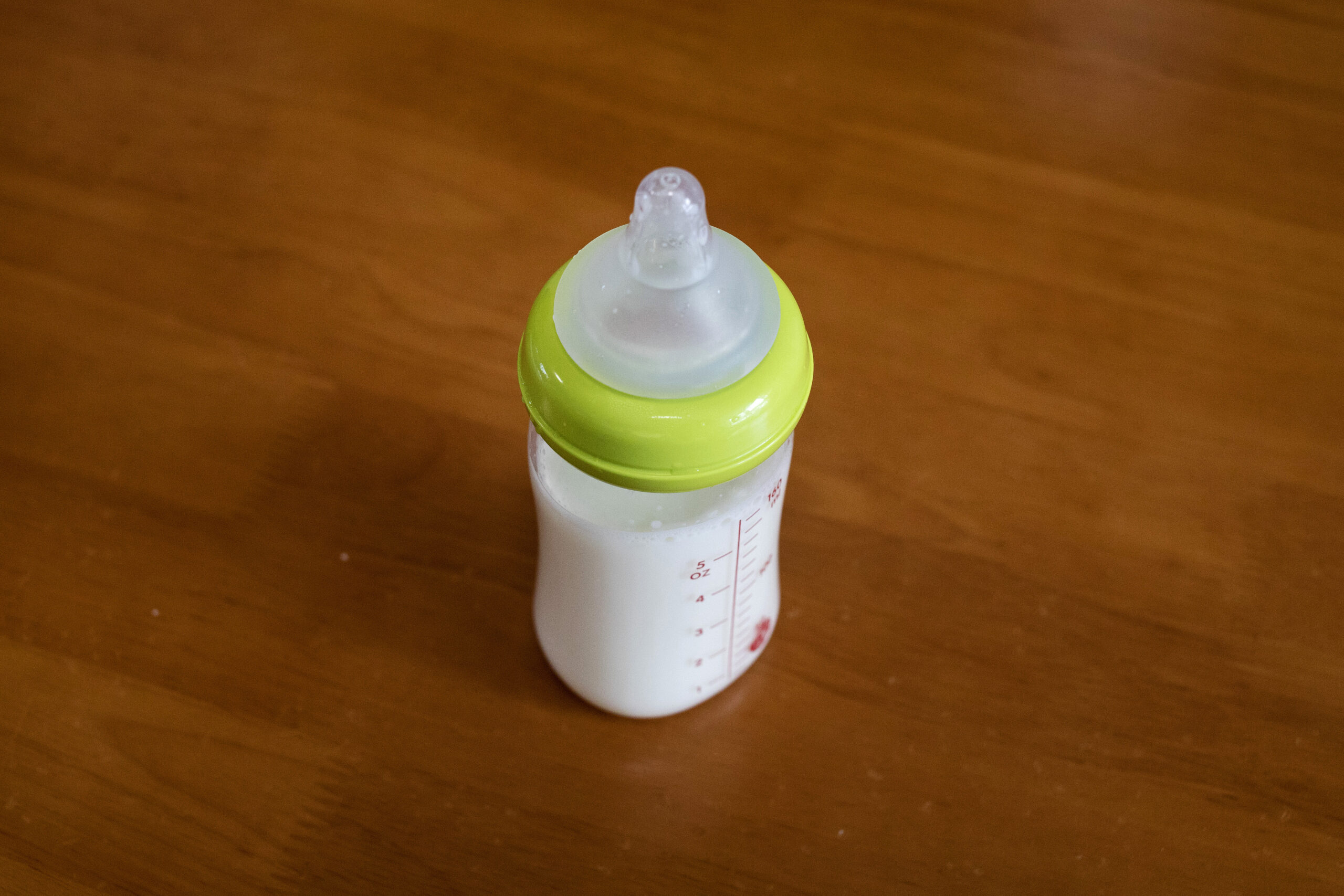
    A bottle of milk prepared from infant formula.

    Improving safety

    Dean said she hopes the proposed legislation will open up more conversation about how best to improve infant formula safety.

    The bill tasks the FDA with developing a list of pathogens that formula companies should test for, and working with manufacturers to begin any tests they aren’t already doing.

    The FDA would also set a schedule for how often manufacturers need to test for the new list of pathogens.

    Under the legislation, companies would be required to report contamination results within a day, and retain records of positive test results.

    Dean is among more than two dozen lawmakers to sign on as cosponsors. Rep. Jefferson Van Drew, who represents South Jersey’s 2nd District, is one of two Republican cosponsors.

    Potter, the Nemours dietitian, said she hopes increased testing will help families feel more at ease.

    In the meantime, parents can reduce the risk to their children by only purchasing formula from reputable stores, checking expiration dates, and storing powdered formula canisters properly. Caregivers should make sure to mix formula in clean equipment, and wash their hands before preparing and feeding it to a baby.

  • After years of delay, a Francisville apartment building is under construction

    After years of delay, a Francisville apartment building is under construction

    North Philadelphia’s Francisville is getting an apartment building at 801 N. 19th St. after years of delay and a complex change in ownership.

    The six-story project, clad in red brick, will include 110 apartments and 49 underground parking spaces. The foundations are built, and construction is underway.

    The project sits on an oddly shaped lot between 19th Street, Cameron Street, and Wylie Street, which neighbors call “the triangle lot.”

    The property used to be owned by the Exton-based Hankin Group, which secured building permits for a 115-unit apartment building during the pandemic.

    Hankin sold the property in 2021. Now two different townhouse projects are being developed on the site, one by West Philadelphia-based Guy Laren.

    The apartment project is being built under the name of Cameron Square Partners LLC, which is registered at a West Philadelphia property owned by Laren.

    On the Department of Licenses and Inspections website, violations for “walkway not provided” and a failure to post permits are being appealed by the Philadelphia-based developer, contractor, and property manager Vicintas.

    Laren did not respond to a request for comment. Vicintas confirmed it is the general contractor and future property manager for the apartment building but did not reply to an interview request.

    Hankin’s building permit is old enough that the Philadelphia Planning Commission decided it has to go through an advisory-only Civic Design Review process again, five years after its first go-around.

    The new iteration of the project is different from what Hankin proposed, with 110 instead of 115 apartments but larger layouts. It has a new architect, too, with Philadelphia-based Harman Deutsch Ohler Architecture replacing global firm NORR.

    “The new owner wanted some bigger units, so we’re down five units, and we increased the height by five feet, and then we redid the entire facade,” said Rustin Ohler, a principal with the firm.

    The new plans call for 40 one-bedroom apartments and 35 two-bedroom units, with the remainder mostly being larger studio units known in the industry as “junior one-bedrooms.”

    The apartments will have “more square footage, not necessarily more bedrooms,” Ohler said. “The previous design had a lot of studios. This is more ones and twos [bedrooms], and they’re a little larger than your average new construction coming to the market.”

    Parking has been reduced from 52 to 48 spaces, although the development team plans to expand the number of spaces by automating the garage.

    Such a system would eliminate the need for people to enter the facility, depending on mechanical systems to distribute and receive cars and allowing for a much larger parking capacity.

    The latest design for the new apartment building at 801 N. 19th St., with an articulated brick identifier spelling out “801.”

    The apartment building contains no retail but will have amenities including a gymnasium and a narrow roof deck, including a dog park, that is set back from the edge so it is not visible from the street.

    At a June meeting of the Civic Design Review committee, a representative of the United Francisville Civic Association criticized the amount of parking in the project, the increased height, the roof deck, and the new building materials.

    “What was originally approved was a five-story building,” said the representative, whose name was obscured in a recording. “This is now a six-story building, and it really towers above. It just adds a lot more height to the building based on the surroundings.”

    At the June and July meetings, however, Ohler noted that the three projects on the triangle lot are already under construction and that the apartment project is hemmed in by the bordering townhouse developments.

    That restricts what changes could be made to the architecture and layout of the project, despite community concerns.

    A new rendering of the apartment building shows the roof deck broken into smaller chunks, to cut down on large crowds making noise and separated from the edges of the building by newly proposed solar panels.

    The development team increased “the garage ceiling height in order to accommodate future stacked mechanical parking, which would potentially double our number of cars that we could have,” Ohler said.

    Since the June meeting, the development team also added darker brick spelling out “801,″ as an identifier on the building’s south-facing facade and entrance.

    Ohler noted that the roof deck has been broken up into four separate pockets to prevent large groups of residents from congregating. It also was pushed back from the street to accommodate neighbor concerns.

    “The roof decks have been designed to be centered into the building, so that nobody can get near the edge,” Ohler said. “And we did add the solar panels, there’s no way for anybody to get near the edge, so that would address their concerns of sound from the roof deck.”