Blog

  • Bob Myers pitches Sixers to LeBron James’ agent as they reportedly remain among NBA star’s top three teams

    Bob Myers pitches Sixers to LeBron James’ agent as they reportedly remain among NBA star’s top three teams

    For likely the last time, the Sixers are in the hunt to acquire LeBron James.

    Philly has been burned before, dreaming of signing James in 2010, 2014, and 2018, only to wind up empty-handed as he used that leverage to sign elsewhere.

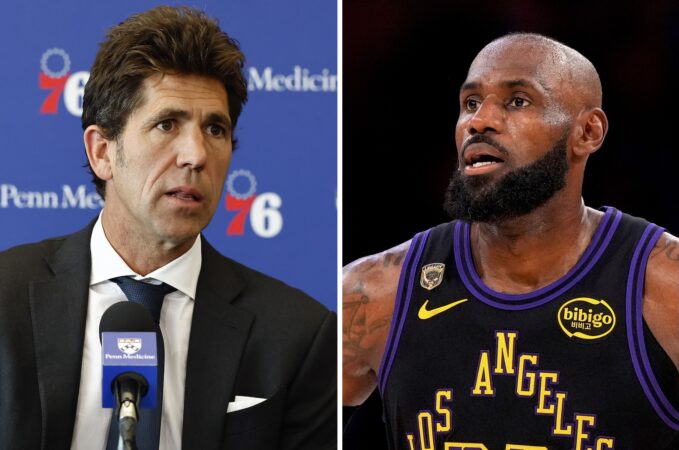
    Even now, it seems like the favorite in the clubhouse is a return to Cleveland for what could be his final NBA season. But after acquiring Jaylen Brown, the Sixers have been aggressive in pitching James on coming to Philadelphia. The latest involves the man who led the search to replace Daryl Morey — Harris Blitzer Sports & Entertainment president Bob Myers — pitching James’ agent Rich Paul directly.

    Bob Myers joins Rich Paul’s podcast

    On Friday’s episode of Paul’s Game Over podcast with Max Kellerman, Paul, the head of Klutch Sports and James’ longtime friend, used a whiteboard to break down the teams interested in his client, spawning many conspiracy theories about where the four-time MVP could land. Less than a week later, Myers made an appearance to make his case for the Sixers, one of the first teams on Paul’s viral whiteboard.

    “If he was here, I’d say I honestly believe [Philly] is your best chance to win,” Myers said. “… What I would just say is, if it’s about winning, let’s talk about this team. Because you can win here in Philly.”

    Previously on the podcast, Paul said “everything changed” for James when the Sixers acquired Brown, turning Philly into a much more attractive destination. He also pointed to James’ relationships with executive vice president Jameer Nelson, who was an early NBA contemporary, and president of basketball operations Mike Gansey, against whom he played in high school in Ohio. And Paul discussed how James would fit with some of the current Sixers, including fellow Klutch Sports client Tyrese Maxey.

    “He loves Maxey, so we don’t even have to talk about that,” he said. “I think VJ [Edgecombe], he helps VJ understand really how to play the game. Obviously, Jaylen Brown. Embiid, his health and habits, the health and habits of Embiid are there. [James] enhances everything there. He unlocks everything there.”

    Sixers still among LeBron’s top teams

    Does that all mean there’s actually a chance? Or is it still a leverage play? After their offseason signings, the Sixers only have the space to sign James to a veteran minimum. That shouldn’t be a deal-breaker for James, who reportedly is more interested in his legacy than money, but it could indicate that the Sixers don’t have much confidence.

    ESPN NBA insiders Brian Windhorst and Shams Charania believe the team has a real shot. And, according to Charania, Philly is among his top three teams.

    “When the Sixers got Jaylen Brown, I did some research, and [LeBron] is taking their pitch very seriously,” Charania said Tuesday. “When I talk to teams now I have a hierarchy of Cleveland, Miami, Philadelphia, and then some teams on the peripheral.”

    Meanwhile, Windhorst reported that while there’s a lean toward Cleveland, the Sixers don’t feel like they’re out of it.

    “While there is a ‘vibe’ pointing toward the Cavs, coming off their best non-LeBron season in more than 30 years and signing Donovan Mitchell to a four-year maximum contract extension, other teams are not counting themselves out,” Windhorst wrote. “The Golden State Warriors, Denver Nuggets, Minnesota Timberwolves, and Philadelphia 76ers each believe they have a compelling case, per sources.

    It’s not clear when James expects to make a decision, and the speculation could continue deeper into the summer. But it does appear James is at least considering the Sixers. Then again, he said that last time.

  • State probe confirms poor conditions and needless euthanasia at wealthy Montco SPCA, leading to reforms

    State probe confirms poor conditions and needless euthanasia at wealthy Montco SPCA, leading to reforms

    A nearly two-year probe led by the Pennsylvania Attorney General’s Office found the Montgomery County SPCA violated state nonprofit laws, euthanized animals unnecessarily, and failed to use its $67 million in charitable assets to maintain healthy animal shelters, officials announced Wednesday.

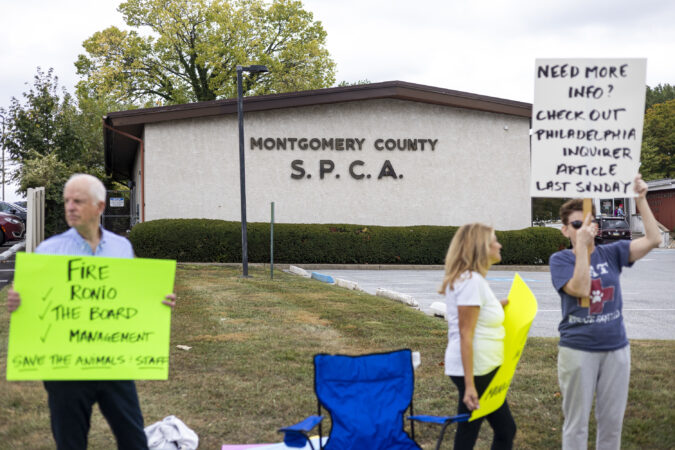
    The probe began in October 2024, weeks after an Inquirer investigation revealed signs of mismanagement, hazardous conditions, and animal mistreatment at the state’s wealthiest animal shelter.

    Attorney General Dave Sunday said his office reached a settlement requiring the nonprofit to replace its board of directors, hire new executive management, bring facilities up to code, and revise old bylaws. The shelter also must pay $21,040 in fines as part of the settlement.

    The Montco SPCA said many of the terms of the settlement agreement were either well underway or completed as of Wednesday. The organization touted in a statement its “extraordinary progress” over the last two years, including a $26 million commitment to facility upgrades and an improved save rate for animals.

    Following The Inquirer’s reporting on shelter operations, and outcry from animal welfare advocates, some donors pulled the Montco SPCA from their wills, amid concerns that the funds were being misused at the century-old institution.

    The Inquirer found squalid kennel conditions, inadequate foster programming, and undertrained staff. The Montco SPCA’s wealth dwarfed that of most animal shelters in the region, yet it spent comparatively little on operations. At the time, it also saved the fewest number of animals among regional shelters, euthanizing nearly one in five that entered the main branch in Conshohocken.

    The local SPCA leaders responded with a complete overhaul of operations, beginning with the ouster of its executive director, who had run the shelter for more than 50 years.

    The shelter also replaced most members of its longtime board of directors, named a new executive director, improved training for staff, and invested heavily in shelter infrastructure. Plans are underway to build a new shelter.

    It is a stark change from just two years ago, when the cash-rich shelter hoarded millions in investment accounts as complaints piled up.

    Between 2021 and 2024, the attorney general’s probe found, the board of directors “failed to exercise due diligence and reasonable care” that resulted in multiple violations of Pennsylvania laws governing nonprofits and trade practices, according to the settlement agreement.

    The agreement cited “potentially undue and precipitous euthanization of animals,” as well as mistreatment of pets, unsafe conditions, and “undue” stockpiling of charitable funds.

    Sunday said that over the four years examined by his office, the Montco SPCA failed donors by spending an insufficient amount to advance the shelter’s mission.

    “Pennsylvanians who donate to charities should be able to trust that their money is being used to support an organization’s mission,” Sunday said in a statement. “This settlement holds the Montgomery County SPCA accountable, puts important safeguards in place, and serves as a reminder to other charitable organizations that they will be expected to fulfill their mission and comply with the law.”

    Shelter officials said the reforms are ongoing. The Montco SPCA expects to invest $25 million to build a new veterinary clinic and adoption facility in Blue Bell, where the nonprofit purchased a building for $5 million in September, according to a spokesperson. Estimated grand opening: 2027.

    Meanwhile, the SPCA’s Conshohocken and Perkiomenville locations remain open for business, while its Abington branch plans to reopen in the fall after a $500,000 renovation.

    “The resolution reflects both the substantial progress we have made, and a shared commitment to continue building a stronger, more sustainable organization for the future,” the nonprofit’s statement said.

  • Montgomery County DA drops assault charge against Mike Missanelli in domestic dispute

    Montgomery County DA drops assault charge against Mike Missanelli in domestic dispute

    Montgomery County prosecutors have withdrawn criminal charges against longtime Philly sports personality Mike Missanelli, ending their investigation into an alleged domestic dispute between him and his fiancee.

    Missanelli, a former Inquirer sportswriter best known for his 15-year stint as a host at 97.5 The Fanatic, was arrested in April and charged with simple assault and harassment after his fiancee accused him of slapping her across the face during an argument inside their home in Lower Merion.

    During a preliminary hearing late last month, prosecutors declined to move forward with the case.

    In a statement Wednesday, Kate Delano, a spokesperson for District Attorney Kevin Steele, said that “after reviewing additional information, the office made the determination that it would withdraw the charges.”

    “In every case, we are always continuing to investigate after charges are filed,” she said.

    Missanelli’s attorney, Brian McMonagle, declined to comment Wednesday. Missanelli did not respond to a request for comment.

    In the affidavit of probable cause filed by Lower Merion police, officers wrote that Missanelli, 70, was in a heated argument with his fiancee over their engagement. His fiancee’s name was redacted from court records.

    Police responded to a 911 hangup shortly after midnight, and Missanelli told officers the argument led to a “scuffle.”

    The fiancee struck him in the chest and Missanelli’s “open hand slapped her on the left side of her face/head,” the affidavit said. One officer said he saw fresh blood on the woman’s forehead from a laceration allegedly caused by the slap.

    Missanelli was fired from WIP in 2006 after he punched a producer. He was then fired by 6abc in 2017 for misogynistic comments he made about Beth Mowins, an ESPN broadcaster.

    In recent years, Missanelli has been in the news for various job changes. After 15 years with 97.5 The Fanatic, he was pushed out by management in 2022, then brought back in 2024, only to be ousted once more last August.

    Currently, he is embroiled with a legal battle with JAKIB Media and its owner, Joe Krause, for their alleged failure to pay him $85,000.

    Staff writer Rob Tornoe contributed to this article.

  • The Vances added a chicken coop to the vice president’s residence. We had questions.

    The Vances added a chicken coop to the vice president’s residence. We had questions.

    Vice President JD Vance and his family are raising chickens at their residence at the U.S. Naval Observatory. The family has a dozen hens pecking inside a custom-made coop on a 72-acre federal observatory — but many other details about their experiment in raising chickens are unknown.

    The coop was designed to mirror the Queen Anne-style architecture of the vice president’s residence at Number One Observatory Circle. As such, the henhouse is not cheap: It cost between $100,000 and $120,000, according to the owner of the North Carolina company that built the structure. But U.S. taxpayers didn’t foot the bill. The coop was donated by the company.

    So who exactly will be raising the hens? And why are the Vances taking on this project? For eggs? For educational purposes? For feathered pets? A spokesperson for Vance did not respond to multiple emails seeking comment.

    The Washington Post turned to former and current backyard chicken keepers to gather insights on what may be going on at Number One Observatory Circle. We also talked to the guy who built the pricey coop. We even checked with a city official to discuss whether the Vances are following the proper protocols to raise hens in Washington.

    Who built the Vances’ coop?

    The henhouse and run were custom-built by Carolina Coops, which specializes in high-end structures for those looking to pamper their backyard birds. Owner Matt DuBoise said Fox & Friends Weekend co-host Rachel Campos-Duffy, wife of Transportation Secretary Sean P. Duffy, recommended him to the Vances. DuBoise had built a coop for the Duffys.

    The Vances’ henhouse is elevated — about 2 feet off the ground — and situated inside a shed that is protected from the elements, DuBoise said. The design is such that the owner does not have to walk through “chicken droppings and chicken bedding” to tend to the birds. The keeper can access the hens via interior shed doors. The attached run is predator-proof, DuBoise said, and includes a solid roof, which helps prevent avian flu from spreading to the flock, as it can be “transmitted with migratory birds flying overhead,” he said.

    Why are the Vances raising chickens?

    In the run-up to the 2024 presidential election, Vance raised alarms about the high cost of eggs, which was apparently affecting his family’s budget. He and his wife, Usha, have three children. At a supermarket stop in Reading, Pa., Vance turned to his kids and said, “These guys actually eat about 14 eggs every single morning. Is that right?”

    “Yeah!” one child responds, off-camera.

    The family’s daily consumption is probably a joke, but it highlighted a possible reason the Vances wanted a coop: In their prime, the second family’s 12 hens may each lay up to six eggs a week, nearly enough to cover the Vances’ daily needs. Like many hen keepers, the Vances will have to figure out what to do with their eggs: Eat some, give away some, maybe even donate some to a food bank that will accept them.

    The addition has led to speculation that there may be political motivations behind the flock’s appearance. It’s a theory that resonates with Danny Bowers, who keeps 19 chickens on a suburban property in Utah County, Utah. Bowers, who uses they/them pronouns, points out that some conservatives have embraced the values espoused by “trad wife” influencers, many of whom raise chickens.

    Who will do the actual work of raising the hens?

    It’s not clear, but Usha Vance, who is due to deliver the family’s fourth child later this month, may be off the hook for a little while — numerous state health departments say pregnant women should avoid handling chickens, especially chicks, because of the risk of salmonella infection.

    DuBoise said he expects the family to take a hands-on approach with the chickens. When he was at the Naval Observatory, installing the coop, the Vance children were “very, very active, asking great questions,” DuBoise said. “That’s always a great sign when the kids are very curious and wanting to get involved.”

    Is it legal to raise chickens in D.C.?

    Yes, but chicken keepers must meet some requirements before the city will issue them a permit. Every coop in Washington must be located at least 50 feet from a building “used for human habitation,” according to regulations. A henhouse and run must also be at least 250 feet from any property line or, failing that, the owners must get written permission from all neighbors located within 100 feet of their property line.

    There’s also a rule that you can’t keep roosters, said Tony Tomelden, the D.C. hospitality veteran who owns the Pug on H Street NE. Tomelden and his family raised chickens in their Brookland backyard for years, starting in the 2010s. Tomelden said it’s not easy to determine whether your chicks are cockerels (male) or pullets (female), unless you’re trained to know the difference. It’s only later, when a cockerel matures into a rooster, that owners learn — the hard way.

    “What they say is, ‘You’ll know it’s a rooster when it lets you know,’” Tomelden said. “And so one of them did.”

    I tried to confirm the regulations with a few people at D.C. Health. No one returned my calls or responded to my emails. But one city official said D.C. regulations don’t typically apply to federal property. He spoke on the condition of anonymity because he wasn’t authorized to talk to the media.

    But locals don’t follow the rules, either, the official said. “I know we have plenty of people in the city that are raising chickens on properties that don’t meet [the] requirements,” he said.

    Are there benefits to raising hens aside from eggs?

    Backyard keepers often develop an emotional attachment to their chickens. Take Clara Cho. Her parents, Yon and Francie, have raised hens at their suburban New Jersey home, outside New York City, since Clara, now 27, was a senior in high school. Clara had grown up with dogs and cats.

    The chickens “weren’t as affectionate as the cats or the dogs,” Clara remembered. “But they’d come for pets, and they would come out when you called them from the coop and everything. It was definitely sad when they passed away.”

    Bowers, the Utah chicken keeper, thinks of their hens, especially a bearded white Silkie bantam named Karen, almost as emotional support animals. When Bowers is having a particularly bad day — they suffer chronic pain from several autoimmune disorders — they will cuddle up with Karen.

    “You wouldn’t think a chicken could be such a comfort,” Bowers said. “But all I know is she’s 6 years old, and she better live to be, like, 20.”

    Is this the first time a president or vice president has raised livestock in office?

    Plenty of presidents have had livestock at the White House, including horses and cows, but the White House Historical Association found only one instance of a president raising chickens.

    According to White House chief usher Irwin Hood “Ike” Hoover’s 1934 memoir, Forty-Two Years in the White House, an admirer sent two dozen live chickens to the White House during Calvin Coolidge’s presidency in the 1920s. Coolidge apparently kept the chickens near a mint patch that Theodore Roosevelt started for his mint juleps.

    The White House Historical Association has not been able to verify the account from other contemporary sources.

    DuBoise, however, believes Vance will be the first to raise chickens at the vice president’s residence.

    Will the Vances save money on eggs by raising their own hens?

    It depends on how you crunch the numbers.

    The Post’s Unearthed columnist Tamar Haspel raised chickens for 15 years with her husband, Kevin, on their property in Cape Cod, Mass. If you read Haspel’s book To Boldly Grow, you quickly learn she and Kevin know how to stretch a dollar when it comes to raising birds.

    I asked Haspel to calculate how much it would cost the Vances to produce a dozen eggs, based on the best information we could gather. She figured a laying hen would produce about 24 dozen eggs a year, which, based on feed costs alone, would come to $1.46 per dozen. That’s more than 70 cents cheaper than the average price per dozen of large white Grade A eggs, which stood at $2.19 in May.

    But that price doesn’t factor in expenses such as water, supplemental feed, bedding, and the cost of the chicks. Nor does it factor in the price of the fancy coop, which the Vances did not pay for, but most Americans would. Haspel said that if you amortize the coop over the remaining months of the Trump administration, it would add $139 to every dozen eggs. If you amortize the structure over 10 years, it adds $35 to every dozen eggs.

    In other words, it wouldn’t be a bargain.

    “If you get a coop like that,” Haspel wrote via email, “don’t ever expect to make up the money in eggs. But mostly that’s not why people get chickens.”
  • Escape Lounges is opening a new location at the Philadelphia airport

    Escape Lounges is opening a new location at the Philadelphia airport

    A new airport lounge is landing soon in Philadelphia.

    Escape Lounges is set to open a location at the Philadelphia International Airport later this year, according to MarketPlace PHL, which manages the airport’s concessions. The lounges run on a pay-per-visit model, with food and drink included, and do not require customers to have a certain credit card.

    Escape’s 1,500-square-foot space in Terminal D will serve food and drinks, according to MarketPlace PHL, and include a bar and other seating areas that overlook the runways.

    The U.K.-based Escape Lounges operates 20 U.S. locations, including Syracuse and Providence, R.I. The lounges are open to all travelers within three hours of their departing flights, according to the company’s website.

    Someone looks at the arrivals and departures board at Philadelphia International Airport in April.

    Prices fall between $45 and $65 per person for walk-ups, while customers who pre-book online can get reduced rates starting at $32. Complimentary access is available for American Express cardholders.

    The cost includes food and drink, including wine, beer, and spirits, according to Escape. Customers also get private Wi-Fi, charging ports and outlets, printing and copy services, and PressReader, which provides digital access to more than 7,000 newspapers and magazines.

    The news comes at a time when airport lounges have become more accessible than ever — and often more crowded. A growing number of credit cards offer lounge access, and travelers without the required cards can buy day passes to most spots.

    The bar at the American Airlines Flagship Lounge at Philadelphia International Airport.

    As a result, the airport lounge market is evolving and growing, with analysts expecting it to reach $6.4 billion by next year.

    Last year at Philadelphia International Airport, Chase Sapphire opened a lounge between Terminals D and E, and American Airlines opened neighboring lounges in Terminal A-West.

    American Express and British Airways also operate lounges in Terminal A-West, from which many international flights depart.

    The airport also has a United Club between Terminals C and D, and Delta Sky Club between Terminals D and E, as well as private Minute Suites between Terminals A and B.

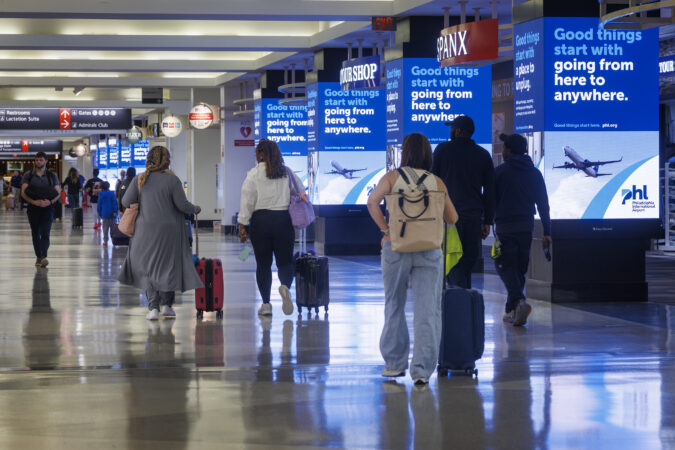
    Travelers walk through Philadelphia International Airport in April.

    Last year, more than 30.1 million travelers passed through Philadelphia International Airport, which is getting $500 million in upgrades.

    While the total number of 2025 passengers dropped slightly from the prior year, the airport saw a 7.5% increase in international travelers, executives said.

    It was also the first time since before the pandemic that the airport recorded two consecutive years with more than 30 million annual passengers.

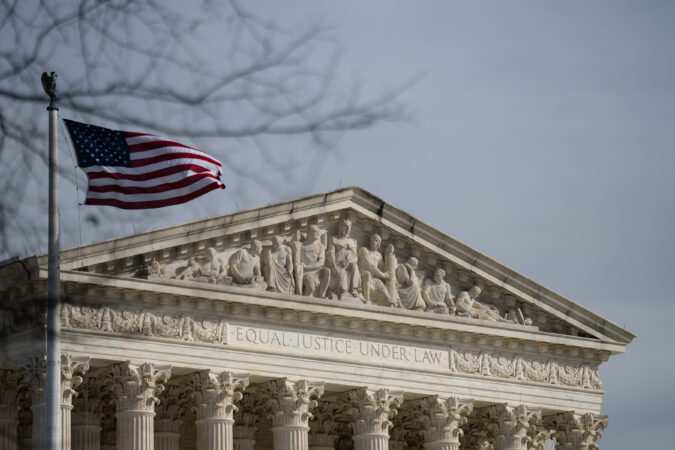
  • George Hutchinson, the Supreme Court’s last official crier, dies at 102

    George Hutchinson, the Supreme Court’s last official crier, dies at 102

    George Hutchinson’s words were far from the most important spoken during Brown v. Board of Education. But they were the first.

    With a cry of “Oyez, oyez, oyez,” Mr. Hutchinson announced the arrival of the justices and gaveled the court to order, as he did for virtually every Supreme Court case from 1952 to 1962.

    Mr. Hutchinson, who died June 14 at 102, was the last crier of the U.S. Supreme Court, tasked with carrying out ceremonial duties that were later turned over to the court marshal.

    His tenure as crier coincided with one of the most momentous periods in the court’s history, a time when the justices extended constitutional protections to Mexican Americans, refused to review the espionage convictions of Julius and Ethel Rosenberg, and, in Brown v. Board, held that segregated schools were “inherently unequal” and unconstitutional.

    As court crier, Mr. Hutchinson opened many of those consequential moments and, as if in a high school cafeteria, shepherded discreet notes to the justices, including messages sent from one end of the bench to the other.

    Decades later, he provided a window into the day-to-day activities of one of the government’s most secretive bodies, said Clare Cushman, a historian for the Supreme Court Historical Society. Mr. Hutchinson could speak about the court’s Christmas parties or the carpenter shop in its basement, or recall the way soldiers were deployed to the court building following the Japanese attack on Pearl Harbor.

    “The big pieces are always recorded,” Cushman said, “but the little pieces, no.”

    Mr. Hutchinson was 15 when he joined the court in 1938 as a page, one of the knicker-clad young people who would assist the justices. There were two requirements: You had to be short, according to Mr. Hutchinson, who grew to 5-foot-8, and you had to have a financial need.

    Mr. Hutchinson’s father had died when he was an infant, and his meager page’s salary helped support his mother and sister. He spent his afternoons in the Supreme Court, running books and water to the justices, before being drafted into the Army at age 19, dispatched to Europe in the final months of World War II.

    When he came home, he rejoined the court, working out of the marshal’s office and eventually taking the job of crier, which dates to the Supreme Court’s first meeting in 1790. He was given a handwritten script — the words of the opening proclamation, which concludes, “God save the United States and this honorable court” — as well as a distinctive gavel.

    “There was no handle. All it was was the clonk,” he recalled in a 2019 interview. “I said, ‘Where’s the handle?’ They said, ‘This is tradition. You’ve got to use this.’ So for 10 years I was banging like this.”

    As crier, Mr. Hutchinson oversaw the pages, a group that grew to include Charles V. Bush, the first Black Supreme Court page, who was hired in the aftermath of Brown v. Board at the urging of Chief Justice Earl Warren.

    Mr. Hutchinson worked alongside the pages while assuming a sneakier job within the court each October. Many of the justices were baseball fans and wanted updates on the World Series, said Vance Morrison, a former page who as a teenager worked under Mr. Hutchinson. They would pass a paper to Mr. Hutchinson or a page, who would run to the offices, listen to the radio and quietly report the score.

    “We just worked with discretion,” Morrison said.

    In October 1960, as the Supreme Court considered the conviction of a man who had failed to comply with the House’s anti-communist investigations, Mr. Hutchinson helped Justice Potter Stewart follow along to Game 7 of the World Series, providing score updates every inning and, as the game neared its end, every half-inning. He delivered his final update to Stewart after Bill Mazeroski hit a walk-off home run, giving the Pirates the win over the Yankees.

    “His eyes lit up and he sent the note down to the court,” Mr. Hutchinson recalled.

    Mr. Hutchinson also shared a bond with Justice Felix Frankfurter, according to his daughter, Sara Hutchinson. One day, he was unexpectedly called into the justice’s office to serve as a witness as Frankfurter finalized his will.

    “He said, ‘Have you ever faced death?’ I said, ‘What?’ I had to think about it,” Mr. Hutchinson recounted. “‘I was in the service in World War II.’ He laughed, he said, ‘Here,’ and he threw me his will.”

    George Edward Hutchinson, a fourth-generation Washingtonian — according to his family, two of his relatives were at Ford’s Theatre the night of Lincoln’s assassination — was born Aug. 31, 1923. His father was a lawyer, and his mother was a schoolteacher.

    While working at the Supreme Court, Mr. Hutchinson went to school part time, earning a law degree at George Washington University, and ultimately becoming a member of the Supreme Court Bar.

    After leaving the court in 1962, he became the marshal and then the clerk of the U.S. Court of Customs and Patent Appeals, where he was charged with saying “Hear ye” instead of “Oyez.” Two decades later, when the court merged with the Court of Claims to become the Court of Appeals for the Federal Circuit, he was named its first clerk.

    Mr. Hutchinson retired from federal service in 1985 to join the law firm Finnegan, Henderson, Farabow, Garrett & Dunner, where he remained on staff until 2023, the year he turned 100.

    Few people could recount the customs and procedures of the American court system like Mr. Hutchinson, said James Barney, managing partner at the firm.

    “I always viewed George as a living history,” Barney said.

    His death, at home in Arlington, Va., was confirmed by his daughter, his only immediate survivor. Mr. Hutchinson was predeceased by his wife of 63 years, Dorothy U. Hutchinson, and by another daughter, Carol Hutchinson.

    In 2018, 80 years after he joined the Supreme Court as a page, Mr. Hutchinson returned to the courtroom as a visitor. “He remains a member in good standing of our bar,” Chief Justice John G. Roberts Jr. said from the bench. “Mr. Hutchinson, welcome back!”

  • Graham Platner and the Democrats’ war on expertise

    Graham Platner and the Democrats’ war on expertise

    Let’s suppose you’re the kind of Democrat who — like me — derides Republicans for declaring war on expertise. From vaccines and climate change to tariffs and foreign aid, we say, the GOP has discarded professional knowledge in its quest for power.

    Why, then, do we support candidates who lack expertise — and experience — themselves?

    That’s the question we should be asking about Graham Platner, whose campaign for the Senate is on the ropes following a former girlfriend’s claim that he had sexually assaulted her. Platner has never held elected office; his only political experience was a stint on his town planning board.

    How can we be OK with that? If we value expertise in government, we should want leaders who have demonstrated it. But Democratic voters seem to be moving in the opposite direction.

    In the recent New York primary, they chose Darializa Avila Chevalier to replace five-term, 71-year-old Rep. Adriano Espaillat. The first Dominican American — and the first formerly undocumented immigrant — to be elected to Congress, Espaillat helped win measures protecting delivery drivers and home-based childcare providers. But he lost to a 32-year-old graduate student who has zero political experience.

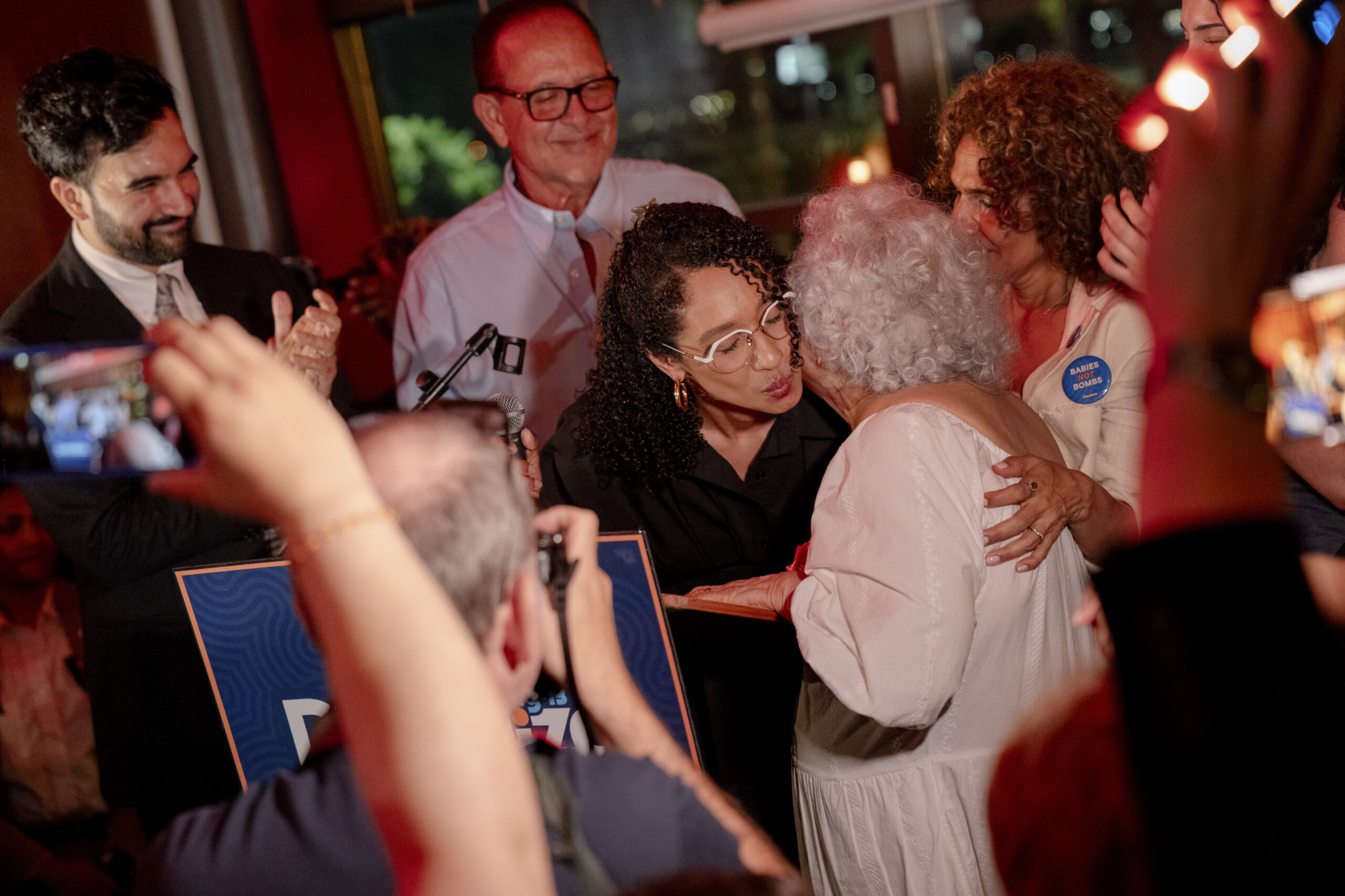
    Darializa Avila Chevalier (center), alongside New York Mayor Zohran Mamdani (left), greets supporters after winning the Democratic nomination for New York’s 13th Congressional District.

    Neither does Melat Kiros, 29, who unseated 15-term Rep. Diana DeGette, 68, in the Democratic primary in Colorado. She has worked as a lawyer and — more recently — as a barista. But when it comes to politics, she is a complete novice.

    Then there’s Platner. A combat veteran and oyster farmer, he ran as an aw-shucks common man. That meant eschewing what he called “the establishment,” including experienced political consultants and pollsters.

    But guess what? It turns out experience matters. The young Democratic operative who recruited Platner to run for Senate bypassed the standard background check, which usually takes a few weeks. He opted instead for a three-day “investigation” by a firm that didn’t even bother to interview Platner or solicit a questionnaire from him.

    To its credit, the firm flagged some of Platner’s controversial Reddit posts. But a more thorough — and, yes, professional — background check would surely have uncovered his “unsettling” behavior around women, which former girlfriend Jenny Racicot described to reporters last month.

    And earlier this week, Racicot said Platner had shown up drunk at her house — after she asked him to stay away — and forcibly had sex with her. Platner denied the charge, but he said he was “mindful of the political reality it would inflict” and that he was taking time to “reflect” on how to proceed.

    Leading Democrats — including Sens. Elizabeth Warren and Bernie Sanders — called on Platner to quit the race, and I agree with them. But I also think the party should reflect on why we continue to elevate candidates who lack any real political experience.

    To defenders of these outsiders, their inexperience is a selling point. If you want to challenge the establishment, the argument goes, you need people who aren’t tainted by it — which was a major sentiment behind then-29-year-old Alexandria Ocasio-Cortez’s upset in New York’s 14th Congressional District in 2018. Ever since, some have argued, that’s the only way to get progressives into power.

    Nonsense. Here in Philadelphia, Chris Rabb scored a stunning victory in the May primary race to replace Rep. Dwight Evans. Like Chevalier and Kiros, Rabb calls himself a democratic socialist. But he also has significant experience in government.

    Jonathan Zimmerman wonders how voters can be OK with supporting Graham Platner, a Senate candidate who has never held elected office.

    Rabb served for five terms in the Pennsylvania House of Representatives, where he sponsored bills to repeal the death penalty and to promote restorative justice in criminal sentencing. He knows his way around Washington, too. Earlier in his career, he worked as an aide to Carol Moseley Braun, the first African American woman in the U.S. Senate.

    Whatever you think of Rabb’s politics, he is qualified for the job. And we should care about that. Just like we shouldn’t make a housing official the director of national intelligence, we shouldn’t make an oysterman a member of Congress. To serve effectively in government — like any other professional role — you need knowledge and experience.

    And if you think otherwise, just look at the guy in the White House. America elected 44 presidents before Donald Trump. Forty-one of them had held prior political office; the other three (Zachary Taylor, Ulysses S. Grant, and Dwight D. Eisenhower) were victorious U.S. war generals.

    By contrast, Trump was a failed real estate baron and a successful reality TV figure. His two presidencies have been monuments to incompetence because he doesn’t believe in expertise. Or in anything, really, except himself. Remember “I alone can fix it”? He didn’t, and he won’t.

    Experts don’t know everything, of course, and they can be wrong (see: COVID-19 lockdowns). But they do know more than the rest of us about what they do. In choosing candidates like Graham Platner, Democrats turned their backs on that principle. Let’s hope they rediscover it before it’s too late.

    Jonathan Zimmerman teaches education and history at the University of Pennsylvania. He is the author of “Schooling Citizens: How Education Can Save Democracy,” which will be published next spring by American Philosophical Society Press.

  • Devan Kaney lands a new gig in Chicago as WIP still has an Eagles opening

    Devan Kaney lands a new gig in Chicago as WIP still has an Eagles opening

    Devan Kaney is headed to Chicago.

    The former 94.1 WIP sideline reporter and Fox 29 sports anchor is leaving Philadelphia to cover the Chicago Bears for Fox 32, she announced on social media.

    Kaney is taking over the role vacated by Cassie Carlson, who was promoted as the station’s lead sports anchor. Kaney will also do some sports anchoring work for the station, much like her role at Fox 29, which she left last month.

    “I’m so grateful for the support all of my colleagues at Fox 29 have given me during my time there, but especially in the last few months,” Kaney told The Inquirer.

    Those last few months included being laid off at WIP as part of company-wide cutbacks by parent company Audacy.

    The move was a surprise considering Kaney was coming off her first full season as the station’s sideline reporter during Eagles broadcasts after replacing Howard Eskin, who abruptly left the station in January 2025 following an incident with a female staffer. Kaney jumped in and served as the station’s sideline reporter during the Eagles’ Super Bowl run.

    Devan Kaney (right) with 94.1 WIP’s morning show: (from left) Rhea Hughes, Jon Ritchie, Jason Kelce, and Joe DeCamara.

    She also served as an on-air host, worked with the station’s popular morning crew, and hosted shows alongside Phillies announcer and former general manager Rubén Amaro Jr.

    WIP hasn’t announced who will replace her, and the clock’s ticking. The Eagles’ first preseason game is five weeks away, with the Birds taking on the Baltimore Ravens on Aug. 15.

    “It’s a tough job,” WIP program director Rod Lakin told The Inquirer in 2025. “You have to be someone that’s a really good communicator. You also need to be able to change quickly — circumstances change all the time in the NFL, and you’ve got to deliver that information quickly and in a collaborative way, because the game doesn’t stop.”

    Over at Fox 29, Kaney’s role was partly taken over by former 6abc sportscaster Jamie Apody, who among other things is anchoring the station’s 10 p.m. newscast.

    While Kaney is leaving the city, she’ll continue to host Werth Talking About, a PHLY podcast she’s co-hosting with former All-Star Jayson Werth. And Eagles fans might get a glimpse of her Sept. 28, when the Birds travel to Soldier Field to take on the Bears on Monday Night Football in Week 3.

  • SEPTA cuts 3 Glenside Regional Rail trains along with other schedule changes

    SEPTA cuts 3 Glenside Regional Rail trains along with other schedule changes

    SEPTA is trading Glenside Regional Rail riders three daytime trains for new off-peak options, more train cars, and new schedules aimed at reducing congestion between Glenside and Wayne Junction.

    The Warminster Line, which runs through southeastern Montgomery County, is the only Regional Rail line losing multiple trains under systemwide changes that began on July 5 to make trains more consistent and prevent delays.

    The new schedule cuts two weekday trains that left Glenside at 8:40 a.m. and 2:47 p.m. for Center City, and one weekday train that left Suburban Station at 4:53 p.m. toward Warminster.

    The morning train cut leaves a 27-minute gap in service to Center City from Glenside, while the afternoon cuts each add five minutes or less to the wait for the next train.

    SEPTA also added a train to the Warminster Line that leaves Suburban Station at 11:35 p.m. on weekdays, and a train on the West Trenton Line that leaves Suburban Station at 5:28 a.m.

    The late-night train will serve airport workers, and the dawn departure is convenient for people who commute into the suburbs, SEPTA spokesperson Kelly Greene said.

    The changes SEPTA made across the commuter rail system this week are aimed at improving consistency and reliability, the agency said.

    “As SEPTA continues to increase the number of train cars available for service, trains will be longer and provide more space for riders,” officials wrote in a statement.

    Between Wayne Junction and Glenside, SEPTA said, it hopes the new schedule will help “prevent trains from bunching together, which can cause delays.”

    The 8:40 a.m. train from Glenside was cut to reduce congestion, Greene said, and had the lowest ridership of the trains running around that time.

    Other changes affecting the Abington area include new departure times for some trains on the Lansdale/Doylestown, Warminster, and West Trenton Lines.

    SEPTA put out a full list last month of what is changing on each line, along with updated train schedules.

    This suburban content is produced with support from the Leslie Miller and Richard Worley Foundation and The Lenfest Institute for Journalism. Editorial content is created independently of the project donors. Gifts to support The Inquirer’s high-impact journalism can be made at inquirer.com/donate. A list of Lenfest Institute donors can be found at lenfestinstitute.org/supporters.

  • Vanessa Bryant gives social media a preview of new Kobe shoes on the horizon — including an Eagles colorway

    Vanessa Bryant gives social media a preview of new Kobe shoes on the horizon — including an Eagles colorway

    A few months after Nike paid homage to Kobe Bryant’s Lower Merion roots with a full collection for the 30th anniversary of his state championship run, it appears more locally inspired shoes are on the way next year.

    Vanessa Bryant, Kobe’s widow, gave fans a sneak preview of new Kobe releases on the horizon, and among them are Eagles-inspired Kobe 5s in Protro form.

    The shoes — which appear to have a green suede base color — have a black Nike check, a white color lining the midsole and tongue, which features the signature green Mamba logo. According to multiple sneaker outlets, the shoe will drop next January and will retail for $200.

    The “Eagles” Nike Kobe 5 is one of seven styles of shoes that Vanessa Bryant posted on her Instagram stories on Tuesday evening. The six other shoes coming in the next year are: the Nike Kobe 6 “Polka Dot White,” Nike Kobe 6 “Polka Dot Red,” Nike Kobe 6 “Bellisima,” Nike Kobe 9 Elite High “Ironman,” Nike Kobe 9 Elite Low “Dusty Pink,” and Nike Kobe 9 Elite Low “CA Mountain Snake.”

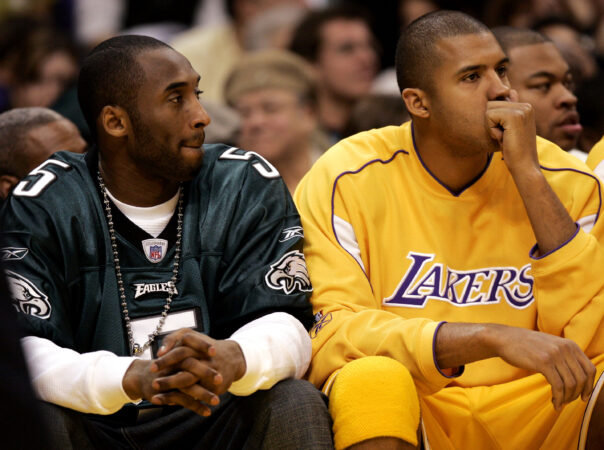
    Kobe Bryant’s fandom of the Eagles was well-documented, from watching them win Super Bowl LII to visiting with the team in 2017 while they were in California.

    One of the last images taken of Bryant before his death, with his daughter Gigi, featured him wearing an Eagles beanie and WNBA sweatshirt.

    Now, it appears Bryant’s love for the Eagles will be displayed through a sneaker as another display of the late superstar’s connection to the city.