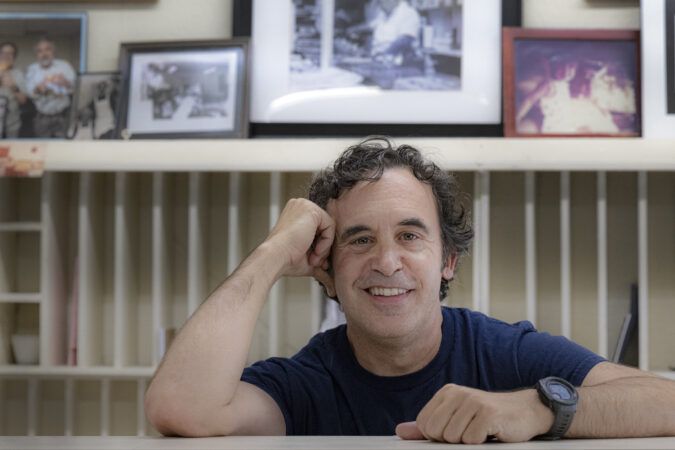
Michael Bertrando’s first brush with Kennett Square’s council three years ago was to discuss a parking issue at his family’s legacy sandwich spot, Sam’s Sub Shop. He saw his neighbors, listened to them, and started to see how the council worked. Eventually, he became something of a regular.
When the issue of short-term rentals came up last month, Bertrando had a lot of perspective: As an actor — you might haveseen him on HBO’s Task — he has traveled extensively. He has seen the negative effects short-term rentals can have had on communities from New York to Argentina to Brazil. He spoke up.
And then people started to drop by the sandwich shop, which he runs alongside his parents, suggesting that he put his name in for a vacant seat on the council.
The council voted last month to appoint Bertrando, 52, from a crowded field of applicants to fill former council member Julie Hamilton’s seat through December 2027. He was sworn in Monday.
The seat will be on the ballot for a four-year term in the 2027 general election. Hamilton resigned for a job in Texas, the Daily Local reported.
Long ties to Kennett Square
Council member is another job title the local businessman and Task stuntman can add to his resumé.
“I’m volunteering to help the residents of my community; that’s my primary goal,” he said in an interview Tuesday.
Bertrando — an actor, director, and producer — has worked at his family’s 80-year-old sub shop for decades. It drew him back home a few years ago, so he could help his aging parents run the shop.
But in the years between, Bertrando left Kennett Square to pursue acting, appearing in commercials for brands like Mercedes, McDonald’s, Nintendo, and Oscar Mayer; traveling the world as a professional clown; and working the improv comedy circuit in New York and Chicago.
His film career has continued back in Pennsylvania; Bertrando served as Mark Ruffalo’s stand-in and stunt double in Task, the HBO crime drama set in Delco. In his own productions, his hometown has seeped into his work. A short film, Italian Special, is set within Sam’s Sub Shop and Kennett Square.
Since returning to the borough, Bertrando has been a frequent visitor to council meetings, and advised the borough alongside other business leaders on what was going well, and what wasn’t, in Kennett Square.
Priorities on council
His professional career and his family’s long lineage in Kennett Square have shaped his perspectives on the borough, and what he thinks he can add as a council member.
He is motivated by the possible development of a new theater. Infusing more arts into the community would be beneficial, he said.
Having worked on Task, he saw how other municipalities the show filmed in benefited from an influx of revenue: from parking to hiring police for traffic control, to renting out locations in town, to ordering food for lunches and snacks, to coffee runs, to overnight stays in hotels.
“We have all the infrastructure needed for that to happen here in Kennett,” he said.
Both Task and fellow Pennsylvania-based crime drama Mare of Easttown mention Kennett Square, but neither used the borough for filming.
“When you have a theater or something arts-driven in the town, I think that’s a signal,” he said. “I think a theater can work as a beacon for revenue from other sources, like film production.”
Beyond the intersection of his passion for film and the borough, he said the development of the former National Vulcanized Fiber land, a large undeveloped parcel that is being remediated for contamination in soil from the industrial site, has been of concern for residents.
While the project would be years out even if ultimately approved, Bertrando said he would advocate for environmental transparency and affordable development that respects the existing neighborhoods.
He would also like to improve communication between the municipality and its residents — the longtime community members, like Bertrando’s family, and those who are choosing to relocate.
As he began his term on the other side of public comment, he said, he focused in, listening closely to what his neighbors were saying. He feels the burden to pay close attention, since he was appointed to the role, rather than elected.
“I really have to make the effort to listen to their concerns and really try the best ways to help in their concerns,” he said. “Sitting on the other side was exciting. It was important. It’s serious. It’s my town. I really care about it.”
PepsiCo Inc. is cutting prices by as much as 15% for key brands, including Lay’s and Doritos, in a bid to lift sales by offering more affordable products.
The New York-based snacks and beverage company said reductions on suggested retail prices for marquee items are rolling out this week ahead of Sunday’s Super Bowl, while keeping sizes the same.
“We’ve spent the past year listening closely to consumers, and they’ve told us they’re feeling the strain,” Rachel Ferdinando, chief executive of PepsiCo Foods U.S., said in a statement. The company had said in December it planned to reduce prices on key brands.
Shares of PepsiCo closed up 4.9% on Tuesday. The stock had gained 8.1% this year through Monday’s close, outpacing the 1.9% increase in the S&P 500.
PepsiCo has struggled to grow its sales in North America in recent years. The company, like many of its peers in the food space, raised prices during the pandemic and its aftermath to offset high inflation. Now those increases are colliding with a stretched consumer, weighing on demand. Other food companies, including General Mills Inc., have taken steps to lower prices recently.
The company has also been pressured by Elliott Management Investment, which took a $4 billion stake in the company last year, to revamp its product lineup and make key brands more affordable. The soda maker reached an agreement to do just that with the investor in December, pledging to reduce its U.S. product lineup and cut some prices.
PepsiCo chief executive Ramon Laguarta said on a call with analysts that the cuts would be “surgical” and designed to target places where high prices have caused middle and low-income consumers to pare back their purchases. Laguarta said the company would also be gaining shelf space at grocery stores as its products became more affordable and sales volume increased.
The company said in prepared remarks that the lower prices would be offset by accelerated cost-reduction efforts, reducing head count, closing three plants, and consolidating several manufacturing lines, with “additional actions planned for the near future.” PepsiCo said it would pare down its product portfolio by 20% in the first half of this year.
It’s also hoping to attract more consumers by beefing up its offerings of healthier, “clean label” products made with lower sugar and more protein and fiber. The company already overhauled its Lay’s potato chips packaging, to be followed later by its Tostitos and Quaker brands. It plans to revamp its Gatorade sports drink brand, too, including introducing a low-sugar version with no artificial colors or flavors.
Laguarta said the company would make permanent its “NKD” artificial color-free versions of some Doritos and Cheetos.
On Tuesday, the company also reported better-than-expected fourth-quarter profit, buoyed by strong international demand, and announced a $10 billion share buyback program through February 2030. It reaffirmed its fiscal year 2026 guidance from December, saying it expected organic revenue to increase between 2% and 4%.
Paging through the bulky Sunday Inquirer on Nov. 28, 1976, readers encountered a sports section that might have been compiled in Mount Athos, the tiny Greek republic that’s been off-limits to women for centuries.
It was stuffed with man’s-world staples — stories, stats, and standings on the NFL, NHL, pro and college basketball. There were columns on hunting, golf, boys’ high school sports; features on boxing, men’s cross-country, minor league hockey; an entire page devoted to horse racing.
The ads were no less macho-flavored, promoting car batteries, rifles, tires. A prominent one hyped January’s U.S. Pro Indoor Tennis Championship at the Spectrum with its lineup of “50 of the world’s top male pros.”
About the only indications that women participated in sports were an account of a West Chester State field hockey game and, buried on the gray scoreboard page, a truncated leaders’ list from that weekend’s LPGA tournament.
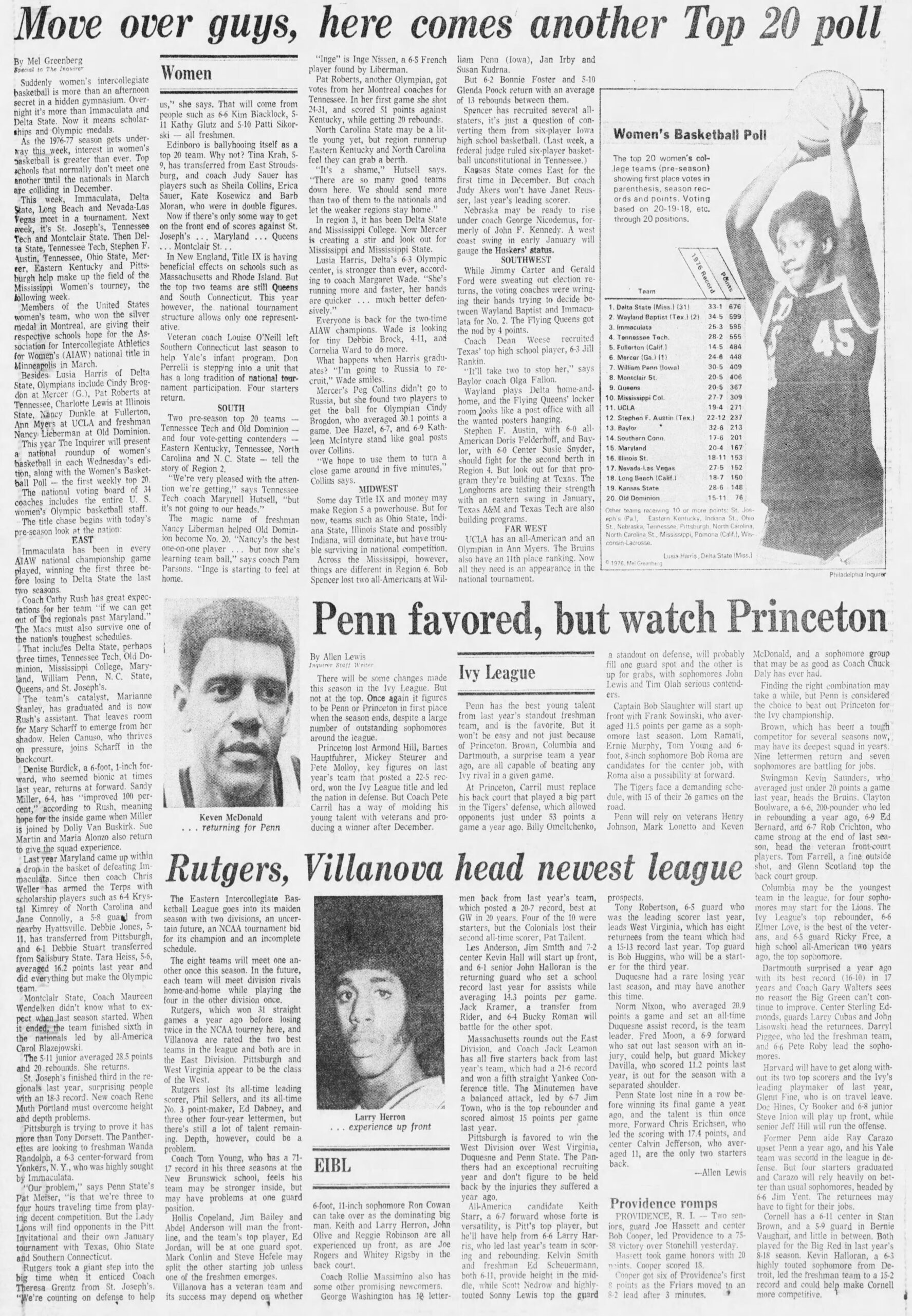
But for those who reached Page 16, a strange interloper awaited. Sandwiched between two men’s basketball previews, as if editors thought it incapable of standing alone, was one of the earliest and most consequential harbingers of a bubbling sports revolution — the first women’s college basketball poll.
Conceived by then-Inquirer sports editor Jay Searcy and obsessively nurtured by a Temple-educated newspaper clerk named Mel Greenberg, its headline read like a polite plea for recognition: “Move over guys, here comes another Top 20 poll.”
A clipping from the Nov. 28, 1976, edition of The Inquirer that features the first installation of what became the AP women’s basketball poll.
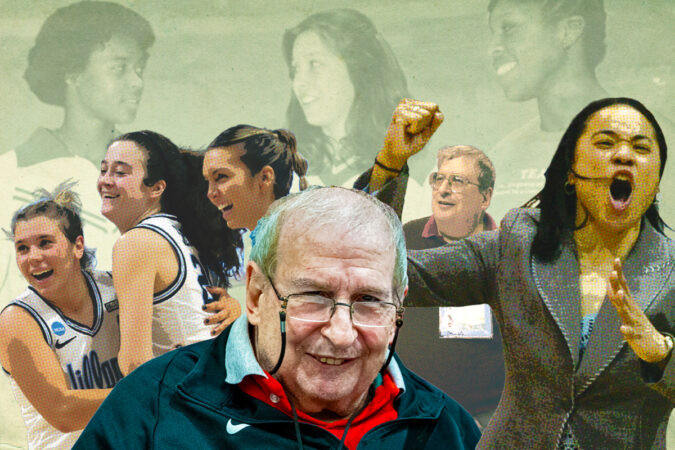
It came. And it stayed. Week after week, year after year, Greenberg’s poll accumulated popularity and heft, becoming a building block in the growth of women’s basketball. A sport that had been widely ignored and loosely governed by the Association for Intercollegiate Women’s Athletics now had validation, a common sense of purpose, and unity.
“That poll gave coaches and others around the country an opportunity to know what was going on everywhere with women’s college basketball,” said Marianne Stanley, a star on Immaculata’s 1970s championship teams and later a successful college and WNBA coach. “Prior to that, there was only word-of-mouth. Newspapers didn’t cover it, and no one was tracking what was happening nationally.”
Revisiting that debut poll in this, its 50th anniversary year, is eye-opening. Its top 10 might today be mistaken for a ranking of Division III field hockey teams — Delta State, Wayland Baptist, Immaculata, Tennessee Tech, Fullerton, Mercer, William Penn, Montclair State, Queens, and Mississippi College.
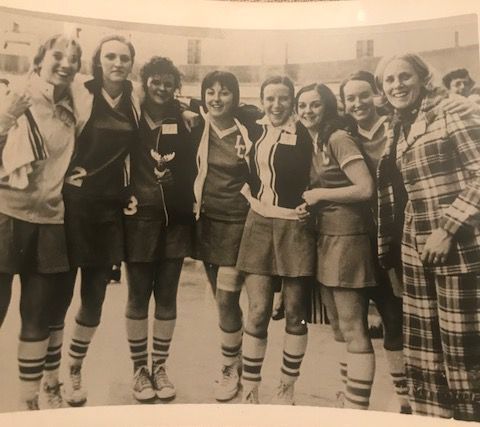
Theresa Grentz (second from left) and Marianne Stanley (fourth from right) with Immaculata teammates and coach Cathy Rush at right. Immaculata was one of women’s college basketball’s first powers.
The large state schools that dominate in 2026 mostly were absent.
But not for long.
Motivated by the mandates of 1972’s Title IX and by a desire to see themselves in the new rankings, many started to invest in the sport.
By 1981, when the NCAA replaced the AIAW as the game’s overseer, there were 234 women’s Division I programs. That jumped to 284 in 1991, 317 in 2001. Last season there were 325 D-I programs, and more than 1,000 when Division II and III are included.
“The fact that so many schools where women’s basketball was nonexistent or an afterthought went all in is a credit to Mel and his poll,” said Jim Foster, the retired women’s coach at St. Joseph’s, Ohio State, and elsewhere.
Deirdre Kane, the retired West Chester University coach, said that “until Mel’s poll, the NCAA wasn’t even acknowledging our existence. That poll made people realize, some of them for the first time, that women’s collegiate basketball was being played.”
Greenberg built a national network of coaches and administrators, contacting them weekly for information and input. As newspapers beyond Philadelphia added his poll, its significance deepened.
“We were all fighting for recognition, but none of us were getting much,” said Geno Auriemma, the Norristown-raised, spectacularly successful coach at Connecticut. “Mel came along, and he was one of the few who gave us a little. His poll helped us all grow the game.”
It grew so widely that in 1996 the NBA launched a women’s pro league, stocked with the stars of the college game. The WNBA now has a national TV contract, recognizable superstars, and a lineup of big-city franchises that in 2030 will include Philadelphia.
“When Philadelphia gets that team,” Foster said, “they ought to call it the Philadelphia Mels.”
It took 28 years after the inception of the Associated Press’ men’s college basketball poll for the women to get one. In 1976, Searcy, who before arriving at The Inquirer had covered women’s sports for the New York Times, decided the time had come. His motivation likely sprang from developments in that Bicentennial year.
Women’s basketball made its Olympic debut that summer in Montreal. A few months earlier, Immaculata had appeared in its fifth straight AIAW national title game. The Mighty Macs, who in 1971 played in the first nationally televised women’s game, had won the first three and were runners-up the next two years.
Searcy reached out to Greenberg, an editorial clerk who by then was the de facto Immaculata beat writer.
“Jay called me into his office and said, ‘What do you think of the idea of a women’s basketball poll?’” Greenberg said. “And I said, ‘I think you’re nuts.’”
As Greenberg prepared for the poll’s November launch, Searcy promoted it. He revealed his plan to Temple students during a campus visit. In that audience was Foster, then a physical education major who also coached Bishop McDevitt High School’s girls.
“It was really exciting news for anyone interested in the sport,” Foster said. “He told us he was going to start a women’s basketball poll that would be just like the men’s.”
Still, many scoffed. Women’s basketball, after all, existed deep in the shadows. Most newspapers and TV stations ignored it. With few exceptions, games were played before tiny crowds, often in substandard gyms. Rules weren’t standardized, qualified coaches and referees were in short supply, and, until the AIAW’s 1971 founding, there was no universally accepted end-of-season tournament.
“The only people who followed women’s basketball then were the people involved in the game,” Kane said.
But if there was a hotbed, it probably was the Philadelphia area. Numerous elementary schools, high schools, and colleges here had teams. West Chester State, with its strong physical education program, gained prominence in the 1960s under coach Carol Eckman, now known as “the mother of women’s college basketball.” And it was a West Chester grad, Cathy Rush, who turned Immaculata into the nation’s best team in the early 1970s.
“There was always a huge basketball presence in Philadelphia,” Stanley said. “But it wasn’t until Immaculata that many people noticed the women. Then, the AIAW was formed, and that was big. Now, here comes the poll, and suddenly we’ve got a way to track and pay attention to what was happening not just here but across the country.”
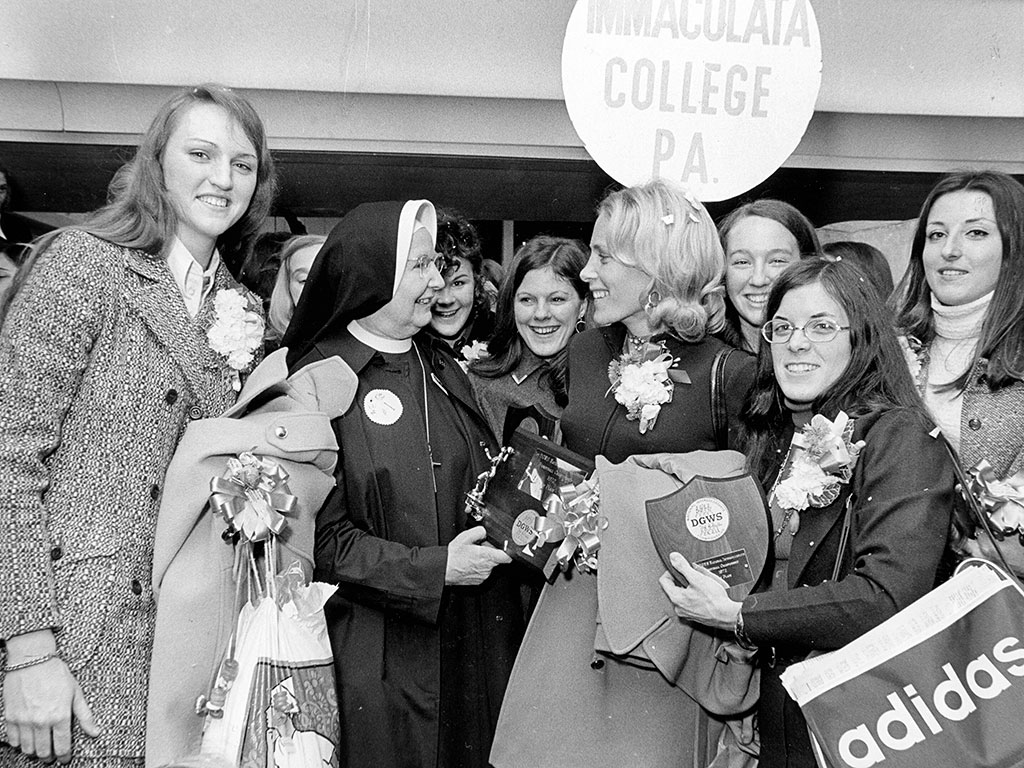
Members of the Immaculata College basketball team gather around their coach as they return after winning the first women’s collegiate national championship in 1972. From left in the foreground are Theresa Shank, college president Sister Mary of Lourdes, coach Cathy Rush, and Janet Ruch.
Despite Greenberg’s occasional stories on the Mighty Macs, few readers knew much of the women’s basketball world beyond. And few sports editors and writers besides Searcy and Greenberg saw its potential.
“I loved women’s basketball,” said Dick Weiss, a veteran sportswriter who then was covering men’s college basketball for the Philadelphia Daily News, “but most of us never saw it becoming a regular beat. All our energy went into the Sixers with Julius Erving and the Big 5, which still had NCAA teams filled with local talent.”
Launching the poll proved problematic. If women’s programs were second-class on most campuses, so were their support staffs. Gathering schedules and stats was nearly impossible. When Greenberg reached out to the AIAW for help, the organization balked.
“They told me women’s sports shouldn’t get involved in things like newspaper polls because that would lead to the evils of men’s athletics,” he said.
So he built a Rolodex of contacts, then he and some basketball contacts painstakingly collected information over the phones.
“Mel based the poll operation in our sports department,” said Gene Foreman, then The Inquirer’s managing editor. “His volunteer helpers were several tall women.”
Coaches telephoned in their votes on Sunday nights. One, N.C. State’s Kay Yow, provided an early indication of the poll’s impact.
On Jan. 2, 1977, Immaculata visited N.C. State, which typically played before small gatherings. But the new rankings promised a compelling matchup. The Wolfpack were ranked No. 15; Immaculata, which triumphed, 95-90, was No. 2.
“I remember Yow calling and talking about how excited she was,” Greenberg said. “It was snowing before the game, but there was a long line of fans outside the arena waiting for tickets.”
In 1978, the Associated Press began distributing the poll, giving most news outlets access. Then, in 1994, Greenberg ceded its compilation to the AP, and media members replaced coaches as the voters.
The poll was a cornerstone of the game, and in 2000, another Sunday Inquirer spotlighted women’s basketball’s maturity.
Philadelphia was hosting that year’s Final Four. Its lineup of Connecticut, Tennessee, Rutgers, and Penn State revealed the game’s progression from the days when little Immaculata could win three straight titles. Its two sessions attracted nearly 40,000 fans. Millions more watched on ESPN.
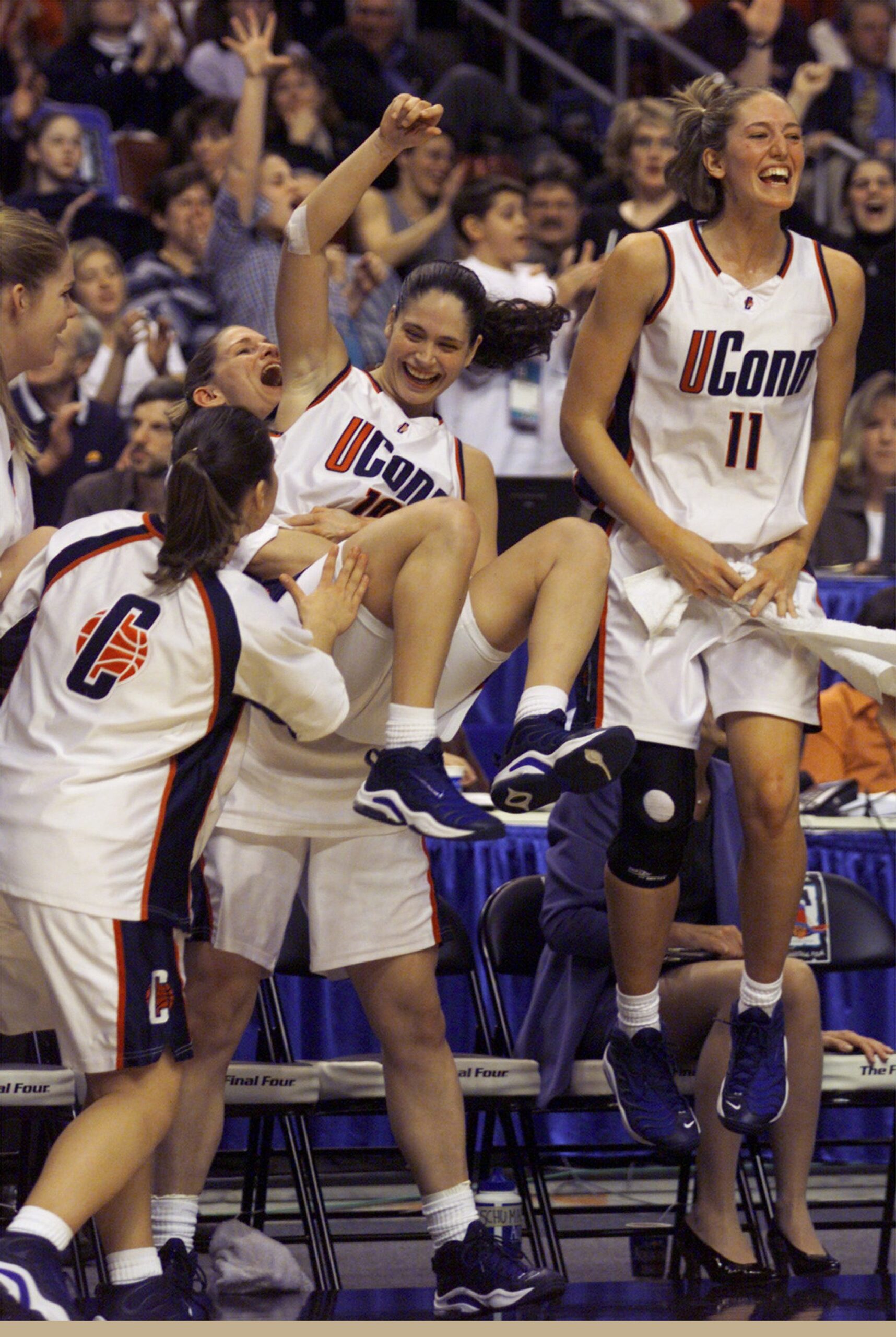
Stacy Hansmeyer, Sue Bird, and the UConn bench celebrate after Swin Cash makes a breakaway layup late in the second half of UConn’s Final Four game against Penn State on March 31, 2000, at what then was called the First Union Center.
The April 2 Inquirer ballyhooed that night’s title game on Page 1. Inside was an entire section previewing the event from every angle. There were profiles of coaches, players, even the referees. There were analyses, features, columns, statistics, photos and predictions.
And the poll?
Well, the championship game itself proved just how plugged in it was. Connecticut, the No. 1 team in the regular season’s final rankings, defeated No. 2 Tennessee.
Greenberg retired from The Inquirer in 2010 but still compiles a widely read blog. Organizations, including the Naismith Basketball Hall of Fame, have recognized him and his poll’s contributions.
“Mel was a gift to the women’s game,” Stanley said. “He was so passionate, and so dedicated and so single-minded. Who knows how long it otherwise would have taken for anything of substance to occur? Not many news outlets gave a crap about it, but Mel and The Inquirer decided to do something about women’s basketball. And that poll has stood the test of time.”
Gov. Josh Shapiro had a message for data center developers on Tuesday: Come to Pennsylvania, but bring your own energy — or pay up.
During his budget address, Shapiro said his proposal — the Governor’s Responsible Infrastructure Development (GRID) standards — will ensure center operators are “not saddling homeowners with added costs because of their development.”
Data centers, which house the technology to power cloud storage and other computing, have been proliferating across the country and the region due to the increasing demands of generative artificial intelligence, or AI.State and local officials are trying to keep up with the rapid pace of development, proposing new legislation — and updating existing measures — in an attempt to regulate the facilities.
Shapiro’s plan would require data centers to supply their own energy or pay for any new generation they need. It also calls on them to hire and train Pennsylvania workers and comply with “the highest standards of environmental protection,” including in water conservation, Shapiro said.
In exchange, the governor added, data center developers will get “speed and certainty” in the permitting process, as well as applicable tax credits.
The comments from Shapiro, a Democrat who has consistently encouraged data center development, come amid a flurry of legislative and executive action, as elected officials promise to keep Pennsylvania and New Jersey consumers from bearing the costs of these power-hungry facilities.
Data centers, the electric grid, and governors’ proposals
At the same time, some governors, including Shapiro, have criticized and sued PJM, the Montgomery County-based electric grid operator, over its annual capacity auction, which influences how much customers pay.
On Tuesday, Shapiro reiterated calls for PJM to speed up new power-generation projects and extend a price cap.
Separate from GRID, Shapiro also said electric companies, including Peco, should increase transparency around pricing and “rein in costs” for consumers, including low-income and vulnerable Pennsylvanians.
“These steps will save consumers money immediately,” Shapiro said. He announced an energy-affordability watchdog to monitor utility-rate requests and take legal action if necessary to prevent companies from “jacking up their rates and costing you more.”
Through several executive orders, she froze utility rates and expanded programs to spur new power generation in the state. She also ordered electric utilities to report energy requests from data centers.
“This is just the beginning,” Sherrill said in her inaugural remarks. “We are going to take on the affordability crisis, and we are going to shake up the status quo.”
In Pennsylvania, ‘Data Center Consumer Protection Bill’ advances
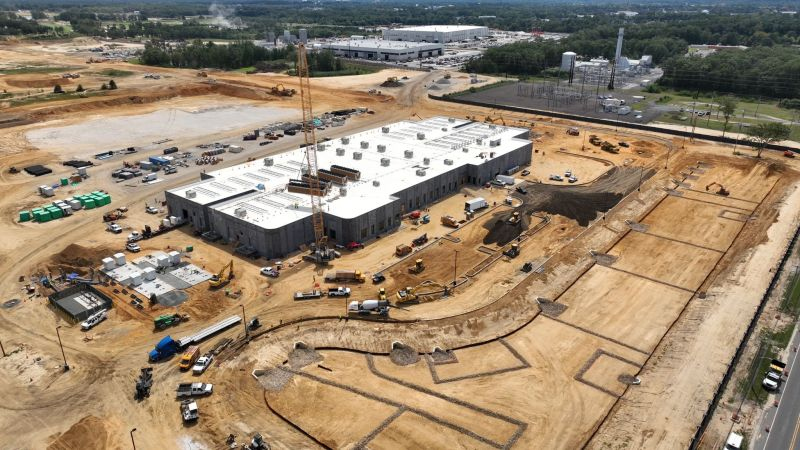
An Amazon data center is shown last year while under construction in front of the Susquehanna nuclear power plant in Berwick, Pa.
Meanwhile in Harrisburg and Trenton, some lawmakers have other ideas about how to keep residents from subsidizing data centers.
As of Tuesday, nearly 30 bills in the Pennsylvania and New Jersey legislatures mentioned data centers, according to online records. Many of those bills aren’t directly related to residents’ electric bills, and instead address the facilities’ energy sources, water usage, environmental impacts, and general regulation.
“Today’s vote brings us one step closer to protecting ratepayers,” Robert Matzie, the Beaver County Democrat who introduced the bill, said in a statement. “Data centers can bring jobs and expand the local tax base, but if unchecked, they can drive up utility costs. Electric bills are already too high.”
The bills were introduced by State Reps. Kyle Donahue and Kyle Mullins, both Democrats from the Scranton area, which has become a hot spot for data center development.
“There is a real concern and a sense of overwhelm among the people we represent,” Mullins said at the hearing. “The people of Pennsylvania have serious concerns about data center energy usage and water usage, especially as they see utility bills continue to rise rapidly.”
Dan Diorio, vice president of state policy for the Data Center Coalition, said he worried the bills would discourage operators from building in Pennsylvania. He said they are already incentivized to reduce energy costs, which are estimated to make up anywhere from 40% to 80% of a data center’s total operating costs.
“Data center companies strive to maximize energy efficiency to keep their costs low,” Diorio said.
Rep. Elizabeth Fiedler, the Philadelphia Democrat who chairs the energy committee, closed Monday’s hearing by reminding members of one of its main objectives: to “keep down the energy bills that are skyrocketing for people back home.”
A South Jersey lawmaker says his bill could help consumers
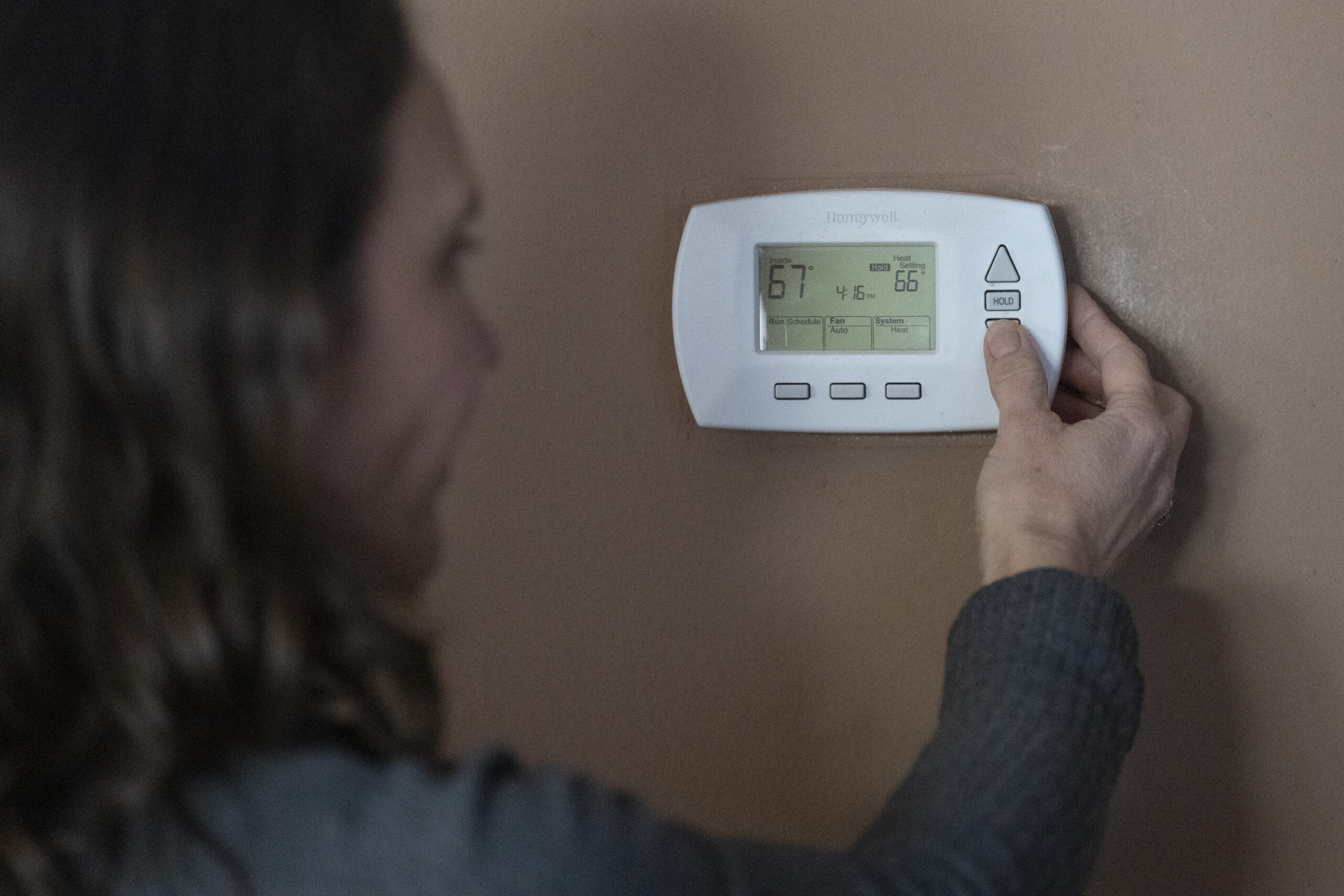
A Philadelphia-area woman woman turns down her thermostat in attempt to save on electricity in this January 2023 file photo.
The pain of skyrocketing utility bills has been felt acutely in New Jersey, which unlike Pennsylvania uses more energy than it produces.
Between 2024 and 2025, New Jersey residents’ electric bills rose more than 13% on average, the fifth steepest increase in the U.S., according to federal data analyzed by the business magazine Kiplinger. Pennsylvanians saw a nearly 10% increase during the same period, according to the data.
A bill sponsored by New Jersey State Assembly member David Bailey Jr., a Democrat from Salem County, attempts to prevent future price hikes.
The legislation would require data center developers to have “skin in the game,” as Bailey described it in a recent interview, and sign a contract to purchase at least 85% of the electric service they request for 10 years. He said it would also provide incentives for data centers to supply their own energy generation.
“I don’t want to come off as an anti-data center person,” said Bailey, who represents parts of Gloucester, Salem, and Cumberland Counties. “This is a very positive thing. We’re just saying we don’t want these big companies to come in and pass this [cost] on to our mom and pops, our neighbors, and our everyday ratepayers.”
Bailey said he was disappointed that his bill was pocket-vetoed by former Gov. Phil Murphy last month. Now, it has to restart the legislative process. But Bailey said he expects it to eventually pass with bipartisan support.
“No matter your party affiliation you understand the affordability issue,” Bailey said. “You understand your electric bill” — and how much it has risen recently.
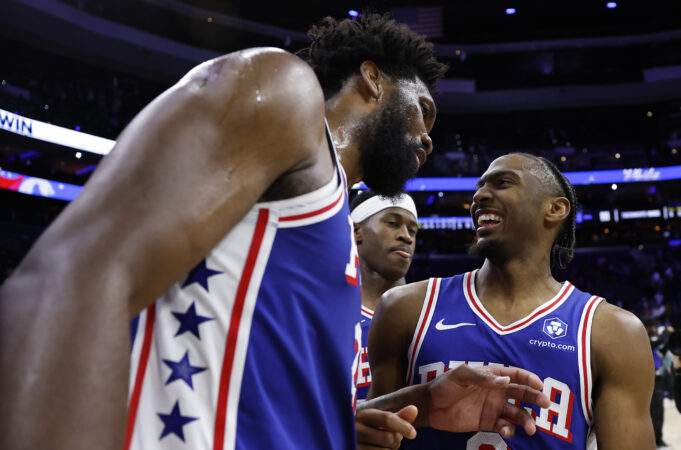
What if the 76ers don’t make a trade before Thursday’s 3 p.m. deadline?
Staying pat could signal they’re comfortable with their current roster. It may also be a sign that they don’t have any extra pressure from Paul George’s suspension, and that they believe their current roster is good enough to contend in the Eastern Conference.
Here are six questions for the sixth-place Sixers (29-21) heading into the deadline:
Will they prioritize staying under the luxury tax threshold or upgrading the roster?
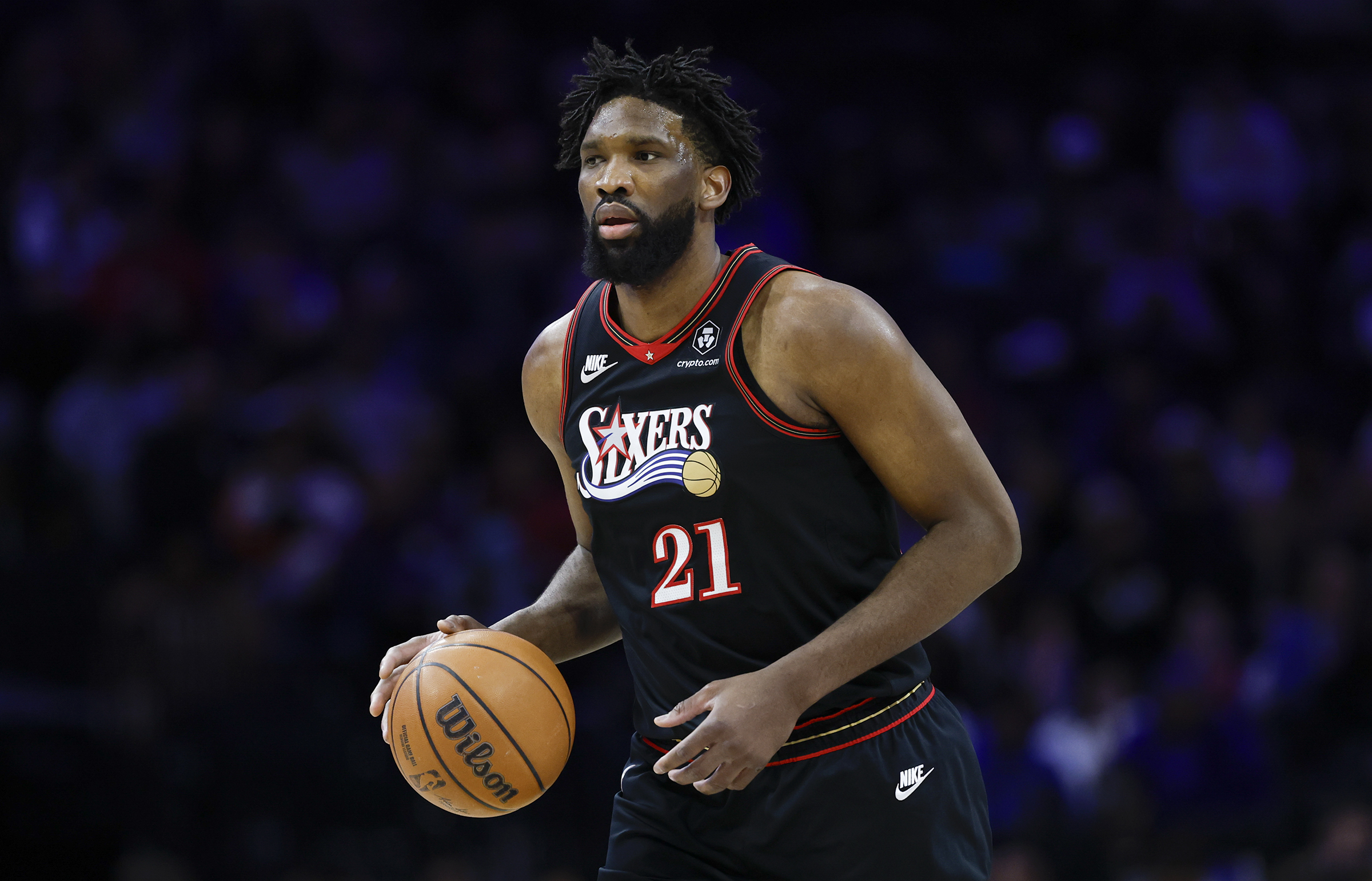
On Thursday, Joel Embiid expressed his desire to avoid the Sixers’ annual salary dump at the trade deadline to avoid paying the luxury tax.
“So hopefully we keep the same team,” Embiid said. “I love all of the guys that are here. I think we’ve got a shot.
“I don’t know what [the front office is] going to do. But I hope that we get a chance to go out there and compete because we’ve got a good group of guys in this locker room, and the vibes are great.”
The team is just $1.2 million over the luxury tax threshold, thanks to a $5.8 million tax variance credit because of George’s unpaid suspension, during which he will lose $11.7 million.
Before George’s suspension, the Sixers were $7 million over the tax threshold and were expected to trade away at least one expiring contract. While the Sixers are still expected to make some type of move, they can keep all three of the players — Quentin Grimes ($8.7 million salary), Kelly Oubre Jr. ($8.3 million), and Andre Drummond ($5 million) — who had expiring contracts that could have helped them duck the tax.
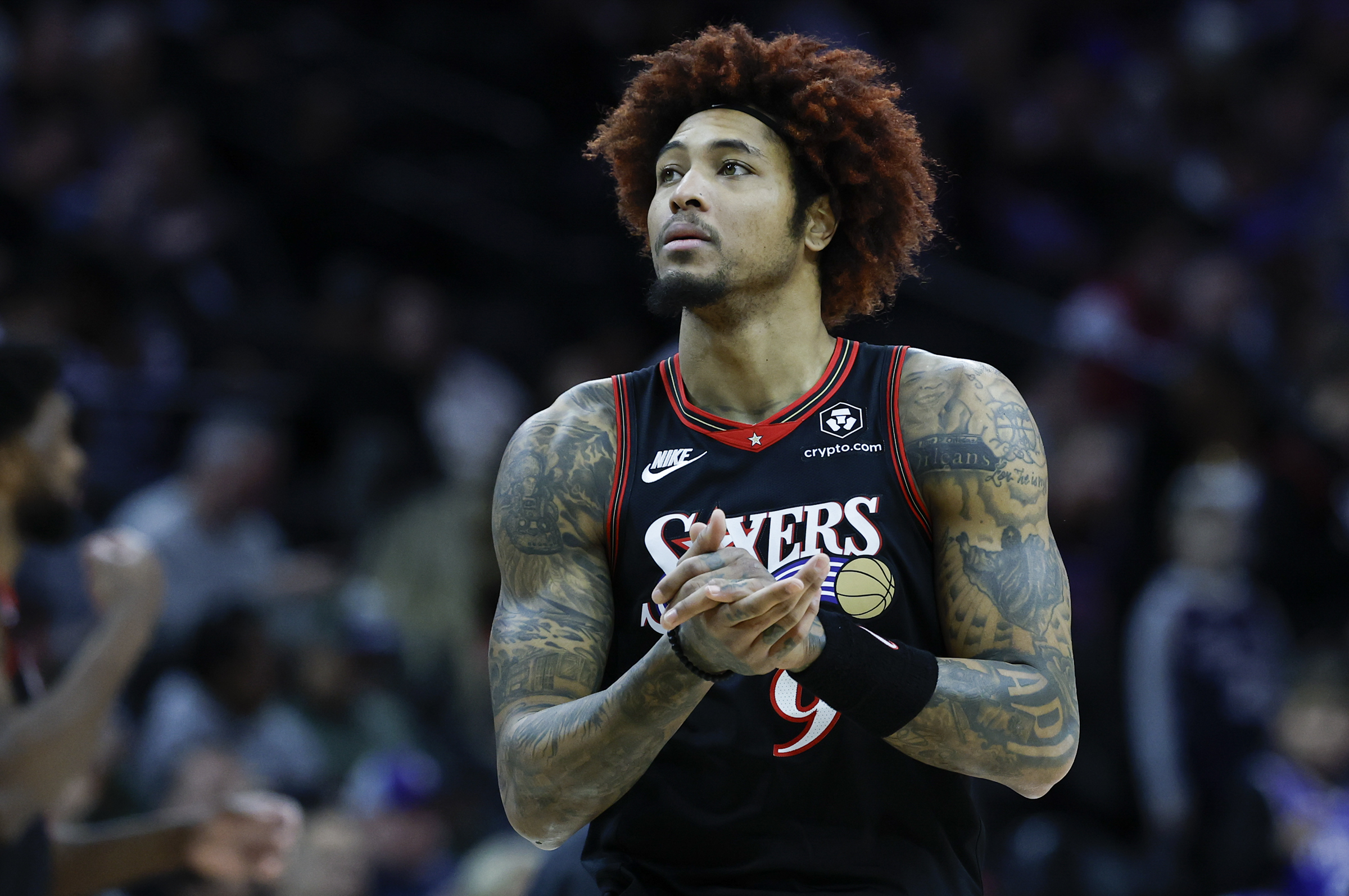
Sixers guard Kelly Oubre Jr., has stepped up in Paul George’s absence as the nine-time All-Star serves a 25-game suspension.
Do the Sixers have reliable players on the roster who can step up during George’s absence?
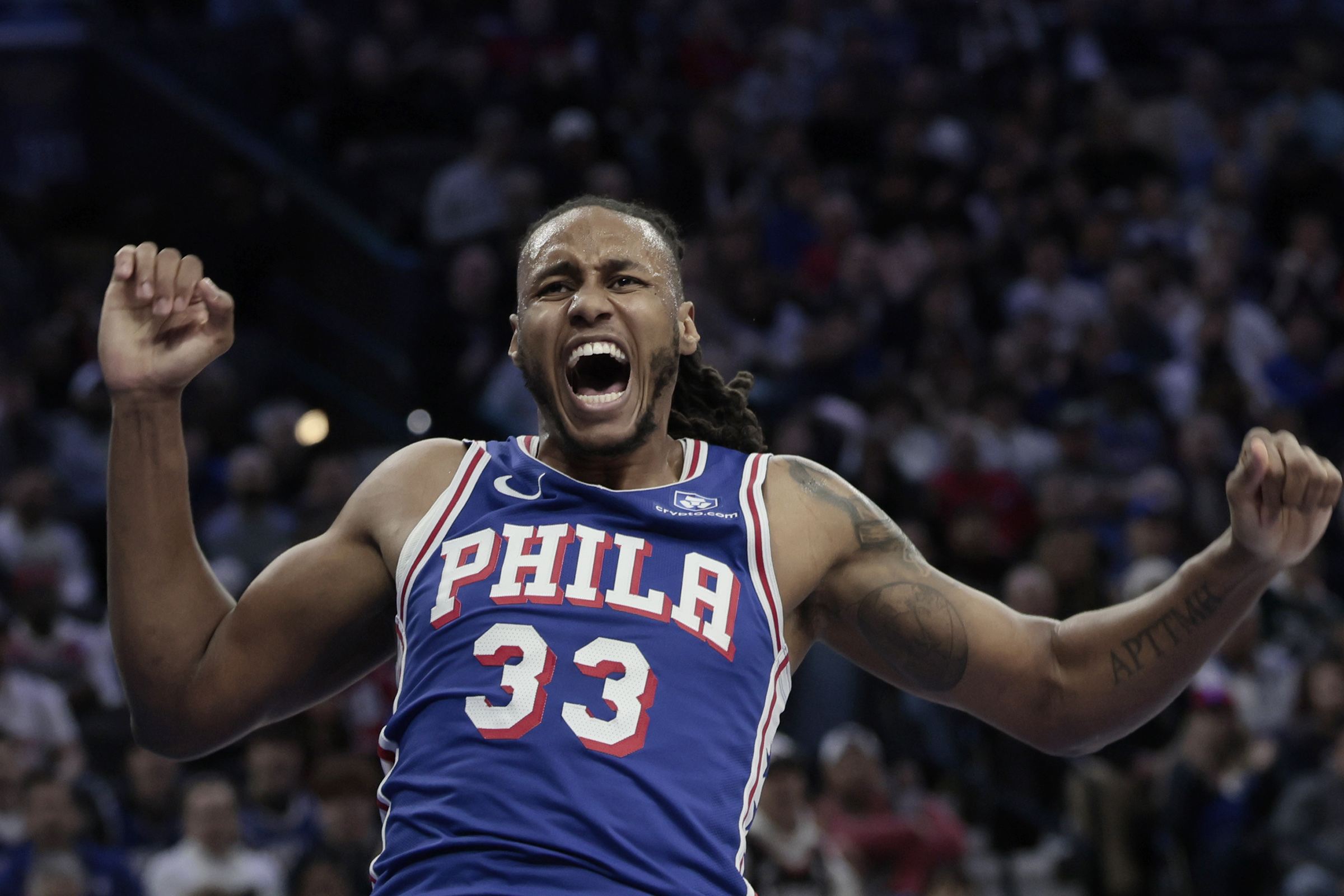
Oubre, VJ Edgecombe, and Dominick Barlow have all shown they can handle larger roles until George returns on March 25 for the final 10 games of the season.
Edgecombe, a rookie shooting guard, has been the Robin to Tyrese Maxey’s Batman when Embiid and George have missed games or were limited by minutes restrictions. In addition to scoring 34 points in the season opener, the 20-year-old has two game-winning baskets this season.
Meanwhile, Oubre played well in Saturday’s 124-114 victory over the New Orleans Pelicans, the first game that George missed due to the suspension. The 6-foot-8 swingman scored 19 points on 7-for-13 shooting to go with 10 rebounds and four assists.
“That’s big time,” Maxey said of Oubre’s 10 rebounds. “We’re going to need it, especially filling in for that role. And I have trust in him, because Kelly’s a guy who is not scared of the moment.”
Dominick Barlow became first Sixer with at least 25 points and 10 offensive rebounds since Hall of Famer Charles Barkley did so in November 1990.
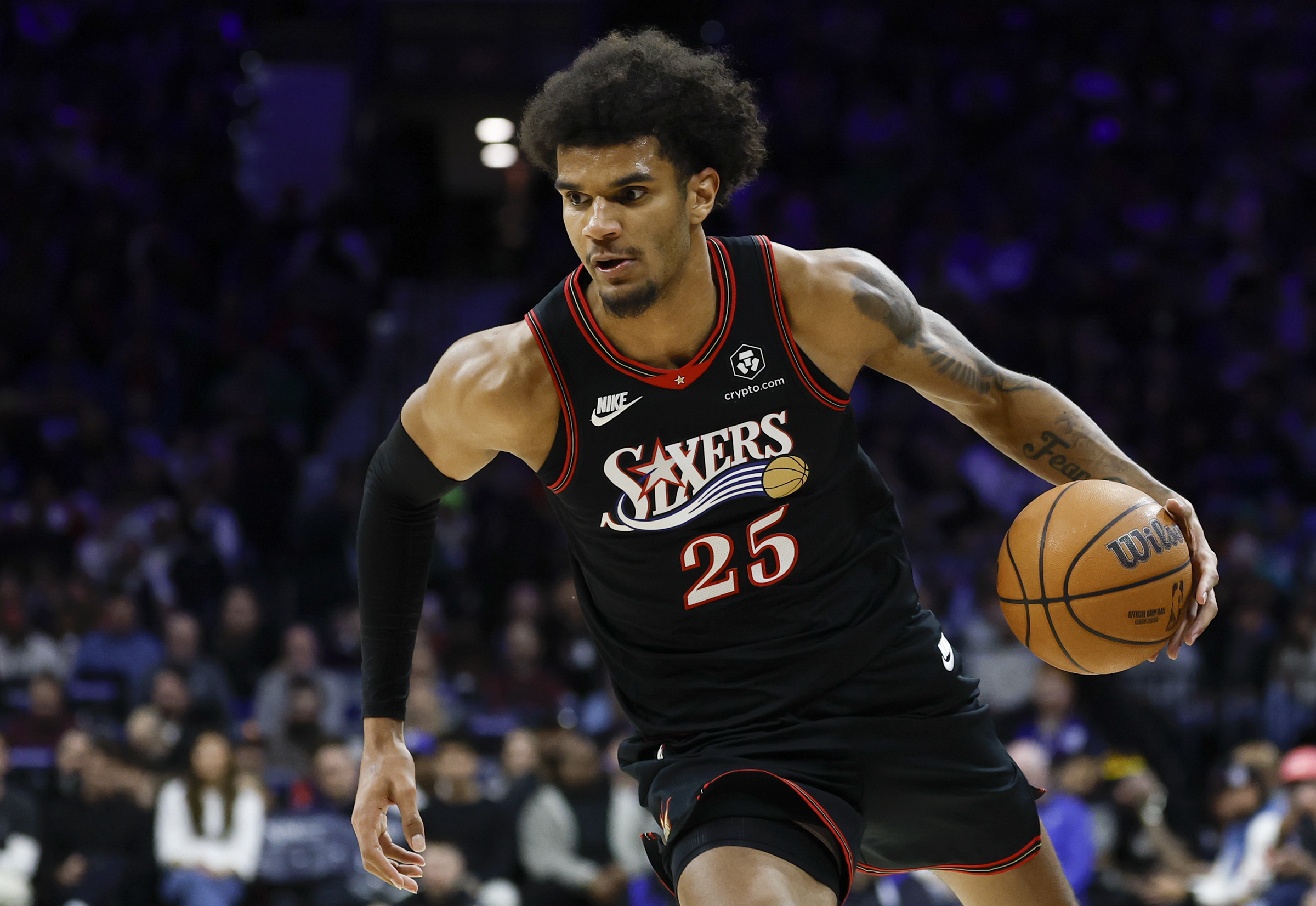
Barlow followed up with his own big-time moment in Monday’s 128-113 road victory over the Los Angeles Clippers. The power forward, who is starting in place of George, finished with a career-high 26 points to go with 16 rebounds, including a career-high 10 offensive boards, to post his second double-double of the season. He also finished with two steals and a block.
The 6-9, 215-pounder became the first Sixer with at least 25 points and 10 offensive rebounds since Hall of Famer Charles Barkley did so in November 1990. So the Sixers have players more than capable of filling in for George, a nine-time All-Star.
Do the Sixers have the available trade assets required to get a significant upgrade in talent at the trade deadline?
Aside from Maxey and Edgecombe, the Sixers don’t have the assets needed to acquire the type of player who could drastically improve the team via a trade. And the Sixers aren’t going to trade either player.
Embiid is once again playing at an elite level, averaging 29.3 points over the last 15 games heading into Tuesday’s contest against the Warriors. However, he has an extensive injury history and a three-year, $193 million contract extension that kicks in next season. While he looks great at the moment, there is a lot of uncertainty concerning how he’ll hold up in the future.
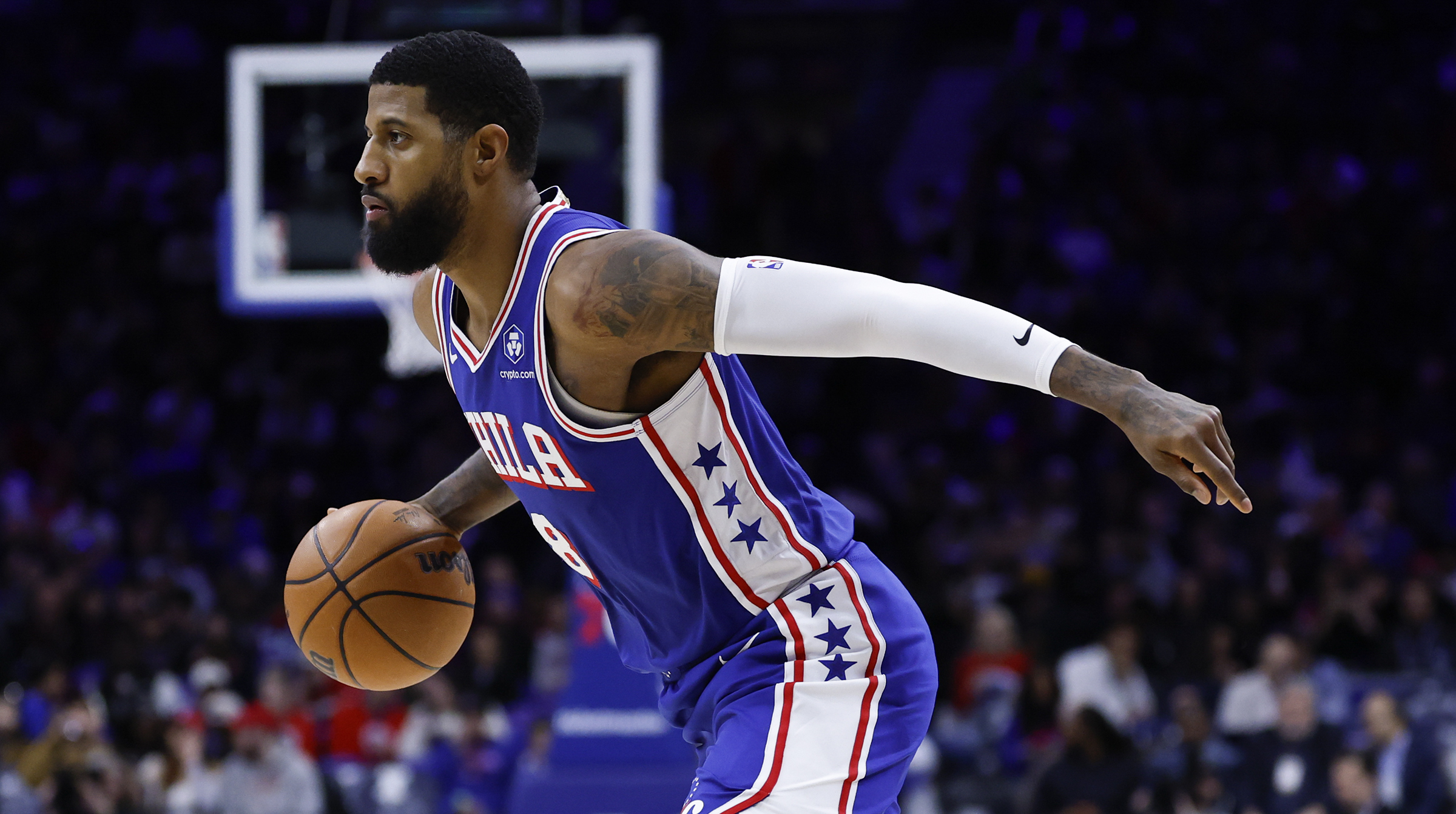
Sixers forward Paul George has been suspended 25 games for violating the league’s anti-drug policy.
Meanwhile, George has a tough contract to move after signing a four-year, $211.5 million deal in July 2024. At this stage of his career, he’s recognized as a fourth option on a championship team. Yet George is being paid as a top-two player. As a result, it’s hard to justify taking on his salary at this time.
And since the Sixers aren’t going to trade Maxey or Edgecombe, they shouldn’t forfeit their future by surrendering draft picks to facilitate a trade. They’ll need those picks to acquire young talent and continue building around Maxey and Edgecombe after Embiid and George leave Philly.
What’s the possibility of the team moving salary to convert two-way players Dominick Barlow and Jabari Walker to standard deals?
That could happen. Both players have been vital to the team’s success this season. Unless they sign Charles Bassey to a second 10-day contract on Thursday, the Sixers will have a standard roster spot available that day.
After the fifth game of George’s suspension, he will be moved from the active roster to the suspended list. The Sixers will be able to sign an additional player once he’s on that list.
The fifth game is Saturday’s road game against the Phoenix Suns. But the Sixers could also create an additional roster spot by trading a minimum-salary player to a team with available salary-cap space in exchange for draft assets.
Sixers forward Jabari Walker has outplayed the two-way deal he signed before the season.
How will the Sixers manage the backup center position?
Sources have said the Sixers are open to trading Drummond, even though he’s their best rebounder. If that happens, they’ll have to look for a backup center to grab rebounds and block shots.
Bassey, or a similar player, could be an option. The team initially selected the 6-foot-11 center out of Western Kentucky with the 53rd pick in the 2021 draft. He appeared in 23 NBA games as a rookie, averaging 3.0 points on 63.8% shooting along with 2.7 rebounds, 0.7 blocks, and 7.3 minutes.
However, Bassey was waived on Oct. 13, 2022.
He has averaged 4.3 points and 4.3 rebounds across 115 NBA games with the Sixers, San Antonio Spurs, and Memphis Grizzlies.
Sixers center Joel Embiid has returned to form this season, averaging 26.1 points, 7.4 rebounds and 3.8 assists.
Can this team compete for a title as currently constructed?
A lot of that will depend on Embiid’s health. With him playing at a high level, the Sixers were a dangerous team. When he plays well, they could beat anyone in the league.
But how will the Sixers compete against the Boston Celtics, who are adding standout center Nikola Vucevic and a second-round pick from the Chicago Bulls in exchange for Anfernee Simons and a second-rounder? Will seeing the Celtics and other East teams try to improve through trades force the Sixers to make a move? Time will tell.
It should go without saying, perhaps, but city officials this week are saying it anyway:
Just because temperatures have dipped into the teens (or lower) in recent days, doesn’t mean it’s safe to walk, skate, or drive across the area’s frozen lakes, rivers, and waterways.
“We’re getting reports of people walking and ice skating on Philadelphia’s rivers,” the Philadelphia Police Department said in a post to X on Sunday. “This is illegal for a reason. River ice is not as thick as it looks — moving water underneath weakens it and conditions can change fast. Please stay safe and stay off the ice!”
🚨 Safety Alert 🚨 We’re getting reports of people walking and ice skating on Philadelphia’s rivers. This is illegal for a reason. River ice is not as thick as it looks – moving water underneath weakens it and conditions can change fast. Please stay safe and stay off the ice!
— Philadelphia Police Department (@PhillyPolice) February 1, 2026
Though the Philadelphia Police said Monday there had been no rescues at this point, the department has fielded more than a dozen calls already, according to Capt. Anthony LaSalle of the city’s police Marine Unit.
LaSalle said a “significant” portion of the Schuylkill was currently frozen over, something that hasn’t happened in a decade.
“In some areas, it could be thicker than other areas, and you’ve got to realize that water is flowing underneath it,” LaSalle said. “You can have six inches in some areas and one inch in another area. And if there’s debris, that makes the ice even weaker.”
It’s a sentiment echoed by City Hall, which this week also urged residents to stay off all frozen waterways for the safety of both themselves and first responders.
“Police and medical staff have been advising residents and visitors to stay off all frozen rivers, lakes and waterways,” a city spokesperson said in an email. “Ice conditions are unpredictable, and walking, skating, or driving on frozen surfaces is extremely dangerous.
“Falling through ice can become fatal within minutes and places both the public and first responders at serious risk. For everyone’s safety, the City is asking everyone to stay on solid ground and avoid all frozen waterways.”
Devin Askew was covered in sweat when he sat down in a room inside the practice facility at Villanova on Monday, fresh off an on-court workout with development coach JayVaughn Pinkston that followed a weightlifting session.
Askew, Villanova’s sixth man, is on a tear as of late, averaging 15.8 points during a six-game stretch in which the 23-year-old guard has made 17 of 29 three-pointers. Sessions with Pinkston, a former Villanova player, have helped. Pinkston’s role is exactly that, to do the little things to get the most out of every player. But with Askew, Pinkston’s presence also is a reminder of the past and the winding journey Askew has traveled to put himself in the running for Big East Sixth Man of the Year.
There are few connections remaining to the Villanova program of old, and Pinkston, who played for the Wildcats from 2011 to 2015, is one of them. Which gives him the right to playfully rib Askew about 2019, when, as a top recruit in the class of 2020 from California, he chose Kentucky over Villanova (and others).
“He’ll always tell me I should have been here five years ago,” Askew said. “I should’ve always been a Villanova Wildcat.”
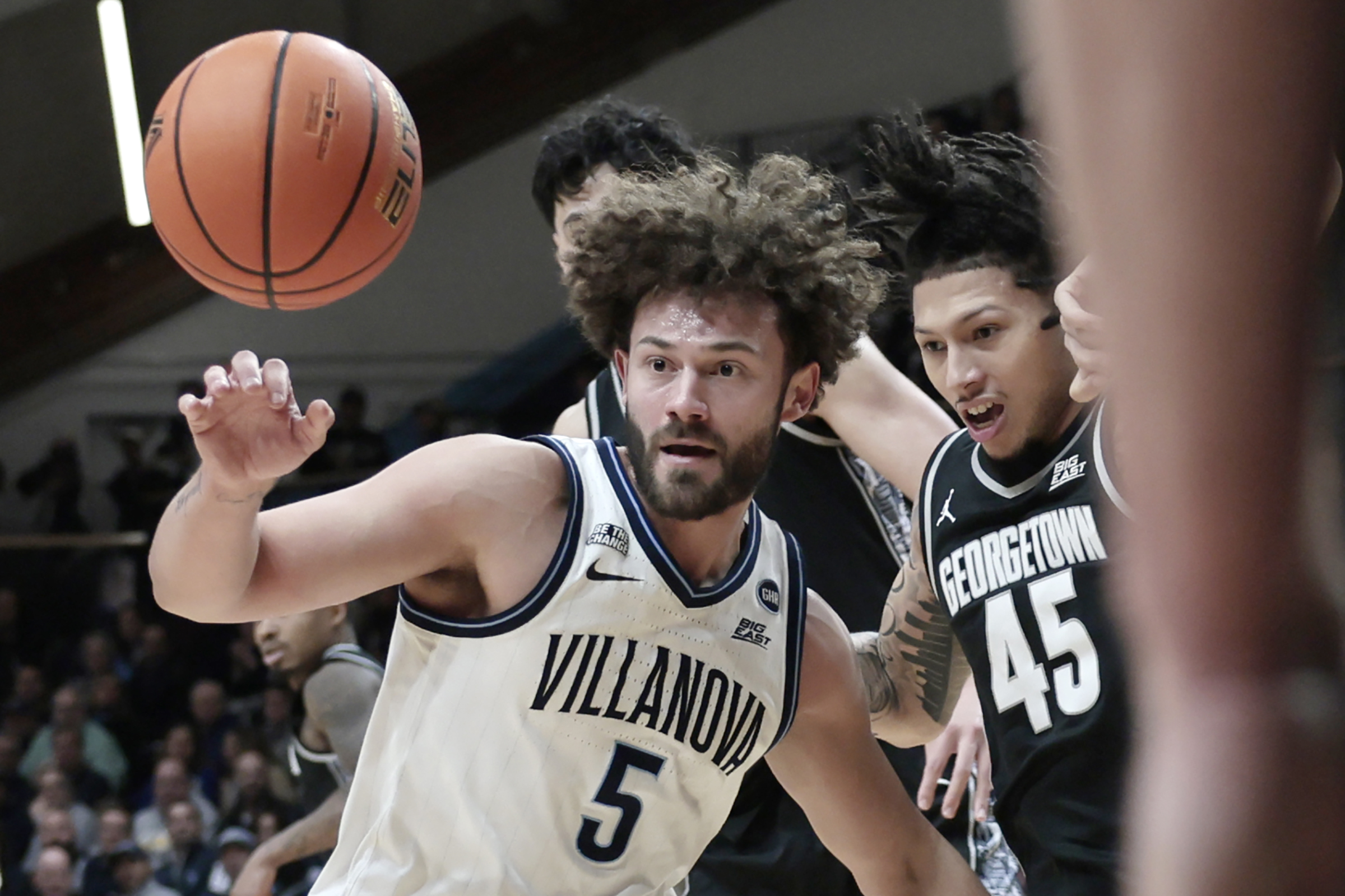
Devin Askew is making a strong case for Big East sixth man of the year.
He is here now almost by accident. His college journey has traveled more than 8,000 miles from Mater Dei High School in California to Lexington, Ky., to Austin, Texas, to Berkeley, Calif., to Long Beach, Calif., and, finally, to the Main Line. Five schools in six years. Which made him just another sign of the times when Kevin Willard plucked him out of the transfer portal to give his roster a much-needed experienced ballhandler and shooter.
He was, to the outside world, another mercenary college basketball player passing through a random place on a map and collecting a paycheck to bridge his way to wherever professional hoops takes him.
But for Askew, his time at Villanova has been a “full-circle” experience. Like in most people, his past explains the present, and it’s fitting the journey ends here, where his future is being determined during a critical turning-point season for him and Villanova.
‘It’s why we brought him here’
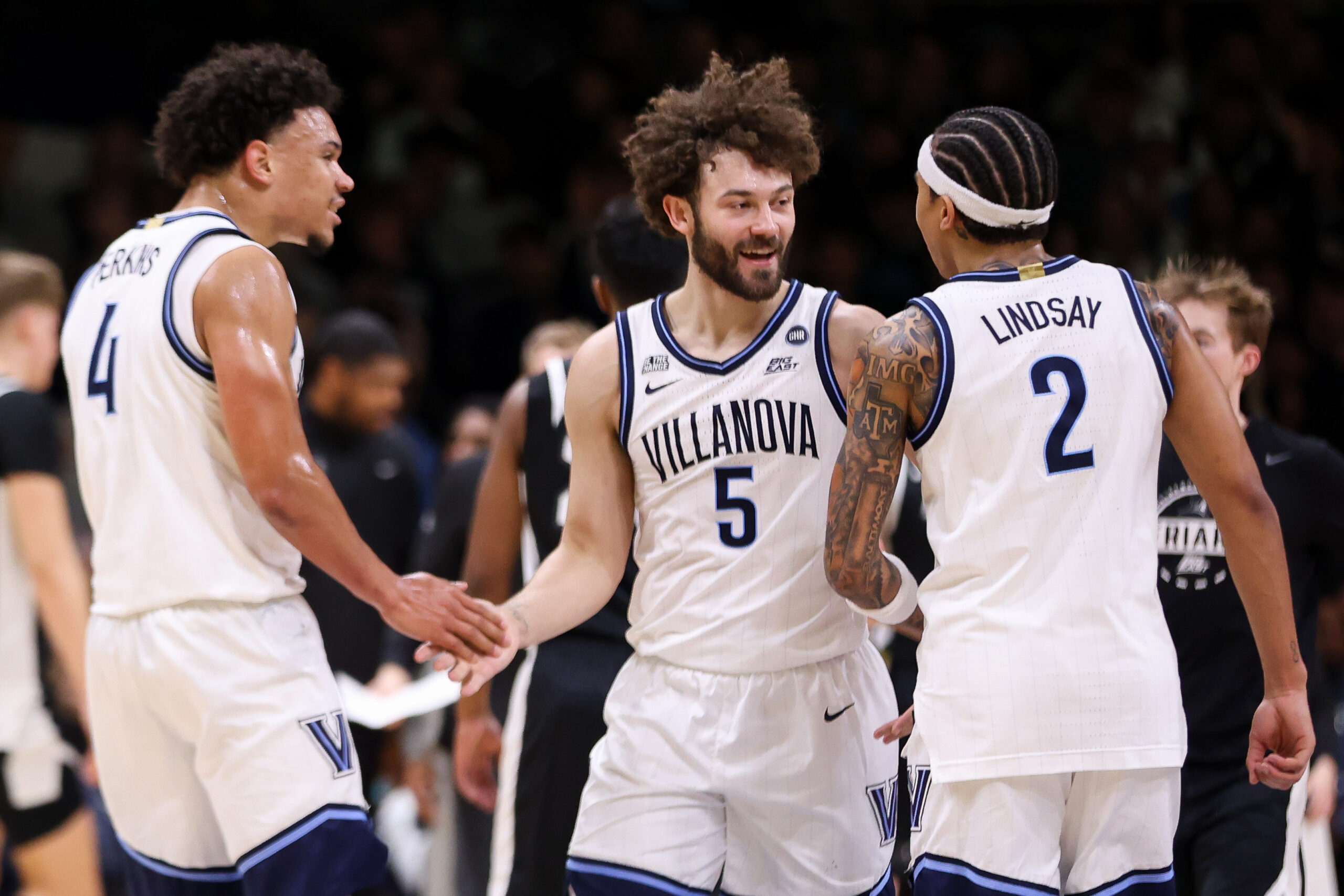
This recent stretch is what Willard imagined when Villanova recruited Askew this time around. It’s a young Villanova roster, especially at guard. Freshman Acaden Lewis and sophomore Bryce Lindsay have had breakout seasons with the Wildcats, but Askew lately has been a steady presence, and his experience has allowed him to compete on both ends during the physical demands of a Big East schedule.
Before the last six games, Askew reached double figures just three times in 15 contests. It took a little bit longer for it all to come together because he suffered a knee injury during the lead-up to the season. His injury history followed him. A sports hernia injury ended his junior season at California after 13 games, and a foot injury ended his following season, the 2023-24 campaign, after just six.
That injury gave him a redshirt season, but also extra perspective to get through his first few months at Villanova, when he missed nearly two months of practice and was not 100% when the season started.
“I’m tough, and I’m not going to quit,” Askew said when asked what he has learned about himself along his college journey.
Were past versions of him not as tough?
“The true test of knowing that is to go through something,” he said. “I’m willing to go through it and deal with anything that comes to me because I love the game, I love the sport of basketball. I don’t want to stop playing.”
Villanova has needed Askew to be a stabilizing force at times, and it also has needed him to take over games offensively, like against St. John’s and Connecticut, two of the more experienced teams in the conference.
“I don’t view it as they need me to take over,” Askew said. “There are so many things going on within a game, taking over a game could be a defensive stop.”
Devin Askew scored a team-high 20 points off the bench against Providence on Friday.
Willard credited a recent run of strong practices after Askew made five three-pointers and scored 20 points in Friday’s win over Providence. The coach has talked recently about how critical it is to have Askew’s experience. He’s a big reason the Wildcats are 16-5 overall and 7-3 in the Big East as they head into Wednesday night’s home game vs. Seton Hall.
“It’s why we brought him here,” Willard said. “This is the type of player he is. When you go into the portal, you really have to evaluate and watch film and see what he has. When he was on his visit, I think the best part about it was I just loved his maturity. He’s a terrific, terrific person.
“He’s getting rewarded for being a hard worker and a terrific person.”
A piece from all the places
There is a part of every stop that make up the player and person Askew is.
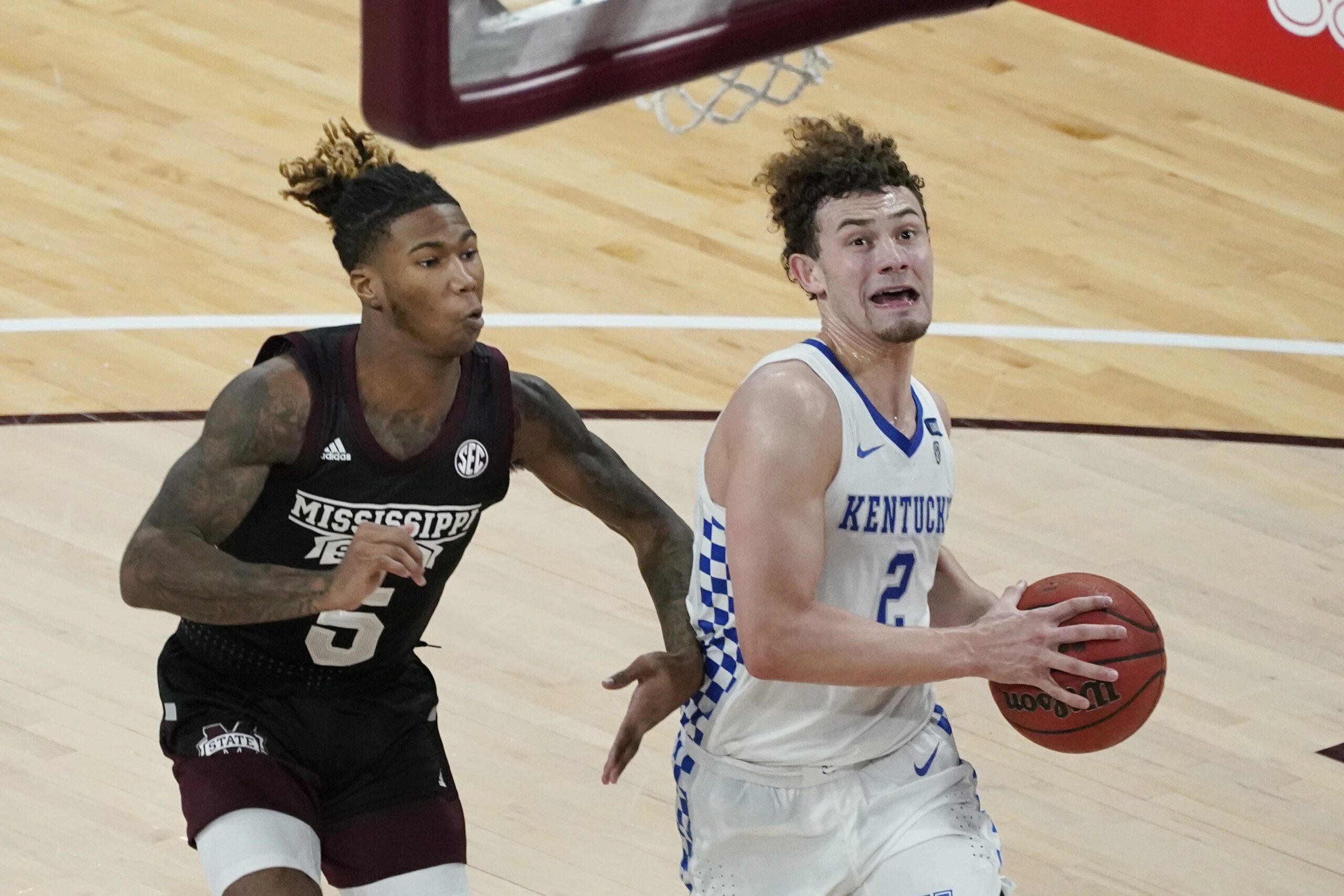
He chose Kentucky as a 17-year-old top-40 prospect because who wouldn’t want to play for John Calipari and follow in the footsteps of top guards like Shai Gilgeous-Alexander and Tyrese Maxey?
What did he learn from each stop? Askew went through them one by one.
Devin Askew said his time at Kentucky “taught me patience and to be even-keeled.”
At Kentucky, he learned how to go from being the guy on a high school team to being one really good player on a team of other really good players. It wasn’t an easy learning experience. “It actually taught me patience and to be even-keeled,” he said. “There’s going to be ups and downs, and you can’t get too high or too low. I was just an emotional kid.” He had high expectations for himself and didn’t meet them. He started losing his love of basketball.
Enter Texas, which may be the most important stop of the five. “That brought back all that love for me,” Askew said. “No, you still love this game. Chris Beard and that coaching staff saved my career.” Askew averaged 14.9 minutes off the bench and was a role player on a team that reached the NCAA Tournament. He fell back in love with basketball, but he wanted a place where he could start, so he went back home to California.
At Cal, it was time to “go show it,” Askew said. “I was ready. And the seasons just got cut short to injuries both years, and that’s where we kept learning and kept growing. … This is the life we chose.”
Cal allowed him to be closer to his family. He has leaned heavily on his two brothers and his parents over the years. Cal also gave him his undergraduate degree in interdisciplinary studies. But entering the 2024-25 season, he was an oft-injured journeyman with two seasons of eligibility left — one redshirt year, one COVID year — looking to prove he could still play. To the portal, and to Long Beach State, he went.
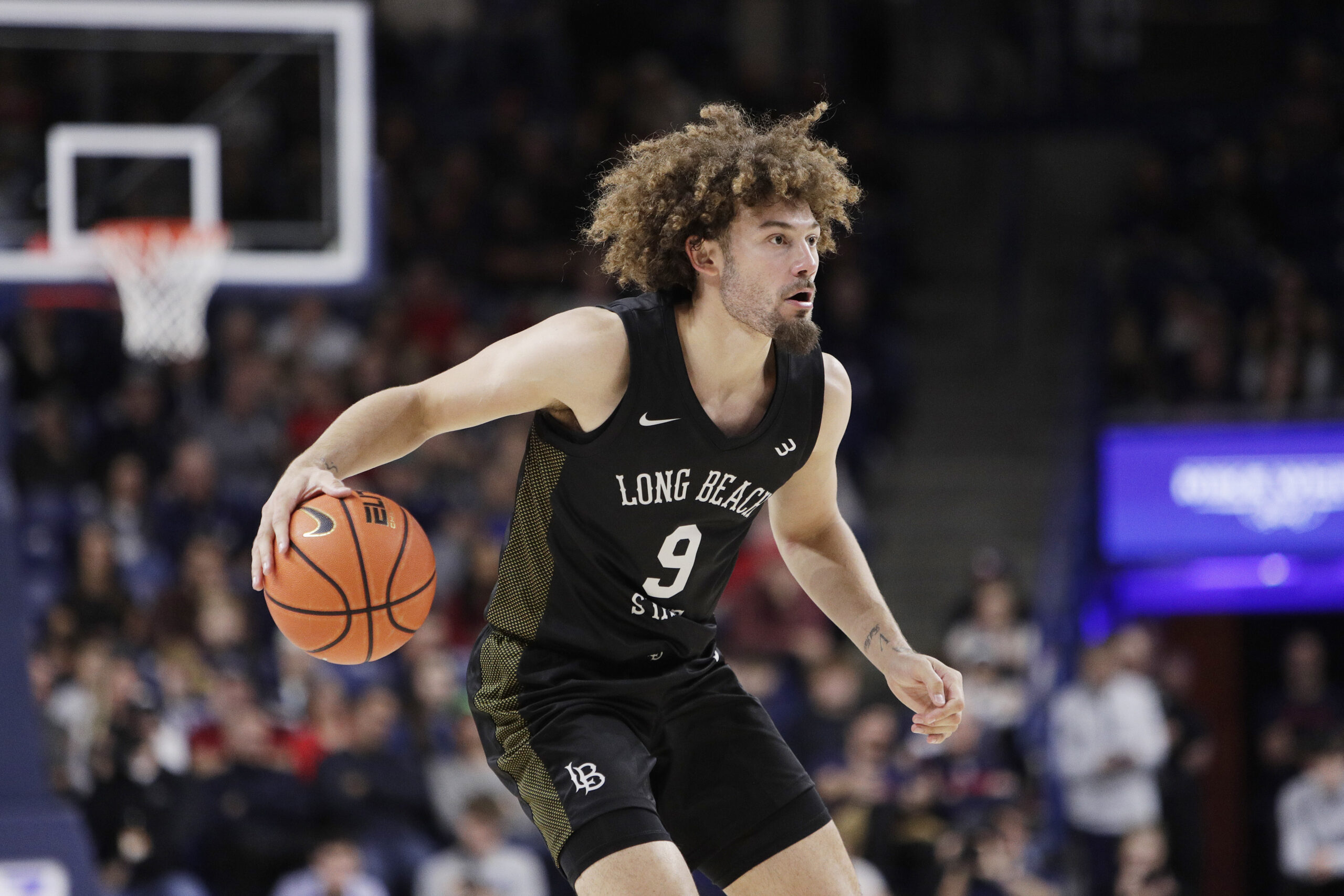
“Go do it,” Askew said of Long Beach. “It wasn’t go show everyone, because I wasn’t into showing everyone. But it was prove to yourself again.” He scored 18.9 points per game and shot 37.6% from three-point range on a team that won seven games and ended the season by losing its last 15.
At Long Beach State, Devin Askew averaged 18.9 points.
“Not a lot of people believed in me and believed I could play still,” Askew said. “They gave me the platform to show what I could still do.”
There are a lot of reasons to gripe about the state of college basketball, and a player going to five schools in six years is one of them. Askew is, in a sense, a one-year rental who helped Willard get Villanova back on track in his first season.
Off the court, Askew is taking classes toward a master’s certificate in Villanova’s public administration program, a year after earning a certificate in communications at Long Beach. On the court, Askew is helping Villanova get back to the NCAA Tournament.
When the topic of the tournament came up, Askew shook his arms and said he got chills.
“That would mean everything to me,” he said. “I kind of get emotional thinking about it. As a kid you always want to play in the tournament. You go to college and want to play college basketball to make the tournament.”
A continuation of his current form will go a long way toward making that possible, and helping him raise his own profile. The NBA probably isn’t in his future, but there is a country or league out there for a lot of players like him.
“I don’t know what this year will do for me,” Askew said. “And I don’t like to hope, because what will happen will happen. I’m just thankful wherever this game takes me, thankful and grateful.”
Sometimes it takes you to the place where maybe you were always supposed to be.
Don Bitterlich’s Chevy Caprice was loaded with everything he needed for his gig that night at an Italian restaurant in Northeast Philly: an accordion, a speaker, and a pair of black slacks.
He learned to play the accordion as a 7-year-old in Olney after his parents took him to a music shop on Fifth Street and he struggled to blow into a trumpet. His father pointed to the accordion, and Bitterlich played it everywhere from his living room on Sixth Street to Vitale’s on Saturday nights.
The owner of Vitale’s — a small restaurant with a bar near Bustleton and Cottman Avenues — paid Bitterlich $175 every Saturday. It was a lot of money for a college student in the 1970s. First, he had to finish football practice.
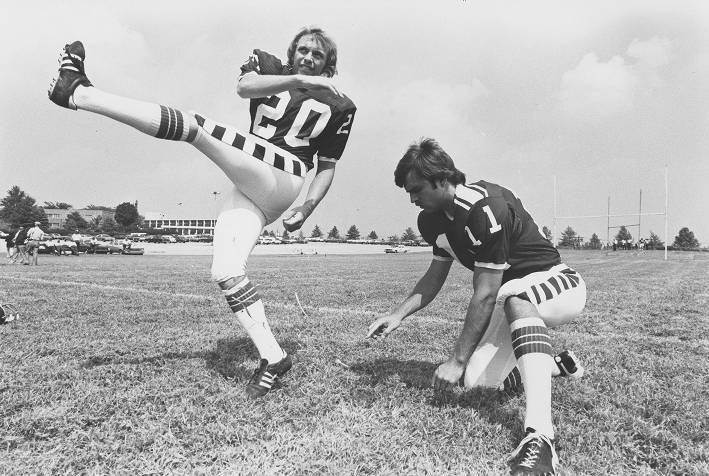
Bitterlich went to Temple on a soccer scholarship before football coach Wayne Hardin plucked him to be the placekicker. He never even watched a football game, but soccer coach Walter Bahr — the father of two NFL kickers — told Hardin that Bitterlich’s powerful left leg was fit for field goals.
Bitterlich went to football camp in the summer of 1973, while also playing soccer for Bahr and trying to keep up with his accordion. He had yet to officially make the football team that August, so there was no use in canceling his 10 p.m. Saturday gig at Vitale’s. Bitterlich was due to play there in 90 minutes, but the Owls had yet to include their kicker in practice. He was hoping to leave practice by 8:45 p.m., and it was almost time.
“I’m watching the clock,” Bitterlich said.
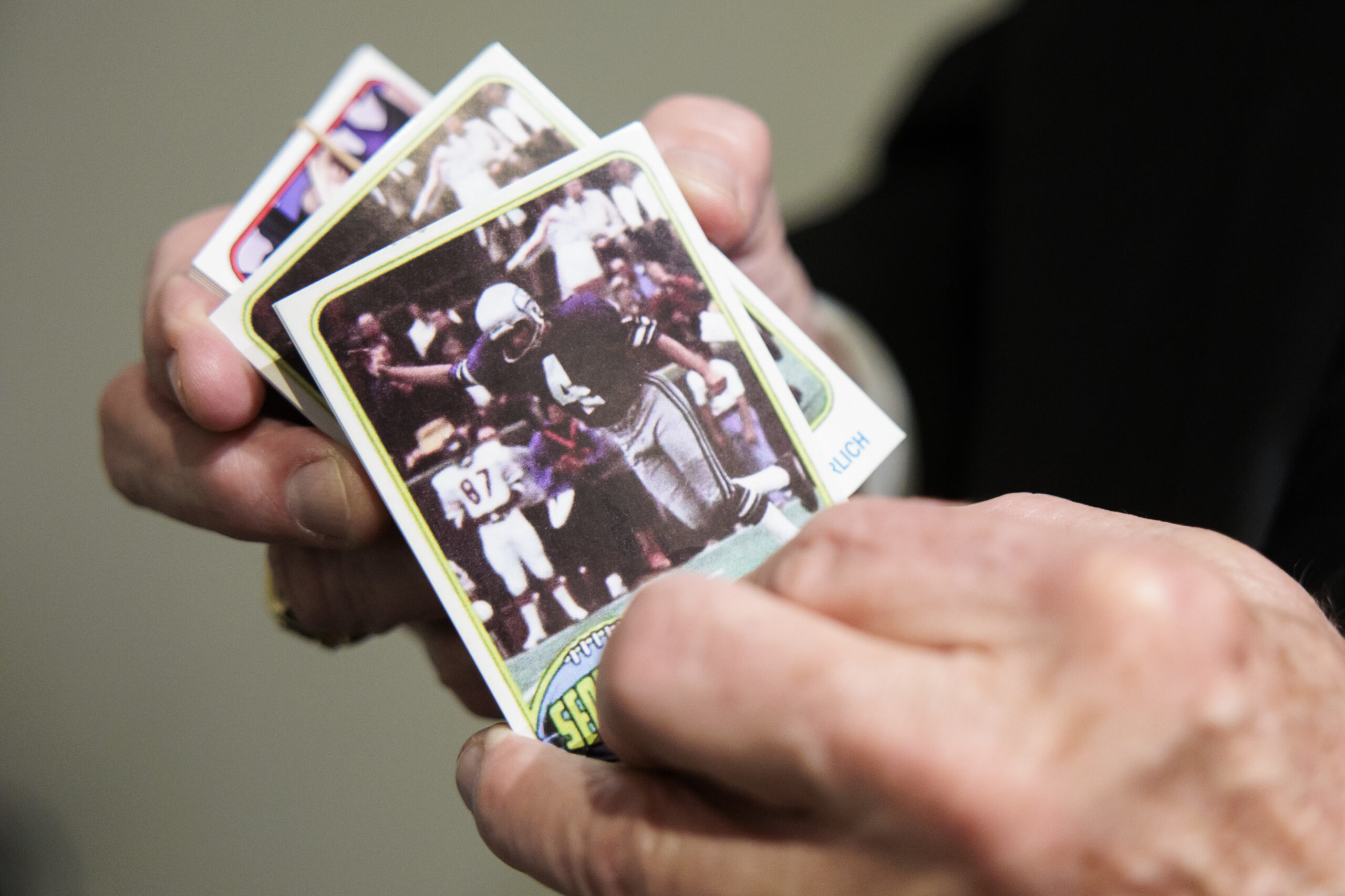
Don Bitterlich holds his Seahawks football card. He scored the first points in Seahawks history as a kicker.
He asked an assistant coach if the team was going to kick, and the coach shrugged him off. A half-hour later, he asked again. He had to go, Bitterlich said.
“He said, ‘Go where?’” Bitterlich said.
Bitterlich set records at Temple, played in an all-star game in Japan, was in his dorm when he was selected in the 1976 NFL draft, and scored the first-ever points for the Seattle Seahawks, who play Sunday in Super Bowl LX against the New England Patriots.
He made it to the NFL despite knowing little about football until he became Temple’s kicker. It was a whirlwind, he said.
He really made his name with the accordion, the instrument he’s still playing more than 50 years after he had to rush to a gig from football practice.
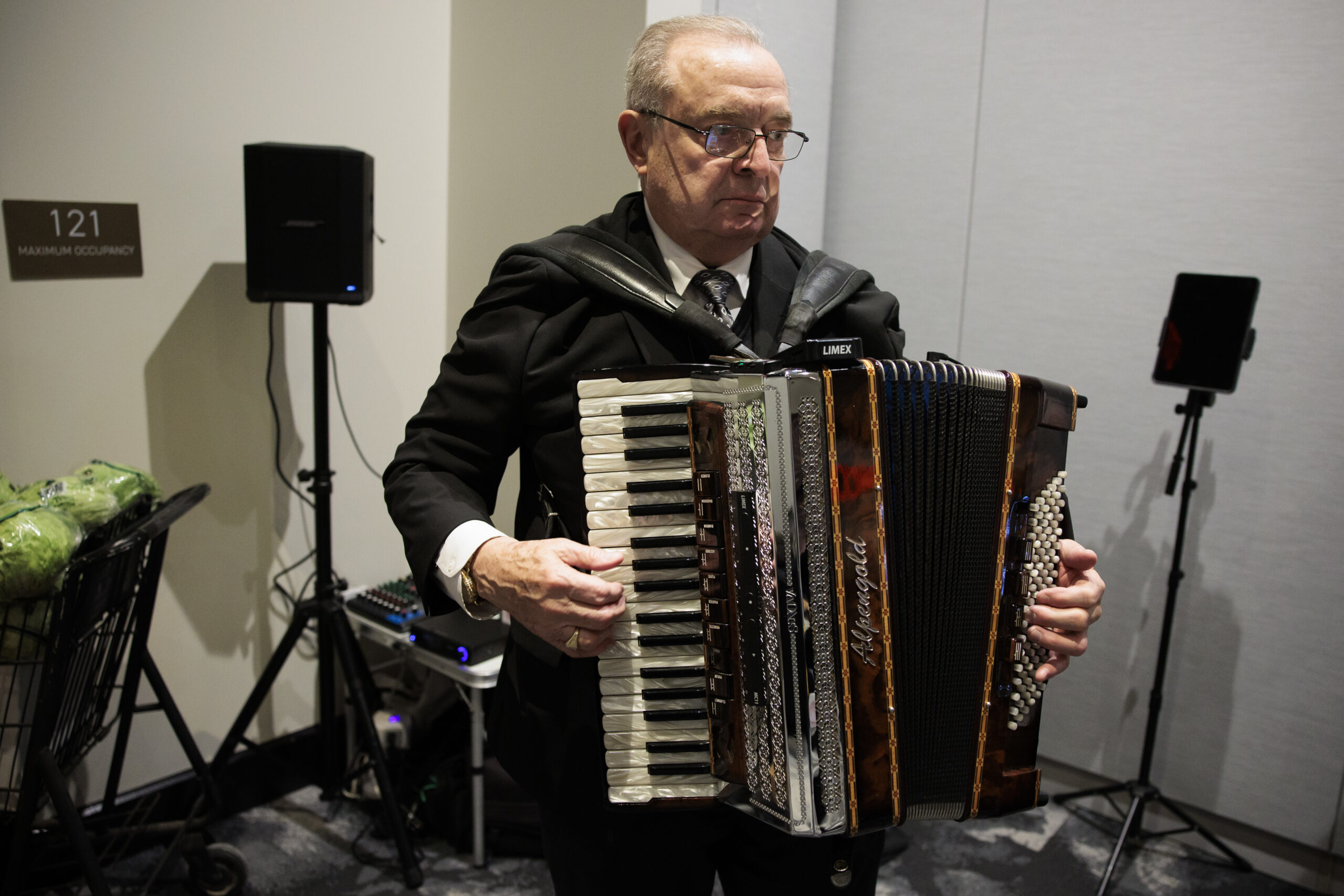
He has long been a regular at German festivals, restaurants, banquets, and even marathons. A German club in the Northeast called Bitterlich “the hardest working accordion player in the world.” He played a gig on Sunday night in South Philly and another on Monday morning near Lancaster.
Bitterlich, 72, who worked as a civil engineer until retiring last year, said he played more than 100 gigs in 2025. Football stopped years ago, but the show rolls on.
“These days,” he says, “most people around hear me playing the accordion, and they don’t know that I kicked in the NFL.”
Becoming a kicker
Bitterlich was home in Warminster — his family moved from Olney just before his freshman year at William Tennent High — when Bahr called. The Temple soccer coach had been a star on the U.S. team that upset England in the 1950 World Cup and was one of the best players to come out of Philadelphia.
“He had this raspy voice,” Bitterlich said. “He smoked cigars during practice and basically chewed and ate half of it as well. He always called me ‘Bitterlich’ but called me ‘Donald’ if I screwed up.”
Don Bitterlich (20) at Temple, likely during the 1975 season.
So Bitterlich figured he was in trouble when his coach called him “Donald” on the phone.
Bahr asked Bitterlich whether he knew who Hardin was. Yes, he said. Bahr said he had just talked to the football coach and told him Bitterlich could kick. The coach had watched Bitterlich since he played soccer for Vereinigung Erzgebirge, a German club his grandfather founded off County Line Road. He told Bitterlich he could do it.
“So I said, ‘No soccer?,’” said Bitterlich, who was also the mascot at basketball games in the winter. “‘No, you’re my starting left midfielder.’ I was thinking, ‘How is this going to work?’”
Bahr told Bitterlich to call the football office, get a bag of balls, and start kicking. He kicked every day at the German club and tried to figure it out. He was soon splitting his day between football camp in Valley Forge and soccer camp at the old Temple Stadium on Cheltenham Avenue in West Oak Lane. Each sport practiced twice a day and Bitterlich found a way to make them all.
He played a soccer game that season in Pittsburgh, flew home with the team, and then took a taxi from the airport to Temple Stadium to kick for the football team. He was studying civil engineering and balancing two sports plus his accordion.
It eventually became too much. Hardin told Bahr that he would give the kicker a full scholarship to play football. That was it.
“With the football scholarship, I got room and board,” Bitterlich said. “So I was living on campus after commuting from Warminster. It was insane. I was so worn out.”
Making history
Bitterlich kicked a game winner in October 1973 against Cincinnati as time expired, made three kicks at Temple longer than 50 yards, and was the nation’s top kicker in 1975. The soccer player made a quick transition.
“Coach Hardin always said, ‘If I yell ‘field goal,’ I expect three points on the board,’” said Bitterlich, who was inducted into the Temple Hall of Fame in 2007. “He expected that. The point of that was that he trusted you. That was his way of saying, ‘I’m not asking you to do anything that I don’t think you can do.’”
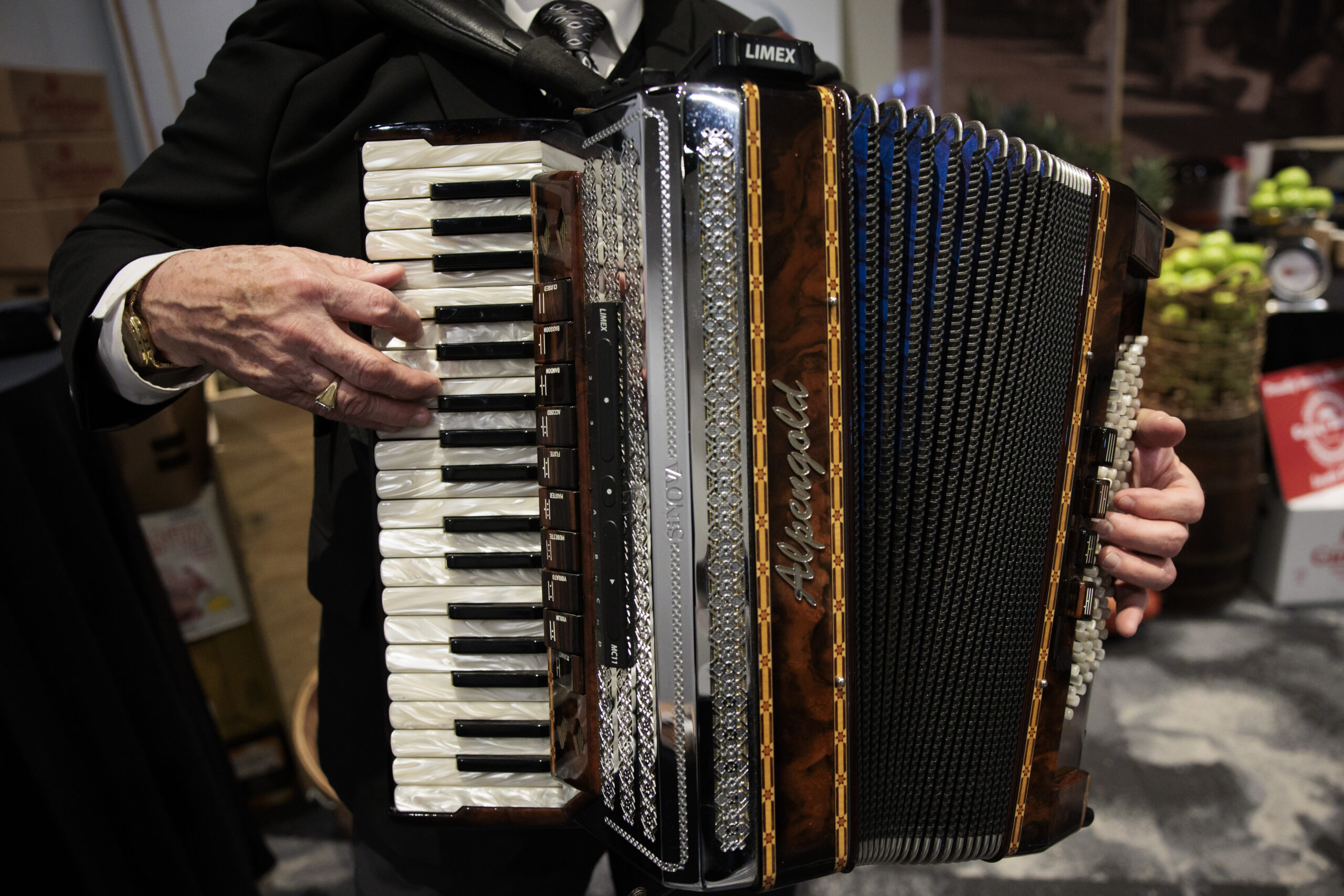
Don Bitterlich performs with his accordian on Sunday during The Tasties at Live! Casino.
The coach helped Bitterlich understand the mental side of kicking, challenging him in practice to focus on the flagpole beyond the uprights. Try to hit the flag, he said.
“That had a huge mental impact on me,” Bitterlich said. “You have that image, and then when you do your steps back and you’re set, that’s all you can see. It made all the difference in the world for me. Once you have that image, you zone out any of the noise. You’re just focused on that image.”
It helped him focus in September 1976 when the Seahawks opened their inaugural season at home against the St. Louis Cardinals. They drafted Bitterlich five months earlier in the third round. The Kingdome’s concrete roof made the stadium deafening, but Bitterlich felt like he was back in North Philly practicing at Geasey Field as he focused the way Hardin taught him to.
He hit a 27-yard field goal in the first quarter, registering the first points in franchise history. The Seahawks had quarterback Jim Zorn and wide receiver Steve Largent, but it was the soccer player who scored first.
Bitterlich’s NFL career didn’t last long, as the Seahawks cut him later that month after he missed three field goals in a game. He tried out for the Buffalo Bills, but a blizzard hindered his chances. He signed with the Eagles in the summer of 1977, missed a field goal in a preseason game, and was cut.
He landed a job as a civil engineer in Lafayette Hill. He received a call on his first day from Eagles coach Dick Vermeil, who said the San Diego Chargers wanted to try him out. Bitterlich flew to California the next day but turned down a three-year NFL contract that would pay him only slightly more than his new job back home.
“Plus, the real reason I turned down their offer was that they couldn’t hold for a left-footed kicker,” Bitterlich said. “Their holder just couldn’t get the ball down. I didn’t want to sign that contract. ‘What’s going to happen in two days when that guy can’t get the ball down?’”
A week later, the San Francisco 49ers called. He flew back to California, tried out against another kicker, and was told he won the job. But the 49ers decided to sign Ray Wersching, who had been cut the previous season by the Chargers. Bitterlich turned down the chance to replace Wersching in San Diego, and now Wersching was swooping in for the job Bitterlich wanted in San Francisco.
“I went back home and said, ‘That’s enough,’” said Bitterlich, who played three NFL games. “It started to get disappointing.”
“I love to play,” Bitterlich says of his accordion. “I usually don’t take breaks. Most bands will play 40 minutes on, 20 minutes off. I just play through.”
Still playing
His NFL journey was hard to imagine that day at practice as he watched the clock at Temple Stadium and thought about how long it would take to drive to Vitale’s. Bitterlich told the assistant coach that it was almost time to play his accordion. That, the coach said, was something he would have to talk to Hardin about. Fine, Bitterlich said.
“I didn’t know if I was going to make the team or not, and I knew I was going to play soccer,” Bitterlich said. “So I just went over and told Coach.”
Hardin heard his kicker say he had to leave football practice to play the accordion and laughed.
“He said, ‘Yeah, I heard something about that,’” Bitterlich said.
The coach stopped practice and let Bitterlich get in the mix. He nailed six field goals and the other kicker shanked a few. The job felt like his. He hit a 47-yarder and looked over at Hardin.
“He’s like, ‘Yeah, yeah. Go ahead. Go,’” Bitterlich said.
Bitterlich was soon in his Chevy Caprice, heading down Cottman Avenue on his way to Vitale’s. He wasn’t late to his accordion gig that night. His football career would end a few years later, but the music has yet to stop.
“I enjoy it,” Bitterlich said. “I love to play. I usually don’t take breaks. Most bands will play 40 minutes on, 20 minutes off. I just play through. I really don’t take a break. I love it.”
SAN JOSE, Calif. — Christian Elliss was cut from an NFL roster six times in the first three seasons of his career — four times by the Eagles. The last one, on Dec. 6, 2023, stung the most.
“I remember just [being] on the phone with my dad, crying,” Elliss said. “I was like, ‘Dad, that’s the one that really broke me.’ Because I thought I was playing well. I knew I had the talent to play, but for whatever reason … I can’t remember.”
The reasons were complex. The Eagles were reeling and injuries and subpar play at linebacker had forced general manager Howie Roseman to sign veteran Shaquille Leonard. Elliss played mostly on special teams, but he was viewed as the low man at linebacker and was waived.
“Howie and who’s the head man over there …,” Elliss said before being reminded that Nick Sirianni was the Eagles’ head coach. “… and Nick, for whatever reason, they didn’t see me as a piece for them. But luckily Bill did.”
That was Bill Belichick, the former Patriots coach. Elliss was claimed off waivers by New England the next day. And he hasn’t left, despite the coaching turnover that went from Belichick to Jerod Mayo to Mike Vrabel since Elliss’ arrival.
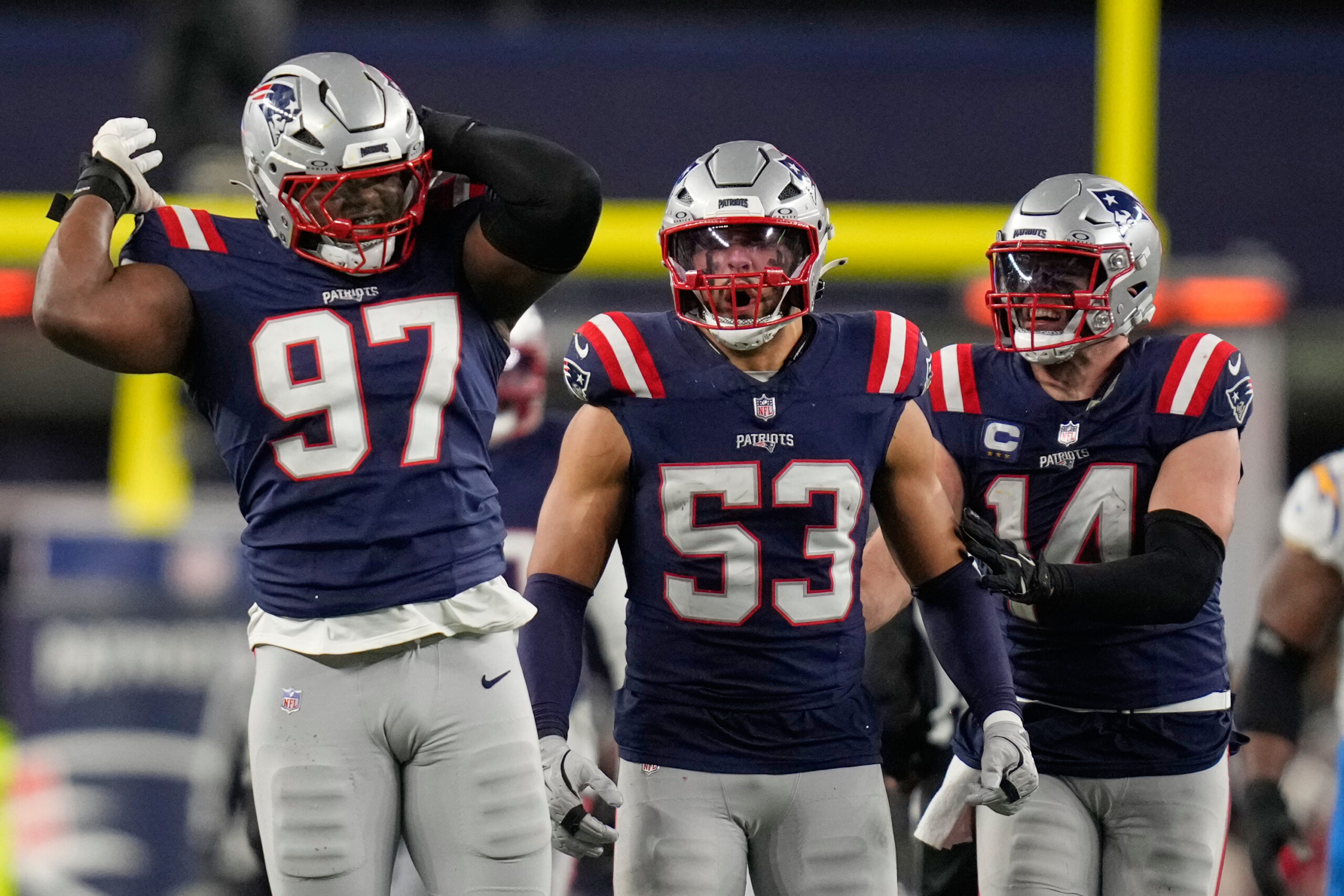
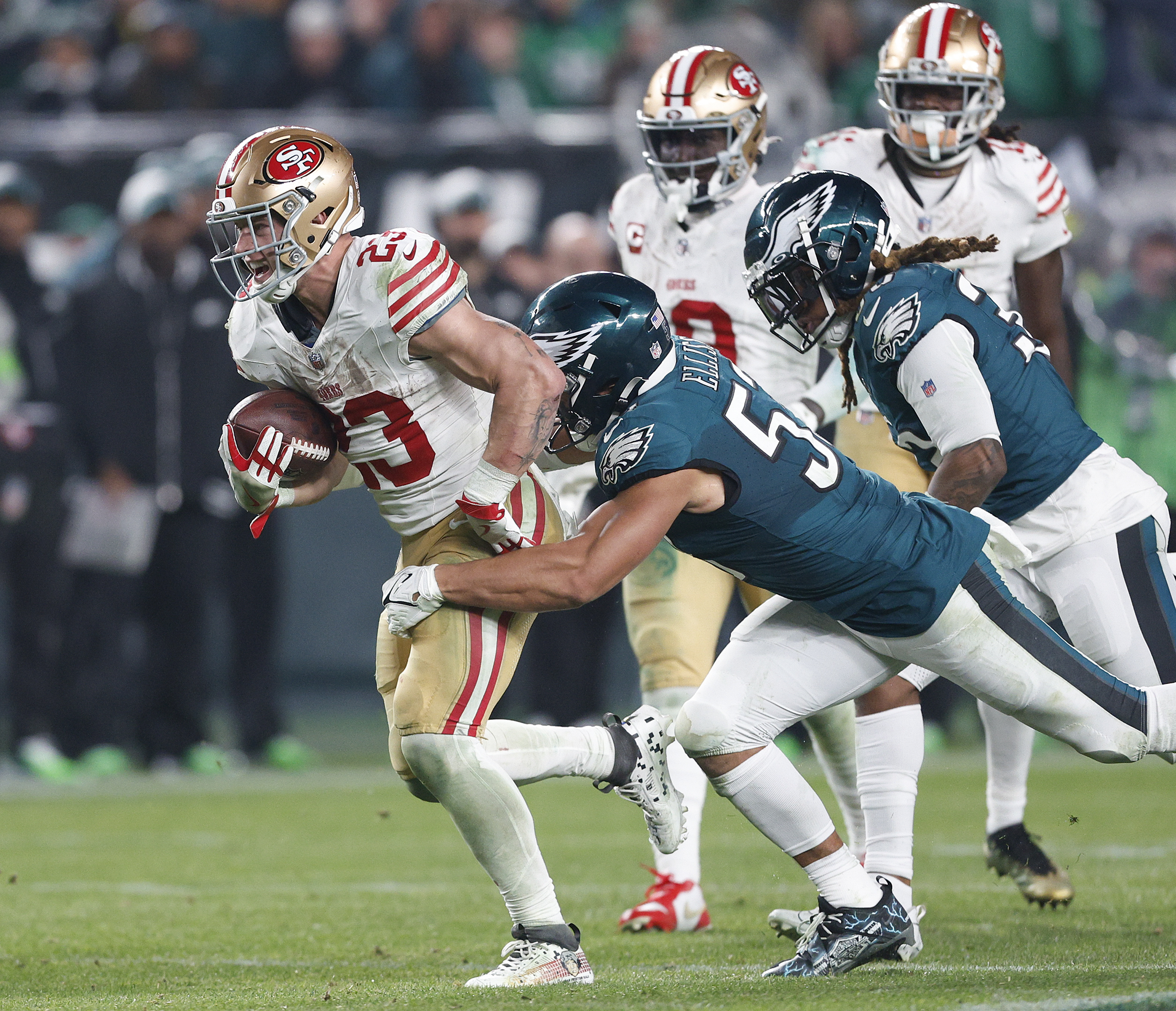
Christian Elliss (53) was primarily a special-teamer in Philadelphia but has been a regular at linebacker for Mike Vrabel’s Patriots.
Getting cast off by the Eagles may have broken Elliss, but he has put himself back together over the last two-plus years. And he has been made whole into a starting linebacker on a Patriots team that has exceeded expectations and will face the Seattle Seahawks in Sunday’s Super Bowl LX.
Elliss, 27, may still have a chip on his shoulder. He and his wife, Kaysie, had two young children at the time, and he wasn’t sure about his future. But he said he now sees the silver lining in his sixth — and last — release.
“Honestly, me going to the Patriots was probably the best thing for me,” Elliss said. “I had vets that showed me the ropes. I had coaches that believed in me and wanted me there. I think New England is the perfect spot for me.”
Roseman probably regretted the decision. He had cut Elliss four times before, only to bring him back on the practice squad. But other NFL teams had about a season’s worth of film on the athletic linebacker, and not all of it as a member of all four special teams corps.
“We saw that he had some traits that we wanted to work with,” Patriots general manager Eliot Wolf said. “He had been productive on special teams for those guys, and when he had the opportunity to play on defense, he had been productive, especially in coverage.”
Elliss actually had started on defense for the first time in his career in the game before his release. He struggled in the blowout loss to the San Francisco 49ers, but he wasn’t the only one. Defensive coordinator Sean Desai’s scheme was like Swiss cheese, and he eventually got demoted.
But Roseman felt he needed to address the linebacker group at that time. He didn’t necessarily have to create a roster spot at that position, but he told Elliss if he cleared waivers, the Eagles would bring him back.
His calculation proved wrong.
“They did tell me that,” Elliss said. “But when I got six teams that wanted to claim me, that affirmed that, yeah, I can play.”
Christian Elliss (center) in his final game as an Eagle, which saw the defense gutted in a 42-19 loss to the 49ers.
Belichick had him work exclusively with special teams for the last month of the 2023 season. When the legendary coach left the Patriots in the offseason, Elliss had to convince another regime that he was worth keeping.
He made the 2024 roster as a backup and special teams contributor. But by Week 5, he started logging significant playing time on defense and became a regular the rest of the way. When Mayo was fired after the season, Elliss said he wasn’t expecting to return, though.
The Las Vegas Raiders made a play for the free agent. But because Elliss was restricted, the Patriots could match the two-year, $13.5 million offer. Vrabel and Wolf would remake most of New England’s front seven, but Elliss fit their vision and was retained.
“We felt that even though he reached free agency, he was still ascending,” Wolf said. “And he’s really just improved and improved. He’s a great kid. He plays really hard. He’s got some of the traits you can’t teach. He’s super fast. He’s explosive. He’s got great change of direction.”
There were initial struggles playing in a new scheme with new terminology in 2025. Elliss missed eight tackles in the first three games and was benched in the second half of the third game. But the Patriots stuck with him, and he steadily made progress.
“I think he took it to heart,” linebackers coach Zak Kuhr said of the benching. “He made some different personal changes with how he was going to view his position and his role. And credit to him and how he went about it.”
It has helped to have a head coach who played the position at a high level. Vrabel was a key cog in Belichick’s early Super Bowl-winning Patriots teams. He mostly played on the outside and often would rush from the edge, but he was open to moving inside to serve team needs.
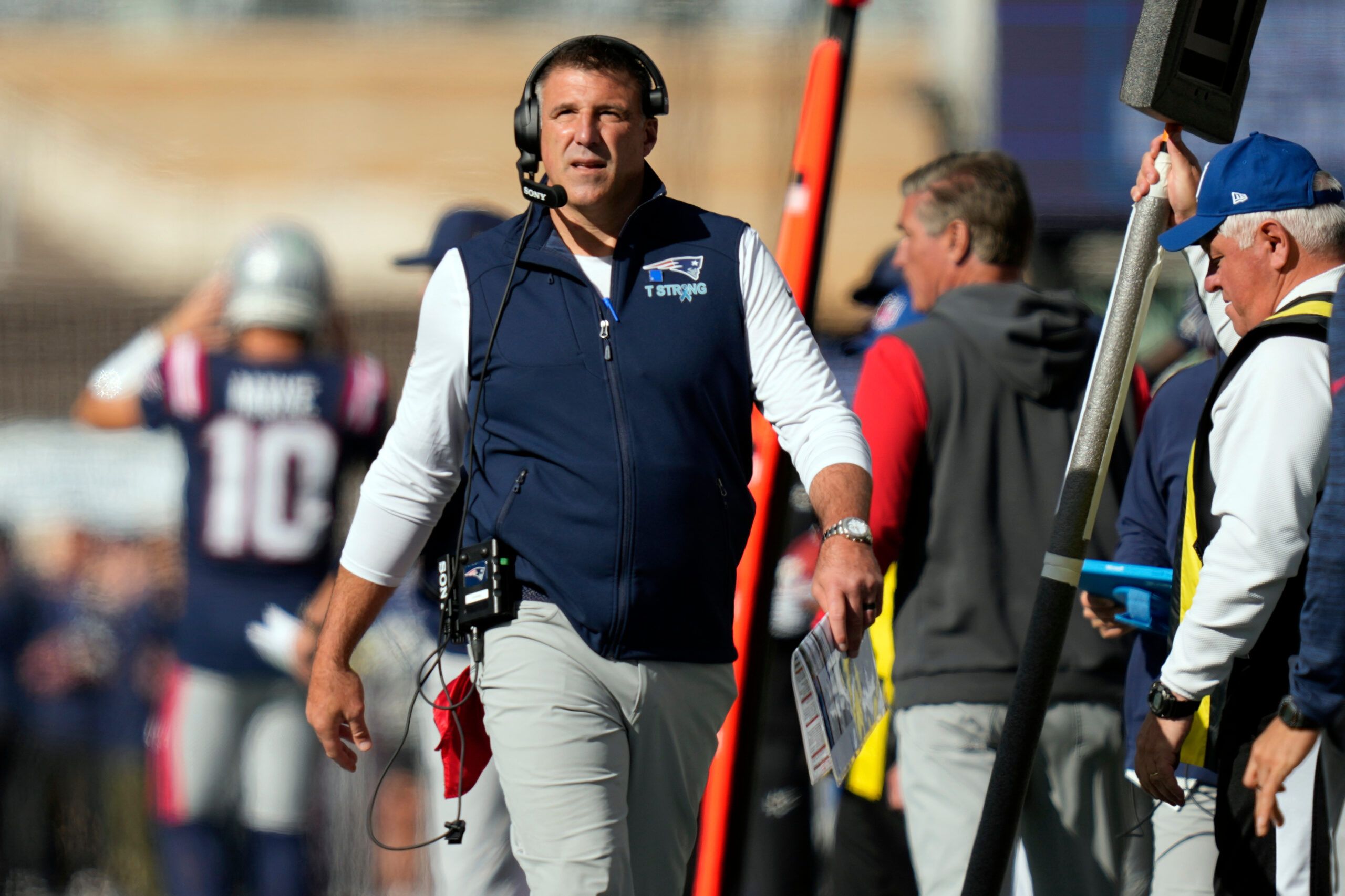
Mike Vrabel has won the respect of the entire Patriots locker room, including Elliss, in his first year as New England’s head coach.
Elliss said Vrabel has instilled in the Patriots that same unselfish mentality.
“I’ve never had a coach where he’s truly a player’s coach, meaning he holds everyone to the same standard. Not everyone does that in the league,” Elliss said. “Everybody has favorites one way or another. It’s just human nature. But for him, he doesn’t let it show, at least on the field or at least in the building.
“He makes sure everyone’s held to the same standard. No one gets away with anything. If you’re BS-ing in practice, if you’re putting your own self above the team, he never lets that slide.”
Growing up third-oldest of 12 children — seven of whom were adopted — Elliss may have understood the importance of the collective more than most. He also comes from a football family. His father, Luther, played 10 seasons in the NFL, and his brothers Kaden, Noah, and Jonah also have played in the league.
Noah spent parts of the 2022 and 2023 seasons on the Eagles as a practice squad defensive tackle. Christian and Jonah, a linebacker for the Denver Broncos, met in the AFC championship game. Their emotional embrace after the game touched many.
Only one could advance to the Super Bowl. Christian will be making his second appearance. He played 24 special teams snaps for the Eagles three years ago. He said he watched and rooted for his old team last year when it avenged the loss to the Kansas City Chiefs in the first Super Bowl meeting.
Christian Elliss came up short while with the Eagles in his last Super Bowl appearance and has another shot at an elusive ring this Sunday.
Elliss might have flourished in Vic Fangio’s scheme. The Eagles had long undervalued linebackers, but the defensive coordinator has spearheaded an organizational shift with investments made in Zack Baun and Jihaad Campbell, for example.
Baun was instrumental in the defensive dominance of Kansas City. But the front four set the tone and harassed quarterback Patrick Mahomes into taking six sacks and committing three turnovers.
“Ball disruption. When you affect the quarterback, when you make him so he can’t set his feet and he’s always on his toes, it’s hard for them to produce,” Elliss said. “And I think the Eagles really did that well.”
Elliss should get opportunities to get after Seahawks quarterback Sam Darnold. He already has generated seven pressures in just 18 pass rush attempts this postseason. Two years ago, after his release, he was thinking more about survival than the Super Bowl.
“I was cut, I think, six, seven times in my early NFL career,” Elliss said. “And, honestly, I remember asking my dad, ‘Dad, is this meant for me? I don’t want to keep getting cut.’ It’s a terrible feeling, especially [because] I had two kids at the time. So that’s definitely hard.
“But I believe trials and tribulations produce endurance, they produce character. And I think it helped me in the long run.”
When it comes to the 2026 Phillies, the three most meaningful words in the human language ring true once again.
Follow the money.
Read the menu from right to left. There, you will find the players who will make the Phillies the team they need to be. Or, you will find the players who will deserve the blame if the Phillies prove not to be that team.
Zack Wheeler is making $42 million, which is the same amount the Mets will pay newcomer Bo Bichette. Kyle Schwarber is making $30 million, the same amount the Cubs will pay newcomer Alex Bregman. Aaron Nola is making $24.5 million, which is about $2.5 million less than the Blue Jays gave Dylan Cease and right in line with what the Padres gave Michael King. Bryce Harper and Trea Turner are combining to make about $52.5 million, which is about $5 million less than the Dodgers have agreed to pay Kyle Tucker over the next four years.
Ok, that last one is absurd. But the Phillies are one of 29 teams who can’t compare to the Dodgers.
Anywhere east of Tinseltown, there is no room for excuses. The Phillies are on track to arrive at opening day with a payroll that is $21 million higher than the Braves, $52 million higher than the Cubs, $63 million higher than the Padres, and a whopping $157 million higher than the Brewers. They are a near lock to finish the season with one of the top five payrolls in the game. No, they aren’t the Dodgers ($387 million) or Mets ($363 million). But neither are the Yankees these days ($304 million).
The criticism must feel good to John Middleton, in a strange way. Two decades ago, he was part of an ownership consortium that oversaw one of MLB’s most underfunded rosters relative to market size/potential. His power play into a majority stake was motivated in large part by his desire to operate like a true economic powerhouse. The fan base has been thrilled to adjust its expectations upward. The way folks are questioning Middleton’s billionaire bona fides, you’d think he spent the offseason picking up shifts in the gig economy. It’s worth stating for the record that the Phillies have signed $227 million worth of new guaranteed contracts at an average annual value of $66 million, or nearly 25% of their payroll.
John Middleton’s Phillies will have one of the most expensive payrolls in the game.
I’m not licking any boots here. I understand that the criticism levied toward the Phillies is as much a function of makeup as money. The majority of the Phillies’ outlays this offseason have gone to incumbents, with Schwarber re-signing for five years and $150 million and J.T. Realmuto for three years and $45 million. The same was true last offseason, and the season before, when Nola and Wheeler both signed nine-figure deals. After two straight postseason one-and-dones, the impression is of a poker player doubling down while drawing dead.
One of the difficult parts of being a personnel executive is that a fan base is rarely careful what it wishes for. Middleton’s partiality to the familiar makes plenty of sense when you consider the Phillies’ recent history. The last time they bowed to the wishes of those chanting, “Blow it up,” the result was a lost decade. Creative destruction is a fine idea. But it had better be creative.
The Schwarber and Realmuto contracts are perfect examples. Would the Phillies have really been better off if they’d given Schwarber’s money to Bregman or Bichette? You can certainly make the argument. If the Phillies had non-tendered Alec Bohm and let Schwarber walk, they could have signed Bregman to play third base and then given Eugenio Suarez the one-year, $15 million deal he signed with the Reds to play designated hitter. Maybe then they don’t feel the need to pay $10 million for Adolis Garcia’s right-handed power bat and instead sign Luis Arraez (one-year, $12 million) or Ryan O’Hearn (two years, $29 million) and convince Harper to return to the outfield. Or maybe they sign Josh Naylor to play first base and let Realmuto walk.
So, yeah, there were options. Bregman, Suarez, and Naylor will earn about $65 million in AAV in 2026. Schwarber, Realmuto, Bohm, and Garcia will earn about $65 million in AAV in 2026.
Would the Phillies have been better off?
Maybe. But, man, there’s a whole lot of risk baked into maybe. Enough risk that it’s worth stepping back and asking what they’d be trying to accomplish. Neither combination is going to stack up to the Dodgers on its own. Just so happens the first combination has helped the Phillies improve their win total in each of the last four years while also winning 96 games and a division title in 2025. Neither combination will mean much if Harper takes another step backward, or if Wheeler doesn’t return from his blood clot as the same pitcher he was, or if Nola is the same pitcher he was last season, or if Turner is still something less than a guy who deserved $300-plus million.
The story of this offseason was the money the Phillies spent in previous offseasons. The incumbents are the ones who need to do the heavy lifting. That’s how it should be when the incumbents’ wallets are as heavy as the Phillies’. There is plenty of potential upside in the form of Justin Crawford, Andrew Painter, Aidan Miller, Gabriel Rincones Jr., even Otto Kemp. The floor will be set by the known commodities. This year more than ever, Harper and Co. need to make themselves known.