Blog

  • Robert Duvall, chameleon of the silver screen, has died at 95

    Robert Duvall, chameleon of the silver screen, has died at 95

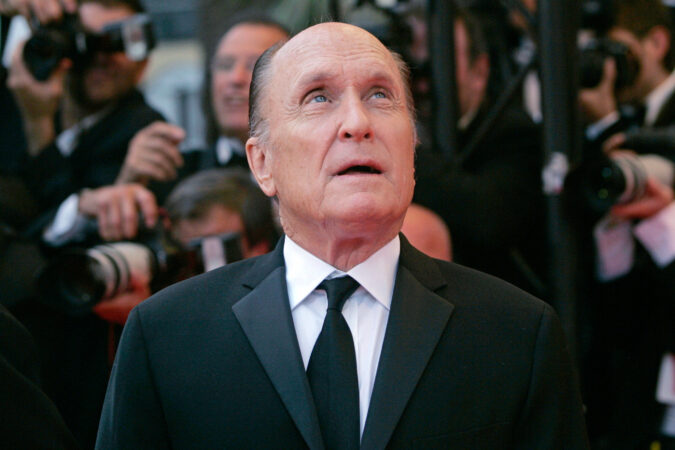
    Robert Duvall, an Oscar-winning actor who disappeared into an astonishing range of roles — lawmen and outlaws, Southern-fried alcoholics and Manhattan boardroom sharks, a hotheaded veteran and a cool-tempered mob consigliere — and emerged as one of the most respected screen talents of his generation, died Feb. 15. He was 95.

    His wife, Luciana Pedraza Duvall, said in a Facebook post that Mr. Duvall died at home, without citing a cause. He had long lived at Byrnley, a horse farm in Fauquier County, Va., near The Plains.

    By his own account, Mr. Duvall was a late-blooming youth, a Navy rear admiral’s son whose only discernible talent in childhood was for meticulous mimicry. His repertoire included Western ranchers and the military brass, and his stage was the dinner table.

    Metamorphosis became a hallmark of his career. Newsweek film critic David Ansen once called Mr. Duvall “a character actor who approaches each role with the diligence of an ethnologist on a field trip into the soul.”

    Without matinee-idol looks — he had a sinewy frame, chlorine-blue eyes, a slightly bent nose and sandy brown hair slicked back on either side of his balding pate — he seemed destined to portray taciturn outsiders, macho oddballs, and rugged eccentrics.

    Mr. Duvall was a near-constant presence on-screen beginning with his movie debut as the ghostly, feebleminded Boo Radley in To Kill a Mockingbird (1962), based on the Harper Lee novel.

    Over the next half-century, he had a few top-billed parts, notably his Academy Award-winning turn as an alcoholic country-western singer in Tender Mercies (1983). He performed the songs so authentically, with his lived-in tenor, that he was invited to record an album in Nashville with veteran music producer Chips Moman.

    Mr. Duvall received Oscar nominations for his starring roles as a tyrannical, hypercompetitive military father in The Great Santini (1979), based on the Pat Conroy novel, and as a fallen Pentecostal preacher seeking grace in The Apostle (1997), which he also wrote and directed.

    But in a career spanning more than 140 film and TV credits, Mr. Duvall’s prime turf was the supporting role. “The ‘personality’ carries the movie, not someone like me,” he once told the Chicago Tribune. “But the star may have a mediocre part, and there I am in the second or third lead, quietly doing quality things.”

    No two films showcased the spectrum of those “quality things” more than The Godfather (1972) and Apocalypse Now (1979), both critical and cultural juggernauts directed by Francis Ford Coppola and for which Mr. Duvall earned Oscar nominations for supporting work. In the first, he portrayed Tom Hagen, the discreet mob lawyer and the informal foster son of the Corleone family (whose patriarch was played by Marlon Brando).

    Film scholar David Thomson called Mr. Duvall’s Hagen, a role he reprised in the 1974 sequel, a “detailed study of a self-effacing man,” one willing to suffer humiliation to earn his place as the non-Italian among Italians.

    In Apocalypse Now, an epic film about war and madness set in Vietnam, Mr. Duvall played Kilgore, the surfing-obsessed lieutenant colonel who declares, in one of the movie’s oft-quoted lines, that he loves “the smell of napalm in the morning.” Instead of crackpot flamboyance, Mr. Duvall delivered, in the description of New York Times film critic Vincent Canby, a performance of “breathtaking force and charm.”

    Canby called Mr. Duvall “one of the most resourceful, most technically proficient, most remarkable actors in America,” likening him to Laurence Olivier in his shape-shifting prowess.

    Mr. Duvall was a convincingly British Dr. Watson to Nicol Williamson’s Sherlock Holmes in The Seven-Per-Cent Solution (1976), an eyepatch-sporting Nazi colonel who masterminds a plot to kidnap Winston Churchill in The Eagle Has Landed (1976), a hard-boiled Los Angeles police detective in True Confessions (1981) and an aging Cuban émigré in Wrestling Ernest Hemingway (1993).

    Over and over again, he was a top choice of many directors for rural American characters. He was an illiterate sharecropper caring for a woman and her child in Tomorrow (1972), a psychopathic Jesse James in The Great Northfield Minnesota Raid (1972), a good-hearted Southern lawyer in Rambling Rose (1991), and a Tennessee backwoods hermit in Get Low (2009).

    Perhaps his definitive country role was the wise and garrulous Texas Ranger Gus McCrae in the hit CBS TV miniseries Lonesome Dove (1989), based on Larry McMurtry’s Pulitzer Prize-winning novel about a cattle drive. It brought Mr. Duvall (later named an honorary ranger) many crusty cowboy roles. Unsettled by typecasting, he agreed to play Soviet dictator Joseph Stalin, not ultimately one of his better moves, in a TV film.

    In preparing for a role, Mr. Duvall spent time with cowboys, day laborers, policemen, fighter pilots, ballplayers, Bowery drunks, Baptist ministers, and ex-cons, scrupulously studying their rhythms of speech, their hand gestures, the twists of their personalities. He said he tried to find “pockets of contradiction” — shadings to suggest multidimensional character.

    “I hang around a guy’s memories,” he told another interviewer. “I store up bits and pieces about him.”

    ‘Last resort’ becomes a long career

    Robert Selden Duvall was born in San Diego on Jan. 5, 1931. He was the middle of three boys raised by their mother during their father’s long absences at sea.

    Mr. Duvall described himself as an aimless youth, without distinction in the classroom or on the playing field. He frequently indulged in mischievous behavior with his siblings. “We used to put Tide in milkshakes for my mother,” he told the Washington Post in 1983. His practical jokes, including a penchant for mooning other actors, continued well into adulthood.

    After Army service, he enrolled at Principia College, a small Christian Science school (his family’s faith) in Illinois. He was a social studies major on the brink of flunking out when a drama teacher remarked on his promise in several plays. His parents, pleased that he seemed to excel in something, pushed him to major in dramatics and then toward an acting career. “It was like a last resort,” he said.

    He graduated in 1955, then attended the Neighborhood Playhouse workshop in New York, where classmates included Dustin Hoffman, Gene Hackman, and James Caan. His breakthrough came in a 1957 Long Island production of Arthur Miller’s drama A View From the Bridge. The noted director Ulu Grosbard cast Mr. Duvall in the lead role, as a Brooklyn longshoreman struggling with his attraction to his niece.

    “Even then he had the thing you go for as an actor and director, perfect control but the feeling of total unpredictability,” Grosbard later told the Los Angeles Times. “A lot of good actors will give you technique, precision and a character’s arc, and that’s important. But not that many give you the sense that this is actually what’s transpiring at the moment in front of your eyes.”

    The one-night-only show sparked attention and proved “a catalyst for my career,” Mr. Duvall later said, leading to offers to play menacing roles on TV and stage. He made his Broadway debut in the thriller Wait Until Dark (1966), as a criminal who taunts a blind woman (Lee Remick), and played an ex-con in American Buffalo (1977), David Mamet’s first play to reach Broadway.

    Meanwhile, Mr. Duvall gained a foothold in Hollywood. Pulitzer-winning playwright Horton Foote was instrumental in launching the actor’s flourishing movie presence. Foote, who wrote the screenplay for To Kill a Mockingbird, had been “bowled over” by Mr. Duvall’s balance of intensity and naturalism onstage and recommended him for the part of Boo Radley.

    That led to memorable roles in some of the defining movies of the era. He played the pompous hypocrite Maj. Frank Burns in director Robert Altman’s M*A*S*H (1970). In Coppola’s The Conversation (1974), a much-admired drama of Watergate-era paranoia, he was a mysterious businessman who bankrolls a surveillance operation. Mr. Duvall played a corporate hatchet man in Network (1976), a brilliant satire of broadcast journalism morphing into ratings-driven entertainment.

    Mr. Duvall also was top-billed in director George Lucas’s feature-film debut, the dystopian THX 1138 (1971).

    Later in his career, Mr. Duvall enlivened many a big-budget mediocrity with a gruff, leathery persona, on display in the Tom Cruise car-racing drama Days of Thunder (1990), the Nicolas Cage heist film Gone in 60 Seconds (2000), and the violent action thriller Jack Reacher (2012), also starring Cruise.

    Still capable of deft underplaying, Mr. Duvall received Oscar nominations for his supporting roles in A Civil Action (1998), playing a wily corporate attorney who duels over a settlement with John Travolta’s lawyer character, and in The Judge (2014), as a domineering small-town magistrate accused of murder who is defended by his son (Robert Downey Jr.).

    Mr. Duvall’s well-paying Hollywood projects subsidized his passions — small-budget films he wrote and directed, including Angelo, My Love (1983), about gypsies in New York; The Apostle, which was 15 years in the planning; and Assassination Tango (2002), about a Brooklyn hit man with a weakness for the sensual Argentine dance. Like the character, Mr. Duvall was a dedicated tango dancer.

    His marriages to Barbara Benjamin, actress Gail Youngs and dancer Sharon Brophy ended in divorce. In 2004, he married Luciana Pedraza, an Argentine actress 41 years his junior, who appeared with him in Assassination Tango. Complete information on survivors was not immediately available.

    Mr. Duvall said he abhorred acting that called attention to itself, leveling criticism of revered leading men such as Brando (“lazy”) or Olivier (“too stylized”). An actor was at his best and most real, he said, when he could summon emotions from his own life — without actorly ego.

    “Being a leading man? No, I never dreamed of that,” he told the Chicago Tribune. “It’s an agent’s dream, not an actor’s.”

  • The slavery exhibits at the President’s House are starting to be restored by the National Park Service

    The slavery exhibits at the President’s House are starting to be restored by the National Park Service

    Almost a month after abruptly dismantling exhibits about slavery from the President’s House Site, National Park Service employees began reinstalling the panels late Thursday morning ahead of a court-imposed deadline.

    Just before 11 a.m., four park service employees carted glass panels from a white van to a barricaded area at the site. They screwed each panel back into the bricks before cleaning the glass with rags.

    The restoration is a win for the City of Philadelphia and local stakeholders who have been fighting to preserve the President’s House after President Donald Trump’s administration ordered the removal of educational panels from the exhibit on Independence Mall last month, censoring 400 years of history. The removal sparked weeks of community activism that turned into celebrations Thursday once the reinstallation began.

    U.S District Judge Cynthia M. Rufe sided with Mayor Cherelle L. Parker’s administration on Monday, issuing an injunction ordering the government to “immediately” restore the site to its normal condition. On Wednesday, she set a Friday evening deadline.

    As of Thursday evening, 16 of the 34 panels had been reinstalled. A couple of bystanders clapped as the displays were put back up.

    Shortly before noon, Parker arrived at the scene, taking in the newly reinstalled exhibits. She shook hands with and thanked the National Park Service employees.

    “It’s our honor,” an employee told the mayor.

    Parker did not take questions from the media but later issued a statement celebrating the return of the exhibits.

    “We know that this is not the end of the legal road,” the mayor said. “We will handle all legal challenges that arise with the same rigor and gravity as we have done thus far.”

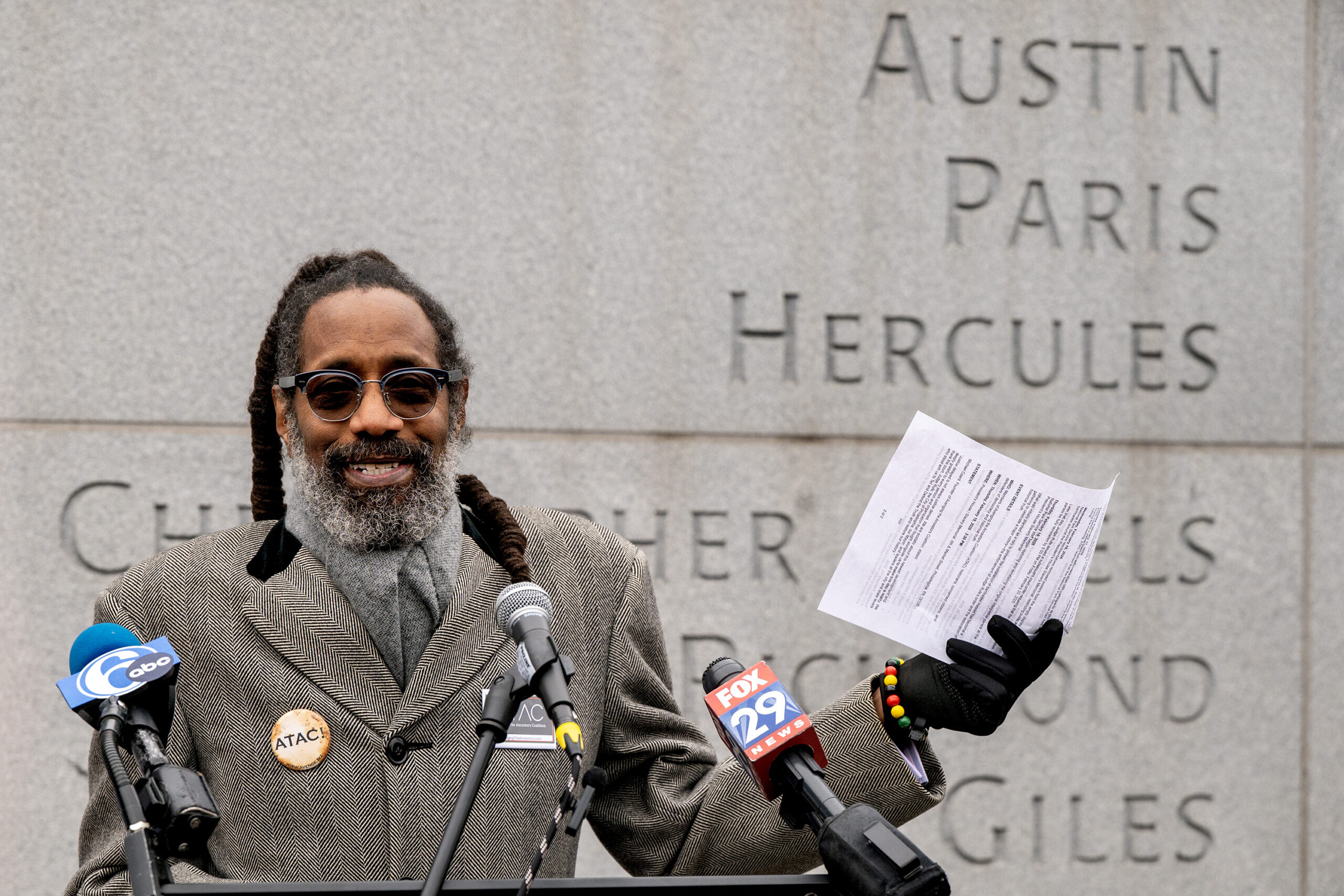
    Michael Coard, an attorney and leader of Avenging the Ancestors Coalition, which helped steer efforts to preserve the President’s House, called Thursday’s reinstallation a “huge victory” after weeks of advocacy in court and around the site itself.

    “We had people doing something at least every single day since the vandalism took place on Jan. 22, and we’ve had the attorneys in court, so it’s a great day, but the battle is not over,” Coard said.

    On Wednesday, several employees from Independence National Historical Park placed metal barriers around the brick walls where panels had been displayed near the open-air exhibit’s Market Street entrance. One employee said the barriers were set up so employees could clean the area.

    Prior to Thursday, exhibits were being stored in a National Park Service storage facility adjacent to the National Constitution Center.

    The reinstallation was a moment that Philadelphians who had been tirelessly fighting to protect the President’s House had been waiting for.

    On Jan. 22, after park employees took crowbars and wrenches to the President’s House, which memorializes the nine people George Washington enslaved at his Philadelphia residence, the City of Philadelphia filed suit against members of the Trump administration. Community stakeholders took action to preserve the memory of the site.

    “It’s important to hang on to hope,” said Bill Rooney, 68, of Chestnut Hill. “The people who lived here — sometimes that’s all they had to hold on to. We need to do that, too, and [make] sure that the whole history is told.”

    Rooney, a certified tour guide, added: “History matters. All of history matters.”

    Rufe, a George W. Bush appointee, issued a blistering 40-page opinion in which she compared the federal government’s arguments justifying the removal of the interpretive panels to the dystopian Ministry of Truth from George Orwell’s novel 1984.

    The opinion said it was urgent that the full exhibit be shown to the public. When the federal government did not comply 48 hours later, the judge set a deadline of 5 p.m. Friday for the Department of the Interior and the National Park Service to fulfill her order.

    The Trump administration asked Rufe on Wednesday night for a stay on the injunction while its appeal is pending in the U.S. Court of Appeals for the Third Circuit.

    The motion says enforcement of the order makes Philadelphia a “backseat driver holding veto power” in all decisions related to Independence National Historical Park. By forcing the government to restore the slavery panels, the court “compels the Government to convey a message that it has chosen not to convey,” the motion says.

    The city filed a brief Thursday opposing the stay, saying that the federal government did not add anything new to its argument. The idea that the restoration would cause harm was undermined by the fact that the exhibits “stood for 15 years without alteration, conveying the ‘whole, complicated truth,’” the city said. The filing does not acknowledge that some panels had been reinstalled.

    Rufe had not ruled on the stay as of Thursday afternoon. But neither the federal government’s appeal to a higher court nor the request for a stay pauses Rufe’s order.

    Complying with the order could complicate the federal agencies’ argument that restoring the panel inflicts irreparable harm because they have “turned around and done what they said they couldn’t do,” said Marsha Levick, a visiting chair at Temple University’s Beasley School of Law.

    Attorney Michael Coard, leader of the Avenging the Ancestors Coalition speaks during a rally at the President’s House in Independence National Historical Park Thursday, Feb, 19, 2026, after some of the slavery exhibits were returned.

    The people behind the fight to restore the President’s House Site were lauded at a late-afternoon rally. Organizers had called the 120-person event after the barricades were installed Wednesday, which they said prevented people from visiting the memorial. Instead, the event Thursday — set to Kool & the Gang’s “Celebration” and “Fight the Power” by Public Enemy — was celebratory.

    “We’re still fighting. The battle is still being fought in court,” said coalition member Mijuel Johnson. “But today — this greatest day, this day of pride — we got our panels put back up.”

    Coard said Thursday’s development epitomizes the group’s name. He said his coalition’s advocacy for the President’s House stands on the shoulders of activism by ancestors during the Civil Rights Movement.

    “We took that baton from them and we ran with it,” Coard said. “And the interesting thing about taking that baton is that this track was not as difficult for us. They had more obstacles on their track. We have fewer because they cleared it for us.”

  • Trump appears ready to attack Iran as U.S. strike force takes shape

    Trump appears ready to attack Iran as U.S. strike force takes shape

    The Trump administration appears ready to launch an extended military assault on Iran, current and former U.S. officials said, as the Pentagon amasses an immense strike force in the Middle East despite the risks of U.S. combat fatalities and American ensnarement in an extended war.

    The arsenal, under assembly for weeks, is awaiting the arrival of the aircraft carrier USS Gerald R. Ford and its accompanying warships, officials familiar with the matter said, after military leaders last week extended their deployment and ordered the ships to the region from the Caribbean Sea. The vessels were approaching the Strait of Gibraltar on Thursday, making an attack possible within days, said these people, whom like others spoke on the condition of anonymity to discuss sensitive military planning.

    President Donald Trump, speaking Thursday morning at an event in Washington, was ambiguous about what he might do. “Maybe we’re going to make a deal. Maybe not,” he said at the inaugural meeting of his Board of Peace. “You’re going to be finding out over the next, maybe, 10 days.”

    The administration wants it known, officials said, that they are building combat power in the region. The president also has publicly raised the possibility of toppling Iran’s supreme leader, Ayatollah Ali Khamenei, a longtime U.S. adversary, suggesting last week that it would be “the best thing that could happen,” if Iran ends up with new leaders.

    Still, it remains unclear whether Trump has approved military action, people familiar with the matter said. One consideration, some noted, is the ongoing Winter Olympics, which conclude Sunday in Italy.

    The United States, backed by ally Israel, would have an “overwhelming advantage” militarily over Iran, said Daniel B. Shapiro, a former U.S. ambassador to Israel and senior Pentagon official during the Biden administration. The warships in or nearing the Middle East join a sprawling array of combat power already in position, including dozens of fighter jets, air-defense capabilities, and other weapons.

    But a major conflict with Iran poses grave risks, Shapiro said, including ballistic missiles capable of killing U.S. troops in the region, a network of proxy forces across the Middle East that could quickly turn any attack into a far wider and deadlier war, and the potential for significant disruption to maritime shipping and the global oil market.

    “They’ll definitely take terrible damage from combined U.S.-Israeli strikes,” said Shapiro, a distinguished fellow at the Atlantic Council, referring to Iran. “But that doesn’t mean it ends quickly, or clean — and they do have some ability to impose some costs in the other direction.”

    The military buildup coincides with recent meetings between U.S. and Iranian officials aimed at negotiating changes to Tehran’s nuclear program. White House press secretary Karoline Leavitt told reporters this week that the two sides had “made a little bit of progress” but were still “very far apart on some issues.” Iranian officials, she added, are “expected to come back to us with some more detail in the next couple of weeks.” It is unclear if Trump is willing to wait that long.

    Regional diplomats initially thought that the Trump administration’s military pressure on Iran was meant to push Tehran to offer greater concessions in those negotiations, according to a European diplomat briefed on the Iran talks. But after the most recent talks concluded Tuesday, diplomats now believe that Iran is not prepared to budge from its “core positions,” including its right to enrich uranium.

    “The Iranians were planning to drown them in technicalities and delay substance,” the diplomat said. “While a more traditional approach would have built on the dialogue, … Trump does not have the patience.”

    The U.S. military buildup initially was reassuring to some officials in the region, according to this diplomat, but the indications that the Trump administration is preparing for an extended conflict have become deeply concerning.

    “Some actors may have favored targeted strikes to add pressure on Iran,” said the diplomat, referring to officials from Saudi Arabia and the United Arab Emirates. “But an extended conflict will be bloody and it could bring more countries, either deliberately or by miscalculation, into the war.”

    Secretary of State Marco Rubio plans to travel to Israel on Feb. 28 to meet with Israeli Prime Minister Benjamin Netanyahu, a State Department official said. The trip would be aimed at keeping Netanyahu abreast of the status of U.S.-Iran negotiations, the official said, but it does not preclude the Pentagon from launching strikes first. In summer, the U.S. struck Iran’s nuclear facilities even as the president’s top diplomats had diplomatic meetings with Iranian counterparts on the books.

    Netanyahu is eager for the United States to launch a major attack on Iran, and in a speech Sunday he put forward his own conditions for any U.S. agreement with Tehran. Any deal must ban all enrichment of uranium and dismantle “the equipment and the infrastructure that allows you to enrich in the first place,” Netanyahu told the annual conference of Presidents of Major American Jewish Organizations. It should also require that all enriched uranium leave Iran, restrict Iran’s ballistic missile program and impose sustained inspections of Iran’s civilian nuclear program, he said.

    Middle East experts have said Iran is unlikely to agree to all of Israel’s demands and it views them as a breach of Tehran’s ability to defend itself.

    Khamenei in recent days has resisted signing a deal, arguing in social media posts that Tehran has the right to produce nuclear power and the range of its missile arsenal should not be limited. He also has taunted U.S. officials.

    “The Americans constantly say that they’ve sent a warship toward Iran,” he said in one message Tuesday. “Of course, a warship is a dangerous piece of military hardware. However, more dangerous than that warship is the weapon that can send that warship to the bottom of the sea.”

    An extended assault against Iran could mark the most significant action in decades against the longtime U.S. adversary. For years, Iran has sponsored and facilitated attacks on U.S. troops across the region, U.S. officials broadly agree.

    Trump began pondering new strikes against Iran in January, after he pledged to rescue anti-government protesters there following a wave of executions. The president tabled military action, in part because U.S. defense officials warned it would be difficult to manage Iranian counterattacks while a relatively limited number of U.S. forces were in the region, people familiar with the matter said.

    The administration has since surged U.S. weaponry, including another aircraft carrier, the USS Abraham Lincoln, that was diverted from the South China Sea. Numerous Navy destroyers, scores of fighter jets, and other war planes also have been deployed, including advanced F-35s with the ability to evade radar.

    A review of flight-tracking data in recent days has shown a fleet of tanker planes also relocating to Europe and the Middle East, and many fighter jets repositioned at Muwaffaq Al Salti Air Base in Jordan. Other U.S. military aircraft appear to have relocated to or transited through Vrazhdebna Air Base in Bulgaria, data show.

    The military buildup signals the Trump administration is “prepared for something much more extended than a one-day cycle” of strikes, said Dana Stroul, a former senior Pentagon official during the Biden administration who is now with the Washington Institute.

    An extended conflict would mark a sea change from Trump’s recent military forays, including the January U.S. Special Operations raid to capture Venezuelan President Nicolás Maduro in Caracas, a weekslong bombing campaign last spring against Houthi rebels in Yemen, and the surgical strikes last year against Iran’s nuclear facilities. In each of those cases, Trump authorized significant military action that was significant in scope but limited in duration, declared victory afterward and pivoted to other issues.

    Trump has criticized previous U.S. administrations for allowing the United States to become entrapped in lengthy military interventions in the Middle East that killed thousands of U.S. troops and dominated Pentagon resources.

    A lack of calamities during those previous operations has made it easy to overlook the potential pitfalls of future missions, said Jason Dempsey, a retired Army officer who studies the use of military force for the Center for a New American Security. They include lethal attacks against U.S. troops, aircraft collisions, or U.S. pilots being forced to parachute or crash behind enemy lines.

    “Military operations look quick and easy — right until they are not,” Dempsey said. “What we did in Venezuela was such a unique operation, and a one-off. And even that — I’m not sure it will turn out fine.”

  • U.S. beats Canada 2-1 in overtime to win Olympic gold in women’s hockey

    U.S. beats Canada 2-1 in overtime to win Olympic gold in women’s hockey

    MILAN (AP) — Megan Keller backhanded in a shot 4 minutes, 7 seconds into overtime and the United States won its third Olympic gold medal in women’s hockey, beating Canada 2-1 at the Milan Cortina Games on Thursday night to close another thrilling chapter of one of sports’ most heated rivalries.

    American captain Hilary Knight, in her fifth and likely final Olympics, forced overtime by tipping in Laila Edwards’ shot from the blue line with 2:04 remaining. The goal was the 15th of her Olympic career and her 33rd point to break the U.S. record in both categories.

    Captain Hilary Knight tied the gold-medal game for the U.S. with a late tip on a Laila Edwards point shot.

    With the sides playing three-on-three, Keller broke up the left wing and pushed past Claire Thompson. Driving to the net, the U.S. alternate captain got off a backhander that beat Ann-Renée Desbiens over her right pad.

    Aerin Frankel stopped 30 shots for the U.S.

    Kristin O’Neill scored a short-handed goal for Canada, and Desbiens finished with 31 saves.

    This was the seventh of the 12 Olympic meetings between the rivals to be decided by one goal and the third to go past regulation. Canada overcame a late 2-1 deficit to beat the U.S. 3-2 on Marie-Philip Poulin’s overtime goal at the 2014 Sochi Games. The U.S. won 3-2 in 2018 when Jocelyne Lamoureux scored in a shootout.

  • South Jersey’s Isabeau Levito finishes 12th, fellow American Alysa Liu claims gold medal at Olympics

    South Jersey’s Isabeau Levito finishes 12th, fellow American Alysa Liu claims gold medal at Olympics

    MILAN, Italy — In her first Olympics, in her mother’s hometown and very close to where her grandmother still lives, South Jersey figure skater Isabeau Levito earned a score of 131.96 in the free skate, or long program on Thursday.

    The 18-year-old wound up in eighth place in the short program after a score of 70.84 and 13th in the free skate. But scores, rather than placements are what count, so she wound up in 12th place with a 202.80.

    In the end, her teammate, friend, and fellow Blade Angel, Alysa Liu, won her second Olympic gold, after helping win the team event last week.

    Liu, 20, scored 150.20 to win the free skate. She was the only skater to have positive grades of execution on all elements. She was third in Tuesday’s short program.

    Liu also is the reigning world champion.

    Two Japanese skaters earned silver and bronze.

    Kaori Sakamoto, the favorite entering the Olympics, earned the silver after winning bronze at the 2022 Games. She was second in both the short and free programs.

    Ami Nakai, 17, who won the short program, was ninth in the free skate despite landing one of only two triple Axels on Thursday night. She had won the short program. She earned the bronze medal.

    Alysa Liu is the Olympic women’s figure skating champion.

    Levito entered the day in eighth place and was in sixth after that skate, with seven more skaters to go.

    She had an uncharacteristic fall on her opening triple flip, which was supposed to be in combination, but skated with her usual elegant spins and footwork to “Cinema Paradiso” by Ennio Morricone, Italian music for the occasion. Levito was born in Philadelphia, grew up in Mount Holly, and now lives closer to where she trains, in Mount Laurel.

    “I did my best” after the fall, Levito said in the mixed zone following her performance. “I just went on autopilot, and the rest went how it usually goes.”

    Despite the fall and placement, Levito said she felt better at this competition than at the World Figure Skating Championships, U.S. Figure Skating Championships, or other competitions.

    “Honestly, I felt like I had more energy,” she said. “And I don’t know if it’s because consciously I know I’m at the Olympics, or if it’s the crowd. The crowd is very, very energetic and supportive here.”

    Levito skated in the second-to-last group (the free skate goes in reverse placement order from the short program). She wore a light blue, sparkly dress for the occasion.

    After Tuesday’s nearly clean short program, many on social media felt that Levito had been underscored. Some felt that after the free skate as well.

    She is the reigning U.S. bronze medalist and was the U.S. champion in 2023 and the world silver medalist in 2024 in women’s singles.

    In the previous group, Levito’s fellow Blade Angel, Amber Glenn, skated a far better program than she had in the team event (where she was part of the gold-medal win) or Tuesday’s short program.

    She was third in the free skate and fifth overall after finishing 13th in an error-filled short program.

    Glenn, the reigning and three-time U.S. champion, opened the free skate with her trademark triple Axel, landing it strongly, and knocked off element after element, only putting a hand down on her triple loop. She earned a season-best score of 147.52, for a total of 214.91.

    Glenn gave Levito a standing ovation from the leader’s chair near the kiss-and-cry area.

    Adeliia Petrosian, a Russian skater competing under a neutral flag, was seen as a potential medalist as well. She was the only woman to attempt a quadruple jump. She opened her free skate with the quad toe loop but fell on it. She wound up fifth in both the short and free skate and sixth overall.

  • An arts panel made up of Trump appointees approves his White House ballroom proposal

    An arts panel made up of Trump appointees approves his White House ballroom proposal

    WASHINGTON — The U.S. Commission of Fine Arts, a panel made up of President Donald Trump’s appointees, on Thursday approved his proposal to build a ballroom larger than the White House itself where the East Wing once stood.

    The seven-member panel is one of two federal agencies that must approve Trump’s plans for the ballroom. The National Capital Planning Commission, which has jurisdiction over construction and major renovation to government buildings in the region, is also reviewing the project.

    Members of the fine arts commission originally had been scheduled to discuss and vote on the design concept after a follow-up presentation by the architect, and had planned to vote on final approval at next month’s meeting. But after the 6-0 vote on the design, the panel’s chairman, Rodney Mims Cook Jr., unexpectedly made another motion to vote on final approval.

    Six of the seven commissioners — all appointed by the Republican president in January — voted once more in favor. Commissioner James McCrery did not participate in the discussion or the votes because he was the initial architect on the project before Trump replaced him.

    The ballroom will be built on the site of the former East Wing, which Trump had demolished in October with little public notice. That drew an outcry from some lawmakers, historians, and preservationists who argued that the president should not have taken that step until the two federal agencies and Congress had reviewed and approved the project, and the public had a chance to provide comment.

    The 90,000-square-foot ballroom would be nearly twice the size of the White House, which is 55,000-square-feet, and Trump has said it would accommodate about 1,000 people. The East Room, the largest room in the White House, can fit just over 200 people at most.

    Commissioners offered mostly complimentary comments before the votes.

    Cook echoed one of Trump’s main arguments for adding a larger entertaining space to the White House: It would end the long-standing practice of erecting temporary structures on the South Lawn that Trump describes as tents to host visiting dignitaries for state dinners and other functions.

    “Our sitting president has actually designed a very beautiful structure and, as was said, in the comments earlier, the United States just should not be entertaining the world in tents,” Cook said.

    The panel received mainly negative comments from the public

    Members of the public were asked to submit written comment by a Wednesday afternoon deadline. Thomas Luebke, the panel’s secretary, said “over 99%” of the more than 2,000 messages it received in the past week from around the country were in opposition to the project.

    Luebke tried to summarize the comments for the commissioners.

    Some comments cited concerns about Trump’s decision to unilaterally tear down the East Wing, as well as the lack of transparency about who is paying for the ballroom or how contracts were awarded, Luebke said. Comments in support referenced concerns for the U.S. image on the world stage and the need for a larger entertaining space at the White House.

    Trump has defended the ballroom in a recent series of social media posts that included drawings of the building. He said in one January post that most of the material needed to build it had been ordered “and there is no practical or reasonable way to go back. IT IS TOO LATE!”

    The commission met Thursday over Zoom and heard from Shalom Baranes, the lead architect, and Rick Parisi, the landscape architect. Both described a series of images and sketches of the ballroom and the grounds as they would appear after the project is completed.

    Trump has said the ballroom would cost about $400 million and be paid for with private donations. To date, the White House has only released an incomplete list of donors.

    A lawsuit against the project is still pending

    The National Trust for Historic Preservation has sued in federal court to halt construction. A ruling in the case is pending.

    Carol Quillen, president and CEO of the privately funded nonprofit organization, said the group was “puzzled” by both votes because the final plans had not been presented or reviewed. But with the votes, she said the commission had “bypassed its obligation to provide serious design review and consider the views of the American people,” including all of the negative public comments.

    Quillen said that while her organization has always acknowledged the usefulness of a larger White House meeting space, “we remain deeply concerned that the size, location, and massing of this proposal will overwhelm the carefully balanced classical design of the White House, a symbol of our democratic republic.”

    At the commission’s January meeting, some members had questioned Baranes, Trump’s architect, about the “immense” design and scale of the project even as they broadly endorsed Trump’s vision.

    On Thursday, Cook and other commissioners complimented Baranes for updating the building’s design to remove a large pediment, a triangular structure above the south portico, that they had had objected to because of its size.

    “I think taking the pediment off the south side was a really good move,” said commissioner Mary Anne Carter, who also is head of the National Endowment for the Arts. “I think that really helps to restore some balance and make it look, just more aligned” with the White House.

    Baranes said it was the biggest design change and that Trump had “agreed to do that.”

    Trump quietly named his final two commissioners to the panel in late January. Pamela Hughes Patenaude has a background in housing policy and disaster recovery, and was as a deputy secretary at the Department of Housing and Urban Development in Trump’s first term. Chamberlain Harris is a special assistant to the president and deputy director of Oval Office operations.

    The ballroom project is scheduled for additional discussion at a March 5 meeting of the National Capital Planning Commission, which is led by a top White House aide. This panel heard an initial presentation about the project in January.

    At the meeting, the White House defended tearing down the East Wing, saying that preserving it was not an option due to structural issues, past decay and other concerns. Josh Fisher, director of the White House Office of Administration, cited an unstable colonnade, water leakage, mold contamination and other problems.

  • Philadelphia Medicaid advocates meet to plan outreach, with coverage at stake

    Philadelphia Medicaid advocates meet to plan outreach, with coverage at stake

    About 300,000 Pennsylvania residents risk losing Medicaid next year when new eligibility rules take effect, and advocates worry that too few people are aware.

    More than 100 public health workers, community advocates, and medical providers gathered Thursday to strategize how to spread the word about forthcoming changes to Medicaid.

    The nonprofit Community Behavioral Health organized the event at its Center City offices as a first step toward rallying the stakeholders tasked with helping people navigate the new rules in order to maintain access to critical health services. The city contracts with CBH to provide mental and behavioral health services for Philadelphians with Medicaid.

    New federal rules taking effect in January 2027 require certain adults to meet work requirements and reapply for Medicaid every six months, instead of the current once a year. The changes were ordered under Republicans’ 2025 spending bill and signed into law by President Donald Trump. They are part of the largest cut in recent history to Medicaid, the publicly funded health coverage program for low-income families and individuals, and people with disabilities.

    States will be expected to verify eligibility for millions of people twice as often, a major administrative burden. For now, who will be exempt remains unclear. For instance, the law suggests that “medically frail” individuals will not need to meet work requirements or reapply every six months, without detailing who would qualify.

    The federal government expects to release more details in June.

    Public health leaders say they cannot wait for the additional guidance to begin talking about the forthcoming changes, in order to minimize the number of people who lose coverage.

    “It needs to be consistent and ongoing,” Donna E.M. Bailey, CEO of CBH, said of the group’s outreach efforts. “It really is a Philadelphia responsibility.”

    The coming Medicaid changes

    Roughly three million Pennsylvania residents are covered by Medicaid. About a quarter of them — roughly 750,000 people, including 180,000 in Philadelphia — qualify because the 2010 Affordable Care Act expanded access to low-income parents and childless adults. This so-called expansion group saw the bulk of the Medicaid cuts in last year’s Republican spending bill.

    Beginning next year, most people in this group will need to provide monthly proof that they spent at least 80 hours working, volunteering, or participating in job training. Every six months, they will need to reapply for the program. Some experts have compared this process to filing taxes because of the extensive paperwork and documentation required.

    Pennsylvania has estimated that about 300,000 people will lose Medicaid because they cannot navigate the new requirements — even though many remain eligible.

    “It’s hard to imagine with all these changes that it’s just going to be smooth,” said Mike Nardone, a former director of Pennsylvania’s Medicaid program, who spoke during the CBH event. “We’re going to have people who lose coverage, and we’re going to have to understand why that happens.”

    Starting outreach early

    Early and frequent communication is the best strategy for minimizing the number of people who lose Medicaid, public health advocates said at Thursday’s event.

    “We need to start now. This isn’t something that can wait,” said Joan Erney, CBH’s former chief executive.

    The dozens of medical providers, social workers, and community advocates in attendance were urged to work together to develop strategies for helping people to understand what new steps to take to keep their Medicaid coverage.

    “We always need the voice of those of you on the ground,” said Leesa Allen, a former Pennsylvania Medicaid director, who spoke during the panel.

    The event was the first in a series planned by CBH, which will expand outreach with similar events throughout Philadelphia designed for families and individuals to ask questions and learn more about the new Medicaid rules.

  • 🐉 Celebrate the Year of the Horse | Things to do

    🐉 Celebrate the Year of the Horse | Things to do

    Last week was for the lovers. This week, well, it’s for the culture. The region will be booming with celebrations all weekend.

    Fashion lovers can catch the latest from local and international designers at Philly Fashion Week runways. Home improvement-obsessives and amateur DIYers can stop by the annual Philly Home + Garden Show for gardening and landscaping tips.

    Then there’s Lunar New Year, which marks the arrival of spring, and another year of good fortune. Dozens of parades, tai chi demonstrations, dance performances, and other celebrations will continue throughout the region.

    And I can’t forget about the Barnes Foundation’s new exhibition, celebrating the work of famed post-Impressionist painter Henri Rousseau, running through Sunday.

    Read on to find more exciting celebrations happening this weekend.

    — Earl Hopkins (@earlhopkins_ Email me at thingstodo@inquirer.com)

    If someone forwarded you this email, sign up for free here.

    An overhead shot of the beach in Atlantic City during Phish’s three night concert run in August 2021.

    Beach concerts are finally coming back to Atlantic City

    Once again, there will be music on the beach in Atlantic City this summer, thanks to a new collaboration between Visit Atlantic City and Live Nation.

    Electronic dance music trio Rüfüs Du Sol will kick-off a wave of ocean-side shows after their Aug. 29 concert at the A.C. boardwalk this summer.

    Their performance will mark a return to the tradition of A.C. beach shows, which have included ocean-side concerts that have included Pink in 2017, the Vans Warped Tour in 2019, the pop-punk Adjacent Music Festival in 2023, and others.

    For the last two years, there’s been an absence of large-scale A.C. beach shows, though Philly impresario Dave P.’s Making Waves festival drew a crowd last year.

    The collaboration between Visit Atlantic City and Live Natioon means more shows at the shore, and not just in the summer.

    Read more of my colleague Dan Deluca’s story here. And don’t miss out on some of his concert picks for this weekend below.

    The best things to do this week

    🖼️ Make-it-POP!: Join InLiquid from Thursday to Saturday at Crane Arts for an inside look at Make-it-POP!, a vibrant group exhibition showcasing InLiquid members’ bold portfolios, cultural commentary, and playful imagery.

    🎨 Meet me at the Barnes: Explore the work of artist Henri Rousseau, which will fill the Barnes Foundation as part of a collaboration between the Benjamin Franklin Parkway museum and the Musée de l’Orangerie in Paris.

    🎶 Musical down the Shore: Compassion Cafe in Beach haven is a nonprofit that employs neurodivergent adults. It is launching its sixth season with Be Our Guest, performed by its employees and inspired by the evergreen Disney classic, Beauty and the Beast.

    🧵 Step into your best: Join thousands of fashion lovers for Philly Fashion Week, now in its 20th year. From now through Saturday, there will be runway shows, design competitions, pop-up shops and more throughout the city.

    📅 My calendar picks this week: Black History Month Family Fun Night at the Constitution Center and Punk Rock Flea Market at 23rd Street Armory.

    Community organizers hold a “No Arena” block party near the Friendship Gate in Chinatown Sunday, Feb. 2, 2025, as the neighborhood celebrates the Lunar New Year nearby with a parade, lion dancers and fireworks.

    Lunar New Year at Dilworth Park

    The Year of the Horse is charging its way into Center City this weekend.

    Head to Dilworth Park to celebrate the first new moon of the lunisolar calendar, signifying the start of spring and the ushering of good fortune.

    The celebration includes a red envelope giveaway to the first 100 guests, a Kun-Yang Lin/Dancer performance, Chinese opera by Jiaye Xu of Temple University’s Boyer College of Music and Dance.

    The celebration closes out with the Philadelphia Suns performance at 6:30 p.m.

    Check out some more Lunar Year celebrations happening this weekend.

    Winter fun this week and beyond

    🏡 A little home improvement: Nearly 300 exhibitors will be at Montgomery County’s Greater Philadelphia Expo Center for the annual Philly Home + Garden Show. Specialists will offer tips on everything from gardening to landscaping, architecture, construction, electronics, interior design, and more.

    ⛸️ The Winter at Dilworth wrap-up: The Winter at Dilworth Park will wrap up select attractions starting this Sunday. The Rothman Orthopedics ice Rink and Cabin will pack things up this week, so bundle up and put on your best ice skates for a final lap this weekend.

    🐉 Lunar New Year festivities: Among the most popular Lunar Year celebrations is at Rail Park. Head there to see live lion dances, tai chi performances, K-pop workshop, and an appearance from the Fletcher Urban Riding Club on Saturday from 1-4 p.m.

    🎡 A festival of multiple traditions: Stop by the Mummers Museum for the Festival of Many Colors. The new multiweek event series highlights the Mummers Parade, Philly Caribbean Carnival and Carnaval de Puebla. There will be hands-on workshops to design garments, forge tools, and learn traditional dance that run through May 17.

    Staffer picks

    Pop music critic Dan DeLuca lists the top concerts this weekend and a few holiday pop-up jams happening this month.

    🎸 Thursday: After playing in Philly for his solo tour last year, songwriter Alejandro Escovedo is back, plugged in, and ready to rock with his band Electric Saints at Sellersville Theater on Thursday.

    🎸 Friday: Philly songwriter Ben Arnold is home to promote his new solo album, XL. He will perform at WXPN’s Free At Noon with the 48 Hour Orchestra on Friday.

    🎤 Saturday: R&B superstar Miguel, who’s played multiple times at the Made in America festival, returns to Philly for a headlining show at the Met Philly for his 2025 album, CAOS.

    🎤 Tuesday: Mariah the Scientist, who’s enraptured fans with her sultry vocals and chilling love songs since her major label debut Master in 2019, will headline the Met Philly on Tuesday.

    — Earl Hopkins

    Enjoy everything the region has to offer this weekend. And per Lunar New Year tradition, avoid wearing black and white if you can. Trust me, nobody likes a killjoy.

    Courtesy of Giphy.com
  • David J. Farber, celebrated Penn professor emeritus and pioneering ‘uncle’ of the internet, has died at 91

    David J. Farber, celebrated Penn professor emeritus and pioneering ‘uncle’ of the internet, has died at 91

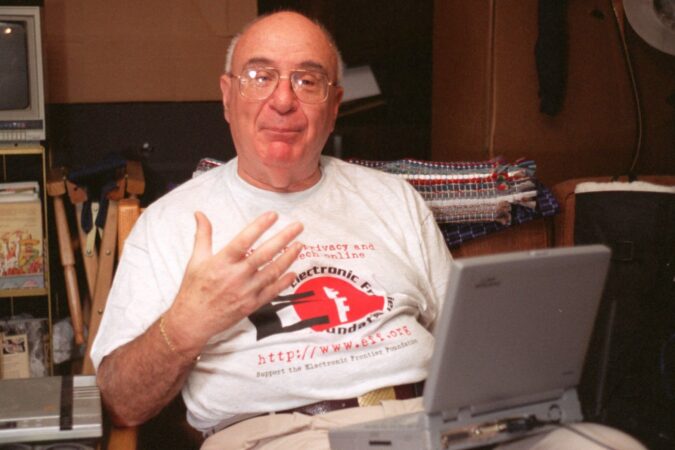
    David J. Farber, 91, formerly of Landenberg, Chester County, celebrated professor emeritus of telecommunication systems at the University of Pennsylvania, former professor of computer science at Carnegie Mellon University and the University of Delaware, professor at Keio University in Japan, award-winning pioneer in pre-internet computing systems, entrepreneur, and known by colleagues as the “uncle” and “grandfather” of the internet, died Saturday, Feb. 7, of probable heart failure at his home in Tokyo.

    A longtime innovator in programming languages and computer networking, Professor Farber taught and collaborated with other internet pioneers in the 1970s, ’80s, and ’90s. He helped design the world’s first electronic switching system in the 1950s and ’60s, and the first operational distributed computer system in the 1970s.

    His work on the early Computer Science Network and other distributive systems led directly to the modern internet, and he taught many influential graduate students whom he called the “fathers of the internet.” He was thinking about a World Wide Web, he said in a 2013 video interview, “actually before the internet started.”

    “Farber may not be the father of the internet. But he is, at least, its uncle,” Penn English professor Al Filreis told the Daily News in 1998. “Few have paid such close attention for so long to new trends in the information age.”

    Colleagues called him “part of the bedrock of the internet” and a “role model for life” in online tributes. Nariman Farvardin, president of the Stevens Institute of Technology in Hoboken, N.J., said: “Professor Farber did not just witness the future, he helped create it.”

    In 1996, Wired magazine said Professor Farber had “the technical chops and the public spirit to be the Paul Revere of the Digital Revolution.”

    He joined Penn as a professor of computer science and electrical engineering in 1988 and was named the endowed Alfred Fitler Moore professor of telecommunication systems in 1994. He left Penn for Carnegie Mellon in 2003 and joined Keio in 2018.

    Gregory Farrington, then dean of Penn’s School of Engineering and Applied Science, told The Inquirer in 1996: “He’s one of the most engaging, imaginative guys who sometimes alternates between great ideas and things that sound nuts. And I love them both. His life is an elaboration on both.”

    He was a professor at Delaware from 1977 to 1988 and at the University of California Irvine from 1970 to 1977. Among other things, he created innovative computer software concepts at UC Irvine, studied the early stages of internet commercialization at Delaware, and focused on advanced high-speed networking at Penn. He also directed cyber research laboratories at every school at which he worked.

    He earned lifetime achievement awards from the Association for Computing Machinery, the Board of Directors of City Trusts of Philadelphia, and other groups, and was inducted into the Internet Society’s Hall of Fame in 2013 and the Stevens Institute of Technology Hall of Achievement in 2016.

    Stevens Institute also created a “societal impact award” in 2003 to honor Professor Farber and his wife, Gloria. “I think the internet has just started,” he said in 2013. “I don’t think we’re anywhere near where it will be in the future. … I look forward to the future.”

    Professor Farber earned grants from the National Science Foundation and other organizations. He received patents for two computer innovations in 1994 and earned a dozen appointments to boards and professional groups, and an honorary master’s degree from Penn in 1988.

    He advised former President Bill Clinton on science and engineering issues in the 1990s and served a stint in Washington as chief technologist for the Federal Communications Commission. Clinton called him a “pioneer of the internet” in a 1996 shoutout, and Professor Farber testified for the government in a landmark technology monopoly court case against Microsoft Corp.

    Professor Farber (left) worked with Professor Jiro Kokuryo at the Keio University Global Research Institute in Tokyo.

    He championed free speech on the internet, served on technical advisory boards for several companies, and wrote or cowrote hundreds of articles, papers, and reports about computer science.

    He was featured and quoted often in The Inquirer and Daily News, and lectured frequently at seminars and conferences in Japan, Europe, Australia, and elsewhere around the world. He wrote an email newsletter about cutting-edge technology that reached 25,000 subscribers in the 1990s, and he liked to show off his belt that held his cell phone, pager, and minicomputer.

    He cofounded Caine, Farber, & Gordon Inc. in 1970 to produce software design tools and worked earlier, from 1957 to 1970, on technical staffs for Xerox, the Rand Corp., and Bell Laboratories. In a recent video interview, he gave this advice: “Learn enough about technology so that you know how to deal with the world where it is a technology-driven world. And it’s going to go faster than you ever imagined.”

    David Jack Farber was born April 17, 1934, in Jersey City, N.J. Fascinated by gadgets and early computers in the 1940s, he built radios from wartime surplus components as a boy and helped make a unique relay device with a punch card in college. “The card reader was three feet big, but it worked,” he told the Daily News in 1998.

    Professor Farber enjoyed time with his family

    He considered being a cosmologist at first but instead earned a bachelor’s degree in electrical engineering and a master’s degree in math at Stevens.

    He met Gloria Gioumousis at Bell Labs, and they married in 1965. They had sons Manny and Joe, and lived in Landenberg from 1977 to 2003. His son Joe died in 2006. His wife died in 2010.

    Professor Farber enjoyed iced coffee and loved gadgets. He was positive and outgoing, and he mixed well-known adages into humorous word combinations he called “Farberisms.”

    He was an experienced pilot and an avid photographer. In 2012, to honor his son, he established the Joseph M. Farber prize at the Stevens Institute for a graduating senior.

    Mr. Farber was an experienced pilot who could fly solely on cockpit instruments.

    “He was bold,” his son Manny said. “He connected to a lot of people and was close to his friends. He worked on big projects, and it wasn’t just theoretical. He built things that work.”

    In addition to his son, Professor Farber is survived by his daughters-in-law, Mei Xu and Carol Hagan, two grandsons, and other relatives.

    A memorial service is to be held later.

  • Two rival sex traffickers arrested in Norristown following shooting, police say

    Two rival sex traffickers arrested in Norristown following shooting, police say

    A street shooting in Norristown last week led investigators to discover two sex-trafficking operations that transported women from New York to Montgomery County to engage in prostitution, prosecutors said Thursday.

    A dispute between two men who ran rival enterprises erupted in gunfire on Feb. 13, police said, when one shot the other in the thigh during a confrontation on the 400 block of Sandy Street.

    On Tuesday, authorities arrested both men.

    Efran Flores-Rodriguez, 24, of Norristown, and Fernando Meza-Ramirez, 42, of Corona, Queens, are each charged with trafficking individuals and involuntary servitude. Flores-Rodriguez faces additional charges, including attempted murder, in connection with the shooting.

    Officers responding to reports of gunfire found Meza-Ramirez inside a bullet-riddled Toyota RAV4, police said. He had been shot in the thigh.

    Meza-Ramirez told police that a stolen white Acura TLX had followed him from Lafayette Street to Sandy Street. When he pulled over, he said, the sedan pulled up beside him and someone opened fire. A witness identified Flores-Rodriguez as the shooter, according to the affidavit of probable cause for his arrest.

    But investigators say the shooting exposed more than a personal feud.

    At the hospital where Meza-Ramirez was treated, officers found business cards in his wallet bearing photographs of scantily clad women posing on beds, according to the affidavit.

    Days later, on Feb. 17, police searched Flores-Rodriguez’s home and encountered a woman from Flushing, Queens, who told them she had worked as a prostitute under his direction last summer.

    She said Flores-Rodriguez, whom she knew as “Guerro,” drove her to Norristown six days a week, provided her a room and charged clients $60 for 10-minute sexual encounters. She told police she sometimes had as many as 15 encounters a day and kept half the money he collected.

    The woman said she also worked this year for Meza-Ramirez, whom she knew as “Leo,” under the same arrangement, according to the affidavit.

    Both men were denied bail at arraignment and are being held at the Montgomery County Correctional Facility.