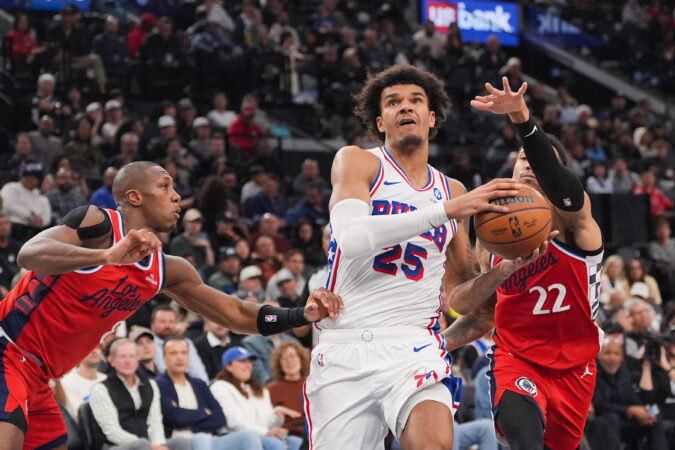
LOS ANGELES — Dominick Barlow elevated to attempt to tip in Kelly Oubre Jr.’s missed jumper in the lane, then instantly sprang up again when the ball bounced off the backboard. Barlow then got up a third time, hanging in the air to seemingly will the ball into the basket through contact.
The 6-foot-9 forward has spent this season as an appreciated 76ers role player who has completely outperformed his two-way contract. Barlow is a terrific cutter and savvy rebounder. He blends his athleticism and intelligence to fill in the gaps without overstepping. He “plays the right way, every single night,” All-Star teammate Tyrese Maxey said.
Yet Barlow finally got his monster stat line Monday in an impressive 128-113 76ers victory against the surging Los Angeles Clippers at Intuit Dome. He racked up a career-high 26 points on 10-of-16 shooting along with 16 rebounds, including an eye-popping 10 on the offensive glass. The outburst provided further evidence that part of the Sixers’ trade-deadline approach this week should be ensuring a roster spot is available to convert Barlow to a standard contract.
“Really went after it, man,” coach Nick Nurse said of Barlow’s outing. “ … Just wouldn’t quit playing hard, and he kept finding opportunities and made the most of them.”
It was fitting that Barlow brought that energy after the Sixers’ cross-country flight to kick off this crucial five-game Western Conference road trip.
Barlow felt a big night brewing early, when “a lot of stuff I got was really easy” while compiling 11 points and seven rebounds in the opening quarter. Those buckets came by way of two put-back dunks, a cutting and-one layup, and a steal and fastbreak slam. Barlow totaled another six rebounds (four on the offensive end) in the third quarter. And his final scoring burst helped cut short a Clippers fourth-quarter rally.
“He stole a lot of my rebounds,” star center Joel Embiid joked. “ … Every team needs one of those guys, [who] does everything.”
This career performance arrived after Barlow’s role fluctuated during the last 10 days.
The 22-year-old had become the starting power forward while Oubre missed about seven weeks with a knee injury. Yet once Oubre regained his rhythm upon returning to the court, Barlow moved to a reserve role and said he understood why Nurse made that decision. When Paul George was abruptly suspended 25 games for violating the NBA’s anti-drug policy on Saturday, Barlow moved back into the first five.
He has been an ideal fit with that starting group. Instead of worrying about creating offense with the ball in his hands, he can find spots to set a flare screen or make the correct pass. And when opposing defenders leave him to double-team stars Maxey or Embiid, that frees Barlow up to beeline toward the rim to snag the offensive rebound. He entered Tuesday’s game averaging 8.3 points, 5.1 rebounds, and 1.3 assists in 39 games.
“They make the game really simple,” Barlow said of those teammates.
Monday’s outburst also allowed Barlow to reflect on how he wound up in Philly.
‘This dude’s an athlete’
When asked about the origins of his knack for rebounding, he credits his long arms, instincts, and ball skills as a former football player. After beginning his NBA career with the San Antonio Spurs and Atlanta Hawks, Barlow did not stress when he didn’t immediately land with a new team at the start of free agency last summer. He believed he was “as strong mentally as they come,” and that “I can’t determine whether a team’s going to like the way I play or not. I can only just get better.”
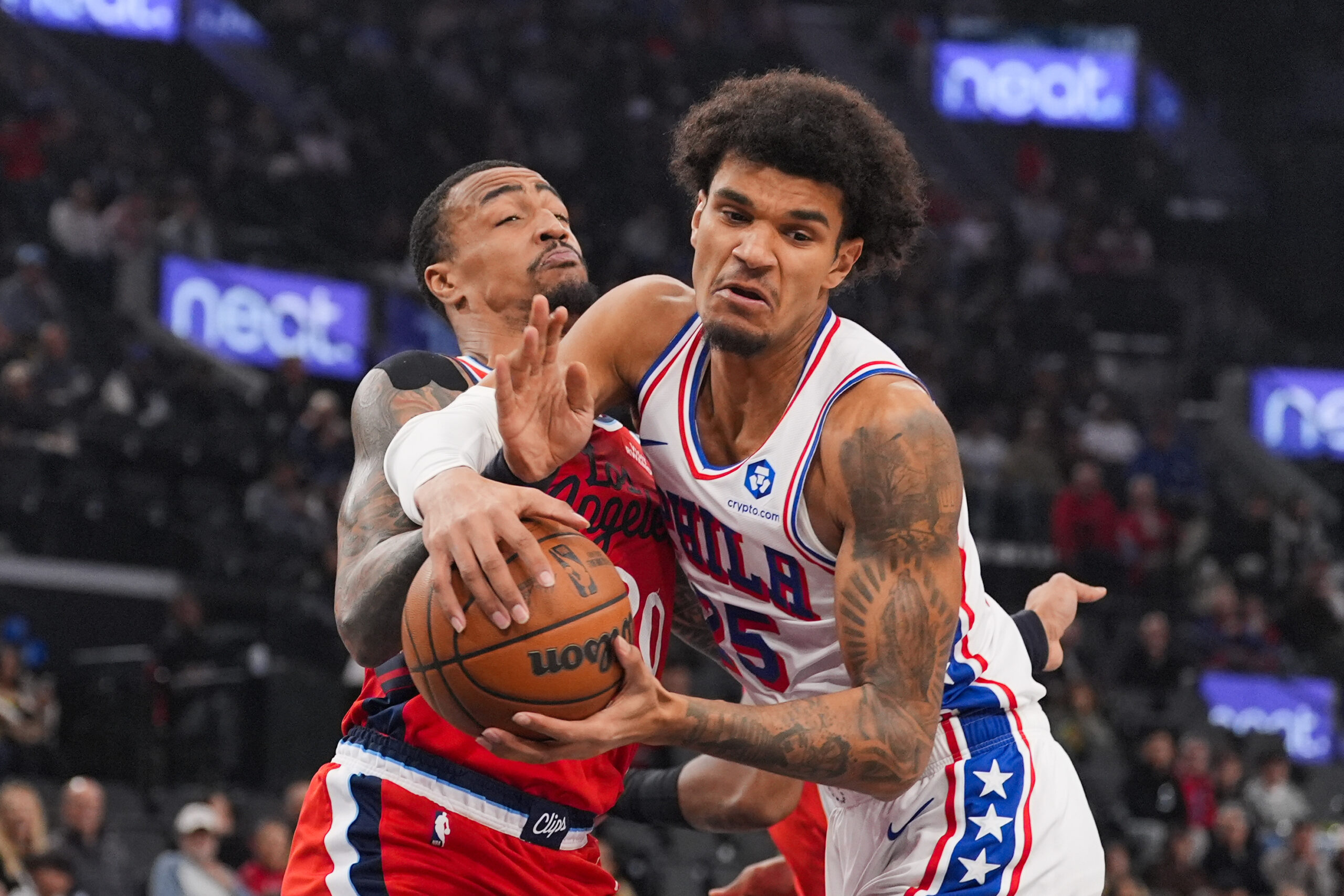
Sixers forward Dominick Barlow struggles for control of the ball with Clippers forward John Collins.
He joined the Sixers on a two-way contract, plopping himself into the middle of their Summer League stint in Las Vegas. President of basketball operations Daryl Morey said there that he believed the Sixers had successfully leveraged that type of team-friendly deal, which typically allows younger players to split time between the NBA and G League, to gain an impactful player. When Maxey returned to Philly for informal workouts before training camp, he quickly noticed Barlow “flying around like, ‘Dang, this dude’s an athlete.’”
Barlow immediately earned a rotation spot, knowing steady minutes would bring increased comfort. So would the confidence instilled in him by coaches and teammates, which Barlow raved about Monday.
“I’ve got Joel Embiid, the league MVP,” Barlow told The Inquirer at his locker, “telling me [that] when I go slash, shoot the ball. Don’t pass. …
“I’ve had great teammates in the past. I don’t know if I’ve had guys collectively, as a whole, just so supportive and want to see me play well.”
As Barlow approached his career high in points Monday, he reminded himself not to force it. He reached the personal milestone on a crafty driving and-one finish with less than nine minutes to play, then received a smattering of “M-V-P!” chants from Sixers fans as he stepped to the free throw line. On the Sixers’ next possession, Maxey slung a pass to Barlow in the corner for a three-pointer that serendipitously rattled in, and increased the Sixers’ lead to 17 points .
“You want to [reward] him,” Maxey said.
Even after Nurse pulled his starters, the coach briefly kept Barlow on the floor so he could receive his own ovation upon checking out of the game. The bench celebration was appropriate for the appreciated role player who, until Monday’s stat-stuffing breakout, had primarily filled the gaps.
And it illustrated why one of the Sixers’ trade-deadline tasks should be securing a full roster spot for Barlow to fill.
“I understand what winning basketball looks like,” Barlow said, “and I’m just trying to continue to, hopefully, make this place a home.”
WASHINGTON — President Donald Trump signed a roughly $1.2 trillion government funding bill Tuesday that ends the partial federal shutdown that began over the weekend and sets the stage for an intense debate in Congress over Homeland Security funding.
The president moved quickly to sign the bill after the House approved it with a 217-214 vote.
“This bill is a great victory for the American people,” Trump said.
The vote Tuesday wrapped up congressional work on 11 annual appropriations bills that fund government agencies and programs through Sept. 30.
Passage of the legislation marked the end point for one funding fight, but the start of another. That’s because the package only funds the Department of Homeland Security for two weeks, through Feb 13, at the behest of Democrats who are demanding more restrictions on immigration enforcement after the shooting deaths of Alex Pretti and Renee Good by federal officers in Minneapolis.
House Democratic Leader Hakeem Jeffries quickly warned Democrats would not support any further temporary funding for Homeland Security without substantial changes to its immigration operations., raising the potential of another shutdown for the department and its agencies.
“We need dramatic change in order to make sure that ICE and other agencies within the department of Homeland Security are conducting themselves like every other law enforcement organization in the country,” Jeffries said.
Speaker Mike Johnson said he expects the two sides will be able to reach an agreement by the deadline.
“This is no time to play games with that funding. We hope that they will operate in good faith over the next 10 days as we negotiate this,” said Johnson. “The president, again, has reached out.”
But Johnson’s counterpart across the Capitol, Senate Majority Leader John Thune, (R., S.D.), sounded less optimistic of a deal. “There’s always miracles, right?” Thune told reporters.
Voting with no margin for error
The funding bill that cleared Congress Tuesday had provisions that appealed to both parties.
Republicans avoided a massive, catchall funding bill known as an omnibus as part of this year’s appropriations process. Such bills, often taken up before the holiday season with lawmakers anxious to return home, have contributed to greater federal spending, they say.
Democrats were able to fend off some of Trump’s most draconian proposed cuts while adding language that helps ensure funds are spent as stipulated by Congress.
Still, Johnson needed near-unanimous support from his Republican conference to proceed to a final vote on the bill. He narrowly got it during a roll call that was held open for nearly an hour as leaders worked to gain support from a handful of GOP lawmakers who were trying to advance other priorities unrelated to the funding measure.
The final vote wasn’t much easier for GOP leaders. In the end, 21 Republicans sided with the vast majority of Democrats in voting against the funding bill, while that exact same number of Democrats sided with the vast majority of Republicans in voting yes.
Trump had weighed in Monday in a social media post, calling on Republicans to stay united and telling holdouts, “There can be NO CHANGES at this time.”
Key differences from the last shutdown
The current partial shutdown that is coming to a close differed in many ways from the fall impasse, which affected more agencies and lasted a record 43 days.
Then, the debate was over extending temporary coronavirus pandemic-era subsidies for those who get health coverage through the Affordable Care Act. Democrats were unsuccessful in getting those subsidies included as part of a package to end the shutdown.
Congress made important progress since then. Some of the six appropriations bills it passed prior to Tuesday ensured the current shutdown had less sting. For example, important programs such as nutrition assistance and fully operating national parks and historic sites were already funded through Sept. 30.
The remaining bills passed Tuesday mean that the vast majority of the federal government has been funded.
“You might say that now that 96% of the government is funded, it’s just 4% what’s out there?” Johnson said. ”But it’s a very important 4%”
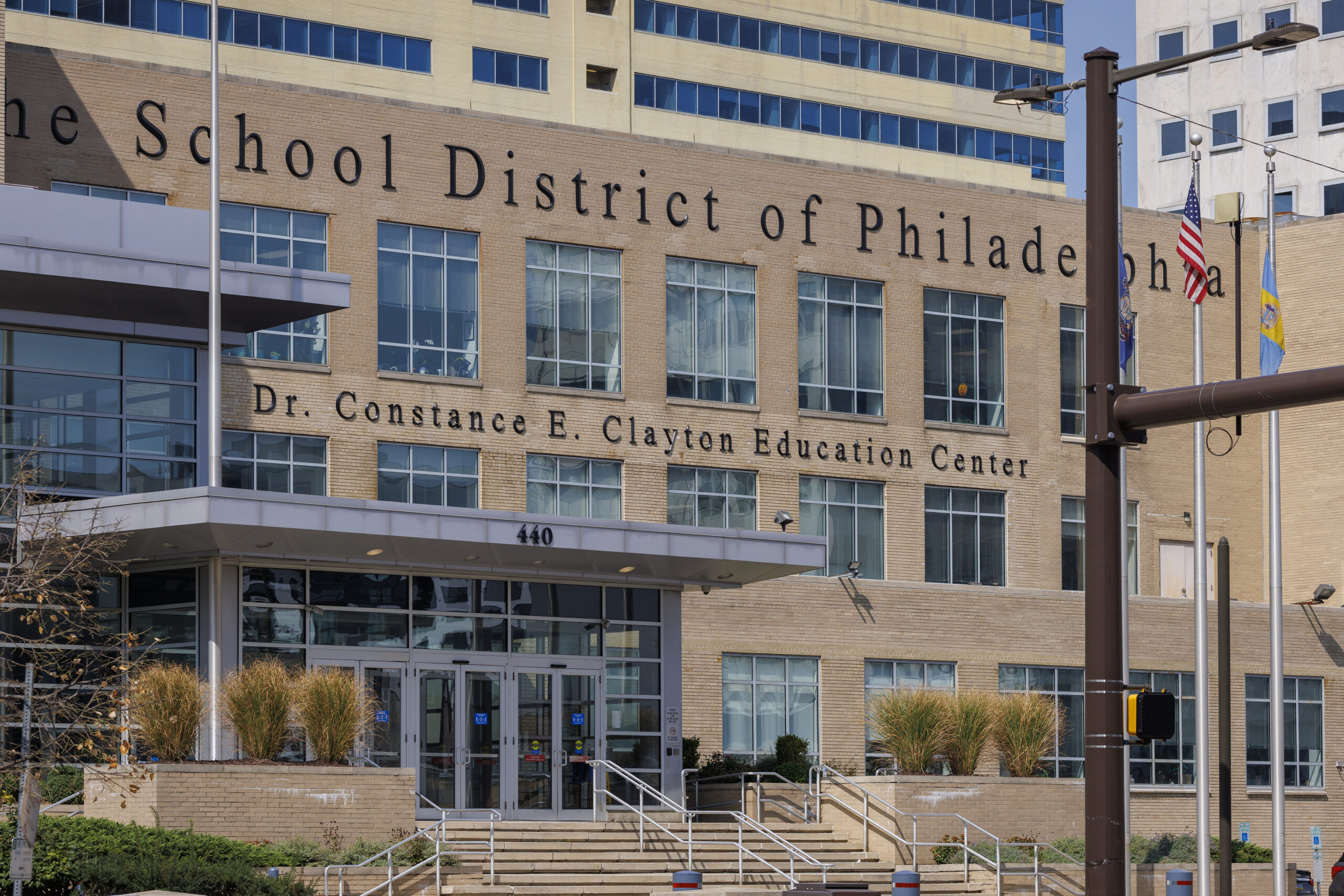
A federal appeals court revived a lawsuit challenging the legality of Philadelphia School District’s special-admissions process Monday, ruling the policy could be seen as “blatantly unconstitutional” and ”race-based.”
The ruling could have long-term implications for the admission process for citywide magnet and special-admissions schools, which has been controversial since its inception.
While it will have no immediate impact on the school district’s process, the ruling means the case could now proceed to trial.
The district changed the way it admits students to criteria-based schools in 2021, moving from a system where principals had discretion over who got into the district’s 37 special-admissions schools to a centralized, computer-based lottery for any student who met academic criteria.
For the city’s five top magnets, all students who met the standards and lived in certain underrepresented zip codes gained automatic admission.
Officials at the time said they were changing the policy as they “made a commitment to being an antiracist organization” after an “equity lens review” of admissions practices.
The demographics of some selective public schools do not match the city’s demographics. Masterman, for instance, has much higher concentrations of white and Asian students than the district does as a whole.
Although the school district has defended its policy change, a panel of federal judges on Monday ruled that it could be viewed as discriminatory.
“School District officials made public and private statements — both before and after the enactment of the Admissions Policy — that could support a finding that the Policy was intended to alter (and did alter) the racial makeup of the schools,” Judge Thomas Michael Hardiman wrote for the three-member panel.
“So a reasonable fact finder could conclude that the School District acted with a discriminatory purpose,” the panel wrote. The panel included Hardiman, a George W. Bush appointee; Cheryl Ann Krause, a Barack Obama appointee; and Arianna Julia Freeman, a Joe Biden appointee.
A district spokesperson said Monday that the school system does not comment on ongoing litigation.
The legal team representing parents Sherice Sargent, Fallon Girini, and Michele Sheridan — including lawyers from America First, an organization formed by Stephen Miller, a top aide to President Donald Trump called the action “a major victory.”
“School officials don’t get to rig admissions systems to satisfy ideological goals,” said Gene Hamilton, America First Legal’s president, and a former Trump deputy counsel. “This ruling affirms a basic constitutional principle: government cannot discriminate by race, whether openly or by proxy. AFL will continue fighting to secure accountability and restore equal protection.”
What did the initial lawsuit argue?
Sargent, Girini, and Sheridan sued in 2022to end the policy, to stop the district from using “racially discriminatory criteria” for magnet school admissions, and to award damages to those who might have been damaged by the “gerrymandered lottery” policy.
A federal judge ruled in favor of the school district in 2024 without a trial, writing that “no fair-minded jury could find that the changes to the admissions process were implemented with racially discriminatory intent or purpose.”
The district has defended its position, saying it was geography, not race, that gave certain students preferential admission to magnets like Masterman, Central, the Academy at Palumbo, and George Washington Carver High School of Engineering and Science.
Five admissions cycles have happened since the overhaul.
Adjustments have been made since the initial rollout — including dropping a controversial, computer-graded essay, adding ranked choice, adding sibling preference, and giving automatic admission to students who attend middle schools with attached high schools and meet academic standards — but the underpinnings remain, as does the preference for qualified students from underrepresented zip codes at selected schools.
Sargent’s daughter, who is Black, qualified academically for the George Washington Carver High School of Engineering and Science; Girini’s son, who is white, qualified for Academy at Palumbo; Sheridan’s child, who is biracial, met standards for Palumbo. All were denied admission to their top-choice schools, though they gained admission to other district magnets.
As a result of the shift to the lottery — and changes to admissions criteria — admissions offers to Black and Hispanic students increased significantly at most of the highest-profile schools, and offers to white and Asian students decreased at most.
What did Monday’s ruling say about the admissions policy?
District lawyers havesaid the admissions overhaul “was race-neutral and motivated by legitimate goals, such as increasing objectivity and improving access for qualified students from underrepresented geographic areas.”
But the appeals panel found that the federal judge who dismissed the case “did not adequately consider the evidence of why the School District implemented the Policy in the first place, including the School District’s stated goals, the historical context behind the ‘equity’ aims, and statements made by School District officials.”
Before the admissions changes took effect, then-Superintendent William R. Hite Jr. issued an anti-racism declaration in 2020 following the killing of George Floyd by Minneapolis police and the resulting racial justice movement.
Hite said it was “imperative that we take a laser focus on acknowledging and dismantling systems of racial inequity. For us, this goes deeper and far beyond focusing on individual acts of prejudice and discrimination, but refers to uprooting policies, deconstructing processes, and eradicating practices that create systems of privilege and power for one racial group over another.”
“These statements and actions, taken together in context, could support a finding that the School District adopted the Admissions Policy to achieve racial proportionality,” the appeals panel wrote.
What comes next?
Monday’s ruling has no impact on the existing admissions process, which is already underway for the 2026-27 school year.
And it is not yet clear what will come of the case after it returns to a lower federal court, but it could potentially now proceed to trial.
SAN JOSE, Calif. — When Sean Mannion was a quarterback with the Minnesota Vikings, his position room would play a game called “Stumpy.”
The objective was to be the last one to be stumped when then-position coach Andrew Janocko asked each quarterback the specifics of certain plays in Minnesota’s offensive playbook. Mannion might have been a journeyman backup in the NFL, but he had the recall of a Hall of Famer, his former coaches said.
“He was always the champion of that game,” Janocko said.
Mannion was hired as the Eagles’ offensive coordinator last week. He may have only two years of coaching experience, but Klint Kubiak and Janocko, who coached him with the Vikings and are now on staff with the Seahawks at Super Bowl LX, believe the 33-year-old is ready for the job.
Kubiak was Mannion’s first quarterbacks coach in Minnesota in 2019 and 2020. When he was promoted to offensive coordinator a year later, Janocko succeeded him. In September 2021, Kubiak said Mannion was one of the smartest players “he’d ever been around” and that he was like “an extra coach” on the field.
“I still feel the same way about that,” Kubiak told The Inquirer on Monday. “Sean’s a really bright guy. He’s extremely hardworking. He just understands football at a whole other level. He was trained by [Los Angeles Rams coach] Sean McVay early. He had really great coaching at Oregon State.
“He was our backup quarterback. He was always the guy bringing things up in the game-planning process that helped us make plays better, or get rid of bad plays. He just understands the whole picture.”
Kubiak and Janocko, who called the Mannion hire “a home run,” may be biased. But if Eagles coach Nick Sirianni hadn’t tabbed him to be Kevin Patullo’s replacement, it’s possible that Kubiak, who is slated to become the Las Vegas Raiders’ head coach after Sunday’s game vs. the New England Patriots, would have recruited Mannion from the Green Bay Packers.
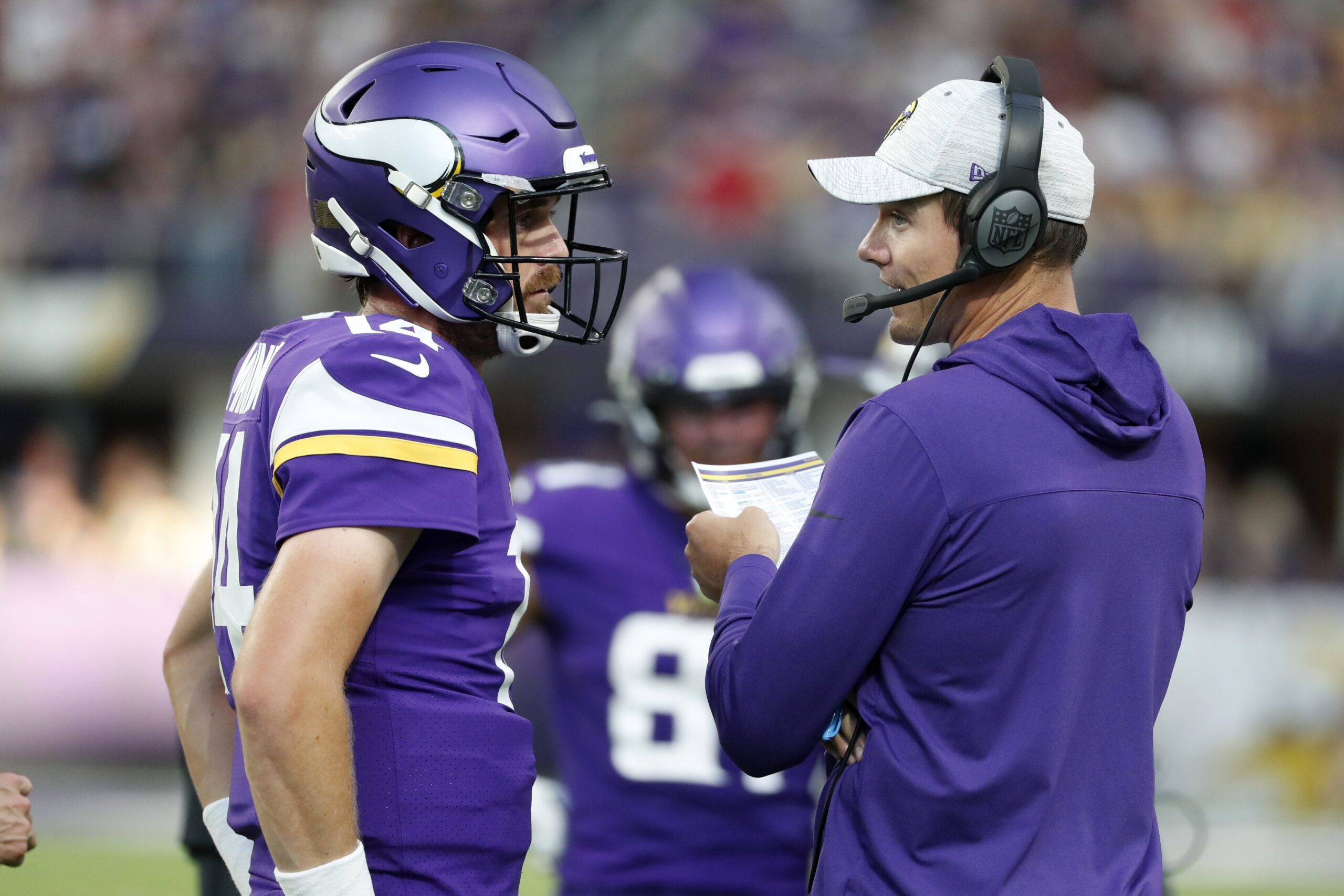
New Eagles offensive coordinator Sean Mannion (left) was coached by Kevin O’Connell (right), Andrew Janocko, and Klint Kubiak when he was a backup for the Minnesota Vikings.
“We always knew that someday when Sean was done playing, we would all want to hire him on our coaching staff,” Kubiak said.
Mannion likely wouldn’t have called plays in Las Vegas. But he will in Philadelphia, despite having never done it before.
“Everyone’s got to start somewhere,” said Kubiak, who’s been an offensive coordinator with three teams. “You learn on the job. When you’re the quarterback, all you do is call plays all day. You get it from the coach, but sometimes the coach screws it up, and you’ve got to fix it. It’s not your fault, but it is your problem.
“Sean will have no problem calling plays.”
Janocko, like Mannion, has never called plays. He’s the heir apparent to Kubiak in Seattle. He’s also an ex-quarterback. He said there are always growing pains for first-time play callers. But Mannion’s mind, he said, will give him an advantage over opposing defensive coordinators.
“The way he diagnoses and processes information, his internal memory is ridiculous,” Janocko said. “You could ask him things on the call sheet that maybe we hadn’t talked about since Wednesday, and he would know the little minutiae about it.
“Just his general understanding of coverages and what the defense was trying to do, in his mind he was always one step ahead. So I just see that translation to play caller going through the roof.”
Kubiak and Janocko said they can’t predict how Mannion’s offense will look. The Eagles clearly wanted to bring in someone who has had experience with the Kyle Shanahan system. Mannion spent two seasons with McVay and several others with Shanahan acolytes. But he was exposed to other schemes, too.
West Coast guy
Mannion was born in San Jose and played football at Foothill High School in nearby Pleasanton. He was a four-year starter in college for Oregon State before the Rams selected him in the third round of the 2015 draft.
He spent his rookie season in St. Louis but moved back to the West Coast when the Rams relocated to Los Angeles. Janocko, who was born in Clearfield, Pa., and played at Pittsburgh, said he teased Mannion about their geographical differences.
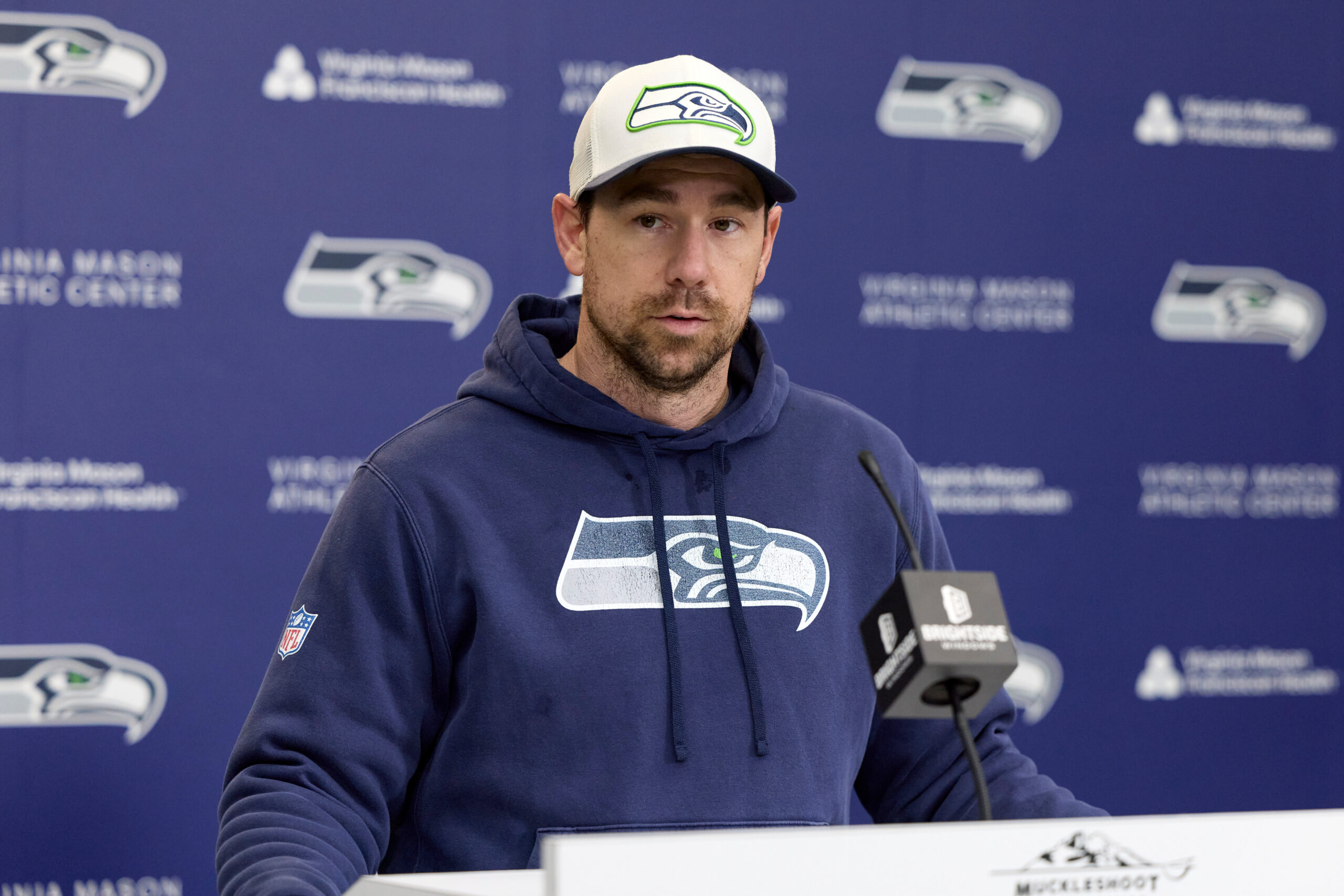
Seahawks offensive coordinator Klint Kubiak, soon to be the Raiders’ head coach, says new Eagles OC Sean Mannion “will have no problem calling plays.”
“Me being an East Coast guy and him being from the West Coast, I’d always rib him that he was going to open his own co-op,” Janocko said. “I’ll be interested to see how he does in Philly getting a cheesesteak.”
Kubiak said Mannion’s authenticity is one of his best traits. He said he’s built up thick skin from playing quarterback when his “back’s against the wall.” Philly’s different, of course. There might not be a job with as much scrutiny as Eagles offensive coordinator.
Shane Steichen, Kellen Moore, and Frank Reich were successful enough to become head coaches. Patullo, Brian Johnson, and Mike Groh suffered a far worse fate. Kubiak said Mannion can’t mentally shoulder all the burden.
Mannion is expected to make some changes to the offensive staff. Josh Grizzard has already been hired as pass game coordinator. Offensive line coach Jeff Stoutland is expected to stay, although he may no longer also be run game coordinator.
“Any time you’re in that role, you don’t do it by yourself. It’s all about having a great staff with you,” Kubiak said. “They have one of the best offensive line coaches in the NFL. They brought [Grizzard] from Tampa with him. Nick is an offensive coach.
“Great staffs do it together. One guy has his name on the job, but when I’m calling a game, there’s five other assistants talking to me on each play.”
President Donald Trump said Monday that Republican lawmakers should nationalize voting — claiming a power explicitly granted to states in the U.S. Constitution.
Speaking to right-wing podcaster Dan Bongino, who recently stepped down from his role as the FBI’s deputy director, Trump again falsely alleged that the 2020 election was stolen from him, and he urged Republicans to “take over” elections and nationalize the process.
“We should take over the voting, the voting, in at least 15 places,” Trump told Bongino. “The Republicans ought to nationalize the voting.”
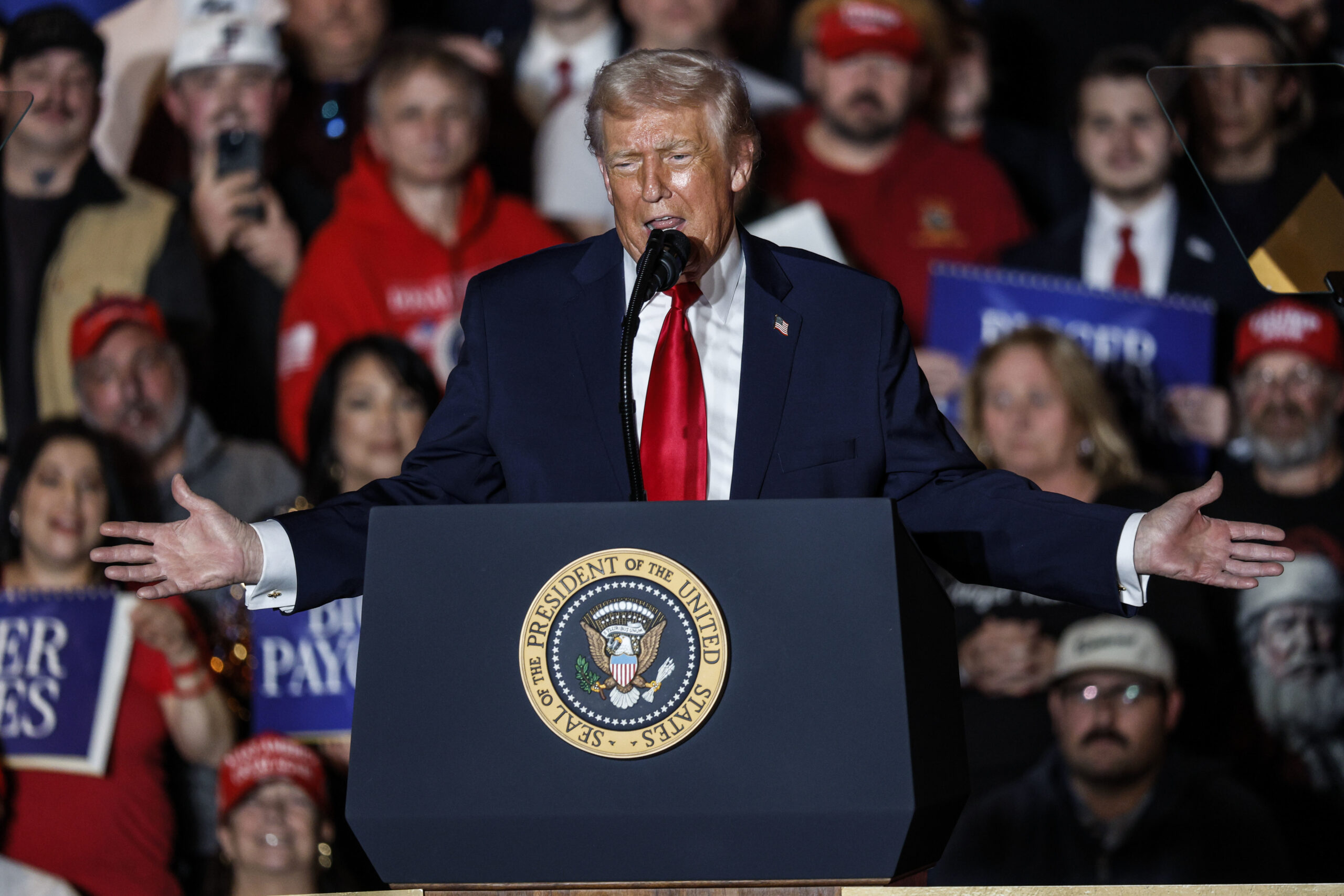
President Donald Trump speaks in Mt. Pocono, Pa., on Tuesday, Dec. 9, 2025.
Under the Constitution, the “Times, Places and Manner” of holding elections are determined by each state, not the federal government. Congress has the power to set election rules, but the Constitution does not give the president any role on that subject. Republicans in recent decades have often argued in favor of states’ rights and against a powerful federal government.
Trump’s demand comes less than a week after the FBI executed a search warrant at a warehouse in Fulton County, Georgia, which is at the heart of right-wing conspiracy theories about the 2020 election. The unusual warrant authorized agents to seize all physical ballots from the 2020 election, voting machine tabulator tapes, images produced during the ballot count and voter rolls from that year. Days before the search, Trump claimed in a speech at the Davos World Economic Forum that the 2020 election was rigged.
On Monday, while speaking to Bongino, Trump said without offering evidence that there are “states that are so crooked” and that there are “states that I won that show I didn’t win.” He also baselessly claimed that undocumented immigrants were allowed to vote illegally in 2020.
He then teased that there will be “some interesting things come out” of Georgia, but did not discuss the FBI warrant or its findings.
While Trump has repeatedly and baselessly accused states such as Georgia of running fraudulent elections, U.S. national security officials have said they found no evidence of widespread fraud in the 2020 election, and numerous courts rejected claims of election irregularities as unfounded.
This is not the first time Trump has tried to minimize states’ roles in the running of elections. In August, while complaining in a Truth Social post about mail-in voting, Trump said he would sign an executive order that would “help bring HONESTY” to this year’s midterm elections, arguing that states are meant to follow federal instructions when it comes to voting.
“Remember, the states are merely an ‘agent’ for the Federal Government in counting and tabulating the votes,” Trump wrote then. “They must do what the Federal Government, as represented by the President of the United States, tells them, FOR THE GOOD OF OUR COUNTRY, to do.”
It is not clear what Republicans in Congress could do if they were to “take over” elections, as Trump suggested. While Congress has exercised its power on elections rules throughout history by, for example, creating a national Election Day, or by requiring states to ensure that their voter rolls are accurate, lawmakers have historically allowed states to run elections under their own laws and procedures.
Dominick Barlow is making Paul George’s absence manageable.
Paced by Tyrese Maxey’s season-high seven three-pointers, the 76ers showed why they are tough to beat when they’re making threes.
And facing Ivica Zubac remains a lopsided matchup for Joel Embiid.
These things stood out in a 128-113 victory over the Los Angeles Clippers at the Intuit Dome in Inglewood, Calif. The win extended the Sixers’ (28-21) winning streak to a season-tying four games heading into Tuesday’s matchup against the Golden State Warriors at the Chase Center in San Francisco.
The sixth-place Sixers are a game behind the fourth-place Toronto Raptors in the Eastern Conference standings.
Picking up the slack
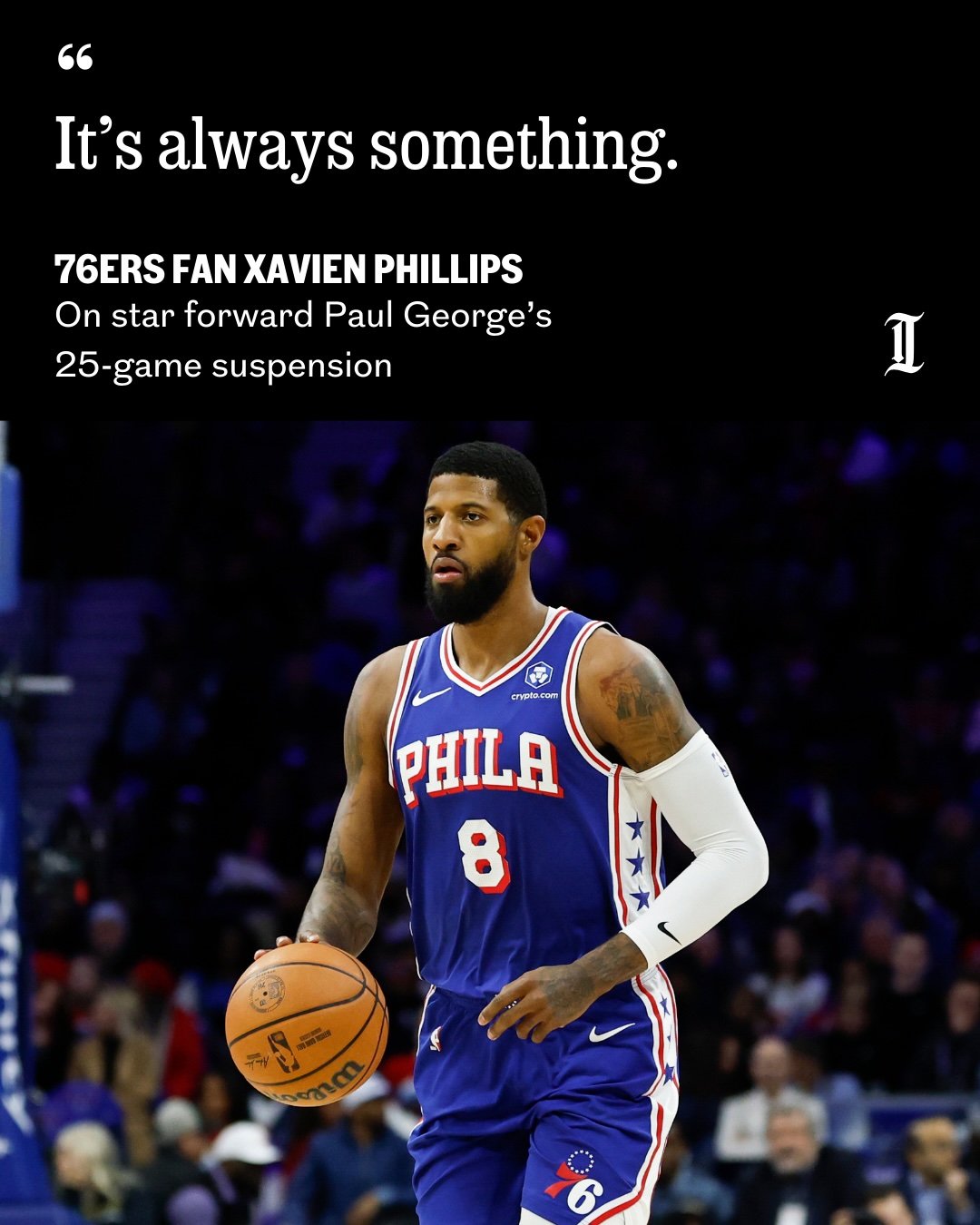
Monday marked the second game of George’s 25-game suspension due to violating the NBA’s Anti-Drug program. And just like Saturday night’s contest, he wasn’t missed. Barlow was a major reason why.
The 6-foot-9 power forward finished with a career-high 26 points to go with 16 rebounds, including a career-high 10 on the offensive boards, to post his second double-double of the season. He also finished with two steals and a block.
He became the first Sixer with at least 25 points and 10 offensive rebounds since Hall of Famer Charles Barkley did so in November 1990.
“That’s pretty good company,” Barlow said in a postgame interview on NBC Sports Philadelphia.
Barlow had 11 points on 4-for-7 shooting, along with seven rebounds — four offensive — in the first quarter. That enabled him to become the league’s first player with at least 10 points, four offensive rebounds, a steal, and a block in a first quarter since Embiid tallied that in a December 2023 game.
“Some of the stuff I was getting was just easy in transition,” Barlow said of the first quarter. “I didn’t really do anything in the half-court for the first quarter, and I had 11. So I was like, ‘OK, if I get some stuff in the half-court and keep running, it’s going to be a big night.”
He was right.
Barlow reentered the game with 4 minutes, 21 seconds remaining in the half, and added four points on 2-for-2 shooting before intermission.
Always in attack mode, Barlow has a knack for grabbing offensive rebounds, cutting to the basket when he’s off the ball, and finding gaps in the defense where he can make an impact besides just scoring.
Three-point shooting
The Sixers are starting to find their rhythm with their three-point shooting. They made 22 of 42 three-pointers in their win over the Milwaukee Bucks last week. On Saturday, the Sixers made 17 of 36 threes. Against the Clippers, they went 17-for-39 (43.6%), 10 coming in the first half on 19 attempts.
Maxey‘s season-high seven three-pointers led to his 29 points to go with six assists and three steals. Kelly Oubre Jr. hit three from long range while scoring 15 points. Quentin Grimes (15 points) and Jared McCain (six points) each made two.
Sixers guard Tyrese Maxey scored 29 points while draining seven three-pointers against the Clippers Monday night.
Embiid dominates Zubac … again
Zubac averaged eight points and eight rebounds in eight previous games playing against Embiid, who averaged around 34 points and 10 rebounds in those games.
Embiid wasn’t efficient on Monday, nor was he a beast on the boards. But he still outplayed his counterpart. He finished with 24 points on 8-for-19 shooting to go with five rebounds, three assists, and one steal. It was his 19th consecutive game with at least 20 points. Zubac had eight points and nine rebounds.
There’s one reason to believe this year’s budget could see a faster resolution: 2026 is an election year.
// Timestamp 02/03/26 4:26pm
SEPTA not considering imminent service cuts, fare increases as long-term funding remains unresolved
SEPTA officials are sketching out their own budget plans but already know it’s not going to look or sound like last year’s “doomsday” scenario.
“We won’t be talking about deep service cuts and fare increases and layoffs and all the things that were discussed then,” SEPTA General Manager Scott Sauer said in an interview Tuesday following Gov. Josh Shapiro’s budget address.
Last August, the transit agency implemented service cuts of 20%, including the elimination of some bus routes, and raised fares by 21.5% after the legislature failed to pass new money for transit operations.
House Majority Leader Matt Bradford (D., Montgomery) said that the latest use of capital funds for mass transit operations deferred the issue for two years, so the General Assembly can agree on a long-term revenue stream to increase state support for public transit in Pennsylvania’s metropolitan areas and beyond.
“The governor bailed out the legislature again on the issue of transit last year and got us a two-year bridge, which will have us dealing with this issue immediately after the next election,” Bradford said in a Harrisburg press conference.
SEPTA officials said they will be able to continue robust service through July 1, 2027 because of the converted capital money.
The maneuver allowed SEPTA to quickly restore the 2025 service cuts; it came as the agency faced a judge’s order to do so.
Longer term, Shapiro proposed to increase the share of the state sales and use tax devoted to mass transit subsidies by 1.75% for five years. But it wouldn’t take effect until fiscal year 2008, raising an additional $319.6 million in the first year to help strapped public transportation systems.
It’s the same proposal as last year’s, though projected to generate more because of growth in sales-tax revenue.
Democrats are pushing to hold Senate GOP lawmakers accountable at the ballot box in November for their failure to find a long-term revenue source last year.
“Now the people are going to have their say on this,” Bradford said. “Do you support this type of obstruction? Do you support staying in the way of funding mass transit systems in this commonwealth? I think the answer is decidedly not.”
To be fair, both parties proved unable to reach a compromise but the sticking point was in the Senate, controlled by Republicans.
Democrats hope the issue will help them flip the state Senate and give them a trifecta of control in the state House, Senate and governor’s mansion.
For his part, Sauer said the governor’s renewed funding proposal and his rhetorical support in the address will help.
“The fact that we’re still in the conversation is important,” he said. “That’s the most I can hope for at this stage.”
Senate Republicans pan Shapiro’s budget proposal as overspending
Senate Republicans were quick to pan Shapiro’s budget proposal as overspending that would harm the state’s economic outlook in the long term.
In a press conference responding to the budget address Tuesday, Republican leaders said the governor’s proposed spending increases relied on revenue streams that may not be approved by the legislature while perpetuating a structural deficit that would dip into the state’s Rainy Day Fund.
“We’re going to do everything we can to protect the taxpayer and make sure that the dollars that are allocated are wisely used,” Senate Majority Leader Joe Pittman (R., Indiana) said. “We have to make sure we’re, again, stretching every taxpayer dollar we can and bringing the cost of government down as much as possible.”
Sen. Scott Martin (R., Lancaster), who chairs the Senate Appropriations Committee, called the spending “mind-boggling.”
Shapiro’s budget assumes that more than $1 billion in new revenue will come from legalization of recreational marijuana and regulation and taxation of skill games. Pittman did not commit to moving either forward in the state Senate this year.
Democratic leaders, however, lauded Shapiro’s budget, insisting that Republicans would be forced to support it or come up with an alternative if they wanted to retain their slim majority in the state Senate.
“I would argue the polls indicate that we have a very popular governor. They tried to obstruct him and his numbers only got more popular,” House Majority Leader Matt Bradford (D., Montgomery) said. “My suggestion is it would be the political imperative, regardless of the policy implications, that they start working with this governor to pass things.”
Asked whether his caucus disagreed with any part of Shapiro’s budget, or were disappointed to see any items left out, Bradford said no.
Gov. Josh Shapiro proposes $53.2 billion state budget focusing on affordability, development, and raising Pennsylvania’s minimum wage
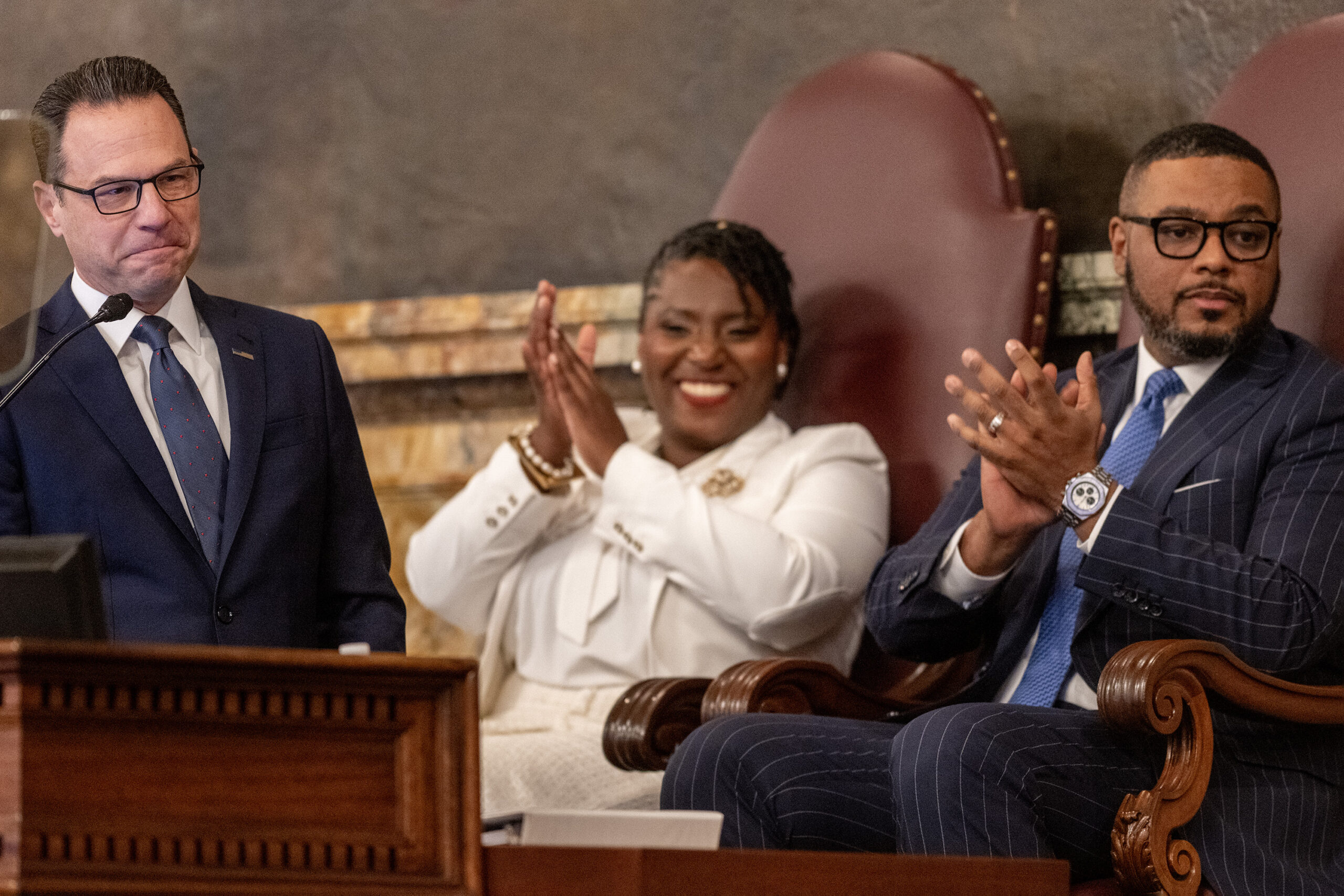
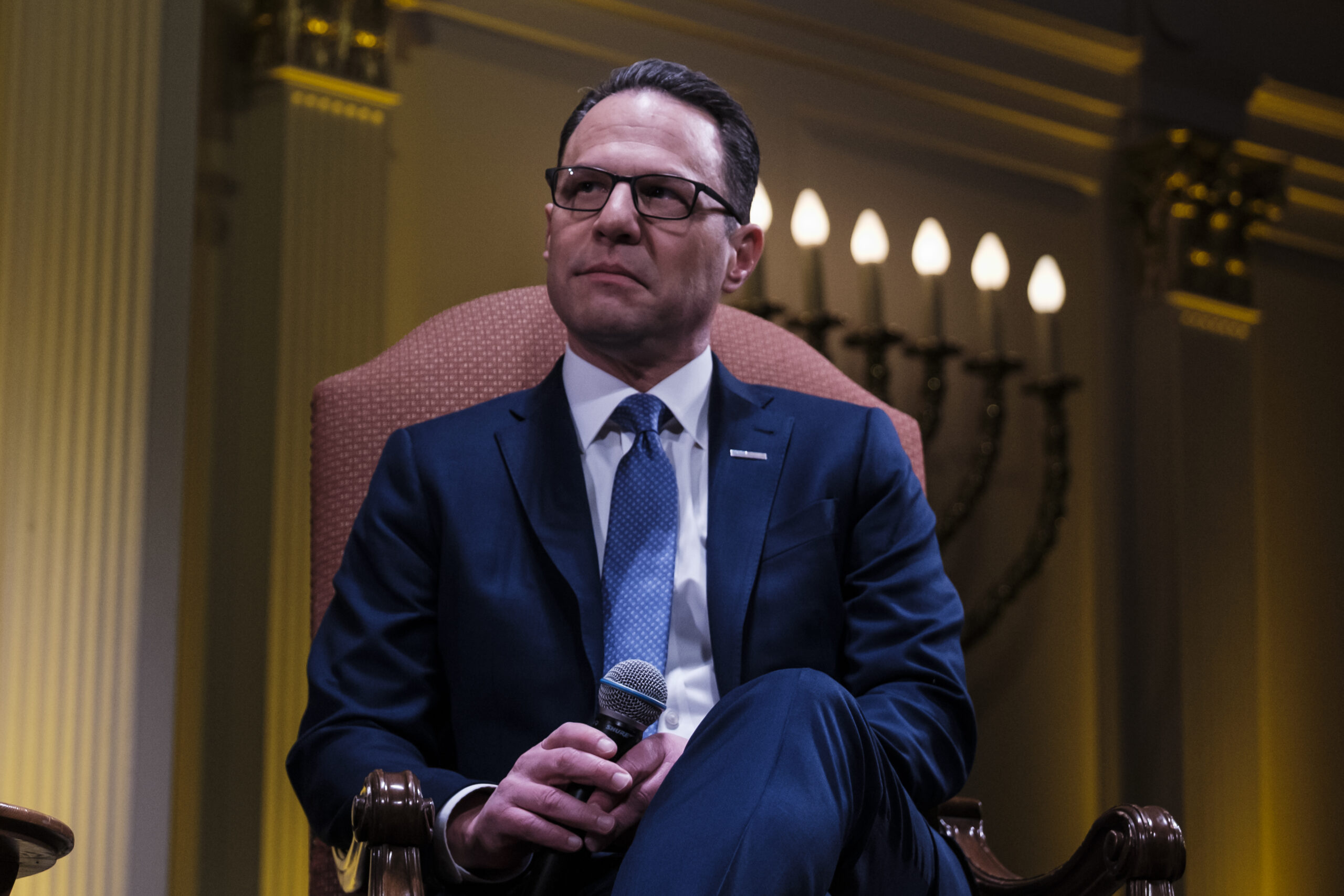
Gov. Josh Shapiro make his annual budget proposal in the state House chamber in Harrisburg Tuesday, Feb. 3, 2026. Pa. House Speaker Joanna McClinton (left) and Lt. Gov. Austin Davis (right) are seated behind him.
HARRISBURG — Gov. Josh Shapiro on Tuesday unveiled a $53.2 billion state budget proposal with a focus on affordability and attracting development in Pennsylvania, in what — if approved by the state’s divided legislature — would be a 6.2% increase over last year’s budget.
Shapiro’s $53.2 billion pitch is likely setting him up for another fight during the election year with Senate Republicans, who control the chamber and have promised fiscal restraint as their top priority and are unlikely to approve a major spending increase. Shapiro’s budget proposal would spend $4.6 billion more than the state is projected to bring in in the 2026-27 fiscal year, requiring the state to pull most of new spending from Pennsylvania’s Rainy Day Fund that currently tops more than $7 billion.
Shapiro on Tuesday said he wants to avoid another lengthy stalled budget, which forced schools, counties and nonprofits to take out billions in loans to stay afloat during the four-month-long impasse.
He invited leaders of all four caucuses — Senate Democrats, Senate Republicans, House Democrats, and House Republicans — to meet on Wednesday to start budget talks much sooner than prior years. They all agreed to attend, he added.
“We all recognize it took too long last year and that had real impacts on Pennsylvanians, but we learned some valuable lessons through that process,” Shapiro said in his address lasting an hour and 24 minutes. “We learned that we all need to be at the table, and that we all need to be at the table sooner.”
Shapiro takes aim at grid operator PJM, utility companies for high rates
Pennsylvania Gov. Josh Shapiro had sharp words for PJM, the region’s independent electric grid operator, during his budget address Tuesday, saying it has “moved too slow to supply new power,” helping lead to high energy rates to consumers.
Shapiro and advocates have long criticized the way PJM holds auctions that impact the rates consumers pay to energy providers. On Tuesday, he called for a continued cap on rates of wholesale electricity payments to power plant owners.
But Shapiro, calling PJM “just one part of the problem,” also took aim at utility companies, saying they have “too little public accountability or transparency.”
“That’s going to change,” Shapiro said.
According to the governor, only about 20% of the amount people pay on utility bills comes from energy use.
“Another big chunk comes from fees and costs that your local utility company charges to get electricity to your home,” Shapiro said. “Utilities companies in Pennsylvania make billions of dollars every year, while at the same time, they’ve increased the cost for consumers.”
Shapiro said major utility providers, such as PECO have agreed to take four steps to rein in costs. PECO serves 2,100 square miles in Southeastern Pennsylvania and provides electricity to up to 1.7 million customers.
The steps are:
End so-called “black box” settlements, which are confidential negotiated agreements between utility companies and regulators that determine rate changes, and agree to set prices transparently.
Enact “common sense reforms” to ban “deceptive contracts.”
Eliminate “jump fees” utilities charge low-income Pennsylvanians to have their services reconnected “something that literally can be done with the press of a button.”
Work to extend protections for low-income and vulnerable residents from shut-offs while managing unpaid bills.
In an apparent effort to dodge a repeat of last year’s five month (135 day) budget impasse, Shapiro announced he would be meeting with legislative leaders on Wednesday to begin budget talks.
Shapiro said he had invited the leaders of all four caucus in the House and Senate to his office and each had accepted.
“We all recognize it took too long last year — and that had real impacts on Pennsylvanians,” Shapiro said. “But we learned some valuable lessons through that process.”
The impasse resulted in temporary cuts to social services, schools and counties across the state as budget talks stretched on into November and state dollars stopped flowing.
This played out in Pennsylvania alongside a federal government shutdown that threatened critical food assistance dollars. But Shapiro said the final deal showed progress.
“At a time when dysfunction and chaos reigns elsewhere, Pennsylvania is showing that we can be a model for steady progress when we come together, treat others with respect, and find ways to extend a helping hand to our neighbors,” he said.
Shapiro calls for renter protections including a statewide cap on rental application fees
Shapiro also used his budget address to call for protections for households that either rent their homes or rent the land their homes sit on.
He called for a statewide cap on rental application fees, “limiting them to the actual cost of screening, and prohibiting landlords from charging fees before a prospective tenant can view a property.”
Philadelphia City Council members last year passed legislation that prohibits rental property owners from charging rental application fees of more than $50 or the cost of running a background and/or credit check, whichever is less. And landlords are banned from charging application fees unless they are used to cover the cost of these checks.
City Councilmember Rue Landau, who introduced the legislation, said some renters had been paying $100 or more per application, which adds up when tenants apply to multiple properties.
Shapiro also called for protections for owners of manufactured homes, which are single-family dwellings often built off-site and placed on a lot. These households own their homes, but many of them rent the land their homes sit on.
Manufactured homes represent one of the most affordable forms of homeownership. But homeowners are often left vulnerable, because they have no other option than to pay increased rent costs if they want to keep the homes they own. Manufactured-home communities are increasingly being bought by private equity companies and other institutional investors, and rent hikes tend to follow.
Across Pennsylvania, 56,000 households live in these communities, Shapiro said. He asked lawmakers to limit the rent increases that landowners can charge.
Last year, New Jersey enacted a law that limits annual rent increases to 3.5% for these lots. Landlords who want higher increases must ask the state’s Department of Community Affairs for permission.
“Last year, we all – all of us – identified a problem that we don’t have enough childcare workers, and that’s because we don’t pay them enough,” said Shapiro.
“We showed them the respect that they deserve,” said Shapiro.
On Tuesday Shapiro proposed increasing the recruitment and retention bonus from $450 to $630 as he noted the program has seen overwhelming demand.
“That’s more money in the pockets of our childcare workers, and more available child care for Pennsylvania families. It’s a win, win,” he said.
Staffing shortages plague the childcare sector in Pennsylvania and nationally, and the need for workers is expected to continue to grow. Employees who work as care providers are some of the lowest paid workers, earning on average roughly $30,000 annually in Philadelphia, Montgomery, Delaware, Chester and Bucks Counties.
And when parents can’t find adequate childcare, the Pennsylvania economy takes a hit, the Inquirer has reported. The state loses out on $6.65 billion annually when parents have to call out of work or lose their job due to childcare issues.
Shapiro renews calls for lawmakers to legalize marijuana in Pennsylvania
Shapiro renewed his calls for the state General Assembly to legalize recreational, also known as adult-use, marijuana as a way to drive needed revenue in the commonwealth.
According to the National Conference of State Legislatures 24 states, including Pennsylvania’s neighbors in Delaware, New Jersey, New York and Ohio, have legalized adult use marijuana. Pennsylvania is among 14 states that allow marijuana for medicinal purposes only.
The governor’s budget proposal calls for a 20% tax on marijuana products sold with sales beginning on January 1 of next year. According to budget documents from his office that tax would provide Pennsylvania with $729 million in revenue in its first year.
The figure is nearly $200 million more than Shapiro’s administration projected for revenues from legalization when he made the same proposal in last year’s budget.
A Shapiro administration official credited the increased projection as a result of increased interest among marijuana companies who would want to come to Pennsylvania and purchase licenses.
Approving recreational use of cannabis will be an uphill battle for Shapiro with a split legislature. Even as the federal government moves towards rescheduling marijuana and opening the door to more research, Senate Republicans have been reluctant to legalize the drug in the commonwealth.
If Pennsylvania doesn’t take action to build and preserve more housing, it will be short 185,000 homes by 2035, Shapiro said during his budget address. He called for the construction of more homes and the reform of local land-use laws to allow for more housing and lower housing costs.
Shapiro’s budget would create a $1 billion fund, supported by the issuing of bonds, to pay for a range of infrastructure projects. He called the fund “a major investment in building new housing.”
“We need hundreds of thousands of new homes,” Shapiro said. “This is how we build them.”
He also noted that local land-use laws vary across Pennsylvania’s 2,560 municipalities. He called for the state to create a catalog of local zoning rules and to help local governments reform ordinances to allow for more housing.
Shapiro called for local governments to allow for the construction of more homes near mass transit, streamline the construction of mixed-use development, and allow accessory dwelling units – such as in-law suites, garage apartments, and backyard cottages.
Most Pennsylvania municipalities ban the building of accessory dwelling units or make building them difficult.
The day before Gov. Shapiro’s budget address, a group of lawmakers in the state House announced a bipartisan package of bills meant to make homes more affordable. The two bills that have been introduced so far would allow for more housing density.
One would allow accessory dwelling units – such as in-law suites, garage apartments, and backyard cottages – in areas zoned for single-family housing. Property owners would have the right to build ADUs without asking their local government for a special exception, but municipalities would still be allowed to make “reasonable” restrictions, state Rep. John Inglis (D., Allegheny) said at a news conference Monday.
ADUs are “a simple way to add affordable housing without changing the character of our neighborhoods, and we can’t afford to keep blocking these solutions,” Inglis said.
Another bill would promote the construction of duplexes, triplexes, and quadplexes in certain areas that are zoned for single-family housing. It would require larger municipalities to allow these types of multifamily housing “while still allowing local governments to reject certain projects that might not be viable in their communities,” Inglis said.
Pennsylvania isn’t building enough housing, and that lack of supply is hiking prices for homeowners and renters, the Pew Charitable Trusts said in a report released last year.
Pennsylvania is one of the states that has allowed the least amount of housing to be built. It ranked 44th for the share of homes approved to be built from 2017 to 2023, according to the nonpartisan, nonprofit research and public policy organization.
Pew researchers cited restrictive local land-use laws as a cause and recommended the loosening of zoning rules.
“The bottom line is the best way to bring high rents and housing costs down is to build more housing and to build more varied types of housing,” Seva Rodnyansky, a manager in Pew’s housing policy initiative, told The Inquirer last year.
Shapiro urges GOP lawmakers to pass statute of limitations reforms for child sex abuse victims
After years of advocating for statute of limitations reform to allow a window for child sex abuse victims to sue their abusers, Shapiro placed the blame for the policy’s lack of movement at the feet of Senate Republicans in Tuesday’s address.
“Stop cowering to the special interests, like insurance companies and lobbyists for the Catholic Church,” Shapiro said to Senate Republicans as Republicans in the chamber booed.
The governor has pushed for the window since his time as Attorney General when, in 2018, his office released a grand jury report on clergy abuse in the state that called for the window among other reforms.
The policy passed the General Assembly as a constitutional amendment in 2020 but failed to reach voters’ ballots due to an administrative error from Gov. Tom Wolf’s Department of State.
Ever since, the policy has stalled as Senate Republicans have sought to tie it to constitutional amendments relating to voter identification and other GOP priorities.
The governor, who has faced criticism from some survivors for not being a strong enough advocate for reform enough since becoming governor, made an impassioned plea to Senate Republicans, urging them to “stop trying justice for abused kids to your pet political projects.”
“It is shameful that this hasn’t gotten done here in Pennsylvania when almost 30 other states have followed our grand jury report and passed it in their legislatures,” Shapiro said. “Pass statute of limitations reform this year — and give survivors of sexual abuse the chance to confront their abusers in court.”
‘Stop delaying’: Shapiro again asks legislators to raise the state minimum wage
On Tuesday, Gov. Josh Shapiro once again asked legislators to raise Pennsylvania’s minimum wage.
“I am calling on the General Assembly to stop delaying and put a minimum wage bill on my desk, and I will sign it,” he said to audible cheers.
Some in the crowd chanted “raise the minimum wage” as he brought up the issue. Shapiro responded to the chant, noting that 25 senators stood to applaud raising the minimum wage, including two Republicans: Sen. Joe Picozzi (R., Philadelphia) and Sen. Devlin Robinson (R., Allegheny).
Since taking office as governor, Shapiro has backed raising the minimum wage at every annual state budget address.
Pennsylvania’s minimum wage is the federal minimum of $7.25, which was set in 2009. Neighboring states all have higher minimum wages. In January, New Jersey’s minimum wage increased by $0.43 to $15.92 – making it more than double that of Pennsylvania’s.
“Our minimum wage in Pennsylvania has been stuck at $7.25 for the last 16 years. In that time, every single one of our neighboring states has raised the wage for their workers,” he said.
Shapiro noted Tuesday that raising the minimum wage to $15 an hour would save the state $300 million on entitlement programs like Medicaid.
“If you aren’t going to do this because it’s the right thing to do, or because it would let more families put food on the table for their kids, then do it because it’s going to save us $300 million, shrink our entitlement budget by growing our workforce and putting more money back in workers’ pockets,” he said.
In order to cover their basic needs, an adult living in Pennsylvania needs to earn $22.91 an hour, according to a living wage calculator developed at the Massachusetts Institute of Technology.
Only 2% of hourly wage earners in Pennsylvania earn the minimum wage or less, according to a report from the state’s Department of Labor and Industry based on 2022 data.
Shapiro calls for faster licensing for social workers and other professionals
Shapiro, who has touted himself as a good for business governor and last year worked with Republicans to approve building permitting reform, asked lawmakers to help him move that work forward in reducing licensing time for Pennsylvania professionals.
He called on the General assembly to approve reforms allowing social workers to be licensed in conjunction with graduate school, helping to address a shortage in the state, and he called for lower wait times for other professionals like barbers and pharmacists.
“We’ve put ourselves at a competitive disadvantage by incentivizing workers to go to another state,” he said.
Shapiro proposes adding $5 million to Pa.’s student teacher stipend program
As Pennsylvania continues to struggle with teacher shortages, Shapiro proposed adding another $5 million to the state’s student teacher stipend program — bringing the program up to $35 million.
Growing the program, which provides $10,000 to student teachers completing their required placements, will “ensure there are more well-trained teachers,” Shapiro said. He called out a teacher from Susquehanna Township, Hallie Sill, who he said had told him how the stipend program that launched in 2024 had helped her land a job after graduating from the University of Pittsburgh.
“Let’s increase our commitment to this initiative that we know works,” Shapiro said.
Budget would add $18 million in funding for career and technical education
The governor wants to increase funding for career and technical education in the state by $18 million, bringing up total funding for these initiatives to $200 million.
He noted that career and technical education, apprenticeship and vocational technical program funding has increased 50% since he took office.
“We’ve registered 231 new pre-apprenticeships and apprenticeships, and more than 39,000 of our fellow Pennsylvanians have participated in an apprenticeship during my time as your governor in fields ranging from welding to nursing to dairy herd management,” said Shapiro. “Those investments are making a meaningful difference, and they’re creating pathways of opportunity.”
He highlighted that some workers in the state lack a high school degree.
“We can’t lose sight of the fact that there are literally hundreds of thousands of Pennsylvanians who could be added to the workforce if we take care to give them the tools they need to succeed,“ said Shapiro. “Take the 614,000 Pennsylvania adults who don’t have a high school degree, for example. That’s a ton of untapped potential.”
Shapiro introduces ‘GRID’ plan for the rise of massive data centers
Saying the U.S. is in a race to dominate artificial intelligence, Pennsylvania Gov. Josh Shapiro announced a new plan he says will protect consumers against rising energy costs associated with data centers, while also easing a path for tech companies to build.
The Governor’s Responsible Infrastructure Development (GRID) plan would make data center developers either bring their own power generation or pay for any new generation they’ll need, “not saddling homeowners with added costs because of their development.”
Shapiro said too many data center proposals have been “shrouded in secrecy” but that they are crucial to the U.S.
“The United States is locked in a battle for AI supremacy against China. Look, I don’t know about you, but I’d much rather the future be controlled by the United States of America and not Communist China,” Shapiro said.
Components of the plan include:
Commit to “strict transparency standards.”
Engage communities.
Hire and train local workers from Pennsylvania.
Enter into community benefit agreements.
In return, developers would be “speed and certainty” in getting permits, as well as qualifying for tax credits.
“I know everyone … wants to see our economy grow and create more jobs and more opportunity,” Shapiro said. “But I also recognize this is unchartered territory, so let’s come together, codify these principles and take advantage of this opportunity.”
Shapiro proposes ensuring access to recess for Pennsylvania students
The governor made another proposal for Pennsylvania schools: ensuring they have recess.
“Recess, to me, isn’t just an extra block on the schedule. I would argue it’s just as critical as learning math and science and English,” Shapiro said.
He said he had directed the Pennsylvania State Board of Education to develop recommendations to “guarantee recess for our students.”
“Students need to spend less time focused on their phones and more time focused on learning, on talking to their friends face to face, and on developing the critical skills that they will need later in life,” said Shapiro, who drew sustained applause for the proposal. (“If applause could vote, we’d have this whole thing done already,” the governor quipped.)
He told lawmakers: “I know there are bills in both chambers to do this — I urge you respectfully to come together and send a bill to my desk.”
Some proposals garner unanimous standing ovations from lawmakers
Shapiro’s budget address is a workout for Democratic lawmakers, as they stand up, clap, repeat for each of his ideas.
As Shapiro mentioned mass transit — which he is proposing a long-term funding stream to begin in 2027 — all Democrats quickly shot up to applaud. Only one Republican lawmaker, Sen. Joe Picozzi (R., Philadelphia) stood to celebrate the mention.
As Shapiro talked about new standards he plans to implement for new data centers in Pennsylvania, a handful of other Republicans also stood to applaud.
Two popular proposals that garnered unanimous standing ovations: mentions of first responders and Shapiro’s pitch for restricting children’s access to dangerous AI chatbots.
Shapiro joked at one point, as he has in prior years, that Republicans should applaud his federal response fund because it will help safeguard money Pennsylvanians deserve. This brought a laugh from Democrats, but no reaction from Republicans.
Shapiro calls for limitations on AI to protect children and seniors
Shapiro called for a litany of limits on artificial intelligence as the emerging technology presents new risks to children and seniors across the commonwealth.
In recent months AI developers have faced calls for regulation nationwide and lawsuits from parents who say their children’s relationship with chatbots drove them to self harm.
Even as Shapiro advocated for making Pennsylvania a hub for AI, he said safeguards needed to be established.
He called for age verification and parental consent for chat bots, requirements that companies direct mentions of self harm or violence from children to the correct authorities and periodic reminders from AI chatbots that they are not human.
Furthermore, he called for prohibiting AI chatbots from producing sexually explicit or violent content involving children.
“This space is evolving rapidly. We need to act quickly to protect our kids,” Shapiro said.
In addition to for calling for the General Assembly to pass legislation imposing those limits, Shapiro said he had directed state agencies to explore legal avenues to hold app developers accountable.
Shapiro touts list of achievements as governor: ‘We’re solving problems and getting stuff done’
In his fourth budget address, and final before he stands for reelection in November, Shapiro touted a laundry list of his administration’s accomplishments – from funding of education, to investments in the state’s economy to reducing violent crime across the state.
“We’re solving problems and getting stuff done to improve people’s lives,” Shapiro said, referencing his campaign’s slogan “get sh*t done.”
The list of accomplishments closely mirrored the stump speech the governor gave to supporters in Pittsburgh and Philadelphia last month as he formally launched his reelection campaign and his talking points as he hit the cable news circuit on his book tour last month.
Likely to face State Treasurer Stacey Garrity in the general election next year the centrist Democrat has focused on the idea that he, as governor, can accomplish things for Pennsylvanians regardless of party affiliation.
He will retain that focus throughout his budget address, and throughout the next year as he campaigns for reelection while raising his national profile ahead of a possible 2028 presidential run.
Proposal includes $565 million funding increase to raise poor schools to ‘adequately’ funded levels
Gov. Shapiro is sticking to the state’s plan for remedying constitutional underfunding of its public schools — proposing another $565 million increase to raise poor schools to “adequately” funded levels, and reimburse high-taxing districts.
The governor’s proposed budget also includes a $50 million increase in basic education funding to be distributed to all K-12 schools and a $50 million increase in special education funding.
And it takes another step to curb payments from school districts by $75 million to cyber charter schools, after funding changes last year that were projected to save districts $175 million. While school districts have long accused charters of draining their budget, the cyber schools have vigorously protested proposals to scale back their payments, arguing their students will be hurt.
State mass transit funding fight could be postponed until 2027
Gov. Josh Shapiro is ready to postpone until 2027 a likely fight over a longer-term enhancement of state mass transit funding, citing the temporary cash infusion the administration arranged last year to bail out SEPTA.
“We believe that they are stabilized for two years,” said a Shapiro administration official on Tuesday, adding that they are happy to discuss the issue sooner if the General Assembly is willing.
The money, spread over two fiscal years, allowed SEPTA to reverse 20% service cuts it had imposed last year amid a $213 million deficit. It also was to carry the transit agency through the coming budget year. Shapiro’s proposed spending plan and annual address Tuesday kicked off the negotiations process.
Yet the governor did put on record his preferred stable funding solution for mass transit, which looks just like the one lawmakers spurned last year.
The spending plan would increase the share of the sales and use tax devoted to mass transit subsidies by 1.75%, raising an additional $319.6 million yearly to help strapped local and regional public transportation systems, according to budget documents.
But the proposal would not take effect until July 1, 2027, the start of the fiscal year that will run through June 2028.
“I bought us two years — but we have to keep working at this, because this isn’t a problem we can ignore,” Shapiro said Tuesday. “Mass transit helps drive our economy — this is an issue of economic competitiveness. You know I’m competitive as hell — and I want to win.”
State lawmakers share bipartisan hugs ahead of Shapiro’s budget address
The joint session of the Pennsylvania House and Senate was called to order, and as the group of state lawmakers awaited the arrival of Gov. Josh Shapiro to the chamber to deliver his $53.2 billion budget proposal.
Up until Shapiro’s arrival, attendees gave bipartisan, bicameral hugs to lawmakers from their opposing chamber. Several legislators reunited with their former colleagues who had returned to Harrisburg on Tuesday in their current roles as mayors or executives across the state, including Philadelphia Mayor Cherelle L. Parker, who previously served in the state House for 11 years.
Seated nearby to Shapiro’s left is state Treasurer Stacy Garrity, alongside the other GOP row officers Auditor General Tim DeFoor and Attorney General Dave Sunday. Garrity is likely to challenge Shapiro in November’s midterm election as the state GOP- endorsed candidate for governor.
Shapiro has delivered some lengthy speeches in past years during his first term, running for more than an hour to lay out his priorities for the upcoming fiscal year.
Shapiro’s budget would allot $30 million in performance-based funding for Temple, Penn State and Pitt
Gov. Shapiro’s budget once again proposes to allot money for performance-based funding for Temple, Pennsylvania State University and the University of Pittsburgh.
The budget includes $30 million for the effort, half of what Shapiro proposed last year, according to a source close to the process. When the current budget was passed, however, it included no money for performance-based funding this year.
Whether the initiative will gain legislative support in the new budget year is unclear.
The three universities currently receive about $551 million in state funding.
The new performance measures that would determine how the $30 million is allotted include graduation rates, affordability, and enrollment of low-income students and those pursuing degrees in wide-ranging occupations deemed critical for the state. The criteria were developed last year by a bipartisan council of legislative leaders and the acting secretary of education.
The universities in Pennsylvania’s State System of Higher Education, meanwhile, would be flat-funded for a second consecutive year under the budget, according to the source.
West Chester, East Stroudsburg, Kutztown, Millersville, Slippery Rock, Shippensburg, Commonwealth, Pennsylvania West and Indiana received the same basic funding this year that they did last year. That was the first time since 2021-22 that the schools did not receive an increase.
Cheyney also got the same basic funding, but the historically Black college got a special $5 million earmark “to develop and implement an enhanced transfer and workforce development initiative in partnership with a community college.”
The state’s community colleges also would be flat-funded under the governor’s proposal.
PJM Interconnection — the region’s dominant electric grid operator — is poised to play a central role in that expansion, as the independent organization has been shoved into the national spotlight and subjected to mounting pressure over the past year.
In many ways, PJM may be one of the most consequential Philly‑area institutions that most residents have barely heard of, even though their electricity supply and monthly bills hinge on its decisions.
The organization has faced escalating scrutiny nationwide and across the region because of its position as the country’s largest independent grid operator and the challenges tied to surging energy demand.
But what is PJM and why is everyone always so mad at it?
Shapiro will pitch $100 million reserve in the event Trump cuts federal funds for Pennsylvania
Gov. Josh Shapiro is expected to propose a new $100 million fund to use as a reserve in the event President Donald Trump’s administration opts to withhold federal funds from Pennsylvania.
Shapiro will pitch the new Federal Response Fund on Tuesday, when he delivers his fourth budget address before a joint session of the state General Assembly.
While Shapiro’s budget pitch will outline how he believes the state should spend $53.3 billion in state revenue and reserves, it is only a piece of Pennsylvania’s annual spending. In the 2025-26 budget, the state was projected to receive $53.1 billion in additional funds from the federal government, or 40% of the state’s total annual spending.
Shapiro has repeatedly said the state cannot backfill the federal cuts by the Trump administration and Congress to Medicaid, health subsidies, food assistance, and more, as these cuts total billions in federal funds. The proposed fund would not try to replace this money, but would be available if the Trump administration chooses to withhold federal fund as it did multiple times last year.
Shapiro is expected to note in his address the 19 times he sued or joined lawsuits against the Trump administration for failing to release federal funds, such as $18 million set aside for state-level Homeland Security funding or $2 billion for environmental and energy projects already appropriated by Congress during former President Joe Biden’s tenure.
Shapiro frequently sued Trump during his first administration while he was Pennsylvania’s attorney general, and has chosen to continue to legally challenge him in his capacity as the state’s governor on numerous occasions.
In his new memoir Where We Keep the Light, which was released last week, Shapiro gave a window into how he decided to join lawsuits as attorney general, noting the many times he beat the Trump administration in court because “we were rooted in the law, not politics.”
“But while I had profound differences with [Trump], and I didn’t like the way he talked, and I certainly didn’t like the values and viewpoints he espoused, I only sued his administration when I believed that he was actually violating the law,” Shapiro wrote.
One reason the budget could get resolved faster than last year
There is one bright spot for the schools, counties and nonprofits that rely on state funding and which last year had to wait more than four months for the money when lawmakers couldn’t agree: It’s an election year.
Election years often result in quicker budget resolutions, as lawmakers and officials want to secure money for their districts before they go home to campaign for reelection.
In 2018, when former Democratic Gov. Tom Wolf was up for reelection, he signed the state budget on June 23 — a week ahead of the July 1 deadline.
This year, Gov. Josh Shapiro is up for reelection, likely to face a November challenge from State Treasurer Stacy Garrity, the state-GOP endorsed candidate. And many other state lawmakers are in the same boat.
All 203 seats in the state House and half the 50 seats in the state Senate are on the ballot in November. Several lawmakers have announced they will not seek reelection, allowing for competitive elections to fill the vacancies.
Gov. Josh Shapiro proposed to generate an additional $1.5 billion over five years to subsidize public transit operations by increasing its share of state sales tax income.
Senate Republicans, in the majority in the chamber, opposed using the sales tax, though the rate would not have increased.
They preferred a new source for the state’s transit aid rather than a broad-based levy, and said SEPTA was mismanaged, citing high-profile crimes, rampant fare evasion, and spending decisions.
Hopes were raised of a deal to use money from a new tax on games of “skill,” slot-like machines that are currently untaxed or regulated — the proverbial magical money pot that would make raising cash painless. It had featured in several budget cycles but again did not come together amid clashing opinions among GOP lawmakers.
When the state budget passed in December, there was no new transit money in it.
In November, the administration also sent $220 million in emergency money in November for repairs to the ailing Regional Rail fleet and the trolley tunnel.
SEPTA officials and transit advocates say they are unsure what’s coming this time around, if anything.
One thing is clear in advance: A Pennsylvania budget process ain’t Schoolhouse Rock, so hang on.
Shapiro could promote effort to ban cell phones from Pa. schools today
Gov. Josh Shapiro is backing a proposal to ban cell phones from Pennsylvania classrooms, joining a growing chorus of parents, teachers, and officials seeking to curb school disruptions and detach kids from addictive devices.
“It’s time for us to get distractions out of the classroom and create a healthier environment in our schools,” Shapiro said in a post on X on Thursday.
He called on Pennsylvania lawmakers to pass a bill that would require schools to ban the use of cell phones during the school day, “from the time they start class until the time they leave for home.”
The endorsement from the Democratic governor — who could promote the issue during his budget address Tuesday — comes as school cell phone bans have increasingly become the norm: 31 states have restrictions of some kind on phones, including 23 states with “bell-to-bell” bans barring the use of phones the entire school day, according to Education Week.
Housing, affordability, and new revenue: What we’re watching for in Gov. Josh Shapiro’s budget address
HARRISBURG — Gov. Josh Shapiro on Tuesday is expected to propose a $53.2 billion state budget for the 2026-27 fiscal year, just three months after settling a bitter, 135-day budget impasse that forced schools, counties, and nonprofits to take out loans to stay afloat.
Shapiro, a first-term Democrat running for reelection this year and potentially poised for higher office, will deliver his fourth annual budget address before a joint session of the Pennsylvania General Assembly, where he plans to pitch an expansive $1 billion housing and infrastructure plan to incentivize new housing development with an overall focus on affordability in the state.
And as in years past, Shapiro is expected to again propose new revenue streams to fill a more than $5 billion deficit, such as the legalization and taxation of adult-use cannabis, as Pennsylvania is again expected to spend more than it brings in tax revenues.
And a lawsuit challenging the legality of a special-admissions process at magnet and other criteria-based city schools was revived by a panel of federal judges this week. The policy’s constitutionality is in question.
P.S. A heads-up to the urban drivers among us: The Philadelphia Parking Authority is resuming parking regulation enforcement and towing today after a pause for last week’s snowstorm. The city also needs all parked vehicles moved from South Broad Street between Washington and Oregon avenues before 7 a.m. for a snow removal operation.
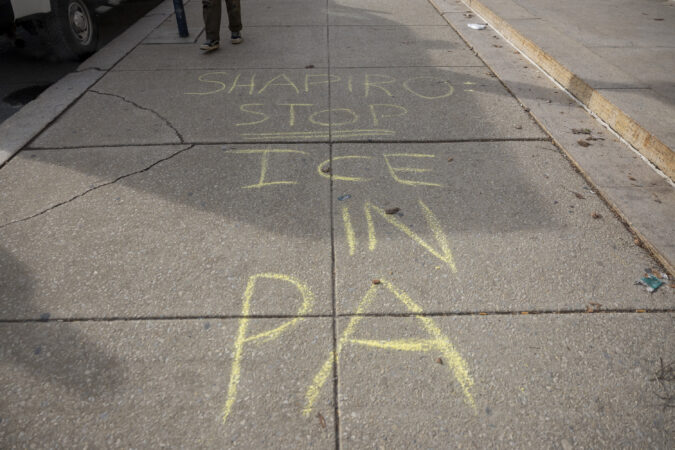
Gov. Shapiro has avoided fights over immigration for much of the first year of President Donald Trump’s second term in office. But after the fatal shootings in Minneapolis, he’s jumping into the fray.
The centrist Democrat has ramped up his anti-Trump rhetoric since federal agents killed Alex Pretti in Minneapolis last month, especially during his author tour to promote his new memoir.
Still, immigrant rights groups in Pennsylvania say they want to see Shapiro do more by ending all cooperation with ICE. His administration currently honors ICE detainers in state prisons and allows the agency access to state databases.
Notable quote: “It’s easy for him to point the finger to somebody else, but then what is he doing at home?” a local advocate said of Shapiro’s criticism of the federal operation in Minnesota.
A lawsuit challenging the legality of Philadelphia schools’ special-admissions process was revived Monday by a federal appeals panel, who ruled it could be unconstitutional and discriminatory.
The initial lawsuit in 2022 was brought forth by a trio of Philly parents, who sued the district to end a new policy that changed the way it admits students to criteria-based schools. A federal judge tossed the case in 2024.
This latest legal move could have long-term implications for the district if the case now proceeds to trial.
More on education: Broken heat and burst pipes left some students shivering in Philadelphia schools on Monday, while others learned virtually from home. Four schools were dismissed early because of the cold conditions.
What you should know today
A Temple University student was arrested by federal agents Monday in connection with the same anti-ICE protest for which journalist Don Lemon is facing charges.
A federal judge who will decide the fate of the dismantled slavery-related exhibits at the President’s House visited the site Monday. She also inspected the removed panels, which are now in a storage room at the National Constitution Center, and reported that they have not been “destroyed.”
Dozens of surveillance videos and cell phone data led Philadelphia police to Kada Scott’s accused killer, as described at a preliminary hearing Monday.
In the crowded Democratic primary for Pennsylvania’s 3rd Congressional District, two physicians are largely self-funding their campaigns, while another candidate maintains a financial advantage.
Democrat Janelle Stelson lost to U.S. Rep Scott Perry by a little over one point in 2024. She keeps outraising him as she prepares for a rematch for the Central Pennsylvania seat.
🏆 Plus: Philly sports has seen many eras, but which one has been the best? Was it the early 1980s? Maybe the early 2000s? What about the 2020s? Is there a time that has been overlooked? Reply to this email to share your thoughts on which era was best and why for a chance to be featured in a future story.
🧠Trivia time
Some Regional Rail trains have a new look due to an effort from the transit agency to alleviate overcrowding. What is different about them?
Cheers to Betsy Flannery, who solved Monday’s anagram: Reclectic. URBN’s discount store is moving from the Franklin Mall to a larger space in the Willow Grove Park Mall this month.
Photo of the day
Melissa Krakower (left) and her daughter Lindsay Krakower carry their tubes back to the top of the hill while sledding in Rose Tree County Park in Delaware County Tuesday.
Enjoy your snow-capped Tuesday. See you back here tomorrow.
By submitting your written, visual, and/or audio contributions, you agree to The Inquirer’s Terms of Use, including the grant of rights in Section 10.
Black media matters. Right here, right now, and more than ever before. We are the essential workers on the front lines of a growing resistance movement.
As the owner and operator of WURD Radio, Philadelphia’s only multiplatform Black talk radio station, my team and I are focused on a singular mission: fighting back against this administration’s attempt to destroy Black history, culture, institutions, and people. We provide our communities with our most powerful weapon: trusted, accurate, culturally specific information.
The recent arrest of Don Lemon and Georgia Fort, two independent Black journalists, underscores the lengths this government will go to silence dissent — which, by the way, is protected by the First Amendment of the U.S. Constitution.
The Black press has been fighting a system that has sought to weaken our institutions, marginalize our reporting, and underfund our organizations for centuries. And frankly, for too long, mainstream media has been complicit in maintaining that system of devastating racial oppression.
Throughout history, the mainstream media has been complicit in maintaining the system of racial oppression by focusing on and reinforcing negative narratives about African Americans, writes Sara Lomax.
In the 1800s, newspapers profited by running ads to capture enslaved Africans, and throughout history, they‘ve reinforced the caricatures and negative narratives used to justify a racial hierarchy.
In this new era, it feels as though we are slipping back in time, forced to fight battles we thought were won. The quest for newsroom diversity in mainstream media, for example. The brief glimmer of self-awareness that followed the murder of George Floyd — when pledges were made to hire more reporters of color, diversify sources, and commit to nuanced coverage — was tragically short-lived.
But if you are Black in America, you know the drill: Racial progress is always followed by a wicked backlash. Now is no different.
Still, we look to our history for the blueprint of our survival.
We draw strength from Samuel Cornish and John B. Russwurm, who founded Freedom’s Journal, the first Black newspaper, in 1827. They advocated for the full humanity of Black people nearly 40 years before slavery was abolished nationwide. Imagine the courage and tenacity it took for two Black men to start a newspaper in a country that said it was illegal — in some places, punishable by death or maiming — to read and write.
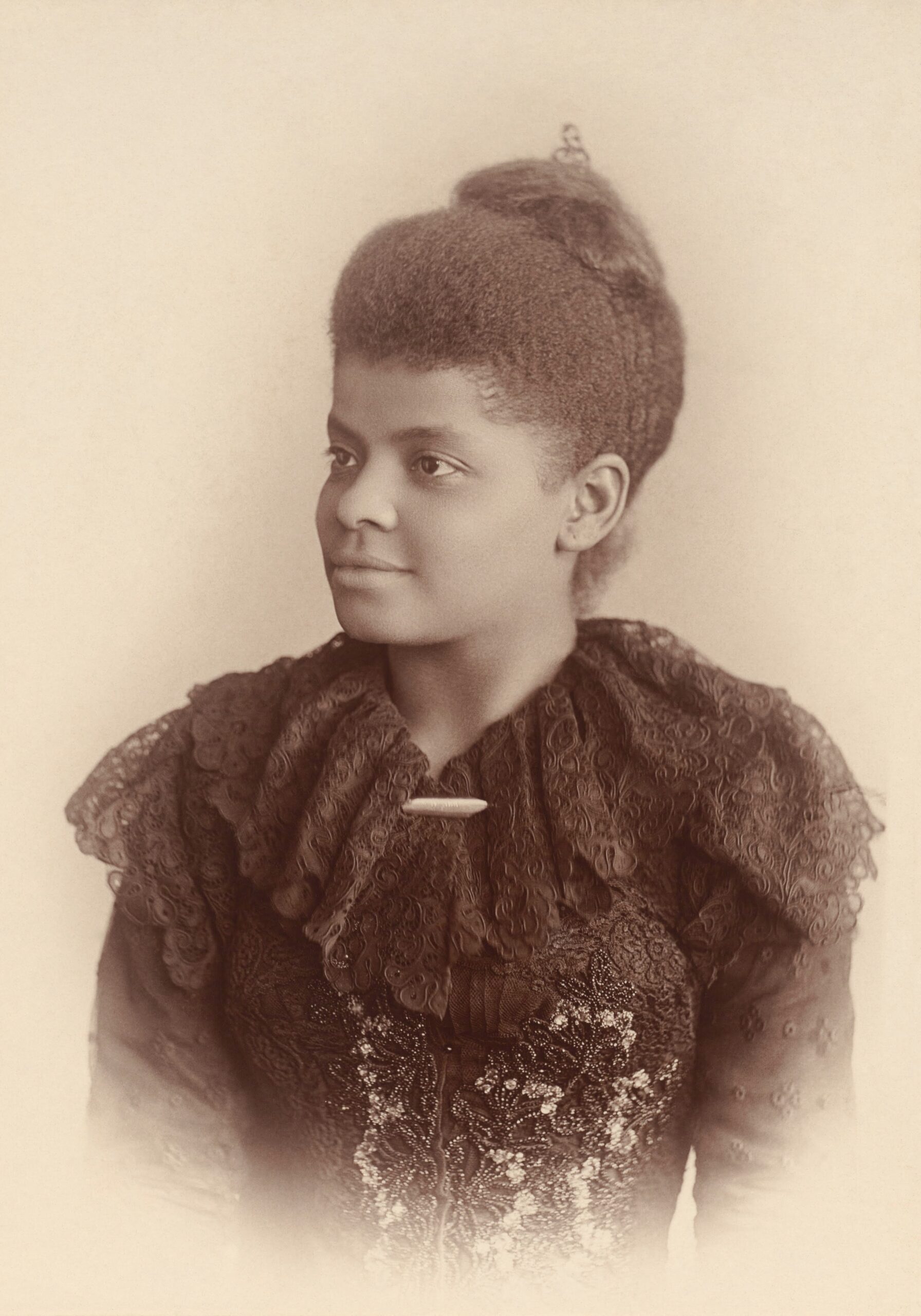
Ida B. Wells-Barnett, in a photograph by Mary Garrity from c. 1893.
I am inspired by Ida B. Wells-Barnett, who used the power of her pen to expose the barbaric practice of lynching through the Red Record. She traveled the country with a bounty on her head, determined to move the nation away from its most diabolical instincts.
I think of Robert Abbott, who launched the Chicago Defender from a landlord’s dining room in 1905. He built a secret network of Black Pullman porters to smuggle his papers into the South, serving as a catalyst for the Great Migration — the movement of roughly six million Black Americans from the rural South to the urban North and West between 1916 and 1970.
And, of course, there is Christopher Perry, who founded the Philadelphia Tribune in 1884, which remains the longest-running Black newspaper in the nation.
This history is in our DNA. We call on these ancestors now because we face an overt hostility unlike anything I have seen in my lifetime.
This moment is clarifying. Statistics highlight the stark disparities in housing, health, and education — but without the historical context of Jim Crow, redlining, and voter suppression, the public is left to believe the administration’s lie: that Black people are “inherently inferior” or merely “unqualified social promotions.”
This hypocrisy is as old as the nation itself — a country whose “Founding Fathers” codified slavery while declaring all men equal. When your foundational document is based on a lie you refuse to address, it tracks that you would spawn a president who is morally bankrupt. As Malcolm X said, “The chickens are coming home to roost.”
Yes, our nation has a serious problem. Yet, we persist.
2025 was the most difficult year of my career. WURD weathered an anti-DEI lawsuit, layoffs after an advertising collapse tied to anti-DEI policies, and the day-to-day exhaustion of covering relentless racial animus in Washington.
Yet, we did some of our best work, including a special series called Exonerated, which earned us an NAACP Image Award nomination — a rare recognition for local radio. And we’ve launched two new yearlong initiatives to make sure Black voices are centered as part of the 250th birthday festivities.
Our ancestors didn’t just dream of a free press — they built one. We will continue using all our platforms to tell our stories and center the complexity and diversity of our history, culture, and community.
We know that in this season of increased tension and hostility, our voice is our most potent weapon and our most sacred sanctuary.
We don’t just broadcast; we bear witness. And in that witnessing, we find the power to not only endure the present, but to author a future where there is a possibility to be finally and fully free.
Sara Lomax is the president and CEO of WURD Radio and the cofounder and president of URL Media.
Kai Lu and Edward Mendez had expected to spend many years in the spacious Media home, enjoying the easy access to Center City by SEPTA Regional Rail, the good schools for their two-year-old son and the second on the way, and its aura of history.
But in the words of Lu, who is in data analytics for a major communications company, “life intervened.”
Mendez landed his dream job as a data analyst for the Miami Marlins baseball team, and the couple are headed to Florida after two years in the house.
The living room. The home has four working fireplaces.
The five-bedroom, 4½-bathroom home was once the general store of Providence Village, and Lu says she doesn’t know when the changeover came.
The earliest part of the house dates to the 18th century, with some 19th-century additions.
The 4,334-square-foot house has three floors of living space plus an unfinished basement, and four working fireplaces powered by electric inserts.
Front hall
The home has its original hardwood floors and a two-zone thermostat system with central air and forced heat.
The newly renovated kitchen has quartz countertops, stainless steel appliances, gas cooking, a separate coffee bar and pantry area, and an adjacent sunroom.
The formal dining room has built-in shelves and a fireplace.
The kitchen, which includes a dining area.
The primary bedroom and another bedroom are on the second floor, along with a laundry room.
The third floor has three additional bedrooms — one of which serves as an office — two full bathrooms, and a full-sized cedar closet.
The formal dining room has built-in shelves.
Updates by the current owners include partial roof replacement, resurfacing and staining the hardwood floors, new flooring in the kitchen, exterior stone repointing, custom window treatments, and a new sewer line.
The house is in the Rose Tree Media School District.
It is listed by Amanda Terranova and Adam Baldwin of Compass Realty for $785,000.