Andrew Painter hadn’t even completed his walk in from the bullpen when he heard the first ovation. As he crossed the first-base line, fans behind the Phillies’ dugout stood and cheered, a gesture befitting the occasion.
But it didn’t compare to the last ovation.
At 8:02 p.m. Tuesday, 80 minutes after a first pitch that was three years in the making, Painter relinquished the ball and left the mound to a roar that might have lifted the cherry-red cap clear off his head if manager Rob Thomson hadn’t reminded him to do it himself.
“That was awesome,” Painter said later, after the Phillies held on for a feel-good 3-2 victory over the Nationals. “I don’t think I could’ve drawn it up much better.”
Somehow, almost impossibly, the most anticipated major-league debut by a Phillies pitcher in two decades, since franchise icon Cole Hamels in 2006, actually lived up to the hype.
And then some.
First, the line: 5⅓ innings, four hits, one run, one walk, eight strikeouts, 84 pitches, 57 strikes. But that doesn’t even do justice to how well Painter pitched before 40,708 paying customers at the corner of 11th and Pattison.
Ten days shy of turning 23, the youngest Phillies starter since Ranger Suárez in 2018 — with “Andrew’s Painters” in Section 302, “Painter’s Painters” in Section 218, and who knows how many other groups of homage-paying fans popping up across the ballpark — Painter dialed his fastball to 98.7 mph, unleashed wicked curveballs and sweepers and bat-slowing changeups, and even got a few strikeouts with a splitter that he’s been perfecting.
And then there was his demeanor — chill as could be.
“He didn’t seem fazed by anything,” said Kyle Schwarber, who hit a solo homer in the third inning. “Even before the game, there was no pacing, no nothing. It was pretty cool.”
J.T. Realmuto added: “He seemed super calm, confident. You would have never known it was his first start.”
And from Adolis García, who hit his first Phillies homer in the fourth inning: “He looked like a star.”
Fellow rookie Justin Crawford scored what proved to be the winning run in the fifth inning on an error by Nationals first baseman Luis García Jr. With Crawford in center field, it marked the first time since Aug. 7, 2015, that the Phillies started an under-23 pitcher and position player in a game (Aaron Nola and Maikel Franco).
“When those young guys come up, there’s a lot of excitement,” Thomson said. “And guys root for them because they remember their first appearance or game in the big leagues.”
Crawford debuted with two hits on opening day. This was Painter’s moment.
Take it from the top. His first pitch hummed in at 96.6 mph for a called strike. Realmuto tossed out the ball for a souvenir. Four pitches later, another keepsake: a curveball that struck out Nationals leadoff hitter James Wood.
Then came a Houdini act. After yielding back-to-back singles to open the second, Painter escaped with three fly balls.
Nationals manager Blake Butera stacked the lineup with six left-handed hitters and two switch-hitters to increase the degree of difficulty. Lefties batted .287 with an .857 OPS against Painter last season in the minor leagues.
But Painter mixed his pitches like a blender to the lefties, preventing them from sitting on the heater. And the second time through the order, he began sprinkling in splitters.
“We were, I mean, not necessarily saving it, but I didn’t feel like he needed it that first time through because he was throwing everything else so well,” Realmuto said. “It’s always good as a starting pitcher to be able to have something in your back pocket for the second or third time through the lineup.”
It’s part of what makes the special ones great. And make no mistake: The Phillies believe Painter is special.
For years, president of baseball operations Dave Dombrowski has hung up the phone on rival executives who have made trade offers for Painter. In 2023, when Painter was 19, the Phillies seriously considered him in spring training for a spot in the season-opening starting rotation.
But then Painter tore an elbow ligament, had surgery, and missed two seasons. When he returned to the mound in triple-A last season, Dombrowski believed he’d be ready for the majors by the summer. But Painter struggled to command his fastball, posted a 5.40 ERA in 22 triple-A starts, and never got called up.
“We’ve been waiting for a while for this,” Thomson said, “and so have our players.”
Painter conceded that he thought about his debut often over the last three years. It helped him to get through the long, sweaty days of rehab at the team’s facility in Clearwater, Fla., and the challenging nights last season in Lehigh Valley.
Was it all that he imagined?
“It probably exceeded it,” he said. “A lot of people showed up. I think there were about 40 [family and friends] here. Maybe even more, honestly. Just the support system behind me, everyone come out, taking time out of their week to come watch me pitch, it’s great.
“The crowd showed up tonight and kind of rallied behind me. Just kind of soaked all of it in. I came in, I didn’t want to place an expectation on myself. I just wanted to go out there and make sure I was convicted in every pitch that I was throwing and feel confident with everything that I was throwing.”
The ovation for Andrew Painter, who leaves with a tip of the cap with a runner on first and one out in the sixth inning. Four hits, one walk, eight strikeouts. He leaves a 3-0 lead for Tanner Banks. pic.twitter.com/8V6BnAx9Cw
Painter didn’t want to stop throwing in the sixth inning. But after allowing a one-out single to CJ Abrams on his 84th pitch, he got a visit from Thomson, who tapped him on the chest.
“Did you enjoy it?” the manager said.
Painter initially shook his head no before realizing what Thomson said. Yes, Painter said. He enjoyed it.
“Just make sure you tip your cap when you walk off,” Thomson said.
Cue the ovation.
“I almost forgot,” Painter said of the cap-tip. “But I did it.”
Phillies pitcher Andrew Painter tips his hat as he comes out of the game in the sixth inning of his MLB debut.
With the promise of many more in the future.
“If we can keep him healthy, this guy’s going to be really good for a long time,” Thomson said. “He’s going to have a really great career. He’s one of those upper-echelon guys that’s got the combination of power and command. The future is bright for him.”
Pennsylvania Gov. Josh Shapiro pushed back against President Donald Trump’s executive orderto create of a national eligible voter list and restrict mail voting.
“President Trump can sign whatever the hell he wants to, but it won’t change the Constitution,“ Shapiro, a Democrat, said in a post on X Tuesday night after Trump signed the order. ”The authority to set our election rules belongs to the states — and as Governor, I will protect your right to vote. That includes your right to vote by mail.”
Trump’s order is the latest of several attempts by the president to nationalize the U.S. voting process and promote his false claims of election fraud.
Tuesday’s directive instructs the Department of Homeland Security to coordinate with the Social Security Administration to develop a list of eligible voters in each state, according to the executive order signed Tuesday. The list — called “The State Citizenship List” — will be compiled from various government records including citizenship and naturalization and the SSA.
It also seeks to bar the U.S. Postal Service from sending absentee ballots to those not on each state’s approved list, although the president likely lacks the power to mandate what the Postal Service does. Trump is also calling for ballots to have secure envelopes with unique barcodes for tracking.
The order is likely to attract swift legal action from officials in Democratic-led states. Shapiro was not explicit in his post on X as to whether he’ll file suit against the Trump administration for the directive. But it wouldn’t be a surprise if he did — the governor, who is running for reelection, has frequently taken the president and other top officials to court over the past year.
If Shapiro takes legal action, he’d be joining other Democratic officials who have already committed to file suit, including inArizona and Oregon. Voting law experts told The Associated Press that the order votes the Constitution by attempting to take the power to run elections from the states.
DUBAI, United Arab Emirates — President Donald Trump lashed out Tuesday at allies who have been unwilling to do more to support the U.S. war effort against Iran, telling them to “go get your own oil” and saying it was not America’s job to secure the Strait of Hormuz.
The president said the military could end its offensive in two to three weeks and that the U.S. “will not have anything to do with” what happens next in the strait that has been closed by the Islamic Republic. Instead, he told reporters, the responsibility for keeping the vital waterway open will rest with countries that rely on it.
There’s “no reason for us to do this,” Trump said after signing an executive order that seeks to restrict mail-in voting. “That’s not for us. That’ll be for France. That’ll be for whoever’s using the strait.”
The White House said Trump would deliver a prime-time address Wednesday evening to update the public on the war.
In other developments, the closure of the strait sent average U.S. gas prices past $4 a gallon, and U.S. strikes hit the central city of Isfahan, sending a massive fireball into the sky. Tehran attacked a fully loaded Kuwaiti oil tanker in the Persian Gulf.
The attacks showed the intensity of the war more than a month after the U.S. and Israel launched it. The conflict has left more than 3,000 dead and caused major disruptions to the world’s supply of oil and natural gas, roiling global markets and pushing up the cost of many basic goods.
Trump, whose comments have vacillated between talk that diplomatic progress is being made with Iran and threats to widen the war, had earlier shared footage of the attack on Isfahan.
Fuel prices rise, rattling global markets
Iran’s stranglehold on the strait, the waterway leading out of the Persian Gulf through which a fifth of the world’s oil is transported during peacetime, has driven up global oil prices, as have Tehran’s attacks on regional energy infrastructure.
Spot prices of Brent crude, the international standard, hovered around $107 a barrel Tuesday, up more than 45% since the war started Feb. 28.
In a social media post, Trump directed blame at U.S. allies such as the United Kingdom and France that have refused to enter a war with no clear endgame that they were not consulted on.
“You’ll have to start learning how to fight for yourself, the U.S.A. won’t be there to help you anymore, just like you weren’t there for us. Iran has been, essentially, decimated. The hard part is done. Go get your own oil!” Trump wrote.
He singled out France for not letting planes fly over French territory while taking military supplies to Israel.
France has allowed the U.S. Air Force to use the Istres base in southern France because it had guarantees that planes landing there would not be involved in carrying out strikes.
Allies have refused to get involved
Spain, which has emerged as Europe’s loudest critic of the war, said Monday that it had closed its airspace for U.S. planes involved in the conflict.
Italy recently refused to allow U.S. military assets to use the Sigonella air base in Sicily for an operation linked to the offensive, an official with knowledge of the matter said, confirming a local press report. The official spoke on condition of anonymity because they were not authorized to speak publicly.
Italian Defense Minister Guido Crosetto wrote on X that Italy is still allowing the U.S. to use its bases, adding that there has been no cooling of relations between the two countries.
Journalist kidnapped in Iraq identified
An American journalist was kidnapped Tuesday in Baghdad, and Iraqi security forces are pursuing her captors, Iraqi officials said. The journalist was identified as freelancer Shelly Kittleson by Al-Monitor, one of the news outlets she worked for.
A U.S. official blamed the Iranian-backed Iraqi militia Kataib Hezbollah.
Two cars were involved in the kidnapping, one of which crashed, and a person inside was apprehended. The journalist was then transferred to a second car that fled the scene, according to two Iraqi security officials who spoke on condition of anonymity because they were not authorized to speak publicly about the case.
Dylan Johnson, U.S. assistant secretary of state for public affairs, said on X that the State Department had “fulfilled our duty to warn this individual of threats against them.”
In a statement, Al-Monitor said it stands by her “vital reporting.” Kittleson has been a longtime freelancer in the region, reporting extensively from Syria and Iraq.
Another aircraft carrier deploys to Middle East
The aircraft carrier USS George H. W. Bush deployed Tuesday from Norfolk, Va., and is slated to head to the Middle East, two U.S. officials said. They spoke on condition of anonymity to discuss sensitive military plans.
It would be the third carrier sent out to support the Iran war, along with the USS Gerald R. Ford, which is now undergoing repairs, and the USS Abraham Lincoln, which arrived in the region in January.
Trump warned this week that if a ceasefire is not reached “shortly,” and if the strait is not reopened, the U.S. would broaden its offensive, including by attacking the Kharg Island oil export hub and possibly desalination plants.
Speaking at the Pentagon, Defense Secretary Pete Hegseth would not say if U.S. ground forces would enter the war. “We don’t want to have to do more militarily than we have to,” he said.
A ground invasion could alienate Iranians who despise the ruling theocracy and who rose up in mass protests that were crushed earlier this year. Some could see it as an attack on Iran itself and rally around the flag.
Since the Iran war began, 13 U.S. service members have been killed and 348 wounded, six seriously, according to a formal count provided Tuesday by Capt. Tim Hawkins, spokesman for U.S. Central Command.
Iran hits oil tanker as Israel strikes Iran and Lebanon
The Israeli military said early Wednesday that it had killed a senior Hezbollah commander and another senior leader in two separate strikes in the Beirut area.
Military officials said they launched strikes targeting what they described as Hezbollah infrastructure in the Lebanese capital. Defense Minister Israel Katz said Israel plans to control the area south of the Litani River — some 20 miles north of the border.
Israel invaded southern Lebanon after Hezbollah began launching missiles into northern Israel days after the outbreak of the wider war. Many Lebanese fear another prolonged military occupation.
In Iran, authorities say more than 1,900 people have been killed, while 19 have been reported dead in Israel.
Two dozen people have died in Gulf states and the occupied West Bank. In Lebanon, officials said more than 1,200 people have been killed, and more than 1 million displaced.
Ten Israeli soldiers have died in Lebanon, including four announced Tuesday.
As Congress spends a two-week break no closer to a compromise on Homeland Security funding, U.S. Rep. Madeleine Dean visited the federal detention facility in Center City Tuesday to do some research on the agency at the center of the fight.
ICE agents have been paid throughout the 46-day shutdown, but most other employees of agencies overseen by the the Department of Homeland Security have gone without pay for the duration.
But Dean (D., Montgomery) discovered Tuesday that the pay disparity also existed within ICE itself.
“What I learned there is something I did not fully understand. We all know about TSA not getting paid. But did you know the support staff (for ICE and other agencies) has not been paid?” Dean said.
“The support staff is often the backbone of any organization and it’s just completely unthinkable, unconscionable — I think it should be illegal — that these folks are not being paid.”
The four-term lawmaker’s visit came more than six weeks into the Department of Homeland Security shutdown and just days after Congress left Washington for a two-week break without a solution.
Democrats have remained steadfast in opposing any new funding for Immigration and Customs Enforcement without reforms to the agency’stactics, following two fatal shootings of civilians in Minneapolis by federal agents in January.
Many Republicans havebristled at Democrats’ proposals to ban masking by agents and other reforms. And House GOP leaders have refused to consider a larger DHS budget without the ICE funding.
Dean said her trip to the Philadelphia Federal Detention Center, which she said had 52 immigrant detainees Tuesday morning, was designed for her to learn both about the shutdown’s impacts and the operations of a facility that only began holding immigrants in ICE custody last year.
She said the pay disparity — support staff not being paid while law enforcement officers continue to be paid to do enforcement work — struck her as unfair, particularly with funding available through President Donald Trump’s One Big Beautiful Bill Act and after Trump authorized payment for Transportation Security Administration workers.
Trump approved the TSA payments last week as unpaid employees increasingly called out of work, disrupting airport operations and leading to ICE agents being deployed to pick up some of their duties.
Dean said the decisions made about who to pay and not pay, along with House Republicans’ move last week to reject a compromise plan proposed by the Senate, were “an utter failure to govern.”
Spokespeople for DHS and ICE did not respond to questions from the Inquirer about which types of federal employees are receiving paychecks during the budget impasse.
While the Trump administration has occasionally blocked members of Congress — including two from Pennsylvania last year — from entering ICE detention facilities, Dean said she did not have a problem getting access on Tuesday. However, she criticized the current policy that requires a week’s notice.
Democratic lawmakers have fought in court against the advance-notice policies. The policies have been used, for instance, to block lawmakers looking to visit a facility in Minneapolis after an ICE officer killed U.S. citizen Renee Good, sparking a wave of public backlash. The arrest of nine religious leaders protesting the Philadelphia detention center on Monday was part of a series of protests after the events in Minneapolis.
“We should have been able to walk right in,” Dean said after giving notice for her Tuesday visit. “We have a responsibility as the appropriators to take a look at these places without any prior approval.”
Dean described the staff at the Philadelphia facility as cooperative even as they did not answer all of her questions, and declined to let her speak with any of the immigrants who were detained there Tuesday morning.
The questions she said she entered with — about how long the detainees had been there, and if they had criminal records beyond their immigration status — were left unanswered.
Dean said she also did not get clarity on how many came from her district, which covers most of Montgomery County and part of Berks County, or about the circumstances around the death of a detainee in January. That detainee, 46-year-old Parady La, was a Cambodian immigrant who ICE said was treated for drug withdrawal and died after being transferred to Thomas Jefferson University Hospital.
La’s family and groups including the ACLU of Pennsylvania have sought more information. Dean said Tuesday she was unable to learn anything more after speaking with the staff.
Dean described the conditions at the facility, which also still operates as a federal jail, as “heavy-duty, serious prison” — similar but also different from a much larger detention facility in Texas that she visited earlier in March.
The facility in Dilley, Texas, holds up to 2,400 people, and Dean has highlighted it as a cautionary exhibit of what could be coming if the Trump administration succeeds in its plans to turn two warehouses — in Berks and Schuylkill counties — into similarly large detention facilities.
“It was incredibly inhumane and grotesque,” Dean said. “We saw children whose medical needs were being neglected.”
Dean said she spoke to several detainees who had severe medical issues. An educational area set up for the detained children also appeared to be unused, she said.
“It was an absolute sham, a joke,” she said. “I’ll do everything in my power to get these centers shut down.”
The Phillies are not hitting the panic button yet.
Amid a three-game slide — including a 13-2 drubbing Monday at the hands of the rebuilding Nationals — the offense is trying to keep everything in perspective.
“We’ve got 158 games left,” manager Rob Thomson said Tuesday. “You’re going to run through three-game stretches, sometimes five-game stretches, where you don’t hit, you don’t play well. It’s just kind of magnified because it’s the start of the year.”
It’s not exactly business as usual either, though. Trea Turner, who entered Tuesday with a .167 average, hit on the field before the game Monday and Tuesday. That is typically not part of his routine, as Turner usually prefers to hit inside in the batting cages. J.T. Realmuto also joined Turner hitting outside on Tuesday.
Everything is a small sample size at this point in the season, but still there are some troubling trends. The Phillies entered Tuesday 10-for-71 (.141) with just a .197 slugging percentage against left-handed pitching in four games.
Kyle Schwarber entered Tuesday .125 overall and .091 against left-handers.
Phillies designated hitter Kyle Schwarber was batting .125 but hit a home run on Tuesday night.
“As a team I don’t think that we look into right, left, anything like that,” Schwarber said. “It’s more about being able to go out there, and like we say, work your at-bat and work what you want to swing at, what you don’t want to swing at, and work the process, not the result.”
After striking out swinging in his first plate appearance Tuesday against left-handed Nationals opener PJ Poulin, Schwarber bashed a solo home run off right-handed Zack Littell in the third inning, his second homer of the year.
Thomson has said he thinks the offense is trying to do too much.
“I hate saying it’s baseball, but obviously we need to get better,” Schwarber said. “Everyone’s looking to work to keep getting better, and it’s hard to chase a result, especially at the plate. You have to kind of chase the process of it, and the more that you go about that, and the more that you really focus on it, I feel like the results will be there.”
Brandon Marsh knows that as well as anyone. Last season, he went though an 0-for-31 slide in March and April. He began digging himself out after a rehab assignment to triple-A Lehigh Valley for a hamstring strain, where he received a pep talk from catcher Garrett Stubbs.
This year, though, Marsh has been one of the most productive Phillies through four games, with a .417 batting average and 1.083 OPS. He is 1-for-5 against lefties.
“It’s still early, really small sample size, a lot more ball to be played,” Marsh said. “But I like where I’m at, just got to continue, to keep trying to get better every single day. A lot more I can improve on, that’s for sure, offensively and defensively.”
Extra bases
Top Phillies prospect Aidan Miller (back) is still not swinging a bat, but his activities have “increased,” according to Thomson. … Orion Kerkering (hamstring strain) was scheduled to pitch an inning for triple-A Lehigh Valley in Durham on Tuesday as he continues his rehab assignment. … Cristopher Sánchez (1-0, 0.00 ERA) is scheduled to start Wednesday’s series finale against Nationals right-hander Cade Cavalli (0-0, 4.91 ERA).
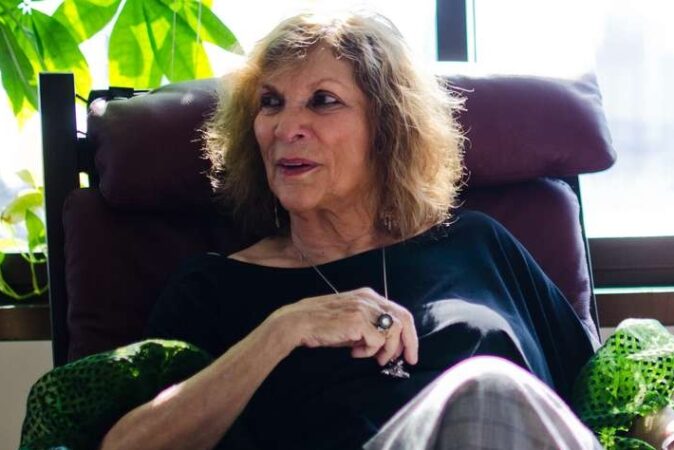
Edna B. Foa, 88, of Philadelphia, renowned clinical psychologist, pioneering mental health researcher, creator of the celebrated prolonged exposure therapy for post-traumatic stress disorder, longtime professor of clinical psychology in psychiatry at the University of Pennsylvania, lecturer, mentor, and volunteer, died Tuesday, March 24, of complications from pneumonia at Pennsylvania Hospital.
Dr. Foa was among the first psychologists in the 1970s and ‘80s to infuse empirical case study research into existing behavior protocols to create more effective mental health treatments for victims of rape, combat trauma, childhood sexual abuse, and other ordeals. She became an expert in PTSD, obsessive-compulsive disorder, and social phobia, and herprolonged exposure therapy for PTSD and exposure and response prevention treatments for OCD are still hailed as breakthrough innovations.
From 1971 to 1997, she was a fellow, professor, and clinical researcher in the psychiatry departments at Temple University and the old Medical College of Pennsylvania, now part of Drexel University. She joined Penn’s Department of Psychiatry in 1998 and, over more than 50 years, evaluated thousands of mental health cases to determine which behavior therapy was best for each condition.
“Her work truly changed the field,” colleagues at the Ardmore-based Center for Hope and Health said on Instagram. They said she “spent her career doing what she believed mattered most: studying what actually helps people get better, and making those treatments more accessible.”
She created the Center for the Treatment and Study of Anxiety at Temple in 1979 and directed it later at Penn. Colleagues at the center said on Facebook: “Through her brilliance, determination, and unwavering belief in the power of evidence-based care, she transformed the understanding and treatment of anxiety-related disorders and changed the lives of countless individuals and families around the world.”
Other colleagues and friends called her “brilliant,” “amazing,” and “extremely influential” in online tributes. One said she was “a giant who taught the world how to conquer fear and reclaim life.”
Dr. Foa earned grants for research and education, and taught her therapy techniques to veterans counselors in the United States and Israel, to therapists for the U.S. Army and the City of Philadelphia, and to clinicians at Women Against Rape and other groups around the world. In 2010, she was named one of Time magazine’s 100 most influential people in the world.
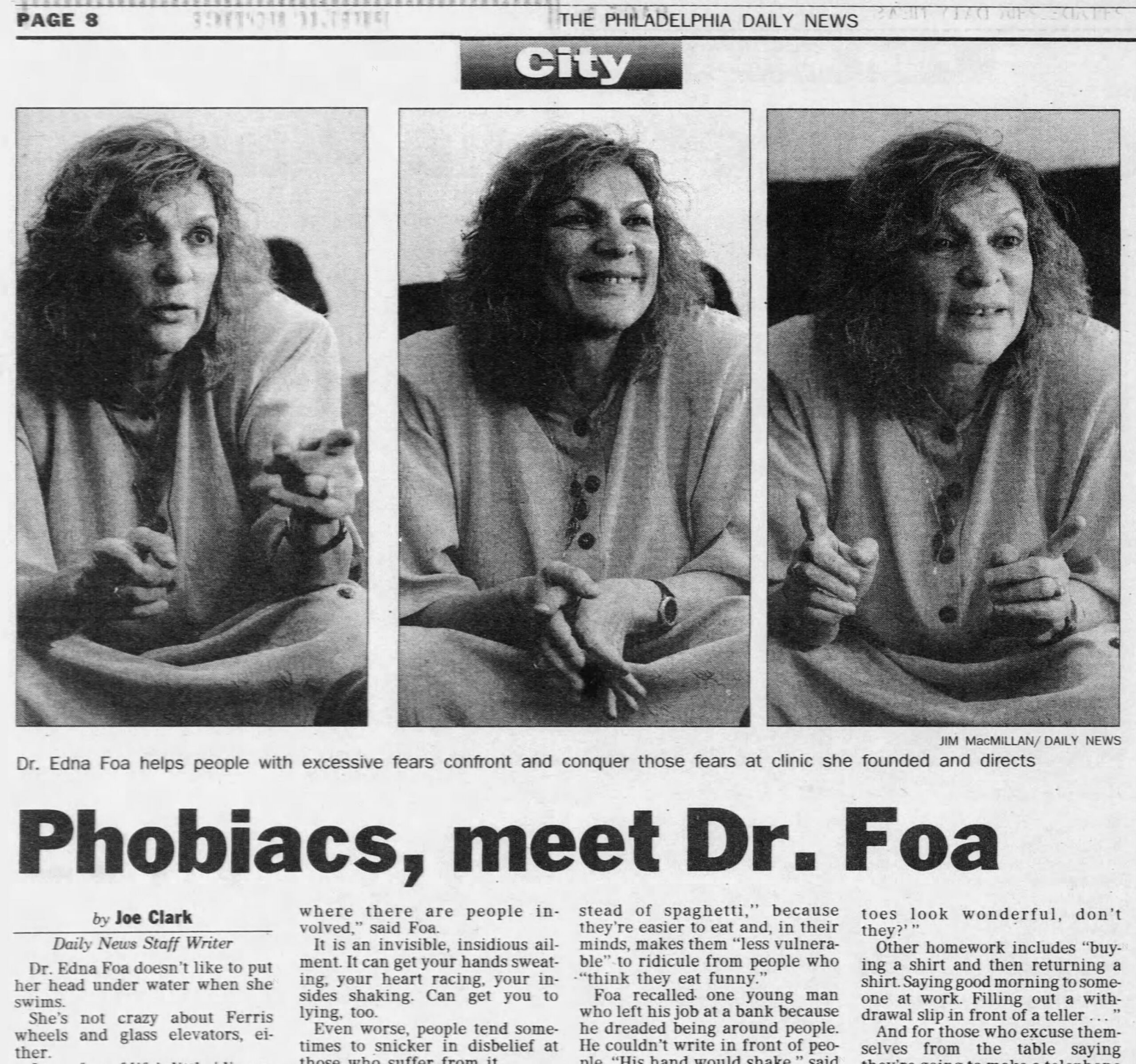
The Daily News published this story and photos of Dr. Foa in 1993.
She also volunteered as a consultant and supervisor at clinics and medical centers. She lectured and organized clinical workshops in the United States, Israel, and elsewhere. In 2010, she told Time magazine: “If you develop a wonderful protocol, it’s useless if nobody uses it.”
She was affiliated with many mental health societies and associations, and earned lifetime achievement awards from the American Psychological Association, the International Society for Traumatic Stress Studies, and other groups. She was featured often in The Inquirer and the Daily News, and told the Daily News in 1993 that “everyone has little fears.” She said her little fears were of heights and swimming underwater.
In 1970, Dr. Foa earned both a doctorate in clinical psychology and personality from the University of Missouri, and a master’s degree in clinical psychology at the University of Illinois. In 1962, she earned a bachelor’s degree in psychology and literature at Bar-Ilan University in Israel.
She stopped working full-time at Penn in 2023 but never really retired. In April, she was scheduled to lead a workshop in prolonged exposure therapy. In 2011, she told The Inquirer: “If I die tomorrow, I think that what I have achieved is fine. If I don’t die, I don’t need to stop.”
In 2011, she told The Inquirer she was shattered by her own trauma in 1948 when her brother, Uri, was killed in the war and her father, Abraham, died four years later.
She married and divorced when she was young, and met Professor Uriel Foa at Bar-Ilan. They married when she was 24, had daughter Dora, and moved to the United States in 1966. They had daughters Yael and Michelle, and lived in Illinois and Missouri before moving to Glenside and then Penn Valley. She moved to Philadelphia a few years ago.
After a divorce, she married Penn professor Charles Kahn. Her husband and former husband died earlier.
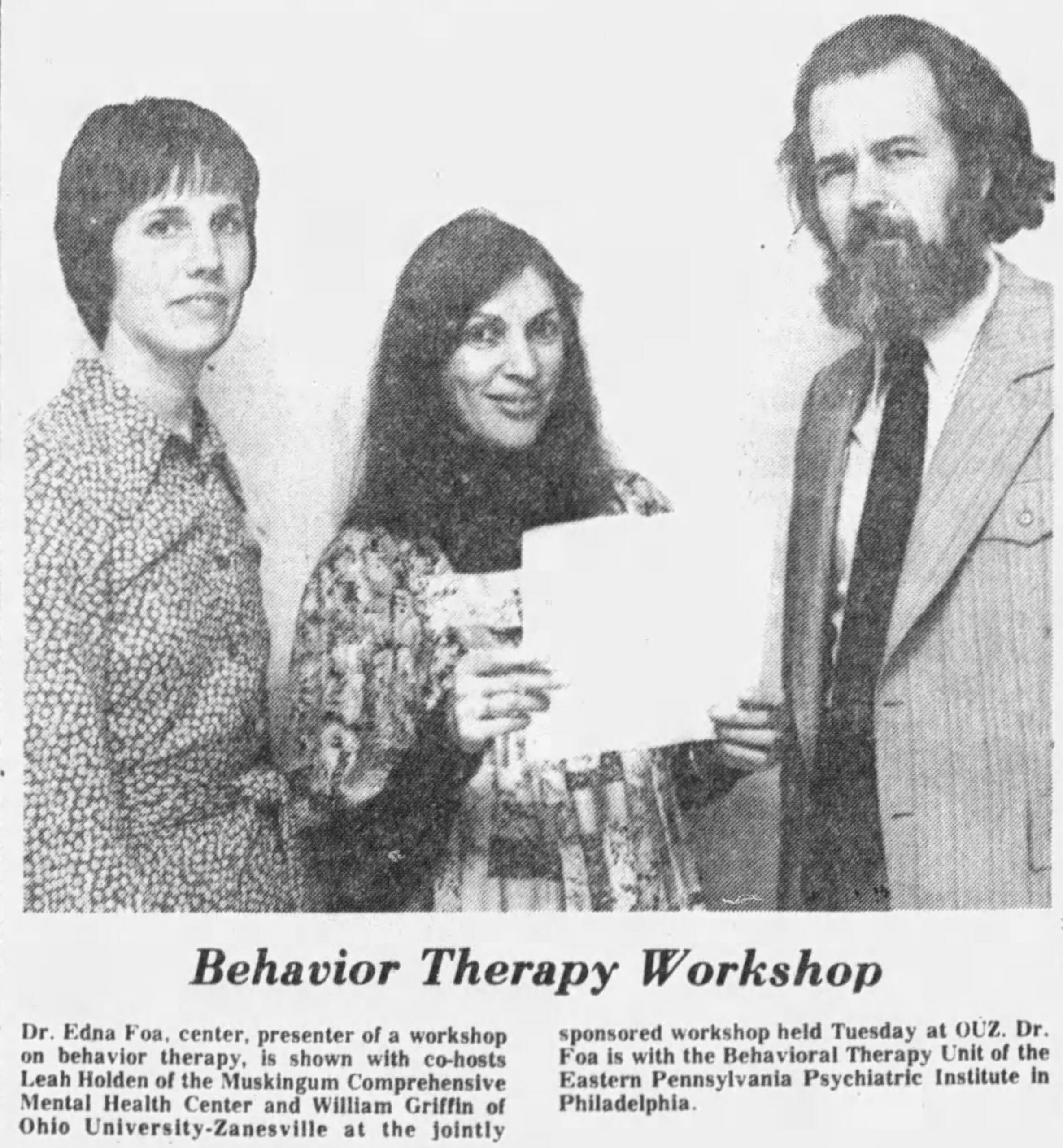
This photo of Dr. Foa (center) appeared in the Times Recorder in Ohio in 1978.
Away from work, Dr. Foa enjoyed traveling, gardening, and hosting family and friends at holidays. She collected art and antiques.
She told an interviewer she had a bad habit of deleting emails before reading them. She managed lung cancer years ago.
“She was full of energy, vivacious, a force of nature,” said her daughter Yael. Her daughter Michelle said: “She was an extraordinary figure who lived a very rich life.”
In addition to her daughters, Dr. Foa is survived by five grandchildren, a great-granddaughter, and other relatives.
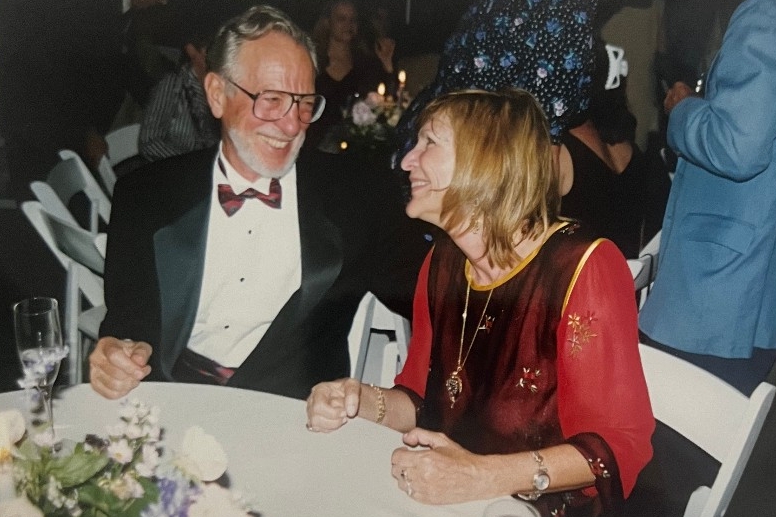
Dr. Foa laughs with her husband, Charles Kahn.
Private services are to be held later.
Donations in her name may be made to the Philadelphia Museum of Art, 2600 Benjamin Franklin Parkway, Philadelphia, Pa. 19130; and the Philadelphia Orchestra, 300 S. Broad St., Philadelphia, Pa. 19102.
HAWLEY, Pa. — Former Phillies All-Star center fielder Lenny Dykstra waived his preliminary hearing on two misdemeanor drug charges Tuesday before District Judge Randy Schmalzle, meaning the matter will now be addressed in a higher court.
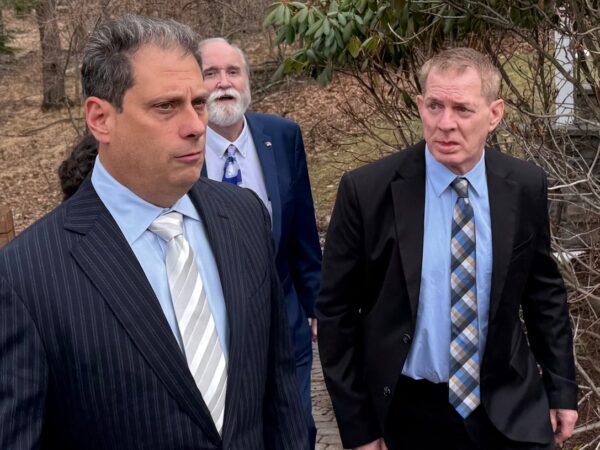
Dykstra, 63, appeared with his two attorneys, Matthew Blit and Thomas Mincer, and the member of the 1993 National League champions was dressed in a dark suit, blue shirt, and tie. Dykstra said little in the windowless courtroom during the roughly 10-minute proceeding, other than to say he understood the meaning of waiver. Assistant District Attorney Dave Marra was also present.
“Thomas Mincer and I are pleased to report that today was Lenny Dykstra’s first court appearance,” Blit said in a statement. “Attorney Mincer had a very productive meeting with the District Attorney’s office and we are pleased to report that everything is moving [in] a positive direction.”
The charges stem from a New Year’s Eve traffic stop in Pike County in northeastern Pennsylvania, when Dykstra was the passenger in a GMC pickup driven by Scranton resident Kevin Zelna. State Trooper Kody Nowicki pulled the GMC over after Zelna failed to stay in his lane, according to testimony by Nowicki and a criminal complaint. Zelna, 37, was charged with several counts, including driving under the influence.
When Dykstra told law enforcement that he wanted to retrieve his ID and credit card, “troopers observed, in plain view, a glass smoking device and a jar/container containing suspected narcotics.” Nowicki later testified that the contents tested positive for crack cocaine.
Mincer released the following statement Jan. 6:
“We firmly assert that the alleged narcotics in the vehicle did not belong to Lenny, who is currently recovering from a serious stroke. Lenny was not knowingly in possession of or under the influence of any narcotics, had none on his person and was not taken into custody at the scene. The driver was arrested and taken into custody at the scene and accused of 17 counts, including being under the influence, not Lenny. Attorney Matthew Blit and our team remain steadfast in our commitment to absolve Lenny of all possession charges.”
Dykstra’s preliminary hearing was originally scheduled for Feb. 3 and then Feb. 17. Dykstra recently completed a 75-day rehabilitation stint, according to Dennis D’Augostine, a pastor at Steamtown Church in Scranton, where the former major leaguer lives. D’Augostine has been working with Dykstra and said he baptized him on March 8.
Lenny Dykstra during his 2012 sentencing on grand theft auto charges in Los Angeles.
Dykstra played 12 major league seasons as a center fielder, his first 4½ with a New York Mets team that won the 1986 World Series. He was traded to the Phillies in 1989 and helped the team reach the World Series in 1993, when he finished second to Barry Bonds in the NL MVP voting. Dykstra retired with the Phillies in 1996 at age 33.
He spent time in prison after pleading guilty in federal court to bankruptcy fraud and money laundering in 2012. Dykstra also pleaded no contest to grand theft auto in California.
PHOENIX — Howie Roseman may have altered his approach to answering questions about A.J. Brown at the annual league meeting, but Mike Vrabel has not.
At his news conference Tuesday, the New England Patriots coach didn’t rule out any possibilities regarding a trade for Brown. Vrabel echoed the comments he gave to New England-area reporters at the NFL Scouting Combine last month when he said that the team would do anything it could to bolster its personnel in response to a question about attempting to acquire the Eagles receiver.
“We’ve talked about this since last January,” Vrabel said Tuesday. “We’re going to try to do everything we can to strengthen our roster, through the draft, through free agency, multiple ways of player acquisition. So anything that we can continue to do to strengthen the roster, we’re going to try to do.”
Roughly three weeks after the start of the new league year, Brown’s future in Philadelphia remains uncertain. Earlier in the offseason, Roseman didn’t explicitly rule out trading Brown. On Sunday, Roseman was less elaborate in his responses about Brown, repeating some iteration of “A.J. Brown is a member of the Eagles” to multiple queries on the topic.
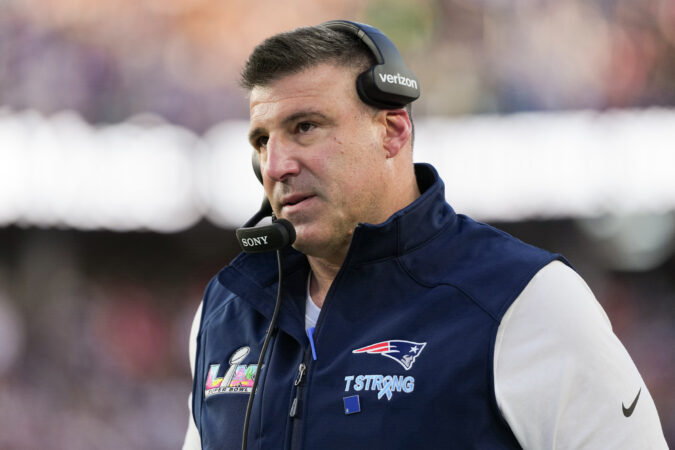
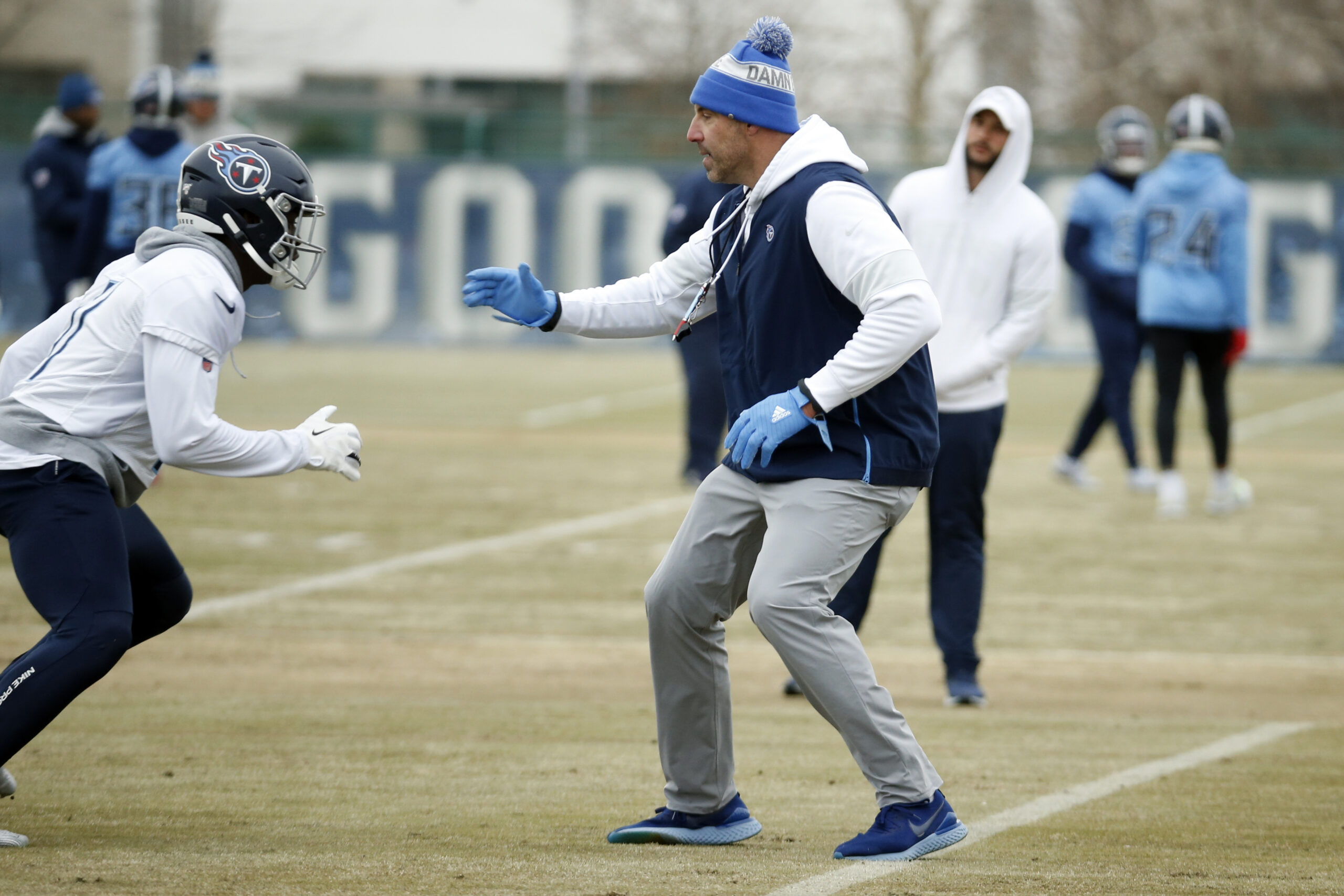
Mike Vrabel (right) coached a Titans team that drafted A.J. Brown (left), and has spoken of his affection for the receiver.
According to several reports this offseason, the Patriots have interest in adding Brown. The reigning AFC champions have made some tweaks at receiver by cutting Stefon Diggs and signing former Green Bay Packer Romeo Doubs to a four-year deal.
But the Patriots still have a need for a top receiver to compensate for the targets vacated by Diggs. Doubs, who turns 26 in April, projects better as a second or third receiver based on his past performance.
Vrabel didn’t express a sense of concern about redistributing Diggs’ targets, but he did stress the value of what the 32-year-old receiver did with those targets.
“We all appreciate what Stef did and being able to coach him,” Vrabel said. “But what has to happen is the efficiency in which he was able to catch the ball was impressive, whether that’s [Drake Maye’s] accuracy, ball location, or Stef’s ability to catch it. That’s something that we’ll have to recreate.”
Few NFL coaches are more familiar with Brown and his skill set than Vrabel. Brown was a second-round pick of the Tennessee Titans in 2019, when Vrabel was the head coach. The pair spent three seasons together before Brown was traded to the Eagles in 2022 for a first-round pick (No. 18) and a third-rounder (No. 101).
“We all understand in professional sports, players that are talented and get to this level have some sort of ego to them,” Vrabel said. “And there’s a balance. They have to have that edge. And so I think as a coaching staff and whatever that is, you have to balance that edge to make sure that that’s helping the team.
“Everybody wants to excel. What receiver doesn’t want to catch the ball? What pass rusher doesn’t want to sack the quarterback? What DB doesn’t want to intercept the ball? The running backs want to score touchdowns. That’s how this thing goes.”
As the Brown saga continues this offseason, June 1 could be a date to circle. The Eagles could spread his dead salary cap hit over two seasons in a trade after June 1, instead of eating it all in 2026 if they move him before that date.
If the Eagles trade Brown, what would they seek in return? Shortly after the start of the new league year, the Denver Broncos acquired Jaylen Waddle and a fourth-round pick from the Miami Dolphins in exchange for their 2026 first-round pick (No. 30) as well as third- and fourth-round selections, offering a glimpse into what Roseman could receive for Brown.
Regarding any potential trade this offseason, Vrabel didn’t express a preference between surrendering draft picks this year or in future years.
“However you can come to an agreement with another team, I’ve never really looked at it as this year, next year, how good the draft is in three years,” Vrabel said. “Just try to come to an agreement. If you make a trade, you just want to try to come to an agreement that both teams feel like they’re getting something that everybody’s happy [with].”
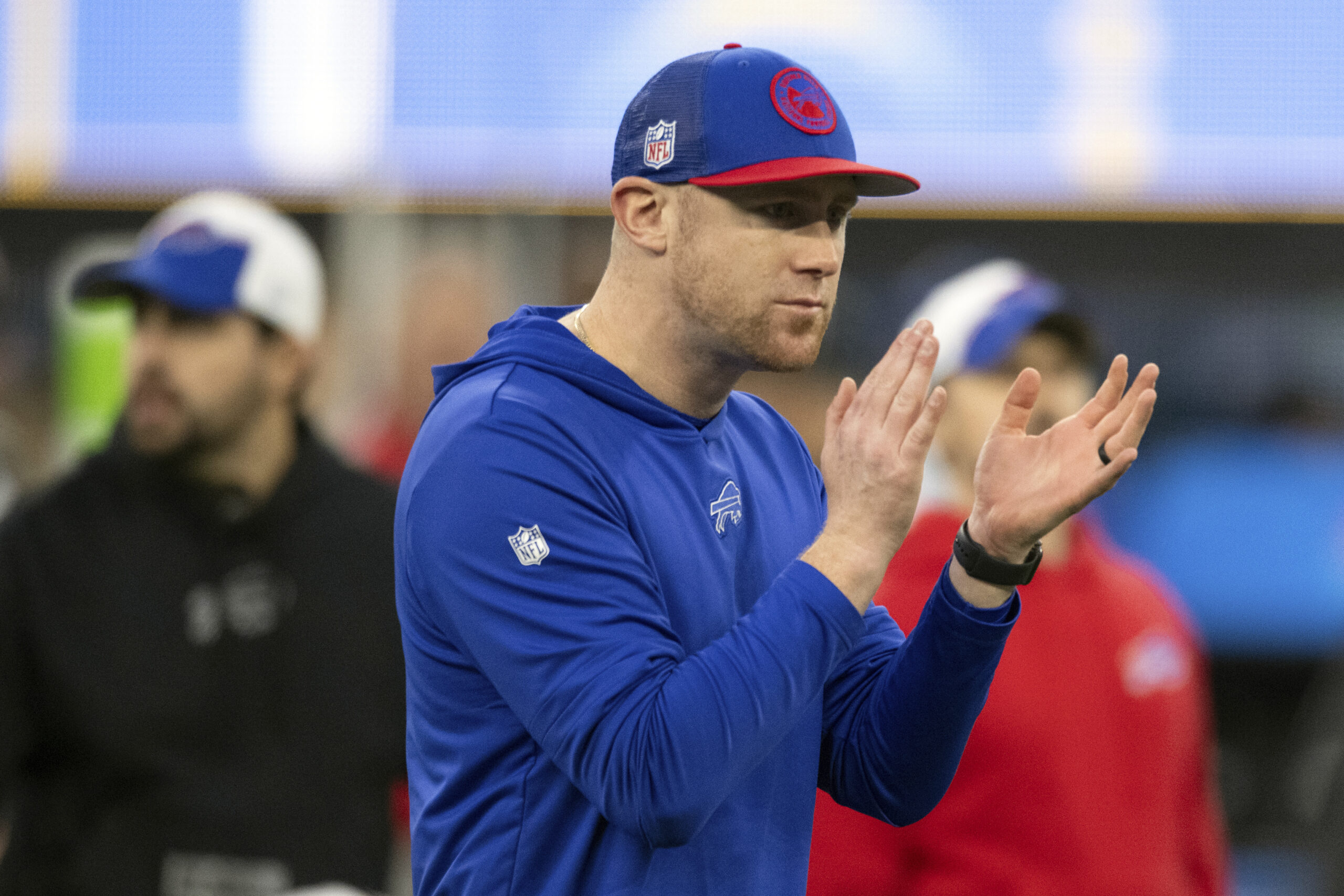
New Bills coach Joe Brady ran the Tush Push regularly in his previous role as offensive coordinator.
Bills coach and the Tush Push
This time last year, the Tush Push was on the brink of a ban. But the Packers’ proposed rule change failed to garner the support among the owners it needed to pass and it hasn’t come under attack since.
The league’s waning interest in banning the play correlates with the Eagles’ struggles at executing it in 2025. According to tushpush.fyi, Jalen Hurts converted on 74.1% of his attempts, well under the 82.3% league average.
No team was more successful at running the Tush Push last season than the Buffalo Bills. Josh Allen converted on 92.3% of his attempts. Hurts led the league with 27 attempts and Allen trailed him by one.
But the Bills were among the teams that voted to ban the play last year. Former Bills head coach Sean McDermott voiced his concern over the health and safety of the players at the time, even though he acknowledged that there wasn’t significant data that indicated any risks.
Joe Brady, the new Bills head coach and former offensive coordinator, continued to run the play to great success regardless.
“As the [former] offensive coordinator, if [former] Coach McDermott was like, ‘Hey, look, I don’t want us doing it,’ we wouldn’t,” Brady said. “And to his credit, it was like, ‘Hey, yes, I might be against it, but there’s a lot of rules that sometimes as coaches, as personnel, we might not vote for, but once the rule is, hey, this is what it is, we want to make sure as an offense, defense, special teams, as a team that we’re doing whatever we’re capable of.’
”But once it got to that point, he was like, if the rule is in, and you feel like it’s [in] the best interest to help us win, he was for it.”
Brady said he didn’t know why there wasn’t a renewed attempt to ban it this year.
“Sometimes I’m surprised that when a rule [proposal] comes and it doesn’t [pass], do they make it to the next year?” Brady said. “Or they’re, as I’m learning in the league, is it just we’re, hey, we went all in, it didn’t go, and we’re going to keep it moving? The success that we have with it, I was fortunate that it was a part of our offense last year.”
Making his pitch to the Great Valley school board, Jed Lu said he and fellow students seeking to bring slain conservative activist Charlie Kirk’s Turning Point USA organization into their high school weren’t racists or extremists.
“We simply have a different perspective,” Lu told the board at a late February meeting.
The Chester County district is one of the latest in the Philadelphia area to approve a Club America chapter — the high school offshoot of Kirk’s group. The organization seeks to mobilize “anti-woke warriors” and has rapidly been adding new local chapterssince his assassination in September, provoking debate around right-wing influence in public schools.
Nationally, chapters have nearly tripled — from 1,200 prior to Kirk’s death, to more than 3,300, according to Turning Point officials. Governors in Republican-led states like Arkansas and Nebraska are partnering with Turning Point to expand clubs throughout their states.
In eastern Pennsylvania, there were 11 Club America chapters at the end of last school year. Now, “we’re currently approaching 40,” said Nick Cocca, Turning Point’s enterprise director.
The group’s expansion might be overstated in the Philadelphia region. Seven area high schools listed by Turning Point on its website or Instagram graphics as having Club America chapters said they didn’t have clubs.
Souderton Area High School, for instance, appears on Turning Point’s map, but doesn’t have a club. The school’s assistant principal, Matthew Haines, said “a student made an inquiry” in September about starting a chapter, but never applied to do so.
In some schools, like Springfield High School in Delaware County, “we have a few students who started running an after-school student pilot a few months back,” said principal Monica Conlin, but the district doesn’t officially recognize the club. Conlin said new clubs must complete a three-year pilot before gaining district approval.
Still, the organization has gained traction. In addition to Great Valley, Penncrest High School in Rose Tree Media School Districtlists Club America among its student clubs; district officials and staff didn’t respond to requests for comment.
Turning Point says it also has a Club America chapter at Pennsbury High School, and an Instagram account for “Club America at Pennsbury” invited students to a Feb. 25 meeting to discuss the State of the Union and “participate in prayer for law enforcement and our nation.” District officials didn’t respond to requests for comment.
‘An outpouring of support’ after Kirk’s death
A spokesperson for Turning Point couldn’t explain the discrepancy between its list and schools that say they don’t have any Club America chapters.
The organization was also unable to provide a local student willing to be interviewed.
Cocca said Turning Point “saw an outpouring of support and outreach from young people across the country” in the wake of Kirk’s Sept. 10 assassination. To support its growth, the organization is hiring more field representatives to work with high school students, Cocca said.
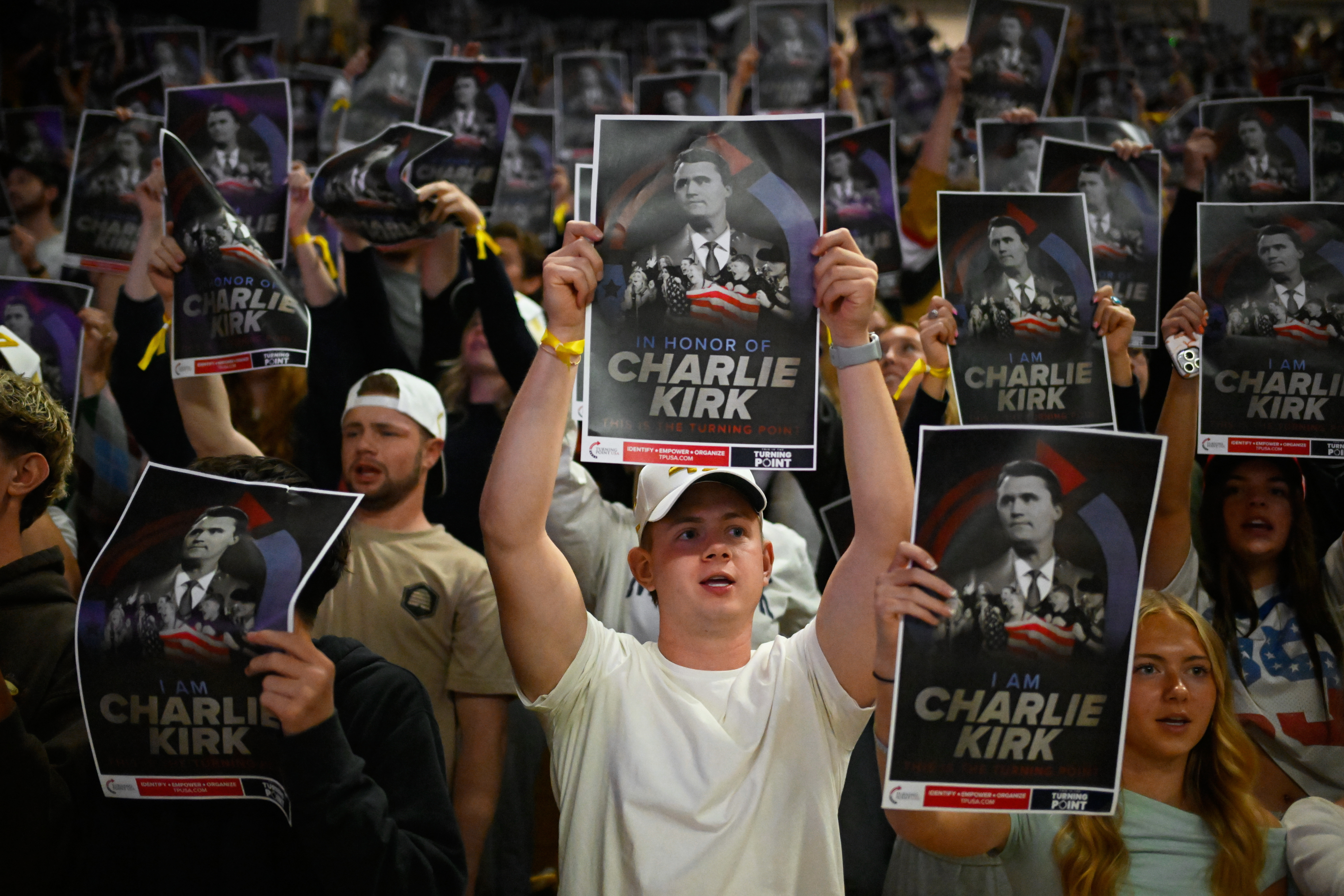
People hold posters of Charlie Kirk during a Turning Point USA rally at Utah State University, as a part of the organization’s push to memorialize Kirk in Logan, Utah, in September.
Turning Point, which began as an organization advocating for conservative views on college campuses, had previously been expanding its presence in high schools. (A Turning Point chapter launched years ago at Pennridge High School in Upper Bucks County, for example.)
Turning Point last July renamed its high school operation Club America. “We wanted a brand that spoke specifically to them,” Cocca said. He said that “when Charlie was alive, he used to say ‘I want a Club America chapter in every high school in America.’”
The expansion has spurred conflict. Critics have highlighted Kirk’s controversial statements, including referring to the Rev. Dr. Martin Luther King, Jr. as “an awful person” and calling the passage of the 1964 Civil Rights Act a “mistake.”
Kirk also promoted the so-called “great replacement theory,” framing non-white immigration as a plot to replace white populations.
“This club is an easy way to incorporate hate and discrimination within our high school. This should not be normalized,” a Change.org petition launched in January against a proposed Club America chapter at West Chester East High School read. An update to the petition later declared that Turning Point “was shut down at West Chester East.”
Molly Schwemler, a district spokesperson, said that earlier this year, some students expressed interest in starting a Club America chapter.
But “after discussing the process and need for sponsorship from a teacher with school administration,” students “instead decided to organize independently outside of the school,” Schwemler said. (On its website, Turning Point lists West Chester East as having a chapter.)
In an Instagram post, the club said it decided to operate independently “because people can’t be mature, open minded or respectful at our school.”
Activism hubs and kits
In addition to identifying a teacher adviser, students looking to form clubs often have to supply information to administrators like their purpose, planned activities, and funding needs.
Schools have little discretion to reject a new club, based on the federal Equal Access Act and First Amendment, said Jeffrey Sultanik, a solicitor for numerous Philadelphia-area districts.
Districts need “to be viewpoint-neutral,” Sultanik said, noting that “once you open up the door to clubs coming in,” administrators can’t pick and choose which to permit.
In its handbook for Club America chapters, Turning Point calls it “imperative that every chapter works to become officially recognized by the school,” offering students help if schools deny them.
Students can form an “activism hub” outside of school for a specific geographic area “as a last resort,” the handbook says.
In Downingtown — where Turning Point says there is an activism hub — a school district spokesperson said the district has not sponsored any clubs “related to religious or political groups in recent history.” (Some other area schools have official political clubs: Penncrest High School, for instance, lists Penncrest Democrats of America.)
Turning Point says its Club America chapters are nonpartisan and don’t support specific candidates.
But the group’s ideology is clear from materials it supplies to student members. Presentations available in Turning Point’s “Activism Library” for students to use have titles including “Taxes Are Shady,” “Socialism Kinda Sus,” and “Big Gov Scares.”
“Why are those on the left not proud to be Americans?” a presentation titled “Always Love America” asks.
Kids can order “Activism Kits” from Turning Point with posters and stickers. A “2A” kit features slogans like “Gun rights are women’s rights” and “Guns are the greatest equalizer.”
Cocca said Turning Point provides students “anything they may need, to promote what they want to promote, and what they want to make their club about” — whether that’s registering students to vote, or learning about the Constitution, he said.
“Ultimately, it’s up to the students to use those resources the way they want to use them,” he said.
Opposition to Club America groups
Critics accuse Turning Point of trying to indoctrinate high schoolers.
“They are grooming at the high school level, and college level, for a generational change,” said Sherry Lawrence, a parent in Great Valley whoopposed the district’s new Club America chapter. “All the red flags are there for people who don’t subscribe to this brand of conservatism, or this brand of Christianity.”
Lawrence questioned whether adults were driving some efforts to organize Club America chapters.
In an October Facebook post in a Turning Point Pennsylvania Action group, George Sabo, then a GOP candidate for township supervisor in East Whiteland, said his daughter was starting a chapter at Great Valley High School. “We had discussed it over the summer but pulled the trigger after Charlie’s assassination,” Sabo wrote.
In a brief phone interview, Sabo said it was his daughter’s idea to start the chapter.
“My daughter and family, who believe in the Bible, and believe God is king, value those properties and want to see that brought more into the school district,” Sabo said.
He said that while there had been pushback from other kids, “there’s some support from other kids, too.”
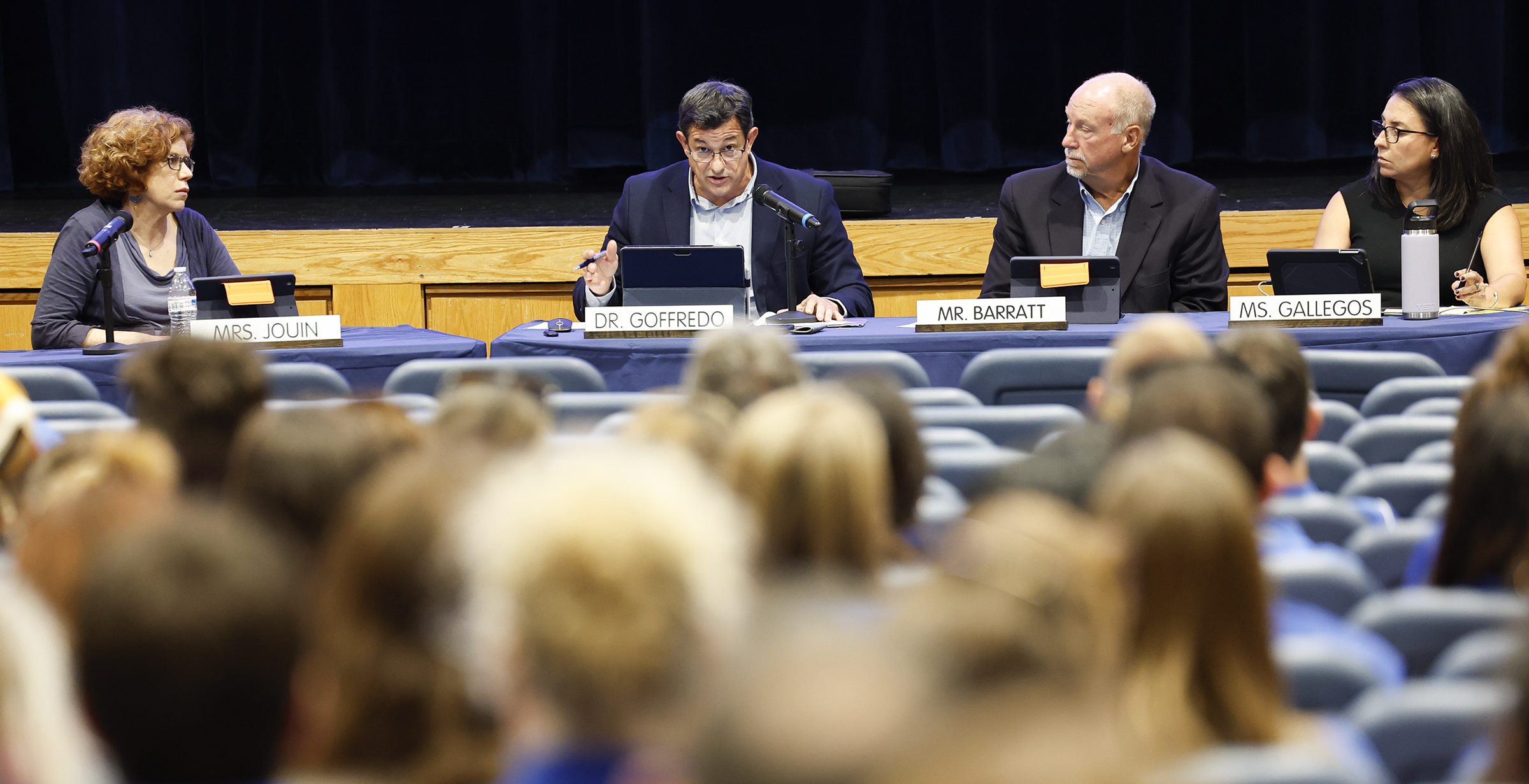
Great Valley school board members during a meeting at Great Valley High School in Malvern in 2024.
The Great Valley board approved the club 7-0 at its February meeting.
At the board meeting, Lu, the club president, said he and the three other club officers had initiated its formation.
While the club has a “conservative viewpoint,” Lu said, “our purpose is civic debate and civil discussion.” He added that the club is motivated by “the Christian value of love and compassion.”
The club hopes to be an “impactful addition to Great Valley High School,” Lu said.
In reality, Philadelphia’s budget process is far more complicated than our simulation. It is more “like eight-dimensional chess,” according to Marisa Waxman, executive director of the Pennsylvania Intergovernmental Cooperation Authority, an independent agency that provides financial oversight for the city. Here’s what we did to simplify it.
Defining “budget”
At the most basic level, Philadelphia has two budgets: operating and capital. The operating budget handles day-to-day services and programs, while the capital budget funds major long-term investments. We used the term “city budget” throughout the game as a loose reference to Philadelphia’s General Fund, which accounts for the majority of the city’s operating budget.
There are, however, other funds that allocate resources to the operating budget. Some are specific like the Water Fund or the Transportation Fund. Philadelphia also uses federal, state, and philanthropic grants for day-to-day expenses.
story continues after advertisement
Merging departments
Philadelphia has over 70 departments. While each of them hasr its own line item in the budget, we condensed them to six:
Arts, Culture, and Recreation encompasses the Art Museum, the Free Library, the Office of Arts and Culture and the Creative Economy, and Parks and Recreation
Local Economic Development and commerce encompass the Department of Commerce, including its Convention Center subsidy and economic stimulus, and the Office of Community Empowerment and Opportunity
Police and prisons encompass the Citizens Police Oversight Commission, District Attorney, the Department of Finance’s witness fees, the First Judicial District, the Managing Director’s Defenders Association, the Office of Public Safety (which includes the Office of Prison Oversight), the Philadelphia Police Department, the Prisons Department, and Sheriff Department
Infrastructure encompasses Licenses and Inspections (which includes the Board of Building Standards and the Board of L&I Review), the Office of Property Assessment, the Department of Planning and Development, Public Property’s SEPTA subsidy, and the Department of Sanitation (including Disposal)
Community Health, Housing, Education, and Safety encompasses the Finance Department’s community college subsidy, Hero Scholarship awards, school district contribution, and payment to the housing trust fund; the Fire Department; the Human Relations Commission; the Department of Human Services; the Managing Director’s Office; Neighborhood Community Action Centers; the Office of Behavioral Health and Intellectual disAbility; the Office of Education; the Office of Homeless Services; the Office of Sustainability; and the Department of Public Health
City Government Operations encompasses Auditing (City Controller), the Board of Ethics, the Board of Revision of Taxes, City Commissioners, City Council, the City Representative, the City Treasurer, the Civil Service Commission, the Finance Department (including budget stabilization, employee benefits, indemnities, Reg #32, and refunds), Fleet Services (including vehicle lease/purchase), Labor, Law, the Mayor’s Office, the Office of Human Resources, the Office of Innovation and Technology (including 911), Office of the Inspector General, Procurement, Public Property (including space rentals and utilities), Records, Register of Wills, Revenue, and the Sinking Fund Commission.
These are similar to, but not the same as, the buckets in Mayor Parker’s fiscal year 2027 operating budget in brief. We also referenced groupings based on survey results out of the People’s Budget Office, a Mural Arts project that teaches Philadelphians how the budget works and how they can advocate for issues that matter to them.
How we did the math
We based the dollar values for each department on Philadelphia’s proposed budgets for fiscal 2026 and fiscal 2027. The fixed aspects of those departmental budgets represent inflexible contributions – for example, subsidies to SEPTA and the School District of Philadelphia. In addition to specific contributions, we estimate that 80% of personnel costs from Philadelphia’s General Fund for each department would be fixed, since over 80% of the city’s workforce is unionized.
The special projects and their associated costs were inspired by departmental summary of increases and decreases from the fiscal 2026 proposals, as well as Mayor Parker’s recently announced priorities in her fiscal 2027 budget address. Finally, the game’s approval ratings are based on the ranked priorities in the 2023 Every Voice, Every Vote (EVEV) poll and the fiscal 2026 People's Budget Office survey results.
story continues after advertisement
What you can do now
If you’d like to get involved in the real budget, one way would be to give public testimony at a budget hearing. Your next opportunity will be on April 21 at City Hall. Alternatively, you could attend a neighborhood budget town hall or fill out a survey for City Council.
The People’s Budget Office also hosts workshops where they teach Philadelphians about the budget and how to advocate for issues they care about. “It’s one of the ways we can build power as neighbors and denizens of the city,” said Sarah Bishop-Stone, PBO’s program director. “It’s to understand [the budget] and make it legible.” Their next Budget 101 workshop will be in South Philly on April 19.
Still, speaking up might not materialize in the outcomes you’re hoping for. "Once [you] learn how [the budget] works, it becomes much clearer how hard it is to have a say in that process," said Bishop-Stone. She said that last year, during “the past budget cycle, the folks who tried to advocate really came away quite dispirited” because they didn’t see the changes they pushed for reflected in the budget that passed in June.
Let us know what you thought
This is the first time The Inquirer has published a game about the city budget and we would love to know what you think.
Staff Contributors
Reporting: Charmaine Runes
Editing: Sam Morris
Illustration: Yali Chen
Copy Editing: Brian Leighton
Subscribe to The Philadelphia Inquirer
Our reporting is directly supported by reader subscriptions. If you want more journalism like this story, please subscribe today