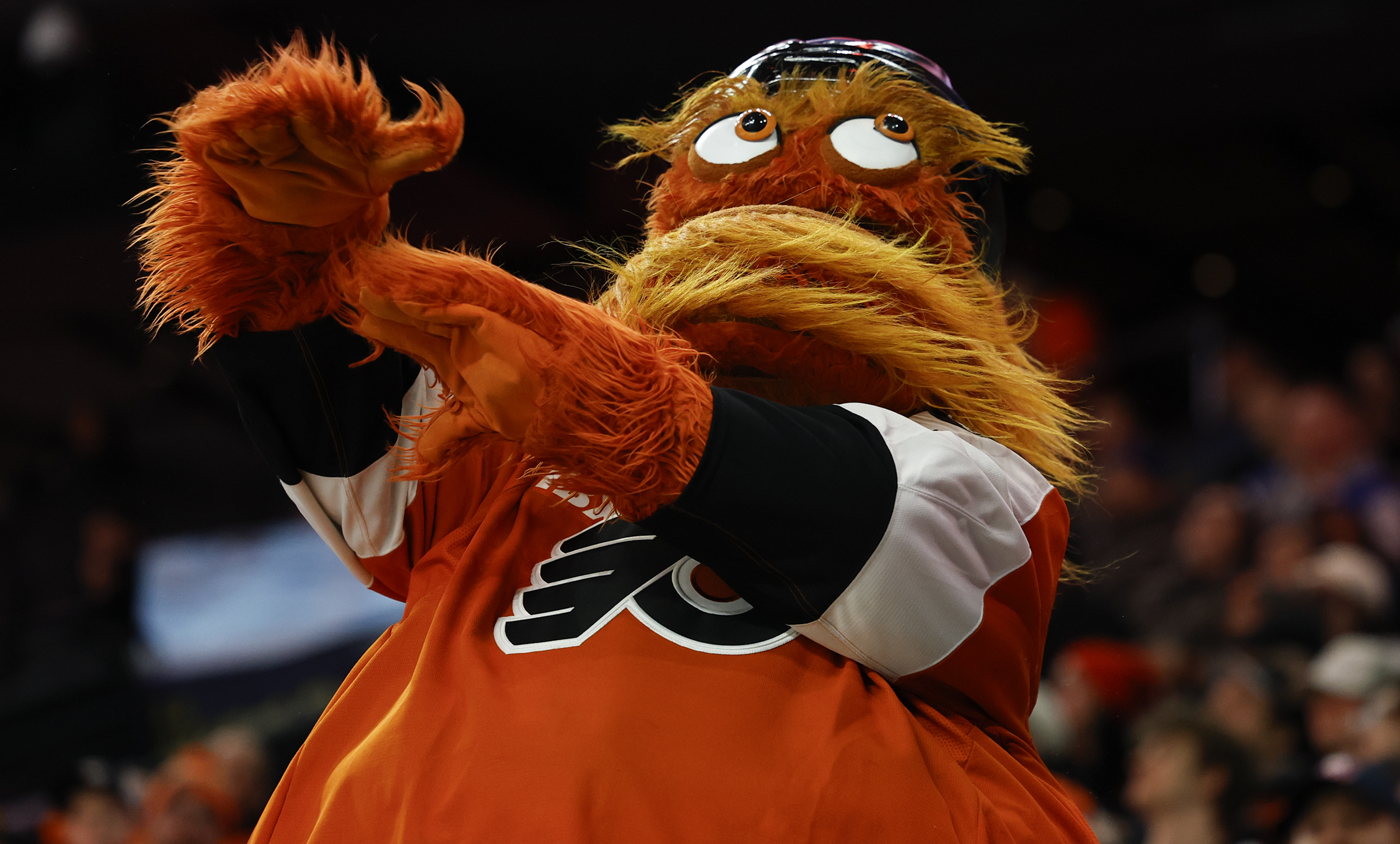
Third time’s a charm. After two straight losses, the Flyers look to close out its NHL playoff series against the Pittsburgh Penguins in Game 6 tonight in South Philly. Here’s how to watch and stream.
Benching Matvei Michkov didn’t work in Game 5. Now, it looks like head coach Rick Tocchet is making some more changes, including re-inserting Michkov.
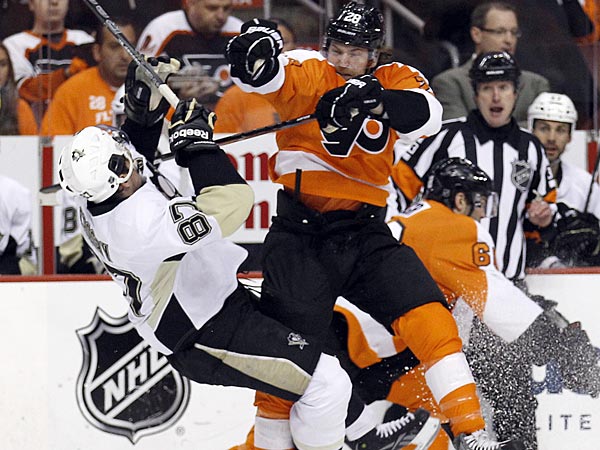
Former Flyers captain Claude Giroux takes out Sidney Crosby during “The Shift 2.0” in 2012. (Yong Kim/Staff file photo)
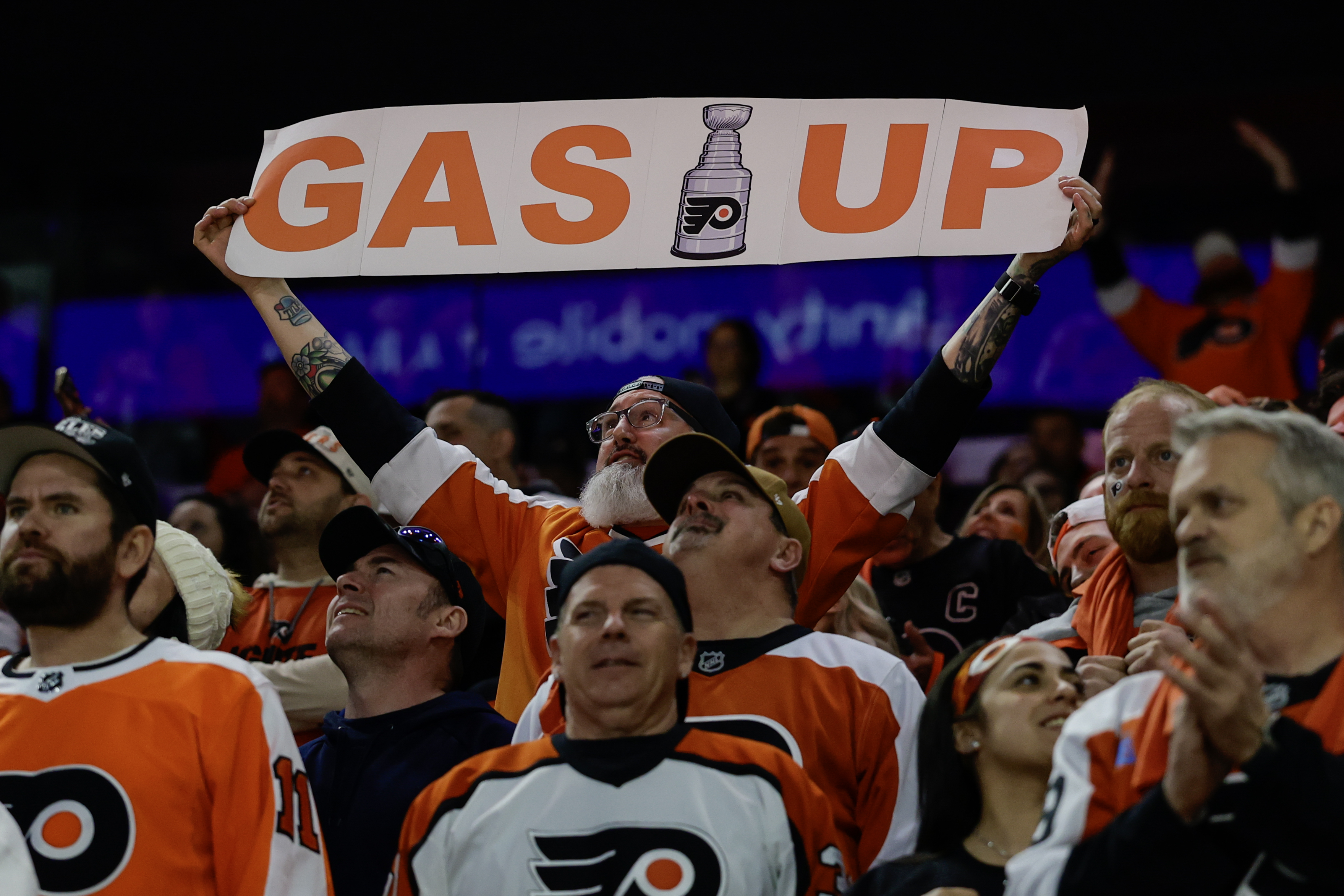
After winning the first three games of the series before dropping the last two, the Flyers return home Wednesday for Game 6 against the Pittsburgh Penguins at what’s sure to be a raucous but tense Xfinity Mobile Arena.
While some fans may be starting to get nervous — more like panic — the Flyers do have history on their side. Only 26 teams in 216 tries have forced a Game 6 after losing the first three games of a best-of-seven playoff series in NHL history, and only four have completed the reverse sweep, including Philly in 2010.
But the Flyers have been in this exact scenario before … and against Pittsburgh to boot.
In 2012, the Flyers won the first three games of their first-round series against the Penguins, before Pittsburgh pulled things back to 3-2. What happened next in Game 6 is etched in Flyers lore forever as “The Shift 2.0.” (The original “Shift” belongs to Mike Richards, for what he did against the Canadiens two years earlier.)
On the opening shift of the game, at the then-Wells Fargo Center, captain Claude Giroux de-skated Sidney Crosby at center ice with a massive hit just five seconds after the opening faceoff. If that didn’t set the tone enough, Giroux would open the scoring just 27 second later with a wicked wrist shot off the post and in to send the home faithful into a frenzy. The Flyers would follow their captain’s lead and destroy the Penguins 5-1 in Game 6 to close it out.
Captain Sean Couturier is the only holdover from that team to witness “G’s” heroics in person, while GM Danny Brière will also remember it well, having scored the Flyers’ fourth goal in that game. For Pittsburgh, Crosby, Evgeni Malkin, and Kris Letang were all in the lineup on that fateful date: April 22, 2012.
Despite his stellar season, Flyers goalie Dan Vladař was not named as one of three finalists for the Vezina Trophy finalists, given annually to the league’s best goaltender. Jeremy Swayman (Boston Bruins), Ilya Sorokin (New York Islanders), and Andrei Vasilevskiy (Tampa Bay Lightning) earned those honors.
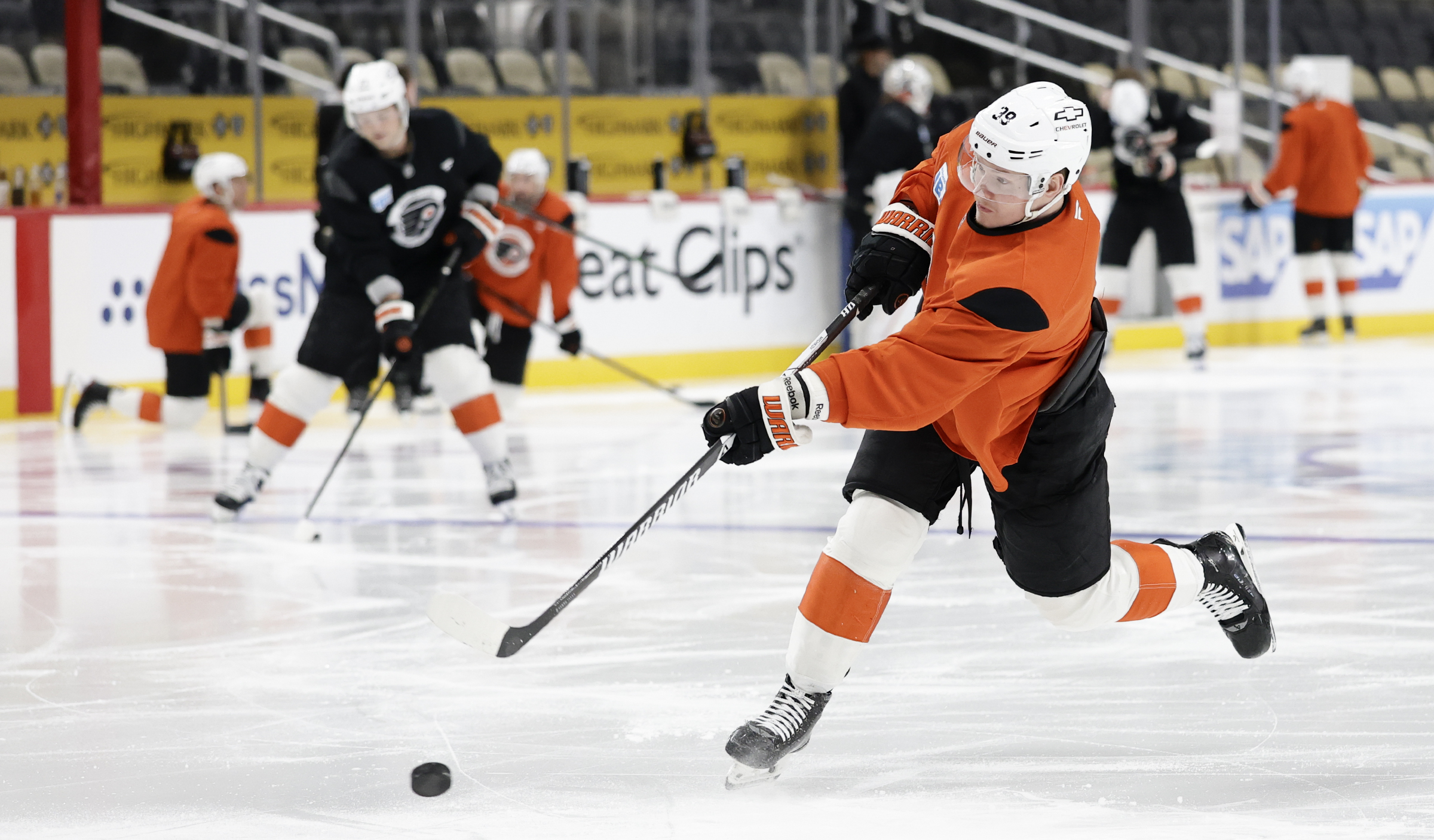
Flyers right wing Matvei Michkov shoots the puck during an afternoon skate on Sunday.
After much consternation, it does appear that Matvei Michkov will return to the lineup on Wednesday for Game 6 against the Pittsburgh Penguins. The Russian winger was off the ice early at the team’s optional morning skate at Xfinity Mobile Arena. Winger Garnet Hathaway stayed on the ice late with players who normally are healthy scratches, like Garrett Wilson, Carl Grundström, and Oliver Bonk.
Where he slots in is the biggest question, as the right winger is not a fourth-line player. Could Tyson Foerster or Alex Bump — who played well together with center Noah Cates in Game 5 — or Denver Barkey move down?
Despite leading the team in points with 22 in the final 26 games of the regular season, helping the team clinch the third seed in the Metropolitan Division, Michkov posted zero points in the first four games of the postseason. The 21-year-old was a healthy scratch for Game 5 and appeared to revert to his early-season struggles with the uptick in pace and intensity.
The last time he was a healthy scratch was for a pair of games in early November of his rookie season. He returned and had a goal and an assist against the San Jose Sharks before adding three points in the following two games.
Emil Andrae also stayed on, and Noah Juulsen came off earlier, which hints that the veteran blueliner will slot in.
#Flyers on the ice for morning skate. Most guys out there. Tippett, Konecny, Couturier, Couturier or Ristolainen are not but expect that to be maintenance for tonight.
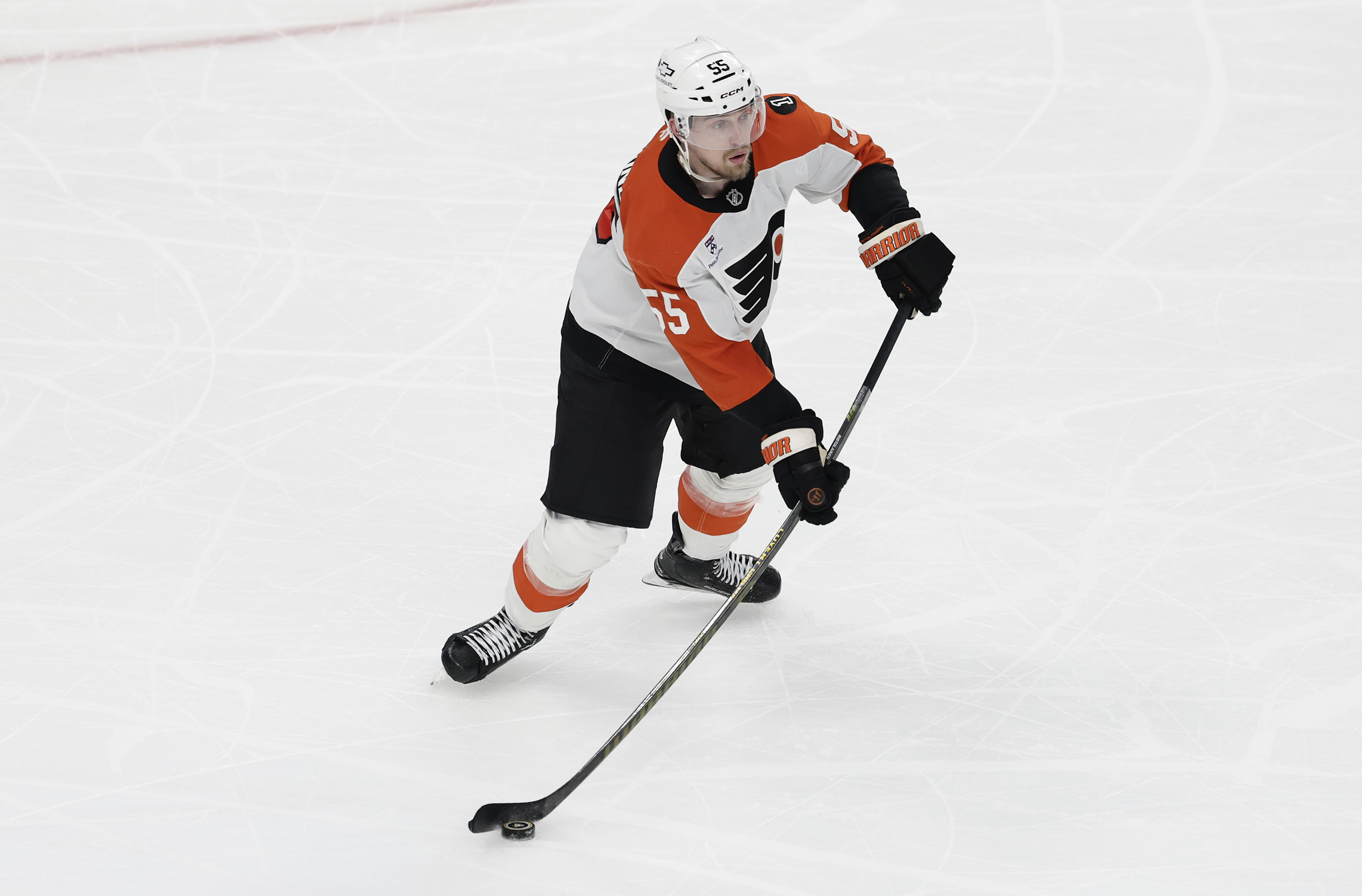
Rasmus Ristolainen and the Flyers were punished for not getting pucks out on Monday.
Rick Tocchet has long talked about the lessons that his young Flyers team needs to learn. He has often mentioned teachable moments in both losses and in wins.
They have now lost two straight games after breaking out to a three to nothing lead in their best-of-seven game series against the Pittsburgh Penguins.
The Flyers are still at the head of the class, as they hold the 3-2 advantage and have two more chances to advance. But it feels like the teacher is starting to implement a curve that could pull their grade down as the Penguins push and claw their way back into the series.
There is a saying that goes something like, “Forget the past, but never forget the lesson.” Well, the Flyers need to dig back into their old notes and cram before Game 6 on Wednesday night at Xfinity Mobile Arena because they definitely don’t want to become part of a history-making series — on the wrong side this time.
Alex Bump made his playoff debut for the Flyers during Monday’s Game 5 in Pittsburgh.
Alex Bump didn’t know whether he would play in this playoff series.
After Porter Martone signed with the Flyers out of college and Tyson Foerster returned from injury, there wasn’t an obvious place for him. As the playoffs started, Bump found himself the odd man out, watching from the press box, “itching” to get in.
On Monday, Bump’s number finally was called, and he delivered in the Flyers’ 3-2 loss in Game 5 to the Pittsburgh Penguins.
“I think I’m built for the playoffs,” Bump, 22, said postgame. “Just that hard, physical game, shooting mentality, getting pucks to the net.”
Bump stood out when the Flyers struggled to generate extended offensive zone time and execute clears. According to Natural Stat Trick, their expected goals percentage with Bump on the ice was 69.8%, the best of any Flyer.
In Game 5, Bump entered the zone cleanly with control of the puck three times and was responsible for another advance after forcing a turnover on an Anthony Mantha pass and finding Noah Cates, who entered the zone cleanly.
Even though the Flyers lost Game 5, Bump proved he’s worthy of staying in the lineup as the playoffs continue.
“[Bump and Denver Barkey], they’re holding on to pucks,” Tocchet said. “That’s why they’re making some plays out there. We’ve got to get some other guys to hold on to pucks and win some battles in the corners. That’s playoff hockey.”
Flyers-Penguins Game 6: Start time, how to watch and stream
The Flyers-Penguins series comes back to Philly for Game 6.
The Flyers-Penguins series jumps back to TNT Wednesday night for Game 6, with Kenny Albert and NBC Sports Philadelphia’s Brian Boucher on the call. Chris Mason will handle reporting duties at Xfinity Mobile Arena.
TNT Sports is averaging 1.1 million viewers for its NHL playoff broadcasts across TNT, TBS, and truTV, up 67% compared to last season and the network’s best start since landing hockey rights in 2021.
The game will also air on NBC Sports Philadelphia, with Scott Hartnell once again taking Boucher’s place alongside Jim Jackson.
Flyers Pregame Live will air at 7 p.m., featuring Ashlyn Sullivan and former 94.1 WIP host Al Morganti. They will also handle postgame coverage.
Flyers vs. Penguins: Game 6
Time: 7:30 p.m.
Location: Xfinity Mobile Arena
TV: TNT (Kenny Albert, Brian Boucher, Chris Mason), NBC Sports Philadelphia (Jim Jackson, Scott Hartnell)
Radio: 97.5 The Fanatic (Tim Saunders, Todd Fedoruk)
WASHINGTON — The Supreme Court’s conservative majority on Wednesday appeared sympathetic to the Trump administration’s arguments that it can cancel temporary humanitarian protections for Haitian and Syrian immigrants living legally in the United States, hearing a pair of cases that could let the government deport hundreds of thousands of people starting this year.
The cases test a key part of President Donald Trump’s immigration agenda, which has sought not only to deport undocumented immigrants but also to narrow the legal pathways for immigrants to reside in the United States. As he campaigned for his second presidential term, Trump vowed to revoke temporary protected status for Haitian immigrants while spreading baseless claims that Haitian residents in Springfield, Ohio, were killing and eating their neighbors’ pets.
Several of the court’s conservative justices appeared skeptical of arguments made by immigrants’ attorneys that courts have the authority to review whether Kristi Noem, who until recently was the homeland security secretary, took the proper steps to cancel the protections. The 1990 law that created TPS says there is no “judicial review” of the secretary’s “determination.”
“If we apply ordinary meaning of that term here, I really don’t understand how you can prevail,” Justice Samuel A. Alito Jr. told the lawyers.
Much of the harder questioning for the Trump administration came from the court’s liberal justices, who probed Solicitor General D. John Sauer on the TPS holders’ allegations that Noem did not take the required steps in canceling the protections. Justice Ketanji Brown Jackson asked if, under the government’s theory, Noem could make a decision using a “Ouija board.”
The liberal justices also highlighted Trump’s past comments that some immigrants were “poisoning the blood” of the United States, his favoring White South African refugees over immigrants of color, and his use of expletives to disparage countries including Haiti. Such comments suggest the administration acted from racial animus, the immigrants’ attorneys have argued.
“What about ‘poisoning the blood of Americans’?” Jackson asked, before listing other remarks.
Sauer said the statements referred to immigrants who were criminals or depend on welfare, neither of which applied to TPS holders.
The potential impact of the Supreme Court’s opinion, which is expected by June, extends well beyond Haitians to approximately 1.3 million immigrants from 17 countries who had temporary protected status when Trump took office. Since then, the Department of Homeland Security has sought to eliminate protections for 13 of those countries, including Haiti, Syria, and several others the State Department still considers highly dangerous.
Congress created TPS in 1990 to protect immigrants in the United States from being deported to countries engulfed in an armed conflict, a natural disaster, or another extraordinary crisis, allowing them to work legally in the U.S. for up to 18 months. Applicants to the program cannot have serious criminal records, and they must pay fees and pass a background check.
The U.S. government can renew the protections — and has, multiple times, drawing criticism from Trump for allowing the provisional status to last for years, even decades.
“Keep in mind, this is temporary protected status,” Sauer told the court. “The word temporary is used again and again in the statute, including its title. And we’re looking at a situation where there have been initial designations that go back to 1991 in the case of Somalia …”
Attorneys for the immigrants countered that they are entitled to a fair process.
“We’re talking about the power to mass expel people who have done nothing wrong to countries that remain unsafe,” said attorney Ahilan Arulanantham. “And our view is it is unlikely that a refugee protection statute would have given that power to the secretary.”
In February 2025, Noem made good on Trump’s promise to limit the program, kicking off the process to cancel temporary protections for more than 353,000 Haitian migrants. They had first received protections in 2010 following Haiti’s devastating 7.0-magnitude earthquake, and the protections had been extended to include those who arrived later. Haiti has faced multiple crises, including the 2021 assassination of its president and widespread gang violence.
Although conditions in Haiti remained “concerning,” Noem said last year, she argued that Haiti was largely safe for TPS holders to return to. Even if there were safety concerns, she argued, offering protections to Haitians was no longer in the “national interest” because the program was acting as a “pull factor” for illegal immigration.
In September, Noem terminated temporary protected status for a little more than 6,000 Syrian immigrants. They had received protections starting in 2012 amid the violent crackdown by Syria’s then-leader Bashar al-Assad. Because Assad’s regime fell in 2024 — and the country’s brutal civil war had subsided to “sporadic, isolated episodes of violence” — Noem said she had determined that Syrians also could return to their home country.
Lawyers for the immigrants pointed to State Department advisories that warn U.S. citizens not to travel to either country because of risks of terrorism, kidnapping, and armed conflict. The advisories recommend that visitors establish “proof of life” protocols in case they are taken hostage, “to confirm that you are being held captive and alive.”
In light of those dangers, lawyers for Haitians and Syrians sued to block the terminations, arguing that Noem did not follow requirements in the law that she assess a country’s condition before deciding whether it is safe. They said that Noem scarcely consulted with other agencies in identifying risks and that the decisions to end TPS were motivated by racial animus.
The Trump administration denies that. Moreover, it points to the Immigration Act of 1990, a bipartisan law that established the temporary protected status program, which says terminating a country’s status is entirely the secretary’s decision and cannot be challenged in court.
“‘[N]o judicial review’ means what it says,” the government wrote in its brief to the court.
The conservative justices were largely sympathetic to that argument. Justice Neil M. Gorsuch said he was “struggling” with the arguments by the immigrants’ attorneys that a court acting to postpone Noem’s determinations was not an example of the judiciary stepping in.
Geoffrey M. Pipoly, a lawyer for the Haitian TPS holders, responded, “It’s difficult for me to answer that question without pointing out —”
“It’s difficult for me to answer the question, too,” Gorsuch cut in.
In both cases, lower courts sided with the immigrants. In the case of the Haitians, a federal judge in D.C. found that the termination was probably motivated by racial animus, pointing to Trump’s comments about the migrants in Springfield eating dogs and cats.
When the Supreme Court agreed to hear the cases, the justices left the lower-court orders in effect, meaning Syrian and Haitian immigrants still have valid work permits and are protected from deportation for now.
The prospect of Haitians losing temporary protections has drawn concern from members of the caregiving industry, who say that nursing homes across the country rely heavily on nurses and nurse’s aides from that country.
In April, House Democrats and Republicans voted to restore the temporary protections for Haitian migrants, voicing similar concerns. That legislative effort faces an uncertain fate in the Senate, however, and would need Trump’s signature to go into effect.
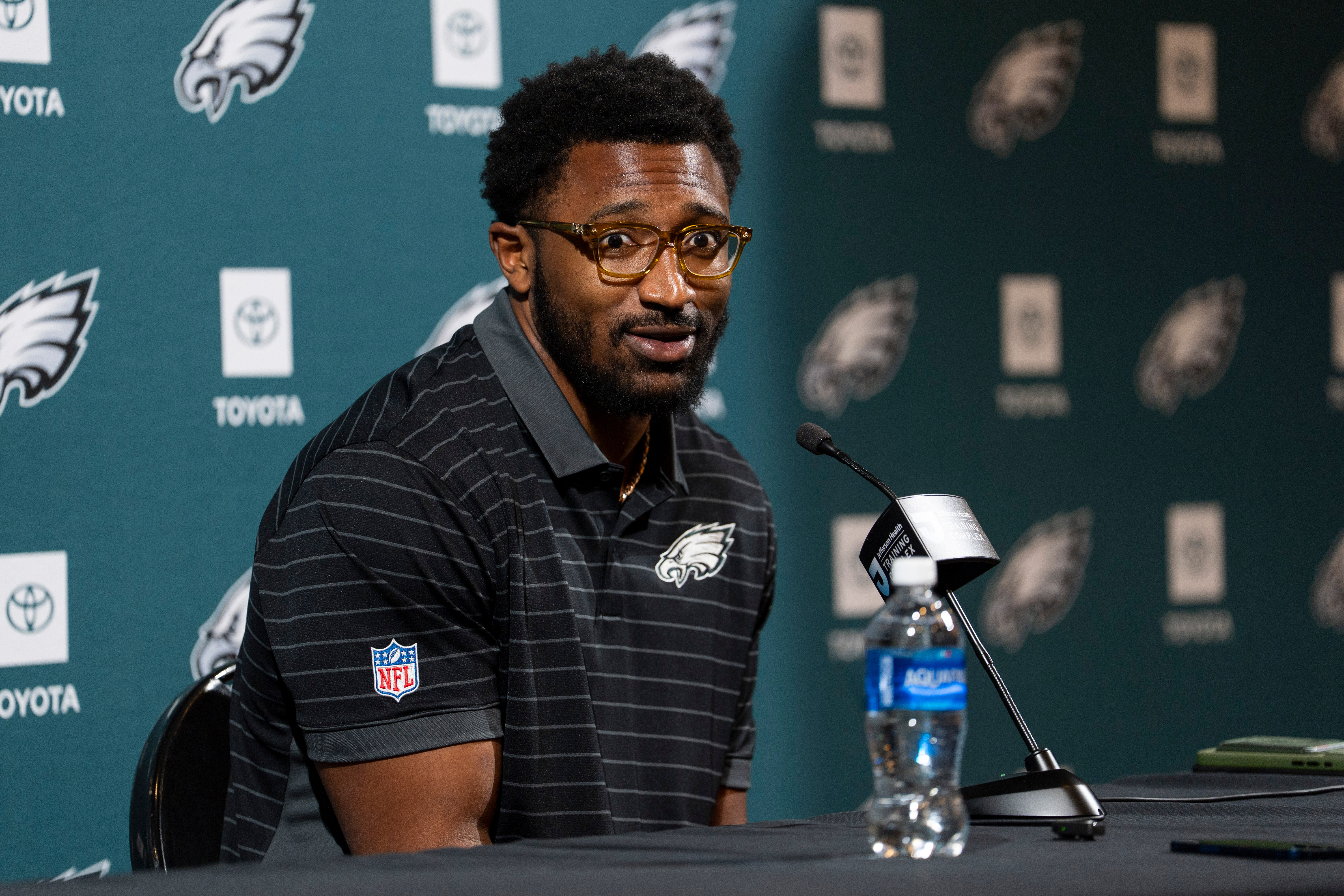
New Eagles edge rusher Jonathan Greenard met the media Saturday.
As the newest Eagles edge rusher, Greenard expressed an understanding that he isn’t just representing the current group. He emphasized his admiration for the players of the past, including Brandon Graham, Chris Long, Derek Barnett, and Josh Sweat, who have set the standard for the newcomers.
“I respect the hell out of the guys that have come before me, and all I can do is continue to just carry that light and make sure the things they’ve done in the past doesn’t go in vain,” Greenard said. “So I love everything about it. I love the historic franchise. I’m wanting to be a part of that.
“I want to be a part of having some hardware on my finger.”
Still rehabbing, Greenard thinks he could play today
Football has been on the back burner for the last several months as new Eagles edge rusher Jonathan Greenard recovered from season-ending left shoulder surgery in December. The injury limited him to just 12 games in 2025. Greenard said he is still rehabbing, but he is making progress.
“They don’t want me to say it, but if we had to play, I could play,” Greenard said. “But ultimately, man, I feel good. I’m in a good spot, and coming here with the best trainers as well, and the best docs here, stuff like that, I know I’m in good hands.”
As he gets back on football field in 2026, Greenard will look to return to the Pro Bowl form he achieved in 2024, his first season with the Vikings. That year, he registered 12 sacks, four forced fumbles, three pass breakups, and 18 tackles for a loss.
But the Steelers may have been violating a league rule.
They weren’t on the clock until pick No. 21, and were apparently unaware the Eagles jumped in front of them and traded with Dallas for pick No. 20.
Former Eagles executive turned consultant Jake Rosenberg pointed out on X Friday that “clubs that are not ‘on the clock’ may have discussions with the representative of one or more draft-eligible players not yet selected (or discussion with the players themselves) regarding the player’s interest in playing in the League, playing with a particular club or type of club, the player’s health, or other such non-financial matters, so long as these discussions do not interfere with discussions between a player and the club that is ‘on the clock.’”
According to Pro Football Talk, that is the correct interpretation of the rule, and PFT reached out to the NFL about the rule. “The league reviews all aspects of the Draft the week after its conclusion,” the NFL told PFT in a statement.
It’s unclear of course if the league will do anything about the phone call, of course, or just chalk it up to an simple mistake. It certainly made for embarrassing opening night for Pittsburgh, the draft’s host city.
The Eagles got their guy, and the Steelers had to settle for Arizona State tackle Max Iheanachor.
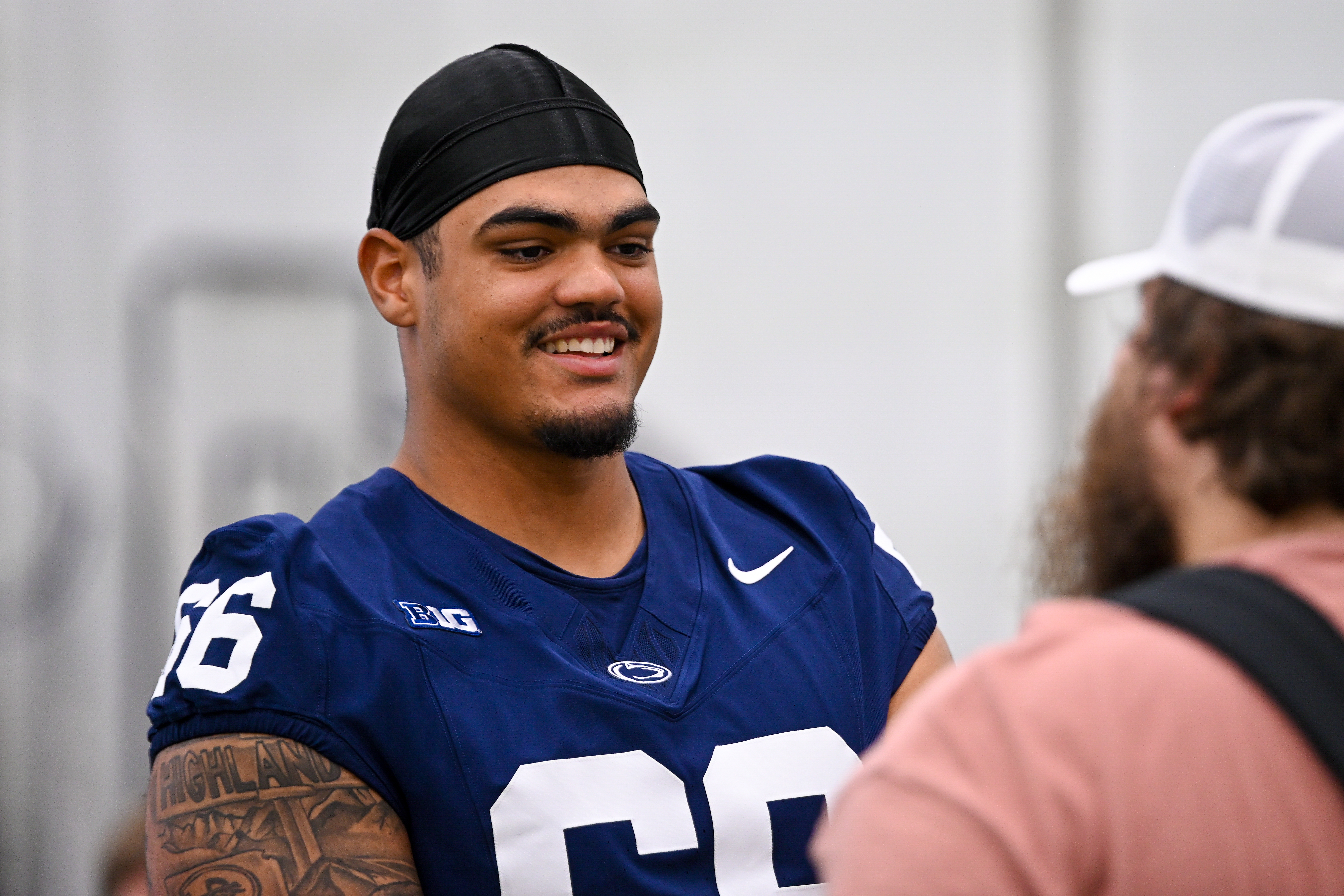
Penn State Nittany Lions offensive lineman Drew Shelton is headed to the Cowboys.
Drew Shelton, a two-year starter at Penn State and a Downingtown West graduate, was drafted by the Dallas Cowboys 112th overall in the fourth round of the NFL draft.
Shelton, who succeeded Jets offensive linemen Olu Fashanu at left tackle beginning in the 2024 season, becomes the second consecutive Downingtown West graduate to get drafted. Will Howard was selected by the Steelers in the sixth round of last year’s draft.
Leading up to the draft, Shelton was training in Dallas with Duke Manyweather, the offensive line guru and the cofounder of OL Masterminds with Lane Johnson.
Now, he will have an opportunity to return at least once a year when Dallas travels to Philly for one of two matchups inside of the NFC East.
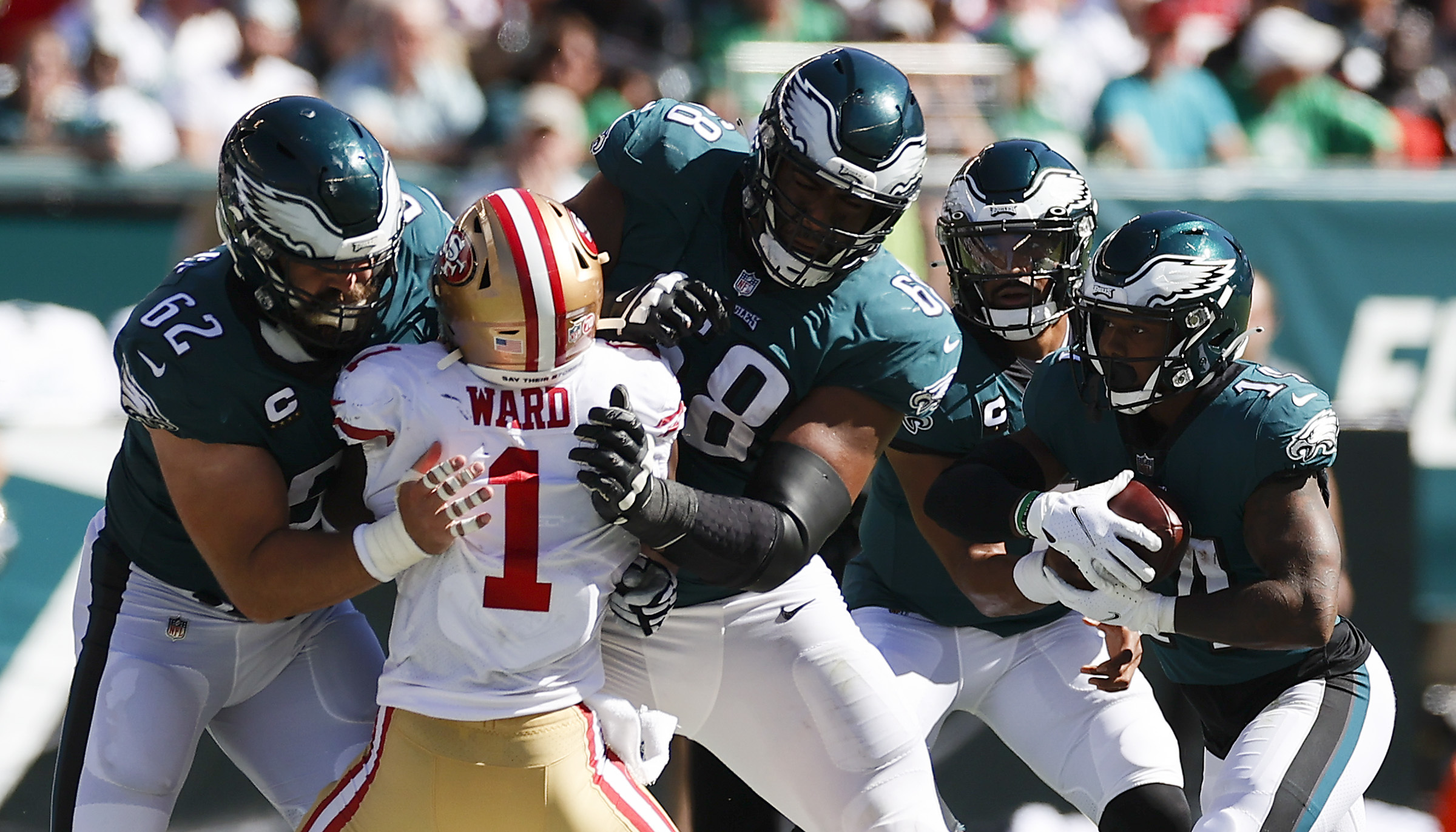
Eagles center Jason Kelce (left), offensive tackle Jordan Mailata (second from left), and running back Kenny Gainwell (right) were all Day 3 picks.
The Eagles only have three remaining picks on Saturday — for now — and they’re not on the lock until pick No. 178, but this day has historically brought them some important players.
To be sure, some not-so-good players, too. And only having three picks makes it a little less statistically likely they have a high hit rate on the Day 3 class in 2026.
But in case you need some reminding, here are some of Howie Roseman’s best Day 3 picks:
C Jason Kelce: The Eagles picked the future Hall of Fame center at No. 191 (sixth round), helping save an otherwise bad 2011 draft class that started with Danny Watkins, the first-round firefighter, and second-round pick Jaiquawn Jarrett.
LT Jordan Mailata: Mailata had never played American football before the Eagles selected him in the seventh round in 2018. He’s now one of the steadiest left tackles in football, and part of arguably the best Eagles draft class under Roseman.
DT Moro Ojomo: Ojomo is another seventh-round steal, this one in 2023. Ojomo has turned into a productive interior defensive lineman who likely will earn a nice paycheck in free agency after this season.
DE Josh Sweat: Sweat, a fourth-round pick in that 2018 class, had a strong argument for Super Bowl MVP two seasons ago.
CB Jalen Mills: Another seventh-round pick, Mills helped the Eagles win a Super Bowl.
There are some notable honorable mentions, too: Kenneth Gainwell; Tanner McKee; Avonte Maddox; Beau Allen; Grant Calcaterra; and more.
Greenard got his first taste of Philly at Sixers game: ‘It’s different up here’
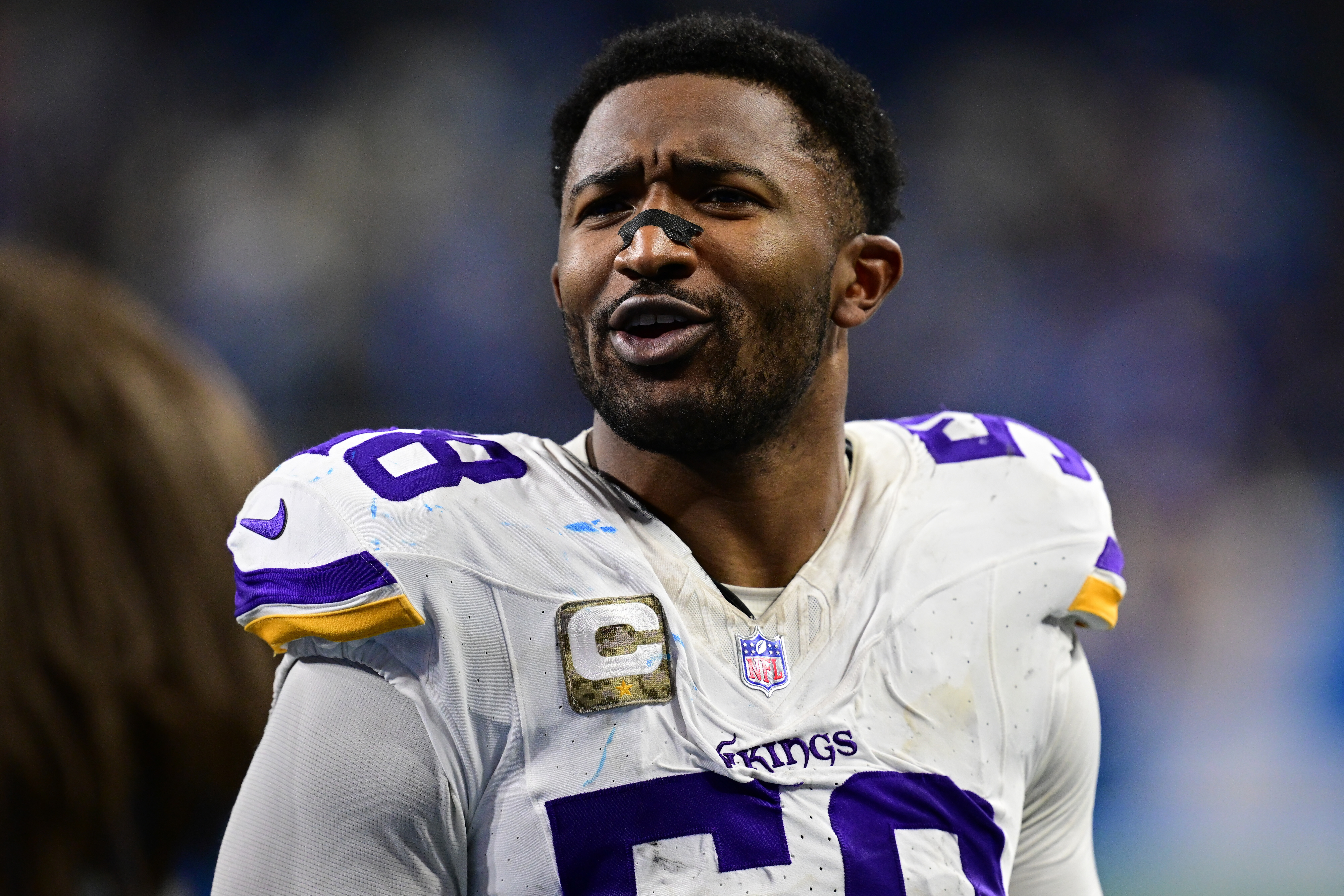
Minnesota Vikings linebacker Jonathan Greenard jogs off the field after an NFL football game against the Detroit Lions in Detroit, Sunday, Nov. 2, 2025. (AP Photo/David Dermer)
New Eagles edge rusher Jonathan Greenard has never played at Lincoln Financial Field, but he got a taste of Philadelphia fans during Friday night’s Sixers playoff game at Xfinity Mobile Arena.
“They lost, but that was a crazy environment,” Greenard said. “I was just at the Hawks game back home in Georgia. Looking at that and comparing the two, I was just like, man, this environment was way, way, way better. No disrespect to them. Ultimately, man, it’s different up here. They take pride in it. They take pride in everything they do. It’s a blue collar city. When you work your tail off, everything is going to be rewarded back to you. They’re just passionate, and I love that.
“Ultimately, they want one thing. And why not? We want the same thing. I carry that chip on my shoulder. I respect the hell out of this city, respect the hell out of this [organization], and I just definitely understand what putting this jersey on, putting this helmet on, actually means to this city. And I’m going to take pride in that.”
How Jonathan Greenard sees himself fitting on Eagles defense
The Eagles introduced their new edge rusher, Jonathan Greenard, Saturday morning, just over 12 hours after acquiring him from the Vikings for a pair of third round picks.
So what does he think of the defense already in place? And how does he see himself fitting alongside the team’s current front seven?
“If you look at it across the board, they’ve got some dogs,” Greenard said of the Eagles current defensive front. “Already, you start interior-wise, [Moro] Ojomo and obviously J.C. [Jalen Carter] and J.D. [Jordan Davis], they’re going to do their things. On the edge guys, it’s such a young presence and guys who are just relentless. I feel like that’s where I can add to it, just like a vet presence. You’ve got Nolan [Smith] already doing his thing and elevating his game, and Jalyx [Hunt] as well. …
“All these guys are just hungry, and I think that adding my little expertise, and then still bringing my relentless energy and my effort to the game and polishing up my techniques — because I’m still learning too. Even though I’m a vet, I still feel like I’ve got a long way to go polishing up my technique. But just adding to what has already been put here is something I want to bring to the table. I’m not going to change anything up, change anything about what I do myself, just going to play ball and keep doing what I’ve done since I’ve been in the league.”
Former Eagles receiver coached Eli Stowers in college
As a first-year coach I had the honor of working with @eli_stowers3 every day. Coaching is easy when your players possess his level of athleticism, intelligence, and playmaking ability. AND he’s an even better person. @Eagles fans, you’re going to LOVE him! pic.twitter.com/xvsBQ8aasH
The Eagles enter the third and final day of the draft with three picks, at least for now. Here’s a look at their picks:
window.addEventListener(“message”,function(a){if(void 0!==a.data[“datawrapper-height”]){var e=document.querySelectorAll(“iframe”);for(var t in a.data[“datawrapper-height”])for(var r,i=0;r=e[i];i++)if(r.contentWindow===a.source){var d=a.data[“datawrapper-height”][t]+”px”;r.style.height=d}}});
// Timestamp 04/25/26 8:25am
With only three picks, what’s the Eagles plan for Day 3?
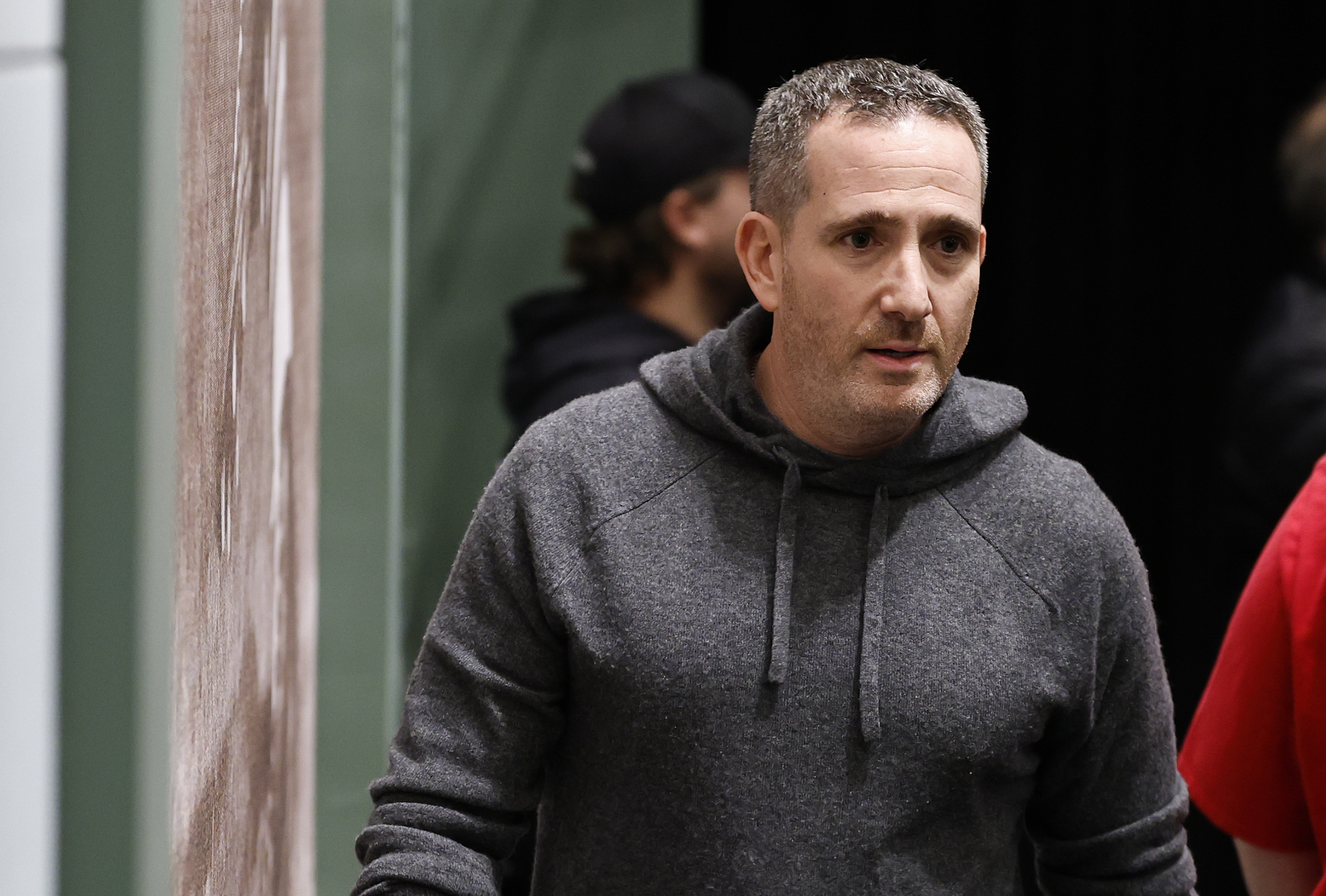
Eagles GM Howie Roseman has been active during the NFL draft.
On Day 3 of the draft, Howie Roseman has said in the past he is looking for players with unique traits who can develop into starters.
But as it currently stands, the Eagles are set to take fewer swings at identifying those future starters on the draft’s final day. Roseman has just three picks at his disposal — Round 5, No. 178, Round 6, No. 197, and Round 7, No. 244. He traded 2026 picks away to move up for Makai Lemon and to acquire Jonathan Greenard from the Minnesota Vikings and Dontayvion Wicks from the Green Bay Packers.
Roseman considers Greenard and Wicks to be exploits of this draft, even though they are veterans. Still, Roseman expressed a sense of longing for his since-departed Day 3 picks.
“It stinks,” Roseman said on Friday night. “We have a great meeting tomorrow morning where everyone has passion players on Day 3. Not picking in the fourth round hurts, but I think that when we look at what we’ve done and the players that we added overall, we’ll get through those couple hours and be excited about the guys we have and the opportunities that we have tomorrow to add some players.”
What are the Eagles’ remaining needs?
On Day 3, the likelihood that the Eagles will be addressing immediate roster needs are slim. Instead, as mentioned above, they’ll attempt to identify players with starting upside.
Still, the biggest question mark among the starting jobs is at safety alongside Drew Mukuba. Michael Carter and Marcus Epps are the likely contenders for the gig, but could the Eagles add a competitor to the mix, either through the draft or via trade?
While the Eagles added a tackle in the third round on Friday in Markel Bell, they likely aren’t finished adding to the offensive line. Last year, the Eagles went into training camp with 17 offensive linemen. As the roster currently stands, they have 13. One noteworthy deficiency is guard depth behind Landon Dickerson and Tyler Steen.
The Eagles will also add a quarterback at some point before training camp. Typically, the team carries four quarterbacks on the 90-man roster. The room currently stands at three with Jalen Hurts, Tanner McKee, and Andy Dalton.
Additionally, the Eagles have four running backs on the roster in Saquon Barkley, Tank Bigsby, Will Shipley, and Dameon Pierce. Last year, they went into training camp with seven.
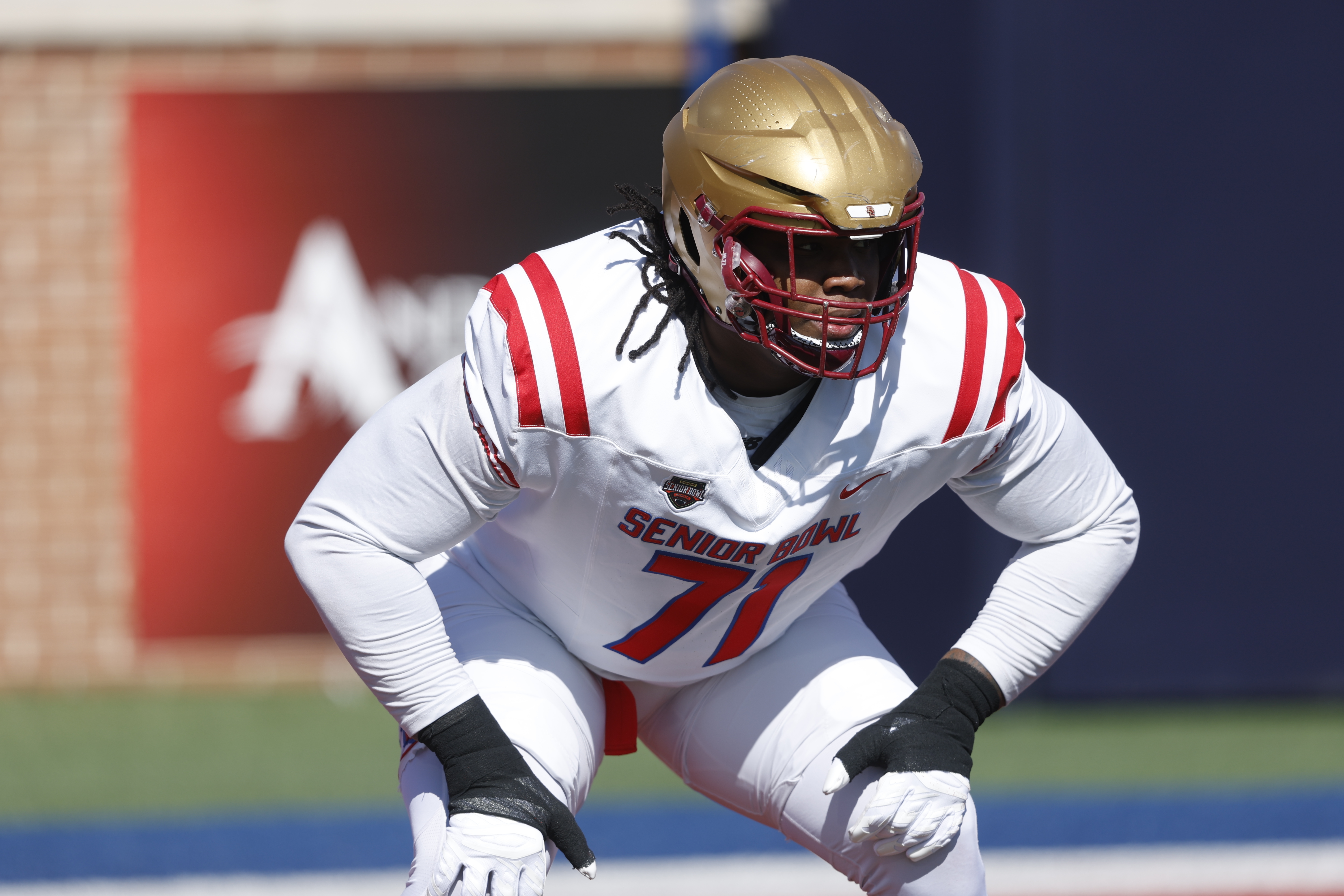
Bowry, the 6-foot-5, 314-pounder, was a two-year starter at left tackle at Boston College. He is heralded for his athleticism at the position, as evidenced by his 5.08 40-yard dash (80th percentile) and his 34.5-inch vertical jump (96th percentile). Bowry could be better suited for guard at the next level given his size, although he did not play the position in college.
RB Nicholas Singleton, Penn State
Could the Eagles add another running back from Penn State? According to PennLive, Singleton took a pre-draft visit to the Eagles. While the top of the team’s depth chart is set with Barkley and Bigsby, Singleton could still compete for a role with Shipley and Pierce. Singleton had an underwhelming 2025 season and broke a bone in his foot at the Senior Bowl, hence his availability on Day 3. But he was stellar in 2024 as a junior, eclipsing 1,000 rushing yards.
DB Jalon Kilgore, South Carolina
Kilgore, 6-1, 210, is a versatile defensive back who primarily played at nickel throughout his three seasons at South Carolina. Over the last two seasons in particular, he had excellent ball production, combining for seven interceptions and 15 pass breakups in that span. Those skills combined with his elite athleticism (4.4 40-yard dash) should be enticing to a team like the Eagles in search of a prospective starting safety.
Howie Roseman explains Eagles’ moves on ‘eventful’ Day 2
The Eagles acquired edge rusher Jonathan Greenard from the Vikings Friday night.
Jonathan Greenard, edge rusher
Eagles general manager Howie Roseman sat at the podium Friday night after what he called an “eventful” Day 2 of the 2026 NFL draft.
The Birds made two draft picks, but the bigger move was acquiring Minnesota edge rusher Jonathan Greenard, who the Eagles signed to a four-year deal worth $100 million.
“There wasn’t a game that we didn’t watch of his, and what you see is a relentless player,” Roseman said. “We just felt like we had a really good D-line but we wanted to elevate it.
“It really made sense with where our football team was to acquire the player.”
Markel Bell, offensive lineman
Roseman called 6-foot-9 tackle Markel Bell, the Eagles’ third-round pick, a “passion player” throughout the draft process.
The Eagles selected Bell with the 68th pick. He has rare size at the position and didn’t allow a sack in 2025. Roseman said he wondered what might happen if the 21-year-old Bell went back to college for another year. As in, he probably would be a more sought-after prospect next draft cycle.
“Really, when you watch the tape, he is hard to get around in pass protection,” Roseman said. “This was a guy that’s hard to find.”
Eli Stowers, tight end
Stowers, a first-team All-American, had 62 receptions for 769 yards and four touchdowns with the Commodores. The 6-foot-4, 239-pound native of Texas is a former quarterback who has played tight end for just three seasons after beginning his college career at Texas A&M as a quarterback.
Shoulder injuries made it so that Stowers “couldn’t throw the ball the same,” he said. He transferred to New Mexico State, where he competed with Diego Pavia for the starting quarterback job. Pavia won, but Stowers went into offensive coordinator Tim Beck’s office and told him he’d do “anything” to get on the field, he said.
He transitioned to tight end, went with Pavia and the coaching staff to Vanderbilt, and has excelled.
“I think it’s exciting that he has only played the position for a short time,” Eagles coach Nick Sirianni said. “We’ve done a ton of homework on the guy, obviously. Great character guy. High football IQ having played quarterback. Those guys continue to develop, and excited to work with him because he’s got a lot of room to improve.”
The Athletic’s Dane Brugler said “Stowers will need to prove himself as a serviceable blocker at the NFL level, but he is explosive as a pass catcher, and I love the way he maximizes his catch radius. He has mismatch-creating potential and can eventually develop into an NFL starter.”
One woman said at Nicklas’ preliminary hearing that she felt compelled to work with them because they told her that her ex-wife was being targeted by “black magic” and that her life was in danger.
“As someone who loved my wife and my family, I felt like I had no choice,” she said. “I wanted to save them.”
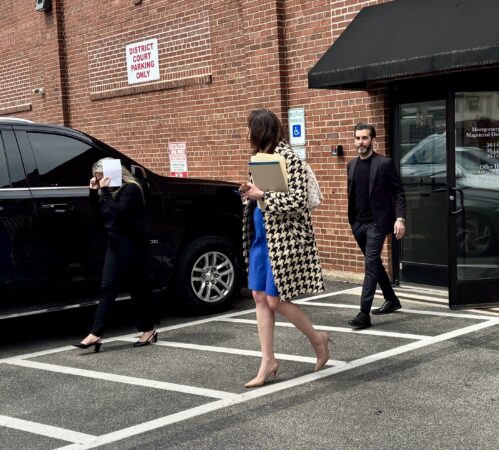
District Judge R. Emmett Madden dismissed four charges against Nicklas, 41, including racketeering and dealing in unlawful proceeds, but held him for trial on theft and related crimes. Marks, his paramour and business partner, waived her preliminary hearing and will face a county judge on all of the charges.
Nicklas’ attorney, Elizabeth Lippy, argued that Marks, not he, was the one who ran Jenkintown Psychic Visions and directed the transfer of money and high-priced items, including designer purses and watches.
“This is not the Jenkintown mafia,” Lippy said, referencing the use of racketeering charges to disrupt organized crime rings. “This is a storefront psychic who advertised her own abilities, and giving money to Mr. Nicklas doesn’t create a corrupt organization.”
Assistant District Attorney Christian Taffe presented evidence that between 2022 and their arrest in October, Marks and Nicklas encouraged the two women to make multiple wire transfers to bank accounts and a CashApp account operated by Nicklas. Marks also instructed them to withdraw large amounts of cash and to store the money in pillowcases as part of various rituals with supposedly paranormal purposes.
One woman said she hired Marks in hopes that her ex-fiancé, who had called off their wedding, would reach out to her and come back into her life.
She said Marks initially told her to keep the money in her home, but later asked her to bring it to her and Nicklas in person as part of a “marriage ritual.”
That ritual, the woman said, also required a $6,000 Chanel purse that Marks told her to purchase after asking her to extend a higher line of credit with her bank.
Marks, she said, promised to return both the purse and money to her.
“She told me not to worry about money,” the woman said, “because ‘money comes and money goes.’”
After months of cajoling Marks, the woman received a fraction of her money and the purse, which she was able to return to the store for a partial refund.
When the women pressed for more money to be returned, she said Marks threatened to contact her ex and create fake social media accounts for her, using personal information she had shared during their psychic readings.
The other victim said Marks placed similar demands on her: In addition to a pillowcase full of money, she was directed to buy expensive Rolex and Cartier watches, again as part of a ritual.
When the woman tried to get her money back, Marks became irate, she testified. Nicklas would then join the conversation, telling her to “trust the process” and promising that everything would be returned to her if she completed the ritual.
Lippy, Nicklas’ attorney, asserted that no theft had occurred. Both women, she said, believed in the paranormal and had agreed to pay for psychic services.
“Both of these victims have free will,” she said. “When a psychic promises their services, it’s a service nonetheless.”
Sushi restaurants in the Philadelphia area were once few and far between. They now blanket the region. As the sushi game improved, the exclusive omakase experience followed. Omakase, literally “I leave it up to you,” is an intimate meal that puts the chefs in control of the menu.
For all the attention that sushi restaurants now command, there are precious few offering omakase, a labor-intensive undertaking with higher-than-usual price tags and standards for artistry.
When chef Jesse Ito began his omakase in the back room of Royal Sushi & Izakaya in Queen Village in 2017, you could choose 18 pieces of nigirizushi for $110 a person or a 10-piece mini-version for $55. Now, the James Beard Award-nominated chef commands $355 a person, service included, at his eight-seat counter for a 17-piece tasting, which includes 16 pieces of nigirizushi and one temaki. Ito does two turns a night, and a reservation here is nearly impossible to get.
Contrast this with the $78 omakase at Xiangyu “Sam” Lin’s spare, sleek Yuhiro Omakase in Fishtown, a good experience for first-timers.
Why the difference in omakase prices? The number of courses is only part of the equation. Fish costs are all over the map, even among the same species — the thickness of each slice, the overall quality of the fish, and the sourcing; some chefs, for example, prize Spanish-caught tuna, which can be considerably pricier than tuna from somewhere else, say the Philippines. The courses themselves factor in, too. Some chefs may include uni (and sea urchin prices vary widely).
“What makes my omakase different is that you’re coming for what my perspective on sushi is,” Ito told me.
Regardless of price points, the omakase experience is a performance, as chefs cut, wrap, roll, garnish, and sometimes torch each bite for their customers seated at a counter.
A few destination Japanese restaurants in Center City, notably Morimoto and Double Knot, offer prix fixe, multiple-course meals that are prepared in the kitchen.
Here are restaurants with omakase counters that we’ve sampled. All require reservations.
Bluefin
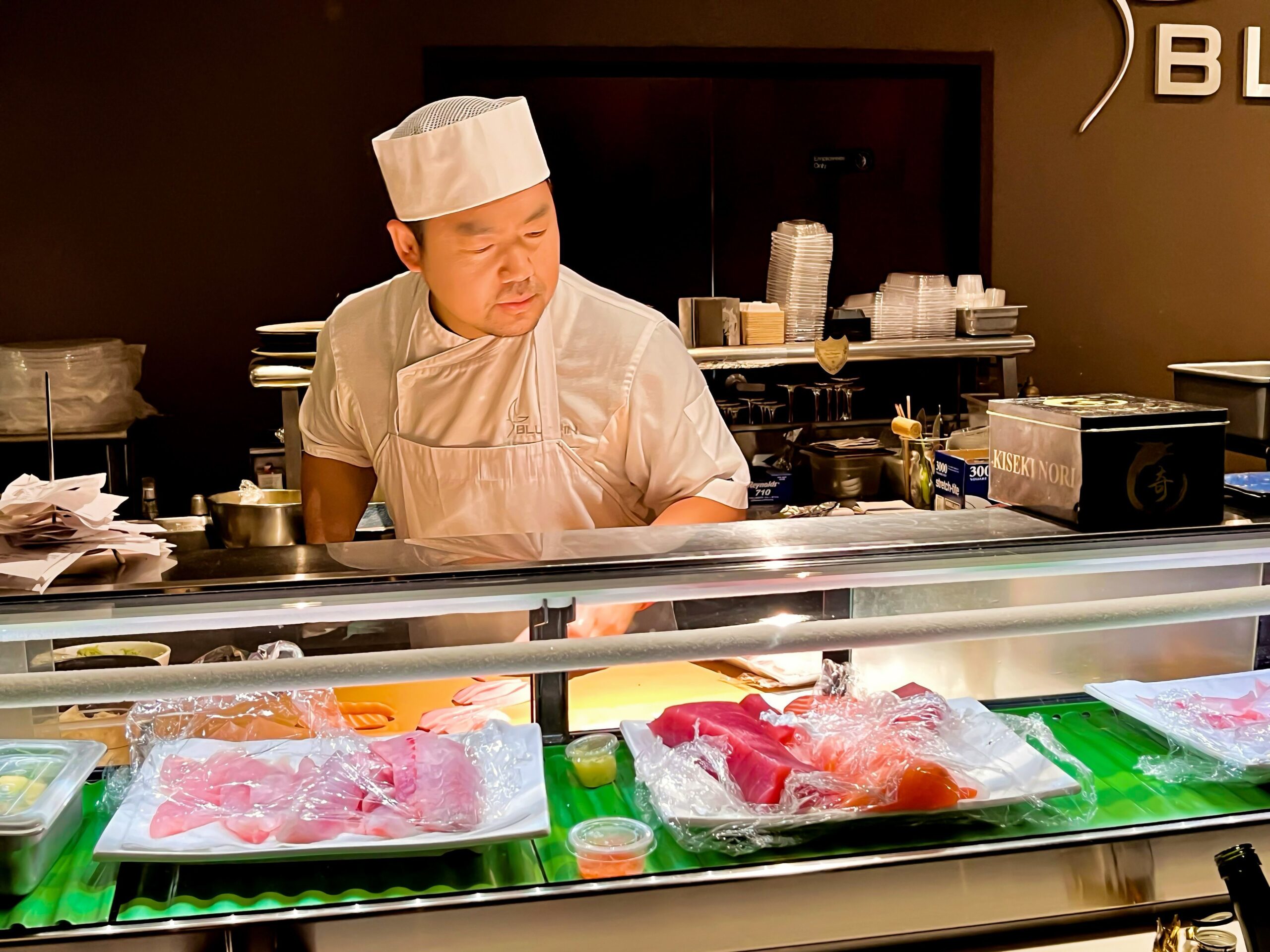
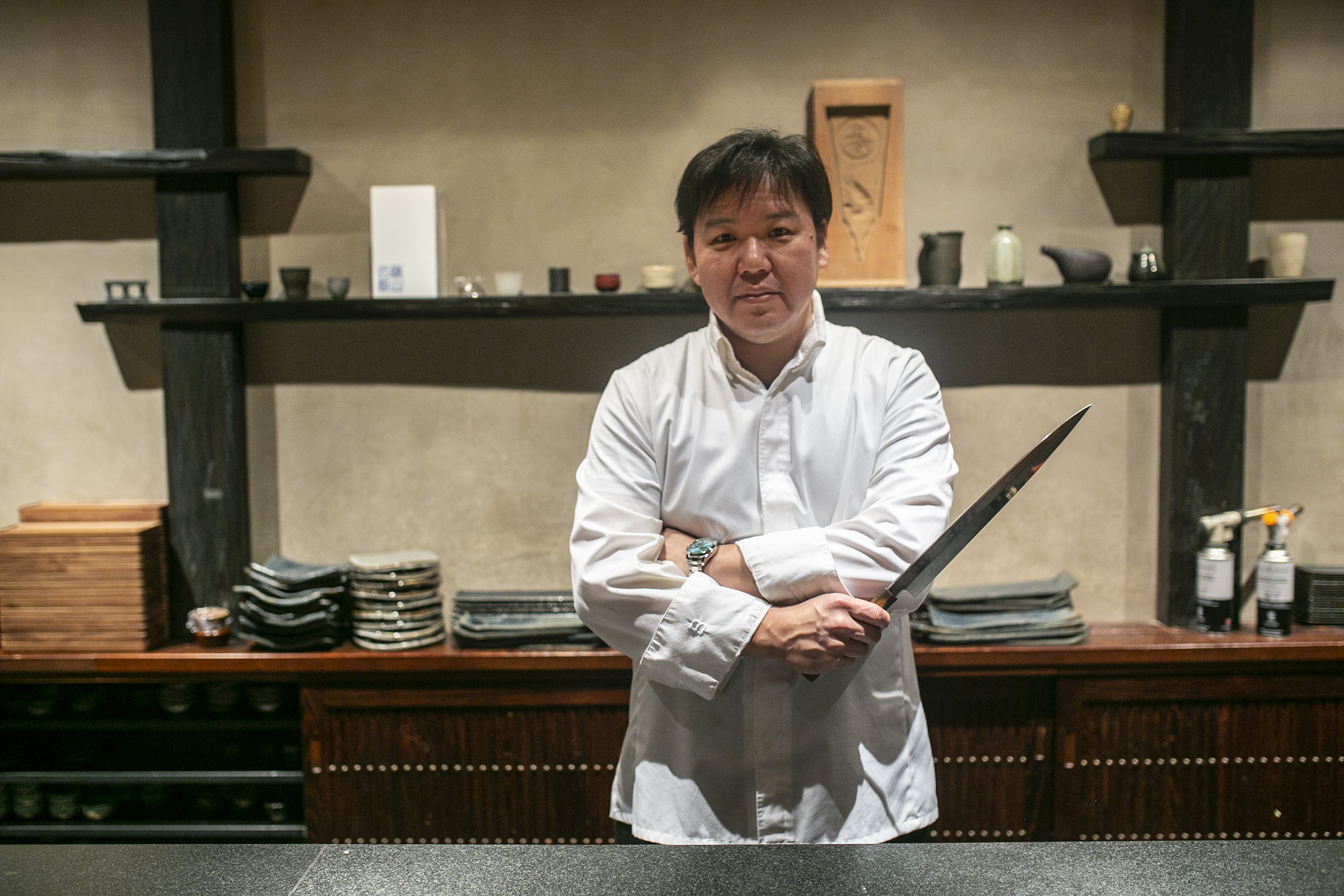
Chef Yong Kim behind the 10-seat sushi counter at Bluefin, 2820 Dekalb Pike, East Norriton.
Chef Yong Kim has been a part of the suburban sushi scene for nearly a quarter-century, when he opened a modest shop in a Plymouth Meeting strip mall. In 2012, he traded that for a Blue Bell BYOB triple the size, adding an Exton location five years later.
Kim is a master sourcer of fish, and his omakase offerings change constantly; they include sushi and sashimi, maybe some usuzukuri fluke with yuzu dressing, plus hot bites such as miso-marinated Chilean sea bass and whole porgy with mussels and scallops. The price is tailored to the experience — figure $100 to $150, if you factor in A5 wagyu.
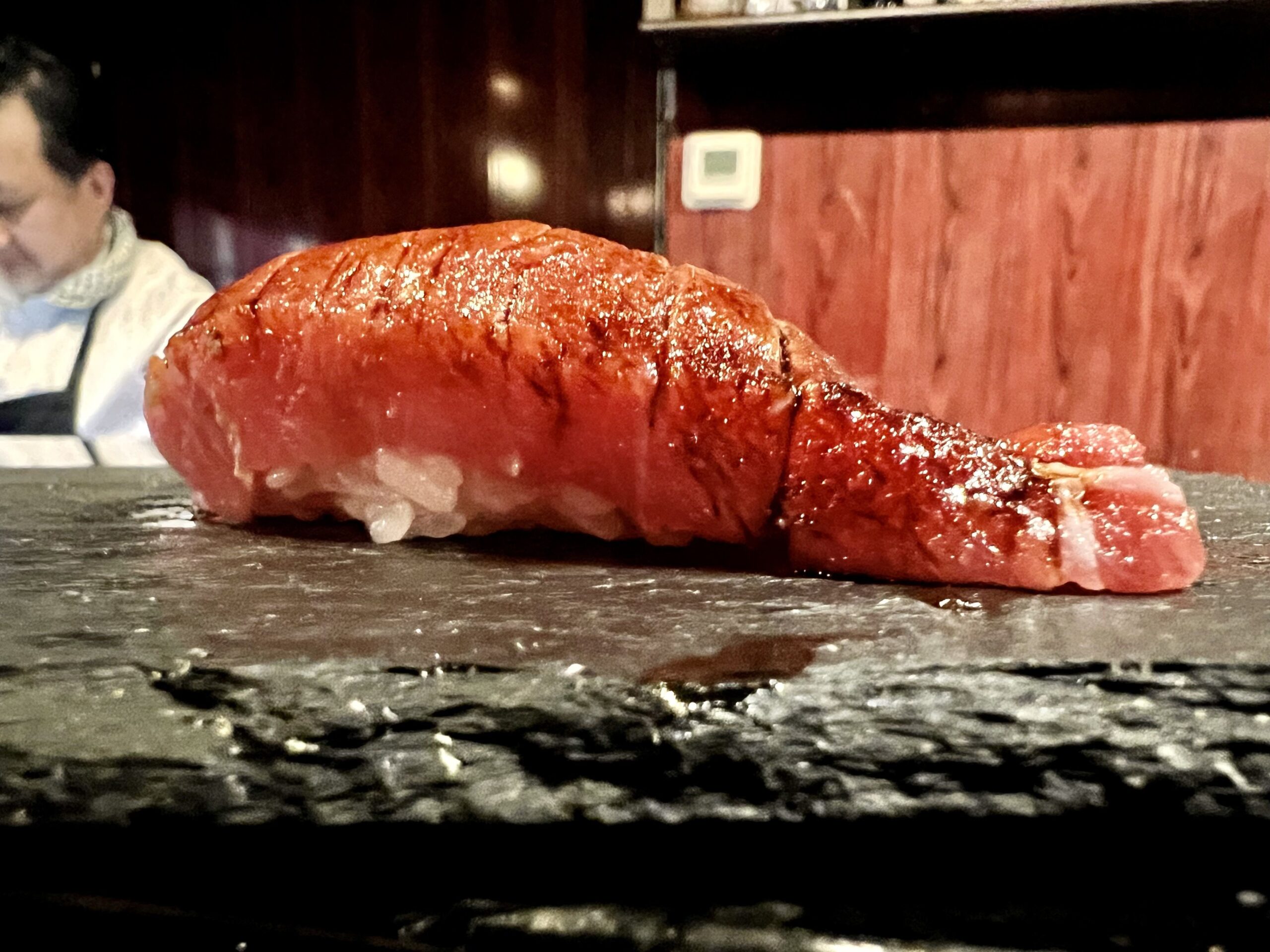
Medium fatty tuna (and chef Joe Kim) at Dawa Sushi & Ramen, 1204 N. Front St.
The high-top seating at the gleaming onyx bar puts you right at eye level with owner Joe Kim at his U-shaped BYOB under the Girard El stop in Fishtown, and he’ll crack wise with you through all 22 dishes. It’s $180, offered Friday and Saturday at 7 p.m. or by appointment.
Chef Hiroki Fujiyama’s luxurious, soft-lit atelier, tucked behind Wm. Mulherin’s Sons in Fishtown, serves 21 courses for $195, tax and service included. There’s also an optional sake pairing for $70.
Sushi chef Alex Jiang puts together an omakase meal at Kichi Omakase, 112 S. 12th St.
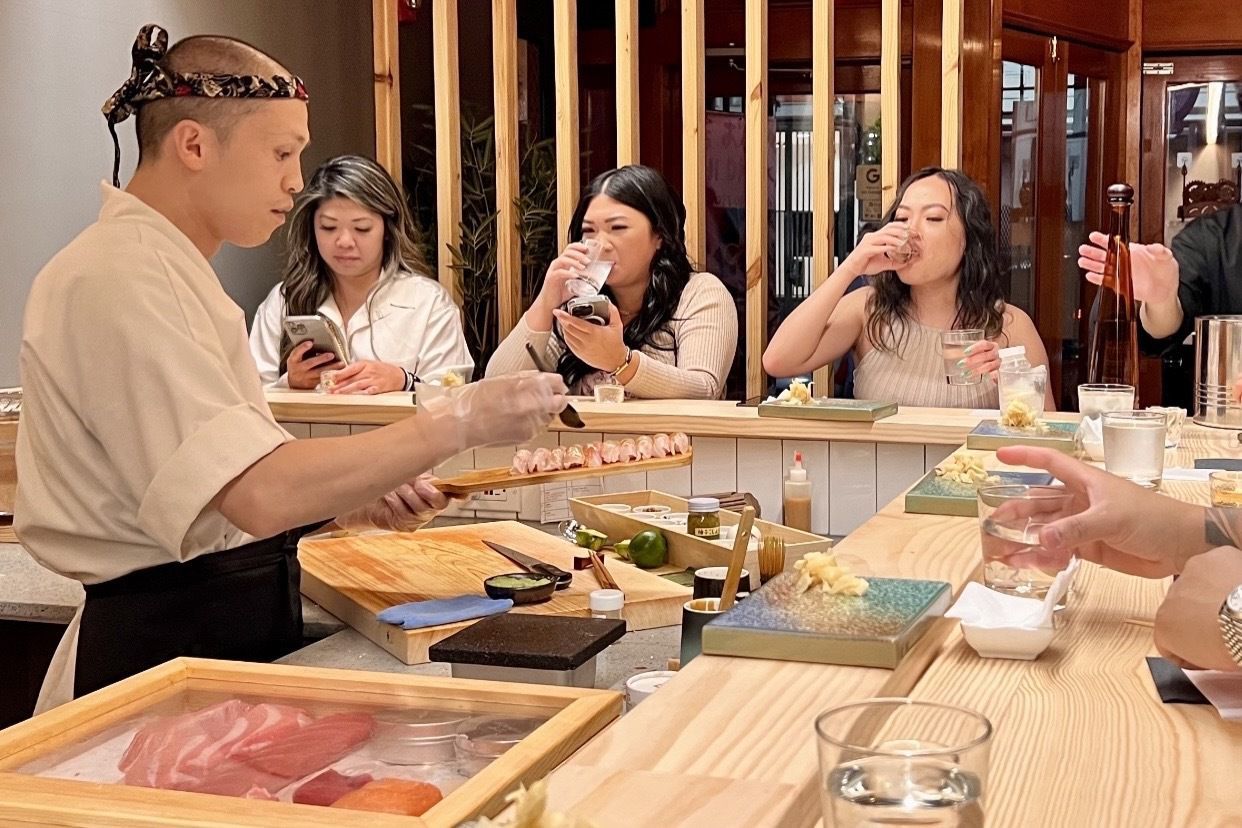
Sixty-minute omakase experiences began appearing in New York City a few years ago. Chef Jeremy Zhu packed his knives and his blowtorch and brought them to Washington Square West, where he slowed the pace to 90 minutes. He and his team create 16 courses for $95 at the cheery, high-energy BYOB, where they occasionally gild the lily (liquid gold atop caviar?).
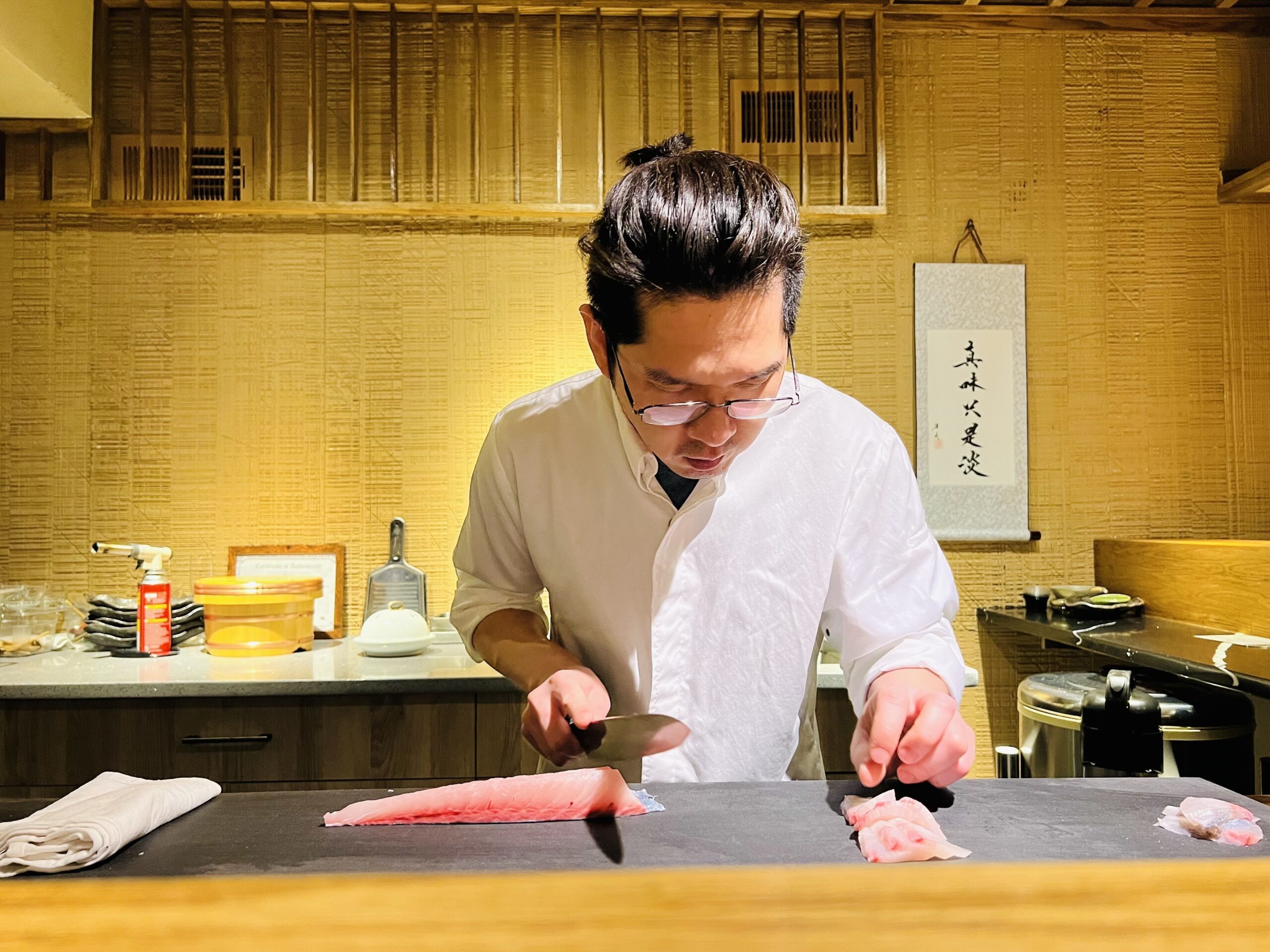
Chef Jeff Chen slices lean tuna at his omakase counter at Kissho House, 1522 Locust St.
Chef Jeff Chen, an alumnus of Hiroki, has made his solo debut in a renovated brownstone near Rittenhouse Square. The bar and izakaya (specialty is robatayaki) are on the street level, while downstairs is his serene counter, where he leads a 17-course experience with imported fish and a few surprises along the way. It’s also one of the better omakase values, priced at $150.
Sushi chef Mitsutaka Harada offers otoro nigiri at Nakama Japanese Cuisine & Omakase.
Chefs Mitsutaka Harada and Haris Yohanes, who previously worked at Sushi by Bou/Sushi Suite, have opened this snug Japanese restaurant across from the Convention Center. Harada, who is a bit of a showman, recommends sitting for the omakase, available by reservation (seatings at 5, 6:30, and 8 p.m.). For $125, he dishes 17 courses over 80 minutes — a parade of nigiri, sashimi, handrolls, and a surprise or two, like the nanban of fried fish and vegetables in a sweet soy vinaigrette, which is sort of like Japanese escabeche. Dessert, such as green tea tiramisu and sweet potato cheesecake, is included.
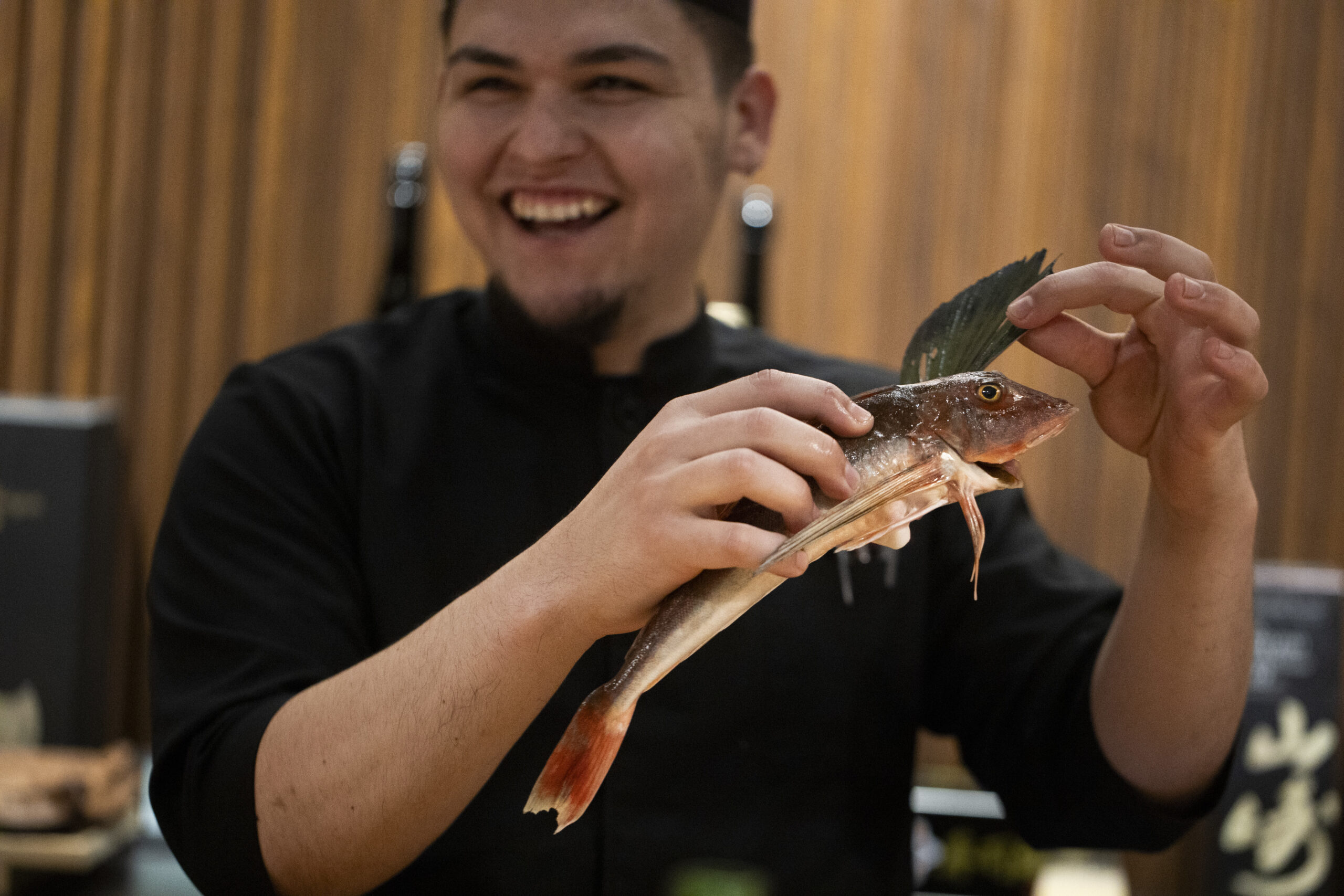
Chef Carlos Wills shows off a fish during the omakase at Ogawa Sushi & Kappo.
Minoru Ogawa, a second-generation sushi chef with a following on the Washington restaurant circuit, has set up a richly appointed counter for 23-course meals priced at $200 plus 20% tip, with seatings at 5:30 p.m. (for eight people) and 8 p.m. (for 10). Inquirer critic Craig LaBan says Ogawa, fronted by chef Carlos Wills, is right up there as one of the city’s best omakases, featuring rare, in-season fish from Japan. The chic bar Almanac is upstairs.
Jesse Ito, chef-owner, behind his omakase counter at Royal Izakaya at 780 S. Second St.
Critic Craig LaBan might be president of the Jesse Ito fan club: “The fuss is merited because Ito is simply in an omakase league of his own,” he wrote. “He touches every one of the 17 pieces of hand-molded rice and rare imported fish that 16 lucky diners each night eagerly pay $175 to devour, and then open their wallets to buy more for add-ons.” Sake pairings, too.
That was in fall 2022. It’s $355 now, and Ito’s star has not dimmed. If you’re shut out of a seat, the izakaya in front offers sushi rolls, sashimi, and chirashi bowls.
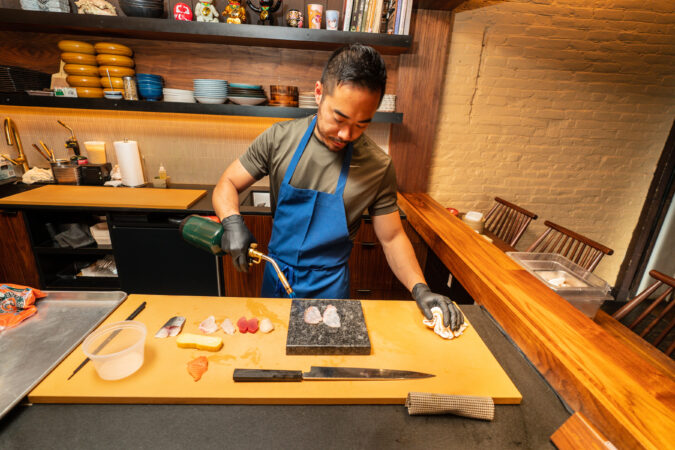
Sam Lin, owner and chef of Sakana, torches fish at his omakase counter.
Since opening in 2019, chef Sam Lin has upgraded the experiences at his minimalist BYOB in Queen Village, shrinking the number of seats from 14 to a roomier, more intimate 10. Start with daikon soup and perhaps a pristine kumamoto oyster with yuzu foam, segue into a beef and a seafood appetizer, and then run through a sushi list before capping it off with an uni bowl (under a globe of smoke) and dessert. The tab, $198, reflects Lin’s practice of flying in fish from Toyosu Market. The menu features three appetizers, a fusion of French technique and Japanese flavors, a sashimi course, a soup, and then two rounds of nigiri and a futomaki roll before ending with a light dessert. Gluten-free and kosher experiences are available.
Want a budget experience? See Lin’s newer spot, Yuhiro, below.
Chef Yonten Gyamtso preparing a sushi dish at Shiso, 604 South St.
Shiso, in the sleek South Street salon that was Serpico before the pandemic, seats 12 at the dining counter in the open kitchen. Nepalese-born sushi chef Yonten Gyamtso — who had been artfully overseeing the omakase at owner Alan Su’s other spot, Umami Steak & Sushi (see below) — includes house-made noodles for $180. Shiso offers ramen and a sushi menu.
This snazzy Austin import, where customers generally order à la carte, offers a few lanes for omakase seekers. There’s a 10-course traditional omakase ranging from roughly $350 to $425 for two people, while the “somakase” custom menu — where you and the server work out the courses — often falls in the low $200s per person. There’s also a 10-course vegetarian tasting menu priced at $125 to $150 per person. A notable daily happy hour (4 to 6 p.m.) features a nine-course tasting menu for $120 per couple.
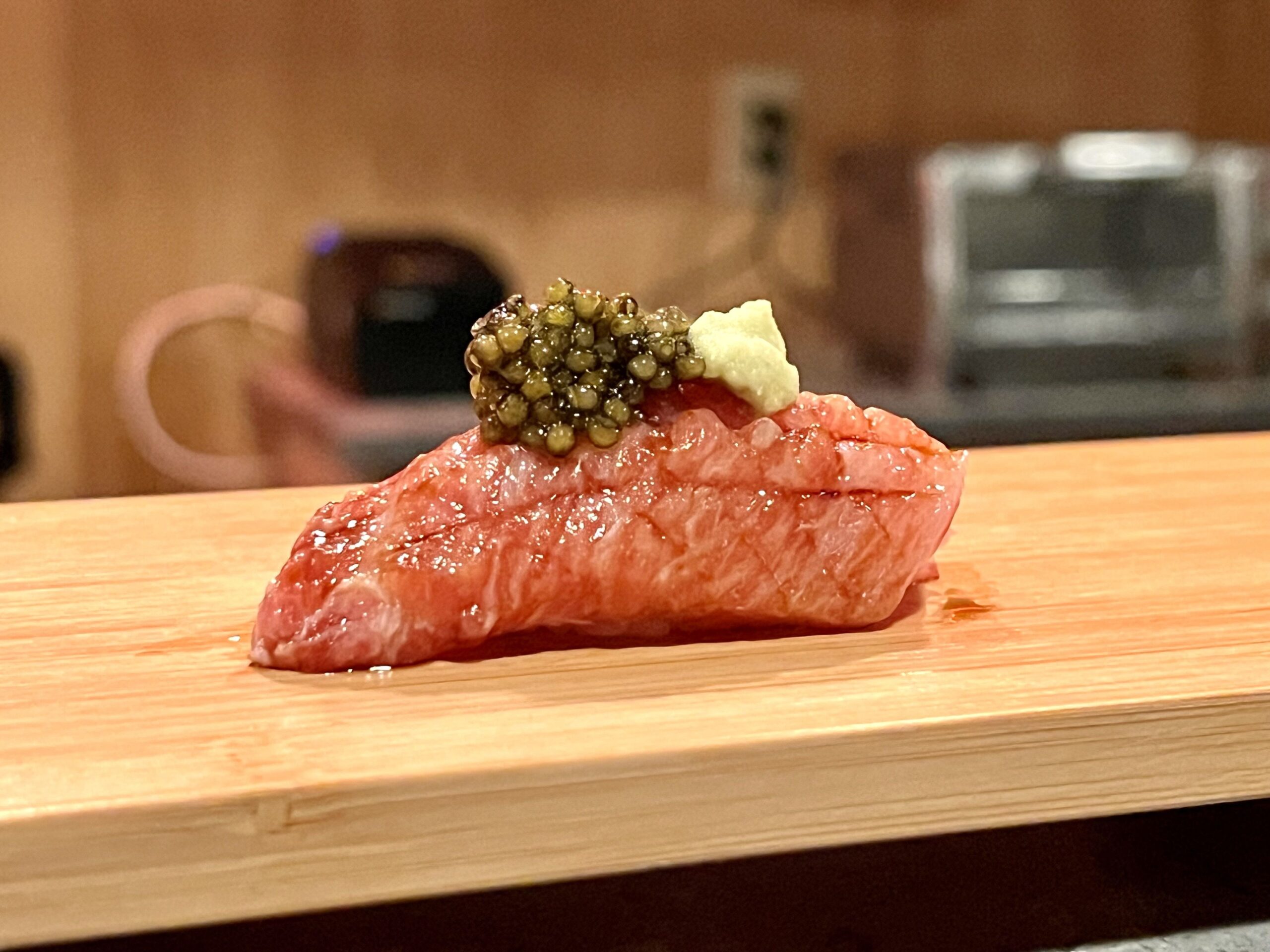
Fatty tuna topped with caviar at Umami Steak & Sushi, 727 Walnut St.
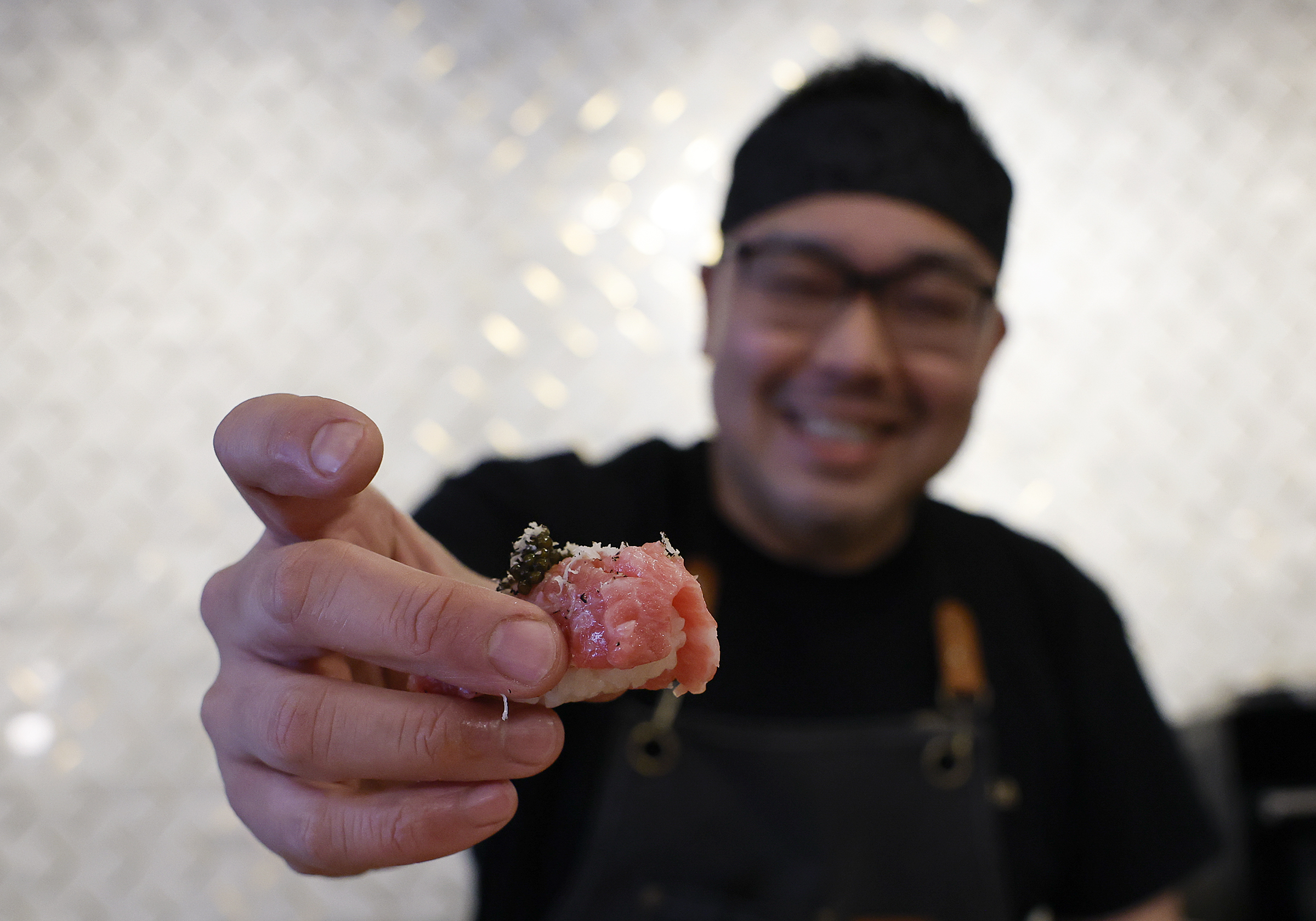
Step down from Walnut Street, beneath a hair salon off Washington Square, into a subterranean barroom. Pass the bar and the booth seating and you’ll run into Alan Su’s 10-seat sushi bar. Chef Kenny Sze, an alum of Sakana, puts out two omakases. The basic one for $160 includes u-temaki, maki, and hot dishes; for $190, he adds A5 wagyu steak.
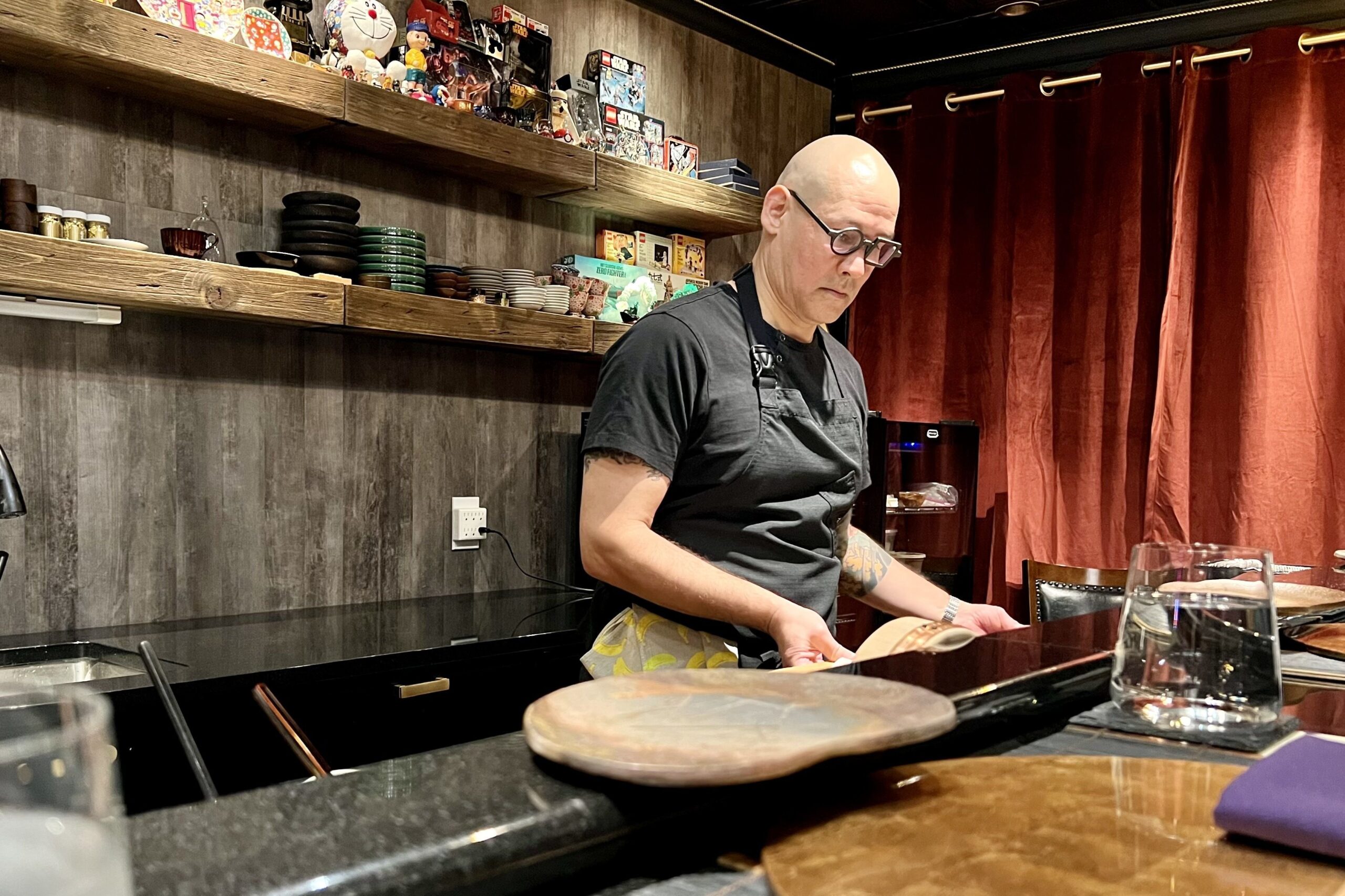
Chef Kevin Yanaga works at his omakase counter at Yanaga Kappo Izakaya, 627 N. Third St.
Kevin Yanaga is Philadelphia’s most traveled sushi chef, at least locally, with a series of high-profile stops including Morimoto, Zama, Izakaya and Double Knot, and later the relaunch of Pod. He then ended up in a relatively brief partnership with Glu Hospitality in Fishtown that created Sushi by Yanaga and Omakase by Yanaga on Frankford Avenue. Now he’s in Northern Liberties with Michael Ego (a former director at Glu) with Yanaga Kappo Izakaya, an izakaya, on the corner of Third Street and Fairmount Avenue. Tucked behind a bookshelf just off the bar is his narrow, kitsch-filled eight-seat omakase room, where Yanaga creates intricate feasts, including tableside smoked salmon and cured live shrimp, for $170 plus 20% service charge, offered for two seatings Thursday to Saturday. A five-course sake pairing ($65) and seven-course “kuro obi” pairing ($80) are available, as is sake by the bottle.
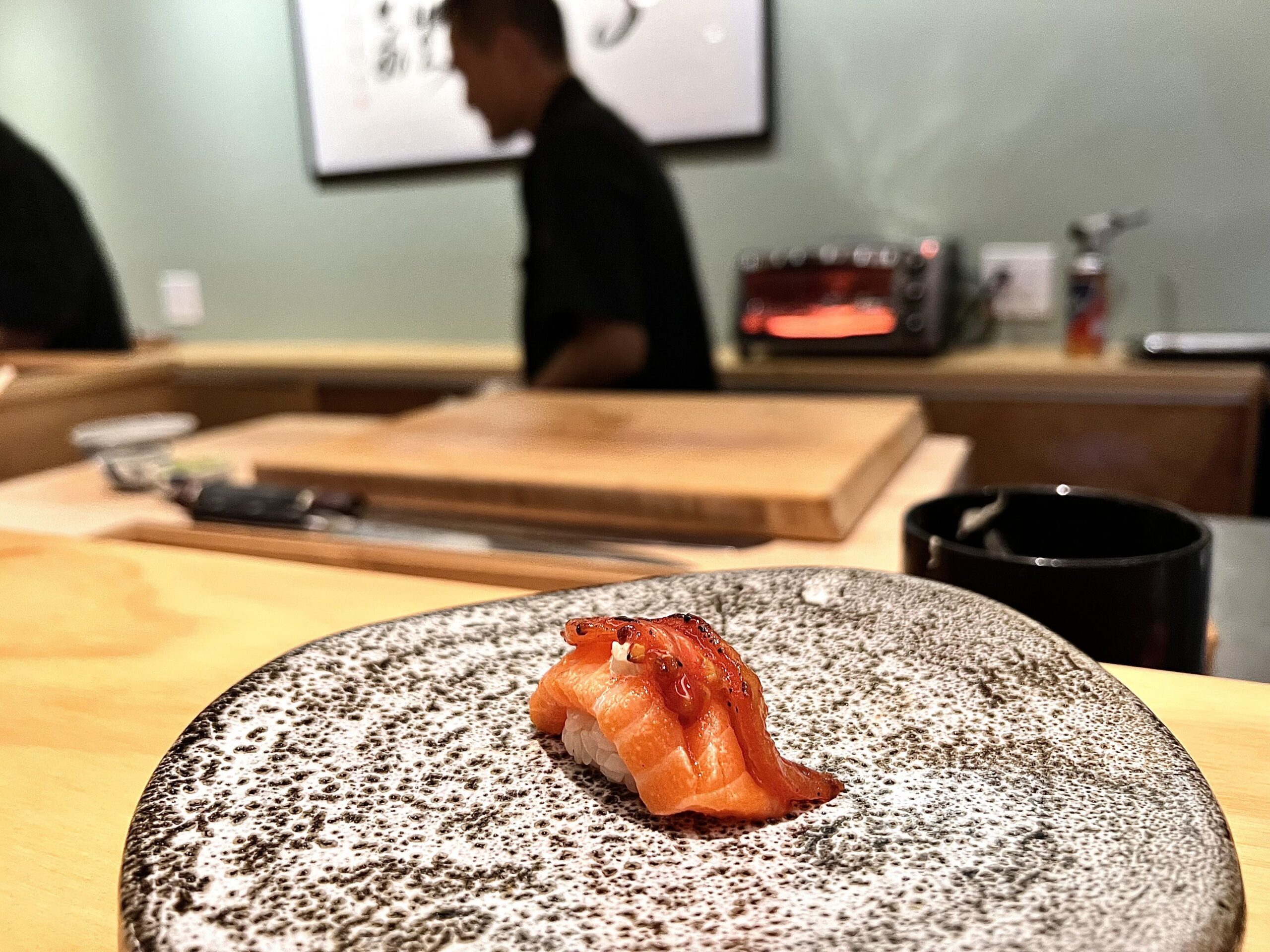
Salmon with tomato on the omakase at Yuhiro Sushi, 2146 E. Susquehanna Ave.
Sam Lin wanted a lower-priced counterpart to his Sakana, and he took over a storefront just off Frankford Avenue in Fishtown for a 12-seat omakase serving 12 pieces of nigiri over 90 minutes for $68; you’re handed the menu to follow along, a good introduction for novices. Drinks are available.
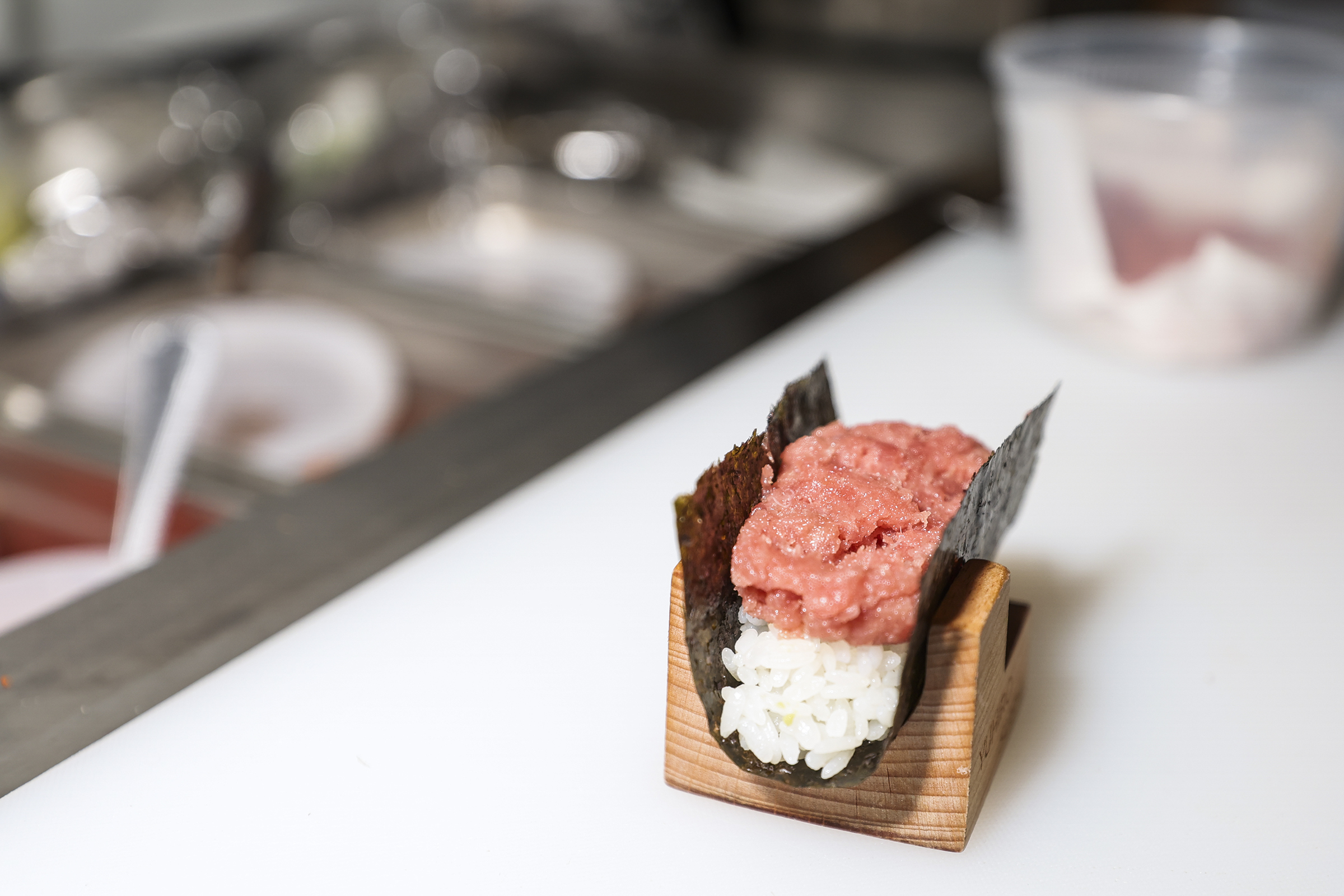
The omakase counter shares the room with the city’s only handroll bar, an a la carte experience specializing in u-maki. These are the loosely wrapped rolls, served in a small wooden u-frame, that critic LaBan says offer “a flamboyant format for sushi that’s far more substantive than the sauce-splattered tempura roll trend that has plagued mediocre sushi counters for years.”
Eight days out from the draft, and the biggest question of the offseason has yet to be answered.
What is the Eagles’ plan for the post-A.J. Brown Era?
This isn’t a question that you can shrug off. It would be just as pressing if Brown were guaranteed to return in 2026. He and Dallas Goedert almost certainly won’t be with the team in 2027 or beyond. Even if they are, they are highly unlikely to be anywhere close to the players they were when the Eagles’ offense was at its best. The chapters are short in the NFL. The pages must be turned.
The story of this year’s draft better be the pass catchers. Even if the Eagles somehow think their passing game can tread water with Dontayvion Wicks and Marquise Brown as their second and third options out wide, and with a 31-year-old and clearly diminished Goedert at tight end, those aren’t long-term solutions. The Eagles desperately need to find at least one in this year’s draft after going four years without selecting a pass catcher higher than 152nd.
You don’t find a lot of franchise-level offensive tackles in the second half of the first round.
Not since 2017 has a future All Pro tackle been drafted between picks No. 17 and 49. Even multiyear Pro Bowlers are few and far between. The Cowboys nabbed left tackle Tyler Smith at No. 24 in 2022. Before that, Garrett Boles was the biggest success story, going to the Broncos at No. 20 in 2017. Boles was the first offensive lineman off the board that year, thanks in part to a confluence of circumstances. Going before him were three quarterbacks, two unicorn running backs, and the first three members of a loaded cornerback class (Marshon Lattimore, Marlon Humphrey, Adoree’ Jackson).
The Eagle know first hand how hard it is to find a fixture in the second half of the first round. The last two offensive linemen they drafted there were Andre Dillard and Danny Watkins. There simply isn’t a lot of logic in the idea that the Eagles will be prioritizing an eventual Lane Johnson replacement at No. 23.
“If you’re forcing something, you’re not really filling the need anyway,” general manager Howie Roseman said on Tuesday.
The Texans went 4-12 in 2020. And while Deshaun Watson put up the best numbers of his career — 4,823 yards, 33 touchdowns, seven interceptions, a 70.2 completions percentage — the game script had something to do with them.
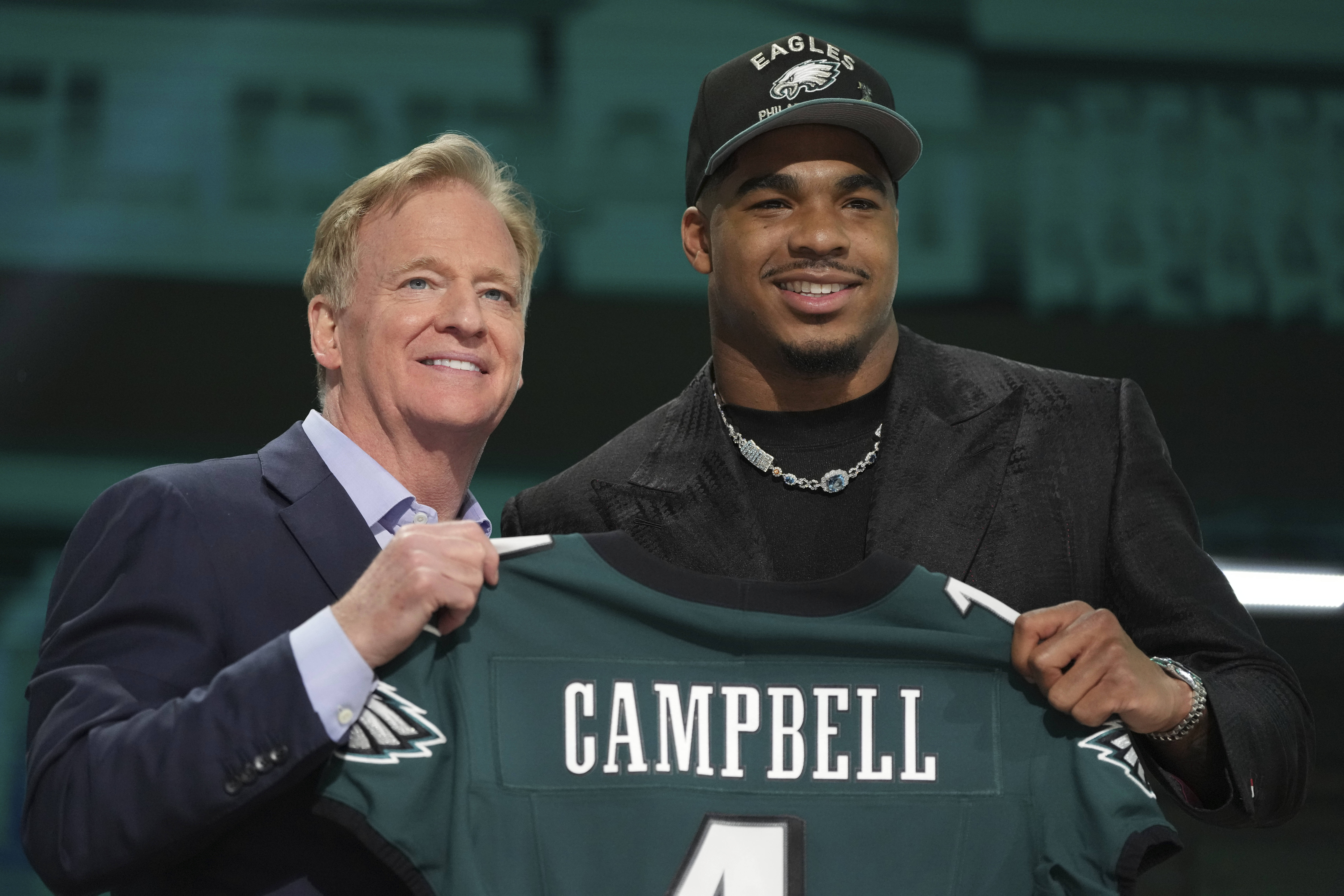
Jihaad Campbell was the Eagles’ pick at No. 31 overall during the 2025 draft.
The Eagles have spent a lot of draft capital on the defensive line over the last several seasons.
Again, that’s not to say that they’d turn down an opportunity to draft an edge rusher they have graded as a potential elite talent who can start immediately. Chances are, anybody who fits that profile will be long gone by the time the Eagles are on the clock. They used the No. 31 pick on Jihaad Campbell last season. They drafted Nolan Smith at No. 30 in 2023. Of the last 11 picks that the Eagles have made inside the Top 115 overall, 10 have come on the defensive side of the football.
Jalen Hurts is a quarterback who needs an elite weapon that a defense can’t shade coverage to on every play.
DeVonta Smith counts as an elite weapon. But people need to pump the brakes on the idea that he is Jaxon Smith-Njigba in waiting. Several different media outlets have mentioned the construct in their reporting on the Brown situation. The theory goes something like this: with Brown gone, Smith will be better than he ever has been, similar to how Smith-Njiba blew up in 2025 after the Seahawks traded away D.K. Metcalf.
The problem with that reasoning is that Metcalf’s departure was the least significant of three major variable changes in the Seahawks offense last season. The first two were a new quarterback and a new offensive coordinator.
In fact, you might consider it four variable changes if you include Geno Smith’s departure in addition to Sam Darnold’s arrival. Jakobi Meyers’ decreased production year-over-year after Smith’s arrival at quarterback looks suspiciously similar to Smith-Njigba’s increased production in the wake of Smith’s departure. Meyers saw a 23% drop in his targets and a 36% drop in his receiving yardage on a per-game basis in his seven weeks with Smith compared to his 2024 output. And Meyers didn’t have to play in the shadow of Metcalf, either.
The real yin to Smith-Njigba’s yang was Justin Jefferson. In 2024, he caught 103 passes for 1,533 yards with Darnold as starter. This, despite the presence of Jordan Addison, whose numbers were practically identical to Metcalf’s. Addison was still there last year. Darnold wasn’t. Jefferson caught 84 passes for 1,048 yards.
A tidier summation:
Jefferson without Darnold vs. ’24: 13 less targets, 19 less receptions, 485 less yards.
Smith-Njigba with Darnold vs. ’24: 26 more targets, 19 more receptions, 663 more yards
Fairly symmetrical, no?
Smith-Njigba’s breakout happened because he had a quarterback who could make all of the throws, including those in traffic in the middle of the field. Hurts hasn’t shown to be that quarterback.
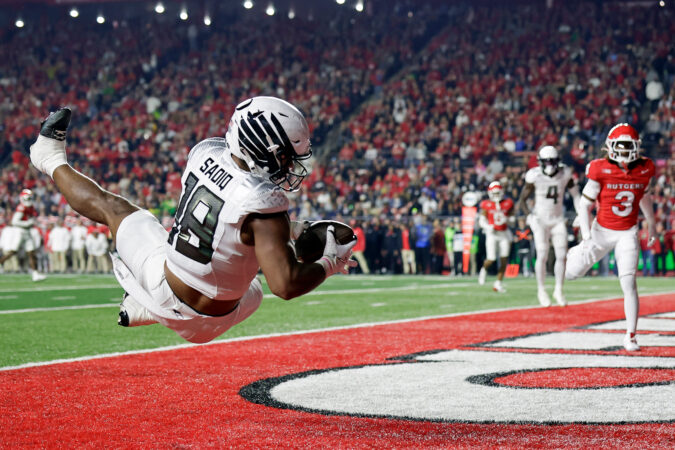
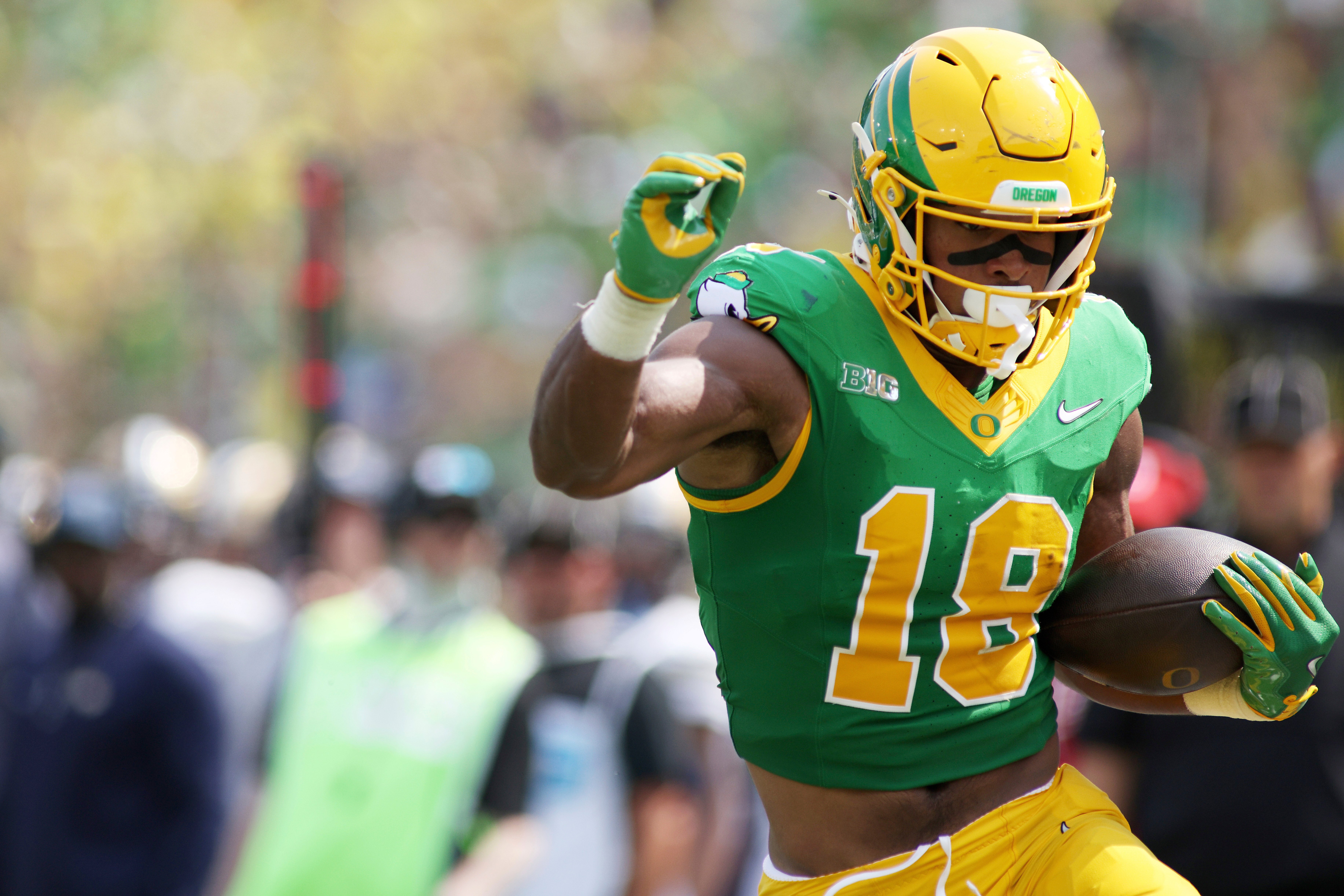
Oregon tight end Kenyon Sadiq should be at the top of the Eagles draft board. But don’t bet on him falling close to their range.
I’m still a bit puzzled that the majority of mock drafts have Sadiq falling into the second half of the first round. He is a physical specimen who tested off the charts at the combine. The only guy in his class over the last 20 years was future All-Pro Vernon Davis. The college production wasn’t eye-popping, but it also wasn’t much different from Colston Loveland, who went 10th overall to the Bears last season. All it takes is one team higher than the Eagles to fall in love with him. I’ll be surprised if he falls beyond No. 15.
Oregon’s Kenyon Sadiq is the top projected tight end in the NFL draft.
That being said, if the Eagles somehow find a way to get themselves in position to draft Sadiq, they would have a tidy answer to their question of where to go after Brown (and Goedert). Sadiq is the one player in this draft outside the projected Top 5 who has the potential to immediately fix a lot of the Eagles’ offensive question marks, run-blocking included.
Even if Sadiq isn’t an option, the Eagles have good reason to hope they can nab a player who can help them in both the short and long-term.
Neither Texas A&M’s K.C. Concepcion nor Alabama’s Germie Bernard profile as the sort of outlier that Brown is/was. But both have skill sets and polish that would pair nicely with DeVonta Smith. Both are players who could exploit whatever attention defenses pay to Smith. Concepcion has a lot of Stefon Diggs to his profile, while Bernard looks like a potential Deebo Samuel with the frame and rushing ability to go with his hands. I’ve seen a few mock drafts that have Bernard on the board when the Eagles pick at No. 54. That would be a stroke of luck on the level of Cooper DeJean.
The moral of the story is simple. The Eagles can’t afford to force a pick at any position. But they also aren’t in a situation where they can afford to go purely for the best player available. They need to factor in their future salary cap and talent distribution. You can’t have too many All-Pro cornerbacks, but you can have too many who you need to pay.
Further, you can have too few players at positions that have shown themselves to be just as important to the Eagles’ success over the last several seasons.
Roseman shouldn’t get trapped into picking the best pass-catcher available. But he does need to hope a viable one is there.
Hungarian Prime Minister Viktor Orbán, whose illiberal right-wing policies have served as a template for Donald Trump’s second term, was roundly defeated Sunday. His electoral loss, after 16 years in power, offers a lesson for those seeking to safeguard the American experiment from the president’s autocratic bent.
Perhaps the biggest takeaway from challenger Péter Magyar’s victory is that if the will of the voters is strong enough, even a hollowed-out democracy can still speak for the people. This bodes ill for Republicans in upcoming elections, as the United States is nowhere near the level of institutional degradation achieved by Orbán and his party.
Trump adviser Steve Bannon once called Orbán “Trump before Trump” and Hungary under his leadership offered a grim preview of what a successfully MAGA-fied America would look like: Government control of universities and the media, courts and federal jobs occupied by loyalists, extreme gerrymandering limiting political opposition, and curbed press freedoms.
But just as Trump and his enablers moved much more swiftly in trying to undercut democratic institutions and weaken the rule of law than their Eastern European counterparts, the cracks in the foundation that ultimately led to Orbán’s overwhelming loss are already visible in Washington.
Magyar and his Tisza party were expected to hold a two-thirds parliamentary majority on the strength of focusing on corruption and a poor economy. While Trump has been busy enriching himself, his family, and his cronies to the tune of billions of dollars, everyday Americans are struggling.
Peter Magyar, the leader of the opposition Tisza party waves a national flag after claiming victory in a parliamentary election in Budapest, Hungary, Sunday.
Although the U.S. is not Hungary, Democrats still looking to find a winning message can’t do much better than what Magyar promised in his victory speech, a country “where citizens can count on their government, where everyone is entitled to proper healthcare, a carefree childhood, and a dignified old age.”
Contrast that with a president who claims that citizens of the richest nation in the world who want a better life, better look elsewhere. “It’s not possible for us to take care of daycare, Medicaid, Medicare, all these individual things,” Trump said at an April 2 Easter luncheon. “They can do it on a state basis. You can’t do it on a federal. We have to take care of one thing: military protection.”
Yes, having a strong military is important, but even more so is the responsible stewardship of America’s armed forces. By some estimates, Trump’s war of choice in Iran costs taxpayers $2 billion a day, with a long term price tag coming in at $1 trillion over the next decade on military-related spending alone. That doesn’t even consider the pain at the pump and the checkout lane as the still unresolved conflict hikes up prices on everything from gas to groceries.
Trump’s blinkered priorities are not limited to the economy.
While the president and his secretary of state watched a mixed martial arts match in Miami Saturday, peace talks with Iran were falling apart. On Sunday, Trump attacked Pope Leo XIV on social media, claiming the U.S.-born pontiff should “stop catering to the radical left” and “get his act together as pope” before posting an AI-generated image of himself as Jesus healing the sick.
As far as we know, Viktor Orbán never publicly compared himself to Christ, but other parallels with Trump remain strong, including the use of the autocratic playbook, and the graft and incompetence of their administrations.
After Sunday, supporters of democracy can hope the similarities don’t end there.
Inside the visitors’ locker room in Washington earlier this month, VJ Edgecombe slid over to join Tyrese Maxey for a joint postgame interview.
Six minutes of banter, inside jokes, and genuine comments ensued between the 76ers guards. Maxey scanned a box score from the Sixers’ dominant victory over the Wizards and asked Edgecombe, with pseudo exasperation, “Bro, you only had one defensive rebound? How is that possible?” Edgecombe interjected during a Maxey answer about teammates who had scored 30 points off the bench this season, because the veteran had forgotten Justin Edwards and former Sixer Cameron Payne. And Maxey dropped that Edgecombe had started calling himself “PG1,” because he had 10 assists that night.
“Just trying to make life easier for my dog right here,” Edgecombe said of Maxey. “They be hounding him. Guarding him full-court. Face guarding him. Doing all type of things. They trying their best to stop him, and they can’t, really.”
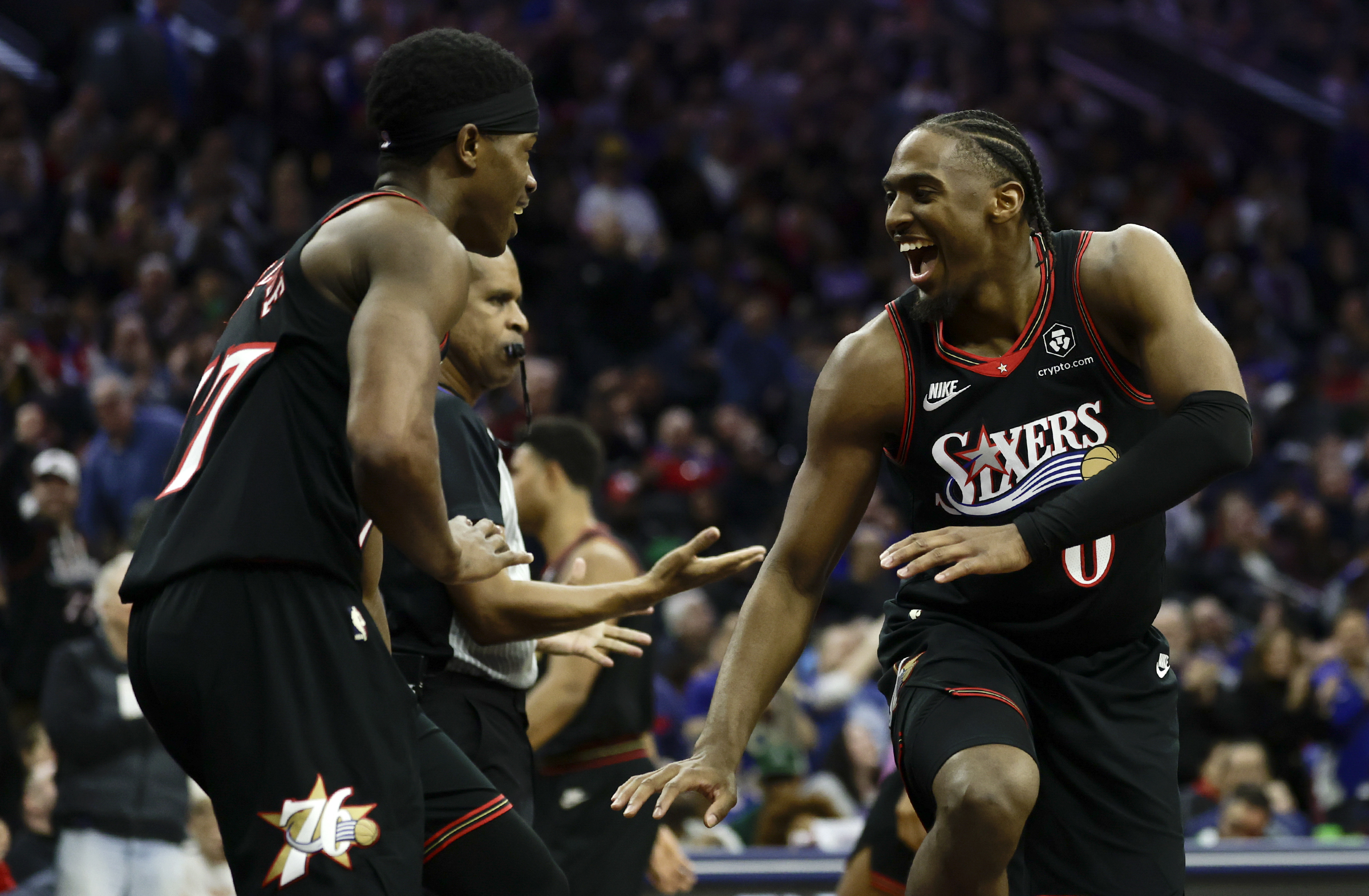
The scene was evidence of how Maxey and Edgecombe can be playful in one moment, then candidly hold each other accountable in the next, then sincere about their partnership in the next. They are similarly wired: tenaciously hardworking and poised for their age, yet unafraid to let their personalities crack through their seriousness about their craft.
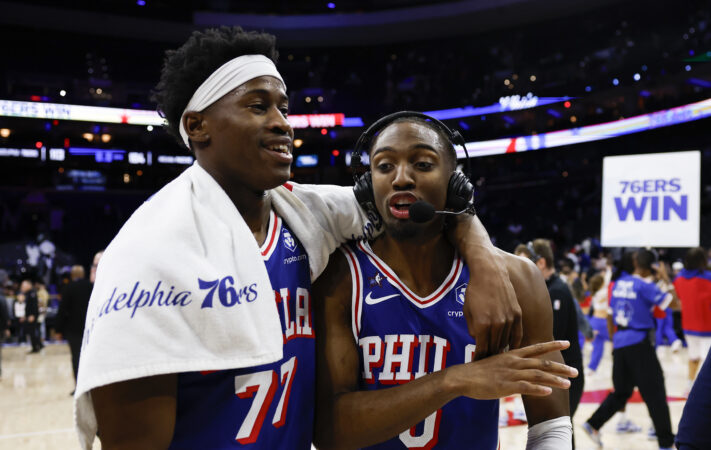
Now the Sixers’ electric backcourt — which we can officially dub “VJ Maxx” thanks to their collaboration with clothing store TJ Maxx for their outfits for Sunday’s regular-season finale — are about to step into the postseason together for the first time. Joel Embiid, a former NBA Most Valuable Player, remains out while recovering from last week’s emergency appendectomy. Paul George, at 35 years old, must now be characterized as a complementary player who recently returned from a 25-game NBA suspension for violating the league’s anti-drug policy.
Maxey and Edgecombe have fueled this Sixers season, as the All-NBA contender and first-year player likely to finish third on an exceptional Rookie of the Year ballot. The Sixers likely will go as far as the pair can lead them, starting with Wednesday’s Play-In Tournament matchup against the Orlando Magic (7:30 p.m., Prime Video). And it marks another move into the Sixers’ future that has already been percolating, with Maxey and Edgecombe creating the core duo around whom the franchise should build.
“We have this chip on our shoulder, I think,” Maxey said. “We’re competitive and we want to win. He don’t care about nothing but winning. He don’t care about his points. He don’t care about his stats. All he care about is winning, and it’s evident in his play, so that’s why we get along.”
Added Edgecombe: “[He’s] one of the best players in the NBA. … My goal is to be that, to be a superstar. So it’s helping me to know the right steps and everything it takes in how to do that.”
Maxey and Edgecombe were initially linked because of, as Maxey called it, the Sixers’ “very, very, very, very bad” 2024-25 season — plus fabulous draft lottery luck to land the third overall pick.
Before the Sixers chose Edgecombe, Maxey remembered seeing clips of him dunking on “the kid from Gonzaga” (Joe Few) and talking trash while playing with former Sixer Buddy Hield with the Bahamian national team. Edgecombe, who is such a film junkie that he watched Maxey’s high school footage, was impressed with his quickness and skill.
Sixers guards Tyrese Maxey and VJ Edgecombe will serve as the core of the franchise in the future.
They first met when Maxey stopped by the Sixers’ facility during Edgecombe’s predraft workout. They had a casual get-to-know-you conversation that day, before Maxey called to welcome him to the Sixers on draft night.
When Maxey shared that his offseason workouts begin at 6 a.m., and Edgecombe committed to joining and then actually showed up, Maxey knew they were a basketball match.
“And he’s smiling, too,” Maxey recently recalled to The Inquirer. “But he’s a tough kid, and I feel like I’m tough, as well.”
The summer training sessions continued in Philly and Los Angeles, with a side quest to Disneyland during which Maxey forced Edgecombe to wear a Goofy hat. When Maxey peeked his head through a curtain to say, “Hey, buddy” during Edgecombe’s media day news conference, it was clear they had established a foundational bond.
As the season approached, Maxey was ready for another leap into stardom. Coach Nick Nurse, meanwhile, had no hesitation about immediately putting Edgecombe in the starting lineup. They possessed the explosive speed and athleticism to push the pace, attack the rim, and make defensive plays on the ball.
“If me and him are running,” Edgecombe recently told The Inquirer, “I think we’re hard to stop.”
Like in the Sixers’ opener at the Boston Celtics, when Maxey dropped 40 points and Edgecombe had 34 in a historic rookie debut. Or in December, when Edgecombe got into position to collect a short Maxey jumper for a go-ahead putback against the Golden State Warriors, just before Maxey raced to the other end for a game-clinching block at the buzzer. Or a couple weeks after that, when Maxey dished to Edgecombe for the game-winning three-pointer to beat the Memphis Grizzlies in overtime.
Maxey ascended into a top-5 scorer in the NBA (28.3 points per game) and the league leader in minutes played per game (38), while also averaging 6.6 assists, 4.1 rebounds, and 1.9 steals per game. Edgecombe demonstrated an all-around game — he finished the season averaging 16 points, 5.6 rebounds, 4.2 assists, and 1.4 steals in 75 games — and a knack for those crunch-time buckets.
In mid-February, they took the cross-country trip to Los Angeles to represent the Sixers at All-Star Weekend. Maxey sat courtside as Edgecombe won Rising Stars MVP, before helping his team of younger U.S. players win the Sunday tournament.
“He ain’t coming to watch it if I ain’t going to play hard,” Edgecombe said after the Rising Stars event. “ … I didn’t want to waste his time. I know he has a whole lot of stuff he could probably be doing.”
In between that on-court success, there were signals of their deepening rapport.
They flashed coordinated dance moves during pregame introductions and postgame interviews. When Edgecombe deadpanned in February that he rated a wicked Maxey dunk on Minnesota star Anthony Edwards a “6 out of 10,” a flabbergasted Maxey responded with, “He can’t even dunk on people, and he gave me a 6 out of 10?!”
Sixers guards Tyrese Maxey and VJ Edgecombe build their bond over summer and preseason workouts.
Cameras also caught a heated exchange between the two players during a January loss to the Cleveland Cavaliers, when both thought they were supposed to pick up the ballhandler. Maxey did not realize the moment had blown up online until his father, Tyrone, called and asked, “Hey, you and VJ good?”
“Everybody thought we was mad at each other,” Maxey said later. “That’s competitive nature. We can talk that out. We was just fine right after. … That’s my little brother.”
Added Edgecombe: “We’re hard on each other, and then we also understand. … Every time he has something to say, I know it’s always coming from a place of love.”
Nurse sees Maxey passing his early-career experiences on to Edgecombe. The most valuable, the rookie says, is observing the consistency with which Maxey has carried himself throughout the season.
Maxey, meanwhile, already views Edgecombe in a role similar to his third season — aka, “we need him.” And though Edgecombe has occasionally gotten “lost in the sauce” scoring-wise, Maxey is proud of how the rookie has shifted into multiple roles.
That was especially true last month, when the Sixers were missing four starters, including Maxey. That pushed Edgecombe into the lead ballhandler and top scoring option, and into encountering double-teams for the first time “that I can remember,” he said. Maxey, naturally, became a source of advice.
“I told him that I hate it,” Edgecombe said following a March 14 win over the Brooklyn Nets. “But it’s a sign of respect. I’m going to ask him [how to combat it]. … But that just shows how good Tyrese is, also. I’ve just got to keep asking questions [and] try to figure out how to get through everything.”
Added George: “Tyrese is giving [Edgecombe] a ton of confidence … and I think it’s showing. When he’s on the court, it’s almost like he’s been here before.”
As the Sixers went down the stretch of the regular season, former coach Doc Rivers said he believes playing alongside Edgecombe has helped Maxey improve his defense. On fan appreciation night last week, the giveaway was a “Rookie Jam” T-shirt featuring Maxey and Edgecombe’s faces and video game-style ratings for various skills. San Antonio Spurs coach Mitch Johnson took a question about Edgecombe before last week’s matchup against the Sixers, and immediately tied him to Maxey.
“It seems like he likes competing, and he and Maxey share that sentiment from afar,” Johnson said. “To have that in two young men, for a franchise with that amount of talent and, it feels like, character … that’s a really good source [for] your main characters involved in your program.”
When asked where Edgecombe has most helped him this season, Maxey grinned and said, “He keeps me happy.” Maxey appreciates now being the veteran on the receiving end of the type of energy boost he knows he has provided to Embiid and former Sixers guard James Harden over the years. And though Maxey has shared a bit with Edgecombe about what to expect from the postseason, that demeanor is why “he’s the least of my worries.”
Prior to Sunday’s regular-season finale, Nurse said he believes the Maxey-Edgecombe backcourt is “still unfolding.” As Edgecombe stepped into a media scrum to face questions about Wednesday’s play-in game against Orlando, he wore Gucci sunglasses to complement his TJ Maxx sweater, tie, and slacks. From across the room, Maxey yelled Edgecombe looked “clean as hell” and that he “ain’t a rookie no more.”
“Playoff Valdez,” Maxey said, dropping Edgecombe’s full first name.
Next, they will step into their first postseason together. And, perhaps, into the Sixers’ future.
“Just to be his running mate,” Edgecombe said. “As the years go on, I want us to go down in history.”
The 76ers still have some work to do before the NBA playoffs.
If they win tonight against the Orlando Magic in the Play-In Tournament (7:30, Prime Video), they’ll move on as the Eastern Conference’s No. 7 seed and face the Boston Celtics in the first round.
But a loss to the Magic doesn’t end the Sixers’ chances of making the playoffs. They would have another shot against the Charlotte Hornets, who beat the Miami Heat in the 9-10 matchup on Tuesday night.
There’s been a lot to unpack with this year’s Sixers — from Embiid’s tale of two seasons as his health continued to limit him to Paul George serving a 25-game suspension for violating the NBA’s anti-drug policy. There also are positives that they’ll be leaning on tonight.
Those positives are in backcourt duo Tyrese Maxey and VJ Edgecombe, also known as “VJ Maxx.” It’s no secret that they have fueled the Sixers this season, and the team will go as far as the pair can lead them.
At a news conference on Tuesday, Howie Roseman called the reporting surrounding Jalen Hurts “unfair.”
Howie Roseman is usually aware of what’s being reported about the Eagles. So he has seen the articles in the aftermath of an early playoff exit that pointed some of the blame for the team’s offensive struggles at Jalen Hurts. The GM said it’s “unfair — but I also understand it’s what sells at this point.”
Roseman also was asked about A.J. Brown’s future with the Eagles, especially after the trade for Dontayvion Wicks, but his answer remained the same.
What we’re …
🏈 Learning: NFL reporter Dianna Russini resigned from The Athletic a week after photos of her with Patriots coach Mike Vrabel were published.
🏒 Reliving: The Flyers clinching their first playoff berth since 2020 after beating the Carolina Hurricanes in a 3-2 shootout on Monday.
🥊 Preparing: UFC is returning to Philadelphia in August for UFC 330, its first major championship event in the city in 15 years.
📖 Reading: A Camden High graduate’s journey from playing five years of college football to having NFL aspirations.
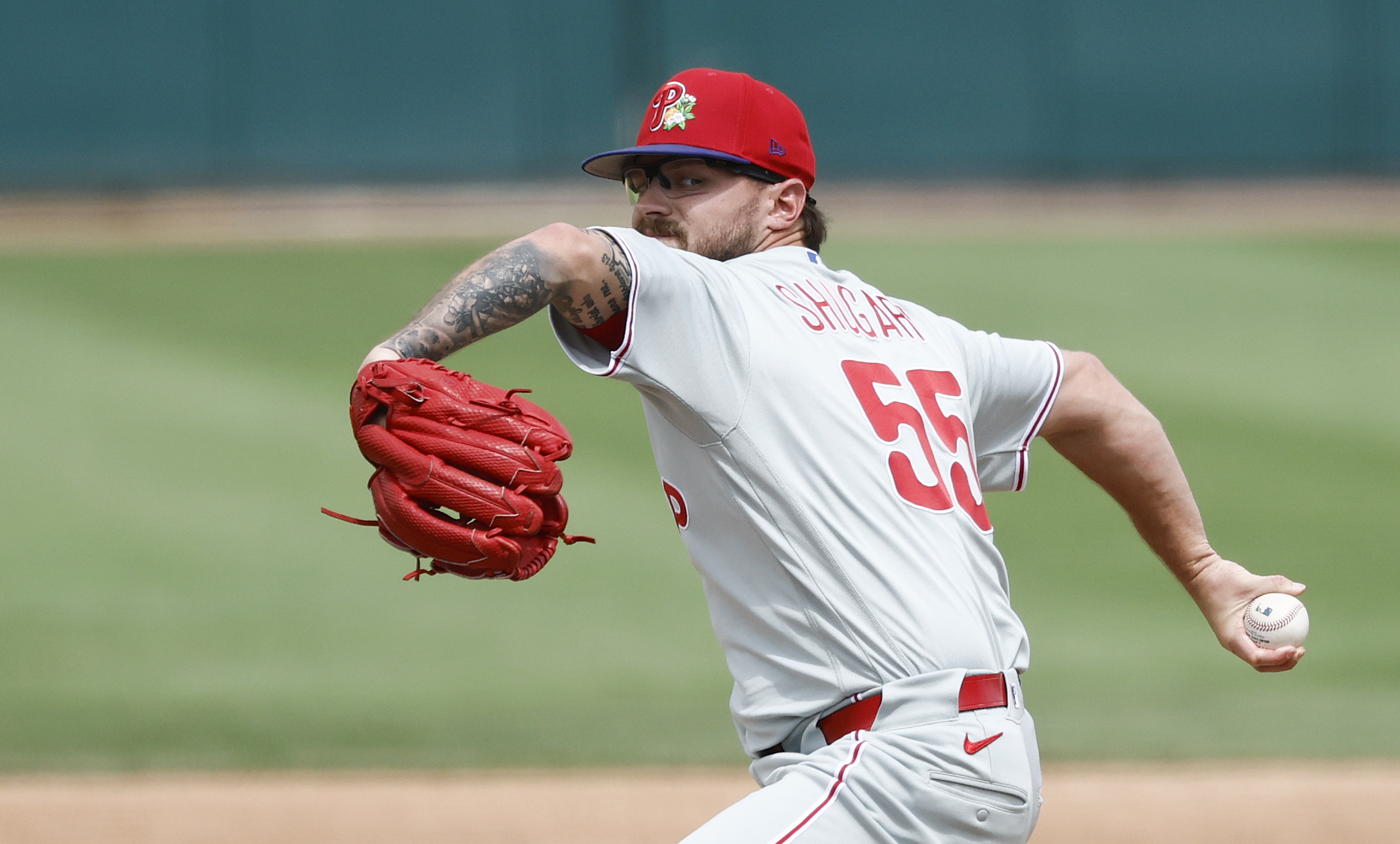
Chase Shugart had a 3.72 ERA over 9⅔ innings in spring training.
The Phillies’ bullpen shuffling continues, with the team optioning righty Seth Johnson and recalling righty Chase Shugart from triple-A Lehigh Valley.
Recalling Shugart gives the bullpen a fresh arm. Rob Thomson got a look at the 29-year-old in spring training and says “I don’t think any situation is going to scare him a lot.”
After jumping out to a 3-0 lead against the Cubs, a disastrous sixth inning from Tim Mayza doomed the Phillies in a 10-4 loss. The Phillies will try to avoid losing three consecutive series on Wednesday.
Flyers goaltender Dan Vladar celebrates with his teammates after the Flyers clinched a playoff spot on Monday.
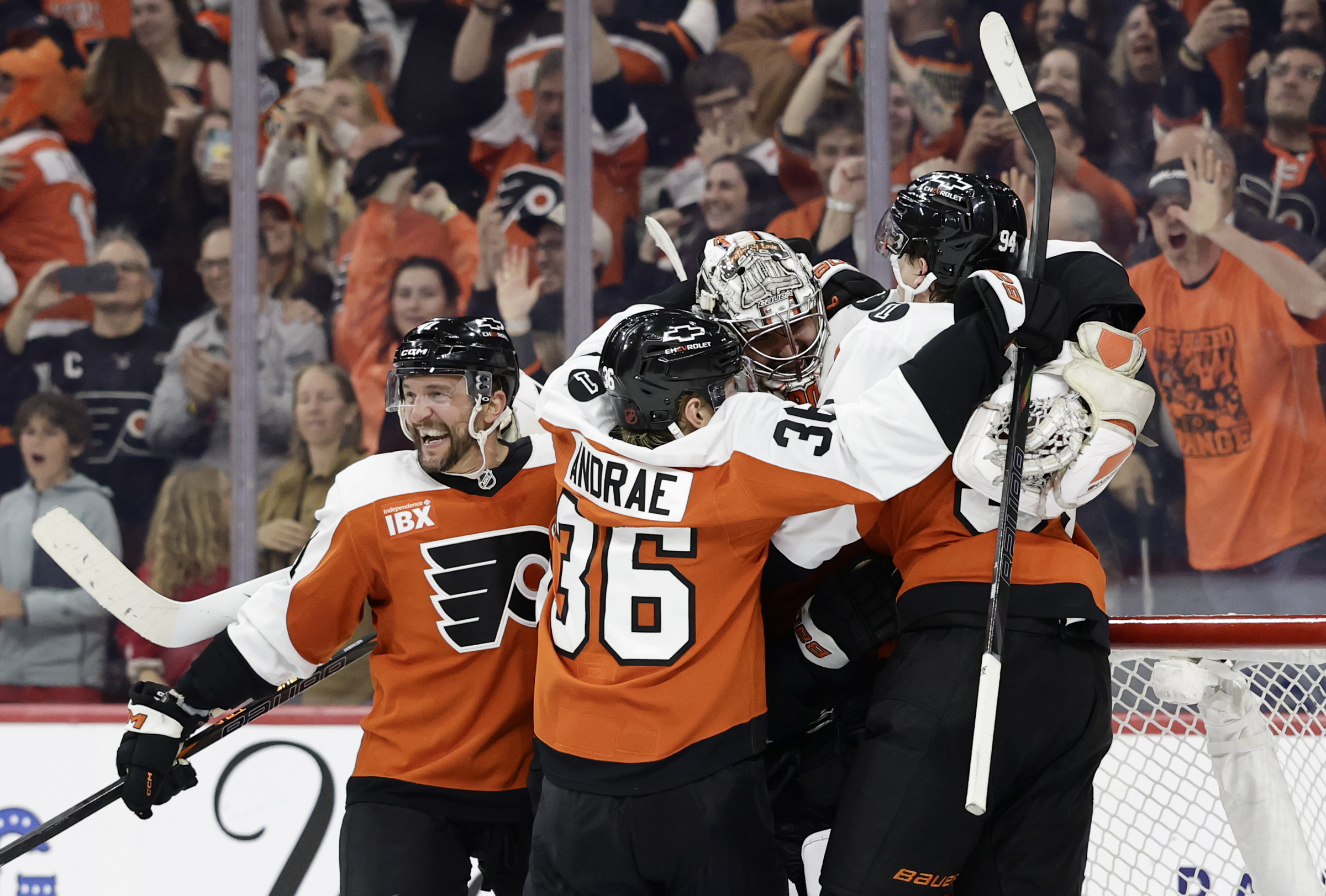
They did it. The Flyers are back in the playoffs for the first time in six seasons. “It’s been a lot of years,” coach Rick Tocchet said Monday.
The other Philly teams have gotten the chance to experience what a true playoff atmosphere looks like over the last few seasons. Now it’s the Flyers’ turn to experience a playoff atmosphere in Philly.
And as the season wrapped up on Tuesday, the Flyers’ youngsters shined in a 4-2 win over the Montreal Canadiens. The win gave the Flyers 43 on the season, their most since the 2011-12 season.
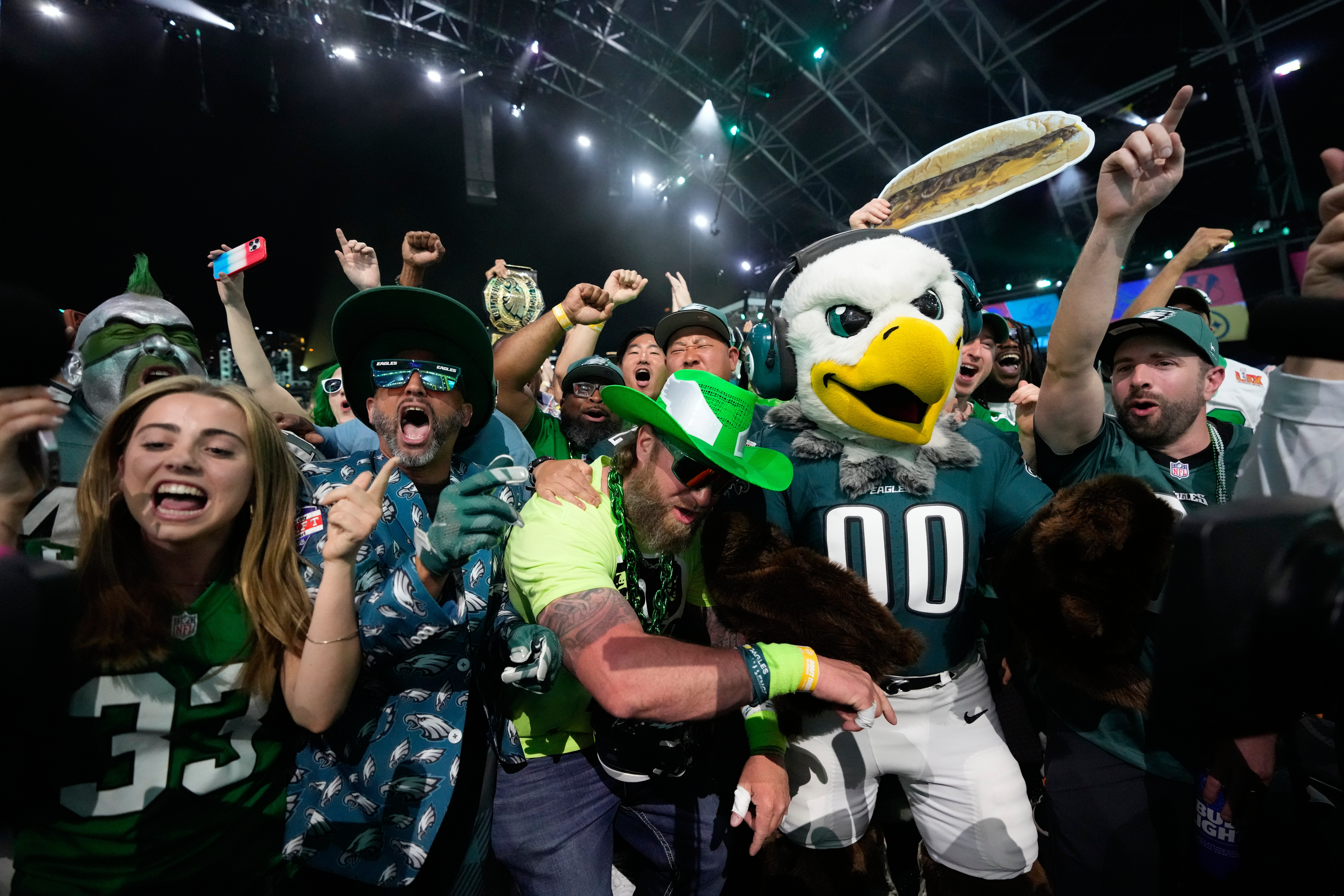
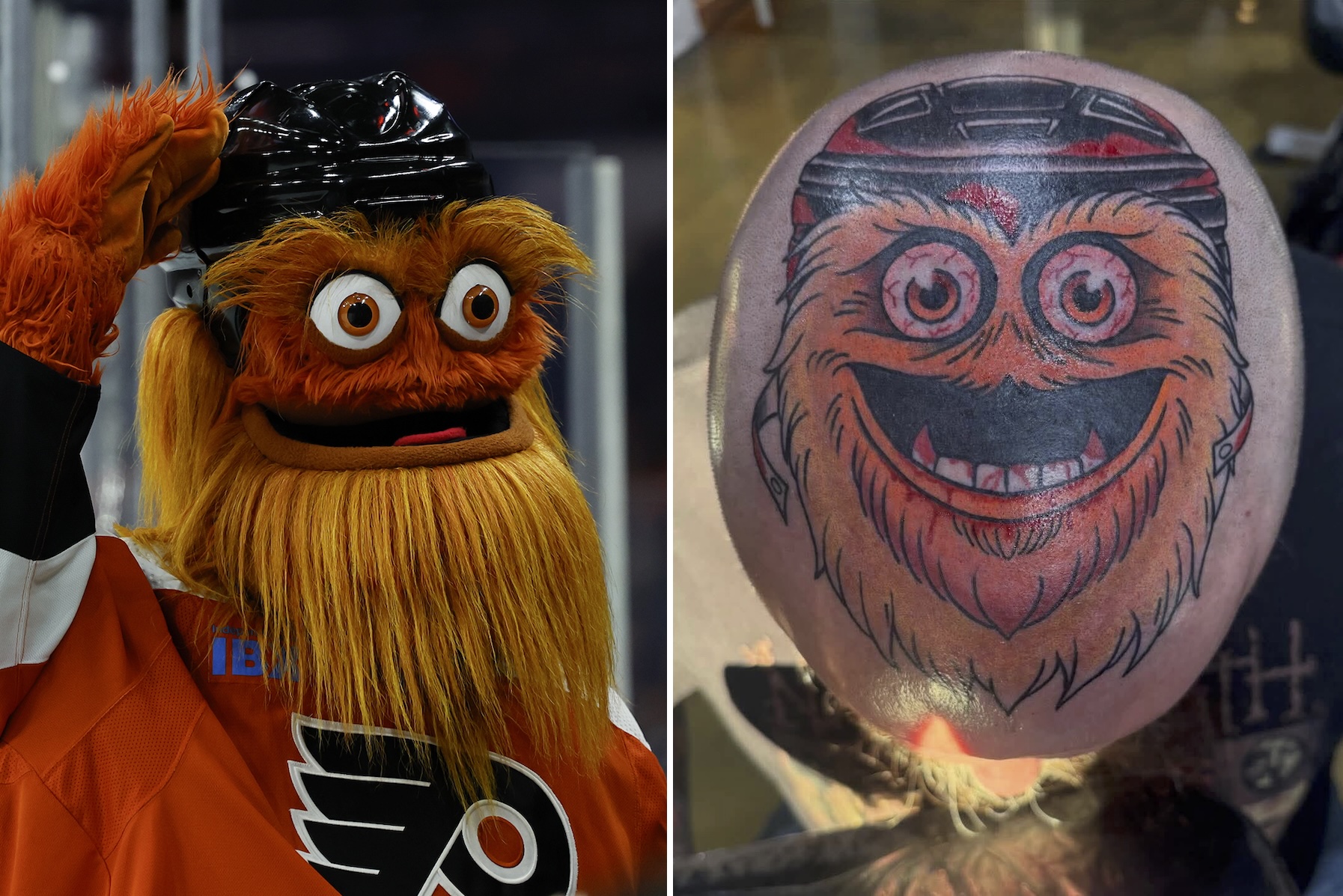
Flyers mascot Gritty (left) and a likeness of him tattooed into the top of Willie Aston’s head.
Willie Aston, 50, of Kutztown has been a Flyers fan since the 1990s, and with the team making the playoffs for the first time since 2020, he got a portrait of Gritty tattooed on the top of his head.
“Everybody so far has loved [my Gritty tattoo]. … A lot of people like the added touch of the eyes and the blood and the fangs.”
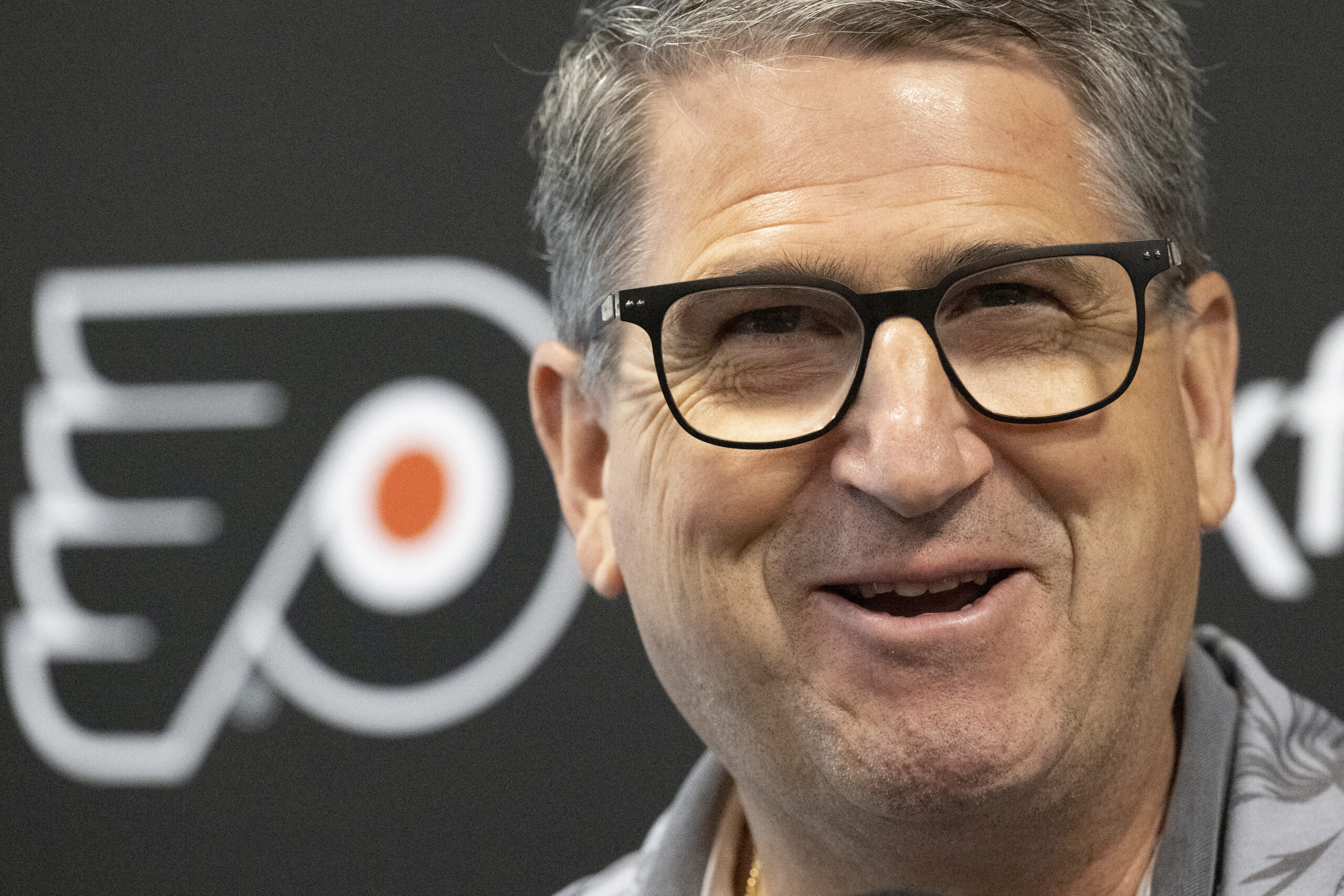
Keith Jones has proved to be a quick study since transitioning from broadcasting to an NHL front office.
Since becoming the Flyers’ president in 2023, Keith Jones has never watched his team compete in a shootout. On Monday night, he was in the upper reaches of Xfinity Mobile Arena, pacing in a hallway just outside the booth where he used to call games.
Many rolled their eyes when the Flyers hired a broadcaster as team president. Three years later, Jones has the team in the playoffs and trending upward. He has shown he shouldn’t be underestimated, writes columnist Mike Sielski.
🧠 Trivia time answer
Who holds the Sixers record for most points in a playoff game with 55?
B) Allen Iverson in Game 1 of the 2003 Eastern Conference first round — Joey M. was first with the correct answer.
What you’re saying about your favorite venue
We asked: What is your favorite Philly sports venue of all time? Among your response:
Way too many to choose from. Shibe Park a/k/a Connie Mack Stadium, Municipal stadium, the Palestra, Franklin Field, the Arena at 45th & Market St, the original Spectrum, Xfinity Mobile, the Vet, Citizens Bank Park, Lincoln Financial Field, Olney High School Gymnasium, the Convention Hall, Mann Music Center, Freedom Mortgage Pavilion. Going on 87 and been to them all. I think my all time favorite was a vacant lot at the Harold B Robinson auto store at Broad and 67th Ave. in West Oak Lane where we played soft ball games with our dad’s, uncles and friends almost every Sunday morning in the ‘40’s and ‘50’s. — Ronald R.
The Palestra hands-down! Loved watching Big 5 college and PIAA triple header basketball playoff games in the mid-70’s. Bristol High School would have 4 fan buses caravan to West Philly to support the Warriors during their state championship run. Later as a Temple Owl, we attended many Big 5 double headers with the streamers and signs from the student section. — Bob C.
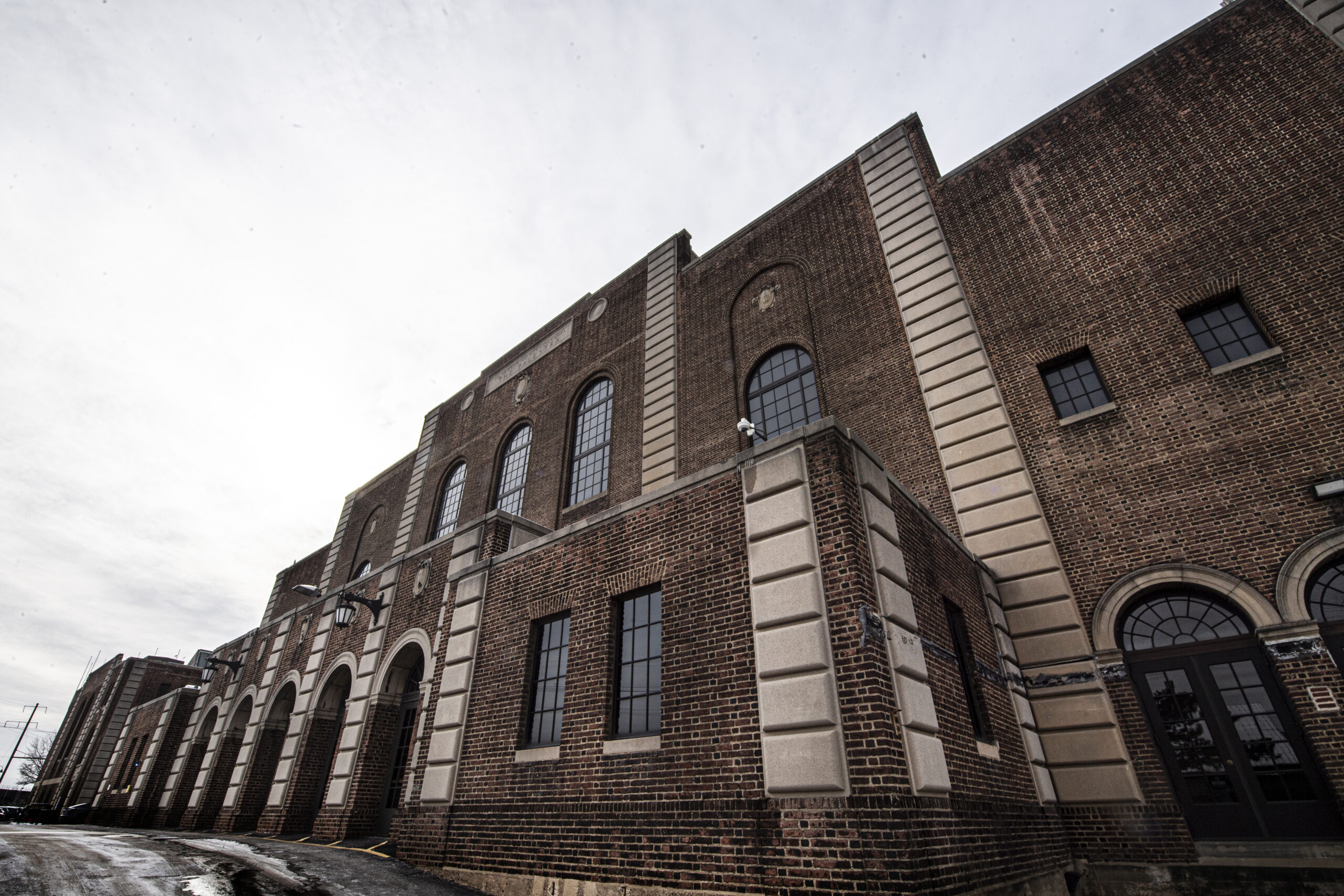
The Palestra is the oldest major college arena still in use.
For me it was Shibe Park later Connie Mack Stadium. I saw my very first MLB game there in 1948 sitting in the left field bleachers with the Springfield Delco AA. Saw Connie Mack and his Athletics there just once, and saw my first Eagles game there as well. Very special too because over the years I got to take all four of my younger brothers there to see the Phillies and or Eagles. Many fond memories. — Everett S.
Connie Mack Stadium was all about baseball (not “entertainment” distractions) where the grass was actually a beautiful green compared to my black and white TV and of course, the massive Ballantine Beer Scoreboard along with box and reserve seats not wide enough for today’s human. — Mike P.
I have to say that both the palestra and Franklin Field were my favorite venues. Watching the Eagles beat Green Bay on 12/26/60 was a true highlight and all of the Big 5 games at the Palestra with the roll-out signs and the intensity in the stands there was never dull moment in the hallowed halls of the magnificent Basilica of College Basketball.— Richard F.
We compiled today’s newsletter using reporting from Matt Mullin, Gina Mizell, Gabriela Carroll, Devin Jackson, Rob Tornoe, Ariel Simpson, Jackie Spiegel, Mike Sielski, Lochlahn March, Scott Lauber, and Owen Hewitt.
By submitting your written, visual, and/or audio contributions, you agree to The Inquirer’s Terms of Use, including the grant of rights in Section 10.
Thanks for getting your morning started with me on this hot spring day. Kerith will catch back up with you in Thursday’s newsletter. — Bella
Viewed from below, the scale ofthe illegal dump is daunting, spanning the length and depth of a steep ravine for at least one block, spilling along before coming to a dirty halt near a clear stream.
Viewed from above, it’s a vertiginous array of broken appliances, ratty furniture, dirty toys, old tires, used mattresses, and other detritus. The rear hatch of a white Toyota RAV4 pokes throughweeds. A boat is still hitched to a trailer loaded with rusting liquid propane tanks.
City officials don’t know how long the slope off Pennway Street in Northeast Philadelphia has been the site of illegal dumping. But they know it presents a big logistical task to clean it out.
“It’s certainly one of the larger dumps we’ve had to deal with,” said Carlton Williams, director of the city’s Clean and Green Initiatives Office.
“We’ll probably have to get cranes. And it’s going to be challenging to get equipment back there,” Williams noted. “This has been a hidden place for people to illegally dump for some time.”
window.addEventListener(“message”,function(a){if(void 0!==a.data[“datawrapper-height”]){var e=document.querySelectorAll(“iframe”);for(var t in a.data[“datawrapper-height”])for(var r,i=0;r=e[i];i++)if(r.contentWindow===a.source){var d=a.data[“datawrapper-height”][t]+”px”;r.style.height=d}}});
A treacherous location
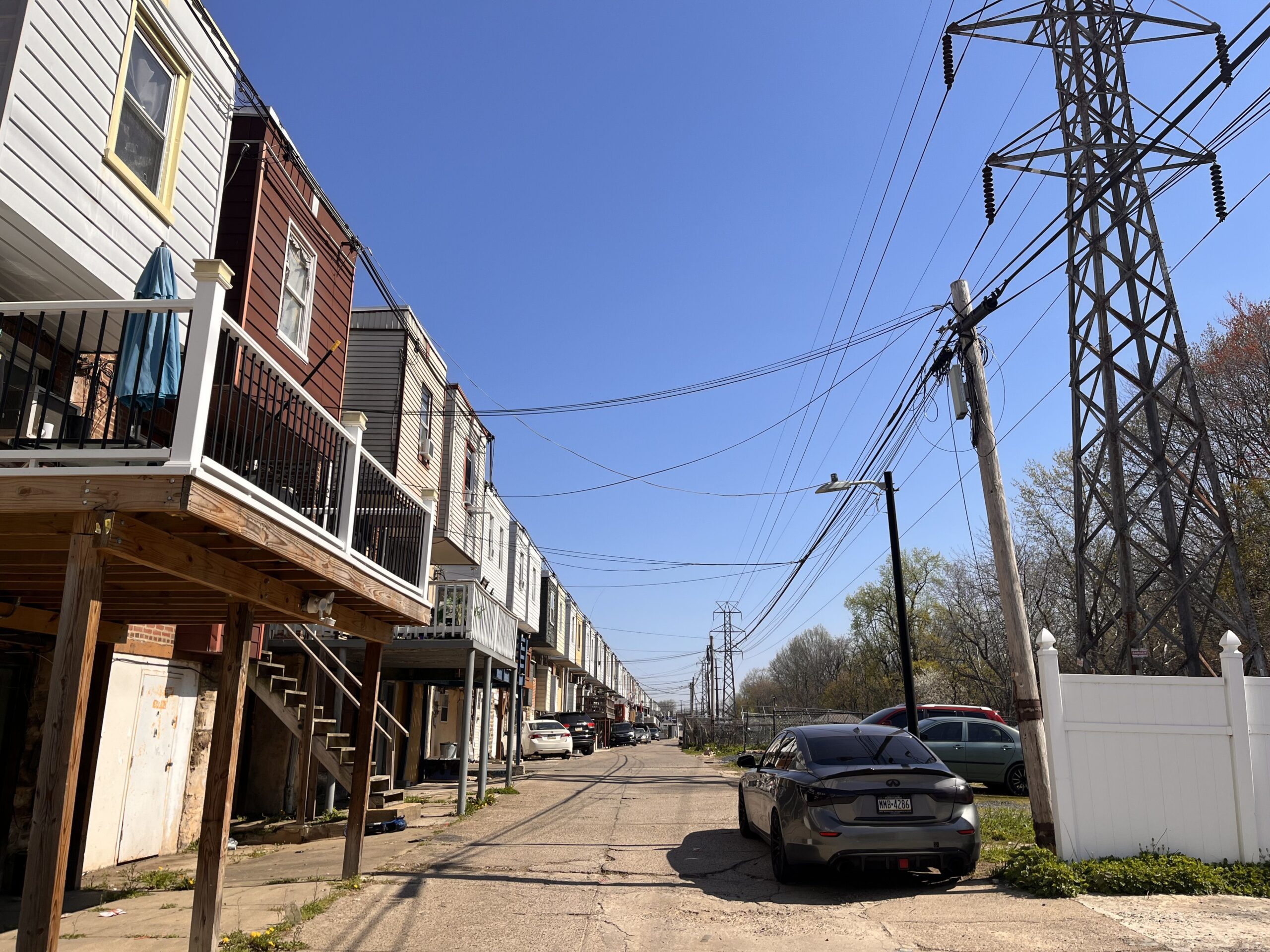
The first obstacle to cleaning out the dump is its location. It begins at the edge of an alley under high-voltage wires. Area residents park their carsin the alley and some have erected sheds.
The top of the slope is treacherous, filled with trash, chunks of concrete, and thickets of bramble that areeasy to snag or trip on.
A view of the top of the illegal dump under power lines off Pennway Street in Philadelphia.
Using volunteers to haul things out is probably not practical given the potential danger, Williams said.
From below, the dump is hidden by woods that adjoin the grounds of Friends Hospital. To view it, you have to leave a small trail, walk down a vegetation-chokedembankment, ford a spring-fed tributary of Tacony Creek, and trudge through wetlands.
There is no direct access road from the bottom.
On a recent day, a man was picking through the rubble.
“Looking for metal,” he mumbled.
The top of a ravine that serves as an illegal dump off Pennway Street in Northeast Philadelphia as viewed April 10, 2026.
Who owns the land?
The second major obstacle will be untangling ownership of the property, sorting out responsibility, and paying for it.
Williams said the city is currently tracking down ownership of whatever parcels might be involved.
Peco did not respond to an Inquirer email by deadline about whether any of the dump falls on its property or easements.
It’s not clear who is doing the dumping — construction crews, residents, or both.
“We’re still trying to figure out a plan,” Williams said. “We need to identify the property owner. Then we have to gain access.”
Williams also said it will be a challenge to prevent dumping in the future.
Philadelphia already has 400 surveillance cameras used to monitor known dump sites and can tap a broader network operated by the police department and other agencies. It anticipates purchasing an additional 100 cameras.
It has also installed bollards and gates that prevent vehicles from entering dump locations and is more aggressively pursuing and fining violators.
The rear of Pennway Street in Northeast Philadelphia as viewed April 10, 2026.
‘A huge psychological impact’
The dump was firstreported to the city by the nonprofit Tookany/Tacony Frankford Watershed Partnership (TTF), which helps manage the city-owned Tacony Creek Park.
A portion of the dump is behind a broken fence at the edge of the grounds.
The dump off Pennway Street spills to the edge of a broken fence.
“This is one of the harder ones to tackle,” said Justin DiBerardinis, executive director of TTF. “We’re at the beginning of a journey to take care of one of the biggest dumps that a lot of us have seen.”
DiBerardinis suspects contractors are dumping there, but also residents.
Cleaning it up, he says, will be “extremely complex.”
He’s also heartened by what he sees as the city’s willingness to address the logistical challenges presented by illegal landfills.
DiBerardinis said the dump mars thelandscape, and rests only yards from a tributary of Tacony Creek that serves as the edge of the 50-acre preserve.
A spring-fed tributary of Tacony Creek flows between the illegal dump off Pennway Street in Northeast Philadelphia and the grounds of Friends Hospital as viewed April 10, 2026.
“That stream is really clear, like spring-fed water coming from the earth,“ DiBerardinis said. ”To have that in our city is such a rare and special thing.“
He senses growing community support for tackling litter and a backlash against dumping. Last Saturday, about 100 volunteers came to the preserve to help clean it, though the dump remained inaccessible.
He thinks the community can play a role in the cleanup, if even for moral support and watchful eyes in the future.
“I’m seeing people getting inspired at the possibility of the restoration and the protection of those places, and to have access for them and their children,” DiBerardinis said. “Dumping like that has a huge psychological impact on a community.”