Blog

  • For many patients leaving the ICU, the struggle has only begun

    For many patients leaving the ICU, the struggle has only begun

    The accident happened in Pittsburgh on Nov. 16. Joseph Masterson, a lawyer who was just days from retiring at age 63, suffered cardiac arrest while driving, plowed into a guardrail, and lost consciousness.

    Other drivers stopped, broke the car window, and pulled him to safety. A passing volunteer firefighter performed CPR until an ambulance arrived to take Masterson to UPMC Mercy hospital.

    He spent 18 days in the medical intensive care unit there, 14 of them on a ventilator. He developed delirium, a common ICU condition, and needed antipsychotic drugs. Despite a feeding tube, he lost weight. “We honestly weren’t confident that he would pull through,” said Ron Dedes, his brother-in-law.

    But he did. Masterson was discharged Feb. 1 and returned home with near-constant family support. Working diligently with several kinds of therapists, he has regained his ability to walk, despite lingering weakness, and to manage his personal care. His once-garbled speech has markedly improved. He can make himself a sandwich.

    Now, “our biggest concern is his memory,” Dedes said. Masterson, who so recently handled complex legal matters, forgets conversations and events that happened a few hours earlier, said Patti Dedes, his sister. He can’t yet operate a microwave or place a phone call.

    In an interview, he described himself, accurately, as “much, much better than I was” — but misstated his age. Screening tests after his discharge indicated cognitive impairment and depression.

    Among critical-care doctors, prolonged symptoms like his are known as “post-intensive care syndrome,” or PICS. The fallout can be physical or psychological, as well as cognitive, and can persist for months or years.

    More than 5 million people annually are admitted to intensive care across about 5,000 American hospitals, and research shows that more than half experience such aftereffects. Older age increases the odds.

    Patients and families are often startled by these continuing difficulties. “The belief is that they’ll be discharged from the hospital and in two or three weeks, they’ll be back to normal,” said Brad Butcher, who was Masterson’s doctor and wrote about PICS recently in the medical journal JAMA. “That doesn’t comport with reality.”

    In fact, with greater ICU use and improved treatments — the Society of Critical Care Medicine estimates that 70% to 90% of adults now survive their stays — the population likely to encounter the syndrome is growing.

    “Everyone is grateful that the patient has survived,” said Lauren Ferrante, a pulmonary critical-care doctor and researcher at the Yale School of Medicine. “But that’s just the start of a long road to recovery.” In a study of patients 70 and older that she co-authored, within six months after discharge only about half had returned to their pre-ICU functional ability.

    Intensive care patients face a long list of challenges. PICS symptoms range from the physical — weakness, pain, neuropathy (tingling in arms and legs), and malnutrition — to mental health concerns, primarily anxiety and depression. Cognitive difficulties like Masterson’s are commonplace, including problems with memory, attention and concentration, and language.

    “For many people, surviving a critical illness is a life-altering experience,” Butcher said. Patients in intensive care after emergency or elective surgery also have high rates of new physical, mental, and cognitive problems a year later.

    The same aggressive treatments that save lives contribute to the syndrome. Intensive care patients “have some sort of dramatic organ failure that requires immediate attention” and constant monitoring, explained Carla Sevin, a pulmonary critical-care doctor who directs the ICU Recovery Center at Vanderbilt University Medical Center.

    That could mean a breathing tube attached to a ventilator, which in turn often requires sedating drugs. Sedation “can precipitate delirium, and delirium is the key factor in cognitive symptoms,” Butcher said.

    It doesn’t help that constant beeps and alarms from monitors and round-the-clock bright lighting disrupt sleep, and that restrictive family visiting hours deprive patients of reassuring faces and voices.

    Gregory Matthews, a retired accountant in St. Petersburg, Fla., spent nearly a month in an ICU after a lung transplant in 2014. He still vividly remembers his hallucinations, including mice running across the wall and someone trying to frame him for drug running.

    “One day, I thought a doctor was an assassin — I could see the rifle,” said Matthews, now 80. “So I jumped out of bed,” he said, and yanked out his IVs. The staff put his arms in restraints for days.

    But immobilization exacts its own toll as patients quickly lose muscle mass and strength. “Our bodies were not meant to lie in bed all day,” Ferrante said.

    Psychologically, “PTSD is pretty common, similar to what’s seen in combat veterans or sexual assault survivors,” Sevin said, referring to post-traumatic stress disorder. Families can suffer anxiety and depression along with the patients.

    Alarmed by such discoveries, doctors and administrators at about 35 U.S. hospitals have established post-ICU clinics, where teams of doctors, nurses, pharmacists, therapists (physical, occupational, cognitive, speech), and social workers screen for a host of conditions and help guide patients through them.

    Vanderbilt’s clinic saw its first patient in 2012. The Critical Illness Recovery Center at the University of Pittsburgh Medical Center, which Butcher founded in 2018, works with about 100 patients a year, including Masterson. Yale opened its clinic in 2022.

    They rely on six practices recommended by the Society of Critical Care Medicine that are shown to significantly reduce post-ICU symptoms. The measures call for changes such as using lighter sedation, getting patients up and moving earlier, testing their breathing daily to wean them from ventilators sooner, and removing restrictions on family visiting.

    Clinics often offer support groups for patients and families. There’s evidence that keeping an ICU diary, in which patients and caregivers record their experiences, and engaging in exercise and physical rehabilitation improve mental health after discharge.

    Also on the clinics’ agenda: discussions of what other options patients might prefer if they face another critical illness, as many do. Would they agree to undergo intensive care and risk its aftereffects again? Or choose palliative care, which emphasizes comfort rather than cure? Some post-ICU patients remain permanently impaired.

    Butcher, although he said that the use of the new practices needed to expand dramatically, sounded optimistic about the future of critical care. “We’re going to find better diagnostic tools, better preventive strategies, and better therapies,” he said.

    For now, though, the ICU experience remains disorienting and sometimes traumatic. When Butcher asked 117 patients in his post-ICU clinic those next-time questions, many wanted to place limits on further medical interventions.

    About a third would want to lower the level of aggressive care. Of those, about a quarter would want “do not resuscitate” and “do not intubate” orders, and almost 7% said they never wanted to return to an ICU.

    Masterson is working hard to further his recovery. “I haven’t been out and about much,” he said. “I’ve been kind of homebound.” He hopes to get strong enough to resume running — he used to log 3 to 4 miles several times a week.

    The future for patients contending with post-ICU syndrome often depends on their physical, mental, and cognitive health before their admission. Masterson’s previous fitness and cognitively demanding work bode well for his further progress, Butcher said.

    His family remains alternatively hopeful and worried. “Down the road, what’s it going to be like?” Dedes, his brother-in-law, wondered. “We just take it day by day.”

    The New Old Age is produced through a partnership with The New York Times.

    KFF Health News is a national newsroom that produces in-depth journalism about health issues and is one of the core operating programs at KFF — the independent source for health policy research, polling, and journalism.


  • Gov. Shapiro says dispute over security fence with Abington neighbors has no place in federal court

    Gov. Shapiro says dispute over security fence with Abington neighbors has no place in federal court

    While Gov. Josh Shapiro was showing the Dutch royal couple around Independence Mall this week, his general counsel was taking steps to quell a dispute that hit Pennsylvania’s first couple close to home.

    Shapiro asked a U.S. district judge to dismiss a federal lawsuit filed by his Abington neighbors over a parcel of land between their residences.

    Jeremy and Simone Mock accused the governor and his wife, Lori Shapiro, of illegally occupying part of their yard to build an eight-foot security fence last summer in what the Mocks claim in the lawsuit was an “outrageous abuse of power.”

    On the same February day the Mocks filed their lawsuit, the Shapiros sued their neighbors in Montgomery County Court, asking a judge to declare the disputed 2,900-square-foot strip of lawn as part of their property.

    The Mocks’ lawsuit has no place in federal court, Monday’s filing contends, as a controversy over a property boundary is a common matter for state courts.

    Plus, the Mocks cannot bring a lawsuit against Shapiro as governor or against the Pennsylvania State Police because the couple’s claims are against Shapiro as a property owner, not action he took in his official capacity as governor, according to the filing.

    “That the Shapiros allowed [state police] to access the disputed parcel in a manner similar to that which the Shapiros access that parcel does not magically convert this private dispute to ‘state action,’” the motion says.

    The motion also argues the state police are immune from litigation in federal court as a state agency.

    The Shapiros have lived in the sleepy Montco neighborhood for more than 23 years, with the Mocks as their neighbors for less than a decade.

    The feud began when security updates were proposed to Shapiro’s home after a man firebombed the state-owned governor’s residence in Harrisburg in April 2025 while Shapiro and his family slept inside, according to court filings.

    In response, state police proposed security upgrades to the governor’s personal residence in Abington, which included the installation of an eight-foot fence along the property’s perimeter.

    <div data-analytics-viewport="autotune" data-analytics-label="shapiroyard" id="shapiroyard__graphic" data-iframe-fallback="https://media.inquirer.com/storage/inquirer/ai2html/shapiroyard/fallback-mobile.jpg" style="width: 0; min-width: 100% !important; border: none;" data-iframe-fallback-height="643" data-iframe="https://media.inquirer.com/storage/inquirer/ai2html/shapiroyard/index.html" data-iframe-height="620.999999999999" data-iframe-resizable></div> <script type="text/javascript">(function() { var l = function() { new pym.Parent( 'shapiroyard__graphic', 'https://media.inquirer.com/storage/inquirer/ai2html/shapiroyard/index.html'); }; if(typeof(pym) === 'undefined') { var h = document.getElementsByTagName('head')[0], s = document.createElement('script'); s.type = 'text/javascript'; s.src = 'https://pym.nprapps.org/pym.v1.min.js'; s.onload = l; h.appendChild(s); } else { l(); } })(); </script>

    A land surveyor discovered in summer 2025 that the Mocks actually owned about 2,900 square feet of land that the Shapiros had believed was a part of their property since they bought the home in 2003.

    The Mocks, whose property is adjacent to the Shapiros’, say in their suit that the planned location of the fence is on their property unlawfully and would violate their rights.

    The Shapiros began planting arborvitae-type trees and other plants on the Mocks’ property, flying drones over it, threatening to remove healthy trees, and “chasing away” contractors who came to work in the Mocks’ yard, the Mocks’ suit says.

    The complaint also accuses Shapiro of directing state police to patrol the property. Troopers instructed the Mocks to leave the area of the yard multiple times, calling it a “disputed” area or “security zone,” the suit says.

    The Shapiros say they are the rightful owners of the land through adverse possession, a legal mechanism that extends a person ownership of a property they have actively used for at least 21 years.

    The governor and his wife are asking a Montgomery County Court judge to find them the “legal and equitable owners” of the area in dispute. Until the state judge makes a determination, the federal court should abstain from considering the Mocks’ federal lawsuit, the new filing says.

    Outside of court filings, Shapiro attacked the lawsuit as politically motivated.

    The Mocks are represented by Wally Zimolong, a Delaware County attorney who describes himself on his website as the “‘go-to’ lawyer in Pennsylvania for conservative causes and candidates.” Zimolong previously represented the political campaigns of President Donald Trump and U.S. Sen. Dave McCormick (R., Pa.).

    “The Governor looks forward to a swift resolution and will not be bullied by anyone trying to score cheap political points, especially at the expense of his family’s safety and well-being,” Will Simons, a spokesperson for Shapiro, a Democrat running for reelection, said in a statement in February.

    Zimolong did not comment on the new filing, but previously said the Mocks are open to resolving the dispute outside of court.

    “At base, this is a straightforward defense of the property rights of two innocent owners, who were living peacefully next to the Shapiros for over nine years,” the attorney said in a February statement.

    Staff writer Gillian McGoldrick contributed to this article.

  • Flyers Extra with Chris Pronger

    Flyers Extra with Chris Pronger

    Hockey Hall of Famer Chris Pronger joins The Philadelphia Inquirer’s Gameday Central, hosted by Flyers reporter Jackie Spiegel, for a candid conversation on leadership, adversity, and what it really takes to win—alongside insights from his new memoir Earned: The True Cost of Greatness.

  • Nationals say Andrew Painter was ‘as advertised’ in Phillies debut: ‘He’s got really plus stuff’

    Nationals left fielder Daylen Lile can recall facing Andrew Painter as a teenager.

    Lile, 23, is four months older than the 22-year-old Phillies pitcher, and they grew up competing on the travel ball circuit many years before they played against each other at Citizens Bank Park. They also faced off in the 2020 Perfect Game All-American Classic in Oklahoma City, a showcase of the top high school baseball players in the country that also doubles as a charity fundraiser for pediatric cancer research.

    Lile, a Kentucky native, represented the West, while Painter, a Floridian, played for the East.

    “Seeing him through travel ball and seeing him now, kind of the same pitcher,” Lile said. “… Just keeping hitters guessing. He’s got really plus stuff. He’s got really good extension, being a tall guy.”

    Lile was one of the few Nationals hitters who found success against Painter in his sparkling major-league debut on Tuesday. Over 5⅓ innings of work, Painter allowed one earned run on four hits and one walk to secure his first major league win. He struck out eight, mixing all six of his pitches.

    “He was as advertised,” said Nationals manager Blake Butera. “He’s going to be a really good pitcher in this game for a long time. That was pretty impressive stuff.”

    Lile was responsible for half of the Nationals’ hits against Painter, notching a single to lead off the second and a double with one out in the fourth. He joked that it was nice payback after Painter struck him out, back when they were both 17.

    “I think he got me one time, but it was nice to get him back today,” Lile said.

    Nationals right fielder James Wood and third baseman Brady House also played in that showcase in Oklahoma City six years ago as Painter’s teammates on the East team.

    Each of them were early draft picks, then top prospects, and now all four have officially made it to the majors.

    “It’s kind of crazy,” Lile said. “Obviously, we talk about it. We’re pretty young, but to see all of us doing what we’re doing up here, it’s pretty special.”

    Painter’s road here has taken more twists and turns than expected. He entered the spring of 2023 battling for a Phillies rotation spot, but he suffered a UCL tear that required Tommy John surgery and sidelined him for nearly two years.

    After returning to competitive action in the minor leagues last season, he was expected to potentially impact the major league club. But erratic fastball command led to inconsistent results in triple-A Lehigh Valley, and a call-up never arrived.

    That is, until he made the Phillies opening day roster this year. And according to the hitters on the other side on Tuesday night, his heater was a big part of what made him so effective.

    “He was kind of manipulating his fastball well,” said Wood, who went 0-for-3 against Painter. “He had a little bit of cut to it. So I feel like that made it play up.”

    Wood, hitting leadoff for the Nationals, became Painter’s first career strikeout in the first inning when he swung through a splitter below the zone. He struck out again in the fifth, whiffing on Painter’s fastball.

    When asked if Painter reminded him of another pitcher he’s faced before, Wood didn’t have a comparison.

    “No, he’s Andrew Painter,” Wood said. “He’s a good pitcher in his own right.”

  • Trump plans to attend Wednesday’s Supreme Court hearing on his bid to limit birthright citizenship

    WASHINGTON — President Donald Trump plans to sit in on Wednesday’s Supreme Court hearing on birthright citizenship, making him the first sitting president to attend oral arguments at the nation’s highest court.

    The Republican president’s official schedule, sent out by the White House, included a stop at the Supreme Court, where justices will hear Trump’s appeal of a lower court ruling that struck down his executive order limiting birthright citizenship.

    The order, which Trump signed on the first day of his second term, declared that children born to parents who are in the United States illegally or temporarily are not American citizens. It’s an about-face from the long-standing view that the Constitution’s 14th Amendment and federal law since 1940 confer citizenship to everyone born on American soil, with narrow exceptions.

    It’s not the first time Trump has considered showing up for a high court hearing. Last year, Trump said that he badly wanted to attend a hearing on whether he overstepped federal law with his sweeping tariffs, but he decided against it, saying it would have been a distraction.

    On Tuesday, however, Trump seemed more sure he’d be in court for Wednesday’s hearing while he spoke with reporters in the Oval Office.

    “I’m going,” Trump said, when the upcoming arguments in the birthright citizenship case were mentioned. To a follow-up question clarifying that he planned to go in person, Trump said, “I think so, I do believe.”

    Trump went to the Supreme Court in his first term for the ceremonial swearing-in of the first justice he appointed, Neil Gorsuch. Two other justices he appointed — Brett Kavanaugh and Amy Coney Barrett — also sit on the court.

    Other presidents have dealt directly with the court, but don’t appear to have done so while in office. Richard Nixon argued a case between his time as vice president and president, and William Howard Taft served as chief justice after his presidency.

    Trump, asked to whom he would be listening most closely, went on a lengthy detour Tuesday describing a court he viewed as mostly partisan, between justices appointed by Republican and Democratic presidents.

    “I love a few of them,” he said. “I don’t like some others.”

    The citizenship restrictions are a part of Trump’s broader immigration crackdown, but they have not yet taken effect anywhere in the country after being blocked by several courts.

    A definitive ruling from the Supreme Court is expected by early summer.

  • Flyers playoff picture: Updated standings and wild-card chances

    Flyers playoff picture: Updated standings and wild-card chances

    So you’re saying there’s a chance …

    The Flyers enter the final stretch of the season squarely in the mix to land their first playoff berth in six seasons.

    The last time the Flyers made the playoffs was during the 2019-20 season, where, in the COVID bubble in Toronto, they eventually lost in the second round to the New York Islanders. The Flyers haven’t hosted a playoff game in Philly since the 2017-18 season.

    Things looked bleak just a few weeks ago, when the Flyers lost 12 of 15 games heading into the Olympic break. But the Flyers put together a solid string of wins since then, including Sunday’s exciting overtime victory against the Dallas Stars that supercharged their playoff hopes.

    The odds were rising before Tuesday night’s loss to the Washington Capitals. Money Puck dropped the Flyers’ playoff chances to 19.5% Tuesday night.

    Still, two paths remain for Philly to end their postseason drought. Here’s what the Flyers’ playoff picture currently looks like:

    Metropolitan Division standings

    window.addEventListener(“message”,function(a){if(void 0!==a.data[“datawrapper-height”]){var e=document.querySelectorAll(“iframe”);for(var t in a.data[“datawrapper-height”])for(var r,i=0;r=e[i];i++)if(r.contentWindow===a.source){var d=a.data[“datawrapper-height”][t]+”px”;r.style.height=d}}});

    The top three teams in the Metropolitan Division by points will secure playoff spots.

    The Flyers have just one game remaining against teams in the divisional playoff hunt — Friday against the New York Islanders (7 p.m., NBC Sports Philadelphia+)

    Wild card standings

    window.addEventListener(“message”,function(a){if(void 0!==a.data[“datawrapper-height”]){var e=document.querySelectorAll(“iframe”);for(var t in a.data[“datawrapper-height”])for(var r,i=0;r=e[i];i++)if(r.contentWindow===a.source){var d=a.data[“datawrapper-height”][t]+”px”;r.style.height=d}}});

    Outside of the top three teams in the Metropolitan and Atlantic divisions, the top two remaining teams in the Eastern Conference will secure wild-card spots in the playoffs.

    The Flyers are one of four teams within five points of the second wild-card spot in the Eastern Conference.

    The Flyers face the Detroit Red Wings two more times before the end of the season, starting with Thursday night’s matchup at the Xfinity Mobile Arena in South Philly. The Flyers also have a game on Saturday against Boston, which currently holds the first wild-card spot and is six points up on the Orange and Black.

    NHL playoff tiebreakers

    The Flyers will almost certainly need to land a playoff spot outright, as they are unlikely to win any tiebreaker.

    Regulation wins are the NHL’s first playoff tiebreaker, and the Flyers, with only 23, have by far the fewest among the teams they’re competing with for a postseason spot.

    Here are the NHL’s tiebreakers if two or more clubs are tied in points when the regular season ends:

    1. The greater number of regulation wins (RW)
    2. The greater number of regulation and overtime wins (ROW)
    3. The greater number of total wins (W)
    4. Points earned head-to-head in games against tied opponents
    5. The greater differential between goals for and against for the entire regular season (DIFF)
    6. The greater number of goals scored for the entire regular season (GF)

    Technically, the first tiebreaker is fewer number of games played, leading to a better points percentage. But since all NHL teams are scheduled to play 82 games, this is mainly used in-season to determine standings.

    Flyers remaining schedule

    • Thursday: Detroit Red Wings at Flyers, 7 p.m. (NBC Sports Philadelphia)
    • Friday: Flyers at New York Islanders, 7 p.m. (NBC Sports Philadelphia+)
    • Sunday: Boston Bruins at Flyers, 3:30 p.m. (TNT, truTV, HBO Max)
    • Tuesday, April 7: Flyers at New Jersey Devils, 7 p.m. (ESPN)
    • Thursday, April 9: Flyers at Detroit Red Wings, 7 p.m. (NBC Sports Philadelphia)
    • Saturday, April 11: Flyers at Winnipeg Jets,7 p.m. (NBC Sports Philadelphia)
    • Monday, April 13: Carolina Hurricanes at Flyers,7 p.m. (NBC Sports Philadelphia)
    • Tuesday, April 14: Montreal Canadiens at Flyers, 7 p.m. (NBC Sports Philadelphia)
  • Eagles owner Jeffrey Lurie calls the Linc ‘wonderful,’ but won’t rule out leaving South Philly amid stadium research

    Eagles owner Jeffrey Lurie calls the Linc ‘wonderful,’ but won’t rule out leaving South Philly amid stadium research

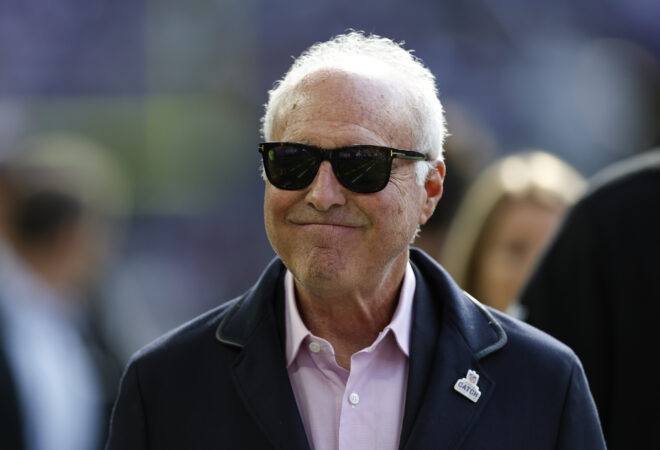
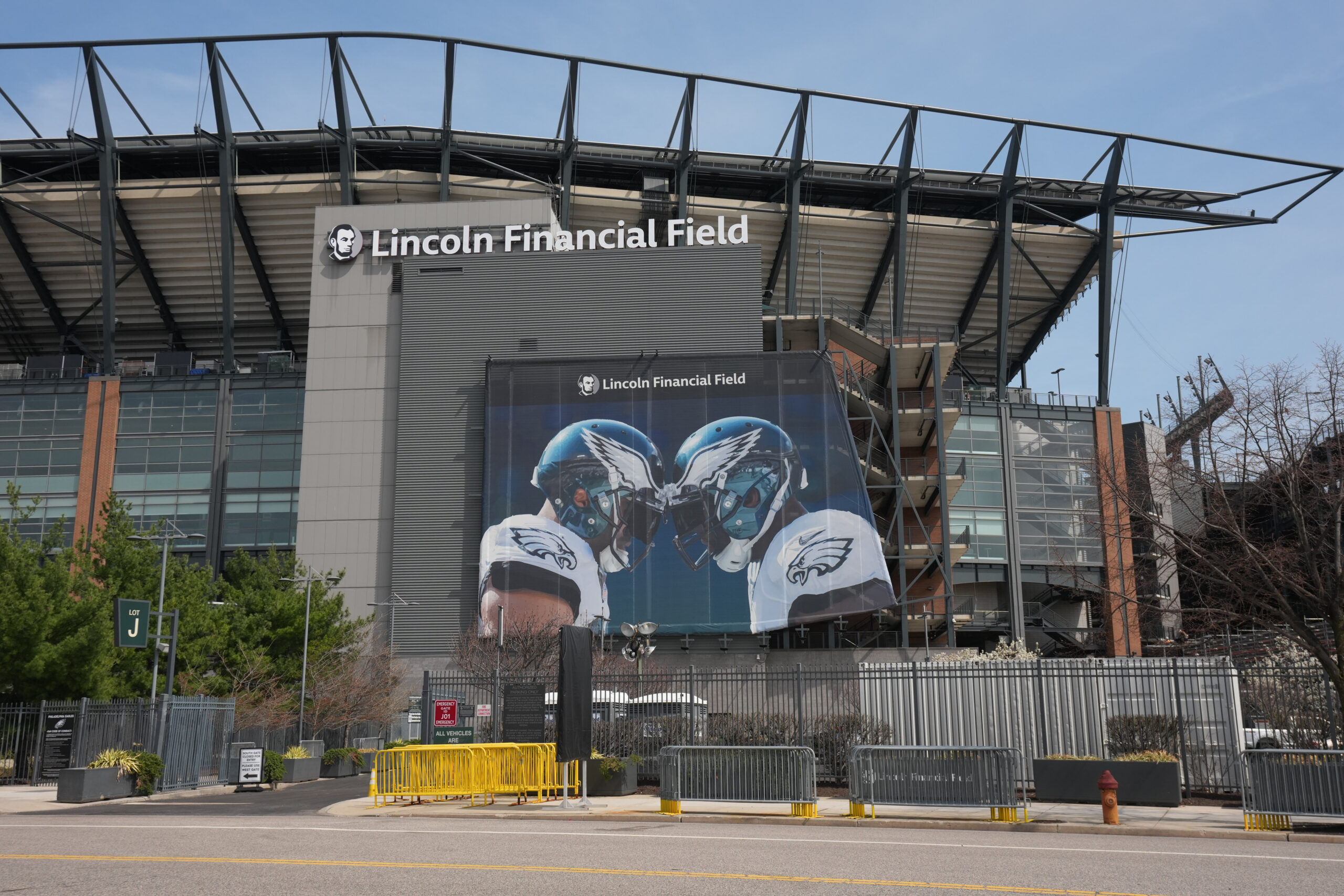
    PHOENIX — With the expiration of Lincoln Financial Field’s lease looming in 2032, team owner Jeffrey Lurie made it clear that all options are on the table for the Eagles’ future home.

    One of those variables is the prospective location of their home.

    At his annual news conference at the league meetings on Tuesday, Lurie explained that the team is conducting “exploratory research” on the prospect of a new or renovated stadium. That research dates back to at least last year, when the organization sent out surveys to season ticket holders to solicit their opinions on a potential stadium renovation or a new building.

    Before the Eagles’ move from Veterans Stadium to Lincoln Financial Field in 2003, Lurie said the organization conducted two to three years of exploratory research. Similarly, in the next year or two, he said he aims to have a more “definitive approach” to their stadium plans.

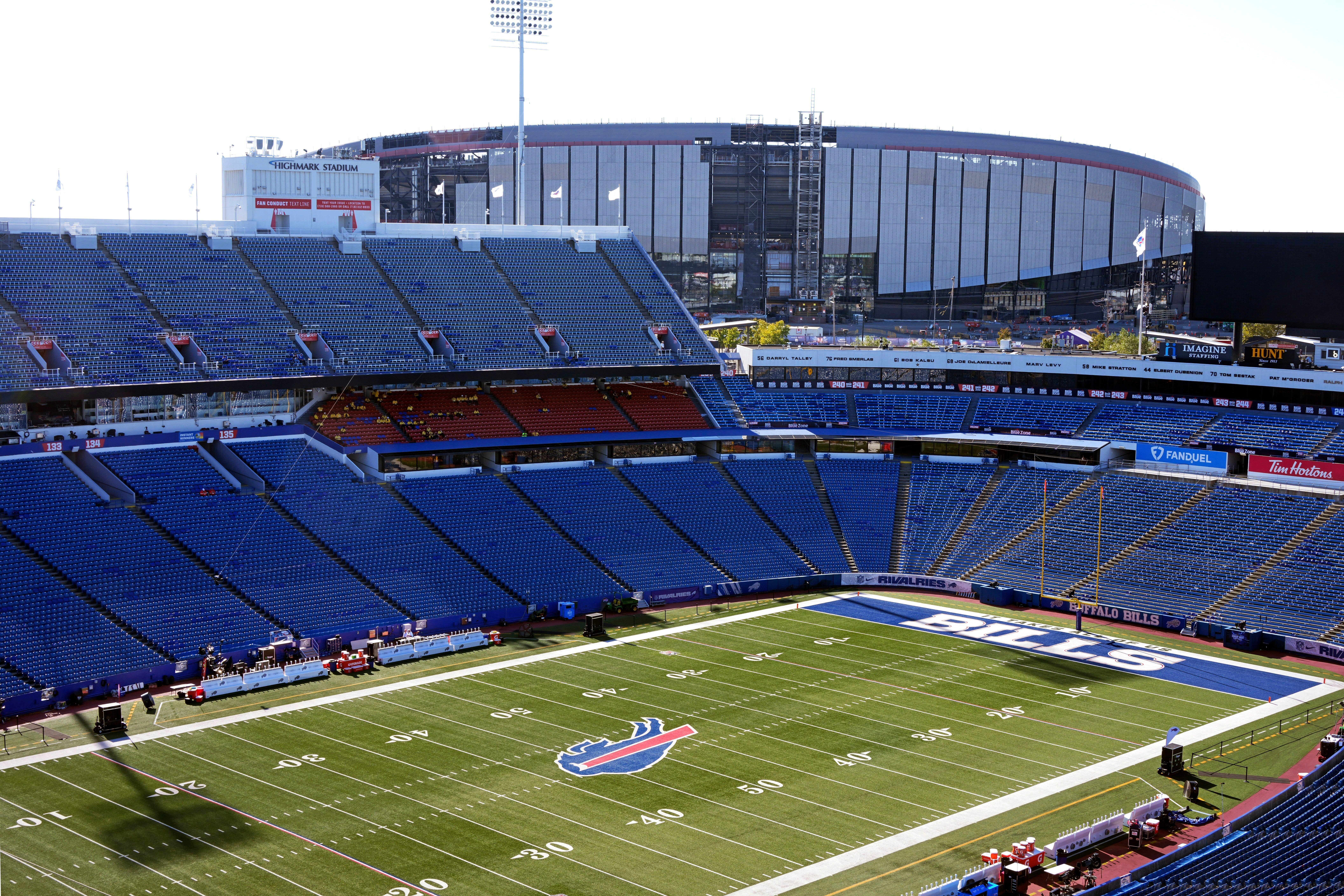
    For now, the Eagles are taking it slow with the exploratory process, using the latest NFL stadiums belonging to the Tennessee Titans and Buffalo Bills, as well as renovated international stadiums such as Bernabéu in Madrid and Camp Nou in Barcelona, as case studies.

    “Is there anything we can learn from Nashville and Buffalo?” Lurie said. “Is there anything we can learn from the renovations in Madrid and Barcelona? It’s really important. I think we want to maximize fan amenities and attract the best possible environment for Philadelphia. And to do that, you’ve really got to do the exploratory research. Don’t rush into it. This is a big decision.”

    Lincoln Financial Field has been the Eagles’ home since the 2003 season.

    Part of the big decision includes the future site of the stadium, if the Eagles decide to build anew. Since 1971, the Eagles have called the South Philadelphia Sports Complex their home. The World War II-era Steagles aside, each of the team’s six permanent home stadiums throughout its 92-year history have been located within city limits.

    But in recent years, some NFL teams with new stadium plans have explored moves outside of city centers, or even to different states entirely. Chicago Bears president Kevin Warren told Pro Football Talk on Tuesday that the team’s next stadium will likely reside in either northwest Indiana or Arlington Heights, Ill., after their lease expires at Soldier Field in 2033.

    Public funding often plays a role in prospective stadium destinations. Indiana governor Mike Braun signed a bill in February that permitted funding for a potential new Bears stadium in Hammond, Ind., which is located approximately 25 miles northeast of Chicago.

    Lurie wouldn’t rule out any potential locations if the team builds a new stadium, even if that means leaving South Philadelphia.

    “Whatever’s best for the fans,” Lurie said. “I mean, we don’t really go on a geographical basis. It’s whatever’s best for the fans. And I can’t tell you where [the planned stadium in] Cleveland is, Barcelona is, I don’t know. Honestly, the bottom line is whatever is best for the fans.”

    Lurie repeatedly emphasized that the fan experience is his top priority in the stadium plans. He said he doesn’t have any “non-negotiables,” even as it pertains to the decision to include a dome on their home. New stadiums and renovations to existing facilities around the league have often included roofs, increasing the eligibility of those cities to host events such as the Super Bowl.

    “We’re so focused on fan amenities,” Lurie said. “To me, that’s the number one thing. Just as a boy growing up, you want to have as best a fan experience. The rest is architecture, design, and where it ends up.”

    The Bills’ new Highmark Stadium in Orchard Park, N.Y. (upper right) is one of the new NFL facilities the Eagles are studying as part of their research.

    Lincoln Financial Field will turn 23 years old in August. The Jefferson Health Training Complex, the team’s practice facility formerly called the NovaCare Complex, is 24 years old. By the time the Washington Commanders’ new stadium is scheduled to open at the historic RFK Stadium site in 2030, Lurie acknowledged that the Eagles’ facilities will be the oldest in the division.

    But Lurie said he loves Lincoln Financial Field and called it “wonderful.” The practice facility went from “worst to best” when NovaCare was built in 2001, he said. The team continues to make upgrades and renovations to its current facilities, plus investments beyond the physical buildings into player health and safety endeavors.

    Just because the Eagles’ facilities are aging doesn’t necessarily mean that they can’t be improved or that a new stadium is a foregone conclusion, according to Lurie.

    “There’s Fenway [Park], there’s Lambeau [Field], whatever, but there’s no question our practice facility and particularly our stadium will be the oldest in the division,” Lurie said. “We have put so much money into the stadium, so it doesn’t appear that way, and it’s still great, and people still love it, but it’s a fact of that exploration I was talking to you about.

    “Do we want to be in 2045, 15 years older than every other stadium in our division or whatever? We’d have to see. Maybe. But it’s all part of it. I know part of our culture is to … maximize the athletic ability that we have of our players, our coaches and everybody. That will always be the top priority. So whatever we’re doing with [the] stadium, with [the] practice facility, if it’s not near top-notch, it’s not our goal.”

    The Eagles are still at least a year away from cementing their stadium plans. The only certainty is that Lurie is considering every alternative.

    “I think if you’re just humble about it and open that you don’t have all the answers, and do the exploratory work, you’ll end up with a better long-term situation,” Lurie said.

  • Flyers’ playoff push and Porter Martone’s debut stalled by Alex Ovechkin and the Capitals in 6-4 loss

    WASHINGTON ― The Flyers’ final countdown began on Tuesday night.

    Playing in their 74th game of the season, and facing a Washington Capitals team clinging to their own playoff dreams, the Flyers had a chance to gain some ground but instead fell, 6-4.

    The loss ended the Flyers’ winning streak at three games; they have not won four in a row since Feb. 6-12, 2023.

    However, there is some good news. The Flyers didn’t really lose any ground in the playoff race as the Ottawa Senators, Detroit Red Wings, New York Islanders, and Columbus Blue Jackets all lost, too.

    They remain tied in points with the Red Wings and Senators, with all three teams trailing the Blue Jackets by two points for the second wild card slot in the Eastern Conference. All three teams have a game in hand on Columbus. Washington moved three points back of the Blue Jackets, too.

    The Flyers also remain three points back of the Islanders for the third seed in the Metropolitan Division, while the Pittsburgh Penguins expanded their lead for the second seed in the division with a win.

    Ending up on the losing side also spoiled the debut of Porter Martone, who was drafted sixth overall in the 2025 NHL draft and did not look out of place. He skated on a line with Christian Dvorak and Travis Konecny, the latter of whom was his linemate during exhibition games for Canada at the Ice Hockey World Championships last May.

    The 19-year-old played more than 16 minutes, got tagged for delay of the game, and had six shot attempts and five shots on goal, including a one-timer off a pass from Konecny as they were rushing into the zone. He made a great play in the third period with the Flyers down by two, when he backchecked on a play that turned into a two-on-one, and knocked away the pass across the ice.

    A physical game that saw a combined 59 hits and had a high-tempo pace and intensity seemed to catch the Flyers off-guard to start, but they settled in, and said afterward they felt they handled it better as the game wore on. It was a good test for a young team that is hoping to play well into April.

    And it also showed that the Flyers’ special teams need to step up. The power play went 0-for-3, including a chance with under four minutes left in regulation and the Flyers needing a goal to tie. Washington scored twice when it had the man advantage, thanks to offensive-zone penalties taken by Konecny and Trevor Zegras.

    Skating in his 900th game, Washington’s Tom Wilson opened the scoring with just over five minutes left in the first period during five-on-five action. On a two-on-two against Rasmus Ristolainen and Travis Sanheim, he took a drop pass from Pierre-Luc Dubois and sent the shot against the grain and past Dan Vladař’s blocker. It was the 47th time in 74 games that the Flyers trailed first.

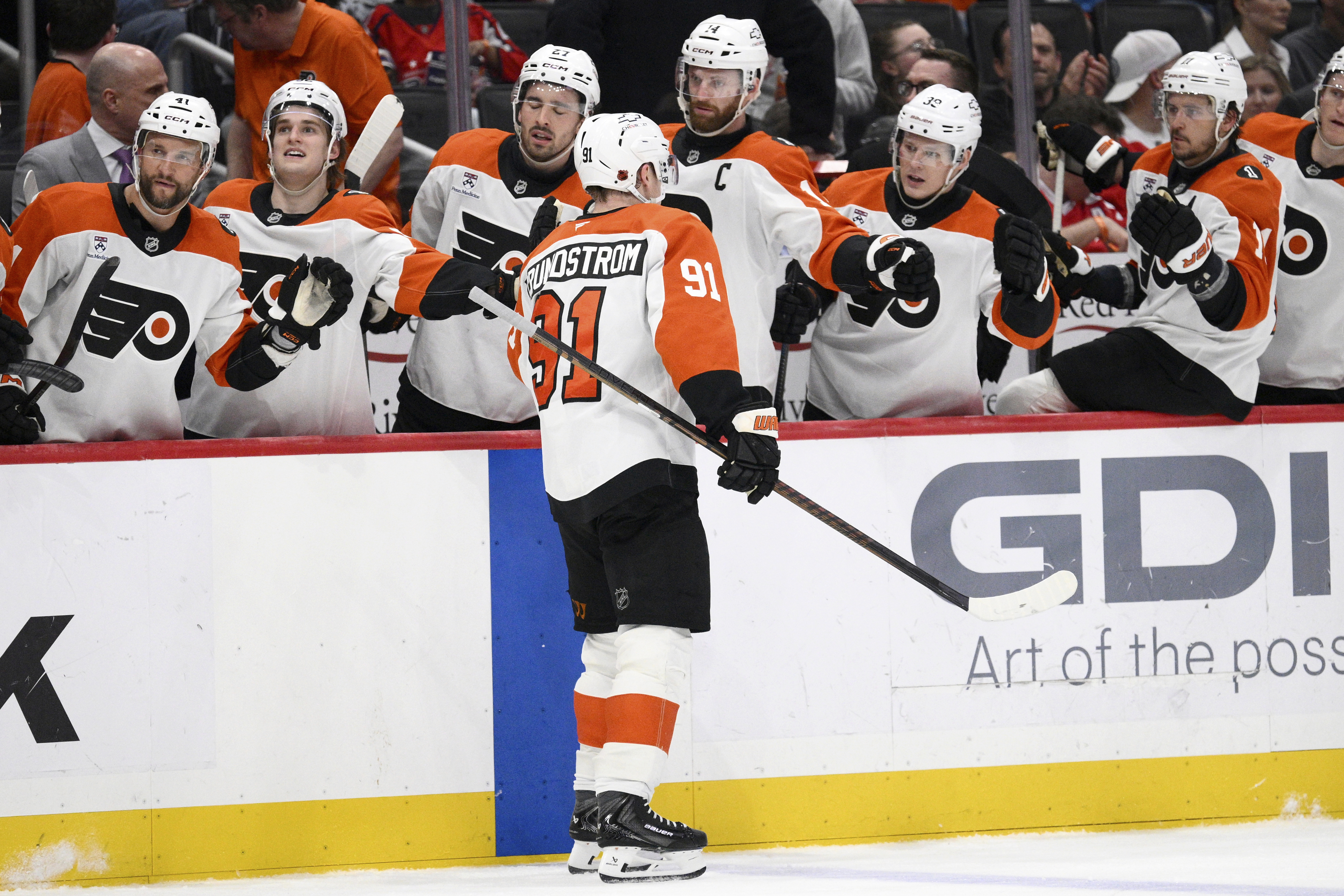
    Flyers right wing Carl Grundstrom (center) celebrates his goal during the second period against the Capitals.

    Less than four minutes later, they found themselves in a 2-0 hole when Alex Ovechkin registered his 927th regular-season goal.

    The Capitals gained the offensive zone, and Connor McMichael dished the puck to defenseman Matt Roy, who was trailing. He had room and skated down to the net before sending a pass into the crease, where Jamie Drysdale tried to clear, but Ovechkin swooped in and knocked it home.

    An unrestricted free agent at the end of the season, there is a strong possibility that the game was “The Great 8’s” last game against the Flyers.

    But as they’ve done countless times before, the Flyers battled back, and before the clock hit five minutes into the second period, it was all tied up.

    Just 39 seconds in, Sanheim scored during four-on-four action, firing a one-timer off a pass from Konecny. The referees initially said there was goaltender interference by Christian Dvorak and called off the goal. Coach Rick Tocchet and his staff challenged the call because Dvorak actually never touched Capitals goalie Logan Thompson as he crashed the net. The replay showed that Capitals defenseman Martin Fehérváry’s stick touched Thompson, and after a review, the goal counted.

    Sanheim has nine goals on the season, one shy of his career high set in 2023-24.

    Under four minutes later, it was Carl Grundström getting on the board for the first time since Feb. 3 — which just happened to be against the Capitals too.

    The Flyers dumped the puck in, and Owen Tippett put a little bit of pressure on Roy, causing him to send a somewhat blind pass up off the boards. Zegras got there first and sent a quick, zinging backhand to the front of the net where Grundström was. The Swede took it and scored around the right pad of Thompson.

    The good vibes didn’t last long, however, as the Capitals retook the lead just over two minutes later on a goal by Jakob Chychrun. Off an offensive-zone faceoff during a power play, Ryan Leonard sent the puck over to the big defenseman, and he fired off the one-timer past Vladař. Leonard scored to make it 4-2 with his own power-play goal later in the period when it looked like Vladař was screened by Nick Seeler.

    But once again, the Flyers tried to charge back in the third period.

    Less than 40 seconds in, Sanheim made a good play in the defensive zone that started the rush up the ice. Martone got the puck on a two-on-one with Konecny and tried to pass it over.

    The play was broken up, but Sanheim was there to get the loose puck and to send it over to Konecny, who just missed short side. He got the puck and fed it in front to Dvorak for his 16th goal of the season, putting him one shy of his career high.

    Ovechkin then made it 5-3 when he was left alone in front and reached to tap in a pass from McMichael. It was Ovechkin’s 54th goal and 86th point in 82 regular-season games against Philly.

    But the Flyers again got within one goal.

    Ristolainen got the puck inside the zone and made a nice move to give himself time and space to put a shot on. On the way to the net, Denver Barkey deflected the puck, which was also deflected off the Caps, and got it past Thompson to cut Washington’s lead to 5-4.

    Barkey has two goals and an assist in his past four games after being held off the score sheet for six games. Ristolainen has five assists in his past seven games.

    Breakaways

    Zegras extended his point streak to six games (one goal, five assists). … Konecny extended his point streak to three games (one goal, four assists) and gave him 65 points in 70 games. … Dvorak had a goal and an assist to give him 46 points on the season. … Noah Cates got an assist on Ristolainen’s goal, tying his career high (25) set in 2022-23. … Wilson added an empty-net goal with 64 seconds left in the game. … Forwards Alex Bump and Garrett Wilson, and defenseman Noah Juulsen were healthy scratches. … Defenseman Emil Andrae played in his 100th NHL game.

    Up next

    The Flyers return home for another meeting with the Red Wings on Thursday (7 p.m., NBCSP) to kick start a back-to-back that takes them to Long Island on Friday to play the Islanders (7 p.m., NBCSP+, NHLN).

  • The USMNT loses to Portugal in what amounted to a final pre-World Cup audition

    The USMNT loses to Portugal in what amounted to a final pre-World Cup audition

    ATLANTA — If fans of the U.S. men’s soccer team wanted to see an A-level squad take on Portugal’s stars, they didn’t get it.

    But if U.S. manager Mauricio Pochettino wanted to see what would come of a slew of auditions for spots on his World Cup roster, he certainly got that.

    Pochettino tested 20 players across four formations over the course of 90 minutes in a 2-0 loss to Portugal on Wednesday night inside Mercedes-Benz Stadium.

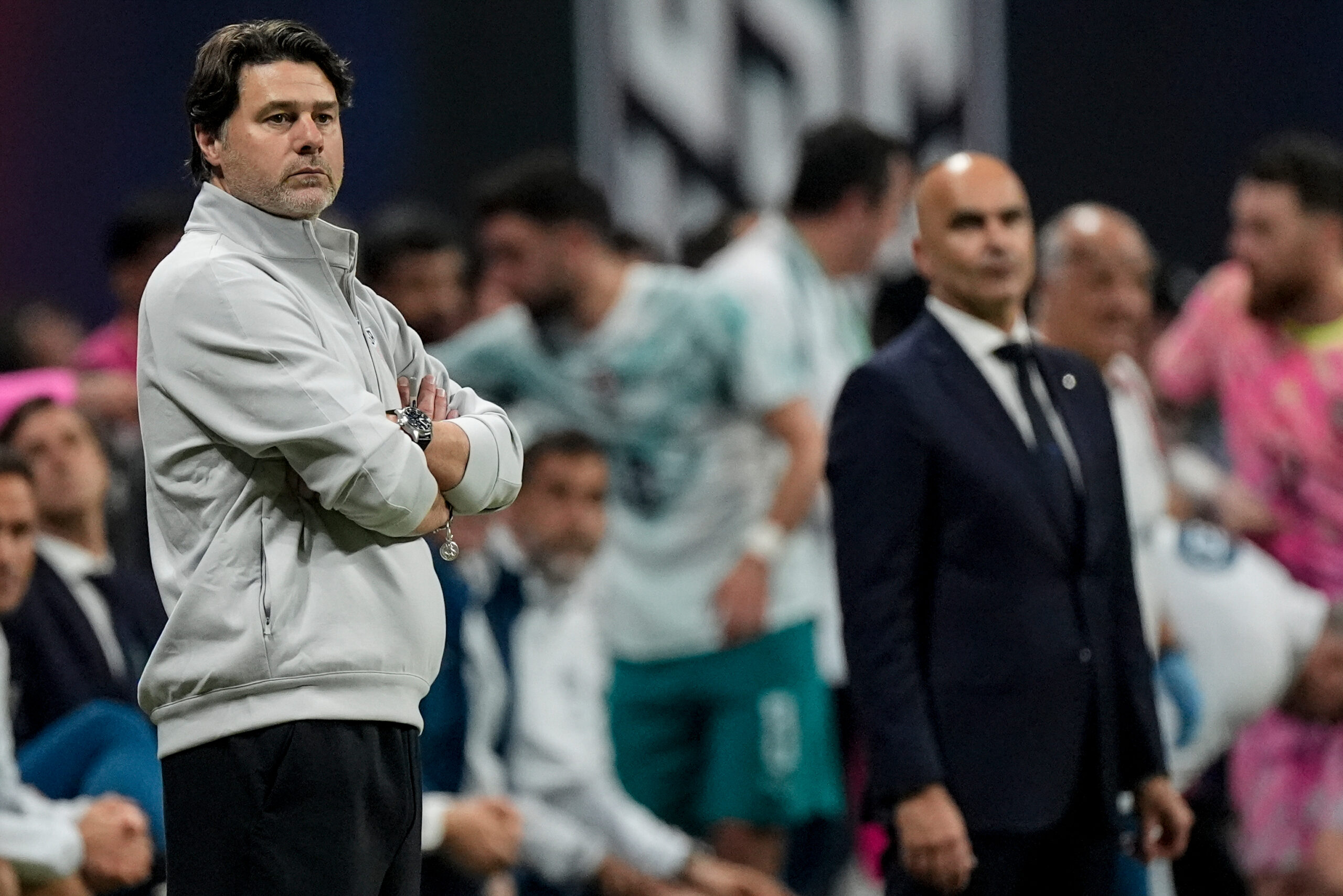
    For a second straight game, Pochettino decided to try something new instead of working toward his best starting lineup. He deployed a 4-2-3-1 with no formal striker at the top, instead putting Christian Pulisic up there in front of Tim Weah, Weston McKennie, and Malik Tillman.

    USMNT head coach Mauricio Pochettino (left) continued to experiment with formations and personnel during their loss to Portugal.

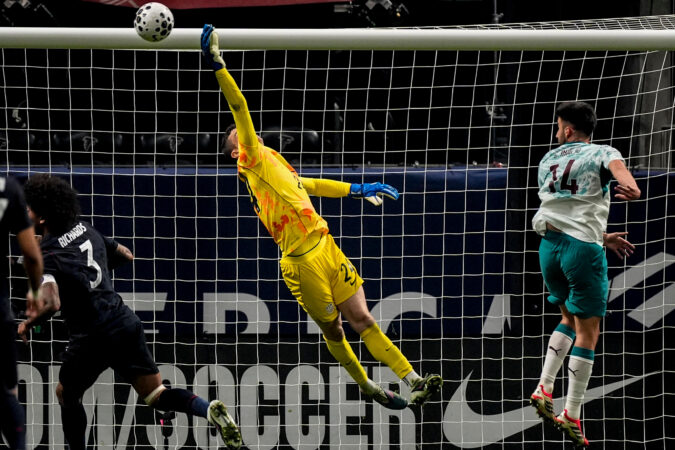
    That freed Weah of the defensive responsibilities he had as a right back on Saturday, and Pochettino reinforced the role a little more by starting Alex Freeman there. The defense also included Media’s Auston Trusty at centerback and Wayne’s Matt Freese at goalkeeper, with the latter move seemingly cementing Freese as the No. 1 in net.

    The point of putting Pulisic up top was to get him closer to goal, and that genuinely happened in the first few minutes. The U.S. had some very nice attacking plays, and Portugal’s defense worked well to keep shots from going in.

    In the 22nd minute, Weah showed the virtue of playing him higher up the field with a burst down the right wing and cross for Pulisic. Alas, the Hershey native fluffed his chance, and the ball bounced past McKennie as it ran away.

    When Pulisic shot narrowly wide from 20 yards in the 36th, it seemed the U.S. was building more momentum. But Portugal then went right down the field and scored. Bruno Fernandes drove forward, then tore up the U.S. defense with a gorgeous backheel pass for Francisco Trincão to finish.

    Both teams decided the starters had done their work in the first half, and began a parade of substitutions as the second kicked off. Portugal made seven (of 11 allowed), and the U.S. made three: striker Patrick Agyemang for Pulisic, Tanner Tessmann for McKennie in midfield, and Max Arfsten for Antonee Robinson on the back line.

    Those moves restored the U.S. to the 3-4-2-1 formation that many observers had wanted to see. Alas, it did not stop Portugal from scoring a second goal in the 59th, though the tactical change wasn’t why.

    In fact, it was something worse — a corner kick play that completely fooled the Americans.

    With almost everyone from both teams lined up near the goal mouth, Fernandes swung a service to one two Portuguese players who stood unmarked atop the box, second half substitute, João Felix. He hit an inch-perfect smash through the crowd that Freese likely couldn’t see until too late.

    Freese made up for it in the 64th with a nice diving save on a long-range hit from Ruben Neves. That was one of three stops he made on the night.

    Three minutes later, Pochettino sent in Folarin Balogun for Tillman and Joe Scally for Weah, putting the U.S. in a two-striker setup — effectively a 3-4-1-2 instead of a 3-4-2-1. The next subs, in the 79th, made it a 4-4-2: Brenden Aaronson and Gio Reyna entered for Freeman and Sebastian Berhalter.

    Trusty was the last U.S. player to exit, replaced by Mark McKenzie in second-half stoppage time after cramping up. It was a sour ending to what had been a very good game overall for Trusty, on his own and in tandem with Chris Richards.

    At the final whistle, it was pretty clear that the score didn’t matter to either team. But it will have to U.S. fans. Their hopes for a statement win in 2026 before the World Cup now rest with the tournament squad’s two warmup games, against Senegal and Germany in early June.

    "Yes, he felt frustrated, but that is what we want, and what we expect."

    Mauricio Pochettino analyzes Christian Pulisic's night as a striker:

    www.inquirer.com/soccer/usmnt…

    #USMNT

    [image or embed]

    — Jonathan Tannenwald (@jtannenwald.bsky.social) April 1, 2026 at 12:07 AM

  • ‘He looked like a star:’ Andrew Painter’s impressive debut helps the Phillies snap early-season skid

    ‘He looked like a star:’ Andrew Painter’s impressive debut helps the Phillies snap early-season skid

    Andrew Painter hadn’t even completed his walk in from the bullpen when he heard the first ovation. As he crossed the first-base line, fans behind the Phillies’ dugout stood and cheered, a gesture befitting the occasion.

    But it didn’t compare to the last ovation.

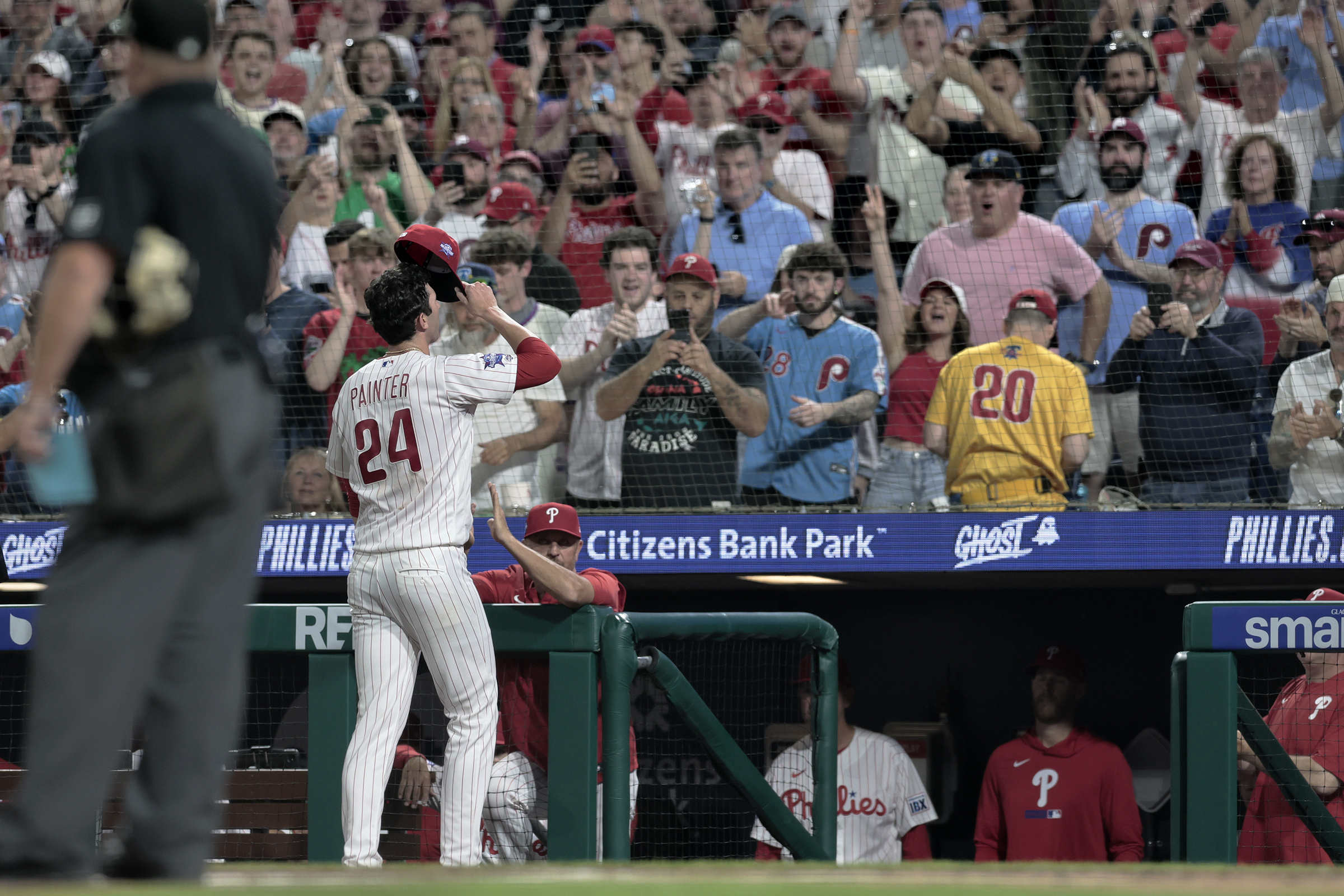
    At 8:02 p.m. Tuesday, 80 minutes after a first pitch that was three years in the making, Painter relinquished the ball and left the mound to a roar that might have lifted the cherry-red cap clear off his head if manager Rob Thomson hadn’t reminded him to do it himself.

    “That was awesome,” Painter said later, after the Phillies held on for a feel-good 3-2 victory over the Nationals. “I don’t think I could’ve drawn it up much better.”

    Somehow, almost impossibly, the most anticipated major-league debut by a Phillies pitcher in two decades, since franchise icon Cole Hamels in 2006, actually lived up to the hype.

    And then some.

    First, the line: 5⅓ innings, four hits, one run, one walk, eight strikeouts, 84 pitches, 57 strikes. But that doesn’t even do justice to how well Painter pitched before 40,708 paying customers at the corner of 11th and Pattison.

    Ten days shy of turning 23, the youngest Phillies starter since Ranger Suárez in 2018 — with “Andrew’s Painters” in Section 302, “Painter’s Painters” in Section 218, and who knows how many other groups of homage-paying fans popping up across the ballpark — Painter dialed his fastball to 98.7 mph, unleashed wicked curveballs and sweepers and bat-slowing changeups, and even got a few strikeouts with a splitter that he’s been perfecting.

    And then there was his demeanor — chill as could be.

    “He didn’t seem fazed by anything,” said Kyle Schwarber, who hit a solo homer in the third inning. “Even before the game, there was no pacing, no nothing. It was pretty cool.”

    J.T. Realmuto added: “He seemed super calm, confident. You would have never known it was his first start.”

    And from Adolis García, who hit his first Phillies homer in the fourth inning: “He looked like a star.”

    Fellow rookie Justin Crawford scored what proved to be the winning run in the fifth inning on an error by Nationals first baseman Luis García Jr. With Crawford in center field, it marked the first time since Aug. 7, 2015, that the Phillies started an under-23 pitcher and position player in a game (Aaron Nola and Maikel Franco).

    “When those young guys come up, there’s a lot of excitement,” Thomson said. “And guys root for them because they remember their first appearance or game in the big leagues.”

    Crawford debuted with two hits on opening day. This was Painter’s moment.

    Take it from the top. His first pitch hummed in at 96.6 mph for a called strike. Realmuto tossed out the ball for a souvenir. Four pitches later, another keepsake: a curveball that struck out Nationals leadoff hitter James Wood.

    Then came a Houdini act. After yielding back-to-back singles to open the second, Painter escaped with three fly balls.

    Nationals manager Blake Butera stacked the lineup with six left-handed hitters and two switch-hitters to increase the degree of difficulty. Lefties batted .287 with an .857 OPS against Painter last season in the minor leagues.

    But Painter mixed his pitches like a blender to the lefties, preventing them from sitting on the heater. And the second time through the order, he began sprinkling in splitters.

    “We were, I mean, not necessarily saving it, but I didn’t feel like he needed it that first time through because he was throwing everything else so well,” Realmuto said. “It’s always good as a starting pitcher to be able to have something in your back pocket for the second or third time through the lineup.”

    It’s part of what makes the special ones great. And make no mistake: The Phillies believe Painter is special.

    For years, president of baseball operations Dave Dombrowski has hung up the phone on rival executives who have made trade offers for Painter. In 2023, when Painter was 19, the Phillies seriously considered him in spring training for a spot in the season-opening starting rotation.

    But then Painter tore an elbow ligament, had surgery, and missed two seasons. When he returned to the mound in triple-A last season, Dombrowski believed he’d be ready for the majors by the summer. But Painter struggled to command his fastball, posted a 5.40 ERA in 22 triple-A starts, and never got called up.

    “We’ve been waiting for a while for this,” Thomson said, “and so have our players.”

    Painter conceded that he thought about his debut often over the last three years. It helped him to get through the long, sweaty days of rehab at the team’s facility in Clearwater, Fla., and the challenging nights last season in Lehigh Valley.

    Was it all that he imagined?

    “It probably exceeded it,” he said. “A lot of people showed up. I think there were about 40 [family and friends] here. Maybe even more, honestly. Just the support system behind me, everyone come out, taking time out of their week to come watch me pitch, it’s great.

    “The crowd showed up tonight and kind of rallied behind me. Just kind of soaked all of it in. I came in, I didn’t want to place an expectation on myself. I just wanted to go out there and make sure I was convicted in every pitch that I was throwing and feel confident with everything that I was throwing.”

    Painter didn’t want to stop throwing in the sixth inning. But after allowing a one-out single to CJ Abrams on his 84th pitch, he got a visit from Thomson, who tapped him on the chest.

    “Did you enjoy it?” the manager said.

    Painter initially shook his head no before realizing what Thomson said. Yes, Painter said. He enjoyed it.

    “Just make sure you tip your cap when you walk off,” Thomson said.

    Cue the ovation.

    “I almost forgot,” Painter said of the cap-tip. “But I did it.”

    Phillies pitcher Andrew Painter tips his hat as he comes out of the game in the sixth inning of his MLB debut.

    With the promise of many more in the future.

    “If we can keep him healthy, this guy’s going to be really good for a long time,” Thomson said. “He’s going to have a really great career. He’s one of those upper-echelon guys that’s got the combination of power and command. The future is bright for him.”