Blog

  • America’s oldest warship, sunk in 1776, is getting a 250th-birthday makeover

    America’s oldest warship, sunk in 1776, is getting a 250th-birthday makeover

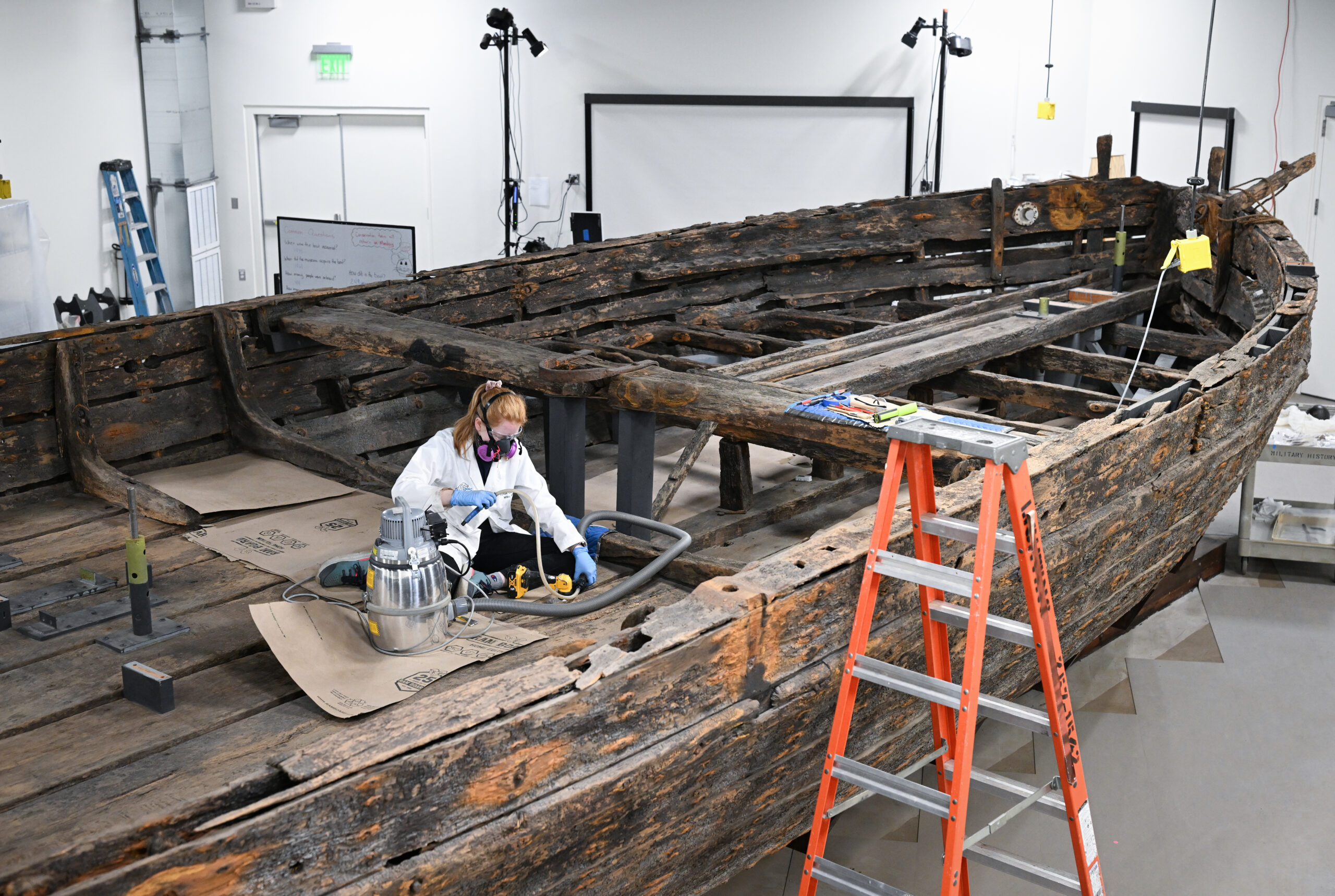
    Conservator Angela Paola is lying on her back under the 16-ton gunboat, picking debris from between its nearly 250-year-old planks. She is wearing blue surgical gloves, grimy white coveralls, and a half-face respirator.

    Dust floats in the beam of her headlamp, and the light reveals bits of the original oakum and pitch used to seal the bottom of the Philadelphia before it was sunk in battle by the British in 1776.

    As she pokes a tool between the planks, clumps of hardened sediment fall on her. “It’s dirty,” she says. “But it is really satisfying work. And it’s really exciting to see it slowly start to show itself through all the mud and the years.”
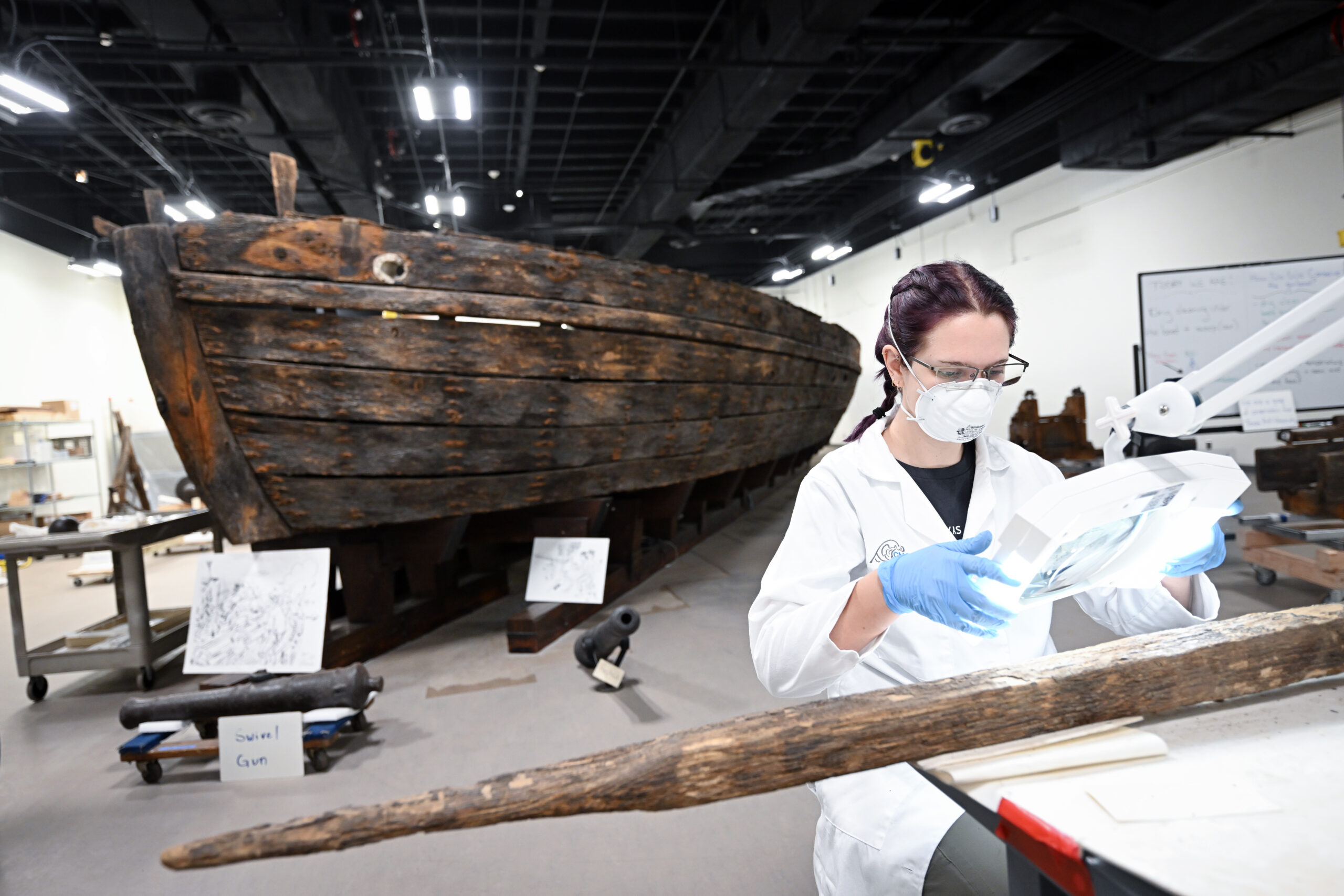
    Texas A&M University research assistant Marissa Agerton works on the project to preserve the gunboat Philadelphia at the Smithsonian National Museum of American History in Washington on Jan. 13.

    The Philadelphia is the country’s oldest surviving intact warship, according to the Smithsonian Institution. It was launched on July 30, 1776, a few weeks after the Declaration of Independence was adopted. And as the nation prepares for its 250th birthday this summer, experts are grooming the old vessel for its place in the celebration.

    “It’s one of the most important objects — movable objects — of the Revolution, flat out,” Anthea M. Hartig, director of the Smithsonian’s National Museum of American History, said in an interview at the museum this month.

    The gnarled boat has survived battle, sinking, the elements, wood-eating bacteria, rodents, misguided attempts at preservation, tourists, and almost 250 years in the country it helped found.

    It’s “one in a million,” Paola, the conservator from Texas A&M University, said through her respirator last week.

    The 53-foot-long boat, hastily built of green oak, was sunk by British cannon on Oct. 11, 1776 at the Battle of Valcour Island, on Lake Champlain. But historians say the small fleet it was part of helped thwart British plans to invade the colonies from the north, and furthered the cause of independence.

    The boat, powered by oars and sails, spent 159 years sitting upright in 60 feet of water at the bottom of the lake until it was raised in 1935. It then became a tourist attraction: admission 50 cents, according to an old advertising poster, and was carried from place to place on a barge.

    After almost 30 years, it came to Washington in 1961 as one of the early arrivals at what was then the National Museum of History and Technology. It was hoisted inside while the building was still under construction and has been there ever since.

    Since July, the museum has had the Philadelphia partially cordoned off in a special conservation lab on the third floor of the East Wing.

    There, experts from the Smithsonian and Texas A&M are working with vacuums, brushes and dental tools to give it a state-of-the art cleaning and look for lost artifacts in areas they said have never been probed before. Visitors can watch the work through a large viewing window.

    A portion of the Philadelphia.

    The vessel rests in a huge cradle. Arrayed around it are its lower mast, rudder, two anchors, three big cast-iron guns, gun carriages, swivel guns, and the 24-pound British cannon ball that helped sink it.

    The Philadelphia’s biggest weapon was an 8-foot-long, 3,800-pound cannon made in Sweden. It sat on a wooden rail at the front of the boat and fired a 12-pound iron ball. The gun still had a projectile in its mouth when it was discovered.

    The boat was raised on Aug. 9, 1935 by history enthusiast and salvage engineer Lorenzo F. Hagglund and yachtsman J. Ruppert Schalk. When it came up, it contained a trove of more than 700 artifacts, according to John R. Bratten’s 2002 book, The Gondola Philadelphia & the Battle of Lake Champlain.

    It also had a handful of human bones.

    According to salvage reports, “there were a couple of arm bones … some teeth and a partial skull that were found on board the boat itself,” said Jennifer L. Jones, director of the museum’s Philadelphia gunboat preservation project.

    “We know there were a lot of injuries,” she said in an interview at the museum this month.
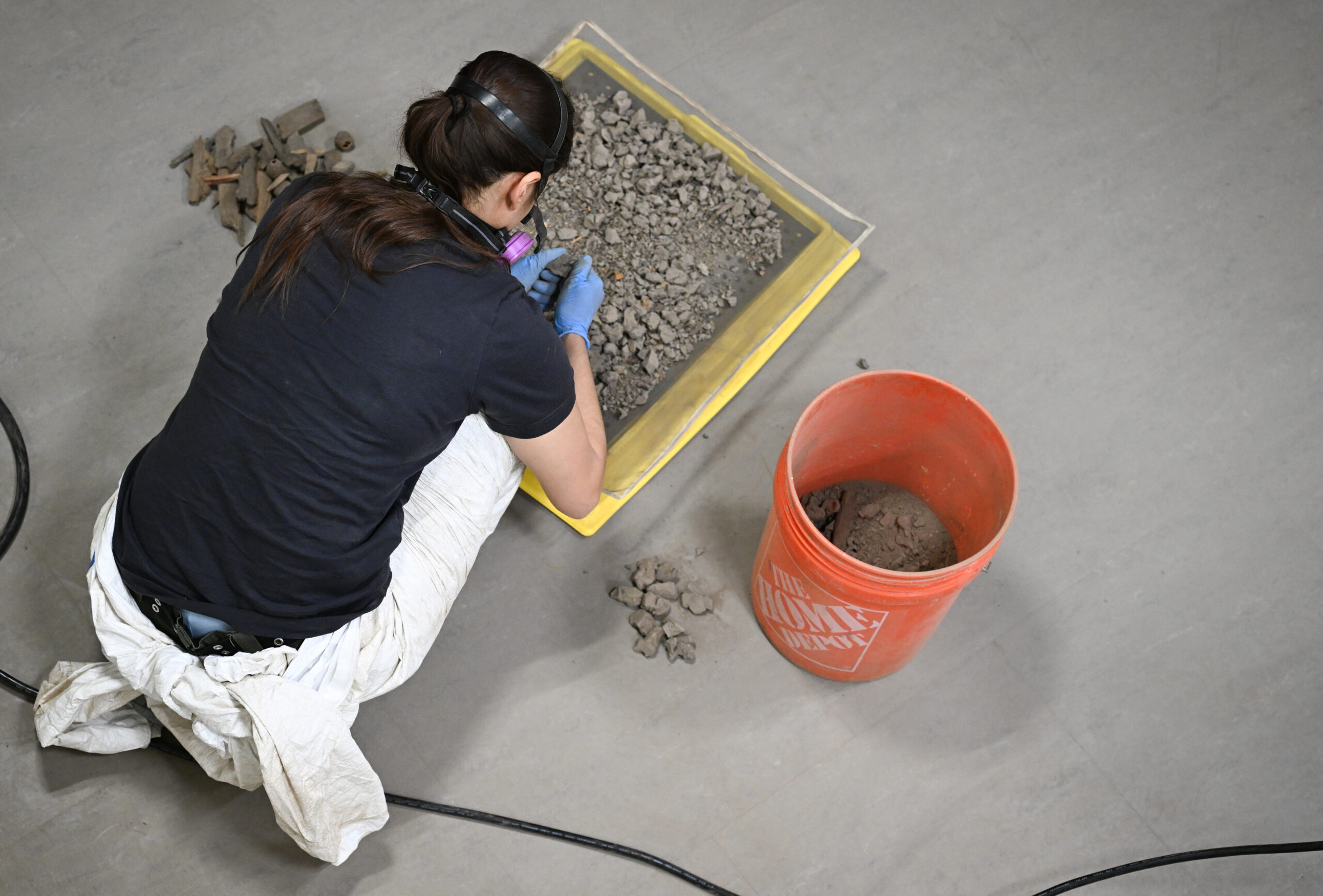
    Angela Paola goes through debris as she works on the Philadelphia.

    The Oct. 11 battle was a daylong shootout with both sides firing iron cannon balls that could sink a ship or tear off a limb.

    Less than two years after the start of the Revolutionary War, the British had been planning an attack from Canada south along the lake between New York and Vermont to try to split the colonies.

    They quickly assembled a fleet of about two dozen vessels near the lake in Canada for the task.

    The Americans countered, building and gathering a fleet of 16 vessels, including the flat-bottom Philadelphia and seven others like it, said Peter D. Fix, of Texas A&M, the lead conservator on the gunboat preservation project.

    The two sides met in a narrow channel of the lake between the New York shore and Valcour Island, about five miles south of Plattsburgh, N.Y.

    “It was a very bloody battle,” Jones said.

    From the American hospital ship, “Enterprise,” crewman Jahiel Stewart wrote in his journal: “The battel was verryey hot [and] the Cannon balls & grape Shot flew verrey thick.”

    “I believe we had a great many [killed] … Doctors Cut off great many legs and arm and … Seven men [were thrown] overbord that died with their wounds while I was abord,” he wrote.

    Each side suffered about 60 men killed and wounded, Bratten wrote.

    Jones said it is possible the limbs found on the ship had been amputated. Their whereabouts are unknown, she said.

    The Philadelphia was commanded by a young Pennsylvania army officer, Benjamin Rue. He had 43 men from many walks of life under him.

    “We have a wretched, motley crew in the fleet,” American Gen. Benedict Arnold wrote before the battle. “The refuse of every regiment, and the seamen, few of them, ever wet with salt water.”
    Texas A&M University research assistant Alyssa Carpenter works on the Philadelphia this month in D.C.

    Arnold, who commanded the patriot fleet, later deserted the American cause and went to fight for the British in 1780. He died in England in 1801. One of the crewmen on the Philadelphia, Joseph Bettys, also switched sides. He was later captured and hanged.

    The Oct. 11 battle was a stalemate. The British withdrew; the Americans, bottled up in the channel, escaped that night. But two days later, the British force tracked down the Americans and destroyed most of their fleet.

    Only a handful of American ships survived the fight. The Philadelphia was not one of them.

    The ship is now “heavily degraded,” said Fix, the lead conservator,

    The hull still bears three holes made by British cannon balls. A wooden cross piece near where the mast stood is charred, probably from the ship’s brick fireplace. The hull planks have lost about three-quarters of an inch in thickness to bacteria, Fix said.

    Care of the boat “is a huge undertaking, of which the conservation is one part,” he said. “The conservation, the preservation, is kind of the avenue to learn all this other extra stuff, which has been great.”

    “Our main task, as we were assigned, was ‘let’s make sure we make it last for another 250 years,’ ” he said.

    Back under the vessel recently, conservator Paola put chunks of fallen debris in an orange bucket, to be sifted for artifacts later. She said it was amazing that the Philadelphia had survived.

    “She lasted,” she said. “We’re really lucky.”

    Texas A&M University research assistants Alyssa Carpenter, Marissa Agerton, and Angela Paola work on the gunboat Philadelphia, preparing it for the United States’ 250th birthday celebration this summer.
  • How Black History Month endures

    How Black History Month endures

    I am not a huge fan of comic books and superheroes, but I appreciate the storytelling. In comics, the origin story is just as important as the hero saving the day. The same is true for Black History Month, which originated as Negro History Week.

    Negro History Week was created by Carter G. Woodson, the child of two formerly enslaved parents. According to Harvard historian Jarvis R. Givens, Woodson was taught by his two uncles, John and James Riddle, his mother Anne Riddle’s brothers, who had also been enslaved. Both had been educated in a Freedmen School toward the end of Reconstruction, and they became Woodson’s first teachers.

    “As a student, [Woodson] witnessed the shared vulnerability of Black people through the story of his teachers and family,” writes Givens. “These first encounters taught Woodson more than just reading, writing, and arithmetic. He also inherited a political orientation to schooling informed by the lived history of the teachers standing before him … Here, Woodson encountered the project of Black education.”

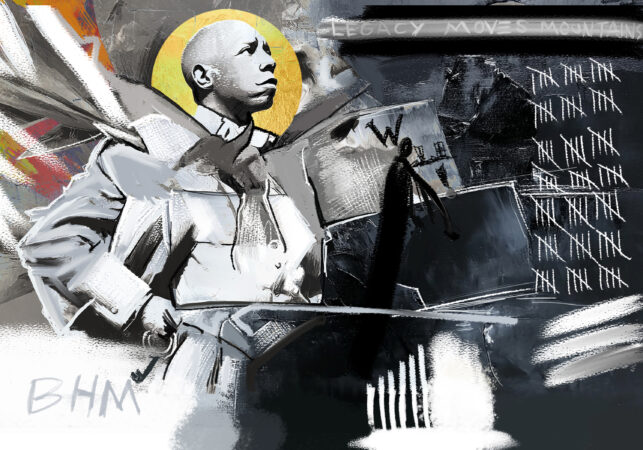
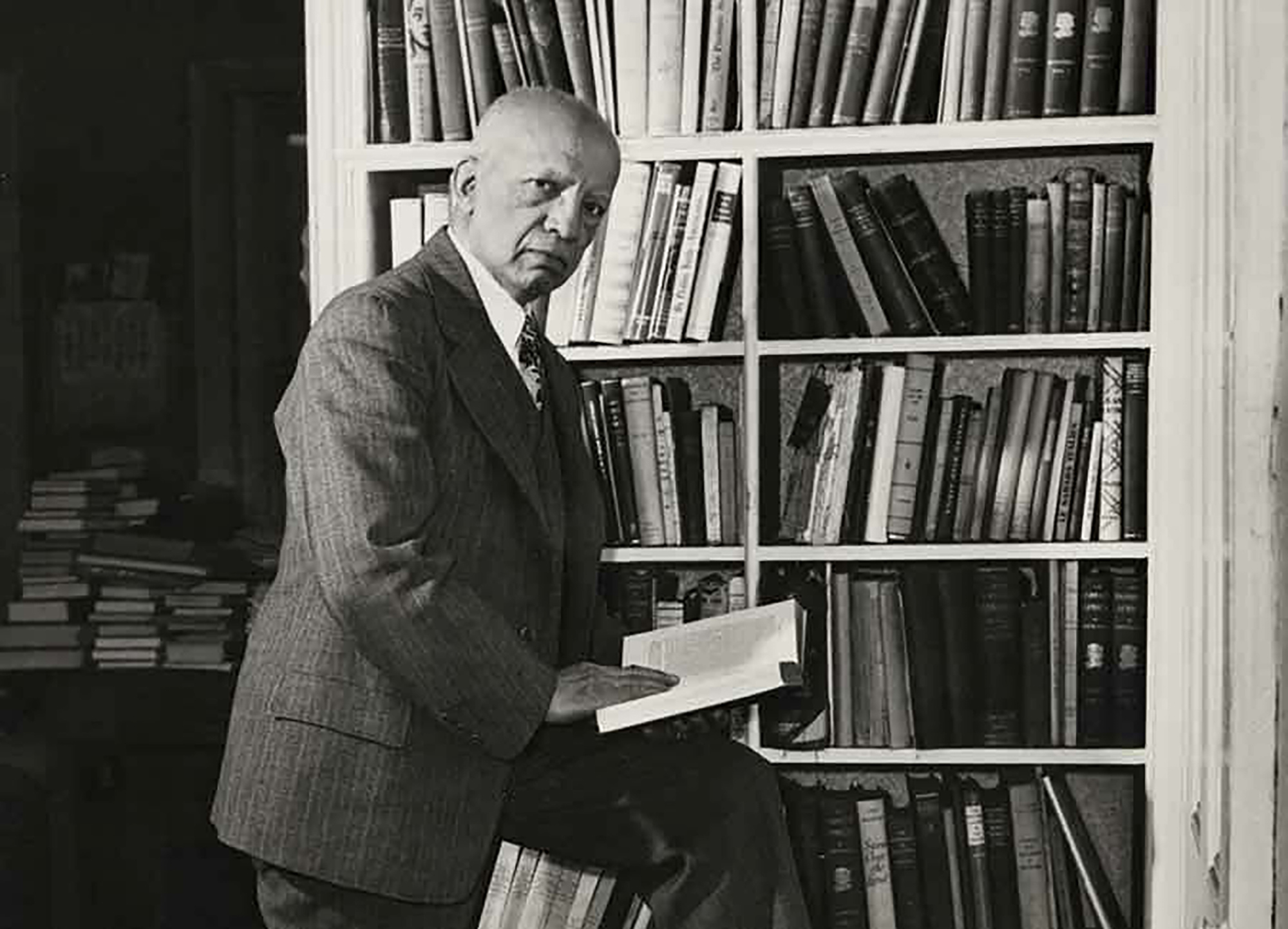
    The historian and author Carter G. Woodson is widely regarded as the father of what has become Black History Month. Much of the observance’s origin can be traced to Philadelphia, writes Rann Miller.

    That project, which continues to this day, was the equipping of Black people with the practical knowledge to do a thing, and the historical memory to understand why they do it. This was the basis with which Woodson founded the Association for the Study of Negro Life and History (ASNLH) in 1915 and created Negro History Week in 1926, as a time for Black people to not only learn about Black history, but to take the time to reflect on it.

    In Woodson’s words: “It is evident from the numerous calls for orators during Negro History Week that schools and their administrators do not take the study of the Negro seriously enough to use Negro History Week as a short period for demonstrating what the students have learned in their study of the Negro during the whole school year.”

    A mural honoring W.E.B. Du Bois on a firehouse at Sixth and South Streets in Philadelphia. He was an early advocate of Black history events.

    The first Negro History Week took place from Feb. 7 to 13, 1926. The Philadelphia Tribune, in an article published Feb. 6, 1926, said: “It is essential to the future growth of the Negro race that we become acquainted with our past … We have passed the point in our advancement where we can afford to disregard our history.” That sentiment remains true today.

    In April 1928, the Germantown YMCA hosted an event called Negro Achievement Week for the Germantown community, featuring such prominent African Americans as Alain Locke, W.E.B. Du Bois, and James Weldon Johnson. The week’s events received little media attention but were robust, including a mass community meeting, a music night, an art night, and a history lecture, held in both Germantown and Center City, according to David Young, director of the Historical Society of Montgomery County.

    The events were aimed at educating white people, as well, with Du Bois’ pointedly noting that “he reminded the whites too often of their injustice to the Negro.”

    Planning for Negro Achievement Week in Philadelphia began in 1923 at the “Black Branch” of the Germantown YMCA, known as the “Colored Y,” under the guidance of Olivia Yancey Taylor and Eva del Vakia Bowles.

    Members of the Colored Y formed an interracial committee to plan the week’s activities, including a variety of African American heritage events.

    The first Negro Achievement Week, which became Negro History Week, happened in 1925, influenced by a partnership between Woodson and members of the Black fraternity Omega Psi Phi, who created Negro History and Literature Week, first celebrated in April of 1921.

    “Celebrations took the form of public programs in churches, schools, and events partnering with literary societies,” according to Givens. “Given the success of the program, a committee was established in 1923 to outline a strategic plan: to develop plans for fostering the study of Negro History in the schools and colleges of the country.”

    The week subsequently became a shared project between Woodson and Black schoolteachers.

    While Negro Achievement Week in Philadelphia didn’t take place after 1928, Negro History Week continued nationwide because Black people understood that they were past “the point in our advancement where we can afford to disregard our history.”

    Although President Gerald Ford officially expanded Negro History Week to become Black History Month in 1976, Black communities had already done so on their own, believing one week was not sufficient to contain their history.

    Philadelphia stands proudly in that tradition — from the Colored Y to educator Nellie Bright. Thanks to Carter G. Woodson and countless Black educators, their vision endures a century later.

    Rann Miller is an educator and freelance writer based in southern New Jersey. His “Urban Education Mixtape” blog supports urban educators and parents of children attending urban schools. urbanedmixtape.com @RealRannMiller

  • Many Philadelphians shelled out for shoveling help last week. What’s a fair price?

    Many Philadelphians shelled out for shoveling help last week. What’s a fair price?

    Denise Bruce paid a stranger $75 to shovel out her Hyundai Venue, which was encased in snow and ice outside her East Kensington rowhouse.

    “My car was really badly packed in on all sides,” said Bruce, 36, who works in marketing. “I just didn’t have the strength honestly to dig it out myself.”

    The West Coast native also didn’t have a shovel.

    So she was elated to find a woman on Facebook who agreed to dig out her compact SUV for between $40 and $60. After the endeavor took four hours on a frigid evening, Bruce thought it was only fair to pay more.

    After Bruce forked over the money — digitally via Cash App — she asked herself: What should one pay to outsource the onerous task of shoveling?

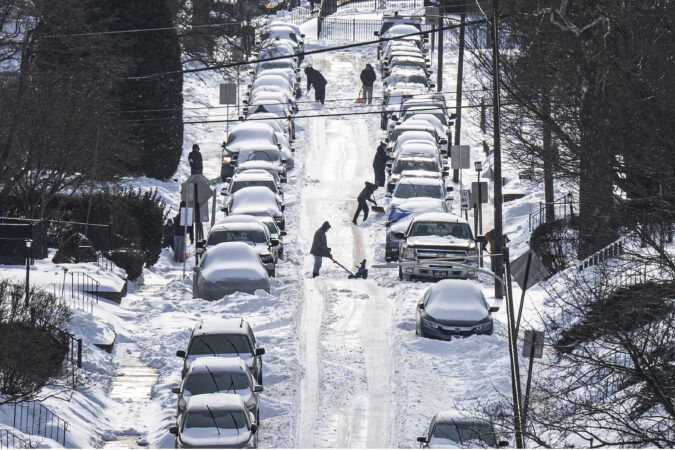
    Snow-covered cars lined Girard Avenue in Brewerytown on Monday.

    As the Philadelphia region shoveled out from the city’s biggest snowfall in a decade, many residents were asking the same question.

    While some shoveled themselves or hired professional snow removal companies with fixed rates, others turned to an ad hoc network of helpers who hawked shoveling services on neighborhood Facebook groups, the Nextdoor app, and the online handyman service TaskRabbit.

    On online forums, strangers agreed to dig out the cars of folks like Bruce, who didn’t have the strength, tools, or time to do so on their own. Others signed up to clear the driveways and sidewalks of older people, for whom shoveling such heavy snow can increase the risk of heart attacks.

    Prices per job vary from $20 to $100 or more. Some freelance shovelers are upfront about their rates, while others defer to what their customers can afford.

    Higher prices now for ‘trying to dig through concrete’

    Alex Wiles stands on North Second Street on Tuesday before taking the bus to another snow-shoveling job.

    On Monday, the day after the storm hit, Alex Wiles, 34, of Fishtown, shoveled out people’s cars, stoops, and walkways for between $30 and $40 per job. As the week went on, he increased his rate to about $50 because the work became more physically demanding.

    “At this point, it feels like trying to dig through concrete,” Wiles said. As of Thursday, he had shoveled for nearly 20 people across the city and broken three shovels trying to break up ice. He said most people tip him an additional $5 to $20.

    “I want it to be an accessible service,” he said, “but I also want to be able to make money doing it and remain competitive with other people,” including teenagers who often shovel for less.

    For Wiles, who works in filmmaking and photography, his shoveling earnings go toward paying rent.

    He said he sees his side hustle as essential service, especially since the city did “a terrible job,” in his opinion, with snow removal.

    “A lot of the city looks like a storm happened 10 minutes ago,” Wiles said Thursday.

    Shoveling is “necessary and people are just otherwise going to be stuck where there are,” he said. “They aren’t going to be able to get to work easily. They aren’t going to be able to walk down the street.”

    Some adults see themselves filling in for ‘the young kids’

    When Max Davis was a kid in Hopewell, N.J., he’d compete with his neighbors to see who could shovel the most driveways during snowstorms.

    Now, the 28-year-old said he seldom sees or hears of kids going door to door when it snows.

    That was part of the reason Davis got off his Northern Liberties couch on Monday and started shoveling out cars for a few neighbors who posted on Facebook that they needed help.

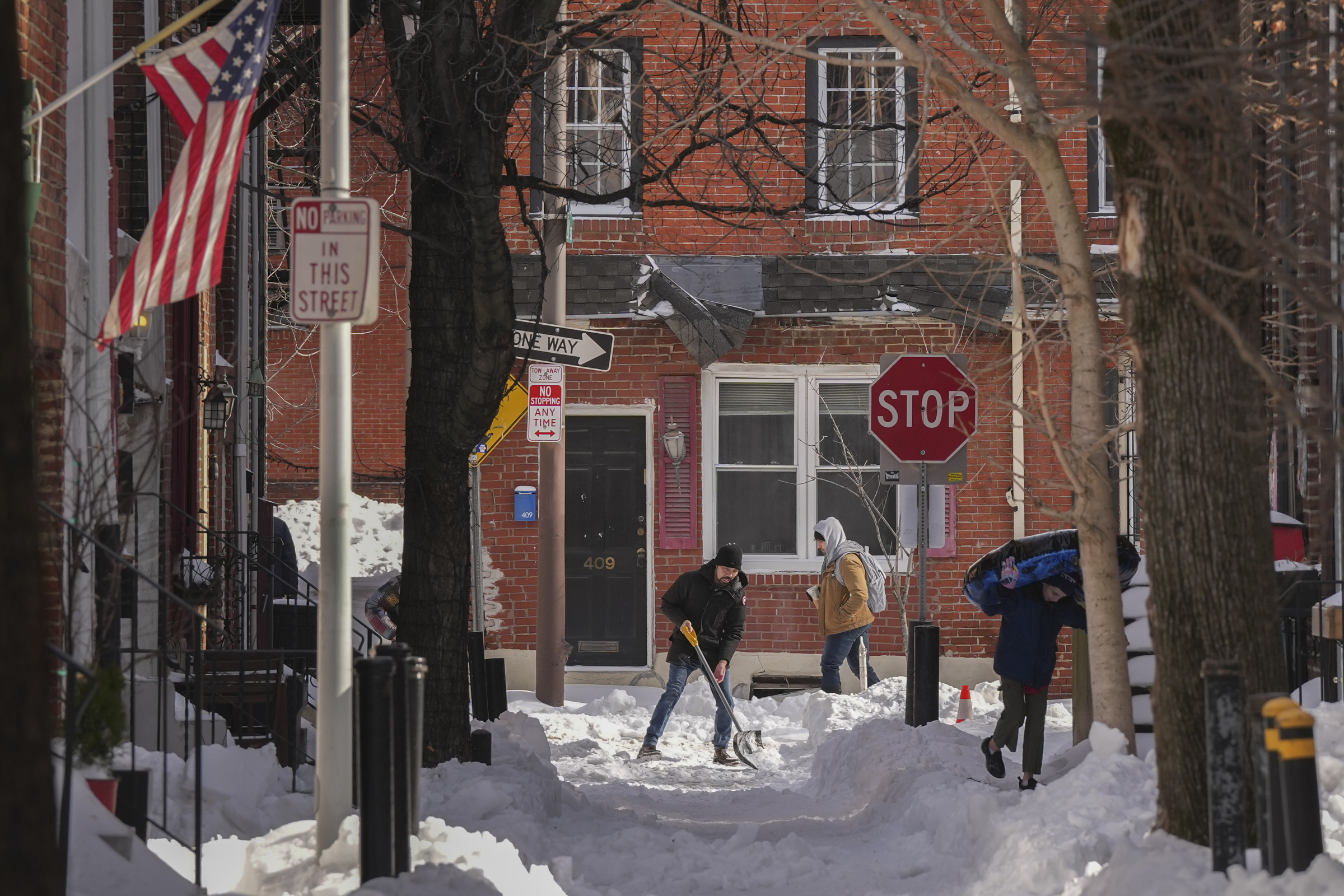
    A snow shoveler on Waverly Street on Monday.

    Davis, a founding executive at an AI startup, said he didn’t need the money, so he accepted however much his neighbors thought was fair. He ended up making about $40 to $50 per car, money he said he’ll likely use for something “frivolous” like a nice dinner out in the city.

    If there is another snowstorm this winter, he said, he’d offer his shoveling services again.

    “Why not?” Davis said. “I’d love to see the young kids get out there and do it. I think they’re missing out.”

    In Broomall, Maggie Shevlin said she has never seen teenagers going door to door with shovels, but some of her neighbors have.

    During this most recent storm, the 31-year-old turned to Facebook to find someone to clear her mother’s driveway and walkway in neighboring Newtown Square. Shevlin connected with a man who showed up at 6:30 a.m. Monday, she said, and did a thorough job for a good price.

    “I figured it would be somewhere around $100. He charged me only $50,” said Shevlin, who works as a nanny and a singer. “Oh my god, [my mom] was so thankful.”

    How a professional company sets snow removal prices

    A snow removal contractor clears the sidewalk in front of an apartment building in Doylestown on Wednesday.

    Some Philadelphia-area residents, especially those with larger properties, use professional snow removal services. They often contract with these companies at the start of the winter, guaranteeing snow removal — at a price — if a certain amount falls.

    In Bristol, Bucks County, CJ Snow Removal charges $65 to $75 to remove two to four inches of snow from driveways, walkways, and sidewalks at a standard single-family home, said co-owner John Miraski.

    The cost increases to $95-$115 for a corner house, he said, and all rates rise about $25 for every additional two inches of snow.

    Last week, he said, several people called him asking for help shoveling out cars, but he was too busy to take on the extra customers. He passed those requests to other companies, he said, and recommended they charge “nothing less than $50 to $60, because you’re dealing with [nearly] a foot of snow plus a block of ice.”

    Miraski said he recommends professionals because they are insured. That’s especially important, he said, in storms that involve sleet or freezing rain, as Philly just experienced.

    “You start throwing ice, who knows where it is going and what it is hitting,” Miraski said.

    Professionals are more expensive, he acknowledged, but often more thorough. “Some of my properties we went back to two or three times to make sure they were cleared.”

    And sometimes, regardless of who shovels, a resident can find themselves unexpectedly stuck in the snow again.

    In Northeast Philadelphia, J’Niyah Brooks paid $50 for a stranger to dig out her car on Sunday night. But when she left for her job as a dialysis technician at 3 a.m. Monday, her car had been plowed in.

    “I was out there kicking snow,” said Brooks, who was eventually able to get to work.

  • U.S. Soccer needs your kid’s youth club to help its national teams. Will it happen?

    U.S. Soccer needs your kid’s youth club to help its national teams. Will it happen?

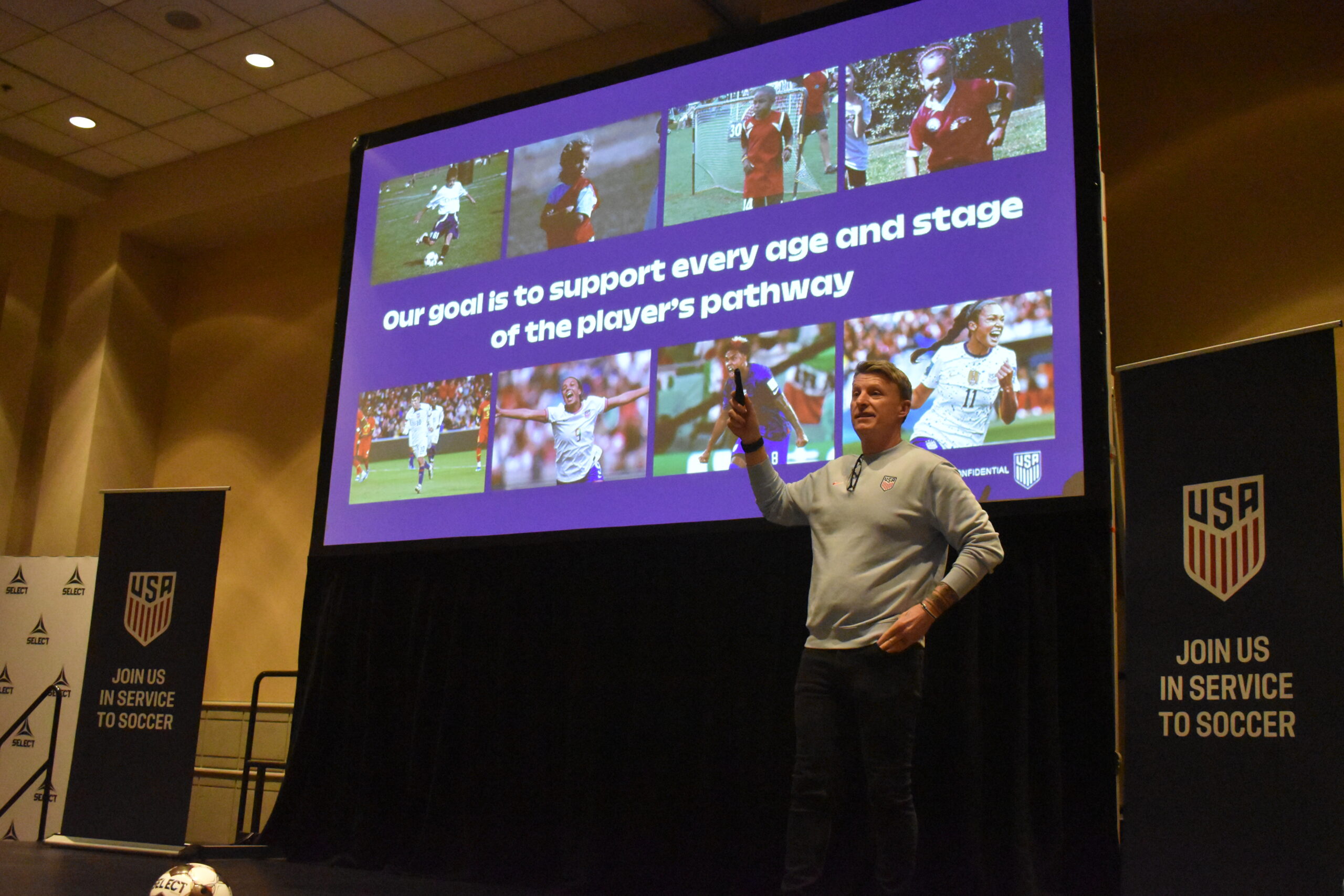
    U.S. Soccer Federation sporting director Matt Crocker didn’t invent his slogan of choice, but that’s no reason not to use it.

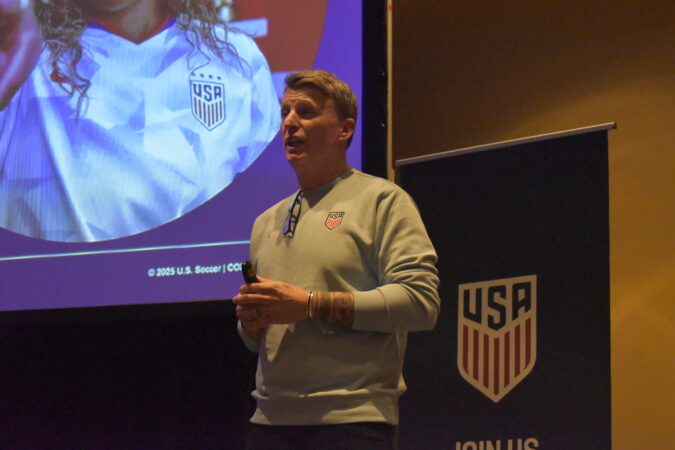
    “If we do what we’ve always done, we will get what we’ve always got,” he said in a seminar at the United Soccer Coaches Convention last month. He said it at another event in December, too, and has no doubt said it many other times in his tenure so far.

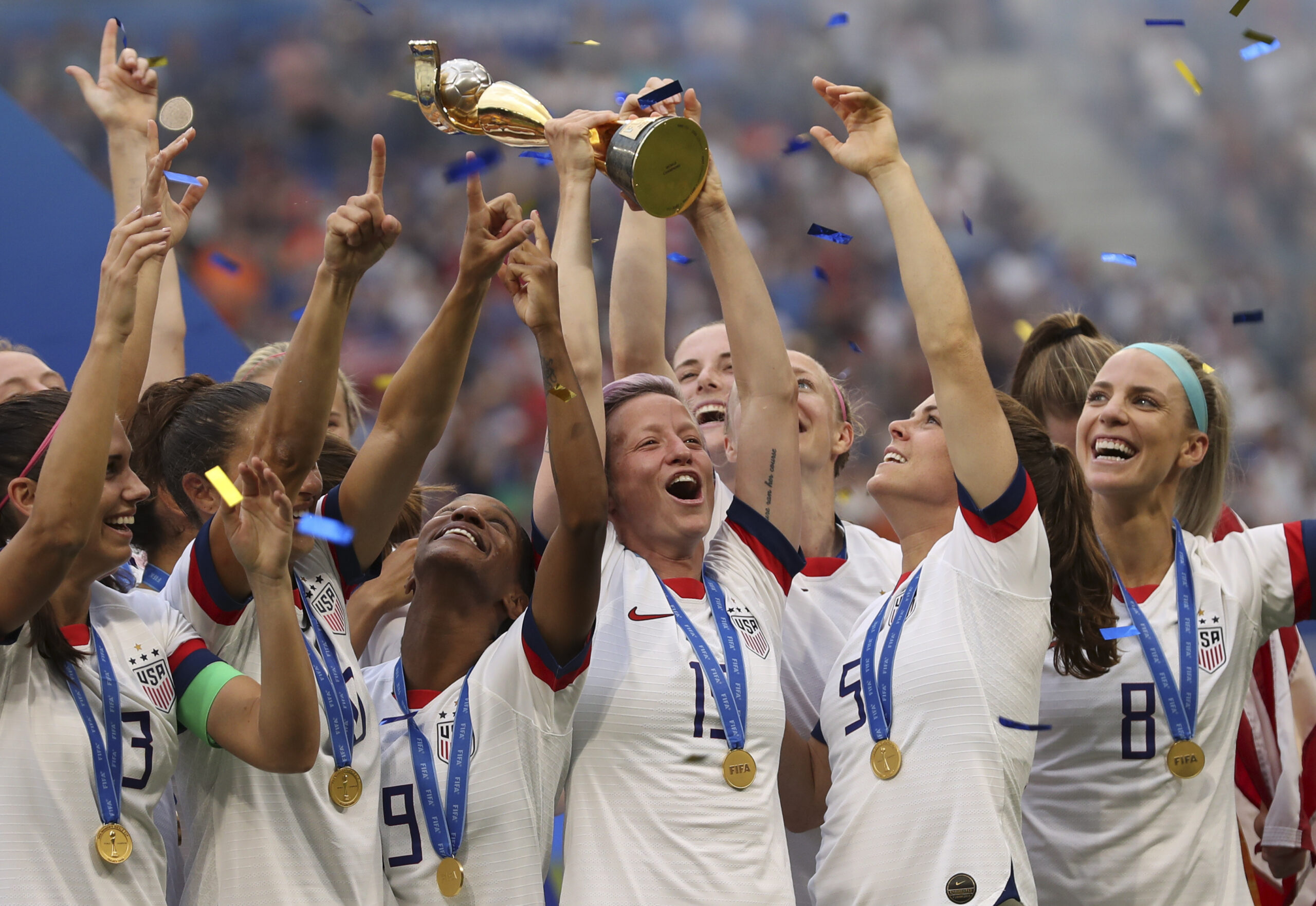
    The message might even be getting through, helped by Mauricio Pochettino and Emma Hayes’ big-ticket successes lately with the senior national teams. But the people Crocker really needs to reach don’t work for his employer. In fact, they’ve historically worked against it.

    America’s youth soccer industrial complex — a phrase whose accuracy is confirmed at every convention — doesn’t like being told what to do by the sport’s governing body, or by anyone else. Many coaches and administrators have long cared more about winning games, making money, and keeping their jobs than about big-picture player development.

    Youth soccer tournaments rake in big bucks for organizers and are part of an overall machine that prioritizes winning over development in the American soccer landscape.

    For as much as Crocker is judged on the senior national teams’ successes, he is also measured on that big picture. And while he’s happy to let the men, the women, and the youth game do some things differently, he knows how he wants to steer the freighter carrying them all.

    His map is the “U.S. Way” program scheduled to roll out this year. It includes some medicine for the youth game to consume, and Crocker is trying to serve it with quite a bit of sugar.

    “We understand this is not U.S. Soccer standing here going, ‘You must do this, you must do that,’” he said. “It’s us better understanding your environments. It’s us better collaborating and working with you and giving you the resources — for free — to be able to tap into some of the things that might help you as a coach, that might help you as a club.”

    Free sugar certainly tastes good, right?

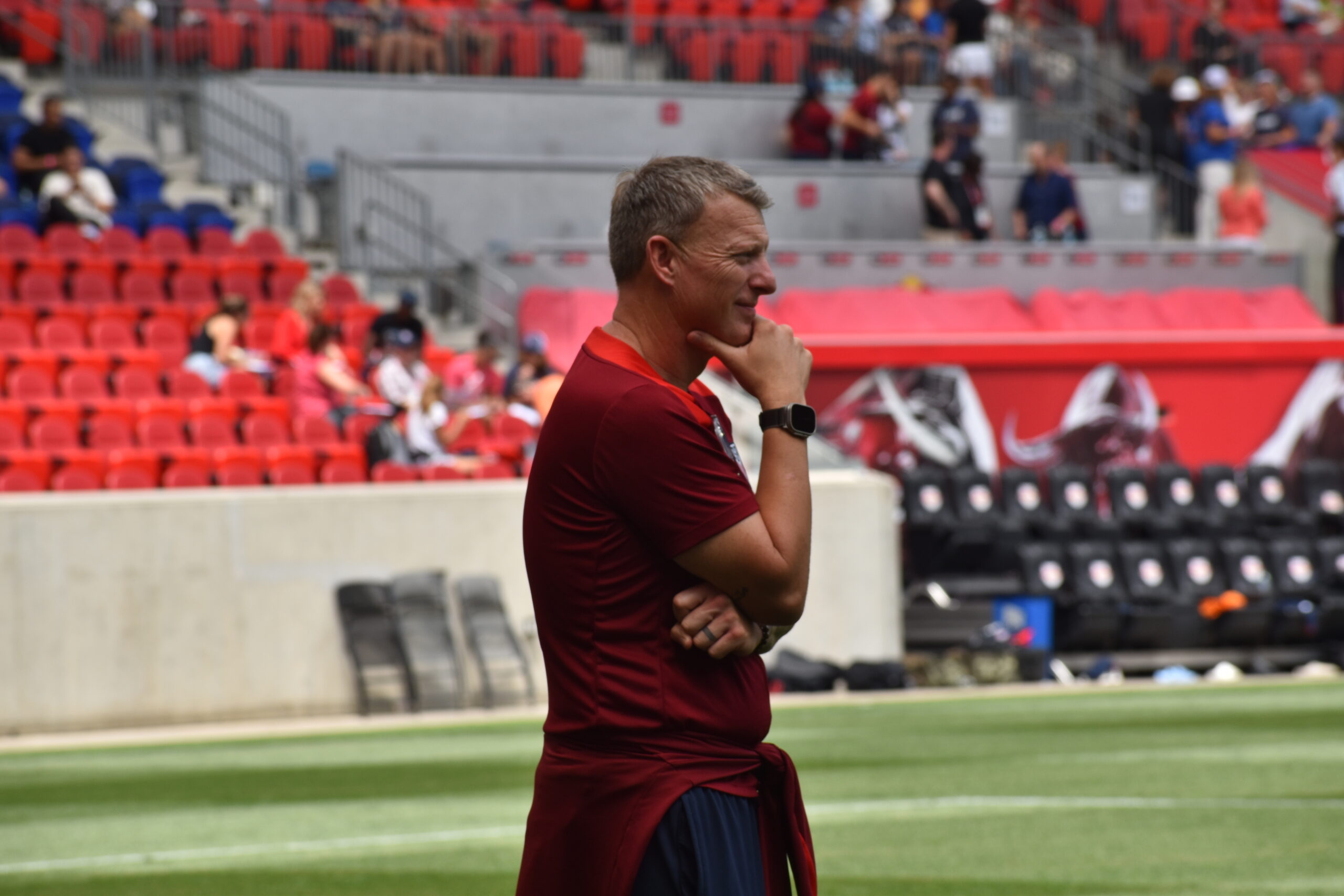
    Matt Crocker on the sidelines at a U.S. women’s team practice in 2024.

    Crocker’s case is helped by some medicine that U.S. Soccer has taken over the years. Before MLS teams built out their youth academy pipelines (which the NWSL hasn’t even started yet), the governing body ran a residency program for elite teenage boys in Bradenton, Fla., from 1999 to 2017.

    From 2007 to 2020, there was also the U.S. Soccer Development Academy league for elite youth clubs. It had strict and often controversial rules for participation.

    Both entities are not missed these days, and that proves an important point. Player development is supposed to be the job of clubs, not national federations.

    ‘The cherry on top’

    Even though Crocker has pushed the governing body to fund full-scale youth national teams at every needed age (under-14, 15, 16, 17, 18, 19, 20, and 23, boys and girls), they’re all still meant to be finishing schools. Clubs develop players, then the national teams pick from them.

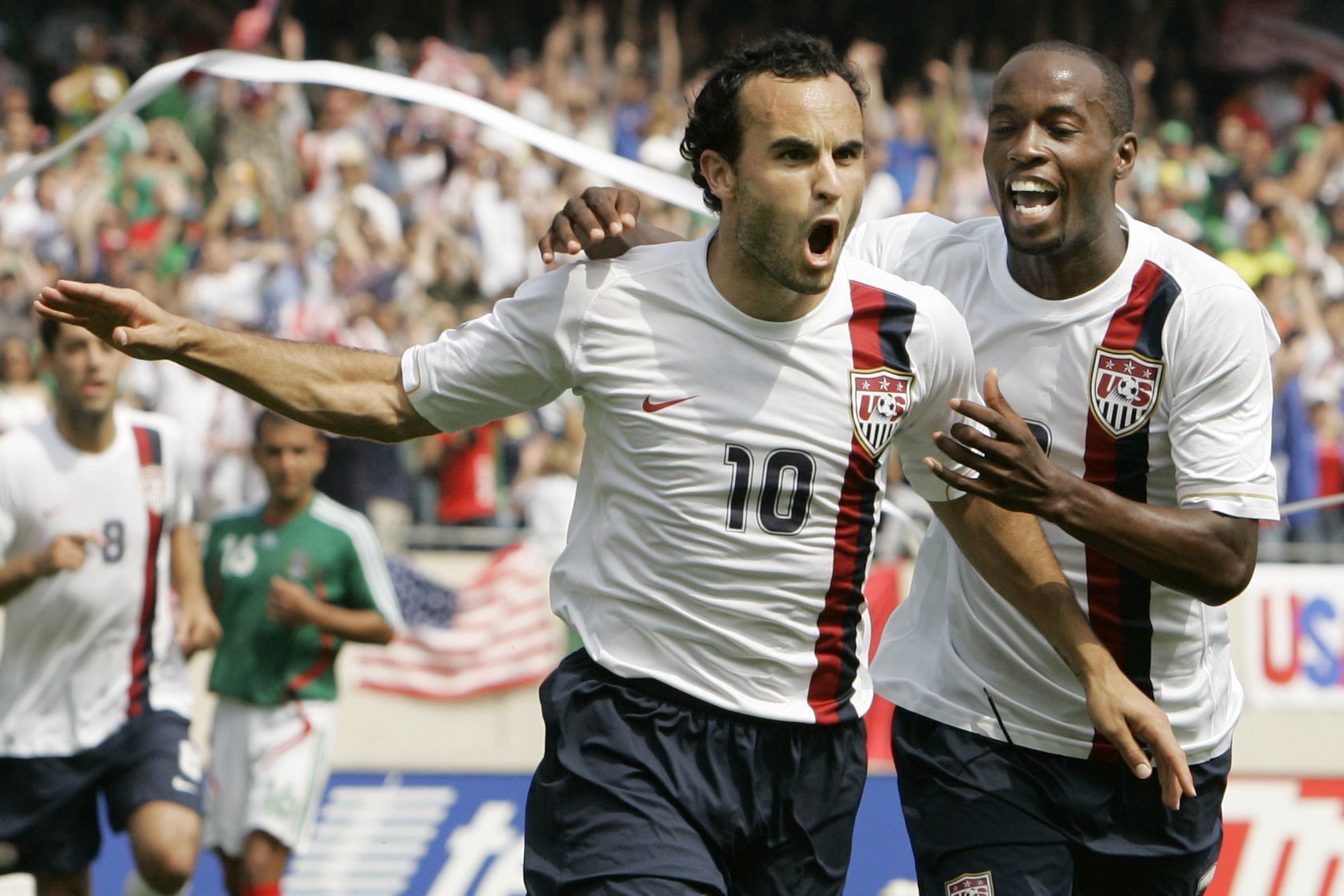
    U.S. legends Landon Donovan (left) and DaMarcus Beasley (right) played in U.S. Soccer’s former academy in Bradenton, Fla.

    “Without you guys in this room, we all fail,” Crocker said to a room that housed coaches, administrators, and more across American youth soccer. “We can put all our resources into the national teams, but unless we’re improving the quality of the child or young player coming into the system, it doesn’t matter. We just get the opportunity to sprinkle the cherry on the top, and we get 60 days [a year] if we’re lucky.”

    Club teams, he continued, “get all that time with the players. You have the opportunity to really kick on player development.”

    Some of his remarks went into the weeds, but it’s necessary to understand how player development in soccer works around the world, and how different it is from basketball, football, and baseball.

    “When we talk about our international players or the international players that exist in this country, even at that level, 85% of player development happens in club [soccer] — and it starts when they’re 4 ,” Crocker said. “It’s not like as if, as soon as they go to the so-called pro club, whether that be MLS or NWSL, then all of a sudden, when they become a professional player, that’s when they develop. Development happens from the first touch point, the very first touch point at the grassroots.”

    Matt Crocker on stage at this year’s Coaches’ Convention at the Pennsylvania Convention Center.

    The crowd in attendance for Crocker’s remarks wasn’t very big, and he noticed from the stage.

    “Either the presentation went really well last year, and everybody got all the content that they needed, so [they] didn’t decide to come back, or the presentation wasn’t good enough,” he said of his well-attended speech at last year’s convention.

    When Crocker talked about how “there’s a lot of infighting, a lot of players going from one club to another, a lot of teams not playing each other and going further afield” — all of which are true — there was no applause, laughter, or groaning.

    “That team can’t play that team, and they go all the way past them and jump on a plane and spend hundreds of dollars to go and play [another] team, because that league fell out with that league,” he said at another point. “Just crazy. This is about children. This is about the best opportunities for children.”

    About 10 minutes in, Crocker got ready to slip in the medicine. But first, he offered a little more sugar.

    Meanwhile, the crowd for Matt Crocker isn’t great.

    But those who are here have just heard him give a lot of praise to the culture of the Union’s academy, which he visited yesterday:

    [image or embed]

    — Jonathan Tannenwald (@jtannenwald.bsky.social) January 15, 2026 at 9:50 AM

    “I think I opened last year with the same thing, which is player development happens in your clubs and your environment,” he said. “And our job in U.S. Soccer is to recognize that, celebrate it, and support you in doing the best jobs you can in really really challenging difficult situations.”

    Then he went for it.

    “Basically, our job is to define as the federation, as hopefully the leaders in soccer, to be able to give you guys clear guidance over: we believe youth development needs to look like this in the future,” he said. “And these are the things that we believe you could do to support a better quality of child, of player, achieving a better experience within the game in the future. So, us as a governing body finally putting the stake in the ground and going, ‘This is what we believe in.’”

    He offered a little more sugar just to make sure it went down.

    “Our job is not to tell you,” he said. “Our job is to show you these things can work and hopefully positively influence you to want to come and be part of the things that we’re talking about.”

    A few minutes later, he went back to the medicine — this time, with something he knew is close to sacrilege in some parts of youth soccer.

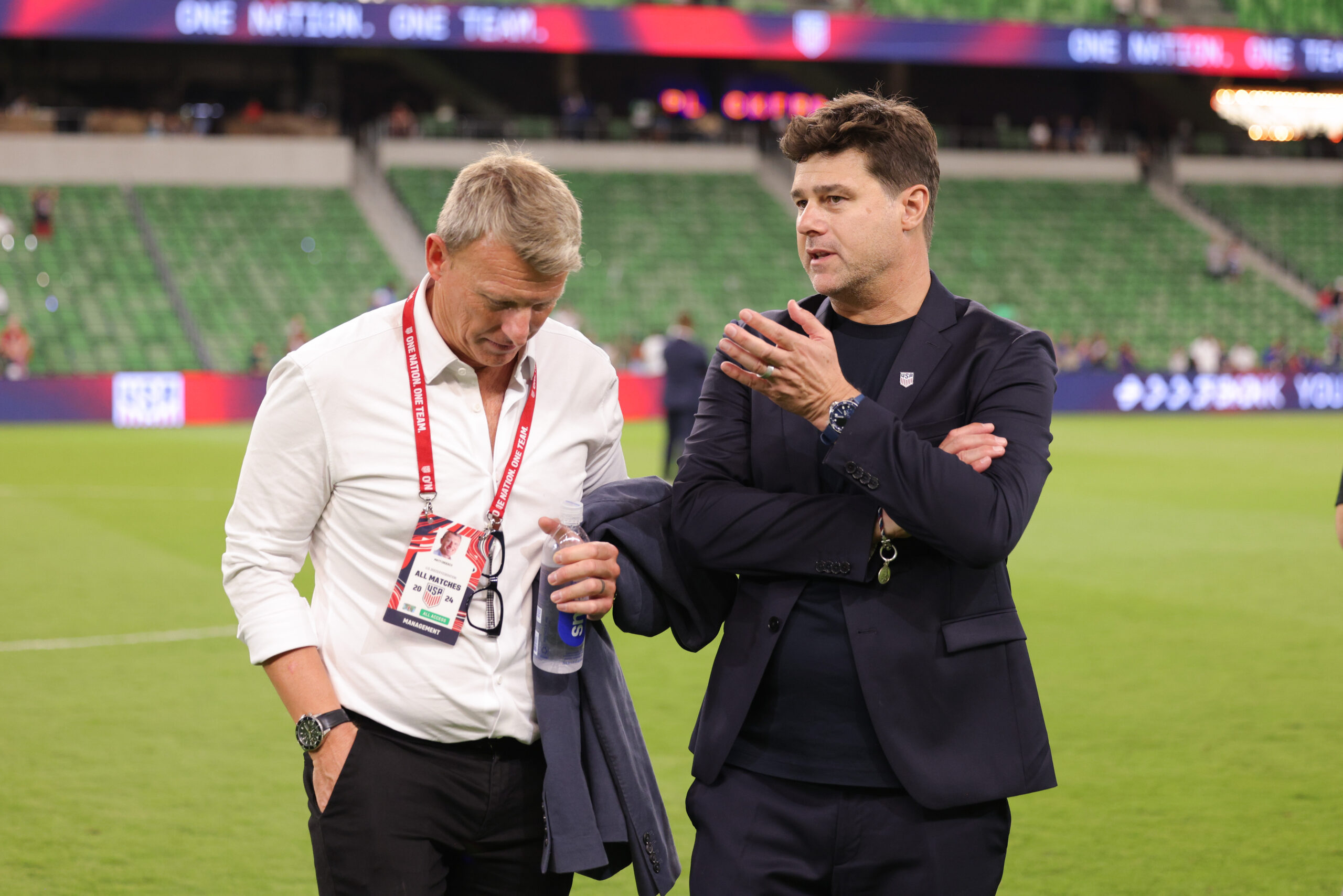
    Matt Crocker (left) in a conversation with U.S. men’s national team manager Mauricio Pochettino.

    “Our job as U.S. Soccer is to educate clubs, coaches, parents on when you are looking for your team next year, don’t automatically bring up the league table of winners and go, ‘I want my son to go there or daughter to go there because they must be the best club,’” he said. “That might not be the right environment for them. We need to start to make sure that we promote and value clubs that do great player development.”

    And he happened to have an example lined up.

    The day before Crocker spoke, he visited the Union’s facilities in Chester. It wasn’t his first time there, but it was his best chance yet to actually see the whole place, from the youth academy on up. He raved about it, just as Pochettino did when he came to town and counted the Union alumni on his squad.

    “You see the culture that exists in that building,” Crocker said. “You see the kids smiling, and they’re in education — this is not even when they’re on the field to play. The education and the soccer go hand in glove, and it’s really just a great environment to see.”

    WSFS Bank Sportsplex in Chester is the site of the Union’s entire operation from its youth academy to senior team.

    Crocker tied all of this together with slides showing how many players in the world’s top 250 and 1,000, based on club success, come from various countries. He hired sports consulting firm Twenty First Group to crunch the numbers for him, and the result was clear.

    In women’s soccer, it’s seven or more in the top 250. From 2016-25, the U.S. averaged 80 players at that level, by far the most; and only England had a higher major-tournament winning percentage. In the top 1,000 players, the U.S. had 180, almost 20% of the total.

    Those teams, the data said, usually win at least 50% of their games in major tournaments, a benchmark “associated with consistently reaching the quarterfinals or later.”

    But reduce to the top 50 players, and the U.S.’ portion has gone down lately.

    “There’s this chasing pack now who are doing more youth development than they’ve ever done before,” Crocker said. “So the challenge in the women’s game is how do we maintain our top 180, but how do we get more players in that top 50?”

    The U.S. women’s soccer team has long had a much bigger player pipeline than the rest of the world, but that’s starting to change.

    In men’s soccer, the success benchmark hits when a nation has four players in the top 250, or 15 in the top 1000. In the same 2016-25 time period, the U.S.’ average was zero in the top 250 and 5.8 in the top 1,000.

    “Any team can win at any moment,” Crocker said. “But what we’re talking about is consistent, sustained success over many, many years … Clearly this picture doesn’t put us in that situation.”

    His goal is to get to 15 in the top 1,000, the men’s benchmark for a 50% win rate. And he returned to the top 250 to push home the final message.

    It’s no surprise that the top five teams over the 10 years surveyed are Spain, France, Brazil, England, and Germany. But England was far off the pace at the start of the period: 15 players in the top 250 compared to Spain’s 49. Since then, they’ve steadily risen from 18 in 2018 to a table-topping 30. Spain is now second with 26.

    The Twenty First Group researchers don’t think it’s a coincidence that England has reached two European Championship finals and a World Cup semifinal in that time.

    Christian Pulisic is one of the few American men’s soccer players who is considered truly world-class.

    And was it a coincidence that Crocker was the technical director of England’s Football Association from 2013-20, launching the “England DNA” program for the nation’s youth national teams along the way?

    As he told The Inquirer in December, scaling that program up to a country the size of the United States — in both population and geography — is a gigantic task. But he knows where he wants to get to, and his U.S. Soccer colleagues used the rest of the convention to start to lay out the specifics.

    “Currently, we have a landscape where it’s totally, I think, not ungoverned, but there’s not consistent standards across the whole country or best practices,” Crocker said. “We want to come to you, we want to be clear and concise about: if you want to be a club and you want to operate in this landscape, this is what best practice looks like. And we want to work with you to get to those best practice outcomes, and we are not going to to accept lower standards.”

    The sugar tasted good. So will the right people take the rest of the medicine?

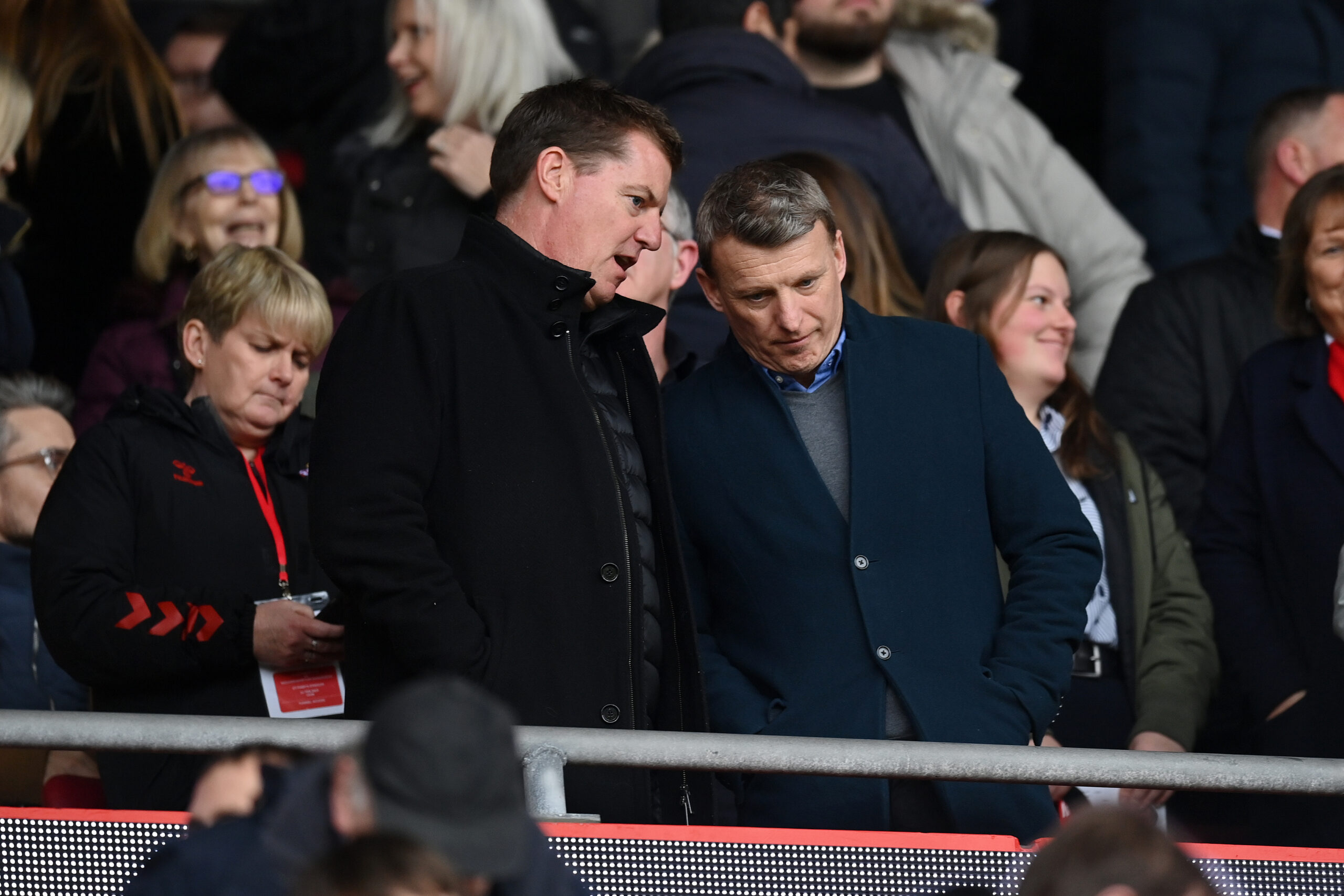
    Matt Crocker (right) worked at England’s Football Association, and at the club level with Southampton.

    “This is not going to be an inspector coming in with a clipboard telling you all the things you’re doing wrong,” Crocker said. “This is U.S. Soccer going [for] health checks coming into your environments: where are you, what do you need, this is what good looks like, this is where you are. How do we work together to solve these things?”

    By the end of the seminar, the crowd hadn’t revolted yet. It remained small, but greeted the end of Crocker’s prepared remarks with applause.

    “You’ll walk away from here today, and you’ll either say that was great, or that was whatever,” he said.

    Visiting a doctor can be that way sometimes.

  • Letters to the Editor | Feb. 1, 2026

    Letters to the Editor | Feb. 1, 2026

    Too far

    Two citizens have now been killed by untrained, ruthless, vicious, masked U.S. Immigration and Customs Enforcement agents who have been encouraged to act as government thugs, as they possess absolute immunity for whatever they do.

    They abduct people, they brandish their firearms to intimidate crowds, they smash vehicle windows with their targets inside, they drag people through the streets, they use battering rams to enter homes without a warrant or reasonable suspicion, and they spray nonviolent protesters who get under their skin with tear gas and pepper spray. Many have likened the tactics of ICE to those of the Gestapo.

    After each killing, the secretary of Homeland Security and the president demonize the dead and justify the actions of ICE agents who are never wrong, in their twisted view. The victims were terrorists, they tell us; they were there to kill the agents: knee-jerk assertions made with no evidence, no valid basis.

    In a rarity, and fearing for their members’ reelection chances in the midterm election to take place later this year, many Republicans are speaking out against what has taken place, at the very least calling for an independent investigation of the killings, which would include Minnesota state officials, rather than a farce that would be an administration whitewash.

    Should those who are here in violation of immigration law and who have committed a serious crime here be apprehended and deported? Certainly, but that is not what the Trump administration has done. The vast majority of those who have been targeted for removal have been law-abiding since they arrived.

    May the chaos that has enveloped and so heavily and pointlessly damaged Minneapolis soon end, and may it not spring up in other blue areas in which the president seeks to impose chaos.

    Oren Spiegler, Peters Township

    Consider countermeasures

    Professor Jonathan Zimmerman has provided a detailed analysis of the many ways in which the Trump administration has attempted to whitewash American history, culminating locally with its despicable actions at the President’s House memorial site. As a retired physician, I fully agree with his diagnosis. But he didn’t offer any treatment plans, except perhaps an implied three-year wait for a new administration with a hopefully less racist agenda.

    Meanwhile, I suggest a few more: Commit to placing numerous replacement signs in every available city-owned or sympathetic privately owned locations surrounding the President’s House Site. Maybe our wonderful city’s Mural Arts program could be involved? Make sure these notices describe how the former materials were taken down by the National Park Service, and state unequivocally that this heinous act occurred during the Trump administration under its order. Pass a city ordinance that such signs and murals shall remain in place for perpetuity.

    If we do this, it will forever mark these actions as shameful for future generations. I’d like to see similar actions at all our national parks and museums, but as all politics are local, let’s at least start here in our country’s birthplace.

    Fred Henretig, Philadelphia

    Join the conversation: Send letters to letters@inquirer.com. Limit length to 150 words and include home address and day and evening phone number. Letters run in The Inquirer six days a week on the editorial pages and online.

  • Horoscopes: Sunday, Feb. 1, 2026

    ARIES (March 21-April 19). Virtues such as patience, kindness, compassion and good manners are like concentrates — a little goes a long way. Consistent application in small doses has you rising socially, spiritually and in other ways. People trust you.

    TAURUS (April 20-May 20). You can really set a tone. They’ll join in your fun, follow your lead and rise to your expectations. They’ll do it because they admire you, partly because you make sure to be a person worthy of their admiration.

    GEMINI (May 21-June 21). Maybe it’s considered selfless to do what’s best for the group, but it’s also the most advantageous move you could make. Everyone will perform better inside a thriving group. And the collective needs just what you’re so good at giving.

    CANCER (June 22-July 22). Some battles are never really won, but if you stop thinking of them as battles, you’re the one who wins. Try thinking of the situation as a conversation, a puzzle or a dance. That is what it will become.

    LEO (July 23-Aug. 22). Like a cat, you act when you feel it, not when they tell you to. You don’t obey orders unless they happen to coincide with your body’s sense of energy and timing. You’re swift, strong, fierce or tender, according to your own wild instinct.

    VIRGO (Aug. 23-Sept. 22). Refinement involves repetition. It’s a thousand small moves to polish the surface. It’s the 50th read, the dozens of meetings, the comb-through, the edits after the final edit. Refinement is what sets you and your work apart.

    LIBRA (Sept. 23-Oct. 23). You’ve spent weeks circling a vague feeling, and now it’s acute, vivid and up close — maybe too close. Now that you know more about what you’re dealing with, step back again for the big picture that’s only visible from a broad perspective.

    SCORPIO (Oct. 24-Nov. 21). Some people confuse need with want. You want only the wisdom to delineate. You’ve seen how messy and ugly it can be when excess spills all over everything. Elegance is having just the right amount.

    SAGITTARIUS (Nov. 22-Dec. 21). Life is not a speed date. You’re more into really being somewhere than collecting a bunch of checkmarks. Today, an experience will linger. You’ll love how the moment gets under your skin and later makes you think.

    CAPRICORN (Dec. 22-Jan. 19). It may surprise you when others share a part of their world they don’t let just anyone in on. But don’t be too quick to share back just yet. You’re under no obligation. It’s enough to honor others with your sweet attention.

    AQUARIUS (Jan. 20-Feb. 18). You’re not asking for magic. You don’t want to be served or hyped or charmed or rescued. But you do want respect — for your intelligence, your style and your choices. And that’s exactly what this moment is about.

    PISCES (Feb. 19-March 20). Like everyone, you have your own unique set of quirks and blind spots. The ones who’ve offered you acceptance and belonging have taught you to extend the same grace to others. Sometimes, that simply means letting small imperfections pass without comment.

    TODAY’S BIRTHDAY (Feb. 1). Welcome to your Year of Life-Changing Introductions. Doors open because someone recognizes your talent and introduces you to exactly who you need next. Ideas move from imagination into form with help that feels timely and sincere. More highlights: collaborators who become friends, shared laughter that fuels productivity, and a long-range plan that pays at every milestone. Libra and Aries adore you. Your lucky numbers are: 7, 18, 26, 5 and 39.

  • Dear Abby | Old flame is caught up in a scam she thinks is real

    DEAR ABBY: Six years ago, at my 40th high school reunion, a few former classmates asked me about my old high school sweetheart. (We broke up after high school.) I decided to find her and located her on Facebook. To my surprise, she never married. I told her I am married. We became friends again, but from 3,000 miles away.

    For a few years, it was a nice friendship. We shared old stories, and I helped her out with financial stuff and gave her some emotional support. Recently, she told me she has a long-distance relationship with an “oil rig offshore worker.” I asked her to tell me more about him, and it all points to a scam artist. I recognized all the signs and tried to warn her.

    She insists he’s real, it’s true love and they are getting married. (They have never met in person.) Then I got an email from her with some nasty words about my comments. I told her I care for her safety and that the man she’s corresponding with is NOT real — it’s a romance scam.

    I no longer hear from her. I still care about her even though it’s not a high school romance anymore. What should I do?

    — SWEETHEART IN CALIFORNIA

    DEAR SWEETHEART: Unfortunately, romance scams like the one you have described are common. The scammer claims to be on an oil rig or in a war zone (but rotating home soon) or is otherwise unreachable in person. He may also have a motherless child he is not parenting on a daily basis because his wife is “dead” and the kid is in “boarding school,” so the target would not be responsible for child-rearing. (How convenient!)

    Predictably, an “emergency” arises, and the scammer asks the target to fork over hundreds, or perhaps thousands, of dollars “for a short time only.” After the money is sent, poof! The scammer is gone, and the romance is over.

    My advice to you is not to be surprised to hear from her once the con has come to its conclusion.

    ** ** **

    DEAR ABBY: My husband and I are in our 60s. When we are at home, just the two of us, he likes to wear just his underwear around the house, whether it’s watching TV or eating dinner. I have accepted it all these years and never made an issue of it.

    When our granddaughter visited us at the age of 1, he wore shorts at my request but no shirt. She’s now coming to stay with us at age 2 1/2. Don’t you think he should wear a shirt and shorts when she visits? He values your opinion.

    — MR. INFORMAL’S WIFE

    DEAR WIFE: Since your husband values my opinion, please tell him I said that unless it’s 95 degrees when your granddaughter visits, the appropriate thing to do would be to wear shorts AND A SHIRT during your grandchild’s visit.

  • Allen Iverson welcomed with MVP chants, Pat Croce praises Eric Snow, and more from Sixers reunion night

    Allen Iverson welcomed with MVP chants, Pat Croce praises Eric Snow, and more from Sixers reunion night

    Xfinity Mobile Arena jumped back in time on Saturday as the 76ers honored their iconic 2001 NBA Finals team with a reunion night as part of the franchise’s 25th anniversary celebration.

    The vintage 76ers logo, with its retro comet tail, adorned the basketball court. Hip-Hop, the team’s mascot during that era, returned to interact with the crowd, and players and fans alike wore their throwback black jerseys to pay homage.

    From special appearances and halftime tributes, here’s what the fans had to say about reunion night:

    ‘That team was so Philly’

    There’s only one thing — or person — that comes to mind to most fans when they think of the throwback Sixers jerseys.

    “I just think of Allen Iverson,” said 23-year-old Robert Phillips. “That’s it.”

    Iverson, who was drafted by the 76ers with the first overall pick in 1996, became an immediate fan favorite — representing the grit and toughness of Philadelphia. His stardom has reached generations, including Phillips, who said he grew up watching highlights on YouTube.

    “I wasn’t born yet,” Phillips said. “My grandmother was alive and she watched AI’s run and then once we were old enough we went on YouTube and watched AI highlights. When he did that crazy layup in the All-Star Game, I still watch it and I’m like, ‘How are you this acrobatic?’”

    The 11-time NBA All-Star had early success, earning Rookie of the Year honors. Iverson eventually led the team to the NBA Finals in 2001 — winning NBA MVP in the process — before losing to the Los Angeles Lakers, led by Kobe Bryant and Shaquille O’Neal.

    However, that run is still something Philly fans like to reminisce about. Ishmael Amir, 36, remembers how “electric” it was to be a Sixers fan at the time.

    “That team was so Philly, because again, it was a team full of underdogs, and I think that represents the city,“ Amir said. ”Like nobody expected the Sixers to do it. Most people outside of the city can’t name anybody on that team besides AI and maybe [Dikembe] Mutombo. And that’s who we are as a city. … You can count us out. We love when you count us out. And that season it was a great time for us.”

    Iverson gave Philly fans many iconic moments, including the step over Tyronn Lue, which became a picture-perfect memory for most fans. However, there are a few unsung heroes from the 2001 team. And former Sixers president Pat Croce commended one of them before Saturday’s game.

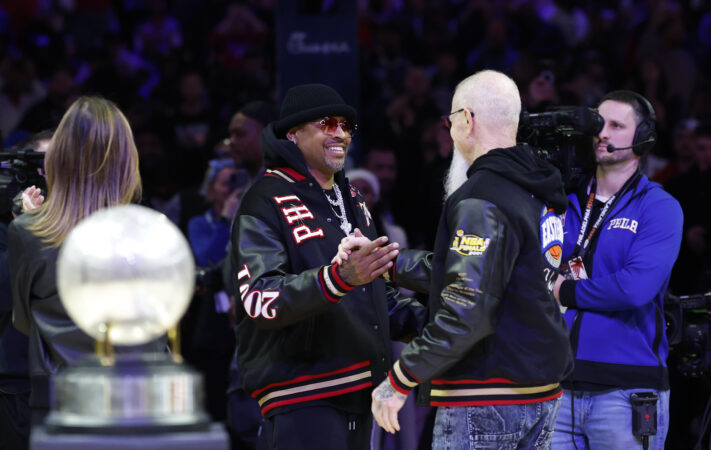
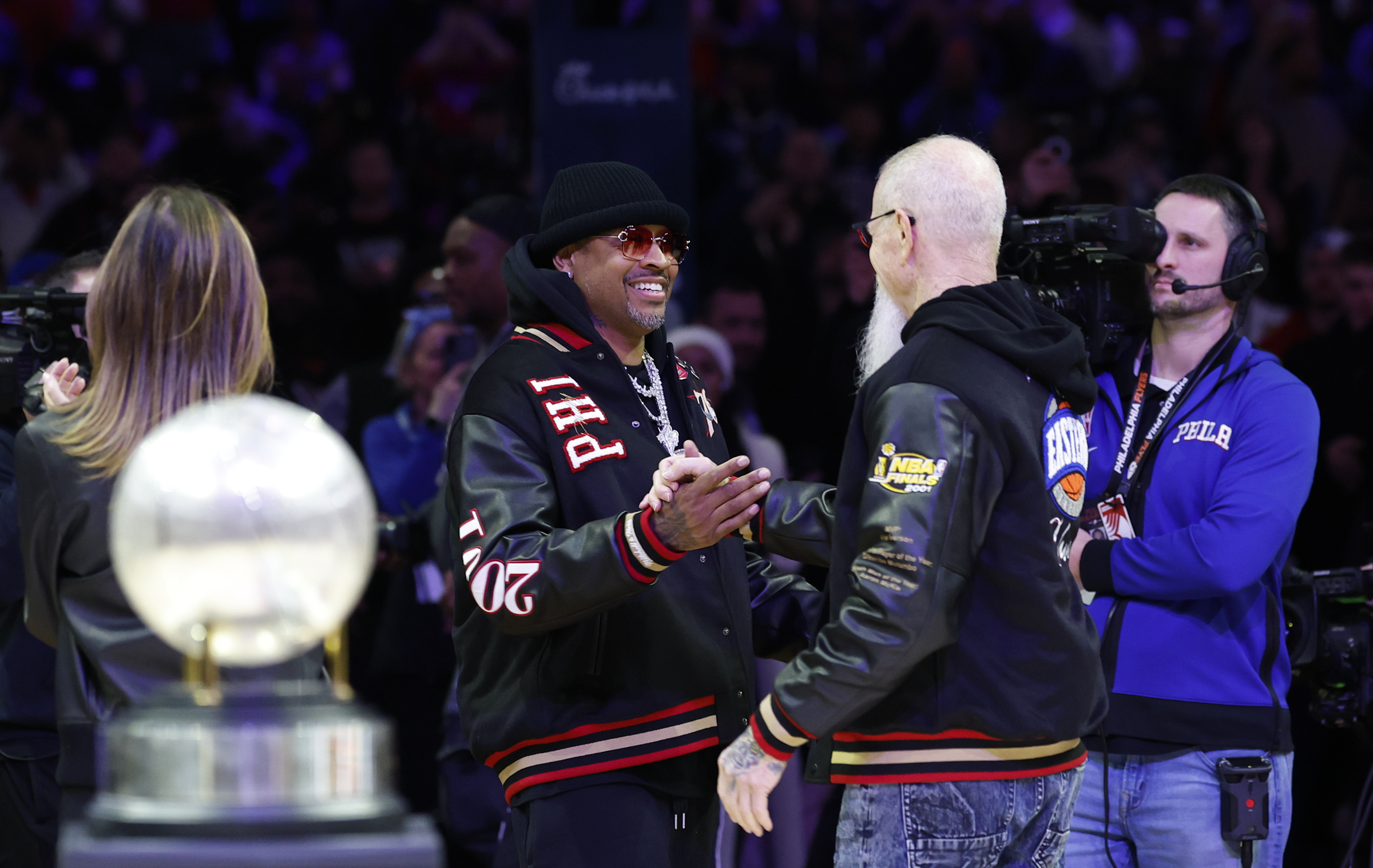
    “You know Allen Iverson, you know our Bubba Chuck,” Croce said, referring to Iverson’s nickname. “Bubba Chuck wouldn’t be Bubba Chuck without Snowman [Eric Snow]. He watched his back every game. He talked in his ear every game in that locker room. Allen could play the way he did because he had [Snow] watching his back. Eric Snow was an integral part of the championship season.”

    Honoring the 2001 team

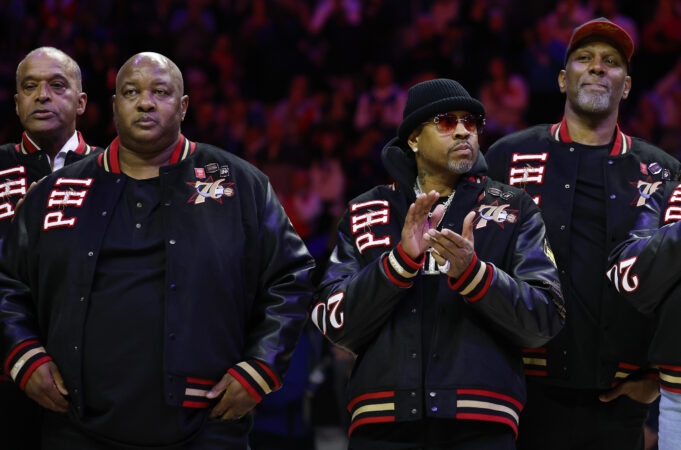
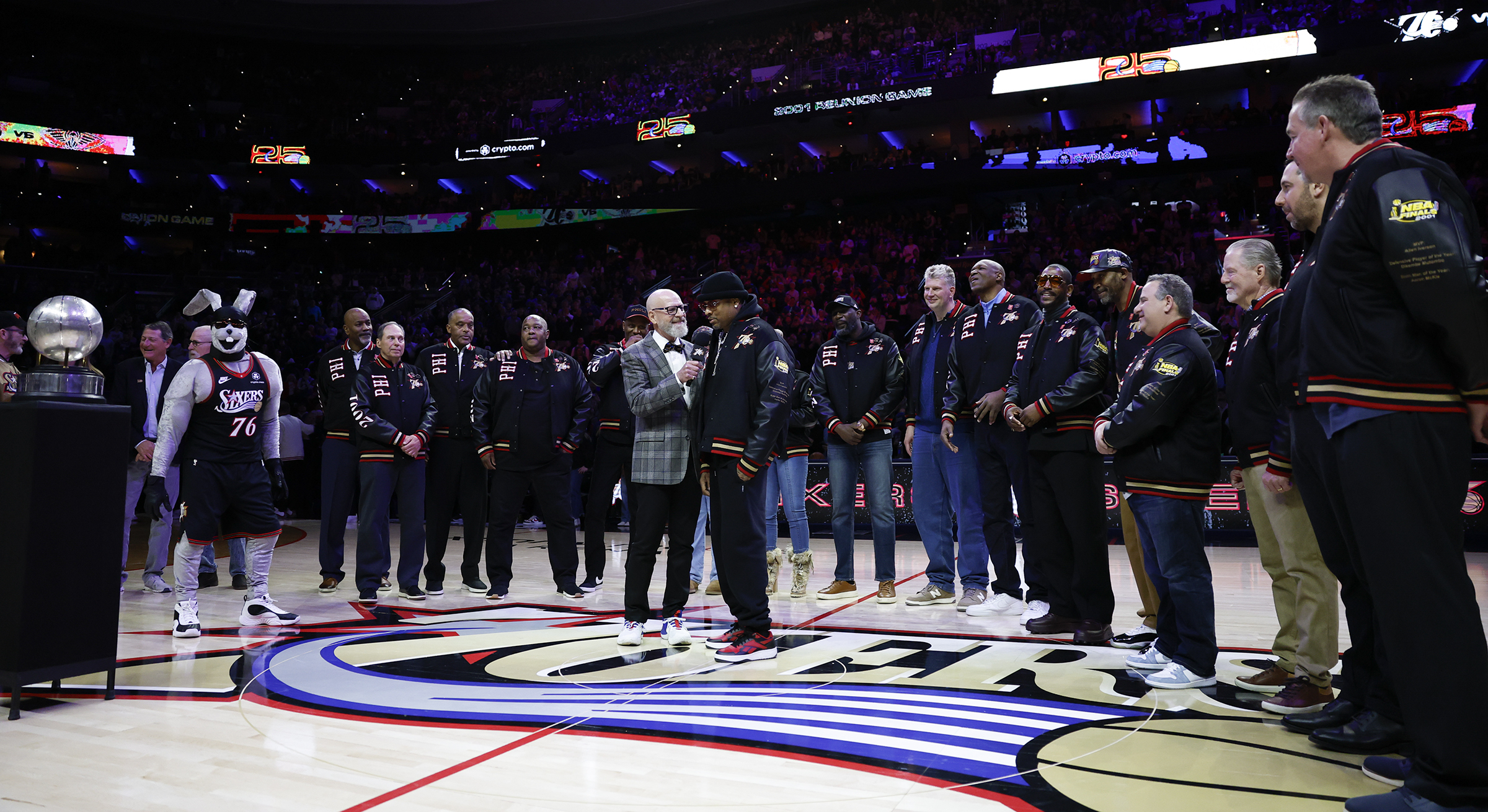
    Snow and Iverson were in attendance for Saturday’s game alongside several other members of the 2001 team, including Rodney Buford, Theo Ratliff, Todd MacCulloch, Jumaine Jones, George Lynch, Croce, and Billy King.

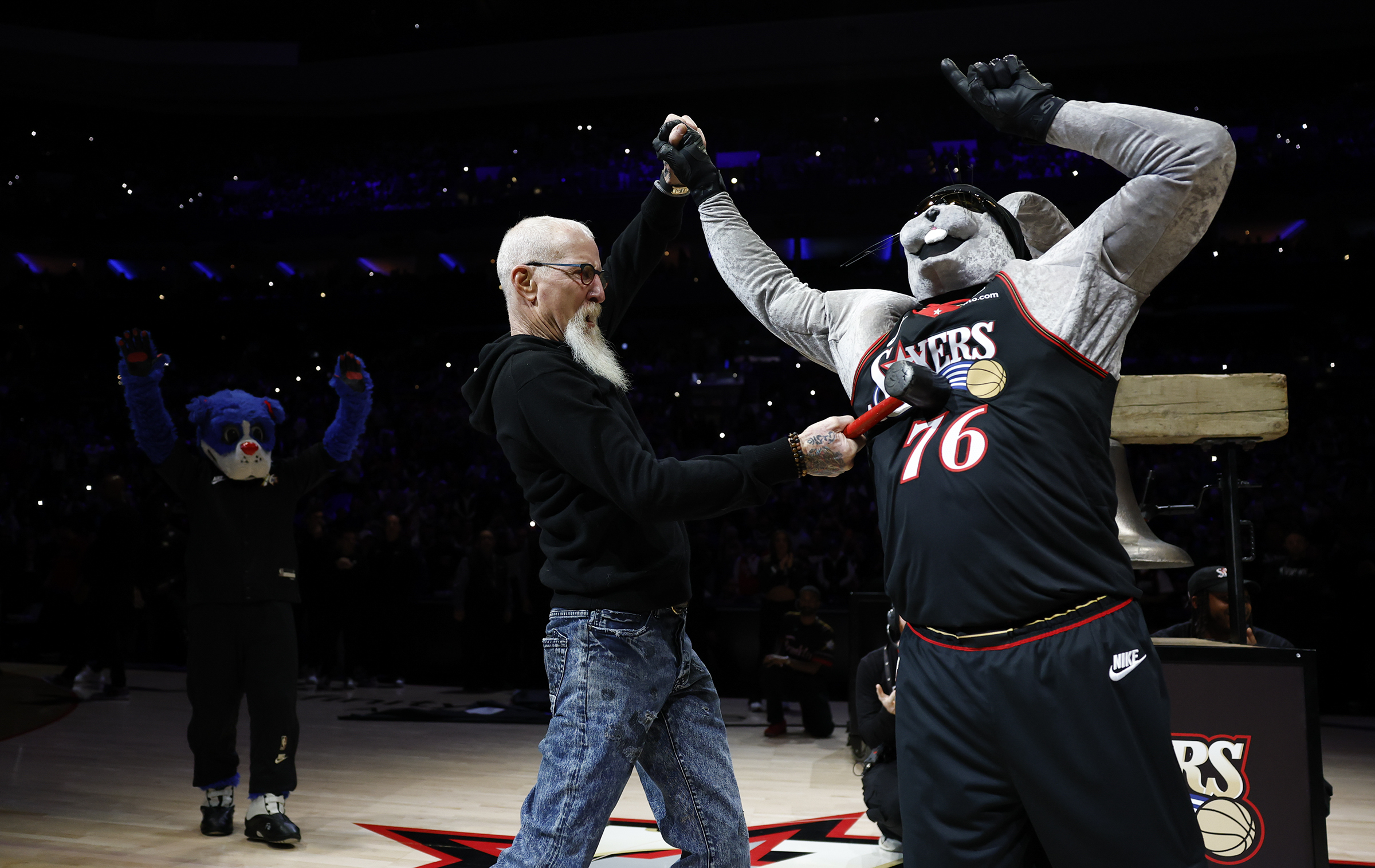
    To start the night, Croce was the special guest to ring the bell ahead of the game.

    At halftime, the members of the 2000-01 squad were honored at center court. With Iverson’s entrance, the crowd erupted into MVP chants.

    “We couldn’t have accomplished anything without the fans of Philadelphia, the best fans in the world,” Iverson said to the crowd.

  • Sixers takeaways: Celebrating 2001 conference champs, another Joel Embiid domination, and more from win over Pelicans

    Sixers takeaways: Celebrating 2001 conference champs, another Joel Embiid domination, and more from win over Pelicans

    Saturday morning, Paul George owned the headlines.

    Saturday night, however, belonged to the 76ers’ 2001 Eastern Conference championship team.

    Joel Embiid continued to put teams on notice that he’s back to playing at an All-NBA level. And Kelly Oubre Jr. is doing his best to fill the void left by George‘s 25-game suspension for violating the NBA’s anti-drug policy.

    Those things stood out on an evening where the Sixers defeated the New Orleans Pelicans, 124-114.

    Celebrating Sixers’ last NBA Finals team

    The Sixers improved to 27-21 while extending their home winning streak to three games. Embiid finished with 40 points, 11 rebounds, four assists, and two blocks, while Oubre added 19 points on the first night of Paul George’s suspension.

    Not to be outdone, Tyrese Maxey (18 points, eight assists), VJ Edgecombe (15 points, five assists), and Jared McCain (12 points) were the other double-digit scorers against the Pelicans (13-38).

    Former Villanova standout Saddiq Bey led New Orleans with 34 points, while Zion Williamson was held to 11.

    But the 2000-01 Sixers were the highlight of the evening.

    Not only did that squad reach the NBA Finals, but they were also the last Sixers team to advance past the second round of the playoffs.

    That gritty team was led by Hall of Famer Allen Iverson and a bunch of defensive-minded blue-collar players. It was a squad that still carries a lot of weight in Philly and across the NBA. And that’s impressive, considering the Los Angeles Lakers ousted them in five games in the NBA Finals.

    “I can say I’m not surprised, because we had an iconic run, but we had an iconic player, too [in Iverson],” said Eric Snow, who was that team’s point guard. “And it was different. It was unique, the city and the players. It was such a connection that I can [feel] to this day everywhere I’ve been, and I traveled to other countries, and I’ve been to every state, except two, and I’m always asked about this team.”

    That season, Iverson was the league MVP, Aaron McKie was the Sixth Man of the Year, Dikembe Mutombo garnered Defensive Player of the Year, and Larry Brown was the Coach of the Year.

    Members of the team were on hand and honored during a halftime celebration. Former Sixers team president Pat Croce and former Sixers mascot Hip Hop were the bell ringers.

    The thing that made that Sixers squad special was Brown, a true player’s coach, and the team general manager Billy King assembled around Iverson.

    “When you had a talent like Allen, you had to build a team to fit him,” King said. “So I remember talking to Larry quite a bit. Larry had a vision to get him off the ball, get him to two guard, but we needed a bigger guard that could play point guard and defend some of the guards that Allen couldn’t guard.

    “And I remember Larry and I talking, and we were saying we were watching Eric, we were in Seattle, and he was the fourth point guard there. And we were like, we think we can beat that.”

    Former Sixers guard Allen Iverson talks with former team announcer Marc Zumoff during Saturday’s celebration.

    So they acquired Snow from the Seattle SuperSonics on Jan. 18, 1998, in exchange for a second-round pick.

    “That’s where it started,” King said. “Then it was like, let’s get George Lynch, because we need somebody that can defend the three. Then the big one was Larry, and I looked, we needed a shot blocker, and it was like we knew Allen and Jerry Stackhouse wasn’t going to fit, and so we kept calling Detroit about Theo [Ratliff].”

    The Pistons agreed to the trade, but also wanted the Sixers to take McKie for salary purposes.

    So on Dec. 18, 1997, they traded Stackhouse, Eric Montross, and a 2005 second-round pick for Ratliff, McKie, and a 2003 first-round pick.

    Former Sixers President Pat Croce jokes with past team mascot Hip-Hop during pregame ceremonies before the Sixers-Pelicans game on Saturday.

    Lynch signed with the Sixers as a free agent on Jan. 21, 1999.

    “So it was more than building pieces,” King said. “We wanted guys who could play defense. Larry was a guy that I knew from coaching with him that he didn’t care if you could shoot it. He wanted guys that can play defense, and he’d figure out how to score.”

    But Ratliff suffered a broken bone in his right wrist, which forced him to miss the 2001 All-Star Game and the remainder of the season.

    In need of a standout replacement, the Sixers traded Ratliff along with Toni Kukoč, Nazr Mohammed, and Pepe Sánchez to the Hawks for Mutombo and Roshown McLeod on Feb. 22, 2001.

    Former Sixers guard Allen Iverson greets former team president Pat Croce during the 25th anniversary NBA finals team ceremony on Saturday.

    Embiid back to dominating

    Embiid has made things look easy in the first half, especially as of late.

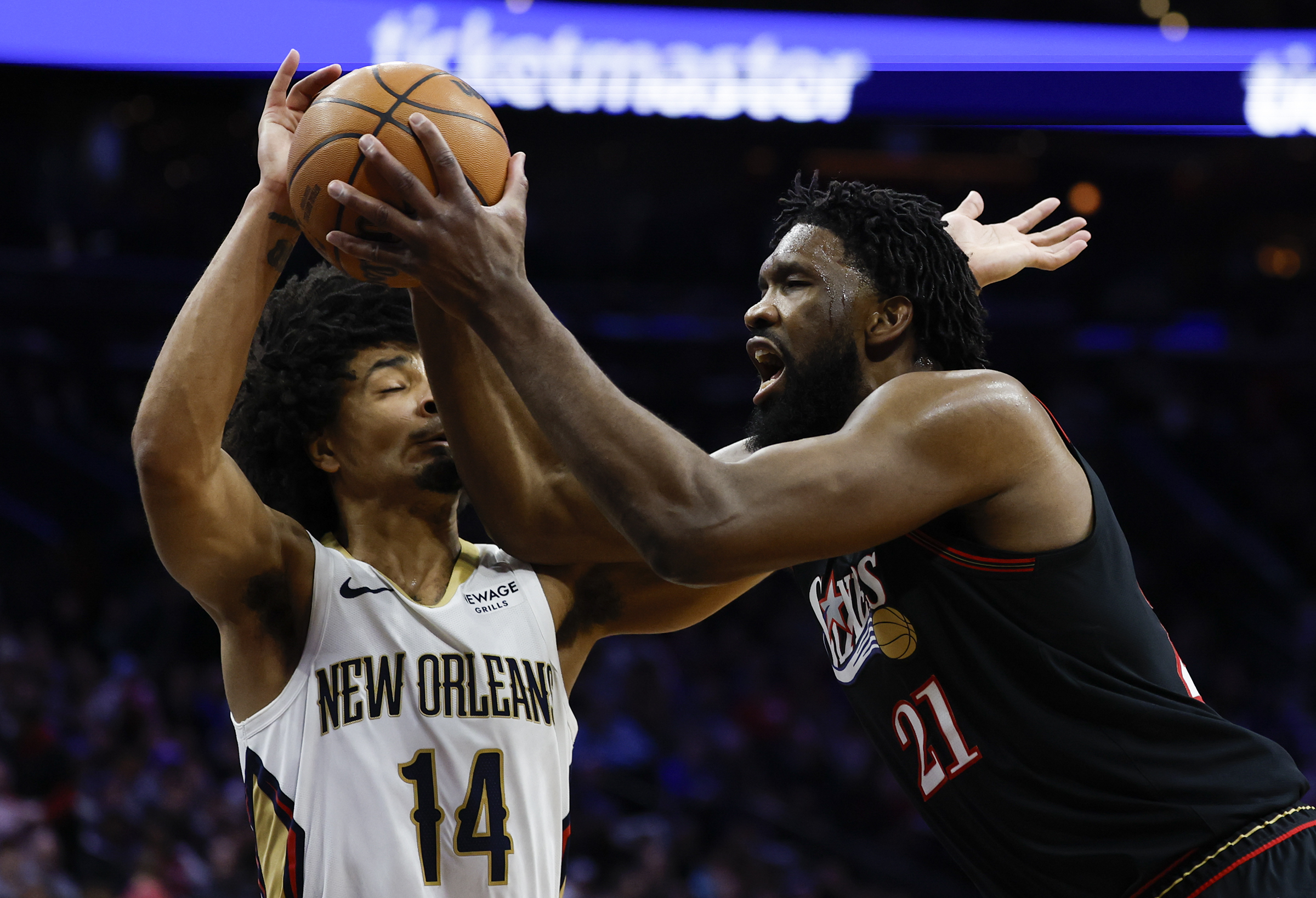
    The 2023 MVP and seven-time All-Star scored 23 of his points on 7-for-17 shooting. Two games prior, Embiid scored 18 of his 29 points in the first quarter.

    But none of this has been surprising, as the 7-foot-2 center is getting back to his old self after dealing with two left knee surgeries in the previous two seasons.

    Sixers center Joel Embiid drives to the basket against New Orleans Pelicans guard Micah Peavy on Saturday.

    Embiid averaged 33.2 points while shooting 50.0% on three-pointers, along with 9.0 rebounds and 5.8 assists in his previous six games. And it was the seventh straight game that he’s scored at least 29 points.

    “Honestly, surprising,” Embiid said of his play. “Coming into this year, I thought it was going to be more of a tryout year to me. To me, this year has already been successful, because I feel like coming into the year, it was about figuring out, OK, what’s the schedule? How are we going to do this moving forward? And try to figure out how the knee is going to respond every single day.”

    He began the season by taking at least two days off after every game. Now, Embiid can play every other day, and he says everything is going well. That’s why this season is already a success.

    “But that doesn’t change my mentality as far as wanting to get better every single day,” he said. “Keep pushing and seeing. … Like I said, it was supposed to be a tryout for next year and moving forward, and how we are going to do this.

    “His name hasn’t been mentioned. But I think guys like Simon Rice [the vice president for athletic care for the Sixers], you know, he’s been probably the main guy when it comes to everything. I would say probably everybody gave up on me. He’s the one guy that just kept trying to figure it out … I’m really thankful because he was that one person.”

    Embiid scored on putbacks, jumpers, and layups while making it tough for everyone who had the misfortune of guarding him.

    At one point in the season, the Sixers appeared to be Maxey’s team. But Embiid is showing that he can still be the franchise player. Fans chanted “MVP … MVP … MVP!” as Embiid attempted foul shots in the closing seconds.

    ” He’s really good at basketball,” Maxey said. “That’s really good, though. And I’m not trying to be funny. He’s playing the right way, too. He’s getting people involved, rolling. I think the biggest thing right now is his trust level and his teammates.”

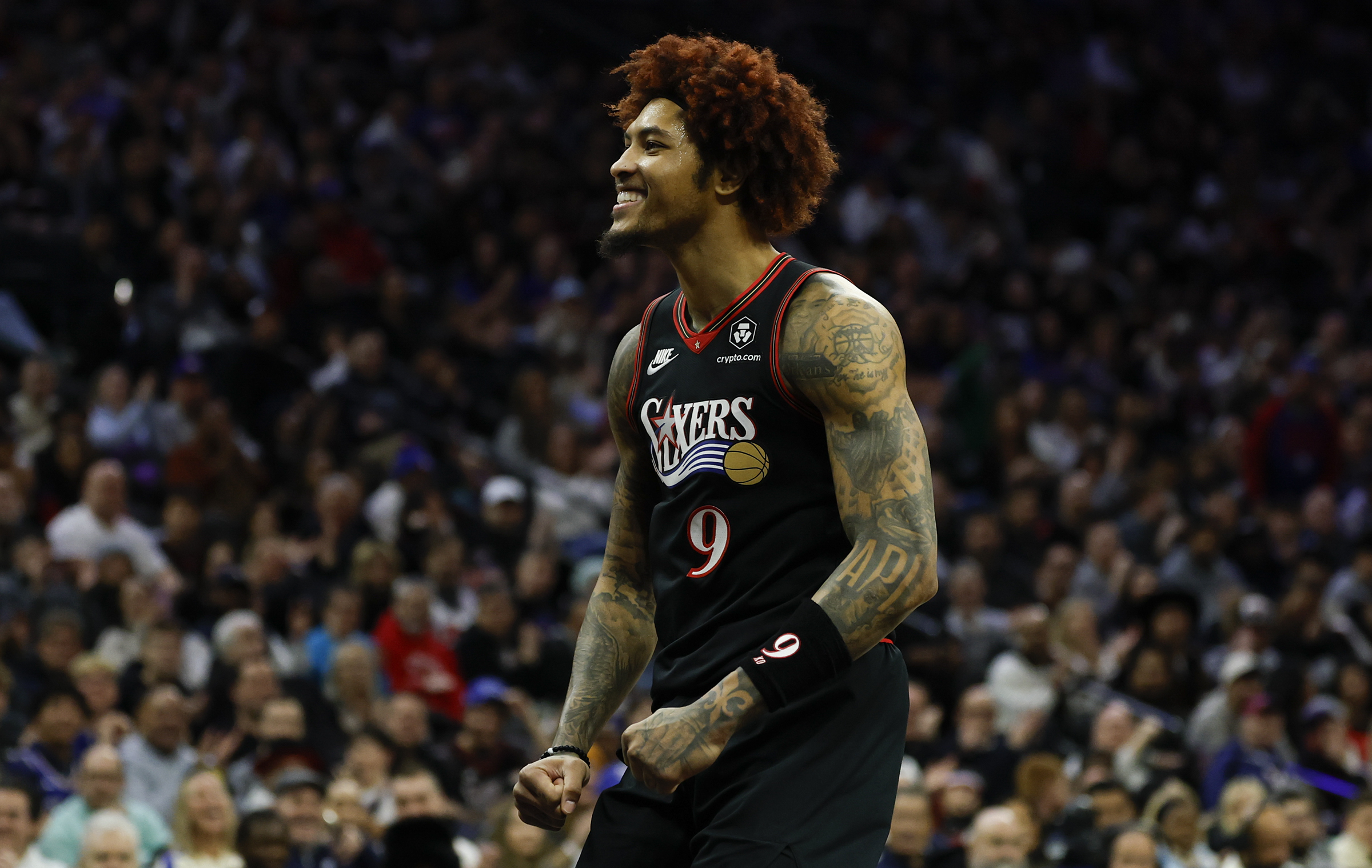
    Sixers guard Kelly Oubre Jr.,is expected to play a major role with the loss of Paul George due to his suspension.

    Oubre’s outing

    The biggest question surrounding the Sixers is who’s going step up in George’s absence.

    Oubre appears to be the frontrunner to do that. The 6-8 swingman scored his points on 7-for-13 shooting — including making 3 of 7 three-pointers — to go with 10 rebounds and four assists.

    This isn’t the first time that Oubre was a force in a game. He scored a season-high 29 points on Nov. 2 against the Brooklyn Nets. He’s also scored at least 18 points on 10 occasions. But he’s been known more for crashing the boards and guarding the opposing team’s best perimeter defender.

    He’s sure to get more offensive opportunities with George out. And he’s excited about that.

    “But at the end of the day, man, any given night we have a team that people can show up and put points on the board and be key contributors to winning,” Oubre said. “And I just want to be a key contributor to winning, whether you know my role be what it was or what it is, just try to take everything with grace and just take the proper steps to be prepared for anything.

    “But at the end of the day, man, I just want to prove that, you know, I’m a valuable piece to this league, and to this team, and you know, that I just continue to show up every day.”

    And if he continues to excel, the Sixers may be better suited to weather the storm.

    His teammates are confident that he can step in for George.

    “We’ve seen it,” Oubre said. “We’ve seen it last year. We’ve seen it the year before. We’ve seen it early this year. He did a really good job early in the season, just kind of playing that role, scoring, rebounding, and defending.

    “I think he had 10 rebounds tonight. That’s big time. We’re going to need it, especially filling in for that role. And I have trust in him, because Kelly’s a guy who is not scared of the moment.”

  • Penn women end weekend back-to-back on a high with emphatic upset of Columbia

    Penn women end weekend back-to-back on a high with emphatic upset of Columbia

    Penn rallied to defeat Columbia on Saturday evening at the Palestra a day after a narrow loss to Cornell, closing out a two-day stretch of Ivy League games on a high note.

    The 64-55 win over the Lions (14-6, 5-2) marked the first win over Columbia in three years for the Quakers (13-7, 3-4) and kept alive Penn’s hopes of competing for the Ivy title. It also dropped the Lions out of a tie for first place with Princeton.

    And it erased the pain of a nail-biting 62-58 home loss to the Big Red on Friday that snapped a two-game Quakers winning streak.

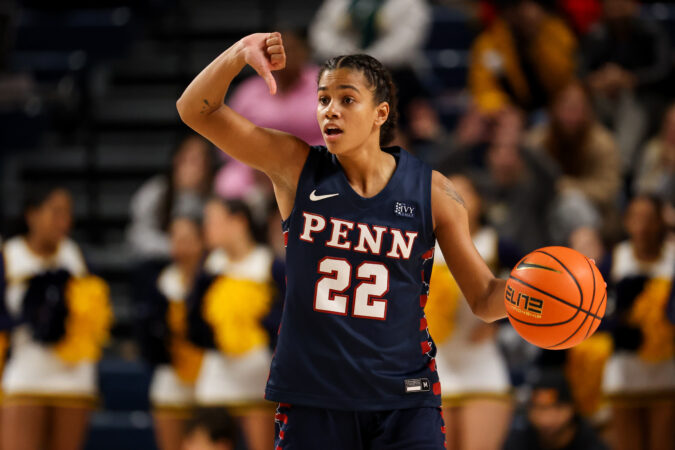
    “We were hungry,” said Penn guard Mataya Gayle, who finished with a team-high 16 points and seven assists against Columbia. “We wanted it. I think that showed in how we played. We were all over the court. We know they’re a good team, but we put in our heads that today we’re going to be the better team.”

    New lease on life

    The Lions entered boasting a 5-1 Ivy record after defeating No. 19 Princeton on Friday night. On the flip side, Penn’s loss to Cornell put it at sixth in the Ivy League — three games back from competing for a spot in the league tournament.

    Following the loss, Penn coach Mike McLaughlin pressured the team to step up its effort, knowing the kind of battle the players had ahead of them.

    “I challenged them that you can’t be outplayed,” McLaughlin said. “You can get out-skilled, but you can’t have someone play harder than you.”

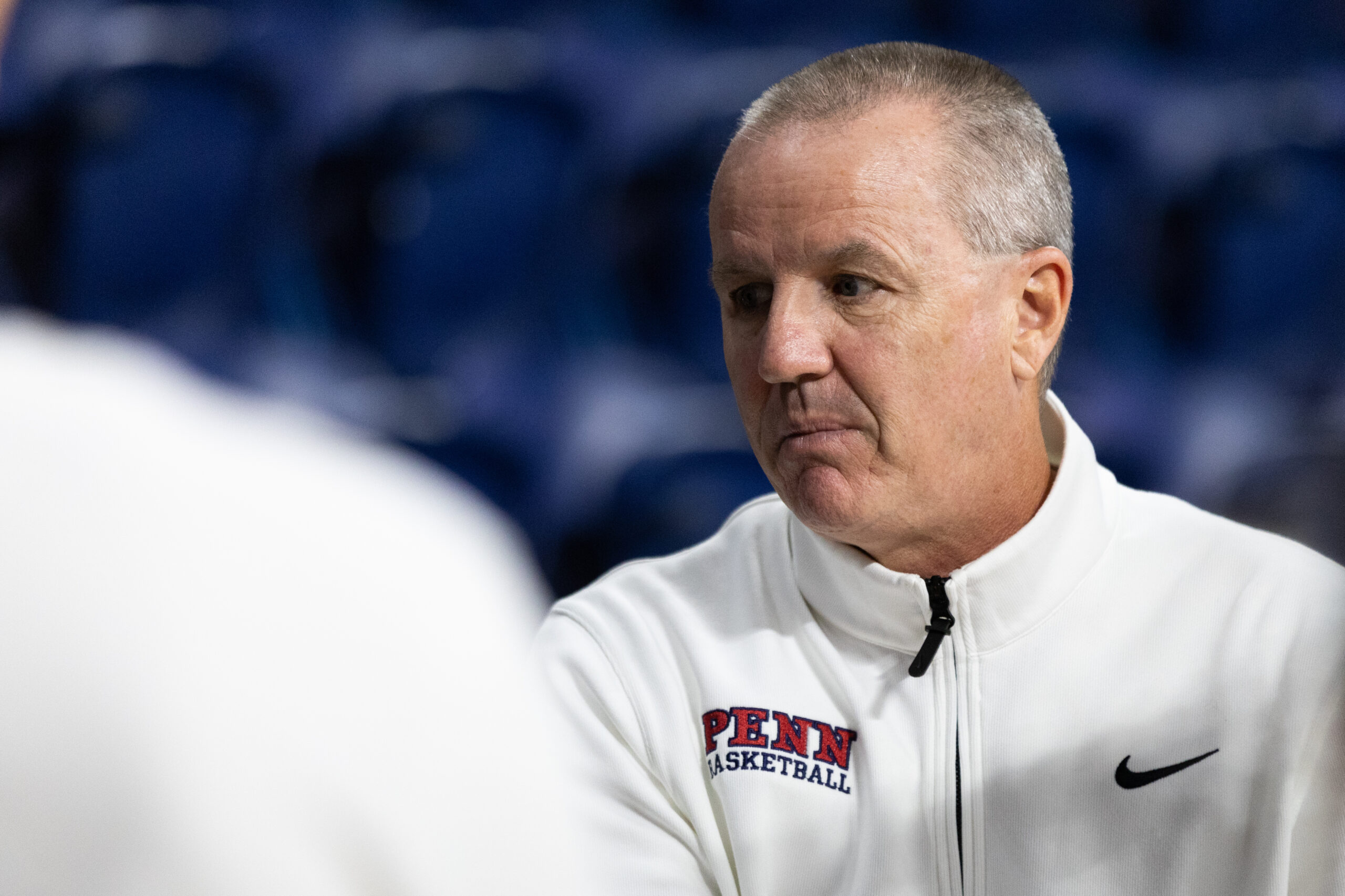
    Penn head coach Mike McLaughlin urged his team to play with intensity following a Friday night loss to Cornell. The result? A big win against league-leading Columbia.

    Against Columbia, it was evident that the players took that advice to heart. Using a 3-2 zone defense for a majority of the matchup, the Quakers held Columbia to 32.3% shooting from the floor.

    “Losing to Cornell was not ideal,” Gayle said. “Our backs were against the wall, but I think that also gave us another boost today. We went out there like we had the most to lose, but also nothing to lose. We competed. You saw everyone on the court doing what they needed to do, the little things. We took yesterday’s loss and learned from it, and that translated today.”

    ‘Not an easy task’

    McLaughlin has been looking for players to step up and support the team’s stars, Katie Collins (nine points) and Gayle, and for the first time in Ivy League play, he got his wish.

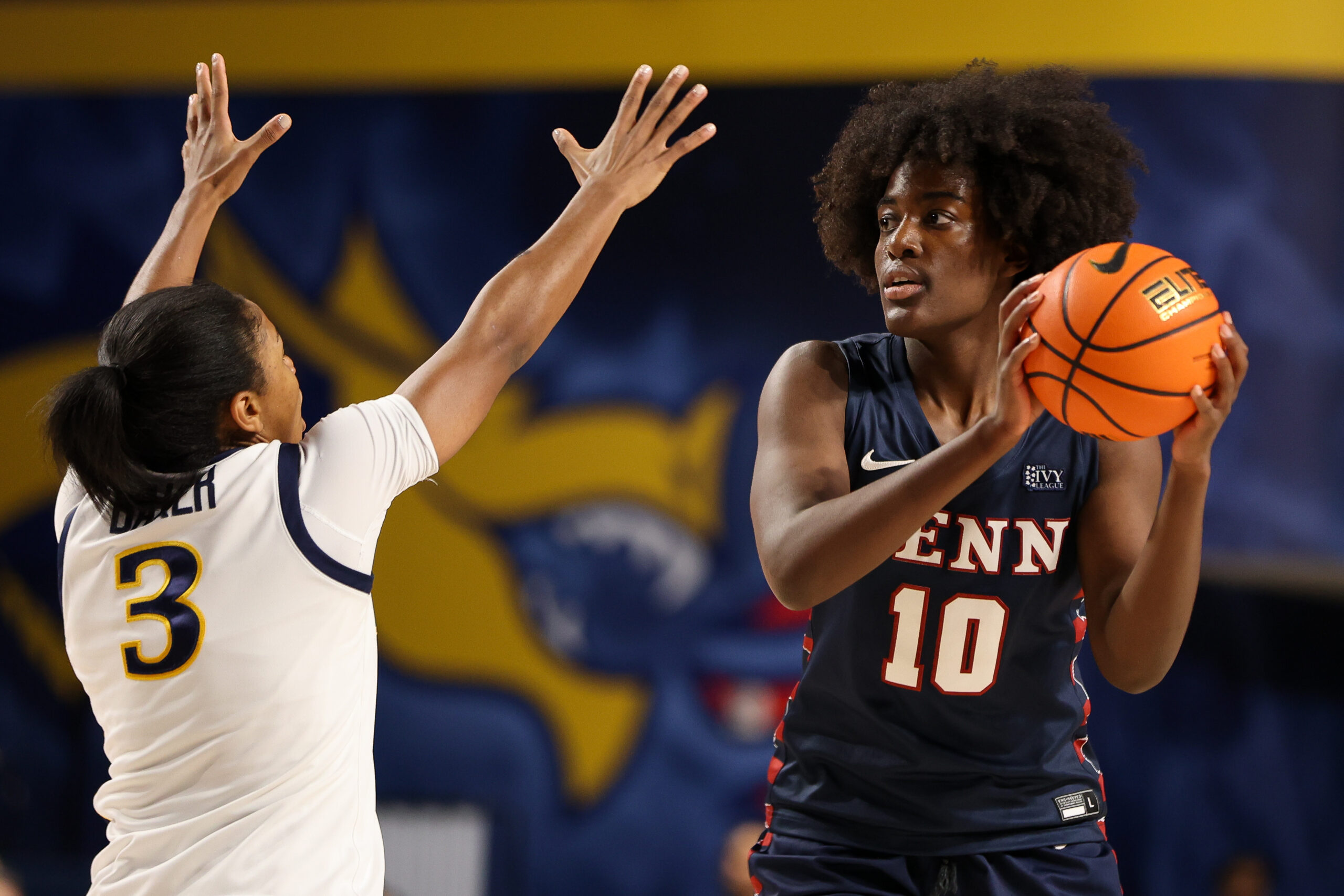
    Every player to log more than three minutes for Penn scored at least eight points, which helped overcome a 24-point night from Columbia guard Riley Weiss. The supporting cast was headlined by a double-double from center Tina Njike, who bounced back from a difficult 13-minute performance against Cornell to finish with 10 points and 10 rebounds.

    Penn center Tina Njike (10) seen in a game earlier this season, finished with 10 points and 10 rebounds in a win over Columbia on Saturday.

    “I’m really proud of Tina,” McLaughlin said. “Thirty-five minutes. It’s not an easy task for anyone.”

    Brooke Suttle, whom McLaughlin has relied upon as the team’s de facto sixth man, also shined, scoring 11 points.

    Honoring the 2001 team

    In attendance was Penn’s 2001 championship team, which was honored at halftime in celebration of the 25th anniversary of the program’s first Ivy League title.

    Penn, coached by Kelly Greenberg, went 14-0 in league play en route to securing the program’s first NCAA Tournament bid with a record of 22-6.

    “It was a great building tonight,” McLaughlin said in reference to the former players’ support. “That was about as fun as I think these kids can play in this environment. And I want them to experience that, too. All this came together tonight.”

    Next up

    Another big test awaits the Quakers on Friday when they face Princeton (18-2, 6-1) on the road (7 p.m., ESPN+).