Blog

  • Journalist Don Lemon is charged with federal civil rights crimes in anti-ICE church protest

    Journalist Don Lemon is charged with federal civil rights crimes in anti-ICE church protest

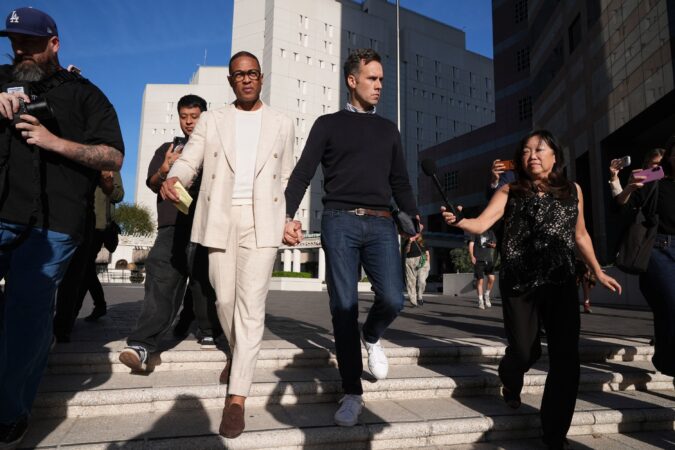
    LOS ANGELES — Journalist Don Lemon was released from custody Friday after he was arrested and hit with federal civil rights charges over his coverage of an anti-immigration enforcement protest that disrupted a service at a Minnesota church.

    Lemon was arrested Thursday while across the country in Los Angeles, while another independent journalist and two protest participants were arrested in Minnesota. He struck a confident, defiant tone while speaking to reporters after a court appearance in California.

    “I have spent my entire career covering the news. I will not stop now,” Lemon said. “In fact there is no more important time than right now, this very moment, for a free and independent media that shines a light on the truth and holds those in power accountable.”

    The arrests brought sharp criticism from news media advocates and civil rights activists including the Rev. Al Sharpton, who said the Trump administration is taking a “sledgehammer” to “the knees of the First Amendment.”

    The four were charged with conspiracy and interfering with the First Amendment rights of worshipers during the Jan. 18 protest at the Cities Church in St. Paul, where a U.S. Immigration and Customs Enforcement official is a pastor.

    In federal court in Los Angeles, Assistant U.S. Attorney Alexander Robbins argued for a $100,000 bond, telling a judge that Lemon “knowingly joined a mob that stormed into a church.” He was released, however, without having to post money and was granted permission to travel to France in June while the case is pending.

    Defense attorney Marilyn Bednarski said Lemon plans to plead not guilty and fight the charges.

    Lemon, who was fired from CNN in 2023 following a bumpy run as a morning host, has said he has no affiliation to the organization that went into the church and he was there as a solo journalist chronicling protesters.

    “Don has been a journalist for 30 years, and his constitutionally protected work in Minneapolis was no different than what he has always done,” his lawyer, Abbe Lowell, said in a statement. “The First Amendment exists to protect journalists whose role it is to shine light on the truth and hold those in power accountable.”

    Attorney General Pam Bondi promoted the arrests on social media.

    “Make no mistake. Under President Trump’s leadership and this administration, you have the right to worship freely and safely,” Bondi said in a video posted online. “And if I haven’t been clear already, if you violate that sacred right, we are coming after you.”

    ‘Keep trying’

    Since he left CNN, Lemon has joined the legion of journalists who have gone into business for himself, posting regularly on YouTube. He hasn’t hidden his disdain for President Donald Trump. Yet during his online show from the church, he said repeatedly: “I’m not here as an activist. I’m here as a journalist.” He described the scene before him, and interviewed churchgoers and demonstrators.

    A magistrate judge last week rejected prosecutors’ initial bid to charge the veteran journalist. Shortly after, he predicted on his show that the administration would try again.

    “And guess what,” he said. “Here I am. Keep trying. That’s not going to stop me from being a journalist. That’s not going to diminish my voice. Go ahead, make me into the new Jimmy Kimmel, if you want. Just do it. Because I’m not going anywhere.”

    Georgia Fort livestreamed the moments before her arrest, telling viewers that agents were at her door and her First Amendment right as a journalist was being diminished.

    A judge released Fort, Trahern Crews, and Jamael Lundy on bond, rejecting the Justice Department’s attempt to keep them in custody. Not guilty pleas were entered. Fort’s supporters in the courtroom clapped and whooped.

    “It’s a sinister turn of events in this country,” Fort’s attorney, Kevin Riach, said in court.

    Discouraging scrutiny

    Jane Kirtley, a media law and ethics expert at the University of Minnesota, said the federal laws cited by the government were not intended to apply to reporters gathering news.

    The charges against Lemon and Fort, she said, are “pure intimidation and government overreach.”

    Some experts and activists said the charges were not only an attack on press freedoms but also a strike against Black Americans who count on Black journalists to bear witness to injustice and oppression.

    The National Association of Black Journalists said it was “outraged and deeply alarmed” by Lemon’s arrest. The group called it an effort to “criminalize and threaten press freedom under the guise of law enforcement.”

    Crews is a leader of Black Lives Matter Minnesota who has led many protests and actions for racial justice, particularly following George Floyd’s killing in Minneapolis in 2020.

    After Trump administration officials said earlier this month that arrests would be coming in the church protest, Crews told the Associated Press there’s a “tradition” of Black activists and leaders being targeted or subjected to violence.

    “Just as being a Black person, you always have to have that in mind,” Crews said.

    Protesters charged previously

    A prominent civil rights attorney and two other people involved in the protest were arrested last week. Prosecutors have accused them of civil rights violations for disrupting the Cities Church service.

    The Justice Department launched an investigation after the group interrupted services by chanting “ICE out” and “Justice for Renee Good,” referring to the 37-year-old mother of three who was fatally shot by an ICE officer in Minneapolis.

    Lundy, a candidate for state Senate, works for the office of Hennepin County Attorney Mary Moriarty and is married to a St. Paul City Council member. Lemon briefly interviewed him as they gathered with protesters preparing to drive to the church on Jan. 18.

    “I feel like it’s important that if you’re going to be representing people in office that you are out here with the people,” Lundy told Lemon, adding he believed in “direct action, certainly within the lines of the law.”

    Church leaders praise arrests in protest

    Cities Church belongs to the Southern Baptist Convention and lists one of its pastors as David Easterwood, who leads ICE’s St. Paul field office.

    “We are grateful that the Department of Justice acted swiftly to protect Cities Church so that we can continue to faithfully live out the church’s mission to worship Jesus and make him known,” lead pastor Jonathan Parnell said.

  • Tens of thousands face another arctic blast without power as East Coast preps for a new storm

    Tens of thousands face another arctic blast without power as East Coast preps for a new storm

    BELZONI, Miss. — As tens of thousands of people endured nearly a week with no electricity, another storm loomed on the East Coast where residents braced for near-hurricane force winds, heavy snow, and potential flooding.

    More than 230,000 homes and businesses were without electricity Friday, with the vast majority of those outages in Mississippi and Tennessee, according to the outage tracking website poweroutage.us.

    In Mississippi’s Lafayette County, where about 12,000 people were still without electricity midday Friday, emergency management agency spokesperson Beau Moore said he knows not everyone will get power back before the cold hits.

    “It’s a race against time to get it on for those we can get it on for,” Moore said.

    Workers are attacking the project by ground and air. A video on the Tennessee Valley Authority’s Facebook page shows a worker sitting on the skids of a hovering helicopter so they can repair a giant power structure.

    Arctic air moving into the Southeast was expected to cause already frigid temperatures to plummet into the teens on Friday night in cities like Nashville, where many still lacked power nearly a week after a massive storm dumped snow and ice across the eastern U.S., the National Weather Service said.

    Forecasters say the subfreezing weather will persist in the eastern U.S. into February and there’s high chance of heavy snow in the Carolinas, Virginia, and northeast Georgia this weekend, possibly up to a foot in parts of North Carolina. Snow is also possible along the East Coast from Maryland to Maine.

    On Saturday night and early Sunday, forecasters expect wind and snow that could lead to blizzard conditions before the storm starts to move to sea.

    Snow should pile up in the Carolinas

    Several inches of snow, possibly 1 foot in some locations, were forecast statewide, particularly in eastern counties.

    Hundreds of state National Guard soldiers were ready to help. State workers have also been preparing roads.

    In Myrtle Beach, S.C., a town more accustomed to hurricanes, traffic jams and tourists, the National Weather Service predicted 6 inches of snow.

    The city has no snow removal equipment. Mayor Mark Kruea said they will “use what we can find” — maybe a motor grader or bulldozer to scrape streets.

    “With a hurricane you can storm proof many things,” Kruea said Friday. “But at a place like this, there is only a few things you can do to get ready for snow.”

    In North Carolina, several inches of snow, possibly 1 foot in some locations, were forecast statewide, particularly in eastern counties.

    In Wake Forest, N.C., people filled propane tanks Friday at Holding Oil and Gas, where employee Stanley Harris disconnected one tank, set it aside with a clank and then hooked up another.

    In Dare County to the east, home to much of North Carolina’s Outer Banks, longtime resident Bob Woodard said he’s worried about that more unoccupied houses in communities like Rodanthe and Buxton could collapse into the Atlantic Ocean.

    Hypothermia risks grow

    With the wave of dangerous cold heading for the South, experts say the risk of hypothermia heightens for people in parts of Mississippi and Tennessee who are entering their sixth day trapped at home without power in subfreezing temperatures.

    “The body can handle cold temperatures briefly very well, but the prolonged exposure is a problem,” said Hans House, University of Iowa professor of emergency medicine.

    People who are more vulnerable — the elderly, infants and those with underlying health conditions — may have started experiencing hypothermia symptoms within hours of exposure to the frigid temperatures, explained Zheng Ben Ma, medical director of the University of Washington Medical Center’s northwest emergency department. That can include exhaustion, slurred speech, and memory loss.

    “Once you get into days six, seven, upward of 10, then even a healthy, resilient person will be more predisposed to experiencing some of those deleterious effects of the cold temperature,” he said.

    Frostbite is also a concern in southern states, where people might not own clothes for northern winters, said David Nestler, an emergency medicine specialist at the Mayo Clinic in Minnesota.

    Mississippi and Tennessee still seeking full power

    Mississippi officials say it’s the state’s worst winter storm since 1994. About 80 warming centers were opened in one of the nation’s poorest states. National Guard troops were delivering supplies by truck and helicopter.

    Yazoo Valley Electric Power Association workers, some of whom don’t have power at their own homes, are working 16-hour days to restore electricity in Mississippi. Workers cut their way through downed trees to reach some areas for repairs, said Michael Neely, CEO and general manager.

    Worker Ethan Green, 21, said he feels pressure to get the job done quickly. “We can only go so quick,” he said. “In order to do it safely, we have to take our time.”

    In Tennessee, crews were also distributing supplies, said Gov. Bill Lee.

    The governor on Friday also said he has shared “strong concerns” with Nashville Electric Service leadership, saying communication with customers and power restoration efforts must improve.

    Tennesseans “need a clear timeline for power restoration, transparency on the number of linemen deployed, and a better understanding of when work will be completed in their neighborhood,” Lee said.

    Nashville residents’ criticisms have grown louder over their utility’s storm preparations and recovery, as more than 60,000 homes and businesses it serves remained powerless with frigid temperatures expected. Nashville Electric Service has defended its approach, saying it was an unprecedented storm. At the peak, about half of its customers in and near the capital city lost power.

    Nearly 90 people have died in bitter cold from Texas to New Jersey. Roughly half the deaths were reported in Tennessee, Mississippi, and Louisiana. While some deaths have been attributed to hypothermia, others are suspected to be related to carbon monoxide exposure. Officials have not released specific details about how some of the people died.

    The arctic cold was expected to plunge as far south as Florida.

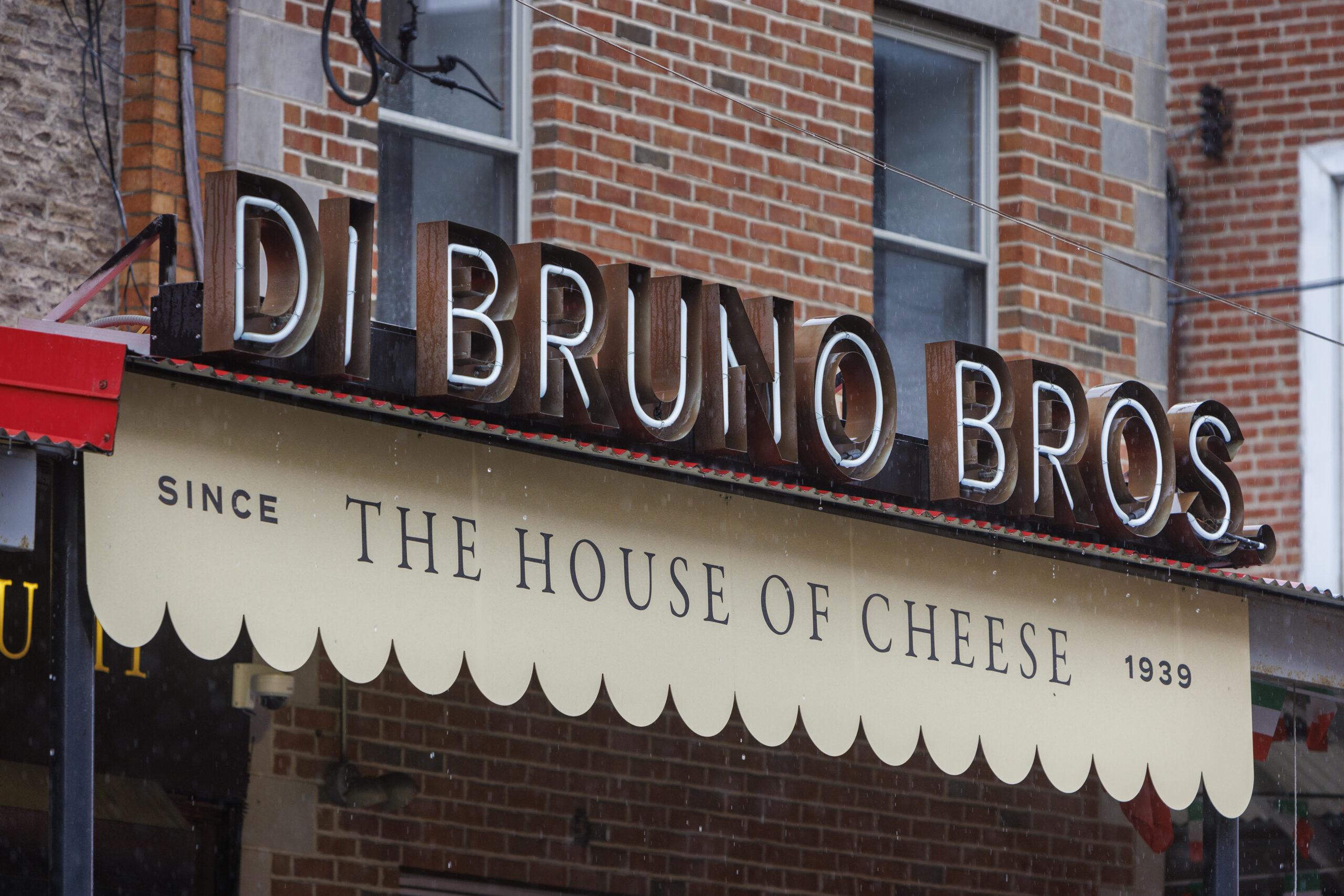
  • As Di Bruno Bros. prepares to shutter three stores, shoppers say it lost its ‘special touch’

    As Di Bruno Bros. prepares to shutter three stores, shoppers say it lost its ‘special touch’

    As word spread Friday that upscale grocery Di Bruno Bros. would shutter three of its five grocery stores in the coming weeks, many customers mourned the imminent loss but added they were unsurprised, citing a noticeable change in quality over the last few years.

    Xavier Hayden, a lawyer who lives in Narberth, said he stopped shopping at Di Bruno’s a few years ago when he noticed changes in the rolls, the bread, and other items that gave Di Bruno’s its strong reputation. “The quality went down, the taste went down,” Hayden said. “Why am I going to pay upmarket prices for a midmarket product?”

    Hayden remembers childhood trips to the Italian Market to visit the original Di Bruno Bros., which will remain open, along with its bottle shop and the store at 18th and Chestnut Streets in Rittenhouse. Its Ardmore store will close Feb. 4, while the location in Wayne as well as the shop at the Franklin Residences at Ninth and Chestnut Streets will close Feb. 11.

    Di Bruno’s, established in South Philadelphia in 1939, had become a major player on the Main Line grocery scene since opening at the Ardmore Farmers Market in 2011 and in Wayne’s Strafford Shopping Center in 2021 to complement its two stores in Center City.

    Now, the company is pulling back to focus on the Italian Market and Rittenhouse locations and its online business.

    The original Di Bruno Bros. location at 930 S. Ninth St. is one of two stores that will remain.

    The closings will affect 59 employees, said Sandy Brown, executive vice president of Di Bruno’s parent company, Brown’s Super Stores. She said the workers have been offered new jobs with the other Brown’s stores in the area, including 10 ShopRites and two Fresh Grocer locations.

    On social media, some Di Bruno’s patrons attributed a change in the store’s offerings to Brown’s, which bought an ownership stake in the company in early 2024 from the Mignucci family, which had led Di Bruno’s expansion. (It’s a complex arrangement; while Brown’s owns the stores, the Di Bruno’s brand and its packaged-product portfolio were later acquired by Wakefern Food Corp., a New Jersey-based supermarket cooperative that includes the Brown’s stores.)

    In an email exchange Friday, Sandy Brown pushed back on the Brown’s company’s role in the closures, saying Di Bruno’s was “very distressed” when her group invested. “We were the only interested party due to the numerous challenges they had,” she said. While many commenters online are blaming her company for the closings, Brown said, “I don’t think they realize the status of the brand at the time of transition.”

    Brown said the company had worked to bring back business that was lost prior to the purchase, “but that did not occur.” She added that her company had a plan to sustain Di Bruno’s but declined to share it at this time.

    Main Line customers said they were sad to see Di Bruno’s retrenchment from the suburbs, though several said the stores had slipped in recent years.

    “It used to be spectacular, delicious … extra special,” said Dana Reisbord, a professor who lives in Ardmore. Reisbord said she used to stop into Di Bruno for a chicken parmesan sandwich and other goodies. Now, she’ll venture into the city if she’s really craving Italian fare. Di Bruno’s fare is too expensive to justify, she said, having “lost that special touch.”

    Diane Fanelli, a retiree who lives in Overbrook, visits the Ardmore Farmers Market Di Bruno’s at Suburban Square a few times a month. She said she would be sad to see the store go. Although she did notice a drop-off in quality, she said it wasn’t significant enough to send her shopping elsewhere.

    “Their food is expensive. It’s very good, but it’s expensive, and everybody’s watching their budget,” said Mike Manley, a cartoonist from Upper Darby who used to patronize the Ardmore store when he was in town for doctors’ appointments.

    It wasn’t necessarily the high-end products that kept Manley coming back. It was the customer service. He liked chatting with the cheesemongers and enjoying samples. Di Bruno’s reminded Manley of his old days in West Philadelphia, when he would regularly patronize Koch’s Deli, known for friendly faces behind the counter.

    “That gains you loyal customers, but I don’t know if corporate appreciates that,” he said. (The stores had lost some longtime employees since the Brown’s Super Store purchase.)

    Earlier this week, Di Bruno notified two landlords that they would be shutting down, said Douglas Green, a principal at MSC, who handles real estate for Kimco Realty Corp. (owner of Suburban Square) and Korman Communities (owner of the Franklin). A representative of Equity Retail Brokers, which leases at Wayne’s Strafford Shopping Center, declined to comment.

    “Operations have not been what they were when the Mignucci family owned the business, and this outcome shouldn’t be a great surprise to most people,” Green said. “It’s a sad day for a very proud Philadelphia brand.”

    He suggested that Di Bruno had expanded into too much space at Suburban Square “and affected [Kimco’s] ability to diversely merchandise the farmers market. It felt like they spread themselves too thin, and the quality suffered.”

    Speaking specifically of the Franklin and Suburban Square locations, Green said both locations are in areas with “pent-up demand and limited supply, and there should be tremendous interest.” He said Kimco, with MSC, wants to “re-merchandise” the farmers market and Di Bruno’s spaces.

    “This gives us a bit of a blank canvas,” Green said. “There are cuisine types not currently represented that we’re excited about bringing to the project. Hopefully, the end of this chapter opens the door to new concepts.”

  • The Justice Department released 3 million pages from its Jeffrey Epstein files

    The Justice Department released 3 million pages from its Jeffrey Epstein files

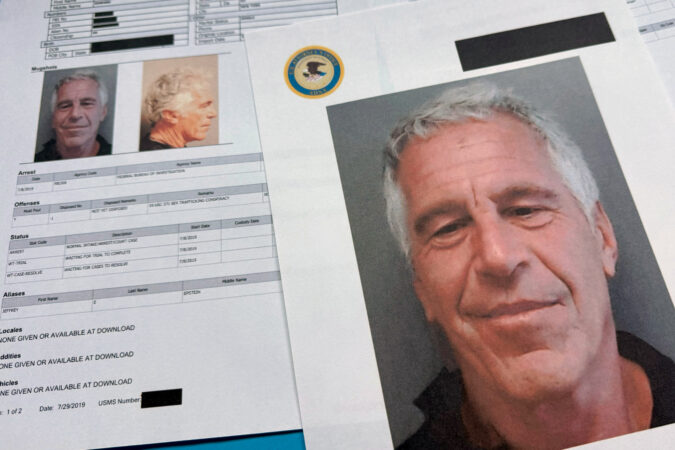
    NEW YORK — The Justice Department on Friday released many more records from its investigative files on Jeffrey Epstein, resuming disclosures under a law intended to reveal what the government knew about the millionaire financier’s sexual abuse of young girls and his interactions with rich and powerful people such as Donald Trump and Bill Clinton.

    Deputy Attorney General Todd Blanche said the department would be releasing more than 3 million pages of documents in the latest Epstein disclosure, as well as more than 2,000 videos and 180,000 images. The files, posted to the department’s website, include some of the several million pages of records that officials said were withheld from an initial release in December.

    Included in the batch were records concerning some of Epstein’s famous associates, including Andrew Mountbatten-Windsor, formerly known as Britain’s Prince Andrew, as well as email correspondence between Epstein and Elon Musk and other prominent contacts from across the political spectrum.

    The documents were disclosed under the Epstein Files Transparency Act, the law enacted after months of public and political pressure that requires the government to open its files on the late financier and his confidant and onetime girlfriend, Ghislaine Maxwell. Lawmakers complained when the Justice Department made only a limited release last month, but officials said more time was needed to review an additional trove of documents that was discovered and to scour the records to ensure no sensitive information about victims was inadvertently released.

    “Today’s release marks the end of a very comprehensive document identification and review process to ensure transparency to the American people and compliance with the act,” Blanche said at a news conference announcing the disclosure.

    Friday’s disclosure represents the largest document dump to date about a saga the Trump administration has struggled for months to shake because of the president’s previous association with Epstein. State and federal investigations into the financier have long animated online sleuths, conspiracy theorists and others who have suspected government cover-ups and clamored for a full accounting, demands that even Blanche acknowledged might not be satisfied by the latest release.

    “There’s a hunger, or a thirst, for information that I don’t think will be satisfied by the review of these documents,” he said.

    After missing a Dec. 19 deadline set by Congress to release all the files, the Justice Department said it tasked hundreds of lawyers with reviewing the records to determine what needed to be redacted, or blacked out. But it denied any effort to shield Trump, who says he cut ties with Epstein years ago despite an earlier friendship, from potential embarrassment.

    “We did not protect President Trump. We didn’t protect — or not protect — anybody,” Blanche said.

    Among the materials withheld is information that could jeopardize any ongoing investigation or expose the identities of potential victims of sex abuse. Women other than Maxwell were redacted from videos and images being released Friday, Blanche said.

    The number of documents subject to review ballooned to roughly 6 million, including duplicates.

    Epstein’s famous friends

    The latest batch of documents include correspondence either with or about some of Epstein’s friends.

    Mountbatten-Windsor’s name appears at least several hundred times in the documents, sometimes in news clippings, sometimes in Epstein’s private email correspondence and in guest lists for dinners organized by Epstein. Some of the records also document an attempt by prosecutors in New York to get the former prince to agree to be interviewed as part of their Epstein sex trafficking probe.

    The records also show that Musk, the billionaire Tesla founder, reached out to Epstein on at least two separate occasions to plan visits to the Caribbean island where many of the allegations of sexual abuse purportedly occurred.

    In a 2012 exchange, Epstein inquired how many people Musk would like flown by helicopter to the island he owned — Little Saint James in the U.S. Virgin Islands.

    “Probably just Talulah and me,” Musk responded, referencing his partner at the time, actress Talulah Riley. “What day/night will be the wildest party on our island?”

    Musk messaged Epstein again ahead of a planned trip to the Caribbean in December 2013. “Will be in the BVI/St Bart’s area over the holidays,” he wrote. “Is there a good time to visit?” Epstein responded by extending an invite for sometime after the New Year holiday.

    It’s not immediately clear if the island visits took place. Spokespersons for Musk’s companies, Tesla and X, didn’t immediately respond to emails seeking comment.

    Musk has maintained that he repeatedly turned down the disgraced financier’s overtures.

    “Epstein tried to get me to go to his island and I REFUSED,” he posted on X in 2025 when House Democrats released an Epstein calendar with an entry mentioning a potential Musk visit to the island.

    The documents also contain hundreds of friendly text messages between Epstein and Steve Bannon during Trump’s first term.

    Bannon, a conservative activist who served as Trump’s White House strategist earlier in the president’s first term, bantered over politics with the financier, discussed get-togethers with him over breakfast, lunch or dinner and, on March 29, 2019, asked Epstein if he could supply his plane to pick him up in Rome: “Is it possible to get your plane here to collect me?”

    Epstein told him his pilot and crew “are doing their best” to arrange that flight but if Bannon could find a charter flight instead, “I’m happy to pay.” Apparently in France at the time, Epstein followed up with a text saying: “My guys can pick you up. Come for dinner.” The exchange did not show how that played out.

    On one occasion in December 2012, Epstein invited Howard Lutnick — now Trump’s commerce secretary — to his private island in the Caribbean for lunch, documents released Friday show. Lutnick’s wife, Allison Lutnick, enthusiastically accepted the invitation and said they would arrive on a yacht with their children. On another occasion in 2011, the two men had drinks, according to a schedule shared with Epstein.

    Lutnick has tried to distance himself from Epstein, saying in a 2025 interview that he cut ties decades ago and calling him “gross.” He didn’t respond to a request for comment Friday.

    During Trump’s first term, Epstein emailed Kathy Ruemmler, a lawyer and former Obama White House official, to warn that Democrats should stop demonizing Trump as a Mafia-type figure even as he derided the president as a “maniac.”

    A spokesperson for Goldman Sachs, where Ruemmler serves as general counsel and chief legal officer, said in a statement that Ruemmler “had a professional association with Jeffrey Epstein when she was a lawyer in private practice” and “regrets ever knowing him.”

    Building on the earlier release

    The Justice Department released tens of thousands of pages of documents just before Christmas, including photographs, interview transcripts, call logs and court records. Many were either already public or heavily blacked out.

    They included previously released flight logs showing Trump flew on Epstein’s private jet in the 1990s, before they had a falling-out, and several photographs of Clinton. Neither Trump, a Republican, nor Clinton, a Democrat, has been publicly accused of wrongdoing in connection with Epstein. Both have said they had no knowledge he was abusing underage girls.

    Epstein killed himself in a New York jail cell in August 2019, a month after he was indicted on federal sex trafficking charges.

    In 2008 and 2009, Epstein served jail time in Florida after pleading guilty to soliciting prostitution from someone under the age of 18. At the time, investigators had gathered evidence that Epstein had sexually abused underage girls at his Palm Beach home. The U.S. attorney’s office agreed not to prosecute him in exchange for his guilty plea to lesser state charges.

    In 2021, a federal jury in New York convicted Maxwell, a British socialite, of sex trafficking for helping recruit some of his underage victims. She is serving a 20-year prison sentence at a prison camp in Texas, after being moved there from a prison in Florida. She denies any wrongdoing.

    U.S. prosecutors never charged anyone else in connection with Epstein’s abuse of girls, but one of his victims, Virginia Roberts Giuffre, accused him in lawsuits of having arranged for her to have sexual encounters at age 17 and 18 with numerous politicians, business titans, noted academics, and others, all of whom denied her allegations.

    Among those she accused was Britain’s Prince Andrew, who was stripped of his royal titles amid the scandal. Andrew denied having sex with Giuffre but settled her lawsuit for an undisclosed sum.

    Giuffre died by suicide last year at age 41.

  • New Epstein files show years of email exchanges with Sixers co-owner Josh Harris

    New Epstein files show years of email exchanges with Sixers co-owner Josh Harris

    Jeffrey Epstein and Sixers co-owner Josh Harris had an ongoing business relationship that included numerous phone calls and at least one visit to Epstein’s home in Manhattan, according to emails released Friday by the U.S. Department of Justice.

    The emails do not contain any indication that Harris was involved with sexual misconduct. The records — buried within the three million documents made public Friday as part of the congressionally ordered release of the Epstein files — shed light on a yearslong correspondence that occurred after Epstein’s 2008 guilty plea for solicitation of prostitution with a minor, but before his 2019 arrest on child sex trafficking charges.

    Harris and Epstein moved in similar circles among Wall Street financial brokers. Harris, cofounder of the investment firm Apollo Global Management, exchanged multiple emails and phone calls with Epstein between 2013 and 2016.

    Jonathan Rosen, a spokesperson for Harris, noted that many of Epstein’s entreaties over the years went nowhere. He said the Sixers owner “never had an independent relationship with Jeffrey Epstein.”

    “Harris sought to prevent Epstein’s attempts to develop a corporate relationship with Apollo,” he said. “As these emails indicate, Harris sought to avoid meeting with Epstein, canceling meetings and having others return his calls.”

    Evidence of one meeting between Epstein and Harris was detailed in earlier records released by the DOJ, and first reported by the Daily Pennsylvanian, the student newspaper at the University of Pennsylvania. Harris is an alumnus of Penn’s Wharton School.

    Exchanges about this meeting, which have not been previously reported, began with a series of emails between Epstein’s and Harris’ schedulers on plans to meet at Epstein’s home in 2013, along with former Apollo CEO Leon Black and billionaire Marc Rowan, apparently to discuss financial affairs and investments.

    “Just reconfirming Leon, Josh and Marc will all go see Jeffrey at his home, 9 East 71st Street between 5th and Madison tomorrow, Tues. Oct. 22nd at 7am for a breakfast meeting,” a scheduler for Epstein wrote in an email from October 2013.

    Rowan, a major University of Pennsylvania donor who also chairs the Wharton School’s advisory board, declined to comment.

    Years later, it would emerge that Black had paid Epstein $158 million for “financial advice” despite the financier’s conviction on sex trafficking charges, leading to his ouster as head of the company.

    It is unclear if the 2013 meeting took place. Harris later apologized to Epstein for having “rescheduled on you a few times.”

    Correspondence between Harris and Epstein carried on.

    Emails from January 2014 then show Epstein’s assistant following up on a request for Harris to pull together a series of organizational documents at Epstein’s request.

    A June 2014 email features Epstein describing a proposed $2.4 million payment apparently from Harris to Black’s former executive assistant, Melanie Spinella.

    Details surrounding the payment, or if it ever occurred, were not clear.

    Later in 2014, Harris’ and Epstein’s schedulers e-mailed yet again to arrange a different visit to Epstein’s home.

    This time, Epstein proposed another breakfast, involving Black, Microsoft founder Bill Gates, tech investor Reid Hoffman, and Ron Baron, the founder of Baron Capital.

    “Jeffrey Epstein would like to invite Josh to breakfast on Dec. 5th at Jeffrey’s home in NY… Bill Gates will be in attendance. The breakfast will be intimate…less than 6 people,” one email invitation read.

    The pair also discussed the meeting directly.

    “Sorry i missed you. Crazy week,” Harris wrote to Epstein in November 2014. “U around any time from now to sunday? Whats this Bill Gates thing about? Tks for thinking about me.”

    “I thought you might like to schmooze,” wrote Epstein in response, asking Harris to call him. “nothing but fun friday 5th breakfast.”

    That meeting does appear to have taken place, based on subsequent emails, with Harris in attendance.

    “Did you have fun at breakfast?” Epstein wrote to Harris, about a week after the meeting was scheduled to take place.

    “Yes very much,” he responded. “Thank you for inviting me.”

    In another typo-laden email, Epstein later bragged to Bank of America president Paul Morris about the breakfast meeting.

    “as you might know I had a recent breadkfst at the hosue with ron baron. josh harris, and billgates,” he wrote in January 2015.

    Epstein’s relationship with Black and Apollo would eventually disintegrate over a legal dispute about his tax and estate planning fees. Harris and Epstein continued to email sporadically until at least 2016.

    In September of that year, Epstein e-mailed Harris again directly asking him to call him about an unspecified issue.

    “Any conversation that you prefer to stay between just us. will. its my financial confessional booth for jews,” Epstein wrote.

    “Will do Jeff,” Harris responded. “Happy to catch up. Thx.”

    Days later, Robert Bodian, managing partner at the Mintz law firm, reached out to Epstein, indicating he was contacting him at “Josh’s request,” apparently regarding a tax issue.

    Staff writer Gina Mizell contributed to this article.

  • The Sixers must address their rebounding problems before it’s too late

    The Sixers must address their rebounding problems before it’s too late

    The 76ers have a rebounding issue.

    Their 24 rebounds in Thursday’s 113-111 victory over the Sacramento Kings were the third-fewest posted by an NBA team this season.

    The Sixers (26-21) can’t brush this off as just an isolated incident. Over the last 11 games, they’ve ranked last in the league in rebounding at 39.5 per game.

    So what is the biggest issue? Effort? Or being undersized?

    The Sixers went with a starting lineup centered on Joel Embiid and four perimeter players in four of their last five games, with Kelly Oubre Jr., Paul George, VJ Edgecombe, and Tyrese Maxey alongside the big man.

    Embiid is a towering center at 7-foot-2. Oubre and George are both 6-8 forwards who have played shooting guard in previous seasons. Edgecombe is a 6-5 shooting guard, while Maxey, an All-Star starter, is a 6-2 point guard.

    The Sixers only have two other rotation players — reserve center Andre Drummond (6-11) and reserve power forward Dominick Barlow (6-9) — taller than Oubre and George.

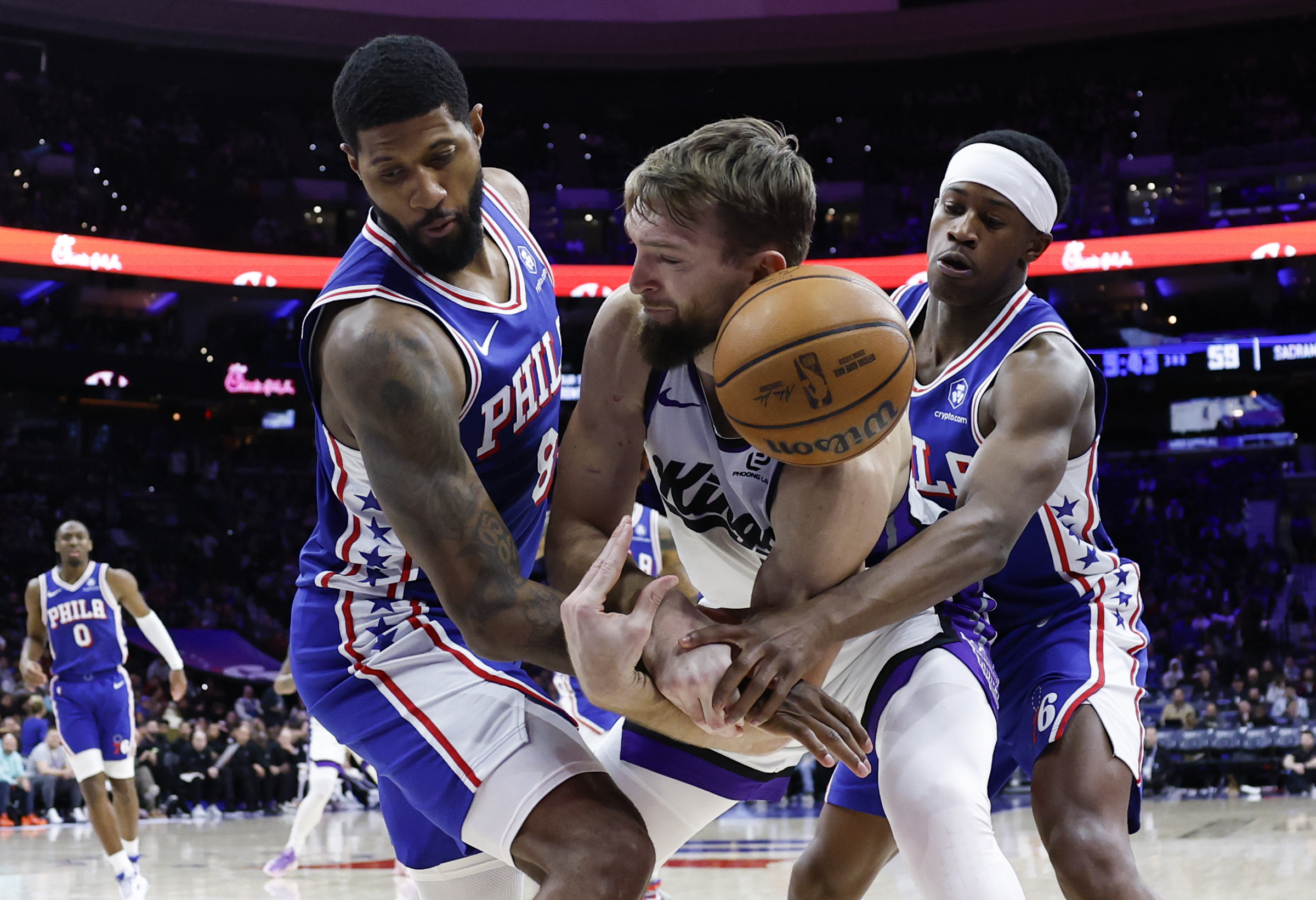
    Sixers forward Paul George (left) and Sixers guard VJ Edgecombe double team Sacramento Kings forward Domantas Sabonis during the third quarter on Thursday.

    “Well, I think that it’s a few things,” coach Nick Nurse said of the rebounding issue. “Sometimes it’s size and athleticism, whether it’s playing against bigger guys, more athletic, stronger, or whatever. Sometimes it’s just not paying attention to details and getting a body on people.

    “And sometimes, I think it’s defense in general. You give a few [rebounds] and the blood’s in the water. Those guys just seem to get cracked up after they get a couple. And they’re just like, ‘Man, this is an easy way to live tonight. I’m going to really focus on that.’”

    When that happens, the Sixers must put in more effort, and Nurse must devise a strategy to secure more rebounds.

    Against a player like Sacramento’s Domantas Sabonis, who is a rebounding machine, the Sixers assigned two players to try to slow him down.

    “Those guys were blocking him out in front of them,” Nurse said. “The balls were coming over the head, and got to be somebody else’s.”

    The Sixers might also benefit from giving Drummond more playing time.

    Despite averaging 8.7 rebounds in 19.6 minutes and leading the Sixers in the category, Drummond didn’t enter Thursday’s game until the start of the fourth quarter. At that point, the Kings (12-37) had a commanding 37-18 rebounding advantage.

    Drummond did not play in six of the previous nine games. The Sixers felt 6-8center Adem Bona, an undersized but athletic rim protector, was better suited to back up Embiid in those games.

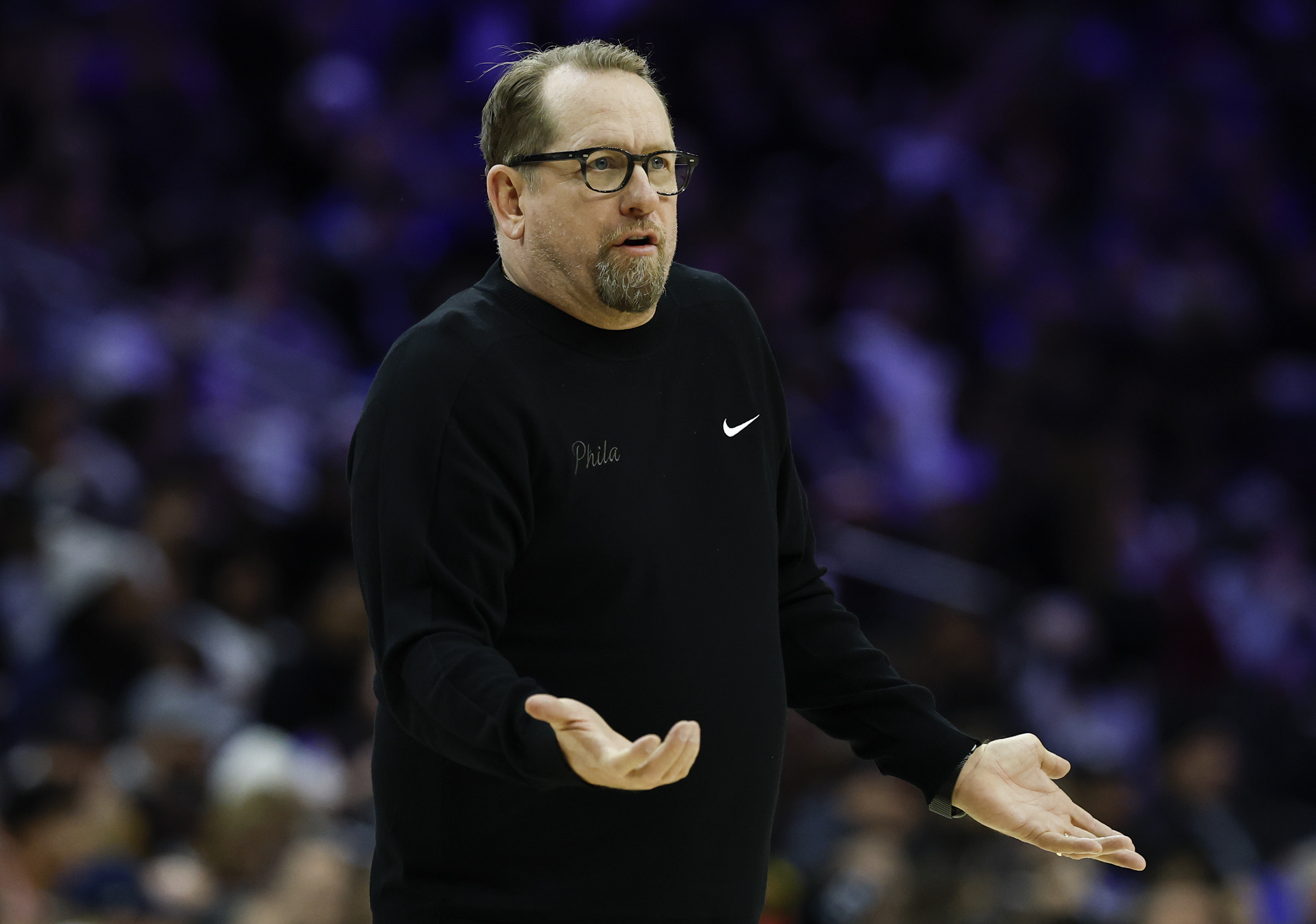
    Sixers coach Nick Nurse looks to solve his team’s rebounding issue.

    But due to the growing rebounding disparity, Nurse said he might look at Drummond coming off the bench more moving forward.

    “I think that the smaller lineup that we are playing is obviously something to look at as well,” Nurse said. “I think Drummond with big, really big centers like that. [The Kings] played big all night, but they’re also pretty physical. All four of their bigs that they play are physical. And I think that probably called for a Joel, Bona lineup or Drummond, [Jabari] Walker. Just maybe different than what we did [Thursday] because it was difficult to rebound.”

    Honoring the 2000-01 team

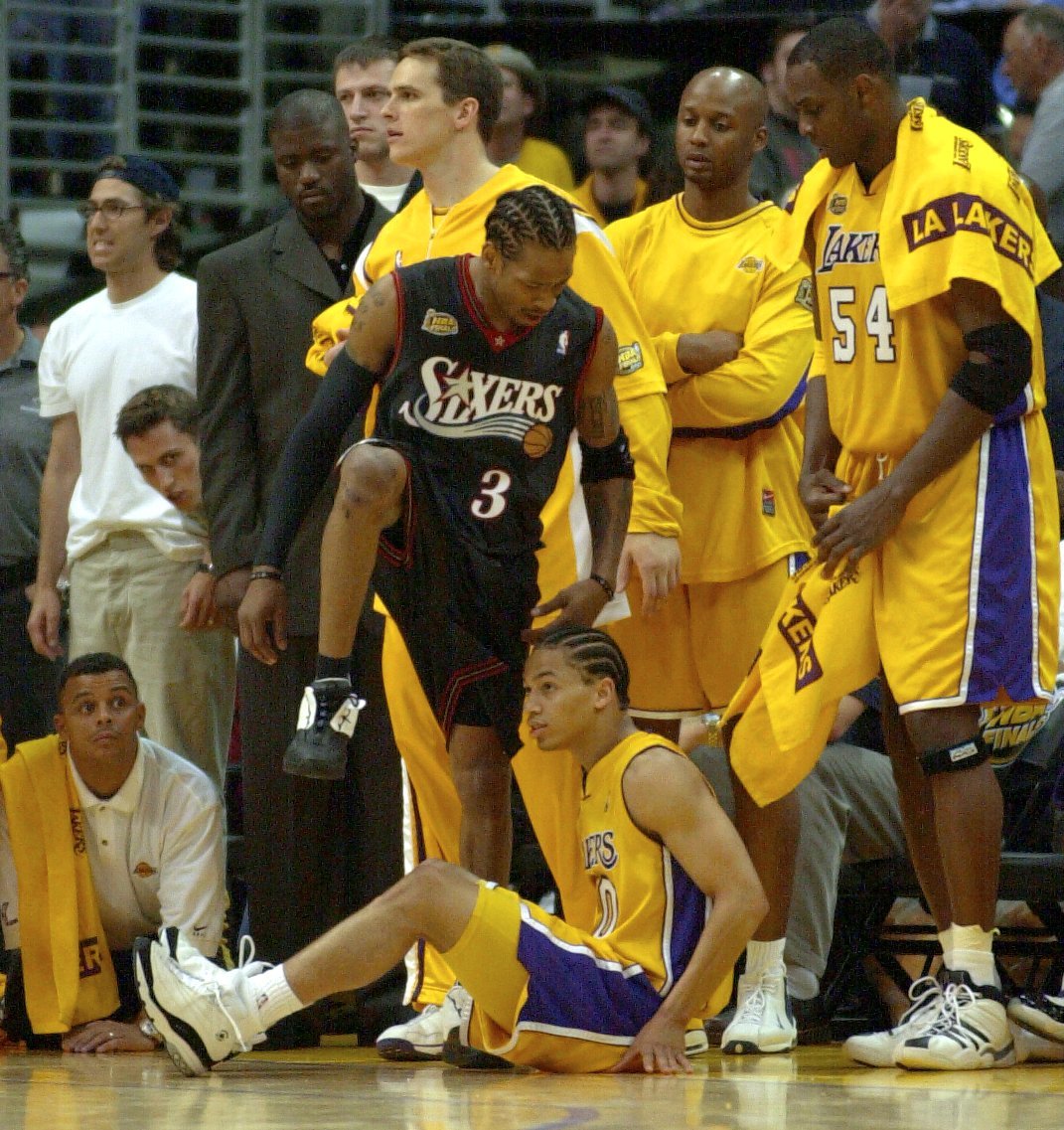
    The Sixers will look to extend their home winning streak to three games on Saturday against the New Orleans Pelicans. The game will also be recognized as the 25th anniversary reunion game, celebrating the 2000-01 Eastern Conference championship team.

    Members of the team, which lost to the Los Angeles Lakers in the NBA Finals, will be on hand for several celebrations in their honor.

    Sixers star Allen Iverson led his team to the NBA Finals in the 2000-01 season.

    “It’ll be great,” George said of the festivities. “Obviously, it’s a tradition here. Being a part of the Sixers family, organization, that group means a lot to the city. It’ll be awesome to kind of share the space, the moment, and play in front of them. We want to represent them the same way that they represented the city.”

  • Sharpies, colored paper, and sandwich boards become resistance art at the President’s House site

    Sharpies, colored paper, and sandwich boards become resistance art at the President’s House site

    The resistance was born on a Friday morning at the Gen. George A. McCall School photocopy machine.

    The copier spat the message out on yellow, purple, and orange paper — page after page amplifying the same sentiment scrawled on each in big black letters: Learn all history.

    In the aftermath of the removal of the slavery exhibit at the President’s House Site on Jan. 22, fourth-grade social studies teacher Kaity Berlin wanted to convert her rage into something productive, she said. She quickly thought of the words on one of her shirts: “Teach all history.” So she gathered some teacher friends, took to the photocopier, and headed to Independence National Historical Park.

    Berlin wasn’t the only one who saw the shallow silver frames at the President’s House as a void screaming to be filled.

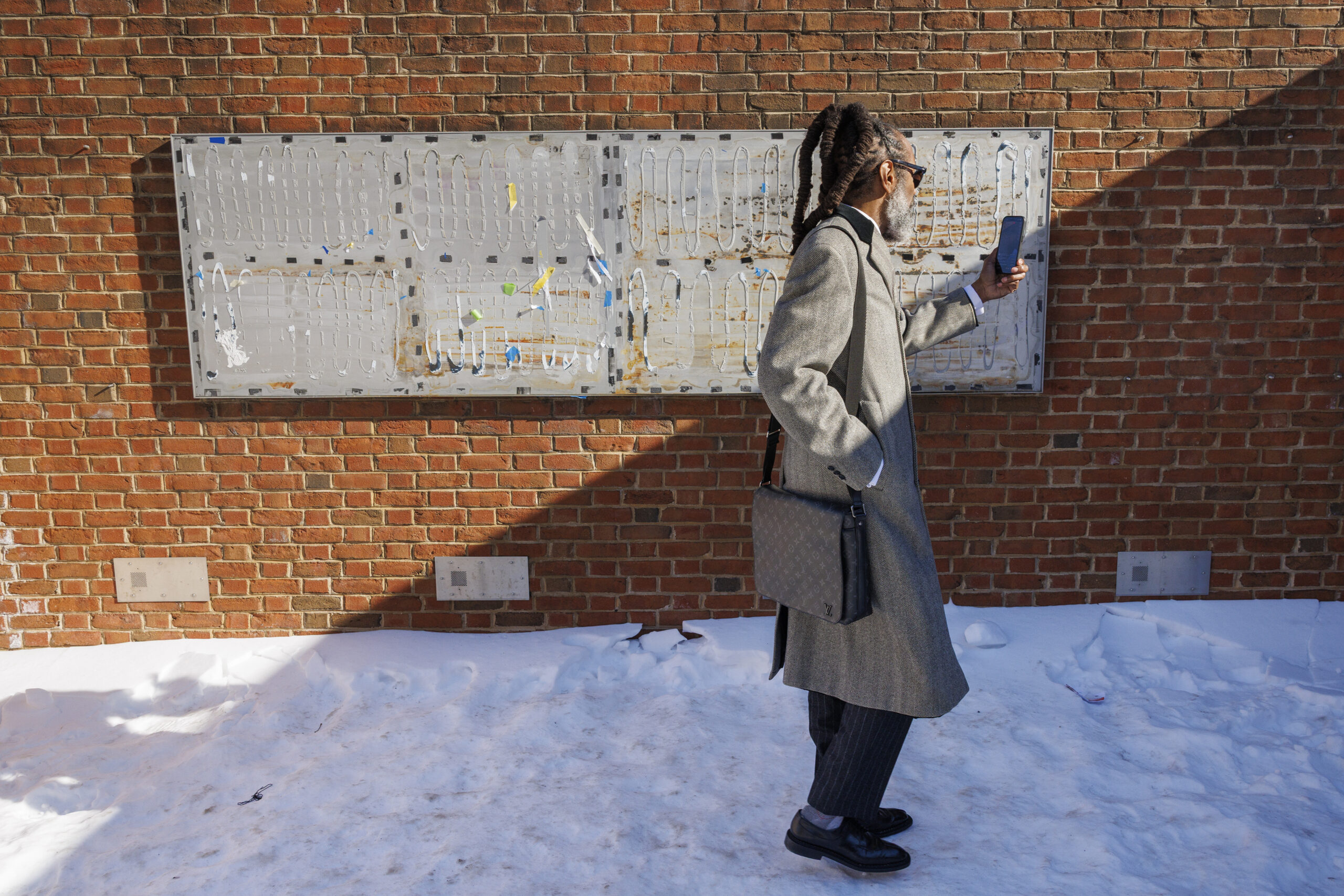
    The exhibit included a series of signs describing what life was like for those enslaved by George Washington at the site and his complicated relationship with the institution of slavery. The exhibit was dismantled last week, several months after President Donald Trump and Interior Secretary Doug Burgum issued an order requiring the review and potential removal of displays at the national parks that “inappropriately disparage” the United States.

    The city asked a federal justice to order that no more exhibits be removed from the President’s House and that the exhibits that were already removed be kept safe. In a hearing Friday, judge Cynthia M. Rufe didn’t issue a ruling but asked the Trump administration attorney that the exhibits remain untouched so she can review them Monday.

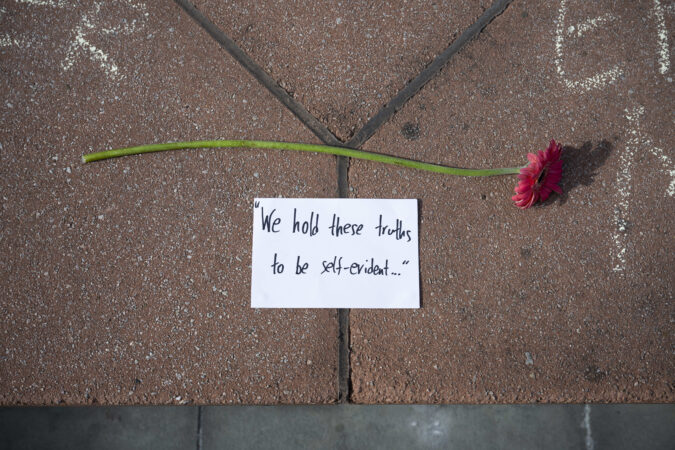
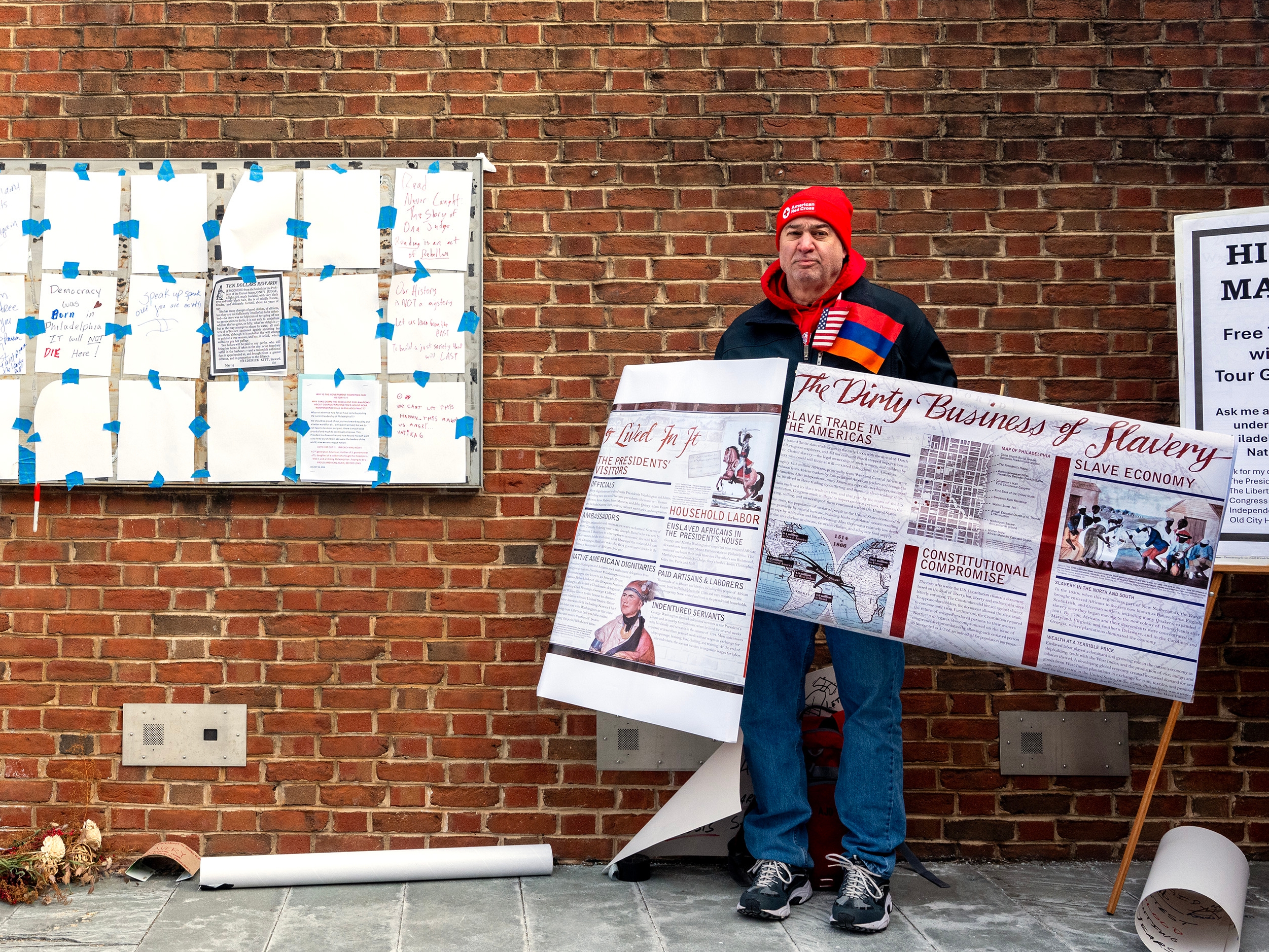
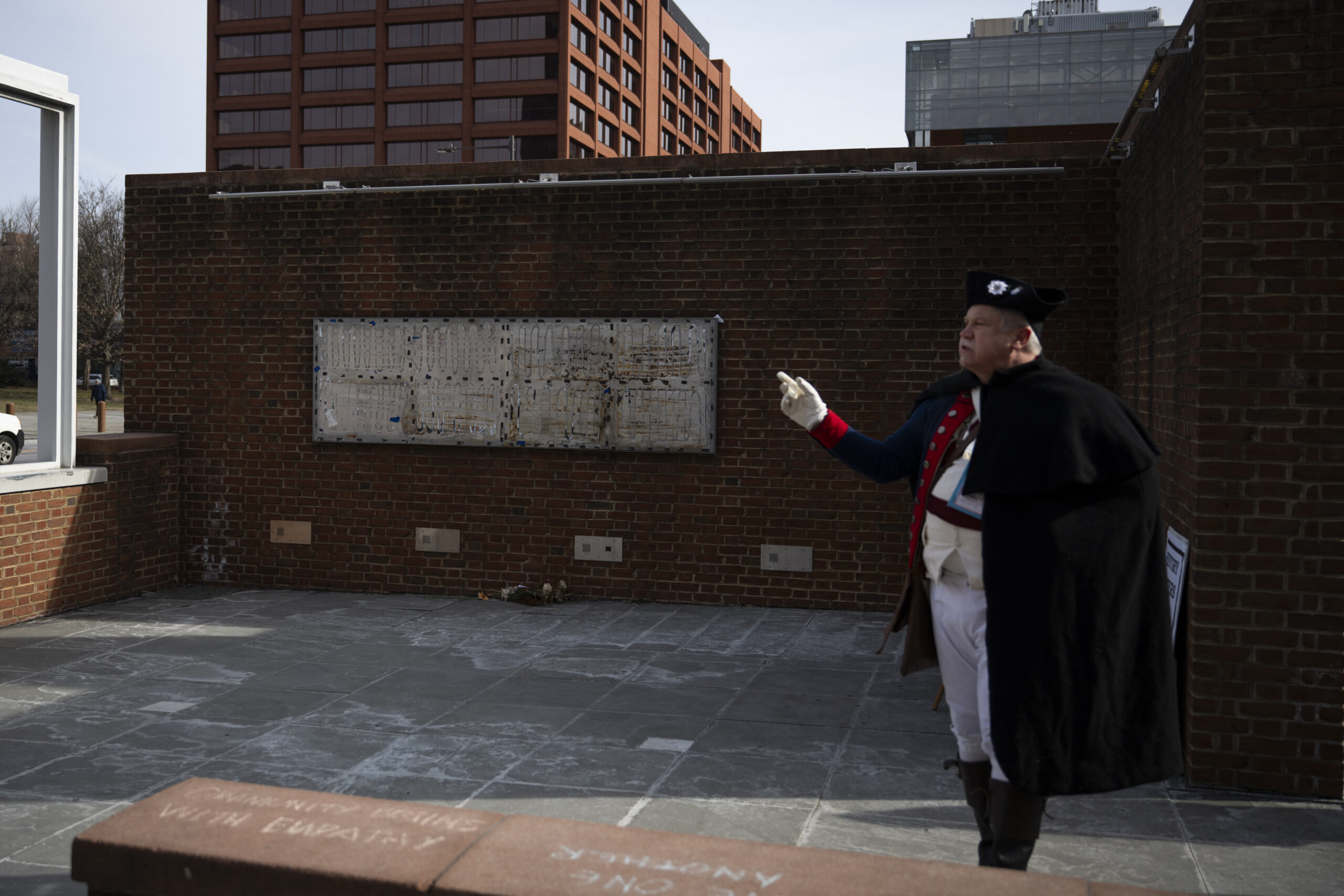
    Over that first weekend colorful signs populated the walls, reenactors donned historic garb and positioned themselves along the red brick pillars with a flourish, some people held giant replica signs of the ones that were removed, and others laid flowers delicately across the facility.

    To Berlin, whose school is a few blocks from the President’s House, posting the colorful signs was just a quick action she could take in her 45-minute prep period.

    “It was just a cathartic way to be like ‘Ugh, this sucks,’” Berlin said.

    But it soon became the first of numerous forms of activism and art that filled the space as more and more Philly-area residents yearned for a similar way to express their opposition to the removal of the plaques.

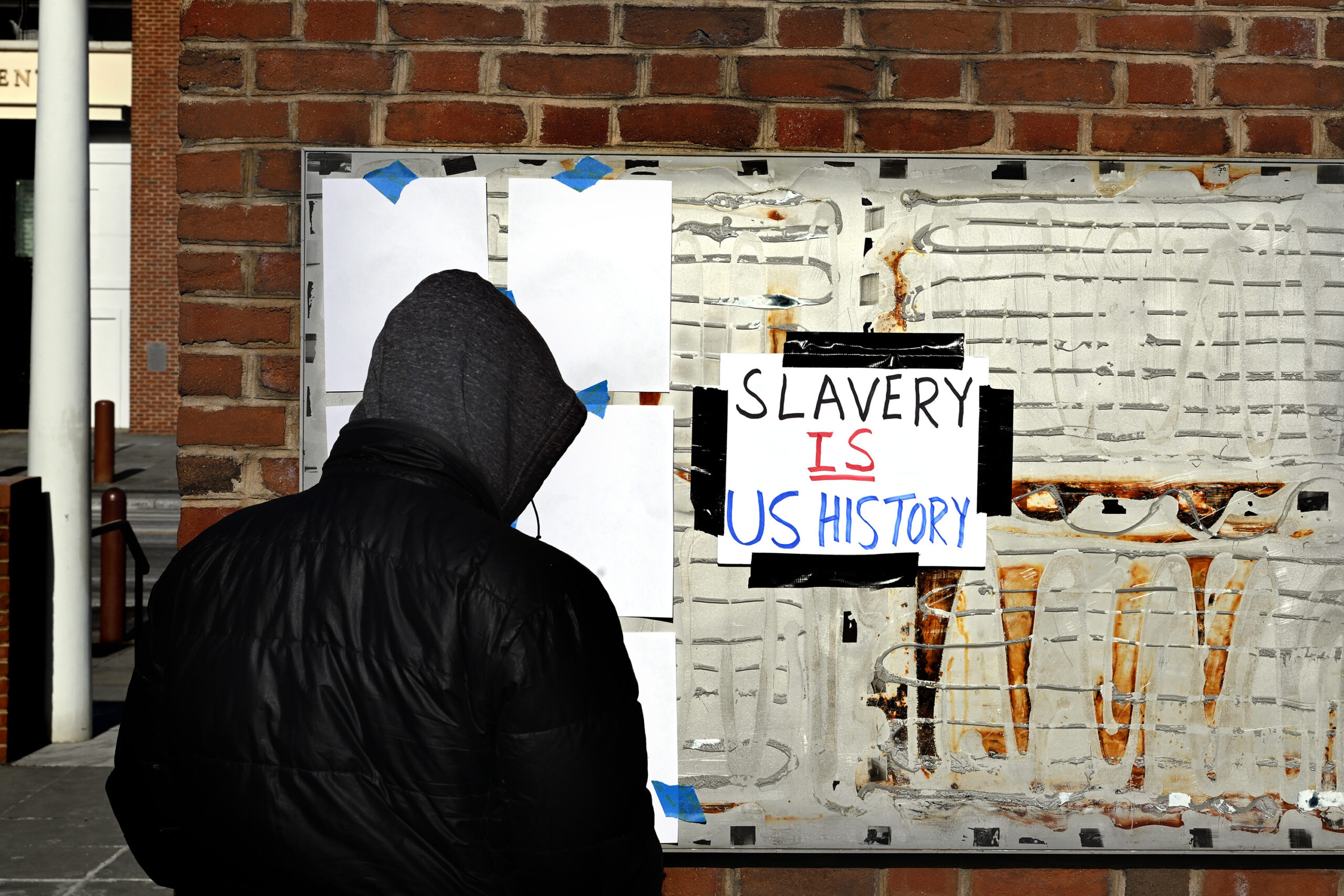
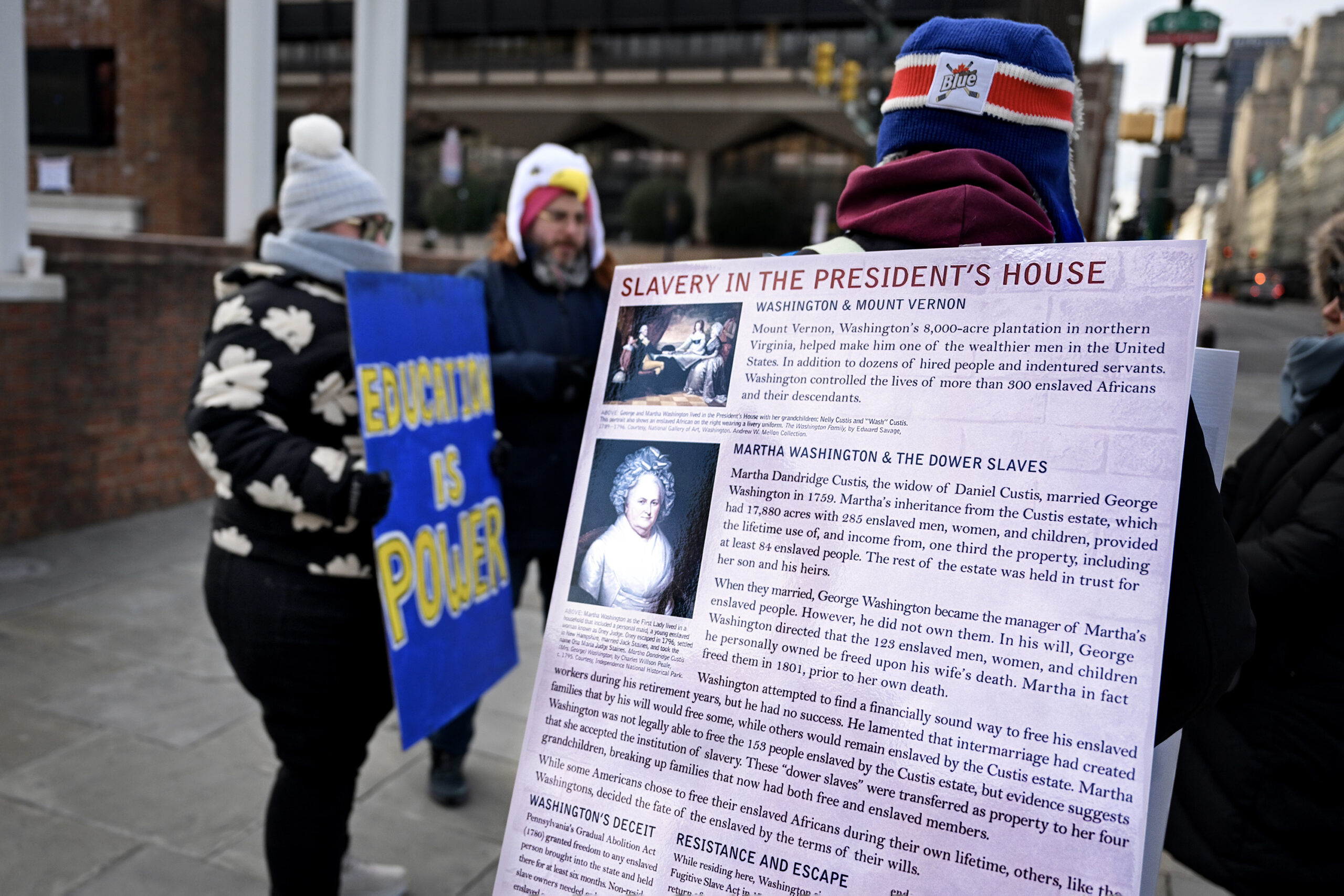
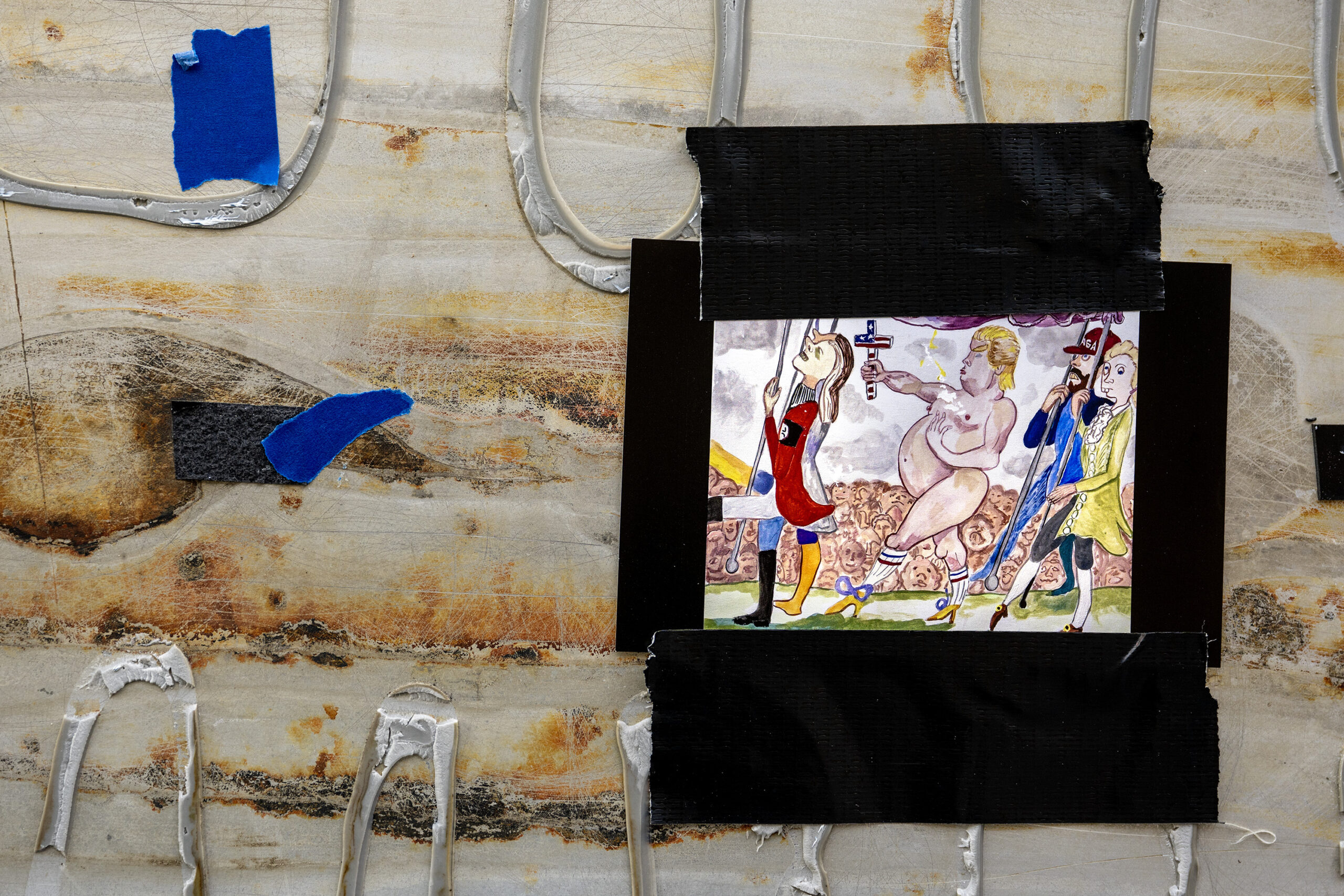
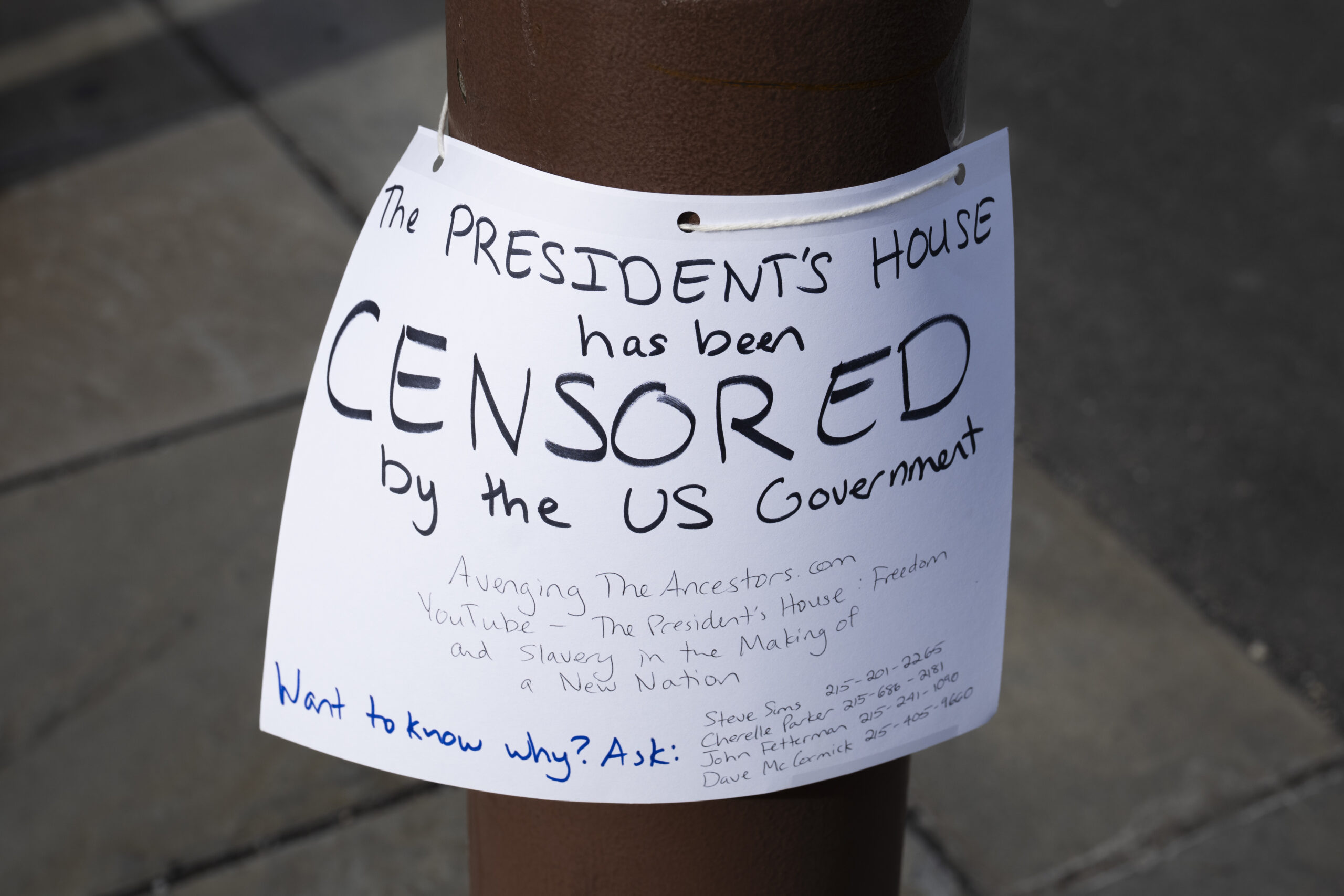
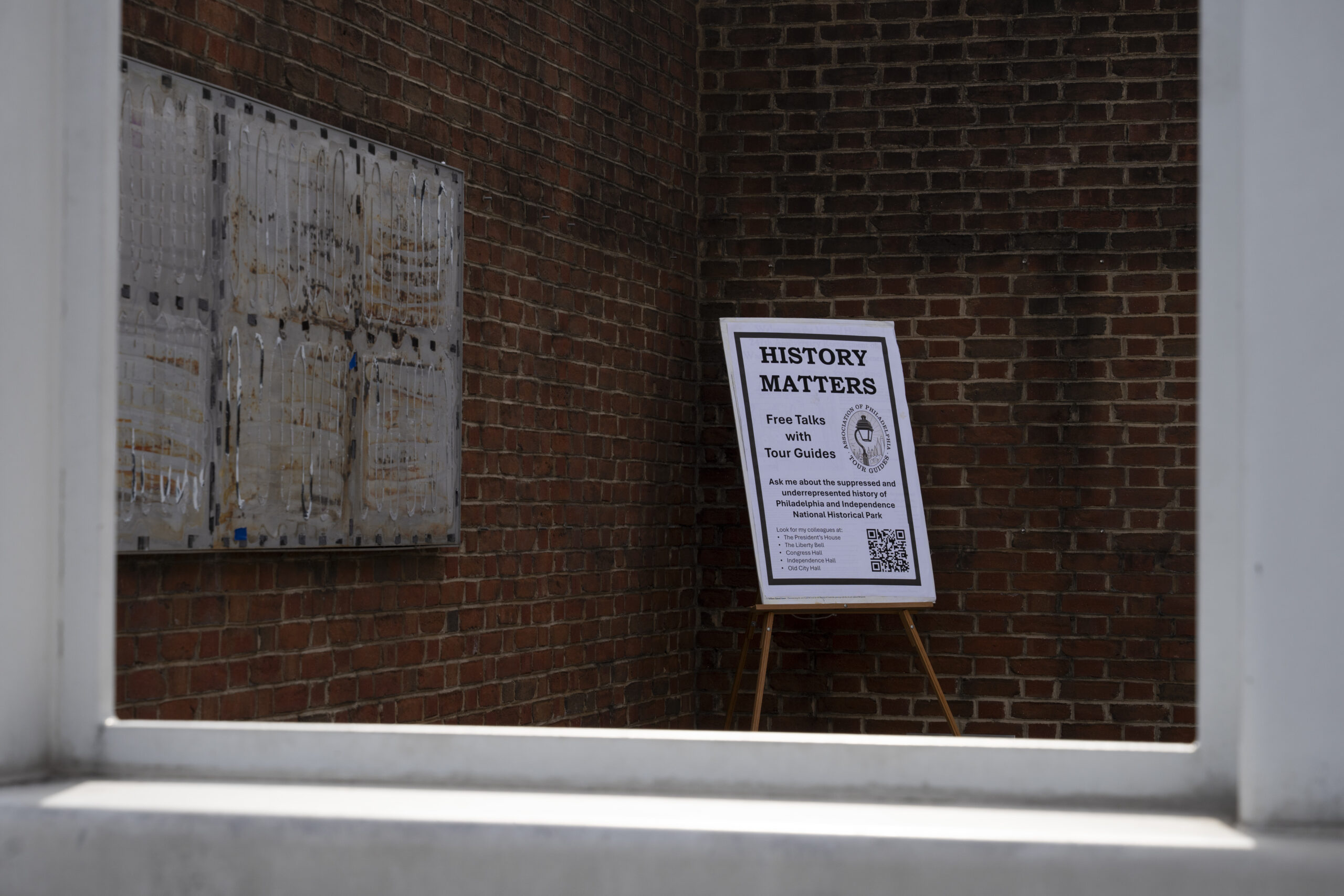
    Media ranged from cardboard to poster board. Tools included Sharpies and pens. Many of the more informal signs were affixed with painter’s tape to nooks in the brick structure and empty metallic shells where the original signs hung. Some more official-looking signs included QR codes and printed messages balanced on easels. Others were replicas of the signs that were there made with assistance from professional printing services.

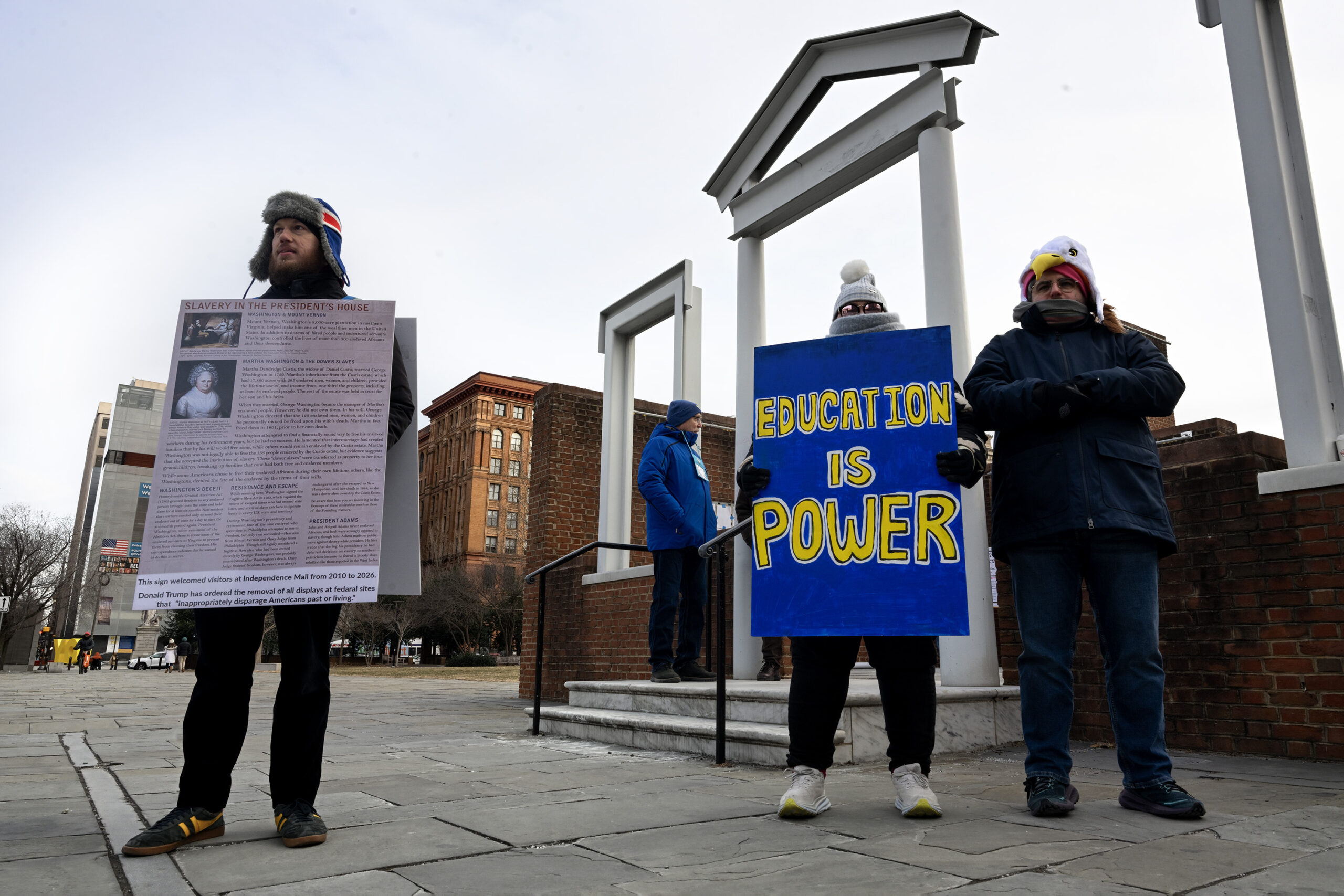
    Ted Zellers, a property manager in North Philly, took a more full-body approach to his protest. He found a high-resolution image online of one of the removed signs, titled “Slavery in the President’s House,” got it printed twice, fashioned a sandwich board out of the posters, and became “a living sign,” he said.

    It was an educational tool he could wield, but it doubled as a warning.

    “I hope people will think about what other information is under threat of being disappeared,” Zellers said.

    He expected to be the only person in the park with a sign, but was heartened to see a few dozen others there withstanding the 17-degree air interspersed with sharp winds slicing through the open air exhibit.

    Albert DerMovsesian from Willow Grove, who came to the site equipped with one vertical sign detailing the labor that took place in the house and a horizontal one titled “The Dirty Business of Slavery,” found himself similarly pleased to see so many like-minded others around him.

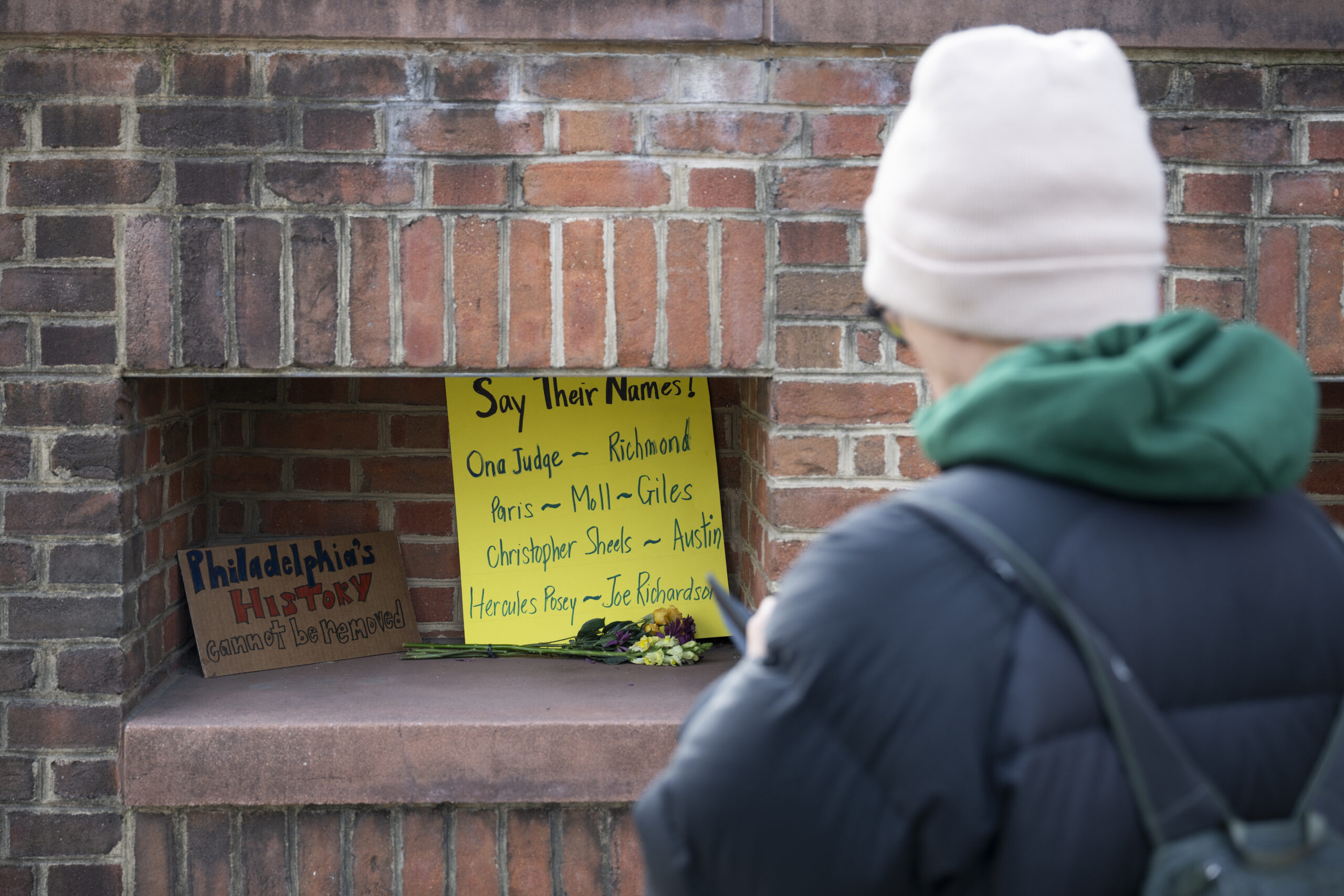
    In the park he saw little kids writing on pieces of paper pasted to the walls, a woman leaving a sign with the names of those enslaved at the site, and people adorning the structure with flowers.

    “It reminded me that I wasn’t alone,” DerMovsesian said.

    “We don’t need 350 million Malcolm X’s to make the country better,” Zellers said. “We just need a lot of regular people who recognize that they’re part of networks and who can take some action and amplify what’s going on, pass it onm and get other people engaged.”

    The collage of images developed organically, but hearkened back to a long lineage of protest art that has become increasingly prevalent under the Trump administration, said Nicolo Gentile, an artist and adjunct faculty member at Temple University’s Tyler School of Art and Architecture.

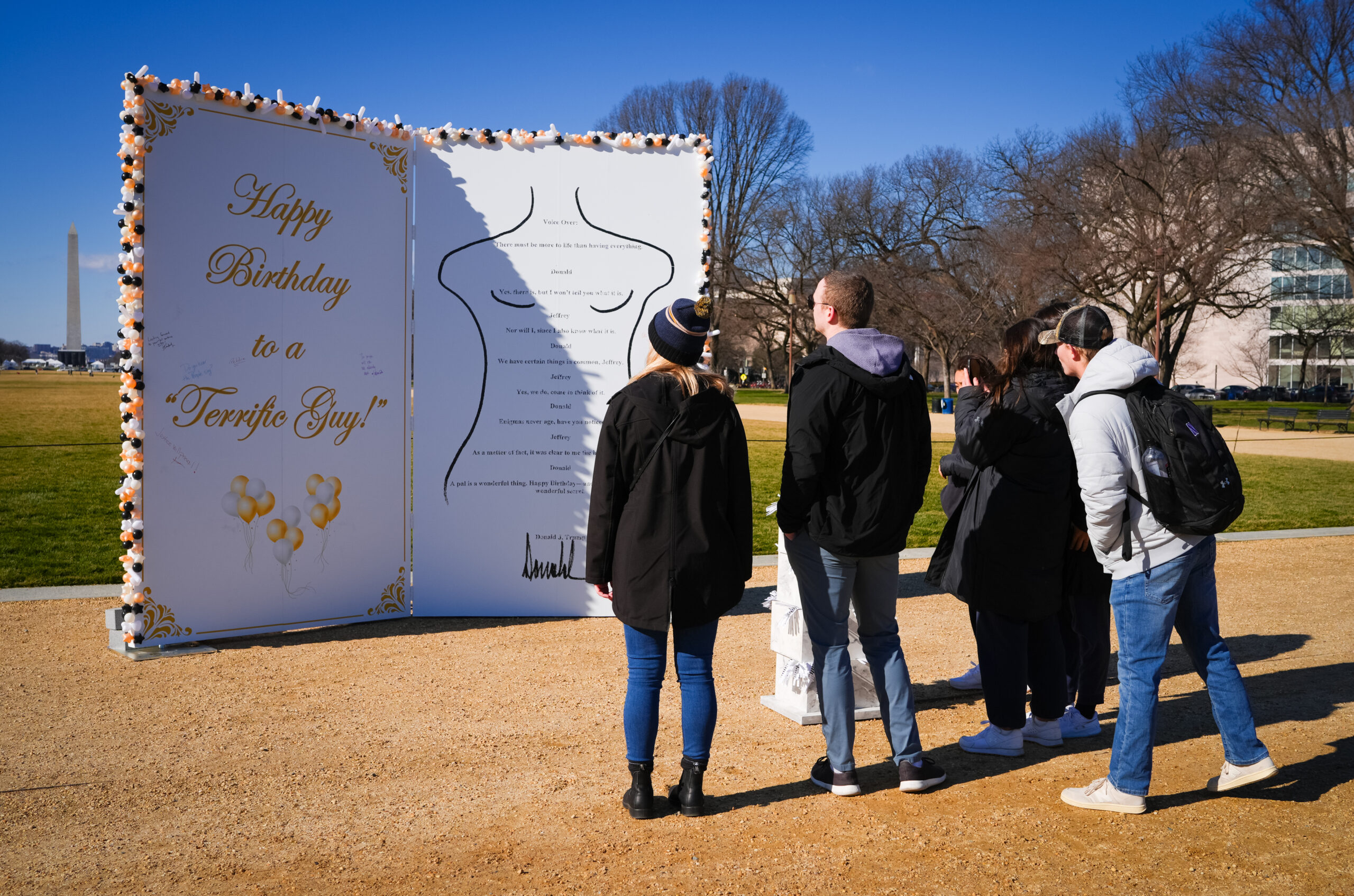
    Gentile likened the immediacy and style of the displays at the President’s House to the enlarged version of Trump’s birthday card to financier and sex offender Jeffrey Epstein that popped up on the National Mall in Washington last month.

    A new protest art installation referencing the Epstein files and President Donald Trump was installed on Third Street SW along the National Mall.

    The assortment of papers reading “learn all history” gets its power from the relative anonymity of its author, Gentile said, as well as its use of repetition.

    “It starts to create a texture of sound of a greater voice the way that the many voices of a chant during protest does,” he said.

    While Berlin said she doesn’t see herself as an artist, she appreciates the punch of a stark and direct message through signage and art.

    “I do love the impact of a good simple piece,” she said.

    In some cases, political art can be used to “accelerate progress,” Gentile said, but sometimes its best use is halting regression and “to wedge our foot in the door as progress may seem to be closing.”

    “This work seems to be the foot in the door,” he said.

    People leave notes on the spaces at the President’s House site in Independence National Historical Park.
    Ted Zellers (right) wears a sandwich board with a replica of one of the removed slavery panels as people visit and protest at the President’s House site.
    Ted Zellers (left) wears a sandwich board with a replica of one of the removed slavery panels, joining Jenna and Gregory May (right) protesting at the President’s House.
    People leave notes and political satire cartoons in the spaces at the President’s House.
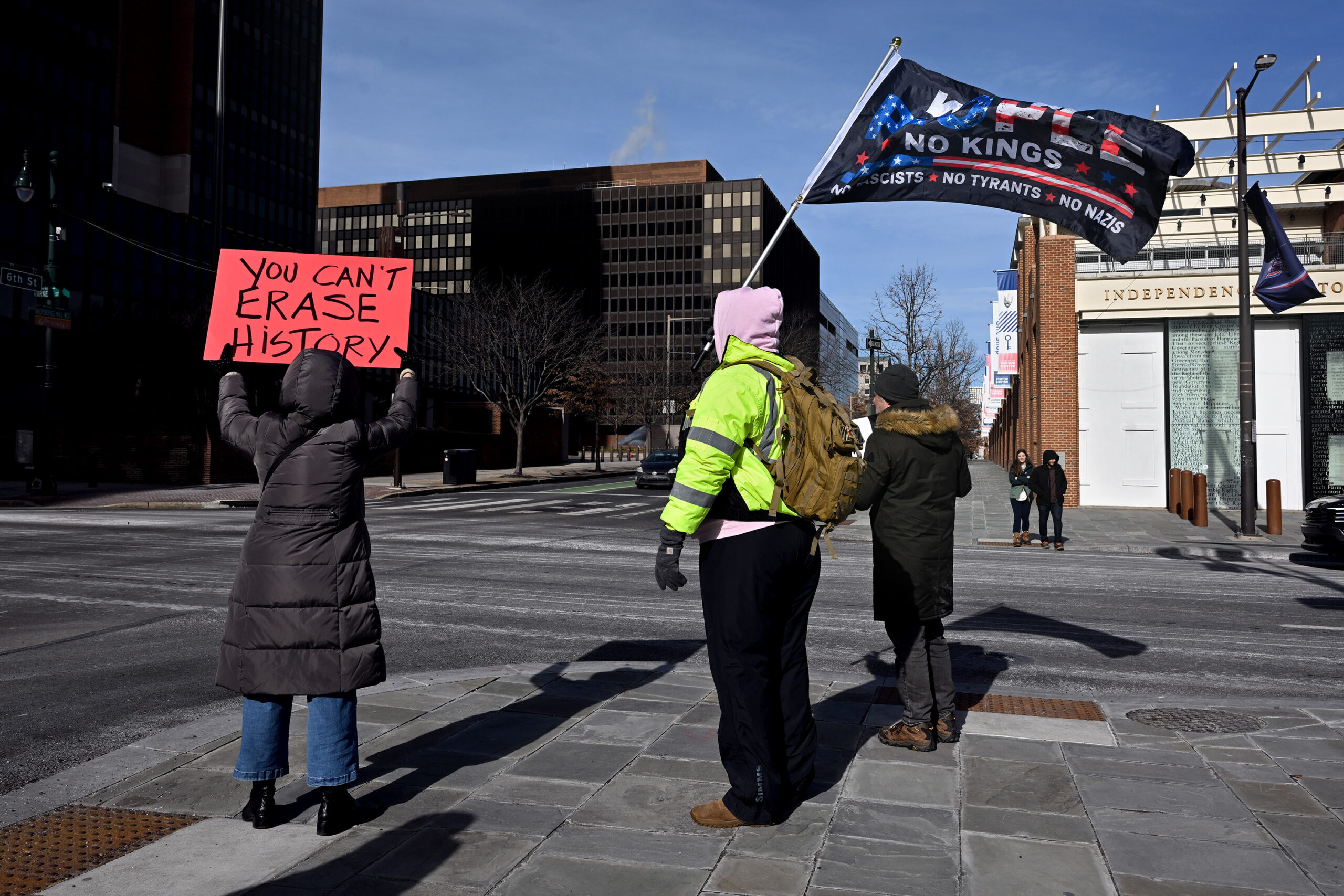
    People protest at the President’s House site.
    Al DerMovsesian holds replicas of some of the removed slavery panels as people visit the President’s House site.
    The President’s House in Independence National Historical Park.
    The President’s House in Independence National Historical Park.
    Michael Carver portrays Mordecai Sheftall as part of a “History Matters” guide at The President’s House.
    A sign was placed at the President’s House.
    A group of teacher taped posters along the now barren brick walls of the President’s House.
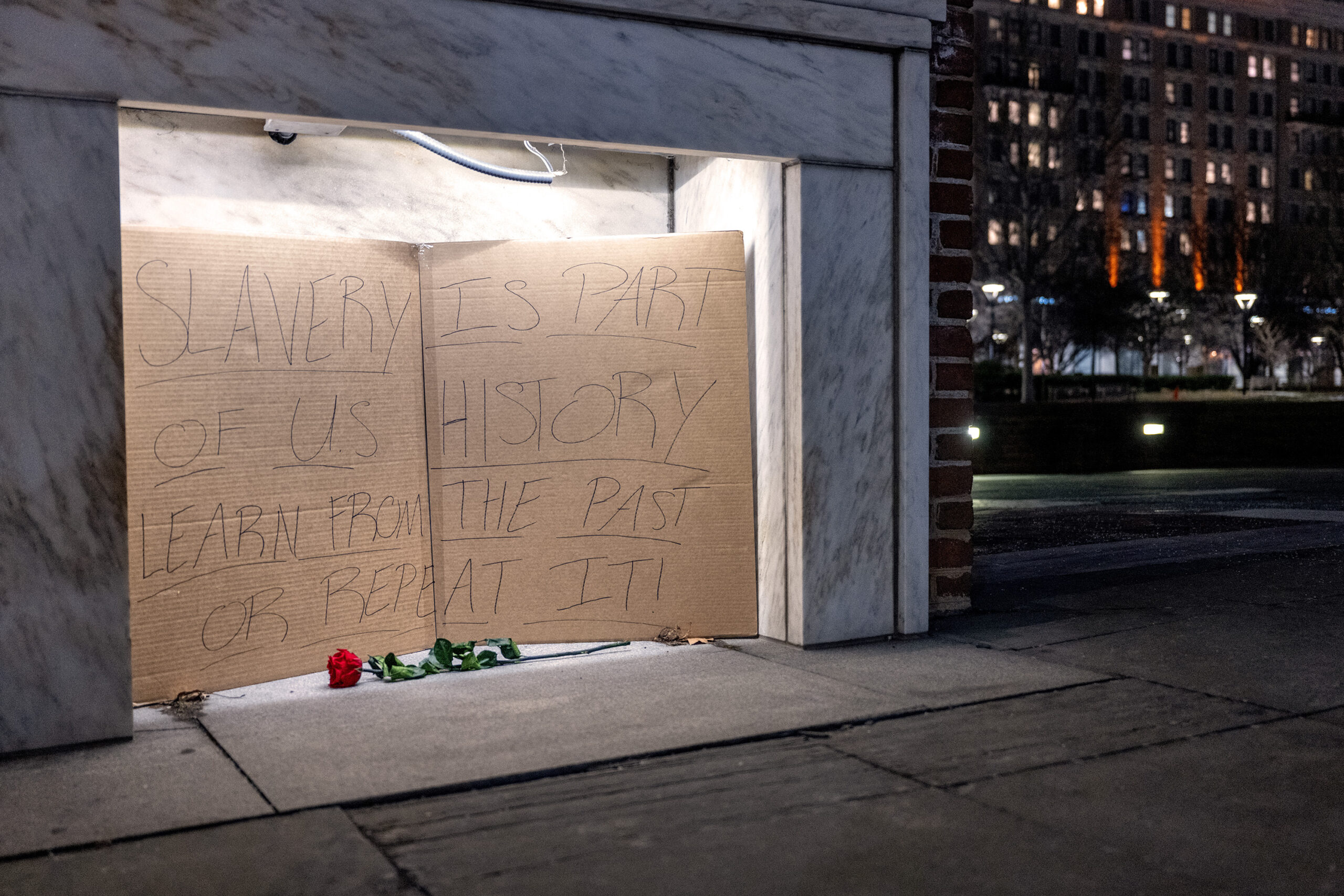
    A single rose and a handwritten cardboard sign (“Slavery is part of U.S. history learn from the past or repeat it”) are inside an empty hearth at the President’s House.
  • Israel reopening Gaza’s border crossing with Egypt on Sunday after long closure

    Israel reopening Gaza’s border crossing with Egypt on Sunday after long closure

    JERUSALEM — Israel said Friday that it will reopen the pedestrian border crossing between the Gaza Strip and Egypt over the weekend, marking an important step forward for U.S. President Donald Trump’s Gaza ceasefire plan.

    COGAT, the Israeli military body in charge of coordinating aid to Gaza, said in a statement that starting on Sunday a “limited movement of people only” would be allowed through the Rafah crossing, Gaza’s main gateway to the outside world.

    The announcement followed statements from Israeli Prime Minister Benjamin Netanyahu and Ali Shaath, newly appointed to head the Palestinian administrative committee governing Gaza’s daily affairs, that it would likely open soon.

    While COGAT said the passage will open in both directions on Sunday, Shaath said the first day will be a trial for operations and that travel both ways will start Monday.

    Israel as of Friday agreed to allow up to 150 people to leave each day — 50 medical patients with two family members, an official familiar with the situation told the Associated Press, speaking on condition of anonymity because they were discussing diplomatic talks. Up to 50 people who fled during the war can return daily, the source said.

    Roughly 20,000 sick and wounded Palestinians need treatment outside Gaza, according to the territory’s health ministry. Gaza’s health system was decimated in the war, rendering advanced surgical procedures out of reach.

    COGAT said both Israel and Egypt will vet individuals for exit and entry through the crossing, which will be supervised by European Union border patrol agents. In addition to screenings at the crossing, Palestinians leaving and returning will be screened by Israel in the adjacent corridor, which remains under Israeli military control.

    The crossing has been under a near complete closure since Israel seized it in May 2024, saying the step was part of a strategy to halt cross-border arms smuggling by Hamas. It was briefly opened for the evacuation of medical patients during a short-lived ceasefire in early 2025.

    Israel had resisted reopening the crossing, but the recovery of the remains of the last hostage in Gaza on Monday cleared the way to move forward. A day later, Netanyahu said the crossing would soon open in a limited and controlled fashion.

    Thousands of Palestinians inside Gaza are trying to leave the war-battered territory, while tens of thousands who fled the territory during the heaviest fighting say they want to return home.

    The reopening is one of the first steps in the second phase of last year’s U.S.-brokered ceasefire agreement, which includes challenging issues ranging from demilitarizing Gaza to putting in place an alternative government to oversee rebuilding the mostly destroyed enclave.

    Netanyahu said this week that Israel’s focus is on disarming Hamas and destroying its remaining tunnels. Without these steps, he said that there would be no reconstruction in Gaza, a stance that could make Israel’s control over Rafah a key point of leverage.

    More deadly strikes in Gaza

    Palestinians in Gaza on Friday mourned friends and relatives who died earlier this week in Israeli strikes, which have slowed but not stopped since the return of the remains of the final hostage held in the territory.

    Three Palestinians were laid to rest in traditional Islamic funeral rites. Men gathered to pay their final respects, carrying the shrouded bodies through the streets before praying over them.

    Israel’s military said four people were killed in airstrikes Friday in central Gaza, saying they were armed and approaching troops near the ceasefire line dividing Israeli-held areas and most of Gaza’s Palestinian population.

    The most recent deaths Friday are on top of the 492 Palestinians killed since the ceasefire began in October, according to the Gaza Health Ministry. The ministry doesn’t distinguish between civilians and combatants in its figures. It maintains detailed casualty records that are seen as generally reliable by U.N. agencies and independent experts.

  • Judge chastises Trump administration attorney in hearing over dismantled President’s House exhibits

    Judge chastises Trump administration attorney in hearing over dismantled President’s House exhibits

    Attorneys for the City of Philadelphia and President Donald Trump’s administration sparred in federal court Friday over the abrupt removal of slavery-related exhibits from the President’s House on Independence Mall.

    The hearing centered on the city’s request that the judge order that no more exhibits be removed from the President’s House and that the already-removed exhibits be protected as the effort to return them is litigated.

    Mayor Cherelle L. Parker’s administration is “fighting” to restore the panels, City Solicitor Renee Garcia told reporters after the hearing.

    “I want to be very clear that we want those panels back up, but we also do not want anything else to come down,“ Garcia said.

    Judge Cynthia M. Rufe wasn’t ready to issue a ruling after the daylong hearing in the courthouse across the street from the historic site. On Monday, she wants to visit the President’s House and ensure that the removed exhibits being stored in a National Park Service storage facility adjacent to the Constitution Center are not damaged. She asked the federal government to maintain the status quo until she makes her decision.

    But with the nation’s 250th anniversary celebration being planned for the site in dispute, Rufe said she would not let the case drag into the spring or summer.

    The George W. Bush-appointed judge chastised the attorney representing the government, Assistant U.S. Attorney Gregory in den Berken, for talking out of “both sides of his mouth” and making “dangerous” arguments.

    The federal government argued the injunction request was invalid on procedural grounds, and that the removal was lawful because, in den Berken said, “the government gets to choose the message that it wants to convey.”

    “That’s horrifying to listen to,” Rufe said. “Sorry. That’s not what we elected anybody for.”

    The judge asked the assistant U.S. attorney to imagine Germany removing a monument for the American soldiers who liberated the Nazi concentration camp Dachau in an effort to erase the crimes of the Holocaust. “What are we doing here? Are we speaking truth and justice?” Rufe asked.

    In another notable exchange, the judge read Trump’s posts from then-Twitter in 2017 in which he lamented the removal of statutes of confederate leaders.

    “Sad to see the history and culture of our great country being ripped apart with the removal of our beautiful statues and monuments,” Trump wrote. “You can’t change history, but you can learn from it.”

    Rufe asked the assistant U.S. attorney to reconcile that sentiment with Trump’s directive to remove slavery-related exhibits.

    “Is this a desire to change history?” the judge asked.

    In den Berken declined to respond or opine on the motivations of the president or decision-makers at the Department of Interior, and returned to procedural arguments.

    A three-way collaboration

    Friday’s hearing marked the first time the City of Philadelphia and Trump’s administration have gone head-to-head in court during his second term.

    The city sued Interior Secretary Doug Burgum, acting National Park Service Director Jessica Bowron, and their respective agencies Jan. 22 while Park Service employees were dismantling educational exhibits about slavery at the President’s House.

    The President’s House, which opened in December 2010, seeks to inform visitors about the horrors of slavery and memorialize the nine people George Washington enslaved there while he resided in Philadelphia during the early years of the United States. All information at the site is historically accurate.

    The exhibits were dismantled after increased scrutiny from the Trump administration. Last year, Trump and Burgum issued orders calling for content at national parks that “inappropriately disparage Americans past or living” to be reviewed and potentially removed.

    Garcia argued the removal of exhibits violated federal law and an agreement between the federal government and the city, and caused imminent harm.

    “The contents of the removed panels are critical context to share the stories of the individuals enslaved at the president’s home and their fight for freedom” Garcia said.

    The President’s House exhibition was the results of yearslong collaboration between the city and the federal government that spanned multiple presidential and mayoral administrations, Garcia said. Two former mayoral chiefs of staff testified to the city’s extensive work alongside the National Park Service.

    “I could not imagine that anybody would decide, after all that it took, together, and that we always had each others back, that they would over night tear it down,” said Everett Gillison, chief of staff under former Mayor Michael Nutter. “It boggles my imagination.”

    Valerie Gay, the city’s chief cultural officer, also testified to the historical importance of the site to Philadelphians and to visitors for the upcoming 250th anniversary celebrations.

    The city’s lawsuit has been supported by Gov. Josh Shapiro and Democrats in Pennsylvania’s state Senate, who filed briefs in support of the requested injunction alongside a coalition of residents who advocated for historical acknowledgment of the enslaved people living in Washington’s house, Avenging The Ancestors Coalition, and the walking tour company The Black Journey.

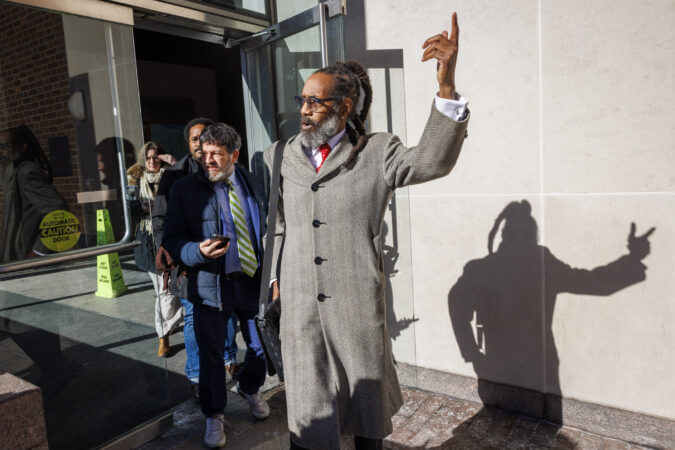
    Michael Coard, attorney and founding member of Avenging the Ancestors Coalition, at President’s House in Philadelphia.

    The President’s House was also a partnership with the public, said Cara McClellan, the attorney representing the coalition and The Black Journey

    It was advocacy by coalition leader Michael Coard in the early 2000s that kickstarted the process to recognize the nine enslaved people who lived in Washington’s house through exhibits on the site, McClellan told Rufe. The design was the result of multiple public meetings, with the participation of thousands of Philadelphians.

    Yet the exhibits were removed without public input, notice, or reasoning, the attorney said.

    “This is like pulling pages out of a history book with a razor,” McClellan said. ”History does not change based on who is in political office.”

  • With ‘extreme cold’ expected Saturday, one Mummers band has already pulled out of the String Band Spectacular

    With ‘extreme cold’ expected Saturday, one Mummers band has already pulled out of the String Band Spectacular

    A month after dangerous winds led Mummers string bands to cancel their New Year’s Day Parade competition, one string band says it’ll be too cold to play a makeup show Saturday.

    “With extreme cold predicted for this weekend, our top priority is the health and safety of our members, and the forecasted conditions may put them at risk,” the Avalon String Band said on Facebook.

    The band was set to join other groups at the 2026 String Band Spectacular at Lincoln Financial Field Saturday afternoon.

    The Philadelphia Mummers String Band Association scheduled the event after the string bands canceled their New Year’s Day performances this year, when high winds destroyed props and sent five people to the hospital.

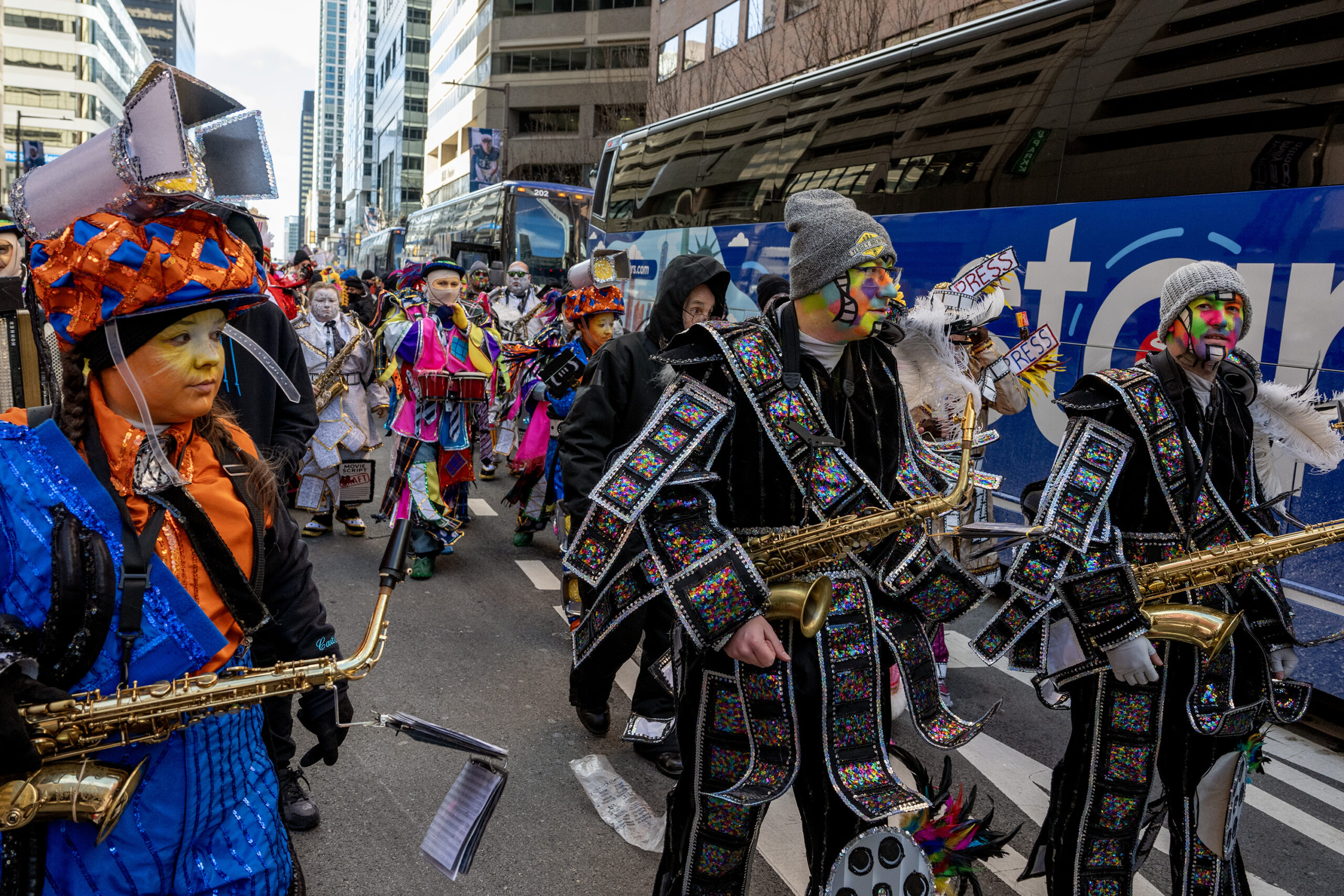
    Musicians with the Uptown String Band arrive on buses for the Mummers Parade Thursday, Jan. 1, 2026, after the String Band competition was suspended because of high winds that destroyed props and caused injuries during morning setup. The bands still marched and played their music, but did not carry props, and were not judged. The Uptown theme was “From Script to Screen.”

    Saturday a coastal “bomb cyclone” is expected to douse New Jersey and Delaware with snowfall, though forecasting models say Philadelphia won’t get hit. However, stinging winds and Arctic air will push temperatures down to zero Saturday morning, with windchills dipping as low as 10 degrees below 0.

    It’s unclear whether other bands will follow the Avalon String Band’s lead. A total of 14 bands make up the Philadelphia Mummers String Band Association, according to its website.

    Twelve organizations are set to perform Saturday, said Philadelphia Mummers String Band Association President Sam Regalbuto Friday afternoon. He said workers are getting the stages and props ready.

    “Everyone’s on board,” Regalbuto said. “Everyone’s here. We’re good to go.”

    The event will begin a 2 p.m. Saturday with the Philadelphia Gay Men’s Chorus singing the national anthem. The event will be broadcast on WDPN-TV (MeTV2) at 8 p.m. and will be streamed on WFMZ.