Blog

  • Manong brings creative Filipino-American flavors to Fairmount — plus, it’s a lot of fun

    Manong brings creative Filipino-American flavors to Fairmount — plus, it’s a lot of fun

    Chance Anies grew up at the tables of America’s chain restaurants. His mom’s career as a manager opening locations for TGI Friday’s, Olive Garden, Dave & Buster’s and others meant he and his siblings spent some of their most important life events in the glow of neon flair illuminating bottomless breadstick bowls and blooming onions.

    “There was something magical about growing up there,“ says Anies, 34. “There was always something for everybody, for anyone who walked in the door, including kids. They were also affordable. And what I’ve found over the years is that middle-class dining like that has been dying.”

    Manong, which opened three months ago in the former Tela’s space at 19th and Fairmount Avenue, is filled with references to the mid-tier chains of his youth. From the longhorn skull emblazoned on the sign at its front door, to the Teenage Mutant Ninja Turtles arcade game being played for free by guests in the corner, to actual neon signs from both Applebee’s and Outback alight in its two bathrooms, the cues are here for what Anies calls his chain-inspired Filipino-American steakhouse. There’s even the signature Bloom Shroom, a fantastic fungi riff on the blooming onion, whose deep-fried thatch of enoki mushrooms is irresistible — at least, when it isn’t overcooked or oversalted, as it was on my first visit.

    The Bloom Shroom at Manong on Thursday, Nov. 20, 2025 in Philadelphia.

    This kitchen has largely been more reliable than that, and nailed the shroom on a following visit, when its broom-like sweep of crunchy-earthy mushrooms threads lived-up to their potential. It was also clear after my visits here that catchy labels trying to characterize Anies’ sequel restaurant to Tabachoy, his Filipino BYOB hit in Bella Vista, really don’t do its concept justice. For one thing, it’s not a steakhouse, considering Manong didn’t even have a steak on the menu (beyond grilled beef skewers) for its first three months, when an intriguing hanger steak with fish sauce and pickled onions replaced the prime rib.
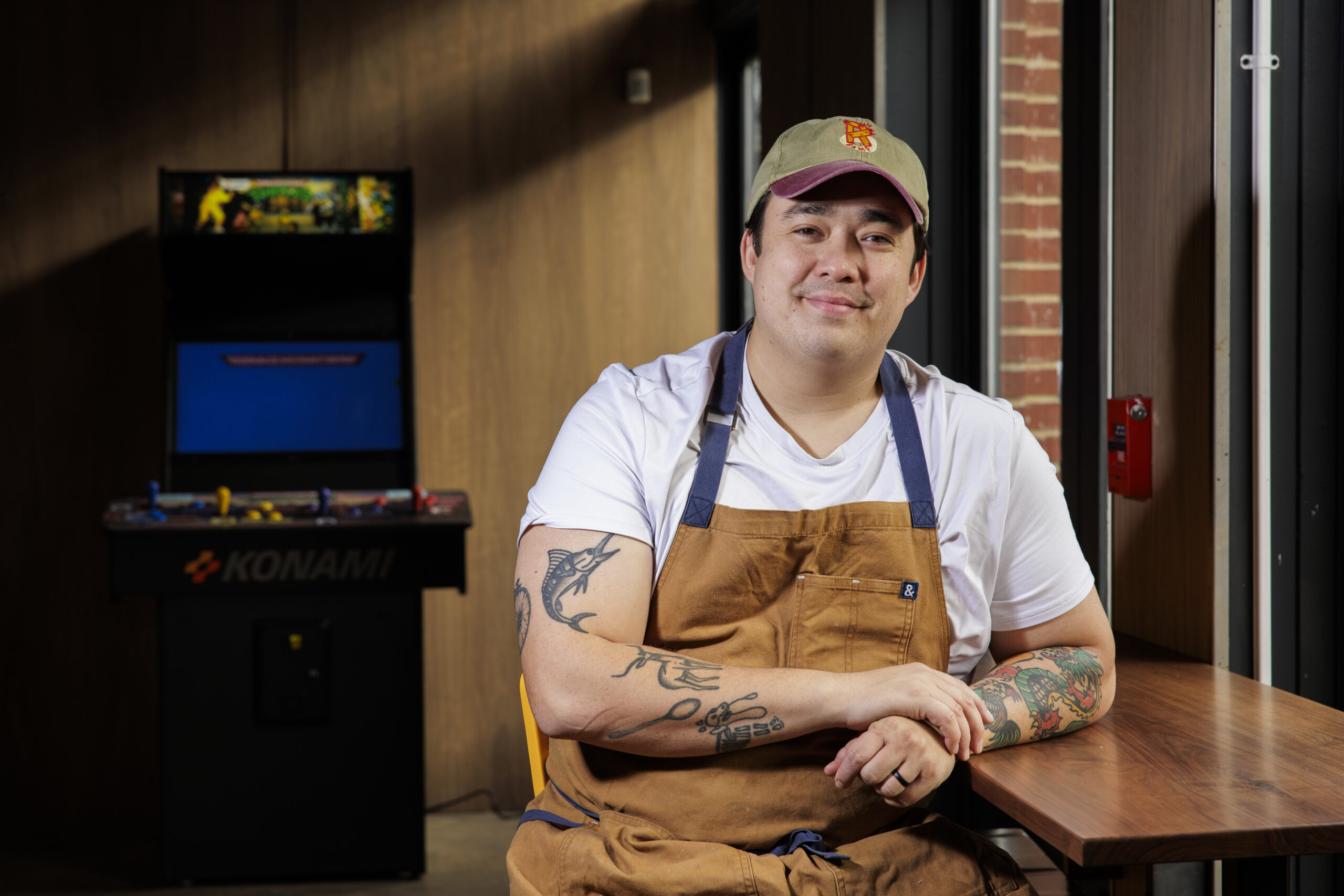
    Chef Chance Anies posed for a portrait at Manong on Thursday, Nov. 20, 2025 in Philadelphia.

    The swap was a pragmatic concession to keep the menu on the more affordable side, a prime characteristic of chain restaurant culture Anies says inspires him. With check averages around $50 to $60, including drinks, dinner at Manong costs more than going to Longhorn. But it succeeds in hitting a more accessible sweet spot than most of Philly’s pricier destination restaurants without sacrificing the quality of from-scratch food. There’s a balancing act of handcraft and value here most chain restaurants simply can’t touch.
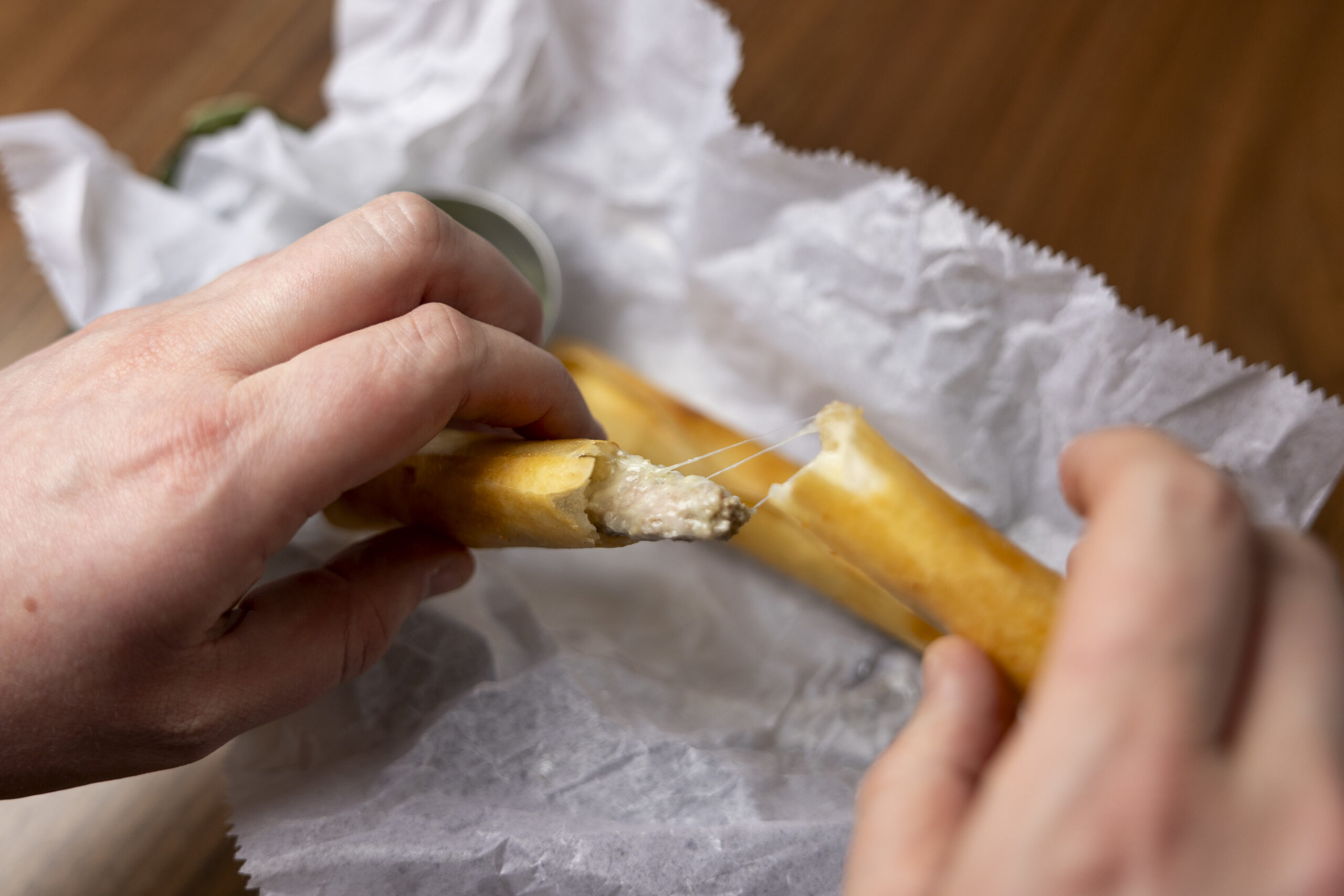
    The dynamite lumpia at Manong in Philadelphia, Pa., on Thursday, March. 5, 2026.

    There’s also a level of personality, bold flavors, and storytelling to the food at Manong that is the antithesis of the sanitized corporate restaurant. This menu is a unique reflection of Anies’ childhood and life experiences as a Filipino-American — including his previous careers as an English teacher, medical researcher and food truck operator — that also diverges with its whimsy and creativity from the more traditionally-framed Filipino flavors anchoring Tabachoy.

    There’s an equivalent to mozzarella sticks at Manong, the dynamite lumpia, but they’re wrapped inside crispy spring roll wrappers and laced with tender pork and minced jalapeños alongside a sweet chili dip. Manong also offers one of the most distinctive new cheeseburgers in the city, a half-pound patty that spans the width of four small pandesal rolls that are still attached, like King’s Hawaiian bread.

    The connected rolls can easily be divided into shareable sliders, but avoid the urge to supersize it into a full one-pound of meat because it throws all the proportions off. The standard serving maximizes its many Filipino flourishes, from the light sweetness on the fresh-baked bread to the tropical backnotes of the house banana ketchup, the calamansi-tanged slaw, and a mayo shaded by bangus (tinned milkfish), whose oily fillets are buzzed into an umami-rich spread that Anies says carries a Pinoy schmear of “je ne sais quoi.”
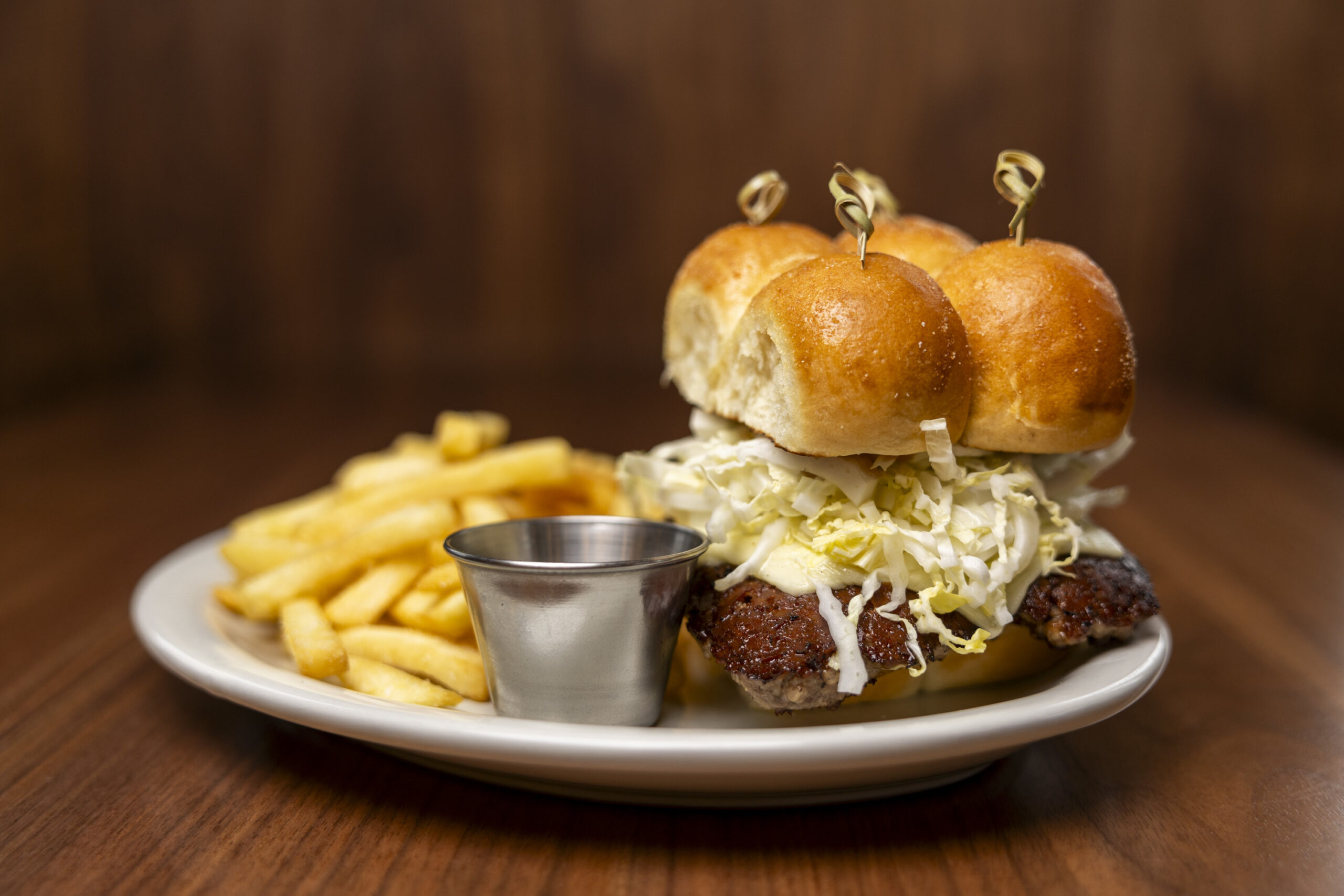
    The 1/2lb balong burger at Manong in Philadelphia, Pa., on Thursday, March. 5, 2026.

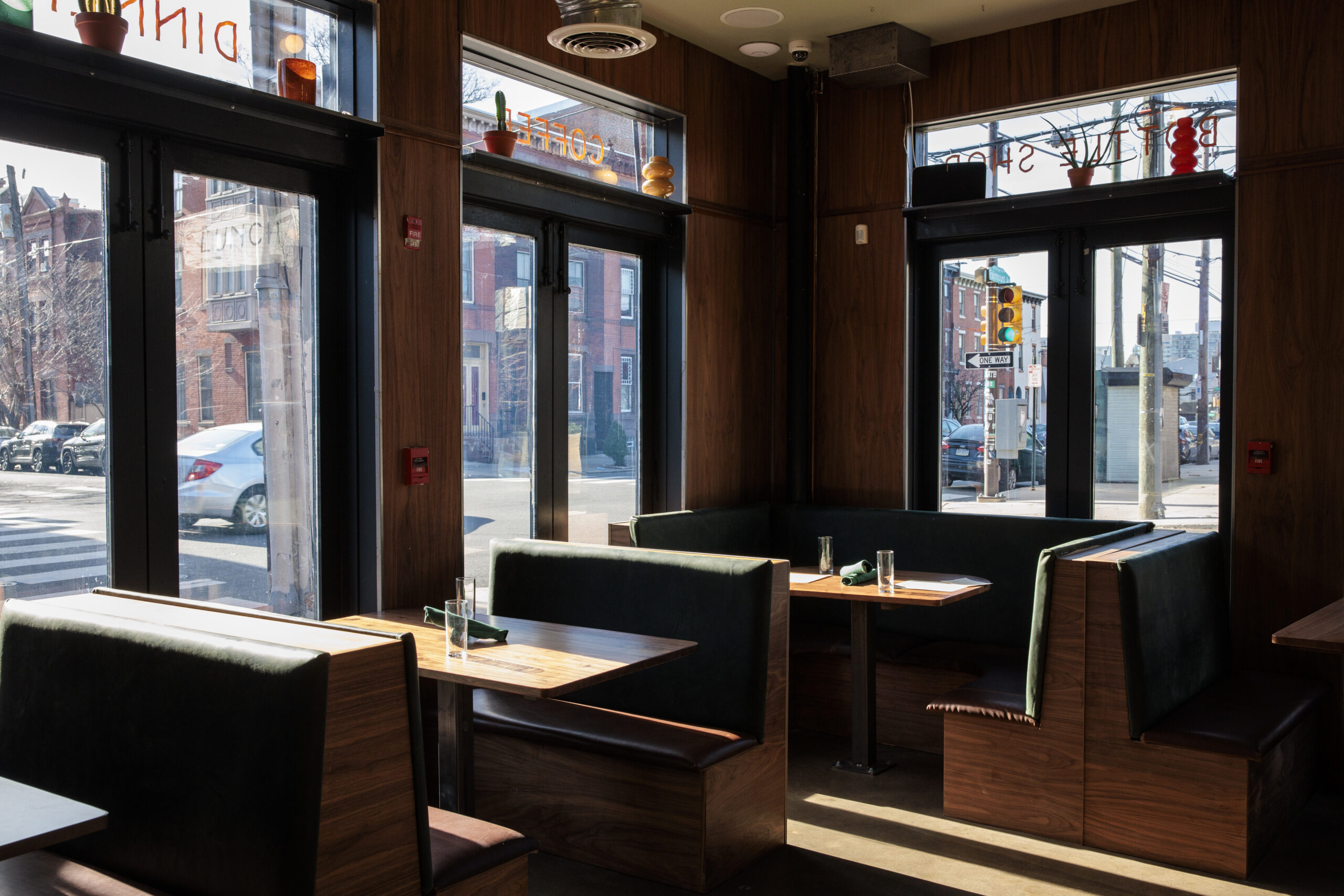
    The 75-seat Manong, which means “elder brother” in Ilocano, the Filipino dialect of Anies’ father’s family, is close to three times as big as Tabachoy, a 28-seater in Bella Vista so snug you need to access the bathroom through an alley door at the rear of the building. But Anies has made good use of this sunny, high-ceilinged corner space, warming its interior with rustic walnut accents and adding convivial booth seating to both its window walls and a central banquette.
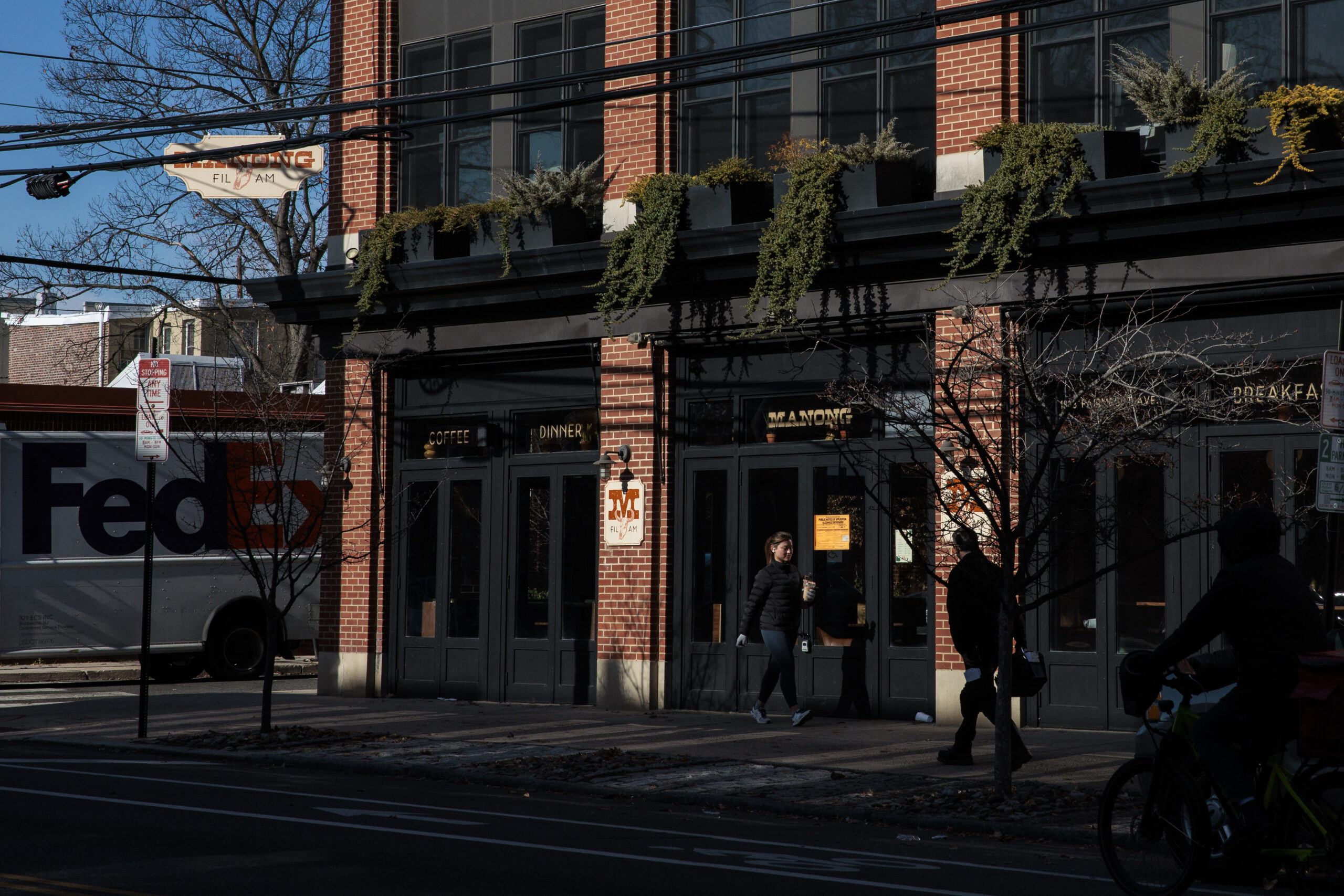
    The exterior of Manong on Tuesday, Dec. 9, 2025 in Philadelphia.

    With room for large parties, including a back alcove beneath mounted horns and a vintage truck grill with illuminated headlights, plus 13 seats at the bar, there were more groups of people simultaneously celebrating at Manong than any restaurant I’ve visited in recent memory. Conjuring that kind of joy, and for such a broad cross-section of customers, is one aspect of “everyone’s family” magic that Anies has successfully channeled.
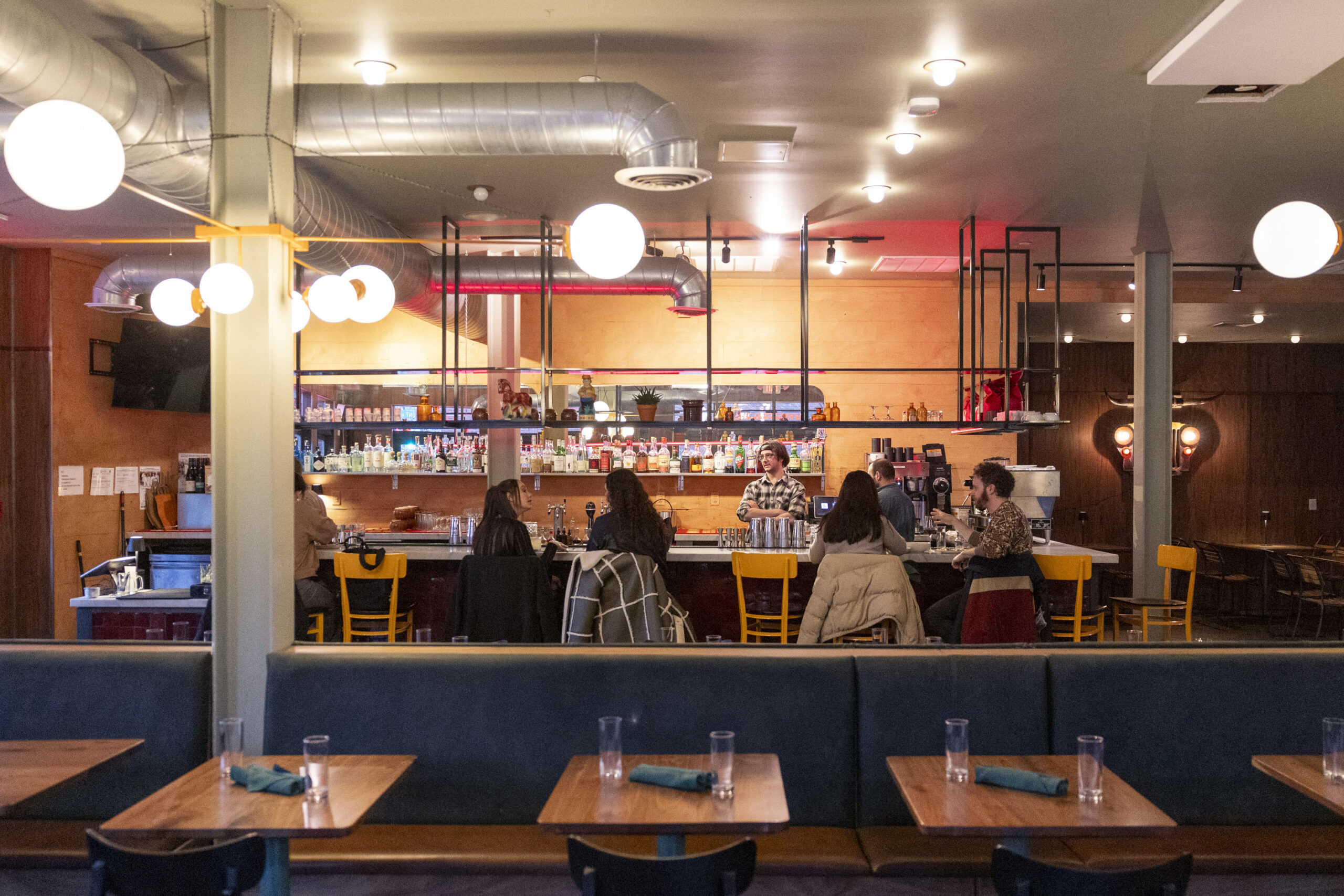
    Customers enjoying drinks and food at the bar at Manong in Philadelphia, Pa., on Thursday, March. 5, 2026.
    The interior of Manong on Tuesday, Dec. 9, 2025 in Philadelphia.

    A drink program overseen by beverage manager Eli Ezer helps buoy the festive mood with a variety of fun, colorful drinks that also offer thematic twists, like the sky blue Otso Otso, a riff on a spicy margarita infused with green peppercorn, lemongrass, and calamansi, or an espresso martini with the added taste of sweet corn (a combo with roots in the Philippines), or a Pinoy version of the City Wide, pairing San Miguel Lite with a shot of Kasama rum.


    The Otso Otso cocktail at Manong in Philadelphia, Pa., on Thursday, March. 5, 2026.
    The Pandan latte at Manong in Philadelphia, Pa., on Thursday, March. 5, 2026.

    It’s no surprise this room has a serious noise problem, and will eventually require some significant investment to sound-proof its hard surfaces. It recently opened for new daytime cafe hours to pump out purple ube and pandan lattes with Herman’s Coffee, along with a limited selection of pastries, and plans to expand the daytime menu with breakfast sandwiches for a brunch debut this spring. There’s also a retail bottle shop where a fridge case full of Red Horse beer, natural wines, and sakes add yet another reason to visit.

    For now, however, Manong’s dinner is more than a worthy enough draw on its own. Aside from the bloom shroom, all of the skewers are winners, including the juicy grilled chicken thighs glazed in Filipino barbeque sauce and tagalog beef sticks that evoke Japanese negamaki with thin-sliced flank steak bundles on the skewer rolled around crunchy scallions in a calamansi soy-garlic glaze.

    Anies aims to evoke the rich chain restaurant pastas of his youth with the “creamy pasta” entree, but it’s infinitely more interesting here with basil fettuccine tangled in a sauce creamed with coconut and Parmesan, flavor-boosted with ginger, garlic, and thin slices of pork belly. The “super duper creamy” version may be tempting, but once again, like that burger, the “more” option was less appealing. When we opted for the bonus of trout roe and shrimp on my second visit, it came in an overly thickened cream sauce that bordered on sludge.
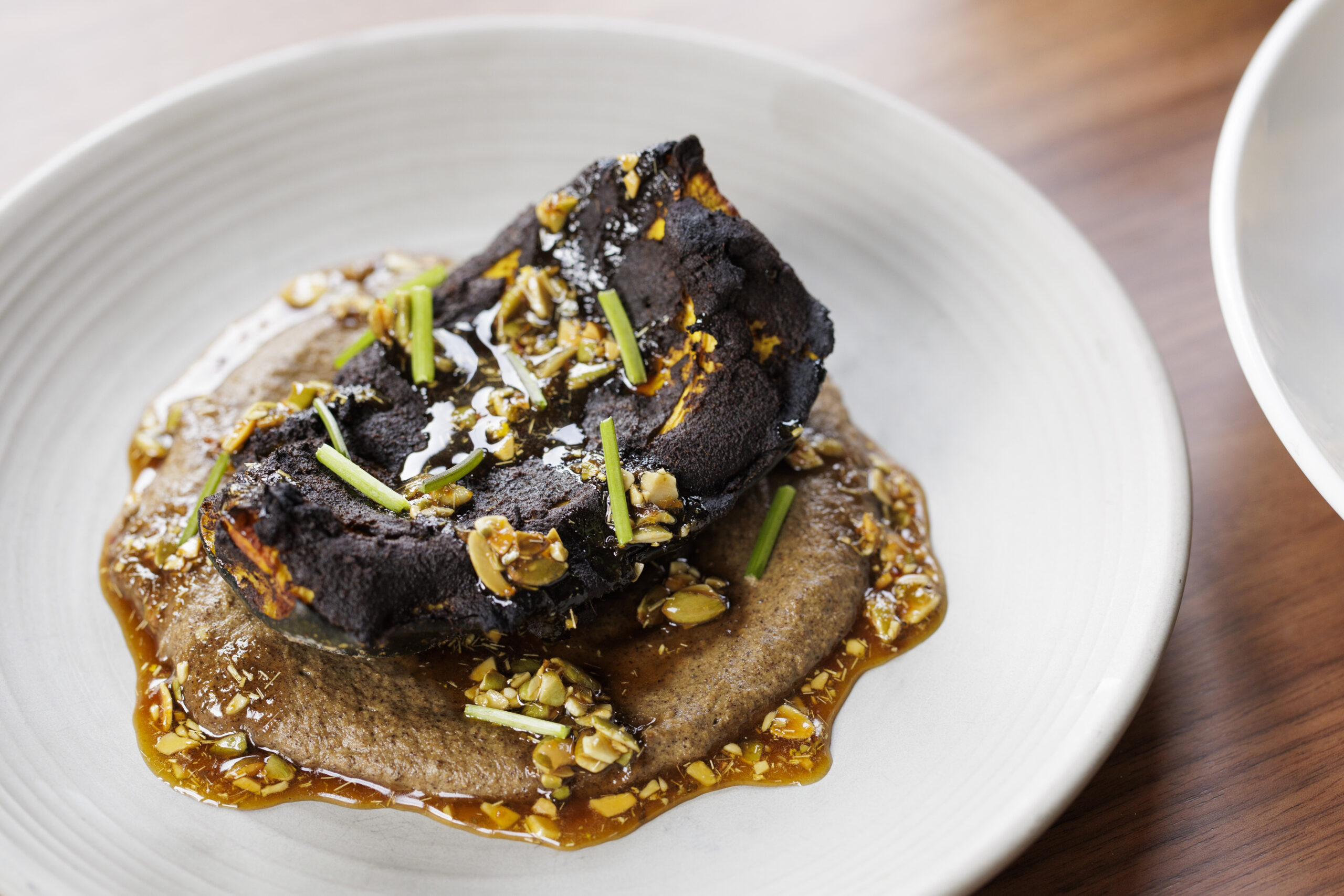
    The squash at Manong on Thursday, Nov. 20, 2025 in Philadelphia.

    One of Manong’s most creative dishes is its singular option for vegans, kalabasa pyanggang, a koginut squash marinated in a garlicky paste of charred coconut husks that’s served with a sweet vinegar lemongrass drizzle over a rich coconut milk sauce scattered with pepita seeds.

    I would have loved the grilled swordfish with green mango-bitter melon salad if it had been fully cooked. That’s one fish I don’t enjoy medium-rare. But Manong has its roasted half-chicken down, a juicy lemongrass-infused bird glazed in tart calamansi vinegar and orange annato butter — at $28, a relative bargain in an era of high-priced chicken entrees

    The kitchen’s pork dishes are also exceptional, including a traditional lechon liempo pork belly whose superbly tender chunks of meat are set beneath shattering amber sheets of crispy pig skin, atop a silky swoosh of creamy liver sauce.
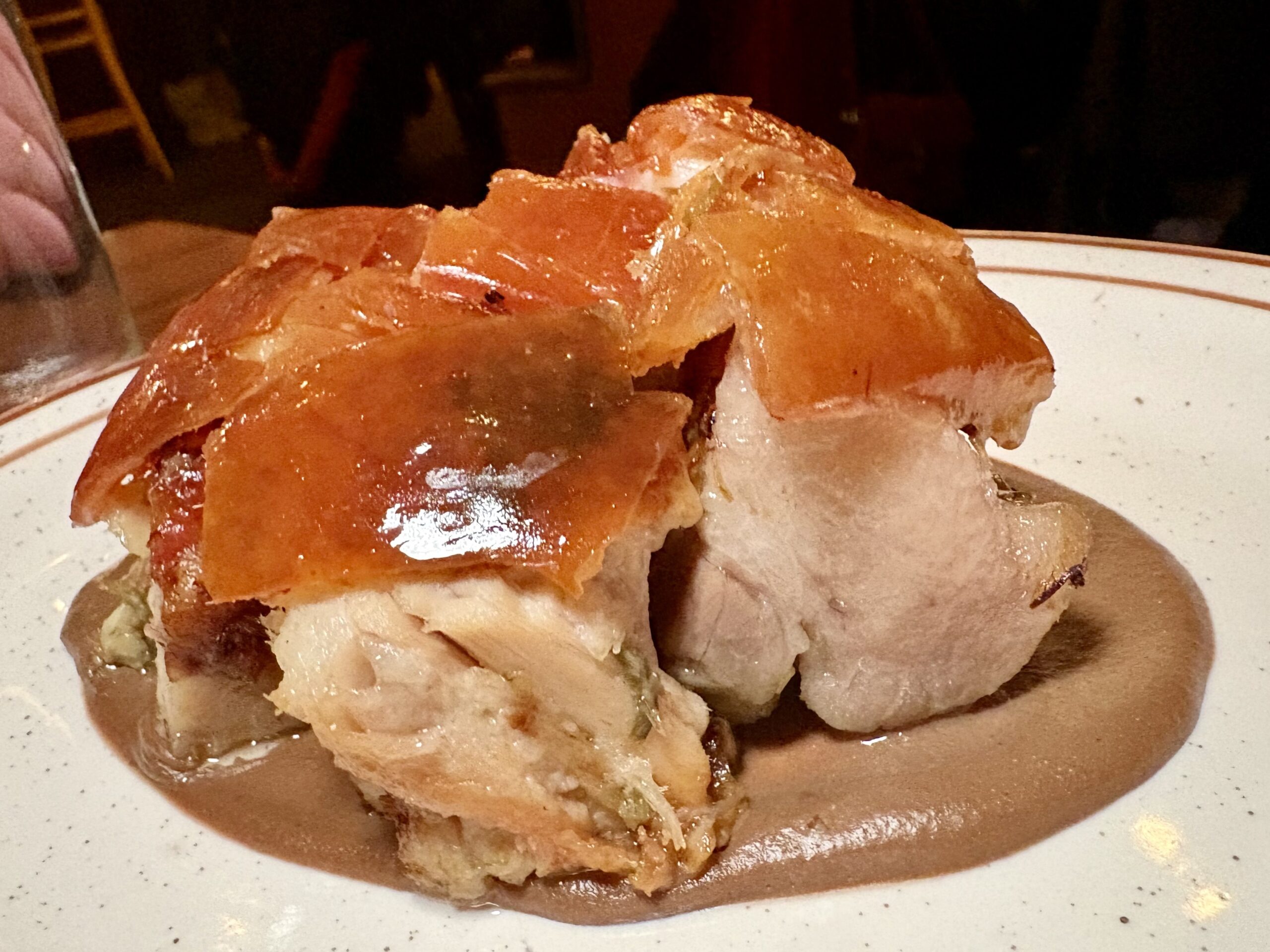
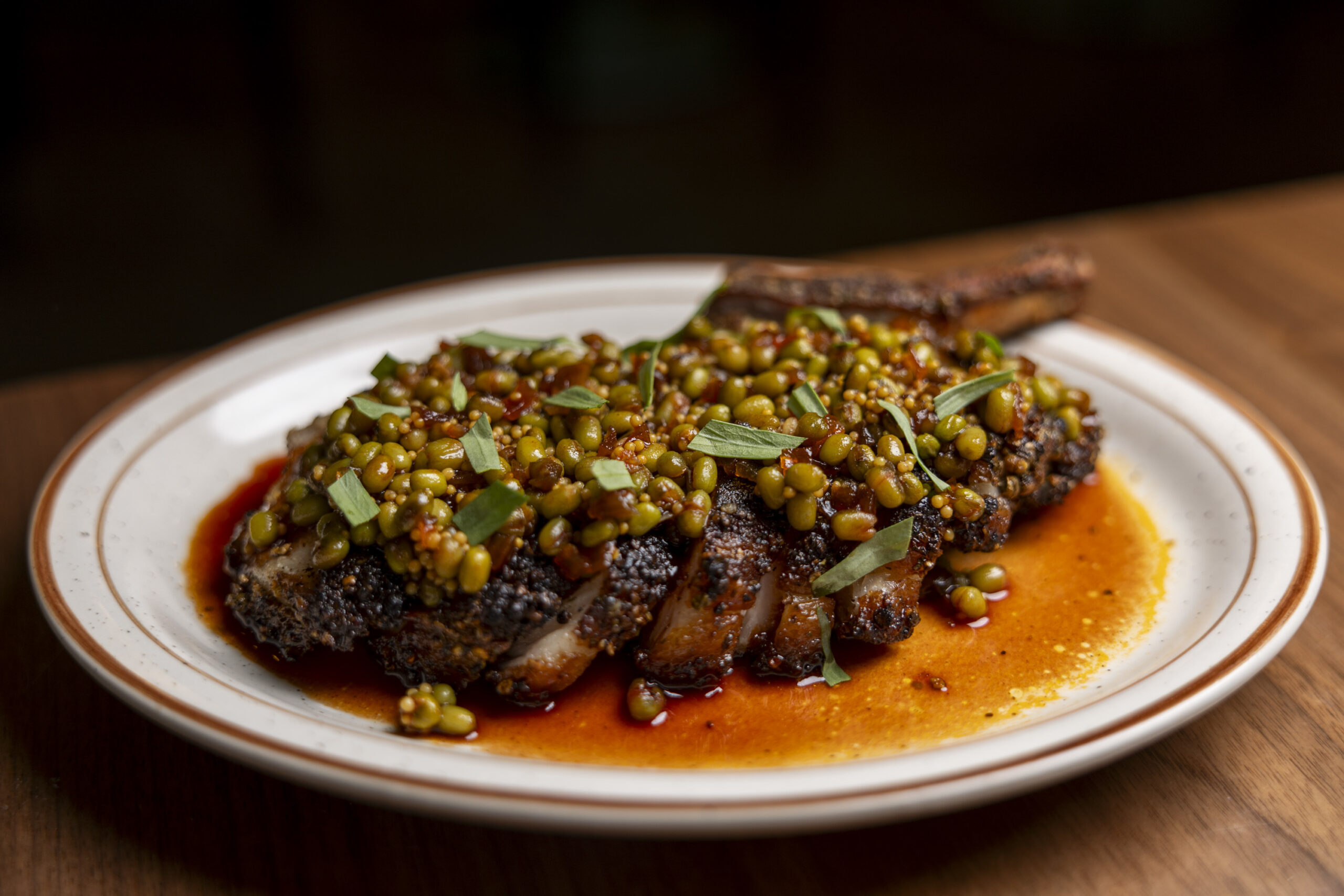
    The lechon liempo at Manong is slow-roasted pork belly topped with crispy skin over a sauce of pureed chicken liver.
    The pork & beans at Manong in Philadelphia, Pa., on Thursday, March. 5, 2026.

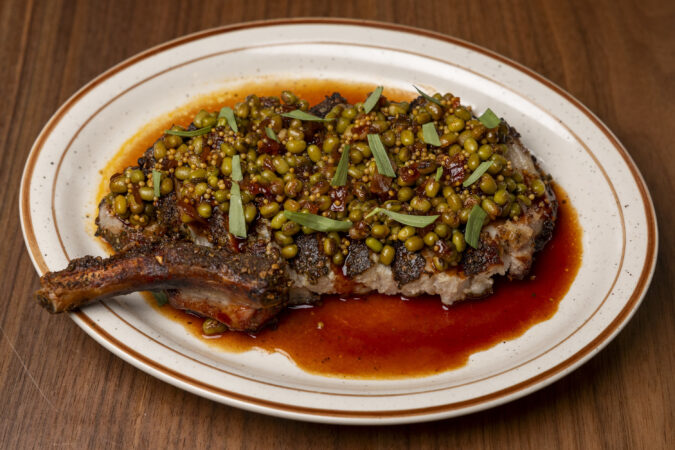
    Perhaps my favorite dish at Manong is the “pork & beans”, a multi-cultural mash-up of a juicy grilled pork chop encrusted with green peppercorns and smothered with sweet and zesty mung beans. Think of the canned Heinz baked beans classic, but with a Filipino swagger of cane vinegar, the sweetness of brown sugar, and red yeast rice (typically used in Chinese char siu bbq), and firmer beans that possess a nutty snap of extra texture.

    “Is it American? Is it Filipino? It’s neither, but also both,” says Anies, summing up not only this dish, but so much of the menu at Manong, where steaming sides of garlic rice, coconut-creamed spinach, and whipped potato salad studded with more crunchy garlic, corn, and shear potato skin chicharrones create a spirited fusion feast like no other.

    Add some calamansi or mango water ice for dessert sandwiched on those fresh pandesal rolls, or the deep purple richness of its ube ice cream, and Manong’s Filipino fusion takes on a distinctly Philly vibe, too. Anies’ chain restaurant childhood may have been the impetus for the affordable and fun spirit of Manong, but he’s created something here that feels like an original.

    The ube and mango ice cream sandwich at Manong in Philadelphia, Pa., on Thursday, March. 5, 2026.

    Manong

    1833 Fairmount Ave., Philadelphia, PA 19130, 445-223-2141; manongphilly.com

    Dinner Wednesday to Sunday, 5-11 p.m. Cafe open for coffee and pastries Wednesday to Sunday, 8 a.m.-2 p.m.

    Dinner entrees, $19-$35.

    About 30% of the menu is gluten-free, including the bloom shroom, cooked in a gluten-free fryer.

    Wheelchair accessible.

    Menu Highlights: Bloom shroom; dynamite lumpia; beef stick tagalog skewer; balong burger; cream pasta; pork & beans; lechon liempo; kalabasa pyanggang; mango water ice; ube ice cream.

    Drinks: The cocktail list delivers affordability and style, with a series of classic templates transformed colorful tropical twists, from the sky blue Otso Otso infused with green peppercorn and lemongrass, to a backnote of corn in the espresso martini and Filipino rum mixed with coconut and purple sweet potato for the Ube Halaya. The beer list features both local brews and Filipino imports, including the smooth but potent Red Horse. There’s also a selection of natural wines by the 6 oz. carafe. In addition, a retail bottle shop has a fine selection of natural wines and sakes to go.
  • Rounding up the local women’s basketball players competing in the NCAA Tournament

    Rounding up the local women’s basketball players competing in the NCAA Tournament

    Villanova is the only school representing the Big 5 in the women’s NCAA Tournament. The Wildcats, a No. 10 seed, are set to play No. 7 seed Texas Tech on Friday (8:30 p.m.) in Baton Rouge, La.

    But players connected to the Philadelphia area are competing on rosters across this year’s March Madness bracket.

    Here are the local women’s basketball players to watch:

    Philly names in the Big Dance

    While many know graduate guard Olivia Miles as one of the nation’s top players with No. 3 seed TCU, Miles got her start with the Philadelphia Belles, an AAU team. The Phillipsburg, N.J., native is a three-time All-American who spent her first four years of college at Notre Dame.

    Several Catholic League standouts will also be taking the court during March Madness.

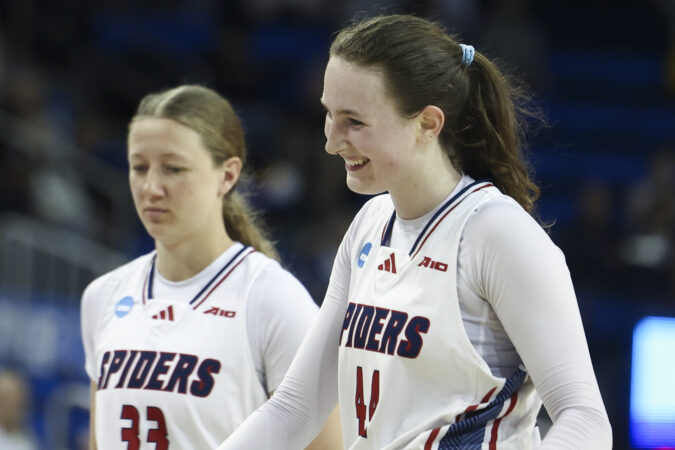
    Three players will represent Cardinal O’Hara: senior forward Annie Welde of Villanova, Richmond senior forward Maggie Doogan, and Fairfield’s Sydni Scott, a senior guard. From Archbishop Wood, sophomore guard Ava Renninger will compete with Fairleigh Dickinson and senior guard Ryanne Allen with Villanova.

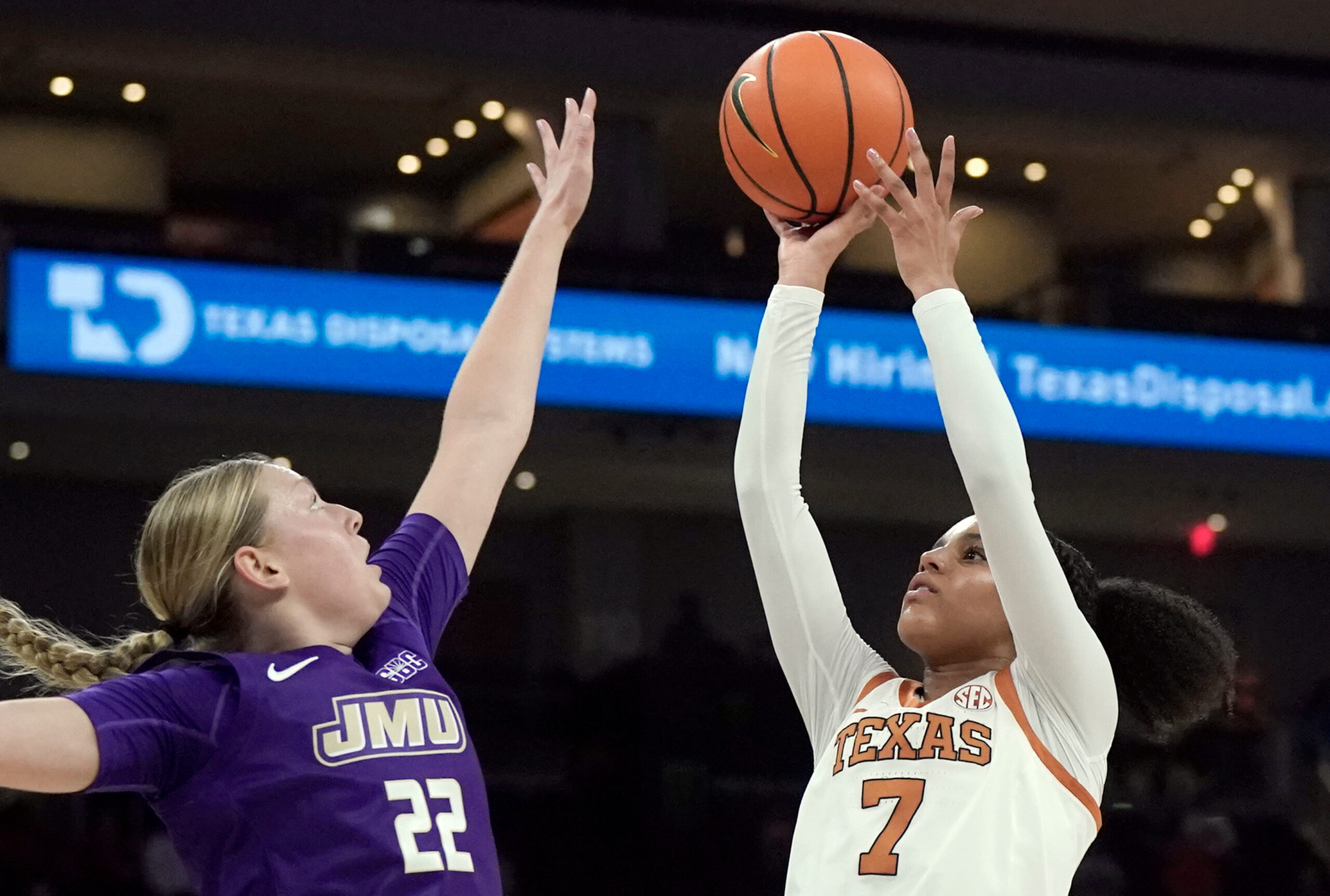
    James Madison forward Grace McDonough was a standout at Lansdale Catholic.

    Also for Villanova, senior guard Maggie Grant is an Archbishop Carroll graduate. And freshman forward Grace McDonough, who attended Lansdale Catholic, will compete with James Madison.

    No. 1 seed Connecticut looks to defend last year’s national championship with Tonya Cardoza on staff as an assistant coach. Cardoza was Temple’s head coach from 2008 to 2022.

    Other local names

    • Navy: Freshman forward Quinn Boettinger, Schenksville, Perkiomen Valley
    • Howard: Senior foward Nile Miller, Woodbury, Woodbury High
    • FDU: Freshman forward Akeelah Lafleur, Willingboro, Burlington County Institute of Technology
    • FDU: Junior forward Bella Toomey, Philadelphia, Penn Charter
    • FDU: Sophomore forward Sydney Stokes, Linwood, Mainland Regional
    • FDU: Freshman forward Madison Stuart, Voorhees, Eastern Regional
    • Villanova: Graduate forward Kylee Watson, Linwood, Mainland, previously Notre Dame
    • Villanova: Senior forward Denae Carter, Philadelphia, St. Basil Academy, previously Mississippi State
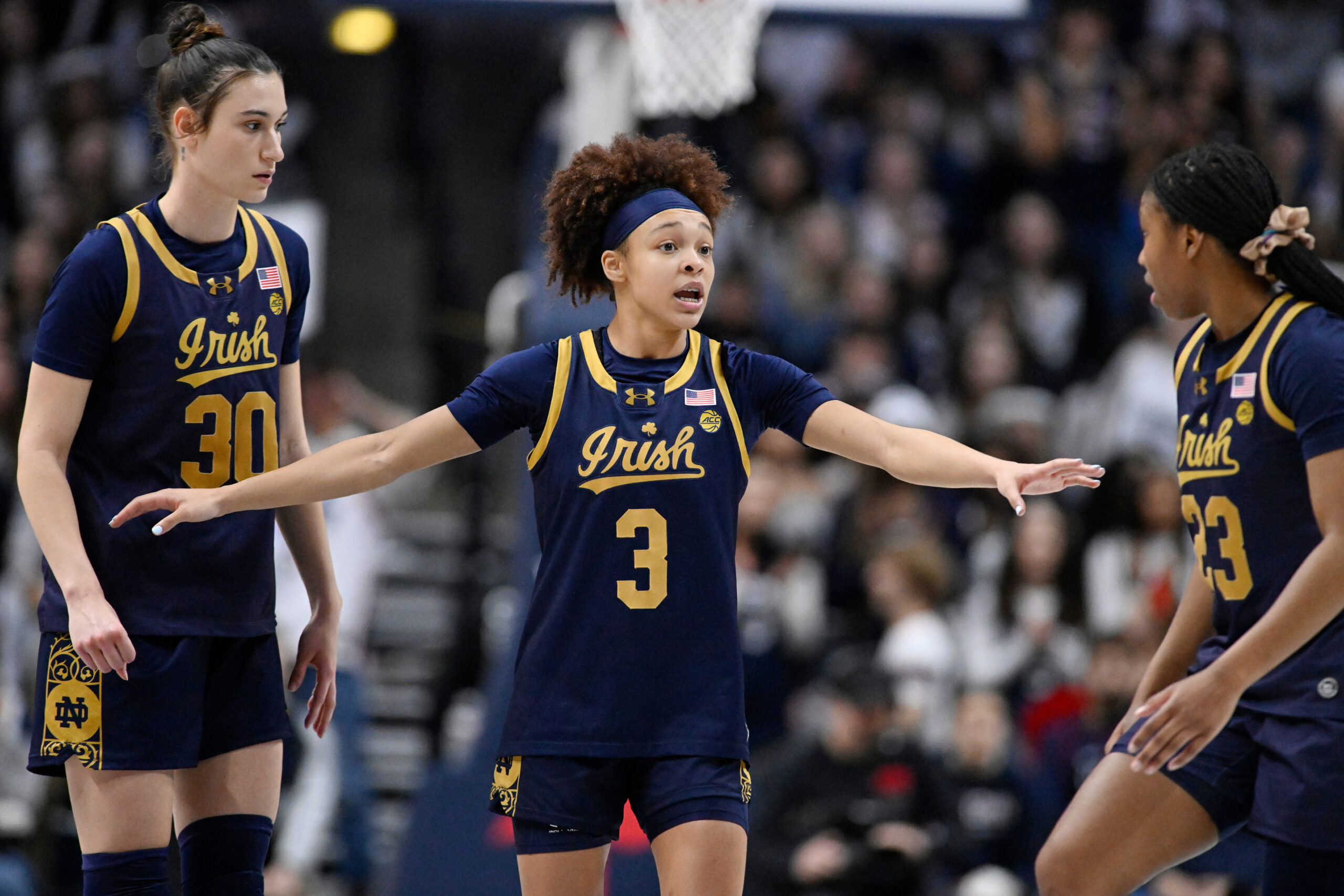
    • Notre Dame: Junior guard Hannah Hidalgo, Merchantville, Paul VI
    • Illinois: Junior guard Maddie Webber, Bridgeville, South Fayette, previously Villanova
    • Colorado: Freshman forward Logyn Greer, Lansdowne, Friends’ Central School
    • Colorado: Junior guard Maeve McErlane, Philadelphia, Academy of Notre Dame de Namur, previously DePaul
    • Holy Cross: Senior guard Kaitlyn Flanagan, Plymouth Meeting, Plymouth Whitemarsh
    • Holy Cross: Junior guard Hannah Griffin, Conshohocken, Gwynedd Mercy Academy
    • Louisville: Senior forward Laura Ziegler, Herlev (Denmark), previously St. Joseph’s
    Paul VI graduate Hannah Hidalgo looks to lead Notre Dame in the NCAA Tournament.
  • A bipartisan group of 13 attorneys general sues OneMain over hidden loan add-ons

    A bipartisan group of 13 attorneys general sues OneMain over hidden loan add-ons

    NEW YORK — A bipartisan group of 13 attorneys general sued the financial company OneMain Financial on Monday, alleging the company placed unwanted additional products and other hidden costs on its loans that led to higher costs for its borrowers.

    The lawsuit, filed in New York on Monday, says OneMain employees steered borrowers into purchasing credit insurance and other loan-related products while making deceptive claims about whether the products were required and how they could be canceled. The attorneys general say the conduct affected tens of thousands of borrowers and violated state consumer protection laws.

    The products include credit insurance, which claims to pay the loan if a consumer dies or becomes unemployed, as well as products like home and auto memberships that are similar to AAA. These companies are, in turn, owned by OneMain through a related company.

    These products increase the cost of the loan. The lawsuit alleges that OneMain does not check whether the consumer may already have a home or auto membership service through AAA as well.

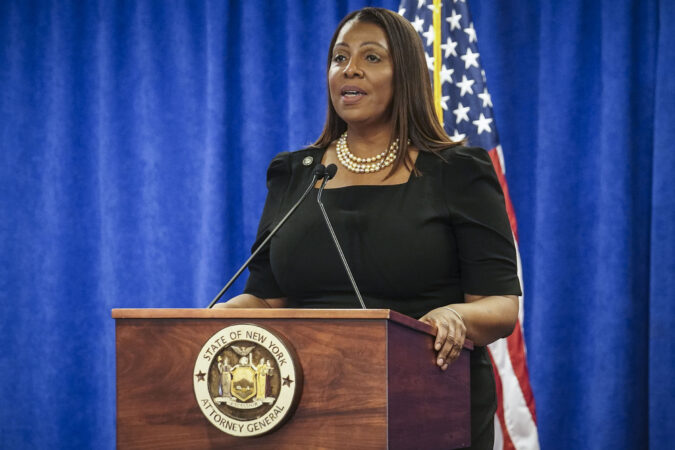
    “OneMain targets people who are already struggling financially, saddling them with hidden fees and misleading loans to trap them in even more debt,” New York State Attorney General Letitia James said in a statement.

    OneMain said the practices involved with the lawsuit were already reviewed with the Consumer Financial Protection Bureau in 2023. In that settlement, OneMain agreed to repay $10 million to consumers and pay $10 million in fines and penalties for allegedly selling add-on products to consumers.

    “The states’ allegations are simply untrue — their case is wrong on the facts and wrong on the law and attempts to re-litigate issues that were already reviewed by the Consumer Financial Protection Bureau and fully resolved. We will litigate this case vigorously and look forward to proving the truth in court.”

    OneMain, based in Evansville, Ind., is one of the largest U.S. non-bank installment lenders. It primarily offers loans to those with subprime credit scores, meaning much of its customers are already financially struggling when they come to OneMain.

    Along with New York, the other attorneys general joining the lawsuit include the states of Colorado, Nevada, Maryland, North Dakota, Oklahoma, Washington, Wisconsin, New Jersey, South Dakota, and New Hampshire, as well as the Commonwealths of Virginia and Pennsylvania.

  • Missing the Madness | Sports Daily Newsletter

    Missing the Madness | Sports Daily Newsletter

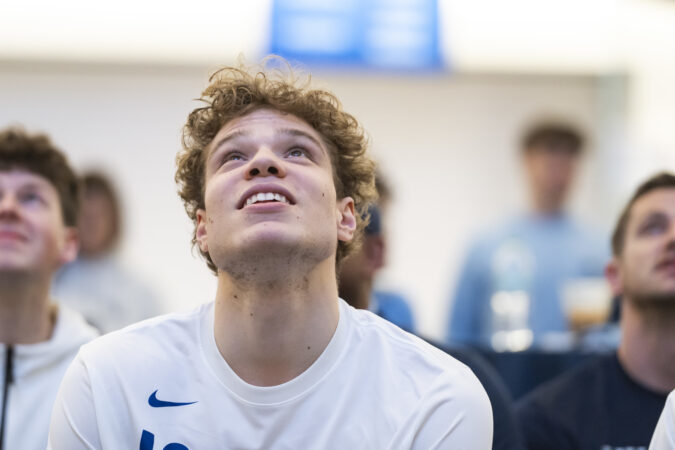
    Villanova is headed to the NCAA Tournament for the first time since 2022, but the moment will be bittersweet for one of the Wildcats’ best players. Matt Hodge averaged 9.2 points at power forward for the ‘Cats, but his season ended Feb. 28 when he suffered a torn ACL in a game against St. John’s.

    Hodge is optimistic about his recovery from surgery, but in truth his family must feel a bit cursed: His brother Jayden, a high school star, suffered a torn ACL and meniscus in January.

    Without Hodge, Villanova’s depth has taken a hit, especially in a frontcourt where only two players, centers Duke Brennan and Braden Pierce, are taller than Hodge, who is 6-foot-8. Hodge is keeping his chin up, saying the pain is “more mentally than anything physically.” Jeff Neiburg has his story.

    Xfinity Mobile Arena will host four first-round games on Friday and two second-round games on Sunday from the East and Midwest Regionals as the NCAA tourney returns to Philadelphia for the first time since 2022. Here’s the info on who’s playing, tickets, and more.

    On the women’s side, Villanova is preparing to face Texas Tech in the opening of the NCAA Tournament. The four top seeds in the bracket — Connecticut, UCLA, South Carolina, and Texas — are so far ahead of the field that they’ll all be clear favorites to reach the Final Four, Jonathan Tannenwald writes.

    — Jim Swan, @phillysport, sports.daily@inquirer.com.

    If someone forwarded you this email, sign up for free here.

    ❓What do you think of the World Baseball Classic? Email us back for a chance to be featured in the newsletter.

    A leader among stars

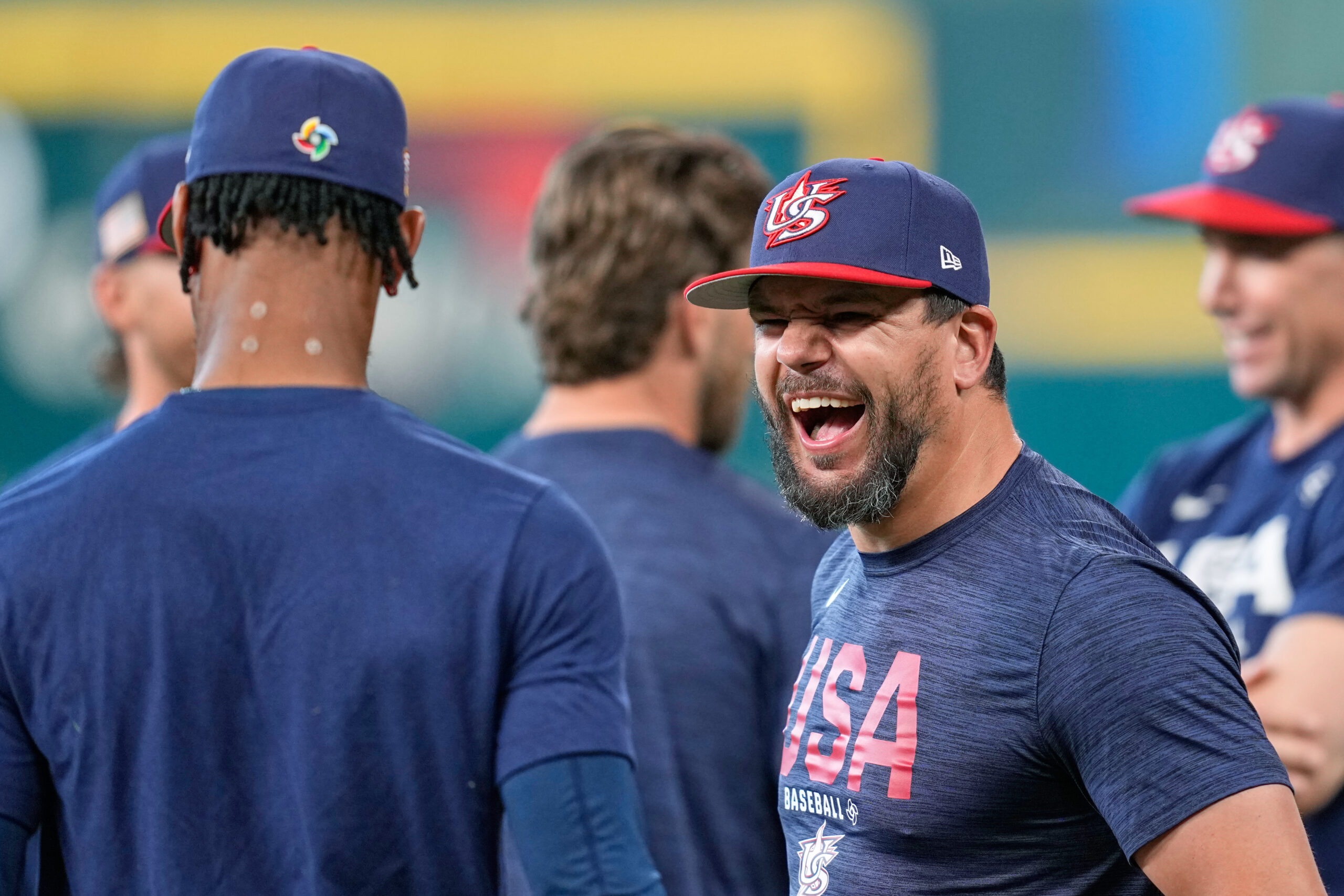
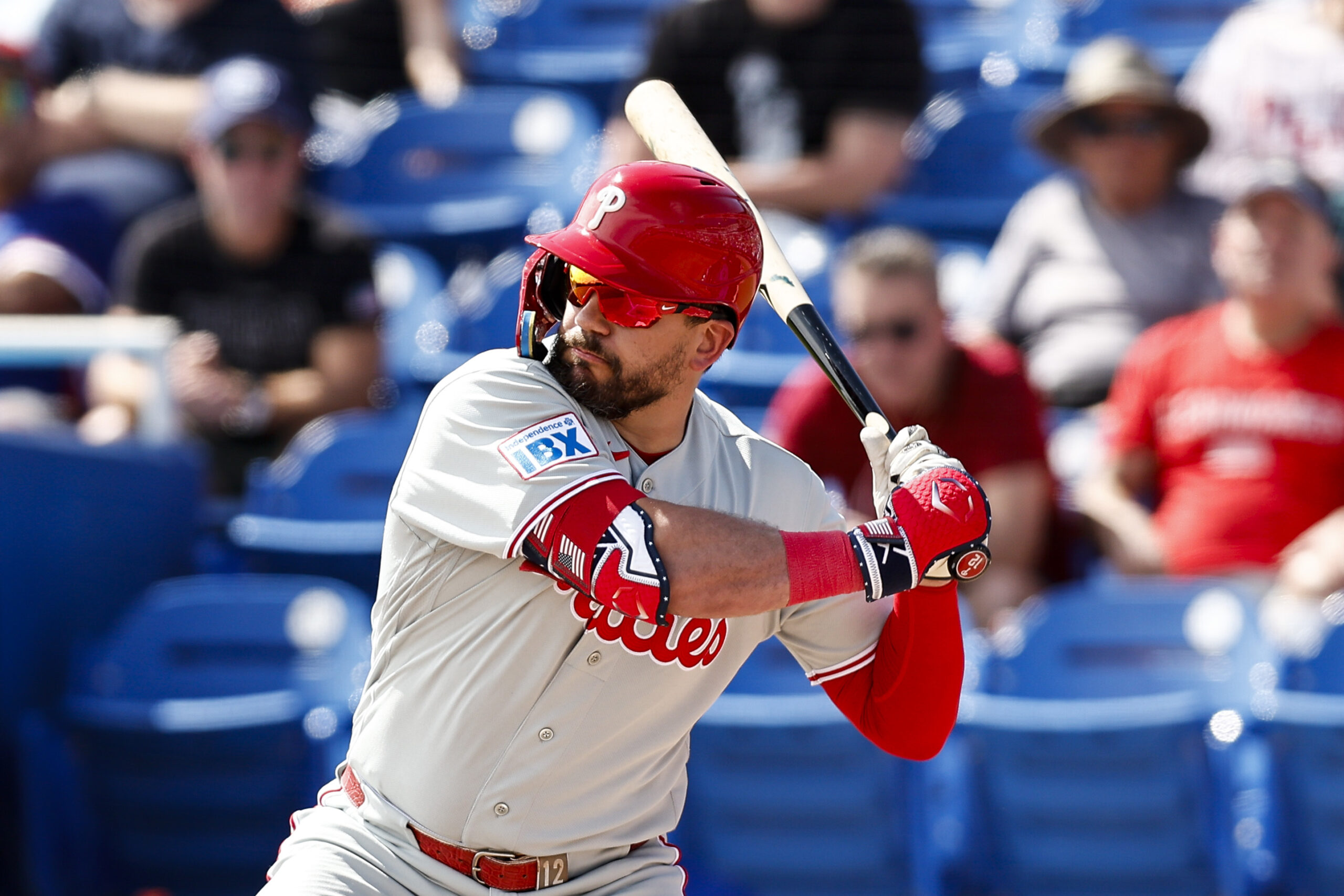
    Kyle Schwarber (right) has been lauded for his veteran leadership during Team USA’s run to the World Baseball Classic final.

    During his yearlong recruitment of players to form an American baseball dream team, Mark DeRosa didn’t seek a full-time designated hitter.

    But he couldn’t quit Kyle Schwarber.

    “When you’re building out a roster like this, having just a cemented DH is probably not the way to go with just the construction and trying to make every piece fit,” DeRosa said Monday. “But he’s just so special to the group that he trumps all that.”

    And not only because Schwarber will be Team USA’s cleanup hitter tonight in Miami for all the World Baseball Classic marbles. It won’t surprise anyone within the sport, least of all Phillies fans, that his gravitational pull as a leader exists even on a team packed with superstars.

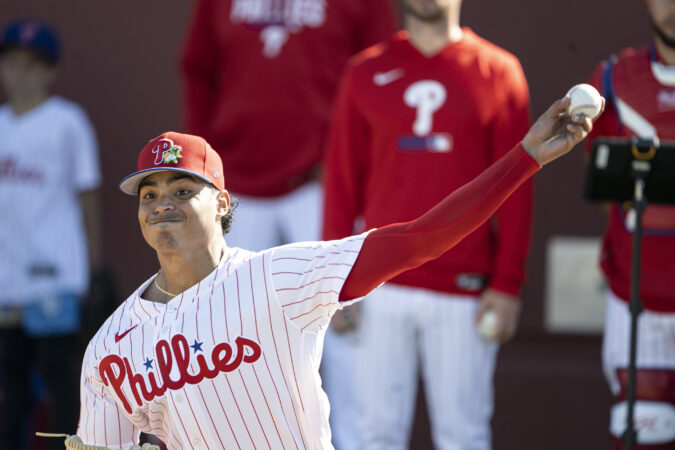
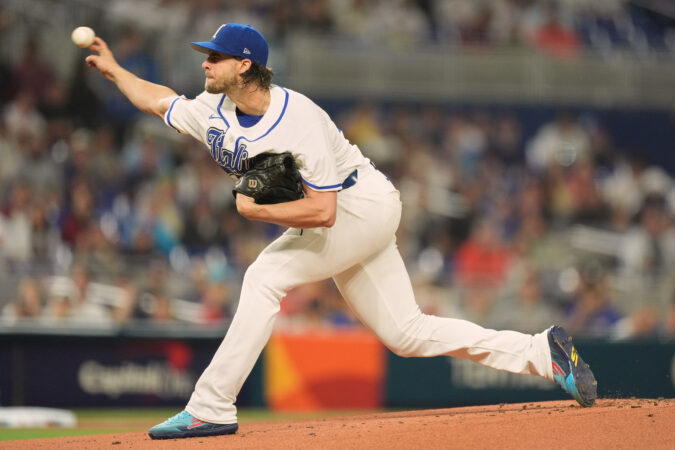
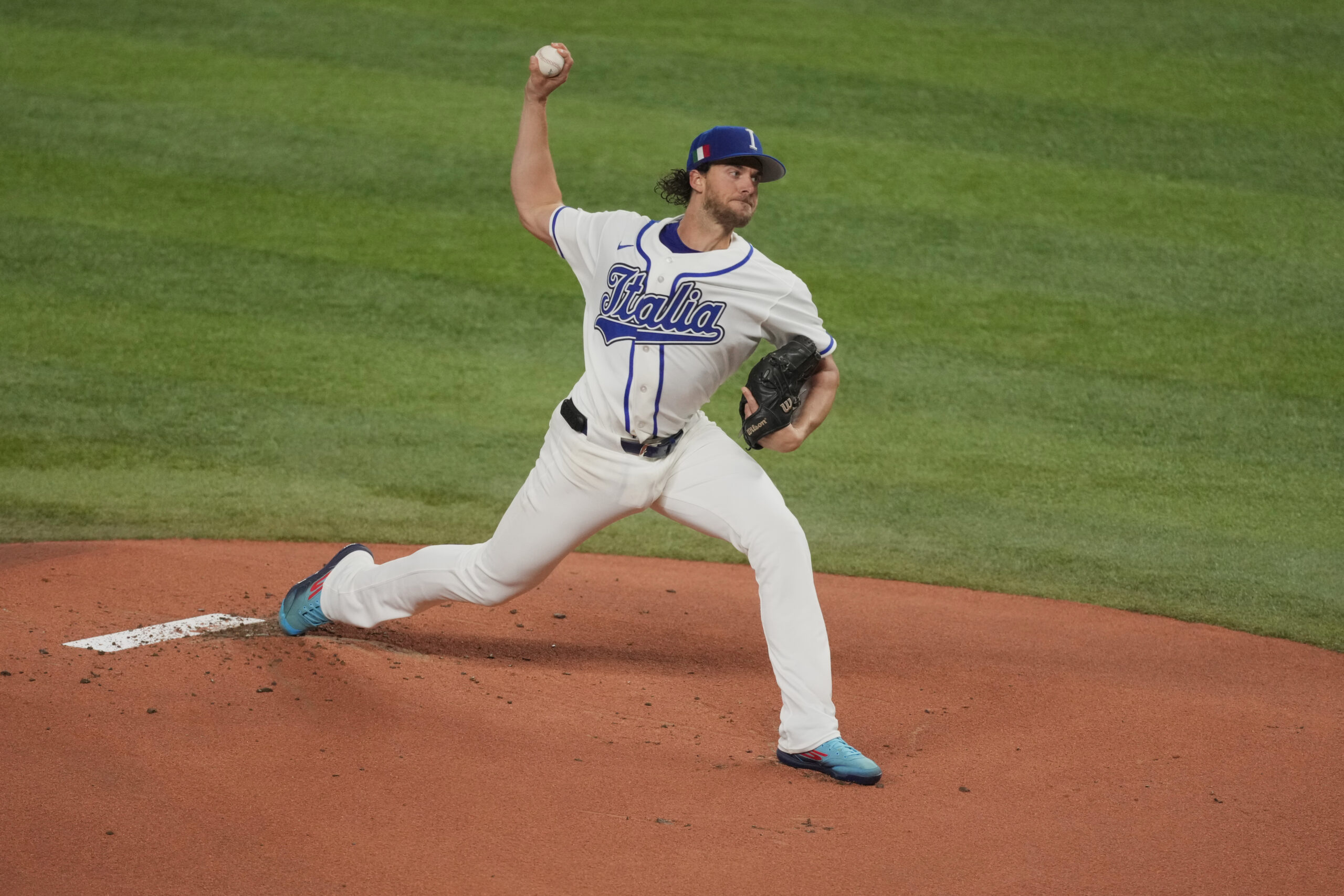
    Aaron Nola left no doubt in his final WBC appearance for Italy after allowing one run across four innings during a 4-2 loss to Venezuela in their semifinal matchup. Nola will return to the Phillies with a fastball that has more life and a curveball with more bite.

    Otto Kemp, who was banged up last season, knew there would be an “adjustment period” this spring. He’s healthy, and the results are starting to follow, as he showed on Monday.

    MLB announced that Johan Rojas has been suspended 80 games. Here’s how the Phillies reacted and when they can expect him back.

    Next: The Phillies return to Clearwater today to face the Twins at 1:05 p.m. (NBCSP+). Jesús Luzardo is scheduled to start.

    Suddenly a top option

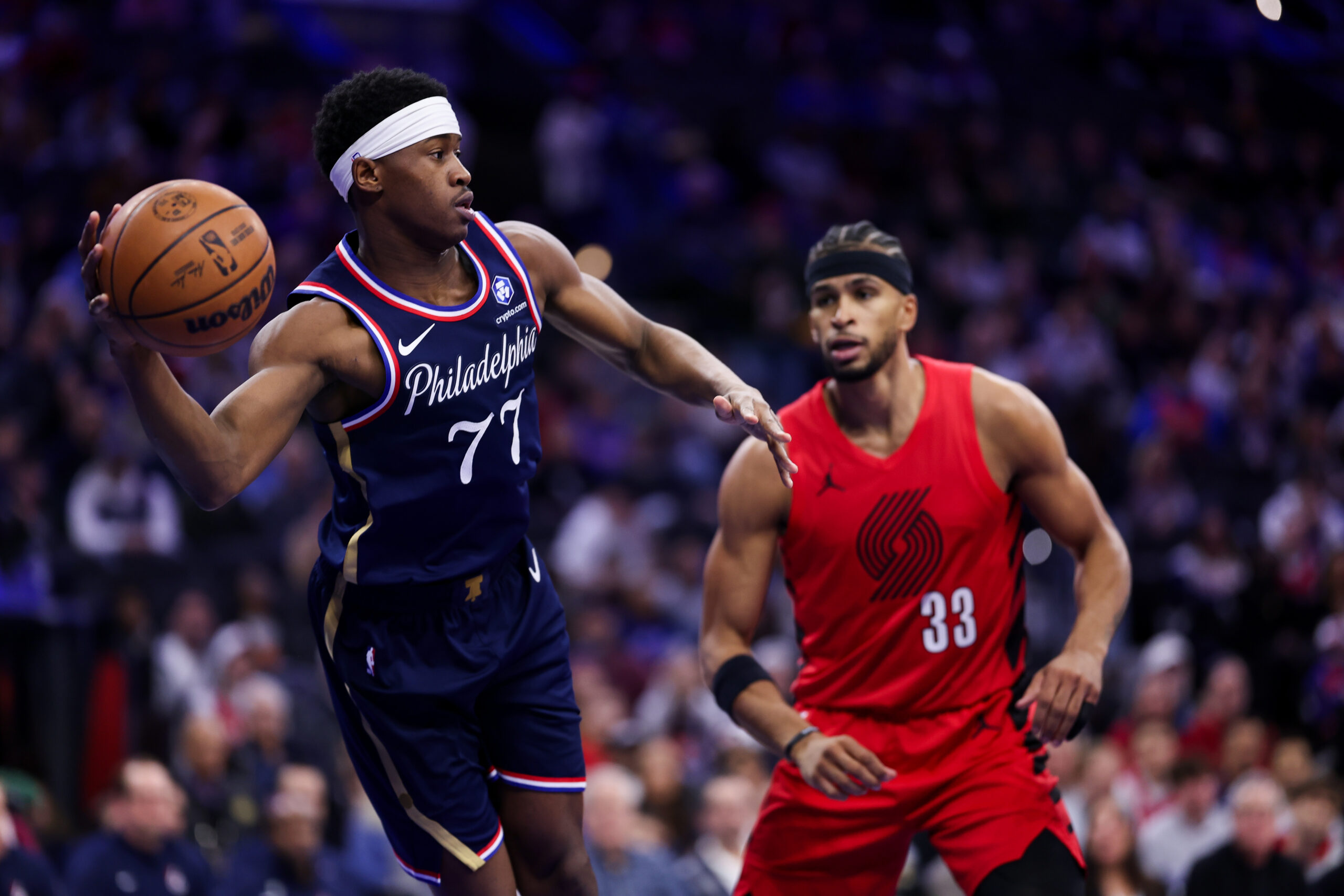
    Sixers guard VJ Edgecombe has taken on new responsiblities as Joel Embiid, Tyrese Maxey, Paul George, and Kelly Oubre Jr. miss time.

    The 76ers are down four starters, which means shifting roles and responsibilities for players at all levels of the roster. That extends to rookie VJ Edgecombe, who has been thrust into life as the first option on offense and a trusted closer on defense. Edgecombe lived up to those expectations on Sunday night, knocking down clutch shots to help the Sixers defeat the Portland Trail Blazers and posting his fourth double-double with 18 points and a career-high 12 rebounds.

    “I’ve got to just go out there and just try to will my team,” Edgecombe says. “Just bring energy. Create energy. Instill confidence in my teammates.”

    Power-play pointers

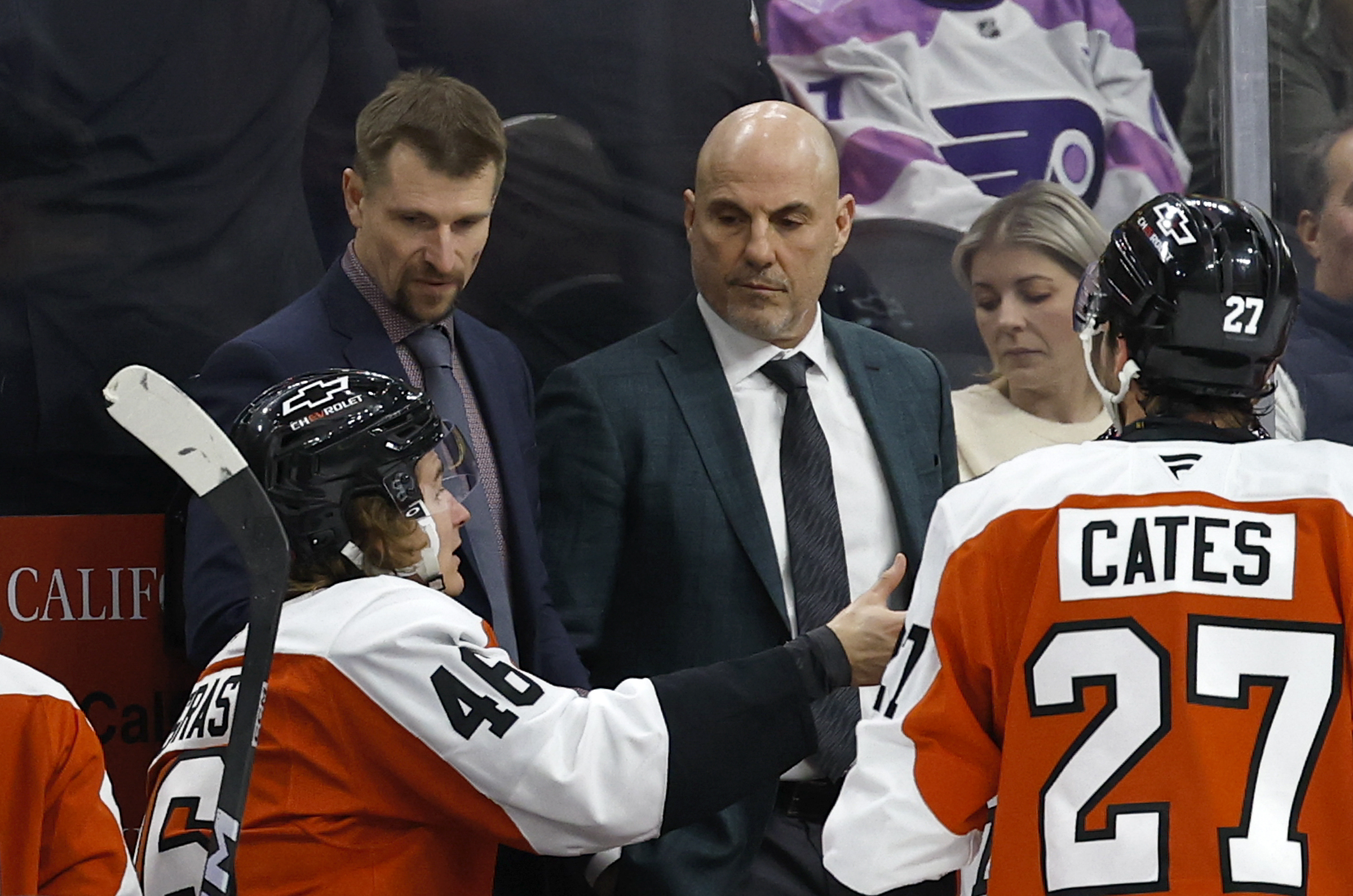
    The additions of Trevor Zegras, assistant coach Jaroslav Svejkovský, and head coach Rick Tocchet have not yielded improved results for the Flyers on the power play.

    The Flyers haven’t had a good power play since before the COVID-19 pandemic, as it has finished in the bottom four of the NHL in each of the last four seasons, including in the basement in three of those years.

    This year was supposed to be different, as new coach Rick Tocchet arrived with a reputation for overseeing successful power plays, while Trevor Zegras, one of the most skilled offensive players in the league, figured to provide a jolt of his own. But 66 games in, the Flyers at 15.2% sit in an all-too-familiar place with the man advantage: dead last.

    What can they do to fix their longstanding Achilles’ heel? Our Jackie Spiegel has some ideas.

    Speaking of the power play, team president Keith Jones addressed the team’s struggles in that area, as well as some other key questions, during a local radio appearance on Monday.

    Back in Philly

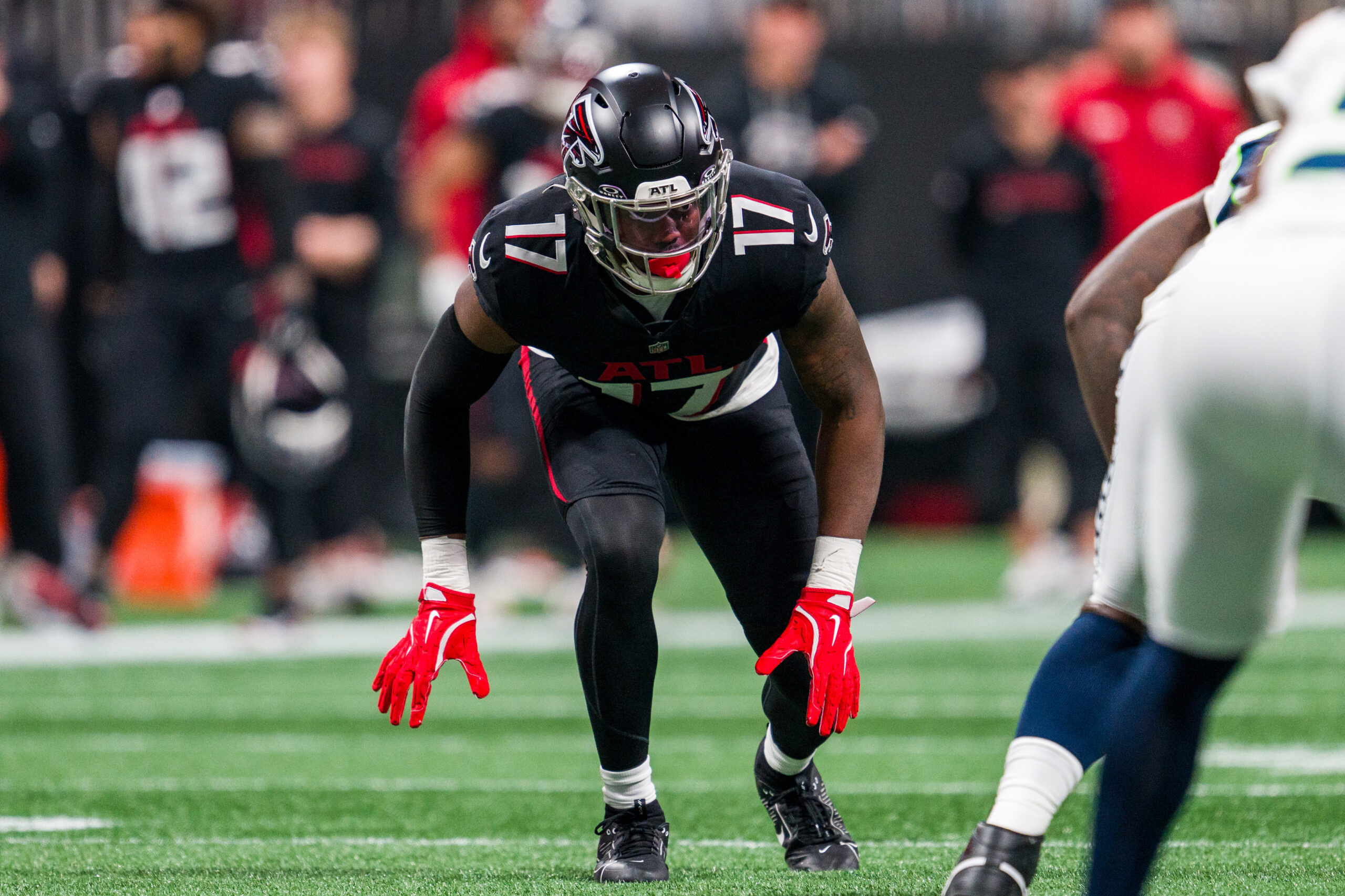
    Arnold Ebiketie factors in as an important player off the edge for an Eagles team that faces attrition at the position.

    Arnold Ebiketie remembers his time at Temple, joining the celebration after the Eagles won the Super Bowl in 2018. “If I recall, that’s exactly when I became an Eagles fan, partially,” says the edge rusher, who’ll be more than just a fan next season after signing a one-year contract with the Birds.

    Ebiketie’s journey to the Eagles included one season at Penn State and four with the Atlanta Falcons.

    Sports snapshot

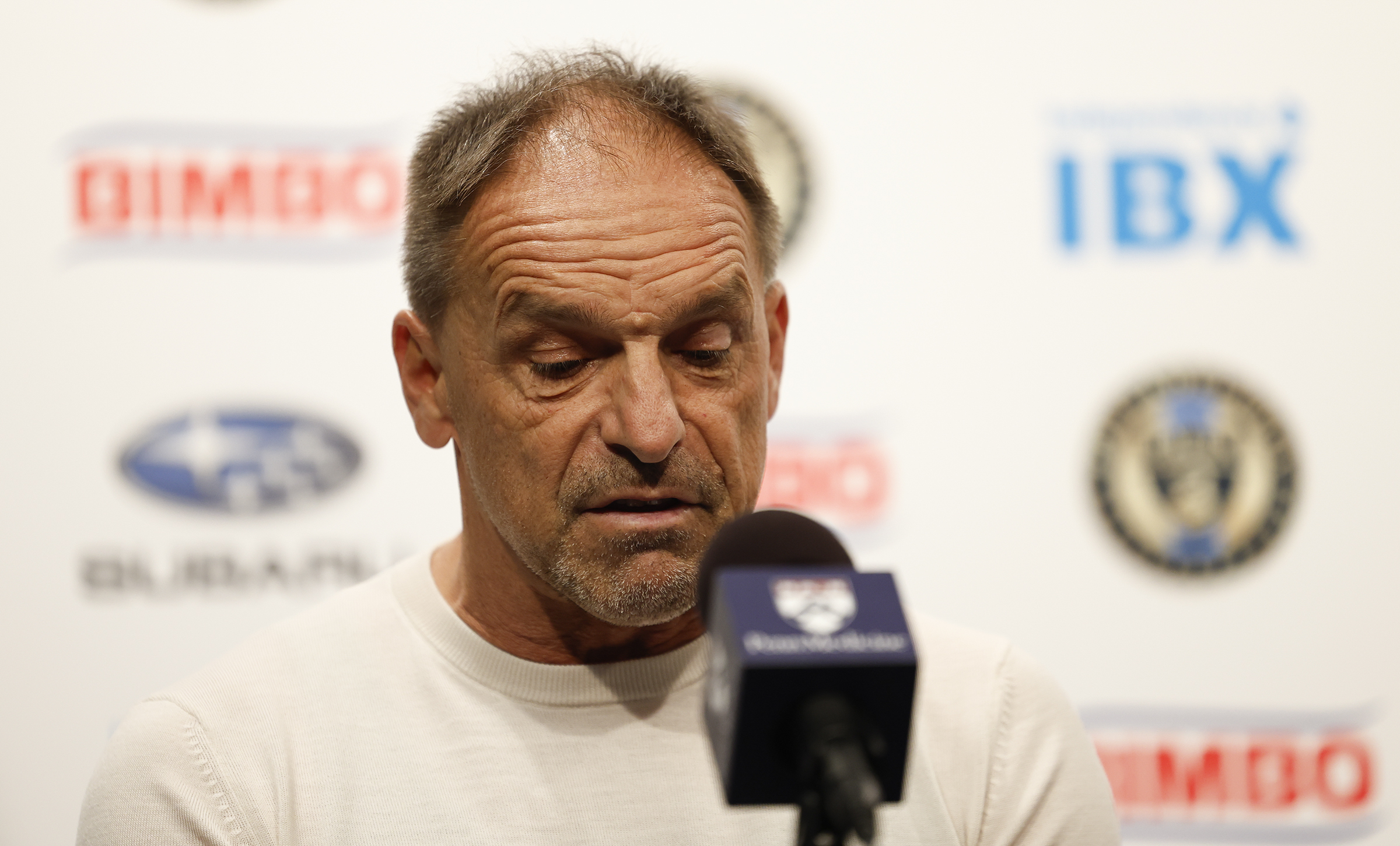
    Union sporting director Ernst Tanner has been suspended without pay through June 1.

    🧠 Trivia time

    Designated hitter Kyle Schwarber is signed with the Phillies through 2030.

    How many times has Kyle Schwarber led the National League in home runs? First with the correct answer here will be featured in the newsletter.

    A) One

    B) Two

    C) Three

    D) Four

    What you’re saying about college hoops

    We asked: What’s your greatest college basketball memory? Among your responses:

    My greatest college basketball memory was easily Kris Jenkins shot with no time on the clock to win the national championship for Villanova in 2016. Nothing comes close to that one! — Tom E.

    When Jenkins hit the 3-pointer, after a pass from Archie, and Villanova wins the NCAA championship. — Tom G.

    April 1985 — Villanova beats Georgetown in NCAA final. — Lyn S.

    Villanova beating Georgetown in ’85 was a solid performance, there was no quit in the Wildcats that night. There have been others since then but for some reason the first is always the sweetest. — Bill B.

    How can any NCAA basketball moment top the upset by Villanova of Georgetown for the 1985 NCAA tournament championship? Villanova incredibly upset Georgetown in the final game on April Fools’ Day, 1985 with a 66-64 victory. As an 8th seed, Villanova executed a perfect game plan, shooting a record 78.6% from the field to defeat the heavily favored Patrick Ewing-led Hoyas who were seeded #1. My memory includes Harold Jensen coming off the bench to drill 5 of 5 outside jumpers. — John W.

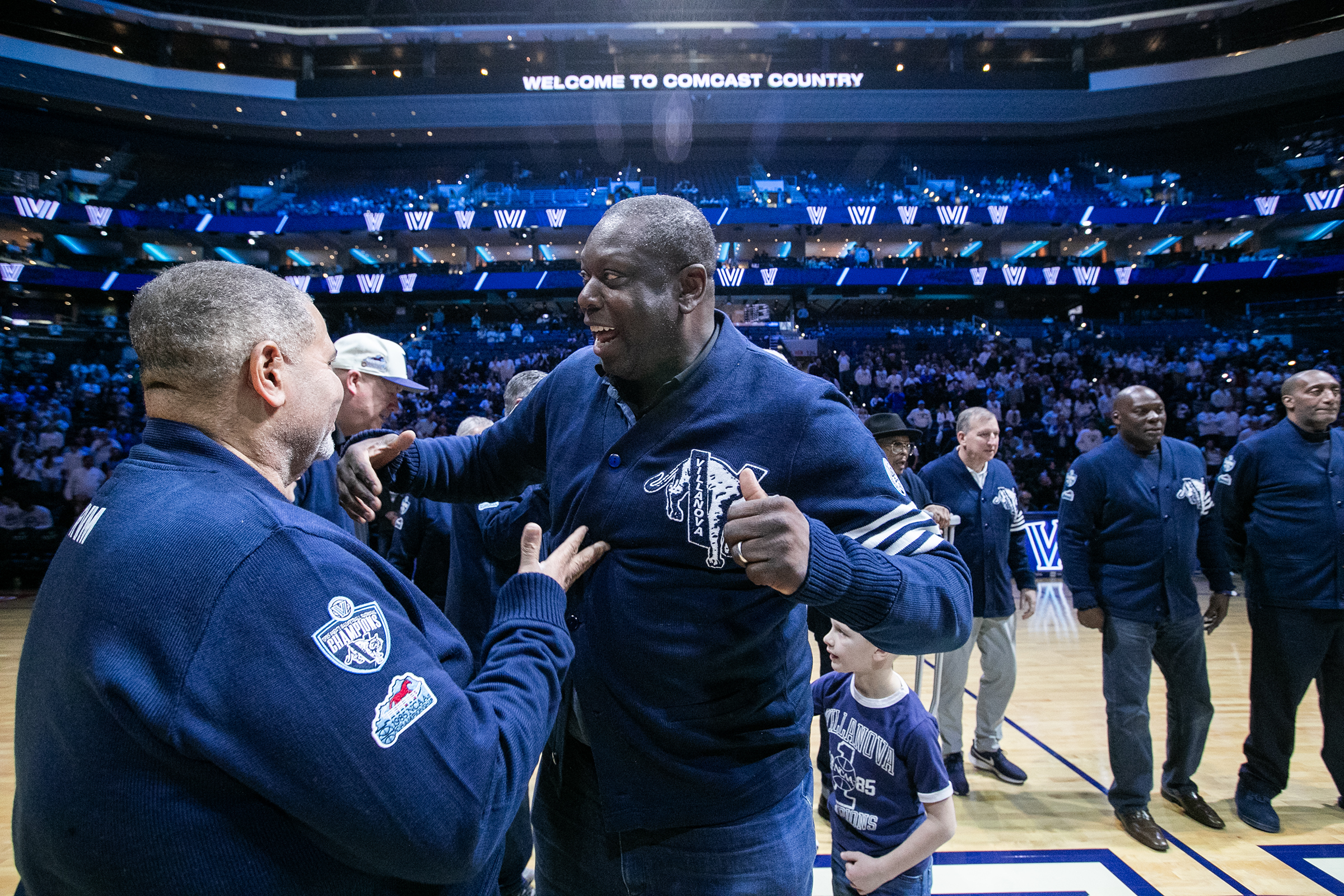
    Ed Pinkney (right) greets his Wildcats teammates in a ceremony honoring the 40th anniversary of Villanova’s NCAA title last year.

    December 2012, we traveled to Madison Square Garden to see Temple-Syracuse (ranked #3) in the Gotham Classic. The Owls rallied from 10 down late to upset the Orangemen. Khalif Wyatt scores 33 points to lead the Owls’ comeback. — Bob C.

    Talking to my father, a Villanova alum, on the phone, after Villanova won it’s first national championship. I know he had a drink in his hand and tears in his eyes. — Brad L.

    Of course Villanova winning in 2016 and 2018, but the best moment was North Carolina State winning in 1983 with Jim Valvano running around the court looking for somebody to hug. — Bill M.

    My first outstanding college basketball memory was Tom Gola and the La Salle Explorers beating Bradley in 1954 to win the first national championship for a Big Five team. And the 2nd was Rollie Massimino’s Villanova Wildcats stunning highly favored Georgetown on April 1, 1985, my 47th birthday. Probably the most tense game I ever watched. — Everett S.

    We compiled today’s newsletter using reporting from Jeff Neiburg, Jonathan Tannenwald, Owen Hewitt, Olivia Reiner, Scott Lauber, Lochlahn March, Gustav Elvin, Jackie Spiegel, and Gina Mizell.

    By submitting your written, visual, and/or audio contributions, you agree to The Inquirer’s Terms of Use, including the grant of rights in Section 10.

    Thank you for reading. Bella will be back to bring you the newsletter on Wednesday. — Jim

  • Thousands strike at one of the largest meatpacking plants in the U.S.

    Thousands strike at one of the largest meatpacking plants in the U.S.

    GREELEY, Colo. — About 3,800 workers for the world’s largest meatpacking company began striking Monday in Colorado, and if they don’t get a new contract soon, already costly beef could become even more expensive for U.S. consumers.

    As the sun rose, hundreds of strikers picketed outside the Swift Beef Co. plant in Greeley, owned by JBS USA and one of the largest slaughterhouses in the nation. Walking back and forth in the morning cold, bundled in blankets, some yelled “huelga!” — Spanish for strike. Others carried signs saying “please don’t patronize JBS.”

    The first walkout at a U.S. beef slaughterhouse in four decades follows accusations from union officials that the company retaliated against workers and committed other unfair labor practices. The union also said the company offered less than 2% more a year in wages, which is less than inflation in Colorado.

    A spokesperson at JBS USA denied any labor law violations and said its offer is fair. Each side blamed the other for an impasse before the contract ended Sunday night.

    “They don’t really value their workers and we’re the ones that help them get all their profit,” said Leticia Avalos, a 34-year-old union steward and Greeley native who has been working at the plant since 2020. She depends on the job to support her family including a 6-month-old baby, but said she’ll make sacrifices to get the company to listen.

    Union says workers pay to protect themselves

    The union says its workers perform some of the most difficult and dangerous jobs in the country, and deserve higher wages and better healthcare. It said JBS in many cases has charged workers $1,100 or more to offset the company’s expenses for personal protective equipment needed to ensure worker safety.

    Smoke rose from parts of the plant Monday but it was unclear if it was fully operating. JBS spokesperson Nikki Richardson said “many team members” reported to work, but did not provide a precise number.

    “Our team members want stability, they want to support their families, and they deserved the opportunity to vote on the company’s historic offer — an opportunity the union leadership has denied them,” Richardson wrote in an email.

    She said any employee who didn’t strike would have work and be paid. The company also has said it would move production as needed to other JBS facilities.

    A federal probe into soaring beef prices

    The strike comes at a 75-year low in U.S. cattle numbers, with a Jan. 1 inventory of 86.2 million animals — down 1% from the prior year. The decline has been driven in part by drought and low prices offered to ranchers. Meanwhile, beef prices have soared to record levels.

    President Donald Trump’s tariffs on Brazil, a major beef exporter, have also curbed imports. Pressed to act on “affordability” issues after Republican losses last November, Trump accused foreign-owned companies of driving up U.S. beef prices and asked the Department of Justice to investigate.

    The average price for 100% ground chuck beef more than doubled over the past two decades from $2.55 to $6.07 per pound, according to the Bureau of Labor Statistics. The increase has added to economic anxiety in the U.S. The Trump administration has promoted a trade deal with Argentina in efforts to lower prices for food, including beef.

    The Greeley plant has about 6% of the total U.S. beef slaughterhouse capacity, said Abby Greiman, a livestock market adviser for industry consultant Ever.Ag.

    Most ranchers can still get cattle to market because the national herd is smaller, and that could give JBS some leverage in negotiations, since other slaughterhouses can absorb the Greeley plant’s work, Greiman said.

    Feedlots hold clues to consumer costs

    Yet an extended strike at Greeley could disrupt the industry, particularly in Colorado and neighboring states, said Jennifer Martin at Colorado State University’s animal sciences department.

    “The feedlots, the people who have the cattle right now — the longer they sit kind of in a holding pattern, the more expensive they become to feed,” said Martin. “For consumers, it means that prices will likely go up.”

    The strike follows the January closure of a meatpacking plant in Lexington, Neb., which was expected to ripple through the local economy and community. Tyson Foods cited the smaller herd and millions of dollars in expected losses this year.

    JBS, the world’s largest meatpacker, has a market capitalization of $17 billion on the New York Stock Exchange after being approved for trading last May, despite environmental opposition and a federal probe that led to its guilty plea in October to bribing Brazilian officials for the financing it used for its U.S. expansion.

    JBS is a top local employer

    At the Greeley plant, the company tried to intimidate workers to quit the union in one-on-one meetings, union general counsel Matt Shechter said.

    Despite the pressure, 99% of workers voted to authorize the strike, said Kim Cordova, president of the United Food and Commercial Union Local 7.

    It’s the first strike at a U.S. slaughterhouse since workers walked out at a Hormel plant in Minnesota in 1985, according to Cordova and Martin. That strike lasted more than a year and included violent confrontations between police and protesters, according to the Minnesota Historical Society.

    JBS is the top employer in Greeley, a city 50 miles northeast of Denver with a population of about 114,000 people.

    “It’s a huge impact in the community for us to be striking,” said union steward Avalos. “I know a lot of us are worried, and hope that nothing goes even more south.”

  • Biggest surprises and unanswered questions for the Eagles after the first wave of free agency

    Biggest surprises and unanswered questions for the Eagles after the first wave of free agency

    The NFL’s 2026 free agency period is ongoing — even as the lion’s share of the league’s headline-grabbing signings have come off the board. The Eagles are one team for whom the situation remains fluid, but enough has occurred to take stock of the post-free agency picture nonetheless.

    The Inquirer’s Eagles reporting team of Jeff McLane, Olivia Reiner and Jeff Neiburg got together for a roundtable with a week of free agency movement in the rear-view mirror.

    What has been your biggest surprise of the Eagles free agency period to date?

    McLane: Nothing the Eagles have done or not done so far qualifies as surprising from this vantage point. Howie Roseman essentially laid out his plans ahead of free agency. He would be selective in retaining his own players, prudent in signing others, and continue to build from within via the draft. I thought that maybe the Eagles would make an effort to keep safety Reed Blankenship considering the relatively affordable contract he signed with the Texans at $8.25 million a year. But I guess the greater shock was that Roseman would make a cornerback his first free agent signing.

    There isn’t some rule that general managers have to fill roster spots by order of need. And signing Riq Woolen indicated that Roseman saw value in inking the 26-year old to a one-year contract worth up to $15 million. In theory, that is good business. But the third corner spot behind Quinyon Mitchell and Cooper DeJean is a luxury. Woolen has enviable attributes in size and speed, if not issues with consistency and temperament. He could be a steal on a “prove-it” deal. But he’s essentially a rental with Mitchell and Cooper slated for extensions next offseason. The Eagles have time to address holes at edge rusher, safety and find the next generation on the offensive line and at tight end. So this isn’t a critique of Roseman’s initial choices. Just an early assessment.

    Reiner: Jaelan Phillips was always going to get paid this offseason, it was just a question of how much. He was a young, talented player at a premium position within a relatively underwhelming free-agent class. While the Eagles had interest in bringing him back, it seemed unlikely that they were going to overpay him, given the team’s need to reward homegrown defensive players who are eligible/will become eligible for extensions. Plus, Phillips had just five sacks last season (two with the Eagles) and hasn’t yet eclipsed his career best of 8½ sacks set during his rookie season in 2021.

    He signed with the Carolina Panthers for four years, $120 million, good for a $30 million average annual value. While I figured his AAV would be high, I didn’t anticipate it would be that high. That’s a pretty significant projection, especially for a player not too far removed from a pair of serious injuries. I’m not surprised the Eagles were outbid, but I am surprised that they were outbid by that much.

    Neiburg: My surprise is that it’s March 17 and the only addition to the edge rushing corps has been Arnold Ebiketie. There is, of course, plenty of time for that to change. But I expected Phillips to be back — though not at that number — and if not, expected the Eagles to bring in another top-end talent like Trey Hendrickson or Maxx Crosby. It’s the lone position on the team right now screaming for an infusion of talent, so I’d expect something to change relatively soon.

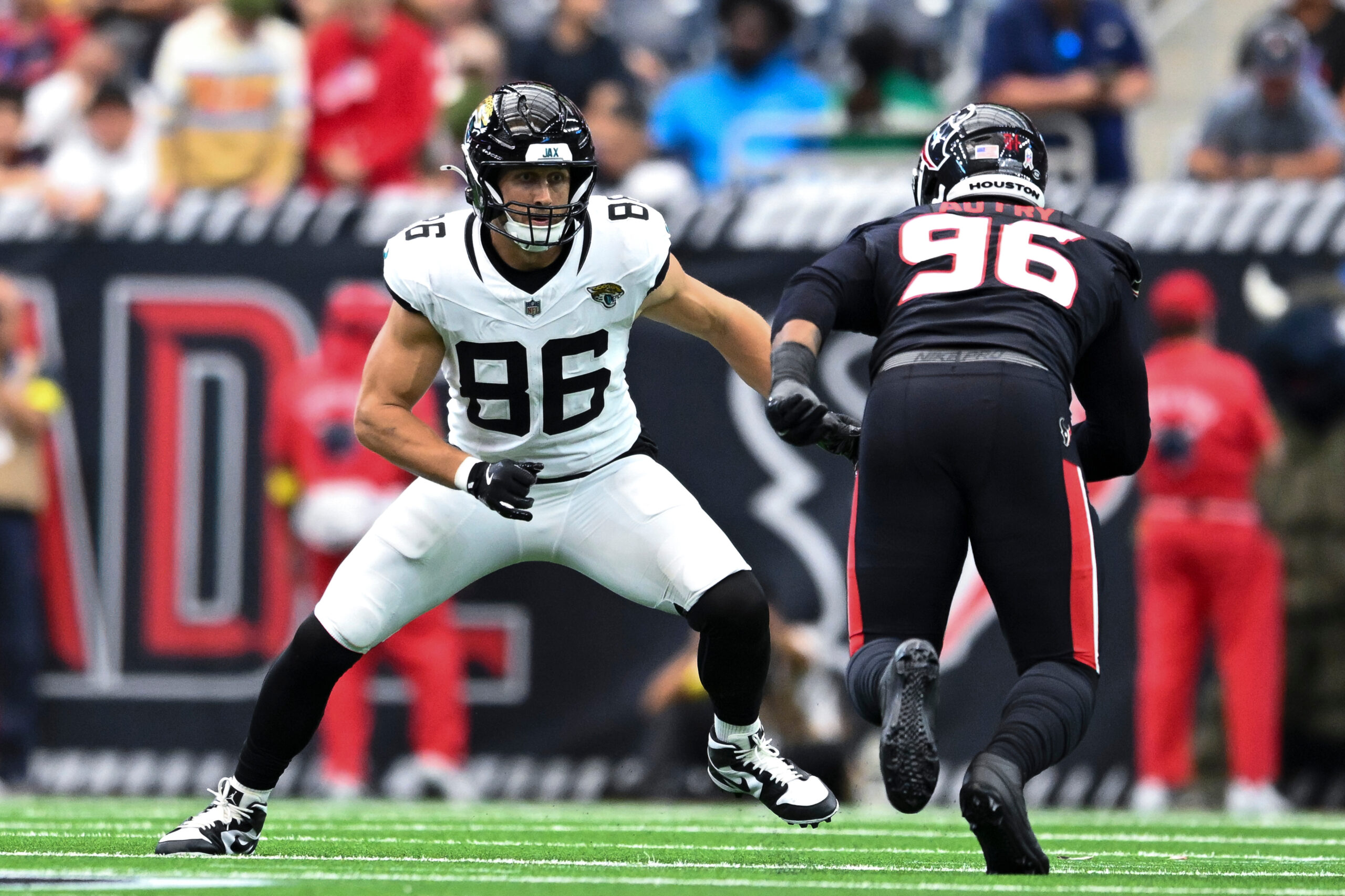
    New Eagles tight end Johnny Mundt (86) arrives from Jacksonville with a sterling reputation as a blocker.

    Which new Eagles face needs to be the most immediate difference-maker?

    McLane: The pickings are slim here so I’ll go with Ebiketie. I don’t imagine the Eagles will go into next season with the former Falcon as the third outside linebacker behind Nolan Smith and Jalyx Hunt. But right now that’s where he lines up in the pecking order. Ebiketie dropped down the depth chart in Atlanta after new faces arrived last season, but he was still effective. He had a solid 16.4% pressure rate, if only two sacks. He had six sacks in each of the two previous seasons, though.

    Ebiketie projects as more than a serviceable rotation edge rusher. The same could have been said for Azeez Ojulari and Joshua Uche — two outside linebackers the Eagles signed to one-year contracts a year ago that didn’t exactly pan out. It wasn’t all their fault. They weren’t given much of chance. Roseman traded for Phillips and Brandon Graham was lured out of retirement. As stated above, the GM is likely to add more bodies at the position, even if it isn’t a No. 1 guy. Until then, Ebiketie will have to do the heavy lifting as the projected No. 3.

    Neiburg: The answer for me right now is Johnny Mundt, which probably says more about the quiet nature of the free agent class so far. The second tight end isn’t all that sexy. But I think Mundt’s job with the Eagles is a more important one than Woolen’s. Sure, Woolen is the high-profile name, but we saw last year that CB2, in this defense, with Mitchell and DeJean, wasn’t that much of an issue. Adoree’ Jackson did fine, and Woolen is better. The running game, on the other hand, suffered from poor blocking from the tight ends. That needs to change, especially in this new scheme, to get the offense back on track. Mundt needs to be as advertised. Woolen, meanwhile, can get away with just being OK.

    Reiner: With Dallas Goedert and Grant Calcaterra now under contract in 2026, the addition of the 31-year-old Mundt is all the more important. Howie Roseman admitted in advance of the combine that the Eagles needed a more diverse skill set in the tight ends room last season, given Goedert, Calcaterra, and Kylen Granson were stronger receivers than they were blockers.

    That’s where Mundt comes in. The Eagles’ run game is poised to lean more into a wide-zone scheme under new offensive coordinator Sean Mannion. Mundt should be familiar with the revamped run game and the coaches installing it. He played with Mannion with the Rams in 2017 and 2018 and the Minnesota Vikings in 2021 and 2023. New Eagles offensive line coach Chris Kuper also served in the same role in Minnesota while Mundt was on the team. Given the struggles of last year’s unit, Mundt has the potential to make a positive impact on the ground as a blocker. After all, Vikings head coach Kevin O’Connell once called him “the best third tight end in the NFL.”

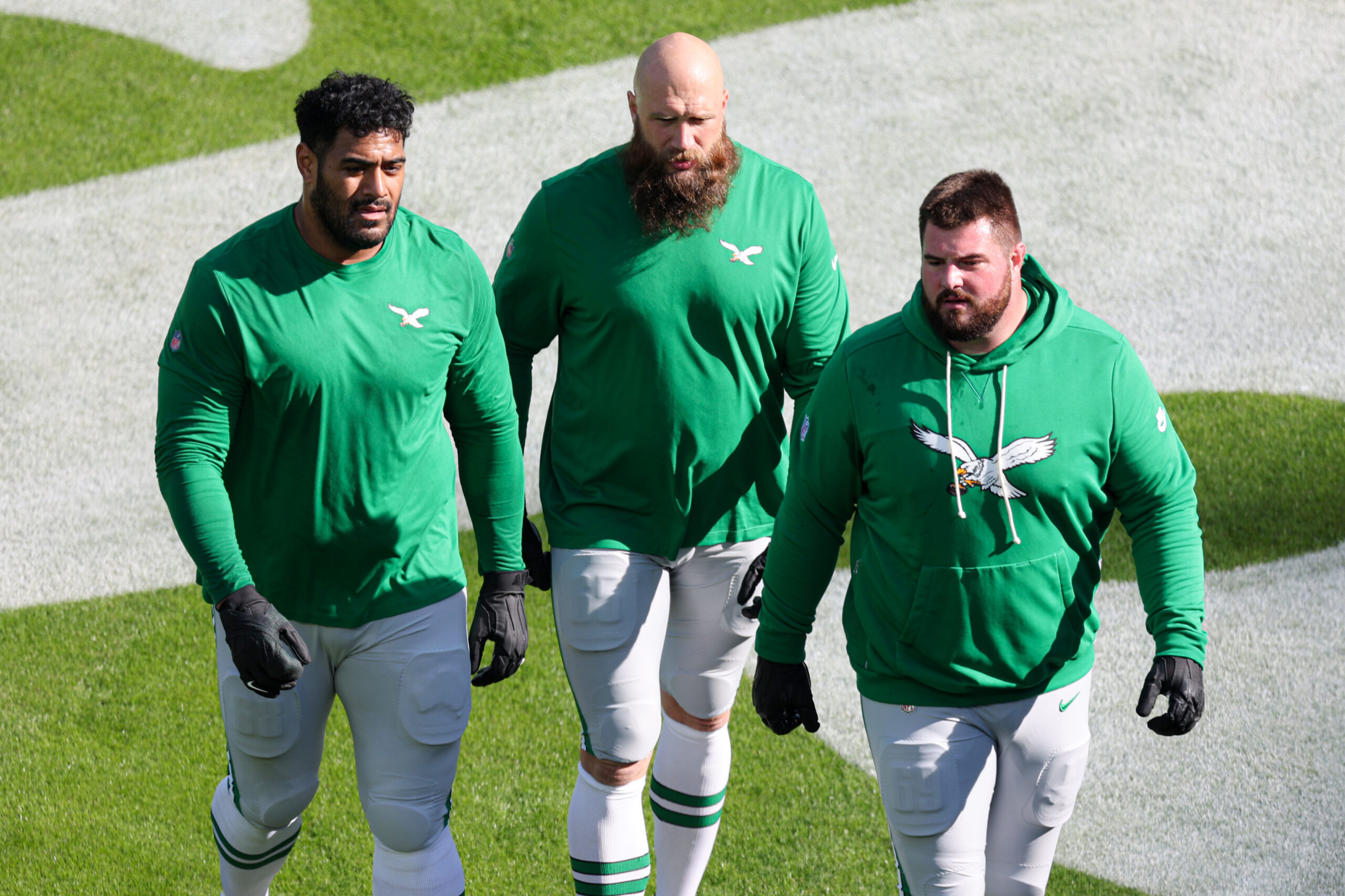
    Jordan Mailata (left), Lane Johnson (center) and Landon Dickerson (right) are the present of the Eagles offensive line. The Eagles know they must think about the future in the trenches.

    Name a position that concerns you heading into next month’s draft.

    Reiner: Edge rusher. The Eagles could still use some more pass-rush prowess on the edge, especially after a quiet wild-card showing from the group (no sacks, just one quarterback hit, according to Pro Football Focus). Last year, the Eagles went into the season with Smith and Hunt as their top two edge rushers and ended up acquiring Phillips at the trade deadline to lead the group. Roseman ought to take a more proactive approach this year and add an impact player at the position before the season begins. Then, the Eagles should be set at the position for 2026 (and potentially beyond), as Smith and Hunt are promising, yet still developing.

    Neiburg: In the immediate future, it’s edge rusher, but the long-term future of the offensive line is my primary concern for the state of this Eagles roster, and one they will need to help address in the draft. Lane Johnson’s career is winding down. Injuries and pain could soon force Landon Dickerson to retire before he hits 30. Cam Jurgens, like Dickerson, just got a treatment for his ailments in Colombia that they don’t do in the U.S. A position that has long been a strength of the Eagles has a lot of question marks as they enter the 2026 season.

    McLane: I’ve mentioned the holes at edge rusher and safety, but I’m looking at a position with a longtime returning starter with question marks: left guard. We know that Dickerson will be back for a sixth season. Will he be able to finish it? I think that’s a fair question considering doubts he expressed about his future at the end of the season, and from sources close to Dickerson who know the full extent of injuries he’s played through the last several seasons. There might not be a tougher player on the roster, but a nowhere-near-100-percent Dickerson was often a detriment to the offense in 2025.

    As Jeff mentions, he addressed his ailing body by receiving stem cell treatment, following Jurgens to Colombia earlier this month. Jurgens doesn’t get off scot-free. His regression last season wasn’t solely because he wasn’t full recovered from back surgery. He needs to bounce back. But the Eagles didn’t reduce the number of years left his contract like they did with Dickerson. They clearly know the end is nearing for the former Pro Bowler. They don’t have an obvious backup at this point after Brett Toth and Matt Pryor left in free agency. Roseman will likely add a veteran. But he may have to start thinking about finding a replacement in the draft, and that’s on top of preparing for Johnson’s retirement, which could be coming in a year.

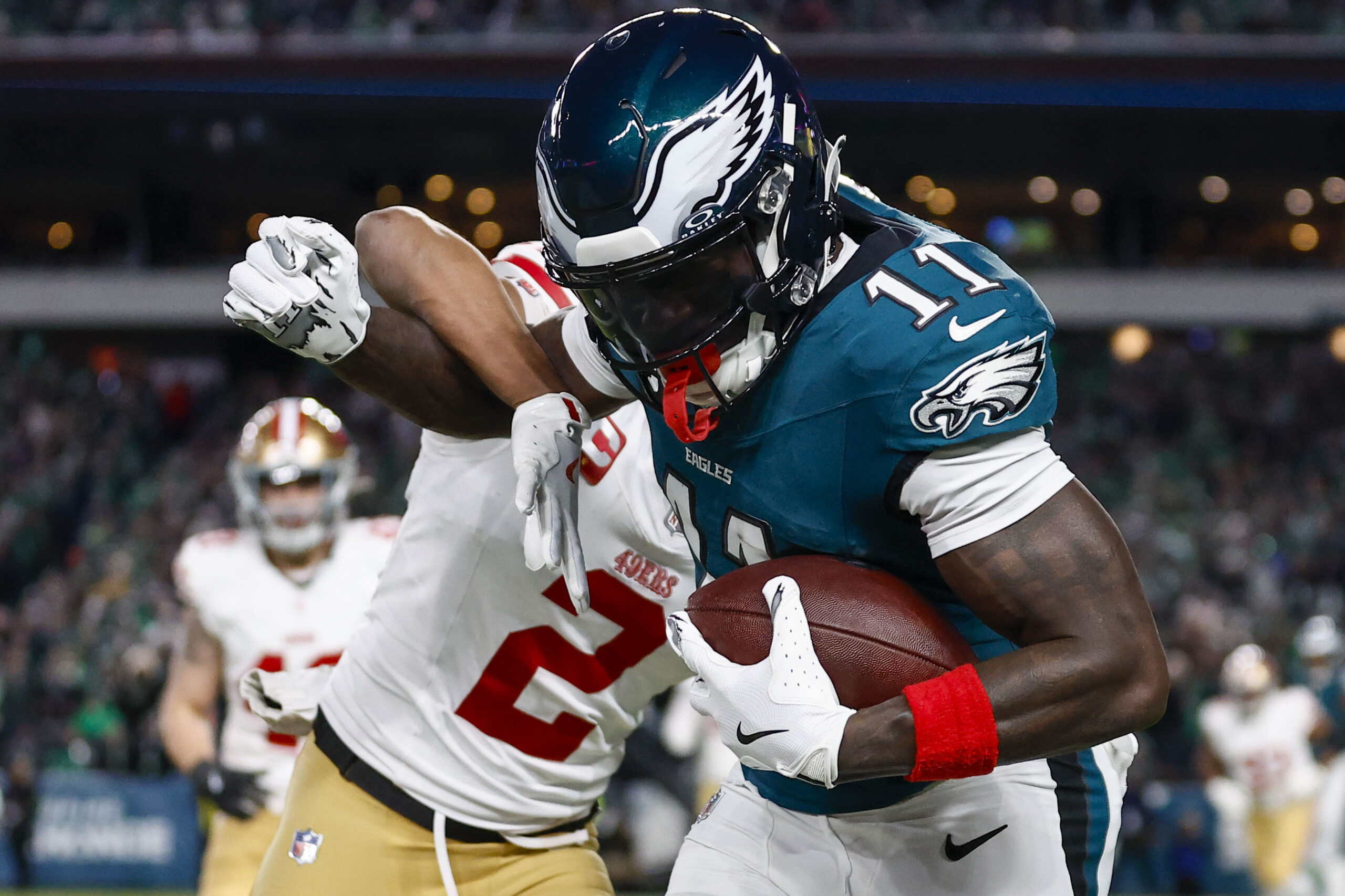
    Will the Eagles have regrets over whatever their decision is on A.J. Brown?

    Crystal ball: What will we be saying about A.J. Brown at the end of the 2026 season?

    Neiburg: Hello from late January. The Eagles just lost in the NFC title game despite A.J. Brown’s eight catches for 84 yards and a touchdown. The Eagles never got an offer worthy of parting with Brown, and so they kept him on the team and ran it back with Brown and DeVonta Smith at the top of the depth chart. Mannion’s offense opened up the passing and running games a bit, and Brown did fire off a few cryptic social media posts, but he went over 1,000 yards for the fifth consecutive season.

    Reiner: Brown is still a great player … whether he is on the Eagles or not. Lately, it seems like “not” is the more likely outcome for the two parties. Perhaps the Eagles will wait to move him until after June 1, when they can spread out his dead cap charge over the next two seasons. Regardless, whoever ends up with Brown in 2026 is the better-off team. Even a 29-year-old Brown can make a difference in an offense, given he posted a paltry 1,003 receiving yards in a relatively down season in 2025.

    McLane: I doubt there will be one uniform statement said about Brown, whether he’s with the Eagles or not. I suspect there will be a growing chorus, however, suggesting that he has taken another slight step back. We saw glimpses of that last season and perhaps that is why Brown voiced his frustrations in the middle of last season. He was still great at times. And it wasn’t like his average separation numbers when targeted dropped. He actually had a slight increase from 2.1 to 2.2 yards, per Next Gen Stats. But dropped passes and an occasional lack of effort were concerning. Jalen Hurts and Kevin Patullo weren’t solely to blame for last season.

    Roseman wouldn’t be open to trading Brown if there wasn’t evidence that he’s slipping in his age-29 year. Every team knew about his knee concerns before the draft. The Eagles are the only ones to know how they’re holding up as he enters his eighth season. Any potential partner would perform a physical before signing off on a trade. But Brown isn’t coming off knee surgery like Maxx Crosby. There’s an uncertain expiration date with chronic injury. And some receiver-needy team is likely to take that risk. The Patriots or some other suitor will have to meet Roseman’s demands, but the asking price could drop post-June 1, especially if the Eagles draft a receiver.

  • Jesús Luzardo endures attacks after declining Venezuela’s World Baseball Classic plea and staying with Phillies

    Jesús Luzardo endures attacks after declining Venezuela’s World Baseball Classic plea and staying with Phillies

    CLEARWATER, Fla. — It usually takes about a day for social media to ruin everything. In the case of Jesús Luzardo, it’s right on time.

    Monday was one day after the news broke that Luzardo and the Phillies decided it would be best for him to decline an invitation from Team Venezuela to pitch in the World Baseball Classic final on Tuesday if Venezuela made it that far.

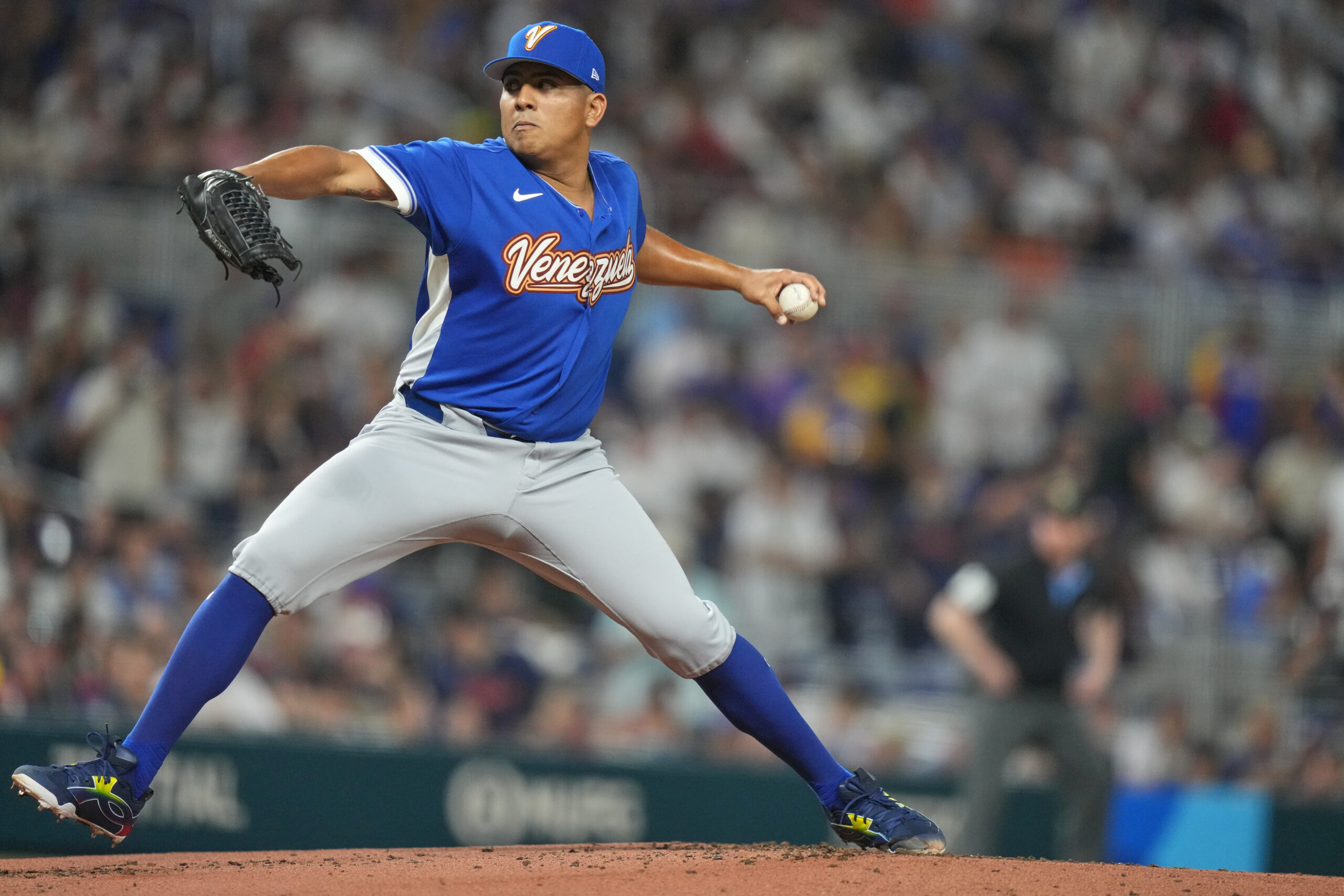
    Luzardo was born in Peru, but his family is from Venezuela, for whom he pitched brilliantly in the 2023 WBC and who placed him on the reserve list. He also grew up in the Miami area, where the semifinal and final are being played. That’s why he told two reporters Sunday that it “breaks my heart not being able to be there.”

    On Monday morning, his heart was breaking for another reason. Many Venezuelan fans were angry that he didn’t accept the invitation.

    “I feel like sometimes, you get painted as a traitor, or, you know, you get painted in this, like, negative light, because of some things that people say — you know, not only me, but my family,” Luzardo said Monday morning. “And I think that that’s tough. People from Venezuela are, like, ‘Why aren’t you helping us out?’”

    Jesús Luzardo signed a five-year, $135 million contract extension with the Phillies last week.

    Traitor? Really? A quick scan of popular social media outlets uncovered zero references to Luzardo as a traitor.

    I asked Luzardo at lunchtime if he was sure about all the negative feedback.

    “It’s there,” he replied, with a pained smile. “I know.”

    Where? Twitter? Instagram?

    “I’m not on social,” he said. “I just know what I saw and what I heard.”

    Hmm. Here’s a thought: Maybe he was hearing it in Spanish, not English.

    Bingo.

    And there it was.

    Comments under Instagram posts announcing Luzardo’s decision were … harsh.

    They questioned his commitment to Venezuela, and many told him to pitch for Peru. They questioned his manhood. One poster dropped a poop emoji.

    Why all the acrimony?

    It’s important to understand the significance of the tournament to Venezuelans, for whom baseball is not just the national sport, but a pastime bordering on the religious. It’s sort of like Jalen Hurts turning down a Team USA for football.

    To be fair, some folks understood and supported Luzardo’s decision. There were several rational replies. A few commented on comments and defended Luzardo’s decision. But the majority of the reactions were negative, personal, and hurtful.

    It wasn’t just the mean tweets and nasty ’grams, either.

    “When a headline came out the other day, and said [Team Venezuela] called me, and I just said, ‘No,’ because I didn’t want to — couldn’t be further from the truth, right?” Luzardo asked. “I think that really kind of rubbed me the wrong way, because that wasn’t truth.”

    The truth is, Luzardo loves the World Baseball Classic, and he loves representing Venezuela.

    The truth is, he said in 2023 that he’d fulfilled his grandfather’s dream by pitching for Team Venezuela.

    The truth is, Luzardo was negotiating an arbitration settlement with Miami the first time Venezuela asked him to play. That paid him $2.45 million in 2023. He signed a five-year, $135 million contract extension with the Phillies last week.

    Former Phillie Ranger Suárez joined Venezuela for the World Baseball Classic.

    The truth is, after missing time in 2019, 2022, and 2024 with injuries, Luzardo enjoyed a superb 2025 and is finally fulfilling the immense promise that made him the No. 18 prospect in all of baseball when the Athletics called him up in 2019. After being traded to Philadelphia from Miami on Dec. 22, 2024, Luzardo went 15-7 with a 3.92 ERA, finished seventh in National League Cy Young Award voting, and pitched well as a starter and a reliever in the Phillies’ brief playoff run.

    The truth is, Luzardo logged a career-high 191⅓ innings including playoffs, he has a history of injuries, and he is on a precise buildup program this spring. That’s partly because Luzardo’s profile in the rotation this year will be two clicks higher to start the season: Staff ace Zack Wheeler is coming back from thoracic outlet decompression surgery that will cost him at least the first month, and Ranger Suárez has departed to the Red Sox via free agency.

    Yes, two weeks ago, as Luzardo declined his initial invitation, he said that if Venezuela made the final four, “If they need me, I’ll go.” That gave Venezuela reasonable hope.

    Things change.

    “When I spoke to Venezuela about being on the reserves, I said, ‘No promises,’” Luzardo said Monday. “They said, ‘We’ll understand if you’re not able to come.’ … It was for multiple reasons, it wasn’t able to come to fruition. Not only the contract situation, but other situations here that, you know — my obligations to this team. They want me to be ready to go. I have to make those [obligations] right.”

    The truth is, it would have been foolish for Luzardo to risk an appearance in the WBC, no matter how important the tournament might be to Venezuela, or to him.

    “I’m hopeful that in the next Classic, you know, they’ll take me into account,” Luzardo said. “I’d love to be there again.”

  • St. Patrick’s Day reminds Philadelphia of its immigrant roots, and its responsibility today

    St. Patrick’s Day reminds Philadelphia of its immigrant roots, and its responsibility today

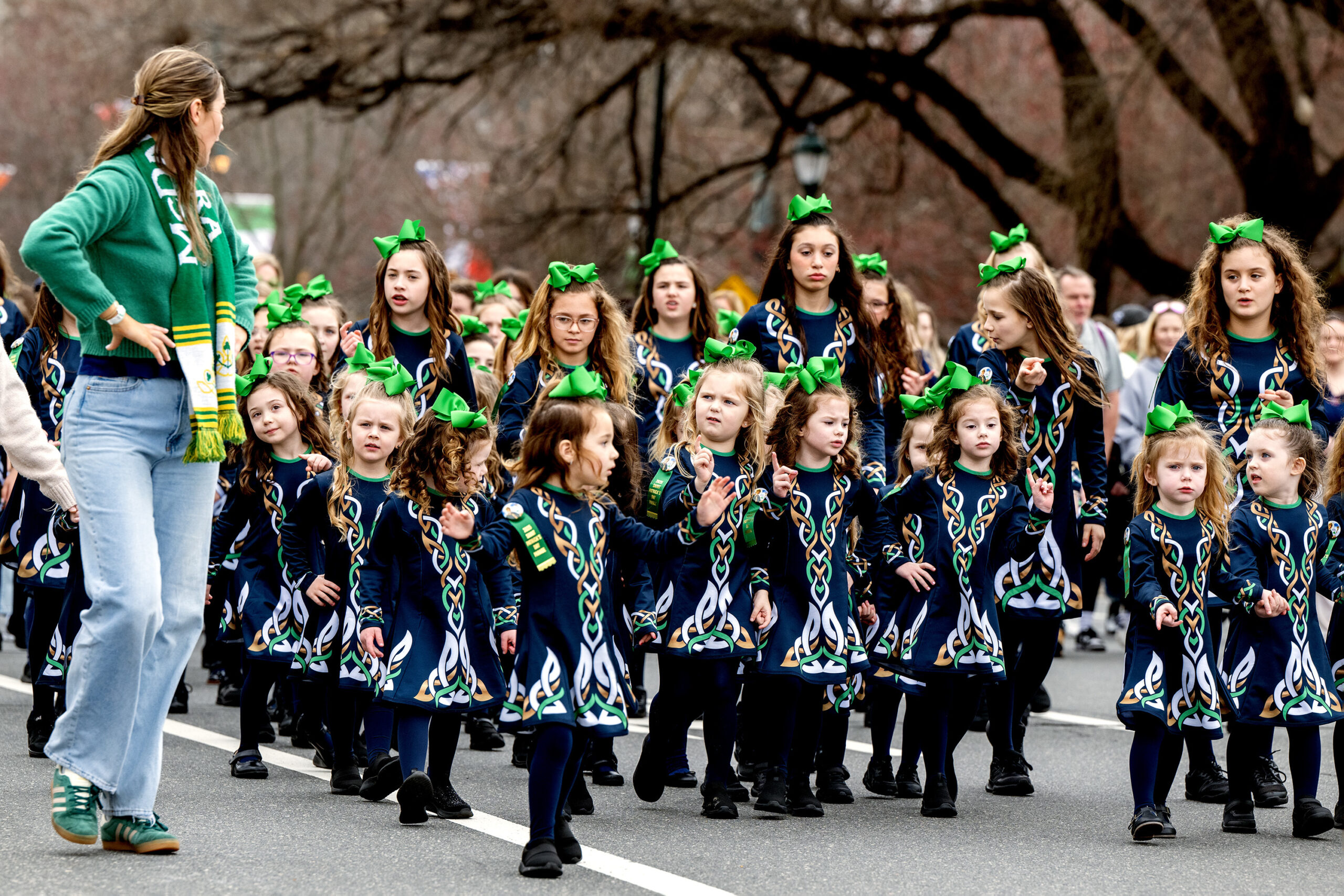
    Every year, St. Patrick’s Day turns Philadelphia green.

    Crowds gather along the Parkway. Families celebrate in neighborhoods shaped by generations of Irish Americans. We honor a heritage that is now inseparable from the city’s identity — a story of resilience, faith, and hard work that helped build Philadelphia into what it is today.

    For me, that story is personal.

    My parents were Irish immigrants who settled in Philadelphia in search of opportunity and stability. By the time they arrived, earlier waves of Irish families had established strong neighborhoods, parishes, and institutions. My parents found jobs, community, and a sense of belonging. They raised their children here and became part of the fabric of the city.

    But the welcome Irish immigrants eventually experienced was not always guaranteed.

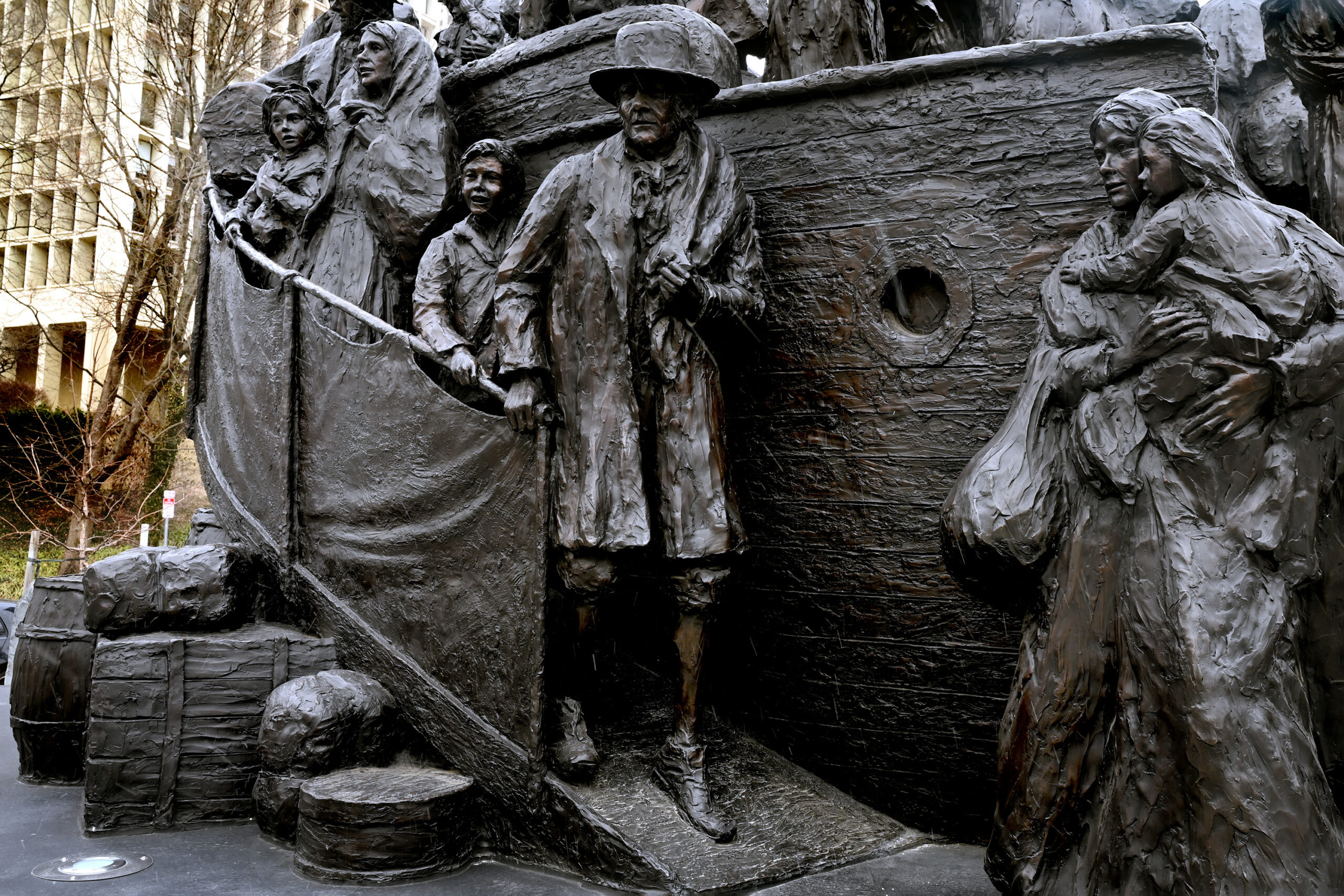
    A detail of the “Irish Memorial An Gorta Mor (The Great Hunger)” in Foglietta Park. The aspirations of immigrants today are not so different from those of the Irish families who once arrived at the port of Philadelphia with little more than determination and hope, writes Anna Gallagher.

    In the 19th and early 20th centuries, Irish newcomers often faced suspicion and discrimination. They were portrayed as outsiders and told they did not belong. Over time, through perseverance and the support of local communities, they became integral to Philadelphia’s civic and economic life. Today, their story is celebrated as part of the American immigrant narrative.

    That history is worth remembering, especially now.

    Across the country and here in Pennsylvania, immigrant families are navigating an increasingly complex and uncertain landscape. Many are longtime residents who work, pay taxes, and contribute to their communities. Others are seeking refuge from violence or instability abroad. All are striving for the same things previous generations sought: safety, opportunity, and the chance to build a future for their children.

    The Irish immigrant experience is often remembered as a story of eventual success. But that success was not inevitable, writes Anna Gallagher.

    Yet many face significant barriers. Access to legal representation remains limited. Immigration policies shift quickly, creating confusion and instability. Families live with the fear that a routine encounter could separate parents from children. Employers struggle to retain valued workers. Entire neighborhoods feel the ripple effects of uncertainty.

    As executive director of the Catholic Legal Immigration Network Inc., the nation’s largest network of nonprofit immigration legal services providers, I see both the challenges and the promise every day. I see mothers seeking asylum, fathers working multiple jobs to support their families, and young people who have grown up in this country hoping to fully belong. I also see the extraordinary contributions immigrants continue to make to cities like Philadelphia.

    Immigrants start businesses, work in hospitals and construction sites, care for the elderly, and teach in classrooms. They strengthen the local economy and revitalize neighborhoods. Their aspirations are not so different from those of the Irish families who once arrived at the port of Philadelphia with little more than determination and hope.

    St. Patrick’s Day offers a moment to reflect on that continuity.

    The Irish immigrant experience is often remembered as a story of eventual success. But that success was not inevitable. It was made possible by communities willing to open doors, institutions willing to offer support, and policies that allowed families to put down roots.

    Philadelphia has long been renewed by newcomers. From South Philadelphia to Northeast neighborhoods and beyond, immigrants have shaped the city’s culture, economy, and civic life. That pattern continues today, if we choose to sustain it.

    This is not simply about honoring heritage. It is about shared prosperity. Cities thrive when families feel secure enough to invest in their neighborhoods, pursue education, and contribute fully to community life. They thrive when longtime residents and newcomers alike see themselves as part of a shared story.

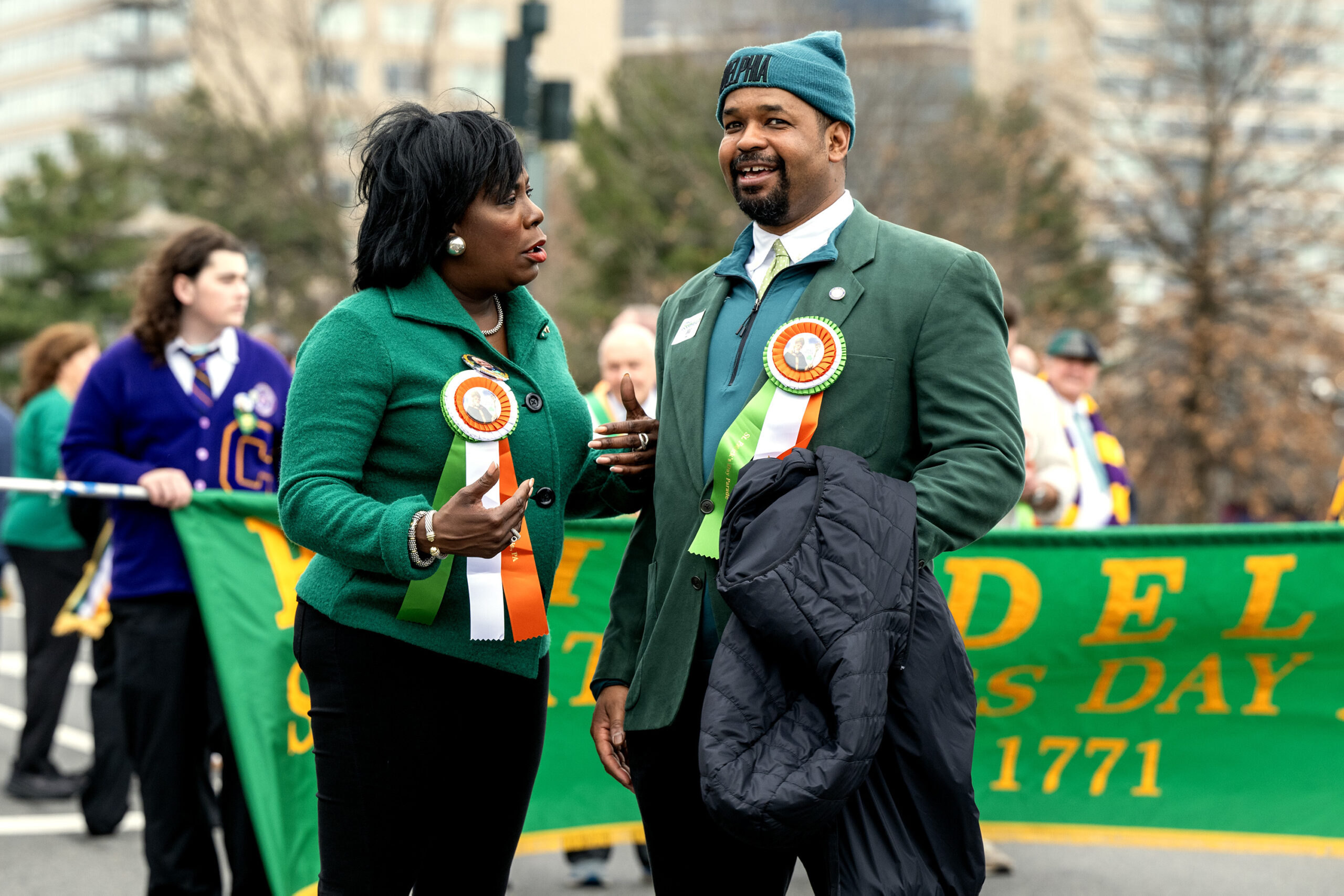
    Green-wearing Mayor Cherelle L. Parker is with State Sen. Sharif Street (right) during the annual Philadelphia St. Patrick’s Day Parade in 2025.

    As we celebrate St. Patrick’s Day, Philadelphia has an opportunity to honor its immigrant roots in a meaningful way. That means supporting policies that keep families together and create fair, orderly pathways through our immigration system. It means expanding access to legal representation so individuals can navigate that system effectively. And it means fostering a civic culture that recognizes immigrants not as outsiders, but as neighbors and fellow Philadelphians.

    My parents’ journey from Ireland to Philadelphia is one story among many. It is a story of welcome, hard work, and belonging. The question before us now is whether we will help ensure that today’s immigrant families have the same chance to contribute, to build, and to call this city home.

    Immigration is not just part of Philadelphia’s past. It is central to its present, and vital to its future.

    Anna Gallagher is executive director of the Catholic Legal Immigration Network Inc. (CLINIC). Born in Philadelphia to Irish immigrant parents, she is a nationally recognized expert on immigration and refugee policy and a longtime advocate for the rights and dignity of migrants.

  • Letters to the Editor | March 17, 2026

    Letters to the Editor | March 17, 2026

    A senseless war

    In Sunday’s Opinion section, Joe Sestak, Trudy Rubin, and Will Bunch laid out a very convincing accounting of the senselessness of another “endless” war in the Middle East. They also highlighted the lack of understanding that President Donald Trump and his administration have of the history and culture of that part of the world. Given this, why has Congress failed to exercise its constitutional responsibility to end this unlawful war? About 13% of our tax dollars go to funding a military that blindly obeys the orders of a bully president. War is not the answer. Sincere, peaceful, intelligent negotiations, and sensitivity to the needs of the people through community building initiatives are ways to avoid war. Resources spent on military actions could be redirected to address pressing social issues in the U.S., such as poverty, housing, and education.

    Bruce Charlick, Jenkintown

    The Inquirer has performed an outstanding public service by publishing three first-rate opinion pieces about the misguided war in Iran. Joe Sestak provides detail and context about issues such as access to rare earth minerals that hardly ever get attention in news coverage. He chillingly highlights the dominant position that China has achieved while the president’s been out playing golf.

    Inquirer regulars Will Bunch and Trudy Rubin once again offer insights and perspective that all of us really need if we are to respond intelligently to the madness of our deranged president.

    Thank you for your journalistic excellence.

    Laslo Boyd, Philadelphia

    In her most recent column, Trudy Rubin expressed outrage at reports that Russia may be providing Iran with intelligence on locations of U.S. troops. If true, we should all be furious — Russian collusion with Iran puts American service members directly in harm’s way.

    Yet instead of imposing tougher penalties on Russia or strengthening U.S. support for Ukraine, Donald Trump has eased sanctions.

    Meanwhile, lives have already been lost and Americans face the risk of retaliation from a war of choice launched without an imminent threat from Iran.

    Politically, economically, and morally, this “little excursion” is already proving to be a grave mistake.

    Maria Duca, Philadelphia

    Special measures

    As a pediatric rheumatologist in Philadelphia, I care for children living with complex, chronic autoimmune diseases, like juvenile arthritis and lupus, which can cause lifelong pain and disability without timely treatment. But across Pennsylvania, Delaware, and New Jersey, too many families are waiting months or being forced to travel across state lines to get their child the care they need.

    That’s because there are only a handful of pediatric rheumatologists in our state, with some regions having none at all. The shortage is growing worse still as a result of inflation, administrative burdens, and outdated physician reimbursement rates. We have created a system that discourages physicians from entering or staying in fields like pediatric rheumatology — and it’s children who are paying the price.

    It’s time for our leaders in Washington to modernize physician payment to ensure updates that reflect the true cost of care and support the next generation of pediatric specialists. Without reform, families in Pennsylvania and beyond will face longer waits, longer drives, and worsening outcomes for children who deserve better.

    Jay Mehta, Philadelphia

    Join the conversation: Send letters to letters@inquirer.com. Limit length to 150 words and include home address and day and evening phone number. Letters run in The Inquirer six days a week on the editorial pages and online.

  • Aaron Nola: Team Italy’s surprising run in World Baseball Classic was ‘some of the best times I’ve ever had’

    Aaron Nola: Team Italy’s surprising run in World Baseball Classic was ‘some of the best times I’ve ever had’

    MIAMI — As a way of summarizing Aaron Nola’s two-start guest spot with Italy’s national baseball team, let’s borrow a phrase that fans in his adopted country can appreciate.

    Venit, vidit, vicit.

    Because Nola came from Phillies camp. He saw lineups filled with major league stars. And he did his part to help Italy conquer, leaving with a one-run lead after four innings in the World Baseball Classic semifinal here Monday night.

    As it turned out, though, this wasn’t Julius Caesar at the Battle of Zela. Fueled by a potent, relentless, and frenetic offense, Venezuela ran down Italy’s Cinderella run, scoring three times in the seventh inning for a 4-2 victory that kicked off a party among a partisan — and deafeningly loud — sellout crowd in South Florida.

    Next up for the Venezuelans: Team USA for the gold medal — yes, they actually receive medals — at 8 p.m. Tuesday night.

    And for the Italians (or in most cases, Italian Americans)? Only fond memories from what many described as two of the best weeks of their careers. That included Nola, a veteran of 11 major league seasons and four consecutive playoff appearances with the Phillies.

    “It was super cool. Super cool,” Nola said. “We had the time of our lives, man. Some of the best times I’ve ever had.”

    Say this for Team Italy: It was the darling of the two-week tournament, with an espresso machine in the dugout and contributions up and down the lineup. (Phillies outfield prospect Dante Nori, for instance, went 8-for-20 with two homers and an 1.185 OPS.)

    Initially, manager Francisco Cervelli planned to roll with Michael Lorenzen against Venezuela, but with a taxed bullpen, he went with Aaron Nola on regular (four days) rest.

    And Nola was more than a pitching ringer, even if his initial interest in competing was, in part, to use the intensity of the WBC as a testing lab after making adjustments to his throwing program off the worst season of his career.

    On that count, Nola was mostly, well, eccelente.

    Last Wednesday, he cranked up his fastball to 94.5 mph, uncorked his signature curveball, and dominated Mexico for five scoreless innings to push Italy to the top seed in pool play over the U.S. Against Venezuela, he wasn’t as sharp. He topped out at 94.1 mph, got only two swings and misses, and left a curveball up for Eugenio Suárez’s solo homer in the third inning.

    Yet, he struck out three batters, all on curveballs. He got longtime nemesis Ronald Acuña Jr. (16-for-52 with four homers and a 1.025 OPS in his career against him) looking at a curveball in the third inning. And he left with a 2-1 lead.

    “I kind of felt out of whack today, but battled as best as I could,” Nola said. “I tried to get the sinker down later on. Felt like that was kind of the only thing working. I got some ground balls with it and kept the guys in the game as best I could.”

    Nola also threw only 59 pitches, 10 less than his previous start. The plan, he said, was not to go more than five innings or 80 pitches. But manager Francisco Cervelli opted for a pitching gambit to compensate for a taxed bullpen.

    Rather than starting former Phillies righty Michael Lorenzen against Venezuela and saving Nola for the final, if Italy advanced, Cervelli split the game between them. He used Nola for four innings and tried to get four from Lorenzen. But Jackson Chourio, Acuña, Maikel Garcia, and Luis Arraez notched consecutive singles in the seventh to nearly blow the retractable roof off loanDepot Park.

    Regardless, Nola said he was satisfied with the workload in what amounted to his penultimate start before the season.

    “Overall, my body and arm feels good,” he said. “I mean, I’m built up.”

    Phillies prospect Dante Nori was among the standout players for Italy in the World Baseball Classic.

    Besides, as Nola discovered, the tournament was about something bigger than tuning up for the season.

    “There was a lot of people watching — watching in Italy,” he said. “That was a big goal, to bring more baseball to Italy. And we did. I think most of the American guys in this clubhouse don’t really understand what we did for that country.”

    Nola hasn’t been to Italy. He qualified to represent the country in the WBC because his great-grandparents on his father’s side were from Italy (the Campania region in the south, to be exact). It was supposed to be a family affair. Nola’s brother, Austin, signed up to play but withdrew after getting hired as the Mariners’ bullpen coach.

    But as Nola put it, he left the tournament with two dozen new brothers. And before they went their separate ways, they spent about 90 minutes together in the clubhouse after the game to reflect on the last two weeks.

    “Nobody thought we were going to make it this far, and we did,” Nola said. “We’ve got a great group of guys. I love all those guys in there. I’m really glad I played.”

    For more reasons than he ever imagined.