Blog

  • Philly’s bars are embracing zebra-striping, aka switching it up between booze and NA drinks

    Philly’s bars are embracing zebra-striping, aka switching it up between booze and NA drinks

    South Philly resident Olivia Menta and her partner love exploring Philly’s food scene, often hitting up several spots over the course of an evening. But the couple doesn’t want the literal headache that can sometimes come with such excursions.

    “We’re people that love to spend long nights in restaurants together, but I just don’t want to consume a lot of alcohol,” Menta, 34, said. So the pair employs a drinking strategy that strikes a compromise between temperance and indulgence, alternating between alcoholic and non-alcoholic drinks.

    To kick off an evening, Menta will order a low-alcohol cocktail — perhaps a spritz, or something vermouth or sherry-based — or a glass of sparkling wine. For her next drink, she’ll move to something non-alcoholic, a menu section that’s been growing by leaps and bounds in area bars and restaurants. She’ll switch back and forth as the night goes on, keeping her consumption (and her buzz) in check.

    This increasingly popular strategy for moderating one’s intake occasionally goes by a fanciful new nickname: zebra-striping.
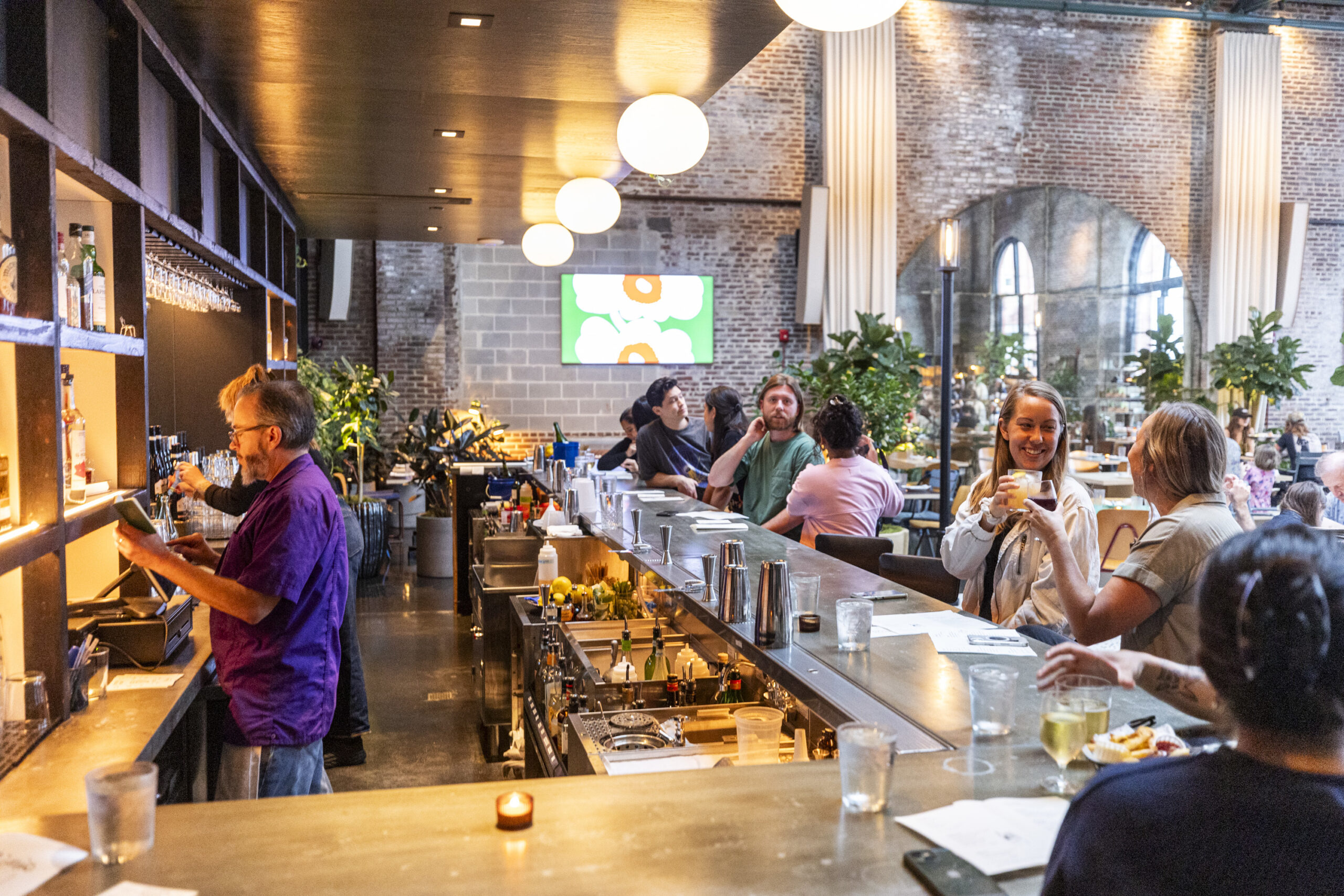
    Customers enjoying drinks at the bar at Picnic in Kensington.

    “Zebra-striping is the idea of alternating alcoholic and non-alcoholic beverages,” explained Max Glenn, wine buyer for Picnic in East Kensington. “It offers a nice pace to a night out, as opposed to binge drinking and feeling worn out from simply being social.”

    Zebra-striping is not a commonly used phrase, but the practice — which itself is not new and arguably a sign of good common sense — is encouraged and widespread. “I’m often the one introducing the term to people,” Glenn said. “But nickname or not, it’s happening. Sometimes it’s water, other times it’s switching to a non-alcoholic beer between drinks.”

    Zebra-striping is highly customizable — and it has no hard-and-fast rules. “I’ve seen pubs offer to cut a pint of Guinness with 0.0% Guinness, thus making it a more sessionable 2.2% beer,” Glenn said. “Or you can alternate a regular beer with a [nonalcoholic drink] 0.0%, or water. It’s up to you.” (The Guinness idea recently stirred controversy online for what the right ratio of regular beer to NA beer should be, with 60/40 being the most commonly happy medium.)

    For Menta, zebra-striping is at its best when the bar or restaurant has put some thought into its non-alcoholic offerings — something that’s happening more and more.
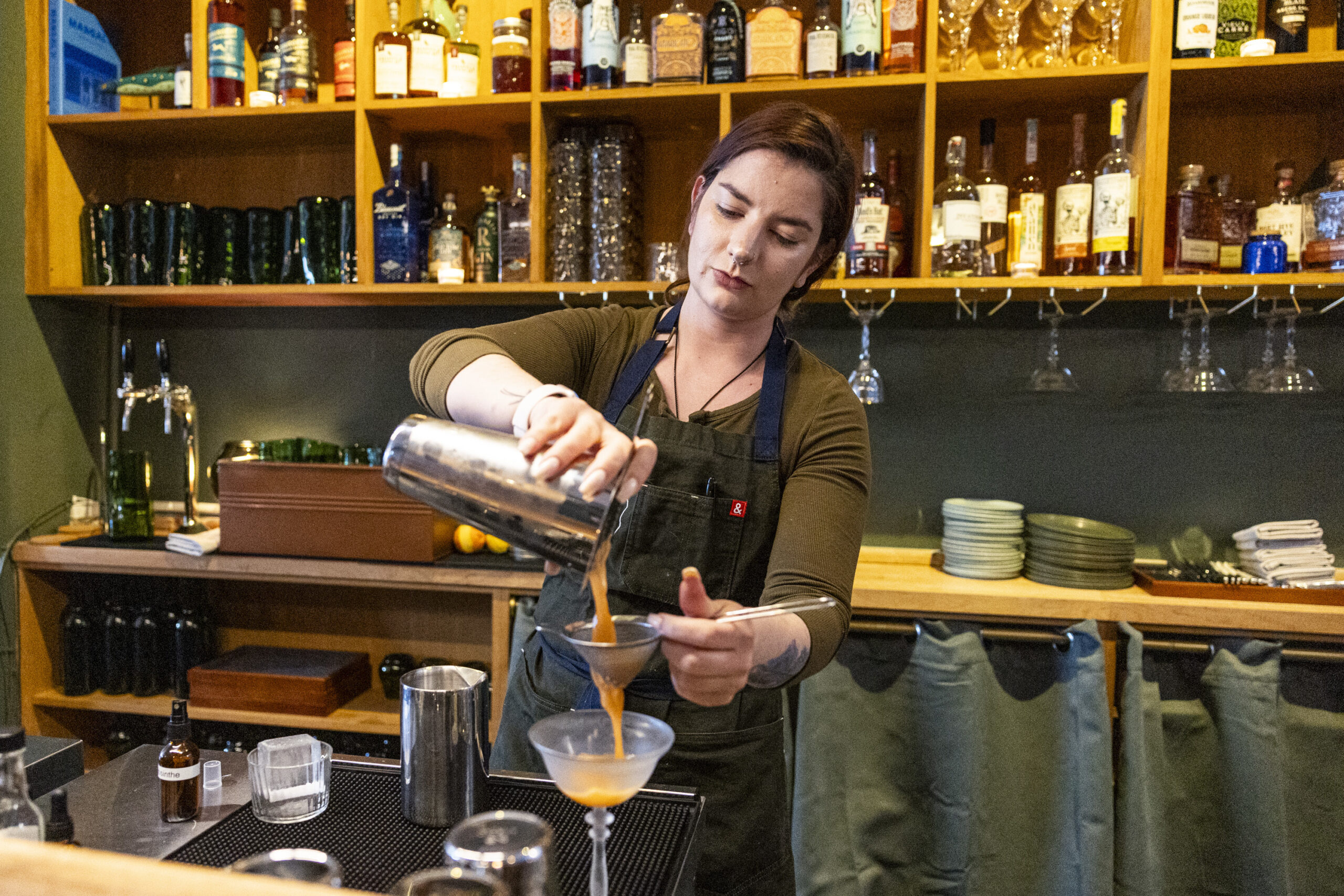
    Bar manager Petra Manchina making a drink at Emmett, in South Kensington. Like many restaurants and bars, Emmett has paid special attention to its non-alcoholic offerings.

    “I get excited when there’s something unusual to try, instead of the typical sparkling water and citrus,” she said. “Emmett [chef Evan Snyder’s Mediterranean restaurant in South Kensington] does this well — they had an NA cocktail on the menu last winter that had roasted eggplant in it … I still think about it.”

    Even when the mocktails aren’t as creative as that, Menta sticks to the strategy, something she’s been doing consciously for a year and a half, ever since learning the term from her partner. “Zebra-striping is a way for both of us to explore and experience in a way that is perfectly balanced,” she said.

    Alcohol and non-alcohol, side by side

    A growing majority of Philly’s bars and restaurants have bolstered the mocktail and zero-proof options on their menus, listing them alongside martinis, Manhattans, and beer and wine. It’s the natural evolution of a trend that has its roots in a month-long test of willpower.

    “Four years ago, everyone was asking for Dry January options,” said Bonnie Garbinski, director of operations for American Sardine Bar and South Philadelphia Taproom. As time went on and the requests became more frequent, Garbinski added a few NA offerings to the regular menu; the selection has grown from there. “We now keep four to six [NA drinks] year-round.”
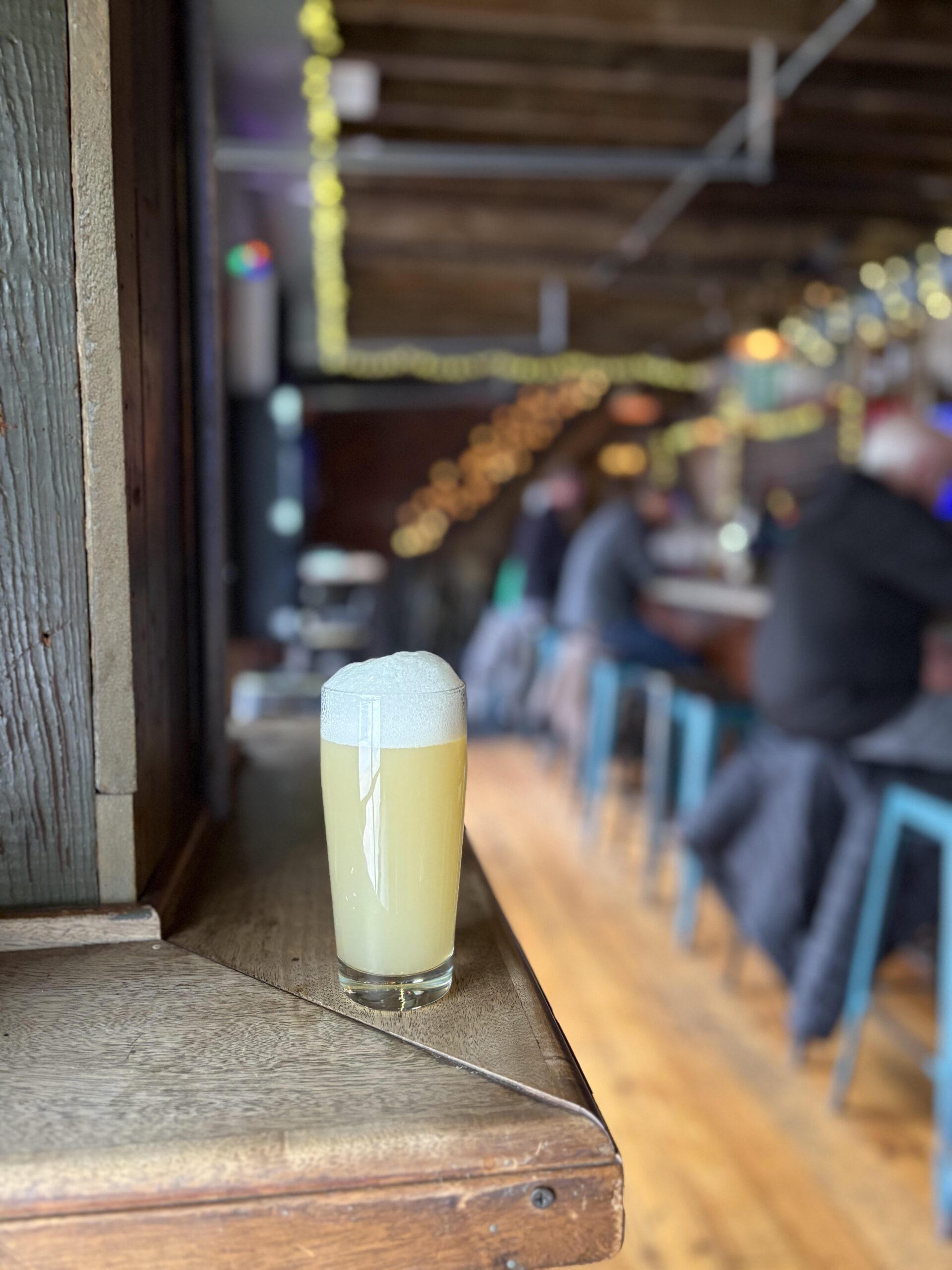
    Second District’s Anti-Plato , an IPA-inspired soft drink with a green tea base that gets sweetened with pineapple juice; acidified orange, lime, and citric acid; then finished with dry-hopping and carbonation.

    Sardine Bar sister establishment Second District Brewing has likewise made its menu more NA-friendly. But rather than bringing in outside NA beers and calling it a day, the Bancroft Street brewery experimented with making its own close-to-beer offering, eventually landing on a pineapple- and lime-fortified tea that’s dry-hopped to mimic the mouthfeel and flavor of a hazy IPA. The Second District team plans to keep an iteration of the beer-inspired NA soft drink on the menu, updating the fruit flavors throughout the year.

    Bars aren’t the only alcohol-centered businesses integrating NA options. Local breweries have taken note of customers’ zero-proof inclinations: Ardmore’s Tired Hands debuted non-alcoholic IPA N/Alien Church in 2024, and Callowhill’s Love City Brewing introduced its first NA beer, Lo-Key Lager, last year. Additionally, bottle shops all around Philadelphia are carrying NA wines, beers and cocktails. Options are vast, ranging from imported NA spritzes and spirits to emerging local NA brands, such as Cult of Trees apertifs.
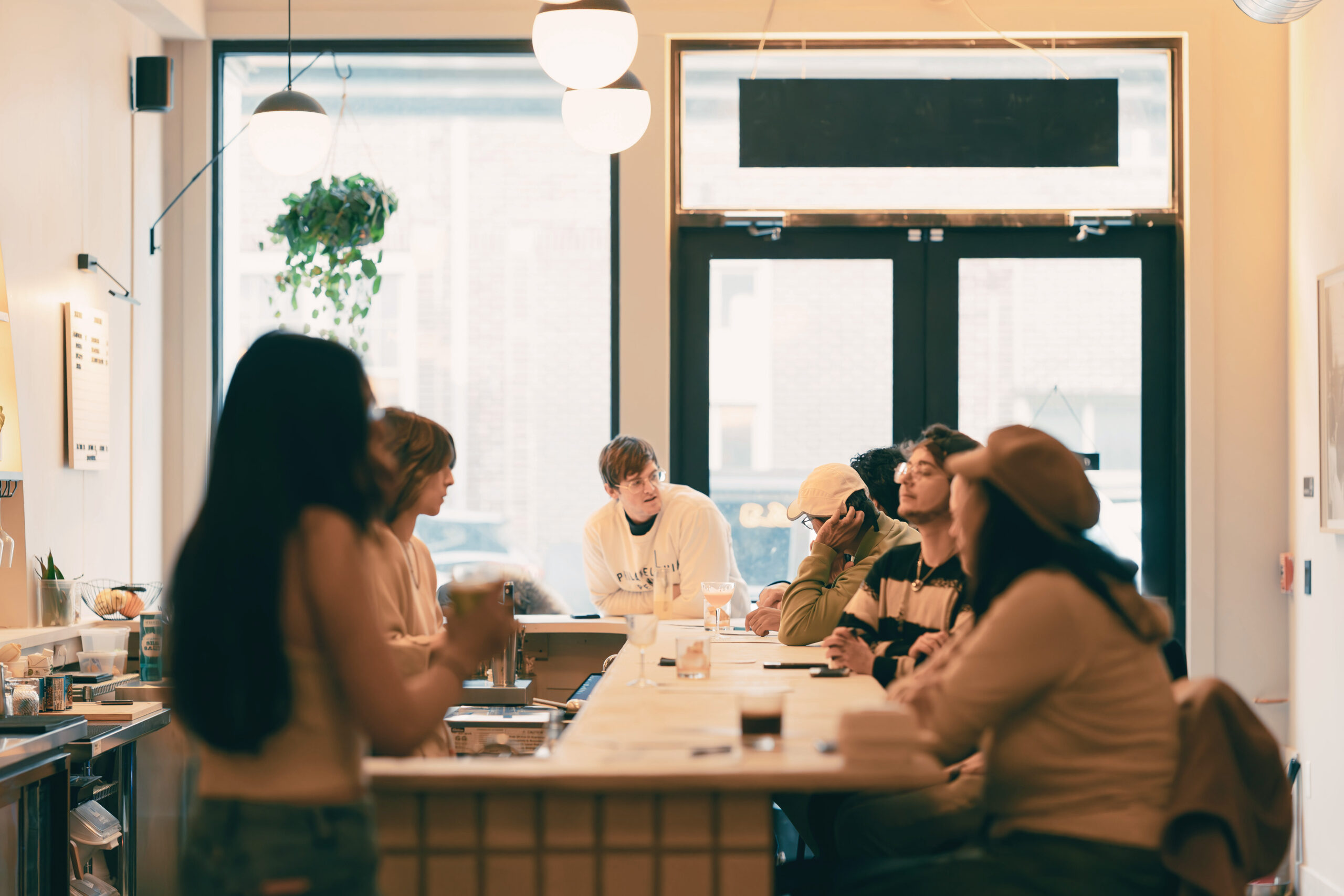
    Bar Palmina on Front Street is an alcohol-free space focused on craft cocktails. About half of its customers consume alcohol in other settings, estimates owner Nikki Graziano.

    The ever-increasing selection of NA products has allowed for booze-free bottle shops and bars, several of which have opened in the Philly region in recent years. While these spaces can be havens for teetotalers, they also attract customers who are curbing their alcohol consumption.

    Nikki Graziano owns Fishtown’s Bar Palmina, a purely non-alcoholic space that’s been open nearly two years, with a focus on craft cocktails. Graziano said while the zebra-striping language isn’t exactly popular among her guests — “people are aware of the term, but (forgive me) in a ‘stop trying to make fetch happen’ type of way,” she said — the concept is a familiar one. About half of her customers, including several Palmina regulars, drink alcohol in other settings, she said.

    Bar Palmina’s Union Bird is zero-proof garden margarita with green bell pepper, parsley, celery, cucumber, lime, and honey.

    “My customers are more interested in a bigger, larger lifestyle change,” Graziano said. “I think that [overall] people are just more conscious of how much they’re drinking, why, and how often.”

    For Menta, the benefits of zebra-striping are obvious. “I want to feel balanced in my mind and body. Having a full dinner with wine and cocktails doesn’t always serve that,” she said. “I’m a curious person and want to try as much of the menu as possible … This is the best way to meet both of my values.

    “I don’t even think about it all that much anymore,” she said. “It’s just what I do“
  • The partial shutdown forcing TSA agents to work without pay could not have come at a worse time | Editorial

    The partial shutdown forcing TSA agents to work without pay could not have come at a worse time | Editorial

    Lost in the economic and political fallout from Donald Trump’s war in Iran is the growing chaos at airports and an increased terrorist threat inside the United States.

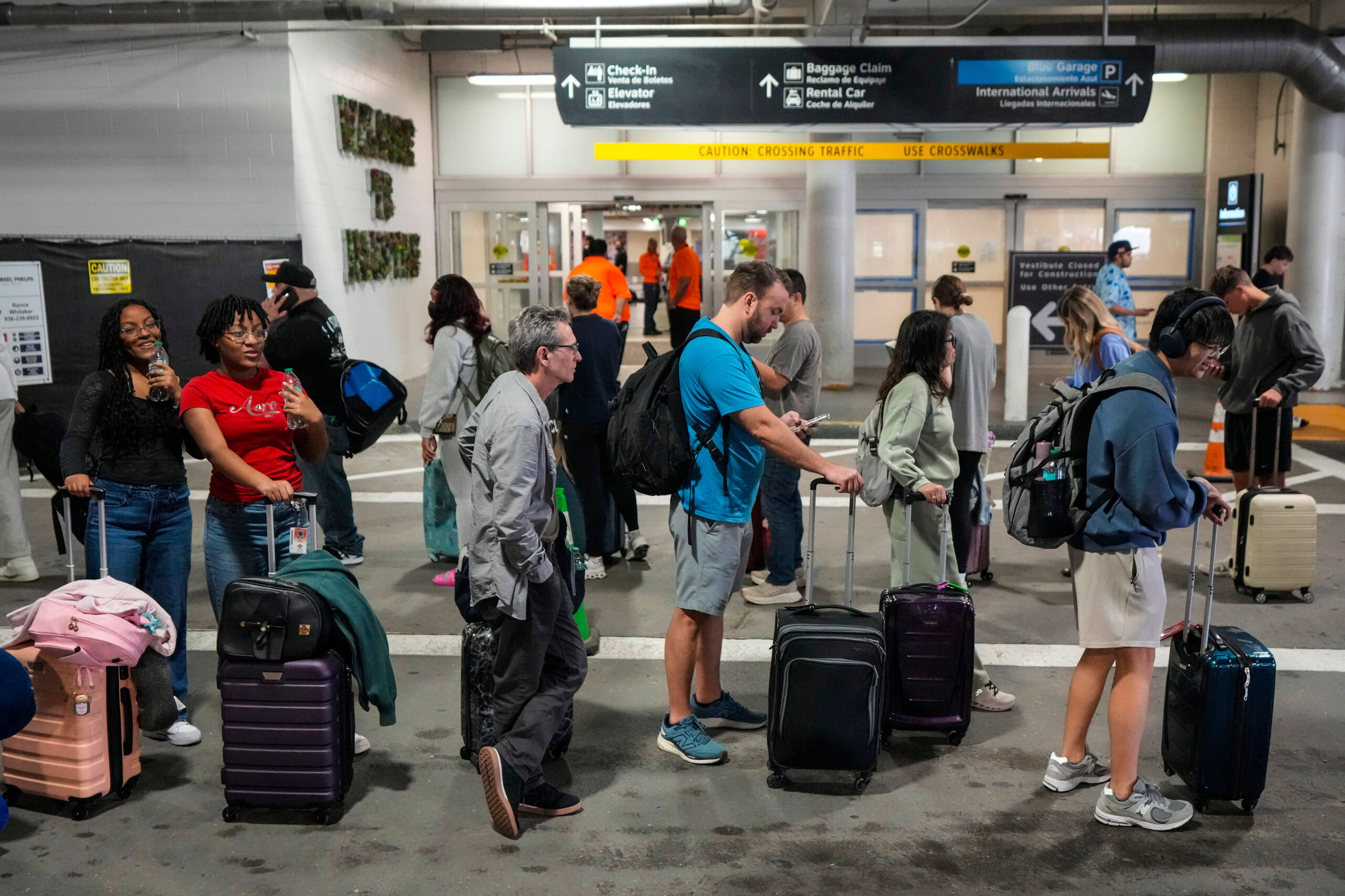
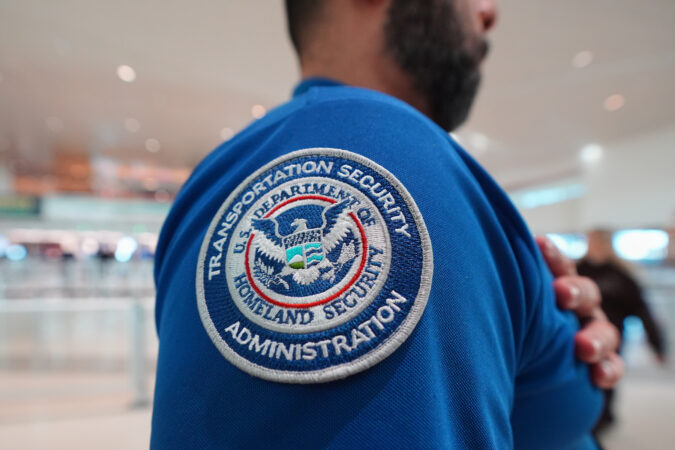
    More than 60,000 Transportation Security Administration employees have been working without pay because of the partial government shutdown that began on Feb. 14. More than 300 TSA agents have quit and thousands more have been calling out from work, prompting long lines at many airports.

    TSA temporarily closed the security checkpoint at Terminal C in the Philadelphia International Airport last week.

    Despite staffing shortages, the wait times for travelers in Philadelphia remained manageable for now. But travelers at other airports waited more than three hours to get through security.

    The partial shutdown that resulted in funding lapses for the Department of Homeland Security could not come at a more dangerous time. Federal law enforcement agencies remain on high alert following threats to the United States after Trump and Israel began bombing Iran.

    Airline passengers wait in long lines outside the terminal to get through the TSA security screening at William P. Hobby Airport in Houston on March 8.

    Indeed, Trump’s war has apparently already spurred several terror attacks on U.S. soil.

    • Two teens from Bucks County who said they were inspired by ISIS were charged with trying to set off homemade bombs during a protest outside the residence of New York Mayor Zohran Mamdani.
    • Iran-linked hackers claimed responsibility for a cyberattack on Stryker, a Michigan-based company that makes a range of medical equipment and technology.
    • A U.S. citizen born in Lebanon drove a truck into a synagogue in Michigan last week after four of his relatives were killed in an Israeli airstrike.
    • A naturalized citizen from Sierra Leone accused of killing an ROTC instructor at Old Dominion University was previously convicted of supporting ISIS.
    • A U.S. citizen from Senegal who was wearing a T-shirt with the colors of the Iranian flag was accused of killing three people and injuring a dozen more outside of a bar in Austin, Texas, the day after the initial attack on Iran.

    The motives for the attacks are still being investigated but law enforcement officials urged people to report suspicious activity, and police have increased patrols around synagogues and public transit hubs.

    The growing threats come as the Trump administration spent the past year decimating national security.

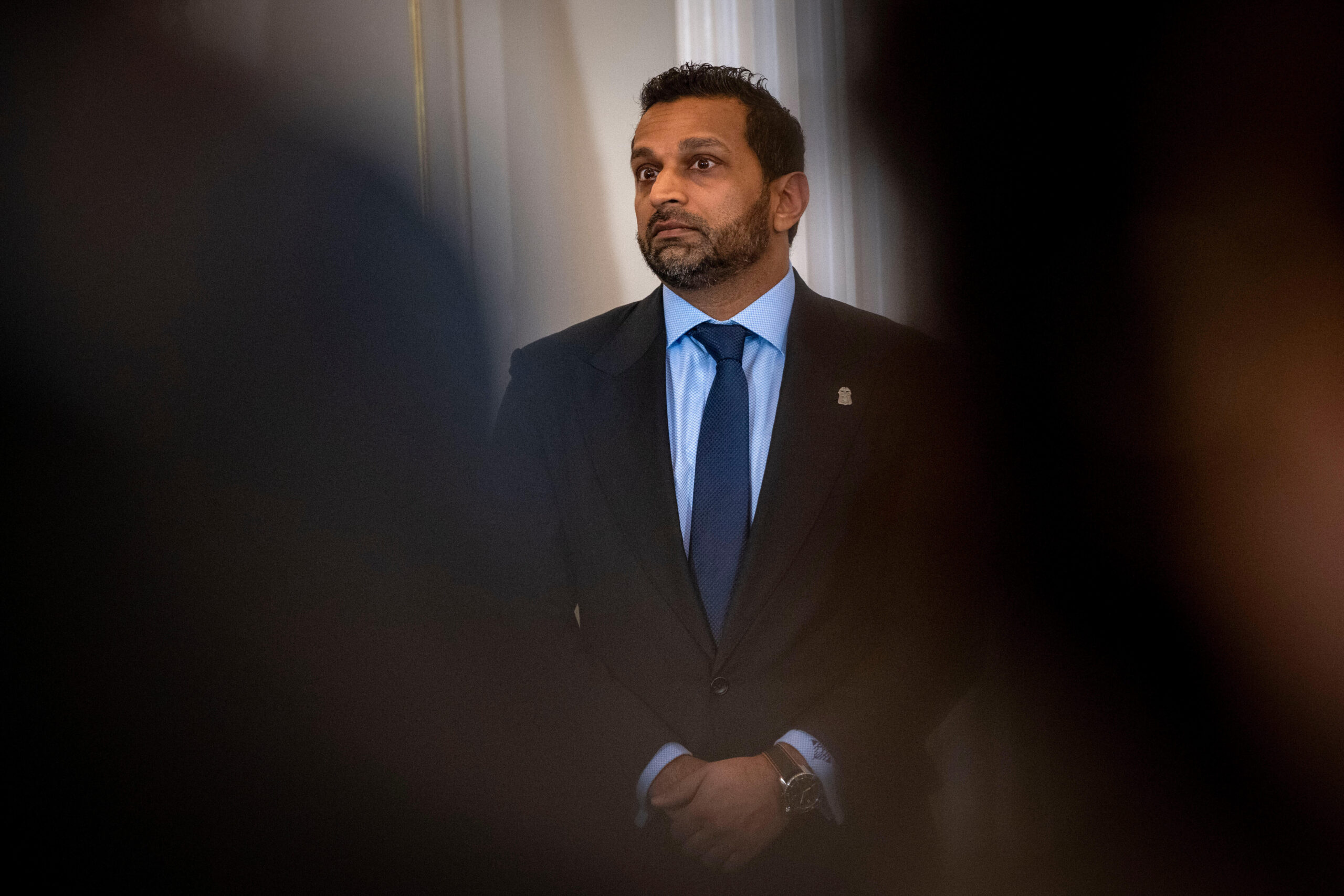
    FBI Director Kash Patel fired counterterrorism agents because they were involved in the investigation that led to Trump’s criminal indictment in 2023 on charges of mishandling classified documents.

    At the same time, the FBI and Homeland Security have shifted thousands of agents to focus on immigration enforcement, while the Justice Department’s elite national security division has faced mass firings, resignations, and forced retirements.

    FBI Director Kash Patel fired counterterrorism agents because they were involved in the investigation that led to President Trump’s criminal indictment in 2023 on charges of mishandling classified documents.

    More unsettling, the person now overseeing Homeland Security’s terrorism prevention programs is a 22-year-old former Trump campaign worker fresh out of college with no apparent national security expertise.

    Meanwhile, thousands of TSA agents — who are charged with screening customer baggage and cargo for weapons and explosives — are overworked and not getting paid.

    TSA agents, who make an average of $35,000, endured a 43-day government shutdown last fall, making this the second time in six months they have been forced to work without pay.

    A TSA union representative said several employees reported lacking money for daycare and food. “They just want to know why the hell they can’t get paid when we have money to shoot missiles into other countries,” Johnny Jones, secretary-treasurer of American Federation of Government Employees TSA Council 100 and a Dallas-based TSA worker, told USA Today.

    Republican and Democratic lawmakers blamed each other for the shutdown underscoring the deep political divide and dysfunction in Washington.

    Airline chief executives demanded Congress find a way to pay the TSA workers as the shutdown disrupts travel and undermines safety.

    Trump, who took a break from his war to play golf over the weekend, offered cold comfort when asked if Americans should worry about terror attacks in the United States: “I guess,” he responded. “Some people will die.”

    Trump, quite literally, to America: Drop dead.

  • 🌡️ Temperature seesaw | Morning Newsletter

    🌡️ Temperature seesaw | Morning Newsletter

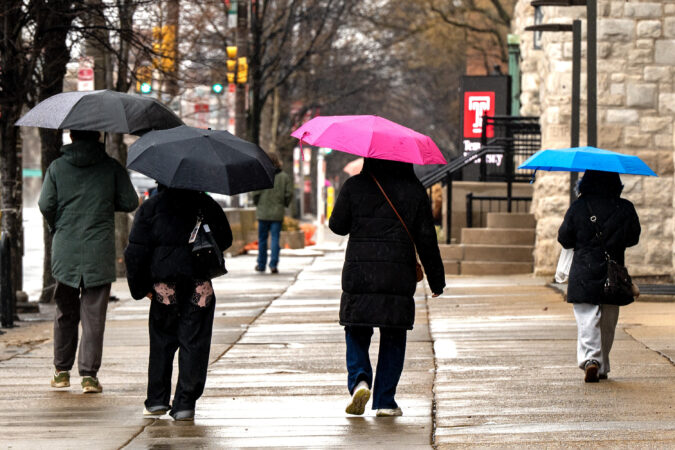
    Morning, Philly. Our weird weather continues this week, both locally and nationally, as much of the country faces extreme conditions.

    In the Philadelphia region, we can expect another big temperature swing and possible health consequences.

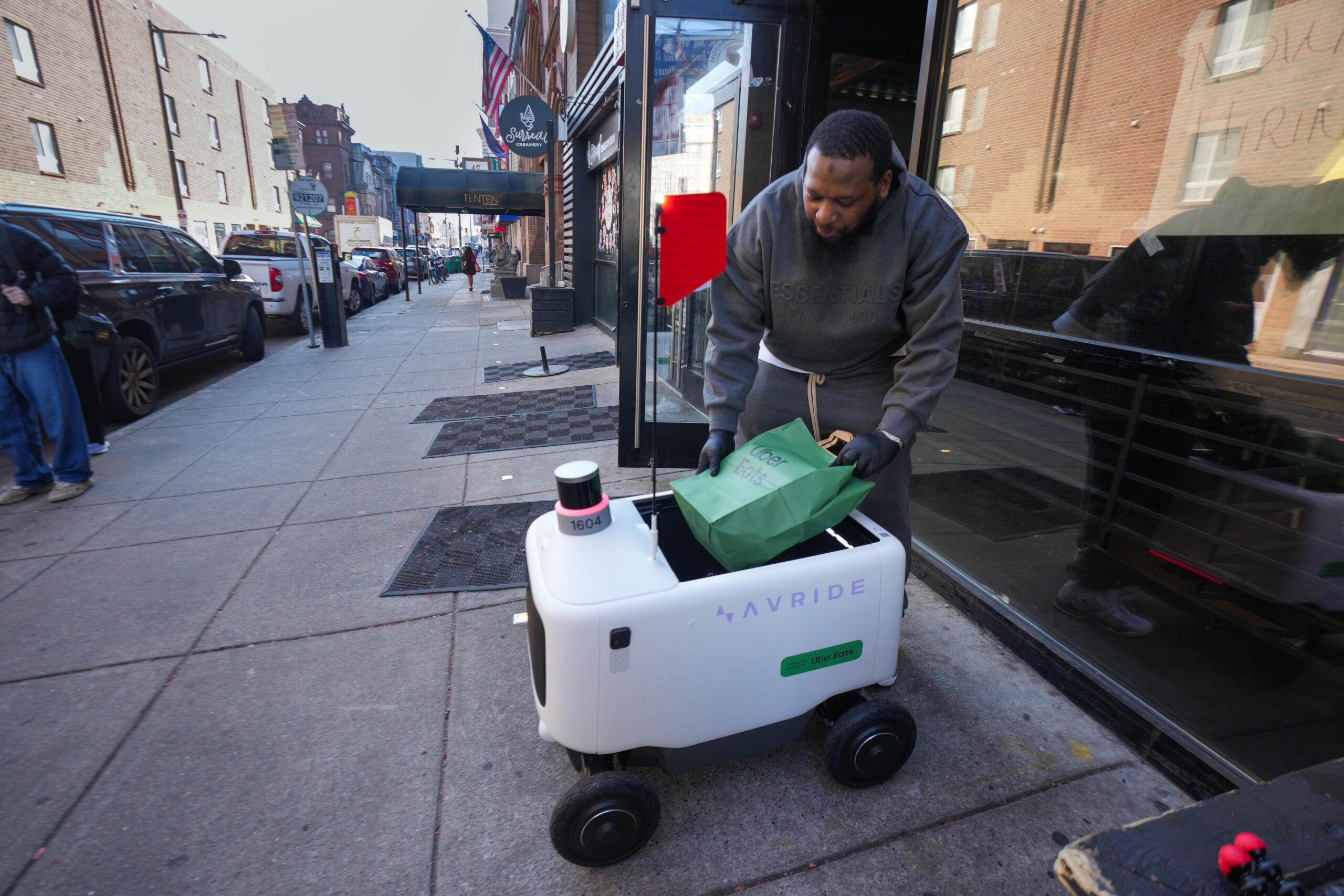
    And Uber Eats delivery bots are rolling around Center City. Sharing the sidewalk with them is a whole new level of dystopia, columnist Stephanie Farr writes.

    Plus, an influential coalition of congregations called on City Hall to address affordability, and more news of the day.

    — Julie Zeglen (morningnewsletter@inquirer.com)

    If someone forwarded you this email, sign up for free here.

    Stubborn winter, impatient spring

    It feels like just yesterday we were salting our sidewalks and using snow emojis in newsletter subject lines.

    🌡️ But in the past week alone, the Philadelphia region has seen record 83-degree days, near-freezing temperatures, and a brief tornado watch — plus sun, rain, and (almost) all in between. Don’t forget the discombobulating effects of daylight saving time, too.

    🌡️ March is notorious for temperature swings as cold air masses from the north encounter encroaching warmth, Inquirer weather expert Anthony R. Wood reports. But normally, they aren’t quite so dramatic.

    🌡️ And we likely haven’t seen the last of them this season.

    Before the spring equinox Friday, Wood explains what’s going on with the atmosphere and its impact on health.

    These robots give the ick

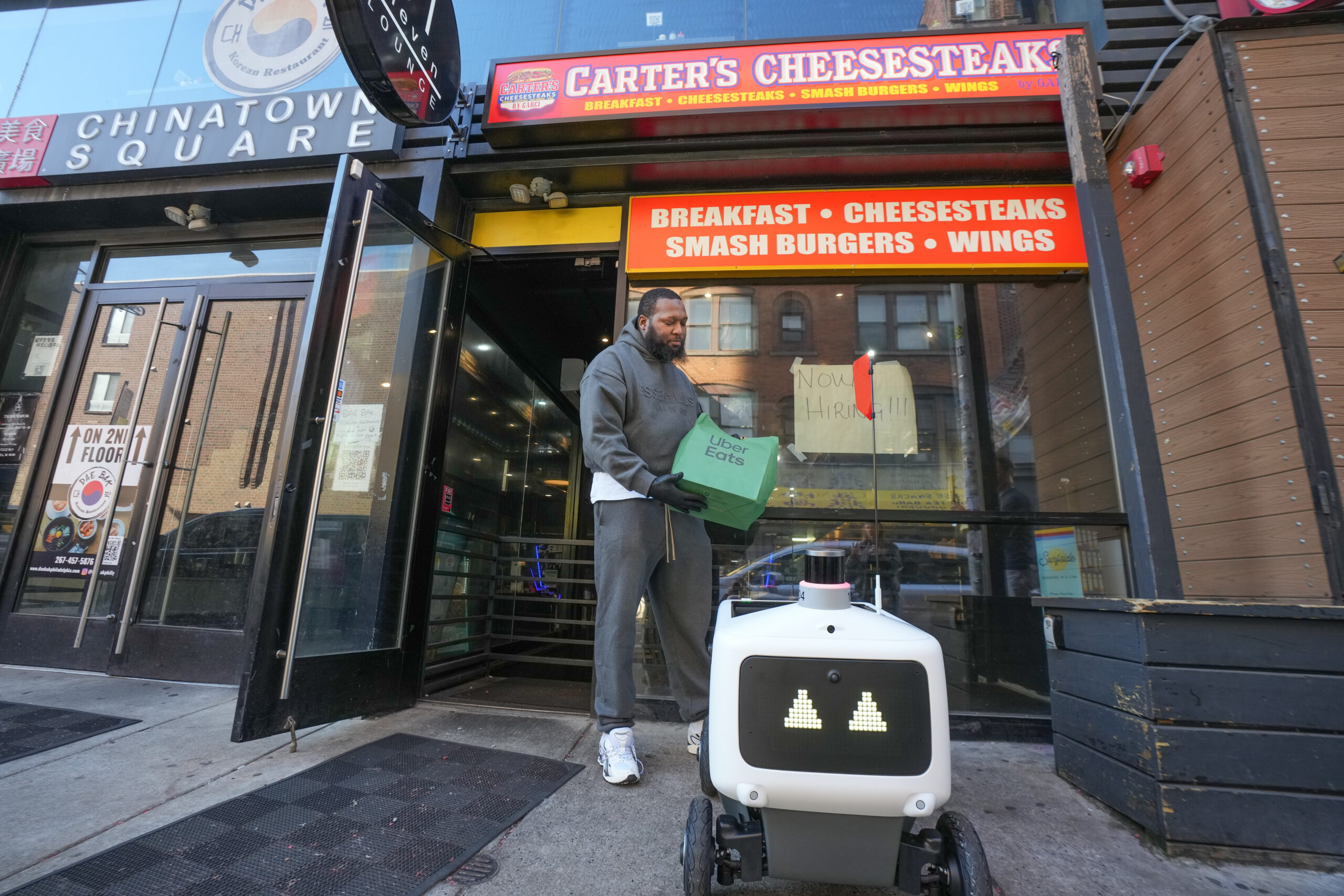
    Uber Eats’ anthropomorphized delivery bots are now rolling through downtown Philadelphia.

    Columnist Stephanie Farr encountered several of the wheeled robots in Chinatown and Center City last weekend. She’s not a fan.

    “These robots were breaking folks out of their everyday and pausing people in mid-conversation, and not in a good Philly way, like the unexpected art that adds whimsy and beauty to our city, but in a dystopian way,” Farr writes. “I found myself creeped out by the robots and what their presence here might portend.”

    She’s also not alone, as evidenced by her fellow pedestrians pointing and laughing at the bots. A video making the rounds on social media shows that someone wrote “DESTROY ME PLZ” on one. Redditors are, of course, making connections to the 2015 murder of fellow robot traveler HitchBOT.

    Farr reflects on the very human, very Philly interactions that could never be replaced by whatever ease automatons offer.

    In other unwelcome news: A new ad campaign from the New York-founded Philadelphia cream cheese brand introduces “Phillyboy,” a mascot who rides a dairy cow — and has nothing to do with Philly.

    What you should know today

    Quote of the day

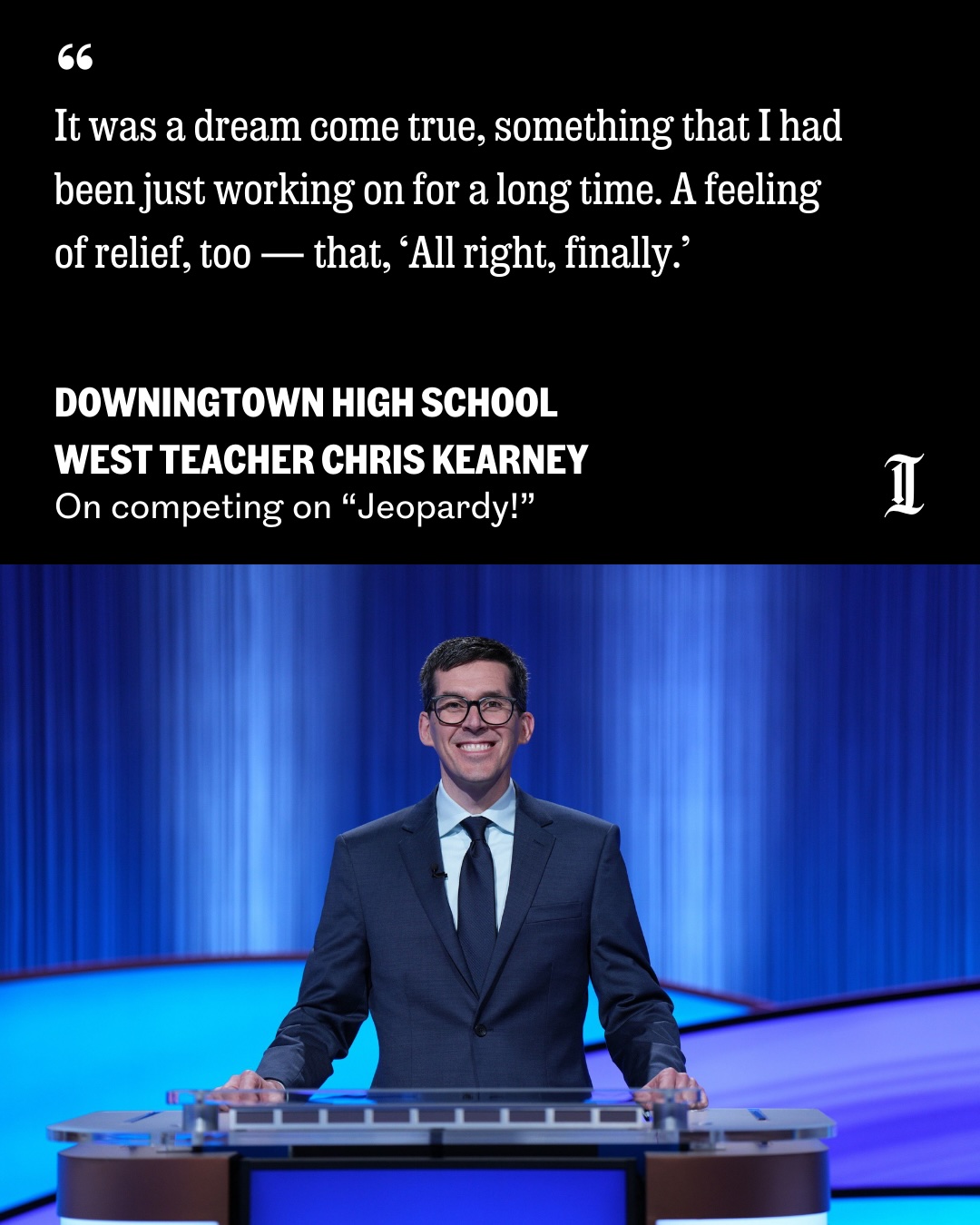
    Downingtown teacher Chris Kearney tried for years to get on the longest-running game show. He finally made it on TV last week and placed second.

    🧠 Trivia time

    Stephen Starr’s next restaurant, the Pelican Club, will be a Greek spot on Rittenhouse Square. Which famous couple is featured on posters already displayed in the windows of the future location?

    A) Orpheus and Eurydice

    B) Toula Portokalos and Ian Miller

    C) Eros and Psyche

    D) Jackie and Aristotle Onassis

    Think you know? Check your answer.

    What we’re …

    🗳️ Remembering: When Philly hosted three political conventions in one year.

    🍺 Embracing: Zebra-striping on a night out, aka switching between booze and non-alcoholic drinks.

    🎫 Buying tix for: All the Broadway blockbusters headed to Philly this year.

    🏀 Noting: Who’s playing and how to get tickets when the NCAA Tournament comes to Philly.

    ☘️ Considering: Philadelphia’s immigrant roots on this St. Patrick’s Day.

    🧩 Unscramble the anagram

    Hint: Minor tributary of the Delaware River

    FROCKED FRANKER

    Email us if you know the answer. We’ll select a reader at random to shout out here.

    Cheers to M. Chapman, who solved Monday’s anagram: Aston. Neumann University’s Sister Marguerite O’Beirne can’t differentiate between offensive or defensive rebounds. But with tutoring — and prayer — the Ireland-born nun keeps student athletes at the Delaware County school eligible.

    Photo of the day

    Marcin Danych (left), a friend now living in Chicago, films Mariusz Sliwa; his wife, Magdalena; and their 6-year-old son, Tymek, from Poznan, Poland, on the Rocky steps at the Philadelphia Museum of Art.

    Wishing you a lucky Tuesday. See you back here tomorrow.

    By submitting your written, visual, and/or audio contributions, you agree to The Inquirer’s Terms of Use, including the grant of rights in Section 10.

  • House of the week: A three-bedroom rowhouse in East Falls for $415,000

    House of the week: A three-bedroom rowhouse in East Falls for $415,000

    For Sarina Sims, the four years spent in the East Falls rowhouse and the surrounding neighborhood was “like a warm hug.”

    For her wife, Phoebe Sims, leaving will be “kind of bittersweet.”

    But their well-planned stay in Philadelphia is ending as they return to their native North Jersey. They had wanted to try something different for a few years and “Philly seemed like a great option,” Phoebe said.

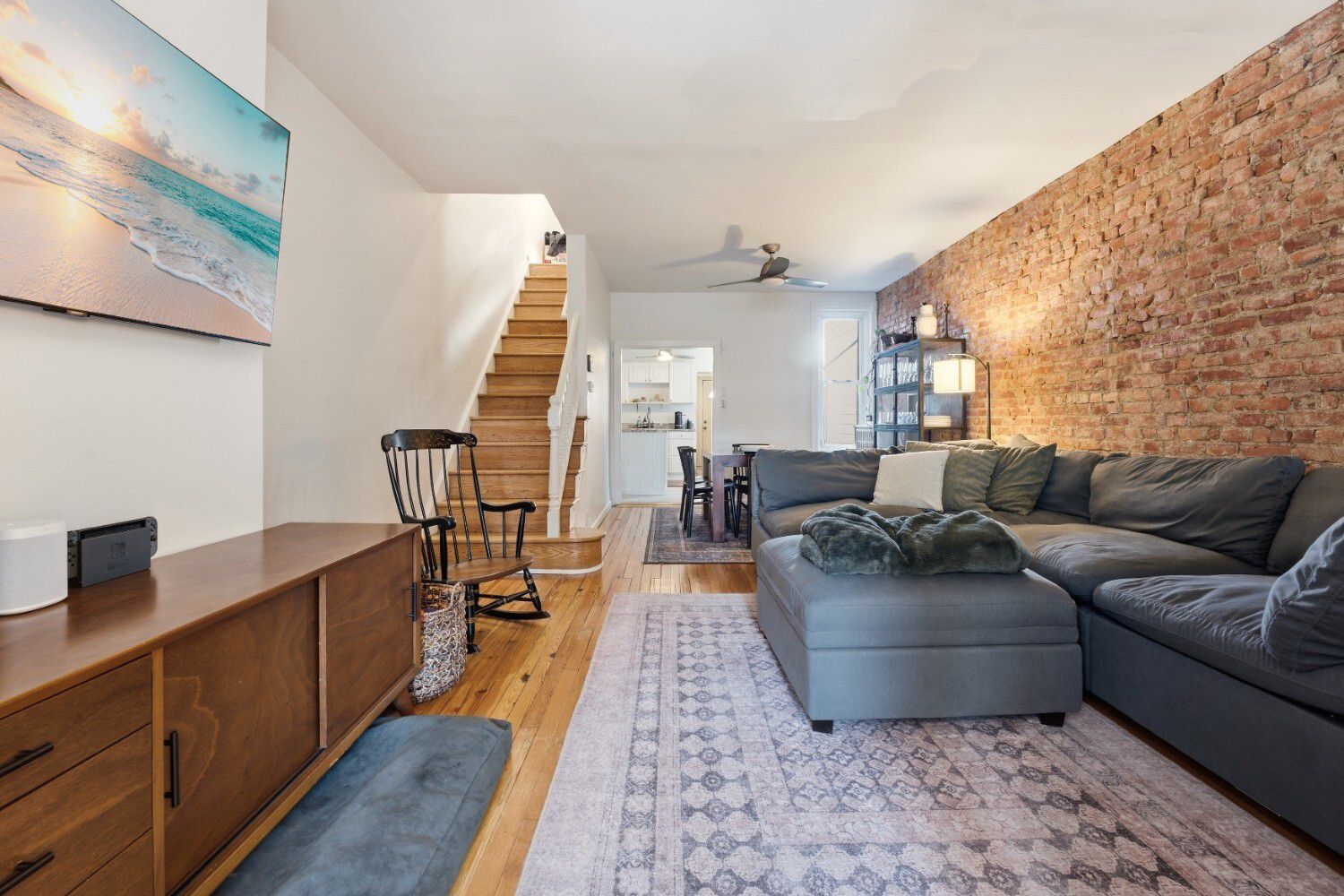
    The living room has hardwood floors and an exposed brick wall.

    Sarina is a producer of music festivals and other live events, and Phoebe is in learning and development for a restaurant chain.

    They had never heard of East Falls, but while walking in Manayunk they met a man who recommended it. Reasons included easier parking, less noise, and room for their two dogs to roam.

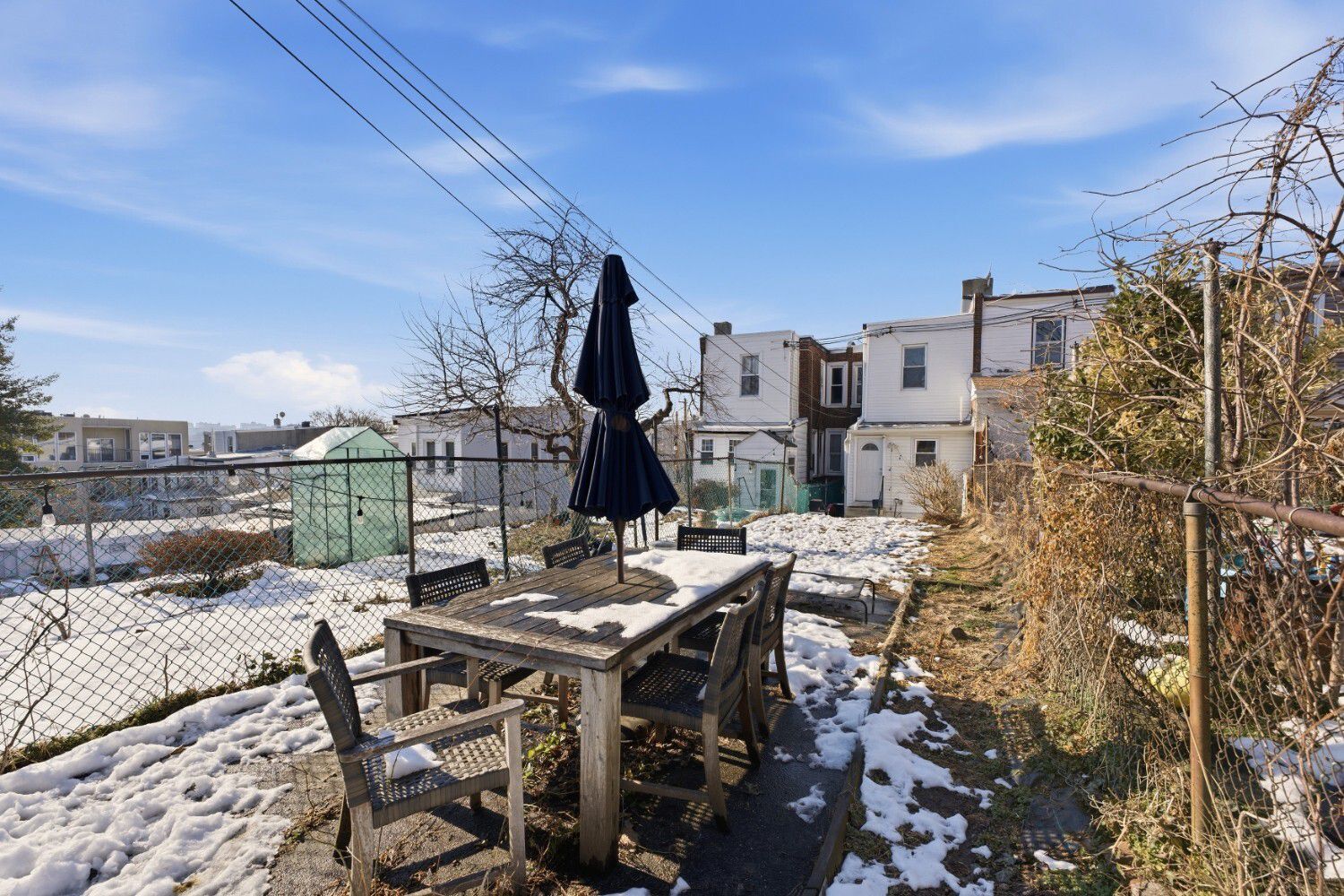
    The backyard, which has a brick patio and outdoor fireplace.

    The three bedroom, two-bathroom house, built in 1939, has 1,183 square feet of living space.

    The tiled entryway leads to the living room with hardwood floors, and an exposed brick wall. A “bonus room” connected to the living area could serve as a home office.

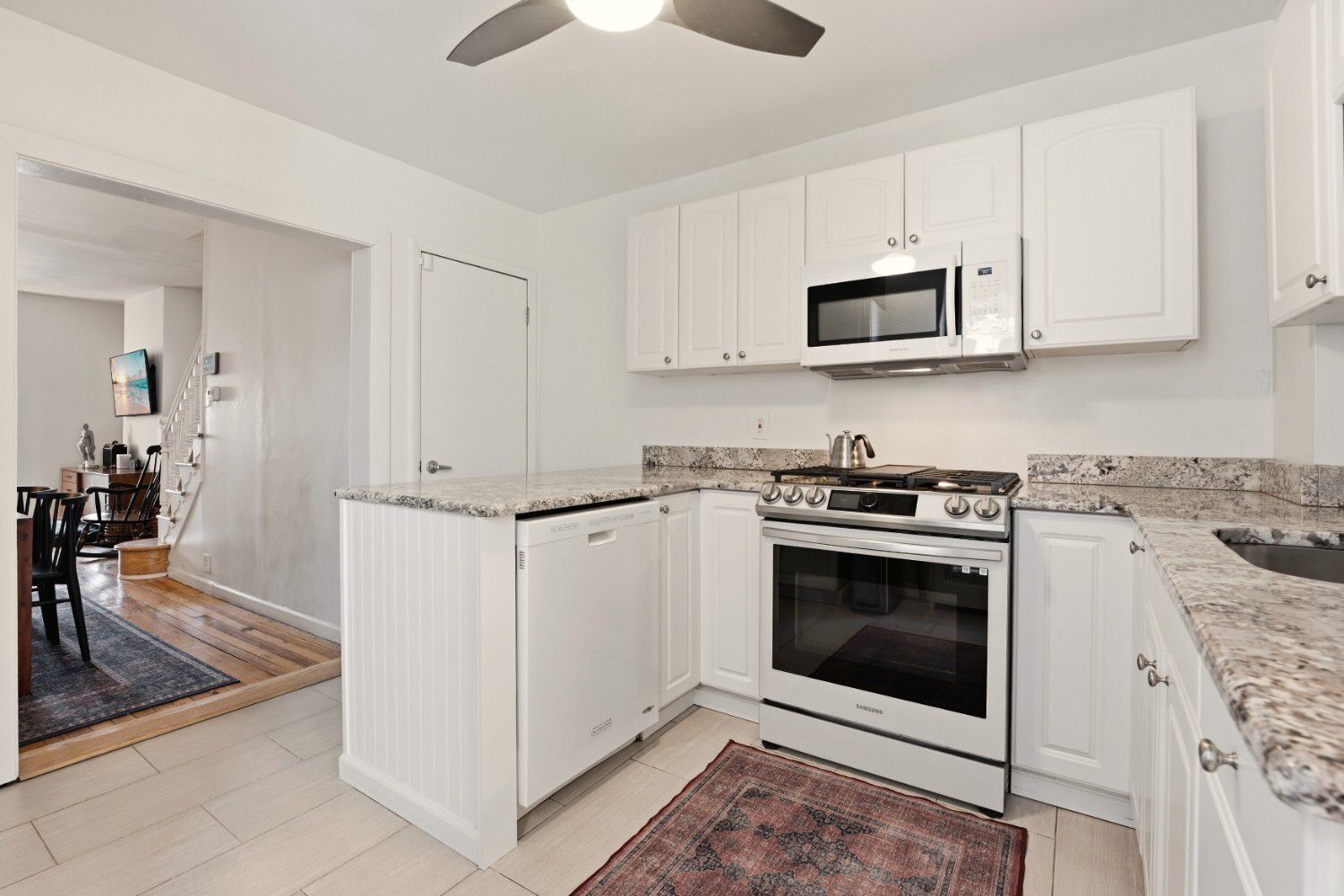
    The dining room can accommodate a large table, and the kitchen has granite counter tops, tile flooring, and updated appliances including a Samsung four-door refrigerator, a five-burner gas range, and chrome hardware.

    The kitchen has granite counter tops, tile flooring, and updated appliances.

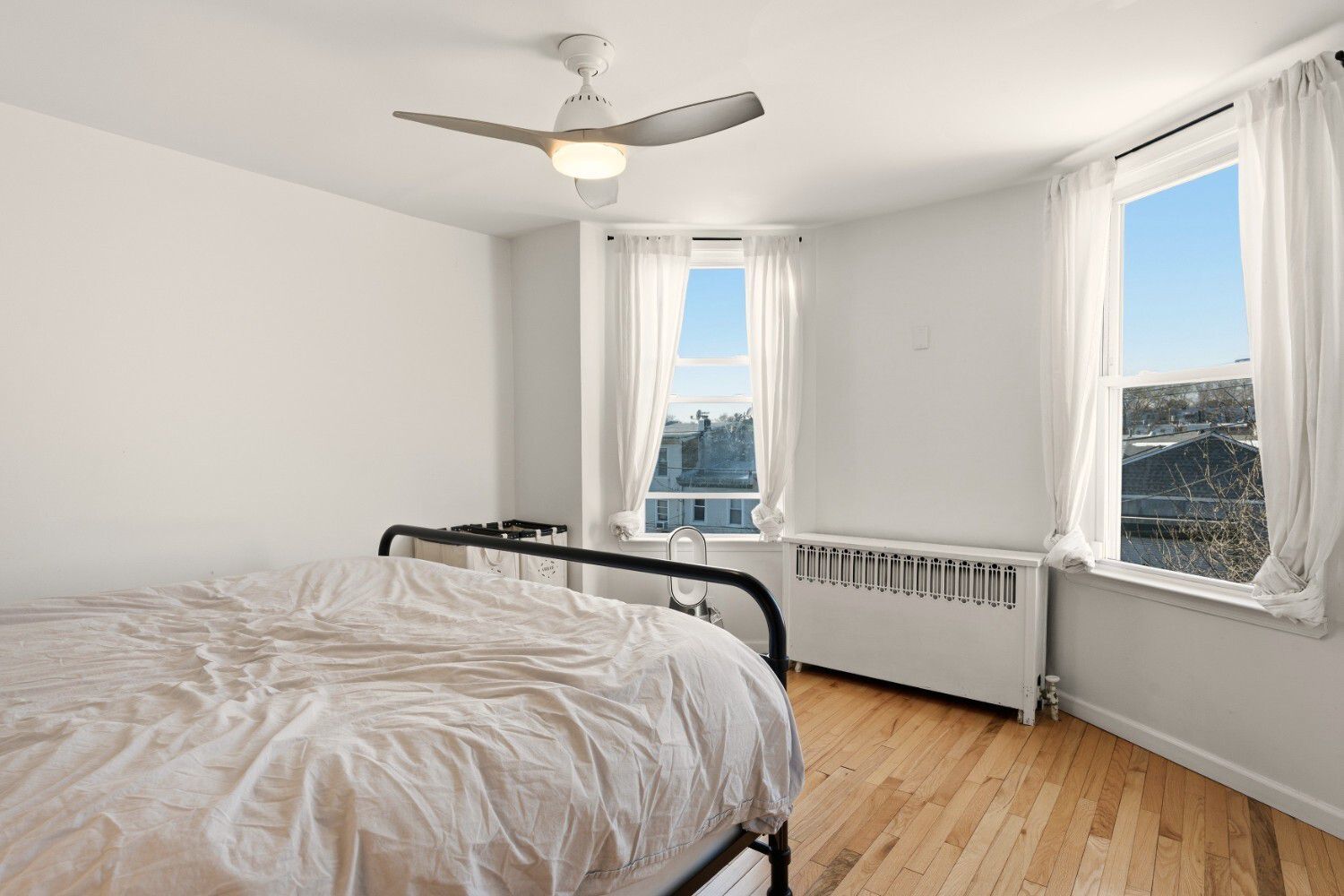
    The bedrooms are on the second floor. The primary has bay windows and two closets.

    The backyard has a brick patio and outdoor fireplace.

    The primary bedroom has bay windows and two closets.

    The house is a short ride to Main Street Manayunk and Thomas Jefferson University. The East Falls SEPTA Regional Rail station is walkable.

    It is listed by Evan Frisina of Compass Realty for $415,000.

  • Villanova’s Matt Hodge deals with the bittersweet nature of an NCAA Tournament he can’t play in

    Villanova’s Matt Hodge deals with the bittersweet nature of an NCAA Tournament he can’t play in

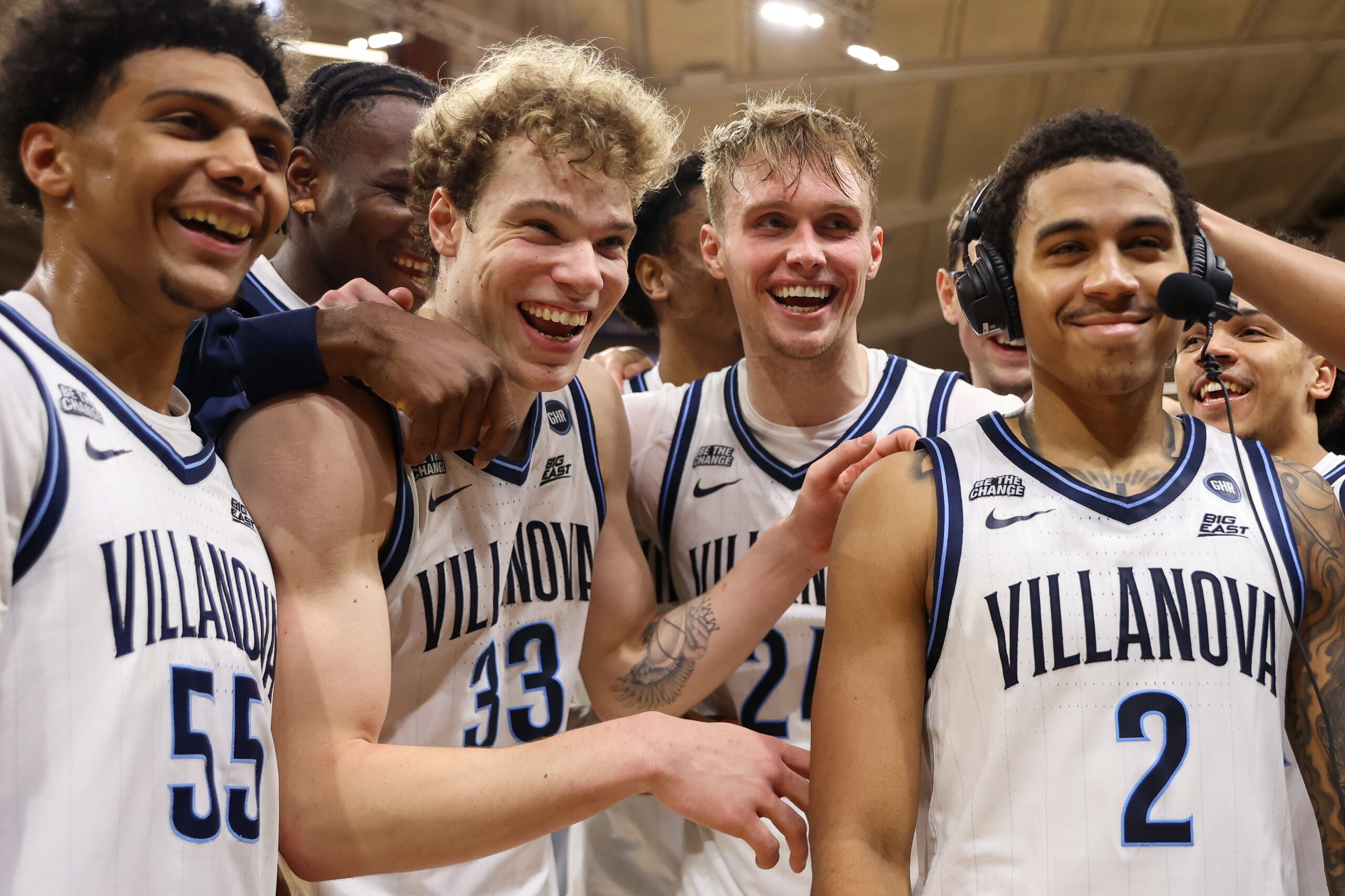
    Matt Hodge stared up at the screen Sunday night at a private Selection Sunday watch party and smiled and cheered with the rest of his Villanova teammates when their name and number were called.

    Villanova’s return to March Madness, the first NCAA Tournament appearance by the men’s basketball team since 2022, is a first for much of the team, and would be for Hodge, a redshirt freshman, if he didn’t have his right leg heavily wrapped in a brace following surgery last week to repair a torn ACL.

    He was understandably dealing with mixed feelings on what was a celebratory night for players, coaches, their families, and program donors.

    “It’s fun to get to see our name get called,” Hodge said, “but at the same time I won’t be able to go and I won’t be able to play. So it’s a feeling of regret and of timing.”

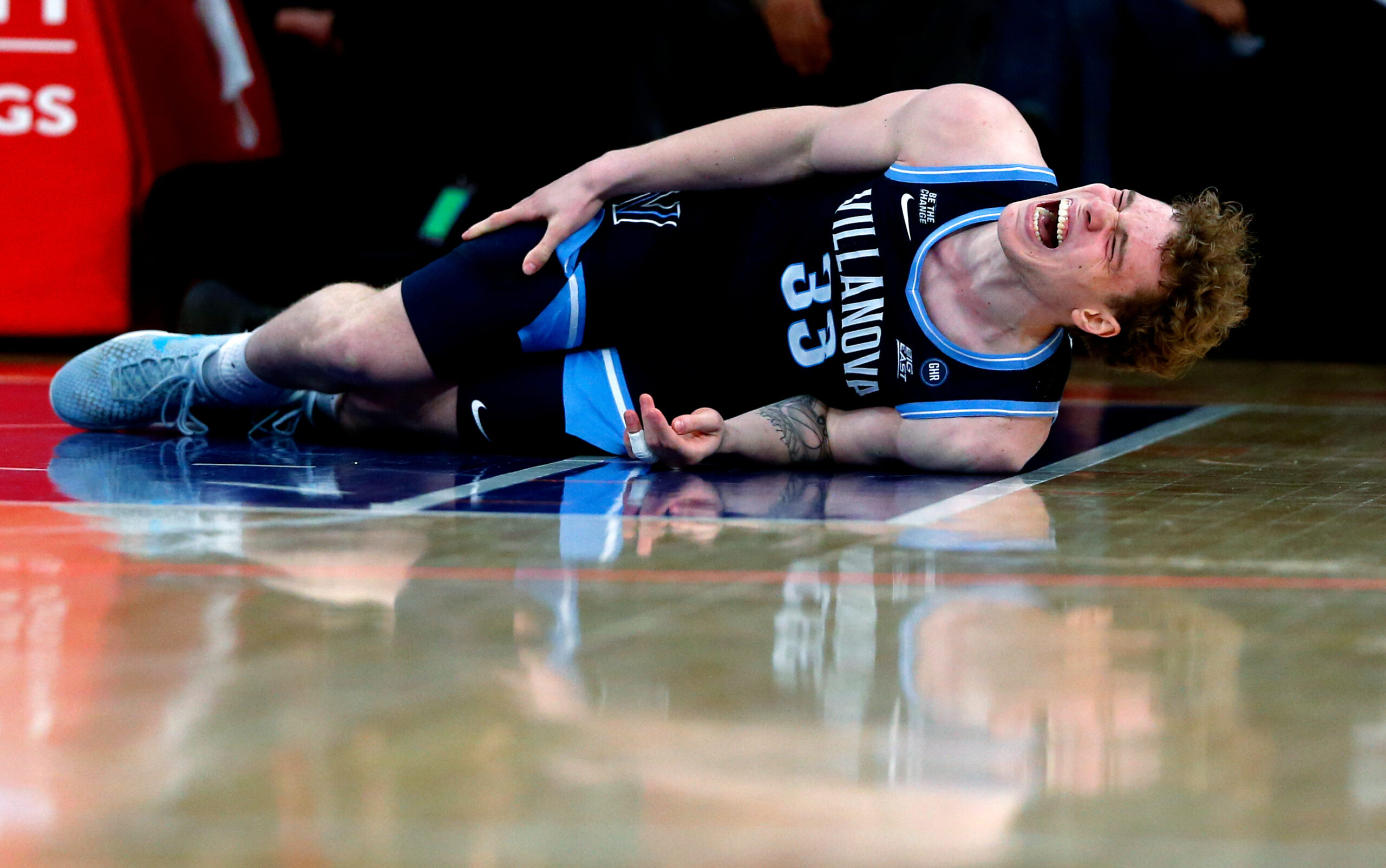
    His season came to an abrupt end early in the second half of Villanova’s Feb. 28 loss to St. John’s at Madison Square Garden. Hodge, a power forward who started in all 29 Villanova games to that point, got the ball in the post against Big East player of the year Zuby Ejiofor and tried to make a move.

    Instead, he collapsed to the floor and writhed in pain.

    “It was a typical basketball play,” Hodge said. “I just knew the moment I planted my foot and I tried to spin off Zuby, I felt something and I knew right away it was wrong.”

    Villanova forward Matt Hodge reacts in pain after suffering a torn ACL during the game against St. John’s on Feb. 28.

    His mind went instantly to his younger brother, Jayden, a high school star who suffered a torn ACL and meniscus in early January.

    “The first thing I said was, ‘I think I tore my ACL like my brother,’” Hodge said.

    Further testing proved his words to Villanova’s athletic training staff true. It’s a cruel result, but Jayden’s experience and recovery have given Hodge someone close to talk to and go through the emotional roller coaster with. The brothers, born in Belgium, came to the U.S. and won a state championship together at St. Rose High School in Belmar, N.J. Jayden, a senior who now plays at Montverde Academy in Florida, is committed to Northwestern.

    “I ask him every day for tips and stuff,” Hodge said. “We can go through it together. He’s a little bit ahead of me, but he also tore his meniscus, so in like a week or so I’ll be ahead of him.”

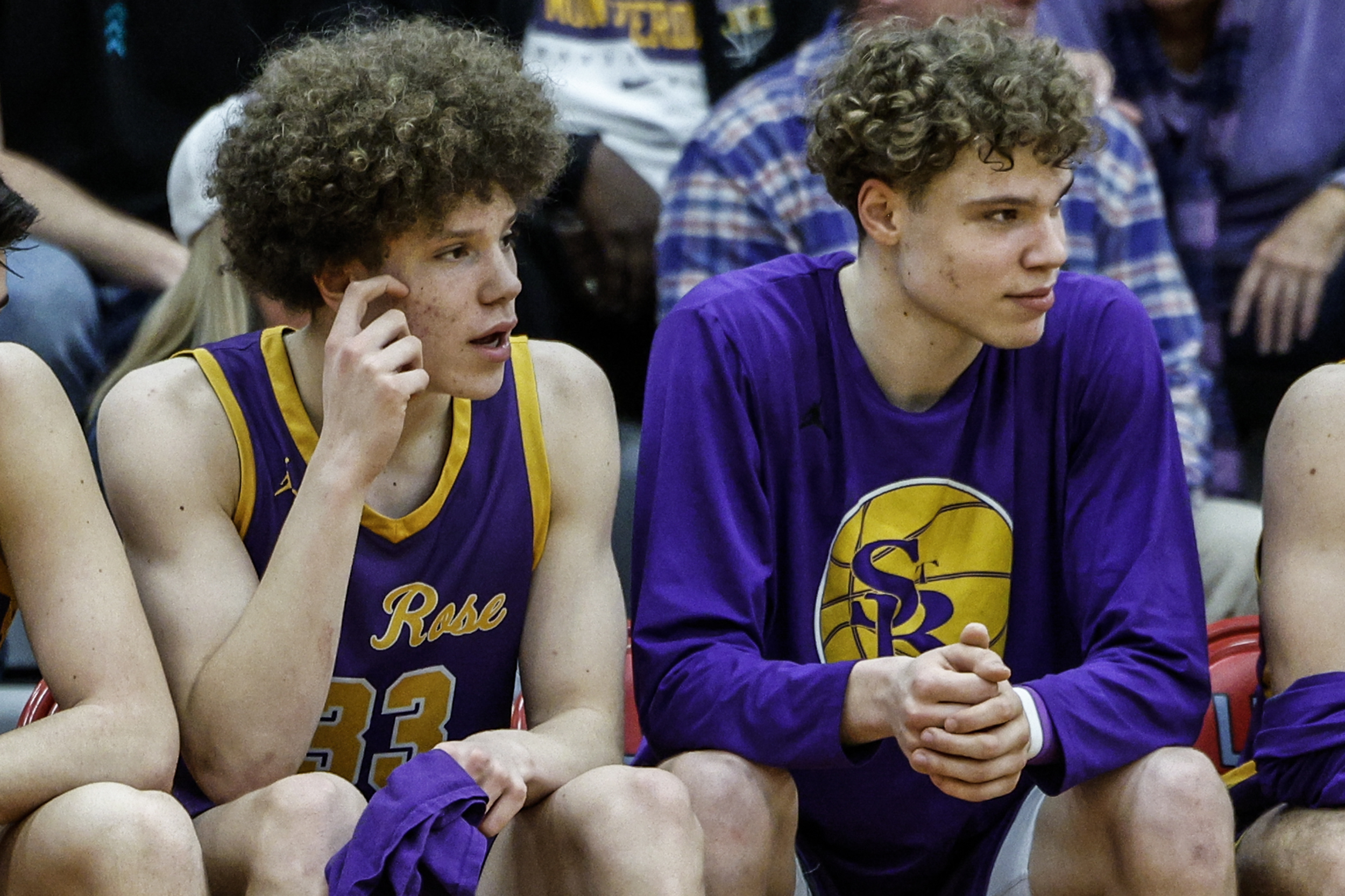
    St. Rose’s Jayden (left) and Matt Hodge watch their team play Bishop Eustace during the fourth quarter of a playoff game on March 4, 2024.

    Hodge’s recovery right now is mostly just relaxing in the immediate aftermath of surgery. He walks by using crutches and keeps his right leg stiffened. Soon, he’ll begin flexing the knee more and will work on building back strength in his quadriceps since his surgery required a nerve blocker. In about six weeks, he said, he’ll shed his current brace to a walking brace and can begin activities like riding a bike.

    It’s a long road back to the basketball court, but Hodge reiterated what Villanova coach Kevin Willard said earlier this month, that the aim is for him to be back to normal basketball activities by mid-to-late October and the goal is to be ready for the beginning of the 2026-27 basketball season.

    “I feel like obviously it’s still a long way ahead of me, but I want to have a goal and I think that goal is pretty realistic,” Hodge said. “I’m just working toward that and I know, in my head and deep down, anything is possible. I might not be ready yet, or I might be ready quicker.”

    Of course, he wishes he was ready by Friday afternoon, when eighth-seeded Villanova faces No. 9 Utah State in a first-round West Regional game in San Diego. The Wildcats could certainly use him. After missing his freshman season because of an NCAA ruling on his academic eligibility following his high school transfer from Belgium to St. Rose, Hodge had an impressive first season of college basketball.

    He averaged 9.2 points and 3.6 rebounds while shooting nearly 37% from three-point range.

    From left, Villanova’s Acaden Lewis, Matt Hodge, Duke Brennan, and Bryce Lindsay after a 79-61 win against Pittsburgh on Dec. 13,

    Without him, Villanova’s depth has taken a hit, especially in a frontcourt where only two players, centers Duke Brennan and Braden Pierce, are taller than Hodge, who is 6-foot-8. Villanova starts Malachi Palmer (6-6) at the power forward spot and sometimes has lineups on the court with four guards and one center, harkening back to the early days of Jay Wright. This quartet, however, doesn’t sing the same way as that one did.

    Willard has mentioned changing things up. He said again Sunday said he could see Villanova opting to have Brennan and Pierce on the floor at the same time, but they haven’t done so in the three games since Hodge went down. But Villanova’s first-round loss in the Big East tournament featured a rebounding disadvantage of 46-25, and it might be time to adjust against a Utah State team that isn’t huge but attacks the offensive glass.

    A win on Friday likely means a date Sunday with top-seeded Arizona, the ninth-best offensive rebounding team in the country that has a 7-2 center and a pair of 6-8 forwards who cause havoc on the glass.

    Hodge was at home watching Thursday night as Villanova crumpled under the bright lights. The days after the injury have been isolating, but his family has been in town, his girlfriend is on campus, and his teammates and coaches have been supportive.

    The pain is “more mentally than anything physically,” Hodge said.

    “I just got to keep my head up now and support the team.”

  • How deregulation made electricity more expensive, not cheaper

    How deregulation made electricity more expensive, not cheaper

    American families are feeling the pinch of rising electricity prices. In the past five years alone, the supply portion of the standard service residential electric bill in Philadelphia has increased by 71%. In the Lehigh Valley it has increased by 77%. And in Columbus Ohio, by 110%. These are three data points in a national trend.

    Energy affordability is quickly shaping up to be a key election issue at all levels of American politics. And more than half of U.S. adults surveyed in January 2026 reported being very concerned about the price of electricity.

    New research from the Energy Markets and Policy Group that includes The Ohio State University and Lehigh University where we serve as principal investigators, provides new insights about another factor you were probably not thinking about – middlemen introduced by deregulation.

    How deregulation brought middlemen instead of competition

    Between the late 1990s and early 2000s, several state legislatures deregulated their electricity systems. Deregulation was originally sold as a way to replace inefficient regulation and reduce bureaucracy. People were told that competition would deliver lower prices.

    Under the old system, a state regulatory commission set prices for all electricity services – generation, transmission and distribution – which were supplied by the same monopoly utility company. Each state commission was required by federal law to ensure that rates were “just and reasonable.” Under deregulation, that same commission rate-setting process still holds for transmission and distribution, but the generation part was split off.

    Deregulation created competitive wholesale markets for generation, but price competition did not spread widely at the retail level. In states with active retail deregulation, there are two ways the retail generation price can be set. Consumers get to pick which one – buy from a marketer on the open market, or do nothing. Most people choose to do nothing.

    Rather than introducing efficiency, this system of retail deregulation created a new complexity: middlemen marketers. In most cases, no matter which choice people make, it’s hard for them to understand how their electricity rates are set.

    Option A: The open market

    Electricity customers in deregulated retail markets can choose a company that buys the electricity on their behalf. Energy salespeople have sophisticated marketing programs to sell their companies’ plans.

    For example, people who live in the Cincinnati area can contract with one of more than 50 suppliers to buy electricity on their behalf from the wholesale market. In the Lehigh Valley and Philadelphia there are more than 30 suppliers. Their monthly bill would still come from the regulated distribution company (Duke Energy, PPL, PECO, respectively), and would still include regulated charges for distribution and transmission set by state and federal officials. But it would also include charges from an unregulated retail supplier, for the generation part of their bill – their electric supply.

    Our research has found that these markets are not working as intended.

    Option B: Do nothing – default service

    For people who choose not to shop on the open market, by doing nothing they remain on what is called the “standard offer” or “default service.” Sometimes it is also called “provider of last resort” service because it is not meant to be the best option.

    For these people, state law generally requires each distribution utility to hold auctions or use a procurement process like a request for proposals to determine which middlemen companies get to be their supplier, and of course, at what price.

    People in this category still buy from middleman marketers. But rather than choosing their own middleman, they get the middleman the utility company selects for them.

    Problems in the open market

    People who live in states with deregulated electricity markets know that these open markets have many problems. There have been investigations into unfair trade practices, lawsuits and regulatory penalties for misleading sales practices.

    Other problems include deceptive marketing, a process called “slamming” in which companies change customers’ suppliers without their knowledge, contract loopholes that increase prices, and outright fraud.

    Help for consumers usually comes after problems have arisen, rather than preventing them in the first place.

    Our research team sought to determine whether, and how much, electricity consumers would save money if they used the supposedly competitive open market, rather than going with the default rate. To answer this question, we developed a detailed database of every daily retail choice offer filed by every supplier in all service territories in Ohio for a decade – which meant compiling millions of records.

    We found that 72.1% of the open-market offers exceeded the utility’s default rate. In some years, there was not even one single cost-saving offer for the entire year, or longer. The vast majority of these supposedly competitive electricity prices were higher than customers would get by doing nothing. Taking the time to research the market and compare prices was often not worth consumers’ time.

    Importantly, the study found that suppliers in the open market were not setting their prices based on market fundamentals – like the underlying wholesale price of electricity. Instead, they were setting prices based on the results of the utility’s default supply selection. In a competitive market, that is not supposed to happen.

    Is default service really competitive?

    In a separate study, our team evaluated every default service auction in every utility service territory in Ohio since 2011, nearly 15 years. We found that the number of companies competing with one another in these auctions is a key determinant of the retail markup consumers have to pay.

    In some of the default-option rate auctions, as few as five suppliers placed bids. In others, there were as many as 15 companies vying to provide default-option electricity. Our analysis found that in situations when the underlying costs of generating electricity were the same, default supply auctions with fewer bidders delivered significantly higher prices for consumers than auctions with more bidders.

    It’s important to note that Ohio’s process for setting default service rates is more robust than many other states. In Pennsylvania, the process is similar to Ohio’s. In some states, it is not uncommon for even fewer companies to bid. So Ohio and Pennsylvania’s situation is not actually a worst-case scenario for consumers. Rather, it’s probably better than many other states with deregulated electricity markets.

    Putting it all together

    The first study showed that the open market is not setting efficient retail rates and is not working as intended. Most of the offers made available to consumers are not worth their time, and the suppliers in those markets are not setting their prices based upon market fundamentals. Instead, these companies are taking their cues from the local distribution utility’s default supply auctions. That is not how deregulation was envisioned.

    The second study showed that the process which sets the default supply rate is also not very competitive. Less competition means the middleman companies bidding in those auctions can bid, and win, higher prices – raising electric bills and increasing their profit margin.

    Energy deregulation promised lower prices through competition. But instead, consumers got an army of middleman marketers. And, those middlemen have been taking their cues from a bidding process that often has too few participants to keep prices low.

    Noah Dormady is Associate Professor of Public Policy at The Ohio State University; Alberto J. Lamadrid is James T. Kane Professor of Economics and Industrial and Systems Engineering at Lehigh University . A version of this article appeared on The Conversation., a nonprofit news website sharing the knowledge of researchers.

    The Conversation

  • Objections to the public school closure plan are plentiful. Alternative proposals? Not so much.

    Objections to the public school closure plan are plentiful. Alternative proposals? Not so much.

    It seems the Philadelphia School District can’t win.

    For years, folks complained about the poor quality of the school buildings. But the district’s ambitious plan to renovate, close, and merge schools, was met with swift pushback.

    On paper, the $2.8 billion plan to revamp the schools makes good sense. But then there is the reality that closing a school leaves a void in a neighborhood. Moving students could result in longer commutes and impact learning.

    So, what is the district to do?

    Philly is infamous for resisting change, but the status quo is not a solution.

    Many of the district’s 307 buildings were built more than 70 years ago and contain asbestos and lead and don’t have air-conditioning. Many schools lack teachers, libraries, playgrounds, STEM facilities, and music and art programs as well.

    At the same time, the city has more space than it needs. Twenty schools are less than 30% occupied. For example, Overbrook High, where Wilt Chamberlain went, has capacity for 2,330 students but an enrollment of just 441. Operating mostly empty buildings is inefficient, unsafe, and unsustainable.

    But Superintendent Tony B. Watlington Sr.’s initial plan to modernize 159 schools, close 20, merge six, and build one new facility over the next decade has been met with fierce opposition.

    Two schools, Russell Conwell Middle School and Motivation High School, have already been removed from the closure list and will merge with other schools instead.

    Last week, nearly 100 parents, teachers, and students turned out for a highly charged meeting to pressure the school board to reject the plan — or at least save their school.

    Superintendent Tony B. Watlington Sr. has attended roughly 90 listening sessions — attended by about 4,000 people — about the closure plan in recent months.

    “I don’t see nothing wrong with our school,” said Layla Hernandez, a third grader who attends Ludlow Elementary, a school in North Philadelphia slated to close.

    It’s hard to say no to a precocious third grader. Or a parent like Darlene Abner, whose six children have attended the school. “I stay in this neighborhood because of Ludlow,” she said at a different meeting earlier this month.

    The impact of students and parents is real, but Ludlow’s numbers tell a different story. The K-8 school has just 237 students — less than half of its capacity. The school opened almost 100 years ago and serves a number of special education students.

    Ludlow’s performance is considered below average. Just 11% of students tested proficient on the state math exam and 24% in English.

    It is expensive to staff and operate an old building that is more than half empty and delivering poor results. Indeed, the district faces billions in deferred maintenance and repairs to its aging infrastructure.

    Operating buildings where enrollments are under 50% of capacity makes little sense. The problem will only get worse.

    Over the past decade, the district’s enrollment declined by more than 17,000 students to around 117,000 students. Over the next decade, enrollment is expected to drop by another 10%.

    At the same time, schools in some neighborhoods are filled to capacity, thanks largely to the influx of new immigrants. The explosion of charter schools in Philadelphia also contributed to the drop in enrollment and financial resources.

    As a result, the district needs to rightsize to adjust for the enrollment declines in some areas and the increases in others. It also needs to modernize, so buildings have basics like heat, air- conditioning, and bathrooms as well as labs and tech spaces.

    But renovating the schools takes time and money — two things the district lacks. The problem has been many years in the making. State lawmakers in Harrisburg contributed to the disrepair of schools by not adequately funding public education for decades — an issue a court found unconstitutional.

    It is also unconscionable since investing in public education will go a long way to solving many of the city’s (and country’s problems), including poverty, crime, and workforce development.

    This is where charter school advocates argue for more choice, but the hard reality is the test scores at most charters are no better. So, more charters is an empty promise and an argument for a different day.

    The goal should be to replace or renovate obsolete and mostly empty schools with safe, clean, and modern facilities featuring all the necessary staffing and resources. Anything less impacts the entire city, whether you have kids in public school or not.

    So far, a number of City Council members would prefer to scuttle the plan then find a positive solution. Same for the many state representatives who have voiced their opposition. This is not the time for political grandstanding.

    A Feb. 26 demonstration outside the School District of Philadelphia’s Center City headquarters opposed the planned closure of 18 schools.

    Philadelphia Federation of Teachers president Arthur Steinberg said the plan lacked transparency and detail on how the changes will impact students.

    Perhaps Watlington and Mayor Cherelle L. Parker could do a better job selling the plan. But Watlington told me the district has held 90 listening sessions attended by 4,000 residents and received more than 14,000 surveys from every zip code in the city.

    “There’s no perfect master facilities plan,” he conceded, adding the district tried “to do the greatest good for the greatest number.”

    The school district tried to be fair by ensuring closures and investments would be spread across all 10 Council districts.

    At the same time, the critics have not offered any better solutions.

    In 2012 and 2013, the district closed 10% of its school buildings. At the time, many feared the upheaval would undermine learning.

    But a study by two University of Pennsylvania professors found the impact was mixed. Students who moved to higher-achieving schools saw their test scores go up. However, the displaced students had more absences and received more suspensions. The farther students had to travel to get to their new schools, the more they struggled.

    This time, the district plans to create a one-stop shop to ensure students get all the help they need from transportation to social, emotional, and mental health support.

    “We’re gonna wrap our arms around the children to make sure that performance increases and doesn’t decrease,” Watlington told me.

    He added that there are no plans to lay off any principals or teachers at the schools slated to close. Instead, the rightsizing will enable the district to “push more resources into the remaining schools.”

    In a perfect world, Watlington said, he would never close schools. But he is trying to position the district to do the best it can with the resources it is given.

    “We can either use our resources more efficiently by driving more high quality, academic, and extracurricular resources into a smaller number of schools,” he said. “Or we could continue to spread our resources around less strategically.”

    Sounds like the best plan on the table.

  • Sharing the sidewalk with Uber Eats robots in Philly is a whole new level of dystopia

    Sharing the sidewalk with Uber Eats robots in Philly is a whole new level of dystopia

    One of my close high school friends from central Pennsylvania came to visit me last weekend with her daughter to celebrate the girl’s 12th birthday in Philly. Admittedly, I was a little nervous. I don’t have children, I don’t know what 12-year-olds like, and I don’t want to screw up anyone’s birthday, especially a kid’s.

    Luckily, her mom provided advanced intel that this preteen is currently into K-pop and hopes to study abroad in South Korea someday. So after stopping by Philadelphia’s Magic Gardens on Saturday morning (where I take all first-time Philly visitors), we decided to surprise her by going to Chinatown that afternoon.

    It was my friend’s daughter’s first trip to any Chinatown anywhere, and when she began to see the signs and people and asked where we were going, she let out the kind of joyful shriek preteen girls typically reserve for boy bands. I smiled at her joy and at my pride that I hadn’t messed this up — yet.

    North 10th Street in Philadelphia’s Chinatown.

    I told the girl in advance that she’d see some things on the streets of Philly she doesn’t see at home and that would be hard to see: people experiencing homelessness, people who are in addiction, and people who are suffering from mental illness. Part of living in a city, I told her, is to constantly be reminded of the struggles of others. Hopefully that makes you more compassionate toward all people and grateful for what you do have, but at the very least, it forces you to face the reality of our society and how difficult life is for some people.

    What I didn’t warn her about were the robots.

    ‘Bodies in the Delaware’

    We encountered our first Uber Eats delivery robot made by Avride while walking from the Fashion District parking garage to the Chinatown Friendship Gate. Thankfully, I knew what it was because of my colleague Michael Klein’s story on them last week, and because of a post about them on the Philly subreddit that garnered very Philly responses like: “Bodies in the Delaware. Heads in the Schuylkill.”

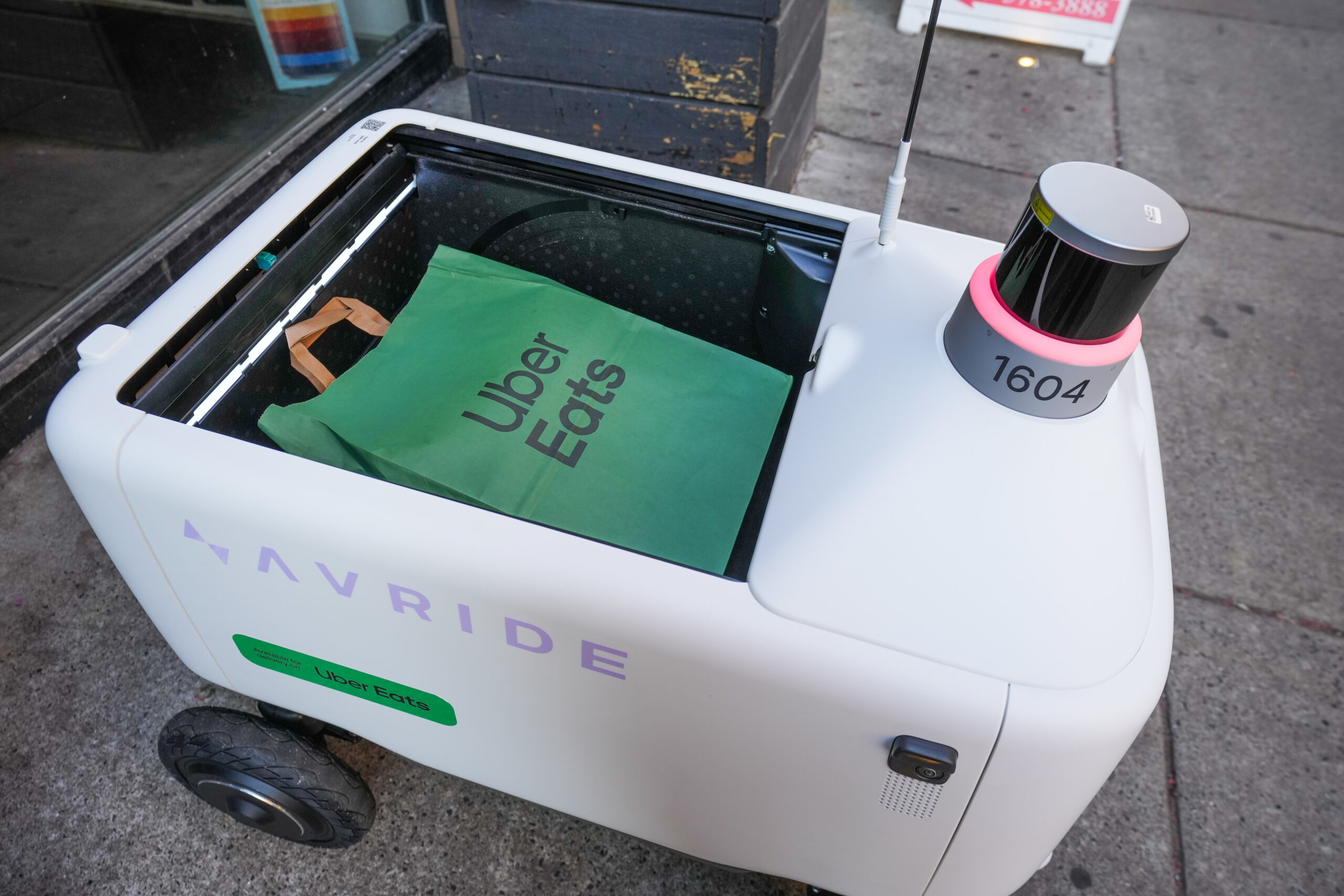
    An Uber Eats delivery robot in Philadelphia.

    Even though I knew what the robot was, it was still really weird to see this boxy thing on wheels navigating around people on the sidewalk and across city streets. My guests agreed and it seemed many people around us did too, because they were pointing and laughing as it passed.

    These robots were breaking folks out of their everyday and pausing people in midconversation, and not in a good Philly way, like the unexpected art that adds whimsy and beauty to our city, but in a dystopian way. I found myself creeped out by the robots and what their presence here might portend.

    Sure, I’ve seen Marty the robot at Giant supermarkets and I’ve written about the robot cat servers in a few area restaurants, but those are in private businesses. These delivery bots are out in public and unavoidable. It feels different, like Philadelphia’s murder of HitchBot didn’t prevent a robotic uprising, as we’d all hoped, it only delayed it for a while.

    ‘DESTROY ME PLZ’

    In the nine hours we walked around Chinatown and Center City, we saw three Uber Eats delivery robots. On Filbert Street near the courthouse, one was rolling along ahead of us and a woman in a red shower cap who was parked across the street in an SUV yelled out her window that they were not delivery robots, but rather police surveillance bots keeping watch on us (while nothing seems impossible today, there is no proof of that).

    Philly photographer HughE Dillon captured video of a delivery bot out on the streets of Philly Saturday night while St. Patrick’s Day revelers were bar hopping with the Erin Express. One person sat on one of the robots; someone else wrote “DESTROY ME PLZ” on it.

    Here’s where it gets even weirder for me, because these robots are anthropomorphized with digital eyes that blink and wink and turn into hearts, I began to feel sorry for them. Maybe these robots don’t want to be here either, I thought, maybe they didn’t even want to be invented, but now they’re stuck with us without a choice, just like we’re stuck with them. Of course I know this is all highly illogical, that these are just machines, but emotions aren’t always logical. That’s what makes us human.

    Uber Eats’ delivery robot.

    Philly does its thing

    When I took my friend’s daughter into You & Me, the Asian toy store with the secret basement-level grocery store, she announced that she had died and gone to heaven and I took great pride in knowing that I’d impressed a 12-year-old.

    But what I was even more proud of was that Philly did it’s Philly thing, as I’d hoped. Strangers continually engaged with us, whether it was a customer at a store who saw my friend’s fair skin and, unsolicited, recommended the best sunscreen she’s ever used, or the server at Nine Ting who saw us struggling with the grill and helped us navigate our first Korean barbecue experience. Three people complimented my friend’s daughter’s outfit — a cute skirt, leg warmers, and Mary Jane combo she’d obviously put a lot of thought into — and it absolutely made her day.

    While we encountered robots, our best interactions were with humans.

    The TLC

    I hope those robots are the last thing my friend’s kid remembers about her trip to Philly and I hope I don’t look back on that lovely day as a turning point in some larger evolutionary story about humanity and robots.

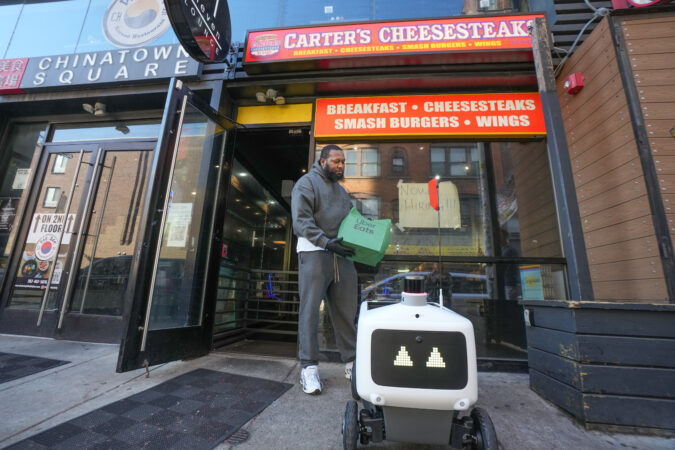
    Lavelle “Garci” Peterkin, owner and CEO of Carter’s Cheesesteaks by Garci, places food inside of an Uber Eats delivery robot in Philly.

    (I can hear myself now at 85, telling children in the future: “That was the first time I saw robots and humans interacting independently of one another, but it would not be the last!”)

    We came home Saturday night to a homemade chocolate birthday cake with vanilla buttercream frosting my husband made. Our bellies already full, our sugar intake already high, we ate it with delight as we recounted the day. The cake dripped with what my husband says is the most important ingredient of any dish — the TLC.

    A robot could never.

    As I was cleaning Sunday, I found a note my friend’s daughter left in our guest room on a page she’d torn from one of my reporter’s notebooks. In the note, she talked about how thankful she was for the great cake, gifts, and wonderful day.

    “Coming back next year!” she wrote.

    There was no mention of the robots.

  • The stars, storylines, and potential upsets to know in the NCAA women’s tournament

    The stars, storylines, and potential upsets to know in the NCAA women’s tournament

    The NCAA women’s tournament is usually pretty chalky, and this one likely won’t be any different. But that’s not just because of the perennial early-round home advantage for the top four seeds in each region. Or even because the bracket hasn’t set up many potential upsets where they more likely happen: in games between two teams traveling to someone else’s floor.

    This time, it’s because of the strength of the four No. 1 seeds: Connecticut, UCLA, South Carolina, and Texas. They are so far ahead of almost the entire rest of the field that they’ll all be clear favorites to reach the Final Four. And if they do, that will make up for some of the dullness along the way.

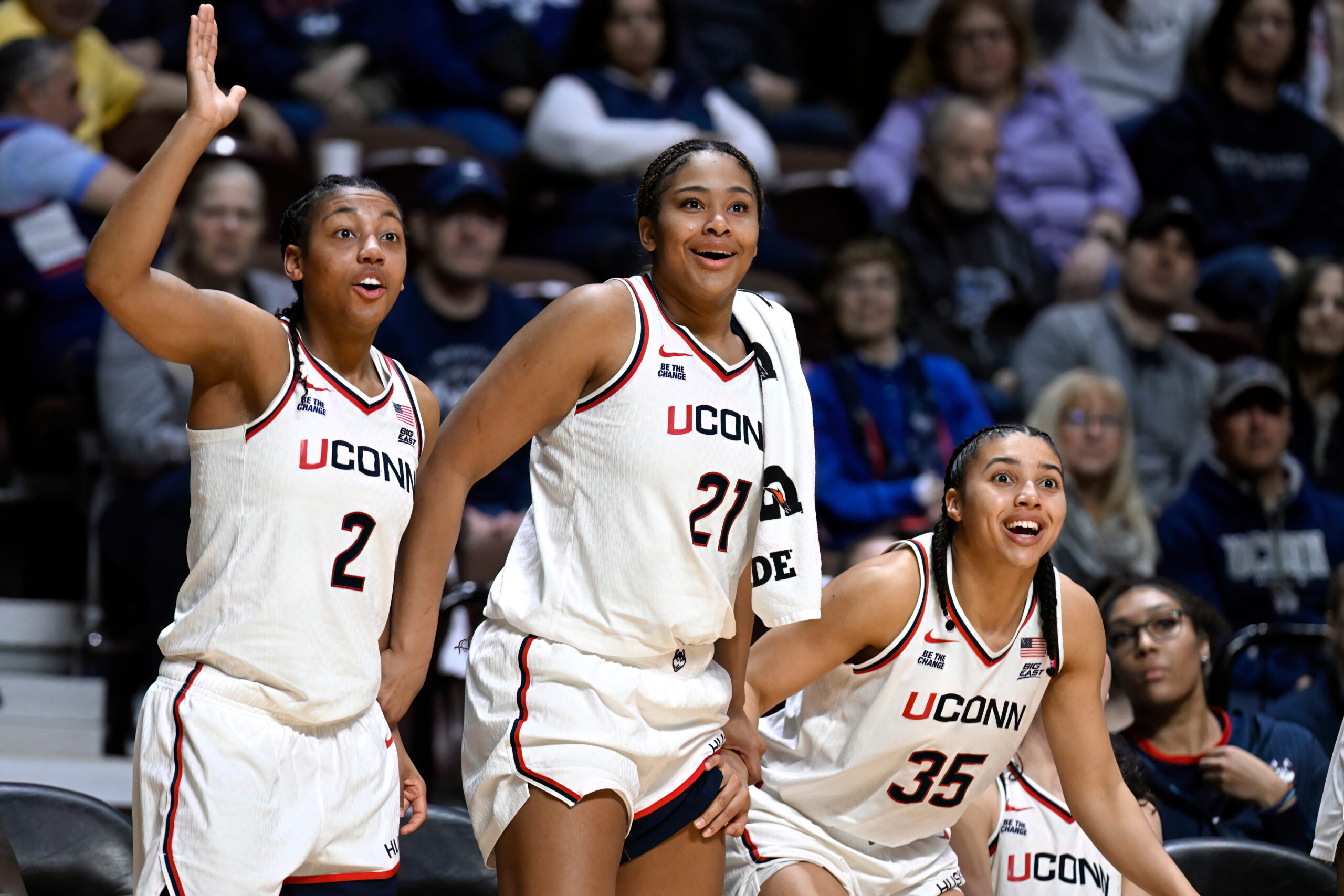
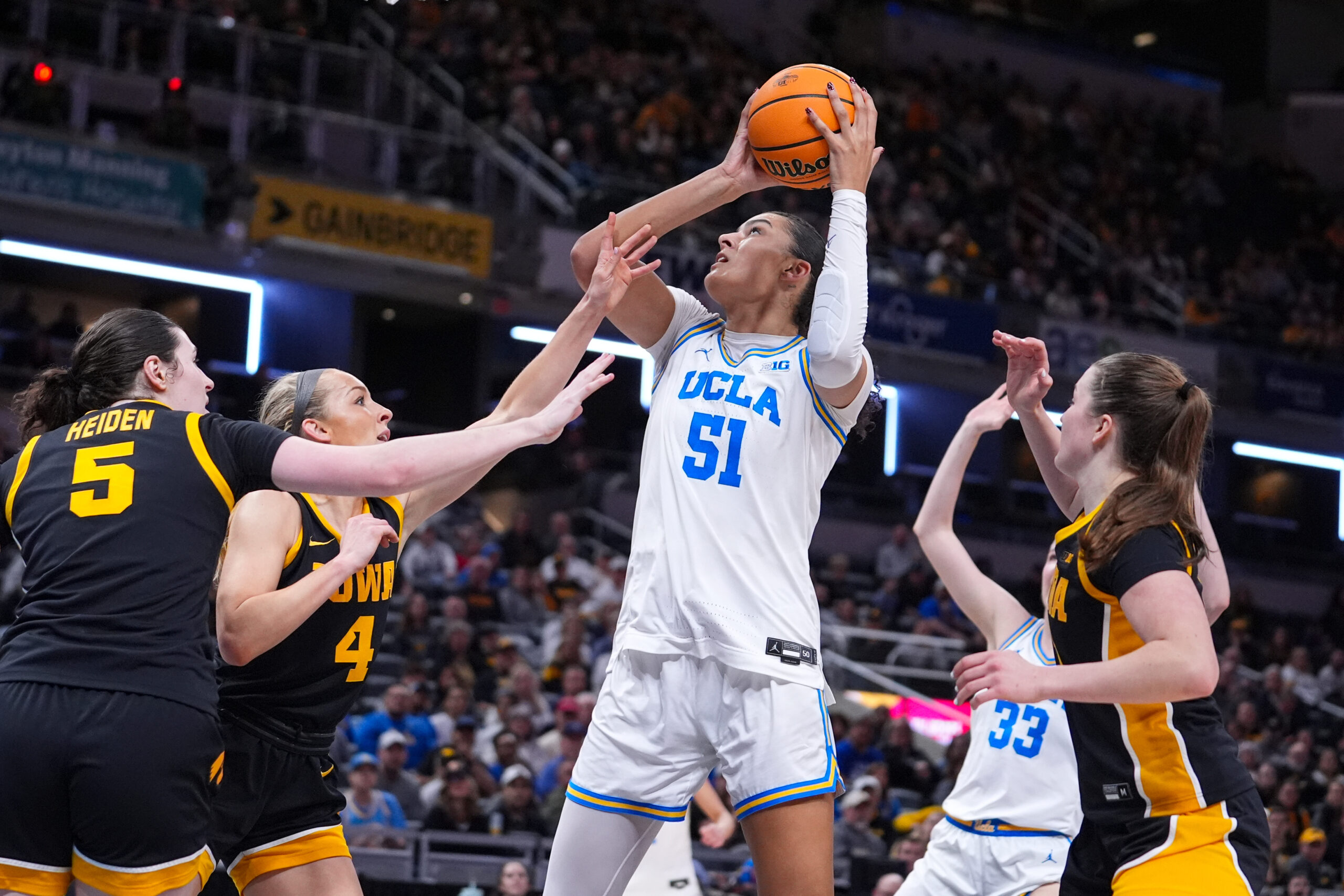
    The star names will only become more well-known from now until then. UConn has expected national player of the year Sarah Strong and potential No. 1 WNBA draft pick Azzi Fudd. UCLA has Lauren Betts, Kiki Rice, and Gabriela Jaquez. South Carolina has Joyce Edwards and Raven Johnson, and Texas has Madison Booker and Rori Harmon.

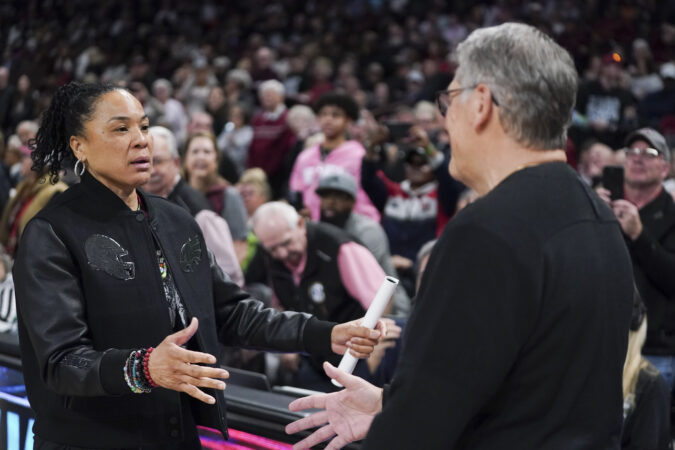
    The alignment of regions means there would be a UConn-South Carolina matchup in the semifinals, which has never happened. Geno Auriemma and Dawn Staley have met three times in the tournament before: the 2025 and 2023 title games and the 2018 East Regional final.

    Connecticut’s star trio of (from left) KK Arnold, Sarah Strong, and Azzi Fudd.

    Who can challenge the top quartet? The list starts with No. 2 seed LSU. The Tigers are led by veteran guards Flau’jae Johnson and South Carolina transfer MiLaysia Fulwiley, and coached by four-time national champion Kim Mulkey. She’s as controversial as she is successful, but she knows how to win in March.

    LSU finished fourth in the ultra-competitive SEC, thanks to a January swoon when they lost to Kentucky and Vanderbilt. They also lost at Texas and twice to South Carolina, at home in the regular season, then in the conference tournament semifinals. But the rest of the record is stacked with big wins: at Duke, home vs. Texas, and two over Oklahoma.

    Expect the Tigers to eat up either Villanova or Texas Tech in the second round, on the way to the Elite Eight. (And yes, Villanova can win that first-round game.)

    No. 2 seeds have interesting stories

    UCLA might be quite annoyed that the best No. 2 seed landed in its region. Not only would anyone want to avoid the Tigers, but the 31-1 Bruins believe they deserved the No. 1 overall seed.

    UCLA’s Lauren Betts goes up for a basket during the Big Ten women’s tournament title game.

    They took the regular season and tournament in the Big Ten, a tougher conference than the Big East, with 12 wins over teams ranked at the time of the contest. Their only loss was to Texas on a neutral floor, and it was back on Thanksgiving.

    LSU might in turn be annoyed that a rematch with Duke looms in the Sweet 16. Though the Blue Devils had six nonconference losses — including South Carolina, UCLA, and LSU in one seven-day stretch — they won the ACC regular season and tournament. They finished No. 8 in the NCAA’s NET rating, and the fourth No. 2 seed, Iowa, finished 10th.

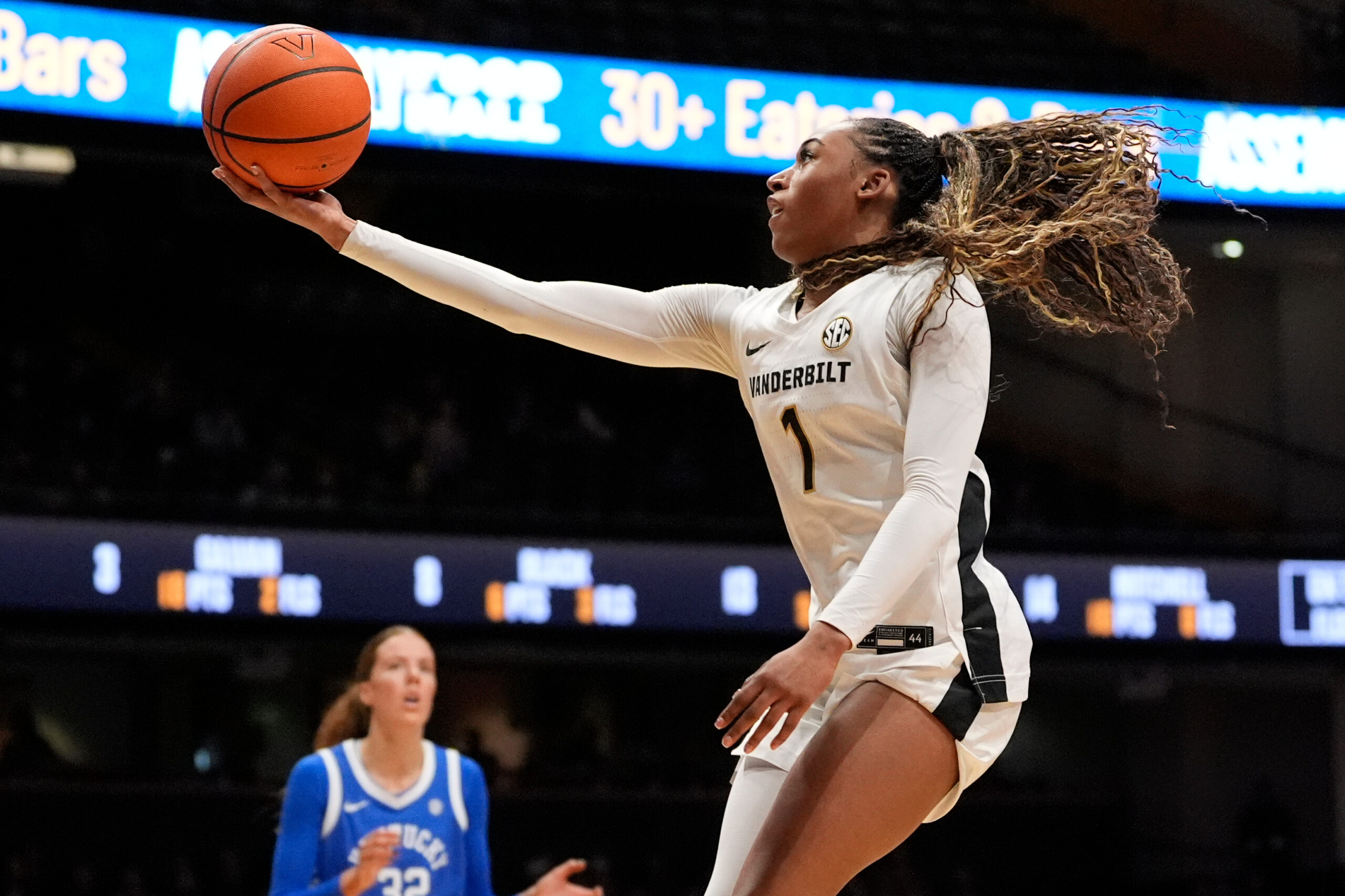
    Another No. 2 seed, Vanderbilt, will get a lot of attention. Guard Mikayla Blakes is the nation’s top scorer at 27 points per game, and also averages 4.4 assists, 3.8 rebounds, and 2.9 steals.

    The Commodores started the season 20-0, including wins over LSU at home and Michigan on a neutral floor. Then came a trip to South Carolina, and Staley reminded them who runs the show with a 103-74 flattening.

    Vanderbilt’s head coach is UConn legend Shea Ralph. If you think the selection committee has a sense of humor, you might think it’s no coincidence that the Huskies are the No. 1 in that region.

    Vanderbilt’s Mikayla Blakes is the nation’s leading scorer.

    Michigan is the No. 2 in Texas’ region, and has a high-ceiling pair of sophomores in Syla Swords and Olivia Olson. But the Wolverines could be tested early by the N.C. State-Tennessee winner, with a little extra juice if it’s the Lady Vols.

    Further down the field

    There are storylines among the No. 3 seeds, too. We’ve mentioned Duke already, and two others deserve attention.

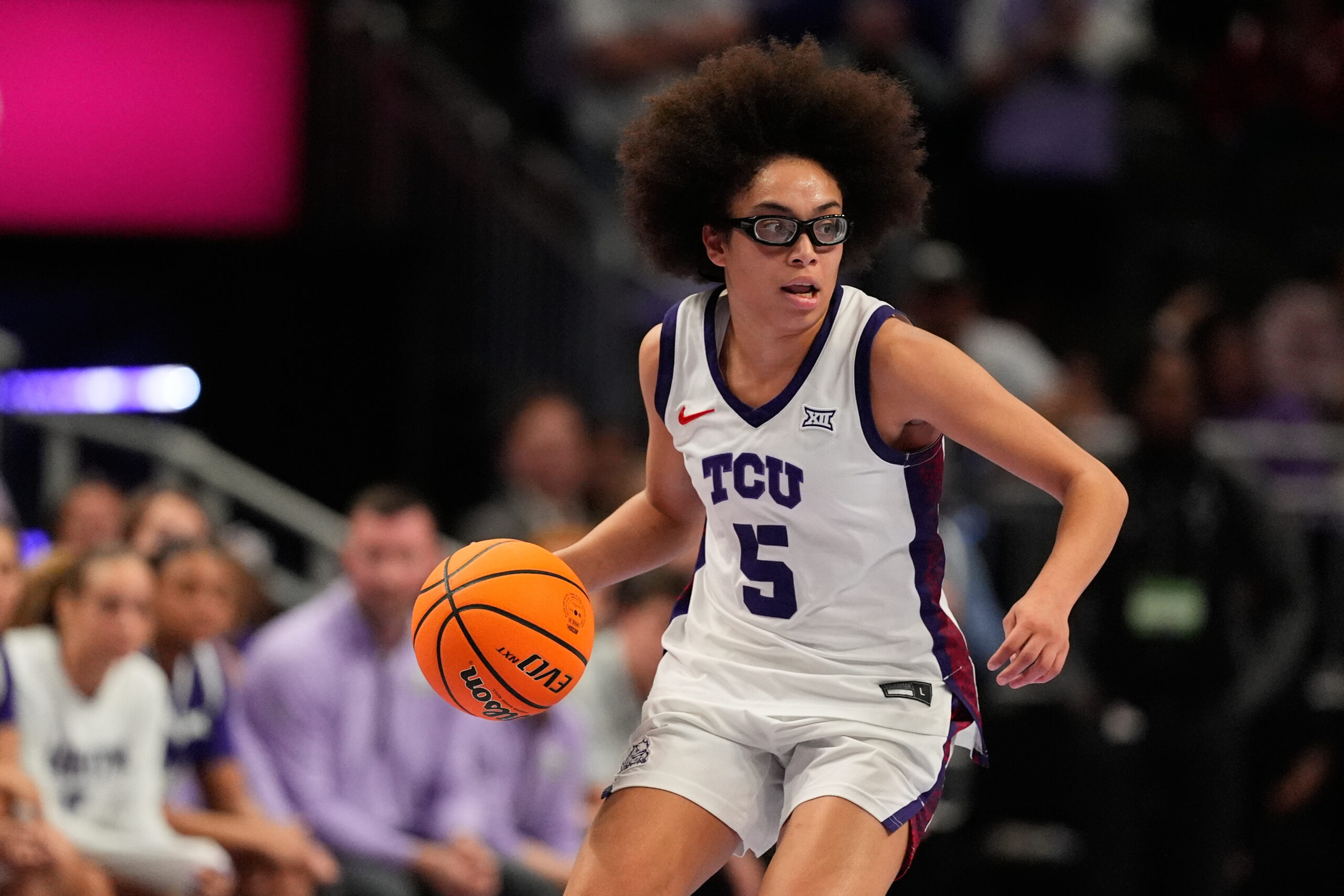
    First is TCU. Guard Olivia Miles earned fame at Notre Dame, and this season led the Horned Frogs to the Big 12 regular-season title. She’ll be another marquee WNBA draft pick, and forward Marta Suárez could join her in the first round. Add that to Iowa being arguably overseeded, and there’s a recipe for an Elite 8 run.

    The other is Ohio State. The Buckeyes are stuck with Notre Dame as the nearby No. 6 seed and Vanderbilt as the No. 2. But Jaloni Cambridge has pro potential, and Notre Dame will have its hands full with Fairfield.

    Olivia Miles could take TCU on a long March run before heading to the WNBA.

    That’s the cue to turn to where the real upsets could lurk.

    Fairfield went 28-4 this season, won at Villanova early, and tested itself later with losses to North Carolina on a neutral floor and at Iowa. The AP poll’s voters recognize the Stags’ quality, putting them two spots outside the top 25.

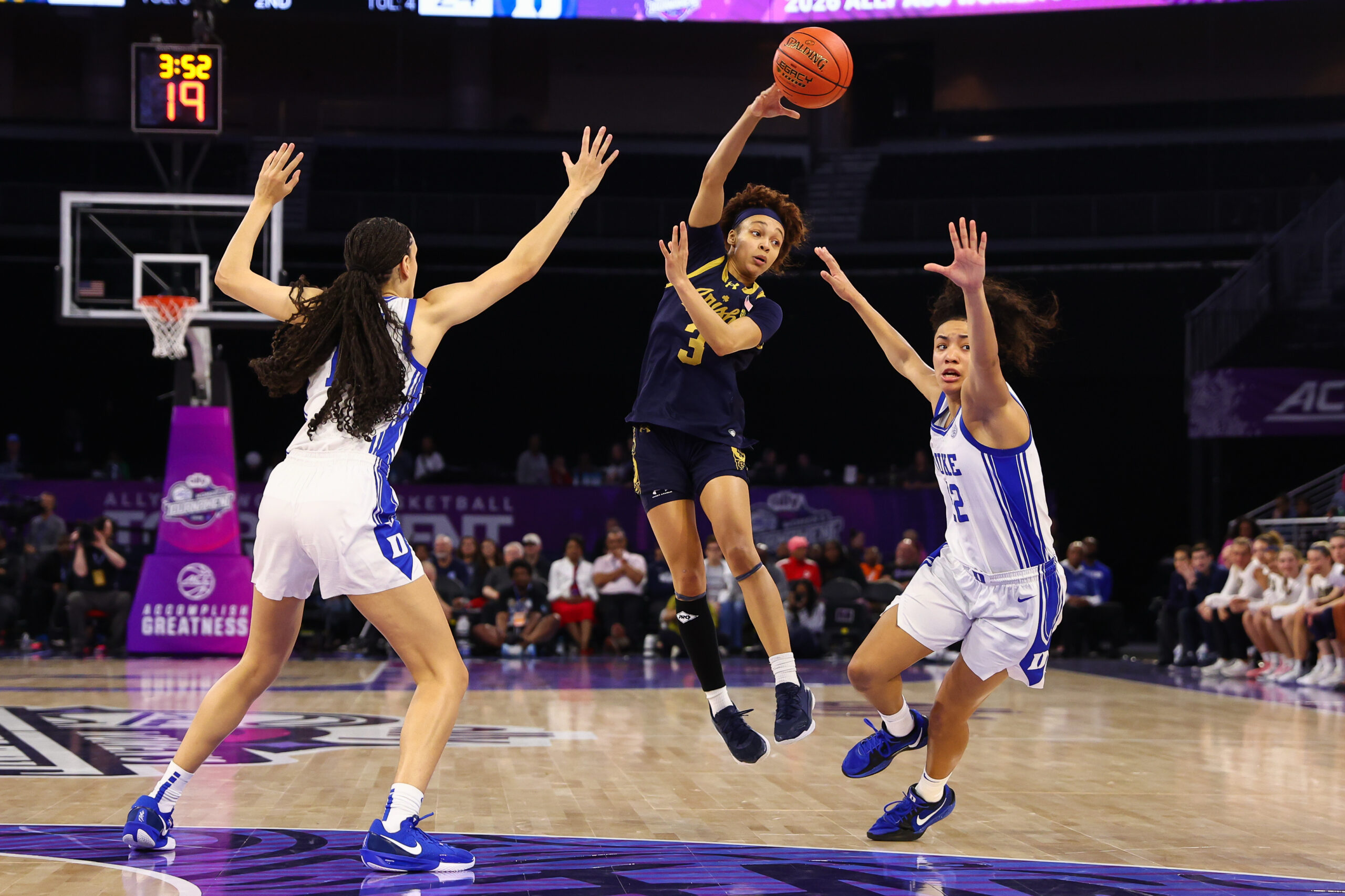
    South Jersey native Hannah Hidalgo has the Fighting Irish getting back on track after some ugly stretches in conference play. She’s third in the nation in scoring at 25.2 points per game, is leading the nation again with 5.41 steals per game, and is averaging 5.3 assists and 6.4 rebounds too.

    How will it go on a neutral floor? Well, let’s see how neutral it actually is. The game will be played at Ohio State right after the Buckeyes’ opener, and if the home fans stick around, they’ll give Notre Dame an earful.

    Hannah Hidalgo (center) lining up a pass during the ACC tournament.

    Richmond, led by former Cardinal O’Hara star Maggie Doogan, got stuck in the play-in game after losing to George Mason in the conference semifinals. But we’ll back the Spiders to beat a Nebraska team that got in despite finishing 12th in the Big Ten with an 18-12 record, including 7-11 in conference play. After that, if Doogan’s on, the Spiders can take a swing at Baylor in a game that Duke will host.

    If you don’t count an 8-9 game as an upset, then you won’t count Princeton beating Oklahoma State. But we will on the principle of an Ivy League team beating a Big 12 team, even if that Ivy League team is deservedly No. 23 in the AP poll. The Cowgirls didn’t even receive votes this week, though they are 29th in the NET to the Tigers’ 38.

  • Meta on trial: ‘We’re basically pushers.’ Lawmakers must require social media platforms to prioritize children’s safety

    Meta on trial: ‘We’re basically pushers.’ Lawmakers must require social media platforms to prioritize children’s safety

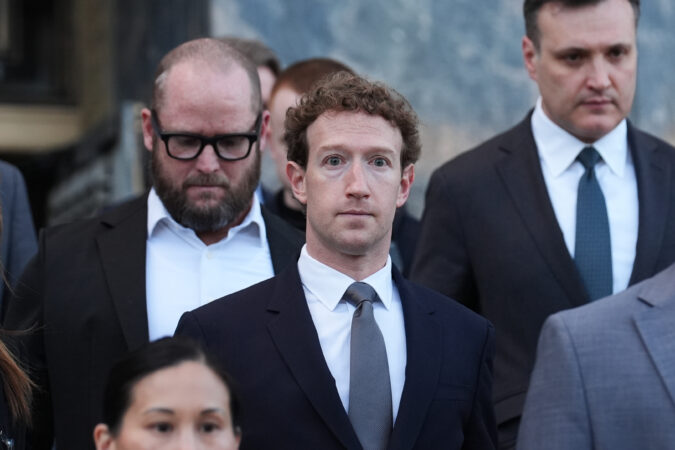
    One block from the Los Angeles courthouse where Mark Zuckerberg testified in February, families gathered around the Lost Screen Memorial: 50 illuminated phones, each bearing the face of a child their families say social media killed.

    Inside the courtroom, the unsealed documents were unsparing: “We’re basically pushers,” one Meta employee wrote. A 2018 internal memo laid out the strategy: “If we wanna win big with teens, we must bring them in as tweens.”

    Internal research found that teens described Instagram in terms of what the documents called an “addict’s narrative” — compulsive behavior they knew was harmful but felt powerless to stop. Meta’s own engineers proposed fixes, warning internally that “our product exploits weaknesses in human psychology to promote product engagement and time spent.”

    Executives chose profits instead.

    Nylah Anderson, 10, in Chester, liked TikTok videos and she accepted the “blackout challenge” in personal TikTok feed last December as a fun dare. She asphyxiated herself. Her mother has sued TikTok in Philadelphia federal court.

    In December 2021, 10-year-old Nylah Anderson of Chester died after TikTok’s algorithm recommended a “Blackout Challenge” on her “For You” page. In August 2024, the U.S. Third Circuit Court of Appeals ruled that this was not protected speech. The court determined that TikTok’s act of serving that video to a 10-year-old was an expressive act. That ruling cracked Section 230, the legal shield platforms had used for two decades to avoid accountability.

    Thirteen-year-old Levi Maciejewski of Cumberland County never made it to a courtroom. He died by suicide in August 2024, two days after opening an Instagram account and being extorted by a predator through Instagram’s “Accounts You May Follow” feature.

    Internal Meta audits from 2022, cited in his family’s wrongful death lawsuit, found that same feature was recommending accounts engaged in “inappropriate interactions” to 1.4 million minors. Meta’s own documents from 2015 estimated that approximately 4 million users under the age of 13 were already on Instagram — roughly 30% of all 10- to 12-year-olds in the U.S. — despite that age being prohibited.

    Anyone who worked with children during the adoption of the smartphone watched their minds deteriorate. When I started teaching in 2009, students socialized, made eye contact, were able to focus. By the end of that decade, they arrived sleep-deprived and anxious, reaching for their phones at every opportunity.

    Lunch rooms and hallways were quieter, earbuds in, eyes locked on screens. Teachers, like parents, were being asked to compete against a billion-dollar engineering operation. We weren’t losing because of personal failings. We were losing because we were outmatched by a trillion-dollar campaign to harvest attention.

    Big Tech is making the same argument the tobacco industry made for 50 years about smokers who couldn’t quit. Plaintiff KGM — known in court as Kaley — testified this month that she began using YouTube at age 6 and Instagram at age 9, with no barriers to stop her. Instagram was the first thing she opened every morning and the last thing she looked at before sleep. Not getting enough likes left her feeling “insecure” or “ugly.” Asked whether she felt that way before social media, she said: “No, I didn’t.” By age 10, she was cutting herself.

    Meta’s lawyers argued her struggles came from a difficult home life. Kaley answered them directly: most of the arguments with her mother were about the phone. She is 20 now. She told the jury her life would have been “unequivocally better” without these platforms.

    Kaley is not an outlier. For an entire generation, physical activity, academic performance, and time spent with friends are all down. Depression, self-harm, and suicide are all up. The average teen spends nearly five hours a day on social media alone. Three-quarters of U.K. children spend less time outdoors than prison inmates.

    In the years that social media became ubiquitous, the suicide rate for 10- to 14-year-olds tripled. We don’t stand at the edge of a lake watching children drown and demand more longitudinal studies to figure out the cause. We see the harm. We act.

    The tobacco parallel is more than rhetorical; it provides the applicable legal and moral framework for addressing Big Tech. We do not let tobacco companies advertise to children. We do not allow stores to sell to them. We require warning labels. None of that required settling every clinical debate. It required a political decision that some harms to children are unacceptable regardless of whether we can precisely quantify them.

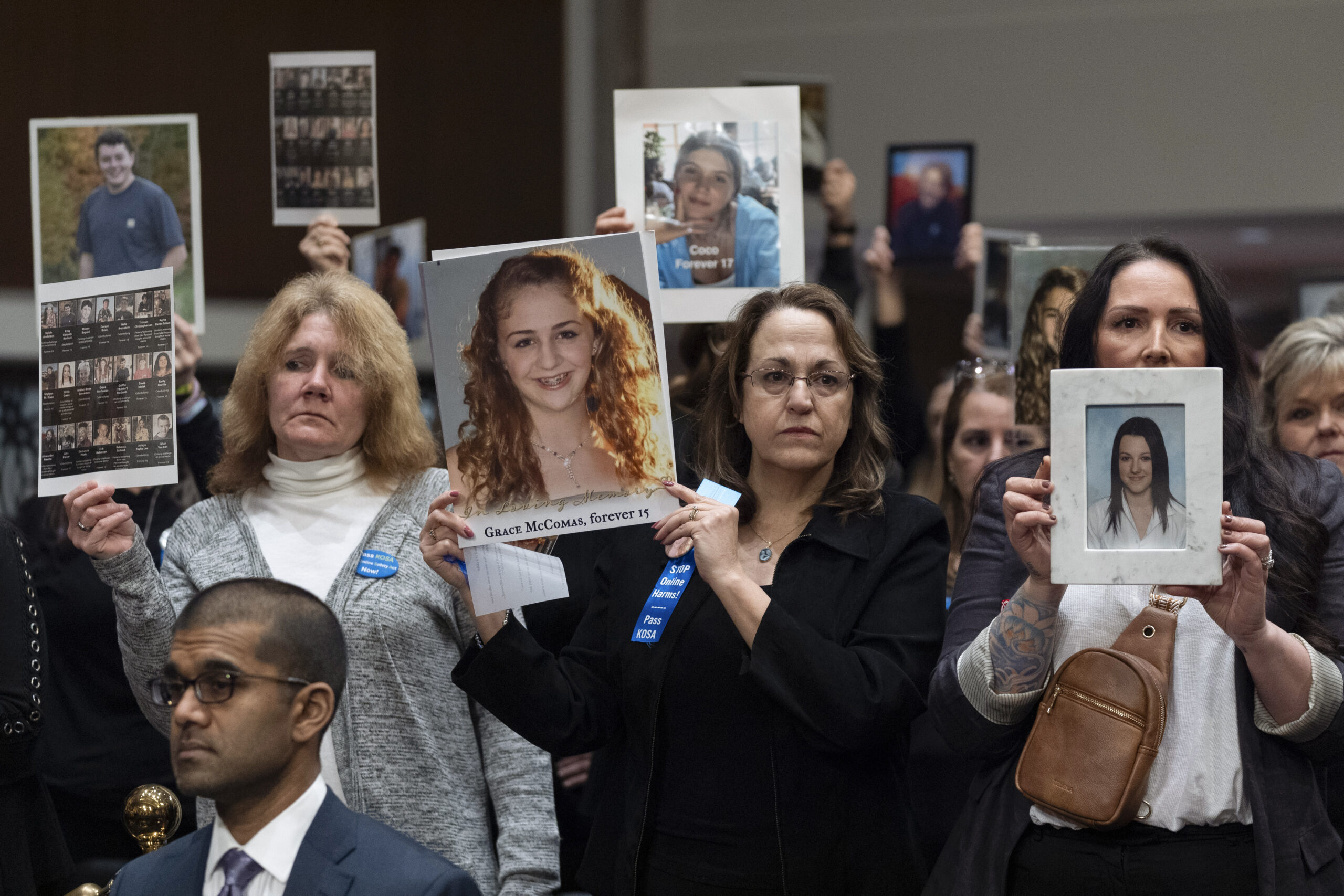
    People in the audience hold up photos of their loved ones during a Senate Judiciary Committee hearing on online child safety on Capitol Hill in January 2024.

    In February, West Virginia’s attorney general sued Apple after the company’s own internal communications described iCloud as “the greatest platform for distributing child porn.” Meta is on trial in Los Angeles. For the first time, tech executives are producing documents under court order, with legal penalties attached. For the first time, the “we didn’t know” defense is colliding with internal evidence that they did. The legal reckoning is not coming. It is here.

    The Kids Online Safety Act, which would require platforms to prioritize children’s safety over engagement, passed the Senate 91-3 in 2024. Last week, the House Energy and Commerce Committee responded — not with that bill, but with a weakened substitute called the KIDS Act, advancing it to the House floor 28-24, along party lines.

    The House substitute is a retreat dressed as progress: It omits the “duty of care” language that would require companies to design products with children’s safety in mind, sets a federal safety floor lower than existing state protections, and, most damaging, would preempt stronger state laws — potentially nullifying thousands of pending lawsuits, including the cases in Los Angeles that are finally forcing these documents into the open.

    Big Tech spent over $60 million on federal lobbying in 2024. The bill tells you exactly where that money went.

    In Pennsylvania, legislators have made progress. Senate Bill 1014 — a bell-to-bell cell phone ban in public and private schools — passed the state Senate 46-1 last month, with Gov. Josh Shapiro’s endorsement already secured. As one parent leading the effort put it: “Teachers, kids, and parents have been tasked with managing the unmanageable. It’s time to recognize that our current approach isn’t working.”

    The House should finish the job. But even a unanimous phone ban is a seven-hour policy competing against platforms that spend billions optimizing addiction across the other 17 hours of a child’s day. Keeping phones out of classrooms is a start.

    Keeping companies from engineering compulsion in the first place is the actual problem — and that requires a federal duty of care with teeth, and political leaders who care about children more than cashing their checks.

    Nylah Anderson was 10 years old. Levi Maciejewski was 13. Their tragedies helped start the battle against these companies. The House has a bill on its desk.

    Act — before another Pennsylvania child’s face joins those 50 phones outside the courthouse.

    AJ Ernst worked as a teacher and administrator in Philadelphia for 13 years and holds a doctoral degree in educational leadership from the University of Pennsylvania’s Graduate School of Education.