Blog

  • Flyers takeaways: Travis Konecny is ‘tired’ of losing, Sam Ersson’s struggles, and one bright spot from Boston

    Flyers takeaways: Travis Konecny is ‘tired’ of losing, Sam Ersson’s struggles, and one bright spot from Boston

    BOSTON ― Last week’s seemingly galvanizing trip west, which resulted in the Flyers grabbing five of a possible six points against some of the NHL’s best, looks to have been just another false dawn, as the sinking Orange and Black dropped their third straight game at TD Garden on Thursday.

    Here are three takeaways from the Flyers’ 6-3 loss to the Bruins, which marked the team’s 10th defeat in the last 12 games.

    ‘It’s frustrating’

    Travis Konecny leads the Flyers in goals (21), assists (29), and points (50), and is second behind Noah Cates (plus-15) among the team’s forwards with a plus-eight rating. The veteran sniper fired a hat trick in Columbus on Wednesday and followed it up with a goal and an assist in Boston a night later.

    But while Konecny has played like an All-Star and led from the front of late, the alternate captain’s raw emotion after Thursday’s game made it clear that he’s only concerned with stacking wins.

    “Yeah, it’s frustrating because I’ve been through this so many times. I’m tired of missing the playoffs,” said Konecny, who has seen recent Flyers seasons slip away at this time of the year. “That is kind of all I look at right now, just want to get points for the team, and we need to figure something out.”

    The answer was a painfully honest one from a player who has endured a lot of losing in recent seasons and is desperate to return to the playoffs after a five-year hiatus. Flyers head coach Rick Tocchet has talked about wanting guys who care and aren’t going to “accept” losing, and Konecny, who has matured and grown immensely as a leader in recent seasons, is clearly one of those guys who wants to be part of turning things around.

    “Some guys spoke after the game, I think everyone knows where we’re at,” said Konecny. “We just got to execute. And like I said, there’s mistakes all over the ice, but you ask any of the leaders, it starts with us. Their second goal, I made a mistake there, and [we] can’t be doing that game after game. I think we all need to look in the mirror.”

    There has been much social media debate about the 28-year-old Konecny, who has played 22 career playoff games but none since the 2020 COVID-19 bubble, but the Flyers could use more guys like him, and it’s concerning to think where this team might be without him.

    Flyers right wing Travis Konecny has been red-hot with 16 goals and 31 points over his past 28 games.

    Sam’s struggles

    Sam Ersson’s struggles are well-documented, as the Swede’s .856 save percentage is the lowest among the 56 NHL goalies who have played at least 15 games this season. The analytics are no better, as according to Money Puck, Ersson’s minus-18.1 goals saved above expected is the third-worst mark in the NHL and 25 goals worse than his partner, Dan Vladař.

    But Thursday provided a perfect snapshot of the enigma Ersson has been, as his performance showcased why fans have grown so frustrated with the backup netminder, but also featured some flashes of why the Flyers have stood by Ersson for so long despite his struggles.

    Ersson started the game brilliantly, shutting down Marat Khusnutdinov from in close just 14 seconds in, followed by a couple of 10-bell saves on Sean Kuraly from point-blank range that showcased the netminder’s athleticism. Ersson, who was always going to need to have a big game given the Flyers’ tired legs on a road back-to-back, was keeping the Flyers in it.

    But then the Mr. Hyde side of Ersson reared its ugly head as it has so often over the past two seasons. Ersson was in good position to stop Viktor Arvidsson’s one-timer from 25 feet out, but the shot from the right faceoff circle, which Arvidsson didn’t get all of, snuck through the goalie’s five-hole for Boston’s opener.

    The script soon repeated itself, as after Ersson made a few big saves to close the first period, he allowed another soft goal early in the second period. Fraser Minten was the beneficiary this time, as just like on Arvidsson’s tally, his shot beat Ersson five-hole on the ice. The goal served as a backbreaker as the Flyers had begun the second period strongly and were close to halving the deficit.

    Ersson’s talent was on display minutes later, as down 3-1, he made a miraculous, toe save on Andrew Peeke, albeit right before Casey Mittelstadt flipped home the rebound.

    “I don’t know, it’s not just [Ersson], just some of the goals, weakside stuff that we are giving up, that’s a tough one for any goalie when you give weakside goals up,” said Tocchet.

    Ersson, who did not speak with the media post-game after leaving the contest after two periods with a lower-body injury, allowed five goals on 20 shots and was culpable for two tough goals against.

    While Ersson has shown flashes and stretches of being an NHL goalie, he has been far too sporadic and unreliable the past two seasons for a Flyers team that needs a steady backup. A restricted free agent at season’s end, his days in Philly look to be numbered.

    Grebenkin’s growth

    If there was a silver lining from Thursday’s loss, it was the effort of winger Nikita Grebenkin.

    The 22-year-old, who has been in and out of Tocchet’s good graces over the course of the season, had one of his best games since being acquired by the Flyers last March in the Scott Laughton trade.

    Elevated to the top line for the game alongside Konecny and Christian Dvorak, Grebenkin, who Rasmus Ristolainen said “brings energy every day,” seemed to be directly involved in most of the Flyers’ best moments offensively.

    Flyers winger Nikita Grebenkin is starting to play the type of game that Rick Tocchet is looking for from the power forward.

    With 12 minutes gone in the first period, Grebenkin pounced on a puck in the neutral zone with speed and carried into the Boston zone. As Tocchet has so often pleaded with the Russian to do, Grebenkin used his 6-foot-2, 210-pound frame to strongly shield the puck from Jonathan Aspirot before shifting it quickly from his backhand to forehand to try and jam one by Jeremy Swayman.

    Swayman stopped the initial shot, but a crashing Dvorak slammed home the rebound. While the goal was ultimately disallowed as Grebenkin was ruled to have interfered with the goaltender, it was the kind of power forward-type play teammates enjoy seeing from the youngster.

    “I just love how hard he works,” Konecny said of Grebenkin. “He’s trying to learn the details of how to play the right way and he’s a great guy, too, so I love working with him. ”He’s got a lot of skill, too. So I think the more opportunity he gets, he’ll just keep running with it.”

    Grebenkin was also involved in the Flyers’ first goal that stood, as directly after he fired a shot on goal, he delivered a big hit on Mark Kastelic that knocked the Bruins’ tough guy off his skates and prevented him from retrieving the puck. Seconds later, Dvorak deflected a clearing attempt from Kuraly into the slot for a wide-open Konecny to score.

    Grebenkin would be rewarded for his efforts with a goal at the end of the second period, as he was first on the scene to bury a rebound after Konecny’s breakaway and follow-up attempt were both stopped by Swayman. In 13 minutes, 43 seconds of ice time, Grebenkin registered a goal, five shots, and one hit, while leading the team with four scoring chances at five-on-five, according to Natural Stat Trick.

    It remains to be seen if Grebenkin retains his spot on the top line come Saturday, but his encouraging performance in Boston suggests he’s earned more ice time and deserves a longer look there.


  • Reports: Former Penn State running back Nick Singleton breaks foot at Senior Bowl practice

    Reports: Former Penn State running back Nick Singleton breaks foot at Senior Bowl practice

    Nicholas Singleton, who just wrapped his senior season at Penn State, suffered a broken foot during a Senior Bowl practice on Thursday in Mobile, Ala., according to Rich Scarcella of The Reading Eagle.

    Scarcella first reported the news, citing Singleton’s father, Tim, who told The Reading Eagle that Nick injured the fifth metatarsal bone in his right foot and will undergo surgery early next week.

    Singleton is considered one of the top running backs in the 2026 NFL Draft. During his four-year career at Penn State, he rushed for 3,461 yards — with his season best of 1,099 coming in 2024-25.

    He finished with 54 touchdowns (45 rushing and nine receiving) to break the university’s career rushing and total touchdowns record. He’s also the program’s career leader in all-purpose yards (5,586).

    The Governor Mifflin High School graduate had a down year this past season, but managed 13 rushing touchdowns for 549 yards, as Penn State finished 7-6 overall, 3-6 in the Big 10.

    While Singleton, among 15 others, did not participate in the Pinstripe Bowl, the Nittany Lions beat Clemson, 22-10, in the final game of the 2025 season.

  • As Josh Shapiro calls for ICE to leave Minneapolis, his GOP challenger Stacy Garrity wants Minnesotans — and Pennsylvanians — to cooperate with agents

    As Josh Shapiro calls for ICE to leave Minneapolis, his GOP challenger Stacy Garrity wants Minnesotans — and Pennsylvanians — to cooperate with agents

    As Gov. Josh Shapiro makes the case on national television for ICE to leave Minneapolis, his Republican challenger Stacy Garrity has a different view: Minnesotans should cooperate.

    Garrity, the state treasurer and GOP-endorsed candidate, said “it’s best to cooperate” with U.S. Immigration and Customs Enforcement, in an interview Thursday night at the National Constitution Center following an appearance on a conservative podcast.

    The retired U.S. Army colonel also praised Tom Homan, President Donald Trump’s border czar assigned to take over the Minneapolis operation, as “spot on” in his recent remarks calling for a de-escalation of the conflict between residents and federal officials, and that residents should comply.

    “He said it best: Cooperate and take down the rhetoric,” Garrity said, noting her time as U.S. Army military police officer gives her a “different perspective.”

    Garrity’s comments came days after she received an endorsement from Trump in the Pennsylvania governor’s race. The president on Tuesday evening called Garrity a “true America First Patriot, who has been with me from the beginning.”

    Shapiro, meanwhile, has become more outspoken about ICE’s operations in Minnesota over the last few days while on a national media blitz for his new memoir released this week, Where We Keep the Light. The former Pennsylvania attorney general, known as a careful and deliberate communicator, has now repeatedly called for ICE and the Border Patrol to leave Minneapolis, arguing that the operations are “outside the bounds of law” and “must be terminated.”

    Pennsylvania does not have a sanctuary policy restricting cooperation with ICE by state law enforcement, but several jurisdictions in the state do have such policies, including Philadelphia.

    Garrity was in Philadelphia on Thursday for a live taping of the conservative podcast Ruthless. The event was hosted by Americans for Prosperity, a national libertarian advocacy organization. She largely talked about what led her to politics in 2020 after a long career in the military and private sector, as well as her work as the state’s treasurer.

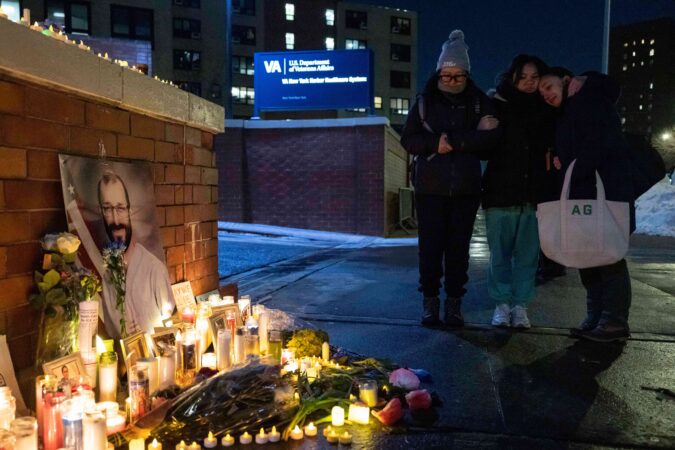
    When asked whether she was concerned by the shooting of Alex Pretti, an intensive-care nurse at a Veterans Affairs hospital in Minnesota, Garrity said she had not seen the videos of Border Patrol agents fatally shooting Pretti and that she “always waits for the investigation” before forming an opinion. Pretti’s death marked the second killing of a U.S. citizen by federal agents in Minneapolis this month, leading to mass protests and public outrage.

    “The investigation will come out, and then any corrective action that needs to be taken, or we’ll see what the results are,” she said. “I’m going to withhold any judgment until the investigation.”

    In the case of Pretti’s death, Trump said the U.S. Department of Homeland Security is leading the investigation, and he is “going to be watching over it.” Minnesota officials have called for an independent investigation and have protested as federal officials have blocked local authorities from investigating.

    Earlier this week, Shapiro said his staff has been preparing for the chance that Trump sends a surge of ICE agents to a Pennsylvania city like Philadelphia or Pittsburgh.

    If Trump does send more ICE agents to Pennsylvania, Garrity said Pennsylvania officials should cooperate here, too.

    “It’s always good to cooperate with ICE, especially when they’re doing targeted actions,” Garrity added.

  • Cubans scramble to survive as U.S. vise on island tightens in push to oust government

    Cubans scramble to survive as U.S. vise on island tightens in push to oust government

    HAVANA — Cubans are hustling to become more self-sufficient as the U.S. government tightens its economic noose over the communist-run island in a move experts say is meant to force a popular uprising and usher in a new government.

    A sharp increase in U.S. sanctions was already suffocating Cubans when critical oil shipments from Venezuela were disrupted after the U.S. attacked the South American country and arrested its leader.

    The long-term repercussions of those halted shipments have yet to hit Cuba, but its people are not waiting.

    Some are installing solar panels while others are growing their own crops or returning to a simpler way of life, one that doesn’t rely on technology or petroleum.

    “It’s how you survive,” said Jose Ángel Méndez Faviel. “It’s best to depend on yourself.”

    Méndez recently moved from the center of Havana to a farm in the rural community of Bacuranao because of Cuba’s severe blackouts. At the farm, he can cook with firewood and charcoal, something unthinkable in a darkened city apartment.

    Méndez said he doesn’t know what to make of President Donald Trump’s threats against Cuba, but he’s not taking any chances. He’s stocking up on gasoline, charcoal, and produce, which he began planting three months ago at his farm.

    Méndez also is thinking of buying back his old horse that he sold in favor of motorized equipment to transport vegetables he sells at local markets.

    “You don’t need fuel for a horse,” he said. “We need to go back in time.”

    ‘Very close to failing’

    Before the U.S. attacked Venezuela and disrupted oil shipments to Cuba, the island already was struggling with chronic blackouts, soaring prices, and a lack of basic goods.

    With experts warning of a potentially catastrophic economic crisis, some wonder if Cuba is reaching its breaking point. For Trump, who signed an executive order Thursday that would impose a tariff on any goods from countries that sell or provide oil to Cuba, it’s all but guaranteed.

    “Cuba is really a nation that is very close to failing,” he recently said.

    But Cubans scoff at that assertion, especially those who remember the so-called “Special Period,” when cuts in Soviet aid sparked the 1990s deprivation that eased when Venezuela became an ally under former President Hugo Chávez.

    Yadián Silva, a nurse and driver of a classic car who has seen tourism plummet, said Cubans aren’t dumb.

    “We have problems, and we know we have a lot of problems,” he said. “But when things happen in Cuba, it’s because people truly feel they should happen. Not because someone from the outside says, ‘do this.’”

    On a recent weeknight, tens of thousands of Cubans clutched flaming torches and joined an annual march to remember national hero José Martí. Many of them were university students.

    “We are a dignified people, a people eager to move forward, eager to prosper, who do not believe in threats and are not intimidated by any reprisals from the enemy,” said Sheyla Ibatao Ruíz, a 21-year-old law student. “If we have to take up arms, we will be the first to do so.”

    Before the march began, a presenter addressed the massive audience that included Cuban President Miguel Díaz-Canel.

    “This is not an act of nostalgia, it is a call to action,” said Litza Elena González Desdín, president of the Federation of University Students in a speech that included references to Trump.

    A day later, Christopher Landau, U.S. deputy secretary of state, noted that the U.S. embraces Martí “because he shared that passion that we have for freedom.”

    “We hope that by 2026, Cubans will finally be able to exercise their fundamental freedoms,” Landau said Wednesday in a recording played at a small gathering at the U.S. embassy in Havana. “The communist Castro regime is tottering; it won’t last much longer. After 67 years of a failed revolution that has betrayed the Cuban people, it’s time for the change that the people on the island are yearning for.”

    ‘We’ll ride bicycles’

    Last September, Ángel Eduardo launched a small business to install solar panels. He called it “Con Voltage,” a word with double meaning in Cuba that can refer to doing something well.

    He said he was fed up with studying in the dark and being forced to write in a notebook instead of a computer to obtain his degree as an automation control engineer.

    Eduardo started rigging pieces to light a single bulb for his home and ended up learning how to install solar systems thanks to a combination of a friend, Chat GPT and social media.

    He now has installed dozens of systems across Cuba, averaging one to two installations a day since November on an island where daily demand for electricity on average surpasses 3,000 megawatts when only about half that is available during peak hours.

    Eduardo said he saw a surge in calls from people in Havana seeking solar systems ever since the disruption in oil shipments from Venezuela.

    Growing a business is something that 62-year-old Niuvis Bueno Zavala has been pondering. A retired Russian interpreter for the Cuban government, she now runs a small wooden shack near the sea that sells drinks but not food.

    “I’ve never had it this hard,” she said, adding that she might start selling homemade food. “There’s always a helping hand to assist us. But now those helping hands can’t reach us. We’re blocked from all sides.”

    Many Cubans decry the embargo, including retired pilot Pedro Carbonell.

    The 73-year-old recently waited more than two hours to buy gasoline. He said Cubans have to keep fighting.

    “If we don’t have fuel, then we’ll ride bicycles,” he said, recalling how Cubans walked a lot during the Special Period. “Our wine is bitter. But it’s our wine. Do you understand? And we don’t want anyone from somewhere else coming here and telling us how to drink our wine.”

  • DOJ has opened a federal civil rights probe into the death of Alex Pretti, deputy AG says

    DOJ has opened a federal civil rights probe into the death of Alex Pretti, deputy AG says

    WASHINGTON — The Justice Department has opened a federal civil rights investigation into the shooting of Alex Pretti, the Minneapolis resident killed Saturday by Border Patrol officers, Deputy Attorney General Todd Blanche said Friday.

    “We’re looking at everything that would shed light on what happened that day and in the days and weeks leading up to what happened,” Blanche said during a news conference.

    Blanche did not explain why DOJ decided to open an investigation into Pretti’s killing, but has said a similar probe is not warranted in the Jan. 7 death of Renee Good, who was shot by an Immigration and Customs Enforcement officer in Minneapolis. He said only on Friday that the Civil Rights Division does not investigate every law enforcement shooting and that there have to be circumstances and facts that “warrant an investigation.”

    “President Trump has said repeatedly, ‘Of course, this is something we’re going to investigate,’” Blanche said of the Pretti shooting.

    Steve Schleicher, a Minneapolis-based attorney representing Pretti’s parents, said Friday that “the family’s focus is on a fair and impartial investigation that examines the facts around his murder.”

    FBI to take over federal investigation

    The Department of Homeland Security also said Friday that the FBI will lead the federal probe into Pretti’s death.

    Homeland Security Secretary Kristi Noem first disclosed the shift in which agency was leading the investigation during a Fox News interview Thursday evening. Her department previously said Homeland Security Investigations, a departmental unit, would head the investigation.

    “We will continue to follow the investigation that the FBI is leading and giving them all the information that they need to bring that to conclusion, and make sure that the American people know the truth of the situation and how we can go forward and continue to protect the American people,” Noem said, speaking to Fox host Sean Hannity.

    Homeland Security spokesperson Tricia McLaughlin said Homeland Security Investigations will support the FBI in the investigation. Separately, Customs and Border Protection, which is part of DHS, is doing its own internal investigation into the shooting, during which two officers opened fire on Pretti.

    DHS did not immediately respond to questions about when the change was made or why. The FBI did not immediately respond to a request for comment.

    It was not immediately clear whether the FBI would share information and evidence with Minnesota state investigators, who have thus far been frozen out of the federal investigation.

    In the same interview, Noem appeared to distance herself from statements she made shortly after the shooting, claiming Pretti had brandished a handgun and aggressively approached officers.

    Multiple videos that emerged of the shooting contradicted that claim, showing the intensive care nurse had only his mobile phone in his hand as officers tackled him to the ground, with one removing a handgun from the back of Pretti’s pants as another officer began firing shots into his back.

    Pretti had a state permit to legally carry a concealed firearm. At no point did he appear to reach for it, the videos showed.

    Videos emerge of previous altercation

    The change in agency comes after two other videos emerged of an earlier altercation between Pretti and federal immigration officers 11 days before his death.

    The Jan. 13 videos show Pretti yelling at federal vehicles and at one point appearing to spit before kicking out the taillight of one vehicle. A struggle ensues between Pretti and several officers, during which he is forced to the ground. Pretti’s winter coat comes off, and he either breaks free or the officers let him go and he scurries away.

    When he turns his back to the camera, what appears to be a handgun is visible in his waistband. At no point do the videos show Pretti reaching for the gun, and it is not clear whether federal agents saw it.

    Schleicher, the Pretti family attorney, said Wednesday the earlier altercation in no way justified the shooting more than a week later.

    In a post on his Truth Social platform early Friday morning, President Donald Trump suggested that the videos of the earlier incident undercut the narrative that Pretti was a peaceful protester when he was shot.

    “Agitator and, perhaps, insurrectionist, Alex Pretti’s stock has gone way down with the just released video of him screaming and spitting in the face of a very calm and under control ICE Officer, and then crazily kicking in a new and very expensive government vehicle, so hard and violent, in fact, that the taillight broke off in pieces,” Trump’s post said. “It was quite a display of abuse and anger, for all to see, crazed and out of control. The ICE Officer was calm and cool, not an easy thing to be under those circumstances!”

  • Judge bars federal prosecutors from seeking the death penalty against Luigi Mangione

    Judge bars federal prosecutors from seeking the death penalty against Luigi Mangione

    NEW YORK — Federal prosecutors can’t seek the death penalty against Luigi Mangione in the killing of UnitedHealthcare CEO Brian Thompson, a judge ruled Friday, foiling the Trump administration’s bid to see him executed for what it called a “premeditated, cold-blooded assassination that shocked America.”

    U.S. District Judge Margaret Garnett dismissed a federal murder charge that had enabled prosecutors to seek capital punishment, finding that it was technically flawed. She wrote that she did so to “foreclose the death penalty as an available punishment to be considered by the jury” as it weighs whether to convict Mangione.

    Garnett also dismissed a gun charge but left in place stalking charges that carry a maximum punishment of life in prison. In order to seek the death penalty, prosecutors needed to show that Mangione killed Thompson while committing another “crime of violence.” Stalking doesn’t fit that definition, Garnett wrote in her opinion, citing case law and legal precedents.

    In a win for prosecutors, Garnett ruled that prosecutors can use evidence collected from his backpack during his arrest, including a 9mm handgun and a notebook in which authorities say Mangione described his intent to “wack” an insurance executive. Mangione’s lawyers had sought to exclude those items, arguing the search was illegal because police hadn’t yet obtained a warrant.

    The rulings could be subject to appeal. Garnett gave prosecutors 30 days to inform her of any plans to appeal her death penalty decision. A message seeking comment was left for a spokesperson for the U.S. attorney’s office in Manhattan, which is prosecuting the federal case.

    Garnett acknowledged that the decision “may strike the average person — and indeed many lawyers and judges — as tortured and strange, and the result may seem contrary to our intuitions about the criminal law.” But, she said, it reflected her “committed effort to faithfully apply the dictates of the Supreme Court to the charges in this case. The law must the Court’s only concern.”

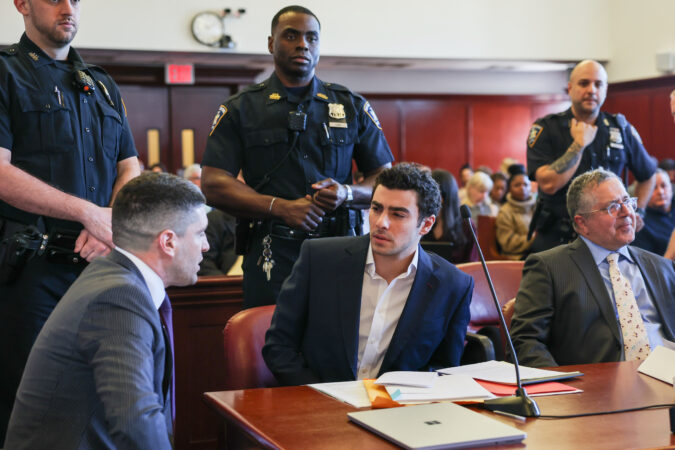
    Mangione, 27, appeared relaxed as he sat with his lawyers at a brief, previously scheduled hearing about an hour after Garnett issued her written ruling. Prosecutors retained their right to appeal the decision but said they were ready to proceed to trial.

    Mangione’s lawyers didn’t address the decision during the hearing. But his lawyer Karen Friedman Agnifilo said afterward that her client and his defense team were relieved by the “incredible decision.”

    Jury selection in the federal case is scheduled to begin Sept. 8, followed by opening statements and testimony beginning on Oct. 13. The state trial’s date hasn’t been set yet. On Wednesday, the Manhattan district attorney’s office sent a letter urging the judge in that case to schedule a July 1 trial date.

    Thompson, 50, was killed on Dec. 4, 2024, as he walked to a midtown Manhattan hotel for UnitedHealth Group’s annual investor conference. Surveillance video showed a masked gunman shooting him from behind. Police say “delay,” “deny” and “depose” were written on the ammunition, mimicking a phrase used to describe how insurers avoid paying claims.

    Mangione, an Ivy League graduate from a wealthy Maryland family, was arrested five days later at a McDonald’s in Altoona, Pa., about 230 miles west of Manhattan.

    Following through on Trump’s campaign promise to vigorously pursue capital punishment, Attorney General Pam Bondi ordered Manhattan federal prosecutors last April to seek the death penalty against Mangione.

    It was the first time the Justice Department was seeking to bring the death penalty in President Donald Trump’s second term. He returned to office a year ago with a vow to resume federal executions after they were halted under his predecessor, President Joe Biden.

    Garnett, a Biden appointee, ruled after a flurry of court filings in the prosecution and defense in recent months. She held oral arguments on the matter earlier this month.

    In addition to seeking to have the death penalty thrown out on the grounds Garnett cited, Mangione’s lawyers argued that Bondi’s announcement flouted long-established Justice Department protocols and showed the decision was “based on politics, not merit.”

    They said her remarks, which were followed by posts to her Instagram account and a TV appearance, “indelibly prejudiced” the grand jury process that resulted in his indictment a few weeks later.

    Prosecutors urged Garnett to keep the death penalty on the table, arguing that the charges allowing for such punishment were legally sound and that Bondi’s remarks weren’t prejudicial, as “pretrial publicity, even when intense, is not itself a constitutional defect.”

    Rather than dismissing the case outright or barring the government from seeking the death penalty, prosecutors argued, the defense’s concerns can best be alleviated by carefully questioning prospective jurors about their knowledge of the case and ensuring Mangione’s rights are respected at trial.

    “What the defendant recasts as a constitutional crisis is merely a repackaging of arguments” rejected in previous cases, prosecutors said. “None warrants dismissal of the indictment or categorical preclusion of a congressionally authorized punishment.”

  • unCovering the Birds: The Athletic’s Michael Silver

    unCovering the Birds: The Athletic’s Michael Silver

    Banged up offensive line? Underperforming star skill players? A quarterback who failed to lift his team? The 2025 edition of the Philadelphia Eagles checked all those boxes on offense. Sure, you could make a scapegoat out of the first-time offensive coordinator, but placing the blame squarely at the feet of Kevin Patullo would misrepresent the extent of the Eagles’ problems.

    The Athletic’s Michael Silver recently wrote an article about the Eagles’ offensive woes, and, in a conversation with The Philadelphia Inquirer’s Jeff McLane, framed these issues in the context of the franchise’s ongoing search for Patullo’s replacement.

    00:00 Why is the Eagles’ offensive coordinator search taking so long?

    13:27 Factors that prompted Mike McDaniel and Brian Daboll to pass on Eagles

    19:00 The Jalen Hurts effect

    28:45 The national media perspective on Hurts

    32:37 Could Jeff Stoutland’s responsibilities be changing?

    unCovering the Birds is a production of The Philadelphia Inquirer and KYW Newsradio Original Podcasts. Look for new episodes throughout the offseason, including breaking news updates and reactions.

    And here’s a link to Mike Silver’s article: https://www.nytimes.com/athletic/6976115/2026/01/16/eagles-offense-jalen-hurts-nick-sirianni-aj-brown/

  • Comcast owes $240 million to start-up for using its voice-remote tech, jury says

    Comcast owes $240 million to start-up for using its voice-remote tech, jury says

    Comcast owes a California company $240 million for infringing on its patent when rolling out a voice-activation feature on television remotes over a decade ago, a Philadelphia federal jury decided.

    Promptu Systems Corporation “pioneered” the technology that allows users to control their TVs through voice commands spoken into a remote control in the early 2000s, the company said in legal filings.

    After Comcast launched its voice remote in 2015, Promptu sued, accusing the telecommunication giant of utilizing patented technology. Comcast executives were aware of the patents, expressed interest in Promptu’s capabilities as early as 2001, and took steps to launch a remote in collaboration with Promptu, the 2016 lawsuit said.

    But Comcast ended up launching a voice-controlled remote on its own, which the suit says was based on technology that Promptu shared with Comcast in demonstrations.

    “Promptu technology was exploited without permission over a 10-year period,” said Jerry Ivey, an attorney at the law firm Finnegan who represented the company in the trial.

    Propmtu’s attorneys asked the jury to award $346 million, based on a calculation that the company was owed 30 cents per month for each Comcast cable customer over a 10-year period.

    At the conclusion of a six-day trial in the Eastern District of Pennsylvania, on Jan. 23, jurors found that Comcast infringed on two patents but that only one of them was valid. The jury deliberated for less than three hours and awarded $240 million.

    The verdict will have no impact on Comcast’s customers, a company spokesperson said.

    “We will continue to pursue our claim in court against Promptu to show that these expired patents are unenforceable and appeal this decision if necessary,” the spokesperson’s statement said.

    During the 10 years of litigation, Comcast attacked the validity of the patents. It is pursuing a separate claim arguing that the patent that led to the verdict is not enforceable.

    Promptu technology wasn’t ahead of its time, the attorney representing Comcast told the jurors, and the start-up did not succeed in becoming a big player in the TV remote market.

    “Investors from Promptu have come here to ask you to not only bail them out of their investment in Promptu but to give them an enormous windfall in profits that they didn’t earn in the marketplace and for technology that they didn’t invent,” said Douglas Lumish, a Weil Gotshal & Manges attorney representing Comcast, according to court transcripts.

    Around the same time that Comcast launched its voice remote, voice-controlled speakers like the Amazon Echo and Google Home were popping up in homes.

    By 2017, Comcast said it had voice-activated remotes in about 12 million homes — roughly half its subscribers at the time — and the company expected to process 4 billion voice commands that year. In a 2024 meeting with investors, Comcast said their remotes were processing about 50 million voice commands daily in five languages, allowing users to quickly access cable and streaming content.

    The company also developed a large-button voice remote with accessibility in mind. Both have been provided to their cable subscribers at no additional cost.

    Comcast’s large-button remote with added accessibility features, as released in 2022.

    Even if they don’t directly bring in revenue, these kinds of tech features can help a company keep customers. (In recent years, Comcast has been losing more cable customers than gaining, but it counts its Peacock streaming service among areas of growth.)

    On Thursday, Comcast reported its 2025 financial results, showing flat revenue from the year before. The company touted Peacock’s 22% increase in paid subscribers, the release of Wicked: For Good from its studios division, and growth in its mobile phone business.

    Its count of cable customers decreased — again — to 11.2 million.

    Also this month, Comcast agreed to a $117.5 million settlement to resolve 24 lawsuits surrounding a 2023 data breach. The settlement received initial approval from a judge, with a final approval hearing scheduled for July.

  • Trump names former Federal Reserve governor Kevin Warsh as the next Fed chair, replacing Jerome Powell

    Trump names former Federal Reserve governor Kevin Warsh as the next Fed chair, replacing Jerome Powell

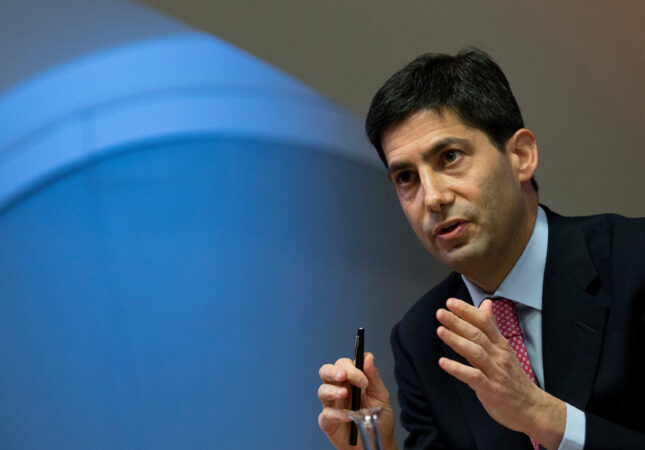
    WASHINGTON — President Donald Trump said Friday that he will nominate former Federal Reserve official Kevin Warsh to be the next chair of the Fed, a decision likely to result in sharp changes to the powerful agency that could bring it closer to the White House.

    If approved by the Senate, Warsh would replace current chair Jerome Powell when his term expires in May. Trump chose Powell to lead the Fed in 2017 but this year has relentlessly assailed him for not cutting interest rates quickly enough.

    “I have known Kevin for a long period of time, and have no doubt that he will go down as one of the GREAT Fed Chairmen, maybe the best,” Trump posted on social media. “On top of everything else, he is ‘central casting,’ and he will never let you down.”

    The appointment, which requires Senate confirmation, amounts to a return trip for Warsh, 55, who was a member of the Fed’s board from 2006 to 2011. He was the youngest governor in history when he was appointed at age 35. He is currently a fellow at the right-leaning Hoover Institution and a lecturer at the Stanford Graduate School of Business.

    In some ways, Warsh is an unlikely choice for the Republican president because he has long been a hawk in Fed parlance, or someone who typically supports higher interest rates to control inflation. Trump, by contrast, has said the Fed’s key rate should be as low as 1%, a level few economists endorse, and far below its current level of about 3.6%.

    During his time as governor, Warsh objected to some of the low-interest rate policies that the Fed pursued during and after the 2008-09 Great Recession. He also often expressed concern at that time that inflation would soon accelerate, even though it remained at rock-bottom levels for many years after that recession ended.

    More recently, however, in speeches and opinion columns, Warsh has voiced support for lower rates.

    Early reaction

    Financial markets reacted in ways that suggest investors expect that Warsh could keep rates a bit higher over time. The dollar and yields on long-term U.S. Treasurys rose, although that moderated a bit.

    The 10-year yield is at 4.26%, up from 4.23% Thursday. U.S. stock futures saw losses of around 0.5%. The biggest moves were in the suddenly volatile metals markets, where gold dropped more than 5% and silver sank more than 13%.

    In Congress, Sen. Thom Tillis, a North Carolina Republican who is retiring, reiterated in a social media post that he will oppose Warsh’s nomination until a Justice Department investigation into Powell is resolved.

    Tillis is a member of the Senate Banking Committee, which will consider Warsh’s nomination.

    He added that Warsh is a “qualified nominee” but stressed that “protecting the independence of the Federal Reserve from political interference or legal intimidation is non-negotiable.”

    Tillis’s opposition could complicate the confirmation process. Asked late Thursday whether Warsh could be confirmed without Tillis’s support, Senate Majority Leader John Thune said, “Probably not.”

    Democratic Sen. Elizabeth Warren of Massachusetts, the highest-ranking Democrat on the Banking Committee, said, “This nomination is the latest step in Trump’s attempt to seize control of the Fed.”

    Warsh beat out several other candidates, including Trump’s top economic adviser, Kevin Hassett, investment manager Rick Rieder, and current Fed governor Christopher Waller.

    Controlling the Fed

    Warsh’s appointment could be a major step toward Trump asserting more control over the Fed, one of the few remaining independent federal agencies. While all presidents influence Fed policy through appointments, Trump’s rhetorical attacks on the central bank have raised concerns about its status as an independent institution.

    The announcement comes after an extended and unusually public search that underscored the importance of the decision to Trump and the potential impact it could have on the economy. The chair of the Federal Reserve is one of the most powerful economic officials in the world, tasked with combating inflation in the United States while also supporting maximum employment.

    The Fed is also the nation’s top banking regulator.

    The Fed’s rate decisions, over time, influence borrowing costs throughout the economy, including for mortgages, car loans, and credit cards.

    For now, Warsh would likely fill a seat on the Fed’s governing board that was temporarily occupied by Stephen Miran, a White House adviser whom Trump appointed in September. Once on the board, Trump could then elevate Warsh to the chair position when Powell’s term ends in May.

    Trump has sought to exert more control over the Fed. In August he tried to fire Lisa Cook, one of seven governors on the Fed’s board, in an effort to secure a majority of the board. Cook, however, sued to keep her job, and the Supreme Court, in a hearing last week, appeared inclined to let her stay in her position while her suit is resolved.

    Powell revealed this month that the Fed had been subpoenaed by the Justice Department about his congressional testimony on a $2.5 billion building renovation. Powell said the subpoenas were “pretexts” to force the Fed to cut rates.

    Trump’s economic policies

    Since Trump’s reelection, Warsh has expressed support for the president’s economic policies, despite a history as a more conventional, pro-free trade Republican.

    In a January 2025 column in the Wall Street Journal, Warsh praised Trump’s deregulatory policies and potential spending cuts, which he said would help bring down inflation. Lower inflation would allow the Fed to deliver the rate cuts the president wants.

    Trump had said he would appoint a Fed chair who will cut interest rates to lower the government’s borrowing costs and bring down mortgage rates, though the Fed doesn’t decide those costs directly.

    In December, he wrote on social media of the need for lower borrowing costs and said, “Anyone who disagrees with me will never be the Fed chairman!”

    Potential challenges and pushback

    Warsh would face challenges in pushing interest rates much lower. The chair is just one member of the Fed’s 19-person rate-setting committee, with 12 of those officials voting on each rate decision. The committee is already split between those worried about persistent inflation, who’d like to keep rates unchanged, and those who think that recent upticks in unemployment point to a stumbling economy that needs lower interest rates to bolster hiring.

    Financial markets could also push back. If the Fed cuts its short-term rate too aggressively and is seen as doing so for political reasons, then Wall Street investors could sell Treasury bonds out of fear that inflation would rise. Such sales would push up longer-term interest rates, including mortgage rates, and backfire on Warsh.

    Trump considered appointing Warsh as Fed chair during his first term, though ultimately he went with Powell. Warsh’s father-in-law is Ronald Lauder, heir to the Estee Lauder cosmetics fortune and a longtime donor and confidant of Trump’s.

    Warsh in recent years has become harshly critical of the Fed, calling for “regime change” and assailing Powell for engaging on issues like climate change and diversity, equity and inclusion, which Warsh said are outside the Fed’s mandate.

    His more critical approach suggests that if he does ascend to the position of chair, it would amount to a sharp transition at the Fed.

    In a July interview on CNBC, Warsh said Fed policy “has been broken for quite a long time.”

    “The central bank that sits there today is radically different than the central bank I joined in 2006,” he added. By allowing inflation to surge in 2021-22, the Fed “brought about the greatest mistake in macroeconomic policy in 45 years, that divided the country.”

  • Judge was right to toss racketeering charges against George Norcross, N.J. appeals court says

    Judge was right to toss racketeering charges against George Norcross, N.J. appeals court says

    A New Jersey appellate court on Friday declined to reinstate racketeering charges against Democratic power broker George E. Norcross III, dealing a fresh blow to prosecutors who had accused him of running a criminal enterprise.

    The three-judge panel affirmed a lower court order dismissing a 13-count indictment against Norcross, 69, and five codefendants, whom a grand jury alleged used threats of economic and reputational harm — as well as their control of Camden government — to obtain property on the city’s waterfront from a developer and a nonprofit.

    Acting Attorney General Jennifer Davenport — Democratic Gov. Mikie Sherrill’s nominee for the post — will now have to decide whether to file another appeal in a case that was brought by her predecessor. A spokesperson said the Attorney General’s Office is reviewing the opinion, which says the state has 45 days to pursue an appeal at the state Supreme Court.

    Mercer County Superior Court Judge Peter Warshaw ruled last February that none of the threats described in the June 2024 indictment were unlawful because, he said, state law permits such statements in the context of economic bargaining. Warshaw also found the charges were time-barred.

    The state Attorney General’s Office appealed Warshaw’s decision, arguing that the judge had failed to review thousands of pages of grand jury evidence and that the indictment properly alleged criminal extortion.

    On Friday, the appellate court in a 92-page opinion upheld Warshaw’s order but did so on different legal grounds. The panel said several of the indictment’s racketeering conspiracy and extortion charges were time-barred under the statute of limitations. Other counts failed to state a crime, were untimely, or both, the panel said.

    Norcross’ representatives didn’t immediately respond to requests for comment.

    In addition to Norcross — founder of insurance brokerage Conner Strong & Buckelew and chair of Cooper University Health Care — the grand jury charged his brother Philip, CEO of the law firm Parker McCay; attorney William Tambussi; former Camden Mayor Dana L. Redd; Sidney R. Brown, CEO of logistics firm NFI; and John J. O’Donnell, an executive at residential developer The Michaels Organization.

    Statute of limitations

    The case centers on Norcross’ efforts to acquire real estate in Camden following a 2013 New Jersey law he allegedly shaped that turbocharged corporate tax incentives for development in a city that had faced decades of disinvestment.

    Prosecutors say that from 2014 through 2016, Norcross and his associates threatened a nonprofit redevelopment group and Philadelphia developer Carl Dranoff, coercing them into selling property for less money than they believed it was worth.

    Norcross and his partners then used the properties to obtain millions of dollars in state tax credits for various corporate entities and later sold the credits for cash, the state says.

    In contrast to the lower court judge, the appeals panel did not weigh whether the threats allegedly made in 2014 and 2016 were unlawful. Instead, the panel said the charges associated with those threats — racketeering and extortion conspiracies — were filed by prosecutors beyond the five-year statute of limitations.

    To comply with that statute, prosecutors needed to show that the conspiracies outlined in the June 2024 indictment continued past 2019. The state contended that it met this burden because corporate entities controlled by Norcross continued to receive tax credits during that period and because the indictment says the power broker took steps to conceal his conduct in the years since.

    But the appellate panel agreed with Warshaw that “the objects of the conspiracies were concluded” with the completion of the redevelopment deals years earlier.

    The court also rejected the concealment argument, saying the indictment does not meet a legal requirement alleging an “agreement among the conspirators to continue to act in concert in order to cover up, for their own self-protection, traces of the crime.”

    Dealings with Carl Dranoff

    The appeals court did find that another charge related to waterfront real estate dealings was timely, but failed to satisfy other legal requirements.

    When Dranoff in 2018 tried to sell the 349-apartment Victor Lofts to a real estate investment firm for $71 million, the indictment says he faced resistance from Camden officials. They agreed to “slow down” a government approval at the direction of Philip Norcross — an attorney who, like his brother, had no official role in city government, the indictment says.

    The sale ultimately fell through, and the city moved to terminate Dranoff’s option to develop another property known as Radio Lofts. The dispute led to years of litigation, and Dranoff ultimately settled with the city in 2023, agreeing to forfeit his rights to Radio Lofts and pay Camden $3.3 million despite believing “he was in the right,” according to the indictment.

    Prosecutors allege this was another conspiracy to extort Dranoff. But while the alleged conduct occurred within the limitations period, the appeals panel said, the indictment failed to meet the legal requirements for alleging conspiracy to commit extortion. For example, neither George Norcross nor his codefendants were accused of threatening or planning to threaten Dranoff to settle, the panel said.

    Serving on the panel were Appellate Judges Greta Gooden Brown, Lisa Rose and Ellen Torregrossa-O’Connor.