Blog

  • The mall is adding 7 new retailers | Inquirer Cherry Hill

    The mall is adding 7 new retailers | Inquirer Cherry Hill

    Hello, Cherry Hill! 👋

    The mall is getting seven new concepts between now and spring, adding retailers and an eatery. Here’s a look at what’s on tap. Also this week, the county is assessing flood damage from the heavy thunderstorms, a Cherry Hill alum known for his witty film criticism has died, plus, roadwork continues on Kresson Road and Kenilworth Avenue.

    If someone forwarded you this email, sign up for free here.

    More stores are coming to the mall

    A handful of new stores are expected to open in the Cherry Hill Mall in the coming months.

    The Cherry Hill Mall’s slate of stores continues to evolve, with new retailers planning to set up shop in the coming months.

    Popular footwear brand Crocs opened a 2,000-square-foot space last month, DoneRight Doner Kebab is expected to open in the food court later this summer, and a massive Dick’s House of Sport is on track to debut this year.

    They’ll be joined by several other concepts, including viral women’s clothing brand Aritzia.

    The Inquirer’s Erin McCarthy looks at everything you can expect now through spring.

    💡 Community News

    • The storms that started rolling in late Sunday resulted in widespread flooding on Monday throughout Camden County, where several inches of rain fell. Cherry Hill saw 3.44 inches, which resulted in flash flooding. (NJ.com)
    • Cherry Hill alum and three-time Mid-Atlantic Emmy Award-winning film and TV critic Bill Wine died last month at the age of 81 of complications from Parkinson’s disease. Raised in Philadelphia and Cherry Hill, where he graduated from the old Cherry Hill High School, Wine was a longtime film critic at WTXF-TV, Channel 29, and KYW radio and known for his pithy, witty, and acerbic reviews.
    • Heads up for drivers: Work continues on Kresson Road this week, which will have altered traffic patterns between Springdale Road and Ravenswoods Way from 6 a.m. to 4 p.m. through tomorrow; a detour between Harrowgate Drive and Cropwell Road from 7 a.m. to 4 p.m. through Friday; and altered traffic patterns between Marlkress Road and Browning Lane from 7 a.m. to 4 p.m. through Friday. Ongoing work will result in a road closure on Kenilworth Avenue between Route 38 and Helena Avenue from 7 a.m. to 3:30 p.m. through Friday.
    • Cherry Hill resident and youth soccer coach Brian Epstein, 43, has been charged with lewdness and sexual contact after an April incident during which he allegedly exposed his genitals to two girls while scouting players at Brian Bende Park in Medford. (Courier Post)
    • Cherry Hill resident and Marine Corps veteran Kevin D. Cooper was among five veterans recognized with service medals by the county last week.
    • Friends of Cherry Hill Public Library’s book sale continues today, when it’s open to all Friends members. The sale opens to the public tomorrow and continues through Saturday.

    đŸœïž On our Plate

    • Three former Cherry Hill staples are among the most iconic New Jersey restaurants to close too soon, according to a list from NJ.com. The outlet lamented the closing of beloved mall eatery The Bistro at Cherry Hill, which shuttered abruptly about a year ago amid bankruptcy proceedings. Other restaurants the outlet says are gone too soon? The Cherry Hill Diner, which has been demolished to make way for a car wash, and Latin Casino, which was torn down in 1982.

    🎳 Things to Do

    đŸŽ¶ Twilight Music Series: Oklahoma R&B outfit Color Me Badd headlines this week’s event. ⏰ Thursday, July 9, 8-11 p.m. đŸ’” Free 📍 Cooper River Park Jack Curtis Stadium

    🃏 Cherry Hill Card Expo: Browse over 300 vendor tables featuring trading cards, memorabilia, art, and more. ⏰ Saturday, July 11, 10 a.m.-5 p.m. and Sunday, July 12, 10 a.m.-4 p.m. đŸ’” $10-$25 📍 DoubleTree by Hilton

    đŸ•č Super Smash Bros. Ultimate Tournament: Test your skills head-to-head. Advanced registration is required. ⏰ Saturday, July 11, 1-3 p.m. đŸ’” Free 📍 Cherry Hill Public Library

    đŸ’« Music Under the Stars: Taylor Swift cover band Fearless will perform. There will also be food trucks and a beer garden. ⏰ Tuesday, July 14, 7 p.m. đŸ’” Free 📍 Barclay Farmstead

    🏡 On the Market

    A five-bedroom contemporary with a wooded walking path
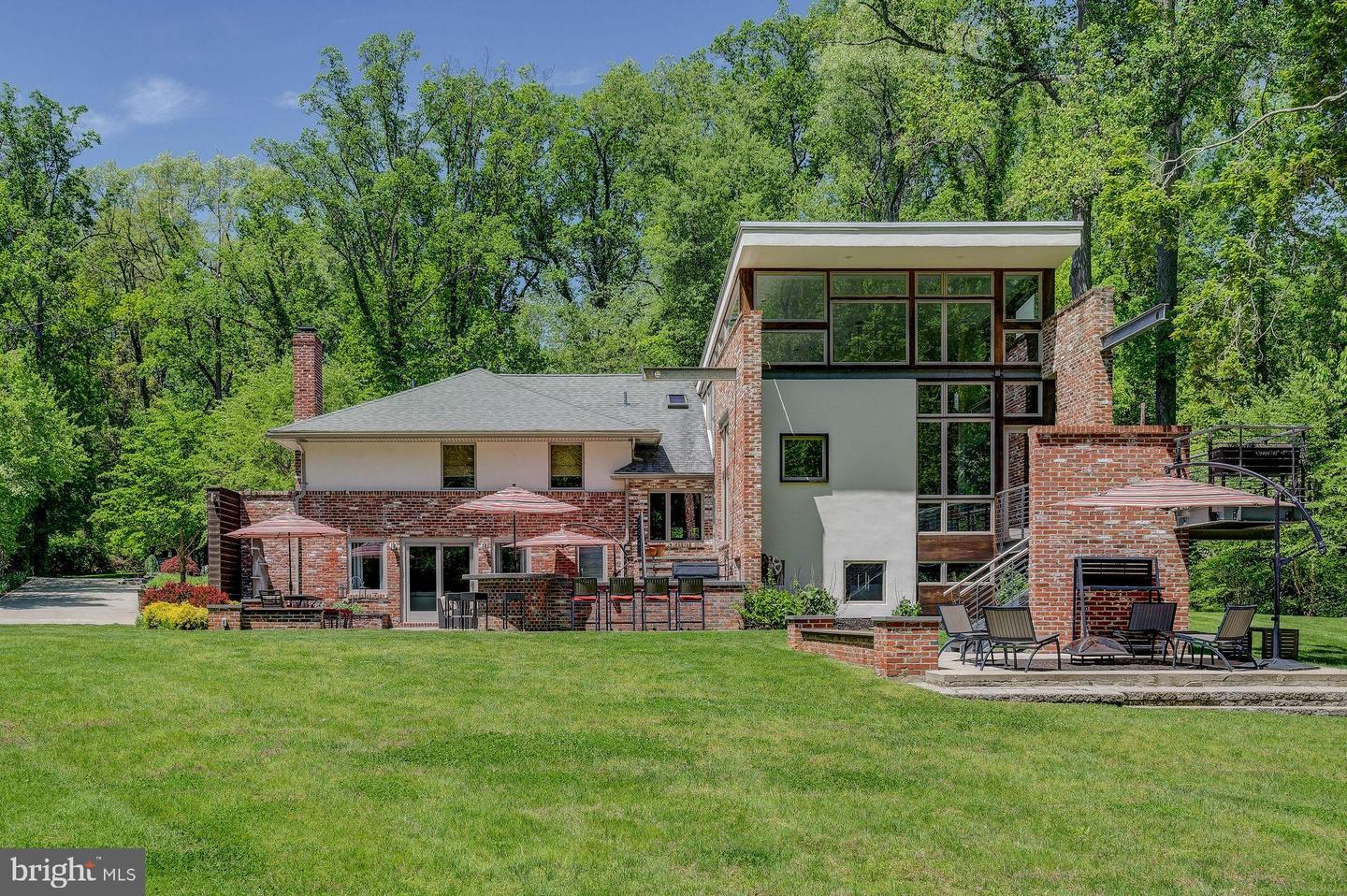
    The home combines brick and glass and has a number of patios.

    Located in the Voken Tract in Springdale, this five-bedroom contemporary is striking inside and out. It features a distinct architectural design that blends brick and glass. The home has a two-story living room, complete with numerous windows and a wood-burning fireplace, that opens onto a contemporary kitchen. Other features include a dining room, an office, and a family room. There are several patios outside, including one with a built-in kitchen, all overlooking a wooded lot with a private walking loop. There’s an open house Sunday from 1 to 3 p.m.

    See more photos of the property here.

    Price: $1.249M | Size: 3,395 SF | Acreage: 1

    đŸ—žïž What other Cherry Hill residents are reading this week:

    By submitting your written, visual, and/or audio contributions, you agree to The Inquirer’s Terms of Use, including the grant of rights in Section 10.

    This suburban content is produced with support from the Leslie Miller and Richard Worley Foundation and The Lenfest Institute for Journalism. Editorial content is created independently of the project donors. Gifts to support The Inquirer’s high-impact journalism can be made at inquirer.com/donate. A list of Lenfest Institute donors can be found at lenfestinstitute.org/supporters.


  • Eagles newcomers ’26: Stone Smartt and Deontae Lawson have work to do to make the team

    Eagles newcomers ’26: Stone Smartt and Deontae Lawson have work to do to make the team

    With Eagles training camp drawing nearer, The Inquirer is taking a closer look at the more than three dozen new faces who are expected to report along with the rest of the team on July 28.

    Player: Stone Smartt

    Position: Tight end

    Age: 27

    Previous experience: Rookie second-round pick Eli Stowers isn’t the only former quarterback playing tight end for the Eagles in training camp. Smartt, too, was a quarterback even into his college days. He played quarterback at Northern Arizona and Riverside City College before transferring to Old Dominion, where he eventually became a wide receiver.

    Smartt went undrafted in 2022. He signed with the Chargers and made seven appearances as a rookie. His highest usage came in 2023, when he was on the field for 28% of the offensive snaps and was targeted 21 times (11 catches). Smartt, who is 6-foot-4 and 226 pounds, signed with the Jets last season and played 15 games, mostly appearing on special teams.

    Path to a roster spot: The Eagles have eight tight ends on their current roster. If you’re building a depth chart heading into camp, it’s hard to get Smartt any higher than fifth, and since the Eagles won’t be keeping that many tight ends, Smartt’s odds of making the team out of camp are long. Dallas Goedert and Stowers are locks to make the team. Free agent addition Johnny Mundt figures to have a leg up for a spot due to his blocking ability. Grant Calcaterra is back but has plenty of competition — including from Smartt — to make the team. Smartt should have plenty of chances in camp and in preseason games to show he belongs, but it won’t be easy 
 or likely.

    Fun fact: Smartt has plans for life after football. He has a finance degree and has continued his financial education after college.

    Quotable: “One thing that constantly comes back to my mind is helping people and families have money and make that money work for them, and also being able to leave a legacy for their next of kin,” Smartt said recently on a financial podcast.

    Alabama Crimson Tide linebacker Deontae Lawson (0) reacts during the second half against the Auburn Tigers at Jordan-Hare Stadium.

    Player: Deontae Lawson

    Position: Linebacker

    Age: 23

    Previous experience: Draft experts had Lawson pegged as a Day 3 pick for good reason. He was a standout at Alabama who left Tuscaloosa ranked 10th all-time in tackles (283). An ACL tear near the end of his junior season certainly may have impacted his draft stock. He initially planned to leave for the NFL after that 2024 season but returned to college and had 89 combined tackles in 15 games.

    Path to a roster spot: Lawson is long and relatively lanky at 6-3 and 226 pounds. He faces a difficult path to go from undrafted free agent to the roster, but he should, at the very least, be an intriguing player the Eagles try to keep on the practice squad. Zack Baun and Jihaad Campbell are the off-ball linebacker starters, and Jeremiah Trotter Jr. is right behind them. Four seems like the likely number for linebackers on the initial 53-man roster. Smael Mondon Jr., a fifth-round pick last year, is slotted in at that No. 4 spot right now, but Lawson and Chance Campbell are knocking on the door. There could be a fun competition for that fourth spot.

    Fun fact: Lawson became one of just 16 players in Alabama football history to twice be named a team captain.

    Quotable: “Lawson might not have elite speed or strength, but NFL teams love him as a football player because he plays fast and fiery, and his processing can be a differentiating factor,” The Athletic’s Dane Brugler wrote of Lawson in this year’s Beast draft preview. “He has the talent to compete for starting reps, but questions about durability cloud his future.”

    According to NFL Network analyst Lance Zierlein, Lawson is “much better at slipping blocks than he is at taking them on. 
 He projects as a run-and-chase Will linebacker with three-down potential but a limited ceiling.”

  • Trans people are fleeing red states for Seattle. The city can’t keep up.

    Trans people are fleeing red states for Seattle. The city can’t keep up.

    SEATTLE — Crow Harmony never felt at ease living in Florida as a transgender guy. The state has some of the most restrictive anti-LGBTQ+ laws in the country, and Harmony said he struggled to find employers willing to hire trans people. Last fall, after Harmony’s boyfriend transitioned, the couple lost their housing.

    They were just 21 and 20 with no money or job prospects, so Harmony reached out to a Seattle nonprofit for help getting out of Florida. The nonprofit, a trans-led organization called Traction, welcomed the couple with a place to sleep and money for moving.

    But unbeknownst to Harmony, Traction was struggling, too.

    Since the 2024 election, Traction has helped 1,500 trans people flee red states — more than 20 times the 70 people it aided in the 18 months before the election. And it’s just one of several Seattle nonprofits whose leaders say they don’t have the resources to help the number of trans people who’ve left their homes for the safety of the Pacific Northwest.

    Though trans people make up just 1% of the population in Washington state, the nonprofits that help them say their budgets are drained and their staffs are stretched so thin that last month the Seattle LGBTQ Commission asked Mayor Katie Wilson (D) to declare a civil state of emergency. Such a declaration would free up general fund dollars to bolster the nonprofits’ finances as they help transplants find housing and jobs.

    “The conditions,” the commission wrote in a June 2 letter to Wilson and the City Council, “are an urgent policy concern and a life-and-death matter for internal displaced persons fleeing to Seattle for safety.”

    Though no one tracks the migration of LGBTQ+ people from one place to another, a poll conducted by NORC suggests that roughly 400,000 trans adults fled red states in the six months after the 2024 election, a time when President Donald Trump issued a slew of executive orders aimed at restricting nearly every facet of trans life. Another 1.2 million trans people were estimated to be considering such moves.

    In the year since, the need for aid has skyrocketed, nonprofit leaders say, as states such as Kansas and Idaho have stripped trans people of their drivers’ licenses and threatened to jail them if they didn’t use bathrooms that conform to the sex they were assigned at birth. Meanwhile, private donations have shrunk and grant opportunities have disappeared as Trump warns against using federal funding to “promote gender ideology.”

    Wilson has said she will decide by the end of August whether to authorize a state of emergency, which could free up $2.1 million and create a program to help LGBTQ+ newcomers navigate the city’s social services. In a nearly three-hour council committee meeting in late June, commission members said that without the declaration, some LGBTQ+ organizations might close, further straining the city’s already overtaxed safety net.

    “We need help,” LGBTQ Commissioner Kody Allen told the City Council. “Our community needs help. And this is the only place we can get it.”

    Seattle has long been known as one of the country’s most trans-friendly cities. It banned discrimination on the basis of gender 40 years ago. Its hospitals were among the first to offer gender transition care to young people. And Washington state was the first in the nation to allow trans athletes to compete.

    Those protections have always drawn trans people from elsewhere, but in the years before Trump won reelection, nonprofit leaders say, the numbers were small enough, and the newcomers so prepared, that organizations could easily help people settle in. Most arrived with jobs and rental agreements. But after Trump took office and further emboldened conservative lawmakers to strip trans people of rights, Seattle leaders say they began to hear from people with no plan, only a desperate need to move immediately.

    “Most people don’t come to us saying, ‘I want to move to Seattle.’ They say, ‘I need to get the hell out now,’” said Aspen Coyle, a program manager for Traction. “It’s been chaos. We have been scaling up as fast as we can, but there is so much need out there. It is this massive, massive wave of people coming in.”

    Nearly 400 people have asked for help in the past two months alone. For a nonprofit that took in less than $84,000 in revenue before the election, those requests can feel “immense.” But Coyle and Traction founder Michael Woodward said securing money has become increasingly difficult under Trump. Last year, the organization applied for a dozen grants and won only two small ones — worth just $17,500. Individual donors have stopped giving as much, too, and some are afraid to donate to organizations Trump might consider part of “a radical ideology.”

    When Harmony and his boyfriend contacted Traction last year, the couple had nearly no resources to rebuild their lives. They were too young to have amassed any real savings, and they were leaving all of their friends and most of their possessions behind.

    A Traction peer navigator met the couple at the airport. Three different couples who volunteer with the group offered to house Harmony and his boyfriend for weeks at a time. The navigator helped Harmony sign up for health insurance and food benefits, and eventually, Traction helped the couple find jobs and enroll in college. A few months ago, the couple signed a lease for their own apartment.

    “For the very first time, I felt like I didn’t have to do it all myself,” Harmony said. “We never had to wonder, ‘What are we going to do now?’ They were already thinking ahead of what we might need.”

    In a council committee meeting in late June, dozens of trans people told similar stories. A person from Kansas said they lost their job driving a bus after the state forced trans people to surrender their licenses. Others from New Orleans and Georgia said they lost access to medical care. And several described themselves as “refugees” who would have been homeless if not for Seattle’s nonprofits.

    Leaders from multiple nonprofits told the council that they were now hearing “every day” from people who were afraid to continue living elsewhere. But Taylor Farley, the executive director of the Queer Power Alliance, said they worried local groups don’t have the resources to help everyone who needs it.

    “Our costs are rising nearly twice as fast as our funding is coming in,” said Farley. “Our community is under attack, and organizations protecting LGBTQIA+ people are struggling to survive.” (One conservative influencer in Seattle decried the “emergency” as an attempt by left-wing groups to tap public tax dollars unnecessarily.)

    Declaring a civil emergency would be a “significant step,” commission members acknowledged in a letter to Wilson this spring — one that could cost the city $2.1 million if it addresses the immediate needs. Seattle is facing a nearly $500 million shortfall over the next three years, and some city officials have told commission members they worry about the financial feasibility of declaring an emergency. But it’s not without precedent: Eight months ago, city leaders set aside $8 million in discretionary dollars to declare a state of emergency after the federal government cut food stamp funding.

    In a written reply to the commission, Wilson said that even though the city is facing “challenging budget restraints,” she will “proactively search for ways” to meet the need and ensure Seattle remains “a place of safety, dignity, and inclusion” for LGBTQ+ newcomers.

    Wilson, whose office did not respond to a request for comment, has convened an interdepartmental group that now meets every other week to evaluate the needs and the city’s capacity to address them. She has said that group will make a recommendation by August.

    If the city chooses not to declare a state of emergency, commission leaders said, they worry what will happen not only to Seattle’s LGBTQ+ organizations but also to ones that help all city residents. Many of the newcomers need shelter, food aid, and subsidized healthcare. And the city’s homeless population has already reached a record high this year.

    Allen, who also works for a youth homeless shelter, said his organization is turning away at least 10 young trans people a night from the shelter because it doesn’t have space.

    The one positive nonprofits say they have seen is an uptick in volunteers. Early last year, Traction had only three or five volunteers. Now it has more than 70, including Harmony. In the months since his life stabilized, Harmony has helped other newcomers navigate Seattle. Many have told him they don’t want to leave their home states, but they have to.

    “If there’s no state of emergency, we’re still going to have an influx of trans people who have been displaced from their homes, their lives,” Harmony said. “Half of them have no connections. They just want to be able to live safely. So it’s up to us to say, ‘Here is your chance. You deserve one.’”

  • Poverty in New Jersey is three times higher than the federal measure, experts say

    Poverty in New Jersey is three times higher than the federal measure, experts say

    Dana Brown-Toure, 52, says her life is in a place “somewhere between drowning and surviving.”

    A former health aide living on disability benefits, Brown-Toure contends with diabetes that threatens to blind her, while rising bills continue to overwhelm her. Brown-Toure shares an arduous existence with her two children, ages 8 and 21, in the house they rent in Camden, made harder by her former husband’s recent stroke, which hampers his ability to contribute money.

    Still, despite their troubles, the family takes in enough money to place Brown-Toure just above the official federal poverty level.

    That the U.S. government does not consider her to be living in poverty is hard for Brown-Toure to believe. “Life’s a struggle,” she said Monday. “I would say this feels below the poverty line.”

    So would the Poverty Research Institute (PRI) of Legal Services of New Jersey, a statewide legal aid nonprofit that has released a new report asserting that the actual rate of poverty in the state is about triple what the U.S. government calculates.

    That means, the report says, the official number of residents living in poverty in New Jersey in 2024 — the latest statistics available — was close to 3 million, rather than the federal figure of 859,000. Brown-Toure did not want her exact income to be disclosed, but the federal poverty level for a family of three such as hers in 2024 was just over $25,000.

    A person living below the official poverty level can more readily qualify for various assistance programs, such as SNAP (Supplemental Nutrition Assistance Program), Medicaid, Head Start, and school meals. The problem, experts say, is that even people with incomes that are twice the poverty rate need help, according to the Center on Budget and Policy Priorities.

    The government “severely understates poverty for high-cost states like New Jersey,” PRI director Shivi Prasad said.

    New Jersey’s cost of living ranks third-highest among states, behind California and Hawaii, according to the U.S. Bureau of Economic Analysis in the Department of Commerce. It also has the highest real estate property taxes in the United States, according to the Tax Foundation, a nonprofit that analyzes tax policy. The average annual tax bill in the state exceeds $10,000, compared with a national average of around $3,119, the foundation said.

    As the issue of affordability continues to plague Americans, thrusting many deeper into poverty, it’s becoming clear that the government‘s methods to measure deprivation are inadequate, PRI explains.

    The report, released in June and titled “2024 Poverty Data at a Glance: How the Federal Measurement Falls Short for New Jersey,” says that “the hard reality is that poverty remains deeply entrenched with millions left behind — a paradox for a state considered among the wealthiest in the nation.”

    The PRI measures what it calls True Poverty Level, described as the minimum income working families need to afford basic necessities without any public or private support, without making tradeoffs such as eating less to make rent payments.

    The basic flaw of the official federal poverty level, according to the PRI and other experts, is that it is a simplistic standard based on computations from 1964.

    “It’s a super-inadequate measure, like the federal minimum wage of $7.25 an hour,” said Laura Napolitano, a sociologist at Rutgers University-Camden. “We’re looking at a dated calculation that’s been unchanged for years.”

    Back in the mid-1960s, poverty thresholds were derived by taking the U.S. Department of Agriculture’s calculation for the minimum cost of food, then multiplying it by three to account for other family expenses. The thinking was that food was one-third of a family’s budget. Each year, the poverty level is updated to keep up with inflation, but the equation has remained the same for more than 60 years.

    Importantly, Prasad said in an interview, as the decades have gone by, the federal poverty level has not accounted for the actual costs of housing, childcare, food, transportation, healthcare, and other aspects of everyday life. And the federal poverty level does not allow for geographic differences in cost across the nation. For example, the average monthly rent for a two-bedroom apartment in Manhattan ($5,746) is vastly higher than it is in Omaha ($1,441), according to Apartments.com.

    “We look at all these realistic costs to see how much a family really needs to make it,” Prasad said. “We want to see how much you’d need to survive on your own, without help from the government or from family.”

    To determine how much basic survival costs in New Jersey, Prasad noted that an average monthly rent in the state is around $1,800 for a two-bedroom apartment. That would make a year’s rent more than $21,000.

    Now look at childcare, Prasad said, where the maximum monthly rate that can be charged for a toddler is $1,417, according to the New Jersey Department of Human Services, which comes to around $17,000 a year.

    With rent and childcare adding up to almost $40,000 annually, even if you are making $50,000 — almost twice the federal poverty rate for a family of three — “you really don’t have enough to survive,” Prasad said.

    And that says nothing about skyrocketing food costs, she added. The Food Bank of South Jersey reported that over the last four years in Burlington, Camden, Gloucester, and Salem Counties, the number of meals distributed to compensate for increasing food expenses grew by 34%.

    “More of our neighbors are turning to us amid an affordability crisis that’s hitting a high-cost state like New Jersey harder than poverty measures may show,” Jane Asselta, the food bank’s president and chief executive officer, said in a statement.

    For a more detailed analysis of the area the food bank serves, Prasad focused on South Jersey data for The Inquirer. In Burlington County in 2024, the true poverty rate was 27.2%, Prasad said. Similarly, Camden County’s true poverty rate was 38%, while Gloucester County’s sat at 29%. All rates as calculated by the PRI were more than three times the federal poverty levels for the counties in 2024, figures show.

    Ultimately, Brown-Toure said, no matter how the government classifies poverty, the one constant she endures is that life’s hardships are wearing her down.

    “I’m feeling depressed,” she said. “I miss working and my weekly paycheck. And the dream I once had to own a house is all gone.

    “There’s a lot of struggle right now, a lot trauma. It’s hard. And the hardship never stops.”

  • Rite Aid is gone. Its shells remain, with some becoming gyms and car washes.

    Rite Aid is gone. Its shells remain, with some becoming gyms and car washes.

    It’s been almost a year since the last Philly-area Rite Aids closed their doors for good after years of financial trouble.

    But the pharmacy chain’s distinct facade still dots the landscape — in suburban shopping centers, on the corners of congested intersections, sometimes even smack dab in the middle of city blocks.

    Some of these buildings are still vacant, surrounded by overgrown grass and empty parking lots. Others are getting new life as dollar stores, medical clinics, daycares, Spirit Halloweens, and a Rally House sports retailer.

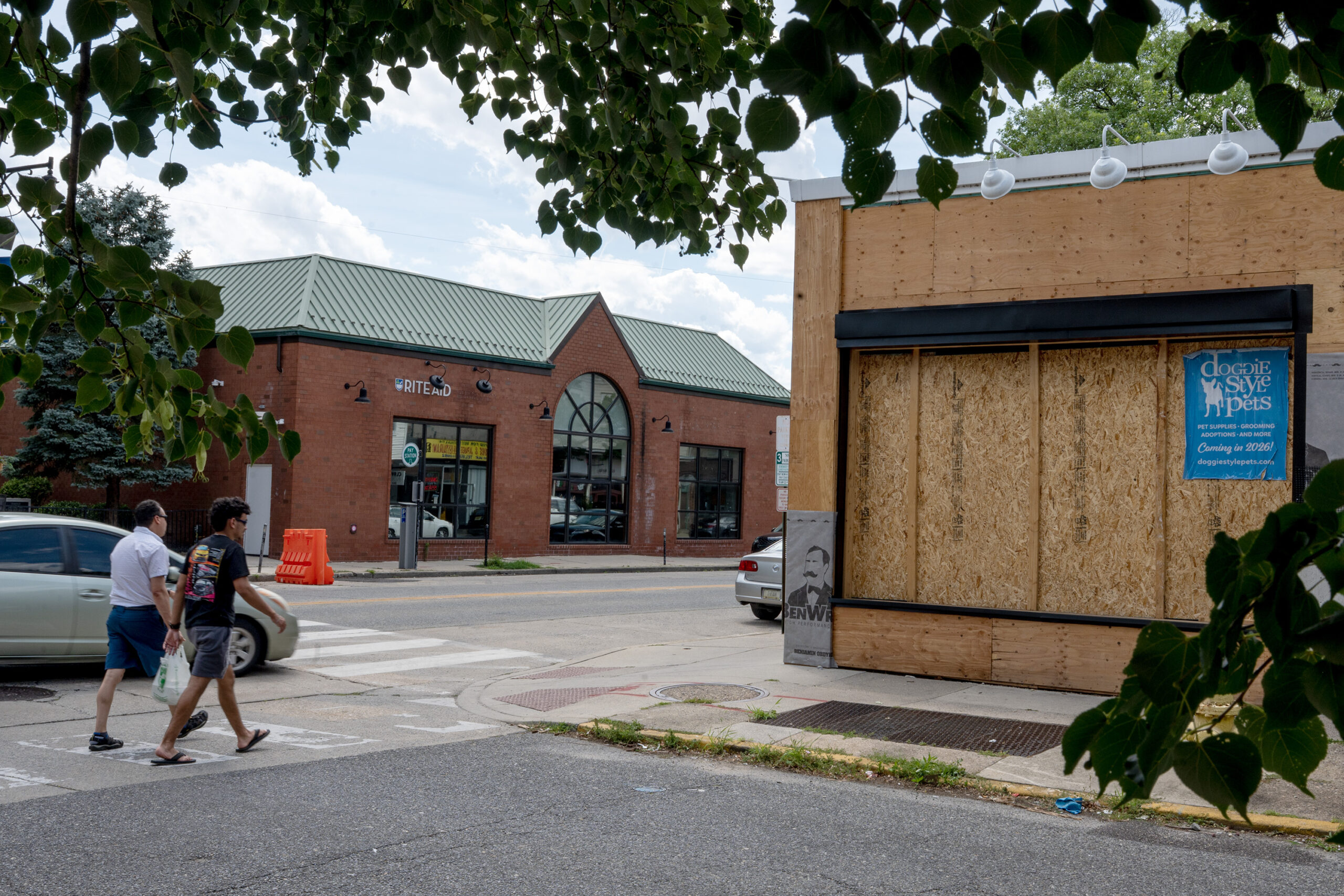
    A former Rite Aid (left, rear) and former Wawa (right) sat empty in Collingswood in June.

    The 8,000- to 16,000-square-foot shells are ideal for only so many tenants, real estate experts have said, and it is not unusual for these kinds of properties to take several months or more to lease.

    Here is a look at what’s happening at a few local zombie Rite Aids:

    South Jersey Rite Aids are becoming fitness centers

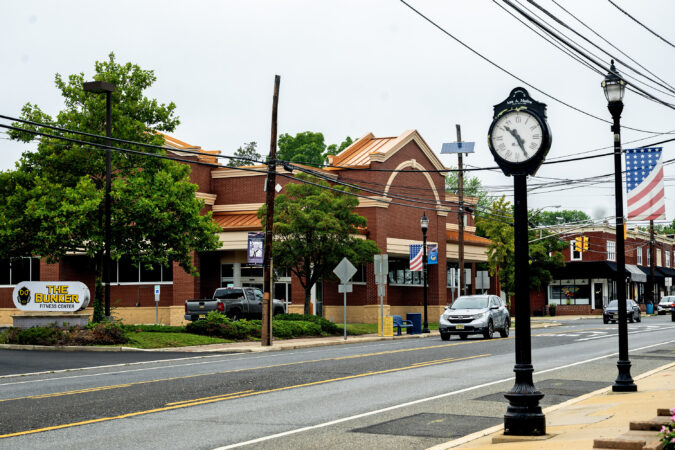
    A former Rite Aid in Blackwood, Camden County, has been a gym for more than a year, and its owners soon plan to open a second location at another old Rite Aid in Cherry Hill.

    Nick Bennett, CEO of the Bunker Fitness Center, said the owner of the Blackwood Rite Aid building approached him after seeing the gym’s content on TikTok. At the time, Bennett said, the gym was outgrowing its 3,000-square-foot space in Franklinville, Gloucester County.

    When he went to see the 13,000-square-foot former Rite Aid in Blackwood, he said, it had already been demolished inside.

    “It was just wide open,” Bennett said. “That floor plan works for our business model because gyms are open. You don’t really need to put up walls.”

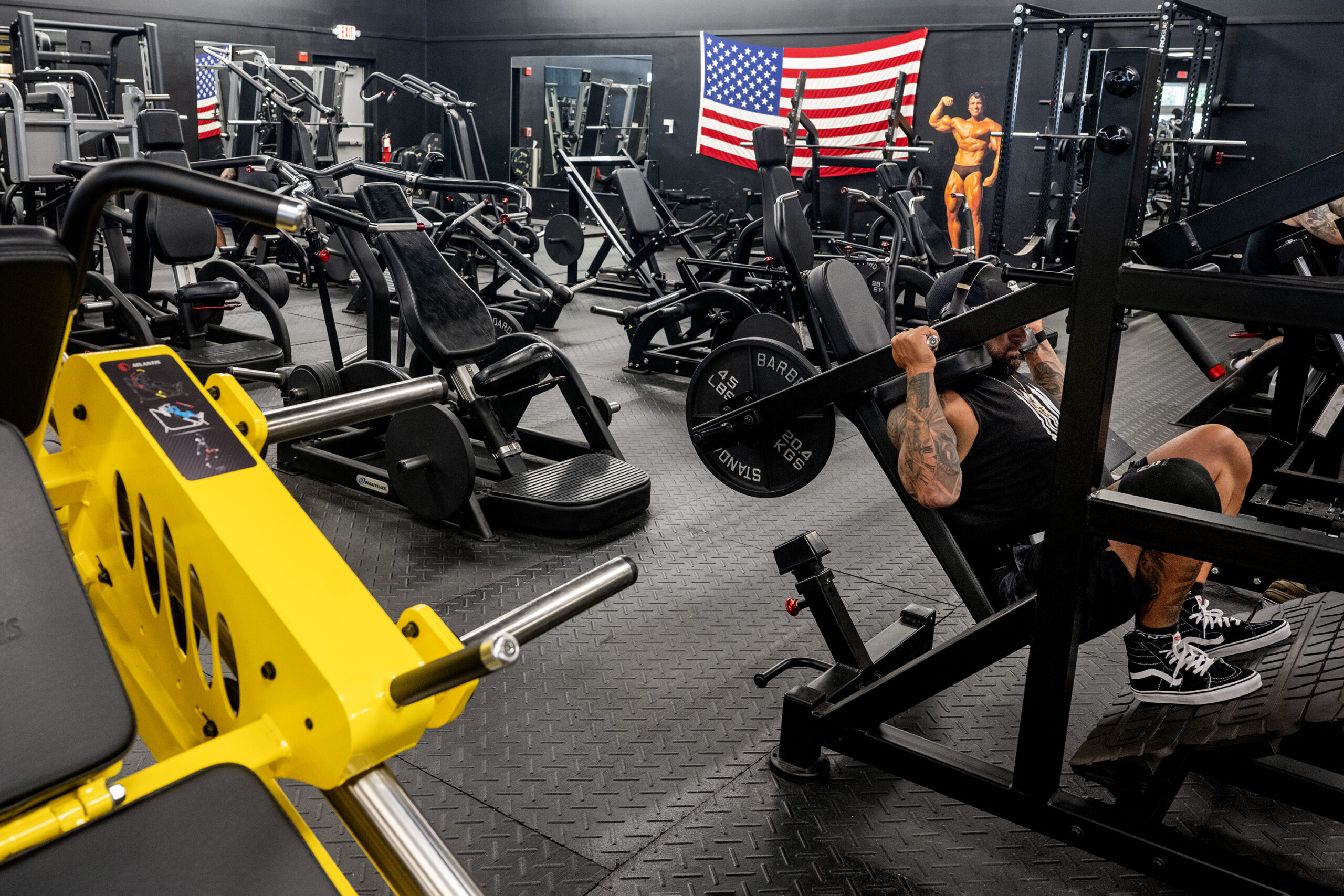
    Steve Cristelli works out at the Bunker Fitness Center in Blackwood.

    Another plus, he said: Pharmacies have rows of refrigerators, which require electrical outlets, and the Bunker crew could use those outlets to plug in workout equipment.

    The old Rite Aid on Black Horse Pike needed “very little” work, just paint and rubber floors, Bennett said, and was easily transformed into the exercise and recovery space he had envisioned. The gym opened in 2025.

    “We’re smashing it,” Bennett said, with thousands of members who pay between $49 and $59 a month for the 24/7 gym, which has cardio and strength machines, weights, a sauna, and a cold plunge. He declined to provide specific sales or membership figures for competitive reasons.

    The Bunker Fitness Center operates inside a former Rite Aid in Blackwood.

    But Bennett said the business is doing so well that it is expanding into another former Rite Aid, 12 miles away in Cherry Hill with franchisee Jack Prendergast.

    That 10,000-square-foot pharmacy shell at Brace and Kresson Roads closed more recently and needs a bit more work inside, Bennett said. When they signed the lease, he said, it “looked like a Rite Aid.”

    Bennett said he and Prendergast are demolishing the interior, aiming for a September opening.

    In Delco, a Rite Aid could become a township’s first car wash

    The former Rite Aid in Newtown Square may get new life as a car wash.

    The store at West Chester Pike and St. Alban’s Circle closed last year. In February El Car Wash, a Florida-based chain looking to expand into Pennsylvania, New Jersey, and Maryland, applied to open there, said Newtown Township Solicitor Rich Sokorai.

    On its website, El Car Wash lists several other Philly-area locations as “coming soon,” including Cherry Hill, Drexel Hill, Feasterville, and Maple Shade.

    The Newtown Square Rite Aid operated a drive-through, Sokorai said, and drive-throughs are permitted in that commercial zone. After a June meeting, the township zoning hearing board is considering whether to permit the car wash, with a decision expected in the coming weeks.

    A Rite Aid with a “store closing” sign last summer.

    If approved, it would be the only car wash in Newtown Township, the solicitor said.

    Residents of the neighborhood behind the old Rite Aid have expressed concerns to local officials, Sokorai said, “because they fear traffic.”

    Others have said they are looking forward to a new business moving into the vacant space on a prime corner, Sokorai said. Even before the Rite Aid closed last summer, its shelves were often empty, the solicitor said, and “it was dying a slow death.”

    Temple University buys another old Rite Aid

    Temple “T” flags fly on North Broad Street.

    Temple University recently bought a second former Rite Aid on North Broad Street.

    The school recently closed on the old Rite Aid building on the 2100 block of North Broad for $9.25 million, according to spokesperson Stephen Orbanek. He said ArchWell Health, which operates a primary-care clinic for seniors there, will remain the tenant.

    “This property’s location, directly across the street from James S. White Residence Hall, supports the priorities of our campus safety and physical environment plan,” Orbanek said.

    This latest Rite Aid acquisition comes two years after Temple bought a Rite Aid and its surrounding shopping center near Temple University Hospital for $8.2 million. The Rite Aid is being converted into Temple Health neurology offices.

    The moves are part of a broader expansion of the university’s footprint on Broad Street, which includes the January acquisition of a vacant property at the site of a former McDonald’s for $8 million.

    Editor’s Note: This story has been updated to indicate that Temple Health plans to open neurology offices at the previously acquired Rite Aid building.

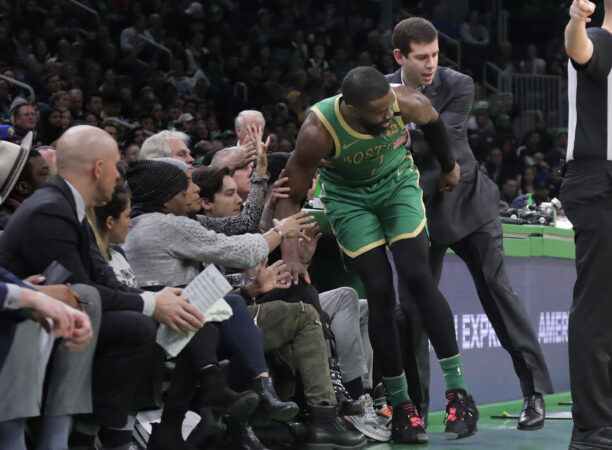
  • Brad Stevens says he would rather have not traded Jaylen Brown to Philly, but the Celtics did what they had to do

    Brad Stevens says he would rather have not traded Jaylen Brown to Philly, but the Celtics did what they had to do

    It wasn’t the first time Brad Stevens had heard the question. His story piques a natural curiosity. A man widely regarded as one of the world’s finest basketball coaches walked away from one of the world’s finest basketball coaching jobs at 44 years old. He did so to become a suit. Over the last five years, plenty of people have wondered aloud to the Celtics’ president of basketball operations.

    So, do you miss coaching?

    “I did this week,” Stevens said on Monday, recounting a conversation he had with an interrogator last week. “This is not for the faint of heart.”

    Stevens’ news conference alongside Celtics majority owner Bill Chisholm earlier this week offered the world its first chance to inform its opinion on a trade that stunned the NBA like few before it. While the Sixers have yet to announce when they will field questions about their blockbuster acquisition of Boston superstar Jaylen Brown, the guys on the other side of the deal didn’t have the same luxury.

    Rarely does an NBA team encounter such a universal and vociferous disagreement with a trade as the Celtics did to their decision to trade Brown to the Sixers for Paul George and a couple of first- and second- round picks. Here in Philly, the jubilation surrounding such a no-brainer decision was further enhanced by the opportunity to watch Bostonians engage in a collective public meltdown unlike any it has staged since at least the Revolutionary War. One local radio host called it the worst trade in Celtics history. Another said he felt physically ill. Bill Simmons said he woke up from a colonoscopy and assumed he’d died.

    “I’m with you,” Stevens said. “That is a hard thing to trade a guy that you, first of all, care so much about and secondly have so much respect and admiration for, to a team that just beat you in the playoffs and that you’re literally going to play six times before the playoffs next year, with our two preseason games. But I do think that ultimately when you do a deal you need to think about you first and the optionality it creates for you. If I’m being honest, if that exact deal came from a team out west and you were comparing the two, then you’d probably take the team out west. But that’s not the way it was working.”

    Whatever the immediate local reaction to Stevens’ defense of the decision, he and Chisholm offered a master class in how to handle blowback. You do it directly, immediately, and humbly. It helps when you believe in your decision-making process, which the Celtics clearly did. And, look, they were right to feel that way. Because, chances are, this ends up being a good decision for them.

    That’s not the same as saying that the Sixers will regret their decision to trade for Brown. Nor is it the same as saying that the Celtics “won” the deal. None of those things are exclusive from one another. There is a scenario where the Celtics and Sixers both did what was best for them, and that the price was perfectly fair. Granted, things rarely align on all three of those fronts. But this is one of those deals where both sides made the most rational decision and where the market dictated the terms. A lot of the criticism currently being aimed at the Celtics would be better targeted at the 28 general managers who either couldn’t or wouldn’t beat the Sixers’ offer for Brown. If anything, the market was the irrational actor.

    Jaylen Brown spent 10 seasons in Boston after getting selected third overall by the organization in 2016.

    From the Sixers’ perspective, the argument remains largely as it did in the immediate wake of the deal. More than practically any other player in the NBA, Brown at least renders believable the idea that the Sixers can contend for a championship over the next two years, given both their smallish backcourt of Tyrese Maxey and VJ Edgecombe and their preexisting financial condition. Brown’s size, athleticism, explosiveness and shotmaking are a much better fit at about $60 million over three years than George was for essentially the same AAV over two years. That, at the very least, means the Sixers will be doing something other than treading water and praying for a miracle for the duration of Joel Embiid’s contract, which is as immovable — and limiting — as any in the NBA.

    The Celtics were not bound by those constraints. Their desire to remain that way sits at the heart of the decision to trade Brown. Keeping his contract on their books could easily have led them to a fiscal and competitive cliff. A lot of the criticism of the Celtics seems to underestimate this reality.

    The criticism doesn’t account for the idea that Payton Pritchard is worth the entire amount of the four-year, $100 million extension he is eligible to sign. Over the last two seasons, seven guards in the NBA have a .600-plus true shooting percentage while attempting at least 20 shots per 100 possessions. Those seven are Shai Gilgeous-Alexander, Austin Reaves, Jamal Murray, Anthony Edwards, Luka Dončić, Desmond Bane, and 
 Pritchard.

    The criticism doesn’t account for the contract that former second-round pick Jordan Walsh could command as a free agent next summer. It doesn’t account for Hugo González potentially hitting his option year at the same time Pritchard’s current deal is expiring. The Celtics could have made it work for the next couple of years, sure. But they wouldn’t be able to do it the two years after that. The teams that lose sight of those years are the ones who end up where the Sixers were.

    The criticism of the Celtics also seems to under-assess the Celtics’ return. The 2028 draft pick they acquired is hugely valuable given the probability that it ends up as a maximum-odds lottery pick and the time-value aspect of its relative immediacy. The 2031 unprotected pick will be perfectly timed on a number of levels.

    I don’t have room to show you all of the work. But you should at least be able to accept that a basketball mind as astute as Stevens’ and an organization as accomplished as the Celtics have done the work. In a weird way, all of the factors that have generated such outrage are also evidence of how strongly the Celtics believed in their decision.

    Few teams have the stones to trade a player at the peak of his value. The Celtics’ skids were greased by Brown’s eligibility for a contract extension. More often than not, the word “No” is a first domino.

    “They convinced me this was the best way for us to win, and I got there, I did, but it was hard,” Chisholm said. “It was really hard. And I recognize this is a big, big move.”

    It is unquestionably a move that works in the Sixers’ favor. But that doesn’t mean it won’t work out for the Celtics, too.

  • Jace Banks picked up a stick late. Now he’s one of the nation’s top lacrosse players.

    Jace Banks picked up a stick late. Now he’s one of the nation’s top lacrosse players.

    Jace Banks only started playing lacrosse six years ago, but he quickly emerged into a formidable force on the field.

    The 19-year-old from Middletown, Del., who recently graduated from the Hill School, is ranked No. 6 in the country and the top player in Pennsylvania in the class of 2026, according to the National Lacrosse Federation.

    Banks, an attacker and midfielder, finished his senior season with 45 goals and 17 assists. Now, he’s preparing to play at Notre Dame in 2027. While the game came easy, becoming a leader was a different battle.

    “He’s a special kid,” said Dave Page, the Hill School’s head boys’ lacrosse coach. “He’s got a really quiet confidence and charisma about him and it made him a great leader, not just on the team, and in the locker room, but I think around the campus.”

    Banks transferred to the private boarding school in Pottstown in 2023, after being recruited by Page during Banks’ freshman year at The Tatnall School in Wilmington. Once he began playing at Hill, Banks’ commitment to the sport changed.

    “When I started, the [senior players] on the team had so much influence on my life.” Banks said. “I just remember you’d wake up in the morning and you’d see kids already coming back from the gym or like coming back from hitting the wall or the field. 
 little things like that every day really motivated me and it was a shock of culture almost.”

    He began to focus on drills that utilized his 6-foot-2 frame, while building his strength and speed, two areas that have become the biggest asset in Banks’ game.

    Page says that’s one of the benefits of having a boarding school program.

    “I tell the kids, it’s called prep school, not get you into college school.” Page said. “The preparation piece is a big part of it. 
 There’s the athletic, the academic, and then I think the other big piece is the community piece, and that definitely does contribute to closeness and I think that’s something we try and lean into, the huddle is a brotherhood every time.”

    It also taught Banks how to be a leader.

    Jace Banks came to The Hill School in 2023. He emerged as the top lacrosse player in the state in the class of 2026.

    “I remember my junior year, we had a kid named Kessy Cox [now at Villanova] come through,” Banks said. “He helped me with what a kid that has a high rank is supposed to look like and what we have to do for the team. He kind of showed me what I was lacking in.”

    “Many people don’t understand what it’s like to have a name. You have to run a team and you have freshmen looking up to you, and you have to calm down emotions when emotions get too high and you have to run an offense and you have to pick the plays that you’re running in the sets that you’re running in. It’s just a lot.”

    Banks played multiple sports at Hill, including junior varsity basketball and running the 4×200 meter boys’ relay on the track team. This past spring, while also playing lacrosse, he helped set a new school record in the event.

    “We did a lot of practicing.” Banks said. “That helped 100%, and it was a weird balance because you’re getting stronger [with lacrosse training] but then you were getting more explosive with the track training. When we first stepped on the field, I remember, I felt amazing.”

    Banks proved to be a weapon on the field, aiding the Rams to a 13-4 record last season.

    “He’s an NFL athlete, truly.” Page said ”I don’t care how good you are as a high school defender. You haven’t covered someone who’s as explosive as Jace. 
and then the other piece, too, is he is a really intensely competitive kid. And I think when you’re playing next to guys that are wired that way, it sort of ups the standard, and he did a really good job modeling it for the other guys.”

    Banks is headed to one of college lacrosse’s premier programs. Notre Dame finished this past season ranked No. 2, after advancing to the NCAA Final Four, where the Fighting Irish fell to Princeton in the final. Notre Dame won back-to-back national titles in 2023 and 2024.

    “I think I am ready,” said Banks. “I think the mindset and everything that I cultivated at Hill will definitely prepare me for getting to Notre Dame and hopefully playing, and playing good.”

  • Shaped by sorrow | Sports Daily Newsletter

    Shaped by sorrow | Sports Daily Newsletter

    Meg Kane, the president and CEO of Signature 57, a strategic communications firm, has been the driving force behind Philadelphia’s World Cup bid.

    In November 2019, she was told by the city’s convention and visitors bureau that they were going to bid on the World Cup — and needed her help. Kane knew this would be the project of a lifetime, and she was put front and center as the captain of the city’s World Cup cheerleading squad.

    It also has been a round-the-clock operation: From constant interviews to riding the Amtrak to New York or taking a 14-hour flight to Doha, Qatar, to see what she could learn, then debriefing with her colleagues at Philadelphia Soccer 2026.

    But two years before she welcomed the World Cup, Kane faced an unimaginable family tragedy when her parents died in a house fire. Since then, a simple message from her father has guided her.

    — Isabella DiAmore, @phillysport, sports.daily@inquirer.com.

    If someone forwarded you this email, sign up for free here.

    ❓Which Phillies player are you looking forward to watching in the All-Star Game? Email us back for a chance to be featured in the newsletter.

    Following the knockout

    Christian Pulisic (second from right) on the U.S. bench after being subbed out injured in the second half.

    By the time this summer arrived, there was a bar set for the U.S. to make history — and it felt like they could. The program had just one knockout game win in its history. Winning two would mean a quarterfinal berth. It also meant toppling a giant somewhere along the way.

    In the round of 16, that giant was Belgium. The U.S. needed its big players to deliver, but they didn’t. Now, what’s next for this “golden generation” of players and their $6 million coach?

    And don’t blame Folarin Balogun for the global fallout over whether his red card was justified. It did, however, give Belgium the motivation it needed to win.

    What we’re 


    👟 Donning: Bryce Harper pays tribute to SEPTA in his new line of Under Armour cleats.

    🏀 Learning: The fifth annual Cathedral Classic will return to the Palestra with an expanded five-team field.

    👀 Watching: World Series MVP Cole Hamels is joining MLB Network’s draft coverage in Philly this weekend.

    👏 Applauding: This Hill School graduate started playing lacrosse six years ago. Now he’s preparing to play at Notre Dame this fall.

    🏈 Evaluating: Stone Smartt and Deontae Lawson will have some work to do to make the Eagles’ roster.

    Another All-Star

    Phillies pitcher JesĂșs Luzardo has a 3.75 ERA in 18 starts this season.

    For the first time in his career, JesĂșs Luzardo was named an All-Star. He was added to the National League roster on Tuesday as a replacement. The news of his selection took him completely by surprise.

    The Phillies also did some bullpen shuffling ahead of their series opener against the Reds. Right-hander Max Lazar was recalled from triple-A Lehigh Valley, while lefty Kyle Backhus was optioned. Plus, Brandon Marsh had the day off.

    Despite being left off the National League roster, Zack Wheeler put on an All-Star performance by dominating the Reds in the Phillies’ 4-1 win. He tied a career-high with 14 strikeouts.

    Changing sides

    Noel Acciari skates into Flyers defenseman Jamie Drysdale during Game 1 of the Eastern Conference first round Stanley Cup playoffs on April 18.

    Noel Acciari checked a lot of boxes, including playoff experience, the fourth-line role, and face-offs, that general manager Danny BriĂšre was looking for from a free agent.

    The veteran forward, who was on the Penguins team that lost in the opening round of the Stanley Cup playoffs to the Flyers, inked a two-year deal in Philly and says he’s happy to be on the other side of the Battle of Pennsylvania.

    Lightening the load

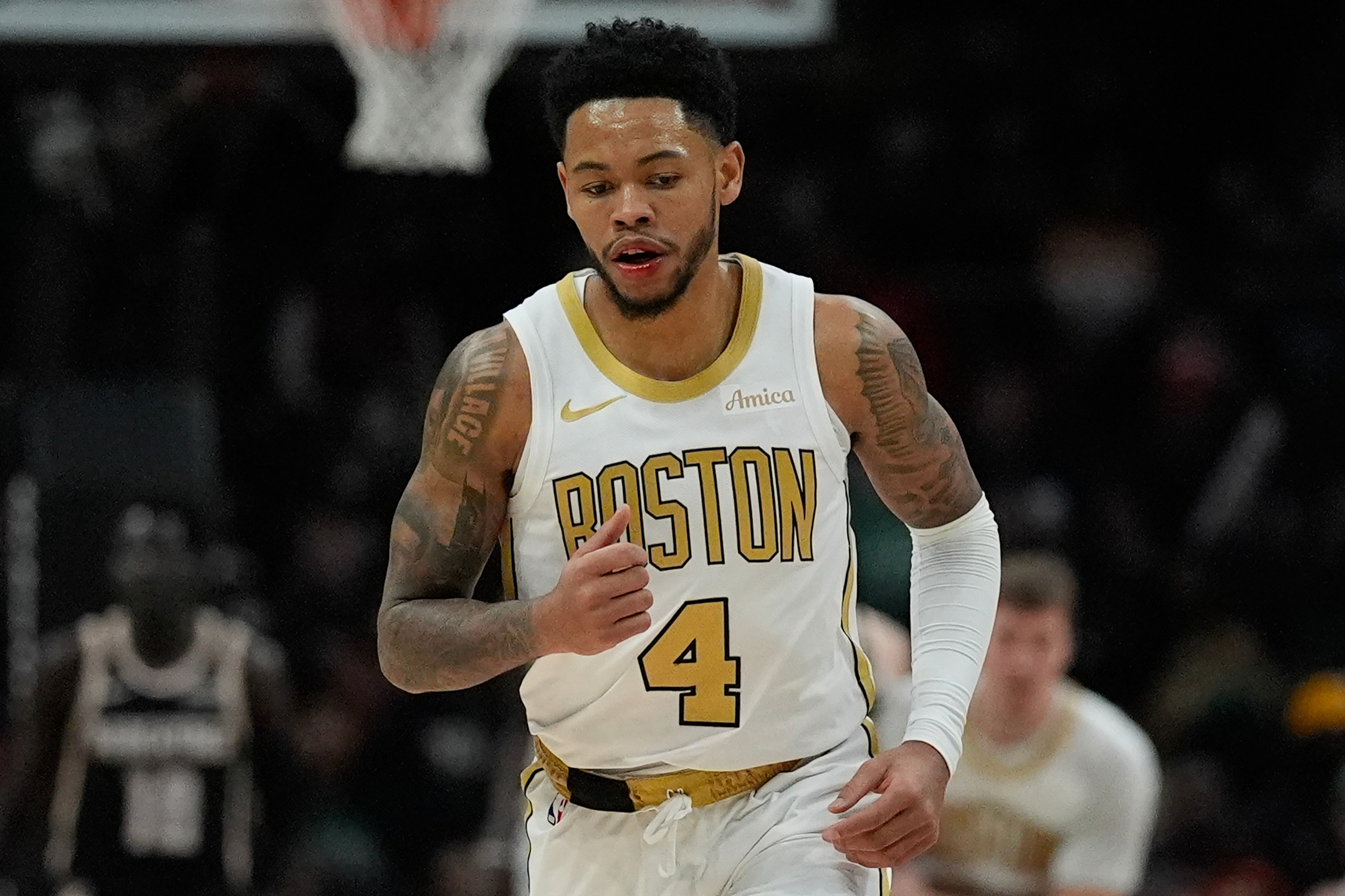
    Anfernee Simons and Jaylen Brown, who are now both Sixers, spoke glowingly about their time as teammates with the Boston Celtics.

    Mike Gansey was focused on building a deeper lineup in his first Sixers offseason as president of basketball operations. This past season, Tyrese Maxey averaged the most minutes in the NBA, and VJ Edgecombe wasn’t far behind.

    Bringing in Anfernee Simons to serve as the third guard off the bench should lighten their workload. He also has history with new Sixer Jaylen Brown.

    And speaking of depth, Dean Wade, who signed a four-year contract worth almost $39 million, believes his self-made defense and ready-made shooting will make a great fit with the Sixers.

    What you’re saying about the World Cup

    We asked: Are you still going to watch the World Cup with the U.S. out? Among your responses:

    Of course. If you follow the Premier League or La Liga or any of the top leagues in Europe you know the players on the remaining teams better than you know the USA players. And many of the “other” (non USA team) games have been fantastic. — Richard V.

    Sure why not. Most of the best teams are still in. I’m rooting for Norway. — Bill M.

    Actually NO! I found watching a soccer game almost as boring as watching grass grow. Mary and Ron tried our best last night but flipped it off 20 minutes into the game. — Ronald R.

    I’m done watching soccer for four years. I find the sport incredibly boring and was only watching because it was the United States. — Stiles B.

    We compiled today’s newsletter using reporting from Mike Sielski, Jonathan Tannenwald, Rob Tornoe, Gabriela Carroll, Devin Jackson, Conor Smith, Lochlahn March, Jeff Neiburg, Gina Mizell, Jackie Spiegel, and Becca O’Reilly.

    By submitting your written, visual, and/or audio contributions, you agree to The Inquirer’s Terms of Use, including the grant of rights in Section 10.

    As always, thanks for getting your morning started with me — I’ll certainly be tuned into the rest of the World Cup. Maria will be back in your inbox tomorrow. — Bella

  • Property values in Kensington went up more than any other Philly neighborhood this year

    Property values in Kensington went up more than any other Philly neighborhood this year

    The biggest jump in Philadelphia’s property assessments this year occurred in Kensington, a measure that means many homeowners in the long-struggling neighborhood are likely to see higher taxes amid a concerted effort by the city to clean up the area.

    That is according to an Inquirer analysis of recently released property assessments of single-family homes, which found that, citywide, there was a 3% median change in valuations from the 2025 tax year, the last time there was a mass reassessment.

    That increase is far more modest than the widespread jump in valuations that homeowners saw two years ago, which captured multiple years of real estate growth and the volatile post-pandemic market.

    What remains the same: who will be most affected.

    The Inquirer’s analysis of this year’s property assessment data shows that low-income neighborhoods near gentrifying areas saw the sharpest jumps in valuations compared with the rest of the city.

    The four areas that saw the largest percentage increases in median assessments — Kensington, Mantua, Grays Ferry, and Kingsessing — all border more gentrified neighborhoods like Fishtown, University City, and Point Breeze. The results of the analysis are a further sign that market pressures in higher-income areas are pushing into pockets of the city that have long been primarily home to Black and brown working-class residents.

    Of the eight neighborhoods that saw the largest increases between the 2025 and 2027 tax years, five have median annual household incomes around $40,000 or less, according to an analysis of U.S. Census data. The federal poverty level is $33,000 for a family of four.

    (function(){function e(){window.addEventListener(`message`,function(e){if(e.data[`datawrapper-height`]!==void 0){var t=document.querySelectorAll(`iframe`);for(var n in e.data[`datawrapper-height`])for(var r=0,i;i=t[r];r++)if(i.contentWindow===e.source){var a=e.data[`datawrapper-height`][n]+`px`;i.style.height=a}}})}e()})();

    In a statement, officials with Mayor Cherelle L. Parker’s administration noted that many homeowners in those five neighborhoods are benefiting from a popular city tax break. The city said that the median 2027 value in those five neighborhoods is $123,600, so for many homeowners in those areas, the median taxable assessed value is just $23,600.

    That is because of the homestead exemption, a tax break for homeowners who live in their house as their primary residence that exempts the first $100,000 in home value from property taxes. Homeowners must sign up to be included in the free program.

    At least 60% of homeowners in those neighborhoods have signed up for property tax relief programs, according to the city.

    James Aros Jr., the chief assessor of the Philadelphia Office of Property Assessment, and Revenue Commissioner Kathleen McColgan said enrollment rates in property tax relief, including the homestead exemption and multiple tax freeze programs, are “encouraging.”

    They said the city will “build on this progress through extensive targeted outreach, community partnerships, and efforts to make enrollment as simple and accessible as possible.”

    The current property tax rate is 1.3998% of assessed value, which has not changed for nearly a decade. The revenue is split between the city and the Philadelphia School District.

    Rising home values in Kensington

    Citywide, the steepest increase in valuations was in Kensington, where the median property value jumped 15.3%, from $115,700 in the 2025 tax year to $133,400 now. That median increase would translate to a roughly $250 annual property tax hike.

    That comes after Parker’s administration in 2024 launched a multipronged effort to address the long-entrenched open-air drug market in Kensington, which is the epicenter of the city’s opioid crisis and a site of sprawling homelessness.

    While the administration has increased law enforcement’s staffing in the neighborhood and scaled up programs for people who are in addiction, Kensington has also for years seen creeping gentrification from Fishtown to its southeast.

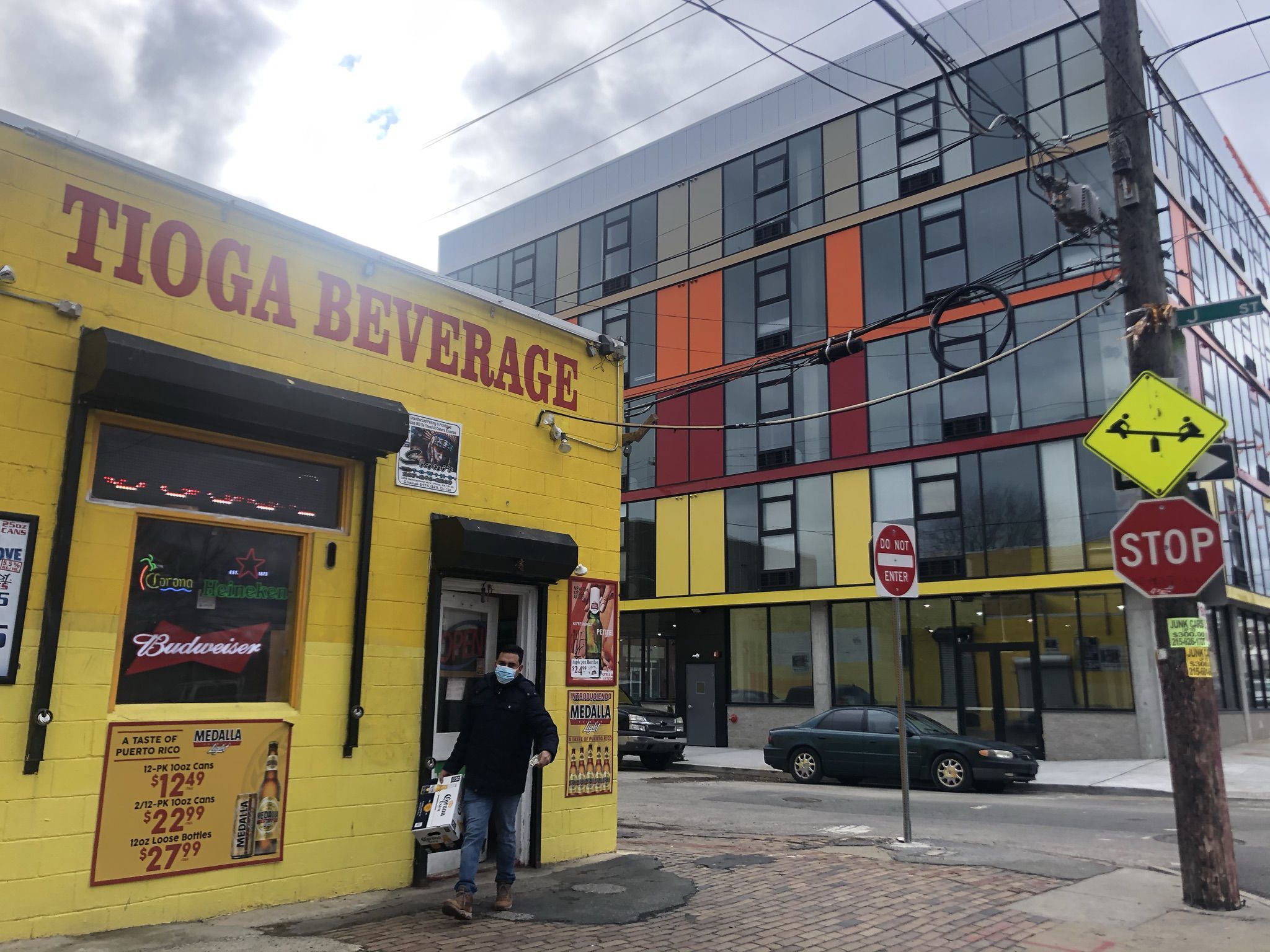
    In this 2021 file photo, a glass building at J and Tioga sits near a beer store in Kensington.

    Some neighborhood leaders have watched with anxiety as luxury housing developers and out-of-town investors gobbled up properties in the neighborhood, fearing that poorer residents and middle-class homebuyers may be priced out.

    City Councilmember Quetcy Lozada, a Democrat who represents the 7th Council District, which includes parts of Kensington, said she knew speculators from outside the area would want to make it “the next gentrified neighborhood” once the city changed its strategy to more aggressively clean up trash and improve public safety.

    But Lozada said there are not enough programs specific to Kensington aimed at preventing displacement as a result of rising property values, especially as the city is investing millions of dollars a year to improve the neighborhood. She said her office is exploring additional tax relief measures.

    “I’m going to do whatever I have to do to make sure that residents who have lived in that community can stay there, can raise their families there,” Lozada said. “We have witnessed what has happened on the southern end of the district, where there has been rapid gentrification.”

    In this March file photo, City Councilmember Quetcy Lozada stands in Council chambers during Mayor Cherelle L. Parker’s budget address.

    Lozada also said rising property values in Kensington are part of why she has been “so careful with projects presented to me” and has prioritized what she sees as equitable development in the neighborhood — at times to the chagrin of developers who think she has been too restrictive.

    “I’m all about people making a return,” she said, “but you can’t continue to do it on the backs of poor people.”

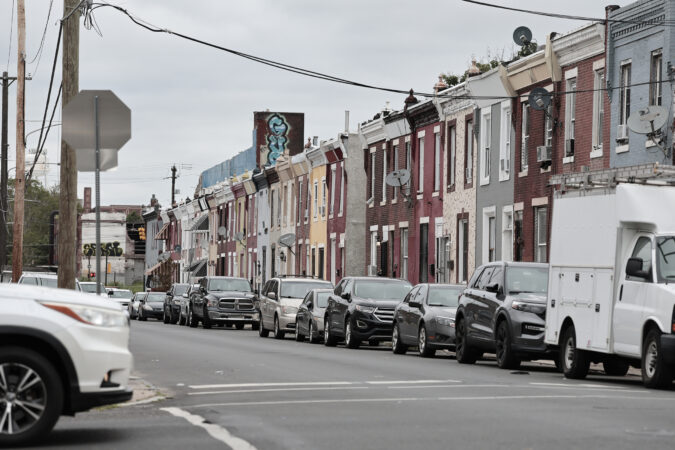
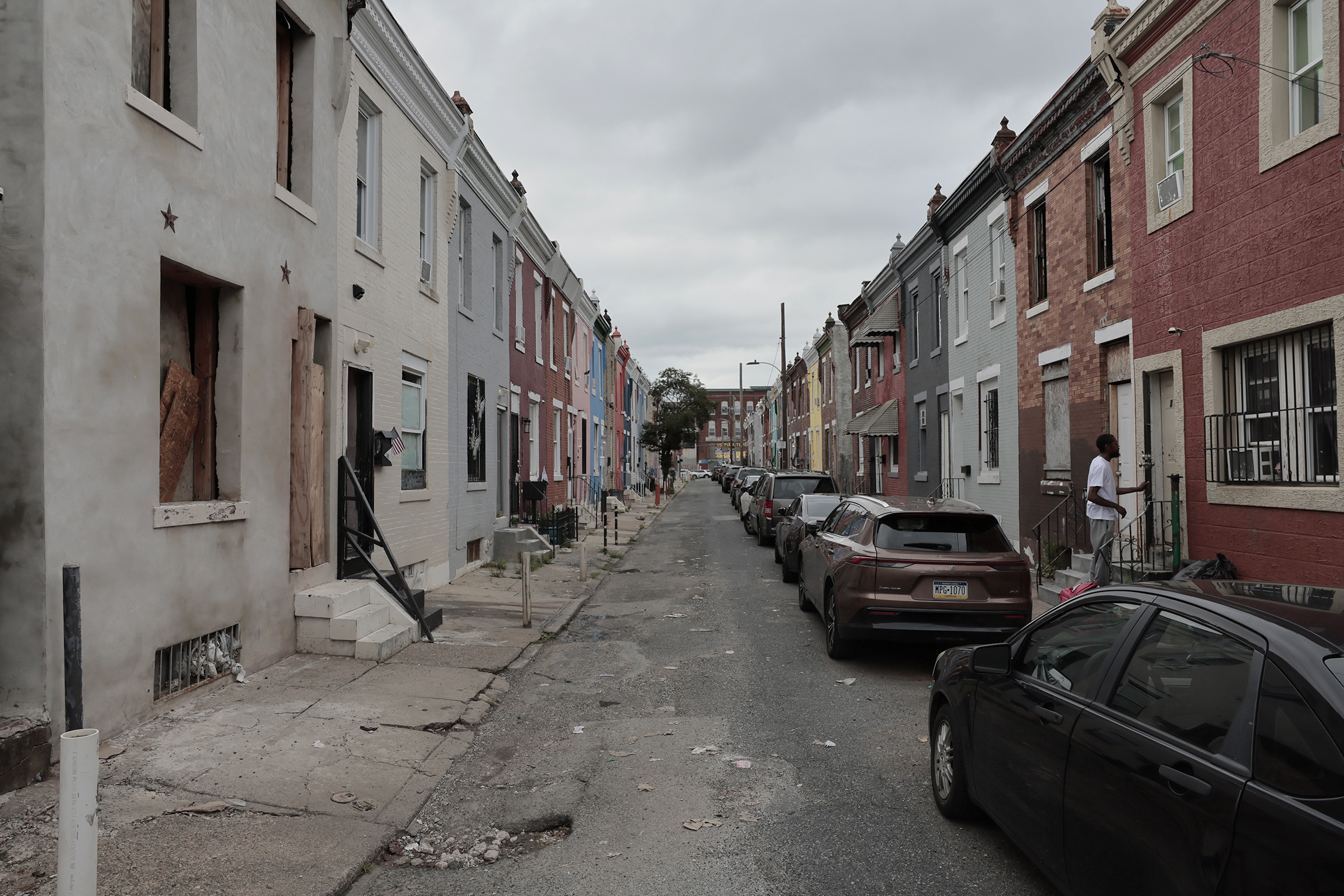
    The 3100 block of Arbor Street in Philadelphia on Tuesday, July 7, 2026.

    Continuing change in pockets of West Philly

    There were also significant property value increases in parts of West Philadelphia.

    The median increase in Mantua, the neighborhood north of University City, was the second highest in the city, at 15%, according to The Inquirer’s analysis. The median increase was 12% in Kingsessing, the neighborhood south of University City that in 2025 saw the largest jump of any neighborhood in Philadelphia.

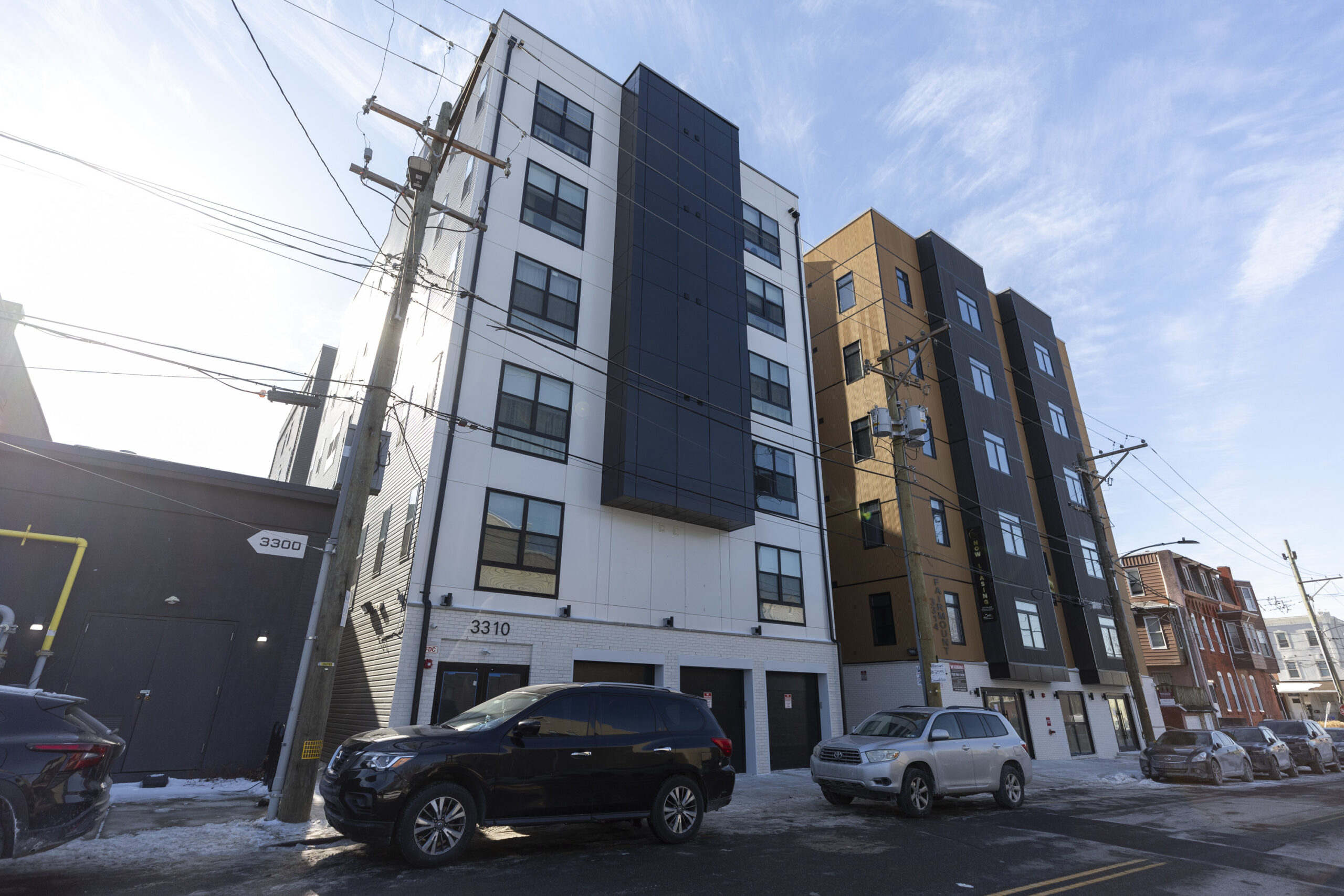
    Newly developed buildings along Fairmount Avenue in the neighborhood of Mantua in Philadelphia, Pa., on Thursday, Jan. 23, 2025.

    Councilmember Jamie Gauthier, a Democrat who represents West Philadelphia and has made preventing displacement a key initiative, said that there has long been racial bias in the city’s property assessments and that the city must “get serious” about protecting low-income homeowners by revamping its system.

    “There has to be a higher level of urgency in making sure that the city doesn’t have a hand in pushing out all of these homeowners that make Philadelphia what it is,” Gauthier said. “It’s unconscionable for us to destabilize our neighborhoods and the longtime homeowners who live there because we didn’t take enough care to make sure that our process was fair and equitable.”

    For too long, she said, city officials have said they intended to examine the property assessment practices and identify improvements. In 2024, Parker convened a task force to study the process.

    Aros told Council in April that the task force’s report was “being finalized.” He said OPA would look to implement recommendations from the report, including conducting more regular reassessments and improving property-level data such as property condition.

    The city is also planning to hire an outside consultant to examine its mass appraisal practices, according to city records. The analyst will be responsible for drafting a report by the end of this year.

    Deputy creative director John Duchneskie contributed to this article.

  • Letters to the Editor | July 8, 2026

    Letters to the Editor | July 8, 2026

    Bull’s-eye

    The Inquirer’s recent editorial detailing the deficiencies of America’s current leadership was right on the mark. Donald Trump and the Republicans, including those on the U.S. Supreme Court, claim to be the avatars of American patriotism, but they continually undermine this country’s foundational principles.

    The Declaration of Independence affirms that all men are created equal, while the Trump administration and its allies on the Supreme Court take actions that remove the cherished rights of select groups. The separation of church and state is something that makes America great and is spelled out in our founding documents, yet many Republicans want the United States to be declared a Christian nation. The Constitution makes the rule of law paramount, yet somehow this Supreme Court found a way to give the president immunity for official acts. Robust immigration also has been part of our heritage. But in spite of the fact that birthright citizenship is written clearly into the 14th Amendment, the Supreme Court last week came within one vote of overturning it.

    The editorial asks whether we should fly the flag at half-staff to protest the current state of the country. No, the flag should be flown high, as it doesn’t belong to the current regime. Though it is under threat, we still have the right to vote for change in November.

    Bill Fanshel, Bryn Mawr

    Soft power works

    Jonathan Zimmerman’s recent column gives a poignant view of his experience in the Peace Corps. He points out the real impact of the personal connections forming the grassroots of our government’s soft power.

    Unfortunately, too few of our elected officials understand the reach and potential of soft power. This power cannot be overstated. Like the U.S. Agency for International Development, it is the positive face of America, working with communities on the ground to foster resilience and self-reliance. Communities are able to thrive, not simply survive. This enables people to stay on their own land, eliminating the need to emigrate. It thwarts the attempts of terrorists who infiltrate communities where people are food-insecure.

    Pope Leo XIV has urged countries to take responsibility and address the root causes of migration. The Peace Corps and USAID-sponsored programs are on the front line of the battlefield of immigration crises. Soft power works.

    We are spending $1 billion per day on wars of choice. Soft power delivers a means of eliminating reasons to emigrate while fostering our national security, at less than 1% of the federal budget.

    I encourage all readers to urge their elected officials to support sustained funding levels for lifesaving humanitarian aid and development programs.

    Catherine Poynton, Philadelphia-area chapter, Catholic Relief Services

    Join the conversation: Send letters to letters@inquirer.com. Limit length to 150 words and include home address and day and evening phone number. Letters run in The Inquirer six days a week on the editorial pages and online.