Jefferson Health is closing four legacy Einstein pediatric practices, including one at Jefferson Einstein Hospital Philadelphia in a low-income area of the city, and moving three others to True North Pediatrics, a private group with a dozen mostly suburban locations.
The nonprofit health system did notrespond to questions Thursday about how many children the practices serve, how many jobs will be cut, or why it was making the change, which is expected to significantly reduce the amount of pediatric care in North and Northeast Philadelphia.
This week’s pediatric cutbacks are a significant move affecting patient care amid a yearslong effort to make the system with more than $15 billion in annual revenue financially sustainable. From 2015 through 2024, Jefferson grew from three hospitals to more than 30 and now stretches from South Jersey to near Scranton.
The locations scheduled to close June 30 are the Pediatric & Adolescent Ambulatory Center at Einstein Philadelphia and three Holland Pediatrics locations (Center One/Bustleton in Northeast Philadelphia, Buck Road in Southampton, and Frankford in Torresdale), Jefferson said in a statement.
The three clinics going to True North are Trappe Pediatric Care at Iron Bridge, Pennypack Pediatrics, and Einstein Pediatrics Elkins Park. Jefferson did not provide details on transaction terms.
A practice manager at True North, which is based in suburban Philadelphia, did not respond to a request for more information. True North’s website said the practice is independent, “not managed by any big business or larger institution.”
Jefferson said in a statement that it will continue offering pediatric services through its primary care network, urgent care centers, emergency departments, and Lehigh Valley Health Network’s Reilly Children’s Hospital.
“With three excellent inpatient pediatric hospitals right here in our region, partnering with True North Pediatrics — an organization whose singular focus is pediatric care — allows us to ensure that families across our region continue to receive the specialized, dedicated attention they deserve,” Jefferson said in an internal communication Monday.
It’s possible that St. Christopher’s Hospital for Children, which is about 3½ miles by car from Einstein Philadelphia, will pick up many of the thousands of dislocated patients.
St. Chris already serves almost exclusively patients with Medicaid insurance for low-income families and struggles to make ends meet because of the low rates it receives.
“We are committed to delivering trusted, compassionate care for every patient who walks through our doors,” St. Chris said in a statement. “Families can access care at our nearby locations, including our Center for the Urban Children and Northeast Pediatrics office.”
The investigation into the cause of a Wednesday afternoon explosion at a Logan Township, N.J., cocoa butter processor continues, though the conditions have improved for some victims injured in the blast.
Following the explosion, which rocked Gloucester County and the surrounding area just after 2:30 p.m. on Wednesday, five people were hospitalized. Three people were transported to Cooper University Hospital, which has since treated and released one patient, and stabilized two others, who were later transported to Temple Burn Center in Philadelphia, Cooper spokesperson Wendy Marano said.
The conditions of the other two people injured in the blast were not immediately clear Thursday. In the immediate aftermath of the explosion Wednesday, four people were in critical condition, and a fifth person in a neighboring building experienced a medical incident that required treatment, Gloucester County officials previously said.
“This is the largest industrial accident that I can recall,” Logan Township Police Chief Joseph Flatley said at a news conference Wednesday. “It was a terrible tragedy that took place out here.”
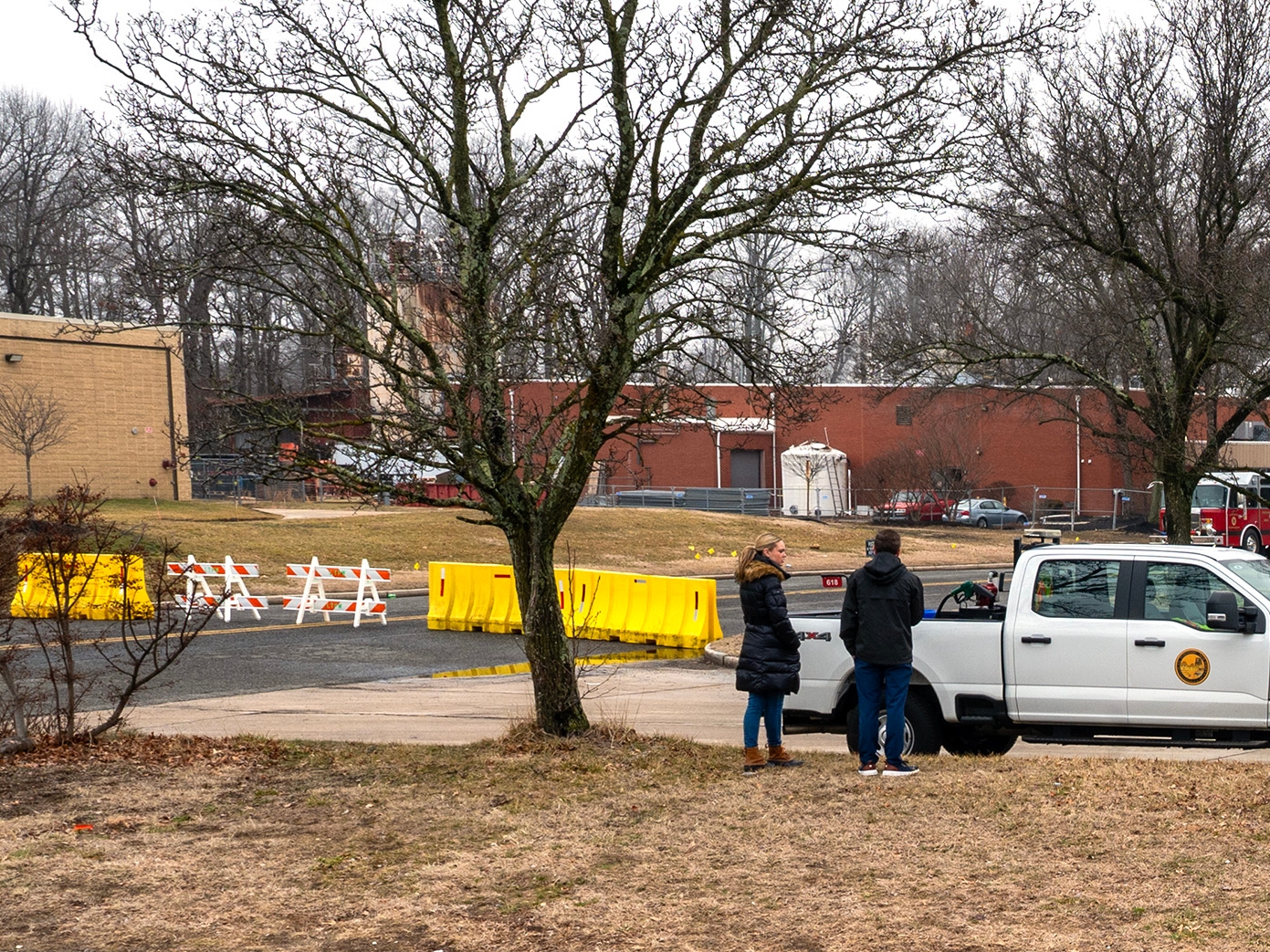
Emergency workers responded to an explosion at 617 Heron Drive in Logan Township at about 2:35 p.m. on Wednesday. The blast prompted a shelter-in-place order for homes and businesses within a two-mile radius of the facility, impacting roughly 7,200 people living within the affected area.
What caused the explosion was not yet clear Thursday. Gloucester County officials and officials in the Logan Township Police Department did not immediately respond to requests for comment.
Officials on Wednesday, however, indicated that the blast emanated from a building operated by Savita Naturals, a company that describes itself on its website as a “provider of specialty oil extractions and related services.”
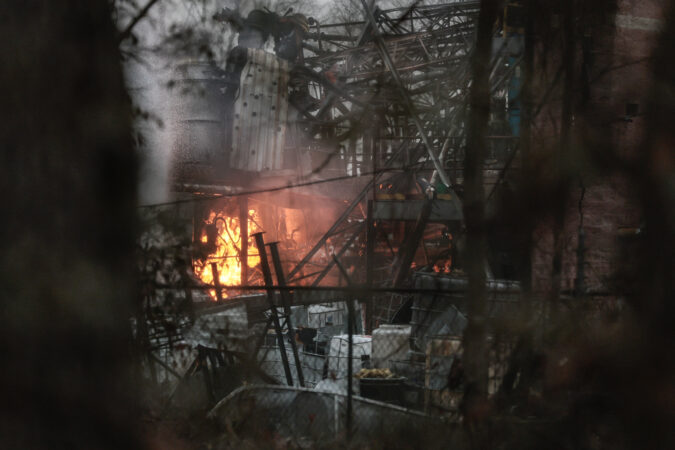
The scene outside Savita Naturals in Logan Township, N.J. Thursday Mar. 5, 2026, where at least four people were critically injured the day before after a large explosion destroyed the commercial production facility.
The company, Gloucester County Prosecutor’s Office spokesperson Rebecca Forand said Wednesday, serves as a processor in the cocoa and chocolate industry. As part of its work, the company utilizes propane — a highly flammable gas Savita Naturals has called its “solvent of choice” for botanical extractions.
Propane, officials said Wednesday, was used in the company’s production processes, and a large amount of it was stored on the facility’s premises. In the aftermath of Wednesday’s blast, a ruptured propane tank could be seen burning amid the collapsed building’s wreckage.
A highly flammable gas, propane is a commonly preferred solvent for extraction of natural compounds and oils. The chemical, Savita Naturals indicates on its website, “produces the highest yields at intermediate cost without sacrificing quality.”
It does, however, present some dangers. In high concentrations, it can decrease the amount of oxygen in the air, according to the New Jersey Department of Health. Propane is also naturally colorless and odorless, and often has an odorant added to aid in detection. Airborne exposure can result in headaches and dizziness, as well as fainting.
Savita Naturals could not immediately be reached for comment.
Officials on Wednesday lifted the shelter-in-place order shortly after the explosion, noting that there were no ongoing hazards, despite ongoing monitoring efforts from emergency responders. The New Jersey Department of Environmental Protection was notified of the situation, and burn-off of remaining gas continued on-site early Thursday.
New Jersey Gov. Mikie Sherrill indicated Wednesday that her office was informed about the situation, and was monitoring developments.
“We are actively supporting with resource coordination and will continue to monitor the situation to ensure the safety of residents and support those impacted,” Sherrill said.
Just days before the release of Mayor Cherelle L. Parker’s city budget, it is unclear whether it will include money to continue Zero Fare, a program that gives free transit passes to low-income Philadelphians.
Transit advocates and political leaders say they have not heard from the administration on the issue and are concerned it may be cut or have its funding reduced.
A rally is scheduled for 10 a.m. Friday on the north apron of City Hall to push for Zero Fare’s survival — and for city government to continue participating in SEPTA’s Key Advantage, which provides free transit passes for municipal workers.
Parker is scheduled to deliver her annual budget address next Thursday to a session of City Council.
A spokesperson for the administration declined to comment.
“We don’t care who gets the credit,” said Stephen Bronskill, coalition manager for Transit Forward Philadelphia, a nonprofit that advocates for public transportation that is organizing the event. “We want to see that this program gets funded … so people can get where they need to go.”
City Council members, state lawmakers, activists for transit funding and service, and users of the Zero Fare passes are expected to speak Friday.
Zero Fare, which serves about 60,000 eligible people with incomes at or below 150% of the federal poverty standard, would end June 30 unless the fiscal 2026-27 budget funds it.
Officials also must decide whether to fund Key Advantage benefits for city workers, though SEPTA’s program provides subsidized passes free to the employees of nonprofit organizations and private businesses.
Deja vu?
Both programs have faced city budget uncertainty in the past.
City officials said they had begun meeting with SEPTA to find a funding solution to continue both programs before the uproar. The administration also continued Key Advantage last year.
“From our standpoint, they’ve both worked well, and we’d like to see them continue,” SEPTA spokesperson Andrew Busch said Thursday.
A path forward
Zero Fare began as a pilot, started by Kenney using $30 million of federal COVID relief money to get it off the ground. The program was nationally recognized because it proactively sent transit fare cards to Philadelphians eligible for the benefit.
Automatic enrollment eliminated the red tape “time tax” for people who wanted to use the benefit, making it unusual on the local level, according to public policy analysts.
“It can’t be yanked away at a moment’s notice when somebody wants to shift something around in the budget,” O’Rourke said last November at a community meeting on the proposal.
This story has been updated to remove an outdated figure for the number of participants in Zero Fare.
Pennsylvania Gov. Josh Shapiro joined Democratic leaders from nearly two dozen states in challenging President Donald Trump’s latest global tariffs.
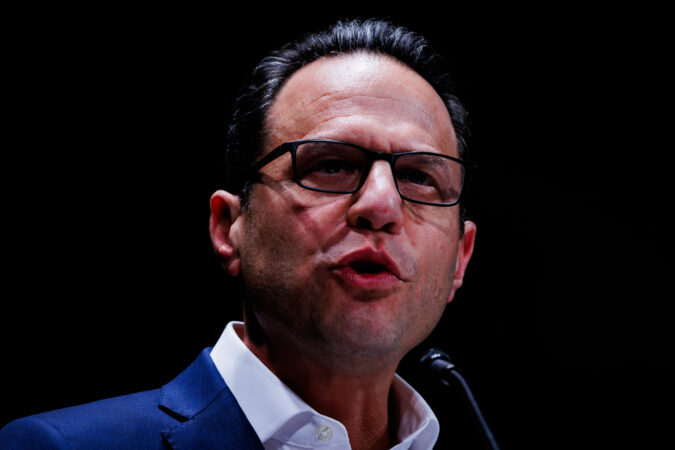
In a lawsuit filed Thursday, Shapiro and the other state leaders argue Trump’s plan to impose 15% tariffs, which comes after the U.S. Supreme Court blocked his last round of global tariffs, oversteps his powers.
“The Supreme Court got it right — but instead of following the law, Trump decided to double down,” Shapiro said in a statement.
“This President’s tariffs have done nothing but cause chaos and raise prices for our farmers, small businesses, and families,” Shapiro said. “I’ve gone to court before to protect Pennsylvanians from the costs of this disastrous trade war — and I’m ready to do it again.”
The suit, which is being led by the attorneys general of Oregon, Arizona, California, and New York, marks the 21st legal action Shapiro has filed or joined against the administration during Trump’s second term, including two suits he has led.
Trump’s first round of tariffs sent shock waves through the U.S. economy as prices rose. Exports, including Pennsylvania’s lumber sales, also suffered.
Shapiro, who is up for reelection this year, has long highlighted his willingness to go up against Trump in court. That record began during Trump’s first term, when Shapiro was state attorney general.
In Trump’s second term, Shapiro has repeatedly stepped in to sue on behalf of Pennsylvania when Republican Attorney General Dave Sunday has not.
Kentucky Gov. Andy Beshear, the only other governor signed onto the case, faces similar circumstances in his Republican-leaning state. Both Beshear and Shapiro are seen as likely contenders for the Democratic nomination in 2028.
New Jersey and Delaware, which have Democratic attorneys general, also joined the suit.
“Tariffs raise prices for hard-working families and businesses across New Jersey,” New Jersey Attorney General Jennifer Davenport said in a statement. “I will keep fighting against the imposition of unnecessary and illegal costs on our consumers. We’re going to court to protect our state from these illogical and illegal tariffs.”
Trump criticized the high court during last week’s State of the Union address, calling the ruling “very unfortunate.” Trump said in the speech that his new tariffs would be “a little more complex but actually probably better.”
Section 122, which had never been invoked, allows the president to impose tariffs of up to 15%. They are limited to five months unless extended by Congress.
The states’ new suit argues that Trump cannot pivot to Section 122 because it was intended to be used only in specific, limited circumstances — not for sweeping import taxes. It also contends the tariffs will drive up costs for states, businesses, and consumers.
Many of those states also had successfully sued over Trump’s tariffs imposed under a different law: the International Emergency Economic Powers Act (IEEPA).
Four days after the Supreme Court struck down his sweeping IEEPA tariffs Feb. 20, Trump invoked Section 122 to slap 10% tariffs on foreign goods. Treasury Secretary Scott Bessent told CNBC on Wednesday that the administration would raise the levies to the 15% limit this week.
The Democratic states and other critics say the president cannot use Section 122 as a replacement for the defunct tariffs to combat the trade deficit.
The Section 122 provision is aimed at what it calls “fundamental international payments problems.’’ At issue is whether that wording covers trade deficits, the gap between what the U.S. sells other countries and what it buys from them.
Section 122 arose from the financial crises that emerged in the 1960s and 1970s, when the U.S. dollar was tied to gold. Other countries were dumping dollars in exchange for gold at a set rate, risking a collapse of the U.S. currency and chaos in financial markets. But the dollar is no longer linked to gold, so critics say Section 122 is obsolete.
Awkwardly for Trump, his own Justice Department argued in a court filing last year that the president needed to invoke the emergency powers act because Section 122 did “not have any obvious application” in fighting trade deficits, which it called “conceptually distinct” from balance-of-payment issues.
Still, some legal analysts say the Trump administration has a stronger case this time.
“The legal reality is that courts will likely provide President Donald Trump substantially more deference regarding Section 122 than they did to his previous tariffs under IEEPA,” Peter Harrell, visiting scholar at Georgetown University’s Institute of International Economic Law, wrote in a commentary Wednesday.
The specialized Court of International Trade in New York, which will hear the states’ lawsuit, wrote last year in its own decision striking down the emergency-powers tariffs that Trump did not need them because Section 122 was available to combat trade deficits.
Trump does have other legal authorities he can use to impose tariffs, and some have already survived court tests. Duties that Trump imposed on Chinese imports during his first term under Section 301 of the same 1974 trade act are still in place.
Staff writer Aliya Schneider contributed to this article, which contains information from the Associated Press.
As dispiriting as the Union’s loss to New York City FC on Sunday was, something manager Bradley Carnell said afterward felt just as significant.
“We know we’re not quite where we need to be, and that’s totally understandable, but it’s no excuses either,” he said. “Obviously, the team’s not happy, and a lot of it is self-inflicted over the last two weeks, if you look at that — two red cards in two games. And this is something [where] when one guy’s disconnected, or when one red card happens, then we’ve created a mountain [for] ourselves to climb.”
He then added a believe that “we have a young, hungry, squad, and sometimes the moment gets to us a little bit. And this we have to learn, we have to grow [from], and we have to have these experiences.”
With no midweek game this week, Carnell had time to address that, and he said during his meeting with media on Thursday that he did so.
Olwethu Makhanya was sent off from Sunday’s loss to New York City FC after drawing his second yellow card of the game.
“We’ve expected more out of ourselves in terms of being sharp, mentally and cognitively,” he said in a news conference ahead of Saturday’s game against the San Jose Earthquakes at Subaru Park (7:30 p.m., Apple TV). “Just thinking about an ‘if’ moment or a follow-on from a set piece or a follow-on from an attacking sequence.”
There was some good news, as new left back Philippe Ndinga arrived in Chester. But he isn’t ready to play yet, and Carnell signaled it might be a few more days.
“He’s raring to go, but there’s a bit of paperwork to get through, a bit of medical stuff to get through,” Carnell said. “Push comes to shove, we can get him squad-ready, potentially. But I don’t want to just make a claim like that just yet.”
So for now, the Union are going to have to sort things out with what they have. After hosting the Earthquakes on Saturday, Mexican power Club América will come to town Tuesday to start the Concacaf Champions Cup’s round of 16.
One step can come at the attacking end of the field. Carnell said he counted 20 instances in just Sunday’s first half “where we had a positive transition moment, where we turned over the ball and started a sequence in an overload [man advantage], and we don’t come to fruition [with] that.”
Agustín Anello (right) and the Union have yet to score a goal from open play in MLS games this season.
The other can come anywhere, but it starts in the head.
“Self-inflicted red cards, I would say, this is not the way that it should be done,” Carnell said. “Very cheap ways to let your teammates down, and, you know, I think [Olwethu] Makhanya’s learned a good lesson, I think ‘Eze’ [Alladoh]’s learned his lesson, and we can continue to grow as a team.”
When former Union striker Julián Carranza joined Mexican club Necaxa in January, it felt inevitable that his new and old teams would cross paths. Right on cue, it will happen this summer.
Necaxa is one of three teams the Union will face in the group stage of the Leagues Cup, the annual tournament pitting MLS squads against those from Mexico’s Liga MX. The game is Sunday, Aug. 9 at Subaru Park.
The Union dealt Carranza to Dutch club Feyenoord in July 2024, as he wanted to raise his stock for Argentina’s World Cup team. But it didn’t work out for him, as he scored just five goals in 30 games.
JULIÁN CARRANZA STUNS THE SAN SIRO! 😳
The former Philadelphia Union and Inter Miami forward pops up with a massive strike for Feyenoord 💥 pic.twitter.com/5CMGnUC8FE
Then he went on loan to English second-division club Leicester City, and that was even worse: zero goals in nine games, and a lot of time on the bench. Necaxa offered around $4 million to bring him to Mexico, and Feyenoord accepted. Carranza has three goals in six games there so far.
The reunion will be the Union’s second contest of the group stage. All three group games will be against Mexican opponents, and all will be at Subaru Park. The opener will be against traditional power Cruz Azul on Thursday, Aug. 6, and the finale will be Thursday, Aug. 13, against Santos Laguna.
Leagues Cup groups are set based on a combined table of the 18 MLS teams that qualify (the 18 that make the playoffs) and the 18 teams of Mexico’s Liga MX. They are ranked by last year’s regular-season standings, then split in half based on geography.
From there, each mixed pot of 18 teams is ranked again, then split into three groups of six. Each group has one MLS team and one Mexican team from the top third, one each from the middle third, and one each from the bottom third. Each team then plays three games, all against teams from the other country. (The other MLS teams in the Union’s group are Chicago and NYCFC.)
The Seattle Sounders won last season’s Leagues Cup trophy last season after beating Inter Miami.
Yes, this is complex, but we’re almost done. Tournament results are counted in one big table, similar to Europe’s Champions League. The top four MLS teams and the top four Mexican teams advance to the quarterfinals.
The point of it is to have as many MLS vs. Liga MX games as possible, since they’re more interesting than matchups of teams within each league.
For all the technicalities, the big prize at the end is clear. The top three finishers qualify for next year’s Concacaf Champions Cup, with the winner earning a bye into the round of 16.
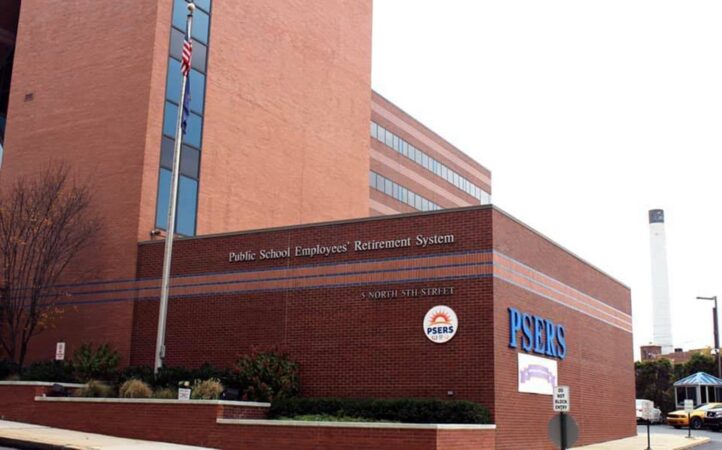
Three investment firms that advised Pennsylvania’s largest pension system have agreed to pay $30 million to settle legal claims alleging that their bad advice cost Pennsylvania teachers far more.
The investment firms are Chicago-based Aon Investments USA, West Conshohocken-based Hamilton Lane Inc., and Portfolio Advisors LLC, now part of FS Investments of Philadelphia. Lawyers for school staff had alleged that they helped the PSERS public school pension fund select hundreds of high-fee but collectively underperforming investments when they could have been making more owning U.S. stock-index funds, according to a complaint initially filed in 2021.
PSERS’ performance was so weak in 2011-20 that the state’s “shared-risk” law, which requires teachers to pay more for their future pensions when investments perform poorly, kicked in for the first time.
That law compelled 176,000 Pennsylvania school employees hired since 2011 to pay an extra $87 million in payroll-deduction surcharges from 2021 to 2024. The pensions are financed mostly by investment profits and state treasury payments, with a smaller portion from school staff’s standard payroll deductions of around 7.5%.
Teachers and other school staff paid extra charges of 0.5% to 0.75%, averaging nearly $500 each over the three years, to help cover PSERS’ poor performance. They each will recover an average of around $112.
“The lawsuit shined a light on the industry and will result in a significant recovery to these hardworking teachers. Our work on this case will result in better decision-making for this fund and other funds,” said Gerard Mantese, the teachers’ lead counsel along with John J. Conway and Gregory B. Heller.
The lawyers will be paid $10 million from the settlement for their five years of work on the case.
The former PSERS advisers had denied in a pre-settlement court filing “that their actions and/or inactions caused an increased contribution” from the teachers. They maintained they did the work, for which PSERS paid them millions, “fully and lawfully.”
FS and Hamilton Lane officials agreed to settlements last fall. Checks began arriving at teachers’ homes in February.
“We have consistently denied the assertions in this lawsuit” and “are glad to put the matter behind us” with a settlement that ends the claims, Hamilton Lane said in a statement. FS declined to comment.
Aon, whose recent settlement is awaiting court approval, didn’t respond to queries.
“Teachers across the state of Pennsylvania should be thrilled” — even if the checks, averaging enough to pay for a restaurant dinner for two, are mostly “symbolic,” said Kevin Steinke,the lead plaintiff in the teachers’ suit.
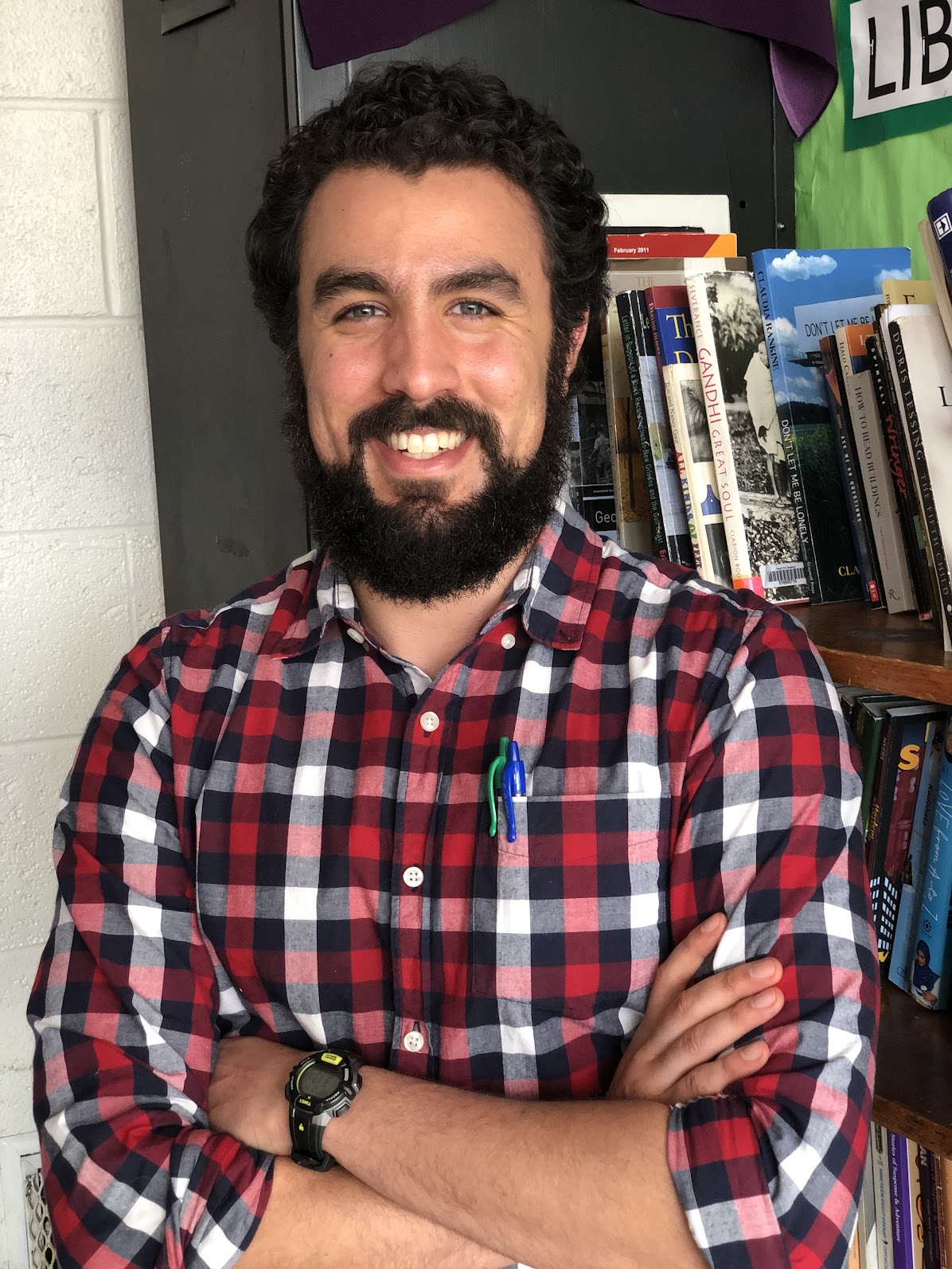
Steinke teaches anthropology, sociology, and law at Springfield High School in Delaware County, and coaches middle-school track.
“Anything that can be done to reassure younger teachers these days they are getting into a field where someone is looking out and caring for them is important,” he said. “There is still work to be done — in police pensions, in hospital pensions — but it’s a start.”
Kevin Steinke at Springfield High School in Delaware County, where he teaches anthropology, law, and sociology.
Steinke said he decided to sue after reading about PSERS’ unusual investments and weak returns in The Inquirer.
He said he hasn’t discussed the lawsuit with leaders of the Pennsylvania State Education Association, the union representing staff at most suburban and upstate schools, including Springfield.
Local union leaders held five seats on the 15-member PSERS board and regularly supported hiring high-fee private managers, even when state treasurer Stacy Garrity and her predecessor, Joe Torsella, warned that the high fees and low returns endangered the fund.
Daniel Reyes, a language teacher at Roxborough High School in Philadelphia, is among the Pennsylvania teachers who sued advisers to the PSERS pension fund for making expensive but poor-performing investments.
Steinke and a handful of other named plaintiffs who spent many hours reviewing the litigation and settlement as it progressed over five years will receive at least $10,000 each under terms of the settlement.
Mantese said his fees would cover costs including expert witnesses, such as labor economist Teresa Ghillarducci and former Harvard endowment tech fund manager Marty Dirks, who confirmed PSERS’ poor performance. Their analyses, along with comments from officials of the three firms, were redacted from the public record at the parties’ request by Philadelphia Common Pleas Court Judge Nina W. Padilla, who oversaw the cases.
A fourth adviser, Aksia LLC of New York, hasn’t settled and still faces a pending complaint.
The lawsuit also cited public reports critical of PSERS and its advisers, including conclusions of the 2019 state pension study commission (PPMAIRC) report, which found that PSERS and the smaller Pennsylvania State Employees’ Retirement Fund owned far more private “alternative” fund investments, paid some of the highest investment fees to private managers, and posted some of the lowest returns, among state pension funds over the previous decade.
PSERS hired hundreds of specialized U.S. and foreign firms recommended by staff and advisers. Bridgewater Associates, the world’s largest hedge fund manager, collected over $700 million in Pennsylvania pension management fees. By the late 2010s Bridgewater managed one-tenth of PSERS’ outside investments, far more than any other firm, before PSERS began canceling its contracts due to poor returns. Bridgewater’s former chief executive, David McCormick, now serves as one of Pennsylvania’s U.S. senators.
The settlements include:
$15 million, paid by Aon, which served as PSERS’ general investment adviser, collecting $7.2 million in PSERS fees from 2010 until it was fired for poor results in 2023. Aon was hired to recommend how PSERS should invest its assets, which now total $80 billion. But in its “willful blindness,” Aon did “little or nothing to recommend that PSERS reduce the [proportion] of its risky and expensive alternative investments,” according to the complaint. Aon had previously paid PSERS $7 million to compensate for “miscalculation” that exaggerated PSERS’ performance for 2011-20 and $1.5 million to the SEC for failure to investigate “discrepancies” between PSERS’ annual reports and the unaudited data used to calculate long-term results.
$11.25 million to be paid by Portfolio Advisors, which Steinke and his fellow teachers accused of recommending “numerous investments that were inappropriately and unduly expensive.” The payment almost equals the $11.45 million that Portfolio Advisors collected from PSERS to advise on private investment purchases in 2010-17.
$4 million to be paid by Hamilton Lane, a publicly traded advisory firm that replaced Portfolio Advisors as PSERS’ private investment adviser from 2017 to 2023 and collected $10.2 million in PSERS fees over that period. “Hamilton Lane’s failure to keep a close eye on the private market returns” resulted in “excessive” fees — and the firm “took virtually no action” to secure lower fees, even though that’s one of the things it was hired to do, according to the complaint.
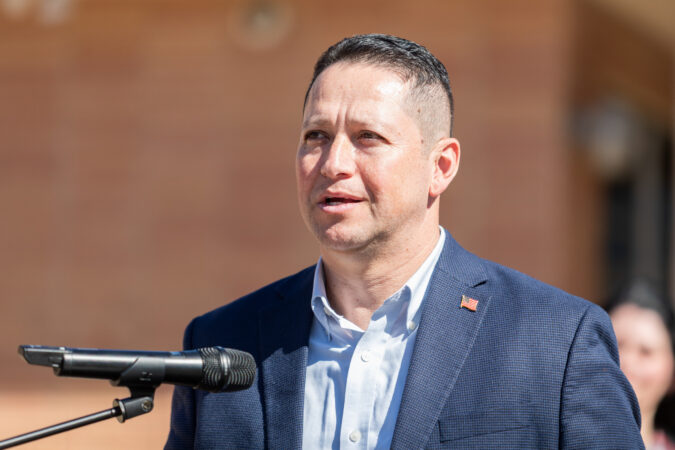
WASHINGTON — Republican Rep. Tony Gonzales of Texas said late Thursday he was withdrawing from his reelection race, after having admitted an affair with a former staff member who later died by suicide, but he vowed to finish out his term in Congress.
He had faced calls from GOP leadership to end his reelection bid, and from others in Congress to resign.
“After deep reflection and with the support of my loving family, I have decided not to seek re-election,” Gonzales said in a statement posted late Thursday to X.
The move is the latest in a quickly changing situation that stunned Capitol Hill and resulted in a House Ethics Committee investigation into his conduct. Gonzales’ decision to bow out of the race appears to clear the field. On Tuesday, he had been forced into a May runoff against Brandon Herrera, a gun manufacturer and YouTube gun-rights influencer who narrowly lost to him in the 2024 primary.
House Speaker Mike Johnson and the GOP leadership earlier Thursday had called on Gonzales to withdraw from reelection after Gonzales, a day earlier, acknowledged a relationship that has upturned the political world in his home state and in Washington.
“We have encouraged him to address these very serious allegations directly with his constituents and his colleagues,” said Johnson, Majority Leader Steve Scalise, Whip Tom Emmer, and GOP Conference Chairwoman Lisa McClain in a statement.
“In the meantime, Leadership has asked Congressman Gonzales to withdraw from his race for reelection.”
Johnson, R-La., has been under enormous pressure from his own GOP lawmakers to take action, and several Republicans have already called for Gonzales to step aside. Rep. Anna Paulina Luna, R-Fla., has introduced two resolutions to punish Gonzales. The first seeks to remove him from his assignments on the House Appropriations and Homeland Security committees, while the second seeks to censure him.
House Democratic Leader Hakeem Jeffries of New York, meanwhile, said he would support expelling Gonzales from the House, a rare step that requires a two-thirds vote from the chamber.
GOP leaders notably did not call for Gonzales to resign from office as they struggle to maintain their slim majority in the House, which they hold by only a handful of seats.
Their move came after Gonzales, appearing on the “Joe Pags Show,” was asked whether he had a relationship with the aide, Regina Ann Santos-Aviles.
Santos-Aviles, 35, died after setting herself on fire in the backyard of her home in Uvalde, Texas. The Bexar County Medical Examiner’s Office later ruled her death a suicide.
“I made a mistake and I had a lapse in judgment, and there was a lack of faith, and I take full responsibility for those actions,” Gonzales said.
The congressman, now in his third term, had said he would not step down in response to the allegations, telling reporters recently that there will be opportunities for all the details and facts to come out.
Gonzales, a father of six, first won his seat in 2020 after retiring from a 20-year career in the Navy that included time in Iraq and Afghanistan.
In the interview broadcast Wednesday, Gonzales said he had not spoken to Santos-Aviles since June 2024. She died in September 2025.
“I had absolutely nothing to do with her tragic passing, and in fact, I was shocked just as much as everyone else,” Gonzales said.
Gonzales went on to say he had reconciled with his wife, Angel, and has asked God to forgive him. He also said he looked forward to the Ethics Committee investigation.
Johnson and GOP leadership urged that committee to “act expeditiously.”
Under House ethics rules, lawmakers may not engage in a sexual relationship with any employee of the House under their supervision.
A Chester County man has been charged with unlawful contact with a child at a Walmart store in West Sadsbury Township, police said this week.
Joseph Gerard Bouffard, a 26-year-old Glenmoore resident, was charged this week with a felony for sexual contact with a minor, along with three lesser charges. The incident occurred in January, police said.
A Pennsylvania State Police trooper wrote in a complaint that around 11 a.m. on Jan. 24, a mother called to report that a stranger had inappropriately touched her 11-year-old daughter in the Walmart.
An attorney representing Bouffard did not immediately return a message seeking comment.
The child told police that the man had touched her while she was in the beverage aisle of the store, grabbing a drink her mother had asked her to get. The child said that she had noticed Bouffard earlier when he smiled at her in another aisle. After he touched her, she immediately ran to her mother. Bouffard left immediately after, police said.
Security footage showed that Bouffard allegedly passed the victim several times in the store, looking at her repeatedly and walking close to her, police wrote in the complaint. The footage also showed Bouffard touching the child, police said.
Bouffard had left the store before police arrived, and officers identified him using law enforcement resources and surveillance. Last week, police interviewed Bouffard, who matched the description the girl gave as well as the security footage. When asked by police if he intentionally touched the girl, Bouffard “nodded in the affirmative and agreed,” according to the affidavit.
Bouffard was arraigned on Wednesday, and was released on $25,000 unsecured bail ahead of a preliminary hearing scheduled for March 16.
This suburban content is produced with support from the Leslie Miller and Richard Worley Foundation and The Lenfest Institute for Journalism. Editorial content is created independently of the project donors. Gifts to support The Inquirer’s high-impact journalism can be made at inquirer.com/donate. A list of Lenfest Institute donors can be found at lenfestinstitute.org/supporters.
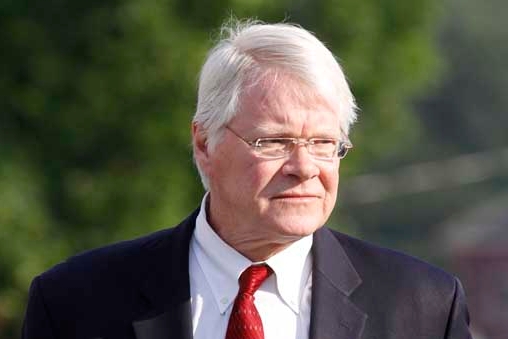
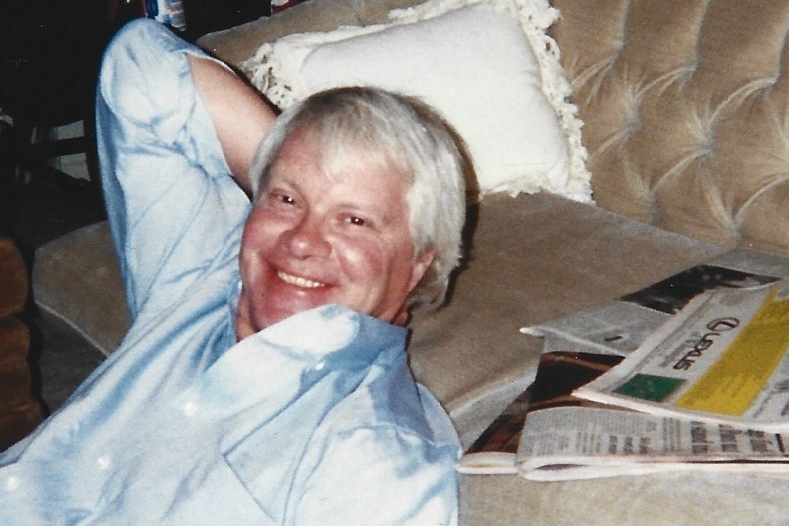
Joseph E. McGettigan III, 76, of Media, longtime trial lawyer and legal consultant, former Philadelphia assistant district attorney, former Pennsylvania chief deputy attorney general, former Delaware County first assistant district attorney, former assistant U.S. attorney in Philadelphia, former Philadelphia first assistant district attorney, and former Pennsylvania senior deputy attorney general, died Thursday, Dec. 31, of lung inflammation at Lankenau Medical Center.
Born in West Philadelphia and a graduate of Temple University, Mr. McGettigan was a legal expert in sexual assault and murder cases. He litigated in hundreds of trials over more than three decades as a prosecutor for city, county, state, and federal governments, and won notable convictions in the murder case against multimillionaire philanthropist John E. du Pont in 1997 and the child sexual abuse case against then-Pennsylvania State University assistant football coach Jerry Sandusky in 2012.
He was, then-Delaware County District Attorney Patrick L. Meehan said in 1998, like “a fascinating character in a crime novel.”
He worked for four Philadelphia district attorneys over two stints in City Hall and spent a year in Iraq in 2008 and 2009 as a U.S. government resident legal adviser working to reestablish a criminal justice system after the fall of Saddam Hussein. For most of the last decade, he worked for the Philadelphia law firm of McAndrews Mehalick Connolly Hulse & Ryan P. C. “He was a wonderful guy, a faithful citizen, and an incredible lawyer,” Dennis McAndrews, founder of the firm, said in an online tribute.
The grandson of a Philadelphia police officer and son of a lawyer, Mr. McGettigan prosecuted one of the first sex-abuse cases involving a priest from the Archdiocese of Philadelphia in 1985 and oversaw a state Senate absentee-ballot scam case in 1993. “I’m not shocked by much of human depravity,” he said in a 2018 video interview with lifelong friend Dom Irrera. “I’ve seen a fair amount of it.”
In an online tribute, Judge Jack Stollsteimer of Delaware County Court called Mr. McGettigan a “legendary prosecutor, a larger-than-life personality, and an avenging hero to crime victims across our Commonwealth.” He was a favorite of the City Hall crowd, and colleagues called him “a true public servant,” “a great guy with a wonderful heart,” and “an extraordinary presence in the courtroom.”
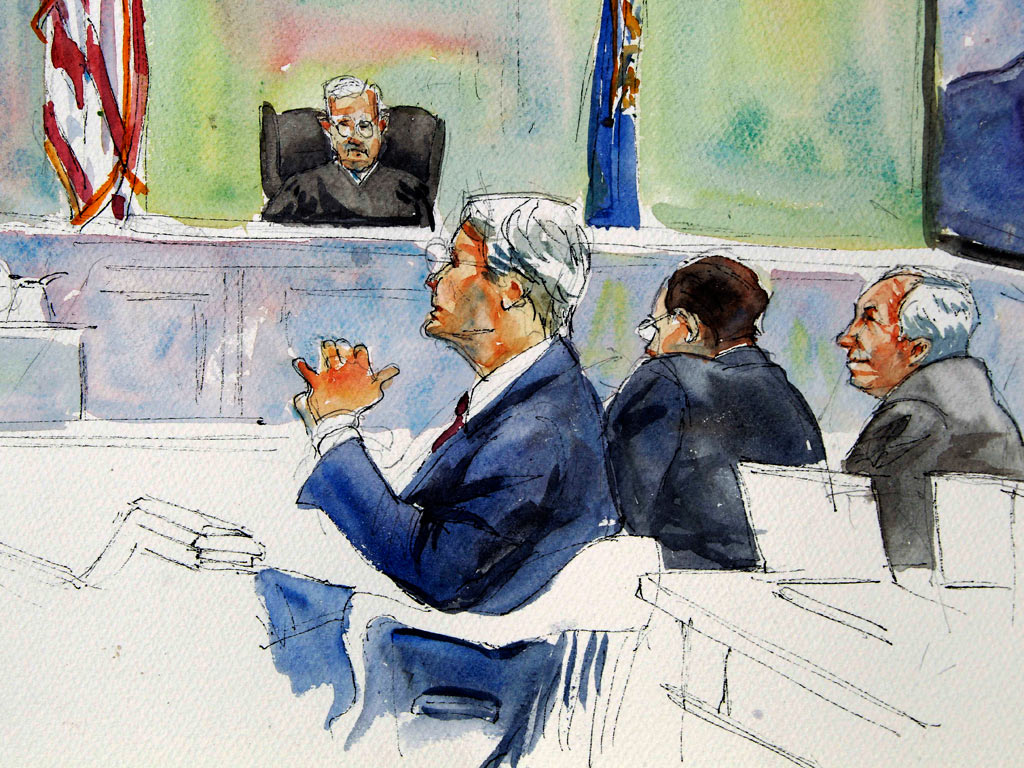
Mr. McGettigan (foreground) is shown in this courtroom sketch during the Jerry Sandusky trial in 2012.
Even those with whom he clashed praised Mr. McGettigan. Thomas A. Bergstrom, the Philadelphia lawyer who represented du Pont, said in 2011: “He’s a formidable adversary … very principled. If Joe doesn’t agree with you, he’ll let you know. If he’s going to hit you, it will be a punch in the nose, not a stab in the back.”
Witty and naturally engaging, Mr. McGettigan interrupted his legal career after the du Pont case to work briefly in Hollywood as a legal content adviser for the short-lived TV series Philly.The show starredKim Delaney as a tough defense attorney in Philadelphia, and Mr. McGettigan played a police detective, not a prosecutor, in a courtroom scene in one episode in 2002.
He also worked briefly as a consultant and manager for a private security company in Virginia, was a legal analyst for TV talk shows, and mentored other lawyers. He graduated summa cum laude with a bachelor’s degree in English literature from Temple and earned his law degree at the University of San Diego School of Law in 1982.
Mr. McGettigan played basketball in high school, on Philly playgrounds, and later whenever he could. Longtime college basketball coach and lifelong friend Fran O’Hanlon called him “a great friend who would do anything for you.”
His sister Mary said: “He was complex. He appeared often to be a hard-nose tough guy. But there was a soft side to him. He wanted to help people who were vulnerable.” His sister Patty said: “He left the world a better place.”
Joseph Edward McGettigan III was born March 5, 1949. An altar boy at church, he grew up with six sisters and a brother, and he instigated many dinner-table debates with his siblings and parents about all kinds of subjects.
“He kept us on our toes,” his sister Mary said. “He had a strong sense of justice, of doing the right thing.”
Mr. McGettigan (second from right) liked nothing better than playing hoops with friends.
He married Gay Warren, and they lived in Media and Naples, Fla. “Gay was Joe’s rock,” his sister Mary said. “He was devoted to her, and she to him.”
Mr. McGettigan loved music, reading, and writing, and told Irrera in 2018 that his favorite authors were William Shakespeare and Joseph Conrad. He was fun and funny, his siblings said, a raconteur with a large personality.
“Joe was an outlier in a family of bookish nerds,” his sister Jeanne said. “We followed his youthful adventures with great amusement and his later accomplishments with pride and respect. His generosity changed lives for the better.”
Mr. McGettigan spent a year in Iraq helping local officials revive their justice system.
One time, when they were young, his brother Michael tried to lie about losing Mr. McGettigan’s football. So Mr. McGettigan grilled him about the details and eventually extracted a confession.
“I gave it all up,” Michael McGettigan said, “the first of many malefactors to find relief in telling the whole truth and nothing but to Joseph E. McGettigan III.”
In addition to his wife and siblings, Mr. McGettigan is survived by his mother, Ruth, and other relatives. A sister died earlier.
Mr. McGettigan (front right) always seemed to be surrounded by friends.
Visitation with the family is to be from 10 to 10:45 a.m. Saturday, March 7, at St. Francis de Sales Church, 4625 Springfield Ave., Philadelphia, Pa. 19143. A Funeral Mass is to follow at 11 a.m.
Donations in his name may be made to the Tunnel to Towers Foundation, 2361 Hylan Blvd., Staten Island, N.Y. 10306.
“Everyone wanted to be Joe’s friend,” a colleague said in a tribute.
City Council on Thursday formally honored a Philadelphia-born Palestinian American who was killed last month by Israeli settlers in the occupied West Bank.
In a unanimous voice vote, Philadelphia lawmakers passed a resolution to celebrate the life of 19-year-old Nasrallah Abu Siyam, who was fatally shot during a violent clash in a village on Feb. 18, the beginning of the Muslim holy month of Ramadan.
Members of Abu Siyam’s family appeared in Council chambers Thursday alongside representatives from the Council on American-Islamic Relations, who called for an independent U.S.-led investigation into the killing.
“You don’t know what it means to live under occupation. You don’t know what these settlers are doing,” said Abdelhamid Siyam, Nasrallah Abu Siyam’s uncle. “When justice is attacked, silence is treason. … We should stand together and pressure all those elected officials to stand with justice.”
City Councilmember Rue Landau, a Democrat who authored the honorary resolution in partnership with Councilmember Nicolas O’Rourke, said Thursday that other members of Abu Siyam’s family are trapped in the Middle East after flying there after his death.
They are unable to travel home, she said, due to the ongoing war in Iran and restrictions on airspace.
Landau also called on the U.S. State Department and the Department of Justice to “conduct a full investigation and pursue justice for Nasrallah.”
“We demand accountability so that no other family here or abroad has to stand where this family stands now,” she said during a later event alongside Abu Siyam’s family.
Thirty U.S. senators signed a letter to President Donald Trump’s administration Thursday calling for an independent investigation into Abu Siyam’s killing. Pennsylvania’s two senators, Republican Dave McCormick and Democrat John Fetterman, did not sign it.
Here’s what else happened in Council on Thursday.
What was the highlight?
Prioritizing transit-oriented development: Mayor Cherelle L. Parker’s administration is pushing Council to approve a package of legislation that makes it easier to build apartment buildings near SEPTA stations, measures that proponents see as a way to boost ridership and increase the city’s housing stock.
Parker transmitted a package of zoning bills to Council on Thursday, but no member formally introduced it. Members said they saw the legislation for the first time on Wednesday and want more time to review it before introduction.
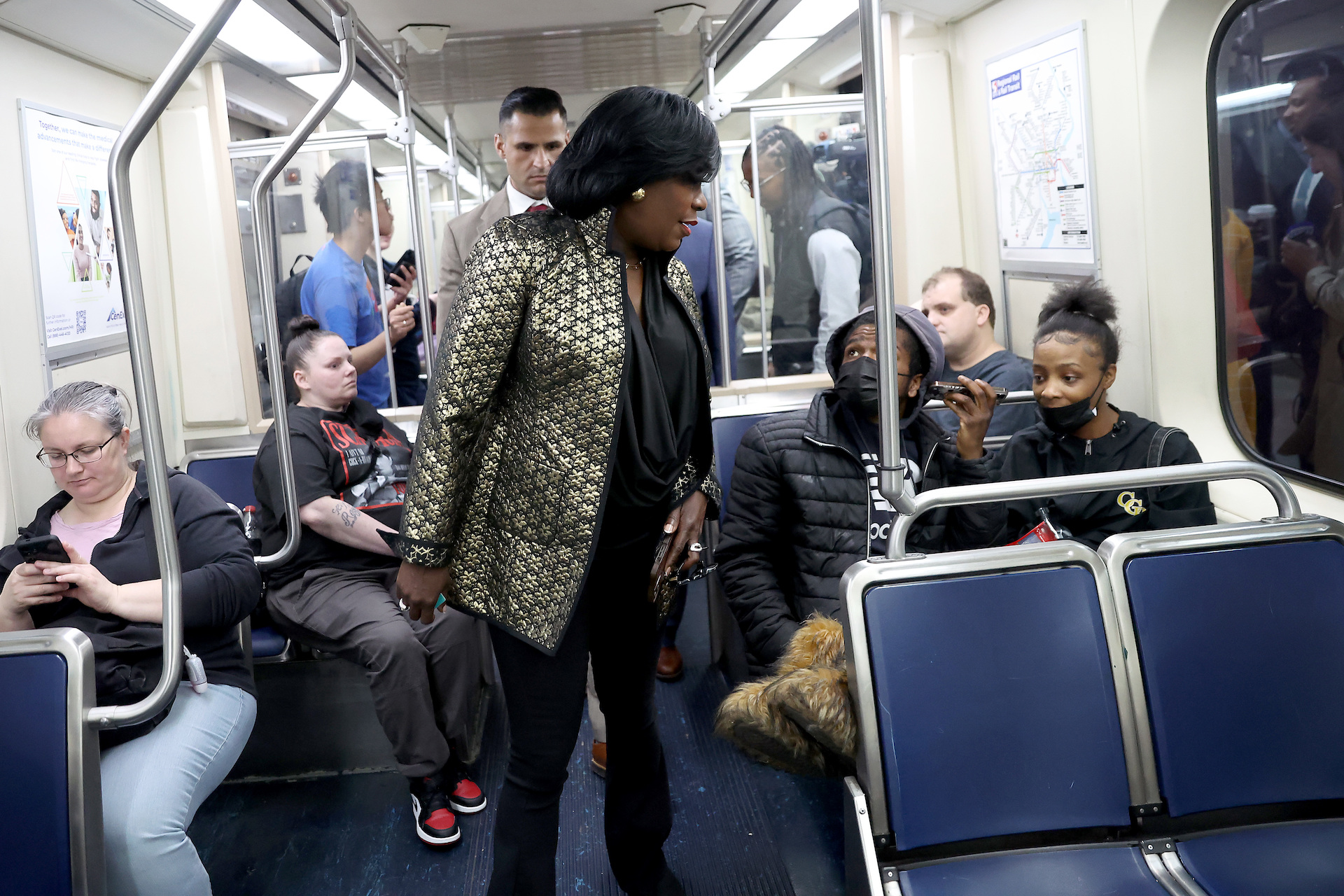
Mayor Cherelle Parker (center) rides the SEPTA Market-Frankford Line to an event in the Kensington section of Philadelphia, Pa. on Thursday, April 11, 2024.
The bills are aimed at advancing Parker’s goal to build, preserve, and repair 30,000 housing units.
Most crucially, one bill expands an existing law that says properties within 500 feet of a Council-designated SEPTA station can receive benefits allowing developers to build more homes. Parker’s legislation increases the radius to 1,320 feet, or a quarter of a mile.
What else happened?
Smoke-filled doom: Lawmakers continued their crusade against smoke shops and so-called nuisance businesses Thursday, with Councilmember Katherine Gilmore Richardson bringing legislation to hold commercial landlords accountable for renting to illegal smoke shops.
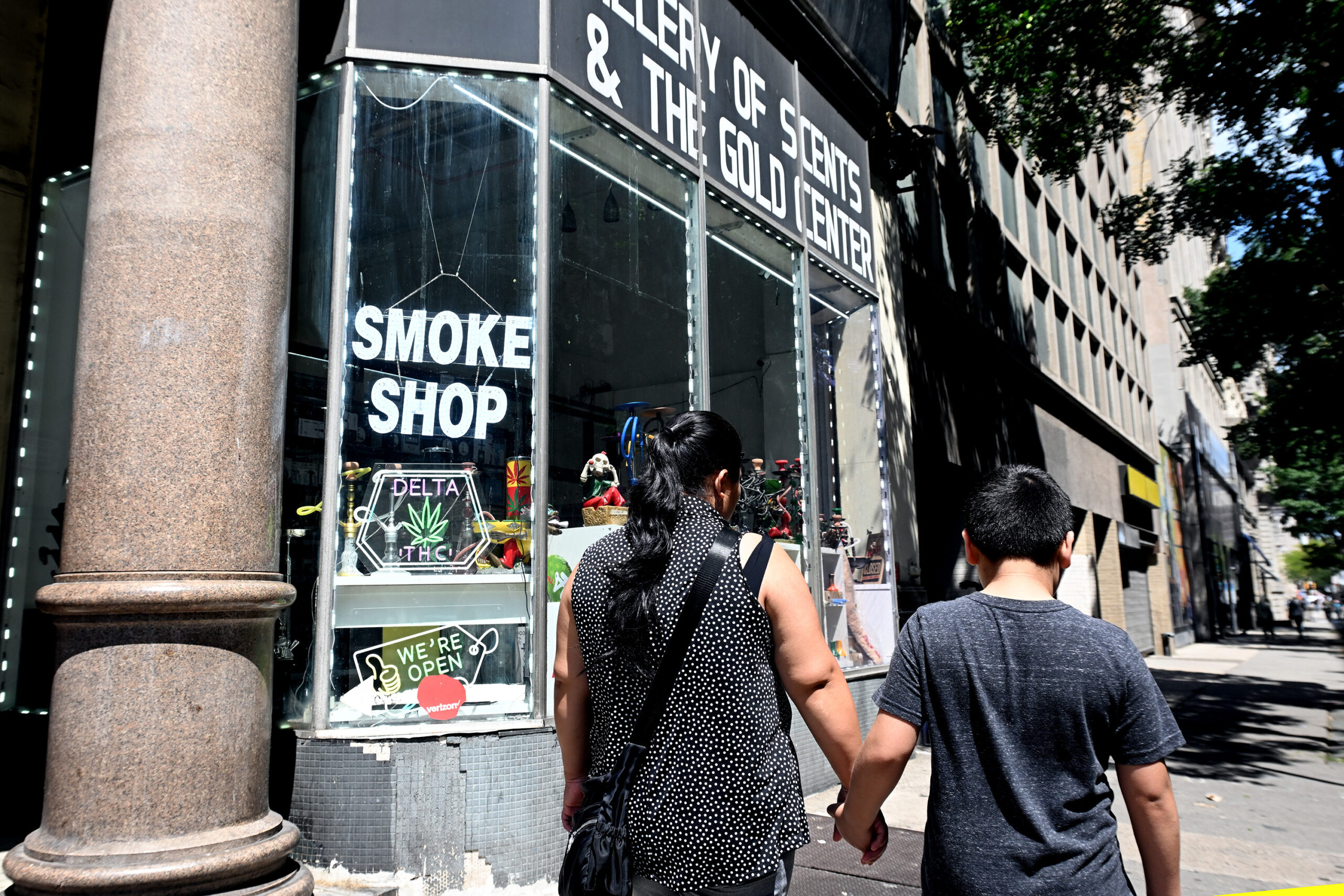
This file photo shows a city smoke shop exterior on the 1000 block of Chestnut Street in July. City Council has advanced several pieces of legislation aimed at curbing smoke shops.
Gilmore Richardson introduced a second bill to establish a new license requirement for stores selling products like hemp-based THC and kratom. The ordinance would define the products as “intoxicating substances” and establish a 21-plus age minimum.
What’s next?
Block off your calendar: Next week will be a busy one. Parker is scheduled to deliver her annual budget address to Council on Thursday, when she will outline her vision for the coming year.
The speech will kick off weeks of hearings before Council, when members will have the opportunity to question administration officials from every major department, as well as the leaders of other agencies that receive city dollars, including the city courts, the district attorney, and the Philadelphia School District.
Quote of the week
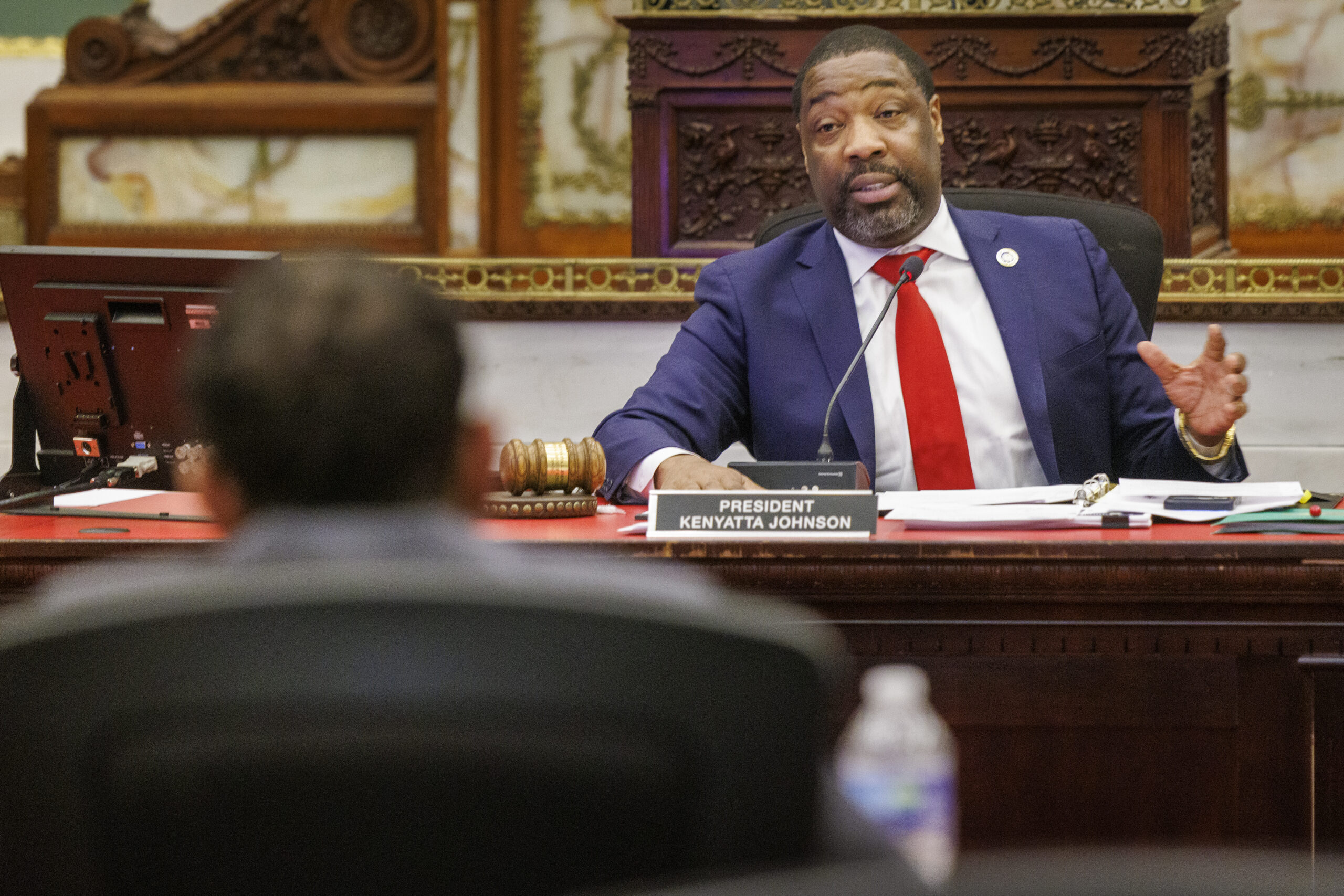
Philadelphia City Council President Kenyatta Johnson questioning Dr. Tony Watlington, Superintendent of School District of Philadelphia, during a hearing with board members of School District of Philadelphia, Tuesday, Feb. 17, 2026.
A little school district shade: That was Council President Kenyatta Johnson chiming in on an effort to rename a North Philadelphia street after the late Constance E. Clayton, Philadelphia’s first Black and female schools superintendent.