Blog

  • Three Villanova women’s basketball players earn Big East honors

    Three Villanova women’s basketball players earn Big East honors

    Three Villanova women’s basketball players received Big East honors on Thursday, including a most improved player of the year award.

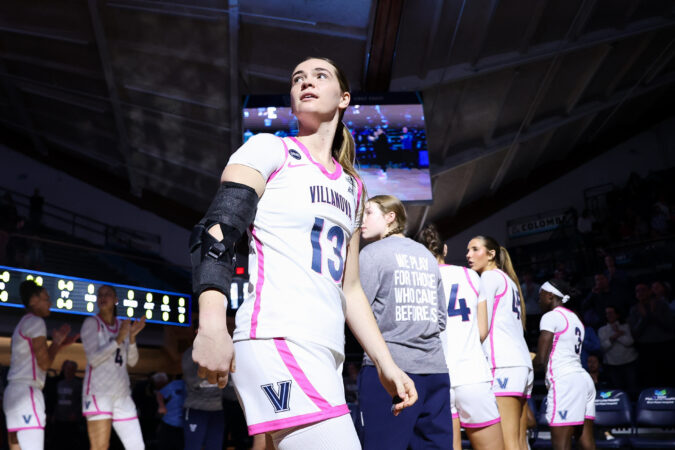
    Sophomore guard Jasmine Bascoe was unanimously selected to the Big East All-Conference first-team for the second consecutive season. Bascoe averaged 18.7 points, 4 rebounds, and 5 assists in the regular season. She totaled a career-high 30 points against Fairfield on Nov. 5.

    Bascoe leads the Big East in points and assists per game.

    Jasmine Bascoe was named to the Big East All-Conference First Team for the second consecutive season.

    Junior forward Brynn McCurry was named Big East Most Improved Player of the Year after returning from an ACL tear that sidelined her for all of last season. McCurry was also named to the Big East All-Conference second-team after averaging 10.9 points, 5.5 rebounds, and 3.1 assists. She totaled four 20-point games and scored double digits in 10 of Villanova’s first 13 conference games this season.

    After only having two double-digit scoring performances before her injury, McCurry returned to total 17 this season. During her freshman season, she only averaged 2.7 points, 1.8 rebounds, and 11.6 minutes off the bench.

    McCurry leads the team in rebounding with 5.5 rebounds per game (159 total) and is second on the team in scoring behind Bascoe.

    Kennedy Henry, a Westtown graduate, was named to the conference’s All-Defensive team and unanimously voted to the All-Freshman team. She was a starter in all 27 games this season. The McDonald’s All-American nominee averaged 9.4 points and four rebounds during the regular season. She also led the team in steals (66) and was second in blocks (24) behind senior Denae Carter (34).

    Henry is currently tied for the most steals by a Wildcat in their freshman season. She is one steal shy of breaking the record.

    Villanova is the No. 2 seed in the Big East Tournament and will play the winner of No. 7 Providence and No. 10 DePaul in the quarterfinals on Saturday at the Mohegan Sun Arena.

  • City Council seeks new license system for loosely regulated smoke shops

    City Council seeks new license system for loosely regulated smoke shops

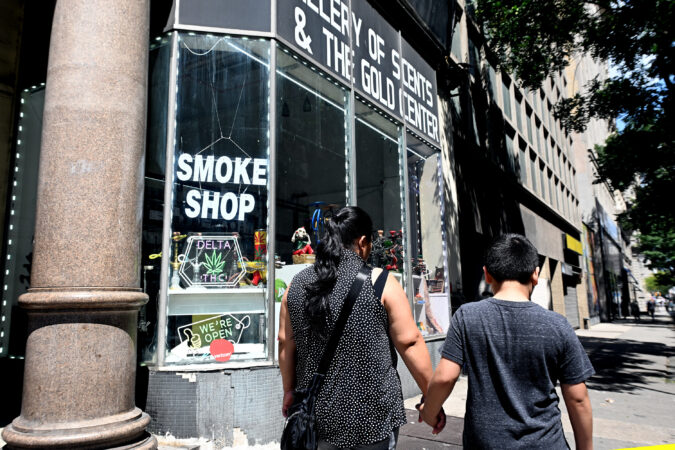
    From Bryn Mawr to Bensalem, Abington to Kensington, and West Chester to West Philly, smoke shops are everywhere. So much so that authorities who’ve grown concerned about the booming business model have struggled to track them all.

    In Philadelphia, City Councilmember Katherine Gilmore Richardson on Thursday introduced legislation that would establish a permit process, allowing the city to more closely monitor shops that sell unregulated drugs and crack down on those that flout the oft-hazy laws governing them.

    The bill would establish a new license requirement for selling “intoxicating substances,” while implementing a series of restrictions around the sale of products like hemp-based THC and kratom. It would also update the city code to define intoxicating products and establish a 21-plus age restriction for purchases.

    Gilmore Richardson proposed a second bill that would authorize the city to penalize landlords who rent space to stores selling tobacco products without a license.

    “Nine times out of ten these products are being marketed to our children,” Gilmore Richardson said. “We have to do all we can to add a new section in our code.”

    The new legislation would further require shops to have their products tested by a licensed lab in Pennsylvania and prove that the products are free from heavy metals, pesticides, solvents, mycotoxins, microbials, and other contaminants.

    An Inquirer investigation last year found that hemp products sold at smoke shops throughout the region are often rife with harmful contaminants, and many contain substances that are blatantly illegal. Some of the products The Inquirer tested were, in fact, black-market weed that was labeled as legal hemp.

    Shop owners defended the sales with lab results from the manufacturers indicating the products are both legal and toxin-free. Yet The Inquirer found that at least some of the reports were fraudulent or doctored to conceal the truth.

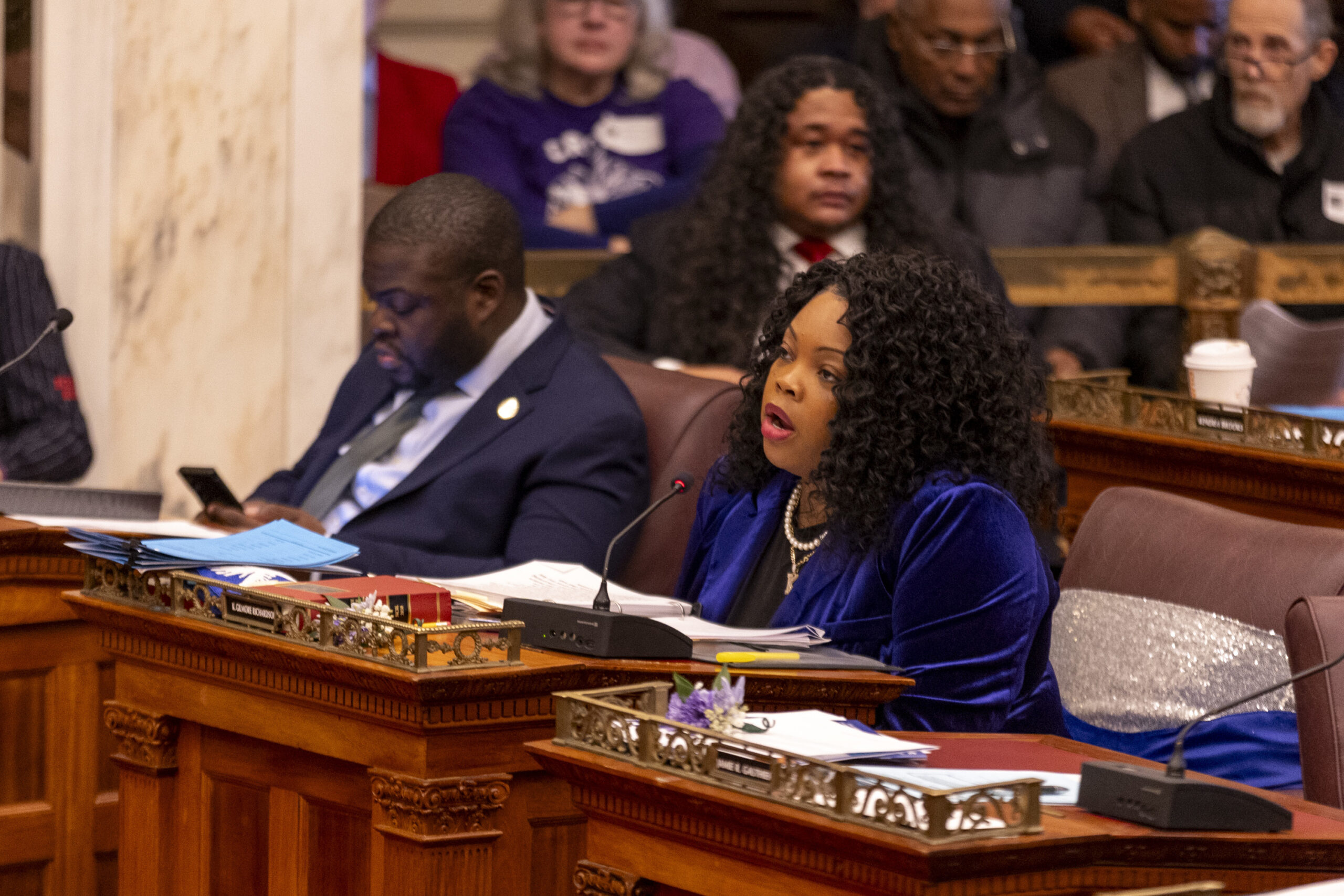
    Council member at-large Katherine Gilmore Richardson speaking at the City Council’s first session of the year in Philadelphia, Pa., on Thursday, Jan. 22, 2026.

    The bills are the latest proposals from Gilmore Richardson to rein in shops selling these products — many of which the city has labelled as nuisance businesses. Such shops have flourished since a 2018 change in federal law allowed for the over-the-counter sale of certain hemp products that are often indistinguishable from traditional marijuana.

    How the proposed new regulations would be enforced remains unclear. As written, the license system and testing requirements would only apply to products that the U.S. Food and Drug Administration has deemed “safe.” Some smoke shop products products are marketed as nutritional supplements, which the FDA does not regulate.

    Region-wide, the crackdown on smoke shops has been haphazard, with law enforcement officials often saying they are constrained by nebulous federal drug laws.

    “You discover a gray area or a loophole that folks try to exploit, and you have to do another bill to deal with that,” Gilmore Richardson said.

    A federal ban on hemp-based THC products could take effect within the next year. Meanwhile, state lawmakers in Harrisburg have done little more than explore the idea of regulating the hemp-based THC market. Other states, including neighboring New Jersey, have for years had a regulated and taxed system of recreational marijuana.

    State-issued tobacco permits are needed to sell nicotine products, but there is currently no permit required to sell hemp, kratom or similar smoke shop products in Pennsylvania. A grand jury report unsealed in Montgomery County last fall had to rely on Yelp to estimate that there are likely more than 240 smoke shops in Montco alone. That report called on Harrisburg to establish a permit system and an age restriction on hemp products containing THC.

    In Philadelphia, many shops operate under convenience store permits, even if they aren’t selling many groceries. The city’s crackdown efforts have been largely limited to citing shops for fraudulently operating under this permit.

    Gilmore Richardson said the intoxicating substances permit is a long overdue solution. The bills head to committee for review.

    The second bill introduced Thursday would grant the city power to fine landlords who “knowingly lease” commercial property to a business that sells tobacco products without a permit. Currently, only the business owners face penalties for selling cigarettes without the proper permit.

    Gilmore Richardson said she would consider expanding that legislation down the road to include the intoxicating substance permit — should it become law.

    “You can’t manage what you don’t measure,” the lawmaker said. “We need to understand where these businesses are located.”

    This article was supported by the Fund for Investigative Journalism.

  • Bills to obtain wide receiver D.J. Moore in a trade with the Bears

    Bills to obtain wide receiver D.J. Moore in a trade with the Bears

    The Buffalo Bills agreed Thursday to acquire wide receiver D.J. Moore from the Chicago Bears, two people with knowledge of the trade told The Associated Press.

    Buffalo is sending a second-round pick in the draft this year to Chicago for Moore and a fifth-rounder, the people said. They spoke to the AP on condition of anonymity because the deal cannot become official until the start of the new league year Wednesday.

    Moore is coming off making 50 catches for 682 yards and six touchdowns last season as the Bears made the playoffs in Ben Johnson’s first year as coach. The soon-to-be 29-year-old joins the Bills under new coach Joe Brady after quarterback Josh Allen has thrown to a rotating cast of characters at receiver.

  • D.C.’s cherry blossoms will peak between March 29 and April 1, Park Service says

    D.C.’s cherry blossoms will peak between March 29 and April 1, Park Service says

    The iconic cherry trees decorating the nation’s capital will hit peak bloom between March 29 and April 1, the National Park Service predicted Thursday.

    The agency declares peak bloom when 70% of the Yoshino blossoms around the Tidal Basin, the reservoir on the National Mall, have opened.

    Kevin Griess, superintendent of National Mall and Memorial Parks, said the weather could affect peak bloom, noting this winter has been colder.

    “Every spring, the National Cherry Blossom Festival does more than welcome a new season,” David Moran, chair of the board of directors for the National Cherry Blossom Festival, said at a news conference Thursday. “It brings a renewed sense of joy and vitality to our entire region.”

    The annual festival commemorates the 3,000 cherry trees Japan gifted to the United States as a symbol of friendship in 1912.

    Japan will gift an additional 250 cherry trees this year in honor of the United States’ 250th anniversary celebration, Masatsugu Odaira, minister for public affairs for the Embassy of Japan, said Thursday.

    This year’s festival will run from March 20 to April 12 and will feature an opening ceremony of traditional Japanese sword dancers, a parade along Constitution Avenue, a “pink tie” fashion show at Union Station and a street party at Navy Yard.

    The Washington Post’s Capital Weather Gang, which independently estimates peak bloom, predicted it could happen between April 3 and April 7, potentially more than a week later than last year. The last time peak bloom happened this late was April 5, 2018.

  • Texas primary exposed GOP scheme to rig the 2026 midterms

    Texas primary exposed GOP scheme to rig the 2026 midterms

    A man named Juston Marine had arguably the toughest job in America on Tuesday: “election navigator” in Dallas County, Texas, where a confusing, Republican-engineered change in voting rules for 2026 left many voters dazed, confused, and miles from the place where they were supposed to be casting ballots.

    “There are a lot of infuriated voters,” Marine told a reporter for the Votebeat website as he struggled to do his job outside the Anita Martinez Recreation Center in West Dallas, where he encountered voters as they arrived at the large polling center. It seems this election worker heard a lot of words that aren’t found in the Bible, as he told every second or third voter that they were supposed to be somewhere else.

    “I walked up here because I want to vote so, so bad,” Veronica Anderson told a reporter after traveling two and a half miles on foot to Dallas’ Martin Luther King Jr. Community Center, only to be told she could only cast a ballot at some other location she’d never heard of. She added that the rejection felt like “your self-esteem and everything is torn down.”

    That level of despair is exactly what Donald Trump’s Republican Party is going for, as America this week kicked off an eight-month mad dash to a November midterm election that will be pivotal for the nation’s barely breathing democracy.

    We’ll never know exactly how many intended votes weren’t cast on Tuesday at the site named for the civil rights legend credited for the 1965 Voting Rights Act, or other Dallas County polling places where scores of voters — primarily Democrats — were turned away from highly competitive primaries for a U.S. Senate seat and other key races.

    It may have looked like chaos, but in many ways it all went down according to a Republican plan that will likely inspire further scheming from Trump and his MAGA minions as the general election draws closer.

    With polls showing that an election held today — with the two-term president’s unpopularity at an all-time low — would result in a Democratic takeover of the U.S. House and possibly the Senate, perhaps in a landslide, Team Trump has spent months looking for any and every way to put its finger on the scale of democracy.

    No one, other than some online Chicken Littles, believes Trump would go full banana republic and send in troops to cancel the 2026 midterms. But his attempted coup on Jan. 6, 2021, aiming to undo his 2020 loss, is an indication of how far this autocrat will go to retain power.

    The Trump-led Republican scheme to make the 2026 elections less free and less fair started with a push for red states to do extreme gerrymandering, ripping up the maps drawn after the 2020 Census to make new districts crafted to maximize GOP power. (Texas was Ground Zero for this effort — more on this later.)

    As the calendar flips toward the midterms and Republican popularity wanes, the push is likely to get more extreme. A legislative push for the so-called SAVE America Act, which would make voting harder with harsh ID requirements, has stalled, so Trump is now weighing an executive order to get the same results — which would surely trigger a legal fight — and possibly try to curb mail-in ballots, as well.

    What just happened in Texas’ second-most populous county proved a case study in today’s brand of Republican voter suppression, so let’s unpack it.

    Like much of what happens in a political party that still clings to the Big Lie of nonexistent voter fraud in that 2020 election that Trump lost, the problems in Dallas County all began with a conspiracy theory.

    In this September 2021 file photo, Texas gubernatorial hopeful Allen West speaks at the Cameron County Conservatives anniversary celebration in Harlingen, Texas.

    The county GOP leader in Dallas is a well-known conspiracy theorist, Allen West, an ex-congressman from Florida who moved to Texas and, for a time, ran the state Republican Party, where he adopted a slogan and a style from QAnon and seemed to favor secession, among other extreme views.

    In 2024, West became chair of the Dallas County GOP and made election and voting machine conspiracy theories his prime focus, in a state where parties have a lot of say over how primaries are conducted.

    What the local GOP pushed was for the county to count all of its paper ballots by hand — a laborious process that would also require abandoning the large countywide voting centers and a return to smaller neighborhood precincts. Ultimately, the ballot-counting idea proved not practical, but the switch back to local precinct voting stuck and was in effect Tuesday for both parties — even as Democrats struggled to inform their voters. (A similar change occurred in smaller Williamson County.)

    Election experts note that the GOP generally opposes large centers where anyone in a jurisdiction can vote — much as it opposes early voting, mail-in ballots, or anything else that makes voting easier instead of harder, in an increasingly fragile democracy.

    Voter suppression that unravels the gains from the 1965 Voting Rights Act — weakened and perhaps about to be gutted further by a right-wing U.S. Supreme Court — has been a Republican strategy for decades, but the Dallas debacle was a new low.

    “The confusion is the point,” a Democratic Texas state lawmaker, Ana-María Rodríguez Ramos, posted on social media, noting further, “This is the GOP voter suppression that Dems must come together to overcome in November.”

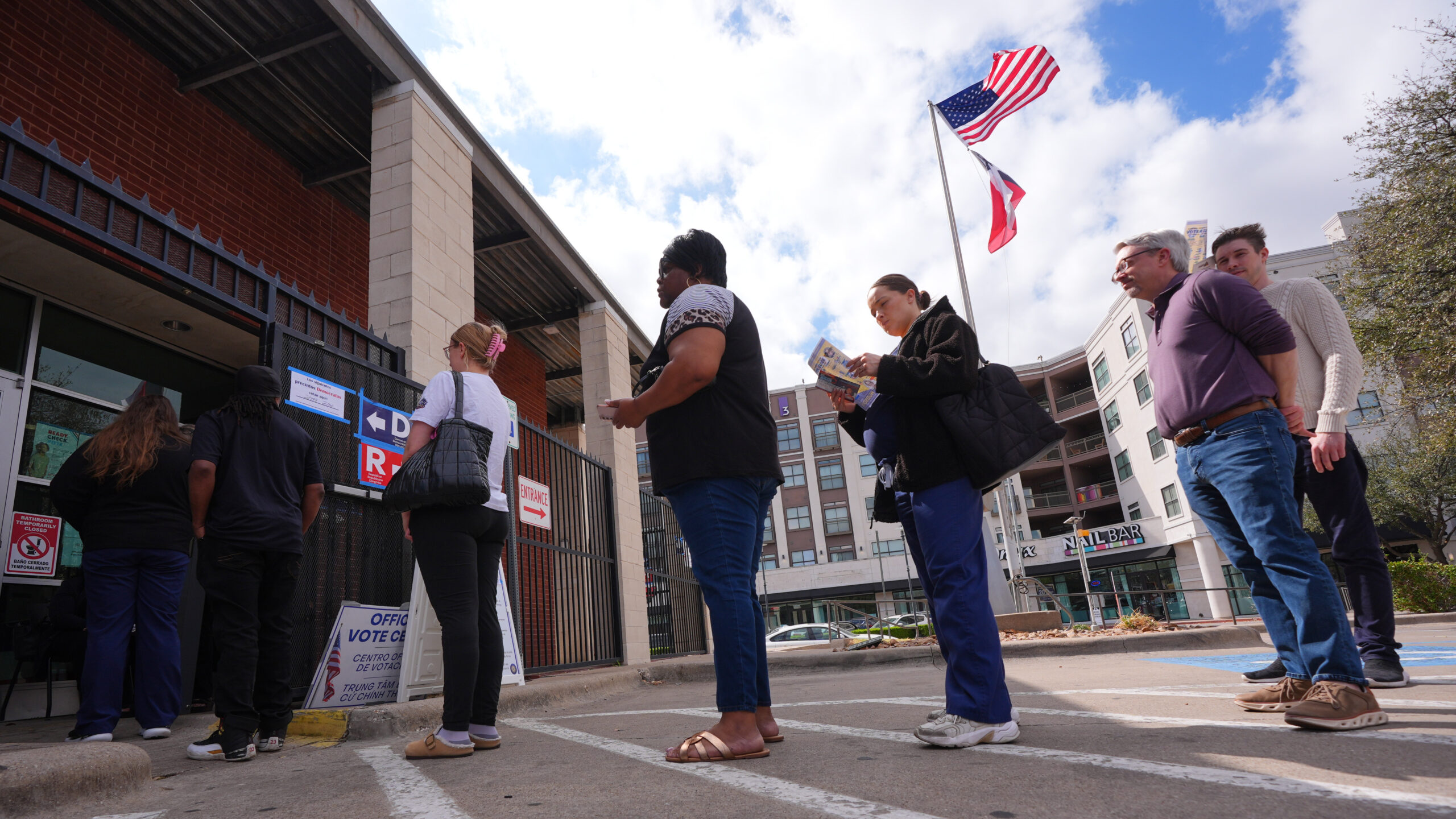
    Primary voters line up to cast ballots at a voting center in Dallas on Tuesday, March 3.

    Ramos also noted one other wrinkle that happened Tuesday. Democrats and fair-voting advocates in both Dallas and Williamson Counties went to court during the day, seeking an emergency order to extend voting hours. That push initially succeeded, and in Dallas County, a judge ordered the polls open for two additional hours.

    But Texas’ right-wing extremist Attorney General Ken Paxton — also a leading candidate in Tuesday’s GOP Senate primary — appealed the ruling and got the state’s conservative Supreme Court to rule in his favor. Votes that were cast after the original 7 p.m. closing time were segregated and may or may not ultimately be counted.

    Not surprisingly, West actually bragged about what looked to many folks like a voting fiasco, blaming the Democrats for not being informed about the confusing rules change. “It’s apparent that Democrats struggled with grasping basic civics and their usual attempt at lawfare backfired,” the GOP leader said in a statement.

    It’s clear that what we saw in Dallas — balloting drenched in conspiracy theories from start to finish, new rules with the sole purpose of making it harder to vote, and an increasingly conservative judiciary making the final call — was clearly a test case for the national election in November.

    It’s not hard to imagine a scenario in which Republicans will manufacture conspiratorial doubt about some of the ballots cast in the fall — as just happened with those post-7 p.m. votes in Dallas — as a pretext for some grander and potentially cataclysmic effort to nullify Democratic victories in Congress.

    But Texas also provided a window into how this MAGA scheme might not work.

    Remember that extreme gerrymander the Lone Star State enacted last year, which aimed to create five additional Republican seats in Congress? Much of the plan aimed to capitalize on a dramatic shift toward the GOP among Texas’ large Latino population during Trump’s last two runs in 2020 and 2024.

    But polls and now early voting have shown the Hispanic vote swinging back toward Democrats since Trump returned to office, thanks to the sluggish economy and the brutal manner of his immigration raids. On Tuesday, Democratic turnout in Texas soared to levels not seen since the high-profile 2008 battle between Barack Obama and Hillary Clinton, in what was a very good year for their party. Voter suppression can be swamped by voter enthusiasm.

    But it shouldn’t have to be that way. The right to vote is the fundamental building block of the American Experiment in democracy, and folks shouldn’t have to walk clear across town or stay up all night to exercise it. Dallas was a warning shot for every citizen: Do not let this nightmare go national in November.

  • How a DHS shooting of a third U.S. citizen went unnoticed for months

    How a DHS shooting of a third U.S. citizen went unnoticed for months

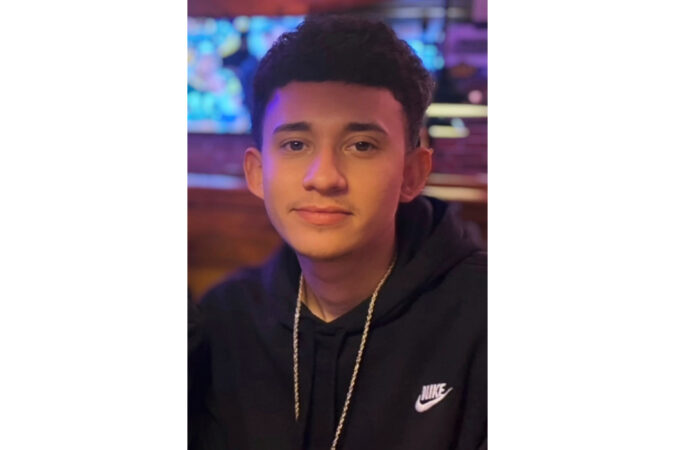
    After the Texas Ranger knocked on her door and delivered the numbing news, Rachel Reyes realized she hadn’t thought to ask who shot her son. She figured it had been another Ranger that killed Ruben Ray Martinez, 23, after he allegedly failed to comply with a law enforcement officer’s orders.

    But a week later, Reyes read an article from a local news outlet in South Padre Island that confused her. The police in that small, South Texas beach community were saying there had been an officer-involved shooting and a man was dead, but a separate, unnamed agency was responsible. Reyes called the Ranger who notified her and was now investigating the shooting: Who shot Ruben?

    A Department of Homeland Security agent assigned to immigration enforcement was responsible, the Ranger said.

    Reyes didn’t go public, instead deciding to await the results of the investigation by the Rangers, who are part of the Texas Department of Public Safety.

    The March 15, 2025, killing of Martinez, a U.S. citizen, drew almost no public attention, even as protests erupted over the January shooting deaths of two U.S. citizens in Minneapolis — Renée Good, a mother of three, and Alex Pretti, an ICU nurse. South Padre Island Police put out a news release on Martinez but did not identify the agency responsible for his death. A two-sentence police report described Martinez striking a federal agent with his vehicle but did not mention the shooting that allegedly happened a moment later.

    Texas officials, citing their ongoing investigation, declined to release footage of the incident. DHS did not publicly acknowledge that one of its agents had fatally shot Martinez until last month, when a lawsuit over a year-old public records request unearthed an internal narrative of the shooting by a Homeland Security Investigations agent. The request by American Oversight, a nonprofit government watchdog group, sought internal emails from the agency containing a variety of phrases and words, including “use of force.”

    Martinez is now the first known American citizen shot to death by federal immigration agents during President Donald Trump’s second term.

    Some Texas lawmakers are expressing alarm at the lack of transparency, demanding a public hearing and immediate release of all body-camera footage and other records. They have also raised concerns about conflicting information between DHS’s account of the shooting and a witness statement describing what happened.

    “When government uses its most serious power, the power to take a life, the facts cannot remain hidden,” said State Rep. Ray Lopez, a Democrat whose district includes the city of San Antonio, where Reyes lives. “A young Texan lost his life, and the public was left without full clarity for nearly a year. That is not about politics. It is about trust.”

    Michael Sierra-Arévalo, an associate professor at the University of Texas who studies policing and use of force, said DHS’s failure to promptly disclose the shooting to the public fits a pattern during the Trump administration, in which officials have at times taken extraordinary measures to defend and shield immigration officers who use deadly force from scrutiny.

    “This was very much known to local authorities. What they were burying was that it happened with this particular agency,” Sierra-Arévalo said. “The ability for federal law enforcement to not be subject to the same sort of oversight that local law enforcement experiences when they’re involved in these incidents in collaboration with local police underscores the danger of federal police operating with practically unchecked power.”

    Many states, including Texas, have passed laws requiring police departments to report shootings to oversight agencies, but there is no federal statute mandating a similar protocol.

    A spokesperson for U.S. Immigration and Customs Enforcement, which includes Homeland Security Investigations, said the department’s policy requires that agents report every use-of-force incident. They are then reviewed “in accordance with agency policy, procedure, and guidelines.” Shootings, the spokesperson said, are first examined by “an appropriate law enforcement agency” and then ICE conducts an internal review.

    A DHS spokesperson declined to explain why the shooting of Martinez was not publicly acknowledged by the department for 11 months. The agency documents released through the records request state that Martinez’s car struck an agent and lifted him onto the hood of Martinez’s vehicle. In a statement that followed that disclosure, a DHS spokesperson said Martinez “intentionally ran over” the agent and that another agent shot and killed him.

    Those words shocked Reyes — they seemed disconnected from the young man she raised, from the story Martinez’s friend and a witness to the shooting told her, and from the narrative the Ranger shared in her living room in San Antonio, several hours after the killing. He said Martinez had tapped an officer with his car and was shot multiple times in response. No one was injured, Reyes said the Ranger told her.

    The Texas Department of Public Safety did not respond to requests for comment on Reyes’s recollection of the Ranger’s account.

    Reyes, a 48-year-old mother of three and a nurse for a medical insurance company, said she voted for Trump in 2024 and “doesn’t have a strong position” on immigration enforcement. But she does not like how officials have handled her son’s death.

    “I don’t really have anything negative to say about Trump. He wasn’t the one who pulled the trigger — it was the department. How they’re handling it is irresponsible.”

    Conflicting narratives

    When she first learned of Martinez’s death, Reyes assumed her son had been in a car accident.

    “Ruben was really nice,” Reyes said, “and he didn’t have enemies or make enemies or get in fights, so I would never in my wildest dreams imagine that someone would want to hurt him.”

    He’d left the house at 2 p.m. without telling his mother where he was going. He’d just turned 23, and later, she realized, had likely kept his plans from her because she wouldn’t have approved of him celebrating his birthday in South Padre Island, which has a reputation for rowdy nighttime partying during spring break.

    Joshua Orta, a friend who was in the passenger seat when Martinez was killed, later told Reyes they’d gone to a bar. Driving to their next destination, they approached the scene of a traffic accident where first responders including the South Padre Police and Homeland Security agents were directing traffic. A Ranger saw an open container of alcohol in the vehicle, Orta said. The Ranger questioned the men about it, but ultimately told them to move along.

    But other officers began shouting, Orta said. Reyes said the Ranger told her that Martinez failed to follow instructions from the officers to stop his car, the car “tapped” an officer and another officer opened fire, killing Martinez.

    Reyes asked if the officer was OK. The officer was “shaken up” but not injured, the Ranger said, according to Reyes.

    Orta, in a written statement provided to lawyers for Reyes, disagreed with that account: “I was present, and I state clearly and without hesitation that Ruben did not hit anyone,” Orta wrote. “The trooper seemed to be trying to get in front of the car, like he wasn’t moving out of the way when we tried to turn around and leave like the police officer told us to do.”

    The DHS narrative paints a different picture.

    Officers and agents commanded Martinez to exit the vehicle, according to the documents released via FOIA, and Martinez “accelerated forward, striking a HSI special agent who wound up on the hood of the vehicle.” Then an agent shot Martinez through his driver’s side window.

    Martinez was transported to Valley Regional Medical Center in Brownsville, Texas, and pronounced dead, according to the documents.

    “The special agent who was struck was taken to a hospital for treatment of a knee injury and was later released,” the internal DHS report states.

    Orta had been planning to participate in the family’s legal fight for transparency and civil compensation, lawyers for Martinez’s mother said, but was killed in February in an unrelated, fiery vehicle crash in San Antonio.

    Reyes said the description of her son, paired with DHS statements following the shooting, have been difficult to stomach without seeing the evidence for herself.

    “I was told there’s no injuries and that someone was tapped. That’s completely different from being told a human was ran over,” Reyes said. “That’s upsetting. It’s hurtful and inappropriate.”

    ‘A pattern’

    For answers, and evidence, Reyes first reached out to the South Padre Island Police Department. They pointed her to the Texas Department of Public Safety, who turned her back to the Ranger handling the investigation, who said he couldn’t share any more information.

    “I was just going in circles,” Reyes said. “I just didn’t know anything because I didn’t know what I could do. I felt like I was kind of helpless. I decided to just trust the process and wait to hear from him.”

    Then a life insurance claim through Martinez’s employer was denied, citing the government’s claim that Martinez injured an officer. Reyes eventually retained a team of attorneys to investigate the case. They have been filling records requests and exploring potential civil actions against DHS.

    Meanwhile, Reyes has been watching DHS’s actions in other cities around the country and wondering if her son’s death is not part of a pattern. Trump administration officials quickly labeled Good and Pretti “domestic terrorists” before investigations were conducted. Witness videos analyzed by the Washington Post conflict with official statements regarding both incidents.

    “I thought that was callous and awful to call that woman a domestic terrorist because obviously that’s not what she was doing,” Reyes said, referring to Good. “You start to see things in a different light. There’s a pattern here of them using these statements to characterize these people, and to justify their agents’ actions, and I think that’s awful.”

    Reyes said she’s prepared to fight for accountability if the same is true for her son.

    On Feb. 25, days after news organizations broke news that a HSI agent was responsible for the killing, the Cameron County district attorney convened a grand jury to consider whether to press charges against the agent who fired at Martinez.

    The grand jury, shown video of the incident that has not yet been made public, declined to indict the agent. The Texas Department of Public Safety, which has declined to release video of the incident while the investigation is ongoing, said that its investigation is now complete and the department is completing “proper redactions” before releasing the video.

    Reyes said she won’t watch it. She plans to have people she trusts explain what happened. If video shows the government’s claims to be true, she said, “then I’ll have to live with that. I just want to know.”

    Martinez’s wake was standing room only, Reyes said. An uncle gave his eulogy, drawing from Corinthians a passage that resonated with his mother: “To be absent from the body is to be present with the Lord.”

    She considered burying his body, but opted instead to bring Martinez home, “where it’s safe,” she said. She had Martinez cremated and first set the urn on the dresser in his bedroom, then she brought him to a living room shelf to sit beside a framed picture of him smiling at her birthday dinner two years ago. Martinez never liked to hang out in his room, she said. He preferred to be with his family.
  • Federal commission delays vote on Trump’s White House ballroom project

    Federal commission delays vote on Trump’s White House ballroom project

    A federal planning commission on Thursday delayed a vote on President Donald Trump’s planned White House ballroom until next month, citing “significant public input,” including tens of thousands of comments — nearly all of them critical of the project.

    The National Capital Planning Commission had planned to review the proposal and vote on it — the final procedural hurdle for an effort to dramatically remake one of the most revered symbols of American power and democracy.

    But partway into the meeting, commission Chair Will Scharf said that he expects public comment to last five to nine hours, with over 100 people signed up to testify, which will likely require the board to recess Thursday evening and resume Friday morning. The commission will discuss and vote on the project at its April 2 meeting, he said.

    Ahead of Thursday’s hearing, the agency received more than 35,000 comments about the project, according to a Washington Post analysis of submissions posted on the commission’s website. The “vast majority” came from those who oppose the plan, commission staff said. The Washington Post found that more than 97% of comments were critical of the president’s plans. (The Post used artificial intelligence to classify the submissions and measured its accuracy against a hand-checked sample.)

    The delayed vote is a snag in Trump’s push to rush the project through the approval process so construction can be completed before the end of his second term. Securing approval at the commission’s next meeting, however, could keep the project on schedule; the White House has said it plans to begin aboveground construction as soon as next month.

    The commission’s endorsement would be the last bureaucratic obstacle in the Trump administration’s push to secure approval for the $400 million ballroom from two federal committees charged by Congress with reviewing the designs of major construction projects in Washington. Late last year, the White House laid out a strategy to complete the process within nine weeks, a plan that’s now been pushed to just over three months.

    Historic preservationists have sued to stop the project, and a federal judge is considering their challenge, which alleges that Trump is unlawfully pursuing a project that requires express authorization from Congress.

    Last week, the National Capital Planning Commission’s executive director, Marcel Acosta, recommended that the 12-member panel approve the project. In an 11-page report published Friday, Acosta said the proposed structure will provide presidents with a larger permanent event space while protecting “the historic integrity and cultural landscape of the White House.”

    Acosta’s assessment contrasts sharply with the public response. Tens of thousands of comments criticized what opponents described as a rushed approval process, insufficient public input and a design that would overshadow the main White House building.

    The president has made the building a priority of his second term, and he returns to it often in public remarks and social media posts. He clashed with the project’s previous lead architect about the size of the addition.

    Trump has made strategic moves to secure its success, including reshaping the membership of the two federal bodies that must sign off on the project: the National Capital Planning Commission and the Commission of Fine Arts. Last month, the Commission of Fine Arts, which now includes Trump’s 26-year-old executive assistant, voted unanimously to approve the project. Chair Rodney Mims Cook Jr. called it a “desperately needed” and “very beautiful structure,” whose design he credited to Trump.

    The National Capital Planning Commission is led by Will Scharf, the White House staff secretary and Trump’s former personal lawyer, whom the president appointed in July. The commission includes a pair of other White House officials, James Blair and Stuart Levenbach. It also has nine seats apportioned to sitting cabinet secretaries and other officials who have a role in overseeing Washington, although senior officials and lawmakers usually send a representative in lieu of attending themselves.

    Although federal design commissions have traditionally acted as a constraint on government construction projects — often holding extended deliberations that last for years — Trump has pressed to move the project along swiftly so it can wrap before his term concludes.

    Last year, the president ordered the rapid demolition of the East Wing annex without first seeking authorization from Congress or the review committees. Trump’s plan for a new ballroom building on the site that matches the “height and scale” of the main White House has advanced despite objections from a federal judge, architecture experts and historic preservationists, who argue that the structure would be too big, dwarfing a centuries-old American symbol.

    White House officials want the commission to approve in one fell swoop the ballroom building’s preliminary and final plans, which the body normally takes up individually at separate meetings, giving agency planners time to incorporate commission feedback before resubmitting updated plans. For example, the planning commission approved a new White House perimeter fence in three steps over seven months, starting with a conceptual design in July 2016 and ending with final plans in February 2017.

    Last week, Trump scored another victory on the ballroom front. U.S. District Judge Richard J. Leon ruled that construction on the project could proceed, citing procedural problems with a lawsuit challenging the president’s ability to unilaterally build the structure. The National Trust for Historic Preservation, a congressionally chartered organization that advocates for protecting historic sites, amended and refiled its complaint Sunday, three days after Leon’s ruling.

    Trump has repeatedly defended the project’s $400 million price tag, saying it is a benefit to taxpayers that the project will be paid for with private donations.

    “I built many a ballroom. I believe it’s going to be the most beautiful ballroom anywhere in the world,” Trump said Monday at a ceremony in which he awarded the Medal of Honor to three Army soldiers.

    Democrats and government watchdog organizations have raised concerns about those donors, which include major corporations such as Amazon, Google, and Palantir — companies that together have billions of dollars in federal contracts. Critics have questioned whether donors could receive special access or other benefits in return. (Amazon founder Jeff Bezos owns the Washington Post.) Some Democrats say improvements to the White House complex may be warranted but contend that the ballroom should be far smaller and subject to congressional oversight to ensure transparency.

    Polls have found that most Americans oppose the project. Twenty-five percent of respondents said they supported tearing down the East Wing to build the ballroom, compared with 58% who opposed doing so, according to an Economist/YouGov poll conducted last month.

  • Gisele Fetterman’s X and Instagram profiles are now inactive weeks after she spoke against ICE

    Gisele Fetterman’s X and Instagram profiles are now inactive weeks after she spoke against ICE

    Gisele Barreto Fetterman‘s social media accounts have been taken down after she spoke out about ICE earlier this year. Her X and Instagram accounts were both inactive as of Thursday morning.

    It was unclear on what date the two accounts were removed from the platforms, but she did use her X account to criticize the Trump administration a little more than a month ago. Her Facebook account has not been deactivated, though her last public post was in June.

    Barreto Fetterman, who had lived undocumented in the U.S. for more than a decade after emigrating from Brazil, posted about the emotional toll caused by President Donald Trump’s immigration crackdown in Minneapolis and other cities.

    “Every day carried the same uncertainty and fear lived in my body — a tight chest, shallow breaths, racing heart,” she said in a post on X in late January, the day after a Border Patrol agent fatally shot civilian Alex Pretti. In the same month, an ICE agent fatally shot civilian Renee Good and the agency detained 5-year-old Liam Conejo Ramos.

    “What I thought was my private, chronic dread has now become a shared national wound,” she added. “This now-daily violence is not ‘law and order.’ It is terror inflicted on people who contribute, love, and build their lives here. It’s devastatingly cruel and unAmerican.”

    Barreto Fetterman’s post preceded a statement from her husband, Sen. John Fetterman (D., Pa.), calling for DHS Secretary Kristi Noem to be fired in the wake of Pretti’s killing. Trump fired Noem on Thursday.

    That same week Fetterman joined fellow Democrats in blocking DHS funding in an effort to force reforms to immigration enforcement, but he has since spoken out against a proposal to prohibit Immigration and Customs Enforcement agents from masking while they perform their duties.

    The senator’s office did not comment Thursday about his wife’s social media hiatus.

    Fetterman has faced pushback online for aligning with Trump and being at odds with his party on certain issues.

    After Fetterman stood out among Democrats for shaking Trump’s hand at the State of the Union last week, U.S. Rep. Brendan Boyle (D., Pa.) derided him as “Trump’s favorite Democrat” in a post on X. The senator in turn criticized his fellow Democrats for not standing to applaud at various moments through Trump’s marathon speech that he believed should have had bipartisan support.

    Fetterman has been vocal about the negative effects social media has had on him and has advocated for mental health warnings on social media platforms.

    This week, Fetterman was the only Democrat in the Senate to vote against advancing a war powers resolution that would have barred Trump from ordering further strikes on Iran without congressional approval.

    The Pennsylvanian has contended that military action is necessary to prevent Iran from developing nuclear weapons and had previously urged Israel and the U.S. to bomb the country.

    While Fetterman has touted his ability to work across the aisle, a recent Quinnipiac University poll found that 62% of Democratic voters in Pennsylvania disapprove of how Fetterman is handling his job (eight points higher than the percentage of Democrats who disapprove of Republican Sen. Dave McCormick).

    Barreto Fetterman has temporarily deactivated her online accounts before.

    She said in January 2024 that she had recently taken her social media down because she was “bored with it” and it “wasn’t adding anything to my life.” She had been subjected to negative comments on social media over her husband’s views, Newsweek reported.

    She previously posted in November 2023 that she was “3 weeks into a social media break that may last another month or forever,” according to news reports.

    She also said at the time that “treating someone as simply someone’s spouse is insulting and minimizing … did you know male spouses don’t get treated this way?”

    At that point, the senator had been facing pushback for his comments about the war in Gaza and his staunch support of Israel following the country’s response to Hamas’ Oct. 7, 2023, attack.

    Barreto Fetterman published a book last year called Radical Tenderness: The Value of Vulnerability in an Often Unkind World. She said in a July interview about the book on WHYY that she considers herself a “softie.”

    Barreto Fetterman is also a firefighter and runs a “free store” in Braddock, the Allegheny County town where her husband previously served as mayor. She said in the WHYY interview “every single day is a heartbreak” under Trump’s immigration crackdown.

  • Three schools later, TJ Power came to Penn with armor. He’s feeling ‘indestructible.’

    Three schools later, TJ Power came to Penn with armor. He’s feeling ‘indestructible.’

    TJ Power has only been looked at as a basketball player.

    A five-star recruit coming out of Worcester Academy in Massachusetts, his talents landed him at Duke, then his need for opportunity took him to Virginia, but a search for himself brought him to Penn.

    Three years at three schools? Power wouldn’t have it any other way.

    “That suffering tested my faith and my fortitude,” Power said of his collegiate career before Penn. “And like everyone says, that’s how you get stronger. But that’s real, like as a holistic human, I’m so much more mature and better off right now because I had to leave Duke. I had to make that decision. I had to leave Virginia. I had to go through those moments. And now I’m here, and I have armor. I feel like it’s indestructible.”

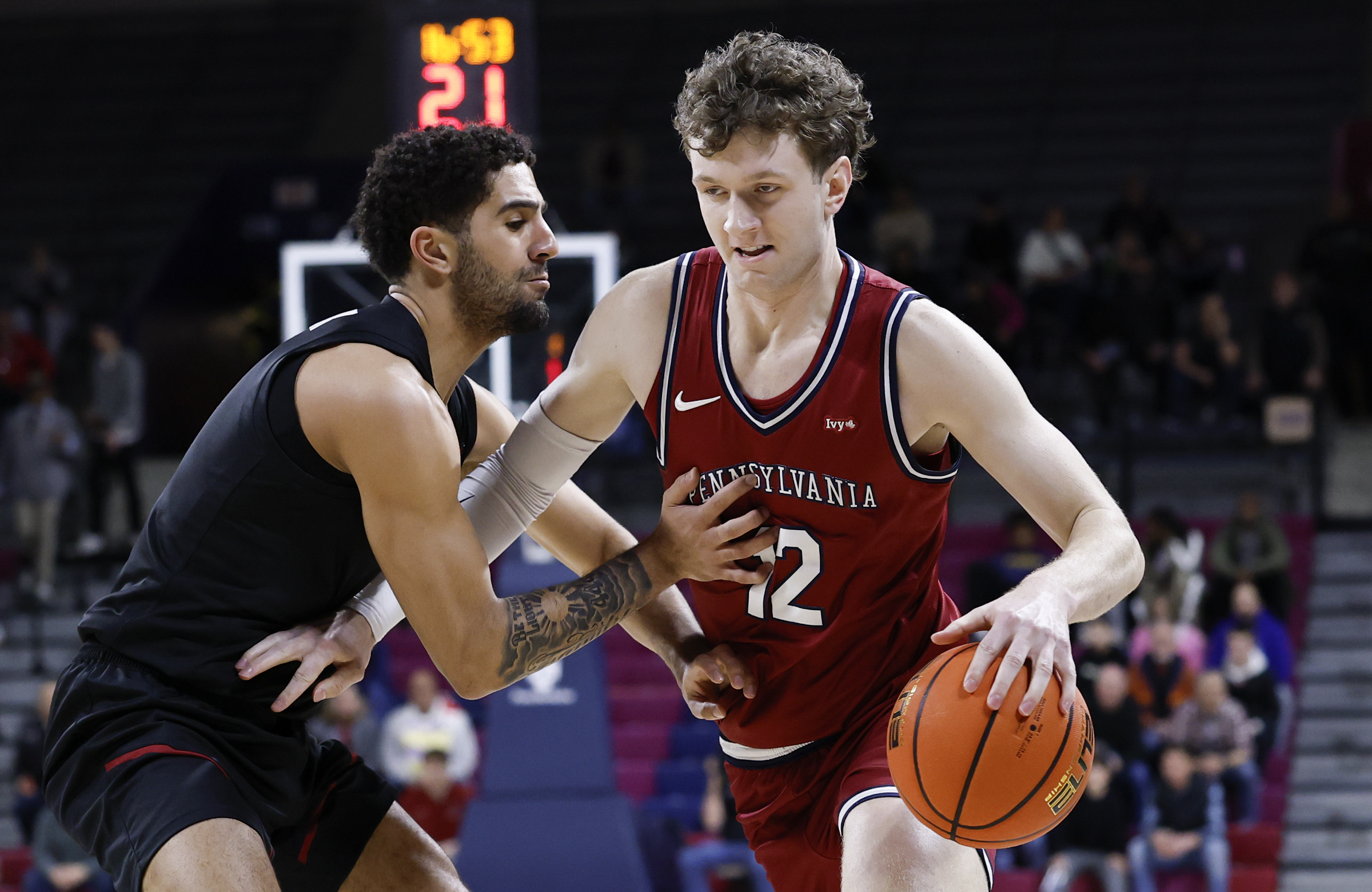
    After struggling for playing time at Duke and Virginia, Power, a 6-foot-9 forward, has soared under first-year Penn coach Fran McCaffery. Power is leading the Ivy League in minutes (34.7 per game), while averaging 15.7 points and a team-best 7.5 rebounds.

    Last weekend, Power posted his best performance of his collegiate career, scoring 38 points against Dartmouth on Friday and then helping Penn gain its first Ivy League Tournament berth in three years with a victory over Harvard on Saturday.

    “I’ve been playing better,” Power said before this weekend. “I think [McCaffery] knows this. I have another level that I can tap into here. I’m trying to get to it week by week. It’s different. I probably had the biggest minutes jump in college basketball history.”

    Penn forward TJ Power leads the Ivy League with 34.7 minutes per game.

    Penn will visit Brown on Friday (7 p.m.) for its final game of the regular season as winners of six of its past seven games, thanks to Power’s resurgence. Penn will then face Harvard in the first round of the conference tournament on March 14 in Ithaca, N.Y., with Yale playing Cornell in the other semifinal.

    ‘Took a chance’

    Power, who grew up in Shrewsbury, Mass., said his father would drive him around the neighborhood as a kid to find local churches and recreation centers to play in games. The pair usually ended their trips at Worcester Academy’s gymnasium.

    By his sophomore year, college coaches were rushing to see Power on the court, including McCaffery, then the head coach at Iowa.

    McCaffery attended Power’s AAU games, and his presence was quickly felt.

    “I had three offensive fouls in the first half,” Power said. “It was terrible, and you know how Fran is with refs. He wasn’t even my coach at the time. Obviously, he’s there to recruit me, and he’s yelling at the ref as I’m playing in an AAU game.”

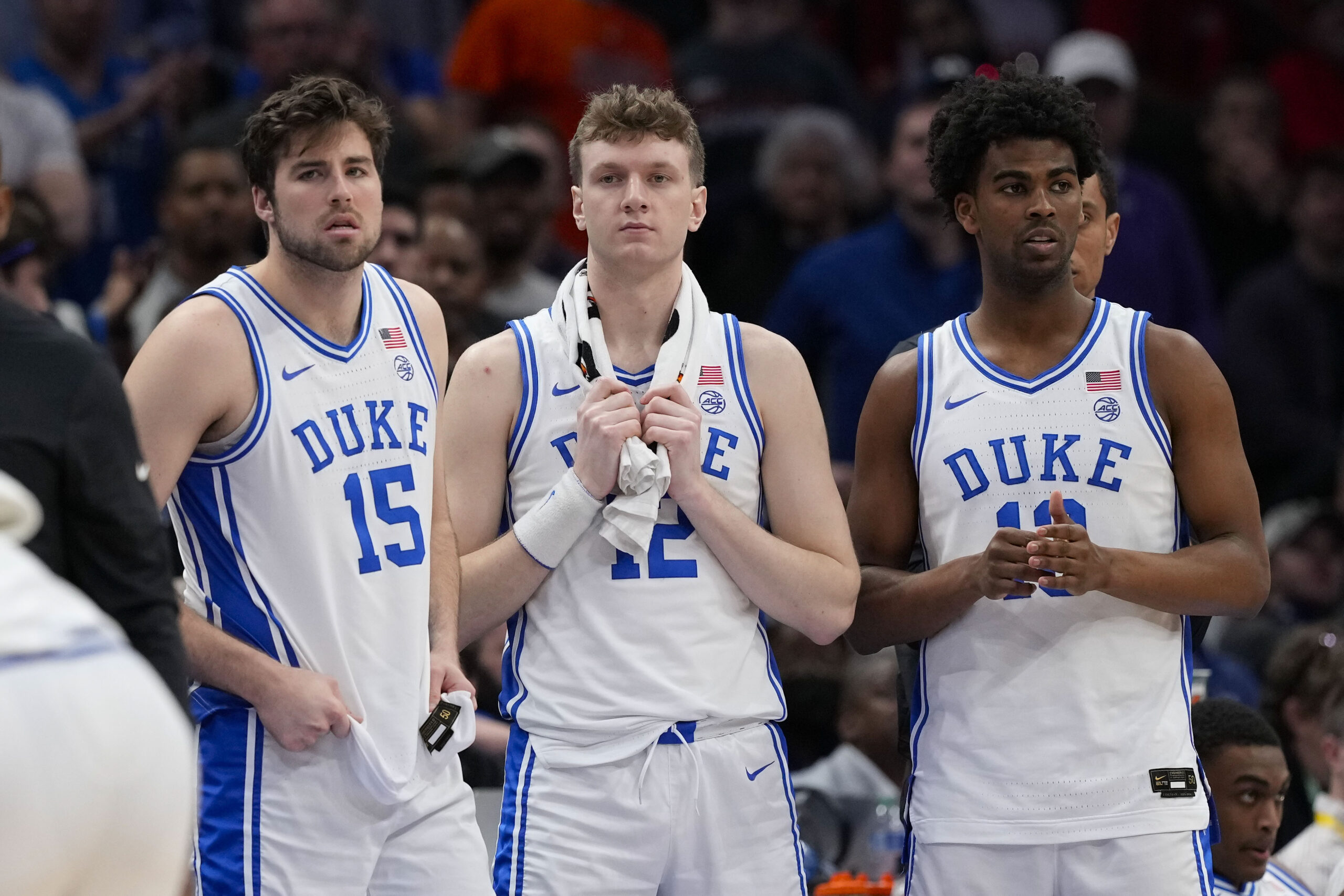
    TJ Power averaged 6.7 minutes in 26 games as a freshman at Duke.

    As a senior, Power was named the Massachusetts Gatorade Player of the Year after winning a state prep school Class AA championship. He accepted an offer to Duke, but he and his family stayed close to McCaffery.

    Power averaged 6.7 minutes in 26 games as a freshman during the 2023-24 season, but that didn’t stop him from enjoying his experience as a Blue Devil.

    “Duke was one of the best years of my life,” Power said. “Honestly, people from the outside might not think that just because you know basketball and playing time and stuff, but that experience is once in a lifetime.”

    Power planned on staying for his sophomore year, but an “uphill battle” for minutes and competition from the incoming class, which included future NBA lottery picks Cooper Flagg and Kon Knueppel, made Power consider other options.

    Leaving Duke meant saying goodbye to his “best friends for life” Sean Stewart, Caleb Foster, and former 76ers guard Jared McCain, but the decision was best for his career.

    “Knowing this could go bad,” Power said, “where I’m not playing, the hardest decision I ever made was to leave there. I was really emotional about that because people look at transfers and they’re like, ‘Oh, they’re running from stuff.’ I never pictured myself as that, because I took a chance going to Duke.”

    Breaking point

    Before the 2024-25 season, Power entered the transfer portal and committed to Virginia, his second choice coming out of high school. Coach Tony Bennett and Power had grown close during the recruiting process.

    “I felt rejuvenated,” Power said. “I was going to go there and learn from him. We were really close. That whole summer, I played really well, we looked good, and he had said to me in the recruiting process, because they had struggled the year before, he was talking about how he wants to play faster and change the offense.”

    When it finally seemed as though Power found the right fit, Bennett announced his retirement before the start of the season.

    “One day in the fall,” Power said. “He comes back, and we’re going into the film room, like we always do, and he just sits down, starts crying, and tells us he’s going to retire.

    “I remember it was a feeling I’ve never had before, where my whole body started overheating, and the world was shifting. I was in the front row, sitting right in front of him. That was a hard moment. And I don’t know if I have fully moved on from that.”

    Ron Sanchez was named interim head coach, and despite his promise to stick with the offense Bennett wanted to implement, it was never the same for Power. He was injured to begin the season and started just five games, averaging 9.3 minutes in 24 games.

    Virginia finished 15-17, Sanchez was fired, and “everyone entered the portal.” According to Power, the new coaching staff didn’t want him.

    “​​You want to talk about emotional,” Power said. “My time at Virginia [was] some of the darkest moments of my life.”

    Power had not played consistent basketball in almost two years. He decided to visit Penn at the request of an old friend.

    After starting in only five games at Virginia, TJ Power transferred to Penn.

    McCaffery, whowas fired by Iowa, was rumored to be heading back to his alma mater.

    “I eventually got this job,” said McCaffery, who was hired by Penn in March last year. . “It was an easy discussion because he knew that I believed in him, and he knew that our style of play was perfect for him. He came down to campus on his own. I wasn’t even here.”

    Power added: “Penn is a great place, and I’ve come to learn that even more, but in the recruiting process, I was like, wherever Fran goes — I’m going. I’m playing for that dude. If Fran wasn’t here, I wouldn’t be here.”

    ‘I’m coming here’

    Power called his parents, bought a couple of train tickets and a hotel room, drove back to Virginia, and left that night on a train to 30th Street Station.

    Power had struggled with his connection to the game and his identity around it. Coming off the train at 1 a.m., Power reflected back on a moment when he enjoyed basketball and had a familiar request for his dad .

    “I want to see the gym,” Power said.

    Power and his parents pulled up to the Palestra.

    “My dad gets out, and just like our drive around Worcester, shakes on doors,” Power said. “We go to the Palestra front door. He shakes it three times. It opens, and I walk in, and for some reason, the lights are on. I’m standing right there, 1:30 in the morning. It’s just my dad and me. We’re looking at the Palestra. I’m coming here. I got to come here.”

    TJ Power came to Penn to play under coach Fran McCaffery. “If Fran wasn’t here, I wouldn’t be here.”

    Fran was committed to helping Power get back on track, which showed in their first few practices together.

    “If I struggled, he knows what’s on the other side of that wall once I climb it,” Power said. “So that was a huge factor in my decision. I wanted someone I could trust again, and someone who has my back when I inevitably struggle.

    “The first thing Fran said when he called me was, ‘We’re going to have fun playing basketball again.’ No other coach said that.”

    Power has returned to the form that made him a five-star recruit in high school. And he has found a home — on and off the court.

    After years of chasing the best opportunity to help him go pro or get the most playing time, Power chose Penn for another reason: to find who he is outside of the sport.

    “Basketball used to be my identity,” Power said. “People ask me, ‘Who am I?’ I play basketball, I’m a basketball player. When I switched that to my relationship with God coming first, and then my identity is built through that relationship with God. …

    “That path is so much more rewarding. My identity comes first, and … my mission is to play well, and I think that’s going to give me what I want.”

  • Trump’s Iran conflict cuts the world off from a crucial energy source

    Trump’s Iran conflict cuts the world off from a crucial energy source

    Countries across Europe and Asia are facing a potential energy crisis after an Iranian drone strike shut down Qatar’s exports of liquefied natural gas this week, cutting off nations from India to Italy from a crucial energy source and potentially increasing costs for key industries in the United States.

    Qatar is a linchpin of a global energy system built on LNG, a fossil fuel less polluting than coal that many countries have embraced because it is easy to ship and store, and was sourced from generally stable countries.

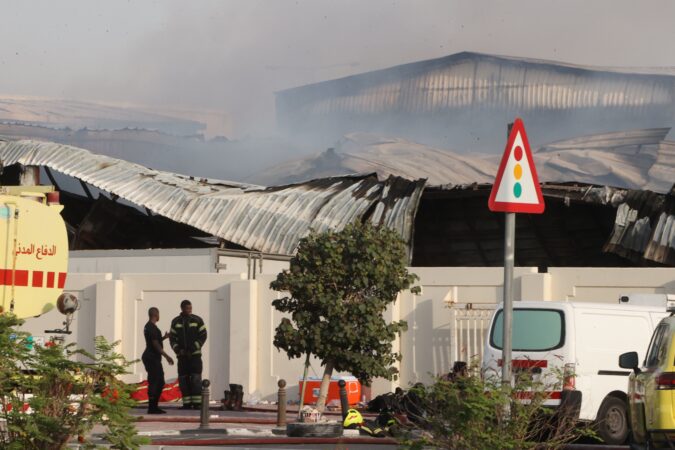
    Now consumers and businesses from Seoul to Islamabad to Brussels may face steeply higher energy costs, after an Iranian drone struck Qatar’s largest gas liquefaction plant in Ras Laffan, south of Doha on Monday. The strike was part of attacks by Iran on energy infrastructure in Qatar and fellow U.S. ally Saudi Arabia.

    Qatar Energy, which produces and exports LNG, said in a statement Monday that it “ceased production” at the facility. On Wednesday, it announced it would not be able to honor export contracts.

    It is unclear how long it will take Qatar Energy to repair the plant. Analysts say returning to full production would take another two weeks after repairs are complete.

    Shipping any gas Qatar produces is another challenge, as vessel traffic through the region is halted by Iran’s attacks on tankers in the Strait of Hormuz. There are 1,000 ships idled, according to the Lloyd’s Market Association, half of them holding oil or gas. The shipping industry is trying to work out an arrangement with the U.S. government for military escorts, which President Donald Trump says will be offered.

    Countries around the world are scrambling to figure out how to backfill the abrupt halt of LNG shipments from Qatar, which accounts for one-fifth of the world’s supply. Asian spot LNG prices surged nearly 40% in the past couple of days, and a key index of future LNG prices in Europe jumped 70% since Friday.

    Analysts warn the natural gas crunch is likely to have more severe and far-reaching economic impacts than the Iran conflict’s disruption to oil markets, even if abundant gas supplies in the U.S. shield American consumers from short-term price spikes.

    “Oil is exported from practically every country in that region,” said Pavel Molchanov, an investment strategy analyst at Raymond James. “LNG more or less comes from one country there: Qatar.”

    The sudden shutoff of Qatari LNG is expected to quickly hit nations across Asia and Europe that depend on Qatari gas, with domestic energy bills likely to spike and factories at risk of shutting down.

    Some countries will likely bring mothballed coal plants back online, analysts predicted, a costly reversal that could also massively increase carbon emissions and other air pollution.

    The Business Standard, a Bangladeshi newspaper, reported Tuesday that officials at the country’s energy ministry had ordered an increase in power generation from coal. Taiwan is examining similar options, according to Argus, a firm that tracks global energy markets. Prices of Asian coal futures jumped sharply this week.

    “The first response would likely be to seek out LNG supply from other regions,” Zhi Xin Chong, head of Asia Gas Research at S&P Global Energy, said in an email.

    But producers like the U.S., Australia, and Malaysia have little extra to spare, causing prices for what is available to soar. Chong said if the fuel proves “too expensive and difficult to procure, markets like Japan, South Korea, Taiwan, India and Southeast Asia will likely pivot to coal where possible.”

    Some of the countries most dependent on Qatar for energy are also among the least able to pay the premium for emergency replacements. In some cases the economic fallout is expected to cascade back to the U.S. due to how LNG underpins other industrial sectors.

    In India, the second-largest importer of Qatari LNG, gas supplies to industrial users are being cut, according to local media reports, leading ceramics manufacturers in that country to pause operations. Utilities in Pakistan, which is even more reliant on Qatar, are also starting to cut their deliveries of gas to industrial clients, Bloomberg News reported.

    In both countries, the constraints are leading to cutbacks in fertilizer production, as natural gas is the key ingredient for making urea, the world’s most widely used nitrogen fertilizer. Molchanov said prices for urea have increased 25% since the U.S. and Israel attacked Iran.

    “That is a big deal for the agricultural sector around the world — including the United States,” he said, warning it “will potentially translate into higher food costs in the near term.”

    The global reshuffling to replace energy from Qatari LNG threatens to take a toll on the planet. Japan is currently using only about two-thirds of its 53 gigawatts of coal capacity, according to Chong. Should that country choose to tap into that capacity, millions of tons of additional carbon pollution could be released into the atmosphere within months. China has significantly more unused coal power it could tap into.

    Rachel Ziemba, an adjunct fellow at the Center for a New American Security, said as nations reassess their dependence on LNG imports some of the backsliding to coal power could become permanent.

    “This will reinforce the push to generate power domestically,” she said. “It could mean more use of coal.” That could include European countries such as Germany and Poland, which are still burning coal and produce the fuel domestically.

    The LNG shock may also drive extra investment into renewable energy. Some of the countries best prepared to ride out disruption to Qatari exports are those that have added the most clean energy to their power grids, Ziemba said.

    China, which in recent years has installed more solar and wind power than the rest of the world combined in a drive for energy independence, is well positioned to weather a gas shortage.

    France may also be able to absorb energy price shocks because of its large nuclear power capacity. And much of Europe increased its investment in solar and wind after the 2022 energy crisis on the continent precipitated by Russia’s invasion of Ukraine.

    Gas makes up just 16% of Europe’s energy mix — a sharp decrease since 2020 — and renewables now provide 47% of its power.

    “This is an example of how Europe’s climate policy supports energy security,” Molchanov of Raymond James said. “Any wind farm, any solar installation in Europe is less natural gas they have to import.”

    “Europe is the only major economy in the world using less natural gas today than they did a decade ago,” he said. It “has accelerated its diversification strategy to reduce dependence on natural gas no matter where it comes from — whether Russia, the U.S., or Qatar.”

    While Qatar’s export freeze triggers stress around the world, American gas producers are likely to benefit.

    The U.S. became the world’s largest LNG exporter in 2023. Its export terminals are currently running near maximum capacity, limiting how much additional volume the U.S. can provide to replace Qatari supplies.

    But the industry may find its commercial and political prospects are now favorable to expand. “This is going to set off another LNG project boom,” said Ira Joseph, a scholar at Columbia University’s Center on Global Energy Policy. “Not just in the U.S. but elsewhere.”

    But he added that there may also be a new drive by countries and industries around the world to reduce dependence on LNG. “The push for using more natural gas was that it is very reliable,” Joseph said. “But in the last four years you had the largest exporter in the world — Russia — cut off its pipelines. And now, the second-largest has cut off its shipments. It raises the question of how much one wants to rely on gas imports in an energy mix.”