Blog

  • Trump’s Iran conflict cuts the world off from a crucial energy source

    Trump’s Iran conflict cuts the world off from a crucial energy source

    Countries across Europe and Asia are facing a potential energy crisis after an Iranian drone strike shut down Qatar’s exports of liquefied natural gas this week, cutting off nations from India to Italy from a crucial energy source and potentially increasing costs for key industries in the United States.

    Qatar is a linchpin of a global energy system built on LNG, a fossil fuel less polluting than coal that many countries have embraced because it is easy to ship and store, and was sourced from generally stable countries.

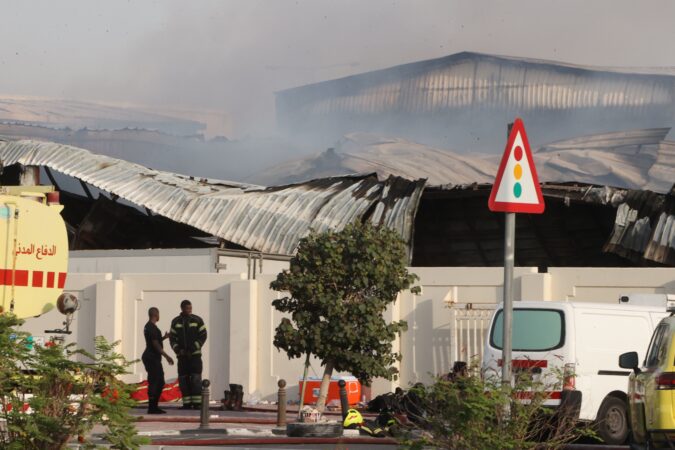
    Now consumers and businesses from Seoul to Islamabad to Brussels may face steeply higher energy costs, after an Iranian drone struck Qatar’s largest gas liquefaction plant in Ras Laffan, south of Doha on Monday. The strike was part of attacks by Iran on energy infrastructure in Qatar and fellow U.S. ally Saudi Arabia.

    Qatar Energy, which produces and exports LNG, said in a statement Monday that it “ceased production” at the facility. On Wednesday, it announced it would not be able to honor export contracts.

    It is unclear how long it will take Qatar Energy to repair the plant. Analysts say returning to full production would take another two weeks after repairs are complete.

    Shipping any gas Qatar produces is another challenge, as vessel traffic through the region is halted by Iran’s attacks on tankers in the Strait of Hormuz. There are 1,000 ships idled, according to the Lloyd’s Market Association, half of them holding oil or gas. The shipping industry is trying to work out an arrangement with the U.S. government for military escorts, which President Donald Trump says will be offered.

    Countries around the world are scrambling to figure out how to backfill the abrupt halt of LNG shipments from Qatar, which accounts for one-fifth of the world’s supply. Asian spot LNG prices surged nearly 40% in the past couple of days, and a key index of future LNG prices in Europe jumped 70% since Friday.

    Analysts warn the natural gas crunch is likely to have more severe and far-reaching economic impacts than the Iran conflict’s disruption to oil markets, even if abundant gas supplies in the U.S. shield American consumers from short-term price spikes.

    “Oil is exported from practically every country in that region,” said Pavel Molchanov, an investment strategy analyst at Raymond James. “LNG more or less comes from one country there: Qatar.”

    The sudden shutoff of Qatari LNG is expected to quickly hit nations across Asia and Europe that depend on Qatari gas, with domestic energy bills likely to spike and factories at risk of shutting down.

    Some countries will likely bring mothballed coal plants back online, analysts predicted, a costly reversal that could also massively increase carbon emissions and other air pollution.

    The Business Standard, a Bangladeshi newspaper, reported Tuesday that officials at the country’s energy ministry had ordered an increase in power generation from coal. Taiwan is examining similar options, according to Argus, a firm that tracks global energy markets. Prices of Asian coal futures jumped sharply this week.

    “The first response would likely be to seek out LNG supply from other regions,” Zhi Xin Chong, head of Asia Gas Research at S&P Global Energy, said in an email.

    But producers like the U.S., Australia, and Malaysia have little extra to spare, causing prices for what is available to soar. Chong said if the fuel proves “too expensive and difficult to procure, markets like Japan, South Korea, Taiwan, India and Southeast Asia will likely pivot to coal where possible.”

    Some of the countries most dependent on Qatar for energy are also among the least able to pay the premium for emergency replacements. In some cases the economic fallout is expected to cascade back to the U.S. due to how LNG underpins other industrial sectors.

    In India, the second-largest importer of Qatari LNG, gas supplies to industrial users are being cut, according to local media reports, leading ceramics manufacturers in that country to pause operations. Utilities in Pakistan, which is even more reliant on Qatar, are also starting to cut their deliveries of gas to industrial clients, Bloomberg News reported.

    In both countries, the constraints are leading to cutbacks in fertilizer production, as natural gas is the key ingredient for making urea, the world’s most widely used nitrogen fertilizer. Molchanov said prices for urea have increased 25% since the U.S. and Israel attacked Iran.

    “That is a big deal for the agricultural sector around the world — including the United States,” he said, warning it “will potentially translate into higher food costs in the near term.”

    The global reshuffling to replace energy from Qatari LNG threatens to take a toll on the planet. Japan is currently using only about two-thirds of its 53 gigawatts of coal capacity, according to Chong. Should that country choose to tap into that capacity, millions of tons of additional carbon pollution could be released into the atmosphere within months. China has significantly more unused coal power it could tap into.

    Rachel Ziemba, an adjunct fellow at the Center for a New American Security, said as nations reassess their dependence on LNG imports some of the backsliding to coal power could become permanent.

    “This will reinforce the push to generate power domestically,” she said. “It could mean more use of coal.” That could include European countries such as Germany and Poland, which are still burning coal and produce the fuel domestically.

    The LNG shock may also drive extra investment into renewable energy. Some of the countries best prepared to ride out disruption to Qatari exports are those that have added the most clean energy to their power grids, Ziemba said.

    China, which in recent years has installed more solar and wind power than the rest of the world combined in a drive for energy independence, is well positioned to weather a gas shortage.

    France may also be able to absorb energy price shocks because of its large nuclear power capacity. And much of Europe increased its investment in solar and wind after the 2022 energy crisis on the continent precipitated by Russia’s invasion of Ukraine.

    Gas makes up just 16% of Europe’s energy mix — a sharp decrease since 2020 — and renewables now provide 47% of its power.

    “This is an example of how Europe’s climate policy supports energy security,” Molchanov of Raymond James said. “Any wind farm, any solar installation in Europe is less natural gas they have to import.”

    “Europe is the only major economy in the world using less natural gas today than they did a decade ago,” he said. It “has accelerated its diversification strategy to reduce dependence on natural gas no matter where it comes from — whether Russia, the U.S., or Qatar.”

    While Qatar’s export freeze triggers stress around the world, American gas producers are likely to benefit.

    The U.S. became the world’s largest LNG exporter in 2023. Its export terminals are currently running near maximum capacity, limiting how much additional volume the U.S. can provide to replace Qatari supplies.

    But the industry may find its commercial and political prospects are now favorable to expand. “This is going to set off another LNG project boom,” said Ira Joseph, a scholar at Columbia University’s Center on Global Energy Policy. “Not just in the U.S. but elsewhere.”

    But he added that there may also be a new drive by countries and industries around the world to reduce dependence on LNG. “The push for using more natural gas was that it is very reliable,” Joseph said. “But in the last four years you had the largest exporter in the world — Russia — cut off its pipelines. And now, the second-largest has cut off its shipments. It raises the question of how much one wants to rely on gas imports in an energy mix.”

  • Human skull and other remains found in South Jersey

    Human skull and other remains found in South Jersey

    A human skull and other skeletal remains were found this week in a wooded area of Whitesboro, Middle Township.

    The remains were found by a resident walking in the area on Tuesday, police said.

    The Middle Township Police Department was called to the scene and began a search, finding the skeletal remains that police believe belong to an adult.

    So far, it is unknown who the remains belong to. The Cape May County Prosecutor’s Office continues to investigate, with Prosecutor Jeffrey Sutherland writing on Facebook that “there is no threat to the public at this time.”

    Anyone with information can submit an anonymous tip through the prosecutor’s office website at cmcpo.tips or call the Cape May County Prosecutor’s Office at 609-465-1135.

  • Mayor Parker backs legislation to boost housing development around SEPTA stations

    Mayor Parker backs legislation to boost housing development around SEPTA stations

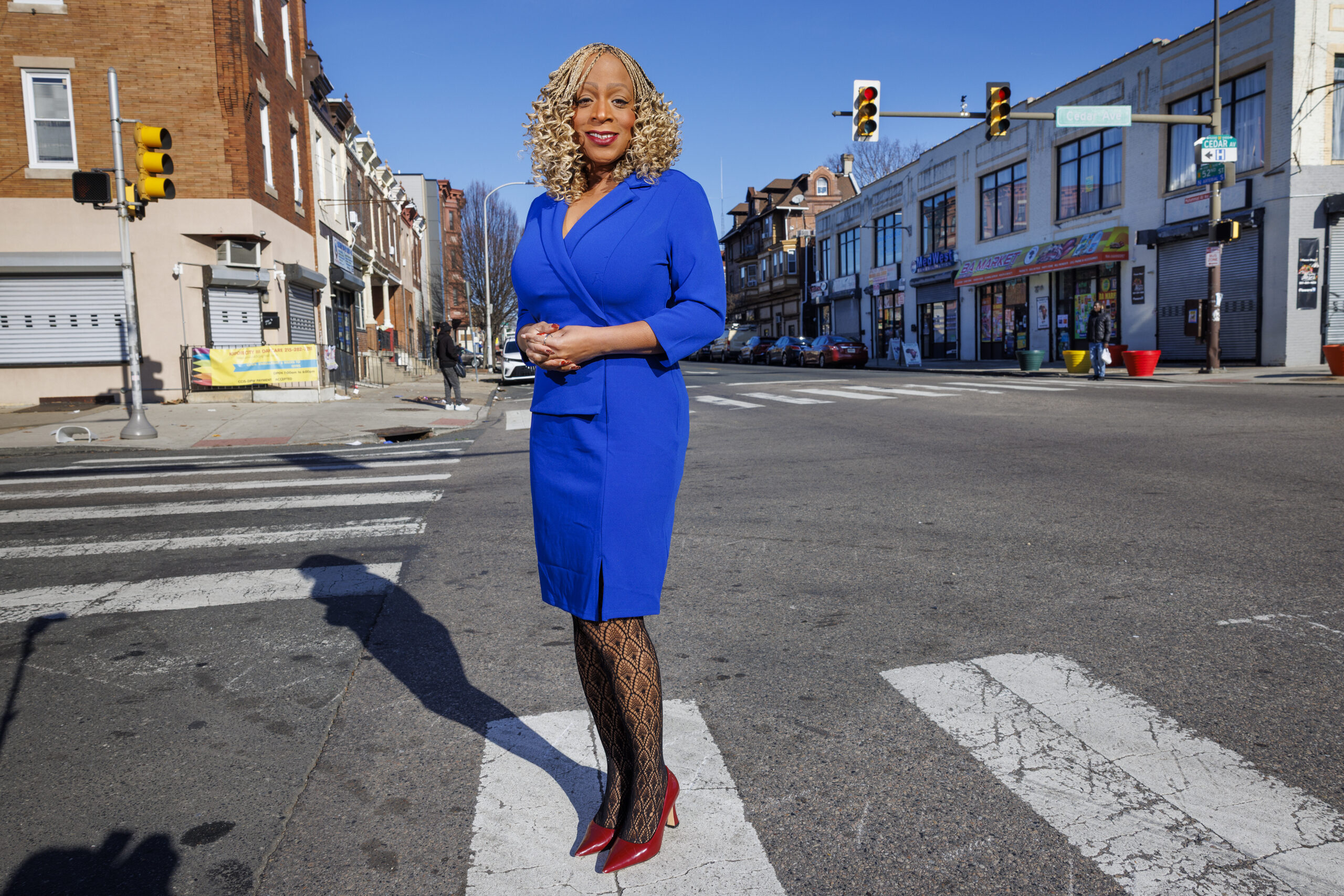
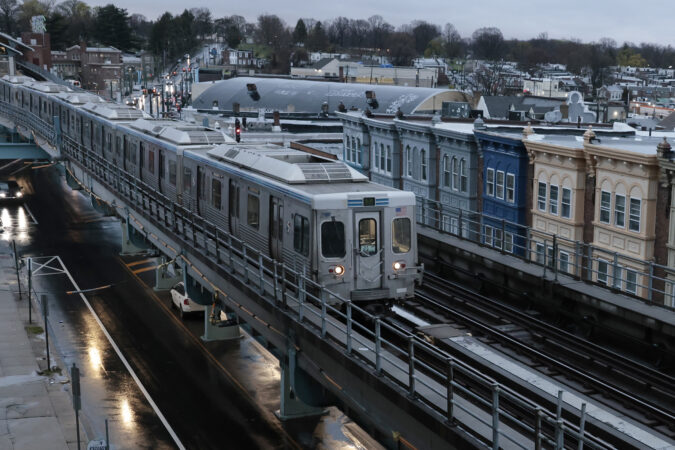
    Mayor Cherelle L. Parker’s administration sent City Council a bill on Thursday to encourage more apartment construction around SEPTA stations, in hopes of boosting ridership.

    The proposal expands an existing law. Currently, if a SEPTA station is made a “transit-oriented development” district — a designation City Council must adopt — then most properties within a 500-foot radius receive a variety of benefits that allows developers to build more housing with less parking than otherwise allowed.

    The legislation sent to Council by the Parker administration would expand that radius to 1,320 feet, or a quarter of a mile.

    The bill is part of a package of zoning legislation meant to boost Parker’s effort to build or repair 30,000 homes in the coming years.

    “Zoning is how we turn housing ambition into housing reality,” said Angela D. Brooks, chief housing and urban development officer. “These bills help us put more homes where our infrastructure can support them, near transit, near jobs, and near opportunity, while respecting the character of the neighborhoods Philadelphians already love.”

    The hope is that SEPTA will benefit from a ridership boost if more housing is built close to transit, and more people will be able to afford to live near public transportation — which, in some areas, is in more expensive and sought-after neighborhoods.

    The zoning overlay grants different types of development benefits depending on the existing zoning around transit stations.

    In a bid to avoid controversies that have undermined similar laws in other cities, land zoned for single-family housing would not be given any development advantage under the law.

    But properties already zoned for dense housing would be allowed to build many more units, with additional benefits given if they provide affordable housing or environmentally friendly design.

    “This package will also increase ridership, reduce costly trips to the [zoning board], and allow more investment in transit stations,” Brooks said. “Zoning may sound technical to some, but investments in transit are something residents can see, touch, and feel every day.”

    Projects that have benefited from the existing transit-oriented development overlay include The Noble, with 360 units, near the Spring Garden stop on the Market-Frankford Line, and a proposal for a 134-unit mixed-income development at the Frankford Transportation Center.

    Land zoned for more modest density would be allowed to build 50% more units. That means if developers could build four units under normal conditions, in a transit-oriented development district, they could build six.

    The overlay requires that the ground floor of commercially zoned buildings have active uses. Curb cuts, parking garages, and one-story buildings are not allowed.

    Parker’s bill further eases some parking requirements, although the requirement for developers building in such areas is already less than under normal zoning rules.

    The bill was circulated to City Council on Wednesday. Members wanted more time to review it before it was formally introduced.

    “In general, I’ve been a proponent of the basic concept of increasing density around our transit stops,” said Councilmember Jamie Gauthier, who chairs City Council’s housing committee.

    “It makes our neighborhoods more lively, more livable,” Gauthier said. “We have a great transit system, and we should be trying to help it be as successful as possible.”

    Because City Council must pass legislation to include transit stations in the zoning overlay, district Council members are given effective control over how many stations will be included in the law’s benefits.

    Both the Broad Street and Market-Frankford Lines run between Council districts, which means half of many stations are under one Council member’s purview while the other half are in another’s control.

    Transit advocates have long hoped for legislation that would automatically apply to all major transit stations, but that idea could prove difficult to get through City Council.

    Gauthier is one of the few Council members who have embraced transit-oriented development. All of the Market-Frankford Line stations in her district are covered by the overlay.

    No stations on the Broad Street Line are included so far.

    “I don’t want to speak about areas of the city that are not mine,” Gauthier said. But in her transit-rich West Philadelphia district, “I do think we can consider expanding that radius more. We know that less people are driving nowadays.”

    City Councilmember Jamie Gauthier is one of the most enthusiastic proponents of transit-oriented development on City Council.

    The urbanist advocacy group 5th Square says that Parker’s bill should be broader.

    The group called for the elimination of parking minimums near transit, an even larger coverage radius, and for multifamily housing to be allowed on land zoned for single-family homes near stations.

    “These bills are a welcome step toward more housing near transit, but their scope doesn’t quite address our massive housing shortage,” said Fae Ehsan, board member with 5th Square Advocacy.

    The other housing-related bill Parker sent to Council includes legislation that would make it easier to build more apartments above commercial buildings on the ends of some rowhouse blocks, which are currently allowed to have only one unit above ground-floor retail.

    The bill would allow owners to convert the ground floor to residential uses if they cannot fill the storefront. The administration believes 7,000 to 12,000 more housing units could be allowed under the change.

  • Jabari Walker stepped up for the Sixers, filling in the gaps and securing a win over the Utah Jazz

    Jabari Walker stepped up for the Sixers, filling in the gaps and securing a win over the Utah Jazz

    Perhaps the lone bright spot in the 76ers’ blowout loss Tuesday to the San Antonio Spurs was Jabari Walker, who entered the game in garbage time and scored 20 points in 19 minutes, 29 seconds on 7-for-10 shooting.

    Walker later told reporters that he’d “rather not sleep and just get back out there right now.” Walker woke up feeling good Wednesday morning, and he even picked up a new car after spending most of February Ubering around Philly.

    That blissful state was threatened for a brief moment.

    “I scratched it,” Walker said. “I talked to somebody coming in, I told them the story, they’re like, ‘It’s going to get better for you today.’ I was like, ‘All right, OK, I’m in my zone right now. I’m in basketball world. Whatever happened before stays out.’ So when I saw the first two [shots] go in, I was like, ‘OK. All right. This is a whole new world. I’ve got a chance to redeem myself.’”

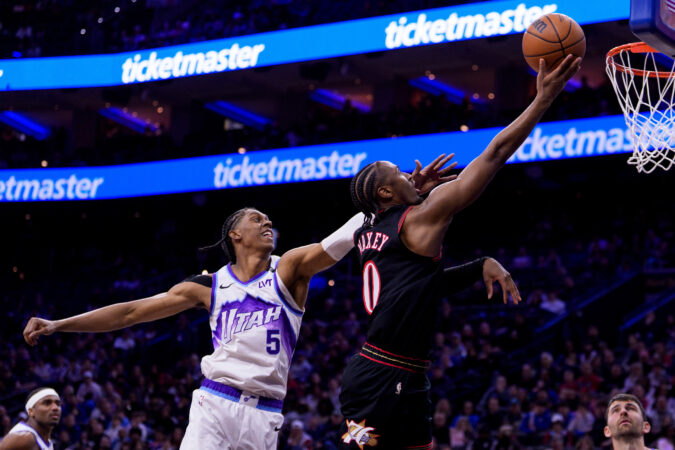
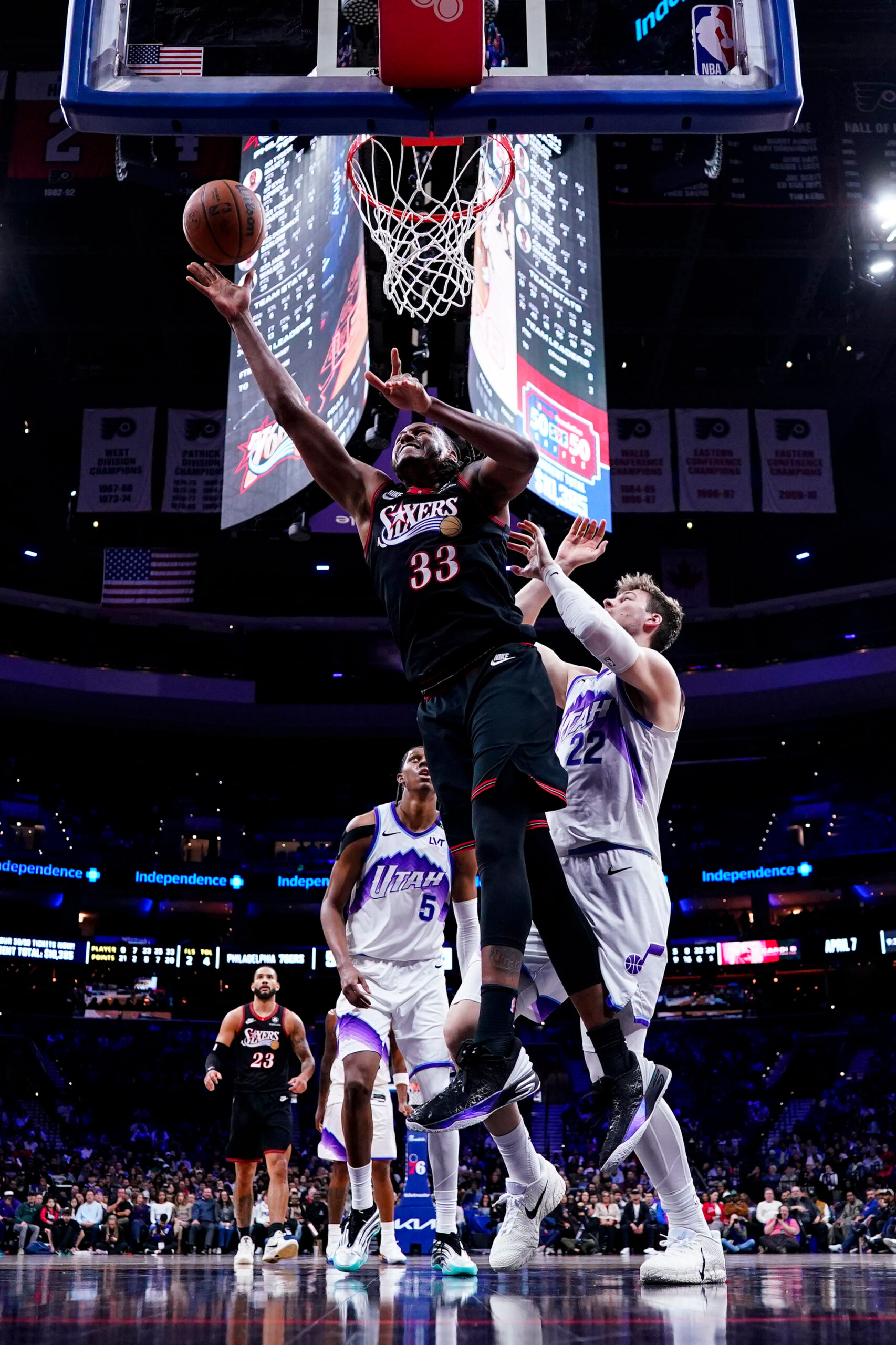
    Redeem himself he did. Walker scored 22 points on 7-of-12 shooting and grabbed 10 rebounds in the Sixers’ 106-102 win over the Utah Jazz. Walker’s final two free throws secured the game for the Sixers in the dying seconds of the fourth quarter.

    Walker, who started the season on a two-way contract, exhausted his 50 games of eligibility just before the All-Star break, which kept him out of four games before the team converted his contract to a two-year standard deal on Feb. 16.

    He’s been in and out of the lineup and seen his minutes fluctuate as the Sixers vacillate between levels of health. VJ Edgecombe was added to the injury report Wednesday with a back bruise, leaving the Sixers down four starters. Nick Nurse said pregame that they were going to need more from guys further down the bench.

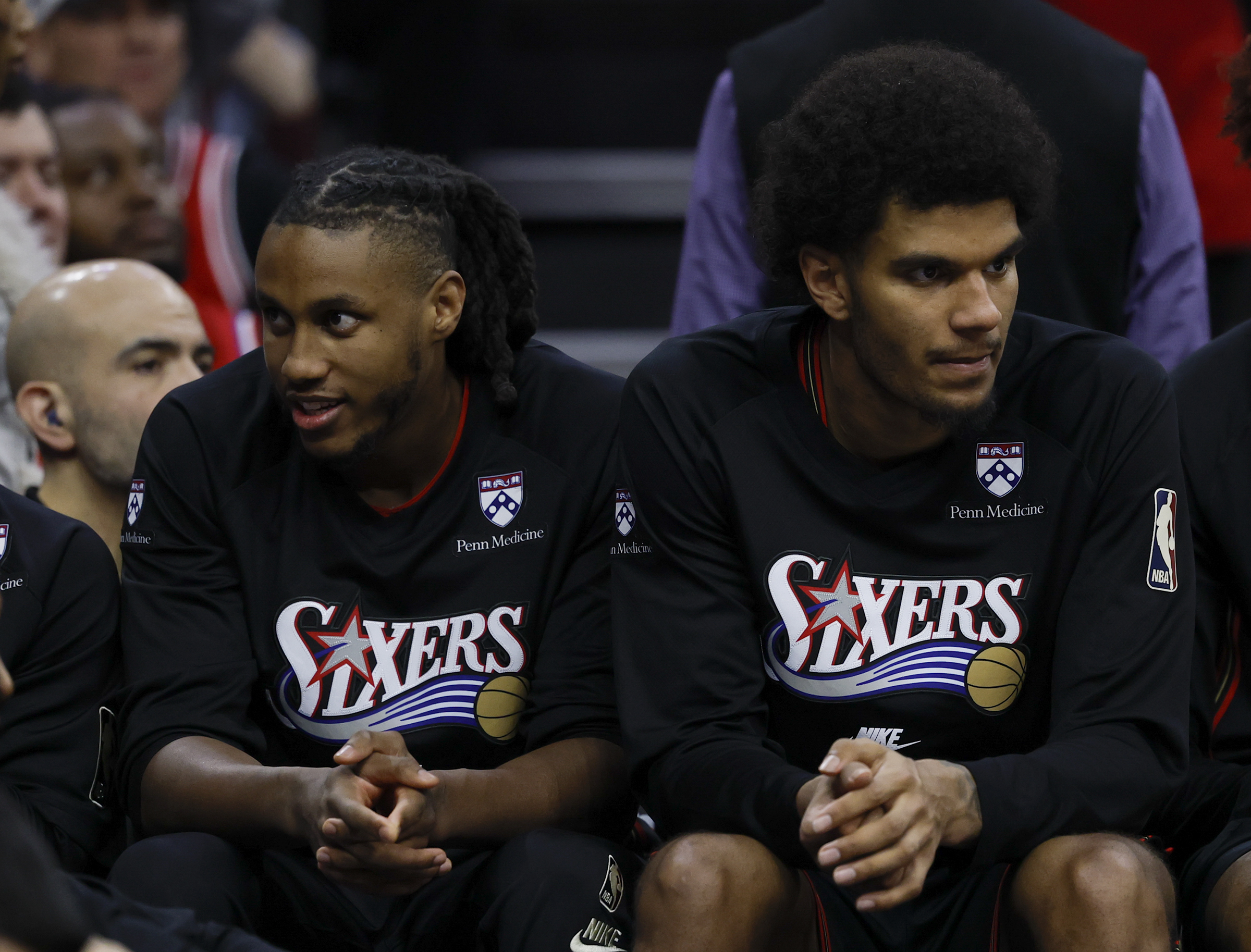
    Sixers forwards Jabari Walker and Dominick Barlow have both had their two-way contracts converted to standard deals.

    Walker made his first six shots from the floor, starting with two quick threes in the first quarter, providing critical energy off the bench in addition to his usual effectiveness on the boards.

    “People that really know me, I’m actually kind of crazy,” Walker said. “I talk a lot, and something’s really wrong with me, but I get a chance to let it out on the court.”

    Nurse said that in practices and shootarounds, the coaching staff has been working to give Walker as much positive feedback as possible to try and get him to be more aggressive with his shot.

    “We’ve been trying to get him to play like that because he’s a really good shooter,” Nurse said. “You just have to get used to the NBA feel and having enough [confidence] to pull the trigger on them. Noticeably better in his last few games. He’s just running the floor, ball comes to him and he’s open, and he just, not much hesitation on him.”

    That support from Nurse has been there since Day 1, even before Walker felt like he’d earned it. “Him being vocal like that makes nights like this happen,” Walker said.

    The injury status of Edgecombe and Joel Embiid is uncertain, and Paul George doesn’t return from a 25-game suspension for banned substances until the end of the month. With so much in flux, the Sixers don’t quite know what the best version of their lineup is or what their rotation will look like during a potential playoff run.

    In the interim, games like Wednesday’s win provide critical opportunities for bench players like Walker to show what they can do in an expanded role. Walker said he thought his scoring likely masked some improvements he needed to make defensively, but he believes there’s a role on this team for him, even when the team is healthy.

    “If my minutes have to go down, I’ll take it,” Walker said. “That’s what I signed up for. That’s the role I knew I was getting into. We have great, great players, we’ve got Hall of Famers that have to come back, so somebody has to take those minutes, and these are guys that get paid to do so. My job is to fill in and do exactly what I’m doing while they’re out.”

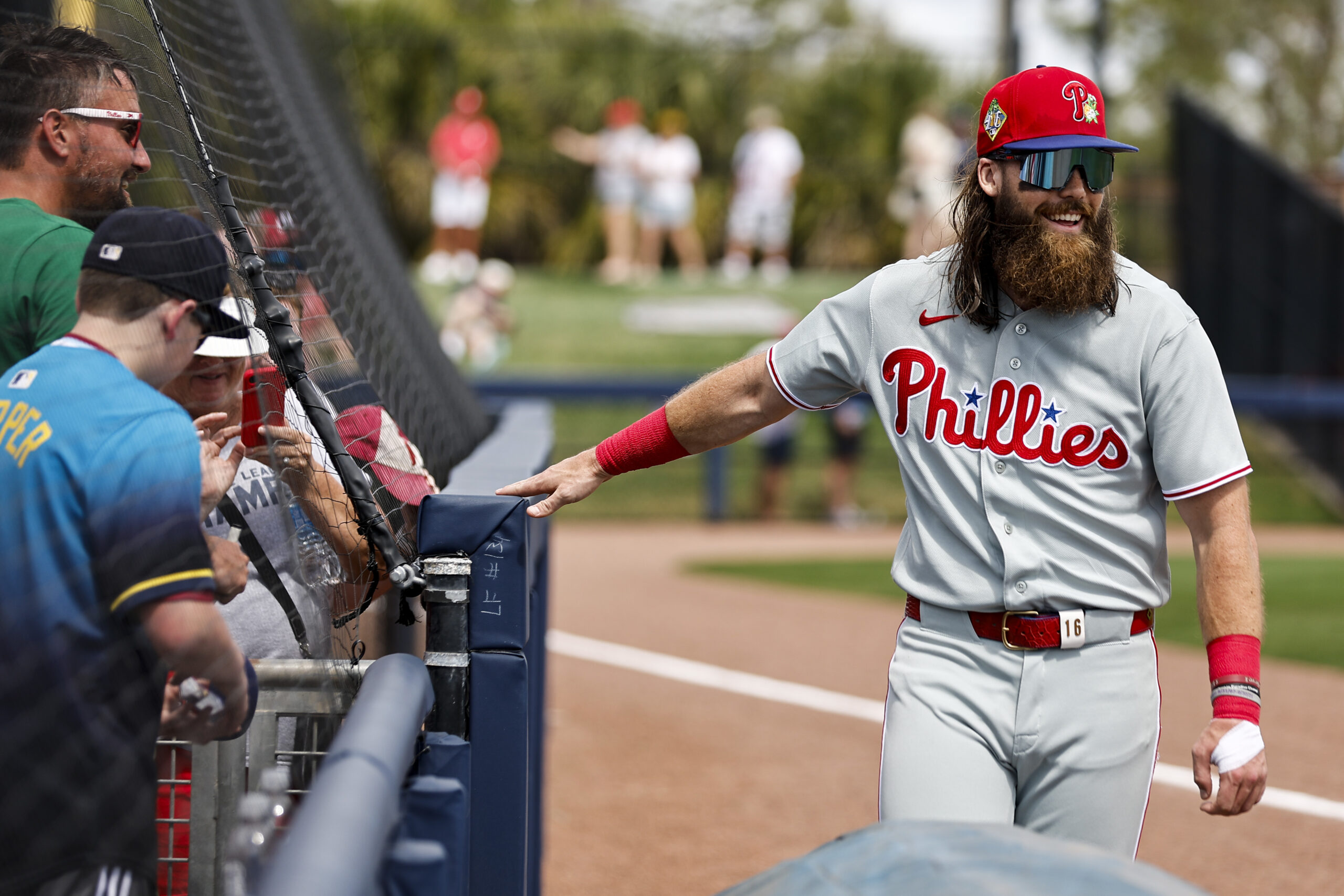
  • How Brandon Marsh is helping Phillies rookie Justin Crawford, from gifting suit jackets to road game carpools

    How Brandon Marsh is helping Phillies rookie Justin Crawford, from gifting suit jackets to road game carpools

    CLEARWATER, Fla. — A few days ago, a custom clothing vendor, Lindsey Tamblyn, came to BayCare Ballpark. Brandon Marsh was familiar with her work. When he was in the midst of his first spring training with the Phillies in 2024, J.T. Realmuto bought him one of Tamblyn’s suits.

    It made Marsh feel like part of the group. So much so that he “jumped on” Realmuto and hugged him afterward.

    When he heard Tamblyn was returning last week, Marsh decided to pay it forward. He walked up to 22-year-old prospect Justin Crawford.

    Marsh told him to pay a visit to Tamblyn, give her his measurements, and pick out any suit he wanted.

    “I said, ‘Go, get you a suit, bro,’” Marsh recalled, “‘because God willing we’re going to be in the playoffs again this year. And you’ve gotta look nice.’”

    Crawford, who describes his fashion sense as “basic,” picked out a sleek black jacket.

    “I told him he didn’t have to,” Crawford said, “but he insisted.”

    Crawford appreciated it. This is a big season for him. He is expected to be the Phillies’ opening day center fielder, a position that has been a persistent black hole for the last few years.

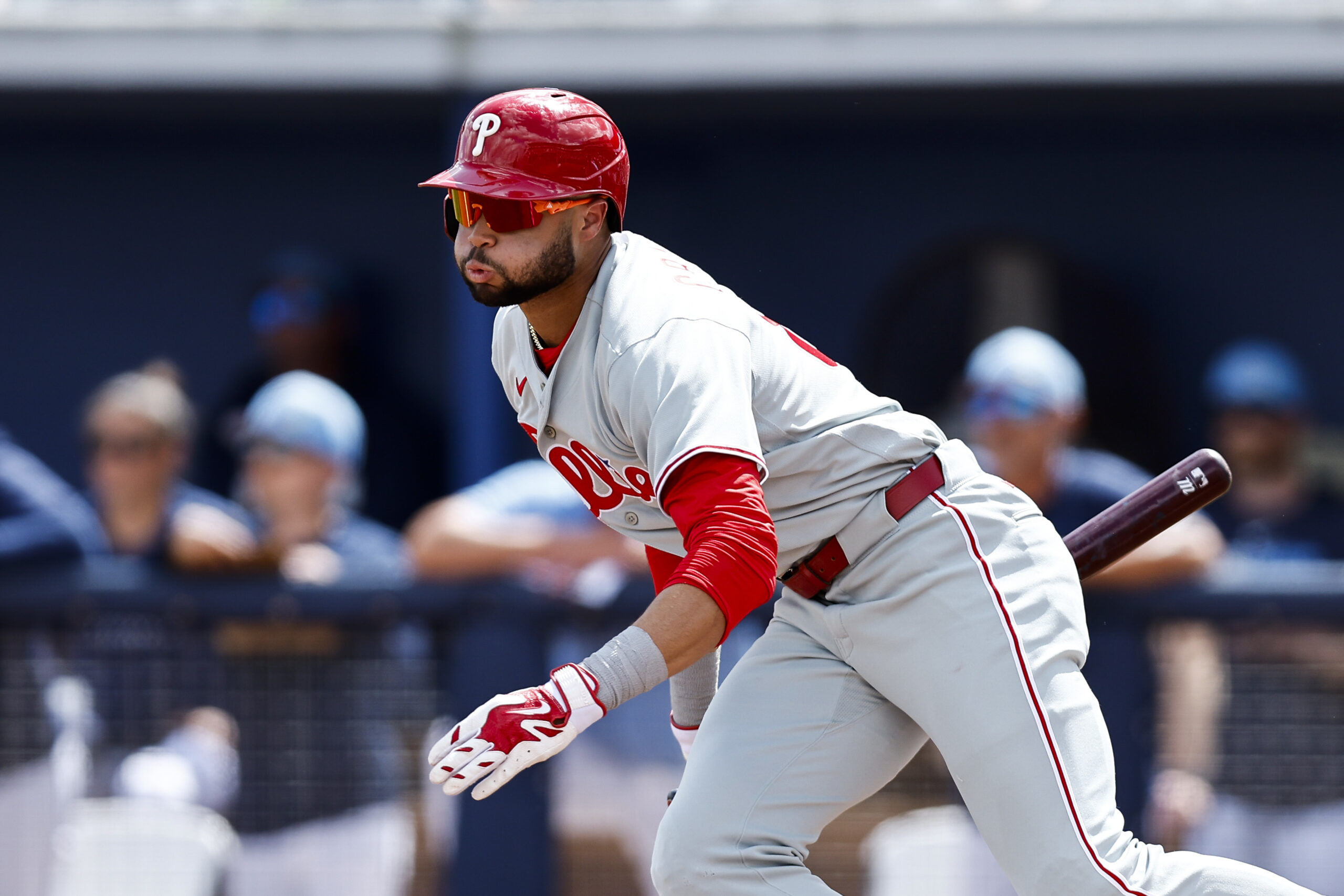
    Phillies center fielder Justin Crawford is slashing .316/.350/.474 through 19 at-bats this spring.

    If all goes according to plan, he would be the first 22-year-old everyday position player for the Phillies since Jimmy Rollins. It is a lot of pressure for someone who just a year ago got the right to legally drink.

    As a player, Crawford is polarizing. Much has been made of his ground-ball rate, which has steadily lowered as he’s climbed up the minor league ranks, but is still relatively high. In 2023, it reached 69.7% across single A and high A.

    Crawford dropped it to a career-low 59.4% at triple-A Lehigh Valley in 2025. He brings elite speed, and above-average contact skills. He hits the ball hard. But fans and pundits alike have questioned whether that matters if he can’t consistently lift it in the air.

    The prospect tries to avoid this chatter. He’s off social media, and has a good support system, full of former major league players: his father, Carl Crawford, his godfather, Junior Spivey, and his hitting coach, Mike Easler.

    “When you’re around people who know what they’re talking about, and have done it for a long time, [they] can keep you on that track,” Crawford said. “To be like, ‘No, forget what those people are saying. Just play your game. Be you.’ That’s probably the best advice I’ve received from anybody.”

    The Phillies have provided some support, too. Crawford said manager Rob Thomson called him this past winter. His message was for the prospect to “be himself” and get ready to compete for a starting role in camp.

    Thomson followed up after the Phillies signed Adolis García to play right field.

    “I called him again,” he recalled, “and said, ‘Look, this signing doesn’t mean anything for you. You’re still grinding for that center-field job.’”

    All of these gestures have made Crawford feel more confident this spring, in which he’s hitting .316/.350/.474 through 19 at-bats.

    But he’s developed a special kinship with the 28-year-old bearded outfielder.

    “Marshy’s a great guy,” Crawford said. “He really took me under his wing, honestly, since Day 1. So that’s someone I’m really fortunate to be around, and play next to, hopefully this year. He’s the best.”

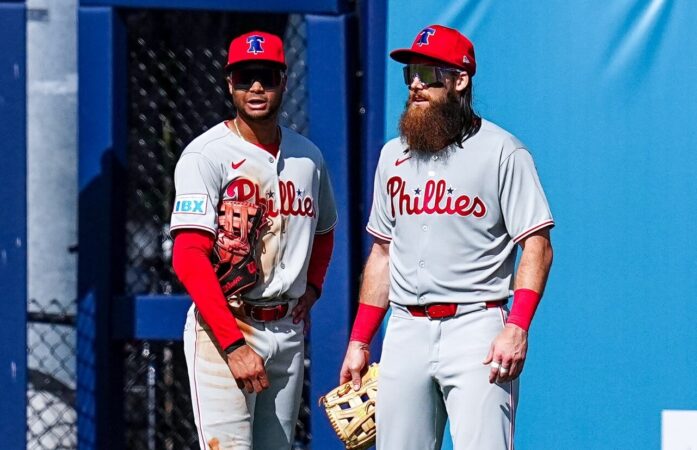
    Brandon Marsh “is the best,” says Justin Crawford, who has appreciated how his left fielder has looked out for him this spring.

    ‘I’ve got the aux’

    When Marsh was a 23-year-old rookie with the Angels in 2021, he had an abundance of veteran mentors to lean on. There was three-time MVP Mike Trout, Justin Upton, Dexter Fowler, and Jon Jay.

    All of these players helped him, in myriad ways, but with the same overarching message.

    “I was trying to be Super Man,” Marsh said. “They helped ease the game for me. And I’m just trying to do the same thing for J Craw.”

    With that in mind, Marsh made a point of introducing himself to Crawford early last spring. He went out of his way to make things easier for Crawford, like offering to drive him when the team traveled to different ballparks across the state of Florida.

    Thomson doesn’t allow players with less than three years of service time to drive themselves to road games. Crawford didn’t have any service time, so he assumed he’d have to take the bus.

    But Marsh presented another option. They’ve continued to stay carpool buddies this spring, and it’s allowed them more time to get to know each other.

    Of course, there were rules attached. Marsh would be in charge of the music, which in previous years might have meant a lot of Lil Uzi Vert. Now, not so much.

    “I still love Lil Uzi,” Marsh said. “But I’ve been on a huge Larry June and Freddie Gibbs kick. So, more of a smooth rap instead of … like, you know, bang your head off the front windshield.

    “But yeah, learning to find moments that are calm and stuff like that. I’ve got the aux.”

    Like the Angels veterans did with Marsh, he has encouraged Crawford to not put pressure on himself. To stay true to his game — regardless of what others think.

    He’s provided another support system for the young outfielder, within the clubhouse.

    To some, buying a suit jacket, or giving a pep talk, or making the two-hour drive to Port Charlotte, Fla., may not mean much. But to Crawford, it does. And he doesn’t take it for granted.

    “He’s just super genuine and super welcoming,” Crawford said of Marsh. “Those are the type of guys you want to be around.”

  • Britney Spears arrested and released, California sheriff’s records show, though charge is not clear

    Britney Spears arrested and released, California sheriff’s records show, though charge is not clear

    VENTURA, Calif. — Britney Spears was arrested Wednesday night in Southern California and booked early the following morning, though the charge was not clear, according to the Ventura County Sheriff’s office website.

    Messages seeking comment were left with the sheriff’s office; the California Highway Patrol, which was identified as the arresting agency; and Spears’ representative.

    Spears was arrested around 9:30 p.m. in Ventura County and released on Thursday, sheriff’s office records show. She has a May 4 court date scheduled.

    Spears, born in Mississippi and raised in Louisiana, was a teen pop phenomenon who became a defining superstar of the ’90s and 2000s. She rose to fame from Disney Channel’s “The Mickey Mouse Club” to MTV and beyond, with such era-defining hits like “… Baby One More Time,” “Oops! … I Did It Again” and “Toxic.”

    Most of her albums have been certified platinum, according to the Recording Industry Association of America, with two diamond titles: 1999’s “ … Baby One More Time” and 2000’s “Oops! … I Did It Again.” Her last full-length album, “Glory,” was released in 2016.

    Spears became a focus of tabloids in the early 2000s, and a source of public scrutiny, as she battled mental illness and paparazzi documented the details of her private life.

    Later, as cultural opinion evolved to recognize the misogynistic media coverage of the time, Spears’ fight to control her life became the focus of the #FreeBritney movement. In 2008, Spears was placed under a court-ordered conservatorship, run primarily by her father and his lawyers, that would control her personal and financial decisions for well over a decade. It was dissolved in 2021. Two years later, she released a bestselling, tell-all memoir, “The Woman in Me.”

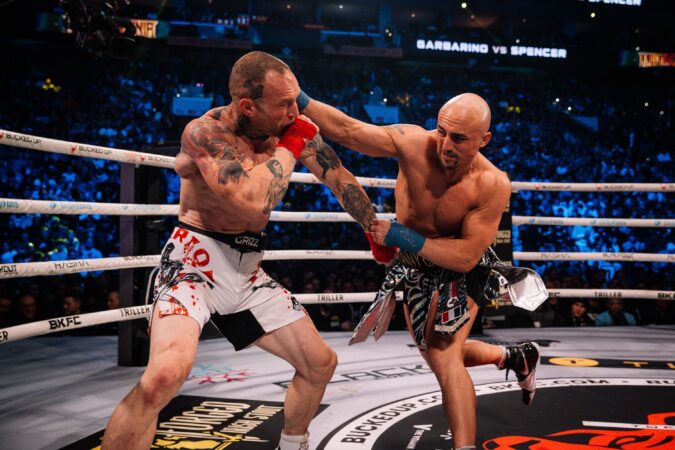
  • Flyers fight coach and bare-knuckle brawler Johnny ‘Cannoli’ Garbarino sparked a melee outside Barstool Sansom. It was caught on video.

    Flyers fight coach and bare-knuckle brawler Johnny ‘Cannoli’ Garbarino sparked a melee outside Barstool Sansom. It was caught on video.

    Last offseason, the Flyers brought in John Garbarino to help younger players hold their own during fights on the ice. He had an ideal resume for the job: The South Philly native is an undefeated middleweight in the Bare Knuckle Fighting Championship.

    But early Sunday morning, the fight venue was a narrow street in Center City, where the closing-time bar crowd watched Garbarino pummel the plexiglass vestibule of Barstool Sansom Street and scream obscenities at people inside.

    Garbarino, aka “Johnny Cannoli,” then destroyed an onlooker’s cell phone, sparking a seven-person fracas in the middle of the street.

    Part of the incident was captured in a two-minute video obtained by The Inquirer on Wednesday.

    The video shows that there were at least two uniformed officers at the scene, but they did not make any arrests. Instead, according to one eyewitness, an officer gave Garbarino a fist bump after the altercation.

    A police spokesperson said the incident is under investigation.

    Reached by phone Tuesday, before video of the incident surfaced, Garbarino denied hitting anyone and said that he was not the aggressor.

    “If anything, I broke it up,” he said.

    Although the police fist bump is not seen on video, Garbarino confirmed that it occurred and that the officer is a friend of his.

    Garbarino, 30, did not immediately return messages left Thursday morning about the video footage.

    After this story was published online, a Flyers spokesperson said Garbarino was retained for a one-time training last summer and was never paid by the team. “There is no ongoing relationship,” the spokesperson said.

    On Tuesday, Garbarino said that he had been a “special guest” at Barstool on Saturday night, and that he left for an hour before deciding to return “for another reason.” He declined to elaborate.

    According to a Barstool employee working that night, Garbarino and a group of associates were asked to leave the establishment at 2 a.m. because they had become unruly and it was closing time. Barstool management did not respond to a request for comment.

    The Barstool employee said once the group was outside, Garbarino and an unknown associate began violently pounding on the door to get back in — which is where video shot from across the street picks up. Garbarino can be seen unsuccessfully trying to force the door open.

    Marques Reed, who was working at a nearby bar, said people on the street started to film the two men thrashing at Barstool’s winter vestibule, causing the whole structure to shake.

    The video shows Garbarino — a former sous-chef at Del Frisco’s who later worked at Michelin-rated Alinea in Chicago — unloading on the vestibule with a half dozen punches and elbow strikes while yelling at Barstool staffers or bar patrons watching from behind wobbling plexiglass.

    After failing to break into Barstool, Garbarino stalks over to a group of onlookers.

    “Garbarino comes across the street and says, ‘I’ll knock you the f— out,’” Reed said.

    Garbarino then grabs an onlooker’s phone and spikes it onto Sansom Street, obliterating the device. That man goes after Garbarino as he is walking away, but a Garbarino associate grabs the man by the shirt collar. The man responds by throwing a punch at Garbarino’s associate.

    A third member of Garbarino’s group then punches the man whose phone was destroyed, and he falls down. He punches him again when he attempts to get up, sending him reeling backward and out of frame.

    Garbarino then appears to show restraint as he is face-to-face with a man he had shoved, and he seems to be trying to de-escalate the situation before walking away.

    Moments later, though, someone yells an obscenity at Garbarino, who reengages with the man with the broken cell phone. That man pushes Garbarino and takes a swing at him, missing. Garbarino tackles him to the ground.

    “John, don’t hurt him!” one of the men with Garbarino yells. Then, a woman with Garbarino kicks the man while he’s down.

    After they get up, Garbarino shoves another man in the face, then sucker punches the man he had tackled while he appears to be arguing with the woman.

    Garbarino on Tuesday vehemently denied throwing any punches and disputed a since-deleted Reddit post on the incident that described him as the aggressor. He said he was trying to defuse a situation he characterized as a “little scuffle.”

    “I can’t control the world,” he said. “I’m not a referee.”

    He did confirm one aspect of the Reddit post.

    “The only thing that was accurate was the fist bump from a cop,” Garbarino said. “He was a friend of mine.”

    Reed said he was troubled by the attack and the lack of action by police.

    “Why is this sanctioned bare-knuckle boxer wildin’ out at a bar, beating on a door, then beating people up? Didn’t he just have a fight not that long ago?” Reed asked.

    (He did, in fact: KnuckleMania VI, last month at the Xfinity Mobile Arena. Garbarino is now 4-0, having defeated Kaine Tomlinson Jr. by TKO in the fifth round.)

    “This dude was a maniac. He was going crazy,” one witness said of Garbarino. He asked not to be named because it could adversely affect his employment.

    The witness said he was shocked that police laughed it off and walked away.

    “Everybody was like, ‘You’re just letting him go?’” the man recalled bystanders asking police. “The cops kind of thought it was funny. That’s a very old-school Philly thing that I didn’t think was a thing anymore.”

    Eric Gripp, a police spokesperson, said that a complainant reported being assaulted shortly after 2 a.m. Sunday, and that the case is being investigated by Central Detectives. He declined to provide any additional details about the complainant or the alleged perpetrator, or comment on the police response at the scene.

    Garbarino, who grew up playing hockey, said given his “position with the Flyers” and his recent success in the Philadelphia-based Bare Knuckle Fighting Championship, he is trying to do “damage control” this week over the allegations in the Reddit post. He dismissed the claim that he knocked someone out as “a joke.”

    A representative for the Bare Knuckle Fighting Championship did not immediately respond to a request for comment.

    Garbarino said he would like to put the situation “to bed” as he pursues a world title.

    “I’m obviously a popular guy in Philly,” he said. “I know violence pretty well. Nobody got beaten severely.”

  • Indiana Vassilev has remained the engine driving the Union attack: ‘He’s been really important’

    Indiana Vassilev has remained the engine driving the Union attack: ‘He’s been really important’

    Indiana Vassilev is usually heard before he is seen.

    Whether it’s walking onto the Union’s training pitch, sitting inside the locker room, or on this particular day, bellowing a teammate’s name in song as loud as he could down a quiet, empty corridor — his is an energy everyone within the club seems to accept.

    Perhaps it’s in large part that all of that infectious, boisterous — and, in some cases, obnoxious — energy usually gets exorcised onto the pitch, where, since joining the team last season, he’s been the spark plug the Union have needed. People may forget that Vassilev arrived to the Union on a one-year guaranteed contract, with an option to extend into this season, and that certain performance metrics would play a huge part in the decision to retain him at the end of last season.

    He came as a bit of a controversial choice, too, coming in essentially to do the work of former midfielder Daniel Gazdag. Gazdag, who departed as the team’s all-time leading goal scorer, was sent to Columbus last April, just a month and a half after Vassilev’s arrival.

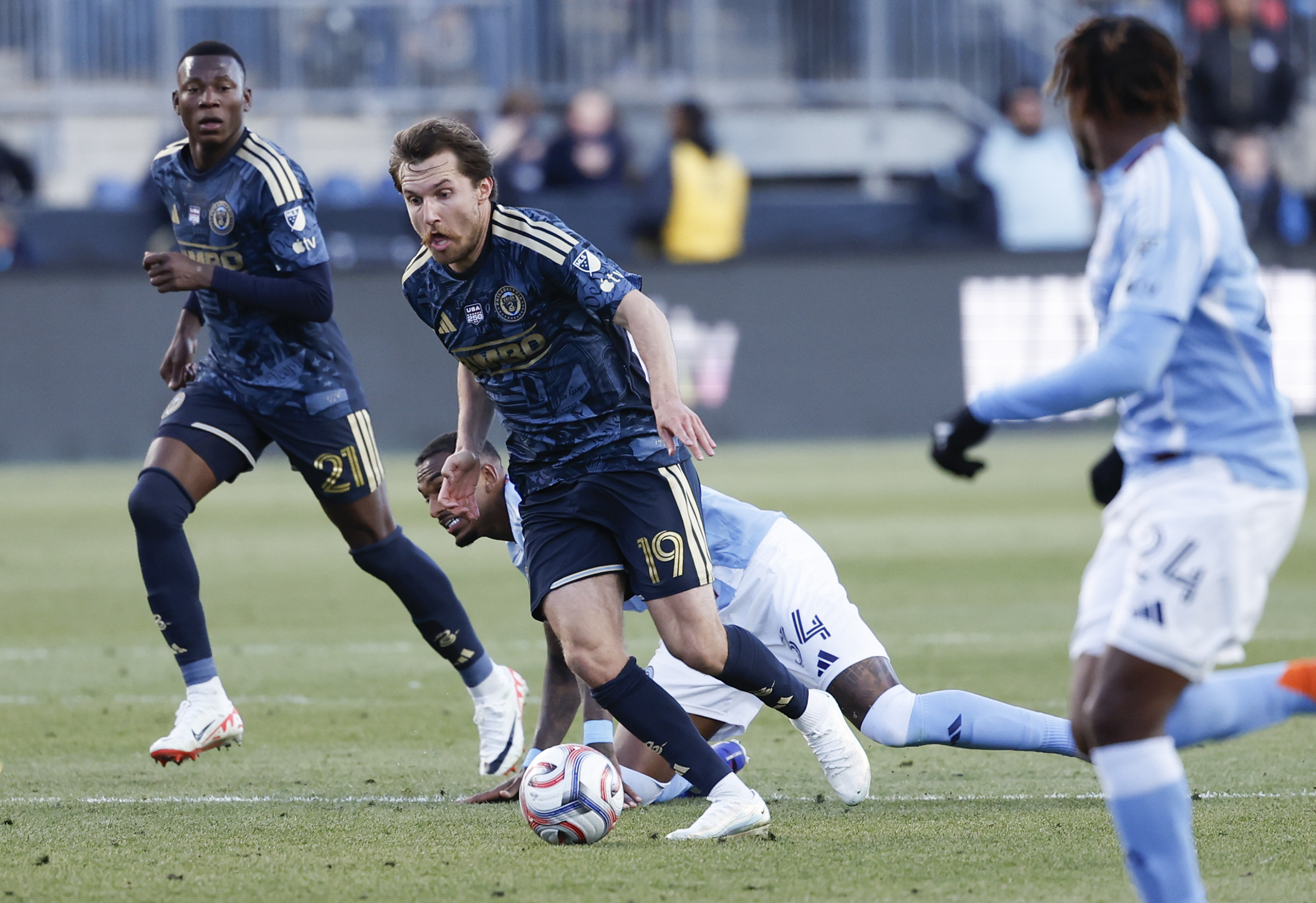
    Union midfielder Indiana Vassilev runs with the soccer ball past New York City FC defender Raul Gustavo during the team’s match at Subaru Park on Sunday.

    And while Vassilev hasn’t had the consummate goal scoring production Gazdag did, his unyielding work rate speaks for itself.

    “I mean, I would love to say that I’m a goal scorer and I get a lot of assists, [but] that’s just not really what I do,” said Vassilev. “I’m just trying to get in dangerous areas and progress the play. We have guys who are very, very good at it, guys like [midfielder] Quinn [Sullivan], who score absolute bangers, and put it away. That’s not my role, and I’m OK with that.”

    A pretty accurate representation of Vassilev’s role came in the team’s Major League Soccer home opener against New York City FC, in which he stepped up to score an 89th-minute penalty kick past goalkeeper and Wayne native Matt Freese. It underscored his immense work rate in that match. According to Opta statistics, over the last two matches, Vassilev’s passing in the final third has been nearly 82% effective, and in the open field, nearly 85% effective.

    A true box-to-box midfielder, Vassilev is one of a few players on manager Bradley Carnell’s roster that has the freedom to roam, where man-marking isn’t as important as breaking up attacks and then pushing forward Union attacks.

    “He’s a silent leader. OK, well, he’s not silent, trust me; he’s actually quite loud,” joked Carnell. “He jokes, but he goes about his business in the most distinguished way. He adds an immense amount of value on both sides of the ball. And I think he’s a good role model to have on the team … and he commits to everything we do. So, yeah, I think it’s safe to say he’s been really important.”

    Important could also be construed as “fits” the ultra-pressing attack-the-ball minded system Carnell has employed since his arrival last year. It’s a style Carnell knew Vassilev would fit from his time as head coach of St. Louis City SC, in which he led to a record start as a Western Conference expansion team in its first MLS season.

    It’s why it didn’t take Vassilev, who played under Carnell in St. Louis from 2023-24, long to retrofit himself into the Union. If you ask Vassilev, it was Carnell that brought him here, but the team comradery has fueled his intentions to remain in Chester.

    “I’m a big locker room guy, I’m big about culture,” Vassilev said. “It was really easy for me to transition to, you know, this locker room and to feel comfortable and, I feel like once you feel more comfortable, you get to be your true self. And that happened quite quick for me because of how good the guys were in here.”

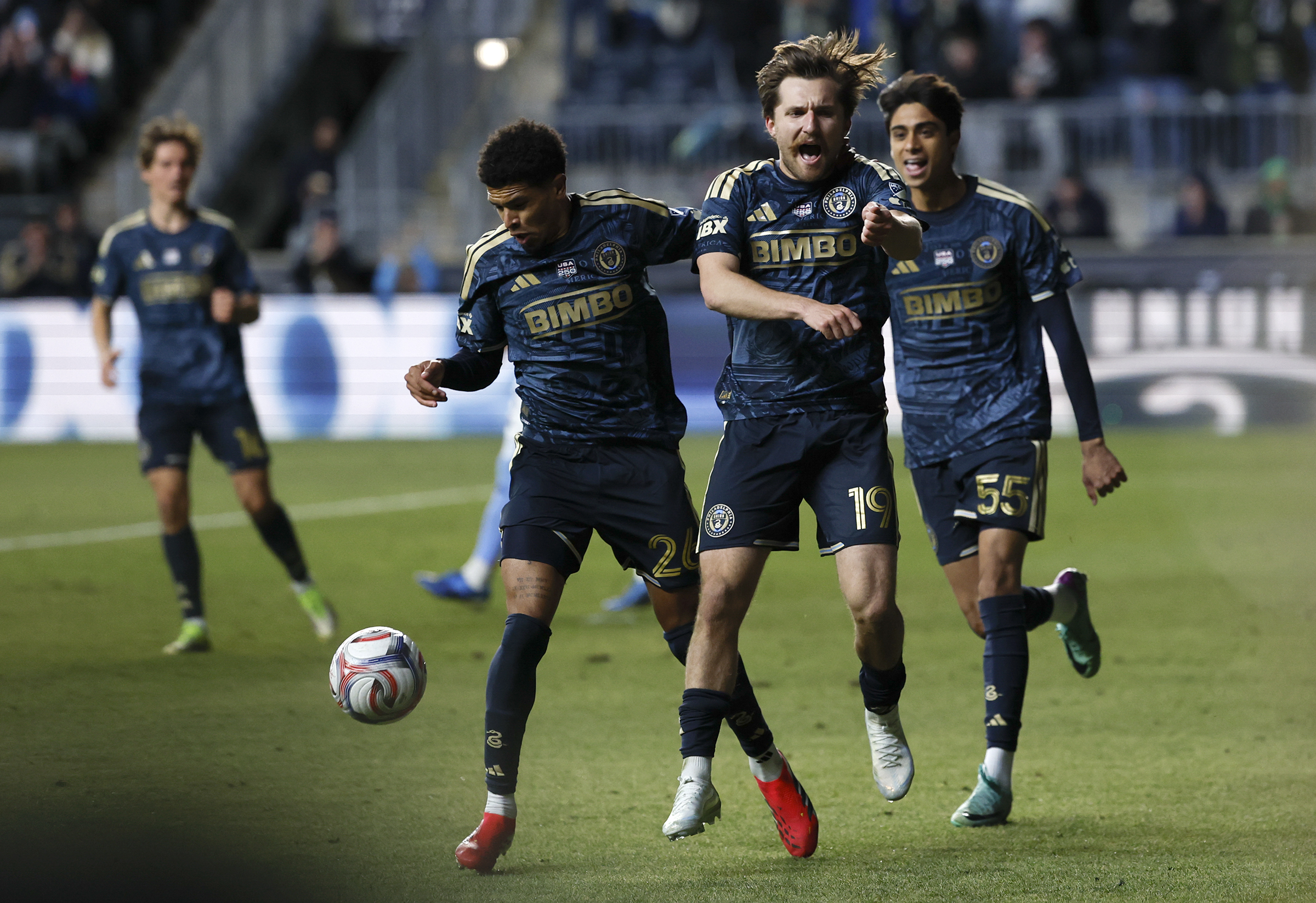
    Union midfielder Indiana Vassilev (center) celebrates his second half penalty shot goal with teammates defender Nathan Harriel (left) and forward Sal Olivas against New York City FC on Sunday.

    His transition period is over and Vassilev has remained a consistent part of the team’s lineup. Vassilev, a native of Savannah, Ga., has grown an affinity for Philadelphia.

    “​​I love Savannah, Georgia, that’s where I was born and raised,” said Vassilev. “I love the South but Philly’s not too bad of a city. I actually really enjoy it. It’s firmly second in the places I’ve lived. I’m a Savannah guy, but Philly is cool and our fans are incredible.”

    It’s still early to tell what the Union will amount to this season. The team bid farewell to several core players that were instrumental in bringing the club its second Supporters’ Shield last season and are trying to get new faces to jell into its system. But Vassilev said all of that comes in training, where according to him, those sessions can be even tougher than some matches.

    “Our training environment is super, super intense,” he said. “Sometimes, you know, we fight, we argue, we kick each other. But of course, that’s what makes us so good. Our internal competition is so high. I think that’s, you know a big part of our success.”

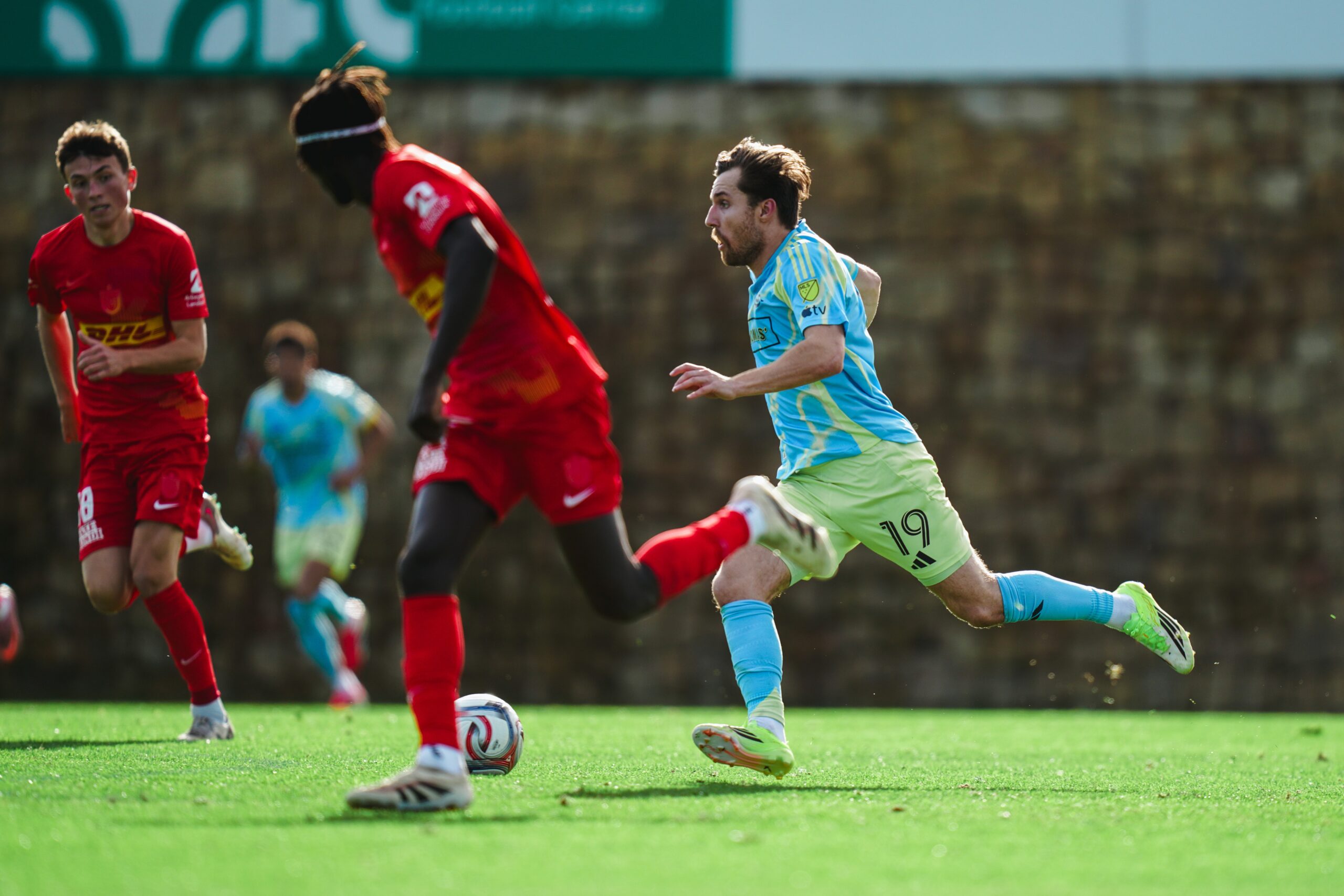
    Indiana Vassilev (right) in action for the Union against FC Nordsjælland in a preseason soccer game at the Marbella Football Complex in Marbella, Spain.

    That internal competition will need to intensify as the Union look to shake off an 0-2 start to its MLS campaign. Next up, San Jose visits Subaru Park on Saturday (7:30 p.m., Apple TV), before the second round of the Concacaf Champions Cup action resumes against Liga MX giant Club America on March 10 (7 p.m., FS2).

    “He’s one of our 10s and I think all of our 10s play a special role in the system,” said Carnell, referring to the responsibilities of a playmaking midfielder. “Our 9s (forwards) and our 10s, I think they have to give so much more, and sometimes they don’t receive all the output that they’re giving, right?

    “But I think we saw last season that over the course of the season, you’ve seen what benefits the whole team and what gets us, you know, some silverware and hopefully a deep run in the playoffs. His skills and leadership is a big part of that and some one that we believe has the tools to help us get there.”

  • After an actual winter in the Philly region, plant life may see the impacts

    After an actual winter in the Philly region, plant life may see the impacts

    Temperatures in the Philly region may not visit freezing again until the end of next week, with a run of 70-degree days possible in the interim. And after some substantial winter napping, the region’s plant life is going to notice.

    Horticulturalists offered a variety of perspectives on what effects the surprisingly enduring snow and ice snow cover and Arctic freezes have had on the regional flora and what may be ahead.

    They allow that while it wasn’t exactly a vacation, spending five weeks and change under a glacier and snowpacks hasn’t been all bad for the plant life.

    But as the great thaw accelerates, they have cautionary words for home gardeners: Watch your step.

    And meteorologists warn that if you expect the thaw to be linear, you clearly have wandered into the wrong part of the country. Winter and spring are still in a nasty turf war that can turn ugly in March in the Northeast.

    Five weeks under the covers had benefits for Philly’s plant life

    Officially, Philadelphia has logged 36 days of snow cover of at least one inch, including 23 consecutive days after the Jan. 25 snow-and-ice fest. The timing of that snowpack was fortuitous in that it “insulated the ground, protecting perennials, grasses, and marginally hardy bulbs” from the Arctic freezes that followed, said Lisa Roper, horticulturalist at Chanticleer Garden in Wayne.

    Horticulturist Lisa Roper tends to echinacea Tennesseensis at the Gravel Garden at Chanticleer in this file photo. She says the snow offered a measure of protection for the plants.

    Said Sky Deswert, garden educator with the Norris Square Neighborhood Project in Philly, “Without the snow, there is a greater risk that dormant plants and roots will suffer from the cold.”

    The snow was beneficial “to things like blue hydrangeas, insulating the stems from the cold,” said Bill Cullina, executive director of the University of Pennsylvania’s Morris Arboretum & Gardens in Chestnut Hill.

    Overall, said Roger Davis, a landscape manager at Longwood Gardens in Chester County, “Snow cover does not typically cause any problems for most plants in our home gardens.”

    Unfortunately, it also typically doesn’t cause problems for voles, those plant-nibbling so-called field mice that evidently had a field day.

    But the winter also offered significant challenges

    “Voles have been active underground, eating roots and even the crowns of grasses and perennials,” said Cullina. Snow has given voles ideal cover from an impressive lists of predators, including owls, foxes, raccoons, and cats.

    They can kill shrubs and small trees by chewing at ground level, said Chanticleer’s Roper.

    Deer also have been nuisances. “Heavy snow cover makes it difficult for deer to find food,” she said. “The deer will start to eat plants they typically leave alone.”

    At Morris Arboretum, Cullina said, “They have been browsing needled evergreens that they normally ignore.”

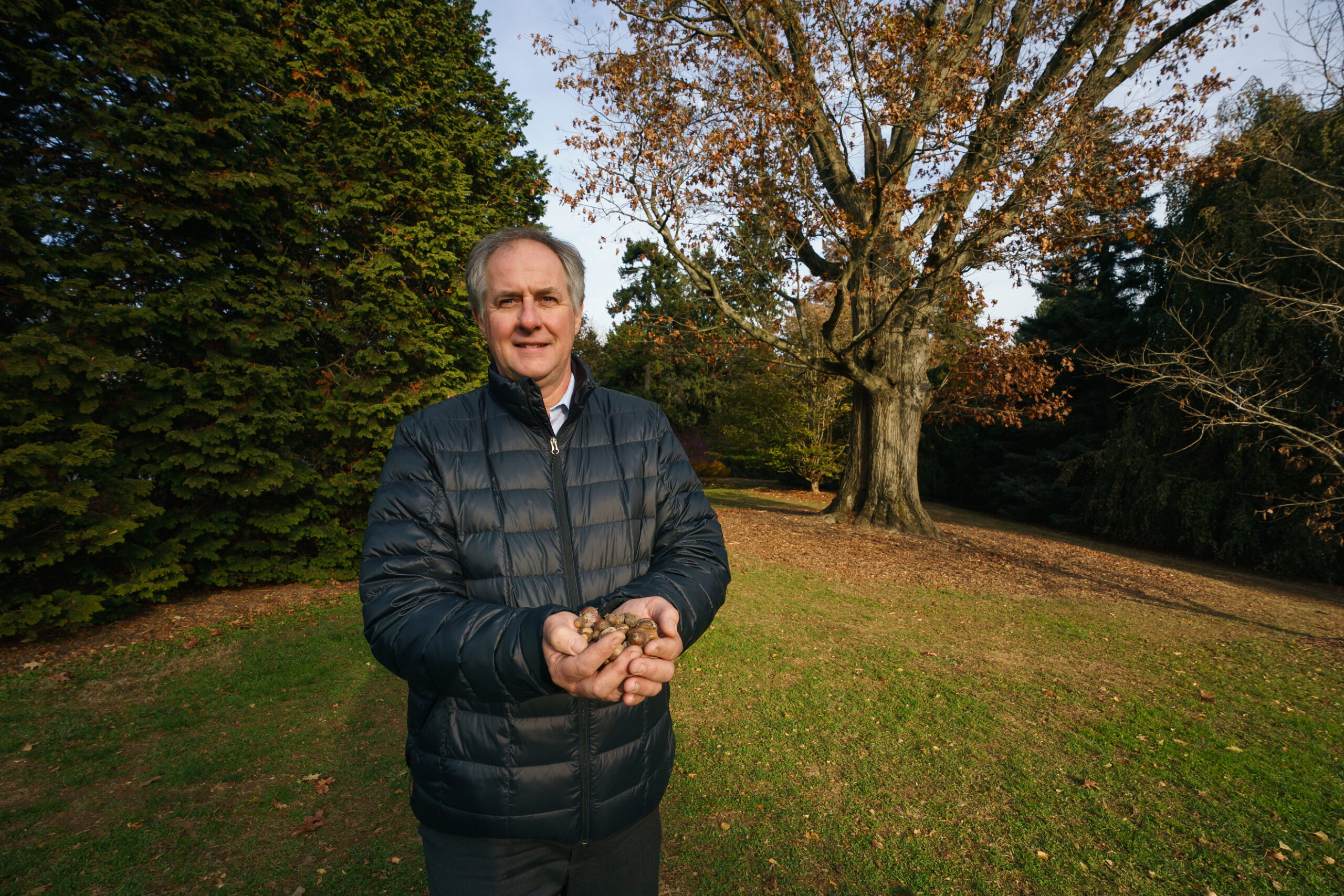
    Bill Cullina shown here in this file photo in front of a a red oak tree at the Morris Arboretum. Beware of “mud time,” he advises.

    He added that frost-heaving, in which soil expands and contracts with fluctuating temperatures, is back after taking off much of this century. “This can force recently planted perennials and even shrubs as well as bulbs out of the ground.”

    Said Roper, “Keep your eye out for plants pushed out of the ground; you can stick them back in if you see them.”

    Some of the broad-leaved evergreens, such as rhododendron and hollies, may have suffered from “the combined effects of sun reflecting off the snow and frozen ground that prevents water uptake,” said Cullina. That can lead to leaf burn and defoliation.

    “Not much you can do at this point except wait until the plants leaf out …and then prune off any dead branches,” he said.

    Shrubs planted near the eaves of houses may have suffered from another hazard — rooftop snow, said Theresa Smith, senior vice president of NaturLawn, a national lawn service company with several outlets in the region. “When you have snow falling off in heavy pieces, it’s definitely going to damage some of those softer plants.”

    And beware of salt damage on lawns, particularly near well-salted roads and driveways, said Smith. Salt can dehydrate vegetation. She also warned that prolonged snow cover can yield bumper crops of “snow mold,” a fungus that thrives in cold, moist conditions.

    If you see those unsightly straw-colored mold patches, rake them out and put down grass seed on the bare spots, Roper said.

    ‘Mud season’ has arrived in Philly. Watch where you step.

    The ground has assumed a certain spongelike quality now that most of the snow is melted, and it’s going to take some time to wring out the sponge.

    Cullina said that reminiscent of his native Maine, it “feels like Philly is getting a little taste of mud season this year.”

    Smith strongly advises gardeners to keep off the mud as much as possible. “You don’t want to add to the compaction that’s already there,” she said.

    The tighter the soil gets, said Longwood’s Davis, the more it reduces the air spaces. “Foot traffic has more effect on wet soil than you might think.”

    And beware the moods of March

    Smith cautions against yielding to an agricultural spring fever, despite the promising temperature forecast for the next several days. Starting Sunday, the high temperatures could reach 70 degrees on four or five days, said Bob Larsen, a senior meteorologist with AccuWeather Inc.

    Smith votes for harnessing planting ambitions during March, a notorious transitional month when the aggressive warm air masses clash with the retreating winter.

    Her birthday is in March, and she recalls receiving snow as a not necessarily welcome birthday present more than once.

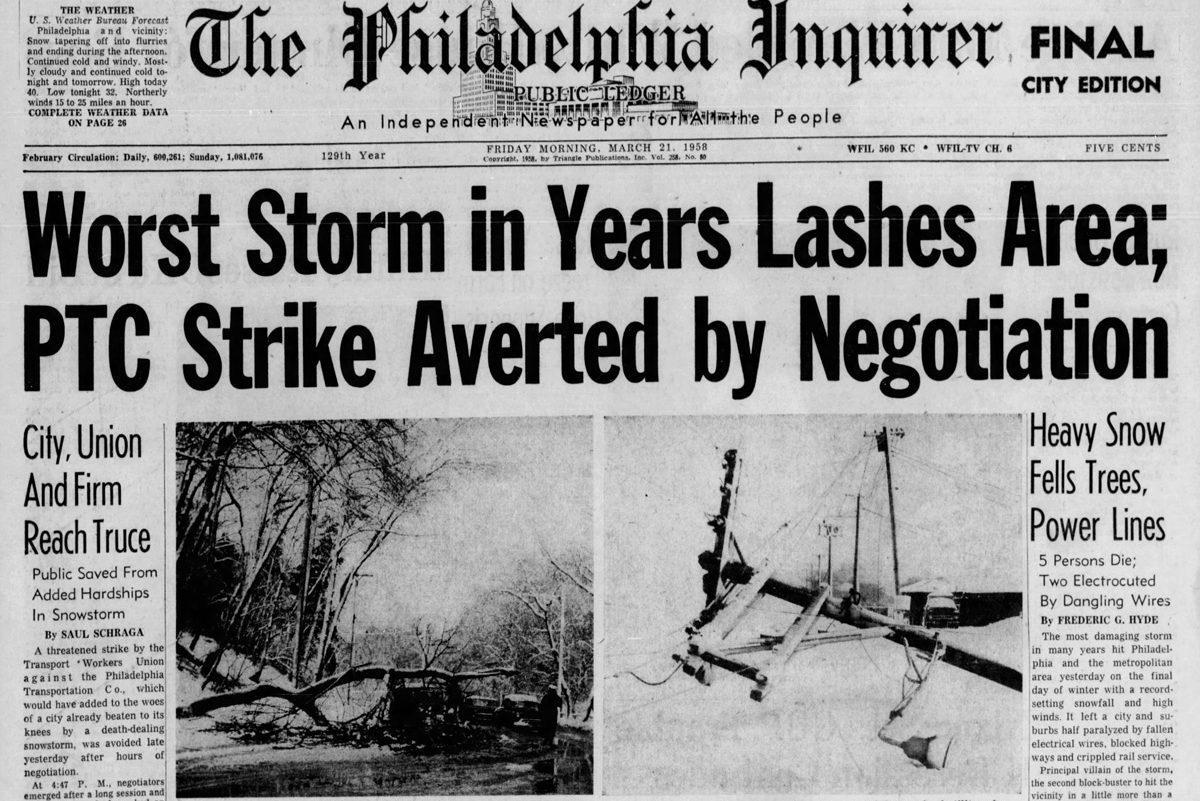
    Philadelphia’s last verified blizzard occurred in March, in 1993; in 1958 over 50 inches of snow fell upon Morgantown, Chester County, during the so-called equinox storm, and 20 inches fell in Philly on April 1, 1915.

    Our coverage of the 1958 Equinox Storm.

    “Home gardeners just need to relax a little bit,” she said, “and wait for the weather patterns to become more consistent.”

  • The Sixers are ‘living with where we’re at’ after close win over the lowly Jazz, but the road gets tougher

    The Sixers are ‘living with where we’re at’ after close win over the lowly Jazz, but the road gets tougher

    Jabari Walker looked up at the scoreboard Wednesday night and accepted that the margin between the 76ers and lowly Utah Jazz remained close down the stretch.

    So the Sixers tightened up defensively, allowing just two points in the final 4 minutes, 51 seconds. They got a go-ahead scoring burst from Quentin Grimes in the final minute. And the Xfinity Mobile Arena crowd collectively exhaled when Utah’s Kyle Filipowski missed a three-pointer as the Sixers to escaped with a 106-102 victory.

    The Sixers were severely shorthanded Wednesday, with rookie standout VJ Edgecombe (back bruise) joining the list of absent players that already included Joel Embiid (oblique strain), Paul George (suspension), and Kelly Oubre Jr. (illness). Yet they were facing an 18-44 Utah squad that recently was fined by the NBA for blatantly “tanking,” or attempting to lose to improve its draft lottery odds.

    That Wednesday’s matchup went down to the wire could be characterized by outsiders as uninspired at best and flirting with an inexcusable disaster at worst. Coach Nick Nurse and All-Star point guard Tyrese Maxey, however, offered a different viewpoint.

    “That’s a hell of a win, considering all the guys out,” Nurse said. “… We don’t care what they look like. Just pick off a win here and there.”

    Added Maxey: “I’m living with where we’re at. I’m happy with where we’re at right now.”

    The “win is a win” cliche is particularly true right now for the 34-28 Sixers, who cling to the sixth seed in a bunched-up middle of the Eastern Conference standings with 20 games remaining. The team that finishes in that spot will advance directly to the playoffs’ first round, while the teams that finish seventh through 10th must earn a spot through the play-in tournament.

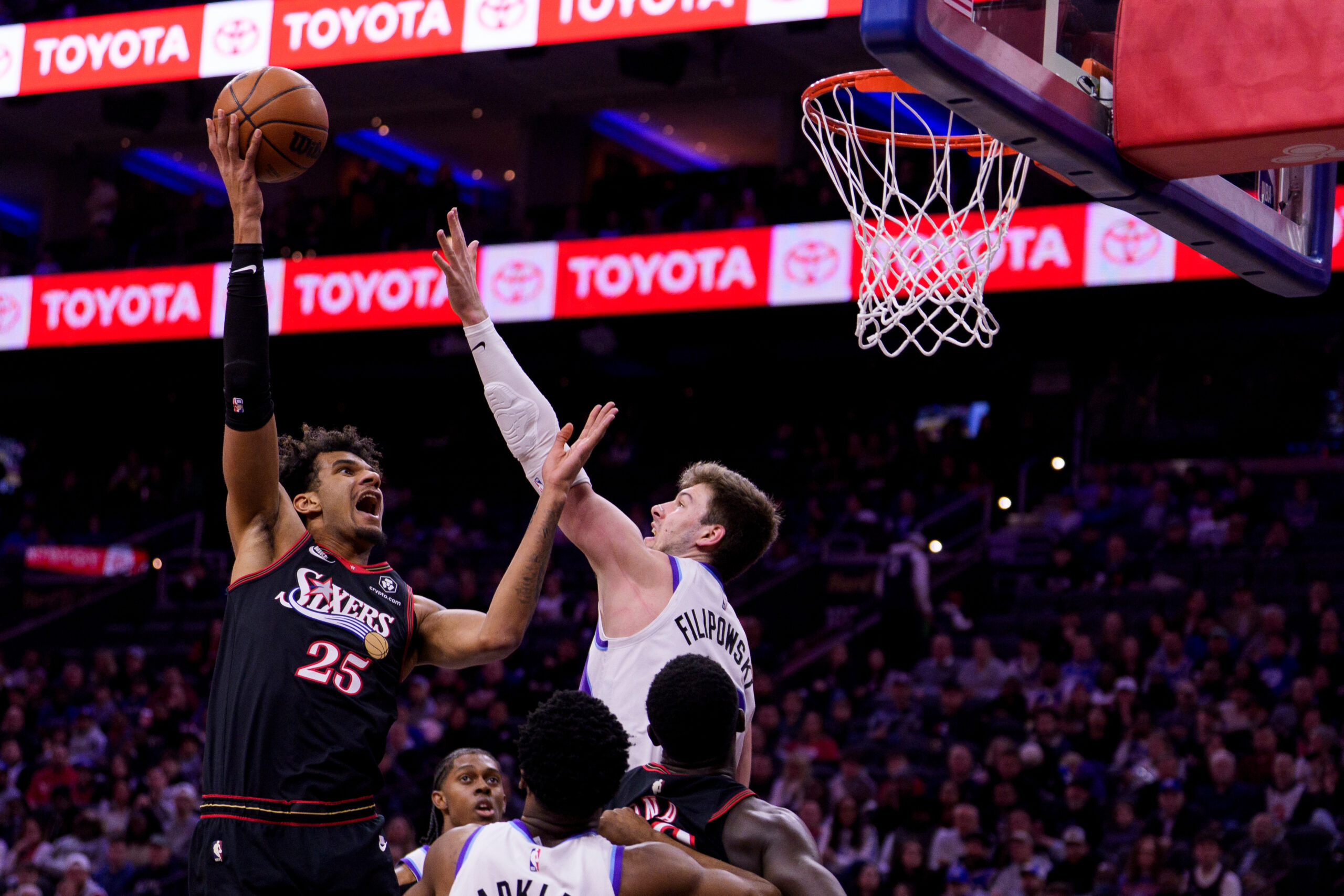
    The Sixers’ Dom Barlow goes up for a shot against Utah’s Kyle Filipowski on Wednesday.

    Following Tuesday’s 40-point faceplant against the San Antonio Spurs, which Grimes described as “kind of embarrassing,” the Sixers’ lead in the standings dwindled to a half-game on the seventh-seeded Orlando Magic and eighth-seeded Miami Heat. Wednesday’s victory bumped that margin back up to a full game and moved the Sixers to 1½ games behind the fifth-seeded Toronto Raptors.

    The Sixers are 4-4 since the All-Star break, including impressive victories at the Minnesota Timberwolves and against the Heat but a horrid loss at the New Orleans Pelicans. All of those games have been played without George, whose suspension spans 10 more games, while six have been missing Embiid, whose recent injuries also include a stress reaction in his shin.

    Maxey acknowledged after Tuesday’s blowout that the vibes have been up and down since the trade deadline, even directly addressing that he and the Sixers “miss” Jared McCain, who was dealt to the league-leading Oklahoma City Thunder.

    “You can’t dwell on that,” Maxey said. “You’ve got to focus on the people that’s in this building. These are the people that are going to be with you for the rest of this season. …

    “If you want to try to make a run at doing something special, then you’ve got to focus on that.”

    After getting smacked by the Spurs, a home matchup against the Jazz appeared to be an ideal bounce back opportunity. Yet two nights prior, Utah hung with the Denver Nuggets, widely considered a Finals contender, before losing, 128-125. And after deliberately resting key players in prior fourth quarters, coach Will Hardy subbed his starters back in for Wednesday’s stretch run against the Sixers.

    “They’re playing hard, and they’re playing the right way,” Maxey said of the Jazz. “You’ve got to actually beat them. They’re not just going to let you.”

    The Sixers’ Jabari Walker had 22 points and 10 rebounds against the Jazz.

    The Sixers needed a massive boost from reserve big man Jabari Walker, who made his first six shots (including 4-of-4 from three-point range) and finished with 22 points and 10 rebounds. And legitimate guard minutes from recent two-way signee Tyrese Martin (eight points, two rebounds, two assists), whose play Nurse described as “just a little shy [of] excellent,” and Kyle Lowry, the pseudo-assistant coach who previously had played seven games all season.

    Nurse started Adem Bona at center instead of Andre Drummond, who typically had held that role when Embiid was out but has been ineffective recently. Grimes became the Sixers’ closer, breaking down his defender to convert a layup and draw a foul on a nearly identical play.

    “My teammates have a lot of trust in me,” Grimes said, “and my coaches have a lot of trust in me to make those plays.”

    The Sixers’ opponents get significantly tougher from here. Up next is a Saturday trip to the Atlanta Hawks, who have already beaten the Sixers three times and have motivation to claw out of the East’s No. 10 seed. During the next week, the Sixers also will visit the Cleveland Cavaliers, who acquired former Sixer James Harden at the trade deadline and have ascended to the East’s fourth seed, along with the top-seeded Detroit Pistons.

    As a tuneup for that rugged stretch, Wednesday’s outing against the Jazz was far from aesthetically pleasing. Yet the shorthanded Sixers won to keep their grip on the sixth seed, and Maxey will live with that for now.

    “Guys took it personal at the end,” Walker said. “We knew how important this was for us, and we acted as professionals and got it done. …

    “When it was crunch time, we locked in. We’ll learn a lot from this, but this was a big one of us.”