Architecture critic Inga Saffron noted in a column this week that a bunch of factors working together are making homes less affordable. They include land-use regulations, costs of construction materials, and interest rates.
Pro-housing activists also argue that Philly’s historic preservation laws restrict the supply of affordable homes.
But Saffron said preservation might help solve some of the city’s housing problems by adding density. She cited a report commissioned by the Preservation Alliance for Greater Philadelphia that found that preserving older buildings protects housing affordability.
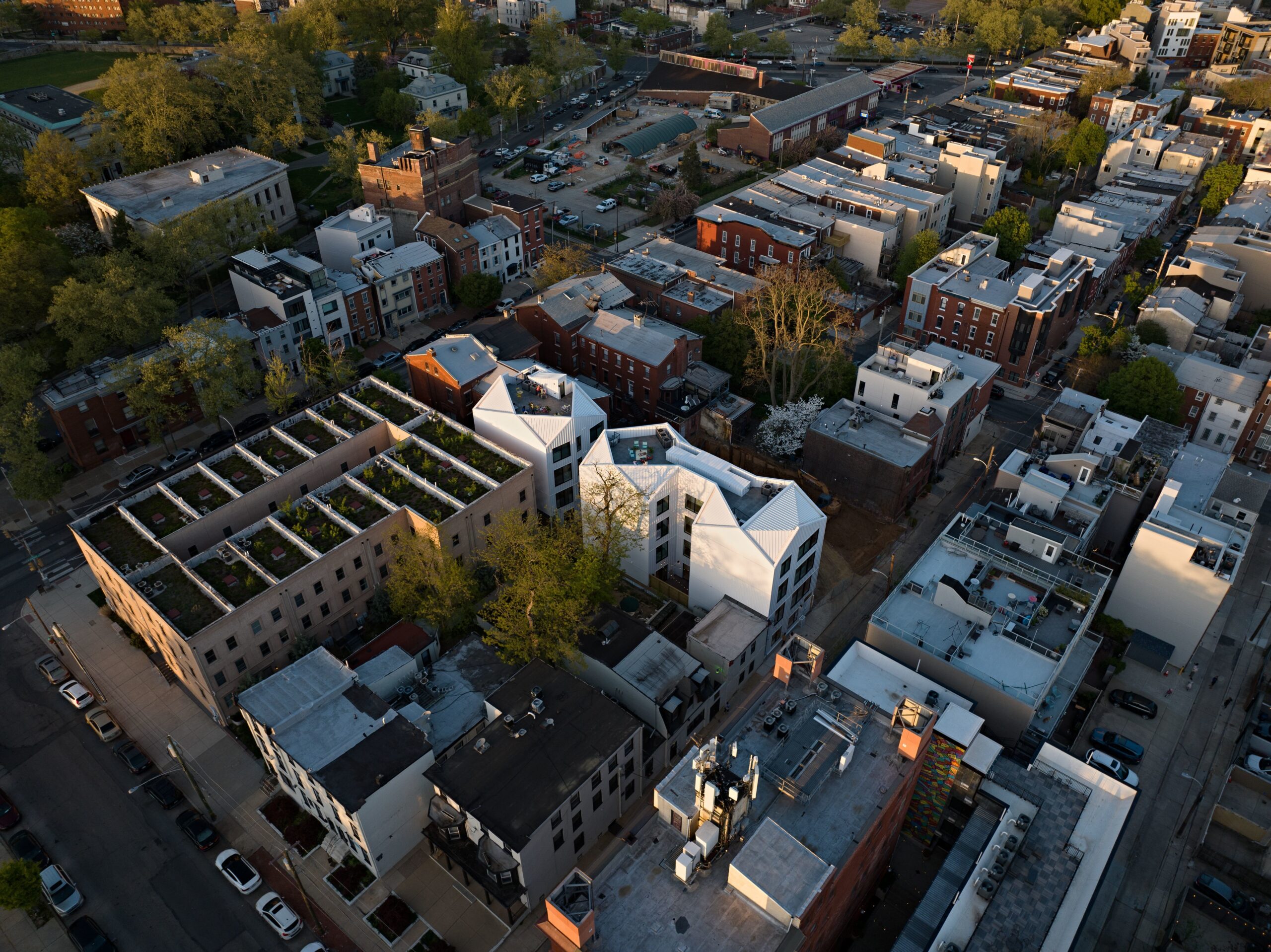
Saffron pointed to projects that added homes while protecting historical buildings.
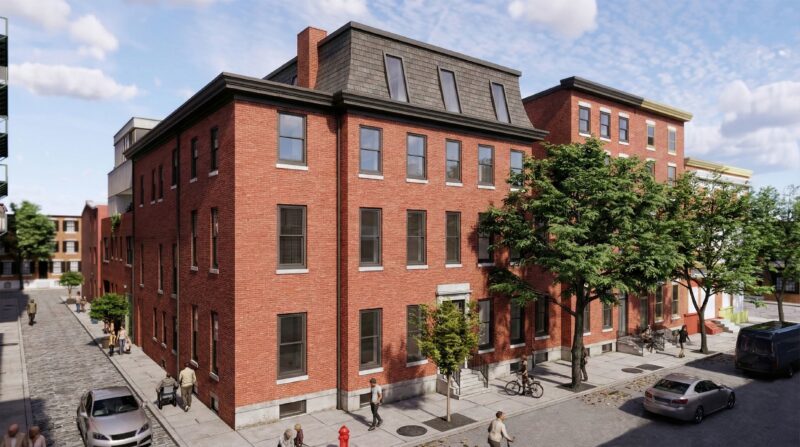
In one, an architecture and design firm turned a historic Greek Revival mansion into a 32-unit building.
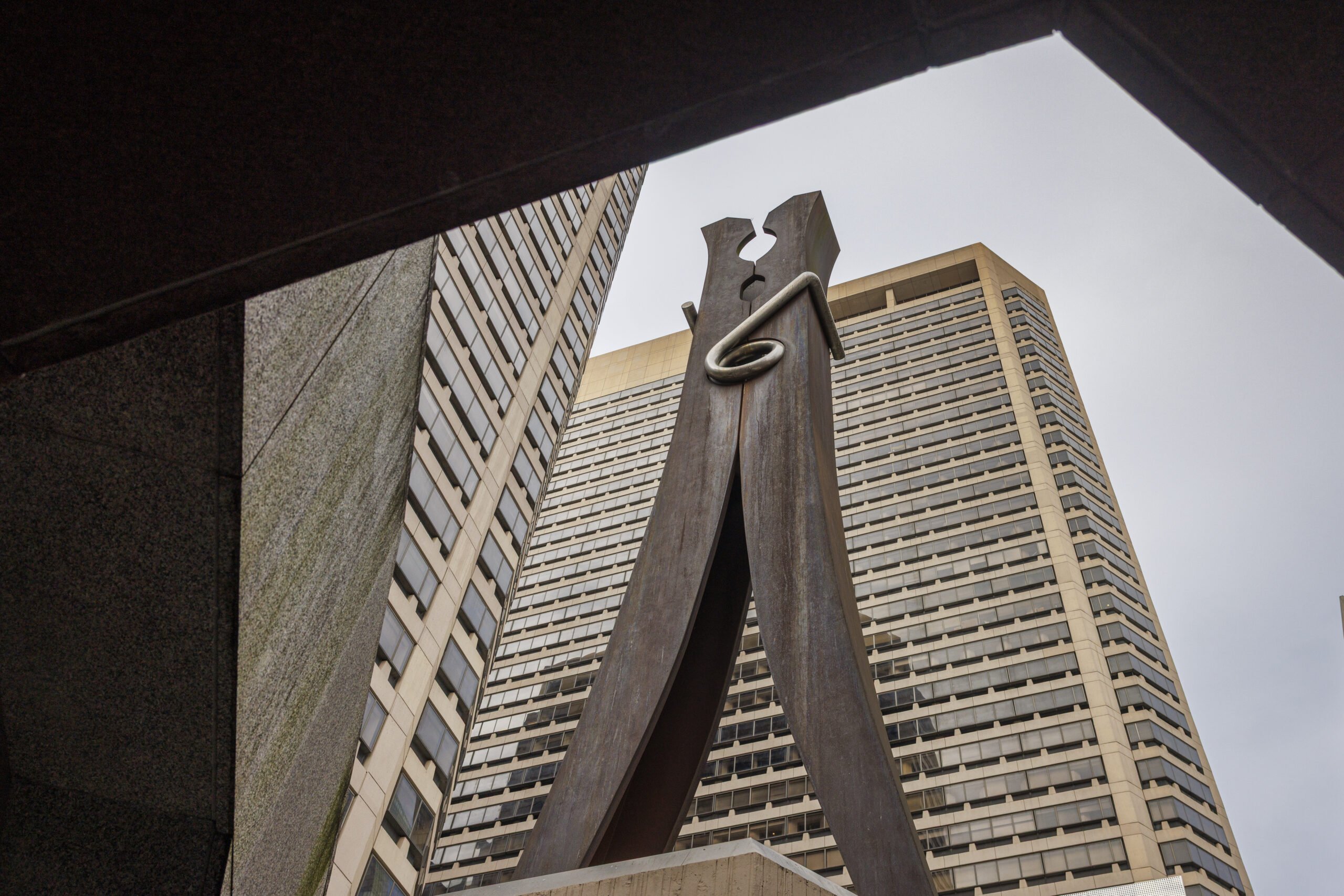
The property was hit hard by the remote-work wave sparked by the pandemic. By the end of last year, Centre Square had added another superlative: the office building with the highest vacancy rate in Center City.
Now, a developer wants to reimagine Centre Square. According to the plans, it’ll still have some office space. But its two towers will also have hundreds of apartments and luxury hotel rooms.
The partnership behind the proposed redevelopment is responsible for other recent high-profile projects in the city. The developer says “we … are rejuvenating architectural gems that are functionally obsolete” amid “a real estate crisis.”
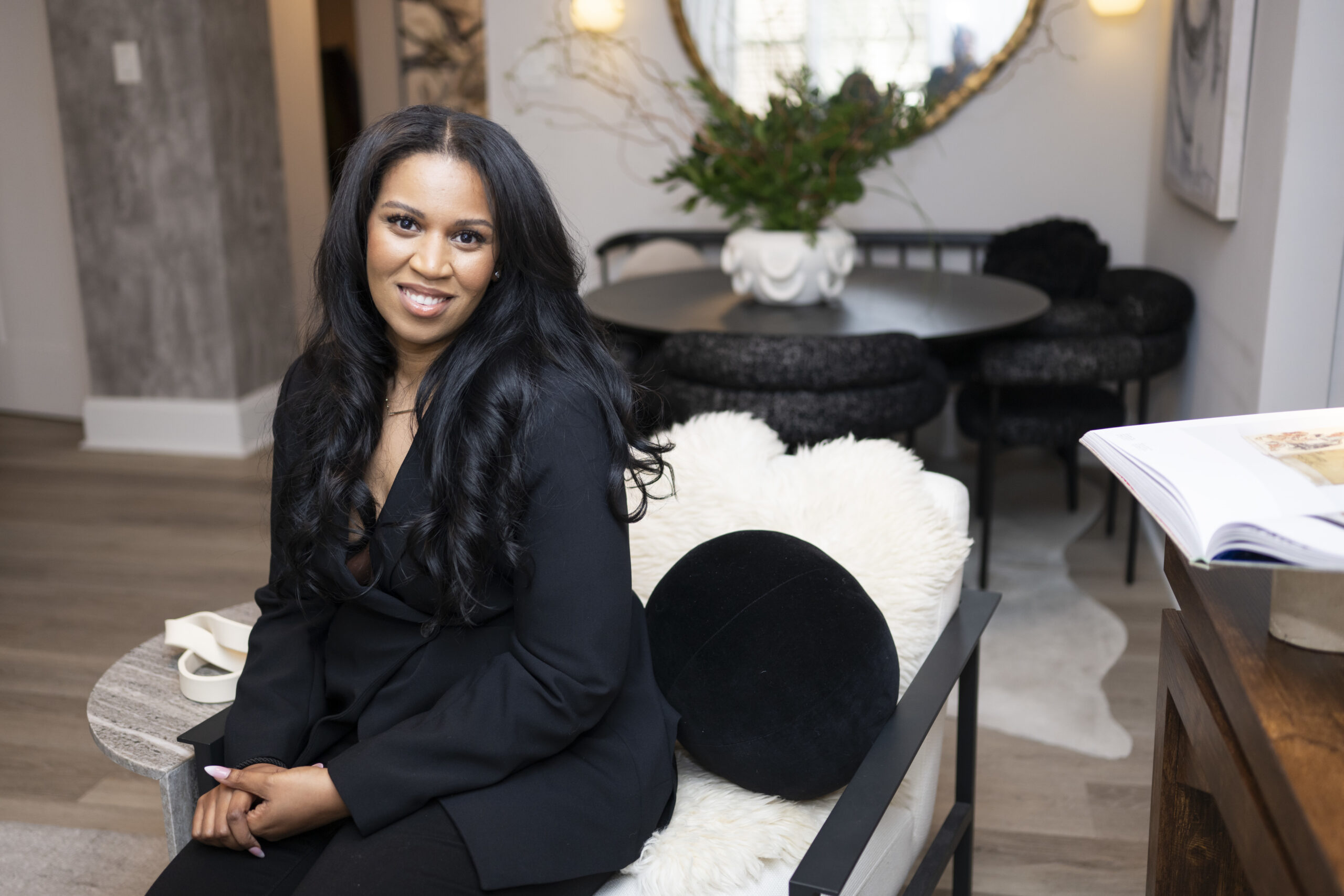
Since Jasmine Williams was a kid, she’s always liked art and design. Now, she’s an interior design consultant.
And she’s brought her knowledge and personal style to her 1,000-square-foot apartment in West Philly.
Williams keeps it simple and classic by mainly focusing on two colors: black and white. She took inspiration from features that were already in her apartment, including the black cabinets and white countertops in her renovated kitchen.
She added black furnishings and had one wall and a set of folding doors painted black. Most of her walls are white and so are rugs, ottomans, throw pillows, and other accessories.
I thought that one would have been easier. Maybe the snow in the photo threw you off. Or maybe it’s just because I know it well. We’ve written about it a lot.
―
I’ll leave you with a story that’s only kinda related to homes, but it’s an interesting read. My colleague Zoe Greenberg wrote about people who dig for artifacts buried in Philadelphia’s centuries-old outhouses.
Philly’s full of fascinating people.
Enjoy the rest of your week.
By submitting your written, visual, and/or audio contributions, you agree to The Inquirer’s Terms of Use, including the grant of rights in Section 10.
What would hosting the 2028 Democratic National Convention mean for the city’s economy? It depends whom you ask.
And the decline of Philly basketball’s onetime legendary alliance began a long time ago, our sports columnist writes. Now it isn’t much of anything anymore — and the reasons are many.
If Philadelphia lands its pitch to host the 2028 DNC, the city could see big economic gains — or not, experts say.
🔵 City and state officials and other boosters say the thousands of visitors expected to attend the convention would spend their money on hotels, meals, and attractions. A Visit Philly-commissioned report on the 2016 DNC found the event brought $230.9 million to the local economy.
🔵 Economists who have studied conventions say tourism groups’ lofty claims can be overblown. But at least one economic winner is clear: the hospitality industry.
🔵 “I can think of a few of examples of hotels making their annual budget based on the DNC alone,” the Greater Philadelphia Hotel Association’s chief told The Inquirer, about a past convention held in the city.
🔵 And hosting the next DNC could have other benefits for Philly — breathless international media coverage, for one — with minimal financial tradeoffs.
In other local government news: City Council’s housing committee on Wednesday advanced two bills meant to help Philadelphia renters living in unsafe or unhealthy homes. And Mayor Cherelle L. Parker this week appointed former prosecutor Tito Valdes as Philadelphia’s new director of LGBTQ+ affairs.
🎤 Now I’m passing the mic to sports columnist Mike Sielski.
These days, most people who follow college basketball, if they’re being honest, have to acknowledge that the Big 5 isn’t much of anything anymore.
The round-robin rivalries among La Salle, Penn, St. Joe’s, Temple, Villanova, and more recently Drexel have lost most of their juice. That white-hot competition, fueled by the benign hatred that only proximity and familiarity can ignite, used to define Philadelphia hoops. It has cooled.
Now, just one school, Villanova, enters each season with the baseline expectation that it will qualify for the NCAA Tournament, and the pipeline of local recruits that once sustained these programs has all but dried up. — Mike Sielski
Sen. John Fetterman was the only Democratic senator to vote against curbing President Donald Trump’s power to order strikes in Iran.
A statue of a founding father who enslaved people was taken down in Wilmington. It’s now moving to D.C.’s Freedom Plaza as part of Trump’s celebration of America’s 250th birthday.
Pennsylvania voters broadly oppose some of Trump’s immigration enforcement tactics — but there’s a stark partisan split, a new poll found.
A convenience store worker shot during a September armed robbery has sued a “skill games” manufacturer, alleging the casino-style devices on the Frankford premises motivated the attack.
Pennsylvania’s minimum wage has been $7.25 since 2009. Last year, 81% of workers who earned that much or less were women.
SEPTA expects to receive about $5.5 million from a federal appropriation to offset the cost of providing transit service in Philadelphia during the FIFA World Cup.
Lankenau and Robeson High Schools are still fighting their proposed closures, even after Philadelphia school officials tweaked plans to appease them.
Cheers to Nick Horiates, who solved Wednesday’s anagram: NASCAR. South Jersey’s Lavar Scott is NASCAR’s third active Black driver. He’s “trying to change the whole dynamic of motorsports.”
Photo of the day
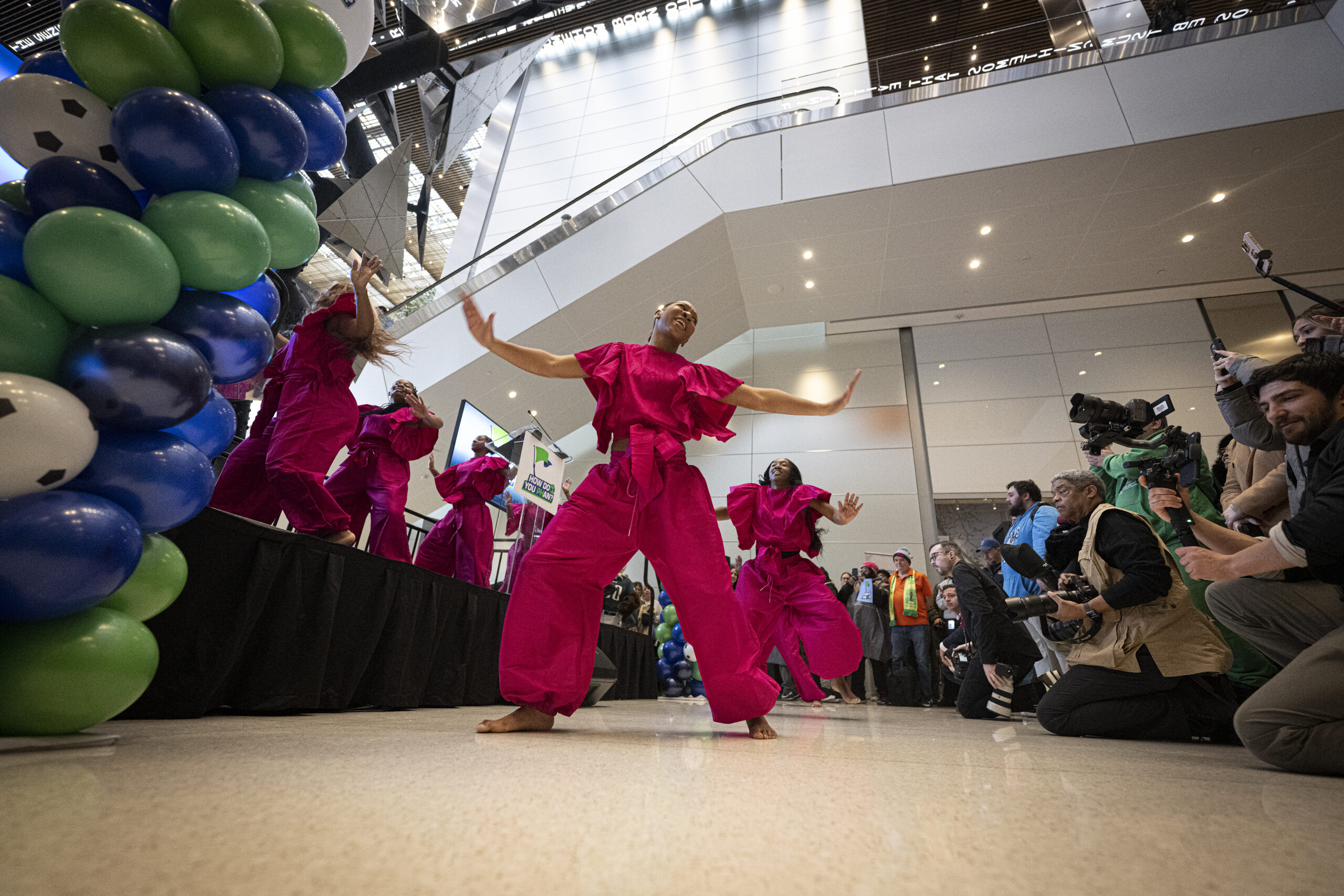
International drummers and dancers perform during a rally celebrating 100 days until the 2026 FIFA World Cup on Tuesday at the Comcast Center.
🎉 One last hyped-up thing: Philadelphia Soccer 2026 marked the 100-day countdown before kickoff of the FIFA World Cup with a rally. The Tuesday event was emceed by Eagles defensive end Brandon Graham — who admitted to being a new fan of the sport.
Find something to celebrate today. Back at it tomorrow.
By submitting your written, visual, and/or audio contributions, you agree to The Inquirer’s Terms of Use, including the grant of rights in Section 10.
STATE COLLEGE, Pa. — It’s common for college football players to follow their head coach to a new gig. But it’s not always a given.
When Brian Kelly left Notre Dame to become LSU’s head coach in 2022, only one player followed him to Death Valley. It was a silent showcase of support.
So when Matt Campbell left Iowa State in December to become Penn State’s coach, his players didn’t have to follow him. But they did, and they did so in droves.
“It just speaks to the type of guy Coach Campbell is,” said junior safety Marcus Neal Jr., an Iowa State transfer. “It shows that players really want to play for him. He’s a really good guy. I look at him as another father figure. I can go to him for anything, ask him for anything.”
Twenty-four Iowa State players transferred to Penn State, which marked the largest contingent of players in the 2026 transfer window to follow their head coach to a new school. The next closest team had 18 players follow former North Texas coach Eric Morris to Oklahoma State.
Why did so many Cyclones follow Campbell to Happy Valley? The answer is simple: He is who he says he is.
“Campbell is a great people person. He was the main reason I went to Iowa State,” said redshirt junior offensive lineman Trevor Buhr. “He’s genuine. When he says something, he does it. He is one of the best leaders I’ve ever met. He’s honest, and he’s true to himself. There’s no what-ifs. You’re getting what you’re getting from him, and it’s been consistent [since] the first time I talked to him.”
Campbell led the Cyclones to a 72-55 record during his 10-year run as coach. But it was his off-the-field leadership — what he does beyond football — that drove dozens of players and staff members to Penn State.
The 46-year-old coach has an open-door policy. Players can come and go from his office as they please. Those who played for him at Iowa State said his genuine personality and accountable leadership style made them comfortable to go to him, football-related or not.
That open-door policy extended to his house in Ames, Iowa, where his players would run pickup basketball games or eat a meal with other teammates.
And believe it or not, Campbell can hoop, too.
“Coach Campbell is a big relationships guy,” said senior defensive back Jamison Patton. “It’s an open-door policy. All the guys go over [to his house], and we know we’re going to hoop, hang out, get some food, just be around each other. The more we’re around each other, the more our relationship grows as a team, and especially with the coaches.”
Added Neal: “[Campbell] got a nice little shot on him. He gets picked up. You ain’t going to pick somebody up if they’re not good.”
Before Campbell officially accepted the Penn State job, he met with his Iowa State players to inform them of his decision and offered a heartfelt explanation on why he decided to leave. It was a moment of raw emotion that was difficult for Campbell, but he wanted to say goodbye in person.
Several players said that final meeting replicated the type of person Campbell is. And it’s why a large portion of his players knew instantly they would follow their coach to Happy Valley.
“There was never a doubt in my mind that I was going to go somewhere else,” said redshirt senior defensive back Jeremiah Cooper, who played four seasons under Campbell at Iowa State. “Once I hit the portal, I knew I was coming to Penn State. Coach Campbell changed my life, not just as a player, but as a man. He grows young men into men, and that’s all I can ask for as a coach and as a leader.”
Pennsylvania’s minimum wage hasn’t budged from the $7.25 federal minimum that was set in 2009. But the number of Pennsylvanians actually making that much per hour is small and shrinking.
That’s about a 9% decline from 2024. This group makes up less than 1% of all Pennsylvania workers. The state’s population of minimum-wage workers has dropped by roughly 42% in the last five years.
Still, hundreds of thousands who make more than minimum wage would see their wages rise if the Pennsylvania’s wage floor was set to $15 an hour.
Last year, 189,900 people in Pennsylvania (6.4% of hourly workers) earned at least $7.26 and up to $12 per hour.
Another 320,900 (10.8% of hourly workers) earned between $12.01 and $15 per hour.
Each of these groups making low wages in Pennsylvania — up to $7.25, up to $12, and up to $15 per hour — was smaller in 2025 than the year before.
That’s due in part to increasing wages across the state, the report said, as well as a lower number of hourly wage earners and a shrinking workforce overall. Pennsylvania’s median wage rose to $20.95 per hour last year — roughly a $1 increase from 2024.
The report is based ondata from a U.S. Census Bureau survey. Last year’s data is missing October figures due to the government shutdown, the report noted.
Some are exempt from federal and state minimum wage such as farmworkers, some seasonal workers, and newspaper delivery people. Workers who make much of their money in tips have a lower minimum wage. Workers from these categories were not excluded from data in the report.
Pennsylvania’s minimum wage is not enough money to cover a person’s basic needs, according to a living wage calculator developed at the Massachusetts Institute of Technology. It estimates that the living wage for a single adult without a child in Pennsylvania is $23.32 per hour.
Mayor Cherelle L. Parker speaks during a rally in support of raising the minimum wage and also freeing the city to set its own minimum wage separate from the state, at City Hall, in Philadelphia, April 29, 2025.
Who actually made minimum wage last year?
In 2025, workers who made at or below the minimum wage in Pennsylvania were predominantly women. While they make up roughly 51% of the state’s workingpopulation, they represent a disproportionate 81% of workers who earned $7.25 or less last year.
Nearly 79% of these workers are white, and roughly half have a high school diploma or less education.
window.addEventListener(“message”,function(a){if(void 0!==a.data[“datawrapper-height”]){var e=document.querySelectorAll(“iframe”);for(var t in a.data[“datawrapper-height”])for(var r,i=0;r=e[i];i++)if(r.contentWindow===a.source){var d=a.data[“datawrapper-height”][t]+”px”;r.style.height=d}}});
Nearly three-quarters of them work in food preparation and serving jobs. Though it should be noted that tips and overtime for restaurant workers are not accounted for in the report’s data, and tipped restaurant workers’ minimum wage is $2.83 by law.
Unmarried people and young workers aged 16 to 24 also make up a disproportionately large segment of Pennsylvanians making minimum wage or less, the report says.
Working full time at the minimum wage, a worker would make $15,080 annually. But 80% of Pennsylvania workers who made minimum wage or less last year worked part-time.
Other sectors that employ these low-wage workers in Pennsylvania include hotels and lodging, retail, art and entertainment, hospitals, educational services, construction, and manufacturing.
window.addEventListener(“message”,function(a){if(void 0!==a.data[“datawrapper-height”]){var e=document.querySelectorAll(“iframe”);for(var t in a.data[“datawrapper-height”])for(var r,i=0;r=e[i];i++)if(r.contentWindow===a.source){var d=a.data[“datawrapper-height”][t]+”px”;r.style.height=d}}});
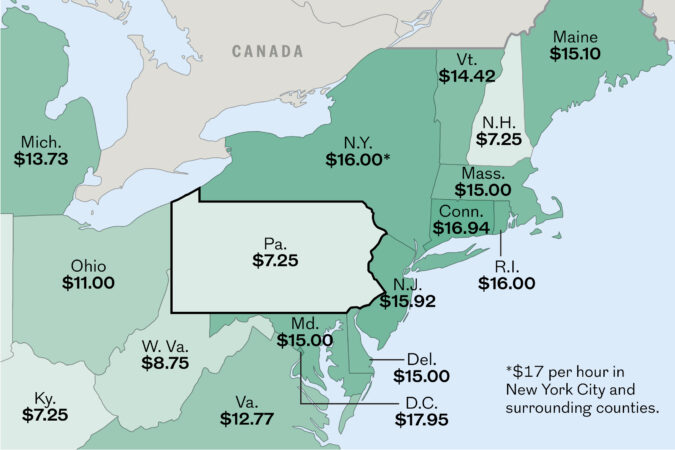
Pennsylvania’s neighboring states have higher minimum wages
Despite efforts to raise Pennsylvania’s minimum wage, it lags behind that of neighboring states.
New Jersey’s minimum wage, which increased in January to $15.92per hour, is over double that of Pennsylvania’s, and 22 states are soon increasing their minimum wage or have done so already this year. In Delaware, the minimum hourly wage has risen from $9.25 in 2021 to $15 in 2025, thanks to legislation mandating the gradual increase.
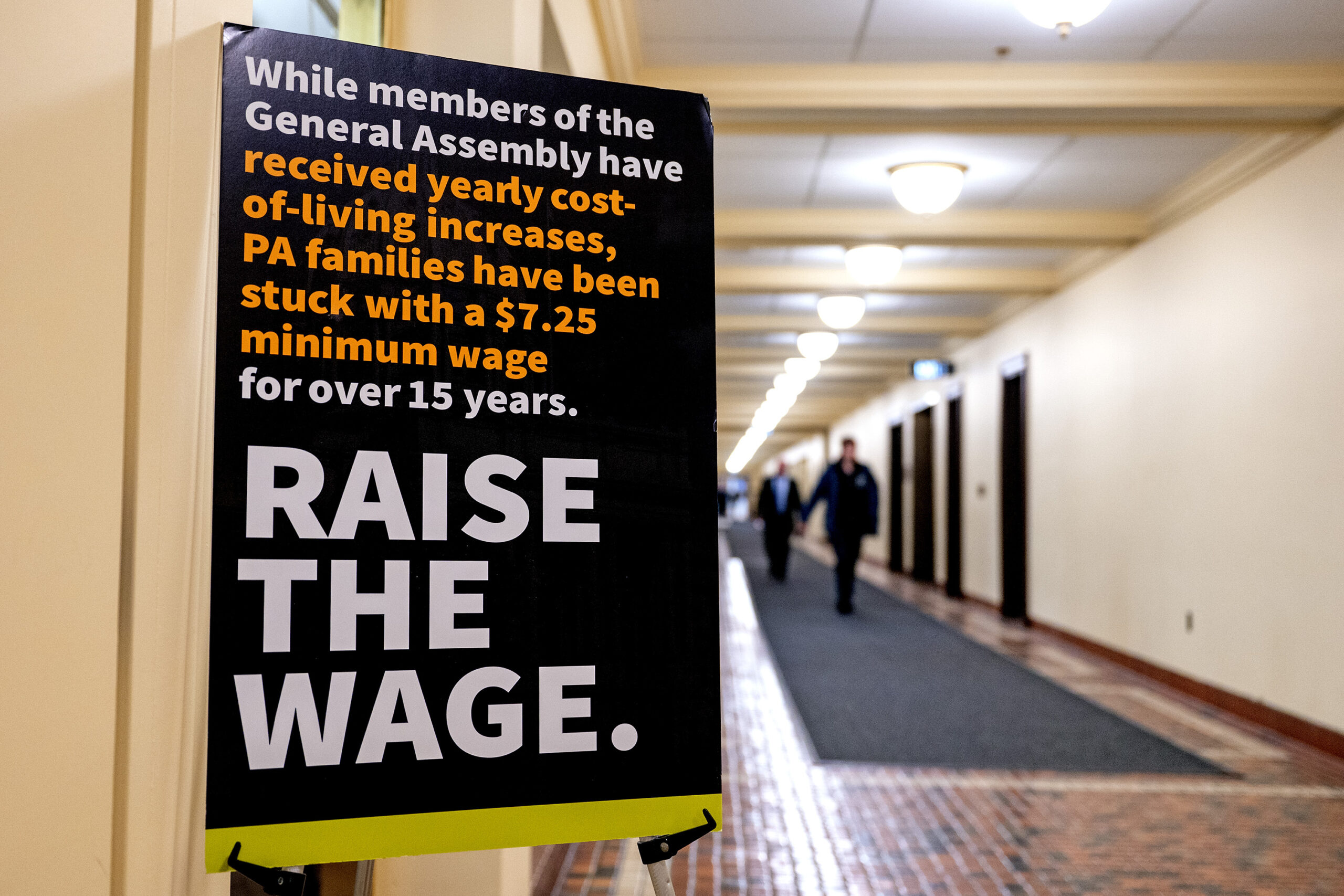
A sign in support of an increase in the state’s minimum wage in the state Capitol Feb. 3, 2026.
Gov. Josh Shapiro has backed raising the minimum wage at every annual state budget address since he was elected. In February he called on the General Assembly to advance minimum wage legislation, adding that raising it to $15 an hour would save the state millions on entitlement programs like Medicaid.
“If you aren’t going to do this because it’s the right thing to do, or because it would let more families put food on the table for their kids, then do it because it’s going to save us $300 million, shrink our entitlement budget by growing our workforce and putting more money back in workers’ pockets,” he said.
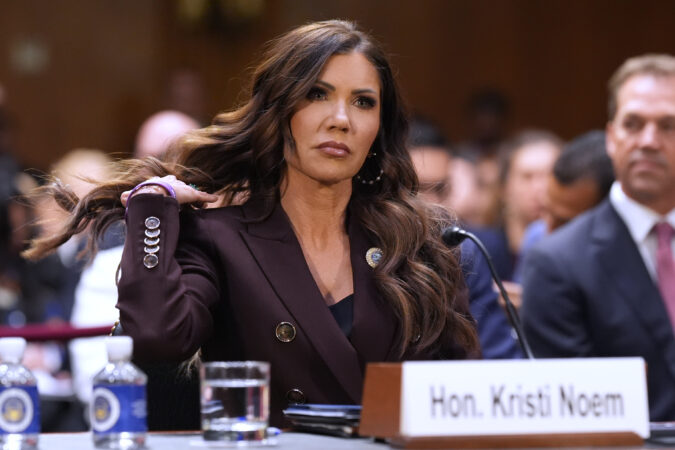
Immigrants in custody under the Trump administration have been denied medical care, face dangerous detention conditions, and have died in the highest numbers in two decades, according to a letter sent to Secretary of Homeland Security Kristi Noem by a group of Democratic senators.
As more and more immigrants are arrested, and U.S. Immigration and Customs Enforcement looks to vastly expand its detention capabilities — including in Pennsylvania and New Jersey — cases of abuse and death will only grow.
This is a moral wrong that violates America’s constitutional protections.
State and local leaders should vigorously push back against new detention facilities proposed by a federal government that has shown open contempt for the law in pursuit of the president’s cruel and inhumanemass deportation policies.
Contrary to what Donald Trump promised, most of the immigrants being detained are not hardened criminals or the “worst of the worst.” Fewer than 14% of people arrested by ICE in 2025 had any charges or convictions for violent offenses. Immigrants with no criminal record at all now make up the largest group in detention.
To be sure, immigration detention has a long history of abuse, with complaints about difficult living conditions, substandard medical care, and an opaque system leading to limited accountability when immigrants die in custody.
“Detention centers are not safe, abuses are widespread and detention facilities consistently fail to meet basic minimum standards,” wrote Mary Small, policy director for the Detention Watch Network, in 2015. “The Obama administration’s attempts at reforming the immigration detention system have failed.”
The conditions inside detention centers are bleak, even more so for the most vulnerable populations. ProPublica recently told the stories of children being held at the ICE facility in Dilley, Texas. Their testimony is heartbreaking.
A drawing made by a 13-year-old Colombian girl when she was detained at South Texas Family Residential Center in Dilley, Texas, where the Trump administration is holding immigrant families.
“Since I got to this Center all you will feel is sadness and mostly depression,” one child wrote. Another said that “the workers treat the residents unhumanly, verbally and I don’t want to imging how they would act if they where unsupervised.”
A 9-year-old put it plainly, writing, “I am not happy, please get me out of here.”
Governors are rightfully objecting to the growth of ICE detention centers in their states. Both Gov. Josh Shapiro and New Jersey Gov. Mikie Sherrill have taken a strong stance in opposition. Local communities and officials are also fighting back.
Shapiro has pledged to use every tool at his disposal to block the plans in Pennsylvania. Roxbury’s mayor, Republican Shawn Potillo, has also vowed to work against the proposed facility. Sherrill has promised to explore new state taxes in her own efforts to discourage the growth of detention centers.
These statements are a step in the right direction. If officials are seeking examples of effective action, they can look to New Hampshire, where local opposition helped kill a plan for a new ICE facility, or to the small conservative town of Social Circle, Ga., which refused to turn on water access for an ICE detention center.
In a letter to Homeland Security’s Noem, Sherrill laid out the case against ICE in no uncertain terms.
“DHS’ treatment of human beings — citizen and noncitizen alike — reflects a chilling disregard for both human life and the rule of law,” Sherill wrote. “New Jersey will not be complicit in this.”
Two prominent Jewish day schools are merging. Here’s why. Also this week, the Gladwyne man who duped some of the region’s wealthiest families into investing in his companies has been sentenced to prison, the township is gearing up to present two final plans for Schauffele Plaza’s redesign, and the county has appointed members to its human relations commission.
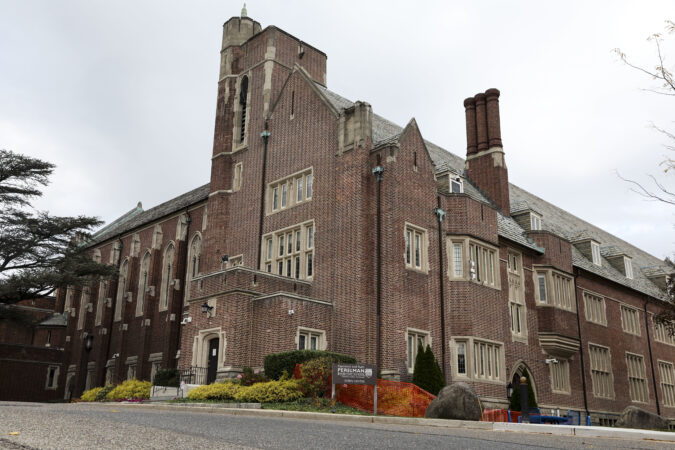
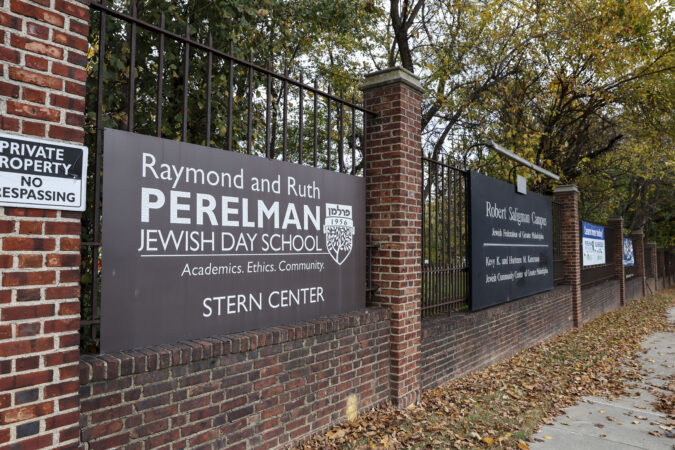
The Perelman Jewish Day School is merging with the Jack M. Barrack Hebrew Academy.
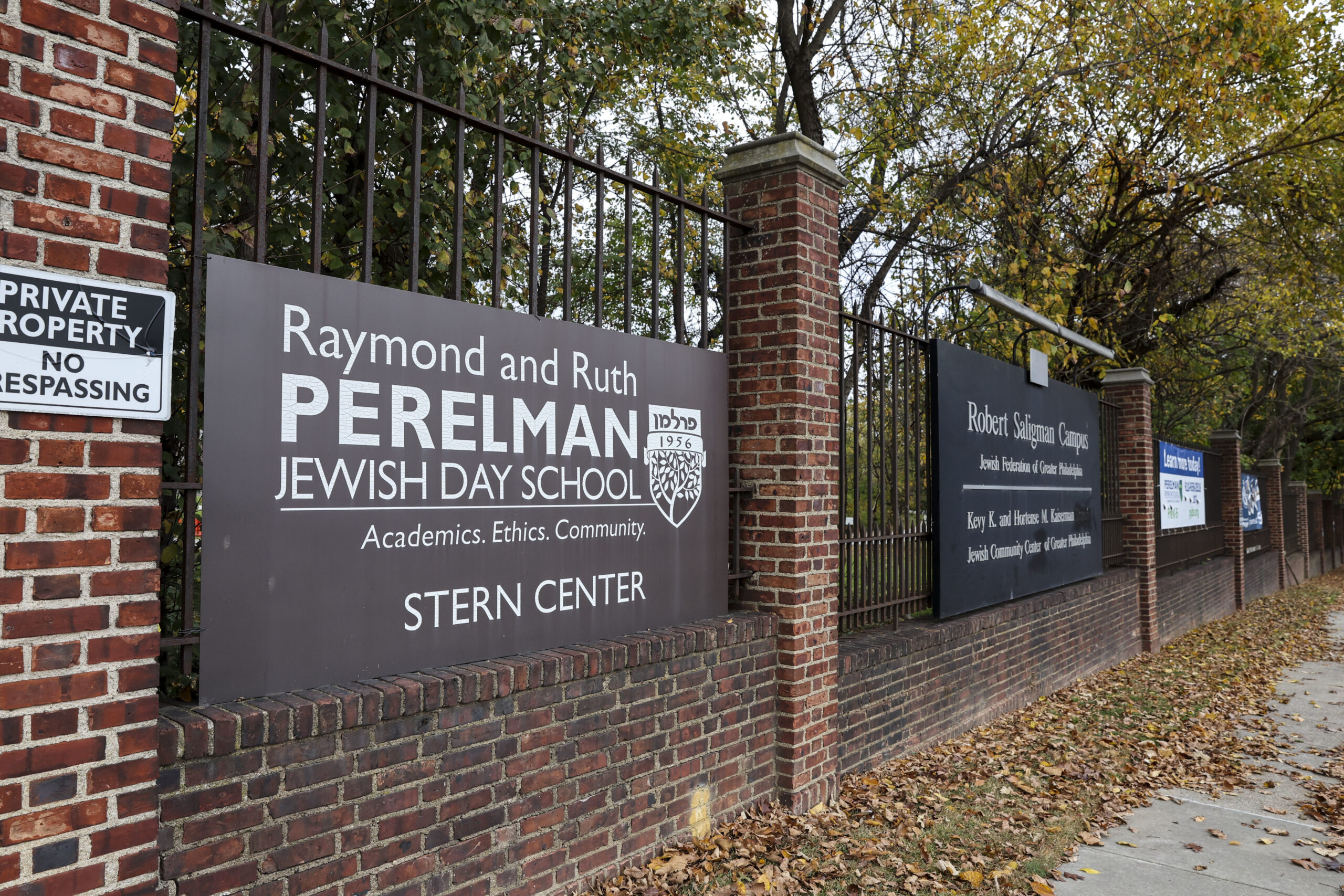
Perelman Jewish Day School and the Jack M. Barrack Hebrew Academy are merging in a “proactive” move the two Jewish day schools say will keep them competitive.
The schools plan to keep their geographic footprints, which span Barrack’s Bryn Mawr campus and Perelman’s Melrose Park and Wynnewood facilities.
While many students currently matriculate from Perelman to Barrack, the merger will allow families to enroll students in a single institution from pre-kindergarten through 12th grade.
This isn’t the first time the two schools have come together. In 2012, they combined their middle schools to create a sixth-through-eighth-grade program on Barrack’s campus.
Ardmore’s Schauffele Plaza is slated for a redesign, and two final options will be presented at the Lower Merion Building and Planning Committee Meeting next Wednesday at 6:30 p.m. The goal of the redesign is to better utilize the public space and make it more of what the township is calling a “vibrant downtown gathering place.” Both plans call for outdoor dining space and central lawns, but the sizes and amount of greenery in each varies, with one plan reducing overall parking spaces by 56 spots, and the other by 38. See the two plans here.
Lankenau Medical Center named a new president this week. Anna Michelle Brandt succeeds Katie Galbraith and comes to the Wynnewood institution from University Hospital in New Jersey, where she was most recently its COO.
Speaking of Lankenau, it was recently ranked among the best hospitals in the United States by Newsweek, landing at No. 131. Bryn Mawr Hospital is No. 201 in the U.S.
Last month, the Montgomery County Board of Commissioners appointed the first members of its newhuman relations commission. The members are Samuel Coleman IV, Desha Dickson, Fiona Dow, John Han, Rosemary Jenkins, Shahidul Partha, Burt Siegel, and Akilah Williams-Valdez. The commission will allow residents who believe they’ve been discriminated against to mediate their claims. Members will specifically focus on unlawful discrimination in employment, real estate, housing, and public accommodations across the county.
Lower Merion Township has installed four new electric vehicle chargers in the municipal lot in Bryn Mawr across from Ludington Library. Two of the spaces are ADA accessible.
Services at the Center for Positive Aging in Lower Merion are returning to its main building at 117 Ardmore Ave. in Ardmore after it underwent a renovation.
Sugared + Bronzed is opening at Ardmore’s Suburban Square on Monday. Located at 127 Coulter Ave., it will be in the ground floor retail space of the new apartment complex Coulter Place, which opened earlier this year. Sugared + Bronzed offers “sugaring hair removal,” as well as airbrush tanning.
Leveaux Pilates in Ardmore has expanded and is now offering heated mat pilates, a hot take on the classic workout.
🏫 Schools Briefing
Registration is open for all new students starting at any LMSD school for the 2026-27 academic year. Learn more about how to register here.
Tonight is the Freedom Tournament at Cynwyd Elementary and Taste of Penn Wynne. Tomorrow, Lower Merion High has its jazz festival, Penn Valley is hosting its “PV Idol,” and Welsh Valley’s spring musical, The Music Man Jr., kicks off. There are school board committee meetings on Monday and a fourth and fifth grade transition information session for Black Rock parents. See the district’s full calendar here.
The Prom Boutique is open again on Tuesday at Lower Merion High School from 3:30 to 7 p.m.
Students from Bala Cynwyd, Black Rock, and Welsh Valley Middle Schools, and Harriton and Lower Merion High Schools raked in a collective 99 awards at this year’s Pennsylvania Technology Student Association Region 5 Conference, held in late January, with 34 first-place finishes. Some will move onto the state conference, which takes place in mid-April.
Friends’ Central School’s girls’ basketball team defeated the Westtown School 62-54 last week to claim the Pennsylvania Independent Schools Athletic Association championship.
Shipley School sophomore Kate Ulrich took home second place in the U.S. Squash Junior Championship Tournament in the Girls Under 17 division, which was held in January in Philadelphia.
🍽️ On our Plate
Gouldsburger’s opened last week in Ardmore at 4 Station Rd. The latest location for the cheesesteak and burger joint is open every day but Monday.
Ripplewood Whiskey & Craft’s bourbon chicken was one of the best things an Inquirer reporter ate last week. The way Chef Kenjiro Omori prepares the bourbon-lacquered chicken is similar to Peking duck and is the perfect antidote to a cold winter night, Michael Klein reports.
🎳 Things to Do
🌋 Science with Food: Kids ages 6 and up can make several science-themed edible crafts, including one inspired by a volcano. ⏰ Saturday, March 7, 4-5:30 p.m. 💵 $37.10 📍The Candy Lab
🍀 St. Patrick’s Day Crafternoon: Kids can make a leprechaun craft during this drop-in event. ⏰ Wednesday, March 11, 3-5 p.m. 💵 Free 📍Gladwyne Library
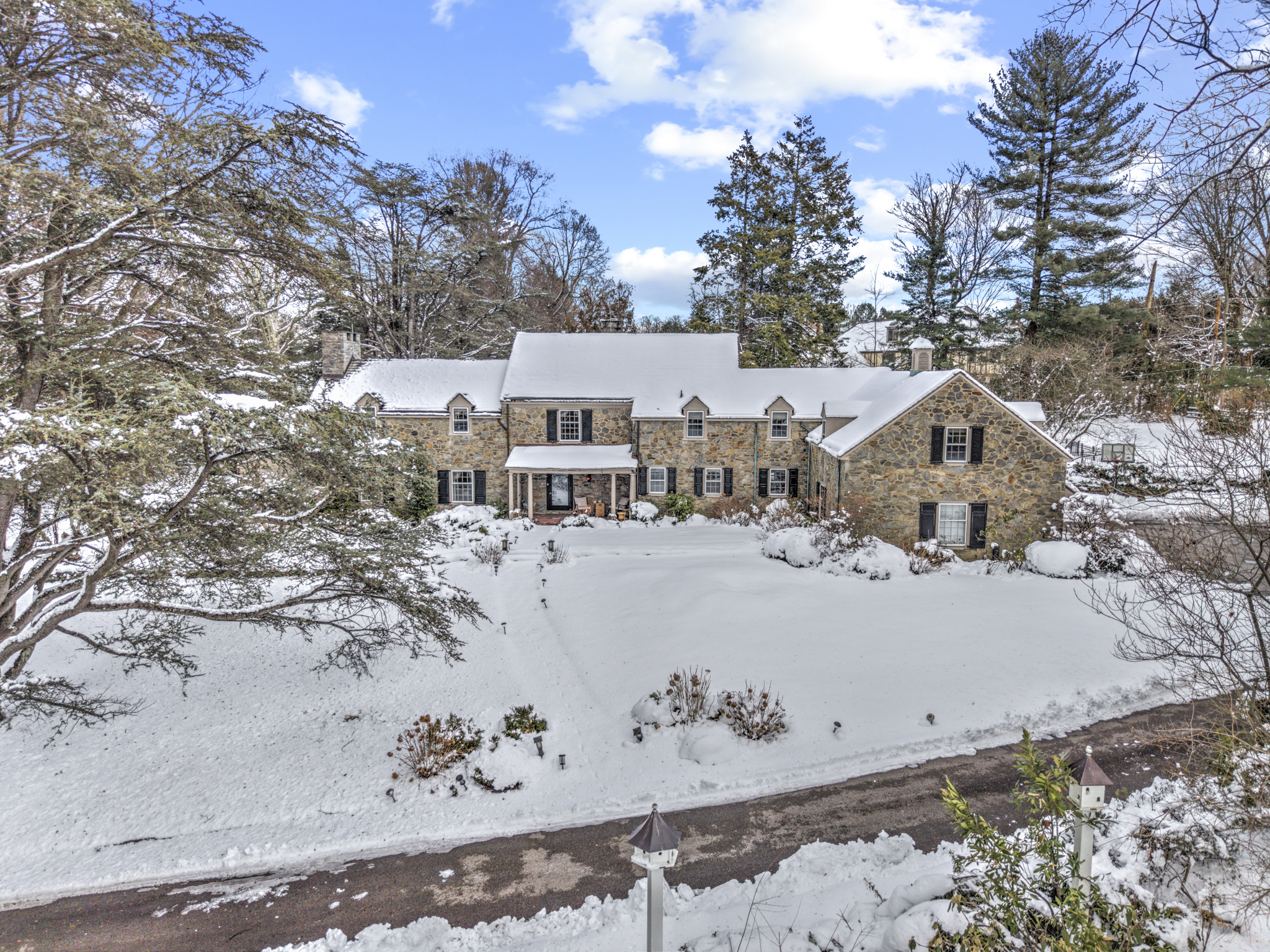
The home was built in 1939 and sits on over 2 acres.
Built in 1939, this sprawling stone manor estate blends the past and present. The first floor features a formal living room with a gas fireplace and built-ins, a formal dining room with dedicated china closets and a crystal chandelier, an office with its own fireplace, and a kitchen with two-tone cabinetry, a large center island, high-end appliances, and granite countertops. Nearthe kitchen, there’s also a butler’s pantry. There are four bedrooms upstairs, including a primary suite with a dressing room and four closets, while the bathroom has a soaking tub and double vanity. Other features include a cedar closet in the attic and a partially finished basement. Outside, there’s a pool, gardens, a covered patio, and a chicken coop. There’s an open house Saturday from noon to 3 p.m.
By submitting your written, visual, and/or audio contributions, you agree to The Inquirer’s Terms of Use, including the grant of rights in Section 10.
This suburban content is produced with support from the Leslie Miller and Richard Worley Foundation and The Lenfest Institute for Journalism. Editorial content is created independently of the project donors. Gifts to support The Inquirer’s high-impact journalism can be made at inquirer.com/donate. A list of Lenfest Institute donors can be found at lenfestinstitute.org/supporters.
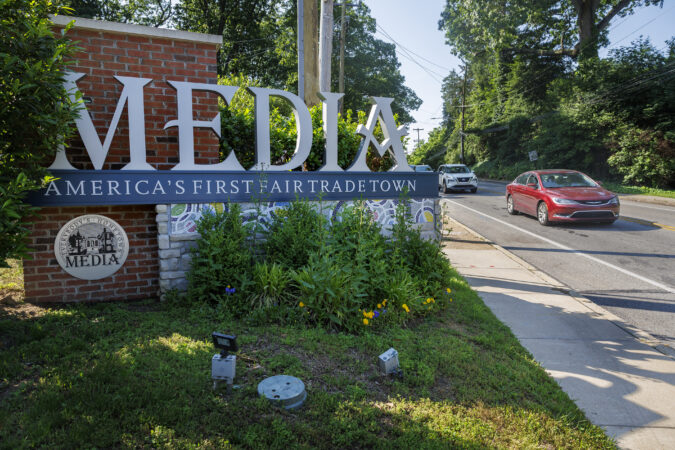
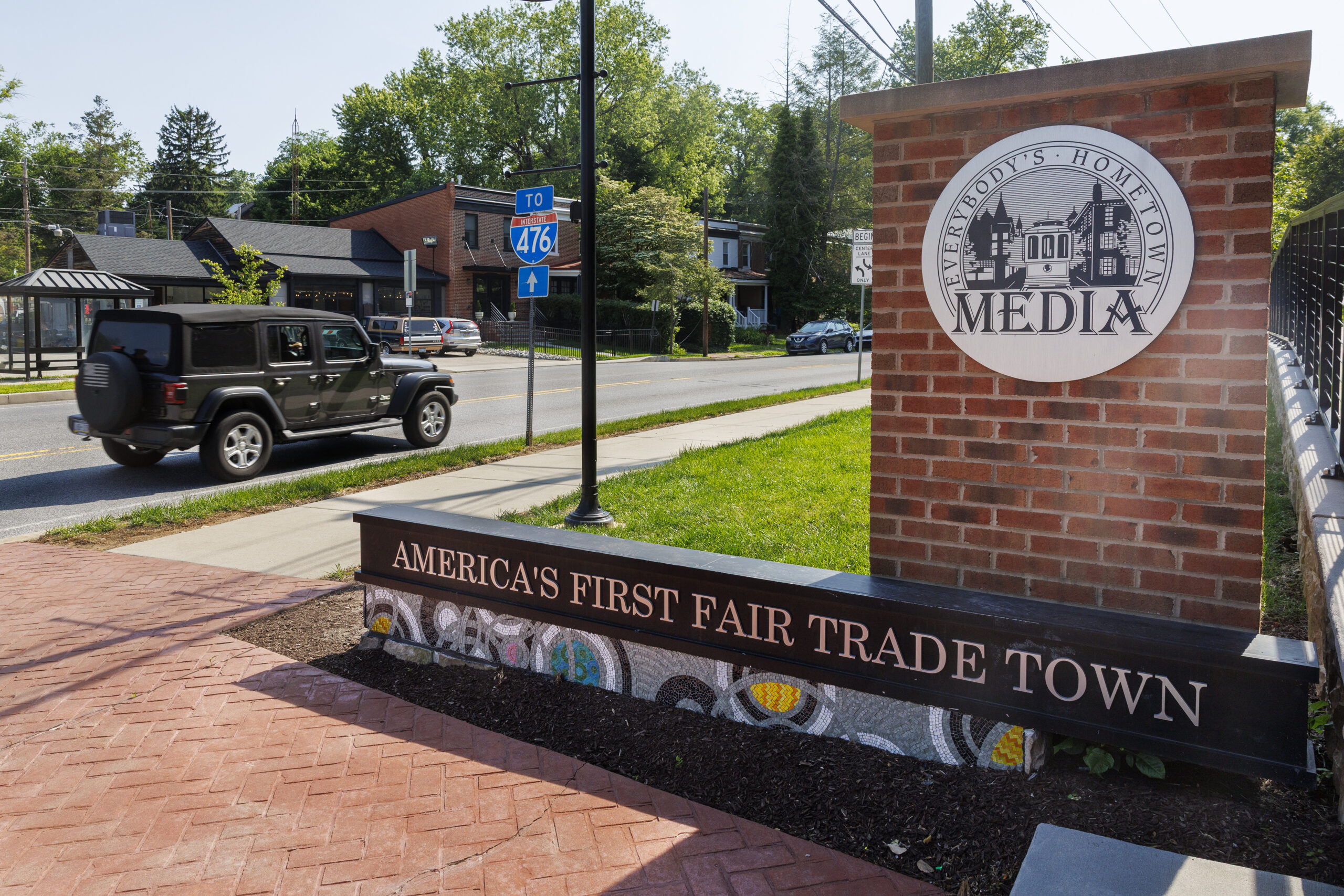
Media displays its distinction as the country’s first Fair Trade Town on its signage.
Two decades ago, one man’s vision and one woman’s email set into motion a first for Media as the pair worked to make the borough the nation’s first Fair Trade Town.
The idea came from Hal Taussig, the late founder of travel company UnTours who wanted to see his hometown prioritize quality products and fair wages for farmers in developing areas. To be part of the global trading agreement, farmers and producers must use eco-friendly practices, invest in their communities, and provide safe working conditions. In exchange, they’re paid higher minimum prices for goods like coffee, chocolate, and produce.
With a single late-night email to a man in England, Elizabeth Killough, who worked for Taussig, helped start the process. While major cities like New York and Los Angeles were working to establish themselves as Fair Trade hubs, Media beat them to it, and 20 years later, that ethos lives on.
Swarthmore has a new interim borough manager. On Monday, borough council appointed David Unkovic to the role. He takes over for Sean Halbom, who has been terminated, according to Council President Jill Gaieski, The Inquirer learned late Wednesday night. Halbom began in the role less than six months ago, taking over for the outgoing manager Bill Webb in September.
Peco is aiming to begin a monthslong natural gas line replacement project on Monday in Media. Work will take place on Providence Road between Meetinghouse Road and Monroe Street on weekdays from 7 a.m. to 4 p.m. through mid-July. While most work will be outdoors, Peco will need access to impacted homes to relight gas appliances. Read more about the project here.
In other construction news, the Swarthmore Avenue project is getting closer to completion. Needed parts for the repair project are expected to arrive next week, and once they’re installed, closures on the road are expected to be limited to 7 a.m. to 3 p.m. for “a few weeks.” Construction on the project began in December and was initially anticipated to take eight weeks.
Monday is the deadline for Swarthmore residents to order a tree for or near their curb. Here’s how you can get one.
Riddle Village in Middletown Township has become a hub for some of the country’s top Scrabble players. The Delco Scrabble Club’smembers range widely in age and come from all over the area, but meet weekly at one of the members’ homes in Media. “I casually hop on SEPTA and then I’m face-to-face with the best Scrabble players in the country. It’s kind of intimidating,” Mark Abadi, 35, said at one of the club’s recent weekly meetings. He and another member of the group, Will Anderson, 41, have competed in national tournaments and are putting their skills to the test on this season of the CW’s game show Scrabble.
A pair of sisters recently put their family’s Spanish-style Wallingford home on the market for $699,000. The ranch was built in the 1970s, and their parents purchased it 42 years ago. Take a peek inside.
🏫 Schools Briefing
Two Penncrest High School sports teams are having successful runs. The boys’ ice hockey team shut out Conestoga High School 4-0 last week to claim the Central League championship. And the boys’ basketball team kicks off its PIAA 5A championship efforts on Friday, when the Lions host York Suburban High School. See the full 5A bracket here.
Reminder for Rose Tree Media families: There’s no school today or tomorrow for kindergarten through eighth grade students due to parent-teacher conferences. On Saturday, Penncrest High School is hosting Carnival for a Cure from 10 a.m. to 2 p.m. There will be food, games, and prizes, with proceeds benefiting the Foundation Fighting Blindness. See the district’s full calendar here.
Wallingford-Swarthmore School District is hosting a community meeting about the high school renovation tonight at 6:30 p.m. at the Strath Haven High School library.
Also in WSSD, today is the Elementary Chorus Fest, andperformances of Strath Haven High School’s musical, Alice By Heart, continue tomorrow through Sunday. On Monday, there’s a virtual meeting about navigating college admissions tests, and the spring book fair starts Tuesday. See the district’s full calendar here.
🍽️ On our Plate
Fox 29’s Bob Kelly recently visited Bittersweet Kitchen in Media to sample some of its brunch offerings, including crème brûlée pancakes, apple cider fritters, and huevos rancheros. See the segment here.
🎳 Things to Do
🏕️ School Day Off Mini-Adventure Camp: Kids inkindergarten through third grade can explore Tyler Arboretum through nature-themed crafts, outdoor play, games, and more. ⏰ Thursday, March 5 and Friday, March 6, 9 a.m.-4 p.m. 💵 Standard daily camp admission is $83.70 for members and $93 for non-members 📍Tyler Arboretum, Media
🩰 Sleeping Beauty: The classic fairytale gets a modern spin as Ballet of Lights dancers perform in glow-in-the-dark costumes. ⏰ Friday, March 6, 6:30 and 8:30 p.m. 💵 $43-$57 📍The Media Theatre
🎸 The Biscotti Boys: The Chester County party cover band will make its debut at Martinique Deux. ⏰ Friday, March 6, 8 p.m. 💵 No cover📍Martinique Deux, Media
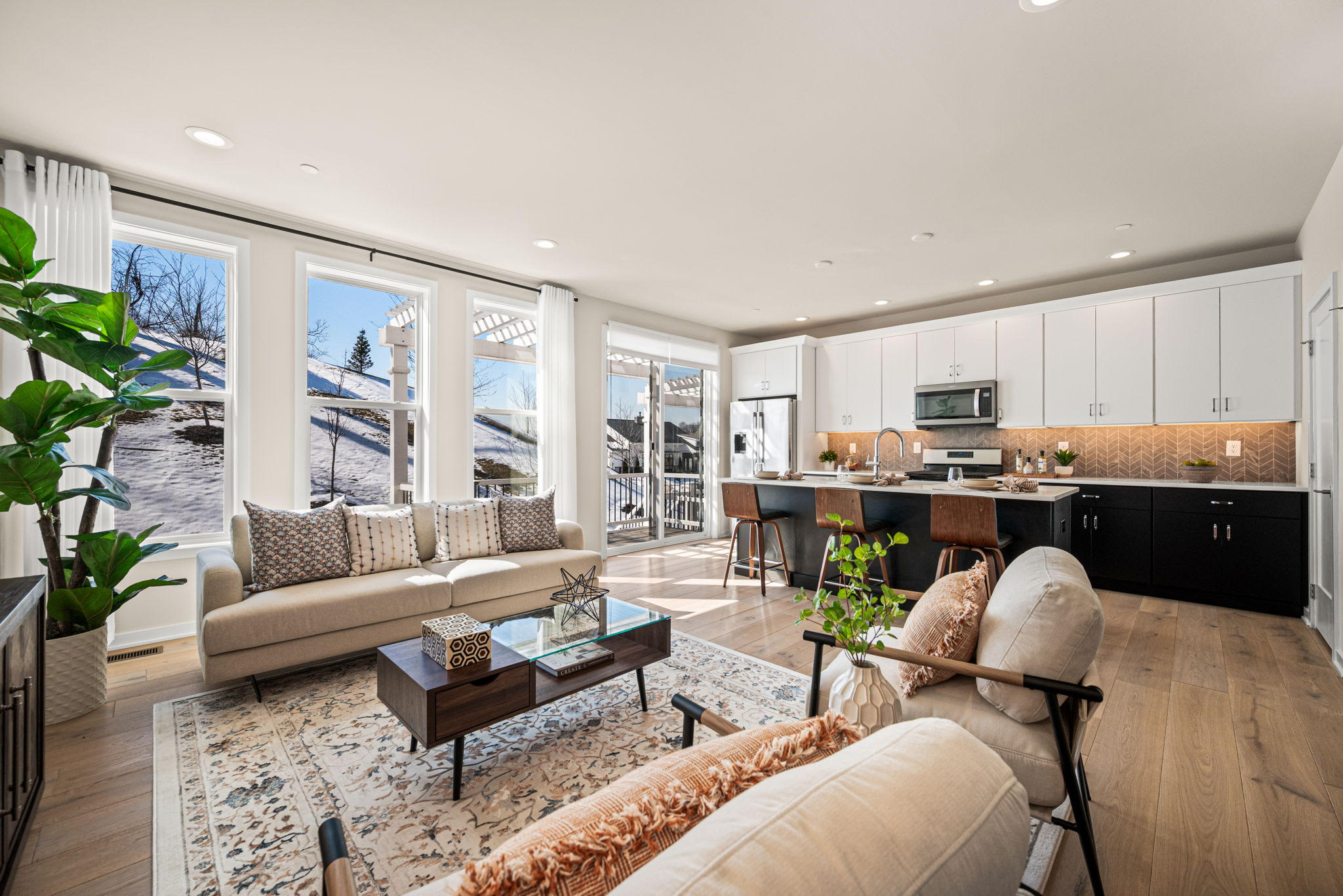
The open-concept first floor includes living and dining areas, as well as the kitchen.
Located in Franklin Station off Route 1, this three-bedroom townhouse spans two floors, plus a finished basement, and has access to amenities including a clubhouse, pool, walking trails, and fitness center. The townhome’s open-concept first floor features living and dining areas, as well as the kitchen, which has an 8-foot quartz island, two-tone cabinetry, a herringbone backsplash, plus a walk-in pantry. The space opens onto a deck with a pergola. All three bedrooms are upstairs, including a primary suite with a walk-in closet, a double vanity, and a tiled shower. There are open houses Saturday from 11 a.m. to 1 p.m. and Sunday from noon to 2 p.m.
By submitting your written, visual, and/or audio contributions, you agree to The Inquirer’s Terms of Use, including the grant of rights in Section 10.
This suburban content is produced with support from the Leslie Miller and Richard Worley Foundation and The Lenfest Institute for Journalism. Editorial content is created independently of the project donors. Gifts to support The Inquirer’s high-impact journalism can be made at inquirer.com/donate. A list of Lenfest Institute donors can be found at lenfestinstitute.org/supporters.
Two prominent Jewish day schools in the Philadelphia suburbs are set to merge, a decision school leaders say will keep the institutions competitive in the region’s strong educational market.
Perelman Jewish Day School, a private Jewish pre-K and elementary school located in Melrose Park and Wynnewood, and Jack M. Barrack Hebrew Academy, a Jewish middle and high school located in Bryn Mawr, will merge next year to become the only unified pre-K through twelfth-grade Jewish day school in the Philadelphia area.
Perelman and Barrack will maintain their current operations for the 2026-27 school year, while beginning to combine their admissions and development programs. Faculty, staff, and students will come under the unified school umbrella beginning in fall 2027. Perelman and Barrack will continue to operate on all three campuses.
School officials say the merger will help streamline curriculum development and strategic planning while bringing more families into the Jewish day school system by offering a consistent, pre-K-through-high-school experience.
Perelman Jewish Day School was founded in 1956 as the Solomon Schechter Day School of Greater Philadelphia. The school operates across two campuses, one in Melrose Park, which serves parts of Philadelphia County, eastern and northern Montgomery County, and Bucks County, and another in Wynnewood, which serves Center City and Philadelphia’s western suburbs.
Jack M. Barrack Hebrew Academy, originally Akiba Hebrew Academy, was the nation’s first pluralistic Jewish secondary day school when it opened in Center City in 1946. The school moved to Merion Station in 1956, then Bryn Mawr in 2008. Barrack boasts numerous notable alumni, including Gov. Josh Shapiro and CNN anchor Jake Tapper.
Perelman and Barrack completed a partial merger in 2012, when the schools combined their middle schools into a single sixth-through-eighth-grade program on Barrack’s campus.
Tuition at Perelman ranges from $21,500 to $32,300 per year, and tuition at Barrack ranges from $34,900 to $42,700. Both schools offer tuition assistance. Perelman says it awards over $3 million in tuition assistance each year to families earning up to $500,000.
School leaders say the merger will ensure Perelman and Barrack are an attractive option for families in Philadelphia’s rich educational ecosystem, where parents can choose from dozens of strong public and private schools. Often, families choosing private education are looking for continuity from pre-K through high school, something that Perelman and Barrack have not been able to provide until this point.
The ability to have students “become part of an educational system from their earliest years and grow within that system” will be academically and socially “deeper and more impactful,” said Rabbi Marshall Lesack, Barrack’s head of school and a Barrack alumnus. Lesack will lead the unified school beginning in 2027.
Daniel Eisenstadt, a member of the Perelman board of directors who will chair the new, combined board, said the merger will also allow for more cohesive planning. The schools will be able to align their vacation calendars, external messaging, and curriculum plans.
Though the overwhelming majority of Perelman students already matriculate to Barrack, bringing the schools under one system will allow for more parity in what to teach and when to teach it. Elementary, middle, and high school teachers will be able to sit in the same room and plan best practices for everything from math to art to Jewish studies, considering the arc of a student from ages 5 to 18, Eisenstadt said.
Both schools’ enrollment has been “stable to growing” in the past few years, said Eisenstadt. Both he and Lesack were clear that the merger is not in response to a souring financial outlook, as can be the case when educational institutions merge.
“We’re both coming from a place of strength,” Lesack said.
Barrack reported revenue of $20.9 million in 2024, an increase of $3.4 million over 2023, according to tax records. Perelman reported a revenue of $13.4 million in 2024, up $400,000 from 2023.
However, Eisenstadt said, “there is a recognition that we operate in an environment where there are excellent other independent schools, and excellent public schools. Rather than waiting for a moment where we see a dip in enrollment or where there are challenges, I think the general feeling from a leadership point of view was, ‘Let’s be proactive.’”
When it comes to growing enrollment at Barrack and Perelman, however, Eisenstadt said there’s no one cause. He is “a little bit skeptical about the generic narrative” that the Israel-Hamas war and rising antisemitism have solely drivenincreased interest in Jewish education. He says Perelman and Barrack can’t rest on the assumption that larger forces will inevitably push families toward the Jewish day school experience. In a “dynamic world,” the schools need to continue to evolve, he said.
In Eisenstadt’s words, Barrack and Perelman can’t “assume that any one thing that’s occurred, any one event, or any one trend is the future.”
Lesack and Eisenstadt said many of the merger’s details are still up in the air and will be decided by the board. However they noted that there are plans for major investments across all of Perelman and Barrack’s facilities. Plans have long been in the works to find a new home for Perelman’s Melrose Park campus. School leaders say they are committed to having a continued presence in Philly’s northern suburbs.
Lesack and Eisenstadt acknowledged the challenges of merging two schools with different campuses and cultures. Yet there’s “an unbelievably strong foundation” upon which to build, Lesack said, citing the many families, values, and traditions that the schools already share.
This suburban content is produced with support from the Leslie Miller and Richard Worley Foundation and The Lenfest Institute for Journalism. Editorial content is created independently of the project donors. Gifts to support The Inquirer’s high-impact journalism can be made at inquirer.com/donate. A list of Lenfest Institute donors can be found at lenfestinstitute.org/supporters.
When we were teenagers growing up in rural Pennsylvania, Americans typically bought their first home at the age of 29. Now, first-time home buyers tend to be in their 40s.
As U.S. senators from different parties, we don’t agree on everything. But as friends, parents of nine children between us, and representatives of working families across Pennsylvania, we cannot accept this terrible trend.
The American dream — the promise that if you work hard and play by the rules, you can build a good life and financial security in a home that you own — must not fall out of reach of young Pennsylvanians.
That’s why we support the ROAD to Housing Act. This bipartisan bill, which the U.S. Senate is expected to vote on this week, will help address Pennsylvania’s housing crisis by making it easier to build more homes, more affordably, while also preserving and repairing the housing stock we already have.
The commonwealth has 100,000 fewer homes than it needs today and is on track to be short 185,000 by 2035.
As a result of this shortage, home prices have increased 75% in the last five years. More than one million Pennsylvania households spend over 30% of their income on housing, and more than half of our housing stock is over 50 years old, driving up repair costs and straining family budgets.
Sens. John Fetterman (D., Pa.) (left) and Dave McCormick (R., Pa.) greet before participating in a debate in Boston moderated by Fox News in June.
That combination — too few and too many aging homes — creates a squeeze felt from Erie to Philly: young families delaying having kids, seniors stuck in homes they can’t afford to fix, workers turning down jobs because they can’t find a place to live nearby.
The shortage will get even more acute as new investments in Pennsylvania’s energy and artificial intelligence, defense, and life-science industries generate great new jobs across the commonwealth.
We have celebrated these transformative investments, from U.S. Steel to the Philly Shipyard, but more jobs mean more workers, and workers need homes.
The ROAD Act delivers by taking three commonsense approaches. First, it tackles affordability at the source — supply — by reducing delays and lowering construction costs.
Second, it strengthens accountability and modernizes federal programs to ensure they work for the people they’re meant to serve.
Third, it empowers Pennsylvanians to build what fits local needs.
We’re proud that the bill includes provisions to protect Pennsylvania workers, veterans, and homeowners, which we championed together. Our Whole-Home Repairs legislation, for example, supports homeowners, especially in markets like ours with many historic residences, by offering grants and forgivable loans for repairs and upgrades of aging homes, keeping families in their homes and stabilizing neighborhoods.
This isn’t a Republican problem or a Democratic problem. It’s an American one, and it demands bipartisan action.
For these reasons, we stand united, as we have on many other issues, in voting yes for the ROAD to Housing Act.
Dave McCormick and John Fetterman represent Pennsylvania in the U.S. Senate.
The 2026 NFL free agency period begins on Monday, when “legal tampering” will give way to a number of reported deals across the league. Free agency will officially begin on Wednesday, and the Eagles will be players — though how aggressive general manager Howie Roseman and Co. will be remains to be seen. With limited available cap space and the specter of a possible A.J. Brown trade adding to the uncertainty, how the Eagles handle this period elicits a wide range of possibilities.
The Inquirer’s Eagles reporting team of Jeff McLane, Olivia Reiner, and Jeff Neiburg got together for a roundtable ahead of next week’s festivities.
What’s one practical free agent move you could see the Eagles making next week, given their cap space and personnel situation?
McLane: Dallas Goedert is slated to become an unrestricted free agent for the first time in his career, but even if he signs with another team, the Eagles won’t have a clean break from their longtime tight end. They still have an approximate $20 million dead money charge from a void year added to Goedert’s contract. That’s a lot of money to eat for a productive player they may want to keep. The Eagles, more than any other team, have been comfortable kicking cash into future years. But Roseman can’t be reckless, and if trading Brown becomes a reality, the general manager would have around $45 million more in dead money on the books.
Could franchise staple Dallas Goedert run it back in Philly after his career touchdown year?
Brown’s return, though, could warrant Goedert coming back for a ninth season. He put up solid numbers, catching 60 passes for 591 yards and a team-high 11 touchdowns, despite the Eagles’ pass offense inconsistencies.
Was Goedert as dynamic as in years past after the catch? No. But he wasn’t given as many chances to run in space. The new Shanahan-McVay parts of the offense could accentuate Goedert’s post-catch abilities. The bigger question is whether he can run block like he once did. The Eagles weren’t happy with his output there. You have to wonder if taking a $4.25 million pay cut last season affected his effort, or occasional lack thereof. Goedert will have suitors on the open market. Is he worth as much as the Ravens’ Mark Andrews, who signed a three-year, $39 million deal in December? If so, it seems unlikely the Eagles re-sign Goedert, unless he wants to end his career in Philly and takes less.
The draft is believed to be deep at the position and there are other avenues to finding a No. 1 tight end — perhaps a trade? — but there’s an argument to be made for keeping Goedert.
Reiner: Re-signing Braden Mann. This seems like the football equivalent of a layup (a check down, perhaps). Mann, 28, is coming off the single best season by an Eagles punter in franchise history. He averaged 49.9 gross yards per punt, making his Eagles career average a franchise-leading 49.5. His net yards per punt (subtracting return yardage) finished within the top 10 in the NFL (43.1; No. 9 in the NFL).
Mann often helped flip the field during a season in which he was forced to punt a lot (72 punts, tied for No. 4). He deserves an extension, which wouldn’t break the bank. The Eagles are just a few years removed from their previous punter woes and they shouldn’t go back down that path by starting over with new contenders for the gig.
Is Christian Kirk (13) a free agent wideout possibility for the Birds?
Neiburg: Signing Christian Kirk to a relatively cheap contract given his talent. This is with or without Brown on the roster. Kirk has been limited by injuries over the last few seasons and ran routes with a crowded receiving corps in Houston. But he had a stretch of really good football from 2021 through 2023, tallying 2,877 yards on 218 catches, 16 of them for touchdowns. Kirk’s alignment favors the slot, but he has played plenty on the outside. The Eagles need to infuse the unit with more young talent, but Kirk, 29, could help bridge the gap, and if Brown is traded he would give the Eagles an experienced running mate for DeVonta Smith.
What’s a bolder, but perhaps less likely move you could see the Eagles making?
McLane: Trade for Maxx Crosby. If the Eagles decide they can’t afford Jaelan Phillips, they could be in the market for a top-end edge rusher. Crosby qualifies as a difference maker and would be an upgrade over Phillips or the returning Jalyx Hunt and Nolan Smith. It would cost a lot, of course. The Raiders are said to want two first-rounders and a player (Smith?) in return. But elite edge rushers are rarely available and Crosby’s existing contract isn’t a backbreaker. He has four remaining years at around $29 million per season, but only next season’s $30 million base salary is guaranteed. (editor’s note: Crosby was traded to the Ravens Friday night).
Crosby has made it clear he wants out of Las Vegas. He has expressed his fondness for the Eagles and Philadelphia as a sports town. Perhaps he would be willing to adjust his deal to expedite a trade. Roseman may be cautious for various reasons. Crosby turns only 29 in August, but he’s logged more snaps than almost any defensive end over the last five seasons. He’s also coming off back-to-back season-ending injuries that required surgery to repair his ankle and a torn meniscus in his left knee. That’s why I think the Raiders’ reported asking price is unrealistic.
There will be competition for Crosby, but the Eagles aren’t likely to repeat the mistake of going into another season with just Hunt and Smith on the edge. Phillips was a good trade deadline acquisition, but a tepid pass rush was an under-the-radar reason why the Eagles defense struggled in the second half of the playoff loss to the 49ers.
Jaelan Phillips is a top-5 NFL free agent who could end up with a huge deal in a location other than Philadelphia.
Reiner: Re-signing Phillips. He might be the Eagles’ top priority among their own group of pending free agents, but he isn’t a slam dunk to return. At 26 years old, he slotted in nicely to Vic Fangio’s defense in a short period of time at a premium position. He made an impact on the pass rush despite posting unassuming sack numbers (two in eight games). He stayed healthy for all 17 games in 2025, with the Eagles and the Miami Dolphins, one year removed from a partially torn ACL (and two years removed from a torn Achilles).
But the Eagles ought to be realistic about a potential extension. Phillips was a net-positive addition last season, but he was not a game-wrecker. The Eagles likely won’t be inclined to pay him as such, given their lack of cap space in 2026 and their need to extend key defensive players both this offseason and in years to come. The Eagles will likely set a walkaway number for Phillips and move on if another team outbids them.
Neiburg: Trading Brown … and trading for his replacement. Trading Brown is pretty bold in itself, but if it happens, the Eagles have a big hole to fill. There’s no doubt DeVonta Smith can handle all that comes with being the focal point of the passing game, but the roster is bereft of receiver depth, and if the Eagles aren’t thrilled with the free agent market — like, say, Kirk or someone like Romeo Doubs are more expensive than they prefer — they could go the trade route and trade from their roster or draft picks to acquire a receiver. Who could be available? Here are a couple of names to target via trade: Jacksonville’s Brian Thomas Jr. and Buffalo’s Keon Coleman.
Does Sean Mannion scheme require a tailoring of the team’s offensive personnel?
How much do you think the team’s offensive staff changes will inform their free agent and draft approaches?
McLane: Aside from the quarterback position, the offensive line is the most likely to be affected by the expected scheme changes. New offensive coordinator Sean Mannion is bringing with him a Shanahan-McVay system that will alter blocking in the run game. Will there be a complete whitewash? No. But the Eagles are likely to shift from less mid-zone to more wide-zone blocking. Those terms might not indicate how different the techniques are, but the former emphasizes more reactionary blocking and winning at the point of attack, while the latter features O-linemen firing off the ball and blocking at an angle.
Asked how the changes may affect his evaluations, Roseman conceded he may be looking for more agile O-linemen. The Eagles already have athletic freaks up front, although injury-riddled left guard Landon Dickerson may not qualify as such.
I don’t think Roseman will do much at the position in free agency. He does have decisions on reserves Fred Johnson and Brett Toth. I don’t think the scheme change rules out either for a return. But they don’t have an advocate in former offensive line coach Jeff Stoutland anymore. His replacement, Chris Kuper, won’t likely have as big a voice as Stoutland in personnel. But the Eagles are almost guaranteed to expend a high draft pick on an O-lineman with right tackle Lane Johnson closer to retirement than ever.
NFL Network’s Daniel Jeremiah recently projected seven first-round O-linemen in the 2026 draft and then a drop-off in terms of talent. Maybe one of the top guys slips into the second round and there’s a chance to pick up value, but I’d be surprised if Roseman didn’t expend the Eagles’ No. 23 overall pick — or more in a move up — to secure Lane Johnson’s expected successor.
Neiburg: It should inform the approach plenty. Especially when it comes to how they address the tight end position. Roseman knows he has long appreciated the receiving component of the tight end, but the new scheme will require a lot better blocking than the Eagles got last year and even in prior seasons from the players behind Goedert. As Jeff mentions, it’s possible Goedert returns in 2026 in free agency, but the Eagles would need to slot players behind him who block a lot better than Grant Calcaterra. One name I could see fitting in well is Jake Tonges, who doesn’t offer a ton in the pass game but was an elite blocker for the 49ers.
A.J. Brown’s situation could have an impact on the team’s free agency approach.
Reiner: Given the expected shift in run-game philosophy under Mannion, the tight end and offensive line additions could reflect those changes. I think the prospective wide receiver additions will have layered influences, especially as it relates to Brown’s future. Naturally, the Eagles’ need at receiver becomes much more pressing if (big if) they decide to move the star receiver before the start of the season.
Otherwise, aside from adding a WR3, the Eagles don’t need to overhaul their receiving corps to fit the scheme. If we’re looking to the Packers offense for clues about what the Eagles might look like in 2026, we can expect to see more under-center play action, pre-snap motion, and misdirection as a means of scheming open space in the passing game. That space helps receivers generate yards after the catch and explosive plays downfield.
The prosperity of the scheme seems to be rooted more in its design, not so much in the raw talent of its players, a departure from Eagles offenses past. That isn’t to say the Eagles aren’t looking for talented receivers, but more so that the prototype of a talented receiver isn’t likely to change dramatically.
Besides A.J. Brown, who else could the Eagles trade?
McLane: This may seem like a reach, but I could envision a world in which Nolan Smith is being floated on the trade market, assuming either Phillips, Crosby or some edge rusher equivalent is on the roster by the draft. Smith hasn’t been a bust — far from it. A shoulder injury limited him during his rookie season, but he blossomed in the second half of his sophomore year. Tricep woes sent him to injured reserve last season and he finished with just three sacks and 11 quarterback hits. He’s good at setting the edge and has a high motor, but he’s undersized and struggles to win consistently as a pass rusher.
Hunt has a higher ceiling, is one year younger and was drafted two rounds after Smith. It’s going to be tough for Roseman to pay both, especially with defensive tackles Jordan Davis and Jalen Carter slated for possible extensions this offseason.
Is Nolan Smith Jr.’s long-term future with the team set in stone?
The Eagles could pick up the fifth-year option (around $15 million) on Smith’s first-round rookie contract after the draft. That isn’t an exorbitant amount for a premium position player. He has potential he hasn’t tapped into. But I’d be worried about his durability. And there will be the occasional casualty after strong drafts on the defensive side and upcoming deals for All-Pro cornerbacks Quinyon Mitchell and Cooper DeJean.
Reiner: Tanner McKee. Ahead of the combine, Roseman expressed just how much he values the backup quarterback position and the importance of having a competent player in the role. McKee certainly fits the bill despite his limited action in his lone year as the full-time backup. But the soon-to-be-26-year-old quarterback is going into the final year of his rookie deal. If Roseman doesn’t see a future for him in Philadelphia beyond next season, would he be inclined to move McKee at the peak of his value to the team?
This offseason is a seller’s market at quarterback. The draft lacks high-end talent beyond Fernando Mendoza, who doesn’t have the cachet of other recent No. 1 overall picks. The free-agent market is led by Kyler Murray and Malik Willis. If McKee has a market among teams that want him to compete for the starting gig, the Eagles ought to entertain offers. But Roseman would need to get a strong return for McKee, all the while feeling comfortable about a replacement plan in 2026 for Jalen Hurts’ backup. Perhaps they liked what they saw from Sam Howell in practice enough to warrant a low-cost extension and make him the full-time No. 2.
Neiburg: Sydney Brown. The Eagles have a few candidates in their secondary who are due for a change of scenery, and Brown might be at the top of the list. The Eagles need help at safety, but they won’t be lining up with Drew Mukuba and Brown at the back of the secondary to start the 2026 season. Brown, who has one year left on his rookie deal, will be a backup again, and will see some work on special teams. But if you can convince a team to part with a Day 3 pick to acquire a player who isn’t part of your long-term plans, you have to do it.