Blog

  • 🏀 Hoop dreamin’ | Sports Daily Newsletter

    🏀 Hoop dreamin’ | Sports Daily Newsletter

    If you grew up in Philly, then you vividly remember when The Palestra was the Mecca for all things college basketball. Days spent patiently waiting for 7 p.m. weeknight tip-offs to see Temple, Villanova, St. Joseph’s, La Salle, and Penn battle it out for Big 5 supremacy.

    Shoutout to Drexel, but the heyday we’re speaking of predates its inclusion into this storied city rivalry.

    Those days were also synonymous with some of those programs being among the elite in NCAA basketball. When the allure of a school was about how many times they had gone dancing into March Madness, and not about how much they were offering.

    So in today’s college hoops landscape, how big is the Big 5, really? That’s what columnist Mike Sielski unpacks in his latest piece that tips off (pun intended) our Thursday rundown.

    You’ll need that umbrella again today as rain is in the forecast, but we’re expected to see temps reach into the upper 40s across the region.

    Complete aside: Have you seen Andre Drummond’s new line of basketball shoes? Interesting.

    — Kerith Gabriel, @phillysport, sports.daily@inquirer.com.

    If someone forwarded you this email, sign up for free here.

    ❓Do you have a Big 5 hoops memory? Email us back for a chance to be featured in the newsletter.

    Rojas has returned … for now

    Phillies center fielder Johan Rojas is facing an 80-game suspension for reportedly taking a banned substance.

    Johan Rojas was back in Phillies pinstripes less than 24 hours after he’d reportedly tested positive for a performance-enhancing drug. On Wednesday, a source told the Inquirer that the center fielder plans to appeal what’s anticipated to be an 80-game suspension.

    Until then, he’s in Clearwater, working out and even taking part in Grapefruit League games. He was in the lineup for Wednesday’s exhibition game against Team Canada.

    Inquirer writer Alex Coffey has more on Rojas’ situation and what’s expected to happen next.

    What we’re…

    🏀 Applauding: Merrimack freshman guard and Father Judge alum Kevair Kennedy was named the men’s basketball player of the year in the Metro Atlantic Athletic Conference.

    âšœ Sharing: Wrexham, the English soccer team owned by Philly’s Rob Mac, will play an exhibition game at Subaru Park on Aug. 2.

    đŸ‘đŸŸ Wondering: Who the Flyers might be looking to move ahead of Friday’s NHL trade deadline?

    🏈 Examining: Whose stock rose and fell during the NFL Scouting Combine, and how, if at all, some of these moves affect the Eagles’ draft strategy.

    The Sixers made history…
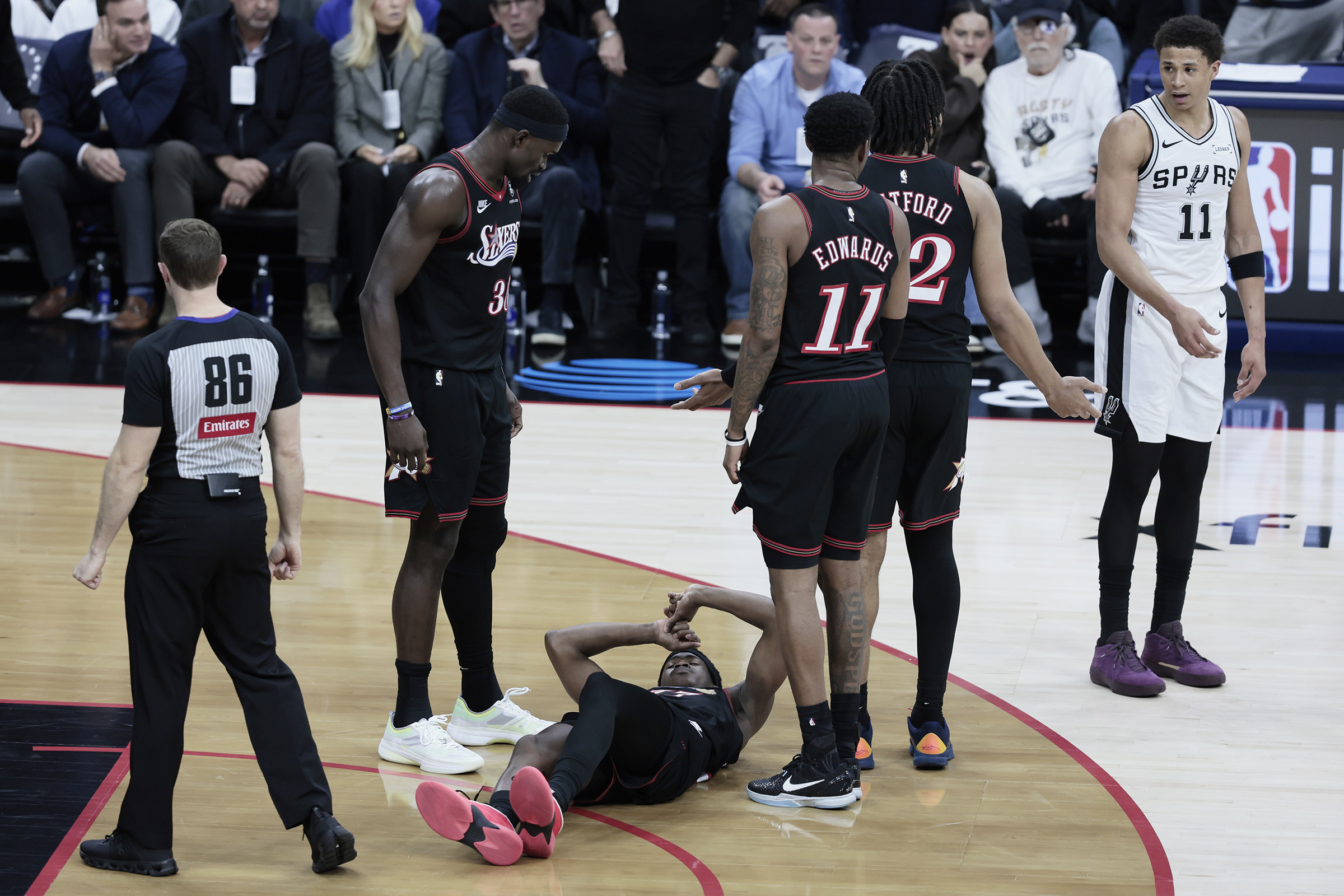
    To make matters worse, the Sixers lost rookie VJ Edgecombe to a back injury during Tuesday’s loss.

    There’s no shame in losing a game. In fact, there’s sometimes no shame in losing a game by 40. But there’s plenty shame in losing a game by 40 when you don’t play hard. That’s what the Sixers did this week, creating history in the process as the first team to lose three home games in the same season by at least 40, according to basketball-reference.com. The Inquirer’s Marcus Hayes takes a deeper look at the Sixers’ dubious milestone and the lack of effort that got them there.

    The Sixers bounced back from an ugly showing on Tuesday by beating the “tanking” Utah Jazz on Wednesday night behind Tyrese Maxey’s 25 points.

    Waving the flag

    A flag football event under the Fanatics umbrella will look to relocate from its intended site in Saudi Arabla, due to escalating tensions in the Middle East.

    Amid heightened tensions in the Middle East, Fanatics might opt to move its Flag Football Classic from Riyadh, Saudi Arabia, to somewhere in the United States, according to Front Office Sports.

    Kevin Hart is scheduled to host the event organized by Tom Brady, which was said to feature Saquon Barkley along with other NFL notables. The event aims to raise awareness of the sport, which will be part of the Summer Games in 2028.

    Ariel Simpson has more on the event and where it could land now that heading to Saudi Arabia is off the table.

    ‘Other things to focus on’

    Flyers captain Sean Couturier is looking to remain all smiles ahead of Friday’s NHL trade deadline.

    Phones will definitely be on silent for many players around the NHL, and for members of the Flyers, it’s no different.

    The NHL trade deadline is fast approaching, with the final horn sounding on Friday at 3 p.m. But while everyone speculates and debates what Flyers general manager Danny BriĂšre and management will do, the players are trying to stay in the moment.

    “Focus on what we do on the ice and play some good hockey, try to win some games. Those are things that we don’t control,” said Flyers captain Sean Couturier. “It’s more you guys [the media] that talk about it and make big stories out of it. In the locker room, it’s not something we really talk about. We’ve got other things to focus on.”

    Jackie Spiegel has more with a trade deadline hovering in the background.

    On this date
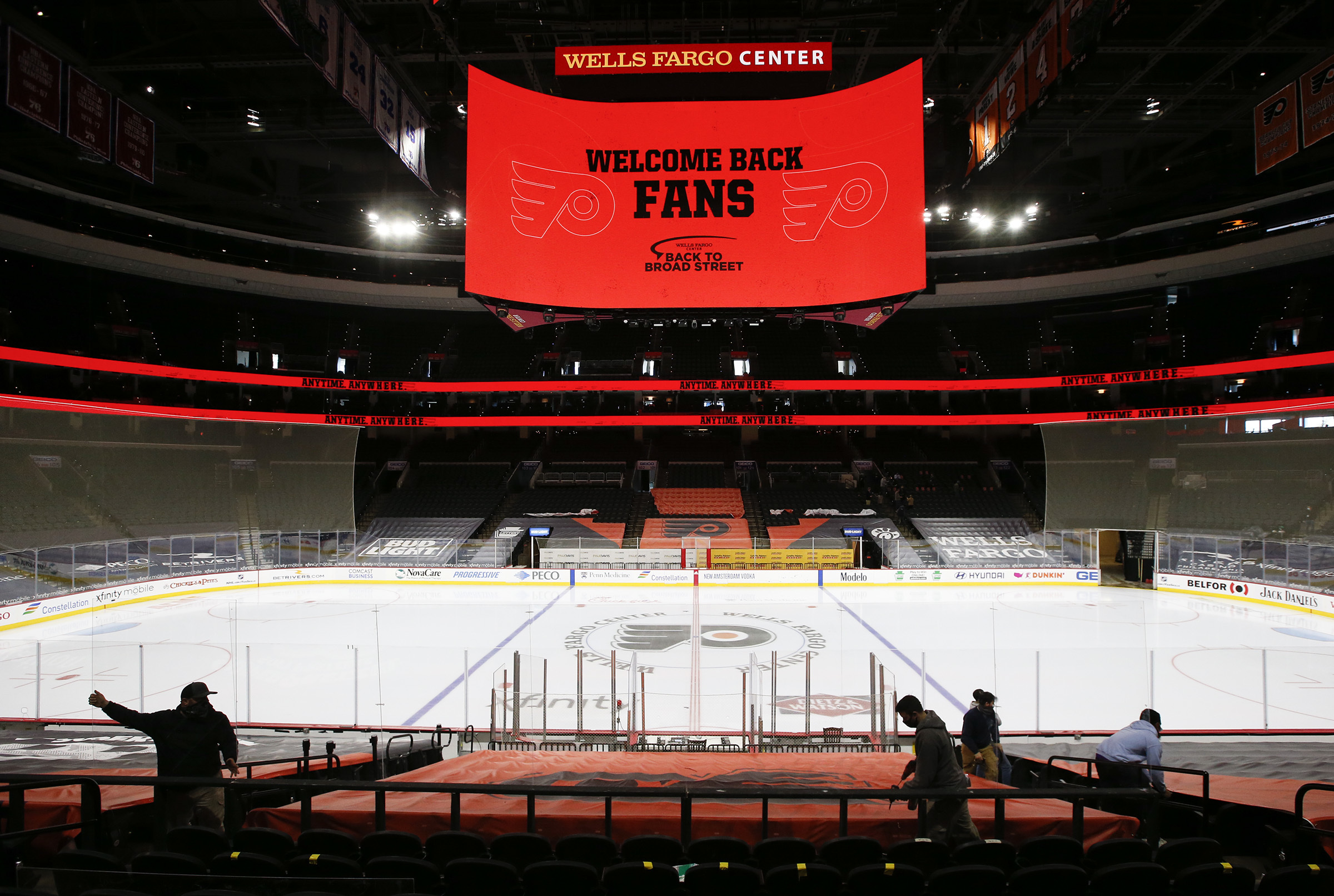
    Wells Fargo Center workers prepare the arena for fans on Friday, March 5, 2021.

    March 5, 2021: The Wells Fargo Center (now Xfinity Mobile Arena) began preparations to welcome just 3,100 fans back to the 21,000-seat arena after a 359-day shutdown of events due to the COVID-19 pandemic.

    Standings, stats, and more

    Want to know more details from last night’s Sixers-Jazz game? Here’s a place to access your favorite Philadelphia teams’ statistics, schedules, and standings in real time.

    What you’re saying about the Phillies

    We asked: What are your thoughts on Rojas’ potential suspension and how it will impact the Phillies?

    Why didn’t we keep Harrison Bader! — Joanne G.

    I have not pictured Rojas as a major part of the Phillies outfield plans. Pinch runner or defensive sub as needed was going to be his role. Why are so many of the players who continue to think they can get away with taking these banned substances Latino? Are they getting bad advice regarding this in their native countries? — Everett S.

    Given their history of violations, the Phillies need to include a special PED clause in all their contracts, in addition to the standard MLB boilerplate. As for Rojas, it’s time to trade or release him. He’s always been too cool for school. And now the cool kid is a druggie. Let’s move on. — Tom O’D.

    Johan Rojas’ suspension is unfortunate, but not devastating to the Phillies. He was a non-factor the second half of last year, finishing the season in AAA, and it was uncertain if he would make the big league team this year. This places much more pressure on rookie Justin Crawford. — Bob C.

    We compiled today’s newsletter using reporting from Alex Coffey, Gina Mizell, Mike Sielski, Ariel Simpson, Devin Jackson, Jonathan Tannenwald, Marcus Hayes, Jackie Spiegel, Gustav Elvin, and Ryan Mack.

    By submitting your written, visual, and/or audio contributions, you agree to The Inquirer’s Terms of Use, including the grant of rights in Section 10.

    Thanks for reading. Here’s hoping we prepared you for all those watercooler sports conversations today. Enjoy them; we’ll see you tomorrow. — Kerith
  • Stifling defense and new-look rotations highlight Villanova’s blowout win at DePaul

    Stifling defense and new-look rotations highlight Villanova’s blowout win at DePaul

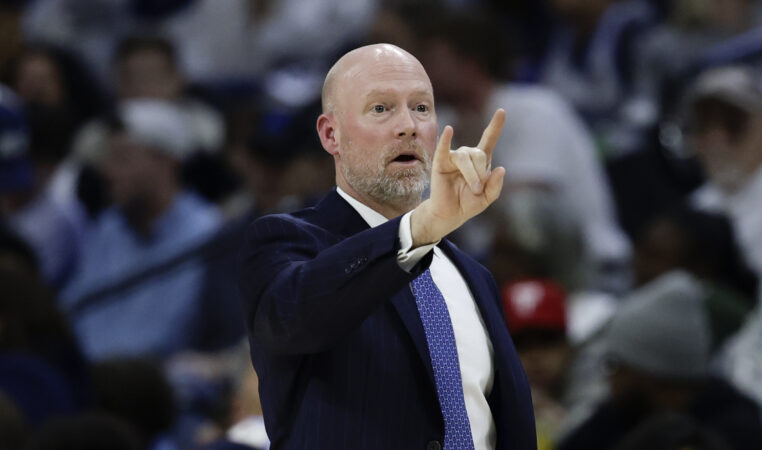
    Villanova entered Wednesday with a 9-3 road record, but the last true road game of the season for the Wildcats came with a new wrinkle, and a new starting lineup after Matt Hodge suffered a season-ending ACL injury Saturday night vs. St. John’s.
    Villanova coach Kevin Willard said Tuesday that the injury hurt the Wildcats, but “it’s not catastrophic.” They had the right answers to make up for missing their sixth-leading scorer, Willard thought, and while a sloppy first half didn’t make him look like much of a prophet, a much better second half helped Villanova turn a tight game into a rout and an eventual 76-57 win over DePaul.
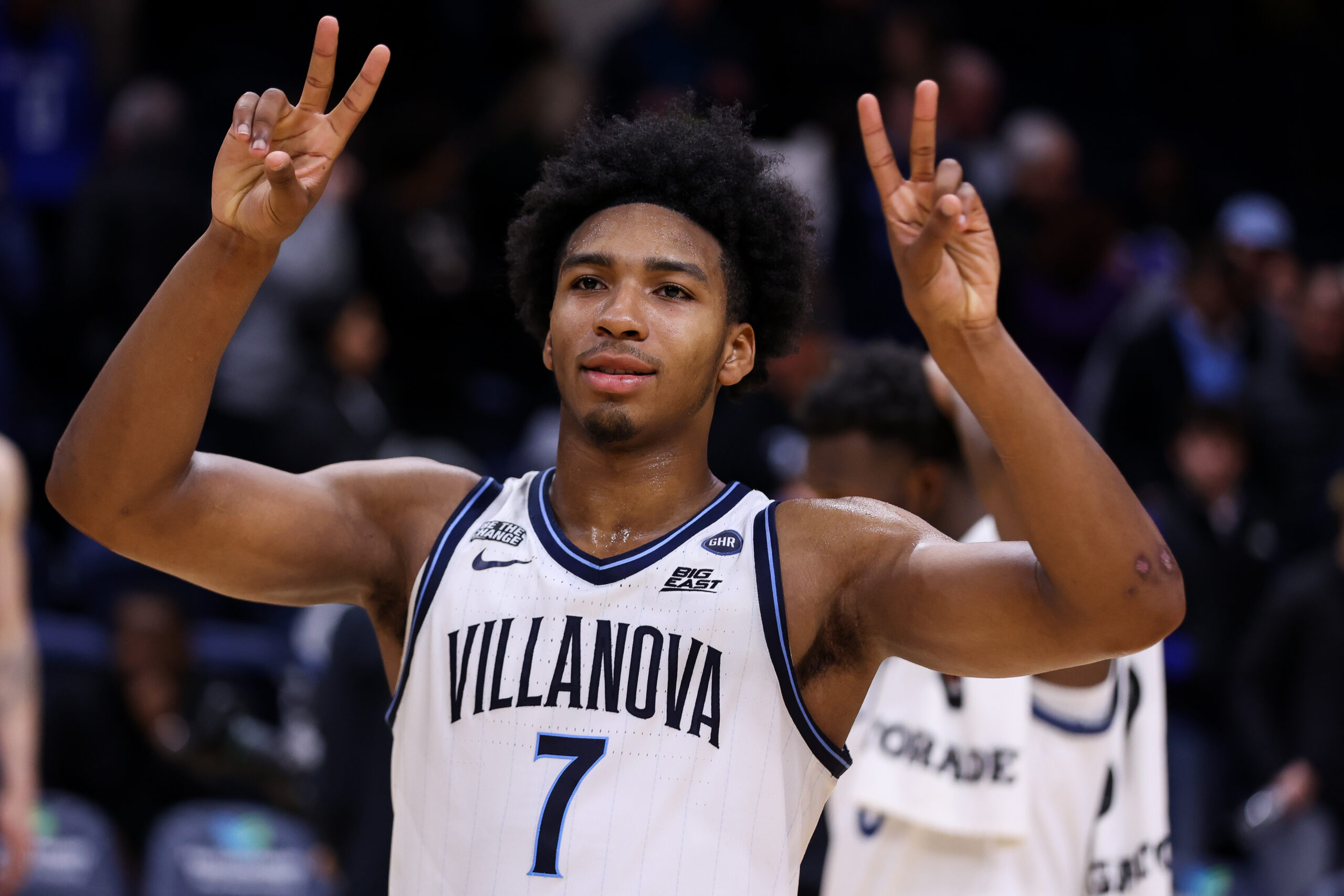
    The Wildcats improved to 23-7 on the season and 14-5 in the Big East behind big nights from Tyler Perkins (20 points, six rebounds), Duke Brennan (15 points, 12 rebounds), and Devin Askew (14 points, five rebounds). It was their eighth conference road win, their most since 2016.

    Here are a few observations from the victory:

    Dominant defense

    DePaul is the second-worst scoring offense in the Big East and ranks seventh of the 11 teams in three-point shooting (33.1%).

    It’s on the defensive end where Hodge’s absence in the starting five won’t be felt in a major way. That’s not to say Hodge, a redshirt-freshman, hasn’t held his own, but inserting Malachi Palmer in the lineup gives Villanova more versatility. Palmer is two inches smaller than Hodge at 6-foot-6 and allows the Wildcats to effectively switch more, which was especially effective against DePaul’s pick-and-roll offense.

    Malachi Palmer gave Villanova a major boost on the defensive end Wednesday night.

    Villanova was aggressive on the ball defensively and created 16 DePaul turnovers, leading to 22 points off those turnovers. Villanova got its own good looks in the first half but shot just 27.6%. The Wildcats survived a slow start because they forced seven turnovers and limited DePaul to just 24 points. It was the third time this season Villanova allowed fewer than 25 points in an opening half.

    In the second half, Willard deployed more matchup zone and dared DePaul to try to shoot its way to a win. The Blue Demons were just 2-for-16 from three-point range, and many of those were either well-contested or forced into the hands of low-percentage shooters.

    Three Wildcats had at least two steals. Perkins had four, while Bryce Lindsay and Acaden Lewis had two apiece.

    New-look rotation

    Palmer, as expected, got the start and tied his season-high with 29 minutes, a mark he reached for the first time Saturday night in part because of Hodge’s injury early in the second half.

    Palmer, a sophomore, looked a little jittery to start but settled in during the second half. He finished with 10 points on 3-for-9 shooting (1-for-4 from deep) and added five rebounds.

    Askew was the first player off the bench as usual. Then freshman guard Chris Jeffrey and backup center Braden Pierce, a redshirt-freshman. Hodge’s absence will force Villanova into some awkward rotations when Palmer needs to rest. Willard had brief stretches with one big man and four guards on the floor, a unit that he won’t be afraid to roll with depending on matchups because of Perkins’ physicality and rebounding ability.

    Villanova forward Duke Brennan finished with 15 points and 12 rebounds against DePaul.

    What Villanova didn’t show Wednesday was a two-big look with Brennan and Pierce both on the floor. Willard said he’ll be willing to go to it, and the Wildcats have practiced it some, but DePaul did not have a ton of size to force Villanova to counter.

    Brennan played 35 minutes for the fourth time in a game that ended in regulation. Palmer played 19 of the 20 minutes in the second half while Pierce (two minutes) and Jeffrey (one minute) played sparingly. They finished with five and three minutes, respectively. An eight-man rotation was effectively a six-player rotation. It worked fine Wednesday night, and may work fine again Saturday in the regular season finale vs. Xavier, but tougher tests await in the postseason.

    No Stanford

    Hodge being out meant Zion Stanford, a West Catholic graduate and Temple transfer, potentially was in line for more of a role. The junior had seemingly fallen out of the rotation and hadn’t played since Feb. 4.

    But Stanford was not with the team in Chicago. He practiced Wednesday, according to sources, but didn’t travel with the team and the nature of his absence was unclear.

    Bouncing back

    Willard told the broadcast after the game that he “got after” his team a little bit in two days of practice following what was the worst Villanova loss in 29 years.

    Willard attributed the missed shots and carelessness offensively to still dealing with the emotional letdown of having Hodge out. But things settled down after halftime. The Wildcats changed up their defense and were much more efficient on the offensive end.

    It’s no surprise that it was Askew, Brennan, and Perkins — a graduate student, a senior, and a junior — who helped lead the way in the second half.

    One more, then the tournaments

    The regular season ends Saturday with a noon home game vs. Xavier. A win would give Villanova 15 conference wins for the first time since 2021-22, Jay Wright’s final season. That possibility may be a little less daunting considering Xavier’s Tre Carroll, the Big East’s leading scorer (18 points per game), went down with an injury Tuesday night. His status for Saturday is not yet known.

    The Wildcats are on their way to the NCAA Tournament for the first time since 2022, but first is the conference tournament next week in New York, where Villanova will be the No. 3 seed. They open up in the final game of the quarterfinals next Thursday (9:30 p.m.) vs. the winner of the No. 6 vs. No. 11 matchup.

  • When it comes to accountability for Epstein’s wealthy associates, what’s the real price tag for justice?

    When it comes to accountability for Epstein’s wealthy associates, what’s the real price tag for justice?

    Hearing that the highest tiers of European royalty and government officials have been toppled for their association with Jeffrey Epstein, I can’t help but look closer at home and abroad. It’s hard to avoid uncomfortable comparisons.

    In the U.S., we’ve seen a lower tier of elite face consequences, such as Peter Attia and Larry Summers, who were spared termination but were able to resign. For the rest, it’s been a familiar playbook. When powerful people are accused of misconduct or even abuse, institutions move to containment — not transparency.

    The piecemeal release of the Epstein files reflects a familiar pattern: complaints and claims are made, evidence exists, but access is controlled. Accountability stalls.

    While the Constitution promises equal protection under the law, that protection comes through the courts and via its agents — attorneys. Juries decide on innocence or guilt, and then determine financial damages.

    In America, harm is monetized.

    It follows, then, that those who wield money and power can buy protection within the legal system. How can we forget OJ Simpson’s stable of lawyers, the best money could buy, nicknamed the “Dream Team.”

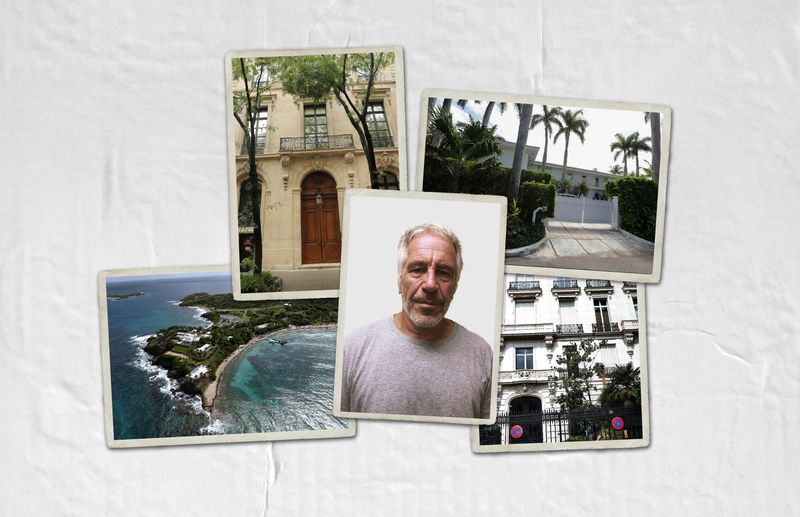
    Convicted sex offender Jeffrey Epstein owned islands and properties around the world. The files that the U.S. Department of Justice has selected for release show he cultivated a network of wealthy, high-profile friends and associates across the world.

    With financial resources and access to elite legal representation, those accused of wrongdoing are able to turn the pursuit of justice into a negotiation. Civil settlements, nondisclosure agreements (NDAs), and confidential arbitration dominate. As such, judgment and public accountability can be avoided or deferred.

    Examples abound. Roger Ailes was well known for his prolific use of NDAs at Fox News, and Harvey Weinstein avoided consequences of his actions for years, showing how money and power can make even the most egregious allegations against him disappear.

    Left unaddressed in those cases in which perpetrators are not brought to justice is the magnitude of the impact on victims.

    My career as an emergency physician and public health expert has centered on the vulnerable and at-risk. I have seen the long arc of trauma — through physical, mental, and behavioral health manifestations in my patients, most especially those who suffered adverse childhood events (ACE).

    Ranging from anxiety and depression to sleep disturbances, neurologic impact, chronic illness, and substance use, the consequences are long-standing and pervasive. This doesn’t include the depth of impact on what are known as the social determinants of health — job stability, housing stability, economic possibilities, and other nonmedical factors that can shape a patient’s well-being. The damages of trauma are not measurable in simple dollars.

    Power is often leveraged through coerced silence.

    Studies have shown that more than one-third of the U.S. workforce has been subjected to NDAs for workplace-related harassment, sexual misconduct, and employment discrimination. The National Women’s Law Center found NDAs isolate victims, shield serial predators, and allow harassment to persist.

    The Equal Employment Opportunity Commission (EEOC) notes significant underreporting in the workplace, where research suggests as many as 85% don’t report sexual harassment, and 94% of people don’t report discrimination.

    Years ago, a woman I was treating for opioid use disorder confided in me after holding me at reticent arms’ length for weeks. I noted a subtle change, where her steely gaze was replaced by downcast eyes. She whispered, “I want to tell you something.” She went on to recount how she had been sexually assaulted on more than one occasion by someone who was supposed to help her.

    She hadn’t told anyone out of fear. She felt trapped. After our session, I immediately sprang into action to alert authorities as a mandatory reporter and put mechanisms in place to keep her safe — especially for possible retaliation.

    Days later, when I saw her next, she was sobbing uncontrollably. I feared the worst until she finally whispered, “Thank you for believing me.”

    For the minority who do speak up, the consequences can be overwhelming. Speaking truth to power is fraught with danger that is rarely just legal. A victim’s credibility is often structurally discounted — framed as financially motivated, vindictive, or selfish.

    That skepticism is unevenly applied. Institutions often require overwhelming proof of undeniable and well-documented harm, while at the same time, extend presumption and patience to those with power. Countless examples illustrate how anchor institutions often circle the wagons to protect an accused, but leave the person harmed to fend for themselves.

    Lawyers and others are often forthcoming with victims about the risks of pursuing legal action. The list is long: litigation costs, reputational damage, professional blacklisting, social ostracism, and family exposure.

    The most common EEOC complaint is for retaliation, often in response to reporting harassment or discrimination internally within the workplace. People who report transgressions have faced career derailment and other penalties, perhaps most famously demonstrated by Lilly Ledbetter, whose landmark U.S. Supreme Court case prompted new standards for fair wages.

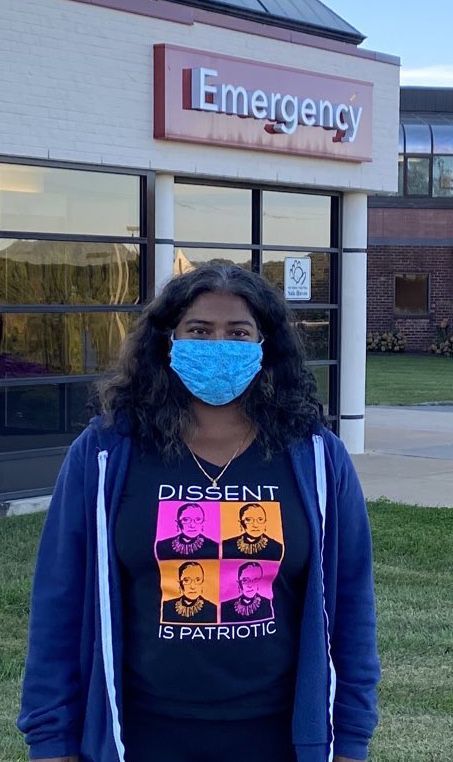
    The author photographed at Jennersville Hospital on Sept. 19, 2020. It was the day after Ruth Bader Ginsburg died, so Mammen wore a T-shirt to honor the late U.S. Supreme Court justice’s urging to challenge gender inequality in court.

    Despite Ruth Bader Ginsburg’s encouragement to challenge laws in court, it seems difficult for many to understand why someone might invoke the protections of our laws or work to establish safety and fairness for others. For the many who don’t have wealth or power as buffers, silence is survival — not consent.

    Europe does not always operate in a way Americans would consider fair or just. But in the last few weeks, we’ve seen that government officials and the highest-ranking citizens seem to be held to a higher standard than their counterparts in the U.S.

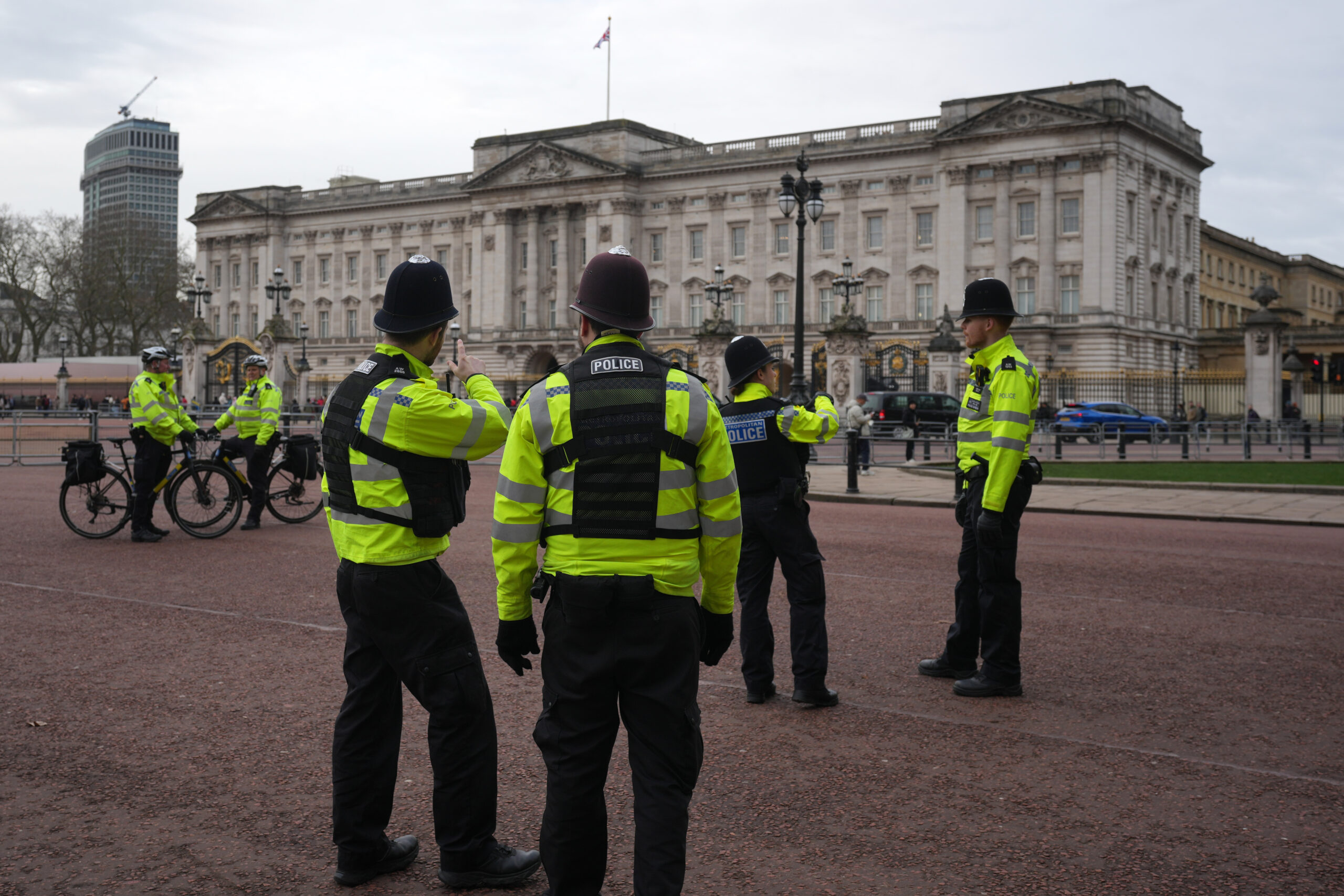
    Police officers stand in front of Buckingham Palace in London, Feb. 20, after Andrew Mountbatten-Windsor, formerly known as Prince Andrew, was arrested and held for hours by British police on suspicion of misconduct in public office related to his links to Jeffrey Epstein.

    There is a cultural expectation that power increases responsibility.

    The British monarchy and government have repeatedly centered the survivors in their response to questions and probes: “Our thoughts are with the victims.”

    Cynically, this could be a convenient deflection, but practically, it keeps the focus on those who have been hurt and wronged. It sets the tone from the top and normalizes compassion and empathy for victims over perpetrators.

    In America, power often confers insulation. In Europe, there is instead greater reputational consequence. That kind of accountability conveys justice precisely because it cannot be insured against. It changes the incentives.

    In Europe, they have fired the men who were involved with Epstein. In America, we have allowed them to step down, resign, or retire quietly.

    Will we allow power to protect itself more reliably than it protects the vulnerable — especially children?

    The enduring failure we are seeing play out is a collective nonconsequence for those who sit the highest among us. Accountability collapses where power concentrates.

    At the same time, lest we forget, it was the demands from everyday Americans that led to the release of the Epstein files. The public brought this issue to the forefront.

    We can use this moment to force change.

    If we demand extraordinary proof from victims, we must demand extraordinary transparency from power. If we believe authority confers responsibility, then ethical standards must be enforced. Boards, professional societies, and institutions cannot simply issue statements of values; they must act when those values are breached.

    Accountability cannot remain optional for the powerful. As voters, donors, consumers, and leaders, we decide what we will reward. We can insist that reputation reflect conduct. We can demand that rules travel upward, not only downward. We can see justice as an integral part of our democracy, and each of us equally deserving.

    As a society, we can be clear on whose harm matters. That choice is ours.

    Priya E. Mammen is an emergency physician, healthcare executive, and public health specialist who helps the nation’s most impactful companies integrate clinical integrity at scale.

  • After a visit to the Philadelphia Flower Show, Nick Elizalde’s mom issues a plea to the school district: ‘Don’t close Lankenau’

    After a visit to the Philadelphia Flower Show, Nick Elizalde’s mom issues a plea to the school district: ‘Don’t close Lankenau’

    For the last three years, my life has been defined by the tragedy of my son’s murder and the management of the indescribable pain I feel every moment. For everyone else, time continues normally. For me, time simultaneously stands still, moves like molasses, or flies by in a blur.

    I’ve been dreading 2026 for a while — it would have been Nick’s senior year at W.B. Saul High School. He’d have turned 18 last October. He’d have a driver’s license. He’d be looking forward to senior prom and graduation. But instead, this June, we’ll attend the trial for his murder, nearly four years later, and after constant delays.

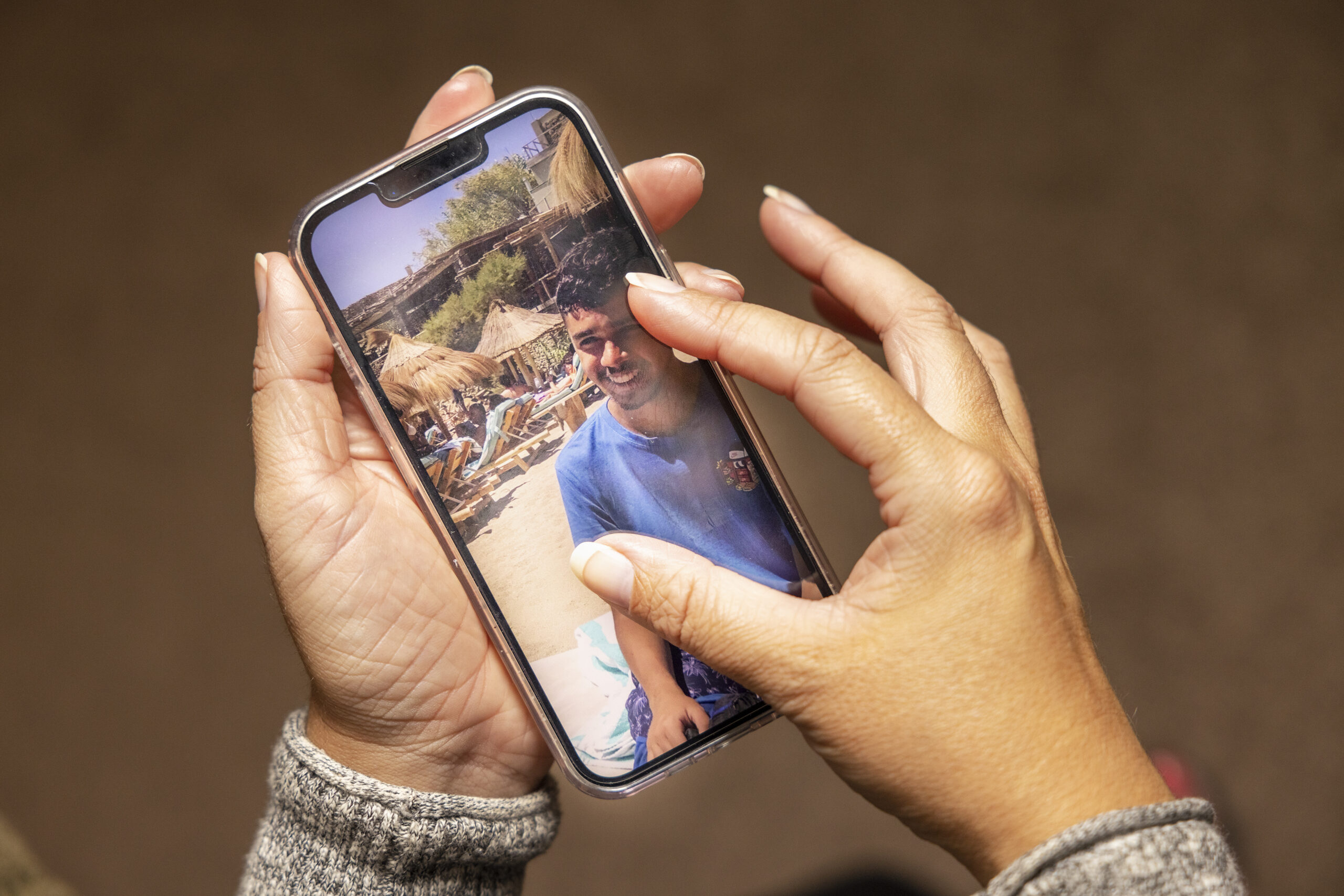
    Meredith Elizalde holds a photograph of her son, Nicolas, who was fatally shot after his football scrimmage in 2022 outside of Roxborough High School.

    For all this time, I’ve been able to picture Nick with his classmates at Saul, having the time of his life. But once June comes, where will I picture him? His life, as it was when he was killed, will be over. I cannot explain the level of distress this causes me. Who and where would my son be?

    In an effort to manage this pain, I made the decision to attend the Philadelphia Flower Show this year, so that I could see what Nick’s classmates had on display before they graduate. It’s hard for me to watch the Saul kids continue on without Nick, but it also provides me a brief, albeit painful, respite and sense of pride to watch them shine — and to imagine him with them.

    Visitors look at W.B Saul High School of Agricultural Sciences’ “Up-Rooted, Re-Planted” display at the Philadelphia Flower Showon Feb. 27.

    I was impressed and deeply moved by the homage to the Lenni Lenape. I could feel Nick’s Indigenous pride as I marveled at what his classmates had created.

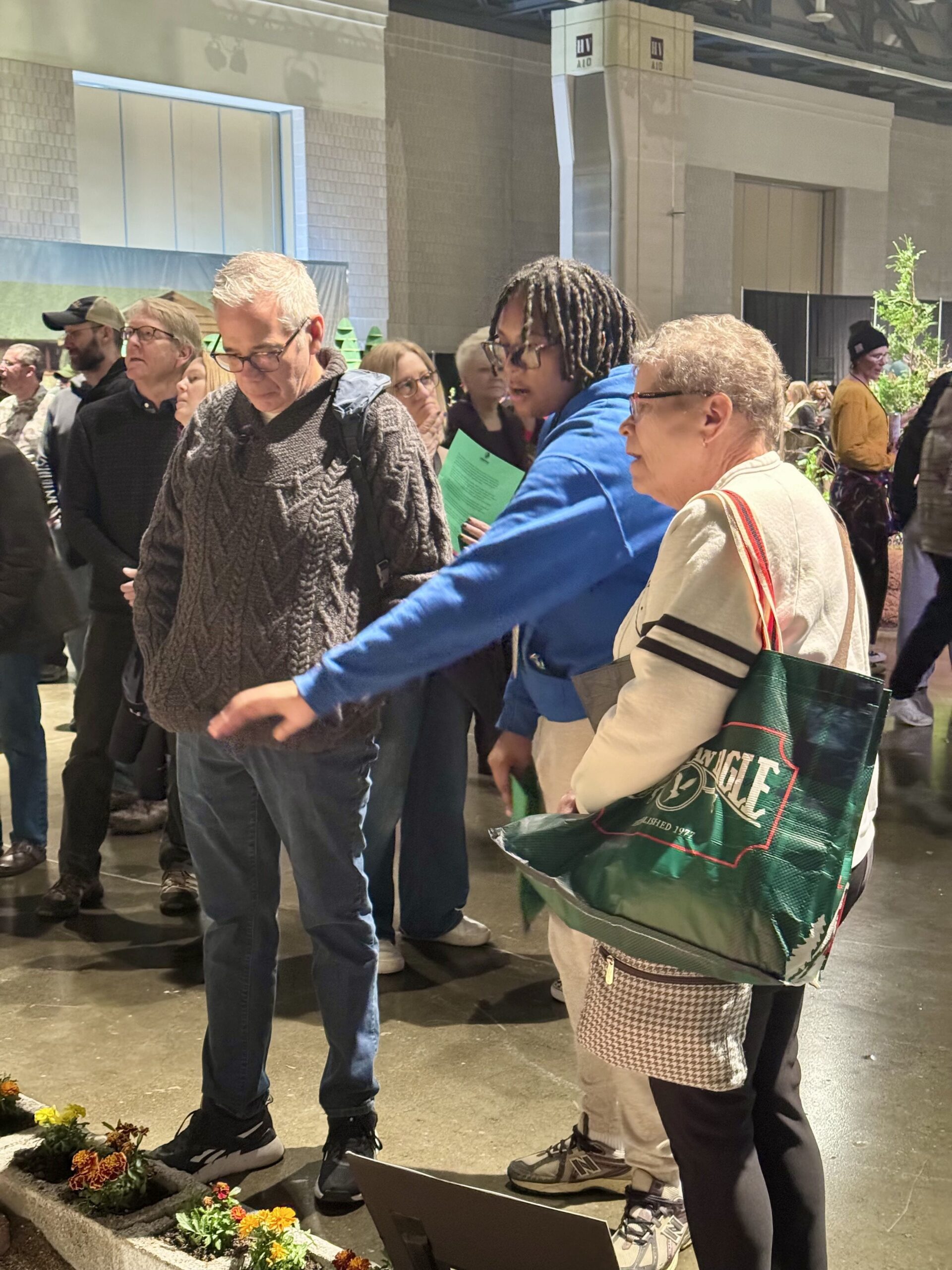
    A man and woman were next to me, very engaged in the Saul exhibit, reading all of the signs. The man said, “The two high school exhibits”— Saul and Lankenau — “are the best ones here.” As a Saul mother and a former Philadelphia high school teacher, I felt a surge of maternal pride upon hearing that.

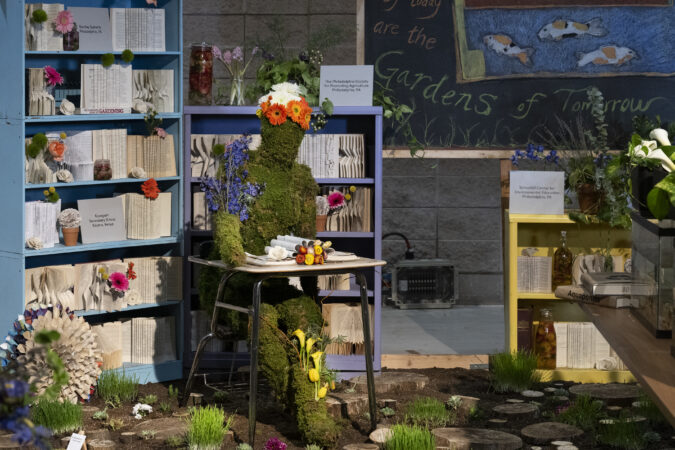
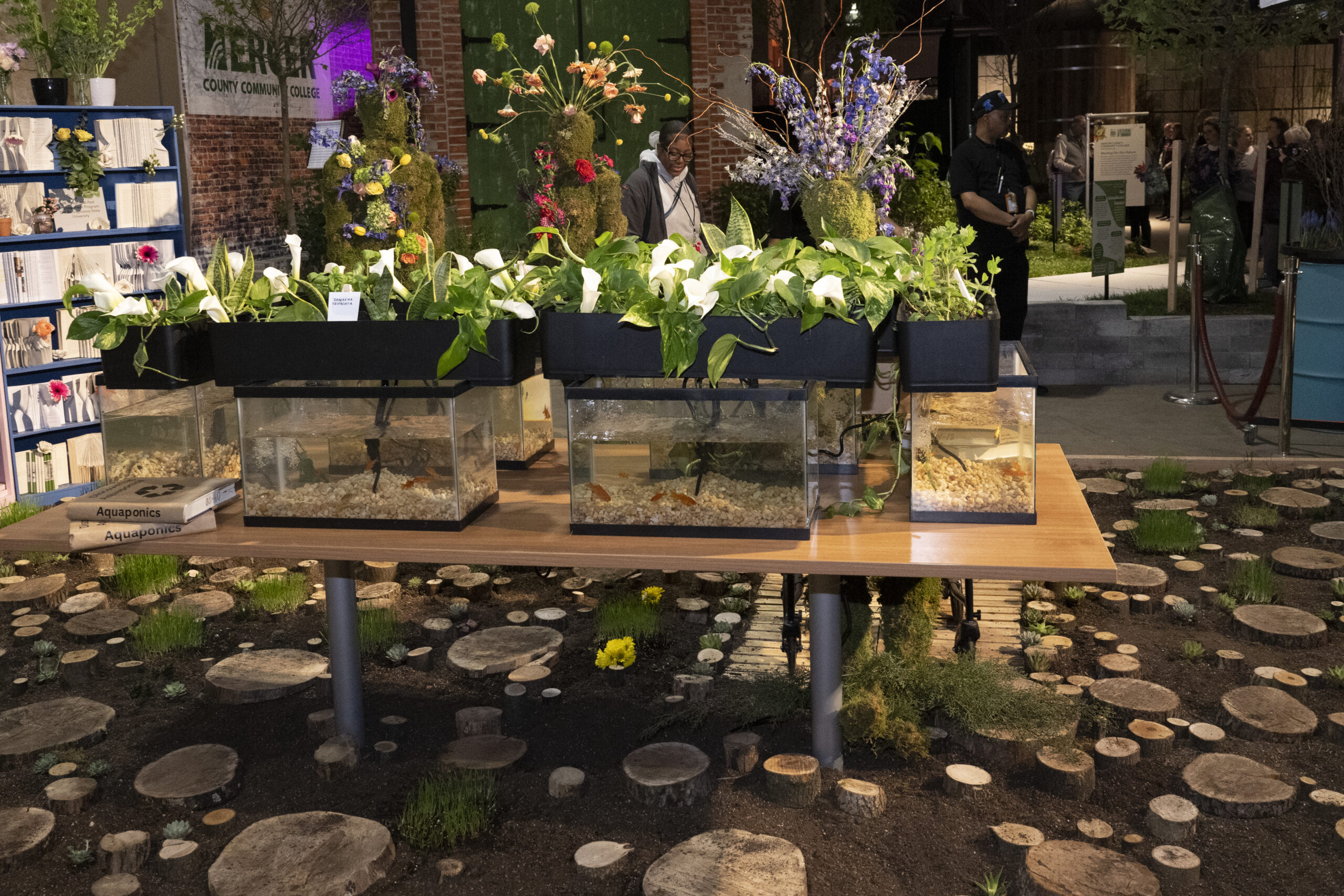
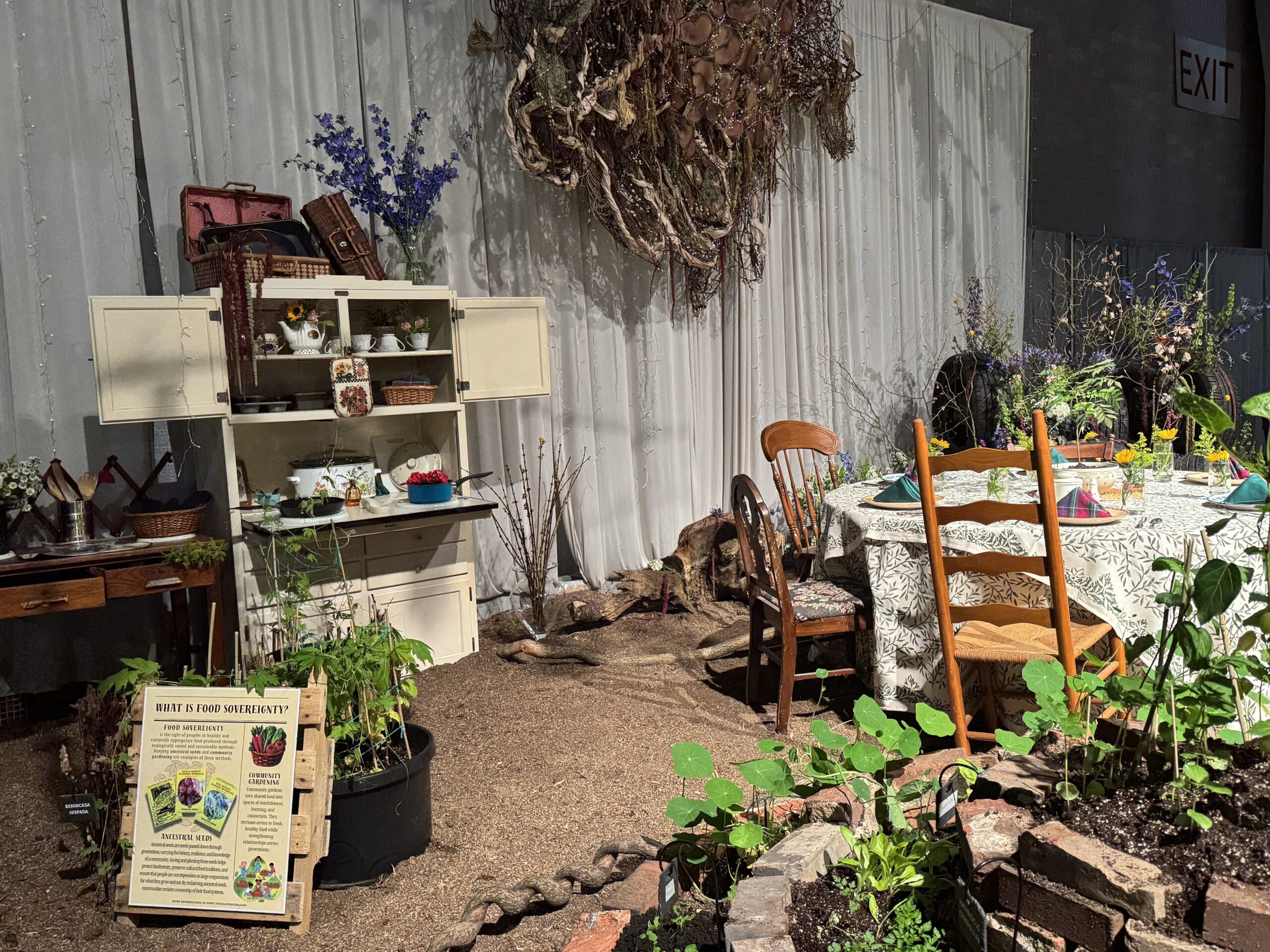
    I had just walked over from the Lankenau Environmental Science Magnet High School display, which was phenomenal. It was colorful and intimate. I especially loved the border of flowers in cinderblocks. It reminded me of how beauty pushes through hardness and barriers that are meant to suppress.

    A display by students from Lankenau Environmental Science Magnet High School, “Bloom Where You Are Planted,” is shown Feb. 28 at the Philadelphia Flower Show.

    Standing in front of the display, I saw three Lankenau students handing out fliers, which broke my heart. What a surreal feeling it was to stand in front of such a marvelous, artistic display of the natural world, next to some of its creators, as they asked people for help to save their school from closure. What a shortsighted decision to close Lankenau — a treasure in the “green lung” of the city.

    I am now an environmental graduate student at the University of Montana. My research was born from Nick’s deep love of Mother Earth, his exemplary stewardship of nature, his murder, and my experience of teaching high school in Philadelphia. Why would we close a school in one of what feels like extremely limited green spaces in a densely populated, urban area?

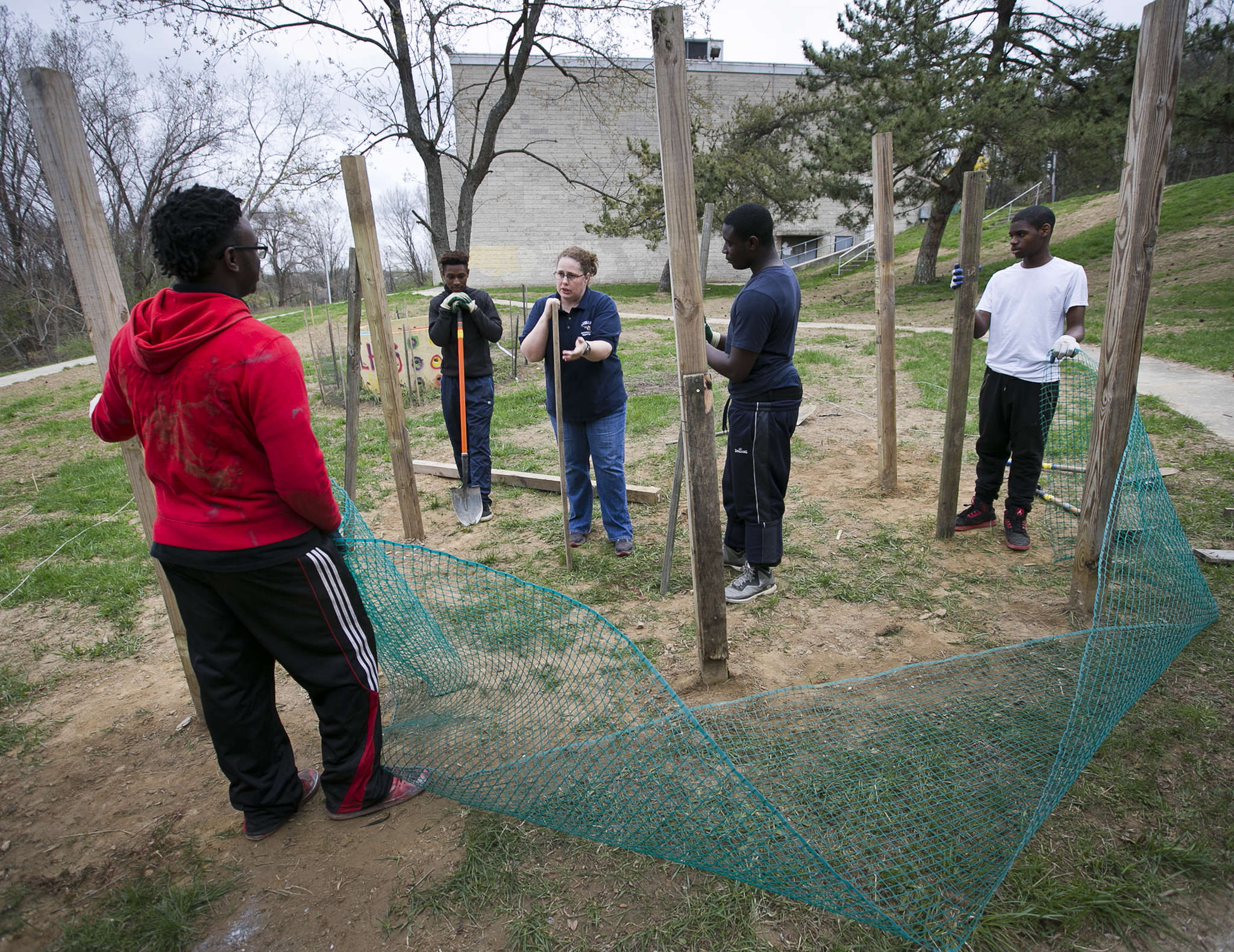
    Students in the botany club ant their teacher at Lankenau Environmental Science Magnet High School build a compost pile in this file photo from 2018.

    Scientific literature is saturated with the physical and mental health benefits of green and blue space exposure. The literature also details the correlation between tree canopy and lower crime rates. Nature deficit is real, and it has detrimental consequences, especially for our youth. The built environment and the omnipresence of screens have affected our youth in ways most people who do not interact with kids in an educational setting cannot understand.

    It therefore baffles me that a school in such an idyllic setting for place-based learning — where socioemotional learning can have greater impact because of the healing effect of natural settings on our nervous systems — is considered expendable.

    Last year, I taught undergraduate classes in Montana. We took a field trip to Yellowstone National Park for three days, and I was amazed at the level of comfort the students had with wilderness, teamwork, wayfinding, and so much more.

    Overall, they had knowledge about so many things that completely bewilder me — it was simultaneously embarrassing and inspirational. I wondered what our Philadelphia youth might feel like if more of them had greater access to the natural world, and, in turn, what would our society look like when they come of age and contribute to the community.

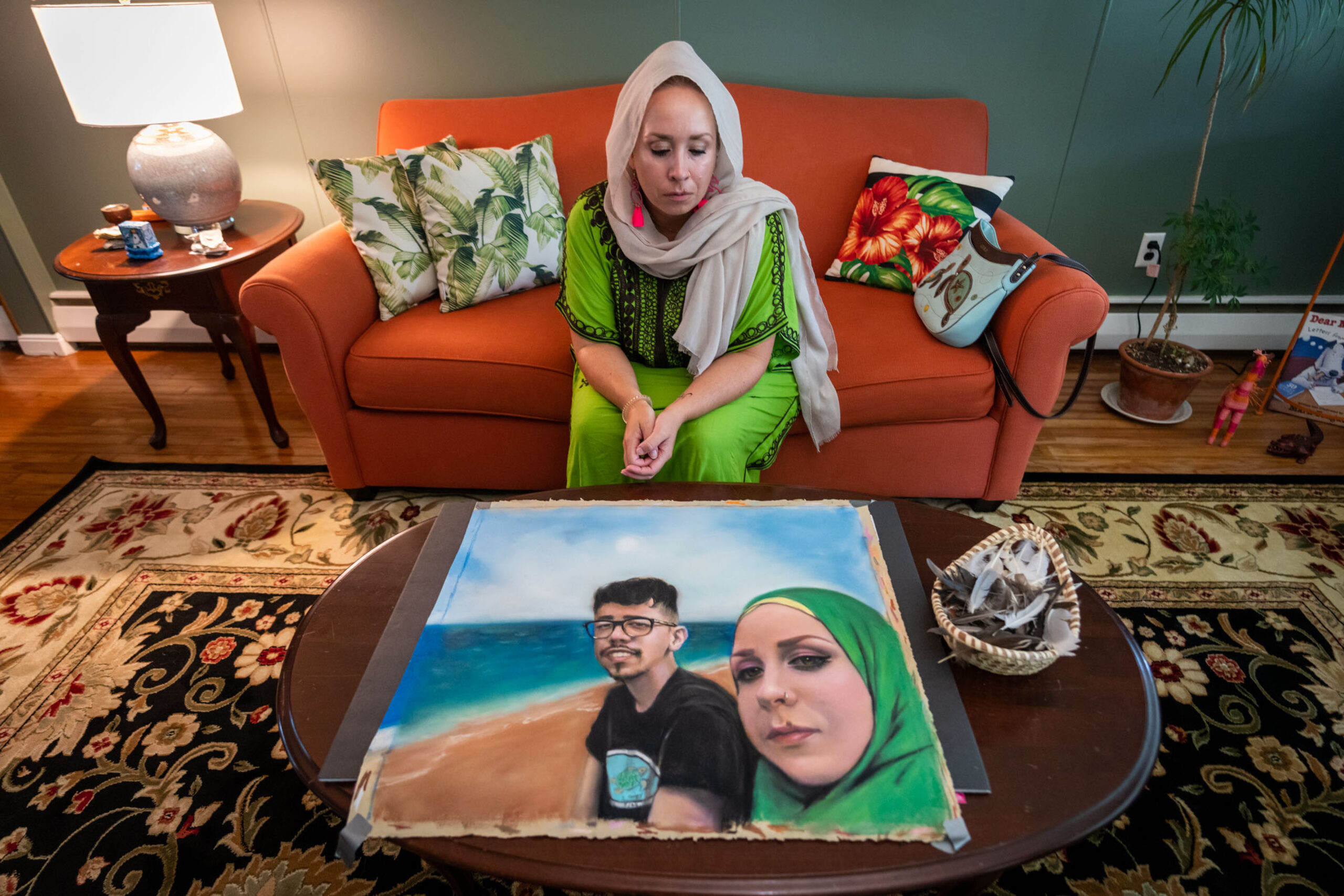
    Meredith Elizalde with a painting of her and her son, Nicolas, in Aston in July 2024.

    There are so few places like Lankenau; it is a travesty that we are even thinking about closing such a distinctive institution.

    We have lost so many young lives to gun violence. And those left behind are in a state of collective yet disenfranchised grief that permeates daily life in unseen but troubling ways. After Nick was killed, students posted wishes for themselves, each other, and society on the wall of Roxborough High School. So many wished for an end to gun violence and living in fear. One wished he would live to see age 25.

    When we lost Nick, our city lost a true conservationist and a pure soul. Lankenau graduates students who can help to fill that gap, left by all of our murdered loved ones and their stolen potential.

    I urge everyone, Philadelphia resident or not, to join the fight for Lankenau and all the schools slated to close. If you believe that every child deserves a chance, now is the time to act on that belief.

    One of the Lankenau students at the Flower Show told me they are “trying to make noise.” Let’s not put that burden on our youth, or solely on the shoulders of those most affected. Whoever you are — show up, make noise.

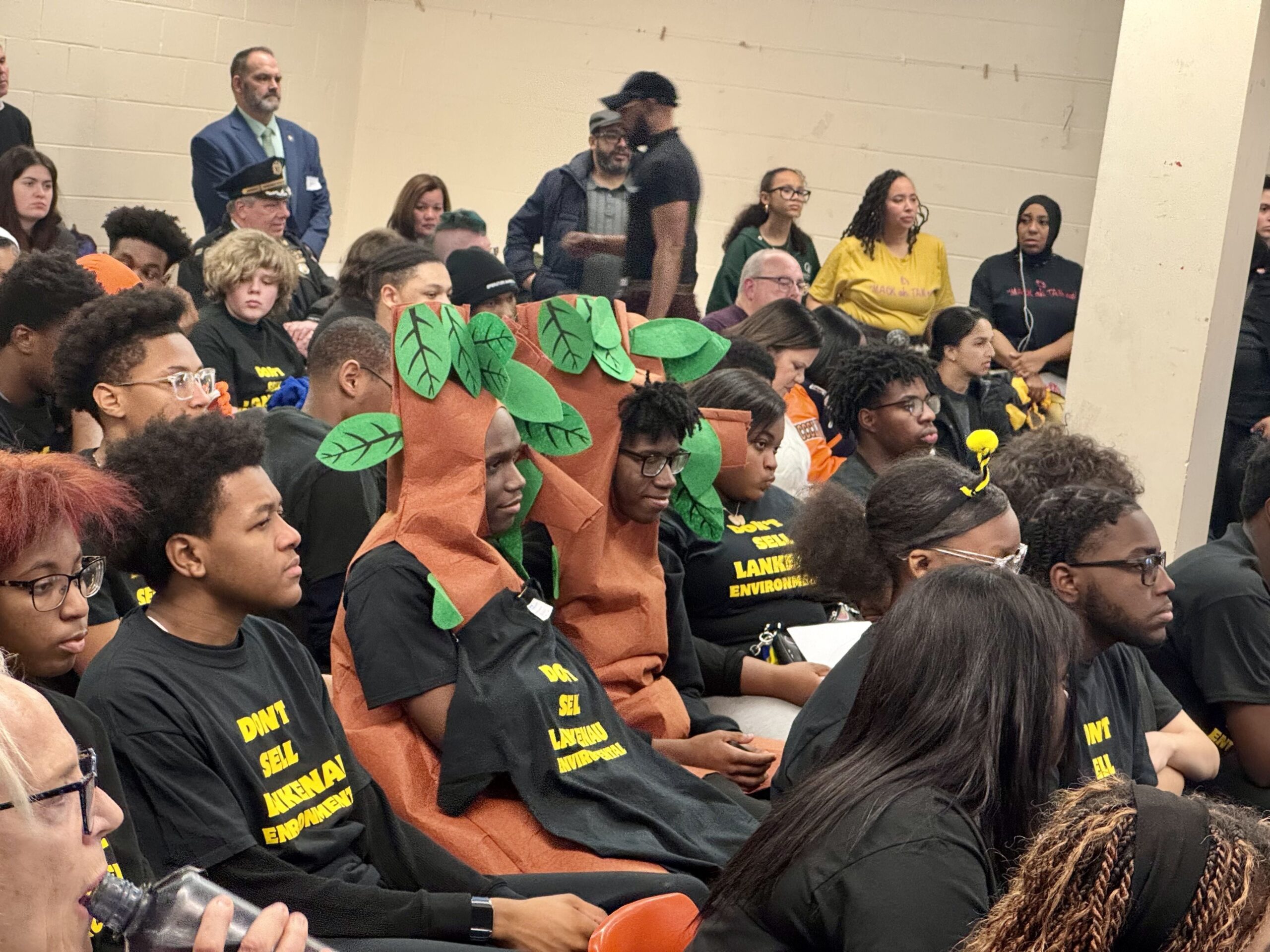
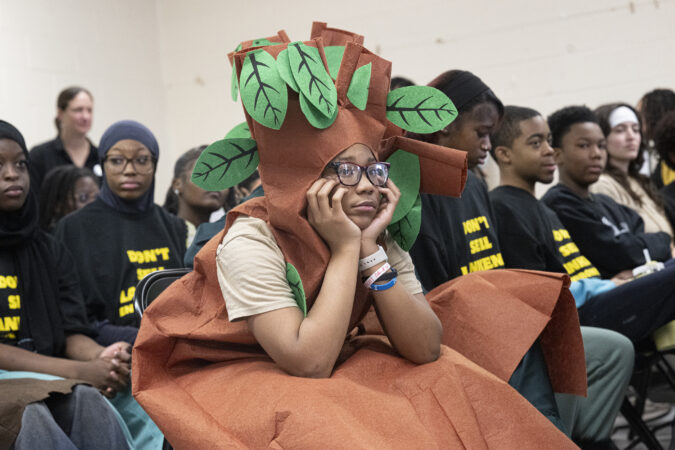
    Students, staff, and community members who support Lankenau High School — including some dressed as trees — packed a community meeting at the school Feb. 4. The Philadelphia School District proposes closing the city’s only environmental sciences magnet, citing issues including low enrollment. But the school system had a hand in limiting enrollment.

    A magnet school in a beautiful, natural setting is violence prevention, a soothing balm, and a safe haven from the chaos of life. The imam at Nick’s janaza read an African proverb: “The child who is not embraced by the village will burn it down to feel its warmth.”

    We are the village, and we must embrace our children.

    Meredith Elizalde is Nick’s mom. A former Philadelphia high school teacher, she is currently a graduate student at the University of Montana.

  • One of Chinatown’s most promising Thai restaurants has closed

    One of Chinatown’s most promising Thai restaurants has closed

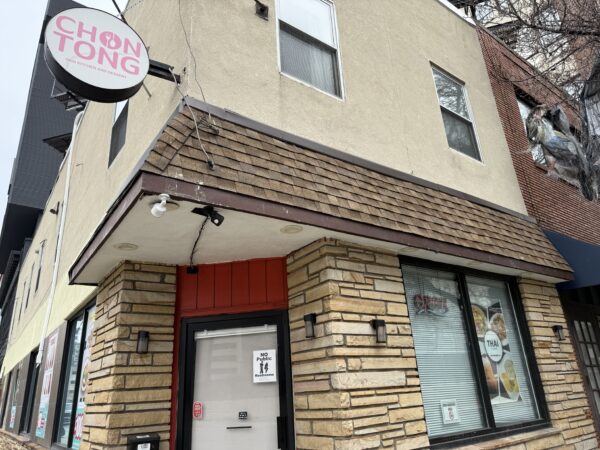
    Chon Tong Thai Kitchen, the family-run restaurant that brought a joyful, brightly colored space to an unlikely corner of Vine Street, abruptly closed late last month after its owner returned to Thailand. The Central Thai specialist, which opened in 2022, was a favorite of Thai expats in Philly.

    Owner Thidarat “Grace” Teekabud, whose great-great-grandmother had been a chef for the fifth King of Siam in the late 1800s, came to Philadelphia in 2019 to learn English. She noticed a void in Philly’s food scene and missed the desserts and snacks she grew up with. Opening the restaurant was her solution. (“Chon Tong” means “golden spoon” in Thai.)

    Teekabud did not respond to requests for comment.

    The real estate broker for the space at 1439 Vine St. told The Inquirer that the owners had already moved back to Thailand after a quick sale of the business and transfer of the turnkey space.

    Chon Tong was a close contender for The Inquirer’s 2025 edition of The 76, making the list of restaurants that writers (unsuccessfully) championed for inclusion.

    Hoi Tod is a mussel pancake served over gently stir-fried bean sprouts at Chon Tong.

    Though the concept initially focused on desserts, Chon Tong became better known among the area’s Thai student community for its boat noodles, fried items like the mussel-studded hoi tod pancake, tum tod (an inventive fried sweet-and-sour papaya salad), and jay tod (speckled with juicy-sweet corn kernels and crunchy tofu), as well as its crispy pork belly (moo tod nam pla).

    The property’s broker said that a Chinese-Japanese fusion restaurant will take Chon Tong’s place.

  • In a Philly apartment, a monochrome design brings splash without color

    In a Philly apartment, a monochrome design brings splash without color

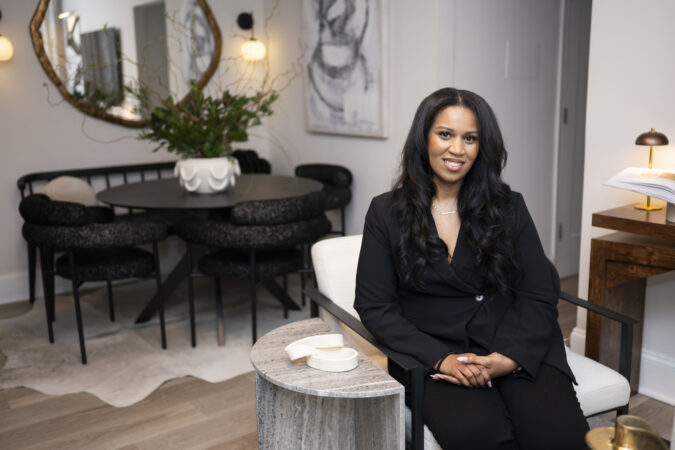
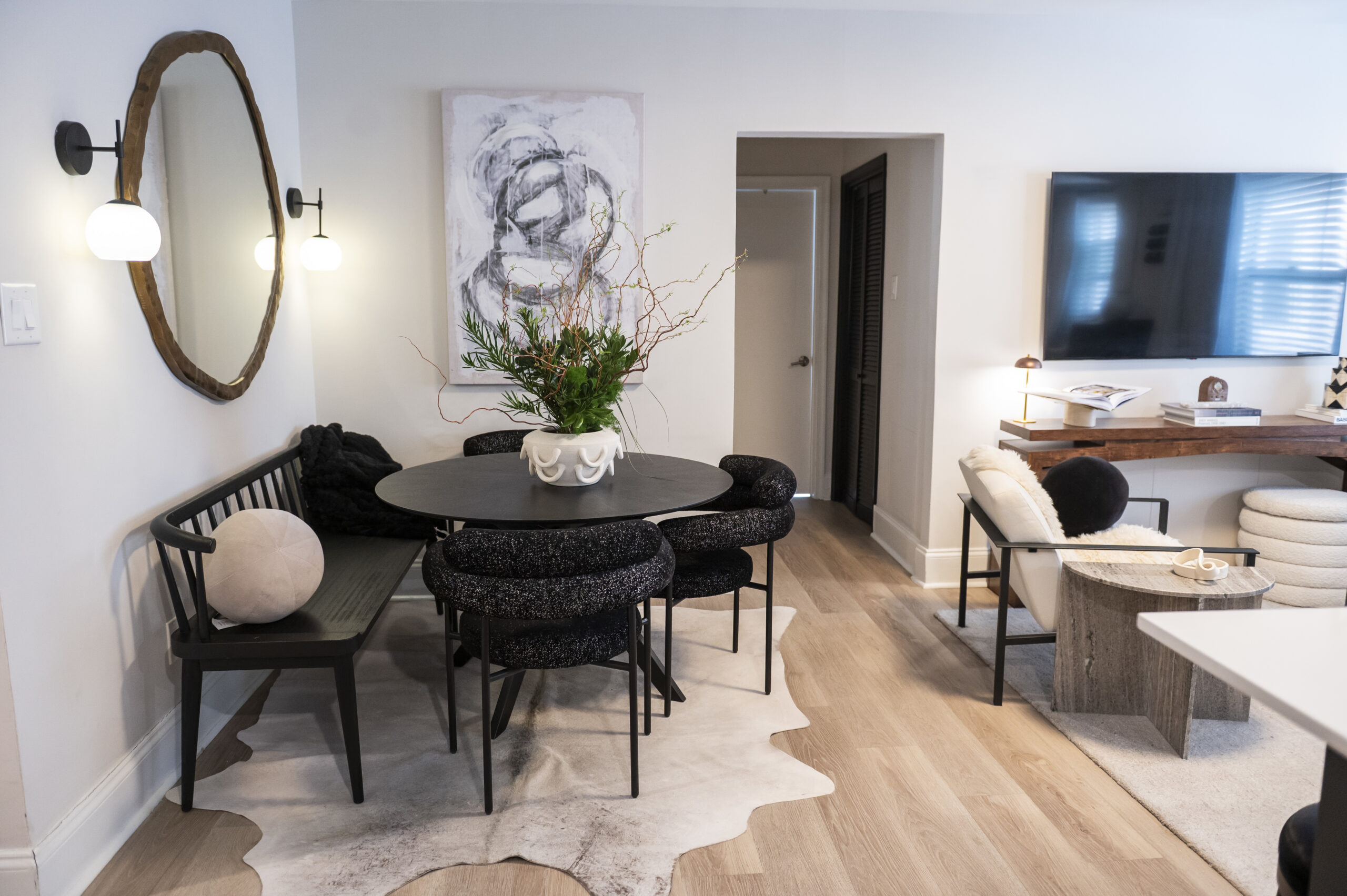
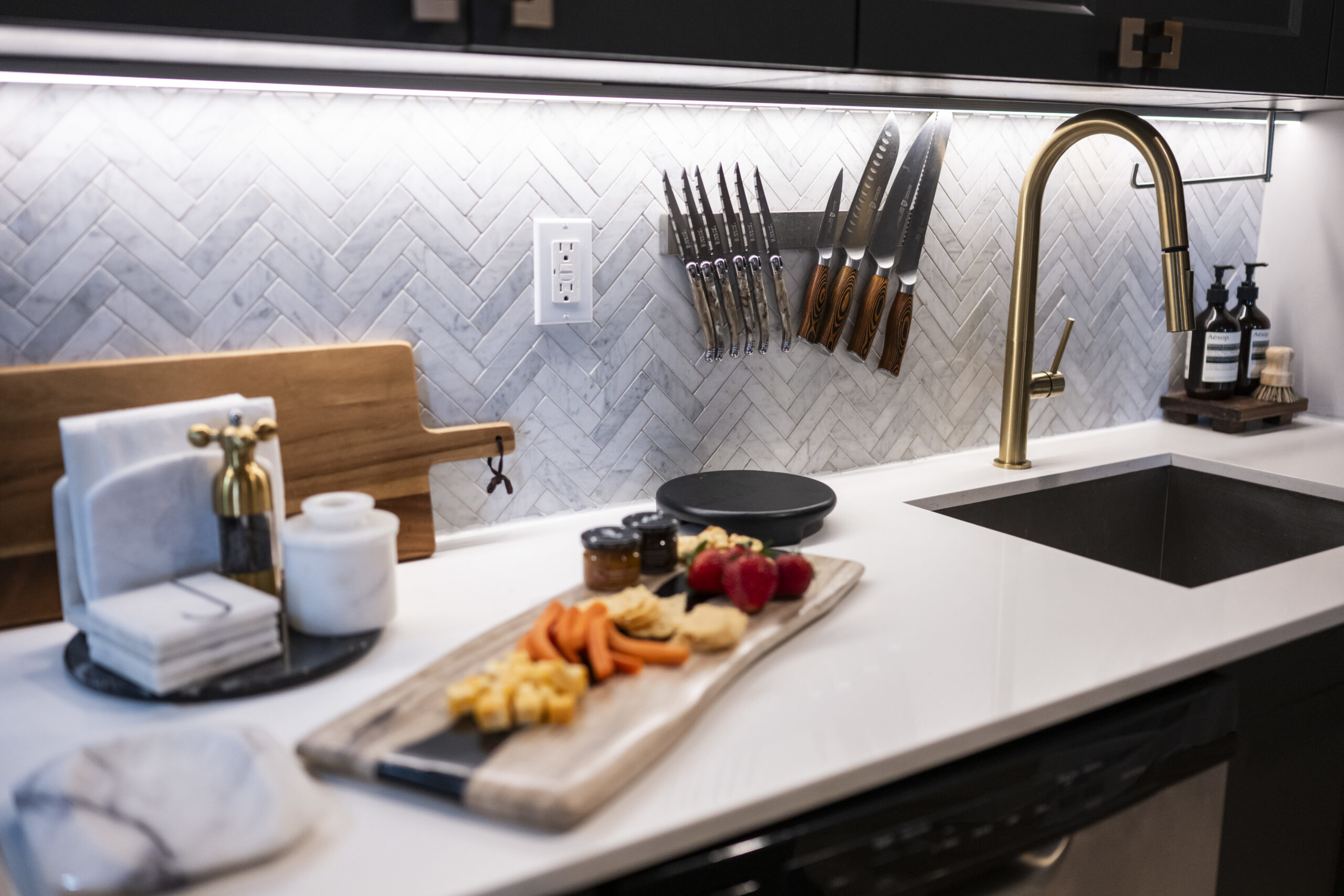
    Bright red strawberries and orange carrot sticks on the kitchen cutting board and greenery in white sculptural vases on the white counter and black dining table add rare splashes of color to Jasmine Williams’ one-bedroom apartment.

    Williams has lived in her mostly two-toned residence in Garden Court Towers, in the Garden Court neighborhood in West Philadelphia, for four years. She loves the “clean and classic” white of the apartment’s walls, chairs, rugs, ottomans, throw pillows, and other accessories.

    Contrasting black furnishings include leather chairs in the entry hall, a round table, the bench and chairs in the dining area, and black cabinets in the bedroom, which flank a radiator whose cover she painted black. She also painted the wall dividing the entry hall and the living area black.

    Recently, Williams’ niece, Aubrey Harris, painted the folding doors to the laundry black. The rest of the doors in the apartment are white.

    Williams already had the essentials when she chose her dramatic decor. Her 1,000-square-foot apartment’s renovated kitchen had black cabinets with white countertops. There were white fixtures in the bathroom and powder room. The laminate floors resembled white oak.

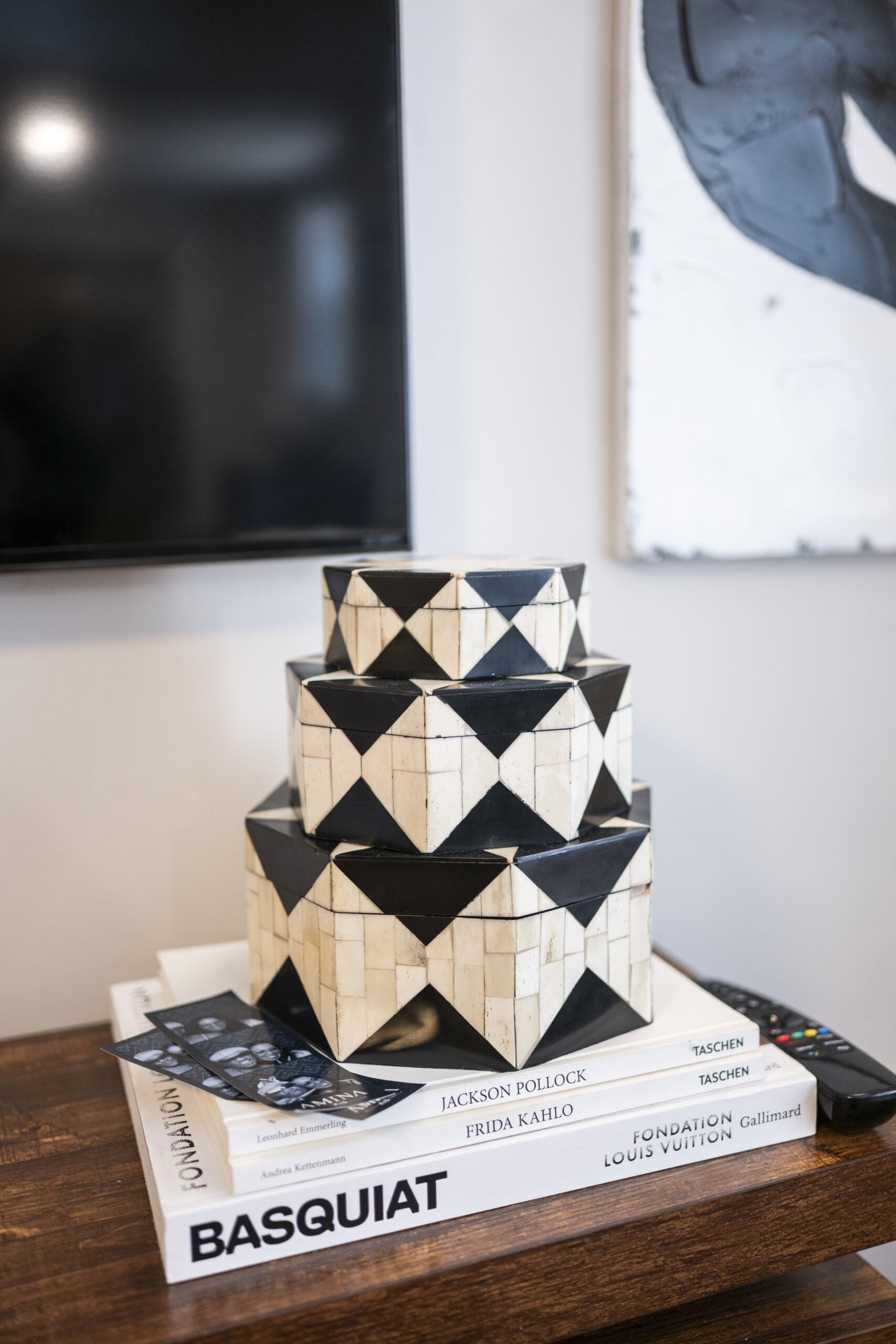
    Decorative boxes and books are stacked on a media console in the living room.
    Decor on the nightstand next to Williams’ bed.

    Williams, 36, spent the first decade of her life in a home on Larchwood Avenue, just blocks from Garden Court Towers. Her family then moved to Berlin, N.J. She graduated from Eastern Regional High School in Voorhees.

    During the early days of the COVID-19 pandemic, she lived with her grandmother, Dolores Cook, in Northeast Philadelphia and redecorated Cook’s home.

    “From the time she was a little girl Jasmine always liked art and design,” her mother, Yvette Baker, boasted during a visit with her daughter.

    Williams was a project manager for nonprofits before becoming an interior design consultant. She is also a disaster relief volunteer for the American Red Cross in Philadelphia.

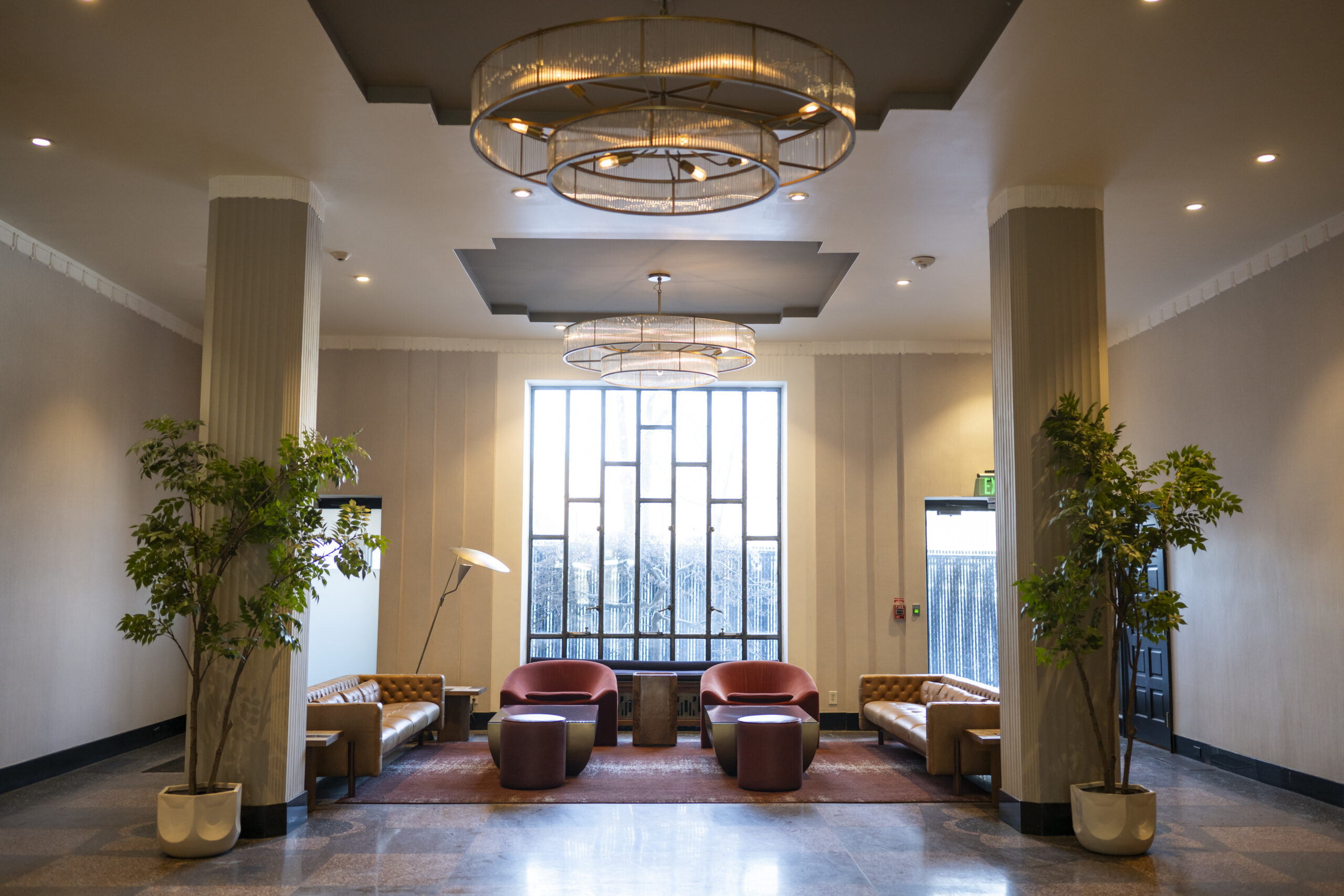
    After her grandmother’s death in December 2020, “the housing market was awful,” Williams said, so she looked for a place to rent. She visited Garden Court Towers and admired the 1929 Art Deco lobby with its canopied entrance, carved wood paneled foyer, tile walls and floor, and original brass U.S. Mail box.

    The lobby of the Garden Towers apartment building in West Philadelphia.

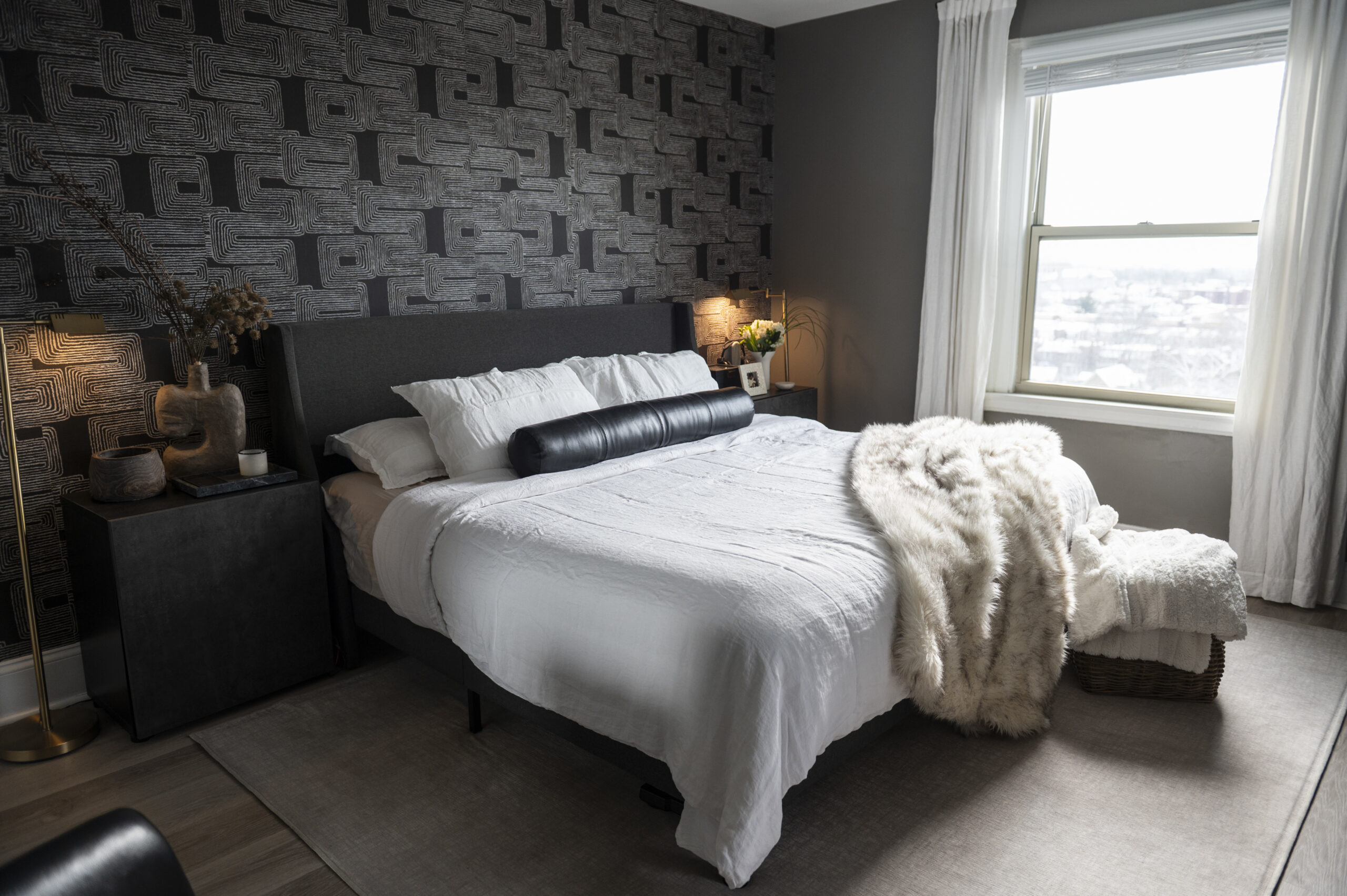
    The Art Deco geometric design of the hallway carpeting is similar to the gray-and-white pattern of the wallpaper Jasmine chose to hang behind her bed, which has a gray headboard. She hung gray wallpaper as an accent on two other walls.

    The living room couch is gray, as is the herringbone-patterned kitchen backsplash.

    Gray softens the bold black-and-white surroundings, as does the wood-toned Parsons table under the TV in the living room. Brass lamps in the bedroom and a gilt mirror in the dining area add sparkle.

    The dining area, with a variety of monochrome shapes and textures, connects to the living area.

    The miniature antique radio on the Parsons table is actually a holder for wood coasters. Williams inherited the radio from her grandmother.

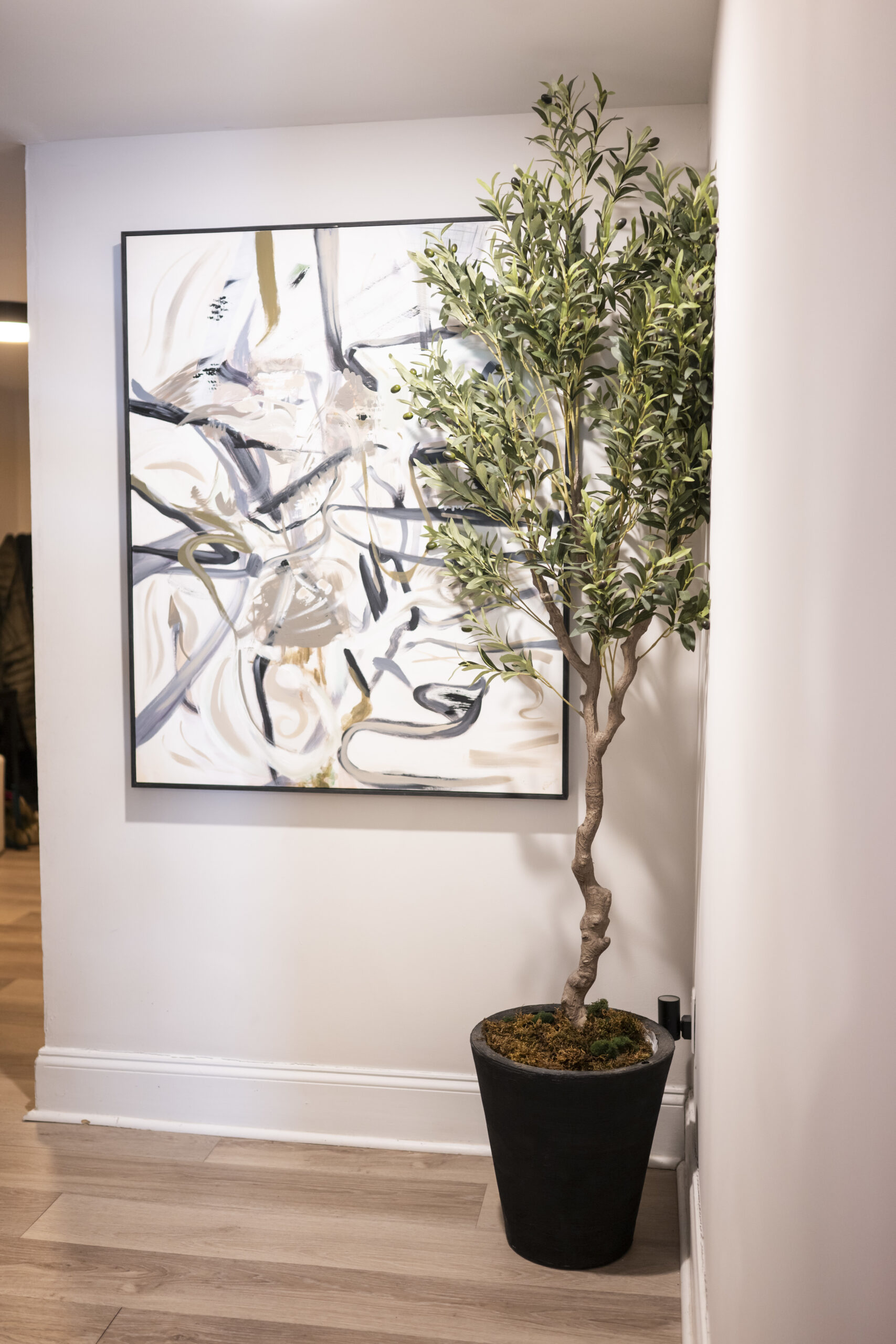
    Abstract art in the apartment include two striking oil paintings from Amazon in the entry hall, depicting black figures on a white background.

    Nearby hangs a painting of gray, beige, and black stripes and swirls on a white background. The work was more colorful when Williams purchased it from CB2, but she and her sister Melyssa Pollard brushed over the vibrant shades to produce a more muted palette.

    Williams’ brother in law, Jay Pollard, and her father, Edward Williams, installed light fixtures and hung paintings in the apartment.

    Her favorite shopping destinations are CB2 and Crate & Barrel, but she has also purchased items from Amazon, Pottery Barn, Wayfair, and other vendors. The cowhide rug under the dining table came from Burke Decor.

    Patterned wallpaper and simple white bedding contrast in the bedroom, where brass lamps add some shine.
    In the kitchen, an arrangement of brightly colored produce stands out from the black, white, and gray.

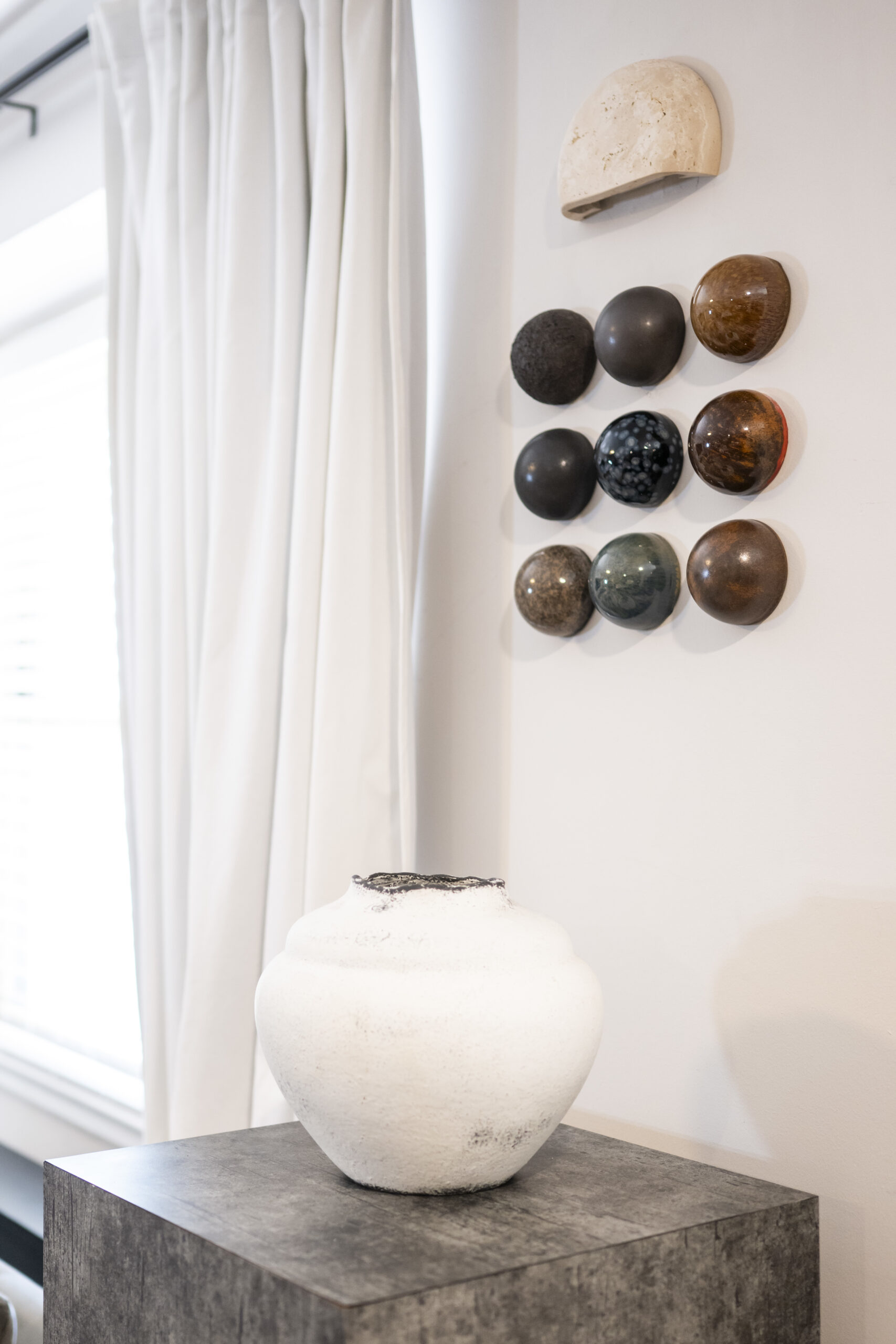
    In the living room, a unique art installation of nine small domes in shades of black, brown, and gray are arranged on the white wall above a white clay bowl on a black pedestal. The glazed clay domes are the work of New Zealand ceramicist Sam Mayell.

    Large windows fill the tenth-floor apartment with light.

    An abstract painting and large olive plant decorate the hallway.
    Ceramics and wall art bring texture to the apartment’s interior design.

    In the bedroom, with its white and black furnishings, a window frames a view of Garden Court homes below with their snow-covered lawns and rooftops.

    The winter-white scene was “keeping my theme going,” quipped Williams.

    Is your house a Haven? Nominate your home by email (and send some digital photographs) at properties@inquirer.com.

  • A statue of a founding father who enslaved people was taken down in Wilmington. It’s moving to D.C.’s Freedom Plaza.

    A statue of a founding father who enslaved people was taken down in Wilmington. It’s moving to D.C.’s Freedom Plaza.

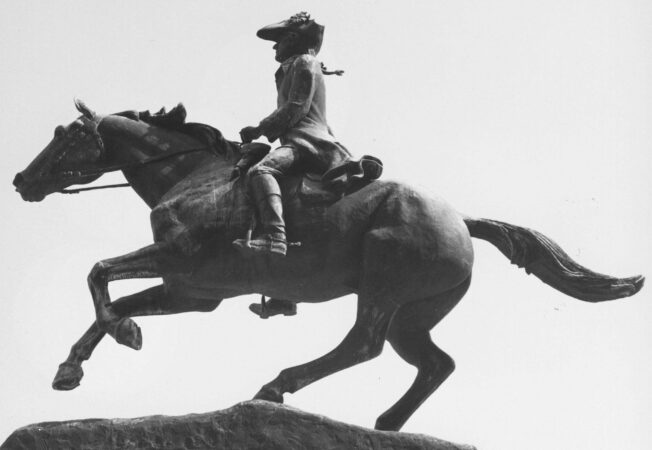
    The statue of a founding father who enslaved Black people in Delaware is moving from a New Castle storage facility to a venerated spot in Washington’s Freedom Plaza as part of President Donald Trump’s celebration of America’s 250th birthday.

    Wilmington officials took down the statue of Caesar Rodney in 2020 amid Black Lives Matter protests and a national reckoning over racism in America, taking it out of public view at the same time as the city removed a statue of Christopher Columbus for similar reasons.

    It wasn’t clear when the bronze monument of Rodney on a horse will be put on temporary display in the plaza on Pennsylvania Avenue, near the White House, according to the New York Times, which learned of the story from a Feb. 3 National Park Service memo.

    The statue had stood in Wilmington’s Rodney Square for around 100 years.

    Rodney’s legend includes a partially disputed story about riding two horses 82 miles from Dover to Independence Hall to sign the Declaration of Independence — a trip five times longer than Paul Revere’s more famous ride a year earlier.

    Rodney arrived spent and mud-spattered on July 2, 1776, to sign the Declaration before its formal adoption on July 4, breaking the tie between two other Delaware delegates, one of whom wouldn’t sign, said Dick Carter, chairman of the Delaware Heritage Commission. The near last-minute inscribing is true, Carter and others say, but it’s possible that Rodney, who suffered from facial cancer and was quite ill, may have covered some of the mileage in a carriage.

    Giving his life to public service, Rodney was a brigadier general in the Continental Army, a sheriff, a justice on the Delaware Supreme Court, and a delegate from Delaware to the Continental Congress.

    Rodney was also among the 41 out of 56 Declaration signers who enslaved people. He was a complex and contradictory figure, especially when viewed through a 21st-century lens, Carter said, adding that it is not fair to “judge historical figures by the norms and mores of the present day.”

    Rodney enslaved anywhere from 20 to 200 people on his estate near Dover. But his legacy also includes a bill he introduced in the state legislature to end the practice of importing enslaved people into Delaware. And upon his death, he freed the 18 people he’d enslaved at the time.

    Trump, during his first term in 2020, praised Rodney in a proclamation issued on the founding father’s birthday.

    In the proclamation, Trump condemned the removal of Rodney’s statue “as part of an ongoing, radical purge of America’s founding generation.”

    Trump said it was a “re-education attempt” and the “end result of an extreme anti-American historical revisionism,” generated by “critical race theorists 
 [and] mobs on city streets” who say that America is not an exceptional country “but an evil one.”

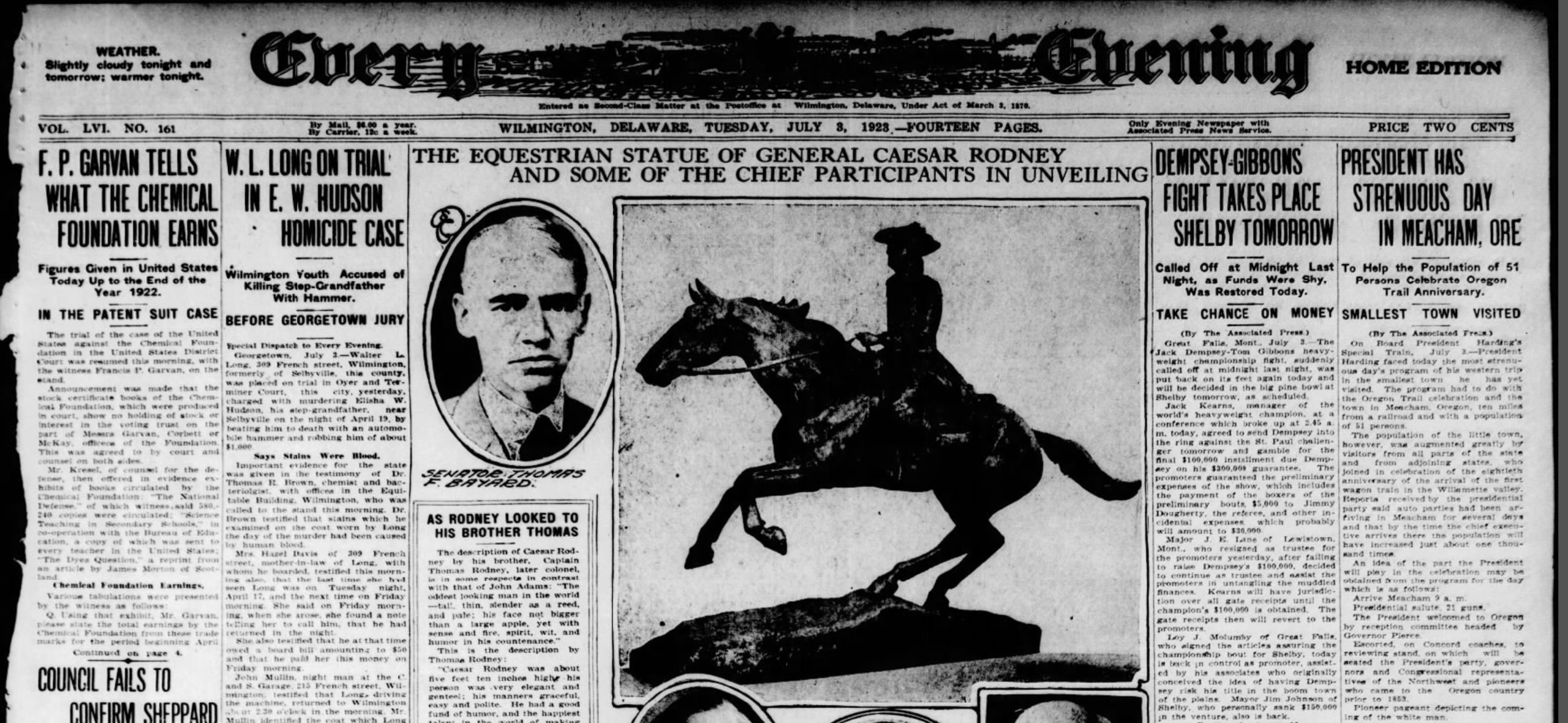
    An image of the front page of the July 3, 1923, edition of the News Journal of Wilmington, Del., which makes note of the dedication of the Caesar Rodney statue on the following day.

    Trump has expressed similar views during his second term and taken steps to change the way Americans are educated about the nation’s history.

    In January, the administration ordered the removal of exhibits depicting slavery at the President’s House in Independence National Historical Park. The U.S. Department of Interior said that the slavery-related materials were being reviewed “to ensure accuracy, honesty, and alignment with shared national values.” Last month, a federal judge ordered the exhibit’s restoration, though the administration is still pursuing the matter.

    In the summer of 2025, the administration restored two statues in the D.C. area that commemorated the Confederacy. One was a statue of Confederate Gen. Albert Pike, the only outdoor statue of a Confederate military leader in the nation’s capital.

    “We see a pattern of celebrating enslavers while reducing teaching about slavery in the United States and limiting diversity, equity, and inclusion,” said Timothy Wellbeck, director of the Center for Anti-Racism at Temple University. “Caesar Rodney has components of character not worth celebrating despite his contributions to America’s founding.”

    ShanĂ© Darby, a councilwoman from Wilmington, told the Times that glorifying Rodney was “a slap in the face of Black and brown people of this city… . You can have him, D.C.”

    That’s a view shared by other people in the Black community, said Syl Woolford, a member of the Delaware Heritage Commission. “Some folks in Wilmington are saying, ‘Get that white boy out of here,’” Woolford said. “They tell you there’s no place here for the statue of a slave owner.”

    But, he and other historians say, Rodney’s place in history shouldn’t be completely ignored. Even with the statue gone, elements of Rodney remain. He still appears on the quarter that honors Delaware. And his square continues to bear his name, although there’s discussion it’ll be renamed after President Joe Biden, whose ties to Delaware run deep, Carter said.

    The Department of Interior didn’t answer a request from The Inquirer to comment on criticism from Wellbeck and others that the Trump administration is exalting an enslaver. Instead, a spokesperson said, “Rodney’s journey itself reflected extraordinary courage.”

    “By telling the full story 
 we strengthen our shared understanding and ensure that future generations inherit not just the land we love, but the truth of the journey that brought us here,” the spokesperson added.

    To avoid further consternation in Wilmington, there’s a plan to send Rodney’s statue to Dover, not Wilmington, after the 250th celebration is over, said Republican State Sen. Eric Buckson.

    “Dover is Rodney’s birth and resting place,” Buckson said.

    He added, however, that “in this climate, folks are rightfully concerned about having monuments minimizing slavery.”

    So, whenever Rodney comes back, his statue will be amended, Buckson said.

    “It’ll include a plaque,” he added, “and that will have the story that, along with everything else, Caesar Rodney was a slave holder.”

  • In Philly homes, wallpapering is back and the rules have changed

    In Philly homes, wallpapering is back and the rules have changed

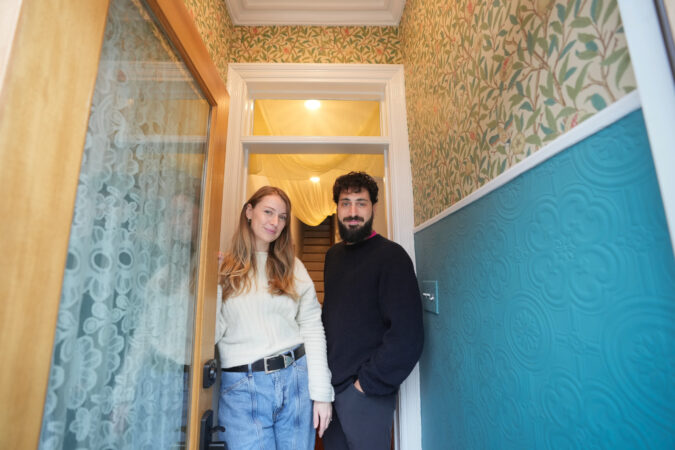
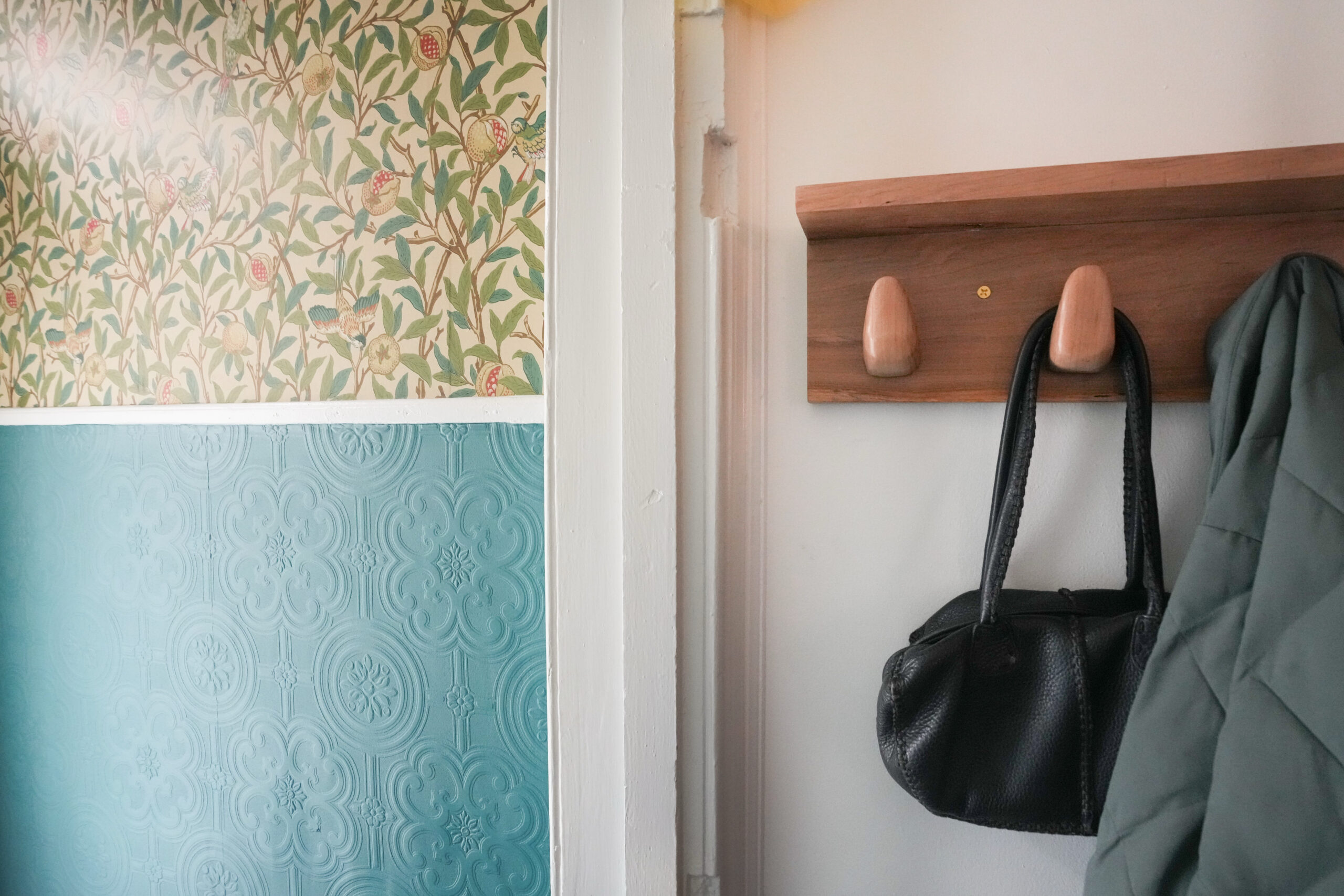
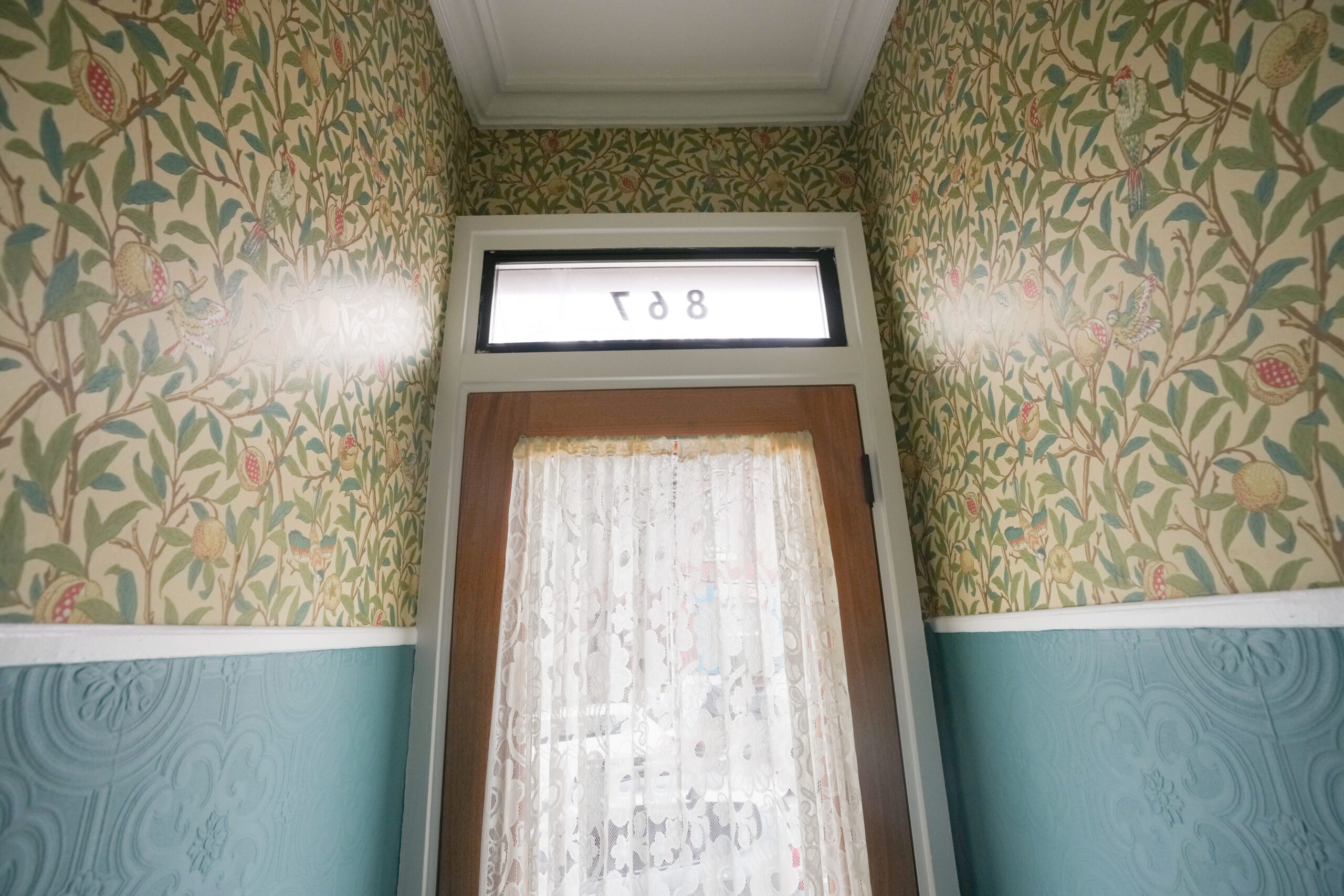
    When decorating their circa-1920 townhouse, Eli Steiker-Ginzberg and Sarah Schrading wanted their vestibule to represent the home’s history. They chose a classic William Morris wallpaper called Bird and Pomegranate for above the chair rail and a textured Anaglypta paper painted in Benjamin Moore Baltic Sea below.

    “Colonial Wallcoverings had so many options it was overwhelming,” recalled Steiker-Ginzberg, who lives in the Fairmount area. “The leaves and birds and colors of this one really jumped out.”

    The William Morris paper was a splurge, so to stay on budget, they matched it with a less expensive paintable wallpaper. In total they spent about $2,000 on the materials and installation “for the smallest room in my house,” he joked.

    Wallpaper is showing up in unique ways and in new places. Bold patterns on the ceiling, colorful oversized florals on an accent wall, custom murals in the living room, and funky patterns in the closet and mudroom that add pizzazz and make a statement.

    The wallpapered vestibule in Eli Steiker-Ginzberg and Sarah Schrading’s home leads to a painted wall on the home’s first floor.

    More homeowners are embracing bold wall coverings, according to the 2026 U.S. Houzz Fall Design Trends Report. The shift reflects a move toward deeply personal designs, with homeowners opting for vivid, expressive details that make their spaces feel unique and emotionally resonant, the report found.

    “Wallpaper has character and brings out the life and beauty of a room,” said Paul Sperling, owner of Colonial Wallcoverings in Queen Village. “It shows off your personality.”

    Modern wallpapers are also easier to hang and strip than older versions, with paste-the-wall and self-adhesive DIY options.

    “A lot of people are afraid of wallpaper because it used to be a nightmare to take off,” Sperling said. “But most wallpapers now are easier to remove because of changes in how the papers are printed.”

    Making a statement

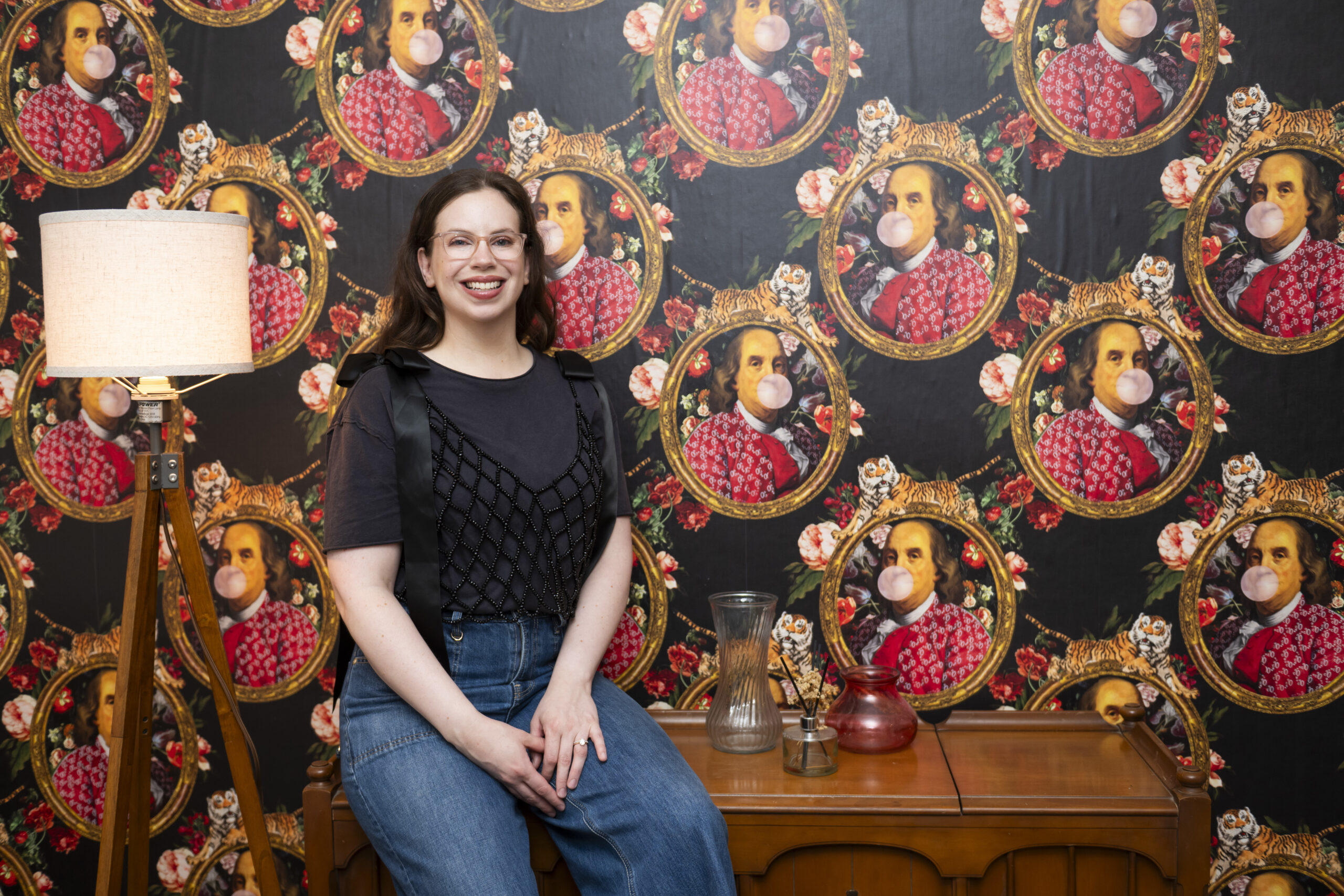
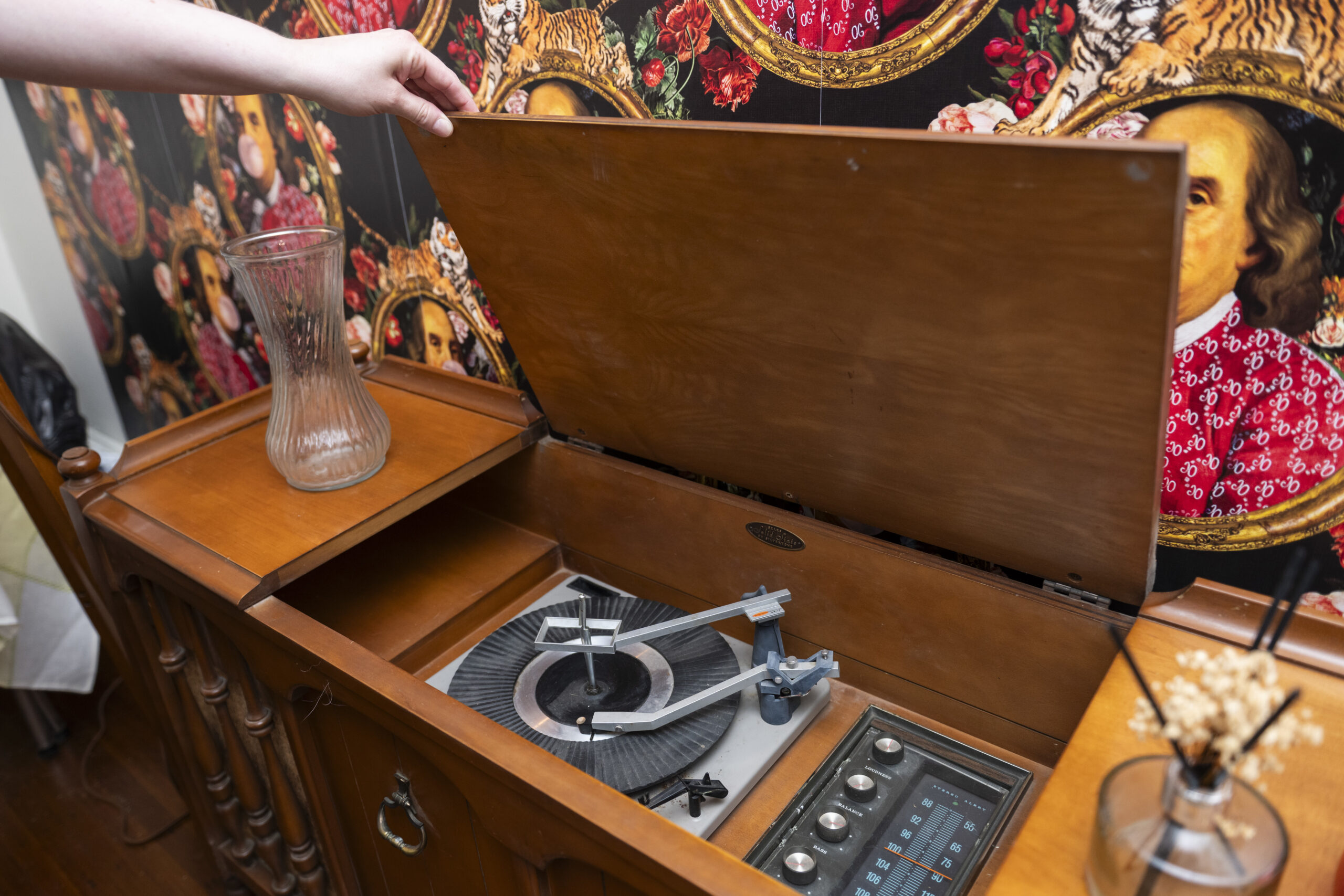
    When Jessica Maiuro moved into her Rittenhouse apartment in 2024, she wanted a wow factor as soon as she came through the front door. After a couple months of searching, she discovered a bold patterned wallpaper featuring Ben Franklin within a gilded picture frame blowing a bubble gum bubble, surrounded by a tiger and flowers.

    “I wanted something that would really make a bold statement and be a conversation starter when I hosted,” she recalled. “I had never seen any design like this, and I was instantly sold and in love. What could be more Philly?”

    Jessica Maiuro was delighted to find this Benjamin Franklin wallpaper for her home in Center City.

    Maiuro spent about $500 on the peel-and-stick wallpaper from the online seller Spoonflower and corralled her husband, John Jeong, and a friend to help her hang it. Her apartment is a rental, but she tested the paper and knows it will easily strip off when it’s time to take it down.

    When investing in wallpaper, consider where and how it will make the most impact. Wallpapers with small, repeating patterns work best in a smaller space, such as a powder room or vestibule.

    For larger spaces, wallpaper murals can serve as a focal point on the wall behind the bed or sofa, or continuing across several walls. They often feature grand designs or landscapes, including big, bold flowers and jungle scenes. Murals are more popular than ever, said Sperling, with brands like Rebel Walls and Glamora that specialize in custom sizes.

    For a more personal design, Rich Art Graphics in Center City will take your artwork and create a custom wallpaper to fit your dimensions.

    “Most of the time, a designer or artist will come to us with a fine art interpretation to be printed and installed in homes,” said Michael Antner, the print shop’s owner. “It’s something personal that they are very passionate about.”

    For example, a client may have a favorite painting or photograph they want to reimagine on an entire wall. Cityscapes and naturescapes are especially popular. Rich Art will create a digital file with the picture and manipulate it to the exact size of the wall.

    They offer traditional wallpaper adhered with paste or peel-and-stick adhesive. The average cost is $8 per square foot to create the paper, plus installation.

    A record player dating to the 1960s sits in Maiuro’s home under the gaze of bubble-gum-chewing Ben Franklin.

    The fifth wall

    The ceiling has become the fifth wall of the room, where wallpaper can make a bold statement and add a new dimension. Options include very intricate designs where viewers can spot new details to simpler patterns like clouds or green tree canopies.

    “It’s much more dramatic and brings more attention to the room,” Sperling said. “It takes vision.”

    Parents are even wallpapering nursery ceilings as a stimulating focal point for their babies.

    “Wallpapered ceilings have been a design staple for centuries in Europe, especially in homes where pattern and ornamentation played an important role in creating atmosphere and storytelling,” said Krystal Reinhard, founder and principal designer at Old Soul Design Studio in downtown West Chester.

    She’s seen a noticeable uptick in the past five years as homeowners look for more expressive, layered interiors. Papered ceilings work in smaller, contained spaces like powder rooms, nurseries, and offices. But they can also make sense on larger ceilings in bedrooms, dining rooms, and kitchens.

    When papering the ceiling, it’s important to consider the scale of the pattern — motifs or tonal textures often work beautifully overhead, Reinhard said. It’s best to hire an experienced installer because ceilings require precision and strong adhesive knowledge. Before committing to a pattern, one should test how it interacts with overhead lighting — fixtures can cast shadows that change the effect.

    “A wallpapered ceiling is one of the most effective ways to give a room soul,” Reinhard said. “It’s a detail that feels thoughtful and intentional.”

    Especially in the Philadelphia region, where so many homes have architectural character worth celebrating, treating the ceiling as a design opportunity can elevate the entire space, she said.

    It’s a way to honor historic craftsmanship while embracing a very current, expressive design moment.

    Steiker-Ginzberg and Schrading chose the wallpaper in their vestibule to represent the home’s history.

    How much does wallpapering cost?

    Wallpaper costs vary widely, starting at about $40 per 50-square-foot roll for peel-and-stick options from online sellers such as Wayfair. Textured materials from brands like Arte or historical luxury design houses like de Gourney or Zuber can reach several hundred dollars per individual square foot, Sperling said.

    Many companies provide a measuring calculator to determine exactly how much is needed for your project. It’s essential to take pattern repeat into account and add an extra 10% for mistakes and future repairs.

    Most companies sell samples. It’s helpful to hang those in various spots and observe over a few days to see how the pattern looks in the light at different times of day and night.

    For Steiker-Ginzberg, the wallpaper investment was worthwhile.

    “There’s something important and meaningful about the portal into your house and there being an intentional transition,” he said. “It makes a difference in the impression people get.”

  • Do you buy a poinsettia to celebrate the holiday season? There is a very Philly history to that.

    Do you buy a poinsettia to celebrate the holiday season? There is a very Philly history to that.

    On Nov. 24, 1827, a group of gentleman who wanted to carry on the tradition of 18th-century area botanists John Bartram and James Logan held the first meeting of the Pennsylvania Horticultural Society.

    Like Bartram and Logan, these men were eager to showcase Philadelphia’s fertile ground for native plants and exotic imports. So, they would often bring along plants to their meetings.

    And it wasn’t just the men at these meetings. According to a history of the Pennsylvania Horticultural Society, published in 1927, members brought “more than 40 specimens of plants and flowers, 15 varieties of pears and apples, American grape wine, cauliflower, and broccoli,” to a Nov. 3, 1828, meeting.

    Less than a year later, the inaugural Horticultural Society members decided to take their admiration of plants and flowers to the city at large.

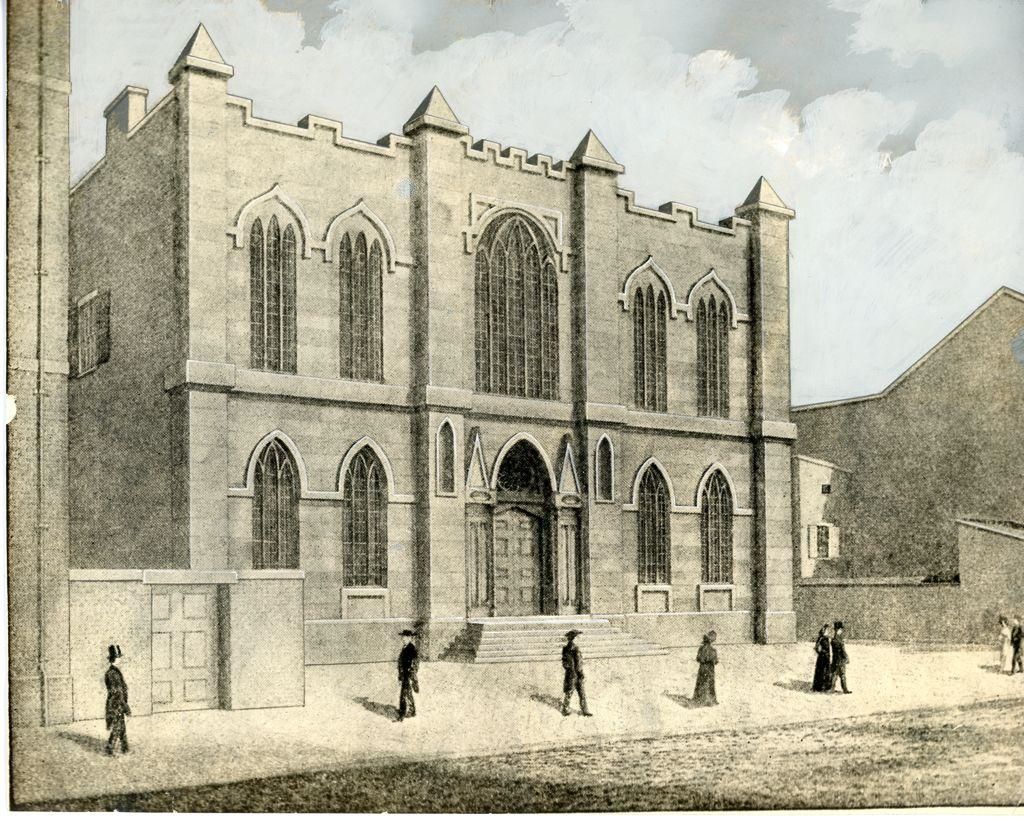
    The first Philadelphia Flower Show was held on June 6, 1829, at the Masonic Hall on Chestnut Street between Seventh and Eighth Streets.

    On June 6, 1829, the Horticultural Society held its first semiannual exhibition of fruits, flowers, and plants at the Masonic Hall on the 700 block of Chestnut Street. That was America’s first public flower show.

    The first flower show will be marked Saturday at the Philadelphia Downtown Marriott, just steps from the Pennsylvania Convention Center where the 197th Philadelphia Flower Show’s final weekend will be underway.

    The celebration is one of this year’s weekly Firstivals. Each Saturday in 2026, the Philadelphia Historic District is throwing a day party marking events that happened in Philadelphia before anywhere else in America and often the world as part of America’s 250th birthday.

    Philadelphia’s first Flower Show, said Janet Evans, librarian for the Pennsylvania Horticultural Society, was a one-day affair.

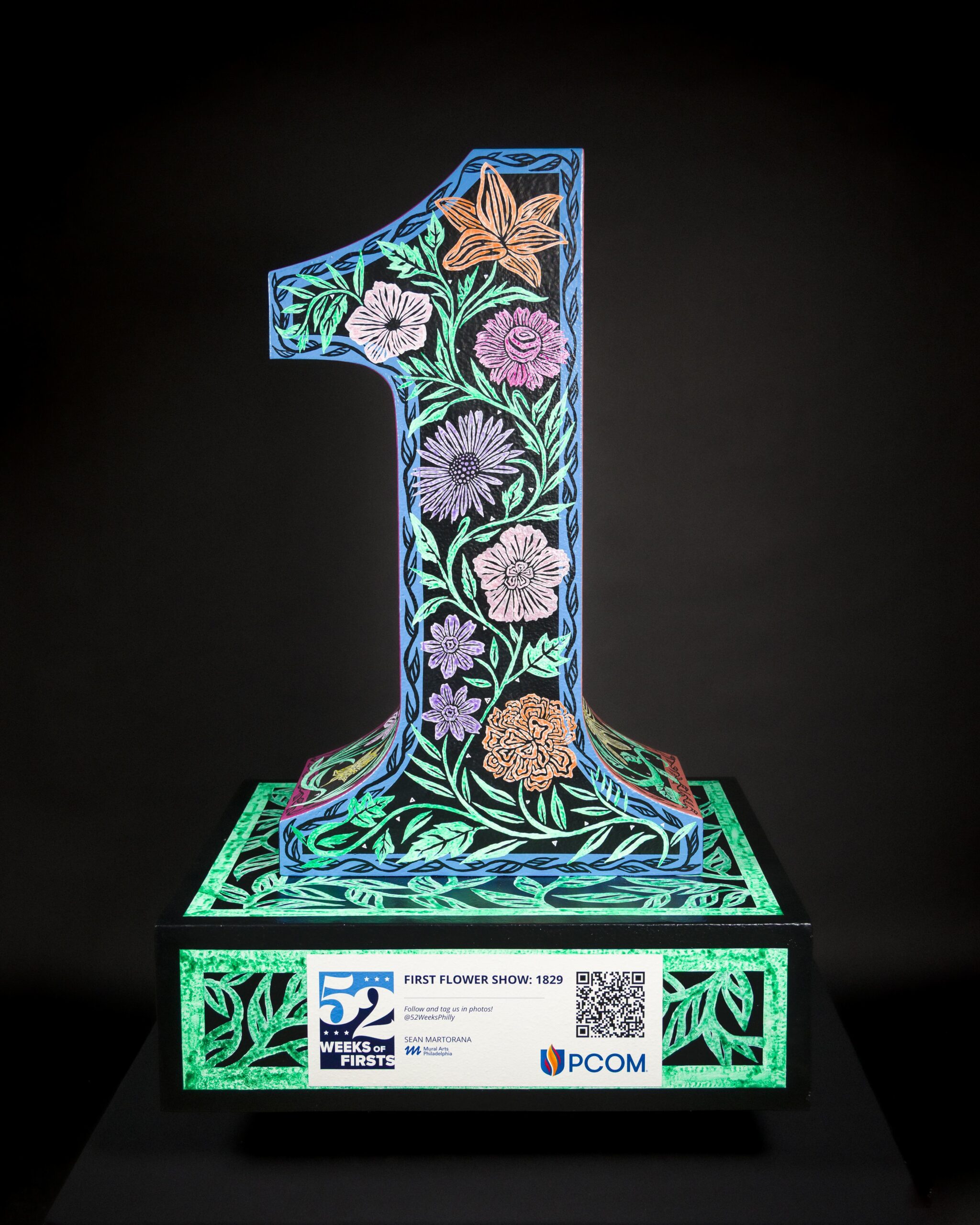
    Sean Martorana’s No. 1 honors the role of art and nature in bringing communities together.

    On display were the bigleaf Magnolia, geraniums, carnations, lilies, and pomegranate, Evans said. It was also the first time the poinsettia — now a symbol of the holiday season — was exhibited in North America.

    “So many plants we take for granted in our gardens today were introduced to the Philadelphia public at the Flower Show,” she said, adding that at later exhibitions, more exotic plants from birds of paradise to dahlias made appearances.

    The show was held in June until the 1830s when it was moved to September to mark the fall harvest. The present-day multiday spring flower shows started in the mid-1920s, to debut Easter blooms.

    The Flower Show was held in venues in West Philly before making the Convention Center its permanent home in 1996. (Although it was held in FDR Park in 2021 and 2022 during the pandemic.)

    There were no shows during World War I (1917-1918) and World War II (1943-1946) because resources were being diverted to war efforts. During those years, Evans said, the Horticultural Society organized Victory Garden Harvest Shows, set up to encourage people to grow vegetable gardens at home and their communities to compensate for wartime shortages.

    There were similar shows during the Great Depression, Evans said. “People flocked to those shows,” she added.

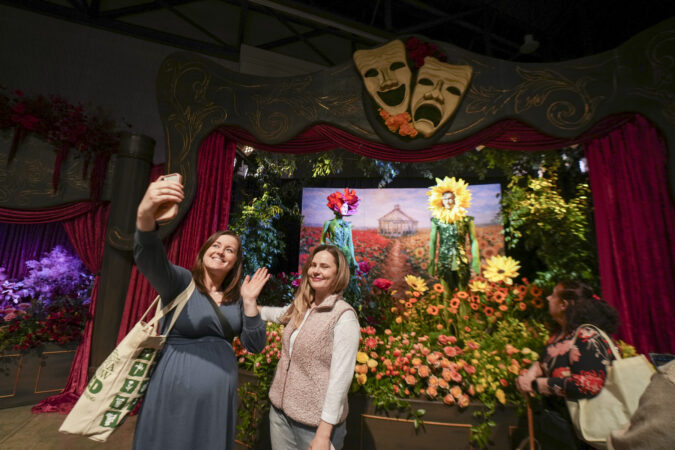
    Laura Blanchard, member and volunteer with the Philadelphia Flower Show, poses for a photo by a flower display at a news conference for a first-look unveiling of the 2026 Philadelphia Flower Show, “Rooted: Origins of American Gardening,” at Union Trust on Wednesday, Jan. 14, 2026.

    Today the Philadelphia Flower Show is a major city attraction. Last year, more than 235,000 people attended, said Lauren Scully, public relations and communications manager for the Pennsylvania Horticultural Society.

    This year’s Flower Show, “Rooted: Origins of American Gardening‚” celebrates America’s 250th birthday, honoring the people, places, and traditions that have shaped gardening.

    “It all started from men whose whole idea was to get together, admire, and share their love of plants,” Evans said.

    This week’s Firstival is Saturday, March 7, 11 a.m.-1 p.m., Philadelphia Marriott Downtown, 1201 Market St. The Inquirer will highlight a “first” from the Philadelphia Historic District’s 52 Weeks of Firsts program every week. A “52 Weeks of Firsts” podcast, produced by All That’s Good Productions, drops every Tuesday.

  • Two Philly high schools are still fighting their proposed closures, even after officials tweaked plans to appease them

    Two Philly high schools are still fighting their proposed closures, even after officials tweaked plans to appease them

    Superintendent Tony B. Watlington Sr. said he heard the public outcry over his recommendations to close 20 schools.

    The Philadelphia School District leader fine-tuned his facilities plan last week, dropping the closure list down to 18 schools — and changing recommendations for Paul Robeson High School and Lankenau High School.

    Both schools would still close under the plan, which is now in the school board’s hands. Instead of merging into large neighborhood high schools, however, the small, selective-admission schools would be absorbed by magnets.

    Watlington said the tweaks would still allow the district to bring more high-quality academic and extracurricular opportunities into neighborhood schools while acknowledging the need to manage limited resources.

    But students, staff, parents — and some powerful allies at both schools — say Watlington’s counter-proposal isn’t enough. Both communities are still fighting.

    Under the revised plan, Lankenau would merge with Saul, not Roxborough, and Robeson would merge into Motivation, not Sayre.

    State Rep. Morgan Cephas (D., Phila.) recently visited the Philadelphia Flower Show, where she and other officials marveled at Lankenau students’ exhibit, which examines abundance, roots, and connections through culturally important plants. The display won a gold medal and the prestigious Alfred M. Campbell Memorial Trophy.

    The dichotomy struck Cephas, she said. Lankenau students “are at the Flower Show, and [the district] is trying to close the school?”

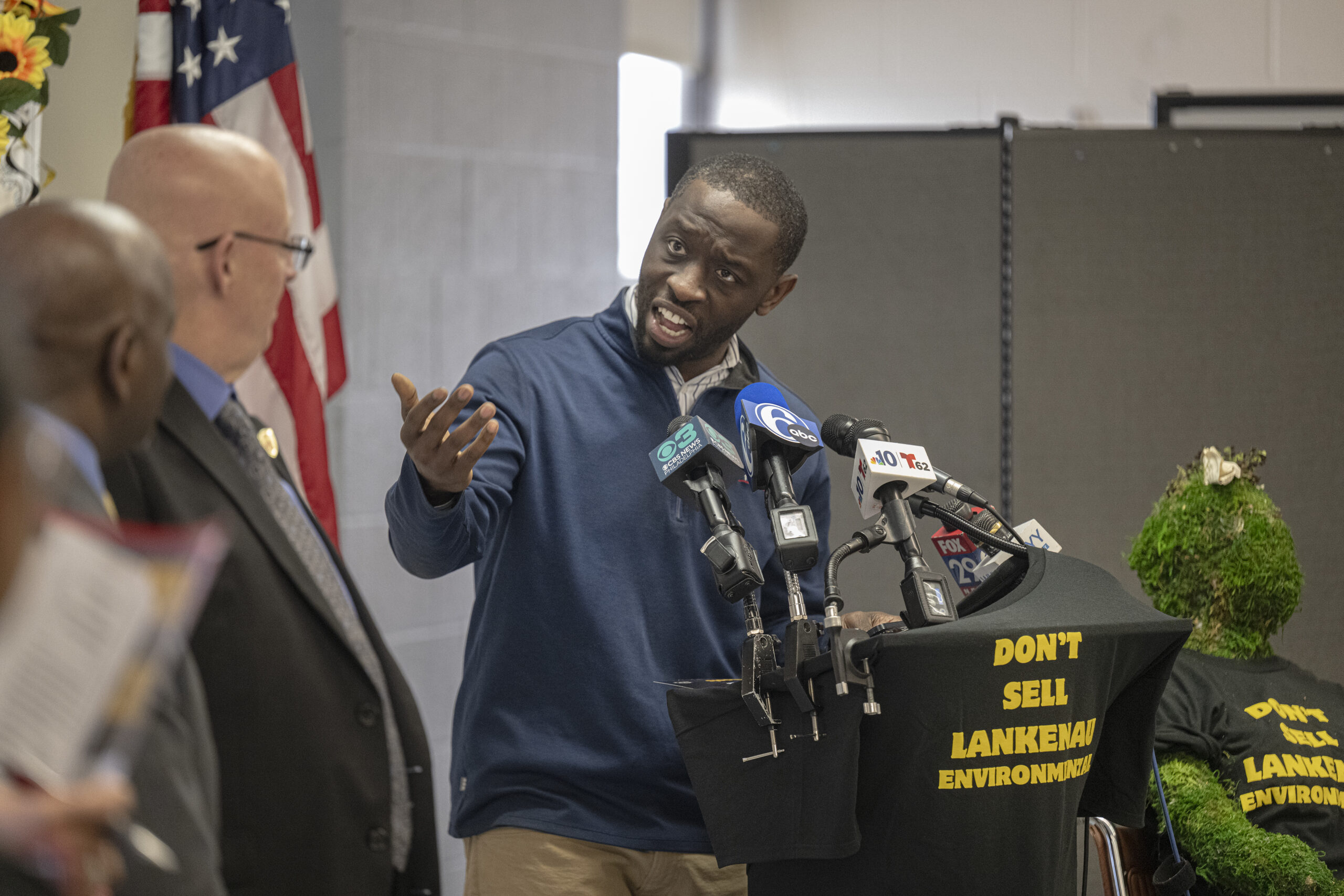
    On Wednesday, students, parents, lawmakers, and Philadelphia Federation of Teachers officials gathered at Lankenau to drum up support for Gov. Josh Shapiro’s budget proposal. But really, it was another save-our-school rally.

    A ‘prime example of a successful school’

    Lankenau “is a prime example of a successful school,” said Messiah Stokes, an 11th grader at the Upper Roxborough school. The school has a 100% graduation rate, and is Pennsylvania’s only three-year agriculture, food, and natural resources career and technical education program.

    The school itself sits on 17 acres, which district officials have proposed giving to the city — though a 1970s legal agreement could foil that plan. Lankenau is also adjacent to 400 more wooded acres via the Schuylkill Center for Environmental Education. The environmental center shares its land and its opportunities with students, who hold bird-watching clubs on breaks and hold classes outside when weather permits, and have abundant internship opportunities.

    “My school is a prime example of a successful school,” said Stokes.

    Watlington has said that Saul — the city’s agricultural magnet on a working farm on Henry Avenue — has a mission that’s closely aligned with Lankenau’s, but supporters say Lankenau’s success is closely tied with its wooded campus, its streams, and its ecosystems.

    Councilmember Isaiah Thomas speaks at Lankenau High School during a gathering to support the efforts to fight closing recommendations on Wednesday.

    Councilmember Isaiah Thomas, chair of City Council’s education committee, is incredulous that the district is attempting to close the school, which educates mostly Black students.

    “I wonder if Lankenau did everything that it currently does: graduation rate 
 community involvement, the educators’ participation — I wonder if Lankenau was 98% white, will we be closing Lankenau?” Thomas said.

    Lankenau enrolls 228 students; its enrollment took a hit when the district changed its special-admissions policy. District officials have said that the school system lacks the long-term funding to drive academic improvement while continuing to operate 216 schools that have 70,000 empty seats.

    Still, “small schools are worth the investment,” said Amy Szymanski, a special-education teacher at the school. “Shutting down a school doesn’t just impact one community, it shakes other schools that have to absorb the impact as well.”

    Szymanski urged district officials and decision makers to come up with different plans.

    ‘Culture is not transferable’

    Robeson did everything the district asked it to do and then some, said Elana Evans, a longtime educator at the West Philadelphia school.

    The school was heralded as a model for other Pennsylvania public schools by former Gov. Tom Wolf. It won citywide prizes and sent a student to Harvard University. Its students successfully petitioned district leaders for air-conditioning in their building. And its staff secured donations to have a major cafeteria renovation, though its building is still judged in “poor” condition by district standards.

    “Why can’t Paul Robeson have a new school?” said Evans, who previously taught at University City High, closed by the district in 2013. “Haven’t we proved ourselves, haven’t the kids sacrificed enough? Haven’t they shown what they can do and what they’re willing to do?”

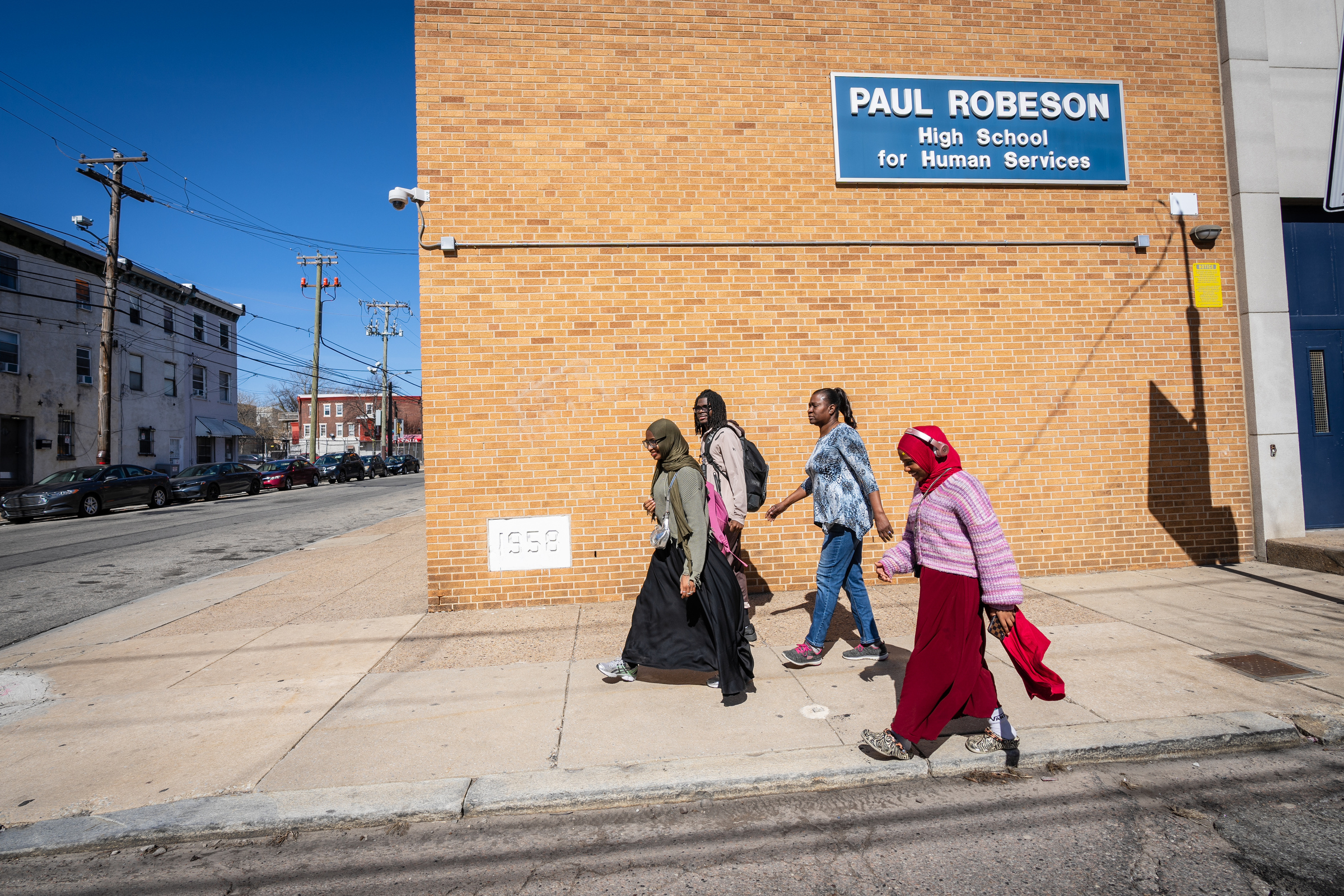
    Students walk outside Paul Robseon High School with Elana Evans, a Robeson teacher (in blue) in this 2025 file photo.

    And though moving to Motivation, in Southwest Philadelphia, may be slightly more palatable for some Robeson parents, for most, it won’t, said Evans.

    “Students would still have to go to 60th Street, traveling a distance,” said Evans. “If those parents wanted them to go to Motivation, they would have picked Motivation.”

    Motivation had initially been on the chopping block as well, but Watlington removed it from the list last week.

    The district has said it wants to preserve the successful Robeson culture, just elsewhere, but Kyana Hopkins, said that won’t work.

    “Culture is not transferable,” Hopkins said. “Make it make sense.”

    Samantha Bromfield, president of Robeson’s Home and School Association, said the district will lose families if Robeson goes away.

    “Understand that a parent like me will send my child back to being homeschooled” if Robeson closes, Bromfield said. “Your choice doesn’t fit my criteria of what I’m looking for my children.”

    Inheritance, and questions

    The Flower Show was abuzz Wednesday, with a crowd hovering around the Lankenau exhibit. “Inheritance” — a verdant wonderland showcasing plants grown from local seeds, set around a weathered wooden table — asked viewers to think of the question, “What tastes like home to you?”

    Lankenau High senior Sasha John (blue hoodie) explains her prize-winning school’s Philadelphia Flower Show exhibit to visitors on Wednesday.

    Several Lankenau students staffed the exhibit, answering questions — and showing visitors green “Keep LANK Open” fliers, encouraging passersby to share words of support for the school with the school board and City Council.

    “It doesn’t make sense to me,” said Amelia Pennycooke, a Lankenau senior, of the proposed closing. “We have so many opportunities at Lank.”

    Lankenau High School’s exhibit, which the school’s eco art class worked on all school year, won a gold medal and the Alfred M. Campbell Memorial Trophy at the Philadelphia Flower Show. “Inheritance” examines the question “what plants taste like home to you?” It was designed and built by Lankenau students.

    Noel Alford, a Lankenau parent, said the school needs to remain open, its land not used for any other purpose. The amendment to Watlington’s plan falls short, she said.

    “Saul is a mistake,” said Alford. “Saul is an agricultural school. They are two different magnet schools.”

    While elected officials have no say in which schools close, Thomas said it’s up to them to keep pressuring the board to rethink some closures, including Lankenau’s.

    “This is a legacy moment for us as elected officials,” said Thomas. No one “wants to add that black mark on their career that says you were the person that was in charge when this injustice took place.”