Blog

  • Homeland Security Secretary Kristi Noem faces rising calls for her firing or impeachment

    Homeland Security Secretary Kristi Noem faces rising calls for her firing or impeachment

    WASHINGTON — A groundswell of voices have come to the same conclusion: Kristi Noem must go.

    From Democratic Party leaders to the nation’s leading advocacy organizations to even the most centrist lawmakers in Congress, the calls are mounting for the Homeland Security secretary to step aside after the shooting deaths in Minneapolis of two people who protested deportation policy. At a defining moment in her tenure, few Republicans are rising to Noem’s defense.

    “The country is disgusted by what the Department of Homeland Security has done,” top House Democratic Reps. Hakeem Jeffries of New York, Katherine Clark of Massachusetts, and Pete Aguilar of California said in a joint statement.

    “Kristi Noem should be fired immediately,” the Democrats said, “or we will commence impeachment proceedings in the House of Representatives.”

    Republicans and Democrats call for Noem to step down

    What started as sharp criticism of the Homeland Security secretary, and a longshot move by Democratic lawmakers signing onto impeachment legislation in the Republican-controlled House, has morphed into an inflection point for Noem, who has been the high-profile face of the Trump administration’s immigration enforcement regime.

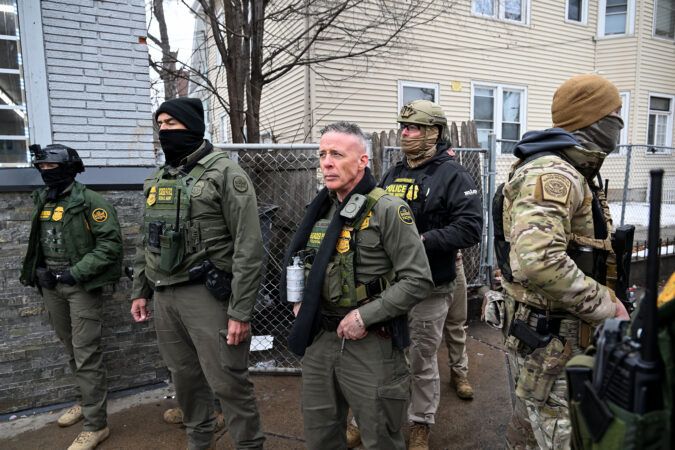
    Noem’s brash leadership style and remarks in the aftermath of the shooting deaths of Alex Pretti and Renee Good — in which she suggested Pretti “attacked” officers and portrayed the events leading up to Good’s shooting an “act of domestic terrorism” — have been seen as doing irreparable damage, as events on the ground disputed her account. Her alliance with Border Patrol chief Greg Bovino, who was recalled from the Minnesota operation Monday as border czar Tom Homan took the lead, has left her isolated on Capitol Hill.

    “What she’s done in Minnesota should be disqualifying. She should be out of a job,” Sen. Thom Tillis (R., N.C.) said.

    “I think the President needs to look at who he has in place as a secretary of Homeland Security,” Sen. Lisa Murkowski (R., Alaska) said. ”It probably is time for her to step down.”

    Trump stands by Noem and praises her work

    President Donald Trump defended Noem on Wednesday at multiple junctures, strongly indicating her job does not appear to be in immediate jeopardy.

    Asked by reporters as he left the White House on Tuesday for a trip to Iowa whether Noem is going to step down, Trump had a one-word answer: “No.”

    Pressed later during an interview on Fox News if he had confidence in Noem, the president said, “I do.”

    “Who closed up the border? She did,” Trump said, “with Tom Homan, with the whole group. I mean, they’ve closed up the border. The border is a tremendous success.”

    As Democrats in Congress threaten to shut down the government as they demand restrictions on Trump’s mass deportation agenda, Noem’s future at the department faces serious questions and concerns.

    The Republican leadership of the House and Senate committees that oversee Homeland Security have demanded that department officials appear before their panels to answer for the operations that have stunned the nation with their sheer force — including images of children, including a 5-year-old, being plucked from families.

    “Obviously this is an inflection point and an opportunity to evaluate and to really assess the policies and procedures and how they are being implemented and put into practice,” said Senate Majority Leader John Thune, a Republican from South Dakota, where Noem had been the state’s House representative and governor before joining the administration.

    Asked about his own confidence in Noem’s leadership, Thune said, “That’s the president’s judgment call to make.”

    Senate Democratic Leader Chuck Schumer called Noem a “liar” and said she must be fired.

    The fight over funding

    Assistant Secretary Tricia McLaughlin said in a statement that DHS enforces the laws from Congress, and if lawmakers don’t like those laws, they should change them.

    “Too many politicians would rather defend criminals and attack the men and women who are enforcing our laws,” McLaughlin said. “It’s time they focus on protecting the American people, the work this Department is doing every day under Secretary Noem’s leadership.”

    The ability of Congress to restrict Homeland Security funding is limited, in large part because the GOP majority already essentially doubled department funding under Trump’s big tax breaks and spending cuts law.

    Instead, Democrats are seeking to impose restraints on Border Patrol and U.S. Immigration and Customs Enforcement operations as part of a routine annual funding package for Homeland, Defense, Health, and other departments. Without action this week, those agencies would head toward a shutdown.

    To be sure, Homeland Security still has strong defenders in the Congress.

    The conservative House Freedom Caucus said Tuesday in a letter to Trump that he should invoke the Insurrection Act, if needed, to quell protests. The group said it would be “ready to take all steps necessary” to keep funds flowing for Trump’s immigration enforcement and removal operations.

    On the job for a year, Noem has clashed at times with lawmakers on Capitol Hill, as Republicans and Democrats have sought greater oversight and accounting of the department’s spending and operations.

    Noem has kept a low profile since the Saturday news conference following Pretti’s death, though she appeared Sunday on Fox News. She doubled down in that interview on criticism of Minnesota officials, but also expressed compassion for Pretti’s family.

    “It grieves me to think about what his family is going through but it also grieves me what’s happening to these law enforcement officers every day out in the streets with the violence they face,” she said.

    Once rare, impeachments now more common

    Impeachment, once a far-flung tool brandished against administration officials, has become increasingly commonplace.

    Two years ago, the Republican-led House impeached another Homeland Security secretary, Alejandro Mayorkas, in protest over the then-Biden administration’s border security and immigration policies that allowed millions of immigrants and asylum seekers to enter the U.S. The Senate dismissed the charges.

    On Tuesday, Maryland Rep. Jamie Raskin, the top Democrat on the House Judiciary Committee, said if the Republican chairman of the panel, Rep. Jim Jordan of Ohio, does not launch an impeachment probe, he would.

    Raskin said he would work with the top Democrats on the Homeland Security and Oversight committees to immediately launch an impeachment inquiry related to the Minnesota deaths and other “lawlessness and corruption that may involve treason, bribery or other high crimes and misdemeanors.”

    More than 160 House Democrats have signed on to an impeachment resolution from Rep. Robin Kelly (D., Ill.).
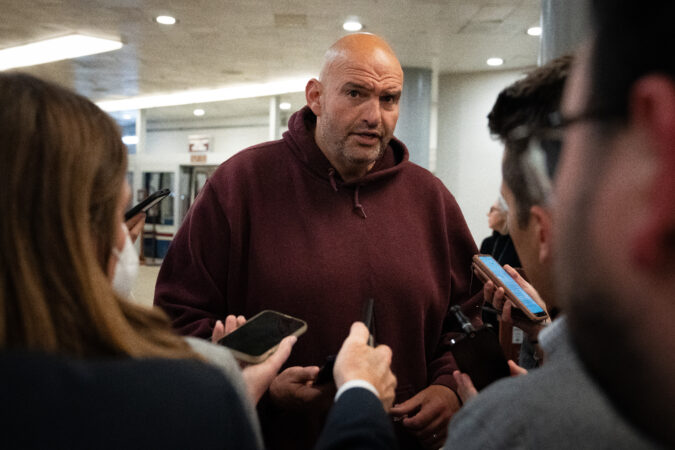

  • Why John Fetterman won’t shut the government down over ICE, even after calling for Kristi Noem’s ouster

    Why John Fetterman won’t shut the government down over ICE, even after calling for Kristi Noem’s ouster

    Sen. John Fetterman hates government shutdowns.

    The Pennsylvania Democrat has never backed a lapse in government funding since he took office in 2023.

    And this aversion does not appear to be changing anytime soon as the country is staring down the possibility of a second shutdown in roughly four months starting at the end of this week. Fetterman is facing public pressure from constituents and fellow Pennsylvania Democrats to join the party’s effort to block funding for the Department of Homeland Security from a government appropriations package in the wake of federal immigration agents shooting and killing two 37-year-olds in Minneapolis this month.

    Blocking the package would set off a partial government shutdown.

    “I will never vote to shut our government down, especially our Defense Department,” Fetterman said in a statement on Monday, which is one of the agencies that is relying on the pending appropriations package.

    Even so, Fetterman thinks that changes are needed to President Donald Trump’s immigration strategy. He urged Trump to fire Homeland Security Secretary Kristi Noem, and he said immigration agents’ presence in Minneapolis needs to “immediately end,” after federal agents shot and killed two Americans this month.

    Fetterman has suggested removing DHS funding from the package under consideration as a compromise, but Senate Republican leaders are unlikely to do that.

    In October, ahead of the longest shutdown in history, he voted for both Democratic and Republican plans to keep the government open.

    If a partial government shutdown kicks off Friday, impacted agencies include the Departments of State, Treasury, Health and Human Services, Transportation, and Housing and Urban Development.

    With a partial government shutdown potentially just days away, here’s what to know about Fetterman’s stance.

    Why won’t Fetterman join Democrats in blocking funding for DHS?

    Senate Democrats have said they won’t support funding for DHS in the wake of the killings of Renee Nicole Good and Alex Pretti this month by federal immigration agents in Minneapolis. DHS oversees U.S. Immigration and Customs Enforcement and the Border Patrol, the two agencies involved in the fatal shootings.

    Democrats have also signaled that they want major reforms to federal agents’ conduct as they carry out Trump’s immigration enforcement agenda.

    Fetterman said this week that he spent “significant time hearing many different positions on the funding bills,” but will still never vote to shut the government down.

    Further, he thinks shutting down the government over U.S. Immigration and Customs Enforcement won’t have much of an impact at all.

    U.S. Immigration and Customs Enforcement and border enforcement operations are still likely to be operational even during a shutdown, CBS News reported. Agents have typically been considered essential employees.

    “A vote to shut our government down will not defund U.S. Immigration and Customs Enforcement,” Fetterman wrote in a statement this week, noting that DHS received $178 billion in funding from the One Big Beautiful Bill Act, which Fetterman opposed.

    Homeland Security Secretary Kristi Noem speaks during a news conference at Federal Emergency Management Agency headquarters, Saturday, Jan. 24, 2026, in Washington.

    Why did Fetterman call for Kristi Noem to be fired?

    On Tuesday, Fetterman made a direct plea to Trump: Fire Noem.

    “Americans have died,“ Fetterman wrote in a post on X. ”She is betraying DHS’s core mission and trashing your border security legacy.”

    The Pennsylvania Democrat also tried to appeal to Trump by criticizing former President Joe Biden’s DHS secretary, Alejandro Mayorkas, saying: “DO NOT make the mistake President Biden made for not firing a grossly incompetent DHS Secretary.”

    An increasing number of lawmakers and advocacy groups have called for Noem’s ouster, including Republican U.S. Sens. Thom Tillis, of North Carolina, and Lisa Murkowski, of Alaska.

    Fetterman had previously joined six other Democrats in voting to confirm Noem’s nomination for DHS secretary last year, including Sen. Andy Kim of New Jersey. (Kim has also called for Noem to be fired).

    What constituents and elected officials are saying

    The pressure on Fetterman from colleagues and constituents appears to be growing.

    Every Democratic member of Pennsylvania’s U.S. House delegation cosigned a letter on Tuesday calling for Fetterman and Sen. Dave McCormick (R, Pa.) to vote against DHS funding, The Inquirer reported.

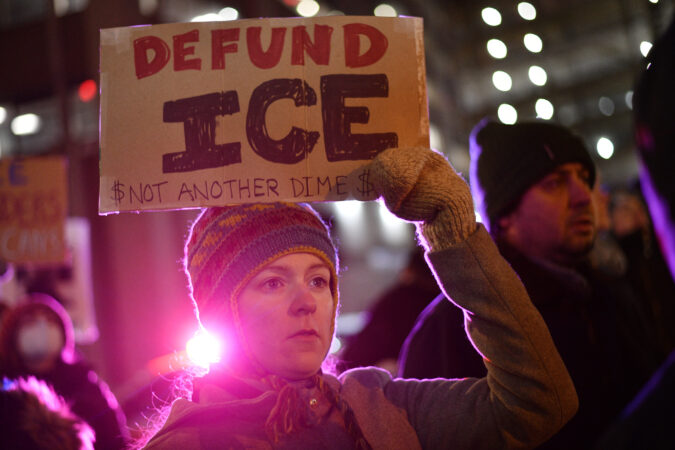
    Anti-ICE activists demonstrate outside U.S. Sen. John Fetterman’s Philadelphia office, Jan. 27, 2026, calling for the Pennsylvania Democrat to vote against DHS funding.

    “We urge you to stand with us in opposing any DHS funding bill that does not include critical reforms,” the lawmakers said in the letter, delivered Tuesday. “We look forward to working together to advance legislation that both keeps our nation secure and upholds our fundamental values.”

    Meanwhile, around 150 protesters gathered in front of Fetterman’s Philadelphia office in freezing temperatures on Tuesday to urge him to vote against the funding.

    “What do we want? U.S. Immigration and Customs Enforcement out,” the crowd chanted.

  • The rise and fall of Border Patrol ‘commander at large’ Greg Bovino

    The rise and fall of Border Patrol ‘commander at large’ Greg Bovino

    One year ago, Gregory Bovino was a low-profile Border Patrol chief overseeing a relatively small stretch of the U.S.-Mexico border in California. Just months into President Donald Trump’s second term, however, Bovino emerged as the face of one of the most aggressive immigration crackdowns in U.S. history, leading federal agents as they flooded one predominantly Democratic city after another, making thousands of arrests.

    Now that approach has turned into a political liability for Trump. And Bovino, 55, has been dispatched back to California, days after he declared — despite video evidence to the contrary — that the intensive care nurse fatally shot in Minneapolis on Saturday by federal immigration personnel wanted to “massacre law enforcement.”

    Bovino’s rapid rise and fall reflects the arc of the Trump administration’s combative immigration enforcement tactics and the mounting public backlash it has generated.

    The administration’s enforcement operations in multiple metropolitan areas formed the capstone of Bovino’s three-decade career in U.S. Customs and Border Protection, the nation’s biggest federal law enforcement agency. His visibility also demonstrated the more prominent role that Trump and Homeland Security Secretary Kristi L. Noem has given to the Border Patrol in urban areas, mostly far from its traditional purview over the U.S.-Mexico border.

    Dressed in his signature olive-green uniform and sporting a buzz cut, Bovino led masked agents into American cities like a military commander directing troops into battle. Bovino relished trading insults with critics on social media, posting action videos of his agents’ maneuvers and appearing on the front lines of tear-gas-laced clashes with protesters.

    His leadership drew criticism over time, including an admonishment from a federal judge in Illinois, who said the use of force by federal agents “shocks the conscience.” That criticism mounted this month amid Bovino’s forceful defense of the fatal shootings by federal immigration personnel of two American citizens in Minneapolis, Renée Good and Alex Pretti.

    Even Trump, who has touted the blue-city operations, seemed to acknowledge that in Minneapolis, Bovino had pushed past the boundaries of traditional law enforcement tactics.

    “You know, Bovino is very good, but he’s a pretty out-there kind of a guy,” Trump said in a Fox News interview Tuesday. “And in some cases, that’s good. Maybe it wasn’t good here.”

    Some former officials of the Department of Homeland Security, which oversees CBP, said they welcomed Bovino’s departure from Minneapolis out of concern for the agency’s credibility.

    “I hope it’s a sign that perhaps there is a recalibration going on about how to approach the enforcement of immigration laws,” said Tim Quinn, a longtime CBP official who resigned last year. “I don’t think agents were well represented by his actions, and I fear that the country’s view of the Border Patrol is going to be negatively affected, but hopefully not irreparably damaged.”

    Bovino’s elevated status within the agency was unusual because he didn’t appear to operate within the chain of command, which would require him to answer to senior CBP officials. Instead, he was in direct contact with Noem, said Robert Danley, who retired as CBP head of professional responsibility in December.

    “He has a more direct line to the secretary, and he’s able to do what she wants and what he wants,” Danley said.

    DHS and Bovino did not respond to multiple requests for comment this week. Tricia McLaughlin, a DHS spokesperson, said Monday evening on X that Bovino “has NOT been relieved of his duties” and called him a “key part of the President’s team and a great American.”

    Nick Sortor, a conservative influencer whose arrest at an anti-Immigration and Customs Enforcement protest in Portland won admiration from Trump, has championed Bovino’s leadership and said he hopes the administration keeps him at the center of its crackdown on illegal immigration.

    “His presence on the front lines was a huge morale booster for the Border Patrol, which is obviously under heavy scrutiny,” Sortor said. “Him being there and risking his life beside them every day was sort of like fuel for them … He was becoming a figurehead for the mass deportation effort, somebody who was hell-bent on fulfilling what he believed was a mandate from the 2024 election.”

    Days before Trump took office, Bovino oversaw a Border Patrol raid in Kern County, at the southern end of California’s Central Valley, some 250 miles from the border. Although the agency described the operation as targeted, Border Patrol agents had no knowledge of the criminal or immigration history for 77 of the 78 people arrested, according to CalMatters, a nonprofit news organization.

    The American Civil Liberties Union alleged in a lawsuit that agents were conducting arrests indiscriminately of people of color “who appeared to be farmworkers or day laborers, regardless of their actual immigration status.” A federal judge issued a preliminary injunction last spring barring Border Patrol agents from stopping people in that region without reasonable suspicion that they were violating U.S. immigration law.

    “Looking back on last year, the operation looks like an audition for Greg Bovino, and he got the part,” said Bree Bernwanger, senior staff attorney at the ACLU of Northern California. “That raid was a precursor to the policies and practices that DHS would adopt writ large across the country. … We’ve seen them ignoring proof of immigration status and an utter disregard for the laws on the books that restrict immigration arrests without a warrant.”

    Bovino remained little known nationally until June, when Border Patrol agents began making arrests in Los Angeles. After agents descended on a park in an immigrant-rich neighborhood on horseback and in military vehicles, Bovino told Fox News, “Better get used to us now, because this is going to be normal very soon.”

    Several weeks later, in Chicago, Bovino’s aggressive tactics became more visible, as federal agents deployed tear gas and protesters clashed with law enforcement outside an ICE processing facility west of downtown. The nonprofit Chicago Headline Club filed a lawsuit against administration officials, alleging that the use of rubber bullets and tear gas against reporters and protesters violated their First Amendment rights.

    Bovino, who was among multiple defendants in the lawsuit, claimed in a deposition that the agents’ conduct was “more than exemplary.” But U.S. District Judge Sara Ellis concluded that Bovino’s testimony was “not credible” and wrote in a court opinion that Bovino admitted “he lied multiple times” about the events that led up to his throwing a tear-gas canister toward a crowd. Bovino and DHS said that a rock hit him in the head before he threw the canister, and he said that he was “mistaken” in his deposition.

    “I see little reason for the use of force that the federal agents are currently using,” Ellis said when she issued a preliminary injunction prohibiting immigration officers from using tear gas and pepper spray on those who do not pose a threat. “I would find the use of force shocks the conscience.”

    From Chicago, Bovino continued on to shorter-term operations in New Orleans and Charlotte. Then came his posting to Minneapolis, which has turned out to be an inflection point for his career and, perhaps, for the administration’s immigration crackdown in urban areas.

    On the morning of Jan. 7, an ICE officer, Jonathan Ross, shot and killed 37-year-old Good while she drove her SUV near her home in Minneapolis. A Washington Post analysis of video footage found Good’s car did move toward Ross but that he was able to move out of the way and fire at least two of three shots from the side of the vehicle as it veered past him.

    Bovino, however, did not hesitate to condemn Good’s actions and praise the shooter, saying, “Hats off to that ICE agent” in a Fox News interview.

    Seventeen days later, Bovino would once again defend the use of fatal force as the news broke that Pretti had been shot and killed in an encounter with federal immigration personnel.

    At a news conference just hours after Pretti’s death, Bovino claimed that agents tried to disarm Pretti, but he “violently resisted.” An agent fired “defensive shots,” he said.

    “This looks like a situation where an individual wanted to do maximum damage and massacre law enforcement,” Bovino added.

    Analysis of videos of the scene by several media organizations does not support Bovino’s claims. Federal immigration personnel had already secured Pretti’s handgun by the time they fatally shot him, according to a Post analysis of videos that captured the incident from several angles. As many as eight officers and agents were attempting to detain the 37-year-old ICU nurse, videos show. Federal officials now say that a Border Patrol agent and a CBP officer both shot Pretti, and they no longer claim that he had menaced law enforcement with his gun.

    By Sunday, some Republican members of Congress had begun raising concerns about the shooting and pressing for an independent investigation. And by the following day, both Trump and White House spokeswoman Karoline Leavitt signaled a change, saying that Trump’s border czar, Tom Homan, would be taking over the operation in Minneapolis.

    “Mr. Bovino is a wonderful man, and he is a great professional,” Leavitt said. “He is going to very much continue to lead [Customs and Border Protection] throughout and across the country. Mr. Homan will be the main point of contact on the ground in Minneapolis.”

    The news drew praise from Bovino’s critics.

    “This move by the administration is a political recognition that the violence we’re seeing across our communities, from Minneapolis to cities nationwide, is deeply unpopular, unacceptable, and politically toxic,” said Todd Schulte, president of the immigration advocacy group FWD.us.

    Bovino allies like Sortor registered their disappointment. “Bovino put his life on the line EVERY SINGLE DAY pushing for mass deportations across the country, going head to head with leftists and reminding THEM who’s boss,” he said on X: “DO NOT COWER TO THE DEMOCRATS, PRESIDENT TRUMP! BACK BOVINO!”

    Bovino’s typically busy social media feed has been quiet since then. His most recent post on X came Monday morning before news of his departure spread. “Finding and arresting criminal illegal aliens,” he wrote, “this is why we are deployed across the country.”

  • An ‘America First Patriot’: President Donald Trump endorses Stacy Garrity for Pennsylvania governor

    An ‘America First Patriot’: President Donald Trump endorses Stacy Garrity for Pennsylvania governor

    President Donald Trump endorsed Pennsylvania Treasurer Stacy Garrity for governor Tuesday evening, awarding her the coveted nod from the leader of the Republican Party as she tries to unseat the popular Democratic incumbent Gov. Josh Shapiro in November.

    The Trump endorsement comes as Shapiro is on a national media blitz to advertise his memoir, released this week — and as he seeks to broaden his national reach amid his rumored 2028 presidential aspirations.

    The nod also comes as Trump faces declining approval ratings and increased scrutiny over his administration’s use of U.S. Immigration and Customs Enforcement in Minneapolis following a second killing of an American citizen by federal immigration agents. Shapiro, during his media appearances, has been an outspoken critic of Trump over ICE’s presence in Minneapolis, saying the agency’s mission is “broken” and “must be terminated.”

    In a post on his Truth Social platform, Trump declared Garrity “WILL NOT LET YOU DOWN” and stated that as governor, she would work to grow the economy, strengthen the military, keep borders secure, and safeguard elections, among other priorities.

    “Stacy is a true America First Patriot, who has been with me from the beginning,” Trump wrote.

    Garrity, the state’s second-term treasurer, has led the low-profile office without controversy and boasts that her staff has blocked nearly $2 billion in improper payments. The retired U.S. Army colonel in 2024 broke the record for highest number of votes received in a state-level race in Pennsylvania, and she quickly earned the support of the state party establishment last year.

    In a statement Tuesday, Garrity said she was honored to receive Trump’s endorsement, adding that the president has “been a voice for hardworking Americans who have been left behind.”

    “Josh Shapiro is President Trump’s number one adversary, and I am looking forward to working with President Trump and his team to defeat Josh Shapiro this November,” Garrity said.

    At right is Pennsylvania Governor Josh Shapiro listening to Stacy Garrity, 78th State Treasurer, Forum Auditorium, Harrisburg, Pa., Tuesday, Jan. 21, 2025.

    Garrity is a longtime Trump supporter from rural Bradford County, who in 2022 at a Trump rally repeated his false claim that he won the 2020 presidential election — a position she has since walked back, telling reporters earlier this month that she had gotten carried away in the moment when she said that.

    Last summer, Trump said he would support another potential candidate — U.S. Rep. Dan Meuser (R., Pa.) — if he ran. Weeks later, the Northeast Pennsylvania Republican declined to run and announced he would seek a fourth term in Congress instead. Meuser quickly endorsed Garrity once she formally joined the race, and she continues to capture more GOP officials’ endorsements as Pennsylvania’s May 19 primary election inches closer.

    Garrity is currently running unopposed as the Republican candidate for governor, after State Sen. Doug Mastriano announced he would not run again this year after losing by nearly 15 percentage points to Shapiro in 2022. However, Garrity has yet to announce who she wants as her running mate for lieutenant governor, with largely far-right conservatives — including Mastriano — interested in the job.

    Still, Trump’s endorsement of Garrity could draw needed eyes and checkbooks to her campaign, as her fundraising in the early months of the race has lagged far behind the $30 million war chest Shapiro has amassed over the last few years. Earlier this month, Garrity announced that her campaign had raised nearly $1.5 million from August through December.

    Republicans are hopeful that Garrity can drive enough enthusiasm at the top of the state ticket to motivate GOP voters to come out to vote throughout Pennsylvania, boosting candidates up and down the ballot in a year where control of Pennsylvania’s General Assembly and the U.S. House of Representatives is on the line.

    Meanwhile Democrats, hopeful to build on anti-Trump sentiment that drove their wins last year, quickly seized on Trump’s endorsement as an opportunity to tie Garrity to the president.

    “Pennsylvanians deserve better than a Governor who is nothing more than a rubber stamp for Trump’s chaos and higher costs, and that’s why she will be soundly rejected this November,” Pennsylvania Democratic Party chair Eugene DePasquale said in a statement.

  • ICE would still operate in a partial government shutdown

    ICE would still operate in a partial government shutdown

    U.S. Immigration and Customs Enforcement and other immigration enforcement agencies would keep operating even if broad swaths of the federal government close this weekend.

    Lawmakers face a Friday deadline for a partial government shutdown, 80 days after they reopened federal agencies after the longest shutdown ever in November. Congress has approved half of its annual spending bills since then and was poised to approve the other the bills late last week in one combined measure.

    But the killing of Alex Pretti in Minneapolis by immigration authorities on Saturday — just weeks after an ICE officer killed Renée Good in the same city — outraged congressional Democrats, who say they’ll block the spending bill unless it includes more oversight of ICE. Republicans so far have rebuffed that demand, setting up a likely partial shutdown that would close agencies whose funding hasn’t been enacted.

    ICE largely doesn’t need the spending bill to pass, however, even though its operations are at the heart of the standoff. That’s because the massive tax and immigration policy law the GOP passed last summer at President Donald Trump’s urging included $75 billion for the enforcement agency over the next four years.

    The one-time bonus was nearly eight times as much as the agency received in 2020, its highest-funded year to date, and the largest investment in immigration enforcement since the creation of the Department of Homeland Security in 2003. Including the ICE funds, DHS overall received $170 billion for immigration enforcement in the GOP law, the $3.4 trillion One Big Beautiful Bill.

    The law put $45 billion toward immigration detention facilities and nearly $30 billion for hiring and training ICE agents. It also included $3.5 billion for Justice Department grants to reimburse local law enforcement agencies that help with immigration operations; $6.2 billion for Customs and Border Protection personnel hiring and bonuses; and $6.2. billion for border security technology and screening. Last summer, the influx landed right as ICE appeared close to burning through its annual appropriations.

    It’s not clear how much of the money the agency has already spent, said Jennifer Ibáñez Whitlock, senior policy counsel at the National Immigration Law Center.

    “It’s our best guess … that they still have significant amounts of that $170 billion to spend,” she said. “DHS doesn’t need any more money through the regular appropriation process because they received such a significant windfall under the One Big Beautiful Bill.”

    DHS spokesperson Tricia McLaughlin said in a statement that Senate Democrats are “blocking vital DHS funding that keeps our country secure and its people safe,” including Transportation Security Administration, the Federal Emergency Management Agency, the Coast Guard and Border Patrol.

    “This funding supports national security and critical national emergency operations, including FEMA responses to a historic snowstorm that is affecting 250 million Americans. Washington may stall, but the safety of the American people will not wait,” she said.

    Republican leaders have rejected calls to separate this year’s Homeland Security spending from the measure to fund the rest of the government, but Senate Appropriations chair Susan Collins (R., Maine) and Homeland Security Appropriations subcommittee chair Sen. Katie Boyd Britt (R., Ala.) say they’re exploring options that could satisfy both sides.

    Senate Majority Leader John Thune (R., S.D.) said on the Senate floor Tuesday that “productive talks are ongoing” and encouraged Democrats to remain engaged to find a solution to avoid a “needless shutdown.”

    The extra money from last summer means Trump would have even more leeway than usual to keep his priorities going in a partial shutdown.

    Presidents generally have broad discretion over which agencies should close and which should stay open with unpaid workers during shutdowns. Traditionally, the White House budget office has preserved functions crucial to national security, public safety, and protecting government property, even if the agencies responsible for those activities aren’t funded.

    But outside funding streams — from other legislation or fees collected from government activities — give administrations room to move money around to their most favored agencies, even outside the bounds of spending laws.

    Other federal functions without new appropriations would grind to a halt, and Trump and White House budget director Russell Vought leveraged the 2025 shutdown to marginalize agencies they felt mostly served Democratic-controlled constituencies.

    In a potential shutdown this weekend, the IRS would shutter just days into tax season. Money for housing assistance programs would be at risk in the aftermath of a winter storm that sent temperatures plummeting to historic lows. Government-backed scientific research would halt overnight.

    “The Trump administration knows that if there isn’t an appropriations bill, they can still do a lot of things. Many of the chains come off of them,” said Richard Stern, who studies the federal budget at Advancing American Freedom, a conservative think tank founded by former Vice President Mike Pence. “They showed in the last shutdown that they’ll use full executive authority if Congress won’t do its job, and in that sense, they called the Democrats’ bluff. This time, the precise thing Democrats are fighting over is the thing Trump already has permanent funding for.”

    The prolonged government closure in November — forced by disagreements over extending enhanced Affordable Care Act subsidies that expired last year — concluded with an agreement to approve three of 12 appropriations bills through September and set a deadline of Jan. 30 for the remaining bills.

    Three more passed earlier this month, leaving six of the largest and most controversial funding bills to be negotiated between Republicans and Democrats. That bipartisan agreement was announced last week and initially appeared on track to pass.

    But the Trump administration also flooded Minneapolis with federal immigration officials as part of Operation Metro Surge, which it called the largest enforcement operation in the agency’s history. Democrats began raising concerns with agents’ aggressive actions against U.S. citizens and undocumented immigrants with no criminal history.

    Top Democrats on the House and Senate Appropriations committees at first backed the funding agreement they helped negotiate, which would send $64.4 billion to Homeland Security, including $10 billion for ICE — similar to its existing funding levels.

    They touted the changes they secured in the bill — including a decrease in detention beds, lowered funding for Border Patrol and for ICE’s enforcement and removal operations, and money for body cameras — and argued that denying funding for Homeland Security would also affect FEMA, the TSA and the Coast Guard. The measure did not include other changes Democrats pushed for, including prohibitions on ICE agents shooting at moving vehicles or detaining U.S. citizens.

    Last week, top Democrats also noted that the 2025 GOP law meant ICE could continue to operate in a shutdown. The bill narrowly passed the House, primarily along party lines.

    After federal officers shot and killed Pretti on Saturday, though, Democratic outrage boiled over. In the Senate — where at least seven Democrats would have to vote with Republicans to overcome a filibuster — the party’s leaders pledged to block the Homeland Security funding bill until Republicans agree to new accountability measures for ICE.

    Now Democrats want Republicans to strip the Homeland Security funding bill from the rest of the package, which has wider bipartisan support. They acknowledge that it would do little to shut down ICE’s operations, but argue it’s necessary to force changes.

    “Americans must be eyes wide open that blocking the DHS funding bill will not shut down ICE. ICE is now sitting on a massive slush fund it can tap, whether or not we pass a funding bill,” Sen. Patty Murray (D., Wash.), the lead Democrat on the Senate Appropriations Committee, said in a statement. “But we all saw another American shot and killed in broad daylight. There must be accountability, and we must keep pushing Republicans to work with us to rein in DHS.”

  • Immigration activists stage protests at Philly Target stores, demand the company reject ICE

    Immigration activists stage protests at Philly Target stores, demand the company reject ICE

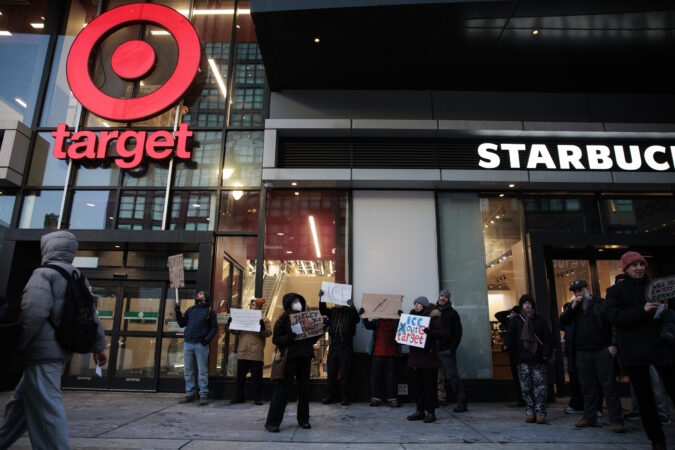
    Activists with No ICE Philly demonstrated at Target stores in the city on Tuesday evening, attempting to slow business operations at a company that they say wrongly cooperates with federal immigration enforcement.

    Stores in South Philadelphia, Rittenhouse, Fairmount, Port Richmond and on Washington Avenue and City Avenue were among those targeted, the group said.

    Advocates say the retailer has failed to speak out against U.S. Immigration and Customs Enforcement, to safeguard employees and customers, and has allowed the agency to set up operations in its parking lots.

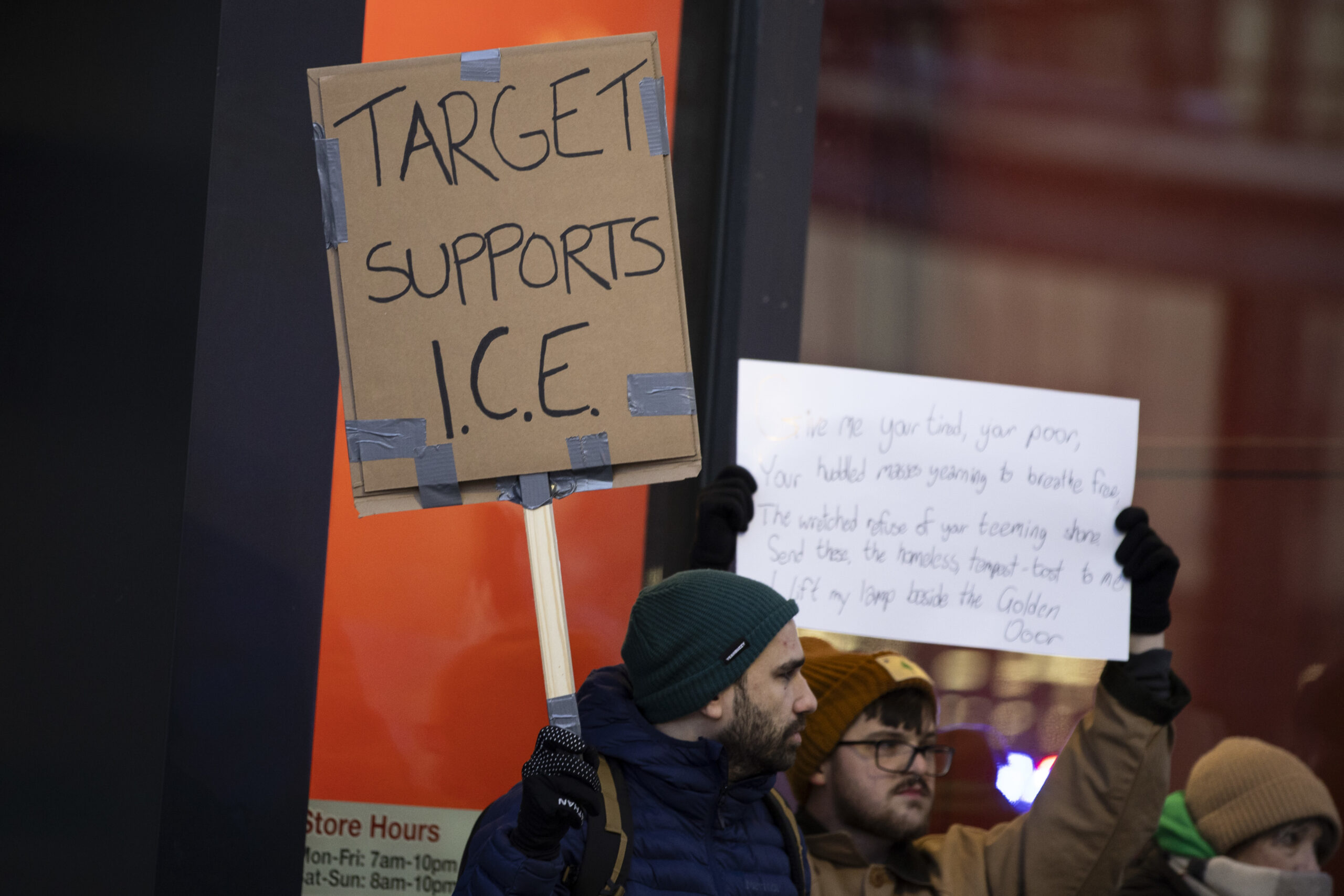
    More than 40 people rallied on a frozen, 19-degree night outside the Target at Broad Street and Washington Avenue, holding signs that showed solidarity with Minneapolis residents who have resisted ICE in their community.

    “From MPLS to PHL, keep ICE out,” read one sign.

    Demonstrators gathered outside of the Target at Broad and Washington on Tuesday in Philadelphia.

    Inside, some masked customers bought ice trays and single bottles of table salt. As soon as they paid for the items at the checkout counters, they headed to the “Returns” area to seek refunds.

    Items were quickly restocked on store shelves by staff, only to be purchased and returned again.

    Demonstrators visited at least seven stores, according to the Rev. Jay Bergen, a leader of No ICE Philly and pastor at the Germantown Mennonite Church.

    “Our actions are in solidarity with people across the country responding to the call from Minneapolis communities to pressure Target,” Bergen said Wednesday.

    Company spokespeople did not immediately reply to a request for comment on the protests in Philadelphia. Target, founded in 1962, operates 1,989 stores across the United States and has a net revenue of more than $100 billion a year.

    At Broad and Washington on Tuesday, members of No ICE Philly handed out pocket-sized fliers that described their goals as they urged shoppers to go elsewhere. Some people turned away after talking to demonstrators. Others who went inside were met with boos.

    “Find another store!” the protesters shouted, as a police officer looked on.

    Elijah Wald, 66, said the Washington Avenue location was his neighborhood Target.

    “Our main hope is that businesses will understand that they need to protect their employees, that they need to not collaborate with a government that right now is targeting everybody,” he said.

    Wald, whose mother was a Jewish refugee who fled Nazi Austria, said he has always felt positive about immigration, that the United States was built of “people who are used to moving to find work, moving to find cheaper housing.”

    But the discourse over ICE operations in major cities has gone beyond undocumented people, said Wald.

    “They’re shooting U.S. citizens now,” he said.

    Demonstrators gathered outside of the Target at Broad and Washington Streets on Tuesday.

    At the Target at Snyder Plaza, about 20 demonstrators encouraged people to do their shopping elsewhere.

    “Protest with your wallet; Acme is right there,” a protester said through a sound system.

    Celine Bossart, 34, said boycotts are an effective way to denounce ICE actions.

    “As citizens, our power is limited, but a big part of the power that we do have is where we choose to spend our money,” she said, “and at the end of the day, corporations aren’t necessarily going to listen until it hits their bottom line.”

    A man in a Flyers jersey stopped to heckle the demonstrators, who responded with words of their own. Bossart said the protest did not aim to make anyone’s day difficult.

    “Our neighbors are people who work at Target, people who work at Acme; these are the neighbors who we’re trying to protect,” she said. “So we’re just trying to send a message to upper, upper management.”

    Last week, demonstrators held a sit-in at a store in Minneapolis, where the company is headquartered, chanting, “Something ’bout this isn’t right ― why does Target work for ICE?”

    At other Minnesota stores, demonstrators formed long lines to buy bags of winter ice melt, then immediately got back in line to return them, slowing the checkout process.

    No ICE Philly, which has led demonstrations against the agency, and against the arrests of immigrants outside the city Criminal Justice Center, said Target must:

    • Publicly call for Immigration and Customs Enforcement to leave Minnesota.
    • Post signs in its stores that deny entrance to immigration agents, absent a signed judicial warrant.
    • Train store staff on how to respond if agents arrive.
    • Publicly call for Congress to end ICE funding.

    Chief executives of Target and more than 60 large Minnesota companies issued a public letter on Sunday calling for an “immediate de-escalation of tensions.” It marked the first time, The New York Times reported, that the most recognizable businesses in the state weighed in on the turmoil in Minneapolis.

    Critics said the letter offered too little, too late, coming after two local U.S. citizens were shot to death by federal agents.

  • On guns, everyone’s a hypocrite

    On guns, everyone’s a hypocrite

    When Kyle Rittenhouse shot three people, two of them fatally, at a Black Lives Matter protest in 2020 — in self-defense, he said — Republicans made him into a hero. But when Alex Pretti showed up at an anti-ICE demonstration with a loaded handgun, Trump administration officials condemned him as a “would-be assassin” and a “domestic terrorist.”

    It’s outrageous. And hypocritical.

    Yet, when it comes to guns, everyone’s a hypocrite right now. All of us are allowing the fatal shooting of Pretti in Minneapolis last week to alter our principles.

    On the right, the same people who celebrate the Second Amendment — and its supposedly sacred guarantee of “gun rights” — are condemning Pretti for exercising that right. And on the left, which has long called for limits on gun ownership, we are suddenly invoking Pretti’s constitutional entitlement to arm himself.

    We can’t bring ourselves to state the obvious: His gun made him less safe, not more so.

    That’s been our mantra for more than a half century, and we have the data to prove it. Americans purchase guns because they believe firearms will protect them from crime and injury. But they are wrong about that, as a wide swath of research shows.

    If someone breaks into your house, a 2015 study reported, you’re more likely to be injured after threatening your attacker with a gun than if you call the police or run away. Gun ownership also makes domestic violence more common. In 2019, scholars found that states with higher levels of household gun ownership also record more domestic gun homicides.

    The following year, the COVID-19 pandemic led to a big spike in American gun sales: People were afraid, so they armed themselves. And guess what happened? There was also a sharp rise in firearm-related homicides.

    Kyle Rittenhouse brought an assault-style rifle to a protest in Kenosha, Wis., in August 2020, where he shot three people, two of them fatally. He was acquitted of murder charges in November 2021.

    Finally, states that make it easier to obtain a permit to carry a concealed weapon experience more homicides than states that make it harder to obtain one.

    You’d think my fellow liberals would be trumpeting all of these facts following the death of Pretti. But you’d be wrong. We have simply pointed out that Pretti had a permit for his gun and that he had a right to carry it under the Constitution.

    “The Trump administration does not believe in the 2nd Amendment,” California Gov. Gavin Newsom posted on X, gleefully mocking GOP attacks on Pretti. “Good to know.”

    Come again? I thought Democrats believe the Second Amendment does not — or should not — allow individual citizens to carry firearms anywhere they want.

    For most of our history, it didn’t. Ten states passed laws in the 1800s barring possession of concealed weapons. One of them was Texas, where the governor declared in 1893 that “the mission of the concealed weapon is murder.”

    In 1939, the U.S. Supreme Court upheld a federal limit on gun ownership. According to Solicitor General Robert Jackson, who would join the court two years later, the Second Amendment did not protect the right of individuals to possess guns for “private purposes.” Instead, it was “restricted to the keeping and bearing of arms by the people collectively for their common defense and security,” Jackson added.

    Only in the 1970s would the National Rifle Association — which had formerly supported broad restrictions on guns — start to argue that the Second Amendment protected individual gun ownership. Now that’s the law of land, thanks to several recent rulings by Republican-appointed federal judges.

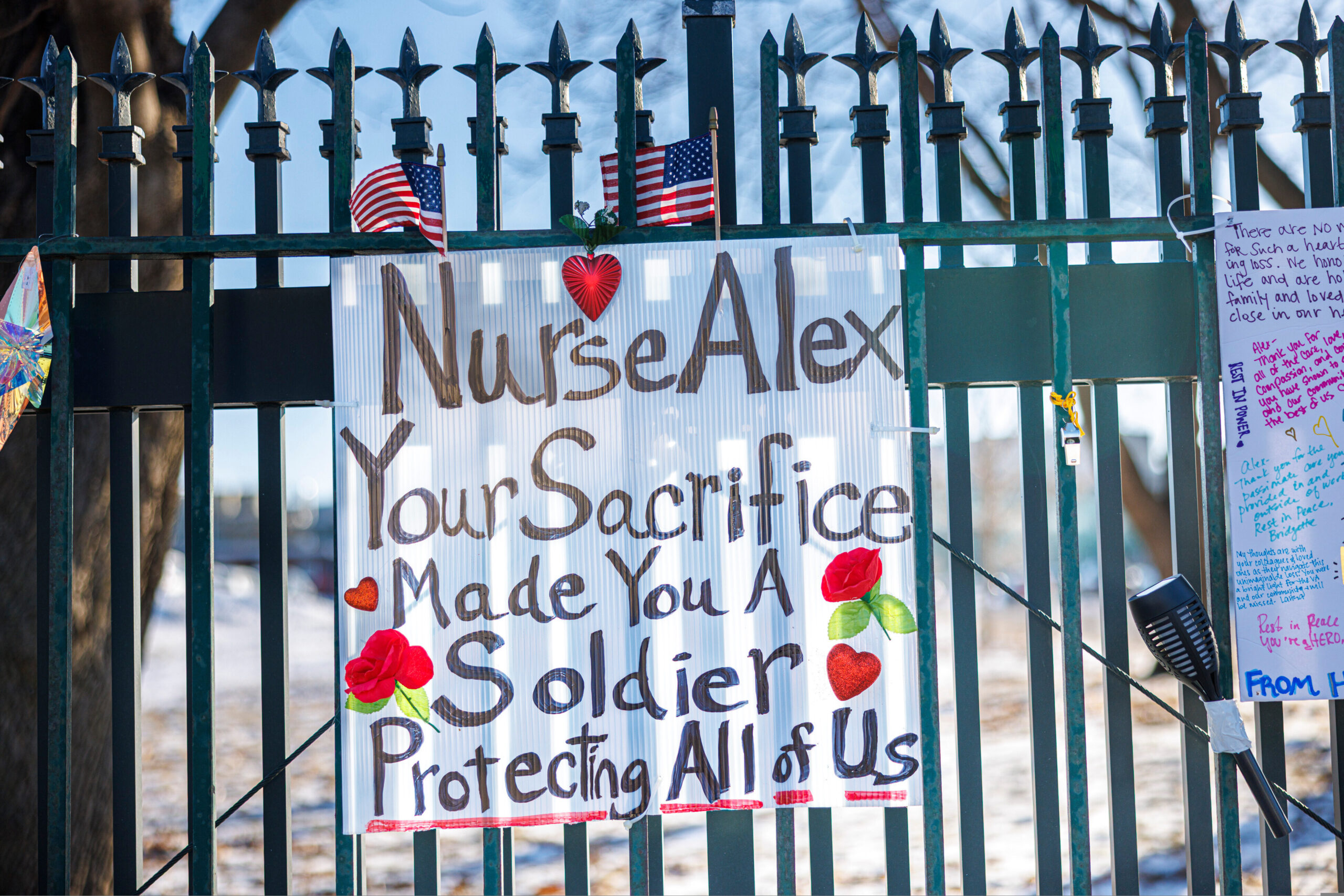
    A handwritten sign honoring Alex Pretti hangs on a fence outside the Minneapolis Veterans Administration hospital on Tuesday.

    Democrats have loudly questioned these decisions, looking forward to the day when they might be overturned. But that won’t happen if we don’t consistently denounce the idea that anyone should be able to carry a gun.

    And that includes Pretti. There was no good reason — none — for federal agents to kill Pretti last week in Minneapolis. He didn’t deserve to die because he had a gun. But — especially in the current political climate — it’s hard to come to any other conclusion except that carrying a gun certainly made it more likely that he would.

    Video of the shooting appears to show that Pretti’s gun had already been removed from him before he was shot. In the confusion of the moment, some of his assailants might not have known that.

    But here’s what we do know: Guns are a scourge on America. We think they safeguard us from violence, but they too often escalate it. We shouldn’t let the horror and injustice of Pretti’s death blind us to that.

    Jonathan Zimmerman teaches history and education at the University of Pennsylvania. He is the author of “Whose America?: Culture Wars in the Public Schools.”

  • Philly music this week kicks off a Black History Month celebration and includes a show by former NPR host Ari Shapiro

    Philly music this week kicks off a Black History Month celebration and includes a show by former NPR host Ari Shapiro

    This week’s Philly music options include 1990s R&B hitmakers 112, newsman-turned-singer Ari Shapiro, pop-punks Say Anything and Motion City Soundtrack, K-pop girl group Unis, and Philly hip-hop blues band G. Love & Special Sauce. Plus, some terrific folk tandem with Loudon Wainwright III and Chris Smither. And the kick off for Black History Month programming at the Fallser Club.

    Wednesday, Jan. 28

    Tashi Dorji

    Bhutan-born, Asheville, N.C., guitarist Tashi Dorji makes alternately tuned instrumental music that never settles for being merely pretty. Sometimes it reads as politically defiant, as on songs like “And the State Sank into the Abyss” and “Meet Me Under the Ruins” on his most recent album on the Drag City label, We Will Be Wherever the Fires Are Lit. 8 p.m., Asian Arts Initiative, 1219 Vine St., r5productions.com

    Thursday, Jan. 29

    Sunny Day Real Estate

    1990s Seattle emo band Sunny Day Real Estate re-formed in 2022 and has stayed busy since with a lineup that included original members Jeremy Enigk, Dan Horne, and William Goldsmith. 8 p.m., Brooklyn Bowl, 1009 Canal St., brooklynbowl.com/philadelphia

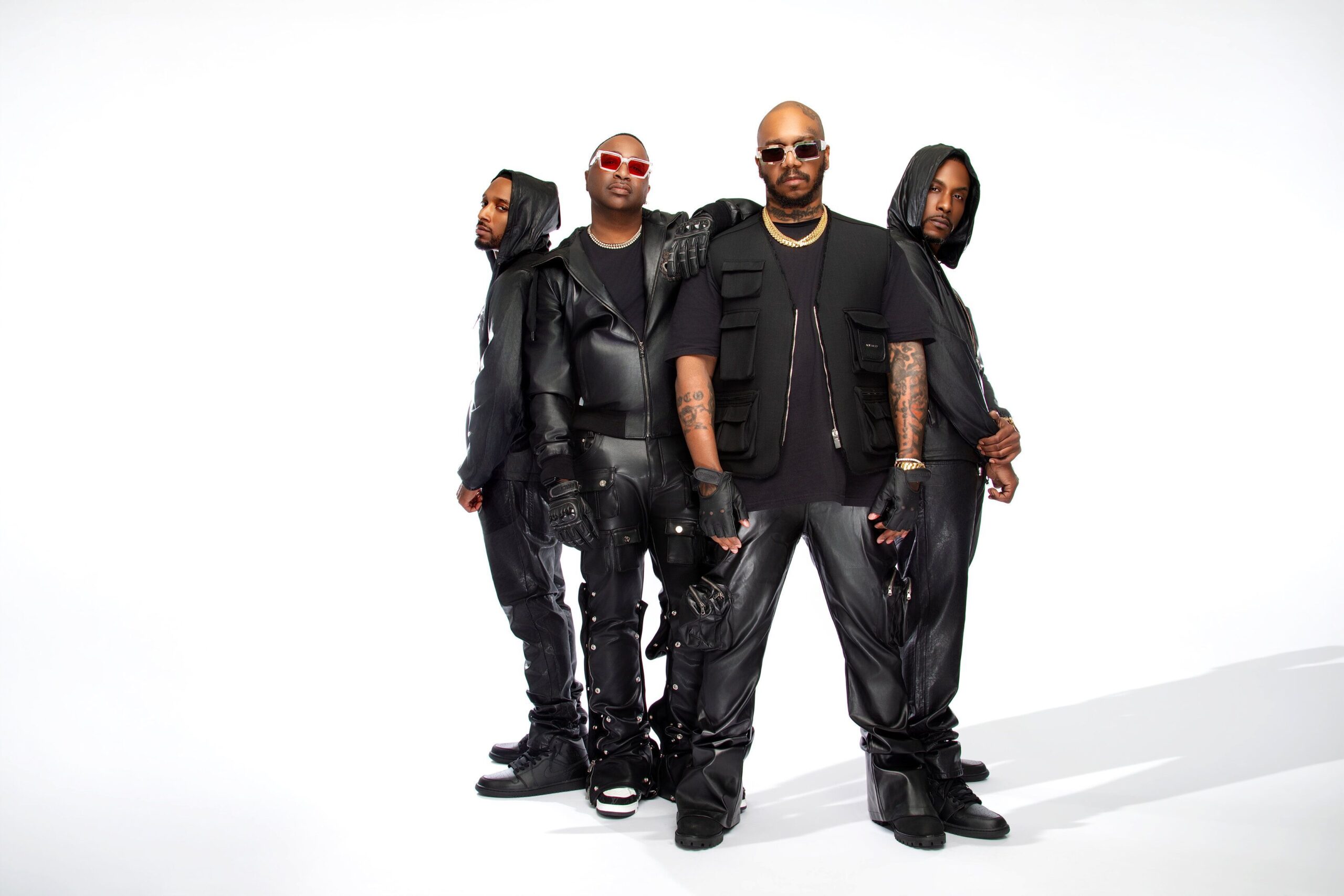
    Atlanta R&B vocal group 112 play the Met Philly on Friday.

    Friday, Jan. 30

    Dave P.’s Juntos benefit

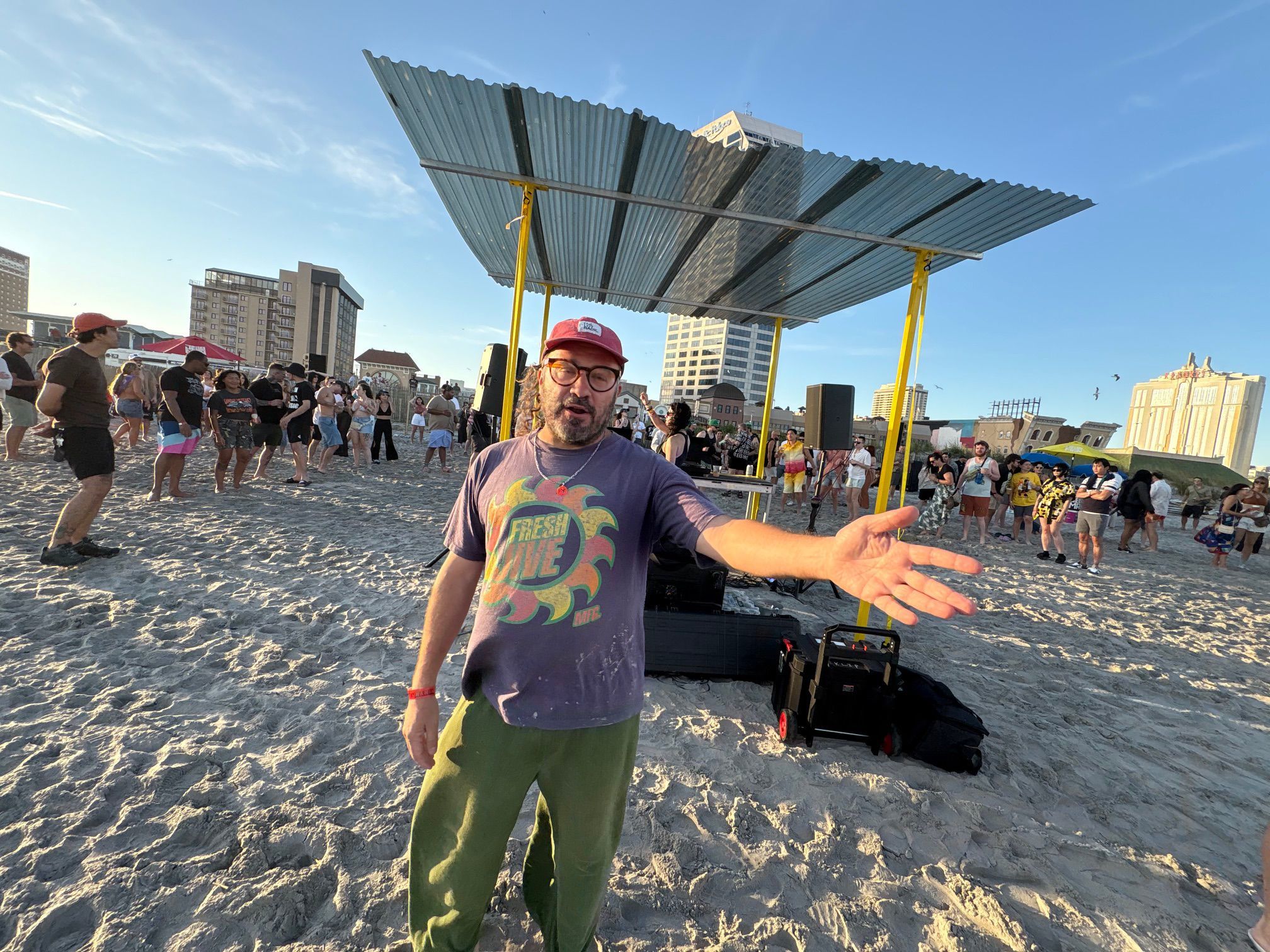
    Making Time impresario David Pianka is DJing an all-night “All I Want for 2026 is PLURT” party for Juntos, the South Philadelphia organization “fighting for the human rights of the Latine community as workers, parents, youth, and immigrants.” PLURT takes “Peace, Love, Unity, and Respect” and adds a Dave P. favorite word: “Transcendence.” 8 p.m., The Dolphin, 1539 S. Broad St, ra.co/events/2351165

    Ari Shapiro

    Former NPR host Ari Shapiro’s “Thank You for Listening” is a cabaret show adapted from his memoir, The Best Strangers in the World. He’ll flex the musical muscles previously put to use in collaborations with Alan Cumming and Pink Martini. 7:30 p.m., City Winery, 990 Filbert St., citywinery.com/philadelphia

    112

    R&B’s 112 — pronounced “one twelve” — is the Atlanta group that signed to now-disgraced music executive Sean Combs’ Bad Boy label in the 1990s. In addition to hits like “Cupid” and “It’s Over Now,” the band joined Combs on vocals on “I’ll Be Missing You,” the 1997 megahit that eulogized the Notorious B.I.G. 8 p.m., Met Philly, 858 N. Broad St., themetphilly.com

    Unis

    K-pop girl group octet Unis comes to South Street, supporting 2025’s album Swicy. The band fronted by lead singer Hyeonju triumphed on the Seoul Broadcasting System reality show Universe Ticket in 2024. 8 p.m., Theatre of Living Arts, 332 South St, tlaphilly.com

    Jobi Riccio plays Free at Noon at the World Cafe Live on Friday.

    Jobi Riccio

    Colorado songwriter Jobi Riccio won praise for her 2023 debut album, Whiplash. That same year, she was awarded the John Prine Fellowship at the Newport Folk Festival. She has a new single, “Buzzkill,” which along with the previously released protest song “Wildfire Season” will be on a forthcoming album. Noon, World Cafe Live, 3025 Walnut St., xpn.org

    The Naked Sun

    Philly rock quintet the Naked Sun will celebrate a new album, Mirror in the Hallway. It was produced by Brian McTear and Amy Morrissey at Miner Street Recordings. McTear’s Bitter, Bitter Weeks plays a rare full band set as openers. 8 p.m., Fallser Club, 3721 Midvale Ave., thefallserclub.org

    Saturday, Jan. 31

    Wild Pink

    Brooklyn indie outfit Wild Pink comes through for an early show, still touring behind the excellent 2024 album Dulling the Horns. The band then needs to make way for a Taylor Swift DJ night that follows. 6 p.m., MilkBoy Philly, 110 Chestnut St., milkboyphilly.com

    G. Love plays the Sellersville Theater on Saturday with his band, Special Sauce.

    G. Love & Special Sauce

    G. Love’s 2006 album Lemonade was a solo affair, but he’s celebrating its 20th anniversary with Special Sauce, the band with whom he recorded 215-proud staples such as “Philadelphonic” and “I-76.” Hawaiian surfer Makua opens. 8 p.m. Sellersville Theater, 24 W. Temple Ave., Sellersville, st94.com

    Pine Barons

    KC Abrams’ Philly experimental rock trio Pine Barons released its fourth album TV Movie in September. This week, the band headlines a show in Fishtown, with Special World and Rentboy. 9 p.m. Johnny Brenda’s, 1201 N. Frankford Ave. johnnybrendas.com

    Dave P. will DJ all night long in a benefit for Juntos on Friday at the Dolphin in South Philly.

    Say Anything / Motion City Soundtrack

    Two emo-adjacent bands that emerged in the early 00s are touring together. Los Angeles’ Say Anything’s latest is The Noise of Say Anything’s Room Without …, while Minneapolis’ Motion City Soundtrack recently returned after a decade with The Same Old Wasted Wonderful World. 7:30 p.m., Fillmore Philly, 29 Allen St., thefillmorephilly.com

    Riverside / My Favorite / Polaroid Fade

    A top-notch trio of indie bands, headlined by 1990s Philly veterans Riverside. Also on the bill are Brooklyn’s My Favorite and Ocean City, N.J.’s, Polaroid Fade, fronted by 20-year-old singer Nicoletta Giuliani, whose sounds draw from shimmery ‘90s bands like the Sundays and the Ocean Blue. 8:30 p.m., PhilaMoca, 531 N. 12th St., PhilaMoca.org

    Loudon Wainwright III plays the Zellerbach Theatre at the Annenberg Center with Chris Smither on Sunday.

    Sunday, Feb. 1

    Loudon Wainwright / Chris Smither

    From his 1970 self-titled debut to Lifetime Achievement in 2022, Loudon Wainwright III has always been an unflinching and unfailingly funny songwriter whose acute observations never spare himself or his family members. Pairing him with ever-soulful folk blues guitarist and songwriter Chris Smither, who has had a fruitful career of equal length, is a masterstroke. Hopefully, they’ll play together. 8 p.m., Zellerbach Theatre, 3680 Walnut St., pennlivearts.org

    Reef the Lost Cauze

    West Philly rapper Reef the Lost Cauze is first up at “A Month of Black Excellence at the Fallser Club,” with an afternoon event featuring “vendors, food, art, community actions.” The series includes African Friends: Bakithi Kumalo, Tanyaradzwa Tawengwa, and Youba Cissokho on Feb. 6 and V. Shane Frederick and Rev. Chris on Feb 17. 4 p.m., Fallser Club, 3721 Midvale Ave., thefallserclub.org

    Jon Spencer

    Jon Spencer has been playing high-volume blues with exaggerated gusto for three decades. Along with a recent show by Richard Lloyd and Lenny Kaye, this booking is another sign that Nikki Lopez, the South Street venue on the site of the former JC Dobbs, is becoming a welcome home for veteran acts who can still kick out the jams as well as young punk and metal bands. 8 p.m., Nikki Lopez, 304 South St., instagram.com/nikkilopez/philly

    Monday, Feb. 2

    Ye Vagabonds

    Full-on Irish music season doesn’t arrive until March, when Emerald Isle musicians will blanket the Philly region. Get a head start with this stellar band, led by brothers Brian and Diarmuid Mac Gloinn who make haunting music that sounds ancient and brand new at the same time. Philly bluegrass songwriter Daphne Ellen opens. 8 p.m., Johnny Brenda’s, 1201 Frankford Ave., johnnybrendas.com

    Concert Announcements

    Shows that announced in the past week include a number of enticing double bills.

    Austin, Texas’ enduring rockers Spoon play the Fillmore Philly on June 23 with New Zealand power pop charmers, the Beths. Lionel Richie and Earth Wind & Fire team up at Xfinity Mobile Arena on July 16. And Death Cab for Cutie and Philly’s own Japanese Breakfast play the Mann Center on July 17.

    R&B singers Ne-Yo and Akon are coming to the Freedom Mortgage Pavilion in Camden on July 25, where the Dave Matthews Band will also play July 10-11.

  • Tyrese Maxey and VJ Edgecombe land on the latest cover of SLAM Magazine

    Tyrese Maxey and VJ Edgecombe land on the latest cover of SLAM Magazine

    Sixers guards Tyrese Maxey and VJ Edgecombe have landed on the latest cover of SLAM Magazine, marking the second time both players have been featured on the cover page, but the first time together.

    Maxey was first featured on the cover of SLAM’s February/March 2024 issue. Meanwhile, Edgecombe made his cover debut as part of SLAM’s 2024 high school all-American team. Now, the young guards share the stage as members of the Sixers.

    The Sixers “box office” backcourt has ignited a new hope within the Philadelphia fan base, with the team already surpassing its win total from all of last season. Edgecombe, the team’s third-overall pick, made a historic debut — finishing the night with 34 points, the most in a Sixers rookie’s first game in franchise history, and the most scored in any NBA debut since Wilt Chamberlain.

    Since then, Edgecombe has been one of the league’s top rookies, averaging 15.4 points, 5.4 rebounds, and 4.2 assists. The rookie’s breakout season has earned himself a selection in this year’s Rising Stars Challenge during NBA All-Star Weekend — and a shoutout from the Prime Minister of the Bahamas.

    Maxey will also be at All-Star Weekend. The sixth-year pro was named a starter for the NBA All-Star game, making him the first Sixers guard to be named a starter since Allen Iverson in 2010. Maxey’s second All-Star nod comes after averaging 29.2 points, 4.2 rebounds, and 6.8 assists.

    Maxey and Edgecombe, who have been having fun together on and off the court, are part of a long list of current and former Sixers who have graced the cover, including Allen Iverson, Joel Embiid, Jerry Stackhouse, James Harden, and Ben Simmons.

  • Inside the shadow war between Russia and Ukraine that exploits teens

    Inside the shadow war between Russia and Ukraine that exploits teens

    MYKOLAIV, Ukraine — She’d applied for job after job, but none of them had worked out. Not the gig in her uncle’s restaurant. Not the bakery internship. Not waitressing. Now Vika was 18 and still unemployed, her life seemingly dead-ending before it ever even began.

    She lay back on the couch, scrolling through more job listings on her cell phone. It was March of last year, and for the past few weeks, she’d been crashing at her brother’s apartment in this southern Ukrainian port city. Her mom, Lesia, kept urging her to move home, but the last thing Vika wanted was to return to her tiny village, with its shrapnel-pocked homes and caved-in school, where the only opportunity was seasonal work picking tomatoes.

    Just then, a Telegram message pinged in her inbox: “Do you still need a job?”

    She thumbed over it and paused. The man, who said his name was Danylo, was offering $2,500 if she agreed to pick up a package on the city’s outskirts and drop it off at a police station the next morning.

    Vika, who agreed to speak on the condition that the last names of her and her family not be used because of pending legal action against her, didn’t consider similar cases that had recently appeared on the local news. There were the four Ukrainian boys who had built a bomb that killed three at a cafe a few miles away on Valentine’s Day. The 17-year-old who died when a bomb disguised as a thermos exploded on his way to a train station. The two 14-year-olds who lit an explosive next to a police station near Kyiv.

    All had been recruited through messages on Telegram or other social media channels. Behind the screen: Russian intelligence agents.

    These sabotage operations are a dangerous new form of hybrid warfare, with both Russia and Ukraine accusing the other side of manipulating vulnerable populations — including children and the elderly — into committing acts of violence for a quick paycheck.

    Since 2022, the Russian Supreme Court alleged, every fourth person convicted of sabotage fell between the ages of 16 and 17, though Russian authorities rarely provide evidence and confession videos are often filmed by the Federal Security Service, known for its coercive tactics. Ukrainian officials have been transparent about their investigations, identifying and proving in court about 1,400 sabotage operations linked to Russian intelligence services over the past two years, including 800 in 2025, with a quarter of those arrested below the age of 18. Neither figure could be independently verified, and both countries deny their roles in such operations.

    Vika hadn’t seen the new campaign from Ukraine’s internal security agency, the SBU, which explained that “if someone offers you ‘a simple delivery’ to a military enlistment office, police station, or government building, know that they are trying to kill you,” or the Telegram bot where suspicious messages could be flagged. All she knew was that $2,500 was enough to give her life direction — the launching pad to a new future.

    Writing back, she immediately agreed.

    ‘Vulnerable’

    The next morning, Vika woke before her brother and stepped outside to call Danylo.

    He picked up on the second try, giving her an address out by the city’s train station where he said the package was waiting. Vika considered asking him what was inside, then thought better of it and called a taxi. She needed the money.

    By that point, she’d been to more than 10 job interviews and had invested dozens of hours looking for open positions. Her brother Ihor promised that she could stay with him and his girlfriend for as long as she needed, but Vika wanted independence.

    “She was definitely in a vulnerable state at that time,” Ihor said later. “We were explaining to her that everyone goes through this. She didn’t believe us.”

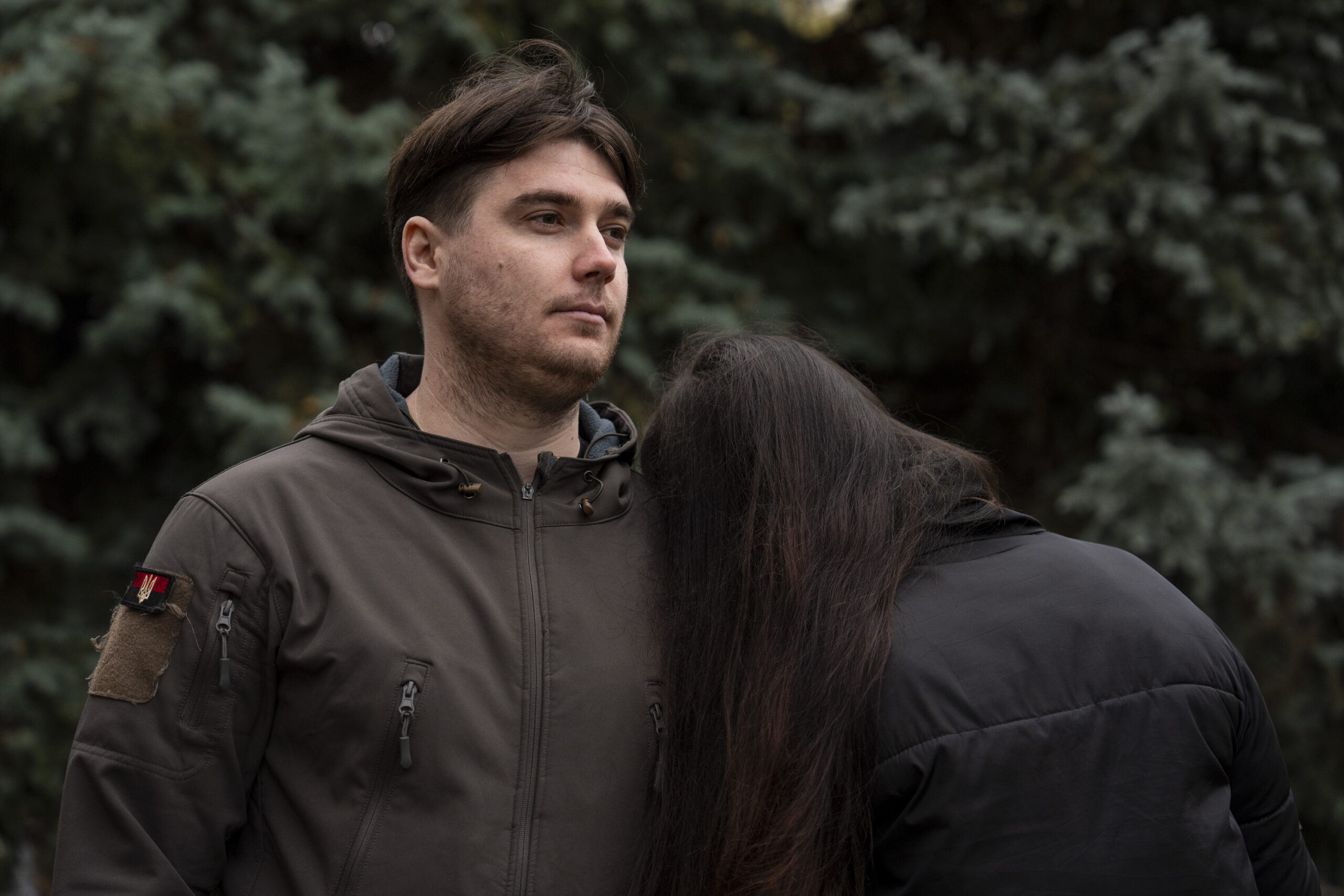
    Vika, 18, with her brother Ihor, who was in the military.

    They came from a family that talked over each other, with Ihor often getting the last word. He was seven years older, a soldier who had nearly lost his leg fighting in the Donetsk region in 2023. Chronic pain and disability forced his resignation from the army. Where Ihor was open and driven, Vika was quiet and closed off, struggling to find her way. She hid behind a curtain of straight, dark hair and chipped away at her nail polish when nervous.

    She was 16 when the full-scale war started, evacuating to western Ukraine with her mother while her father stayed behind. Russian troops rolled past their village, not far from the front line in Kherson. When it was safe enough, her family returned home. The past painful, they fixated on her future. Perhaps in the food industry, building on her degree in food science.

    They hoped she’d land on her feet.

    ‘A fatal mistake’

    Vika slid out of the back seat of the taxi with a strange feeling in the pit of her stomach. Wanting to back out, she texted her boyfriend, a soldier fighting in Ukraine’s northern Kharkiv region.

    “I almost made a fatal mistake. I’ll tell you when we’re together.”

    “At least hint,” he replied.

    “I’ll tell you everything, but not like this,” she said.

    Then the threats started rolling in.

    Danylo demanded to know where she was. He told her to call him, then promised that no one would hurt her — if she followed through.

    “It was sort of like I was under some hypnosis,” she said later. “I wasn’t thinking. I was just doing what the man was telling me to.”

    So she set aside her fear and carried on with the plan. She picked up the package, which consisted of two reusable shopping bags. One was heavy with a five-liter jug that sloshed with a milky substance. The other contained two cell phones. She carried the bags across the street and called Danylo. He instructed her to tape one of the phones to an orange fuse snaking out of the bottle top of the jug. On the other, he told her to activate an app.

    People walk through a park in Mykolaiv, Ukraine.

    Vika didn’t know it yet, but a counterintelligence agent from the SBU was watching. He’d worked a growing number of cases like hers, largely driven by financial insecurity. The plot often started small, a few bills offered for a menial task. As trust grew, the severity of the assignment increased, then turned toward violence. At that point, the agent said, “they can just threaten the victim with exposure” if they refused to follow through.

    “It’s easier to work with teenagers who are not psychologically ready to deal with stuff like that,” he said, speaking on the condition of anonymity in keeping with security service protocols.

    His job was to stop an attack before it happened. The SBU was 90% effective, he said. But the number of cases was rising, and agents couldn’t be everywhere at once. In one case, a teenager near Vinnytsia in central Ukraine had already thrown two molotov cocktails at a government building, engulfing it in flames, when the SBU arrested him a few days later. He had received more than $1,300 — money he said he planned to use, in part, to pay his grandmother’s hospital bills.

    “Every person has their own reasoning for why they do this,” the agent said later, declining to specify how Vika’s case came onto his radar. “To me, it’s hard to understand.”

    He watched as she settled onto a bench near a playground and peered into the shopping bags, fiddling with what was inside. Nearby, a mother pushed her young son and daughter on the swings.

    He video-recorded the scene as evidence. “Kids are playing, this girl is making a bomb,” he said, his radio crackling in the background.

    The police station near where Vika, 18, is accused of trying to plant a bomb in Mykolaiv, Ukraine.

    In a trance

    Vika left the playground in what felt like a trance and hailed a cab toward the police station. As the city whipped by, a blur of winter blue and gray, messages from Danylo pinged on her cell phone. He praised her, calling her a “good girl,” and implored that she keep him updated on timing.

    “I’ll call when I’m close to the place,” she replied.

    “If everything goes well, $3,000,” he said, upping the initial price. “I’ll send it to you! I give you my word! … Make sure you place the bag carefully without shaking it.”

    She was now only a few minutes away.

    “The bag seems large,” she said. “Or is it OK?”

    “It’s just the right size!” he said. “It doesn’t raise suspicion.”

    She got out of the taxi.

    A few minutes later, three SBU agents disguised as civilians approached. They asked what she was carrying. Vika panicked. She didn’t want to lie. When she finally spoke, it felt like someone else was answering.

    “I think,” she admitted, “this might be an explosive.”

    A view of Mykolaiv, Ukraine.

    The trial

    No lawyer would touch Vika’s case.

    Charged with terrorism, she faces up to 10 years in prison, though the prosecutor is willing to lessen her sentence if she cooperates with investigators. After multiple consultations with private attorneys failed, Vika’s mother recommended she accept a court-appointed lawyer. Vika was surprised to learn the tall and burly man was a retired SBU member — once assigned to investigate the type of clients he now defends.

    For seven months, Vika remained in custody as the SBU raided her brother’s apartment and her parents’ home for evidence. Lesia, her mother, mailed care packages of Vika’s favorite snacks. They caught up over the facility’s allotted 15-minute phone calls. Vika didn’t say much about the bunk room she shared with 13 other inmates or how they tried not to discuss their cases, some of them violent.

    Vika cycled through three judges before the final one, Volodymyr Aleynikov, released her in the fall on a $6,000 bail, which Lesia scraped together with donations from multiple family members. Now under court supervision as the beginning of her trial approaches, Vika is back to where she started: sleeping in the twin-size bed of her childhood bedroom, stuck in her home village.

    She felt “stupid” to have been tricked into such a plot, she said in an interview with the Washington Post in the fall.

    On a brisk November morning, Vika and Lesia entered the courthouse, walking through a broken metal detector and down a dimly lit hallway to Courtroom 2. Aleynikov shuffled in soon after. At 53, he’d presided over this room for decades, his caseload increasing as the war slogged on.

    The facts of Vika’s case didn’t shock him. Not that investigators discovered that the bomb she’d been carrying was built by four local boys between the ages of 14 and 16. Not that she’d ignored so many red flags. Not that it would probably take two years to sift through all the evidence. Aleynikov had nine similar cases on his docket, enough for him to ban smartphones at home, where he had a 15-year-old son.

    Now he turned to Vika.

    “Do you understand your rights?” he asked.

    She nodded. Glancing at her mother for reassurance, she asked the judge if it would be possible to move back in with her brother in Mykolaiv. She’d gotten a new cell phone for her 19th birthday, she offered, and he could contact her there.

    “Just don’t look for a job with that phone,” Aleynikov said.

    He set the date of her next hearing and the court adjourned for the day. Vika and her mom walked back outside, her fate yet undecided.