The possibilities are what make a Gladwyne estate for sale on Country Club Road “a significant property,” said listing agent Lisa Yakulis.
It spans 12.76 “very private” acres, said Yakulis, a broker associate at Kurfiss Sotheby’s International Realty. “It’s hard to find that size of a property in that area.”
The 9,166-square-foot home sits on about four acres. A future owner could subdivide the lower part of the property to create two roughly four-acre lots. An existing easement would provide access to the additional lots.
The home for sale on Country Club Road in Gladwyne sits on almost 13 acres, which can be broken into separate lots.
Yakulis said she’s seen that on the Main Line in the years since the pandemic, “desirable building lots with that kind of acreage are, No. 1, very hard to find, and No. 2, there’s a fairly large buyer pool out there that’s looking for land in that location to build exactly what they want to build vs. buying a resale home.”
The home on the property was custom built in 1993, and its floor plan is more open than homes of that time. It was designed to host the owners’ family and friends, which it has done for the last three decades.
The house has six bedrooms, eight full bathrooms, and three half bathrooms. Many large windows provide panoramic views of the property. The home has an elevator, six fireplaces, a library, two laundry rooms, and flexible living spaces.
The front door of the home opens to a chandelier and winding staircase.
The primary suite has two separate bathrooms and large dressing rooms. The main kitchen includes two ovens, a large island with a stove, bar seating, and a refrigerator that can be concealed behind sliding wooden panels.
The property has a total of three guest suites on the lower level, in a private section of the main level, and above one of two oversized two-car garages.
The home’s lower level includes another large kitchen, a sauna, entertainment space, and a walk-in safe.
The main kitchen includes three sinks, two ovens, and a large island with a stove.
The property features stone terraces, a pool, landscaped grounds, and acres of open land. A cottage-like utility building equipped with a half bathroom is where the owners cleaned their dogs. But it also could be used as a gardening shed or workshop.
Potential buyers who have toured the home said they like the privacy, views, and location. The Main Line property is near preserved open space, the Schuylkill Expressway, and Philadelphia Country Club. Yakulis said the home is on a quiet street with plenty of space between neighbors.
The property has attracted people of various ages, including empty nesters who like the elevator and the guest suites that offer spaces for visiting children and grandchildren.
“I get the comment when people come through that it’s a happy house, and it’s true,” Yakulis said. “You walk in there and the light pours in, and you can just tell that it’s a happy house. It has a good vibe.”
The property was listed for sale in October.
A gate opens to the circular driveway in front of the home.
Despite frigid temperatures and the specter of the Philly area’s largest snowstorm in years, hundreds of language lovers and grammar nerds gathered in Bryn Mawr on Saturday for a screening of Rebel with a Clause, the hottest “road trip, grammar docu-comedy” on the indie movie circuit.
Rebel with a Clause follows language expert Ellen Jovin as she takes her makeshift “Grammar Table” on a journey across the United States, from Bozeman, Mont., to New York City (and everywhere in between). From behind the table, Jovin asks strangers to divulge their questions, comments, and concerns about the English language, from when it’s best to use a semicolon to how to properly punctuate “y’all.” What starts as an amusing grammarrefresher turns into a moving text on Americans’ shared humanity, even in polarizing times.
Ellen Jovin, subject of “Rebel with a Clause,” signs books at a screening at the Bryn Mawr Film Institute on Jan. 24, 2026.
Jovin, the movie’s star, has written four books on writing and grammar, including Rebel with a Clause: Tales and Tips from a Roving Grammarian, a reflection on her cross-country tour. The movie was directed and produced by Brandt Johnson, a writer and filmmaker who also happens to be Jovin’s husband.
Jovin and Johnson, who are based in New York,are on a second cross-country tour as the Rebel with a Clause movie graces audiences. The Bryn Mawr screening marked the film’s first public showing in the Philly area.
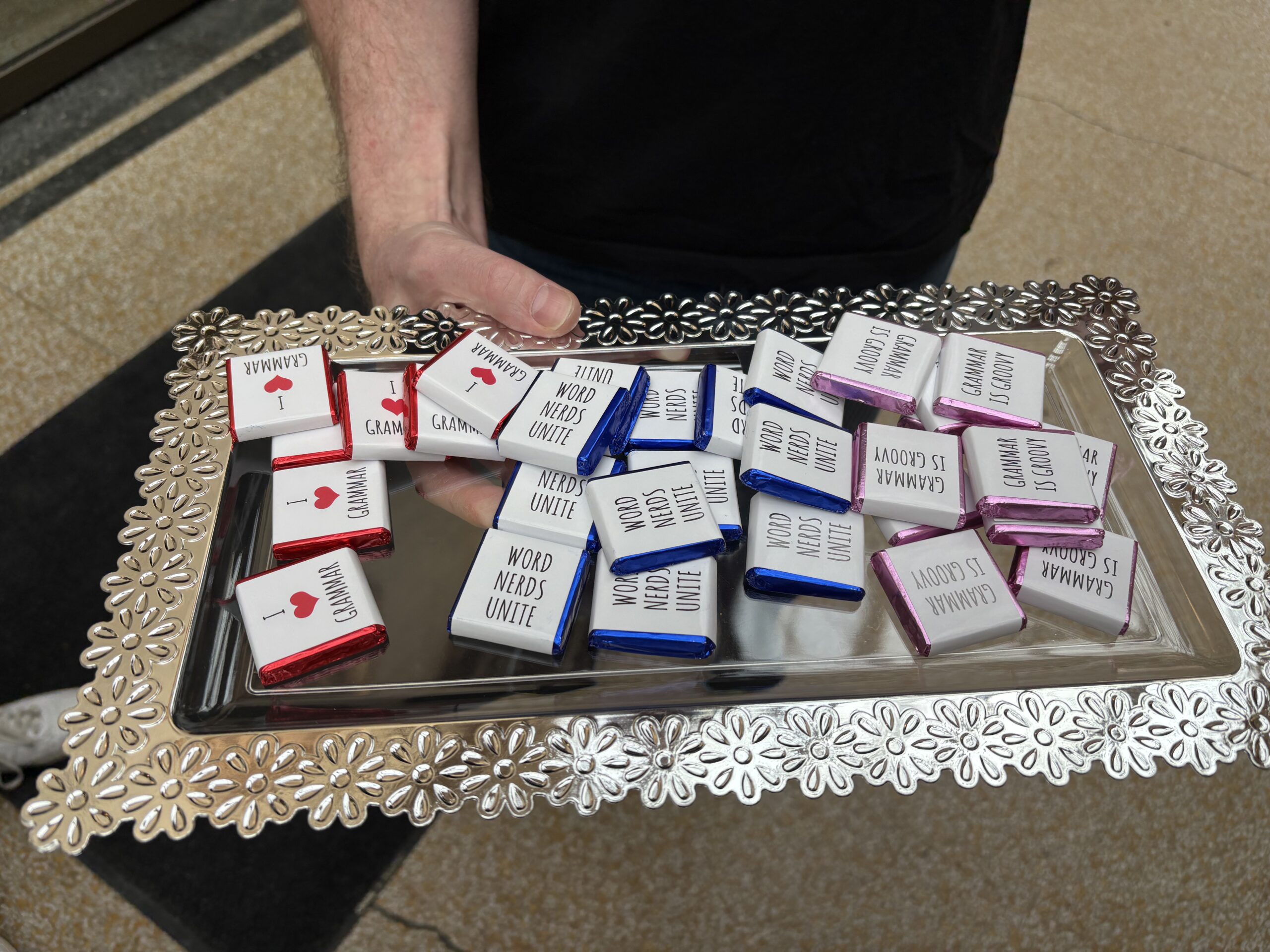
As he handed out optional grammar quizzes and grammar-themed chocolates in the Bryn Mawr Film Institute’s foyer, Johnson said the response to the movie has been “extraordinary.”
“Ellen’s Grammar Table that she started in 2018 was about grammar, for sure, but it turned out to be as much about human connection,” Johnson said.
“Just as a life experience, oh my gosh,” he added. “It’s been something that I certainly didn’t anticipate.”
“Rebel with a Clause” producer Brandt Johnson hands out grammar-themed chocolates to moviegoers at the Bryn Mawr Film Institute on Jan. 24, 2026.
Before the screening, attendees waited for their turn at the table, where Jovin was signing books and answering pressing questions about commas and ellipses.
Mary Alice Cullinan, 76, said she and her friends are fascinated by grammar and how it seems to be losing ground among younger generations.
Cullinan, who lives in Blue Bell, spent her career working in the restaurant industry but always read and wrote on the side.
“I read to live,” she added.
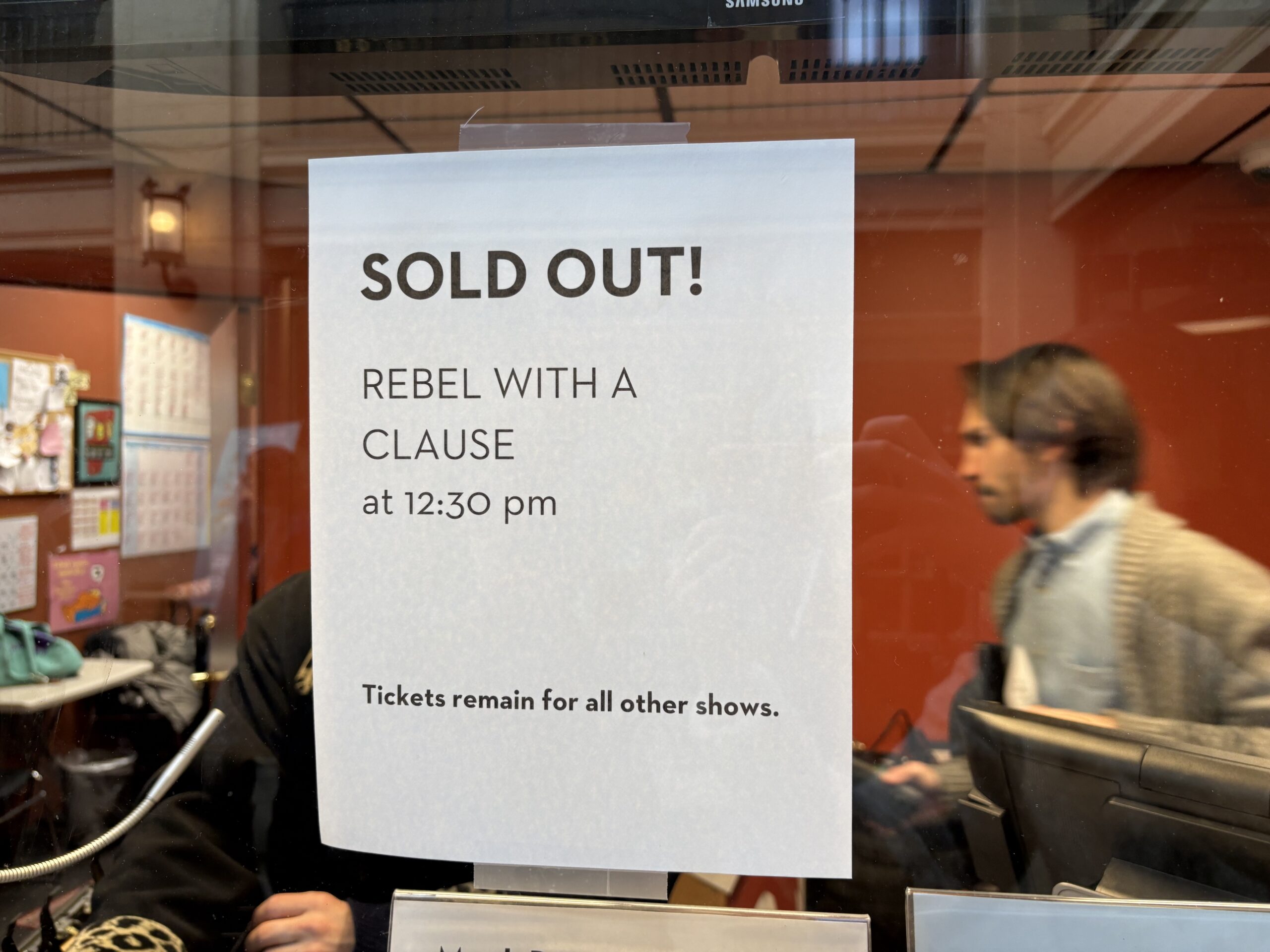
The Bryn Mawr Film Institute was packed with retired teachers, avid writers, and grammar aficionados who came armed with gripes about commas, parentheses, and quotation marks. At five minutes to showtime, an employee plastered a “SOLD OUT!” sign on the box office window.
A sign announcing that the Bryn Mawr Film Institute’s screening of “Rebel with a Clause” was sold out. The grammar-themed documentary played at the Main Line movie theater on Jan. 24, 2026.
Jen Tolnay, 63, a copy editor from Phoenixville, heard about the movie at an editors’ conference. She was so excited that she moved a haircut appointment to be there.
The 86-minute film provoked regular laughter in the audience (and a line about Philadelphians’ pronunciation of the wet substance that comes out of the sink got a particularly hearty laugh).
During a post-screening question-and-answer session, moviegoers complained about the poor grammar of sportscasters, praised Jovin and Johnson, and inquired about the colorful interactions Jovin had at the Grammar Table.
For Katie McGlade, 69, grammar is an art form.
The retired communications professional from Ardmore described herself as a habitual grammar corrector who would often fight with her editors about proper language usage. Now,as an artist, she makes colorful prints that center the adverb.
“I love that’s she’s bringing joy to the word,” McGlade said of Jovin. ”We need joy and laughter, and we need to communicate with each other.”
This suburban content is produced with support from the Leslie Miller and Richard Worley Foundation and The Lenfest Institute for Journalism. Editorial content is created independently of the project donors. Gifts to support The Inquirer’s high-impact journalism can be made at inquirer.com/donate. A list of Lenfest Institute donors can be found at lenfestinstitute.org/supporters.
Ashigh schoolteacher Christa McAuliffe prepared to be strapped into the space shuttle Challenger, Brian Russell, an official at the company that built the craft’s solid rocket boosters, had just participated in a fateful teleconference from his Utah headquarters.
Like every other engineer in the conference room at Morton Thiokol on that day four decades ago, the 31-year-old Russell opposed launching because the bitterly cold temperature at Florida’s Kennedy Space Center threatened the O-rings that sealedthe rocket boosters. Their managers initially supported this view, but Russell listened in dismay as they reversed themselves under pressure from NASA officials and senior company officials and signed off on the launch.
The mission ended in catastrophe for the reason that Russell feared — a story I know well as a reporter who covered McAuliffe and witnessed the Challenger’s explosion. But for those involved in this tragedy, the families of the astronauts and those who approved the launch, much about thisstory is perhaps even more relevant today than it was on Jan. 28, 1986.
The belief that there are still lessons to learn from the disaster is what led Russell last year to take an extraordinary step that, until now, has received no public notice. He visited NASA centers across the country, telling the Challenger story in hopes that similar mistakes will not occur as the space agency prepares to launch four astronauts on Artemis II, which is scheduled to fly by the moon as soon as February.
The lesson of Challengeris not just about the O-rings that failed. For Russell and colleagues who accompanied him on the NASA tour, understanding the human causes behind the Challenger disaster provides still-crucial lessons about managers who fail to heed the warnings of their own experts. Russell made his tour to make sure NASA officials “heard it from us, and heard the emotional impact that we felt.”
‘America’s finest’
On that day four decades ago, I was standing alongside McAuliffe’s parents and friends. I was a reporter in the Boston Globe’s bureau in Concord, New Hampshire, and I was assigned to follow McAuliffe’s journey from Concord to Cape Canaveral. I visited McAuliffe in her home, flew with her son’s class to Florida and witnessed the disaster.
As the 40th anniversary neared, I revisited McAuliffe’s journey, documented in my clippings as well as thousands of pages of books, reports, and previously unpublished material. I tracked down the handful of survivingformer officials involved in the launch decision, including the rocket company manager, who reversed himself and signed off on the launch.
What I found areintertwined stories: one of McAuliffe and her fellow crewmates, determined to revive interest in the space program, and another of behind-the-scenes turmoil as rocket engineers all but begged that the launch be scrubbed.
President Ronald Reagan hadannounced in 1984 that he wanted the first private citizen in space to be “one of America’s finest — a teacher.” McAuliffe was chosenby a government-appointed panel in July 1985 from 11,000 applicants to be the “space teacher.” Invariably portrayed in media as a small-town teacher with a nervous laugh, she was in fact a teacher like few others, a bit of a rebel who was bursting to speak about inequality, woeful pay, and the power of politics — if only she was asked.
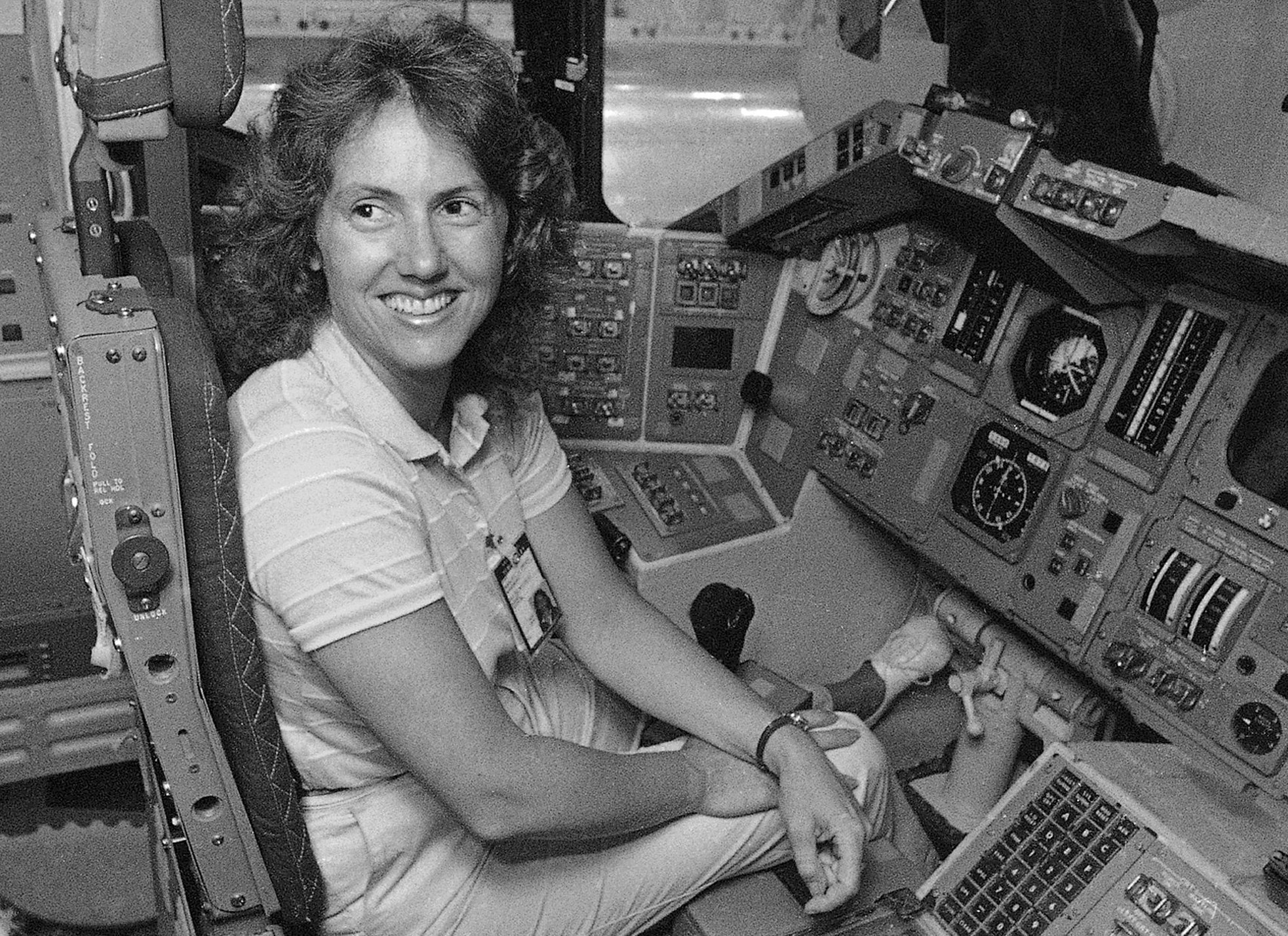
McAuliffe, 37, taught a history course called The American Women, which included study of astronaut Sally Ride, who in 1983 became the first American woman in space, assigned to the Challenger. Two years later, when McAuliffe learned that Reagan had sought a teacher to be the first civilian in space, she filled out an application seeking to follow in Ride’s path — which, as it happened, would be aboard the same space shuttle.
Christa McAuliffe tries out the commander’s seat on the flight deck of a shuttle simulator at the Johnson Space Center in Houston on Sept. 13, 1985.
“As a woman, I have been envious of those men who could participate in the space program and who were encouraged to excel in the areas of math and science,” McAuliffe wrote in her application. “I felt that women had indeed been left outside of one of the most exciting careers available. When Sally Ride and other women began to train as astronauts, I could look among my students and see ahead of them an ever increasing list of opportunities.”
McAuliffe became one of 10 finalists, training with the group and traveling to Cape Canaveral on July 12, 1985, to witness a launch of the Challenger. But the flight was aborted three seconds before liftoff because of a faulty valve. Days later, McAuliffe was unanimously chosen by the government-appointed panel of expertsto be the teacher in space, a decision announced at the White House on July 19, 1985, by Vice President George H.W. Bush.
Ten days later, after NASA fixed the valve, the spacecraft launched but was almost immediately in trouble. One of the three engines shut down, leading to concern that the shuttle would have to make an emergency landing. NASA controller Jenny Howard probably saved the mission when she made a split-second decision that faulty sensors caused the shutdown and overrode them, enabling the flight to continue. Twice in two weeks, Challenger had been in danger, but the teacher-in-space show went on.
Only two days later, NASA publicists whisked McAuliffe onto the set of The Tonight Show, where she gave host Johnny Carson a kiss and won him over, along with a national audience of millions. The recent problems with Challenger, however, were on her mind, as she said the timing of her flight was “being bumped up a little bit with the problems they’ve had.”
“Are you in any way frightened of something like that?” Carson said, noting that “they had a frightening [incident] and one of the engines went out.”
“I really haven’t thought of it in those terms because I see the shuttle program as a very safe program,” McAuliffe responded. “But I think the disappointment …”
Carson interrupted to recall a joke by another astronaut: “It’s a strange feeling when you realize that every part on this capsule was made by the lowest bidder.”
‘I think it’s important to be involved’
A few days later, McAuliffe was back in Concord and agreed to see me at her gracious three-story house in a neighborhood known as The Hill. Her husband, Steven, who was then in private law practice, listened attentively.
At the time, New Hampshire was a solidly conservative Republican state. McAuliffe was an outspoken activist with political ambition; she had been the head of a local teachers union and, true to her Massachusetts roots, a self-described feminist and Kennedy Democrat.
Although rarely mentioned in national stories, her fight for teacher salaries had made her a local legend when she made the case before a town meeting to raise pay, and she succeeded.
By the time McAuliffe applied to be a teacher in space, New Hampshire teacher salaries averaged only $18,577, better than only Maine and Mississippi, according to NEA statistics, and she made only $24,000 annually after 15 years. When I asked her about the salary fight and the continuing low pay for teachers, McAuliffe looked up from packing a bag labeled “Teacher in Space” and said that, after dozens of interviews, this was the first time she had been asked such a question about education. She hoped that her space mission would give her a platform to fight for teachers.
“My sympathies have always been for working-class people. I grew up in that era — we are real big Kennedy supporters — and I think it’s important to be involved.”
As we discussed McAuliffe’s recent round of rousing public appearances, including on The Tonight Show, Steven McAuliffe couldn’t resist hinting about a future in politics: “The Democratic Party could use a good candidate,” he said. “I think she’d be pretty good, don’t you?”
Warning signs
The space shuttle was one of the greatest triumphs in aeronautical design that the world had seen. The airplane-like orbiter carried astronauts and payload such as satellites and could return to Earth for a runway landing. It was launched into space by an external tank with liquid hydrogen and liquid oxygen, propelled by two solid rocket boosters that were jettisoned about two minutes into flight and could be reused.
But the solid rocket boosters had a potential weakness. They were constructed in sections at the Morton Thiokol plant in Utah, shipped across the country by rail and reassembled at the Florida launch site. This meant the rocket was fit together at a series of field joints, as they were called, which would have to be sealed with an O-ring, a supersize version of a rubber seal on a kitchen faucet.
The O-rings were only a quarter-inch thick, wrapped around the rocket sections at a circumference of 37 feet. It was well known that the slightest leak in an O-ring could be catastrophic, so a second seal was added for redundancy.
NASA insisted the rockets were so secure that the probability of failure was too small to calculate — they could fly every week for 100 years without incident, the government asserted at one point.
Indeed, when a NASA official briefed McAuliffe and others, he said if a crucial part should fail, a backup assured success, citing the need for such redundancy to prevent “a burn-through in the solid rocket boosters … because we’re very concerned about the first two minutes you’re on the solid rockets. If one of those rockets goes, why, it’s pretty bad,” according to I Touch the Future, a 1986 biography of McAuliffe by Robert T. Hohler.
But the warning signs had been piling up.
Seven months before McAuliffe’s selection was announced, Morton Thiokol engineer Roger Boisjoly was alarmed at what he saw during an examination of rockets retrieved after the launch of space shuttle Discovery. That spacecraft had launched after days of what was called a once-in-a-century freeze in which temperatures at the launchpad dropped to 18 degrees. Boisjoly’s postlaunch inspection found damage to O-rings that he determined had been caused by the cold.
Yet when tests confirmed Boisjoly’s thesis, “management insisted that this position be softened,” Boisjoly later said at a Massachusetts Institute of Technology speech.
Boisjoly was so concerned that his warnings were being ignored that on July 31, 1985 — the same day McAuliffe appeared on The Tonight Show — he wrote a memo to his superiors ominously titled “SRM O-ring Erosion/Potential Failure Criticality.”
“This letter is written to insure that management is fully aware of the seriousness of the current O-ring erosion problem …” Boisjoly wrote. If there was a repeat of an O-ring problem that occurred on an earlier mission, he feared, “The result would be a catastrophe of the highest order — loss of human life.”
‘I think it’s safe enough’
On the day that the field of teacher-in-space candidates had been narrowed to 10, the shuttle’s commander, Richard Scobee, told his wife, June, that he was concerned about the impression given by NASA about how safe the shuttle program had become.
“They have 10 finalists, and they’re really counting [on] how safe it is to fly the shuttle now,” Scobee said, as June recounted in aninterview this month with the Washington Post. “And we know it’s still a test vehicle. It’s not a commercial flight. Should I go to Washington to talk to the 10 finalists?”
June told her husband that he should go, “and if any of them wanted to back out, that’s a good time.”
Scobee delivered his warning to the finalists. None backed out.
After McAuliffe was chosen and traveled to Houston for training, she visited June at her home.
“Do you think it’s really safe?” McAuliffe asked.
“Christa, no one really knows for certain, but if it’s safe enough that I’m encouraging my husband to fly, then I think it’s safe enough,” June responded.
Thinking back on the moment almost 40 years later, June recalled, “She appreciated that. And that’s all I could say. What did I know?”
McAuliffe turned from her round of interviews to an intense training schedule — much compressed compared with that of astronauts — and earned the admiration of skeptical colleagues who at one time saw her as taking away a seat from others who had been waiting years for their turn. Eventually the view was that she had become so popular that she might be the savior of the shuttle program.
As launch day approached,McAuliffe had allowedme to accompany her son’s flight to Florida on Jan. 22, 1986. Scott, 9 years old and accompanied by his third-grade classmates, sat in a window seat as he drew a Martian on a pad. He was looking forward to the launch — and visiting Sea World to see a killer whale.
As the United flight descended through the clouds, Scott looked out the window and saw Kennedy Space Center and the launchpad from which his mother was scheduled to lift off.
“Someone called to him to play a game,” I wrote, “but Scott stayed by the window, transfixed.”
Determined to fly
For several days, launches were planned and scrubbed. McAuliffe’s father, Ed Corrigan, a plainspoken and proud dad, wandered into a Cocoa Beach store that had advertised “Teacher in Space Souvenirs.” The store offered him a 10 percent discount on large buttons with an image of his daughter and, as he told it, he bought dozens and “I’m giving them out like cigars.” He said Christa was “very anxious” and couldn’t wait until liftoff.
The cancellations had made NASA the butt of jokes on national newscasts, particularly the hapless circumstances of Jan. 27, which CBS anchor Dan Rather called a “red faces all around … high-tech low comedy.” That day’s flight was postponed after technicians noticed a screw protruding from a door latch and could not locate a drill to remove it; then, when a drill was found, its battery could not be located. Finally, after hacksawing the screw, high winds canceled the launch. I wrote in my story that day that a NASA official said while there had been only a “minuscule chance” of a problem, “we are dealing with human life here and we don’t take chances.”
The attitude was, ignore the critics, safety first. Or so it seemed.
The plan was to launch the following morning, but the forecast was foran overnight low of 18 degrees and freezing temperaturesinto the morning. It was broadly assumed there would be another cancellation. A year earlier, similar temperatures had been called a once-in-a-century freeze and — unknown to the public — had caused almost catastrophic damage to the O-ring.
But NASA was determined to fly. Questions would later be raised in a congressional investigation and elsewhere about whether the push to launch was due partly to Reagan’s intention to highlight McAuliffe in his State of the Union speech that evening, but White House officials denied exerting pressure.
Boisjoly, meanwhile, was making one last effort to convince his superiors at Morton Thiokol as well as NASA that they were risking catastrophe. He was joined in a meeting at the company’s Utah facility by Brian Russell, the engineer who had recently been promoted to project manager.
Brian Russell at his home in North Ogden, Utah, on Jan. 20.
Russell came prepared with data that underscored his concern about whether the O-rings would fail in cold weather. “We were unified as an engineering team going into that meeting on recommending a delay,” Russell said.
That was going to be their message in a teleconference with NASA officials who had gathered at Cape Canaveral and the Marshall Space Flight Center in Alabama. Around 9 p.m. Eastern time — about 12 hours before the scheduled launch, Boisjoly said that no launch should take place if the temperature was below 53 degrees, which seemed to rule out a launch given the forecast. The final word seemed to come from Morton Thiokol’s vice president, Joseph Kilminster.
“I stated, based on the engineering recommendation, I could not recommend launch,” Kilminster, now 91, said in an interview this month.
That could have been the end of the discussion. But NASA officials — who had come up with the teacher-in-space program partly to offset criticism of their costly inability to launch as many shuttle flights as promised — were aghast. While stressing they wouldn’t go against the rocket maker’s recommendation, they made clear they wanted the liftoff to proceed.
“My God, Thiokol, when do you want me to launch, April?!” said Lawrence Mulloy, the NASA solid rocket booster project manager, according to congressional testimony.
The data, NASA officials told Morton Thiokol, was not conclusive. They pressured the company officials to further explain its reasoning. Company officials said they wanted to discuss the matter privately and muted the teleconference.
As Russell recalled it, the company faced great pressure, including the likelihood that NASA was about to solicit competition to build future rockets. “We as a company had a very, very strong desire to please our customer,” Russell said.
As Thiokol paused the teleconference, Kilminster said in the interview, he talked with another company official and became comfortable that liftoff would be safe at the predicted launch-time temperature. The call was resumed, with Mulloy continuing to push for permission to launch.
With urging from a more senior company official as well as space agency officials, Kilminster then reversed himself and supported launching. He said in the interview that while there was pressure from NASA, “I don’t want to say it was the insistence of the NASA people that made me do that.” He also thought that O-rings could perform at a lower temperature than the ambient rate predicted for the following morning.
Looking back, Russell said he wished he had spoken up so that NASA officials on the call would have realized there was strong internal dissent.
“Why didn’t I speak up?” Russell said in the interview. “There had to be on me an intimidation factor that once the decision was made that I would not dare to refute it. That’s my biggest regret. I wish so much that after we had gone back [on the teleconference], I wish I’d have said that there’s a dissenting view here so they would know we’re not unanimous.”
Brian Russell holds an example of an O-ring that was used in the construction of the Challenger.
Russell concluded that NASA had turned decision-making on its head. “I’m convinced what happened is that the burden of proof toward safety had been flipped, that we, in our recommendation, could not say, here’s the temperature when it would fail. We couldn’t prove it was going to fail,” Russell said.
Morton Thiokol’s representative at Cape Canaveral, Allan McDonald, could not believe what he was hearing. Like Boisjoly and Russell, he had deep concerns about the effect of the cold on the O-rings. So McDonald took a rare step: He refused to go along.
“I told Mulloy that I would not sign that recommendation,” which he considered “perverse,” McDonald wrote in his memoir, Truth, Lies and O-rings. If NASA wanted signed approval, it would have to come from a company official in Utah. The whole exercise, he wrote, was a “Cover Your Ass” effort by NASA.
McDonald made one more effort to cancel liftoff, telling NASA officials: “If anything happens to this launch, I wouldn’t want to be the person that has to stand in front of a Board of Inquiry to explain why we launched outside of the qualification of the solid rocket motor.”
Kilminster signed the document saying that Morton Thiokol supported a liftoff. It wound up being Russell’s task to send the fax that recommended the opposite of what he had wanted. NASA got what it wanted. The launch was a go.
After the meeting, Boisjoly wrote in his log that he and his team had done everything they could to stop a liftoff, writing, “I sincerely hope that launch does not result in a catastrophe.” Later that night, believing that “the chance of having a successful flight was as close to Zero that any calculations could produce,” he vented to his wife, Roberta, according to the account in his unpublished memoir. (Boisjoly, who died in 2012, gave the memoir to Professor Mark Maier, the founder of a leadership program at Chapman University, who provided a copy to the Post.)
“What’s wrong?” Roberta asked her husband.
Responded Boisjoly: “Oh nothing, the idiots have just made a decision to launch Challenger to its destruction and kill the astronauts.”
‘Go Christa!’
That same evening, McAuliffe talked on the phone with her close friend and fellow Concord teacher, Jo Ann Jordan, who was at Cape Canaveral to witness the launch and recalled the conversation in an interview.
“I’ll call you when I get back,” McAuliffe said, and then added with a laugh, “Oh, it sounds like I’m going to New Jersey!”
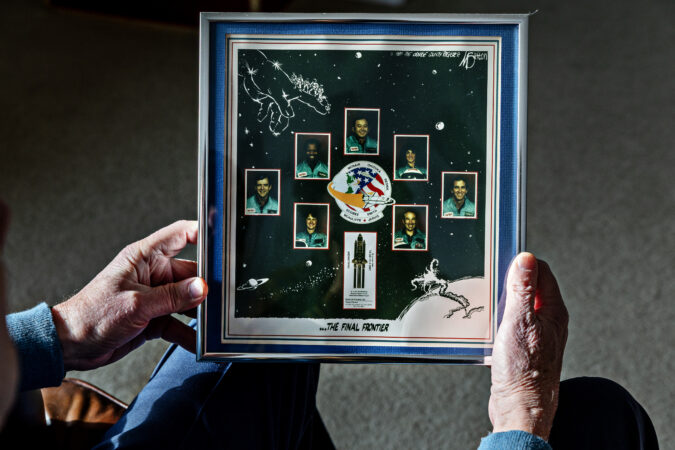
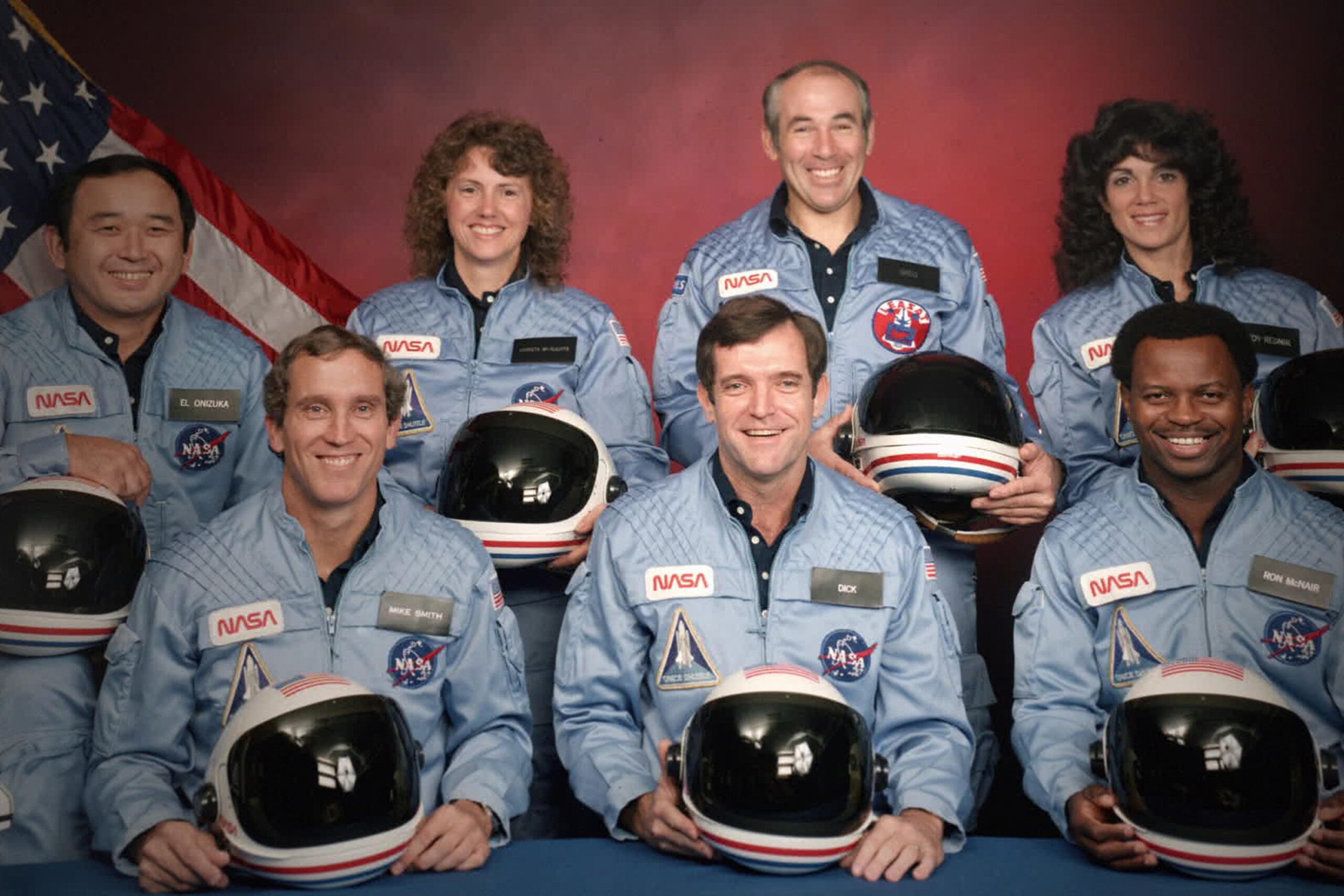
Early the following morning, McAuliffe put on her blue flight suit, took an elevator up the launchpad, past rows of icicles on the superstructure, and buckled into her seat in the Challenger. She was joined by six crewmates: Scobee; pilot Michael J. Smith; mission specialists Ronald E. McNair, Ellison S. Onizuka, and Judith Resnik; and payload specialist Gregory B. Jarvis.
The Challenger 7 flight crew: Ellison S. Onizuka; Mike Smith; Christa McAuliffe; Dick Scobee; Gregory Jarvis; Judith Resnik; and Ronald McNair in Netflix’s “Challenger: The Final Flight.”
McAuliffe had told a friend what it had been like waiting for liftoff before a flight was canceled: lying on her back, unable to read or watch anything, head in a helmet and her body “strapped down really tightly, with oxygen lines and wires coming out of your suit.” She had packed several mementos, including a T-shirt emblazoned with what became her motto: “I touch the future — I teach.”
Steven McAuliffe, Scott and daughter Caroline, 6, were escorted to a rooftop building to watch the liftoff. Christa’s parents, Ed and Grace Corrigan, arrived with Scott’s third-grade class and other friends to watch from a grandstand. Given my assignment to tell the family’s story, I was escorted to sit near the parents.
The day seemed postcard-perfect crystalline, at least in terms of unlimited visibility and no forecast of precipitation. But the predawn temperature was 22 degrees. As Grace Corrigan later wrote, it was “cold, cold, cold. … We could see icicles hanging from the shuttle. How could they lift off like this?”
Television footage of the icicles on launchpad 39B prompted Rocco Petrone, the president of Rockwell Space Transportation System, a division of the company that built the shuttle, to advise against the launch. As Petrone later testified, he feared the icicles could damage the shuttle, and he told NASA, “Rockwell cannot assure that it is safe to fly.” NASA decided that it had sufficiently dealt with the ice problem, and the warning was dismissed.
For two hours, the launch was delayed. Now it was 11:38 a.m. The temperature had climbed, but the ambient reading was still only 36 degrees, and it was colder at the right field joint of the rocket booster, because of high winds sending super-cold gases down the tank. At company headquarters, engineers were in disbelief that the launch was going ahead.
Indeed, the astronauts had figured such cold would cause a delay, even though they were not apprised of the danger from the O-rings. But NASA had made its decision. McAuliffe’s parents and friends and the students from Scott’s class gathered in front of a large homemade banner that said, “Go Christa!”
‘The vehicle has exploded’
“3, 2, 1!” the children shouted.
A voice from a loudspeaker exulted: “Liftoff! Liftoff of the 25th space shuttle mission, and it has cleared the tower!”
“Look at it, all the colors,” a child said.
Then: “Where is it?”
Seventy-three seconds into flight, massive white plumes billowed from the rockets, painting curlicue contrails. To the untrained naked eye, it was hard to discern whether this was anything other than a routine separation of the shuttle from its rockets.
“It’s beautiful,” said one of McAuliffe’s friends, not realizing.
Aboard Challenger, the last words were spoken by pilot Smith: “Uh-oh.”
Forty-three seconds passed as the confused crowd looked skyward. Finally, a voice came over the loudspeaker: “Flight controllers here are looking very carefully at the situation. Obviously a major malfunction.”
Almost another minute passed.
Mission control: “We have a report from the flight dynamics officer that the vehicle has exploded.”
I looked at Ed and Grace Corrigan, Scott’s classmates, McAuliffe’s friends.
“Contingency procedures are in effect,” said the monotone voice from the speakers.
Again, the loudspeaker voice: “We have a report relayed through the flight dynamics officer that the vehicle has exploded.”
“Oh my God,” said one of the chaperones for Scott’s classmates. “Everyone, get together.”
Jo Ann Jordan, the friend who had talked hours earlier with McAuliffe, exclaimed, “It didn’t explode, it didn’t explode.”
The Corrigans looked shell-shocked, squinting at the white streaks expanding across the sky, obscuring the craft that had carried their daughter. Finally, they inched down the steps of the grandstand, whisked away by a NASA official.
The space shuttle Challenger explodes shortly after lifting off from Kennedy Space Center, Fla., on Jan. 28, 1986.
Only later, it was determined the vehicle had not entirely exploded. At least some of the crew members were probably briefly alive, perhaps for as long as two minutes. Evidence later showed that Smith’s personal emergency air pack had been activated for him by another astronaut, and that Smith had turned a switch to regain power. But they were in an uncontrollable piece of the shuttle. Escape was impossible because NASA had decided there was no need to plan for such an emergency. The cabin slammed into the ocean. The remains of the bodies would be recovered from the bottom of the sea.
Reagan canceled his State of the Union speech. He instead delivered a brief address, paraphrasing a famous poem by American aviator John Magee called High Flight: “They slipped the surly bonds of Earth to touch the face of God.”
Reagan had no way of knowing it, but McAuliffe had slipped a full copy of the poem into her flight suit before boarding the Challenger.
Back at Morton Thiokol headquarters, Boisjoly and Russell watched the Challenger liftoff from the same conference room where they had opposed the launch only hours earlier. Retreating to Boisjoly’s office, the two embraced and cried. “We just knew inside of us it was us — that it was the booster, it was the joint, it was just what we talked about the night before, we both felt we were profoundly sorrowful,” Russell said in the interview.
‘She died because of NASA’
In those days before the internet and cellphones, and with network television stations broadcasting regular programing, the launch had been carried live by CNN and satellite feeds to classrooms, where millions of schoolchildren saw the events unfold. Within an hour, most Americans had heard the news and seen replays. I wrote an initial story for a rare extra edition, headlined “Globe reporter with family at scene,” accompanied by a massive picture of the explosion. The Post assembled a team of reporters to write a book, Challengers, which profiled the astronauts.The disasterbecame one of the biggest stories in years.
The disaster, after all, had led to the first in-flight deaths of American astronauts. (Three astronauts had died in a launchpad accident in 1967.) Tens of millions of viewers tuned in to watch the televised hearings of an investigative commission. Soon came confirmation of all that the Morton Thiokol engineers had warned about: the years of disregarded red flags that the O-rings were susceptible to the cold, as evidenced by the meeting before the launch at which company engineers were overruled by managers.
Ed Corrigan absorbed it all with growing anger. Like many members of the family, McAuliffe’s fatherhad initially declined to speak against NASA. But after he died in 1990, his widow, Grace, discovered a notebook in which he laid out his feelings. “NASA’s ineptitude,” Ed Corrigan titled one paper, in which he listed the names of those who had opposed the launch, Grace Corrigan later revealed in her memoir, A Journal for Christa.
“I have been angry since January 28, 1986, the day Christa was killed,” Ed Corrigan wrote. “My daughter Christa McAuliffe was not an astronaut — she did not die for NASA and the space program — she died because of NASA and its egos, marginal decision, ignorance and irresponsibility. NASA betrayed seven people who deserved to live.”
NASA officials said in congressional hearings that they made the decision based on information supplied to them at the time, including the faxed recommendation for launch from the Morton Thiokol official who had reversed himself.
While much became known in the weeks following the explosion, more information has emerged in the ensuing four decades. McDonald published his memoir in 2009 and died in 2021. Boisjoly, who often spokeabout his anger about his unheeded warnings and documented his actions in his unpublished memoir,which was cited in a2024book, Challenge, by Adam Higginbotham. Some of those involved in the launch decision gave interviews for a 2020 Netflix documentary, Challenger: The Final Flight. Among them was Mulloy, the project manager at Marshall Space Flight Center who pushed Morton Thiokol to reverse his recommendation.
“I feel I was to blame,” said Mulloy, who died at 86 years old in 2020. “But I felt no guilt.”
Kilminster, the Thiokol vice president who reversed himself to recommend a launch, spent the following 40 years seeing himself cast as a villain. He said in his interview with the Post that he is “haunted by the fact that I was involved in a solid rocket and motor launch decision resulting in the deaths of seven extremely capable, dedicated and admirable individuals.”
But Kilminster also said he has been wrongly singled out.Kilminster said that he had been unaware at the time that the shuttle’s tanks had been venting liquid oxygen longer than he considered usual, which he said meant super-cold oxygen flowed downward and caused the O-rings to be much colder than the ambient temperatures.
“The temperature on the O-rings was a lot colder than anyone wanted to admit,” Kilminster said. Had he known that temperature at the field joint was colder than he considered acceptable, he said there is “no question” he would have reversed himself again and opposed the launch.
A number of engineers who worked under Kilminster have said, however, that even the ambient temperature of 36 degrees at liftoff was more than cold enough to have followed their recommendation against a launch. While Russell said he did not doubt that it was much colder at the O-ring, “the ambient temperature was cold enough to make me concerned and wanting a delay.”
A presidential commission determined that cold temperatures caused the O-ring failure, as well as flawed decisions and internal conflicts leading up to the launch. It was not within the commission’s mandate to judge whether NASA was at fault for putting McAuliffe on the flight. However, Alton Keel, who was the executive director of the commission, said in an interview that the lesson was clear to him then and now.
“They let the PR get in the way of good judgment,” Keel said. “A tragic example of that was Christa McAuliffe. She should not have been put on that flight. I’m sorry. But those flights were experiments. There’s too much risk involved.”
The rocket booster was redesigned by Morton Thiokol and never again failed. But in 2003, the space shuttle Columbia broke up during its return to Earth because its wing had been hit by a loose piece of insulating foam. An investigation found that, as in the Challenger disaster, NASA mismanagement was partly to blame. The last shuttle flew in 2011.
Wayne Hale, a former NASA flight director who worked on many shuttle launches, said in an interview that the culture changed after Challenger in which “safety was much more important than schedule,” encouraging dissent with the establishment of an anonymous reporting system and other measures. Still, he warned that “no matter how well things are prepared, there’s still a huge element of risk involved.”
‘This is still difficult for me’
The disaster profoundly influenced my outlook as a journalist, a career that soon took me to Washington, where I have spent much of the past 40 years covering the White House and those who seek to occupy it. In the wake of the Challenger explosion, I vowed that I would remember how NASA officials assured the public about the shuttle’s safety, and I sought to probe beyond official statements. And I would apply what I called the O-ring lesson: Make every story as airtight as possible. The O-ring failure proved the aphorism that nothing is stronger than its weakest link.
Steven McAuliffe has sought to keep the focus on his wife’s work for education. A little more than five months after the explosion, he delivered a speech to the National Education Association, in which he urged members to remember her legacy by working “until we have a system that honors teachers and rewards teachers as they deserve.”
Forty years later, that mission is still a work in progress. New Hampshire today ranks 38th in starting teacher salaries, at an average of $42,588, according to the National Education Association.
In 1992, seven years after George H.W. Bush had announced Christa McAuliffe’s selection at the White House, Bush was president and nominated Steven McAuliffe to be a judge on the U.S. District Court in New Hampshire — a seat that McAuliffe still holds under part-time senior status. The pick transcended the fact that McAuliffe was an outspoken Democrat and Bush was a Republican seeking reelection.
Steven McAuliffe, who remarried and still lives inNew Hampshire’s capital city, spoke in September 2024 at the unveiling of a statue of Christa on the State House lawn. He focused on Christa’s support for teachers, which he has said is democracy’s lifeline and was “far more” important to her than spaceflight.
“This is still difficult for me,” McAuliffe, who did not respond to an interview request, told the crowd of schoolchildren, friends, and politicians. “Which I guess I’m kind of proud of.”
June Scobee Rodgers, the widow of the Challenger commander, said that soon after the disaster, she talked to the other family members about a way to ensure that the mission’s message is not forgotten.
“I know NASA will continue spaceflight — they have to,” she said. “But who will continue Christa’s lessons? I talked to the other families and I said, these lessons aren’t just a textbook, they are a real-world application of adventures in space.” That led her to spearhead the development of Challenger Center, which has 33 locations. Students who visit the centers take part in a simulated space mission that faces a crisis, either in a mock spacecraft or mission control, as a way to stimulate interest in math, science, and aerospace.
“I hope and pray to this day that’s what Christa would want,” Scobee Rodgers said.
Although Scobee Rodgers knew much about the disaster, she said it wasn’t until recent years that she fully realized how aggressively the rocket company’s engineers had tried to cancel the launch, understood how NASA was motivated by its drive for boosting its support, and saw enhanced video showing an early leak at the O-ring, among other factors.
“I finally understood,” she said.
Last week, Scobee Rodgers stood silently with a bouquet at Arlington National Cemetery, where she and other family members of fallen astronauts attended NASA’s “Day of Remembrance.”
For Russell, the Challenger mission has never really ended. Last year, he visited NASA centers across the country to deliver a presentation about the lessons that are as relevant as ever: Leaders need to listen to warnings from those who work directly on the spacecraft.
“The whole goal of it was to make the team better and learn from our experience,” he said. “I would tell them flat out: I really wish and hope with all my being that you will do better than we did.”
Six-time Super Bowl champion head coach Bill Belichick didn’t get voted into the Pro Football Hall of Fame in his first year of eligibility, according to a report from ESPN.
Citing four unidentified sources, ESPN reported Tuesday that Belichick didn’t receive the necessary 40 votes from the 50-person panel of media members and other Hall of Famers. ESPN said Belichick received a call from the Hall of Fame last Friday with the news.
The Hall of Fame declined to comment before its class of 2026 is announced at NFL Honors in San Francisco on Feb. 5.
The report of Belichick’s snub was met with significant criticism, including from Kansas City Chiefs quarterback Patrick Mahomes, who posted on social media: “Insane … don’t even understand how this could be possible.”
Belichick was hired by New England in 2000 and led the franchise to six Super Bowl wins and three other appearances in the title game during an 18-year span from 2001-18. Belichick’s 333 wins in the regular season and playoffs with New England and Cleveland are the second most to Don Shula’s 347. He won AP NFL Coach of the Year three times.
Belichick also was one of the game’s top defensive assistants before taking over in New England, winning two earlier Super Bowls as defensive coordinator for the New York Giants.
Belichick’s career did have blemishes. He was implicated in a sign-stealing scandal dubbed “Spygate” in the 2007 season and was fined $500,000 after the team was caught filming defensive signals from the New York Jets during a game.
Belichick’s tenure in New England ended following the 2023 season. He just finished his first year coaching in college at North Carolina.
Belichick was one of five finalists among coaches, contributors and senior players who last appeared in a game in 2000 or earlier. Patriots owner Robert Kraft was the contributor finalist, with Roger Craig, Ken Anderson and L.C. Greenwood the players.
Between one and three of those finalists will be inducted into the Hall along with between three and five modern-era players from a group of 15 finalists.
It’s well-known by now that the Union have a big reputation for player development, perhaps the best of any American soccer club at the moment.
So it shouldn’t be too surprising that a lot of people in that world would like to know how they’ve done it.
At the United Soccer Coaches convention earlier this month in Philadelphia, a presentation by Jon Scheer, the Union’s head of academy and professional development, drew a healthy crowd that hoped to learn the club’s secret sauce.
Scheer didn’t give up all the recipes, but he was happy to take the attendees into the kitchen.
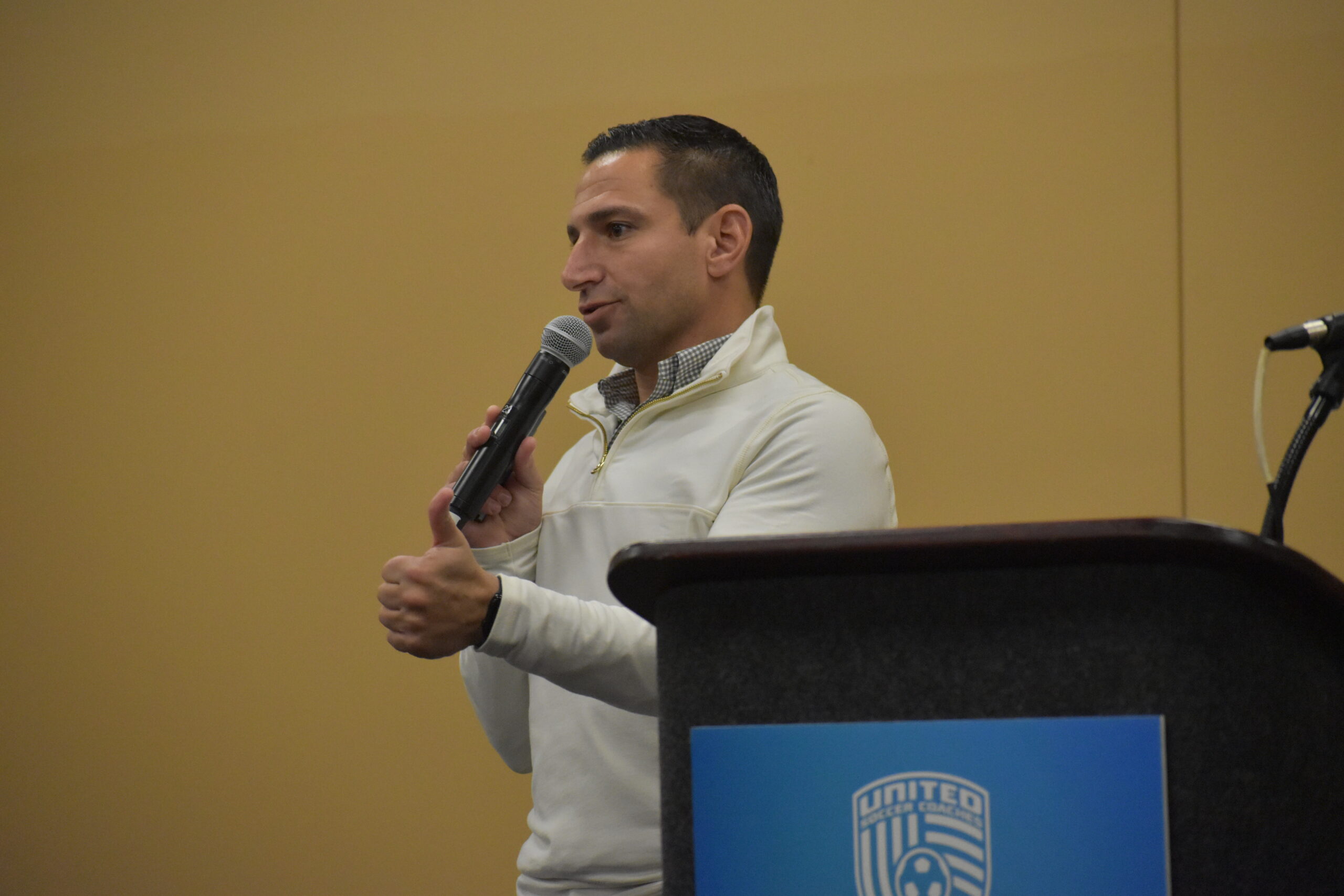
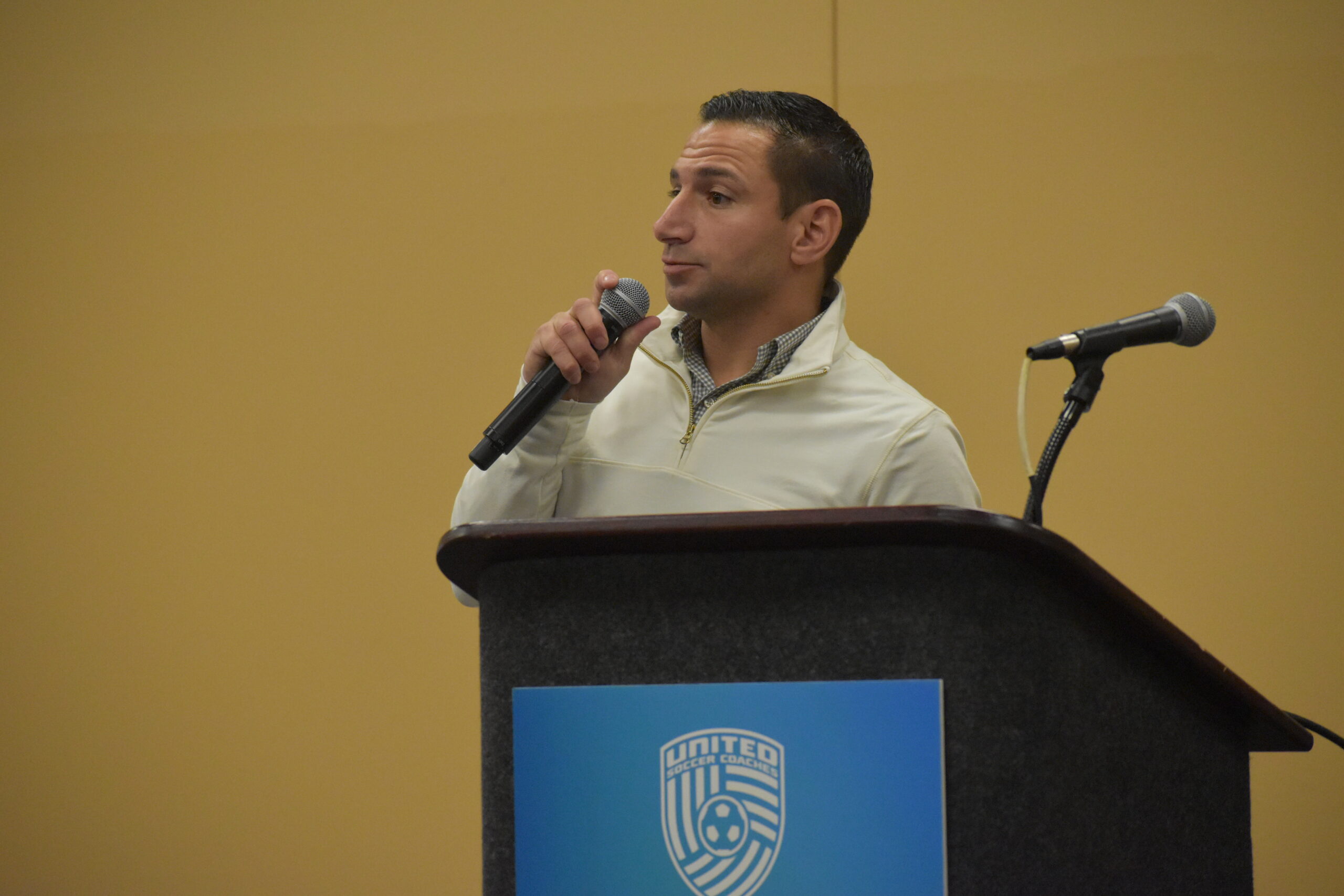
Union director of academy and professional development Jon Scheer speaking at the United Soccer Coaches Convention in Philadelphia earlier this month.
He claimed that the Union “invests more in our academy than any MLS club in the country.” That hasn’t been independently confirmed for a few years, but there’s no question that the Union spend a lot.
Along with youth teams in many age groups, there’s a full-time high school, YSC Academy, across the parking lot from the training facilities in Chester. Those facilities were expanded significantly last year, to much acclaim.
“The value of the young players being able to see the stadium every day, but also being able to look through the fence at the grass on Field One where the first team trains — they can feel it every single day,” Scheer said.
The Union’s training fields in Chester. The grass one on the left is where the first team trains.
There’s high tech all over the campus, from the “Striker Lab” that tracks a player’s kicking technique to a medical scanner called SonicBone that measures a person’s biological age.
“If they’re two years advanced [compared] to their peers and having success only because of their physique, that gives us information,” Scheer said. “Potential for our academy is more important than performance level.”
Scheer echoed a longtime Union talking point when he spoke of “looking for marginal gains that will allow us to have sustainable success in MLS.”
“We think that if we invest in data, we’re not going to have to try to outcompete and outspend the LAFCs, the Torontos, the Atlanta Uniteds of the world,” he said.
Those words did not prompt the kinds of boos from this crowd that they would have from the River End stands. But Scheer, who has become the public face of the front office with sporting director Ernst Tanner on administrative leave, isn’t ignorant of that, either. He’s a West Windsor, N.J., native who played and coached at the University of Delaware, and scouted for U.S. Soccer before joining the Union’s staff eight years ago.
Jon Scheer spoke for more than an hour about the inner workings of the Union’s academy.
Trophies count most for measuring the club, of course, but below that is another way to measure success. The Union now aren’t just viewed as the top American club for developing U.S. national team talent; they can put numbers behind it.
Last year, a total of 57 Union players and prospects were called up to U.S. youth national teams. That is easily the best of any MLS club, with the Los Angeles Galaxy second at 52 and the Chicago Fire third at 40. It’s also a long way past the league’s former standard-bearers, FC Dallas (32) and the New York Red Bulls (24).
“We want to use that as a recruitment tool for the next wave of kids to say if you come here, we’ll be able to push you on to a higher level — whether that be for the national team or beyond,” Scheer said.
“Ultimately, if we have a bunch of kids in youth national teams and nobody in the senior national team, then that’s good, but our goal is to get them into the senior squad,” he said.
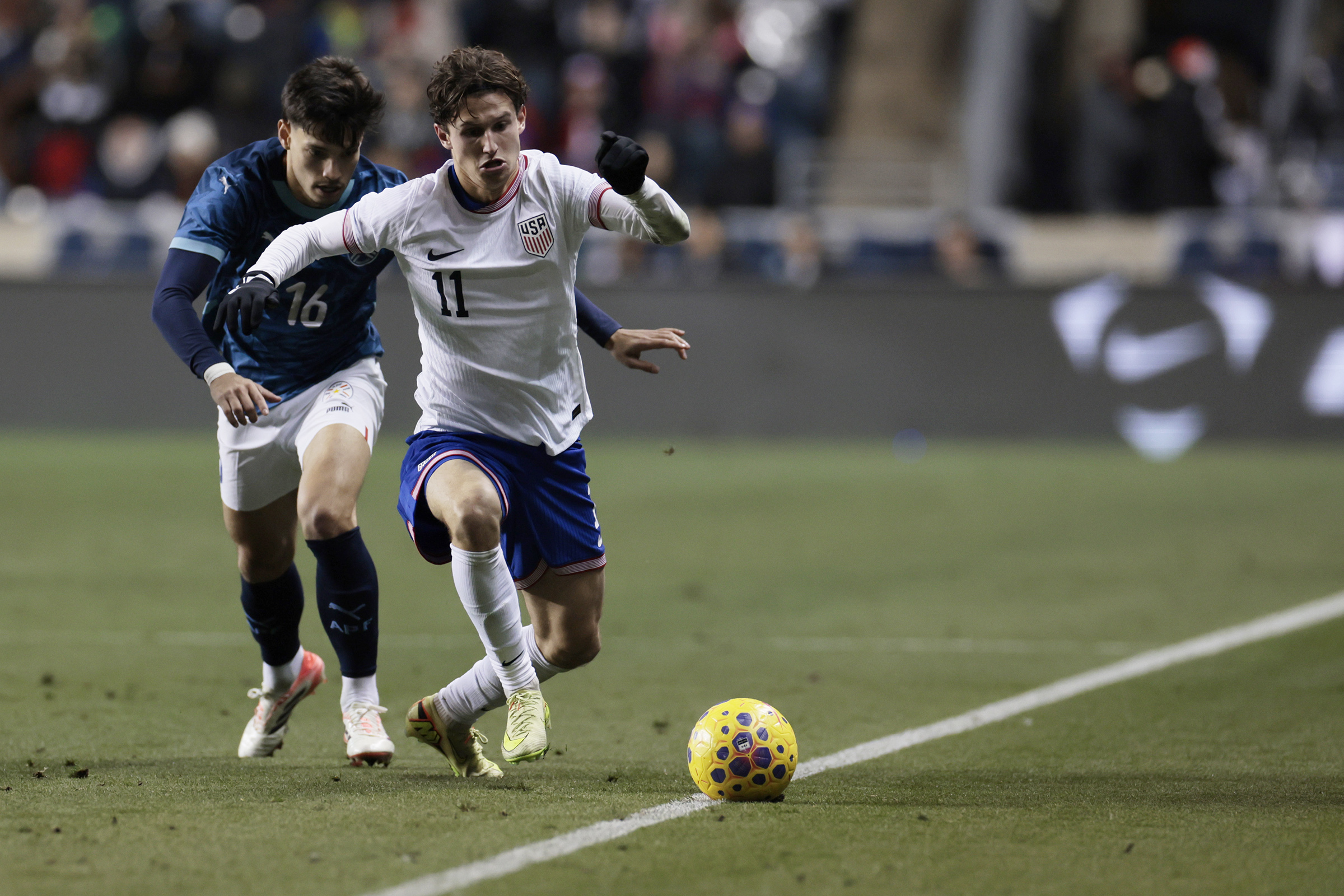
Medford native Brenden Aaronson (11) is the best example of a Union product who has made it big on the world stage. Aaronson plays for Leeds United in the English Premier League and the U.S. national team.
‘Everybody has a plan’
It’s also, of course, a goal to have them play for the Union. And yes, it’s another goal to sell players on to European clubs, ideally for big sums.
“If our goal was just for our academy teams to win [youth tournament] championships, that would shape how we would build our rosters week after week,” Scheer said. “But [we’re] knowing that we need to, for our strategy, develop players, place them in the first team, showcase them to the world, transition them on to bigger clubs, and then use those resources to reinvest.
“Not just in the academy, also into player scouting and recruitment for the first team.”
Scheer went deep on how the high school works. He talked about the philosophy of the place, the teachers, and how they educate kids on a combination of soccer and serious academics. Some of the graduates who haven’t turned pro have gone on to major colleges, including Ivy League ones.
He showed a slide with the students’ typical daily schedule, with blocks of training and blocks of classes. He also detailed the residency aspect, for which the Union bought a house in South Jersey not far from the Commodore Barry Bridge. Twelve players and two adults who oversee them now live there.
“About 80% of our academy is from the Greater Philadelphia region,” Scheer said. “We never see it becoming 50-50.”
Union forward prospect Sal Olivas is an example of a player who came to the team’s youth academy from afar — in his case El Paso, Texas.
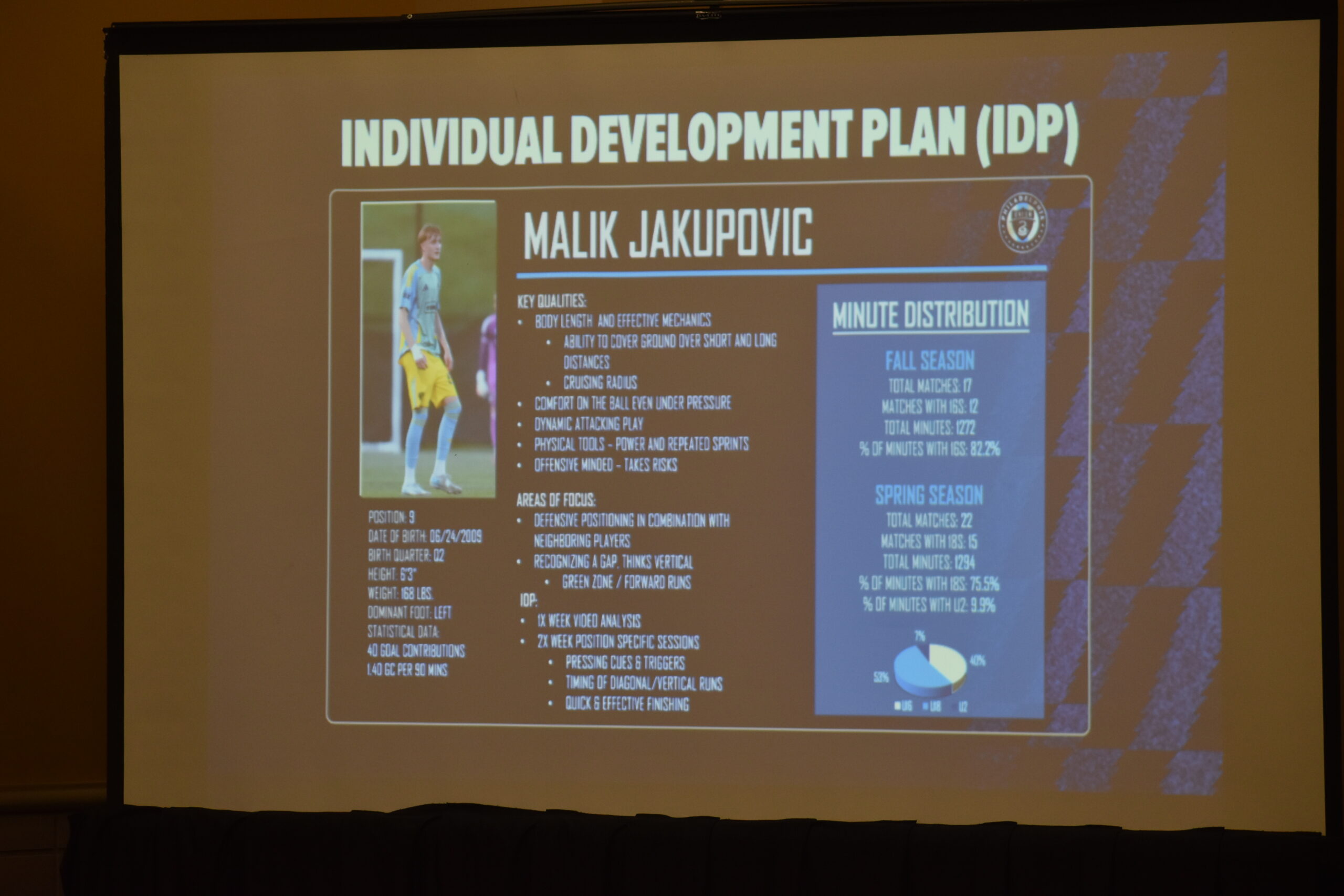
Later in the presentation, he posted a detailed slide showing an example of an Individual Development Plan. The player on the slide happened to be 16-year-old striker Malik Jakupovic, the team’s second-most-hyped prospect right now after Cavan Sullivan.
“Yes, our top talents have a little bit more of an advanced plan, and a little bit more focus — of course, because that’s our goal, to push players into the first team,” Scheer said. “But everybody has a plan, and this is something we’re trying to improve.”
He talked about Sullivan, too, after an audience member asked.
“At the end of the day, Cavan has to do well here in order to play, in order to maximize his opportunity to try to play in the Premier League for Manchester City, and that’s what we all want,” Scheer said, a rare instance of the Union directly mentioning the future move.
“There’s things that we do, that we talk about, that they’ve taken; and there’s things that they do that selfishly we can take and maybe apply to our environment.”
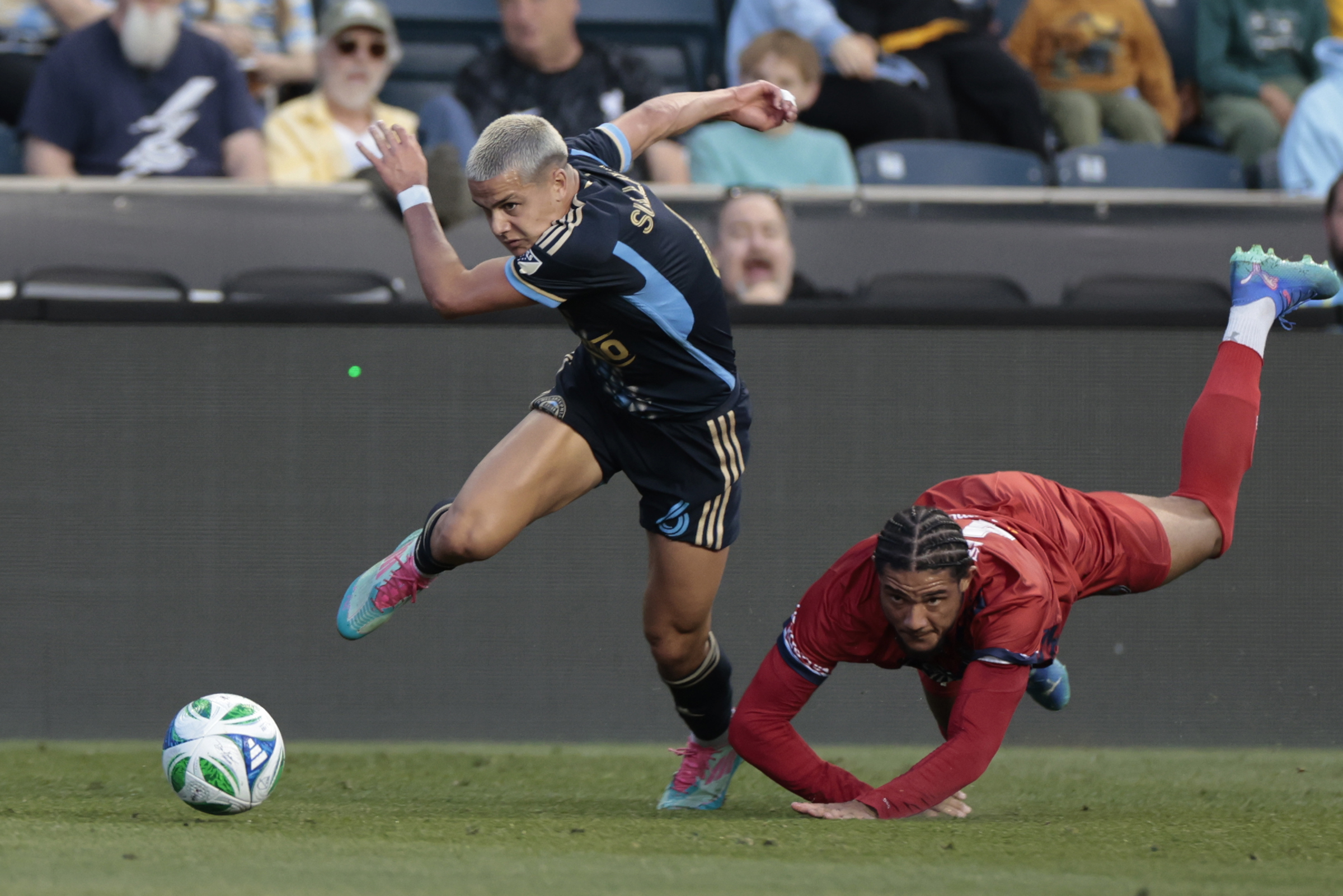
Cavan Sullivan (left) in action for the Union last year.
And for as much as the Union “want to develop him individually really, really well,” Scheer also made a clear point about the present.
“Cavan’s got to focus on every day,” he said, “and be a good teammate, and be competitive, and play in a great way, to be playing in MLS.”
Some of the coaches in the room surely wanted insight on the Union’s tactics and playing style. Scheer gave it to them, with slide headlines like Active vs. Reactive, Forward First, and Synchronized Sprinting.
Another slide listed six key qualities for a prospect, aligned in a circle: Comfort On The Ball, Psychosocial Characteristics, Game Understanding & Decision Making, Ball Recovery, and Physical Qualities.
Then, over in the corner, there was another: Special Weapon. Scheer stopped there for a moment.
Jon Scheer’s slide detailing much-touted Union striker prospect Malik Jakupovic.
“We value a special skill set [with] talent that might be innate — something that differentiates a player from their peers,” he said. “We think that might give them a better chance to get them through the door of MLS.”
And if that one skill comes with deficiencies elsewhere?
“We’d rather invest time in that player, because that one characteristic is so unique, to then see how they develop in the other areas,” Scheer said. “And we approach our scouting overseas for our first team in the same way as well.”
‘There’s no magic pill’
Those words might have turned on a light in some Union fans’ heads, because they seemed to match the fates of Jack McGlynn and David Vazquez. Both are wonderfully skilled players, but their tenures in Chester were cut short for not ultimately fitting what the first team’s manager wanted.
The Union sold Jack McGlynn to Houston afer deciding he wasn’t going to be a long-term fit in their playing style.
“It doesn’t mean that special weapon is just going to guarantee playing time,” Scheer said. “But a lot of times we’ll interact with the first team manager, they’ll see the player, they’ll provide opinion on the player for years to come, and then they’ll work with the player.”
He added that the coaching staff and front office are doing their best “to try and maximize and make sure we’re aligned on the player pool. If things aren’t working, “it’s about just evaluating each individual and trying to make the best decision.”
At every level of the Union, there’s a balance to strike between the system and the individual. It’s Scheer’s job to find it every day.
“You don’t want the individual to feel like they’re always dispensable, and it’s only the game model that’s valuable,” he said. “You also want players that have personality and that can make mistakes. If we’re going to play forward first, you have to be brave in order to be able to do that.”
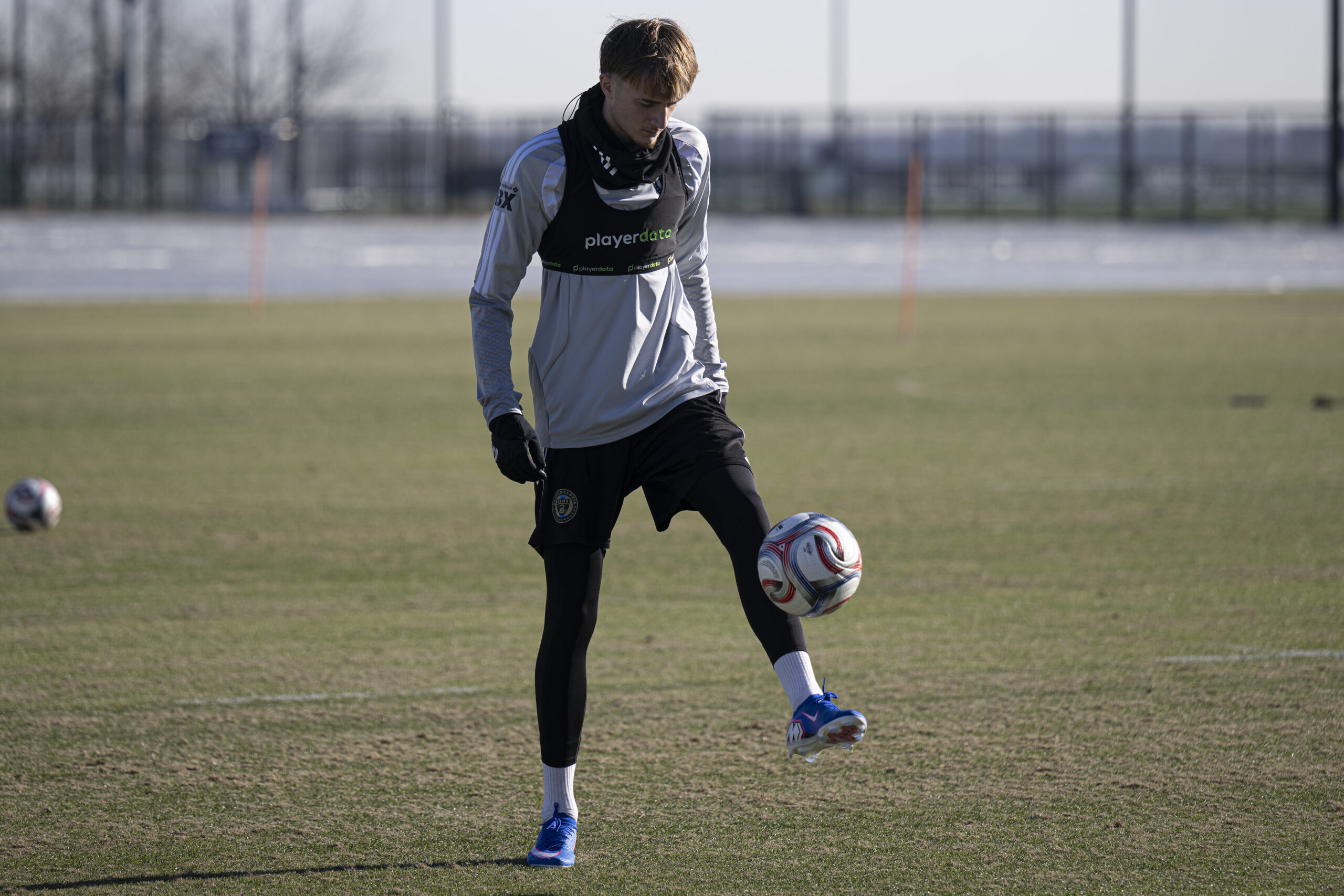
Malik Jakupovic has been training with the Union’s first team during this preseason.
The same goes for coaches.
“If we’re screaming at our kids every session and game, or we’re always being deliberate and explicit in terms of the information we give them, that is going to stifle creativity and decision-making, that will affect development,” Scheer said.
“So how we go about teaching, how we go about running our sessions, how we can carry ourselves on the sideline, how we educate ourselves in the ages and stages of development, that’s really, really important.”
He concluded his point on a philosophical note, one that might make sense well beyond soccer.
“There’s no magic pill,” he said. “There’s no magic answer.”
Amazon is slashing about 16,000 corporate jobs in the second round of mass layoffs for the ecommerce company in three months.
The tech giant has said it plans to use generative artificial intelligence to replace corporate workers. It has also been reducing a workforce that swelled during the pandemic.
Beth Galetti, a senior vice president at Amazon, said in a blog post Wednesday that the company has been “reducing layers, increasing ownership, and removing bureaucracy.”
The company did not say what business units would be impacted, or where the job cuts would occur.
The latest reductions follow a round of job cuts in October, when Amazon said it was laying off 14,000 workers. While some Amazon units completed those “organizational changes” in October, others did not finish until now, Galetti said.
She said U.S.-based staff would be given 90 days to look for a new role internally. Those who are unsuccessful or don’t want a new job will be offered severance pay, outplacement services and health insurance benefits, she said.
“While we’re making these changes, we’ll also continue hiring and investing in strategic areas and functions that are critical to our future,” Galetti said.
CEO Andy Jassy, who has aggressively cut costs since succeeding founder Jeff Bezos in 2021, said in June that he anticipated generative AI would reduce Amazon’s corporate workforce in the next few years.
The layoffs announced Wednesday are Amazon’s biggest since 2023, when the company cut 27,000 jobs.
Meanwhile, Amazon and other Big Tech and retail companies have cut thousands of jobs to bring spending back in line following the COVID-19 pandemic. Amazon’s workforce doubled as millions stayed home and boosted online spending.
The job cuts have not arrived with a company on shaky financial ground.
In its most recent quarter, Amazon’s profits jumped nearly 40% to about $21 billion and revenue soared to more than $180 billion.
Late last year after layoffs, Jassy said job cuts weren’t driven by company finances or AI.
“It’s culture,” he said in October. “And if you grow as fast as we did for several years, the size of businesses, the number of people, the number of locations, the types of businesses you’re in, you end up with a lot more people than what you had before, and you end up with a lot more layers.”
Hiring has stagnated in the U.S. and in December, the country added a meager 50,000 jobs, nearly unchanged from a downwardly revised figure of 56,000 in November.
Labor data points to a reluctance by businesses to add workers even as economic growth has picked up. Many companies hired aggressively after the pandemic and no longer need to fill more jobs. Others have held back due to widespread uncertainty caused by President Donald Trump’s shifting tariff policies, elevated inflation, and the spread of artificial intelligence, which could alter or even replace some jobs.
While economists have described the labor situation in the U.S as a “no hire-no fire” environment, some companies have said they are cutting back on jobs, even this week.
On Tuesday, UPS said it planned to cut up to 30,000 operational jobs through attrition and buyouts this year as the package delivery company reduces the number of shipments from what was its largest customer, Amazon.
That followed 34,000 job cuts in October at UPS and the closing of daily operations at 93 leased and owned buildings during the first nine months of last year.
Also on Tuesday, Pinterest said it plans to lay off under 15% of its workforce, as part of broader restructuring that arrives as the image-sharing platform pivots more of its money to artificial intelligence.
Shares of Amazon Inc., based in Seattle, rose slightly before the opening bell Wednesday.
Joel Embiid and Paul George, once again, showed why their presence is vital to the 76ers’ success.
Jared McCain appears to have regained his shooting touch.
And in his third season as the Milwaukee Bucks coach, Doc Rivers still thinks back fondly on his time leading the Sixers.
These things stood out in Tuesday’s 139-122 victory over the Bucks at Xfinity Mobile Arena.
The Embiid and George impact
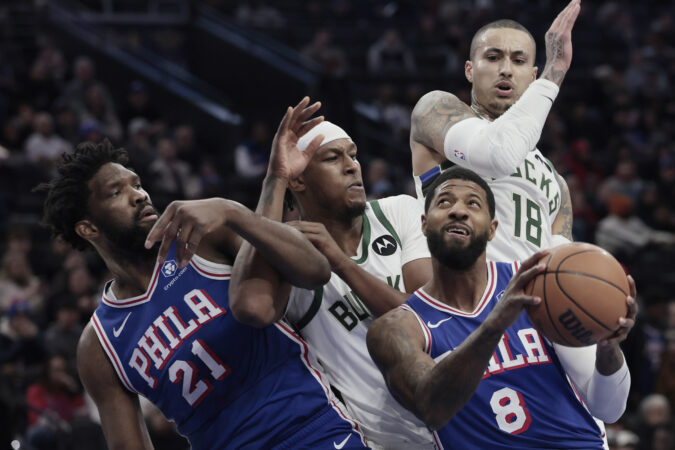
If we learned anything over the past two days, it’s that the Sixers (25-21) are a better team when Embiid and George are in the lineup.
Without them Monday, the Sixers suffered an embarrassing 130-93 road loss to the Eastern Conference’s 11th-place Charlotte Hornets. It was a game where they trailed by as many as 50 points.
With Embiid and George back Tuesday, the Sixers led wire-to-wire in a blowout victory over the 12th-place Bucks (18-27). The duo combined to score 61 points.
George finished with a game-high 32 points while making nine three-pointers, tying Tyrese Maxey (Oct. 28, 2022), Danny Green (Jan. 9, 2021), and Dana Barros (Jan. 27, 1995) for the franchise record.
“I got a little thirsty late in the game, trying to get to 10,” George said. “Kyle [Lowry] was in my ear the whole fourth quarter to get a couple more. But you know, those things happen when everything aligns. I thought we played great offensively as a unit. And, you know, the ball just found me in those moments and knocked shots down.”
So did Embiid, who finished with 29 points, nine rebounds, and five assists. Embiid dominated from the start, scoring 18 of his points while playing the entire first quarter.
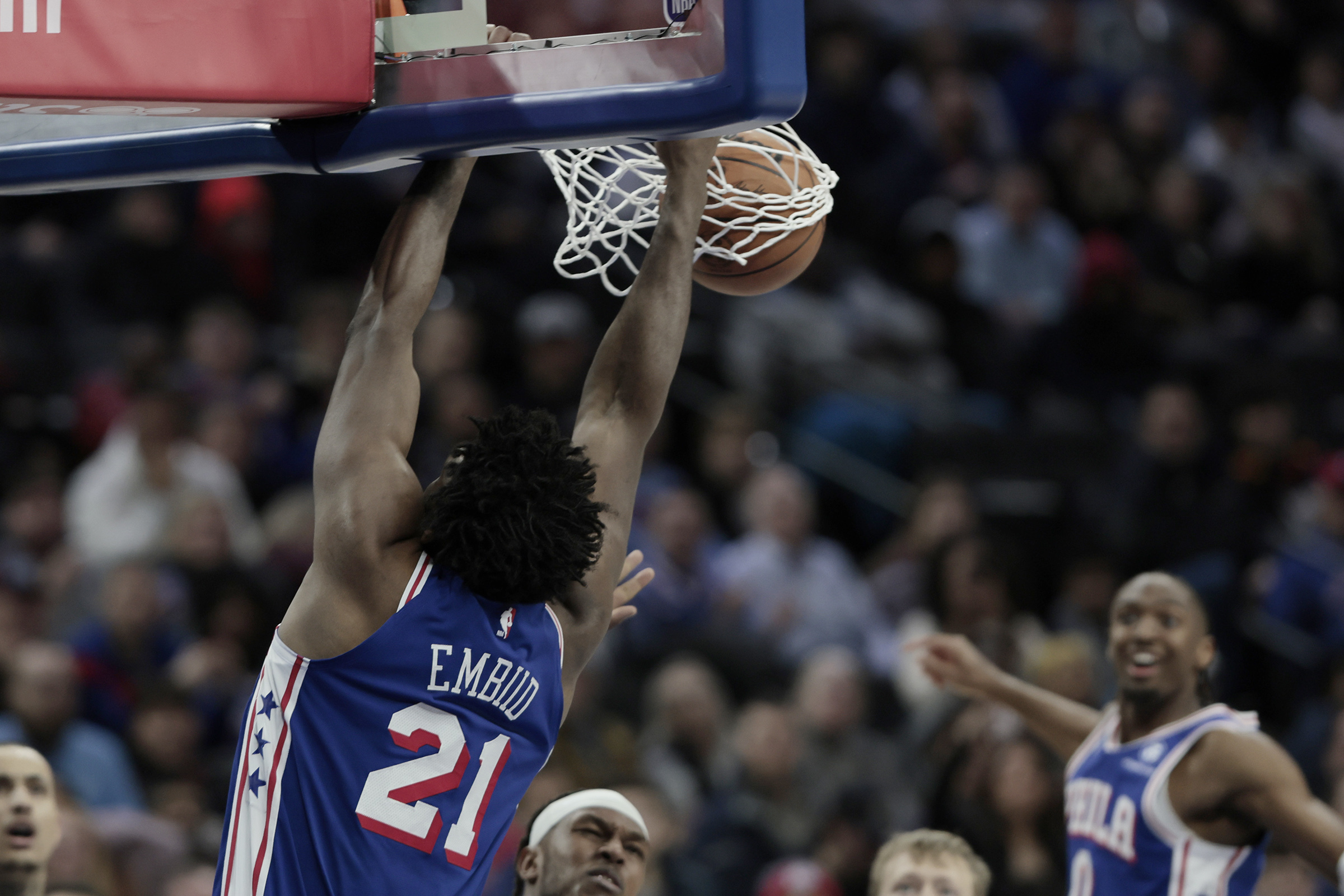
He did that in a variety of ways: jumpers, tip-ins, and even a reverse layup. But his highlight came on a second-quarter alley-oop dunk off a pass from Maxey.
“I don’t know if that was a wise decision, but it felt good,” said Embiid, who has been dealing with knee injuries. “That was the first one in probably four, five years …”
He said it wasn’t a wise decision because he doesn’t usually go for dunks and alley-oops.
“But it’s fun,” Embiid said. “Everybody gets happy, so that makes me happy.”
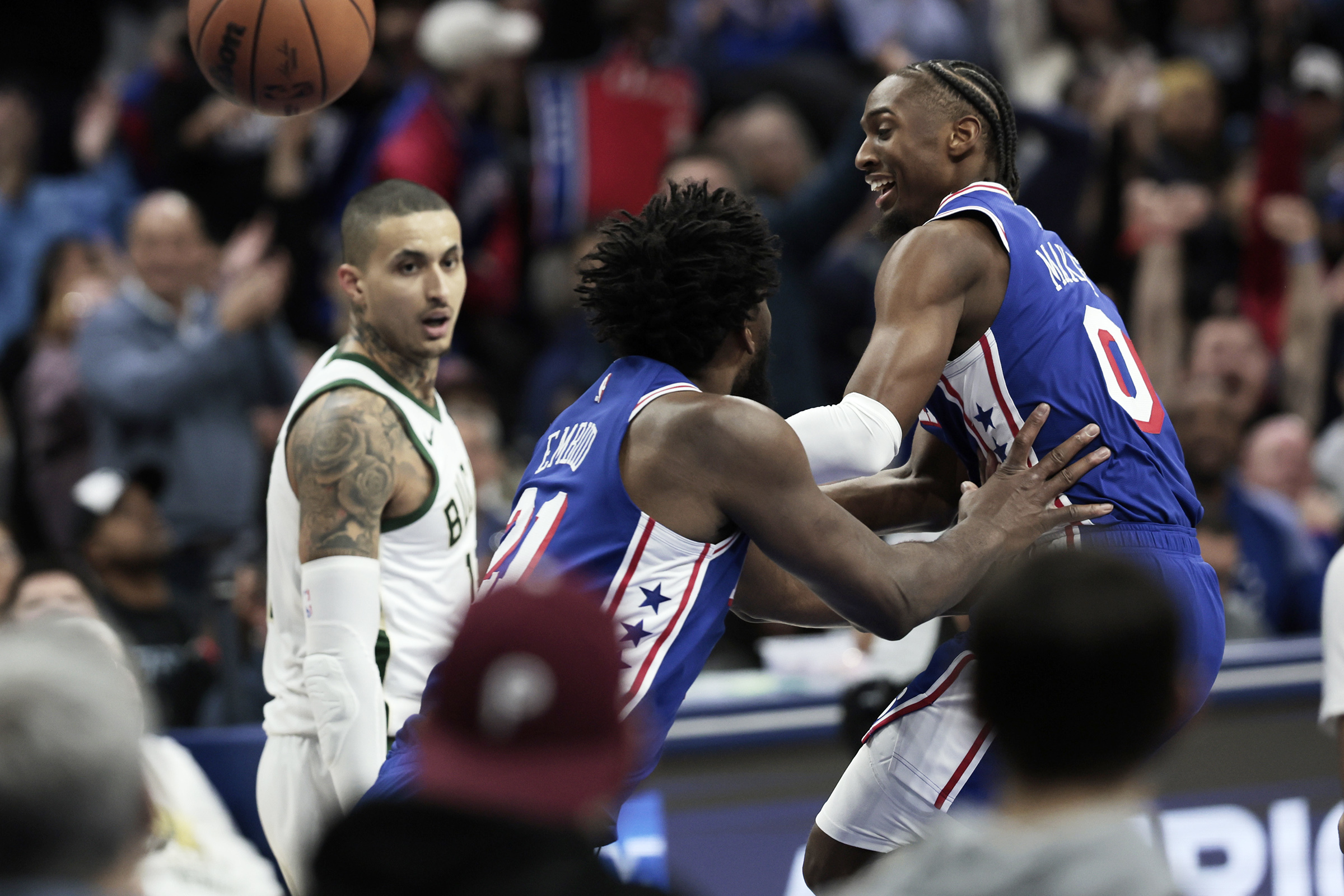
Tyrese Maxey (right) looks on after sending an alley-oop to Joel Embiid, who dunked in the second quarter of Tuesday’s win over the Milwaukee Bucks.
“I was telling a very, very, very Hall of Fame player that I coached, ‘Joel is the most talented player that I ever coached,’ “ Rivers said before the game. “He was like, ‘What?’ I was like, ‘He is.’ The things that you guys see and then the things you actually don’t see in practice, sometimes, that he can do, it’s incredible. It really is.
“Unfortunately for me, I never had him healthy once in the playoffs. He wasn’t healthy last year. He wasn’t healthy the year before. That’s five years straight, I think. If he ever gets to the playoffs healthy, especially if they added some big pieces here, they are going to be a dangerous team. But it’s always going to come down to that.”
After intermission, Embiid was content with setting teammates up for quality shots. He passed out of double-teams. And when Embiid didn’t have the ball, he instructed teammates where passes should go.
George made 11 of 21 from the field, including 16 in the third quarter while making 4 of 6 threes.
“I think coach [Nick Nurse] called my number early, and just go off from there,” George said of taking over the third quarter.
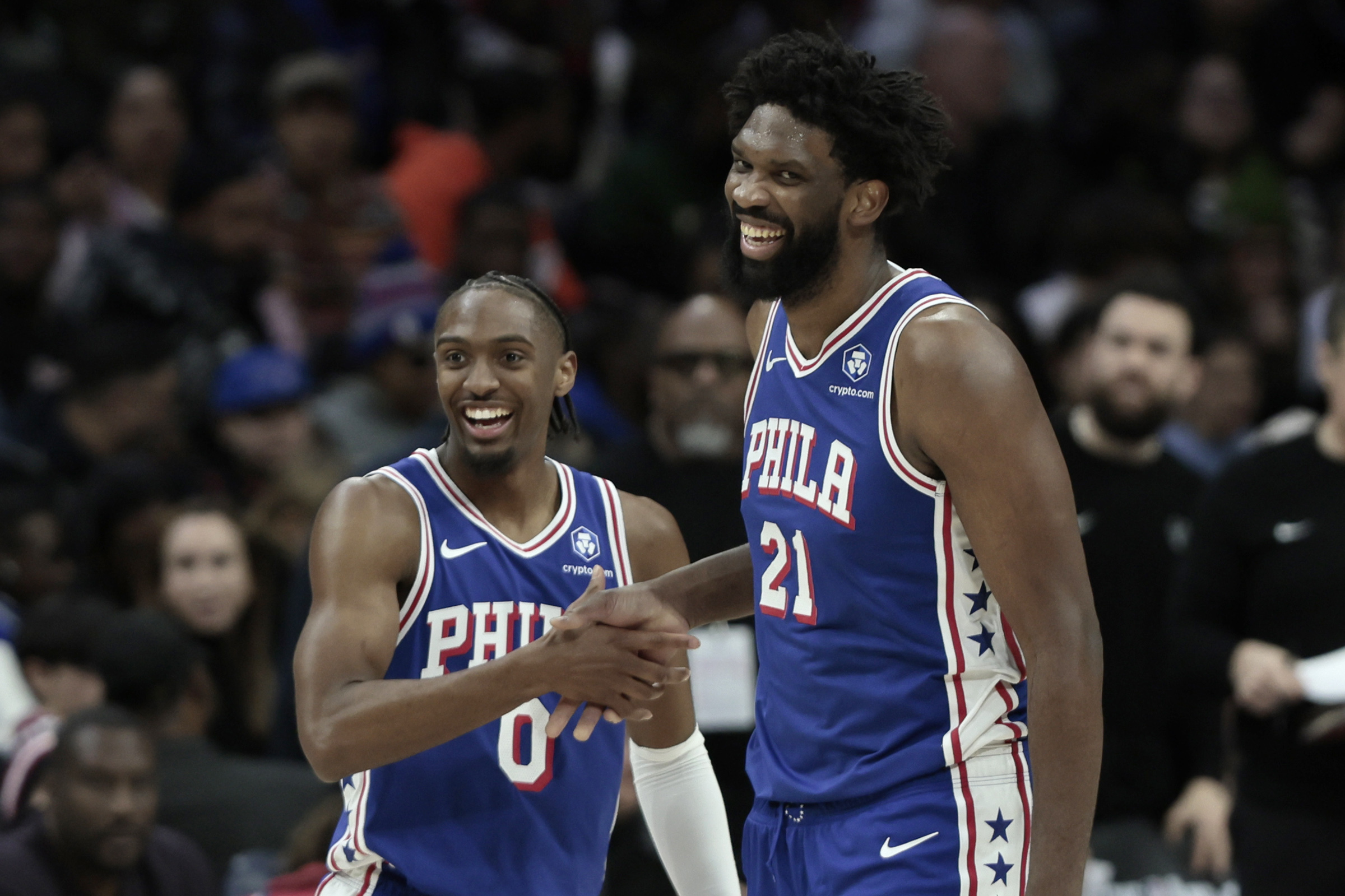
Tyrese Maxey (left) and Joel Embiid share a laugh in Tuesday’s win over the Bucks at Xfinity Mobile Arena.
But what enabled him to have his best shooting performance of the season? Was this a matchup that he liked?
“I just know Doc,” said George, who played for Rivers during the 2019-20 season with the Los Angeles Clippers. “I know his coverages. I know his play calling. I know what he’s looking at, what he’s looking for, how he’s going to guard me.
“… These days just feel like some of my best days, as far as my body responds and, you know. But if anything, it’s how today felt.”
The duo’s presence also opened up the floor for Maxey, who was voted an All-Star starter. The point guard finished with 22 points one night after finishing with a season-low six points on 3-for-12 shooting.
The Sixers shot 52.5 %, including 22 of 42 three-pointers, after shooting just 38.9% while hitting 9 of 31 three-pointers against the Hornets (19-28).
Milwaukee played without two-time MVP Giannis Antetokounmpo. And this was just the Sixers’ fourth victory in 10 games. But the way George and Embiid are now playing after getting healthy, George thinks the Sixers can contend for the Eastern Conference title.
“I think we’re right there with the New York Knicks, with the Clevelands,” he said. “I think we are right in the mix. When things are clicking, and we’re playing the right way, and we’re firing on all cylinders, we still have the one unguardable player [in Embiid], and that’s the trump card.
“So yeah, absolutely, we got a chance.”
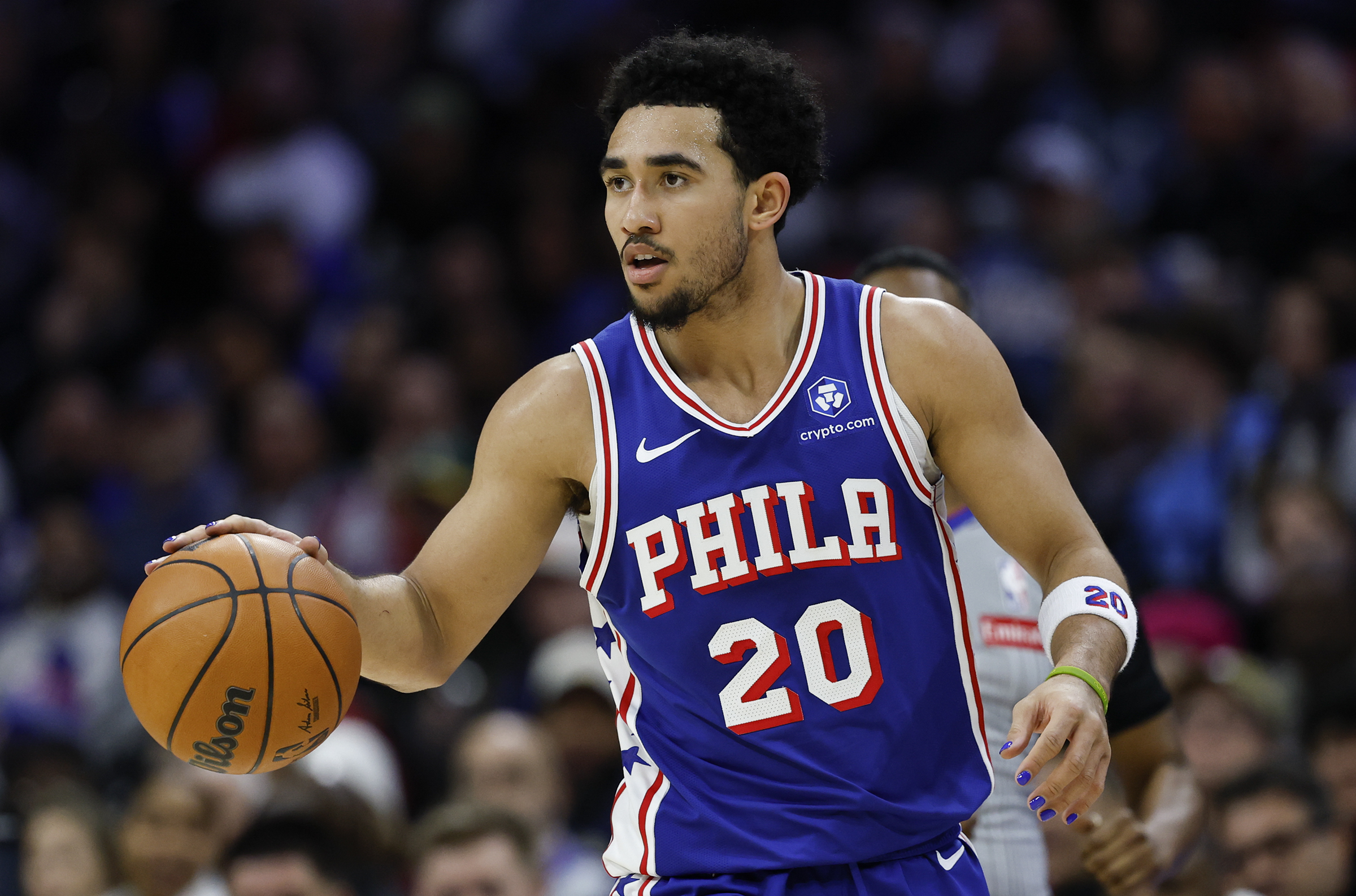
Sixers guard Jared McCain finished with 17 points, shooting 5 of 6 from three in the win over the Bucks.
Sharpshooting McCain
Based on his last two performances, McCain’s slump is definitely over. And judging by the applause he received Tuesday night, Sixers fans appear to be back on board with the former Duke standout.
McCain, who shot just 31.3% from the field in a recent 10-game stretch, had 17 points while shooting 6-for-8 — including making 5 of 6 three-pointers — to go with three assists. This came after he made 4 of 8 threes while scoring 16 points against the Hornets on Monday.
Before that game, McCain racked up a did-not-play coach’s decision in four of the Sixers’ last five games. In the one game he played, he only played the last 47 seconds in a comfortable victory over the Indiana Pacers on Jan. 19.
With Quentin Grimes sidelined with a sprained right ankle, McCain was the first player off the bench against the Bucks, and he took full advantage.
The Sixers fired Rivers on May 16, 2023, two days after he received a lot of the blame for their 112-88 Game 7 loss to the Boston Celtics in the Eastern Conference semifinals at TD Garden. It marked the third consecutive season that Rivers’ squad has suffered a second-round postseason exit.
The Sixers lost in seven games to the Atlanta Hawks in 2021 before losing in six games to the Miami Heat the following season.
The 2022-23 team looked like it had a chance to compete for an NBA title. Yet the Sixers looked like a team that quit in the second half during their Game 7 loss to Boston.
Tyrese Maxey leaps toward Joel Embiid after Maxey sent an alley-oop to Embiid, who dunked the ball in the second quarter.
Those factors, along with an inability to get out of the second round, were the reasons the Sixers fired Brett Brown as coach in August 2020.
Under Rivers, the Sixers clinched the 2021 Eastern Conference regular-season title. Their 54-28 record in 2022-23 was their best mark since going 56-26 in 2000-01. And Embiid’s game improved each year under Rivers, leading to his becoming the 2023 MVP.
But the Sixers hired Rivers to get them at least beyond the second round. And that never happened.
“I love my time here,” he said before Tuesday’s game. “I say it all the time, I took a job where the year before they lost in the first round as the eighth seed. And the first year, we won the East in the regular season. We were one game away twice from getting in the Eastern finals, which was never my goal. My goal was to get to the finals. I get the history that the team hasn’t gone [since 2001], but your goal has to be higher than that.
“I was only here for three years. But the three years, I think my winning record was as good as any coach that has been here. So I loved it.”
Rivers compiled a 154-82 record over his three seasons in Philly. The 64-year-old talked about the “unbelievable relationships” he developed while coaching the Sixers. He said he probably gained 15 pounds while living in Philly because of the restaurants he frequented.
“I don’t know if you guys know there’s a lot of restaurants here,” Rivers said. “And then Philly Cricket [Club], I’m still a member. I come back in the summer, and I play it. If I had not ever coached here, I would not still be doing those things.
“So it’s nice when you get friendships and stuff like that.”
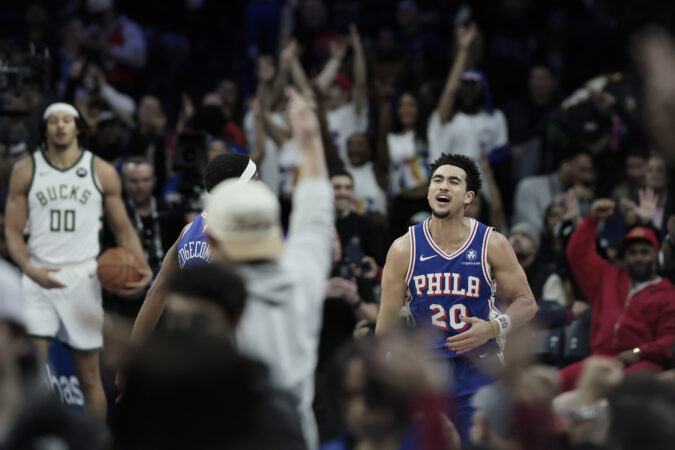
As Jared McCain’s transition three-pointer splashed through the net, VJ Edgecombe yelled “Yeah, ‘Mac!’” in his face.
And on the opposite end of the floor, the 76ers’ bench was going nuts for the second-year guard.
“That’s all you want as a player,” McCain said. “Making shots, you want your team to be excited for you. When I looked over at the bench and they were all jumping up and down, it was a fun time.”
They were celebrating one of the four three-pointers that McCain buried during Tuesday’s fourth quarter as part of a 17-point night on 5-of-6 shooting from beyond the arc. It was the scoring punch the Sixers needed in a 139-122 bounce-back home victory over the Milwaukee Bucks, with sixth man Quentin Grimes out with a sprained ankle.
More importantly, it was a long-awaited breakout performance for McCain, who has struggled to rediscover his offensive rhythm since returning from knee and thumb surgeries.
“What I’m most grateful for,” McCain said, “is just being able to stay mentally ready and know it’s going to come.”
McCain entered Tuesday averaging 6.4 points on 36.1% shooting from the floor in 32 games. It felt far removed from last season, when the former first-round draft pick averaged 15.3 points — and connected on 38.3% of his 5.8 three-point attempts — in his first 23 NBA games, making him an early Rookie of the Year front-runner before a torn meniscus and thumb ligament sidelined him for nearly 11 months.
Yet Tuesday’s welcomed upswing also could be viewed as a continuation of perhaps the only silver lining of the Sixers’ dreadful 130-93 loss Monday afternoon in Charlotte, N.C. With the starters removed in the fourth quarter, McCain, who played one season at nearby Duke, scored 12 of his 16 points on 4-of-6 shooting from deep.
There was no such thing as garbage time, McCain insisted. The cliche that simply seeing the ball drop through the net builds confidence is accurate, he added. And when Grimes was ruled out of Tuesday’s matchup about an hour before tipoff, McCain knew he would get rotation minutes.
Those came even quicker when Edgecombe picked up two early fouls. McCain got his first two buckets — stepping into a three-pointer from the left wing, then driving to the bucket for a crafty layup — while playing in the two-man game with star center Joel Embiid. Nurse also appreciated McCain’s “really good decisions” with the ball in his hands, with three assists in 24 minutes, 10 seconds and using attacks to ignite the “chain-reaction ball movement” as the Sixers shot 52.5% from the floor.
Then came McCain’s fourth-quarter shooting flurry.
He opened the period by taking a dribble handoff from Paul George for a pull-up from the right wing to give the Sixers a 109-95 advantage. Then he spotted up for another less than three minutes later, pushing the Sixers’ lead to 16 points. And 20 seconds after taking the feed from Edgecombe for that fastbreak launch, McCain received a pass off an offensive rebound by Justin Edwards for the corner shot.
“Maybe I’m starting to predict the future,” All-Star teammate Tyrese Maxey said after the game, “I [told McCain], ‘Man you’re going to hit four threes tonight.’ And he hit five.’”
The Sixers hope Jared McCain is reclaiming the form that had him billed as an early Rookie of the Year candidate last season.
Before this week, McCain had been navigating a challenging path back to the court.
He dealt with a clunky knee brace that made him feel unbalanced, along with protection on his shooting hand. Though Nurse said McCain needed to log more minutes to work through rust and mistakes, Edgecombe and Grimes had passed him on the depth chart. McCain was assigned to the G League’s Delaware Blue Coats for a second time less than two weeks ago, going 5-of-18 from the floor and committing six turnovers in his only game at the Noblesville Boom on Jan. 18. He traveled from Indiana back to the Sixers less than 48 hours later, but still had slipped completely out of the rotation.
During that stretch as an observer, McCain said he paid close attention to where he would get shots in the Sixers’ offense and visualized those attempts going in. He also rededicated himself to the practice of staying present. During Tuesday’s morning meditation, he said, he focused on feeling his breath in through his nostrils, then the heat of the exhale on his upper lip.
“That just sets you into the present moment,” McCain said, “and I think that’s what I carried over.”
Nurse, meanwhile, recognized the adversity had initially been “really hard” for McCain to shoulder. Yet the coach noticed a recent flip to more outward positivity “whether he’s playing or not, which is hard to do coming out of the season he had” before the injuries.
“I just keep telling him to have patience and hang in there,” Nurse said. “I say to him, ‘Listen, things will change, I guarantee you. Before too long, something’s going to happen where something’s going to open up for you.”
That opportunity arrived Tuesday. And it culminated in four long-range splashes in the fourth quarter — and a fired-up Sixers bench.
“I knew my time was going to come,” McCain said. “And I knew it’s going to continue to come.”
You’ve probably never heard of Eugène Sue, a French surgeon under Napoleon and later the writer credited with first use of the phrase, “La vengeance se mange très-bien froide.”
Loosely translated, it means, “Revenge is a dish best served cold.” It has been uttered by characters as diverse as Vito Corleone in The Godfather novel, to Khan Noonien Singh, a Klingon warlord in “Star Trek II: The Wrath of Khan.”
Now, in Bill Belichick’s hour of disappointment and shame, Philly can savor revenge.
Despite winning a record six Super Bowls, Belichick — whose era as Patriots coach coincided with two of the most notorious cheating schemes in NFL history — failed to secure the minimum 40 of 50 votes required to enter the Pro Football Hall of Fame. He will not be a first-ballot inductee, according to an ESPN.com report Tuesday.
This shocked the sports world.
Former defensive lineman J.J. Watt, who never played for Belichick, said on Twitter/X that there is “not a single world whatsoever” in which Belichick shouldn’t be a first-ballot inductee.
I can’t be reading this right.
This has to be some knock-off Hall of Fame or something, it can’t be the actual NFL Hall of Fame.
There is not a single world whatsoever in which Bill Belichick should not be a First-Ballot Hall of Famer. https://t.co/OXhL1Sd4FM
Voters are not required to reveal their votes, but Hall of Fame coach Jimmy Johnson said voters who do not admit to omitting Belichick from their ballot are “cowardly.”
Like so many, they were shocked. Like so many, they were outraged.
They should not have been.
Hall of Fame voters hate cheaters.
Carlos Beltrán, who helped run an illegal sign-stealing scheme for the Houston Astros, had to wait four years to gain entrance to the Baseball Hall of Fame. Barry Bonds, Alex Rodriguez, Manny Ramirez, and Roger Clemens, Herculean heroes all implicated in PED scandals, might never make it in.
I voted for all of those guys, and I’d have voted for Belichick, too, if I’d had a vote (the panel is a rotating hodgepodge of 50 mostly credible experts). But I understand. I understand why at least 10 voters banned Bill.
Why should Belichick, a proven and penalized two-time cheater, be treated any better than other scofflaw? He might not be Pete Rose, but he ain’t Bill Walsh, either.
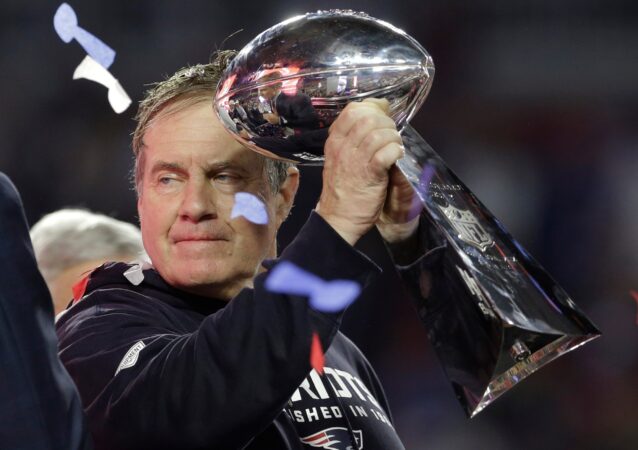
Bill Belichick’s wins are a matter of record but some of his off-field tactics apparently gave voters pause.
The voters convened on Jan. 13 to discuss the fates of the Hall of Fame finalists, among them Belichick, whose 302 wins are a record in the Super Bowl era (30 of Don Shula’s 328 wins predate the Super Bowl). Reportedly amid the discussion: Belichick’s role in “Spygate,” an illegal videotaping scheme that Belichick conducted from 2000, the year he was hired as the Patriots’ head coach, through early 2007, when they were caught red-handed while taping the Jets’ sideline during a road game.
This incident came just over a year after the league issued a memorandum reminding teams of the parameters and definitions of illegal recording.
The penalty was a $500,000 fine for Belichick, a $250,000 fine for the Patriots, and the loss of their first-round pick in the 2008 draft.
But there was no way to secure reparations from the teams who had been cheated — possibly among them, the 2004 Eagles in Super Bowl XXXIX.
Thanks in part to the efforts of former U.S. Sen. Arlen Specter of Pennsylvania, it has since been established that the Patriots recorded opponents’ signs before and after that game.
It was a hot topic. How hot?
Shanin Specter, a Philadelphia attorney and the late senator’s son, told The Inquirer in 2021 that, in 2008, President Donald Trump — then a private citizen — appeared to offer Specter’s father a bribe if he would drop his investigation into Spygate.
The real ones didn’t need an investigation. They knew what was happening as it was happening.
In a story in 2018, former Eagles defensive backs coach Steve Spagnuolo told a Philadelphia radio station that, at Super Bowl XXXIX, Eagles defensive coordinator Jim Johnson accused the Patriots of stealing the Eagles’ signs during the game. The Patriots seemed to know what was coming even when the Eagles employed rarely-used schemes and plays.
How did this specter of cheating arise so many years later?
The ESPN report indicated that Bill Polian, a Hall of Fame member as an NFL executive and a current voter, lobbied against Belichick during that Jan. 13 meeting. He cited the incidence of Belichick’s cheating, and he had skin in the game.
Polian was president and GM of the Colts when the Patriots, in the middle of their Spygate era, knocked them out of the playoffs after the 2003 and 2004 seasons. On Tuesday night, Polian denied to ESPN that he had told voters that Belichick should serve a one-year penance, but, incredibly — as in, not credibly — Polian said he was unable to recall if he’d voted for Belichick.
Polian wasn’t with Indianapolis after 2011, but he remained close to the franchise, so he wasn’t happy when the Colts were victims of Belichick’s other moment of ignominy.
At halftime of the 2014 AFC championship game in New England, NFL officials were alerted by Colts players that the footballs the Patriots were using seemed soft. The balls were examined, deemed to be illegal, and an investigation commenced.
That’s how Belichick and the Patriots were implicated in “Deflategate.” Eventually, they were found to have routinely, intentionally, and illegally deflated footballs they used on game days to make them easier to pass, catch, and hold on to. Furthermore, Patriots quarterback Tom Brady was found to have destroyed evidence during the investigation. (Belichick denied knowledge of the matter, and the Wells Report into Deflategate found that Belichick was not involved, but many observers remain unconvinced).
This time the league fined the Patriots $1 million, suspended Brady for the first four games of the 2015 season, and took away the Patriots’ 2016 first-round pick and their 2017 fourth-round pick.
Bill Belichick will not join former Eagle Brian Dawkins in the Pro Football Hall of Fame … at least this year.
Today, most folks look past Belichick’s cheating, especially on Tuesday, when the story broke. They point at his innovation, his preparation, and his ability to maximize the abilities of every player, from Brady to Richard Seymour to Rob “Gronk” Gronkowski.
But just enough folks apparently did not. Just enough folks think Belichick should have to wait a bit before he gets his bust and his jacket.
Just enough folks did not look past Belichick’s sins.
Shula died in 2020, but somewhere, you have to think ol’ Don’s smiling. He despised Belichick’s methodology.
“The ‘Spygate’ thing has diminished what they’ve accomplished. You would hate to have that attached to your accomplishments,“ Shula said in 2007, during the Patriots’ failed attempt to match his 1972 Dolphins’ perfect season.
Seven years later, when asked about Belichick’s feats to that point, Shula replied with the nickname Belichick’s detractors had given him: “Beli-Cheat?”
The recent wintry weather has prompted the Center City District to extend Restaurant Week by four days and the Girl Scouts of Eastern Pennsylvania to tack two weeks onto its cookie sales season.
Center City District Restaurant Week
The district announced Tuesday that all 122 participating restaurants were offered the option to extend the dining promotion — which had been slated to end on Jan. 31 — to Wednesday, Feb. 4.
As of 4 p.m. Tuesday, about 70 restaurants had opted in, with additional confirmations expected throughout the week, said spokesperson Giavana Pruiti.
Pruiti said she checked in with restaurants Sunday and Monday, and found that many had closed due to snow and hazardous travel. Those closures prompted the district to tack on extra days to the promotion, as it did for three days in January 2015 after a threatened snow that never materialized.
Among the restaurants that have confirmed participation in the extension are Alice Pizza, Bank & Bourbon, Barbuzzo, Bolo, Buca D’Oro, Darling Jack’s Tavern, Dizengoff, P.J. Clarke’s, Rockwell & Rose, Samba Steakhouse, Sura Indian Bistro, Vita, and Wilder.
The ceviche trio at Bolo.
The district recommends customers check directly with restaurants to confirm operating hours, make reservations, and verify extensions. The most up-to-date list of extended participants is being updated on the Restaurant Week website, where individual restaurant pages will note whether they are offering menus through Feb. 4. A filter allowing diners to view only extended participants is expected to be added shortly.
The dining deals include three-course dinners priced at $45 or $60; some restaurants offer $20 two-course lunches. The district has arranged discount parking for $10 or less at participating BexPark by Brandywine Realty Trust, LAZ Parking, and Philadelphia Parking Authority parking facilities from 4:45 p.m. to 1 a.m.
The Girl Scouts of Eastern Pennsylvania last week announced that its cookie sales season would end March 22 “since a lot of cookie booths were snowed out and the temperatures look downright frigid this coming weekend.”
The idea, it said in a statement to Scout leaders, is to “help keep all Girl Scouts safe from the elements and give them plenty of time to reach their Cookie Season goals.”
This year marks the debut of a rocky road-inspired cookie called Exploremores. Toast-Yays, inspired by French toast, were “retired” (in Scout parlance) to make room for it.