Blog

  • The cowardice of the Trump administration’s attacks on history

    The cowardice of the Trump administration’s attacks on history

    For centuries, white people in America depicted slavery as a benign institution developed to uplift and civilize “savage” Africans. They preached that myth in churches, taught it in schools, and memorialized it in statues.

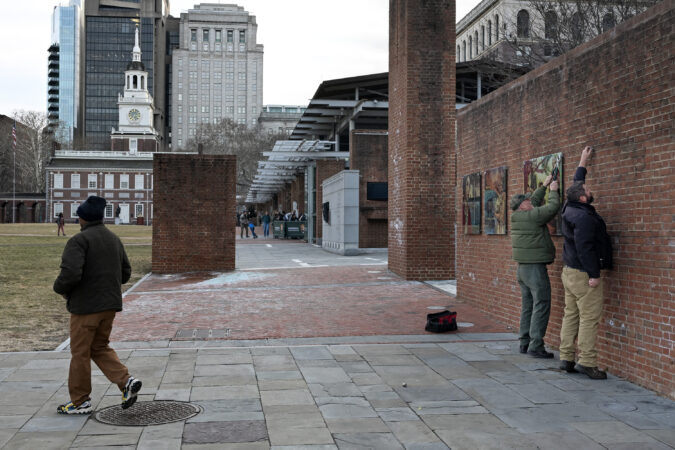
    That’s not what the Trump administration was trying to do last week, in dismantling a display about nine Black people whom George Washington enslaved. The exhibit was removed from the President’s House in Independence National Historical Park in accordance with a White House directive to take down or cover up materials that “inappropriately disparage Americans.”

    I suppose you could call that a small piece of progress, given that prior generations of Americans actively praised slavery. Federal officials know it was evil, which is why they are scrubbing displays about it from the President’s House and other historical sites around the country.

    But I’ve got another word for their behavior: cowardice. They are afraid to admit the contradiction at the heart of our history: a nation that dedicated itself to human liberty also enslaved African Americans. And they do not trust the rest of us to grapple with it, either. It’s so much easier to just look away.
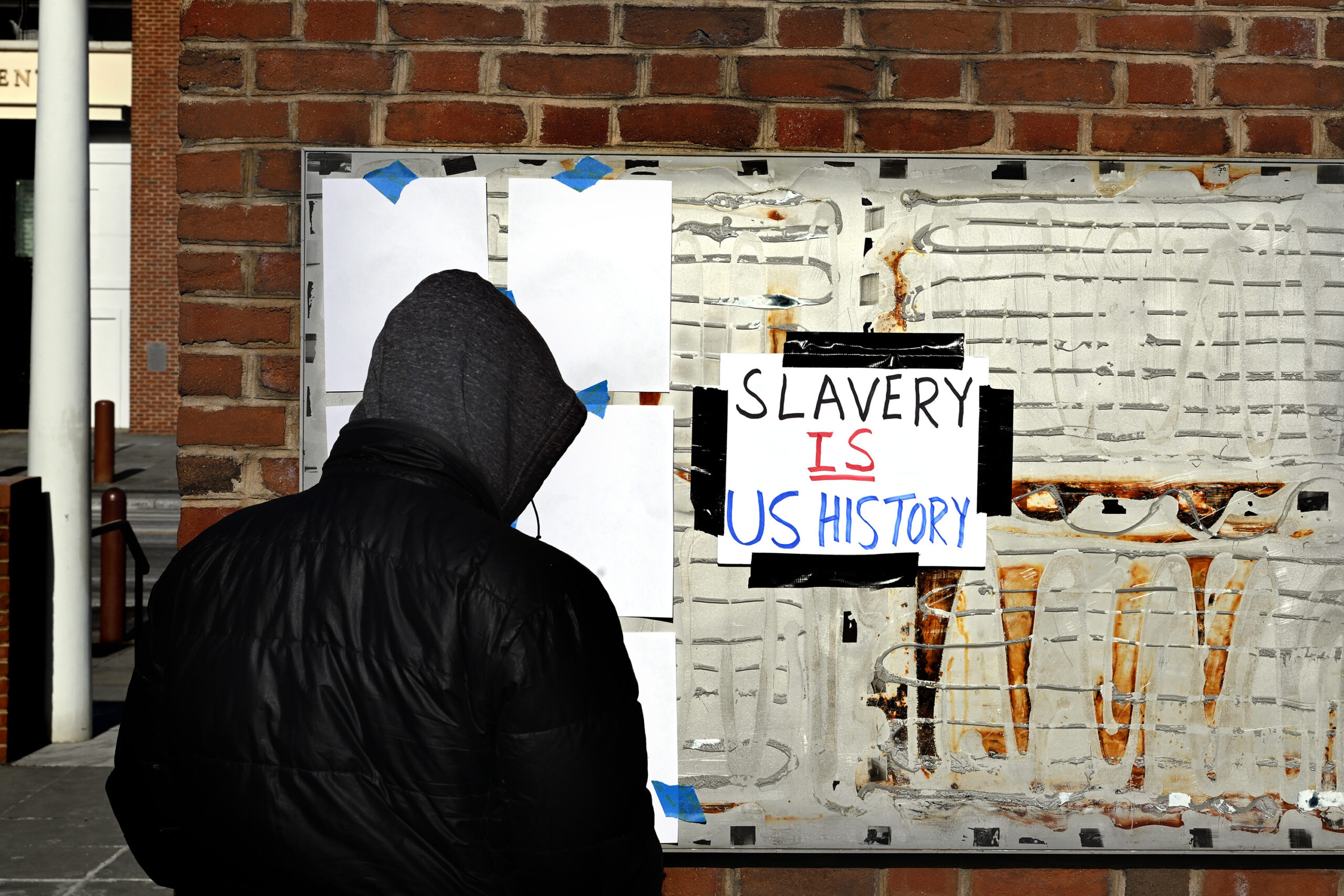
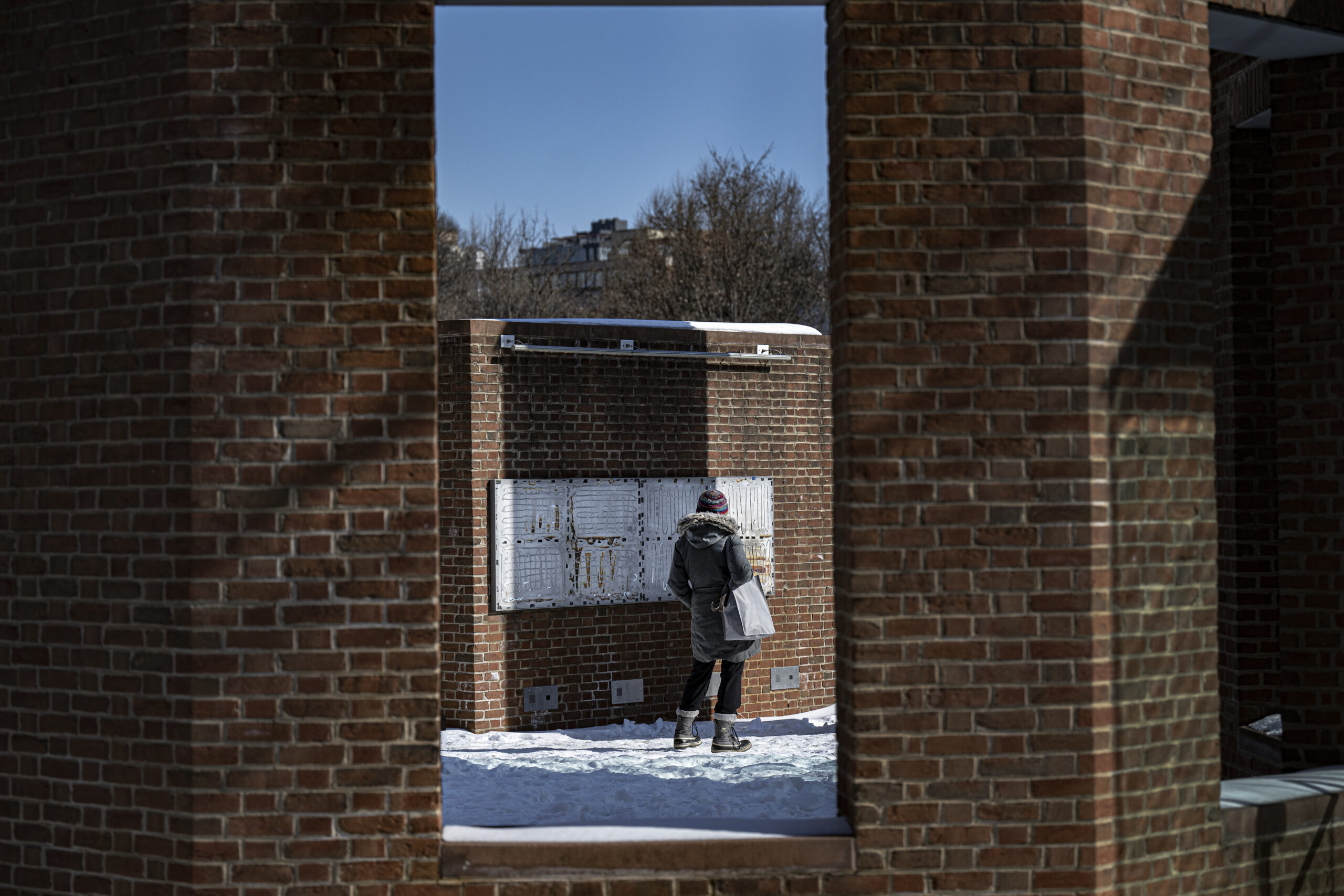
    People leave notes Saturday on the spaces at the President’s House site where more than a dozen educational displays about slavery were removed.

    That was harder to do in the late 19th and early 20th centuries, when slavery was within living memory for millions of people. Especially in the South, white educators made extended efforts to excuse it. The problem wasn’t slavery, they said.

    The problem was “the War of Northern Aggression” — a.k.a. the Civil War — which granted freedom to African Americans, whom, according to this twisted retelling of history, neither wanted nor deserved it.

    The key figure in this campaign was Mildred Lewis Rutherford, the “historian-general” of the United Daughters of the Confederacy, or UDC. Born into a wealthy slaveholding family in 1851, Rutherford led the effort to purge Southern schoolbooks of so-called Yankee perspectives.

    In 1919, “Miss Millie” — as she was affectionately known across the white South — published A Measuring Rod to Test Textbooks, which provided a checklist that UDC women could use to assess what their schools were teaching. “Reject a book … that speaks of the slaveholder of the South as cruel and unjust to his slaves,” Rutherford urged.

    Invoking the era’s rhetoric of progressive education — which stressed student activities rather than memorization from books — the UDC also sponsored essay contests for students who conducted research about slavery. Many of the essays drew on interviews from former slaveholders, who provided a predictably romantic view of the institution.

    Slavery was “the happiest time of the negroes’ existence,” declared a winning essay in 1915 by a Virginia high school student. “The slave was a member of the family, often a privileged member. He was the playmate, brother, exemplar, friend and companion of the white man from cradle to grave.”

    Despite Rutherford’s fears of encroaching Yankee doctrine, meanwhile, Northern schoolbooks often included similar falsehoods about slavery. In 1944, amid the World War II struggle against Nazism, Black activists in New York City complained that one history text used in their schools said those in bondage were “happy”; another congratulated the Ku Klux Klan for keeping “foolish Negroes” out of government after the Civil War. “Such passages … could well have come from the mouths of the fascist enemies of our nation,” the activists noted.

    Bolts are removed from interpretive panels about slavery before they are removed from the walls of the President’s House site in Independence National Historical Park Thursday.

    African American attacks on flawed textbooks came to a head during the civil rights movement of the 1960s, when the Urban League and the National Association for the Advancement of Colored People appointed committees to examine the books. Thanks to these efforts, most textbooks corrected their distortions of slavery. They also added new material about African Americans who fought against it, like Denmark Vesey and Frederick Douglass.

    Today, outside the darkest corners of the internet, nobody celebrates the enslavement of African Americans. “It is disgusting and absurd to suggest that anyone inside this building would support slavery,” White House press secretary Sarah Huckabee Sanders said during President Donald Trump’s first term in office, when Chief of Staff John Kelly suggested Confederate Gen. Robert E. Lee was an “honorable man.”

    In his second term, Trump has moved to restore the names of Confederates to military bases. Yet, I haven’t heard him — or anyone in his administration — say a good word about slavery. Again, that’s a very good thing.
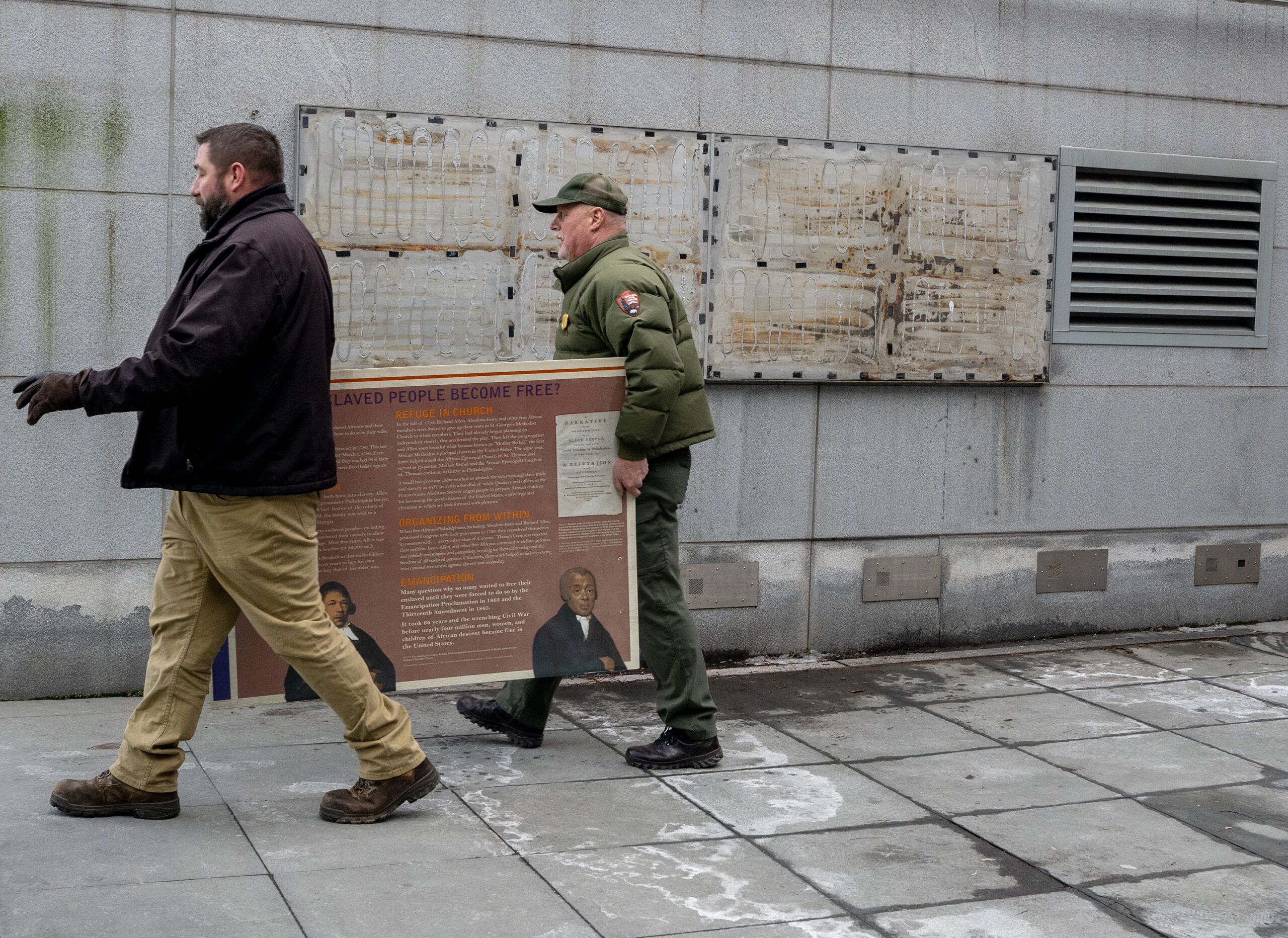
    Workers remove the displays at the President’s House site in Independence National Historical Park Thursday.

    But it also underscores their fundamental lack of courage. They’re not defending slavery, as earlier generations did. Instead, as happened at the President’s House, they’re simply eliminating it from sight because it doesn’t suit their happy picture of our history. To paraphrase the Jack Nicholson character in A Few Good Men, they can’t handle the truth.

    And if visitors ask why the exhibit about Washington and slavery disappeared, National Park Service employees have been instructed to say that they don’t know. Talk about cowardice! First, we deny history, and then we deny knowing why we did so.

    It’s enough to make a citizen embarrassed for his country. Trump and his aides say they took down the exhibit because it disparaged America. But they are the ones disparaging America, because they don’t believe in our ability to make sense of it: its glory and its tragedy, its achievements and its abuses. Shame on them.

    Jonathan Zimmerman teaches history and education at the University of Pennsylvania. He is the author of “Whose America?: Culture Wars in the Public Schools.”


  • World pauses to commemorate International Holocaust Remembrance Day

    World pauses to commemorate International Holocaust Remembrance Day

    WARSAW, Poland — Holocaust survivors, politicians, and regular people commemorated International Holocaust Remembrance Day on Tuesday, gathering at somber events across Europe and beyond to reflect on Nazi Germany’s killing of millions of people.

    International Holocaust Remembrance Day is observed across each year on Jan. 27, the anniversary of the liberation of Auschwitz-Birkenau, the most notorious of the Nazi German death camps. The U.N. General Assembly adopted a resolution in 2005 establishing the day as an annual commemoration.

    “The attempt, carried out by Nazi Germany, to erase the Jews from the face of Europe encapsulates, in an emblematic way, all the evil that human beings are capable of committing when they allow themselves to be infected — out of superficiality, indifference, cowardice, or self-interest — by the virus of hatred, racism, and oppression,” Italian President Sergio Mattarella said in a gathering with survivors in Rome.

    At Auschwitz, located in an area of southern Poland which was under German occupation during World War II, Polish President Karol Nawrocki joined survivors for a remembrance ceremony that ended with Jewish and Christian clergy reciting prayers.

    Bernard Offen, a 96-year-old survivor told participants that in today’s world he sees “signs I know too well.”

    “I see hatred resurgent. I see violence beginning to be justified once again,” Offen said. “I see people who believe their anger is more valuable than another human life. I say this because I am an old man who has seen where indifference leads to. And I say this because I believe that — I truly believe — that we can choose differently.”

    Nazi German forces killed some 1.1 million people at Auschwitz, most of them Jews, but also Poles, Roma, and others. The camp was liberated by the Soviet army on Jan. 27, 1945. In all, 6 million Jews were killed in the Holocaust — in ghettos, concentration camps, and shot at close range in the fields and forests of Eastern Europe.

    In the heart of Berlin, candles burned at the Memorial to the Murdered Jews of Europe, a field of 2,700 gray concrete slabs which honors the 6 million victims and stands as a powerful symbol of Germany’s remorse.

    Other countries are still struggling to come to terms with the complicity of their ancestors. Mattarella condemned the complicity of ordinary Italians in the fascist-era racial laws, which persecuted Italy’s Jewish community, and deportation of its Jews.

    As in recent years, Russia representatives were not invited to the observances at Auschwitz due to the country’s invasion of Ukraine.

    ‘Become my witness’

    Pavel Jelinek, a 90-year-old survivor from the city of Liberec — a Czech city with a prewar Jewish population of 1,350 — told those gathered in the upper house of the Czech Parliament that he was now the last living of the 37 Jews who returned to the city after the war.

    There are an estimated 196,600 Jewish Holocaust survivors still alive globally, down from 220,000 a year ago, according to the New York-based Conference on Jewish Material Claims Against Germany. Their median age is 87, and nearly all — some 97% — are “child survivors” who were born 1928 and later, the group said.

    Though the world’s community of survivors is shrinking, some are still telling their stories for the first time after all these years.

    In Britain, King Charles and Queen Camilla held a reception for survivors. A Holocaust survivor also addressed the British Cabinet in what Prime Minister Keir Starmer described as a first. Government members wiped away tears as 95-year-old Mala Tribich described how Germany’s invasion of Poland in 1939 destroyed her childhood.

    She recalled being forced into hard labor at the age of 12 as the first Nazi ghetto was established in her hometown of Piotrkow Trybunalski, and spoke of the hunger, disease and suffering there. The Nazis killed her mother, father, and sister. She was sent to Ravensbrück and then to Bergen-Belsen, where she was liberated by the British Army in April 1945.

    She urged the Cabinet members to fight antisemitism — and to remember.

    “Soon, there will be no eyewitnesses left,” she told them. “That is why I ask you today not just to listen, but to become my witness.”

    ‘Unity that saves lives is needed’

    Many leaders also reflected on the upheaval in today’s world.

    Kaja Kallas, the European Union’s foreign policy chief, warned about rising antisemitism and new threats. She noted that AI-generated content is now being used “to blur the line between fact and fiction, distort historical truth, and undermine our collective memory.”

    Ukraine’s President Volodymyr Zelensky, whose country has been under attack from Russia for four years, said that just as the world united to defeat the Nazis in 1945, it “must act the same way now.”

    “Whenever hatred and war threaten nations, unity that saves lives is needed,” Zelensky said.

  • Lincoln the bald eagle — who soars into the Linc on Sundays — befriends a Clydesdale in Budweiser Super Bowl ad

    Lincoln the bald eagle — who soars into the Linc on Sundays — befriends a Clydesdale in Budweiser Super Bowl ad

    Although the Eagles’ season came to an early end, Philadelphia fans can still see a hometown favorite on their television screens during Super Bowl LX.

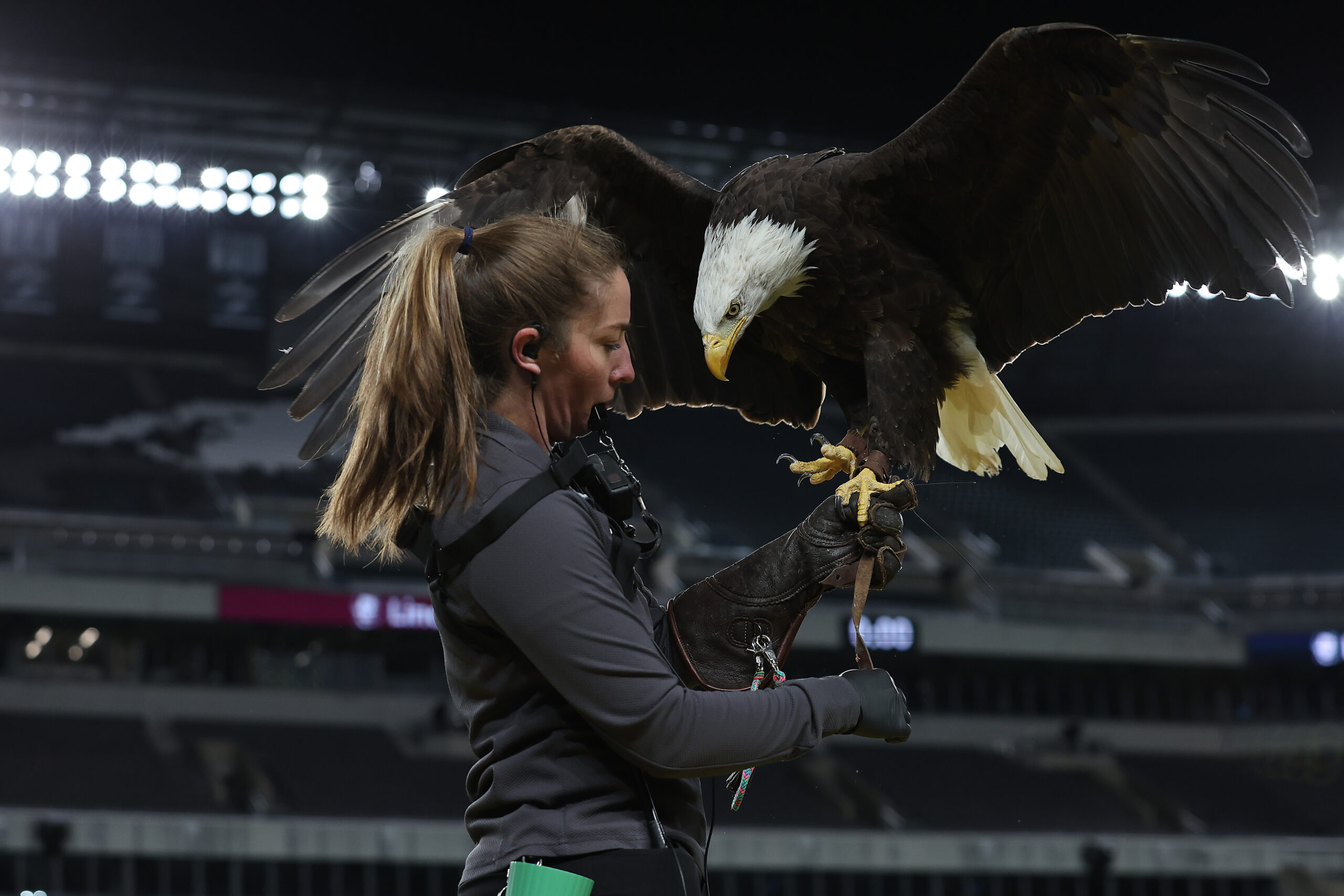
    Lincoln, the 28-year-old bald eagle that soars over the crowd at Lincoln Financial Field before Birds games, will star alongside a Clydesdale in this year’s Budweiser’s Super Bowl LX spot titled “American Icons.”

    The ad follows Lincoln’s friendship with the iconic horse playing under the appropriate sounds of Lynyrd Skynyrd’s “Free Bird.” The 60-second in-game spot will air during the Super Bowl.

    “It was really like these two icons of America coming together,” said Jessica Hall, the chief executive officer of the American Eagle Foundation, a nonprofit focused on the protection and conservation of bald eagles and other birds of prey. “The Clydesdales have been icons for over 100 years and the bald eagle has been on the great seal for over 200 years. So, seeing those two elements come together and be represented in this really moving commercial was spectacular.”

    The American Eagle Foundation got the call from Budweiser over the summer and started filming the project in October, making the trip from Kodak, Tenn., where the American Eagle Foundation is based, to California for Lincoln to star in his first-ever commercial. Lincoln, however, is no stranger to long trips and hotel rooms, thanks to his time serving as the Eagles’ pregame living mascot.

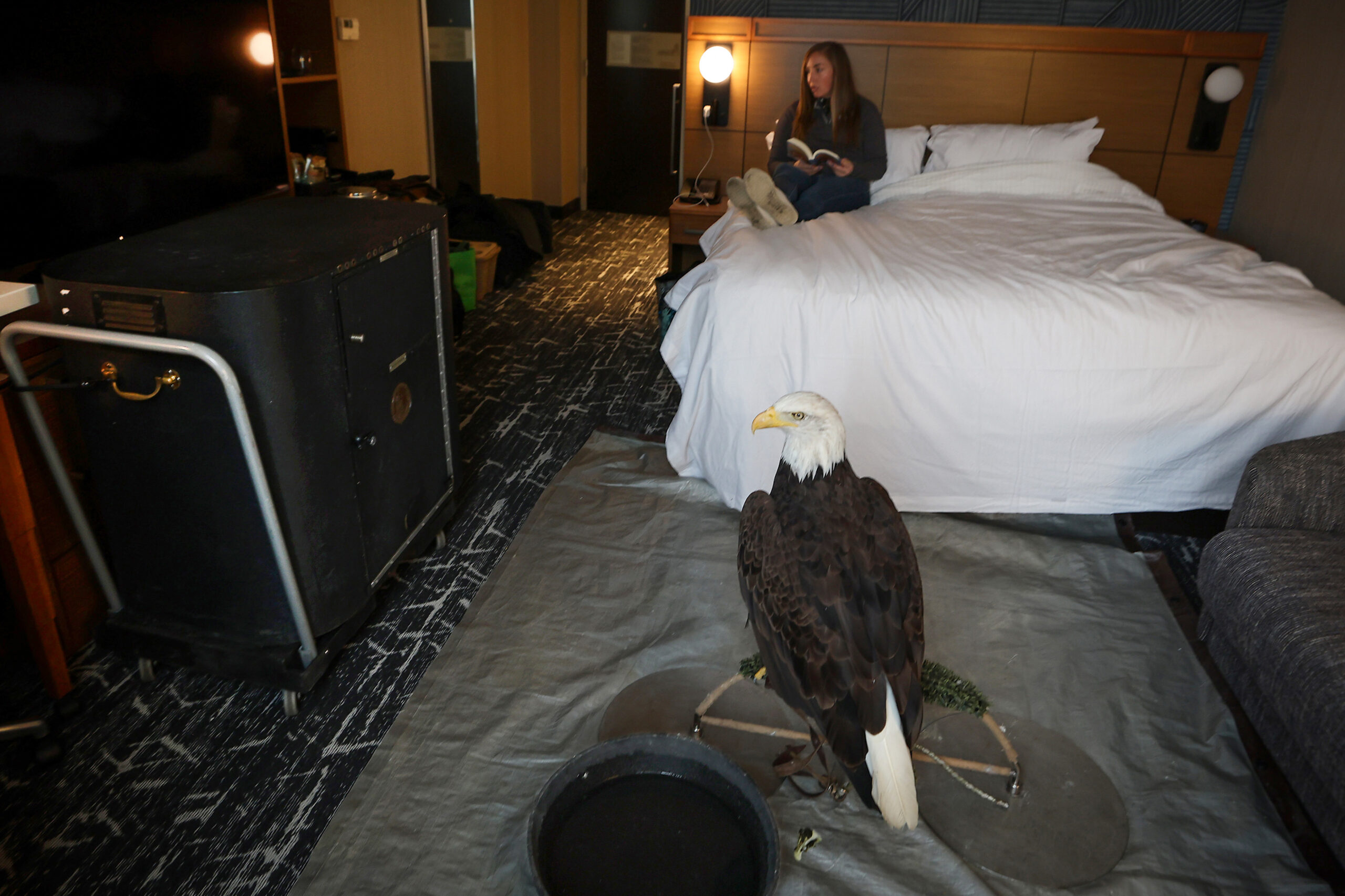
    Lincoln doesn’t get his own hotel room on the road, but he does get his own space — and has a darkening crate if the room gets too bright.

    “Seeing Lincoln soaring through the skies with his wings spread out, just doing what he does best, it never gets old,” Hall said. “Watching him fly, it sends chills down our backs every time. And meeting the Clydesdale was also incredible. The Clydesdale team were fascinated by the eagle, and the eagle team were fascinated by the Clydesdale.”

    The ad, directed by Emmy Award-winning commercial director Henry-Alex Rubin, is the latest addition to Budweiser’s “Made of America” campaign.

    “As we celebrate Budweiser’s 150th anniversary and America’s 250th birthday, we knew we had to rise to the occasion in a way only Budweiser can,” Todd Allen, senior vice president of marketing for Budweiser at Anheuser-Busch, said in a news release. ”‘American Icons’ brings our heritage to life through powerful storytelling with the Budweiser Clydesdales and an American Bald Eagle. This year’s spot will leave fans awe-struck and proud to enjoy a Budweiser as they celebrate our shared milestone moments.”

    Lincoln first flew into Lincoln Financial Field during the 2024 season, taking over for his predecessor, Challenger.

    Lincoln has been performing free-flight events since 2001, but his first NFL season, flying in bigger outdoor spaces, was in 2024. To prepare, he flew at Carson-Newman University and at Tucker Stadium, the home of the Tennessee Tech Golden Eagles.

    Of course, training came with a few minor hiccups, including when it came to dealing with other animals. In December 2024, Katelyn Jennings, the operations manager of the American Eagle Foundation, told The Inquirer about a close call with an osprey, another type of bird of prey.

    “We had a couple of situations that we encountered during training,” Jennings said. “We learned that Lincoln does not mind dogs or osprey … At our Carson-Newman game, they have an osprey nest near the field and the osprey would dive down to try and get him. And he says this is my territory and not yours and he just kind of looked at them like, ‘Hey, what are you doing here?’ and continued to fly onto the trainer.”

    Now, a Clydesdale can be added onto Lincoln’s short list of animal interactions.

    Ashley Frye, an avian care specialist with the American Eagles Foundation, catches Lincoln during a November 2024 test flight at the Linc.
  • N.J., Pa. to see more than $200M restored for EV chargers in legal win over Trump administration

    N.J., Pa. to see more than $200M restored for EV chargers in legal win over Trump administration

    New Jersey and Pennsylvania are poised to regain roughly $244 million in federal funding for electric‑vehicle charging stations after securing a legal victory over the Trump administration.

    New Jersey announced this week that it expects $73 million to be reinstated.

    Pennsylvania had planned on $171.5 million in EV‑charging funds last year, according to Alex Peterson, a spokesperson for Gov. Josh Shapiro.

    “This ruling guarantees that these obligated funds cannot again be interrupted,” Peterson said.

    On Friday, a U.S. District Court sided with 20 states that filed suit last year demanding restoration of the National Electric Vehicle Infrastructure Formula Program (NEVI). New Jersey and Pennsylvania were among the plaintiffs.

    In her decision, Judge Tana Lin, who was appointed by former President Joe Biden, prohibited the Department of Transportation from withholding funding for approved state EV‑charger deployment plans.

    Lin concluded from Seattle that the Federal Highway Administration (FHA) overstepped its authority by halting funding already authorized by Congress. She described the agency’s action as arbitrary and capricious.

    “This win puts New Jersey back on track for $73 million in funding unlawfully stripped away through the Trump Administration’s illegal actions,” Jennifer Davenport, New Jersey’s acting attorney general, said this week in a statement. “New Jerseyans want sustainable transportation options.”

    New Jersey, Pennsylvania, and Delaware were among plaintiffs in the suit against a Trump administration freeze on the $5 billion. It’s unclear whether Trump administration officials will appeal.

    The states’ legal challenge stemmed from an executive order President Donald Trump signed on his Inauguration Day to eliminate EV mandates — which the suit states never existed.

    Regardless, the suit stated, the administration used the order to “immediately pause the disbursement of funds” for EV infrastructure appropriated through the Inflation Reduction and Infrastructure Investment and Jobs acts signed by Biden.

    Other states that joined the suit included Washington, Colorado, California, Arizona, Delaware, Hawaii, Illinois, Kentucky, Maryland, Minnesota, New Mexico, Michigan, New York, North Carolina, Oregon, Rhode Island, Vermont, and Wisconsin.

    Davenport called the Trump administration’s refusal to spend funds approved by Congress “unlawful.”

    This story has been updated to include newer figures on Pennsylvania’s plan to fund EV charging infrastructure.

  • John Fetterman urges Trump to fire Kristi Noem as DHS secretary: ‘Americans have died’

    John Fetterman urges Trump to fire Kristi Noem as DHS secretary: ‘Americans have died’

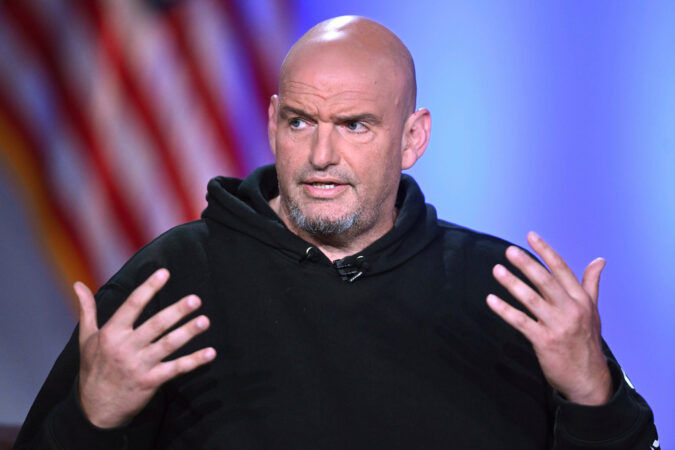
    Sen. John Fetterman on Tuesday urged President Donald Trump “to immediately fire” Homeland Security Secretary Kristi Noem after federal agents killed two citizens in Minneapolis this month during an immigration enforcement operation.

    “Americans have died,” Fetterman (D., Pa.) said in a statement. “She is betraying DHS’s core mission and trashing your border security legacy.”

    The senator’s call for Noem’s firing comes after federal agents killed two Americans during the Minneapolis operation. On Saturday, a Border Patrol agent shot and killed Alex Pretti, an intensive care nurse at a VA hospital. An ICE agent shot and killed Renee Nicole Good, a 37-year-old poet and mother, on Jan. 7.

    Both shootings were caught on video, provoking protests nationwide.

    Fetterman referenced Noem’s predecessor, Alejandro Mayorkas, who served under former President Joe Biden and faced impeachment by the Republican-led House in 2024 amid a backlash over increased border crossings under Biden.

    “DO NOT make the mistake President Biden made for not firing a grossly incompetent DHS Secretary,” said Fetterman, who was one of seven Democrats who voted for Noem’s confirmation last year.

    Sen. Andy Kim (D., N.J.), who also voted for Noem, joined the growing chorus of Democrats calling for Noem to step down on Tuesday. The South Jersey lawmaker has previously called the vote a mistake.

    Fetterman’s plea to fire Noem comes a day after he called for the withdrawal of federal agents from Minneapolis. And it comes as the U.S. Senate is poised to vote this week on funding for the Department of Homeland Security, which oversees both ICE and the Border Patrol.

    Senate Minority Leader Chuck Schumer said Democrats would vote against it, which could trigger a partial federal government shutdown.

    About 150 protesters gathered outside Fetterman’s office in Philadelphia in the snow on Tuesday to urge him to join the effort, but the senator said on Monday that he will never vote to shut down the government. He also argued that doing so would not pull the $178 billion dedicated to DHS through the One Big Beautiful Bill Act, which he did not support.

    “I would like him to listen and actually represent us, because that’s his job,” said James Pierson, 42, an Exton resident attending the demonstration.

    Fetterman suggested pulling the DHS bill from the package of bills under consideration by the Senate this week rather than another shutdown vote.

    “I reject the calls to defund or abolish ICE,” he said. “I strongly disagree with many strategies and practices ICE deployed in Minneapolis, and believe that must change.”

  • Philip Glass pulls world premiere from Kennedy Center

    Philip Glass pulls world premiere from Kennedy Center

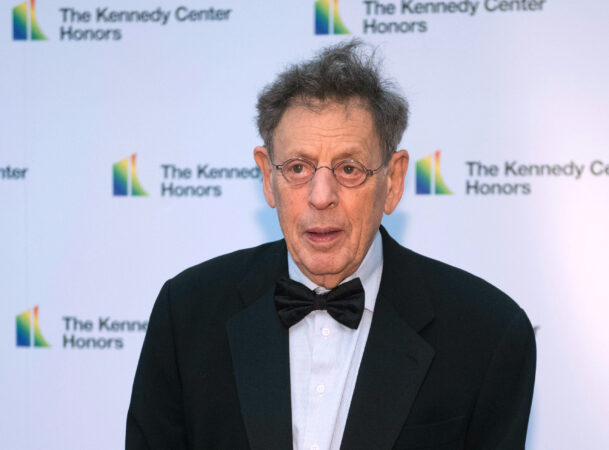
    Composer Philip Glass has joined the list of artists, musicians and performers pulling back from previously scheduled engagements at the Kennedy Center, withdrawing his anticipated Symphony No. 15: Lincoln from the National Symphony Orchestra, which was to perform the world premiere this coming June.

    “After thoughtful consideration, I have decided to withdraw my Symphony No. 15 Lincoln from the John F. Kennedy Center for the Performing Arts,” Glass wrote in a statement provided to the Washington Post. “Symphony No. 15 is a portrait of Abraham Lincoln, and the values of the Kennedy Center today are in direct conflict with the message of the Symphony. Therefore, I feel an obligation to withdraw this Symphony premiere from the Kennedy Center under its current leadership.”

    Glass, who will turn 89 at the end of this month, is a celebrated and influential American composer, who was awarded the Kennedy Center Honors in 2018. Though often credited as a pioneer of 20th-century minimalism, Glass’s music ranges from intimate piano études and chamber works to sprawling symphonies and ambitious, experimental operas such as Einstein on the Beach, Satyagraha and Akhnaten, about historical figures.

    Symphony No. 15: Lincoln was co-commissioned by the Kennedy Center and the NSO, and has already been subject to several delays: It was originally scheduled to premiere in March 2022 and was later postponed to October 2022. This season, the piece was restored to the NSO’s calendar as a centerpiece of the Kennedy Center’s ongoing “250 Years of Us” programming.

    Its withdrawal comes amid a wave of cancellations by artists and performers, prompted by the addition of President Donald Trump’s name to the center (as well as to the building’s facade), or attributed to scheduling conflicts or financial strains. It also lands against a backdrop of reputational crisis at the center, a stretch of politically charged changes (like Trump himself hosting the Kennedy Center Honors) that has been met with a sharp decline in ticket sales and an apparent audience boycott over the politicization of the nonpartisan venue.

    Glass’s letter arrives 188 years to the day after Abraham Lincoln delivered his 1838 Lyceum Address, from which Glass adapts two movements of the symphony’s libretto — along with Lincoln’s Autobiographical Sketch of 1859, his Farewell Address of 1861 and assorted other writings and correspondence. (Baritone Zachary James was slated to sing the premiere performance in June, on a program led by conductor Karen Kamensek.)

    “I think there is no American subject matter more interesting than Abraham Lincoln,” Glass told me in 2022 about the Symphony No. 15, then still in progress. “I read him almost like I would a writer, not a politician or someone in government. There’s a beautiful music to his writing.”

    The withdrawal mars a long history between Glass and the center. And while it’s highly unusual for a composer to withdraw a work from a commissioning body as an act of protest, the composer’s work has responded to contemporary politics in the past.

    In 2015, Washington National Opera, which this month parted ways with the Kennedy Center, gave the world premiere of an expanded version of Glass’s opera Appomattox, which draws a musical through line from the Civil War to the civil rights movement through the voices of Lincoln, the Rev. Martin Luther King Jr., Lyndon B. Johnson and others.

    Glass and playwright Christopher Hampton revised the opera (which premiered in 2007) in response to a 2013 decision by the Supreme Court that invalidated key elements of the Voting Rights Act of 1965.

    “It’s almost like a photojournalist approach to opera,” Glass told The Post at the time, “where the material is changing while you’re writing it.”

  • More history exhibits pulled from national parks, including Grand Canyon

    More history exhibits pulled from national parks, including Grand Canyon

    Trump officials have ordered national parks to remove dozens of signs and displays related to climate change, environmental protection, and settlers’ mistreatment of Native Americans in a renewed push to implement President Donald Trump’s executive order on “restoring truth and sanity to American history.”

    Park staff have interpreted Trump’s directive — which seeks to scrub federal institutions of what it calls “partisan ideology” and remove any content deemed to “disparage Americans past or living” — to include any references to historic racism and sexism, as well as climate change and LGBTQ+ rights. Last week, that included the removal of an exhibit at the President’s House in Philadelphia that focused on George Washington’s ownership of enslaved people.

    A visitor on Thursday looks at the site where explanatory panels from an exhibit on slavery were removed from the President’s House in Philadelphia.

    In a new wave of orders this month, Trump officials instructed staff to remove or edit signs and other informational materials in at least 17 additional parks in Arizona, Texas, Colorado, Utah, Montana, and Wyoming, according to documents reviewed by the Washington Post. The documents also listed some removals ordered in August and September.

    The Interior Department said in a statement it was implementing Trump’s executive order.

    “All federal agencies are to review interpretive materials to ensure accuracy, honesty, and alignment with shared national values,” the statement said. “Following completion of the required review, the National Park Service is now taking appropriate action in accordance with the Order.”

    Among the national parks targeted in the new removal orders are some of the country’s most iconic: Grand Canyon, Glacier, Big Bend, and Zion.

    The removal orders include descriptions of how climate change is driving the disappearance of the glaciers at Glacier National Park and a wayside display at the Grand Canyon referring to the forced removal of Native Americans.

    The administration’s broad attempt to suppress true stories “should offend every American,” said Kristen Brengel, senior vice president of government affairs for the National Parks Conservation Association.

    Brengel emphasized that Park Service staffers are acting on administration orders. “Everyone understands this history,” she said. “It’s not debatable, but they’re being forced to select stories because they think the administration will threaten their jobs if they don’t.”

    Here are details on some of the changes being ordered at national parks.

    Grand Canyon National Park

    Staff at a Grand Canyon visitor center in Arizona removed part of an exhibit after flagging potentially problematic passages to the national park system’s leadership in D.C., according to documentation reviewed by the Post.

    The passages included text stating that settlers “exploited land for mining and grazing” and that federal officials “pushed tribes off their land” to establish the park.

    The park also removed references to cattle ranchers “carelessly overgrazing” the land, tourists “foolishly” leaving trash in the park and entrepreneurs who “profited excessively” from tourism.

    Trump officials have yet to take action on several other items, including a video about Native American history.

    Park staff suggested fixes that would remove a reference to a federal policy that prevented Native Americans from using body and face paint, as well as references to their ancestors’ “misery, suffering,” and “loss.”

    Roadside displays on climate change, pollution and mining were also flagged for possible removal.

    Glacier National Park

    In response to frequent inquiries from visitors about the potential disappearance of the famous glaciers at Montana’s Glacier National Park, staff created signs and other resources to answer those questions, said Jeff Mow, who retired as superintendent of the park in 2022.

    The administration flagged one brochure for removal or changes that shows images of glaciers retreating and explains that human-caused climate change is a factor in their likely future disappearance. A video that refers to the disappearance of the glaciers was also ordered removed or changed.

    Also flagged was a sign at the park’s gift shop that says: “Climate Change Affects National Parks and the Treasures They Protect.”

    “We’re whitewashing or we’re taking out all those sort of not-so-nice stories that have occurred in our nation’s history,” Mow said.

    Another informational display to be removed or changed describes the park’s issues with air pollution. The administration paused air-quality monitoring at national parks last year.

    Other signs talk about the increasing fire risk at the park, as well as a nearby dam that “flooded two lakes within the park.”

    “As the nation’s storyteller of natural and cultural history, the National Park Service takes great pride” in telling these stories, Mow said. “This process of being edited — it’s like taking a torpedo in the bow.

    Big Bend National Park

    The signs slated for removal at Big Bend National Park along the Texas-Mexico border do not reference the topics, such as climate or Native American history, that have typically attracted the attention of Trump officials.

    Instead, of the nearly 20 signs flagged for not conforming with the new policy, many deal with geology, prehistoric history, fossils and other seemingly uncontroversial scientific or historical topics. The removal orders do not spell out what’s wrong with the signs.

    Some of the displays are in Spanish and English, while others talk about cooperating with Mexico on modern preservation efforts.

    Big Bend’s submission for the administration’s review says, “These wayside exhibits describe natural features, but emphasize ‘matters unrelated to the beauty, abundance, or grandeur of said natural feature.’” Although it flagged the materials for review, the park said it did “not advocate changing these wayside exhibits.”

    Even so, Trump officials decided the displays did not conform with administration policy and ordered them changed or removed.

    “This is not something that the National Park Service should be blamed for,” said Bob Krumenaker, superintendent of Big Bend until 2023. “They are being told they have to do these things. And my hope is they’re saving these exhibits for when things change so they can put them back up.

    Other parks

    The administration also targeted less famous parks. One sign slated for removal at Bent’s Old Fort National Historic Site in Colorado described key figures in the site’s history and included references to the forced removal of a Native tribe, a family’s slave ownership and another historic figure who had a miscarriage.

    At Hubbell Trading Post National Historic Site in Arizona, a panel on Ganado Mucho, a Navajo leader known for settling disputes with ranchers, is also listed for changes or removal.

    The documentation reviewed by the Post also included new details on removals and changes that were ordered last year.

    At Arizona’s Organ Pipe Cactus National Monument, descriptions of destructive grazing practices and the accelerating rate of warming since 1850, as well as a booklet that talks about endangered turtles and Sonoran pronghorn, were ordered changed or removed.

    Grand Teton National Park in Wyoming was ordered to remove or change a panel about Gustavus Cheyney Doane that said he participated in the U.S. Army massacre of Piegan Blackfeet Native Americans, including women, children and the elderly.

    At Little Bighorn Battlefield National Monument in Montana, exhibit text that described the United States being “hungry for gold and land” and breaking promises to Native Americans was ordered changed or removed.

    Another text describing how U.S.-run boarding schools for Indigenous children “violently erased cultural identities and language” was also deemed not to comply with Trump’s policy.

    Brengel of the National Parks Conservation Association said the Trump administration’s efforts to sanitize American history runs counter to the mission of the park system.

    “We are capable of hearing about our tragedies and our victories, and this systematic erasure should concern everyone in our country,” she said.

  • Temple showed resilience in historic comeback victory over Charlotte

    Temple showed resilience in historic comeback victory over Charlotte

    Temple’s hopes of beating Charlotte on Saturday seemed lost in the third quarter’s closing seconds. The Owls were trailing by 26 points, and they looked far from the team that had beaten South Florida just four days earlier.

    But something changed. A technical foul against Charlotte guard Princess Anderson with 17 seconds left in the third quarter seemed to be the catalyst of the Owls finding some momentum.

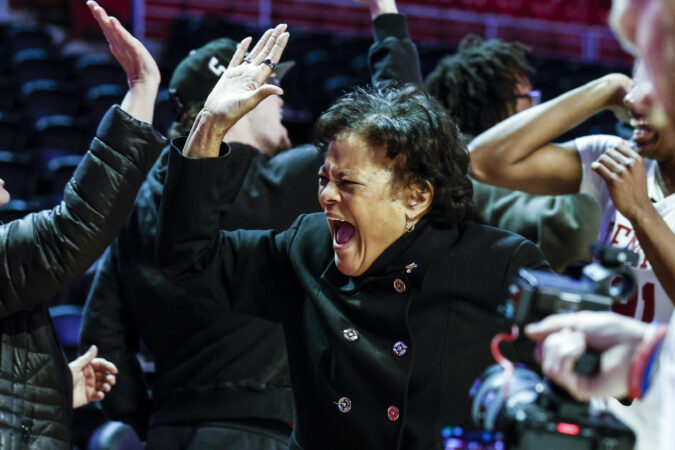
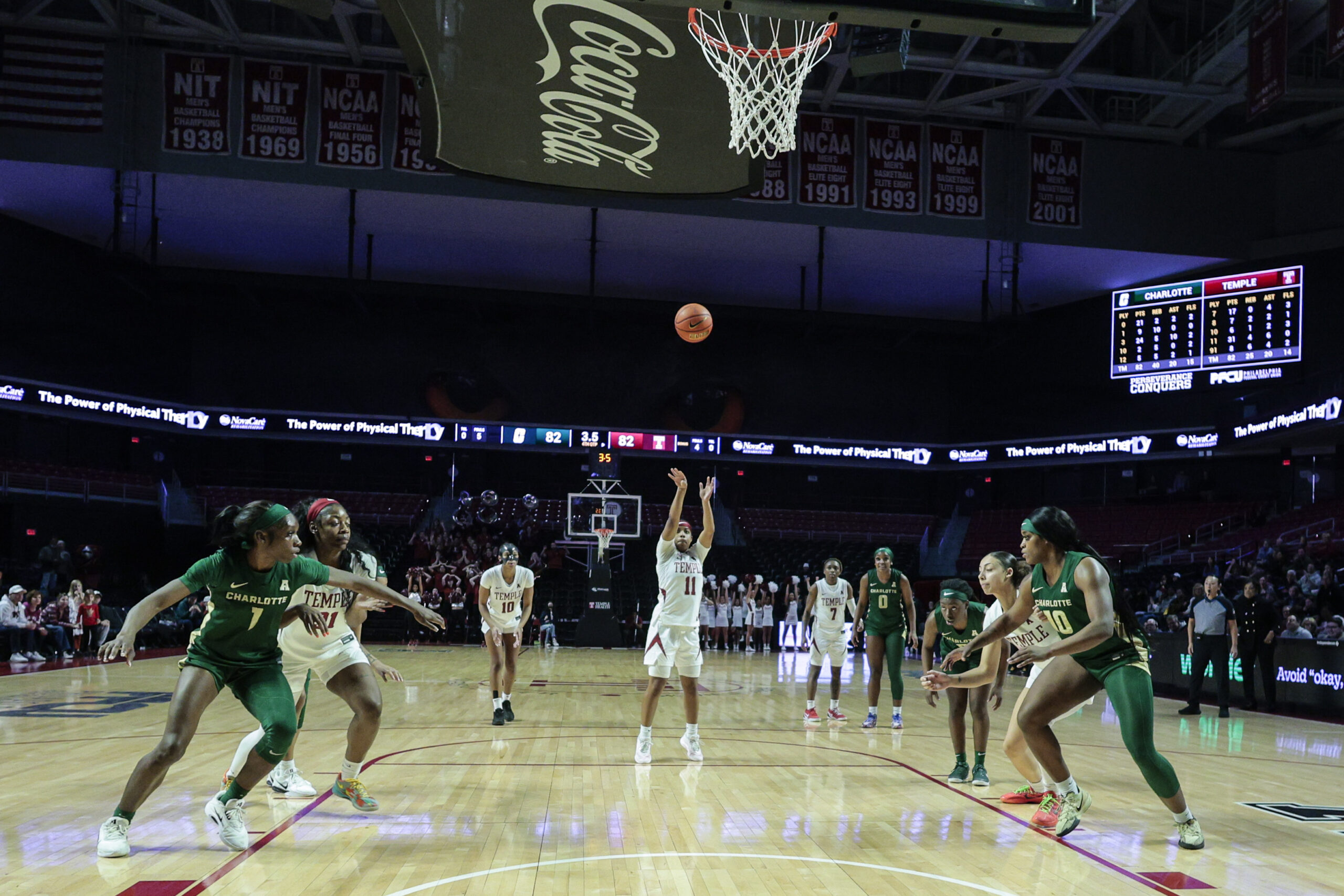
    Temple coach Diane Richardson found a lineup that worked and stuck with it through the final frame as the Owls mounted a furious comeback. They chipped away at the 49ers’ lead and were within one possession in the final three minutes. Temple took its first, and only, lead with three seconds remaining, when guard Tristen Taylor made two free throws to put her team up, 83-82.

    Charlotte’s halfcourt heave at the buzzer fell short, giving Temple (9-10, 3-4 American Conference) a spot in history. The Owls’ 26-point comeback was the largest in program history and tied for third-largest in NCAA women’s basketball history.

    “It showed the resilience we had; it showed we weren’t giving up,” Richardson said. “They just rallied together, not looking at the score, and executed. I’m really proud of them.”

    The Owls also showed resilience in their previous game against South Florida on Jan. 20, when they overcame a 10-point second-half deficit to snap a three-game skid.

    Aside from a much larger deficit vs. Charlotte, Temple looked disengaged on defense and was getting outworked for rebounds. The energy that helped push the Owls past South Florida was nonexistent for 30 minutes on Saturday — until their fourth-quarter lineup took the court.

    Richardson played Taylor, guards Kaylah Turner, Savannah Curry, and forward Saniyah Craig for all 10 minutes and forward Felicia Jacobs for nine minutes. Those five ignited spark the Owls’ comeback.

    Jacobs and Curry came off the bench and made an impact, which Richardson has been wanting to see in conference play. Jacobs recorded three rebounds and was a team-best plus-23 in her minutes, while Curry made two three-pointers.

    “That’s why you saw subs,” Richardson said. “The people on the bench have to fight for minutes and they’ve got to show some kind of impact when they get in there to prove they are worthy of the minutes. They’ve been doing that all week.”

    While Jacobs and Curry made an impact, the comeback was powered by Taylor, who had the best game of her career.

    Taylor was playing well before the fourth quarter. She had 15 points and three assists through 30 minutes, but she took her game to another level in the final 10 minutes.

    Temple’s Tristen Taylor made the game-winning free throw against Charlotte on Saturday.

    Taylor poured in 17 points and made all six of her field-goal attempts, three of which were three-pointers. She also assisted on three of the other four made baskets in the quarter. When Temple needed her most, Taylor stepped up in the final minutes.

    She scored the Owls’ final 10 points and made the biggest play of the game to set herself up for the go-ahead free throws. Turner missed a jump shot, but Taylor soared in for the offensive rebound and was fouled on her putback attempt. Taylor made both free throws to close out Charlotte and finished with a career-high 32 points on 10-for-13 shooting from the field.

    “I think I went 50% from the free-throw line last game,” Taylor said. “I’ve been in the gym shooting free throws a lot this week, and I feel like when I stepped up there, I didn’t have any nerves just from practicing and being confident all week.”

    Despite winning, the Owls failed to play a complete game through four quarters, and it nearly cost them against Charlotte. Next up, Temple has a road test on Wednesday night (8 p.m., ESPN+) against first-place Rice (17-3, 9-0).

    Richardson knows her team can’t wait until the fourth quarter to play.

    “They’re playing really great basketball, but I think we’re playing good basketball right now, too,” Richardson said. “So we’ve got to go in there on their home court, and we’ve got to play Temple basketball from the top to the finish.”

  • Minneapolis shooting scrambles Second Amendment politics for Trump

    Minneapolis shooting scrambles Second Amendment politics for Trump

    Prominent Republicans and gun rights advocates helped elicit a White House turnabout this week after bristling over the administration’s characterization of Alex Pretti, the second person killed this month by a federal officer in Minneapolis, as responsible for his own death because he lawfully possessed a weapon.

    The death produced no clear shifts in U.S. gun politics or policies, even as President Donald Trump shuffles the lieutenants in charge of his militarized immigration crackdown. But important voices in Trump’s coalition have called for a thorough investigation of Pretti’s death while also criticizing inconsistencies in some Republicans’ Second Amendment stances.

    If the dynamic persists, it could give Republicans problems as Trump heads into a midterm election year with voters already growing skeptical of his overall immigration approach. The concern is acute enough that Trump’s top spokeswoman sought Monday to reassert his brand as a staunch gun rights supporter.

    “The president supports the Second Amendment rights of law-abiding American citizens, absolutely,” White House press secretary Karoline Leavitt told reporters.

    Leavitt qualified that “when you are bearing arms and confronted by law enforcement, you are raising … the risk of force being used against you.”

    Videos contradict early statements from administration

    That still marked a retreat from the administration’s previous messages about the shooting of Pretti. It came the same day the president dispatched border czar Tom Homan to Minnesota, seemingly elevating him over Homeland Security Secretary Kristi Noem and Border Patrol chief Greg Bovino, who had been in charge in Minneapolis.

    Within hours of Pretti’s death on Saturday, Bovino suggested Pretti “wanted to … massacre law enforcement,” and Noem said Pretti was “brandishing” a weapon and acted “violently” toward officers.

    “I don’t know of any peaceful protester that shows up with a gun and ammunition rather than a sign,” Noem said.

    White House deputy chief of staff Stephen Miller, an architect of Trump’s mass deportation effort, went further on X, declaring Pretti “an assassin.”

    Bystander videos contradicted each claim, instead showing Pretti holding a cellphone and helping a woman who had been pepper sprayed by a federal officer. Within seconds, Pretti was sprayed, too, and taken to the ground by multiple officers. No video disclosed thus far has shown him unholstering his concealed weapon -– which he had a Minnesota permit to carry. It appeared that one officer took Pretti’s gun and walked away with it just before shots began.

    As multiple videos went viral online and on television, Vice President JD Vance reposted Miller’s assessment, while Trump shared an alleged photo of “the gunman’s gun, loaded (with two additional full magazines!).”

    On Tuesday, Trump was asked if he agreed with Miller’s comment describing Pretti as an “assassin” and answered “no.” But he added that protesters “can’t have guns” and said he wants the death investigated.

    “You can’t walk in with guns, you just can’t,” Trump told reporters on the White House lawn before departing for a trip to Iowa.

    Swift reactions from gun rights advocates

    The National Rifle Association, which has backed Trump three times, released a statement that began by casting blame on Minnesota Democrats it accused of stoking protests. But the group lashed out after a federal prosecutor in California said on X that, “If you approach law enforcement with a gun, there is a high likelihood they will be legally justified in shooting you.”

    That analysis, the NRA said, is “dangerous and wrong.”

    FBI Director Kash Patel magnified the blowback Sunday on Fox News’ “Sunday Morning Futures With Maria Bartiromo.” No one, Patel said, can “bring a firearm, loaded, with multiple magazines to any sort of protest that you want. It’s that simple.”

    Erich Pratt, vice president of Gun Owners of America, was incredulous.

    “I have attended protest rallies while armed, and no one got injured,” he said on CNN.

    Conservative officials around the country made the same connection between the First and Second amendments.

    “Showing up at a protest is very American. Showing up with a weapon is very American,” state Rep. Jeremy Faison, who leads the GOP caucus in Tennessee, said on X.

    Trump’s first-term vice president, Mike Pence, called for “full and transparent investigation of this officer involved shooting.”

    A different response from the past

    Liberals, conservatives and nonpartisan experts noted how the administration’s response differed from past conservative positions involving protests and weapons.

    Multiple Trump supporters were found to have weapons during the Jan. 6, 2021, attack on the U.S. Capitol. Trump issued blanket pardons to all of them.

    Republicans were critical in 2020 when Mark and Patricia McCloskey had to pay fines after pointing guns at protesters who marched through their St. Louis neighborhood after the police killing of George Floyd in Minneapolis. And then there’s Kyle Rittenhouse, a counter-protester acquitted after fatally shooting two men and injuring another in Kenosha, Wisconsin, during the post-Floyd protests.

    “You remember Kyle Rittenhouse and how he was made a hero on the right,” Trey Gowdy, a Republican former congressman and attorney for Trump during one of his first-term impeachments. “Alex Pretti’s firearm was being lawfully carried. … He never brandished it.”

    Adam Winkler, a UCLA law professor who has studied the history of the gun debate, said the fallout “shows how tribal we’ve become.” Republicans spent years talking about the Second Amendment as a means to fight government tyranny, he said.

    “The moment someone who’s thought to be from the left, they abandon that principled stance,” Winkler said.

    Meanwhile, Democrats who have criticized open and concealed carry laws for years, Winkler added, are not amplifying that position after Pretti’s death.

    Uncertain effects in an election year

    The blowback against the administration from core Trump supporters comes as Republicans are trying to protect their threadbare majority in the U.S. House and face several competitive Senate races.

    Perhaps reflecting the stakes, GOP staff and campaign aides were reticent Monday to talk about the issue at all.

    The House Republican campaign chairman, Rep. Richard Hudson of North Carolina, is sponsoring the GOP’s most significant gun legislation of this congressional term, a proposal to make state concealed-carry permits reciprocal across all states.

    The bill cleared the House Judiciary Committee last fall. Asked Monday whether Pretti’s death and the Minneapolis protests might affect debate, an aide to Speaker Mike Johnson did not offer any update on the bill’s prospects.

    Gun rights advocates have notched many legislative victories in Republican-controlled statehouses in recent decades, from rolling back gun-free zones around schools and churches to expanding gun possession rights in schools, on university campuses and in other public spaces.

    William Sack, legal director of the Second Amendment Foundation, said he was surprised and disappointed by the administration’s initial statements following the Pretti shooting. Trump’s vacillating, he said, is “very likely to cost them dearly with the core of a constituency they count on.”

  • Federal commission says Penn employed ‘intensive and relentless public relations campaign’ to avoid complying with subpoena

    Federal commission says Penn employed ‘intensive and relentless public relations campaign’ to avoid complying with subpoena

    The federal commission seeking personal contact information for faculty and staff at the University of Pennsylvania has accused the school of engaging in an “intensive and relentless public relations campaign” to avoid complying with the subpoena.

    The U.S. Equal Employment Opportunity Commission, in a court filing Monday, defended its subpoena seeking potential witnesses and victims of antisemitism at the university and said the request is not unusual for such investigations. The commission is seeking employees’ names, home addresses, phone numbers, and email addresses to further an investigation it began in 2023 over the school’s treatment of Jewish faculty and other employees regarding antisemitism complaints following Hamas’ attack on Israel.

    The commission’s request has spurred a backlash from student and faculty groups, including Penn’s chapter of the American Association of University Professors and the Penn Faculty Alliance to Combat Antisemitism, arguing that the information should not be turned over. Penn has refused to provide the information, prompting the EEOC to file the lawsuit in November.

    Penn’s response to the lawsuit, along with filings by other groups, “forecast highly speculative and deeply nefarious outcomes should the EEOC’s subpoena be enforced,” the commission said. “This dark prognosticating has been predictably (and immediately) reported in national, local, and campus outlets.”

    The university, in a filing earlier this month, said the commission’s request was “disconcerting” and “unnecessary” and could pose a threat to employees.

    “The EEOC insists that Penn produce this information without the consent — and indeed, over the objections — of the employees impacted while entirely disregarding the frightening and well-documented history of governmental entities that undertook efforts to identify and assemble information regarding persons of Jewish ancestry,” the university wrote in its filing.

    The commission argued in response that Penn’s assertion of potential danger to employees is “untethered from both the law and the reality of these proceedings.”

    “The EEOC seeks only to investigate allegations of serious, widespread antisemitic harassment in Respondent’s workplace,” the commission argued.

    The commission, the group said, is only seeking information on faculty and staff “who complained of antisemitic harassment, who belonged to Jewish affinity organizations, or who worked in the Jewish Studies Program.” They could have knowledge of potential problems, the commission said.

    Penn can provide the contact information without listing the employees’ organizational affiliations, the commission said.

    Penn did not immediately comment on the latest EEOC filing.

    Penn has said it provided over 900 pages of materials to the commission and offered to send notices to all employees about the EEOC’s request to hear of antisemitism concerns with the commission’s contact information, so they could reach out themselves if interested in participating.

    But the commission called that offer “unworkable” and said it “would undermine the integrity of the agency’s investigation.”

    “Messages from EEOC to employees filtered through an employer always risk creating confusion, fear, and mistrust among recipients,” the commission said.

    That path could increase the possibility of retaliation against employees for cooperating with the investigation, the commission argued.

    The university has challenged the validity of the EEOC’s charge, asserting that the commission has not identified a “single allegedly unlawful employment practice or incident involving employees.” It also “does not refer to any employee complaint the agency has received, any allegation made by or concerning employees, or any specific workplace incident(s) contemplated by the EEOC,” the university said.

    While EEOC complaints typically come from those who allege they were aggrieved, this one was launched by EEOC Commissioner Andrea Lucas, now chair of the body, on Dec. 8, 2023, two months after Hamas’ attack on Israel that led to unrest on college campuses, including Penn’s, and charges of antisemitism. It was also just three days after Penn’s then-president, Liz Magill, had testified before a Republican-led congressional committee on the school’s handling of antisemitism complaints; the testimony drew a bipartisan backlash and led to Magill’s resignation days later.

    Lucas, according to the EEOC complaint, made the charge in Penn’s case because of “probable reluctance of Jewish faculty and staff to complain of harassing environment due to fear of hostility and potential violence directed against them.“

    The commission in its filing Monday said its practice is within its regulations.

    “This charge alleges a time frame, an unlawful employment practice (hostile work environment), the individuals potentially affected by that alleged unlawful employment practice (Jewish employees), and the publicly available sources,” the commission said.

    The commission also criticized Penn’s concerns about potential leaks of employees’ contact information through the EEOC, noting the data breach that occurred at Penn last year, exposing employees’ information.

    “Its concerns about the security of EEOC’s IT systems are disingenuous,” the commission said.