Blog

  • New York’s congestion toll into Manhattan upheld by a federal judge over Trump’s objections

    New York’s congestion toll into Manhattan upheld by a federal judge over Trump’s objections

    NEW YORK — A federal judge has blocked President Donald Trump’s administration’s efforts to halt New York’s first-in-the-nation congestion fee meant to reduce traffic and pump revenue into the region’s aging transit system.

    U.S. District Judge Lewis Liman on Tuesday ruled that the U.S. Department of Transportation lacked the authority to unilaterally rescind approval of the $9 toll, which former Democratic President Joe Biden initially green-lit.

    Instead, he sided with the Metropolitan Transportation Authority, which had argued that the department’s reversal was “unlawful” because the agency had not adequately explained its reasoning.

    “The Secretary’s actions were arbitrary and capricious, an abuse of discretion, and not in accordance with law,” Liman wrote in his 149-page ruling, referring to Trump’s Transportation Secretary Sean Duffy.

    The judge noted that New York’s legislature passed the toll, which its governor signed into law and received the necessary federal approvals before launching.

    “The democratic process worked,” Liman wrote, even as he left the door open for future attempts by Trump and other opponents to kill the program, which took effect on Jan. 5, 2025.

    Gov. Kathy Hochul said the decision vindicates a “once-in-a-lifetime success story” that’s “yielded huge benefits” in its first year of operation, including reducing gridlock and unlocking critical funding for mass transit.

    “The judge’s decision is clear: Donald Trump’s unlawful attempts to trample on the self-governance of his home state have failed spectacularly,” the Democrat said in a statement. “Congestion pricing is legal, it works, and it is here to stay.”

    The U.S. DOT said it’s reviewing its legal options, including appealing.

    “Once again, working-class Americans are being sidelined under Governor Kathy Hochul’s policies, which impose a massive tax on every New Yorker,” the agency said in a statement.

    New York’s congestion toll is imposed on most vehicles driving into Manhattan south of Central Park.

    The toll varies depending on vehicle type and time of day, and is added to tolls drivers already pay to cross bridges and tunnels into Manhattan, but generally costs about $9.

    Congestion pricing schemes aimed at reducing traffic pollution and encouraging public transit use have long existed in other global cities, including London, Stockholm, Milan, and Singapore, but not in the U.S.

    But Trump, whose namesake Trump Tower and other properties are within the congestion zone, has strongly opposed the idea. During his presidential campaign, he vowed to kill New York’s plan as soon as he took office.

    Then last February, Duffy rescinded the toll’s federal approval, calling the fee “a slap in the face to working-class Americans and small business owners.” He threatened to withhold federal funding for projects in New York if the toll weren’t discontinued.

    But Liman temporarily blocked the administration from following through on those threats until he issued a final decision. The Manhattan judge previously dismissed a series of lawsuits brought by local opponents, including New Jersey’s governor, unionized teachers in New York City, a trucking industry group, and local suburban leaders.

    Hochul had been a vocal supporter of the toll but paused its planned rollout in 2024, a move widely seen as an attempt to help suburban Democrats in congressional races where the toll was divisive. She then reinstated the fee after the election, but lowered it from $15 to $9.

    As the program marked its first anniversary in January, Hochul, who is up for reelection, joined the MTA in touting the toll’s benefits.

    According to a recent MTA report, the toll has led to some 27 million fewer vehicles coming into the heart of Manhattan, resulting in 22% less air pollution and 23% faster commute times for those opting to drive and pay the fee.

    The toll has also generated more than $550 million in revenue for the region’s creaky and cash-strapped transit system — exceeding projections, the MTA has said.

    Sales tax revenues, office leases and foot traffic in the congestion zone have all increased since the toll took effect, disproving concerns it would hurt the local economy, according to the agency.

    “Traffic is down, business is up, and we’re making crucial investments in a transit system that moves millions of people a day,” Janno Lieber, the MTA’s CEO, said Tuesday. “New York is winning.”

  • War with Iran strains the U.S.-U.K. relationship as Starmer and Trump disagree

    War with Iran strains the U.S.-U.K. relationship as Starmer and Trump disagree

    LONDON — Keir Starmer has never had a bad word to say in public about Donald Trump.

    That is not being reciprocated now as the American president lambasts the British prime minister over his reluctance to join the U.S.-Israeli strikes on Iran.

    “This is not Winston Churchill that we’re dealing with,” Trump said Tuesday at the White House, blasting Britain’s reluctance to let U.S. warplanes use its bases.

    The dispute is roiling a relationship that Starmer worked hard to forge, and further straining trans-Atlantic ties frayed by Trump’s “America first” foreign policy and transactional approach to international relations.

    Britain is in Trump’s bad books

    “This was the most solid relationship of all. And now we have very strong relationships with other countries in Europe,” Trump told British tabloid the Sun in an interview published Tuesday.

    “I mean, France has been great. They’ve all been great,” Trump said. “The U.K. has been much different from others.”

    “It’s very sad to see that the relationship is obviously not what it was,” he said.

    Starmer initially blocked American planes from using British bases for the attacks on Iran that started on Saturday. He later agreed to let the United States use bases in England and on Diego Garcia in the Indian Ocean to strike Iran’s ballistic missiles and their storage sites, but not to hit other targets.

    Even after the British base at Akrotiri in Cyprus was hit by an Iran-made drone over the weekend, Starmer said that the United Kingdom “will not join offensive action.” He said Tuesday that a Royal Navy destroyer, HMS Dragon, and Wildcat helicopters with counter-drone capabilities were being sent to the region as part of “defensive operations.” British forces have also shot down drones in Jordanian and Iraqi airspace, the government said.

    Starmer has offered a rare, though implicit, rebuke of the U.S. president, saying Monday that the U.K. government doesn’t believe in “regime change from the skies.”

    “Any U.K. actions must always have a lawful basis and a viable, thought-through plan,” Starmer told lawmakers in the House of Commons on Monday.

    “President Trump has expressed his disagreement with our decision not to get involved in the initial strikes, but it is my duty to judge what is in Britain’s national interest,” Starmer added.

    The Financial Times called it Starmer’s “Love Actually moment” — a reference to the 2003 movie scene in which a British prime minister played by Hugh Grant stands up to a bullying U.S. president played by Billy Bob Thornton.

    Friction has grown over Greenland and Diego Garcia

    Friction between the two leaders has been building for months. Trump’s threat to take over Greenland was denounced by Starmer and other European leaders earlier this year. Recently, Trump has condemned Britain’s agreement to hand over the Chagos Islands, home to the Diego Garcia base, to Mauritius, despite his administration earlier backing the deal.

    Peter Ricketts, a former head of the U.K. Foreign Office, told the Observer newspaper that under Trump, “the Americans have effectively given up on any effort to be consistent with international law.”

    That is a red line for the law-abiding Starmer, a barrister and former chief prosecutor for England and Wales.

    The spat is a setback for Starmer’s efforts to woo Trump since the president’s return to office in 2025. The British government rolled out the red carpet to the president for a state visit as the guest of King Charles III, and Starmer consistently has praised Trump’s efforts — so far unsuccessful — to broker an end to the Russia-Ukraine war.

    The Iran war has also divided European leaders, who fall along a spectrum from condemnation to support.

    NATO Secretary-General Mark Rutte said that he unreservedly approves of Trump’s decision to attack Iran and kill its supreme leader, and called the war crucial for Europe’s security.

    The U.K., France, and Germany jointly said that they weren’t involved in the strikes, but were prepared to enable “necessary and proportionate defensive action to destroy Iran’s capability to fire missiles and drones at their source.”

    Spanish Prime Minister Pedro Sánchez condemned the strikes as “unjustifiable” and “dangerous.”

    Polling suggests many Britons are skeptical of the U.S. justification for war. But politicians to the right of Starmer’s Labour Party slammed the prime minister for not joining the offensive. Conservative leader Kemi Badenoch said that her party “stands behind America taking this necessary action against state-sponsored terror.”

    Foreign Office Minister Stephen Doughty denied the U.S.-U.K. “special relationship” was on the ropes.

    “Our relationship with the United States is strong,” he said Tuesday in the House of Commons. “It has endured, it continues to endure, and it will endure into the future on both the economic and the security fronts.”

  • Father who gave gun to Georgia school shooting suspect for Christmas is guilty of 2nd-degree murder

    Father who gave gun to Georgia school shooting suspect for Christmas is guilty of 2nd-degree murder

    WINDER, Ga. — A Georgia man who gave his teenage son the gun he’s accused of using to kill two students and two teachers at a high school was convicted Tuesday of second-degree murder and involuntary manslaughter.

    Jurors took less than two hours to find Colin Gray guilty of all charges in the September 2024 shooting at Apalachee High School in Winder, northeast of Atlanta. Gray now joins a growing number of parents being held responsible in court after their children were accused in shootings.

    Colin Gray was found guilty of second-degree murder in the deaths of two 14-year-old students, Mason Schermerhorn and Christian Angulo. Georgia law defines second-degree murder as causing the death of a child by committing the crime of cruelty to children. Gray was found guilty of involuntary manslaughter in the killings of teachers Richard Aspinwall, 39, and Cristina Irimie, 53.

    Another teacher and eight other students were wounded. Gray was also convicted of multiple counts of reckless conduct and cruelty to children.

    Reactions to the verdict

    Gray showed little emotion as the verdict was read and each juror was polled by the judge. Deputies then cuffed his hands behind his back as he stood at the defense table, speaking with his lawyer. He will be sentenced at a later date. Second-degree murder is punishable by at least 10 but no more than 30 years in prison, while involuntary manslaughter carries a penalty of one to 10 years in prison.

    Some relatives of victims wept as the verdicts were read. They declined to comment after court. Gray’s defense lawyers left without speaking to reporters.

    “We talk a lot about rights in our country,” Barrow County District Attorney Brad Smith said after the verdict. “But God gave us a duty to protect our children, and I hope that we remember that, as parents, as community members, to protect our children because that is our God-given duty.”

    The teen’s mother, Marcee Gray, wasn’t charged. She testified that she had urged her estranged husband to take any guns and lock them inside his truck so they would not be accessible to their son. She and Colin Gray were separated in the months leading up to the shooting, and Colt Gray lived mostly with his father during that time. She declined to comment when reached by phone after the verdict.

    The shooting

    Prosecutors said Gray gave his son the gun as a Christmas gift and allowed him access to it along with ammunition despite the boy’s deteriorating mental health. They said he had “sufficient warning that Colt Gray would harm and endanger” other people.

    Fourteen at the time of the shooting, Colt Gray has pleaded not guilty to a total of 55 counts, including murder. A judge has set a status hearing for mid-March.

    Investigators said Colt Gray carefully planned the Sept. 4, 2024, shooting at the school attended by 1,900 students.

    He boarded the school bus with a semiautomatic, assault-style rifle in his book bag, the barrel sticking out and wrapped in poster board, investigators said. He left his second-period class and emerged from a bathroom with the gun and shot people in a classroom and hallways, investigators said.

    Parents’ responsibility

    Colin Gray knew his son was obsessed with school shooters, even having a shrine in his bedroom to Nikolas Cruz, the shooter in the 2018 massacre at Florida’s Marjory Stoneman Douglas High School, prosecutors said.

    “It wasn’t like one parent missed one warning,” Smith told reporters. “This was multiple warnings over a lengthy period of time and, like we said, you just had to do one thing — take that rifle away and this would have been prevented.”

    Jennifer and James Crumbley, the first U.S. parents held criminally responsible for a mass school shooting committed by a child, are serving 10-year prison terms for involuntary manslaughter after their son Ethan killed four students and wounded others in Michigan in 2021.

    Colin Gray was the first such parent to be charged in Georgia. Smith said Marcee Gray had seen what happened in Michigan and asked her husband to remove the weapons as a result. “So Michigan was able to move the needle to the point that it almost stopped this tragedy,” he said. “We hope we’ve moved the needle a little further.”

    Legislative changes

    Georgia lawmakers last year passed a school safety bill in response to the shooting. It directs state officials to create an alert system, including the names of students who an investigation has found threatened violence or committed violence at schools.

    It also requires law enforcement to notify schools when officers learn a child has threatened death or injury to someone at a school, the implementation of mobile panic alert buttons at schools, quicker transfers of records when students switch schools and mental health coordinators in each of the state’s 180 school districts.

    Legislators also approved a request by Gov. Brian Kemp to spend an extra $50 million on school safety.

  • Justice Dept. reverses course and seeks to defend orders targeting law firms

    Justice Dept. reverses course and seeks to defend orders targeting law firms

    The Trump administration said Tuesday that it still wanted to defend President Donald Trump’s executive orders sanctioning several law firms, abruptly reversing course from its position a day earlier.

    Judges last year blocked Trump’s orders aimed at the firms, which had hired his perceived foes or took on cases he disliked. The Justice Department was appealing those rulings and trying to restore the orders, which demanded that the firms lose access to government contracts and buildings.

    On Monday evening, the agency said in a filing that it wanted to abandon the appeals, essentially admitting defeat. The law firms hailed that decision, with one saying the administration “capitulated.”

    But in a startling turnaround less than 24 hours later, the administration wrote in a brief filing in the U.S. Court of Appeals for the D.C. Circuit that it was seeking to withdraw its motion from a day earlier.

    The Justice Department did not explain in the filing why it was backpedaling, stating only that it was its prerogative to keep appealing and adding that the court had not yet granted its request to dismiss the case. The White House declined to comment, referring questions to the Justice Department. A spokeswoman for the agency also declined to comment.

    The four law firms involved — WilmerHale, Jenner & Block, Perkins Coie and Susman Godfrey — had all filed lawsuits challenging Trump’s sanctions, saying they could devastate their businesses.

    Judges sided with all four firms last year, issuing often scathing rulings that rebuked the president’s orders as retaliatory and unconstitutional.

    “The order shouts through a bullhorn: If you take on causes disfavored by President Trump, you will be punished!” U.S. District Judge Richard J. Leon, who was appointed by President George W. Bush, wrote while blocking sanctions for WilmerHale.

    The administration has repeatedly defended the orders as lawful and criticized judges who ruled against them. In court papers and during hearings, the Justice Department has said the orders were not meant as punishment and suggested that the firms’ lawsuits infringed on Trump’s speech.

    The government’s contradictory filings this week came ahead of a looming deadline in its appeals. The Justice Department’s opening brief in the case is due Friday, while the firms have briefs due in late March.

    The firms criticized Trump’s executive orders and his administration’s reversal alike on Tuesday. The Justice Department “offered no explanation to either the parties or the court for its reversal,” Perkins Coie said in a statement.

    “Yesterday evening, the Administration told the Court that it gave up and wouldn’t even try to defend its unconstitutional executive orders,” Susman Godfrey said in a statement. “Today, it reversed course. Regardless, Susman Godfrey will defend itself and the rule of law — without equivocation.”

    In its filing on Tuesday, the Justice Department said the administration contacted attorneys for the firms and that they all opposed the move.

    The filing included a statement attributed to the firms that said they “oppose the government’s unexplained request to withdraw yesterday’s voluntary dismissal, to which all parties had agreed. Under no circumstances should the government’s unexplained about-face provide a basis for an extension of its brief.”

    The New York Times first reported Tuesday that the government would try to continue defending the executive orders.

    While the firms involved in the appeals had fought Trump’s orders, other legal practices instead sought to avoid such battles. Nine firms struck deals with him to lift or avoid similar penalties, leading to intense upheaval and outrage across the legal industry.

    The first firm to strike an agreement, Paul Weiss, pledged $40 million in pro bono work on issues that included assisting veterans. Eight more firms, including some of the country’s wealthiest, struck deals for increasingly large amounts as well, with combined pledges of pro bono work reaching nearly $1 billion.

    These deals sent shock waves across the legal industry. The firms that reached the agreements defended them as needed to keep their businesses afloat, and their leaders vowed that the deals would not change their work.

    But many attorneys were deeply skeptical of these pledges, expressing outrage internally as well as publicly. Lawyers at some firms resigned in protest following deals with Trump, while others left places that made deals and joined offices that were fighting his executive orders.

  • Source: Braves’ Jurickson Profar faces 162-game suspension for second positive drug test

    Source: Braves’ Jurickson Profar faces 162-game suspension for second positive drug test

    NEW YORK — Atlanta Braves outfielder Jurickson Profar faces a 162-game suspension by Major League Baseball for a possible second failed test for a performance-enhancing drug, a person familiar with the issue told The Associated Press on Tuesday.

    The person spoke on condition of anonymity because the process, first reported by ESPN, was ongoing.

    Profar intends to ask the players’ association to file a grievance to appeal any discipline to baseball’s independent arbitrator, Martin F, Scheinman, a second person familiar with the process said, also on condition of anonymity, because no announcement had been made.

    Because this would be Profar’s second infraction, an appeal would take place after a suspension was announced.

    An All-Star in 2024, Profar was suspended for 80 games last March 31 following a positive test for Chorionic Gonadotrophin (hCG), a hormone that helps production of testosterone. He issued a statement then saying: “I would never willingly take a banned substance, but I take full responsibility and accept MLB’s decision.”

    His agent, Dan Lozano, did not immediately respond to a request for comment.

    Profar homered in his return from suspension on July 2 and finished with a .245 average, 14 homers, 43 RBIs and a .787 OPS in 80 games. He batted .280 in 2024, when he set career highs with 24 homers, 85 RBIs and an .839 OPS.

    Profar said at the start of spring training that he had sports hernia surgery in November, requiring a six-week recovery time. He has appeared in four spring training games this year, going 3 for 10 with three RBIs.

    A native of Curaçao, Profar had been set to play for the Netherlands in the World Baseball Classic.

    Under the suspension, he would be ineligible for the postseason.

    Profar would lose his $15 million salary for this year as part of a $42 million, three-year contract through 2027. He lost half his $12 million salary in 2025 due to the initial suspension.

    He would be the seventh player suspended 162 games for a second PED infraction after New York Mets pitcher Jenrry Mejia (July 2015), Cleveland outfielder Marlon Byrd (June 2016), free agent catcher Cody Stanley (July 2016), Houston pitcher Francis Martes (February 2020), Mets second baseman Robinson Canó (November 2020) and Milwaukee pitcher J.C. Mejia (September 2023).

    Mejia received a lifetime ban in February 2016 after a third positive test, the only player to be given a permanent ban since drug testing with penalties started in 2004.

    Four players have been suspended previously this year for positive tests, including former Phillies outfielder Max Kepler for 80 games under the major league program following a positive test for Epitrenbolone.

    Following the offseason signing of left fielder Mike Yastrzemski to a $23 million, two-year deal, Profar had been targeted to be the Braves’ primary designated hitter.

    When catcher Sean Murphy returns from a hip injury, perhaps in May, 2025 NL Rookie of the Year Drake Baldwin could fill in at DH when not behind the plate.

    With Yastrzemski, Michael Harris and Ronald Acuña Jr. in the outfield, Eli White could be a DH option. The Braves also are without projected starting shortstop Ha-seong Kim due to a finger injury. Mauricio Dubon, expected to serve a utility role, is scheduled to open the season as the starting shortstop.

    The loss of Profar could create an opportunity for Dominic Smith, who signed a minor league deal on Feb. 17.

  • The short- and long-term implications of Matt Hodge’s injury for Kevin Willard and Villanova

    The short- and long-term implications of Matt Hodge’s injury for Kevin Willard and Villanova

    It’s worth addressing the human part of Matt Hodge’s right ACL tear first.

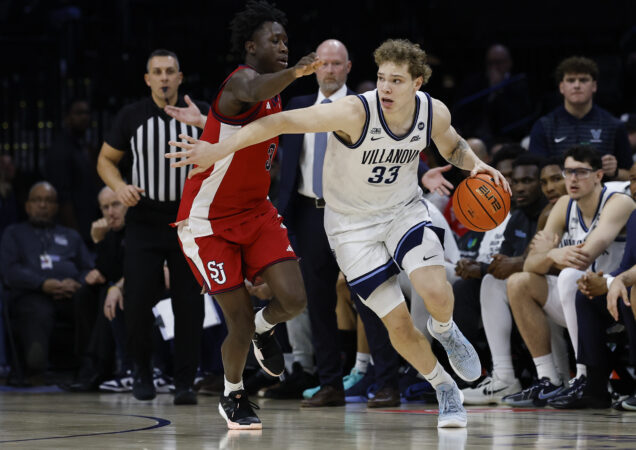
    The Villanova forward was having a solid first college basketball season after an NCAA ruling prevented him from playing last year as a freshman. The long wait was worth it. Hodge made his 29th start in Villanova’s 29th game of the season Saturday night at Madison Square Garden. He hit two three-pointers and was on his way to reach his season average of 9.2 points per game before he crumpled to the floor early in the second half after making a move in the post.

    Hodge will undergo surgery to his right knee and miss the rest of the season.

    “It just really stinks that the kid was going to be able to play in his first Big East tournament, his first NCAA Tournament, that’s really where [my head] is at,” Villanova coach Kevin Willard said Tuesday.

    But this is March, crunch time in college basketball, and so while Willard was feeling bad for the player he recruited out of high school while still the coach at Maryland, Villanova has a game Wednesday night and another on Saturday before postseason play begins.

    Hodge was averaging more than 28 minutes in the 28 games prior to Saturday, and the 6-foot-8 forward going down leaves Willard with a big hole to fill for a team with limited frontcourt depth.

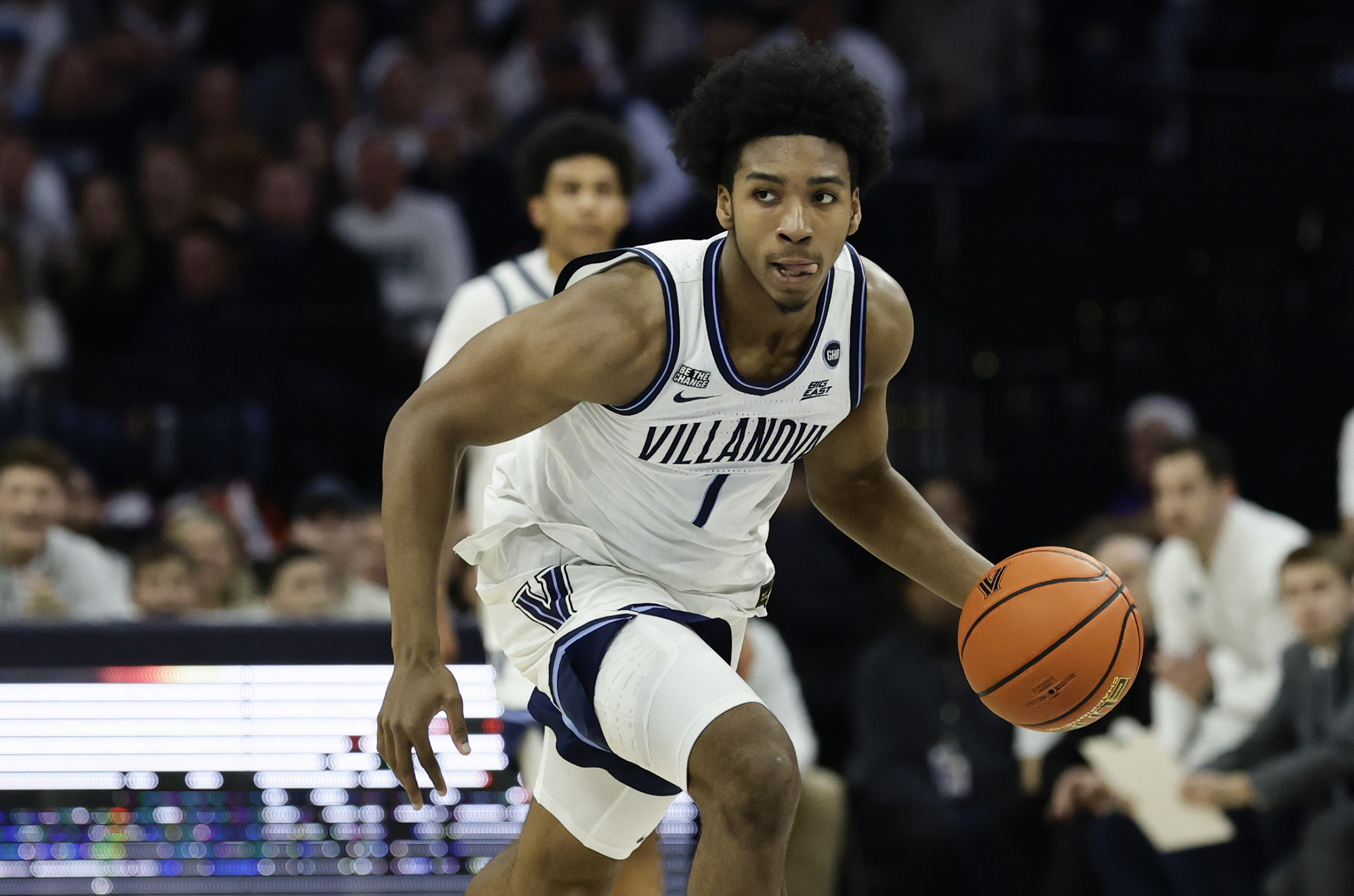
    Willard answered the obvious first question — who goes into the starting five? — by saying sophomore wing Malachi Palmer, who will likely get his first college start in his 52nd career game Wednesday night at DePaul. Palmer, a 6-6 sophomore wing, is the sort of obvious replacement. Save for 7-foot backup center Braden Pierce, Palmer is the biggest and most physical defender Villanova brings off the bench.

    Villanova guard Malachi Palmer could make his first on Wednesday night.

    Palmer had a relatively quiet first half of the season but has emerged in conference play as a willing defender and someone who can knock down three-point shots.

    “Obviously not having Matty stinks, but Malachi has played really well,” Willard said. “It does hurt us, but it’s not catastrophic.”

    While Palmer starting offers more of a traditional one-through-five lineup for Willard, there will be variations that have the Wildcats going smaller or bigger. The smaller unit would have Tyler Perkins — who at 6-4 is Villanova’s second-leading rebounder (5.5 per game) — guarding a forward in a lineup that also has three other guards — Acaden Lewis, Bryce Lindsay, and Devin Askew — on the floor.

    The bigger unit would be one that hasn’t happened yet this season: Pierce being on the floor at the same time as 6-10 starting center Duke Brennan. Neither big man stretches the floor with outside shooting ability. So, how would that work?

    Willard pointed to his two-big lineups last year at Maryland, where Derik Queen and Julian Reese played side-by-side and while Queen could shoot a little bit, he rarely attempted three-pointers. Lineups with Brennan and Pierce on the floor at the same time would feature more screening and more side-to-side action, Willard said. One big hides in the dunker’s spot, for example, while the other is rolling.

    Villanova has practiced with both bigs on the floor, Willard said, in case it ever needed to match up against bigger lineups. It’s a lineup the Wildcats could have had to use in the postseason with or without Hodge’s injury, now it’s one they could deploy as soon as Wednesday night.

    Temple transfer Zion Stanford, who has barely played in conference play, could factor into the rotation more significantly, too.

    Kevin Willard believes Villanova forward Matt Hodge will have a large role when he returns from injury next season.

    Those are the short-term implications, and Willard has two regularseason games to tinker with the rotation before the Big East tournament.

    But it being March also means it’s time to start considering next season’s roster. Willard said Hodge’s injury “does and it doesn’t” have major implications for the 2026-27 Wildcats. That’s because Willard is planning for Hodge to return and take on a big role. Willard said he expects Hodge to need around eight months to return from his injury, and he could be practicing by October.

    “We’re planning on Matt playing for us next year,” Willard said.

    There will still need to be plans for the portal, though. That means making sure to stockpile the roster via the portal or otherwise in case Hodge isn’t ready to go right away or, worse, has a setback. Villanova’s priorities for the portal were going to be adding talent and athleticism in the frontcourt anyway with Brennan graduating.

    From that standpoint, Hodge’s injury hasn’t changed a ton. But it will be on Willard’s mind as he and general manager Baker Dunleavy navigate the frenzy that is the transfer portal, which is only one month away.

  • Pa. insurance regulators fined Aetna $550K for violations of mental health parity regulations

    Pennsylvania insurance regulators fined CVS Health’s Aetna health insurance subsidiary $550,000 for violating rules meant to ensure that mental health services are as accessible as medical or surgical care, the state Insurance Department said Tuesday.

    Regulators found that Aetna applied standards of review for certain autism therapies and inpatient opioid addiction treatment services that were more stringent than those applied broadly to medical claims submitted to the insurer. The result was limits on the scope and duration of the treatments that violated parity rules.

    The department said Aetna would have to fix its practices within a year and repay affected customers. It did not specify how much money Aetna needs to repay, or how that process would work.

    “Aetna has long been an advocate of the Mental Health Parity and Addiction Equity Act. Aetna has received the results of the market conduct exam from the Pennsylvania Insurance Department and will implement, as appropriate, any corrective actions,” the company said in an email.

    The violations were found during a regular periodic review of insurers’ practices. The Aetna exam covered the period from October 2021 through Dec. 2022. Aetna and regulators signed a consent order in January.

    The insurance department fined Aetna $190,000 in 2019 for similar violations of the Mental Health Parity and Addiction Equity Act, a federal law passed in 2008.

  • Philip C. Ricci, retired Catholic monsignor and founding pastor emeritus of Mary, Mother of the Redeemer Parish in North Wales, has died at 90

    Philip C. Ricci, retired Catholic monsignor and founding pastor emeritus of Mary, Mother of the Redeemer Parish in North Wales, has died at 90

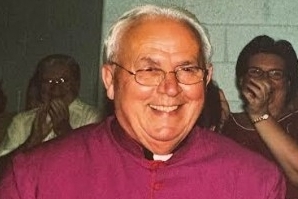
    Philip C. Ricci, 90, formerly of Conshohocken, retired Catholic monsignor, founding pastor emeritus at Mary, Mother of the Redeemer Parish in North Wales, talented pianist, singer, artist, and mentor, died Saturday, Feb. 14, of complications after a fall at Villa St. Joseph senior living community in Darby.

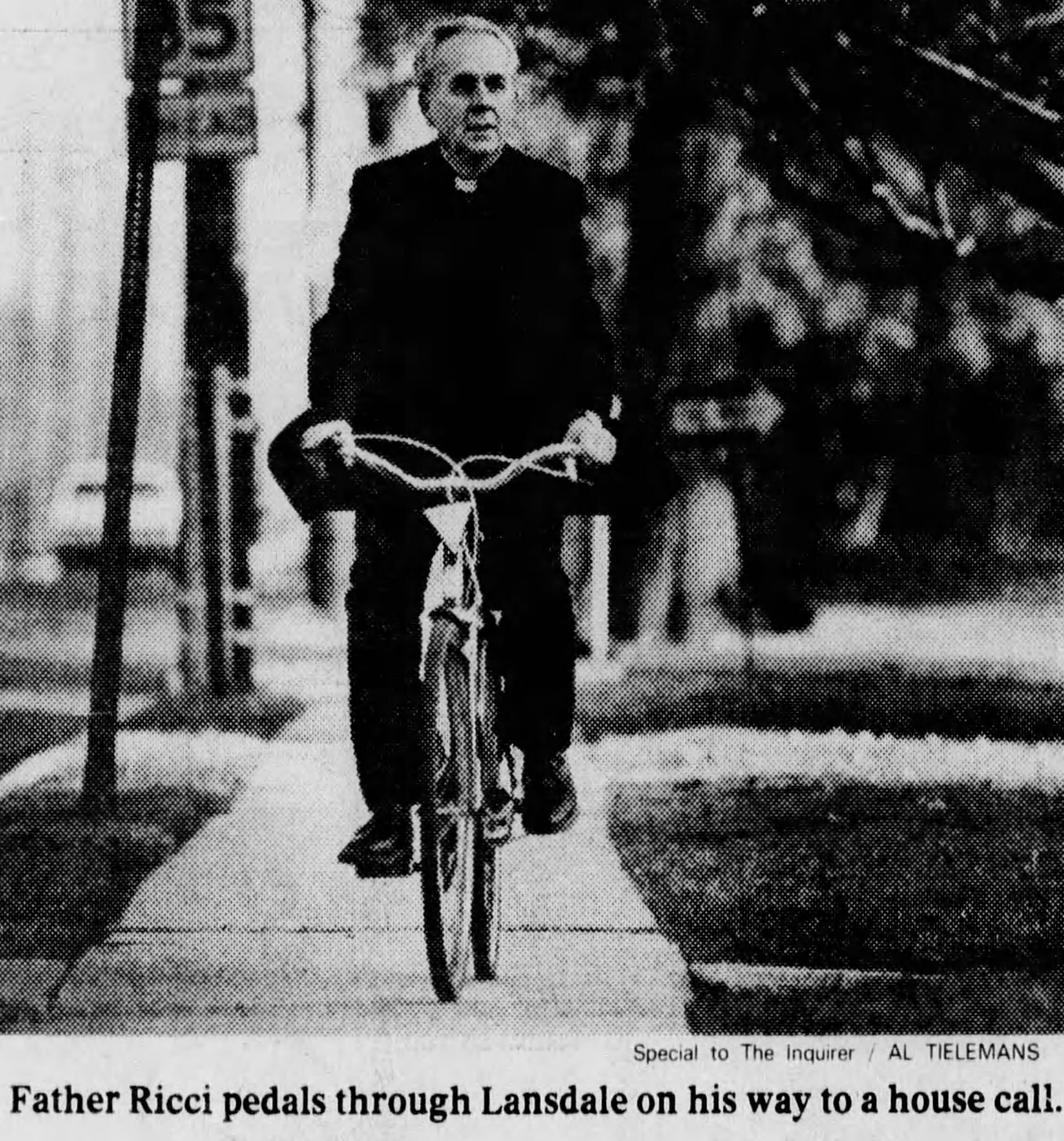
    Ordained in 1965 by Cardinal John Krol, Msgr. Ricci was named founding pastor of Mary, Mother of the Redeemer Parish in 1987. Over the next 23 years, until his retirement in 2010, Msgr. Ricci worked many 16-hour days, made spiritual house calls on bicycle, spurred significant fundraising, and helped grow the Montgomery County parish from 600 founding families to 3,500.

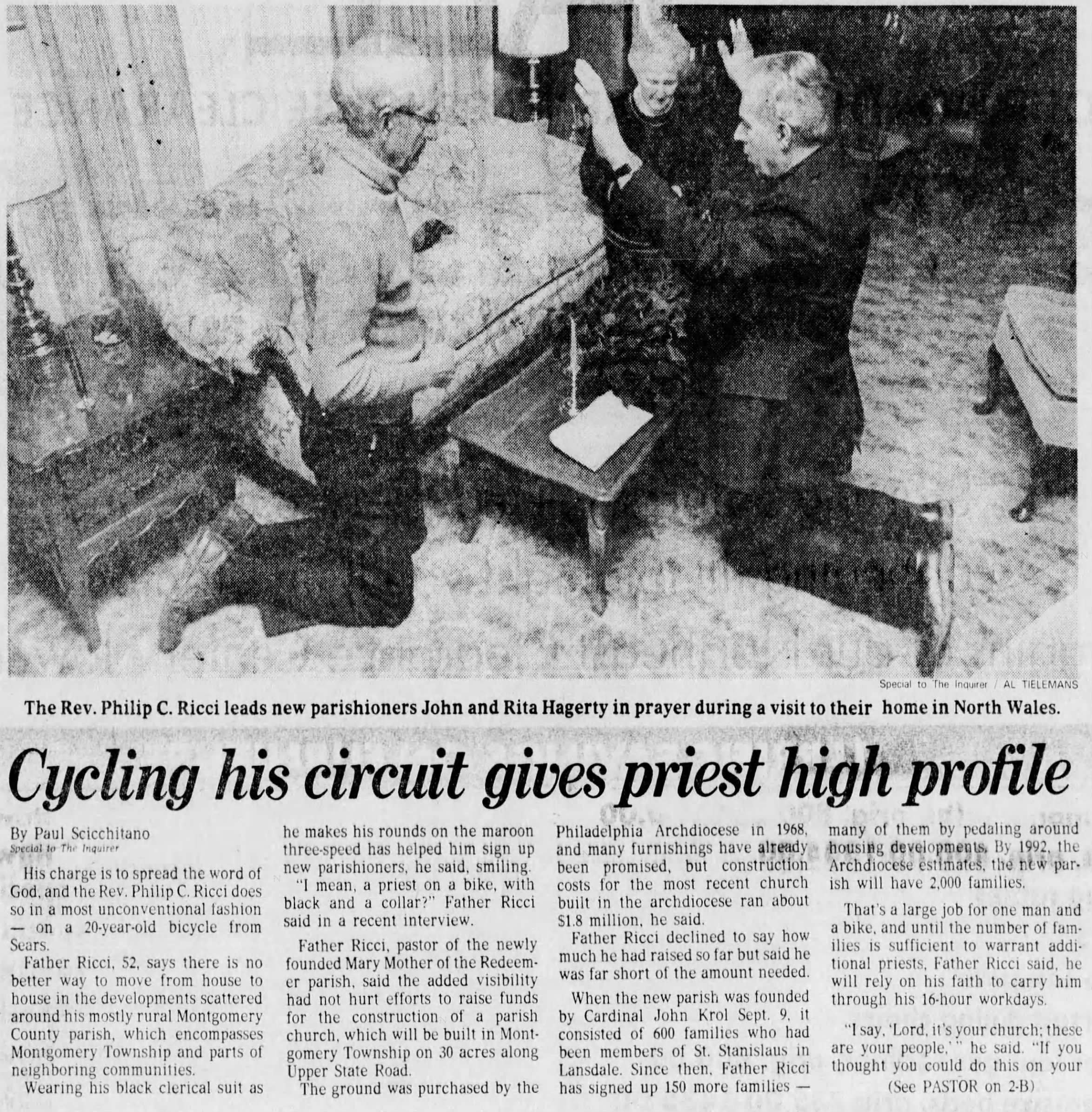
    The Inquirer wrote about his house calls in 1987 and opened the story with: “His charge is to spread the word of God, and the Rev. Philip C. Ricci does so in a most unconventional fashion — on a 20-year-old bicycle from Sears.”

    He supervised construction of a new church building in 1991 and a Catholic Education Center and school in 2003. He officiated at hundreds of weddings, baptisms, and funerals, served as a mentor to other priests, and was, according to one parishioner, “our guiding light in the darkness.”

    His niece, Christine, said: “He could talk to anybody about anything.”

    Msgr. Ricci lived and held services in a 200-year-old farmhouse from 1987 until the new church building was completed. Pope John Paul II elevated him to monsignor in 2003.

    He was active with school activities, and his homilies were often about mercy and compassion. In 2010, he told members of his congregation at a retirement celebration: “We must always accept people where they are and then allow God’s grace to work in patient understanding.”

    In an online tribute, colleagues at St. Matthew Parish in Conshohocken said his “kindness, wisdom, and steady presence touched countless lives.” Others called him “the perfect priest” and “the epitome of what a Catholic priest should be.” One friend said: “He was without a doubt the nicest person I have ever met.”

    In a tribute, his family said: “His priesthood was not simply a role. It was the core of who he was.”

    Msgr. Ricci first served in the 1960s as a chaplain at the old Holmesburg Prison in Philadelphia and pastor at the Riverview Home for the Aged and St. Margaret’s Home for Girls. He went on to be assistant pastor at St. Joseph Parish in Ambler, St. Stanislaus Parish in Lansdale, St. Anastasia Parish in Newtown Square, and St. Margaret Parish in Narberth.

    In 1974, he became spiritual director of the college division at St. Charles Borromeo Seminary. He also earned a master’s degree in spirituality from Creighton University in Nebraska.

    Ministering to people, no matter where he was, he told the Main Line Times in 2010, was personal. “You don’t go out forming community,” he said. “You go out and form one-on-one. I can’t separate who I am as a man, as a Christian, and as a priest.”

    The Inquirer published a story about Monsignor Ricci making spiritual house calls on his bicycle in 1987.

    Msgr. Ricci played piano and sang before church services and after Communion. He directed choirs, and friends presented him with his own piano at his retirement.

    He returned to his family home in Conshohocken after leaving Mary, Mother of the Redeemer but continued to assist others at nearby parishes and visit those in hospitals and nursing homes. “Father was a Renaissance man, an artist, musician, writer, deep thinker,” a former colleague said on Facebook. “He could speak about the liturgy or the Eagles, the football team or the band. He related well to everyone regardless of age, religion, or background.”

    Philip Cosmo Ricci was born Sept. 26, 1935, in Conshohocken. He graduated from the old Conshohocken High School, took night classes at the University of Pennsylvania’s Wharton School, and, inspired by his parents, entered St. Charles Borromeo Seminary to study the priesthood.

    “When the Lord wants you, he gets you,” he told the Main Line Times. “I couldn’t fight it. It was always there.”

    Monsignor Ricci’s house calls were featured in this 1987 Inquirer article.

    He played piano in a dance band when he was young and enjoyed gardening. He was good at drawing and cooking. He followed the Eagles, Phillies, and 76ers, and invented a beanbag toss game the family played at gatherings.

    It was fitting, his niece said, that he died on Valentine’s Day because he embraced love and service to others. “Faith for Uncle Phil was never theoretical,” she said. “It was lived. It was action. It was presence.”

    In addition to his niece, Msgr. Ricci is survived by his brothers, John and Francis, and other relatives. A sister died earlier.

    Services were held earlier.

    Donations in his name may be made to Villa St. Joseph, 1436 Lansdowne Ave., Darby, Pa. 19023; and Mary, Mother of the Redeemer Parish, 1325 Upper State Rd., North Wales, Pa. 19454.

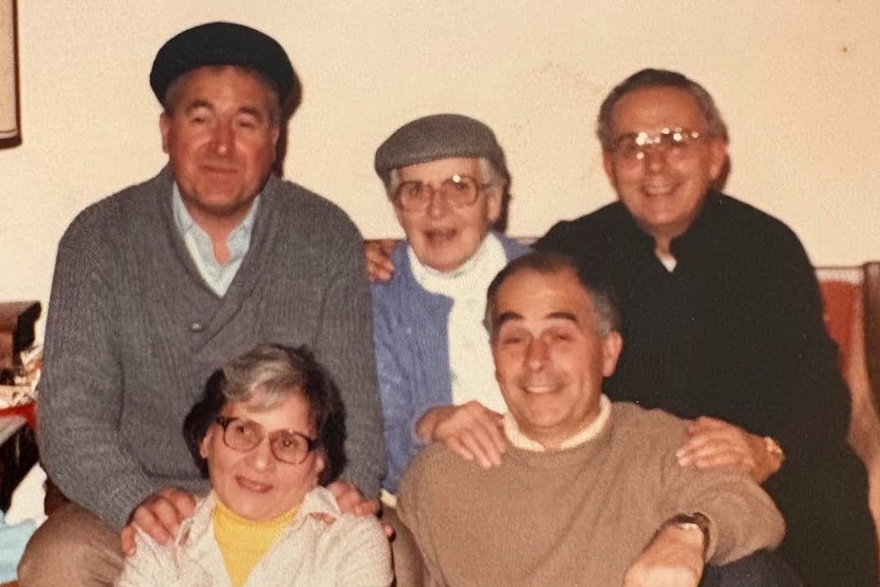
    Monsignor Ricci (rear right) enjoyed time with his family.
  • The Flyers have been heating up since the Olympics. These are the numbers behind their latest win in Toronto.

    The Flyers have been heating up since the Olympics. These are the numbers behind their latest win in Toronto.

    TORONTO ― The Flyers’ motto this season is brick by brick, and although they were missing the mortar on Monday, with leading scorer Travis Konecny out due to an upper-body injury, they rallied for a 3-2 shootout win against the Toronto Maple Leafs.

    Here are four numbers to know:

    5

    Nick Seeler went into the corner to throw a hit on Nicolas Roy with just over four minutes in the middle frame, and, although it’s hard to gauge what happened exactly, he went down hard, left the ice six seconds later, and did not return. Seeler was seen after the game limping.

    “Nothing yet. Hopefully nothing major,” coach Rick Tocchet said postgame when asked for an update.

    Without Seeler on the third pair, and the game eventually heading to overtime, the Flyers’ top four defenseman played heavy minutes. Travis Sanheim led the way with 29:11, followed by Rasmus Ristolainen (27:14) — in what could be the highly-coveted right-shot blueliner’s last game with the Flyers as the trade deadline looms — Jamie Drysdale (24:30), and Cam York (23:01).

    Emil Andrae played 12:12 and played just over a minute on a penalty kill that went 2-for-3, and Tocchet recently said it was important for the young defenseman to prove he can play down a man. He was not on the ice for William Nylander’s power-play goal that tied the game 2-2.

    “They were huge. … When they’re playing like that, it’s fun to play in front of them,” said forward Noah Cates, who extended his point streak to four games with his 12th of the year.

    Flyers goaltender Dan Vladar makes a save during the second period, when his team was outplayed but didn’t allow a goal.

    3

    Let’s go streaking!

    The Flyers extended their winning streak to three games, the first time they’ve hit that mark since they beat the Florida Panthers, New York Islanders, and New Jersey Devils in succession around Thanksgiving. It is the third time they’ve hit the three-game mark, but the last time the team won four straight was in February 2024.

    “Just, I think, the reset with the break,” Cates said about the difference in the team’s game now. “Obviously, physically, but then, we got to work that week where we were practicing.

    “Really got into our systems and just doing some little things in our D-zone that are really helping. The wingers are just getting us out of the zone quicker, and then just some of our offensive zone possession, we’re just making those little plays and feeling confident with the puck. So I think we just needed the break personally and as a team.”

    They had also entered the night having lost their last three shootouts, with the last win in the skills competition coming against that Islanders team on Nov. 28. Unlike in that game, Matvei Michkov found the back of the net on Monday after a nifty move to beat former Flyers goalie Anthony Stolarz, and Trevor Zegras once again scored.

    “Just how slow he comes in,” Stolarz, a New Jersey native, told Toronto reporters on the challenge of facing the New Yorker. “He’s got quite the arsenal of tricks. Having played with him for three years in Anaheim, I’ve kind of seen it all. So, you never know what to expect with him.”

    Zegras holds the top shooting percentage (62.1%) all-time in the NHL among skaters who have had at least 10 attempts.

    The Flyers’ Emil Andrae (36) tries to move the puck between Toronto Maple Leafs Nicolas Roy (55) and teammate Dakota Joshua (81).

    11-4

    For the second straight game and third in the four games since returning from the Olympic break, the Flyers were outshot in the second period by a wide margin (11-4). But for the second straight game, they did not allow a goal.

    “Yeah, definitely struggled and got away from it like we did in Washington,” said Cates, noting the Flyers’ loss Wednesday, where they were outshot 13-6 in the second period and allowed a goal. “Big for us not to give up a goal, but then to regroup in the third and come back and play our game. For whatever reason, we just can’t get away from it for 20 minutes; we’ve got to play a full 60 and eliminate kind of those moments.”

    Middle periods have been an issue for this team at times, dating back to the John Tortorella era. This season, they’ve been outscored, 72-59, in the middle frame, with the 72 goals allowed the fifth-most in the NHL. But, like on Monday, they play well in the third and are actually outscoring the opposition, 63-52.

    “I think, just forcing a little bit too many plays through the neutral zone,” forward Christian Dvorak said about the second period against Toronto. “They thrive on transitions. So that’s where we got ourselves in trouble, and we were hemmed in a bit. So we cleaned that up for the most part in the third period.”

    According to York, the Flyers simplified things in the third period and cleaned up their play in the defensive zone. They were outshot by just a 9-5 margin, but both teams potted goals in the third period.

    “Once we kind of just got into a groove in that third period, I think we had some good chances,” York said. “So, that’s kind of what it’s about this time of year, you know they’re going to push. It’s just about bending, not breaking.”

    2/13

    Across three games in late January, the Flyers scored a power-play goal in each contest (3-for-8), but then things went a little stagnant. Entering the game in Toronto, they had one goal in 10 chances across the past four games.

    The Flyers got three opportunities in the first period when Ristolainen was tripped, Bobby Brink was interfered with, and Brandon Carlo was called for holding Zegras.

    There was some good movement for the new units with Konecny out. One unit had Michkov, Zegras, Brink, Drysdale, and Owen Tippett. The other saw York, Sanheim, Dvorak, Cates, and Barkey line up together. The latter group scored on the 11th shot attempt when Dvorak scored on the eighth scoring chance.

    “We had some opportunities,” Tocchet said. “Some guys, [we] had two or three in the slot, high-danger shots, and then you get that goal on a scramble, big one from Dvo. So, yeah, special teams were good for us tonight.”

    The Flyers’ power play is now ranked 28th at 16.2%.

  • Man who assaulted Hatboro woman after she refused to abort his child is sentenced to prison

    Man who assaulted Hatboro woman after she refused to abort his child is sentenced to prison

    Last April, Raymond Bautista donned a ski mask and black clothing and waited for the mother of his unborn baby to leave her Hatboro apartment to head to work.

    Around 4:30 a.m., Bautista, 37, of Allentown, attacked the woman. He hit her from behind, and kicked her in the back and stomach. While she was on the ground, he got on top of her and punched her face. And when she began to scream, he ran.

    The woman, a coworker of Bautista’s who was 15 weeks pregnant with his child and had recently told him she planned to keep the baby, suffered nasal fractures and abrasions, according to police.

    On Tuesday, Bautista pleaded guilty to aggravated assault and no contest to aggravated assault of an unborn child.

    He was sentenced to four to six years in prison.

    The woman said in a statement read aloud by prosecutors the assault scars her to this day.

    “I lost my peace of leaving home every morning,” she said. “… No woman deserves to be treated this way.”

    After the assault, while the woman’s clothing was still soiled with blood, police asked whether she could think of anyone who would want to hurt her. The only person who came to mind, she said, was Bautista, a coworker at a Hatfield-based food processing company.

    According to the affidavit of probable cause for Bautista’s arrest, the woman said that after he learned that she was pregnant with his child, he told her to take an emergency contraceptive. He also said he “did not want any involvement with the child’s life,” the document said

    Bautista initially denied leaving his Allentown residence that morning and told police he had been sleeping.

    Investigators later recovered footage of Bautista’s vehicle being driven from Allentown to Hatboro that morning, as well as clothing resembling the attire worn by the woman’s assailant when he was captured in Ring doorbell camera footage of the assault.

    Presented with that evidence, police said, Bautista admitted to the crime. He told investigators he attacked the woman because she had been “talking [expletive]” about him at work.

    Montgomery County Court Judge Steven T. O’Neill accepted Bautista’s guilty plea and, in addition to sentencing him to years in prison, ordered him to have no contact with the woman and to attend domestic violence counseling.

    O’Neill commended the victim for facing Bautista in court and said that in her statement, he had “heard her courage.”

    “I hope you’ve heard the same,” the judge told Bautista.