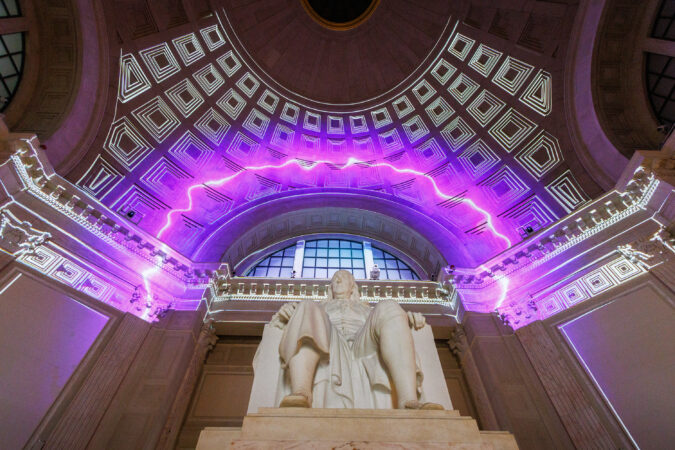
A group of special grants from the William Penn Foundation will help ensure continued access to the Please Touch Museum, Franklin Institute, and other Philadelphia nonprofit attractions for patrons of modest means and/or with disabilities.
William Penn has granted a total of $7.6 million to seven groups to underwrite the existing program providing access to $2 tickets.
Ticket prices are an obstacle for many, and arts and culture groups must weigh their desire to be open to all audiences, regardless of capacity to pay, against the reality of balancing their own budgets.
“Our general admission price is around $24 and we believe that’s competitively priced with other peer organizations,” said Please Touch Museum president and CEO Melissa Weiler Gerber. “But we want to make sure that we are committed to having folks come in the door and that not be a barrier.”
The William Penn money — $872,350 per year for each of the next three years — will support that ambition by underwriting the $2 tickets to the children’s museum in Fairmount Park.
The groups receiving the grants, in addition to the Please Touch and the Franklin Institute, are the Academy of Natural Sciences, Morris Arboretum and Gardens, the Philadelphia Zoo, and the Philadelphia Museum of Art, where the grant will support the museum’s restoration of pay-what-you-wish Friday evenings.
The William Penn money is being allotted on top of the regular funding the foundation gives to area arts and culture groups, which is expected to reach $32 million this year.
Art-Reach will also receive a grant. The group administers the program, which began in 2014 and provides $2 admission to area museums, gardens, theaters, musical groups, and other cultural offerings to those with low incomes and/or disabilities.
The six attractions were chosen because they are the most visited participants in the program, which is called Harvey and Virginia Kimmel Family Fund ACCESS Program.
But it’s worth noting that none of the six is a performing arts organization, and the program has about a hundred other groups of various kinds that could also use the support.
“I think that there is a lot of need for the rest of the partners in the program,” said Art-Reach executive director John Orr, adding that he hoped the William Penn action would be “catalytic” in inspiring other donors to support low-cost access to arts and culture groups.
Affordability was cited as a factor in deciding which cultural sites to visit by 91% of participants in a recent survey of ACCESS cardholders, Orr said.
At the same time, cultural groups are being buffeted by multiple challenges, said William Penn Foundation chief philanthropy officer Elliot Weinbaum.
“There have been lots of shifts and uncertainty around myriad funding sources. You think about federal sources — NEA, NEH, IMLS, National Science Foundation — all of them have seen big cuts and big uncertainty,” he said. “These institutions received some money from some combination of those entities. There have been shifts in corporate giving in the past year or so.”
Hence the foundation’s decision to step in with new funding for the work of these organizations.
Said Weinbaum: “We want to strengthen the institutions, support them, and make it clear that for William Penn Foundation it’s important that a population that’s really representative of Philadelphia continues to have access to these great places.”
For more information about how the ACCESS program works, visit art-reach.org.
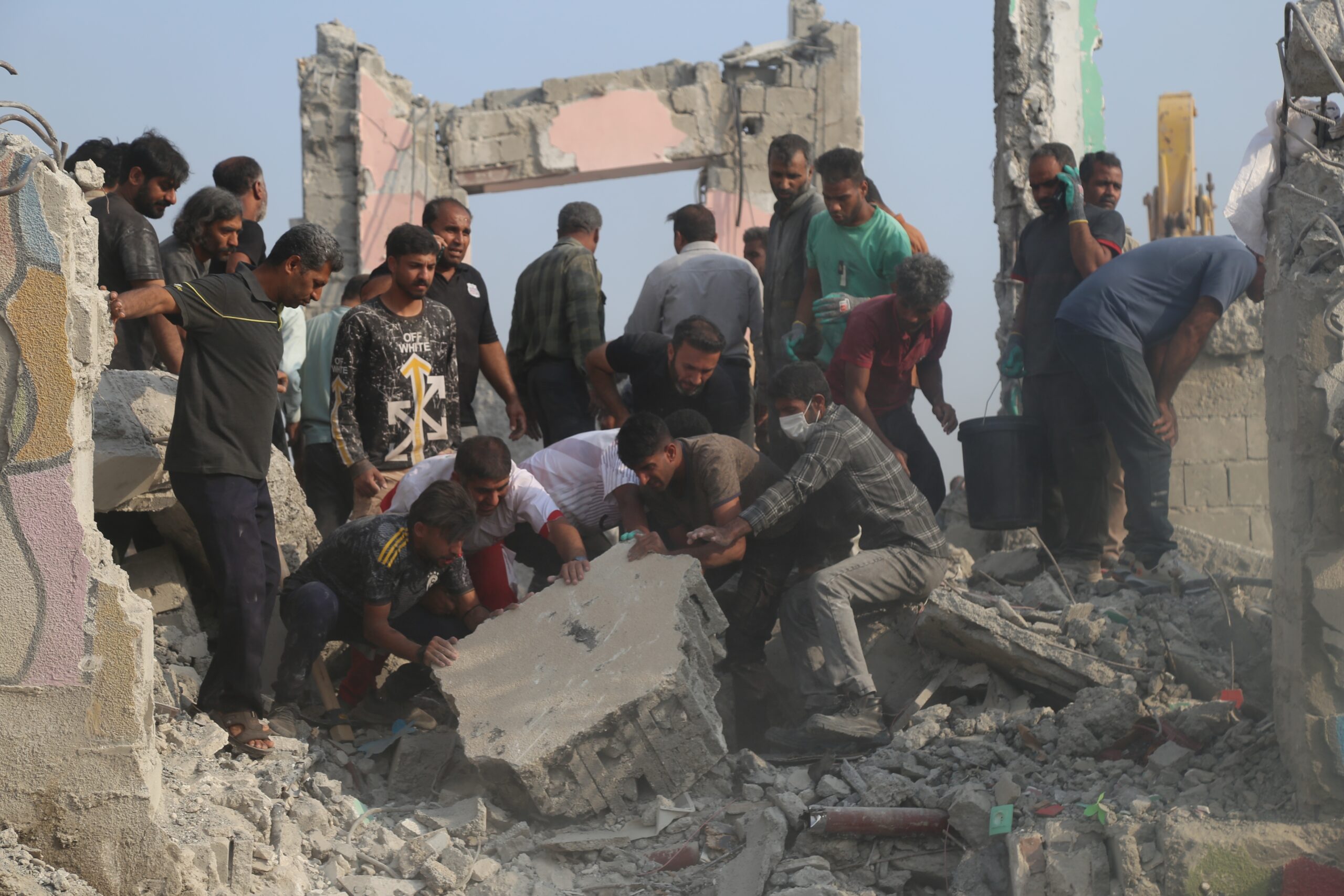
New York Times-verified images from a scene in southern Iran are horrific. A severed arm of a child lying in the rubble. Backpacks covered in ashes. The dead in body bags. Video of rescue workers digging through the remains of what had been a modest, two-story school near a military installation in southern Iran.
Please stop for a moment and think about the babies who died over the weekend. I call them that because that’s really what they were: elementary-age schoolchildren learning their lessons on what had started as a typical school day during their holy month of Ramadan, before turning into a nightmare.
Regardless of what you think about the joint U.S.-Israeli strikes against Iran, these girls were innocents. Students ages 7-12, they didn’t deserve this. Even growing up under the horribly repressive thumb of the late Iranian Supreme Leader Ayatollah Ali Khamenei, they had hopes and dreams for their lives that sadly now will never be realized. Their families must be out of their minds with grief.
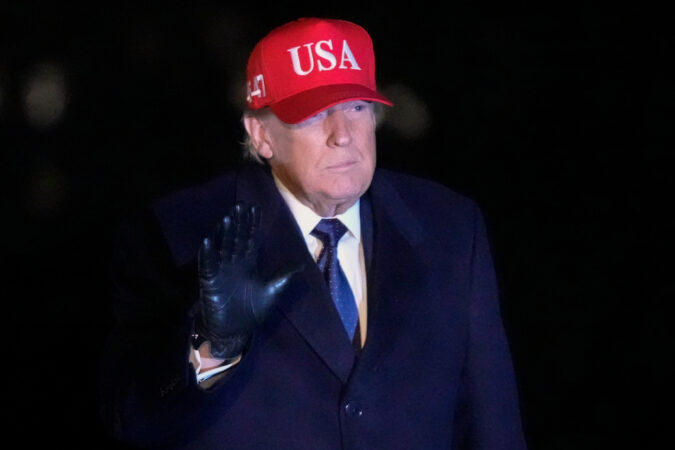
It’s tempting to turn away from such a devastating tragedy, but America needs to bear witness to what has happened. President Donald Trump says the U.S. joined with Israel to bring about regime change and stop the production of nuclear weapons. Iranian security forces have reportedly killed thousands of their own people.
It’s still unclear exactly how many schoolgirls were killed, and which nation is responsible for the strike. The Times is reporting that at least 175 people altogether perished during the attack on the school, located in the city of Minab in southern Iran.
Rescue workers and residents search through the rubble in the aftermath of an Israeli-U.S. strike on a girls’ elementary school in Minab, Iran, Feb. 28.
According to the Times, the school is near a naval base where the Iranian Revolutionary Guards Corps is stationed. Reportedly, it was also struck that day. Various news sources reported that a spokesperson for U.S. Central Command said military officials are “aware of reports concerning civilian harm resulting from ongoing military operations” and are “looking into them.”
Meanwhile, the reports have sparked worldwide outrage. Nobel Peace Prize laureate and education activist Malala Yousafzai wrote on X, the social media site formerly known as Twitter, “I stand firmly against violence and the targeting of schools and civilians.” She was a child herself when she was shot while returning home from school in Pakistan in 2012.
Imagine the blanket news coverage that would have taken place if something even remotely like this had taken place at a school on American soil. It would have made the front page of every newspaper. But because it happened in a Muslim country thousands of miles away, it’s easier to act as if it never happened.
We can’t allow this kind of violence to be normalized.
Former Vice President Kamala Harris spoke for many of us over the weekend when she said, “Trump has dragged us into a war that we do not want.” The former Democratic presidential candidate added, “I unequivocally oppose this war of choice, and everyone should.”
Polls show most agree with Harris. Only one in four Americans approves of this war in the Middle East. I get it. We don’t want another drawn-out situation. We didn’t agree to this, and only Congress has the authority to authorize war.
We don’t even know what Trump’s endgame is, but he has let us know that the U.S. can expect more military casualties. More war means more airstrikes and more civilian fatalities — possibly even devastation like what happened at the girls’ school — where, as Yousafzai said on X, “every child deserves to live and learn in peace.”
Given the administration’s reluctance to share more about the planned scope and scale of our military engagement, there is little we can say with certainty. Except that Trump’s reckless war proves his “Board of Peace” is a farce.
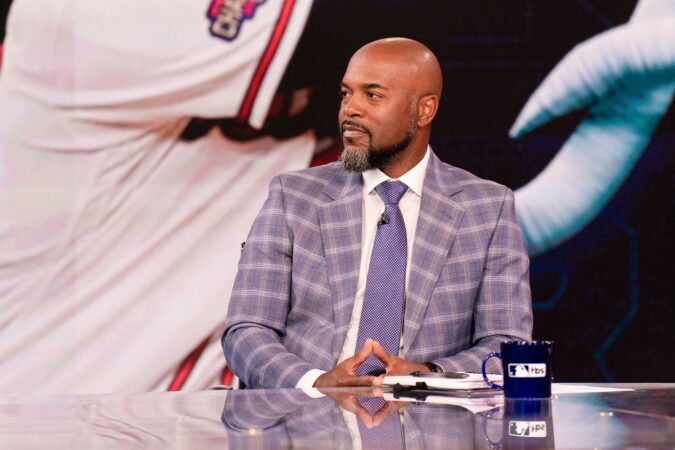
There will be a lot of change on TV for Major League Baseball this season, but Jimmy Rollins isn’t going anywhere.
The former Phillies star and 2007 National League MVP signed a deal to remain at TNT as part of the network’s studio show. Terms of his new contract weren’t announced, but it’s a “multi-year extension” that will keep him on TV the next few years, the network said.
It will be Rollins’ 11th season with TNT, though his broadcasting career began with Fox during the 2013 World Series, while he was still with the Phillies. He also tried his hand at calling a few games on NBC Sports Philadelphia alongside Tom McCarthy and John Kruk but has grown to love the back-and-forth of the studio.
Rounding out the cast is host Lauren Shehadi and three-time All-Star Curtis Granderson.
TNT also re-signed game analyst Jeff Francoeur, who spent most of his career with the Atlanta Braves but played for the Phillies in 2015.
During the regular season, TNT airs nonexclusive national games on Tuesday nights, which means when the Phillies are on the network, they’re also airing locally on NBC Sports Philadelphia. This season, TNT also will broadcast the American League divisional and championship series.
TBS will air two Phillies games during the first half of the season — April 14 against the Chicago Cubs, and June 2 against the San Diego Padres. Both will be blacked out in the Philly TV market.
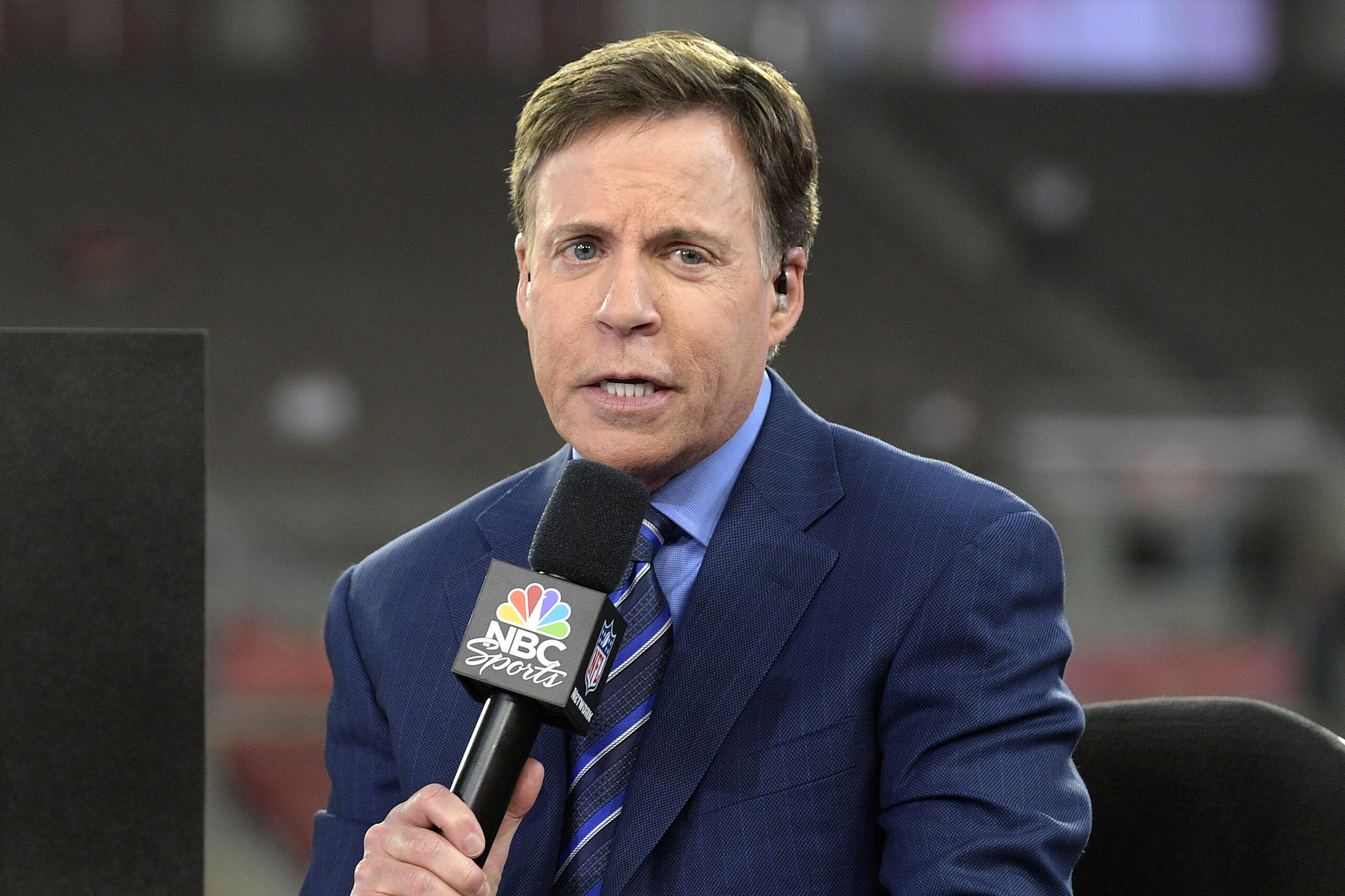
NBC bringing Bob Costas back for MLB games, too
Bob Costas will return to NBC for its coverage of MLB this season.
Costas told The Inquirer the plan is for him to host about two-thirds of the pregame shows leading up to NBC’s coverage of Sunday Night Baseball, beginning March 26 when the Arizona Diamondbacks take on the Los Angeles Dodgers.
“NBC sees me as the bridge between the last time they had baseball. … To just kind of attach the old to the new,” Costas said, not counting the one season they streamed Sunday morning games on Peacock, which also is returning this season.
While Costas is known for opening monologues and a thoughtful analysis of sports that goes beyond the field, he won’t have much time most nights.
“The average Sunday night is going to be a tight pregame, only maybe 12 minutes of content,” Costas said. “But we wanted it to be worthwhile content.”
Costas last called an MLB game in 2024, when he did play-by-play for the American League Divisional Series between the New York Yankees and Kansas City Royals on TNT. After the series, he announced he was retiring as an announcer, ending a four-decade career calling MLB games.
During the series, Costas received a lot of criticism on social media, not unusual for baseball announcers during national broadcasts. Looking back, he called his performance “OK” but not “as good as the decades prior.”
“I was able to do baseball play-by-play pretty darn well for a very long time,” Costas said. “I just couldn’t consistently reach my own standard.”
“But I can do everything else as well,” Costas added. “The interviews, the essays, the commentaries, the hosting. I can do that as well as I ever did. I think.”
The Phillies’ first appearance on Sunday Night Baseball will be April 19, but that game will be a Peacock exclusive because NBC will be airing the NBA playoffs on Sunday nights through the end of May.
The Phillies’ first game on NBC (other than opening day locally on NBC10) will be June 21 against the New York Mets.
Netflix, ESPN round out MLB TV changes
While ESPN will no longer broadcast Sunday Night Baseball or the wild-card games (which also were nabbed by NBC), it still will air 30 MLB games during the regular season, mostly during the week.
ESPN’s schedule includes the second-half opener between the Phillies and Mets on June 16 and the MLB Little League Classic on Aug. 23 in Williamsport, Pa.
Netflix will stream MLB’s season opener between the Yankees and San Francisco Giants on March 25. It also will stream this year’s Home Run Derby on July 13 at Citizens Bank Park, and the annual Field of Dreams game between the Phillies and Minnesota Twins on Aug. 13 in Dyersville, Iowa.
The Plaza Grande apartment complex, part of a Cherry Hill housing development that took almost two decades to complete, is now on the market.
The apartments in the 55+ housing complex near the former Garden State Park Racetrack were listed for sale last month, as first reported by the Philadelphia Business Journal. The 507 rental units across 16 buildings are located just south of the Cherry Hill Mall between Routes 70 and 38 and were completed last year.
The residential Plaza Grande at Garden State Park was the last piece of a $1 billion redevelopment of the former Garden State Park horse racing track and surrounding area. The mixed-use complex spans hundreds of acres and is known for Wegmans, Trader Joe’s, restaurants, and other stores.
Home construction at the 34-acre Plaza Grande portion began in 2007, and 101 condos were built. But several builders failed to finish the project in the face of hurdles that included the Great Recession and lawsuits.
A few years ago, New York-based investor and developer William “Billy” Procida stepped in. He completed construction on the remaining283 of the 507 apartments last summer, and the units are now 80% leased.
“We’re not in the business of holding property,” he said. “But this one, I put so much blood, sweat, and tears in it, it’s a hard one to let go.”
Developer William “Billy” Procida poses in the lobby of the clubhouse at Plaza Grande at Garden State Park in Cherry Hill on Aug. 6, 2025.
He said he’d like to find a buyer “who’s going to treat it really nice.”
Offers are due in a month, said Samantha Kupersmith, senior director at JLL Capital Markets, which is handling the sale. The property listing does not include an asking price, as is generally the case for properties JLL handles, she said.
The property is in “such a good location with a lot of scale,” which makes this “a unique deal,” Kupersmith said.
One- and two-bedroom apartments at the Plaza Grande are currently available starting at $2,200 and $2,800 per month, respectively. Five three-bedroom apartments started at $5,500 but allare leased.
The property has an 18,500-square-foot clubhouse and offers programming such as cooking and fitness classes, concerts, and wellness events. Condo owners and renters have access to amenities that include a movie theater, a gym, tennis and pickleball courts, indoor and outdoor pools, and indoor golf.
Procida’s company announced last month that it had chosen Millstone Property Management to oversee operations at the apartment complex starting March 21. Millstone Property Management specializes in managing multifamily properties across Pennsylvania, New Jersey, Delaware, and Florida.
The newest rental apartments at Plaza Grande at Garden State Park in Cherry Hill are reflected in the clubhouse pool on Aug. 5, 2025.
NEW YORK — If someone starts making money somewhere, the Big Apple often isn’t far behind trying to claim a piece.
So when Philadelphia’s hosting of Unrivaled’s women’s basketball league banked $2 million in revenue, turning profits for the league and Comcast, it wasn’t surprising that this city wanted in.
Nor was it surprising that Unrivaled wanted it too. The three-on-three circuit and Brooklyn’s Barclays Center had already talked about next season, but a deal quickly came together to move this season’s playoff semifinals here. It was a natural fit for a venue renowned for drawing some of the WNBA’s biggest and loudest crowds to New York Liberty games.
“When this opportunity came up, they jumped right on it,” Paige Bueckers of Breeze BC and the Dallas Wings said. “I played here a couple times before, and the atmosphere in the arena is just electric. [Philadelphia] was everything that we could have dreamed that it would be, and so it’s obviously an opportunity that we want to take advantage of again.”
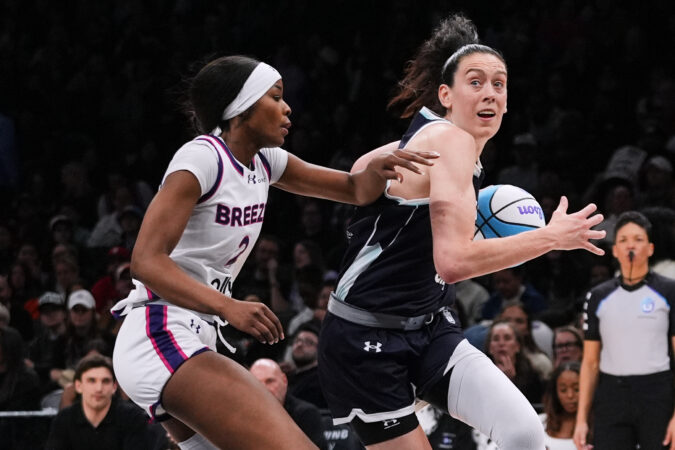
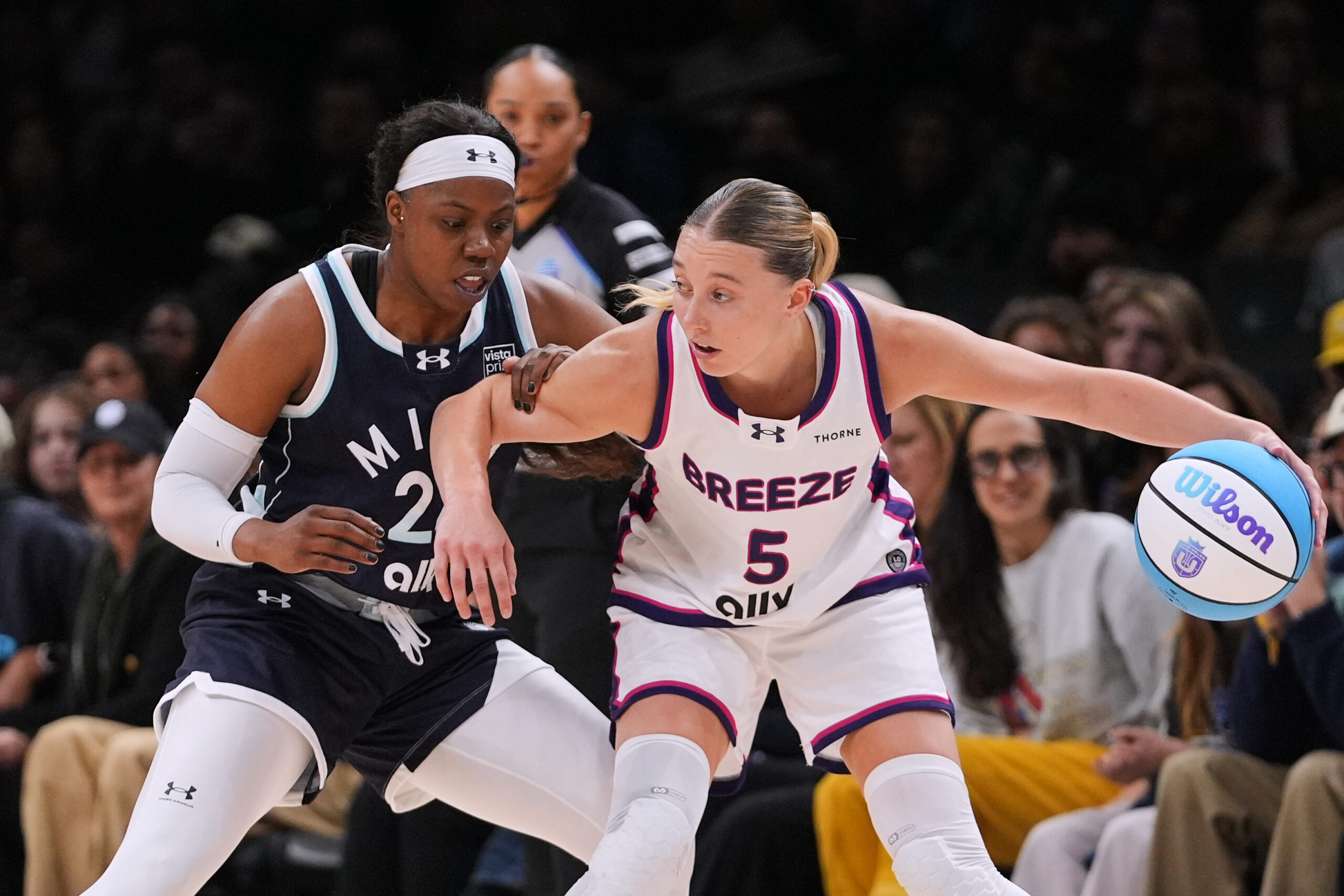
Paige Bueckers (right) working against Arike Ogunbowale in the Breeze vs. Mist semifinal.
How would this scene compare to Xfinity Mobile Arena’s record crowd of 21,490, as the city unleashed itself from a 28-year-wait to see professional women’s basketball in person?
Natasha Cloud played diplomat, being both a Broomall native and Liberty fan favorite.
“This is just a testament to the demand [for] women’s basketball right now,” the Phantom BC guard said. “This [night] is going to sell out tonight again, just like Philly did. And this is why we’re going to continue to stand on our worth and our value because when you give the product, the demand is there.”
One could guess that New York would deliver more cash. Fans here will pay up for a big show, and the Barclays Center recently added swaths of new luxury seating.
Before Monday’s games, Unrivaled CEO Alex Bazzell met with the media and said, “this is already a profitable trip,” including over $1 million in ticket revenue alone.
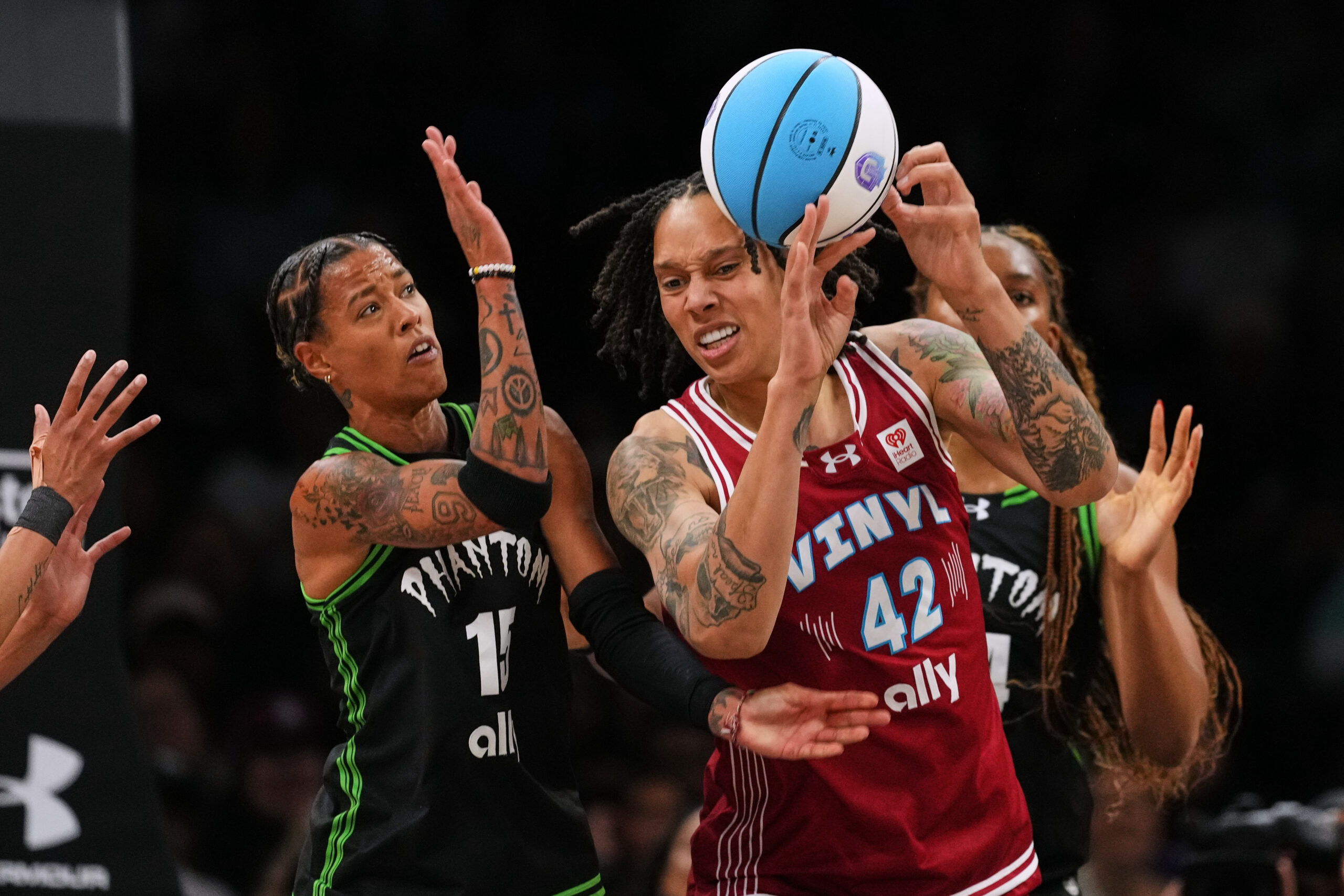
Natasha Cloud (left) defending Brittney Griner during the Phantom vs. Vinyl semifinal.
Philadelphia keeps a record
He also was unabashed in drawing a straight line from Unrivaled’s success in Philadelphia to going on the road again a few weeks later. This night came together in just three weeks, from landing the building to selling it out.
“To be honest with you, it was somewhat of an internal split room on, ‘Should we pull the trigger on this? Should we not?’” he said. “Coming off Philly and having that great success was one thing, but it was also we had time to strategize and plan [and] had a great partner like Xfinity come in behind it and help amplify it [as a sponsor].”
In the end, the executives trusted their gut and were rewarded.
“This was all organic,” Bazzell said. “We can look at all the data that you want, but, ultimately, the decision came down to: We didn’t play it safe to build this league, so we don’t start playing it safe now. That’s not in our DNA.”
On one count, Brooklyn always was going to land far short of Philadelphia. The Barclays Center is a much smaller venue than Xfinity Mobile Arena, and its full house Monday was 18,261.
So Philadelphia gets something to claim while it waits for its own WNBA team in 2030, and it’s a mark that could stand for a while. Just three pro basketball arenas nationwide have larger capacities: Detroit, Washington, and Chicago.
“Philly was amazing, from everything that I saw and from talking to everybody that came back,” Brittney Griner, a star of Vinyl BC and the Atlanta Dream, said after watching those games from afar. “It looked amazing on TV — they packed out that stadium. It shows how much women’s basketball is growing and there’s a love and there’s a need and people want to come and watch.”
Breanna Stewart, one of Unrivaled’s cofounders, said, “the conversation from the players was just a tremendous amount of appreciation” for the turnout.
“What I think is probably the coolest about Philly is we went to a non-WNBA city,” she said. “People came, and they cared, and whether they had to travel in [or] all those types of things, it showed how big of a deal it is.”
Looking at a return
Of course, the superstar of Mist BC and the New York Liberty admitted her bias toward Brooklyn, as one would expect. And since this was a playoff game, she had to earn the right to play in it.
“Ever since I knew that this was possible … for it to come to fruition and full circle that fast is something that I couldn’t wait to be a part of,” she said. “Like, my team needed to be here in the semis. I didn’t want to come as a spectator; I wanted to be playing.”
Stewart duly delivered, willing Mist to a 73-69 win with a fourth-quarter comeback that had the crowd roaring. She piled up 23 points, eight rebounds, and five assists, dishing the last to Arike Ogunbowale for a game-sealing three-pointer on the Wings star’s birthday.
Bazzell confirmed there are plans to keep touring next season, and there’s a lot of “inbound interest” from potential hosts. He didn’t name specific cities, but he did say preliminary talks with the Barclays Center had started with looking at next year instead of this one.
— Unrivaled Basketball (@Unrivaledwbb) March 3, 2026
He also said “going to cities that really don’t get to see these stars up close” matters. And he threw the door wide-open to a return to Philadelphia, though it might not happen next season
“We want to find our way back to Philly,” he said. “I don’t know if it’s next year, the following year, or the year after — we do want to hit new markets. … There’s obviously other NBA markets we still want to think about going to. So I would anticipate new venues, new cities next year when we do announce our [schedule].”
The last word goes to a player who was a star of both touring nights. Kelsey Plum led Phantom BC to a win in Philadelphia and another here, this time scoring 31 points in an 83-75 victory over Vinyl. A longtime villain in Brooklyn from past years with the Las Vegas Aces, this time she was roundly cheered.
“Basketball cities, right? And I think they just love the game,” she said. “I thought everyone put on a show, and that’s what you want for the fans.”
Why are Americans allowed to place bets on death and destruction?
An advertisement by the American company Polymarket shows Zohran Mamdani and Andrew Cuomo ahead of the New York City mayoral election on Nov. 4, 2025, in New York.
Donald Trump’s splendid and not-so-little war that started during a Saturday rush hour in Tehran and has spread like a coronavirus to numerous other countries is entering its fourth day on Tuesday — far too early for one of journalism’s oldest clichés: the “winners and losers” piece.
Except for these winners: a few “lucky” — if that word can even apply to such a ghoulish enterprise — gamblers who woke up Saturday morning and learned that the first deadly explosions across Iran had already made them a lot richer, regardless of who wins or loses on the battlefield.
The initial weekend of war wasn’t even over before we learned that Polymarket, one of the two leading prediction markets that are the inevitable next downward spiral of our national sports gambling addiction, was hit by suspicious trading by six individuals who showed up to bet big on when the war would commence.
One trader up for particular attention earned a reported $553,000 over the weekend by placing large bets on when Iran’s supreme leader, Ayatollah Ali Khamenei — killed in the war’s initial minutes, reportedly — would be deposed. The handle on that well-timed, if macabre, gambler? “magamyman.”
My man, you aren’t even trying to hide it.
Polymarket’s brush with possible insider trading on predictive bets over the Iran war that is now a reality came as its customers bet a stunning half a billion dollars on the long-rumored conflict.
Many of them, presumably, are just regular schlubs desperate to get ahead in a dog-eat-dog economy. But it’s also hard not to contemplate that some may have had real advance knowledge of Pentagon war planning that loose-lipped insiders were audibly discussing in Joe’s Stone Crab just hours before the first cruise missile was fired.
I know … it’s shocking that something in America’s death spiral of late-stage capitalism is actually a rigged game, right? Still, it’s hard to decide which is worse about this new low of predictive betting on a war that’s already killed scores of innocent schoolgirls and hospital patients, and at least six U.S. service members: the rank immorality of wagering on death and destruction, or the insider trading that corrupts this already unholy process even further?
Over the weekend, even with the main focus on the latest missile attacks and changing Trump regime explanations for this undeclared war, there was growing outrage over the popularity of predictive betting on the news, especially when the news is deadly. Or, there’s the word the chief U.S. government official tasked with regulating Polymarket, Kalshi, or their rival firms has used to describe what’s happening.
Michael Selig, the lawyer tapped by Trump last year to head the U.S. Commodity Futures Trading Commission (CFTC), which — controversially — regulates these prediction markets, seems less a regulator and more of a cheerleader, maybe as much as “magamyman.” As several states have pushed to regulate or ban predictive markets as akin to sports betting sites, also under its purview, Selig has worked hard to override them with a claim of federal supremacy.
“The CFTC will no longer sit idly by while overzealous state governments undermine the agency’s exclusive jurisdiction over these markets by seeking to establish statewide prohibitions on these exciting products,” Selig wrote in a Wall Street Journal op-ed.
It’s worth noting Selig’s moves came at the same time that six Democratic senators wrote the CFTC chair to urge him to ban gambling on outcomes that result in death or physical harm — inspired by outrage that people were betting on whether a NASA spacecraft would fail to launch, as well as predictions around the fate of the former Venezuelan strongman Nicolás Maduro, seized in January by U.S. troops. Not surprisingly, the high volume of Iran war betting has sparked fresh calls to ban predictive market betting altogether.
“Life stops being something we live, but something we sell and trade,” Connecticut Democratic Sen. Chris Murphy posted on X, before saying he is studying legislation to ban prediction markets. “It will breed both corruption [and] emptiness.”
Unlike sporting events, betting on political or social developments whose occurrence and timing are controlled and known by humans is incredibly prone to insider trading. In a case that seems to typify the fundamental flaw of non-sports prediction markets, and which Kalshi was forced to acknowledge in an internal investigation, an editor for the wildly popular YouTube star Jimmy Donaldson, better known as MrBeast, was caught betting $4,000 on predictions about what MrBeast would say in his next video.
Because betting on influencer video topics is how far off the deep end we are going here. The addictive nature of online sports betting, which was once mostly banned until elite schemers realized how much money was to be made from increasingly desperate people, was always pointing American society in this warped direction.
Zoom out and there’s a much bigger picture here: A society where the traditional pathways to prosperity are rigged for the Epstein class has created an entire ethos that seeks to match that level of wealth through unconventional not-40-hour-workweek paths, like online influencers, or by hitting the big one, whether that’s through buying a meme stock, betting on college basketball, loading up on the right crypto, or — now — gambling on stuff like when Israel is going to bomb women and children in Gaza.
It seems no one near the top of the American kleptocracy is immune to cashing in, including — sigh — Big Media. It was bad enough that CNN partnered with Kalshi to promote predictive odds on events like Tuesday’s Texas primary, but now the venerable Associated Press picked Monday — amid all the negative publicity about the Iran war wagers — to announce its own deal with the site.
Meanwhile, the only safe bet would be a prediction that no one in Washington, D.C., will be able to successfully stop this in the near future. It’s not only that reckless and potentially corrupt get-rich-quick maneuvers like crypto, artificial intelligence, and now these “exciting” predictive markets are simply in the Trump regime’s toxic money-grubbing DNA.
To seal the deal, Donald Trump Jr. joined the advisory board of Polymarket last August, and his venture capital firm, called 1789 Capital, has reportedly invested tens of millions of dollars in the firm, as well. In a remarkable coincidence, two federal investigations into predictive markets that began during the Joe Biden presidency were shut down around the same time.
Today’s dollars stained with blood from the Middle East are the, dare I say it, predictable result. Why merely wage war when you can also wager on it? Our leaders, whether in D.C. or our 50 statehouses, can’t shut down Polymarket, Kalshi, and all their imitators fast enough.
Yo, do this!
Escaping from a global crisis is always a good time to get back to the basics, and for boomers of a certain age, nothing is more fundamental than the power chords and pounding drums of Led Zeppelin. Listening to and thoroughly enjoying Andrew Hickey’s A History of Rock Music in 500 Songs’ two-part episode on how the most classic of all classic rock bands came together at the end of the 1960s made me discover that there’s also an acclaimed 2025 documentary, Becoming Led Zeppelin, streaming on Netflix. Let’s watch it together.
The rising thermometer this week should serve as your reminder that the arrival of March means it’s also time for some baseball that actually counts. The World Baseball Classic, the sport’s World Cup knockoff that comes every three years, starts Thursday and runs through the March 17 final in Miami — site of 2023’s thrilling conclusion in which Japan’s Shohei Ohtani struck out the USA’s (and South Jersey’s) Mike Trout. Some 10 Phillies are competing, including Bryce Harper, Kyle Schwarber, and Brad Keller — on this year’s Team USA — and Dominican Republic ace Cristopher Sánchez, so let the games begin.
Ask me anything
Question: So one school of thought is that they are already trying to steal the midterms; another is that they really can’t. Where are you on the spectrum from mildly worried to totally anxious about this? Especially with Pa. being rather swingy. — Penthesilea (@hansklocker.bsky.social) via Bluesky
Answer: Yes, this is something I’ve already thought about quite a bit, and my answer — for now, anyway — is pretty much smack in the middle of the spectrum. It’s clear Donald Trump intends to use every implement in the voter suppression toolbox — extreme gerrymandering, executive orders aiming to require voter ID, or banning mail-in ballots — that would warp the voting outcomes, without going full Mussolini and canceling the election altogether. But I don’t think that can work for him — partly because any orders will almost certainly be struck down in the courts, but mainly because it looks like a Democratic landslide too large to easily suppress is building momentum. Just look at Texas, where the scheme to gerrymander five new GOP seats depended heavily on Latinos continuing to shift Republican, when polls show the exact opposite happening. Of course, in 2020-2021, few folks thought he would go so far as an attempted coup (I did). Who knows how far he’ll go to maintain power this time around?
What you’re saying about …
Last week’s question about how to handle the new prediction markets — anticipating the mess that occurred with the wagers on the start of the Iran war — and the surge in sports betting drew a tepid response. But it was pretty unanimous that sites like Polymarket and Kalshi should, at the bare minimum, be regulated under state gambling laws, and not as commodities trades — if not banned altogether. Wrote Mary Clare Gumbleton, who would ban Polymarket and Kalshi: “It’s just unregulated corruption and an incredibly awful incentive to both lose your shirt (as it were) and game the system where a handful of corrupt people can make a lot of money.”
📮 This week’s question: There’s only one thing on everyone’s mind: That crazy war in the Middle East. Now that Donald Trump and Benjamin Netanyahu have started it, how on earth do we end it? Please email me your answer and put the exact phrase “Iran war end” in the subject line.
History lesson on when the Iran thing really started
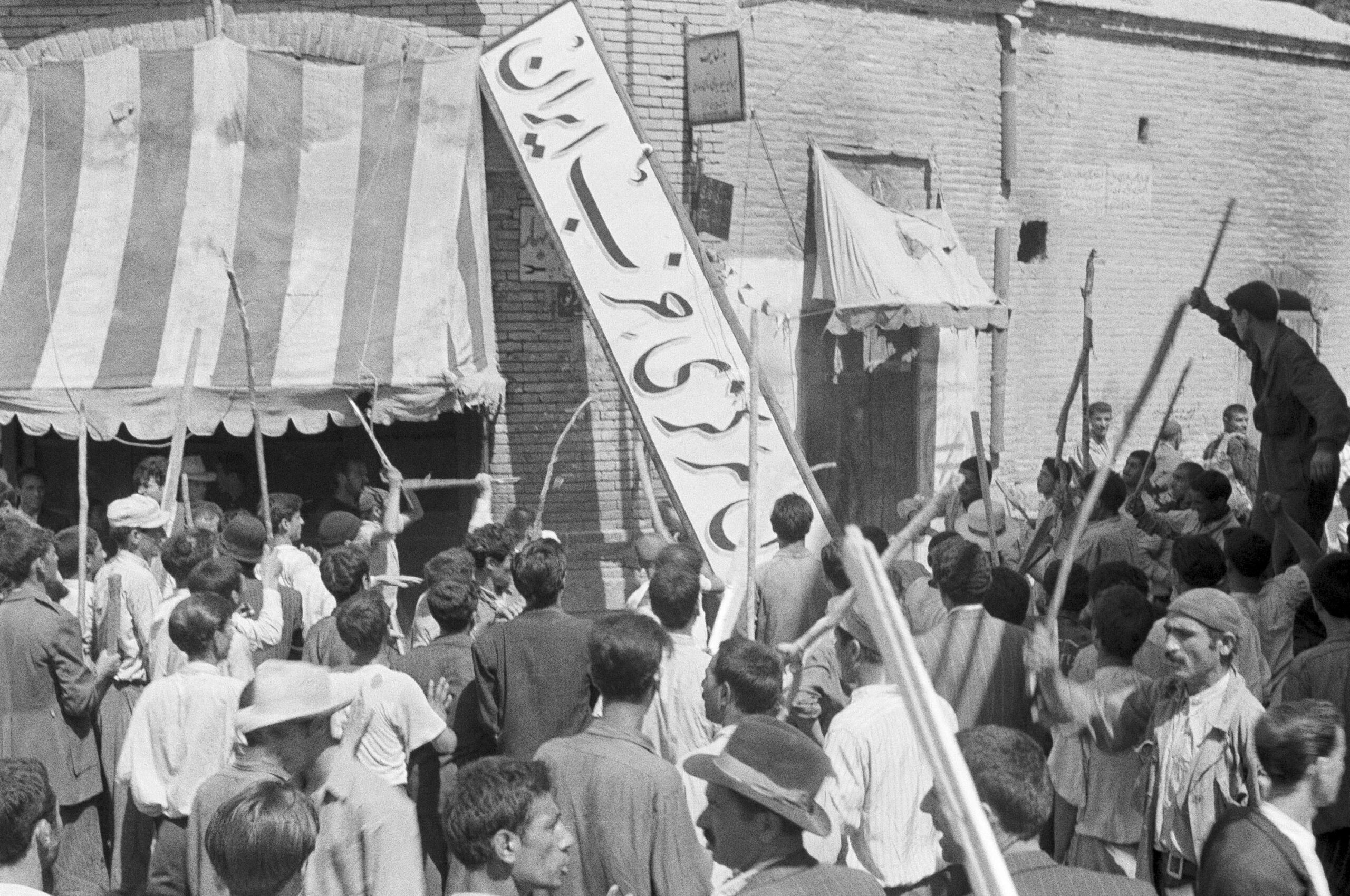
A crowd of demonstrators tear down the Iran Party’s sign from the front of its headquarters in Tehran on Aug. 19, 1953, during the CIA-backed coup that ousted Prime Minister Mohammad Mosaddegh and his government. The operation cemented the rule of Shah Mohammad Reza Pahlavi for more than 25 years before the 1979 Islamic Revolution.
It’s been a while since the last history lesson in this space, but the poor quality of the TV punditry about the four-day-and-counting Iran war screams out for better information. A lot of the folks advocating for this war of choice in the Middle East argue that we didn’t start the fire, that the roots go all the way back to the 1979 Iranian Revolution. That’s the year when Americans who never paid much mind to foreign affairs were shocked to see huge throngs in the streets of Tehran chanting “Death to America” and taking 52 hostages at the U.S. Embassy.
What did we do to deserve this? Well …
For most historians, and for many Iranians, the year that matters is not so much 1979, but 1953. In a post-World War II geopolitical environment where many nations sought to break free of imperialism, Iran in 1951 democratically elected a surprisingly left-leaning prime minister, Mohammad Mosaddegh, whose main project was to nationalize the then-British-controlled oil industry. This sparked great alarm in London, where U.K. leaders spent months lobbying Washington to join them in an effort to depose Mosaddegh in a coup that would advance Western oil interests.
It’s a messy story. The United States wavered and even flirted with backing Mosaddegh for a time, according to histories of the period, but ultimately British leaders leaned on the Eisenhower administration and America’s ongoing anti-left “Red Scare” of that era to get the relatively new CIA and its man in Tehran — Kermit Roosevelt Jr., grandson of Teddy Roosevelt — on board with the plot. The Americans threw around money and anti-Mosaddegh propaganda, and eventually organized street protests ahead of the government’s ouster.
To be sure, there is a never-ending debate over whether the U.S. involvement was central or just a subplot to the coup that gave power to the shah of Iran, Mohammad Reza Pahlavi, who ruled the nation with ruthless brutality for the next 26 years. Certainly, the nation’s Islamic clerics — powerful then, as now — played a key part in ousting a secular government. But the American role was so great that Barack Obama apologized in his 2009 Cairo speech, stating as fact that the CIA played a key role in the “overthrow of a democratically elected Iranian government.”
Whether the U.S. led the coup or was a bit player, the Iranian people have never forgotten our involvement or our close ties to the eventually despised shah. “The rancor has never melted,” a 24-year-old Iranian woman told the Associated Press in 2023, on the 70th anniversary of the coup, as she compared the American meddling to being “like wishing for an earthquake to get rid of a bad neighbor.”
So did a state of war between the United States and Iran start in 1979, as some GOP lawmakers insist, or in 1953, or on Feb. 28 of this year? In arguably the world’s most violent neighborhood, the cycles of violence often seem to have no beginning and no end. An imperial America chose to jump into the middle of this mess 73 years ago, and now getting out feels more impossible than ever.
What I wrote on this date in 2016
He’s all but forgotten now, but up until his mysterious death 10 years ago, the flamboyant Oklahoma natural gas mogul Aubrey McClendon had reshaped the Pennsylvania landscape as king of the commonwealth’s fracking boom. The company that McClendon (known to sports fans as an owner of the NBA’s Oklahoma City Thunder) cofounded, Chesapeake Energy, promised riches to Pennsylvania landowners, but left a trail of lawsuits and pollution. Less than 24 hours after his indictment by a federal grand jury, McClendon drove at full speed into a bridge embankment and was killed instantly. I wrote: “In Pennsylvania, Aubrey McClendon is survived by a legacy mostly of conflict, of thick lawsuits, of protesters facing off against armed marshals, of lawmakers and a governor at war over the taxes that gas drillers never had to pay, of brackish water and leaking methane adding to the greenhouse gases that may someday strangle the planet — of a promise of buried treasure that wasn’t really all it was cracked up to be.”
America is now at war on two fronts. In one column, I tackled the ongoing conflict in the streets of America, and looked at the tragic death on a frigid Buffalo street of the Rohingya refugee, Nurul Amin Shah Alam — a disabled and nearly blind man who was arrested by Border Patrol agents, and then dumped at a closed coffee shop five miles from his family’s home. It was a low point that spotlighted the unrelenting cruelty of a xenophobic mass deportation crusade by the Trump regime that has brought a mounting death toll. On Saturday morning, I knocked out my instant reaction to the news that the Trump regime had joined Israel in an all-out attack on Iran, which was that the war is both unconstitutional without the consent of Congress and also a clear violation of international law.
In moments of national and global crisis such as this, it’s easy to forget that many of the political decisions that shape people’s everyday lives occur on the local level. Here in Philadelphia, the school district’s plan to modernize its schools while closing 20 older buildings came as a shock to city parents, and The Inquirer’s coverage, anchored by our Pulitzer Prize-winning city public schools reporter, Kristen A. Graham, has been all over this story. The newsroom has explained the plan in detail, and covered the community protests and the fights over individual buildings, as well as Philly’s move away from middle schools. One advocate told me The Inquirer’s aggressive coverage of the story is why two schools have now been removed from the plan. A healthy community is one that has a vibrant news media. You nurture a better Philadelphia when you support The Inquirer by subscribing.
By submitting your written, visual, and/or audio contributions, you agree to The Inquirer’s Terms of Use, including the grant of rights in Section 10.
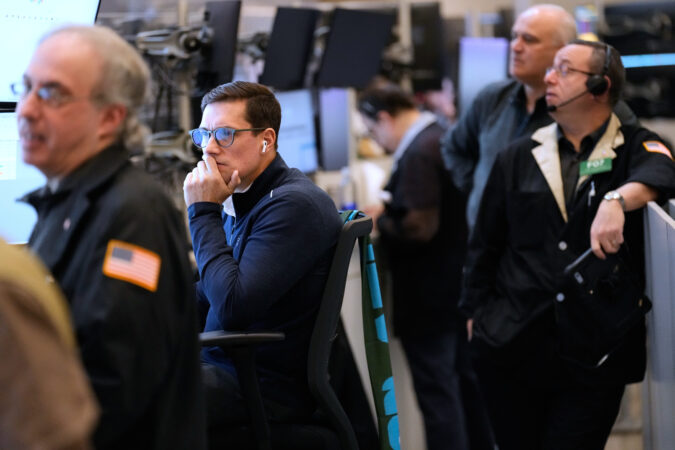
NEW YORK — A worldwide sell-off for stocks is slamming onto Wall Street Tuesday, and oil prices are leaping even higher as worries rise that the war with Iran is widening and may do more sustained damage to the global economy than feared.
The S&P 500 dropped 1.8% in early trading. The Dow Jones Industrial Average was down 907 points, or 1.9%, as of 9:35 a.m. Eastern time, and the Nasdaq composite was 2.1% lower.
It was just a day ago that U.S. stocks opened with sharp losses, only to recover all of them and end the day with slight gains. But that was with the caveat that oil prices did not jump too high, like to more than $100 per barrel.
On Tuesday, oil prices got closer to that mark and raised more alarms. The price for a barrel of Brent crude, the international standard, leaped another 8.2% to $84.14. It was sitting near $70 less than a week ago. A barrel of benchmark U.S. crude, meanwhile, rose 8% to $76.92.
Oil prices made the leap as Iran struck the U.S. Embassy in Saudi Arabia, part of a widening of targets that also includes areas critical to the world’s oil and natural gas production. Worries are particularly high about what will happen to the Strait of Hormuz off the coast of Iran, a narrow passageway where roughly a fifth of the world’s oil passes.
Making things uncertain for markets are rising questions about how long this war may continue.
Strikes by the United States and Israel have already killed Iranian Supreme Leader Ayatollah Ali Khamenei, but President Donald Trump has suggested that fighting may continue for weeks.
Late Monday night, Trump said on his social media network, “Wars can be fought ‘forever,’ and very successfully” with the supply of munitions that the United States possesses.
The jump for oil prices will worsen inflation, which is already too high for nearly everyone, and put more pressure on U.S. households and businesses by raising bills for gasoline and to ship products. The average price for a gallon of gasoline in the U.S. jumped 11 cents overnight to about $3.11, according to data from motor club AAA.
That has the damage in stock markets so far centering on companies and countries that use a lot of oil, natural gas and other petroleum-based fuels.
In South Korea, a big energy importer, the Kospi stock index plunged 7.2% for its worst day since two summers ago as markets reopened after a holiday on Monday. It had been setting records recently.
Japan’s Nikkei 225 dropped 3.1%, even as analysts say Japan has a sizable stockpile of energy lasting more than 200 days.
On Wall Street, airlines continued to sink on worries about rising fuel bills. The war has also led to canceled flights and stranded passengers.
United Airlines fell 4.1%, American Airlines sank 4% and Delta Air Lines dropped 3%.
In the bond market, Treasury yields climbed more as worries rose further about inflation worsening. The yield on the 10-year Treasury jumped to 4.10% from 4.05% late Monday and from just 3.97% on Friday.
Higher yields can mean more expensive loans for U.S. households and businesses, for everything from mortgages to bond issuances.
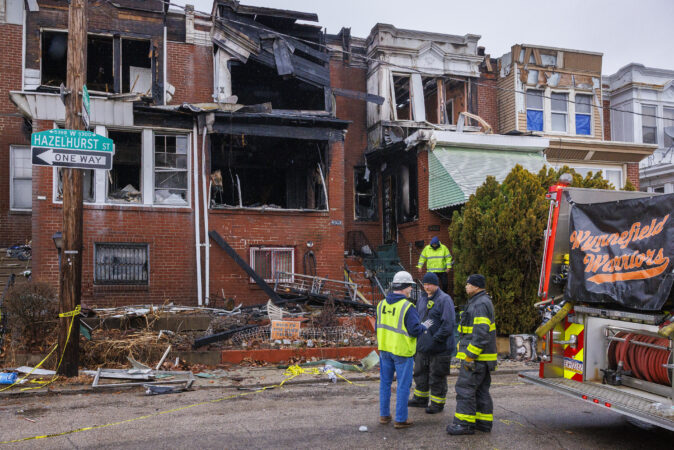
Nine firefighters were injured, including one who needed to be carried away on a stretcher, after the floor collapsed beneath them as they fought a two-alarm fire Monday night in the Wynnefield section of Philadelphia.
Firefighters responded to the blaze on the 5300 block of Hazelhurst Street around 10:20 p.m. to find smoke and flames erupting from the roof of the home. Officials confirmed that five firefighters were treated at local hospitals and released, while four remained hospitalized as of Tuesday morning. All were in stable condition.
“We’re immeasurably grateful for this outcome, as collapses often prove devastating,” a Philadelphia Fire Department spokesperson said.
First responders arrived to heavy fire coming from the first floor of the two-story home, officials said. The situation soon grew, bringing more than 100 firefighters, emergency medical services, and support staff to the scene.
The fire spread to the adjoining properties and was placed under control just moments before the structure collapsed on firefighters. At least six residents were displaced from their homes, officials said.
Crews were still on site Tuesday morning working to clear debris and rubble, officials said. The fire marshal’s office will investigate.
Two families, a total of nine residents, were receiving support services from the American Red Cross.
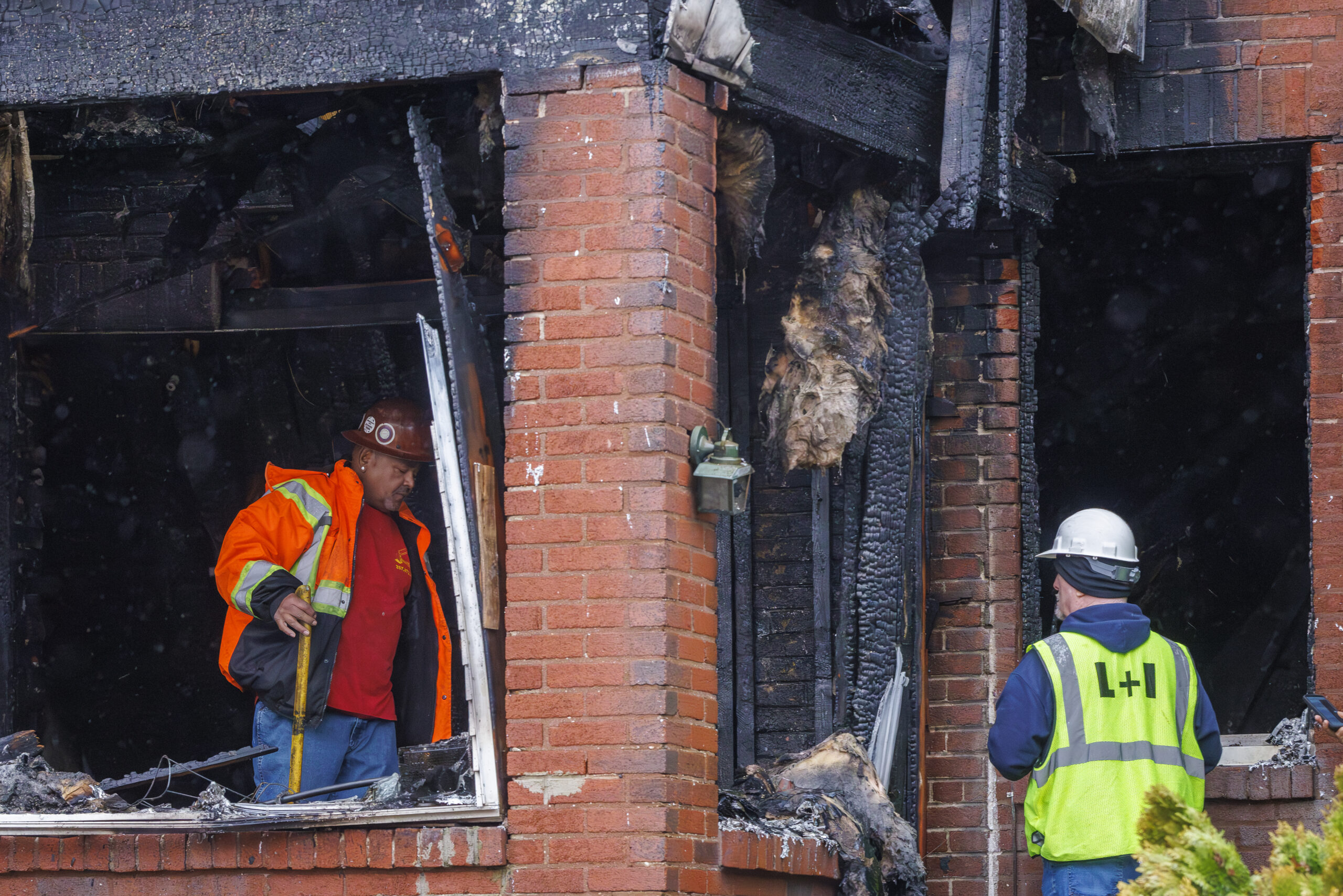
License and Inspection employees inside a fire, 5300 block of Havenhurst Street, Philadelphia, overnight, Tuesday, March 3, 2026. Several fire fighters were injured in this fire.
Before the Wynnefield fire erupted, earlier in the evening in Bristol Borough, a three-alarm fire activated multiple firefighting companies from across the region. One person was killed and another injured in a fire that engulfed several homes.
The Philadelphia Fire Department and the Red Cross urge city and collar county residents to visit soundthealarm.org/philly, where they can sign up for free smoke alarm installations and learn more about preventing fires.
NEW YORK — The average price for a gallon of gasoline jumped 11 cents overnight to about $3.11 in the U.S., according to motor club AAA.
Gas prices were already rising before the U.S. launched strikes on Iran as refiners switch over to summer blends of fuel, but crude futures have risen sharply this week because of the war.
On Tuesday, oil futures soared to levels not seen in more than a year as Iran launched a series of retaliatory attacks, including a drone strike on the U.S. Embassy in Saudi Arabia.
Benchmark U.S. crude jumped 8.6% to $77.36 a barrel.
Brent crude, the international standard, added 6.7% to $81.29 a barrel. Global oil prices jumped to start the week over concerns that the war will clog the global flow of crude.
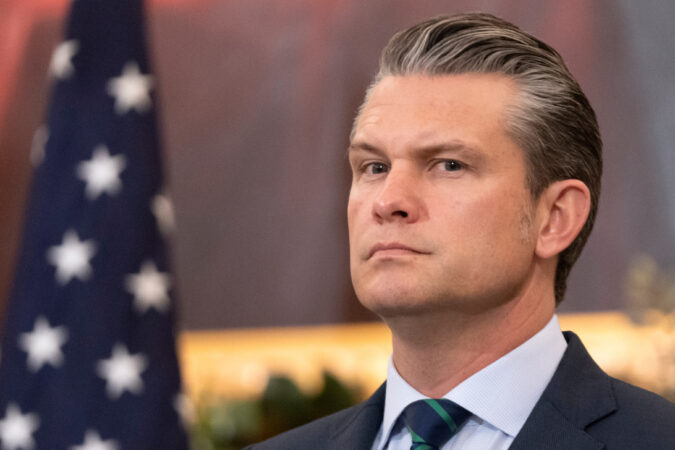
Military officers will see their tuition assistance cut off at 22 schools and institutions, but the University of Pennsylvania is not among them.
The Ivy League institution, which counts President Donald Trump among its alumni, was on an initial list of 34 schools “at risk” of losing Pentagon-funded tuition assistance. But Penn was not part of the 22-university list released by Defense Secretary Pete Hegseth on Friday.
Penn did not immediately respond to a request for comment Tuesday.
Hegseth previously said he intendedto cut off schools where faculty members have “leftist political leanings” and “openly loathe our military,” but he cited no specific examples of bias or misconduct at the 22 schools that will lose tuition assistance beginning with the 2026-27 academic year.
“We will no longer invest in institutions that fail to sharpen our leaders’ warfighting capabilities or that undermine the very values they are sworn to defend,” Hegseth wrote in a letter released Friday with the final list.
It was not immediately clear why Penn and other schools were removed from the initial draft list.
Among the schools still set to lose access to the tuition-assistance program is Princeton University, where Hegseth obtained a bachelor’s degree in 2003. Carnegie Mellon University in Pittsburgh is also on the list, as is Yale University, where Vice President JD Vance obtained a law degree.
The move means members of the military will be banned from using Department of Defense tuition assistance to pay for Senior Service College Fellowship programs at those schools.
The impact will not be large — the Department of Defense said fewer than 100 military students are enrolled in programs at schools that will lose funding. Military personnel currently enrolled may complete their courses of study, Hegseth said, though it is unclear if they will have to change schools to continue receiving financial assistance.
Hegseth’s announcement did not mention several other financial assistance programs for undergraduates, including the GI Bill, which is administered by the Department of Veterans Affairs.
Here is the full list of schools losing tuition assistance from the Pentagon:
Educational institutions
Harvard University
St. Louis University
Massachusetts Institute of Technology
Tufts University
Georgetown University
Carnegie Mellon University
Brown University
Columbia University
Yale University
Middlebury College
Princeton University
George Washington University
College of William and Mary
International institution
Queen’s University (Canada)
Nonprofit institutions
Center for Strategic and International Studies
New America Foundation
Brookings Institution
Atlantic Council
Center for a New American Security
Council on Foreign Relations
Henry L. Stimson Center
Senior Service College
Johns Hopkins University School of Advanced International Studies West Space Scholars Program