Military officers will see their tuition assistance cut off at 22 schools and institutions, but the University of Pennsylvania is not among them.
The Ivy League institution, which counts President Donald Trump among its alumni, was on an initial list of 34 schools “at risk” of losing Pentagon-funded tuition assistance. But Penn was not part of the 22-university list released by Defense Secretary Pete Hegseth on Friday.
Penn did not immediately respond to a request for comment Tuesday.
Hegseth previously said he intendedto cut off schools where faculty members have “leftist political leanings” and “openly loathe our military,” but he cited no specific examples of bias or misconduct at the 22 schools that will lose tuition assistance beginning with the 2026-27 academic year.
“We will no longer invest in institutions that fail to sharpen our leaders’ warfighting capabilities or that undermine the very values they are sworn to defend,” Hegseth wrote in a letter released Friday with the final list.
It was not immediately clear why Penn and other schools were removed from the initial draft list.
Among the schools still set to lose access to the tuition-assistance program is Princeton University, where Hegseth obtained a bachelor’s degree in 2003. Carnegie Mellon University in Pittsburgh is also on the list, as is Yale University, where Vice President JD Vance obtained a law degree.
The move means members of the military will be banned from using Department of Defense tuition assistance to pay for Senior Service College Fellowship programs at those schools.
The impact will not be large — the Department of Defense said fewer than 100 military students are enrolled in programs at schools that will lose funding. Military personnel currently enrolled may complete their courses of study, Hegseth said, though it is unclear if they will have to change schools to continue receiving financial assistance.
Hegseth’s announcement did not mention several other financial assistance programs for undergraduates, including the GI Bill, which is administered by the Department of Veterans Affairs.
Here is the full list of schools losing tuition assistance from the Pentagon:
Educational institutions
Harvard University
St. Louis University
Massachusetts Institute of Technology
Tufts University
Georgetown University
Carnegie Mellon University
Brown University
Columbia University
Yale University
Middlebury College
Princeton University
George Washington University
College of William and Mary
International institution
Queen’s University (Canada)
Nonprofit institutions
Center for Strategic and International Studies
New America Foundation
Brookings Institution
Atlantic Council
Center for a New American Security
Council on Foreign Relations
Henry L. Stimson Center
Senior Service College
Johns Hopkins University School of Advanced International Studies West Space Scholars Program
In moments of political crisis, societies often look to their religious leaders for moral clarity.
During the rise of Adolf Hitler, a small but courageous group of German theologians — Martin Niemöller, Karl Barth, and Dietrich Bonhoeffer — refused to let the church become an instrument of the state. They spoke out when silence meant complicity. Their resistance was not partisan. It was theological, moral, and rooted in the conviction that the dignity of human beings cannot be subordinated to political power.
Today, as the United States wrestles with deep political division and troubling scenes at its borders, the contrast is hard to ignore. Children held in detention facilities, families separated, deaths involving immigration enforcement. These are not abstract policy debates; they are moral questions that cut to the heart of what religious traditions claim to value. And yet, despite the outcry from some theologians and advocacy groups, the nation has not seen a united response.
Why?
Part of the answer lies in history. The German church struggle was triggered by a direct attempt to reshape Christian doctrine. Hitler’s government sought to absorb the Protestant churches into a state‑controlled Reich Church, replacing the Gospel with nationalist ideology. For Niemöller and others, this was a line that could not be crossed. Their resistance began not with politics, but with the defense of their own faith.
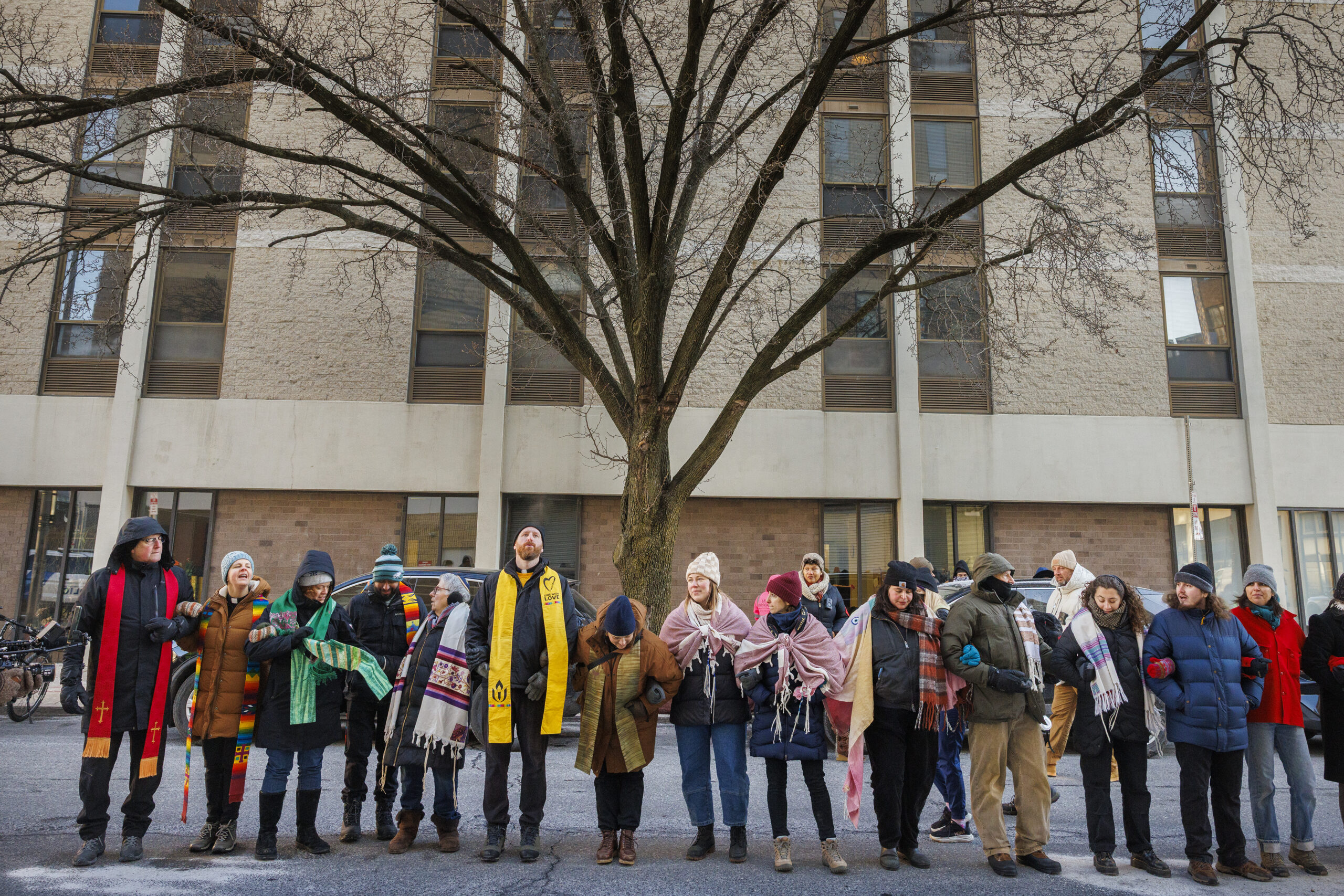
Demonstrators and clergy block vehicles outside a U.S. Immigration and Customs Enforcement office near Eighth and Cherry Streets in Center City in January.
The American situation is different. No administration — Donald Trump’s included — has attempted to dictate theology or restructure the church. Religious institutions remain free, protected by the Constitution. Without a direct threat to ecclesial identity, many clergy do not perceive an existential crisis that demands collective resistance.
But that explanation only goes so far. The deeper issue is fragmentation. American Christianity is not a single institution, but a sprawling landscape of denominations, traditions, and political loyalties. What one group sees as a moral emergency, another interprets as a defense of religious liberty or national sovereignty. The result is paralysis: a theologically moral confusion instead of a theologically moral chorus.
And yet, the absence of unified condemnation does not mean the absence of moral responsibility. The images from detention centers, the stories of families torn apart, the deaths that occur in immigration enforcement — these are precisely the kinds of injustices that once stirred theologians like Niemöller to action.
They understood that a church’s credibility depends not on its proximity to power, but on its willingness to speak when human dignity is at stake.
The lesson from the German theologians is not that today’s political moment is identical to theirs. It isn’t. But their example does remind us that moral clarity rarely emerges from comfort. It comes from the willingness to name what is wrong, even when doing so risks alienating congregants, donors, or political allies.
Some American clergy have taken that risk. Many have not. And in the silence, something essential is lost: The sense that faith can still serve as a compass when the nation drifts. The question now is whether religious leaders will reclaim that role. This comes about not by mimicking the past or predicting the future, but by recognizing that moral courage is timeless. The German churches, although a minority, did not wait for consensus. They spoke because the alternative was complicity.
Today’s churches face their own decision. History will remember whether they found their voice — or whether they chose, once again, to fall silent.
Robert Bruce Ellis earned his doctorate in 20th-century German history from Rutgers University and studied theology at Christ Church College, University of Oxford.
TORONTO ― It can be a good life if you don’t weaken, and right now the Flyers are staying strong.
Facing a Toronto Maple Leafs team in a tailspin, the Flyers bent but did not break and skated away with a 3-2 shootout victory. On this night in Toronto, the Flyers won their third straight game for the first time since the end of November, putting them four points back of the idle Boston Bruins for the final wild card spot in the Eastern Conference.
In the shootout, Matvei Michkov scored on a nifty deke, and Trevor Zegras sent the puck in glove-side. Flyers goalie Dan Vladař stopped Auston Matthews and Max Domi to seal the win. It was the Flyers’ first shootout victory since Nov. 28, amid that three-game winning streak.
Skating without top scorer Travis Konecny, who is day-to-day with an upper-body injury, the Flyers were looking for a place to happen, and it came off Noah Cates’ stick.
Defenseman Rasmus Ristolainen put a shot on goal that former Flyers goalie and New Jersey native Anthony Stolarz could not control. Michkov tried to send the loose puck in, but his shot went wide, and Bobby Brink tracked the puck down in the corner, protecting it from Toronto defenders. He fed Cates, who sent a wicked wrister into the twine and pointed right at Brink.
Cates’ 12th goal of the season, which extended his point streak to four games, briefly gave the Flyers a 2-1 lead in the third period. William Nylander scored a power-play goal less than three minutes later to tie the game after Denver Barkey was called for tripping. The Swede scored on a one-timer off a circle-to-circle pass from John Tavares to tie the game up.
In overtime, the Maple Leafs controlled play for the most part — although Jamie Drysdale had a nice scoring chance — but the Flyers’ defense stood tall. Notably, Cam York broke up a pass intended for an open Matthews, who would have had a Grade A chance.
Toronto’s Dakota Joshua put the Flyers in a 1-0 hole with 4 minutes, 38 seconds left in the first period.
The forward chipped a pass from Oliver Ekman-Larsson that went deep into the Flyers’ end. Defenseman Nick Seeler tracked it down in the left corner and tried to play it up the boards, but Leafs forward Matias Maccelli intercepted it and fed Joshua in the left circle.
Flyers goaltender Dan Vladar (left) stops a shot from Toronto Maple Leafs’ John Tavares (right) during first period of Monday’s game.
He shot it off the pass, sending it between the legs of Sean Couturier and over Vladař’s shoulder.
The Flyers tied it on a power-play goal with under two minutes to go in the first after two futile opportunities, with one cut short due to too many men on the ice.
With Konecny out, the units looked different. One had Michkov, Zegras, Brink, Drysdale, and Owen Tippett. The other saw York, Travis Sanheim, Christian Dvorak, Cates, and Barkey line up together. The latter group scored.
Cates got the puck in the bumper from Barkey — who hails from nearby Newmarket, Ontario, and had a large contingent in the crowd — and as he shot it, Maple Leafs forward Steven Lorentz went stick-on-stick, causing the puck to bounce to the net. The puck went off Dvorak, and he jammed it in as Stolarz was trying to squeeze the pads.
The goal was his 13th of the season and second on the power play. It was the Flyers’ second goal in the last 13 opportunities.
Like Saturday against the Boston Bruins, the second period saw the Flyers get outshot, with the Leafs getting 11 shots to the Flyers’ four. But like Saturday, when the Bruins put 16 on Vladař and the Flyers had three, the goalie stopped them all.
The Flyers got pinned a few times, but, according to Natural Stat Trick, allowed just one high-danger chance at five-on-five during the middle frame as the Maple Leafs had 68.57% of the shot attempts. In the third period, the Flyers had 61.11% of the attempts.
Flyers’ Christian Dvorak (center) celebrates his 13th goal of the season on Monday.
Breakaways
The Flyers lead the league with 16 wins when trailing 1-0 and have 16 comeback wins. … Seeler left the game late in the second period due to a lower-body injury. … The Flyers outshot the Maple Leafs 14-7 in the first period. … Forwards Nic Deslauriers and Brink each hit a milestone with Deslauriers skating in his 700th NHL game and Brink in his 200th. … The Buffalo Sabres had four scouts in attendance, including associate general manager Marc Bergevin, with rumors swirling that they are high on getting Ristolainen back in the fold.
Up next
The Flyers play their last game before Friday’s 3 p.m. trade deadline when the Utah Mammoth visit Xfinity Mobile Arena on Thursday (7 p.m., NBCSP).
In a city replete with food peddlers and grocery proprietors, a Canadian chain would find a footing in Philadelphia.
The Great Atlantic & Pacific Tea Company Inc., better known as A&P, was where shoppers could get their chain-brand of Eight O’Clock Coffee beans freshly ground in-store and in their preferred style.
An advertisement for Eight O’Clock Coffee that ran in The Inquirer in 1941.
For a healthy stretch of the 20th century, a majority of U.S. residents shopped for groceries in an A&P store. The chain was foundedin 1859 and by the 1940s, counted more than 16,000 locations spread between the Atlantic andPacific.
But by the spring of 1982, the grocery chain empire only had 70 stores in the Philadelphia region, and it was struggling to cover expenses.
On March 1, 1982, the chain announced it would be pulling out of Philadelphia. A&P would close 29 stores in the region, including all 11 left in the city. More than 2,000 people would be out of work amid a historic recession and rising energy costs.
It was the conclusion of a reorganization plan that resulted in the closure of 350 stores across the country at the end of 1981 and beginning of 1982. It would leave the chain with a little more than 1,000 stores, including more than 100 in Canada.
The long and drawn-out end for the once-vast grocery empire had begun.
In May ’82, the chain announced that the stores would reopen as Super Fresh Food Centers, and laid-off A&P workers would get first crack at the upcoming job openings.
But the chain’s inability to evolve with changing market conditions would continue to hamper its progress, and eventually lead to its demise, according to Business Insider.
A&P and its nearly 300 stores would hang on until 2015, when it filed for Chapter 11 bankruptcy for a second time, and sold off the rest of its catalog. The Super Fresh locations were absorbed by Acme, the South Philadelphia-based grocery group that, according to Philly Mag, had assumed the crown of Philly’s top food provider.
Immigration and Customs Enforcement dramatically cut its basic training program amid a hiring spree meant to speed up the Trump administration’s deportation efforts, records obtained by the Washington Post show, corroborating a whistleblower’s claim.
After former ICE instructor Ryan Schwank testified during a congressional hearing last week, the Department of Homeland Security (DHS) denied any reduction in the amount or quality of training provided to ICE recruits. The previously undisclosed records obtained by the Post show that, as the whistleblower said, ICE last year removed about240 hours from its basic training program, or more than 40% of instructional time.
The documents also offer new insight into how and when the training program was reduced. The vast majority of the cuts occurred in August, the records show, as the Trump administration pushed ICE to double the number of officers in the field by the end of 2025.
The initial cuts eliminated more than 100 hours dedicated tohands-on instruction and practice scenarios, including half the 56 hours once spent on firearms training, the records show.Fitness training time was almost entirely cut.Also eliminated were dozens of hours of classroom learning on such topics as case processing and deportation officers’ legal authority.
With further cuts later that fall, the records show, ICE had eliminated three-quarters of thehours once dedicated to evaluating recruits’ practical skills, including firearms handling. The agency eliminated time for driving tests and cut all 26 hours previously allotted for evaluating recruits’ grasp of skills specific to immigration enforcement and deportation operations.
As of Jan. 1, records show, more than 900 ICE officers had completed a shortened version of basic training and were destined for field offices across the country. That is more than three times the total number of graduates in the 12 months before August, when the program was first cut.
Asked about the Post’s findings, ICE acknowledged that the program has been accelerated by increasing the daily training time and adding an extra day of training each week but insisted that there had been nocuts to overall training hours, requirements, or subject matter.
“ICE officers go through a rigorous on-the-job training and mentorship,” the agency said in a statement. It said new officers take what they learn at the academy and “apply it to real-life scenarios while on duty, preserving ICE’s reputation as one of the most elite law enforcement agencies not only in the U.S., but the entire world.”
Concerns about the quality of immigration officers’ training have been mounting for months amid reports of violent arrests and heavy-handed crowd-control tactics, along with two high-profile killings of U.S. citizens by federal immigration agents during protests in Minneapolis this year.
On Feb. 23, Schwank, a lawyer who recently resigned from his teaching position at the ICE academy, testified that the agency had removed so many essential courses from the program that “even in the final days of training, the cadets cannot demonstrate a solid grasp of the tactics or the law required to perform their jobs.”
That same day, congressional Democrats made public DHS documents indicating that ICE last year removed courses that were once part of its basic training program. The records obtained by the Post were not among those released by the Democrats and did not come from the same source.
The records obtained by the Post include four trainingprogram outlines, dated between July 2025 and January 2026, that break down the hours allocated to instructional topics. The records also track student outcomes and time at the academy. They reveal a steep decline in the graduation rate as DHS ramped up recruitment, part of President Donald Trump’s goal to double the number of ICE officers to 20,000 and deport an unprecedented 1 million people each year.
“Students must meet all requirements, otherwise they will not be made law enforcement officers,” ICE told the Post, citingthe lower graduation rate as evidence that the academy has not lowered standards.
ICE made slight adjustments to the basic training program after the sweeping cuts last year, the records show. After initially cutting the training time dedicated to use of force by three hours, for instance, ICE later added five hours on that subject. Asked about the change, ICE told the Post that the agency “increased de-escalation training for recruits to ensure they are prepared for attacks from ICE agitators.”
Before the changes last summer, ICE basic training was a 72-day program held at the headquarters of the Federal Law Enforcement Training Centers, a sprawling campus in southeastern Georgia. ICE never formally announced changes to the program but told reporters on a media tour in August that it had been streamlined to eight weeks.
Pushed for specifics at the time, the agency said it had eliminated a Spanish-language requirement. But Spanish instruction was not part of the ICE basic training program. It was a separate course for recruits who could not pass a Spanish fluency test. The records obtained by the Post show cutting the language requirement eliminated only four hours from the basic training program — the time previously set aside for that test.
Since the August media tour, officials have given conflicting accounts about training time. In the past month, they have stated at different timesthat the basic training last 47 days, 42 days, and 56 days.
The DHS records obtained and analyzed by the Post show that the program was first cut to 47 days in August and further reduced in September to 42 days. Since then, all trainings have been on a 42-day schedule, the records show.
DHS and ICE officials have repeatedly said that no training time has been lost, in part because the academy increased daily instruction from eight hours to 12 hours. The Post’s analysis of the records shows that as recently as January, students were receiving about eight hours of daily instruction. That hadn’t changed as of February, according to a DHS official who spoke on the condition of anonymity because they were not authorized to talk to the media.
Asked about the discrepancy, ICE repeated the claim about 12-hour days and added that those hours include “personalized independent training.” The statement emphasized in bold: “It’s the same hours of training officers have always received.”
ICE also said graduates of the academy go on to receive “an average of 28 days of on-the-job training.”
Policing expert Marc Brown, an instructor at the University of South Carolina’s law school, told the Post that “training on the job doesn’t replace training at the academy, especially in a law enforcement career.”
From 2019 to 2024, Brown taught physical techniques, including the use of handcuffs and defensive tactics, at the ICE basic training program. Incoming deportation officers need time to practice their new skills in safe, controlled environments before going into the field, Brown said, “so that if mistakes are made or there are things you could do better, you have a chance to make that mental correction.”
Slightly more than 230 new deportation officers beganICE basic training in 2024, records show. In 2025, that same number had started at the ICE academy by the beginning of August. This followeda midsummer recruitment boom spurred by the passage of Trump’s sweeping tax-and-spending legislation, which tripled the agency’s enforcement and deportation budget to about $30 billion.
To boost the number of applicants, ICE lifted age restrictions, offered student loan forgiveness and $50,000 signing bonuses, and held recruitment events where some prospective agents were told they could receive tentative offer letters on the spot. By the end of September, cohorts of up to 48 trainees were arriving at the facility in Georgiaalmost daily, records show.
In the past, all new deportation officers were required to attend the academy. Now,only recruits who have no law enforcement experience are sent to the academy. Recruits withlaw enforcement experience, including “arrest authorities,” are instead required to take an online course, and then they, too, “receive in-person on the job training,” ICE said.
The records obtained by the Post show that more than 1,400 ICE recruits attended a shortened version of basic training in Georgia between August and Jan. 1. Those students failed or dropped out at high rates, and the 2025 graduation rateplummeted from around 80% among recruits who went through the full-length training to around 60% for those in shortened versions.
One in every four recruits destined for field offices by the end of the year flunked out of the shortened training program, records show. Among those who fell short, the majority failed written exams. Most of the remainder failed the physical abilities assessment, which requires recruits to complete a timed run and an obstacle course. Only three people failed that test in the first half of 2025 before ICE loosened certain enrollment standards and slashed more than 40 hours of preparation time.
Brown attributed the low graduation rate in part to the reduced hours of instruction, which he said don’t provide new officers enough time to absorb material or practice difficult skills one-on-one with instructors in remedial workshops. He said it also appeared ICE’s hiring spree pulled in more than the usual number of recruits who weren’t suited for or capable of the job.
The last time Doug Collins called the Sixers on NBC Philly, the team was playing in the NBA Finals and some guy named Allen Iverson was dominating the court.
Fast-forward 25 years and NBC is bringing NBA Hall of Famer Collins back to Philadelphia to call the network’s Coast 2 Coast Tuesday night game against Victor Wembanyama and the San Antonio Spurs.
Collins will be joined on the call by Bob Costas and Mike Fratello — the “Czar of the Telestrator” — in yet another callback to the heyday of the NBA on NBC.
Jim Gray will return to report court side from the recently renamed Xfinity Mobile Arena. NBC’s studio coverage will be handled by Hannah Storm (on loan from ESPN), Isiah Thomas, and P.J. Carlesimo, who nearly joined the Sixers’ coaching staff a decade ago.
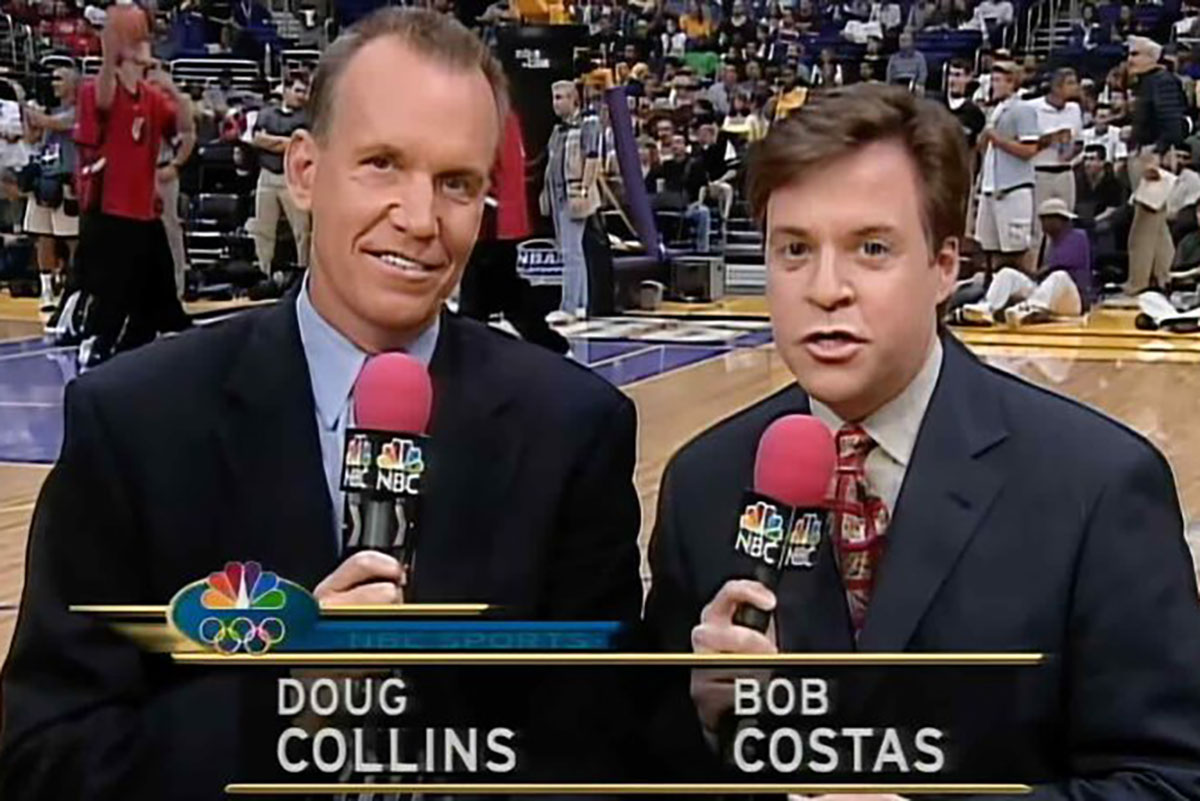
Doug Collin and Bob Costas called NBA games together during the late 1990s and early 2000s on NBC.
Costas stopped calling MLB games in 2024 because he felt he wasn’t as good as decades prior. He said he was comfortable returning to do play-by-play for Tuesday’s game because the tone of the broadcast will be more conversational, leaning heavy on NBC’s history broadcasting the league and the unending list of stories Fratello and Collins can tell.
“I know we can accomplish that,” Costas said. “How much of the nuts and bolts of the play-by-play I can nail? Well, we’ll see.”
Collins and Costas share more than their time together in the booth. During Collins’ days playing college ball at Illinois State, he remembers two young girls around who where big fans and would come to games dressed as cheerleaders.
One of those girls — Jill — happens to be Costas’ wife. And her brother, Doug, is named after Collins.
“How about that?” a laughing Collins said. “So I have a connection with Bob that goes far deeper with our friendship and all.”
It’s more than a broadcasting homecoming for Collins. The Sixers took him with the No. 1 pick in the 1973 NBA draft, though his career was shortened by a series of injuries beginning in 1979. The team later brought him back to coach from 2010 to 2013.
When Matt Guokas left Channel 17 to join Billy Cunningham’s staff in 1982, Collins jumped to TV and replaced him during the regular season alongside Andy Musser, and later called playoff games on CBS. From there he ping-ponged between coaching and calling games, first for NBC and later TNT and ESPN.
“I spent 13 years of my life with the 76ers,” Collins said. “I’m not sure there are a lot of people who have been a former player, broadcaster, then coached” for the same team.
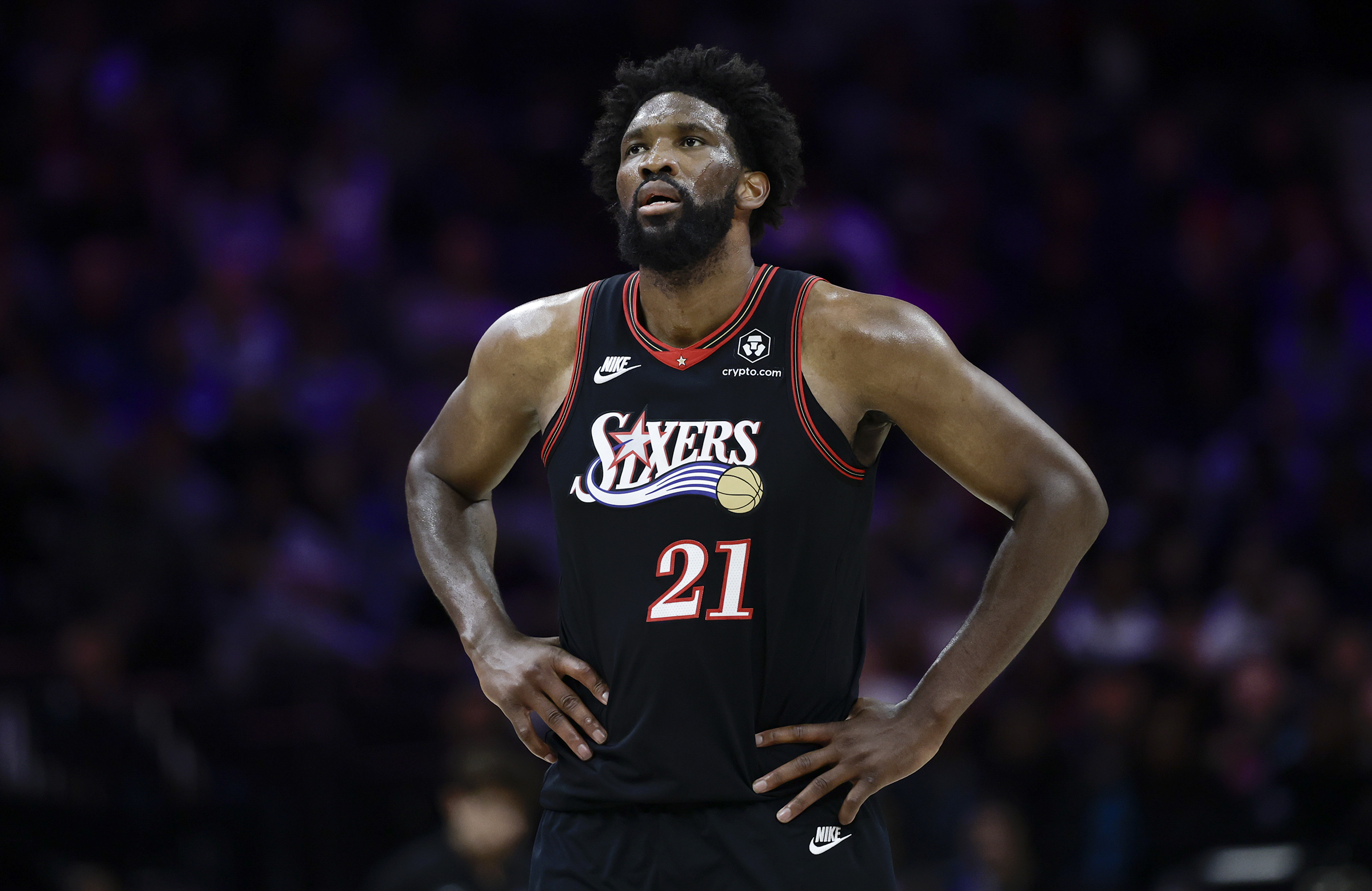
Collins had a year remaining on his contract when he stepped down as head coach of the Sixers in 2013, knowing the team was headed for a rebuild. His tenure is best remembered for Andrew Bynum, who never played a game after the Sixers traded for him in 2012. It was that failed trade that set off “The Process” and years of endless losses, landing the Sixers Joel Embiid but not much else.
“Through the years, they’ve had number one picks and all, but they’ve never really had a sidekick for Joel,” Collins said. “Now they have Maxey, and I think people are going to sleep on the Sixers. They can light that scoreboard up if Joel isn’t playing.”
While Tuesday’s throwback game is a who’s who of famed NBC talent, there are some notable omissions. Not joining the broadcast will be legendary NBA voice Marv Albert, who was alongside Collins during the 2001 NBA Finals.
Initially, the plan was for NBC to carry the retro theme across a doubleheader, with Albert and Fratello calling Sixers-Spurs and Collins and Costas covering the Phoenix Suns vs. the Sacramento Kings. But Collins said Albert has a health situation with his voice, shifting plans to a three-man booth.
Peter Vecsey, who worked as a reporter and analyst on NBA games for NBC, also isn’t on the lengthy guest sheet for Tuesday night’s throwback game. Vecsey wrote on social media he wasn’t invited to participate, which he called “complete disrespect” from NBC.
The network plans to produce more comeback games in future seasons, executive producer Sam Flood said, though he stopped short of saying who would be offered a chance to participate.
“Not everyone was able to join us this year, but there will be invites to plenty of other former NBA stars as time goes forward,” Flood said during a conference call.
NBC is scheduled to air one more Sixers game this season — March 17 on the road against the Denver Nuggets. There’s also a Peacock exclusive on March 30 against the Miami Heat, though the game is also scheduled to air on the relaunched NBC Sports Network.
Sixers standings
Eastern Conference
window.addEventListener(“message”,function(a){if(void 0!==a.data[“datawrapper-height”]){var e=document.querySelectorAll(“iframe”);for(var t in a.data[“datawrapper-height”])for(var r,i=0;r=e[i];i++)if(r.contentWindow===a.source){var d=a.data[“datawrapper-height”][t]+”px”;r.style.height=d}}});
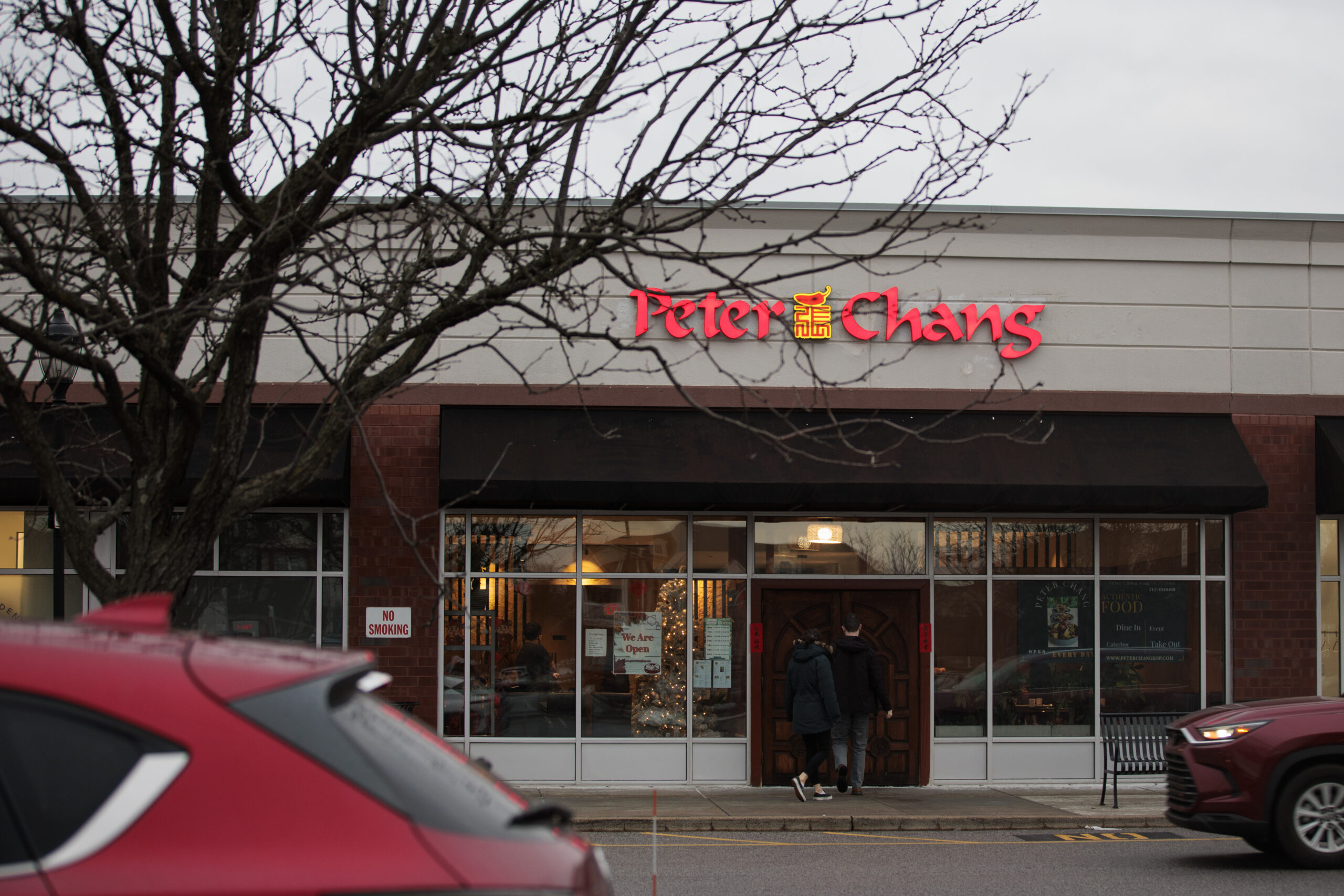
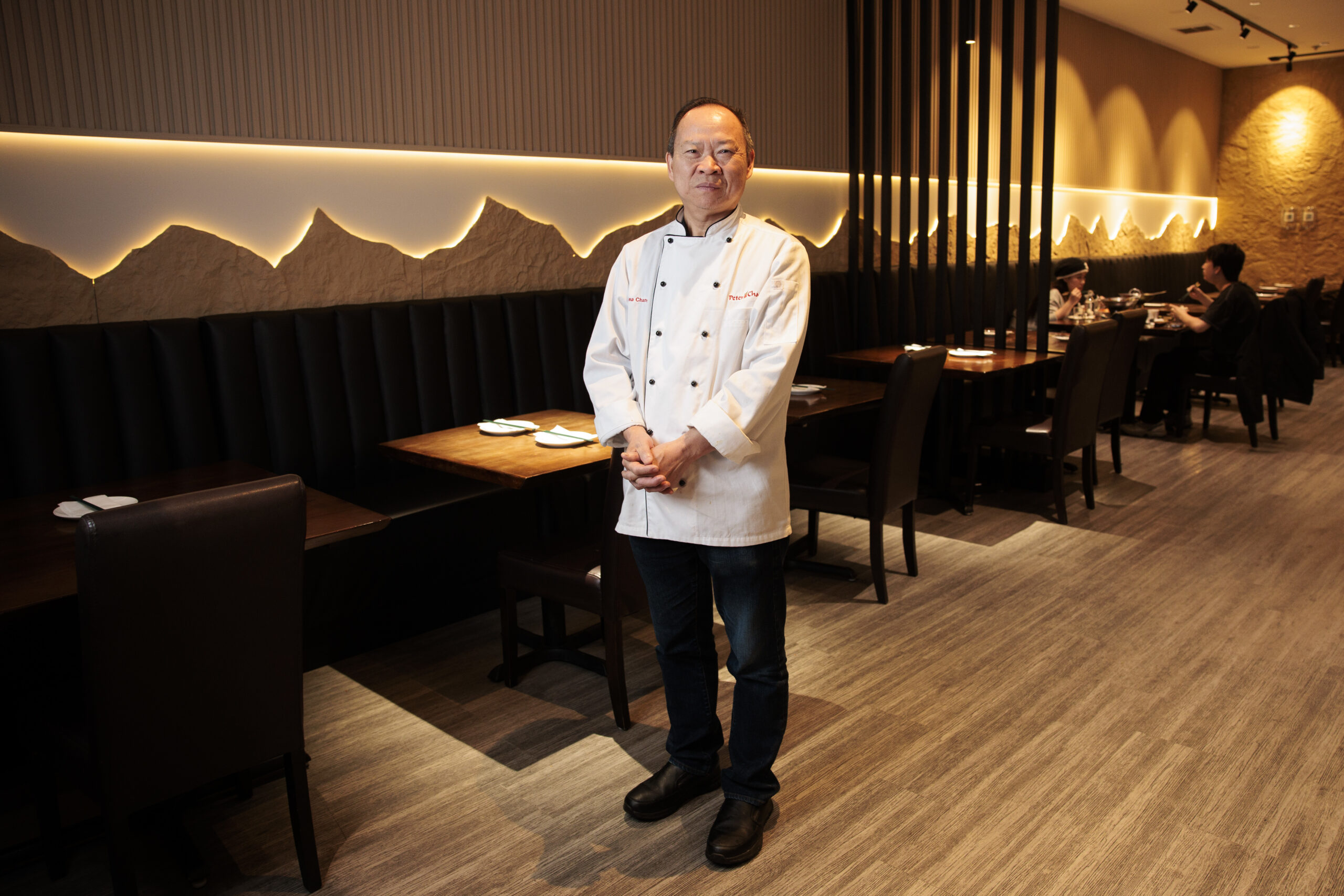
If you weren’t paying attention, you could easily drive past the nondescript storefront beside the Giant supermarket in King of Prussia’s Henderson Square. But there, glowing red from the strip-mall space wedged between a yoga studio and a dental office, is a sign with a name that caused me to hit the brakes: Peter Chang.
Chang is something of a legend in the Washington, D.C. area, especially after being profiled in 2010 by the New Yorker’s Calvin Trillin in an article — “Where’s Chang?” — that detailed a local cult following for the talented Chinese chef, despite (or perhaps because of) his perpetual moves from one Sichuan kitchen to the next. By 2011, however, Chang finally put down roots with his name attached to a restaurant inthe DMV, starting in Charlottesville, Va. It became the first of a rapidly growing family empire that has since expanded to 20 restaurants of varying concepts across the Mid-Atlantic, from Chang Chang in Dupont Circle to Baltimore’s Nihao. The run that has earned this onetime chef at the Chinese Embassy multiple nominations from the James Beard Foundation, including a finalist nod for national Outstanding Chef in 2022.
Now, having debuted in the Philadelphia region withnot one but two new restaurants — Peter Chang in KOP and Mama Chang in Colmar — the once-elusive Chang is virtually everywhere.
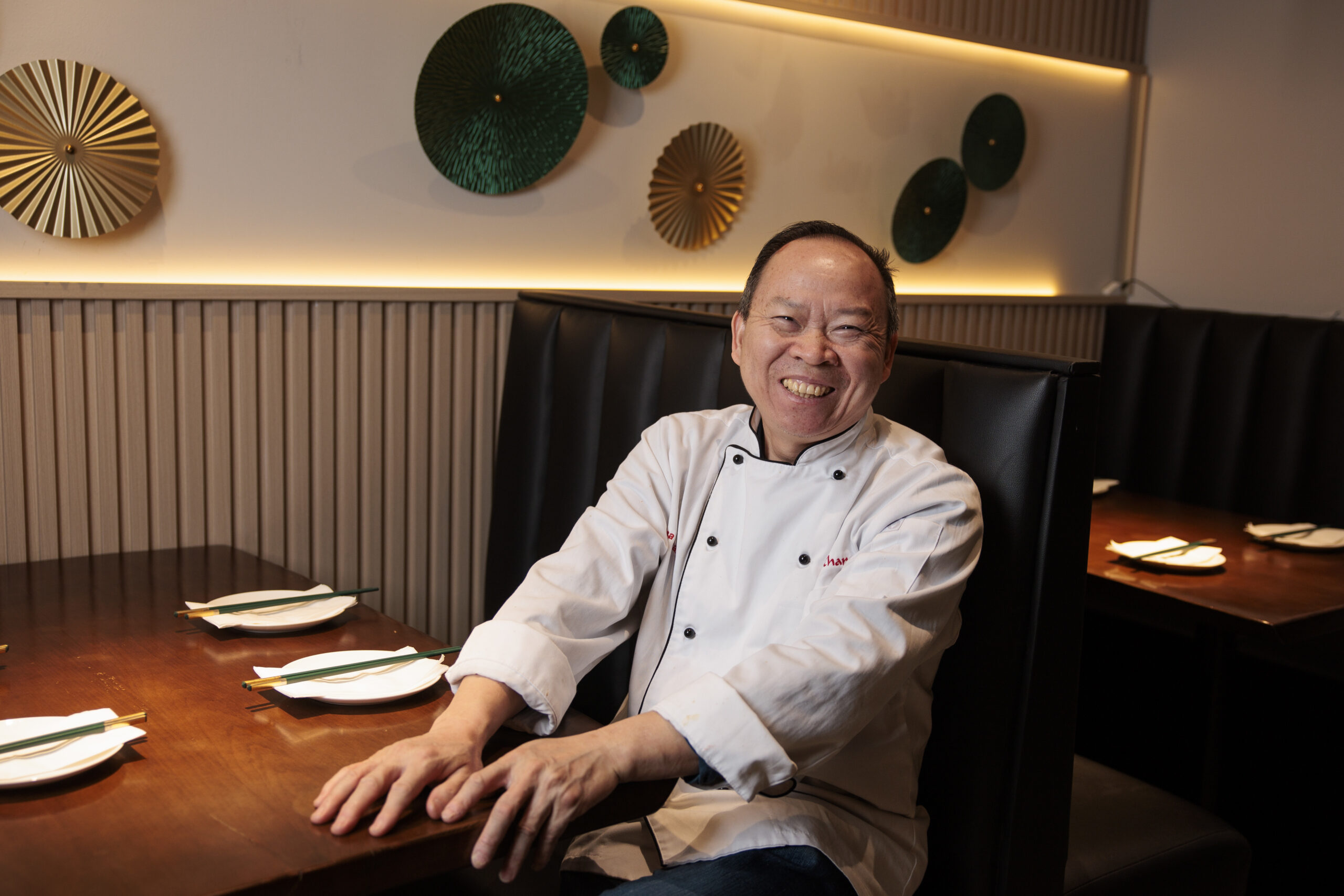
Peter Chang posed for a portrait at Peter Chang King of Prussia on Thursday, Feb. 19, 2026 in King of Prussia, Pa The exterior of Peter Chang King of Prussia on Thursday, Feb. 19, 2026 in King of Prussia, Pa
I popped the steaming hot balloon of his wife Lisa Chang’s signature bubble scallion pancake, then hungrily grazed across the nine cubbies of the dim-sum sampler box, savoring the clean white snap of a crystal shrimp dumpling, the hoisin-dabbed crunch of a meaty Peking duck spring roll, and the fragrant spice of a wonton swirled with the house chili oil. I immediately concluded Chang’s arrival to Philly is a very good thing.
Figuring out where, exactly, these new restaurants sit within the context of the Philadelphia region’s already rich Chinese dining landscape is separate question.
The dim sum platter box at Peter Chang King of Prussia on Thursday, Feb. 19, 2026 in King of Prussia, Pa.
Chang has long been referred to by fans (and even the company’s own website) as a Sichuan chef since many of his dishes buzz with the lip-numbing “málà” hum of Sichuan peppercorns and earthy cumin perfume typical of Sichuan cooking. But he is, in fact, from the province of Hubei, a Central Chinese crossroads threaded by train lines and the Yangtze River, where the cuisines of neighboring provinces like Sichuan and Hunan have been influential, but where the flavors of those traditional dishes are also interpreted in distinct ways.
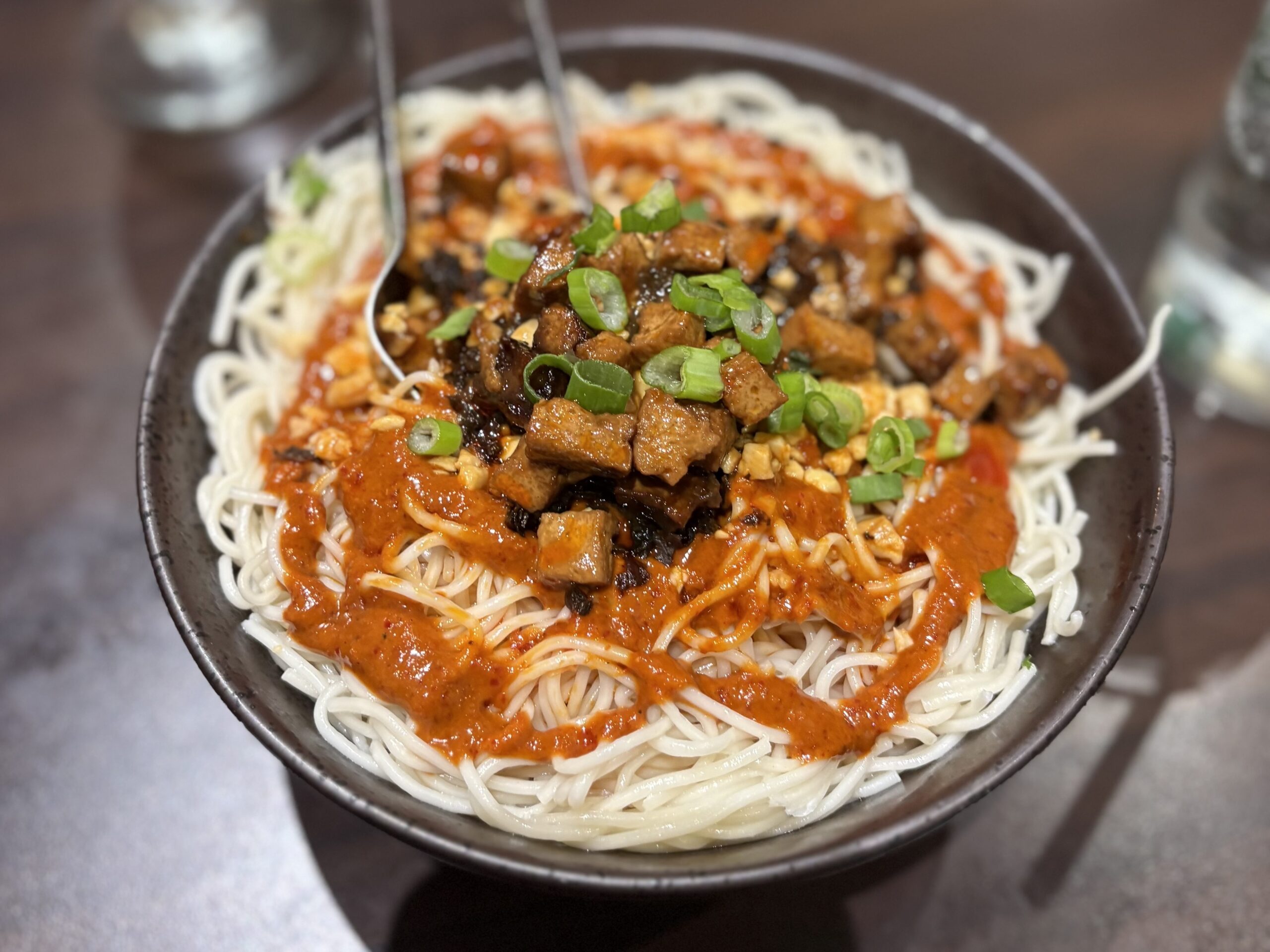
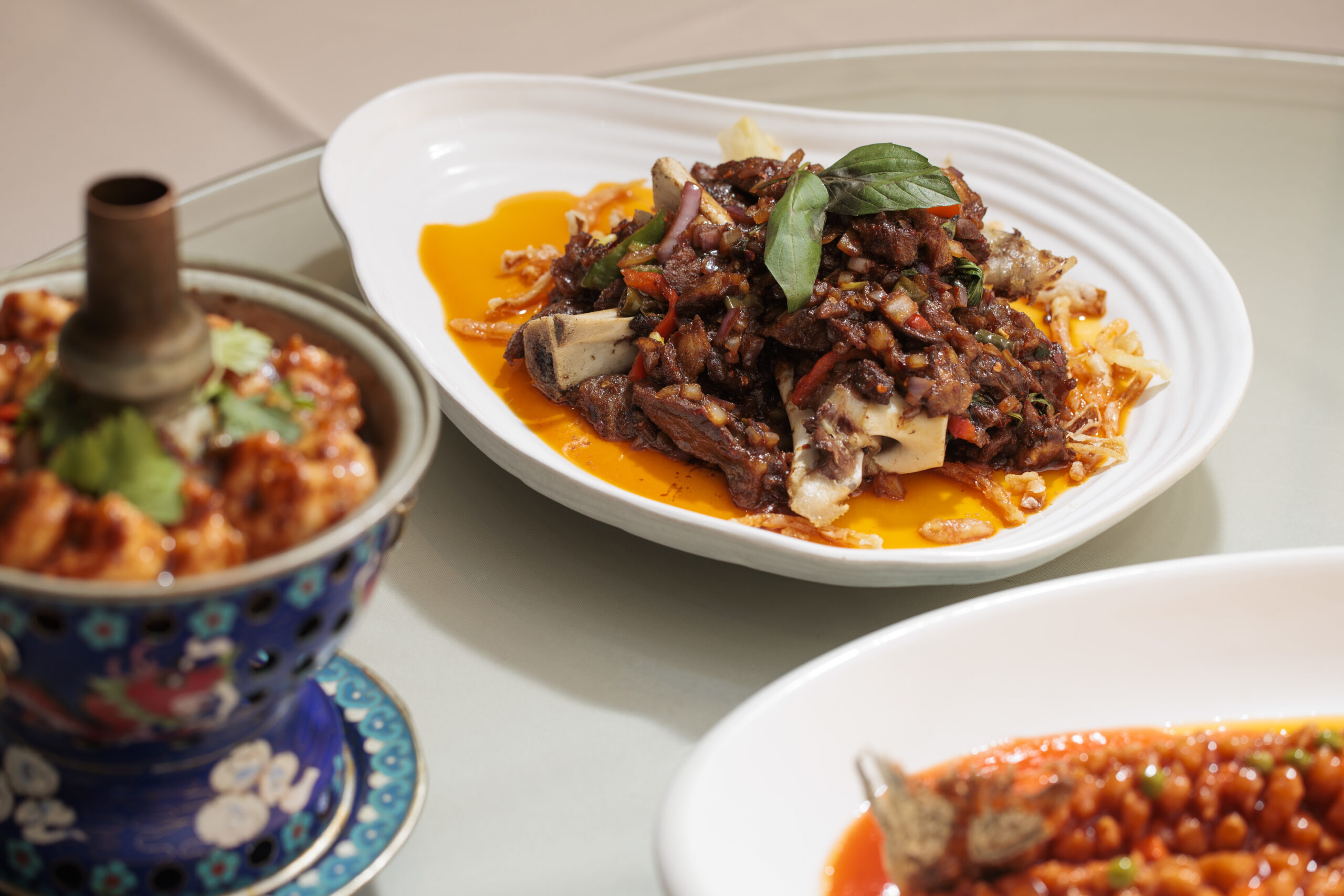
Chang’s take on dan dan noodles, for example, is simultaneously lighter, brighter, and more potently spiced than others I’ve tried in other local Sichuan restaurants — the usual ground meat subbed out for vegetarian diced tofu, then scattered with crushed peanuts and umami sparks of preserved olives and mustard greens. His black pepper shrimp, dramatically presented in a beautiful blue and yellow hot pot, is a delicious personal fusion of multiple regional styles; the bold-yet-balanced sauce blends Sichuan kung pao with the pungent tingle of Hunan black pepper and splashes of Maggi and Worcestershire sauces, which Chang’s daughter and business partner, Lydia Chang, says is a typical move in Cantonese kitchens.
The Szechuan dan dan noodles with tofu is a spicy vegetarian offering at both Peter Chang and Mama Chang.The black pepper shrimp at Peter Chang King of Prussia on Thursday, Feb. 19, 2026 in King of Prussia, Pa
The group’s flagship concept, Peter Chang, of which there are currently 15 locations, opened in a modest King of Prussia BYOB last summer, while the much larger Mama Chang debuted in October with a liquor license in a 400-seat Colmar space previously occupied by Golden City, a Chinese standby for 39 years.
In theory, the two are different concepts, with Peter Chang presenting a broad array of classic Chinese dishes, many of them presented in tapas-style small dishes, while Mama Chang, originally opened in Fairfax, Va., was created to showcase the Hubei-style home cooking and larger family-style portions inspired by Chang’s mother, Ronger Wang. In practice, the two Philadelphia-area restaurants share almost identical menus while the company figures out what each audience will respond to most.
The restaurant group has typically favored suburban locations in part because of their access to easy parking, but also for the opportunity to offer diverse communities unfamiliar with traditional Chinese cooking a taste of something different, says Lydia. In the case of this region, however, there’s already been a major demographic shift of Chinese families moving to Philly’s northern and western suburbs over the past two decades. Restaurants like Mama Wong, the original locations for Han Dynasty in Exton and Royersford, and Margaret Kuo’s Kitchen have successfully found their audiences without having to make too many compromises.
See how the area’s Chinese population grew between 1980 and 2021.
About 40% of Peter Chang’s King of Prussia customers are of Chinese descent, Lydia says. But in Colmar, that number drops to 20%, she says, and preferences for Americanized Chinese food remain strong. (“We try to be flexible,” she says, noting some Americanized standards like chicken lo mein and shrimp fried rice are still available.) The value of Peking duck combo meals and a $33 all-you-can-eat brunch and dim sum on weekends have been a draw.
There are so many distinctive dishes at both locations, however, I‘d encourage diners to skip the impulse to order General Tso’s and try the Wuxi sweet-and-sour chicken, whose larger chunks and lighter batter feature a sauce with a punchy dose of garlic. The various dim sum here are also a great place to start, whether as the sampler or ordered in individual gems such as the firecracker cilantro fish roll, a shiitake-bok choy dumpling wrapped in a kale-infused dough, or the vibrant take on galicky cucumber salad, which glows pale green with a dressing of pureed jalapeños and scallions.
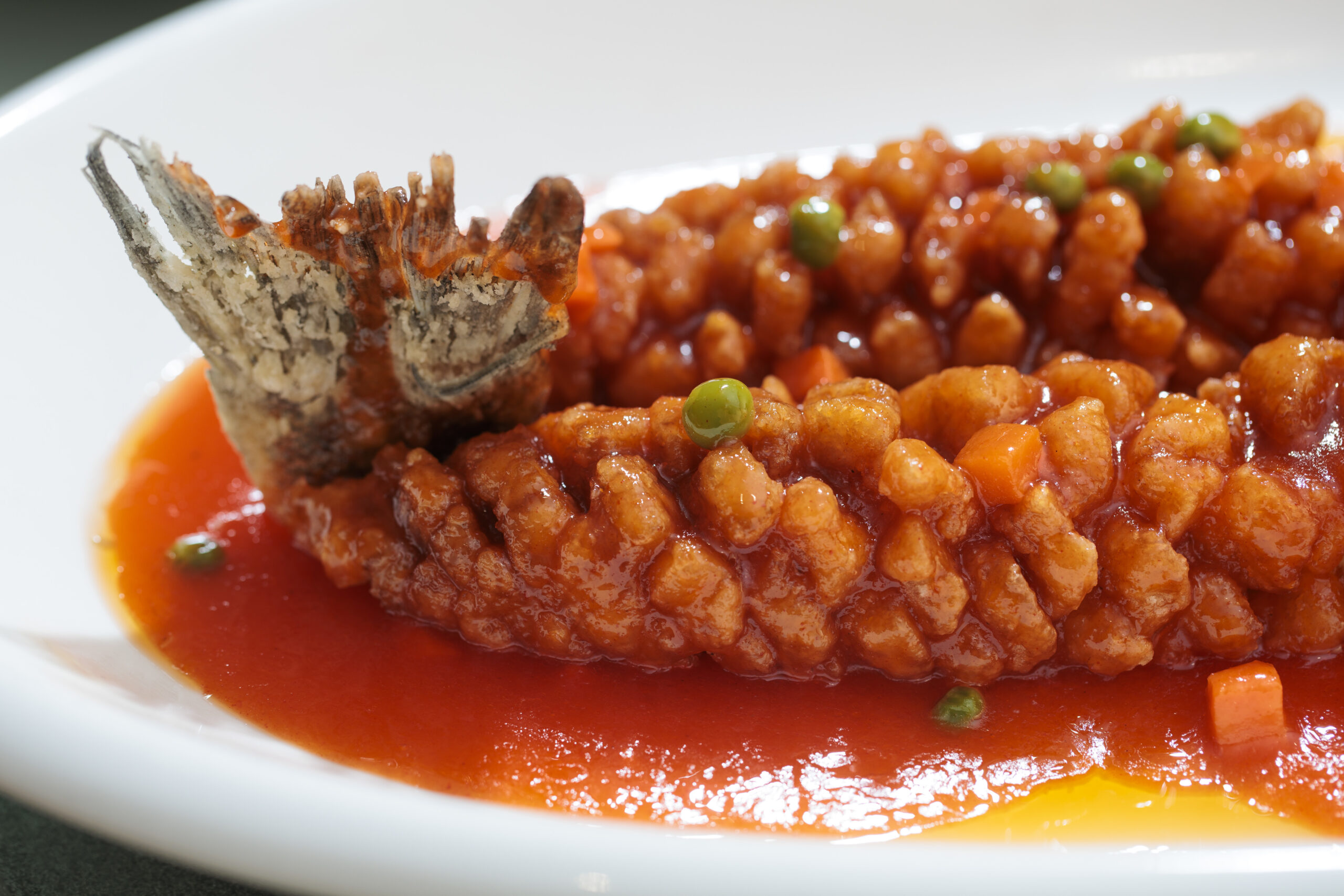
The jade tofu soup with duck is a signature dish at both Peter Chang and Mama Chang.The fried branzino at Peter Chang King of Prussia on Thursday, Feb. 19, 2026 in King of Prussia, Pa.
Sticking with Chang’s green trend, try the jade tofu duck soup, whose verdant broth is tinted with kale puree but also meaty with duck stock thanks to all the carcasses left over from the restaurant’s brisk Peking duck trade. Chang’s birds are cooked the classic way: inflated twice with a pump to separate the skin from the flesh, massaged with five-spice salt, scalded in a bath of baking soda, then roasted with a vinegar-and-corn syrup glaze until the tawny skin snaps like a candied cracker, to be wrapped tableside in pliant house-steamed pancakes with shaved scallion and a sweet dab of hoisin.
The duck is a sure crowd-pleaser, as is the meaty branzino in sweet-and-sour sauce, whose deep-fried fillets are crosshatched like a pine cone in a show of the kitchen’s technical proficiency with classic dishes. Another personal favorite, the dragon eggplant in garlic sauce, showcases more impressive knifework, using a series of angular cuts in thesuoyi style that lets it expand, Slinky-like, through a saucy glaze that balances sweetness, tang, and spice.
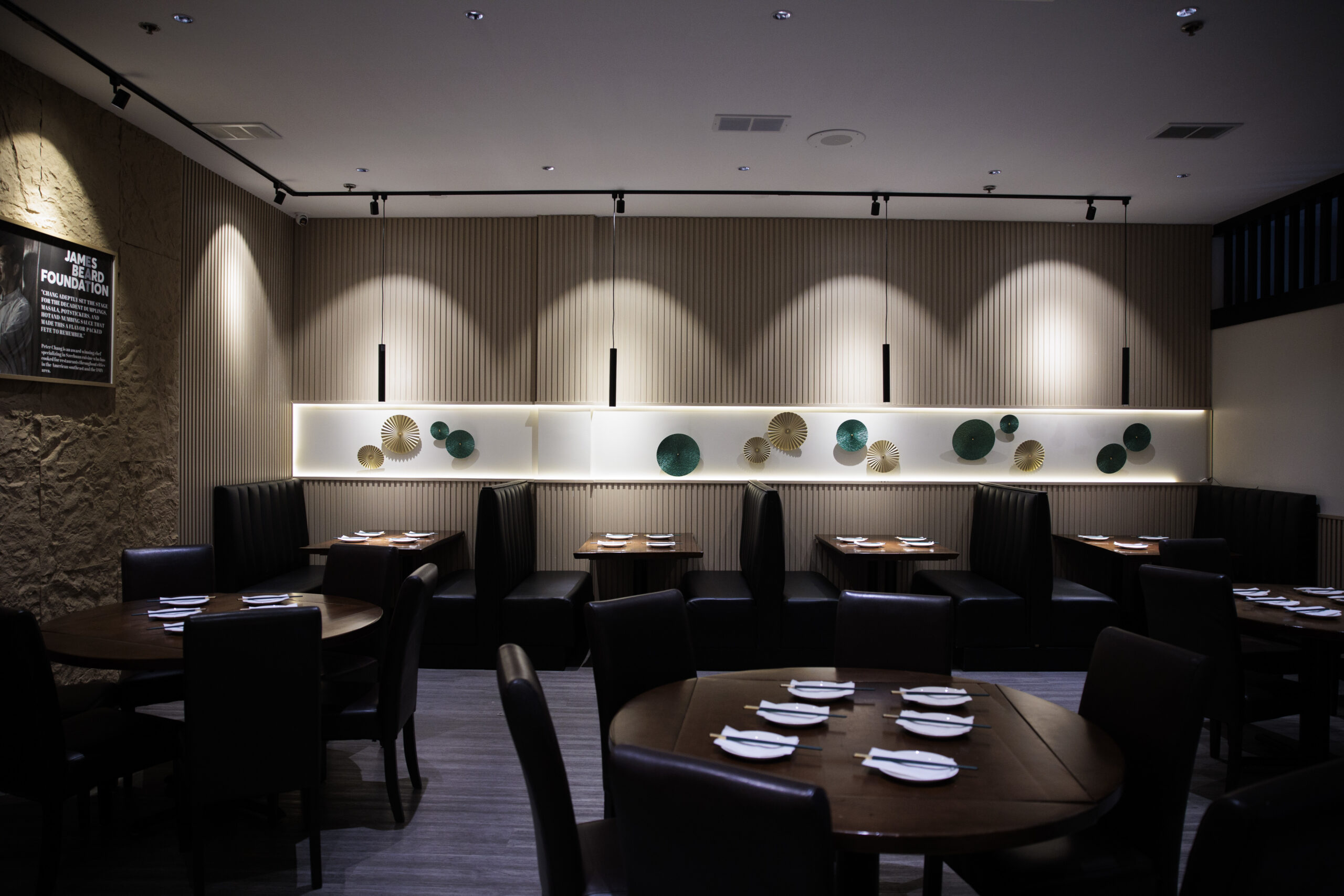
Dragon eggplant with garlic sauce at Peter Chang in King of Prussia showcases an intricate knife-cutting technique that allows the eggplant to remain in tact.The dining room at Peter Chang King of Prussia on Thursday, Feb. 19, 2026 in King of Prussia, Pa
Chang has a special fondness for spice, says his daughter, and that’s particularly evident in dishes that employ a double-cooked “dry fry” method, in which ingredients are pre-cooked or crisped in batter, then refried in the wok with shimmering aromatic spice. The eggplant fries are one delicious example, but so is the bamboo fish: crispy flounder fingers seared inside a crust that crackles from the addition of cooking wine and cornstarch, and radiates the heat of chilies and herbal fresh cilantro. House-steeped chili oil infused with cardamom and star anise, which takes days to make, transforms shredded tofu skin salad into irresistibly snappy noodles. Pickled fresh chilies are key to the soybean beef pot, a rarely seen rustic specialty that arrives simmering in a clay vessel. The hand-pulled noodles on Mama Chang’s menu employ chewy, hand-pulled Xi’an “belt” noodles as a springboard for garlic, ground Sichuan peppercorn powder, and coarse pepper flake garnishes that actually sizzle with aromatic steam when hot chili oil is drizzled over the base sauce of vinegar and soy.
But no dish brings a wallop of earthy flavor quite like the massive serving of double lamb shanks, an Uyghur-style dish I could not get enough of, whose tender meat comes falling off the bone, absolutely encrusted in cumin and pickled chilies.
The cumin spicy lamb shank at Peter Chang King of Prussia on Thursday, Feb. 19, 2026 in King of Prussia, Pa
It’s not all spice bombs. Some of the best offerings at both places reflect subtler flavors. One is the “farmer’s stir-fry,” which incorporates rough-chopped celery, bell peppers, and tofu skin scrambled into eggs, a nod to what Peter’s mom used to whip together from their family farm.
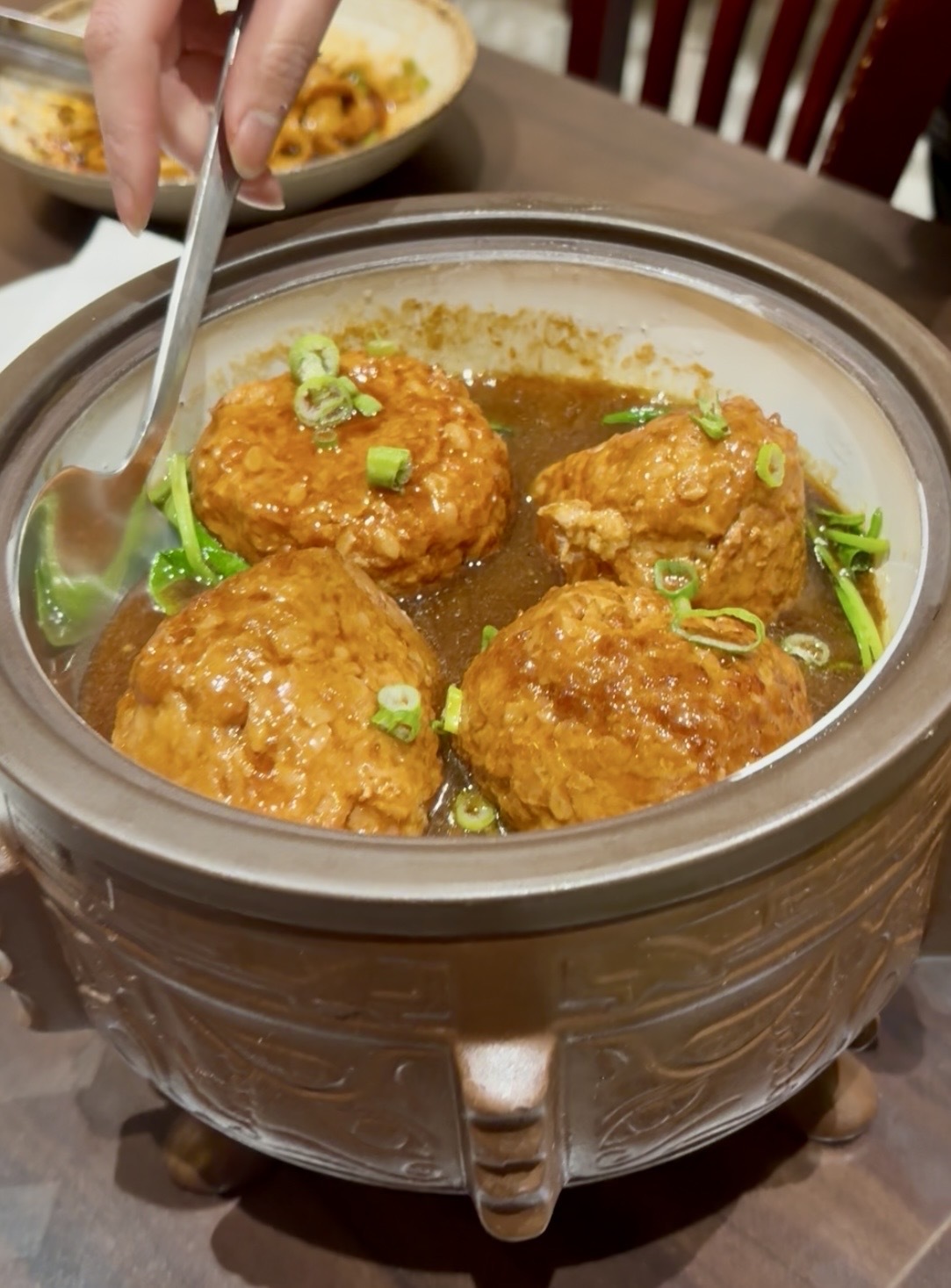
Another classic, the Yangzhou-style Lion’s Head meatballs are the height of comfort perfected through a knowing touch. These massive, cloud-like orbs of pork, impossibly fluffy in mild brown gravy, are the result of careful handiwork — both on the mince and the whipping, incorporating the meat into a high percentage of fat that simply melts away over the course of a slow braise in rich sauce scented with sesame oil and soy. I’ve had this dish multiple times in Chinatown, but never such an airy rendition. Served in a hot pot topped with a ceramic Buddha, it’s the kind of nostalgic dish that bridges the elegance, say, of an embassy banquet with the homespun feeling the restaurant group would like Mama Chang to eventually embrace more fully in Colmar.
I’ll be curious to observe as these two locations evolve, especially once the wider public realizes one of America’s most decorated Chinese chefs has finally landed in our region. As is, they’re both already worthy additions to the suburban dining scene. Once Chang and his family find their footing and dive deeper into their culinary mission, there’s potential for the pair of restaurants to become a wider draw.
Fluffy pork Lions Head meatballs are typical of the home-style Chinese cooking featured at Mama Chang in Colmar, Pa.
Peter Chang KOP
Henderson Square, 314 S. Henderson Rd., Suite C, King of Prussia, 717-431-0488, peterchangkop.com
Open 11 a.m. to 9 p.m. Sunday through Thursday, until 10 p.m. Friday and Saturday.
Larger plates, $16-$40.
Wheelchair accessible.
Not ideal for gluten-free dining.
BYOB
Menu highlights: Dim sum box platter (firecracker cilantro fish roll; Peking duck roll; chili oil pork and shrimp wonton; garlic cucumber salad); scallion bubble pancake; tofu skin salad with chili oil; dan dan noodles with tofu; spicy dry fried eggplant; farmer’s stir fry; dry fried bamboo fish; twice-cooked pork belly; dragon eggplant with garlic sauce; Peking duck; soy bean beef pot; cumin lamb shank; fried branzino with sweet and sour sauce.
WASHINGTON (AP) — For Democrats demoralized at being shut out of power in Washington, the past several months have offered reason for optimism.
A party often beset by ideological division has largely been unified in opposition to President Donald Trump’s hardline immigration tactics, particularly after two U.S. citizens were killed in Minneapolis. Heading into a midterm election year in which they are just a few seats shy of reclaiming the U.S. House majority, Democrats have also kept the White House on defense with criticism of Trump’s economic policies and ties to Jeffrey Epstein, the convicted sex offender.
But the U.S. and Israeli strikes against Iran could test the durability of that cohesion. Initially, Democrats balanced condemnation of Iran’s supreme leader, Ayatollah Ali Khamenei, who was killed over the weekend, with calls for Congress to quickly pass a war powers resolution that would restrain Trump’s attack options.
“As soon as our resolution comes to the floor, senators need to pick a side,” Senate Democratic leader Chuck Schumer said on Monday. “Stand with Americans who don’t want war, or stand with Donald Trump as he singlehandedly starts another war.”
Democratic divisions going into war powers vote
But some divisions are surfacing as a handful of Democrats, especially those who are strongly aligned with Israel, express reservations about the war powers measure. Rep. Greg Landsman, D-Ohio, won’t back an Iran resolution. Before the strike, Rep. Josh Gottheimer, D-N.J., also said he would vote no.
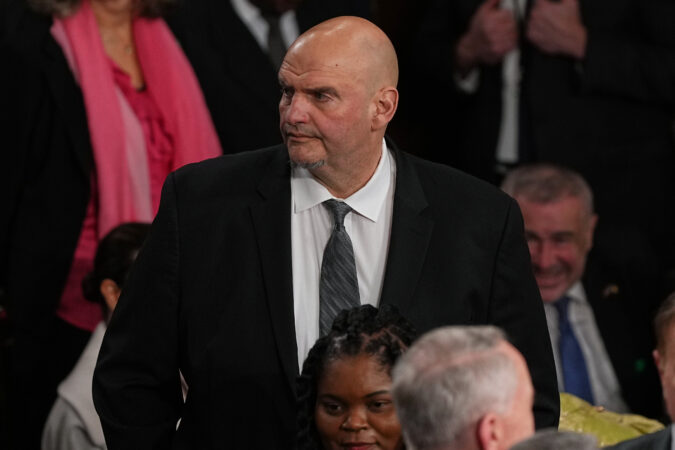
Sen. John Fetterman, D-Pa., who backed a war powers vote tied to Venezuela in January, also has broken with Democrats over the Iranian measure and rejected arguments that the attack was illegal, spurring frustration among some party leaders.
“John Fetterman knows better,” House Democratic leader Hakeem Jeffries said Monday on CNN.
Republicans are also facing internal dissent. Trump, who did little to prepare Americans for the prospect of such a dramatic conflict, said Monday the operation could last four to five weeks. He hasn’t articulated a clear exit strategy and warns that American casualties could mount, which will pose a severe test of voter patience for the conflict.
The war could also lead to rising gas prices and economic volatility that may bolster Democratic arguments that the president is out of touch with the financial realities facing many Americans.
Still, Republicans see an opportunity to portray Democrats as reflexively opposed to Trump.
“For my Democratic colleagues, this is not about what’s best for our national security or what’s best for protecting the American people,” said Sen. John Kennedy, R-La. “This is about how to defeat Donald Trump.”
A searing debate among Democrats over Israel
Democrats have undergone a searing internal debate over the party’s relationship with Israel in the wake of the war in Gaza. Then-President Joe Biden’s loyalty to Israel during the heat of the 2024 campaign was starkly at odds with younger generations outraged by the treatment of Palestinians in Gaza. By the time Kamala Harris rose to the top of the ticket that year, she struggled to win over some younger voters who are critical to Democratic success.
Paco Fabian, the political director for the progressive advocacy group Our Revolution, acknowledged that Democrats “aren’t monolithic.” But he also suggested a shift was underway, noting the results of a New Jersey special election last month.
During that campaign, the affiliated super PAC of the pro-Israel American Israel Public Affairs committee sought to thwart the moderate candidate, Tom Malinowski, after he questioned unconditional aid to the Israeli government. Those efforts appeared to backfire with the more progressive contender, Analilia Mejia, winning the primary.
“Given what’s going on right now, I don’t think the moment is doing AIPAC and Israel any favors,” Fabian said.
Sympathy toward Israel appears to be shifting. Three years ago, 54% of Americans sympathized more with the Israelis, compared with 31% for the Palestinians, according to Gallup polling released last month. Now, their support is about evenly balanced, with 41% saying their sympathies lie more with the Palestinians, and only 36% saying the same about the Israelis.
Americans’ initial reactions to airstrikes also appeared more negative than positive, early polling suggested. About 6 in 10 U.S. adults disapproved of the U.S. decision to take military action in Iran, according to a CNN poll conducted via text message over the weekend. A separate snap poll from The Washington Post conducted via text message on Sunday suggested that about half of those polled opposed the strikes, while 39% were in support. Roughly 1 in 10 were unsure.
Democrats and independents drove much of the disapproval in those early polls, while Republicans were much more supportive.
Elections this week could show impact of attacks
The initial political impact of the attacks in Iran could emerge as soon as Tuesday during the first primary elections of this year’s midterm campaign.
In North Carolina, Durham County Commissioner Nida Allam was already going into her bid to unseat two-term Rep. Valerie Foushee with backing from Our Revolution and other top progressives. After receiving support from groups tied to AIPAC during her 2022 campaign, Foushee’s campaign rejected such contributions this cycle. Over the weekend, she said she doesn’t support “Trump’s illegal war with Iran” and would back the war powers resolution.
Still, Allam, who would be the first Muslim elected to Congress from North Carolina, was quick to release a video ahead of Tuesday’s vote criticizing Trump for “starting another endless war” and promising to never accept support from “the pro-Israel lobby.”
In Texas, home to high-profile Senate primaries on Tuesday, Democratic voters expressed alarm at the attacks.
“It shouldn’t have happened,” said Charles Padmore, 45, an independent contractor in Houston. “Affordability should be the top priority on Trump’s list.”
Alex Diaz, 31, a biology high school teacher in Houston, called the bombing of Iran “uncalled for.”
“You’re trying to start World War III, and we don’t need that right now,” he said.
The fallout could spread to other contests this month. Ahead of the March 17 primary in Illinois, AIPAC-aligned groups have also criticized Daniel Biss, the Evanston mayor who is aiming to become the Democratic candidate to succeed the retiring Rep. Jan Schakowsky. In an interview, Biss spoke of the “backlash I’m hearing people have against AIPAC, their MAGA-aligned money and their Trump-aligned policy agenda.”
Asked about such predictions, Patrick Dorton, a spokesman for AIPAC’s affiliated super PAC, said “the key distinction will be between those who recognize that Iran is a murderous regime that tortures women for leaving their hair uncovered, hangs gay people, and executes peaceful democratic protestors, and those who will turn a blind eye to the regime’s atrocities.”
Calls for a ‘united opposition party’
As Congress moves toward a potential war powers vote this week, Biss said there was a need for Democrats to act as a “strong, clear, vocal, united opposition party.”
“I also would like to see the Democratic Party united not just on the procedural argument but on the basic acknowledgment that this war is wrong,” he added.
On Capitol Hill, Sen. Richard Blumenthal of Connecticut, a Democrat on the Armed Services Committee, said he was less concerned about party unity than the prospect of achieving a bipartisan vote on the war powers resolution. Three Republicans ultimately backed the Venezuela resolution in January.
“What I want to see happen is the war powers resolution pass,” he said. “I’m not focused on what Democrats as a whole do. We’re going to have differing opinions among Democrats and among Republicans.”
Throughout his political career, Israeli Prime Minister Benjamin Netanyahu has steered his country along two pillars of foreign policy: an ironclad partnership with the United States and a relentless diplomatic and covert battle against the rulers of the Islamic Republic of Iran.
Now, with Israel and the U.S. in a joint war against Iran’s leadership, those two strategic paths risk clashing with each other. By enlisting the U.S. in what he views as Israel’s existential battle against Iran, Netanyahu is taking a gamble that could open up the relationship to the strain of a war with far-reaching consequences.
To be sure, persuading U.S. President Donald Trump to join the war was a coup for Netanyahu and highlights the strong ties between the two leaders. If they are successful, they could quickly realize their shared goal of toppling the Iranian government and spare the region a protracted conflict.
“A large part of the American public will view it as the Israeli tail wagging the American dog and that it is dragging the United States to a war in the Middle East that isn’t theirs,” said Ofer Shelah, a research fellow at the Institute for National Security Studies, a Tel Aviv, Israel-based think tank. The drop in public support that might unleash “will be very harmful for Israel in the medium and long term,” he said.
But, he added, in a nod to the Israeli leader’s political ambitions: “Netanyahu is not interested in the medium and long term.”
US public opinion has been evolving
For Netanyahu, successfully persuading Trump to strike Iran together is the apex of decades of proximity between the Israeli leader and Washington. Netanyahu, Israel’s longest-serving leader, speaks flawless English after having spent part of his youth in the U.S. and has always portrayed himself as Israel’s bridge to America.
Although he boasts about his tight relationships with multiple American presidents and members of Congress, Netanyahu over the past two years has seen support for Israel among the American public drop. According to Gallup polling, American sympathies in the Middle East have shifted dramatically toward the Palestinians.
That shift in sentiment has been driven in large part by Democrats. But some Republicans, and even Trump’s own backers, have been more outspoken against the diplomatic and financial support the U.S. has continued to grant Israel throughout the past two and a half years, when it has been embroiled in a war on multiple fronts sparked by Hamas’ Oct. 7, 2023, attacks. The devastating images from the war in Gaza deepened Israel’s international isolation.
With a new war against Iran — the second in less than a year — Netanyahu is tackling an enemy that he and many Israelis view as an existential threat, citing its support for anti-Israeli militias across the region, its ballistic missile arsenal, and its nuclear program. He has led the crusade against Iran on the world stage for much of his career.
Netanyahu said Sunday in a statement that the U.S. involvement “allows us to do what I have been hoping to do for 40 years — to deliver a crushing blow to the terror regime.” Netanyahu’s office did not immediately respond to an Associated Press request for comment.
The conflict could spiral
Days into the war, Israel and the U.S. military appear to be working hand in glove to strike targets — from the initial attack that killed top Iranian leaders, including Supreme Leader Ayatollah Ali Khamenei, to assaults that allowed the forces free rein in Iranian skies.
But the conflict has already set off aftershocks that could reverberate in the American heartland. At least six U.S. troops have been killed. Travel was disrupted across the region, leaving hundreds of thousands of travelers stranded. Oil prices surged, raising the prospect of costlier gasoline for U.S. drivers as well as increased prices for other goods at a time when people have been stung by a rising cost of living.
Questions remain about the direction and aim of the war. It’s unclear whether the air power will be enough to topple Iran’s leadership, who or what should replace that leadership, and what role Israel or the U.S. will have in either. Every day presents new potential land mines.
“Many people will blame Israel if things go badly wrong,” wrote Nadav Eyal, a commentator with the Israeli Yediot Ahronoth daily newspaper. “Israel cannot afford to lose the American public’s support under any circumstances. That is more important than striking any individual military facility.”
Still, Aaron David Miller, who served as an adviser on Middle East issues to Democratic and Republican administrations over two decades, said that Netanyahu has little to lose from the war.
With elections scheduled for the fall, Netanyahu can use the war in Iran to divert attention away from the failures of the Oct. 7, 2023, attacks, the worst in Israel’s history. Instead, Netanyahu can set himself up as a brave wartime leader who fulfilled a pledge he has made much of his life to confront Iran.
He can say he did so with support from the American president, who Miller said can pull the breaks on the war whenever he pleases.
“If Trump feels as if it’s going south, he’ll find a way to de-escalate,” he said, “and his good friend Benjamin Netanyahu will follow.”
What role could the preservation of Philadelphia’s oldest and historically significant buildings play in the housing crisis?
🏠 Pro-development activists have long argued that there is a link between the city’s preservation laws and the scarcity of affordable housing.
🏠 Yet local architects have shown that historic buildings can be a tool to create more housing for less money, using fewer natural resources, architecture critic Inga Saffron notes.
🏠 Consider her case study of Lea and Evan Litvin’s latest project: Their Lo Design firm is converting a 19th-century complex at 15th and Waverly Streets into a 32-unit apartment building.
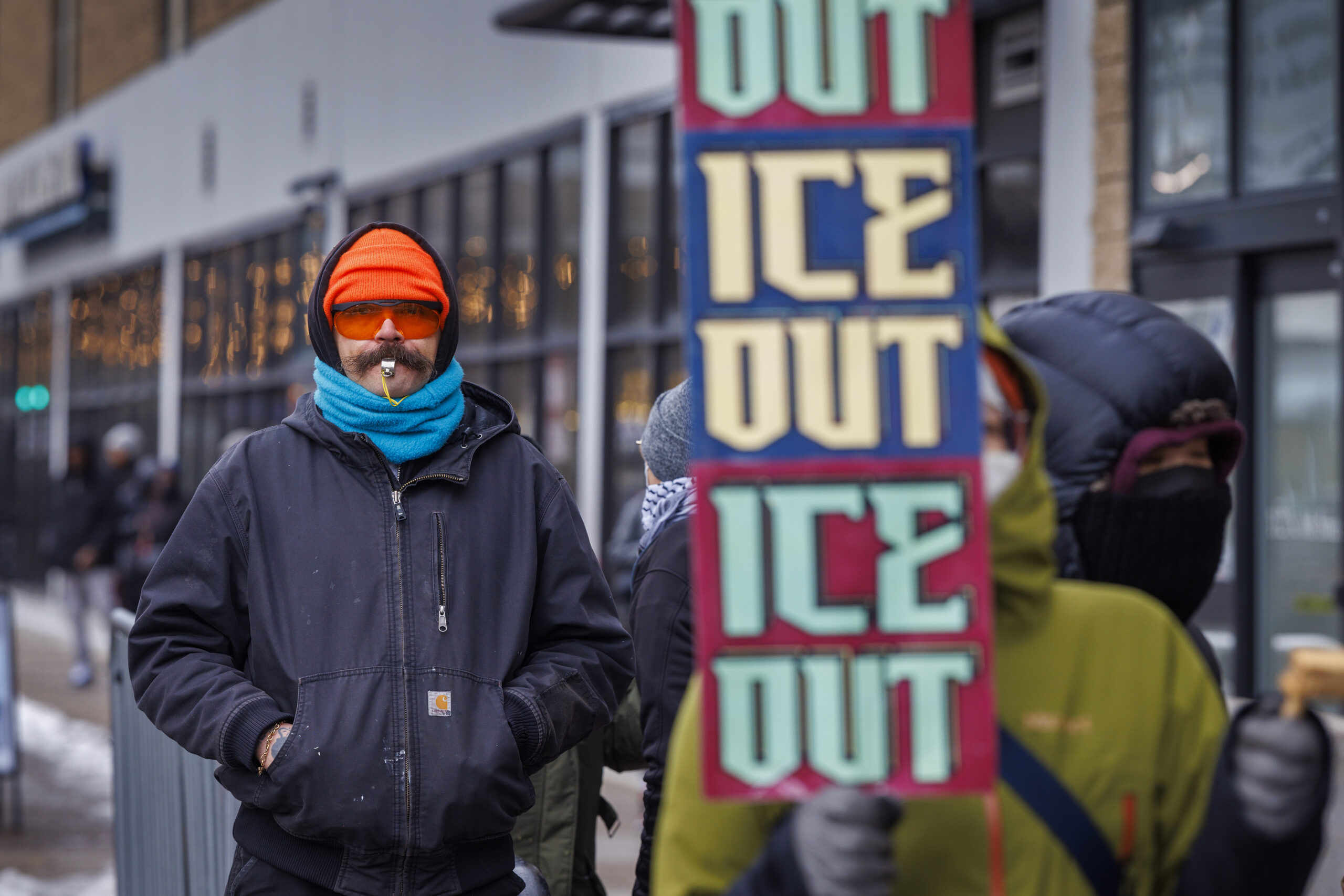
In Philadelphia and across the United States, the humble whistle has become a signal of resistance.
Activists have been using them to alert neighbors, especially undocumented immigrants, that ICE is on patrol nearby. Locally, they can also be heard at weekly “Noise Demo” protests outside the agency’s Center City office, where the goal is disruption.
The instrument has become so ubiquitous at anti-ICE actions, President Donald Trump has sought to ban “loud or unusual noises” at federal facilities.
Notable quote: “There’s not much more shrill or penetrating than the sound of a whistle,” a Temple University professor who studies protest and dissent told The Inquirer.
Trump’s communications strategy about the U.S.-Israel attack on Iran — walking the line between claiming victory and avoiding blame — veers from past presidents’ approach to discussing American military actions.
A former Delsea Regional High School student has accused a math teacher of sexually abusing him in the 1980s and is suing the South Jersey school system for failing to protect him.
A 76-year-old Hatboro man has been charged with soliciting sex acts with a 15-year-old girl after paying for pictures of her feet, Montgomery County officials said.
Philadelphia’s school board just adopted the district’s first-ever comprehensive wellness policy, including guaranteed recess and bathroom and water breaks.
Chester County CEO David Byerman left his role on Monday, officials said. The county’s deputy administrator will replace him under a new title.
Philadelphia is being considered to host the Democratic National Convention in August 2028.
The city has hosted eight major party conventions, during which delegates nominate a candidate for president. Most recently, the 2016 DNC was held at what’s now called the Xfinity Mobile Arena.
The event could generate millions of dollars in economic impact. Boston, Atlanta, Chicago, and Denver are also contenders.
Cheers to Karen Mirabelli, who solved Monday’s anagram: Villanova. At a Saturday university event to promote his memoir, Gov. Josh Shapiro discussed his love of basketball alongside decorated coach Jay Wright.
Photo of the day
Greta Meyer, of Northwest Philadelphia, is on her way to Race Street Friends Meetinghouse for her wedding on Saturday, Feb. 7, 2026.
Hurry! The rest of your life begins today. Have a good one.
By submitting your written, visual, and/or audio contributions, you agree to The Inquirer’s Terms of Use, including the grant of rights in Section 10.