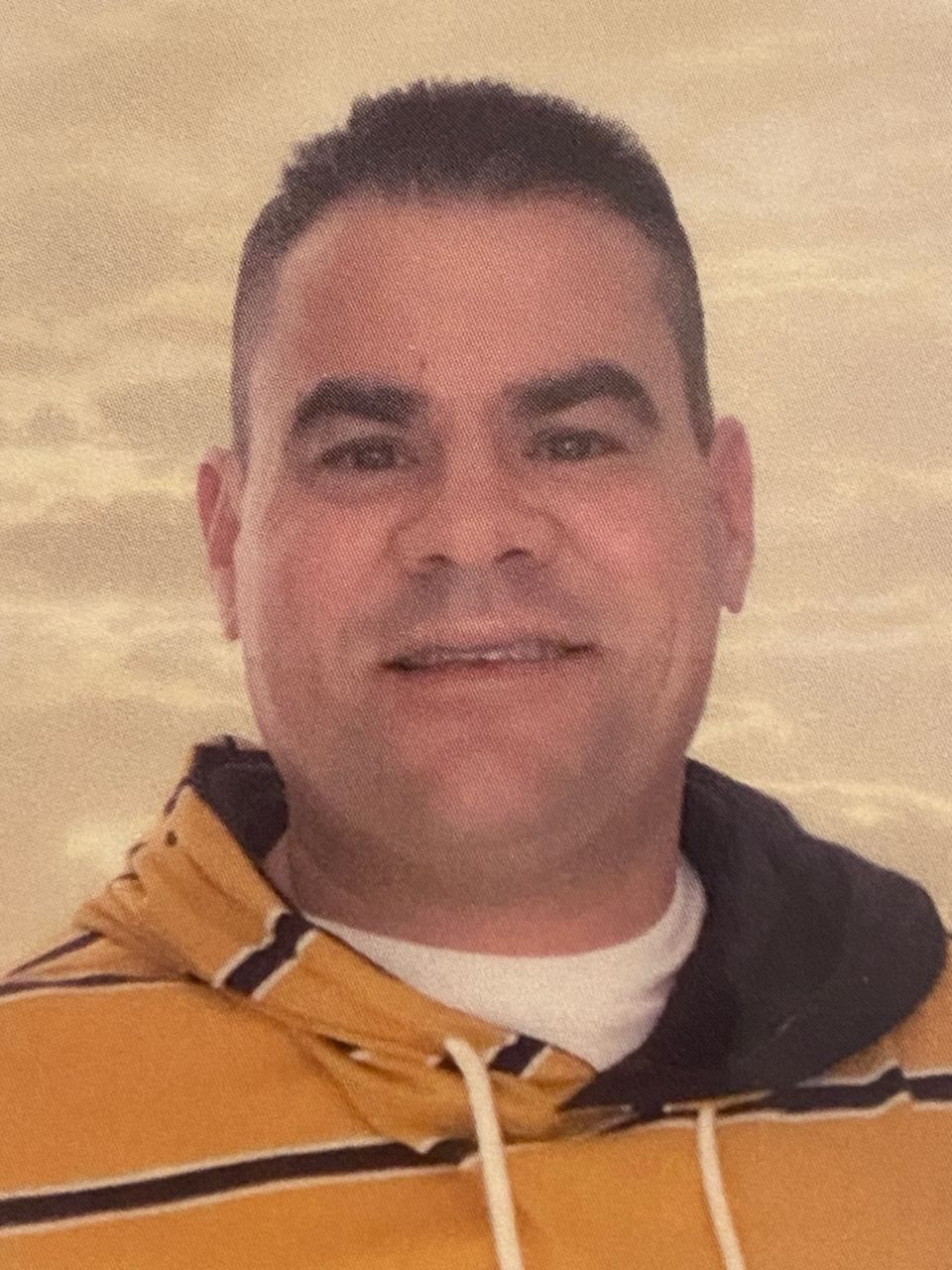
A former Lumberton Township mayor admitted in court Mondaythat she drove drunk with her toddler in the car last St. Patrick’s Day, bringing to a close a case that prompted calls for her resignation.
Gina LaPlaca, 46, who served as mayor until December and remains a member of the township committee, pleaded guilty before Burlington County Superior Court Judge Craig Ambrose to driving under the influence and child endangerment, according to Burlington County prosecutors.
Under a plea agreement, LaPlaca will enter a three-year diversionary program for first-time offenders. She also agreed to attend regular Alcoholics Anonymous meetings and install an ignition interlock device in her vehicle. Over the last year, she has completed inpatient and outpatient treatment, prosecutors said Tuesday. LaPlaca told the judge Monday she had installed an interlock device in October.
Prosecutors said a motorist captured LaPlaca on cell phone video driving a blue 2019 BMW erratically on Route 38, swerving across the center line and nearly striking a utility pole. After the driver alerted police, officers located LaPlaca and found an open container of alcohol in the vehicle, authorities said.
LaPlaca told officers she had been drinking before picking up her 2-year-old son from daycare, prosecutors said. At the time, her blood-alcohol concentration measured 0.30% — more than three times New Jersey’s legal threshold for intoxication.
In the weeks after her arrest, the township committee formally censured LaPlaca for alleged ethical violations. Despite public outcry and calls from state lawmakers to step down, she declined to resign as mayor and remained in office until her term ended in December.
An attempt to reach LaPlaca on Tuesday was unsuccessful. After her arrest last year, her husband, Jason Carty, told The Inquirer that she was “on a path to recovery” and asked for privacy.
As an expanding Middle East war entered its fourth day, the Trump administration gave shifting rationales for its decision to attack Iran, even as U.S. officials with access to intelligence reports said they saw no sign the country had posed an imminent threat to the United States.
President Donald Trump and his top national security aides, defending a conflict that has tepid public backing and is incurring escalating risks, emphasized Iran’s arsenal of ballistic missiles rather than its nuclear program as the principal threat. But they provided different descriptions of the danger.
At his first public event since the attack began, Trump on Monday never mentioned a key part of his original rationale for the war: deposing Iran’s theocratic regime.
Instead, he emphasized thatIran would “soon” have missiles that could hit targets inside the United States.
What Trump had outlined over the weekend as an effort to devastate Tehran’s rulers so that the Iranian people could take over was, by Monday, “not a so-called regime change war,” in the words of Defense Secretary Pete Hegseth.
Hegseth told reporters at the Pentagon that the Islamic Republic was building sophisticated missiles and other conventional weapons to shield its plans for a nuclear bomb. “Iran had a conventional gun to our head as they tried to lie their way to a nuclear bomb,” he said.
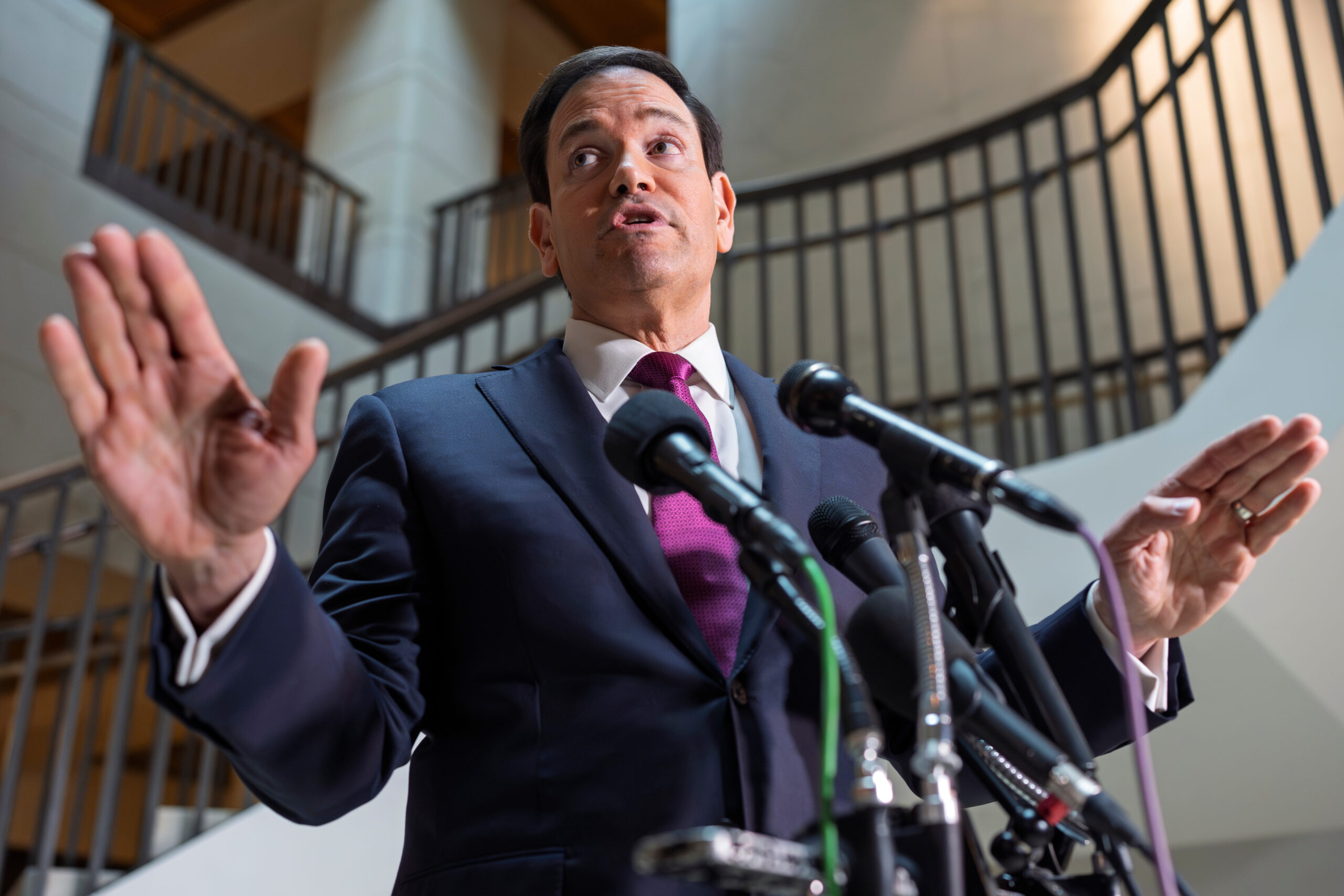
Secretary of State Marco Rubio offered a third line of reasoning. The United States, he said, knew Israel was going to strike Iran, which would lead to counterattacks against U.S. forces and potential casualties, and decided to strike first to minimize the risk.
Secretary of State Marco Rubio speaks to reporters as he arrives for an intelligence briefing with top lawmakers on Iran, at the Capitol in Washington, Monday, March 2, 2026. (AP Photo/J. Scott Applewhite)
Iran’s voluminous missile arsenal, which was thinned by U.S.-Israeli strikes last June but still considered dangerous, consists mostly of short-range missiles threatening U.S. bases and allies in the Middle East. Over the last two years, Iran has fired those missiles in response to attacks on its territory or interests, but not preemptively.
As for an intercontinental ballistic missile capable of directly reaching the United States, the Pentagon’s Defense Intelligence Agency reported last year that Iran could have that weapon by 2035 “should Tehran decide to pursue the capability.”
Meanwhile, more than three days into the conflict and after more than a thousandairstrikes, U.S. and Israeli weapons so far have largely left Iran’s main nuclear installations untouched, suggesting those sites — significantly damaged last June — are not currently seen as a priority threat.
The White House’s shifting public goals for the war, and questions about the intelligence behind them, have contributed to a lack of clarity about when Trump might declare an end to the largest military operation since the 2003 invasion of Iraq.
As the war widened across the Middle East, Trump said operations against Iran could go on for four to five weeks, or longer. In an interview with the New York Post, the president said he would not rule out sending in U.S. ground troops, but added that they are “probably” not needed.
President Donald Trump speaks during a meeting with German Chancellor Friedrich Merz in the Oval Office at the White House, Tuesday, March 3, 2026, in Washington. (AP Photo/Mark Schiefelbein)
Republican lawmakers have largely backed Trump’s decision to strike Iran, citing its long record of terrorism against the United States and its allies, and its nuclear ambitions.
But Rubio’s decision to pin the justification for the attack on Israel angered prominent MAGA commentators and conservative pundits, who said an operation of this magnitude should be done squarely in the interests of the United States.
“My own feeling is no one should have to die for a foreign country. I don’t think those four service members died for the United States,” said Trump advocate and podcast host Megyn Kelly, referring to the first four acknowledged U.S. deaths in the war, a toll that later rose to six. “I think they died for Iran or for Israel.”
In a social media post Monday night, Iranian Foreign Minister Abbas Araghchi piled on. “Mr. Rubio admitted what we all knew: U.S. has entered a war of choice on behalf of Israel. There was never any so-called Iranian ‘threat,’” he wrote.
This week, the House and Senate are poised to vote on measures that would attempt to halt further military attacks in Iran without lawmakers’ approval, as Democrats frame the conflict as an “illegal war” launched without a clear rationale or an authorization from Congress.
A Washington Post flash poll found that 52% of Americans oppose the strikes “strongly” or “somewhat,” while 39% support them.
Even as the administration’s public case for war shifted, several U.S. officials with access to classified intelligence assessments said there was no information before the strikes began indicating Iran has made sudden, worrisome progress in its missile or nuclear programs.
“There was no imminent threat to the United States of America by the Iranians. There was a threat to Israel,” Sen. Mark Warner (D., Va.), the vice chair of the Senate Intelligence Committee, told reporters Monday.
Others said Iran’s weakness, amid severe economic problems and protests that challenged the regime, provided an opportunity to strike.
A former U.S. intelligence official said American spy agencies were concerned by the speed with which Iran reconstituted its missile program after the 12-day war in June. “If you wait a year from now, maybe the regime will have stabilized, the missile program will be more populated and federated,” said the former official, who spoke before the strikes began and requested anonymity to discuss a sensitive subject.
With Trump a potentially lame duck president in a year’s time, “Right now is the sweet spot,” he said.
Multiple legal experts argued that none of the administration’s public explanations for the attacks appeared to constitute a legitimate rationale to enter into such a major conflict, especially without authorization from Congress.
“Having a weapons capacity is not the same thing as presenting an imminent threat of an armed attack,” said Tess Bridgeman, a former senior lawyer on the National Security Council during the Obama administration.
The first days of U.S. and Israeli airstrikes appeared focused on decapitating Iran’s leadership and blunting its ability to retaliate by destroying missile infrastructure and disrupting its military command network.
Rafael Grossi, head of the International Atomic Energy Agency, said Monday that the U.N. nuclear watchdog agency has seen no “major military activity targeting the nuclear facilities” in Iran since the U.S.-Israeli attacks began early Saturday. That assessment, he said, is based on information from Iran as well as multiple satellite images, including those provided “by the U.S. and others.”
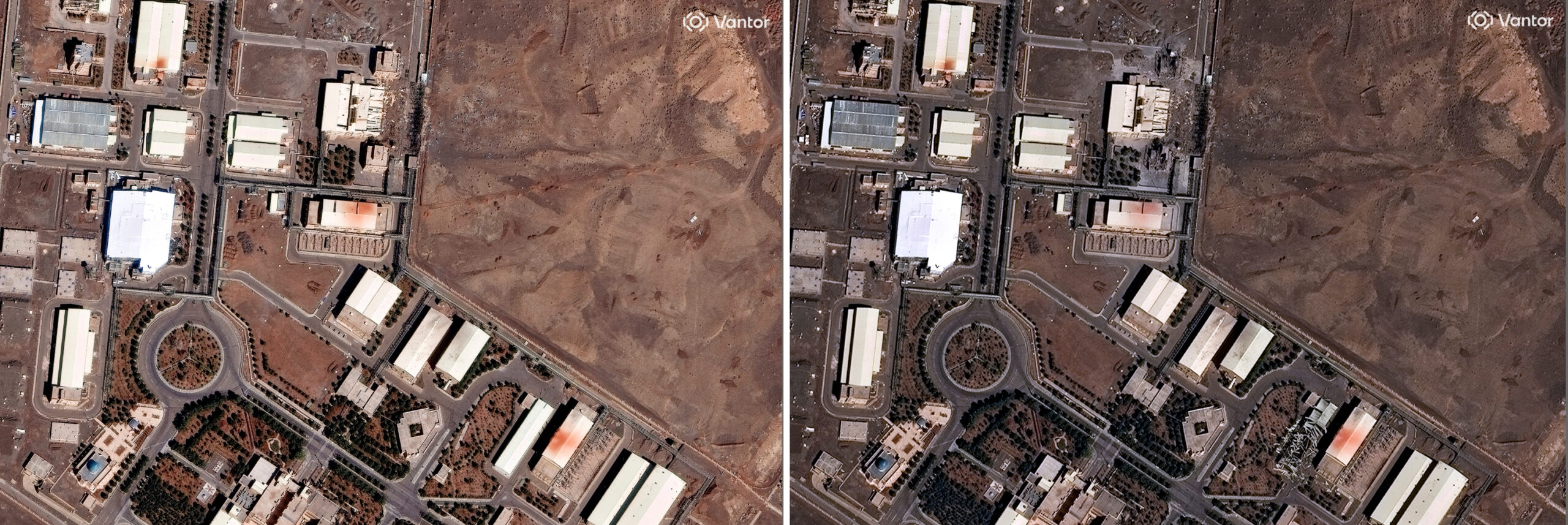
Grossi’s assessment came as Tehran charged there was an attack on its Natanz enrichment facility and as Israel warned civilians to evacuate areas around Isfahan, a major center of Iran’s nuclear program.
Satellite imagery of Natanz captured Monday showed damage to three buildings on the site, damage that Grossi indicated was fairly minor. Vehicle and personnel entrances to underground portions of the facility where centrifuges are kept appear to have been hit, according to the imagery.
The United States and Israel have long accused Iran of seeking to build a nuclear weapon under the cover of enriching uranium for civilian purposes. Last year’s strikes targeting Iran’s uranium enrichment facilities and other sites significantly delayed the program, U.S., Israeli, and IAEA officials said. Trump and Hegseth said Iran’s nuclear ambitions had been “obliterated.”
The Defense Intelligence Agency in a report produced before those strikes assessed that since 2019, in the wake of Trump leaving a nuclear deal with Iran that limited its nuclear program, the Islamic Republic had boosted uranium enrichment and expanded its stockpiles to the point that the time required to produce sufficient weapons-grade uranium for a first nuclear device had fallen to “probably less than one week.”
The actual time to produce a weapon ranged from two to four months, the agency estimated, according to people familiar with the assessments who spoke on the condition of anonymity because of the matter’s sensitivity.
The June strikes targeted Iran’s main enrichment plants at Natanz and Fordow. But the Iranians had been manufacturing centrifuge cascades long before the strikes and likely were storing them at other locations, the people said. “So their ability to do a breakout may or may not have been dependent at all” on the sites that were bombed, one person said.
Post-strike, the DIA and other U.S. intelligence agencies determined that the time Iran now needed to produce enough weapons-grade uranium to build a warhead in extremis — without rebuilding the damaged sites — had lengthened to between four and eight months, people familiar with the matter said.
Uncertainties about Iran’s nuclear program are heightened by the fact that IAEA inspectors left the country last July and haven’t returned.
“The return of the IAEA inspectors will be further delayed as a result of the renewed conflict, and without effective IAEA monitoring, the whereabouts and security of Iran’s highly enriched uranium will now become even more uncertain,” said Daryl Kimball, executive director of the Arms Control Association think tank.
In the meantime, Kimball said, “There hasn’t been any sign that Iran is rebuilding anything.”
The Republican-led House Oversight and Government Reform Committee released videos Monday of the closed-door depositions of former President Bill Clinton and former Secretary of State Hillary Clinton, part of its investigation into convicted sex offender Jeffrey Epstein.
Bill Clinton appeared before the committee on Friday, marking the first time a former president had been compelled to testify before Congress under a subpoena. During his lengthy deposition, the former president sought to distance himself from Epstein, saying he had no knowledge of Epstein’s crimes and stopped associating with him years before his first guilty plea, in 2008.
“There was nothing that I saw when I was around him that made me realize that he was trafficking women,” Clinton told the committee. “I saw nothing, and I did nothing wrong.”
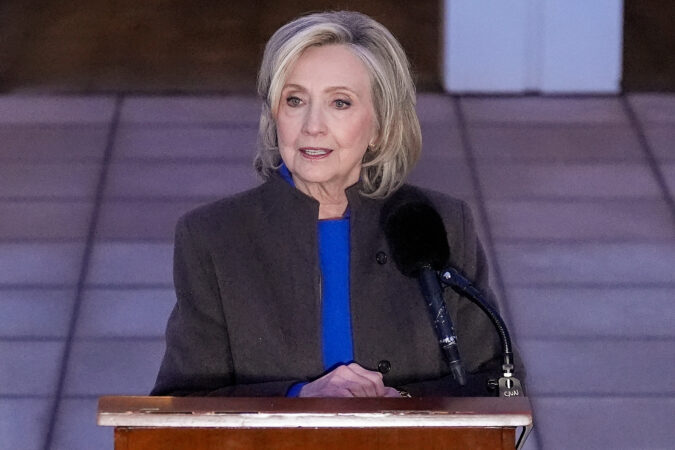
In her hours-long deposition Thursday, Hillary Clinton said she had no recollection of ever meeting Epstein and had known Epstein associate Ghislaine Maxwell only “casually, as an acquaintance.” Hillary Clinton derided the deposition as “political theater” and sharply questioned why she was being deposed.
House Republicans have issued subpoenas to several people — mostly Democrats — mentioned in the millions of files related to the federal government’s Epstein investigation that have been released by the Justice Department.
They have not called in President Donald Trump, who had a long-standing friendship with Epstein. The president has said that he knew Epstein socially in Palm Beach, Fla., and that they had a falling out in the mid-2000s. Trump has maintained that he did not know about Epstein’s criminal behavior.
Here are some of the highlights of the depositions:
Bill Clinton says Larry Summers connected him with Epstein
In his deposition, Bill Clinton said his former treasury secretary Larry Summers, then the president of Harvard University, first recommended that he strike up an acquaintance with Jeffrey Epstein.
As Clinton recalled, Summers — who recently resigned his positions at Harvard because of his association with Epstein — called Clinton shortly after he left office, in late 2001 or early 2002, when Clinton was setting up a charitable foundation.
Summers told him of “a man named Jeffrey Epstein” who had made a multimillion-dollar contribution to brain research, Clinton said, and described Epstein as an “information-hungry person” who owned a “massive airplane” and “wanted to spend some time talking to me about economics and politics.”
Clinton said he saw the plane as an economical means of doing international travel for his foundation.
After taking about a half-dozen trips aboard Epstein’s jet over a couple of years, Clinton said, he quit doing so because his foundation had launched and he had offers of transportation from people he knew better.
Clinton said he considered Epstein “an interesting man, but I didn’t think he was really interested in what I was doing.”
Clinton told the committee that he first learned of Epstein’s crimes “in 2008, when he was prosecuted. There was nothing that I saw when I was around him that made me realize that he was trafficking women.”
At another point, he told the committee, “I don’t believe any law enforcement agency has ever asked me [about Epstein], and I don’t know enough to volunteer anything.”
Hillary Clinton says she ‘knew nothing about’ Epstein
Hillary Clinton repeatedly testified that she did not know Epstein. She characterized him as not being on her “radar,” but was told in preparation for the deposition that she and Epstein both attended an event at the White House that was put on by the White House Historical Association.
“I have no recollection, in any way, of ever having any conversation at the White House or in any other place or on any kind of device of any sort. I knew nothing about him,” Hillary Clinton said when asked if she had any communication with Epstein.
She testified that she knew Maxwell “casually” as someone who dated an acquaintance of hers — Ted Waitt, a software developer.
Waitt, Clinton said, brought Maxwell as a guest to the wedding of the Clintons’ daughter, Chelsea, in 2010.
Clinton said that she did not consider Maxwell a friend and that her daughter would have been “friendlier” with Maxwell, but that she “had no idea” how often they interacted.
Clinton declined to characterize the relationship between Maxwell and Bill Clinton.
“He’ll have to answer that,” she said when asked if Bill Clinton and Maxwell were friends.
Bill Clinton reacts to hot tub photo during Asia trip
Bill Clinton was shown a photo of himself in a hot tub that was among the Epstein files and that has generated much attention.
He recalled that it was taken while he was in Brunei at the end of a long leg of one of his Asia trips.
He and his party, including Epstein, were guests at a hotel owned by the sultan of Brunei, with whom Clinton had established a warm relationship while he was president, and spent time in the hot tub and pool, which were located on the same floor as some of their suites.
“I swam around. I sat in the hot tub for five minutes or whatever it was. I got up and went to bed,” Clinton said.
Bill Clinton denies having visited Epstein’s island
A Democrat on the committee, Rep. Melanie Stansbury of New Mexico, grilled Bill Clinton on reports that he had been on Epstein’s island.
Clinton repeatedly denied he had ever visited the island. He also denied a report, cited by Stansbury, that he had visited Epstein’s home while he was president.
Bill Clinton says he’s not been in touch with Maxwell for a decade
Bill Clinton said his first recollection of meeting Maxwell was on his first flight aboard Epstein’s plane, when she was working for the financier.
Clinton’s relationship with her “lasted longer and was more extensive than my relationship with Mr. Epstein,” he said, because she started “going with” Waitt, the tech billionaire, who became a major donor to the Clinton Foundation.
Clinton said that, by his recollection, he has not been in contact with her for a decade or more.
He said he did not learn about her participation in Epstein’s sexual abuse of minor girls until “the first evidence against her came out in 2019.”
Hillary Clinton’s deposition was paused after photos were shared
Nearly 80 minutes into the deposition, Hillary Clinton’s lawyer interrupted Republican questioning, saying pictures of the former secretary of state testifying had been posted online.
The attorney argued that the pictures, which had been shared by Rep. Lauren Boebert (R., Colo.), violated the committee’s rules — and noted that the Clintons had repeatedly asked that the depositions be held in public.
Visibly frustrated, Hillary Clinton told Republicans that if they were going to be sharing pictures of the interview, she was “done.”
“You can hold me in contempt from now until the cows come home. This is just typical behavior,” she said. “We all are abiding by the same rules.”
The hearing was then paused. When the interview resumed, Rep. James Comer (R., Ky.), the committee’s chairman, said he advised Republicans that no pictures or videos of the deposition could be released.
The Clintons were accompanied by trusted lawyers
The Clintons were accompanied by two lawyers who for decades have been among the most trusted and protective allies in their orbit.
David Kendall is the Clintons’ longtime personal attorney, and Cheryl Mills was deputy White House counsel during Bill Clinton’s presidency and chief of staff to Hillary Clinton at the State Department. Both are known for their discretion and were part of the legal team that defended Bill Clinton in his 1999 Senate impeachment trial, in which he was acquitted.
A business that operates an industrial site in West Goshen Township that leaked hazardous discharge into a nearby creek could face fines, municipal officials said this week.
Several people spotted a “milky white” substance in Goose Creek, near Nields Street in West Chester, on Saturday. The borough received reports of it around 12:20 p.m., according to a news release from the borough on Monday.
The “illicit discharge” stemmed from a pipe at Atmos Technologies, at 216 Garfield Ave. in West Goshen Township, near Henderson High School. The leak was plugged within roughly an hour after reports were initially made, officials said.
It is not known how long the pipe had been leaking before residents reported it.
The Pennsylvania Department of Environmental Protection is investigating the spill to find out how much of it spread into the creek and what remediation efforts are needed to protect the public, officials said.
Atmos Technologies told DEP that chlorinated water was released to a containment area, Robyn Briggs, a DEP spokesperson, said in an email Tuesday. It mixed with a manufactured product known as “Long Duration Foam AC-645,” forming a foaming agent.
DEP alerted Aqua Pennsylvania, a public water provider that serves portions of Chester County. It continues to monitor the downstream flow, but said in a post online that residents’ drinking water was not affected.
People had reported fish kills — mass deaths of fish, usually prompted by environmental stress or pollution — and “noticeable pollution” of the creek over the weekend, but Briggs said no further fish kills had been reported since and the creek appeared clear, with some foaming, on Sunday and Monday.
This suburban content is produced with support from the Leslie Miller and Richard Worley Foundation and The Lenfest Institute for Journalism. Editorial content is created independently of the project donors. Gifts to support The Inquirer’s high-impact journalism can be made at inquirer.com/donate. A list of Lenfest Institute donors can be found at lenfestinstitute.org/supporters.
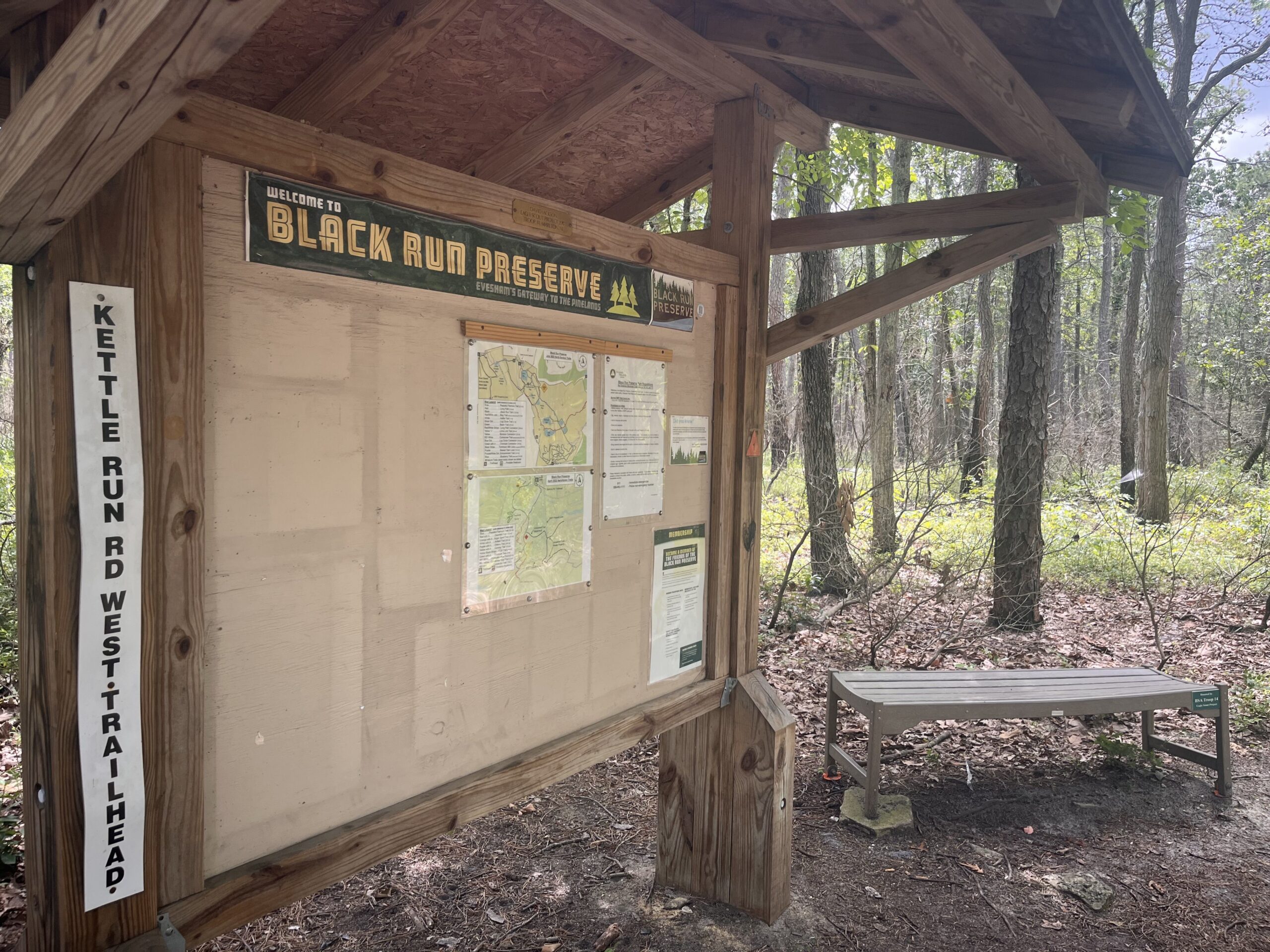
An 835-acre property in Burlington County once threatened by development will be sold to the New Jersey Conservation Foundation for $15 million, according to a deal announced Tuesday.
Evesham Township plans to incorporate the new property into its already popular Black Run Preserve, swelling the size of that 1,300-acre holding widely used by hikers, bird-watchers, and cyclists.
Developer Linda Samost has agreed to the sale, with the price $2.4 million less than the property’s full market value, the announcement said.
“We are eager to move forward with the project so that the community can experience and appreciate the natural beauty of this land for years to come,” Samost said in a statement.
File: A 2025 of a trail at Black Run Preserve off Kettle Run Road in Evesham, Burlington County, N.J.
Tuesday’s announcement noted, however, that while a sale contract has been signed, the foundation still needs to raise more money before taking ownership. It plans to launch a fundraising campaign with partners that will allow for public contributions.
The property has been the site of a fight over its future since 2024, when Kettle Run Investments LP, led by the Samost family, submitted plans to the New Jersey Pinelands Commission to build 250 single-family homes on a portion of the tract.
That plan drew vehement opposition from the community, the nonprofit Pinelands Alliance advocacy organization, and local officials.
At the same time, the Pinelands Commission was rezoning a large area from rural development (RD-3) to Pinelands Forest Area, which would have greatly reduced the amount of development that could have taken place on Samost’s property.
Linda Samost told The Inquirer last year that her “inclinations” were to have the land “benefit the community and the ecosystem, the environment,” rather than be developed.
But the price had to be right, and the New Jersey Conservation Foundation began negotiating with Samost.
In November, the Burlington County commissioners authorized $5 million from open-space funds to help with a purchase. The Pinelands Commission, an independent state agency, also approved a $3 million grant toward the purchase.
It was not immediately clear how much additional money the foundation needs to raise.
The Samost property is situated between Kettle Run, Tomlinson Mill, Kenilworth, and Egret Roads in Evesham.
It is part of New Jersey’s Pinelands and the source of the Black Run, a tributary that feeds Rancocas Creek. The property is habitat for numerous species, including the threatened Pinelands tree frog.
window.addEventListener(“message”,function(a){if(void 0!==a.data[“datawrapper-height”]){var e=document.querySelectorAll(“iframe”);for(var t in a.data[“datawrapper-height”])for(var r,i=0;r=e[i];i++)if(r.contentWindow===a.source){var d=a.data[“datawrapper-height”][t]+”px”;r.style.height=d}}});
Robyn Jeney, a New Jersey Conservation Foundation regional manager, said the preservation means “water quality, critical plant and animal habitat, and the overall ecological integrity of the area will be protected for generations to come.”
“This agreement marks a historic milestone for Evesham Township and a victory for every resident who treasures our natural landscape,” said Evesham Township Mayor Jaclyn Veasy.
Jane Dean, board president of the Friends of the Black Run Preserve, said the deal means “this place will remain as it should be, unbroken, instructive, and alive.”
Susan Grogan, executive director of the Pinelands Commission, called it “the best possible outcome for this property.” She noted the property has long been a “top target” by the commission for preservation.
CLEARWATER, Fla. — Kyle Schwarber was scheduled to talk with a Japanese television crew after batting practice on Feb. 22, just as the men’s hockey gold medal game at the Olympics went into overtime.
How’s that for rotten timing?
So, Schwarber did the interview from the Phillies’ dugout, where he could keep one eye on the game on the new 3,200-square foot video board in right field at BayCare Ballpark. And when Jack Hughes scored the golden goal for the Americans, well, Schwarber stopped in mid-answer and reacted as you might expect.
Schwarber conceded that he doesn’t watch much hockey in the offseason at home in Ohio. But he was transfixed by the Olympics, which featured NHL players and elevated the profile of the sport among even casual fans.
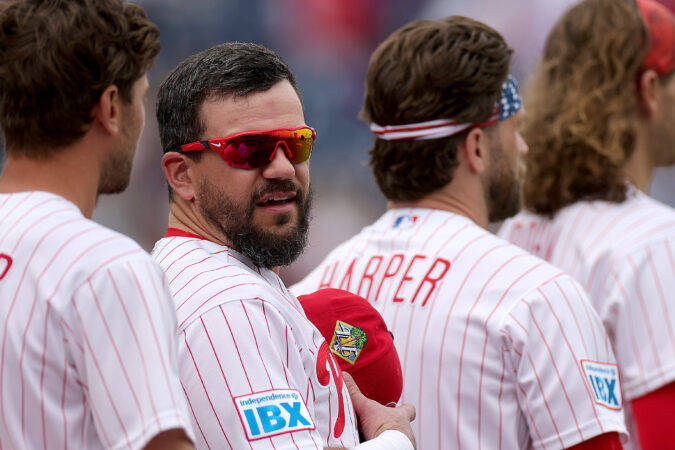
Over the next two weeks, Schwarber will play in the closest thing baseball has to an Olympic competition. He will join Phillies teammates Bryce Harper and reliever Brad Keller at the World Baseball Classic on the most talented U.S. roster ever assembled.
Before he reported to Team USA, Schwarber made a return appearance on Phillies Extra, The Inquirer’s baseball podcast,to discuss the WBC, the Phillies’ upcoming season, and more.
Here are a few excerpts from the conversation. Watch the full interview below and subscribe to the Phillies Extra podcaston Spotify or Apple Podcasts.
Q: I’ll start by congratulating you on a new baby, a new contract, a run to the national championship for Indiana football — during which you were the honorary captain of the Peach Bowl. Did anyone have a better offseason than you?
A: It was a great offseason. … It all started with the contract and re-signing here in Philadelphia. And obviously that’s a stressful time, just with all the unknowns. But I’m happy that we were able to find the deal for everyone. And I’m happy that this is where we wanted to be. And we got that all said and done. Then [our] baby girl came in on the 14th [of December] … Then Peach Bowl, captain, [Indiana] gave me the call for that. And that was like, I’m just going to stand there and not do anything and don’t get in the way. And it was a great experience. And then, obviously, a national championship, too. It was amazing. And then getting to represent your country for Team USA, and again, in the World Baseball Classic. It’s just been such a great offseason, and just looking forward to what this year has in store for everyone.
Q: You’ve been fortunate to make the playoffs every year of your career, except for one. When you’re with a team that has that expectation, do you ever have to remind yourself, or maybe remind your teammates to enjoy the ride?
A: You’re talking my language. You’re hitting the sweet spot. The beautiful thing about our game is that nothing’s ever given. And I always say my worst fear is packing up on, say, Sept. 30. It’s after Game 162, and you’re packing things up to go home. I’ve done it once and it’s just not fun, and I don’t want to do that ever again. I want to still feel like I’m giving everything I can to winning. That’s why I came back here. There’s a lot of other different reasons, but there’s also the reason that this team and our ownership and everything like that, front office, coaching staff, we’re all pushing for that same goal. And that is obviously, one, making the postseason, and two, holding up that trophy at the end of the year. Those are goals, right?
But there are the steps along the way. There is that, like we say, the quote-unquote, the journey, right? The whole process to it. There’s goals to that. It’s winning the division. If you don’t win the division, we’re finding our way into the postseason trying to weather any kind of storm that could come in a year. Because that’s the thing, is that every year presents a new challenge, and it’s never the same circumstances. …
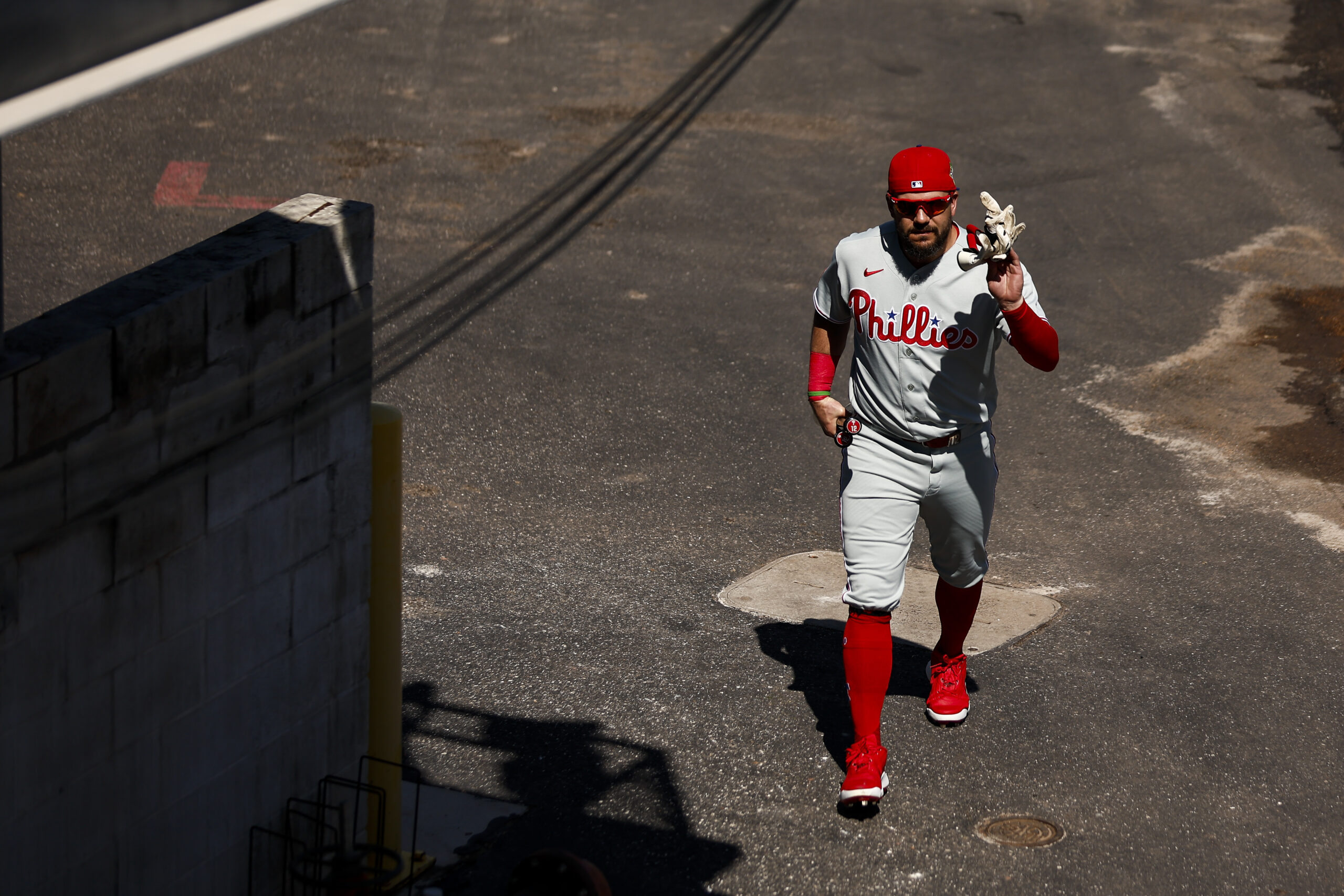
Kyle Schwarber’s spring training is on pause as he and other Phillies leave to play in the World Baseball Classic.
Q: One narrative in Philadelphia is that the Phillies are “running it back,” so to speak. You can agree or disagree with that. But I wonder, internally, how do you avoid the staleness that might set in from just being together as a core for so many years? And does the addition of some young guys like Justin Crawford, Andrew Painter, and eventually Aidan Miller help keep things fresh?
A: I don’t think it’s really ever going to be stale, just for the fact of … we have fun. We poke fun at each other all the time. It’s never like we’re walking in the clubhouse and we’re dreading walking in. That’s not the environment we have … If you go ask pretty much everyone in the clubhouse who’s been there for a while, I guarantee you that everyone’s looking forward to walking into the clubhouse doors and going, ‘What are we going to hear today? What are we going to talk about today? What’s the fun going to be poked at?’ … That’s kind of the environment that we have, and we enjoy that. … It was funny, we were talking about it the other day in the clubhouse, we just missed sitting down in the chairs and just talking B.S. to each other and laughing at each other. It is what it is. It’s never going to get stale. It’s not like we’re hypersensitive to that by any means.
And I think the youth stuff, you need that in teams. I think that’s very valuable to teams. … We were all the young guy somewhere else. [Aaron Nola] was the young guy here. We were all those young guys who came up and you’re trying to make your mark, and you need that on your team. Because there’s the whole [contractual] control part, but also just for these guys to be able to take their next steps and to keep submitting their name here in Philadelphia. That’s what we need. And we need them to not feel like they’re going to have to get very accustomed to the big league locker room. That’s why we’re trying to always be intermingling with everyone in our clubhouse in spring training.
You see it every year — injuries happen, and someone’s coming up, and you need them, whenever that person walks through the door, we need them to be them. They need to be the best versions of themselves. They’re getting called up for a reason, or they’re going to break [camp] with us for a reason. They’re good. They’re really good players. And I need them. Everyone needs them to be really good players.
… It’s fun getting to watch [Justin] Crawford take at-bats in camp. You get to see [Aidan] Miller here in the clubhouse, and you see [Andrew] Painter throwing his lives [bullpen sessions] and seeing how that’s been coming along. Excited to see how the two years after Tommy John [surgery] happens for him. He’s just got to go out there and get his feet wet again and compete. And now he’s making adjustments to get back to a couple different things, which I think is going to be exciting because he’s got the stuff. Crawford’s got the stuff. I’m excited to see what Miller is going to get to have. It’s fun to see these kids come up, and you want them to have instant success right away. And also realize, too, that we have still a lot of really good young players that are on our team still who have been playing here for a while.
Kyle Schwarber celebrates with third base coach Dino Ebel after hitting a three-run home run against Great Britain in the 2023 World Baseball Classic.
Q: Why do you think the interest in participating in the WBC was so high this time? It’s been difficult for Team USA in the past, especially on the pitching side, to recruit the best players. Did you get a sense that guys who maybe said no in the past were more eager to do it this time?
A: It’s a great question, because I only know me personally that when I got that call back 2023 it was an instant yes. And I know that there’s been a lot of buzz around the pitchers that we have got committed to play for [Team] USA. I know that there’s probably way more details than just someone wanting to say, ‘Yes, I’m in.’ I think that’s been written about and talked about. But also, too, I’m sure there’s even more things. But I think it’s a great team. Another stacked lineup. The lineup that we had out there in 2023 was an amazing lineup full of studs, MVPs, All-Stars, everything. And this lineup that we’re going to have, obviously, MVPs, All-Stars, and I think the cool thing is that there’s kind of a little bit more youth on it, too. We’re starting to see some of these younger faces that could really have those chances to be the future MVPs, or future perennial All-Stars, are going to be on this team as well. So I’m just excited about it.
When you look at it, from top to bottom, it’s such a deep roster, and I don’t know how you’re going to construct the lineup and how you’re going to decide who’s coming out of the bullpen and things like that. Or who’s starting what game. But I just know that I’m excited to get out there, get with these guys, and I’m excited to watch, I’m excited to see how guys prepare, hear the conversations, talk different things and baseball stuff, and try to take in some knowledge. This is what this is about, too. It’s obviously a great opportunity for all of us to go out there and compete and compete for our country, but also a great opportunity to be around a lot of great players and hear their experiences and hear how they prepare and other things too. So it’s going to be a great time.
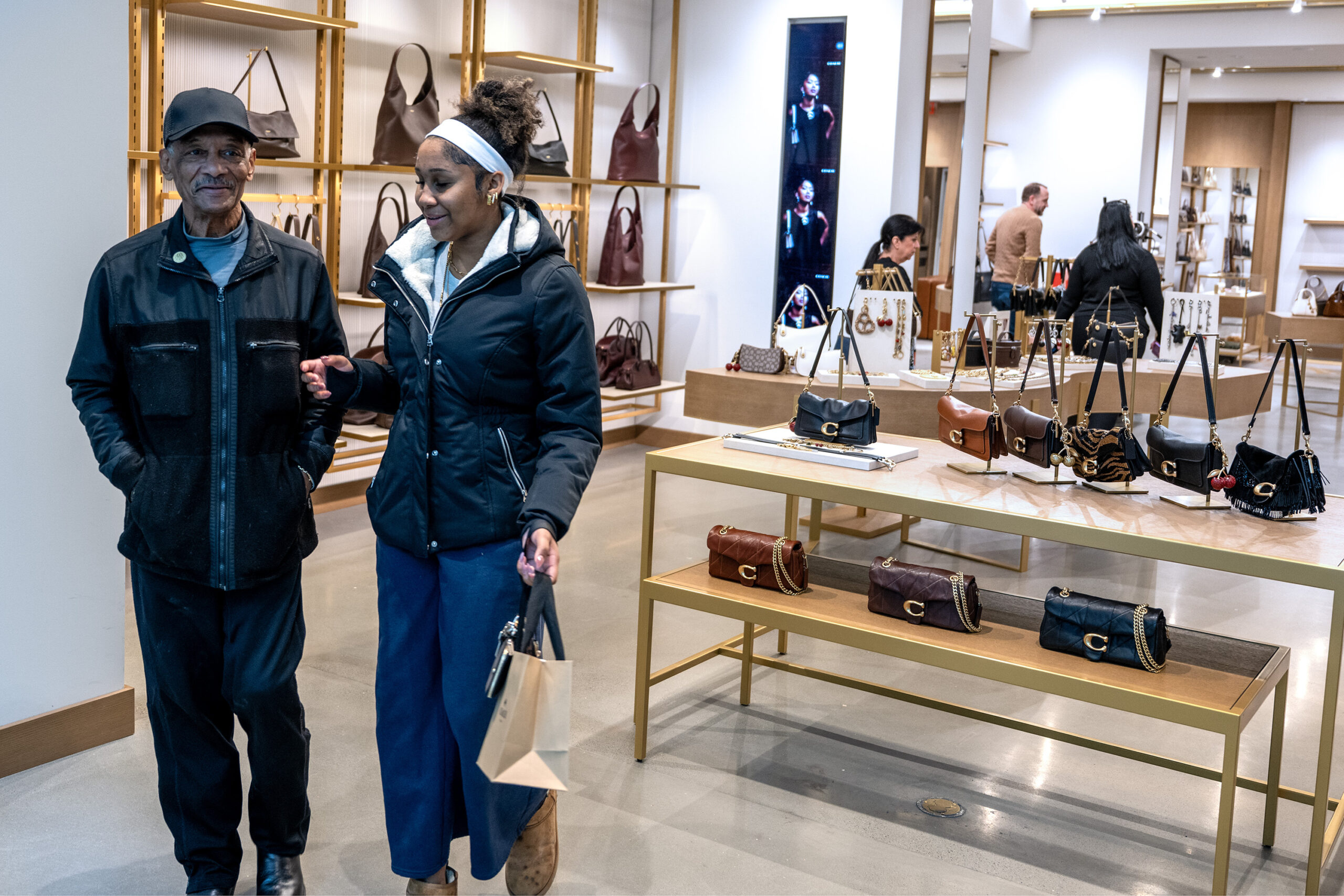
When Coach opened a store at the Cherry Hill Mall in November, mall executives were ecstatic — even though it’s been 85 years since the high-end retailer was founded.
Coach is as hot as ever. And its new shop in Cherry Hill is just another sign of the South Jersey mall’s success, according to leaders with Pennsylvania Real Estate Investment Trust (PREIT), which owns the complex.
“Cherry Hill is clearly a dominant fashion property,” Paula Charles, PREIT’S first vice president of leasing, said in a recent interview.
In the competitive Philadelphia market, “the better retailers have gravitated toward the better assets,” including Cherry Hill, added Joe Aristone, PREIT’s chief revenue officer.
They noted that top-tier retailers increasingly include legacy brands — long-established companies like Coach, Zara, and Levi’s, that are making a nostalgic, social media-fueled comeback with younger consumers.
Employee Alex Costa (right) assists Alessandra Bruno as she shops for purses with husband, Luke Baur, and their 20-month-old daughter, Rosalina, at the Coach store at the Cherry Hill Mall.
In the Philadelphia area, these retailers have maintained a presence along shopping corridors in Center City and at higher-performing malls like Cherry Hill and King of Prussia, which is owned by Simon Property Group.
Prior to the Cherry Hill opening, Coach operated shops in King of Prussia and Marlton, as well as off-price locations at the Philadelphia Premium Outlets near Pottstown, the Gloucester Premium Outlets in Blackwood, and the Tanger Outlets in Atlantic City. The brand also has an outpost at the Philadelphia International Airport.
Coach spokespeople did not return requests for comment about their investment in the region.
PREIT executives declined to comment on sales so far at their new Coach store, but said brand and mall executives are pleased with how the store is doing — and what that means going forward.
“Coach has had a strategy to make sure that they capture Gen Z,” a demographic that PREIT executives also want to attract and retain as they age, Charles said.
Why Gen Z and millennials love Coach
Joe Williams, of Magnolia, N.J., buys a handbag for his daughter, Samantha Williams, at the Coach store at the Cherry Hill Mall.
About two years ago, Breana Stringer, now 26, noticed that many of her friends were going out with Coach bags. And when she’d open TikTok, she said, the platform’s algorithm showed her videos of other users’ Coach collections.
Up until that point, the Fishtown resident had been an accessory minimalist: “I was very much an ‘if it doesn’t fit in my pocket, I’m not bringing it’” type of person.
But Stringer said she was influenced by her friends and TikTok to start buying Coach bags, mostly secondhand (though she has received new Coach bags as gifts). She has come to enjoy styling them with her outfits.
To Stringer, Coach’s appeal to Gen Z consumers is simple, she said: “They’re affordable in terms of a luxury name brand, and they’re vintage styles.”
New Coach bags start at $95 for a short shoulder bag, while larger purses can cost $500 or more. At outlet stores and secondhand shops, prices are lower.
In South Philly, Stephanie Gonzalez, 33, has restored and resold dozens of vintage Coach bags, mostly to Gen Z and millennial women.
She said these women see the Coach brand as “timeless.”
For Gen Z, “what is happening is they are really into Y2K, late-’90s, early-’90s nostalgia,” Gonzalez said. “TikTok has been a big hub for people” to share their love of Coach and brands that were popular in those years.
As for other legacy brands, Stringer said some of her Gen Z friends have also started wearing Cartier rings, which have been around since the mid-1800s and can cost more than $1,000. It’s a trend Stringer has yet to get behind, she said, because she has a tendency to lose small accessories: “I’m less likely to lose a bag.”
How legacy brands are boosting Philly-area malls
Products are displayed at the Coach store at the Cherry Hill Mall.
Cherry Hill Mall isn’t the only local shopping center to have welcomed new legacy retailers recently.
In the past six months, Abercrombie & Fitch, Columbia Sportswear, Lacoste, and New Balance have opened new stores at the King of Prussia Mall, and an Adidas outpost is also set to open there soon.
At the Philadelphia Premium Outlets, Hugo Boss, Marc Jacobs, and New Balance have opened stores in the past year, while the Gloucester Premium Outlets in Blackwood have added New Balance and Columbia locations. Like the King of Prussia Mall, both outlet malls are owned by Simon Property Group.
Typically, these re-energized brands are attracted to places where other similar companies have already set up shop, say the PREIT executives who help shape the tenant mix at the Cherry Hill Mall.
And they said this cyclical effect further cements the region’s dominant retail centers as shopping destinations.
“There is so much media out there as it relates to closed malls,” said Aristone, the chief revenue officer. Many of the surviving malls, however, are thriving, he said, thanks in part to these legacy brands.
Americans could start paying more at the gas pump, following the U.S.-Israel strikes on Iran.
West Texas Intermediate crude, an oil produced in the United States, surged 6.2% on Monday to $71.19 per barrel. As of Tuesday, it has spiked another 8%, hovering at around $77. It marks the oil’s highest point in over a year. But that’s just the beginning.
Experts say those surges reflect similar spikes in natural gas and at the gas station.
Here’s what we know.
Why are gas prices going up?
Known as the “crude oil effect,” when oil prices go up, so does the price of the fuel it makes. Crude oil must be processed at refineries to be turned into gasoline.
The conflict in the Middle East, which President Donald Trump said he anticipates could take longer than a few weeks, means the global supply of oil is disrupted, and, in turn, the price of a barrel of oil goes up. This causes the price of fuel to also rise.
“Whatever the time is, it’s OK,” Trump said. “Right from the beginning, we projected four to five weeks, but we have capability to go far longer than that. We’ll do it.”
Oil prices were already on the rise, up 17% this year. Experts say the increase is a direct effect of Trump’s rhetoric against Iran, along with his administration’s recent sanctions against the country.
And, as noted by John Quigley, a senior fellow at the University of Pennsylvania’s Kleinman Center for Energy Policy, it’s not just oil and gasoline; natural gas is also seeing a price increase.
And U.S. consumers will be hit hard, he says.
“It’s disrupting global oil and gas markets,” he said. “The war is quickly widening into a regional conflict, with the production capacity of multiple oil- and gas-producing nations being attacked by Iran in retaliatory strikes. This has already disrupted global oil and natural gas shipments.”
How much have gas prices increased since the strike on Iran?
As oil prices surged Monday, the impacts already started to trickle down to gas stations. This week, the national average of gas per gallon surpassed $3 for the first time since November.
Some states, including Illinois, Michigan, and Texas have already reported increases of about 5 cents per gallon.
As of Tuesday morning, the national average hit $3.11, marking the largest single-day increase since 2022, according to GasBuddy, a gas price tracking service.
Quigley says those increases could be just the beginning.
“Prices for natural gas in European and Asian markets have already spiked 50%. U.S. natural gas exporters will rush to take advantage of that, diverting domestic supplies to exports and pushing up domestic natural gas prices,” he said. “That will raise costs for home heating, and worsen already surging electricity costs, because over 40% of electricity generation in PJM, the nation’s largest grid, is fueled by natural gas.”
Do gas prices always rise during war?
Gas prices historically surge when conflicts happen because of a mix of supply disruptions, geopolitical uncertainty, and oil infrastructure attacks.
As detailed by NPR, major price surges occurred during the Gulf War, the 2003 Iraq invasion, and the 2022 Russia-Ukraine war.
How high could gas prices get?
GasBuddy petroleum analyst Patrick De Haan told multiple news outlets he believes some gas stations could charge as much as 30 cents more per gallon by the end of the week.
He estimated prices would be around $3.10 or $3.20 per gallon by the end of the week and anticipated they would hit $3.30 to $3.35 “in time.”
Based on the numbers at this moment (3/3/26, 945am ET), the average price of gasoline would likely climb to about $3.30-$3.35/gal in time. Any further changes in markets will change this, but if everything held still, that's where we'd likely be. Diesel closer to $4.25-$4.45.
What are the average gas prices in the Philadelphia region? How does that compare to the national average?
As of Tuesday morning:
The national average gas price: $3.11
The Pennsylvania average gas price: $3.21
The Philadelphia average gas price: $3.12
Which areas in the Philly region have the lowest gas prices?
The average price of gas in Philly is $3.12 per gallon as of Tuesday morning. Still, there are some spots with lower prices, according to GasBuddy.
Among the lowest appears to be an Eastcoast station in Fairmount (801 N. Broad St.) with gas going for $2.79 as of Monday evening. A Marathon in Southwest Philly (2450 Island Ave.) listed gas at $2.74 within the last 24 hours.
Among the highest appears to be a Gulf station in Kingsessing (5200 Woodland Ave.), priced at $3.29 as of Monday evening.
Who sets gas prices?
No one person sets gas prices. In reality, the price you see at pumps is the result of a combination of oil prices, supply and demand, oil refining costs, distribution, and competition.
A federal jury in Philadelphia awarded $1.67 million to the sons of a diabetic man who died in a city jail in 2023, finding the death was part of a pattern in which the Philadelphia Department of Prisons failed to provide access to healthcare for its population.
Louis Jung Jr. was found dead on Nov. 6, 2023, in his cell at the Curran-Fromhold Correctional Facility. The 50-year-old man died of a condition called diabetic ketoacidosis, in which blood becomes acidic due to high sugar levels.
His last known insulin dose was two days prior, according to medical records.
In a four-day trial presided over by U.S. District Judge Timothy J. Savage, attorneys for Jung’s sons argued the death was preventable and the result of jail staff ignoring their father’s medical needs.
“When the government keeps custody, the government has a duty for care,” Nia Holston, an attorney from the Abolitionist Law Center representing Jong’s sons, told the jury.
The jury on Monday found that Lt. Wanda Bloodsaw and the city violated Jung’s constitutional right to medical care during his incarceration. The seven jurors cleared a correctional officer, Gena Frasier.
The jurors further found the failure was part of a pattern under former Prisons Commissioner Blanche Carney’s leadership, which lasted from 2016 to 2024.
It is notable that a jury held the “highest echelons” of the city jails accountable, said Bret Grote, the legal director of the Abolitionist Law Center, who also represented Jung’s sons.
“This trial represented justice for the Jung family,” Grote said. “But it’s also a capstone from a very grim era in the Philadelphia Department of Prisons.”
YesCare, the company contracted to provide medical services in the jail, and three of its medical staffers settled for undisclosed amounts before trial. An additional nurse, working for a separate contractor, settled for $200,000.
The jury awarded Jung’s sons $1.5 million in compensatory damages. It also awarded $170,00 in punitive damages against Bloodsaw.
“We are reviewing the verdict and do not have a comment at this time,” Ava Schwemler, a spokesperson for the city’s law department, said in a statement.
Not ‘a single drop’ of insulin
Jung was arrested in December 2021 on robbery charges, and his diabetes was poorly managed while incarcerated, the lawsuit says. He was hospitalized for high blood sugar levels four days after he arrived at the correctional facility, and twice more during his first six months there.
In spring 2023, a judge sent him to Norristown State Hospital for psychiatric evaluation of his ability to stand trial.
He returned to Curran-Fromhold Correctional Facility on Oct. 28. During his intake, Jung’s blood sugar level was over four times higher than the upper limit of the normal range, according to the complaint.
Louis Jung Jr., who died in November 2023 in a Philadelphia jail.
On Nov. 5, Jung asked Frasier to see a nurse. The correctional officer brought a licensed practical nurse to Jung’s cell, where he lay down on the floor at the entrance, according to testimony and video surveillance.
Frasier and the nurse briefly stood over Jung and walked away.
A few minutes later Bloodsaw, who supervised the housing unit that day, stood over Jung as two incarcerated men put him back in his cell. That was the last known interaction between Jung and jail staff until his death roughly 20 hours later.
In that time period, the father of three did not receive “a single drop of lifesaving insulin,” Holston told the jury.
Frasier and Bloodsaw ignored signs of a medical emergency, and failed to follow a jail policy that requires a follow-up with a medical providers after an incarcerated person refuses to take medications, the attorneys said.
An internal investigation found that Bloodsaw did not comply with jail policies, and officials suspended her for 15 days. The suspension has not taken place yet, which attorneys for Jung’s sons said demonstrates a culture that does not emphasize accountability.
The attorneys showed to the jury the results of more than a dozen internal death investigations between 2018 and 2023 that concluded staff did not provide appropriate aid or check their units as required.
Carney testified that the incidents were not part of a systemic failure. The majority of correctional officers follow their duty with fidelity, the former commissioner said, and should not be painted with a “broad brush” because of the failures of a few.
Attorneys for the city told the jury that jail staff followed the medical assessment of YesCare staff, and that Jung was noncompliant.
“I don’t know why he was refusing his insulin,” city attorney Michael Pestrak said. “But he was.”
The city pointed to a 2023 report commissioned by Carney to review medical care in the jail, including diabetes care, and other policy changes as evidence that city officials were paying attention to medical needs and attempting to improve care.
Jung’s ex-wife, Evelyn Tyson, provided emotional testimony about the impact of his death. He remained her “best friend” after the divorce, she said, and was committed to their three children, including their eldest, who requires full-time care due to cerebral palsy.
“I don’t live anymore,” Tyson said.” I’m just existing.”
A group of special grants from the William Penn Foundation will help ensure continued access to the Please Touch Museum, Franklin Institute, and other Philadelphia nonprofit attractions for patrons of modest means and/or with disabilities.
William Penn has granted a total of $7.6 million to seven groups to underwrite the existing program providing access to $2 tickets.
Ticket prices are an obstacle for many, and arts and culture groups must weigh their desire to be open to all audiences, regardless of capacity to pay, against the reality of balancing their own budgets.
“Our general admission price is around $24 and we believe that’s competitively priced with other peer organizations,” said Please Touch Museum president and CEO Melissa Weiler Gerber. “But we want to make sure that we are committed to having folks come in the door and that not be a barrier.”
The William Penn money — $872,350 per year for each of the next three years — will support that ambition by underwriting the $2 tickets to the children’s museum in Fairmount Park.
The groups receiving the grants, in addition to the Please Touch and the Franklin Institute, are the Academy of Natural Sciences, Morris Arboretum and Gardens, the Philadelphia Zoo, and the Philadelphia Museum of Art, where the grant will support the museum’s restoration of pay-what-you-wish Friday evenings.
The William Penn money is being allotted on top of the regular funding the foundation gives to area arts and culture groups, which is expected to reach $32 million this year.
Art-Reach will also receive a grant. The group administers the program, which began in 2014 and provides $2 admission to area museums, gardens, theaters, musical groups, and other cultural offerings to those with low incomes and/or disabilities.
The six attractions were chosen because they are the most visited participants in the program, which is called Harvey and Virginia Kimmel Family Fund ACCESS Program.
But it’s worth noting that none of the six is a performing arts organization, and the program has about a hundred other groups of various kinds that could also use the support.
“I think that there is a lot of need for the rest of the partners in the program,” said Art-Reach executive director John Orr, adding that he hoped the William Penn action would be “catalytic” in inspiring other donors to support low-cost access to arts and culture groups.
Affordability was cited as a factor in deciding which cultural sites to visit by 91% of participants in a recent survey of ACCESS cardholders, Orr said.
At the same time, cultural groups are being buffeted by multiple challenges, said William Penn Foundation chief philanthropy officer Elliot Weinbaum.
“There have been lots of shifts and uncertainty around myriad funding sources. You think about federal sources — NEA, NEH, IMLS, National Science Foundation — all of them have seen big cuts and big uncertainty,” he said. “These institutions received some money from some combination of those entities. There have been shifts in corporate giving in the past year or so.”
Hence the foundation’s decision to step in with new funding for the work of these organizations.
Said Weinbaum: “We want to strengthen the institutions, support them, and make it clear that for William Penn Foundation it’s important that a population that’s really representative of Philadelphia continues to have access to these great places.”
For more information about how the ACCESS program works, visit art-reach.org.