Blog

  • Pakistan deploys troops and imposes curfew after deadly protests over US-Israeli strikes on Iran

    Pakistan deploys troops and imposes curfew after deadly protests over US-Israeli strikes on Iran

    ISLAMABAD — Pakistani authorities deployed troops and imposed a three-day curfew before dawn Monday in the northern cities of Gilgit and Skardu after several people died and tens were injured in violent protests following the killing of Iran’s Supreme Leader Ayatollah Ali Khamenei in U.S.-Israeli strikes, officials said.

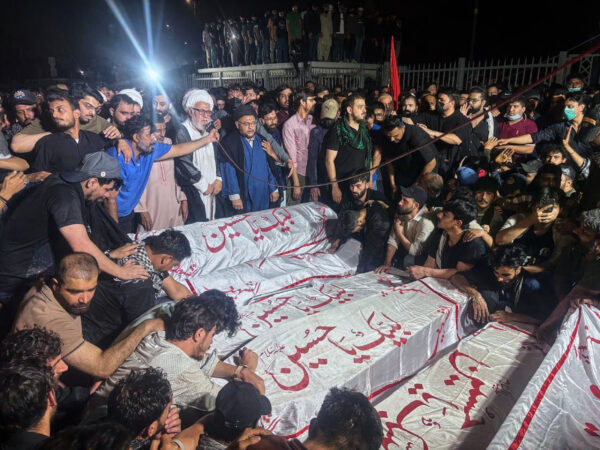
    Thousands of Shiite demonstrators on Sunday attacked the offices of the U.N. Military Observer Group, which monitors the ceasefire along the disputed Himalayan region of Kashmir, and the U.N. Development Program in Skardu city. Protesters also burned a police station and damaged a school and the offices of a local charity in Gilgit, according to officials. At least 12 people were killed and 80 others injured, said police in the Gilgit-Baltistan region.

    U.N. spokesperson Stéphane Dujarric said Monday protesters became violent near the UNMOGIP Field Station, which was vandalized. “The safety and security of U.N. personnel and premises throughout the region remain our top priority, and we continue to closely monitor the situation,” Dujarric said.

    Meanwhile, Shabir Mir, a Gilgit-Baltistan government spokesperson, said Monday the situation was under control and that the curfew would remain in place until Wednesday. Police chief Akbar Nasir Khan urged residents to stay indoors, citing “deteriorating law and order conditions.”

    Demonstrators in Pakistan’s southern port city of Karachi stormed the U.S. Consulate on Sunday, smashing windows and attempting to burn the building. Police responded with batons, tear gas, and gunfire, leaving 10 people dead and more than 50 injured.

    One person was also killed in clashes in Islamabad during an attempted march by Pakistan’s minority Shiites toward the U.S. Embassy. They were protesting in support of Iran, which is majority Shiite.

    On Monday, the U.S. diplomatic mission in Pakistan said its consulate in northwestern Peshawar city would close temporarily, while the embassy in Islamabad would continue providing all routine and emergency consular services for U.S. citizens.

    In a post on X, the embassy said that due to continued disruptions and traffic diversions around the U.S. consulates in Karachi and Lahore, both offices have canceled all appointments for U.S. visas and American citizen services scheduled for Tuesday.

    It added that normal consular operations would resume in Islamabad on Tuesday.

    Pakistani authorities have beefed up security at U.S. diplomatic missions across the country, including around the U.S. consulate building in Peshawar, to avoid any further violence.

    Also Monday, the Pakistan Stock Exchange plunged, with the benchmark KSE-100 Index falling nearly 10% amid rising geopolitical tensions following attacks on Iran. Investors sold off shares across sectors, with analysts citing heightened uncertainty as the main driver behind the sharp decline.

    Anger has been rising in Pakistan, particularly among members of the Shiite minority, following U.S. and Israeli strikes on Iran that killed Khamenei and other senior officials. While Shiites are a minority nationwide, they form a majority in some northern districts and in the province of Khyber Pakhtunkhwa bordering Afghanistan.

    Sunday’s unrest came amid ongoing cross-border fighting between Pakistan and Afghanistan, which began Thursday after Afghanistan launched attacks in retaliation for Pakistani airstrikes the previous Sunday. Pakistan has since carried out repeated operations along the border.

  • Snow and ice are expected Tuesday in Philly, but a warm-up is on the way

    Snow and ice are expected Tuesday in Philly, but a warm-up is on the way

    The remnants of winter are about to go on spring break — or at least yield to a “dirty warm-up” — but they evidently are going to take a messy parting shot at the region Tuesday morning.

    The National Weather Service has posted a winter weather advisory effective at 5 a.m. until 11 a.m. for the entire region for a mix of snow (not much) and ice beginning around daybreak before flipping to just plain rain.

    The precipitation is expected to start around daybreak as snow that won’t be plowable, or maybe even visible, but the more significant threat would be a glaze of freezing rain, said Nick Guzzo a meteorologist with the National Weather Service Office in Mount Holly.

    At most, snow would accumulate a few tenths of an inch, he said, transitioning to freezing rain and just plain liquid rain throughout the region before the morning is over.

    But coinciding with the peak morning commuting period, the timing is a concern, he added.

    Temperatures are due to be near freezing when the precipitation gets underway but climb into the mid-30s by midmorning. The March sun should make quick work of melting anything that freezes on the roadways.

    Then the temperature might not drop below freezing for the next 10 days, and make it to 70 degrees Sunday.

    But don’t expect it to be “bright and beautiful,” said Bob Larsen, senior meteorologist with AccuWeather Inc.

    A major pattern change is underway across the nation

    “It’s what we like to refer to as a ‘dirty warm-up,’” said Larsen. Here’s the dirt: It is due to be cloudy at least through Friday with rain possible Thursday and Friday and highs in 50s. Normal highs are in the upper 40s.

    The sun is due back Saturday with readings in the 60s, and perhaps into the 70s on Sunday, but with another chance of rain. Larsen said at least two days, and maybe four, next week are expected to feature highs in the 70s, before a cool down perhaps next Thursday or Friday.

    The surges of mild air are related to a major pattern change in the upper atmosphere. For the last several weeks, the atmosphere has aligned to favor cold, snow, and ice in the East and springlike temperatures in West.

    That’s about to reverse, as the West gets its turn with winter and the East gets a spring tease.

    But don’t put in the screens just yet, Larsen advises.

    “March can be a cruel month,” he said, and winter isn’t prone to go gently. “We’re not going to slam door on it yet.”

    He that some signs are pointing to a more-wintry end to the month, which would not be at all unusual.

    “In my mind there’s only two seasons, summer and winter,” Larsen said, and spring and fall are when they fight their turf wars.

  • Judge nixes latest policy requiring 7 days’ notice for Congress members to visit ICE facilities

    Judge nixes latest policy requiring 7 days’ notice for Congress members to visit ICE facilities

    WASHINGTON — A federal judge agreed on Monday to temporarily suspend the latest version of a Trump administration policy that requires members of Congress to provide a week’s notice before they can visit immigration detention facilities.

    U.S. District Judge Jia Cobb in Washington ruled that a group of Democratic lawmakers is likely to succeed in showing that the seven-day notice requirement is illegal and exceeds the government’s statutory authority.

    The judge said the Republican administration hasn’t cited any “concrete examples of safety issues posed by congressional visits without advanced notice.”

    Thirteen House members sued to challenge the Jan. 8 policy issued by Homeland Security Secretary Kristi Noem. Cobb had blocked a previous version of the policy in December. She ruled that it’s likely illegal for Immigration and Customs Enforcement to demand a week’s notice from members of Congress seeking to visit and observe conditions in ICE facilities.

    “Plaintiffs are undoubtedly frustrated with Defendants’ repeated attempts to impose a notice requirement,” Cobb wrote. ”But in taking further action, Defendants are required to abide by the terms of the Court’s order and act consistently with the legal principles announced in this opinion.”

    However, Noem secretly reinstated another notice requirement one day after an ICE officer shot and killed U.S. citizen Renee Good in Minneapolis. It was nearly identical to the version that Cobb blocked in December.

    Three days after the deadly shooting, three Democratic members of Congress from Minnesota were stopped from visiting an ICE facility near Minneapolis. The Department of Homeland Security didn’t disclose the new version of the policy until after U.S. Reps. Ilhan Omar, Kelly Morrison, and Angie Craig initially were turned away from the facility, according to plaintiffs’ attorneys.

    A law bars the government from using appropriated general funds to prevent members of Congress from entering DHS facilities for oversight purposes. Cobb found that it’s “highly likely” that President Donald Trump’s administration used restricted funds to promulgate and enforce the new policy.

    Cobb was nominated to the bench by President Joe Biden, a Democrat.

  • The Flyers made changes to their defensive structure that Rick Tocchet thinks will ‘help in the long run’

    The Flyers made changes to their defensive structure that Rick Tocchet thinks will ‘help in the long run’

    TORONTO ― Heading into the holiday break, the Flyers ranked ninth-best in the NHL at 2.75 goals against per game.

    Then the wheels started to fall off.

    Thanks in part to a six-game losing streak that saw them allow a league-worst 31 goals while scoring 12, the Flyers’ goals-against average ballooned to 3.90. Between Christmas and the Olympic break, it was the third-highest.

    Woof. That’s quite a plummet.

    So with time off, first-year coach Rick Tocchet and his staff went to work and modified the defensive structure.

    “We’re not strict man on man, but we’re trying to be more aggressive,” he said of the new system. “When you’re a younger team, I think you’ve got to give guys a little more, simpler rules.

    “I think that’s why I’ve decided to go a little bit differently, less reach for our team; I think that’s going to help in the long run. Now, when we change things a little bit — say graduate — we’ll go a little bit more complex, but I think right now, we’ve got to play simpler.”

    When Tocchet came to Philly, he brought his box-and-one defensive structure. During training camp, he called it “a very aggressive zone” defense where he wanted his players to double and triple up when they could to keep the puck on the outside.

    It worked. Until it didn’t.

    The opposition started to get inside, taking advantage of breakdowns and scoring more weak-side or backdoor goals. According to Natural Stat Trick, at five-on-five, up to the holiday break in December, the Flyers allowed the fifth-fewest high-danger chances (301) and second-fewest high-danger goals (26).

    From late December to the Olympic break, they still held tight, allowing the second-fewest high-danger chances (158). But they also gave up 26 goals, the fifth-most in the league. That’s a 16% shooting percentage in 20 games, rising from 8.6% across the first 36.

    “It’s pretty similar,” defenseman Travis Sanheim said of the new system, “just a couple of different reads for the forwards and helping us pressure down low. So, just end up killing plays a little bit quicker.”

    Changing a system, even slightly, is a big deal because one misread or forgotten change can cause some havoc. It’s still a work in progress, but in the three games since returning to action, the high-danger shooting percentage has dropped to 12.5% for opponents (three goals on 24 high-danger chances). On Saturday against the Boston Bruins, they allowed five high-danger chances at five-on-five, with the Bruins’ lone goal considered high-danger by Natural Stat Trick; it came off a hard seam pass that hit the leg of Charlie McAvoy and bounced in.

    “I think it might cut down on some of those weak-side goals, because [there’s] a little bit more man-to-man in certain scenarios,” Sanheim said. “And I think when it comes to some of those weak-side goals, that’s kind of been our issue with some of the reads. And if we can limit that, that would be huge for us.”

    Breakaways

    Forward Travis Konecny did not participate in power-play practice at morning skate, and according to Tocchet is a game-time decision. … Dan Vladař will get the start in goal. It will be his third start in four games since the 2026 Milan Cortina Olympic break, and he is coming off a masterful performance in the Flyers’ win against the Bruins on Saturday. … Forward Denver Barkey is expected back in the lineup on Monday after being a healthy scratch on Saturday against the Bruins. A native of Newmarket, Ontario, which is part of the Greater Toronto Area, the winger will have a large contingent in attendance for his first NHL game at Scotiabank Arena. … It is also the first game back in Toronto for Nikita Grebenkin, who was acquired March 7, 2025, in the deal that sent Scott Laughton north. … Defenseman Noah Juulsen did not participate in morning skate due to illness. … On Sunday, the Flyers acquired forward Boris Katchouk, 27, from the Minnesota Wild for defenseman Roman Schmidt, who was acquired from the Tampa Bay Lightning on Dec. 8. Katchouk has spent the majority of the season in the American Hockey League and was acquired by the Wild from the Lightning in late December. The 6-foot-2, 212-pound winger has 36 points across 179 NHL games with the Lightning, Chicago Blackhawks, and Ottawa Senators. Katchouk was also a member of the 2018 World Junior team that won gold for Canada.

  • House panel releases videos of Bill and Hillary Clinton answering questions about Epstein

    House panel releases videos of Bill and Hillary Clinton answering questions about Epstein

    WASHINGTON — Former President Bill Clinton distanced himself from convicted sex offender Jeffrey Epstein in closed-door depositions with lawmakers, according to videos that were released Monday by a House committee.

    The recordings of the depositions, which spanned hours over two days last week, show how Bill Clinton told the committee that he had ended his relationship with Epstein years before the financier entered a 2008 guilty plea to soliciting prostitution from an underage girl. Hillary Clinton told the committee she never even recalled meeting Epstein.

    The closed-door interviews before the House Oversight Committee were taken under oath Thursday and Friday.

    The Clintons’ testimony came as lawmakers are trying to meet demands for a reckoning over Epstein, who killed himself in 2019 in New York while facing charges for sex trafficking and abusing underage girls. High-status men around the world have been forced into resignations because of revelations about their relationships with Epstein, but so far there are few signs in the U.S. of serious legal consequences coming.

    The former Democratic president said he first remembered meeting Epstein when he flew aboard the financier’s private jet in 2002 for the Clintons’ humanitarian work, and they parted ways the year after.

    “There’s nothing that I saw when I was around him that made me realize he was trafficking women,” he told the committee.

    Epstein visited the White House numerous times during Clinton’s presidency and there are photos of them shaking hands. Clinton told lawmakers he did not recall those interactions.

    Democrats, Republicans question Bill Clinton

    Bill Clinton faced searching questions both from Republicans and Democrats about photos of the former president that have been released as part of the case files on Epstein. In response to a Democratic lawmaker’s questions about a photo that showed him in a pool with a woman whose face was redacted, the former president said he did not know the woman and did not engage in sexual activity with her.

    He said the photo was from a trip to Brunei for charitable work and a number of people in their travel party were swimming. He also said that he was not aware that one young woman who was ostensibly working as a masseuse and gave him a neck massage on one flight was in fact a victim of sexual abuse.

    Whether the subject was a note Clinton wrote for Epstein’s 50th birthday or their travel together for the Clinton Foundation, he described their relationship as little more than “cordial.” Bill Clinton described an arrangement with Epstein where the financier provided his private jet for humanitarian trips in exchange for Clinton discussing politics and economics with him.

    Larry Summers, who had worked as treasury secretary in Clinton’s administration, helped make that connection, Clinton said. But Clinton said they went separate ways after he sensed that Epstein was not deeply interested in the humanitarian work.

    “We were friendly, but I didn’t know him well enough to say we were friends,” he said.

    He said he had once visited Epstein’s townhouse in New York City, but said repeatedly he had never visited Epstein’s private island or other properties.

    Asked by Republicans whether they had talked about young women or girls together, Clinton responded emphatically: “No.”

    Clinton acknowledged he maintained a closer relationship with Ghislaine Maxwell, Epstein’s former girlfriend and confidant. But he maintained that was largely because of close mutual connections. He also said “she has to be punished” for her conviction on sex trafficking charges.

    What Bill Clinton said about Trump

    One line of questioning stirred up curiosity from lawmakers, and that was what Clinton had to say about President Donald Trump. He made clear he believed it was important for anyone, including presidents, to come forward and testify to their knowledge of Epstein.

    Clinton also shared how he and Trump had briefly discussed Epstein at a charity golf tournament more than 20 years ago. He said Trump had never “said anything to me to make me think he was involved in anything improper with regard to Epstein,” but also remarked that those two men had a falling-out over a real estate deal.

    Republican lawmakers left the deposition pointing to Clinton’s words and arguing that it showed there is no evidence that Trump ever did anything wrong in his own relationship with Epstein.

    Democrats, meanwhile, said Clinton’s testimony counters what Trump has said more recently about why he and Epstein had a falling-out. Trump has told reporters they had a disagreement because Epstein had hired people away from Trump’s Mar-a-Lago club in Florida.

  • Former Delsea Regional High student alleges sexual abuse by math teacher in the 1980s

    Former Delsea Regional High student alleges sexual abuse by math teacher in the 1980s

    A former Delsea Regional High School student has accused a math teacher of sexually abusing him years ago and is suing the South Jersey school system for failing to protect him.

    A lawsuit filed in Superior Court in Gloucester County on Friday alleges the former student was subjected to predatory conduct and sexual abuse by former teacher Cheryl Cousin in the 1980s.

    According to court documents, the alleged abuse occurred when the student, David Reeves, was a junior and senior and not yet 18. Cousin was a math teacher in the district, but he was not her student, the lawsuit said.

    Attorney Jeffrey P. Fritz said Cousin groomed Reeves for abuse using her position of power and trust, and district employees who knew or should have known about the abuse failed to stop it.

    “Schools have both a legal and moral obligation to protect children entrusted to their care,” Fritz said in a statement. “When school officials become aware of suspected abuse, the law requires immediate reporting to authorities and decisive action which didn’t occur here.”

    Cousin, reached for comment Monday, said she was stunned by the allegations. She has retired from the district and is not defendant in the lawsuit, though she is named in the complaint.

    “I think I’m in shock right now. I guess I better call a lawyer,” she said, declining further comment.

    Delsea Regional Superintendent Fran Ciolciola did not respond to email and voicemail messages. The school board’s solicitor, Frank P. Cavallo Jr., said the district had not received a copy of the lawsuit Monday and declined to comment.

    Reeves, 55, said he decided to use his name in the case to encourage other child sex abuse victims, especially male victims, to come forward. (The Inquirer does not identify victims in sexual assault cases without their consent).

    The alleged sexual assault occurred between the 1987-88 and 1988-89 school years, Fritz said. There were at least 20 alleged assaults at various locations, the lawsuit alleges.

    David Reeves is shown in his Delsea Regional High School senior year photo.

    Reeves, who is now a health and physical education teacher in Camden public school schools, said in an interview he was afraid to come forward until now.

    “I have nothing to be embarrassed about,” Reeves said. “I am a victim who is standing up and putting my name on it.”

    Married and the father of two, Reeves said the alleged abuse began his junior year when a fellow basketball team member told him that Cousin liked him and gave him her number. Cousin was the girls’ cheerleading coach, he said.

    Reeves said he visited Cousin’s apartment and the two began a sexual relationship that continued into his senior year. Cousin purchased two pairs of Air Jordan sneakers for him and let him drive her Camaro, he said.

    Reeves said the relationship was well-known in the school among students and teachers. Girls refused to date him because they believed he was involved with Cousin, he said.

    “It couldn’t have been any more well-known,” Reeves said.

    According to the lawsuit, the then-school Principal Frank Borelli called Reeves to the office to question him about their suspicions. Reeves said he didn’t want to cause problems for Cousin so he denied that he was involved with her.

    “I was a child. I was scared to death,” he said.

    Borelli later became the district’s longtime superintendent and currently serves on the school board. He is not named as a defendant in the lawsuit, but the school board is listed as a defendant. Borelli did not respond to a message seeking comment.

    The lawsuit also alleges that the district failed to make mandatory reports of suspected abuse to the state’s child welfare agency, according to the complaint.

    It was filed under the 2019 New Jersey Child Victims Act, which extended the statute of limitations to allow child sex abuse victims to sue their abusers and the institutions that protected them until they turn 55. Reeves turned 55 Saturday.

    The law made it easier for child sexual abuse victims to seek justice in civil court. Thousands of cases have since been filed, many of them involving public and private schools and the Roman Catholic Church in New Jersey.

    Experts say victims of sexual abuse often struggle to disclose the trauma they experienced until an older age, often between 40 and 55.

    Reeves said his wife of 16 years, Stacy, encouraged him to come forward with his allegations. He said he has suffered from post-traumatic stress disorder and has battled drug and alcohol addiction.

    He wants to advocate for other victims, especially boys. It is estimated that 1 in 4 girls and 1 in 6 boys experience some form of sexual abuse before age 18, according to Child USA, a Philadelphia-based children’s rights advocacy group.

    “It does not matter if I am male. I was a kid,” Reeves said. “It has affected me a long time.”

  • Trump tests a new approach in Iran: Regime change without owning the fight

    Trump tests a new approach in Iran: Regime change without owning the fight

    President George W. Bush used a solemn address from the Cabinet Room to tell Americans that Iraqi leader Saddam Hussein had been captured. President Barack Obama spoke to cameras when he announced that Osama bin Laden had been killed.

    After President Donald Trump’s attack on Iran killed its supreme leader on Saturday, he used a different messaging strategy — a written post on Truth Social.

    Trump has taken an approach to selling U.S. citizens on military action in Iran that sharply contrasts with his predecessors: He devoted three minutes of his 108-minute State of the Union address to the issue, spoke to Americans through social media posts and a pair of videos recorded at Mar-a-Lago but made no public appearances over the weekend since a Friday rally in Corpus Christi, Texas.

    The strategy might afford him flexibility in the coming days and weeks to avoid what former Secretary of State Colin Powell told Bush was the Pottery Barn rule — if you break it, you own it.

    From the outset, Trump has been careful to declare limits around the U.S. attack, saying he wanted to overthrow the current regime, but telling Iranians it was up to them to seize the opportunity to write their country’s next chapter. His communication strategy has reinforced those limits by creating a bit of distance — at least in imagery — between the president and the fighting.

    At the same time, however, Trump has adopted expansive rhetoric about the reasoning for his intervention that recalled the justifications used for earlier U.S. forays into the Middle East.

    “They have waged war against civilization itself,” Trump said in a six-minute video posted to Truth Social on Sunday in which he left the precise goals of the attack flexible.

    “We’re undertaking this massive operation not merely to ensure security for our own time and place, but for our children and their children, just as our ancestors have done for us many, many years ago. This is the duty and the burden of a free people.”

    It was his first on-camera acknowledgment of Supreme Leader Ayatollah Ali Khamenei’s death nearly 24 hours after he made his first written post about it.

    “I call upon all Iranian patriots who yearn for freedom to seize this moment to be brave,” Trump said. “I made a promise to you, and I fulfilled that promise. The rest will be up to you, but we’ll be there to help.”

    Middle East experts said Trump’s strategy could end up politically successful, pairing an airstrike-only approach with a flexible definition of what would constitute victory.

    “We have escalation dominance in Iran. We control the pace, the focus, the intensity of military conflict,” said Aaron David Miller, who advised Democratic and Republican administrations on Middle East issues. “We can escalate when we want, and we can presumably prevent Iranians from escalating, and so we can own Iran without the Pottery Barn rule going into effect. That’s what makes this so Trumpian.”

    Richard Haass, who was the director of policy planning at Powell’s State Department in the lead-up to the 2003 Iraq War, said Trump was “calling for regime change, but is not assuming the responsibility for it.”

    “It gives him an off-ramp, not having to see it through. So if it happens, he gets credit for it, if it doesn’t happen, he doesn’t get the blame for it,” said Haass, who is president emeritus of the Council on Foreign Relations.

    Still, there may be political risks to Trump’s sweeping rhetoric if the situation deteriorates, especially if the number of dead U.S. troops rises. So far in the operation, three have been killed and five injured, the U.S. Central Command announced Sunday. Another death was announced Monday.

    “Sadly there will likely be more before it ends. That’s the way it is,” Trump said in his Sunday video.

    White House officials say they owe nothing to past communications practice and that the president’s videos and written statements on Truth Social have reached a vast audience.

    If Trump had pursued a strategy similar to Bush’s approach to Iraq, in which he laid out an extensive argument for war, “the Ayatollah [Khamenei] would probably still be alive, because we would have been spending weeks and months leading up to this tipping off our adversaries, which would not have led to the killing of the Ayatollah yesterday,” White House press secretary Karoline Leavitt said.

    “Operational secrecy and security is the number one priority for the president,” she said.

    In addition to leaving the objectives flexible, the administration has also been vague about its justification for the attack, including in classified briefings for members of Congress.

    During a closed-door briefing with congressional staff Sunday, some aides said the administration provided no intelligence on an imminent or preemptive threat posed by Iran, according to people in the room who spoke on the condition of anonymity to discuss a classified briefing.

    When asked directly about potential threats, one briefer said Iran was prepared to retaliate against the United States, but such warnings fall short of the traditional tests for a legal basis to launch a preemptive attack on a country or decapitate its political and military leadership.

    U.S. officials told reporters on Saturday that Iran’s ballistic missile program posed a threat. International law would not typically support a military assault based on a country’s maintaining a conventional weapons program of that nature.

    Trump may have been more restrained in the lead-up to Saturday’s attack because he was giving more space for negotiations than Bush had offered Iraq, even as the U.S. military presence in the Middle East ramped up in recent weeks to the largest massing of force since the 2003 Iraq invasion.

    But for a president who rose to power in part on the shoulders of supporters who were weary of decades of U.S. wars in the Middle East, there may be political risk in launching major foreign actions and not bringing his supporters along. Last week, a Washington Post-ABC News-Ipsos poll found that among Trump voters, 46% supported the prospect of the president’s using the U.S. military to force changes in other countries while 22% were opposed and 30% had no opinion.

    White House officials have taken a far more restrained approach this year than last toward how they highlight the president’s foreign policy-related engagements. In 2025, he had a foreign leader in the Oval Office almost every week, ushering in reporters and taking questions in impromptu news conferences that highlighted his central role on the world stage. But since the beginning of the year, that practice has stopped, as the White House tried to steer closer toward a domestic agenda that would highlight positive aspects of the president’s economic record.

    Leavitt said the president put out the initial announcement about Khamenei’s death in the form of a written statement because he “was very busy yesterday in the situation room all day, monitoring it all night, and he was on the phone with our allies around the world and talking to other countries. And so the most effective way for him to get that message out yesterday was by a Truth [Social post], and obviously it was a statement heard around the world.”

    Trump’s Sunday video address offered a more traditional approach to Khamenei, embracing the victory on camera.

    “This wretched and vile man had the blood of hundreds and even thousands of Americans on his hands,” Trump said. “All over Iran, the voices of the Iranian people could be heard cheering and celebrating in the streets when his death was announced.”

    Administration officials make television appearances on Sunday morning shows nearly every week, but none made the rounds this time. A senior White House official said that wasn’t an effort to distance the administration from the fighting, but rather a measure of their need to monitor military operations from the Situation Room and from the president’s side at Mar-a-Lago. The official spoke on the condition of anonymity to discuss sensitive internal strategy.

    Rather than put administration officials in front of the cameras, the White House coordinated a message with congressional Republicans to speak on the shows, offering Secretary of State Marco Rubio on Saturday evening to brief them.

    “I thought the president’s eight-minute video yesterday was outstanding,” Sen. Tom Cotton (R., Ark.) told CBS’s Face the Nation on Sunday. “It laid out Iran’s 47-year campaign of terror and revolutionary violence against the United States and our people and really, the civilized world. I’m sure the president will speak more in the coming days, will have briefings to Congress.”

    Classified briefings to Congress are planned for Tuesday.

    Some supporters of tough action against Tehran said that it may take time to judge the final outcome of the military action — longer than the actual time frame of the bombing.

    “The question is going to be whether it’s good policy, and that will turn in part on American casualties,” said Elliott Abrams, who worked on Iran issues during the first Trump administration and on foreign policy in the Reagan and George W. Bush administrations.

    But, he said, “I caution critics that if this war ends in a week and the regime is still in place, it’s really too soon to say it failed. … If the regime falls in six months or 10 months or next year, everyone will have to acknowledge that this war brought it a lot closer and in retrospect, it will have been a great success, because I think getting rid of that regime will really change the Middle East.”

  • Hegseth insists the Iran conflict is ‘not endless’ and declares, ‘We fight to win’

    Hegseth insists the Iran conflict is ‘not endless’ and declares, ‘We fight to win’

    WASHINGTON — Defense Secretary Pete Hegseth spoke Monday to widening concerns that the U.S.-Israeli strikes in Iran could spiral into a protracted regional conflict by declaring: “This is not Iraq. This is not endless,” even as he warned that more American casualties are likely in the weeks ahead.

    While the Trump administration has cited Iran’s nuclear ambitions as the chief concern to be addressed, officials increasingly are pointing to the threat from Iran’s ballistic missiles as a key reason to launch the attacks as well as an opportunity to take out the government’s leadership and the sense that negotiations around the nuclear program have stalled.

    Trump said Monday that Iran’s conventional missile program “was growing rapidly and dramatically, and this posed a very clear, colossal threat to America and our forces stationed overseas.”

    Hegseth said at a separate press conference with Gen. Dan Caine, chairman of the Joint Chiefs of Staff, that the operation had a “decisive mission” to eliminate the threat of Iranian ballistic missiles, destroy the country’s navy, and ensure “no nukes.”

    “No stupid rules of engagement, no nation building quagmire, no democracy building exercise, no politically correct wars. We fight to win, and we don’t waste time or lives,” Hegseth said.

    Trump, Hegseth, and Caine have not suggested any exit plan or offered signs that the conflict would end anytime soon as the killing of Iranian Supreme Leader Ayatollah Ali Khamenei cast doubt on the future of the Islamic Republic and hurtled the region into broader instability. Caine said the biggest U.S. military buildup in the Middle East in decades would only grow because the commander in the region “will receive additional forces even today.”

    “This is not a so-called regime-change war, but the regime sure did change, and the world is better off for it,” Hegseth said.

    Trump, however, in video statements released after the strikes began, urged the Iranian people “to take back your country.”

    More American troop casualties expected

    The conflict has spiraled into the wider region, with Iran and its allied armed groups launching missiles at Israel, Arab states, and U.S. military targets in the Middle East.

    Six American troops have been killed, with Trump, Hegseth and Caine predicting more casualties. All were Army soldiers and part of the same logistics unit in Kuwait, according to a U.S. official who was not authorized to comment publicly and spoke on condition of anonymity.

    When asked about the six deaths Monday, Hegseth said an Iranian weapon made it past allied air defenses “and, in that particular case, happened to hit a tactical operations center that was fortified.”

    Eighteen American service members also have been seriously wounded, said Capt. Tim Hawkins, a spokesman for U.S. Central Command.

    “We grieve with you, and we will never forget you,” Caine said of the troops killed and their family members.

    The latest sign of the escalating upheaval came when, the U.S. military said, ally Kuwait “mistakenly shot down” three American fighter jets during a combat mission as Iranian aircraft, ballistic missiles, and drones were attacking. U.S. Central Command said all six pilots ejected safely from the American F-15E Strike Eagles and were in stable condition.

    Asked if there are boots on the ground now in Iran, Hegseth said, “No, but we’re not going to go into the exercise of what we will or will not do.”

    He said it was “foolishness” to expect U.S. officials to say publicly “here’s exactly how far we’ll go.”

    Trump told the New York Post on Monday that he wasn’t ruling out U.S. forces in Iran if “they were necessary.” He noted, “I don’t have the yips with respect to boots on the ground.”

    At the White House, Trump said the mission was expected to take four to five weeks but “we have the capability to go far longer than that.”

    Secretary of State Marco Rubio told reporters at the Capitol that the U.S. “will do this as long as it takes to achieve” its objectives and warned that “the hardest hits are yet to come from the U.S. military.”

    Hegseth also dismissed questions about the time frame and said Trump had “latitude” to decide how long it would take. “Four weeks, two weeks, six weeks,” he said. “It could move up. It could move back.”

    Pentagon gives justification for strikes

    In laying out a case for the strikes, Hegseth did not point to any imminent nuclear threat from Iran and said again that strikes by the U.S. and Israel last June “obliterated their nuclear program to rubble.”

    Instead, Hegseth pointed to threats from other weaponry that justified the operation: “Iran was building powerful missiles and drones to create a conventional shield for their nuclear blackmail ambitions.”

    He added, “Our bases, our people, our allies, all in their crosshairs. Iran had a conventional gun to our head as they tried to lie their way to a nuclear bomb.”

    Hegseth said that during negotiations leading up to the attack, Iranian officials were “stalling” despite having “every chance to make a peaceful and sensible deal.”

    He also justified the operation by describing Iran’s government as having started the conflict from its inception, declaring that for 47 years it has “waged a savage, one-sided war against America.”

    In a private briefing Sunday, Trump administration officials told congressional staffers that U.S. intelligence did not suggest Iran was preparing to launch a preemptive strike against the U.S., three people familiar with the briefings said.

    Trump, a Republican, had said the objective of the mission was to eliminate “imminent threats from the Iranian regime.” And senior Trump administration officials, who were not authorized to comment publicly and spoke on the condition of anonymity, told reporters Saturday that there were indicators that the Iranians could launch a preemptive attack.

    Military doesn’t specify Iran’s nuclear sites as targets

    As with the attack that dropped massive bunker-buster bombs on Iranian nuclear facilities last year, Caine said the military used B-2 stealth bombers in the new operation with a 37-hour round trip.

    He said the penetrating bombs were dropped on Iranian underground facilities” but did not specify that they were nuclear facilities. Nuclear sites were not among the types of targets on a list released over the weekend by U.S. Central Command.

    The administration says Israel and the U.S. have bombed Iranian missile sites and targeted its navy, claiming to have destroyed its headquarters and multiple warships.

    Caine on Monday referenced the use of cyber technologies, saying the U.S. “effectively disrupted communications and sensor networks” that left “the adversary without the ability to coordinate or respond effectively.”

    Without giving specifics, Caine said the military “delivered synchronized and layered effects designed to disrupt, degrade, deny and destroy Iran’s ability to conduct and sustained combat operations on the U.S. side.”

    Caine said Trump gave the go-ahead order for the strikes at 3:38 p.m. EST on Friday. That meant the president gave the green light when he was aboard Air Force One heading to Texas with Republican Sens. Ted Cruz and John Cornyn and actor Dennis Quaid.

  • Washington Square West historic district has been overturned in court

    Washington Square West historic district has been overturned in court

    The Washington Square West historic district, which covers 1,441 properties in Center City, has been overturned in a ruling by Court of Common Pleas Judge Christopher Hall.

    Approved in 2024, the historic district was the largest in decades, covering a variety of buildings that date between 1740 and 1985. It was supported by the nonprofit Preservation Alliance of Greater Philadelphia and the Washington Square West Civic Association.

    Opponents of the district, led by Washington Square West residents Jonathan Hessney, Colin Murphy, and Joshua Zugerman, contended that historic regulations would add cost burdens to property owners. In court, their lawyer, Dan Auerbach, argued against what he described as flaws in the Philadelphia Historical Commission’s consideration of the case.

    Auerbach took issue with the involvement of Emily Cooperman, a member of the Historical Commission, in drafting the nomination. He argued that her role in working on the case was improper, even though she recused herself from voting.

    Auerbach also argued that the nominators did not present substantial evidence at the commission meeting to support their claims that the large geographic area covered constituted a unified historic district.

    “There was literally no evidence to support that,” Auerbach’s legal brief says. “Nobody testified. The nominators seeking designation put no facts or evidence into the record.”

    In his one-page ruling, the judge appeared to agree with the challengers of the Washington Square West Historic District on those two arguments.

    In a brief footnote, containing the only explanation for his ruling, Hall described the nomination as “not in accordance with the law.”

    He cited an ethics provision in the Philadelphia code that no city officer or employee “shall assist another person by representing him directly or indirectly … in any transaction involving the city.”

    (function() {
    var l2 = function() {
    new pym.Parent(‘washwest_rescinded’,
    ‘https://media.inquirer.com/storage/inquirer/projects/innovation/arcgis_iframe/washwest_rescinded.html’);
    };
    if (typeof(pym) === ‘undefined’) {
    var h = document.getElementsByTagName(‘head’)[0],
    s = document.createElement(‘script’);
    s.type = ‘text/javascript’;
    s.src = ‘https://pym.nprapps.org/pym.v1.min.js’;
    s.onload = l2;
    h.appendChild(s);
    } else {
    l2();
    }
    })();

    In a phone interview, Cooperman said that she worked on the nomination largely because she had helped write a version of the case for a Washington Square West historic district that was presented in 2009, long before she sat on the commission.

    She said she believed that the small amount of paid work she did on behalf of the Washington Square West Civic Organization in bringing the 2024 nomination up-to-date was legal, as long as she recused herself from the case before the commission.

    “There have been other members of the commission that have had work before the commission, so that’s particularly surprising,” Cooperman said about Hall’s ruling. “That’s what the whole recusal aspect of the city’s ethics regulations are for.”

    Hall also agreed that the supporters of the historic district had not presented sufficient evidence to make their case.

    “The decision to designate the district, moreover, was not supported by ‘substantial evidence,’” Hall wrote.

    At the Feb. 19 hearing, Hall persistently questioned the city’s lawyer, Leonard Reuter, to present support for the Historical Commission’s ruling, dismissing his statements as “a conclusion” and not evidence.

    “At this time, the Historical Commission staff is working with the city’s Law Department to review the court’s decision and are preparing to evaluate their options,” city spokesperson Bruce Bohri said in an email. “We don’t have further comment beyond that right now.”

    Auerbach also argued that the historic merits of the case presented by the nominators to the commission were flawed, but the judge did not appear to rule on that claim.

    “Washington Square West was one of the most significant historical district designations in the city’s history,” Auerbach said in an email statement. “There was absolutely no evidence to support it. We are delighted that it has been overturned.”

    The appeal of the Washington Square West historic district is one of several recent cases against the Historical Commission.

    A judge ruled against a challenge to the Spruce Hill Historic District, a decision that is currently being appealed to Commonwealth Court. Another case against the Northwest Apartments Thematic Historic District — which covers 30 properties from the first half of the 20th century — has not yet been ruled on.

    St. Peter Claver’s School, in the Washington Square West historic district.

    Hall’s ruling will have no effect on cases that have already been decided.

    But Auerbach says it will require preservationists to be more careful in framing their cases: “Future nominations will have to be based on real evidence with procedures that far better protect property owners,” he said in an email.

    Historic nominations are frequently challenged, but the courts generally find in favor of the commission, trusting its expertise on historic matters.

    “This comes as a surprise and disappointment,” said Paul Steinke, head of the Preservation Alliance. “To our knowledge, the provisions of the city’s historic preservation ordinance with respect to designating historic districts were followed. We are confused as to what aspect of that process did not comply with the law.”

  • Trump’s war of choice with Iran makes a mockery of the Constitution | Editorial

    Trump’s war of choice with Iran makes a mockery of the Constitution | Editorial

    Donald Trump, the president of war, keeps killing people at home and abroad.

    Over the weekend, Trump presided over the assassination of Iran’s supreme leader. While many Iranians celebrated the end of Ali Khamenei’s 37-year reign of terror, the reckless gambit does not hide the fact that Trump violated the Constitution (again) by going to war without consent from Congress and unleashed more chaos.

    This was a war of choice by Trump, who was egged on by the bloodthirsty leaders of Israel and Saudi Arabia. The administration provided no evidence of an imminent threat from Iran.

    More alarming, Trump acted with no mandate, no plan, and no idea of what comes next.

    The bill is already coming due. At least six U.S. service members have been killed, and five others seriously injured. Trump blithely said more soldiers will likely die. Apparently, that’s the price of a senseless war started by an unstable leader.

    Oil prices jumped, and the stock market slumped, underscoring how Trump’s latest folly will cost Americans blood and treasure.

    The conflict has already spread to other countries across the Middle East, as Iran fired drones and missiles at Israel, Kuwait, Bahrain, Iraq, Oman, Syria, Qatar, and the United Arab Emirates. Dozens have been killed.

    Israel, the U.S.’s eager bombing partner, responded with airstrikes in Lebanon that killed at least 31 people. The volatile situation risks spinning out of control.

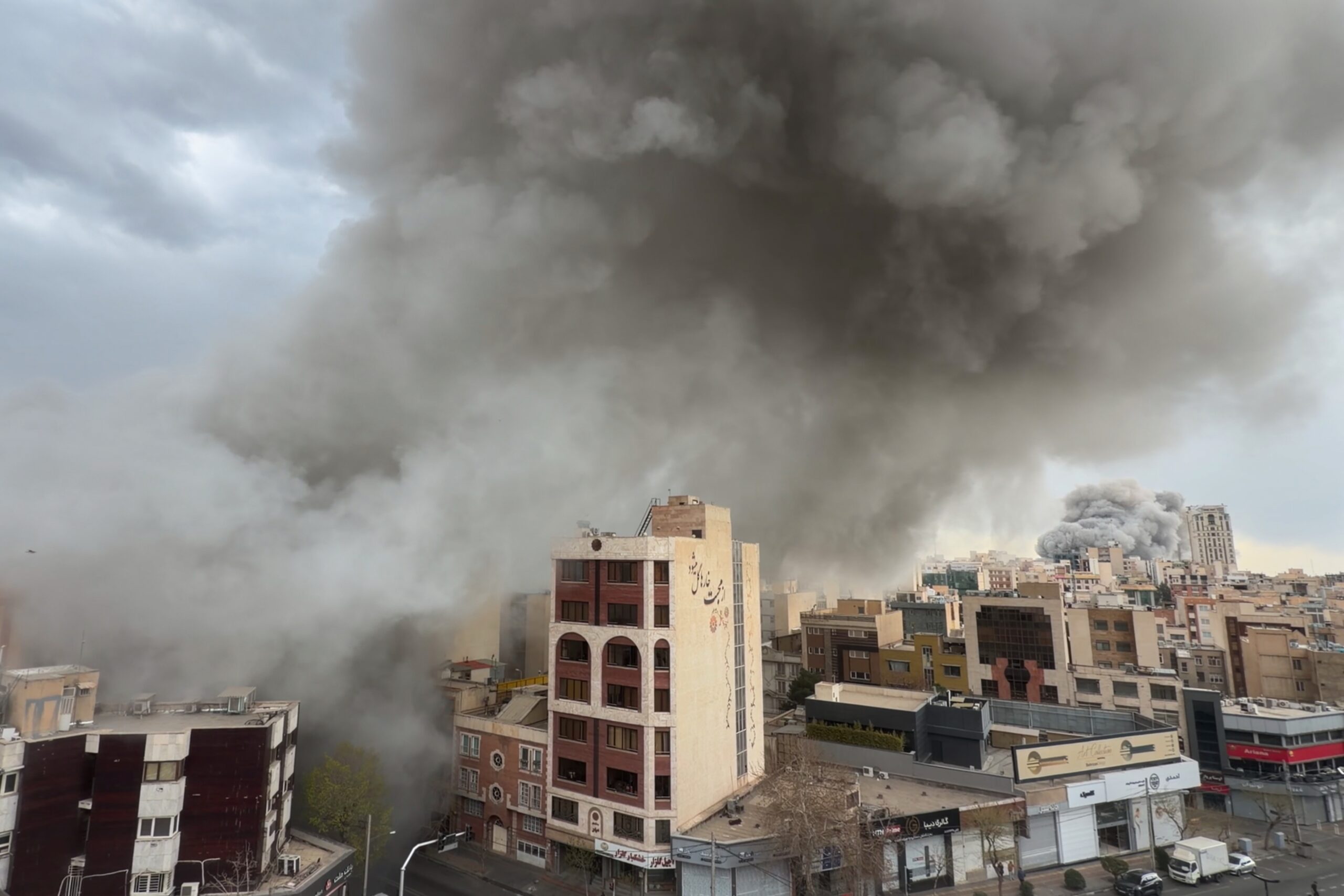
    Plumes of smoke from two simultaneous strikes rise over Tehran, Iran, on Monday.

    The FBI and the U.S. Department of Homeland Security are on high alert for terror attacks.

    Can either agency be trusted to keep Americans safe?

    Under Trump, scores of FBI counterterrorism agents have been fired, while DHS has undergone a mass exodus. DHS has been focused on arresting immigrants, killing Americans, and trampling the Constitution, while FBI Director Kash Patel was last seen pounding beers at the Olympics.

    Meanwhile, Pete Hegseth, the weekend TV commentator turned unfit and unqualified defense secretary, claimed that taking out Iran’s top leaders was not about regime change.

    That’s good, because the U.S. has a failed history when it comes to forcing its will on other countries, something presidents never seem to learn.

    So, what is the plan? No one knows — not even Trump, whose rationale keeps shifting.

    Trump urged Iranians to take control of their country. But that is impossible to do without weapons or outside support. Indeed, more than 30,000 Iranians were killed in January after they took to the streets.

    Defense Secretary Pete Hegseth listens to Chairman of the Joint Chiefs of Staff Gen. Dan Caine, during a news briefing at the Pentagon, Monday.

    Hegseth would not rule out sending American troops into Iran. That undercuts the president’s campaign promise to end costly forever wars like the ones in Vietnam — which Trump dodged — Iraq, and Afghanistan. Wars that cost thousands of lives and trillions in taxpayer dollars.

    Then again, the Trump doctrine is day-to-day and subject to hourly change, fits and starts, and overnight zigzagging.

    In fact, Trump now says the Iran war will go on until the U.S. achieves its objectives — whatever they are. Just last week, the president said Iran could avoid military conflict if it would end its nuclear weapons program.

    Iran agreed with negotiators last week to never stockpile enriched uranium. But even as the talks showed progress, Trump decided to start bombing while he hosted a $1 million-a-ticket fundraiser at his private club in Palm Beach, Fla.

    Let’s not forget Trump withdrew from a deal in 2018 that limited Iran’s nuclear enrichment and stockpiles of enriched uranium. He also claimed last year that Iran’s nuclear program was “obliterated” after a bombing campaign by the U.S. and Israel.

    Demonstrators rally in support of the U.S. and Israeli strikes on Iran, at the Iranian Embassy in Tbilisi, Georgia, on Sunday.

    Trump created all this chaos. An unserious president is leading the country into serious trouble. And the Republicans in Congress who have the power to stop him do nothing.

    Killing Iran’s leader comes on the heels of Trump ordering the illegal invasion and arrest of Venezuela’s president.

    That came after Trump’s illegal boat strikes in Central and South America that have killed more than 100 people without any evidence of wrongdoing.

    Meanwhile, Trump has threatened to take over Greenland, make Canada the 51st state, and attack drug cartels in Mexico. He continues to diss European allies, while doing nothing to stop Russia’s war crimes in Ukraine.

    Republicans who control Congress continue to defer to Trump, who is quickly turning the United States into a rogue state.

    Now, with no clear exit strategy in Iran, Trump appears poised to continue to try to bomb his way to a Nobel Peace Prize, while making a mockery of America.