Blog

  • Dear Abby | After months of couples therapy, things haven’t improved

    DEAR ABBY: I have been married more than 20 years to my best friend. She’s the love of my life. We have been through a lot together and have been in couples counseling for eight months. We almost divorced last year because of an emotional affair I had seven years ago. (She had a similar distraction last year.)

    We are friends and do everything together. I try to do everything right. I’m there for her emotionally. I have stopped drinking every day and developed a positive, mindful, and kind mindset. I got myself into shape physically. I earn a good living, help around the house, prepare dinner for all of us, and help with kids’ appointments and activities.

    The problem? My wife has physically withdrawn from me. Anything beyond hugs and kisses is too much for her. Physical intimacy happens less than once a month. I feel alone in my own home because I thrive on touch and affection but receive none.

    I love my wife and don’t want to be with anyone else. The counselor says things “may” turn the corner “in time.” In the meantime, how do I function while feeling undesired and rejected on a daily basis?

    — FORGOTTEN HUSBAND IN THE SOUTH

    DEAR HUSBAND: You have my sympathy. It is possible that as much as you and your wife like and love each other, you are better friends than spouses. Because after eight months of counseling with your wife nothing has changed and there are no gestures of affection and you feel alone in your own home, it’s time you found a psychotherapist of your own. It’s clear that joint counseling has not been helpful.

    ** ** **

    DEAR ABBY: How do I get my daughter-in-law, “Darlene,” to clean up after herself? I live in the house, pay rent, and help with the bills, but she constantly creates a mess in the kitchen and everywhere else. She fills the sink with dishes daily and never washes pots and pans, to the point I can’t use the kitchen to cook.

    Darlene doesn’t work and has nothing to do all day but create a disaster and wait for me or my son (her husband) to clean up behind her.

    My son and I each work full-time. He does all the laundry, cleaning and cooking. If I say anything, Darlene gets defensive and makes all kinds of excuses why she can’t. (It’s sheer laziness.) If I say anything to my son, he defends her because she whines and cries about how “tired” she is and claims to have all kinds of illnesses. (Her stomach hurts, she’s on her period or just too tired.). She stays up late every night and can’t wake up to get my grandson to school, so my son does it every day.

    I’m at my wits’ end, but I don’t want to create an environment where Darlene will ignore me and turn my son against me. Help!

    — OUT OF BALANCE IN THE SOUTH

    DEAR OUT OF BALANCE: You cannot change the unhealthy dynamic in your son’s household unless he and his wife agree to do so. From what you have written, that isn’t likely to happen. Be glad that you are fully employed, because the healthiest situation for you would be to make other living arrangements.

  • 1 person reportedly dead after 3-alarm fire in Bucks County

    1 person reportedly dead after 3-alarm fire in Bucks County

    One person has reportedly died after a three-alarm fire devastated several homes Monday evening in Birstol Borough.

    The fire erupted on the 300 block of Dorrance Street and reached three alarms, prompting a regional response by various firefighting companies.

    Police Chief Joseph Moors told NBC10 that first responder arrived at the scene around 6 p.m. and found two houses fully engulfed in flames. Several neighboring homes also were damaged.

    One person was killed and another was injured, Moors told NBC10.

    Video posted on social media by one person at the scene showed the electrical sparks bursting from the flames.

    <iframe src="https://www.facebook.com/plugins/post.php?href=https%3A%2F%2Fwww.facebook.com%2Fmitchellfire903%2Fposts%2Fpfbid0nphYN6paTxBZEktPxrxv9vHerJr7cgkf6Zsa4Q8qQboGUGwmqAVi1PypziyQLt5ml&show_text=true&width=500" width="500" height="683" style="border:none;overflow:hidden" scrolling="no" frameborder="0" allowfullscreen="true" allow="autoplay; clipboard-write; encrypted-media; picture-in-picture; web-share"></iframe>
  • Travis Konecny misses Maple Leafs game with upper-body injury, listed as day-to-day

    Travis Konecny misses Maple Leafs game with upper-body injury, listed as day-to-day

    TORONTO — After the Flyers’ win against the Boston Bruins on Saturday, goalie Dan Vladař said every player is a piece to their puzzle as they make a push for the playoffs.

    On Monday, they faced the Toronto Maple Leafs without key piece Travis Konecny.

    Ruled a game-time decision by coach Rick Tocchet after a morning skate that saw the forward not participate in power-play reps, Konecny is officially day-to-day with an upper-body injury.

    He also missed the Flyers’ loss to the Tampa Bay Lightning on Jan. 10 with an upper-body injury.

    Konecny has led the team in scoring for five of the last six seasons, including the last four, and this year leads the lineup in goals (23), assists (34), and points (57). He is second in power-play points (10) and is tied with three players for the lead in shorthanded points (2).

    The heart and soul of the team and one of its most consistent scorers, Konecny has registered at least a point in 40 of his 58 games. In his last 35 games, he has 40 points, including nine in five games heading into the Olympic break, and has three in the three games since the restart.

    Flyers right wing Travis Konecny has registered at least a point in 40 of his 58 games.

    Despite being banged up and playing through it — he tallied a hat trick as he gutted out and grimaced through a demoralizing loss to Columbus on Jan. 28 — the alternate captain had all but put the Flyers on his back.

    Averaging just over 19 minutes a night, Konecny is plus-10, rebounding from his minus-17 last season. Even though he has missed a handful of games, the Ontario native is still on pace to set a career high in points with 79.

    “I had a good break, got a chance to reset, get my mind in a different spot,” Konecny said Feb. 17, the first day the Flyers returned to the ice in Voorhees. “Kind of realize where we’re at as a team and what we need to do finishing the season here. For me, just getting to the top of my game, where I need to be to help our team, and I think everyone is in the same spot.”

    But not having him in the lineup will make the Flyers’ postseason push tougher. And Konecny said after the Flyers’ loss in Boston on Jan. 29 that, “I’m tired of missing the playoffs.”

    “I think it’s disappointing every year if you miss it,” he said in mid-February. “I think what’s gotten everyone to this point is everyone’s a competitor, everyone wants to compete in the big games. … It’s not going to be like the end of the world if it didn’t happen; I’d be frustrated.

    “But I know that the team we’re building, what we have, the plan, we’re going to be a playoff team, and I’m not worried about that. I know everyone believes in that in this locker room, so we keep on pushing. Hopefully, it happens, and we’re going to give everything to get there, and if it doesn’t, we reevaluate and get better in the summer.”

    With Konecny out, Owen Tippett was moved to the top wing alongside Christian Dvorak and Trevor Zegras during Monday’s game.

  • Philly kids get guaranteed recess, bathroom, and water breaks for the first time under a new school wellness policy

    Philly kids get guaranteed recess, bathroom, and water breaks for the first time under a new school wellness policy

    For the first time, Philadelphia School District students have guaranteed bathroom and water breaks. Recess is promised. Silent lunches and collective punishment are forbidden.

    Call it a victory for joy.

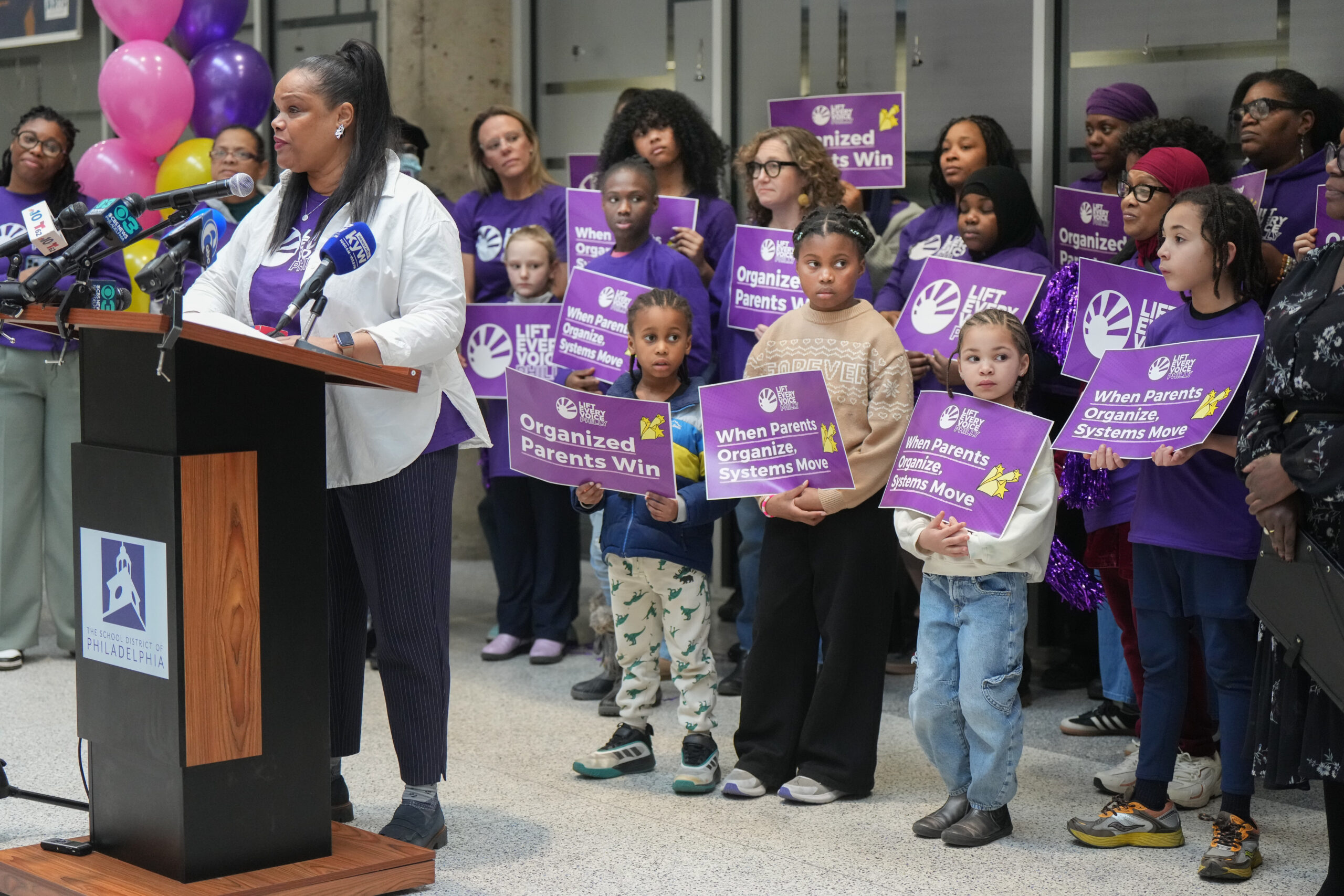
    Philadelphia’s school board just adopted the district’s first-ever comprehensive wellness policy, two years after a group of parents began pushing a “joy campaign” because, parent Jamila Carter said, “we refused to accept the unacceptable.”

    Jamila Carter speaks during a news conference celebrating the wellness policy / joy campaign at the school district building, in Philadelphia, on March 2, 2026.

    In the past, said members of Lift Every Voice — a grassroots, Black-led parent organization growing in numbers and clout in the city — students inside some district schools weren’t allowed to drink water during the day. Entire classes were punished for the misdeeds of one or two students. And sometimes, parents sent their children to school in diapers because children weren’t always allowed to use the bathrooms.

    The group of moms weren’t trained advocates, but they learned quickly, pushing the school board and district to codify rights that weren’t always guaranteed.

    Now they are — on Thursday night, the school board signed off on bathroom and water breaks and mandatory recess and movement breaks for every 90 minutes of seated time for elementary school students.

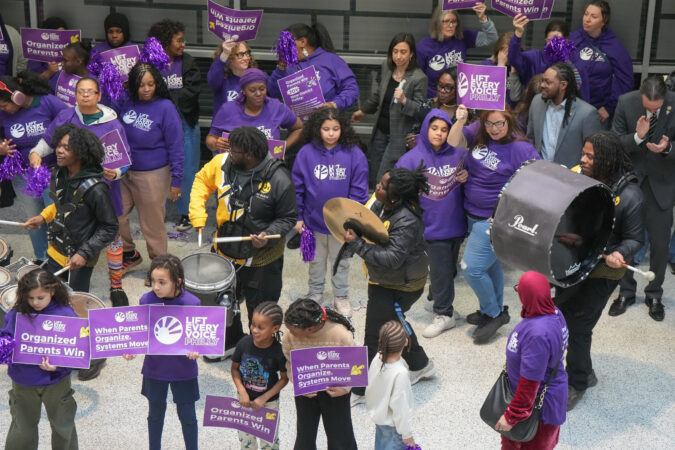
    With pom-poms and dancing, a drum line and cheers, Lift Every Voice members celebrated their victory at district headquarters Monday.

    But the two-year path to winning their demands was often sobering, and the district officials who locked arms with them at a news conference were slow at first to sign off on the policy.

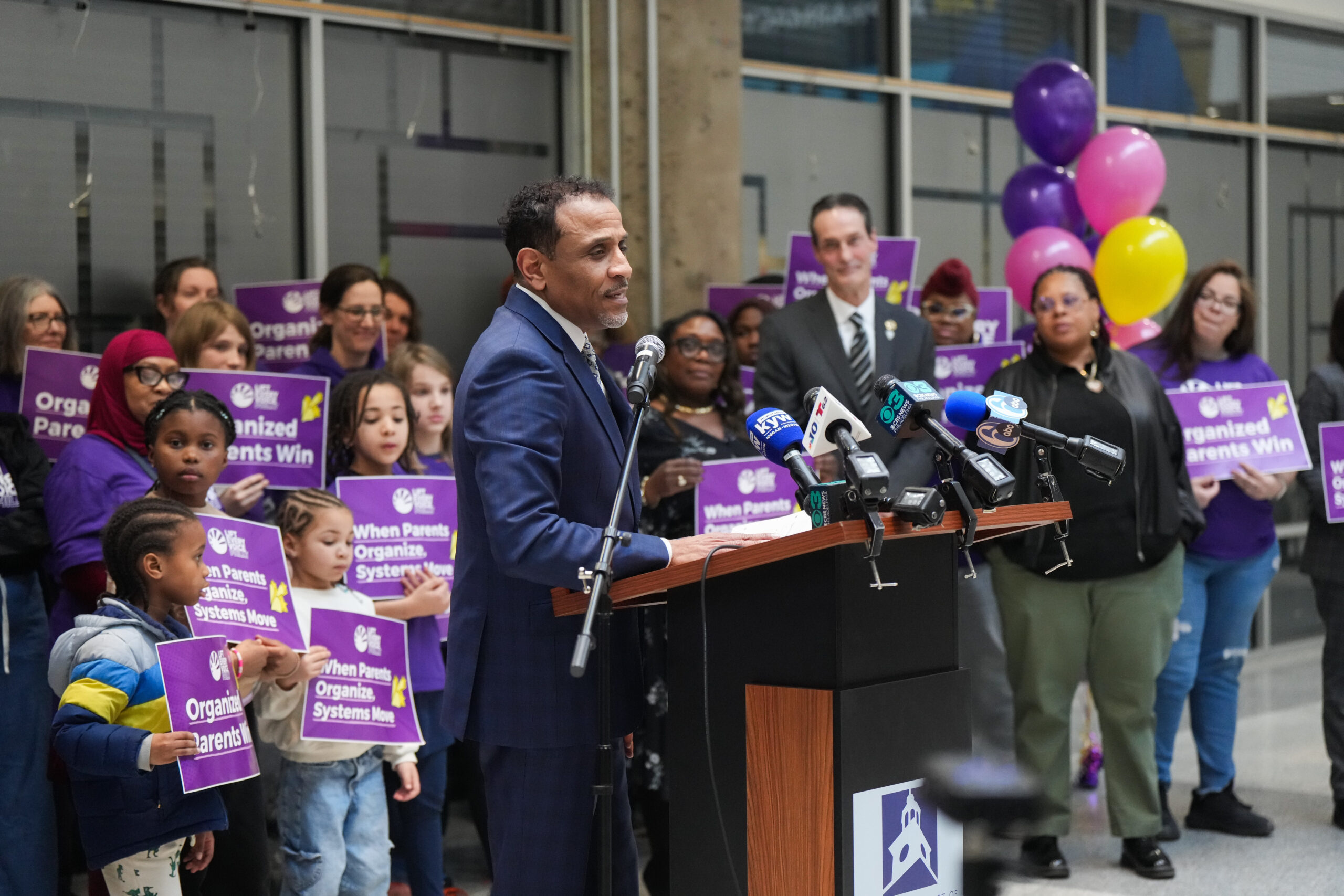
    Superintendent Tony B. Watlington Sr. speaks during a news conference celebrating the wellness policy / joy campaign, at the school district building, in Philadelphia, on March 2, 2026.

    Superintendent Tony B. Watlington Sr., who now routinely talks about joy as one of the district’s core values, credited the parents for pressing the issue.

    “You know what Frederick Douglass once said? He said, ‘Power concedes nothing without a demand. It never has and it never will.’ And so I want to thank the members of Lift Every Voice. I wish we had done this much sooner. But I’m pleased that we’re doing it today,” Watlington said.

    Amy Faulring, a parent of two district students, said it was a happy day, but the campaign taught parents a sobering thing.

    “Even in some of the best schools, these practices were happening, in buildings that families fight to get into and feel proud of,” said Faulring. “That tells us this wasn’t about one school, it was about culture, and culture does not shift by accident. When basic protections aren’t written down, they become negotiable. They depend on which building you’re in or which parent feels empowered enough to speak up. Codifying this into policy changes that.”

    The policy, Faulring said, “sets a clear floor, it creates consistency, and it makes dignity non-negotiable.”

    The priorities, said Lift Every Voice member LaTi Spence, came right from kids.

    “Our children told us what was wrong,” said Spence. “They told us what it felt like to sit in classrooms thirsty, how hard it was to have silent lunches. They told us where joy was missing.”

    Councilmember Kendra Brooks said the policy fixes things that parents and students had to tolerate for too long.

    “When we think about children holding their bodies because bathroom access is protected, or sitting for hours without movement, or rushing through silent lunches, that’s not discipline,” Brooks said, who was a parent activist before she was a politician. “That’s not discipline. That’s not rigor. It’s actually dehumanizing.”

  • Philadelphia is on the short list to host the 2028 Democratic National Convention

    Philadelphia is on the short list to host the 2028 Democratic National Convention

    Philadelphia is one of five cities on a list of finalists to host the 2028 Democratic National Convention, a major gathering that could generate millions of dollars in economic impact for the city.

    Party officials are also considering Boston, Atlanta, Chicago, and Denver, the Democratic National Committee announced Monday.

    The convention will be held from Aug. 7 to Aug. 10, 2028, according to the party. If Philadelphia is selected, the convention would likely be held at the Xfinity Mobile Arena at the South Philly stadium complex, the largest indoor event space in the city.

    DNC leaders and advisers are expected to make site visits this spring before selecting a host.

    The DNC said in its statement that, in picking a host city, party leaders will consider how each city uses “new and innovative approaches in response to the challenges and opportunities that arise from hosting an event of this magnitude.”

    The Republican Party’s 2028 convention will take place in Houston.

    Top Philadelphia Democrats and donors formed a host committee — called Pick Pennsylvania — in recent months and, in partnership with Democratic Mayor Cherelle L. Parker, submitted a bid to host the 2028 convention.

    In a statement, Parker said that Philadelphia’s selection as a finalist “reflects the strength of its proposal and the broad coalition of civic, business, labor, and community leaders committed to hosting a convention that is inclusive and memorable.”

    Parker, who is up for reelection next year, would no doubt play a major role in planning for an upcoming convention. So would Gov. Josh Shapiro, a Democrat currently running for reelection who is considered a contender for the 2028 presidential nomination.

    The president of the Philadelphia host committee is David L. Cohen, a prominent party stalwart, and the chair is Daniel J. Hilferty, the CEO of Comcast Spectacor, which owns the Xfinity Mobile Arena.

    Hilferty also led Philadelphia’s successful bid to host World Cup games this year.

    He said in a statement that “there is no city more excited, more invested and more prepared than Philadelphia to host the 2028 Democratic National Convention.”

    Philadelphia — the largest city in a critical swing state — last hosted a presidential nominating convention in 2016 at the South Philly arena, then called the Wells Fargo Center. Democrats that year nominated former Secretary of State Hillary Clinton, who was later defeated by Republican Donald Trump.

    Before 2016, the city hosted major party conventions seven times, including the 2000 Republican National Convention. The GOP that year nominated then-Texas Gov. George W. Bush, who went on to serve two terms in the White House.

    Former U.S. Rep. Bob Brady, the chair of the Philadelphia Democratic City Committee, said Monday that he had spoken multiple times to DNC leaders about the prospect of the city hosting the 2028 convention.

    “We got a great reputation from the last convention we had,” Brady said. “Plus we’re going to show off the city very well this summer, which will really give us a good look.”

    The news that Philadelphia is again a finalist to host the DNC is a welcome development for the city’s tourism and hospitality industry, as party conventions draw thousands of visitors and can be a boon for spending in the city.

    The 2016 event generated $230.9 million in economic impact, according to the Philadelphia Convention and Visitors Bureau. Of that, about $132.9 million came from direct convention-related spending, and $11.1 million was generated by state and local taxes. That convention attracted more than 5,000 attendees and some 29,000 other visitors, leading to a record-breaking year for hotels in Center City, the bureau reported.

    In this July 28, 2016 file photo, then-Democratic presidential nominee Hillary Clinton walks on stage at the arena in South Philly to accept the nomination of her party on the final night of the DNC.

    If selected, Philadelphia may be uniquely positioned to host an influx of visitors.

    The city’s hotel supply has expanded since the last time it hosted a DNC — and there are more than 19,000 hotel rooms in the city, according to Visit Philadelphia. That’s an increase from about 16,000 available in 2016.

    The city has also invested millions of dollars on improvements to public spaces, transit hubs, and security ahead of several major events this year, including World Cup games, the MLB All-Star Game, and the commemoration of the 250th anniversary of America.

    Conventions are also major logistical undertakings. Attendees include high-profile politicians and celebrities, and protests often form outside the events. The federal government has over the last two decades designated both parties’ nominating conventions as National Special Security Events, meaning they are deemed at high risk for terrorism and require federally led security.

    In Chicago in 2024, the U.S. Secret Service led security planning alongside 16 other public safety entities, according to a local NBC affiliate. The law enforcement and security plan included designated protest zones, airspace monitoring, and traffic control.

    Host committees are also responsible for raising millions of dollars to pay for parties, transportation for delegates, construction and venue upgrades, as well as other logistical services such as consultants, accountants, and communications staff.

    In 2016, the Philadelphia host committee raised about $85 million — $10 million of which came from taxpayers in the form of a state grant. Other top contributions came from corporations, unions, and wealthy individual donors.

    The Chicago host committee two years ago raised about $97 million, according to the Chicago Sun-Times. The city’s tourism bureau estimated the 2024 convention generated $371.4 million in economic impact.

  • A Montco man is charged with soliciting sex with a 15-year-old girl after paying for pictures of her feet

    A Montco man is charged with soliciting sex with a 15-year-old girl after paying for pictures of her feet

    A 76-year-old Hatboro man has been charged with allegedly soliciting sex acts with a 15-year-old girl after paying her and her younger sister for pictures of their feet, Montgomery County District Attorney Kevin R. Steele said Monday.

    Dennis Reilly was arrested Friday and charged with multiple sex-related offenses. He was being held at the Montgomery County Correctional Facility in lieu of $99,000 cash bail, Steele said.

    On Thursday, two adults went to the Hatboro police station to report an alleged interaction between a man and a 15-year-old girl, Steele said.

    One of the adults, whose son is in a relationship with the teen girl, said he learned that she and her younger sister were recently outside walking a dog when they were approached by a man who was later identified as Reilly, according to the affidavit of probable cause.

    They were having a conversation when Reilly allegedly asked about the socks they were wearing, and this interaction led to Reilly paying the girls “around $100″ for pictures of their feet, according to the affidavit.

    The father of the 15-year-old girl’s boyfriend learned the girl was allegedly receiving multiple texts from Reilly asking for more photos of her feet, the affidavit said. The father then texted Reilly from his own phone pretending to be her and saying she had a new phone; thus, the teen would no longer be getting Reilly’s texts on her old phone.

    The father had a text exchange with Reilly that allegedly showed Reilly wanted to meet the girl to take more photos, specifically asking that she wear the “shoes you wore to school,” according to the affidavit.

    A Hatboro detective then used the father’s phone to continue pretending to be the teen girl and asked Reilly if she could do more to make $300, the affidavit said.

    Reilly allegedly made sexually explicit suggestions for what he wanted in exchange for the additional money and arranged for a meeting at a Wawa in Hatboro. The detective confronted Reilly at the Wawa and revealed Reilly had been texting with the police, the affidavit said.

    Reilly allegedly admitted he had a “foot fetish,” but he claimed he had not intended to go through with any sexual contact with the girl, the affidavit said.

    The detective asked to see the alleged pictures on Reilly’s phone of the girl’s feet, and Reilly “then accessed his cell phone photo library where I was able to see a large quantity of images of feet,” including the 15-year-old girl’s, the detective said in the affidavit.

    Reilly’s phone was taken as evidence.

    Hatboro Police Chief Mark Ruegg said that anyone who believes they have had a similar encounter with Reilly can call the Hatboro police at 215-675-2832.

  • Subscriber exclusive: Audio articles

    Subscriber exclusive: Audio articles

    Busy morning. Coffee in one hand. Phone in the other. Train pulling in.

    You’ve got places to be. Now your news can keep up!

    Introducing Audio Articles — a subscriber-exclusive way to listen to The Philadelphia Inquirer.

    LISTEN TO THIS

    Now on Inquirer.com, when you see “Listen to this article” near the top of a story, just press the “play” button and experience The Inquirer in a whole new way.

    Watchdog investigations, accountability reporting, deep-dive features — fully narrated and perfect for commuting, walking, cooking, or just resting your eyes.

    You’ll even see the run time up front so you know exactly how long it’ll take. And most stories are available within minutes of publication so you’re always on top of the news.

    Not logged in? You’ll see a reminder that Audio Articles are only for subscribers. Just another reason to activate your digital access!

    YOUR NEWS, YOUR PACE

    Want the story to go faster or slower? You can adjust the playback speed from 0.8 to 2x. It’s your news at your pace.

    Have feedback? Hover over the question mark icon to learn more or share your thoughts.

    YOUR SUBSCRIPTION JUST FOUND ITS VOICE

    Audio Articles are just another way we’re upgrading how you experience our journalism. And your subscription!

    So the next time you see “Listen to this article,” just press play and let The Inquirer do the talking.

  • Chester County’s CEO is off the job after about a year, as the county appoints new leadership

    Chester County’s CEO is off the job after about a year, as the county appoints new leadership

    Chester County has appointed a new top administrator after the county’s chief executive officer left his position Monday, officials said.

    David Byerman, who served as the county’s CEO for just over a year, left Monday. Erik Walschburger was immediately appointed to replace him, and will be overseeing the county’s staff and budget under the title of “county administrator” rather than CEO, a spokesperson said.

    Staff were informed of the changes Monday afternoon in an email from the county’s commissioners. The message, which announced Walschburger’s appointment, didn’t mention Byerman. His staff page was removed by Monday afternoon.

    The county did not give a reason for Byerman’s departure. He did not answer a phone call seeking comment.

    Walschburger comes into the role having served as deputy county administrator since 2022, with more than 15 years of experience in the county. As deputy, he oversaw the internal day-to-day operations. Prior to joining the county’s administrative side, he worked in the district attorney’s office, prosecuting criminal cases, managing diversionary programs, writing grants, and defending convictions on appeal.

    The email from the commissioners also said Megan Moser, the county’s chief experience officer, will continue in her role under a new title — the “deputy county administrator.” Moser joined the county last year, and has been involved with the response to multiple election errors in recent months.

    The county is searching for an acting deputy county administrator for operations to replace Walschburger, the email said.

    Byerman was appointed as CEO in November 2024, after years serving as the director of Kentucky’s legislative research commission and as the secretary of the state Senate in Nevada. As county CEO, Byerman oversaw the county’s more than 2,600 employees and managed the annual budget of roughly $730 million.

    “We look forward to working with the entire leadership team — and all of you — to establish and sustain a culture of collaboration and mutual support as we continue to provide the highest quality services to the residents of Chester County,” the commissioners said in their email to staff.

    The staff changes come as the county has made repeated missteps in recent elections, the most significant forcing more than 12,000 voters to cast provisional ballots in the November election. Residents told the commissioners last month that it had rattled their trust in county operations.

    This suburban content is produced with support from the Leslie Miller and Richard Worley Foundation and The Lenfest Institute for Journalism. Editorial content is created independently of the project donors. Gifts to support The Inquirer’s high-impact journalism can be made at inquirer.com/donate. A list of Lenfest Institute donors can be found at lenfestinstitute.org/supporters.

  • Iran strikes spark accusations of bad-faith diplomatic negotiations

    Iran strikes spark accusations of bad-faith diplomatic negotiations

    The talks were not going well, but there were signs that they would continue. The top U.S. diplomat was due to travel to the Middle East on Monday and negotiating teams were due to meet again in Geneva for a fourth round of discussions later in the week.

    “We’ll see what happens. We’re talking later,” President Donald Trump told reporters Friday, adding that he was “not happy” with the way Iran was approaching negotiations over the fate of its nuclear program amid his repeated threats to attack unless his demands were met.

    Hours later, U.S. and Israeli forces launched widespread strikes across Iran, killing much of the country’s political and military leadership. The assault has sparked multiple rounds of retaliation from Iran and threatened to plunge the region into chaos.

    Although U.S. officials say that the talks were in good faith, critics of the Trump administration call the abrupt shift to war duplicitous, if not deceitful. Iranian Foreign Minister Abbas Araghchi, who had led the Iranian delegation, told ABC News on Sunday that the United States had “attacked us in the middle of negotiation.”

    The White House declined to comment for this article. The State Department did not respond to a request for comment.

    Oman’s foreign minister, who had been mediating the talks in Geneva, also appeared shocked at the abrupt turn away from diplomacy.

    Badr Albusaidi had traveled to Washington on Friday in what he saw as a “last-ditch” effort to forestall war, according to two people familiar with his plans. The foreign minister had hoped to make his case directly with Trump and Secretary of State Marco Rubio, according to these people, who like some others spoke on the condition of anonymity to discuss the matter with the news media.

    He instead met with Vice President JD Vance as Trump and Rubio were already on their way to Mar-a-Lago, the president’s Florida estate, from which they oversaw the start of Operation Epic Fury overnight Saturday.

    “I am dismayed. Active and serious negotiations have yet again been undermined,” Albusaidi wrote on social media after the strikes, adding later that the “sooner talks are resumed the better it is for everyone.”

    During his second administration, Trump has sought to combine his self-proclaimed status as a dealmaker with an overt willingness to use military force to get what he wants. His critics have called it a 21st-century version of gunboat diplomacy — an imperial-era form of foreign policy based on military force — while experts have been left to guess whether the efforts at negotiation are genuine or simply an attempt to disarm and deflect.

    The talks with Iran appeared to be “a ruse,” said Brett Bruen, a former State Department official who served on the National Security Council during Barack Obama’s presidency, adding that the current administration will eventually struggle to continue using such tactics as it is becoming “increasingly hard for foreign leaders to take Trump at his word.”

    “This may work in real estate where one side wants to sell and another wants to buy,” Bruen said, but in diplomatic and trade negotiations, there almost certainly would be a “reluctance to make real concessions” moving forward on the part of anyone engaging with the U.S.

    Trump, for his part, has said he hopes to return to negotiations with whatever is left of Iran’s leadership. U.S. officials, meanwhile, have said that their talks were aimed at reaching a genuine compromise and that the decision to strike was made only at the last minute.

    A senior administration official told reporters Saturday that the Iranian negotiators were well aware that the U.S. was moving large amounts of military hardware into the region and willing to use it.

    “We communicated to them that this was something that would occur if we did not see real progress on a real deal very quickly,” the senior official said.

    Rubio’s since-canceled trip to Israel this week, disclosed publicly weeks ago and widely seen as an attempt to brief Israeli Prime Minister Benjamin Netanyahu ahead of any military action, was formally nixed Saturday after the strikes began.

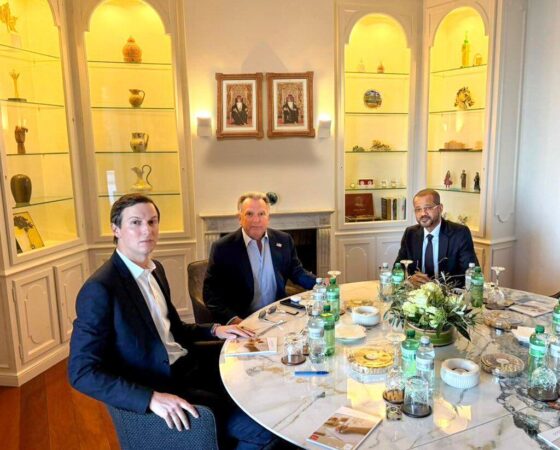
    Although the last round of talks in Geneva — where negotiators Steve Witkoff and Jared Kushner had been meeting with Iranians — were described as productive by the Omani mediators and a next round had been scheduled for this coming Friday, there is now no indication they will come to pass.

    In June, a similar situation arose when Witkoff was due to hold talks with Iranian counterparts in Oman. Days before the meeting was to occur, Israel carried out attacks on several Iranian military leaders, and Witkoff did not attend.

    Aaron David Miller, a former State Department diplomat who has advised Republican and Democratic administrations on the Middle East, said that Trump must have known there would not be another round of talks last summer but that he “continued to create the fiction” there would be.

    It kept Iranian leaders off guard, Miller said, which “allowed the Israelis to engage in their decapitation strategy.” The U.S. later joined the assault, striking at Iranian nuclear sites and leaving them “totally obliterated,” in Trump’s words.

    Araghchi, the Iranian foreign minister, told ABC News on Sunday that it had been “a very bitter experience for us.”

    The Trump administration also had made intermittent attempts at talks with Venezuelan President Nicolás Maduro before embarking on a stunning military operation in January that resulted in his arrest and the regime he once led cowed into obedience.

    The U.S. had amassed a huge military presence off the coast of Venezuela before the Jan. 3 raid to capture Maduro. But soon tensions with Iran were growing, sparked largely by Tehran’s bloody crackdown on anti-government demonstrations.

    Trump had pledged to intervene, urging protesters to stay in the streets and promising that “HELP IS ON THE WAY.” Around that time, the administration moved some military assets in the Caribbean Sea into the Middle East.

    Trump wrote on social media Jan. 28 that “a massive Armada is heading to Iran.” By that time, the protests had largely fizzled after a brutal response from government forces left thousands dead, according to independent estimates.

    Iran and the U.S. resumed talks, meeting several times in recent weeks. The last meeting, on Thursday, lasted hours. The Omani foreign minister, Albusaidi, described the outcome as positive, telling CBS News that a deal was “within our reach, if we just allow diplomacy the space it needs to get there.”

    Nate Swanson, a former State Department official who worked on negotiations with Iran last year, said that he did not believe the recent talks were a feint and that a deal was simply “never close to coming together,” which he said was “due to mismatched objectives and approaches.”

    Iranians were expecting to negotiate within the confines of a 2015 nuclear deal reached under the Obama administration, Swanson said, but the Trump administration had the “exact opposite expectation” and wanted something different and “better” to justify Trump’s withdrawal from that deal during his first presidency.

    Iran’s supreme leader, Ayatollah Ali Khamenei, had grown more obstinate after the June strikes on Iran, Swanson added, giving his negotiators even less room to reach a deal than they previously had.

    Briefing reporters Saturday, the senior administration official appeared to confirm this, stating that the U.S. negotiators had told the Iranians that they would need to stop enriching uranium and that in return, the United States would give them “free nuclear fuel forever.” The Iranians rejected this proposal, the official said.

    Another senior administration official said that the U.S. negotiators’ proposals were being “met with games, tricks, stalling tactics,” and that they had briefed Trump on this. “Obviously he weighed the different options,” this official said.

    Two people familiar with the talks said the Iranians had tried to appeal to Trump’s business sense by promising commercial investment between the two nations, including the purchase of commercial airplanes.

    Behnam Ben Taleblu, senior director of the Iran program at the hawkish Foundation for Defense of Democracies think tank, said it appeared that Trump had expected Iran to act like a “supplicant” and was too impatient to try to get results through negotiations.

    “The president’s patience for diplomacy is just like his patience for military confrontations: He wants things to be short, sharp, and decisive,” Ben Taleblu said.

    Miller cited Witkoff and Kushner, Trump’s personal friend and son-in-law, respectively. Both men primarily had experience in the business world rather than diplomacy before entering the administration, but they had been tasked not only with the Iran talks but also with shepherding negotiations between Russia and Ukraine, plus Israel and Hamas.

    “How is it possible that these two guys can manage three of the most complicated conflicts in the international system successfully?” he said. “The answer to the question is: They’re not.”


  • Aubrey Plaza’s latest directorial venture is an animated series about a cat named Kevin

    Aubrey Plaza’s latest directorial venture is an animated series about a cat named Kevin

    Delaware native Aubrey Plaza’s new adult animated series, Kevin, is set to premiere on April 20.

    The Prime Video comedy, written and executive produced by Plaza, was co-created by the Parks and Recreation actress and Joe Wengert, who also serves as showrunner. All eight episodes will drop together in more than 240 countries and territories.

    The streamer also revealed the show’s title sequence, which features the original song, “I’m Coming Home,” performed by actor Jason Schwartzman who plays a lead role in the series. Schwartzman co-wrote the song with series composer Dan Romer.

    The Prime Video animated comedy “Kevin,” co-created, executive produced, and starring Aubrey Plaza, is set to premiere on April 20.

    The show follows a cat named Kevin who leaves his humans after their unexpected breakup, and moves into a pet rescue in Astoria, Queens. He joins a “chaotic band of misfit animals,” who help him figure out what he “truly wants out of life,” according to the series logline.

    Schwartzman voices Kevin and Plaza voices Dana, one half of the broken-up couple Kevin leaves behind.

    The stacked cast includes Whoopi Goldberg as Cupcake, John Waters as Armando, and comedian Aparna Nancherla as Judy. They each play Kevin’s new cat roommates at the local pet rescue, which is run by Seth (Gil Ozeri) and his dog Brandi (Amy Sedaris).

    The Prime Video animated comedy “Kevin,” co-created, executive produced, and starring Aubrey Plaza, is set to premiere on April 20.

    Plaza, a Wilmington native, who started out performing improv and sketch comedy at New York’s Upright Citizens Brigade Theater, first rose to stardom playing the deadpan but hilarious April Ludgate in Parks and Recreation.

    This image released by Lionsgate shows Aubrey Plaza in a scene from “Megalopolis.” (Lionsgate via AP)

    Plaza has previously produced (and starred in) The Little Hours, the 2020 Black Bear, and the 2022 crime film, Emily the Criminal. She made her directorial debut in the 2021 series Cinema Toast, directing and writing the episode, “Quiet Illness.”