Blog

  • Sanders pitches $4.4 trillion tax on billionaires, in 2028 marker

    Sanders pitches $4.4 trillion tax on billionaires, in 2028 marker

    Sen. Bernie Sanders (I., Vt.) on Monday was set to unveil new legislation that would raise $4.4 trillion in taxes from America’s roughly 1,000 billionaires, aiming to roughly halve their fortunes.

    The plan is a nonstarter in the current Republican-controlled Congress, but could become a litmus test for candidates in the 2028 Democratic presidential primary, much like Sanders’s Medicare-for-all plan was during the 2020 presidential cycle.

    Sanders’s new legislation, which expands on his prior efforts, calls for an annual 5% wealth tax on America’s billionaires. Revenue from the tax would be redirected to social spending programs, including $3,000 cash payments for Americans earning less than $150,000 per year, a $60,000 minimum salary for every public school teacher, and an expansion of Medicare to cover dental, vision, and hearing care, among other measures.

    While Sanders, 84, is not expected to run for president for a third consecutive time, the proposal could prove divisive among Democrats who do run. California Gov. Gavin Newsom, widely viewed as a top Democratic presidential candidate, has objected to a billionaire tax currently being proposed in his state. Sanders’ proposal is being introduced in the House by Rep. Ro Khanna (D., Calif.), a co-chair of Sanders’s 2020 presidential campaign who supports California’s proposed billionaire tax — and who has been testing the waters of his own presidential bid.

    “This is Senator Sanders’ defining vision for our age,” Khanna said. “It is the most ambitious and transformative legislation for our times to tackle inequality in the New Gilded Age.”

    The legislation comes amid a substantial increase in billionaire wealth during the first year of Trump’s presidency, driven by strong stock market gains. The total wealth of America’s billionaires rose last year by roughly 20%, according to Americans for Tax Fairness, a left-leaning organization. Billionaires’ political influence has risen along with their economic clout.

    Sanders argues that the measure is an essentially conservative compromise that would leave most billionaires’ fortunes intact. Tesla CEO Elon Musk’s holdings, according to estimates from Sanders’ office, would go from $833 billion to $792 billion. Meta CEO Mark Zuckerberg’s would go from $220 billion to $209 billion. Amazon founder Jeff Bezos’ would shrink from $218 billion to $207 billion. (Bezos also owns the Washington Post.)

    The amount of revenue raised would be substantial, however, and in addition to the aforementioned initiatives, would be used to provide home healthcare to seniors and people with disabilities through Medicaid. It would also reverse the GOP’s Medicaid cuts. The $3,000 checks would apply per person for households earning under $150,000, which would amount to $12,000 for a family of four.

    Sanders’ revenue estimates were provided by Emmanuel Saez and Gabriel Zucman, two economics professors at the University of California at Berkeley. The economists assume a 10% rate of “tax evasion/avoidance,” and argue that the existing “exit tax” for renouncing American citizenship would make doing so unattractive for the targeted billionaires.

    The plan is unlikely to be backed by any Republicans, but its support even among Democrats, who have a range of opinions about taxing billionaires, remains unclear. During the party’s last contested presidential primary in 2020, several leading candidates embraced far-reaching ideas to restructure the American economy with new levies on the rich and major new spending programs. Those ideas fizzled in Congress under former President Joe Biden, who supported many of them but failed to persuade Sen. Joe Manchin III, then a Democrat from West Virginia, to go along with even a small fraction of what Sanders and many other Democrats called for.

    The defeat of Biden’s ambitious “Build Back Better” agenda — which included many of the ideas Sanders is now attempting to revive — paved the way for passage of a smaller bill focused on climate and energy subsidies, after which Democrats lost control of both Congress and the White House.

    Since then, the party’s policy agenda has been mostly up for grabs. Democrats appear largely unified on reversing the more than $1 trillion in cuts to Medicaid and food stamps approved by Trump and congressional Republicans as part of last year’s One Big Beautiful Bill. But the party’s priorities beyond that appear unclear. Sanders’ proposal attempts to provide one potential blueprint.

    Newsom has been a prominent advocate for a different approach. The governor has warned that the wealth tax currently being pushed in California would hurt his state, driving companies to flee and suppressing the innovation that has helped make Silicon Valley among the richest regions in the world.

    “This will be defeated — there’s no question in my mind,” Newsom said last month of the billionaire tax. “I’ll do what I have to do to protect the state.”

    Other Democrats who are cautious about raising taxes on billionaires believe the party moved too far to the left during the 2020 Democratic presidential primary, alienating potential business allies and driving them into the Republican camp.

    Sanders and Khanna have taken the other side of that debate, and last month Sanders held an event with Khanna in California at which both called for passage of the measure.

    “The billionaire class no longer sees itself as part of American society,” Sanders said in Los Angeles last month. “They see themselves as something separate and apart, like the oligarchs of the 18th century, the kings and the queens and the czars, they believe they have the divine right to rule and are no longer subject to democratic governance.”

  • Trump awards the Medal of Honor to 3 U.S. Army service members in a White House ceremony

    Trump awards the Medal of Honor to 3 U.S. Army service members in a White House ceremony

    WASHINGTON — President Donald Trump awarded the Medal of Honor to three U.S. Army soldiers at the White House on Monday, celebrating heroes of old wars as he defended his launch of a new one.

    Retired Command Sgt. Maj. Terry P. Richardson was recognized for actions during the Vietnam War that were credited with saving the lives of 85 other service members.

    Staff Sgt. Michael H. Ollis, who was killed in action in Afghanistan in 2013, was recognized for saving a Polish Army officer’s life.

    Master Sgt. Roderick W. Edmonds, who died in 1985, was recognized for his leadership and resistance as a prisoner of war in Germany during World War II.

    “There’s no ceremony that can be more important than this,” Trump said to begin the East Room ceremony that included the recipients’ family members and the man Ollis shielded from enemy fire.

    “Bravery is amazing,” Trump said. “You never really know who’s brave and who’s not until they’re tested.”

    Trump talks Iran, curtains, and Polish politics

    The Republican president also used the ceremony to talk about his fledgling war in Iran, his immigration crackdown, expansion of the White House, and curtains that he chose at the executive mansion.

    “I picked those drapes in my first term. I always liked gold,” he said.

    When noting Polish government officials there to recognize Ollis, Trump ventured into an aside on his endorsements in Poland’s elections.

    On Iran, Trump said preemptive action was necessary to block Tehran from rebuilding its nuclear program and becoming “an intolerable threat to the Middle East but also to the American people.”

    The Medal of Honor is awarded by U.S. presidents, in the name of Congress, for combat service that goes beyond the call of duty and risks one’s life.

    Richardson led a Vietnam reconnaissance mission

    On Sept. 14, 1968, Richardson was a staff sergeant on a reconnaissance mission as a platoon leader in the vicinity of Loc Ninh, part of the Republic of Vietnam.

    According to his citation, Richardson, a native of Cass City, Mich., came under fire from the North Vietnamese Army, including heavy machine-gun fire as he rescued three wounded soldiers. After the rescues, he led his unit to its intended destination, a hilltop identified as a place to direct airstrikes. He found the location to be part of an enemy camp but remained for at least seven hours, directing strikes even after being wounded by a sniper.

    Enemy forces eventually fled. Richardson, when found by other U.S. forces, declined medical evaluation so he could remain with his troops.

    “His gallant and selfless actions … spared the lives of 85 fellow soldiers,” the White House said.

    Trump praised Richardson, who attended with some members of his unit, as a “brave man” and described him as “central casting.”

    “You feel like fighting? I think we could take him today,” Trump said, joking with Defense Secretary Pete Hegseth.

    Ollis was killed shielding someone else in Afghanistan attack

    As a staff sergeant at Forward Operating Base Ghazni, Ollis was a skilled infantryman who led soldiers during an attack on the base by enemy combatants on Aug. 28, 2013.

    Ollis, 24 at the time, first directed soldiers to a bunker before returning to the building where they had been to check for any more endangered people, according to his citation. The New York City native came upon a Coalition Forces officer, Lt. Karol Cierpica of Poland. They moved toward combatants who breached the base perimeter and joined other coalition forces.

    During fighting, one enemy combatant confronted Ollis and Cierpica.

    “With complete disregard for his own safety, he positioned himself between the insurgent and the Coalition Forces Officer, who had been wounded and unable to walk,” his commendation reads. “Staff Sergeant Ollis fired on the insurgent and incapacitated him, but as he approached the insurgent, the latter’s suicide vest was detonated, mortally wounding him.”

    Called to the podium by Trump, Cierpica at times grew emotional as he paid tribute.

    “A soldier is not something you are from time to time. It is who you are forever,” Cierpica said, later adding, “I am deeply moved, happy, and grateful to God.”

    Cierpica named his son, Michael, after Ollis, and he addressed members of Ollis’ family by name, calling them “my second family from Staten Island” and the U.S. his “second homeland.”

    Edmonds led resistance in POW camp during WW II

    A master sergeant, Edmonds was the ranking non-commissioned officer among American prisoners of war at a German camp in early 1945.

    According to the commendation, the Germans announced on Jan. 26, 1945, that “only Jewish-American prisoners would fall out for roll call the following morning, at the threat of execution.”

    Edmonds, who enlisted from South Knoxville, Tenn., determined that allowing that segregation would result in the torture or death of 200 Jewish American POWs. He directed officers to have all 1,200 American troops present themselves for roll call.

    With a German commandant enraged, Edmonds stood his ground and invoked prisoners’ rights under international law.

    “We are all Jews here,” Edmonds said in a quote that Trump recounted Monday.

    The German officer relented and made no further efforts to identify the Jewish American soldiers.

    “Really amazing, right? It’s an amazing story,” Trump said.

    Weeks later, as Allied forces advanced toward the camp, the Germans ordered POWs to prepare for evacuation. Edmonds prepared the POWs to assemble in formation and resist. German forces eventually retreated from the camp.

    “Without regard for his own life Master Sergeant Edmonds gallantly led these prisoners in a relentless pursuit of opposition and resistance, forcing the Germans to abandon the camp leaving the 1,200 American prisoners behind,” the White House said.

    Edmonds’ son, Chris, first learned of the story when reading his father’s journals after his death, then interviewing surviving veterans who also were POWs. Chris Edmonds spent years pushing for the official recognition and on Monday accepted the medal from Trump on his father’s behalf.

  • Britain says it’s not at war after a drone strikes its Akrotiri base in Cyprus

    Britain says it’s not at war after a drone strikes its Akrotiri base in Cyprus

    AKROTIRI, Cyprus — Britain is not at war, the government said Monday, despite saying it would allow the U.S. to use British bases during its war with Iran and after a Royal Air Force base in Cyprus was struck by an Iranian-made drone.

    Sirens sounded again at RAF Akrotiri on Monday and British Typhoon and F-35 warplanes were scrambled. Cyprus government spokesperson Constantinos Letymbiotis posted on X that two drones heading toward the British base had been intercepted.

    More than two decades after Britain followed the United States into a devastating war in Iraq, it is trying to avoid being drawn into a new Middle East conflict with unpredictable consequences.

    Akrotiri attacked

    U.K. officials say an attack drone hit the runway at RAF Akrotiri, a British air force base in Cyprus, late Sunday. There were no injuries and “minimal” damage, but the strike brought the conflict onto European soil.

    Cyprus President Nikos Christodoulides identified it as a “Shahed-type” Iranian drone. It was not immediately clear whether it was launched from Iran or by a Tehran-backed militant group such as Hezbollah in Lebanon.

    Akrotiri is the U.K.’s main air base for operations in the Middle East and in recent years has been used by British warplanes on missions against the Islamic State group in Syria and Iraq and to strike Houthi targets in Yemen.

    As tensions between the U.S. and Iran mounted, Britain last month deployed extra F-35 fighter jets to Akrotiri, along with radar, counter-drone systems, and air defenses.

    Britain retained the base, and another on Cyprus, after the eastern Mediterranean island gained independence from British colonial rule in 1960.

    It was last attacked in 1986, when pro-Libya militants struck the base with mortars, rocket-propelled grenades and small arms, injuring three dependents of British personnel. The latest attack is believed to be the first attack on Cyprus from outside the country since Turkey’s invasion of the island in 1974.

    Britain’s defense ministry said families of U.K. personnel who live on the base were being moved to nearby accommodation as a precaution.

    Some residents of the nearby village of Akrotiri also opted to leave their homes and spend the night with relatives elsewhere.

    Villager Mikaella Malta said she heard “strange noises” just before the drone explosion.

    “We tried to figure out what was going on. We then picked up whatever we could from home. We were in a panic and we left,” she told the AP.

    U.K. ambivalence

    British officials have refused to say whether the U.K. supports the U.S.-Israeli war on Iran. They have said that Iran should not be able to have a nuclear weapon and called for an end to Iranian strikes and a diplomatic solution.

    Britain did not take part in the strikes on Iran that began Saturday, and did not allow the U.S. to use U.K. bases in England or on the island of Diego Garcia in the Indian Ocean.

    But on Sunday, Prime Minister Keir Starmer announced that he had agreed to let the U.S. use the bases for attacks on Iran’s missiles and their launch sites. He said the change came in response to Iranian attacks on U.K. interests and Britain’s allies in the Gulf, and is legal under international law.

    Britain says its bases can’t be used for attacks on political and economic targets in Iran, and Starmer said the U.K. is “not joining the U.S. and Israeli offensive strikes.”

    U.S. President Donald Trump told the Daily Telegraph on Monday he was “very disappointed in Keir,” saying the prime minister ”took far too long” to change his mind about the use of British bases.

    Unpredictable consequences

    Starmer said Britain would not be joining the U.S.-Israeli strikes, and Middle East Minister Hamish Falconer stressed that “the U.K. is not at war.”

    The memory of Iraq remains raw for many in Britain. The decision by then-Prime Minister Tony Blair to join the U.S.-led invasion in 2003 remains one of the most contentious in modern British history.

    The subsequent yearslong conflict killed 179 British troops, some 4,500 American personnel and many thousands of Iraqis.

    “We all remember the mistakes of Iraq and we have learned those lessons,” Starmer told lawmakers in the House of Commons on Monday. “Any U.K. actions must always have a lawful basis and a viable, thought-through plan.”

    Critics say attempts to set firm limits on Britain’s involvement in Iran could be swept away by a fast-moving conflict.

    “We are being drawn in, just as we were in Iraq, following the U.S. into an incredibly dangerous situation,” said John McDonnell, a lawmaker from the governing Labour Party.

    Patrick Bury, senior associate professor in security at the University of Bath, said Britain is in an “incredibly difficult” position.

    “We’ve had very little explanation for this war, really, from the U.S.,” he said. “The U.K. policy is always heavily on upholding international law. So they’re kind of looking at this going, ‘How does this fit with our own foreign policy?’ And I think that explains why they’ve held off as much as they could.

    “And nevertheless, they get a direct request. What are you going to do, say no?”

  • National Park Service database flags hundreds of items that might ‘disparage’ America

    National Park Service database flags hundreds of items that might ‘disparage’ America

    At the Emmett Till and Mamie Till-Mobley National Monument in Mississippi, staff members asked the Trump administration to review an entire exhibit on the Black teen’s brutal 1955 killing by white men and his mother’s decision to publicize it — though the park’s staff warned that its removal would leave the site “completely devoid of interpretation.”

    At Arches National Park in Utah, park managers wondered whether a sign about the damage that graffiti and invasive species leave on the iconic red rock landscape violates a Trump directive to focus solely on America’s natural beauty.

    In Philadelphia, displays at a house where George Washington once lived that presented the history of people enslaved by him were taken down, only to have a federal judge order their restoration.

    And at Harpers Ferry National Historical Park in West Virginia, staff members have asked federal officials to decide whether a document that describes an abolitionist’s murder by a mob might “denigrate the murderers.”

    These displays and materials are among several hundred that managers have flagged at hundreds of national park locations since last summer in response to administration orders to scrub sites of “partisan ideology,” descriptions that “disparage” Americans, or materials that stray from a focus on the nation’s “beauty, abundance, or grandeur.” The submissions were compiled in an internal government database and reviewed by the Washington Post, which confirmed its authenticity with current federal employees.

    The database does not make clear which of the plaques, maps, films, and books ultimately will be removed or recast by the Interior Department, though some have already been axed. But the submissions provide a sweeping portrait of the scope of President Donald Trump’s bid to reconsider how national park sites address the historic legacy of racism and sexism, LGBTQ+ rights, climate change, and pollution — or whether to acknowledge them at all.

    A group describing itself as “civil servants on the front lines” posted the database on two public websites Monday, saying in an attached note that it did so to show Americans how the administration is “trying to use your public lands to erase history and undermine science.”

    Asked for comment, the Interior Department issued a statement Monday saying that the “draft, deliberative internal documents” in the database “are not a representation of final action taken.” The statement, from spokesperson Charlotte Taylor, asserted that the documents were “edited before being inappropriately and illegally released to the media in ways that misrepresented the status of this effort.”

    The department did not respond to questions about the status or process for the reviews, nor about specific examples in the submissions.

    The tone and content of the materials described and submitted to Interior by park managers vary widely, reflecting a mix of careful attempts to obey administration orders, confusion about what might violate them, and, at times, apparent skepticism about the entire endeavor.

    Staff members identified a brochure at Cape Hatteras National Seashore, in North Carolina, for “possible disparaging of a prominent American” because it mentions that aviator and onetime Smithsonian Institution secretary Samuel Langley failed to achieve flight. A park staffer at Glen Canyon National Recreation Area in Arizona asks for clarification about whether displays on California condors’ return from the brink of extinction disparage hunters “or tell a success ??”

    Several submissions ask for reviews of book covers, book chapters, and entire books on sale at gift shops, including Incidents in the Life of a Slave Girl, an autobiography by abolitionist Harriet Jacobs.

    “They are mostly on slavery and the black experience in Washington DC as well as a few on Lincoln’s assassination,” wrote a park official at Ford’s Theatre National Historic Site. “Not sure they all disparage historical figures, but they do cover dark periods in American history.”

    Another inquiry came from the Thomas Jefferson Memorial in Washington, where employees shared a list of books on the third president. “I am not sure if they really disparage Thomas Jefferson, but they do aknowledge [sic] that he had children with Sally Hemings,” the inquiry notes.

    Bill Wade, executive director of the Association of National Park Rangers, said the breadth of the submissions revealed the many hours of work that Trump’s order imposed on already overextended park employees, who “probably should’ve been doing other things most of us believe would be more important.”

    The exercise, Wade added, runs counter to the reasons many National Park Service employees gravitated toward their work in the first place. “Park rangers everywhere, and all park employees for that matter, have been passionate about telling true stories about history, and about science,” said Wade, a former superintendent of Shenandoah National Park in Virginia. “It’s a real affront to the values that rangers have.”

    Others have embraced Trump’s effort, including Sen. Jim Banks (R., Ind.), who last summer wrote to top officials at Interior and the Park Service over concerns about “woke” projects he said appeared to violate the president’s order.

    “The President’s executive order rightfully opposes a decades-long effort by our institutions to usurp American history with an ideology-based narrative that casts America’s founding and history in a negative light,” Banks wrote at the time.

    In nearly a year since Trump’s order, National Park sites have responded by removing exhibits that address slavery and the challenges overcome by minority and marginalized groups, as well as signs about the science of climate change.

    But there also has been sustained pushback.

    Last month, a federal judge in Pennsylvania ordered the Trump administration to restore displays that discussed slavery at a site in Philadelphia where Washington lived as president.

    U.S. District Judge Cynthia M. Rufe of the Eastern District of Pennsylvania compared the displays’ removal earlier this year to the mind control employed by the government in George Orwell’s novel 1984.

    Rufe’s ruling — issued on Presidents Day — granted an immediate injunction, requiring the reinstallation of 34 educational panels removed in January by the Park Service from a site at Independence National Historical Park in Philadelphia.

    Two weeks ago, a coalition of scientific, preservation, and historical groups sued the Trump administration over changes that already have been made, arguing that the removal of information about civil rights, climate change, and other topics at multiple national parks amounts to illegal censorship.

    That lawsuit, filed in a federal court in Massachusetts, argues that Interior officials ignored well-established principles and legal requirements when seeking to overhaul information presented at national parks.

    Democratic members of Congress have also sharply criticized the effort, which they describe as a bid to whitewash the American story. “It is absurd that any president would go down this road of trying to retrofit history and culture in their own image instead of getting actual historians to tell us these stories,” said Rep. Jared Huffman of California, the ranking Democrat on the House Natural Resources Committee.

    The hundreds of submissions reviewed by the Post run the gamut, from signs and exhibits about slavery and the civil rights movement, to how the effects of climate change already are altering American landscapes, to how the nation remembers Indigenous people who inhabited lands long before there was a United States.

    Not every park flagged materials that needed reviewing under the executive order. The documents review by the Post show that at many locations, officials logged a simple entry: “Nothing to report.”

    It is clear that as government workers across hundreds of national parks and other historical sites scoured thousands of signs, read through publications, and surveyed countless educational films, they struggled with what exactly might violate Trump’s order not to “inappropriately disparage Americans past or living.”

    At Cape Hatteras, staff members asked whether information on the effect of light pollution on turtles might be “disparaging against park users.” The park also pointed out a Junior Ranger booklet’s mention of female pirates in the 17th and 18th centuries dressing like men to hide among ship crews. “Please review for appropriateness,” the park’s staff asked.

    But many of the submissions involve weightier topics in the nation’s history.

    At Cane River Creole National Historical Park in Louisiana, park staff members flagged a planned exhibit about the history of the train depot that is used as the site’s visitor center. The depot was still segregated when it ended rail service in 1965, and the exhibit relied on extensive consultation and oral history collection with Black community members, according to a former park employee who worked on the project.

    “For the community, it means for the first time having that story being told in an honest way — and actually just being told,” said the former employee, who was laid off from the Park Service last year.

    It is now unclear whether the exhibit will be installed.

    At Harpers Ferry, site of abolitionist John Brown’s raid in 1859, an employee singled out a document that describes how a “mob murders” an abolitionist. “Does this denigrate the murderers?” the employee wrote. “We can reword to: ‘Abolitionist editor Elijah Lovejoy is murdered for his views.’”

    A Civil War battlefield driving tour map was also flagged for its inclusion of direct quotes about the cause of the war from secession documents and Alexander Stephens, vice president of the Confederacy. The quotes cite slavery as the cause. “True, but is this considered cherry picking and denigrating southerners?” the park’s staff wrote.

    Those quotes were used to provide context and avoid downplaying the role of slavery in the Confederate rebellion, according to a former Harpers Ferry media specialist who inserted them.

    Changing the documents and the map would amount to “pulling us back into a position of supporting white supremacy and supporting the ‘Lost Cause’ narrative and erasing the importance of African American history,” said the specialist, who retired last year and spoke on the condition of anonymity for fear of retaliation.

    Along the Selma to Montgomery National Historic Trail, staffers highlighted signs and literature that discuss segregation in the South and how “non-violent civil rights demonstrators” crossing the Edmund Pettus Bridge on “Bloody Sunday” in 1965 “were attacked” by armed officers.

    “While these statements are historically accurate and supported by firsthand accounts,” staffers noted in the submissions, “they may be perceived as disparaging by individuals who are less familiar with the history of the Civil Rights Movement.”

    Amid the numerous materials submitted for review at Arlington House, the Robert E. Lee Memorial, just across the Potomac River from the District, was a line in a Junior Ranger book that reads, “In 1829, Robert E. Lee promised to serve in the Army and protect the United States. In 1861, he broke his promise and fought for slavery.”

    Staffers at Arches National Park raised questions about a sign devoted to the effects of human-caused climate change already visible in the park. “The park seeks guidance on whether this entire panel is within the scope of Secretary’s Order 3431 and should be covered or removed,” the submission reads.

    In other places, it appears that park officials are wrestling with whether entire exhibits — or even entire sites — somehow conflict with Trump’s order to “focus on the greatness of the achievements and progress of the American people.”

    At the Mississippi site commemorating Till, the very place deals with one of the grimmest examples of racial violence in the United States.

    Without this exhibit to share the difficult Till story, the new NPS site would be almost completely devoid of interpretation,” an employee notes in an inquiry shared with the Post. “The exhibit emphasizes ‘progress of the American people’ toward a better future.”

    Wade said he was encouraged by the ruling that ordered the Trump administration to restore displays that discussed slavery at the site in Philadelphia. Wade’s group was also among the plaintiffs in the recently filed lawsuit seeking to halt the administration’s changes and deletions at national parks, saying they amount to censorship.

    But if such legal avenues ultimately fail, Wade said, he suspects the push to alter the telling of history at many sites will continue.

    “The impact is that the visitors are just not going to get true, accurate stories,” he said. “I just think the public ought to be really concerned about that.”

    In some places, such as the preserved home of civil rights activist Medgar Evers or the Manzanar National Historic Site in California, where the U.S. government once incarcerated Japanese Americans during World War II, the entire site exists to commemorate painful moments in the nation’s history.

    “If you take away the stories, you take away the purpose of the park itself,” Wade said.

  • Boyd Sands, Hall of Fame educator and retired executive director of the New Jersey State Interscholastic Athletic Association, has died at 88

    Boyd Sands, Hall of Fame educator and retired executive director of the New Jersey State Interscholastic Athletic Association, has died at 88

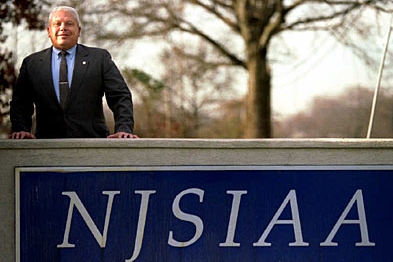
    Boyd Sands, 88, formerly of Glassboro, Gloucester County, retired teacher, coach, principal, and superintendent of the Delsea Regional School District, and Hall of Fame former executive director of the New Jersey State Interscholastic Athletic Association, died Saturday, Jan. 17, of complications from a stroke at Cape Canaveral Hospital in Florida.

    An All-Star football player in high school and college, and a longtime baseball umpire and basketball referee, Mr. Sands directed the NJSIAA from 1993 to his retirement in 2006. He and the association’s executive committee organized hundreds of statewide championship playoff tournaments, hired thousands of game officials, and enforced eligibility and sportsmanship rules for high school athletes in more than 30 sports at more than 400 public and private high schools.

    He was an expert on all kinds of rules and a champion of the state’s expanded football playoff format and more programs for girls. He oversaw ever-changing conference alignments and supervised the association’s multimillion dollar budget.

    He attracted dozens of corporate sponsorships to fund new initiatives regarding improved officiating, violence at sports events, and drug education. He forged working relationships with the state’s Sports and Exposition Authority, Boardwalk Hall in Atlantic City, the NHL’s New Jersey Devils, and other organizations.

    Overall, Mr. Sands served more than three decades as a member of the NJSIAA advisory committee and executive committee, and executive director. In an online tribute, former colleagues there called him “a respected leader in education and sport. A consummate professional.”

    Steve Timko, his successor as executive director, told the Times of Trenton in 2005: “He has taken the association to the next level.” In 2003, Mr. Sands told the Record of Hackensack: “I really just enjoy high school athletics.”

    He joined Delsea in 1966 as assistant principal, was promoted to principal, and served as district superintendent from 1971 to 1994. Before school, he was known to greet students as they exited the buses in the morning. After school, he handed out programs at events, prowled the sidelines at Delsea, and officiated games at other high schools.

    He taught social studies and coached football for six years at two high schools in North Jersey before going to Delsea. He oversaw the building of the district’s middle school in the 1970s, and colleagues named the entrance road leading to the new building after him.

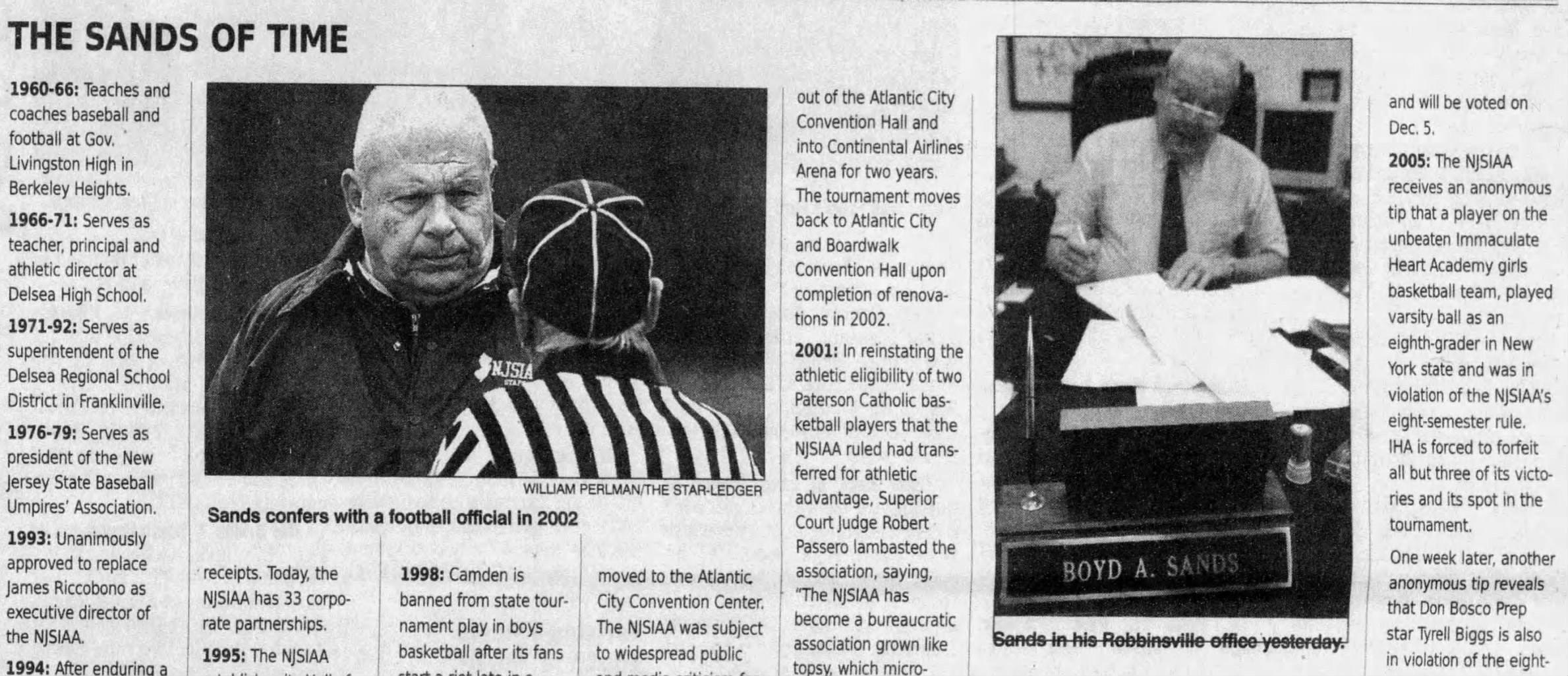
    The Star-Ledger of Newark featured Mr. Sands when he announced his retirement from the NJSIAA in 2005.

    “His influence lives on in the students he inspired, the educators he mentored, and the community he helped shape,” Delsea superintendent Fran Ciociola said in a tribute.

    Mr. Sands was onetime president of the Camden County chapter of the New Jersey Baseball Umpires Association. He won achievement awards from the NJSIAA, the National Federation of Interscholastic Athletic Officials, and the Union County Interscholastic Athletic Conference.

    He was an executive committee member of the National Federation of State High School Associations and lifetime member of the International Association of Approved Basketball Officials. “His spirit, kindness, and dedication will be remembered always,” colleagues at the IAABO said in a tribute.

    Mr. Sands was inducted into the Gloucester County Sports Hall of Fame in 1989, the NJSIAA Hall of Fame in 2007, and the South Jersey Baseball Hall of Fame in 2009. He attended many continuing education classes and earned certifications at Rowan, Rutgers, and Seton Hall Universities, and elsewhere.

    Mr. Sands liked nothing more than attending a football game.

    He never changed his signature flattop crew cut. “Bear of a man, great guy,” a former student said in a Facebook tribute. A friend said online: “Boyd was a wonderful man and terrific mentor.”

    Boyd August Sands was born Feb. 16, 1937, in Newark, N.J. He played football and basketball in high school, and earned a bachelor’s degree in education at Colby College in Maine and a master’s degree in administration at what is now Kean University in New Jersey.

    He met Frances Curto at a New Year’s Eve party, and they married in 1958. They lived in North Jersey, moved to Glassboro when he worked at Delsea, and had daughters Susan, Nancy, Karen, and Lori, and a son, Michael. His son died earlier.

    Mr. Sands studied history and enjoyed road trips to family reunions in Florida and stops at historical sites along the way. He loved his dogs, followed the Eagles and Phillies closely, and was sure to be greeted by former students and old colleagues whenever the family went out.

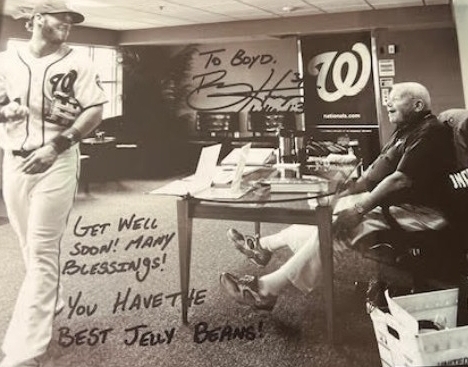
    Mr. Sands (right) became friendly with baseball star Bryce Harper when he worked at the Washington Nationals’ spring training complex in Florida.

    He and his wife moved to Cape Canaveral in 2006, and he helped run spring training for the Washington Nationals baseball team and worked security for a cruise line. He had bypass surgery in 2015.

    “My father was a man who found joy in two of life’s greatest gifts: family and sports,” said his daughter Nancy. “My dad was a man who always showed up and pushed us hard to do our best.”

    His daughter Susan said: “He saw everyone as a person.”

    Nearly everyone has a memorable umpiring story about Mr. Sands, like the time he got drilled by a line drive down the first base line. In 1994, he told The Inquirer that he enjoyed officiating high school baseball and basketball games more than anything.

    “It was my hobby and outlet,” he said. “I tried golf, and I figured I’d rather get hit by a hard ball.”

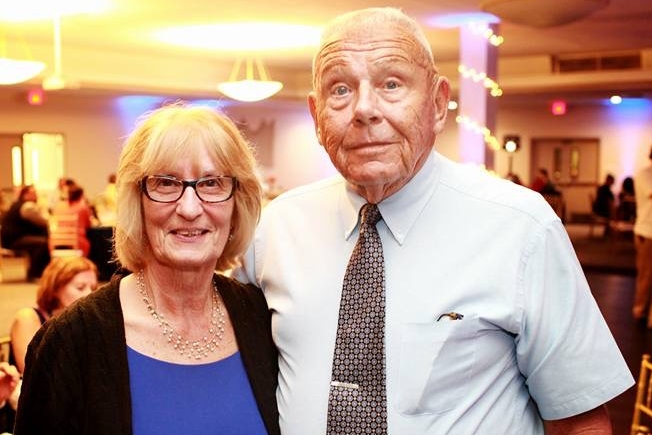
    Mr. Sands and his wife, Frances, married in 1958.

    In addition to his wife and daughters, Mr. Sands is survived by 16 grandchildren, 28 great-grandchildren, a brother, and other relatives. A brother died earlier.

    Services were held earlier.

    Donations in his name may be made to the Brevard County Sheriff’s Office Animal Care Center, 5100 W. Eau Gallie Blvd., Melbourne, Fla. 32934; and the Church of Our Saviour, 5301 N. Atlantic Ave., Cocoa Beach, Fla. 32931.

    Mr. Sands enjoyed time with his dogs.
  • Melania Trump presides at U.N. Security Council meeting on children in conflict as U.S. attacks Iran

    Melania Trump presides at U.N. Security Council meeting on children in conflict as U.S. attacks Iran

    UNITED NATIONS — U.S. first lady Melania Trump presided over a U.N. Security Council meeting on Monday focusing on children in conflict, one of her signature issues, and acknowledged she was doing so at “challenging times” as the United States has joined Israel in attacking Iran.

    “The U.S. stands with all of the children throughout the world,” she said, speaking generally and not specifically about the new war in the Middle East. ”I hope soon peace will be yours.”

    Hanging over Monday’s meeting was what Iranian state media says was an airstrike that hit a girls’ school in southern Iran, killing at least 165 people and wounding dozens more. The Israeli military said it was not aware of strikes in the area. The U.S. military said it was looking into the reports.

    Shortly before Monday’s session began, Iran’s ambassador to the U.N., Amir Saeid Iravani, said it was “deeply shameful and hypocritical” for the U.S. to convene a meeting on protecting children during conflict while launching airstrikes on Iranian cities.

    “For the United States, ‘protecting children’ and ‘maintaining international peace and security’ clearly mean something very different from what the U.N. Charter provides,” he told reporters.

    U.N. political chief Rosemary DiCarlo said the world body was aware of the reports of the deaths at the girls’ school. She noted the impact the U.S.-Israeli strikes and the Iranian retaliatory strikes were having on children across the region.

    “We have been reminded of this truth over the last two days,” she told the Security Council. ”Schools in Israel, the United Arab Emirates, Qatar, Bahrain, and Oman have closed and moved to remote learning owing to the ongoing military operations in the region,” she said.

    Melania Trump was the first spouse of a world leader to take the president’s seat at the United Nations’ most powerful body, which is charged with ensuring global peace and security, according to the U.N.

    The wife of President Donald Trump was given the opportunity as the United States takes over the council presidency for the month of March. In the past, presidents, prime ministers, and foreign ministers have often wielded the gavel.

    In her address, Melania Trump said, “Peace does not have to be fragile.”

    “Enduring peace will be achieved when knowledge and understanding are fully valued within all our societies,” she said, urging members of the Security Council to “safeguard learning.”

    U.S. has cut funding to U.N. agencies that protect children

    While the first lady spoke of a need to protect children and their access to education and technology in conflict, her husband’s administration has cut funding for a number of U.N. agencies and other international organizations that address these issues.

    Among them is the U.N. Office of the Special Representative of the Secretary General for Children in Armed Conflict, which provides detailed reporting on the impact that conflicts have on children around the world. This information can help trigger action to prevent rape and violence against women and children. President Trump withdrew U.S. support in January.

    The U.S. has also dramatically cut funding for the U.N. children’s agency, UNICEF, and has withdrawn from the U.N. Educational, Scientific, and Cultural Organization, UNESCO.

    DiCarlo told the council the world is facing the highest number of armed conflicts since World War II. “The number of civilians killed in these conflicts is the highest in decades,” she said. ”Our reality is clear: When conflicts erupt, children are among those most severely affected.”

    The first lady arrived at U.N. headquarters in a motorcade and was greeted by U.N. Secretary-General António Guterres. She shook hands with each of the 15 Security Council members and posed for a group photo.

    The rotating president of the council gets to choose the subject and participants for some meetings. Monday’s meeting was scheduled before the war began.

    The council’s last meeting, on Saturday, was a contentious emergency session called in response to the start of the war. Guterres condemned the U.S. and Israeli airstrikes as violations of international law, including the U.N. Charter. He also condemned Iran’s retaliatory attacks for violating the sovereignty and territorial integrity of nations in the Mideast.

    Melania Trump’s support of Ukrainian children

    Melania Trump took the unusual step last summer of writing a letter to Russian President Vladimir Putin before his summit with her husband and later announced that the effort had led to a group of children displaced by the Russia-Ukraine war being reunited with their families.

    Putin’s invasion of Ukraine in 2022 resulted in Russia taking Ukrainian children out of their country so they could be raised as Russian. Ukrainian President Volodymyr Zelensky has lobbied world leaders for help reuniting families.

  • Delaware’s only Nordstrom is closing

    Delaware’s only Nordstrom is closing

    Delaware’s only Nordstrom store is set to close its doors next month.

    The Christiana Mall location will shutter on April 30, the company confirmed in an email on Monday. The closure was reported over the weekend by the Delaware News Journal.

    “We believe we’ll be best able to serve customers in the area by leveraging our surrounding stores and through our digital channels,” Nordstrom said in a statement.

    The two-story, 123,000-square-foot department store opened in the Newark mall 15 years ago. The high-end retailer is one of four anchors alongside J.C. Penney, Macy’s, and Target.

    Once Nordstrom closes, the nearest full-price location will be more than 30 miles away at the King of Prussia Mall. The company’s discount counterpart, Nordstrom Rack, operates a store nearby at the Christiana Fashion Center complex in Newark.

    In the past year, the company has expanded its off-price footprint, with new Nordstrom Rack stores in Deptford and Marlton in South Jersey.

    Nordstrom Rack in Center City is shown in 2018. Recently, the retailer has been expanding its off-price footprint.

    The retailer has announced plans to open more than a dozen additional locations this year. They include Nordstrom Rack stores in the Main Street at Exton shopping center and at the Promenade at Granite Run in Media.

    At the Christiana Mall, Nordstrom said it is “committed to taking care of our employees through this transition, including supporting those who are interested in finding another role within Nordstrom.” It did not say how many people would lose their jobs.

    A search of Delaware’s online database of WARN Act notices, which are required in advance of closures and mass layoffs, did not yield any results.

    Christiana Mall is billed by its owner, General Growth Properties (GGP), formerly Brookfield Property Partners, as “one of the most productive retail centers in the country.” The developers say that each year 10 million people visit the 1.2-million-square foot “tax-free shopping destination” that is home to more than 140 stores. Delaware has no state or local sales tax.

    The Christiana Mall is shown in 2018. Its owners say 10 million people visit the Newark shopping destination each year.

    A GGP spokesperson declined to comment on Nordstrom’s departure and said it was too soon to discuss what’s next for the space.

    The news of the closure comes amid an uncertain time for the retail industry.

    Some shopping destinations, such as the King of Prussia and Cherry Hill malls, appear to be thriving. Others struggle amid economic uncertainty and increased competition from online retailers. Several local malls are flat-out dead, with some in the process of being resurrected as mixed-use complexes with apartments, restaurants, and entertainment.

    Individual retailers have also seen disparate results.

    After decades in business, Saks Fifth Avenue in Bala Cynwyd is set to close next month after its parent company filed for Chapter 11 bankruptcy. In another segment of the retail industry, West Chester-based home shopping network QVC Group, according to a Bloomberg report, is considering filing for Chapter 11 bankruptcy to reorganize billions in debt.

  • Villanova forward Matt Hodge suffers season-ending knee injury

    Villanova forward Matt Hodge suffers season-ending knee injury

    Villanova forward Matt Hodge suffered a torn right ACL in the Wildcats’ loss to St. John’s Saturday night at Madison Square Garden, the school announced on Monday afternoon.

    He will undergo surgery and miss the rest of the season.

    The injury occurred in the second half when Hodge made a move in the post and fell to the ground. He was down on the floor in pain for a few moments before being helped to his feet. He struggled to put weight on his right leg and was helped into the locker room.

    Villanova forward Matt Hodge goes to the floor against St. John’s on Saturday with an injury that was later determined to be a torn ACL.

    The injury is a big blow to Villanova, which has two regular-season games remaining before beginning postseason play. Hodge, a 6-foot-8 redshirt freshman, has started all 29 games this season and is Villanova’s sixth-leading scorer at 9.2 points per game while shooting 36.8% from three-point range.

    He also plays about 28 minutes per game, and his absence will test Villanova’s depth. The Wildcats do not have much in their frontcourt, and playing without Hodge could force coach Kevin Willard to go a bit unconventional with the power forward spot.

    Willard has a few options. He could go for a small-ball lineup and insert sixth man Devin Askew, a 6-5 guard, into the starting five and use Tyler Perkins, a physical 6-4 guard and Villanova’s leading scorer, in a forward role. Or he could replace Hodge with the 6-6 sophomore Malachi Palmer. The decisions could be matchup dependent.

    Temple transfer Zion Stanford, a 6-6 wing, could move back into the back end of the rotation. The West Catholic graduate has played in just 10 games (5.1 minutes per) and has rarely seen the court in conference play. Hodge’s injury also highlights the loss of Tafara Gapare, a 6-9 athletic forward who left the team around the holidays.

    Villanova’s two centers, starter Duke Brennan and reserve Braden Pierce, have not shared the floor together, but Villanova’s lack of size could potentially lead to the big men sharing some minutes depending on opponent and game flow.

    Hodge, who was forced to redshirt as a freshman last season at Villanova due to an NCAA ruling regarding his academic eligibility after moving to the U.S. from Belgium, scored six points in 14 minutes before suffering his injury Saturday night.

    The Wildcats (22-7, 13-5) finish their regular season this week with a road game at DePaul on Wednesday and a home game Saturday vs. Xavier at Finneran Pavilion. They will be the No. 3 seed in the Big East tournament.

  • Cuba’s president pushes for ‘urgent’ changes to island’s economic and social model

    Cuba’s president pushes for ‘urgent’ changes to island’s economic and social model

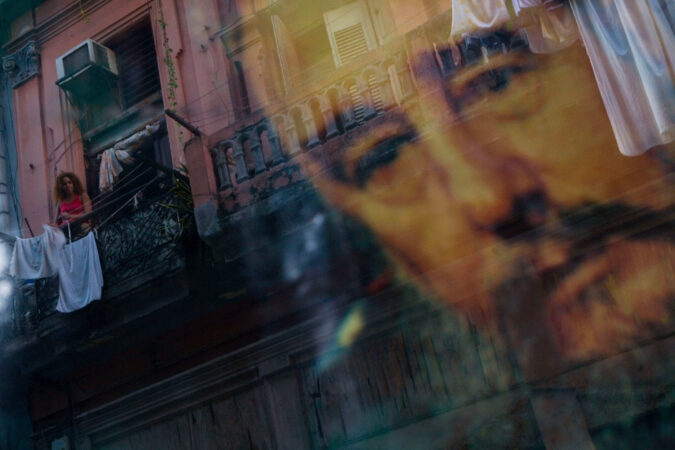
    HAVANA — Cuban President Miguel Díaz-Canel said Monday that his government should “immediately” focus on implementing urgent transformations to the island’s economic and social model as oil reserves in the Caribbean country dwindle.

    The comments made during a meeting of the Council of Ministers come as Cuba feels the squeeze of a recent oil blockade coupled with a halt in oil shipments from Venezuela after the U.S. attacked the South American country in January.

    “We must focus, immediately, on implementing the urgent, most necessary transformations that must be made to the economic and social model,” he was quoted as saying by state-owned media.

    Díaz-Canel said the push to transform Cuba’s economic and social model is tied to business and municipal autonomy and the resizing of the state apparatus, government, and institutions, among other things, according to state-owned media.

    He called on municipalities to manage issues including foreign direct investment; economic partnerships between the state and nonstate sectors; and investments with Cubans residing abroad, according to state-owned media.

    Prime Minister Manuel Marrero Cruz said Cuba’s priorities are focused on food production and changes to the island’s power grid as severe outages and interruptions in fuel supply persist.

    The minister of energy and mines, Vicente de la O Levy, was quoted by state media as saying that progress in developing a transition strategy by municipalities is still slow despite the distribution of solar panels to doctors, teachers, and children. He said municipalities need to have a sustainability strategy that relies on their own resources.

    Last month, Cuba implemented austere fuel-saving measures, including halting some public transportation and moving classes online.

    Last week, the U.S. Treasury Department slightly eased restrictions on the sale of Venezuelan oil to Cuba, but the island’s energy and economic crisis is expected to persist.

    In addition to its energy woes, Cuba is struggling with a sharp increase in U.S. sanctions that have stripped the island of nearly $8 billion in revenue from March 2024 to February 2025, a loss that is nearly 50% higher compared with the previous period, according to government statistics.

  • Rev. Jesse Jackson returns home to South Carolina to lie in state

    Rev. Jesse Jackson returns home to South Carolina to lie in state

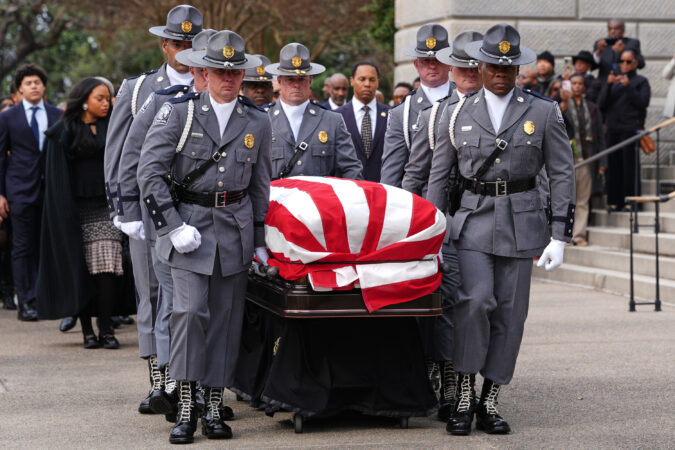
    COLUMBIA, S.C. — After a long career of fighting for civil rights, the Rev. Jesse Jackson Sr. is visiting his home for one last time to lie in state at the South Carolina Capitol on Monday.

    The final full honors from the state where he was born is a far cry from his childhood in segregated Greenville, where in 1960 he couldn’t go inside the local library’s much better funded whites-only branch to check out a book he needed.

    Jackson led seven Black high school students into that segregated branch, where they sat down and read books and magazines until they were arrested. The branches closed, then quietly reopened for all.

    With that action, Jackson launched his career — and crusade — fighting for equality for all. He would catch the attention of the Rev. Martin Luther King Jr. and join the voting rights march King led from Selma to Montgomery, Ala.

    Jackson died Feb. 17 at age 84 after battling a rare neurological disorder that affected his mobility and ability to speak in his later years.

    His casket, draped in an American flag, arrived at the South Carolina Statehouse on a horse-drawn caisson on a chilly, cloudy morning. A special white-gloved Highway Patrol honor guard brought Jackson inside the Statehouse and to the second floor, where well over 100 people packed under the rotunda for a ceremony before the public would be invited in to pay their respects.

    “Today we’re here to celebrate a life well lived, a job well done,” said Democratic state Rep. Jermaine Johnson, who led the ceremony.

    The service began with a rousing version of the civil rights anthem “Lift Every Voice and Sing” that reverberated through the Statehouse — a building that was partially destroyed in 1865 during the Civil War started by South Carolina to keep slavery.

    The South Carolina services are part of two weeks of events. They began with Jackson’s body lying in repose and the public invited last week to his Rainbow PUSH Coalition’s Chicago headquarters.

    After South Carolina, Jackson will be returned to Chicago for a large celebration of life gathering at a megachurch and the final homegoing services at the headquarters of Rainbow PUSH. Plans for a service in Washington, D.C., to honor him have been postponed until a later date.

    Nationally, Jackson advocated for the poor and underrepresented for voting rights, job opportunities, education, and healthcare. He scored diplomatic victories with world leaders.

    Through his Rainbow PUSH Coalition, he channeled cries for Black pride and self-determination into corporate boardrooms, pressuring executives to make America a more open and equitable society. He stepped forward as the Civil Rights Movement’s torchbearer after King’s assassination, and would run for the Democratic presidential nomination in 1984 and 1988.

    Jackson continued to be active in his home state, pushing in 2003 for Greenville County to honor King by matching the federal holiday in his honor and in 2015 by advocating for removing the Confederate flag from South Carolina Statehouse grounds after nine Black worshipers were killed in a racist shooting at a Charleston church.

    Jackson is just the second Black man to lie in state at the South Carolina Capitol. State Sen. Clementa Pinckney was honored in 2015 after he was killed in the Charleston church shooting.