FRANKFURT, Germany — Oil prices rose sharply Monday as disruptions in tanker traffic through the Strait of Hormuz chokepoint raised uncertainty about how U.S. and Israeli attacks on Iran would affect supply to the world economy.
US oil traded 7.4% higher at $71.97 per barrel, while international standard Brent was up 7.7% at $78.46 per barrel.
Higher oil prices raise the prospect of costlier gasoline prices for U.S. drivers as well as for other goods at a time when people in many countries have been stung by inflation.
A key focus was the situation around the strait at the southern end of the Persian Gulf, through which 20% of the world’s oil supply passes. Tanker traffic dropped sharply amid disruption of satellite navigation systems, data and analytics firm Kpler said on X, while the UK Maritime Trade Operations Centre reported attacks on several vessels in the area on either side of the strait and warned of elevated electronic interference to systems that show where ships are.
A bomb-carrying drone boat struck a Marshall Islands-flagged oil tanker in the Gulf of Oman on Monday, killing one mariner on board, Oman said. Iran has been threatening vessels approaching the Strait of Hormuz and is believed to have launched multiple attacks.
Saudi authorities reported they intercepted Iranian drones that attacked the Ras Tanura oil refinery near Dammam and the refinery was shut down as a precaution, Saudi state television reported. Market attention has focused on whether the conflict would widen to other oil-producing countries in the region.
Monday’s price increase was within the $5-$10 per barrel range expected by analysts based simply on the fear factor associated with the outbreak of war. And some war concerns were already reflected in the price before the conflict started.
However, long-term disruption to ship traffic in the strait could send prices even higher, and so could damage to oil infrastructure in other Gulf countries. Meanwhile, a shorter conflict in which disruptions are easily reversible could mean the current price spike won’t last.
WASHINGTON — The U.S. Congress is about to launch a war powers debate over President Donald Trump’s authority to bomb Iran under largely unusual circumstances — he has already done it, and the country is essentially already at war.
Bombs are falling, people are dying and vows of revenge and retribution are being lobbed in escalating threats, all while untold taxpayer dollars are being spent on a military strategy that’s expected to continue for weeks with an undefined goal and conclusion. Unlike the run-up to the Iraq War in 2003, which included long debates in Congress in the aftermath of the Sept. 11, 2001, attacks, or the more recent U.S. military strikes on Venezuela that proved to be limited, the joint U.S.-Israel military attack on Iran, called Operation Epic Fury, is well underway, with no foreseeable end in sight.
The moment is a defining one for Congress, which alone has the authority under the U.S. Constitution to declare war, and for the Republican president, who has consistently seized power during his second term with an apparent limitless view of his own executive reach.
“The Constitution is intended to prevent the accumulation of power in any one branch of government — and in any one person in government,” said David Janovsky, acting director of The Constitution Project at the Project on Government Oversight, a watchdog organization.
“Congress is the people’s representatives in a way that the president isn’t, even though we tend to focus on the president,” he said. “We need the people’s representatives to weigh in on whether we, the people, are going to war right now.”
War powers as a check on presidential power
In the U.S., the Congress would need to affirmatively approve wartime operations, with a declaration of war, or with an authorization for the use of military force, to essentially approve of the actions. But this rarely happens.
In fact, Congress has declared war just five times in the nation’s history, most recently in 1941, to enter World War II a day after the Pearl Harbor attack. Congress approved an AUMF for the 1990 Gulf War and did so again in 2001 and 2002 to launch the 9/11-era wars into Afghanistan and then Iraq.
But Congress also created the war powers resolution during the Vietnam War-era, as something of a tool of last resort — deployed to slap back a president who had embarked on military excursions without congressional approval.
Both the House and the Senate have prepared war powers resolutions for votes this week.
Sen. Mark Warner, the top Democrat on the Senate Intelligence Committee, said Trump, as president, “does not have the right to do this on his own.”
“When the president commits American forces to a war of choice, he needs to come before Congress and the American people and ask for a declaration of war,” Warner said on CNN’s “State of the Union.”
While lawmakers have criticized the Iranian regime and its nuclear ambitions, Democrats said Trump has not provided a rationale for the war or outlined its strategy for what comes next, and Trump’s MAGA coalition is splintering over what it sees as the president’s failure to keep his “America First” campaign promise by leading the U.S. toward an overseas war. Many lawmakers are wary of a longer entanglement as the operation killed Iran’s Supreme Leader Ayatollah Ali Khamenei and hundreds of people in the region.
White House officials are scheduled to brief congressional leaders and lawmakers this week, but the question-and-answer sessions will be behind closed doors, without a watchful public.
Power of the purse can stop wars
Over time, presidents of both major political parties have accumulated vast authority to engage in what are often more limited U.S. military strikes to accomplish strategic national security goals without approval from Congress. Democrat Barack Obama’s military operations over Libya and Republican George H.W. Bush’s incursions into Panama were conducted without the nod from Congress.
But restraining a president’s war powers is something lawmakers past and present have rarely been able to accomplish. Even if Congress is able to pass a war powers resolution to curb Trump in Iran, the House and the Senate would be unlikely to tally the two-thirds majority needed to overcome a presidential veto.
Trump has shrugged at the power of Congress to dictate what he can and can’t do, in war and other matters. He made only a brief mention of Iran in his State of the Union address last week, treating lawmakers’ support as an afterthought.
John Yoo, a law professor at the University of California, Berkeley, said the Founding Fathers set up a constitutional system in which the president and Congress would battle it out over these issues — but with Congress having one particularly powerful tool, because it controls the federal funding.
“Congress, they know how to stop this if they want to,” said Yoo, who helped draft the Bush administration’s 2001 and 2002 use of force authorizations. The Vietnam War ended once Congress pulled funding, he said.
But Congress is controlled by a Republican majority that largely shares Trump’s view of focusing military power against Iran, and it recently approved massive new funds for the Pentagon, some $175 billion, in the big tax cuts bill that he signed into law last yar.
With the Republican president’s party in power in the House and the Senate, it’s no surprise they are unlikely to object, Yoo said: “They agree with him.”
Debate in Congress begins
Ahead of debates, Republican Sen. Tom Cotton, the chairman of the Senate Intelligence Committee, said Trump already laid out his vision for Iran.
Cotton said Sunday that Trump has made it clear the U.S. won’t be sending ground forces inside Iran. Instead, Americans should expect to see an “extended air and naval campaign” in the region, which could result in pilots being shot down, though he said the military personnel would be recovered.
He expects a weekslong campaign as Iran names a new leader and determines how it will react to the U.S. attack.
“There’s no simple answer for what’s going to come next,” Cotton said on CBS’ “Face the Nation.”
Superintendent Tony B. Watlington Sr. and the Philadelphia School District have proposed 18 school closures, six colocations, and a vague, insufficiently transparent plan to reconfigure grade levels across numerous other schools, citing the need for “more efficient use of all of our resources” to deliver high-quality academic and extracurricular programming districtwide.
The Inquirer Editorial Board has endorsed the plan, pending adjustments to several sites, including Lankenau Environmental Science Magnet High School.
The district is right to pursue a comprehensive facilities plan that addresses toxic building conditions, overcrowding, and underutilization. But it is going about it the wrong way. Facilities planning should be an annual, longitudinal process grounded in sustained community engagement, not a punctuated moment of 24 mass closures that disrupt neighborhoods and sidestep the thoughtful incorporation of public input that only time and intention can provide.
Mistakes of 2013
Without such care, the district will repeat the mistakes of the 2013 closures, which led to students disappearing from school rolls in September, overcrowded receiving schools, and the racialized erasure of neighborhood histories and place-based educational traditions.
First, significant questions remain about implementation and transparency. Ten properties are slated to be “conveyed” to the city, reportedly tied to Mayor Cherelle L. Parker’s H.O.M.E. plan. Amid speculation about a 20-year tax abatement connected to redevelopment, it is unclear what mechanisms will ensure the benefits of these transfers accrue to the communities that have borne the brunt of closure, rather than to private developers. A two-decade tax abatement would symbolically and materially reinscribe the racialized disinvestment, neglect, and manufactured crisis that have too often paved the way for school closures in the first place.
Second, the data used to inform the closures have been called into question by many, and do not take into account the nuance of mixing school populations via colocation. For example, parents at Childs Elementary have cited the district’s plan to colocate a new Academy at Palumbo based on a building capacity of 1,000. However, a significant portion of the building’s classrooms is dedicated to special-education students. A colocation would displace SPED students from these classrooms while reinforcing a bifurcated culture among the catchment-based middle school students and Palumbo students in an already rapidly gentrifying neighborhood of Point Breeze.
Third, closure and conveyance to the city for resale do not guarantee public-serving outcomes. With my collaborators — Ariel Bierbaum, Amy Bach, and Elaine Simon — I have studied how thoughtful reuse, rooted in restoring community access and public control, can begin to repair the racially inequitable legacy of past closures.
Yet, private redevelopment has repeatedly failed to stabilize these properties. Selling off public assets does not guarantee revitalization; it often perpetuates stagnation or displacement. Developers frequently “flip” former school buildings, speculating on value rather than advancing community use.
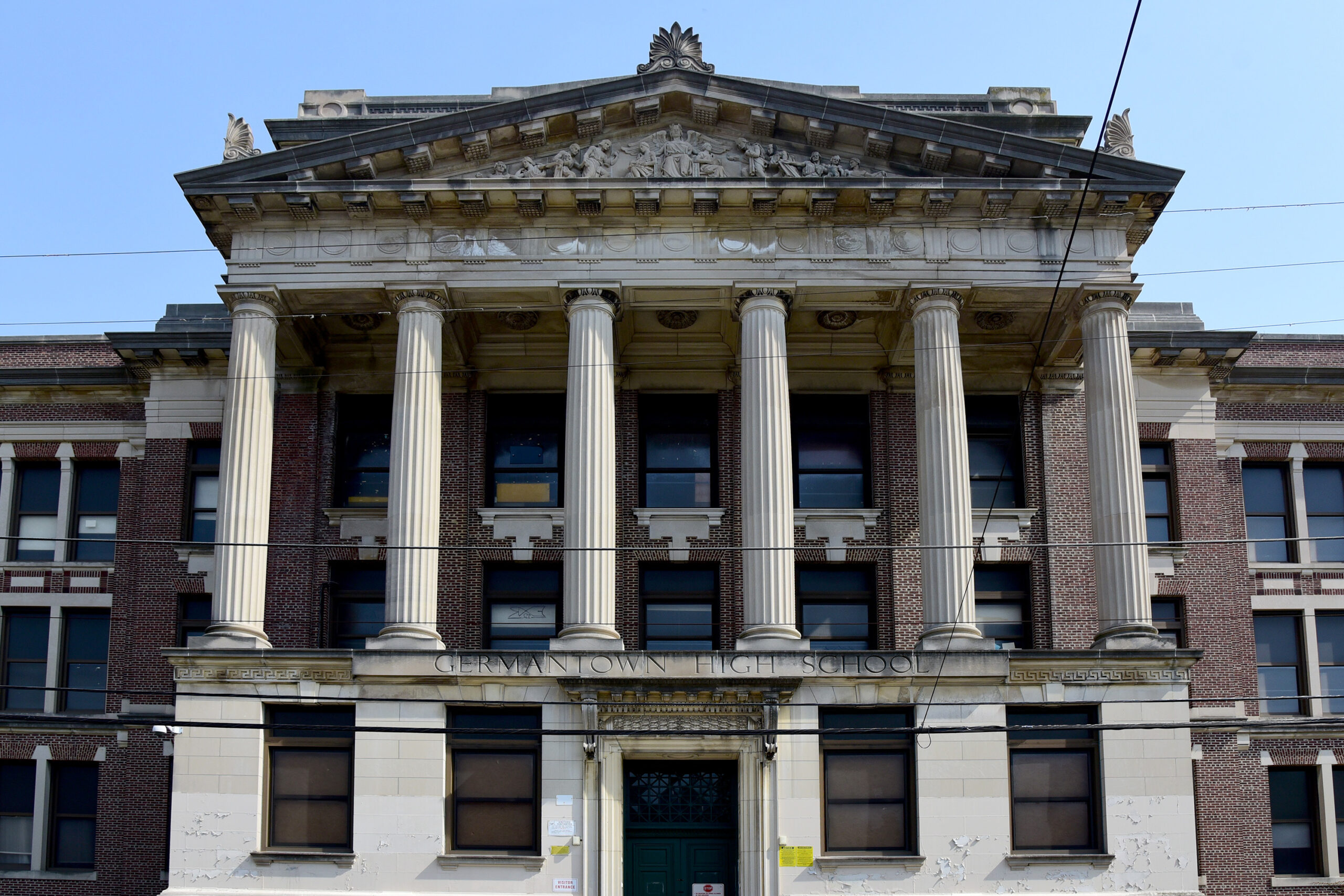
After it closed in 2013, Germantown High School fell into decay and disrepair, a fate Julia McWilliams writes could be repeated.
Take the former Germantown High School and Robert Fulton Elementary, for example. Concordia Group bought them in 2014, only to abandon its plans and resell the buildings three years later to local developer Jack Azran, whose opaque redevelopment has sparked concern.
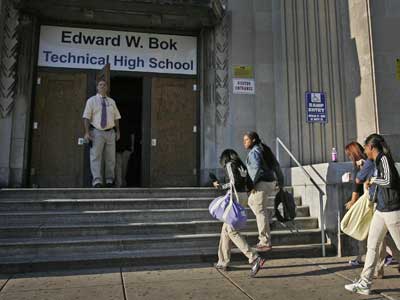
Moreover, once schools are sold to private entities, they are effectively lost to some communities and public education forever. South Philadelphia’s experience is a cautionary tale. As nearby elementary schools became overcrowded following the 2013 closures, the former Edward W. Bok Technical High School, once a public citywide admissions school, was transformed into a workspace for small-business owners, artists, and nonprofit organizations, closing classrooms forever.
This reuse no longer serves the same community of students and families as when it was a high school, and raises important questions: What does it mean for a community’s future when former schools become symbols of gentrification rather than centers of education? And what options remain when demographic shifts create new demand for neighborhood schools that no longer exist?
Had Bok remained in public hands, it could have flexibly adapted to those needs. Instead, it serves a much different population: South Philadelphia working artists, small-business owners, and local refugee-serving nonprofits, but also patrons who can afford $14 cocktails.
Slow down
Rather than defaulting to closure, the Board of Education should consider how underenrolled buildings might be repurposed for public-serving uses that retain community control. Could redevelopment proceed gradually, with clear commitments that investments in existing buildings benefit both local families and those who have chosen these schools?
Such an approach would require genuine public engagement and sustained dialogue. It would require slowing down and rejecting a disruptive, thinly deliberated plan shaped by speculative capital and instead committing to participatory, long-term facilities planning.
The district and the city face a choice. They can repeat a cycle of disinvestment and dispossession, or they can chart a more deliberative, community-rooted path. The question is whether they have the will to do so.
Julia McWilliams is the codirector of the Urban Studies Program at the University of Pennsylvania and a member of Stand Up for Philly Schools. She coauthored the forthcoming book, “Schools for Sale: Disinvestment, Dispossession, and School Building Reuse in Philadelphia,” from the University of Chicago Press.
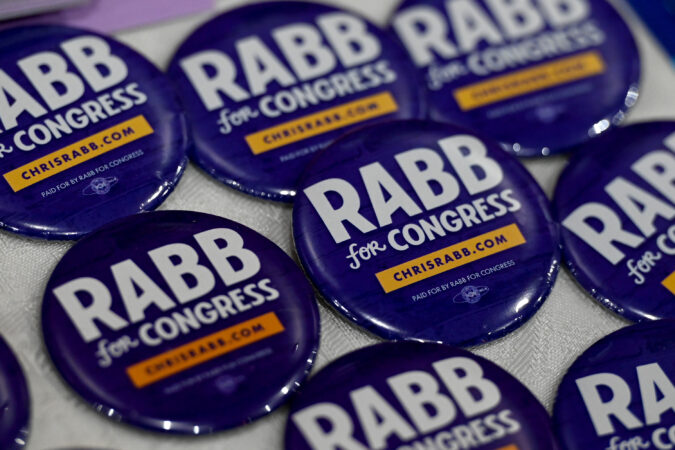
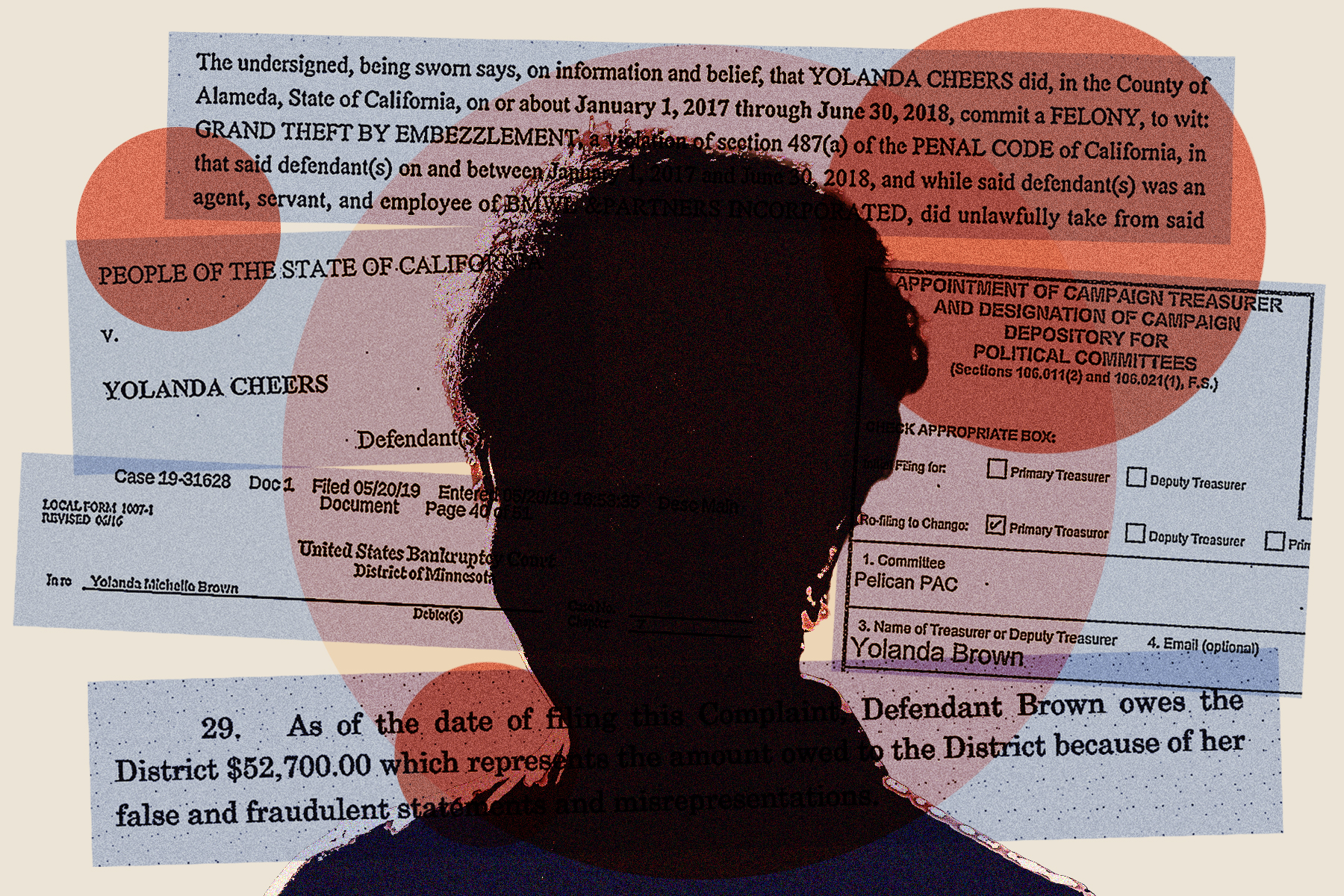
Third Congressional District candidate and State Rep. Chris Rabb made headlines last month when he said Yolanda Brown, his former campaign treasurer, made “unauthorized withdrawals” from his campaign account.
It’s not the first time the Florida-based Brown, a consultant who works primarily with Democrats and social justice groups, has faced such allegations: The financial misdeeds she’s been accused of span at least four states and total more than half a million dollars, The Inquirer found.
Yet she avoided jail time, and, using three different surnames, continued to work on political campaigns across the country. Now, the campaigns she once worked for don’t know where she is.
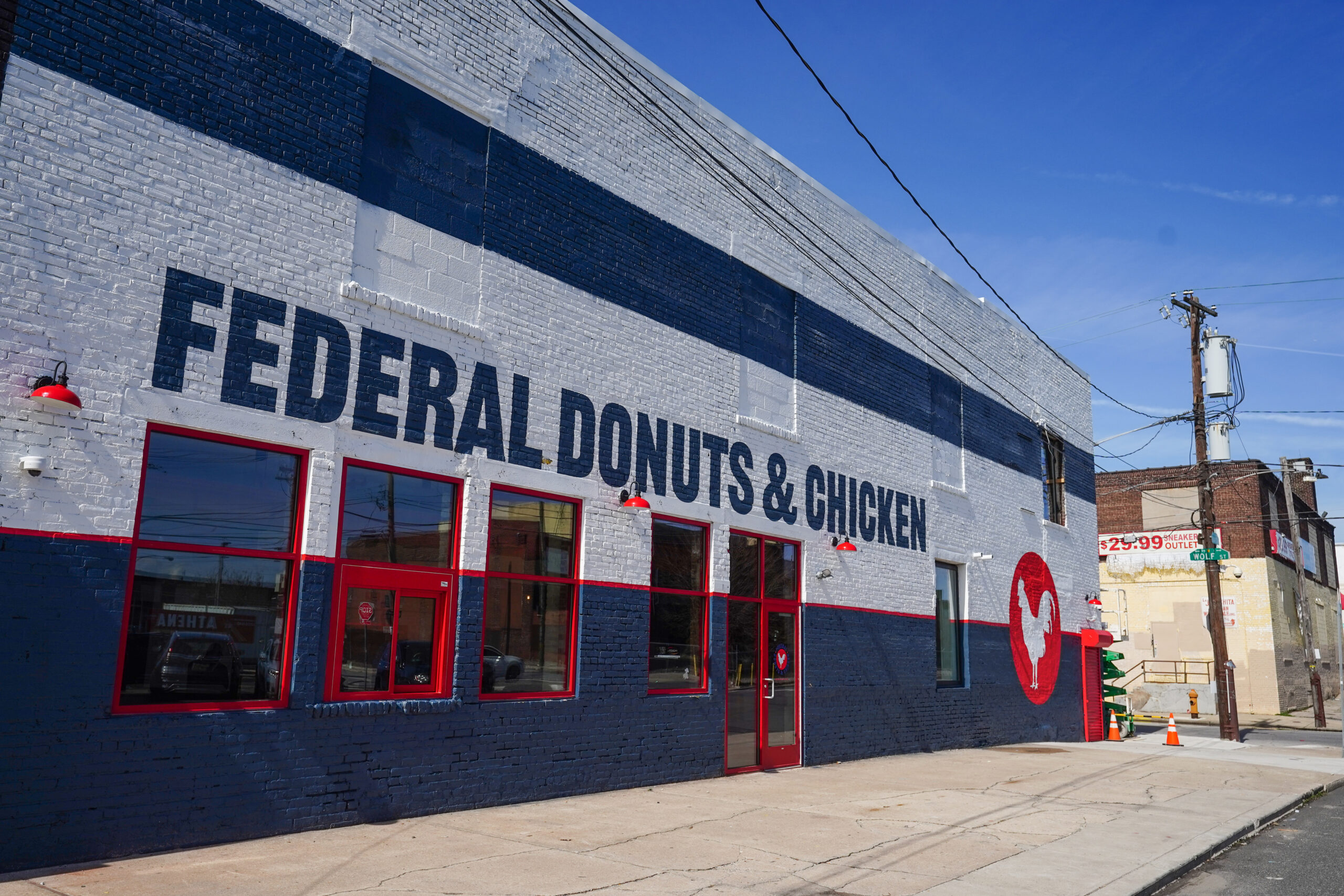
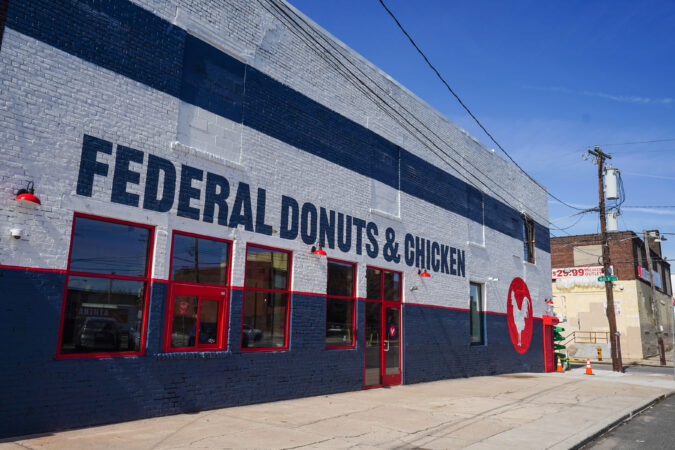
The answer appears to be yes — and the local chain is doing something about it by expanding into the just-closed, industrial-scale Federal Donuts & Chicken location at Wolf and Swanson Streets.
Since attracting national fame, Angelo’s takeout-only South Ninth Street shop had become a headache for neighbors fed up with the long lines and litter. That flagship location will remain, but owner Danny DiGiampietro hopes the new South Philly spot — which will also serve as a production hub and commissary — will take the pressure off of it by offering delivery, takeout, and seating.
In other food news: Almost Home General’s Old City coffeehouse has closed, months after severing ties with Glu Hospitality, the now-disbanded restaurant group that operated the location.
What you should know today
A rally at the Philadelphia Museum of Art to mark the fourth anniversary of the Russian war on Ukraine war also drew a small group of Iranian demonstrators Sunday.
All charges were dropped against personal injury attorney Leonard Hill in connection with the 2023 shooting of a man outside a Center City cigar bar.
Domestic violence homicides are on the rise in Philadelphia, even as killings overall are down. A police unit is expanding to work with victims of abuse.
More Philly-area students are majoring in neuroscience. For some, it’s about wanting to find cures for Alzheimer’s and Parkinson’s because of personal connections to those diseases.
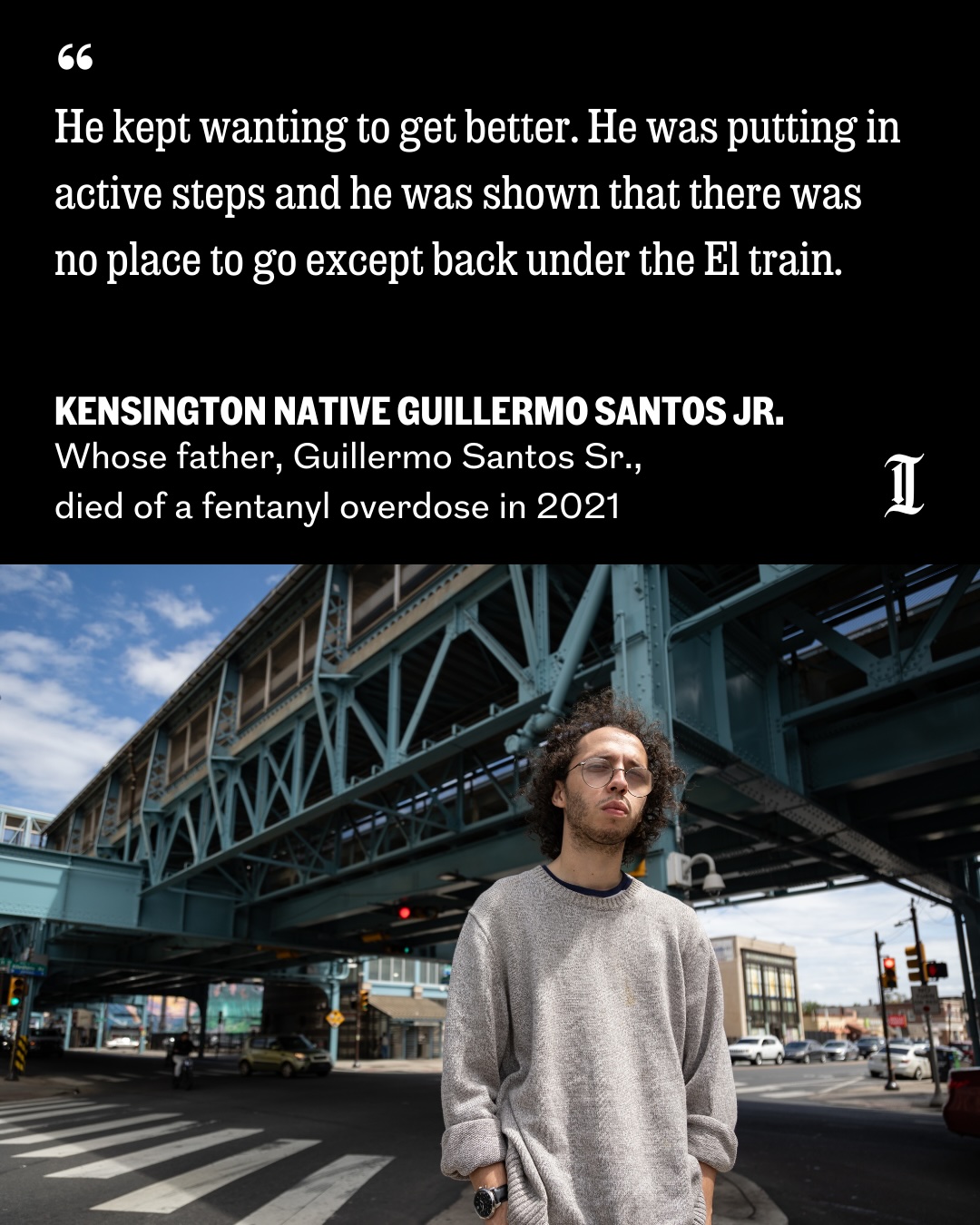
Overdose deaths in Philadelphia have hit the Puerto Rican community hard as the city remains divided on how to respond. Santos Jr. says the barriers his father faced in the ’90s persist today.
🧠Trivia time
Which Philly suburb was named the first Fair Trade town in the United States 20 years ago?
Cheers to Chris Singer, who solved Sunday’s anagram: David’s Bridal. The King of Prussia-based wedding dress retailer is staging an AI-fueled, post-bankruptcy comeback. Next up: a docuseries.
Photo of the day
A bald eagle flies over BayCare Ballpark during a Philadelphia Phillies game against the Detroit Tigers in Clearwater, Fla.
📬 Your ‘only in Philly’ story
Think back to the night that changed your life that could only happen in Philly, a true example of the Philly spirit, the time you finally felt like you belonged in Philly if you’re not a lifer, something that made you fall in love with Philly all over again — or proud to be from here if you are. Then email it to us for a chance to be featured in the Monday edition of this newsletter.
You can’t truly say you live in Philadelphia until you’ve been courtesy towed. This is something I tell myself because I have to believe that my suffering at the hands of this citywide tradition must mean something.
For those blissfully unfamiliar, the courtesy tow is that thing where the Streets Department or a construction company is performing some kind of task on your block that requires your parking spot, and they just … take your car away. Sometimes there are signs warning you of the potential of a courtesy tow; sometimes there are not. Technically, whoever tows your car has to tell the police where they put it, but frequently this does not happen, and you are left to shamble, panicked, in increasingly wide circles around your house until you come upon your car by chance.
I have been courtesy towed from my South Philly neighborhood three times, a sentence that enrages me every time I type it. [Editor’s note: And remember, this often happens even when a car is legally parked — then towed to an illegal spot.]
I wish I could say that waiting in line to get my car back at the PPA lot with dozens of other hapless souls, squinting into the setting sun of a late August evening as it sank behind the rowhouses, became some sort of bonding experience where I learned and grew and changed and ultimately understood my fellow Philadelphians better. The hottest club in Philly is the Weccacoe Avenue tow lot! But everyone was mostly just angry. I came home hungry and annoyed and $300 lighter and ready to perform a blood sacrifice for a parking spot.
Could I avoid this problem by moving to a house with a driveway? Yes. Would that also require me to probably leave South Philly? Also yes, and that’s something I hope I never do. I suppose there’s value in learning that you love your neighborhood enough to endure the unique derangement of multiple courtesy tows, an experience that would probably break brains in lesser cities. It would be nice to get my $300 back, though.
Wishing you a tow-free week. I’ll be back in your inbox tomorrow.
By submitting your written, visual, and/or audio contributions, you agree to The Inquirer’s Terms of Use, including the grant of rights in Section 10.
The next two months will be franchise-defining for Howie Roseman and the Eagles. That’s partly a function of how much they need to accomplish in order to get their offense on a sustainable footing. But it’s also a function of how much opportunity they have to do so. In fact, they have more of it than most teams in their situation can hope to have.
The decision-making revolves around the draft, as it always does. The most honest thing anybody can say about the draft is that the best decisions are primarily a result of what’s available. Roseman deserves a ton of credit for projecting Quinyon Mitchell as an elite cornerback. But he gets credit for drafting him only because he lasted until the 22nd pick. Same goes for Cooper DeJean in the second round at No. 40. Who knows what this Eagles defense looks like if Mitchell and DeJean weren’t on the board.
I see a lot of parallels between that 2024 draft and this year’s. The Eagles’ offense is at a similar juncture, particularly in the pass-catching department. DeVonta Smith is great. He’s also the only guy on the depth chart at wide receiver and tight end, if we’re assuming that A.J. Brown is potentially on the way out. The best way to get yourself into trouble when you are on the clock is to focus on immediate needs over expected future value. The Eagles’ opportunity is that this year’s draft looks like it aligns with their needs.
If the mock drafts are to be trusted, the Eagles could have their choice of one of at least three potential difference-makers at No. 23 and perhaps a second if they can move up in the second round. Last year, I was beating the drum for Missouri receiver Luther Burden III, who ended up going No. 39 to the Bears. This year’s trio is even better.
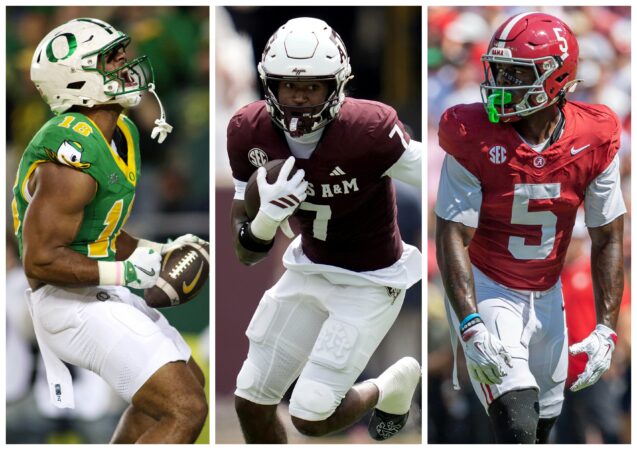
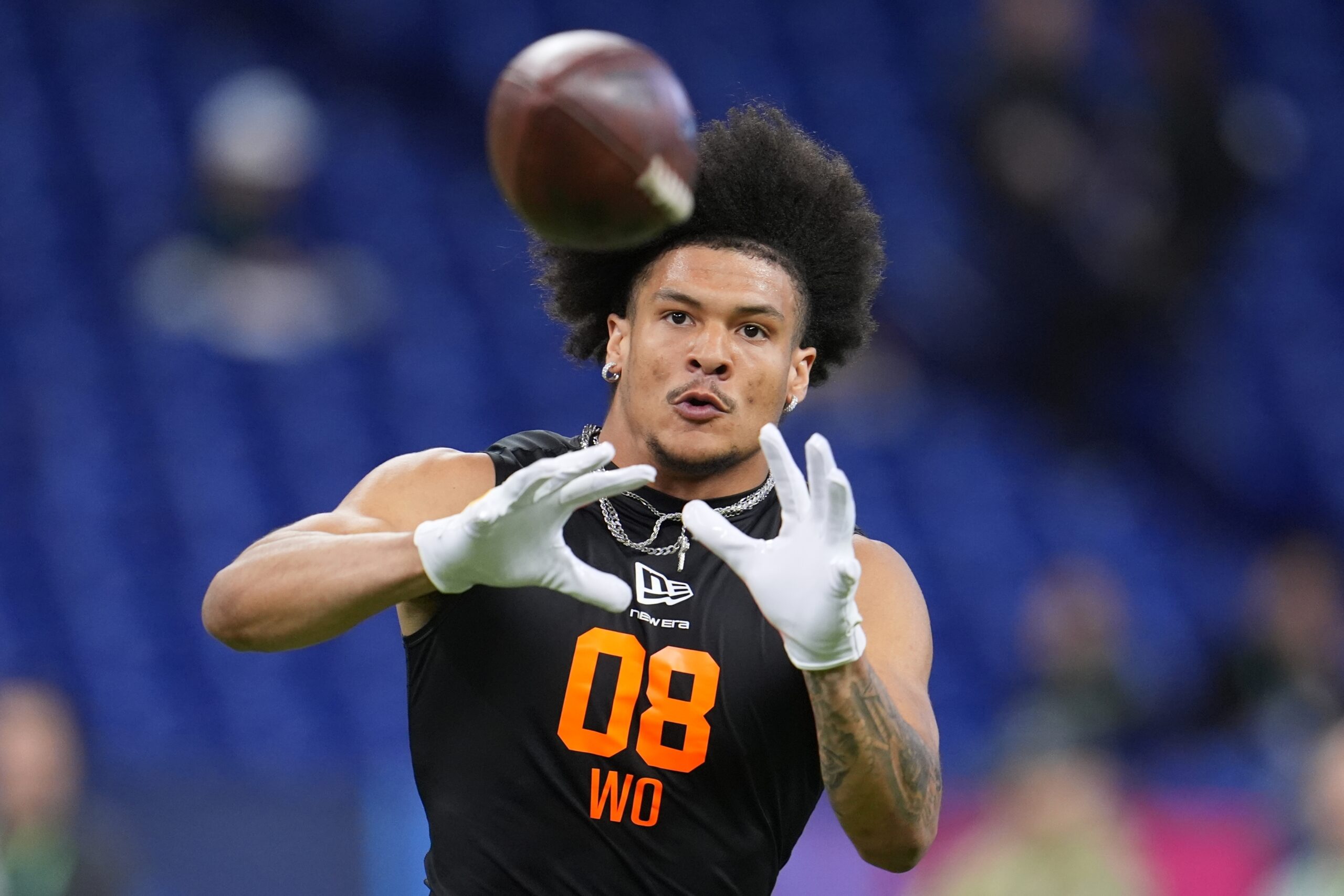
Oregon tight end Kenyon Sadiq. Texas A&M wide receiver KC Concepcion. Alabama wide receiver/utility man Germie Bernard.
The comps are Vernon Davis, Antonio Brown/Stefon Diggs, and Deebo Samuel.
I’m not going to sit here and pretend I have an opinion on any of the linemen who could be on the board in the late first round. If the Eagles have a chance to draft one with a Lane Johnson or Jalen Carter grade, they should obviously do it. What I do know is that the pass-catchers should be a priority, and that there are three guys who could offer the value that Mitchell and DeJean did on the defensive side.
This draft is better than people are giving it credit for, particularly in the range where things start to look realistic for the Eagles. The precombine consensus had Sadiq going No. 19, Concepcion going No. 27, and Bernard going No. 69. The Eagles have picks No. 23 and 54, but I’m skeptical that they’ll be in position to pick two of the three.
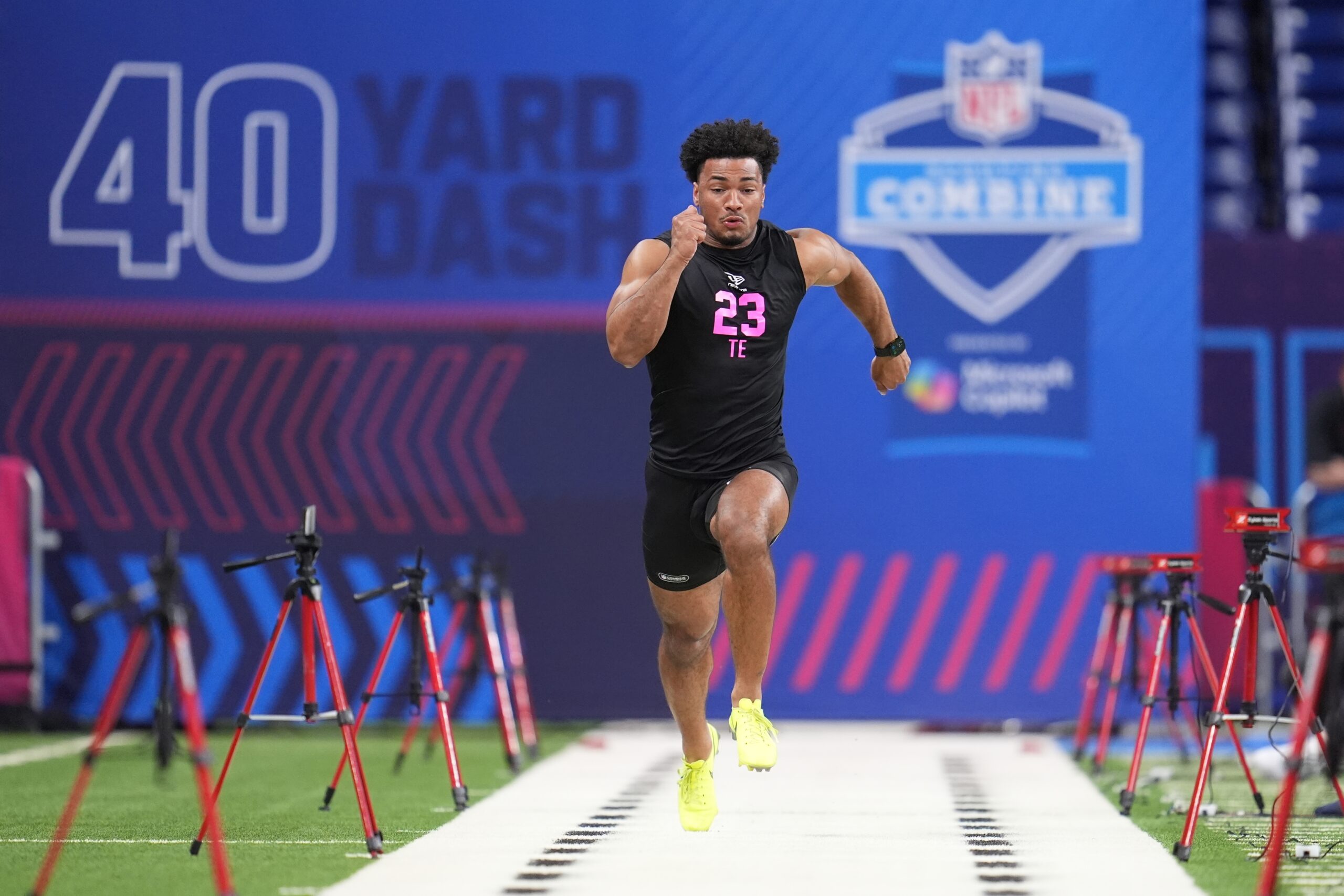
The idea that Sadiq will last anywhere close to No. 23 always seemed detached from reality. That’s especially true after a combine performance unlike any we’ve seen at the tight end position in recent memory. Sadiq’s 40-yard dash time of 4.39 seconds was the fastest by a tight end since converted quarterback Matt Jones in 2003. His 1.54-second 10-yard split would have ranked him among the Top 12 wide receivers at this year’s combine. He also put up wideout-like numbers in the broad jump and vertical leap.
It would be one thing if Sadiq’s measurements were at odds with his game tape. But they aren’t. The game speed and explosiveness are there. Most notable is the way they show up off the ball. His combination of acceleration and compact strength allowed Oregon to use him in all sorts of ways in their blocking schemes: out wide on wide receiver screens, across the formation on running plays, etc. It is impressive to watch. This isn’t Kyle Pitts. I have to imagine every cutting-edge play designer in the NFL would love to have Sadiq’s skill set at his disposal. Don’t listen to the folks who try to compare him to fellow workout warrior Eli Stowers. The Vanderbilt tight end is a worthy late-second-round gamble. But watch both of their cut tapes and you’ll quickly realize one of these things is not like the other.
Kenyon Sadiq’s 40-yard dash time of 4.39 seconds was the fastest by a tight end since converted quarterback Matt Jones in 2003.
To be clear, Sadiq’s isn’t a conventional skill set. He isn’t anything close to your classic tackle-adjacent receiver-lineman tweener tight end. Which might be one reason why the draft industry rates him where it does. At 6-foot-3 with 31½-inch arms, he is at the negative extreme in terms of length at the position. Of the 14 tight ends who had a 1,000-yard season since 2010, only one was listed at 6-3 or shorter, according to Pro-Football-Reference.com (Delanie Walker, 2015). Sadiq’s arm length measurement ranks in the bottom 10% of tight ends at the combine since 2010. Combined with his chiseled 246-pound frame, he looks more like an H-back than a prototypical pass-catching tight end. That’s only a problem for a scheme that lacks imagination.
If anything, Sadiq’s overall pass-catching numbers are at odds with his game tape. His 892 career receiving yards in three years at Oregon would be the lowest for any tight end drafted with a top-28 pick since at least 2010. Every tight end drafted in the top 15 since 2010 had at least one season with 58-plus receiving yards per game. O.J. Howard at No. 19 in 2017 averaged 40.1 yards, which is about what Sadiq averaged this season (51 catches, 560 yards, 14 games).
Thing is, Sadiq looks the part on film. The guy pops in all phases of the game. Look at his two touchdown catches against USC in October. On goal-to-go from the 8-yard line, he beat USC safety Christian Pierce on a perfect in-breaking route and then was in the process of running away from him when he made the catch in the back of the end zone. On the second, he got behind a late rotation on a seam route and then made a great catch in traffic in front of the deep man before being sandwiched. Sadiq finished the season as one of two major conference tight ends in the last five years to have five TD catches of 20-plus yards.
Sizewise, I see Vernon Davis. The more intriguing comp is George Kittle. Sadiq may never be the blocker that Kittle is, i.e., one of the best ever at the position. But that’s not the point. The point is Kittle as a pass-catcher. In four years at Iowa, he had 48 catches for 737 yards, topping out at 22 catches for 314 yards as a senior. The 49ers drafted him in the fifth round. He would go higher in a redraft.
No position in the NFL draft is less contingent on college production than tight end. Jimmy Graham played one year at Miami, caught 17 passes, and was drafted in the third round. Antonio Gates never played college football. When Travis Kelce turned 23 years old, he was a senior at Cincinnati who’d caught 19 passes for 247 yards in 25 career games. They are the exceptions, sure. But name another position where three such exceptions went on to become three of the greatest of all time (four if you count Kittle).
Let’s reiterate our point here. It isn’t that Sadiq is the same type of prospect as the guys I just mentioned. He’s on a much higher level. It isn’t that he is going to become those guys. The point is that Sadiq’s relatively paltry receiving numbers shouldn’t make him fall in the draft. Chances are, they won’t.
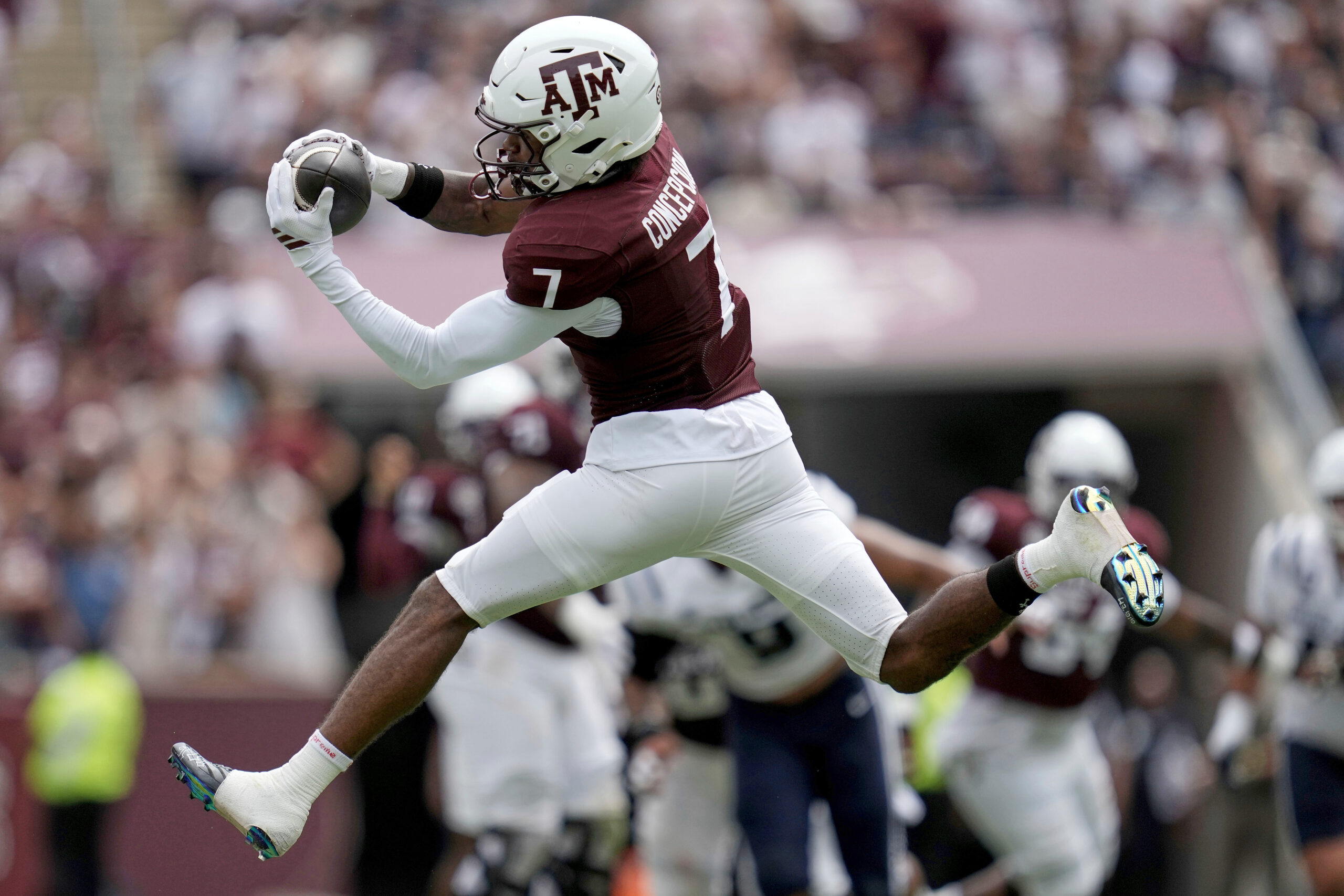
KC Concepcion had 61 catches for 919 yards and nine touchdowns as a junior at Texas A&M.
Concepcion is more likely to be there at No. 23. He’s a bit slight at 6-foot, 196 pounds. He didn’t run the 40 or take part in any of the other athleticism tests at the combine. Silence in a court of law, etc. But none of that should matter when you see the film. The ability to create change-of-direction separation is elite. It shows up in the numbers. In addition to his 61 catches for 919 yards and nine touchdowns as a junior at Texas A&M, and his 70 carries for 431 yards and three touchdowns in three collegiate seasons, he is coming off a season where he averaged 18.2 yards with two touchdowns on 25 punt returns after returning just five in his first two seasons. Whatever the physical measurements, his is an NFL frame, and an NFL game.
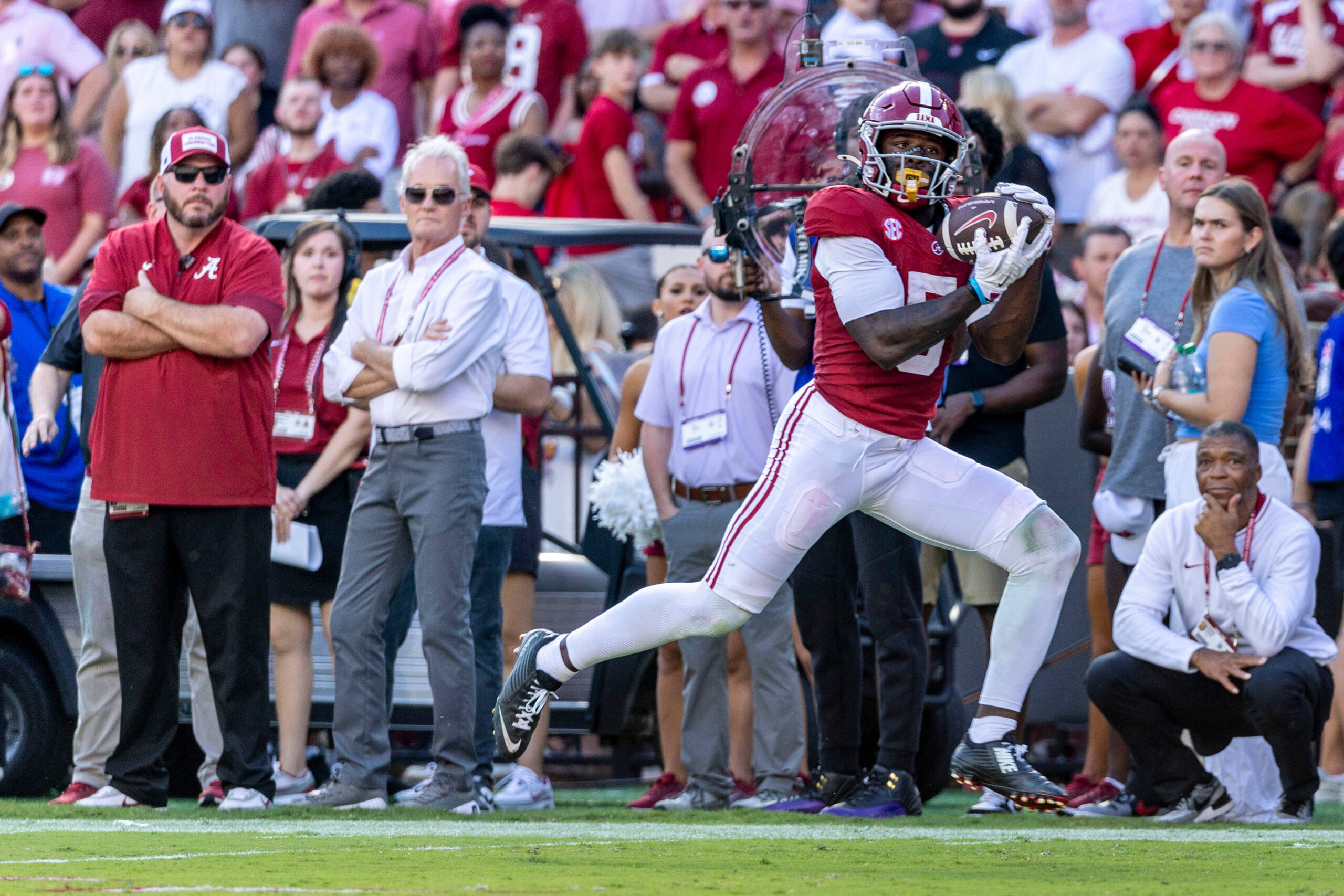
Bernard is the DeJean of this year’s draft. Midway through his rookie season everyone will look back and say, how did this guy fall as far as he did? Assuming the current projections are correct and he won’t be a first-round pick. Comps are usually fuzzy things. Man, does he look a lot like Deebo Samuel did during his peak with the 49ers. At 6-1, 206 pounds with a low center of gravity and ballcarrier instincts, Bernard could easily pass for a third-down back. But he is a wide receiver, one who averaged 57 catches for 828 yards over his last two seasons at Alabama. He has as high of a floor as anybody can have at his position. Too many GMs chase upside in a draft. The real test is projecting a player’s probability of achieving that upside. Bernard plays the game with a fluidity and instinct that will translate in some meaningful capacity. So much so that the Eagles shouldn’t hesitate to draft him at No. 23 rather than gambling he’ll still be there beyond.
There is an elephant in the room here, one so large that he has already been mentioned. The Brown thing is simple. Even if he is here next year, he won’t be here much beyond that. Jalen Hurts isn’t one of the rare quarterbacks who makes the pass-catching talent around him better. The Eagles will fail and fail miserably if Smith is his only pass-catcher who is above replacement level. They would be wise to trade Brown if it lands them a draft pick that facilitates the acquisition of someone with the ability to help replace him.
“If someone is going to give you something you didn’t anticipate and you won’t even have the conversation, I don’t think you’re necessarily doing your job or really servicing the team you’re with,” Roseman said at the combine last week. “You never know what someone is willing to do.”
The perfect draft for the Eagles is Sadiq first and then one of Concepcion or Bernard second. Given the value that teams place on the trenches, it’s hard for me to believe in a worthwhile certainty/upside ratio with any lineman who would also be available.
Germie Bernard had 64 catches for 862 yards and seven touchdowns at Alabama last season.
I’m skeptical that Sadiq will last anywhere close to where the current mock drafts have him going. At this time last year, Daniel Jeremiah and Pro Football Focus both had Colston Loveland going in the 18-20 range. In 2024, PFF had Brock Bowers going 18th. Loveland ended up going 10th and Bowers 13th. Both were among the top nine non-quarterbacks off the board. So, I wouldn’t put too much stock into the current projections, which have Sadiq lasting into the 20s and potentially reaching the Eagles at No. 23. I also don’t think the Eagles can bet on Concepcion being there. Nor can they with Bernard at 54.
The idea of trading Brown makes a lot more sense from that perspective. It’s only true if Roseman can somehow finagle something like the No. 31 overall pick from the Patriots. Maybe by swapping No. 54 and No. 68 for the Pats’ No. 63. So, the Eagles trade Brown in order to move up 23 spots from No. 54 to No. 31 while moving down nine spots from No. 54 to No. 63.
There are at least three prospects who would make it worth it.
With the NFL scouting combine in the rearview mirror, the collective focus will now turn to the fast-approaching free agency period, which will help paint a clearer view of what needs remain ahead of April’s draft.
But the past week also gave teams an opportunity to meet and learn more about the next group of NFL players. Some team fits have began to materialize, including what the Eagles may end up doing with the 23rd pick.
Here’s how we’re projecting our second first-round mock draft of this draft cycle:
1. Las Vegas Raiders: Fernando Mendoza, QB, Indiana
The buzz coming out of the combine is that Las Vegas is locked in on Mendoza atop the draft. That was the consensus coming into the combine, and the same remains true leaving it.
2. New York Jets: Arvell Reese, LB/edge, Ohio State
After an elite testing performance, Reese all but sealed his likelihood of getting selected inside the top 4, and the scuttlebutt from the combine all pointed to the Jets coaching staff favoring the versatile Ohio State player.
Bain didn’t test at the combine, but most teams aren’t deterred from drafting the standout Miami edge early in the draft. He can rush from the interior and as an outside pass rusher, and is a stout run defender that can help the rebuilding Cardinals.
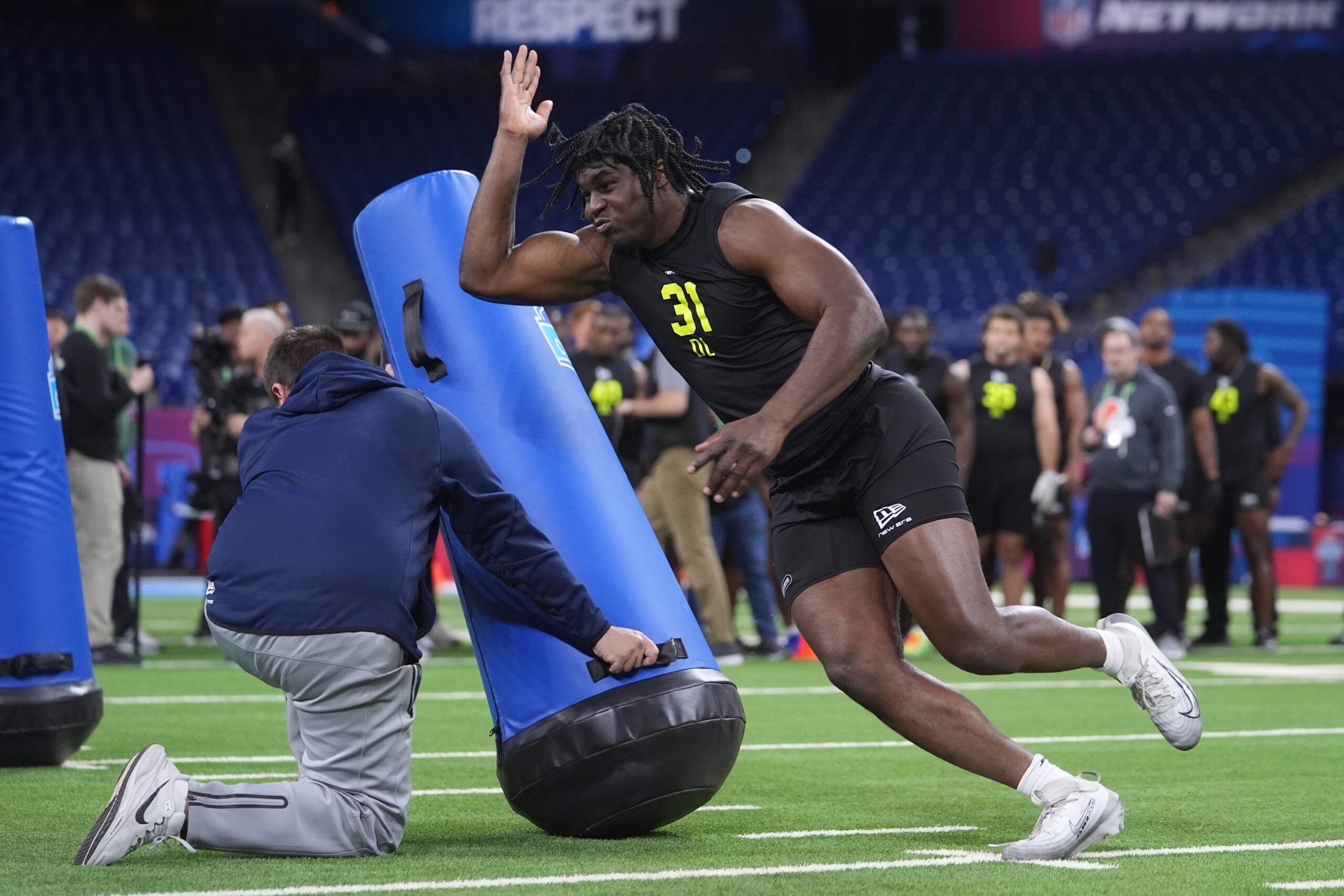
Defensive lineman David Bailey (31) runs a drill at the NFL Scouting Combine on Thursday.
4. Tennessee Titans: David Bailey, edge, Texas Tech
Notre Dame running back Jeremiyah Love’s range begins here, but in this scenario, Tennessee opts to take Bailey, who showed off his linear explosiveness and speed at the combine. Robert Saleh gets his pass rusher to build around for the future.
5. New York Giants: Sonny Styles, LB, Ohio State
Styles was already getting top-10 buzz coming into the combine, but his unreal testing performance (4.46 second 40-yard dash, 43.5-inch vertical jump, 11-foot, 2-inch broad jump, and 7.09 second three-cone) and New York’s need at linebacker may be too enticing for them to pass up.
Freeling’s stock continues to rise, despite making just 16 career starts. Cleveland gets a much-needed upgrade at a premium position with an elite athlete who shows promise as a pass protector and blocking out in space.
7. Washington Commanders: Jeremiyah Love, RB, Notre Dame
The idea of pairing Love with Jayden Daniels in the backfield would give nightmares to the NFC East and the rest of the conference. Love is a three-down back with elite speed (4.36 second 40-yard dash) and pass catching ability.
8. New Orleans Saints: Carnell Tate, WR, Ohio State
Despite running a 4.53 second 40-yard dash, Tate excels as a route runner when matched up one-on-one against defensive backs and gives Tyler Shough another outside receiver weapon to pair with former Ohio State teammate Chris Olave.
Kansas City’s offensive line has struggled, and Mauigoa can fill a need at either tackle or guard. He also said at his podium this weekend that he will play any of the five spots on an offensive line, which gives Kansas City the flexibility to play him at tackle or guard.
10. Cincinnati Bengals: Caleb Downs, S, Ohio State
Despite not testing at the combine, Downs is the most instinctual player in the draft and received rave reviews in his interviews with teams from across the league. Cincinnati seems to be the floor of where he will be selected in the first round.
11. Miami Dolphins: Olaivavega Ioane, OL, Penn State
This one is a bit of a surprise, considering Miami’s needs in the secondary, but Ioane has an argument as the best offensive lineman in the class and could help solidify a group that struggled at both guard spots last season.
Penn State OL Olaivavega Ioane getting some work in the kick slide drill
One of the worst-kept secrets is Dallas’ intention of drafting a cornerback early, and here that would get them Delane, a smooth cornerback with excellent anticipatory and ball skills that should fit under new defensive coordinator Christian Parker.
Kenyon Sadiq runs the 40-yard dash at the NFL Scouting Combine on Friday.
13. Los Angeles Rams (via Falcons): Kenyon Sadiq, TE, Oregon
The Oregon tight end tested historically well at the combine for the tight end position, and seems unlikely to make it out of the top 20. In joining Los Angeles, Sadiq gives Sean McVay and Matthew Stafford a receiving weapon that can replace free agent Tyler Higbee’s production.
Kenyon Sadiq had one of the best days ever by a TE at the Combine:
Woods’ stock is difficult to figure out because of his uneven play in 2025, but the Clemson defensive tackle’s pass rushing and gap shooting ability would be a nice addition to a defensive line that features Nnamdi Madubuike and Travis Jones.
15. Tampa Bay Buccaneers: Cashius Howell, edge, Texas A&M
Getting more consistent edge rusher production will be among the priorities for Tampa this offseason, and Howell brings that ability, despite having short arms (30¼-inch arms). He has shown the ability to win on a two-way go off the edge.
Cashius Howell (@AggieFootball) reached 14.52 mph while rounding the corner in the pass rush drill, the only defensive lineman to exceed 14 mph during the 2026 Combine.
Howell posted the fastest pass rush speed by any DL prospect since Will Anderson Jr. (14.90 mph) in 2023. pic.twitter.com/Bo0AxRfHBW
16. New York Jets (via Colts): Makai Lemon, WR, USC
Lemon looked smooth during the on-field combine drills, but there are concerns with his athletic profile. However, New York needs more playmakers in itsreceiver room and Lemon thrives at the catch point and after the catch.
17. Detroit Lions: Avieon Terrell, DB, Clemson
Detroit has needs along the offensive line, but Terrell has the fearless mentality, ball skills, and coverage instincts to fit at multiple spots in the secondary. Amik Robertson is set to be a free agent and Terrell played outside corner and nickel in college.
McCoy opted to not participate in the combine, and there is no guarantee he will at his pro day either, which could scare some teams from drafting him. He has shutdown corner ability, got his hands on the football in both man and zone coverages and would fit nicely in Brian Flores’ aggressive defense.
19. Carolina Panthers: Jordyn Tyson, WR, Arizona State
Tyson’s medical checks could have him go a lot lower than expected, but his fall ends here with Carolina, especially with Xavier Legette’s unclear future with the team. The Arizona State wideout is dynamic at the catch point and can win as a route runner in the slot and as an outside receiver.
Faulk, who showed some lower-body explosiveness at the combine (35-inch vertical, 9-9 broad jump), is an excellent run defender who played in a contain style of defense, which limited his pass rushing ability.
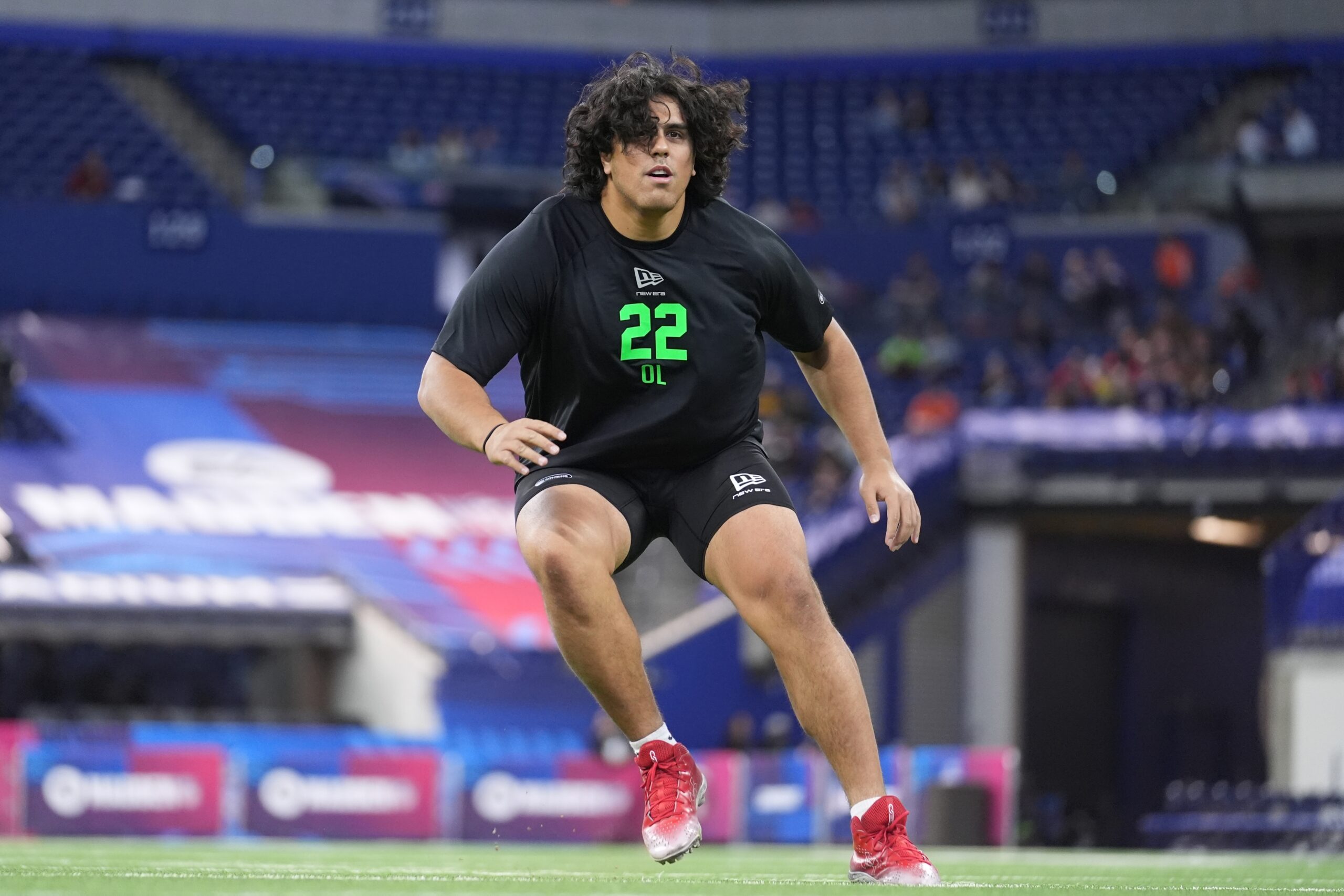
Utah offensive lineman Spencer Fano runs a drill at the NFL Scouting Combine on Sunday.
Isaac Seumalo could be on the way out for Pittsburgh, leaving an opening at guard for the Steelers. Fano has great feet and hands as a tackle, but his movement skills and run blocking disposition could be accentuated even more at guard.
22. Los Angeles Chargers: R Mason Thomas, edge, Oklahoma
Thomas did not run very well at the combine (4.67-second 40-yard dash) but he’s got an elite first step and can beat tackles on their outside or inside shoulders. Los Angeles desperately needs more juice from its pass rushers.
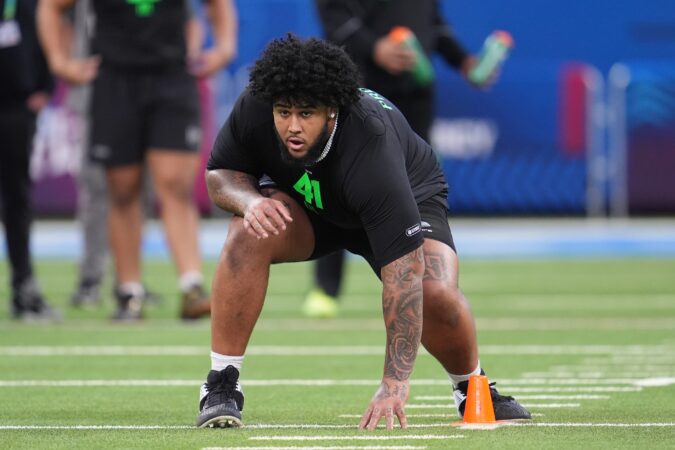
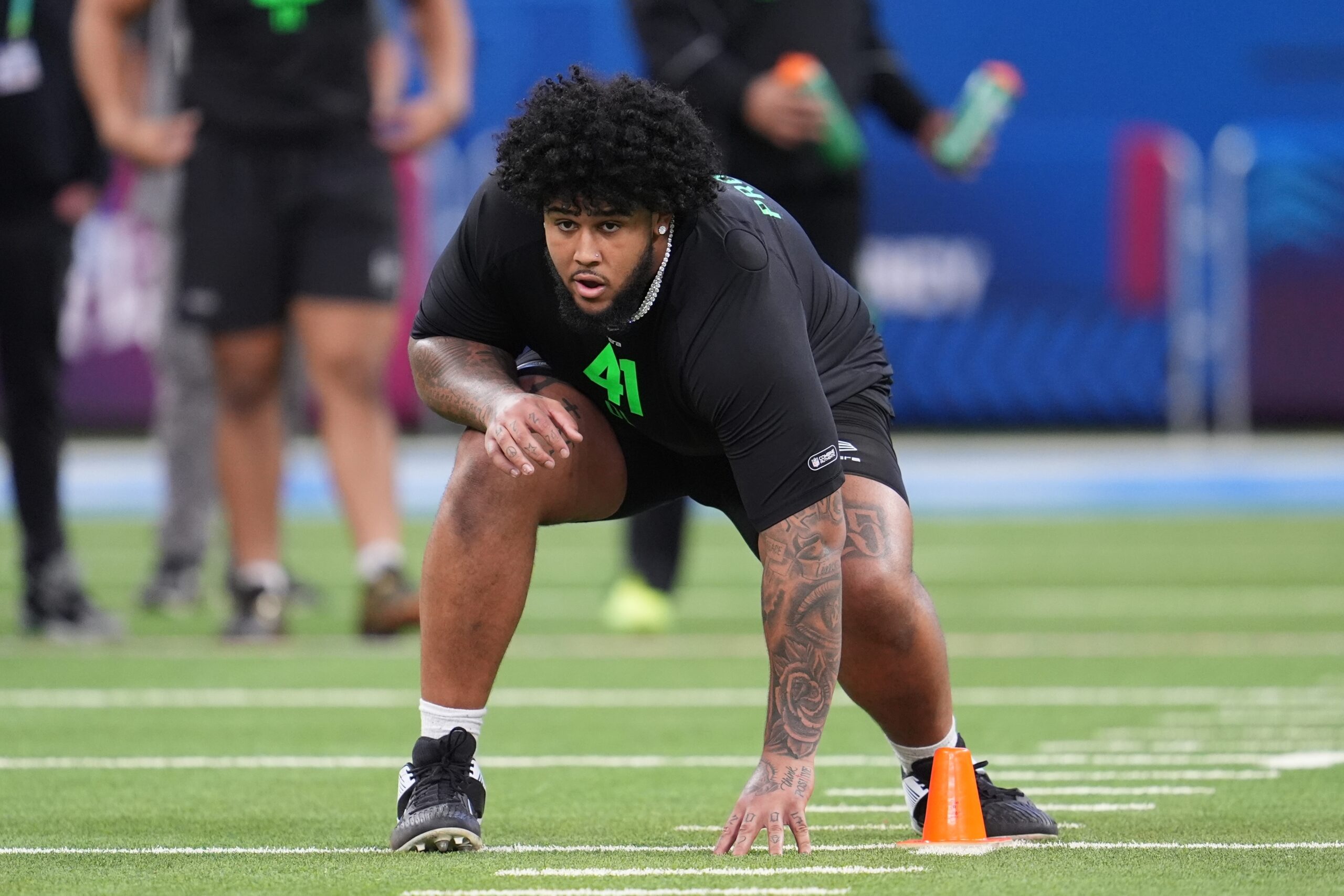
The Eagles showed significant interest in the tight ends and offensive linemen at the combine, and Proctor was among their formal meetings. The Alabama tackle said the Birds “have expressed a lot of interest in me,” during the process, and rightfully so, considering size, athleticism, and run blocking displacement skills.
He also admitted he was open to playing in the interior, a spot the Eagles could upgrade this offseason. He certainly checks the box for the “critical factors” the Eagles look for in offensive linemen.
#Alabama OT Kadyn Proctor says he’s met with with the #Eagles and that they “have expressed a lot of interest in me.”
Says he’s told teams his ideal playing weight has been 355 or less and wants to play tackle but is open to moving inside if teams need him to. pic.twitter.com/nwGlL6K5qu
24. Browns (via Jaguars): Kevin Concepcion, WR, Texas A&M
Concepcion is a dynamic athlete with the ball in his hands and would give Cleveland’s offense a much-needed vertical threat for whoever is under center next season, whether it’s Shedeur Sanders or a free agent signing like Malik Willis.
25. Chicago Bears: Dillon Thieneman, S, Oregon
Thieneman was the pleasant surprise of the combine, testing like an elite athlete (4.35 40-yard dash, 41-inch vertical, 10-5 broad jump) and showcasing the range to play as a single-high safety and the instincts to play a box safety role. With Jaquan Brisker, Kevin Byard, and C.J. Gardner-Johnson hitting free agency, Chicago gets a potential Day 1 impact player.
.@oregonfootball S Dillon Thieneman just casually out-running three of the best WRs in the game 🤷♂️
Allen, the standout Georgia linebacker, has good instincts and playmaking skills at the second level of a defense and fills a need with Matt Milano set to hit free agency for Buffalo.
Washington wide receiver Denzel Boston runs a drill at the NFL Scouting Combine on Saturday.
27. San Francisco 49ers: Denzel Boston, WR, Washington
Jauan Jennings is set to hit free agency this offseason, and the 49ers may be looking for his replacement in the draft. Boston is a big receiver who can win vertically and thrives at the catch point with his strong hands and impressive body control on jump balls.
28. Houston Texans: Caleb Banks, DL, Florida
Banks tested like a solid athlete at the combine, but he only played in three games in 2025 and needs to improve his pad level and down-to-down consistency. But his skill set will fit nicely in DeMeco Ryans’ defense.
29. Rams: Blake Miller, OT, Clemson
The Rams have a big need at corner, but instead they upgrade the right tackle spot with Miller, who has light feet in pass protection and the grip strength to stop pass rushers in his tracks. He also has the athleticism to block in space, a big component of Sean McVay’s offense.
30. Denver Broncos: Omar Cooper Jr., WR, Indiana
One name that kept popping up as a first-round player last week was Cooper, who has the speed to run by defensive backs (4.46-second 40-yard dash) and is tough to bring down in the open field after the catch. He would be a nice, complementary piece in Denver’s offense.
31. New England Patriots: T.J. Parker, edge, Clemson
The Patriots need more impactful pass rushers, and Parker relies on his power and is a physical run defender that can stack and shed offensive linemen in the run game. He also has experience dropping into coverage.
32. Seattle Seahawks: Chris Johnson, DB, San Diego State
Johnson’s rise is similar to Quinyon Mitchell’s a few years ago — Johnson crushed the predraft process first at the Senior Bowl, then at the combine (4.4 second 40-yard dash, 38-inch vertical, 10-6 broad jump). He is a sticky coverage player in man and zone coverages, and is competitive at the catch point, and fills a need for Seattle in the secondary.
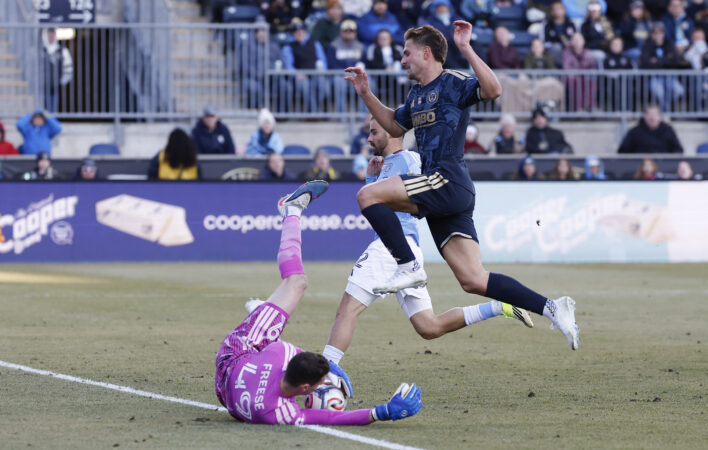
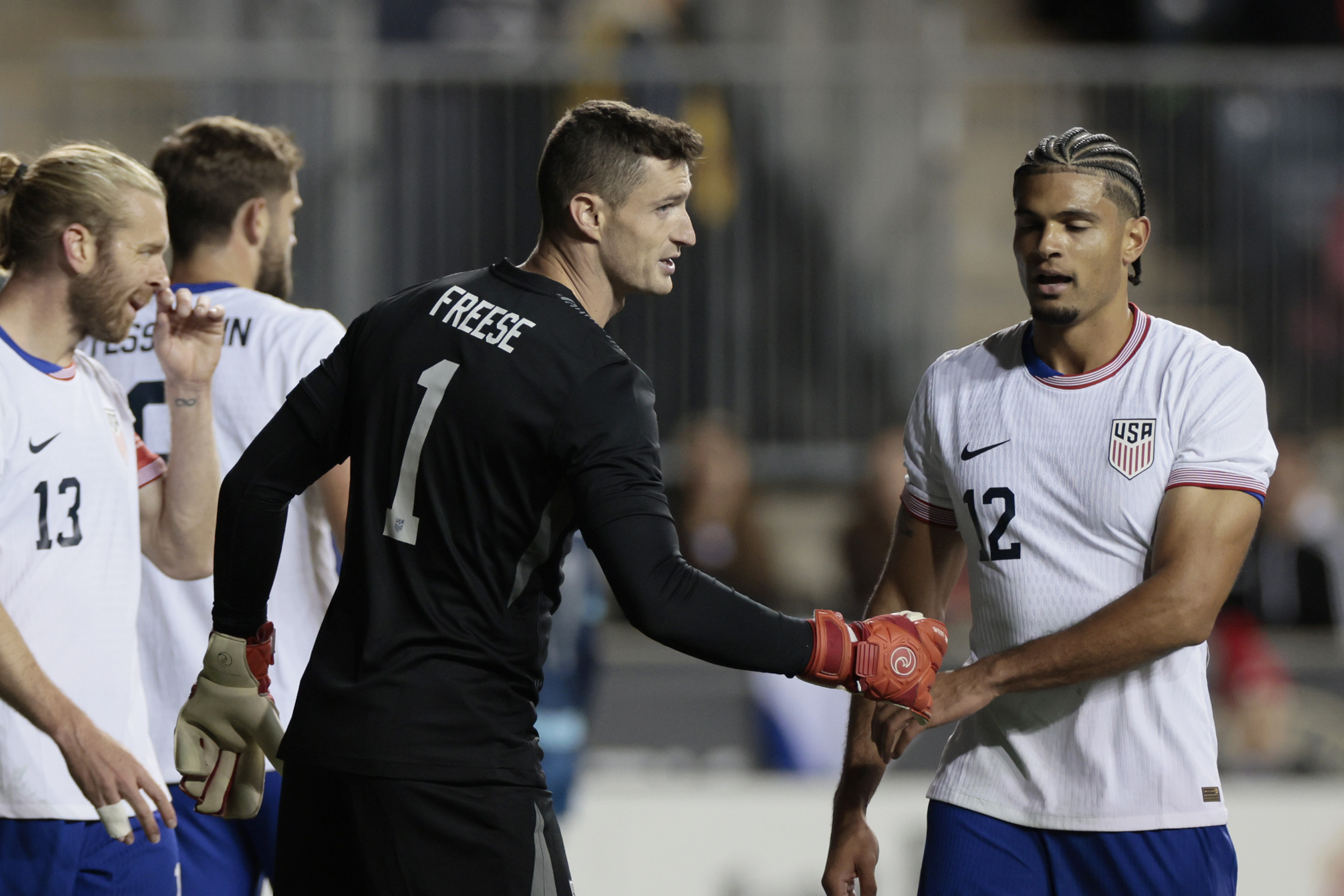
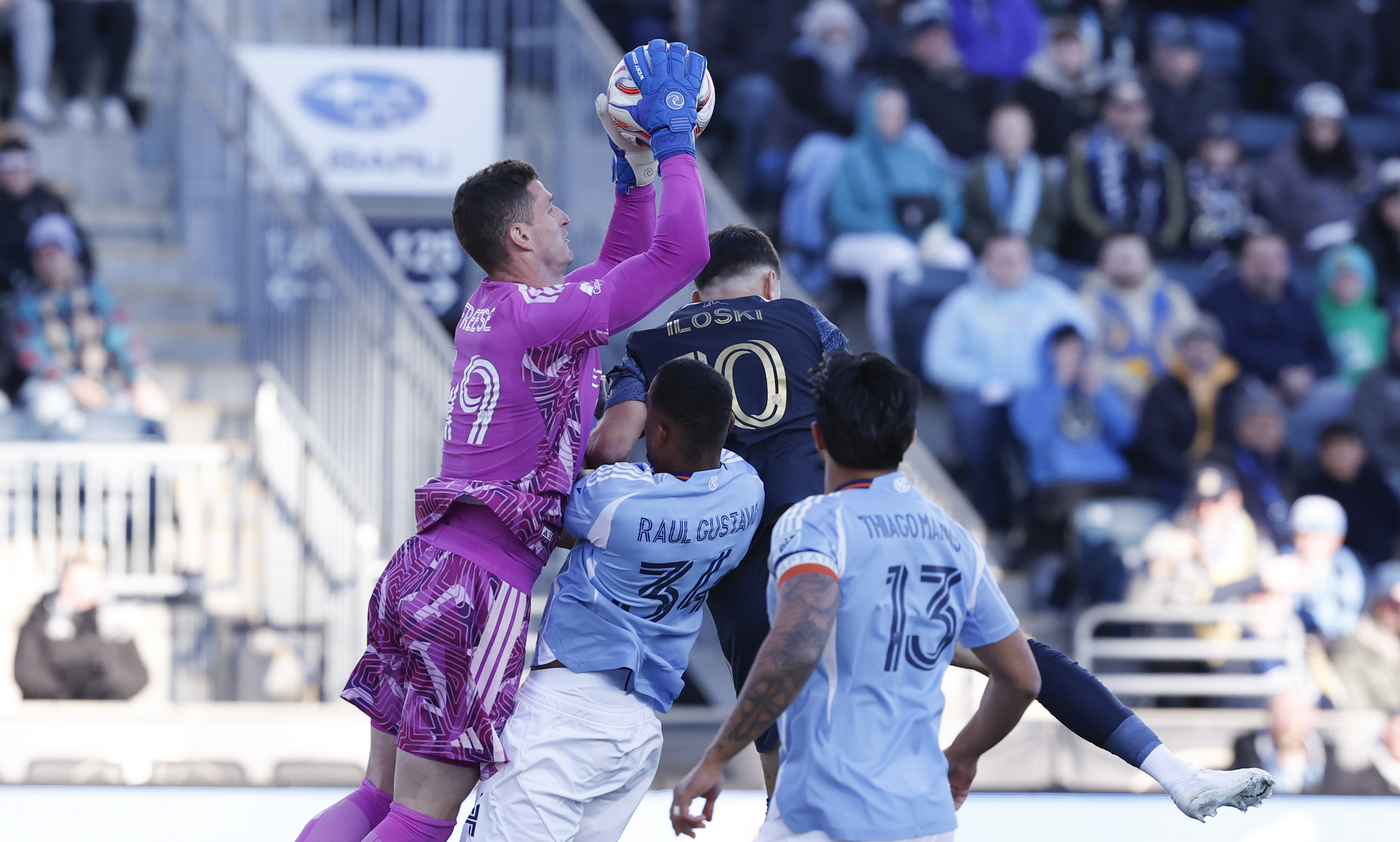
As the Union inflicted another loss upon themselves Sunday night, Matt Freese mostly got to just stand there and watch.
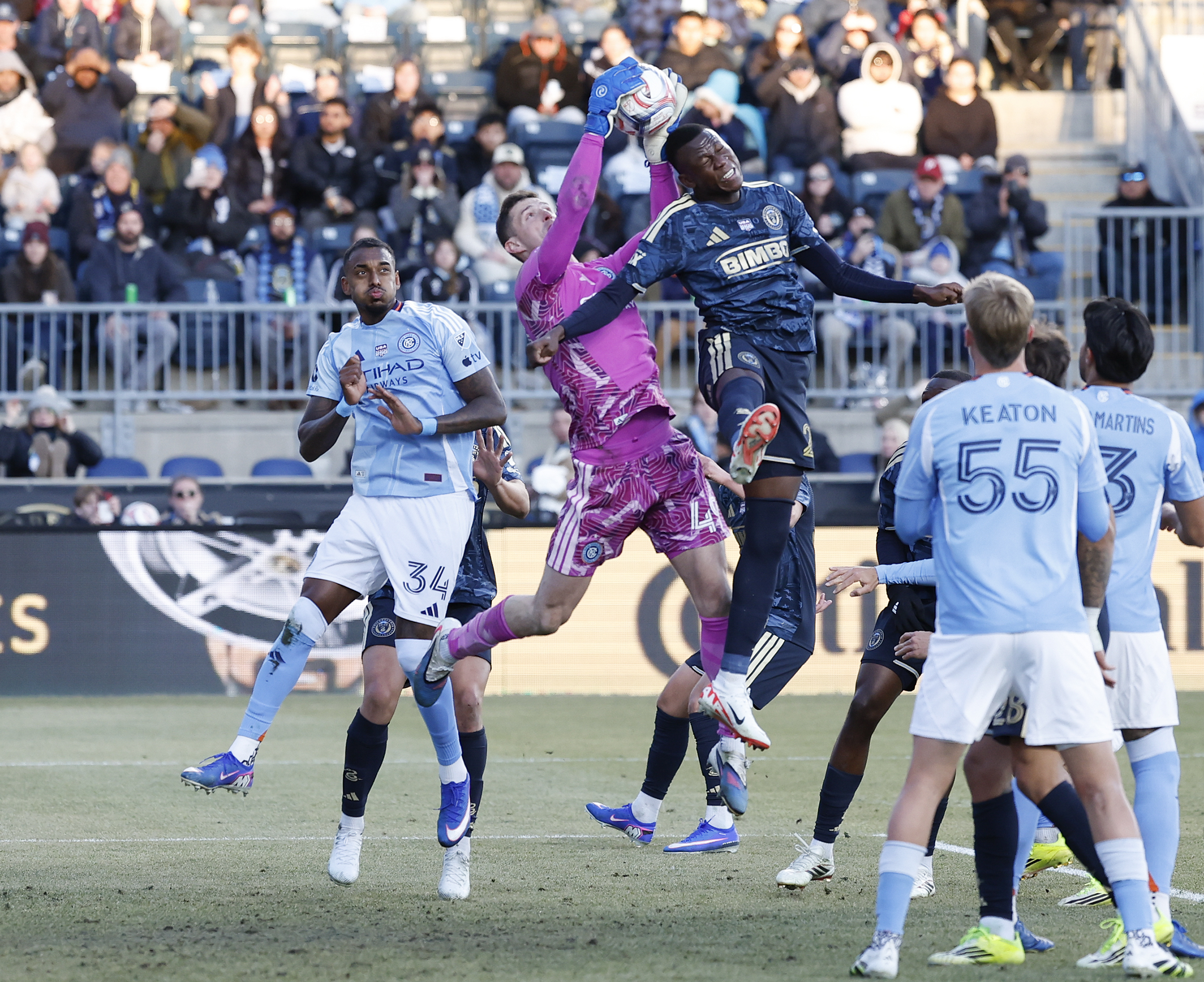
The Wayne native wasn’t really challenged until the late stages of his side’s 2-1 win at Subaru Park. In his sixth game for New York City FC against the team he grew up with, Freese didn’t face an official shot on target until the 54th minute, and the biggest save of his five didn’t come until the 80th.
Sure, there was Indiana Vassilev’s penalty kick equalizer in the 89th, followed by 10 minutes of stoppage time. But once Olwethu Makhanya was sent off for a second yellow card three minutes later, the field tilted back the other way, leading to Tayvon Gray’s eventual winner.
It might be a while before Freese has another day that easy, whether a Sunday or any other. In fact, many will soon be quite the opposite.
Three weeks from now, the 27-year-old goalkeeper will head to the U.S. men’s soccer team’s last training camp and games before the World Cup roster is set. Freese will arrive in Atlanta as the expected starter, a position he has done enough to keep while others have done too little to challenge him.
Along with the internal competition, Freese will be challenged by world powers Belgium and Portugal on the 28th and 31st. Both games will draw big crowds to Mercedes-Benz Stadium, with a sellout expected for the latter since it could be Cristiano Ronaldo’s first game on U.S. soil in 12 years.
Of all the positional battles to come in that camp, goalkeeper won’t be the most-watched. Centerback, central midfielder, attacking midfielder, and striker will all rank higher – which is every position except outside back.
But there will still be plenty of scrutiny on the net. Critics will pounce if Freese slips up, whether or not Matt Turner, Patrick Schulte, or any other candidate steps up to challenge him. Goalkeeper has been the U.S. team’s most solid position for decades, and it remains quietly awkward that right now it isn’t.
Matt Freese (center) in net during the U.S. men’s team’s game at Subaru Park last November.
Excitement for ‘big stages’
Freese isn’t thinking about that yet. He has enough on his plate with a New York team that hopes to silence its own critics, who see a starless roster.
“I’m just thinking about taking everything day by day, game by game,” he told The Inquirer. “I’m going to play some soccer today, and I’m going to play some soccer tomorrow, and [am] just going to continue on like that. So I’m really just focused on being present and improving every day, and making sure I’m ready for anything.”
“It’s a big stage, but I love big stages, I love big moments,” Freese said, “And the thing with big moments is, great preparation leads to great opportunities, and so that’s what I’m focused on: the preparation part.”
Matt Freese jumping to catch a ball in the air during the first half.
As it happens, Freese’s pre-World Cup schedule with New York is stacked with storylines. He’ll face the league’s three biggest stars, starting with Lionel Messi’s Miami on March 22 — the day before he goes to U.S. camp. Not many people these days get to face Messi and Ronaldo in a span of 10 days, and even fewer get to say they’ll host one of them at Yankee Stadium.
Later in the spring, Freese will visit Thomas Müller’s Vancouver, and host Son Heung-Min’s Los Angeles FC in Queens, the heart of New York’s big Korean population. He’ll also line up across from Schulte’s Columbus Crew, though he won’t face Turner’s New England Revolution until later in the year.
And for good measure, he’ll cross paths with Downingtown native Zack Steffen for just the second time. Steffen is out of the World Cup race at this point, but at least the duo might have some stories to swap.
On top in a growing rivalry
“Really, again, just focused on taking everything game by game,” Freese said. “In order to be the best, you’ve got to beat the best, and obviously this league at this point has, really, some of the best players in the world. It’ll be some big moments in the next two months of the games you’re talking about, but really just more focused on preparing for Orlando now [New York’s next opponent] after relaxing tonight.”
His use of “relaxing” was timely, given how much he could relax during the game. No one knows better how much of a rivalry the Union and New York City now have, except for maybe his old teammate Andre Blake.
“I think it’s just a matchup that brings the best out of each other,” Freese said. “I think it’s interestingly conflicting soccer philosophies, and I think that creates a really interesting game where we have to find different parts of us, and they have to find different parts of themselves. I think it really results in the two teams growing interestingly.”
This time, once again, the Union did not find different parts of themselves. After winning six of seven games against the Pigeons from 2022-24, New York has now won three of the last four, with Freese in net for all of them. And this time, he didn’t have to work too hard for it.
“It’s just part of the position, and that’s why I do so much work on staying in the present,” he said. “And just feeling the moment, and staying mentally engaged, staying vocally engaged, and physically engaged, following the game, and being ready for anything.”
He’ll have to be ready for a lot from now until the summer, and perhaps beyond.
Happy March, Philly. As we turn the calendar page, let’s hope that snow turns to sunshine, with the spring air upon us.
It’s also time to lock in on my favorite time of the year — college basketball. That’s right, it’s almost time for March Madness. The regular season is wrapping up, with some conference tournaments set to tip off this week, and Selection Sunday is about two weeks away.
Some of our Big 5 schools will struggle to get a bid without winning their respective conference tournaments, while others, including Villanova men and women, are bound to receive at-large bids. Fran McCaffery’s Penn squad also clinched the team’s first Ivy League tournament berth in three years this past weekend.
And while Villanova suffered its worst loss in 29 years against St. John’s on Saturday, Kevin Willard is not reading too much into it. The loss, however, revealed that the Wildcats can’t climb any higher than third in the Big East.
Also, don’t forget, while some of Philly’s schools may not be playing in the NCAA Tournament, the madness will come to the area on March 20 and 22 for men’s games in the first and second rounds at Xfinity Mobile Arena.
So whether you’re a serious fan or looking for something to watch, get ready for the games to begin, and follow along all month with our coverage of college basketball.
The Eagles showed significant interest in the tight ends and offensive linemen at the combine, including offensive tackle Kadyn Proctor.
The NFL Scouting Combine is officially over, and some team fits have began to materialize, including what the Eagles may end up doing with the 23rd pick. It seems like the Birds were interested in the tight ends and offensive linemen at the combine, and tackle Kadyn Proctor was among their formal meetings.
The free-agency period will help paint a clearer view of what needs remain ahead of April’s draft. For now, here’s how we’re projecting our second first-round mock draft.
What we’re…
🤔 Wondering: Are the Flyers still in the mix to make the playoffs? Well, they took a step closer with Saturday’s win over the Bruins.
🏀 Following: Joel Embiid’s injury status after being ruled out on Saturday of the Sixers’ next three games with a right oblique strain.
🗞️ Reading: The relationship between Edmundo Sosa and Adolis García, and how they’ve been reunited as Phillies with the “same goal.”
👀 Watching: Temple men’s basketball went from one of the top teams in the American Conference to nearly missing the conference tournament.
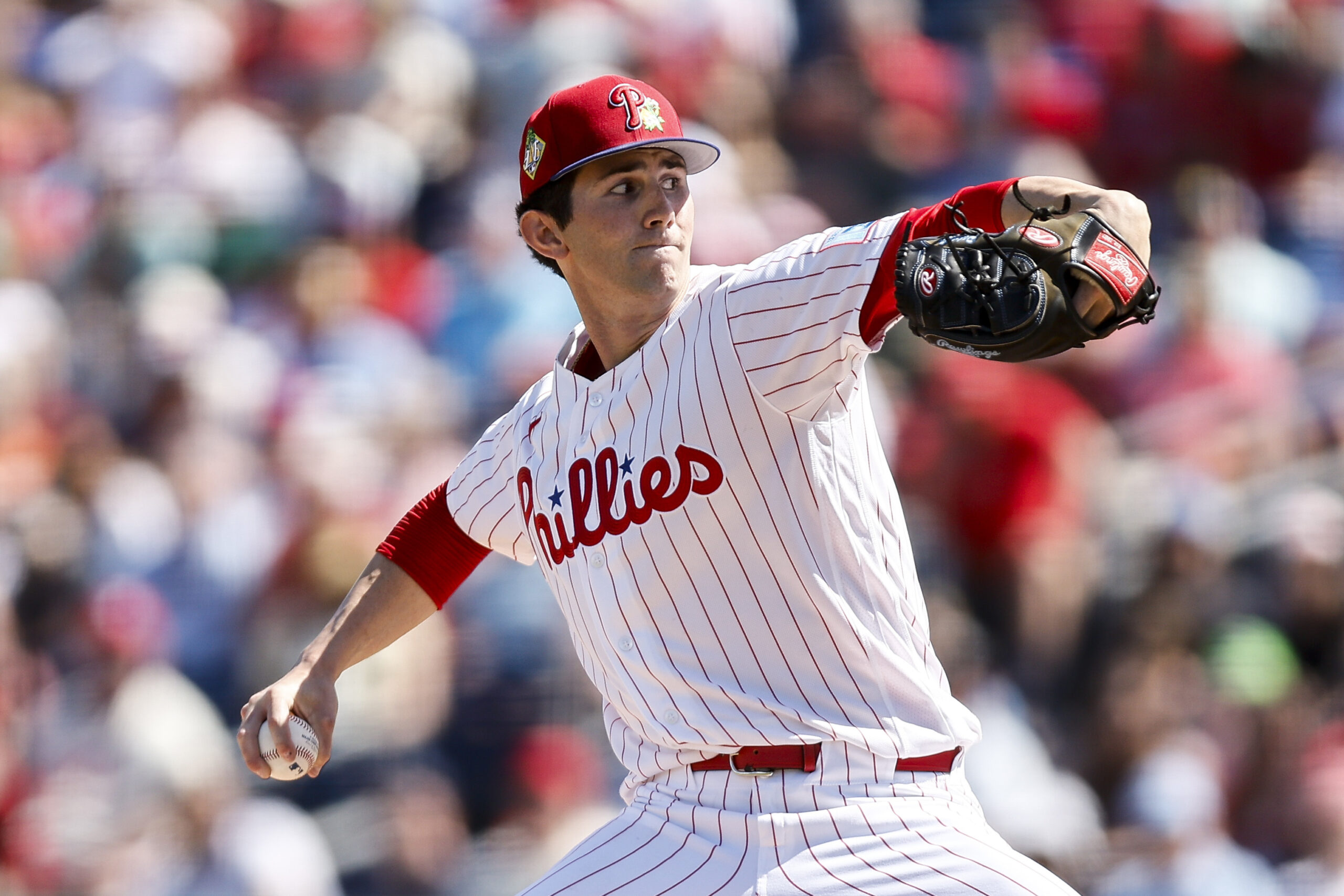
Andrew Painter was “calm, cool, collected,” during his two innings of work on Sunday.
Andrew Painter’s two innings on Sunday were exactly three years to the day of his first-ever spring training start in 2023. At the time, he was 19, with a chance to win a spot in the Phillies rotation.
Since then, he underwent Tommy John surgery, rehab, and pitched a full minor league season. Painter has been waiting a while to make it back to this point, and the wait was finally over on Sunday, where he was efficient and flashed six different pitches in two shutout innings of a 5-3 loss to the Yankees.
Orion Kerkering is also eager to get back on the mound. The right-hander threw his first bullpen session in over two weeks on Saturday, after a mild hamstring strain had slowed his start to the spring. He’s recently been working on a new splitter and is one step closer to testing it against hitters.
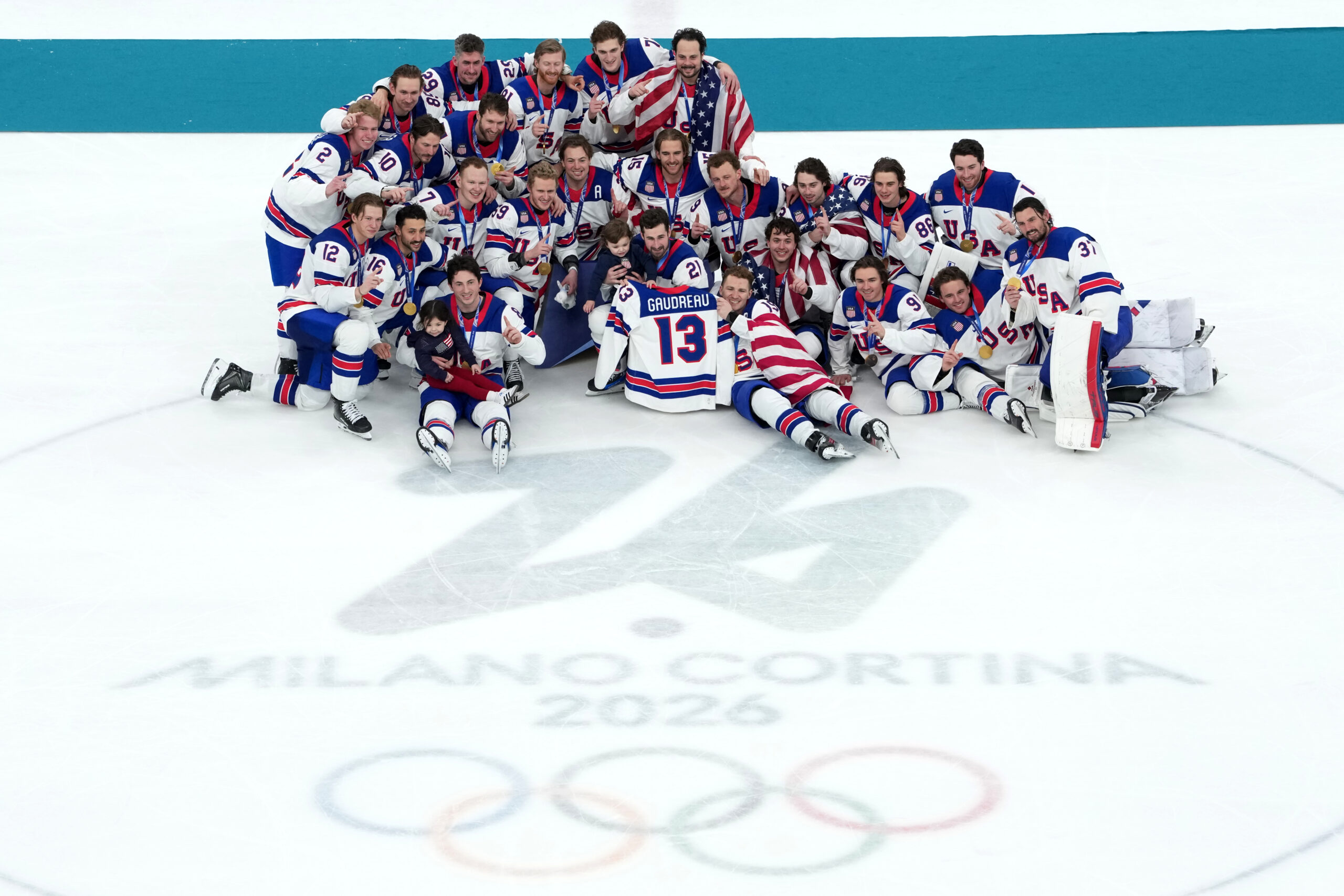
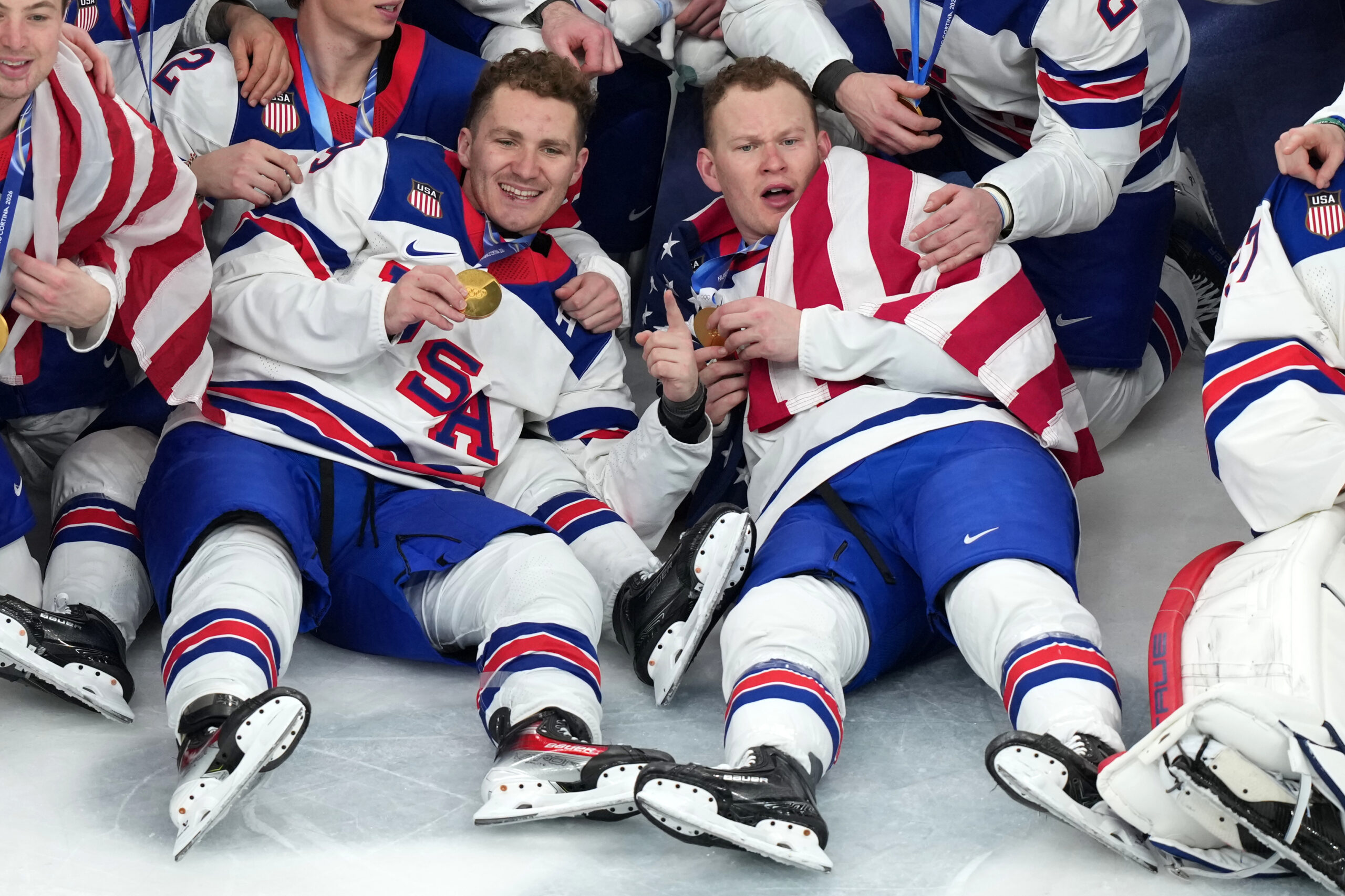
Team USA honored the late Johnny Gaudreau by bringing his No. 13 jersey and his daughter, Noa, and son, Johnny, onto the ice after their win over Canada in the men’s hockey gold-medal game at the 2026 Winter Olympics on Feb. 22.
Team USA honoring the late Johnny Gaudreau after its 2-1 overtime win over Canada in the gold-medal game was one of the most impactful moments of the Winter Olympics.
Meredith Gaudreau knew her late husband’s jersey had a place in the USA Hockey locker room in Milan, Italy, just as it had at the 4 Nations Face-Off in 2025. However, she didn’t expect the team to bring the jersey to the ice as it celebrated USA Hockey’s first men’s Olympic gold since 1980.
But the Gaudreau family might not have made it to Milan without the efforts of Brian Roberts, the chairman and CEO of Comcast.
The Union only mounted five shots on goal against New York City FC.
The Union entered Sunday evening’s match looking to avenge the playoff loss that halted their 2025 playoff campaign in the Eastern Conference semifinals. Instead, they fell 2-1 to New York City FC in the team’s Major League Soccer home opener at Subaru Park.
Despite the Union outshooting NYCFC, 17-13, New York City put 10 of those shots on goal, and the Union struggled to create meaningful chances in the first half.
Sports snapshot
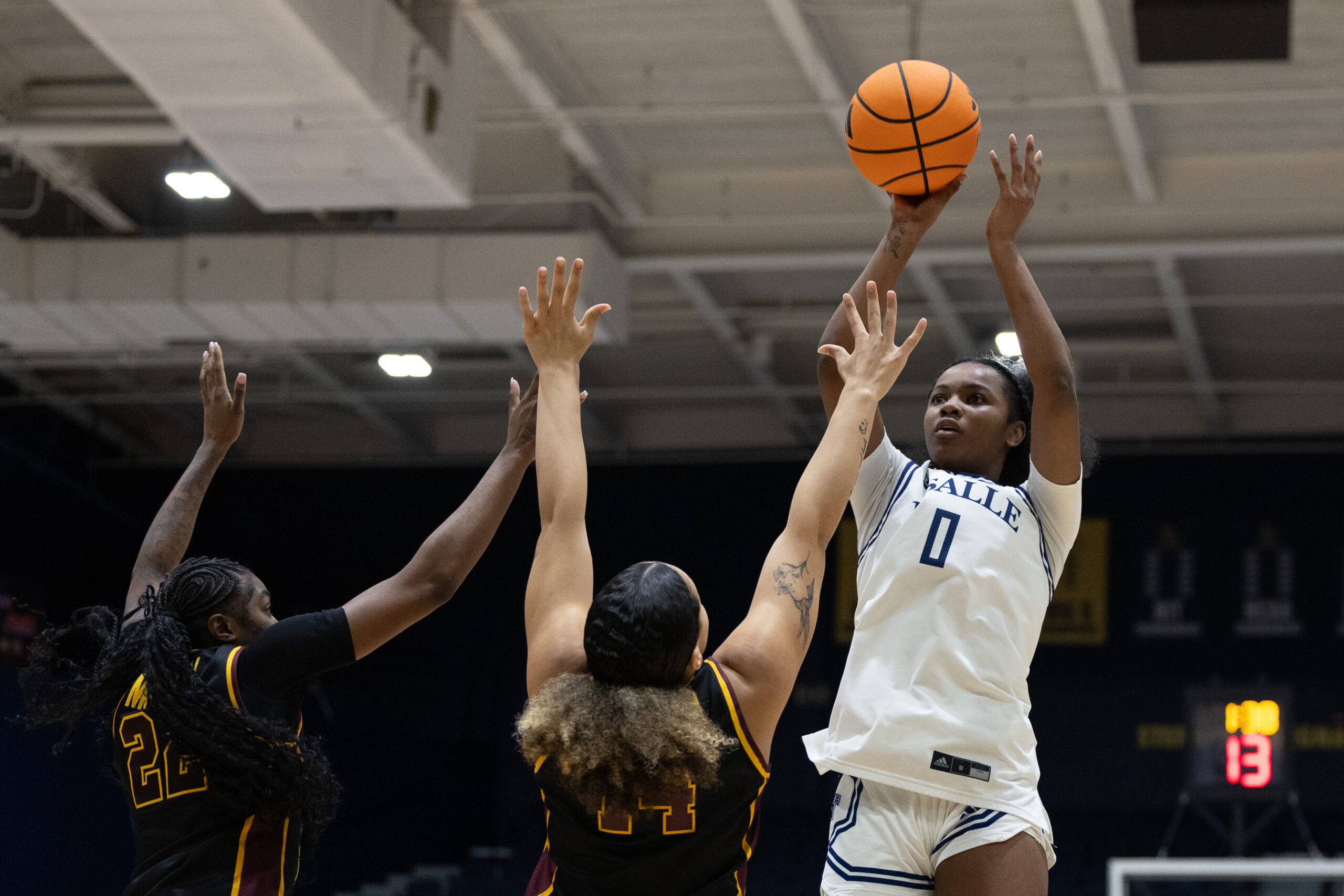
Explorers guard Aryss Macktoon finished with a double-double against Loyola Chicago on Saturday.
Record breaker: Aryss Macktoon became La Salle’s all-time single-season steals leader in its win over Loyola Chicago.
Matthew Tkachuk (left) and Brady Tkachuk pose for the team picture after receiving their gold medals.
Several of the USA hockey lads who were involved in the debauched postgame celebration with FBI director Kash Patel that devolved into a misogynistic phone call with President Trump have issued a range of regrets in the past few days. Maybe they’ll think twice next time before laughing about women — in this instance, their Olympic gold-medal counterparts, and the best women’s team ever assembled — being treated as their inferiors, writes columnist Marcus Hayes.
We compiled today’s newsletter using reporting from Marcus Hayes, Jeff Neiburg, Jonathan Tannenwald, Devin Jackson, Lochlahn March, Gina Mizell, Jackie Spiegel, Owen Hewitt, Ryan Mack, Conor Smith, and Avery Barber.
By submitting your written, visual, and/or audio contributions, you agree to The Inquirer’s Terms of Use, including the grant of rights in Section 10.
Thanks for getting your week started with me. Hope you have a wonderful Monday. Jim is out this week, so Matt Mullin will catch back up with you in Tuesday’s newsletter. — Bella
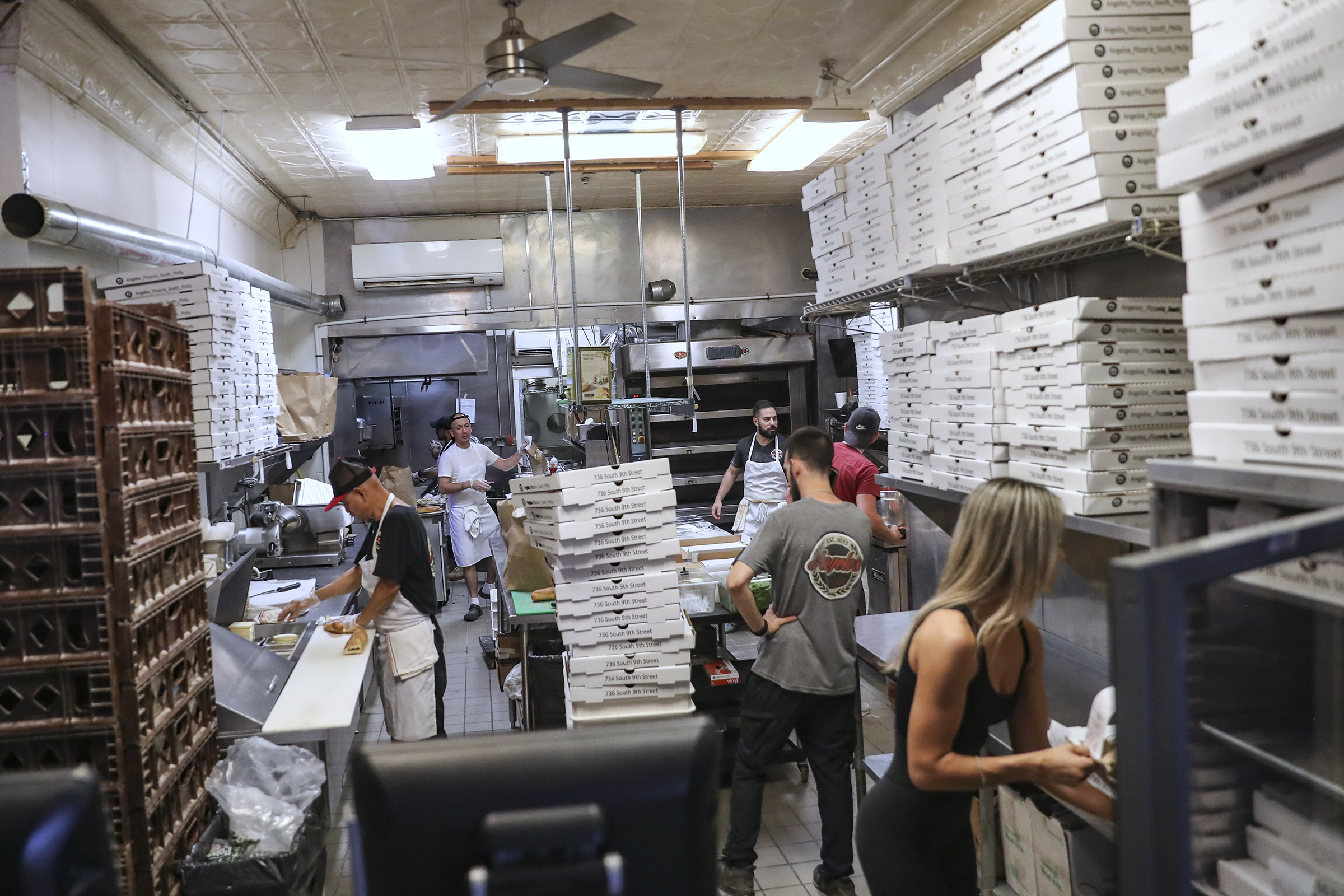
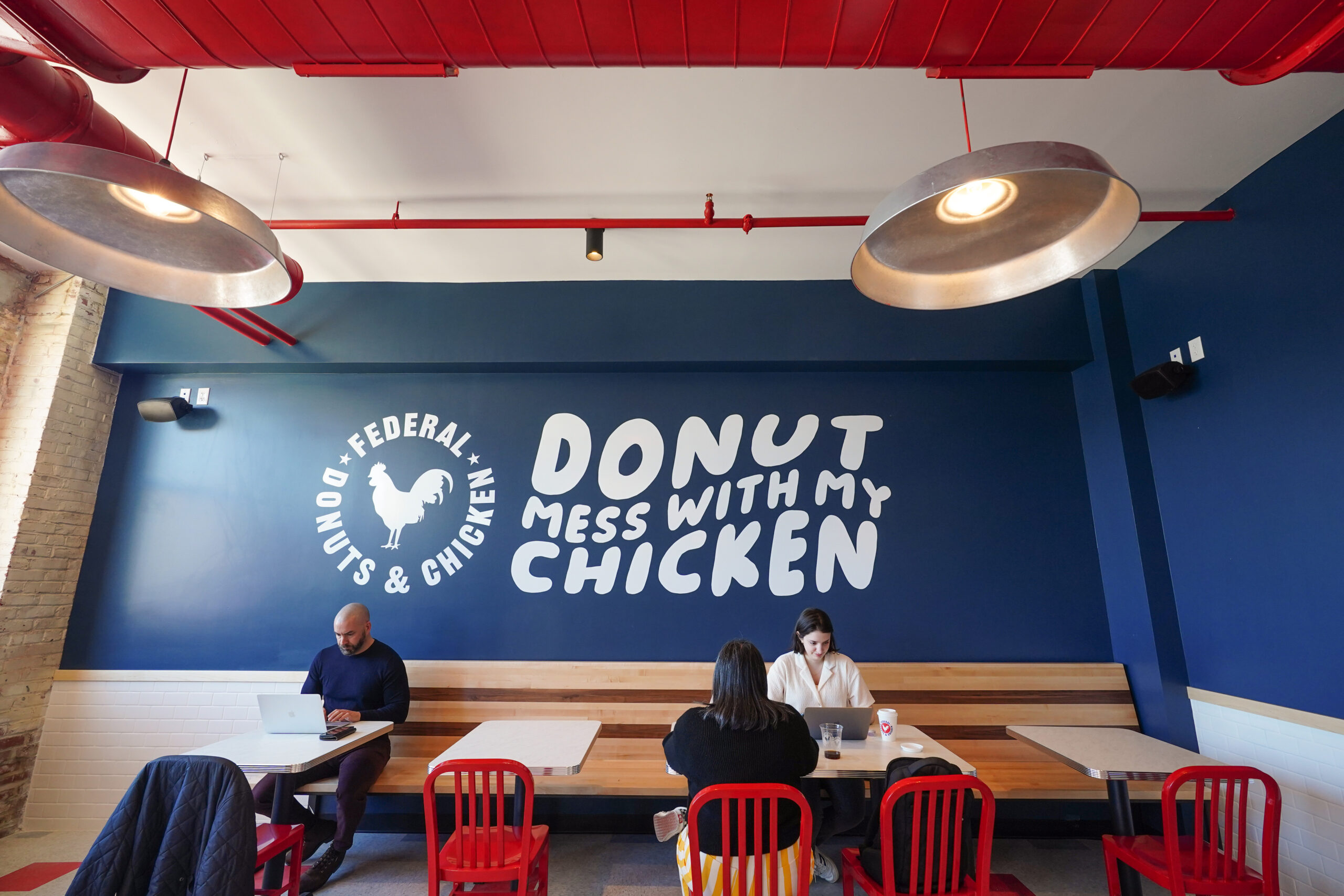
Angelo’s Pizzeria, bursting at the seams at its flagship shop on Ninth Street near the Italian Market, will take over the South Philadelphia location of Federal Donuts & Chicken, converting the chain’s largest outpost into a production hub with delivery, takeout, and limited seating.
The Federal Donuts location at Wolf and Swanson Streets, which opened in March 2024, closed Saturday. Its six employees have been offered jobs elsewhere in the company, cofounder Steve Cook said.
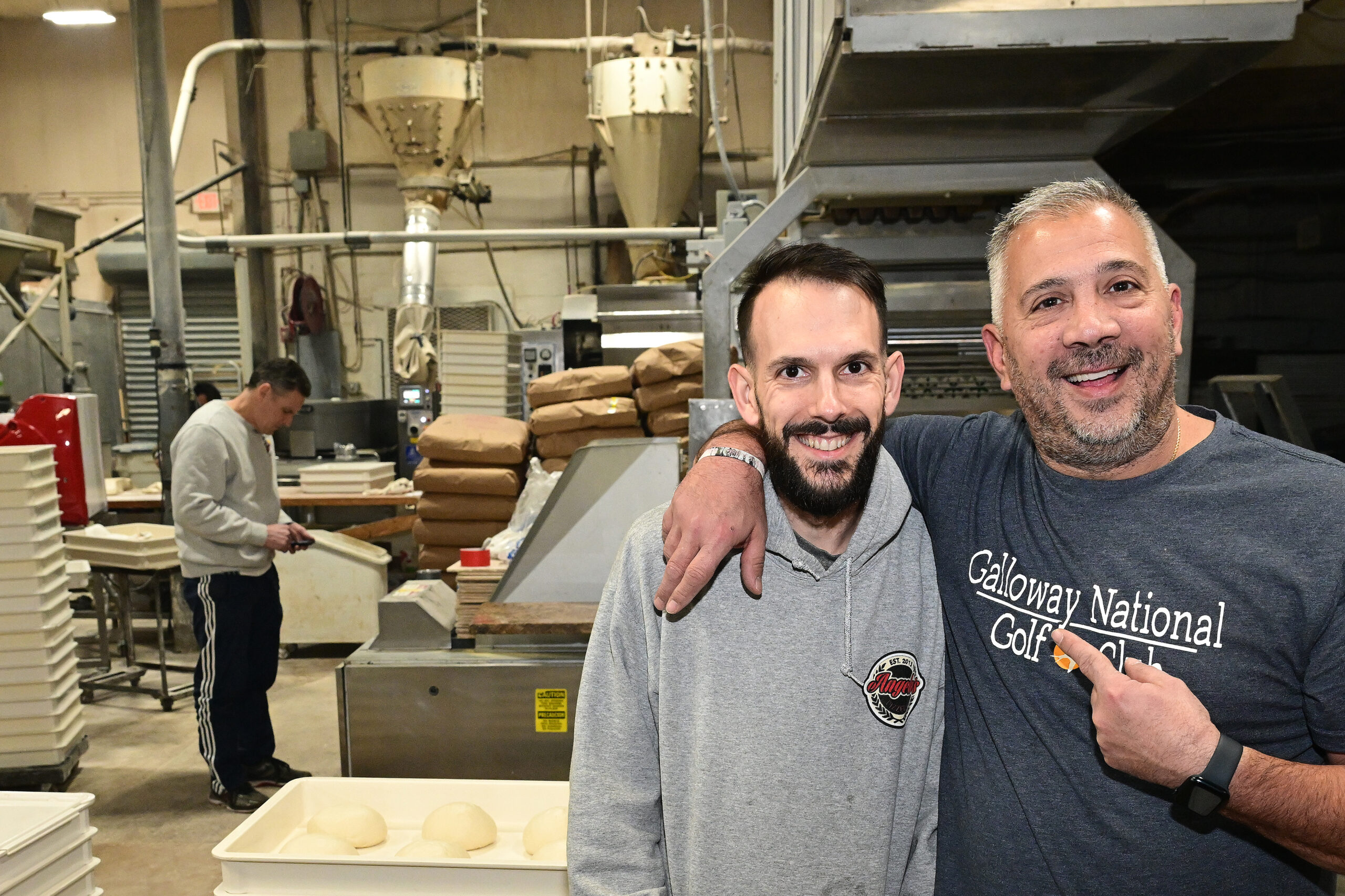
Danny DiGiampietro of Angelo’s Pizzeria (right) with longtime business partner Jared Braunstein at Angelo’s Baking Co. in Conshohocken, Pa., in December 2024.
Angelo’s owner Danny DiGiampietro told The Inquirer that the new location would solve key issues for the Michelin-honored pizza and sandwich business, whose house-baked rolls helped propel its popularity from its opening in 2019 after a move from Haddonfield.
First, it will take the pressure off of the takeout-only Ninth Street storefront, which draws long lines — as well as neighbor complaints. “Ninth Street isn’t going anywhere — we’re not touching that,” he said.
Second, it will allow Angelo’s to move its third-party delivery out of North Philadelphia, where it launched in a ghost kitchen in October 2024. “We like working with them and it helped prove the concept,” he said of the kitchen, on Girard Avenue near 13th Street.
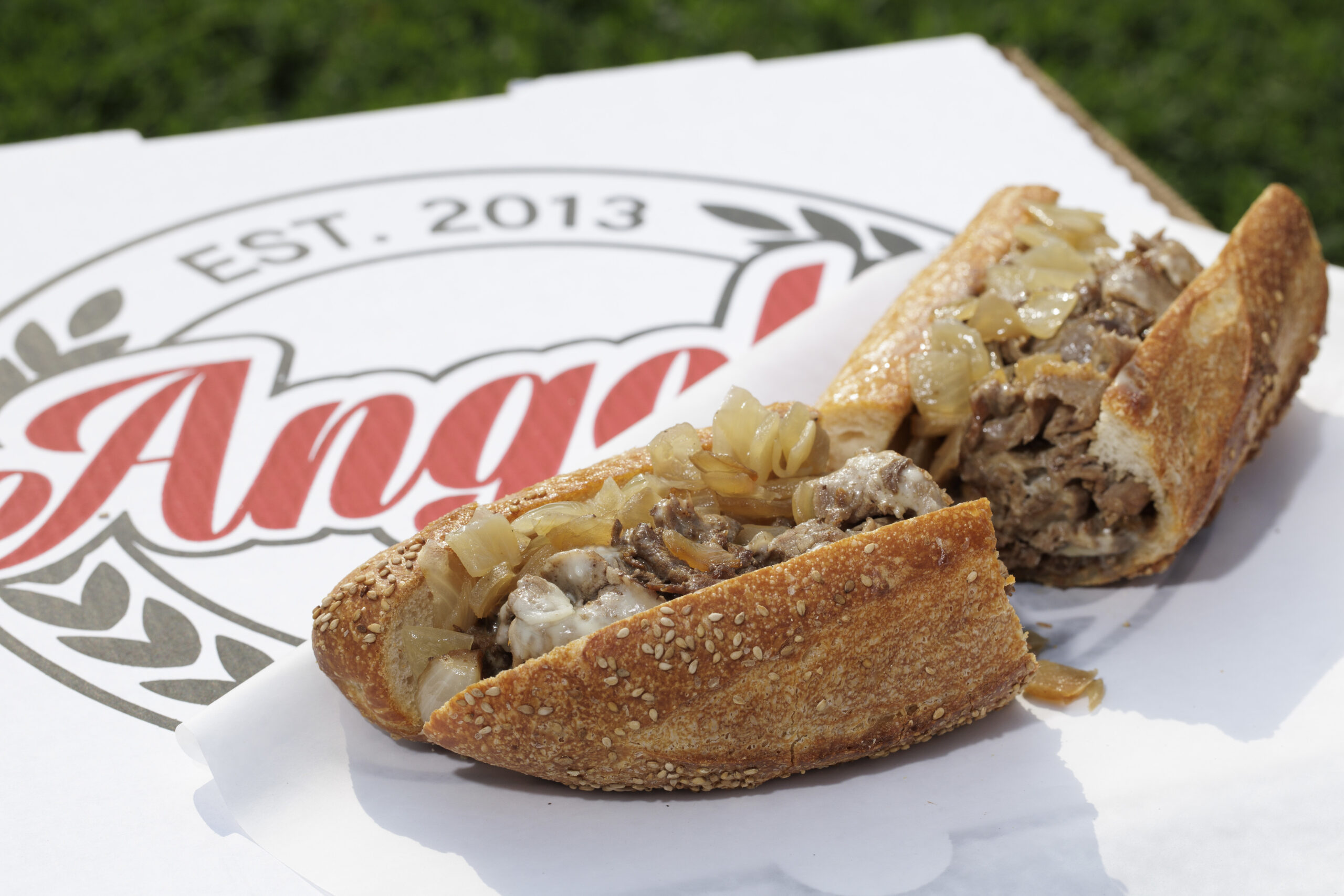
A cheesesteak with onions and Cooper Sharp American from Angelo’s.
Third, with a new kitchen five times the size of Ninth Street’s, “this will bring us back to doing what we used to do,” DiGiampietro said. “We made our bones with specialty sandwiches, like sausage scaloppine and 50 kinds of cutlets. When cheesesteaks and pizza took over, we had to take them off [the full-time menu]. Not knocking the cheesesteaks, but they’re boring. I want to get loose again.”
He said Wolf Street would also serve as a commissary and operate seven days from early in the morning (with house-baked bagels) to late at night.
DiGiampietro said the new building had been on his radar several years ago, before Federal Donuts signed on. “At the time, the build-out cost and the timeline — more than a year — just didn’t work for us,” he said. “The cloud kitchen was faster. But when this came back around, we moved on it fast.”
Angelo’s Pizzeria on Ninth Street during the lunch rush on Aug. 31, 2022.
Asked how many people will be employed at the new location, DiGiampietro replied: “I have no idea. I just come up with the ideas.” Jared Braunstein, his longtime business partner, added: “We’re reactionary here. We just figure it out.”
For Federal Donuts, the Wolf Street closure reflects a broader shift in its operating model. Cook, fellow chef Michael Solomonov, and several friends launched the fried chicken/doughnuts/coffee brand in 2011 as a complement to CookNSolo’s award-winning restaurant, Zahav.
The Federal Donuts & Chicken location at Swanson and Wolf Streets just before its debut in March 2024.
Wolf Street’s kitchen, at 5,000 square feet, was designed for high-volume production. But by the time it opened, that strategy had already evolved, Cook said. “We liked the retail opportunity there. We liked the development story there. But we’re still early on the retail side, and without the commissary to underwrite some of the overhead, it just didn’t really make sense.”
The move fits into Angelo’s broader expansion pipeline.
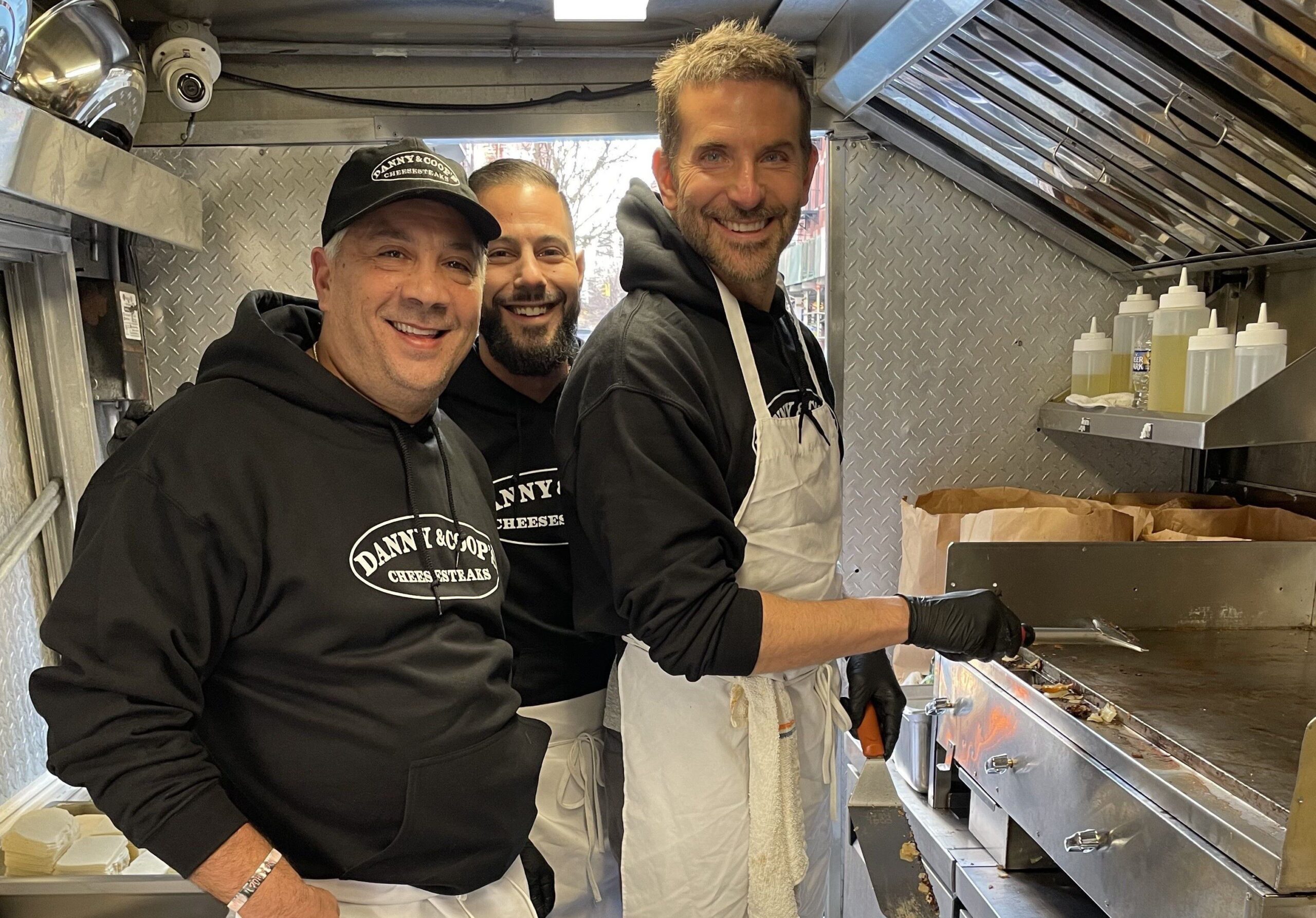
DiGiampietro, with partners, opened Uncle Gus’ Steaks in late 2024 inside Reading Terminal Market. He and the owners of the Wilmington restaurant Bardea opened Angelo’s cheesesteak stand last year in Wilmington’s DE.CO food hall. Actor Bradley Cooper, who walked into Ninth Street anonymously several years ago and bought a sandwich, is DiGiampietro’s business partner in a cheesesteak shop called Danny & Coop’s in Manhattan’s East Village.
Actor Bradley Cooper (right) and Angelo’s Pizzeria owner Danny DiGiampietro (left) work on the Danny & Coop’s cheesesteak truck, a precursor of their shop, with manager Seth Braunstein in New York in December 2023.
A long-delayed bakery project in Conshohocken is nearing completion. DiGiampietro said progress has been slowed by the need to bring the older building — formerly Conshohocken Italian Bakery — up to current code.
He said he hopes to open that retail bakery within a month.
DiGiampietro said a South Jersey location, planned for the former Di’Nics in West Collingswood Heights, is at least six months from opening. Work is expected to begin soon.
For now, DiGiampietro’s focus is on South Philadelphia, where the industrial-scale Wolf Street building offers room to grow without the constraints of a dense residential block.
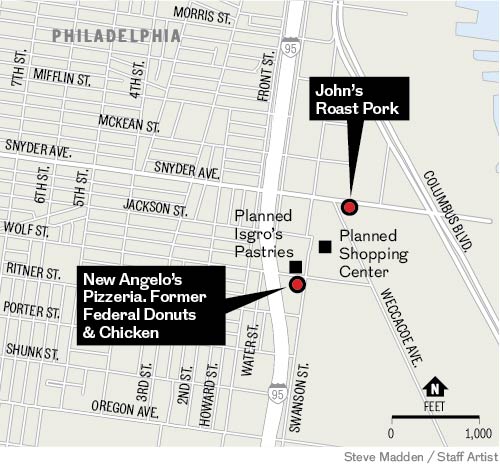
Angelo’s Pizzeria is setting up at Swanson and Wolf Streets.
“It’s [in an] industrial [area], it makes sense operationally, and it gives us room to grow without bothering anyone nearby,” DiGiampietro said. “For us, it was a no-brainer.”
The surrounding corridor — long defined by warehouses and light industry, as well as big-box stores along Columbus Boulevard and the landmark John’s Roast Pork — is also in flux. Across Wolf Street, Isgro’s Pastries is planning a second location — a large-scale bakery and cafe — to open this summer. Just north on Swanson Street, the six-acre former Inolex Chemical Co. site has been cleared for a retail development whose prospective tenants include Shake Shack, Raising Cane’s, and Lidl.
Philadelphia is the birthplace of American democracy. It is also a city that understands democracy is strongest when rooted in truth.
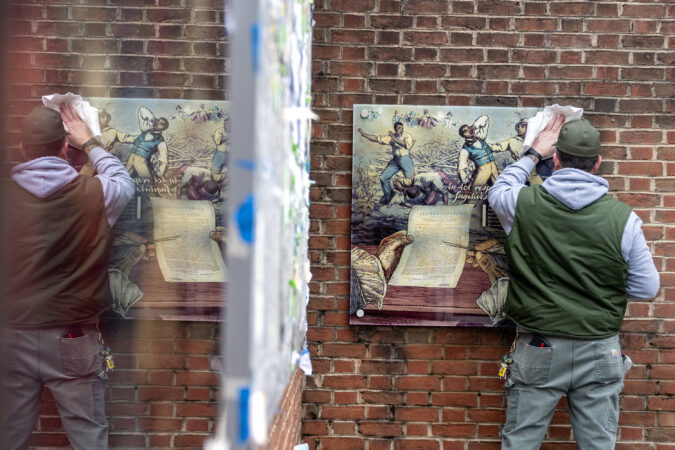
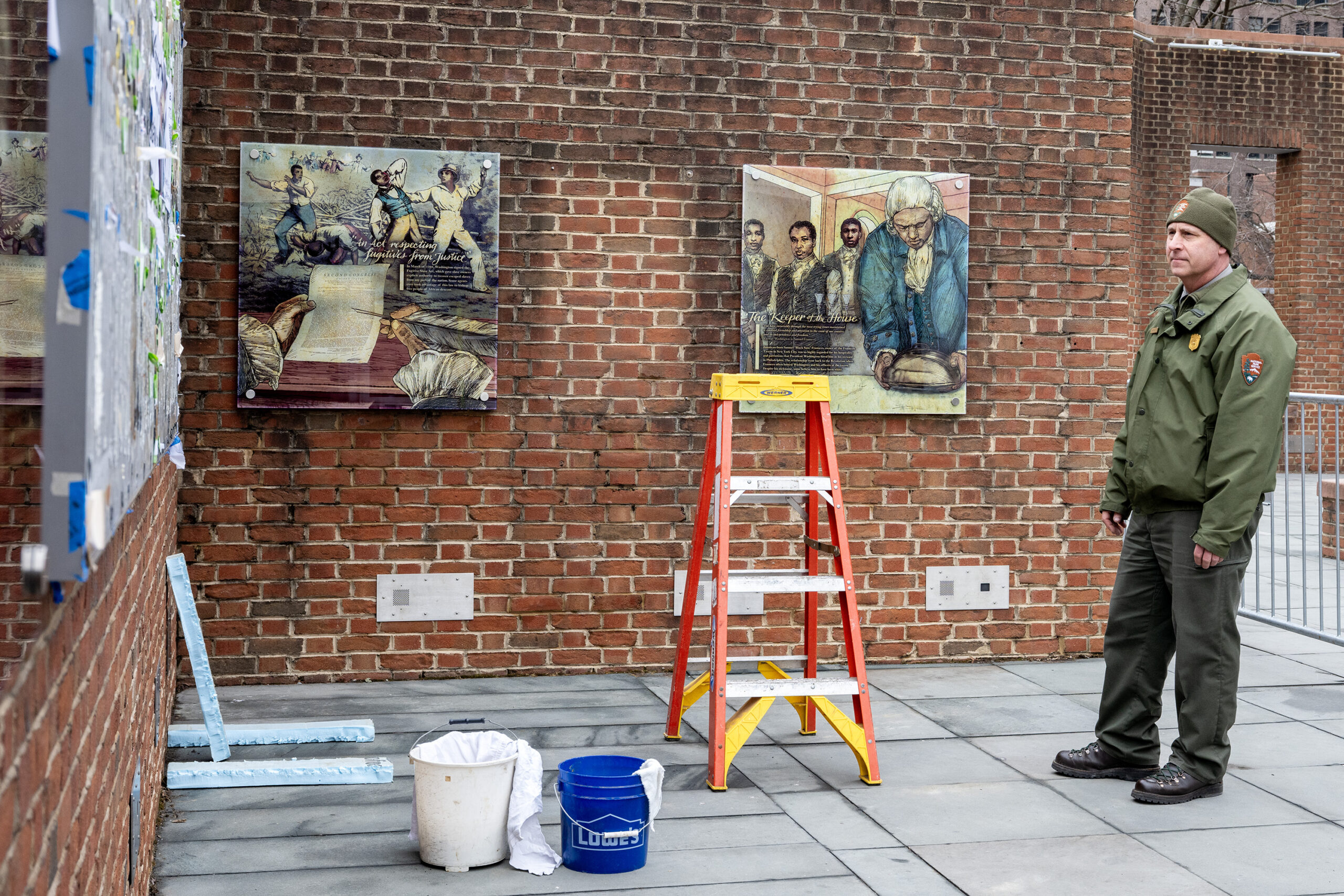
That is why the January removal of slavery exhibits from the President’s House site in Center City was so deeply concerning. I am happy National Park Service workers restored the exhibits on Feb. 19, but they are only back up in their rightful place because of U.S. District Judge Cynthia M. Rufe’s order directing the NPS to restore them.
Rufe made it clear in her Feb. 16 ruling that historical truth cannot be dismantled or rewritten, and that the federal government and President Donald Trump’s administration do not have the authority to erase or alter facts simply because they control a national site.
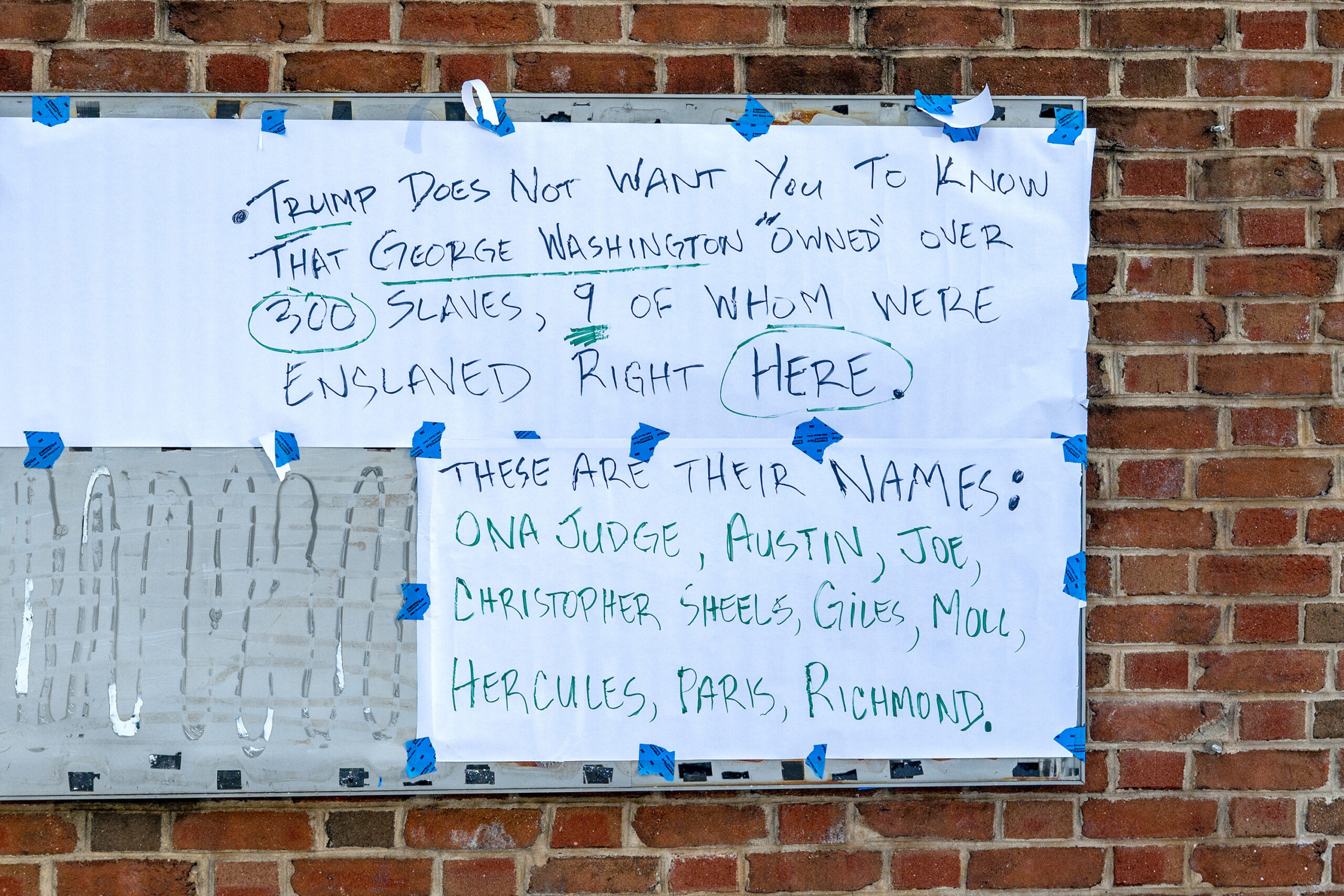
At the President’s House — located within Independence National Historical Park — visitors learn about George Washington’s early presidency. But equally important, they learn about the nine enslaved Africans who were forced to live and work in Washington’s Philadelphia household. Their lives unfolded in the literal shadow of a building where liberty was debated and declared.
That story is not just an aside in our nation’s founding — it is essential for understanding both America’s ideals and its contradictions. Removing those interpretive panels is more than just an administrative decision; it’s an effort to alter the narrative of our shared history.
Signs and notes placed by visitors at the President’s House in Independence National Historical Park on Feb. 2 replace the panels about slavery that were removed in January by the National Park Service.
The City of Philadelphia sought an injunction in federal court on Jan. 22 to preserve the integrity of this significant site. This battle goes beyond signage; it’s about whether we are prepared to face the full truth of who we are as a nation.
There is no harmful ideology in recognizing that slavery existed at the highest levels of early American government. There is no political agenda in naming the enslaved men and women who lived at the President’s House. There is only a duty to tell the truth.
The President’s House memorial opened in 2010 after years of research, advocacy, and public engagement, led by the Avenging the Ancestors Coalition and supported for decades by the city of Philadelphia and the NPS.
It reflects Philadelphia’s long-standing commitment to the honest telling of history. We acknowledge that our nation’s founding documents proclaimed liberty while millions remained enslaved. We understand that progress arises not from denial, but from reckoning.
A worker pauses while rehanging panels at the President’s House in Independence National Historical Park on Feb, 19.
Philadelphia will always remain dedicated to sharing the full history of our nation, not just the easy parts, but the whole truth.
Our children deserve to learn that America’s greatness is not in pretending we are perfect, but in working to become a more perfect union every day.
Restoring these exhibits at the President’s House is not about politics. It’s about principles. It’s about making sure that a site visited by people from all over the world, especially on the 250th anniversary of the United States, reflects the full scope of our history, including both triumphs and injustices.
As the fight over the President’s House continues through the federal court system, I will continue to support our efforts to ensure the exhibits remain at the site permanently.
We must not let Trump whitewash African American history. Black history is an integral part of American history.
Kenyatta Johnson is City Council president and represents the 2nd Council District in Philadelphia, which includes parts of Center City, South Philadelphia, and Southwest Philadelphia.