Blog

  • U.S. troops killed amid Iranian counterattack, fueling air defense fears

    U.S. troops killed amid Iranian counterattack, fueling air defense fears

    Three U.S. troops were killed and five others seriously wounded amid ongoing hostilities with Iran, military officials said Sunday, the first known American casualties in a campaign that has quickly heightened concerns about the Pentagon’s ability to protect its personnel.

    An unspecified number of troops also sustained “minor shrapnel injuries and concussions” and are in the process of returning to duty, according to a statement from U.S. Central Command, which oversees operations in the region.

    The three slain Americans were part of a sustainment unit in Kuwait, two U.S. officials told The Washington Post. One of the officials said the three troops served in the Army. The military’s official statement on the deaths did not specify where the service members were killed, a deviation from the Defense Department’s traditional notification procedures when announcing U.S. combat fatalities.

    The secrecy underscored how fraught the situation has become for service members deployed in the Middle East as Iran attacked U.S. facilities and interests in a half-dozen countries following the death Saturday of its supreme leader, Ayatollah Ali Khamenei.

    Spokespeople for the Pentagon and Central Command declined to comment for this article.

    The three fatalities – in its statement, Central Command referred to the fallen troops as “killed in action” – return the United States to a familiar footing in the Middle East, where successive U.S. administrations prosecuted costly, devastating wars over the 20 years that followed 9/11. In announcing the start of Operation Epic Fury overnight Saturday, President Donald Trump acknowledged the possibility that American lives may be lost, saying, “That often happens in war.”

    In a video statement released by the White House on Sunday, the president praised the three troops who “made the ultimate sacrifice for our nation” and said that “sadly, there will likely be more before it ends.” He told the Daily Mail that the campaign could last for four weeks.

    Numerous U.S. facilities throughout the region have come under attack since U.S. and Israeli forces began attacking targets in Iran – a mission, Trump has said, that is intended to topple the theocratic government in Tehran and destroy its military capabilities.

    Central Command said Sunday that U.S. forces have destroyed more than 1,000 targets so far, including naval ships and submarines, missile sites, communications links and the command and control centers for the Iranian Revolutionary Guard.

    The astonishing figure after less than two days of military operations reflected what one U.S. official described as a “very aggressive” effort to knock out as many of Iran’s capabilities to launch missiles and drones as quickly as possible. Like others, this person spoke on the condition of anonymity because they are not authorized to speak to the news media.

    Still, overnight, military officials in U.S. operations centers tracked “dozens and dozens” of missiles and attack drones launched by Iran throughout the night, said another person familiar with the situation.

    “Iran is in full retaliation,” this person said.

    The vast number of retaliatory attacks – and the array of sites being targeted, including nonmilitary sites in Arab nations across the Middle East – is concerning after so much of the regime’s top leadership was killed, this person continued. Officials are worried about the command and control of those weapons, the person added.

    Inside the Pentagon, and among some members of the Trump administration, there was deepening concern Sunday that the Iran conflict could spiral out of control, said people familiar with the situation.

    “The mood here is intense and paranoid,” one person said.

    There is anxiety among senior leaders that the fighting will extend for weeks, further stressing limited U.S. air defense stockpiles, people familiar with the situation said.

    “There is concern about this lasting more than a few days,” said another person. “I don’t think people have fully absorbed yet, like, what that has done with stockpiles,” they added, noting that it often takes two or three air defense interceptors to ensure that an incoming missile is stopped.

    The House Armed Services Committee’s top Democrat, Rep. Adam Smith (Washington) said this operation will force the U.S. to further expend munitions supplies that are already strained.

    “At this point, it’s on. It’s not like we can say: ‘Hey, Iran, we’re out of missile defense systems now so we’re going to pause for a moment. Is that okay?’ It will stretch our ability to defend everything that we need to defend,” Smith said, characterizing U.S. resources as “stretched thin.”

    As The Post reported last week, the president’s senior military adviser, Joint Chiefs Chairman Gen. Dan Caine, warned the White House that munitions shortfalls and a lack of broad military support from other U.S. allies would add considerable risk to any operation in Iran and to the U.S. personnel put in harm’s way.

    The U.S. has a vast amount of firepower in the region, including nine destroyers capable of shooting down missiles. But videos circulating online show that one of the other major threats U.S. troops face is from Iran’s fleet of Shahed drones, which fly slow and low, and are not optimal targets for U.S. air defenses.

    Trump has said in multiple social posts since the operation began that he is committed to a long-term military operation against Iran. Unlike the precision operation in June targeting Iran’s nuclear program, the president has said U.S. “heavy and pinpoint bombing” would continue for days, uninterrupted, “to achieve our objective of peace” throughout the Middle East.

    The descriptions of shrapnel and concussions noted in Central Command’s statement Sunday point to missiles or drones, which produce blast injuries. While U.S. and regional allies have intercepted much of the incoming fire, some attacks have broken through, including numerous salvos that blasted a U.S. naval base in Bahrain.

    In 2024, three U.S. soldiers were killed and others wounded in a drone attack on their base in Jordan. Commanders and personnel failed to properly detect and intercept an Iranian-made drone that smashed into the troops’ living quarters. Investigators later found senior leaders denied a request to position an air defense system there.

    Noah Robertson and Laura Meckler contributed to this report.
  • Lindsey Heaps and Jaedyn Shaw score as USWNT blanks Argentina 2-0 in SheBelieves Cup

    Lindsey Heaps and Jaedyn Shaw score as USWNT blanks Argentina 2-0 in SheBelieves Cup

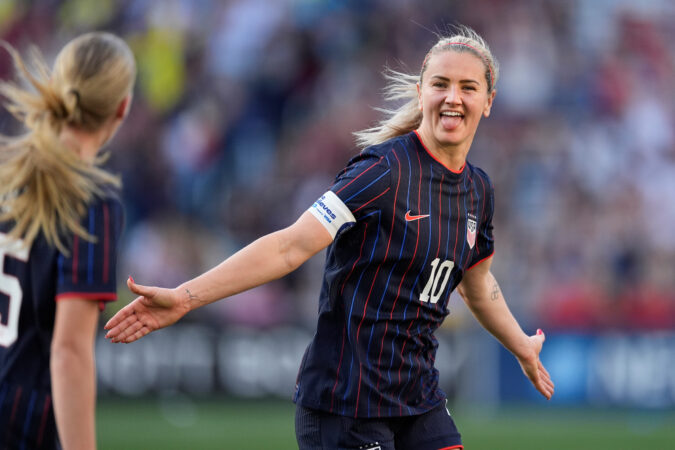
    NASHVILLE — Lindsey Heaps had a goal and an assist, and Jaedyn Shaw also scored to propel the United States to a sixth straight shutout victory, 2-0 over Argentina in the SheBelieves Cup on Sunday.

    The U.S. has outscored opponents 27-1 over its past seven games. Coach Emma Hayes’ squad hasn’t lost since falling 2-1 to Portugal in Chester, Pennsylvania, on Oct. 23.

    Heaps scored from the top of the box in the 19th minute. Emma Sears worked the ball out of the left corner and into the box, then passed to a wide-open Heaps, who converted with her left foot. It was her 39th international goal, the most on the current U.S. roster.

    Shaw found the back of the net from the top left corner of the box. Her right-footed shot curved toward the left post and into the net for her 10th international goal.

    After Shaw scored, Lilly Reale was treated for a right leg injury and replaced by Emily Fox.

    During stoppage time, Argentina’s Milagros Martín was assessed a yellow card for shoving Trinity Rodman in the back. That sparked concerns about a recurrence of the back injuries that have bothered Rodman for years.

    The U.S. dominated possession, holding the ball 67.7% of the time. The Americans had three shots on target, while Argentina had just one on target against U.S. goalkeeper Claudia Dickey.

    The SheBelieves Cup — a four-team round-robin that also includes Canada and Colombia — moves to Columbus, Ohio, on Wednesday, when the Americans will take on Canada. The Canadians beat Colombia 4-1 earlier Sunday.

    Inquirer staff writer Jonathan Tannenwald contributed to this report.
  • Union’s bid to avenge playoff loss to New York City FC thwarted in 2-1 loss in extra time

    Union’s bid to avenge playoff loss to New York City FC thwarted in 2-1 loss in extra time

    The Union entered Sunday evening’s match looking to avenge the playoff loss that halted their 2025 playoff campaign in the Eastern Conference semifinals.

    Instead, New York City FC beat the Union, 2-1, in the team’s Major League Soccer home opener at Subaru Park.

    Hannes Wolf put NYCFC up, 1-0, in the 36th minute, and Indiana Vassilev tied the game at one in the 89th minute. But before the Union could escape with a draw, Olwethu Makhanya was sent off in the 92nd minute.

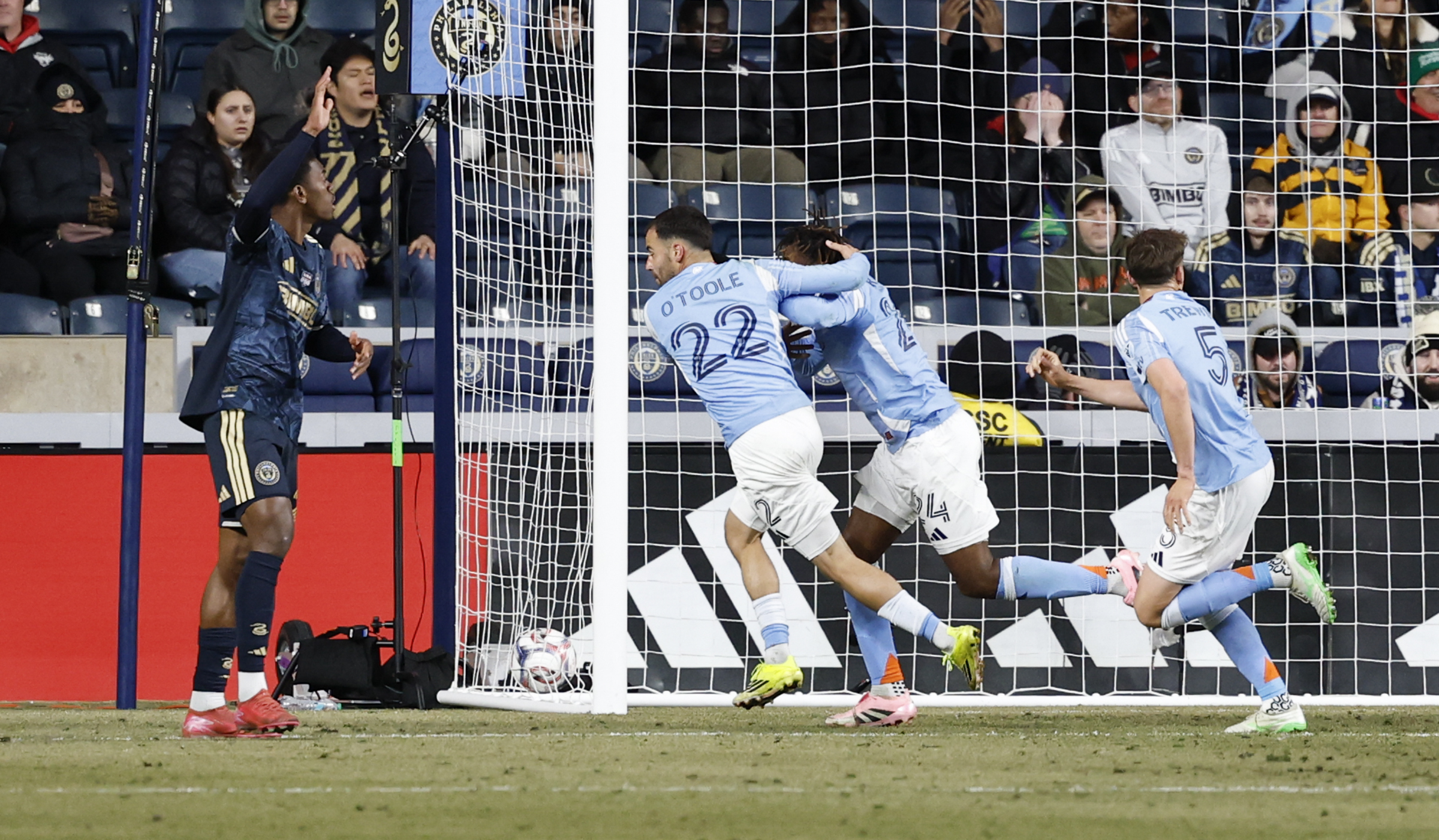
    With a man advantage in 10 minutes of second-half additional time, NYCFC (1-0-1) was able to find the game’s decisive goal, a header from Tayvon Gray in the 99th minute.

    The Union (0-2-0) outshot NYCFC, 17-13, over the course of the match, but New York City put 10 of those shots on goal, opposed to five shots on goal for the Union.

    The Union struggled to create meaningful chances in the first half. They took six shots in the first 45 minutes, but none of them were on frame. NYCFC keeper and Wayne native Matt Freese finished the first half without a save.

    “We just need to be sharper,” Vassilev said. “It’s the second game of the season. New York’s a really good team … The second half, I thought we were really good, as well. I thought we deserved more than a goal.”

    Conversely, NYCFC kept Andre Blake busy in the first half. It found its first goal in the 36th minute, as Hannes Wolf cleaned up the rebound from one of Blake’s four first-half saves.

    Nicolas Fernandez got in behind the Union’s back line and launched a shot from close range at Blake, who palmed the shot away from the net. The Union could not control the shot’s rebound, which fell to an unmarked Wolf at the top of the 6-yard box.

    As Blake scrambled to get back to the center of the net, Wolf put New York City up, 1-0, with a left-footed strike.

    Looking for an equalizer, Union manager Bradley Carnell brought on Ben Bender for Frankie Westfield and Stas Korzeniowski for Agustín Anello in the 59th minute.

    The Union nearly earned a penalty in the 66th minute, as Jovan Lukić went down while trying to get to a Danley Jean-Jacques pass in the 18-yard box.

    A video replay was initiated to deem if the contact New York City’s Raul Gustavo made with Lukić warranted a spot kick, but Chris Penso, the match’s referee, decided that no foul was committed.

    Still pressing to find a goal, the Union brought on Cavan Sullivan for Milan Iloski in the 83rd and Sal Olivas for Bruno Damiani in the 86th.

    Korzeniowski earned the Union a penalty in the 89th minute after being fouled by NYCFC’s Thiago Martins in the 18-yard box.

    The Union’s usual penalty takers, Damiani and Iloski, were off the field by the time the team was awarded the kick, so Vassilev stepped up to take the penalty. He beat Freese from the spot to tie the game, 1-1.

    “We just took a lot of guys off, and I just happened to be on the field, so I took it,” Vassilev said. “Freese is a good goalie. I thought he was going to dive, so I went down the middle.”

    Ten minutes of additional time were tacked on to the end of the second half. The Union played much of it down to 10 men, as Makhanya was shown his second yellow card of the match for dissent in the 92nd minute.

    It was the second time a Union player has been shown red in as many MLS matches. Ezekiel Alladoh served a one-game red card suspension on Sunday after being sent off in the team’s 1-0 loss at D.C. United. Makhanya will serve a one-game suspension when the Union face San Jose on March 7.

    “Our stuff, over the last two weeks, from a disciplinary standpoint, is probably substandard,” Carnell said.

    Carnell made a defensive substitution in the 94th minute, bringing on Geiner Martínez for Vassilev to compensate for Makhanya’s absence.

    With its man advantage, NYCFC was able to find a second goal to break the tie in the 99th minute. Tayvon Gray sent a headed attempt past Blake to win it for New York City, 2-1.

    “It’s just unfortunate,” Carnell said. “For all the effort that the guys put in, that we don’t earn at least a tie or even have enough chances, in abundance, to win the game. So now we’re left with zero points in the first two games, and this is something that we are fully focused on going into next stretch of games here.”

    New York City FC defender Tayvon Gray (center) celebrates his extra-time goal against the Union.

    Up next

    The Union will return to Subaru Park to face the San Jose Earthquakes on Saturday (7:30 p.m., Apple TV).

    San Jose (2-0-0, 6 points) is the first of six Western Conference opponents the Union will face this season.

  • Orion Kerkering is back following a minor injury. He’s eager to test out a new pitch.

    Orion Kerkering is back following a minor injury. He’s eager to test out a new pitch.

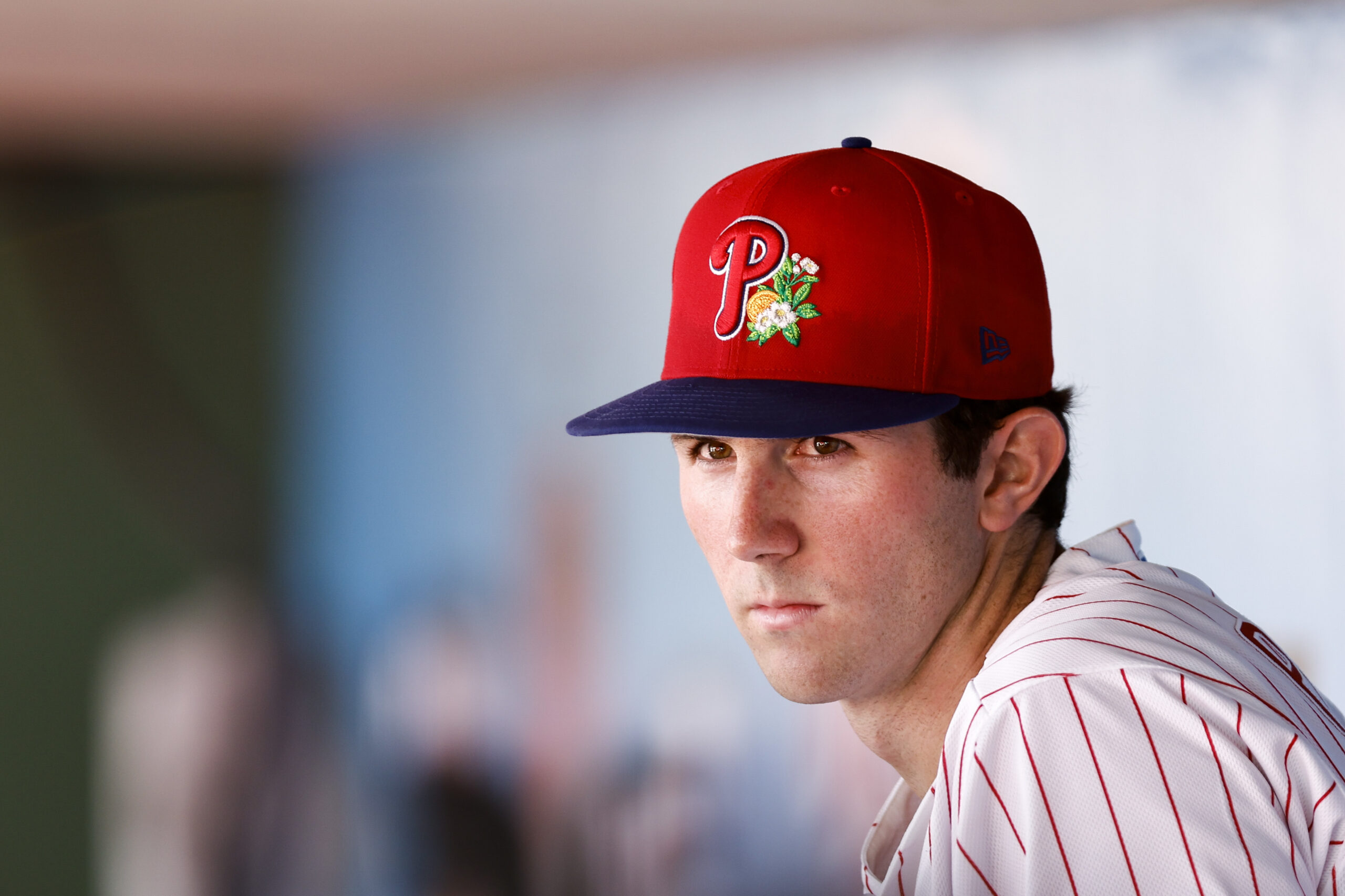
    CLEARWATER, Fla. — Orion Kerkering couldn’t wait to get back on the mound.

    The 24-year-old right-hander threw his first bullpen session in over two weeks on Saturday, after a mild hamstring strain had slowed his start to the spring. Part of the reason Kerkering had been so impatient throughout the rehab process was because he had been toying with a new splitter, and he wanted to get back to working on it.

    Kerkering said he felt good coming out of the session, and thought his velocity was where he wanted it to be for the first outing. And he liked the shapes of the splitters that he threw.

    “I think it’s a work in progress still, but I think consistently we’re getting a lot better each day with it,” Kerkering said.

    Initially, Kerkering believed he had a charley horse when he felt something in his hamstring during a bullpen session last month, before camp had officially opened. He thought he could power through it, but knew something wasn’t right when he tried to run. That meant shutting down for a few weeks.

    But now, he’s back on the mound, which means he’s one step closer to testing out his new pitch against hitters. This offseason, he had discussed with pitching coach Caleb Cotham the possibility of adding something to his repertoire of four-seam, two-seam, and sweeper.

    “Give the hitters more, ‘Oh [expletive], there’s another fourth pitch here that I have to look for,’” Kerkering said.

    He briefly considered a cutter, before deciding on the splitter for another weapon against lefties, one that Kerkering hopes will get more of a swing-and-miss.

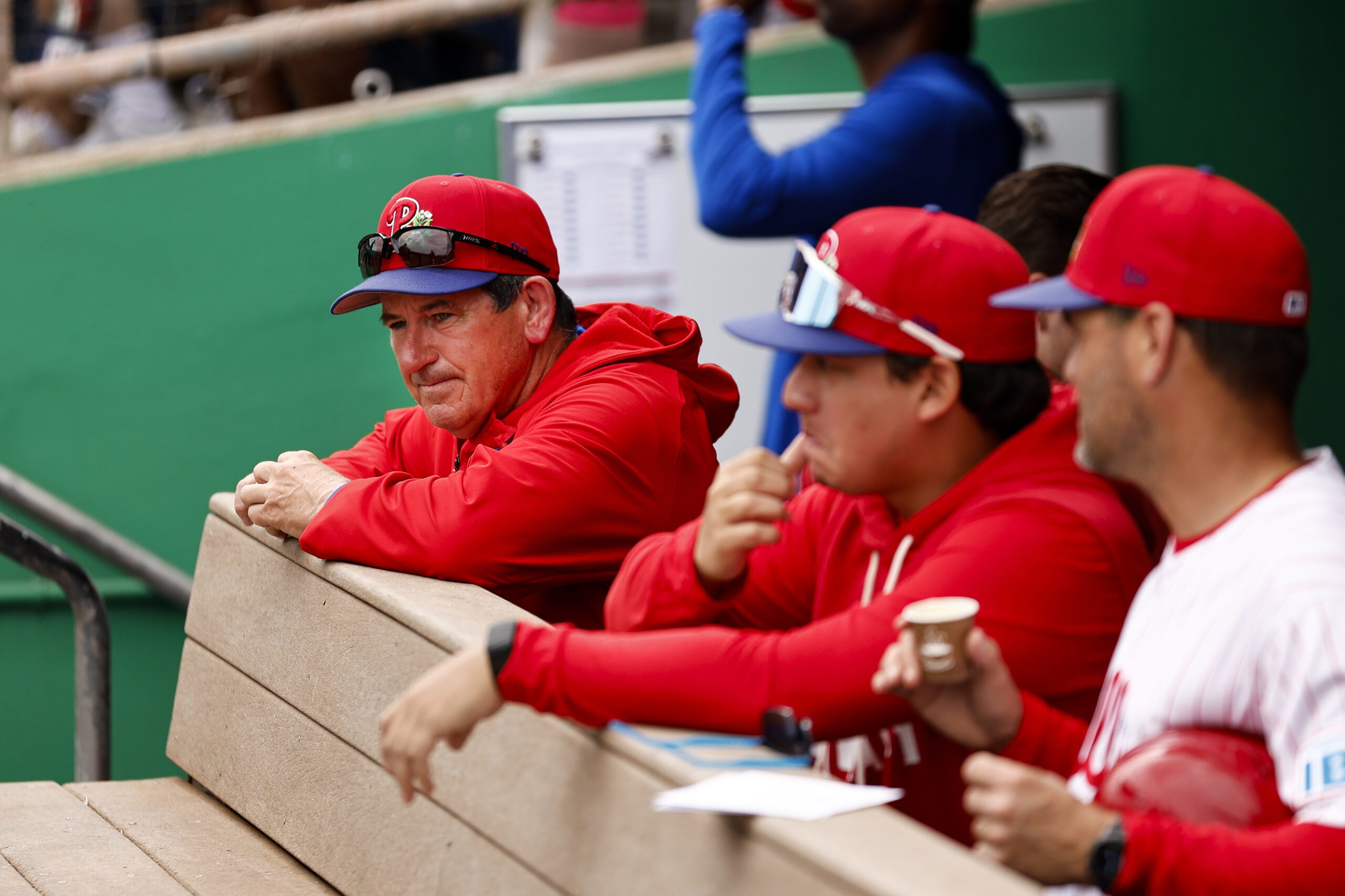
    Phillies manager Rob Thomson says if Orion Kerkering can master his new splitter it will give him another look.

    “It’s just another look,” said manager Rob Thomson. “He’s got a two-seam, got riding. He’s got a ball going this way with the slider. Now you got a ball going straight down, if he can master it. But he’s working on it, anyway.”

    The pitch is still in its early stages, and he’s still toying with the grip. Kerkering watched videos of Mariners pitcher Logan Gilbert and other pitchers on YouTube breaking down their splitter grips over the offseason to get some ideas.

    His next bullpen session is scheduled for Tuesday, and he plans to ask a hitter to stand in the box while he’s throwing to get their point of view.

    “If they can see the difference in me trying to grab the grip,” Kerkering said. “… I think just overall, just see what the hitters see. And I think that’s my best feedback on that pitch.”

    Wheeler’s second bullpen

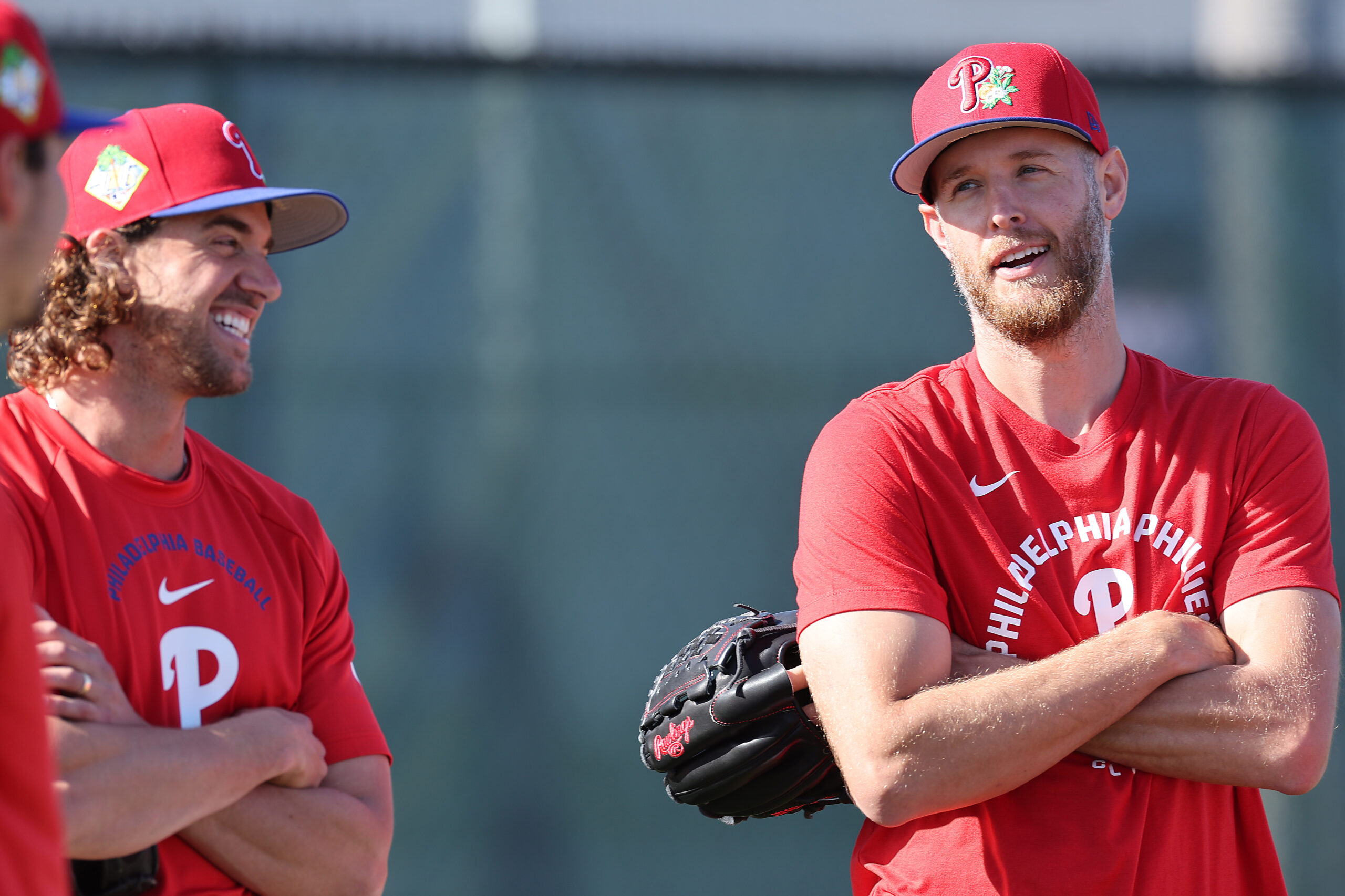
    On Sunday morning, fans watching through the fence overlooking a pair of mounds at the Phillies’ complex were treated to the sight of Zack Wheeler and Aaron Nola pitching side-by-side.

    Nola was throwing a side session in preparation for his second Grapefruit League start on Wednesday, before he joins Team Italy in the World Baseball Classic. And Wheeler was throwing just his second bullpen session after his thoracic outlet decompression surgery last September.

    Aaron Nola and Zack Wheeler pitched side-by-side during a bullpen session on Sunday.

    Wheeler, who had a blood clot near his right shoulder removed, threw 25 pitches on Sunday. He started mixing in his splitter, after only throwing fastballs in his first session.

    “Split was really good,” Thomson said. “Had a lot of bottom to it. He threw the fastball where he wanted to.”

    Wheeler is so far remaining on a typical build-up schedule, which involves two days off between bullpens. His next session is planned for Wednesday, and Thomson said he will start throwing other pitches in his arsenal and spinning the baseball more.

  • Temple men’s conference tourney hopes in jeopardy after sixth straight loss

    Temple men’s conference tourney hopes in jeopardy after sixth straight loss

    When February started, the Temple men’s basketball team was in a three-way tie for third place in the American Conference and in solid position to lock a top-four seed.

    Now, after its 80-74 loss to Rice on Sunday at the Liacouras Center, Temple has a six-game losing streak.

    During its previous five losses, Temple (15-14, 7-9) was plagued by cold shooting streaks. On Sunday, it was the defense. Rice (12-17, 6-10) constantly poked holes in Temple’s defense as it poured in 45 points in the second half.

    Temple is back to the drawing board with two games remaining in the regular season and tied for ninth place, the second-to-last spot to qualify for the conference tournament.

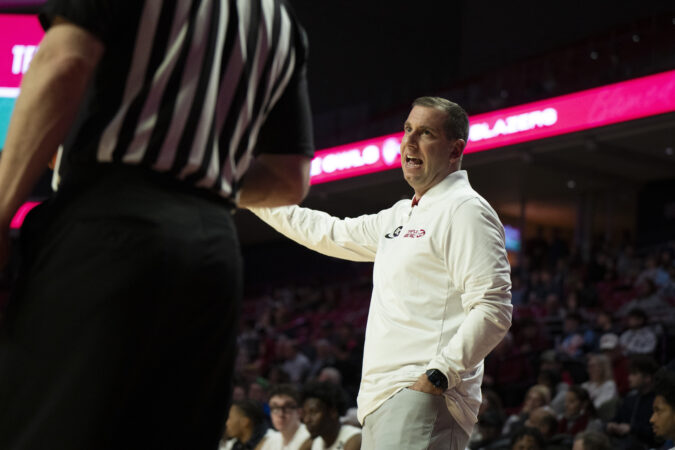
    “I think we fight right. There’s no quit,” said coach Adam Fisher. “We have to make sure that continues. The fight. You got to believe that, This is what it’s got to take. We’re right there. And you got to figure out, one bounce, one extra effort … We asked every guy, ‘Look at yourself, starts with me, and I’ll be looking, trust me.’”

    Statistical leaders

    Temple’s offense kept pace with the conference’s sixth-best scoring offense. Temple shot 50% from the field, led by guards Derrian Ford and Aidan Tobiason. Each finished with 20 points. Temple’s issues came in three-pointers, as it went 5-for-17.

    Meanwhile, Rice shot 52% from the field and won the rebounding battle 28-25.

    Guard Nick Anderson led the team with 21 points. Guard Trae Broadnax and guard Jalen Smith added 15 points apiece.

    What we saw

    Tobiason scored six points three minutes into the game to help Temple take an 8-4 lead. Guard Gavin Griffiths ended a 4½-minute scoring drought with a three-pointer followed by a layup and a free throw to complete a three-point play to put Temple’s lead at 15-11.

    But everything Temple threw at Rice was instantly answered, mainly through Anderson. Broadnax, Rice’s leading scorer, picked up two fouls in the first 12 minutes, forcing him to watch most of the half from the bench. Anderson stepped up in his place for 11 first-half points.

    Temple did well containing Rice, but then it crumbled as halftime neared. Rice went on a 12-9 run, but a Ford jumper kept Temple up at halftime, 36-35.

    After the break, Temple overcommitted on stopping Rice. Tobiason scored the team’s first six points in second half, but Rice contained him the rest of the way.

    A nearly five-minute field goal drought for Temple ended when Ford drilled a three-pointer to cut Rice’s lead to 65-64. However, that was the closest Temple ever got.

    “It’s not so much the second half,” Fisher said. “I think there’s things in the first half that you have to clean up and then it gets magnified in the second half.”

    Temple’s defense lets up

    Temple’s defense began to crack with the emergence of Broadnax and guard Jalen Smith. Broadnax got on the board with a jumper to tie the game at 42. Twenty-nine seconds later, Smith made a three-pointer to take the lead.

    With Anderson, the Rice trio scored 18 straight points in a six-minute span. Temple had little to no answers as 37 of Rice’s 45 second-half points were from the three guards.

    “Broadnax’s [is] their leading scorer, a veteran guy,” Fisher said. “He brings you into the post … Give him credit. He had a couple [of] tough shots.”

    Up next

    Temple will host Tulane (17-12, 8-8) on Thursday (7 p.m., ESPN2).

  • After twists and turns, Andrew Painter has been longing to get back to spring training

    After twists and turns, Andrew Painter has been longing to get back to spring training

    CLEARWATER, Fla. — From J.T. Realmuto’s point of view, Andrew Painter hasn’t changed much in three years.

    Of course, in that span of time, Painter underwent Tommy John surgery, rehab, and then pitched a full minor league season. But the way Painter carries himself, which Realmuto got an up-close look on Sunday while catching in his 2026 Grapefruit League debut, is the same.

    “Calm, cool, collected,” said Realmuto. “He throws the ball obviously like an elite pitcher, but his demeanor is something that I really look forward to working with.”

    Painter’s two innings on Sunday were exactly three years to the day of Painter’s first-ever spring training start in 2023. At the time, he was 19, with a chance to win a spot in the Phillies rotation, but a UCL sprain brought that to a halt.

    Andrew Painter retired all six hitters he faced in the Phillies’ 5-3 loss to the Yankees.

    Painter has been waiting a while to make it back here. He retired all six hitters he faced in the Phillies’ 5-3 loss to the Yankees, using an efficient 20 pitches.

    “I felt pretty comfortable out there, right when I toed the rubber. I felt like I was in control of the game,” Painter said. “Didn’t speed up on me. And that’s a big thing.”

    There were times last year in triple A when Painter hadn’t looked in control. One of Painter’s biggest issues in his first season back from surgery, where he put up a 5.26 ERA, was fastball command. But he thinks both time and a slightly higher arm slot have helped with that.

    “I’ve caught a couple pens, and that was the first time I’ve caught him in a live. And every time the command’s been really good,” Realmuto said. “He’s able to work both sides of the plate, but also work up and down as well, which is something that most of our starters do a good job with, and that’s why they’re so successful. So, being able to see him do that is important.”

    Painter flashed six different pitches, but leaned the most on his four-seam, which averaged 96.8 mph. Yankees center fielder Trent Grisham and first baseman Ben Rice slugged .527 and .567, respectively, against fastballs in 2025. But Painter attacked both with his four-seam anyway, and the pitch induced a soft pop up from Grisham and a groundout from Rice.

    He also won an eight-pitch battle against Jasson Domínguez. The Yankees left fielder fouled off a 97.8 mph fastball — Painter’s hardest pitch of the day — before Painter got him to strike out on a slider.

    “I was very encouraged,” said manager Rob Thomson. “I thought he was great. Got ahead in the count, attacked.”

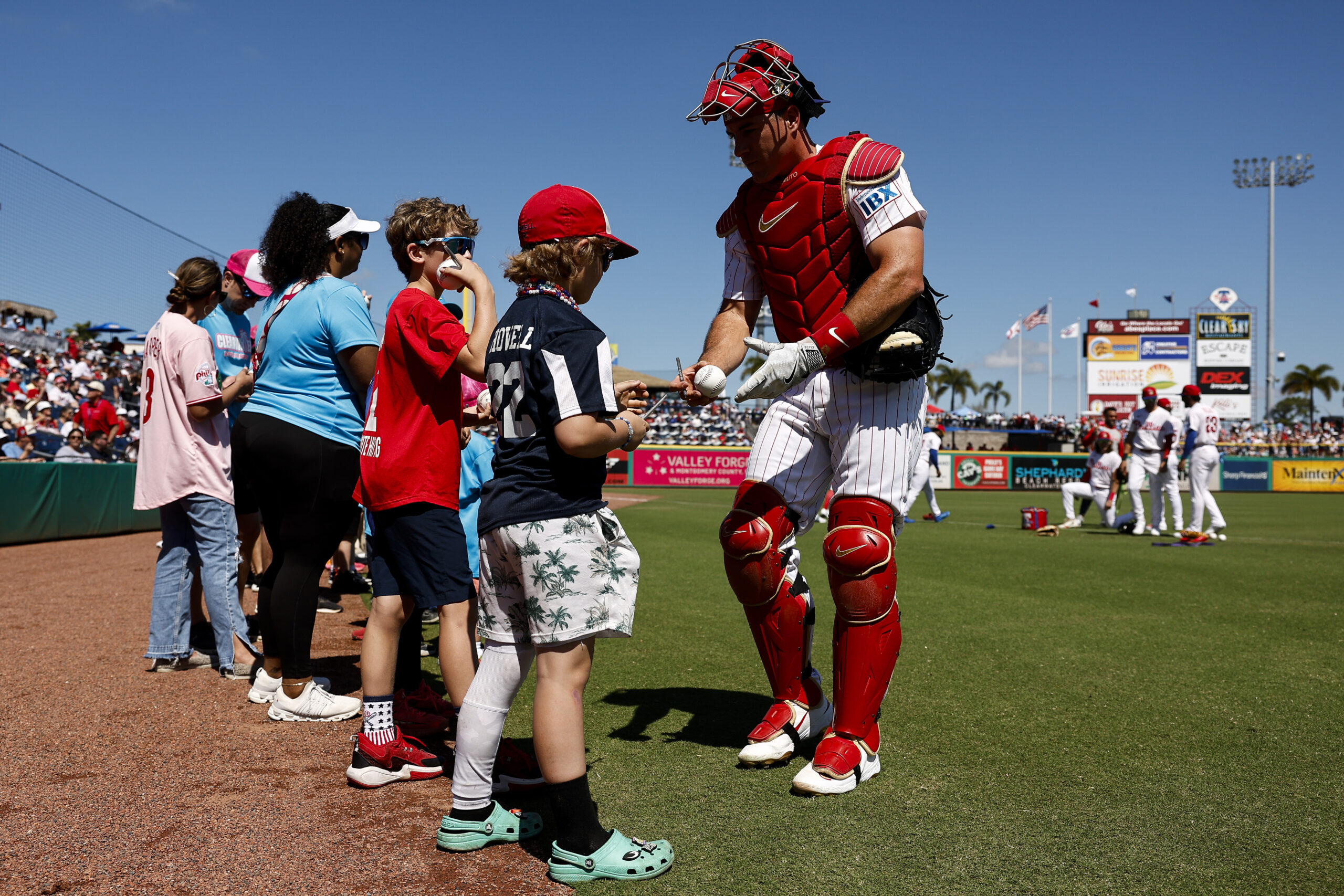
    J.T. Realmuto greets Little Leaguers before the game against the Yankees on Sunday.

    Painter’s outing was so efficient that he didn’t get the chance to work on throwing his changeup to left-handed hitters as much as he and Realmuto had hoped. He’ll get another chance in his next scheduled start on Saturday.

    “It doesn’t feel real,” Painter said. “Still just trying to take it one day at a time and look forward to each start.”

    Who stood out

    Alec Bohm barreled up a Will Warren fastball that left the bat at 101.4 mph, but the Yankees center fielder made the catch on the warning track.

    “Bohm’s had really good at bats throughout spring,” Thomson said. “He’s stronger now, and he’s driving the ball.”

    Bryson Stott is 5-for-8 with two homers in five spring games.

    Bryson Stott homered to center field. The Phillies second baseman is 5-for-8 with two homers in five spring games.

    Rafael Marchán finished 2-for-2 with a double. Outfield prospect Dylan Campbell hit a triple.

    On the mound

    José Alvarado, Tanner Banks, Kyle Backhus, Chase Shugart, and Jonathan Hernández each pitched a scoreless inning. Johnathan Bowlan allowed one run on two hits. Zach Pop was charged with four runs on a walk and three hits.

    Quotable

    “He had a smile on his face when he came out, so that was good to see,” Thomson said of Painter. “He’s been waiting a while to do this. So I’m sure he’s very, very happy with his performance.”

    On deck

    The Phillies are off Monday before heading to Port Charlotte, Fla., to face the Rays on Tuesday (1:05 p.m., Phillies audio feed). Alan Rangel is set to start.

  • Venezuela’s opposition leader Machado says she will return to the country in the coming weeks

    Venezuela’s opposition leader Machado says she will return to the country in the coming weeks

    CARACAS, Venezuela — Venezuelan opposition leader and winner of the 2025 Nobel Peace Prize María Corina Machado said on Sunday that she will return to Venezuela in the coming weeks and that elections will be held in the South American country.

    Machado did not set a date for her return but said that one of the objectives will be to prepare “for a new and gigantic electoral victory.”

    In a message shared on social media, the politician called on her supporters to “strengthen the unity of Venezuelans that began with the primaries,” a reference to the 2023 process in which she won the vote aimed at establishing a single candidate to compete at the polls against former President Nicolás Maduro.

    Acting President Delcy Rodríguez — in power since Maduro and his wife were captured in a U.S. military operation in January — has warned that Machado “will have to answer” if she returns to the country.

    U.S. Secretary of State Marco Rubio has said that change in Venezuela must go through phases of stabilization, economic recovery, and transition. He has not indicated that elections could be held in the short term.

    The 58-year-old politician, a key figure in the Venezuelan opposition, was awarded the Nobel Peace Prize last year for her fight for democratic transition in Venezuela.

    She controversially later presented her medal to U.S. President Donald Trump after the military intervention that deposed Maduro, who now faces drug-trafficking-related charges in U.S. courts. He has pleaded not guilty.

    After Maduro was declared the victor of the July 2024 elections, protests erupted that sparked widespread repression. The opposition claimed it had credible evidence that the real winner was Edmundo González, who replaced Machado after she was barred from participating.

  • Philly-area Ukrainians and Iranians march from the Art Museum to City Hall

    Philly-area Ukrainians and Iranians march from the Art Museum to City Hall

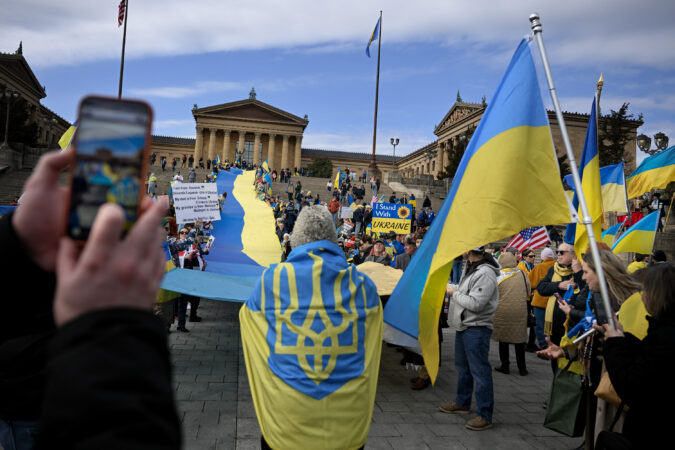
    About 100 people gathered on the steps of the Philadelphia Museum of Art on Sunday to stand with Ukraine, marking the recent fourth anniversary of the Russian war on the European nation.

    “You don’t have to be Ukrainian to know what’s right and wrong,” said Iryna Mazur, 50, honorary consul of Ukraine in Philadelphia. “You don’t have to be Ukrainian to have a heart, and to stand for justice.”

    The event also drew a second group: a small crowd of less than 10 people with a pre-Revolutionary Iranian flag stood alongside Ukraine supporters. While a joint protest had not been planned, Mazur expressed support for the Iranian demonstrators.

    “What happened to the dictator in Iran should have happened a long time ago,” Mazur said.

    Nazanin Saleh, 42, said she supported the attack on Iran’s supreme leader. She said she was getting ready for a birthday party when she got a notification that Ayatollah Ali Khamenei was dead.

    After years of sorrow, she said felt hope for a motherland she hasn’t seen since 2016.

    “There is hope now, to be able to have a democracy and be able to have basic human rights, to vote,” Saleh said, pausing. “There is hope to be able to live as a free woman.”

    She said the U.S intervention was necessary for the future of her loved ones back home.

    “This war isn’t against the people of Iran,” Saleh said. “It is against an Islamic regime that’s forcefully killing people and taking away their freedom.”

    After more than an hour at the Art Museum, the group marched down Benjamin Franklin Parkway, cheering for drivers who waved in support as they passed by.

  • Dubai’s image as a safe, tax-free haven is rocked by blasts from Iranian airstrikes

    Dubai’s image as a safe, tax-free haven is rocked by blasts from Iranian airstrikes

    The United Arab Emirates has sold itself to foreigners for years as a sunny, safe, tax-free oasis.

    That peaceful image was shattered Saturday as Iranian weaponry rained down on Dubai, setting fire to a five-star resort, threatening the world’s tallest building, and killing one person and injuring seven others at the airport in the capital city of Abu Dhabi.

    Iran has hit the UAE and several of its neighbors as it strikes back from the major attack by U.S. and Israeli forces, causing fear and chaos in a place that until Saturday was predictably calm.

    “This is Dubai’s ultimate nightmare, as its very essence depended on being a safe oasis in a troubled region,” Cinzia Bianco, an expert on the Persian Gulf at the European Council on Foreign Relations wrote on X. “There might be a way to be resilient, but there is no going back.”

    Officials tried to reassure residents and visitors that the country’s air defense system was among the best in the world, blasting down drones and missiles.

    “I know it’s a scary time for a lot of the residents,” Reem Al Hashimy, minister of state for international cooperation, told CNN. “We don’t hear these types of loud sounds. But at the same time, those are sounds of interception. And where there has been damage — that has been primarily debris.”

    Fallout from the attacks has undermined the Emirates’ efforts to de-escalate tensions with Iran despite longtime suspicions of its neighbor across the Gulf. The UAE closed its embassy in Tehran on Sunday.

    The oil-rich federation of seven sheikhdoms has relied on its image as a place of serenity to lure wealthy tourists, businesspeople, and future residents who want to live largely tax-free in luxury in the desert by the sea. Nearly 90% of the estimated 11 million residents are foreigners.

    Real estate firms sell glimmering high-rises and poolside villas to rich Europeans and Americans by promoting a welcoming climate and business-friendly policies, and touting it as one of the safest places on earth.

    Hundreds of drone and missile attacks later, though, that reputation has been rocked.

    “Last night was pretty surreal,” said British racehorse trainer Jamie Osborne, who was in Dubai for the Emirates Super Saturday. “You’re standing in the paddock watching missiles get shot through the sky.”

    The Ministry of Defense said Sunday that air defenses had dealt with 165 ballistic missiles, two cruise missiles, and more than 540 Iranian drones over two days.

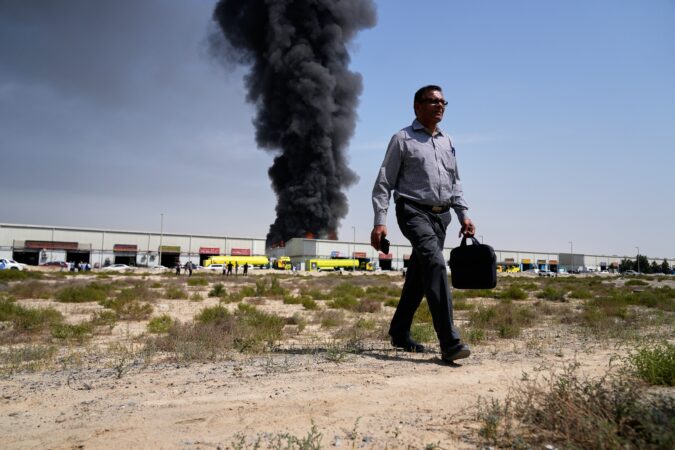
    While officials said they intercepted all air attacks Saturday, debris from the knocked-down weapons sparked blazes at some of Dubai’s most iconic locations.

    Social media videos and photos showed a fire outside the Fairmont hotel on the prestigious human-made Palm Jumeirah island, flames licked at the facade of the famous Burj Al Arab hotel, and smoke rose into the sky near Burj Khalifa, the 2,723-foot skyscraper.

    There also was a fire at Dubai’s Jebel Ali Port, the city’s main sea terminal and a major shipping hub, and the Dubai International Airport was damaged and four employees were injured, according to the Dubai Media Office.

    Kristy Ellmer, who was on a business trip from New Hampshire, said she was staying away from the windows of her hotel but felt relatively safe despite the numerous blasts.

    “You hear a lot of explosions at times, you know, there’s hundreds of them,” she said. “It’s unsettling. We’re not used to hearing bombs, right, or missiles.”

    Louise Herrle, an American tourist whose flight home with her husband from Dubai was scrapped, said it was her third time trying to visit the area. Previous trips were canceled by the COVID-19 pandemic and the Hamas attack on Israel in October 2023.

    With their current Abu Dhabi and Dubai tour over, she is less likely to return to the Emirates or the region.

    “I would probably be inclined to avoid this part of the world when there’s increased tensions, it just explodes so quickly,” Herrle said.

    Maybe, she said, “the universe was trying to tell us something.”

  • Trump expects his Fed pick and AI to deliver a replay of the ’90s boom. Economists have doubts

    Trump expects his Fed pick and AI to deliver a replay of the ’90s boom. Economists have doubts

    WASHINGTON — President Donald Trump, his Treasury secretary, and his choice to lead the Federal Reserve believe they can coax the U.S. economy into partying like it’s 1999.

    They are putting their faith in artificial intelligence to duplicate what happened when another technology arrived in the 1990s: the internet. Back then, the American economy surged as businesses became more productive, unemployment tumbled, and inflation remained in check.

    Trump is confident that his nominee to become Fed chair, Kevin Warsh, can unleash an even greater economic bonanza by jettisoning what the president sees as the central bank’s hidebound reluctance to slash interest rates.

    Many economists are skeptical.

    The world looks a lot different today than it did when the Spice Girls ruled radio and Titanic dominated the box office. And the story the Trump team is telling — that a visionary Fed chair, Alan Greenspan, fueled the ‘90s boom by keeping interest rates low — is incomplete at best.

    “The administration is offering a rather distorted version of what actually happened in the 1990s,’’ economist Dario Perkins of TS Lombard said in a commentary.

    Nonetheless, the Trump administration believes history can repeat itself. All that’s been missing, in the president’s view, is a Fed chair with Greenspan’s foresight.

    AI’s influence over interest rates

    Trump has repeatedly attacked current Fed chief Jerome Powell, whose term as chair ends in May, for his reluctance to lower rates aggressively while inflation hovers above the central bank’s 2% target. Treasury Secretary Scott Bessent said on social media in January that the president sought to replace Powell with someone with “an open, Greenspan-like mind.”

    “Our nation can see productivity boom like we did in the ’90s when we are not encumbered by a Federal Reserve which throws the brakes on,’’ Bessent said.

    On Jan. 30, Trump said he was picking Warsh.

    In speeches and writings, Warsh has argued that AI-driven improvements in productivity could justify lower interest rates.

    These views align with Trump’s desires for Fed rate cuts but mark a break with Warsh’s own past as an inflation hawk. In the aftermath of the 2007-2009 Great Recession, Warsh — then a Fed governor — objected to some of the central bank’s efforts to help the struggling economy by pushing down rates even though unemployment exceeded 9%. Warsh warned then, wrongly, that inflation would soon accelerate.

    At issue now are gains in productivity and the possibility that AI will make them bigger — much bigger.

    To economists, productivity improvements are almost magical. When companies roll out new machines or technology, their workers can become more efficient and produce more stuff per hour. That allows firms to earn more and to raise employees’ pay without raising prices. In short: Surging productivity can drive economic growth without spurring inflation.

    Greenspan and the internet

    In the mid-1990s, Greenspan was contending with a strange set of economic circumstances: Wages were rising, but inflation wasn’t heating up.

    Big productivity gains might have explained things, but government data showed no sign of them. Other Fed policymakers worried that surging wages and tame inflation couldn’t coexist and that higher prices were coming. They wanted to raise interest rates.

    But Greenspan suspected the official productivity numbers were missing something. For one thing, they didn’t jibe with the amazing tales of efficiency improvements the Fed was hearing from companies investing in computers and turning to the internet.

    So he ordered his lieutenants to dig through decades of productivity numbers. The official statistics they assembled told an implausible story: Services firms — from retailers to legal practices — had supposedly seen productivity fall over the years, despite intense competitive pressure and massive investments in technology.

    Greenspan didn’t believe it. He persuaded his Fed colleagues that the government’s numbers were wrong and were understating productivity. They agreed in September 1996 to hold off on raising rates.

    The economy took flight.

    Tardily, productivity advances began to show up in the official data. Overall, American economic growth surpassed 4% every year from 1997 through 2000, something it would do again only once in the next quarter century. The unemployment rate plunged to 3.8% in April 2000, lowest in three decades. Inflation stayed in its cage, coming in below 2% — later the Fed’s official target — for 17 straight months in 1997-1999.

    History repeats itself … maybe?

    American productivity certainly looked strong in the second and third quarters of 2025, and some economists attribute the improvements to early adoption of AI; they see bigger gains and stronger economic growth ahead.

    Others aren’t so sure.

    Joe Brusuelas, chief economist at the consulting firm RSM, wrote that the 2025 productivity improvements “are not because of artificial intelligence’’ but reflect investments in automation that companies made when they couldn’t find enough workers during and after the COVID-19 pandemic. “Those investments are starting to pay off,’’ Brusuelas wrote.

    Economist Martin Baily, senior fellow emeritus at the Brookings Institution, believes it will take time for AI to have a big impact on the way companies do business and on the nation’s productivity.

    “Companies don’t change that fast,” said Baily, chairperson of President Bill Clinton’s Council of Economic Advisers. “It’s expensive to change. It’s risky to change. The managers don’t necessarily understand the new technology that well. So they have to learn how to use it. They have to train their staff. All that stuff takes a long time.’’

    A productivity boom can raise the economy’s speed limit — how fast it can grow without pushing prices higher. But it might not justify lower interest rates, Federal Reserve Gov. Michael Barr said in a speech earlier this month.

    Businesses will borrow to invest in AI, putting upward pressure on interest rates. Likewise, American workers and their families likely would save less and borrow more in anticipation of higher wages, the payoff for being more productive; that would put still more pressure on rates to rise.

    Bottom line, Barr said: “The AI boom is unlikely to be a reason for lowering policy rates.’’

    Even Greenspan’s Fed eventually came to the same conclusion, reversing course and starting to raise its benchmark rate in mid-1999, taking it from 4.75% to 6.5% in less than a year. (The rate Trump complains about now is around 3.6%.)

    “Warsh and Bessent talk only about the dovish 1995/96 version of Greenspan; they overlook the hawkish 1999/2000 variant,’’ Perkins wrote.

    Then and now

    Many of Warsh’s potential future colleagues on the Fed’s interest-rate setting committee see the late 1990s experience differently than he does, setting up what could be a clash at the central bank if the Senate confirms Warsh as chair.

    Austan Goolsbee, president of the Federal Reserve Bank of Chicago, said earlier this week that “the analogy to the late 90s is a little harder for me to understand.” Greenspan’s insight was that productivity gains meant the Fed could hold off on raising rates, not that it should slash them, Goolsbee noted.

    “It wasn’t, ‘Should we cut rates because productivity growth is higher?’” he said.

    The economic backdrop that awaits Warsh is also far less friendly than the one Greenspan enjoyed.

    Greenspan was avoiding rate hikes at a time when the usually profligate U.S. government was running rare budget surpluses and didn’t need to borrow so desperately. Now, after a series of spending hikes and tax cuts, deficits are piling up year after year, and the Congressional Budget Office expects federal debt to hit a historic high of 120% of America’s GDP by 2035.

    Nor was productivity the only thing controlling inflation in the 1990s. Countries were lowering tariffs and dismantling trade barriers. Immigration was surging.

    Now, thanks largely to Trump’s own policies, notably his sweeping taxes on imports and his crackdown on immigration, the world is much different. “Trade barriers are going up,’’ Perkins wrote. “Globalization has given way to de-globalization.’’

    “That benign era is clearly behind us,’’ said Michael Pearce, chief U.S. economist at Oxford Economics.