Blog

  • Iran vows revenge as war widens

    Iran vows revenge as war widens

    DUBAI, United Arab Emirates — The U.S. and Israel pounded targets across Iran on Sunday, dropping massive bombs on the country’s ballistic missile sites and wiping out warships as part of an intensifying military campaign following the killing of Supreme Leader Ayatollah Ali Khamenei.

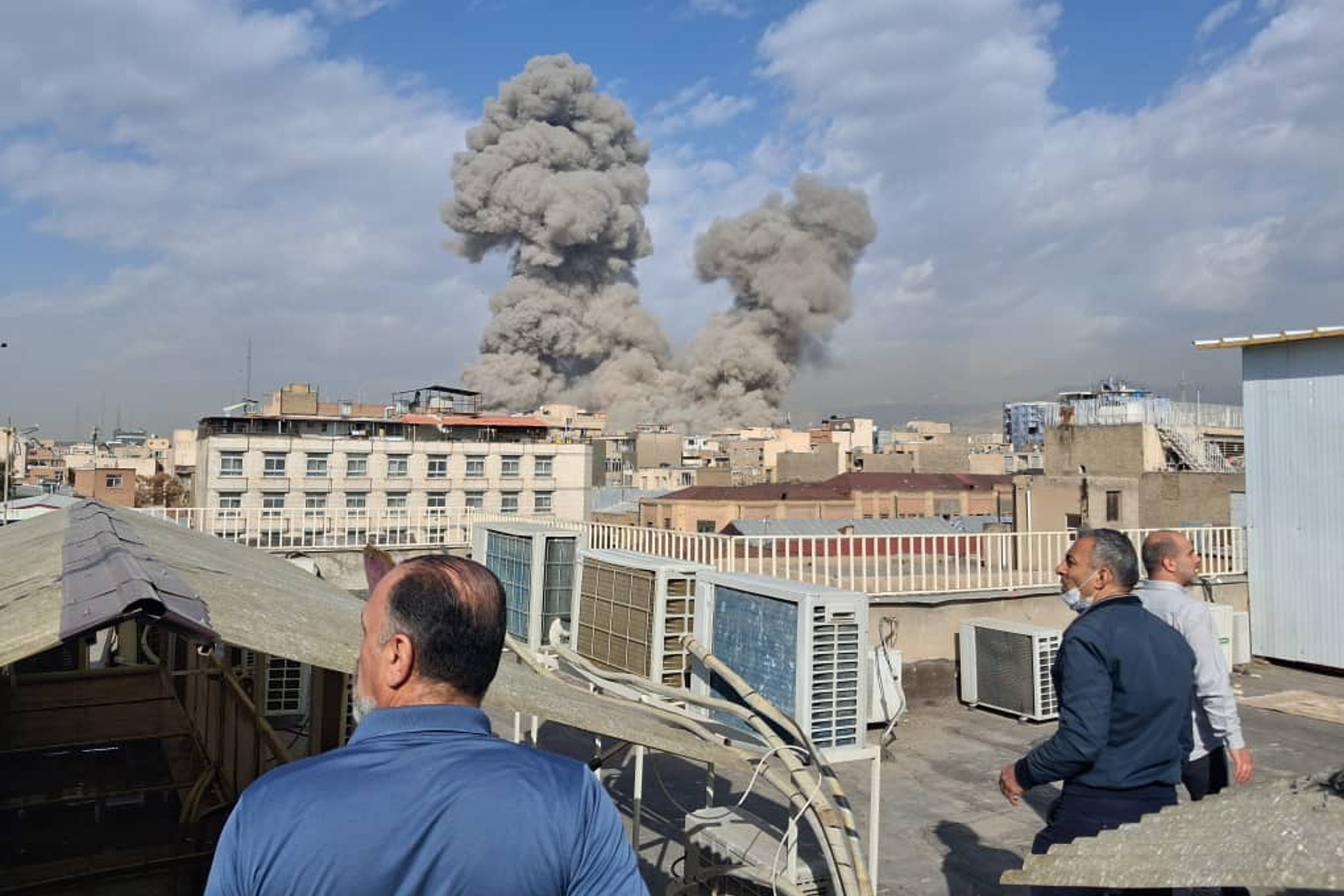
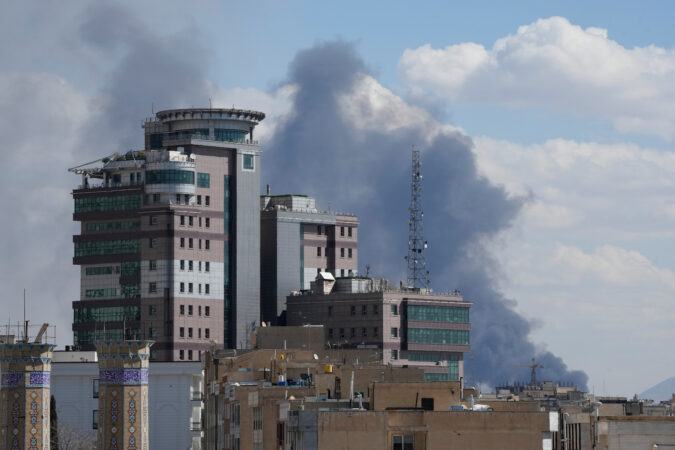
    Blasts rattled windows across the country and sent plumes of smoke high into the sky above Tehran. More than 200 people have been killed since the start of the strikes that killed Khamenei and other senior leaders, Iranian leaders have said.

    Iran vowed revenge, firing missiles at Israel and Gulf Arab states in a counteroffensive that the U.S. military said resulted in the deaths of three service members — the first known American casualties from the conflict. Israeli rescue services said strikes had hit several locations, including Jerusalem and a synagogue in the central town of Beit Shemesh, where nine people were killed and 28 wounded, bringing the overall death toll in the country to 11. Eleven people were still missing after the strike, police said.

    But the attacks on Iran showed no signs of relenting as the U.S. and Israel took aim at key military, political, and intelligence targets in what appeared to be a widening war that carried the potential for a prolonged conflict that could envelop the Middle East and destabilize it. The strikes, the second time in eight months that the U.S. and Israel had combined against Iran, represented a startling show of military might for an American president who swept into office on an “America First” platform and vowed to keep out of “forever wars.”

    U.S. President Donald Trump said the U.S. would “avenge” the deaths of the service members and that “there will likely be more” killed before the conflict ends.

    In a video he posted on social media, Trump called the three service members “true American patriots who have made the ultimate sacrifice for our nation, even as we continue the righteous mission for which they gave their lives.”

    He added: “Sadly, there will likely be more, before it ends. That’s the way it is. Likely be more.”

    Israel, which had pledged “nonstop” strikes, said it was increasing its attacks, with 100 fighter jets simultaneously striking targets in Tehran, Brig. Gen. Effie Defrin told reporters at a briefing. The targets included buildings belonging to Iran’s air force, its missile command, and its internal security force, which violently quashed anti-government protests in January.

    The U.S. military, meanwhile, said B-2 stealth bombers struck Iran’s ballistic missile facilities with 2,000-pound bombs. Trump said on social media that nine Iranian warships had been sunk and that the Iranian navy’s headquarters had been “largely destroyed.”

    Europe has mostly stayed out of the war and pressed for diplomacy, but in an indication that the conflict could draw in other nations, Britain, France, and Germany said Sunday they were ready to work with the U.S. to help stop Iran’s attacks.

    Prime Minister Keir Starmer said Britain would allow the United States to use its bases to strike Iranian missile sites. The U.K. maintains nearby bases on Cyprus and the Chagos Islands, a British archipelago in the Indian Ocean.

    In the 12-day war last June, Israeli and American strikes greatly weakened Iran’s air defenses, military leadership, and nuclear program. But the killing of Khamenei, who ruled Iran for more than three decades, creates a leadership vacuum, increasing the risk of regional instability.

    Trump, who a day earlier had encouraged Iranians to “take over” their government, signaled Sunday that he was open to dialogue with Iran’s new leadership.

    “They want to talk, and I have agreed to talk, so I will be talking to them,” he told the Atlantic.

    Streets of Tehran are largely deserted

    In Tehran, there was little sign that Iranians had heeded Trump’s call for an uprising against the government.

    The streets were largely deserted as people sheltered during heavy airstrikes, witnesses told the Associated Press, speaking anonymously for fear of retribution. The paramilitary Basij, which has played a central role in crushing protests, set up checkpoints across the city, they said.

    Two powerful explosions were heard in Tehran’s Niavaran neighborhood late Sunday.

    An eyewitness in the city told AP that the windows of their apartment shook violently, and residents came out onto the streets fearing it was too dangerous to stay inside. The witness spoke on condition of anonymity for fear of reprisals. Video footage from Tehran showed plumes of smoke filling the skyline, and the official IRNA news agency reported that parts of the building of the Islamic Republic of Iran Broadcasting were struck Sunday.

    In southern Iran, at least 165 people were killed Saturday when a girls’ school was struck, and dozens more were wounded, IRNA reported. The Israeli military said it was not aware of strikes in the area. The U.S. military said it was looking into the reports.

    The U.S. military did not provide details about the three service members who were killed or about five others who were seriously wounded. It said several others suffered minor injuries and concussions.

    Iran says new leadership is in place

    As supreme leader, Khamenei had final say on all major policies since 1989. He led Iran’s clerical establishment and the Revolutionary Guard, the two main centers of power in the governing theocracy.

    The CIA had been tracking the movements of senior Iranian leaders, including Khamenei, for months, according to a person familiar with the operation who was not authorized to comment publicly and spoke on condition of anonymity. The intelligence was shared with Israeli officials, and the timing of the strikes was adjusted in part because of that information, the person said.

    Iranian President Masoud Pezeshkian said in a prerecorded message that a new leadership council had begun its work. The country’s foreign minister, Abbas Araghchi, said a new supreme leader would be chosen in “one or two days.”

    Iran vows revenge for Khamenei killing

    As word spread of Khamenei’s death, some in Tehran could be seen cheering from rooftops, witnesses said. Others mourned as a black flag was raised over the Imam Reza shrine in Mashhad.

    An Iranian medical professional in northern Iran said he and colleagues spent the early hours of Sunday celebrating Khamenei’s death indoors because armed security forces are still heavily deployed in his city.

    There were forces stopping and interrogating people celebrating in their cars, but there was no gunfire, said the doctor, who spoke on condition of anonymity for fear of reprisal.

    “It was one of the best nights, if not the best night of our lives,” the doctor said in a voice message from the city of Rasht. In fact, “it was actually my first time ever smoking a cigarette. It was a very, very nice time. We didn’t sleep at all. And we don’t even feel tired.”

    Araghchi, Iran’s foreign minister, blamed the U.S. and Israel for starting the war. He said he had spoken to his counterparts in the Gulf countries and urged them to pressure the U.S. and Israel to end it.

    “You have crossed our red line and must pay the price,” Iran’s parliamentary speaker, Mohammad Bagher Qalibaf, said in a televised address. “We will deliver such devastating blows that you yourselves will be driven to beg.”

    Trump warned against any retaliation.

    “THEY BETTER NOT DO THAT,” he said in a social media post. “IF THEY DO, WE WILL HIT THEM WITH A FORCE THAT HAS NEVER BEEN SEEN BEFORE!”

    Strikes planned for months, feared for weeks

    Tensions have escalated in recent weeks as the Trump administration built up the largest force of American warships and aircraft in the Middle East in decades. The president insisted he wanted a deal to constrain Iran’s nuclear program while the country struggled with growing dissent following nationwide protests.

    An Israeli military official described Saturday’s mission as the result of months of “extremely high coordination” with the U.S. The official, speaking on condition of anonymity to discuss a covert operation, said a variety of factors created a “golden opportunity” to take out much of Iran’s leadership. Those factors included weeks of training and monitoring the movements of senior figures, along with “real time intelligence” that the targets were gathered together.

    The results, the official said, were near-simultaneous strikes, within 60 seconds of one another, in three locations 1,000 miles from Israel that killed Khamenei and some 40 senior figures, including the head of the Revolutionary Guard and the country’s defense minister.

  • Push from Saudis, Israel helped move Trump to attack Iran

    Push from Saudis, Israel helped move Trump to attack Iran

    President Donald Trump launched Saturday’s wide-ranging attack on Iran after a weekslong lobbying effort by an unusual pair of U.S. allies in the Middle East — Israel and Saudi Arabia — according to four people familiar with the matter, as Israeli and U.S. forces teamed to topple Iranian Supreme Leader Ali Khamenei after nearly four decades in power.

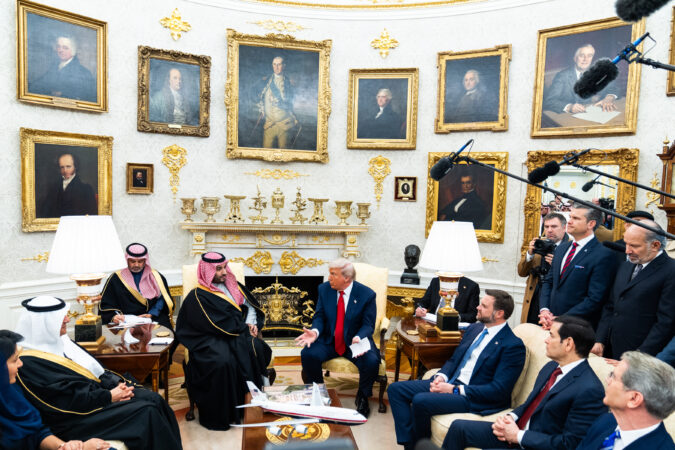
    Saudi Crown Prince Mohammed bin Salman made multiple private phone calls to Trump over the past month advocating a U.S. attack, despite his public support for a diplomatic solution, the four people said. Israeli Prime Minister Benjamin Netanyahu, meanwhile, continued his long-running public campaign for U.S. strikes against what he views as an existential enemy of his country.

    The combined effort helped lead Trump to order a massive aerial campaign against Iran’s leadership and military, which in its initial hour led to the death of Khamenei and several other senior Iranian officials.

    The attack came despite U.S. intelligence assessments that Iran’s forces were unlikely to pose an immediate threat to the U.S. mainland within the next decade. Saturday’s attack on Iran was a break from decades of U.S. decision-making to hold back from a full-scale effort to depose the regime of a country of more than 90 million people. It also marked a stark shift from Trump’s own previous military forays, which until now have been far narrower in scope.

    Now Trump will bear the risk of the bet he has placed: that a major military operation conducted from the air can achieve political goals on the ground.

    “No president was willing to do what I am willing to do tonight,” Trump told Iranians in a video address posted as U.S. bombs rained down on targets across Iran. “Now you have a president who is giving you what you want, so let’s see how you respond.”

    The Saudi push for an attack came as presidential envoy Steve Witkoff and Trump’s son-in-law Jared Kushner pursued negotiations with Iranian leaders over the country’s nuclear and missile programs.

    In this photo released by the Oman’s Foreign Ministry, Steve Witkoff, White House special envoy, centre, shakes hands with Oman’s Foreign Minister Sayyid Badr Albusaidi as Jared Kushner, left, looks on during their meeting prior to Iran and the U.S. negotiations, in Muscat, Oman, Friday, Feb. 6, 2026. (Oman Foreign Ministry via AP)

    As those talks proceeded, Riyadh issued a statement, following a phone call between the crown prince and Iranian President Masoud Pezeshkian, that Mohammed would not allow Saudi airspace or territory to be used in an attack on Iran.

    In his discussions with U.S. officials, however, the Saudi leader warned that Iran would come away stronger and more dangerous if the United States did not strike now, after amassing the largest military presence in the Middle East since the 2003 invasion of Iraq, said the people, who, like others, spoke on the condition of anonymity to discuss the sensitive situation.

    Mohammed’s position was reinforced by his brother, Saudi Defense Minister Khalid bin Salman, who held closed-door meetings with U.S. officials in Washington in January and warned about the downsides of not attacking, the people said.

    The Saudi leader’s complicated position probably reflected his desire to avoid Iranian retaliation against his country’s vulnerable oil infrastructure, weighed against his view of Tehran as Riyadh’s ultimate foe in the region, said those familiar with his thinking. Iran, dominated by Shiite Muslims, and Saudi Arabia, led by Sunnis, have long had an intense rivalry that has generated proxy wars in the region.

    Following the initial U.S. attack on Saturday, Iran did retaliate against Saudi Arabia. Riyadh issued a furious statement condemning the attack and calling on the international community to “take all necessary and decisive measures” to confront Iran.

    The Saudi Embassy did not respond to a request for comment.

    Witkoff and Kushner had their final contacts with Iranian officials in Geneva on Thursday, their third high-level encounter since early February. They walked away believing that Tehran was playing games with them about its need for nuclear enrichment, according to a senior Trump administration official.

    “It was very clear that the intent for them was to preserve their ability to do enrichment so that, over time, they could use it for a nuclear bomb,” the official said.

    By Friday afternoon, when Trump arrived in Corpus Christi, Texas, for a campaign rally ahead of Tuesday primaries there, the president’s frustration — and his rhetoric — was escalating. He repeatedly declared himself “not happy” with Iranian negotiators.

    “I’ve got a lot of things going on now,” he told the crowd toward the end of a rambling speech ostensibly focused on energy policy. “We have a big decision to make, you know that. Not easy, not easy. We have a very big decision to make.”

    Later, he flew to Palm Beach for the weekend, where he mingled with supporters at his Mar-a-Lago resort Friday evening, looking tired but otherwise in good sprits before exiting to his private quarters to record a speech he would give announcing the attack, according to one person who was there and interacted with him.

    The decision to launch the attack was in some ways foretold by the massive buildup of U.S. forces over the past two months. But there was little in Trump’s record to suggest that he would embrace a war of choice in the Middle East with the goal of regime change.

    In explaining his decision, Trump on Saturday reached all the way back to Iran’s 1979 revolution. He described the U.S. attacks as payback for decades of conflict with Iran. He cited the 52 Americans held hostage for more than a year after the 1979 takeover of the American Embassy in Tehran; the deaths of 241 U.S. service members in 1983 bombing of their barracks in Beirut by Iran-backed Hezbollah during a Lebanese civil war; and the 2000 attack on the USS Cole, a naval destroyer docked in a Yemen, which Trump said Iran “probably” was involved in, although the United States has long attributed the suicide bombing to al-Qaeda.

    Earlier Saturday, Trump said that the United States had faced “imminent threats from the Iranian regime.” Tehran was continuing to work toward producing a nuclear weapon and development of “long-range missiles that … could soon reach the American homeland.”

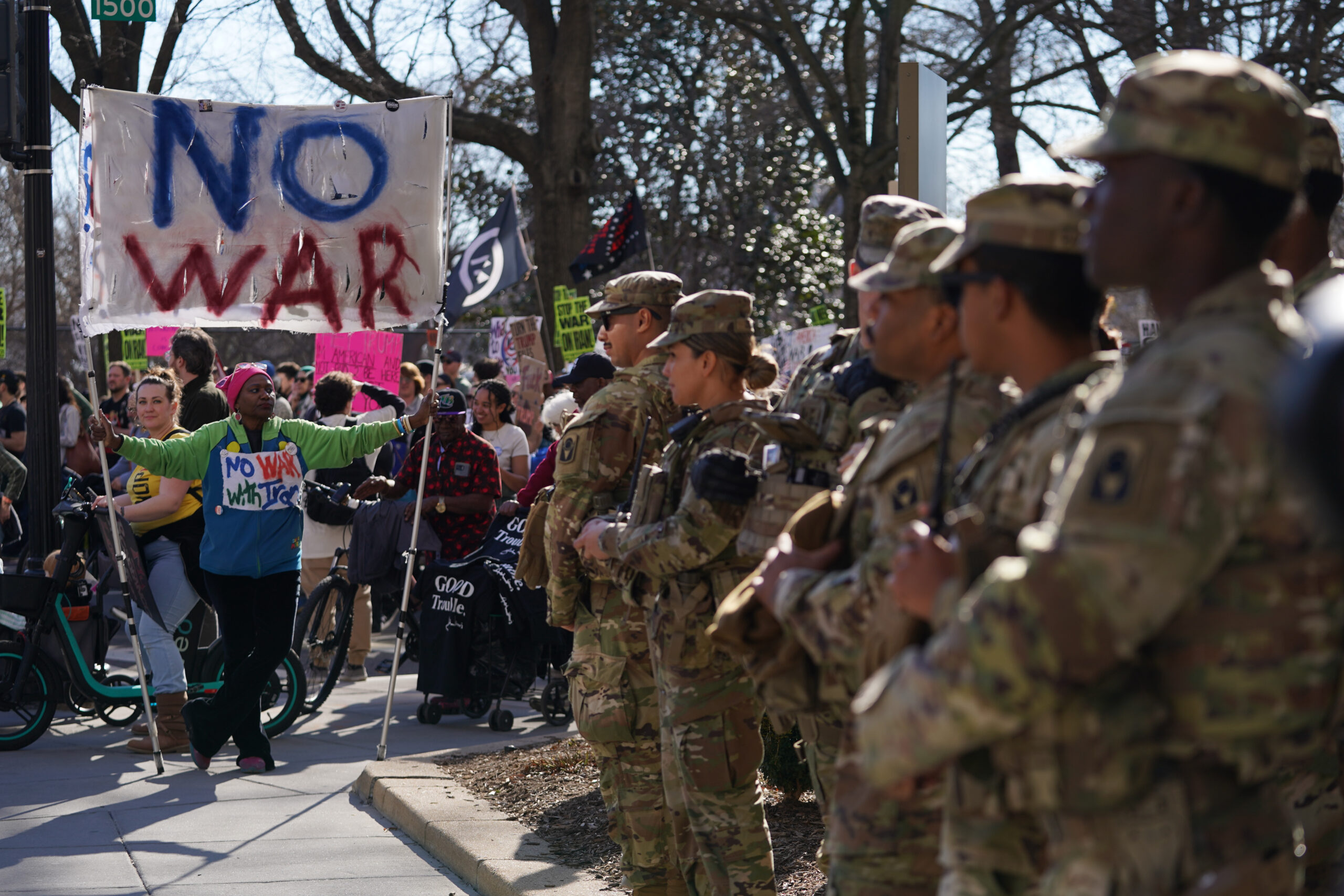
    National Guard members watch as people protest near the White House against U.S. and Israeli strikes on Iran, Saturday, Feb. 28, 2026 in Washington. (AP Photo/Allison Robbert)

    Both of those assertions have been challenged. Trump himself has vehemently maintained that the U.S. “obliterated” Iran’s nuclear program with airstrikes this past summer. The International Atomic Energy Agency has said there is no evidence Iran has restarted its uranium enrichment program following those strikes or that it has an active bomb-building plan. In an assessment last year, the U.S. Defense Intelligence Agency cited no indication that Iran was embarking on development of an intercontinental ballistic missile. If it decided to do so, the DIA said, it would take a decade to produce.

    Trump directed anti-government Iranians to “take over” their government, but his call included no details. He declared that those within Iran’s extensive military and security infrastructure would be given “complete immunity” but provided no explanation how or by whom that would be done.

    During both his first and second terms, Trump has said consistently there would be no American boots on the ground in military operations that he launched. Since taking office again, while launching air and missile attacks on seven countries — Nigeria, Syria, Yemen, Somalia, Venezuela, Iraq and Iran — he largely has kept that promise.

    But it remains unclear whether aircraft and missile strikes can achieve his ever-expanding goals — among them new, U.S.-friendly regimes in Iran and Venezuela; an end to Iran-backed militant operations in Yemen; and the defeat of Islamic terrorist operations in Nigeria and Somalia.

    “History is not kind to efforts to fundamentally alter and restructure the internal politics of a country using the air power alone,” said Aaron David Miller, a former U.S. diplomat who worked on Middle East issues for both Republican and Democratic administrations.

    “This is very much Trumpian, in the sense that he’s tried to split the difference between getting bogged down in an interminable conflict which will undermine the American economy and cost Americans their lives, on one hand, and yet bringing to bear the power of the American military in a sort of roll-the-dice operation,” Miller said.

    Months of planning for the 2003 U.S. toppling of Iraqi leader Saddam Hussein included thousands of invading American forces that remained there for nearly a decade and a large cadre of civilian U.S. officials on the ground to organize a new government.

    Top Trump officials — some of whom have been sharp critics of the Iraq effort and other U.S. forays into the Middle East — have insisted in recent days that this time will be different.

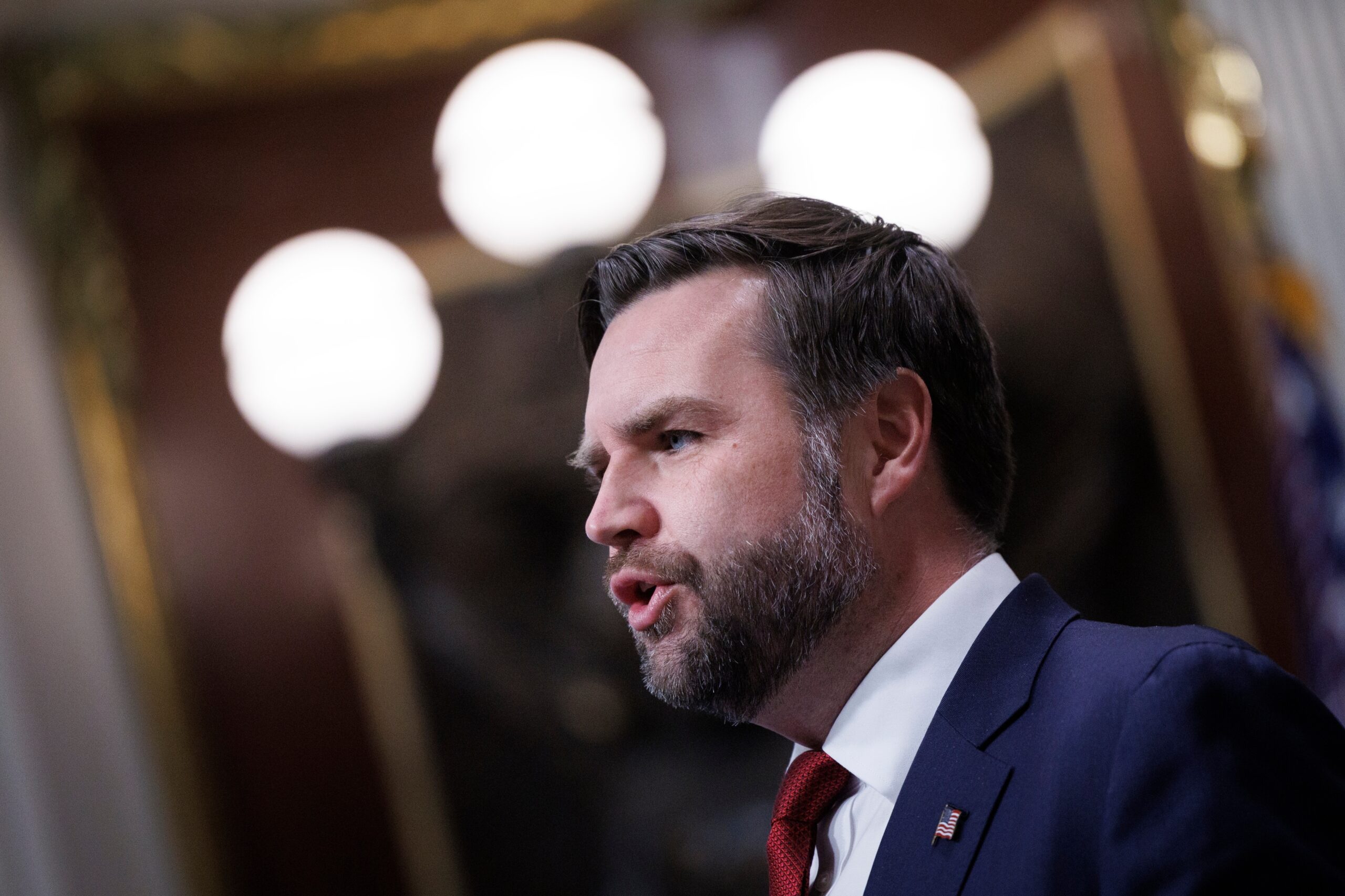
    Vice President JD Vance speaks during a news conference in the Old Eisenhower Executive Office Building on the White House campus Wednesday, Feb. 25, 2026, in Washington. (AP Photo/Tom Brenner)

    Vice President JD Vance on Thursday told the Washington Post that he still considers himself a “skeptic” of foreign military interventions — a description he said still applied to Trump, too. He said there was “no chance” any military operation by the U.S. in Iran would lead to a drawn-out war involving the Trump administration.

    Vance on Saturday watched the military operation from the Situation Room at the White House, while dialed into a conference line that connected him to the president and his national security team, who were tracking Iran from Mar-a-Lago, according to a person with knowledge of the events. Vance was joined at the White House by Tulsi Gabbard, the director of national intelligence, who has long campaigned against war with Iran. Energy Secretary Chris Wright and Treasury Secretary Scott Bessent were in the Situation Room too, the person said.

    Apart from Trump’s Saturday’s statements once the attack already started, the president has devoted little time to publicly justifying or explaining war with Iran, a break from previous practice of U.S. leaders.

    Democrats on Saturday pushed Trump to explain his case to the American people.

    “What was the imminent threat to America?” said Sen. Mark R. Warner (D., Va.), the senior Democrat on the Senate Intelligence Committee, in an interview. “I don’t know the answer.”

    Warner, who participated in a classified briefing on Tuesday with Secretary of State Marco Rubio and CIA Director John Ratcliffe, said that senior lawmakers were given a “fair description of options” the administration was considering, but that he saw no threat that “would literally be worthy of putting our troops in harm’s way.”

    In the briefing on Tuesday for the Gang of Eight, which consists of the leaders of the House, the Senate and each chamber’s intelligence committees, Secretary of State Marco Rubio indicated to lawmakers that the mission’s timing and goals were shaped by the fact that Israel was going to attack with or without the United States, according to a person familiar with the administration’s outreach to lawmakers.

    “So the only debate that seemed to be remaining was whether the U.S. would launch in concert with Israel or if the U.S. would wait until Iran retaliated on U.S. military targets in the region and then engage,” the person said.

    Now the question is what comes next.

    For now, Trump says that he hopes that in the face of the death of Khamenei, Iran’s security forces and police “will peacefully merge with the Iranian Patriots, and work together as a unit to bring back the Country to the Greatness it deserves.” In January, those security forces killed thousands of Iranian protesters.

    He vowed that “the heavy and pinpoint bombing, however, will continue, uninterrupted throughout the week or, as long as necessary to achieve our objective of PEACE THROUGHOUT THE MIDDLE EAST AND, INDEED, THE WORLD!”

  • How the world can stop ICE from hijacking the World Cup

    How the world can stop ICE from hijacking the World Cup

    The 2026 Winter Olympics in Milan may be over, but the political storm and protests stirred by the presence of U.S. Immigration and Customs Enforcement have not faded. With the FIFA World Cup set to bring millions of international fans to North America next, the Milan backlash now feels less like an isolated controversy and more like a warning of what could lie ahead.

    Italian lawmaker Riccardo Magi (center) shows a placard demanding that U.S. Immigration and Customs Enforcement (ICE) agents not be allowed at the Milan Cortina Olympics, during a protest staged outside the U.S. Embassy in Rome in January.

    The last World Cup in Qatar drew about one million international visitors. The 2026 tournament — hosted across the United States, Canada, and Mexico — is expected to attract several times that number, making it the largest in soccer’s history. Its success will hinge not only on logistics and policing, but on whether teams and supporters feel welcome, safe, and able to move across borders within tight time frames.

    That confidence is now under scrutiny. ICE acting Director Todd Lyons has said the agency will be a “key part of the overall security apparatus” for the World Cup. Yet, when immigration enforcement becomes visibly woven into the staging of a global tournament, it ceases to look like routine security and instead risks appearing as a projection of domestic policy onto an international stage.

    Already, there are increasing calls to boycott the event for safety reasons, with fan groups like Football Supporters Europe expressing concern about the “ongoing militarization of police forces in the U.S.”

    Meanwhile, supporters from Latin America, Africa, and the Middle East are already asking whether a valid visa will be enough. Could minor paperwork errors lead to detention? For mixed-status families living in the United States, the anxiety is sharper still. A major German team has reportedly canceled a U.S. tour, and online fan forums openly debate boycotts.

    Sport has always intersected with politics. The 1936 Berlin Olympics were carefully orchestrated by the Nazi regime to project ideological confidence and international legitimacy, even as discriminatory policies continued at home. Decades later, the global boycott of apartheid South Africa — leading to the country being barred from the 1964 Olympic Games — showed that tournaments can reflect moral choices.

    But there is a difference between holding regimes accountable and turning sporting events into stages for domestic enforcement policy. This point carries particular weight in the U.S., a country whose global appeal has long rested on openness and pluralism.

    Chelsea’s Cole Palmer walks with the golden ball trophy after Chelsea won against Paris St. Germain in the Club World Cup final, at MetLife Stadium in East Rutherford, N.J., in July.

    The World Cup is a soft-power moment. For one month, North America will present itself to billions of viewers not just as a host, but as a harmonious society — a rare global moment when rival nations share rules, rituals, and space on equal terms.

    That is precisely why international bodies have treated soccer as a tool for cohesion rather than division. The United Nations has repeatedly promoted sport as a mechanism for refugee integration and social stability, while organizations working on counter-extremism and discrimination, including the Muslim World League, have similarly highlighted how athletics can cultivate “understanding, empathy and respect” across communities.

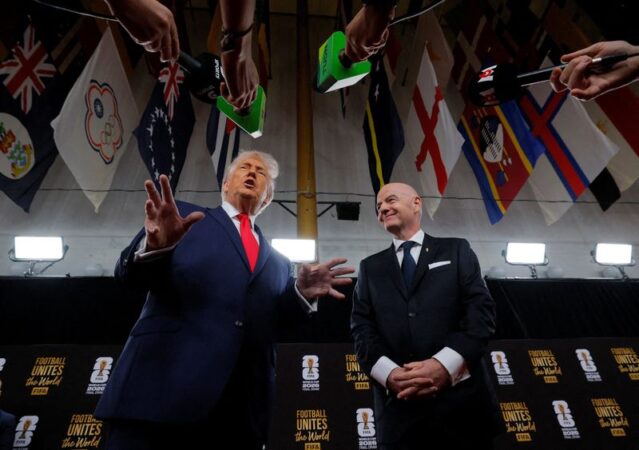
    Canadian Prime Minister Mark Carney, Mexican President Claudia Sheinbaum, President Donald Trump, and FIFA President Gianni Infantino hold up country names during the draw for the 2026 FIFA World Cup at the Kennedy Center in Washington in December.

    MWL’s secretary general, Mohammad bin Abdulkarim Al-Issa — who was recently recognized in the United States for his efforts to combat hate — has repeatedly warned that weak integration and social division are the biggest threats facing humanity today. Global sporting events, by contrast, offer rare shared civic spaces where diverse societies meet on equal terms, reinforcing inclusion rather than suspicion.

    If enforcement spectacle overshadows the 2026 World Cup, the consequences will be economic as well as social. Travel hesitancy, empty seats, and reduced tourism would be immediate effects.

    But the deeper risk is political: Visible exclusion at a global event reinforces narratives of division and grievance that extremists on all sides are quick to exploit. When people feel unwelcome in shared civic spaces, mistrust grows — and the integrative power that sport is meant to provide begins to erode.

    That makes clarity from federal authorities essential. The U.S. Departments of Homeland Security and State and host city governments should coordinate to publish tournament-specific guidance covering visa processing timelines, entry procedures for ticket holders, and the scope of enforcement activity around official venues.

    Clear assurances that immigration sweeps will not be conducted at stadiums, accredited fan zones, or public watch sites would reduce uncertainty without compromising border security.

    For a country that prides itself on being a nation of immigrants — and for a president who places great stock in ratings, turnout, and global spectacle — the 2026 tournament presents an extraordinary opportunity to show that security and openness can coexist. Full stadiums and strong international attendance would reinforce the image of a confident, welcoming host nation.

    If instead, travel hesitancy, empty seats, and visible enforcement dominate the optics, the tournament risks projecting exclusion rather than unity.

    That outcome would not only diminish the World Cup’s global appeal but squander a rare moment of soft power that no amount of security planning alone can restore.

    Khalid Sayed is the leader of the opposition for the African National Congress in the Western Cape Provincial Parliament in South Africa, now serving his second term. A former provincial leader of the ANC Youth League, he is an activist committed to social cohesion and democratic renewal in a postapartheid society.

  • ⛏️ Who gets to unearth Philly’s past? | Morning Newsletter

    ⛏️ Who gets to unearth Philly’s past? | Morning Newsletter

    Welcome to March.

    Sunday will be cloudy and may see a wintry mix of precipitation.

    Centuries of artifacts are buried in Philadelphia soil. Who should be allowed to dig up the city’s history? It depends on whom you ask.

    Further on, we’re covering the latest on the U.S.-Israel joint strikes on Iran. Check Inquirer.com for developments.

    — Paola Pérez (morningnewsletter@inquirer.com)

    If someone forwarded you this email, sign up for free here.

    Buried treasure

    Amateur diggers Melissa and Matt Dunphy stand in one of the privies they found below their house and theater in Old City.

    Both amateur diggers and professional archaeologists say that they’re working in the public interest, but breaching the ground is a delicate practice and subject.

    🚧 Not all “privy pirates” are the same. Some follow a set of rules and dig with integrity, but others trespass, shut out the professionals, and sell what they find underground.

    🚧 Some archaeologists say the city has done little to protect its buried history, and warn about the risks of indiscriminate digging. “Once you dig through a site, you’ve destroyed it,” one told The Inquirer. “It’s gone.”

    🚧 America’s 250th birthday is approaching, putting Philadelphia’s rich history in the national spotlight and raising questions about the access and preservation of that history.

    Zoe Greenberg has the story.

    In related news: Federal officials seized 36 Bronze Age-era short swords and 50 arrowheads following their arrival in Philadelphia in October.

    ‘Operation Epic Fury’

    The U.S. and Israel launched a major joint attack on Iran early Saturday, following months of rising tensions and the movement of American warships into the region last week.

    At least 201 people were killed and more than 700 were injured, according to Iranian state media. President Donald Trump said on social media that Supreme Leader Ayatollah Ali Khamenei was killed in the attack.

    Global leaders are holding emergency security meetings and calling for the resumption of U.S.-Iran negotiations as the attack sowed concerns of a broader conflict. Trump said his main concern is the “freedom” of the Iranian people.

    Pennsylvania Sens. John Fetterman and Dave McCormick praised the coordinated strikes, while other lawmakers in the region have criticized it and called for legislators to return to Congress immediately.

    In response to the turmoil, New Jersey Gov. Mikie Sherill said law enforcement would increase patrols at sensitive sites like houses of worship, while Philadelphia police said it was monitoring the situation overseas.

    Find updates at Inquirer.com.

    What you should know today

    ❓Pop quiz

    In a time when many kids are glued to screens, this educational magazine is still thriving and reaching the lives of millions of children after 80 years — straight from the Poconos.

    A) National Geographic

    B) Highlights Magazine

    C) Zoobooks

    D) Brainspace Magazine

    Think you know? Check your answer.

    What we’re …

    ⛰️ Planning: A scenic spring road trip for mountain luxury in Bedford Springs.

    🐢 Savoring: Bourbon chicken, snapper soup, and cinnamon buns round out some of the best things we ate this week.

    🏠 Learning: How Snacktime’s bassist landed this spacious rowhouse.

    🧩 Unscramble the anagram

    Hint: King of Prussia-based wedding dress retailer

    ADD RIVAL BIDS

    Email us if you know the answer. We’ll select a reader at random to shout out here.

    Cheers to Bobbi Harris, who correctly guessed Saturday’s answer: Cochranville. More than a decade in the making, the 300-year-old village in western Chester County is moving toward its first public water line.

    In other Chesco news: Area pet sitters are watching more than dogs and cats. These days, animal care means looking after more chickens, goats, and sheep.

    🌷 Photo of the day

    Rooted in Love is a theatrical floral exhibit that brings together horticulture and Shakespearean storytelling by Jennifer Designs at the Philadelphia Flower Show.

    The Pennsylvania Horticultural Society Philadelphia Flower Show is back, full of colors, scented exhibits, flowery crowns, and roots.

    From the Shakespearean production pictured above to a city citation, Inquirer columnist Stephanie Farr insists we don’t miss these exhibits at this year’s show.

    And if you’re curious about what the Flower Show looked like before it opened its doors, check out these snaps by staff photographer Tom Gralish.

    🎶 Today, we’re remembering Neil Sedaka by listening to this song: “They say that breaking up is hard to do / Now I know, I know that it’s true.”

    One more musical thing: Mount Airy rapper KUR put us on to his special pick for a late-night fresh fruit stop, and it’s not Wawa.

    👋🏽 Thanks, as always, for starting your morning with us. Have a great day.

  • Media, the nation’s first Fair Trade Town, marks 20 years supporting farmers in the developing world

    Media, the nation’s first Fair Trade Town, marks 20 years supporting farmers in the developing world

    Elizabeth Killough remembers the beginning of Media’s Fair Trade history as follows: She was sitting at her desk at UnTours, an unconventional Media-based travel company, next to her boss and UnTours founder Hal Taussig.

    Taussig, sitting in his beloved rickety desk chair, began to share a vision with Killough: What if his hometown of Media could become a hub for Fair Trade, a global trading system that prioritizes quality products and fair wages for farmers in the developing world? What if Media’s shops and restaurants could stock products made and sold with equity and respect?

    “I couldn’t even begin to imagine what that would be [like],” Killough remembers.

    To humor Taussig, she googled “Fair Trade towns” (the internet was remarkably slow in the mid-2000s, so it took a few minutes to populate the results, she said). An email for Bruce Crowther, the father of Fair Trade in Garstang, England, popped up. Killough sent him a note. Despite the fact that it was 10 p.m. in England, Crowther wrote right back. He wanted to help make Taussig’s dream a reality.

    In the months that followed, Taussig and Killough would help spearhead an effort to make Media the first Fair Trade town in the United States, a push that took the cooperation of local business owners, civic leaders, and borough council members. As Media marks 20 years of its Fair Trade Town status, Fair Trade products, and Taussig’s formidable footprint, can be found all over the Delaware County community.

    State Street, near Olive Street, on Wednesday, June 4, 2025, in Media, Pa. Businesses that sell Fair Trade products dot Media’s main commercial artery, a sign of the enduring legacy of Hal Taussig and Media’s Fair Trade advocates.

    What is Fair Trade?

    Fair Trade is a global trading arrangement under which farmers are paid higher wages in exchange for assurances that they will use eco-friendly practices, ensure safe working conditions, and invest in their communities. The trading practice seeks to uplift producers in the developing world, where environmental exploitation and forced labor can be common in the agriculture business. Common Fair Trade products include coffee, chocolate, and bananas.

    Fair Trade guarantees farmers can charge minimum prices for goods, acting as a safety net against market instability. Some Fair Trade suppliers receive a “premium fund,” or an additional sum of money put aside to invest in education, healthcare, infrastructure, or business improvement products in their communities. In exchange for economic security, Fair Trade producers must provide workers with reasonable work hours, safe working conditions, and maternity leave, and are barred from using child and forced labor.

    Fair Trade products are certified through a collection of governing bodies, including Fairtrade International and Fair Trade USA.

    How did Media become a Fair Trade town?

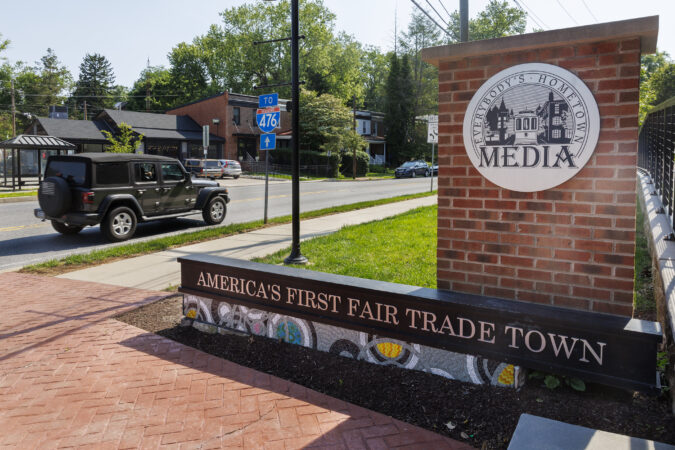
    Killough’s email to Crowther set off a monthslong campaign to make Media the United States’s first Fair Trade Town, a moniker now proudly displayed on “Welcome to Media” signs on the borough’s outskirts.

    Taussig had been thinking about sustainability in the global economy for decades before Media’s formal designation. In 1992, Taussig and his wife, Norma, founded UnTours, an unconventional “slow travel company” that helped people connect to faraway lands through community engagement and sustainable tourism practices. Friends described Taussig as unique and empathetic. He was famously averse to making a profit, sharing UnTours’ returns with customers, staff, and, later, the UnTours Foundation, which invests in sustainable business ventures.

    Taussig, who died in 2016, was “a really sweet man that cared about the world a lot,” said Ira Josephs, the executive director of the Media Fair Trade Committee.

    Taussig and Killough began meeting with a group of stakeholders who shared the goal of bringing Fair Trade to Media. At the time, there was no organization overseeing Fair Trade communities in the U.S., so the Media group decided to “self-declare” under the criteria used by Garstang, the first Fair Trade Town in the world. They needed to persuade a certain number of Media retailers to sell Fair Trade-certified items and ask local schools and businesses to use Fair Trade goods. The guidelines also required Media to establish a Fair Trade committee; have an elected body pass a resolution supporting Fair Trade; and promote media coverage and education around Fair Trade.

    A number of stores in Media already carried Fair Trade products, and many of its churches and Quaker meetinghouses used Fair Trade coffee and sugar. The working group made a website and brought on board Monica Simpson, a borough council member who helped convince the governing body to pass a Fair Trade resolution. The borough council saw it as a way for “this local community to make an international connection,” Killough said.

    Once all of the criteria were met, “we just self-declared that we were the first Fair Trade town,” Josephs said.

    At the time, New York City and Los Angeles were working on their own Fair Trade proposals. Yet Media, a 5,000-resident borough in the heart of Delco, beat them to the punch.

    “It was rebellious,” Josephs said.

    On July 12, 2006, Media held a public ceremony unveiling its status as a Fair Trade town.

    Many of Media’s businesses got on board.

    When Tara and Brent Endicott, the owners of downtown Media’s Burlap & Bean, first got into the coffee business, they knew they wanted “to feel like we were making a difference,” Tara Endicott said.

    All of the coffee sold at Burlap & Bean is Fair Trade-certified and organic, a decision the Endicotts made in 2006 when they opened their first location in nearby Newtown Square, inspired in part by Media’s Fair Trade push.

    Though their coffee-industry friends told them they were crazy for stocking only Fair Trade products, which are more expensive and harder to source, the Fair Trade beans won over the coffee purveyors and their Media-area customers.

    Signage that reads, America’s First Free Trade Town, Media, PA., Wednesday, June 4, 2025. This sign is at N. Providence Road where it crosses N. Monroe Street.

    Fair Trade in Media, two decades later

    Fair Trade lives on in the stores, restaurants, and coffee shops that dot Media’s bustling downtown.

    All of the international products at Earth & State, a pottery and craft shop, are from Fair Trade groups. Bittersweet Kitchen, a pizza and brunch spot, serves Fair Trade hot chocolate and coffee. Mom-and-daughter-owned yarn shop Homesewn sells yarn from Fair Trade Federation members and other companies that follow Fair Trade principles. Even Trader Joe’s, located in Media’s old armory building, stocks Fair Trade coffee.

    On Valentine’s Day, the Media Fair Trade Committee hosted its annual Fair Trade chocolate tasting. The committee also hosts an annual juggling contest with Fair Trade soccer balls at Dining Under the Stars.

    Fair Trade’s future is not entirely certain.

    Fair Trade groups have come under scrutiny in recent years for corporatizing a once mission-driven practice. It has been hard at times to get businesses to splurge on Fair Trade goods, first during the 2008 recession and then again during the pandemic, Killough said. As rents rise in Media, there is a “constant turnover of store owners and restaurateurs,” Killough added, making it an ongoing effort to keep Fair Trade practices alive.

    “It’s going to continue to require a lot of work, a lot of commitment, and a lot of education,” she said.

    Last year was “the worst year financially that we’ve ever had,” Tara Endicott of Burlap & Bean said. Despite having the highest customer counts in Burlap & Bean’s history, high coffee prices and tariffs left the Endicotts taking home meager profits at the end of the day. They have thought about opening up their business to non-Fair Trade coffee but have not yet, relying on the hope that economic conditions will improve.

    Ultimately, Brent Endicott said, he and his wife are proud to be in Media and to be serving Fair Trade beans.

    “We’re thrilled to be able to do our part to help Media stay a certified Fair Trade town,” he said.

    This suburban content is produced with support from the Leslie Miller and Richard Worley Foundation and The Lenfest Institute for Journalism. Editorial content is created independently of the project donors. Gifts to support The Inquirer’s high-impact journalism can be made at inquirer.com/donate. A list of Lenfest Institute donors can be found at lenfestinstitute.org/supporters.

  • Outlook hazy | Editorial Cartoon

    John Cole spent 18 years as editorial cartoonist for The (Scranton) Times-Tribune, and now draws for various statesnewsroom.com sites.

  • The Gaudreau family’s journey to Milan for Team USA’s men’s hockey gold medal started in Philly

    The Gaudreau family’s journey to Milan for Team USA’s men’s hockey gold medal started in Philly

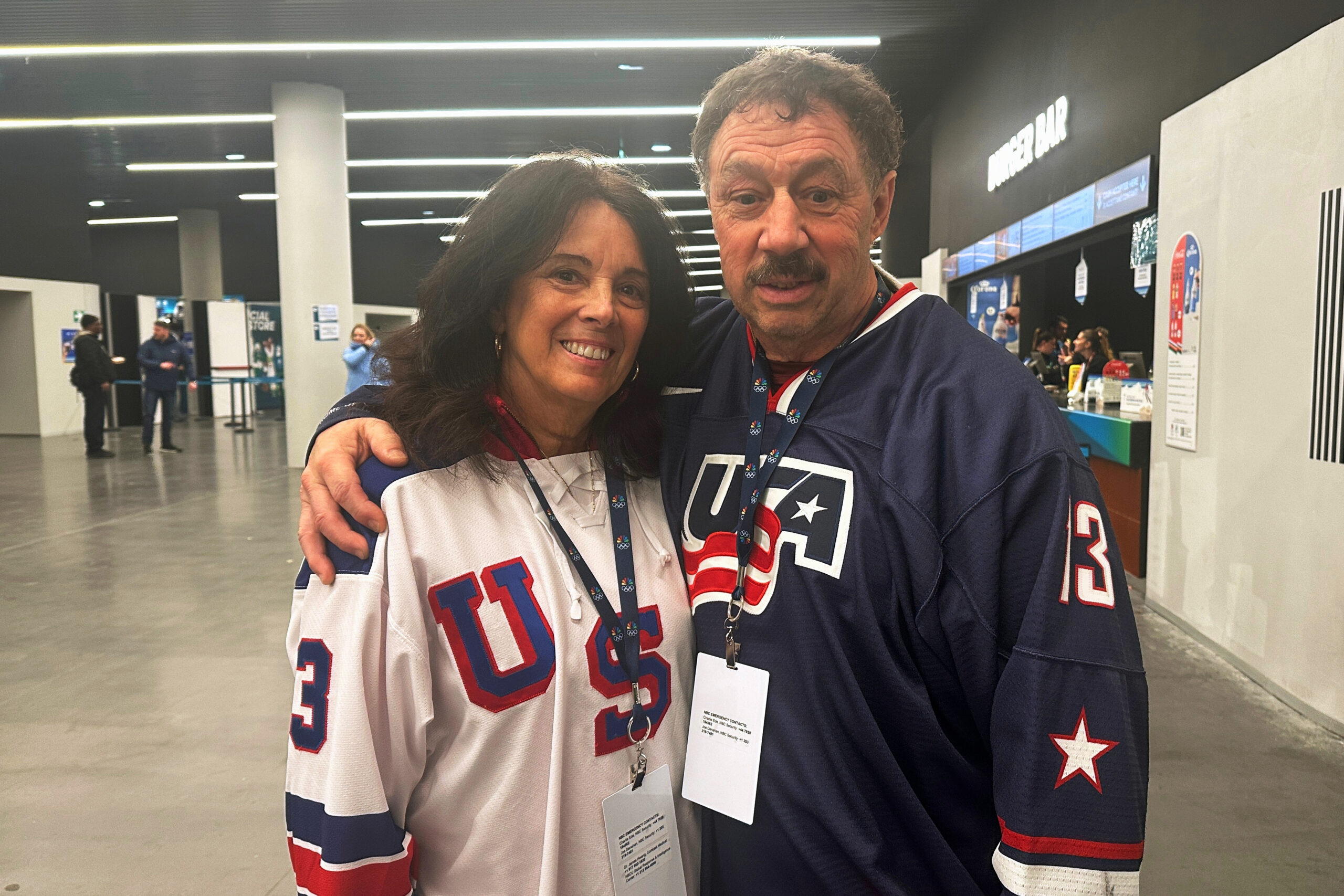
    As the U.S. men’s hockey team skated around with Johnny Gaudreau’s Team USA jersey after its 2-1 overtime win over Canada in the gold-medal game of the Milan Cortina Olympics, Meredith Gaudreau looked on from the stands.

    Meredith knew her late husband’s jersey had a place in the USA Hockey locker room in Milan, Italy, just as it had at the 4 Nations Face-Off in 2025. But she didn’t expect the team to bring the jersey to the ice as it celebrated USA Hockey’s first men’s Olympic gold since 1980.

    As the team celebrated on the ice, Meredith’s phone rang. It was Matthew Tkachuk, asking if the team could get Meredith and Johnny’s two oldest children, Noa and Johnny Jr., onto the ice for a picture.

    Johnny Gaudreau’s former Calgary Flames teammate, Matthew Tkachuk, skates with Gaudreau’s daughter, Noa, after the United States won Olympic gold on Sunday in Milan.

    “I just was blown away that they wanted to do all that,” Meredith said. “They were really thinking of John. I was just very blown away by John’s impact, the way they want to honor him and have a lot of respect for him as a hockey player, a friend, an American hockey player. I was very, very proud of him for that.”

    Johnny Gaudreau, who spent 11 seasons in the NHL and likely would have been on the team’s Olympic roster, and his younger brother, Matthew, died after being hit by an alleged drunk driver while riding bicycles near their South Jersey hometown on the eve of their sister Katie’s scheduled wedding in August 2024. Johnny was 31, and Matthew was 29.

    From Philly to Milan

    Team USA honoring Johnny Gaudreau and his family was one of the most impactful moments of the Winter Olympics.

    But the Gaudreau family might not have made it to Milan without the efforts of Brian Roberts, the chairman and CEO of Comcast.

    Before the Olympics, Roberts read that the U.S. hockey team was planning to honor Gaudreau at the Games the same way it had during the 4 Nations Face-Off, by including a No. 13 Gaudreau jersey in the team’s locker room. Once the U.S. won its group, Roberts thought the Gaudreau family should have the opportunity to be at the Games in Milan.

    Roberts first called Keith Jones, the president of hockey operations for the Flyers, to see if he knew how to get in contact with the Gaudreau family. Jones recommended that Roberts call Gary Zenkel, the president of NBC Olympics, and coordinate the Gaudreau family’s travel with USA Hockey.

    After some hesitation, Jane and Guy Gaudreau made the trip to Italy to honor their son and root on his former U.S. teammates.

    ”In the wake of an unthinkable loss, witnessing the Gaudreau family find a moment of pure joy at the men’s hockey final was a profound honor — that’s the magic of the Olympics,” Roberts said in a statement to The Inquirer.

    Meredith said she got a call from her in-laws, Jane and Guy Gaudreau, on Feb. 17. They told her that USA Hockey had offered to take them to Milan. Johnny’s parents were hesitant, but Meredith knew immediately that she had to go.

    “I have, kind of, two roles right now I want to focus on,” Meredith said. “That’s giving my kids a special life and honoring my husband. When those two things can overlap, it’s more than I can ask for right now. It just means everything to me.”

    Meredith’s in-laws changed their minds, canceled a trip to Las Vegas with friends, and boarded a plane to Milan on Feb. 19. The family arrived in time to see the U.S. beat Slovakia, 6-2, in the semifinals the following day.

    As the gold-medal game against Canada approached, Meredith couldn’t help but feel the U.S. was destined to win gold. The game was on Feb. 22, which happened to be Johnny Jr.’s second birthday.

    “I just was like, ‘This is going to happen,’” Meredith said. “I just was reflecting on everything, and it was just the ultimate gift from John, the ultimate birthday present he gave to us for Johnny.”

    ‘We were really hoping for this together’

    Johnny and Matthew Gaudreau grew up in Carneys Point Township in Salem County and played youth hockey for the Little Flyers and Team Comcast.

    Meredith also is a Philly-area native and grew up with five siblings in Malvern. She and her sisters went to the Academy of Notre Dame de Namur in Villanova, while her brothers went to St. Joseph’s Prep in North Philly.

    Meredith was a nurse in the neonatal intensive care unit at the Children’s Hospital of Philadelphia when she met Johnny in 2018 at her sister’s birthday party in Avalon, N.J. The pair got married in September 2021.

    Johnny, a forward, played nine seasons with the Calgary Flames and two with the Columbus Blue Jackets and was hoping for a spot on Team USA’s Olympic roster.

    “We weren’t getting too ahead of ourselves, but we were talking about planning our pregnancies around it,” Meredith said. “I was like, ‘It’d be hard to be out there with a newborn; it would be kind of hard to be out there pregnant, at the end of a pregnancy.’ … All those memories flushed into my mind thinking, ‘We were really hoping for this together.’”

    Photographic memories

    While the trip to Milan was a bittersweet moment for the Gaudreaus, Meredith said she’s glad that her children have the photos on the ice with Team USA to look back on.

    Meredith’s 11-month-old, Carter, did not make the trip to Milan, but 3-year-old Noa and Johnny Jr. got a chance to celebrate with “the team that is all of Daddy’s friends,” which is how Meredith described Team USA to her children.

    “I said, ‘They want to take a picture with you. It’s for Daddy,” Meredith said. “[Noa] was smiling really hard, and I was really proud of her for that because I think she’s at a stage right now where she’s starting to piece things together, and she’s very, very proud of her father.

    “We look at pictures every single day, and she’s still super young and wasn’t even 2 when he passed. I try to tell her stories with the photos that she sees. I think she remembers pictures more than the actual memories.”

    Dylan Larkin (21) holds Johnny, the son of the late Johnny Gaudreau after Team USA beat Canada in the gold-medal game in Milan.

    Meredith hopes the pictures that came after the team’s win will be something Noa, Johnny Jr., and Carter can look back on as they grow up to help them remember and connect with their father.

    “I was thinking into the future, too,” Meredith said. “That they’re going to look back on this and hopefully be blown away.”

  • Employers to job seekers: Your AI resumé isn’t fooling anyone

    Employers to job seekers: Your AI resumé isn’t fooling anyone

    As part of a job search, outsourcing and offshoring company Oceans asked candidates to make a video answering one question: What is your most controversial personal conviction about the workplace? The company received more than 300 responses and most of them were eerily similar.

    “It was abundantly clear it was [artificial intelligence],” Matt Wallaert, Oceans’ chief experience officer, said of the repeated answers, which also followed the same structure. It was like “you did the laziest possible … you failed the basic task of sharing your personal beliefs.”

    The situation left Wallaert and the hiring team bewildered on how to evaluate the candidates, as even some of the most qualified blended together.

    Job seekers are turning to AI to help them land jobs more quickly in a tough labor market. With a plethora of AI tools, some employers may be screening applicants’ resumés, deprioritizing them as candidates. Employers say that’s having an unintended consequence: Many applications are looking and sounding the same. AI has complicated the process for both employers and job seekers leaving both sides at odds over how to get what they want.

    It’s easy to spot when candidates over-rely on AI, some employers said. Oftentimes, executive summaries will look eerily similar to each other, odd phrases that people wouldn’t normally use in conversation creep into descriptions, fancy vocabulary appears, and someone with entry-level experience uses language that indicates they are much more senior, they added.

    It’s worse when they use auto-apply AI tools, which will find jobs, fill out applications, and submit resumés on the candidate’s behalf, some employers said. Those tend to misinterpret some of the application questions and fill in the wrong information in inappropriate spots. If these applications were evaluated alone, employers say they’d have a harder time identifying AI usage. But when hundreds of applications all have the same issue, they said, AI’s role in it becomes obvious.

    Joseph Eitner, chief human resources officer for New York-based investment firm Eaton Capital Management, said he has no issue with candidates turning to AI to add some keywords, clean up their grammar, or even help them think through a question on the application. But ultimately, he said, candidates should do the writing themselves, express their own ideas and personalities, and take the time to manually submit their applications.

    “If that’s how you apply and how you work, I don’t want to hire you,” he said. AI auto-apply services are “snake oil. It’s a disservice to yourself and to the people you’re applying to.”

    Not all employers rely heavily on AI to screen applicants, according to Ron Sharon, chief information security officer in Denver at financial advisory firm PTMA Financial Solutions, and some only use it to help them prioritize people with the necessary experience. Sharon said he uses an AI tool that assigns percentages to candidates based on their qualifications. Anyone who hits a 75% or above will be considered for the job, he said, but AI never automatically rejects a candidate.

    “I use AI as a tool to help me augment what I do,” he said. “Job seekers should use it to help them augment what they do. They shouldn’t use AI for the complete process.”

    But some job seekers say the ways that employers started using the technology to rank candidates prompted them to adopt it.

    Stephen Harris, a 37-year-old in San Antonio who’s seeking a job as a tech support specialist, said he’ll stop using AI to write his resumé once recruiters stop using AI to evaluate it.

    “You’re saying, ‘You shouldn’t be doing this’ when I know a good chunk of them do this,” Harris said.

    Employers are often focusing too hard on finding the perfect candidate and losing some of the most adaptable ones in the process, he said. And while he still tries to stand out by sending his resumé via mail, he says using AI to quickly tailor his resumé makes it easier to be among some of the earlier applicants.

    Job seekers say one of the benefits of AI is it can help people make ideas flow better, punch up their words, and fill in blanks they may struggle with. But some employers say they’d much rather see the person as they are.

    Prateek Singh, founder and CEO of the start-up LearnApp in New Delhi, said that when candidates use AI for their applications, it doesn’t allow him to evaluate what excites them about the job and what they’re less interested in. In their cover letters, candidates are asking him to “chat over coffee,” a phrase he said isn’t common in India.

    “This is the best time for you to stand out based on all of your flaws and eccentricity,” he said. “If 100 applicants come to us with AI, and you are authentic, you stand out.”

    The advice rings true to applicants such as Sneha Sharma, who said that when she stopped using AI for her resumé, she started to gain more traction in her job search.

    In the course of about six months she had applied to up to 300 jobs, using AI tools such as ChatGPT and some that helped her find leads. She briefly tried an AI application that auto-applied to jobs for her but gave up on that in a couple weeks. But she couldn’t land any interviews.

    After taking a break, she adopted a new approach: She stopped using AI, built a couple of resumés from scratch, adding a little personality such as including details about her move to the United States, and cold calling and emailing recruiters. Within two weeks she landed seven interviews, and in less than two months, she had a job.

    “Don’t be blinded by the internet and that ChatGPT will do everything,” she said. “Use your brain, keep changing and experimenting.”

    Wallaert, the Oceans executive, said the company planned to reach back out to qualified candidates who used AI to tell them to try again. The company also plans on updating the application’s instructions to ask that candidates not use AI for their video response. Wallaert has faith that eventually the problem will solve itself, but in the meantime, he feels badly for candidates who may lose out because of relying too much on AI.

    “This gap will close over time but at what cost?” he said. “That’s the bummer.”

  • New Philadelphia-area cardiovascular surgery centers are pulling profitable procedures from hospitals and charging less

    New Philadelphia-area cardiovascular surgery centers are pulling profitable procedures from hospitals and charging less

    At AMS Surgery Center in suburban Montgomery County, patients can park right in front of the entrance, walk through just a few doors, and undergo cardiac procedures in a sterile operating room with equipment as high-tech as in any hospital procedure room.

    In the year and a half since its first patient underwent a cardiac catheterization, the center has performed more than 1,000 cardiac procedures that previously required patients to go to full-service hospitals.

    The Horsham center showcases a new front as sophisticated healthcare procedures move to freestanding outpatient medical facilities, promising to save patients money. The shift also adds to the financial pressures facing the region’s hospital-centered health systems.

    Four centers have opened or are in the final stages of approvals in Southeastern Pennsylvania. Their arrival comes after state lawmakers in 2022 broadly expanded the types of procedures allowed outside hospitals to include cardiac catheterizations, pacemaker implants, and other treatments that until then had to be done in a hospital.

    Pennsylvania is the first Northeastern state to allow the minimally invasive procedures in freestanding surgery centers, but Southern states like Florida, Louisiana, and Texas have permitted the practice for decades, experts said. Research has found surgery centers generally are as safe as outpatient departments in hospitals.

    An independent physicians group, Bryn Mawr Medical Specialists Association, opened Heart & Vascular Center of the Main Line — the Philadelphia region’s first such center — in late 2022. in Bryn Mawr. AMS Surgery Center in Horsham performed its first procedure in the fall of 2024, initially treating only Medicare patients. It added patients with private insurance last summer.

    The market has continued to rapidly expand: ReVaMP Heart & Vascular Surgery Center in Center City started treating Medicare patients last fall. The Ambulatory Cardiovascular Center of Pennsylvania, near King of Prussia, expects to perform its first procedures on patients next month.

    Medicare pays the centers about a third less than hospital outpatient departments for the same procedures, but the centers have significantly lower costs, allowing them to be profitable. Medicare pays physicians the same wherever procedures are done.

    Independent cardiology groups traditionally have performed interventional procedures, such as implanting stents and pacemakers, in hospitals. Some are jumping at the opportunity to expand through the surgery centers, where they can have a financial stake in the entire operation.

    “We’ve always been very fiercely independent, fiercely entrepreneurial, and patient-centered,” said Richard Borge, an AMS interventional cardiologist who is medical director for the group’s surgery center.

    How much cardiac care — among the most profitable business lines for hospitals — will move out of hospital outpatient departments remains unknown. But cardiac surgical clinics will not take over heart care to the extent seen when outpatient orthopedic centers began offering hip and joint replacements, predicted Lauren Clementi, a senior vice president at Kaufman Hall, a Chicago consulting firm.

    “This one’s a little trickier because the acuity of patients,” she said.

    Cardiologists will continue treating many patients with complex medical needs in hospitals, which remain the only option for riskier procedures such as open-heart surgeries.

    Gregory Schmitt went to AMS Surgery Center to undergo procedures for a heart stent and stents in both legs. The retired machine-shop owner, who lives in Ivyland, called such centers great for patients.

    “I highly recommend it. It’s much easier than trying to navigate a hospital,” Schmitt said.

    How we got here

    Healthcare has been shifting away from requiring overnight hospital stays, even for common procedures like cataract surgery. The trend started decades ago with same-day procedures in hospitals, followed by the rise of freestanding surgery centers.

    In cardiology, people now commonly receive stents and pacemakers as outpatient care. But until recently, doctors had to implant the devices in a hospital.

    “Once upon a time, every patient we cathed had to spend the night in the hospital,” said veteran cardiologist Mark Victor, referring to cardiac catheterization.

    With the rise of outpatient procedures, Victor said, the question for many clinicians became: “If they’re hospital ambulatory, why do they have to be in the hospital at all?”

    Victor has long advocated for the adoption of outpatient cardiology procedures as the CEO of Cardiology Consultants of Philadelphia. The large cardiology practice joined last year a national private-equity backed group, Cardiovascular Logistics, and will soon start performing surgical procedures at the center opening near King of Prussia.

    In 2020, Medicare started paying for outpatient cardiac catheterizations — which entail running a catheter through a blood vessel in the thigh or wrist to examine the heart and install devices like stents.

    Richard Borge is medical director of AMS Cardiology Surgery Center in Horsham, whose arrival is moving advanced cardiac care from hospitals to outpatient clinics.

    Even then, Pennsylvania rules required cardiac catheterizations to occur in an acute-care hospital, according to Stephen Abresch, director of government affairs for the Ambulatory Surgery Center Association, a national trade group in Alexandria, Va.

    Pennsylvania lawmakers cleared the way for expansion by eliminating that restriction in 2022 as part of a broad expansion of what the state’s surgery centers were allowed to do. “It had been a quarter century since the state had gone in and reviewed that,” he said.

    Beginning this year, Medicare started paying surgery centers to perform treatments for irregular heartbeats, known as cardiac ablations.

    The Heart & Vascular Center of the Main Line has scheduled its first cardiac ablations this week. Horsham’s AMS aims to start offering those procedures in June. Victor’s King of Prussia group expects to add ablations in the future as well.

    Impact on hospitals

    It is too soon to know how the new surgery centers will impact the region’s existing health systems. In some cases, independent cardiologists generate significant patient numbers for hospitals’ cath labs.

    After Bryn Mawr Medical Specialists opened its cardiovascular surgery center near Main Line Health’s Bryn Mawr Hospital, the private group performed fewer procedures on low-risk patients at the hospital.

    To sustain patient volumes, Main Line has increased collaboration with other physician practices, while continuing to treat an “older patient population, whose more complex health conditions require the advanced expertise and emergency support only a hospital setting can provide,” officials said in a statement.

    In Horsham, most of the patients coming to AMS would have gone to Jefferson Abington Hospital before the surgery center opened in partnership with Atria Health, a private-equity backed group, Borge said.

    Jefferson declined to comment.

    King of Prussia’s Ambulatory Cardiovascular Center of Pennsylvania is opening through an unusual four-way partnership involving Cardiology Consultants of Philadelphia, Cardiovascular Logistics, SCA (a unit of UnitedHealth’s Optum), and the University of Pennsylvania Health System.

    “Ours is not going to seriously impact any one hospital system, which they’re all relieved about,” said Victor, who is also president of the Mid-Atlantic region for Cardiovascular Logistics. He said other health systems were invited to invest in the surgery center, but only Penn did so.

    Penn declined to comment for this article. On the Alvarez & Marsal What’s Your Moonshot podcast, the health system’s chief operating officer, Michele Volpe, recently said the system needs ”to move a bit faster in taking much of the work that we are doing in inpatient ORs and moving them into outpatient or ambulatory freestanding ORs.”

    AMS Cardiology’s ambulatory surgery center in Horsham is one of four new cardiovascular surgery centers in Southeastern Pennsylvania.

    Center City’s ReVaMP Health & Vascular Surgery Center wants to bring in cardiologists from nonaffiliated practices, and even the city’s big health systems. The facility opened last year, spearheaded by Re-Vasc Med Professionals’ two interventional cardiologists in partnership with Surgery Partners, a publicly traded manager of surgery centers nationwide.

    “I’m 100% sure this is going to be the trend of the future,” Re-Vasc CEO and founder Jon George said.

    A health insurer’s perspective

    Richard Snyder, a top executive at Independence Blue Cross, the largest health insurer in Southeastern Pennsylvania, has for years watched joint replacements and other procedures shift from hospitals to lower-cost surgery centers.

    The financial impact goes beyond the lower prices at surgery centers, he said, expecting that hospitals will not simply cede these patients to new competitors.

    Some hospitals might decide to take a lower payment for outpatient procedures. “Traditionally, that happens when we have capacity in lower-cost settings,” he said.

    At the same time, Medicare is pushing to pay the same price for services, wherever they are performed. “Hospitals, by necessity, will need to move some things to lower-cost settings in order to not lose money on them,” Snyder said.

  • Penn’s men are going back to the Ivy League tournament, but they took the long way to get there

    Penn’s men are going back to the Ivy League tournament, but they took the long way to get there

    March was six hours away when the ball was tipped at the Palestra on Saturday, and it had been a while since that mattered for Penn’s men.

    Fran McCaffery’s squad has clearly improved over the course of this season, but just how much has been hard to tell at times. A senior night showdown with tied-for-first Harvard offered a proper test, and a win would clinch the Quakers’ first Ivy League tournament berth in three years.

    Which Penn team would show up?

    The one that fell behind Dartmouth by 12 points a night before, or the one that rallied to win? The one that nearly threw away a late lead to Princeton at the start of the month, or the one that finally ended a 14-game, eight-year losing streak to its historic rival?

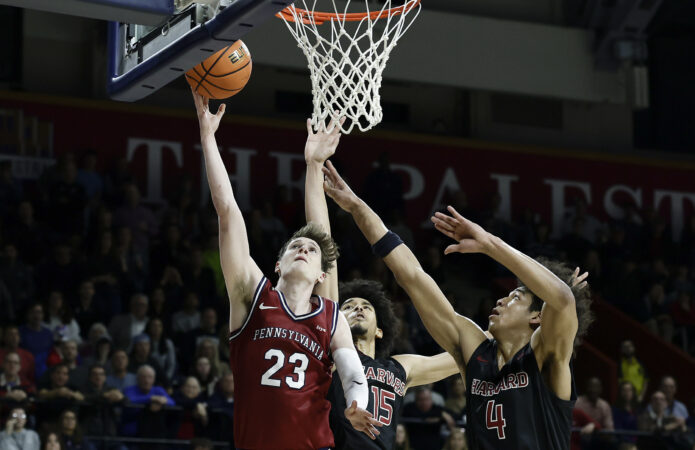
    All of them, it turned out. Penn trailed 31-21 at halftime, then charged back to lead 56-50 with 5 minutes, 37 seconds to play. But the Quakers almost gave it up before holding on to win, 64-61.

    There was plenty of noise from the 2,877 fans on hand at the buzzer, a reminder that even a paltry crowd can make a great atmosphere at the 99-year-old shrine. It might have been as much out of relief as anything else, but it was still a release.

    “I think that’s what makes it emotional, is we’ve been so close,” senior forward Ethan Roberts said after his Palestra finale. “So to see these wins and the season transpire the way it did, we’re in a great spot, and we just learned from it. We kept fighting, and it was ugly at times, but it just makes it all worth it.”

    The team’s ‘north star’

    It’s easy to say that this Penn team goes as far as TJ Power takes it. He took it to an extreme on Friday, scoring 38 of his team’s 80 points against the Big Green. But Roberts matters too, and this was his best game in weeks: 21 points, three assists, and four rebounds, including the game-sealer in the closing seconds.

    “I kind of blacked out after the buzzer hit,” Roberts said. “Our team, our entire year since last summer when we had the coaching change [and] we see coach McCaffery is coming here, it’s like, ‘All right, we’re winning.’ And to see we’re in this position today … this is literally all we’ve worked for. This has been our north star.”

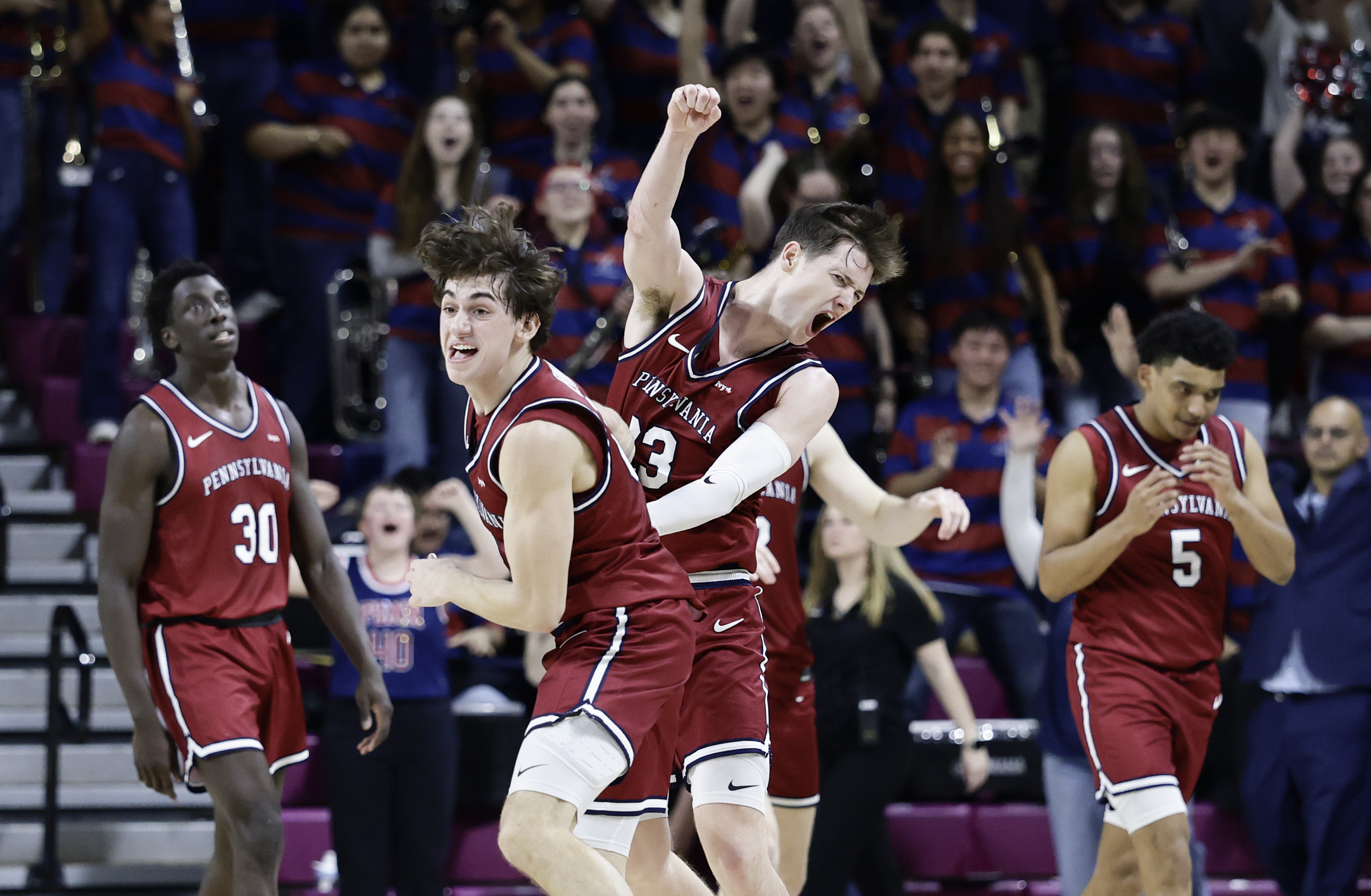
    Penn’s AJ Levine (left) and forward Ethan Roberts celebrate after the final buzzer.

    AJ Levine, the sophomore starting point guard, is another big factor — and not always in a good way. He’s a tenacious defender, and is capable of great passes and shots. But he’s also capable of driving into any lane in front of him, even if it’s a trap.

    It’s not a coincidence that he played much more within himself in the second half of conference play, and that Penn went 6-1 in those seven games.

    “He’s always going to have an aggressive mindset, and you don’t ever want to take that away from him,” McCaffery said, with a towel draped over his shoulders after a postgame water-dousing in the locker room. “He gets emotional, and you don’t want to take that away from him either, but you can’t let it get you to where you’re focused on, ‘I got a bad call,’ or ‘He [a teammate] should have cut backdoor.’ When he’s under control and he’s locked in like he was in the second half, he’s really good.”

    What to know about the Ivy League tournament

    Now, after the regular-season finale at Brown on Friday, it will be off to Cornell’s arena for a rematch with the Crimson in the Ivy tournament semifinals. All four seeds are set with a game to spare.

    AJ Levine drives for a layup during the second half.

    “It’s great feeling as a coach when you know you have a group of guys that have bought in from day one since I got here, and want to experience success,” McCaffery said. “And then to see them celebrate in the locker room — the thing we have to do now, and they both [Roberts and Levine] said it, which is good, is we have to stay locked in. We earned an opportunity. We have to play well next week, and then get ready to play well against two really good teams.”

    (If you’re wondering, there’s no word when the event will next be at the Palestra. All that’s known is the 2027 edition will be at Dartmouth, and Hanover, N.H., is as glamorous as central New York is in mid-March.)

    No. 1 Yale will be the favorite on paper, No. 66 in the NCAA’s NET rating while the other three teams are all in the 150s. But the top seed has only won the tournament twice in its seven editions, as the five-time finalist Bulldogs know well.

    This time, they’ll have to beat the hosts in the semis. Yale won its home game vs. Cornell in a 102-68 blowout, then the Big Red won the regular-season round in Ithaca on Friday on a last-second three.

    Penn and Harvard also split their games, with the Crimson winning by 64-63 in Boston on Jan. 19.

    “There’s the frustrating losses, there’s the hard-fought wins like today,” Levine said. “When that buzzer went off and I realized what we’ve done — and how it’s just the start, really, because we’re going to go compete there — I mean, it felt amazing to just see that hard work pay off a little bit. But it will really pay off when we go up there and we do what we do.”

    Those words might have been a little too accurate for their own good. Still, they have a chance, and that’s more than Penn could say the last two seasons.